
![]()


Creator and nurse Hadley Vlahos discusses the emotional weight of hospice nursing and how support and recognition make it sustainable.

INTERVIEW WITH Hadley Vlahos Registered Nurse; Author, âTHE IN-BETWEENâ
What are some of the biggest challenges youâve faced, and what kind of support made a difference?
At the end of the day, even after pouring everything you have into your patients, it can still feel like someone is upset or that you somehow fell short. What has made the biggest difference is when someone takes the time to point out the impact that was made. When a manager shares a thank-you note from a family or acknowledges the comfort we were able to provide, it reminds us that what weâre doing matters.
From your experience, what kinds of support are most effective in reducing nurse burnout? The most effective mental health support isnât always a formal program; itâs having a culture where people check in on each other. Burnout gets worse when you feel alone in it. Some of the most helpful moments for me have been when a coworker has just looked at me and said, âThat was hard. Are you alright?â
What would you say to people who are thinking about becoming nurses? What makes nursing so special is how deeply human it is. Youâre showing up for people in the moments that matter most. Youâre offering comfort and support in ways that can truly change someoneâs life. That never gets old.
When people think of nursing careers, they envision hospitals. While hospitals remain a critical part of healthcare, other opportunities abound for nurses.
Many new graduate nurses dream of working in a fast-paced hospital setting. While hospitals do allow for nurses to work in a variety of departments, todayâs healthcare landscape offers an array of opportunities for nurses outside the traditional hospital setting. Nurses increasingly find fulfilling careers that align with their passions while offering greater flexibility, autonomy, and purpose in post-acute care settings.
New opportunities in nursing Post-acute care nursing presents a wide range of career opportunities across many settings. In long-term care and skilled nursing facilities, nurses care for individuals with chronic conditions, whether on a long-term stay or during short-term rehabilitation. These environments focus on managing complex health needs while promoting overall quality of life. Nurses can serve in a variety of roles, such as charge nurse, director of nursing, minimum data set nurse, or nurse consultant. These settings offer opportunities to grow into meaningful leadership positions, the chance to drive quality improvement, and the ability to form lasting relationships with residents and their families. Home health and hospice care also provide unique and rewarding opportunities for nurses outside of traditional clinical settings. Typical roles include case manager, visiting
nurse, and palliative care nurse. In both care delivery models, nurses care for individuals who are confined to their homes, delivering one-on-one care in a familiar setting. Home health nurses focus on recovery, rehabilitation, and chronic disease management, while hospice nurses provide compassionate support, symptom management, and comfort care for individuals nearing the end of life. Both roles allow nurses to build powerful patient and family relationships and to have a profound impact on quality of life.
As the demand for healthcare continues to evolve, so do the roles and settings in which nurses can thrive. Beyond the hospital, post-acute care offers nurses the chance to make a lasting difference in the lives of those they serve, whether through long-term support, end-of-life care, or recovery at home. These settings not only develop and use clinical skills but also foster deeper connections, leadership development, and a renewed sense of purpose. For nurses seeking a fulfilling path that blends compassion, autonomy, and impact, post-acute care is a promising and meaningful avenue to explore.


Across the United States, approximately one-third of newly licensed registered nurses leave their jobs within their first two years, and turnover rates reach as high as 56% by the second year. The cost of that loss is more than financial; it strains recruitment, disrupts patient care, breaks unit cohesion, and fuels the ongoing nursing shortage.
For hospitals, replacing a clinical nurse typically costs $50,000 to $64,000, and the average U.S. hospital loses between $4.4 million and $6.9 million annually due to turnover.
The American Association of Critical-Care Nurses is helping hospitals and health systems address these challenges with a new nurse orientation pathway and other resources to improve onboarding efforts.
Research shows that formal, evidence-based onboarding programs can reduce new-hire turnover by up to 25% and significantly improve job satisfaction and competence metrics.
Structured onboarding means more than boxes to check in a binder; itâs a shared compass. When new nurses understand their starting point and receive education tailored to their needs, they move from merely surviving to thriving.
In a healthcare landscape marked by staffing shortages and high turnover, investing in onboarding isnât optional; itâs essential. When hospitals build orientation programs informed by best practices, they do more than reduce turnover; they preserve patientsâ trust, institutional knowledge, and the future of the profession.

WRITTEN BY Julie Miller Clinical Practice Specialist, American Association of Critical-Care Nurses
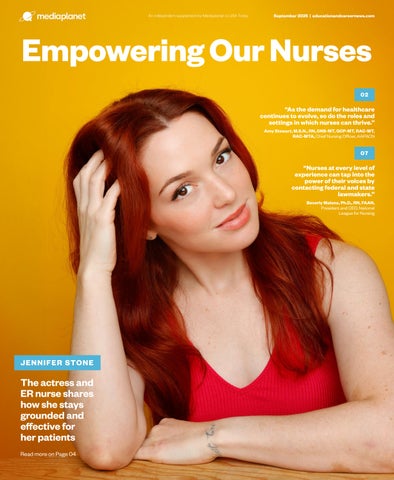
Jennifer Stone shares how small acts of care, teamwork, and personal routines help nurses stay grounded and effective.

Can you share a moment from your career that reminded you why you chose nursing?
I had a doctor once tell me, âIf you can really touch one person a shift, thatâs a good shift.â As a nurse, youâre always rushing around; itâs very fast-paced, especially in the ER, so itâs about the moments of stillness with somebody who just needs comfort or care. Itâs those moments of being a sense of certainty for someone in a time of uncertainty that remind me why I do what I do.
the same thing â better patient outcomes. When I have a nurse who, without me even asking, will jump in and help me with the patient, that makes me feel like weâre all collaborating on this together for a common goal. Thatâs something that means the world to me.
Weâre all on the same team. Weâre all trying to accomplish the same thing â better patient outcomes.
Has there been a time when strong communication, with either a patient or teammate, made a big difference in your day?
I didnât anticipate that there would be so many parallels between acting and nursing, but one of my favorite things about both is the collaboration. Weâre all on the same team. Weâre all trying to accomplish
What advice would you give to a nurse whoâs feeling overwhelmed or underappreciated right now? Focus on what you can control. Especially in the earlier years, I would get very angry at things that were out of my control. Whether it was issues with the healthcare system, or the way the system was set up and falling short, I would find myself getting very angry and discouraged. Whatâs helped me is to focus on the things that I can control. Yes, they may be on a smaller scale, but I can control how I respond to negativity at work. I can control how I talk to patients. I can control what I let in and what I donât.
What daily habits or small routines help you stay grounded and feel good during long or stressful shifts?
Time stands still when youâre on a 12-hour shift, so if I can, Iâll carve out time to just get outside, get some vitamin D, and look at some nature. Itâs something to remind you that the entire world isnât those fluorescent lights.
Thatâs why high-quality footwear is key. Enter Vessi, a waterproof footwear brand praised by healthcare workers, including nurses, for their foot health support and other features that make them practical for work and beyond.
âThese are comfortable and reliable for working 10-hour shifts as a nurse. Great shock absorbers that get me through my shift easily,â said Vessi customer Althea R., in one of many testimonials endorsing Vessis.
Practical features
Vessis are an ideal choice for nurses and other healthcare workers because theyâre:
⢠Comfortable: Healthcare workers work notoriously long shifts â sometimes upwards of 12 hours at a time. Pain in areas of the body including the feet, legs, and back can happen if proper footwear is foregone.
The good news is that Vessis are built to support 8- to 12-hour days of standing, and their cloud-like cushioning midsole keeps you comfortable from first step to last.
⢠100% waterproof: Messes happen, especially in a healthcare setting. Vessis are designed to endure the worst of them with their patented Dyma-texŽ waterproof knit, which enables water, spills, and unexpected messes to bead right off. Unlike other waterproof materials, DymatexŽ is lightweight, breathable, and flexible.
âAs a nurse and mom, they can be used for waterproof

safety at births or walking to school in the rain!â said Vessi customer Angela B.V.
⢠Easy to care for: If your Vessis need a refresh â whether from a messier shift at work or from routine wear â simply toss them into the washing machine. Some Vessis are machine washable, meaning that keeping them hygienic (and appearing in tiptop shape) is a cinch.
⢠Stylish: Not only can you wear Vessis at work, but you can sport them before and afterward. Consider them your handy, work-to-life (and vice versa!) shoe.
⢠Simple to slip on and off: Yes, this is good for convenience, but it also reduces the transfer of germs â which is key when you work in healthcare.
⢠Discounted for healthcare workers: Nurses and other healthcare workers receive 20% off sitewide with ID.me verification.
Fan-favorite styles from Vessi include the Weekend and Pacific collections.
The Weekend Collection is available for men and women, as well as kids. They come with lightweight, cushioned midsoles and an upper portion that is crafted in a breathable knit. Color options range from classic white and neutral tones, including beige to pastels, and brights like green and pink. Whatâs more, shoes in this collection include sneakers as well as a Chelsea boot style.
Vessi calls its Pacific Sneakers âthe most versatile shoe ever,â which means they can handle your long-haul travels as well as everyday errands closer to home. Whether youâre wearing them to bike to work, during the big meeting (and throughout your shift), or walking the dog before bed, the Pacific Sneaker is truly made for everyday and everything. Like those in the Weekend Collection,
these shoes have a lightweight cushioning midsole and a breathable upper knit. Available for men and women, the Pacific Sneaker offers shoes in classic neutrals, such as white and black, as well as limited edition hues like the greygreen Grotto colorway.
If the insoles offered in your Vessis donât work for your health needs, simply swap them out (theyâre easy to remove) for your preferred insoles or orthotics.
With Vessis, versatility is the name of the game, helping healthcare workers check off their to-do lists in functional waterproof kicks that are also comfortable while on â and off â the clock.
Written by Melinda Carter

Burnout among nurses is reaching significant levels, making self-care, boundaries, and mental health support essential for sustaining a healthy workforce.
If I had a dollar for every time someone answered âstressedâ when I asked how theyâre doing, Iâd have a full jar. And as nurses, weâd probably add our own dollars to it. While we are working tirelessly for our patients, itâs important to recognize we are not immune to the stressors around us and must share strategies to help each other and our patients.
Nurse practitioners and nurses enter healthcare with a passion to make patientsâ lives better. Between work deadlines, family responsibilities, health concerns and the constant buzz of phones, the stress of our everyday lives can be compounding. Itâs incumbent upon all of us to recognize that managing stress is an important component to our overall health and well-being.
What you can do
Even in the middle of a packed day, there are things you can do to promote well-being and prevent burnout:
1. Take time for yourself. Whether itâs 10 minutes of quiet, a walk, or your favorite show, it counts.
2. Set boundaries. Set realistic expectations and boundaries with work, with family, and even with yourself.
3. Schedule time for joy. Add it to your calendar like any other appointment.
4. Ask for help. Getting support doesnât mean youâre failing. Itâs a path to better health.
5. Rest. Real, uninterrupted rest is vital to your health.

WRITTEN BY Valerie J. Fuller, Ph.D., D.N.P. President, American Association of Nurse Practitioners
Creator and comedian
Nurse Blake shares how personal hardships, humor, and a commitment to patient connection shaped his approach to healthcare.
What made you want to become a nurse, and what keeps you passionate about it today?
I went through gay conversion therapy from ages 15 to 18. I didnât get a lot of love and a lot of care, so I think because of that experience, I wanted to show love and care to other people. That definitely is something that got me interested in healthcare and nursing.
Youâve talked about the importance of laughter. Can you share a funny or memorable moment that helped get you through a hard shift?
I remember one patient; she had been on the unit for quite a few months, waiting for a liver transplant, and one day, she wanted to go outside. She hadnât been outside in months. I was like, âYou know what, Iâm going to take you outside.â When a personâs hooked up to so many machines and medications, itâs very hard, so it took the team and me two hours to get her ready to transport her outside. She was out there for maybe three minutes, and then she said, âItâs

too hot out here.â She looked at me, I looked at her, and we just started laughing so hard. That little moment of real, raw honesty was definitely needed for both of us.
Long shifts are tough. What are some things that help you stay comfortable and energized? No matter how hard your day gets, know youâre not going to get it all done. Nurses always want to be perfect, but thereâs no such thing as a perfect nurse, so shake that off. Just do as much as you can for your patients in the time you have. Breathe. As someone who has panic attacks and anxiety, I know that when I forget to breathe, thatâs when my mental health gets worse. I just put myself in the supply closet or the med room and breathe for a second.
If youâre overwhelmed, your patients probably are, too, so take a break with them. Pull up a chair, even if itâs for a minute, just to connect. That has always helped me get through the really hard times. Laugh a little bit and tell a joke.
The shortage of nurses has created abundant job opportunities, but barriers to entry and declining job satisfaction threaten efforts to improve recruitment and retention. What can nurses do for themselves and, in the process, help secure a better future for nursing?
For so many of us who have long championed the rewards of nursing, barriers to entry and workplace challenges thwart the best efforts of nursing leadership and public policy experts to recruit and retain a diverse, competent nursing workforce. We must find ways to reverse the biggest barrier to entry: a nurse faculty shortage that strains the capacity of nursing education programs to admit more qualified applicants. With a masterâs degree required to teach, 17% of applicants to M.S.N. programs were denied entry in 2023; 15% of qualified applicants to B.S.N. programs were turned away, as were 19% of qualified applicants to associate degree in nursing programs. At the same time, a shrinking number of clinical nurse educators in teaching hospitals, plus budget cuts to
academic medical centers, have decreased the placement sites for nursing students to complete clinical requirements for their degrees and licensure.
Along with taking steps to address the gaps in the pipeline, we must improve retention by focusing attention on the issues that impede job satisfaction and accelerate retirements, which place even greater pressure on the nurses who remain.
Nurses at every level of experience can tap into the power of their voices by contacting federal and state lawmakers to influence public health and budgetary policies that support nursing workforce development. In our outreach to lawmakers, we can seek to help them craft bills that address nursingâs most pressing needs.
Sponsored


The University of New Hampshire (UNH) is home to the School of Nursing, where students can help shape the future of healthcare through real-world clinical experience and innovative research opportunities.
UNHâs status as an R1 research institution and its proximity to some of the nationâs premier medical centers provide you with unmatched clinical learning and nursing research opportunities â empowering you to make an impact in healthcare from Day 1. Building on 60 years of nursing education excellence at UNH, the newly launched School of Nursing offers programs from pre-licensure through clinical doctorate, both in-person on the Durham campus and online, creating flexible pathways that meet you where you are in your journey toward meaningful impact in healthcare.
Explore different paths in nursing
At UNHâs School of Nursing, youâll find your perfect fit among bachelorâs, masterâs, and doctoral degree options designed to match your goals and aspirations.
Charles Adler discovered his passion through UNHâs hands-on approach. After earning his bachelorâs in nursing and a masterâs as a clinical nurse leader, heâs now enrolled in the Family Nurse Practitioner (FNP) program, which offers the flexibility he needs. His senior practicum at UNH led him directly to a job in an ICU, which opened doors to experience as a travel nurse, clinical nurse leader,
and finally to his current role as an FNP.
âI wouldnât have been able to have the experiences Iâve had if it werenât for UNH nursing,â Adler reflected.
Where knowledge meets practice
At UNH, you donât have to choose between rigorous academic learning and real-world practical skills; you get both. Our commitment to hands-on learning means youâll graduate not just with depth of knowledge and a degree, but with the practical skills and forward-thinking approach that healthcare needs.
Ready to pursue meaningful impact in healthcare? If youâre drawn to a field where you can make a real difference, UNHâs oneof-a-kind School of Nursing offers clinical learning to propel you to exceptional career opportunities that make an impact.
Written by Frank James
To learn more about the University of New Hampshireâs School of Nursing and to apply, visit chhs.unh.edu/nursingtoday


Ello's best-selling Pop & Fill stainless steel bottle lets you reďŹll without removing the lidâkeeping you moving, caring, and never missing a beat.
