Children’s Wellness
September 2023 | futureofpersonalhealth.com
“Caring for the whole child is at the core of Easterseals’ early childhood development programs.”
 Kendra E. Davenport, President and CEO, Easterseals
Page 02


September 2023 | futureofpersonalhealth.com
“Caring for the whole child is at the core of Easterseals’ early childhood development programs.”
Kendra E. Davenport, President and CEO, Easterseals
Page 02
Our mental health is constantly impacted by what happens around us, in both good and bad ways.
The more proactive we are about addressing our mental health, the more resilient we can be at navigating difficult situations throughout our lives. Help your family maintain a healthy mind and build resiliency by:
Knowing about current events in your child’s life and any big changes they are going through socially, academically, emotionally, or physically can help you be more engaged in supporting their mental health and addressing mental health challenges as they arise.
To make mental health a priority and a normal part of your family’s daily life, be sure to have regular family conversations about it. You can talk through your children’s feelings or concerns, things happening at school or with friends, or how current events are impacting them. You can also try to share your own feelings, challenges,
and what is happening in your life. These conversations help you learn how your child is doing emotionally, build their ability to cope with life’s stresses, and provide them with additional help if and when they need it. Talking about mental health with your kids shows them that their feelings matter, that they are not alone, and that they are loved and supported. It also helps you build trust, allows your child to know you better, and shows them that you are a relatable person who sometimes struggles, too.
When you have these mental health discussions, make sure they’re focused, distraction-free, and routinely scheduled.
Living a healthy lifestyle helps maintain good mental health and improves overall well-being. Small changes can make a big difference. It is never too late to commit to having a healthy mind and body! Maintain your family’s mental health and well-being by:
• Eating meals together . Try to practice a healthy diet consisting of a lot of fruits, vegetables, beans, and lean protein. Limit foods high in transfat and added sugars.
• Exercising regularly. A fun family challenge could be to see who can get the recommended 150 minutes of physical activity a week.
• Limiting screen time. Decide as a family how much time a day is OK for everyone, including parents, to be on their devices outside of work or school.
• Getting the recommended amount of sleep each night. Kids ages 6-12 need 9-12 hours of sleep, teenagers need 8-10 hours, and adults need 7-9 hours a night. As a family, agree to establish a consistent bedtime. Remove all devices from bedrooms.
• Managing your stress. Start by identifying what in your life is causing you stress and try to figure out healthy ways to manage it.
Written by National PTA “Precision medicine for childhood cancer has lagged behind its adult counterpart.”Nearly 10% of children in the United States experience some form of mental health challenge, according to the CDC, yet only a small number of children dealing with mental health issues receive treatment. These challenges can be made worse when a child experiences a chronic health condition or a series of health challenges, especially if they require frequent hospitalization.
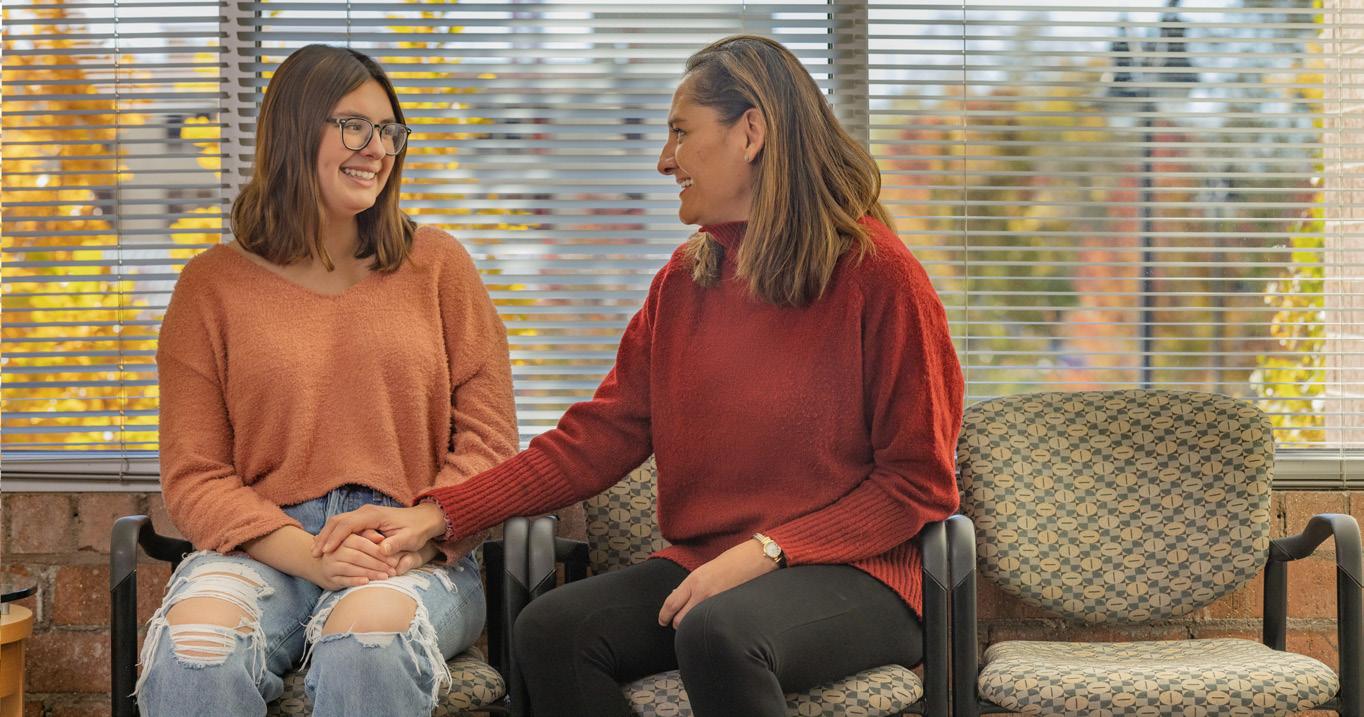
“I think finding an outlet for your emotions is important,” said Ashley, a 16-year-old who has been dealing with multiple chronic health conditions since birth. “Emotionally and mentally, you have to take care of yourself before you’re able to get better physically.”
Mental health is key Ashley has been playing the cello since she was 5 years old and is in the Milwaukee Symphony Orchestra. “Music helps me express what I’m feeling, and I can put emotions that I’m feeling into the music, which is really helpful,” she said.
The solace Ashley finds in music is crucial to her mental health, because Ashley has been a life-long patient at her local children’s hospital, which is a member of Children’s Miracle Network Hospitals (CMN Hospitals).
“I’ve been through a lot of different specialties because my medical history is so extensive,” she explained.
“I’ve been through cardiology, radiology, GI — just a lot of different specialties.”
Ashley’s experience dealing with chronic health conditions has given her an appreciation of the need for mental healthcare for children.
“When kids are having medical problems, it’s like, ‘Oh, address the problem in front of you,’” she noted. “But it’s also mentally draining to be going through all these things. So, you need to make sure you are addressing that.”
Ashley’s experiences have led her to become one of CMN Hospitals 2023 National Champions, who serve as advocates for the organization and representatives of the children in their local communities, helping to raise awareness. “What I’ve realized over time is that I can’t really heal my physical self if I’m not mentally in that space to heal,” she said. “CMN Hospitals funds can help kids like me and help them get the care that they really need.”
Each year, 12 million kids are treated at member hospitals and rely on philanthropy to advance care, programs and treatment needed in their community. That’s where CMN Hospitals comes in — the organization is dedicated to raising funds for children’s
hospitals. CMN Hospitals is currently celebrating its 40th anniversary, and in that has raised more than $8.5 billion for member children’s hospitals.

This money allows children’s hospitals to fund what’s needed most in their community. All CMN Hospitals U.S.-based member hospitals provide mental healthcare of some sort, whether it’s clinical care or a service provided at home, at schools, or via telehealth. Just as important, funding from CMN Hospitals helps these hospitals conduct pioneering research, including work regarding mental and emotional health in children.
Ashley’s happy to give back by shining a light on the need for children’s mental healthcare and the impact CMN Hospitals has. “My emotions and how I’m feeling directly impact my physical well-being,” she noted. “It’s just really important to advocate for that and to get more attention there.”
Genetic testing of pediatric cancer patients allows researchers and physicians to better understand a child’s treatment options, chance of survival, and hereditary cancer risk factors.
Unfortunately, precision medicine for childhood cancer has lagged behind its adult counterpart. Although pediatric cancers are the number one cause of death by disease in children and adolescents, they are considered rare because they account for less than 1% of all new cancer diagnoses in the United States each year.
For 2022, it was estimated that 1.9 million new cancer cases would be diagnosed, approximately 17,000 of which would be kids. Their rarity makes biologically characterizing pediatric cancers more difficult, which in turn negatively affects the development of precision therapeutics and the ability to test them via clinical trials.
Yet, the need for better therapies is arguably more important for children with cancer who, if they survive, have a much longer potential lifespan over which they must deal with the long-term side effects of generalized chemotherapy and radiation.
To accelerate precision medicine for pediatric oncology, Children’s Mercy Kansas City (CMKC), together with the Children’s Mercy Research Institute (CMRI), pioneered a new whole-exomesequencing-based genetic test for all children diagnosed with cancer. This new test is run on both a tumor sample from the patient, plus a sample of their normal, healthy cells, so we can pinpoint genetic variants unique to the tumor (known as “somatic” variants), as well as
the genetic variants underlying a patient’s hereditary risk for cancer (known as “germline” variants).
While many pediatric research institutions in the country conduct genetic sequencing of tumors, the CMRI is one of the few institutions performing both research and clinical sequencing in-house on both the tumor and normal DNA samples.
Understanding the variants that are specific to a certain kind of tumor and a patient’s genetics may help provide a more specific diagnosis of tumor type or subtype, inform risk of cancer development for other family members, give additional prognostic information to help predict survival, and finally allow physicians to explore more personalized treatment approaches that may be more effective. These personalized therapies tend to have fewer negative side effects as they target tumor cells specifically — unlike standard chemotherapies that kill both tumor cells and normal cells.
We are planning to use this test for every patient at CMKC who receives a new cancer diagnosis, as well as for those children whose cancer has relapsed. Sadly, these genetic tests are not always well covered by insurance, and patient families may be reluctant or unable to pay outof-pocket for the test. Through a framework provided by CMKC administration and
philanthropic efforts, such as Big Slick, an annual celebrity fundraising event, this new genetic cancer testing is available to all patients without any out- of-pocket expense, which reflects the hospital’s commitment to diversity, equity, and inclusion, as well as high-quality patient care.
In addition, through the support of the CMRI and philanthropic partnerships, we are conducting research sequencing on pediatric cancer patients and openly sharing this genetic data with researchers worldwide as part of the National Cancer Institute’s Childhood Cancer Data Initiative. Data from the first 200 patients is already available.

Finally, for patients who were clinically tested but whose tumors lacked a genetic basis or “driver” for their disease, we are performing the most advanced sequencing — called 5-base long-read whole genome sequencing — to discover novel genetic causes of pediatric cancer. This effort is an extension of one of the CMRI’s flagship research projects, Genomics Answers for Kids, which looks for answers and new treatments for pediatric patients with rare inherited genetic conditions.
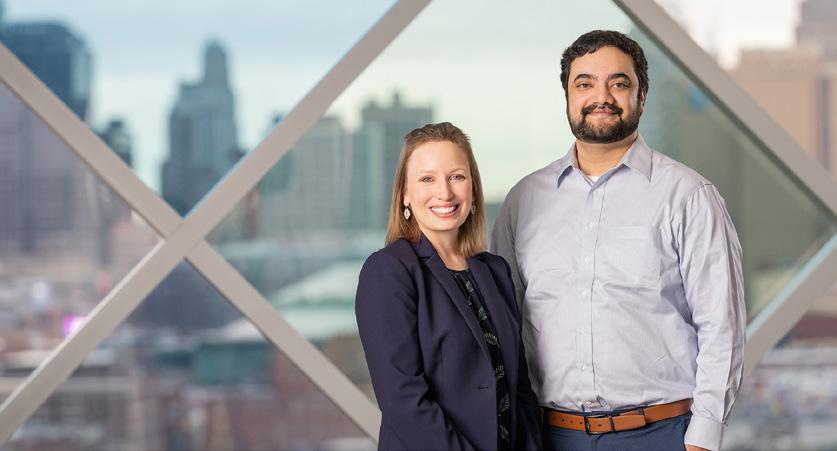
Written by Midhat Farooqi, M.D., Ph.D., Director, Molecular Oncology, Pathology and Laboratory Medicine, Children’s Mercy Kansas Cityorg/research
Easterseals’ community-based centers across the country.

Easterseals also offers nutrition, audiology, mental health, autism services, and assistive technology to support early childhood development. Additionally, our Child Development Center Network provides inclusive childcare so all children can learn and grow together.
Each year, more than 1 million children enter kindergarten with an undiagnosed developmental delay. Easterseals wants to ensure that all children start kindergarten with the right skills to succeed alongside their peers, which makes these first five years of childhood development so critical for lifelong success.
Trusted by families nationwide for more than 100 years, Easterseals provides infants and toddlers with vital services, including early education and care through a network of 71 Affiliates. Our Make the First Five Count® (makethefirstfivecount.org) initiative offers a free online screening tool that helps parents and caregivers track the development of their child from birth through
age 5. This comprehensive and confidential tool helps identify if children are meeting critical milestones, including language/communication and social/emotional cues.
As a national, affiliate-based organization, each of our Easterseals locations shares a commitment to the 1.5 million people we serve, and each of our locations offers a variety of important disability and community services to meet the needs of many, so we can enhance someone’s quality of life and expand local access to the supports they need to thrive.
Caring for the whole child is at the core of Easterseals’ early childhood development programs. If developmental cues are present and need to be addressed, we support families as soon as possible by providing childhood development services that help children achieve cognitive, social, emotional, communicative, and physical development goals.
Occupational therapy can help an infant learn to hold their bottle; physical therapy can help them learn to roll over, crawl, or walk; and speech therapy can encourage eating or speaking. Most of these early intervention services can take place in the home or at
Early childhood development is just a fraction of what we do every day. Other important services include behavioral health programs, adult day services, medical rehabilitation, transportation and mobility services, and training and skills development programs for people with disabilities, veterans, and mature workers.
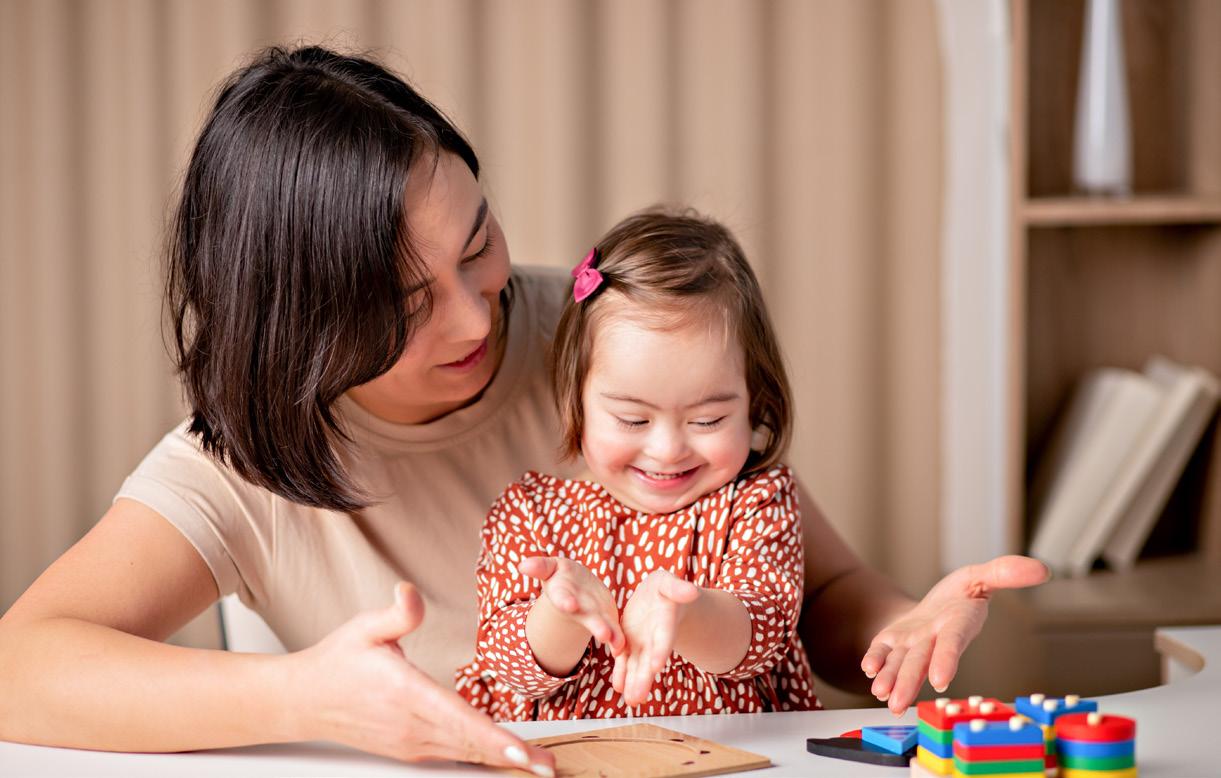
During the first five years of life, a child’s brain can grow and develop quickly, and their experiences during this time can provide the foundation for cognitive growth, and their emotional, social, and physical well-being. To learn more, visit easterseals. com
We are also committed to crucial work in public policy and government relations to positively shape perceptions about disability, and address the urgent and evolving needs of the 1 in 4 Americans with disabilities today. I am proud of the work we do to ensure that every person with a disability, veteran, or older adult is empowered to be a full and equal participant in society.