SPACE JAM
A new cosmic show at the RWA looks to the stars, bringing science and art together
A new cosmic show at the RWA looks to the stars, bringing science and art together
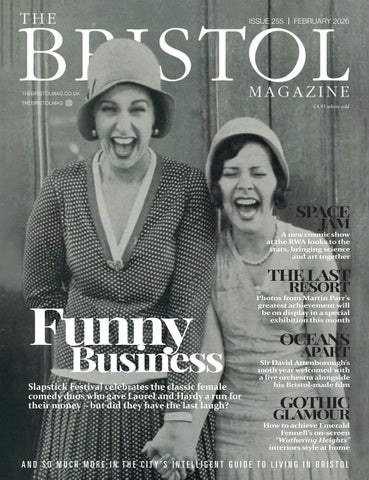
Slapstick Festival celebrates the classic female comedy duos who gave Laurel and Hardy a run for their money – but did they have the last laugh?
Photos from Martin Parr’s greatest achievement will be on display in a special exhibition this month
Sir David Attenborough’s 100th year welcomed with a live orchestra alongside his Bristol‐made film
How to achieve Emerald Fennell’s on‐screen “Wuthering Heights” interiors style at home


Take
Meet Ann Remmers OBE, a very special midwife who’s been helping to bring new life to the city for half a century
What’s occurring, who’s who and what’s what?
Pre-Spring looks from Whistles that champion classic silhouettes and multiple
Lucy Porter talks to us about celebrating female comics at Slapstick Festival, life on the road and why she loves
We hear from the Bristol-based
behind Ocean with David Attenborough ahead of a new
Fill February with plenty of things to do and see, especially as half term is on
The Last Resort will be on display at the Martin Parr Foundation to celebrate his life and career 46
Melissa Blease serves up the best dishes for dates
48
Shoot for the stars at the RWA’s


Two bakeries explain why ‘real bread’ is the best thing since, well, you get the gist...
Join us for an overnight stay at Severnside Press BnB in the Forest of Dean
Sauna culture is taking over the city: we speak to those in the know about the boom and its benefits
Inspired by films Frankenstein and upcoming “Wuthering Heights”, we embrace the dark romance of Gothic interiors






Publisher Steve Miklos
Email: steve@thebristolmagazine.co.uk


We’re hoping that our cover stars’ infectious smiles will spread a little joy across the city this month because, let’s face it, we could probably all do with it. Consider this issue of The Bristol Magazine a welcome excuse to turn your attention away from global news for a moment and lose yourself in the ineffable whimsy of quintessentially Bristol pursuits happening over the next four weeks –from watching the Welsh National Orchestra preforming the breathtaking score to locally-produced, hope-fuelled documentary by everyone’s favourite near-centenarian Ocean with David Attenborough, to sweating the small stuff (and likely the large stuff, too) in one of the many saunas that have popped up across the city in unexpected corners, and timetravelling between eras of classic on-screen comedy at Slapstick Festival.
The latter of which is where you’ll find the women ecstatically clasping hands on our cover: if you don’t already know them, meet Anita Garvin and Marion Byron. They may have only made three comedy shorts together as the ‘female answer’ to Laurel and Hardy, but their impact is still being celebrated all these years later thanks to events like Lucy Porter’s Before and Beyond Laurel & Hardy spotlighting them at this year’s Slapstick Festival.
When I spoke to Lucy (who’s also launching her 18th solo stand up show at the Hen & Chicken this month – lucky us!) about this and more on page 22, she perfectly summed up why celebrating classic comedy and film remains powerful and important: “There are horrifying echoes of the 1930s in the current political landscape. In bleak, political times, it’s good to have a laugh, but it’s also good to bear in mind that what unites us is humanity, humour, kindness and empathy – and all of those things that really come through in films that we watch.”
The film Anita and Marion are best known for is probably A Pair of Tights, which tells the tale of two women enduring a disastrous double date with two cheap (‘tight’) chaps. Hopefully their hilarious but ultimately futile attempt at buying ice cream is a far cry from any romantic endeavours you attempt this month – it includes Valentine’s Day after all. Check out some gifts on page 18, and don’t worry, we’ve also got plenty of ideas of things to do that weekend across the city in our What’s On section (page 28) if you’d rather do anything than think about love. I quite like the sound of following the shame-eating, fiery Fishponds Beast around Eastville Park instead, but each to their own.

Rosanna Spence
Financial Director Jane Miklos
Email: jane@thebristolmagazine.co.uk
Editor Rosanna Spence
Tel: 0117 974 2800
Email: rosanna@thebristolmagazine.co.uk
Digital Editor India Farnham
Email: india@thebristolmagazine.co.uk
Production Manager Jeff Osborne Email: production@thebristolmagazine.co.uk
Advertising Sales Liz Grey Email: liz@thebristolmagazine.co.uk
For advertising enquiries, please contact us on 0117 974 2800 Email: sales@thebristolmagazine.co.uk
The Bristol Magazine is published by MC Publishing Ltd. An independent publisher.
Every month, The Bristol Magazine is hand delivered to more than 15,000 homes in selected areas. We also deliver direct to companies and businesses across the city. Additionally, there are many places where we have floor-stands and units for free pick-up:




Bristol Light Festival will return to the city for 10 unmissable nights (19-28 February), with British visual artist Liz West announced as a headline name in the festival’s most ambitious edition to date. Known for her immersive light sculptures and chromatic environments, West will bring two large-scale installations to Cabot Circus, transforming its multi-storey car park into a vast, reflective, colour-saturated spectacle. Our Colour Reflection (pictured) will take over Level 7of the Cabot Circus car park, bathing visitors in shifting light, echoing colour across concrete and steel. bristollightfestival.org

Slapstick Festival returns from 4-8 February with more than 30 events celebrating screen comedy in all its forms: from silent-era masterpieces to classic sitcoms, anarchic stand-ups and big-screen favourites. Highlights include a spectacular Silent Comedy Gala with live music from Rick Wakeman and the European Silent Screen Virtuosi, Laurel & Hardy’s (pictured) early brilliance to their final feature, the sharp wit and innovation of Alexei Sayle, the legacy of Lee Mack’s long-running sitcom and a host of specially curated classic comedy events, including two with Lucy Porter (read our interview with her on page 22). More programme into at slapstick.org.uk

Bristol Old Vic Theatre School is presenting an exceptional programme of plays at The Station, Silver Street BS1, for its Spring Season – featuring two Shakespeare double bills (Macbeth and Twelfth Night, 12-14 February; and Othello and The Tempest, 19-21 February), along with powerful new productions of Days of Significance by Roy Williams and Paradise by Kae Tempest (both 28 February to 7 March). These productions promise to showcase the creativity, dedication, and collaborative spirit of BOVTS students, and stand as a testament to the professionalism the School nurtures. You’re in for a treat! For tickets and more information on each production, visit the website oldvic.ac.uk.

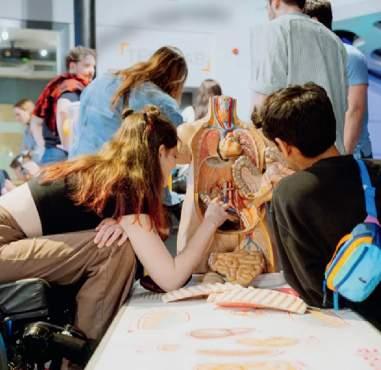
Explore the feeling of instant chemistry this Valentine’s weekend (13 February, 7-10pm) at We The Curious. Bring your dates or mates (just maybe not your grandma) and get spicy in the kitchen with chilli tasting, fall in love with robots and open up some hearts… literally. Learn about love potions and aphrodisiacs to a DJ’d soundtrack of love songs and heartbreak anthems with a drink in your hand. Adults only. A first come, first seated Planetarium display will also take place. Book tickets online at wethecurious.org


The Long Road by Shelagh Stephenson (directed by Fiona Morrison) comes to Kelvin Players Theatre from 17-21 February. Mary and John have lost their son Danny in a senseless murder. Together with their surviving son Joe, they are each struggling to deal with the loss in their own way. For Mary, the only way to move through her hatred is to understand why it happened – and that means meeting the perpetrator, Emma, in prison. The Long Road is a deeply emotive play laced with hope and humour, charting the complex journey through grief and towards forgiveness.
Book tickets via ticketsource.co.uk/kelvinplayers





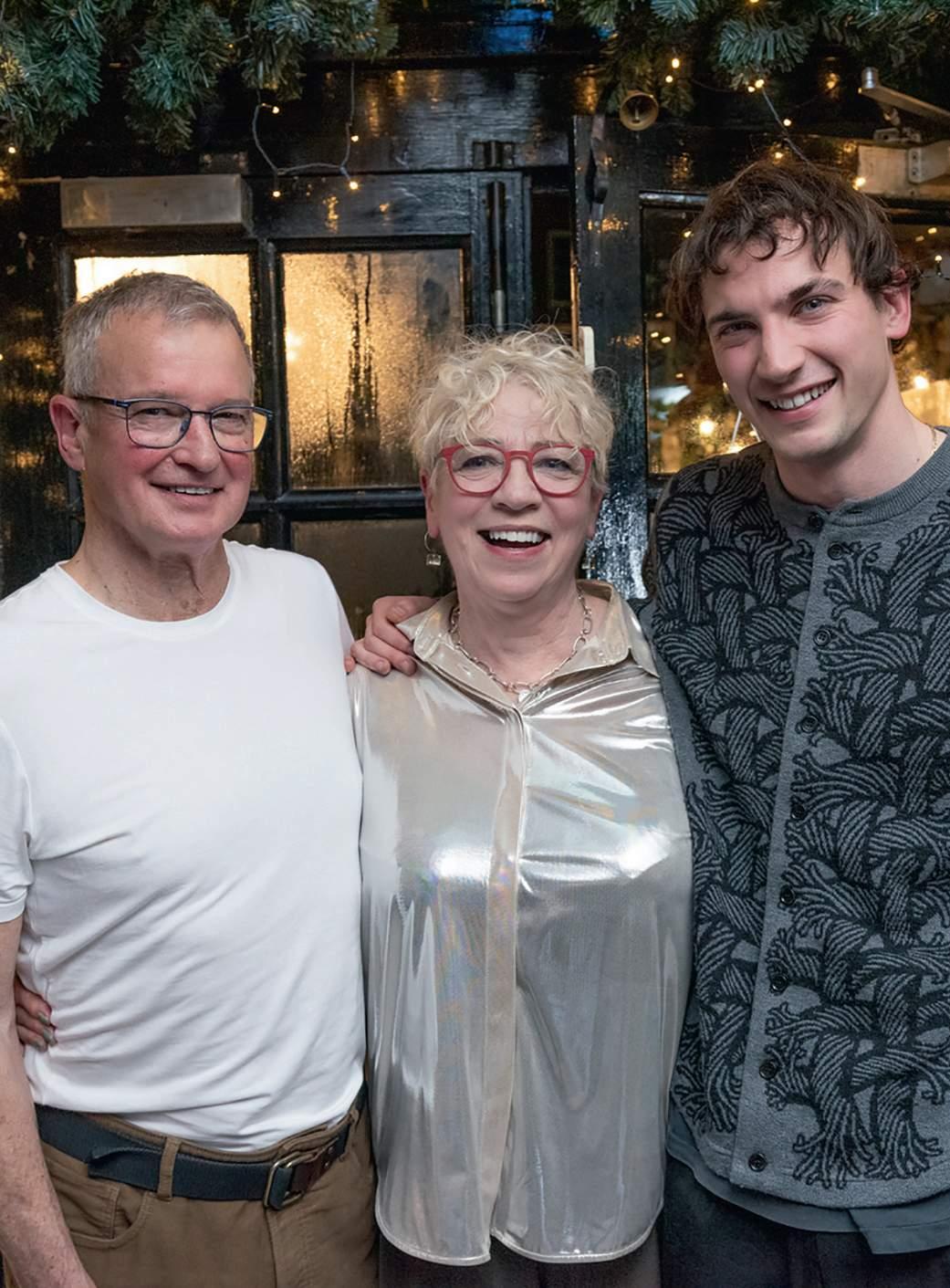
Meet Ann Remmers OBE, maternity and neonatal clinical lead at Health Innovation West of England, who was recognised in the King’s New Year’s Honours for her services to maternal and neonatal care.
I came to Bristol to do my midwifery training at Southmead Hospital in 1978 having trained as a nurse at Guy’s Hospital, London. I had visited Bristol often when my brother lived in Shirenewton, Wales, and always thought it was a lovely city.
I love the people here, the vibrant music and theatre scene, and the amazing restaurants! It’s a lively bustling city but also easy to get out into the country and to the coast, and it’s near Wales where I was born.
If I could change one thing, it would be to have more inner-city green spaces. The Downs are great and there are some lovely parks but more planting and greenery to offset the concrete would be wonderful.
I love going to Eastville Park, which in the shadow of the M32 is a gem in plain sight. With its large lake, loads of wild life and lots of different walks you can go to places like Snuff Mills, it’s one of my favourite places in Bristol.
I love live theatre; I think we are really lucky to have Bristol Old Vic on our doorstep. I have seen a number of plays there since Nancy Medina has been Artistic Director which have truly inspired me.
There are quite a few places I love to eat and drink at, but among my current favourites is Jean’s Bistro on Gloucester Road, which is a local eat in and take away family-run business serving amazing Thai food. It’s our go to when we don’t feel like cooking. Also, Pasta Ripena on St Stephen’s Street serves consistently delicious food and is a great, intimate venue.
When I need to escape the city, I just go over the Severn Bridge to the Wye Valley, where there are so many glorious walks along the river or climbing the hills!
I’m lucky enough to be a member at the Clifton Lido, so when I’m not working, I go there whenever I can to swim and relax, often with friends. I’ve just taken up knitting again and I’m a bit obsessive about caring for my house plants, as my friends will tell you…
Reflecting on my work as a midwife, and recent OBE, I’ve been really lucky to have a career in which I have been able to do a job that I love and one that brings joy to many people. It’s enabled me to work in a variety of roles and places. Most of all it’s always about the people, from the families I have cared for to the team I work with and the new friends I have made along the way.
I admire so many other Bristolians, but three who currently stand out for me are our incredible partners in Black Maternity Matters [where I am clinical lead]: Aisha Thomas from Representation Matters, Katie Donovan-Adekanmbi of BCohCo and Sonah Paton from Black Mothers Matter. They are awesome women!
healthinnowest.net | More information about Black Maternity Matters can also be found on the same website.


To mark 100 years of championing the countryside, CPRE Avon & Bristol has launched a £10,000 public crowdfunder to create a new Centenary Woodland Grove in the Avon Valley, just south of Bristol. The initiative will see 100 native trees planted on publicly accessible land near Pensford, forming part of the wider Great Avon Wood and the charity’s flagship Hedgerow Heroes campaign.
In an act of connection between culture and conservation, members of the Bristol Youth Orchestra will join local residents and volunteers to plant the Grove on Saturday 1 March, before returning to the stage later in the month to perform in CPRE’s Centenary concert, A Concert for the Countryside, at Bristol Beacon. The site, located off Parsonage Lane near the A37, will be open to the public year-round, offering an opportunity to witness the woodland’s growth over time and its impact on local biodiversity.
Find out more information about the Crowdfunding appeal and concert on the website cpreavonandbristol.org.uk
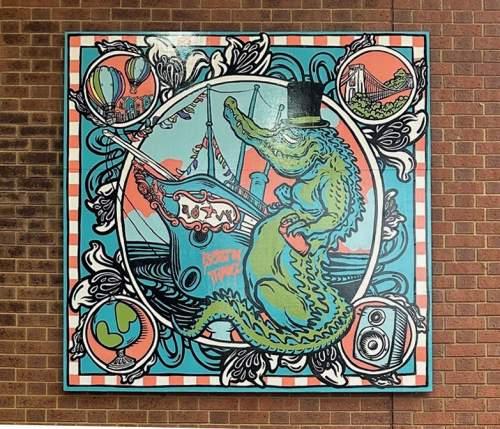
Have you spotted the mysterious and legendary ‘Bristol Croc’ yet? This time, he’s been immortalised in a street art mural at Cabot Circus by Lucas Antics.
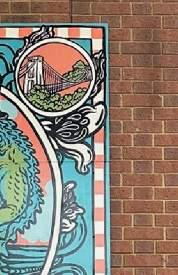
The top hat-wearing crocodile is a playful nod to Brunel, best known for designing the Clifton Suspension Bridge and the SS Great Britain. Both appear in the artwork, alongside other Bristol icons such as Concorde, the city’s colourful houses and hot air balloons. Commissioned by Visit West, the mural marks Bristol’s inclusion in the prestigious Best in Travel 2026 guide by Lonely Planet, as one of the top 50 destinations to visit this year. visitwest.co.uk | www.lucasantics.com

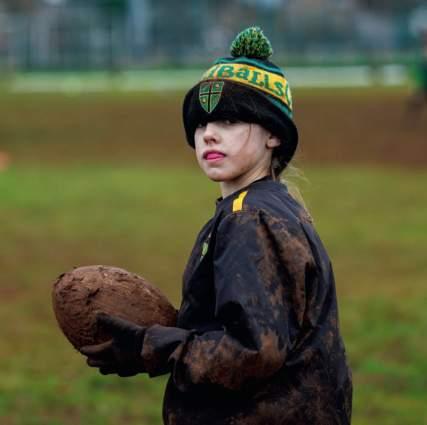
Bookings are now live for Bristol Bears Foundation’s Player Development Camps and Skills Masterclass sessions for the February Half-Term.
The Bears’ team of highly qualified and experienced Foundation coaches will lead engaging sessions for children of all abilities at North Bristol RFC, starting with a girls-only camp on Monday 16 February, before a two-day mixed camp 17-18 February.
Youngsters will gain an insight into how the professionals train, learn new skills and attributes, and take part in physical activity in a fun and relaxed learning environment. These camps provide an opportunity for rugby-mad kids to make new friends, enjoy team activities, improve their game understanding and become the best version of themselves. All participants also receive a free Bristol Bears t-shirt.
Later in the week, the Foundation will also be hosting two Skills Masterclass sessions at the Bears High Performance Centre. Participants will have the opportunity to step inside Bears’ world-class training facilities for a morning of coaching and development with expert Foundation coaches.
Open to girls in the U12-16 age group on Thursday 19 February and boys in the U12-U14 age group on Friday 20 February the Skills Masterclass sessions are designed to enable everyone to become the best version of themselves. For more information and to book, visit bristolbearsrugby.com

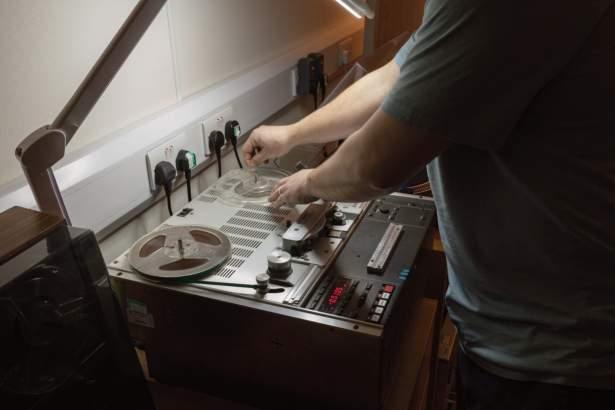
Bristol Archives has been awarded more than £1m from The National Lottery Heritage Fund for a new project to digitise and preserve more than 8,000 unique, rare and at-risk audio recordings from across the region.
Over the next three years the Sounds of the South West project will create access to at-risk audio recordings held in 24 different heritage organisations around the region, creating new opportunities for local communities to engage with their area’s past.
Bristol Archives, part of the Bristol Culture service in Bristol City Council, will lead the project in partnership with Archives South West, the regional network of local authority archives. Philip Walker, head of culture and creative industries at Bristol City Council, said: “We’re thrilled that The National Lottery Heritage Fund has chosen to support Sounds of the South West. Preserving audio heritage creates a brilliant opportunity for our communities to engage with their own social history. We are grateful to all National Lottery players, as the funding for this project means we can safeguard voices from the past and make them accessible for future generations, ensuring these stories and sounds are never lost.”
Bristol Archives’ Sound Room has the specialist equipment needed to digitise most audio formats produced in the last 100 years. With this funding, the Sound Room will be a regional resource in audio digitisation for the duration of the project and into the future. Once the recordings are in digital form, the project plans to share them as widely as possible. bristolmuseums.org.uk/bristol-archives

Moored in Bristol’s Floating Harbour, the MV Balmoral is taking on a new role beyond its history as a coastal passenger ship. Once defined by journeys around the UK, the historic vessel is now evolving into a cultural venue and community events space, hosting exhibitions, performances and creative exchange on board.
This month, the Balmoral becomes the setting for a new exhibition by HOME, a Bristol-based artist collective made up of artists with Caribbean heritage. Founded in 2025, HOME is a community-led initiative bringing together visual artists, spoken word performers and creative writers. The collective is co-led by Nia Samuels, Community Accountability Partner for the University of Bristol’s Reparative Futures programme, which addresses the enduring impacts of historical injustice on students and communities.
Developed in partnership with the Balmoral charity and My Future My Choice, the collaboration represents a step in establishing the ship as a permanent exhibition and cultural space. The exhibition opens on Thursday 27 February, with a gallery launch on board from 5pm to 7pm, featuring works responding to heritage, belonging and diaspora within the ship’s distinctive maritime setting.
From 7pm to 10.30pm, the opening continues with live music hosted by singer-songwriter Lady Nade (who will feature in an ongoing monthly music series), alongside musicians and spoken word artists including members of HOME. The exhibition runs through spring, leading into events connected to Diaspora Festival in May 2026, reinforcing the Balmoral’s transformation into a living, evolving hub for community, dialogue and contemporary culture. thebalmoral.org.uk | myfuturemychoice.co.uk


The Prince of Wales visited the Bristol Robotics Laboratory at UWE Bristol’s Frenchay campus recently to learn about the pioneering robotic technologies being developed to help the ageing and disabled population maintain mental and physical wellbeing and remain independent for longer. The Prince’s city-wide trip also saw him visit the UK’s strongest supercomputer Isambard-AI at the University of Bristol, and Matter – the organisation which was nominated for the Earthshot Prize 2025 (an initiative Prince William launched in 2021) for its groundbreaking filtration system designed to prevent microplastics from entering waterways and oceans.
uwe.ac.uk | matter.industries
The Clifton Suspension Bridge Trust has appointed Tristan Ralph as its new Bridge Master, who will take on responsibility for the operation, maintenance, and preservation of Bristol’s most iconic landmark.
As the new Bridge Master, Tristan will oversee the successful completion of the major refurbishment protecting the bridge’s 181-yearold suspension chains for another 20-25 years. He will also lead on the commissioning of a new energy-efficient lighting scheme. Tristan's priorities will also include reducing the effects of changing weather patterns on the historic structure, studying the impact of high wind speeds, and planning for the future.
Having lived in Bristol for more than 25 years, Tristan describes the Bridge Master role as “the ultimate job” for a bridge engineer. Balancing heritage and innovation will be central to Tristan’s approach in his new position. As the bridge is a Grade I listed structure, Tristan will represent the Clifton Suspension Bridge Trust in continuing to work closely with key stakeholders to ensure any interventions respect its historic character.
cliftonbridge.org.uk
(Photo by Jon Craig Photos)



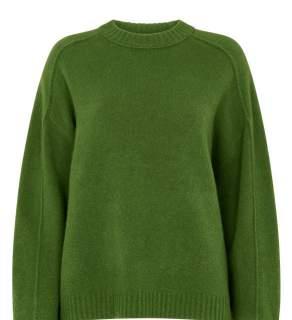
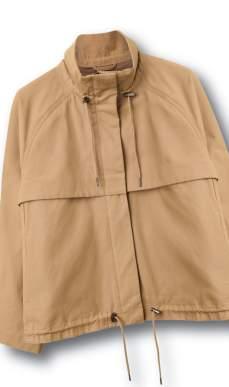
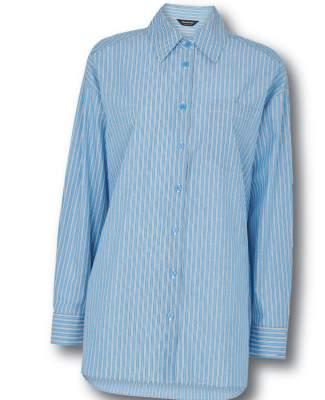
The Whistles Pre-Spring 2026 Collection has landed, with sleek, clean lines and multi-textured, layered outfits (from leather and suede to fringe detail and wool knits) stealing the sports stadium spotlight in its latest campaign... whistles.com






Reversible Quilted Jacket, £189.












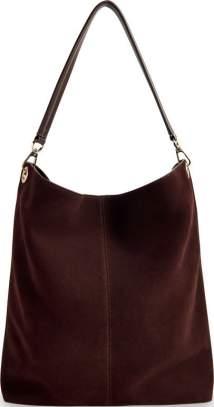


















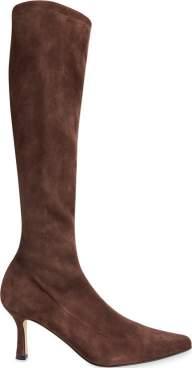





Hera Stretch Suede Boot
£299






































































Get your own award ceremony‐worthy glow this month with beauty buys that’ll leave you feeling confident and ready for the cameras (or for a night out in the city, of course). Chanel makeup is available locally at H Beauty, Boots and Harvey Nichols, and of course direct from chanel.com
A palette of four eyeshadows that features the most advanced innovation to enhance creativity. Its optimised formula unites a soft texture and an easy application to achieve maximum colour that is consistent and luminous. The shades come in a variety of effects: matte, satiny, iridescent or metallic. A practical and portable black lacquered case with a large mirror. Result: The four eyeshadows blend endlessly to define natural, intense, sophisticated or smoky eyes.


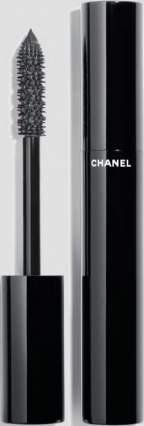
A mascara that offers instant volume from the very first stroke for longer, plumper and thicker lashes. Lashes are coated in deep colour, giving eyes a wide-open look. The perfect union of brush and formula for intense volume. The brush, which was developed exclusively for Chanel, sculpts volume thanks to its disks that are stacked and oriented for an impeccable finish. The quick-drying fluid formula helps build a customised volume result. Its composition includes a blend of waxes for instant volume; rapid-drying acacia gum to set the curl defined by the brush and intensify volume with each stroke; and filmforming agents to preserve the suppleness of lashes and offer an even volume result.
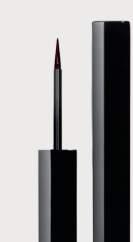
A liquid eyeliner with a flexible yet precise felt-tip applicator, for easy application in one stroke. Applied at the base of the upper lashes and the outer corner of the eye (for an intense look), it accentuates and elongates the eyes in one step. Its longwear formula forms a latex-like film on the skin, allowing you to extend the line as far as desired.
An exceptional complete skincare product enriched with Polyfractioned Vanilla Planifolia, which has a 40 times higher concentration of active molecules than the raw plant material. The formula's star active ingredient supports cellular revival.

A drop of vibrant rosy light to illuminate your complexion. With its radiance-boosting pigments, LE BLANC ROSY LIGHT DROPS adds a touch of pearly pink luminosity to the skin, customising your makeup with a made-to-measure glow. Applied after foundation, LE BLANC ROSY LIGHT DROPS gives the skin a fresh, healthy, natural rosy radiance. To use as a highlighter, apply to the high points of the face that catch the light: the cheekbones, bridge of the nose and chin, or you can apply a small amount to the entire face after foundation, for an all-over rosy glow.


The LE LIFT line's anti-ageing expertise is showcased in highperformance under-eye patches, featuring a formula enriched with low molecular weight hyaluronic acid. They offer a tightening effect on the eye area. Skin appears smoother, firmer and more luminous. Includes 10 pairs of patches
A natural-looking foundation that infuses the skin with the radiance of a day spent in the great outdoors. Its fine, silky texture glides over skin and forms a layer that is both invisible to the eye and imperceptible to touch, like a second skin. Its combination of light-reflecting powders and pigments makes the skin's texture appear smoother. Imperfections are diminished. The complexion is unified, without a trace. With its adjustable coverage and longwear formula, skin glows for 12 hours. The formula also protects skin from external aggressors such as pollution. Enriched with hydrating ingredients, it delivers a sensation of immediate comfort and hydrates skin day after day. Available in 41 shades.




A moisturising highlighting balm that imparts subtle radiance to the face. Its texture melts onto the skin and reflects the light. BAUME ESSENTIEL creates a glimmering effect that sculpts the face, enhancing both sophisticated makeup and the most natural looks. With its on-the-go format and elegant, understated design, it is easy to use on the face, lips and eyes all day long. Dabbed onto areas that catch the light (cheekbones, bridge of the nose, Cupid’s bow), BAUME ESSENTIEL creates a glimmering effect that sculpts the face. It moisturises lips and eyelids, while adding a subtle ray of light.


TURN YOUR UNWANTED JEWELLERY INTO CASH

Visit Terry Cox at Clifton Village Antiques, Unit 2, Clifton Arcade
If you wish to buy Diamond or Gold items – we will Part Exchange your 9ct Gold items at £48 per gram (current market value £35 per gram - at time of going to press)
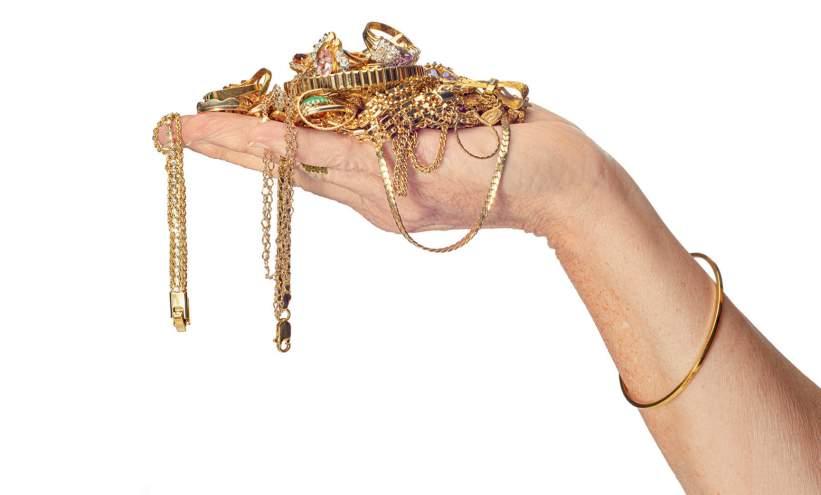
2 Clifton Arcade, Boyces Avenue, Clifton, Bristol BS8 4AA Tel: 07877 633 030




Slapstick Festival is gearing up for another side‐splitting programme of classic comedy that helped shape the funniest leading lights on stage and screen today. Rosanna Spence speaks to Lucy Porter, who’s presenting two events at the festival focusing on female comics, ahead of the launch of her own 18th solo stand‐up show in Bristol
Hi Lucy! You’ve been part of Slapstick many times over the years, and you’re regarded as a real festival favourite. What is it about Slapstick that keeps you coming back to celebrate classic onscreen comedy?
There are a few elements to it. Firstly, obviously, is the chance to spend some time in Bristol, which is always a joy and a delight. I have become a bit of a sort of regular fixture. They know my name at the hotel now, There’s a really good breakfast there, so that’s bit of a draw! But yes, I came to the festival years ago thinking, ‘Oh, I quite like Harold Lloyd, and I quite like Laurel and Hardy... this will be quite good fun’. And then through the years, I have become so much fonder and more knowledgeable about the world of silent movies. I’ve always loved the look of 1920s and 30s, the Hollywood glamour, and you get that in spades at this festival.
What I love is that at the most miserable time of the year, you sit in a darkened room looking at beautiful Hollywood mansions and people wearing furs and jewels and all of those wonderful things among lovely architecture. Or you’re transported to Russia in the 20s.
Slapstick Festival is basically total escapism, just sitting laughing in a room with a live musical soundtrack, which, again, is such a treat to get to see something where you’re getting not only laughs, but you’re also getting live music played by incredible musicians. It’s two for the price of one.
Slapstick’s slogan this year is: ‘Because laughter is a form of resistance’. What are your thoughts on that, does it resonate with you and do you bring that into your own life and work?
Everyone thinks of Charlie Chaplin as the lovable clown, but his work was incredibly subversive and kind of anti-capitalist. So, you look at things like The Great Dictator and City Lights and, even when it wasn't explicitly political, quite a lot of slapstick is about the little guy being trampled by the system and getting his revenge. A lot of early slapstick does focus on the more downtrodden members of society – it can be very egalitarian.
I am someone who likes silliness, and in my own comedy, I’m very, very silly. But sometimes you can slip a little barbed comment in underneath, or you can do something that just gently reminds people that all is not okay with the status quo. And that’s what I really enjoy about the slapstick stuff: it isn’t as harmless as it seems to be. Especially because now people think, ‘oh, it’s all from the 30s and things are different now’. But of course, there are horrifying echoes of the 1930s in the current political landscape. In bleak, political times, it’s good to have a laugh, but it’s also good to bear in mind that what unites us is humanity, humour, kindness and empathy – and all of those things that really come through in films that we watch.
One of the events you’re presenting this year is of course Queen of Slapstick: Louise Fazenda – were you already a fan of Louise
or have you developed a new-found connection to her work?
I was vaguely aware of her. She featured peripherally in things that I’ve done, because she was in Mack Sennett’s crew – who was one of the huge names in slapstick – but we’ve not hosted an event solely focusing on her before. I’m looking forward to going through Her Torpedoed Love and Hearts and Flowers. But as with all interesting things, I’m going down a real rabbit hole discovering more about her work and who she’s worked with, then I go and find out more about them. It creates a lovely paper trail of delicious crumbs that leads me onto the next thing.
And the other event you’re featuring on shines the spotlight on remarkable female partnerships in comedy. How does it feel to be able to keep the legacy of these classic on-screen female comedians alive?
I’ve discovered a lot of really brilliant female stars that I hadn’t heard of previously, but in Before and Beyond Laurel & Hardy we’re also revisiting some of the female double acts we’ve talked about a few times over the years, like Marion Byron and Anita Garvin, who were meant to be the female answer to Laurel & Hardy. →


Over the years, I’ve talked about people like Marion Davis, the Talmadge Sisters, Clara Bow and Louise Brooks and all these incredible women who have sadly become slightly less famous now than they were, because they were all huge at the time. They’re slightly more lost to history than some of their male counterparts.
It’s really interesting how important women were in early Hollywood – they did direct, they did write and they did star, and you know, then we kind of lost that over the years. But now you look at people like Chloe Zhao up for major awards for directing Hamnet. There are so many female directors and women are seizing the reins of power in film again. So it’s quite nice to say to people, ‘This isn’t brand new, it was happening in the early days as well.’
Is there one comedian from any era that you wish you could sit down and have a cup of tea or a glass of wine with, who would it be and why?
Any of the female silent stars of the 1930s. I think my favourite would probably be behind the scenes, actually, so Anita Loos, who was one of the great silent film writers. And then she went on to write the book Gentlemen Prefer Blondes, which is one of my favourite books, and inspired one of my favourite movies of all time. She was just a huge gossip, quite bitchy, and she knew everybody. I think that she would be hilarious, and I would love to have a cup of tea with her and find out all about what really went on in Hollywood in the early days.
You’re also busy launching your own tour here in Bristol early February. Let Yourself Go is your 18th solo show and its themes are about embracing change, so has your own creative process changed over the years?
Obviously, I wanted to start the tour off in Bristol, because the Bristol audiences are the best in the world, and the Hen & Chicken is a crucial venue for me – lovely food, a very nice bar and good toilets, which is increasingly important for me.
I definitely do things very differently now, because I used to torture myself for years and years and years, sitting down at a computer, trying to write things and thinking I had to have a script. Now, I write down little keywords because my memory is terrible so I wouldn’t remember everything, but I definitely busk it a lot more.
My self-confidence has massively increased as I’ve got older, which is a lovely thing. Look forward to that, because there are lots of bad things about ageing, but I think you just become very much more confident and quite self-assured about who you are, and less prone to outside influences and things like that. So now I just do things my own sweet way, and I wing it a lot more, and trust that I’ll find funny things I need to say on the night.
You’re about to set off on a huge, rather long tour – what do you love the most (if anything) about touring shows like this, and are there any life hacks you’ve picked up along the way that make life on the road a little easier?
I have an old-lady touring schedule now, with a couple of days off in between shows. I take it very easy and don’t push myself too hard. These days, I go on tour absolutely armed to the teeth with home comforts: I bring my own teabags for special herbal tea and I travel with a jigsaw neatly rolled up so I can take it out anywhere. I also go to a lot of Toby Carveries because they’re reliable; I’ll go around four or five o’clock, which sees me through to the end of the show.
Wherever possible, I try to get a hotel room with a bathtub so I can end the night with a luxurious bubble bath. In the past, I’d have been going out, getting drunk, and discovering the nightclubs of whatever town
I was in. Now, I discover garden centres in the afternoon and unwind with a hot bath at night. There are good and bad things in both. When you’re young, you should enjoy yourself to the fullest; later on, you find just as much enjoyment in a hot bath as you once did in a sweaty nightclub.
You’ve contributed a huge amount to Bristol’s cultural scene over the years, often in the realm of championing women – from literature to comedy. What is it about our creative scene here that you particularly like getting your teeth into?
Oh, there’s a vibe like no other. Bristol and Norwich are my two favourite cities in the UK. Bristol has just lovely people and incredible creativity. The Aardman studio is obviously very involved with Slapstick Festival and I would argue that Aardman is one of the greatest ever British contributions to world culture, with such an incredible ethos behind it as well; it’s about nice people making really intricate and well-thought-outthings with lovely, positive messages.
And there’s just so much street art in Bristol as well – everywhere you go in you just see beautiful things that people have created just for the joy of other Bristolians. And the mindset here is not grind set as you get in other cities, it’s a bit more relaxed. Maybe people here have a bit more of a sense of humour about themselves. n
Tickets are still available for Slapstick Festival, taking place at various venues from 4-8 February. For more info on Lucy’s events and other shows, visit slapstick.org.uk. Lucy will also perform Let Yourself Go at Hen & Chicken on 6 February, for tickets visit henandchicken.com







Locally‐produced documentary Ocean with David Attenborough is being brought to life on stage as a performance with a live orchestra, premiering in Bristol this month and marking the celebrated filmmaker’s 100th year as he reflects how his lifetime has paralleled a “golden age of ocean discovery”
Is there any greater national treasure than Sir David Attenborough? Although he doesn’t live in Bristol, our city’s deep ties to natural world storytelling through TV and film means that one of the world’s most feted documentarians will always have a close connection to our region – and the visionary minds behind the lenses, too. And nowhere will this relationship be more evident than at a very special performance of the 2025 release Ocean with David Attenborough, which is swimming off screen and onto the stage at Bristol Beacon on 24 February for the premier performance of Ocean in Concert with the Welsh National Opera Orchestra.
It features award-winning composer Steven Price’s (Gravity, The Hunt, Our Planet, David Attenborough – A Life on Our Planet) original Ocean with David Attenborough score — which last year won the highly coveted Original Music Score award at the Jackson Wild Media Awards, the highest honour in natural history filmmaking celebrating excellence in conservation storytelling. The score is performed live by orchestra in perfect synchronisation with the film’s spectacular imagery. Conducted by acclaimed Robert Ziegler and joined by a vocal ensemble, Price’s epic score captures the drama, savagery, and beauty of the ocean’s underwater world magnifying the film’s impact, amplifying both its wonder and its urgency.


Bristol at heart
Ocean with David Attenborough was co-produced by the multiple award-winning Bristol-based Silverback Films and Open Planet Studios, released globally in May last year to coincide with Attenborough’s 99th birthday; Ocean in Concert marks Sir David Attenborough’s centenary year by bringing to life the message closest to his heart and his defining legacy.
Ocean’s two co-directors Toby Nowlan and Keith Scholey (who live and work in our city) have both worked with Attenborough for many years, and understand the film’s power and significant impact, both in terms of critical acclaim and political influence.
“‘We at Silverback Films and Open Planet Studios are so delighted that Ocean with David Attenborough is coming to Bristol in concert,” Keith told The Bristol Magazine. “This film was a great privilege to make, and we are delighted that it has been seen by so many people either in cinemas or on National Geographic. Even more exciting is that it has brought about real positive change to ocean conservation around the world.” Ocean indeed does has a powerful environmental message, which is deeply personal to Attenborough: “After almost 100 years on the planet, I now understand the most important place on Earth is not on land, but at sea,” the great man himself has said.
Silverback Films and Open Planet Studios take viewers on a breath-taking journey showing there is nowhere more vital for our survival, more full of life, wonder, or surprise, than the ocean.
Like all previous Attenborough documentaries, it is jaw dropping in its scope and beauty, yet as the film’s co-director Toby points out, it is not a typical Attenborough film: “This is not about seeing brand new natural history behaviours. It is the greatest message he’s ever told.”
Ocean reveals that nowhere is more vital to life, or more full of wonder, than the ocean. Attenborough reflects how his lifetime has paralleled a golden age of ocean discovery, revealing how a healthy ocean sustains life on Earth. Stunning cinematography of coral reefs, kelp forests, and the open sea captures not only the ocean’s beauty, but dramatically portrays the brutal threats it faces from destructive fishing and mass coral bleaching in never-before-seen footage. “We planned to use the film as the most powerful tool to show decision makers why protection is good for everybody,” explains Toby. “We had the science, we had the economics, all the stuff for the brain, we got it covered. But what the film does is it speaks to the heart.” Ocean was released to coincide with the UN Ocean Conference (May 2025) to try to influence some commitment. “The hope is real,” Toby adds, “Through making this film we realised that the ocean is capable of spectacular recovery, more than any of us dreamt possible. It's a different process with the land in that if you protect the ocean, it recovers bigger and faster and fills the surrounding areas with life again... By protecting a third of the ocean, we can fill the sea with life again and that has to be a win for everyone on Earth: a more stable climate, a more breathable atmosphere, booming coastal fishing economies and more marine life.” Attenborough’s message in Ocean remains one of optimism and hope: that our waters have the potential to recover to a glory faster than we had ever imagined. n
Ocean in Concert is at Bristol Beacon on 24 February. Tickets were still available at the time of publishing. Watch Ocean with David Attenborough on National Geographic, Disney+ and Hulu streaming platforms.
bristolbeacon.org | silverbackfilms.tv | wno.org.uk
Our guide to the best things to see and do this month
Lucy Porter: Let Yourself Go n 6 February, 8pm
Hen & Chicken, BS3 1JF
Lucy Porter returns with a brand new show about the power of letting yourself go – in every sense. Whether that means embracing your wrinkles and love handles while living in a slanket, or having a couple of Babychams and dancing like nobody’s watching (and if you’re a middle aged woman, they’re probably not). It’s also about letting go of the person you’ve always thought you are, and using your midlife crisis to pursue new goals and reinvent yourself. henandchicken.com
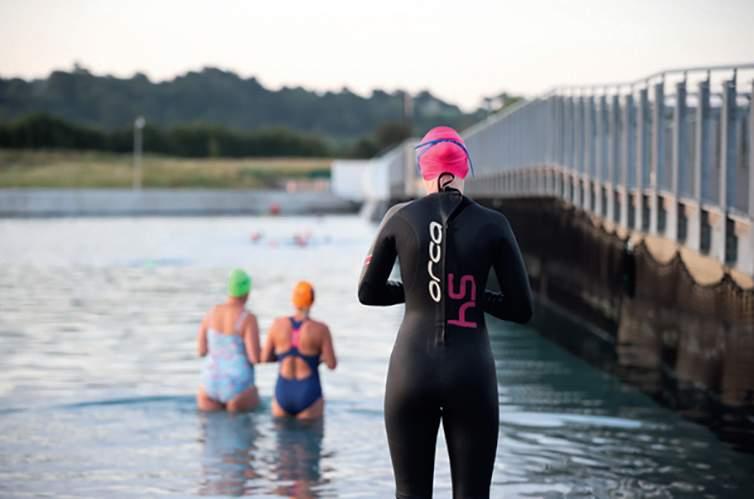
Cold Dip for St Peter's Hospice n 8 February, 11am, 11.30am, 5pm & 5.30pm
The Wave, BS35 5RE
Get ready to take the plunge for a wonderful cause! The Wave working with St Peter’s Hospice to host a cold water dip like no other. For those looking for a thrill, join for a morning dip and get amongst the waves. If you’d prefer a calmer session, select an evening dip for a peaceful swim under the lights in the still water. stpetershospice.org
Jelli Fest
n 8 February, 2.30pm
Hen & Chicken, BS3 1JF
Jelli Records is raising money for the charity Brain Tumour Support (a cause close to its heart) with a day of music at Hen & Chicken. Jelli Fest will be packed with acts including Taynee Lord, Katey Brooks, The Kahunas, AD Scruffs, Onika Venus, Harriet Annabell, Paul & Caitlín from Roving Crows, Brian Inglis and Gordon Wood. Tickets at £15 per person in advance online from headfirstbristol.co.uk.
North St Games Night
n 10 February, 7pm
Tobacco Factory, BS3 1TF
Play games all night for just £2, plus get entry into a prize draw. Here are the rules: let the organisers know how many of you there are and what type of games you like and they’ll pop you with like-minded gamers; you can bring a game you own and do a shout out for players either when you arrive or before the event on social media; show up with some friends, grab a game from the two dozen or so games the organisers have brought along and play; if there is anything specific you’d like to try, let the organisers know, as they
have access to a very large number of titles. For more info visit tobaccofactory.com
The Shape of Water n 12 February, 6pm
The Mount Without, BS2 8FN
For those of you looking for something a little different to the usual romcom February fare, Bristol Film Festival presents the master of modern Gothic fantasy Guillermo del Toro’s film The Shape of Water. This dark and romantic tale of a forbidden relationship was only the second fantasy film ever to win the Oscar for Best Picture. bristolfilmfestival.com
Dearly Beloved: Alternative Market n 14-15 February 11am until 3pm Arnos Vale Cemetery, BS4 3EW Step out of the ordinary and into the shadows for Haunts Curiosity Shoppe’s Dearly Beloved: Alternative Market! Where dark romance reigns. Shop for unique, handcrafted treasures, bewitching jewellery, alternative apparel, eerie art and treats for your valentine. The Café will be open from 10am-4pm selling delicious seasonal food and drinks, and the Arnos Vale shop will also be open from 10.30am-4pm selling local and unique gifts. arnosvale.org.uk
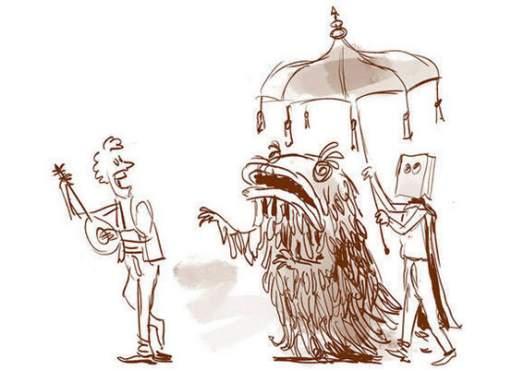
The Fishponds Beast n 15 February, 5pm Eastville Park Lake (the eastern edge) An age-old local tradition will return to Eastville Park this month. As evening falls on the banks of Eastville Park lake, people will gather, bringing pink Shame Lanterns as well as their most embarrassing memories from the year written on little slips of paper. Expect drummers, a fire pit, and the opportunity to place your most embarrassing admissions into the passing beast’s mouth, ready to be destroyed for another year. fishpondsbeast.com
Power Town Fest
n 15 February, 1pm-11pm
Strange Brew, BS1 3DB
Power Town Festival is a full-day, family-friendly celebration of music, culture and community, created to champion Black and Global Majority artists and celebrate African and Caribbean culture in Bristol. The festival is delivered by Creative Power Town, a Black-led organisation based in St Paul’s, with a strong focus on turning community talent into professional opportunity. The festival will be headlined by Donae’o, one of the most influential voices in UK music, alongside Kenny Allstar of Radio 1Xtra and Kwazy fresh from Glastonbury Festival. strangebrewbristol.com
Knowle West Literacy Project: Jack Payne and the Abormality n 15-16 February
Tobacco Factory Theatres, BS3 1TF
Shooting Fish Theatre Company presents an evening celebrating original work created in Bristol through the Knowle West Literacy Project, supporting the development of young people’s skills through creative writing and performance and working in partnership with Knowle DGE Academy. As well as gaining insight into how a theatre show is created, it has given SEND young people genuine work opportunities with theatre professionals to co-create all the elements of this show, including developing characters, script, casting, designing and making the set, sounds and lighting. tobaccofactorytheatres.com
Philosophy Salon: Bending The Truth Until It Breaks n 22 February, 4.30pm
St George’s Bristol, BS1 5RR
Raynor Winn’s The Salt Path was a best selling memoir, later adapted into a Hollywood movie starring Gillian Anderson and Jason Isaacs. But in 2025, an article in the Observer by journalist Chloe Hadjimatheou questioned the accuracy of the narrative, sparking a controversy that rumbles on today. Hadjimatheou will be discussing the nature and importance of truth with writer Lily Dunn, hosted by philosopher-in-residence, Julian Baggini. stgeorgesbristol.co.uk
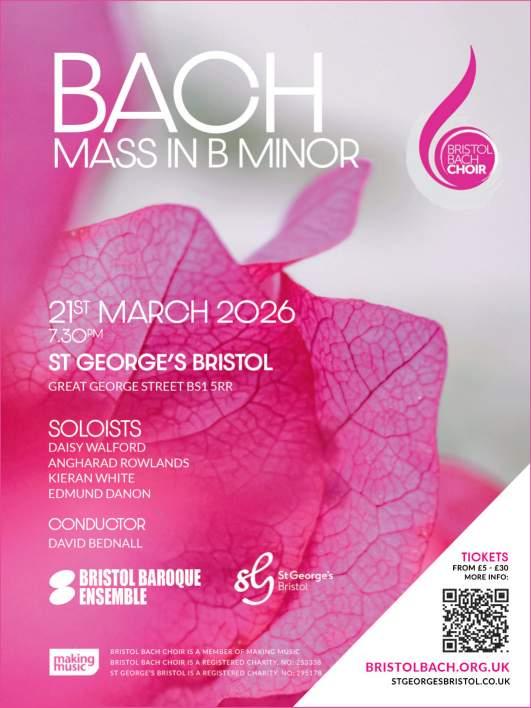
J.S. Bach’s St Matthew Passion n 28 February, 7pm
St George's Bristol, BS1 5RR
Exultate Singers joins forces with Bristol Ensemble Baroque to perform J.S. Bach’s St Matthew Passion, one of the most extraordinary works in the choral repertoire. Peter Davoren (BBC Singers, Tenebrae) sings the role of the Evangelist, and bass Frederick Long (I Fagiolini) sings Christus. Tickets £18 to £30 from St George’s box office on 0117 929 4929 and stgeorgesbristol.co.uk
The Fishponds Beast is hungry for your shameful admissions...

Our pick of the best things to see and do with the little ones this month

Playtime! The Enchanted Forest n 12 February, 10am & 11.30am
Redgrave Theatre, BS8 3LE
Head along for a fun, relaxed participatory theatre session with The Last Baguette theatre company. There’ll be silliness, play-acting, games and music... Expect to play, move, watch and laugh. Join Ratty and her friends for a fun and gentle introduction to theatre with play-along storytelling, original music, puppetry, theatre games, movement, and lots of imaginative play. Ratty has a lot of ideas but sometimes things don’t go according to plan... can you help her by playing along and working together? redgravetheatre.com
We’re Going on a Lion Hunt n 14 February, 11am Circomedia, BS2 8SJ
DragonBird Theatre is very excited to be bringing this American folk song to life at Circomedia, with singing, theatre and play. They’ll be hunting through swishy grass, mud, trees, a river full of fish and an exciting snowstorm! Are you up for the adventure? Get your welly boots and binoculars ready and join in! This interactive early-years show is perfect for ages 0-5 and their grown-ups. Please book a ticket for every adult and child attending. circomedia.com
WALL•E at The Planetarium n 14 February, 6.30pm
We The Curious, BS1 5SZ
Due to demand, Bristol Film Festival is presenting another screening of the perennial favourite WALL•E. This delightful sci-fi misadventure is both an epic voyage into humanity’s future, and a nod to silent comedy cinema. Explore the Planetarium’s space gallery before the screening and see if you’re cut out for a life in space, then recline in this unique screening space. As the lights dim, your journey will begin with a tour of

the Solar System in a Planetarium star show... the perfect way to set the scene for your film. bristolfilmfestival.com
Superhero Engineers
n 14 February until 22 March
Brunel’s SS Great Britain
Is it a bird? Is it a plane? No – it’s a Superhero Engineer! We all know that engineering has shaped our world –but how many of the great engineers can you name? This February halfterm, computer scientist Tim Berners-Lee, NASA legend Mary Jackson and – of course – Bristol’s favourite adopted son, Isambard Kingdom Brunel, are waiting for you to climb aboard the SS Great Britain and discover their hidden powers. Marvel at Ada Lovelace’s mathematical magic, ignite your imagination with Tesla’s electrifying discoveries, and embrace your own superpowers along the way!
Lambing Live


n 14-22 February
Avon Valley Adventure Park, BS31 1TP
Avon Valley Adventure Park will have ewes ready to lamb every day over the half term, with shepherds giving talks throughout the day about the lambing process and lots of super sheep facts. There will also be bottle feeding demonstrations with pet lambs in the maternity ewe-nit. Other activities open during the off-peak opening include the indoor play barn, mini golf, quad bikes, pedal go-karts, silent disco, mini railway and much more. avonvalley.co.uk
Boxville
n 17-21 February
Bristol Old Vic, BS1 4ED
Work with the Boxville engineers to craft-along with the story and build your own way through the tasks and trials of Boxville, earning everything you need to become a fully fledged cardboard engineer! Using designer Sam Wilde’s trademark sustainable cardboard puppet style you will travel to a land made entirely from sustainable cardboard, meeting paper dragons, corrugated crabs and cardboard space robots in this STEM skilled, hands on, interactive, cardboard adventure. bristololdvic.org.uk
Lunar New Year celebrations n 21 February, 11am & 1.30pm
Wai Yee Hong, BS5 6XX
Welcome the Year of the Horse at this free event featuring two sessions of dance and martial arts performances, as well as the traditional lion dance. Acts include UWE K-Pop Dance Troupe, Clevedon School Elite Dancers, Yi Quin lion dance troupe and Bath Taekwondo.



Mounira Al Solh: A land as big as her skin, 28 February until 24 May
This major new solo exhibition from Lebanese artist Mounira Al Solh poignantly and playfully navigates a multitude of complex themes such as identity, migration, trauma, inequality and gender, through her deep love of mythology, craftsmanship and materials. A land as big as her skin includes
Mounira Al Solh’s critically-acclaimed Venice Biennale pavilion installation A Dance with her Myth from 2024, which takes visitors on a journey through ancient history and Middle Eastern mythology to contemporary times, asking existential questions about the cycle of life and death and the fate of women: “I think it’s important that we as women, are able to represent ourselves, and correct that image of the victim or the object where we were trapped for centuries.” Mixing everyday life with ancient mythology, Al Solh works across a range of mediums and materials, encompassing painting, sculpture, film, performance and textiles within her practice.
arnolfini.org.uk | 16 Narrow Quay, BS1 4QA
Image credit: A portrait of
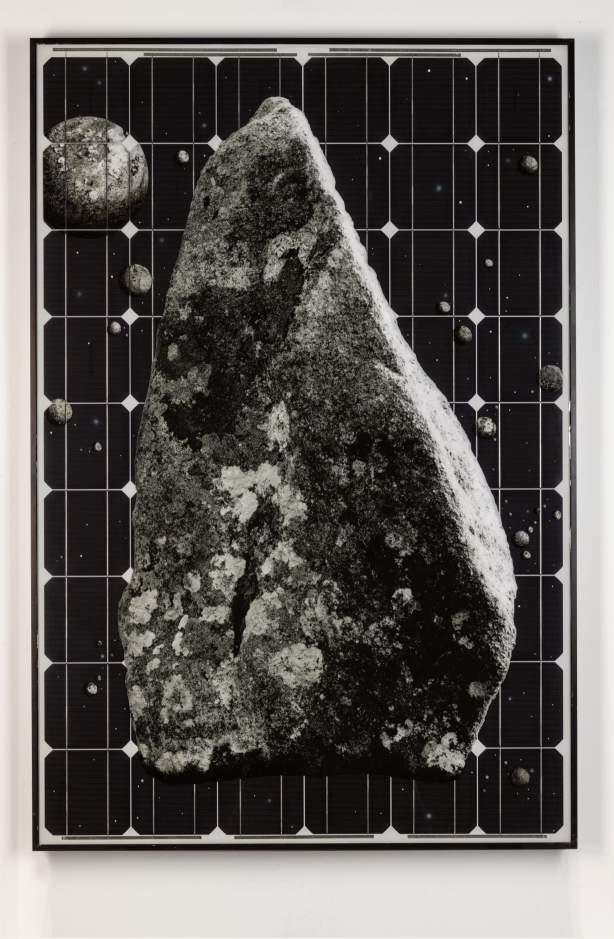
Cosmos: the Art of Observing Space at Royal West of England Academy, until 19 April
This major exhibition, delivered in partnership with the Royal Astronomical Society, explores humanity’s enduring fascination with the cosmos through an extraordinary blend of historic artefacts and contemporary artworks.
Cosmos brings together works by celebrated artists including Yinka Shonibare RA, Christopher LeBrun RA, Wolfgang Tillmans and RWA Academicians, alongside compelling pieces by established and emerging artists. Visitors will experience a wide range of artistic responses to Space through painting, sculpture, photography, installation and digital media.
Cosmos: the Art of Observing Space offers a unique journey through time, imagination and enquiry – inviting visitors to experience the awe, wonder, and curiosity that the cosmos continues to inspire.
rwa.org.uk | Queen’s Road, Clifton, BS8 1PX
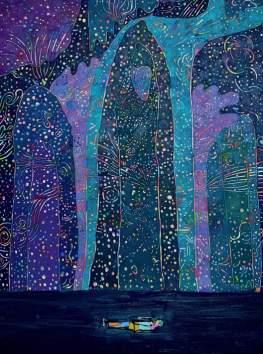
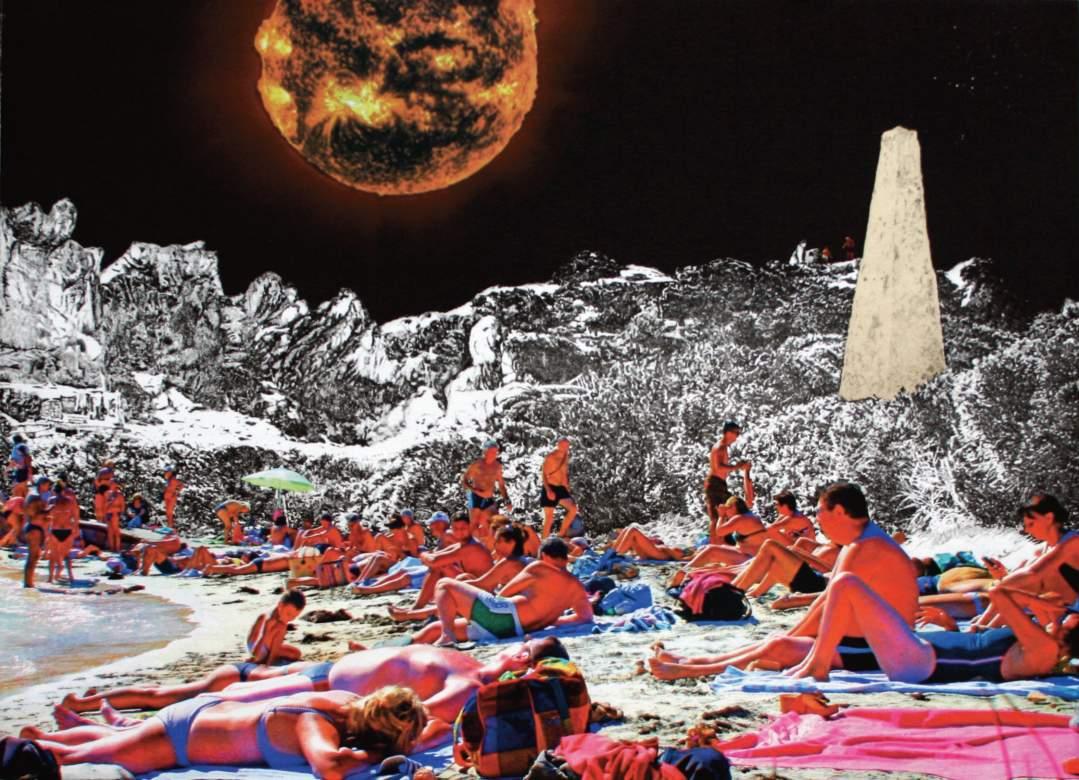
Images (L-R): Fusion by Ione Parkin; The Unending Sky by Tom Hammick
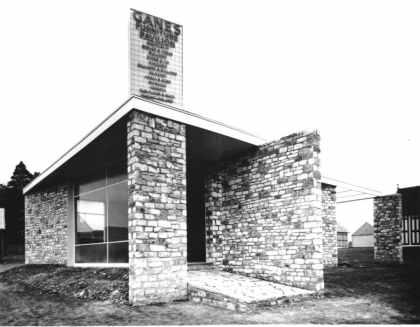
Bauhaus, Breuer, Bristol at The Stradling Collection, until 17 May
Bristol takes centre stage in a major new exhibition celebrating Modernism and the city’s surprising role in shaping its legacy. Bauhaus, Breuer, Bristol at The Stradling Collection explores the collaboration between local furniture innovator Crofton Gane and modernist architect and designer Marcel Breuer. Marking the 90th anniversary of Breuer’s 1936 Agricultural Pavilion, the exhibition reveals how Bristol became a testing ground for radical design. Highlights include Breuer’s transformation of Crofton Gane’s Clifton home, original furniture, and architectural models. This exhibition will feature a vibrant programme of curator tours and workshops, designed to spark new conversations about design, history and Bristol’s cultural identity.
Visit stradlingcollection.org for more information 48 Park Row, BS1 5LH


Wildlife Photographer of the Year 2025 at Bristol Museum & Art Gallery, until 26 April
There’s still time to see the 61st instalment of the Wildlife Photographer of the Year exhibition if you haven’t yet, so don’t miss this unforgettable journey into the wild. This globally-acclaimed showcase features 100 awe-inspiring images that reveal the hidden stories of our planet’s wildlife and comes to Bristol from the Natural History Museum in London. Selected from over 60,000 entries submitted by photographers of all ages and backgrounds from 113 countries and territories, these photographs are windows into the complex, fragile and magnificent ecosystems we share.
From intimate glimpses of rarely seen animal behaviour to sweeping landscapes that stir the soul, each image invites us to reflect on our connection to the natural world.
This year’s exhibition is a powerful call to action. Through the lens of the world’s finest nature photographers, it highlights the urgency of conservation and the beauty worth protecting.
bristolmuseums.org.uk | Queens Road, BS8 1RL
Image: © Gabriella Comi, Wildlife Photographer of the Year

The Royal West of England Academy has its eyes on the sky this year, with major new exhibition Cosmos: the art of observing Space exploring humanity’s enduring fascination with the cosmos through an extraordinary blend of historic artefacts and contemporary artworks
Humans will always have a sense of wonder about the secrets held in the skies above. Trying to understand the universe, even the smallest amount, has fuelled scientific discovery and creative endeavours for millennia, as we attempt to comprehend the unfathomable nature of all things.
Cosmos: the art of observing Space, the major new exhibition that’s showing at the RWA until 19 April, brings together historical objects and works by celebrated artists including Sir Christopher Le Brun PPRA Hon. RWA, Cornelia Parker CBE OBE RA and Wolfgang Tilmans RA, alongside compelling pieces by established and emerging artists. What awaits is a huge range of artistic responses to Space through painting, sculpture, photography, installation, and digital media.
Curated by Ione Parkin RWA, Cosmos: the Art of Observing Space also features rare treasures from the archives of the Royal Astronomical Society, National Maritime Museum and other collections. Highlights include historical drawings of the moon, celestial globes, a historic meteorite, and intricate star maps, showcasing the deep interconnection between art and science in our quest to understand the universe.
Delivered in partnership with the Royal Astronomical Society, Cosmos: the Art of Observing Space offers a unique journey through time, imagination, and inquiry… inviting visitors to experience the awe, wonder, and curiosity that the cosmos continues to inspire.
“Cosmic familiarity and awe”
The exhibition catalogue features a foreword by Professor Chris Lintott, astrophysicist, author, and co-presenter of Sky at Night, offering rich insights into humanity’s long-standing fascination with space:
“Many of the artworks in the Cosmos exhibition put our human experience – with all its humour, wit and brio – in the context of this combination of cosmic familiarity and awe,” writes Professor Lintott. “I hope that in spending time with them, you feel a little more connected to our surprising and beautiful Universe, and that perhaps after wandering through it…you feel a little more connected to our cosmic environment. As the great and strange philosopher and science fiction writer Olaf Stapledon wrote: ‘The goal of all living [is] that the cosmos may be known, and admired, and that it may be crowned with further beauties.’
“The combination of science and art you will find [at this exhibition] seems to me to be exactly what he had in mind.”
Additional essays by leading contributors, including Sian Prosser, Librarian and Archivist at the Royal Astronomical Society, and Professor Amaury Triaud, University of Birmingham, further enrich the context. The catalogue will be available for purchase throughout the exhibition.
Dr Sian Prosser, librarian and archivist at the Royal Astronomical Society, says: “We are delighted to be partnering with The Royal West of England Academy for what promises to be an awe-inspiring exhibition.
“From historical star maps to sketches of the Moon, the many artefacts on display offer us a glimpse into how astronomers of the past observed the night sky, while also showcasing just how powerful the universe can be in capturing humanity's imagination.”
Dr Kathryn Johnson, RWA’s head of exhibitions, adds,: “Ione Parkin RWA has brought together a dazzling range of over 100 works from the last 400 years. The exhibition is a brilliant and spectacular fusion of art and science. And although we can’t claim any inside NASA knowledge, we’re excited to be launching it in the same year as the planned Artemis II mission to Moon!”
Inspired by Cosmos, SpaceLab will take over the Link Space (between 3 February and 22 March) with free interactive exhibits set to ignite curiosity and creativity. Children, families and carers are invited to embark on a fun, inclusive journey through the arts and sciences.
From building your own ‘star-gazing’ den and crafting aliens to creating felt solar systems, these activities available have been designed to be fun, tactile and deeply engaging. Budding artists can also dive deeper in an Art Skills workshops, where you’ll discover techniques like marble printing and other printmaking methods to create your own stunning galaxies.
Also complementing the exhibition is a special musical performance on 20 February: Music for Cosmos. This collaborative event will see postgraduate students from the University of Bristol perform new compositions specially written in response to the artworks featured in the exhibition, taking place at different locations in the main galleries, with the soloists performing next to specific artworks.
And running for three weeks from 4 March, Dr Justine Hopkins will deliver the lecture series The Truth is Out There: Modern Art & Cosmic Mystery, looking at the many different ways in which artists have worked alongside the science of their times to express the inspiration of that which lies beyond the skies we see. Each evening will kick off with a half hour tour of the Cosmos exhibition, led by Justine and focusing on specific artworks which complement the themes of the evening’s lecture. The three sessions are linked, but each is also complete in itself and can be enjoyed separately.
We can’t wait wonder at the universe’s majesty and mystery through the intersection of art, science and history at the RWA over the coming months – see you there. n
Cosmos: the art of observing Space is at RWA until 19 April. For more information on entry, and to book the events mentioned here, visit rwa.org.uk
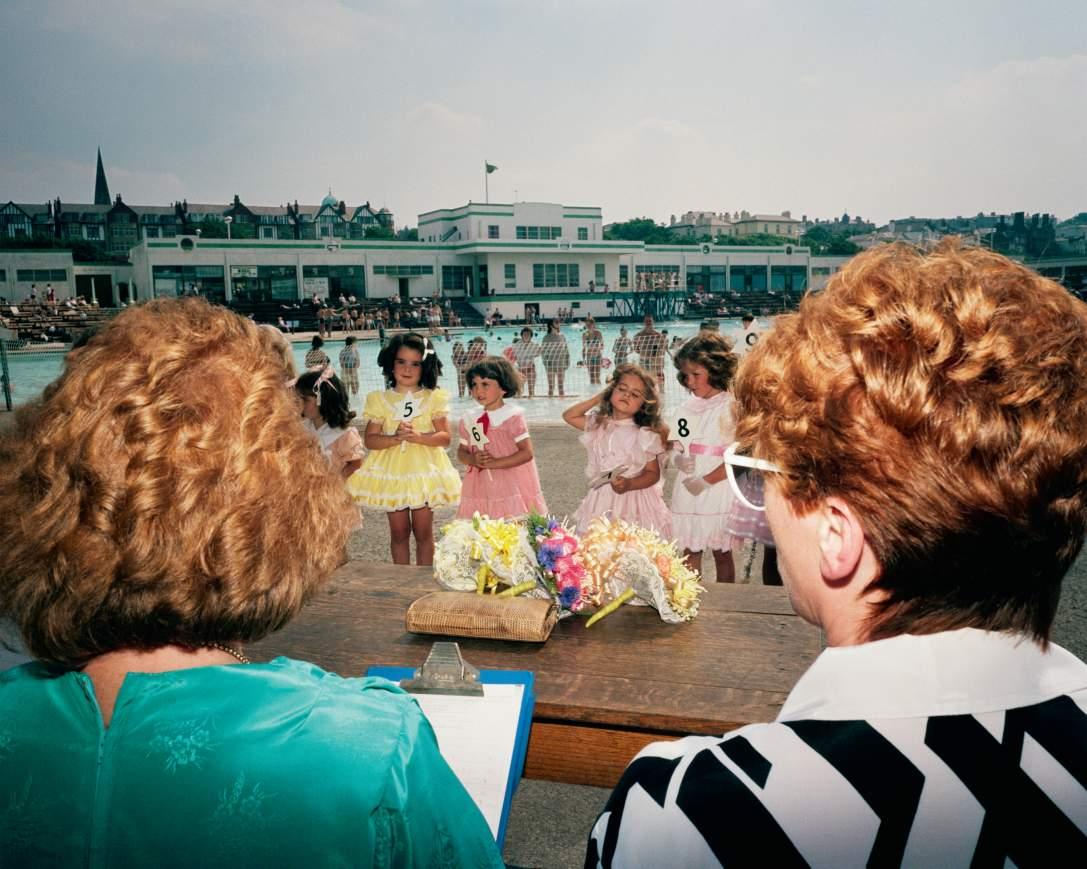
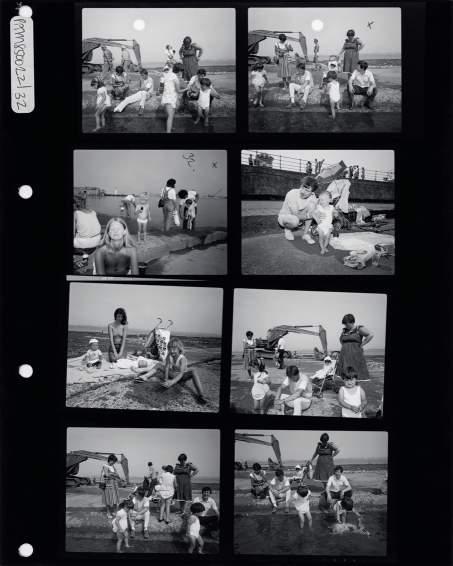
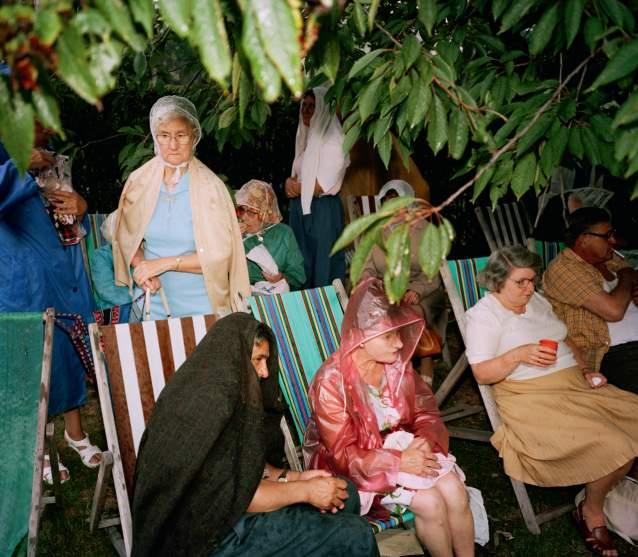
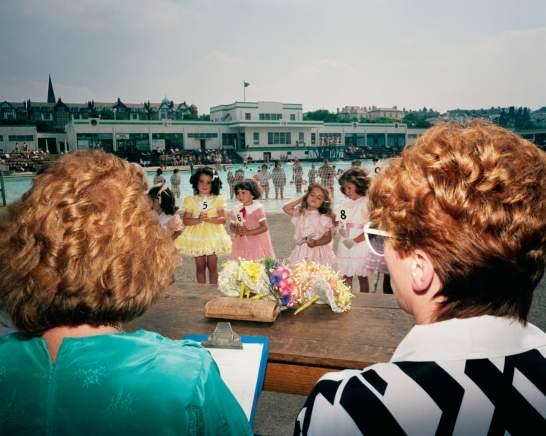
A very special tribute to the late, great Martin Parr is going on display later this month at the Martin Parr Foundation, featuring images in a new exhibition depicting his iconic ‘80s snaps from New Brighton: work that Martin himself thought of as his ‘greatest achievement’
An extraordinary exhibition of The Last Resort, the work which defined photographer Martin Parr’s career, will go on display at the Martin Parr Foundation (MPF) from 20 February until 24 May this year. In a very fitting statement, Martin Parr himself once said: “The pictures from The Last Resort still hold very well. When I get to the Pearly Gates, those are the ones I’d probably get out first!”, and this exhibition marks a change to the Foundation’s planned schedule to commemorate Martin following his death in December 2025, allowing visitors an opportunity to celebrate his remarkable talent.
The exhibition also coincides with the 40th anniversary of both the first edition of Martin’s book of The Last Resort, and the landmark Serpentine Gallery exhibition of the series in 1986. The book was initially self-published under Promenade Press before subsequent new editions and multiple reprints by Dewi Lewis Publishing. Before Martin’s death, he had been working on a new edition of the book with Dewi Lewis and had chosen a small selection of images he had previously overlooked from the series for inclusion.
Some of these images will be included in the exhibition alongside contextual information drawn from the Foundation’s archive.
“This exhibition allows us to reintroduce visitors to one of Martin’s seminal bodies of work,” explains Jenni Smith, director of MPF. “The Foundation felt it was important to mark Martin’s death whilst celebrating his remarkable career and legacy.”
“The shock of Martin’s sudden death together with the tributes pouring in from all round the world have caused me and the MPF team to review the programming for 2026,” notes his wife Susie Parr. “It feels important and appropriate that we open the foundation up in February with a show of The Last Resort, arguably Martin’s most celebrated work. He himself felt that The Last Resort was his greatest achievement”
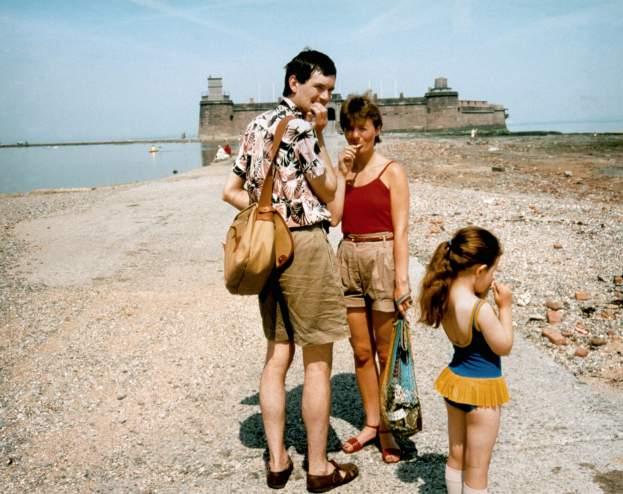
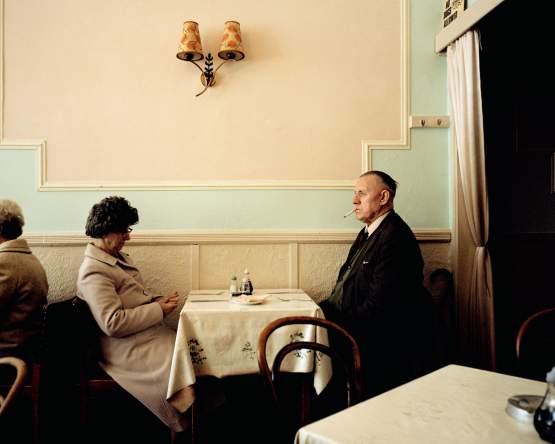
In 1983 Martin, who had recently moved to Wallasey with Susie, began to photograph New Brighton. The resort, on the northern tip of the Wirral peninsula in Merseyside, was just a couple of miles away from his new home. New Brighton had been developed in the 1830s to rival old Brighton in the south. By the time Martin visited, 150 years later, it was during a period of economic downturn and the resort was rundown, in disrepair and the streets were litter-strewn. In spite of this, the photographer encountered the fortitude and resilience of the British at leisure, making the best of the situation. He photographed in the snack bars, on concrete promenades, the Miss New Brighton Bathing Beauty contest and inside Wilkie’s covered fairground. The summers of 1983-1984 were also exceptionally hot and attracted large crowds which provided the perfect conditions for Martin.
In a departure from much of his previous work, Martin photographed New Brighton in colour. He had been inspired by both the language of commercial photography, and by Peter Mitchell in the UK and William Eggleston, Stephen Shore and Joel Meyerowitz in the US. Both the subject matter of The Last Resort, seen by many as low-brow, and this departure from the black and white medium associated with documentary photography at the time led to a seismic shift, and a key moment both for Martin’s career and in documentary photography in the UK.
“Having been very fond of Martin’s more elegiac black and white work in Hebden Bridge and Ireland, the brash colour of his images was a shock,” says Susie. “But I could see that it was an extraordinary body of work. When the show opened at the Open Eye Gallery in Liverpool in the winter of 1985, guests dressed appropriately, with rain hats, swimming costumes, lilos and pac-a-macs. No one batted an eyelid at the images: that was what New Brighton was like. It is a well-documented fact that the response to the show at The Serpentine was rather different.”
In 1985 the photographs Martin had taken in New Brighton were first exhibited as The Last Resort in a two-person show with Tom Wood at Open Eye Gallery in Liverpool. The following year he self-published his book of the work and the project was exhibited at the Serpentine Gallery in London. This exhibition proved controversial. Martin was berated for being patronising, cruel and voyeuristic. However, 40 years later, opinion has shifted and it is widely held that critics at the time projected their own class prejudice into the pictures. The value and importance of The


Last Resort has been re-assessed and the photographs remain Martin’s best-known and most influential work. His engagement with and interest in the British at leisure was to occupy much of his following career.
“Martin kept objects and ephemera that traced both his personal life and the trajectory of his career,” explains Isaac Blease, curator at MPF. “We have been revisiting these materials within the MPF Collection to uncover previously untold stories, allowing a fuller picture of the series to emerge and illuminating the many factors that came together in the making of The Last Resort. This has included unearthing correspondences, snapshots, revisiting contact sheets, and even tracking down his iconic Plaubel Makina W67 camera. Alongside this archival research, we have been reconnecting with individuals involved in the project, from his wife Susie to collaborators such as Peter Brawne, whose original 1986 book design has been revisited for the exhibition.”
Susie and the rest of the team at MPF have expressed their hope that as many people as possible come to see the exhibition, especially after the foundation has been closed in the wake of Martin’s passing. In Susie’s own words: “It’s the best possible way we could open up again, truly a celebration of the extraordinary, the one-off Martin Parr.” n
The Last Resort by Martin Parr opens 20 February at the Martin Parr Foundation (BS4 3AR) and runs until 24 May. The exhibition Dark Tales: Britain and Ireland Through a Gothic Lens was scheduled to open at the Martin Parr Foundation in January 2026. This exhibition has been postponed and will now open in September 2026.
martinparrfoundation.org





Get your cultural fix with a quick city hop to Bath this month, to see a striking celebration of quiltmaking artistry in a new and seminal exhibition at the American Museum & Gardens, which tells the story of an isolated African American community in Alabama
Words: Dara Foley
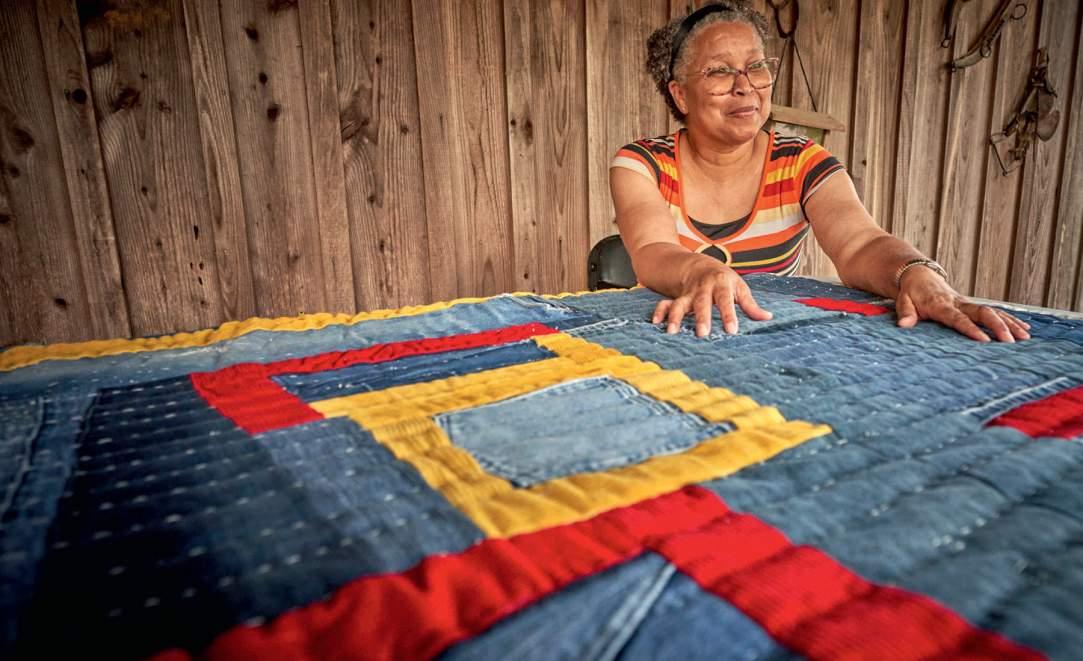
This UK-exclusive exhibition showcases the extraordinary work of women from the remote river island community of Boykin, a horseshoe-shaped turn on the Alabama River –also known as Gee’s Bend – and home to a 200-year tradition of quiltmaking that holds profound artistic, historic and political significance.
Long overlooked by the mainstream art world, these quilts are now celebrated globally and occupy a vital place [and time] in the story of American art. With bold colours, unexpected patterns and uninhibited improvisation, the quilts are far more than decorative objects. Born out of necessity in a racially segregated and economically marginalised region in the Deep South of the USA, they speak of resilience, self-sufficiency and lived experience.
To alleviate the rural poverty of mid-20th century America and following federal intervention, residents of Gee’s Bend benefitted from low-interest government loans and became landowners of the same land once worked and farmed by their enslaved forebears – a continuity that helped sustain both community and cultural traditions, including quiltmaking.
That resilience was tested in the early 60s during the civil rights era, when white officials in nearby county seat of Camden cut the community’s ferry service in response to growing Black political activism, deliberately isolating Gee’s Bend and restricting access to basic services
and the right to vote. Despite this, the community remained politically active. In 1965, Martin Luther King Jr. brought his civil rights campaign to Gee’s Bend, and many local quiltmakers marched alongside him, risking violence and hatred in the fight for equality.
The following year, quiltmakers helped establish the Freedom Quilting Bee, a pioneering Black women’s cooperative that brought economic independence and national recognition, supplying major retailers such as Bloomingdale's and Sears, sparking a renewed interest in American patchwork. During this time, wider attention focussed on the Gee’s Bend quiltmakers, whose work came to embody Black empowerment, cultural pride and creative resistance.
The exhibition focuses on intergenerational creativity, highlighting skills and traditions passed down from mothers to daughters, and between sisters. Through the quilts, visitors to the exhibition can encounter the lives and distinctive voices of Mary Lee Bendolph, Essie Bendolph Pettway, Rita Mae Pettway, Louisiana P. Bendolph, Qunnie Pettway, Loretta Pettway Bennett and Sally Mae Pettway Mixon as they express their stories and artistry. While each maker’s style is individual, together the quilts form a visual language defined by improvisation, bold geometry and abstraction – qualities often compared to modernist movements such as abstract expressionism.
Co-organised by the Irish Museum of Modern Art/ IMMA, Dublin, with Raina Lampkins-Fielder, chief curator for the non-profit, Souls
Grown Deep based in the USA, Kith & Kin: The Quilts of Gee’s Bend draws on decades of scholarship and advocacy for Black artists from the American South.
Lampkins-Fielder explains: “Woven in every stitch is a story of familial bonds that have sustained Gee’s Bend’s rich quiltmaking tradition into the present day, transcending centuries of sociopolitical upheaval and oppression. The quilts on display in Kith & Kin embody the strength and deep interconnectedness of this community, while underscoring the importance of the matrilineal transmission of knowledge and its influence on individual artistry. ”
Reverberating with history, the quilts are vehicles for storytelling and autobiography, as well as creative responses to tragedy and celebrations of joy. Through them, visitors gain insight into a community’s civil rights activism, and a lasting influence on today’s contemporary artists.
Founded in 2010, Souls Grown Deep takes its name from a line in Langston Hughes’s defining 1921 poem, The Negro Speaks of Rivers –“My soul has grown deep like the rivers” – and the foundation works to preserve, celebrate and amplify these artistic legacies while fostering racial and social justice in the communities that produced them.
For visitors, the quilts are not only visually striking but deeply evocative. Their patterns and colours speak of family, endurance and belonging, while inviting reflection on the broader social histories they emerge from. As such, Kith & Kin is as much about heritage and identity as it is about craft.
The American Museum & Gardens provides the perfect setting for this powerful and moving exhibition and a rare opportunity to encounter these remarkable works.
Kith & Kin: The Quilts of Gee’s Bend promises to be one of the highlights of Bath’s cultural calendar this year. n
Exhibition runs from 14 February until 21 June at the American Museum & Gardens | americanmuseum.org


From Chris Yeo, of Clevedon Salerooms and a regular expert on BBC’s Antiques Roadshow
Ninety years ago Ashton Court was the place to see the future. The grounds there played host to a building that was a testing ground not only for a radical style of architecture but also a whole new way of living. The Gane Pavilion was a singlestory building that was part of the 1936 Royal Agricultural Show. It might only have been small but its influence was mighty, as a fascinating exhibition Bauhaus, Breuer, Bristol at the Stradling Gallery explores.
The exhibition is a story of two visionaries; Marcel Breuer former pupil and subsequently teacher at the Bauhaus, the groundbreaking German art
school founded in 1919 and Bristol furniture manufacturer Crofton Gane. Both shared an optimistic belief in a bright modern future and expressed it in concrete terms with a three-dimensional manifesto for living the modern way. The building itself was clad glass and local stone with a flat roof - more Sarasota 1966 than Bristol 1936. Inside, floor to ceiling windows flooded light into the open plan living space, the ideal showcase to display the plywood furniture that Breuer had designed for Gane. In purely commercial terms the venture was a flop – not a single piece of furniture was sold – and after just three weeks the building came down. Marcel Breuer, who went on to become one of the world’s most celebrated architects took a different view. Asked, at the end of his life, what he considered his most significant buildings, he replied “just two”, the UNESCO Headquarters in Paris and the little Gane Pavilion in Bristol. Could the same happen in Bristol in 2036, I wonder?

Bauhaus, Breuer, Bristol is at the Stradling Gallery until 26th May stradlingcollection.orgs. ■ clevedonsalerooms.com; @chrisyeo_antiques Instagram)

Words by Tom Bleathman from The Great Wine Co.

Food always tastes better when you know where it comes from –meat from your local butcher, vegetables from the farmers’ market, and fish eaten by the sea. I’ve always felt the same is true of wine. At The Great Wine Co., we’ve spent more than 40 years championing independent producers, and this February we’re celebrating a few of the remarkable families whose wines continue to inspire us. All three featured families will be on promotion throughout February in our shop and on our website, so it’s the perfect time to support one of these fantastic, family run producers. greatwine.co.uk
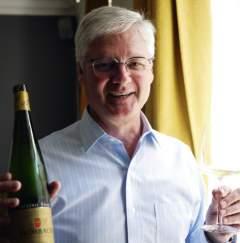
Jean and Pierre Trimbach, Maison Trimbach, Alsace | Few names in the wine world carry the heritage of Trimbach. One of the oldest winemaking families in France, dating back to 1626, Trimbach is now headed by 12th generation brothers Pierre and Jean (pictured). Pierre is the winemaker, crafting some of Alsace’s most iconic wines, from steely, age worthy Rieslings to beautifully expressive Pinot Gris. Jean is on the frontline as the sales and export director and is one of the most charismatic and friendly figures in the industry. It may come as no surprise that Trimbach continues to be so highly regarded. To give you an idea of their credentials for quality: of the 31 three Michelin-starred restaurants in France, 29 list Trimbach wines.

Gyles and Thomas Webb, Thelema & Sutherland Estate, South Africa |
The Webb family has shaped South African wine for decades. Gyles Webb started Thelema in 1983 and quickly gained a reputation as one of Stellenbosch’s most respected estates, known for its classy Cabernet Sauvignon and vibrant Chardonnay.
Today, Gyles has passed the winery down to his son Thomas (pictured above), who has continued Thelema’s extremely high standards. Alongside their Stellenbosch estate, the family also purchased the Sutherland Estate in 2002 in the cooler Elgin Valley, producing wines that are generally lighter, with outstanding balance, freshness and finesse.
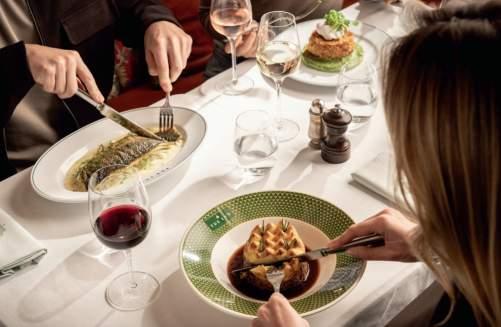
The Ivy Clifton Brasserie has expanded its 1917 two-course set menu, which is priced at £19.17 to celebrate the year the first Ivy restaurant opened in London.
The menu now has an additional two dishes per course, with starters including a warming French onion soup, topped with gratinated cheese croutons and parsley; and a duck liver parfait with caramelised hazelnuts, apricot and apple chutney, served with toasted brioche. Other options among the starters are robata grilled chicken skewers with a creamy ‘bang bang’ peanut sauce, sesame, coconut, lime and coriander; a tamarind beetroot and endive salad; and salt and pepper calamari with a sesame and gochujang glaze and an Asian slaw.
Stars of the mains include The Ivy classic shepherd’s pie, made with slow-braised lamb and beef, topped with cheddar mash and served with a rich rosemary and red wine sauce; a pan-fried Aegean sea bream with shaved fennel, Granny Smith apples, chives and white wine velouté; and a foraged wild mushroom and truffle Linguine. For a £4.95 supplement, guests can also opt for the minute steak, accompanied by a rich peppercorn sauce, crispy onions and triple cooked chips.
For an additional £4.95 there are a selection of desserts, including a Flambéed Crème Brûlée and Sticky Toffee Pudding. The special two-course 1917 menu will be served in Clifton until 28 February. The menu will not be available to order on Valentine’s Day (14 February).
ivycollection.com

Diego and Alessio Planeta, Planeta, Sicily | In the 1980s, Sicily was known largely for its low quality, bulk wine production until Diego Planeta decided to take a risk and plant Chardonnay alongside a variety of indigenous grapes, with a focus on producing quality. By the 1990s, the trailblazing Planeta winery was at the top table of the wine world, and they haven’t looked back since. Sadly, Diego passed away in 2020. However, his uncle Alessio (pictured) has taken up the winemaking mantle and, in 2023, was named Winemaker of the Year, helping to continue the family’s great legacy.

Honest Burgers has opened a new restaurant at Cribbs Causeway, continuing the brand’s growth to more than 50 restaurants nationwide. The opening marks Honest’s third location across Bristol and the South West, following the launch of its Cabot Circus restaurant in November 2025 and its first Bristol city centre site in 2018. The Cribbs Causeway launch coincides with the return of top performing special Ultimate Bacon (pictured below), which is available until 16 February. Created in collaboration with master butcher and curer Blackwell & Co., The Ultimate Bacon can be enjoyed with classic beef, double smashed beef, or fried chicken, and features chipotle mayo, bacon dust shoestring fries, thick-cut smoked streaky bacon, double American cheese, pickles and lettuce. honestburgers.co.uk
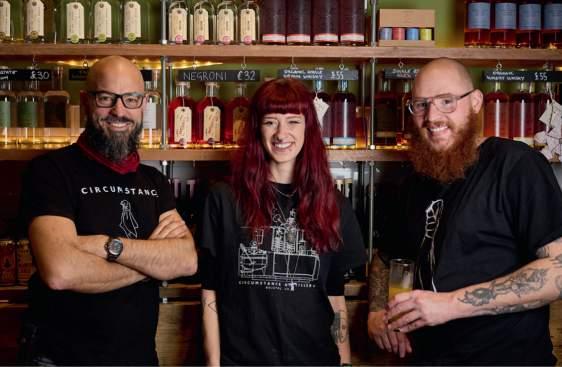
Psychopomp Microdistillery’s onsite bar on St Michael’s Hill has reopened following a six year hiatus. Originally closed during the pandemic, the intimate and cosy venue is up and running again – offering cocktails made with the distillery’s own spirits, all produced locally in Bristol. The launch cocktail menu focuses on classic, refined signature serves: The Martini, The Negroni and The Manhattan, and seasonal serves will be added throughout the year. In addition to the bar opening, the venue will also host events such as gin-making classes, whisky tastings, gin tastings and cocktail masterclasses and seasonal workshops. The space is also available for private hire, accommodating up to 20 guests. microdistillery.co.uk
(Pictured L-R: founder Liam Hirt, bar manager Cally Way and head of sales Corey Shinn. Credit – Josh Campbell)

Boost the mood, turn on your taste buds and get ready to enhance the romance.
Melissa Blease explores the allure of aphrodisiac foods and the key ingredients to spark some passion
Valentine’s Day: the time of year when new and old romantics alike aim to light a fire in the bellies of their ‘special someone’ – and our thoughts (and restaurant menus everywhere) immediately focus on luxurious seafood and chocolate-dipped fruit in an attempt to guide Cupid’s Arrow in the right direction.
Courtship, romance and food are inextricably linked in the canon of sensual experiences and myriad films, books, songs, TV adverts et al constantly feed that juicy narrative. Where would Jim Dear and Lady Darling in Disney’s Lady and the Tramp be without that plate of spaghetti? How far would Chocolat’s Vianne Rocher have got with smouldering hotpot Roux had she not had the recipe for the world’s most seductive sweet nibble? As for John Gray and Elizabeth Graw in around week 8 of their 9½ Weeks journey: for them, love was blind(fold) indeed. Different strokes for different folks, eh? But they all have one thing in common.
The act of sharing food can be a profoundly pleasurable visceral experience, creating positive emotions and forging bonds around intimacy and connection. But there’s more to this particular love story…
The aphrodisiacal power of certain foods have been doing the rounds since time immemorial. Aphrodite (the Greek goddess of love, who also inadvertently gave her name to the very word aphrodisiac) sprang forth
from the sea on an oyster shell. Frisky fop Casanova was rumoured to eat dozens of oysters a day to keep his, erm, stamina levels up. Antony and Cleopatra snacked on mounds of nut-stuffed figs to keep their love life alive – and Barbara Cartland used to drink a pine nut smoothie when she wanted to kick-start the bodice ripping imagination. As for chocolate: it’s the seductive gift at the start of the affair and the classic, comforting standby that helps mend the ensuing broken heart.
But the folklore regarding food being nature’s version of Viagra isn’t merely romantic fiction; research has proved that an ‘aphrodisiac’- laden V-Day feast could actually help us ignite the flames of passion.
❤ Shuck It Up
Uniquely complex in both flavour and texture, notoriously difficult to open and generally priced well out of reach of our usual everyday budget, oysters could be called the original Marmite: we either passionately love ‘em… or emphatically hate ‘em. But regardless of your personal tastes, they’re indelibly linked to the ultimate food of love – for good reason. Oysters are massively high in zinc, which supports dopamine (pleasure) and testosterone (obvious). Oh go on, be brave!



Chillies, ginger and garlic: put ‘em together and what have you got? A recipe for lurve! Chillies are laden with happy hormones and natural endorphins which enhance sensory perception, raise testosterone levels and may increase sexual desire in men. Ginger, meanwhile, is rich in stressrelieving magnesium, while garlic’s antioxidant properties may help combat fatigue, boost energy and aid endurance.
Dark chocolate has been credited as having mystical aphrodisiac qualities since the days of the Mayan and Aztec cultures... and it's easy to understand why. It contains the mood-lifting agents phenylethylamine and serotonin which produce the euphoric effects often associated with being in love, while the natural caffeine in the cacao bean at the heart of the matter (which is, in itself, rich in antioxidants, magnesium and iron) increases alertness and blood flow.

There's something unavoidably salacious about dipping asparagus spears into smooth, glossy, melted butter – especially when we learn that asparagus is rich in folate, vitamin B6 and vitamin E, all of which are said to boost arousal and stimulate sex hormones in both men and women. The humble celery, meanwhile, has long since been referred to as ‘herbal Viagra’ as it contains androstenone – a pheromone-like compound that subtly enhances male natural scent – while beetroot is high in nitrates that cleverly convert to nitric oxide, which improves blood flow throughout the body.










Nuts are all-round nutritional powerhouses, positively brimming with all manner of vitamins, fibre, minerals and healthy fats. Research evidence suggests that pistachios have been shown to increase libido and improve erectile dysfunction in men, gingko nuts (caution - toxic in large quantities) form a large part of libidinous potions in China and pine nuts are laden with our old friend zinc, making them a more palatable alternative to oysters for shellfish avoiders.
Have you ever wondered why monkeys can be so, erm, frisky? Blame it on their banana habit! Bananas contain the testosterone-triggering enzyme bromelain and are massively high in both vitamin B and potassium, both of which give an oomph to energy levels. The less prosaic pomegranate, meanwhile, has featured in ancient literature as a symbol of romance, desire and fertility, partly because Aphrodite (her again!) was said to plant the very first pomegranate tree. But thousands of years on, the pomegranate’s antioxidant and anti-inflammatory properties combined with its blast of nitric oxide – a crucial natural gas that relaxes blood vessels, improving blood flow and oxygen delivery – have been proven to increase testosterone levels and support overall reproductive health. As for figs (another ancient Greek symbol of corporal pleasure): they’re packed with enough energy – and stamina-enhancing iron to fuel a phalanx for days.






Sadly, there’s absolutely no research to prove the aphrodisiacal properties of Champagne, a Passion Fruit Martini or a French Kiss cocktail. Red wine, however, is rich in antioxidants that are said to have a beneficial effect on vascular health so a little bit of what you fancy can indeed do you good. Go easy, though! While alcohol can indeed loosen our inhibitions, too much of a good thing could easily negate the effects of an aphrodisiac-rich seduction menu. You might want to consider a cup of tea instead? ‘Functional teas’ laden with stress-relieving adaptogens, natural euphorics, mood-boosting minerals and/or vital antioxidants could well turn your love life tap on, with Maca Tea in particular reputed to stimulate libido and enhance sexual performance in both men and women. Get the kettle on!



Aromas have long since been proven to play all kinds of pleasurable ‘tricks’ on our subconscious, evoking relaxation, rekindling connections to positive memories and even igniting biochemical reactions linked to desire. Vanilla in particular (warm, sweet, and creamy, and often associated with our old friend chocolate) is apparently particularly appealing to men – a reputation that goes back a long way. Back in the 18th century, Madame de Pompadour used vanilla as a perfume to excite her lover King Louis XV of France throughout their relationship, and 1930s screen icon Vivien Leigh had her maid iron vanilla into the folds of her clothes in order to keep her second husband Laurence Olivier “coming back for more.”




They may be nutrient-rich, but cruciferous vegetables can cause serious bouts of flatulence, with cabbage, Brussels sprouts and broccoli being the worst offenders. Beans, legumes and eggs have a similar effect on many people, while certain foods – cruciferous vegetables again, alongside the worst offenders that are blue cheese, anchovies and fatty meats – contain compounds that your body exhales through perspiration (yuk!). Mint (specifically peppermint and spearmint) can actually suppress libido, artificial sweeteners can interfere with serotonin/’happy hormone’ production and eating a heavy meal too close to, erm, bedtime can cause serious acid reflux. You have been warned! n
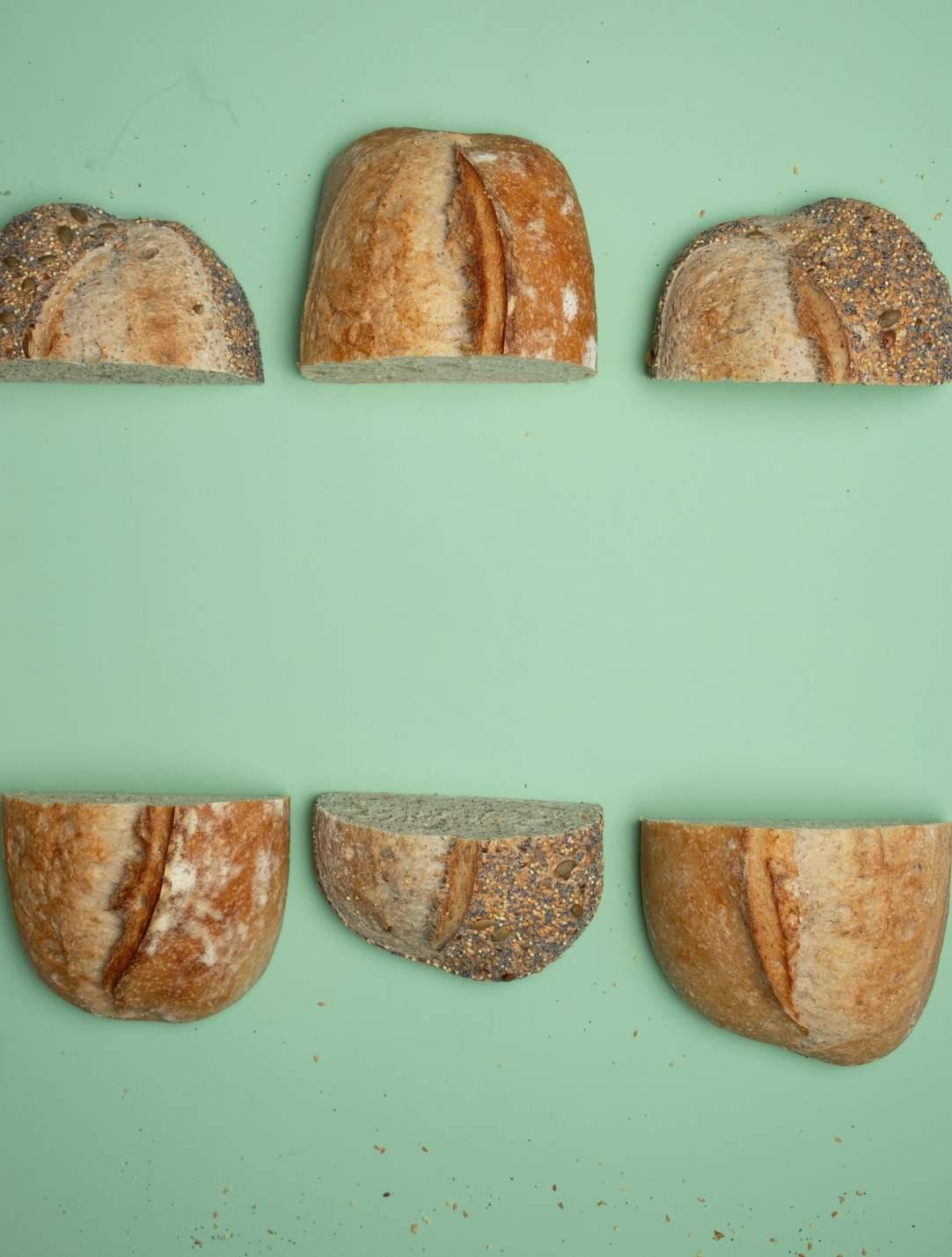
This month, bakers across the city will be rising against the machine to champion honest loaves for Real Bread Week (21 February to 1 March) – we catch up with teams from The Orchard and Hobbs House bakeries to find out more, and get some insider tips on perfecting your own superhero bread at home
Not all loaves are created equal. We’ve probably all been there, right? When you’re seeking out a snack on the go, snapping up a cheap service station sandwich because you need sustenance, sharpish. Then afterwards, you might feel uncomfortable. A little bloated. Lethargic, even. It might be the bread; some types of bread are crammed with additives – many of which are included with good intentions – yet essentially then fall under the category of ultra-processed foods. But bread has the potential to be so simple, made with only flour and water.
While we know that it’s not always possible to completely avoid the odd additive here and there, this month provides one helluva reason to celebrate real bread thanks to a week-long campaign that will see many of Bristol’s best bakers marking the occasion.
Real Bread Week, which fires up its ovens from 21 February until 1 March, is in its 16th year, and gives local bakeries, baking schools, mills, schools, care homes, youth and other community groups a great excuse to make, buy and share real bread in all its wonderful shapes and sizes.
But what exactly is ‘real bread’? And why is it worth celebrating? We turned to those in the know to understand more about the best kind of bread since, well, sliced bread.
“Real bread is simple,” says Lauren Booth, who is head baker at The Orchard, which has sites in St George and Stokes Croft. “It’s just flour, water and a touch of salt (without caking agents). These days, lots of bread for sale is packed with additives and chemicals your body doesn’t need. A proper sourdough loaf, however, is different: slow, natural and gentle on your gut.”
strength as natural enzymes begin breaking down proteins and starches into sugars, which in turn support healthy wild yeast activity.
“For our bread rolls, we bulk prove the dough to create a light, fluffy, tear-able crumb. Bulk proving is a resting period of 30-40 minutes after mixing, before weighing and shaping, allowing the dough to relax and develop flavour and texture.”
Gosh, just imagine the glorious aroma! Over at Hobbs House, there’s equal amounts of time and care being put into their bread, too: “We bake 24 hours a day, six days a week,” explains Anna. “We have a large team of bakers who mix, shape, mould and bake our bread. Some of our bread will take 24 hours to go through this process, with a large amount of rest for the dough and unbaked bread. Making bread in this slow way gives a chance for the dough, gluten and flavour to develop in that resting time. Taking this time often means the bread lasts longer once baked, that’s if you can resist eating it!

The folks over at Hobbs House Bakery – which among its stores has locations in Chipping Sodbury and Gloucester Road and supplies many more businesses across the region – couldn’t agree more. Their marketing director told us: “To us, real bread is made by real bakers with real ingredients, no additives or processing aids. Bread can be baked at its simplest with just three ingredients: flour, salt and water. Our Rye Sourdough is literally just made from three ingredients. Our other sourdoughs contain two different types of flour, always rye sourdough starter, so rye flour, and then often a white flour – so four ingredients in total.”
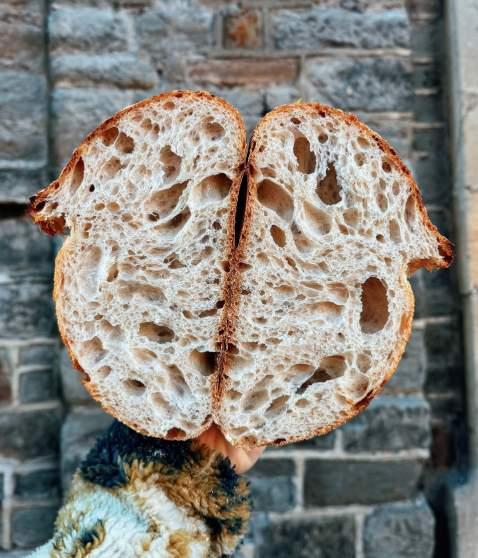

The Real Bread Campaign – which is behind Real Bread Week –defines real bread as being made “without chemical raising agents, socalled processing aids or any other additives… Sadly (depending on whose figures you believe) around 95%+ of what is sold as ‘bread’ in the UK falls short of this very low bar.”
Real hands and valuable skills are extremely important when it comes to making real bread, it seems. So we put it to our expert bakers: how do you make your daily, bread? Now, bear with us – if you’re not a regular home baker, things are about to get a little technical. But we think it’s rather fascinating to hear about how the magic happens.
“With our sourdough, we fermentolyse the dough [resting the mixed flour, water and starter] in the mixer for 30 minutes before adding salt,” explains Lauren at The Orchard. “This process improves stretch and
“Our Sourdough Starter is 70 years old; it has risen a lot of loaves. It’s made from organic dark rye flour and has a distinctive tangy flavour. We choose our other ingredients carefully too, and we are working with local farmers to find the best grains for our bread. We believe you can taste the difference. Baked in our loaves is also five generations of history, knowledge, and shared recipes, so hopefully you can feel and taste that too.”

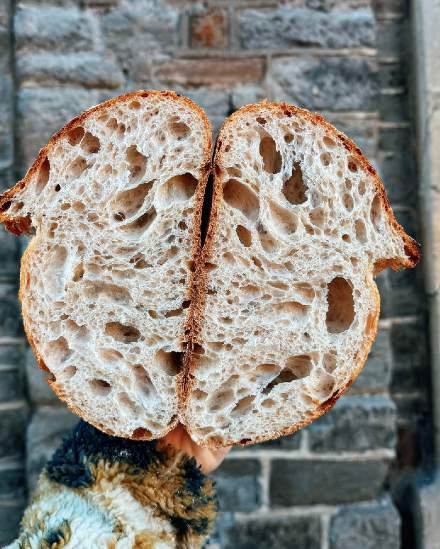
Right, well we’ve heard how the big bakers manage to perfect those irresistible loaves that line tempting window and counter displays across the city – but how are we able to recreate this communion of art and science at home?
Looking after a sourdough starter (that regular ritual of feeding with flour and lukewarm water, letting it ferment and then carefully discarding the excess) is no laughing matter… it’s as prized as a puppy in some homes. Thankfully you can put it to sleep in the fridge for a bit if it all gets too much.
“Keep it simple, choose a recipe and method that works for you,” advises Anna. “We find lots of people like ‘no-knead’ recipes where you fold the loaf at regular intervals. Also, find a good and stable sourdough. We bake with a dark rye because it’s stable and reliable and gives a delicious flavour. (We also sell this online and in our shops.)”
And although it sounds like hard work, it’s worth thinking ahead if you want to bake your own at home: “Get your starter ready at least a week ahead; a strong starter makes a strong loaf,” notes Lauren. “Then on mixing day, embrace a high-hydration dough – it will look wet, and that’s exactly what you want. Smaller home batches often need slightly longer mixing than bakery-sized doughs. You’ll know it’s ready when a small piece stretches thin and smooth without ripping.”
If all this talk of real bread has you cautiously eyeing your drab supermarket loaf in its plastic wrapping on the kitchen side, then look no further, because our friends at Hobbs House have shared their sourdough recipe with readers on the next page →
If you want to share your loaf during Real Bread Week, use the hashtag #RealBreadWeek. hobbshousebakery.co.uk | theorchardbristol.com Visit sustainweb.org for more information on Read Bread Week from the Real Bread Campaign.
BY HOBBS HOUSE BAKERY
A classic sourdough bread recipe makes a loaf with the perfect texture for sandwiches, toast or crispy bruschetta...


Ingredients for feeding the starter
225g sourdough starter
75g water
75g flour
Equipment
Sourdough Starter
Proving Basket
Cling film or shower cap
Dough Scraper
Water Sprayer
Oven Gloves
1. To make your own sourdough culture, mix equal parts flour and water in a sealable jar – 75g of each works well. The mixing action traps natural airborne yeast particles in the flour and water mix, and they begin to feed on the flour in the jar creating a living yeast colony. Leave the jar somewhere warm and remember to feed your sourdough equal parts flour and water every day. By 5 days in it should be bubbling and ready to use to bake our sourdough bread.
2. Feed your starter 12 hours before baking with 75g flour and 75g water, leave out of the fridge for 12 hours before baking to enliven. Put the flour into a bowl and add 300g of your sourdough culture. Then add the warm water and the salt. Mix it all together and then turn it out onto a table for kneading. It is a wet dough so you have to work it for a long time (15 minutes by hand) before it will start to come away from the table. The finished dough should be very soft but doesn't stick to the back of your dry hand. If it does, work in a little more flour.
3. Feed your starter for the next time with 75g flour and 75g water and store back in the fridge.
Ingredients for making the loaf
250g warm water
500g good quality white flour
Big pinch of salt (10g)
4. Once the dough is stretchy, put it into a bowl and leave it somewhere warm to rise for 2 hours.
5. Shape the dough on a lightly floured surface to fit a proving basket or loaf tin. To do this, stretch the dough out into a long rectangle then fold each outer third inwards. Knuckle down a seam at the bottom of the dough nearest to you, then roll the dough down from top creating a tight loaf shape.
6. Dust the proving basket or loaf tin with flour and roll the dough in flour to stop it sticking. Put it into the basket, cover it and leave it to rise in a warm place for a second time, for about 8-12 hours.
7. To bake it you will need a baking stone or a heavy metal baking tray. Get your oven very hot at 240°C/gas mark 9 and heat the stone or tray. Carefully turn the loaf out onto the hot stone or tray - be careful not to knock any air out. Give it your signature cut on the top then put the dough in the oven and throw a cup of water into the bottom of the oven to create steam. Bake for 30 minutes until golden.
For more information, and to buy sourdough starter and equipment, visit hobbshousebakery.co.uk

Ben Padfield set out to write a historical feature about eclectic music spot The Bristol Fringe (which he first visited when it was The Greyhound) along with a biography of its intriguing owner – but what poured out onto the page instead were intoxicating reminiscences of the Clifton he arrived at in the Noughties and glimpses into the stuporous dreams of other people also enamoured with this iconic pub and its locale
My first time through the door was unforgettable. There were unvarnished planks layered eave-like along the bar beneath black wallpaper. Battered chesterfields and chaise longues with mahogany trims and ripped upholstery. Fishtail gas jets adapted for bulbs fed a pale orange glow through absurdly ornate, felt lampshades. There were mounted trumpets, piles of books, packs of cards, a gramophone. Black and white photographs of mime artists, and Andrew Burns Colwill’s nowfamous painting of a businessman in red stilettos walking a pig along the Crescent. The music of Mark Daumail and Morgane Imbeaud filled the dark air. And it was dark. Divinely, deliciously, sumptuously dark. Sylvie, Cecile et Amandine stood behind the bar, and The Greyhound (now called The Bristol Fringe) panted its brandy breath once more.
‘Come in out of the cold’, it seemed to say, its ochre hues pouring out into the street. ‘Whomever you are, come on in and pull up a pouffe’.
It was a townish tavern that would have been at home in Paris’s Quartier Pigalle. By turns blues bar, community centre, creperie, art gallery, auction house and literary salon; part old, part new, and yet fully, completely and totally Clifton.
Anyone who’s ever been in love with Clifton Village knows what it is to live in a dream. It’s an all-encompassing somnambulant state from which you don’t want to wake, but know, eventually, you must. I set out to write about an entertainment venue and the biography of its owner, yet what I’ve produced is a billet doux to somewhere I used to live. Neither truly
Left to rats and other artists, it blossomed into that bohemian renaissance of the 1960s, on which it still dines out. Images come unbidden of damp basements, musty drapes, flaking masonry, and all that dust-covered Victoriana indifferently awaiting the advent of retro chic.
This is home to Cabotian dreams of voyage and conquest, to folk still longing for California and the summer of love, never noticing how far they have staggered beyond any such freedoms. Mushroom dreams of endless possibility, cultivated on the ironic pleasures of being poor in a rich place, or of being taken suddenly wealthy amid an indulgence of poverty.
By the time I got there in the Noughties it was known mainly for students, tourists and generally not being what it once was, but that’s a familiar story for those of us born in the early 1980s – one is always somehow just a fraction too late for everything. So I started hunting for ghosts. It wasn’t difficult. I came to know Clifton beneath the saturated render by glimpse and essence. It was irresistible: the allure of high ceilings, blue-grey, striated plumes of cigarette smoke rising slowly through sash-mitigated light, the vastness of rooms like those in seaside hotels, the creamy-lemon stonework that turns lemony-cream in the rain, the glistening contrast of wrought iron and cumulous trees, the too-neat geometricity of Georgian window lines, that whiff of Caledonian pageantry*, that bite of estuarine chill. And the “gracious resignation”, in E.H Young’s words, of cherry blossom strewn about the pavements, “as though there had been a wedding in every house”. And all this within an affected fortress, concealing the sheer drop into not-Clifton, into ordinary untamed things.
One of the richest stories I encountered at this time came from the late celebrity chef Keith Floyd, an animated storyteller with an appetite for poetic licence, who, in 1969, opened a bistro at the Gorge-end of Princess Victoria Street. In his autobiography, Out of the Frying Pan (2000), he paints a stylish, eccentric picture of Clifton Village in the 1960s, at the heart of which was The Greyhound.
This extraordinary establishment, which is now called The Bristol Fringe, was Clifton, according to Floyd, and Clifton was The Greyhound. It was the haunt of “intense, duffle-coated” drama students from the Bristol Old Vic and “henna-haired, black-garbed, tarot-reading, feminist witches”, as well as household names such as Acker Bilk, Paul Eddington, Adge Cutler, Hugh Cornwall and Jeremy Irons. Its regulars were an eclectic mix of wealthy and impoverished, artistic and entrepreneurial, military and academic. He writes of a yachting-obsessed Welsh wizard, a saxophone-playing scoundrel with a flair for medieval French law; jewellers and play-writes, builders and Spanish classical guitarists; a cast by turns cynical, sarcastic, funny, philosophical, chauvinistic and humble.
In Floyd’s burlesque rendition, The Greyhound offered an egalitarian alternative to institutional forms of social elitism, whereby prestige does not rely on exclusion. When you come through the door you become part of a coincidentally assembled family, one that will never exist in the same form twice. You gain entry to a club, as Floyd puts it “without membership, without rules, without fees”.
Mover shaker
When I moved to Clifton 14 years ago, it didn’t seem to have quite this diverse and vibrant flair, perhaps because Floyd, like the rest of us, was using his observations to dream-weave. The Greyhound was being lovingly, if slowly, restored by French entrepreneur Sylvie Dagallier, whose road to Clifton had been even more colourful than Floyd’s. Born in Versailles, she had studied tourism in Paris, served paninis at Heathrow Airport, fronted a Cheltenham hotel reception and run an enormous night club in Manchester. She was sacked as a tour operator because her English wasn’t up to scratch. A hotel manager, her boss, once told her she would never rise to the role of supervisor, so she quit to manage the hotel next door. A few years went by, another nightclub, a magic bar, a chance here, a risk there, a dream and a venue: a club without membership, rules or fees was returned, rebranded and reanimated. At first it was seen as something new, something foreign, “that French bar”, Le Pub. Over time it became clear this was not a birth but a reincarnation, and it replenished something endemic to the historical imagination of the village itself.
I managed eventually to free myself from the stuporous dream, ‘sticky’, as someone once described it, because it’s a hard place to leave. When I visit the Fringe now, I’m pleased to find those old Clifton fictions still hanging like bats from the ceiling. These bizarre remnants of everything Clifton has ever been still occupy an intermediary space between real and imagined that Floyd’s Greyhound did in the sixties, haunt of poor dreamers come to riches in tatty, torn woollens. And like Clifton itself, it is always negotiating, whilst fondly mocking, the present; a story telling and re-telling itself. Always tantalisingly ungraspable.
In 2012, Sylvie changed The Greyhound’s name to The Bristol Fringe, to share in Edinburgh’s arts festival vibe, and has since added to her portfolio the wonderfully bougie Riff Bar in Clevedon. But that ostentatious, over-confident dream of the old place lives on. Amid flyers for jazz bands, magic shows and open-mic nights, you can still glimpse just one surviving greyhound entombed in the glass; forever lean and fresh out of the traps; eternally racing towards territories it will never, could never, traverse. n thebristolfringe.co.uk
*Clifton’s nod to Scottishness includes Caledonia Place, plus prior to joining Bristol in 1898 it was called Clifton St Andrew, and its parish church was St Andrew’s (bombed in WWII).
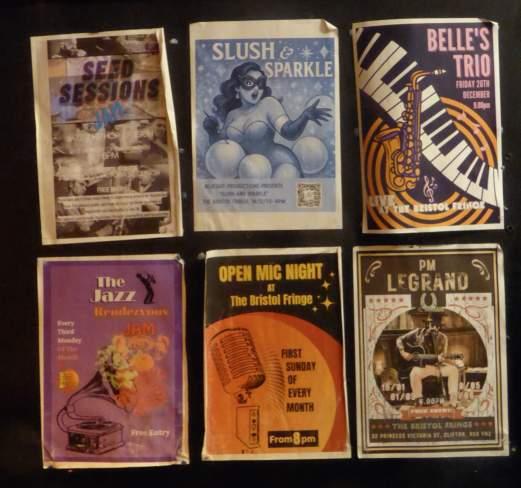
Who’d have thought this popular south Bristol neighbourhood had a head start as a growing settlement before the main city itself? Andrew Swift walks the streets of Bedminster to rediscover its rise from faded market town to industrial powerhouse and beyond
Bedminster was a thriving settlement before Bristol was even thought of. East Street and West Street, its main thoroughfares, follow the course of a Roman road, while the name of the river which powered its mills – the Malago –derives from two Celtic words, ‘melis’ (mill) and ‘agos’ (place). Once Bristol was established, Bedminster, despite having a head start, was soon eclipsed by its upstart neighbour. Even so, it remained a busy market town until 1644, when Prince Rupert, laying siege to Bristol, burnt most of Bedminster to the ground.
Bristol soon bounced back from the trauma of Civil War, but Bedminster struggled to regain its former importance. What halted its decline were the rich seams of coal underground. The first shaft was sunk in 1748, and before long, pits were being dug all over Bedminster. In their wake new industries were established, attracted by the ready supply of coal.
At first, growth was gradual and much of Bedminster retained a semirural air. But the juggernaut of industry was unstoppable. At the beginning of the 19th century, Bedminster had a population of 3,000. Seventy years later, it had risen to 78,000.
Bedminster’s rise from faded market town to industrial powerhouse saw it transformed beyond recognition, and there have been so many changes since – devastating bombing during World War Two, post-war redevelopment, loss of heavy industry and rebirth as one of Bristol’s most vibrant suburbs – that traces of pre-industrial Bedminster are few and far between.
One of the best ways of getting an idea of what Bedminster was once like is to follow the course of the Malago, along whose banks the first settlers built their homes.
For that, we need to head to the Ostrich Inn on the south side of the floating harbour, where an inlet leads to Bathurst Basin. Before the New Cut was built, the Malago flowed into the Avon here. To see where its outfall is today we need to head south – by a circuitous route. Cross the footbridge in front of the Ostrich and bear left. At the end, cross the road by the Louisiana, carry on along Cumberland Road and at the pedestrian lights turn left across Gaol Ferry Bridge. On the far side turn left along Coronation Road, and after 200m (just before the traffic lights) look down past a locked gate to see the Malago flowing into the New Cut.
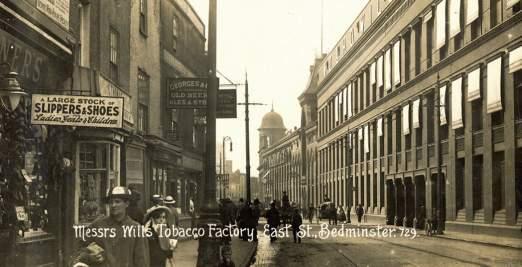

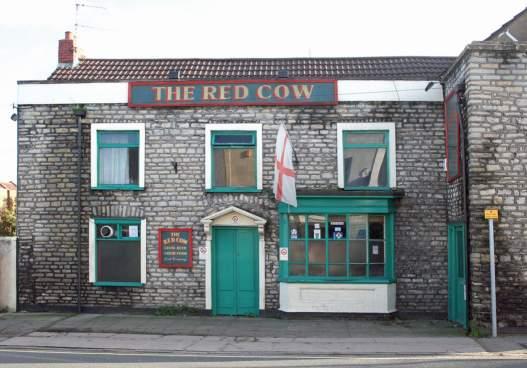


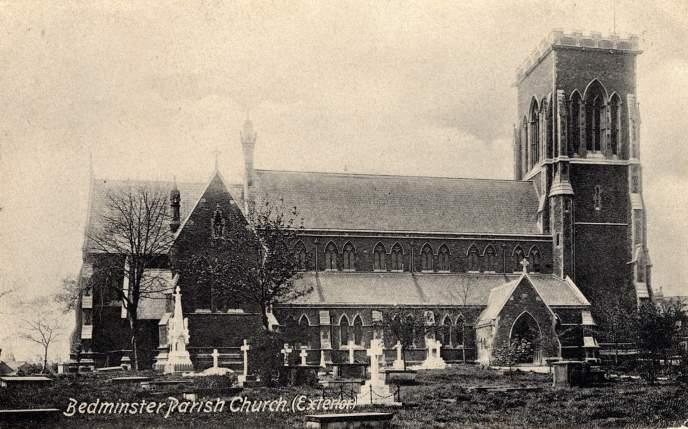
To follow its course, cross at the lights and head along St John’s Road. After 75m, cross at the traffic island and – a few metres along to the left – head down into the car park and carry on past the supermarket to emerge on Bedminster Parade. Brightbow Bridge once spanned the Malago here, and on the west bank stood St Catherine’s Hospital, founded around 1220. It survived – as a ramshackle huddle of cottages – until 1886, when it was demolished to make way for the Wills’ tobacco factory. Part of its foundations were revealed in an archaeological dig by Wessex Archaeology in 2016.
Turn right through the tobacco factory colonnade, cross at the pedestrian lights and turn right. After a few metres you can look through a fence to see the Malago flowing through a deep channel. This whole area – including the busy road running through it – was the site of one of Bedminster’s biggest employers, Capper Pass & Sons’ Smelting Works, established in 1840 and closed in 1963. An excavation by Wessex Archaeology of part of the site now covered by flats featured on BBC’s Digging for Britain – as well as in The Bristol Magazine – in 2025.
Turn left alongside the fence to where old machinery for controlling the flow of the river is mounted on a ruined wall. The Malago disappears into another culvert here, to re-emerge over to your right – but before following it, turn left into Windmill Hill City Farm.
This 4.5 acre site was once covered by terraced houses. In 1976, after they had been demolished, a community group fought against plans to turn the site into a lorry park and were finally given the go ahead to establish a community farm. Fifty years on, their initiative and their vision, and the hard work of those who have succeeded them, has created one of south Bristol’s best-loved and most inspirational spaces.
On leaving the farm, head over to carry on alongside the Malago. When it disappears into a culvert turn right towards Bedminster Green, another open space once covered by houses. Today, it forms part of a regeneration scheme which will see the Malago brought back above ground as the centrepiece of a green corridor with boardwalks and amphitheatre-style seating.
At the railway bridge, turn right along a footpath past a single-storey building and carry on across pedestrian lights. You are now standing roughly where St Catherine’s Mill once stood. Powered by a millstream fed by the Malago, it survived until the 1890s.
Turn left, take the second right up Church Lane and at the top of the rise climb steps into St John’s churchyard. This was the site of the Saxon minster which gave its name to the town that grew up around it. It was rebuilt several times, most recently in 1855, but that final church was burnt out by incendiary bombs in 1940 and demolished in 1966.
Retrace your steps to the railway bridge, go under it and turn right along a footpath to see the Malago emerging from a culvert under the line. Carry on as the footpath crosses the Malago, and at the end turn left, cross at the pedestrian lights and carry on past bollards along a side road. At the next road, turn left, cross at the pedestrian lights, and after a few metres turn right along a path.
At the end, we bid farewell to the Malago and turn right along a road. At the main road, cross (at the pedestrian lights) to carry straight on up Shepton Walk. At the top, cross a footbridge over the railway. Take the first right along Stanley Terrace and then turn left along Stanley Street South. At the end, turn right along West Street. Hampton House – No 117 – on your right, dates from around 1700.
Next door but one stood another old building. The Red Cow had been a pub since at least 1792. It also served as a coroners’ court for miners killed at Malago Vale Colliery, which lay behind it. In 2009, however, despite strong protests, it was demolished to make way for flats.
Further along, the lias stone building on the corner of Argus Road was the home of the mine manager. Cross the zebra crossing and carry on in the same direction, passing another old miners’ pub, the Jolly Colliers.
At the end, opposite the Albert Inn, turn left along Diamond Street. After 30m, turn left along an alleyway to see an 18th-century lias stone farmhouse, engulfed by later development. Continue along Diamond Street, turn left at the end and take the third right along Hebron Road, which leads past Hebron Chapel, built in 1853.
At the end, turn right along North Street. After 175m, cross a zebra crossing and carry on past the Salvation Army Citadel. After passing Bristol South Baths, turn left into Dame Emily Park, built on the site of Dean Lane Colliery, which closed in 1906.
Follow a path to the right of a play area, and at the road turn right. Follow it as it curves left and turn right at the T junction. At the end, a left turn by the Coronation pub leads through an area dominated by early Victorian villas.
Take the first right along Thomas Blount Mews and turn left at the end. At the T junction, cross to go up steps to St Paul’s church, built in 1830. The tower is all that survives from the original church, the rest of which was destroyed by bombing in 1941, and later rebuilt.
On leaving the churchyard, turn left along Coronation Road, cross at the pedestrian lights and head back across Gaol Ferry Bridge. On the far side, Gaol Ferry Steps lead down past bars and cafes to the floating harbour. n Length of walk is four miles. Andrew Swift’s books are available from akemanpress.com. All photos courtesy of Andrew Swift.


We’re celebrating LGBTQ+ History Month with these new reads, either available now in all good book shops and online, or being published very soon...
The Log Books: Voices of Queer Britain and the Helpline that Listened by Tash Walker and Adam Zmith, Faber & Faber
An intimate history of LGBTQ+ life over four decades, discovered in a stash of forgotten, handwritten notes in a crawlspace at the offices of Switchboard, a Queer helpline in operation since 1974. These phone call log books were traces of tens of thousands of Queer lives, a bridge to a past hidden from people like Tash Walker and Adam Zmith in their youth, captured by people who lent an ear to those in need.
A Queer Inheritance: Alternative Histories in the National Trust by Michael Hall, Bloomsbury Caravel
LGBTQ+ histories and identities come out of the National Trust’s properties in these touching, poignant and revealing stories.
Michael Hall explores not only the best-known examples of sexual difference, he also covers more recently unveiled stories, such as the lesbian community at Smallhythe and the homosexual scandals associated with Clumber – and many more…
Harriet Tubman: Live in Concert: A Novel by Bob the Drag Queen, Gallery Books
From RuPaul’s Drag Race winner comes an inventive, wondrous novel about American hero Harriet Tubman that remixes history into a fresh, dynamic novel about love, freedom, salvation, and hip-hop. In an age of miracles where our greatest heroes from history have magically, unexplainably returned to shake us out of our confusion and hate, Harriet Tubman is back, and she has a lot to say.

Influential LGBTQ+ Works of the Nineteenth Century by various authors, Dover Publications Inc.
The 19th Century brought sweeping changes, from industrialization to social reform movements, yet queerness remained taboo. This Dover original anthology of essays, fiction, and poetry presents literary insights into the ways six authors represented the queer community, often at significant personal risk. Including works by Walt Whitman, Theodore Winthrop, J. S. Lefanu, Agnes Mary Frances Robinson, Oscar Wilde and Edward Carpenter.
Baldwin: A Love Story by Nicholas
Boggs, Bloomsbury Circus
The first major biography of James Baldwin in three decades reveals how profoundly the writer’s personal relationships shaped his life and work. Drawing on newly uncovered archival material and original research and interviews, this spellbinding book tells the overlapping stories of Baldwin’s most sustaining intimate and artistic relationships.
Queen James: A New History About the Life and Loves of Britain’s First King by Gareth Russell, William Collins
James Stuart, King of England, Scotland, and Ireland did not always love wisely, but he never failed to do so boldly. He fell in love three times – and was infatuated three more times. We know so much about the six wives of Henry VIII, why not the six loves of James I? This groundbreaking new book puts James –genius, liar, spendthrift, idealist, witch-hunter – and the men he loved at the centre of one of the most dramatic stories in British royal history.
Exclusive insight from The Right Honourable Lord Mayor of Bristol, Councillor Henry Michallat
Over the past couple of weeks, I have had the privilege of undertaking a number of engagements that reflect both the rich heritage of our city and the vital work being carried out to support our communities today.
One such occasion was the unveiling of a blue plaque to commemorate Elizabeth Holmes, a remarkable 19th-century writer whose life and work are closely associated with Bristol and St. George. Born in 1804, she wrote Scenes in our Parish, first published in 1830 and 1832, which gives a fascinating insight into life in St. George in the 1830s. It describes residents of the Parish who Elizabeth visited and tried to help and comfort in her role as the Parson’s daughter. There is also a fascinating account of the Bristol Riots (29-31 October 1831), as seen from St George. This engagement fitted in perfectly with my theme as Lord Mayor, which is to promote the history and heritage of our city.
In contrast, my second engagement focused firmly on the present and the future of public health. I visited Sparks in Broadmead to see the NHS Blood and Transplant Pop-Up Shop, an innovative initiative designed to raise awareness and encourage more people to consider becoming blood and organ donors. During my visit, I learned about the vital importance of blood donation and transplantation in saving lives every single day. Staff and volunteers spoke passionately about the ongoing challenges they face, particularly during the winter months when blood donations tend to fall while demand often increases.
The visit highlighted how small individual actions can have a profound impact on others. I was struck by the dedication of those working to ensure that life-saving blood and organs are available when they are most needed. n
As ever, if you wish to invite me to an event, talk or tour, please do not hesitate to get in touch with the Lord Mayor’s office via email: lordmayor@bristol.gov.uk
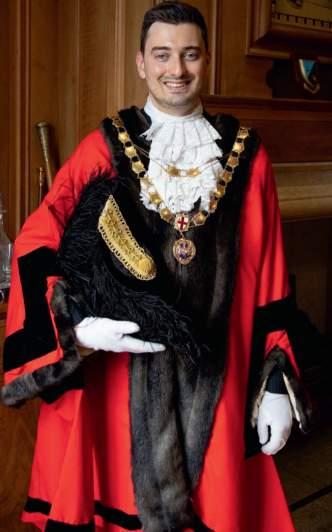

Read on to discover five financial resolutions that can help you thrive in 2026.
Increase your pension contributions
Making additional pension contributions can make a significant difference to your retirement income.
Give your wealth the best chance to grow
2025 wrapped up a strong year for markets. While markets won’t always deliver such strong returns, investing typically gives your wealth the best chance of beating inflation compared to other options.
Use your allowances before they reset
The new year is the perfect time to check that you’re making full use of your available tax-efficient allowances before they reset at the start of the new tax year in April.
Create a budget for 2026
The start of a new year is a good moment to review your budget and consider how it may be affected by changes in your personal circumstances, as well as the wider economic environment.
Review your progress towards your goals
At the start of the new year, you may want to review your progress towards your financial goals and make any adjustments needed to keep you on track or reflect recent changes in your life.
To speak to a financial planner, get in touch.

We are Independent Financial Advisers who specialise in retirement planning and estate planning
Get in touch
If you would like a review of your pensions and investments and whether you are on track to achieve your financial goals, please contact us for a free consultation.
0117 959 6499
info@perennialwealth.co.uk
Trym Lodge, 1 Henbury Road, Bristol, UK, BS9 3HQ

LOCAL BUSINESS AND COMMUNITY ORGANISATION UPDATES
Jacqui Ham, founder of Acting Out in Bristol (pictured below), has been recognised as one of the UK’s 100 most inspiring female entrepreneurs.
Jacqui, who founded her business in 2013, will be featured alongside leading female founders from across the country as part of Small Business Britain’s f:Entrepreneur #IAlso100 campaign, which celebrates the multi-achievements of women running businesses in the UK.
The campaign celebrates 100 exceptional women across the UK who are driving innovation, growth, and positive impact in their communities, while running successful businesses.
Jacqui is being profiled for her achievements in communityfocused theatre, drama, and arts education, including leadership and creative work with arts festivals, and a long-standing commitment to inclusive drama practice. On being featured in this year’s #IAlso100 lineup, Jacqui said: “I’m incredibly honoured to be included among so many inspiring women. Drama, inclusion, and the joy of creating together are at the heart of my work, and I’m grateful to the brilliant communities, children, and collaborators who make it all possible.”
f-entrepreneur.com actingoutdrama.com

Dick Lovett, a South West dealership for brands such as BMW, MINI, and Aston Martin, has opened a new state-of-the-art Porsche Centre at Cribbs Causeway.
The Centre features brand new Specification Lounges, enabling customers to configure their dream Porsche virtually and explore options before their eyes. With an additional 25,000sq.ft added to the location, the space has been updated to include a second floor where customers can see all the latest Porsche models including 911, 718 Boxster, 718 Cayman, Macan, Cayenne, Panamera, and Taycan. There’s also a new 17-bay workshop, service drop-off tunnel, MOT Centre and Smart Repair Centre. dicklovett.co.uk

Tech firm looking to send data ‘at speed of light’ receives huge boost
A local company developing and prototyping technology capable of sending data at the speed of light is forging ahead thanks to loans equalling half a million pounds. Duality Quantum Photonics secured the £500,000 in two loan packages from SWIG Finance to support its transition from research-led innovation to commercial delivery. The funding has enabled the company to expand its team, move into dedicated premises and continue developing photonic chips designed to process data using light rather than electricity.
Founded in 2020 by quantum physicists Professor Anthony Laing (pictured above, right) and Professor Alberto Politi (left), Duality Quantum Photonics is developing chips made from thin film lithium niobate, a material widely seen as the “silicon of photonics”. By encoding information into light, the technology promises dramatically faster data processing with significantly lower energy consumption.
swigfinance.co.uk | dualityqp.com




Rich Kennett, Teaching and Learning Lead at Excalibur Academies Trust has been awarded a Certificate of Appreciation from the Ministry of Education and Science of Ukraine, in recognition of his significant contribution to the renewal of the country’s school history education. The award acknowledges Rich’s work in supporting the development of democratic values, critical thinking and intercultural understanding within the Ukrainian national history curriculum. Ukraine is currently undertaking the complex task of rewriting its national history curriculum in the context of ongoing war. Rich has been closely involved in this work through EuroClio, the European Association of History Educators, where he has collaborated on international history education projects. One of the key issues facing Ukrainian curriculum writers is how to teach the history of war in a way that balances national narratives with critical reflection. Rich was asked to present training for history teachers and academics involved in writing the new curriculum, focusing on how history is taught in the UK. This included exploring multi-perspective approaches to the Second World War, addressing national narratives thoughtfully, and examining historical actions both positively and critically. excalibur.org.uk

Haberdashers' Monmouth School has launched its Futures Programme, marked by the introduction of the Futures Ready Backpack – an innovative visual framework designed to support pupils throughout their school journey and beyond.
The Futures Ready Backpack helps students to build, track and reflect on essential future-ready skills, encouraging them to recognise strengths, identify areas for growth and engage fully with academic and co-curricular opportunities. The programme ensures pupils leave school confident, capable and well prepared for life beyond the classroom.
The Futures Ready Backpack is made up of six interconnected sections, each representing a key skill set students develop throughout their school journey: Confident Communicator, Innovative & Creative, Resilient & Adaptable, Ambitious for Myself & My Community, Digitally Confident and Professional & Ethical. Together, these sections help students to track their progress, recognise their strengths and actively build a personalised skills portfolio. habsmonmouth.org

Former Fairfield High School student Serena Wiebe, now aged 20, has been awarded a British Empire Medal (BEM) in the New Year’s Honours List 2025. Serena, who grew up in East Bristol, is an antiknife crime campaigner, boxing coach and mentor with the charity Empire Fighting Chance, where she also works as a Youth Voice Ambassador. Serena contributed to the government’s first National Youth Strategy in 15 years and has taken part in important events such as the Youth Opportunity Summit at St James’ Palace. She also attended the first annual Knife Crime Summit at 10 Downing Street. excalibur.org.uk
One year on since it announced the pause in applications to its three-year BA Professional Acting course, Bristol Old Vic Theatre School has announced the launch of a new suite of acting Foundation Courses, starting September 2026, designed for aspiring actors who are seeking a pathway into professional training. Rooted in the School’s 80 year track-record of excellence and student success, these programmes will provide rigorous, conservatoire-style training with the flexibility needed for modern learners.
The launch of the new two-term and three-term Acting Foundation Courses, alongside the well-established 10-week intensive summer foundation mark an important step towards the School’s long-term future ambition for sustainable and accessible professional training for talented individuals. The courses are available in three pathways: a 10-week Full Time Summer Intensive, ideal for international students and those seeking an immersive short period of study; a Two-Term Full Time Foundation (six months), for students able to commit to a full-time conservatoire style training timetable. This would also suit international students who can come to the UK and study for six-months on a travel visa; and a Three-Term Part-Time Foundation (nine months), with three training days per week, a perfectly flexible option for those who need to earn while they train or balance other commitments. oldvic.ac.uk/foundation



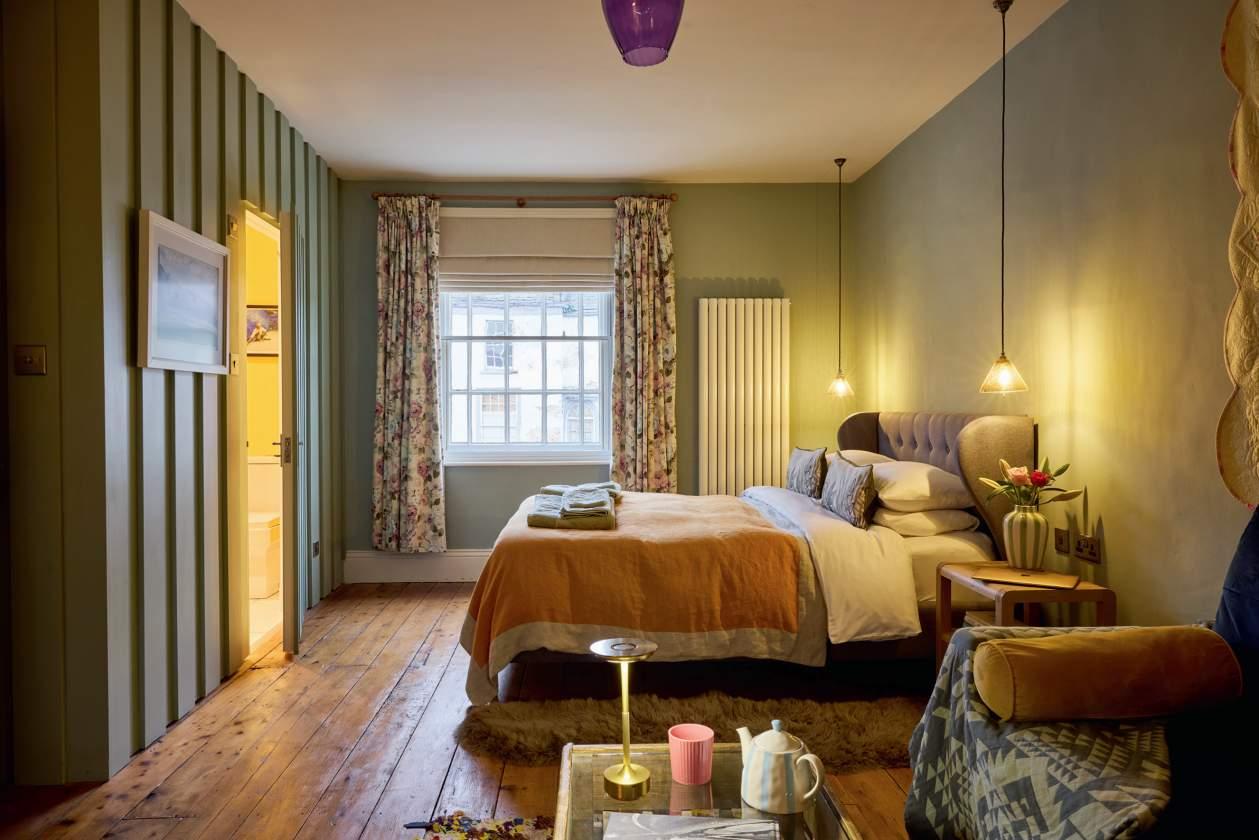
Something has been quietly stirring in the hills, deep in the Forest of Dean. A mini‐break has been born out of a labour of love in an ideally placed spot to escape the city in just under an hour, nestled between picturesque riverside banks and dense woodland adventures. Rosanna Spence heads to Severnside Press BnB in Newnham‐on‐Severn to discover a reimagined home‐from‐home steeped in so much style you’ll return reconsidering every inch of your own interiors
On the surface of it, Severnside Press BnB neatly ticks all the boxes you want from the perfect bed and breakfast minibreak: crisp, clean, fragrant sheets on a genuinely comfortable bed, plush soft towels, an impeccably clean bathroom, and a generously portioned, two-course breakfast prepared from the heart. But when owners Tony and Alex Kossykh-Bearman – along with their Hungarian Vizsla, Stanley –welcome you through their front door (which, by the way is a postcardperfect former shopfront in a line of historical buildings in Newnham-on-Severn), you’ll be quick to realise this place is something else entirely. It feels like leafing through the pages of a beautifully kept book containing the secret recipe for a perfect night’s stay.
Quite fitting really, seeing as the Grade II-listed Georgian townhouse was home to an industrious family-run printing press for more than a century, but had since fallen into complete disrepair. When Tony and Alex bought the building in lockdown, only one room was habitable; the rest was largely derelict. There was no mains water, no proper plumbing and no functioning electricity. They took on the huge renovation project and opened Severnside Press in 2022, carefully restoring the building while honouring its past.
After previously running a successful B&B by the sea in Lyme Regis, the couple set their sights on something different: a slower, deeper retreat in the heart of Gloucestershire. Tony spoke warmly about the welcome they received from the locals after they chose Newnham-on-Severn as
the location, something I guessed was a response to the care the pair were pouring into the building (it had been boarded up for a long time beforehand), and perhaps also because they are, quite simply, a lovely community. We certainly received lots of smiles and ‘hellos’ while wandering around the village.
Feel right at home
Severnside Press has three double guest bedrooms. We stayed in The Suite, where original staircase panelling remains on show: a quiet homage to the building’s history. Throughout the house, original hand-sanded floors have been preserved wherever possible, and even the coffee table in the main room was handmade by Tony from half an old door left behind during the renovation, and it wouldn’t look out of place in one of the upmarket homewares shops that dot the village.
Shelves, walls and cabinets are brimming with antiques, artefacts, art and objects collected by Tony and Alex over many years: a mix of global and local that somehow forges a feeling of community on both a broad and intimate scale; everything feels appreciated equally. There are loads of house plants, rich textures, beautiful textiles and a confident blend of antique and modern pieces that never feels forced.
The main room is the heart and hearth of the house. Once a shop front, it floods with natural light during the day, then transforms into a warm, closed-in cocoon at night thanks to huge curtains and a glowing fire. It doubles as the breakfast room and the space where guests naturally gravitate.
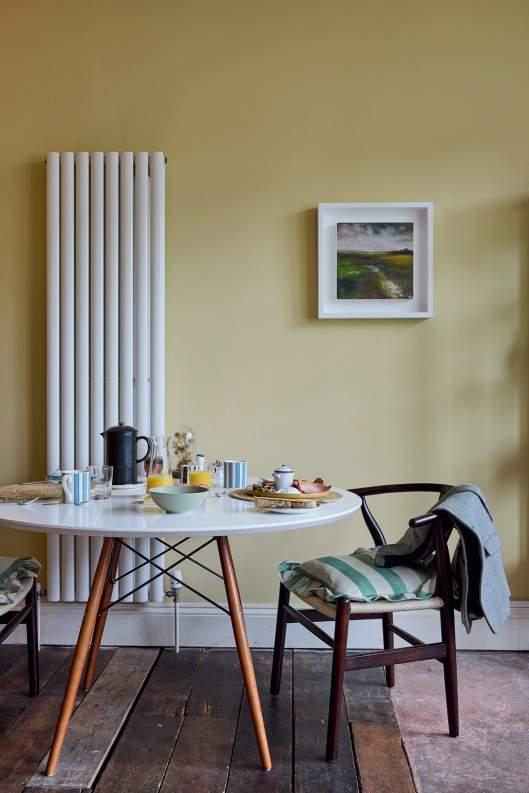
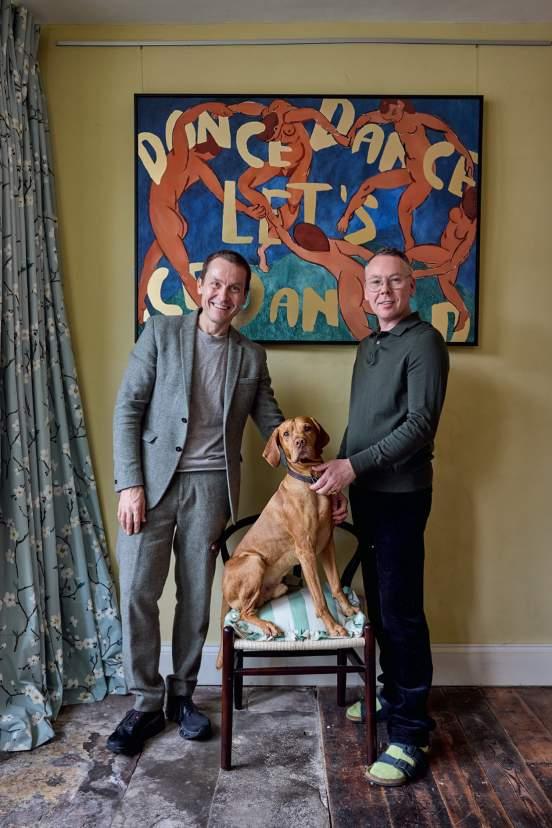
It turns out that our host for the weekend Tony is something of a triple threat: effortlessly hospitable, deeply practical – having carried out much of the renovation work himself – and an artist. His seaweed presses from Lyme Regis adorn the walls, forming a quiet but remarkable exhibition of his creativity.
I have a huge soft spot for the idiosyncratic universe of the bed and breakfast. Is there any other 24/7 hospitality business that sits closer to the hearts of its owners? B&Bs are homes first, businesses second, and the pressure to make guests feel something extra special is immense. That labour of love is unmistakable at Severnside Press. From the moment we arrived, the place felt genuinely lived in and cared for.
At one point in the evening, another guest knocked on the wrong door next door, then came to Severnside Press instead. When I answered, he said he hadn’t been sure whether to knock because I’d looked so cosy by the fire with my guest – like he’d be interrupting us in our own living room. I can’t think of a better indicator of just how much this place feels like a home from home.
Our suite looked out onto the road, but secondary glazing kept both warmth and noise firmly at bay. I usually sleep with earplugs at home in Bristol thanks to passing buses and lorries, so I came prepared, but didn’t need them. Thoughtfully, there were earplugs in the bathroom cabinet for anyone who might. The room featured a velvet sofa, a television with all the streaming platforms, and walls adorned with local art. The bathroom was a joyful sunny yellow, with a powerful, piping-hot rain shower.
Severnside Press is definitely an important player in a gentle revolution against faceless Airbnb stays where you’re emailed a key code and never speak to the humans behind the hospitality. Here, conversation is part of the experience, but never intrusive.
Shortly after arriving, we were served nutty coffee and a gloriously sticky lemon drizzle and chia seed cake by the fireside. Smooth French jazz drifted through the room, mingling with the scents of coffee, sweet cake, gently smoked wood and a ‘dark honey and tobacco’ candle burning between us.
Outside of our comfy nest, Newnham-on-Severn itself punches well above its weight when it comes to food and drink. We popped into The Railway Inn for a pint and immediately found ourselves chatting with friendly locals, and wandered through The George Café, which doubles as a community hub with a second-hand shop and occasional gallery space. Dinner at Post, just a stone’s throw from the B&B, was outstanding. Highlights included pig’s head croquette with sauce ravigote and cavatelli with Pembrokeshire crab, brown crab butter and pangrattato, all paired with wine served generously by the carafe.
It’s a must if you’re staying locally, though it’s worth researching ahead if you’re planning on dining out as other licensed venues (not including Post) don’t serve food until later in the day, even on winter weekends. A two-course dinner is offered at Severnside Press too, but check with Tony and Alex before your stay to see if they’re able to book you in.
Back at the B&B the morning after, we discovered breakfast is a leisurely two-course affair. We started with yoghurt, granola and berry compote, followed by a full English with all the trimmings, excellent coffee and scrummy apple juice. Everything felt generous and unhurried.
More than a minibreak
Severnside Press sits within an Area of Outstanding Natural Beauty, and while you’ll likely need a car to explore fully, everything is thoughtfully explained in the welcome pack, which is sent ahead of your stay with enough time to plan an itinerary.
We took a walk through the nearby St Peter’s Church graveyard and sat on a bench overlooking the River Severn, where views stretch across the water and birdlife gathers along the marshy banks. A walk through the village to the Severn brings you to a telescope by the riverbank, and an excellent information board explaining the history of the surrounding buildings. I’d suggest starting by the river and meandering up through the village, armed with these nuggets of context.
Newnham-on-Severn itself easily fills an afternoon: chic interiors shops, artsy gift stores, inviting alleyways, and chocolate box houses. The Forest of Dean is close by too – from the otherworldly terrain of Puzzlewood to the scenic drive past Tintern Abbey, winding through valleys and past excellent pubs.
At just under an hour’s drive from Bristol, and with plenty of free parking on the street around the building, Severnside Press feels far enough away to truly switch off, yet close enough to return (albeit reluctantly) refreshed without fuss. It’s the kind of place that will become the new benchmark against which you measure every minibreak. Tony and Alex’s B&B has become so much more than just somewhere to rest your head at night, it’s full of heart and home, and is a really exciting example of a new wave of bed and breakfast businesses transforming the way we holiday in the South West. n
severnsidepressbnb.com | @severn_side_press | Newnham-onSevern, Gloucestershire, GL14 1AA | All photos taken by Kasia Fiszer Photography | kasiafiszer.com
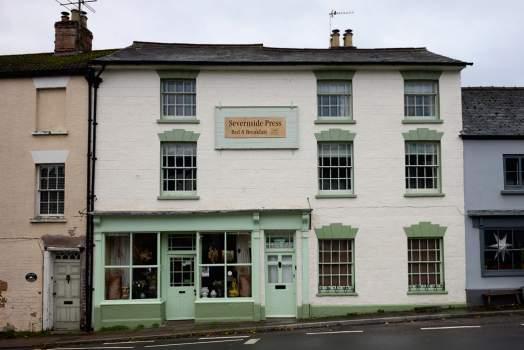
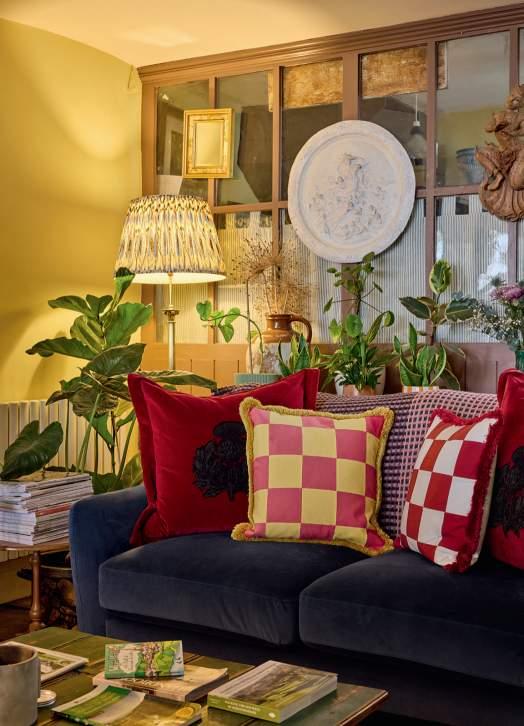
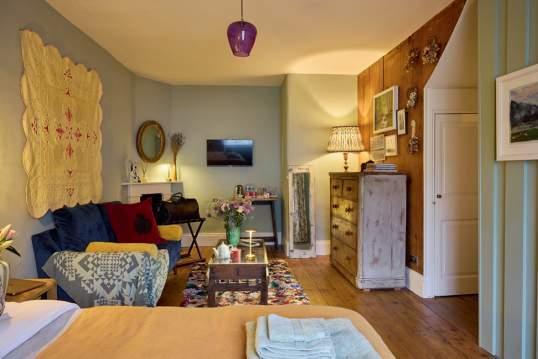

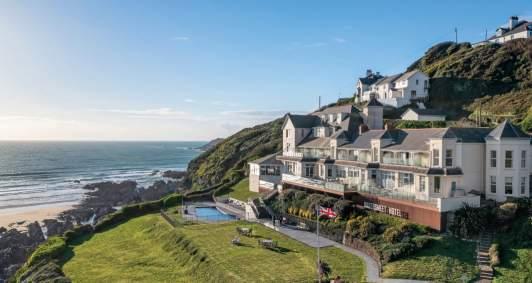
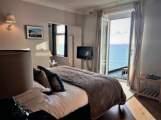
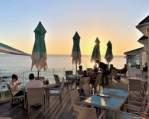
The Watersmeet Hotel in Woolacombe, voted Best Waterside Hotel for UK & Ireland by Conde Nast Johansen’s. Our 4 star Coastal Hotel could not be better located on the water’s edge. Luxury Balcony, Terrace Rooms & Suites all have private outdoor seating & sun loungers.
Our 2 Rosette Restaurant offers dramatic sea views. from our unique cliff top location. Indoor and outdoor pool & spa.
2 Night Celebration Break
Our celebration offer includes a 2 two-night stay, a bottle of champagne and a Devon cream tea.
From £700 inclusive
Luxury for Less Suite Offer - 1 night
Choose your sea view suite with a 3 course dinner & breakfast for 2 nights, plus a bottle of champagne per stay.
From £430
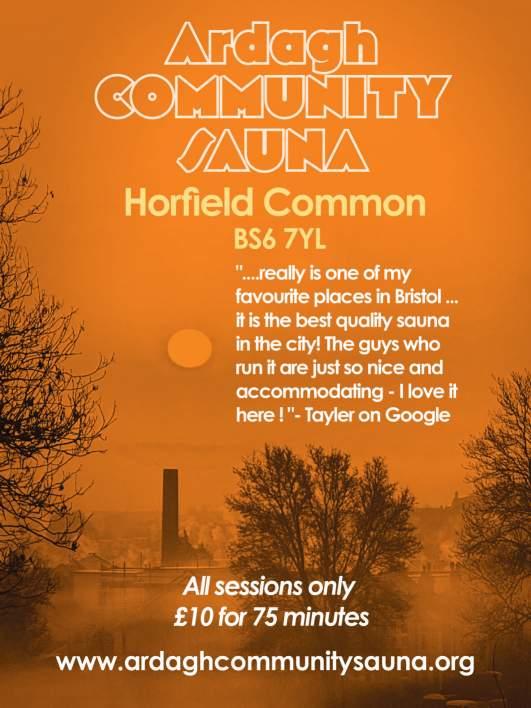


with arms wide open – plus the odd ice bath thrown in for good measure – which has led to a rapid rise in hot pods popping up across the city

ave you noticed how many more people in your circle are visiting saunas recently? The Bristol Magazine team certainly has. Seeing grinning, flush-faced and damphaired people wrapped up warm in winter (likely guzzling water) emerging onto the streets from inconspicuous corners of the city is certainly becoming more commonplace. And that’s because there are now more than 40 sauna businesses operating in Bristol and the surrounding areas, with a flurry of neighbourhood community pop-ups emerging in the last couple of years. In some areas – like the BS5 postcode – it feels like there’s a new sauna to sweat it out in every month.
Saunas are fast becoming a staple of the local wellness community – and community/family-owned, wood-fired saunas can be seen taking over disused yards, popping up in orchards, transforming horse boxes, hiding in secluded urban pockets of land and nestled in natural beauty spots… even floating on the harbour. And, of course, you can always settle into a sauna at one of the city’s many bricks and mortar spas on offer – from hotels to lidos. They’re often found with their partner in crime: the ice bath (or cold plunge pool for the still-ever-so-brave-but-not-insane among you).
The benefits of regular sauna use touch on most aspects of your mental and physical health. So if you’re stuck in a midwinter rut, or want an easy way to boost your wellbeing, perhaps a sauna visit might put the fire back in your belly? From lowering blood pressure, stimulating metabolism and supporting cardiovascular health to raising endorphins and easing stress hormone production, it’s thought that simply sitting in a sauna can help to heal your body on a cellular level. If you’re pairing a sauna session with a cold plunge, even better: alternating hot and cold exposure can reduce inflammation, quicken muscle repair and encourage white blood cell production.
Even though Finland is often credited with flying the flag for sauna culture, some of its roots are thought to date back some 10,000 years in the form of a dug out pit with a pile of stones at the centre, heated by a fire. Early sauna aficionados (going back as far as the Bronze Age) would have then covered the warm pit with peat, thatch or whatever they could find. And let’s not forget
the timeless tradition of sweat lodges in Indigenous cultures of North America and Mexico – plus, Islamic societies have championed saunas since the ancient world, and Japan’s onsens (steaming geothermal springs) are as old as the land itself.
Whether your next visit to one of Bristol’s saunas is your very first time, or a session as part of an established practice, when you’re pouring water onto the hot stones, breathing in the warm, moist air and feeling the sweat bead across your body, know that you’re continuing an ancient tradition embraced by your ancestors from around the world for millennia.


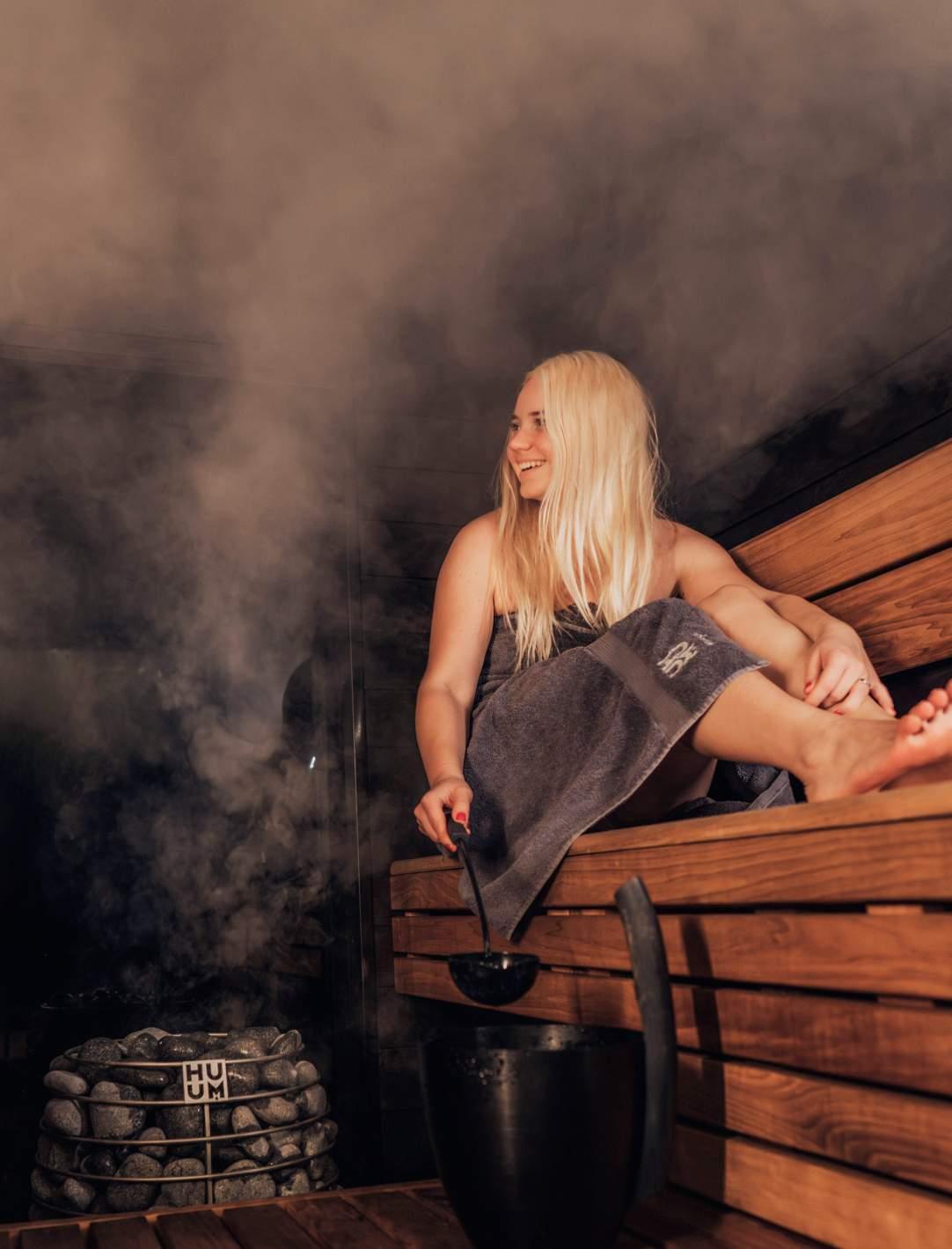
Heart of the community
‘Community’ saunas have proven popular as a sauna format for Bristolians, who’ve been flocking to these spaces in their hundreds. But what’s the difference in style compared to a hotel spa?
“A community sauna is driven by the ethos that it is a place for everyone, our opening hours are the only barrier to entry,” suggests Jon Savage, founder of Ardagh Community Sauna in Horfield. “The idea is we listen to what our customers would like and try to provide it. The founders are the face of the sauna and we meet and greet our guests creating a welcoming alternate socialising spot that becomes a hub for the community. It is a place that is good for the mind, body and soul, a place that is good for you and is making the area that you live in a better place.”
He tells us that at Ardagh, the founders have a background in the music industry, “you could say the sauna is our tonic to the pressures of working in that industry... The music industry and especially venue and festival stage management has given us the tools to curate a vibe that is different to other saunas, we play music, we light incense, we have creative lighting. People are often delighted the moment they walk in to our space, it looks great, it sounds good and smells amazing, so they are already in a great frame of mind before they step into the sauna. All of these things increase the wellness benefits, it just makes you feel great!”
Jon and the team believe it is the combination of all the therapies, hot, cold, sonic, visual and olfactory that create a “truly awesome experience... with this in mind, we run, sauna sound baths, Music and DJ events at the Sauna, alongside combinations of yoga, mediation and breath work sessions.” And why does Jon think that Bristolians have soaked up sauna culture so quickly? “It may be music, art or now saunas but Bristol is always an innovator and early adopter,” he says. “We are hot on the heals of London as one of the UKs leading cities in sauna culture and provision. We would like to think it comes from the way Bristol is such an open city and is rich in its diversity, it is open to ideas and developments and the people here really love to mix wellbeing and creativity. They enjoy feeling good about themselves and the place they live, the sauna is a place to meet, chat and be sociable, as well as to reflect, relax and meditate.”
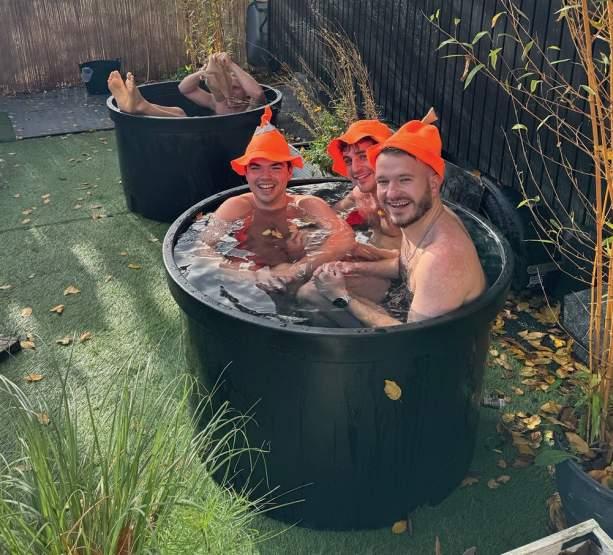
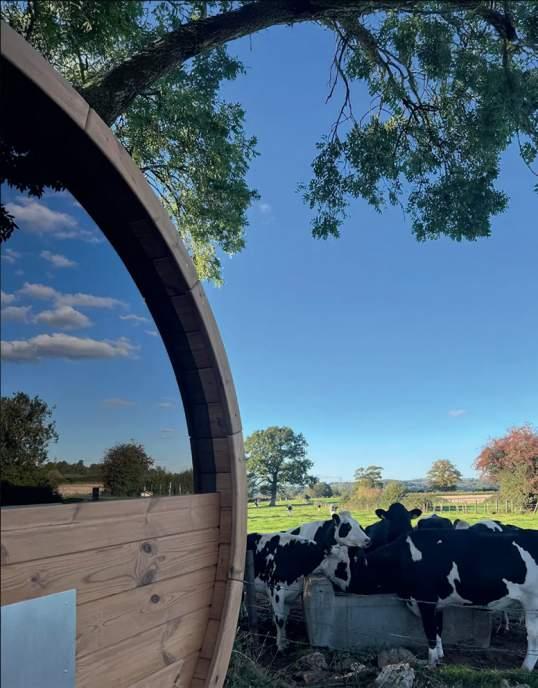
Another local sauna embracing the benefits of hot and cold therapy, and sharing it with its customers is Wildplunge; where the tubs are just as important as the sauna.
“We strongly believe in the benefits of contrast therapy,” says Harrison Malik from Wildplunge. “Between us – Harry, Charlotte, and I have all used saunas and plunge pools for different reasons, from stress relief and gym recovery to long-term health improvements. Now we’re seeing those same benefits extend into our wider community.
“We love watching people leave in a better mood! Smiling, relaxed after stepping away from everyday life. A special part of Wildplunge is seeing people connect, meet new friends and exchange numbers around the fire pit when enjoying herbal tea together.”
Wildplunge offers four plunge pools at varying temperatures and two saunas, each running at different heat levels, so people can find what works best for them. The sauna is located in a beautiful spot in Farrington Gurney next to a farm shop alongside other independent businesses, enjoying amazing views of nature, which, the team says, helps people turn off and reset. And for those thinking that heading to one of these places offering contrast therapy for the first time feels a bit daunting, Harrison has some words of comfort:
“Many of our customers have never plunged before, and it’s been amazing to see so many of them return. We understand that it can feel intimidating to ‘take the plunge’, but we’re here to support you and guide you through every session. We’re always happy to show anyone around our site if they’re looking to try the sauna or ice baths for the first time. Our setup offers a range of temperatures, so there’s something suitable for everyone, whatever your level. You can begin gently in the 70–80 degree sauna and simply dip a toe into the ambient bath if that feels right. We encourage everyone to avoid pushing themselves and enjoy each part of the experience at their own pace.” n
For more information on the saunas mentioned in this feature, and to book your spot for a sauna, plunge pool or both, visit the websites ardaghcommunitysauna.org and wildplunge.co.uk


Helping patients return to sport and hobbies: Simon (62) was suffering from severe knee pain in both knees due to arthritis. I’d already successfully used MBST to address his shoulder arthritis and tendon damage so he was keen to have MBST to support the healing of his knee cartilage and underlying bone. We’re now 3 months post treatment he’s just got back from snowboarding which he certainly wouldn’t have been able to do last year. He was able to board every day and ‘had a lot less pain than he’s had in the last five years’ on similar trips. We’re still early days in terms of the end outcome of the MBST treatment. The recovery process continues +/- 12 months post MBST treatment, but needless to say at this point he is very happy as am I.


Hip and Knee Arthritis: Phil (76) is a lovely longstanding patient of mine who came to me last May with moderate plus knee arthritis (7/10 Pain) limiting his walking and general movement. Things were going downhill. After an MRI scan we agreed to apply MBST Cartilage and Bone to the joints in order to improve the cellular function in those tissues and support a repair process. As I see in so many cases like this, Phil is now doing so well, able to fast walk routes that he was really struggling with 9 months ago. Had we not intervened, Phil would most probably be looking at total knee replacement . Fortunately we caught things in time. Great result so far.
MBST UK is the official regenerative Partner for Bath Rugby and Wrexham FC. Not only is this leading to dramatic increases in the speed of player rehabilitation and return to play, but it’s allowing us to gather data and explore the full ability of this technology
At CURA we have the have the latest technology in assessing bone density and fragility. Unlike DEXA that uses X-Ray, REMS Scans use ultrasound to precisely assess the thickness of bone and the bone strength/architecture.
It’s an amazing tool to have, especially to safely monitor the progress our patients are making after using MBST to address the deconditioning of bone in Osteoporosis:
We’re seeing remarkable results when applying MBST to bone, both after trauma and in Osteoporosis patients.
Our observations include;
Significantly faster fracture healing times
• Significant reduction in fracture pain.
Improved Bone mineral density
Improved T scores and reduced fragility
Scans take 45 minutes and results are immediate

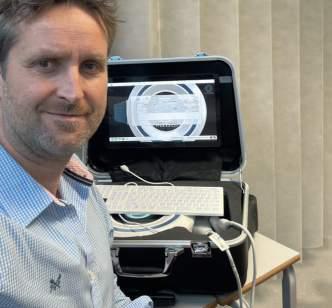
An award-winning innovative treatment for: Osteoarthritis | Back & disc problems | Bone conditions & fractures | Cartilage damage | Ligament, tendon & muscle damage | Sports & accident injuries.

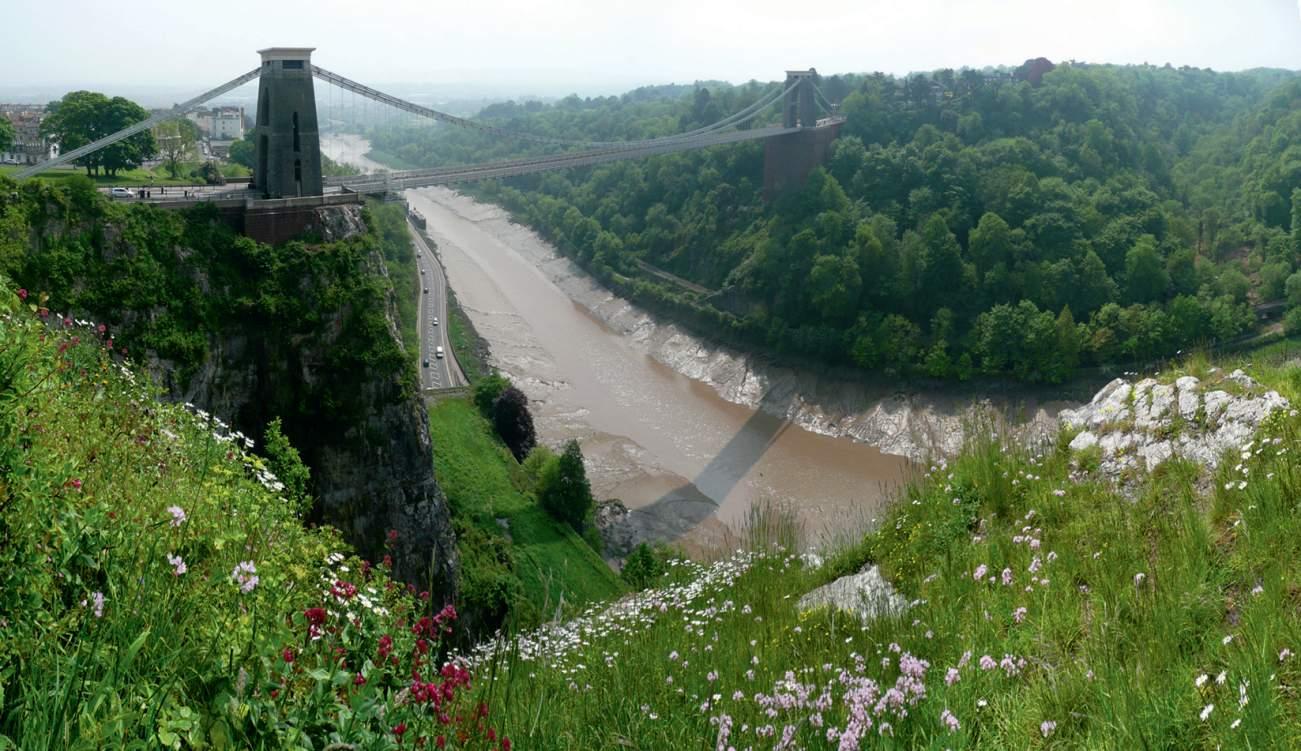
Sea Walls is a gateway to sweeping landscapes, hidden histories and vibrant ecology. Nick Wray, Curator at University of Bristol Botanic Garden, invites us to marvel at this captivating corner perched above the city’s edge
Iam here again, one of my favourite places in Bristol, Sea Walls. It’s interesting for many reasons. I usually cycle here and as you cycle down Circular Road the landscape opens up to a wide vista where you can appreciate the large scale of the Downs. The end of my journey is the railings, the river Avon and Leigh Woods beyond, so close, yet so far away. I am never alone here: boy racers rev and admire each other’s cars, there are walkers, joggers, and families enjoying a day out. There is the side distraction of the ice-cream van, but it’s the end point of Sea Walls and the views that attracts me, did I mention the views? Wow !
To the northwest there is Avonmouth with its cranes and industrial buildings littering the landscape; beyond is the Severn Estuary, and I imagine those old wooden sailing ships waiting for the tide to come up the Avon into the floating harbour with Pill pilots by their side. Then there is Wales beyond, mountains frequently shrouded in cloud while I am in full sun - and the sunsets, the amazing sunsets.
Looking southwards down the Avon Gorge, its muddy waters are roofed by Brunel’s engineering masterpiece – such a shame he never lived to see it completed and finally the Cumberland Basin with its 1960’s city planner’s road spaghetti.
On both sides of the Avon Gorge are trees, beautiful trees. However, all is not what it seems. The trees on the North Somerset side have been there a very long time. Leigh Woods, a National Nature Reserve managed by the National Trust and Forestry England, is classed as ‘Tilio-Acerion
woodland’, the scientific description of a Lime and Maple woodland. For centuries part of the woodland was managed as wood pasture, and parts managed by the National Trust still are today. It’s possible to see many examples of high ‘tree stools’ where trees were coppiced at a height which prevented cattle eating the new growth.
On the Bristol side the calcareous grassland ends abruptly as the terrain comes to the cliff edge, where the woodland begins. However, these trees


are recent invaders – one could call them weeds. The Downs and cliff edges have been grazed by animals, mostly sheep, for thousands of years, (the University of Bristol is one of the commoners that maintain their right to graze sheep on the Downs by grazing them once every five years).
We know humans have been making this area their home since the Iron Age, as indicated by the Iron Age forts of Stoke Leigh Camp, Clifton Down Camp and Burwalls Camp, positioned as triangulated vantage points overlooking the Avon Gorge. Sheep would be grazed on the Downs from autumn to spring when the grassland grows, but in summer, as the grass dried out and turned brown, the sheep would be herded to the lush grass of the Trym valley.
Come autumn, they would move back to the elevated Downs. In Stoke Bishop between Hollybush Lane and Parrys Lane are both old rights of way where sheep could be herded, long before the suburban streets sprouted along the Trym Valley.
In 1925 sheep, were grazed for the last time before being removed along with their shepherd, as they were causing too many accidents with the new and emerging automobiles. Those early drivers really didn’t like the sheep; can you imagine the numbers of cars using the Downs in 1925? The removal of sheep had a profound and immediate effect on the Downs that has lasted to this day. In the autumn of 1925, tree seeds from Leigh Woods blew over the river Avon to the cliffs and downland on the Bristol side, germinating in spring 1926.
This marks the transition from limestone grassland to scrub and finally woodland. Without any hungry sheep to eat the tree saplings, they grew into the woodland habitat we see today.
There are many great initiatives to plant trees to combat climate change and biodiversity, but it’s important to remember: plant them in the right place. The real conservation value here is the biodiverse limestone grassland, a far more threatened habitat than woodland.
The ownership of the Downs, Avon Gorge and Leigh Woods is a jigsaw of six independent but interested parties, including Bristol City Council, The Society of Merchant Venturers, The National Trust and Forestry England. Most are represented on the Avon Gorge and Downs Wildlife Project (AGDWP), an advisory group, pooling best practice, seeking advice and sharing ideas. The project was initiated by University of Bristol, Bristol Zoological Society and Bristol City Council.
Now in its 27th year, it develops policy, management plans and conservation projects and priorities for the whole area. Sixteen years ago, funding was received to initiate a bold project to fence the Gully on the Bristol side and introduce Kashmir goats to graze the scrubland and clear the trees. They have made an excellent job of this work; the unwanted trees have gone, apart from some locally important whitebeam trees with their bark protected by wire mesh. Even Yew trees with their toxic sap have succumbed to the hungry goats. I’ve watched them many times and you can see how they have systematically grazed the woody plant material, opened up the Gully and allowed light to reach the ground.
It’s hoped that in time, seeds in the soil seedbank will germinate and regrow together with some re-sowing from the grassland of the Downs. Dynamic ground disturbance, to bring seeds back to the soil-surface, is common practice in habitat regeneration.
The Gully used to be known as Walcombe Slade. It is still named as such on certain maps. It has been a herb-rich grassland for thousands of years, and there are still pockets of biodiverse grassland, some home to the Silky Wave Moth – a UK conservation target species.
The Avon Gorge is home to 15 native species and hybrids of whitebeam or Sorbus trees, representing, probably the greatest diversity of whitebeams on the planet.
The tree that takes the city’s name is the local endemic Bristol whitebeam, Sorbus bristoliensis. Its a hybrid between the Wild Service Tree Sorbus torminalis of Leigh Woods and the UK endemic, Round-leaved whitebeam Sorbus eminens, found growing along the towpath. Wilmott’s whitebeam Sorbus wilmottiana, another endemic species to the Avon Gorge, is easily distinguishable by its boat-shaped leaves that point upwards, particularly on new shoots, forming a ‘V’ shape along the stem.
Whitebeam fruits from late summer to early autumn and most fruits are red, but Bristol whitebeam’s and the Wild Service Tree has more orange-coloured fruits. There are a few new whitebeam species that have relatively recently been described, having been identified through a process of DNA sequencing of their genes. Sorbus avonensis, or Avon whitebeam, for instance is endemic to the Avon Gorge and was first described in 2009.
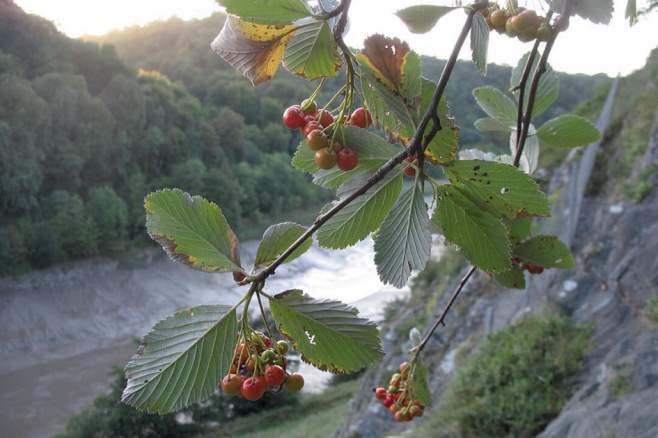
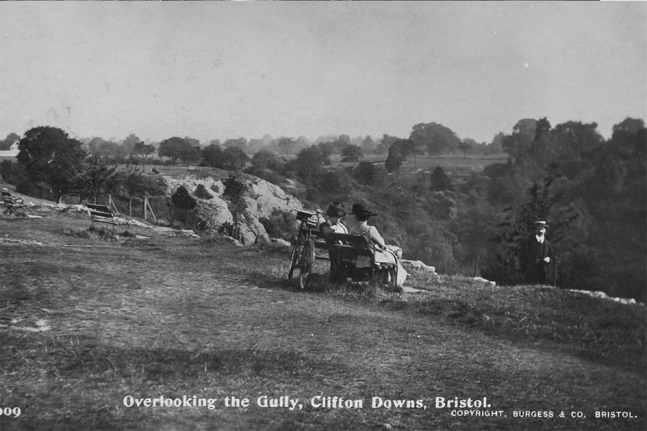

This research was carried out by plant scientists at the University of Bristol School of Biological Sciences in collaboration with botanists at the Natural History Museum of Wales and local botanist Libby Houston. The diversity of the whitebeam trees in the Avon Gorge along with around thirty other species of nationally scarce plants, rare animals, insects and unusual geology are some of the reasons why it is designated a Site of Special Scientific Interest (SSSI), a Special Area of Conservation (SAC), and is of national and European importance. These unique species of whitebeams have been propagated by the horticulturalists at the University of Bristol Botanic Garden where they are on display. The University has long had an interest in the Avon Gorge and has been carrying out fieldwork, research since the early 1970’s. Today its work is focussed on propagation of the rarest plants ensuring there are enough for replanting projects and enough whitebeam trees to establish a sister ex-situ collection at Westonbirt National Arboretum.
Perhaps the biggest threat to the rare native flora of the Avon Gorge, comes from introduced weeds or alien plants not native to the UK. The Avon Gorge has many, but Rosy Garlic Allium roseum, Alexanders Smyrnium olusatrum, a large member of the carrot family, Broad-leaved Everlasting Pea Lathyrus latifolius, Mexican Fleabane Erigeron karvinskianus, Holm Oak Quercus ilex and many species of Cotoneaster, but particularly Cotoneaster horizontalis, all pose a threat to the herb-rich grassland, by smothering and shading out the light. Conservation efforts to remove the Holm Oak and cotoneasters is done on a rotational basis, the other species are found widely in the Avon Gorge and at present are a challenge for conservationists.
The proximity of the Downs and Avon Gorge to the city is unique for leisure, play, study and interpretation. The latter is provided by the amazing small team at the AGDWP.
Anna Stevens is their Biodiversity Engagement Manager. She coordinates and leads an annual public programme of schools’ visits and public activities, where experts in their field share knowledge and reveal the magic of the wildlife right within our city. For many school children it’s their first visit to the Downs and introduction to natural history study. Research shows that ensuring young children learn about wildlife at an early age can foster a lifelong interest. Our children will become the consumers, wildlife policy makers and enforcers of the future, so the AGDWP work carries a vitally important message. It’s great to see so many children engaging with the native wildlife on our doorstep. n
avongorge.org.uk | botanic-garden.bristol.ac.uk
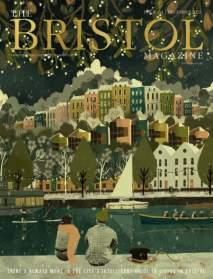


We deliver to over 15,000 addresses every month. But if you live outside our distribution area or would like us to send a copy to friends or family, we offer a magazine mailing service.
ONLINE AT thebristolmag.co.uk/subscribe or Tel: 0117 974 2800


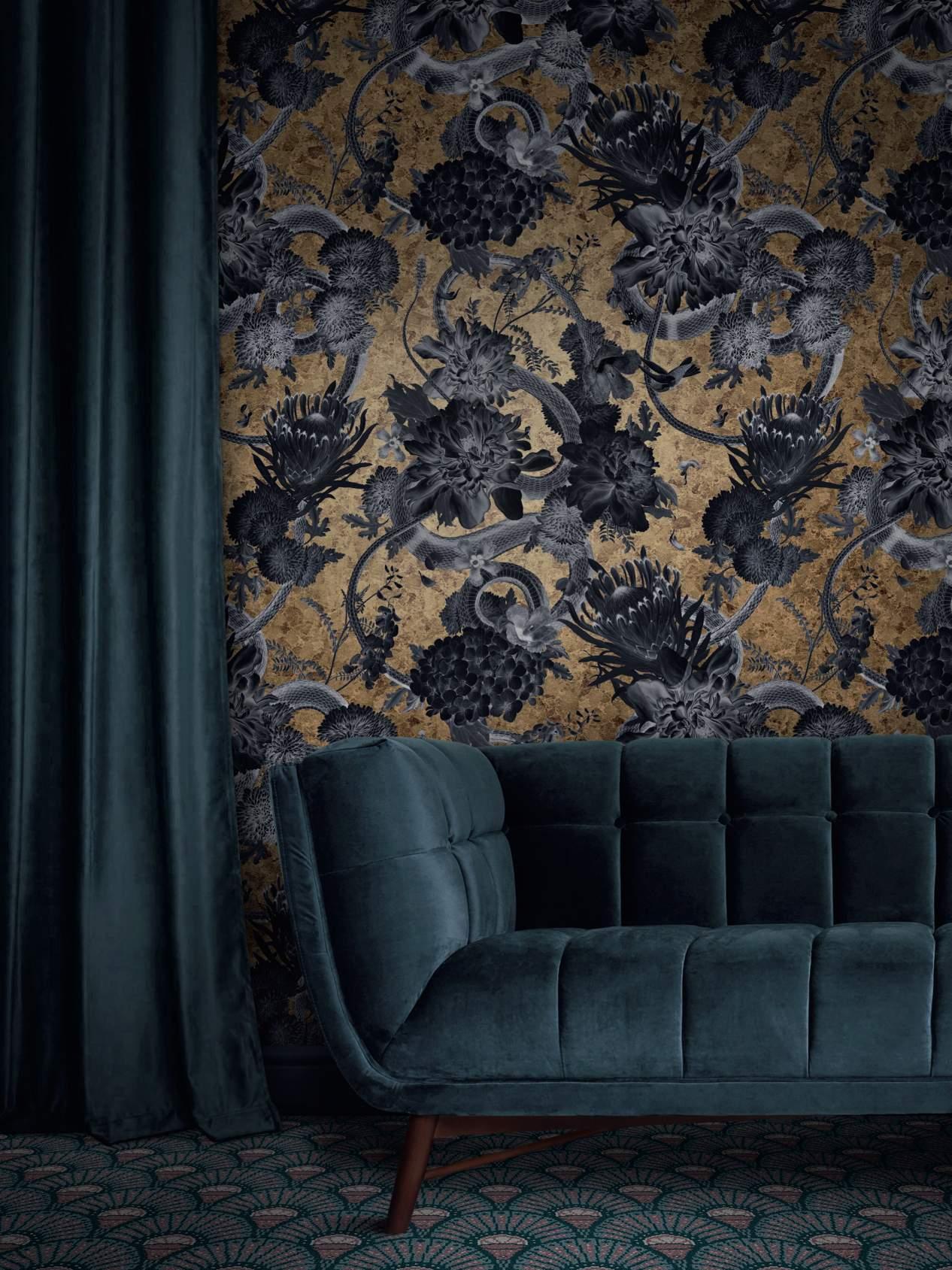
The pages of the classic Gothic novel have been scattered around the zeitgeist, with Guillermo del Toro reanimating Victor Frankenstein’s monster for his epic take on Mary Shelley’s masterpiece late last year, and now Emerald Fennell has plucked Heathcliff and Cathy out of the literary canon and onto the big screen in “Wuthering Heights” just in time for Valentine’s Day – along with her signature interior set design that’s guaranteed to steal the limelight. We’ve spoken to some local experts who have shared their top tips on recreating this show‐stopping Gothic aesthetic in your own home…
Emerald Fennell’s film “Wuthering Heights” is, from what we can tell so far ahead of its theatrical release, inspired by Emily Brontë’s 1847 gothic novel of the same name, but note the scare quote marks around the title – judging by the clips in circulation and the test audience reactions, it’s likely that many similarities beyond character names end there. Emerald’s directorial approach has a unique visual style in contemporary cinema: opulent, fashionable and richly indulgent. But more importantly, it’s an aesthetic people have been keen to peel off the film and recreate in their own lives at home. For example, her 2023 film Saltburn’s sumptuous, maximalist, mismatched country manor vibe had everyone panelling their walls, buying velvet sofas, and clashing patterns on their soft furnishings. It’ll be no surprise then, that cinephiles will not only be taking notes on the action that unfolds on the big screen when “Wuthering Heights” is released on Valentine’s Day, but also keeping a beady eye on the set design, too (and likely the fashion to boot – have you seen Margot Robbie-aka-Cathy’s billowing patent blood red leather floor-length petticoat in the teaser? What would Brontë say…!)
Brontë’s novel was set in the late 1700s, written late 1845 and mid-1846, and first published in December 1847. So in her writers’ eye she may well have imagined Heathcliff and Cathy’s destructive romance unfurling inside Regency-era interiors. Emerald’s highly erotic spin on the novel means that visually, the characters’ intimate actions will no doubt energetically entwine with their surroundings – whether that’s the grass on the rugged moors or the soft, satin padded wall panels.
The sneaky peek of the rooms on screen we’ve seen so far that have sprung from Emerald’s imagination are likely a far cry from the spaces inhabited by real people in the 1700s, but we’re already in love with her dramatic, overtly opulent visions of the interiors –think thickly pleated drapes adorned with long tassel tiebacks, highly ornamental statement dressing tables, more of those panelled walls we loved so much in Saltburn, bronze cherub faces watching the doomed affair unfold, soft candlelight illuminating only part of the action, roaring open fires with intricately gilded surrounds, and of course the windswept Yorkshire moors – and their muted, earthy colour scheme constantly spied on the other side of the windows. Of course, in reality, much of this eclectic approach to design will likely be fuelled by treasure hunting around antiques shops, vintage markets, car boot sales and scrolling Etsy and eBay, but there are other ways you can subtly incorporate a little of Emerald’s version of Wuthering Heights into your rooms at home, too.
In this reimagining of late 1700s Yorkshire, nothing is too much. More is more. There’s a touch of Hollywood regency immersed in a deeper gothic setting, and decorated with exuberant elements of Rococo revival (which is known for playing with the themes of nature and love, which is kind of perfect for an outrageously playful adaptation of Wuthering Heights).
To help you perfect a dark, romantic Gothic aesthetic in your own home, we’ve enlisted the help and advice of some local design experts, along with plenty of product suggestions. →
Our lead image presents Divine Savages’ Forbidden Bloom wallpaper, which fuses floral illustrations inspired by The Natural History Museum with elegantly winding serpents. Lush blooms unfurl across the design, while hidden reptilian forms weave through the foliage, creating a pattern that feels wild, decadent, and just a little bit forbidden.
Look closer and the serpents begin to reveal themselves – a flash of scales, a curved tail, the glint of a watchful eye – adding intrigue and a subtle sense of gothic drama. The result is a wallpaper that feels both beautiful and dangerous, perfect for interiors that favour bold storytelling and unapologetic glamour.
Designed to transform walls into a statement, Forbidden Bloom brings a darkly sexy edge to bedrooms, powder rooms, and dramatic living spaces, turning every room into a richly layered, cinematic escape.
divinesavages.com
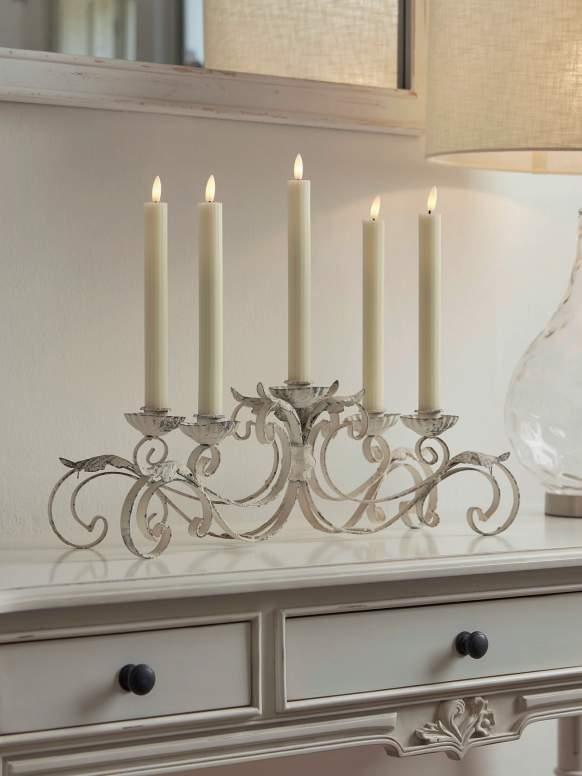

“Start with moody, jewel-toned walls – emerald green, oxblood red or midnight blue – to create a dramatic, seductive backdrop for ornate furniture and layered textiles,” explains Clair Strong, director and designer of Clair Strong Interior Design (clairstrong.co.uk). “Baroque or botanical wallpaper on an accent wall will add depth and visual storytelling.
“Layering is key to this look. Velvet curtains, brocade cushions, and Persian-style rugs bring richness, while silk, leather, and faux fur introduce a tactile, slightly sexy contrast that will make the room feel lived-in and decadent rather than staged.
“Lighting should be atmospheric and theatrical: opulent chandeliers, antique gold sconces, and flickering candlelight create a soft, flattering glow that heightens the gothic romance. Choose furniture with historical flair – dark woods, carved details, and metal accents ground the space with old-world drama.
“Finish with curated statement pieces: gilded mirrors, Gothic candelabras, and antique oil paintings add personality and a hint of sexy excess. Add a few subtle nods to the moors –dried heather, stormy landscapes, and Wuthering Heights-inspired prints.
“This combination of colour, texture, and storytelling will create a decadent, romantic interior reminiscent of Emerald’s signature style with echoes of the moors and literary drama.”
“Maximalist/Gothic interiors are all about historical elegance and dramatic flair,” explains Alison Bracey of Bracey Interiors (braceyinteriors.co.uk). “It’s about layering, textures and using fabric and trimmings in an excessive manner. Dark rich colours dominate the Gothic palette: Think rich reds, deep purples, jewel tones and maybe some black/dark shades. Top tip: decorative poles are a great way to add individuality and exuberance to a window setting.”
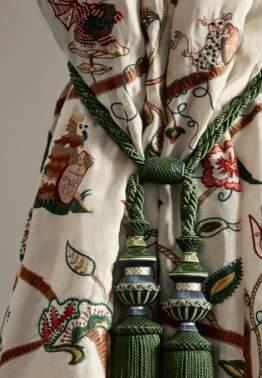
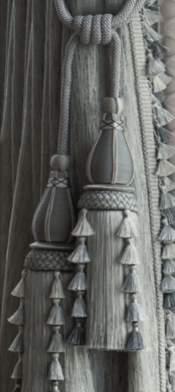


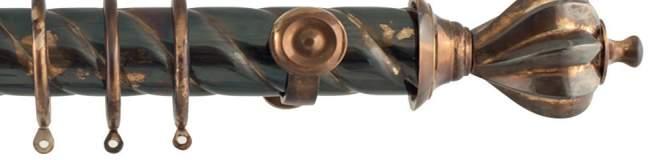
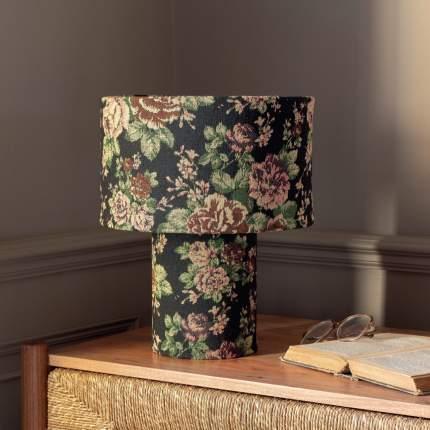


Pictured on this page, left-to-right, top-to-bottom: Vintage Ornate Wood Frame Overmantel Mirror, 85 x 115cm, Gold, £230, johnlewis.com; Zoffany Hampton Embrodery, Tapestry, £256 per metre, zoffany.design; Trimmings by Samuel & Sons (and top right), samuelandsons.com; Two bespoke handcrafted curtain poles from Hunter Hyland, hunterhyland.co.uk; Black Floral Tapestry Table Lamp, Graham and Green, £80, grahamandgreen.co.uk; Square Stonewashed Velvet Cushions, Graham and Green, £45, grahamandgreen.co.uk; Bronze Red paint, Little Greene, littlegreene.com; and Theatre Red paint, Little Greene, littlegreene.com
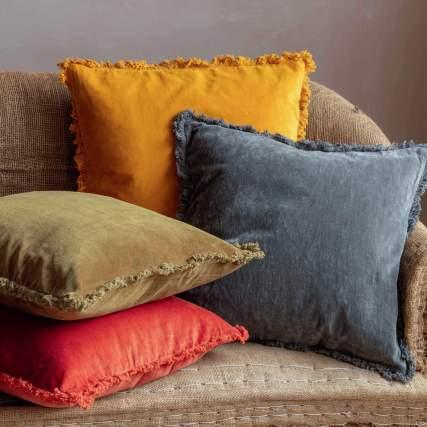
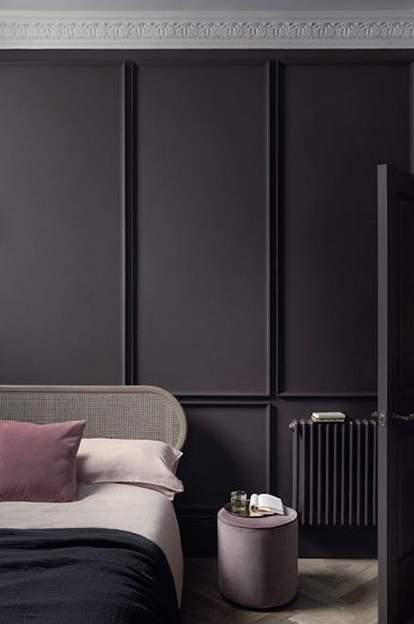
Pictured on this page, left-to-right, top-to-bottom: Pontefract paint on the wall, radiator and door, and an excellent example of wainscoting from Paint & Paper Library, paintandpaperlibrary.com; Laura Ashley Enid Crystal Glass Chandelier, John Lewis, £499, johnlewis.com; Luxurious 19th century Gothic revival damask fabric from Watts 1874, watts1874.co.uk; Aged Effect Ceramic Planter, Cox & Cox, £30, coxandcox.co.uk
Architectural detailing
“A little like backless panelling, wainscoting is a brilliantly affordable way to add architectural detailing that gives a sense of maximalist grandeur,” advises Zoë Hewett, interior designer and director of Stylemongers Of Bristol (stylemongersofbristol.co.uk).
“All you need is a stash of slim mouldings from a local hardware store (my nearest is Bishopston Hardware) and enough of a maths brain to plot out how to configure them into frames, and decide where you want to place them on the walls. Once mitre cut, fixed to the wall and caulked you really can paint them in any colour you like – either the same as the wall itself, or picked out in a contrasting colour for emphasis. In the “Wuthering Heights” set there’s a beautiful duck egg blue. Try Lie-In emulsion by eco brand COAT Paints to recreate the look.
“Inside these frames integrated into the wall frame can be a fantastic place for wallpapering and it allows for making a single roll of wallpaper go very far. Something organic, botanical with a lot of movement in it like Hollyhocks by House Of Hackney would work a trseat.
“An ornate vintage dressing table in the bedroom will emulate the look, and can be given a special treatment with Annie Sloan chalk paint available in a range of stunning colours for a beautiful accent. The brave might opt for a punchy red, which features through the set design. Drapes feature heavily too, so a trip to Marialina on Gloucester Road could prove fruitful for generously full curtains in a plain linen.
“To bring a touch of the moors inside consider picking up a vintage or antique jardinière (try ragandbonebristol.com for one) – an oversized decorative urn-like planter on a stand. Filling it with blousey blooms and trailing fronds. You could even go as far as to find dried plants that are native to the moors for longer lasting flowers and a capturing sense of the elements that dried them.”
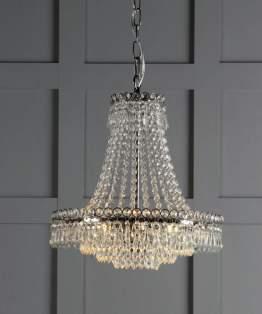
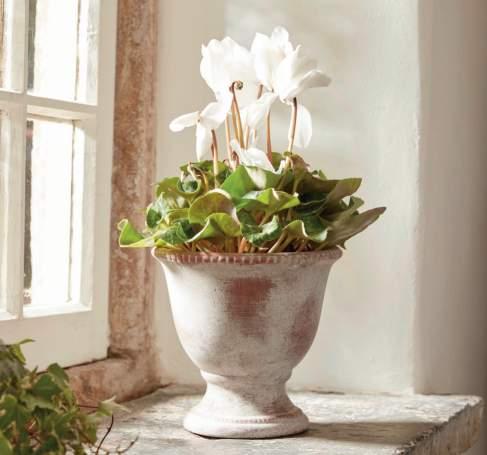
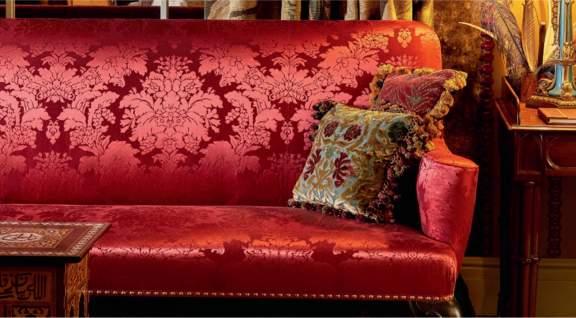
“Contemporary Gothic is definitely a fresh, subtler take on the original,” states John Law, creative director of Woodhouse and Law (woodhouseandlaw.co.uk). “Today’s Gothic revival is a nuanced affair that goes in hand with the current movement to all things maximalist. Original Gothic can conjure images of dusty, haunted, perhaps cluttered spaces; its modern-day counterpart is a more curated offering that combines layered, often heavy textures –such as velvet – with sleek surfaces and finishes such as marble.
“The colour palette is still dark and moody, but this time creating a much warmer, cocooning effect, through rich jewel-like colours such as emerald and navy – often colour-drenched for a sense of drama. And where modern properties lack the ornate architectural details of early day Gothic, frames, mirrors and over-sized sculptural headboards can be introduced to add those strong, impactful silhouettes.” n

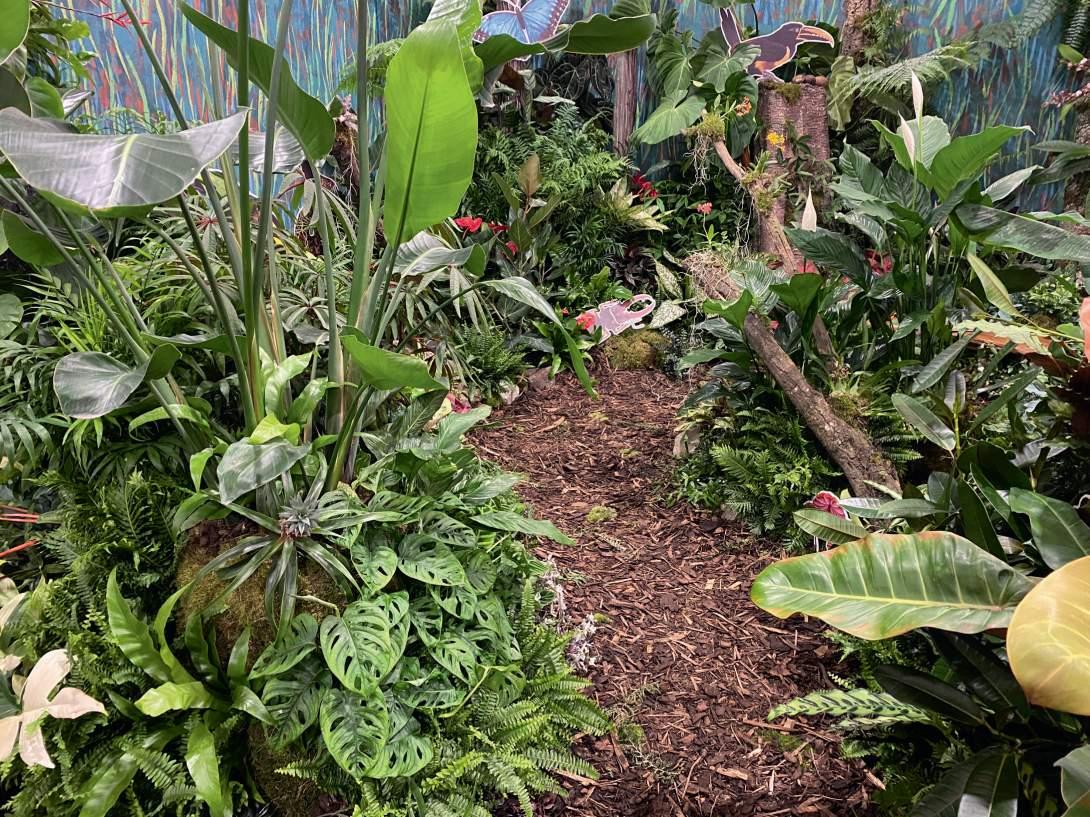

Houseplants make a house a home, writes Elly West, who this month shares some top tips designed to help indoor plants with tropical origins thrive in the UK
My first proper job was on a newspaper post-graduation back in 1998, where I was given an aloe vera plant by the photographer when she was having a clear out at home. I still have its descendants going strong in various containers around my house to this day and I’ve also shared it with friends, one of whom recently mentioned that she calls it her ‘Elly-vera’ plant, which made me smile.
Plants often remind us of people, and many of the gardens I design have plants that I’m asked to work around and include plants that have been given as gifts for an anniversary or wedding, for example, or grown from a cutting from a parent’s garden. A plant is one of the nicest things to share in my opinion; something that grows, that brings happiness and a sense of well-being and calm.
Along with my aloe vera plants, many other houseplants are equally prolific. A tiny piece of Crassula ‘Hottentot’ was given to me by a local succulent expert Chris Rixton, when I was writing a feature on succulents for this magazine in 2020. It snapped off in my fingers when I was touching the plant (oops!) and he said to take it home and just lay it on the surface of a pot of damp soil and it would grow into a brand new plant. Easy peasy. It now fills and cascades over the edges of a much larger pot in my bathroom.
Spider plants are one of the most well-known houseplants and another favourite of mine. One will quickly become many, with ‘babies’ produced
on long trailing stems that can be left in situ, or removed and placed in jam jars of water, sitting with their base just touching the water, until a network of roots grows and they can be potted up.
Houseplants, for me, make a house a home. They provide instant impact and if well looked after will grow and change, perhaps with flowers, but at the very least sending out new leaves and getting bigger, increasing their effect. They can also have a positive influence on our mental health. Caring for plants is a mindful and rewarding activity that connects us with nature and removes us from the stresses of everyday life.
In hospitals, plants have been shown to boost pain tolerance, and in offices some studies have shown they can improve worker productivity and attention span, as well as reduce stress levels. There is also evidence that they improve our indoor air quality by absorbing toxins and adding oxygen and humidity as they photosynthesise.
When growing plants indoors, it’s very much a case of right plant, right place. When visiting the RHS Malvern Spring Festival last year, I chatted to Jessy Edgar, who runs the independent plant shop Sprouts of Bristol based in Kingsdown. Her show garden Beneath the Canopy (pictured above) aimed to highlight good plant care based on understanding where our plants come from, so as to give them the best chance to thrive indoors. Many of our houseplants originate from the tropical rainforests, and have adapted to life beneath a dense jungle canopy, meaning they can survive the low light conditions found indoors.
As Jessy explains, “It’s very shady below the canopy, so even though people think tropical plants will need lots of sunlight, that’s often not the case.”
Her show garden used plants exclusively from the Amazonian rainforest, and for these types of plants she advocates plenty of humidity, so avoiding placing them near radiators, or letting the soil dry out. Grouping plants, using self-watering pots, and standing the plants on a pebble tray filled with water can all help increase humidity. Tropical plants often do well in bathrooms. Jessy’s garden included many household favourites, such as the classic 1970s’ cheese plant (Monstera), flamingo flower (Anthurium), spiderwort (Tradescantia), leopard lily (Dieffenbachia) and purple shamrock (Oxalis).
Succulents and cacti on the other hand are desert plants. “These need lots of sun and not much water,” she says. “A soaking, rather than regular light watering is much better. I’ve got big statement cacti that I’ll water three times a year, when they start to look a bit wrinkly.”
Jessy suggests checking on your plants once a week to see how they are faring. Crispy, wilting, brown foliage and dry soil indicates underwatering, while signs of overwatering (one of the most common causes of plant failure) include wilting and yellowing leaves. Check the pots have adequate drainage and aren’t standing in pools of water. Air circulation is also important to prevent plants rotting. Lack of light can cause smaller, paler leaves, with more stem growth between each leaf as they try to reach for more light. Moving it closer to a window and rotating the plant will help it to grow more evenly. n
Elly West is a professional garden designer, working in and around the Bristol area | ellyswellies.co.uk

This is a tough plant that thrives on neglect. It produces thick fleshy green leaves that taper to a point, are slightly serrated at the edges and often flecked with white spots, depending on the variety.
Healthy and happy mature plants will reward you with vibrant spikes of tubular yellow-orange flowers in summer. Cut them off once they’ve gone over and start to look tatty, and this will also prevent the plant from putting its energy into producing seeds. Irregular watering, waiting until the soil is completely dry seems to work for my plants. Often it’s the appearance of paler brownish leaves that prompts me to go and fill a jug with water – but they quickly green up once they’ve had a soaking. Snap off a leaf, and a gellike substance oozes out, which can be used on minor burns for its cooling, soothing properties.
Aloes like good, indirect sunlight and well-drained soil. Once they fill their pot, they can easily be repotted and divided up to create new plants. Small offsets will have formed (known as ‘pups’), which can be separated from the main plant with some roots attached, and potted up individually in a gritty soil.






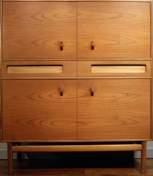
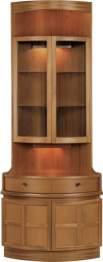
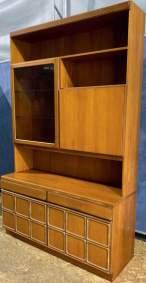

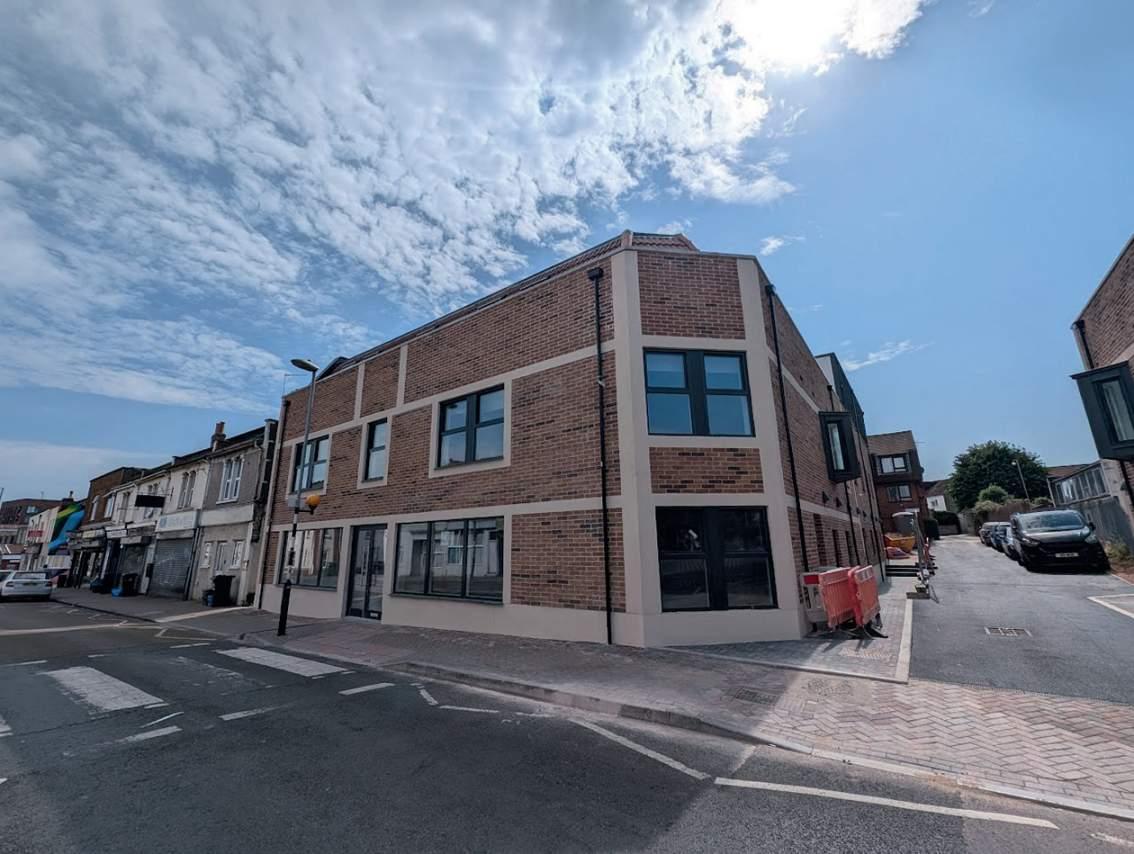
The property comprises a ground floor commercial unit of approximately 916 sq ft (85.10 sq m), with student accommodation on the first floor and to the rear of the development. The unit benefits from a being located on a prominent position fronting West Street in Bedminster, is a 5 min walk to Parsons Street Railway Station and is approximately 2 miles south of Bristol city centre.
155 West Street provides an excellent opportunity to acquire a new build commercial unit, offering ground floor open plan accommodation in shell condition, ready for an occupier to undertake their own bespoke fit out.
Suitable for a variety of uses within Use Class E.
Further information can be obtained via the sole agent
Burston Cook luke@burstoncook.co.uk

Keep up-to-date with our latest news, deals, testimonials and market comment at our website: www.burstoncook.co.uk

Denmark Street, BS1 TO LET – From £10,000 pax
283–1,167 sq ft (26.29108.41 sq m)
Two units, available over ground floor. Ideal for professional use, beauty, hair, retail etc. New lease terms available.
Portwall Lane, BS1 TO LET – POA
Floors from 2,105 – 5,753 sq ft (195.55 – 534.45 sq m)
A Grade A office building which has been sympathetically refurbished to the highest standard, with strong ESG credentials and offering boutique floor plates.
Market Place, Warminster FOR SALE – £325,000
1,680 sq ft (156.07 sq m)
Offered for sale is a freehold investment opportunity in Warminster. The property consists of a ground floor retail unit, and two residential units on the first and second floor.

Thornbury Industrial Estate, BS35 TO LET – POA
3,493 sq ft (324.5 sq m)
A modern industrial unit located on Thornbury Industrial Estate providing large open industrial space at ground floor. There are 4 car parking spaces to the front of the unit plus yard space in front of the loading door.
High Street, Shirehampton TO LET – POA
544 – 3,278 sq ft (50.54 – 304.53 sq m)
Offering flexible retail space over ground and first floor in a prime high street with good footfall. Rear yard available and ample customer parking bays in close proximity.



High Street, Staple Hill
645 sq ft (59.92 sq m)
An exceptional unit available to let or for sale on a popular pitch offering open plan sales with rear kitchenette, storage and W.C. Quoting £13,000 pax/Freehold - £140,000
Westfield Park, Redland, BS6 TO LET – £23.00 psf
1,521 sq ft (141.3 sq m)
A contemporary office located just off Whiteladies Road. Due to be refurbished to a high standard with 3 onsite car parking spaces.

West Street, Bedminster FOR SALE / TO LET
916 sq ft (85.10 sq m)
An excellent opportunity to acquire a new build commercial unit, offering ground floor open plan accommodation in shell condition, ready for own bespoke fit out. Suitable for a variety of uses within Class E.

Gloucester Road, BS7 FOR SALE – POA




Fully let, mixed use investment opportunity on a fantastic retail pitch and popular location on Gloucester Road. Comprising three retail units, three residential flats, a four-bedroom HMO plus MOT/car repair garage with yard.
Queens Road, BS8 TO LET – £19.50 psf
1,398 sq ft (129.87 sq m)
An attractive office suite located in this popular and prominent location on Queens Road in Clifton. Providing 3 floors of light and bright office accommodation. New lease available.





By Peter Greatorex, Managing Director, Peter Greatorex Unique Homes

Welcome to 2026. I am pleased to say there is a renewed sense of optimism in the property market. After a period of hesitation towards the end of last year, activity has picked up, confidence is improving and buyers are beginning to engage again with greater intent.
That shift is definitely something we are seeing in Bath. Many buyers who paused their plans during the uncertainty around last autumn’s Budget are now moving forward. Asking prices have settled, viewings are up, and transactions are starting to come together more quickly. However, while the mood has improved, success still comes down to fundamentals. How a property is launched, priced and managed in its early weeks on the market remains critical.
There is a statistic I read recently which perfectly illustrates this point. Properties that agree a sale within the first 28 days have a 94% chance of going on to exchange and complete. In simple terms, 19 out of 20 of those sales reach the finish line. That initial launch period is when buyer interest is at its strongest and competition is most likely to deliver the best result. By contrast, once a property has been on the market for more than 100 days, the chance of reaching completion falls to around 56%, which is a significant drop. Momentum fades, buyers become more cautious and negotiations often move in the wrong direction. This is rarely because there is something fundamentally wrong with the home. More often, it is because the pricing or strategy at launch missed that crucial early opportunity. At that stage, buyers tend to assume there is less competition, which shifts the balance of power and gives them greater leverage in negotiations.
Getting the price right is a balance. Price too low and you risk underselling. Price too high and the property can linger, which ultimately weakens your position. In my experience, the strongest offers almost always come early in the process, which is why it is so important to not only value accurately but also work with an agent who has a clear plan to generate early interest and negotiate effectively.
For sellers who are already on the market and feeling frustrated, it is worth knowing that a “rest and reset” can work extremely well. Taking a step back, reassessing price, refreshing presentation and relaunching with a clear strategy can re-engage buyers. As we look ahead to the spring market, with Easter falling earlier this year, timing will be especially important for those wanting to make a move in 2026.
The wider market backdrop is also becoming more supportive. Confidence has been helped by a more settled interest rate environment, with the possibility of further reductions, alongside improving mortgage availability. As an example, Nationwide has just expanded its higher loanto-income lending, allowing some home movers to borrow up to six times their income, subject to criteria. Changes like this give certain buyers greater flexibility and help unlock movement further up the chain, particularly for those trading up rather than first-time buyers.
This does not mean the market has become easy, but it does mean buyers are more considered and more value-driven. They want to feel they are getting the most from their purchase, which makes presentation and storytelling more important than ever. It is no longer just about locations or square footage, but about how a home can work for different lifestyles to avoid a buyer having to compromise on too much to find their dream home.
Many homes have features that are easily overlooked because they are so familiar to the people living in them. An extra downstairs room that is currently used as a home office or playroom does not need to be defined so narrowly. Presented differently, it could be a snug, a guest bedroom, a study or a space for multi-generational living. Allowing buyers to expand their imagination helps ensure the home appeals to the widest possible audience.
The same applies to future potential. Could the layout easily be reconfigured to create an annexe? Does the garden have scope for an outbuilding, studio or extension? Perhaps there is planning permission already in place for a loft conversion that was never implemented, or an oversized landing that could accommodate a small additional bedroom or ensuite. Even practical features such as generous storage, utility space or flexible parking arrangements can be powerful selling points when highlighted properly.
These details are often what spark interest and separate one property as unique from another. Every home has them, but sellers do not always recognise their value. The role of a good agent is to identify those opportunities and ensure they are clearly communicated, so buyers can see not just what a home is today, but what it could become tomorrow.
Optimism alone does not sell property, but when it is matched with the right timing and the right strategy, sales complete.

Saville Court, Saville Place, Clifton, Bristol, BS8 4EJ 0117 325 2600 | info@petergreatorex.co.uk www.petergreatorex.co.uk



Prices from £850,000

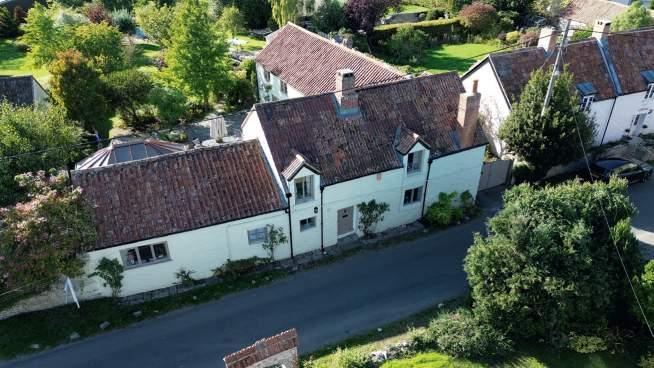
OIEO £850,000
12 luxury new homes in the grounds of an historic estate, formerly Blagdon Water Gardens. Zero carbon smart homes built by multiaward winning developer Verto.
A beautifully updated 4 bedroomed period cottage in Badgworth, Somerset, combining original charm with modern comfort. EPC rating E. Council Tax Sedgemoor G.

Prices from £2,000,000
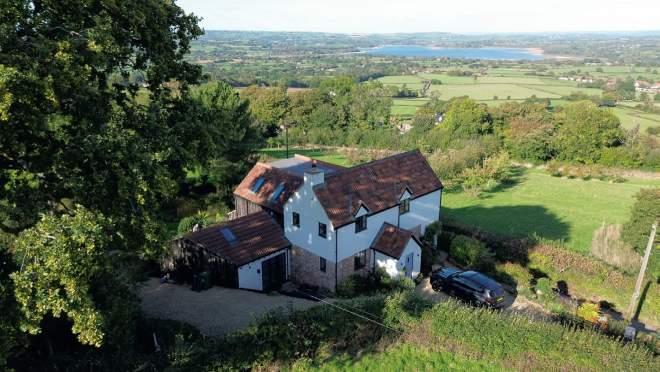
OIEO £1,050,000
Four individually designed five-bedroom residences on one of the South West’s most breathtaking coastal frontages. Sustainable luxury and complete privacy in a truly exceptional setting.
A beautifully refurbished 17th-century home, panoramic views across Chew Valley Lake, combining period character with modern efficiency, offering vaulted ceilings, oak and porcelain flooring, and a flexible three to four bedroom layout. EPC rating C. Council tax – B&NES, Band F.

OIEO £1.650,000
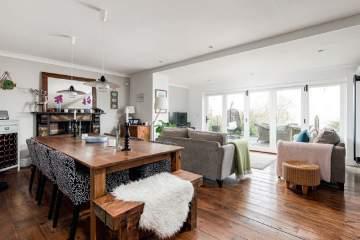
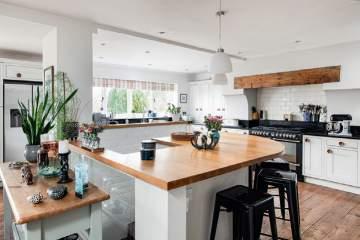
An elegant period country residence in the heart of this popular village, with beautiful lawned gardens, an orchard and breathtaking views of Blagdon Lake. EPC rating D. Council tax - North Somerset, Band G.
• 5 bedrooms, 4 bath/shower rooms, open plan kitchen/dining/family room
• 2 further reception rooms
• Separate 2 storey annexe with kitchenette, WC and separate heating system
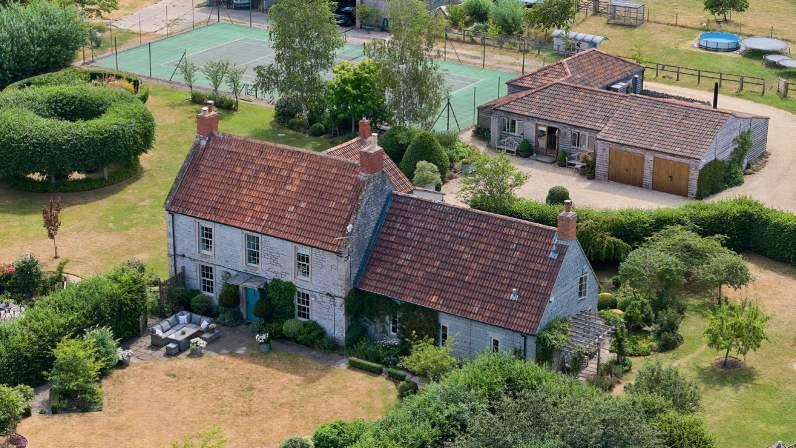
Hornblotton, Shepton Mallet
OIEO £1,750,000

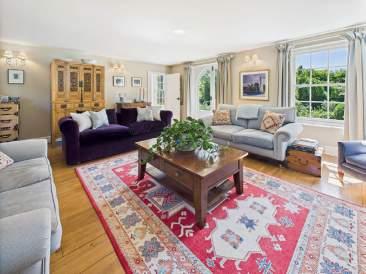
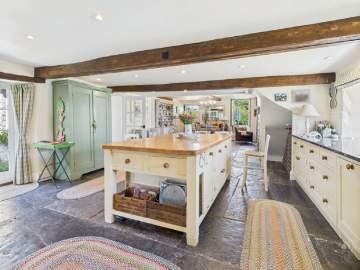
A distinguished Georgian farmhouse with later extension, set within around 5.5 acres of beautifully landscaped gardens, paddocks, and wildflower meadows, in this peaceful hamlet. EPC rating E. Council tax – Somerset, Band D.
• 5/6 bedrooms, 3 reception rooms, and separate 2 bedroom annexe
• All-weather tennis court, outbuildings and greenhouse
• Spacious agricultural barn with potential for development
• Equestrian/smallholding potential - 4.5 acres of paddock