

































Q: Because I lost my job during the pandemic and it’s been a financial struggle, we have fallen months behind in our mortgage payments. Next month will be the fifth month I’ve missed my payment. My wife and I have been getting letters and postcards every day from companies, includ ing lawyers, who say they can “rescue” us from our mort gage and save our house. We’ve been reading your column for decades and remember many years ago you talked about loan modification and renegotiation scams and such. But are these “rescue” things a scam too? They sure sound good.
A: Yes they are and I imagine they sound good because a scam wouldn’t last very long if it didn’t. Right?
Don’t feel alone. Over the past year, I’ve received similar emails from readers on a regular basis. Frankly, I’m sorry that the economics of 2026 are making it worthwhile for crooks to bring back these scams from 2008-2012.
Back in the recession days I kept a file of the advertising, including mailers offering to help homeowners, that people sent to me. After a short while I could see a pattern.
The first thing I noticed is that there are a whole lot of truly
in society. The minute someone
trouble, there are jerks willing to swoop in with promises of salvation if you’ll just give them a
to notice is most of these crooks aren’t all that creative and their
Regarding mortgage rescue scams, they generally fall into

sultant scam
This scam typically sounds formal and professional. For a small, or large, amount of money, this firm will become your foreclosure consultant, working with the bank in order to get them to cancel the foreclosure, and possibly to get them to modify your mortgage.
It sounds plausible because there are legitimate credit consultants that work with people that have too much credit card debt.
But, at least for this purpose, there’s no such thing. At least not one who will solicit you by mail.
The scam here is that they take your badly needed money and you still lose the house. Better to lose the house with as much money as possible still in your pocket.
2. The sale and then leaseback scam
This comes in a variety of flavors, but goes something like this:
“We will buy your house from the bank and then lease it back to you. Then, when you are able to, you can buy the house back from us for what we paid for it.”
Sounds plausible. Right?
What the scammers will do is take a deed from you, telling you they’ve “bought” the house. The mortgage company knows nothing about it.
You’ll start paying an extortionist amount of rent to the scammer.
Then, maybe six to 12 months later, depending upon how far you were along the foreclosure process when you started, the house is lost to foreclosure.
In the interim, the scammer has pocketed your monthly payments, leaving you with no home and no cash.
3. The ‘bankruptcy will save your home’ scam

This is perpetrated typically by people who suggest they are attorneys when they are not.
The idea is they will file for bankruptcy protection on your behalf, immediately stopping the foreclosure sale.
Like any good scam, this one is based on partial truths.
If someone who is in the process of foreclosure files for bankruptcy, something called an “automatic stay” goes into place, temporarily preventing the bank from moving forward.
The important word here is “temporarily.”
Within two months or so the bank will be able to foreclose, leaving you without your house and with a bankruptcy on your record.
Now for many people a bankruptcy makes sense. But only a bankruptcy attorney, after getting all of your financial information and meeting with you, can make that determination.
The bankruptcy scam depends upon convincing the troubled homeowner that simply filing for bankruptcy will allow them to keep their home. It won’t.
I’ve seen a number of

instances where these scammers actually fill out the bankruptcy filing paperwork and email it to the homeowner. Since the scammer isn’t an attorney, they can’t file the paperwork with the bankruptcy court on your behalf, leaving the homeowner to try to figure it out.
In general, if someone contacts you, either by phone or mail, saying they can help you with your mortgage, you should assume it’s a scam unless someone can prove, and I mean really prove, otherwise.
My advice is to contact a Realtor. Have them determine what your house is worth in today’s market and how much equity you would keep if you sell now. Getting out of a foreclosure by selling the house yourself is usually the best option, both financially and to preserve your credit.
Tim Jones, Esq., is a real estate attorney in Fairfield. If you have any real estate questions you would like answered in this column, you can send an email to AllThingsRealEstate@ TJones-Law.com.




The Hoosiers just won their first football National Championship. Indiana went undefeated this season, and over the past month, beat Alabama, Ohio State, Oregon, and the Miami Hurricanes.

Over the last 50 years, Indiana won 230 games and lost 350. In 2023, they had only three wins versus nine losses. Indiana is a big school with 89,000 students enrolled, while Alabama only has 42,000, and yet Alabama has 18 National Championships. Some call this Indiana Hoosier team the biggest underdog success story in college football history.
Solano County could do something as incredible as Indiana for our real estate market with a team effort focused on improving our schools. Solano County ranks near the bottom of the nine Bay Area counties in almost every education category. Here are the current rankings for schools’ success:
1. Santa Clara 2. San Mateo
This should bring out the competitive spirit of every mayor, police chief, supervisor, city council member, teacher, coach, school administrator, grant writer, real estate broker, chamber of commerce member, business
The elimination of U.S. tax credits for residential heat pumps, solar panels and batteries will make electrifying your home more expensive in 2026, and tariffs and made-in-America mandates could add additional costs.
Just how pricey remains to be seen. New financing models could help keep some solar and battery costs in check, according to Emily Walker, director of insights at online solar marketplace EnergySage. Here’s what you need to know.
The expiration of the 30% federal tax credit for solar and battery installations at the end of 2025 doesn’t necessarily make the equipment more costly to buy but for homeowners with a tax liability, it does end the ability to reduce or erase their tax bill. A typical solar and battery system generated tax credits worth about $10,000.
Tax credits remain for leased solar systems through the end of 2027, though the installer receives the incentive and passes on the savings to homeowners through lower monthly payments or other cost reductions.
Walker said installers who sold systems are now switching to a new model that lets residents ultimately own their solar and
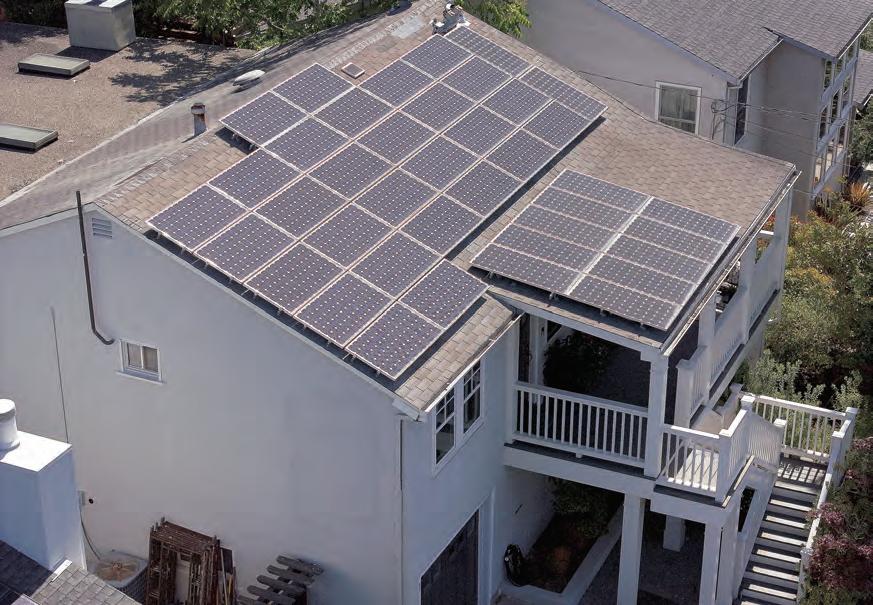
battery arrays while securing the savings from leasing. Called lease-to-own or a prepaid lease, a homeowner pays for the cost of the system upfront and the installer passes on the tax credit benefits as a discount. The solar company must retain ownership for a certain number of years under the tax code but then transfers title to the homeowner.
Southern California installer SolarShoppers sells its systems but company president Shawn Heckerman said he estimates that prepaid leases will account for nearly all of his business in 2026. Like other solar installers, he anticipates that demand will initially soften but recover later in the year. “I expect us to have a better year in 2026 than the
last one, even with the tax credit expiring,” he said.
That’s due to soaring electricity rates and temperatures that force residents to run their air conditioners. “When we get into the summer, customer calls spike when they get their first high utility bill,” said Heckerman.
Walker also expects homeowners to continue adding panels as they install electric vehicle chargers and replace fossil fuel appliances with induction stoves and heat pumps. That can make going solar still financially attractive in the long run, even if the absence of federal incentives means adding a couple of years to the time it takes for the energy savings to equal the cost
of the system, she said.
“When you’re talking about something that’s producing electricity for 25 years, it’s really just a blip,” said Walker.
To receive the tax credit, leased systems must comply with new domestic manufacturing requirements that took effect Jan. 1. The federal government, though, has yet to issue final guidance on what percentage of components from China and other countries are prohibited under the Trump tax bill

CAngie Hicks
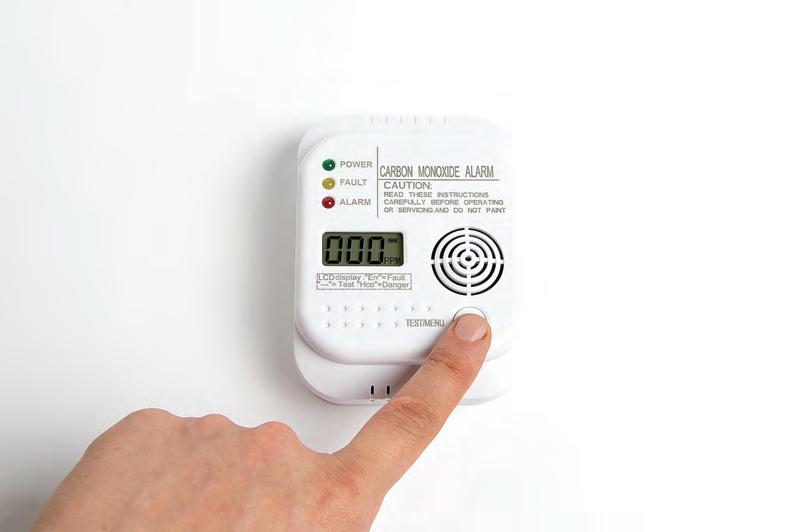
arbon monoxide (CO) is one of the most serious safety hazards in a home, and one of the easiest to miss. The gas has no smell, color or taste, which means you won’t know it’s there without a detector. That’s why understanding how carbon monoxide detec tors work is essential for protecting your household. Carbon monoxide is created whenever fuel burns. Gas furnaces, water heaters, fireplaces, gas stoves, gener ators and vehicles running in attached garages all produce CO. If something goes wrong with the appliance or it isn’t properly ventilated, carbon monoxide builds up indoors. This interferes with the body’s ability to carry oxygen. Early symptoms of carbon monoxide poisoning often feel like the flu and can include headache, dizziness, nausea, weakness, chest pain and confusion. High exposure levels can be fatal, sometimes before occupants realize what’s happening. And since carbon monoxide thrives best in a sealed environment where heating systems are operating, it’s a much bigger concern in cold weather.
ADOBE STOCK
Like smoke detectors, carbon monoxide detectors are an essential part of home safety.
tors sense CO gas from fuel-burning sources. Smoke detectors sense smoke from fires, giving occupants early warning so they can escape. One cannot substitute for the other.
Smoke detectors work best when mounted on ceilings, since smoke rises. Carbon monoxide detectors typically perform better on walls. Smoke alarms usually last about 10 years, while carbon monoxide detectors need replacement sooner.
Some homeowners choose combination smoke and carbon monoxide detectors, which tend to start around $35 in cost. These units can save space and reduce visual clutter, particularly in smaller homes or apartments. Many models use different alarm sounds or indicator lights to distinguish between smoke and CO events.
The challenge is placement. Smoke detection favors ceilings, while carbon monoxide detection favors walls, so a single unit may not be ideally positioned for both hazards in larger homes. If you install one, carefully read the manufacturer’s directions.
From Page 3
enacted in July.
Tariffs will also add costs
The U.S. imports most of its solar panels from China, Vietnam and other countries subject to tariffs. Nearly all batteries for residential energy storage are made in China.
Tariffs and manufacturing mandates will likely push up prices, according to analysts, but Walker said that will encourage the industry to focus on cutting “soft costs” like permitting and paperwork that result in U.S. residents paying significantly more for solar energy than those in Australia and Europe.
Because people can’t sense carbon monoxide, detectors act as your early warning system. A basic detector costs about $20, with wireless or smart models costing more. The EPA recommends installing a carbon monoxide detector on every level of your home and near sleeping areas. Because carbon monoxide mixes evenly with air, detectors generally work best on walls rather than ceilings. Homes with gas appliances, fireplaces or attached garages should be especially diligent about coverage. Take your CO alarm seriously. If it goes off, leave the home immediately, find fresh air and call 911.
Regular maintenance around the home
From Page 3
owner and parent in Solano County to step up somehow and jump up to the top three.
Can you imagine the head-
helps prevent carbon monoxide problems. Twice-yearly inspections of your HVAC system (before you first turn on heating or cooling for the season) help prevent leaks or breakdowns that might release carbon monoxide. Anything that burns fuel needs to be properly ventilated and inspected regularly, and never operate a fuel-burning device inside your home unless it was designed for interior use.
Carbon monoxide detectors and smoke detectors may look similar, but they serve different purposes. Carbon monoxide detec-
lines across the state if the most affordable county in the Bay Area jumped ahead of Marin County or, better yet, San Francisco County, for public school success? All we need is a billion dollars this year from a couple of those California Forever investors, or maybe the Warren Buffett foundation can donate a
Maintenance for both types of detectors is straightforward but essential. Test alarms monthly, replace batteries as recommended, keep sensors clean and replace units when they reach the end of their lifespan. Occasional false alarms can happen, especially near kitchens, bathrooms or garages, but frequent alarms often signal a placement or maintenance issue that needs attention.
The bottom line is simple: Carbon monoxide safety comes down to preparation. Install detectors where they’re recommended, maintain them regularly, and respond immediately when they alarm. You can’t see or smell carbon monoxide, but with the right detectors in place, you won’t have to.
Tweet your home care questions with #AskingAngi and we’ll try to answer them in a future column.
billion to Solano County with our assurance that the money will not be wasted by politicians. Great schools = a great real estate market and more opportunity for our kids. Let’s win.
Jim Porter, NMLS No. 276412, is the branch manager and senior loan adviser of Solano Mortgage,
NMLS No. 1515497, a division of American Pacific Mortgage Corporation, NMLS No. 1850, licensed in California by the Department of Financial Protection and Innovation under the CRMLA / Equal Housing Opportunity. Jim can be reached at 707-449-4777.
Homeowners have also lost the $2,000 federal tax credit for heat pumps that can warm and cool dwellings and provide hot water. But Francis Dietz, a spokesperson for industry group AHRI, noted that most heat pumps didn’t qualify for the incentive, which was only for the most efficient and expensive models.
“You can still get your basic or basic-plus heat pump and don’t have to worry about the tax credit going away, so it won’t make a big difference for the average consumer,” he said.
The U.S. imported 382,000 heat pumps, mainly from China and Mexico, out of 4.1 million of the devices that shipped in 2024, according to AHRI and the United Nations. But prices may rise modestly as domestically assembled heat pumps use Chinese components subject to tariffs.



LEFT: Senorita Rosalita cleome or spider flower garners “Landscape Annual of the Year” for 2026.
ABOVE LEFT: Senorita Rosalita cleome has won 166 awards and is the quintessential cottage flower.
ABOVE RIGHT: Senorita Rosalita cleome is also well suited to monoculture or thriller plants in containers.
Yogi Berra, the beloved New York Yankee, was as famous for his sayings as he was for his baseball prowess. One of my favorite sayings was “It’s déjà vu all over again.” When it comes to Senorita Rosal ita cleome or spider flower, it is déjà vu again and again.
Senorita Rosalita has been chosen as the Proven Winners “Landscape Annual of the Year” for 2026. Awards are common place when it comes to Senorita Rosalita. It has won 166 awards, which has to be up there against all other plants not called Super tunia Vista Bubblegum.

Before Senorita Rosalita, cleome varieties were beautiful and tall but sent out seeds far and wide that numbered in the hundreds if not thousands,
depending on the size of your patch. Senorita Rosalita pro-
Prime planting season for Senorita Rosalita, will be here sooner than you think, so start getting ready as the weather allows. They are usually planted as young transplants in warm spring soil. Select a site that is well-drained and receives plenty of sunlight. Morning sun and afternoon shade also work well.
Senorita Rosalita cleome is still considered tall, reaching 24 to 48 inches in height
with a spread of 18 to 24 inches. Garden spacing is 12 to 18 inches, and massing makes for a dazzling display. They are also ever so picturesque in a container. They are the quintessential cottage flower.
If the bed is poorly drained, add 2 to 3 inches of organic matter and apply a good layer of mulch after planting. Mulch helps prevent moisture loss to evaporation and deters weeds, which compete for water and nutrients. Cleomes are droughttolerant once established. In midsummer, give them a little fertilizer, such as a 5-10-5, to help push them into the fall season.
The flower color is pink, but I often see violet shades exhib-




































































CATHY HOBBS TRIBUNE NEWS SERVICE
Cloud Dancer offers broad buyer appeal, it photographs beautifully, feels move-in ready and allows buyers to easily imagine their own furnishings. Additionally, the color is a soothing, universal neutral that helps to provide a space with a sense of calm and serenity.
Looking for innovative and creative ways to use Pantone’s 2026 Color of the Year, Cloud Dancer? Here are some top design recipes tips.
1. Consider using Cloud Dancer as a foundation color for your space. Foundation colors work best as a “visual anchor.” An example would be to use Cloud Dancer as an all over wall color.
2. Look for ways to layer tints, tones and shades of color As Cloud Dancer is neutral, it allows one to layer shades of color within a room.
3. Use Cloud Dancer as a color to highlight architectural details such as cabinetry, doors, door jambs, trims and windowsills.
4. Use Cloud Dancer for
From Page 7
Absent a stock market crash that would spook homebuyers, the apparent softening in the housing market means buyers should get prepared to start looking again. Here are the steps you should take if you’re a potential homebuyer:
• First- time homebuyers should check for state programs that offer down-payment assistance or lower mortgage rates in certain locations and zip

Cream on cream creates a monochromatic color scheme that is neutral and inviting.
upholstery and textile elements such as a primary color for furnishings such as sofas, chairs and area rugs.
5. Utilize the color Cloud Dancer in areas that don’t get much light. Lighter colors help to set a calm, soothing mood and ensure that a space is light and bright.
Cathy Hobbs is the owner of Cathy Hobbs Design Recipes, a home staging company based in New York City (www.cathyhobbs. com). She is also the owner
of Highland Passive House, a Home Staging + Design Center based in New York’s Hudson Valley (www.highlandpassive house.com). Cathy’s practical, how-to design advice can also be found in her book, “Home Design Recipes.”
From Page 5
ited in gardens where a little afternoon shade is given. Hummingbirds and butterflies will be frequent visitors to the blooms. The spidery texture of the blooms looks tropical, making good partners with bananas and elephant ears. To recap, Senorita Rosalita is shorter than typical cleomes and is sterile, which means it does not set seeds. It also does not have thorns, and it blooms all season long. With attributes like that, you would guess it’s an award winner, and it is.
Norman Winter, horticulturist, garden speaker and author of “Tough-as-Nails Flowers for the South” and “Captivating Combinations: Color and Style in the Garden.” Follow him on Facebook @Norman WinterTheGardenGuy. He receives complimentary plants to review from the companies he covers.
codes. They should also check with financial institutions that often try to please regulators by offering special mortgage deals to either first-time or low-income homebuyers.
• Clean up your credit report This is the time to make sure you are current on all your monthly payments and don’t have a lot of credit card debt outstanding. Your credit score will impact your ability to get pre-qualified for a mortgage. And having a mortgage pre-approval can help you convince a seller to lower the price for a quick sale.
• If buying a home is your priority, gather the cash for a
down payment. For many, that means family gifts. But it could also mean postponing a vacation trip or new car purchase.
• Know your local market. Not all markets will have the same level of activity or demand. Check listings on Zillow or Realtor.com to see if there’s a sudden swarm of listing price cuts. It’s important to have a feel for the trends in your area.
• Evaluate your job security. There’s nothing worse than buying a home and then losing your job. It puts not only your down payment but also your entire financial security at risk. No one gives job guarantees, but
your income sources are critical to your decision to move from being a renter to a buyer.
This is all pretty common sense advice, no matter what your age or stage in life. But like everything else in the world of finance, it pays to have a plan and be ahead of the crowd. That’s the Savage Truth.
Terry Savage is a registered investment adviser and the author of four best-selling books, including “The Savage Truth on Money.” She responds to questions on her blog at TerrySavage.com.













































JEFF OSTROWSKI BANKRATE.COM
For years, Americans have heard this mantra: There isn’t enough housing in the United States. The ongoing shortage explains why affordability is such a challenge, and why so many Americans are spending their 30s as renters rather than homeowners.
The reality has grown a bit more complicated.
As the housing market cools, a new narrative is emerging. Home prices now are falling in half of the nation’s 20 largest metro areas, according to the most recent Case-Shiller housing index. Builders are so desperate to sell new homes in Texas and Florida that they’re subsidizing mortgage rates as low as 0.99%. Discouraged home sellers are yanking the for-sale signs out of their front yards.
If you’re a frustrated would-be homebuyer or a potential seller, you’d be reasonable to wonder what gives? Is there a housing shortage or are there too many houses? The answer is yes to both, with some nuance.
The long-term nationwide shortage of homes remains firmly in place. At the same time, local gluts of homes for sale are a reality. If you’re buying or selling a home in the near future, this shift will shape your experience. For buyers in some markets, trends have suddenly shifted in your favor – prices haven’t returned to pre-pandemic levels, but there’s definitely more room to bargain. The opposite is true for sellers – you now need to rein in your expectations by lowering your asking price.
“There is a difference between what is currently for sale and what is needed for the long term,” says Joel Berner, senior econo-
mist at Realtor.com. “It is two different kinds of ways of quantifying what is happening with housing supply.”
First, some high-level stats:
The U.S. Census Bureau reports there are nearly 340 million Americans living in some 133 million households. More than 86 million of those households are owneroccupied homes. By contrast, the pace of existing home sales over the past few years has been about 4 million homes a year. In other words, only a tiny fraction of the overall housing supply comes on the market at a given moment.
Since the Great Recession, U.S. homebuilders have been building homes at much lower rates than they once did. The result is an overall shortage of about 4 million housing units nationally, Berner says.
That ongoing lack of supply has reverberated throughout the national housing market. Many Americans, especially in the priciest markets, have decided that rather than trying to buy, they’ll keep renting.
Viewed through a national lens, the U.S. housing market is desperately in need of a building spree. But zoom into local markets, and the picture changes.
The housing market, once on fire in such Sun Belt states as Arizona, Florida and Texas, keeps cooling. For evidence, look no further than the latest Case-
Shiller index, which shows home values fell in half the nation’s 20 largest metro areas. Tampa’s 4% decline was the weakest showing, followed by the Phoenix metro area’s 2% drop.
Or you could look at how individual home sellers are dealing with the market: Nearly 85,000 U.S. sellers took their homes off the market in September, up 28% from a year earlier and the highest level for that month in eight years, according to a report by real estate brokerage Redfin.
Delistings were most common in Miami, where 7.8% of all listings were pulled off the market, followed by Fort Lauderdale at 7.7%, Redfin says.
Then there are those builder deals: In parts of Texas and Florida, builders are offering sweet mortgage rates and hefty commissions to real estate agents. D.R. Horton, the nation’s largest homebuilder, is advertising mortgage rates as low as 0.99% in some communities.
This type of supply is highly localized. If you’re looking for a $300,000 house in Tyler, Texas, or a $600,000 golf course home in Sarasota, Florida, or a $500,000 condo in Miami, there are plenty of options. But if you’re shopping in Manhattan or Northern California or even Chicago, supply is still tight.
It’s a reality that reflects the quirks of the housing market: Sellers of cars or TVs or jeans can address shortages by ramping up production and shipping their wares to where they’re needed. But that’s not how real estate markets function.
“What we are seeing is what happens if homes are not in the right place or if they’re not affordable,” Berner says. “Houses are not fungible. That’s ultimately the
issue here.”
The housing market has shifted sharply in the past few years. Some things to keep in mind:
Buyers had no choice but to move aggressively during the pandemic. Houses sold quickly and for more than the asking price. That’s no longer the case. Now, buyers have time to shop, and there’s an opportunity for negotiation over price and other terms.
The flip side of the slowing market is that sellers no longer are in complete control. During the pandemic, sellers had so many offers that they could cherry-pick only the best offers – the ones for the highest price, and with no contingencies around financing or inspections. Sellers who thought they could command top dollar are resetting expectations. According to real estate brokerage Redfin, fully 70% of U.S. home listings were “stale” in September, meaning they had been on the market for at least 60 days without going under contract. So if you’re motivated to sell, you might need to lower your price compared to what you might have asked a year or two ago.
There is no national housing market, and where you are buying or selling very much matters. Home sales are soft in the Sun Belt, but they’re still going strong in parts of the Midwest and North-
east. Your experience as a buyer or seller will depend on what’s happening in your local market.
“The geographic rotation is striking. Markets that were pandemic darlings – particularly in Florida, Arizona and Texas – are now experiencing outright price declines,” says Nicholas Godec of S&P Dow Jones Indices, which puts out the widely followed Case-Shiller home price index. “Meanwhile, traditionally stable metros in the Northeast and Midwest continue to post solid gains, suggesting a reversion to pre-pandemic patterns where job markets and urban fundamentals drive appreciation rather than migration trends and remotework dynamics.”
Yes, home prices are dipping a bit in parts of the country. And no, they haven’t fallen enough to reverse the huge price appreciation seen during the pandemic. So sticker shock has eased a bit, but it hasn’t gone away.
Buying or selling a home is a highly individual decision, one based on your unique needs and situation. So if you’re ready to buy – your credit score is solid, your down payment savings are sufficient, you plan to be in the home for at least three years – it’s probably best to pull the trigger, especially if you live in a place where the market has turned in your favor. Similarly, if you’re not ready to buy, don’t let price declines or mortgage incentives persuade you to act hastily.