2025 ANNUAL REPORT

• Messages from the President and General Manager
• MBP Year in Review
• National Organization Reports
• Messages from the President and General Manager
• MBP Year in Review
• National Organization Reports
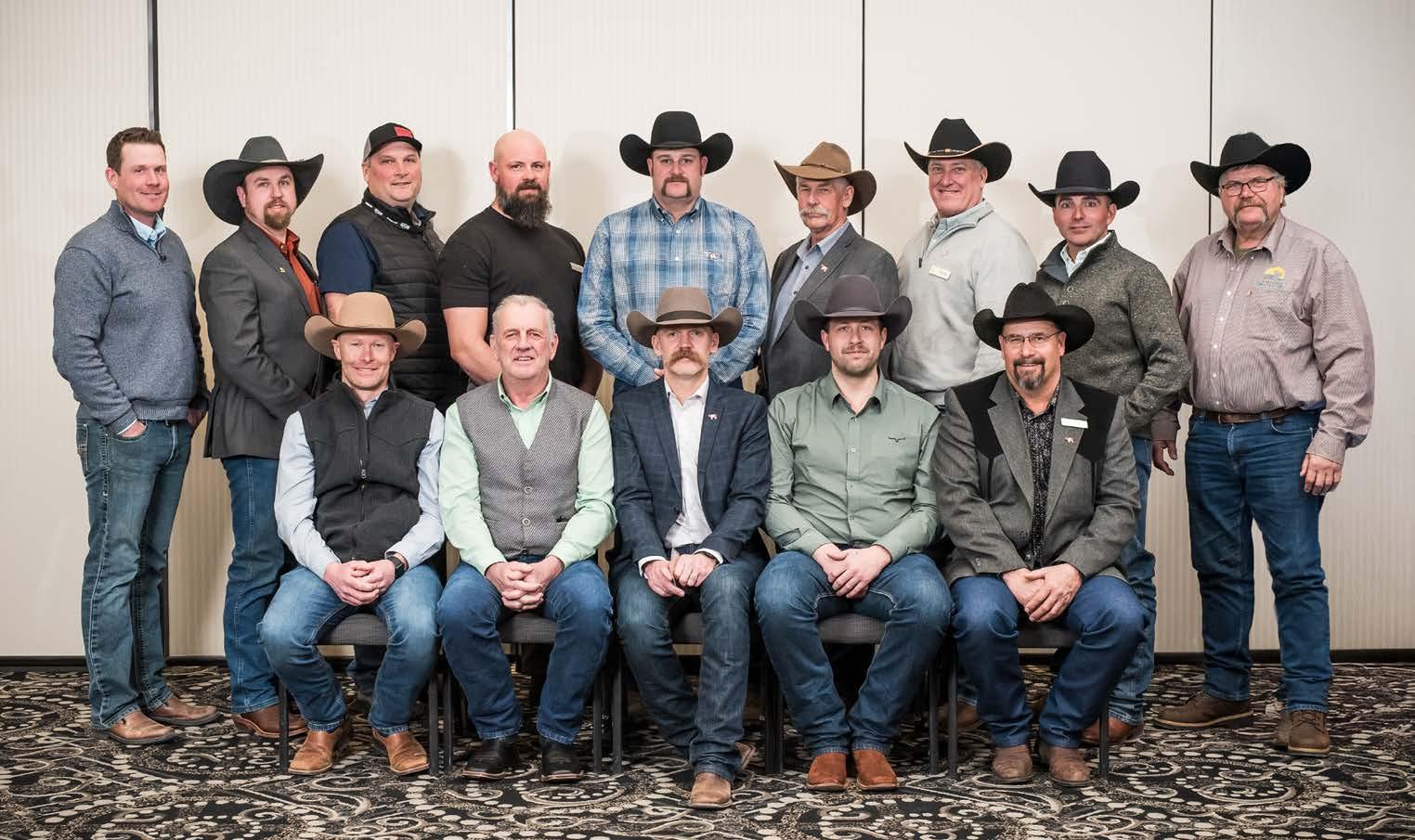
page 5 for the full list of internal and external committee appointments.
Manitoba Beef Producers acknowledges that we are gathered on ancestral lands, Treaty 1 territory, traditional territory of the Anishinaabeg, Cree, Oji-Cree, Dakota, and Dene Peoples, and on the National Homeland of the Red River Métis Our office in Winnipeg is located on Treaty 1 Territory and the homeland of the Metis Nation Our work on behalf of our members extends throughout Treaties 2, 3, 4 and 5 We respect the Treaties and agreements that were made on these lands, we acknowledge the harms and mistakes of the past, and remain committed to working in partnership with First Nations, Inuit and the Métis Nation in the spirit of reconciliation and collaboration

It seems like I had barely finished writing my update for MBP’s 2024 annual report when I needed to turn my attention to writing this one, such was the rapid pace at which 2025 seemed to fly by
As with any year, there have been some ups, downs and everything in between On the positive side, we continued to see record cattle prices, which has certainly been good for producers marketing cattle, but more challenging for those looking to buy to grow their herds Those prices have remained high as the continued effects of factors like years of adverse production conditions like droughts led to an overall downsizing of the North American herd, and this was somewhat compounded by rising input costs and other factors . There is a sense that herd expansion may be starting, but significant growth is likely still a couple of years away, which should help support strong prices for a while longer
That’s not to say there weren’t some market hiccups and other challenges along the way (such as the temporary application of costly tariffs on cattle heading south earlier this year), or that all components of the sector are faring equally well But overall, the mood remains positive And our customers are still very much interested in getting access to high quality Canadian beef
With a change in leadership south of the border, 2025 had a strong focus on all matters trade related The North American beef industry has for decades been strongly integrated when it comes to trade Cattle industry leaders have been engaging with federal and provincial governments in Canada and also reaching across borders to reinforce the importance of trade, both in North America and beyond I was pleased to be invited to sit on the Premier’s U S Trade Council There a wide group of representatives from different sectors is providing input to the Premier, key ministers and government staff Working to resolve trade-related matters with other countries, as well as to tackling barriers to interprovincial trade is very important
MBP worked on a wide variety of other matters in 2025 MBP had been advocating for an increase in the level of compensation paid for losses related to livestock predation to better reflect current cattle prices, and that was achieved There was ongoing engagement with the province about damage being caused by other wildlife, such as elk and deer and possible means to help address that
Drought conditions were challenging in several regions and MBP successfully advocated for initiatives to help affected producers This included getting damaged crops made available for feeding cattle There was cost-shared funding to assist with water source development and to help install aeration systems to help with water quality issues MBP had sought changes to the Disaster Financial Assistance program to make it more responsive to beef producers needs in future natural disasters and positive changes were announced
There were continued discussions with the province about different aspects of the Agricultural Crown Lands (ACL) Leasing Program MBP asked for power source development to be considered when assessing the value of improvements existing lease holders had made to their leased lands, and that was achieved, as was a commitment to reimburse exiting lease holders whose parcels are selected for Treaty Land Entitlement to be compensated for improvements made As the year was coming to a close, MBP provided feedback on other potential changes the province is examining to the ACL program, with more details in this annual report
MBP also spent a lot of time working on the livestock inspection file . At our 46th AGM in February 2025 members strongly voiced their support for an expansion of such services to help reduce the risk of livestock-related crimes such as theft and fraud which

MATTHEW ATKINSON , PRESIDENT
have had a negative impact on Manitoba’s beef industry MBP has created a working group with important industry partners to advance this file and we go into this matter in greater length in this report There has been regular engagement with the Minister of Agriculture on this key file MBP was pleased to see in the Speech from the Throne in November the province’s stated commitment that “…over the coming year we will develop the legislative tools for a new livestock inspection program that will improve the financial stability of beef operations and expand their access to capital ”
Getting advancement on issues affecting our sector is about cultivating positive working relationships MBP appreciates the engagement it has with provincial and federal officials, both elected and on the public service side Being able to reach out with a question or a concern or to talk about an opportunity for the industry is invaluable, whether that’s on matters such as production conditions, business risk management and beneficial management programs, animal disease investigations, transportation and infrastructure challenges, trade, the legislative and regulatory environment and more . We may not always agree on everything but it is extremely important that the door is open so we can have what are at times challenging conversations and to try to find a path forward to resolve industry concerns
MBP thanks our fellow beef industry groups for collective efforts to advance the industry, be that on the legislative and regulatory side, the market access side and the public and stakeholder engagement side
MBP also values the relationships it has with other commodity groups to help advance matters of common interest, such as trade, worker shortages, or areas where we are facing the same types of regulatory challenges
Also valuable is the work MBP does with groups dedicated to helping to raise interest in and understanding of agriculture Thanks to those who volunteer at many events to share information about how food is produced in Manitoba We thank the research community for their work related to the beef and forage sectors, as well as those helping producers adopt new practices and technology at the farm and ranch level We appreciate as well the opportunity to do media interviews on a wide array of matters affecting our sector
It was a pleasure to work throughout the year with the outstanding board of directors and staff at MBP We have a very dedicated team working hard on our sector’s behalf Our 47th AGM will recognize two directors who are wrapping up their respective board terms: Mike Duguid (District 10) and Mark Good (District 12) Mike has spent eight years at MBP, serving on and chairing many different committees throughout the years, including his service on the environment committee, an area in which he has had a special interest He also capably represented MBP at the Canadian Cattle Association board for several years Mark spent six years on our board, and for much of that time he was the Treasurer and Finance Committee Chair He also chaired the Crown Lands Committee for several years, another very important role It has been such a pleasure working alongside them and on behalf of all of us here at MBP, we wish them all the best going forward
I would also like to express my thanks to my wife and daughter and the rest of my family for their understanding and incredible level of support as I spent time working on MBP matters, as well as working on my own cattle operation It is appreciated more than you will ever know
Here’s to a good growing season in 2026 and to continued favorable cattle prices!


The past year (2025) has presented unique challenges and opportunities for beef producers in Manitoba, primarily influenced by significant weather conditions The winter months were characterized by moderate to heavy snowfall and bitterly cold temperatures, which impacted cattle health and management practices As spring approached, we experienced a late thaw followed by a relatively dry summer, affecting pasture growth and water availability These contrasting conditions required adaptability and resilience from our producers as they navigated the associated challenges
Throughout the year, Manitoba Beef Producers (MBP) concentrated on several key matters to help enhance the sustainability and profitability of beef production Our primary areas of focus included the trade situation, wildlife matters, implementing best management practices (BMPs), improving Business Risk Management (BRM) tools, and promoting animal health initiatives Additionally, we invested in workshops and resources aimed at educating producers about innovative farming techniques and technologies that can increase efficiency and sustainability through our partnership with Manitoba Beef & Forage Initiatives
A key file involved work to implement expanded livestock inspection services in Manitoba to combat theft and fraud in the cattle industry A resolution was passed with strong support at our 46th AGM in February advocating for a mandatory inspection system and legislative changes to support this The Manitoba Livestock Inspection Working Group, which includes various industry stakeholders, aims to develop effective solutions, potentially collaborating with third-party providers for cost-effective, per-head inspections Discussions with the Manitoba government focused on creating a legal framework to allow inspectors to detain cattle and manage sale proceeds for verifying ownership, alongside integrating technology like e-manifests to support enhanced traceability Additionally, the proposed establishment of a Livestock Investigations Unit with a dedicated police resource, modeled after successful initiatives in Saskatchewan and Alberta, aims to address livestock-related crimes more effectively As talks with Manitoba’s Minister of Agriculture, Minister of Justice and other stakeholders advance, the outcomes should help shape a more secure and transparent market for Manitoba’s cattle industry .
Trade in beef between Canada and the United States remains a vital component of Manitoba’s beef industry, significantly contributing to our economy In the past year, we have seen fluctuations in market conditions, but overall, the U S continues to be a key export destination for Manitoba beef As we move forward, working closely with governments to address matters such as trade agreements and tariffs will be essential in ensuring our competitiveness and maintaining our footprint in the U S market Strengthening trade relationships not only supports our sector and our local communities but also reinforces the strong reputation of Canadian beef on the global stage A cornerstone of MBP’s efforts is advocacy Such work undertaken by agricultural associations like MBP is crucial in ensuring that the voice of Manitoba’s beef producers is heard at all levels of government This year, we intensified our efforts to address key
issues affecting our industry, such as wildlife population monitoring and control, disease investigation work done by the Canadian Food Inspection Agency, and a rollout plan for the pending federal traceability regulations, among others Participation by producers in agricultural groups like MBP not only amplifies our collective voice but also provides valuable networking opportunities and access to resources that can aid producers in navigating challenges and seizing opportunities
As we look toward 2026, we are excited about the potential for growth and innovation within Manitoba’s beef industry Our vision includes enhancing market access, investing in sustainable practices, and continuing education, knowledge transfer and support for our producers We aim to further strengthen the relationships between producers and consumers, emphasizing the importance of local beef products and fostering a sense of community
We recognize that collaboration is key in achieving our goals, and we are committed to working closely with stakeholders, including producers, governments, industry partners, and researchers, to build a prosperous future for the beef sector in Manitoba
In closing, I would like to extend my heartfelt gratitude to all the family members of our producers and board of directors Your unwavering support and commitment play an essential role in the success of Manitoba’s beef industry Together, we have faced challenges and celebrated achievements, and it is your dedication that makes our community strong Thank you for your hard work and passion in maintaining the legacy of beef production in Manitoba I also want to thank all the staff at MBP, whose passion and dedication to the beef industry is second to none
Finally, I want to thank my family Britni, Cohen, and Sullivan, you are the true joy of my life, and your support of me when I am busy working on behalf of the beef industry does not go unnoticed
All the best in 2026
Carson





Executive Committee
Matthew Atkinson
President
Arvid Nottveit
Vice President
Byron Falk
2nd Vice-President
Animal Health
Brian English Chair
Mike Duguid Vice-Chair
Mark Good
Treasurer
Tyler Fulton
Secretary
Dale Cazakoff
Andre Steppler
Trevor Sund
AGM/Nominations/Resolutions
Byron Falk Chair
Mark Schram
Communications
Mark Schram
Chair
Matthew Goudie
Crown Lands
Mark Good
Chair
Matthew Goudie Vice-Chair
Environment
Mike Duguid
Chair
Mark Schram Vice-Chair
Finance
Mark Good
Chair
Tyler Fewings
Tyler Fulton
Governance
Arvid Nottveit
Chair
Mike Duguid
Steven Manns Vice-Chair
Andre Steppler
Trevor Sund Vice-Chair
Steven Manns
Byron Falk
Steven Manns Arvid Nottveit
Dale Cazakoff
Brian English
Tyler Fewings
Andre Steppler Vice-Chair
Matthew Goudie
Arvid Nottveit
Tyler Fewings Vice-Chair
Byron Falk
Production Management
Brian English Chair
Dale Cazakoff
Tyler Fulton
Research
Trevor Sund Chair
Andre Steppler
Vice-Chair
Tyler Fewings Vice-Chair
Mark Good Arvid Nottveit
Byron Falk
Tyler Fulton
Mark Schram
Manitoba Beef Producers (MBP) is the exclusive voice of the province’s cattle industry, representing approximately 6,000 producers in the cow-calf, backgrounding and finishing sectors MBP is a non-profit organization with a producer-elected board of 14 directors representing different geographic areas of the province Its vision is a vibrant, prosperous, respected, sustainable beef industry in Manitoba
MBP’s mission is to represent the province’s beef producers through communication, advocacy, research, education, and leadership within the industry, to governments and to the public These efforts take place to strengthen the sector’s viability, improve prosperity and ensure a sustainable future for the beef industry in Manitoba for the benefit of our beef producers and all Manitobans
MBP’s funding mechanism and examples of where check-off dollars go
MBP’s activities are funded through the collection of check-off dollars Two check-offs with a combined total value of $5 50/head are levied at the point of sale on all cattle sold in Manitoba Of this, a $3/head mandatory, refundable provincial check-off goes toward financing MBP’s activities on behalf of the local beef industry, including its support for Manitoba Beef & Forage Initiatives These monies also go toward MBP’s membership in organizations such as the Canadian Cattle Association (CCA) and National Cattle Feeders’ Association (NCFA), among others MBP’s levy is collected under the authority of the Cattle Fee Regulation under The Cattle Producers Association Act, a piece of provincial legislation
As well, a mandatory, non-refundable national $2 50/ head Canadian Beef Cattle Check-off is collected on all cattle sold in Manitoba and the monies are transferred to the Canadian Beef Check-Off Agency Goals of this check-off are to increase sales of domestic and export beef and to find better and more efficient methods of producing beef and beef cattle This check-off provides industry funding for the Beef Cattle Research Council (BCRC) for the industry’s national research program, as well as Canada Beef for market development and promotion Public and Stakeholder Engagement (PSE), which operates as a division of the CCA and Canada Beef, is also funded through these check-off dollars Provincial associations like MBP are allowed on an annual basis to decide how the national check-off dollars collected on the sale of cattle in Manitoba are allocated
MBP’s provincial allocation of the Canadian Beef Cattle Check-off for the year beginning April 1, 2025 was as follows: 23 5 % to research, 60% to market development and promotion, 10 5 % to issues management (PSE) and 6% toward provincial investment
For more information about MBP’s 2024-25 financials, see page 10
How are MBP’s activities organized and executed?
MBP’s activities are guided by the board of directors’ broad direction and executed by staff members and MBP’s Executive and Committee members, along with four full-time and two part-time staff At times MBP employs contract staff for certain initiatives, like special projects or events
MBP also has two wholly owned subsidiary corporations – the Manitoba Livestock Cash Advance Program Inc (MLCA) and Manitoba Beef & Forage Initiatives Inc (MBFI) They have their own staff and governance structure, but report information to MBP. Both of their boards of directors have MBP representatives on them
MBP directors sit on internal committees to provide input and help develop positions around specific types of issues or opportunities Other committees serve an organizational function, helping to arrange meetings or to plan MBP’s participation in events and communications activities that promote the industry
Strategic direction
MBP’s activities focus on key objectives, including telling the industry’s story via advocacy and enhanced communications; building the industry with innovation, improved economic competitiveness and profitability; and, serving MBP’s members by developing the organization and its capacity These strategic objectives dovetail with MBP’s mission to strengthen the viability of Manitoba’s beef sector and to ensure a sustainable future for our province’s beef industry .
The State of Play in 2025
Manitoba’s beef industry faced both opportunities and challenges On the positive side, demand for beef remained high, with North American beef supplies continuing to be tight due to factors such as several years of drought conditions leading to reduced cattle numbers Returns per acre favoured beef production with estimates for cow/calf operations around a net of $300 per acre In Manitoba in 2024, cattle and calf receipts had risen by 4 3 per cent to a record $982 million Strong numbers were again anticipated for 2025
Additionally, MBP was represented by directors or staff at several national and provincial organizations and external committees. This provides opportunities to bring forward Manitoba-specific perspectives on a wide array of topics affecting the sector. Examples include:
• Association of Manitoba Community Pastures: Carson Callum
• Beef Cattle Research Council: Melissa Atchison, Trevor Sund
Canadian Beef Check-Off Agency: Mary Paziuk until August, then Tyler Fewings
• Canadian Cattle Identification Agency: Brian English
• Canadian Cattle Association: Mike Duguid, Matthew Atkinson, Arvid Nottveit
• Canadian Roundtable for Sustainable Beef: Maureen Cousins, Carson Callum
• Manitoba Beef & Forage Initiatives: Alfred Epp until June, Steven Manns, and Matthew Goudie starting in July
• Manitoba Forage & Grassland Association: Mike Duguid
• Manitoba Livestock Cash Advance: Mark Good, Tyler Fewings, Tyler Fulton, Matthew Goudie, Arvid Nottveit, Andre Steppler
• National Cattle Feeders Association: Jonathan Vaags, director, Carson Callum
• Public & Stakeholder Engagement: Arvid Nottveit
• Verified Beef Production Plus Program: Brian English
Canadians’ views of the beef industry continued to be strong based on consumer perception research conducted for Public and Stakeholder Engagement program This annual research is used to benchmark and compare levels of trust in various aspects of Canadian beef production For example, 70% of Manitobans surveyed have a positive view of beef farmers, and 80% view beef as environmentally friendly More details on the survey findings are found in the PSE update in this report
Statistics Canada’s July 1, 2025 livestock estimates revealed that for the first time since 2021 there was a year-over-year increase in the size of Canada’s cattle herd, mainly due to lower slaughter (down 5% year over year) and greater retention of beef heifers for breeding, bulls, beef cows and calves On a year-over-year basis, Manitoba’s statistics were as follows:
• On all cattle operations, there were 950,000 head, up 5,000 from July 1, 2024
• Beef operations had 876,800 head, up 5,700 head
• Cow calf operations had 696,700 head, up 14,800 head
• Feeding operations had 62,200 head, up 2,000 from a year prior, and
• Feeder and stocker operations had 118,100 head, down 11,100 head
In terms of challenges, production conditions were problematic in several regions of Canada Both land and input costs continued to rise Questions remain about what the future entails on the trade front, particularly with the Canada-United States-Mexico Agreement up for renegotiation, and as Canada looks to diversify its trading opportunities Efforts to mitigate risk related to a foreign animal disease such as foot and mouth disease potentially coming to Canada continued
The following is an overview of some of the key matters affecting Manitoba’s cattle industry and activities undertaken by MBP in support of the sector in 2025 .
MBP continued to advocate with the federal and provincial governments and MASC for business risk management (BRM) programs and other risk mitigation tools that recognize the unique needs of the beef sector Such tools must be affordable, equitable, simple to use, trigger in a timely fashion if needed, and flexible to address specific sectoral needs
Improvements to AgriStability are important The sector has advocated for the list of eligible expenses to be amended to include rent for land used to produce feed The compensation cap also needs to be adjusted to be more reflective of modern cattle operations In July 2025, Canada’s agriculture ministers agreed to increase the maximum compensation limit from $3 million to $6 million for 2025 only and agreed to seek approvals to include feed costs associated with pasture rental as an allowable expense for 2026 only Making these changes permanent and further increasing the cap would go a long way in providing meaningful support for beef producers and making the sector more competitive and economically sustainable
Another important BRM tool is Livestock Price Insurance (LPI), a market-based, insurance-style program that lets producers manage price, currency and basis risk protection for all classes of cattle However, unlike AgriInsurance which provides cost-shared premiums for crop insurance policies, beef producers bear the entire cost of LPI premiums MBP and other industry stakeholders believe cost-shared LPI premiums would put the beef cattle sector on more equal footing with other Canadian commodities and more competitive with producers in other countries with cost-shared premiums for similar types of programs
MBP remained involved with the Industry-Government Forage Insurance Task Team It includes reps from the CCA, provincial cattle groups, agencies like MASC, Agriculture and Agri-Food Canada, as well as the dairy and forage sectors It is working to improve uptake of forage insurance by ensuring pasture and forage program offerings better meet producers’ needs For example, Alberta producers can access Moisture Deficiency Insurance (pasture) and Moisture Deficiency Endorsement (hay), while Saskatchewan has the Forage Rainfall Insurance Program These programs integrate technology to better pinpoint areas where producers would be eligible for compensation MBP is seeking a final a determination from MASC on whether these kinds of tools could be implemented here
MBP believes it is important the beef sector is on a level playing field with the crop sector in terms of AgriInsurance, be that with respect to premium cost-sharing levels or the breadth of insurance offerings available In January MASC announced that the Forage Establishment coverage levels were changing and now range from $65 to $130 per acre Birdsfoot trefoil is now an insurable crop In November, the federal and provincial governments announced the Forage Advantage pilot Starting in the 2026 crop year, Manitoba farmers who plant perennial forage crops on marginal land will automatically get a 15% discount on Forage Establishment Insurance premiums Once the forage is in production the following year, farmers can also qualify for discounts on Basic or Select Hay Insurance or Forage Seed Insurance through AgriInsurance For several years MBP had sought more MASC offices to improve producer access to their programs and services MBP was pleased when new offices opened in Virden and Shoal Lake in September
MBP provided feedback on local program offerings through the Sustainable Canadian Agricultural Partnership (SCAP) to ensure they are responsive to producers’ needs The Resilient Agricultural Landscapes Program (RALP) provided funding for agroforestry activities, as well as to grassland and grazing management initiatives The Sustainable Agriculture Manitoba (SAM) stream provided cost-shared funding in areas such as, water supply, composting, perennial cover for sensitive lands and more MBP welcomed the September announcement that the federal and provincial governments were increasing SAM funding by $500,000
MBP sees value in the Advance Payment Program (APP), the federal loan guarantee program that provides producers with access to low-cost cash advances required for inputs In 2025 the federal government increased the interest-free portion of APP loans to $250,000 MBP supports the CCA’s recommendation that the interest-free portion of the APP be set at $350,000 This move would help recognize the significant impact of inflation and rising input costs It would also help producers seeking to grow their operations, including providing them with more leverage when negotiating funding arrangements with their lenders The APP is delivered via Manitoba Livestock Cash Advance Inc Go to https://manitobalivestock.com/ or call 1-866-869-4008
Wildlife-related challenges pose a significant concern for Manitoba’s livestock producers, who pride themselves on providing quality animal care and husbandry MBP advocated with MASC staff and directors, as well as the Minister of Agriculture, Ron Kostyshyn and the Minister of Natural Resources and Indigenous Futures, Ian Bushie and their respective staff for strategies to help reduce the risk of negative wildlife-livestock interactions, be that predation or damage to crops, forages and infrastructure caused by wildlife
MBP was pleased when MASC announced in January that the Wildlife Damage Compensation program was being enhanced by increasing the maximum value used to calculate livestock predation claims to $7,000 from $3,000 per animal Sought by MBP, this change is very important given the appreciation in cattle values Ways to enhance the predation claims adjusting process are an ongoing discussion MBP has asked MASC to consider allowing trained producers to self-verify their own predation losses and to report that information to MASC to initiate a compensation claim Such a process is used in British Columbia Also important was the availability of cost-shared funding via the Livestock Predation Prevention Program toward the construction of predator resistant fencing and to help fence of deadstock composting sites .
In 2025 MBP had considerable producer outreach about heavy concentrations of elk, as well as deer in some areas causing feed, crop and infrastructure damage MBP discussed possible strategies to address these concerns with Ministers Kostyshyn and Bushie and government staff. MBP requested more surveys to better gauge elk populations MBP has asked the departments to liaise with MASC to see if it may be possible for MASC claims adjustors doing on-farm visits to report sightings of elk herds and estimated herd sizes and locations to Natural Resources staff to assist in calculating their numbers
MBP also sought increased compensation under the Wildlife Damage Compensation for Crops Program for extended grazing and other feed-related losses caused by elk and deer, among other species Having fair compensation for these losses is important to the sector MBP asked the departments and MASC to consider cost-shared supports to help producers who are sustaining heavy feed losses to help them erect barrier fencing Such measures have been used to deal with deer-related losses Hunting provides another avenue to manage large elk populations and MBP has asked the province to consider potential adjustments to hunting approaches, such as changes to the landowner season which could be helpful for affected producers
Another matter raised with Ministers Bushie and Kostyshyn are the gaps in the HunterKilled or Injured Livestock Regulation under The Wildlife Act, i e , producers not being compensated for livestock killed or injured by a hunter outside of the hunting season MBP will continue to pursue this
Being able to access disaster financial assistance (DFA) during natural disasters is very important to Manitoba’s beef producers MBP had long advocated with the federal and provincial governments for changes to DFA to make it more responsive to producers’ needs Among key concerns MBP took forward was that the program excluded some farm operations from being eligible due to their size or ownership structure The compensation limit did not recognize the complexities of today’s farms and ranches Another concern was that the program did not address factors such as the mental health impacts of disasters
MBP was pleased when in 2025 a series of DFA changes were identified that should benefit the agriculture sector Complex ownership requirements have been eliminated for farms Farms with annual revenue under $15 million are now eligible for DFA, up from $2 million Assistance up to $3 million is available for recovery, up from the previous $300,000 cap Principal residences of farm/ranch owners have a separate maximum of $3 million in eligible costs New types of support are now available to claimants, such as the ability to undertake upgrades to help prevent future damage risks and costs -- the Build Back Better component Mental health and financial counselling will be available via DFA The revised program will pay out certain eligible costs, based on proof of loss (vs costs incurred) This will allow claimants to be paid shortly after an inspection Assets with major structural damage will continue to be paid based on incurred costs
The value of trade to Canada’s beef industry cannot be understated Some $7 billion worth of live cattle and beef is exported annually, of which $6 billion goes to the United States In 2025, there were efforts to diversify opportunities to export Canadian cattle and beef outside North America At the same time, the high degree of integration in the North American beef sector was highlighted as free trade between Canada, the US and Mexico has proven very important to all three nations Countless hours were spent by Canadian beef industry representatives via the CCA, the NCFA, provincial associations like MBP and other value chain members reinforcing to elected and government officials on both sides of the border the value and importance of free trade These efforts will continue into 2026, especially with the Canada-United States-Mexico
Agreement (CUSMA) under review Compared to other sectors, the beef industry has been fortunate to have seen limited effects of US tariffs given that the vast majority of beef and cattle exports from Canada are CUSMA compliant and not subject to the tariffs
MBP was pleased when its President Matthew Atkinson was asked to sit on the Premier’s U S Trade Council It includes reps from agriculture, business, First Nations and labour leaders who discuss the trade relationship with the United States A key area of discussion has included the province’s priorities in the CUSMA review Sitting on this Council has been a valuable opportunity to take forward beef sector specific concerns to Ministers and departmental staff On a related front, in June MBP, along with other agriculture commodity groups, was invited to meet with Manitoba’s new U S trade rep, Richard Madan
There were also ongoing Canadian beef industry requests of government to streamline regulatory requirements between trading partners in areas such as access to veterinary drugs and to feed ingredients This includes work aimed at harmonizing product approvals with trusted nations and to allow Canadian producers access to products that are already approved in larger markets Having timely border services between Canada and the US is another area of importance for the beef sector to help ensure the smooth flow of cattle and beef products Federal and provincial governments have been working to identify areas to reduce regulatory burden within Canada as well, including in areas such as transportation where varied rules between provinces can prove time consuming and costly when moving goods
Livestock Inspection
There has been considerable work on the livestock inspection file in 2025 Cases of theft or fraud related to Manitoba’s cattle industry have proven very costly and disruptive for the affected parties, and can undermine the confidence of lenders, investors and buyers when undertaking livestock-related transactions here Livestock inspection (which does not require branding) is seen as a possible way to reduce livestock-related crimes, to help get lost cattle back to owners, and could potentially offer other value-added elements, such as digital manifests and helping to facilitate movement reporting and traceability requirements
At MBP’s 46th Annual General Meeting in February, a resolution was passed on this matter with strong support of the members It stated as follows: “Therefore be it resolved to recommend that Manitoba Beef Producers now ask the Government of Manitoba to work with value chain members to take the necessary steps needed to implement mandatory livestock inspection in Manitoba, including: making required legislative and/or regulatory changes; working with the prospective delivery agent on a service agreement; determining if funding can be secured to help offset the cost of an expanded inspection system; deciding whether an investment can be made to support the creation of a Livestock Investigations Unit; and, any other steps required to move this initiative forward in the most responsive, efficient and cost-effective manner.”
Since the AGM, the Manitoba Livestock Inspection Working Group has been formed to focus on what is needed to bring expanded livestock inspection services to Manitoba It includes reps from MBP, the Manitoba Livestock Marketing Association, producers at large, Dairy Farmers of Manitoba and a rep from Manitoba Agriculture in a non-voting role It is important to have diverse industry representation on it from cow-calf operations, purebred producers, feedlots, auction marts and order buyers
There has been considerable engagement with the Manitoba government about changes needed to the legislative and regulatory environment to facilitate matters such as livestock inspectors being able to detain cattle or to direct the dealer to hold the sales proceeds until ownership of inspected cattle is verified, and many other elements of inspection
Other matters being discussed around a mandatory livestock inspection system include cost framework, the service provider and logistics for expanding inspection, whether there are funding opportunities to help offset costs of implementing expanded inspection, the use of technology to speed inspection processes, such as the use of e-manifests, and more
MBP has also asked the provincial government to create a Livestock Investigations Unit Such a unit would be staffed by a dedicated RCMP officer with livestock industry knowledge who could assist in investigating sector-specific crimes These units already exist in Saskatchewan and Alberta and help support the work of livestock inspection entities MBP has stressed the importance of Manitoba Justice having personnel familiar with agricultural crimes, and how to successfully investigate and prosecute them MBP believes these approaches could help reduce the number of livestock-related crimes
Advocacy efforts continued in 2025 on various aspects of the Agricultural Crown Lands (ACL) Leasing Program MBP believes it is important that ACL lease holders can operate from a position of certainty in relation to rental rates, lease lengths, the ability to transfer, having a fair system for valuing improvements and a transparent auction process and/or lease process There also needs to be enough staff to respond to producer needs and to enforce program rules as needed
MBP gave the province feedback on potential changes to the process for valuing improvements when ACL leases change hands MBP suggested several types of improvements that should be eligible for appraisal and reimbursement to the outgoing lessees, such as livestock-related buildings, power source development, rangeland improvements, reseeding or forage restoration costs, draining/ditching, and more The policy for valuing improvements was updated in 2025 and the province agreed to include electrical service connections as an improvement eligible for compensation
Another policy ask MBP sought was for eligible outgoing lessees to be compensated for improvements if their parcels are selected as part of the Treaty Land Entitlement (TLE) process This was also achieved in 2025 with the province to provide such compensation MBP thanks the province for addressing this matter
In November, the province announced that it was extending the rental rate freeze for ACL forage leases into the 2026 growing season The current rate is $3 66 per animal unit month At the same time, it launched a consultation seeking feedback on three specific aspects of the ACL program: lease allocation methods, limits on the total amount of land a single leaseholder can hold, and renewal options for modern leases
In terms of redesigning the lease allocation process, the province provide three options for consideration: a modified auction system (tiered), a tender system, and a pointsbased system MBP recommended the use of the modified auction system approach as it believes it would be the most transparent and most easily administered by the government
As to possible restrictions on leaseholder limits on the number of animal unit months (AUMs) that a single leaseholder could hold (applied exclusively to ACL parcels), MBP noted that there are divergent views among lessees as to whether a cap should be reinstated If a set AUM cap is to be adopted, MBP recommended it be revisited every five years to determine if it is still reasonable based on economic conditions and other factors affecting the sector
Re: the right of renewal for modern leases, MBP supports leaseholders’ ability to renew so long as they are eligible under the program and can demonstrate that they have been properly utilizing the parcels, i e not letting them sit idle, mismanaging them so as to cause damage, underutilizing them by grazing few animals on extensive ACL holdings, etc Producers have repeatedly stated they are more likely to invest in longterm improvements to leased lands to improve their productivity if they are able to realize a return on investments
During this consultation, MBP reaffirmed several of its other ACL program asks MBP strongly believes there is a pressing need to revisit the rental rate formula If the existing market-based formula is used when the rate freeze is lifted, there will be a substantial rate shock for leaseholders due to the rise in cattle prices MBP is very concerned that this type of increase could potentially drive some existing leaseholders out of the system due to affordability concerns It could also make others more cautious about taking on new leases, or simply unable to, such as young and new entrants with fewer financial resources Currently the forage rent formula takes into account three variables: the average price of beef, the 3 5% calculated rate of return for private use of a public asset (which captures factors such as public good and land stewardship), and the forage capacity of the land MBP has asked that the 3 5% figure be adjusted to better account for the valuable ecosystem services producers provide in managing more than one million acres of ACL
MBP requested sufficient ACL staff to meet all program needs, including enforcement, helping producers with management plans, processing nominations, handling potential extensions to modern leases, processing a more complex system if there is a move back to a points-based system of allocation, and more Questions continue as to whether there may be opportunities for leaseholders to purchase ACL parcels in a timelier fashion MBP noted this interest has existed for many years but has not yet been addressed
Bovine tuberculosis remained an active file Bovine TB was discovered in two different Saskatchewan beef herds in 2023 and 2024 Some Manitoba beef operations have been contacted as part of those ongoing disease investigations, but the disease has not been found in them Then, in late spring 2025 bovine TB was discovered in a Manitoba dairy cow when the animal went to slaughter Trace-out activities began and some local beef operations which may have had linkages to the dairy herd were contacted by the Canadian Food Inspection Agency (CFIA), which leads the investigations To date the source of none of these infections in either province has been identified
MBP has had ongoing contact with officials from the CFIA and staff from the office of the Chief Veterinary Officer at Manitoba Agriculture about the investigations and ways to ensure they are the least disruptive for and costly to the affected operations . It is imperative that producers have a clear understanding of how the CFIA’s processes work, including testing timelines, compensation for animals ordered destroyed, cleaning and disinfection procedures, and more
The beef industry, led by the CCA, NCFA and provincial cattle associations like MBP undertook extensive advocacy work in relation to inadequate compensation levels for animals ordered destroyed as they did not reflect current cattle prices Due to these efforts, federal compensation for animals destroyed was raised as follows: registered (purebred) cattle: $16,500 (up from $10,000, set in 2015), and non-registered cattle: $10,000 (up from $4,500, set in 2015) The beef industry continues to advocate for financial assistance to help cover costs currently not provided for, such as cleaning and disinfection activities, as well as added feed costs if animals are quarantined for periods of time when they normally would have gone to market MBP had the opportunity to meet with senior CFIA officials in Ottawa in October to discuss these concerns in more detail
MBP has continued to advocate for the resumption of bovine TB testing in wildlife in Manitoba Hunters are not presently required to submit samples of deer or elk for such testing MBP has asked the province to reinstate such testing to help ensure the disease is not present in wildlife where it could potentially be transmitted to cattle
MBP had discussions with provincial and federal officials about a number of animal health-related matters affecting the beef industry These include questions around availability of animal health products and difficulties securing certain products Concerns were raised about the efficacy of some products and how these can be ad-
dressed Advocacy work continues at the national level to try to get more beef-related animal health products approved for use in Canada
MBP continues to be part of a working group seeking strategies to address local veterinarian shortages, including training, recruitment and retention initiatives MBP also sees value in increased financial support for the Veterinary Service Districts which were developed to provide rural areas with access to consistent and affordable veterinary care
The importance of biosecurity to Canada’s beef industry cannot be understated An incursion of a disease like foot and mouth disease (FMD) would be devasting to the sector Industry partners are working to raise awareness of ways to reduce the risk of bringing a foreign animal disease into Canada, and it is very important producers support these efforts The Beef Cattle Research Council has biosecurity resources on its website See: https://www.beefresearch.ca/topics/biosecurity/ At the national level, efforts continue toward the establishment of Canada’s FMD vaccine bank
Traceability and Movement Reporting
Another key file on which the beef sector continues to be focused is the proposed new federal livestock traceability requirements Knowing who an animal belongs to and where it is going is important for a variety of reasons, be it to establish ownership if an animal is lost or stolen, to assist with emergency preparedness, and for supporting trade relationships As the CFIA moves to enact updated traceability requirements via amendments to Part XV of the Health of Animals Act, MBP wants to ensure such a system is effective and efficient, but does not create undue burden for beef operations .
The proposed traceability amendments have gone through public consultation processes over the course of several years, and there has been engagement with national and provincial cattle associations, with extensive feedback provided A final version of the proposed federal regulations could be published before April 2026 .
So what can producers expect once the proposed changes take effect? If you have not already done so, you will need to obtain a premises identification (PID) number from the provincial government, and to keep your account information current You will need to include your PID number when you purchase approved indicators (tags) and to report information related to identification of cattle and their movement
As currently proposed, you will only have to report within seven days any new animals coming onto your operation (move-in), except for cattle going to/from rodeos/fairs/ exhibitions, community pastures (as a group, not individual tag numbers), and veterinary clinics, where both departure and return will need to be reported If you sell your calves through the auction market, the auction will report those calves moving in as a group The purchaser of those calves will then report individual tag numbers when they move onto that operation Reporting movements between your own pastures will not be required
Move-in events can be reported online within the Canadian Cattle Identification Agency’s (CCIA) Canadian Livestock Tracking System (CLTS) or the CLTS MOBO app Alternatively, some producers may use private tools, apps and programs which can integrate reporting with the CLTS
A one-year window is anticipated between Canada Gazette II publication and the regulations coming into force MBP and other industry organizations have asked the CFIA to ensure there is a robust education process about the changes before active enforcement begins
MBP worked on a wide array of other matters in 2025 and the following is a brief sampling of these
MBP provided input to the provincial and federal government during a variety of consultations, touching on matters such as trade (global and inter-provincial), infrastructure needs, efforts to red tape and regulatory burden, the importance of regulatory alignment with other jurisdictions in areas such as transportation and access to animal health products, research and the agriculture sector, the value of investments in rural connectivity technology, rural crime and more MBP also engaged with Manitoba’s Minister of Labour and Immigration on agriculture sector labour shortages, including farm workers and veterinarians, as well as in skilled trades
MBP provided feedback to Manitoba Infrastructure and Transportation and to Manitoba Public Insurance on various transportation and insurance related matters MBP took part in Manitoba Hydro consultations related to natural gas line transmission projects and potential effects on beef operations MBP provided feedback to Environment and Climate Change Manitoba as the province developed its net zero emissions approach MBP, in conjunction with groups such as the CCA and the NCFA undertook joint advocacy activities on a number of federal government files affecting the beef sector Examples included a variety of matters related to trade, livestock transportation regulations, access to animal health products, the need for Specified Risk Material equivalency with the United States, the FMD vaccine bank, and more MBP thanks the CCA and NCFA for their work on these important files and for arranging meetings in Ottawa for MBP with Members of Parliament, Senators and departmental staff These engagement opportunities are very valuable
MBP hosted another well attended Lunch at the Legislature event in October, providing an opportunity for Members of the Legislature and key departmental officials to engage one-on-one with MBP directors and staff to learn more about Manitoba’s beef industry Guest feedback about the event was very positive
Building Sectoral Capacity: Research and Knowledge Transfer
Among MBP’s strategic objectives are building Manitoba’s cattle industry through innovation, improved economic competitiveness and profitability MBP strongly sup -
ports investments in research, innovation and knowledge transfer Twenty three and a half cents of every Canadian Beef Cattle Check-Off (national check-off/NCO) dollar collected in Manitoba goes towards conducting and promoting research activities re: beef cattle, beef and beef products A portion of NCO dollars collected in Manitoba is retained for Manitoba projects that reflect MBP’s research priorities and which align to national priorities
MBP remains a key partner in Manitoba Beef & Forage Initiatives Inc (MBFI), the collaborative beef and forage research and demonstration farm at three sites in the Brandon area Other partners are Manitoba Agriculture and Ducks Unlimited Canada MBP strongly believes the applied research and knowledge transfer activities being undertaken through MBFI can play a critical role in advancing Manitoba’s beef and forage industries, ensuring they are well positioned for future generations of producers Core funding for MBFI has been provided through the Sustainable Canadian Agricultural Partnership Also MBP provides financial, administrative and governance support to MBFI Organizationally its direction and activities are overseen by an elected board of directors which includes representation from MBP and producers MBP thanks the core partners and other generous contributors for their ongoing commitment to MBFI’s success For more details on MBFI’s activities see page 11 or visit www mbfi ca to learn more
Throughout the year, MBP staff entertain calls and emails providing technical expertise and resources on various production-related topics as well as supporting producers applying for different BMP funding streams Staff also provide client support related to the Verified Beef Production+ Program
MBP partnered with the University of Manitoba (UM), MBFI, and Manitoba Agriculture and submitted a successful proposal to the Beef Cattle Research Council (BCRC) to establish a BCRC Research Chair in Beef Cattle Economic Sustainability in the UM’s Department of Animal Science The chair is a 10-year, $1 5 million funded position housed in UM’s Faculty of Agricultural and Food Sciences (Animal Science/Agribusiness) to research financial viability, risk management, and profitable adoption of sustainable practices for Canadian beef producers, aiming to link good land stewardship with strong farm bottom lines This chair, a key part of a larger BCRC initiative, will train future leaders and translate research into actionable strategies for the industry
MBP coordinated with staff at UM to host the semi-annual meeting of the BCRC in June, which included a tour of the UM and the Glenlea Research Station where council was able to see BCRC-funded research in action
MBP staff are a part of the Canadian Beef Knowledge Mobilization Network It brings together individuals from across the country who are involved in beef and forage extension efforts The group focuses on identifying opportunities to communicate and collaborate with each other on extension initiatives that lead to greater adoption of relevant technologies and beneficial production practices on Canadian beef farms and ranches
MBP is a partner on the Leveraging Ecosystems to transform Agriculture on the Prairies (LEAP) Project at the UM LEAP is a major research initiative focused on developing sustainable farming systems for the Prairies to combat climate change by reducing emissions, capturing carbon, and supporting biodiversity It involves farmers, First Nations, researchers, and industry partners in creating net-zero, economically viable systems through landscape analysis, technology, and integrating Indigenous knowledge
MBP staff regularly participate in both the Western Canadian Animal Health Network (WeCAHN) Beef Network as well as the Canadian Animal Health Surveillance System (CAHSS) Beef Network
MBP staff participated in the Lake Winnipeg Freshwater Ecosystem Initiative Hot Spots Working Group, which explores targeted approaches for nutrient reduction in the Lake Winnipeg Basin This includes work in the areas of BMP adoption and knowledge gaps as well as a Test Beds Watershed working group .
MBP provided a producer representative to the committee revising Canada’s Beef Cattle Code of Practice The revision, initiated by the Canadian Cattle Association (CCA) in 2023/2024 through the National Farm Animal Care Council (NFACC) process, is incorporating updated science, technology, and societal expectations through stakeholder input, to reflect responsible practices and align with public views on welfare The goal is to ensure the Code remains scientifically sound, practical, and reflects reasonable public expectations
MBP is an in-kind sponsor of the Sustainability in Canadian Agriculture Virtual Conference, with staff serving on the planning committee The three-day conference takes place annually in March and features world-class speakers from all over the world and boasts hundreds of attendees
In January MBP hosted a booth at Manitoba Ag Days where staff and directors conversed with producers, industry stakeholders and the public The booth served as a learning station for Ag in the Classroom students, their teachers, and chaperones to learn about the endangered prairie grasslands and how cattle are the keystone species to ensure their health and survival
MBP partnered with Manitoba Agriculture, Manitoba 4H, and MBFI to deliver hands on calving workshops featuring Clover the model cow in the communities of Ste Rose and Rosa MBP coordinated with the University of Manitoba (UM) Pre-Vet and Stockman’s Clubs to organize a calving workshop for their members
MBP staff presented on the topic of Client Service Excellence at a training event for Manitoba Agriculture and MASC Client Service Representatives Staff engaged with the Nature Conservancy of Canada regarding the Southwest Priority Places initiative
In February, staff participated in CCA’s Grasslands Conservation Forum in February, as
well as Foot and Mouth Disease (FMD) emergency preparedness meetings Staff also completed the in-depth FMD Emergency Preparedness Course for Canada This course was developed in partnership with Animal Health Canada
There was staff engagement in March with Environment and Climate Change Canada regarding updates to Species at Risk Partnerships on Agricultural Landscapes (SARPAL) programming Also that month MBP was invited to participate in a Research & Innovation Framework Roundtable hosted by Manitoba Agriculture
In April, MBP was invited to Assiniboine College to give students an overview of the beef industry and MBP’s role both provincially and nationally Staff attended the virtual Wild Pig Summit, to learn more about impacts and potential outcomes for FMD MBP hosted a webinar with MASC highlighting different ways producers can use Livestock Price Insurance to mitigate risk
MBP staff were invited in November to present to UM Ag students in their beef lab to give an overview of MBP and its roles in industry . Students learned how various theories are being applied in various farm and ranch contexts Staff were invited to participate in a workshop entitled The Future of Grasslands held in advance of the Manitoba Forage & Grassland Association’s Regenerative Ag Conference in Brandon
MBP staff were invited by the Manitoba Agriculture’s Chief Veterinary Officer to participate in an Expert Panel on Animal Disease Response to offer expertise to the Provincial Disease Response Model that is being developed MBP provided insight on how animal health events and different operating realities can potentially impact preparedness, investigation, control and eradication, and recovery
Producers are reminded of MBP’s Verified Beef Production Plus (VBP+) Incentive Pilot Goals are to facilitate the adoption or enhancement of herd data collection and data management, encourage enrollment and support in quality assurance programming, improve the supply chain for certified sustainable programs with Manitoba certified sustainable cattle, enhance traceability and facilitate movement reporting, and help off-set VBP+ audit costs for our members See https://mbbeef.ca/our-news/verified-beef-production-plus-vbp-incentive-pilot/
Also, MBP has facilitated the placement of feed testing equipment at participating Manitoba Watershed District offices You can access a Star Quality Samplers universal drill mount forage probe at the following offices: East Interlake Watershed District in Gimli, Seine Rat Roseau Watershed District in Steinbach, Souris River Watershed District in Reston, Swan Lake Watershed District in Swan River and, the Westlake Watershed District in Alonsa
MBP Communications Update
MBP’s communications portfolio keeps producers, industry stakeholders, government and consumers informed and engaged in our work From successful new initiatives to proven, longstanding traditions, here is the year in review
New initiatives
Support to Manitoba Livestock Cash Advance — Throughout 2025, MBP amplified MLCA messages to increase awareness of the Advanced Payments Program Using digital communications, print advertisements and in-person events this effort resulted in an audience in excess of 46,000 who viewed informational materials connected to MLCA New digital display — With the support of Public and Stakeholder Engagement at the Canadian Cattle Association, MBP acquired a 43” touch screen display that features the Guardians of the Grasslands online grazing simulation game and documentary along with MBP industry videos The screen is a permanent fixture at the University of Manitoba’s Bruce D Campbell Farm and Food and Discovery Centre
MBP director videos — MBP launched a weekly video update with directors providing news on meetings, activities, upcoming events or topics of interest to local cattle producers The first wave of videos filmed between July and November generated 40,000+ views (and counting) across MBP social media channels along with a noticeable uptick in followers
Homes on the Range — In this documentary viewers can explore the wide-open landscapes of Canada and discover the role of beef farmers and ranchers in protecting the vital habitats their cattle share with wildlife Ranchers, conservationists, and wildlife biologists from across the country (including Manitoba) reveal how cattle don’t just coexist with wildlife — they help them thrive
The documentary was screened at the MBP Lunch at the Legislature event in October for Members of the Legislative Assembly representing the entire province and subsequently shown at MBP’s fall district meetings
The video was produced by Public and Stakeholder Engagement which is funded by the Canadian Beef Cattle Check-Off and administered as a division of the CCA in partnership with Canada Beef
Events
Meet the Rancher — District 11 Director and MBP Vice-President Arvid Nottveit joined Chef Anna Hymers at Winnipeg’s Save-on-Foods This promotional opportunity afforded MBP the opportunity to speak directly with urban consumers and highlight the value of supporting local agriculture
Eight opportunities to engage — MBP participated in Ag Days, Discover Agriculture in the City, the Royal Manitoba Winter Fair, Northwest Round-Up and Exhibition (Swan River), Discover Agriculture on the Farm, the Amazing Agriculture Adventure, and AG EX’s MooMania, providing opportunities to engage with producers, students and the general public
MBP also hosted its 4th annual summer knowledge transfer event at Dauphin in July This year’s workshop featured Duane and Chris Thompson and highlighted strategies
they used while navigating a farm expansion and their intergenerational succession plan, which included some non-farming siblings
Industry collaborations
MBP hosted the Manitoba Burrowing Owl Recovery Program at the Royal Manitoba Winter Fair where visitors could interact with brand ambassador Bindi Still with the Royal Manitoba Winter Fair, MBP worked with the Public Stakeholder Engagement team to bring back the popular Guardians of the Grasslands display
At Ag Days, MBP collaborated with Agriculture in the Classroom-Manitoba on AgVenture to ignite curiosity and passion about careers in agriculture, and more specifically the local beef industry
In October, MBP and Manitoba Livestock Cash Advance staff made a joint presentation to bankers from TD Agriculture Services to share information about the beef industry and cash advance program
Community connections
In February, 262 restaurants across Canada (including 32 in Manitoba) participated in Burger It Forward to relieve food insecurity The third annual initiative from Canada Beef ‘beefed up’ the protein portion of food bank offerings while supporting locally owned restaurants Each participating restaurant featured a select burger, from classic to creative For each burger purchased, Canada Beef donated the equivalent of one meal to Food Banks Canada, to a maximum of 20,000 meals, while MBP made a $2,000 donation towards Harvest Manitoba
Throughout 2025, MBP dropped off bundles of undelivered Cattle Country newspapers to animal shelters around Winnipeg to help staff provide a clean and comfortable environment This was especially useful during the extended wildfire season when numerous animals from impacted communities were in care
Awards and honours
At the Canadian Farm Writers’ and Broadcasters’ Awards, David Hultin, Manager of Communications and Marketing accepted on behalf of MBP a silver medal in the Electronic Media – Video: The Jack McPherson Award The award recognizes the best video news story or feature broadcast by a Canadian medium less than 60 minutes in length on an agricultural topic
The winning entry, “We Produce Habitat” was featured during Season 35 of Great Tastes of Manitoba and broadcast on CTV Winnipeg and YouTube The video shares messages about the interconnectedness of beef production as a conservation tool for birds and other species . It features the Manitoba Beef & Forage Initiatives research and demonstration farm along with the Nykolation family
Great Tastes of Manitoba
After 35 years on the air, Great Tastes changed the channel — and pressed play on a new digital chapter when Manitoba’s most watched, locally produced broadcast television series became an all-new YouTube series
This shift presented an opportunity to inspire more Manitobans to cook with local ingredients and connect with Manitoba’s farmers and ranchers
The digital format offers greater flexibility for both producers and viewers No longer tied to a Saturday night time slot, audiences can watch Great Tastes content any day of the week, all year long, with new short and long-form videos released every Friday featuring a dynamic cast of local hosts
The first beef-recipe video under the new format – “Choose Your Own Adventure: Southwestern Spread” – with Chef Anna Hymers has been viewed 27,000+ times
“The Ultimate Farm Tour” – featuring MBP District 7 Director and Canadian Cattle Association President Tyler Fulton generated 36,000+ views
A “Beef Stew” recipe – featuring Laura Cook, a home cook and food blogger from rural Manitoba - was viewed 31,000 times .
In December, MBP was featured in the “Holiday Leftover” challenge where Laura Cook demonstrated a beef shepherd’s pie recipe that was seen 71,000 times
In all, videos featuring MBP have generated an incredible 170,000+ views
Media engagement
Throughout 2025, there were 122 digital or print stories, TV and radio interviews involving contributions from MBP directors or staff
Subscribers to our weekly e-newsletter continue to grow, as do the number of followers on social media, particularly on Instagram where MBP surpassed a key metric of 1,000 followers
To sign up for the newsletter please contact David Hultin, Manager, Communications and Marketing, at dhultin@mbbeef.ca The MBP social media handles are available on page 2
Please see page 19 for photo highlights of the year .
As always, our organization is stronger when we hear from our members, so please do not hesitate to reach out to us at 1-800-772-0458 or via info@mbbeef.ca For more information, please visit MBP’s website at www.mbbeef.ca
Non-Consolidated Statement of Financial Position
This past year, the dedication of the Manitoba Beef & Forage Initiatives (MBFI) team of collaborators and staff translated to 15 on-farm trials, 10 ongoing academic-led research studies, and new engagements underway for 2026 As a not-for-profit research and demonstration farm, the work we do would not be possible without the ongoing foundational support and partnership from Manitoba Beef Producers (MBP), Ducks Unlimited Canada (DUC), and Manitoba Agriculture (MB Ag)
The MBFI board of directors sets our strategic direction, builds new connections, and supports the general manager through all of MBFI’s work The 2025 board was confirmed at our June Annual General Meeting, including: Charlotte Crawley (Chair; DUC, beef producer), Laura Plett (Vice Chair; beef producer), Alfred Epp (Treasurer; beef producer), Steven Manns (director; MBP beef producer), Matthew Goudie (Director; MBP beef producer), Daryl Domitruk (Director), and Martin Unrau (Director, beef producer) Our deepest gratitude goes to our outgoing board Chair Tyler Fewings for your invaluable insight and service to MBFI’s work
The outcomes MBFI achieves would not be possible without our staff over the 2025 year including Clayton Robins (Forage Research), Ron Kristjansson (Beef Research), Josie Pedersen (Extension), Judah Logan (Smart Farm), Lauren McKee (Beef Research), and Chantel McRae (Beef & Forage Roundup Podcast Host) Our summer student team included Hailey Browning, Hailey Everard, Rhiannon Nicol, and Kristy Stutsky
Congratulations to Josie Pedersen in her career transition to work with Manitoba Agriculture in 2026, looking forward to ongoing collaboration! We would also like to take a moment to recognize Ron Kristjansson’s passion for the beef industry Ron re-joined the team on a part-time basis in the fall of 2023 as a saving grace stop-gap measure during a time of staffing transition and we are incredibly thankful for his time up this 2025 summer We have an immense appreciation for Ron’s capacity to troubleshoot while sharing his knowledge and expertise for the benefit of our staff’s professional development
MBFI is sincerely appreciative of our dedicated board of directors, partner and research advisory committees, staff, summer students, and collaborators that have contributed their time and worked diligently to fulfill our mission to advance Manitoba’s beef and forage industries by engaging stakeholders, evaluating on-farm innovation, and extension for sustainability of farmers, the public, and the environment In short, our mission is to Engage, Evaluate, and Extend
Engage
MBFI works to engage stakeholders in beef and forage production to build relationships connecting industry, producers, educational institutions, youth, and the public Highlights from 2025 include a site visit with the Nuffield Global Focus Program, joining conversations motivating smart farm developments for the beef sector, and pre-veterinary undergraduate preparation programming
We were honored to participate in a tour of 12 international Nuffield Scholars in the Global Focus Program Manitoba has fantastic representation of previous Nuffield Scholars, including Clayton Robins (2013) Program tour organizers had a diverse agenda with a stop at MBFI’s Learning Centre to warm up on a crisp October afternoon . The visit highlighted how powerful it is to connect to a global network One theme that arose through conversation across diverse countries and backgrounds was challenges in extension and strategies to support advancing agriculture Interested in applying for a Nuffield Canada Scholarship? Learn more at www.nuffield.ca
Across Manitoba, nationally, and globally the role of digital agriculture or smart farming is a growing topic MBFI continues to participate in the Pan-Canadian Smart Farm Network to share ideas and experiences in validating new technologies on farm This network has built connections with the Agri-Tech Centre in the United Kingdom An innovation exchange was hosted in November bringing researchers, companies, and

DR MARY-JANE ORR, MBFI GENERAL MANAGER
producers from the UK to tour sites across Alberta and Saskatchewan MBFI was thrilled to join a networking session on the tour and is looking forward to exploring future opportunities Bringing it back to Manitoba, we were delighted to share our smart farm experiences in a guest lecture for the Assiniboine College Digital Agriculture Fundamentals eight-week program
Closer to home with Manitoba Agriculture Industry Advancement Leadership Specialists, we saw an opportunity to leverage MBFI’s experience with four previous summer students entering the University of Saskatchewan’s Western College of Veterinary Medicine to develop programing supporting Manitoba students As part of a broader targeted approach for career development, students interested in pursuing veterinary careers were invited to a workshop in March that included a hands-on opportunity with MBFI herd vaccination We were able to have a follow-up session in the November for a smaller group of students to shadow the MBFI pregnancy check A big thank you to Dr James Comrie for his willingness to accommodate an end of day impromptu demonstration on rectal palpation and to the brave students who dove in! MBFI is uniquely positioned for exposure to large animal veterinary care Feedback from previous summer students highlighted the confidence gained through training in low-stress handling, on-pasture health diagnostics, and herd vaccination protocols
Evaluate
On-farm evaluation of production practices and innovative technologies at MBFI’s farm stations provide a place to test the waters and see things in action In the 2025 field season there were nine case study demonstration projects, and seven projects designed with randomized treatment replication and or control treatment There were also 10 ongoing academic research studies associated with MBFI farm stations over the last year
Applied demonstration study topics include continued work on strategic herd development, trace mineral blood serum status, virtual fencing, on-pasture remote livestock weighing, SenseHub ear tag health monitoring, annual forages in diverse mixtures for greenfeed production, new forage oat varieties ORe BOOST (Secan) and CDC Westgate (FP Genetics), Eco-tea dry seed treatment, comparison of different forage mixes for sod seeding in a marginal pasture, Cana-Lix lick tub intakes, forage species demonstration plots at both the Brookdale Farm and First Street pasture, biocontrol of leafy spurge, comparing impact of grazing at different utilization and rest periods, and overall benchmarking of soil health, pasture health, and livestock performance
Extend
Extension and knowledge transfer activities at MBFI are grounded in our experience with on-farm research and demonstration studies to promote excellence, efficiency, and sustainability of practices In 2025, MBFI’s extension calendar was filled with partner events, group site visits, field days, workshops, and student learning focused activities
MBFI always looks forward to meeting producers through our booth displays at industry meetings or through MBP’s district meetings Thank you to all the producers and industry members that shared your questions and ideas on a wide array of topics We look forward to continuing the farmer directed focus in all our work
Looking forward to 2026, MBFI is eager to share findings, continue building partnerships, and delivering extension programing Regular episodes of the Beef & Forage Roundup Podcast are released on the first and third Wednesday of the month, so be sure to listen and subscribe to keep up to date with project updates and industry news . For more information or to start a conversation please email MBFI at information@mbfi. ca or call at 204-761-3300

The Public and Stakeholder Engagement (PSE) program, jointly delivered by the Canadian Cattle Association (CCA) and Canada Beef, delivers national public trust issue management and proactive content on the societal benefits of raising beef cattle in Canada
Our continued membership in the Canadian Centre for Food Integrity (CCFI) includes access to the Public Trust Survey each year, which provides broad public perception data for all of agriculture This year, PSE collaborated with CCFI along with other food industry and commodity partners in a public awareness campaign to raise the profile of agriculture PSE has provided financial support as well as industry appropriate visuals and video depicting Canadian beef cattle and production practices The first 100 days of the campaign saw remarkable results with more than 38 million impressions, coverage in the National Post and on BNN Blomberg, as well as more than 171,000 visits to the website
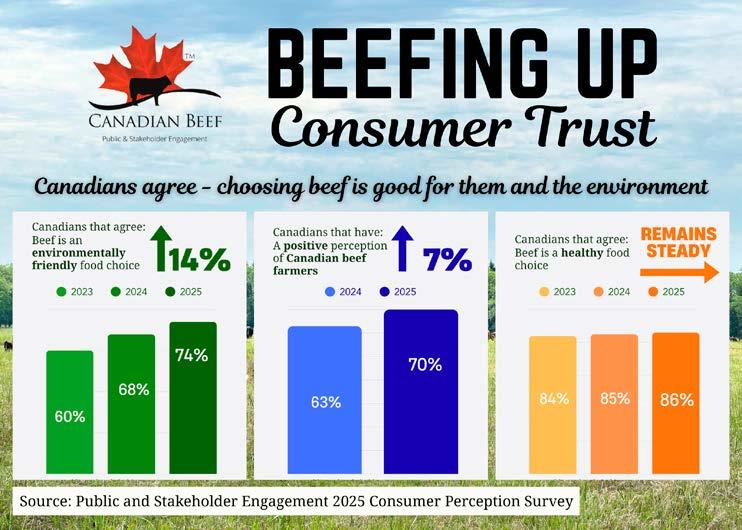
Every year PSE conducts nationally representative consumer perception research to benchmark and compare levels of trust in Canadian beef production Confidence in Canadian beef as a safe (90% agree) and healthy (86% agree) food is exceptional and remains strong year after year among all demographics Beef is ranked as the second most nutritious protein just behind chicken, however, younger Canadians (18-29 years old) rank beef as the most nutritious protein
As usual, a large majority of Canadians have positive perceptions of beef farmers and ranchers (70%) When it comes to how Canadians feel about beef cattle welfare, 79% rate the beef industry as humanely treating their animals – another category that has been on the rise and saw 5% growth in the last two years One of the most impressive increases seen in the past year is the number of Canadians who agree that beef is an environmentally friendly food choice From 2023 to 2025, this metric saw a 14% jump, with 74% now in agreement
For Manitoba residents specifically, we see higher than average perceptions in several areas This includes the percentage of people that agree that antibiotics are used responsibly, at 70% versus the national average of 66% As well, 62% agree that hormones are used responsibly, compared to 56% of all Canadians Finally, while there was tremendous improvement in Canadians identifying beef as an environmentally friendly food choice, Manitoba saw the highest increase with 80% of residents agreeing, a true testament to the marketing, communications and overall public outreach efforts of national and provincial beef associations
Public Outreach
A public focused campaign highlighting the Canadian beef sector’s environmental sustainability progress wrapped at the beginning of May Entitled “Confessions of a Canadian beef farmer”, it was delivered in partnership by the Canadian Roundtable for Sustainable Beef (CRSB), Canada Beef, and PSE Feedlot operator Andrea Stroeve-Sawa graciously served as the face and voice of the campaign The key messages leveraged data and information from the CRSB’s National Beef Sustainability Assessment (NBSA) The campaign used digital tactics including advertising on Meta, YouTube, and Digital Out of Home (e g malls, office buildings, subway stations) to reach Canadians The
campaign garnered a total of over 19 1 million impressions and 274,000 clicks through to the website
In July, PSE hosted the second annual “Ranching Experience” which brings together a group of social media content creators to a southern Alberta ranch to learn about the benefits of raising Canadian beef This year, the Robertson family hosted the group, and the influencers heard from conservation partners about the role ranchers play in preserving grasslands and were able to experience the vastness and biodiversity of the ecosystem first-hand
Before and after the event, influencers were asked to complete a brief survey to gauge their perceptions of Canadian beef cattle farmers and ranchers Prior to visiting the ranch, 70% of the creators rated Canada’s beef industry as “good” stewards of the land and water, with the remaining responding “unsure” or “acceptable” After the tour, 100% of responses rated this category as “excellent” The content shared by the influencers reached an audience of more than 800,000
The Guardians of the Grasslands game continues to be a well utilized classroom resource with more than 234 educators registered on the platform To amplify this reach outside of schools, the team contacted libraries, museums and science centers across Canada and offered a package that included a tablet or touchscreen, preloaded with the game, along with signage and other resources There was tremendous uptake, which included 14 partners in Alberta, four in Saskatchewan and one in Ontario In Manitoba, the Brandon General Museum and Archives, the Manitoba Agricultural Museum and Discover the Farm all added either a touchscreen or tablet to their educational programming Overall, the expected additional reach of these 22 educational partners is more than 570,000 Canadians each year
PSE released their fourth short documentary on National Wildlife Day in September 2025 Titled Homes on the Range, it highlights the wildlife habitat and biodiversity that is created and maintained on beef farms and ranches Trevor and Melissa Atchison are featured in the documentary along with local star “Bindi” from the Manitoba Burrowing Owl program The film has been selected for five film festivals across Canada thus far and has amassed more than 125,000 view on YouTube
Once again, the PSE team was also excited to see industry initiatives win accolades at the Canadian Agri-Food Marketing Awards (CAMA) The Confessions of a Canadian Beef Farmer campaign and articles written about the national environmental stewardship award nominees (which ran in 70 online publications across Canada) both won Certificate of Merits Homes on the Range was the big winner, taking home not only the award for best non-specialty video, but also winning Best of Show in all the digital marketing categories
For the 2025-2026 fiscal year, PSE is operating with a $730,000 budget, with $548,000 to CCA to administer, and $182,000 to Canada Beef Additional funding includes a federal Sustainable Canadian Agricultural Partnership grant supporting the Guardians of the Grasslands Game along with Alberta CAP grant which has supported public outreach It is our privilege to be able to work on behalf of beef cattle producers across this country everyday Any questions or comments are welcomed by email to Amie Peck at pecka@cattle.ca
Links: www.beefadvocacy.ca
Find us online @RaisingCdnBeef (Facebook, Instagram, TikTok and YouTube)

The Canadian Cattle Association (CCA) has the privilege and responsibility of representing nine provincial beef cattle organizations . In doing that, we give voice to issues affecting beef producers across Canada We invest check-off dollars to focus on advocacy initiatives and efforts so that Canada’s beef cattle producers can focus on raising cattle, not on trying to book meetings with elected officials to share concerns We rely on producers to step forward to serve as elected member representatives and directors just as Manitoba Beef Producers (MBP) relies on producers to step forward and serve as delegates Elected representatives work with their organization to represent you, share your challenges, and meet with elected officials on behalf of you and your fellow producers In this annual report message, rather than focus on key issues our industry has faced, we want to highlight a few achievements that result from CCA and MBP working together
Advocacy succeeds through collaboration CCA works on the national level, maintaining an office in Ottawa with staff who invest significant time and energy into developing and maintaining relationships with Members of Parliament, Senators and their staff Provincial associations including MBP have staff that put the same effort into developing relationships with provincial governments CCA relies on our provincial members to bring forward their issues of concern . Sometimes concerns remain at the provincial level, but other times the concerns are national or international in scope
Extreme weather is an example of a provincial concern that can become national if it becomes widespread Drought, forest fires and volatile market conditions have highlighted the need for better business risk management programs
We were very pleased to see changes to the AgriStability program announced this summer MBP and CCA are among the many industry organizations who have been advocating extensively and consistently for years for improvements to the program, and it is gratifying to see changes We look forward to continued cooperation between our organizations as we evaluate the program changes and provide feedback
Another example of our partnership is annual “producer fly-in meetings” in Ottawa that CCA hosts to connect beef producers with government representatives to discuss Canadian beef industry priorities CCA arranges meetings with MPs, Senators, political staff, and government officials that allow us to discuss topics of both national and regional importance In early October, Manitoba beef producers Andre Steppler and Mike Duguid and MBP staff Carson Callum and Maureen Cousins joined CCA staff in meetings with MPs James Bezan, Ben Carr, Ted Falk, Grant Jackson, Kevin Lamoureux and Branden Leslie and Senators Marilou McPhedran and Charles Adler
CCA also organized an informal reception on the perimeters of the MBP fly-in We are always happy to organize additional activities to bring the highest value impact for producers who are flying to Ottawa
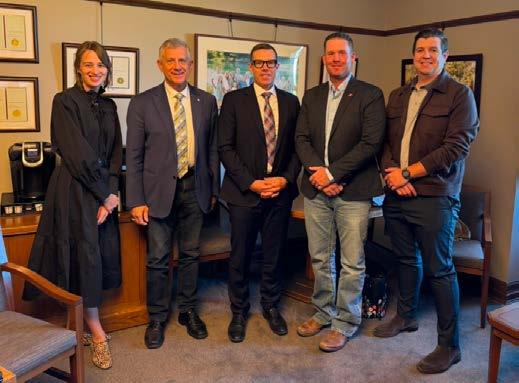


Although we cannot report any immediate policy changes or actions resulting from these meetings, we engaged in meaningful conversations with Parliamentarians on priorities that matter most to our industry and to beef producers in each region, ensuring your voices are heard at the national level Each meeting presents opportunities for education, relationship building and advocacy—before, during and after Having representatives such as Andre and Mike who can share their first-hand experiences, concerns, challenges and ideas for solutions demonstrate how a strong Canadian beef industry helps strengthen the Canadian economy Most changes we see are a result of several meetings stretching over weeks, months or years Momentum builds slowly and creates the conditions for success when windows of opportunity open
The fall fly-in meetings built on rapport and momentum that MBP and CCA collaboratively built during the annual conference of federal, provincial and territorial (FPT) Ministers of Agriculture held in Winnipeg in September During their meetings, they recognized the impacts of dry conditions and wildfire activity affecting regions across Canada, and the significant uncertainty caused by tariffs Representatives from both our organizations had the opportunity to connect with agriculture ministers at events during the conference to share challenges and opportunities
Reinforcing and amplifying each other’s messages and speaking with a united team Canada approach is also an important component of advocacy . MBP and CCA have supported each other’s position statements and requests this year, from sharing disappointment in possible tariffs to sharing requests for supports for producers in drought-stricken areas to sharing support for the 16-year renewal of the CanadaUnited States-Mexico Agreement (CUSMA)
Many of the successes we have achieved in the cattle sector come from the partnerships between our provincial organizations and the CCA The collaboration between MBP and CCA and among all our provincial member associations shows how much more we can accomplish when we work together for the industry
If you have questions about CCA’s advocacy efforts or specific challenges, we encourage you to reach out to us at contact@cattle.ca or (403) 275-8558 We welcome your questions and feedback
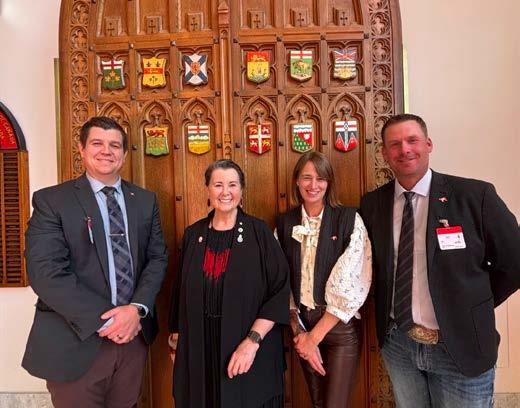
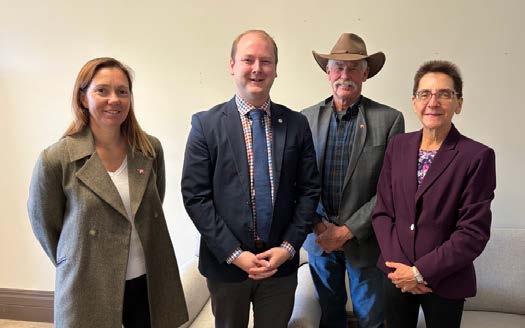
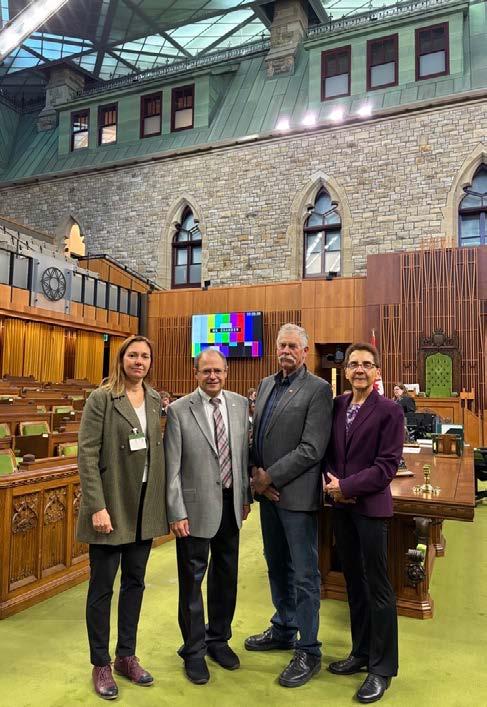

TREVOR WELCH, CHAIR
In 2024/25, the Canadian Beef Check-Off Agency continued its mandate of delivering transparent, accountable, and effective stewardship of the Canadian Beef Cattle Check-Off and Canada’s Beef Import Levy
This past year, we made Important strides in ensuring our systems and structures reflect the real needs of producers today While most of our work is designed to run quietly in the background, making sure things are functioning smoothly, this year marked some important milestones that moved us forward as an industry
Revenues from the Canadian Beef Cattle Check-Off totaled just over $17 4 million, net of the provincial portion of the federal levy These funds were distributed across core service areas based on allocation percentages established by the industry
In addition, $1 49 million was collected through the Import Levy on beef cattle, beef and beef products entering Canada These funds continue to support generic beef promotion efforts, including recipe development, culinary education, and nutrition marketing
To support these operations, the Agency’s administration budget totaled $980,758, enabling us to meet our strategic objectives
Sound Governance And Administration
For the first time, we implemented a 2 per cent administration fee paid to provincial cattle associations as a fee for collecting and remitting the national check-off This replaces the previous flat per-head fee on only interprovincial marketings and helps support provinces in their role as front-line partners in national levy collection The move resulted in $347,446 remaining in the provinces, an investment in productivity and collaboration
We also completed a comprehensive review of our bylaws, approving updates that reflect both legal best practices and the evolving structure of the Canadian beef industry No major structural changes were made, but the updates reinforce our commitment to robust, modern governance
Another development this year has been continued exploration of a potential Scientific Research and Experimental Development (SR&ED) tax credit program for beef producers Working alongside the Beef Cattle Research Council and KPMG, we’re making significant headway in understanding how this federal incentive can be applied to beef industry research and development Once the groundwork is complete, we’ll launch a communications strategy to help producers take advantage of this opportunity
Structured Reporting And Compliance
On the compliance side, our team conducted 82 site visits and 64 formal inspections on behalf of five provincial cattle associations and the Ontario Sheep Farmers These visits led to the discovery of more than $185,000 in outstanding levies With an “education-first” approach, we focused on helping marketers and producers improve their practices, whether it was remitting levies correctly or understanding the why behind the process
As part of our ongoing commitment to transparency and accountability, our inspection team conducted its annual financial audit of one of our service providers, this year focusing on the Beef Cattle Research Council (BCRC) These audits are designed to follow check-off dollars and ensure that funds are being invested according to approved business plan objectives The audit was clean and productive, offering insights into how BCRC manages its budgets, multi-year programming, and the extension of funding plans over time The industry can feel confident that research investments made through check-off are well-managed and delivering strong value for producers
We also conducted an audit of the Maritime Beef Council, which oversees joint outcome provincial investment funds in the Maritimes to review their systems and processes in regard to check-off investments Also this year, we began collaborating with Newfoundland cattle producers Their association, the Newfoundland Cattle Producers Association Inc , is now fully functional and has approved a levy increase to align with the national rate of $2 50 per head
And, perhaps most notably, we launched conversations across Canada about modernizing the way check-off is collected on cattle marketed across provincial borders
This is a big deal: the current system hasn’t been updated in over 20 years Through collaboration with all provincial cattle associations, we’re working toward a unified, sustainable funding structure that reflects how the industry operates today By engaging a working group representing a wide cross-section of the industry, from auction markets, dealers and provincial associations to producers, we have been able to get some great direction for this project to keep it moving forward
In the same vein, we also began the important work of refining key definitions in the Federal Levies Order As the beef industry evolves, it’s critical that our regulatory
framework reflects the way cattle are marketed and sold across the country Clarifying these definitions will help ensure greater consistency and fairness, particularly when cattle are marketed interprovincially This work will support provinces in receiving their appropriate share of check-off, aligning more closely with where the cattle originate from and where value is generated in the system It is our goal to be responsive to changes in the industry, whether it is around the mechanism framework on how funds are collected and remitted, refining definitions, or any other challenge we come across
As a support to provincial cattle associations navigating specific communication needs around a united and sustainable funding strategy through the national check-off, the Agency provided tailored assistance to help overcome communication challenges For some provinces, this meant helping to develop educational resources for collectors and remitters; for others, like Saskatchewan and Ontario, it involved promoting the benefits of check-off to strengthen support for an increase to check-off rates in their provinces Throughout the year, the Agency supported transparent communication and worked alongside provincial partners to build materials that addressed their unique needs
Youth engagement also remained a highlight In partnership with the Canadian Cattle Youth Council, we welcomed Adeleen Bolduc to the Agency board as our Youth Member Her voice has already added a valuable perspective We also awarded our second national youth scholarship to Gus Halibert of Saskatchewan With over 20 video entries from across Canada and the most engagement we’ve ever seen on social media for any Agency campaign, the scholarship is clearly reaching and resonating with young producers
In short, we are moving forward methodically and collaboratively Our job is to ensure that every dollar collected through the Canadian Beef Cattle Check-Off and Import Levy is well spent, transparently managed, and clearly aligned with the industry’s longterm goals And this past year, we made important strides in ensuring our systems and structures reflect the real needs of producers today
We’re grateful for the trust placed in us by industry stakeholders across Canada, and we remain committed to delivering value, transparency, and stability on behalf of all who




Tarrifs, no tarrifs, tarrifs, no tarrifs Trade irritants have been a dark cloud over this year, but cattle feeders have persevered despite difficult weather, supply chain barriers, industry strikes and labour shortages These challenges unfolded in the context of a federal and several provincial elections and international unrest NCFA continues to collaborate closely with the federal government and industry partners to develop practical, science-based, and timely solutions that address the evolving needs of Canada’s fed cattle sector Through this ongoing work, NCFA has helped reduce regulatory and trade barriers, enhanced policy alignment, and leveraged new opportunities to strengthen growth, innovation, and long-term competitiveness for Canadian cattle feeders
KEY RESULTS
In collaboration with our industry partners, NCFA has delivered value to Canadian fed cattle producers NCFA action on key issues in 2025 include:
• Successfully lobbied to increase the AgriStability cap from $3 million to $6 million for the 2025 program year NCFA will continue to advocate for further and more permanent increases to the cap
• Strongly advocated to the Canadian government on the impact of tariffs and counter-tariffs on the cattle sector
• Closely inputted into Canada’s strategy for the 2026 CUSMA review
Successfully ensured the Advanced Payments Program limit did not revert to the original $100,000 interest free limit
• Successfully lobbied the federal government for extended tax deferral of livestock compensation received as part of the tuberculosis investigations
• Secured an exemption for agriculture and agri-food from a sweeping removal of interprovincial trade barriers
• Co-led industry Foot and Mouth Disease drills and ensured feedlots were represented in the development of FMD vaccination response plans
• Held the government to account for the completion of the Specified Risk Material scientific report stage
• Secured exemptions for agriculture and agri-food from several far-reaching Temporary Foreign Worker Program changes
• Succeeded in confirming a government commitment to AgriMarketing cyclical re-evaluations of pesticides by Pest Management Regulatory Agency
• Influenced government’s commitment to increase funding for Agri-marketing, trade diversification and digitalization of CFAI processes
GOVERNMENT RELATIONS
NCFA is persistently engaged with key federal decision-makers in an effort to positively impact policy, regulations and legislation Federal engagement in 2025 included:
• Ongoing engagement with MPs, Senators, political staff and senior government officials
• Feedlot tours for Ministers, MPs, Senators and senior government officials Active advocacy into federal election platforms and campaign
• Appearances and/or written submissions to:
• The House of Commons Agriculture Committee
• The Senate Agriculture Committee
• The House of Commons Trade Committee
• Pre-budget submission to the federal government
• Numerous submissions to the federal government on priorities including trade, labour, traceability, red tape reduction, greenwashing, country of origin labelling, antimicrobial resistance, biogas, BRMs and innovation
The annual NCFA Lobby Day in Ottawa featured over 45 meetings with MPs, Senators or political staff In addition, Lobby Day activities included meeting with the Minister and Deputy Minister of Agriculture and Agri-Food as well as the President of the CFIA
Actively advocating through social media to influence government and public opinion – In the past year gained 221 new X followers and had 27,234 post impressions
NCFA and its members identify the issues that are of greatest importance to fed cattle producers and ensure we are a lead voice in Ottawa on those priorities We partner with other national organizations to provide a key perspective to government on issues that cut across the beef value chain or across the entire agriculture sector Collectively, NCFA provincial members strengthen our national voice through coordinated advocacy efforts in regions across Canada NCFA attended several provincial member AGMs in 2025 and look forward to attending more in 2026
NCFA believes that industry collaboration—multiple voices speaking with consistent, coherent, and complimentary messages—strengthens Canada’s beef industry NCFA is a member of key organizations including:
Canadian Agri-Food Trade Alliance (Vice-Chair)
• Animal Health Canada
• Canadian Agriculture Human Resource Council
• Agriculture Carbon Alliance
• Canadian Biogas Alliance
In addition, NCFA participates on numerous working groups across a wide range of issues including FMD preparedness, traceability and labour, as well as chairing the government-industry Animal Protein Table, and memberships in the Canadian Biogas Association and Canadian Roundtable for Sustainable Beef
NCFA also engages in international forums, with a focus on the US These include PNWER, SARL, the Tri-Lateral Agriculture Accord, the World Organization for Animal Health and took part in two 2025 advocacy missions to Washington
And finally, the NCFA Board renewed the association’s strategic plan for 2026-2031
The National Cattle Feeders’ Association (NCFA) serves as a unified voice for Canada’s fed cattle producers. We work to improve the growth and competitiveness of the beef sector in Canada. Our membership is comprised of provincial beef organizations from Canada’s major cattle feeding regions.

Producer National Check-Off Investments in Research
The Beef Cattle Research Council (BCRC) is Canada’s industry-led funding agency for beef, cattle and forage research and knowledge mobilization The BCRC is directed by a committee of 15 beef producers from across the country, including two from Manitoba, plus one ex-officio member It is funded primarily through the research allocation of the Canadian Beef Cattle Check-Off
In 2024/25, the BCRC received on average $0 66 (unaudited) of every $2 50 of the Canadian Beef Cattle Check-Off collected by the provinces This funding was leveraged under the Beef Science Cluster program with Agriculture and Agri-Food Canada (AAFC) Canadian Agricultural Partnership funding, where industry contributed 43% ($2 08 million) and AAFC contributed 57% ($2 71 million) in 2024/25
In addition, the BCRC leveraged the Canadian Beef Cattle Check-Off for an additional $5 5 million in research funding and $103,800 in-kind from government and industry partners through initiatives outside of the Beef Science Cluster
When making funding decisions, the BCRC seeks expert advice to ensure proposed projects address industry priorities and are both scientifically and practically sound A science advisory body provides relevant advice on the technical merit of any proposed research As well, independent peer reviewers help ensure new research is original, progressive and uses valid scientific approaches Before making funding decisions, the BCRC Council members consider this expert advice, priorities in the Five-Year Canadian Beef Research and Technology Transfer Strategy, other scientific and industry feedback, and emerging issues . This process provides a fair, transparent and thorough evaluation of all research activities
In addition to funding research, the BCRC plays a leading role in increasing industry uptake of relevant technologies through its knowledge mobilization strategies Information sharing across a broad audience of producers, researchers, funders, government and other industry organizations supports communication networks across the country
Beef Science Cluster IV
Beef Cluster IV focuses on driving the growth of Canada’s beef industry and the overall economy by sustainably advancing Canadian beef and forage production while reducing the industry’s environmental footprint Twenty-three projects were approved for a total Cluster size of $21 7 million ($9 6 million from industry and $12 1 million from AAFC) from April 1, 2023, to March 31, 2028
All projects are focused on three centralized themes: economic growth and development, climate change and environment, and sector resilience and societal challenge Cluster IV project objectives include:
• improved diagnostics and vaccines to manage production-limiting diseases in cattle,
• development of new forages that have the potential to thrive across Canada,
• improvement of food safety technologies in beef processing facilities to reduce the use of water and energy, and
• development of practical, science-based resources and economic decision-making tools to support the Canadian beef industry
Producer Resources and Engagement
The BCRC developed several new resources in 2024/25 including 65 timely posts, 57 research summary factsheets, 12 monthly e-newsletters, 50 podcast episodes, 12 articles for the Canadian Cattlemen – The Beef Magazine, 38 new infographics, six new or updated interactive calculators, five videos, three webinars, and a new genetics record-keeping course New webpages were developed covering cow management, bull management and winter feed management
In 2024-25, the BCRC continued its popular, ongoing #Calf911 initiative with the promotion of its calf management guides and videos One reel related to proper calf positioning reached more than 2 5 million individuals with 34,374 interactions
Results from the 2023 Canadian Cow-Calf Survey showed that less calves are dying during the first 24 hours than in the previous several years, which corresponds with the launch of the BCRC’s Calf 911 resources for distressed newborn calves
of wetlands?
A study led by Dr Pascal Badiou with Ducks Unlimited Canada found that Canadian wetlands have lower greenhouse gas (GHG) emissions than other parts of the world due to freeze-thaw cycles GHG emissions from wetlands on pasture are lower than those on cropland, likely due to the forages present in the riparian zones of pasture wetlands
Has making antibiotics “prescription only” affected antibiotic stewardship on cow-calf operations?
A study led by Dr Cheryl Waldner at the Western College of Veterinary Medicine, University of Saskatchewan found that minimal changes to antimicrobial use have been observed since stricter regulations were imposed in December 2018 Antimicrobial use and resistance in the cow-calf sector pose limited risks to the health of humans, the environment or cattle Proper antibiotic stewardship initiatives are essential to keep these risks low
Is a better vaccine for bovine TB on the horizon?
Research led by Dr Jeffery Chen at the University of Saskatchewan is focused on developing a vaccine that could protect livestock against bovine tuberculosis (TB) without interfering with TB tests – a major breakthrough if successful
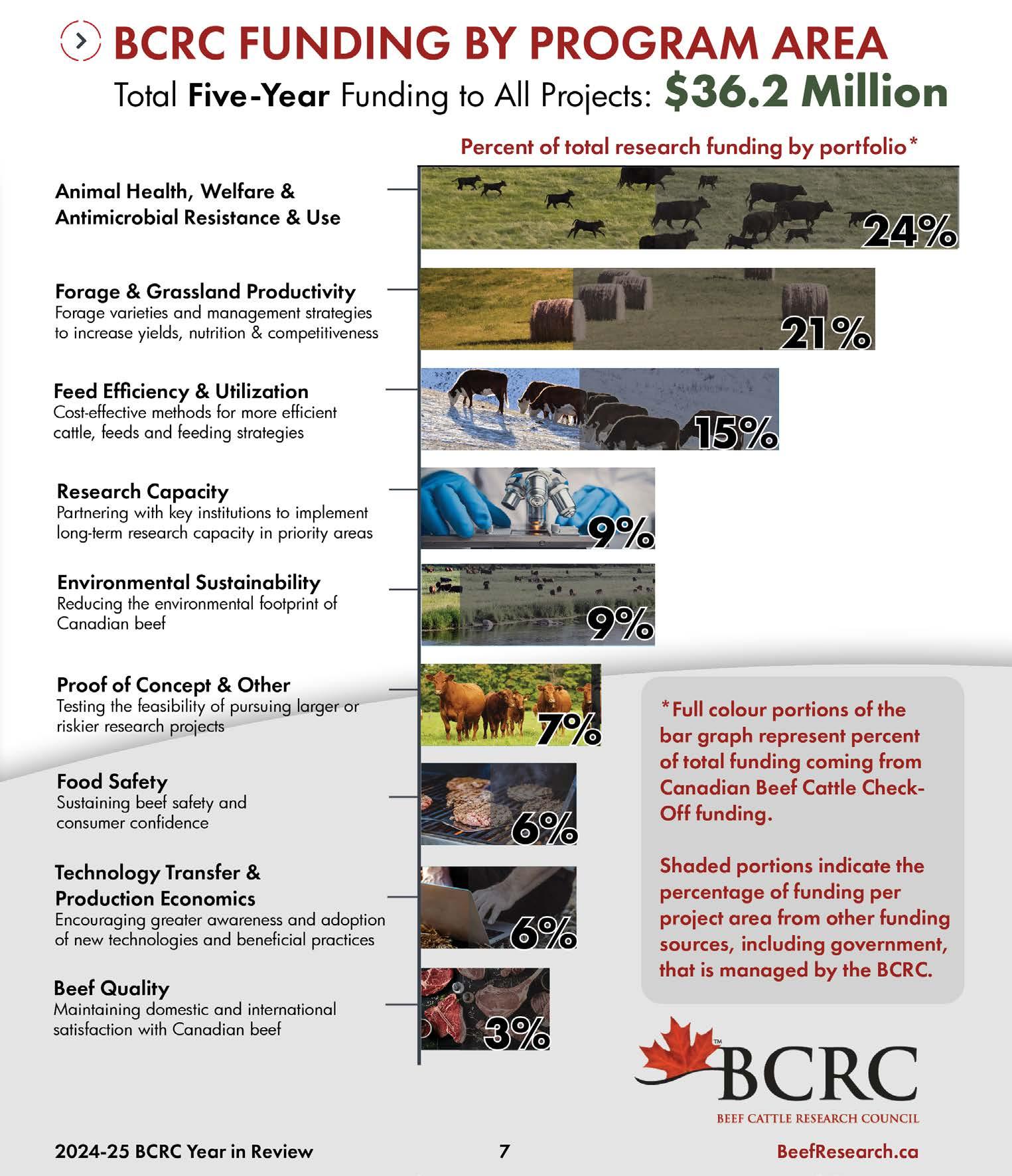


Investing in Youth Education
CCIA vs CFIA
CCIA is not Government
The Canadian Food Inspection Agency (CFIA) develops and enforces the animal identification requirements defined in the Health of Animals Regulations. The Canadian Cattle Identification Agency (CCIA) is a CFIA-appointed, non-government, Responsible Administrator (R A ) that supports industry in complying with the regulations by managing the Canadian Livestock Tracking System (CLTS) and providing tools and information to support data capture
Who is CCIA?
Traceability plays a key role in building a resilient livestock industry, helping protect animal health and producers’ livelihoods Through education and accurate data reporting and management, CCIA supports innovation and industry collaboration while equipping Canadian producers and stakeholders with tools and confidence to help strengthen Canada’s traceability system As a Responsible Administrator, CCIA delivers support services and access to the Canadian Livestock Tracking System (CLTS)

CCIA also manages and distributes Canadian Food Inspection Agency (CFIA) approved and pre-approved livestock indicators (tags) and applicators, for the regulated species under our R .A . status
Movement Reporting is Coming…. Be prepared start reporting today
New federal traceability regulations will focus on the identification and registration of premises where livestock are kept or collected, the identification of livestock, and the domestic movement reporting of livestock As a beef producer, you play an important role in traceability Whether you’re buying or selling through an auction mart, or shipping to a feedlot, CCIA has made it easier to record livestock movement in the CLTS—helping you prepare for upcoming regulations
Use the Movement Record - Start a shared record when shipping livestock The transporter and destination add their details, and the destination completes the submission Know Your Role – If you’re the recipient (for example, buying from an auction mart or receiving livestock from another location), you’ll need to submit a regular move-in event This will be your responsibility under the proposed regulations
Start using these features today – Reporting livestock movements in the Canadian Livestock Tracking System helps protect herds and strengthens industry resilience by improving disease tracking The new Movement Record feature simplifies and speeds up reporting, making now an ideal time for producers to adopt movement records ahead of upcoming regulatory changes
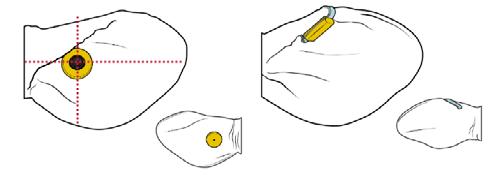
CCIA prioritizes engaging the next generation of agriculture leaders through its new 4-H Traceability education campaign The interactive modules make learning about traceability fun and meaningful, while also learning how it works and why it matters Clubs across Canada are encouraged to adopt them to inspire future traceability leaders
Feedback on these modules has been incredibly positive, especially how important, manageable and engaging they are
Innovation and Accessibility
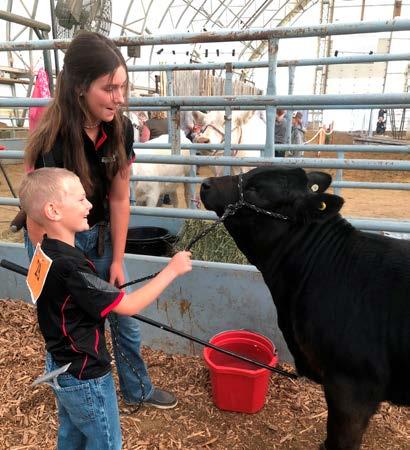
MOBO App Upgrade: The CLTS MOBO app is now available in both French and English, to make movement reporting accessible for anyone, anywhere
CCIA Webstore: The express shipping option was added to the webstore to help reduce wait times on urgent orders We have developed this update in response to client feedback and operational reviews that identified the need for a faster, more convenient process when clients urgently require indicators
Set it and forget it—Webstore Subscription for Tag Orders: The CCIA Webstore product subscription model was released in early December 2025 This new update allows customers to set up recurring orders for select products using a credit card, with flexible billing cycles that can be scheduled by days, weeks, months or years Subscriptions are managed directly through the customer’s
CCIA Webstore account, where users can view billing dates, cycle details and subscription status


Automated email reminders notify customers of upcoming renewals, billing or cancellations, and subscriptions can be cancelled online at any time, with administrative support available for updates or assistance Please note that payment details cannot be changed mid-cycle; customers must cancel and recreate a subscription to enter new credit card information To take advantage of this new feature, visit tags.canadaid.ca.
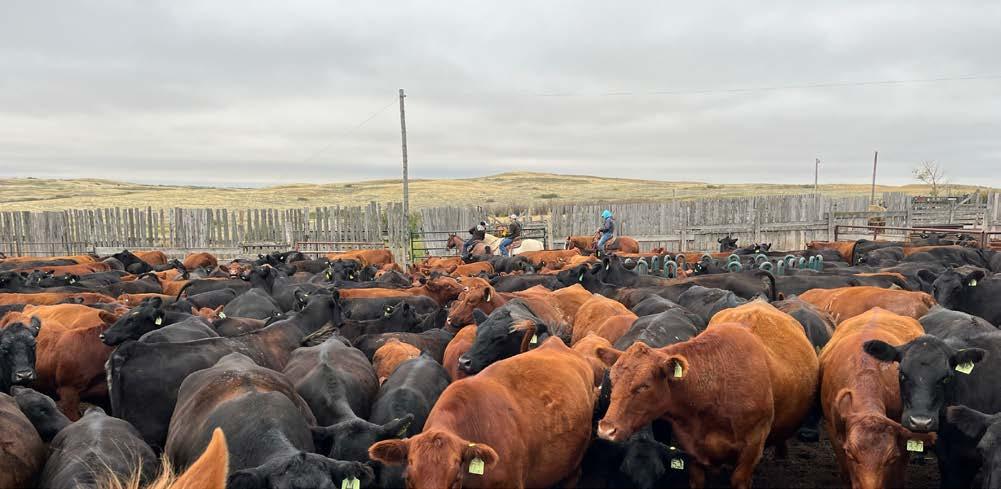
A bovine rumen bolus study is underway, with eight ranches currently enrolled and collecting data To date, 275 boluses have been deployed, with an additional 150 planned for deployment in the spring To support continued progress, CCIA is developing a five-year research plan outlining priorities, timelines and budget projections to guide the bolus-based initiative and future funding needs
CCIA’s Movement Event Scanner project is also progressing as planned, with programming nearly complete and internal testing underway Ten Android-based RFID wand scanners will be deployed to producers for real-world evaluation to help simplify movement reporting in the CLTS, aiming to reduce administrative burden in preparation of the incoming regulations
As part of this initiative CCIA is looking for additional ranches to take part in scanner testing To express interest, contact our team by email at Info@canadaid.ca or call 1-877-909-2333
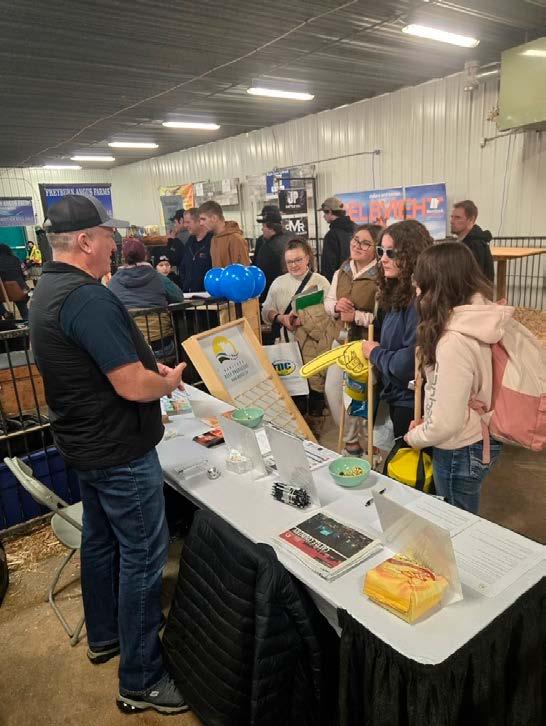
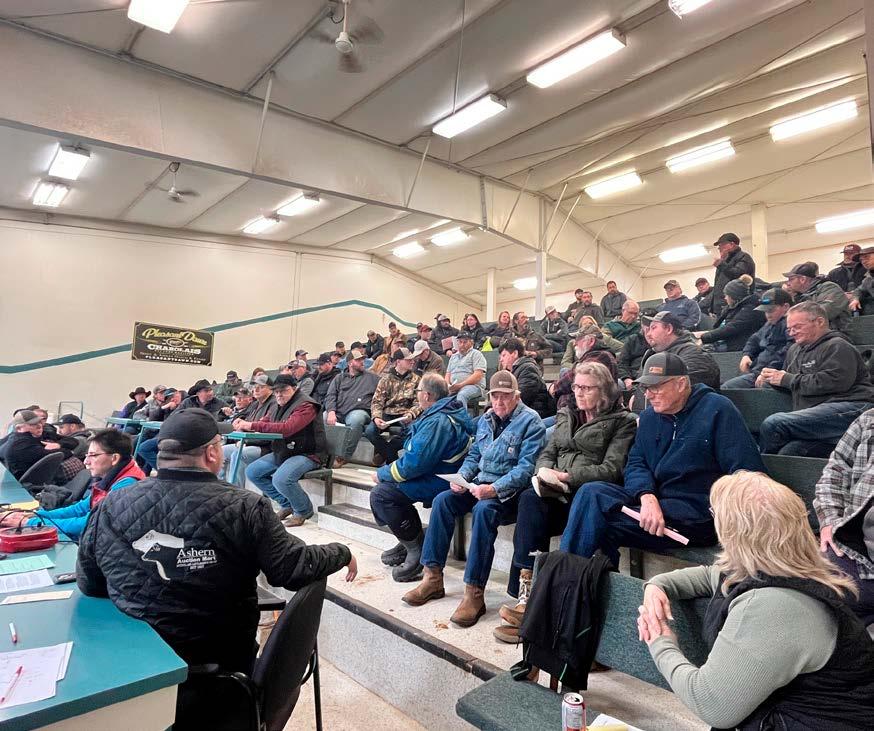
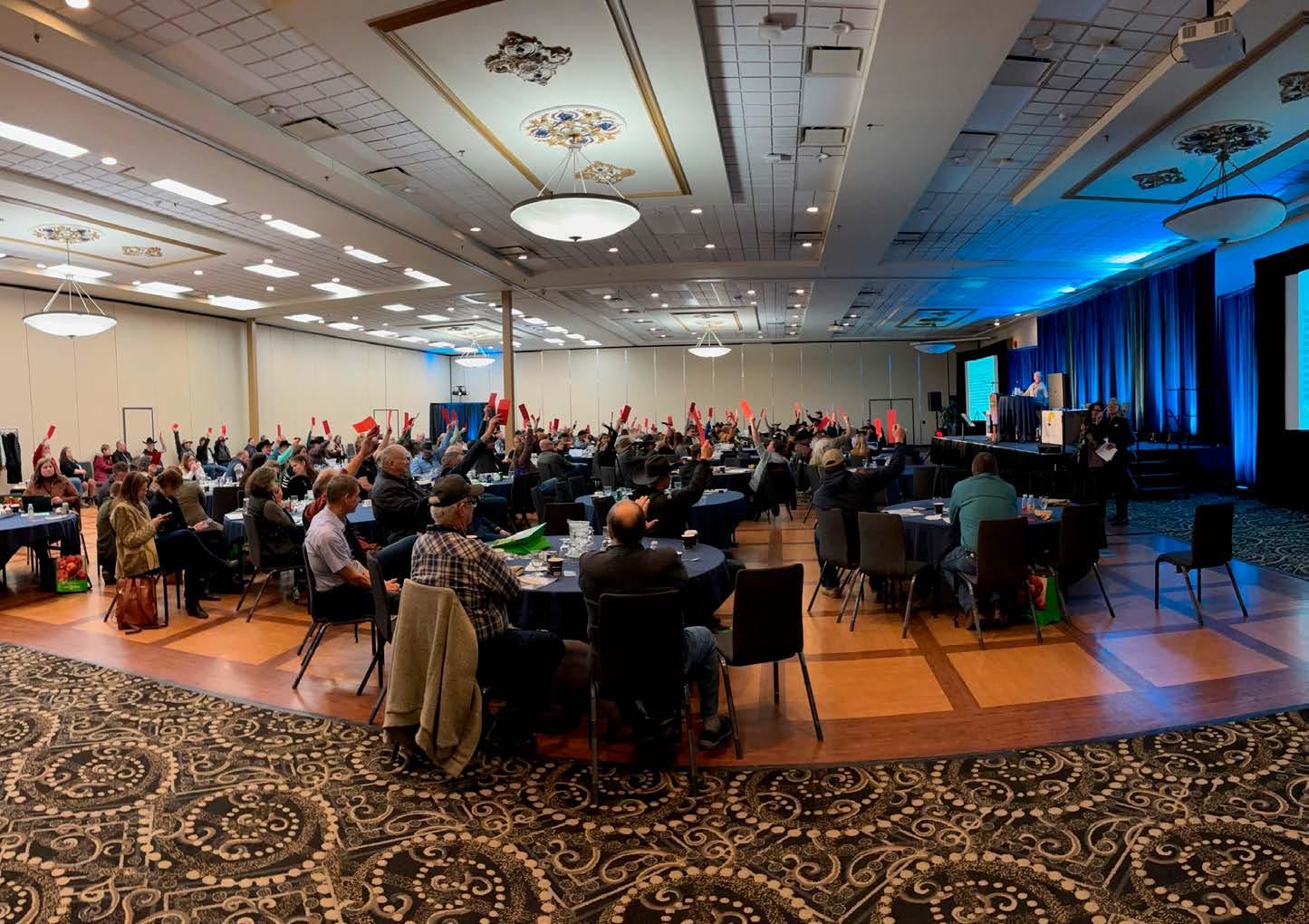


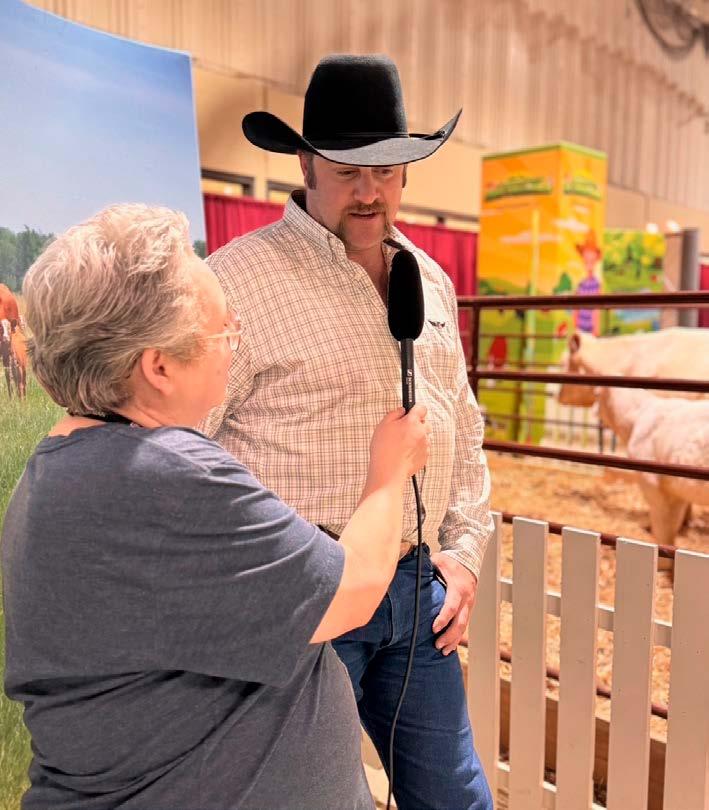
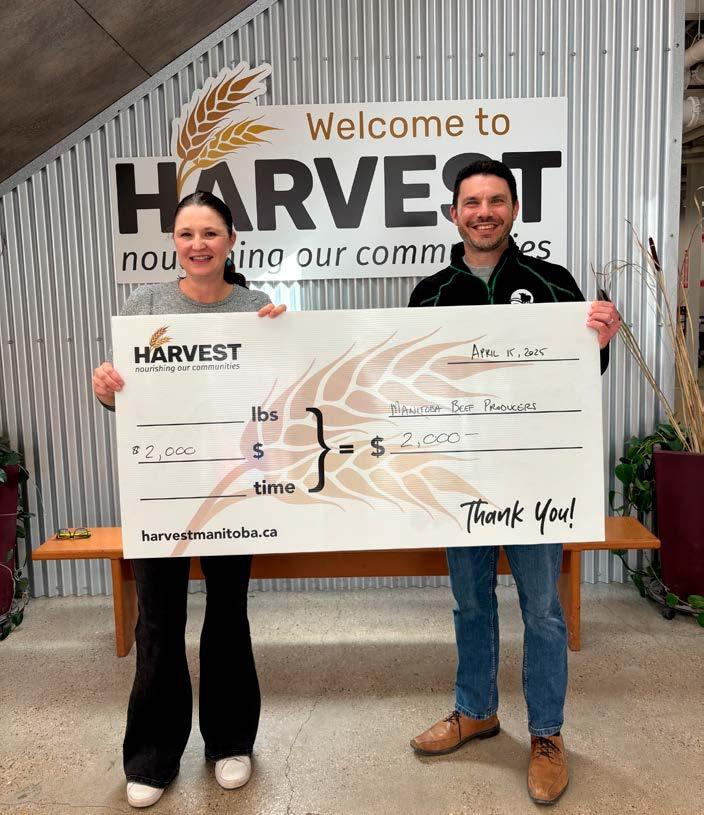
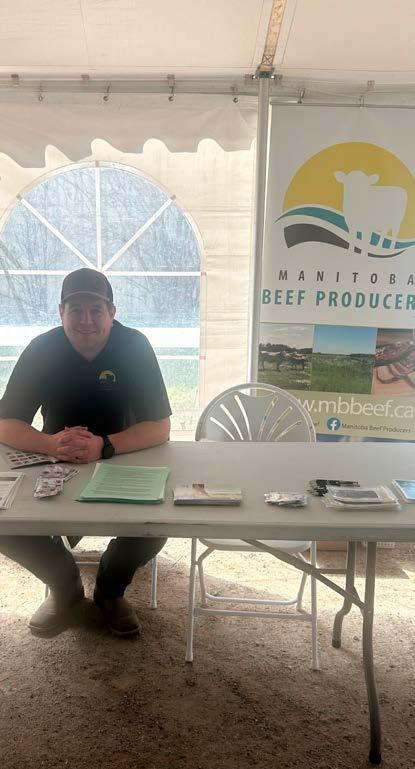
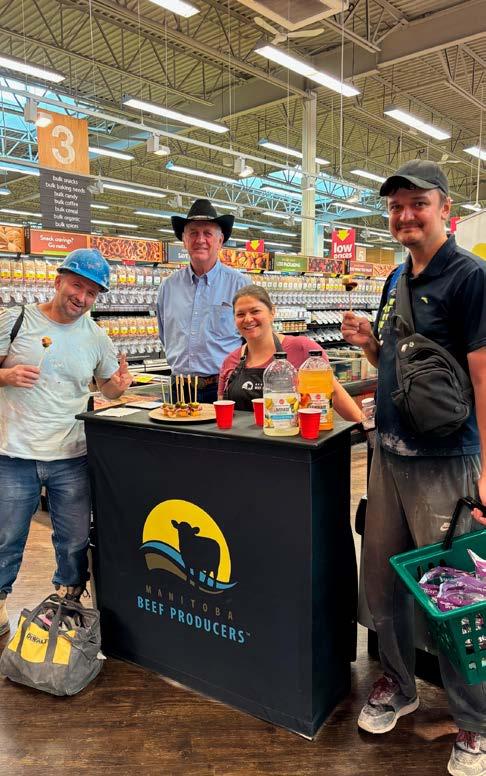
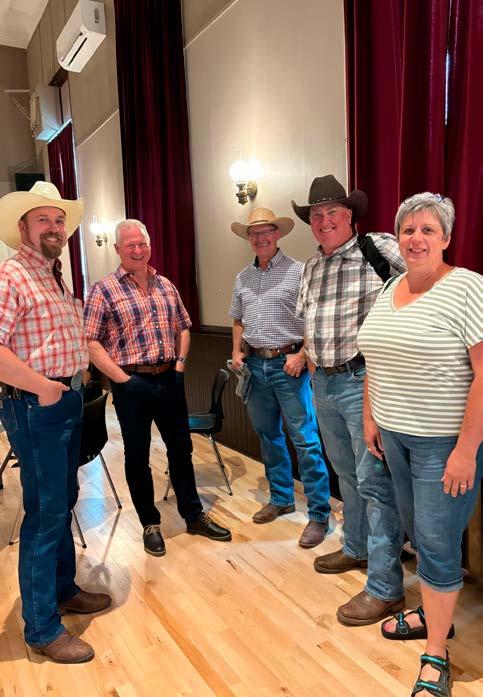
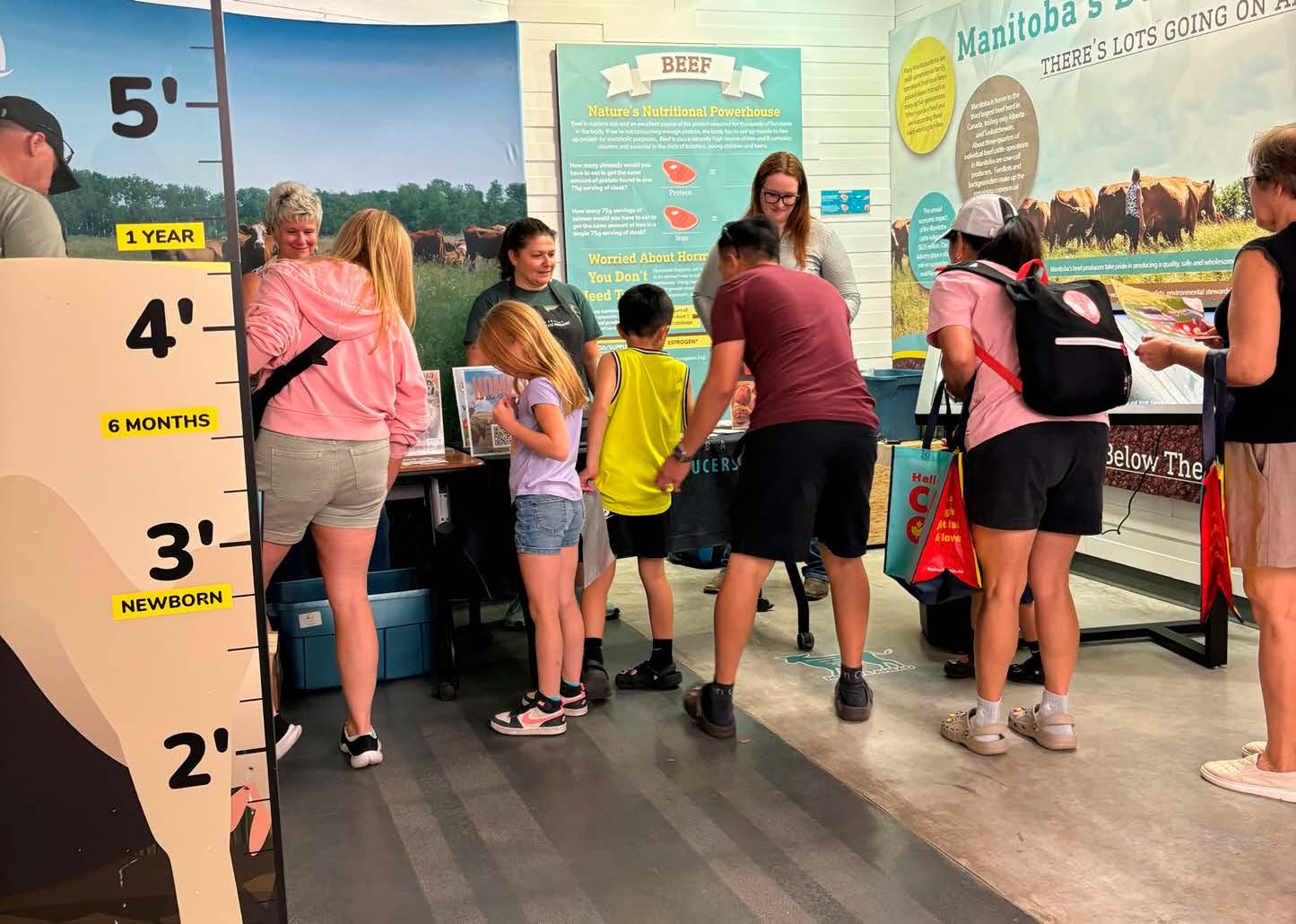
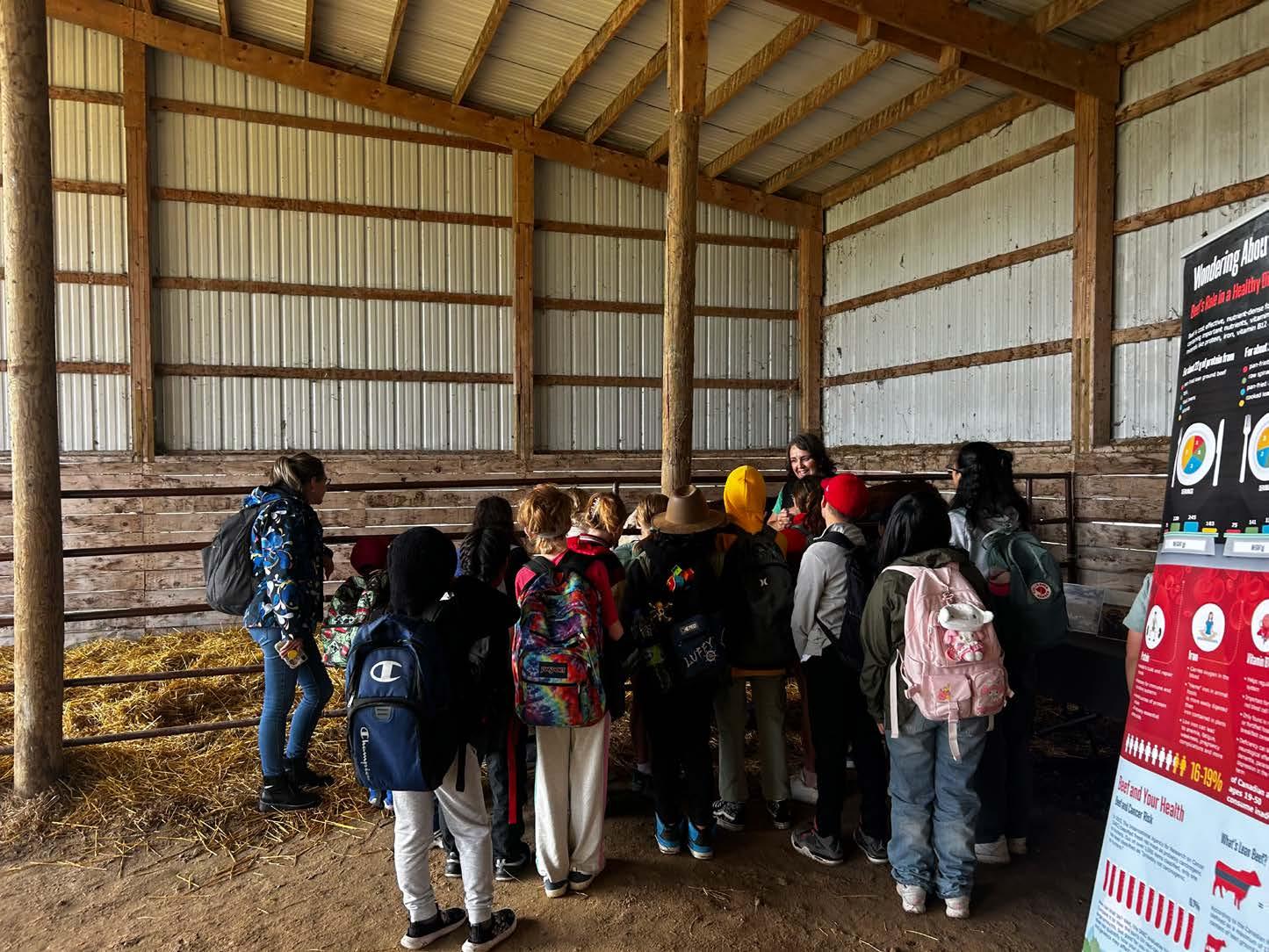
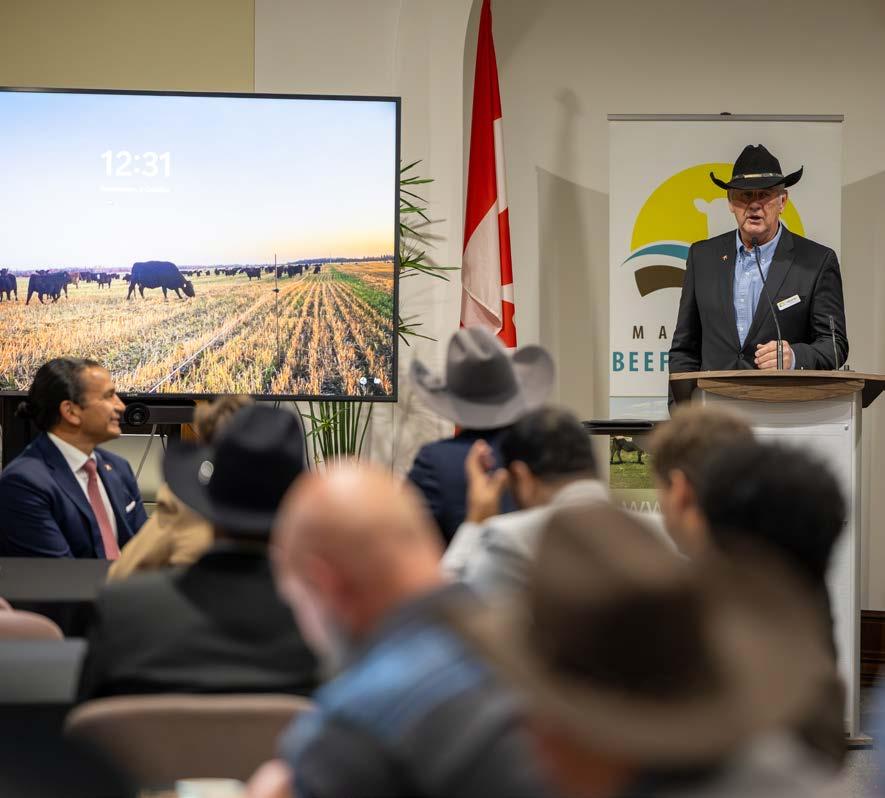
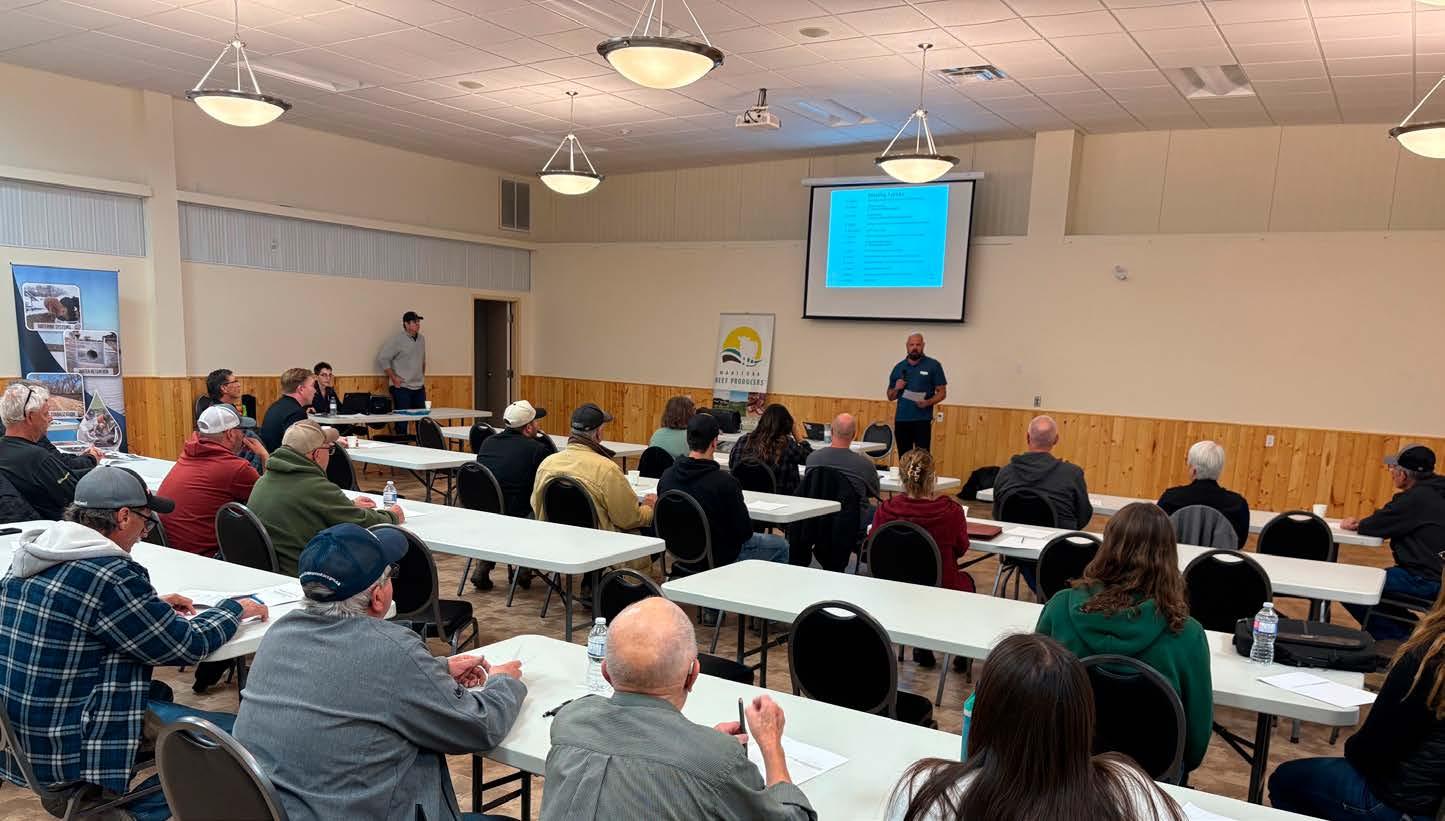
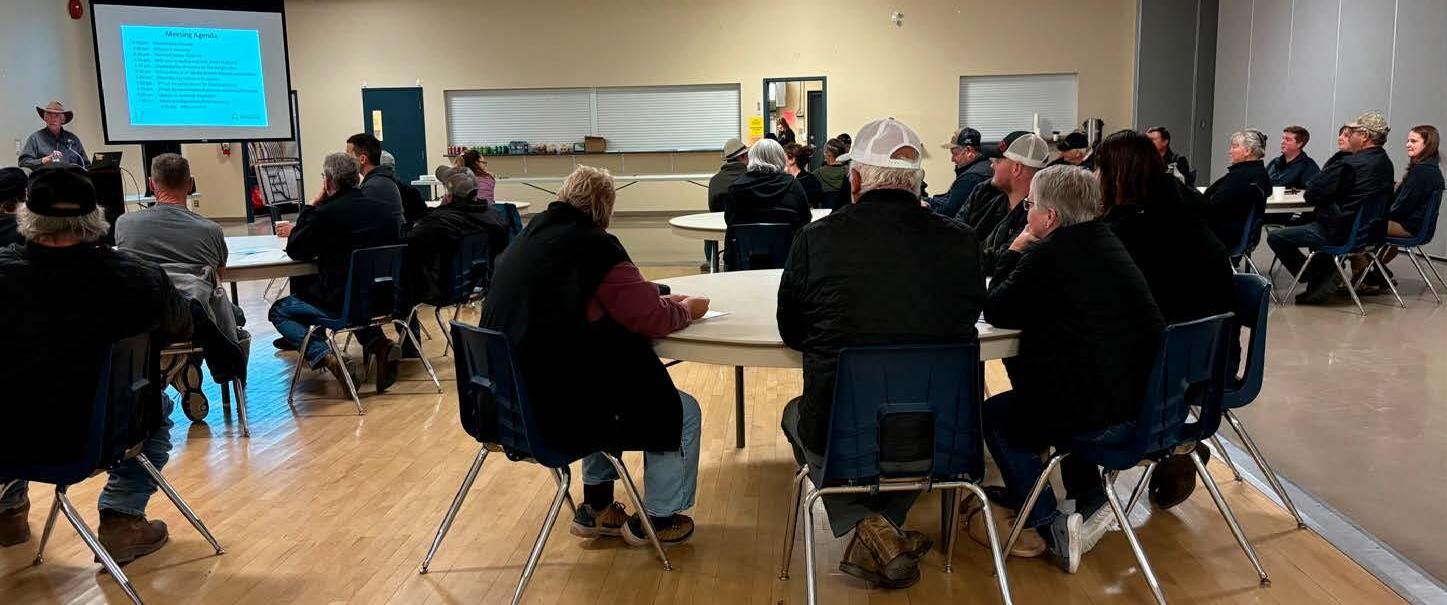
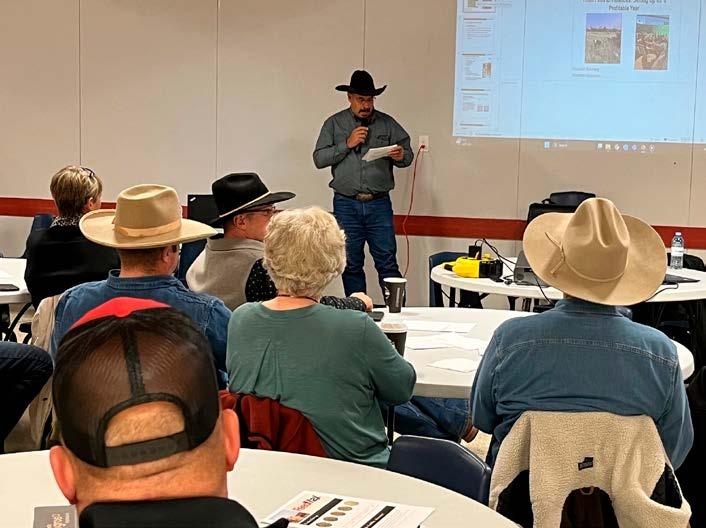
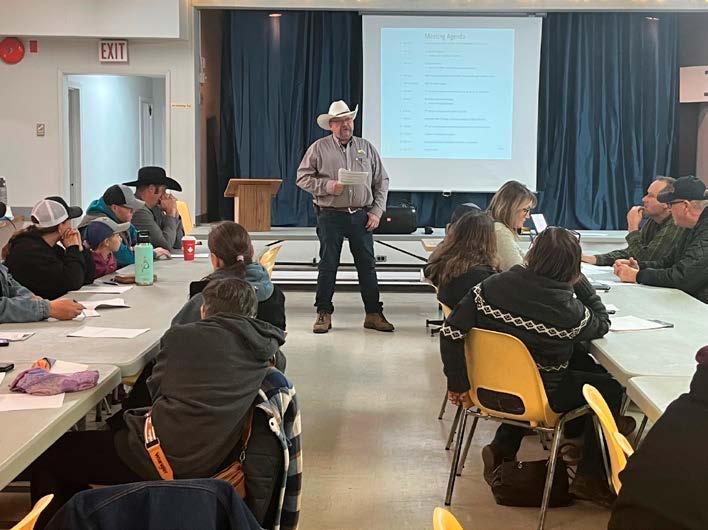

After 35 years on the air, Great Tastes changed the channel — and pressed play on a new digital chapter Beginning September 5, 2025 Manitoba’s most watched, locally produced broadcast television series became an all-new YouTube series
According to series producer Donalee Jones, the revival of Great Tastes was in response to public demand “We have surveyed Manitobans and this is what they are asking for,” Jones explained The series producer believes it has potential to resonate with both nostalgic viewers and a new audience She emphasized a generational gap in awareness, stating, “Many younger Manitobans who expressed interest in watching Great Tastes were unaware it exists ”
“We understand this is a big change for our loyal audience,” Jones adds “However, YouTube viewing has become considerably more accessible in the last five years It’s no longer solely about short-form videos; streaming long-form content on YouTube and other platforms is now widespread, thanks to the popularity of Smart TVs ”
This shift presented an opportunity to inspire more Manitobans to cook with local ingredients and connect with Manitoba’s farmers and ranchers
The digital format also offered greater flexibility for both producers and viewers No longer tied to a Saturday night time slot, audiences can watch Great Tastes any day of the week, with new videos released every Friday With content now produced yearround, producers can respond to trends more quickly and deliver timely, engaging stories all year long
The YouTube series also introduced a dynamic cast of local hosts — a mix of professional chefs and passionate home cooks — who shared their favourite recipes, cooking tips, and plenty of personality From taste test challenges to candid behind-the-scenes moments, this new format invites viewers into a more relaxed, interactive kitchen experience
Chef Gordon Bailey – Renowned restaurateur and respected culinary instructor
Chef Anna Hymers – Red Seal chef and research technician at RRC Polytech’s Prairie Research Kitchen (& MBP food expert)
Chef George Hudson – Sous chef at Oxbow Natural Wine Bar and Restaurant
Laura Cook – Home cook and food blogger from rural Manitoba
Together, they bring a wide range of expertise and perspectives — all rooted in a shared passion for local ingredients and Manitoba’s unique food culture The hosts were excited about the opportunity to visit Manitoba farms and agricultural communities and share those experiences with the Great Tastes audience
The series is produced by Frank Digital with funding provided by the Government of Canada and Manitoba Agriculture through the Sustainable Canadian Agricultural Partnership It’s the only collaboration of its kind in Canada and brings together Manitoba’s farmers and ranchers through their non-profit industry associations: Manitoba Beef Producers, Hello Canola, Manitoba Chicken, Manitoba Crop Alliance, Manitoba Pork, Manitoba Pulse & Soybean Growers, Manitoba Turkey Producers
Great Tastes released new content on their YouTube channel, @GreatTastesTV, every Friday, starting September 5th Follow @GreatTastesMB on Facebook and Instagram for exclusive behind-the-scenes content, recipes, farm facts and much more content at www.greattastesmb.ca
Fans who prefer to watch the series on broadcast can find Great Tastes on The Rural Channel, RogersTV and WCGTV All three broadcasters will be sharing old and new episodes of the series multiple times per week