A Publication by the Kenya Export Promotion and Branding Agency
DECEMBER FY 2025 / 2026
THow AGOA’s Renewal Will Spur Kenya’s Exports and Drive Economic Development
By Jonah Karanja (JKaranja@brand.ke)
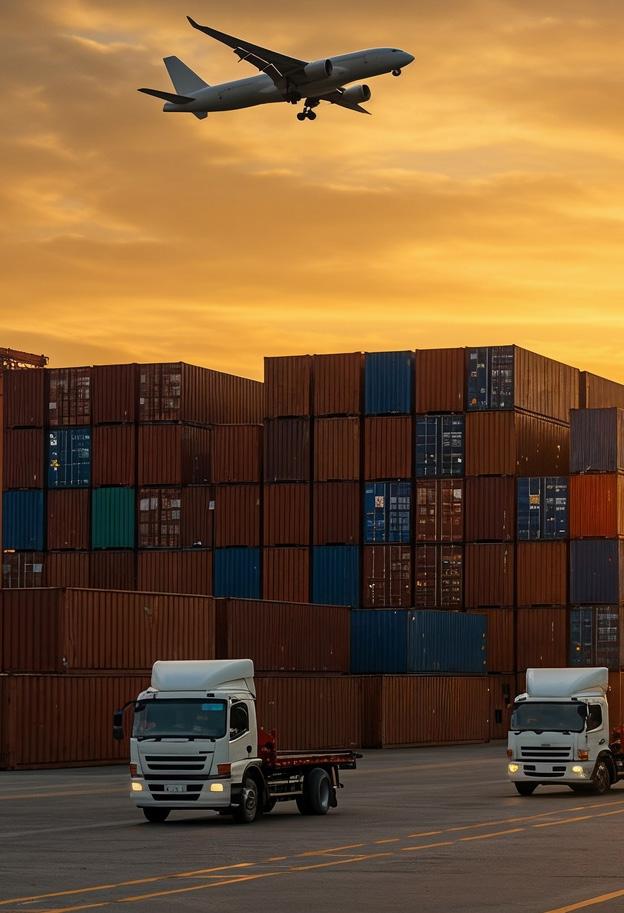
he recent approval by the U.S. House of Representatives to extend the African Growth and Opportunity Act (AGOA) by three years marks a pivotal moment for Kenyan exporters and the nation’s broader economic trajectory. AGOA, the foundation of preferential trade between Sub-Saharan Africa and the United States since 2000 was allowed to lapse on September 30, 2025, creating uncertainty for Kenyan manufacturers and exporters that
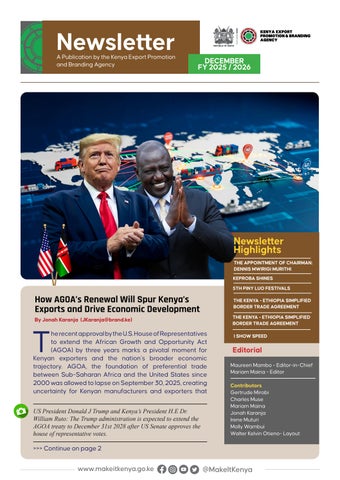
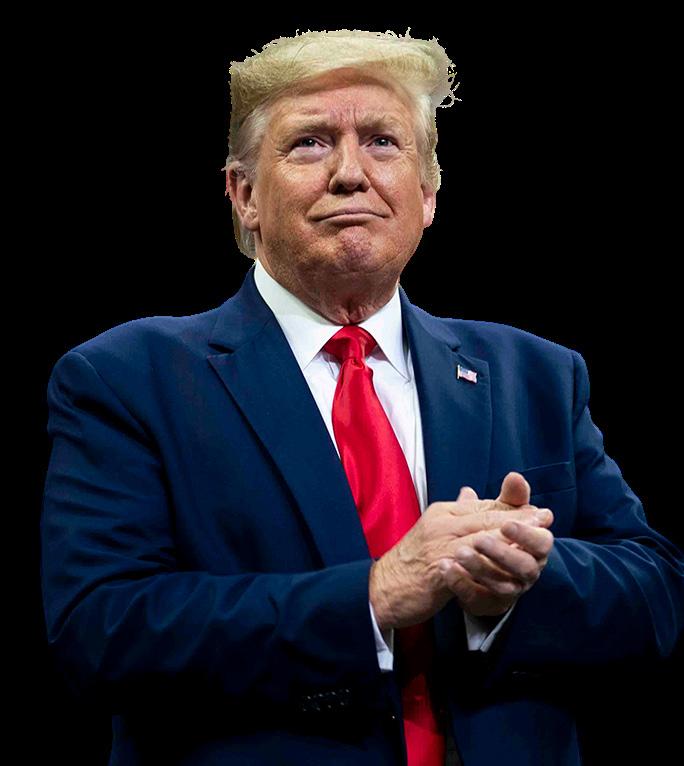
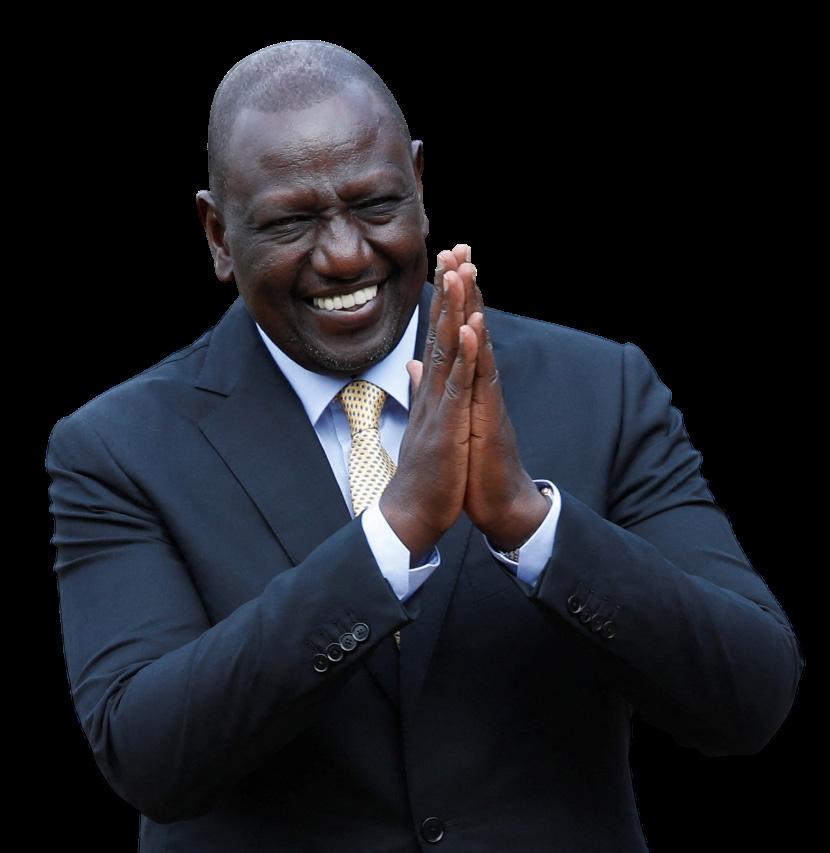
US President Donald J Trump and Kenya’s President H.E Dr. William Ruto: The Trump administration is expected to extend the AGOA treaty to December 31st 2028 after US Senate approves the house of representative votes.
>>> Continue on page 2
THE APPOINTMENT OF CHAIRMAN: DENNIS MWIRIGI MURITHI
KEPROBA SHINES
5TH PINY LUO FESTIVALS
THE KENYA - ETHIOPIA SIMPLIFIED BORDER TRADE AGREEMENT
THE KENYA - ETHIOPIA SIMPLIFIED BORDER TRADE AGREEMENT
I SHOW SPEED
Editorial
Maureen Mambo - Editor-in-Chief
Mariam Maina - Editor
Contributors
Gertrude Mirobi
Charles Muse
Mariam Maina
Jonah Karanja
Irene Muturi
Molly Wambui
Walter Kelvin Otieno- Layout
rely heavily on duty-free access to the U.S. market. The House vote now sends the bill to the U.S. Senate, with strong prospects for final approval and enactment, anchoring preferential access until December 31, 2028. There’s a lot of positives that Kenya will gain from AGOA extension among them:
1. Restoring confidence and market access for Kenyan exports
Kenya has historically been one of the leading beneficiaries of AGOA, especially in the textile and apparel sectors. Under the duty-free provisions, exports of garments and apparel to the U.S. market grew substantially, with earnings of approximately Ksh 60.6 billion in 2024, representing almost a 19.2 % increase over the prior year.
The AGOA extension provides certainty and predictability to Kenyan exporters, particularly for export processing zone (EPZ) firms that depend on foreign orders tied to U.S. brands and retailers. With preferential access restored and the possibility to claim refunds on duties paid during AGOA’s lapse, Kenyan manufacturers can stabilize production planning, maintain buyer relationships, and avoid disruptive tariff barriers that could otherwise price Kenyan goods out of the U.S. market.
2. Protecting and growing jobs in key sectors
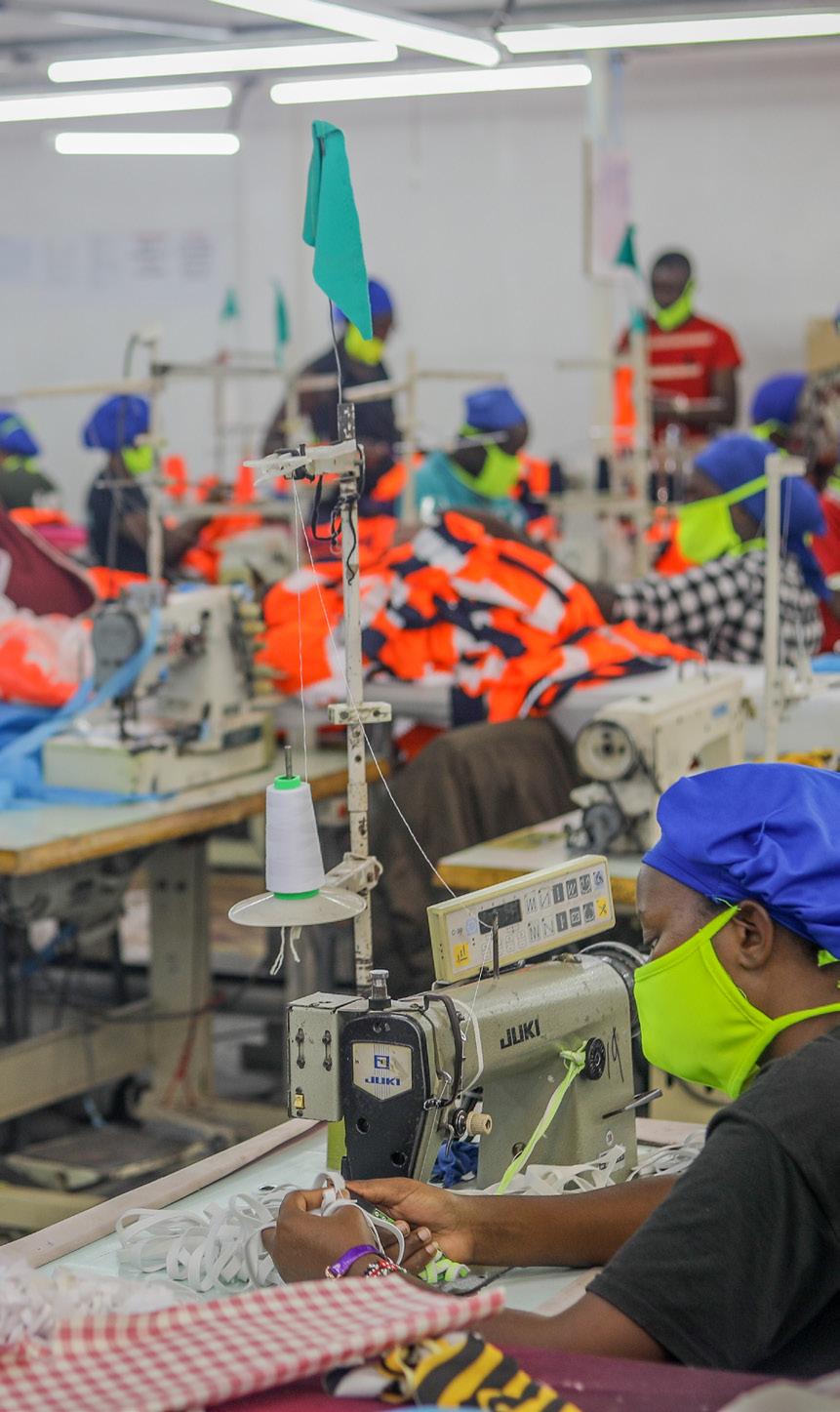
The textile and apparel industry in Kenya is a major employer, with over 66,000 direct jobs in EPZs alone, and indirect employment reaching significantly higher figures when associated services are included.
Without AGOA’s duty-free status, many of these jobs were under threat due to tariffs ranging into the 15 – 42 % bracket, making Kenyan products less competitive against global rivals such as Bangladesh and Vietnam. The extension mitigates this risk, ensuring continued employment, income generation, and economic stability for thousands of Kenyan families.
3. Expanding export opportunities beyond apparel
While textiles have been at the forefront, AGOA’s preferential access extends to over 6,500 products, including agricultural and value-added goods such as coffee, tea, macadamia nuts, flowers, and processed foods.
Speaking on the expected extension of the African Growth and Opportunity Act (AGOA) by the Trump administration, Kenya Export Promotion and Branding Agency (KEPROBA)
CEO Ms. Floice Mukabana noted that,
“The renewal of AGOA provides muchneeded certainty to our exporters, particularly in apparel and textiles, and reinforces Kenya’s competitiveness in the U.S. market. While we remain committed to diversifying products and markets, dutyfree access under AGOA will help sustain jobs, attract investment, and stimulate value addition across key sectors. It is a catalyst for Kenya’s export-led growth and economic transformation.”
KEPROBA will leverage the renewed AGOA window to support diversification of Kenya’s export base. Initiatives will include:
a) Promoting non-traditional exports (e.g., horticulture, processed agricultural products, and light manufacturing).
b) Facilitating market intelligence and buyer linkages in the U.S. through trade missions, expos, and digital platforms.
c) Supporting Kenyan producers to meet U.S. regulatory and standards requirements, enhancing competitiveness.
4. Catalyzing Investment and Industrial Growth.
The predictability that comes with an extended preferential trade regime is a strong signal to both domestic and foreign investors. AGOA has historically attracted investment into Kenya’s textile, apparel, and agro-processing sectors, encouraging capital inflows, technology transfer, and skills development. With the renewed AGOA timeline, Kenya is positioned to scale up its industrialization agenda, in line with the government’s Bottom-Up Economic Transformation Agenda (BETA), which prioritizes exportoriented manufacturing for jobs and growth.
5. Supporting Strategic Trade Policy and Regional Integration
The AGOA extension buys essential time for Kenya to negotiate deeper bilateral trade arrangements with the United States, aiming for longer-term market access beyond 2028. President Ruto and key government leaders have signaled intentions to move toward a comprehensive U.S.–Kenya trade deal that could further solidify Kenya’s export competitiveness.
Additionally, Nairobi will continue to harness regional frameworks such as the African Continental Free Trade Area (AfCFTA) to diversify markets and build integrated value chains that reduce dependence on any single market. The successful passage of the AGOA extension by the U.S. House of Representatives is a major win for Kenya’s exporters and economy. It not only safeguards existing trade flows but also reinvigorates confidence for expansion into new product lines, markets, and investment opportunities.
For an export-driven growth strategy, this extension offers a critical platform from which Kenya can secure more robust market access, create sustainable employment, and anchor long-term industrial growth. As Kenya Export Promotion and Branding Agency our commitment is to mobilize public-private partnerships, enhance export readiness, and ensure that Kenyan products continue to shine in global markets starting with the United States.
Steering Kenya’s Export Vision: The Appointment of Dennis Mwirigi
By Jonah Karanja (JKaranja@brand.ke)
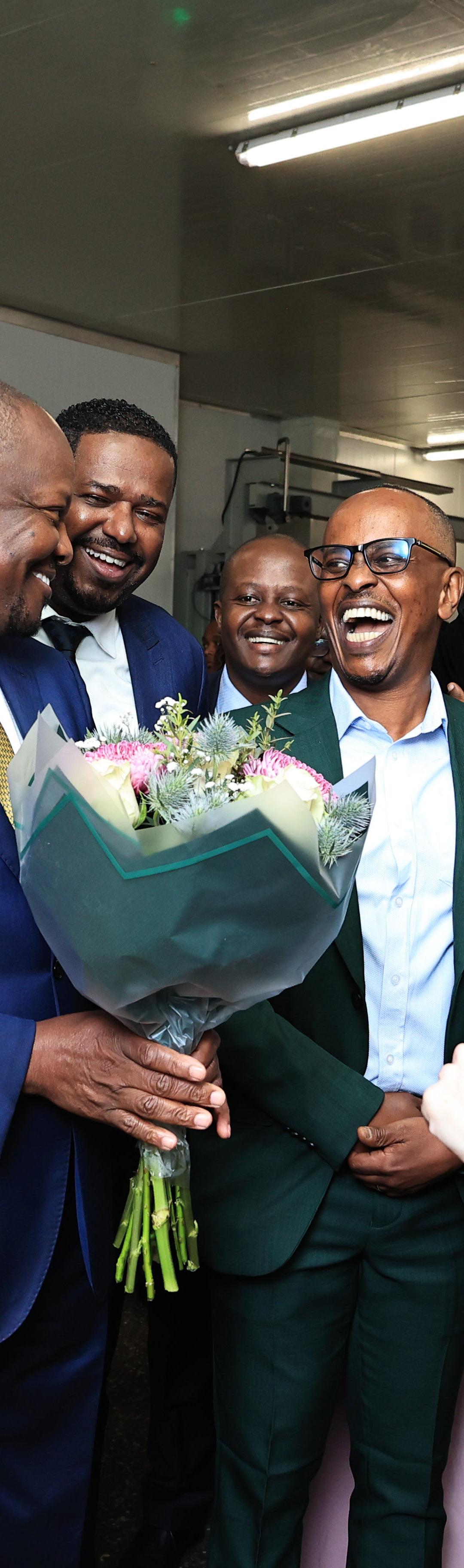
On a crisp January morning in 2026, Kenya’s export ambition found renewed leadership. Through Gazette Notice No. 266, H.E. President Dr. William Ruto, C.G.H., appointed Mr. Dennis Mwirigi Murithi as the Non-Executive Chairperson of the Kenya Export Promotion and Branding Agency (KEPROBA) Board, for a three-year term effective 9th January 2026, a moment that signalled both confidence and continuity in the country’s export journey.
Mr. Mwirigi’s appointment is not merely a change in title; it is the culmination of a career shaped by discipline, vision, and a deep understanding of how strong governance fuels economic growth. With 27 years of experience cutting across consulting, manufacturing, and agriculture, he brings to KEPROBA a rare blend of strategic insight and hands-on leadership. His professional path has taken him through some of the world’s most respected institutions, including PricewaterhouseCoopers, Coca-
Cola Sabco, and Finlays, where he held senior management and board-level roles that sharpened his expertise in finance, operations, and corporate governance.
At the core of Mr. Mwirigi’s leadership is a solid academic and professional foundation. He holds a Master’s degree in Business Leadership from the University of South Africa (UNISA) and a Bachelor of Commerce (Finance) from the University of Nairobi. A Certified Public Accountant (CPA), he is a member of both the Institute of Certified Public Accountants of Kenya (ICPAK) and the Institute of Internal Auditors of Kenya (IIA).
His global outlook is further strengthened by his status as an INSEAD alumnus, reflecting a leadership style informed by international best practice.
Currently serving as Director in charge of Governance, Stakeholder Engagement, and Regulatory Affairs at Flamingo Horticulture Kenya Ltd, Mr. Mwirigi remains deeply embedded in one of Kenya’s most vibrant export sectors.
His influence extends across the boardroom as well, where he serves as a Non-Executive Director at the Fresh Produce Exporters Association of Kenya (FPEAK), Equity General Insurance (a subsidiary of the Equity Group), and Greenblade Growers Ltd (a subsidiary of Centum Investments).
As he takes up the chairmanship of the KEPROBA Board, Mr. Mwirigi steps into the role at a define; one that demands strong governance, strategic branding, and effective stakeholder collaboration. His appointment brings with it a steady hand, a wealth of experience, and a clear understanding of how Kenya can position itself more competitively on the global stage.
For KEPROBA and the nation’s exporters, this is more than a new chapter, it is a confident stride toward a future where Kenyan products, brands, and stories command greater presence and value in international markets.
Karibu Nyumbani
KEPROBA shines after receiving awards celebrating excellence, integrity, and global impact
By Mariam Maina I mmaina@brand.ke
For Kenya Export Promotion and Branding Agency (KEPROBA), 2025 ended on high note after receiving three prestigious awards. It was a triple celebration of excellence as the awards underscore the Agency’s unwavering commitment to transparency, innovation, and positioning Kenya as a global export powerhouse.
Unmodified Audit Opinion Award
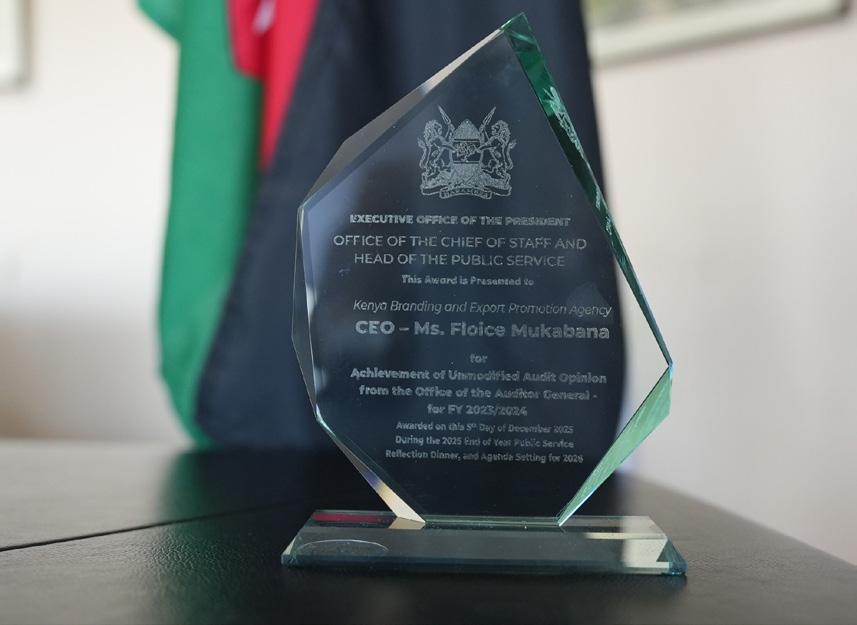
I was deeply honored to receive the Unmodified Audit Opinion Award from the Office of the Auditor General for Financial Year 2023/2024. This prestigious recognition was presented during the 2025 End of Year Public Service Reflection Dinner and Goal Setting for 2026.
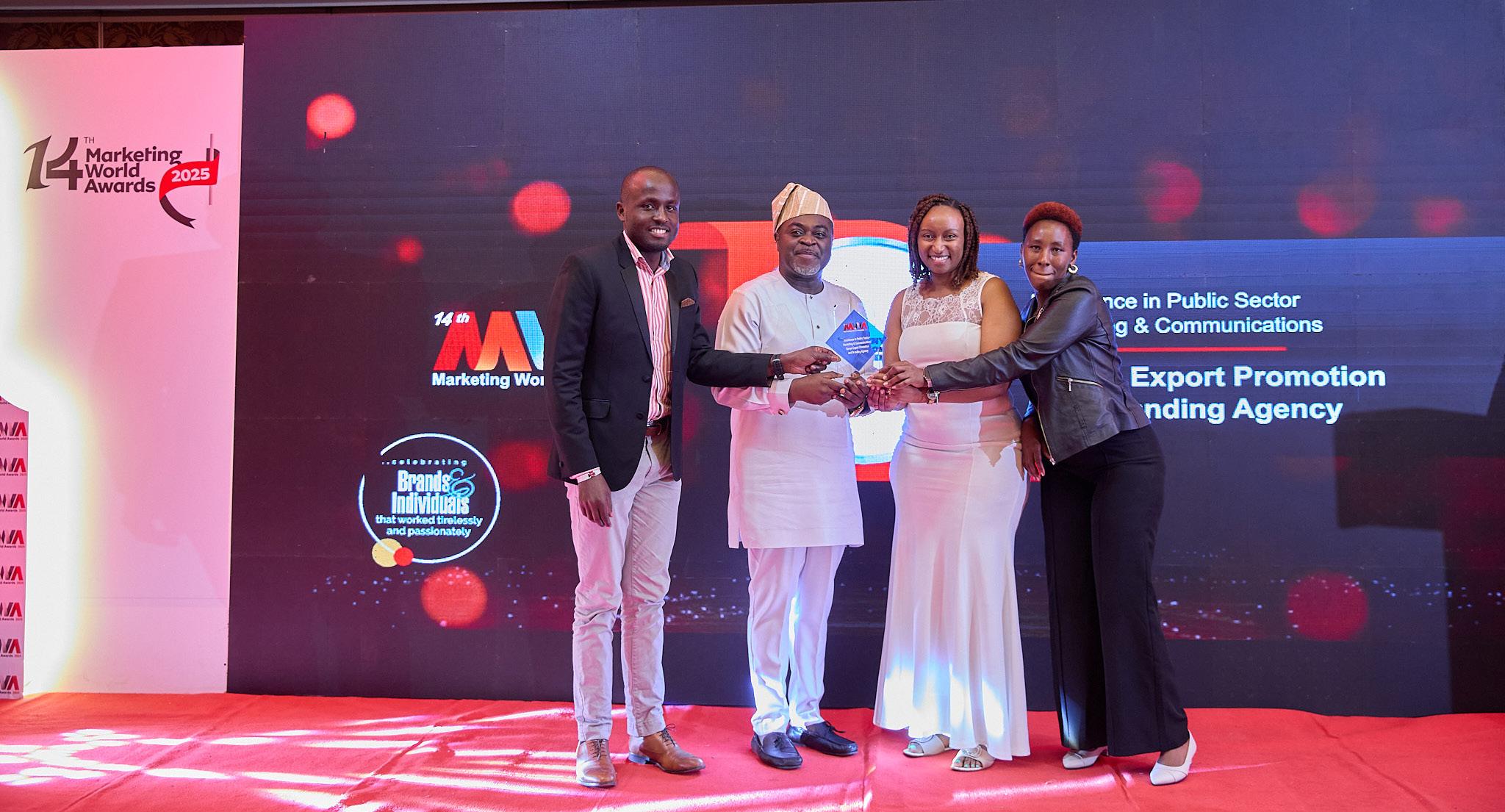
KEPROBA dominated the marketing awards landscape with three major honours from the Marketing Society of Kenya (MSK) and Marketing World Awards.
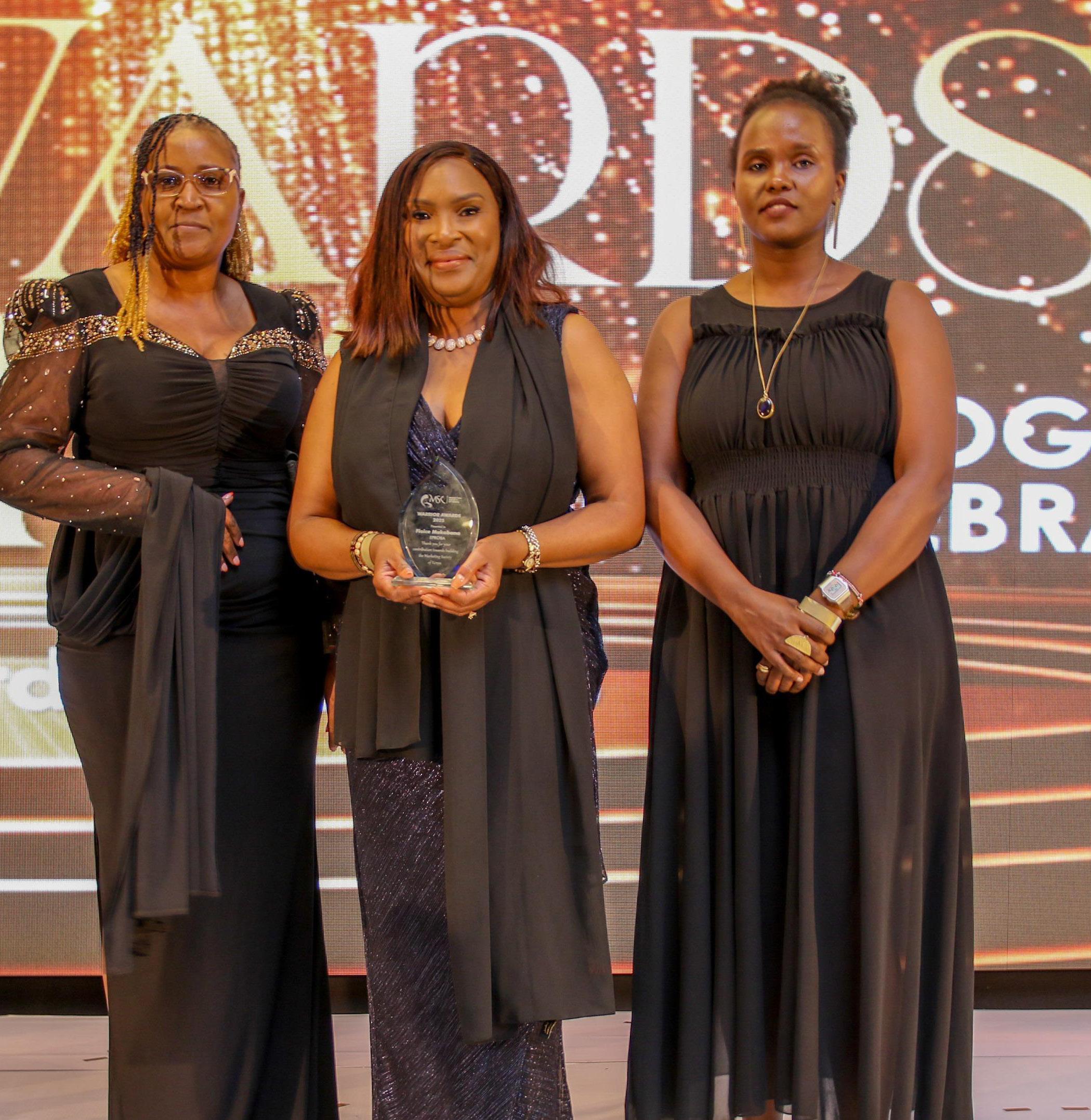
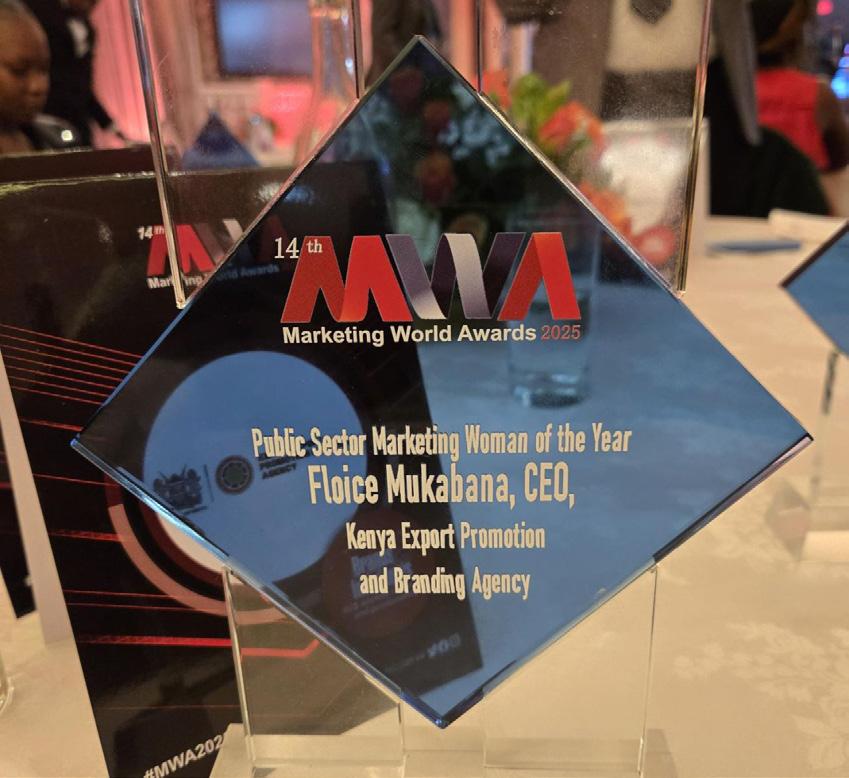
The CEO. Ms. Floice Mukabana received the Warrior Award from Marketing Society of Kenya and Public Sector Marketing Woman of the Year Award from the Marketing World Awards. Kenya Export Promotion and Branding Agency was recognized with the Excellence in Public Sector Marketing and Communications award by the Marketing World Awards.
In addition, Ms. Mukabana received the Unmodified Audit Opinion Award from the Office of the Auditor General for the Financial Year 2023/2024, presented during the 2025 End of Year Public Service Reflection Dinner and Goal Setting for 2026. This clean audit achievement reflects the professionalism and dedication of every KEPROBA team member. Our staff’s hard work ensured impeccable financial management and transparency.
Driving Kenya’s global brand
These awards validate KEPROBA’s mission of positioning Kenya as a globally competitive brand while strengthening the Made in Kenya mark. Our marketing and communications excellence directly supports Kenyan exporters accessing new international markets.
Looking ahead
“These honours fuel our momentum. KEPROBA remains committed to delivering transparent, accountable public service, amplifying Kenya’s brand through worldclass marketing, opening global market doors for Made in Kenya products,” said Ms. Mukabana. “Heartfelt thanks go to our Board of Directors for their guidance, the Ministry of Investments, Trade and Industry, the State Department for Trade, and the Government of Kenya and other stakeholders for their steadfast support. Together, we are building a legacy of excellence that serves Kenya’s export sector and national pride.”
Number of prestigious awards KEPROBA Received in 2025
By Irene Muturi I Interncomm1@brand.ke
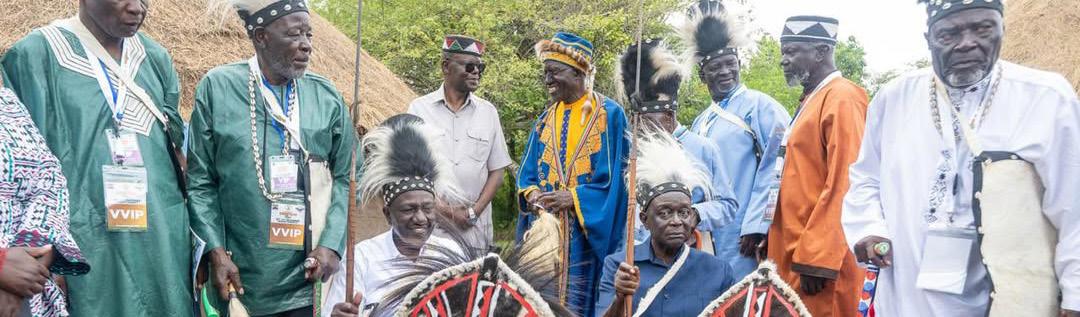
The 5th Piny Luo Festival was more than just an event, it was a lively homecoming of culture, identity and pride. The annual celebration of Luo culture had come to Migori County after travelling through Kisumu, Homa Bay and Siaya counties. Held in Rongo University, the festival brought together Luos and friends from across Kenya and beyond to celebrate who they are, where they come from and where they are headed as a community. For a few unforgettable days, Rongo University turned into a hub of music, dance, storytelling and meaningful conversations.
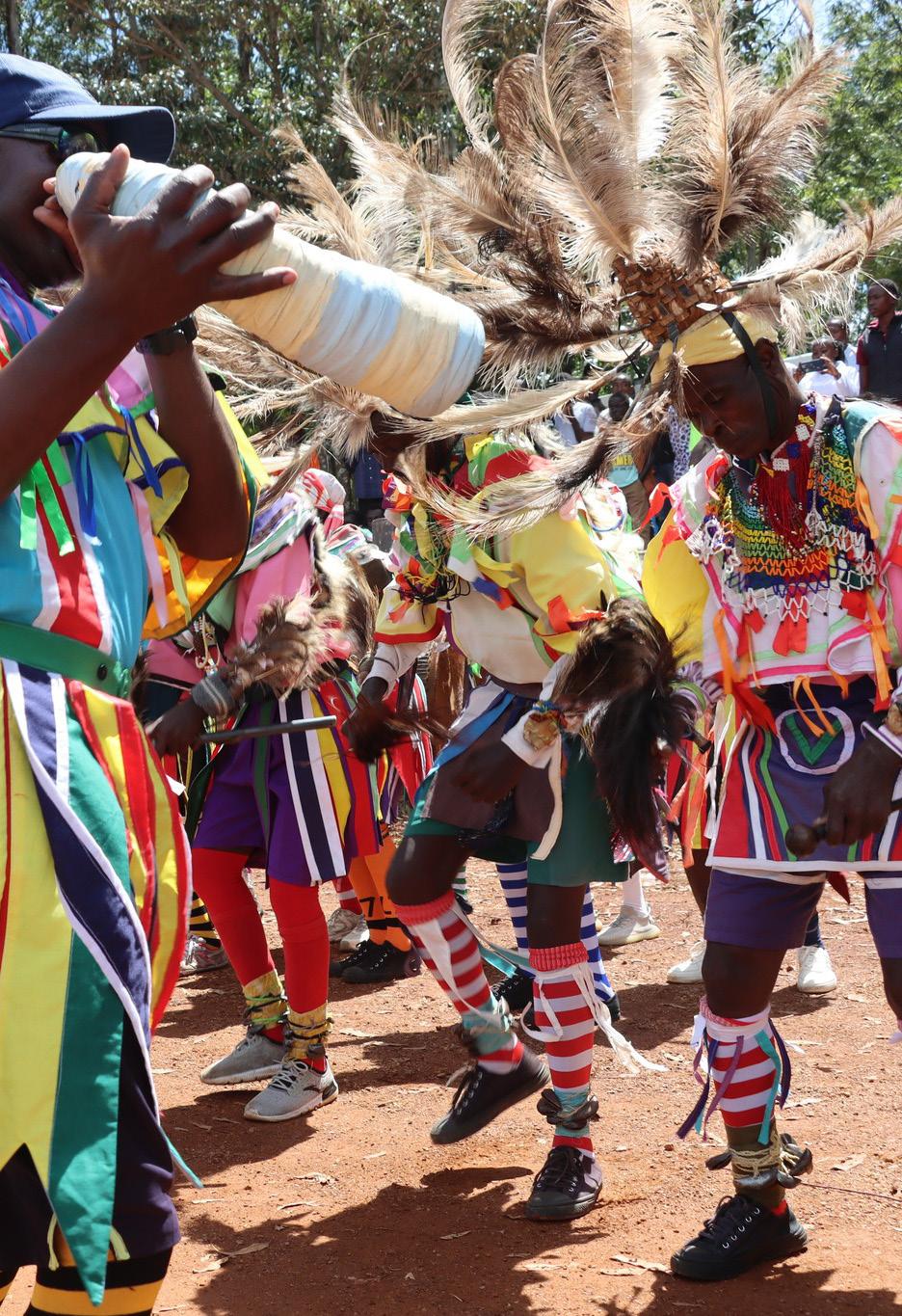
From the moment the festival kicked off, the energy was impossible to miss. Traditional Luo music filled the air, with sounds of the nyatiti, orutu and drums setting the rhythm. Cultural dancers like Kochia and Olare performed popular dances such as Ohangla and Dudu, drawing cheers from crowds that included elders, youth and visitors experiencing Luo culture. It wasn’t just about watching performances, it was about feeling the beat, joining in the dance and reconnecting with tradition.
One of the most important aspects at the festival was its focus on cultural preservation. As modern life continues to change how communities live, speak and interact, many speakers emphasized the need to protect Luo heritage. Elders and cultural leaders reminded the younger generation that language, customs, and values are not oldfashioned burdens, but powerful tools that shape identity. Through storytelling sessions, exhibitions and discussions, the festival created space for learning and reflection.
At the same time, the festival was not stuck in the past. It revealed how culture can support economic growth and development. There were exhibitions showcasing local businesses,
traditional foods, crafts, and innovations inspired by Luo heritage. Discussions focused on agriculture, entrepreneurship and how cultural tourism can create jobs and improve livelihoods. The festival also stood out for its strong message of unity. Although it celebrated Luo culture, it welcomed neighbouring communities living in Migori County including the Kuria, Somali, Suba, Luhya and Kisii. Their participation showed that cultural pride does not have to divide people. Instead, it can promote mutual respect and peaceful coexistence.
Political and community leaders such as H.E. Dr. William Ruto, Senator Dr. Oburu Oginga, Migori Governor Dr. Ochilo Ayacko, Homa Bay Governor Gladys Wanga and Luo Council of Elders Chairman Ker Odungi Randa were present adding national attention to the event. Their speeches highlighted the importance of culture in building social cohesion and guiding development. As well, delegates across Africa, from Uganda, South Sudan, Ethiopia and Tanzania, others with Luo ancestral roots joined in the celebration.
The festival reinforced the importance of cultural festivals as spaces of unity, dialogue, and purpose. It reminded everyone that culture is not just something to remember during festivals, but something to live, adapt, and pass on. By bringing diverse voices together, from elders to youth, local communities to the diaspora, the festival demonstrated how tradition can be a foundation for peaceful coexistence, economic vitality, and sustainable development.
In the end, the 5th Piny Luo Festival succeeded in doing what it set out to do, celebrate culture, strengthen unity, and spark conversations about the future. It was a proud and joyful celebration of the strength found in shared roots and shared dreams.
KUnbundling Kenya’s export opportunities under the Kenya - Ethiopia Simplified Border Trade Agreement
By Gertrude Mirobi gmirobi@brand.ke
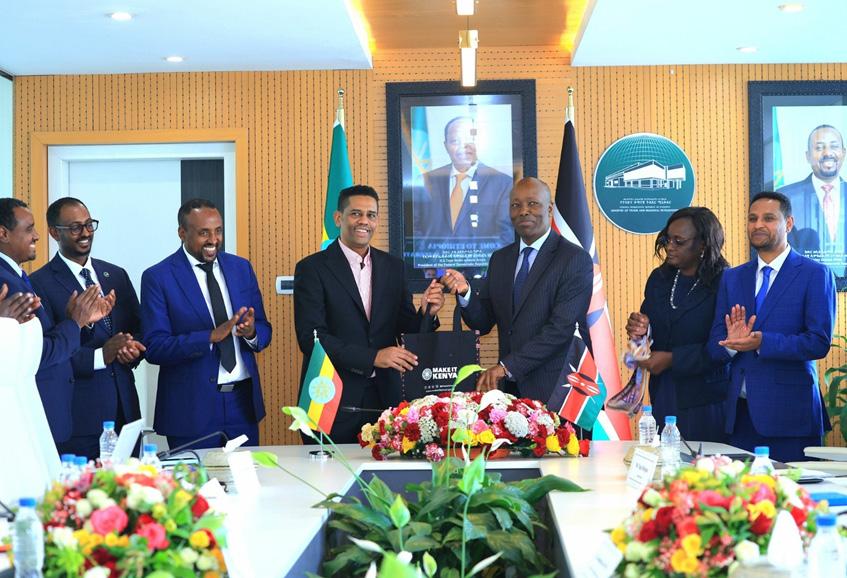
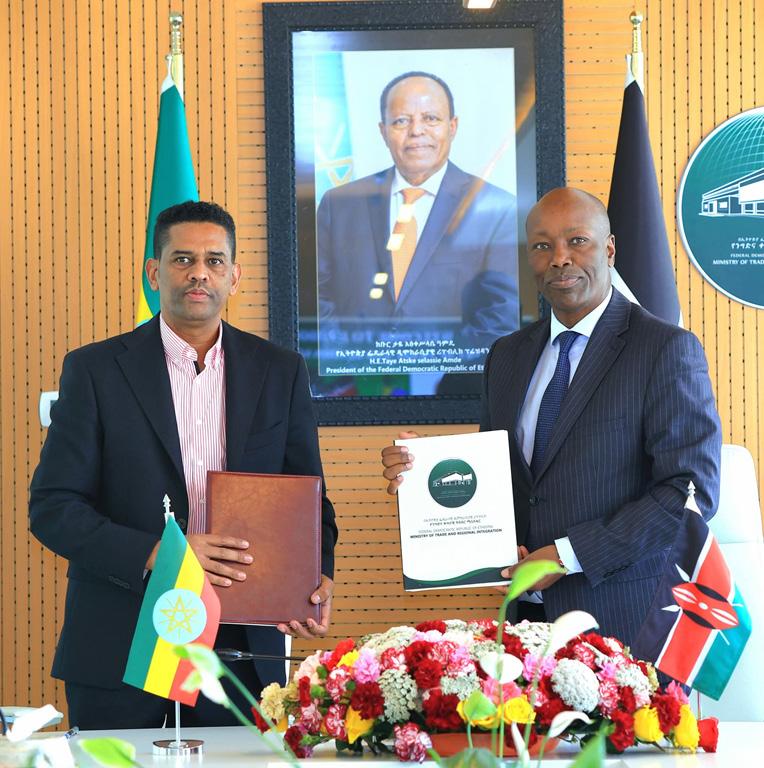
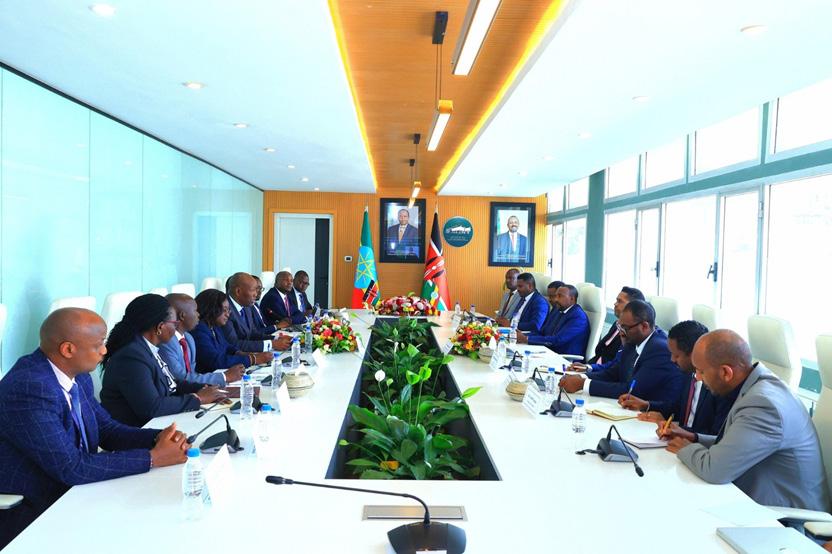
enya has taken a major step towards strengthening regional trade integration following the historic signing of the Simplified Border Trade Agreement (SBTA) between the Republic of Kenya and the Federal Republic of Ethiopia. The agreement, signed through Kenya’s Ministry of Investments, Trade and Industry and Ethiopia’s Ministry of Trade and Regional Integration, marks a strategic milestone in unlocking cross-border trade opportunities, particularly for small-scale traders and exporters operating along the Kenya - Ethiopia border.
The Kenya Export Promotion and Branding Agency (KEPROBA) was part of this landmark moment, underscoring its mandate to expand Kenya’s export footprint and promote inclusive trade. The agreement was signed by Kenya’s Cabinet Secretary for Investments, Trade and Industry, Hon. Lee Kinyanjui, E.G.H, alongside his Ethiopian counterpart and host, H.E. Kassahun Gofe Baleni (PhD). The SBTA builds on the Special Status Agreement signed between the two countries in November 2012, which came into force in 2014, and reinforces the long-standing economic and diplomatic ties between Kenya and Ethiopia.
For Kenya, the implementation of the agreement presents tangible and transformative benefits. Most notably, it formalises small-scale crossborder trade, a sector that has historically operated informally despite its significant contribution to livelihoods and local economies. By simplifying procedures such as licensing and border clearance, the agreement will substantially reduce turnaround times at border points, lowering transaction costs and improving predictability for Kenyan traders.
Kenyan exporters stand to benefit from the exemption of eligible goods, originating from either country under the Common Market for Eastern and Southern Africa (COMESA) Rules of Origin, from the requirement for Certificates of Origin. Products such as camels, sheep, goats, fish and fish products, milk and milk products, among others, will enjoy preferential treatment under COMESA, making Kenyan goods more competitive in the Ethiopian market. This is particularly advantageous for pastoralist communities, agribusinesses, fisheries, and dairy value chains in northern Kenya, where proximity to the Ethiopian market offers a natural export advantage.
Beyond trade facilitation, the agreement enhances the dignity and empowerment of smallscale traders. By recognising them as formal economic actors and restoring their status to the level of traders in major commercial centres such as Nairobi and Addis Ababa, the agreement promotes inclusivity and economic equity. This shift is expected to encourage more Kenyan traders to transition into formal trade, expanding the export base and improving compliance with regional trade frameworks.
Kenya also stands to gain from joint infrastructure development initiatives at the shared border, including the establishment of trade centres. These investments will improve logistics, storage, and market access, while stimulating local economies in border counties. Improved infrastructure will further position Kenya as a regional trade hub linking East Africa to the Horn of Africa.
A critical feature of the agreement is the establishment of the Joint Border Trade Committee (JBTC). This institutional mechanism provides Kenya and Ethiopia with a structured platform to collaboratively address emerging challenges, resolve trade-related bottlenecks, and identify new opportunities. For Kenyan exporters, the JBTC offers assurance that issues affecting market access, implementation, and compliance will be addressed through continuous dialogue and cooperation.
Importantly, the agreement aligns Kenya’s trade ambitions with broader continental frameworks, including the African Continental Free Trade Area (AfCFTA) and the Tripartite Free Trade Area (TFTA). By operationalizing these frameworks at the border level, Kenya is translating regional integration commitments into practical, on-theground trade benefits.
Kenyan exporters are strongly encouraged to seize the opportunities presented by this agreement. The agreement not only expands market access to Ethiopia but also strengthens Kenya’s position as a proactive player in regional and continental trade, supporting export growth, job creation, and sustainable economic development.
WIN FOR KENYA as Sanxing Electric begins local manufacturing
By Molly Wambui I MWambui@brand.ke
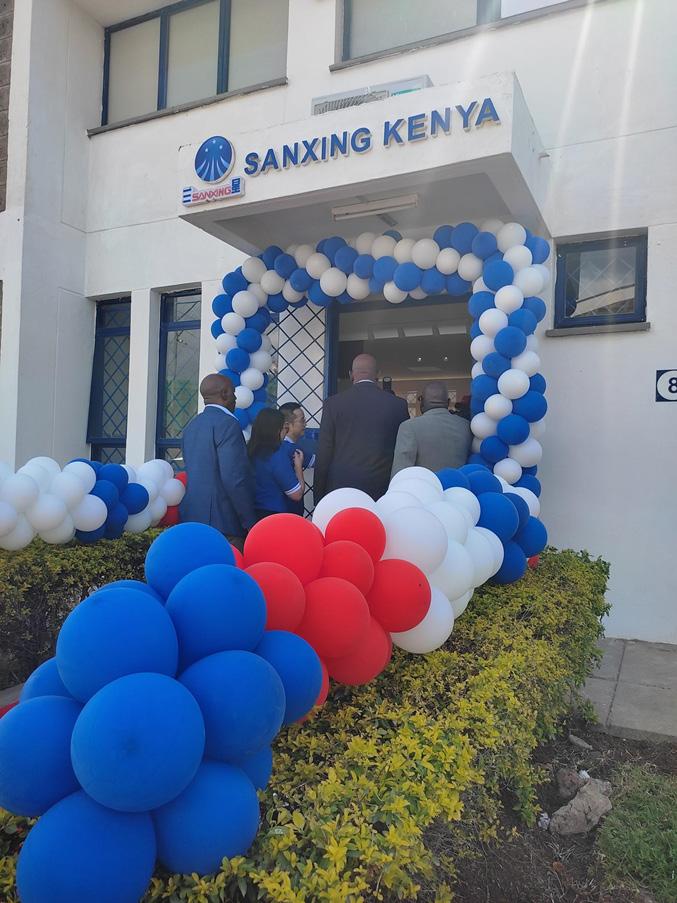
Sanxing Electric held the official opening of its Kenya factory on 18th December at Semco Industrial Park. The Factory is the first one that the company has opened in Africa, a strong indicator of Kenya’s suitability as an investment destination. Sanxing Electric Kenya will manufacture smart electricity meters.
Sanxing Electric is an integrated solution supplier of smart power distribution and consumption components such as smart meters, transformers, boxtype substations, switchgears and charging piles, among others. It has manufacturing bases in China, Brazil, Indonesia, Poland, Germany and Mexico.
The chief guest of the event was Hon. Adan Haji Ali, the Chairperson of the Energy and Petroleum Authority (EPRA). In attendance were key persons in the energy industry, including Engineer Rosemary Oduor, General Manager, commercial and sales at Kenya Power, Dr. Jeremiah Obingo, Board Member at EPRA, Edison Ochieng, Assistant manager, Electric and Automation Division at KenGen and Steve Cheng, president of SanXing Electric.
In his speech, the chief guest reiterated the government’s commitment to providing an enabling environment for overseas investors looking to establish themselves in Kenya, especially licensing requirements. He also underlined the importance of the newly opened factory in job creation for the country’s youth and the reducing dependency on imports. He challenged Sanxing Electric to be a responsible corporate citizen and give back to society.
Speaking during the ceremony, Engineer Rosemary Oduor hailed Sanxing Electric for their strategic move to manufacture quality electricity meters locally, a decision that will support the Buy Kenya Build Kenya strategy. She encouraged the manufacturer to bid for tenders to supply electricity meters to Kenya Power.
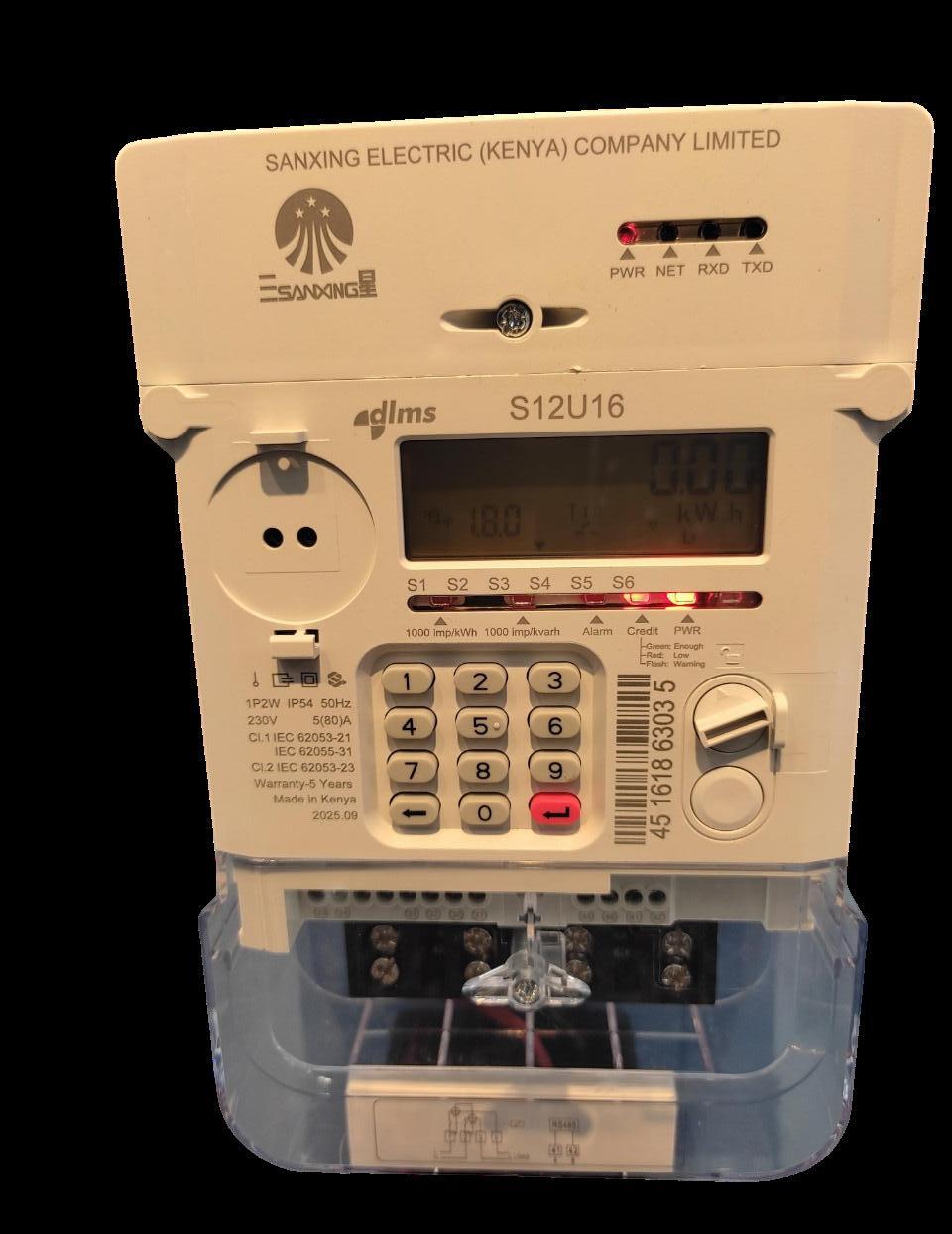
A Smart Electricity Meter Manufactured in Kenya by Sanxing Electric
Guests are ushered into the factory during the opening ceremony
Steve Cheng, the President of San Xing, said that Kenya holds great investment potential, with over ten million customers connected to the country’s power grid. He mentioned the company’s plans to expand their local manufacturing to include solar panels and electric vehicle charging stations. Their meters will bear the Made in Kenya Mark, a symbol of quality.
Kenya holds great investment potential, with over ten million customers connected to the country’s power grid
By Mariam Maina I mmaina@brand.ke
The Kenya Export Promotion and Branding Agency (KEPROBA), in partnership with TradeMark Africa (TMA), the State Department for Trade, and Mastercard Foundation, has spearheaded transformative consultative forums on Kenya’s blue economy value chain. These events position the fisheries sector for breakthrough success in the African Continental Free Trade Area (AfCFTA).
Spotlight on women and youth
The programmes spotlight women and youthled enterprises in Africa’s fisheries. TMA’s comprehensive initiative targets structural barriers, simplifies trade regimes like the Simplified Trade Regime (STR), boosts standards compliance, delivers training, develops digital tools, and strengthens value chains for job creation. The Lake Victoria Basin focus underscores the region’s pivotal role in Kenya’s fisheries and cross-border trade.
High-impact forums convene stakeholders
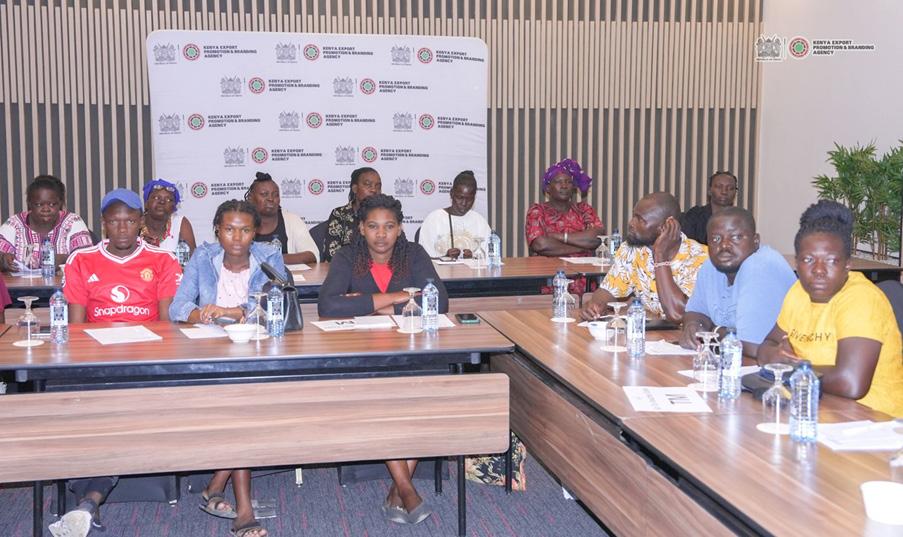
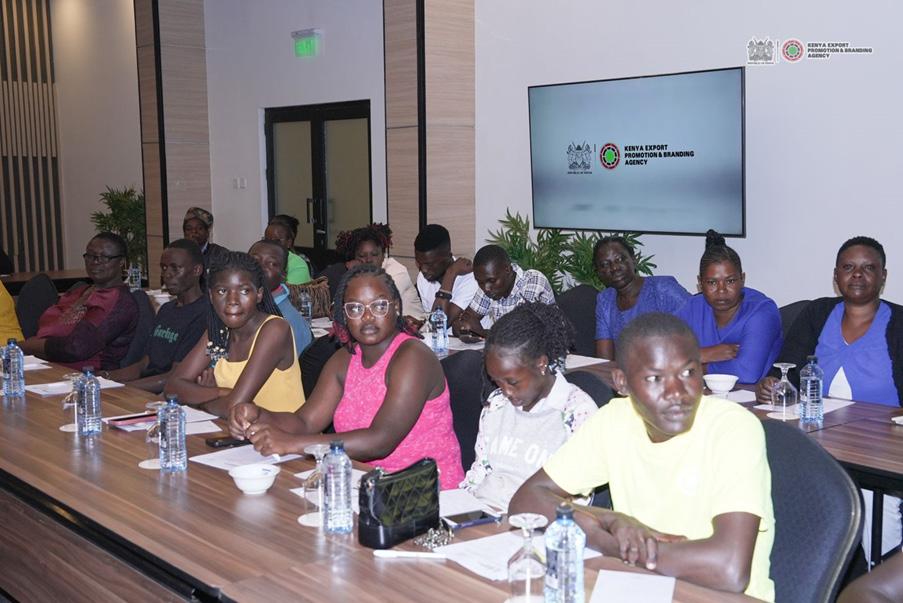
The high-impact events, held in Kisumu on November 18, 2025, and Busia on November 20, 2025, convened over 150 stakeholders including women and youth entrepreneurs, cross-border traders, fish farmers, processors, cooperatives, regulators, county officials, and development
The forums delivered concrete results, namely, comprehensive value chain mapping, documentation of AfCFTA readiness constraints, enhanced regulatory understanding, new government-private sector dialogue platforms, and phased recommendations. These outcomes feed directly into Kenya’s national AfCFTA strategy, prioritizing MSMEs, women, and youth integration into continental markets. Stakeholders affirmed that coordinated investments can make Kenya’s fisheries a flagship for inclusive, sustainable trade.
Bridging the information gap
A key insight from the forums is the gap between available resources and SME awareness. Government agencies and partners offer vital services for fish exporters, yet participants expressed frustration over limited knowledge and access. KEPROBA, Kenya’s national trade promotion agency, stands ready to bridge this market failure.
KEPROBA’s firm commitments
KEPROBA commits to serving as the central hub for trade information, translating technical regulations into user-friendly materials for grassroots entrepreneurs, delivering continuous capacity-building, and enhancing advisory services. These steps ensure exporters receive reliable support throughout their journey, moving beyond events to tackle core information and capacity gaps constraining MSME participation.
Actionable Roadmap Emerges
Recommendations from grassroots discussions assign clear roles to national and county governments, trade institutions, financiers, and private sector players were agreed upon. The phased approach targets immediate wins within six months, one-year priorities, and multi-year investments. This stakeholder-owned blueprint will ensure KEPROBA and partner services reach SMEs effectively.
When Kenya went live and the world tuned in
By Jonah Karanja Jkaranja@brand.ke
When American streaming sensation iShowSpeed landed in Kenya, he didn’t just add another stop to his Africa tour, he triggered a cultural moment that rippled across the internet in real time. What unfolded in Nairobi wasn’t a carefully packaged destination showcase, but something far more powerful: a raw, human, live experience that pushed Kenya to the centre of global digital culture.
The numbers alone tell part of the story. Within just two hours, Speed’s livestream from Nairobi pulled in over 180,000 concurrent viewers, catapulting his YouTube channel from 47.72 million to 47.91 million subscribers, a gain of nearly 200,000 subscribers in a single broadcast. By the end of the day, the Kenya stop had delivered hundreds of thousands of new subscribers, marking the largest live growth of Speed’s career.
Speaking to fans on January 11, 2026, as he exited Nairobi National Park, Speed made it clear: ‘No country on his Africa tour had matched Kenya’s energy, engagement, or live growth.’
200,000+
From the moment the camera switched on, Kenya showed up not as a backdrop, but as a participant. Speed’s whirlwind Nairobi run kicked off at Upper Hill School, where he met students before training with the Kenya Rugby team. He later linked up with javelin world champion Julius Yego, a crossover that merged elite sport with internet culture. Clips from these encounters spread rapidly across TikTok, Instagram, X, and YouTube Shorts, drawing millions deeper into the stream.
Then came culture and cuisine. Viewers watched Speed cook ugali, shop for a custom Kenyan shirt at Kenyatta Market, and sample local favourites among them nyama choma, kachumbari, and mukimo before a visit to the iconic Carnivore Restaurant. These weren’t staged moments; they were everyday Kenyan experiences, shared live with the world.
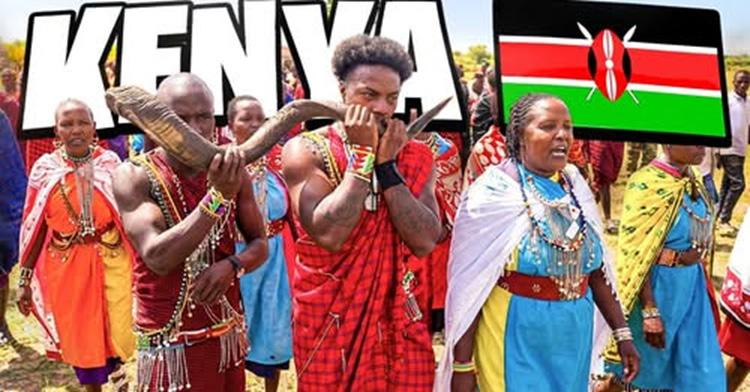
American streamer Ishowspeed hangs out with the Maasai Community in Maasai Mara National Park.
Mr. Speed rocks a Kenyan Jersey as he is welcomed to KICC by thousands of young Kenyans. He recorded the highest number of subscriptions in Kenya more than any other African nation he has toured so far.
At Nairobi National Park, the stream hit one of its most-watched peaks. Speed fed giraffes toured the Animal Orphanage and reminded global audiences that Kenya is one of the few places on earth where wildlife and skyline coexist. The experience rolled on inside a fully decked-out “nganya” matatu, offering a moving, music-filled tour of Nairobi’s Street culture colourful, loud, creative, and unmistakably alive.
When a Nation joins the broadcast
Wherever Speed went, the crowd followed. Dozens and sometimes hundreds of fans trailed his convoy through Nairobi, chanting his name, filming content, and turning streets into spontaneous fan zones. The turnout grew so large that a police escort and security detail became necessary. Online, viewers weren’t just watching a creator they were watching a country move, react, and celebrate in real time.
Why Kenya stood out
The internet doesn’t reward perfection; it rewards presence. And Kenya delivered presence in abundance through people, spontaneity, humour, chaos, warmth, and curiosity. Speed didn’t “market” Kenya. He experienced it loudly, and the internet did the rest.
Speed’s Kenya stop was more than a recordbreaking stream; it was a wake-up call. It showed how powerful Kenya’s culture becomes when it’s shared authentically and explained globally. It highlighted a country that is young, connected, creative, and perfectly tuned for the livestream era. Kenya wasn’t reduced to stereotypes. It was revealed in full colour: tradition and technology, wildlife and Wi-Fi, grit and joy coexisting in real time.
As Speed continues his Africa tour, one verdict is already locked in: Kenya set the benchmark.
No country on his Africa tour had matched Kenya’s energy, engagement, or live growth.’
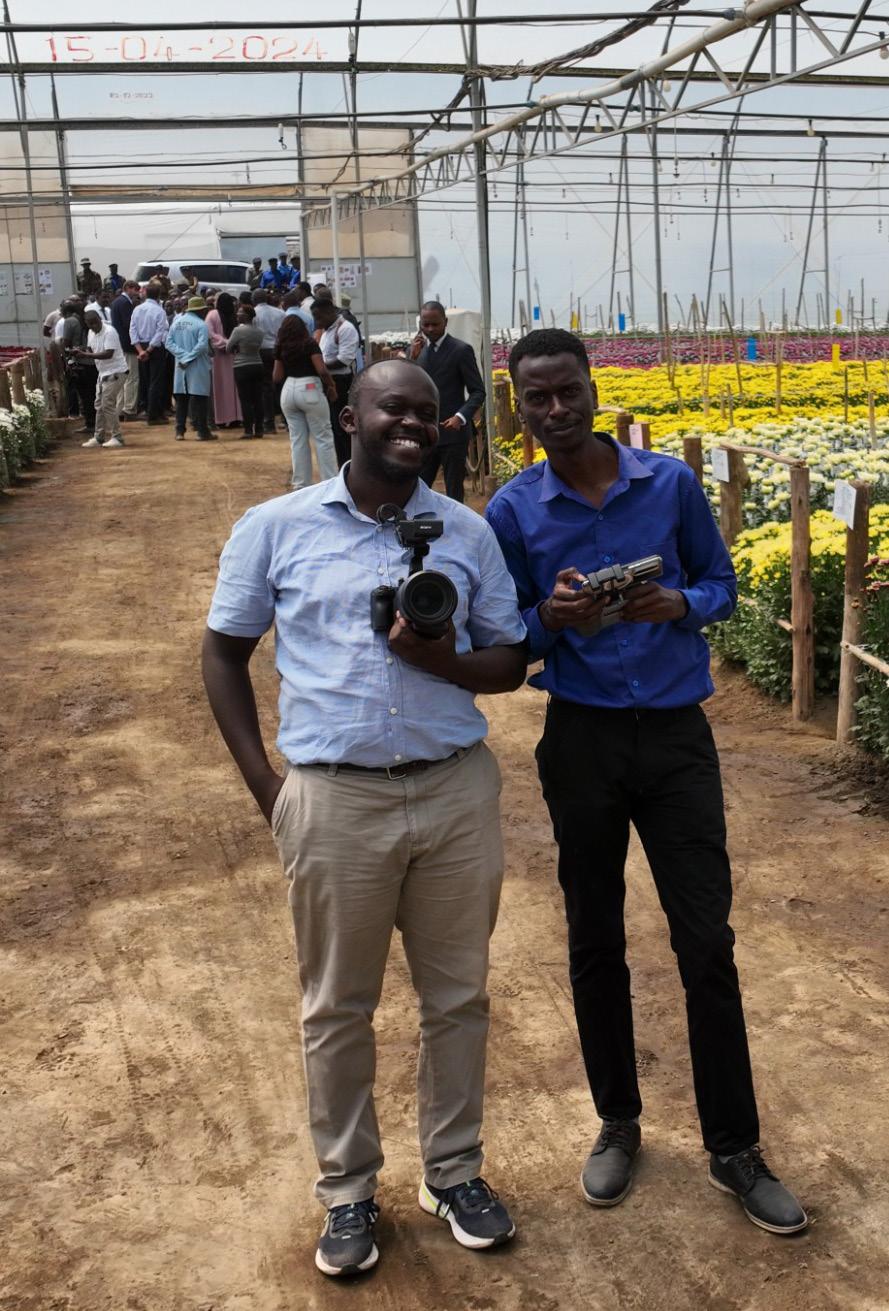
Ijoined Kenya Export Promotion and Branding Agency as an intern with a camera, a notebook, and a curiosity about what goes on behind the scenes of export promotion and nation branding. I didn’t expect how each workday would slowly change my view of Small and Medium Enterprises (SMES), government initiatives, and my own small role in a much larger system. The more I document, assist, and observe, the more I realize that learning here is ongoing and deeply rewarding.
As a photographer, videographer, and branding assistant, my work often feels quiet and technical. Over time, I have come to understand that visibility is important. When SMEs are well profiled, when their products are photographed professionally, their stories clearly told, and their brands positioned thoughtfully, something shifts. They are no longer just small businesses, they become credible players ready for larger markets.
LEARNING THE BIGGER PICTURE, ONE FRAME AT A TIME
By Charles Musee I Interncomm2@brand.ke
Working closely with KEPROBA has shown me that these everyday efforts are part of a government led approach to strengthening exports and ensuring the sustainability of the SME sector. I saw this clearly while working on international and regional platforms. From the World Expo in Osaka, Japan, to the Dar es Salaam International Trade Fair (DITF), each experience has revealed a different layer of export readiness I did not have. At these events, SMEs were not just displaying products, they were learning how to present themselves, engage buyers, and tell stories that resonate across borders. Through my lens, I watched their confidence grow, one interaction at a time.
The KEPROBA-DHL Memorandum of Understanding added another important aspect to my learning. Through training sessions with DHL, SMEs are gaining practical knowledge about logistics and transportation in areas that often feel out of reach for smaller businesses.
Making shipping and cargo transport more accessible changes everything. They are also taught on the importance of a strong digital presence through website checks, proper product presentation, and compelling brand storytelling. It became clear to me that exporting is not only about moving goods but also about trust, professionalism, and connection.
Regional engagement through the Common Market for Eastern and Southern Africa, further broadened my perspective. Hosting the 24th COMESA Summit in Nairobi showed how regional cooperation supports growth. At Nguvu Kazi, I witnessed the true power of market links. Businesses from different countries, working in the same sectors, exchanged ideas, challenged each other, and shared solutions that are now making work easier for them. The spirit of ubuntu stood out, which is the shared belief that growth does not need to be competitive to be successful.
Collaboration, even across borders, strengthens everyone. Nguvu Kazi showed me what happens when young people are given space, structure, and opportunity. Young entrepreneurs were not just showcasing products; they were learning how to connect, position themselves, and think beyond immediate markets.
With time, the pace slowed enough for reflection. The Changamka Festival felt less like a formal programme and more like a lived experience. Creative, vibrant, and grounded in people, it gave SMEs, especially youth-led enterprises, the opportunity to engage consumers directly, test their products in real market conditions, build confidence through feedback, and understand how branding and presentation influence sales, customer trust, and long-term business growth.
The Nyota Programme ties these experiences together in a way that feels personal to me. As a youth-focused
government initiative, it reflects the belief that with the right support, there is always more to achieve. Watching young entrepreneurs engage with Nyota has reinforced my belief that when youth take advantage of these programs, they unlock not just personal growth but also wider economic impact.
Looking back, even the smallest contributions now feel significant. Every photo taken, every video edited, and every story shaped contributes to a bigger picture of export growth and SME empowerment. This journey is not what I expected when I started, but it continues to shape me every day. I am proud of the work I can do with this great organization. As I continue learning, frame by frame, I am grateful to be part of a process that helps Kenyan SMEs grow, connect, and reach beyond what once felt possible.