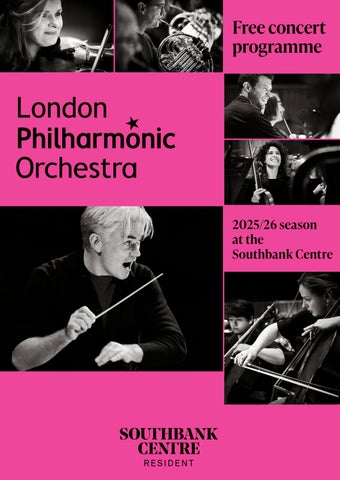
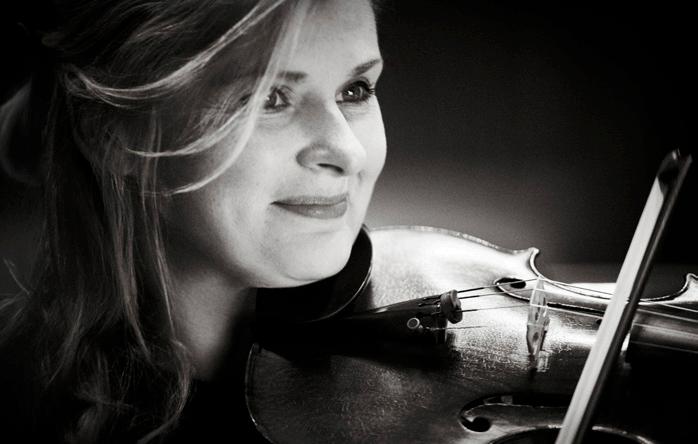
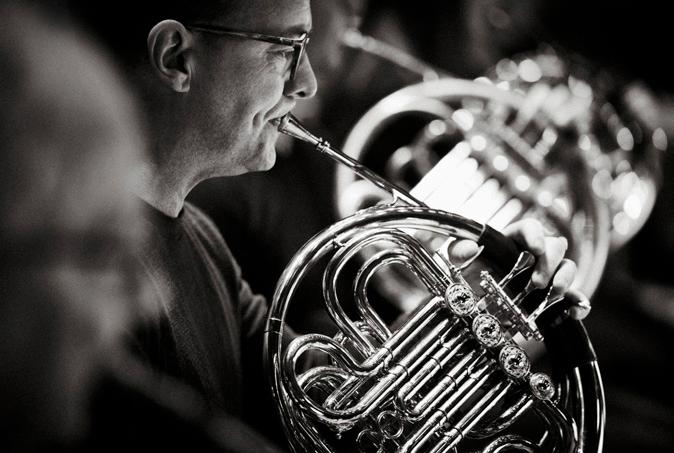
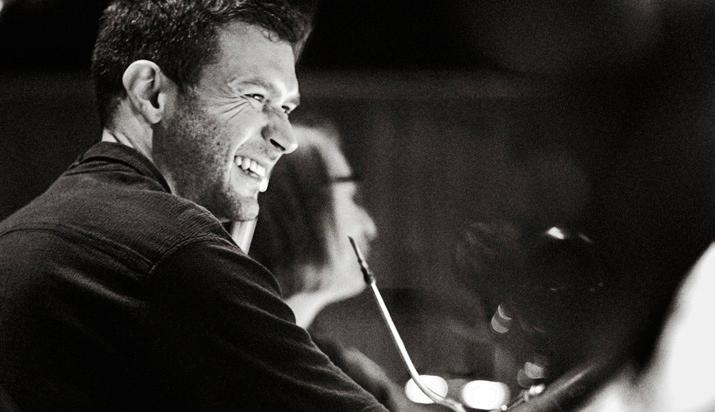
Principal Conductor Edward Gardner supported by Aud Jebsen
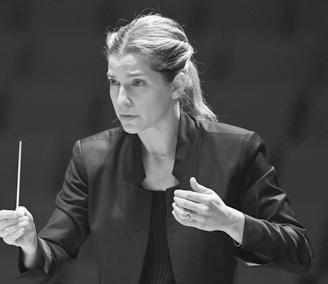
Principal Guest Conductor Karina Canellakis supported by Richard Buxton
Conductor Emeritus Vladimir Jurowski KBE Patron HRH The Duke of Kent KG
Artistic Director Jesús Herrera Chief Executive David Burke
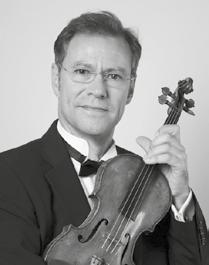
Leader Pieter Schoeman supported by Neil Westreich
Southbank Centre’s Royal Festival Hall
Wednesday 11 February 2026 | 7.30pm
Mother Goose
Scriabin Symphony No. 4, Op. 54 (The Poem of Ecstasy) (22’)
George Benjamin Palimpsests (21’)
Interval (20’)
Stravinsky Symphonies of Wind Instruments (9’)
Ravel Mother Goose (complete ballet) (28’)
George Benjamin conductor
Tonight in 2 minutes
The vibe
Mother Goose
Tonight’s concert is all about colour, contrasts and atmosphere. It opens and closes with pieces that let the orchestra really shine – rich, glowing and full of big, sweeping sounds. In between, the mood shifts: George Benjamin’s piece plays with layered ideas that build and fade, while Stravinsky’s music strips things back, focusing on bold, simple ideas and a lighter, more see-through sound.
Who’s on stage?
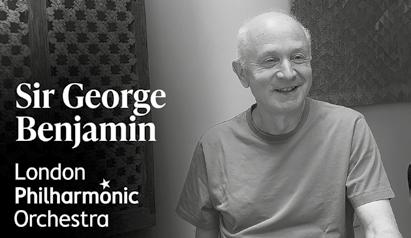
Sir George Benjamin - conductor
George Benjamin is wearing two hats tonight: he’s conducting the Orchestra, and he’s also the composer of the second piece, Palimpsests
As the Orchestra’s current Composer-in-Residence, George will work closely with the players over several seasons, getting to know their sound, writing new pieces for them, and bringing his existing works to life in performance. Each season he also mentors the five up-and-coming composers selected for our LPO Young Composers programme.
George is one of the UK’s leading contemporary composers. He has been composing since the 1980s, and is known for both his concert music and his four acclaimed operas. He’s worked closely with major orchestras and festivals around the world, and since 2001 has been a Professor of Composition at King‘s College London. He was knighted in 2017.
The Orchestra
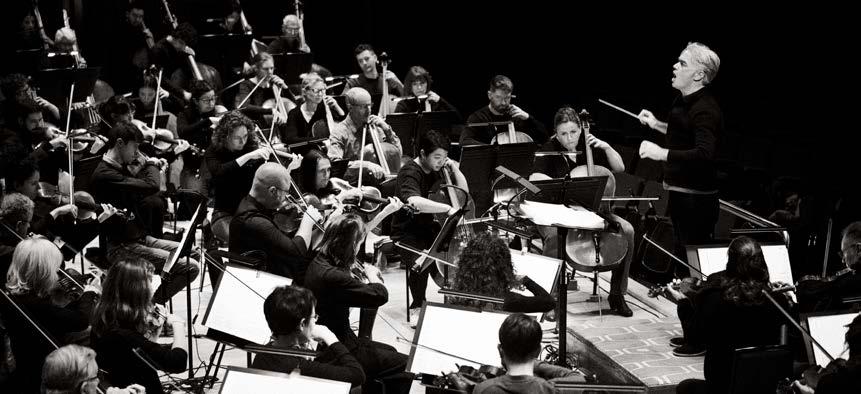
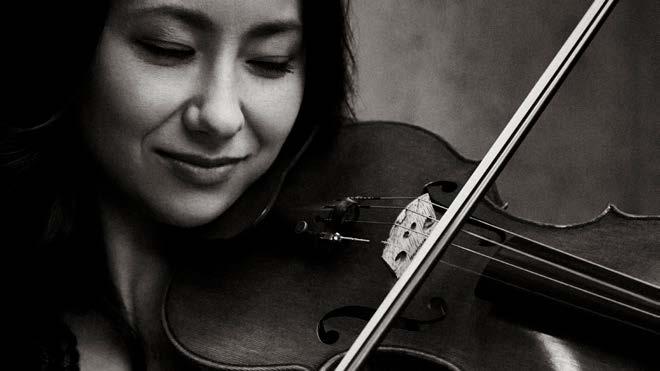
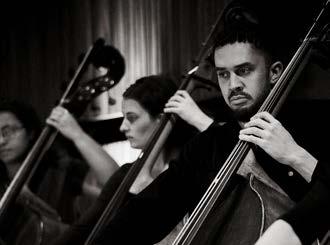
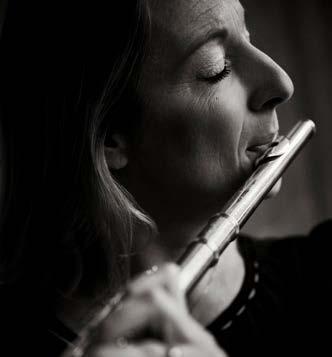
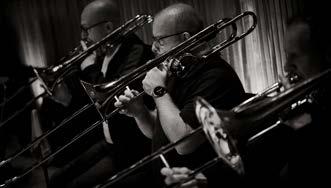
Tonight there are over 90 LPO musicians on stage. All at the very top of their game, they’ve studied and practised for years to perfect their craft. Our musicians represent over 14 different nationalities, and many enjoy busy solo, chamber and teaching careers alongside their orchestral work.
Turn to page 6 to see the full list of tonight’s musicians.
What to expect
Take your seats...
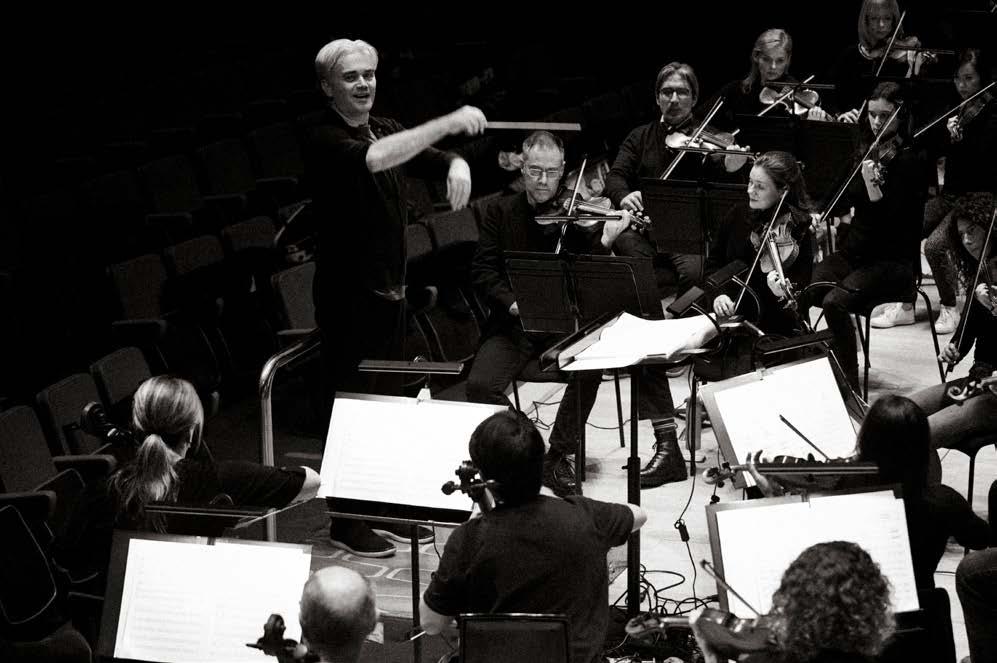
The Orchestra tune up their instruments, then the conductor, George Benjamin, enters the stage. Once the applause dies down, sit back and enjoy the music ...
Alexander Scriabin
Symphony No. 4 (The Poem of Ecstasy)
Russian composer Alexander Scriabin believed music could express big spiritual and emotional ideas. This piece was inspired by a poem that he also wrote, about the human spirit growing and reaching a state of ecstasy.
George Benjamin Palimpsests
George Benjamin based this piece on the idea of music being built in layers, like something written over again and again. Although it’s sometimes discordant and challenging to listen to, it’s fascinating how the musical ideas appear, disappear, and come back in new shapes.
Interval 20 min
Longer classical pieces are often made up of movements, or shorter sections. Applause is usually saved for after the final movement.
Igor Stravinsky Symphonies of Wind Instruments
Just the woodwind and brass sections are on stage for this piece. It’s made up of short contrasting sections that pass between different instruments, ending with a calm, chorale-like moment of reflection.
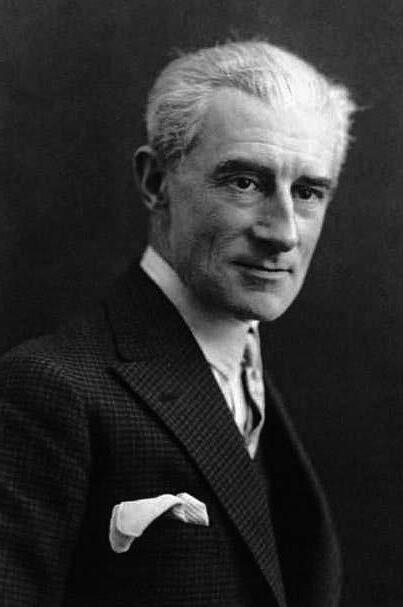
Maurice Ravel
Mother Goose
French composer Ravel wrote Mother Goose as a set of musical fairytales for children. It’s full of colour and magic, with the orchestra painting soft, storybook scenes.
After the final piece, we applaud the Orchestra. The conductor will acknowledge the Leader (No. 1 First Violin), Pieter, and might highlight other players for particular appreciation and applause, with several rounds of bows bringing the evening to a celebratory close.
Want to read more? Turn to page 10 for a deeper dive into this evening’s pieces.
Welcome LPO news
Welcome to the Southbank Centre
We’re the UK’s largest centre for the arts and one of the nation’s top five visitor attractions, showcasing the world’s most exciting artists at our venues in the heart of London. As a charity, we bring millions of people together by opening up the unique art spaces that we care for.
The Southbank Centre is made up of the Royal Festival Hall, Queen Elizabeth Hall, Purcell Room, Hayward Gallery, National Poetry Library and Arts Council Collection. We’re one of London’s favourite meeting spots, with lots of free events and places to relax, eat and shop next to the Thames.
We hope you enjoy your visit. If you need any information or help, please ask a member of staff. You can also email hello@southbankcentre.co.uk or write to us at Southbank Centre, Belvedere Road, London SE1 8XX.
Subscribers to our email updates are the first to hear about new events, offers and competitions. Just head to our website to sign up.
Printed with the planet in mind
The paper used for LPO concert programmes has been sourced from well-managed FSC®-certified forests, recycled materials, and other controlled sources. It is also Carbon Balanced, meaning the carbon impact of its production is offset by the World Land Trust. If you don’t want to take your programme home, please use the recycling bins in the Royal Festival Hall foyers.
Prefer paper-free next time?
Scan here for PDF versions of all our programmes to read or download on your phone or tablet.
Just announced: Strictly dancers join the LPO
For our Saturday 21 March concert, ‘Four Seasons of Buenos Aires’ at the Queen Elizabeth Hall, we’re excited to welcome BBC One’s Strictly Come Dancing dancers Lauren Oakley and Kai Widdrington, who will perform a live tango on stage during the concert.
We’re thrilled that Lauren and Kai will also join us afterwards for an ‘After Dark’ post-concert performance from 8.30pm in the QEH foyer. LPO string players will perform an intimate set of tango music, featuring more live dance from Lauren and Kai.
‘After Dark’ tickets are £10, or free to ticket-holders for the main evening concert. Tickets for ‘After Dark’ are on sale from tomorrow, Thursday 12 February, via lpo.org.uk/whatson
LPO Junior Artists: Overture Day
Applications are open for our next LPO Junior Artists: Overture Day, which takes place on Monday 30 March 2026 at St Gabriels College, London SW9 6UL.
If you’re a young orchestral player aged 11–14 and Grade 4+ standard, this is your chance to join the London Philharmonic Orchestra family for a day. You’ll meet some of our musicians, play as an ensemble and find out just what it takes to be part of one of the greatest orchestras in the world – for free! For more information, and to watch a video featuring previous Overture Day participants, visit lpo.org.uk/overture
Our Overture Days are free of charge and open to all orchestral players of the appropriate age and standard, but priority is given to young musicians from underrepresented backgrounds and communities who may be eligible for our main LPO Junior Artists programme in the future.
LPO Junior Artists: Overture 2025/26 is generously supported by TIOC Foundation and Garfield Weston Foundation.
London Philharmonic Orchestra
Uniquely groundbreaking and exhilarating to watch and hear, the London Philharmonic Orchestra has been celebrated as one of the world’s great orchestras since Sir Thomas Beecham founded it in 1932. Our mission is to share wonder with the modern world through the power of orchestral music, which we accomplish through live performances, online, and an extensive education and community programme, cementing our position as a leading orchestra for the 21st century.
Our home is at the Southbank Centre’s Royal Festival Hall, where we’re at the beating heart of London’s cultural life. You’ll also find us at our resident venues in Brighton, Eastbourne and Saffron Walden, and on tour worldwide. In 2024 we celebrated 60 years as Resident Symphony Orchestra at Glyndebourne Festival Opera, combining the magic of opera with Glyndebourne’s glorious setting in the Sussex countryside.
Soundtrack to key moments
Everyone will have heard the Grammy-nominated London Philharmonic Orchestra, whether it’s playing the world’s National Anthems for every medal ceremony of the London 2012 Olympics and Paralympics, our iconic recording with Pavarotti that made Nessun Dorma a global football anthem, or closing the flotilla at The Queen’s Thames Diamond Jubilee Pageant. And you’ll almost certainly have heard us on the soundtracks for major films including The Lord of the Rings
Sharing the wonder worldwide
We’re one of the world’s most-streamed orchestras, with over 15 million plays of our content each month. In 2023 we were the most successful orchestra worldwide on YouTube, TikTok and Instagram, and in 2024 we featured in a TV documentary series on Sky Arts: ‘Backstage with the London Philharmonic Orchestra’, which was nominated for a 2025 BAFTA. During 2025/26 we’re once again working with Marquee TV to broadcast selected live concerts to enjoy at home.
Our conductors
Our Principal Conductors have included some of the greatest historic names like Sir Adrian Boult, Bernard Haitink, Klaus Tennstedt and Kurt Masur. In 2021 Edward Gardner became our 13th Principal Conductor, and Vladimir Jurowski became Conductor Emeritus. Karina Canellakis is our current Principal Guest Conductor, and Sir George Benjamin our Composer-inResidence.
Next generations
We’re committed to nurturing the next generation of musicians and music-lovers: we love seeing the joy of children and families experiencing their first musical moments, and we’re passionate about inspiring schools and teachers through dedicated concerts, workshops, resources and training. Reflecting our values of
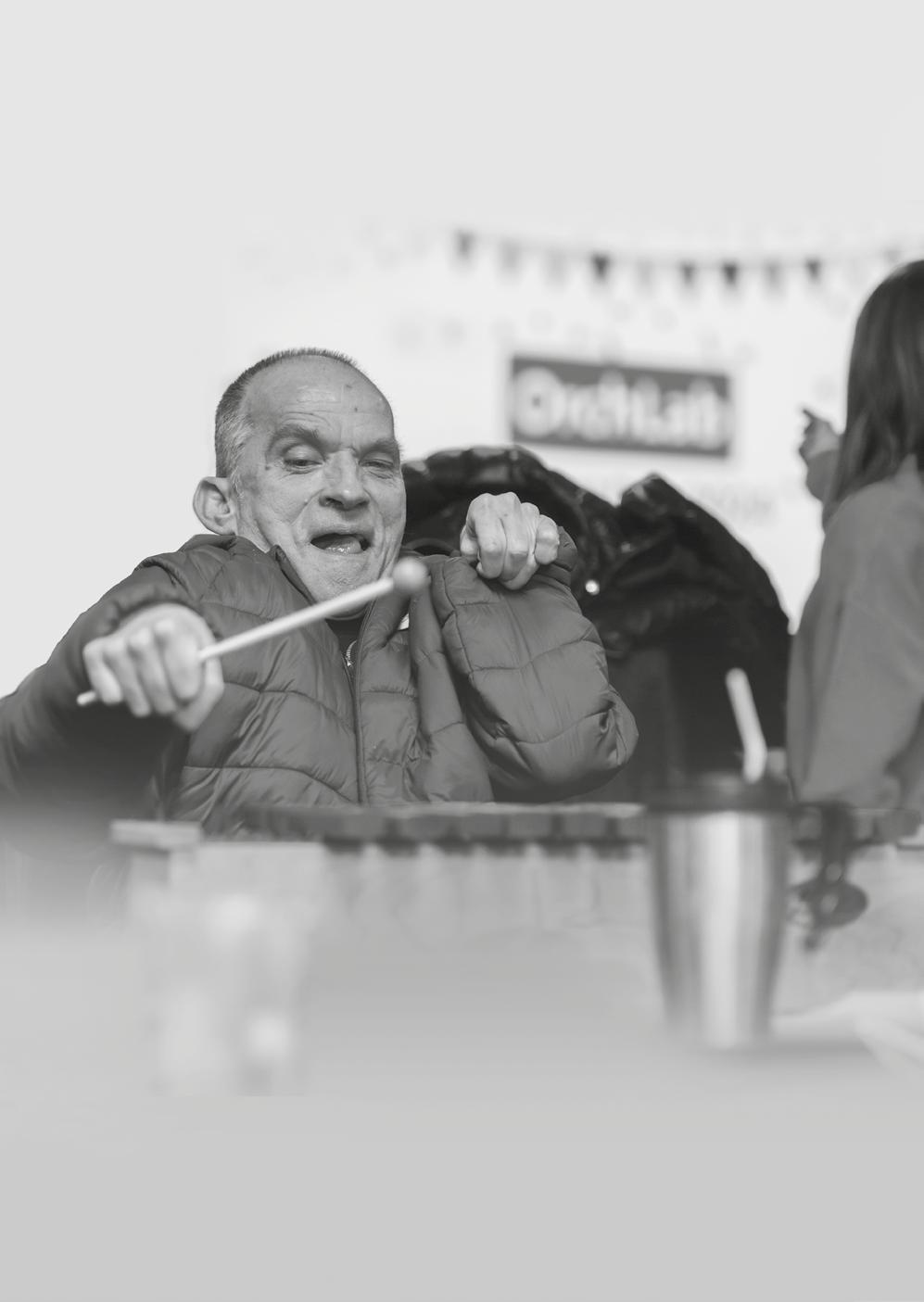
collaboration and inclusivity, our OrchLab and Open Sound Ensemble projects offer music-making opportunities for adults and young people with disabilities and special educational needs.
Today’s young instrumentalists are the orchestra members of the future, and we have a number of opportunities to support their progression. Our LPO Junior Artists programme leads the way in creating pathways into the profession for young artists from under-represented communities, and our LPO Young Composers and Foyle Future Firsts schemes support the next generation of professional musicians, bridging the transition from education to professional careers. We also recently launched the LPO Conducting Fellowship, supporting the development of outstanding early-career conductors from backgrounds underrepresented in the profession.
2025/26 season
This season’s theme, Harmony with Nature, explores humanity’s bond with the natural world through works by Beethoven, Sibelius, Mendelssohn, Elgar and Dvořák; masterpieces of an era that saw nature as a mirror of human emotion. Closer to our own time, we’ll hear from composers as diverse as Duke Ellington, John Luther Adams and Anna Thorvaldsdottir, who have all found a source of creative energy in the processes of nature.
Highlights with Principal Conductor Edward Gardner include symphonies by Tchaikovsky, Mahler, Brahms and Rachmaninov; a pair of concerts spotlighting 20th-century Central European composers; an evening dedicated to Elgar; and a performance of Berg’s Wozzeck to end the season. We’ll also welcome back Karina Canellakis and Vladimir Jurowski, as well as guest conductors including Robin Ticciati, Kirill Karabits, Mark Elder and Kahchun Wong. Our lineup of soloists this season includes violinists Anne-Sophie Mutter, Alina Ibragimova, James Ehnes and Himari; cellist Nicolas Altstaedt; and pianists Yefim Bronfman, Alexandre Kantorow and Tomoko Mukaiyama. The season features nine world and UK premieres, including Tan Dun’s choral ‘Ode to Peace’ Nine, and A Tale of God’s Will (A Requiem for Katrina) by jazz icon Terence Blanchard.
This season also sees tours to South Korea and across Europe, as well as a wide range of performances and community events in our Brighton, Eastbourne and Saffron Walden residencies. lpo.org.uk
Pieter Schoeman
Leader
Pieter Schoeman was appointed Leader of the London Philharmonic Orchestra in 2008, having previously been Co-Leader since 2002. He is also a Professor of Violin at Trinity Laban Conservatoire of Music & Dance.
Pieter has performed worldwide as a soloist and recitalist in such famous halls as the Amsterdam Concertgebouw, Moscow’s Rachmaninoff Hall, Capella Hall in St Petersburg, Staatsbibliothek in Berlin, Hollywood Bowl in Los Angeles, and the Southbank Centre’s Royal Festival Hall. He has also appeared as Guest Leader with many prestigious orchestras across the world. As a chamber musician, he regularly appears at London’s prestigious Wigmore Hall. His chamber music partners have included Anne-Sophie Mutter, Veronika Eberle, Patricia Kopatchinskaja, Boris Garlitsky, Jean-Guihen Queyras, Yannick Nézet-Séguin, Martin Helmchen and Julia Fischer.
Pieter has performed numerous times as a soloist with the LPO. Highlights have included an appearance as both conductor and soloist in Vivaldi’s Four Seasons, the Brahms Double Concerto with Kristina Blaumane, Florence Price’s Violin Concerto No. 2, and the Britten Double Concerto with Alexander Zemtsov, which was released on the LPO Label to great critical acclaim.
Pieter’s chair in the LPO is generously supported by Neil Westreich.
New video series: ‘Humans of the Orchestra’ Scan the QR code to watch our interview with Pieter
Chair supported by Irina Gofman & Mr Rodrik V. G. Cave
Martin Höhmann
Katalin Varnagy
Yang Zhang
Wing Yan Alison Kwok
Nilufar Alimaksumova
Amanda Smith
Alison Strange
Daniel Pukach
Beatriz Carbonell
Alice Apreda Howell
Jamie Hutchinson
Eve Kennedy
Tayfun Bomboz
Second Violins
Emma Oldfield Principal
Claudia Tarrant-Matthews
Coco Inman
Marie-Anne Mairesse
Nynke Hijlkema
Ashley Stevens
Joseph Maher
Sophie Phillips
Chair supported by Friends of the Orchestra
Nancy Elan
Eriko Nagayama
Sioni Williams
Vera Beumer
Kate Cole
Sheila Law
Violas
Nathan Braude
Guest Principal
Laura Vallejo
Katharine Leek
Benedetto Pollani
Kate De Campos
Pamela Ferriman
Jisu Song
Linda Kidwell
Jill Valentine
Mark Gibbs
Charles Cross
Abby Bowen
On stage tonight
Cellos
Henry Shapard Principal
David Lale
Francis Bucknall
Leo Melvin
Tom Roff
Helen Thomas
Laura Donoghue
Colin Alexander
Hee Yeon Cho
Pedro Silva
Double Basses
Kevin Rundell* Principal
Hugh Kluger
George Peniston
Tom Walley
Chair supported by William & Alex de Winton
Charlotte Kerbegian
Adam Wynter
Elen Roberts
Ben Havinden-Williams
Flutes
Juliette Bausor Principal
Chair supported by Malcolm & Alison Thwaites
Daniel Shao
Stewart McIlwham*
Katherine Bicknell
Piccolos
Stewart McIlwham* Principal
Katherine Bicknell
Juliette Bausor
Daniel Shao
Alto Flute
Stewart McIlwham*
Oboes
John Roberts Guest Principal
Alice Munday
Chair supported by David & Yi Buckley
Sue Böhling*
Jack Tostevin-Hall
Cor Anglais
Sue Böhling* Principal
Chair supported by Dr Barry Grimaldi
Clarinets
Benjamin Mellefont* Principal
Chair supported by Sir Nigel Boardman & Prof. Lynda Gratton
Thomas Watmough
Chair supported by Roger Greenwood
Paul Richards*
James Maltby
Bass Clarinets
Paul Richards* Principal
James Maltby
Bassoons
Richard Ion Guest Principal
Helen Storey*
Simon Estell*
Emma Harding
Contrabassoon
Simon Estell* Principal
Horns
Annemarie Federle Principal
Chair supported by Victoria Robey CBE
John Ryan* Principal
Martin Hobbs
Mark Vines Co-Principal
Gareth Mollison
Duncan Fuller
Elise Campbell
Oliver Johnson
Finlay Bain
Trumpets
Paul Beniston* Principal
Chair supported by the Williams family in memory of Grenville Williams
Tom Nielsen* Principal
Anne McAneney*
David Hilton
Tom Watts
Piccolo Trumpet
Tom Nielsen*
Bass Trumpet
David Whitehouse
Trombones
Mark Templeton* Principal
Chair supported by William & Alex de Winton
David Whitehouse
Bass Trombone
Lyndon Meredith Principal
Tuba
Lee Tsarmaklis* Principal
Chair supported by William & Alex de Winton
Timpani
Simon Carrington* Principal
Chair supported by Victoria Robey CBE
Percussion
Andrew Barclay* Principal
Chair supported by Gill & Garf Collins
Karen Hutt Co-Principal
Chair supported by Joe Topley & Tracey Countryman
Oliver Yates
Jeremy Cornes
Feargus Brennan
Harps
Céline Saout Guest Principal
Tomos Xerri
Piano/Organ/ Keyed Glockenspiel
Clíodna Shanahan
Celeste
Catherine Edwards
Clíodna Shanahan
*Professor at a London conservatoire
The LPO also acknowledges the following chair supporters whose players are not present at this concert:
An anonymous donor
The Candide Trust
Dr Alex & Maria Chan
Ian Ferguson & Susan Tranter
David & Bettina Harden
Sir Simon Robey
Bianca & Stuart Roden
Ryze Power
Eric Tomsett
Annual Appeal 2026:
Beyond the Concert Hall
Building communities. Creating connections. Enriching lives.
We believe that music is powerful, and we are committed to harnessing its extraordinary ability to break down barriers and forge shared, meaningful human experiences.
Donate to Beyond the Concert Hall and your gift will support impactful, co-created projects. Stand beside us as we use music and music-making to raise confidence and aspirations, boost wellbeing and creativity, and share joy with those who have limited access.
‘I am going through a very hard time. This project has healed my heart.’ Crisis Creates participant
Donate online at lpo.org.uk/beyondthehall, scan the QR code, or call the LPO Individual Giving Team on 020 7840 4212 or 020 7840 4225.
Sir George Benjamin CBE
conductor & LPO Composer-in-Residence
British composer Sir George Benjamin took up the role of Composer-in-Residence at the London Philharmonic Orchestra in September 2025. The LPO 2025/26 season launched on 27 September at the Royal Festival Hall with an acclaimed performance of his orchestral work Ringed by the Flat Horizon
During his time with the LPO, George will participate in rehearsals and performances of his music. He will also serve as mentor to the five participants selected each year for the LPO Young Composers programme. Each spends a season with the Orchestra, creating a new work to be premiered by LPO and Foyle Future First musicians at the annual ‘Debut Sounds’ concert, this year taking place on 15 July at the Southbank Centre’s Queen Elizabeth Hall.
One of the leading figures in contemporary classical music, George Benjamin was born in 1960 and studied with Olivier Messiaen at the Paris Conservatoire and with Alexander Goehr at King’s College, Cambridge. His early work Ringed by the Flat Horizon was performed at the 1980 BBC Proms when he was just 20, marking the start of a remarkable career. His works have been performed by notable conductors and orchestras worldwide, and his groundbreaking opera collaborations with playwright Martin Crimp have created the modern classics Into the Little Hill, Written on Skin, and Lessons in Love and Violence.
His most recent opera, Picture a day like this, was premiered at the 2023 Aix-en-Provence Festival, and its Nimbus Records recording by the Mahler Chamber Orchestra under the composer’s baton was winner of the Contemporary Award at the 2025 Gramophone Awards.
As a conductor, Benjamin has a broad repertoire, and has been responsible for numerous premieres including works by Wolfgang Rihm, Unsuk Chin, Tristan Murail, Gérard Grisey and György Ligeti. In June 2025, he performed the world premiere of his own new work for piano four hands, Divisions, at the Boulez Saal in Berlin with his great friend Pierre-Laurent Aimard. During the 2025/26 season they will repeat the work in London, Washington DC and New York. They will also collaborate with the Bavarian Radio Symphony Orchestra in Munich.
The Henry Purcell Professor of Composition at King’s College London since 2001, George Benjamin has received numerous international awards, including a knighthood in 2017 and the Ernst von Siemens Music Prize in 2023.
George Benjamin on tonight’s programme
‘My hope is that this will prove to be an unusual and stimulating programme. The opening and closing works – Scriabin and Ravel – revel in the luxuriant glory of orchestral sound. The Stravinsky, however, has a different approach, concentrating on primary colours, focused economy and transparency: elements which, up to a point, are relevant to my own score. The Scriabin, Ravel and Stravinsky all, in their contrasting ways, conclude in an idealised and luminous C major – powerful statements of vision from the early decades of the 20th century.’
Video
Watch the full conversation with George, in which he discusses tonight’s works and his LPO role. Scan the QR code to watch.
Interview: George Benjamin
Ahead of tonight’s concert, we sat down with our new Composer-in-Residence to chat about creativity, collaboration, and what lies ahead this season.
Welcome to the LPO, George! You’ve been a leading voice in contemporary music for decades, and many audiences will know your work through your operas like Written on Skin and Lessons in Love and Violence. For those discovering your music for the first time this season, how would you describe your soundworld? It matters a lot to me that each individual piece I write –regardless of scale – does establish and inhabit its own soundworld, but beyond that, it’s difficult to say. My work has changed over the years, and I always allow my instinct and imagination to lead me – above all, I write the music I want to hear.
The LPO season opened in September with your work Ringed by the Flat Horizon. How did it feel to hear that piece performed by the LPO and Edward Gardner at the Royal Festival Hall?
This was my first orchestral piece, completed around the time of my 20th birthday, and it’s dedicated to my beloved teacher, Olivier Messiaen. It was also the piece that launched my name onto the classical music scene so, even though my idiom has changed considerably over the intervening decades, it remains a special work for me – and it was thrilling to hear it conducted with such mastery and played so beautifully.
As part of your role, you’re also serving as Composer Mentor to the LPO Young Composers. What do you enjoy most about working with emerging composers?
Having taught composition at King’s College London for a quarter of a century, I’ve had a lot of contact with younger composers, and this is something I relish. In particular, it’s wonderful to be of use – even in a modest way – to a young artist’s development and see them flourish creatively. Previous students of mine have benefitted, in a pretty spectacular way, from the LPO’s scheme, and I now greatly look forward to being directly involved myself in the years ahead.
The brief you’ve set for this year’s Young Composers invites them to take inspiration from the work of the pioneering sculptor Constantin Brâncuși. What inspired you to choose Brâncuși, and what qualities in his art do you hope will spark ideas for the composers?
Rather than choosing an abstract theme, I looked at important artistic anniversaries in 2026, and came across the fact that Brâncuși was born 150 years ago. I thought he might be a good springboard for the composers’ imaginations as his work is so very striking and original; it tackles universal themes in a daringly economic and direct way, and I felt this attribute might cross the divide between musical thought and the rest of the world. His titles are also resonant and memorable, and I felt they alone could inspire even if the sculptural work itself doesn’t.
When you yourself are composing, or perhaps taking a breather from work, where do you find renewal or inspiration – in art, literature, nature, or elsewhere?
In anything which, by surprise, fires me and provokes my imagination – though one can never know, in advance, what the next source of inspiration will be. Usually the stuff of music itself – pitch, rhythm, line, phrase and structure – is the central source of ideas and the bedrock of fresh invention, though I’ve also found that collaboration with Martin Crimp – who wrote the texts for my four operas – has perhaps provided the greatest creative stimulus of all. But anything can provoke musical ideas – and it’s true, I read voluminously while composing, I love the visual arts and cinema, and take both solace and stimulation from the majesty and beauty of nature.
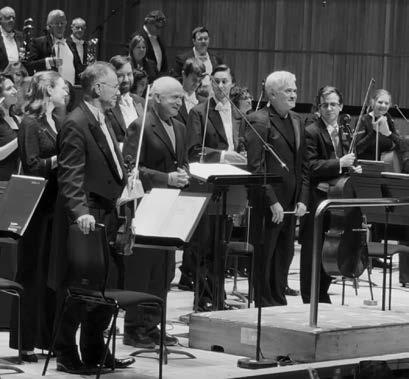
On stage with the LPO and Edward Gardner at the Royal Festival Hall on 27 September 2025, following their performance of Ringed by the Flat Horizon
Programme notes
Alexander Scriabin
1872–1915
Symphony No. 4, Op. 54 (The Poem of Ecstasy)
1905–08
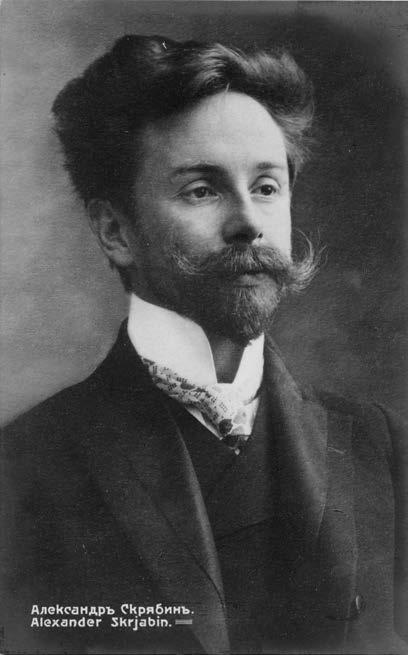
The music of Alexander Scriabin embodies the extraordinary transformation of fin-de-siècle culture. The Scriabin of the early 1890s, his music bathed in the sweeping richness of late-Romanticism, is a far cry from the ‘mystical’ Scriabin of his later years, where texture and colour take precedence over traditional structural landmarks. In his early works we hear the influence of Chopin, Liszt and even Tchaikovsky. But by the early years of the 20th century, his music combines flickers of hazy Debussian impressionism with the bright, bare shards of Stravinsky’s most unforgiving orchestral scores. It is music that is at once both sensual and coarse, governed by a mystical personal agenda that saw Scriabin write words as copiously as he did music, much of it tethered to the idea of embracing a greater cosmic world fuelled by ‘oceans of love’.
In the case of The Poem of Ecstasy, Scriabin saw fit to publish a grand ten-page poem alongside the score, which follows the path of the spirit as it ascends into a state of consciousness, ending with the lines ‘I am a moment illuminating eternity. I am affirmation. I am ecstasy.’ These vast philosophical ideas would form the basis of his single-movement musical symphonic poem, their scope too grand and expansive to be confined by the traditional multi-movement form of the symphony. Paradoxically, however, Scriabin’s far-reaching ideas are contrasted in the score by the fragmented pieces that make up his musical material. This is a kaleidoscopic design, one created from hundreds of intricate, pointillist details that together form a wide, glittering canvas.
As the poem opens, we hear the beginnings of a pregnant flute theme, its languorous contours winding above shimmering strings in near direct homage to Debussy’s Prélude à l’après-midi d’un faune. But where Debussy’s score ebbs and flows in clear pictorial evocation, Scriabin’s flute theme ends as quickly as it began, the mantle passed first to the violin, then
Courtesy of the Royal College of Music, London
Programme notes
piccolo, then trumpet, then clarinet ... Each melodic fragment cascades into the next, any tangible sense of melody, pulse or tonal centre obscured by the perpetual changes in colour and texture.
When the tone changes abruptly, the strings and winds dance around each other with a scurrying energy reminiscent of Ravel’s Daphnis et Chloé, but this idea, too, disappears no sooner than it has arrived and Scriabin swings back to the deep swathes of strings that characterised the opening. If it is not immediately evident, Scriabin’s score eventually reveals itself as
teleological – shaped by a clear sense of purpose and direction, with these two competing ideas – stillness and drive, languor and liberation – becoming emblems of the process that is the emerging of consciousness. As the work progresses, a sense of drive and insistence takes over, the fragments increasingly cohesive, the rhythms energised, dynamics boldened, harmonies deepened. And the trumpet, which at the beginning voiced just a flicker of an idea, eventually proclaims ‘victory’ (as Scriabin called it): consciousness obtained, ecstasy found.
Palimpsest: a manuscript on which two or more texts have been written successively, the original surviving only in fragments. The term can also be applied to natural landscapes, even cityscapes, where the visible form is the result of accretion through the ages. I came across my first palimpsest in a book about medieval music, and was fascinated by the concept of a piece of parchment, or slate, used over and over again for different pieces of music. These were rare materials, and sketches had to be repeatedly overwritten with new invention.
When we come to look at these manuscripts now, 600 or more years later, we see an extraordinary confusion of writing. Its apparent complexity resembles organic growth on the surface, but the number of straight lines
betrays its man-made provenance. If one deciphers this mysterious agglomeration, you can discern the different layers superimposed over each other, and trace right back to the initial text. It was this idea that inspired my pieces.
Palimpsest I starts with a gentle polyphonic song on three clarinets; the harmonic rules that it follows are highly idiosyncratic, but it’s very simple and transparent. Within a minute this song becomes virtually imperceptible, but it’s always there, below the surface of the music. Above it runs a sequence of widely diverging moods and textures; however, all the material is related to the original song. It’s almost like a chaotic variation structure. I wanted the music to sound absolutely crisp and clear: every material has its
Programme notes
own shape, form and timbre. This is emphasised by the unusual orchestration, for eight solo high strings (no cellos) and a massive eight double basses, surrounding a big brass section. The wind section compromises four flutes, four clarinets and a contrabassoon, and there is a little percussion, harps and a piano. My aim was to achieve something akin to dusk or dawn in the desert, or at high altitude in winter, when the sun is very low and the light almost horizontal, and crystal clear. Palimpsest I was written as a 75th birthday tribute to Pierre Boulez, who conducted the world premiere at London’s Barbican Hall with the London Symphony Orchestra in February 2000.
A short break follows its quiet conclusion; then Palimpsest II commences. Despite its slower tempo, greater length and darker tone-colour, this piece shares much with its predecessor. The most important structural signposts in Palimpsest I are provided by the varied return of the opening clarinet song, expanded
in harmony and inflated in scale at each appearance. A different, split texture plays a similar role in Palimpsest II: abrupt brassy chords (doubled by ‘conga’ drums plotted against cool, suspended polyphony in piccolos or high strings. Each time, between appearances of this texture, the music evolves in strongly divergent directions, eventually reaching a fierce and plangent tutti entirely in the bass register. Out of this, features of Palimpsest I – some of which have been present subliminally throughout – begin to break to the surface. As the music propels itself towards a surprise conclusion, elements from both Palimpsests collide and combine.
The first complete performance of Palimpsests was given on 5 October 2002, again by the London Symphony Orchestra under Pierre Boulez at London’s Barbican Hall.
An announcement will be made five minutes before the end of the interval.
The Nature Dialogues
Fascinating free pre-concert talks exploring our season theme, Harmony with Nature
Book free tickets online at lpo.org.uk
Saturday 21 March 2026, 5pm
Harmony with our Rivers
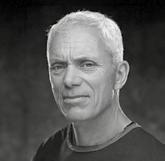
With extreme angler, author & broadcaster Jeremy Wade
Wednesday 8 April 2026, 6pm
Harmony with our Fragile Earth
With scientist Johan Rockström, environmentalist Tony Juniper & composer Anna Thorvaldsdottir
Friday 17 April 2026, 6pm
Harmony with our Changing Planet
With social scientist Gail Whiteman
Programme notes
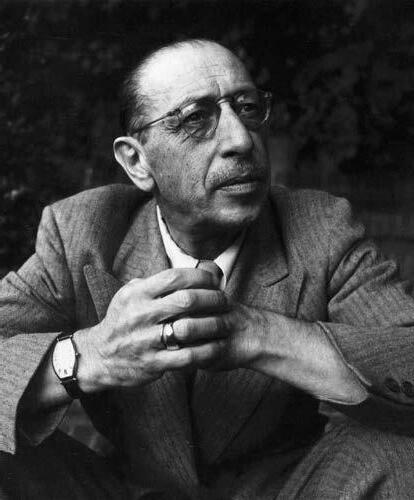
Igor Stravinsky
1882–1971
Symphonies of Wind Instruments
1920, rev. 1947
Stravinsky described his Symphonies of Wind Instruments, for orchestral woodwind and brass sections, as ‘an austere ritual that is unfolded in terms of short litanies between different groups of homogeneous instruments’. The starting point for its composition was the death of his friend and fellow composer Claude Debussy in 1918. The first part of the work to appear in print was the closing chorale, arranged for piano: this was published in December 1920, in a special edition of the magazine La Revue Musicale called ‘Tombeau de Claude Debussy’. But by the time this appeared, Stravinsky had already finished the complete work, and it was first performed in London the following summer under Serge Koussevitzky. Stravinsky substantially revised and re-scored the work in 1947, and although the original version remains available, the more hard-edged revision is usually preferred.
The title of ‘symphonies’ does not refer to traditional symphonic procedures, but is used in its older sense of ‘sounding together’. The work is constructed in a series of short, intercut segments in different tempi and colours – a highly original procedure in 1920, which may have owed something to the then-new art of cinema, and which had a profound influence on many 20th-century composers. There are three related tempi, Tempo II half as fast again as Tempo I, Tempo III twice as fast. But Tempo I has two different aspects: with a changing quaver beat, it is associated with an incisive bell-like figure dominated by high clarinets; with a more regular crotchet pulse, it is associated with slow-moving chord progressions for the full ensemble. Tempo II brings a series of winding, Russian-sounding melodies (reminiscent of The Rite of Spring) for small groups of woodwind, punctuated by more energetic outbursts. Tempo III does not appear until about halfway through the piece, and is used chiefly in two episodes in changing metres – the first reminiscent of the orgiastic dances of The Rite, the second lighter on its feet. Meanwhile the slow-crotchet version of
Tempo I seems to have been forgotten, except in two short interjections of brass chords; but these prove to be anticipations of the memorial chorale, which is stated at full length to bring the work to a solemn end.
Prélude – Danse du Rouet et Scène – Pavane de la Belle au bois dormant –
Les entretiens de la Belle et de la Bête – Petit Poucet –
Laideronnette, Impératrice des Pagodes – Le jardin féerique
‘Ravel was my favourite [among my father’s friends] because he used to tell me marvellous stories. I would sit on his knee and indefatigably he would begin “Once upon a time ...”’.
Mimie Godebski’s adult recollections revealing lifelong bachelor Ravel’s unerring affinity with children and childish things relate directly to the conception of the suite Ma mère l’Oye (‘Mother Goose’). In the summer of 1908, the composer had presented the nine-year-old Mimie and her younger brother Jean with a tiny but exquisite ‘Pavane de la Belle au bois dormant’ (‘Pavane of the Sleeping Beauty’) for piano duet. His intention was that they would play it, but it proved too difficult, and when the death of his father took the composer back to Paris that autumn, any intended further work was temporarily halted; it was not until the spring of 1910 – the same time that he was working on the ballet Daphnis et Chloé – that Ravel completed it as a five-movement suite on subjects borrowed from old fairytales by the Comtesse d’Aulnoy, Marie Leprince de Beaumont and Charles Perrault (whose collection Contes de ma mère l’Oye provided the title). He still harboured hopes that the Godebski children would give the first public performance, but although they played it to him in private, the premiere was eventually given in Paris by two other child pianists, Jeanne Leleu and Geneviève Durony.
Ravel produced his customary orchestration in 1911, but then, in answer to a commission from a Parisian theatre, followed it up with the expanded ballet score (nearly twice the length of the suite) that we hear tonight.
Programme notes
The scenario featured the famous Beauty pricking her finger, dreaming fairytale stories as she sleeps and finally being awoken at dawn by Prince Charming, and was presumably grafted on afterwards since it entailed not only the addition of linking passages, an atmospheric ‘Prélude’ and a ‘Danse du Rouet’ (‘SpinningWheel Dance’) but also a slight reordering of the original movements. These themselves remain intact, however, their naive charm and sensitivity somehow only heightened by the deft sophistication of Ravel’s orchestration. After the ‘Pavane’ comes the Satie-esque ‘Les entretiens de la Belle et de la Bête’ (‘Dialogues of Beauty and the Beast’), with Beauty represented by a clarinet, the Beast by a contrabassoon, and their moment of reconciliation by a harp glissando and glistening violin harmonics. ‘Petit Poucet’ depicts a diminutive character (his English equivalent would be ‘Hop o’ my Thumb’) laying a trail of breadcrumbs through the woods, only to see his waymarkers eaten by birds; the trail can be heard meandering its way through the music on the strings, and the birds are unmistakable. ‘Laideronnette, Impératrice des Pagodes’ (‘Little ugly one, Empress of the Pagodas’) conjures its oriental flavour through the use of the pentatonic scale
– like Debussy and others, Ravel had been influenced by hearing a Javanese gamelan at the Paris Exhibition of 1889 – and the score ends with ‘Le jardin féerique’ (‘The fairy garden’), depicting Prince Charming’s arrival in the ballet, but in its original guise surely a burst of radiant nostalgia for childhood.
We hope you enjoyed tonight’s concert. Could you spare a few moments afterwards to complete a short survey about your experience? Your feedback is invaluable to us and will help to shape our future plans.
Just scan the QR code to begin the survey. Thank you!
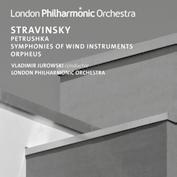
music on the LPO Label: Stravinsky with Vladimir Jurowski
Petrushka Symphonies of Wind Instruments Orpheus
‘This is very careful, exquisitely balanced playing.’
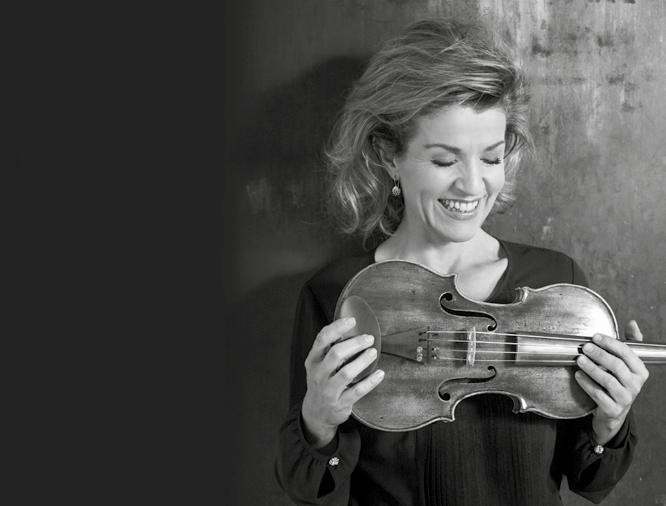
Anne-Sophie Mutter plays Tchaikovsky
Wed 18 Feb 2026, 7.30pm
Royal Festival Hall
Sibelius Pohjola’s Daughter
Tchaikovsky Violin Concerto
Beethoven Symphony No. 7
Karina Canellakis conductor
Anne-Sophie Mutter violin
Concert generously supported by Sir Simon & Lady Robey CBE
Tchaikovsky & Sibelius
Wed 4 Mar 2026, 7.30pm
Royal Festival Hall
Tchaikovsky Piano Concerto No. 2
Sibelius Symphony No. 2
Paavo Järvi conductor
Alexandre Kantorow piano
Four Seasons of Buenos Aires
Sat 21 Mar 2026, 6.30pm
Queen Elizabeth Hall
Please note time & venue
John Luther Adams Become River
Clarice Assad Terra: Concerto for Bassoon and Orchestra (European premiere)
Piazzolla The Four Seasons of Buenos Aires (with live dance)
Pablo Rus Broseta conductor
Jonathan Davies bassoon*
Alice Ivy-Pemberton violin
Lauren Oakley tango dancer
Kai Widdrington tango dancer
Plus post-concert ‘After Dark’ performance with tonight’s tango dancers – see page 2.
*LPO chair supported by Sir Simon Robey
Supported by Cockayne Grants for the Arts, a Donor Advised Fund, held at The Prism Charitable Trust.
Anne-Sophie Mutter
Jonathan Davies Karina Canellakis
Sound Futures donors
We are grateful to the following donors for their generous contributions to our Sound Futures campaign. Thanks to their support, we successfully raised £1 million by 30 April 2015 which has now been matched pound for pound by Arts Council England through a Catalyst Endowment grant. This has enabled us to create a £2 million endowment fund supporting special artistic projects, creative programming and education work with key venue partners including our Southbank Centre home. Supporters listed below donated £500 or over. For a full list of those who have given to this campaign please visit lpo.org.uk/soundfutures
Masur Circle
Arts Council England
Dunard Fund
Victoria Robey CBE
Emmanuel & Barrie Roman
The Underwood Trust
Welser-Möst Circle
William & Alex de Winton
John Ireland Charitable Trust
The Tsukanov Family Foundation
Neil Westreich
Tennstedt Circle
Valentina & Dmitry Aksenov
Richard Buxton
The Candide Trust
Michael & Elena Kroupeev
Kirby Laing Foundation
Mr & Mrs Makharinsky
Alexey & Anastasia Reznikovich
Sir Simon Robey
Bianca & Stuart Roden
Simon & Vero Turner
The late Mr K Twyman
Solti Patrons
Ageas
John & Manon Antoniazzi
Gabor Beyer, through BTO
Management Consulting AG
Jon Claydon
Mrs Mina Goodman & Miss Suzanne Goodman
Roddy & April Gow
The Jeniffer & Jonathan Harris
Charitable Trust
Mr James R.D. Korner OBE
Christoph Ladanyi & Dr Sophia Ladanyi-Czernin
Robert Markwick & Kasia Robinski
The Maurice Marks Charitable Trust
Mr Paris Natar
The Rothschild Foundation
Tom & Phillis Sharpe
The Viney Family
Haitink Patrons
Mark & Elizabeth Adams
Dr Christopher Aldren
Mrs Pauline Baumgartner
Lady Jane Berrill
Mr Frederick Brittenden
David & Yi Yao Buckley
Mr Clive Butler
Gill & Garf Collins
Mr John H Cook
Mr Alistair Corbett
Bruno De Kegel
Georgy Djaparidze
David Ellen
Christopher Fraser OBE
David & Victoria Graham Fuller
Goldman Sachs International
Mr Gavin Graham
Moya Greene
Mrs Dorothy Hambleton
Tony & Susie Hayes
Malcolm Herring
Catherine Høgel & Ben Mardle
Mrs Philip Kan
Rehmet Kassim-Lakha de Morixe
Rose & Dudley Leigh
Lady Roslyn Marion Lyons
Miss Jeanette Martin
Duncan Matthews KC
Diana & Allan Morgenthau
Charitable Trust
Dr Karen Morton
Mr Roger Phillimore
Ruth Rattenbury
The Reed Foundation
The Rind Foundation
Sir Bernard Rix
David Ross & Line Forestier
(Canada)
Carolina & Martin Schwab
Dr Brian Smith
Lady Valerie Solti
Mr & Mrs G Stein
Dr Peter Stephenson
Miss Anne Stoddart
TFS Loans Limited
Marina Vaizey
Jenny Watson
Guy & Utti Whittaker
Pritchard Donors
Ralph & Elizabeth Aldwinckle
Mrs Arlene Beare
Mr Patrick & Mrs Joan Benner
Mr Conrad Blakey
Dr Anthony Buckland
Paul Collins
Alastair Crawford
Mr Derek B. Gray
Mr Roger Greenwood
The HA.SH Foundation
Darren & Jennifer Holmes
Honeymead Arts Trust
Mr Geoffrey Kirkham
Drs Frank & Gek Lim
Peter Mace
Mr & Mrs David Malpas
Dr David McGibney
Michael & Patricia McLaren-Turner
Mr & Mrs Andrew Neill
Mr Christopher Querée
The Rosalyn & Nicholas Springer Charitable Trust
Timothy Walker CBE AM
Christopher Williams
Peter Wilson Smith
Mr Anthony Yolland
and all other donors who wish to remain anonymous
Thank you
As a registered charity, we are extremely grateful to all our supporters who have given generously to the LPO over the past year to help maintain the breadth and depth of the LPO’s activities, as well as supporting the Orchestra both on and off the concert platform.
Artistic Director’s Circle
The American Friends of the London Philharmonic Orchestra
William & Alex de Winton
Catherine Høgel & Ben Mardle
Aud Jebsen
In memory of Paul Morgan
In memory of Donald Pelmear
In memory of Rita Reay
Sir Simon & Lady Robey CBE
In memory of Peter J Watson
Orchestra Circle
Richard Buxton
In memory of Nicola Goodman
Mr & Mrs Philip Kan
Neil Westreich
Principal Associates
An anonymous donor
Steven M. Berzin
Irina Gofman & Mr Rodrik V. G Cave
George Ramishvilli
In memory of Kenneth Shaw
The Tsukanov Family
Associates
Anonymous donors
Sir Nigel Boardman & Prof. Lynda Gratton
Garf & Gill Collins
Michelle Crowe Hernandez & Christian Hernandez
Ian Ferguson & Susan Tranter
Stuart & Bianca Roden
Malcolm & Alison Thwaites
Joe Topley & Tracey Countryman
The Williams Family in memory of Grenville Williams
Gold Patrons
An anonymous donor
David & Yi Buckley
Dr Alex & Maria Chan
In memory of Allner Mavis
Channing
In memory of Peter Coe
John & Sam Dawson
Fiona Espenhahn
Mr Roger Greenwood
Sally Groves MBE
David & Bettina Harden
Eugene & Allison Hayes
Malcolm Herring
Mrs Asli Hodson
John & Angela Kessler
Mrs Elizabeth Meshkvicheva
Julian & Gill Simmonds
Eric Tomsett
The Viney Family
Guy & Utti Whittaker
Silver Patrons
An anonymous donor
David Burke & Valerie Graham
Mr Luke Gardiner
The Jeniffer and Jonathan Harris
Charitable Trust
Mr & Mrs Andrew Neill
Clandia Wu & Hiu Fung Ng
Simon & Lucy Owen-Johnstone
Andrew & Cindy Peck
Mr Roger Phillimore
Tom & Phillis Sharpe
Laurence Watt
Joanna Williams
Bronze Patrons
Anonymous donors
Miram Al Rasheed
Michael Allen
Gabriela Andino-Benson
Irina Bednaya
Nicholas Berwin
Mrs Amna Boheim
Dame Colette Bowe
Lorna & Christopher Bown
Mr Bernard Bradbury
Dr Anthony Buckland
Desmond & Ruth Cecil
Mr John H Cook
Cameron & Kathryn Doley
Elena & Sergey Dubinets
Harron Ellenson & Charles Miller
Smith
Cristina & Malcolm Fallen
Christopher Fraser OBE
Charles Fulton
Gini & Richard Gabbertas
Jenny & Duncan Goldie-Scot
Mr Daniel Goldstein
David & Jane Gosman
Mr Gavin Graham
Mrs Dorothy Hambleton
Iain & Alicia Hasnip
J Douglas Home
Mr & Mrs Ralph Kanza
Mrs Irina Kiryukhina
Rose & Dudley Leigh
Wg. Cdr. M T Liddiard OBE JP RAF
Drs Frank & Gek Lim
Svetlana London
Graham Long
Richard & Judy Luddington
Mr & Mrs Makharinsky
James Maxey-Branch
Andrew T Mills
John Nickson & Simon Rew
Peter & Lucy Noble
Mikhail Noskov & Vasilina Bindley
Mr Stephen Olton
Nigel Phipps & Amanda McDowall
Mr Michael Posen
Marie Power
Neil & Karen Reynolds
Sir Bernard Rix
Baroness Shackleton
Tim Slorick
John & Madeleine Tucker
In memory of Doris Tylee
Mr & Mrs John & Susi Underwood
Sophie Walker
Jenny Watson CBE
Elena Y. Zeng
Principal Supporters
Anonymous donors
Dr M. Arevuo
Mrs Carol Ann Bailey
Mr John D Barnard
Roger & Clare Barron
Mr Geoffrey Bateman
Mrs A Beare
Adam J. Brunk & Madeleine
Haddon
Simon Burke & Rupert King
David & Liz Conway
Mr Alistair Corbett
David Devons
Deborah Dolce
Sir Timothy Fancourt
Jonathan Franklin
Professor Erol & Mrs Deniz
Gelenbe
Steve & Cristina Goldring
Prof Emeritus John Gruzelier
Sebastian Arun Hansjee
Nick Hely-Hutchinson
Michael & Christine Henry
Mrs Farrah Jamal
Bruce & Joanna Jenkyn-Jones
Per Jonsson
Julian & Annette Armstrong
Mr Ian Kapur
Gee Lee
Dr Peter Mace
Mr Nikita Mishin
Allison Mollerberg
Simon Moore
Dr Simon Moore
Mrs Terry Neale
Mr Matthew Pearson
Mr James Pickford
Filippo Poli
Sukand Ramachandran
Mr Martin Randall
Mr Robert Ross
Mr Andrea Santacroce & Olivia Veillet-Lavallée
Aniruddha Sharma
Priscylla Shaw
Michael Smith
Erika Song
Mr & Mrs G Stein
Andrew & Rosemary Tusa
Wolf-Christian Ulrich
Ben Valentin KC
Christine Warsaw
Mr Rodney Whittaker
Christopher Williams
Supporters
Anonymous donors
Ralph & Elizabeth Aldwinckle
Alison Clarke & Leo Pilkington
Mr Philip Bathard-Smith
Mrs Martha Brooke
Mr Julien Chilcott-Monk
Miss Tessa Cowie
St Peter’s Composers, Bexhill-on-Sea
Dorothy Hobden
The Jackman Family
Jan Leigh & Jan Rynkiewicz
Mr Mack Lindsey
Mr David MacFarlane
Simon & Fiona Mortimore
Dana Mosevics
Dame Jane Newell DBE
Michael Noyce
Mr & Mrs Graham & Jean Pugh
Emilie Sydney-Smith
Ms Caroline Tate
Craig Terry
Tony & Hilary Vines
Dr Ann Turrall
Dr June Wakefield
Mr John Weekes
Mr C D Yates
Hon. Benefactor
Elliott Bernerd
Hon. Life Members
Alfonso Aijón
Dame Carol Colburn Grigor DBE
Robert Hill
Keith Millar
Victoria Robey CBE
Mrs Jackie Rosenfeld OBE
Cornelia Schmid
Timothy Walker CBE AM
Laurence Watt
Thomas Beecham
Group
Members
An anonymous donor
Sir Nigel Boardman & Prof. Lynda Gratton
David & Yi Buckley
Dr Alex & Maria Chan
Garf & Gill Collins
William & Alex de Winton
Ian Ferguson & Susan Tranter
The Friends of the LPO
Irina Gofman & Mr Rodrik V. G.
Cave
Mr Roger Greenwood
Barry Grimaldi
David & Bettina Harden
Mr & Mrs Philip Kan
John & Angela Kessler
Sir Simon Robey
Victoria Robey OBE
Stuart & Bianca Roden
Julian & Gill Simmonds
Malcolm & Alison Thwaites
Eric Tomsett
Neil Westreich
Guy & Utti Whittaker
LPO Corporate Members
Bloomberg Carter-Ruck Solicitors
French Chamber of Commerce
German-British Chamber of Industry & Commerce
Lazard
Natixis Corporate & Investment
Banking
Ryze Power
Virgin Money
Walpole
Preferred Partners
Google
Lay & Wheeler
Lindt & Sprüngli
Mayer Brown
Steinway & Sons
Welbeck
Trusts and Foundations
ABO Trust
Art Mentor Foundation Lucerne
Candide Trust
Cockayne – Grants for the Arts
David Solomons Charitable Trust
Dunard Fund
Foyle Foundation
Garfield Weston Foundation
The Baily Thomas Charitable Fund
The Boshier-Hinton Foundation
The Golsoncott Foundation
Jerwood Foundation
John Thaw Foundation
John Horniman’s Children’s Trust
The Ian Askew Charitable Trust
Idlewild Trust
Institute Adam Mickiewicz
Thank you
Kirby Laing Foundation
The Lennox Hannay Charitable Trust
Lord and Lady Lurgan Trust
Lucille Graham Trust
The Marchus Trust
Margaret Killbery Foundation
Maria Bjӧrnson Memorial Fund
The 29th May 1961 Charitable Trust
PRS Foundation
The Radcliffe Trust
Rivers Foundation
Rothschild Foundation
Scops Arts Trust
Sir William Boreman’s Foundation
The John S Cohen Foundation
TIOC Foundation
UK Friends of the Felix Mendelssohn Bartholdy Foundation
Vaughan Williams Foundation
The Viney Family
The Barbara Whatmore Charitable Trust
and others who wish to remain anonymous.
Board of the American Friends of the LPO
We are grateful to the Board of the American Friends of the London Philharmonic Orchestra, who assist with fundraising for our activities in the United States of America:
Hannah Young Chair
Lora Aroyo
Jon Carter
Alexandra Jupin
Natalie Pray MBE
Dr Irene Rosner David
Marc Wassermann
Catherine Høgel
Hon. Director
LPO International Board of Governors
Natasha Tsukanova Chair
Steven M. Berzin
Shashank Bhagat
Irina Gofman
Olivia Ma
George Ramishvili
Florian Wunderlich
Trusts and Foundations
Principal Partners
Principal Supporters
Major Supporters
Corporate Sponsors
Principal Partner
OrchLab Project Partner
Principal Supporter
Major Supporters
London Philharmonic Orchestra Administration
Board of Directors
Dr Catherine C. Høgel Chair
Nigel Boardman Vice-Chair
Mark Vines* President
Kate Birchall* Vice-President
Emily Benn
David Buckley
David Burke
Simon Burke
Simon Carrington*
Michelle Crowe Hernandez
Deborah Dolce
Simon Estell*
Jesús Herrera
Tanya Joseph
Minn Majoe*
Tania Mazzetti*
Jamie Njoku-Goodwin OBE
Neil Westreich
David Whitehouse*
*Player-Director
Advisory Council
Roger Barron Chairman
Christopher Aldren
Kate Birchall
Amna Boheim
Richard Brass
Helen Brocklebank
YolanDa Brown OBE
David Burke
Simon Callow CBE
Desmond Cecil CMG
Jane Coulson
Andrew Davenport
Guillaume Descottes
Cameron Doley
Lena Fankhauser
Christopher Fraser OBE
Jenny Goldie-Scot
Jonathan Harris CBE FRICS
Nick Hely-Hutchinson DL
Jesús Herrera
Dr Catherine C. Høgel
Martin Höhmann
Jamie Korner OBE
Andrew Neill
Nadya Powell
Sir Bernard Rix
Victoria Robey CBE
Baroness Shackleton
Thomas Sharpe KC
Julian Simmonds
Daisuke Tsuchiya
Mark Vines
Chris Viney
Laurence Watt
Elizabeth Winter
New Generation Board
Ellie Ajao
Peter De Souza
Vivek Haria
Rianna Henriques
Zerlina Vulliamy
General Administration
Jesús Herrera
Artistic Director
David Burke
Chief Executive
Alicia Downie
PA to the Executive & Office Manager
Concert Management
Roanna Gibson
Concerts & Planning Director
Graham Wood
Concerts & Recordings Manager
Aimee Walton
Tours Manager
Madeleine Ridout
Glyndebourne & Projects Manager
Alison Jones
Concerts & Artists Co-ordinator
Alice Drury
Tours & Projects Assistant
Nicola Stevenson
Concerts & Recordings Assistant
Matthew Freeman Recordings Consultant
Andrew Chenery
Orchestra Personnel Manager
Helen Phipps
Orchestra & Auditions Manager
Sarah Thomas
Martin Sargeson
Librarians
Laura Kitson
Stage & Operations Manager
Stephen O’Flaherty
Deputy Operations Manager
Gabrielle Slack-Smith
Assistant Stage Manager
Finance
Frances Slack
Finance Director
Dayse Guilherme
Finance Manager
Jean-Paul Ramotar
IT Manager & Finance Officer
Education & Community
Talia Lash
Education & Community Director
Eleanor Jones
Lowri Thomas
Education & Community
Project Managers
Ellie Leon
Education & Community Co-ordinator
Claudia Clarkson
Regional Partnerships Manager
Development
Laura Willis
Development Director
Rosie Morden
Senior Development Manager
Eleanor Conroy
Development Events Manager
Owen Mortimer
Corporate Relations Manager
Anna Quillin
Trusts & Foundations Manager
Holly Eagles
Development Co-ordinator
Faye Jones Development Assistant
Nick Jackman
Campaigns & Projects Director
Kirstin Peltonen
Development Associate
Marketing & Communications
Kath Trout
Marketing & Communications Director
Sophie Lonergan
Senior Marketing Manager
Georgie Blyth
Press & PR Manager (maternity leave)
Said Abubakar, WildKat PR 07983 489 888
Press & PR (maternity cover)
Josh Clark
Data, Insights & CRM Manager
Greg Felton
Digital Creative
Alicia Hartley
Digital & Marketing Manager
Maria Ribalaygua
Sales & Ticketing Manager
Rachel Williams
Publications Manager
Isobel Jones
Marketing Co-ordinator
Cara Liddiard
Marketing Assistant
Archives
Philip Stuart
Discographer
Gillian Pole
Recordings Archive
Professional Services
Charles Russell Speechlys Solicitors
Crowe Clark Whitehill LLP Auditors
Dr Barry Grimaldi
Honorary Doctor
Mr Chris Aldren
Honorary ENT Surgeon
Mr Simon Owen-Johnstone
Hon. Orthopaedic Surgeon
London Philharmonic
Orchestra
89 Albert Embankment
London SE1 7TP
Tel: 020 7840 4200
Box Office: 020 7840 4242
Email: admin@lpo.org.uk lpo.org.uk
2025/26 season design
JMG Studio
Printer John Good Ltd
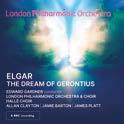
Experience the magic of live orchestral music from some of the best seats in the house for less. Simply sign up with your email address, and discounts for our London concerts will be delivered straight to your inbox every month. Plus, get access to drinks offers and exclusive Under 30s events, as well as a free LPO tote bag at your first concert. lpo.org.uk/under-30s ELGAR:
EDWARD GARDNER conductor
LONDON PHILHARMONIC ORCHESTRA & CHOIR
HALLÉ CHOIR
ALLAN CLAYTON | JAMIE BARTON | JAMES PLATT
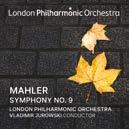
MAHLER: SYMPHONY NO. 9
Vladimir Jurowski conductor LPO-0139 Released 23 January 2026
Share in the joy of music. Be a part of the LPO.
As a registered charity, it is thanks to the vital support we receive from our individual supporters, corporate partners, and trusts and foundations that the LPO can present such vibrant and varied concert programmes of world-class quality.
Such support also enables the LPO to drive lasting social impact through our industry-leading education and community programme, supporting rising talent, those affected by homelessness, and adults and young people with disabilities – designed to build and diversify the talent pipeline and share the unique joy and power of music more widely.
Donate
Whether you make a checkout donation, give to an appeal, or choose to remember the LPO with a gift in your Will, donations of all sizes make an impact. Your support will help us continue to promote diversity and inclusivity in classical music and nurture the next generation of talent.
Join
Joining one of our membership schemes will not only support the Orchestra and our mission, but will also give you access to a host of exclusive benefits designed to enhance your experience and build a closer relationship with the Orchestra and our family of supporters –from private rehearsals, to members’ bars, private events and priority booking. Membership starts at just £6 per month.
Partner
We’re virtuosos of creative collaboration, expertly crafting bespoke partnerships that hit the right notes. We tailor each bespoke partnership to your strategic business objectives, combining exceptional experiences that deepen client relationships, forge new connections, elevate your brand, and create buzzworthy content that leaves audiences captivated by a compelling brand story.
We’re also passionate about using music and our work to increase social value. By partnering together across a shared purpose and values, we can leave a positive, lasting impact on the communities we engage, deepening your CSR and SDG commitments.
Find out how you can support at lpo.org.uk/support us