LPO Label digital booklet: LPO-0140 Edward Gardner conducts Strauss
STRAUSS
LONDON PHILHARMONIC ORCHESTRA
EDWARD GARDNER CONDUCTOR
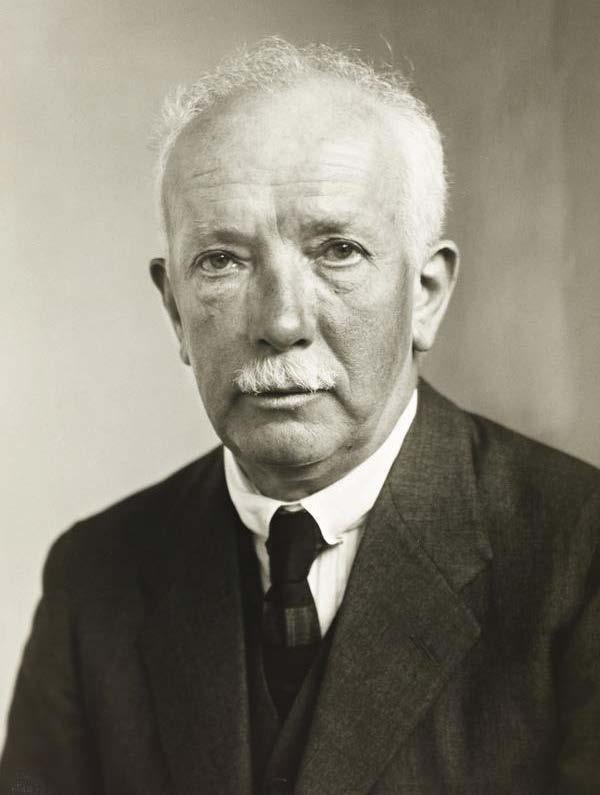
RICHARD STRAUSS (1864–1949)
AN ALPINE SYMPHONY
1. Nacht (Night)
2. Sonnenaufgang (Sunrise)
3. Der Anstieg (The ascent)
4. Eintritt in den Wald (Entering the woods)
5. Wanderung neben dem Bache (Wandering by the stream)
6. Am Wasserfall (By the waterfall)
7. Erscheinung (Apparition)
8. Auf blumige Wiesen (In flowery meadows)
9. Auf der Alm (On a mountain pasture)
10. Durch Dickicht und Gestrüpp auf Irrwegen (Wrong turns through thicket and undergrowth)
11. Auf dem Gletscher (On the glacier)
12. Gefahrvolle Augenblicke (Perilous moments)
13. Auf dem Gipfel (On the summit)
14. Vision
15. Nebel steigen auf (Mists rise)
16. Die Sonne verdüstert sich allmählich (The sun is gradually obscured)
17. Elegie (Elegy)
18. Stille vor dem Sturm (Calm before the storm)
19. Gewitter und Sturm, Abstieg (Thunder and tempest, descent)
20. Sonnenuntergang (Sunset)
21. Ausklang (Waning tones)
22. Nacht (Night)
AN ALPINE SYMPHONY
An Alpine Symphony is Richard Strauss’s last ‘tonepoem’, the final peak in a musical mountain chain that stretches back to the defining masterpieces of his twenties: Don Juan (1888) and Death and Transfiguration (1889). During Strauss’s boyhood in his home city of Munich, the Alps were within relatively easy reach, and when he moved to the South Bavarian mountain resort of Garmisch-Partenkirchen in 1908, they became the daily backdrop to his domestic life and work, encouraging and invigorating him, and at the same time offering escape from professional and domestic stresses. As early as 1902, Strauss was talking about ideas for an ‘Alpine’ orchestral work, partly inspired by a memory of a boyhood climbing adventure that had gone badly wrong: Strauss and his friends had managed to get lost and then caught in a terrifying storm. Before long, Strauss had a basic programme down on paper: ‘Night; sunrise / ascent; forest (hunt) / waterfall (Alpine spirit) / flowery meadows (shepherds) / glacier / thunderstorm / descent and rest.’
By the time Strauss began sketching ideas for An Alpine Symphony in 1911, that outline had matured. The subject was now 24 hours in the life of a mountain, from dawn to twilight, and the experiences and impressions of a group of people climbing it: wonder at the marvels they witness, joy on scaling the summit, the terror of the stormy descent, and the sense of resolution and
relief as the base is reached and night returns. This, combined with Strauss’s brilliantly pictorial writing, for a huge colour-enhanced orchestra, has given rise to a widespread belief that there’s really little more to An Alpine Symphony than a sumptuous musical travelogue. In fact there were serious personal and philosophical issues for Strauss as well. 1911 was the year Strauss’s friend, and to an extent rival, Gustav Mahler died, just short of his 51st birthday. Like Strauss, Mahler loved the Alps, and did much of his composing amongst them. Also like Strauss, Mahler was an admirer of the philosopher Friedrich Nietzsche, who found spiritual uplift and intellectual clarity climbing the Swiss Alps, and who depicted his great literary creation, the atheist prophet Zarathustra, as a hermit amid high mountains.
This helps explain what might at first seem a rather startling diary entry from 1911, in which Strauss expands on the character of his new symphony. ‘I want to call my Alpine Symphony The Antichrist, because in it we find: moral purification through one’s own strength, freedom through work, worship of eternal and fantastical nature.’ In his book The Antichrist (actually ‘The AntiChristian’ would be a better translation), Nietzsche had challenged Christian values of humility, self-renunciation and the demonisation of nature. For Strauss, thinking in Nietzschean terms, the ascent of the mountain,
the survival of the storm and the sense of serene acceptance as night falls become metaphors for man’s own heroic spiritual quest – a transcendence achieved in this mortal, finite existence, rather than in some promised afterlife.
It is possible just to enjoy An Alpine Symphony as superbly evocative tone-painting. ‘At last I have learned how to orchestrate’, Strauss announced to a friend on completing the score – this from one of the acknowledged supreme masters of the art of orchestration! The opening is breathtaking: as a hushed minor scale descends across three octaves, strings fill in every single note of the scale, creating a shimmering ‘cluster’ chord, through which a rock-like bass brass theme emerges like a huge mountain peak through early morning mist. The beginning of ‘The Ascent’ is easy to identify as strings stride upwards in a faster tempo. After this, highlights include distant hunting horns (Strauss asks for twelve), the shimmering gossamer textures of the Alpine waterfall (prominent harps and celeste), a ‘dangerous moment’ (nervously shimmering strings and angular brass calls), closely followed by ‘On the summit’ – ethereal tremolando violins and an oboe solo that seems at first to catch its breath from sheer wonderment. Then begins the descent, foreboding gradually erupting into the ‘Thunderstorm’,
in which the orchestra is joined first by wind machine, then organ.
As safety is reached and the sun begins to fall, the organ writing begins to sound more traditionally religious
– an odd conclusion for a supposedly ‘Anti-Christian’ symphony? As Strauss worked on the orchestral score in 1914–15, Europe was descending into the catastrophe of the First World War, and the world-order was about to change beyond recognition. One thing would endure however: nature, and those stunning, reassuringly solid mountains. As An Alpine Symphony closes with a backward glance at the original massive bass brass theme, perhaps we can sense Strauss drawing comfort from that thought, a comfort others would have found in the God Nietzsche had famously pronounced ‘dead’. In this respect, perhaps An Alpine Symphony isn’t so very anti-Christian after all.
In the spring of 1945, with the Second World War approaching its conclusion, the devastation of Germany’s cities was almost complete. For the 80-year-old Strauss, it was almost too much to bear. The bombing in 1943 of the Munich National Theatre, where several of his operas had been premiered, had hit him as ‘the greatest catastrophe which has ever been brought into my life’, and since then the destruction of the opera houses in Weimar, Dresden and Vienna had reduced him to even greater depths of depression and despair. It must have seemed as if German civilisation itself was coming to an end.
Not that this desperate mood stopped him from composing; Metamorphosen, composed during March and April 1945, was a response to a commission from the Swiss conductor and musical patron Paul Sacher, but it was a work straight from the heart, and with a pre-history too; back in 1943 Strauss had jotted down a few bars of music to which he gave the title ‘Trauer um München’ (‘Mourning for Munich’), and it was this theme which now formed the basis of Metamorphosen, a ‘study for 23 solo strings’.
The work’s title tells us two things. First of all, this singlemovement Adagio, lasting nearly 30 minutes, is one in which the melodic material is subjected to constantly
unfolding symphonic development. There are four main themes, of which the drooping, grief-stricken second, heard on the second viola immediately after the whole bank of lower strings has given out the chordal first, is the most naggingly obstinate. This is the ‘Munich’ theme, and just before the end of the piece we hear it in its final mutation, transformed into the theme from the Funeral March of Beethoven’s ‘Eroica’ Symphony. Strauss maintained that the allusion had not been a planned one, but he nevertheless wrote the words ‘In Memoriam!’ underneath it in the score, and the implication seems clear – that Metamorphosen is a threnody for German musical life.
But there is another resonance in the work’s title, this time to do with the course of Strauss’s own life. The composer had recently embarked on a project to read the complete works of Goethe, and would have been aware that towards the end of his life, the poet had used the word ‘Metamorphosen’ to describe his own mental development, especially when applied to works which had taken form over a number of years. Among the sketches for Metamorphosen, Strauss wrote out the text of a Goethe poem: ‘No one can know himself … yet daily he must put to the test what he can see clearly and objectively… what he is and what he was, what he can do and what he may.’ Seen in this light, the work appears
to carry a much more personal message about selfknowledge and the passing of time. The result is one of its composer’s most searching and emotionally intense utterances.
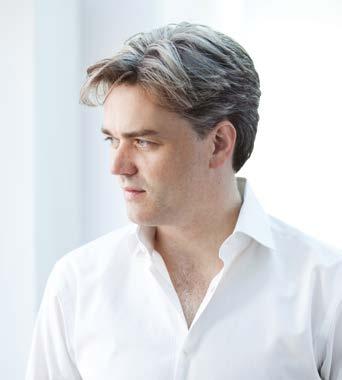
Edward Gardner has been Principal Conductor of the London Philharmonic Orchestra since 2021. He is also Music Director of the Norwegian Opera & Ballet, and Honorary Conductor of the Bergen Philharmonic Orchestra, following his tenure as Chief Conductor from 2015–24.
Edward Gardner’s previous recordings on the LPO Label include Elgar’s The Dream of Gerontius, and Tippett’s The Midsummer Marriage – which won a 2023 Gramophone Award – and A Child of Our Time, as well as the composer’s Piano Concerto and Symphony No. 2; Berlioz’s The Damnation of Faust; and works by Rachmaninov, Dvořák, Schumann, Britten, Brett Dean and Tania León.
In demand as a guest conductor, Edward has appeared with the Bavarian Radio Symphony Orchestra, New York Philharmonic, Chicago Symphony Orchestra, Philadelphia Orchestra, San Francisco Symphony, Rundfunk-Sinfonieorchester Berlin, Royal Stockholm Philharmonic and Vienna Symphony. He also continues his longstanding collaborations with the City of
Birmingham Symphony Orchestra, where he was Principal Guest Conductor from 2010–16, and the BBC Symphony Orchestra.
Music Director of English National Opera from 2006–15, Edward has an ongoing relationship with New York’s Metropolitan Opera, where he has conducted The Damnation of Faust, Carmen, Don Giovanni, Der Rosenkavalier and Werther. He made his debut at London’s Royal Opera House in 2019 in Káťa Kabanová, returning for Werther the following season and the world premiere of Mark-Anthony Turnage’s Festen in 2025. Elsewhere, he has conducted at the Bavarian State Opera, La Scala, Chicago Lyric Opera, Glyndebourne Festival Opera, Opéra National de Paris and Teatro di San Carlo.
Born in Gloucester in 1974, Edward was educated at the University of Cambridge and the Royal Academy of Music. He went on to become Assistant Conductor of the Hallé and Music Director of Glyndebourne Touring Opera. His many accolades include Royal Philharmonic Society Award Conductor of the Year (2008), an Olivier Award for Outstanding Achievement in Opera (2009) and an OBE for services to music in The Queen’s Birthday Honours (2012).
Edward Gardner’s position with the LPO is generously supported by Aud Jebsen.
LONDON PHILHARMONIC ORCHESTRA
The London Philharmonic Orchestra is one of the world’s finest orchestras, balancing a long and distinguished history with its present-day position as one of the most dynamic and forward-looking ensembles in the UK. This reputation has been secured by the Orchestra’s performances in the concert hall and opera house, its many award-winning recordings, trailblazing international tours and wide-ranging educational work.
Founded by Sir Thomas Beecham in 1932, the Orchestra has since been headed by many of the world’s greatest conductors, including Sir Adrian Boult, Bernard Haitink, Sir Georg Solti, Klaus Tennstedt and Kurt Masur. In September 2021 Edward Gardner became the Orchestra’s Principal Conductor, succeeding Vladimir Jurowski, who became Conductor Emeritus in recognition of his transformative impact on the Orchestra as Principal Conductor from 2007–21.
The Orchestra is based at the Southbank Centre’s Royal Festival Hall in London, where it has been Resident Orchestra since 1992. Each summer it takes up its annual residency at Glyndebourne Festival Opera where it has been Resident Symphony Orchestra for 60 years. The Orchestra performs at venues around the UK and has made numerous international tours, performing to sell-out audiences in America, Europe, Asia and Australasia.
The LPO made its first recordings on 10 October 1932, just three days after its first public performance. It has recorded and broadcast regularly ever since, and in 2005 established its own record label. These recordings are taken mainly from live concerts given by conductors including those with LPO Principal Conductors from Beecham and Boult, through Haitink, Solti, Tennstedt and Masur, to Jurowski and Gardner.
lpo.org.uk
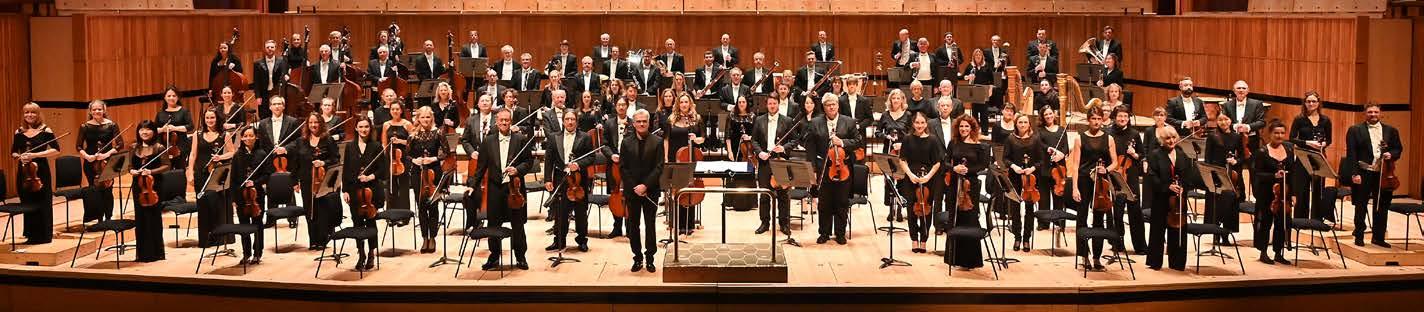
ON STAGE
AN ALPINE SYMPHONY
FIRST VIOLINS
Pieter Schoeman Leader
Alice Ivy-Pemberton
Co-Leader
Vesselin Gellev Sub-Leader
Kate Oswin
Lasma Taimina
Minn Majoe
Cassandra Hamilton
Martin Höhmann
Thomas Eisner
Katalin Varnagy
Yang Zhang
Nilufar Alimaksumova
Camille Buitenhuis
Alison Strange
Rasa Zukauskaite
Kay Chappell
SECOND VIOLINS
Tania Mazzetti
Emma Oldfield
Claudia Tarrant-Matthews
Nynke Hijlkema
Fiona Higham
Kate Birchall
Nancy Elan
Sioni Williams
Sarah Thornett
Paula Clifton-Everest
Lyrit Milgram
Sheila Law
Emma Purslow
José Nuno Cabrita Matias
VIOLAS
Konstantin Boyarsky
Martin Wray
Laura Vallejo
Katharine Leek
Benedetto Pollani
Kate De Campos
Terry Nettle
Richard Cookson
Jisu Song
Jill Valentine
Martin Fenn
Delyth John
CELLI
Kristina Blaumane
Waynne Kwon
Francis Bucknall
Auriol Evans
Tom Roff
George Hoult
Sibylle Hentschel
Iain Ward
Colin Alexander
Julia Morneweg
DOUBLE BASSES
Sebastian Pennar
George Peniston
Tom Walley
Laura Murphy
Charlotte Kerbegian
Lowri Estell
Emma Prince
Siret Lust
FLUTES
Juliette Bausor
Ian Mullin
Stewart McIlwham*
Katie Bicknell*
*doubling Piccolo
OBOES
Ian Hardwick
Alice Munday
Sue Böhling*
*doubling Cor Anglais
HECKELPHONE
John MacDougall
CLARINETS
Benjamin Mellefont
Thomas Watmough*
James Maltby
Paul Richards†
*doubling E-flat Clarinet
†doubling Bass Clarinet
BASSOONS
Jonathan Davies
Helen Storey
Stuart Russell
Simon Estell*
*doubling Contrabassoon
HORNS
John Ryan
Annemarie Federle
Martin Hobbs
Mark Vines
Gareth Mollison
Oliver Johnson
Elise Campbell
Duncan Fuller*
Jonathan Farey*
*doubling Offstage Horn
OFFSTAGE HORNS
Ben Hulme
Timothy Ellis
Alec Ross
Joseph Ryan
Hannah Williams
Andrew Budden
Zac Hayward
TRUMPETS
Paul Beniston
Tom Nielsen
Anne McAneney
Tom Watts
David Hilton
OFFSTAGE TRUMPETS
Tony Cross
Joe Skypala
TROMBONES
Mark Templeton
David Whitehouse
BASS TROMBONES
Lyndon Meredith
Simon Minshall
OFFSTAGE
TROMBONES
Andrew Connington
Jamie Tweed TUBAS
Lee Tsarmaklis
James Tavares
TIMPANI
Simon Carrington
Jeremy Cornes
PERCUSSION
Andrew Barclay
Karen Hutt
Oliver Yates
Feargus Brennan
HARPS
Sue Blair
Anneke Hodnett
CELESTE
Catherine Edwards ORGAN
Richard Gowers
ON STAGE METAMORPHOSEN
VIOLINS
Pieter Schoeman Leader
Alice Ivy-Pemberton Co-Leader
Vesselin Gellev Sub-Leader
Kate Oswin
Lasma Taimina
Minn Majoe
Emma Oldfield
Claudia Tarrant-Matthews
Marie-Anne Mairesse
Nynke Hijlkema
VIOLAS
Fiona Winning
Lucia Ortiz Sauco
Laura Vallejo
Katharine Leek
Martin Wray
CELLI
Kristina Blaumane
Waynne Kwon
Aristide du Plessis
David Lale
Francis Bucknall
DOUBLE BASSES
Kevin Rundell
Sebastian Pennar
Hugh Kluger
RICHARD STRAUSS (1864–1949)
50:51 An Alpine Symphony
01 03:12 Nacht (Night)
02 01:24 Sonnenaufgang (Sunrise)
03 02:23 Der Anstieg (The ascent)
04 05:26 Eintritt in den Wald (Entering the woods)
05 00:48 Wanderung neben dem Bache (Wandering by the stream)
06 00:16 Am Wasserfall (By the waterfall)
07 00:48 Erscheinung (Apparition)
08 01:02 Auf blumige Wiesen (In flowery meadows)
09 02:30 Auf der Alm (On a mountain pasture)
10 01:29 Durch Dickicht und Gestrüpp auf Irrwegen (Wrong turns through thicket and undergrowth)