Welcome
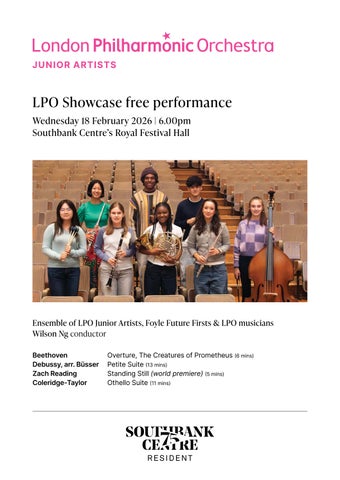
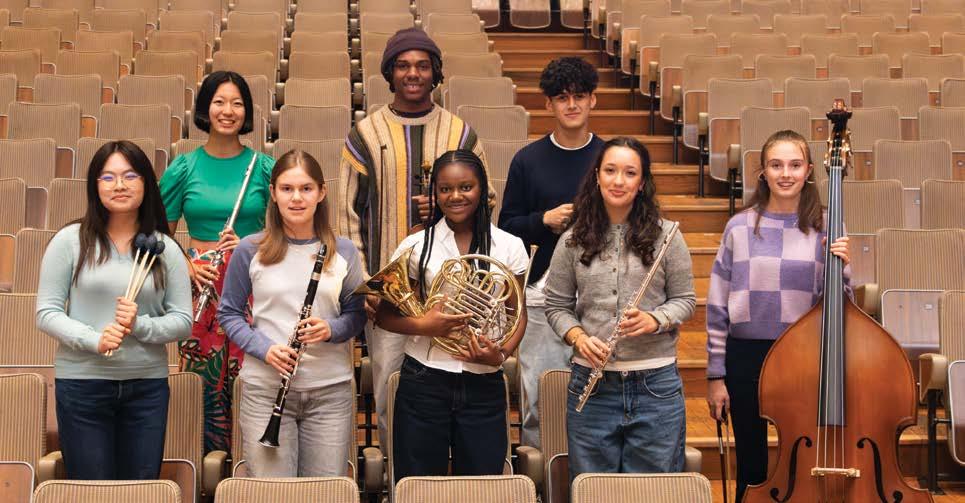
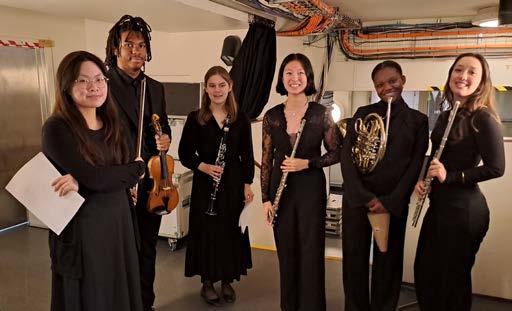
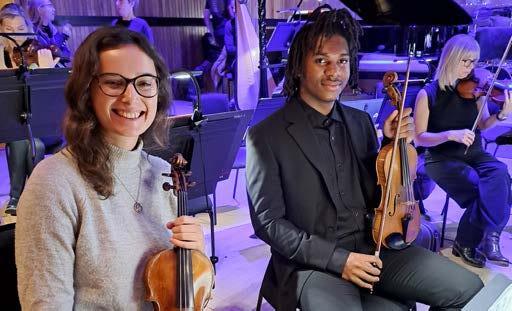
Welcome to this evening’s Showcase performance, presenting some of our most exciting emerging talent. The ensemble features the London Philharmonic Orchestra’s Junior Artists 2025/26, playing alongside Junior Artist alumni, Foyle Future First players and LPO musicians –all under the baton of 2025/26 LPO Fellow Conductor, Wilson Ng.
LPO Junior Artists is our year-long programme for eight talented young musicians from backgrounds currently under-represented in professional UK orchestras. Through this initiative, we are working to ensure that the orchestral industry of the future reflects the wide diversity of the society in which we live. Junior Artists become part of the LPO family for a year, getting to know our musicians, staff and artists, as well as other members of our Rising Talent schemes. They are offered training, advice and professional insights, and take part in events to inspire younger generations of musicians. Many alumni have gone
on to study music at conservatoire or university, and we are delighted to see some beginning to emerge into the profession.
Tonight’s programme draws its inspiration from music written for the stage. The evening is framed by Beethoven’s Prometheus Overture, composed for a ballet, and ColeridgeTaylor’s Othello Suite, inspired by Shakespeare’s play. In between, we’ll hear Debussy’s Petite Suite, with its graceful dance movements, and a world premiere by former LPO Young Composer Zach Reading, inspired by a poem by Mary Oliver.
We hope you enjoy this evening’s Showcase performance, and we would like to extend a heartfelt thank you to those supporters whose generosity and vision for nurturing the next generation of musical talent make our Rising Talent programmes possible.
On stage tonight
Conductor
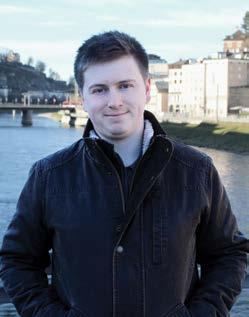
Wilson Ng LPO Fellow Conductor 2025/26
First Violins
Kate Oswin*
LPO chair supported by Eric Tomsett
Zakkai Amachree†
Mio Takahashi#
Second Violins
Emily Trubshaw#
Rebecca Nicolas‡
Violas
Sara Ramirez#
Kateryna Holiar‡
Cellos
William Lui#
Ivan Rodriguez Deb‡
Double Bass
Isabel Garcia#
Lillian Clarke-Jones Blackwell†
Flutes
Hanhan Qu†
Lara Omidvar†
Piccolos
Stewart McIlwham*
Hanhan Qu†
Lara Omidvar†
Oboes
Noah Rudd#
Anton Brown‡
Cor Anglais
Anton Brown‡
With thanks to LPO Junior Artist Mentors 2025/26:
Clarinets
Thomas Watmough*
LPO chair supported by Roger Greenwood
Matilda Hoberman Evers†
Bassoons
Flo Plane#
Nahuel Angius-Thomas‡
Horns
Mark Vines*
Niara Fell†
Nivanthi Karunaratne#
Martin Hobbs*
Trumpets/Cornets
Ralf Sauer†
Tom Nielsen*
Trombones
Ollie Plant#
David Whitehouse*
Bass Trombone
Lyndon Meredith*
Timpani
Julie Scheuren#
Percussion
Karen Hutt*
Evelyn Lee†
Andrew Barclay*
Harp
Aisha Palmer#
† LPO Junior Artist 2025/26 # Foyle Future First 2025/26 ‡ LPO Junior Artist alumni * LPO member
Kate Oswin (violin), Sebastian Pennar (double bass), Stewart McIlwham (flute), Thomas Watmough (clarinet), Mark Vines (horn), Tom Nielsen (trumpet), Karen Hutt (percussion).
The LPO Junior Artists Programme 2025/26 is generously supported by the Margaret Killbery Foundation, the Maria Bjornson Memorial Fund, Peter and Lucy Noble, and with additional support from TIOC Foundation, and the UK Friends of the Felix Mendelssohn Bartholdy Foundation. The LPO Conducting Fellowship 2025/26 is generously supported by Dunard Fund.
The Foyle Future Firsts Development Programme 2025/26 is generously supported by the Foyle Foundation and Purposeful Ventures, alongside the Barbara Whatmore Charitable Trust, Scops Arts Trust and the Idlewild Trust, and with additional support from individual chair supporters. Foyle Future First instrument chairs are kindly supported by David Burke & Valerie Graham (clarinet), Michelle Crowe Hernandez & Christian Hernandez (tuba), John & Sam Dawson (percussion), Marie Power (piano), and Nigel Phipps & Amanda McDowall (oboe).
Ludwig van Beethoven (1770–1827)
Overture, The Creatures of Prometheus (1801)
Programme notes
Written in 1801, when Beethoven was around 30, this overture comes from a period when he was still building his reputation. He was already known as a brilliant pianist and an exciting young composer, but this was before the symphonies and major works that would firmly establish his fame.
It’s been amazing working with my mentor, and it really expands beyond what I do in school and with my regular teacher. My mentor has great experience as a player but is also one of the most knowledgeable people I have access to on our instrument, which for a double bass isn’t always easy to find.
Lillian (Double Bass), LPO Junior Artist
Beethoven composed this overture for a ballet based on the Greek myth of Prometheus: the Titan who defied the gods to bring fire, knowledge and creativity to humanity. The story celebrates enlightenment, learning and the arts: themes that clearly appealed to the young Beethoven.
The overture begins quietly but expectantly, before bursting into bright, energetic music full of momentum and optimism. You can hear the crisp rhythms, bold contrasts and sense of forward drive that would soon become hallmarks of Beethoven’s mature style. Even in this early work, he shows a flair for drama and a knack for memorable musical ideas.
Although the full ballet is rarely performed today, the overture has remained popular in the concert hall, its lively character and theatrical flair making it a great curtain-raiser.
Zach Reading (born 1996)
LPO Young Composer 2024/25
Standing Still (world premiere) Commissioned for the LPO Junior Artists
Working with Zach was really fun. Switching the parts and hearing how different they sounded was interesting … it gave me some new creative ideas to think about when writing music. I’ve never workshopped a piece with performers before.
Matilda (Clarinet), LPO Junior Artist
Zach Reading is a British composer whose music is characterised by an ambition to hold the communication of musical ideas at the centre of his musical language through the use of intriguing but approachable rhythmic, harmonic and melodic writing. In 2024, he completed his PhD studies with Guto Puw at Bangor University. Zach was an LPO Young Composer during 2024/25, mentored by Tania León, and his piece Waves was premiered in the Debut Sounds concert at the Queen Elizabeth Hall in July 2025. Prior to this, Zach was awarded the William Mathias Prize in 2024 for his piece BLOCK, and subsequently commissioned to write Rhythmical Horizons after the artwork of Chris Holley. His compositions have been performed at Bangor Music Festival and Penarth Chamber Music Festival, and he has worked with Sinfonia Cymru, Idesta Saxophone Duo, and the BBC National Orchestra of Wales, amongst others.
Earlier this season, Zach collaborated with the LPO Junior Artists, using workshops with these young musicians to shape the ideas behind his new work. He writes:
‘Standing Still takes its name from Mary Oliver’s ‘Messenger’ (from Thirst (2006)), which explores the simple joy of experiencing nature and its fundamental crossover with living and humanity. The piece opens with a depiction of stillness in nature with a series of gently unfurling chords over which the first melodic idea is introduced by the flutes. The second section is more active with a hopeful idea that builds through rippling arpeggios in the marimba that are matched by an expressive trumpet melody. The next section is faster and features a steady, syncopated ostinato. A second syncopation is introduced which seemingly creates conflict, but the pulse remains firm. A series of hornlike calls pass through the ensemble and mark the climax of the piece, before a muted return to the earlier syncopation. The music builds again before interruptions from the opening melodic dialogue before an energetic finish.’
Petite Suite (1889), arr. Henry Büsser
1 En bateau (Sailing)
2 Cortège (Retinue)
3 Menuet
4 Ballet
I’ve thoroughly enjoyed playing with the LPO - it fills me with much joy and pride to be playing with such an experienced orchestra.
Lara (Flute), LPO Junior Artist
Debussy’s Petite Suite began life in the 1880s as a four-movement work for piano duet – music to be enjoyed at home rather than in the concert hall. Still in his twenties, Debussy was under the spell of French poetry and painting, especially the elegant, dreamlike world evoked by the poet Paul Verlaine and the 18th-century artist Antoine Watteau. The first two movements, En bateau and Cortège, were directly inspired by Verlaine’s 1869 poetry volume Fêtes galantes: the first a gentle boat ride under moonlight, the second a playful procession. Menuet recalls an old-fashioned dance glimpsed through a nostalgic haze, while Ballet brings the suite to a bright, carefree close.
When the composer’s friend Henri Büsser orchestrated the suite in 1907, he stayed close to the spirit of the original while expanding its colour palette. Flutes and oboes take up the flowing lines of En bateau, strings lend warmth and sheen, and the light touch of percussion adds sparkle to the finale.
Samuel Coleridge-Taylor (1875–1912)
Othello Suite (1911)
1 Dance
2 Children’s Intermezzo
3 Funeral March
4 The Willow Song
5 Military March
The Orchestra was so welcoming … I feel immensely grateful and privileged to have played within the actual LPO, as it’s such a different feeling to any other orchestra I have played in.
Hanhan (Flute), LPO Junior Artist
Samuel Coleridge-Taylor was one of the most remarkable British composers of his generation – a violinist, conductor and composer whose music was admired for its warmth and melodic flair. Born in London to a Sierra Leonean father and an English mother, he studied at the Royal College of Music under Charles Villiers Stanford and quickly became known for works that combined Romantic lyricism with vivid orchestral storytelling.
His Othello Suite, written in 1911, began life as incidental music for a production of Shakespeare’s Othello at London’s His Majesty’s Theatre. Coleridge-Taylor later arranged five of its movements into this concert suite. Each movement paints a different mood or scene from the play – not by following the plot too closely, but by capturing its atmosphere of passion, conflict and tragedy. The Suite opens with a lively ‘Dance’, full of rhythmic energy and exotic colour. The playful ‘Children’s Intermezzo’ follows, offering a moment of gentle charm. The mood darkens with the ‘Funeral March’, solemn and steady, before the ‘Willow Song’ brings a tender, lyrical lament at the suite’s emotional heart. The Suite closes with the ‘Military March’, bold and energetic, sweeping the music to a dramatic finish.
LPO Junior Artists 2026/27: applications opening soon
Applications will open in early March for LPO Junior Artists 2026/27, so keep an eye on our website for details. Applicants should be aged 15–18 in September 2026, play an orchestral instrument to Grade 8+ standard, and identify as being from a background currently under-represented in professional UK orchestras. Find out more at lpo.org.uk/juniorartists
Claude Debussy (1862–1918)