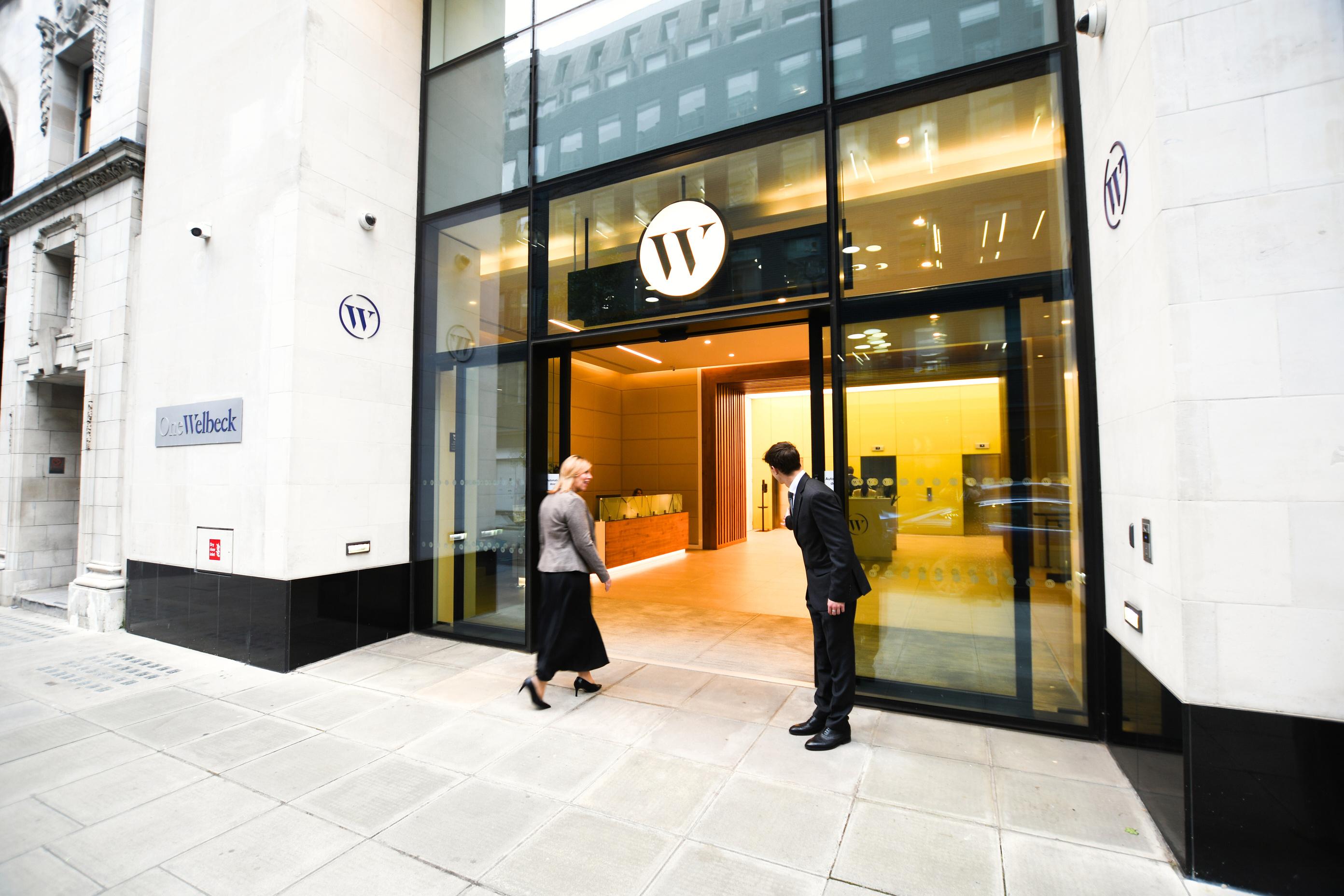
Situated in the heart of London’s Marylebone district, OneWelbeck is one of the UK’s largest private medical facilities for outpatient diagnostics, therapies and minimally invasive surgeries. With over 300 consultants partnered across 17 specialist centres of practice, OneWelbeck delivers a better standard of treatment to our patients
Our facilities include:
Our facilities include:
9-storey facility in central London
UK’s only 3D mole mapping service
Dedicated chronic pain clinic
Dedicated sleep centre
In-house pharmacy
Cutting edge imaging machines
Principal Conductor Edward Gardner supported by Aud Jebsen
Principal Guest Conductor Karina Canellakis
Conductor Emeritus Vladimir Jurowski KBE Patron HRH The Duke of Kent KG
Artistic Director Elena Dubinets Chief Executive David Burke
Leader Pieter Schoeman supported by Neil Westreich
Southbank Centre’s Royal Festival Hall
Saturday 5 April 2025 | 7.30pm
Tragedy to Triumph
Beethoven
Coriolan Overture (8’)
R Schumann
Violin Concerto (30’)
Interval (20’)
Schubert
Symphony No. 9 (The Great) (50’)
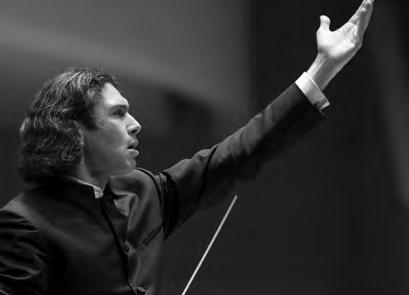
Vladimir Jurowski conductor
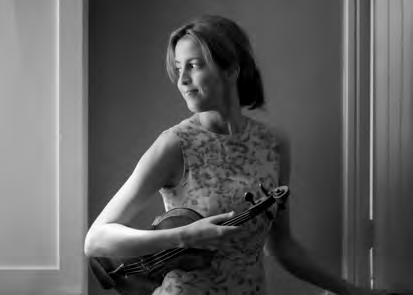
Vilde Frang violin Part of
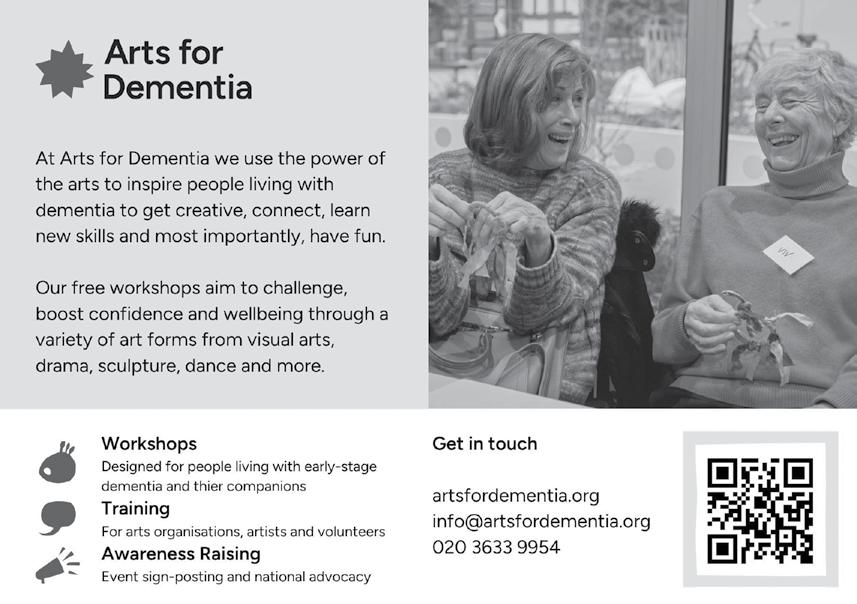
In association with Arts for Dementia
Welcome LPO news
Welcome to the Southbank Centre
We’re the UK’s largest centre for the arts and one of the nation’s top five visitor attractions, showcasing the world’s most exciting artists at our venues in the heart of London. As a charity, we bring millions of people together by opening up the unique art spaces that we care for.
The Southbank Centre is made up of the Royal Festival Hall, Queen Elizabeth Hall, Purcell Room, Hayward Gallery, National Poetry Library and Arts Council Collection. We’re one of London’s favourite meeting spots, with lots of free events and places to relax, eat and shop next to the Thames.
We hope you enjoy your visit. If you need any information or help, please ask a member of staff. You can also email hello@southbankcentre.co.uk or write to us at Southbank Centre, Belvedere Road, London SE1 8XX.
Subscribers to our email updates are the first to hear about new events, offers and competitions. Just head to our website to sign up.
The paper used for all LPO brochures and concert programmes has been sourced from responsibly managed forests, certified in accordance with the FSC® (Forest Stewardship Council). It is also Carbon Balanced, meaning the carbon impact of its production is offset by the World Land Trust through the purchase and preservation of ecologically important forestry under imminent threat of clearance.
If you don’t want to take your programme home, please make use of the recycling bins in the Royal Festival Hall foyers. Please also use these bins to recycle any plastic drinks glasses after the concert. Thank you.
Exclusive access with LPO Friends
Earlier today, LPO Friends were treated to an exclusive behind-the-scenes experience, watching Vladimir Jurowski, Vilde Frang and the Orchestra in rehearsal for tonight’s concert and enjoying a rare insight into the preparation and artistry that goes into each performance.
As well as exclusive access to a number of private rehearsals each season, LPO Friends membership puts you at the front of the queue for our Southbank Centre concert bookings, and offers invitations to other events and opportunities to meet LPO musicians throughout the year.
Our new 2025/26 concert season will be announced on Tuesday 22 April. LPO Friends receive our new season brochure ahead of the general public, and priority booking for Friends will open on Wednesday 23 April, before general booking from Tuesday 29 April.
LPO Friends membership starts from just £6 per month. Interested in finding out more? Scan the QR code or visit lpo.org.uk/friends
New on the LPO Label: Thomas Adès
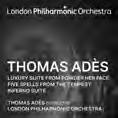
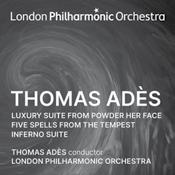
Yesterday on our own LPO Label we released a new album of orchestral suites by British composer Thomas Adès, described by The New York Times as ‘one of the most accomplished and complete musicians of his generation’. On it, Adès conducts the LPO in three of his own works: the ‘Luxury Suite’ from his awardwinning opera Powder Her Face; Five Spells From the Tempest – an orchestral suite drawn from Adès’s 2003 opera; and Inferno Suite, based on Dante’s The Divine Comedy. All three are world premiere recordings, captured live in concert at the Royal Festival Hall.
Thomas Adès: Orchestral Suites (LPO-0131) is available now on CD, and to stream or download via all major platforms. Scan the QR code to listen now.
First Violins
Pieter Schoeman* Leader
Chair supported by Neil Westreich
Alice Ivy-Pemberton Co-Leader
Vesselin Gellev Sub-Leader
Kate Oswin
Chair supported by Eric Tomsett
Lasma Taimina
Chair supported by Irina Gofman & Mr Rodrik
V. G. Cave
Thomas Eisner
Chair supported by Ryze Power
Yang Zhang
Cassandra Hamilton
Katalin Varnagy
Nilufar Alimaksumova
Second Violins
Tania Mazzetti Principal
Chair supported by The Candide Trust
Emma Oldfield Co-Principal
Claudia Tarrant-Matthews
Ashley Stevens
Fiona Higham
Chair supported by David & Yi Buckley
Nynke Hijlkema
Nancy Elan
Joseph Maher
Sophie Phillips
Sioni Williams
Violas
Benjamin Roskams Guest Principal
Mélissa Dattas
Katharine Leek
Laura Vallejo
Lucia Ortiz Sauco
Michelle Bruil
Alistair Scahill
Cellos
Kristina Blaumane Principal
Chair supported by Bianca & Stuart Roden
Waynne Kwon
David Lale
Auriol Evans
Helen Thomas
Sibylle Hentschel
On stage tonight
Double Basses
Sebastian Pennar* Principal
Hugh Kluger
Tom Walley
Chair supported by William & Alex de Winton
Elen Roberts
Flutes
Juliette Bausor Principal
Ellie Blamires
Oboes
Ian Hardwick* Principal
Alice Munday
Clarinets
Benjamin Mellefont* Principal
Chair supported by Sir Nigel Boardman & Prof. Lynda Gratton
Thomas Watmough
Chair supported by Roger Greenwood
Bassoons
Jonathan Davies* Principal
Chair supported by Sir Simon Robey
Helen Storey*
Chair supported by Friends of the Orchestra
Horns
John Ryan* Principal
Annemarie Federle Principal
Chair supported by Victoria Robey CBE
Martin Hobbs
Gareth Mollison
Trumpets
Paul Beniston* Principal
Tom Nielsen Co-Principal
Anne McAneney*
Chair supported in memory of Peter Coe
Trombones
David Whitehouse Principal
Merin Rhyd
Bass Trombone
Lyndon Meredith Principal
Timpani
Simon Carrington* Principal
Chair supported by Victoria Robey CBE
Assistant Conductor
Matthew Lynch
*Professor at a London conservatoire
The LPO also acknowledges the following chair supporters whose players are not present at this concert:
Dr Alex & Maria Chan
Gill & Garf Collins
Ian Ferguson & Susan Tranter
Dr Barry Grimaldi
David & Bettina Harden
London Philharmonic Orchestra
Uniquely groundbreaking and exhilarating to watch and hear, the London Philharmonic Orchestra has been celebrated as one of the world’s great orchestras since Sir Thomas Beecham founded it in 1932. Our mission is to share wonder with the modern world through the power of orchestral music, which we accomplish through live performances, online, and an extensive education and community programme, cementing our position as a leading orchestra for the 21st century.
Our home is at the Southbank Centre’s Royal Festival Hall, where we’re at the beating heart of London’s cultural life. You’ll also find us at our resident venues in Brighton, Eastbourne and Saffron Walden, and on tour worldwide. In 2024 we celebrated 60 years as Resident Symphony Orchestra at Glyndebourne Festival Opera, combining the magic of opera with Glyndebourne’s glorious setting in the Sussex countryside.
Soundtrack to key moments
Everyone will have heard the Grammy-nominated London Philharmonic Orchestra, whether it’s playing the world’s National Anthems for every medal ceremony of the London 2012 Olympics and Paralympics, our iconic recording with Pavarotti that made Nessun Dorma a global football anthem, or closing the flotilla at The Queen’s Thames Diamond Jubilee Pageant. And you’ll almost certainly have heard us on the soundtracks for major films including The Lord of the Rings
Sharing the wonder worldwide
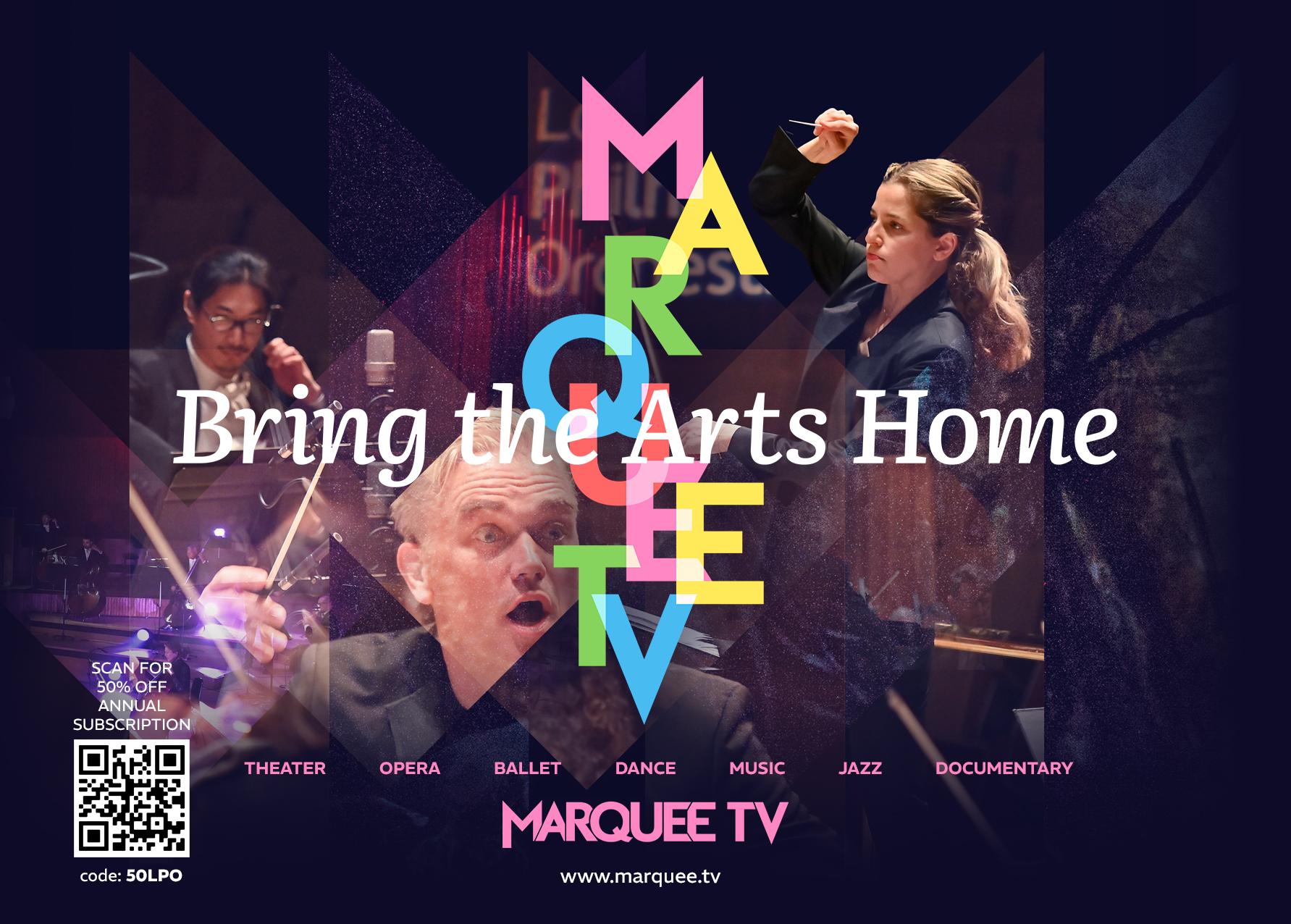
We’re one of the world’s most-streamed orchestras, with over 15 million plays of our content each month. In 2023 we were the most successful orchestra worldwide on YouTube, TikTok and Instagram, with over 1.1m followers across all platforms, and in spring 2024 we featured in a TV documentary series on Sky Arts: ‘Backstage with the London Philharmonic Orchestra’, still available to watch via Now TV. During 2024/25 we’re once again working with Marquee TV to broadcast selected live concerts to enjoy from your own living room.
Our conductors
Our Principal Conductors have included some of the greatest historic names like Sir Adrian Boult, Bernard Haitink, Klaus Tennstedt and Kurt Masur. In 2021 Edward Gardner became our 13th Principal Conductor, and Vladimir Jurowski became Conductor Emeritus in recognition of his impact as Principal Conductor from 2007–21. Karina Canellakis is our current Principal Guest Conductor, and Tania León our Composer-in-Residence.
Next generations
We’re committed to nurturing the next generation of musicians and music-lovers: we love seeing the joy of children and families experiencing their first musical moments, and we’re passionate about inspiring schools and teachers through dedicated concerts, workshops,
resources and training. Reflecting our values of collaboration and inclusivity, our OrchLab and Open Sound Ensemble projects offer music-making opportunities for adults and young people with disabilities and special educational needs.
Today’s young instrumentalists are the orchestra members of the future, and we have a number of opportunities to support their progression. Our LPO Junior Artists programme leads the way in creating pathways into the profession for young artists from under-represented communities, and our LPO Young Composers and Foyle Future Firsts schemes support the next generation of professional musicians, bridging the transition from education to professional careers. We also recently launched the LPO Conducting Fellowship, supporting the development of two outstanding early-career conductors from backgrounds under-represented in the profession.
2024/25 season
Principal Conductor Edward Gardner leads the Orchestra in an exciting 2024/25 season, with soloists including Joyce DiDonato, Leif Ove Andsnes, Patricia Kopatchinskaja, Víkingur Ólafsson and Isabelle Faust, and works including Strauss’s Alpine Symphony, Ravel’s Daphnis and Chloe and Mahler’s Eighth Symphony. Principal Guest Conductor Karina Canellakis joins us for three concerts including Bruckner’s Fourth Symphony, Tchaikovsky’s Sixth Symphony, and Mozart with pianist Benjamin Grosvenor. We’ll also welcome back Conductor Emeritus Vladimir Jurowski, as well as guest conductors including Mark Elder, Lidiya Yankovskaya, Robin Ticciati and Kevin John Edusei.
Throughout the season we’ll explore the relationship between music and memory in our ‘Moments Remembered’ series, featuring works like Beethoven’s ‘Eroica’ Symphony, Strauss’s Metamorphosen and John Adams’s On the Transmigration of Souls. During the season there’ll be the chance to hear brand new works by composers including Freya Waley-Cohen and David Sawer, as well as performances by renowned soloists violinist Gidon Kremer, sarod player Amjad Ali Khan, soprano Renée Fleming and many more. The season also features tours to Japan, the USA, China and across Europe, as well as a calendar bursting with performances and community events in our Brighton, Eastbourne and Saffron Walden residencies. lpo.org.uk
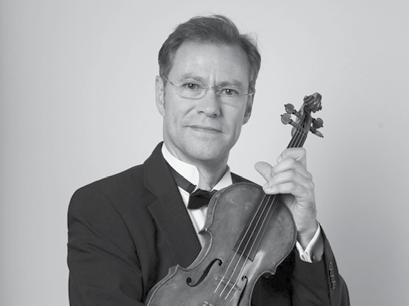
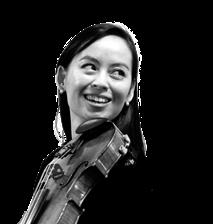
Pieter Schoeman Leader
Pieter Schoeman was appointed Leader of the London Philharmonic Orchestra in 2008, having previously been Co-Leader since 2002. He is also a Professor of Violin at Trinity Laban Conservatoire of Music & Dance.
Pieter has performed worldwide as a soloist and recitalist in such famous halls as the Concertgebouw in Amsterdam, Moscow’s Rachmaninoff Hall, Capella Hall in St Petersburg, Staatsbibliothek in Berlin, Hollywood Bowl in Los Angeles and the Southbank Centre’s Royal Festival Hall. As a chamber musician he regularly appears at London’s prestigious Wigmore Hall. His chamber music partners have included Anne-Sophie Mutter, Veronika Eberle, Patricia Kopatchinskaja, Boris Garlitsky, Jean-Guihen Queyras, Yannick Nézet-Séguin, Martin Helmchen and Julia Fischer.
Pieter has performed numerous times as a soloist with the London Philharmonic Orchestra. Highlights have included an appearance as both conductor and soloist in Vivaldi’s Four Seasons at the Royal Festival Hall, the Brahms Double Concerto with Kristina Blaumane, Florence Price’s Violin Concerto No. 2, and the Britten Double Concerto with Alexander Zemtsov, which was recorded and released on the LPO Label to great critical acclaim.
Pieter has appeared as Guest Leader with the BBC, Barcelona, Bordeaux, Lyon and Baltimore symphony orchestras; the Rotterdam and BBC Philharmonic orchestras; and the Leipzig Gewandhaus Orchestra.
Pieter’s chair in the LPO is generously supported by Neil Westreich.
Vladimir Jurowski became the London Philharmonic Orchestra’s Conductor Emeritus in 2021, following 14 years as Principal Conductor, during which his creative energy and artistic rigour were central to the Orchestra’s success. In August 2021 – his final official concert as LPO Principal Conductor – he received the Royal Philharmonic Society Gold Medal, one of the highest international honours in music. In February 2024 he was appointed an Honorary Knight Commander of the Most Excellent Order of the British Empire (KBE) by His Majesty King Charles III, in recognition of his services to music and the arts.
Vladimir Jurowski brought the LPO’s last season to a memorable close on 27 April 2024 with the completion of his acclaimed Wagner Ring Cycle –a semi-staged performance of Götterdämmerung Tomorrow night, he and violinist Vilde Frang will repeat tonight’s programme with the Orchestra at Saffron Hall, followed by a tour of Spain with concerts in Alicante, Valencia and Madrid.
In 2021 Vladimir became Music Director at the Bavarian State Opera in Munich. Since 2017 he has been Chief Conductor and Artistic Director of the Berlin Radio Symphony Orchestra. He is also Principal Artist of the Orchestra of the Age of Enlightenment, and in 2021 stepped down from his decade as Artistic Director of the Russian State Academic Symphony Orchestra to become its Honorary Conductor. He has previously held the positions of First Kapellmeister of the Komische Oper, Berlin; Principal Guest Conductor of the Teatro Comunale di Bologna; Principal Guest Conductor of the Russian National Orchestra; and Music Director of Glyndebourne Festival Opera.
Vladimir enjoys close relationships with the world’s most distinguished artistic institutions, collaborating with many of the world’s leading orchestras including the Royal Concertgebouw Orchestra, the Chamber Orchestra of Europe, the Staatskapelle Dresden, the Gewandhausorchester Leipzig, the Cleveland and Philadelphia orchestras, the New York Philharmonic and the Chicago and Boston symphony orchestras.
A committed operatic conductor, Vladimir’s recent highlights include his semi-staged Wagner Ring Cycle with the LPO at the Royal Festival Hall; the Munich premiere of Weinberg’s The Passenger; new productions of Così fan tutte, Prokofiev’s War and Peace, Der Rosenkavalier, Shostakovich’s The Nose and Penderecki’s Die Teufel von Loudun at the Bavarian State Opera; Die Frau ohne Schatten in Berlin and Bucharest with the Berlin Radio Symphony Orchestra; Henze’s The Bassarids and Schoenberg’s Moses und Aron at the Komische Oper Berlin; his acclaimed debut at the Salzburg Festival with Wozzeck; and his first return to Glyndebourne as a guest conductor, for the world premiere of Brett Dean’s Hamlet with the LPO. Previous productions at Glyndebourne – many with the LPO – have included Die Zauberflöte, La Cenerentola, Otello, Macbeth, Falstaff, Tristan und Isolde, Die Meistersinger von Nürnberg, Don Giovanni, The Rake’s Progress, The Cunning Little Vixen, Ariadne auf Naxos and Eötvös’s Love and Other Demons.
Highlights of the 2024/25 season include new productions of Wagner’s Das Rheingold and Mozart’s Don Giovanni at the Bavarian State Opera, and return visits to the Royal Concertgebouw and Vienna Symphony orchestras.
The final instalment of Vladimir Jurowski’s highlypraised three-volume Stravinsky series with the Orchestra was released in 2024 on the LPO Label, featuring works including Pulcinella, Requiem Canticles and Symphony in C. During his tenure as Principal Conductor the LPO released numerous acclaimed recordings with Jurowski on its own label, including the complete symphonies of Brahms and Tchaikovsky; Mahler’s Symphonies Nos. 1, 2, 4 & 8; and many others. In 2017 the Orchestra released a 7-CD box set of Jurowski’s LPO recordings in celebration of his 10th anniversary as Principal Conductor.
In 2012 Vilde Frang was unanimously awarded the Credit Suisse Young Artists Award, which led to her debut with the Vienna Philharmonic under Bernard Haitink at the Lucerne Festival.
Vilde’s profound musicianship and exceptional lyricism have elevated her as one of the foremost violinists of her generation. She continues to appear regularly with the world’s leading orchestras including the London Philharmonic Orchestra, London Symphony Orchestra, Berlin Philharmonic, Royal Concertgbouw Orchestra, Bavarian Radio Symphony Orchestra, Chamber Orchestra of Europe, Tonhalle Orchestra Zurich, Los Angeles Philharmonic, Budapest Festival Orchestra and The Cleveland Orchestra. She has enjoyed collaborations with conductors including Simon Rattle, Bernard Haitink, Herbert Blomstedt, Esa-Pekka Salonen, Mariss Jansons, Vladimir Ashkenazy, Ivan Fischer, Maxim Emelyanychev, Jakub Hrůša, Manfred Honeck, Teodor Currentzis, Daniel Harding, Antonio Pappano, Lahav Shani, Paavo Järvi and Yuri Temirkanov.
Highlights of the current season include her return to the Berlin Philharmonic with Kirill Petrenko including performances at Carnegie Hall, and her much-anticipated debut with the Chicago Symphony Orchestra. As well as repeating tonight’s LPO programme at Saffron Hall and on tour in Spain, this season Vilde also embarks on international tours with the Oslo Philharmonic Orchestra under Klaus Mäkelä, the London Symphony Orchestra under Antonio Pappano, the Deutsches Symphonie-Orchester Berlin under Robin Ticciati, and the Munich Philharmonic under Mirga Gražinytė-Tyla. She also embarks on a Bach cycle with the Basel Chamber Orchestra.
A keen and prominent chamber musician, Vilde regularly appears at the Lucerne Festival, the BBC Proms, Verbier, Lockenhaus, the George Enescu Festival, the Salzburg Festival and the Prague Spring Music Festival. She also appears regularly in recital at Carnegie Hall, the Amsterdam Concertgebouw, the Vienna Musikverein, the Philharmonie Berlin, the Tonhalle Zurich and BOZAR in Brussels, as well in North America as part of the Vancouver Recital Series, Boston Celebrity Series and San Francisco Performances. This season Vilde returns to the Wigmore Hall as Artist-in-Residence, where she joins forces with early music ensemble Arcangelo, and later in the season performs chamber music with close collaborators Lawrence Power, Valeriy Sokolov, Denis Kozhukhin and Maximillian Hornung.
Vilde Frang is an exclusive Warner Classics artist and her recordings have received numerous awards, including the Edison Klassiek Award, the Diapason d’Or, the Deutsche Schallplattenpreis, the Grand Prix du Disque, and two Gramophone Awards.
Born in Norway, at the age of 12 Vilde Frang was invited by Mariss Jansons to make her debut with the Oslo Philharmonic Orchestra. She studied at Barratt Due Musikkinstitutt in Oslo, with Kolja Blacher at the Musikhochschule Hamburg, and with Ana Humachenco at the Kronberg Academy.
Vilde performs on a 1734 Guarneri del Gesu, generously loaned to her by a European benefactor.
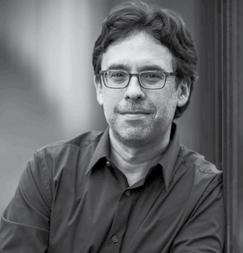
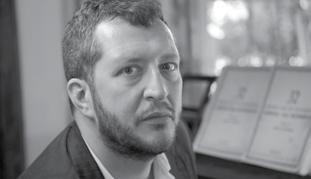
by Jeremy Eichler, LPO Writer-in-Residence 2024/25
Is music the ultimate medium of memory?
Ever since the mythical poet Orpheus retrieved his beloved Eurydice from the underworld through the magical power of his song, music has been summoning souls, bridging time, and raising the dead. Its ability to trigger flights of memory is a phenomenon many people still experience: think, for instance, of the song that pops up on the car radio and, like Proust’s madeleine, instantly calls to mind a moment or experience that took place years or even decades earlier.
Yet as so many works presented across the London Philharmonic Orchestra’s 2024/25 season will illustrate, it is not just we who remember music. Music also remembers us. Music reflects the individuals and the societies that create it, capturing something essential about the era of its birth. When a composer in 1824 consciously or unconsciously distils worlds of thought, fantasy and emotion into a series of notes on a page, and then we hear those same notes realized in a performance two centuries later, we are hearing the past literally speaking in the present.
In this sense, music can fleetingly reorder the past, bring closer that which is distant, and confound the one-way linearity of time. In these very ways, music shares a profound affinity with memory itself. For memory by definition also challenges the pastness of the past and the objective distance of history; it also reorders time and flouts the forward march of the years. An event seared in memory from decades ago may haunt the mind with a power far greater than events that took place only yesterday. Indeed, while Mnemosyne, the Greek goddess of memory, was said to be mother of all the Muses, one daughter may stand as first among equals. Memory resonates with the cadences, the revelations, the opacities and the poignancies of music.
But what exactly can music remember? How does it do so differently to other art forms? Whose stories are being recalled? Who is doing the remembering? And toward what ends are we being asked to recollect?
Over the course of its 2024/25 season, the LPO will explore these questions through no fewer than 15 programmes, a curated gallery of sonic memory. Some will represent iconic figures at the heart of the Western musical tradition (such as Haydn, Beethoven, Schoenberg, Britten, Strauss, Shostakovich and Prokofiev). Some carry forward lesser-known but essential 20th-century voices (Mieczysław Weinberg, Boris Lyatoshynsky, Julia Perry). And some are by living composers (György Kurtág, John Adams, Freya WaleyCohen, Evan Williams, Dinuk Wijeratne), artists who ply their craft while looking both forward and back, creating memories of yesterday for the world of tomorrow.
Across this season we will find sonic bridges to the wartime past, the utopian past, the personal past, the national past, the literary past, the imagined past, the forgotten past, the obliterated past. Implicit in this journey is an awareness of memory’s complexity and contingency, beginning with Beethoven’s ‘Eroica’, a work whose original dedication to Napoleon was itself renounced with a fury that tore the composer’s manuscript paper. And the season ends with the cosmos-embracing euphoria of Mahler’s Eighth Symphony, itself a Goethe-inspired memory of earlier Enlightenment dreams, etched at the dawn of the modern world.
Along the way, many of the works treat, implicitly or explicitly, the great ruptures of the 20th century, including extraordinary sonic monuments to the Second World War and the Holocaust. We may feel we already know these epochal events through history books. But the information accumulating on library shelves provides just one mode of access. The survivor Jean Améry once went as far as bitterly attacking what he saw as his own era’s tendency to publish books about the horrors of the Holocaust in order to forget those horrors with a clean conscience, to relegate a shocking and morally unassimilable past to ‘the cold storage of history’.
London Philharmonic Orchestra • 5 April 2025 • Tragedy to Triumph
Music, on the other hand, possesses a unique and often underappreciated power to burn through history’s cold storage, to release its frozen stores of meaning and emotion. Its power may originate in the visceral immediacy of sound itself: sound surrounds us, penetrates our bodies, vibrates within us. Listening to a song, the critic John Berger once wrote, ‘we find ourselves inside a message.’ But music’s potency as a medium of cultural memory also flows from its mysterious capacity to bridge intellect and emotion; its ability to short-circuit the centuries by yoking ‘then’ and ‘now’ within a single performance; and its haunting way of expressing deep yet untranslatable truths that lie beyond the province of language. Thomas Mann called this last quality the ‘spoken unspokenness’ that belongs to music alone.
Each of the season’s works can and should be experienced on its own terms, but one hopes they will also add up to something greater than the sum of their parts. Listeners, in short, are being invited to consider music not only as aesthetic entertainment or even spiritual uplift – but as a unique witness to history and carrier of memory, a window onto humanity’s hopes, dreams and cataclysms. This approach can yield dividends all its own. Indeed, to listen with an awareness of music as an echo of past time opens the possibility of
hearing so much more. Here, in essence, are the sounds of culture’s memory, resonating between and behind the notes.
lpo.org.uk/whats-on/london
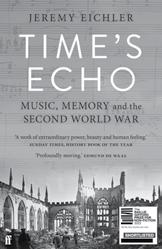
Jeremy Eichler is a critic and historian based at Tufts University, Massachusetts, as well as the LPO’s inaugural Writer-in-Residence. Portions of this essay were adapted from his award-winning book Time’s Echo: Music, Memory, and the Second World War, recently published in paperback (Faber, 2023).
THOMAS ADÈS: ORCHESTRAL SUITES
London Philharmonic Orchestra | Thomas Adès conductor
Programme notes
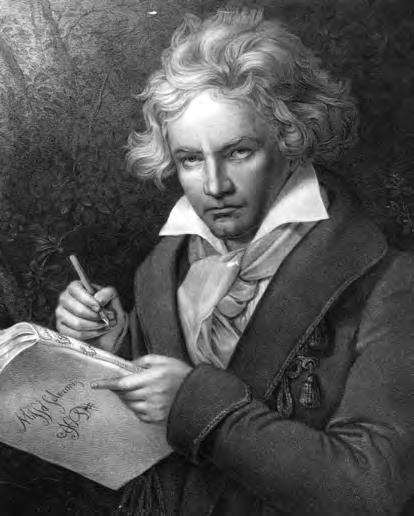
Ludwig van Beethoven
1770–1827
Coriolan Overture, Op. 62 1807
Until towards the end of the 18th century, overtures were usually little more than musical announcements that an opera or play was about to begin – a way of silencing the audience. Rarely was their content affected much by the events of the ensuing drama, and it was only with Gluck’s ‘reform operas’ of the 1770s that overtures began to attempt on a more regular basis to encapsulate what was to follow. So influential was the change, however, that by the early 1800s, Beethoven’s most dynamic overtures – those to the plays Coriolan, Egmont and The Ruins of Athens, the ballet The Creatures of Prometheus and the opera Fidelio –soon acquired a concert life of their own. In effect, they had become the earliest examples of one of the 19th century’s favourite forms, the symphonic poem.
The overture that Beethoven provided for Coriolan, a five-year-old tragedy by his friend Heinrich von Collin, was actually performed a couple of times as a concert piece in the month preceding its appearance at a revival of the play in April 1807. Collin’s drama had its origins in Shakespeare’s Coriolanus and, though differing from it in several respects, presented the same dilemma of the Roman general who has rebelled and is now leading an attack on Rome itself. On the point of victory he lays down his arms so that his mother, Volumnia, can be spared – a moment of military weakness which eventually drives him to suicide. Beethoven’s Overture focuses on the conflict between the arrogant soldier –shown in the truculent opening chords and urgent string motif – and the pleadings of his mother as represented by the tender second theme, rising step by step as her beseeching intensifies.
In Shakespeare, Coriolanus was killed by his own followers for his disloyalty, but Beethoven’s concern, like Collin’s, was for the effect of the hero’s failings on his own mind, as shown at the end. Here, Volumnia’s theme makes its third and last appearance, not rising this time but switching with greater urgency to the minor, with the result that Coriolanus capitulates in a broken version of the opening. As the once-proud chords lose their way and the string motif shrivels to nothing, the general’s fall is quiet and ignominious.
Courtesy
the Royal College of Music, London
Programme notes
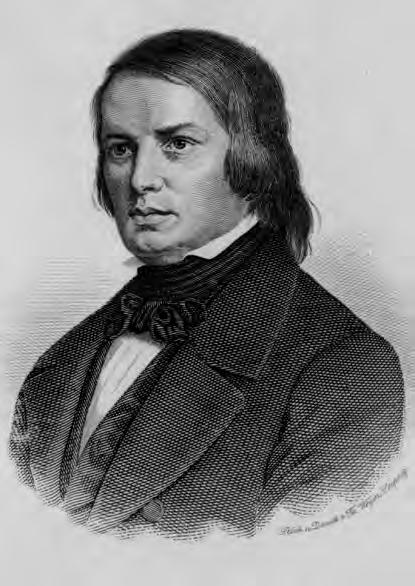
Robert Schumann
1810–56
Violin Concerto in D minor, WoO23 1853
Vilde Frang violin
1 Im kräftigen, nicht zu schnellen Tempo [In a forceful but not rapid tempo]
2 Langsam [Slow] –
3 Lebhaft, doch nicht schnell [Lively, but not fast]
Schumann composed three concertos, including in the Piano Concerto one of the best-loved works of its kind. The Cello Concerto is less often heard, while performances of the Violin Concerto are infrequent indeed. The origins of its neglect are in the first place historical. Schumann composed it in the autumn of 1853, having been inspired by the playing of the 22-year-old Joseph Joachim, one of the greatest violinists of the 19th century. It was a time of feverish productivity for Schumann, but also one when mental illness was beginning to strike him down. He was committed to an asylum early in 1854, and by the time of his death in July 1856 there had still been no performance of the Concerto. Following this, its course into obscurity was set when, despite early enthusiasm, Joachim and the composer’s widow Clara grew increasingly uncomfortable with it. ‘It must be regretfully admitted that there are unmistakable signs of a certain weariness’, Joachim later declared, ‘though his intellectual energy strives to master it’, while Clara protectively omitted it from the publication of her husband’s ‘collected works’. After Joachim’s death in 1907 his son placed a total ban on its publication.
Yet, like its companions, the Violin Concerto is distinctive and personal to its composer to a degree that ought to ensure wider interest. Schumann was no lover of empty virtuosity, and while the solo writing here is certainly demanding (as Joachim himself admitted), it does not soar above the orchestra in the expected
Programme notes
manner, nor explode into violinist pyrotechnics to impress the audience. But as Joachim said, there are passages that ‘give evidence (how could it be otherwise?) of the profound spirit of its creator’. The work was finally allowed into the light in 1937, when it received its premiere in Berlin, and since then it has continued to fascinate and challenge violinists and audiences alike.
The first movement opens with an imposingly Romantic theme, albeit one in whose stately rhythms and trills commentators have seen a possible homage to Handel. It is countered by a lyrical but strangely halting second theme which Joachim praised as ‘genuine Schumann’, even if he was less sympathetic towards the way intimate dialogues between the soloist and woodwinds create a similar soft atmosphere in the central development section, rather than swelling into something more agitated and conventionally effective.
‘Glorious Master – the blissful dream is captured, as warm and intimate as ever’, wrote Joachim of the slow second movement, which is dominated by a poignant melody that Schumann told Clara was inspired by the spirit of Schubert, before adding that it ‘should sing itself to death like a nightingale’. The opening gently rocking figure which seems at first to be pure accompaniment later ingeniously becomes part of the solo melody, and also reappears in support of the violin as it uses yet another motif from that melody to drive the music into the third movement. Though not so called, this last is in the style of a polonaise, most evidently in its swaggering main theme. The overall pace, however, is leisurely, while the construction is relaxed and varied, with fleeting references to the previous movements. A conventionally climactic finale this may not be, but there is no doubting the personality behind it.
Interval – 20 minutes
An announcement will be made five minutes before the end of the interval.
Programme notes
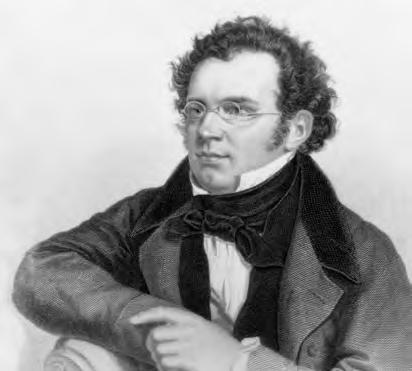
Franz Schubert
1797–1828
Symphony No. 9 in C major (The Great)
1825–26
1
Andante – Allegro ma non troppo
2 Andante con moto
3 Scherzo & Trio: Allegro vivace
4 Allegro vivace
The C major symphony known today as Schubert’s Ninth – in fact he began at least a dozen symphonies and completed only seven – has also gained for itself the nickname ‘The Great’. Partly this is to distinguish it from the shorter and lighter C major symphony (No. 6) that he composed during his teens, but it is also an acknowledgement of the work’s scale and ambition. Several decades before Bruckner, and several more before Mahler, this was a symphony not just of unusual length – though in this respect it was exceeded by some of Beethoven’s symphonies, while Schubert’s own ‘Unfinished’ might well have surpassed it had it been completed – but one which seems set from the beginning to express a feeling of space, openness, the great outdoors.
The date of its composition is uncertain, but it is generally thought that the bulk of the work was done during Schubert’s holiday in Upper Austria in the summer of 1825. Schubert was little regarded as a composer of instrumental music at this time, and public performances were few. When he offered it to Vienna’s leading concert society, the Gesellschaft der Musikfreunde, in the spring of 1828, they gave it a run-through rehearsal but rejected it as too difficult; Symphony No. 6 was more to their taste. After the composer’s death later in the year, the manuscript of the Symphony passed into the possession of his brother Ferdinand, and it was still there ten years later when Robert Schumann came to call. Schumann, recently chosen by the publishers to be the dedicatee of
Schubert’s last three (long) piano sonatas, was looking for more undiscovered Schubert works and was delighted to come across a symphony of what he called ‘heavenly length’, ‘like a large-scale novel in four volumes by Jean Paul’. Thanks to Schumann’s advocacy the work received its premiere (in a cut version) in Leipzig on 21 March 1839, with none other than Felix Mendelssohn conducting.
Continued overleaf
Programme notes
That the scale on which ‘The Great’ will unfold is a leisurely one is evident from the slow introduction, not the taut motivic time-bomb of a Haydn or a Beethoven but a gently undulating horn tune, subsequently embroidered by the rest of the orchestra. The first movement proper opens with a boisterous theme for unison strings answered by chattering woodwind, before moving on to a faintly folksy woodwind melody which somehow manages to be both perky and melancholy at the same time. Soon trombones begin gently intoning a three-note figure derived from the introductory horn-call’s fourth, fifth and sixth notes, and this is then recycled, to more menacing effect, in the central development section, in which other previously heard thematic fragments are also added to the mix. It is not until the coda, however, that the horn theme is heard again in full, in a brash orchestral restatement which binds the movement together with exemplary tidiness.
The ‘slow movement’ is not particularly slow. Though a spiritual cousin to the corresponding movement of Beethoven’s Seventh Symphony, it is considerably more easygoing, the trudging introductory bars leading to an almost jaunty oboe theme and, later, a warmly romantic new melody. A haunting transition passage marked out by tolling horn notes heralds a return of the first theme which builds to a grand Schubertian climax, after which both themes are heard again, this time in reverse order.
An ebullient Scherzo follows, recalling Schubert’s dance music in the outer sections (though with a Beethovenian brusque energy) and evoking an almost Dvořákian rolling landscape in the broad central Trio. After this, the Finale offers energy of a different kind, an unstoppable flow of forward momentum set in motion by bounding fanfare figures and culminating in an exhilarating coda. As so often in Schubert, a loose-limbed structure is kept alive by a distinctly personal sense of harmonic colour, and by a telling use of key relationships. By the end it is as if we have flown fast but majestically over mountain ranges and vast valleys, joyously viewing every vista along the way.
London Philharmonic Orchestra | Klaus Tennstedt (LPO Label, with Symphony No. 5: LPO-0087)
Scan the QR code to listen now:
R Schumann: Violin Concerto Isabelle Faust (violin) | Freiburger Barockorchester Pablo Heras-Casado (Harmonia Mundi)
Schubert: Symphony No. 9 (The Great) London Philharmonic Orchestra | Klaus Tennstedt (ICA Classics download) or Vienna Philharmonic | Georg Solti (Decca Legends) or Leipzig Gewandhaus Orchestra | Herbert Blomstedt (Deutsche Grammophon)
We’d love to hear from you
We hope you enjoyed tonight’s concert. Could you spare a few moments afterwards to complete a short survey about your experience? Your feedback is invaluable to us and will help to shape our future plans. Just scan the QR code to begin the survey. Thank you!
Petrushka
SATURDAY 31 MAY 2025
SOUTHBANK CENTRE’S ROYAL FESTIVAL HALL
CONCERT 12.00–1.00PM ACTIVITIES 10.00–11.45AM
Matthew Lynch conductor Rachel Leach presenter
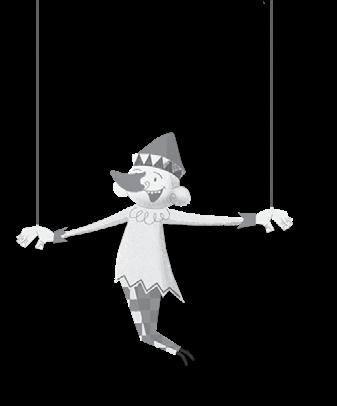
Roll up, roll up! Explore the heady sights and sounds of the fair where we meet Petrushka, the playful star of the puppet show, and the other characters in his magical world.
Join the London Philharmonic Orchestra to hear Igor Stravinsky’s dazzling classic depicting Petrushka’s story, brought to life through lively narration and vivid, colourful animations on the big screen. Suitable for ages 6+
Join us from 10am for fun-filled pre-concert activities.
lpo.org.uk/funharmonics
Our final Royal Festival Hall concerts this season
lpo.org.uk
JanLisiecki
Jan Lisiecki plays Beethoven
Saturday 12 April 2025 | 7.30pm
Sibelius Pohjola’s Daughter
Beethoven Piano Concerto No. 5 (Emperor)
Sibelius Symphony No. 2
Tarmo Peltokoski conductor
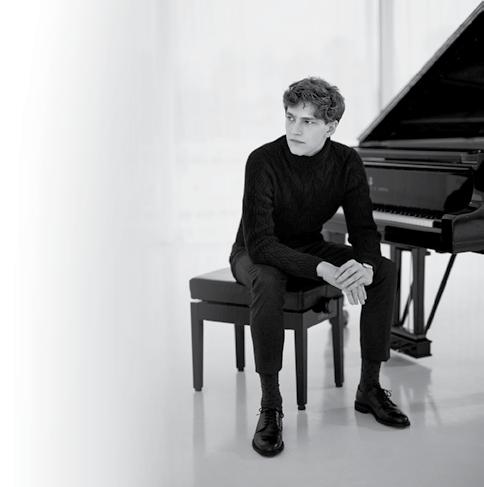
Jan Lisiecki piano
Daphnis and Chloé
Wednesday 23 April 2025 | 6.30pm & 8.30pm
Daphnis et Chloé
La valse
Edward Gardner conductor
BBC Singers
Mahler 8
Saturday 26 April 2025 | 7.30pm
Symphony No. 8
Edward Gardner conductor
London Philharmonic Choir
London Symphony Chorus
Tiffin Boys’ Choir
For full list of soloists, visit lpo.org.uk
Circa
Sound Futures donors
We are grateful to the following donors for their generous contributions to our Sound Futures campaign. Thanks to their support, we successfully raised £1 million by 30 April 2015 which has now been matched pound for pound by Arts Council England through a Catalyst Endowment grant. This has enabled us to create a £2 million endowment fund supporting special artistic projects, creative programming and education work with key venue partners including our Southbank Centre home. Supporters listed below donated £500 or over. For a full list of those who have given to this campaign please visit lpo.org.uk/soundfutures
Masur Circle
Arts Council England
Dunard Fund
Victoria Robey CBE
Emmanuel & Barrie Roman
The Underwood Trust
Welser-Möst Circle
William & Alex de Winton
John Ireland Charitable Trust
The Tsukanov Family Foundation
Neil Westreich
Tennstedt Circle
Valentina & Dmitry Aksenov
Richard Buxton
The Candide Trust
Michael & Elena Kroupeev
Kirby Laing Foundation
Mr & Mrs Makharinsky
Alexey & Anastasia Reznikovich
Sir Simon Robey
Bianca & Stuart Roden
Simon & Vero Turner
The late Mr K Twyman
Solti Patrons
Ageas
John & Manon Antoniazzi
Gabor Beyer, through BTO
Management Consulting AG
Jon Claydon
Mrs Mina Goodman & Miss Suzanne Goodman
Roddy & April Gow
The Jeniffer & Jonathan Harris
Charitable Trust
Mr James R.D. Korner
Christoph Ladanyi & Dr Sophia Ladanyi-Czernin
Robert Markwick & Kasia Robinski
The Maurice Marks Charitable Trust
Mr Paris Natar
The Rothschild Foundation
Tom & Phillis Sharpe
The Viney Family
Haitink Patrons
Mark & Elizabeth Adams
Dr Christopher Aldren
Mrs Pauline Baumgartner
Lady Jane Berrill
Mr Frederick Brittenden
David & Yi Yao Buckley
Mr Clive Butler
Gill & Garf Collins
Mr John H Cook
Mr Alistair Corbett
Bruno De Kegel
Georgy Djaparidze
David Ellen
Christopher Fraser OBE
David & Victoria Graham Fuller
Goldman Sachs International
Mr Gavin Graham
Moya Greene
Mrs Dorothy Hambleton
Tony & Susie Hayes
Malcolm Herring
Catherine Høgel & Ben Mardle
Mrs Philip Kan
Rehmet Kassim-Lakha de Morixe
Rose & Dudley Leigh
Lady Roslyn Marion Lyons
Miss Jeanette Martin
Duncan Matthews KC
Diana & Allan Morgenthau
Charitable Trust
Dr Karen Morton
Mr Roger Phillimore
Ruth Rattenbury
The Reed Foundation
The Rind Foundation
Sir Bernard Rix
David Ross & Line Forestier
(Canada)
Carolina & Martin Schwab
Dr Brian Smith
Lady Valerie Solti
Mr & Mrs G Stein
Dr Peter Stephenson
Miss Anne Stoddart
TFS Loans Limited
Marina Vaizey
Jenny Watson
Guy & Utti Whittaker
Pritchard Donors
Ralph & Elizabeth Aldwinckle
Mrs Arlene Beare
Mr Patrick & Mrs Joan Benner
Mr Conrad Blakey
Dr Anthony Buckland
Paul Collins
Alastair Crawford
Mr Derek B. Gray
Mr Roger Greenwood
The HA.SH Foundation
Darren & Jennifer Holmes
Honeymead Arts Trust
Mr Geoffrey Kirkham
Drs Frank & Gek Lim
Peter Mace
Mr & Mrs David Malpas
Dr David McGibney
Michael & Patricia McLaren-Turner
Mr & Mrs Andrew Neill
Mr Christopher Querée
The Rosalyn & Nicholas Springer Charitable Trust
Timothy Walker CBE AM
Christopher Williams
Peter Wilson Smith
Mr Anthony Yolland
and all other donors who wish to remain anonymous
Thank you
As a registered charity, we are extremely grateful to all our supporters who have given generously to the LPO over the past year to help maintain the breadth and depth of the LPO’s activities, as well as supporting the Orchestra both on and off the concert platform.
Artistic Director’s Circle
Anonymous donors
The American Friends of the London Philharmonic Orchestra
William & Alex de Winton
Catherine Høgel & Ben Mardle
Aud Jebsen
In memory of Mrs Rita Reay
Sir Simon & Lady Robey CBE
Orchestra Circle
Mr & Mrs Philip Kan
Neil Westreich
Principal Associates
An anonymous donor
Mrs Irina Andreeva
Steven M. Berzin
Richard Buxton
Gill & Garf Collins
In memory of Brenda Lyndoe Casbon
In memory of Ann Marguerite Collins
Irina Gofman & Mr Rodrik V. G. Cave
Patricia Haitink
George Ramishvili
In memory of Kenneth Shaw
The Tsukanov Family
Mr Florian Wunderlich
Associates
In memory of Len & Edna Beech
Sir Nigel Boardman & Prof. Lynda Gratton
The Candide Trust
Stuart & Bianca Roden
In memory of Hazel Amy Smith
Gold Patrons
An anonymous donor
David & Yi Buckley
Dr Alex & Maria Chan
In memory of Allner Mavis Channing
In memory of Peter Coe
Michelle Crowe Hernandez
Gini Gabbertas
Jenny & Duncan Goldie-Scot
Mr Roger Greenwood
Malcolm Herring
Julian & Gill Simmonds
Mr Brian Smith
Mr Jay Stein
Eric Tomsett
The Viney Family
Guy & Utti Whittaker
Silver Patrons
David Burke & Valerie Graham
Clive & Helena Butler
John & Sam Dawson
Ulrike & Benno Engelmann
Fiona Espenhahn in memory of Peter
Luke Gardiner
Prof. Erol & Mrs Deniz Gelenbe
The Jeniffer & Jonathan Harris
Charitable Trust
Iain & Alicia Hasnip
John & Angela Kessler
Mrs Elizabeth Meshkvicheva
Dr Irene Rosner David
Tom & Phillis Sharpe
Jenny Watson CBE
Laurence Watt
Bronze Patrons
Anonymous donors
Chris Aldren
Michael Allen
Alexander & Rachel Antelme
Annie Berglof
Nicholas Berwin
Lorna & Christopher Bown
Mr Bernard Bradbury
Richard & Jo Brass
Desmond & Ruth Cecil
Mr John H Cook
Emmanuelle & Thierry d’Argent
Mrs Elizabeth Davies
Guy Davies
Cameron & Kathryn Doley
Ms Elena Dubinets
David Ellen
Cristina & Malcolm Fallen
Mr Daniel Goldstein
David & Jane Gosman
Mr Gavin Graham
Mrs Dorothy Hambleton
Eugene & Allison Hayes
J Douglas Home
Mr & Mrs Jan
Mr & Mrs Ralph Kanza
Mrs Elena Kolobova & Mr Oleg
Kolobov
Rose & Dudley Leigh
Wg. Cdr. M T Liddiard OBE JP RAF
Drs Frank & Gek Lim
Andrew T Mills
Mr & Mrs Andrew Neill
John Nickson & Simon Rew
Peter Noble & Lucy Vella
Mikhail Noskov & Vasilina Bindley
Simon & Lucy Owen-Johnstone
Andrew & Cindy Peck
Mr Roger Phillimore
Nigel Phipps & Amanda McDowall
Mr Michael Posen
Marie Power
Sir Bernard Rix
Baroness Shackleton
Tim Slorick
Sir Jim Smith
Mrs Maria Toneva
Mr Joe Topley & Ms Tracey
Countryman
Mr & Mrs John C Tucker
Andrew & Rosemary Tusa
Galina Umanskaia
Mr & Mrs John & Susi Underwood
The Viney Family
Mr Rodney Whittaker
Grenville & Krysia Williams
Joanna Williams
Principal Supporters
Anonymous donors
Julian & Annette Armstrong
Chris Banks
Mr John D Barnard
Roger & Clare Barron
Mr Geoffrey Bateman
Mrs A Beare
Chris Benson
Peter & Adrienne Breen
Dr Anthony Buckland
Mr Julien Chilcott-Monk
David & Liz Conway
Mr Alistair Corbett
David Devons
Deborah Dolce
In memory of Enid Gofton
Prof Emeritus John Gruzelier
Mrs Farrah Jamal
Bruce & Joanna Jenkyn-Jones
Per Jonsson
Tanya Joseph
Mr Ian Kapur
Jozef & Helen Kotz
Dr Peter Mace
Peter Mainprice
Miss Rebecca Murray
Mrs Terry Neale
Mr Stephen Olton
Mr James Pickford
Neil & Karen Reynolds
Mr Robert Ross
Kseniia Rubina
Mr Andrea Santacroce & Olivia Veillet-Lavallée
Penny Segal
Priscylla Shaw
Michael Smith
Erika Song
Mr & Mrs G Stein
Dr Peter Stephenson
Ben Valentin KC
Sophie Walker
Christopher Williams
Liz Winter
Elena Y Zeng
Supporters
Anonymous donors
Ralph & Elizabeth Aldwinckle
Robert & Sarah Auerbach
Dr Simona Cicero & Mr Mario Altieri
Alison Clarke & Leo Pilkington
Sarah Connor
Miss Tessa Cowie
Andrew Davenport
Stephen Denby
Mr Simon Edelsten
Steve & Cristina Goldring
In memory of Derek Gray
Nick Hely-Hutchinson
The Jackman Family
Molly Jackson
Jan Leigh & Jan Rynkiewicz
Mr David MacFarlane
Simon Moore
Simon & Fiona Mortimore
Dana Mosevicz
Dame Jane Newell DBE
Diana G Oosterveld
Mr David Peters
Mr & Mrs Graham & Jean Pugh
Clarence Tan
Tony & Hilary Vines
Dr June Wakefield
Mr John Weekes
Mr Roger Woodhouse
Mr C D Yates
Hon. Benefactor
Elliott Bernerd
Hon. Life Members
Alfonso Aijón
Carol Colburn Grigor CBE
Pehr G Gyllenhammar
Robert Hill
Keith Millar
Victoria Robey CBE
Mrs Jackie Rosenfeld OBE
Cornelia Schmid
Timothy Walker CBE AM
Laurence Watt
Thomas Beecham
Group
Members
Sir Nigel Boardman & Prof. Lynda
Gratton
David & Yi Buckley
In memory of Peter Coe
Dr Alex & Maria Chan
Garf & Gill Collins
William & Alex de Winton
The Friends of the LPO
Irina Gofman & Mr Rodrik V. G.
Cave
Mr Roger Greenwood
Barry Grimaldi
David & Bettina Harden
Mr & Mrs Philip Kan
Mr & Mrs John Kessler
Sir Simon Robey
Victoria Robey OBE
Stuart & Bianca Roden
Julian & Gill Simmonds
Eric Tomsett
Neil Westreich
Guy & Utti Whittaker
LPO Corporate Circle
Principal
Bloomberg
Carter-Ruck Solicitors
French Chamber of Commerce
Natixis Corporate & Investment
Banking
Ryze Power
Tutti
German-British Chamber of Industry & Commerce
Lazard
Walpole
Preferred Partners
Jeroboams
Lindt & Sprüngli Ltd
Mayer Brown
Neal’s Yard Remedies
OneWelbeck
Sipsmith
Steinway & Sons
In-kind Sponsor
Google Inc
Thank you
Trusts and Foundations
ABO Trust
Art Mentor Foundation Lucerne
BlueSpark Foundation
The Boltini Trust
The Boshier-Hinton Foundation
Candide Trust
Cockayne Grants for the Arts in London
The David Solomons Charitable Trust
Dunard Fund
Ernst von Siemens Music Foundation
Foyle Foundation
Garfield Weston Foundation
Garrick Charitable Trust
The Golsoncott Foundation
Jerwood Foundation
John Coates Charitable Trust
John Horniman’s Children’s Trust
John Thaw Foundation
Idlewild Trust
Institute Adam Mickiewicz
Kirby Laing Foundation
The John S Cohen Foundation
The Lennox Hannay Charitable Trust
Kurt Weill Foundation
Lord and Lady Lurgan Trust
Lucille Graham Trust
The Marchus Trust
Maria Bjӧrnson Memorial Fund
The 29th May 1961 Charitable Trust
PRS Foundation
The R K Charitable Trust
The Radcliffe Trust
Rivers Foundation
Rothschild Foundation
Scops Arts Trust
Sir William Boreman’s Foundation
TIOC Foundation
Vaughan Williams Foundation
The Victoria Wood Foundation
The Viney Family
The Barbara Whatmore Charitable Trust
and all others who wish to remain anonymous.
Board of the American Friends of the LPO
We are grateful to the Board of the American Friends of the London Philharmonic Orchestra, who assist with fundraising for our activities in the United States of America:
Hannah Young Chair
Kara Boyle
Jon Carter
Jay Goffman
Alexandra Jupin
Natalie Pray MBE
Damien Vanderwilt
Marc Wassermann
Elizabeth Winter
Catherine Høgel Hon. Director
LPO International Board of Governors
Natasha Tsukanova Chair
Mrs Irina Andreeva
Steven M. Berzin
Shashank Bhagat
Irina Gofman
Olivia Ma
George Ramishvili Florian Wunderlich
London Philharmonic Orchestra Administration
Board of Directors
Dr Catherine C. Høgel Chair
Nigel Boardman Vice-Chair
Mark Vines* President
Kate Birchall* Vice-President
Emily Benn
David Buckley
David Burke
Michelle Crowe Hernandez
Deborah Dolce
Elena Dubinets
Simon Estell*
Tanya Joseph
Katherine Leek*
Minn Majoe*
Tania Mazzetti*
Jamie Njoku-Goodwin
Neil Westreich
David Whitehouse*
*Player-Director
Advisory Council
Roger Barron Chairman
Christopher Aldren
Kate Birchall
Richard Brass
Helen Brocklebank
YolanDa Brown OBE
David Burke
Simon Burke
Simon Callow CBE
Desmond Cecil CMG
Jane Coulson
Andrew Davenport
Guillaume Descottes
Cameron Doley
Elena Dubinets
Lena Fankhauser
Christopher Fraser OBE
Jenny Goldie-Scot
Jonathan Harris CBE FRICS
Nick Hely-Hutchinson DL
Dr Catherine C. Høgel
Martin Höhmann
Jamie Korner
Andrew Neill
Nadya Powell
Sir Bernard Rix
Victoria Robey CBE
Baroness Shackleton
Thomas Sharpe KC
Julian Simmonds
Daisuke Tsuchiya
Mark Vines
Chris Viney
Laurence Watt
Elizabeth Winter
New Generation Board
Ellie Ajao
Peter De Souza
Vivek Haria
Rianna Henriques
Pasha Orleans-Foli
Zerlina Vulliamy
General Administration
Elena Dubinets
Artistic Director
David Burke
Chief Executive
Ineza Grabowska
PA to the Executive & Office Manager
Concert Management
Roanna Gibson
Concerts & Planning Director
Graham Wood
Concerts & Recordings Manager
Maddy Clarke
Tours Manager
Madeleine Ridout
Glyndebourne & Projects Manager
Alison Jones
Concerts & Artists Co-ordinator
Dora Kmezić
Concerts & Recordings Co-ordinator
Tom Cameron
Concerts & Tours Assistant
Matthew Freeman
Recordings Consultant
Andrew Chenery
Orchestra Personnel Manager
Helen Phipps
Orchestra & Auditions Manager
Sarah Thomas
Martin Sargeson Librarians
Laura Kitson
Stage & Operations Manager
Stephen O’Flaherty
Deputy Operations Manager
Benjamin Wakley
Deputy Stage Manager
Finance
Frances Slack
Finance Director
Dayse Guilherme Finance Manager
Jean-Paul Ramotar
IT Manager & Finance Officer
Education & Community
Talia Lash
Education & Community Director
Lowri Davies
Eleanor Jones
Education & Community
Project Managers
Ellie Leon
Education & Community Co-ordinator
Claudia Clarkson
Regional Partnerships Manager
Development
Laura Willis
Development Director (maternity leave)
Olivia Highland Development Director (maternity cover)