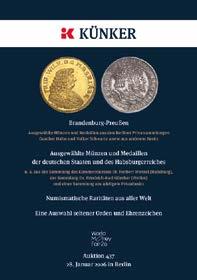
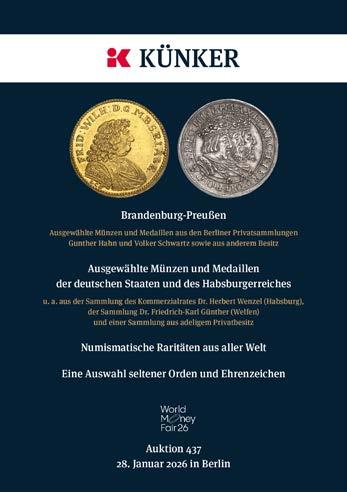
Berlin Auction Sale 437 28 January 2026 in Berlin NEWS FROM THE AUCTION AND GOLD MARKET
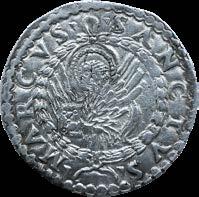
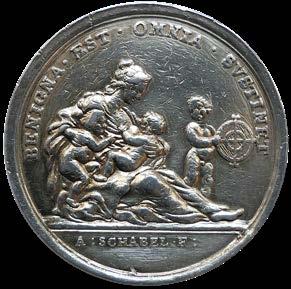
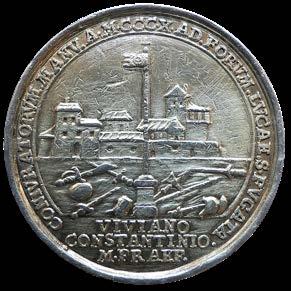
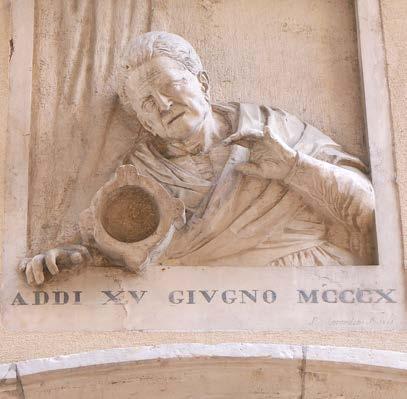
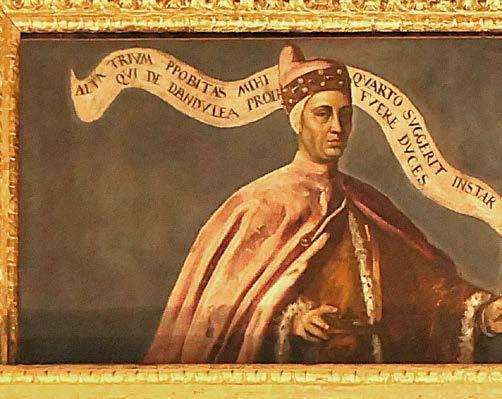
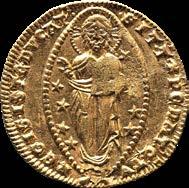
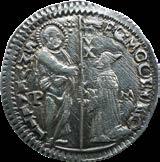
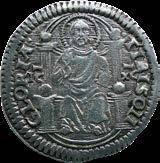
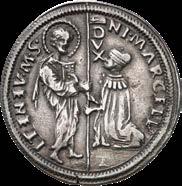
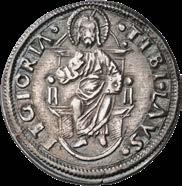
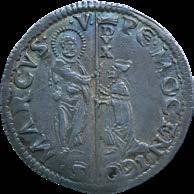
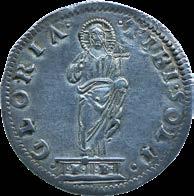
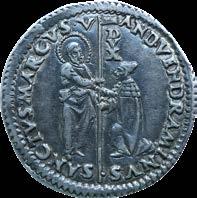
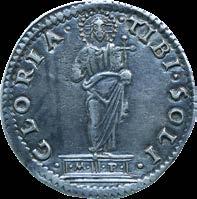
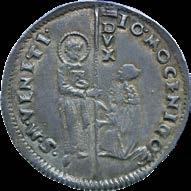
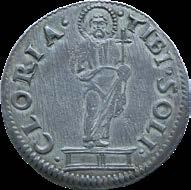
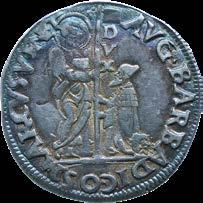
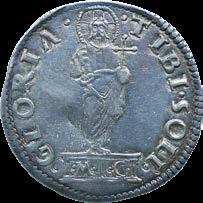
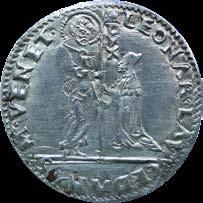
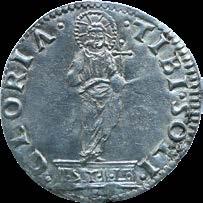
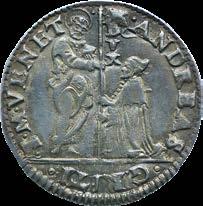
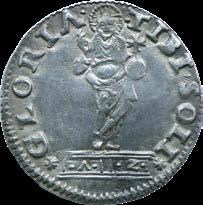
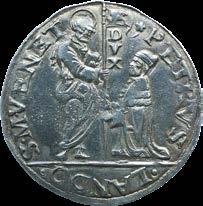
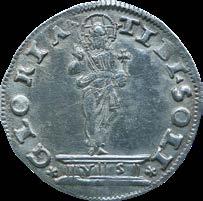
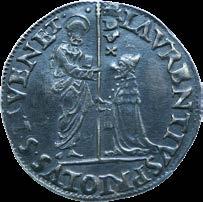
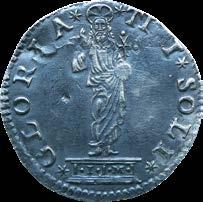
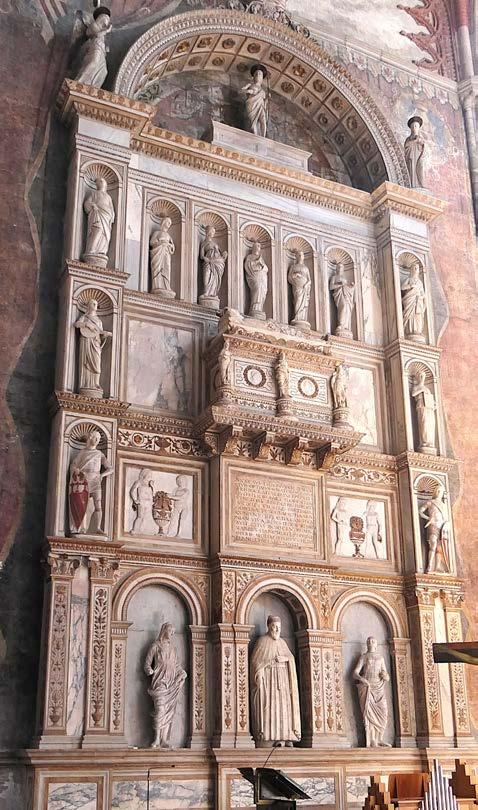
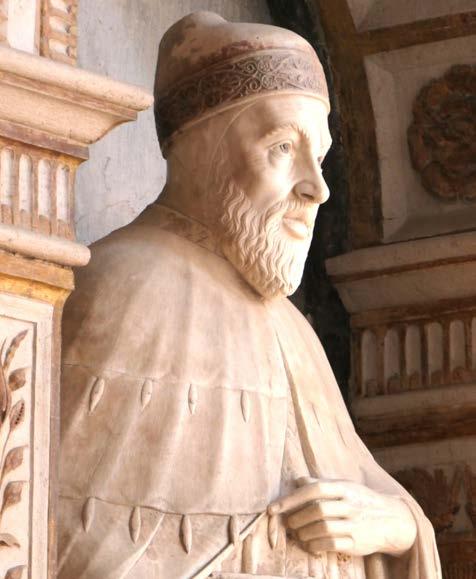
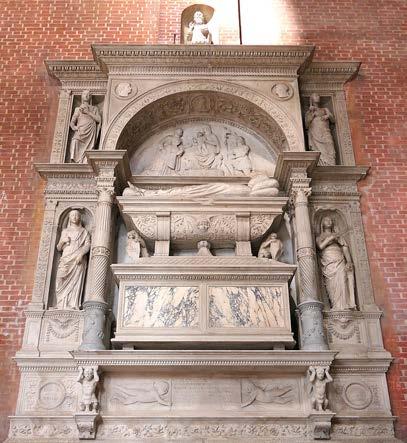
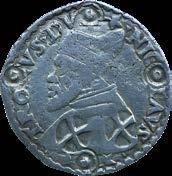
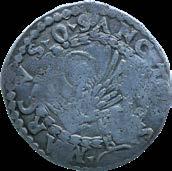
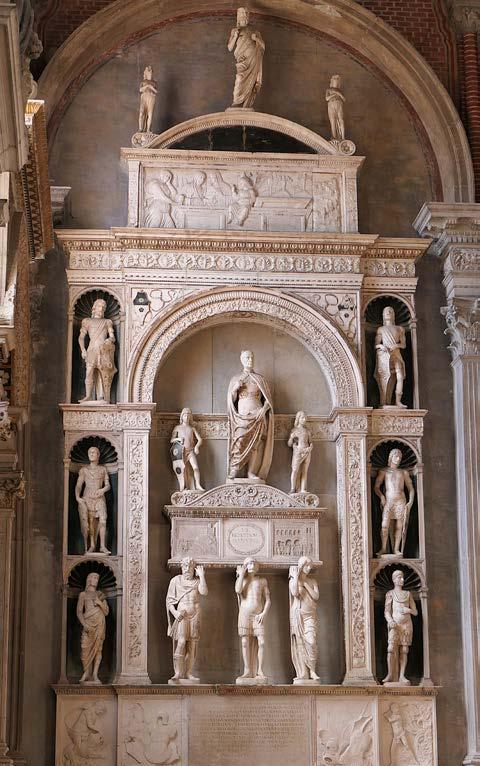
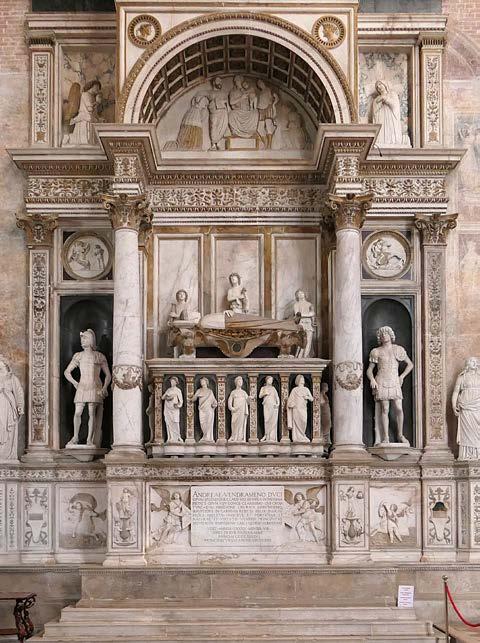
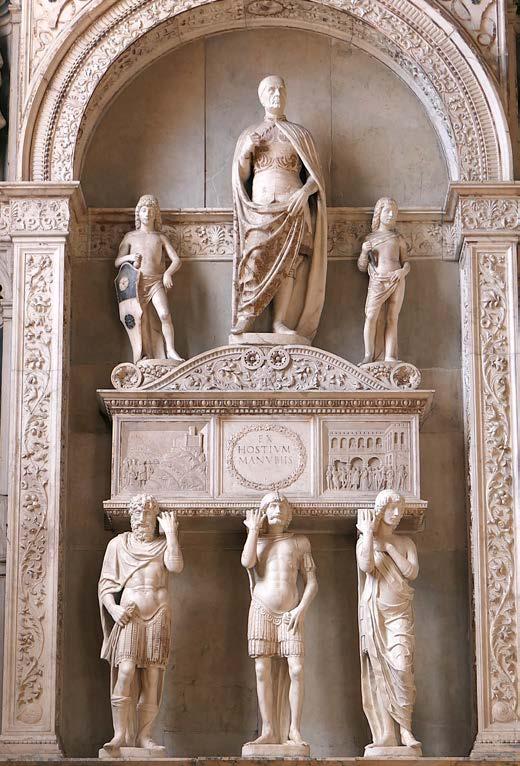
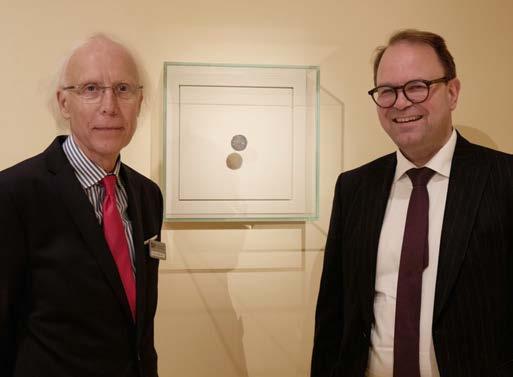
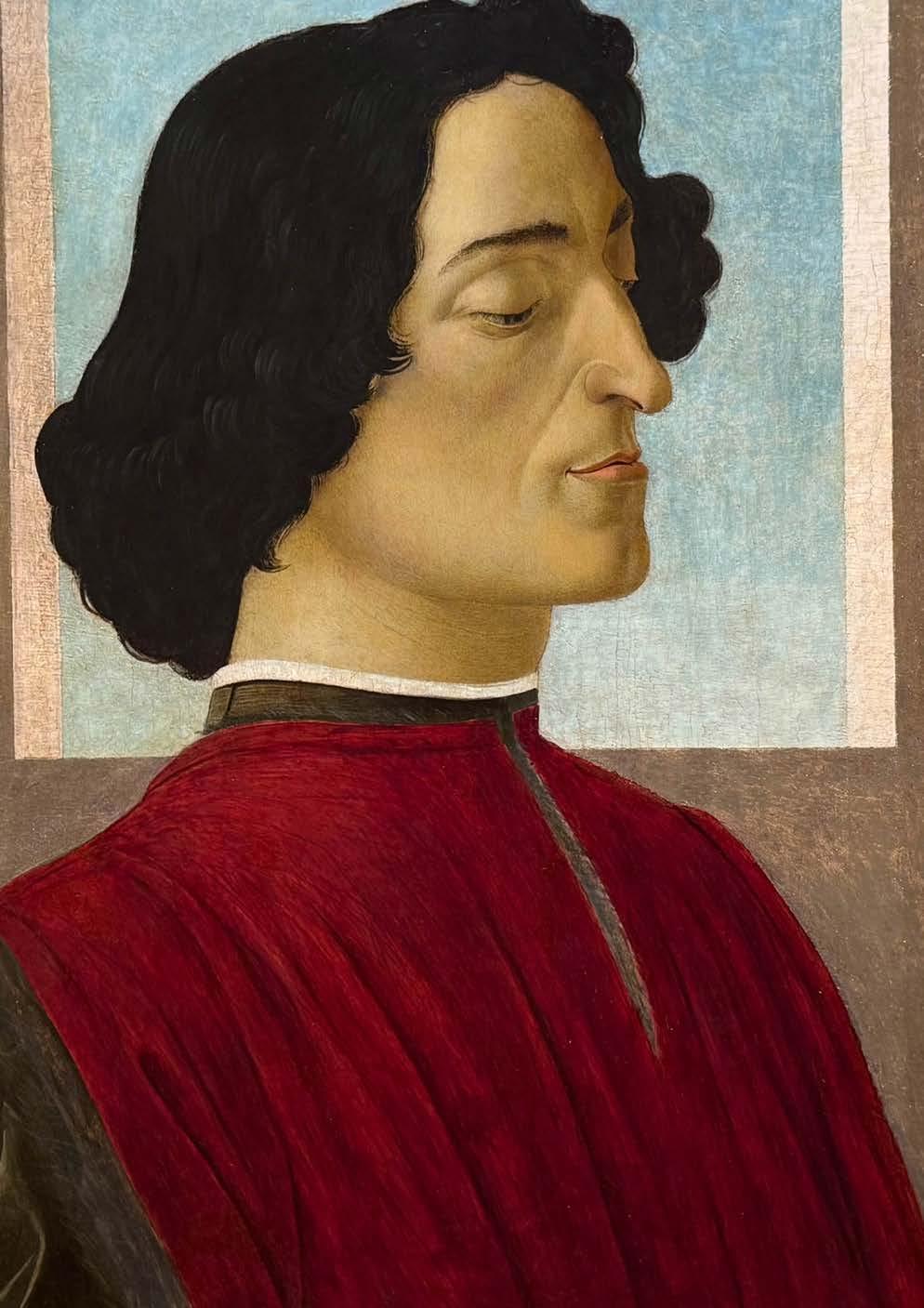
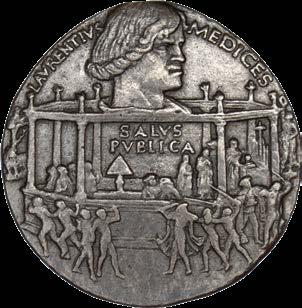
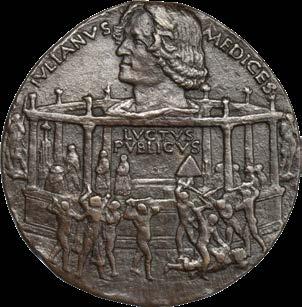
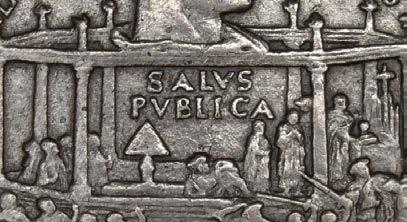
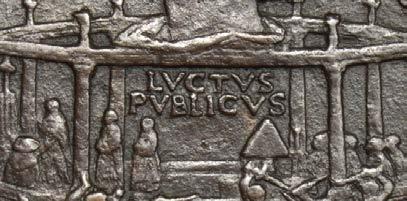
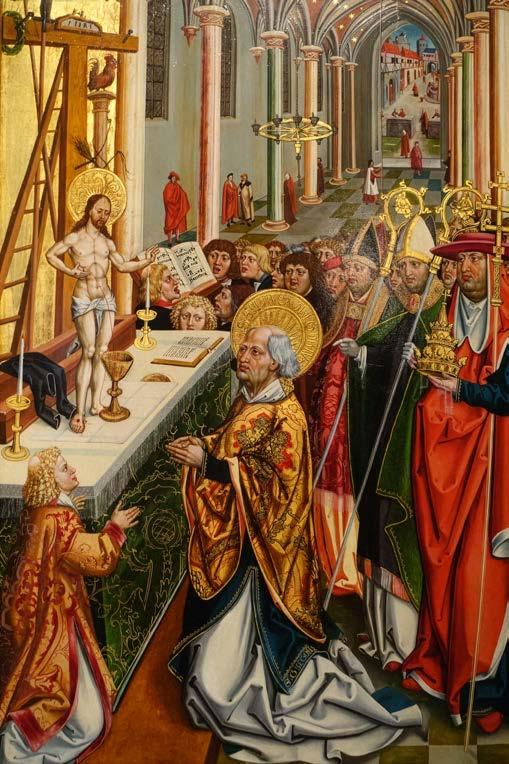
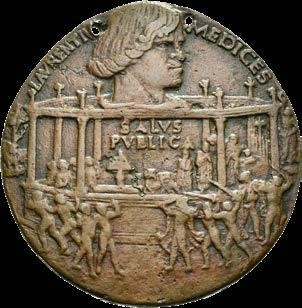
The Lira Tron: A Successful Model for Many –Just Not for Its Originators
Page 64
Dates 2025/26
Collector’s Portrait: Dr Friedrich-Karl Günther 16
Coins from the era of the “Nordic Wars” 20
Guinea: Where Europe’s Gold Came From 30
The “backbone” coinage 34 of the city of Side in Pamphylia
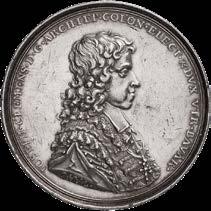
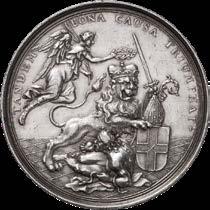
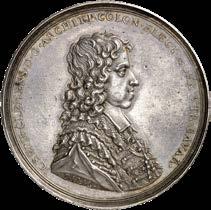
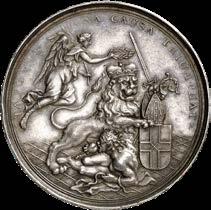
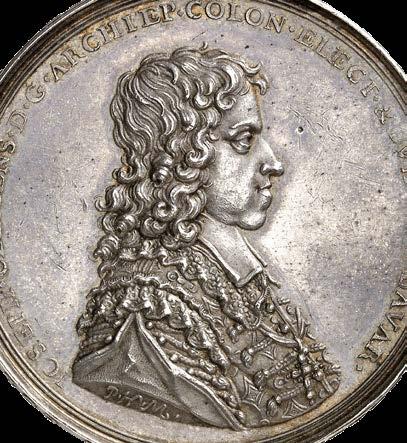
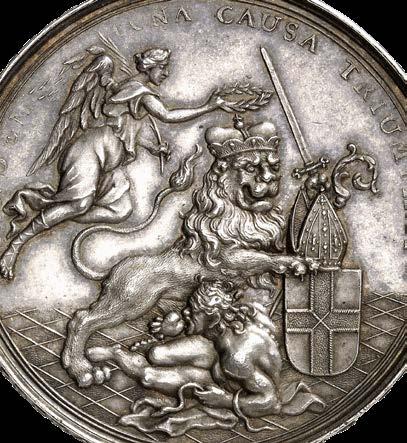
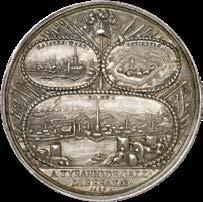
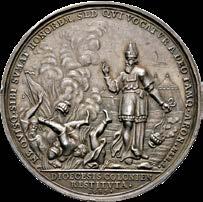
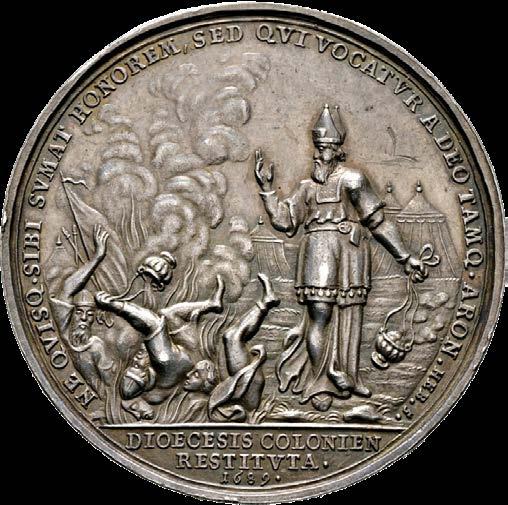
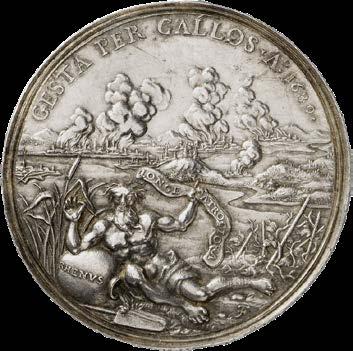
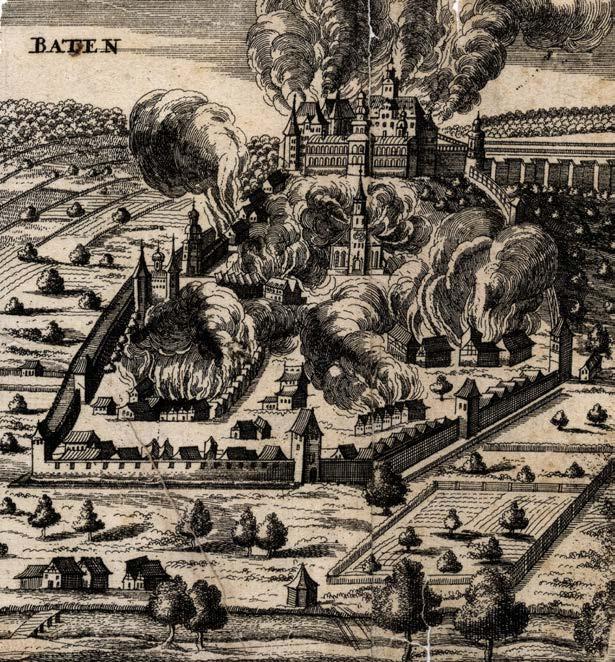
“The Good Cause Triumphs in the End” 46
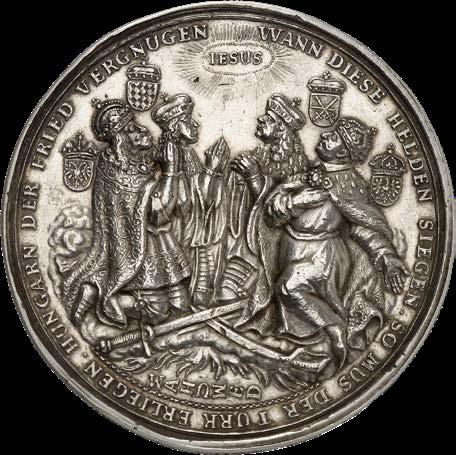
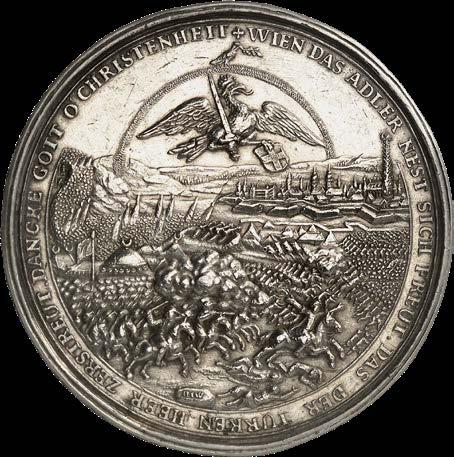
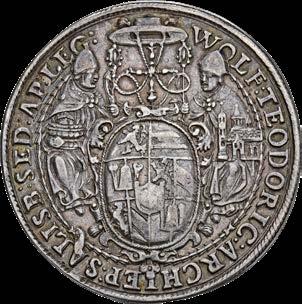
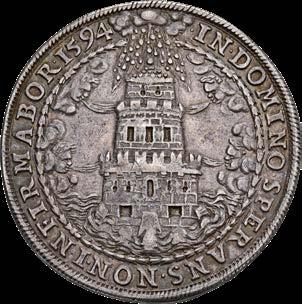
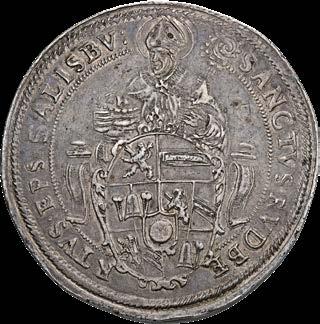
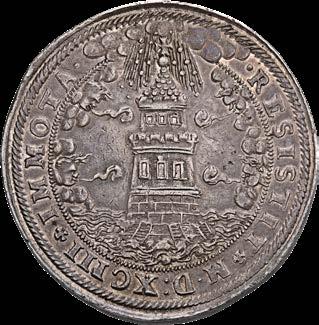
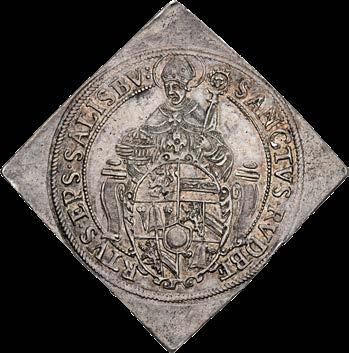
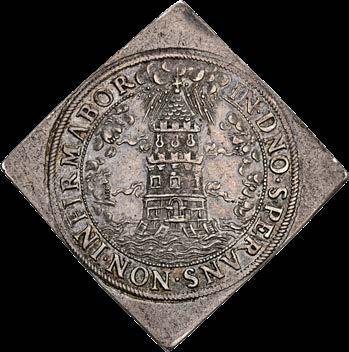
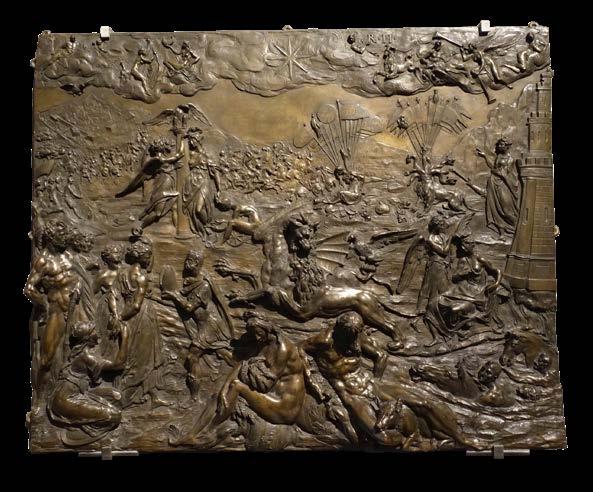
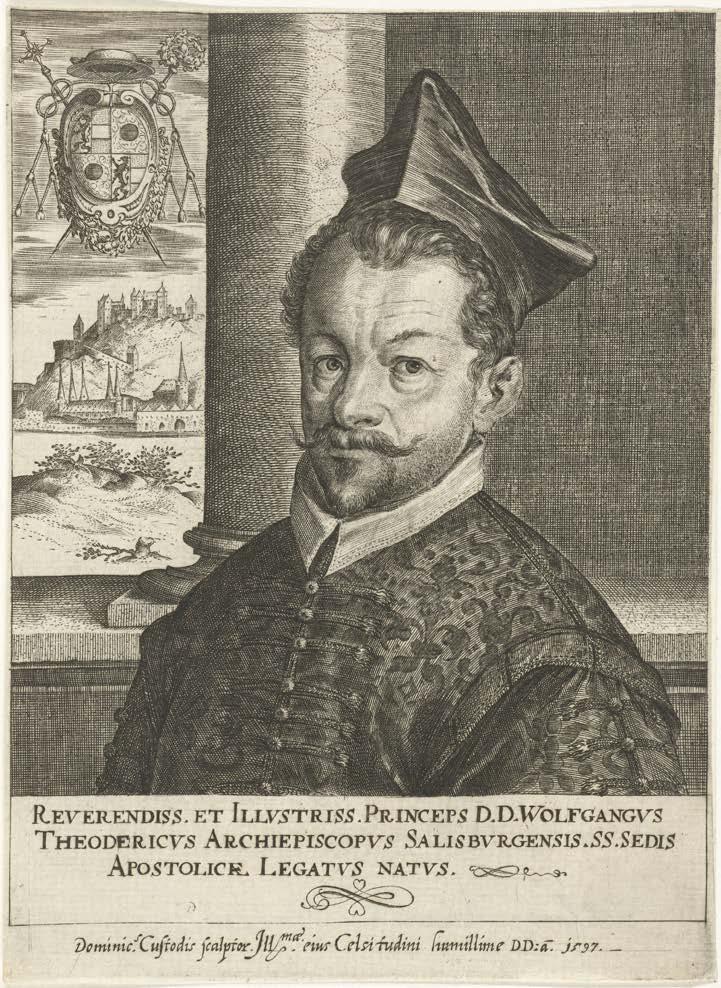
The Turkish War, Wolf Dietrich von Raitenau 58 and the so-called Turmprägungen
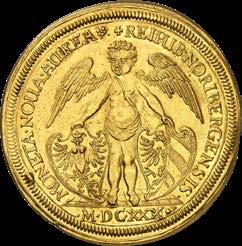
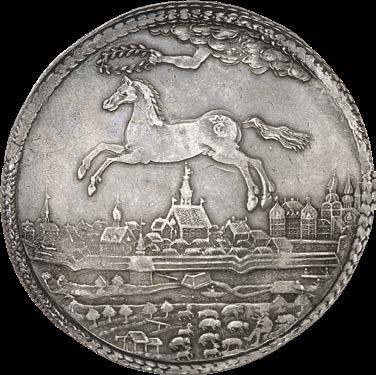
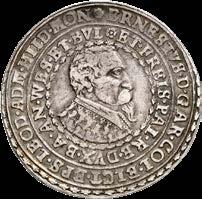
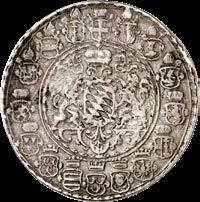
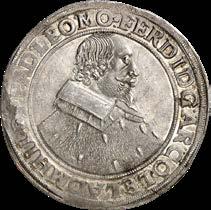
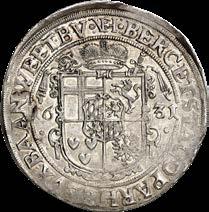
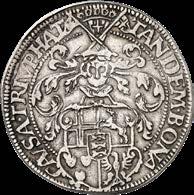
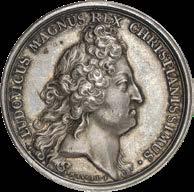
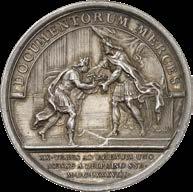
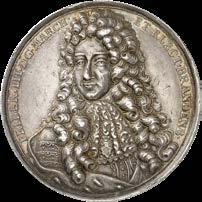
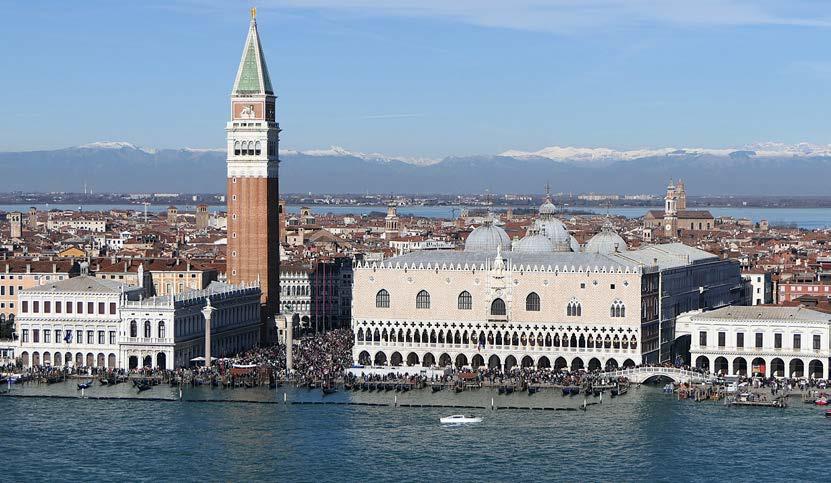
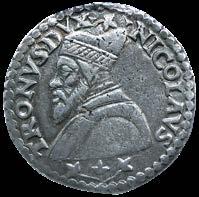
The Lira Tron: A Successful Model for Many – 64 Just Not for Its Originators
in Mecklenburg
eLive Auction 92 18-22 May 2026 Summer Auction Sale 2026 22-26 June 2026 eLive
93 20-24 July 2026 Fall Auction Sale 2026 21-25 September 2026 eLive Auction 94 5-9 October 2026 eLive Auction 95 1-4 December 2026
Publisher
Publisher
Fritz Rudolf Künker GmbH & Co. KG
Nobbenburger Straße 4a 49076 Osnabrück, Germany www.kuenker.de
Editors
Julia Kröner
Inja MacClure
Professor Dr. Johannes Nollé
Typesetting and layout
Helge Lewandowsky
Photography Auction 437
Lübke + Wiedemann KG, Leonberg
B.Seifert / O. Graf
Responsilble according to press law
Dr. Andreas Kaiser
Print
Druck- und Verlagshaus Fromm+Rasch GmbH & Co.KG www.frommrasch.de
ISSN 3052-0630
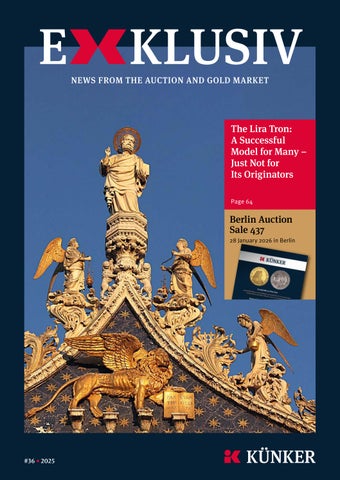
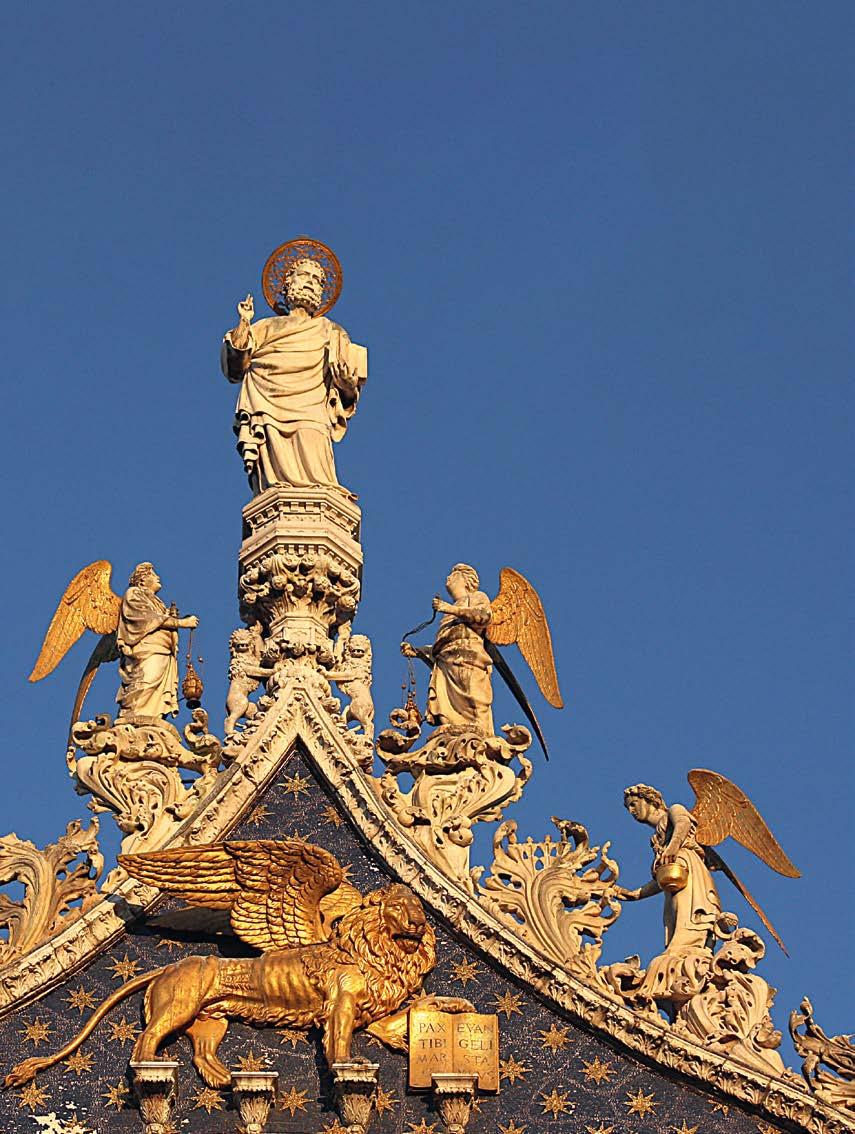
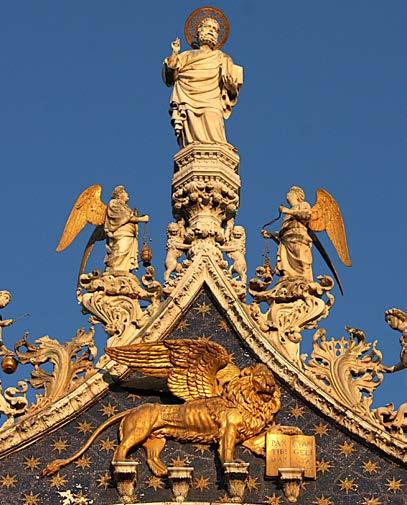
The Lion of Saint Mark and the statue of Saint Mark above it. Central portal of Basilica di San Marco in Venice (Photo Ulrich Heide).
Dear Customers and Coin Enthusiasts,
We wish you a happy and, above all, a healthy New Year! We hope you enjoyed the holidays to the fullest. At the start of the new year, we want to thank you for your loyalty and continued interest in our numismatic offerings. It’s a great pleasure for us to be able to accompany you on this journey. A big Thank You also goes to our dedicated team, who work with passion and dedication at Künker.
As usual, Künker has an exciting beginning to the year in store for you: We are once again proud to participate in the New York International Numismatic Convention (NYINC) in January, and to host Berlin Auction 437, which will kick off the World Money Fair at Berlin’s Hotel Estrel on Wednesday, 28 January 2026. On the following pages, you will find an overview of our auction offerings, which once again include numerous high-calibre items – from Brandenburg-Prussia to the German states and the Habsburg Empire -- as well as fascinating numismatic rarities from around the world and a selection of rare medals and decorations.
We cordially invite you to view our auction offerings in Osnabrück, and from 26 January onwards you’ll also have the opportunity to study the items in advance in Berlin. From 29 January to 31 January, we look forward to welcoming you to our stand at the World Money Fair, where you’ll find a wide range of coins and medals from our inventory. We will of course be happy to advise you on the sale of individual items or complete collections in our auctions. We hope to see many of you in person at our stand!
Our latest issue is once again packed with exciting articles on all aspects of numismatics. We hope you enjoy reading it and we look forward to your feedback, which is always very valuable to us.
Dr Andreas Kaiser Ulrich Künker
A Spectacular Highlight at the Beginning of the Numismatic Year: Our Berlin Auction Sale
In 2026, we will once again kick off the year with a bang. We will be holding an Auction Sale of superlatives in the context of the World Money Fair. Rarities from Brandenburg-Prussia, the Habsburg Empire and the German States are the focal point of the 437th auction.
No matter what field of modern numismatics you are interested in: If you are looking for a great rarity in perfect condition with an impressive provenance, our Berlin Auction Sale on 28 January 2026 is the ideal opportunity for you. The catalog is filled with exceptional pieces, and this auction preview will present the most interesting ones. Although it is probably enough to note that the 694 lots have a total estimate of 6 million euros. Connoisseurs will recognize that this figure indicates numismatic treasures of the highest caliber.
For auction catalog 437 and a detailed auction overview simply scan the adjacent QR code
Rarities from Brandenburg-Prussia
The auction opens with a selection of coins and medals from Brandenburg-Prussia – a fitting start given that the sale is taking place in Berlin. A large part of the pieces come from the collections of two renowned Berlin collectors.
Gunther Hahn is a familiar name to our long-standing customers. His collection was auctioned off in Berlin as part of our 300th auction. At the time, Mr. Hahn was not ready to part with all of his pieces. Now he will return those he kept to the cycle of collecting.
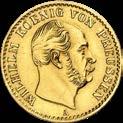
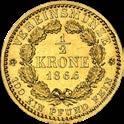
Volker Schwartz is well known to all those who are interested in the Hohenzollern family. Since 1990, he has edited the prestigious journal “Beiträge zur Brandenburgisch/Preußischen Numismatik” (Contributions to Brandenburg-Prussian Numismatics), which is brought to life by scholars AND collectors. At auction 437, the first part of his extensive collection will come under the hammer. The second part will be offered at eLive Auction 91 in March 2026. The selection comprises 81 lots. It contains coins and medals with a time frame spanning the period from a 1543 taler of Elector Joachim II Hector to the vereinsmünze pieces (German monetary union coins) of William I from 1866. Without exception, the pieces are either of spectacular quality or extremely rare. Most of them are both.
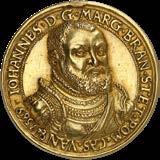
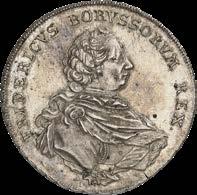
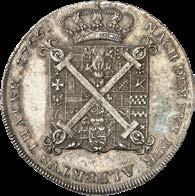
Lovers of Renaissance art will be delighted by the portrait that Margrave John of Küstrin had immortalized on a 21-gram gold medal. Those interested in economic history are sure to be amazed by the 1686 and 1690 Guinea ducats of fabulous quality. Fans of Frederick the Great will find a wonderful selection of single and double Friedrich d’ors. Particularly noteworthy are the talers that Frederick II specifically had made for trade as they illustrate the enormous ambitions of the Prussian king. The piaster was produced for China, the Albertus taler for trade in the Baltic Sea, and the Levant taler for the Levant.
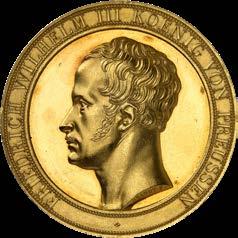
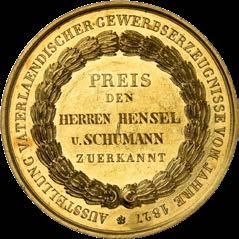
All the heavy gold medals that were used as awards and prizes in the 19th century are also quite remarkable. A good example of this is a gold medal of 30 ducats.
Lot 2
Brandenburg. Margrave John of Küstrin, 1535-1571. Gold cast medal, 1569. From the Gunther Hahn Collection. Extremely rare. Minor trace of mounting. Fields finely chased. Extremely fine.
Estimate: 20,000 euros
Lot 26
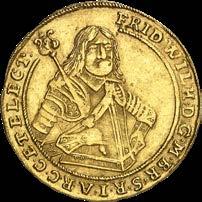
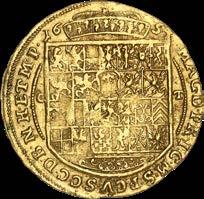
Brandenburg-Prussia. Frederick William, 1640-1688. 2 ducats, 1654, Berlin. Probably the only specimen on the market. Very fine +.
Estimate: 25,000 euros
It was awarded to the Prussian court supplier Hensel und Schumann. This is fitting, as Hensel und Schumann was a gold and silver manufacturer that was one of the most technologically advanced companies in the world at the time. The Brandenburg Royal Academy used only chemically pure gold and silver from Hensel und Schumann for scientific analysis. The best-selling product was Lyon gold and silver. This fabric surrounded by metal wires was an indispensable part of any impressive uniform in the 19th century. By the way, there is a second gold medal of 25 ducats from the Hahn Collection, which was also awarded to this company. It is also extremely rare. Only 69 specimens were produced.
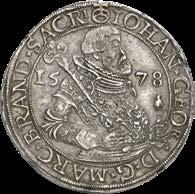
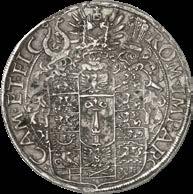
Lot 3
Brandenburg. Margrave John of Küstrin, 1535-1571. 1578 reichstaler, Berlin. From the Volker Schwartz Collection. Very rare. Extremely fine.
Estimate: 12,500 euros
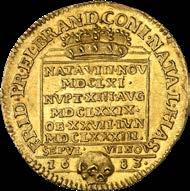
Lot 35
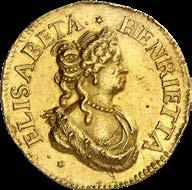
Brandenburg-Prussia. Frederick William, 1640-1688, commemorating the death of Elisabeth Henriette, his daughter-in-law. 2 ducats, 1683. Extremely rare. Extremely fine.
Estimate: 25,000 euros
Lot 37
Brandenburg-Prussia. Frederick III, 1688-1701. Guinea ducat, 1690, Berlin. From the Gunther Hahn Collection. Extremely rare. Extremely fine.
Estimate: 20,000 euros
Lot 58
Brandenburg-Prussia. Frederick II, 1740-1786. 1766 albertustaler, Magdeburg. From the Gunther Hahn Collection. Extremely rare year. About FDC. Estimate: 10,000 euros
Lot 78
Brandenburg-Prussia. William I, 1861-1888. 1/2 vereinskrone 1866. From the Volker Schwartz Collection. Extremely fine.
Estimate: 2,000 euros
Showpieces from the Habsburg Empire
Lot 70
Brandenburg-Prussia. Frederick William III, 1797-1840. Gold award medal of 30 ducats n.d. (1821), engraved with 1827 for the silver and gold manufacturer Hensel und Schumann. From the Gunther Hahn Collection. 2nd known specimen. Extremely fine.
Estimate: 10,000 euros
Will the historic rivalry between Prussia and the Habsburgs resurface during the auction? Will collectors from Vienna and Berlin compete to see whether an Austrian or a Prussian coin will realize the highest result? It will be exciting to see, especially because the 99 lots with Habsburg issues – including Austrian bishoprics and princes – are quite spectacular.
Most of the rarities originate from the renowned collection of Kommerzialrat Dr. Herbert Wenzel, which took around 60 years to compile and is regarded as one of the most important coin collections in Austria. Dr. Wenzel was one of the figures who helped to revive
Lot 336
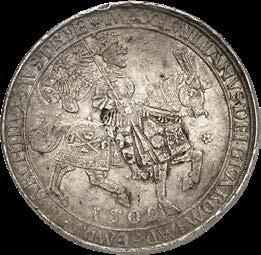
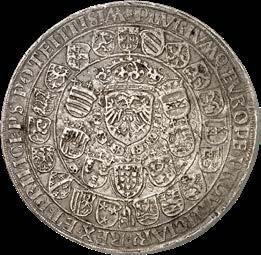
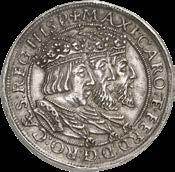
Holy Roman Empire. Maximilian I, 1490-1519. Quintuple representative guldiner, 1509, minted in Antwerp in 1517. From the collection of Kommerzialrat Dr. Herbert Wenzel, Vienna. Purchased in 1947 from Kralik. Extremely rare. Very fine +.
Estimate: 25,000 euros
Lot 342
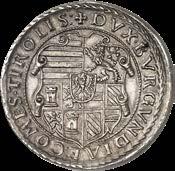
Holy Roman Empire. Ferdinand, 1564-1595. Three emperors issue, broad 1.5-fold reichstaler n.d. (ca. 1565-1580), Hall. From the collection of Kommerzialrat Dr. Herbert Wenzel, Vienna. Purchased in November 1951.
Extremely rare. Extremely fine.
Estimate: 20,000 euros
Lot 362
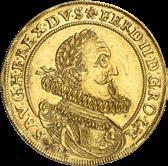
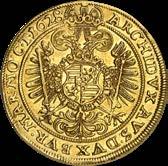
Holy Roman Empire. Ferdinand II, 1592-1618-1637.
5 ducats, 1628, Breslau. Very rare. Extremely fine +.
Estimate: 20,000 euros
Lot 376
Holy Roman Empire. Leopold I, 1657-1705.
the Austrian economy after the war. From 1951 until his retirement, he was Director General of the RadioAustria A.G., a communication service specializing in the transmission of telegrams and telexes. Dr. Wenzel successfully restructured the company and transferred the majority of shares from English to Austrian state ownership. He received several awards for this, including the Austrian honorary title of Kommerzialrat. Since his childhood, Dr. Wenzel had devoted much time to building up a coin collection. He successfully acquired numerous extremely rare pieces, some of which have been part of his collection for more than half a century.
A good example of this is a spectacular representative issue of Maximilian I with the year of 1509 and a weight of five gulden. Another impressive specimen is the broad 1.5-fold reichstaler of the “Three Emperor Issue” type, which was probably created under Ferdinand II, Archduke of Tyrol, between 1564 and 1580.
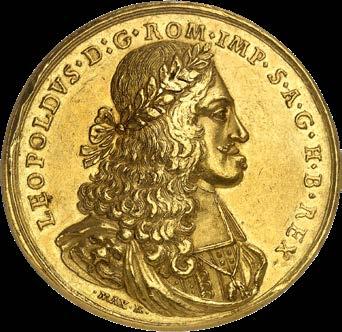
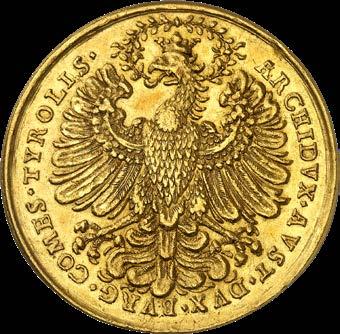
The coin with the highest estimate in auction 437 – an impressive 200,000 euros – was minted under Leopold I. It is a diplomatic gift (ehrenpfennig) of 20 ducats from Hall, commemorating the final annexation of Tyrol to the Habsburg hereditary lands in 1666.
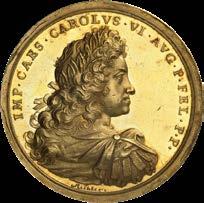
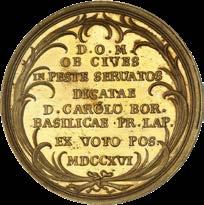
In 1716, Dr. Wenzel acquired another rarity: a gold medal created under Charles VI to commemorate the laying of the foundation stone of St. Charles’ Church in Vienna in 1716. The unique piece is of extremely fine quality.
Estimate: 200,000 euros 1,7:1
20 ducats n.d. (after 1666), Hall, by M. König. Extremely rare. About extremely fine.
Holy Roman Empire. Charles VI, 1711-1740. Gold medal of 20 ducats, 1716, commemorating the laying of the foundation stone of St. Charles’ Church in Vienna. Probably unique. From the collection of Kommerzialrat Dr. Herbert Wenzel, Vienna. Purchased at Dorotheum in 1962. Extremely fine.
Estimate: 20,000 euros
Lot 423
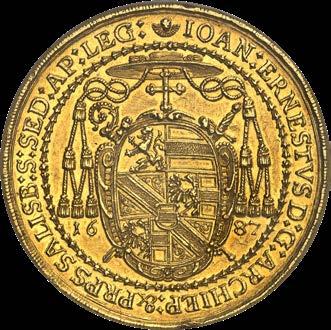
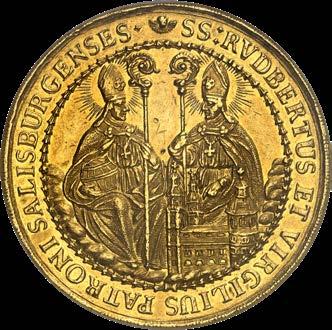
Salzburg. Johann Ernst von Thun und Hohenstein, 1687-1709. 20 ducats 1687. NGC AU58. Extremely rare. Extremely fine.
Estimate: 125,000 euros
German states
Lot 105
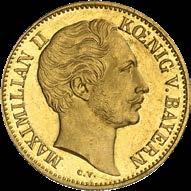
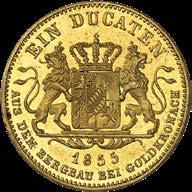
Bavaria. Maximilian II, 1848-1864. 1855 ducat. Later commemoration of the yield of Goldkronach. Only a few specimens known. Extremely fine to FDC.
Estimate: 50,000 euros
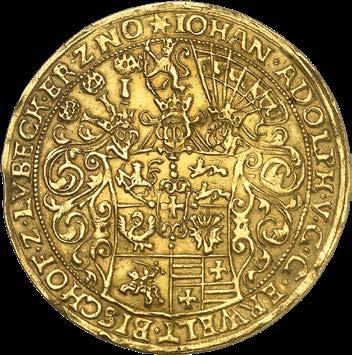
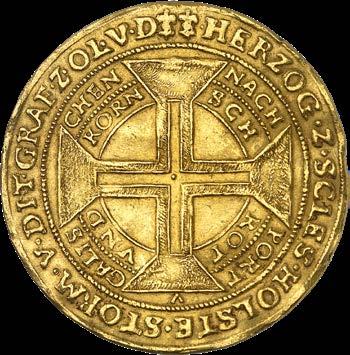
The geographical range of the issues from the German States offered at our Berlin Auction Sale covers everything from Anhalt to Würzburg. Fans of multiple gold coins in perfect condition are spoilt for choice. How about a Hamburg bankportugalöser with a detailed city view? Or a 10-fold ducat from Nuremberg that was intended to be a diplomatic gift? Or rather a piece from Regensburg? Not to forget, there is a magnificent example of one of the first portugalösers minted in Germany – a coin commissioned by Johann
Adolf von Holstein-Gottorp. Lovers of yield and mining coins can look forward to an extremely rare 1855 ducat made of gold from Goldkronach. And those looking for Brunswick lösers will find plenty of opportunities.
Be it Saxon coins and medals, “lamb ducats” from Nuremberg, rare talers or ducats – no matter what field of the German States you are interested in, you are sure to find the piece of your dreams!
Lot 391
Lot 135
Brunswick-Bevern. Ferdinand Albert I, 1667-1687.
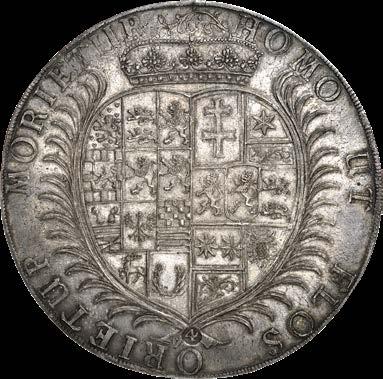
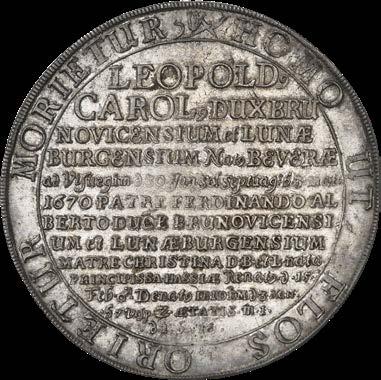
Löser of 4 reichstalers, 1670, Clausthal, commemorating the death of his son Leopold Carl. Extremely rare. Extremely fine.
Estimate: 125,000 euros
Lot 167
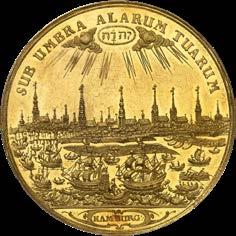
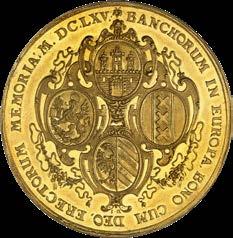
Hamburg. Bankportugalöser of 10 ducats, 1665, commemorating the major European financial centers of Amsterdam, Hamburg, Nuremberg and Venice. Very rare. Extremely fine to FDC.
Estimate: 30,000 euros
Lot 184
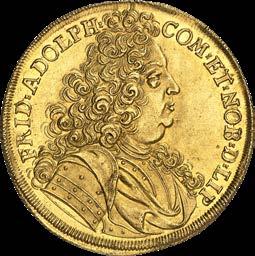
Lippe. Friedrich Adolf, 1697-1718. 5 ducats, 1711, Detmold. The only known specimen. Extremely fine to FDC.
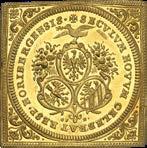
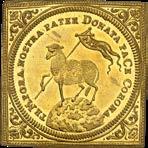
Nuremberg. Lamb issue, double ducat klippe, 1700. Extremely rare. Extremely fine to FDC. Estimate: 10,000 euros
Lot 269
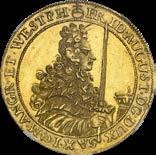
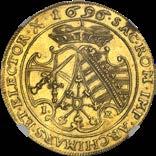
Saxony. Frederick Augustus I, 1694-1733. 3 ducats, 1696, Dresden. Very rare. NGC MS62. Extremely fine to FDC. Estimate: 40,000 euros
Lot 306
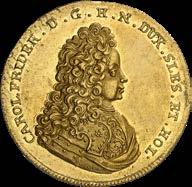
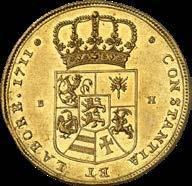
Schleswig-Holstein. Charles Frederick, 1702-1739. 10 ducats, 1711, Tönning. The second known specimen on the market. NGC MS61 (Top Pop). Extremely fine +. Estimate: 50,000 euros
Lot 331
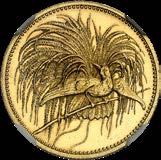
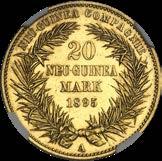
German New Guinea. 20 New Guinean marks, 1895. NGC MS63. Only 1,500 specimens minted. Extremely fine to FDC. Estimate: 40,000 euros
Holstein-Gottorp. Johann Adolf, 1590-1616. Portugalöser (10 ducats) n.d., Eutin. Extremely rare. About extremely fine. Estimate: 125,000 euros
1,5:1
1,5:1
World Issues
As our customers are used to, the chapter with world issues is rather extensive and features great rarities as well as pieces of great historical importance. A small focus is on issues minted by countries bordering the Baltic Sea such as Denmark, Sweden, Poland and Russia. Numerous numismatic treasures were created during the conflicts over control of the prime areas of this trading region.
However, the regions of Flanders and the Netherlands that were already industrialized in the Middle Ages, as well as France and England or rather Great Britain, are also well represented. We present some particularly interesting coins and medals, which offer only a small selection of the wide variety of rarities that await you in auction 437.
Lot 477
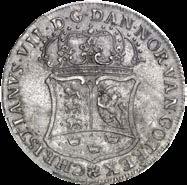
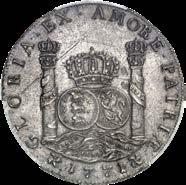
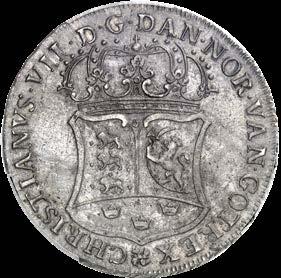
Denmark. Christian VII, 1766-1808. Piastre, 1771 (minted in 1774), Copenhagen for Greenland. Minted by the Danish Asia Company. Very rare. PCGS AU58. Extremely fine.
Estimate: 35,000 euros
Lot 486
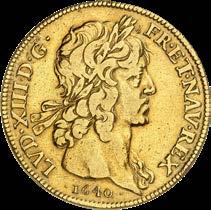
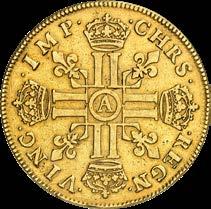
France. Louis XIII, 1610-1643. Huit Louis d’or à la tête laurée, 1640, Paris. Extremely rare. Very fine.
Estimate: 50,000 euros
Lot 485
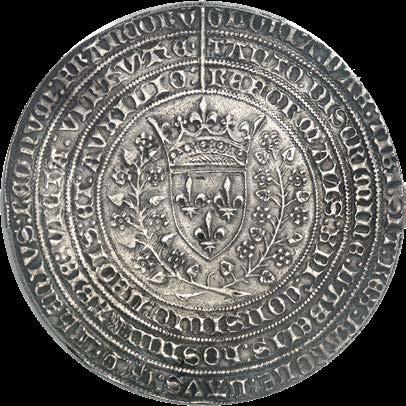
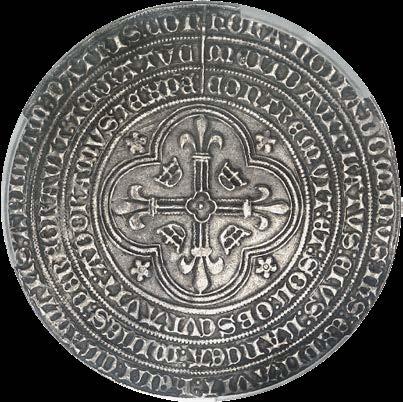
France. Charles VII, 1422-1461. Silver medal n.d. (1454), commemorating the expulsion of the English and the end of the Hundred Years’ War. PCGS SP53. Extremely rare. Original strike. About extremely fine.
Estimate: 40,000 euros
Lot 522
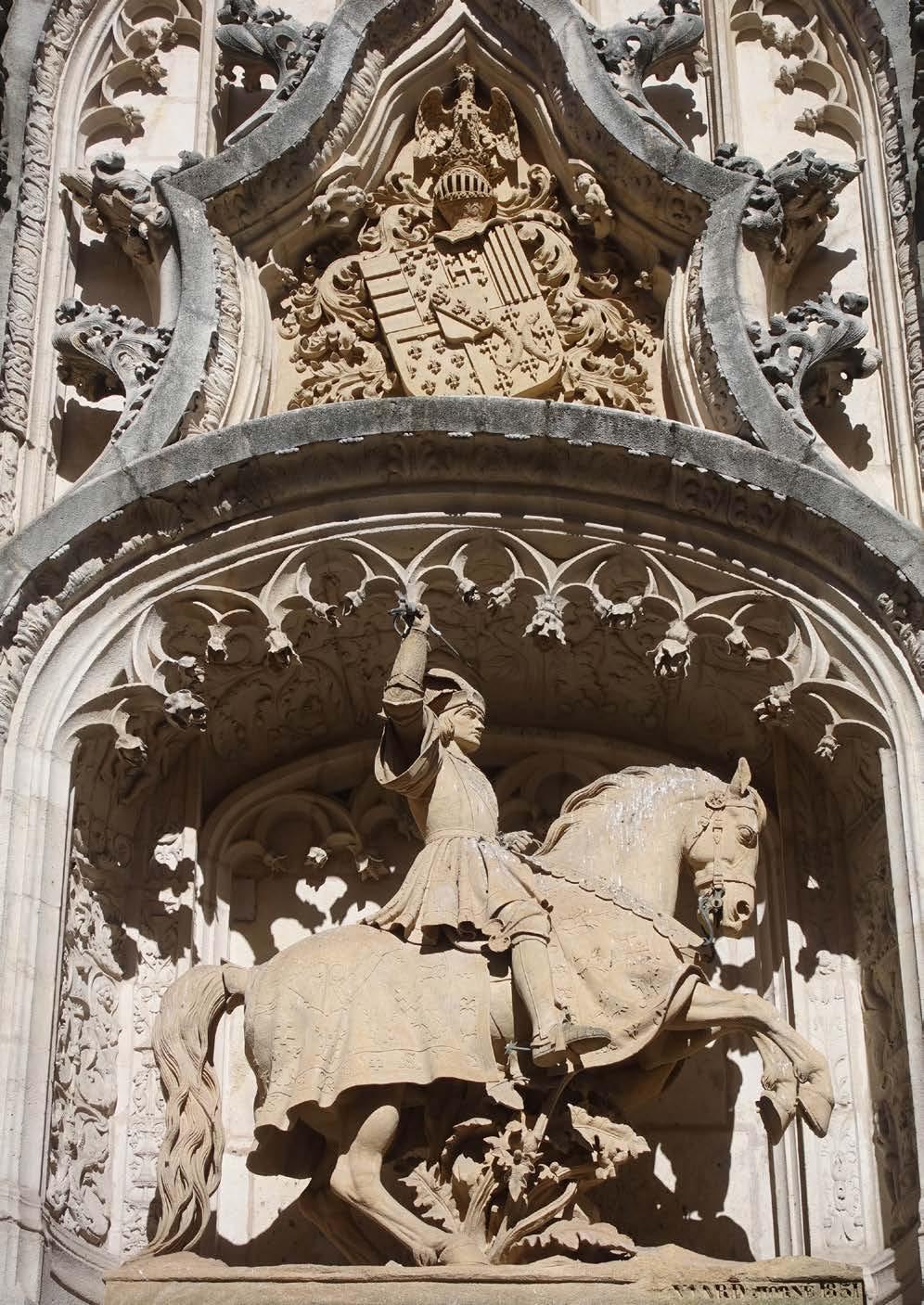
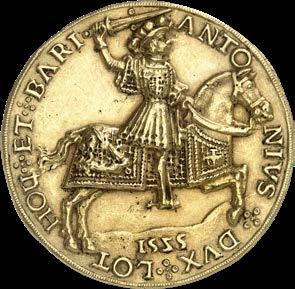
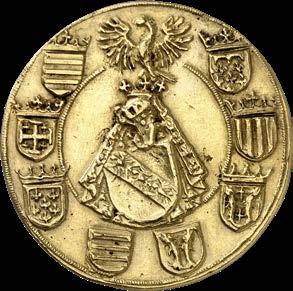
France / Lorraine. Anton, 1508-1544. Gold cast medal, 1525. Probably unique. Contemporary cast. Very fine to extremely fine. Estimate: 20,000 euros
Lot 591
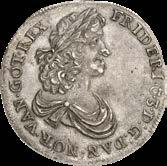
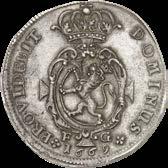
Norway. Frederik III, 1648-1670. 1/2 speciesdaler, 1669, Christiania.
Extremely rare. Extremely fine.
Estimate: 30,000 euros
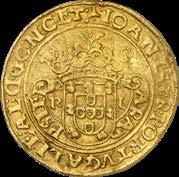
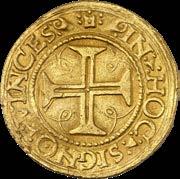
Lot 607
Portugal. John III, 1521-1557. Portugalöser (Portuguez) n.d., Lisbon. Extremely rare. Very fine +. Estimate: 30,000 euros
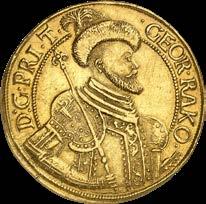
Lot 651
Hungary / Transylvania. Georg Rakoczi II, 1648-1660. 10 ducats, 1652, Nagybánya. Very rare. About extremely fine. Estimate: 60,000 euros
Lot 530
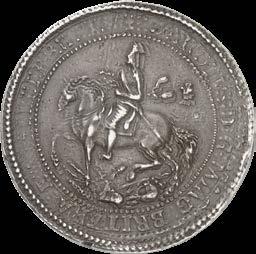
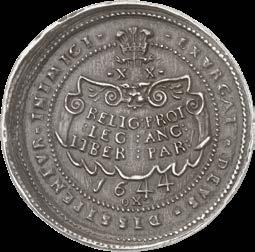
Great Britain. Charles I, 1625-1649. Pound of 20 shillings, 1644, Oxford. Very rare. Very fine. Estimate: 25,000 euros
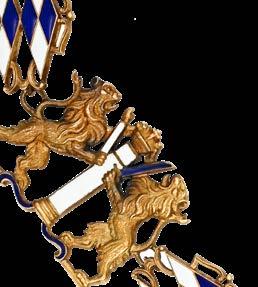
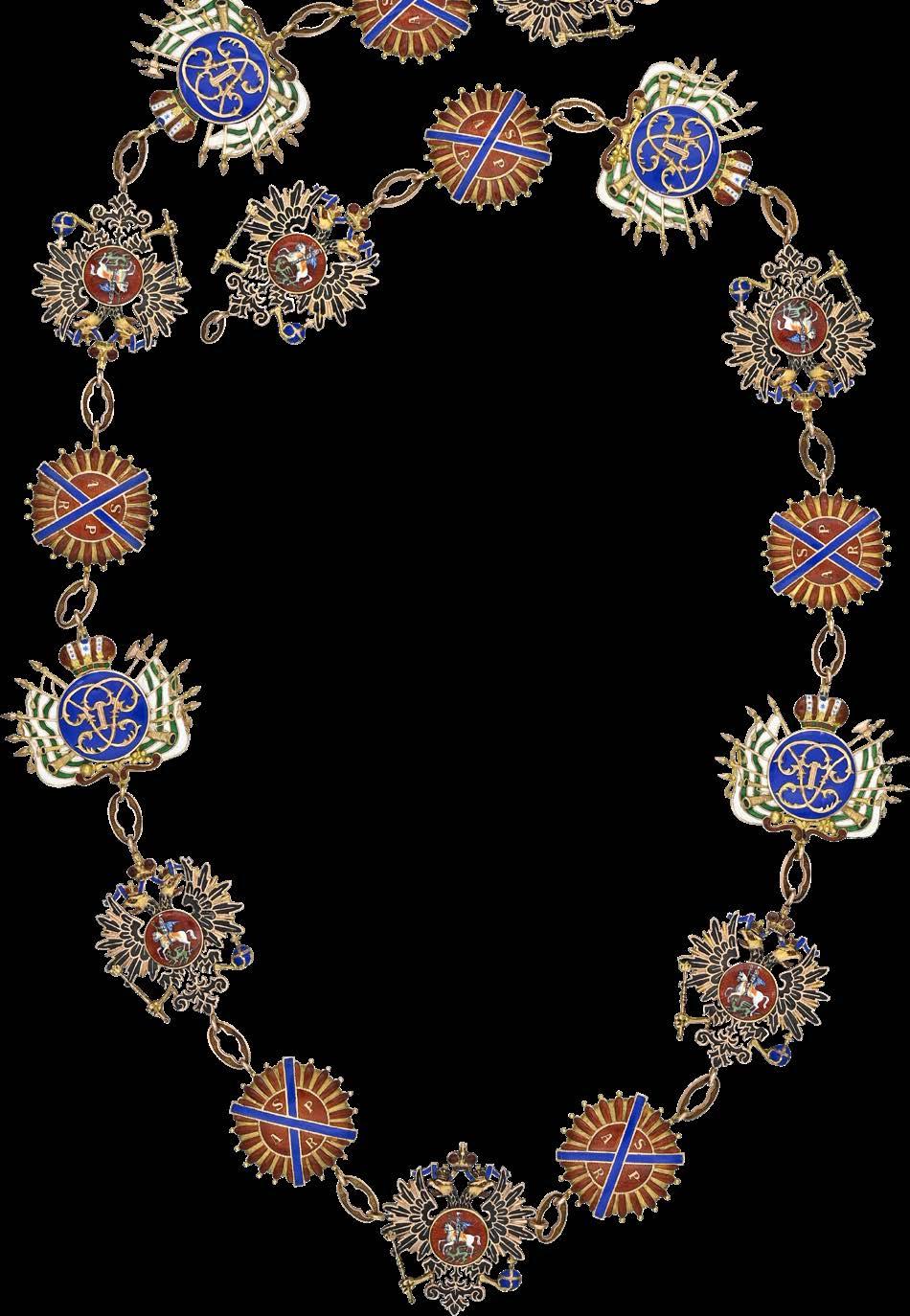
Last but not least, Auction Sale 437 in Berlin ends with 14 exquisite objects and object groups from the phaleristic field. The highlight of this small but sweet section is a collar of the highest Russian order, the Imperial Order of Saint Andrew the Apostle the FirstCalled. The hallmark tells us that the piece was created in 1864 by the court supplier Keibel.
We do not know who used to wear the order, but a quick glance at the 1864 list of recipients gives us an idea of the social class of its wearer. Only 13 people were honored with it that year, including not only Russian celebrities but also the Prussian princes Alexander and George, Archduke Stephen of Austria, Grand Duke Karl August of Saxe-Weimar, Prince August Ernst of Hanover, Crown Prince Wilhelm Christian of Denmark and Duke Napoleon August Lannes de Montebello.
Lot 681
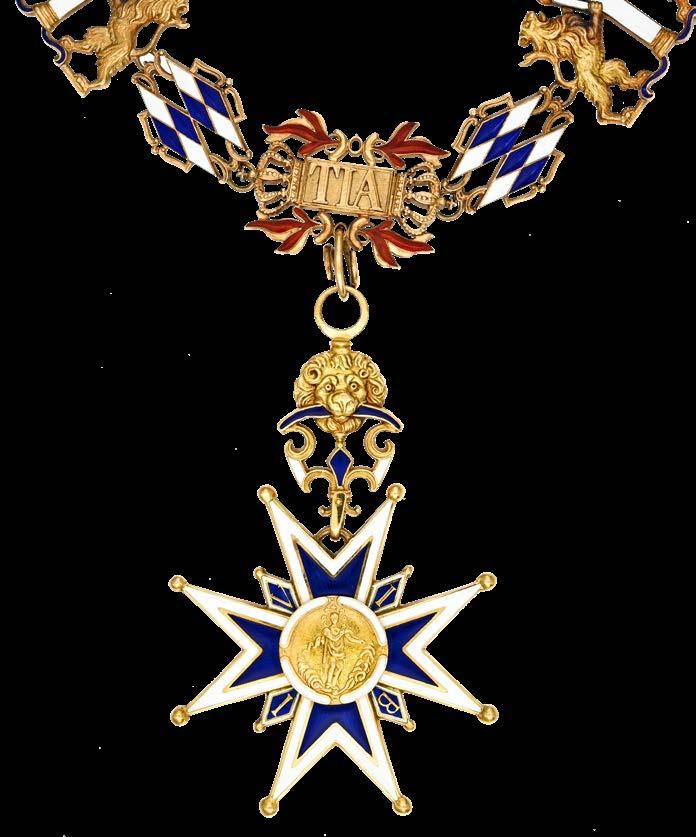
Bavaria. Royal Bavarian House Equestrian Order of Saint George. Collar with jewel of the grand cross. Extremely rare. I-II. Estimate: 25,000 euros
Lot 687
Russia. Imperial Order of St. Andrew the Apostle the First-Called. Collar, 2nd model without jewel. Very rare. I-II.
Estimate: 100,000 euros
Dr Friedrich-Karl Günther
A Collector’s Portrait
by Roland Trampe and Fritz Rudolf Künker
Dr Friedrich-Karl Günther was born in Berlin on 28 July 1922, as the only child of the married couple Otto und Klara Günther towards the end of Germany’s worst monetary crisis. He witnessed the end of the Weimar Republic and the National Socialists’ rise to power. He completed his schooling with the so-called “emergency high school diploma”, which enabled the Nazi regime to conscript young people into the military at the young age of 18. From the general military he was then drafted into the Air Force. He was stationed in Petsamo, a city in the Finnish Arctic Ocean which is now Russian and known as Petschenga. It was there that he contracted tuberculosis, and the life-threatening progression of the disease ultimately led to his discharge. He was able to return to Berlin, where he gained his first experience of the law and became interested in studying it. He met his future wife Gisela Kathrin Jungkeit (born on 25 September 1926) in the completely destroyed city of Berlin. His wife worked as a technical draftswoman at Borsig, a company that made a significant contributions to the army industry at that time. The couple married in Berlin-Reinickendorf, which belonged to the French sector, on 12 June 1945. The registry office records show that this was the first wedding ceremony to take place in the newly opened registry office.
Their living situation did not improve after the wedding, and so, influenced by the horrors of World War II and driven by hunger and the longing for a better life together, they decided to leave their hometown. Their journey took them to relatives in Badeborn, near Ballenstedt in the Harz district of Saxony-Anhalt. The young couple found their living situation more bearable, giving them new courage and strength for the future. After intensive research, Dr Friedrich-Karl Günther decided to study law at the Georg-August University’s faculty of law in Göttingen, which was still under British military government in 1946.
The Federal Republic of Germany was re-established on 23 May 1949, and free movement and study became possible. However, these plans were thwarted by another significant historical turning point in the lives of the Günthers. Following the founding of the GDR on
7 October 1949, the couple were forced to abandon their new home and leave the Harz again. The left the GDR illegally via a natural border.
Once they arrived in Göttingen, they were completely on their own. Nevertheless, he was able to continue his law studies and his determination to successfully complete the studies and subsequently obtain a doctorate in law in 1950 opened up promising career prospects. The economic miracle and the shortage of lawyers in the Federal Republic of Germany ensured professional stability and an improvement of their living situation. This gave the Günthers the courage to start a family. Two sons were born to them. The family’s father became a legal advisor at the German Raiffeisen Association, and later, in 1972, at the umbrella organization. Following the collapse of the GDR and subsequent reunification in 1990, his career came to an end.
Dr Friedrich-Karl Günther
Lot 111
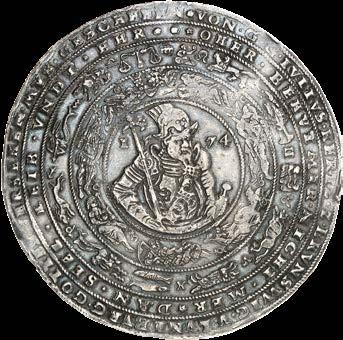
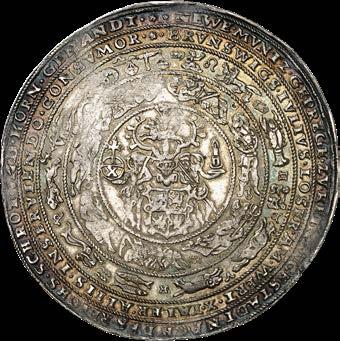
Principality of Brunswick-Wolfenbüttel Julius, 1568-1589. Löser of 2 reichstalers 1574, Heinrichstadt (Wolfenbüttel), minted with the dies of the löser of 10 reichstalers with a weight of 2 reichstalers. Extremely rare. Very attractive specimen with strong patina, very fine-extremely fine.
Estimate: 10,000 euros
Lot 116
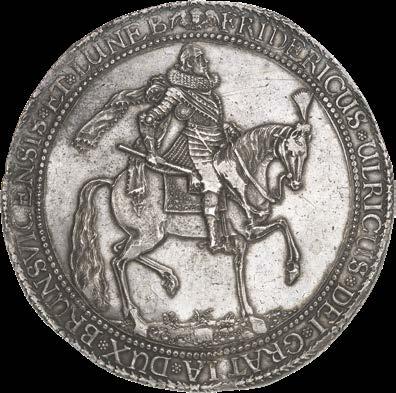
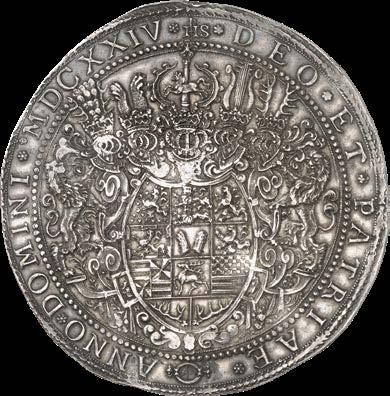
Principality of Brunswick-Wolfenbüttel Friedrich Ulrich, 1613-1634. 1624 löser of 4 reichstalers, Goslar or Zellerfeld. Rare, especially in this quality. Very attractive specimen with magnificent patina, with incised face value “4”, extremely fine.
Estimate: 6,000 euros
Lot 389
Holy Roman Empire
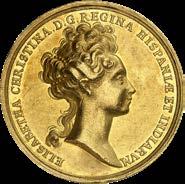
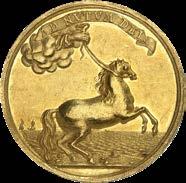
Charles (VI) as Charles III of Spain, 1703-1711. Gold medal of 10 ducats n.d. (1708-1711), unsigned, by B. Richter, commemorating his wife Elizabeth Christine and their trip to Spain. In gold extremely rare.
Attractive specimen with fine gold patina, extremely fine.
Estimate: 10,000 euros
The Günther family was able to purchase a retreat in the Harz recreational area, not far from Hanover. From there, it was possible to catch glimpses of the silver mines at the time, and this sparked his interest in coins and medals – especially those of the Guelphs and mining coins. This is highly unusual for a collector, as almost every collector has a mentor who is a collector or coin dealer who encouraged them to collect or trade coins. His collecting activity was accompanied by an enthusiasm for the artistic diversity of coins, and this diversity was soon reflected in his steadily growing collection. However, his interest did not end with Welf coins – issues of the Holy Roman Empire also became objects of his collecting passion. His incredible historical knowledge about the individual connections between the rulers earned him the tongue-in-cheek title of “representative of the educated middle class”. The first three decades of his life were marked by uncertainty, but they ended happily, with a contended family life becoming the driving force behind his career and passion for collecting.
Dr Friedrich-Karl Günther first became acquainted with the newly founded Künker company at a collectors’ meeting in Hanover in 1971. From then on, we were in regular contact to talk about mining coins. Our collector purchased a 1654 löser of 4 reichstalers from Künker that is on offer at our 2026 Berlin Auction Sale as lot No. 140. From then on, Dr Günther was a regular and close customer of the Künker company. He regularly purchased coins from the stock lists that were still
published at the time, and visited us at our first Künker auction in 1985. After retiring from professional life, he devoted even more time to his interests, such as hiking and listening to classical music.
Looking back on a life lived between East and West Germany, he passed away on 26 November 2012 at the age of 90, ending his nearly seven-decade marriage to his wife Gisela, who died on 16 July 2025.
Dr Friedrich-Karl Günther will be remembered by me and the Künker staff as a cheerful, inquisitive and talkative customer who was highly appreciated. Following his and his children’s wishes, we are now offering his collection for sale to return the coins to the numismatic cycle. We would like to express our sincere gratitude to the family for placing their trust in us. We hope that our coin enthusiasts enjoy reading the catalog and that they have fun participating in the auction sale.
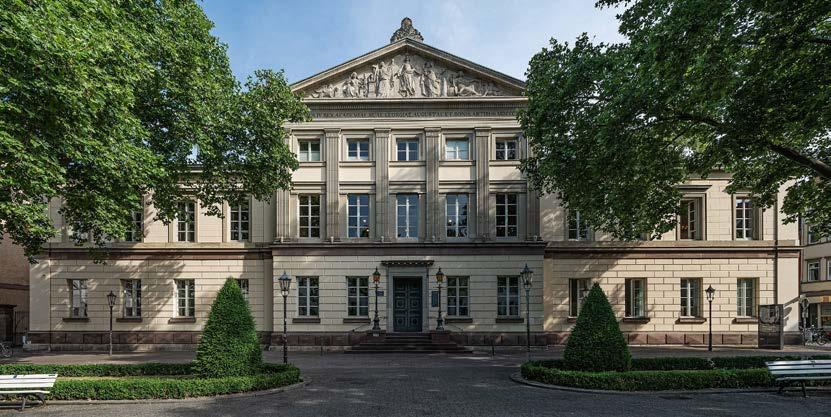
Southern façade of the auditorium on Wilhelmsplatz square (2022) at Georg August University of Göttingen. A.Savin, Wikipedia.
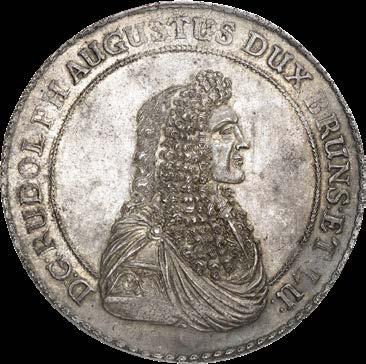
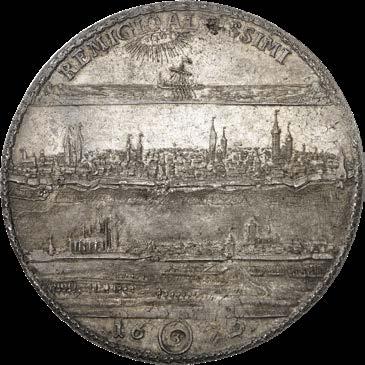
Principality of Brunswick-Wolfenbüttel
Rudolph Augustus, 1666-1685. 1679 löser of 3 reichstalers, Zellerfeld.
Very rare, especially in this quality. Cabinet piece. Splendid patina, extremely fine-FDC.
Estimate: 10,000 euros
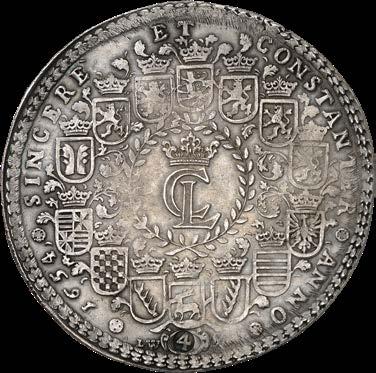
Principality of Brunswick-Lüneburg-Celle Christian Ludwig, 1648-1665. Löser of 4 reichstalers 1654, Clausthal.
Very rare. Attractive specimen with splendid patina, very fine-extremely fine.
Estimate: 4,000 euros
Lot 127
Lot 140
Coins from the era of the “Nordic Wars”
By Margret Nollé
In our Berlin Auction 437, we are offering a large number of high-quality coins and medals from the kingdoms of Sweden and Denmark. The following article will use selected pieces to shed light on an eventful era in Scandinavian history, which even many history enthusiasts may not be entirely familiar with due to the distance of these countries from Central Europe and their complexity. It concerns the struggle of the Nordic kingdoms among themselves and against the great power of Russia for hegemony in the Baltic region – the battle for the “dominium Maris Baltici” – which was fought with great commitment on all sides in the 16th and 17th centuries
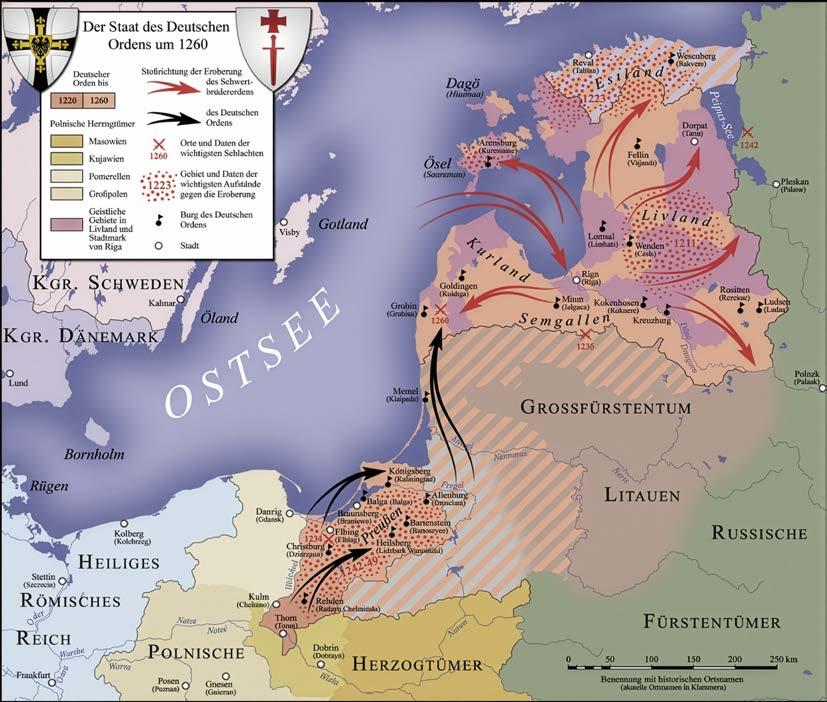
Fig. 1: Map of the conquests of the Teutonic Order in the Baltic region.
S. Bollmann/Dieter Zimmerling, Der Deutsche Ritterorden.
Düsseldorf, Vienna, New York 1991. CC BY-SA 3.0
A klippe coin from times of greatest need – the last Master of the Order of Livonia becomes Duke of Courland
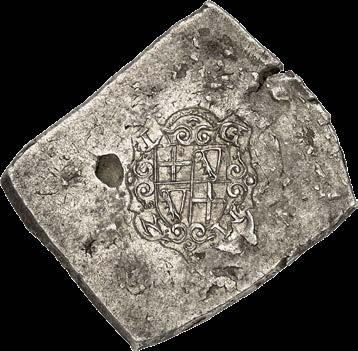
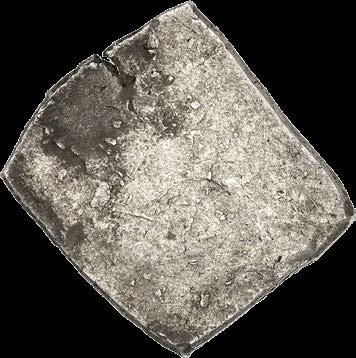
The quarter-thaler klippe, stamped on one side, bears the coat of arms of the last Grand Master of the Livonian Order, Gotthard Kettler. In this form, it is a previously unpublished unique specimen and a testimony to the turmoil of war that accompanied the end of the Order, which had been the hegemonic power in the Baltic region for over 300 years. Coins that served as currency in times of need were later mostly melted down again – no one likes to remember such times of hardship – so the existence of such a coin is an absolute exception. Despite all efforts, it cannot be assigned to a specific location or dated with the desired precision (Fig. 2).
After the collapse of the “crusader states”, the Teutonic Order shifted its focus to north-eastern Europe. Until around 1300, it subjugated and evangelised Livonia and other areas. Only the Grand Duchy of Lithuania remained independent, and entered into a union with Poland in 1386. The Livonian Order became an independent division of the Teutonic Order. Important trade routes between Western Europe and Russia ran through Livonia. From the 15th century onwards, however, the Livonian Order State was torn apart by internal disputes and was also in constant conflict with Lithuania and Poland. The defeat at the Battle of Tannenberg in July 1410 against a Polish-Lithuanian army under King Jagiello heralded the end. After the secularisation of Prussia in 1525, the former Order State initially continued to exist as a spiritual imperial principality. Its important and wealthy port cities of Riga, Reval, and Danzig, which belonged to the Hanseatic League, became objects of desire for neighbouring Russia, which had long sought access to the Baltic Sea.
Fig. 2: Künker Auction 437, Lot 439.
Baltic region, Livonian Order. Gotthard Kettler, 1559-1561. Single-sided quarter-thaler coin, undated, minted during the armed conflict between the Livonian Order and Russia.
Very rare. Extremely fine.
Estimated value: 15,000 euros
In this sense, Joachim Burwitz, an agent in the service of the Swedish King Gustav I Vasa, wrote in his report to the king in 1555 about the political mood in Livonia: “But here in this country, it is almost as the saying goes: What good is a candle or a pair of spectacles to someone who does not want to see? And now they live in great fear of everyone, worrying not a little that Almighty God will one day overthrow their government and hand them over to their neighbours to be plundered.” Tsar Ivan IV Grosnyi, whom Germanlanguage historiography called “the Terrible”, wanted to gain access to the Baltic Sea by military means. The attack did not come completely unexpectedly, but it was surprising nonetheless. Russian troops invaded Livonia in 1558 and conquered the Order’s fortress of Narva and the cities of Dorpat and Fellin; Riga and Reval withstood the siege.
The Archbishop of Riga and the Livonian Master of the Order, Ferdinand von Fürstenberg – the two most influential princes of the Livonian Confederation – called on the Emperor and the Empire for help in April 1559. In his imploring appeal to Ferdinand I, the Master of the Order called Livonia the “bulwark of the Holy Roman Empire” and described the Russians as “Muscovites” and “hereditary enemies of the Christian name”. Such strong words found favour with the Emperor; he immediately demanded in writing that Ivan IV cease all hostilities, which the Tsar naturally did not comply with. The next disappointment for the desperate petitioners was the fact that although the Imperial Estates approved considerable financial resources for the recruitment of mercenaries, no one was willing to advance the money. All efforts to obtain help from the Empire were therefore unsuccessful. Through the mediation of Gustav I Vasa and the Danish King Christian III, the Order succeeded in negotiating a six-month truce with the Russians.
2,5:1
This period of relative calm had to be used to seek new allies. The archbishop and master of the Order felt compelled to ask Poland-Lithuania for military support against the ever-advancing Russians. In September 1559, secret negotiations took place with the governor of the Polish King Sigismund Augustus in Lithuania, Prince Nikolaus Radziwill. It quickly became apparent that Poland-Lithuania made complete submission, especially of the metropolis of Riga, a prerequisite for the active defence of the country. Ferdinand von Fürstenberg’s successor, Grand Master Gotthard Kettler, who had been taken prisoner by the Russians, finally agreed to conclude a vassalage treaty with the Grand Duchy of Lithuania in 1561. The lands of the Livonian Order were secularised, with part of them becoming the property of the Lithuanian Duchy and the rest forming the hereditary Duchy of Courland and Semigallia (today Latvia), the first ruler of which was the former Grand Master Kettler, who converted to Protestantism. On 5 March 1562, Kettler swore allegiance to the Polish King in Riga and handed over the symbols of the Order’s power – the cross and the key – to the King’s authorised representative.
Thus, the last Livonian “Landmeister” of the Teutonic Order entered the Polish-Lithuanian state. The Polish King made major concessions in the process: He guaranteed self-government and the filling of official positions from the ranks of the Germanspeaking Courland nobility and the local civil service, as well as freedom of religion in accordance with the Augsburg Confession and the continued application of German law.
Fig. 3: Coat of arms of Grand Master Gotthard Kettler. WappenWiki.
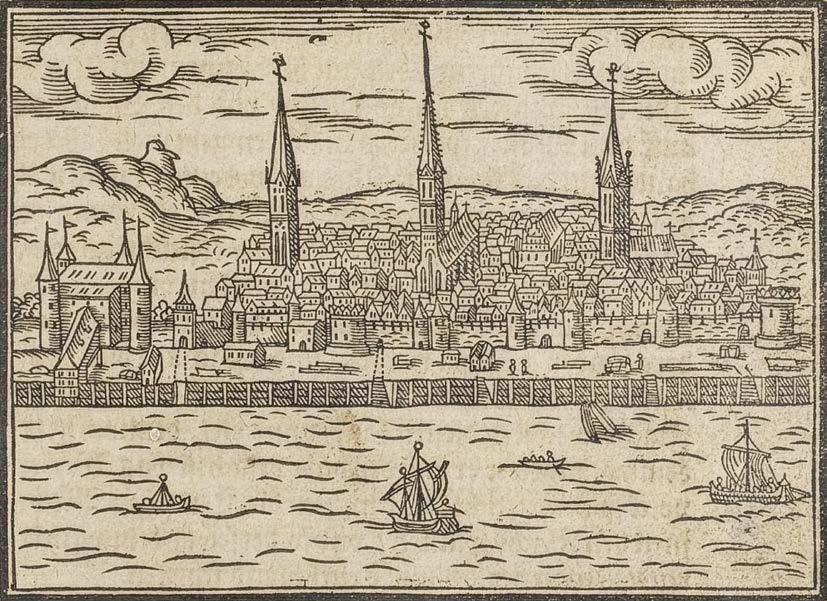
Fig. 4: View of Riga around 1610; Woodcut: Abraham Saur, Theatrum Urbium, Frankfurt 1593. Wikipedia, public domain.
On this coin, we see the coat of arms of Grand Master Gotthard Kettler, who came from an old Westphalian noble family based near Arnsberg in what is now the Hochsauerland district (Fig. 3) of Germany. From 1318 onwards, the family took the surname Keteler or de Keteler, which translates as “cauldron maker”. This also explains the depiction of the two pot hooks in the coat of arms. In the corners of the cartouche surrounding the coat of arms are the letters M(oneta) – L(ivlandiae) –G(otthardus) – Z(ettlerus = Cettlerus).
Riga under Swedish rule
The eventful history of the city of Riga, the capital of Livonia (now Latvia), begins in the mid-12th century. At that time, there was already a trading centre not far from where the Daugava River (also known as the “Western Dvina” or “Düna”) flows into the Baltic Sea. Initially, it was Swedish traders from the island of Gotland who wanted to gain a foothold here economically, followed by merchants from German territories. Due to its favourable location, the town rapidly rose to prominence, culminating in its founding as a city by Bishop Albert of Buxthoeven in 1201. Thanks to its supraregional importance, it was only a matter of time before Riga joined the Hanseatic League in 1282 (Fig. 4).
As the Teutonic Order expanded its power to Livonia in the 13th century, numerous power struggles with the archbishops of Riga soon ensued, which were settled in the Peace of Wolmar in 1491. In 1522, Riga joined the Reformation, bringing an end to the archbishops’ rule. After the dissolution of the Livonian Order in 1562, the city initially did not want to submit to Poland-Lithuania, but instead sought the status of a “free imperial city of the Holy Roman Empire”, which was denied. In view of the recurring threat from Russia, Riga finally decided to place itself under the protection of the Polish King Stefan Báthory, who in return confirmed the privileges and freedoms of what was then the most important trading city on the Baltic Sea, through the Corpus Privilegiorum Stephaneum of 1581. However, the city’s decision in favour of Poland was to prove fateful in the course of later events.
After Stefan Báthory’s death, the Polish nobility elected Sigismund III Vasa as the new King. Sigismund was the son of Swedish King John III and his wife Catherine Jagiellonica, who was a Polish-Lithuanian princess from the noble Jagiellonian family and the daughter of King Sigismund I of Poland. After the death of his father John, Sigismund was to rule Sweden and Poland in personal union; the plan was for an indefinite union of the two kingdoms, but each was to retain its own religion and laws. Although Sigismund, who ascended the Swedish throne after John’s death in 1592, promised in an oath that only the “Augsburg Confession” would be valid for Sweden, he was deposed in favour of his uncle, Duke Charles. However, his nephew Sigismund III Vasa was still considered by the Poles to be the legitimate heir to the Swedish throne. Sigismund’s attempt to maintain the personal union failed in 1598 at the Battle of Stångebro, and Sigismund was forced to leave Sweden for good. As a result, military conflicts between Sweden and Poland became frequent again, as Sigismund did not want to give up his claims to the Swedish throne. The Swedes advanced far into Livonia, but never dared to attack the heavily fortified city of Riga. In 1611, the energetic 17-year-old Gustav II Adolf ascended the Swedish throne. In 1620, he decided to finally win Livonia, and above all Riga, for the Swedish crown.
In July 1621, 14,000 Swedish soldiers embarked for Livonia, having first been read the new articles of war, according to which they were to behave in a “godfearing” manner so that a wild “soldiery” would not commit atrocities (as a result of Sweden’s frequent military campaigns, which had repeatedly plunged the state into serious financial difficulties, there was a risk that pay would not be forthcoming. In such cases, the soldiers had often resorted to “self-help”, which caused great suffering to the local civilian population). During the crossing to Livonia, the fleet was hit by a storm. On 4 August, the Swedish troops landed near the mouth of the Düna, set up camp and began to encircle the trading town of Riga, which at that time had a population of 30,000. The defence was in the hands of about 3,000 soldiers and a militia of almost equal strength. Although the Swedish artillery fired about 1,000 shots a day at the city, the Poles loyal to Riga knew how to defend themselves and inflicted heavy losses on the Swedes. A Dutch engineer who had escaped from the city revealed details about the weaknesses of Riga’s fortifications to the besiegers. Despite brave resistance, the city was unable to hold out and finally surrendered on 15 September 1621. King Gustav Adolf and his brother Karl Philipp had fought on the front lines, which earned them the utmost respect from their soldiers.
The capture of Riga was of great geopolitical importance for the Swedish advance into the Baltic region. The city, which Gustav Adolf allowed to retain its longheld privileges and freedoms, had become the second most important regional metropolis after Stockholm and represented Sweden’s extended arm into Eastern Europe. After the conquest of Riga, the Swedes were in the comfortable position of being able to control the export trade that was important for Poland and Russia, levy customs duties on it and, if necessary, even block it – since a large part of the grain exports of Livonia and Lithuania were shipped via the port of Riga.
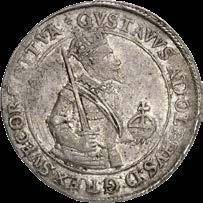
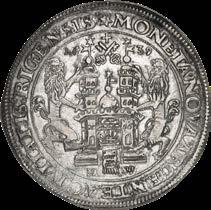
Fig. 5: Künker Auction 437, Lot 435
Baltic States, City of Riga under Sweden. Gustav II Adolf, 1621-1632.
Reichstaler 1629. Very rare. Very fine.
Estimate: 10,000 euros
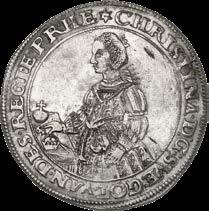
Fig. 6: Künker Auction 437, Lot 436
Baltic States, City of Riga under Sweden. Kristina, 1632-1654. Reichsthaler 1639. Very fine to extremely fine.
Estimate: 10,000 euros
Not only Sigismund III of Poland, but also King Christian IV of Denmark and even the Dutch were severely affected by the conquest of Riga, as they realised that this was a decisive step towards the establishment of a dominium Maris Baltici by the Swedes. Gustav Adolf’s terms of surrender left no doubt that he did not consider the city a temporary conquest, but rather pursued the goal of integrating Riga into the Swedish Empire. Accordingly, the expansion work on Riga’s protective wall in the following years was enormous. The city now resembled a fortress, armed for Russian attacks, which were not long in coming.
In the Russian-Swedish War (1656-1658), Riga withstood a Russian siege and subsequently retained its position as one of Sweden’s most important cities until the beginning of the 18th century. At the end of the Great Northern War (1700-1721), the Treaty of Nystad sealed Russia’s hegemony in the Baltic region, and Riga was annexed to the Tsarist Empire.
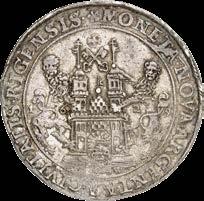
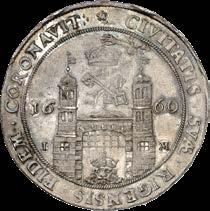
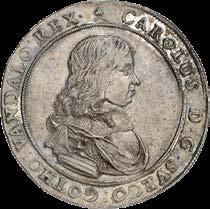
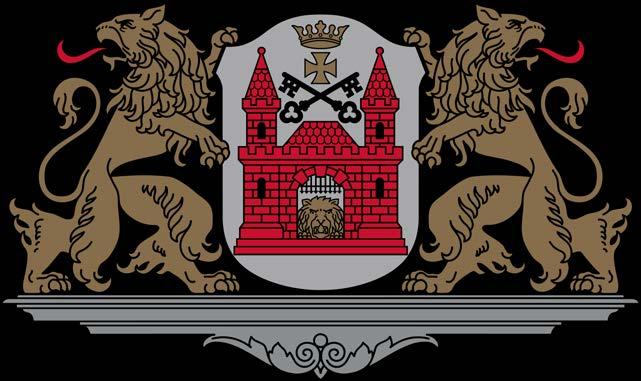
The three reichstaler coins from Riga minted under Swedish rule show the image of the respective ruler on the front: Gustav II Adolf, his daughter Kristina, and Karl XI (Figs. 5, 6 and 7). The reverse side shows the city’s coat of arms: Its most important heraldic elements were the open city gate as a sign of autonomy, the crossed keys for the patron saint St. Peter, the cross of the Teutonic Order above it, and the lion’s head in the archway for the defensive strength of the citizens (Fig. 8). Since 1656, Riga had also been granted the right to display the image of the Swedish crown. This honour was bestowed upon the citizens of Riga because they had bravely defended the city during the RussianSwedish War (1656-1658) when it was besieged by the Russians. This is also indicated by the coin image and legend on the reverse side of the thaler from the reign of Charles XI: CIVITATIS SVAE RIGENSIS FIDEM CORONAVIT (He rewarded the loyalty of his city of Riga with the crown).
Fig. 7: Künker Auction 437, Lot 437
Baltic States, City of Riga under Sweden. Karl XI, 1660-1697. Reichsthaler 1660. Variant with double pennants on the towers. Extremely fine.
Estimate: 7,500 euros
The struggle for dominance in the Baltic Sea between Sweden and Denmark
King
Christian IV
During his long reign from 1596 to 1648, King Christian IV of Denmark-Norway strove to restore his empire’s position as a major power in the Baltic Sea region, but he was not always successful.
Denmark’s claim to power dated back to the “Kalmar Union” of 1397, an imperial alliance which the great Danish Queen Margaret I (1353-1412) had established with Sweden and Norway under her leadership. The union collapsed when the Swedish noble family of Vasa prevailed in the struggle against the unpopular Danish supremacy. With the election of Gustav I Vasa as king in 1523, Sweden finally achieved national independence. However, the Danes did not give up hope of reuniting the “Three Crowns” under their own rule.
Christian IV initially achieved success in the socalled “Kalmar War” of 1611. This war was about the possession of Finnmark, an area in the far northeast of Norway that both powers wanted to control. The Swedish King Charles IX had challenged the young Danish king with aggressive action in northern Scandinavia until the latter declared war on him, which led to a major defeat for the Swedes: They were forced to cede Finnmark to the Danes in the 1613 Peace of Knäred.
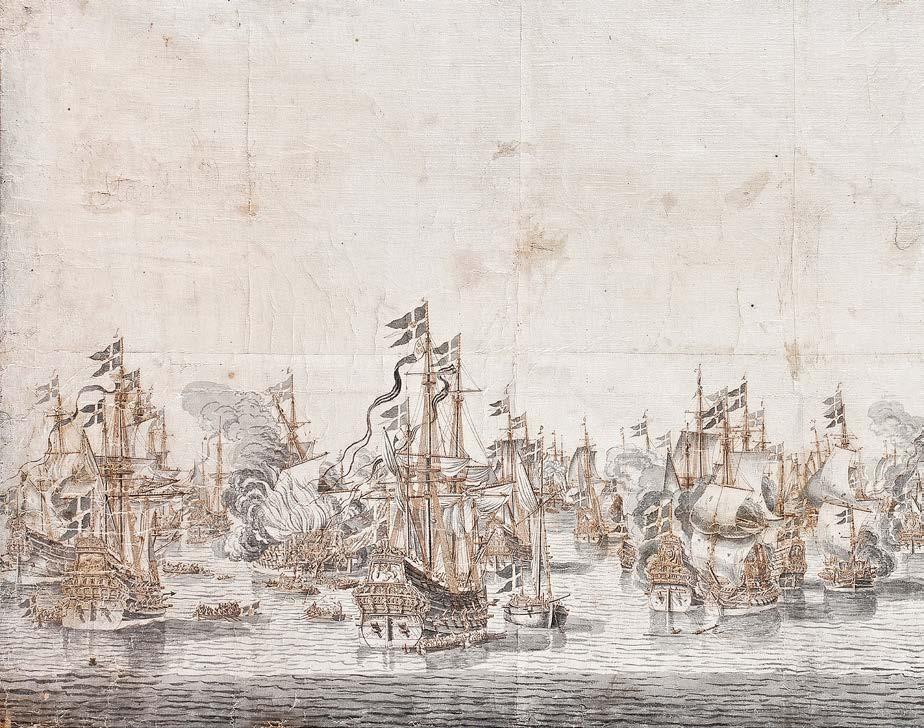
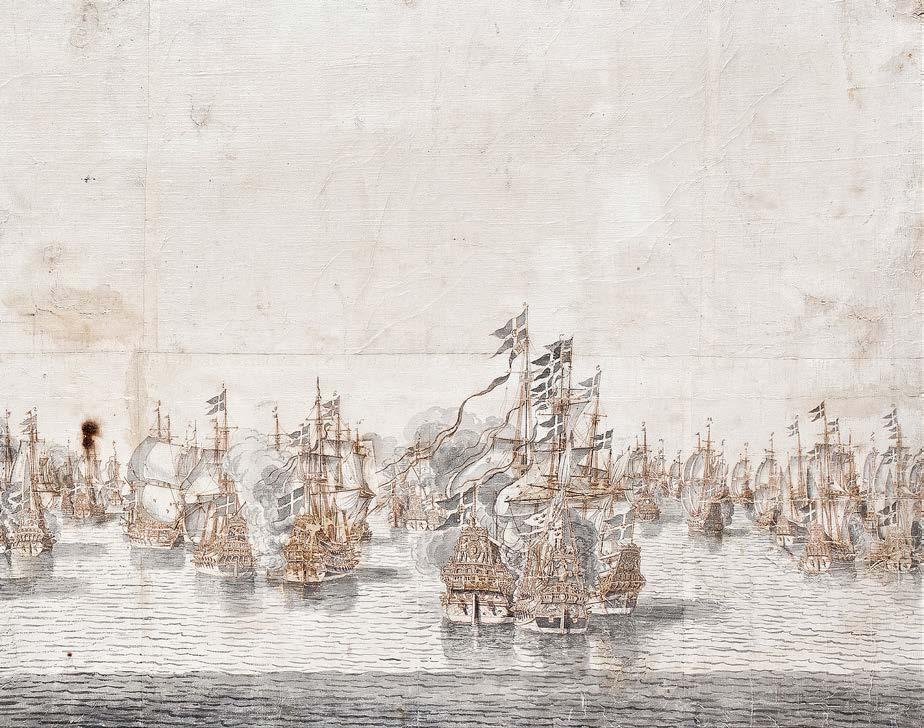
Much more consequential for Denmark was the “Torstensson War” (1643-1645), which took place in connection with the events of the Thirty Years’ War a few years before the negotiations for the Peace of Westphalia. After the defeat of the imperial army at Breitenfeld in November 1642, Swedish troops, with French support, had advanced far into the Habsburg hereditary lands. Imperial Chancellor Oxenstierna, a Swede, now saw an opportunity to secure definitive hegemony in the Baltic Sea in the north as well, and to severely weaken Denmark, the old arch-enemy. On the one hand, there was the “Sund toll”, a tax that all non-Danish ships passing through the Öresund had to pay to the Danes, which was a burden on Swedish trade. On the other hand, Sweden did not want to have the enemy at its back during further military operations in the Empire. In December 1643, Swedish General Count Torstensson invaded Holstein with an army under the pretext of seeking winter quarters for his troops. In January, he officially declared war on Denmark and occupied the whole of Holstein in a very short time. To the great surprise of the Swedes, the empire suddenly sided with Denmark, as Vienna was not interested in a resurgence of Swedish power. However, Generals Torstensson and Wrangel were able to repel the imperial support campaign. At the end of October 1644, the “Battle of Fehmarn” – in which a Swedish-Dutch contingent defeated the Danish fleet – brought the war to an end (Fig. 9). Denmark’s King Christian IV agreed to negotiate in order to avoid a Swedish invasion. On 23
Fig. 8:
Coat of arms of Riga. Wikipedia, public domain.
Fig. 9: The naval battle at Fehmarn, drawing by Willem van de Velde the Elder (1611-1693), pencil and ink, circa 1650. Skokloster Castle Collection, Sweden. Wikipedia, public domain.
August 1645, the Peace of Bromsebrö was concluded. Denmark paid a high price for peace: It lost Jämtland in Norway and the islands of Gotland and Ösel to Sweden, whose ships were also no longer required to pay “sound dues”. The Danish heir to the throne, Frederick III, administrator of the Bishopric of Bremen and the Archbishopric of Verden, had to cede his possessions to Sweden. This not only dashed the Danes’ hopes of regaining supremacy in the Baltic region, but also meant that the Kingdom of Denmark lost its role as a significant power on the European stage. Three years later King Christian IV, whose final years of reign were marked by bitterness, died in Copenhagen.
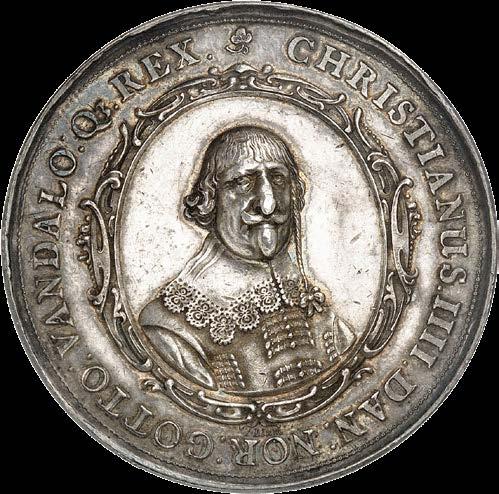
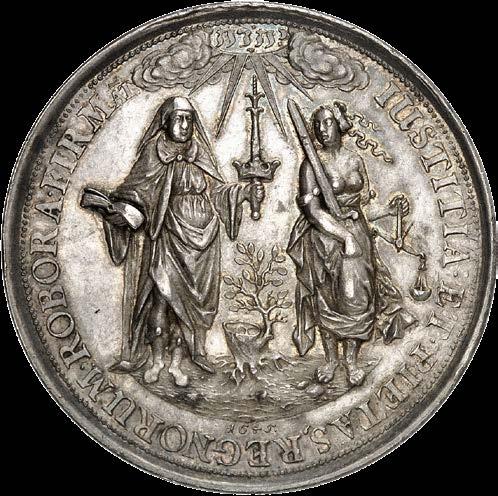
The rare silver medal offered here, which Denmark had struck to commemorate the Peace of Bromsebrö, shows on its reverse the personified figures of Justitia and Pietas flanking a tree stump from which a young shoot is growing (Fig. 10). The inscription in hexameter,
IUSTITIA ET PIETAS REGNORUM ROBORA FIRMAT (Justice and piety strengthen the powers of the kingdoms), demonstrates how much the warring parties now hoped for a lasting peace.
The siege of Copenhagen –the “Nordic Alexander” Charles X Gustav marches across the frozen Great Belt of the Danish Straits
In July 1657, a political and military constellation arose that had its origins in the abdication of Queen Kristina/ Christina of Sweden, daughter of the great Gustav Adolf. On 6 January 1654, Kristina renounced her reign in favour of her cousin Charles Gustav in an abdication ceremony at Uppsala Castle. Charles Gustav had been her childhood sweetheart in the 1640s, to whom she wrote passionate letters. According to sources, this infatuation was apparently reciprocated by her cousin, who even considered marrying the Queen at one point.
Karl’s mother, Katharina Wasa, was the daughter of Karl IX and had married Johann Kasimir from the Protestant Wittelsbach line of Pfalz-Zweibrücken Kleeburg in 1615. As Karl Gustav von Pfalz-Zweibrücken, Karl X nominally claimed, among others, the titles “Count Palatine of the Rhine” and “Duke of Bavaria”. Queen Kristina had already appointed the titular Palatinate Count as Commander-in-Chief of the Swedish troops in Germany in 1648, against the resistance of the old Imperial Chancellor Axel Oxenstierna. She also ensured that Charles Gustav was confirmed as heir to the throne by the Swedish estates. This change of dynasty from the Vasa to the Wittelsbach in the Swedish royal house led to the claims of the Polish Catholic Vasa line being revived by Jan II Kazimierz Waza/John II Casimir, who immediately laid claim to the throne. In addition, Russia had regained its strength under Tsar Alexei I Romanov (Tsar from 1645 to 1676), had conquered Ukraine, and had advanced into Poland. Karl/Charles X, who was
also known as the “Nordic Alexander” because of his outstanding strategic abilities, intervened in the war. He invaded Poland and quickly gained the upper hand militarily; King Jan II Kazimierz was forced to flee to Silesia. In June 1657, Denmark under Frederick III took advantage of Karl X’s involvement in Poland and declared war on Sweden in order to regain territories it had lost with the Peace of Bromsebrö.
The King of Sweden did not see the Danish declaration of war as a threat, as he knew that the enemy consisted mainly of inadequately-equipped and poorly-trained Danish recruits, who were no match for his battle-hardened soldiers. He led his army on a forced march to Jutland and stormed the important fortress of Frederiksodde in October 1657, thereby gaining possession of the Danish mainland territories. He then turned to Oliver Cromwell in England and asked for naval support because he wanted to besiege
Fig. 10: Künker Auction 437, Lot 453 Kingdom of Denmark. Christian IV, 1588-1648. Silver medal 1645 by J. Blum, commemorating the Peace of Bromsebrö on 13 August. Almost extremely fine. Estimate: 3,000 euros
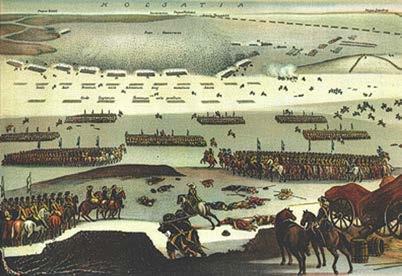
Copenhagen quickly. But a sudden icy cold made any ship movement impossible. The Baltic Sea froze over. Karl Gustav then developed a daring plan, which his generals initially shied away from executing: to march an army of four thousand men with horses, wagons and cannons across the frozen Little- and Great Belts of the Danish Straits to Zealand (Fig. 11). This venture was an unprecedented adventure in the entire history of European military affairs. Today, we read with horror the report of the French ambassador Terlon, who accompanied the King in a carriage on this journey: “It was a terrible experience to cross this frozen sea at night, where the trampling of the horses had softened the snow, so that the water stood half a cubit above the ice and one had to fear that at any moment we would find the sea open somewhere.” The temperatures rose and a storm came up, which further increased the risk of crossing the ice. The ice became so thin that the King and his French guest left their heavy carriage out of caution. Shortly afterwards, the ice broke and the carriage and horses disappeared into the icy waters. Around noon on 6 February, the entire Swedish army reached the island of Lolland unharmed. Frederik III of Denmark, who was not sufficiently prepared for war, feared the Swedes would continue their march on Copenhagen, and offered peace negotiations, which cost him dearly: In the Peace of Roskilde on 24 February 1658, Denmark-Norway lost, among other things, Skåne and Bornholm. Added to this was the loss of Trondheim and Romsdal in Norway, which was thus divided into two parts. The Danish people were all the more dismayed when the Swedish ruler sent a new declaration of war to Copenhagen in July 1658. His goal was the complete subjugation of the “Jutes” to Sweden’s great power ambitions. In August, the Swedes occupied island after island and marched on Copenhagen, and the Swedish fleet blockaded access by ships to the city. Karl Gustav did not attack immediately, but hoped to “starve out” the defenders behind their ramparts and bastions. He probably reckoned that an assault on Copenhagen would result in heavy losses among his troops, which would not have been easy to replace. In the autumn of 1658, a Dutch fleet defeated the ships of the Swedish general Wrangel in the Öresund, forcing its way into Copenhagen’s harbour waters and relieving the city. The Swedish King now had no choice but to attempt to conquer Copenhagen.
On 11 February 1659, he gave the order to attack, but failed to break the lion-hearted courage of the defenders. More than 1,500 Swedes lost their lives, and Karl X Gustav was forced to abandon his grand goal of incorporating Denmark into the Swedish Empire. All
that remained for him now was to hope for diplomatic assistance in the subsequent peace negotiations at The Hague in the Netherlands. To his great relief, in November 1659, the great powers England and France –which mainly wanted to prevent the Dutch from gaining strength in the Baltic Sea region – confirmed the terms of the Roskilde agreements in the 1659 Peace of the Pyrenees. Denmark got only Trondheim in Norway back. The daring Swedish king, who died suddenly a year later, could hardly have wished for a happier outcome.
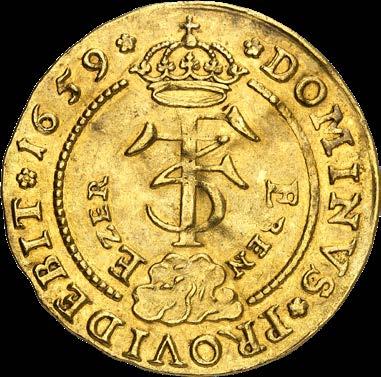
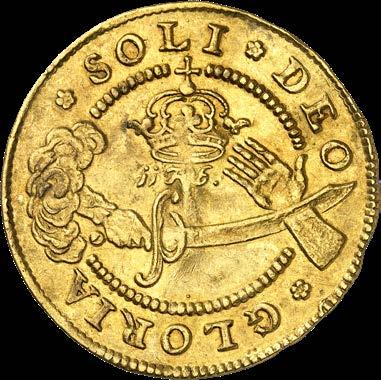
The 4-ducat gold coin (Fig. 12) in our auction shows us with its images how happy and grateful King Frederik III of Denmark was for the rescue of Copenhagen: The obverse shows the King’s monogram standing on the stone Eben-Ezer, the “stone of help” According to a story in the Old Testament (Sam. 7:12), this stone was erected and named by Samuel after his victory over the Philistines as a memorial to the help received from God. The inscription on the coin, DOMINVS PROVIDEBIT 1659 (God will provide), testifies to the Danish King’s trust in God in times of great danger. This help is vividly depicted on the reverse, where the hand of God emerges from a cloud and strikes the hand of the Swedish king, who is reaching for the Danish crown, with a sword. Below is the date “11 February”; the inscription reads SOLI DEO GLORIA (Glory to God alone).
Fig. 11: The march of the Swedes across the Great Belt, painting by Johann Philip Lemke (1631-1711).
Wikipedia, public domain. 2:1
Fig. 12: Künker Auction 437, Lot 457 Kingdom of Denmark. Frederik III, 1648-1670. Gold coin worth 4 ducats from the Crown mints, 1659, Copenhagen, commemorating the thwarting of the conquest of Copenhagen by the Swedes on 11 February. Extremely rare. Almost extremely fine.
Estimate: 20,000 euros
Guinea: Where Europe’s Gold Came From
Gold coins are sure to delight any coin collector. But where did the gold used to produce these coins come from? Some of the pieces in our upcoming Berlin Auction 437 tell this story.
By Ursula Kampmann
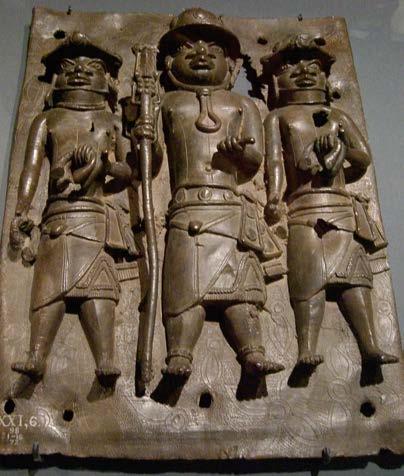
Benin Bronzes, which are so controversial today, were cast from the silver that the Oba received for selling captured men and women from neighboring tribes. We know this because only the Oba and his appointees were permitted to trade slaves. It was a carefully monitored privilege!
Therefore, they worked together harmoniously in pursuit of profit. Foreign traders built small forts on the coast for trading purposes. Local rulers brought their goods to these trade hubs to sell them in the most profitable way possible.
“White gold” and “black gold” – ivory and slaves. That’s what foreign powers sought in Guinea. And the African gold mines were obviously an attractive prospect, too! It was not without reason that the Gulf of Guinea was divided into the Ivory Coast, the Gold Coast and the Slave Coast.
It was a lucrative business that European dealers conducted with local rulers. A business that benefited not only the Europeans, but also the African aristocracy. The Oba of Benin, for instance, organized the procurement of slaves. In return, he received what he needed to maintain power: weapons and metal. The
Guinea became an important stop on the so-called triangular trade route. European ships first sailed to Africa. They were loaded with firearms, metal, coarse cloth and glass beads that were exchanged for slaves on site. The slaves were then taken to the Caribbean under the most horrific conditions. Many died, but this made the “merchandise” even more valuable. In the Caribbean, plantation owners were constantly demanding new laborers. They paid generously for them – with sugar, rum, tobacco and cotton. This, in turn, could then be sold on for a profit in Europe. This business was so lucrative that many nations became involved. While we naturally think of the British, Dutch and French first and foremost, other rulers also invested in the triangular trade.
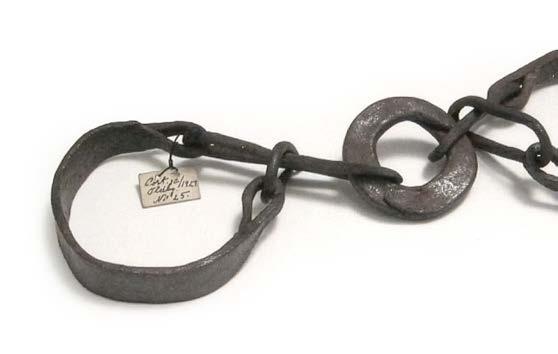
Iron wrist shackles of the Fulani, before 1895. Stadtmuseum Wien. Photo: KW.
- Benin Bronze: Three high-ranking officials of the Oba engaged in the slave trade. The men standing on the left and right are holding so-called manillas, which were used as currency in the slave trade. Weltmuseum Wien. Photo: KW.
The “Afrikanische Compagnie”, Groß Friedrichsburg and Guinea Ducats
One example that is not widely known in Germany is Frederick William, the Great Elector of Brandenburg. He established a trading post in Guinea in 1682. It was called “Groß Friedrichsburg” in honor of the ruler, and housed a garrison of around 90 Europeans. Frederick William himself headed the Afrikanische Compagnie, which handled the triangular trade on his behalf. To better sell African slaves in the Caribbean, Prussia collaborated closely with the Danes. They even leased a small part of their Antillean island of St. Thomas to Prussia.
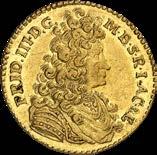
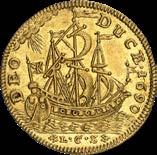
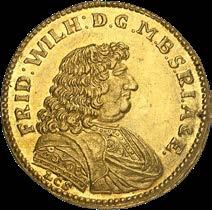
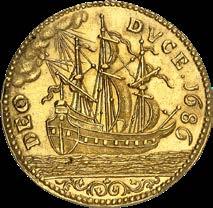
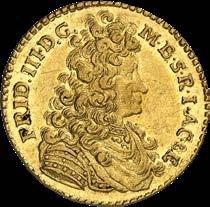
A coin offered in our auction 437 is a testimony to this commitment of the Great Elector. Its obverse shows the ruler wearing Baroque armor and a long curly wig. A sailing ship is depicted in the reverse. The inscription reads DEO DUCE – with God as leader. And God’s handiwork is actually visible as a small head in the clouds blows favorable winds into the ship’s sails. This ducat was minted from gold from Guinea, which is why this coin type is known as “ship ducat” or “Guinea ducat” among numismatists.
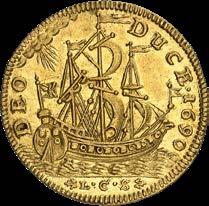
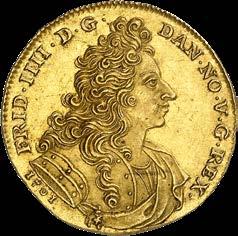
Even rarer is the Guinea ducat minted under his successor around 1690. Adolph Meyer described it as a unique piece in his book “Issues of BrandenburgPrussia Related to Its African Foreign Trade, 1681-1810” (Prägungen Brandenburg-Preussens, betreffend dessen afrikanischen Aussenhandel 1681-1810).
The successors of the Great Elector only half-heartedly supported the African venture. Without sufficient funding, economic decline set in. Frederick I declared the colony bankrupt in 1711, selling it to the Dutch in 1717 for 7,200 ducats and 12 slaves.
Frederick William, 1640-1688. 1686 Guinea ducat, Berlin. Extremely rare.
From the Gunther Hahn Collection, Berlin. About FDC. Künker Auction Sale 437), Lot. 36. Estimate: 20,000 euros.
III,
1690
From
Frederick
1688-1701.
Guinea ducat, Berlin. Extremely rare.
the Gunther Hahn Collection, Berlin. Extremely fine. Künker Auction Sale 437, Lot 37. Estimate: 20,000 euros.
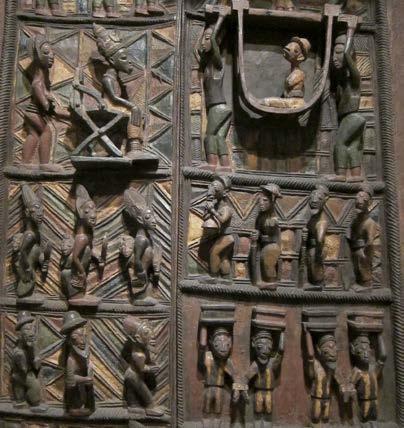
Wooden door of the Yoruba. In the lower field on the right, the carriers are chained together with iron shackles. British Museum.
Photo: KW.
Frederik IV, 1699-1730.
1701 double Guinea ducat, Copenhagen.
From the collection of coins and medals of noble private possession. Very rare. Extremely fine +.
Künker Auction Sale 437, Lot 469. Estimate: 5,000 euros.
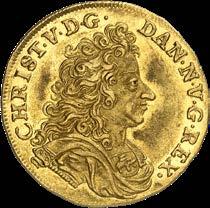
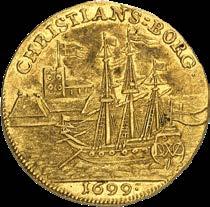
Christian V, 1670-1699.
1699 double Guinea ducat, Copenhagen.
From the collection of coins and medals of noble private possession.
Very rare. Very fine to extremely fine.
Künker Auction Sale 437, Lot 467. Estimate: 5,000 euros.
Frederik V, 1746-1766.
1746 double ducat, Copenhagen. Minted from gold from China.
From the collection of coins and medals of noble private possession.
Very rare. About extremely fine.
Künker Auction Sale 437, Lot 474. Estimate: 5,000 euros.
Christiansborg and the Danish Guinea Ducats
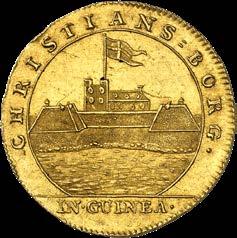
The Danes were much more successful than the Prussians in their involvement in Africa. In the 1660s, they had built a fort on the coast of what is Ghana today and named it “Christiansborg” in honor of Christian V. It became the capital of what we know as the Danish Gold Coast today.
The Dannebrog flag flying above this fort can be seen on the reverse of a magnificent 1701 double ducat minted from gold originating in Guinea. The coin is – just like Prussia’s Guinea ducat – evidence of the close relationship between the king and the trade. On 11 March 1671, Christian V granted the West India Guinea Company a privilege, authorizing it to trade in the Caribbean and Africa. And the king intervened further still. The Royal Navy offered the merchant fleet protection from attacks by foreign privateers.
This Christian V had already started minting Guinea ducats. Here we can see a 1699 ducat featuring a detailed depiction of a proud ship with open gun ports entering the port of Christiansborg on the reverse. Once again, the Dannebrog can be clearly seen flying above the city.
Guinea was just one part of the Danish trading empire. Of particular importance was the Danish West Indies, the base in the Caribbean where slaves purchased in Africa could be sold.
Tranquebar and the Danish East India Company
While these two areas were controlled by the West India and Guinea Company, the Danish East India Company made sure that treasures from Asia flooded into Europe, turning Copenhagen into a hub for Asian goods such as spices, tea and silk. It is hard to imagine today that, in the 17th century, Danish merchants brought more tea to Europe than their British competitors. However, it must be admitted that England remained the number one tea-drinking nation, with 90% of Danish imports being smuggled there immediately.
The most important seaport of the East India Company was Tranquebar, from where ships sailed to India, China and the Spice Islands. The Danes owned a small group of islands there that they called New Denmark, which we know as the Nicobar Islands today.
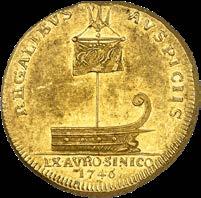
The 1746 double ducat from Copenhagen commemorates the Danish East India Company. The reverse features an ancient-style prow with a banner flying from a trident. While the trident symbolizes dominion over the sea, Danish business leaders immediately recognized the abbreviation on the banner: KODAC stands for Kongelig
Oetroyeret Dansk Asiatisk Compagnie. It can be read in Latin that the company sailed under royal auspices and that this coin was minted from Chinese gold.
We can doubt whether this piece was actually intended for Tranquebar, as numismatic catalogs suggest. It is much more likely that they were produced to be distributed to the company’s shareholders.
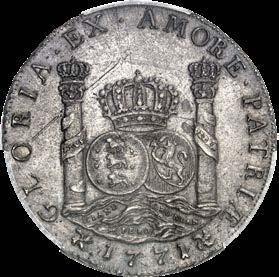
This type shows what a coin had to look like to be popular in China. There, money changers preferred to accept Spanish 8 reales coins, and with good reason: their consistent fineness of 935/1000 was almost identical to the Chinese wenyin standard of 937/1000. That is why Danish engravers reproduced the most important iconographic details of the Spanish “pillar dollars” and adapted them to comply with Danish conventions. Instead of the Spanish coat of arms, they feature the Danish coat of arms on the obverse. The legend refers to the Danish king and his titles. The coin’s reverse depicts the famous pillars of Hercules bearing the inscription PLUS ULTRA, meaning “beyond”. While the Spanish model shows only two globes on a mountain between, the Danish version once again depicts parts of the coat of arms as well as inscriptions on the mountain: ISLAND – GRONLAND – FERÖ, naming the first three colonies of Denmark. It was because of these colonies that the Danes referred to themselves as one of the oldest colonial powers in Europe, as they came under Danish control around 1380. In 1771, only 543 piastres were minted as a trial run. The coins appear to have been well received initially, as the dies of 1771 were used again in 1774 to produce 44,900 piastres. In May 1777, a second issue of 50,000 specimens was minted with new dies. However, contemporary sources suggest that it was difficult to bring these pieces in circulation as the Chinese considered them to be too light.
Christian VII, 1766-1808. 1771 piastre (minted in 1774), Copenhagen on behalf of the Danish Asiatic Company. AU58. Very rare. Extremely fine. Künker Auction Sale 437, Lot 477. Estimate: 35,000 euros.
As the British became increasingly involved in Africa, India and China, small Denmark was no longer able to keep up. It sold its Indian port of Tranquebar to England in 1845, and it gave Christiansborg to the British in 1850 for a sum of 10,000 pounds. Gradually, Denmark gave up most of its ports and trading posts.
The Last Danish Colonies
The last Danish overseas colony was the Danish West Indies, comprising the Virgin Islands, St. Thomas, St. John and St. Croix. Despite the abolition of the slave trade in Denmark on 1 January 1803, the colony remained profitable through its sugar production. However, at the beginning of the 20th century, the plantations were ravaged by storms and droughts. Tax revenues dropped, becoming disproportionate to expenditure. The Danish government therefore attempted to sell the colony to the U.S. for 5 million dollars to offset the costs. However, the Senate objected and the deal fell through.
It was not until the First World War that it became clear that Denmark was simply unable to govern its Caribbean colony. Negotiations with the U.S. resumed, much to the annoyance of Danish nationalists who considered giving up this last remnant of Denmark’s former power to be reprehensible. To be on the safe side, the government therefore held the first-ever Danish referendum, in which the majority of Danish citizens approved the sale. On 1 April 1917, the Danes sold the Danish West Indies to the U.S. for 25 million dollars. This did not mark the end of Denmark’s colonial history, however. This did not occur until 5 June 1953, when its last colony, Greenland, became an equal part of Denmark. The fact that there are still controversies surrounding this part of history is illustrated in the wellknown thriller “Miss Smilla’s Feeling for Snow”.
On the “backbone” coinage of the city of Side in Pamphylia: The city’s Athena and Apollo coins, Part 1
The beginnings of Side’s coinage and its development up to Alexander the Great
By Johannes Nollé
Feriştah and Hüseyin Alanyalı –a new image of Side emerges
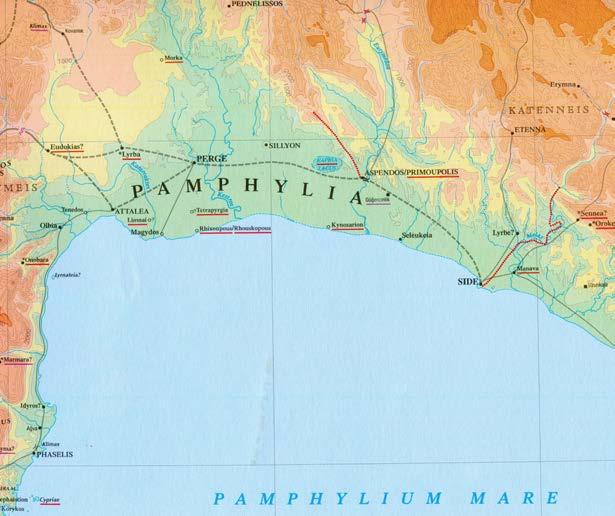
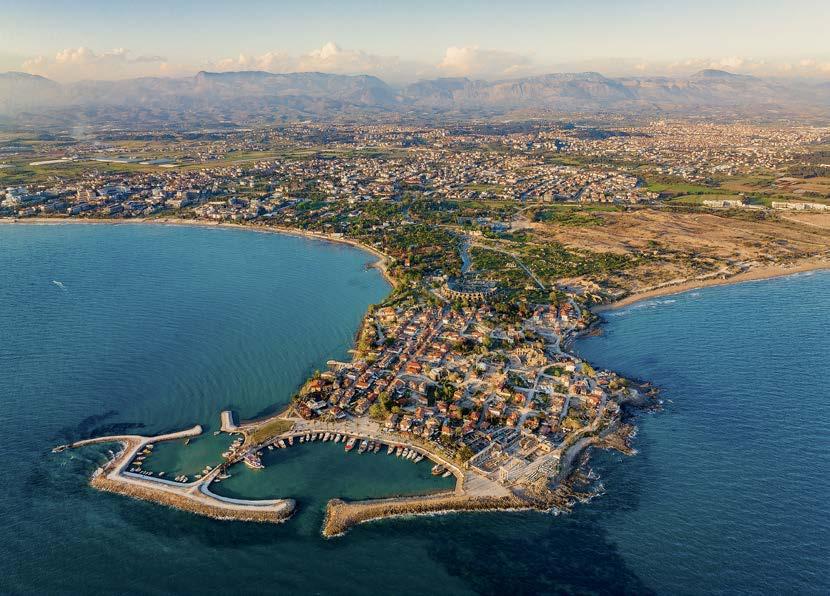
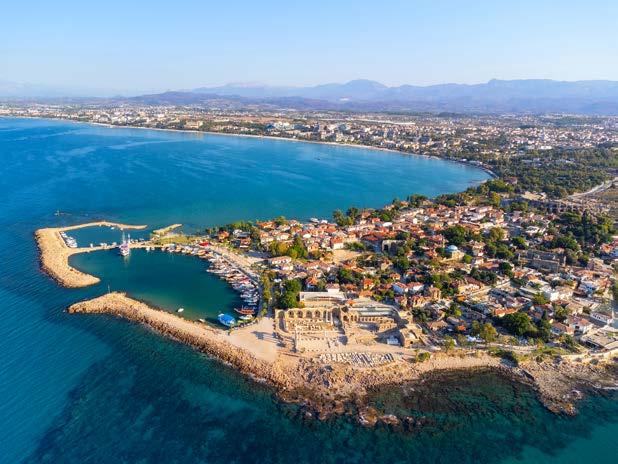
Side is special! Located at the eastern end of the Pamphylian coastal plain on a flat peninsula (Figs. 1 and 2), the city offers its visitors unforgettably impressive ruins, as Side was abandoned in the Middle Ages and thus never heavily built over. It was not until
Fig. 1: Pamphylia.
Excerpt from the Barrington Atlas, map 65.
the early 20th century that Muslim fishermen from Crete settled on the headland, but their small houses, built into the ruins, caused relatively little damage to the ancient remains. This changed after the Second World War, when, in the second half of the 20th century and at the beginning of the 21st century, tourism developed explosively and holiday homes, guesthouses, shops and hotels sprang up all over the city. Only the intervention
of the Turkish Antiquities Administration – with special mention due to the energetic commitment of the then museum director Orhan Atvur – prevented the worst.
For the past 10 years, a comprehensive conservation concept for the entire ancient city, in-depth archaeological research, and completely new insights into the history of Side have been made possible
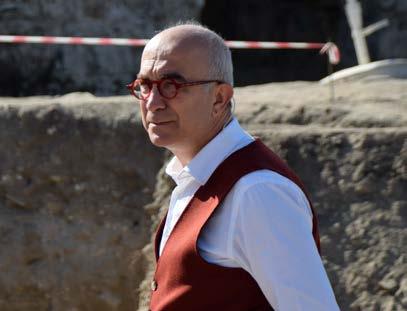
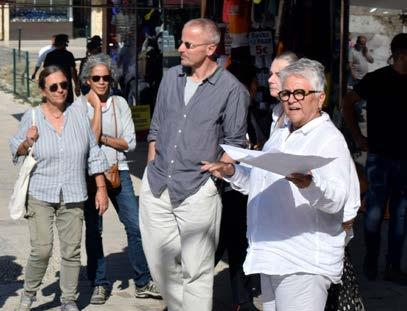
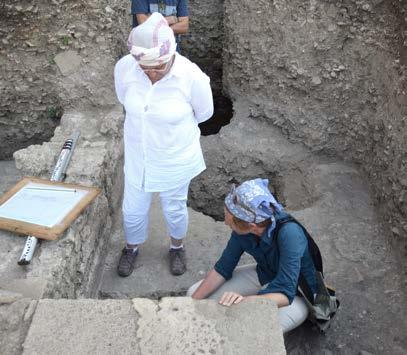
thanks to a dedicated archaeologist couple and their colleagues, Professors Feriştah and Hüseyin Alanyalı, who teach at the University of Eskişehir (Fig. 3). The aim of the two scholars is to strike a balance between the interests of the people who live in Side today, the requirements of monument protection, and an attractive urban aesthetic. Their approach will serve as a model for dealing with other historical sites.
Fig. 2: The Side peninsula. Drone photo by Gökçen Tunç, iStock-1489666660.
Fig. 3b: Professor Feriştah Soykal Alanyalı (right) discusses the next steps with members of her excavation team (JN).
Fig. 3a: Professor Hüseyin Alanyalı in the midst of the excavations (JN).
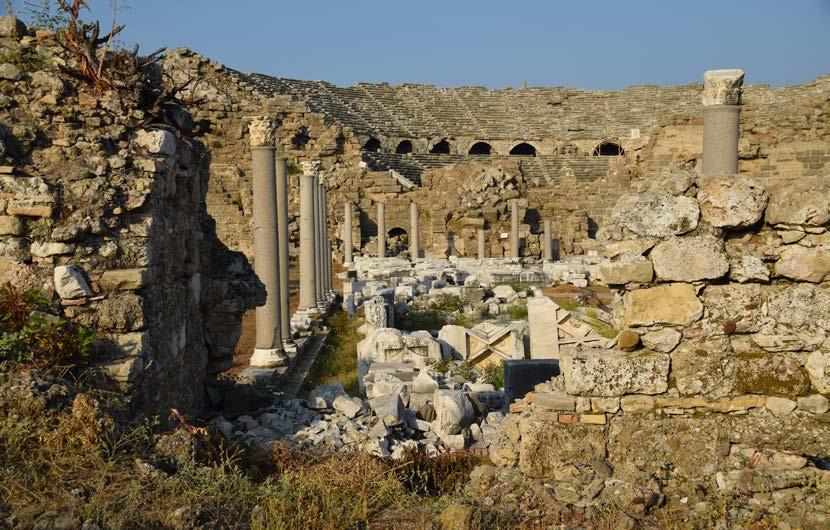
The still-standing Hellenistic wall, the city wall that was later incorporated during the medieval reduction of the city, a magnificent fountain from the Severan period, the theatre (Fig. 4), several thermal baths, entire neighbourhoods, numerous mosaic floors and many other remains of ancient Side that are well worth preserving have been uncovered, secured, partially reconstructed and placed in their historical context. Scientific evaluation has already begun, and several publications have already appeared, refining or changing our knowledge of Side.
Numerous deep excavations (Fig. 5) show that the city on the peninsula is not as old as ancient tradition had led us to believe. The history of the city on the headland only begins at the height of Greek colonisation, around 700 BC.
Side’s own script and language
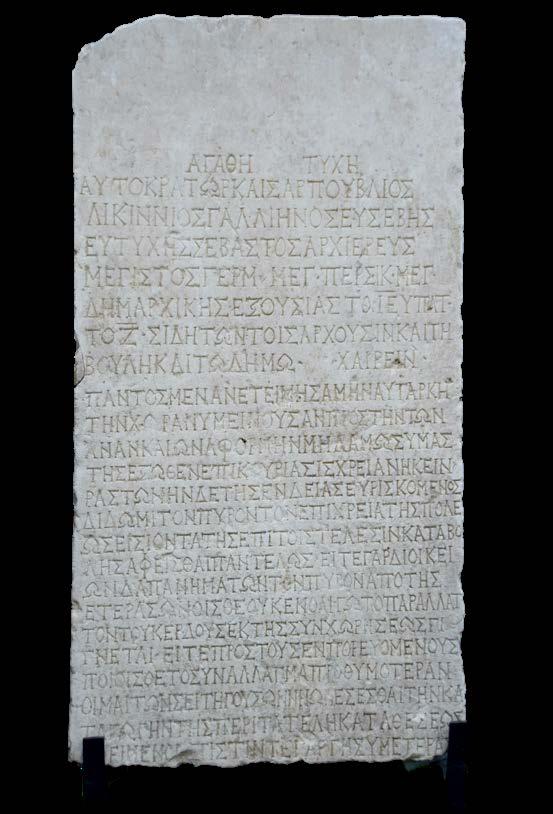
New finds of Greek inscriptions 1 allow us deeper insights into ancient city life. Of particular interest is a letter carved in stone (Fig. 6) that Emperor Gallienus (253–268) wrote to the Sidetians in 267 AD to offer support during a grain shortage. 2
5: Professor Feriştah Soykal Alanyalı at one of the many deep excavations in Side (JN).
1 For more on them, see J. Nollé, “Side” im Altertum: Geschichte und Zeugnisse I und II (IK 43 and 44), Bonn 1993 and 2002; also F. Soykal Alanyalı, Side’nin Erken Dönemleri/The Early Periods of Side, in: A. Özdizbay – İ. Dağlı (eds.), Pamphylia. Bereketli Ovada Halkların Ahengi/Harmony of the Peoples on the Fertile Plain, Istanbul 2024, 424–441.
2 J. Nollé, A Letter from Emperor Gallienus to Side. Imperial Assistance during a Supply Crisis, Chiron 47, 2017, 303–337.
Fig. 4: View from the agora to the theatre of Side (JN).
Fig.
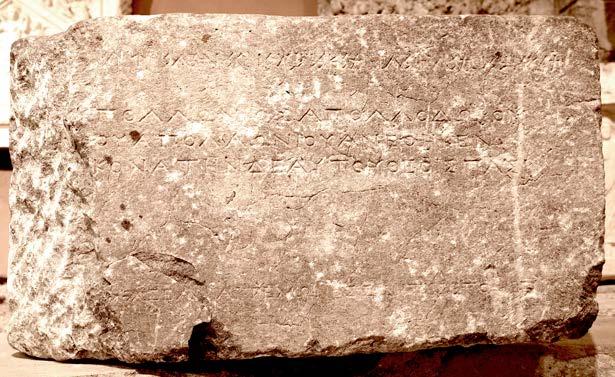
Several finds of long inscriptions in the Sidetian language are sensational, because one of the special features of Side is that the city used its own language, spoken only there, which was written with its own alphabet. Until now, we only knew of a few shorter Sidetian inscriptions (Fig. 7), some of which offer a translation into Greek – i.e. they are bilingual – and are therefore partially understandable. It is to be hoped that experts in the languages of Asia Minor will succeed in deciphering the newly-discovered long texts and clarifying their meanings, even though no parallel Greek translations, which may once have existed, have yet been found. It is a great challenge for the scholars working on these inscriptions to correctly read an otherwise unknown script, in which the phonetic value of several characters still cannot be determined with certainty and which was written without spaces – i.e. continuously without separations between the individual words. It will be extremely difficult to decipher the texts created in a largely unknown language. Only an intimate knowledge of the languages of Asia Minor – Hittite and Luwian as well as the Sidetian sister languages (Carian, Lycian, Lydian) – can lead to success.
We could have known about a separate Sidetian script and language long before the first inscriptions were found if we had taken ancient tradition seriously. The Greek historian Arrian (c. 85/90 – 150 AD) tells us that Alexander the Great came to Side in 334 BC. He was surprised that not only Greek but also a native Asia Minor language was spoken in the city. Everywhere
Fig. 7: Sidetian/Greek bilingual inscription: The first line contains the Sidetian text, followed by the Greek text. It is a dedication of a statue to all the gods; at the bottom is the artist’s signature (JN).
Fig. 6: Stele with Emperor Gallienus’ letter to Side (JN).
in the city, his eye would have fallen on the Sidetian inscriptions. As if to excuse the visible existence or even dominance of a language from Asia Minor in their city, the Sidetians told him that Greeks had once come to Side from the city of Kyme on the west coast of Asia Minor. After they landed, they began to speak their own language, which was not spoken anywhere else.
There is no doubt that behind this miraculous story lies the fact that the Cymians – who founded colonies or even simple trading posts on the south coast of Asia Minor – had come only in small numbers. However, the establishment of an urban settlement on the headland of Side would not have been possible without the involvement and support of the Luwian population. In order to build a city, the few Greeks from Kyme were dependent on the support of the local inhabitants. The Kymean settlers who founded Side were predominantly men, and if they wanted children they had no other option but to marry local women. Thus on the peninsula of Side in the far east of Pamphylia a mixed culture emerged, in which the endemic (i.e. Anatolian) language played an important, and at times perhaps even leading, role during the first four centuries of the city’s existence. Nevertheless, the Greeks, mainly through the influx of more Greeks and the attractiveness of their civilisational and cultural achievements, were able to increasingly transform Side into a “proper Greek” city.
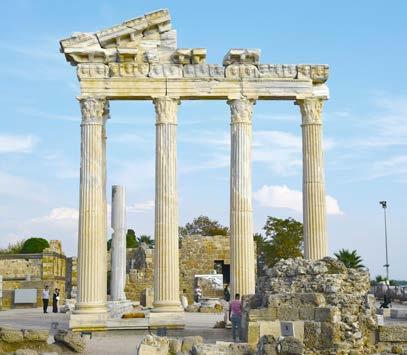
Fig. 8: Aerial view of Side. The temples of Athena and Apollo at the southwestern end of the peninsula: Inland is the temple of Apollo, into which a church has been built, towards the sea the partial reconstruction of the temple of Athena.
Drone photo by efired, iStock-1994043032.
This continued until, with its conquest by Alexander the Great, Side became a Greek city with ever-dwindling Anatolian traditions – so that during the Hellenistic period, knowledge of the Sidetian language was completely lost.
Side’s first coins
A lecture in Mainz: Side’s backbone coinage
Legends in the Sidetian script and language can be found on the early coins of Side, which brings us to the actual topic of this article. As part of the “Künker Lectures” program, the Mainz Coin Collectors’ Association and its dedicated chairman, Professor Karl Ortseifen, invited me to Mainz on 10 October 2025 to give a lecture on the coinage of the city of Side. Karl Ortseifen is an outstanding expert on both ancient coinage –especially Seleucid coins – and on the history of Mainz and its coins. In addition, the learned Americanist, together with two colleagues, has written a book about Americans’ travels on the Rhine that I greatly appreciate. 3 As I am preparing the corpus of Side’s imperial coins, which is to be published next year, I was very happy to accept the suggested topic. Of course, the time available to me was not sufficient to discuss all aspects of Side’s coinage, as such an undertaking would take days. Therefore, using Side as an example, I chose the aspect of “backbone coinage”,
which can be observed in the vast majority of coin issues of ancient Greek cities: From the beginning of their minting activities to the end – often spanning many centuries – ancient Greek cities continuously placed the images or attributes of their most important patron deity on their coins in order to put their home community under divine protection. Such images of gods are displayed upon the majority of a city’s coinage and thus serve to establish its identity. In other words, they form the “backbone” of a city’s coinage, which is why I like to refer to them as backbone coinage.
The beginning of coinage
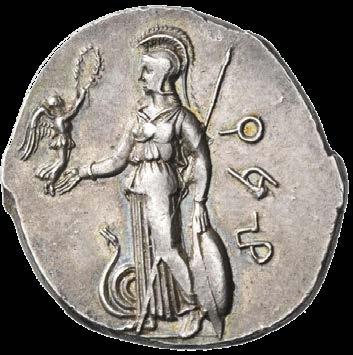
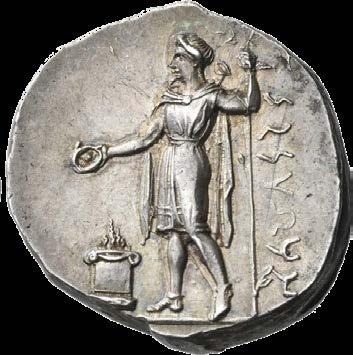
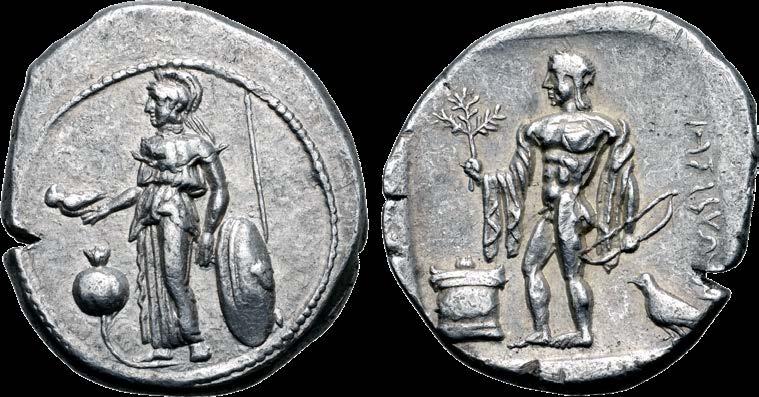
Side minted its own coins for a period of about 800 years, from the beginning of its urban coinage at the end of the 6th century BC until the conclusion of this minting activity during the reign of Emperor Aurelian (270–275 AD). 4 During this long period, the images of Athena and Apollo appeared continuously on the coins of Side. While many cities featured only one deity on their “backbone coins”, Side featured two. Athena- and Apollo coins both run through the history of coinage in Side like the backbone of the human body. Side is special!
This connection between the two patron deities was also visibly expressed in the cityscape of ancient Side. The two gods’ temples were located next to each other
at the tip of the peninsula above the harbour (Fig. 8). A corner of the peristasis (i.e. the colonnade) and the front columns of the Temple of Athena were erected by archaeologist Jale İnan (1914–2001) and today mark the most important places of worship in the ancient city (Fig. 9). As we shall see, this is where Athena and Apollo “first met”.
It is still disputed why and when exactly Side began minting its own coins. I consider it quite likely that Side began minting coins around 500 BC; dates around the middle of the 5th century BC are in any case too late, as the earliest coins from Side do not correspond to the style of this period.
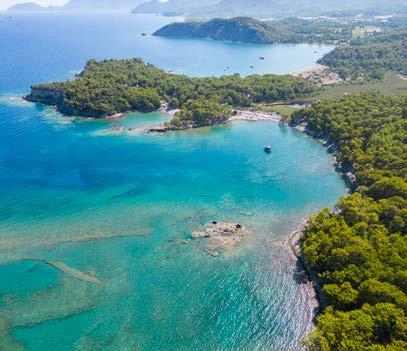
The city was probably inspired to start minting its own coins by coins from Phaselis (Fig. 10), which was then a Pamphylian- and not yet a Lycian city and, like Side,
3 K. Ortseifen – W. Herget – H. Lamm (eds.), Picturesque in the highest degree ... Americans on the Rhine: A Selection of Travel Accounts, Tübingen 2015.
4 S. Atlan, Sidenin milattan önce V. ve IV. yüzyıl sikkeleri üzerinde araştırmalar/Investigations into the Sidetian coins of the 5th and 4th centuries BC, Ankara 1967, remains fundamental on early coinage.
Fig. 9: Erected columns of the peristasis of the Temple of Athena. The identification with the temple of Athena is confirmed by the Gorgon frieze (JN).
Fig. 10: The peninsula of Phaselis from the air; in front of us is the main harbour of the city, which also had other harbours and roads. Drone photo by bfk 92, iStock-1611310951.
was located on the Pamphylian Sea (today Antalya Körfezi). While Phaselis was founded by Rhodians on a cape at the southwestern edge of this bay, the peninsula of Side was located at the northeastern edge of the Pamphylian Sea. Side and Phaselis were connected by a direct sea route that cut diagonally across the Pamphylian Sea and was considerably shorter than the journey along the coast. Based on coin finds, Phaselis began minting its own municipal coins towards the end of the 6th century BC – after 520? – and Side, whose merchants were in competition with those of Phaselis, must have begun minting coins shortly thereafter, as Side’s trade would have fallen behind that of Phaselis without the economically advantageous new payment instrument of coins.
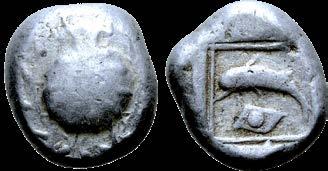
The Sidetians minted staters – i.e. coins of their nominal system – which weighed 2 Persian sigloi, or around 11.2 g. As Side belonged to the Achaemenid Empire at that time, the choice of such a weight standard was crucial for simplifying trade with the Levant and Egypt, which were also under the rule of the Persian kings.
Aspects of the iconography of Side’s early staters: The “attribute” coinage dedicated to Athena and Apollo and the transition to head images
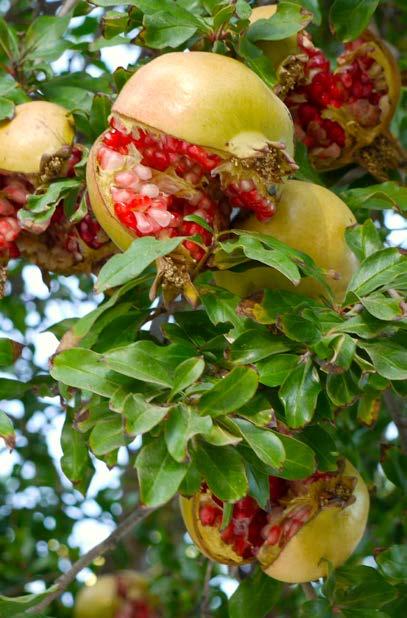
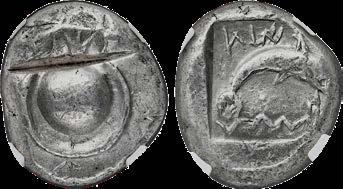
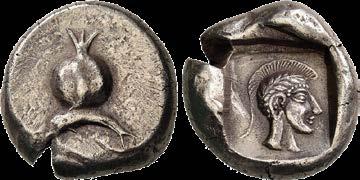
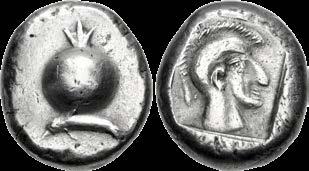
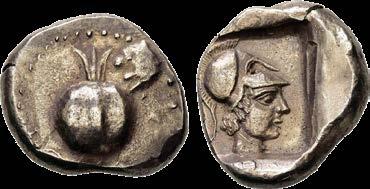
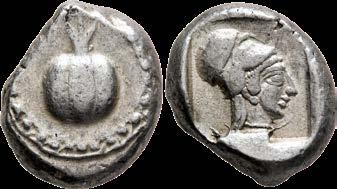
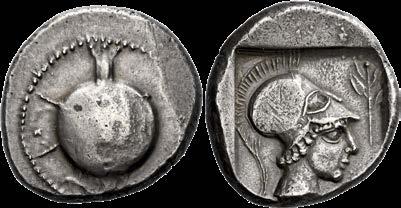
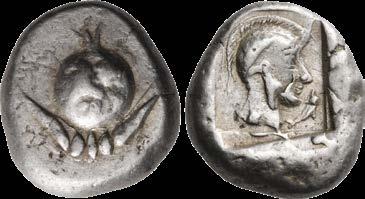
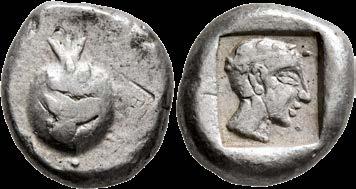
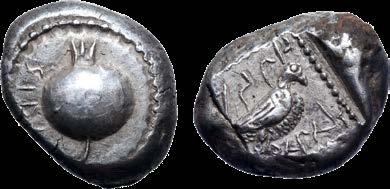
The first coins of Side show an initial approach to their design. They are dedicated to Athena and Apollo, but initially the images of these deities do not appear on the coins, only the gods’ attributes. With the exception of the pomegranate, all of these attributes are based solely on Greek traditions. The decision to use attributes rather than images of the gods was obviously made because the die-cutters in Side did not dare to produce anthropomorphic images of the gods when they began minting coins.
The first coins of Side bear no legends. For the people of the eastern Mediterranean, the pomegranate was sufficient evidence to associate a coin decorated with the image of this fruit with Side.
The female patron goddess of Side was apparently a fusion of a local Asia Minor goddess with the Greek
Fig. 11a: Pomegranate blossom (JN).
Fig. 11b: Pomegranate fruit (JN).
Auction Roma
Auction Heritage, Long Beach Signature Sale 32076, 5 September 2019, Lot 30173.
Athena. In this blending of Greek and Asia Minor traits, the Greek remained dominant. The Sidetian name of the city goddess – probably Thana – was undoubtedly derived from the Greek name of the goddess. Like Athena, Side’s Thana was a warrior goddess with a helmet and lance. The patron goddess of the easily vulnerable headland – which jutted out into the eastern Mediterranean like a silver platter and lay on a busy shipping route – also had to be a champion ready to defend against enemies, for the settlement on the flat headland was exposed to sudden attacks from the sea. There was no acropolis to retreat to, and without Greek supremacy at sea, the continued existence of a settlement in such a location could not have been assured. In addition to the usual Greek or Athenian attribute symbols of Athena – helmet, lance, olive branch, little owl, snake – the Athena of Side was associated with the pomegranate. That fruit was thus the pictorial representation of the city’s name. The settlement or city of Side was named after the pre-Greek, i.e. Mediterranean, word σίδη, meaning pomegranate. The Greeks, who had advanced from the
north into the Mediterranean region, had adopted it from a Mediterranean language, as this plant did not exist in their original habitats. There is also a city in the motherland of Boeotia called Side, which proves that this plant name was not limited to Asia Minor and obviously did not originate there. 5 According to our new knowledge about the founding of Pamphylian Side, it was probably the Cymæans who named the city on the peninsula after the plant that grew abundantly there –Side, meaning pomegranate (city) (Figs. 11a and 11b). It is possible that a native protective deity associated with the pomegranate bush was worshipped on the headland even before the arrival of the Cymæans, but it is also possible that it was only when the Greek settlement on the headland was given the name Side that the Aeolian patroness of the peninsula became a pomegranate goddess. Whatever the case may have been, even on the earliest coins from Side, the pomegranate could represent the local patron goddess of the peninsula and/ or the settlement built on it (Fig. 12a).
On the reverse side of such early coins, Greek symbols of Apollo can be found: a dolphin and an eye (Fig. 12a). In Side, Apollo was regarded as the god who had brought the Greek colonists from Kyme safely to the Pamphylian peninsula. Apollo was venerated in his role as protector of seafarers – and perhaps also as the oracular god of Delphi, whom emigrants often consulted for advice before their dangerous colonisation ventures. 6 The sea-savvy Greeks knew that dolphins appear only when the sea is calm, and accompany ships with playful leaps. In this respect, dolphins were a welcome sign of good weather for sailors. A rare Side stater shows a leaping dolphin above and below the Sidetian script (Fig. 12b). However, Apollo was not only a sea god, but was also worshipped as a sun god. Therefore, it was believed that he could see everything from the sky, and this is also evoked by his watchful eye (Fig. 12a).
5 K.T. Witczak – M. Zadka, Ancient Greek σίδη as a borrowing from a pre-Greek substratum, Graeco-Latina Brunensia 19.1, 2014, 113–126.
6 On Apollon Delphinios, cf. F. Graf, Apollon Delphinios, MH 36, 1979, 1–22.
Fig. 12a: Stater from Side, early 5th century BC: Pomegranate // Dolphin and eye in incusum.
E-Sale 52, 10 January 2019, Lot 321.
Fig. 12b: Stater from Side, early 5th century BC: Pomegranate on a plate (?), trial strike // Dolphin to the right, above and below it Sidetian script.
On a later issue of Sidetian staters, the pomegranate and the dolphin are combined, while on the reverse incuse, the head of Athena is depicted with an olive wreath and an Attic helmet (without cheek protection) (Fig. 13a). After minting coins featuring purely symbolic attributes, the die-cutters of Side ventured into depicting anthropomorphic gods, but Athena’s head as displayed was often less than a masterpiece of Greek glyptics. The nose is frequently misshapen and the eye oversized (Fig. 13b). From our present-day perspective, the image of the gods on Side’s coins needed further development through classical Greek art.
A later coin issue from Side shows the combination of a pomegranate and a lion’s head. In ancient times, the lion with its yellow fur was considered an animal of the sun god Apollo and a symbol of the sun. 7 On the reverse incuse, Athena appears with a Corinthian helmet pushed up, leaving her face exposed (Fig. 14). Compared to the Attic helmet, the Corinthian helmet represented a massive improvement in head protection for warriors.
However, there are also staters dedicated solely to Athena. They show a pomegranate in a pearl wreath on the obverse and Athena’s head protected by the Corinthian helmet on the reverse incuse (Fig. 15a). As we now know, this type is one of the most common coinages of this period. An olive branch with olives can also often be seen in front of Athena (Fig. 15b). Side was an important producer of olive oil, the hills behind the city and the area in front of the Taurus Mountains were densely covered with olive groves. The oil was certainly in demand in the Taurus Mountains region and in Egypt, where the olive tree did not thrive. Like the Athenians, the people of Side also knew that Athena had given the olive tree to mankind. A rare variant of the Athena stater with a Corinthian helmet depicts a dolphin in front of Athena’s head in the incuse, evoking her divine partner (Fig. 15c).
Not only the head of Athena, but also that of Apollo in the incuse already appears on the early stater coins of Side. The identification with Apollo is also supported by the laurel wreath on his head (Fig. 16).
22 September 2022, Lot 1165.
7 Cf. J. Nollé, Kleinasiatische Losorakel. Astragal- und Alphabetchresmologien der hochkaiserzeitlichen Orakelrenaissance (Vestigia 57), München 2007, 171.
An early stater, which appeared relatively late and is rare, but of great historical significance, can probably be dated to the earlier half of the 5th century BC. The three-stroke Greek sigma is an indication of the early minting of this coin. It stands ϟΙΔΗ next to the pomegranate. On the reverse of the coin is Apollo’s raven with smooth wings and scaly plumage over its body. Above and below the bird are Sidetian characters. The coin not only shows once again the juxtaposition of the attributes of the two main and protective gods of Side, but also the juxtaposition of the Greek and
Fig. 13a: Stater from Side, early 5th century BC: Pomegranate, dolphin below // Head of Athena with Attic helmet and olive wreath to the right in incusum. Hirsch Auction 375,
Fig. 13b: Stater from Side, early 5th century BC: ditto. CNG ElAuct Auction 587, 21 April 2025, Lot 301.
Fig. 14: Stater from Side, 1st half of the 5th century BC: Pomegranate, lion’s head with open mouth at top right // Head of Athena with Corinthian helmet in incusum. Hirsch Auction 378, 15 February 2023, Lot 1130.
Without Greek, contact with Greek merchants travelling from west to east and their colonies and emporia – such as nearby Phaselis, but also the cities of Cilicia and Cyprus – would not have been possible. Moreover, the few Sidetian inscriptions known to date already testify to a massive influx of Greek words into the Sidetian language: Familiarity with the Greek language was an absolute prerequisite for this process.
Sidetian languages in the 5th century BC. In spite of the long Sidetian-language inscriptions and the local tradition handed down by Arrian, we must not jump to the false conclusion that only the Sidetian language of Asia Minor was spoken in Side. Although the Sidetian staters of the Classical and Post-Classical periods bear only Sidetian-language legends, the knowledge and mastery of Greek must also be acknowledged in the far east of Pamphylia, if only because of the western neighbouring cities of Aspendos and Perge, where Pamphylian Greek was spoken.
Fig. 15a: Stater from Side, mid-5th century BC: Pomegranate // Head of Athena with Corinthian helmet. Leu auction, WebAuct 28, 9 December 2023, Lot 1491.
Fig. 15b: Stater from Side, mid-5th century BC: Pomegranate // Head of Athena with Corinthian helmet in incusum, olive branch with olive in front. Auction NAC 154, 19 May 2025, Lot 1288.
Fig. 15c: Stater from Side, early 5th century BC: Pomegranate with two leaves // Head of Athena with Attic helmet and cheek flaps facing right, in front of her a dolphin. Nomos Auction 19, 17 November 2019, Lot 170.
Fig. 16: Stater from Side, first half of the 5th century BC: Pomegranate // Head of Apollo facing right. Leu WebAuct 28 Auction, 9 December 2023, Lot 1490.
Fig. 17: The ϟΙΔΗ stater, 1st half of the 5th century BC: ϟΙΔΗ, pomegranate // raven to the right, with Sidetian legends above and below. Roma Auction 13, 23 March 2017, Lot 370.
Aspects of the iconography of high and post-classical Sidetian staters: Full-length images of Athena and Apollo
As we now know, even the early staters of Side were minted in relatively large quantities, leading us to conclude that trade by and with Side experienced an enormous boom in the 200 years from the city’s founding to the Classical period. The mother cities of Argos, Corinth and Athens, but also the cities of Aeolis and Ionia in Asia Minor, are likely to have contributed to this growth with their ventures in the eastern Mediterranean basin. In the course of the 5th and 4th centuries BC, the output of Sidetian staters reached such a large scale that it can be concluded that Side had become a significant economic power in the region by this time. The Sidetian staters were an important and common currency in the eastern Mediterranean region. This is evidenced by the condition of the coins, which often bear “trial marks” and are mostly heavily worn, as they circulated for a long time and far beyond Side throughout the eastern Mediterranean region. Wellpreserved examples are rare.
Side’s economic boom can also be attributed to its intensive economic relations with the interior of Asia Minor and the Taurus region. It was not without reason that Side was referred to as “the daughter of Taurus”. Many products from the Taurus Mountains were particularly sought after in Egypt, and a stater from Side even found its way to Kabul in Afghanistan.
The iconography of the high and post-classical staters of Side reflects the further development of Greek art. The die-cutters working in Side were eventually able to decorate the obverse and reverse sides of the Sidetian staters with beautiful full-body representations of the two protective deities.
On one beautiful stater, Athena appears wearing a Corinthian helmet with an impressive crest and a peplos (Fig. 18). She stands in a walking position, holding her round shield with her left hand lowered; her lance is artfully positioned between her right leg and her left arm. To her right slithers a snake, which can be identified with the Erechthonios snake or with the Taurus Mountains, which “snake” their way through Asia Minor. With her right hand outstretched, Athena holds Nike, who is preparing to crown the goddess. On the reverse of the coin, Apollo is shown wearing a short chiton and a cloak draped around him. With his left hand, he grasps a laurel staff from which shoots with leaves sprout. In his right hand, he holds a sacrificial bowl (patera) with which he pours a libation (incense or wine?) over a small altar with a blazing flame. The sacrifice offered by Apollo is obviously the landing
18: Stater from Side, late 5th century BC.
Athena in peplos with Corinthian helmet, shield and lance facing left, holding Nike on her outstretched right hand who wants to crown the goddess. Next to her a coiled snake, behind her three Sidetian letters // Köcher Apollo in a short chiton with a small cloak draped over his left shoulder, holding a laurel branch in his raised left hand, in his outstretched right hand a patera from which he pours an offering onto the altar with blazing flames in front of him, a quiver on his back. Auction Nomos 24, 22 May 2022, Lot 216.
Fig.
19: Stater, late 5th/early 4th century BC. Athena with an owl on her outstretched right hand, large pomegranate in front of her, round shield and lance behind her // Naked Apollo with a small cloak draped around his shoulders, in his outstretched right hand a small laurel branch, in his lowered left hand a bow, in front of him an altar with a blazing flame, behind him a raven, side inscription. Roma Auction 22, 7 October 2021, Lot 370.
sacrifice, which was considered a duty for all sailors after a successful sea voyage.
As the leader and protector of the settlers from Kyme, Apollo Delphinios became the actual founder of the city – Apollo ktistes or Apollo Sidetes – and this is how he is also referred to in some inscriptions from Side.
The staters with the full-length depictions of Athena and Apollo differ in detail. Athena may sometimes hold a small owl instead of Nike, Apollo may be depicted naked, holding a laurel tree in his right hand and a bow in his left (Fig. 19).
The Sidetian staters raise questions that we cannot answer at present: The depictions of the two city patron deities on them are entirely in keeping with Greek art
(Athena’s costume and armament; Apollo’s nudity), and the attributes of these deities (owl, Nike, olive tree and snake in the case of Athena; laurel, dolphin, raven and bow in the case of Apollo) presuppose an intimate knowledge of Greek myths. However, these coin images are accompanied by inscriptions in the Sidetian language. It would be fascinating to know more about the identities and mentalities of the city in the Archaic, Classical and Post-Classical periods. Side is special! It is to be hoped that the long Sidetian texts in stone can be deciphered and that they will then shed light on the inner workings of the city in the period from 700 to 300 BC.
Fig.
3:1
“The Good Cause Triumphs in the End”
The election of the Archbishop of Cologne in 1688 and the beginning of the Nine Years’ War
At auction 319 on 12 March 2019, a medal created by Philipp Heinrich Müller to commemorate the election of the Bavarian Prince Joseph Clemens (1671-1723) as Archbishop and Elector of Cologne was offered as lot No. 3695 (Fig. 1). The 44.43 mm silver medal weighs 29.88 g and its obverse shows the 17-year-old Archbishop of Cologne in profile and – as it was customary for high clergy in the 17th century – without periwig (Fig. 2). The curly hair, which reached down to his shoulders, frames a finely crafted face that already displays the features that would later become characteristic of the adult man (Fig. 5). The legend states his name, rank and title: IOSEPH(us) • CLEMENS • D(ei) • G(ratia) • ARCHIEP(iscopus) • COLON(iensis) • ELEC(tor) • & DVX VTR(iusque) BAVAR(iae) • Joseph Clemens, Archbishop of Cologne by the grace of God, Elector and Duke of both Bavarias. The young man is wearing a richly embroidered doublet with slashed sleeves. A large, flat lace collar covers his shoulders and neck; over this almost antique-looking garment we can see bands, i.e., neckwear in the form of two pieces of cloth with a length of approximately 10 to 15 cm. A large cross, attached to a wide ribbon, adorns his chest. The signature of Philipp Heinrich Müller – PHM – is discreetly placed on the edge of the bust.
The reverse (Fig. 3) is dominated by a lion standing on its hind legs. It wears an elector’s helmet trimmed with ermine; its right front paw is placed possessively on a shield, while it swings a raised sword in its left paw. The shield shows the black cross of the Archdiocese of Cologne with rods (Fig. 8) against a silver background, with a bishop’s hat, i.e. a mitre on it. The archbishop’s crosier protrudes behind the shield and mitre. Floating in from the left, a Nike – the winged figure could also be interpreted as an angel – crowns the lion with a laurel wreath, the symbol of victory. In her left hand, the Nike holds a palm branch, a symbol of peace but also of victory and triumph.
(a) Künker auction 229, 13 March 2013, Lot 5567.
Estimate: 1,000 euros; hammer price: 1,500 euros; (b) Künker auction 319, 12 March 2019, Lot 3695.
Estimate: 2,000 euros; hammer price: 2,200 euros.
The fact that the lion must be interpreted as both combative and triumphant is evident given the young archbishop’s ancestry: It is the Bavarian lion, the heraldic animal of the House of Wittelsbach, representing Joseph Clemens as a member of that dynasty. The Bavarian lion fought for the Cologne bishopric and the electoral hat. To leave no doubt as to the identity of the lion, the Bavarian diamonds create a sense of depth, forming the ground on which the scene takes place.
Beneath the lion lies a naked, emaciated figure with tousled hair and small snakes in it. A large snake winds itself around the figure’s left arm, which it uses to support themselves on the ground. It is clear to see that
Von Hertha Schwarz
Fig. 01: Philipp Heinrich Müller, silver medal commemorating Joseph Clemens of Bavaria, 1688:
the figure is biting into a heart, revealing its nature as the personification of envy, Invidia. It is difficult to see on our medal whether Philipp Heinrich Müller depicts envy as a man or a woman; traditionally, Invidia is depicted as a female, in line with the gender of the Latin noun (Fig. 4). Regardless of whether envy is personified as male or female, it is an extremely dangerous enemy because it eats away at the heart of the envious person – as is symbolized on the medal by the literal devouring of one’s own heart – because envy feeds on feelings of one’s own inadequacy and begrudges others their possessions, character traits and success. Incidentally, envy is one of the main vices of the Catholic Church and the origin of a whole series of other grave sins. This envy, which was directed equally at Bavaria and the young archbishop, was overcome by the lion. And, eventually, as the circumscription on the upper part of the medal summarizes TANDEM BONA CAUSA TRIUMPHAT, The good cause triumphs in the end.
Fig. 02: Philipp Heinrich Müller, obverse of the silver medal commemorating Joseph Clemens of Bavaria, 1688. Enlarged detail of Fig. 1b.
Fig. 03: Philipp Heinrich Müller, reverse of the silver medal commemorating Joseph Clemens of Bavaria, 1688. Enlarged detail of Fig. 1b.
Fig. 04: Jacques Callot, Invidia (envy). Pen drawing, ca. 1620. Wikimedia Commons, public domain.
Joseph Clemens Kajetan of Bavaria
Born on 5 December 1671 in Munich, Joseph Clemens Kajetan of Bavaria (Fig. 5) was the sixth of seven children of the Bavarian Elector Ferdinand Maria (16361679) and his wife, Henriette Adelaide of Savoy (16361676). Of their four sons, only Maximilian II Emanuel (1662-1726) and Joseph Clemens lived to adulthood. As the younger son, Joseph Clemens was destined for the clergy from the outset. At the same time, he was expected to ensure the continuity of the dynasty if his older brother Max Emanuel remained childless or died prematurely. As it happened in many other cases, this resulted in him holding the highest ecclesiastical offices from a young age, yet he was not ordained as a priest until 1706 or as a bishop until 1707.
As with the lives of many other figures from the early modern period, the life of Joseph Clemens of Bavaria has never been the subject of in-depth study. 1 Any assessment of him and his actions is therefore subject to the possibility that a thorough study of historical
Fig. 05: Joseph Clemens Kajetan of Bavaria, Elector and Archbishop of Cologne. Second half of the 18th century, Bayerische Staatsgemäldesammlungen –Alte Pinakothek Munich, URL: https://www.sammlung.pinakothek.de/de/ artwork/8MLv98jxz3
CC BY-SA 4.0
sources could fundamentally alter the current research narrative regarding his person. Despite this caution, the impression that Joseph Clemens was overshadowed by his brother Max Emanuel throughout his life and led a life that was determined by others will not be entirely wrong. It began in 1683, when he became coadjutor to the Bishop of Freising at the age of only 12. Just one year later, in 1684, he was elected Bishop of Regensburg and Provost of Berchtesgaden. He had no spiritual inclinations and his lifestyle later fell far short of the episcopal ideal. He had two sons with his mistress, Constance Desgroseilliers, whom he recognized and legitimized. Although, after his ordination in 1707, he pretended to want to lead a pious life befitting a clergyman, he did not separate from Constance Desgroseilliers. It is said that his original desire was to become an officer, a desire that seems entirely credible when we consider that his brother Max Emanuel celebrated one triumph after another in the Great Turkish War (1683-1697) starting in 1683 (Fig. 6). Whether he would have been able to cope with the harsh world of military camps is a completely different matter. However, he would not have helped his family by bringing about military victories. After all, the most important task for which Joseph Clemens was destined by birth and ancestry was to become Archbishop and Elector of Cologne.
1 M. Braubach, Joseph Clemens, Herzog von Bayern, in: Neue Deutsche Biographie 1 (1953), p. 622–623. [https://www.deutsche-biographie.de/sfz57278.html#ndbcontent].
Fig. 06: Hans Jakob Wolrab, Silver medal commemorating the liberation of Vienna in 1683. On the obverse the Bavarian Elector Max Emanuel of Bavaria with Elector John George III of Saxony, King Jan Sobieski of Poland and Emperor Leopold I, 1683. (Künker, eLive Premium Auction 401, 5 February 2024, Lot 1401. Estimate: 500 euros; hammer price: 3,600 euros)
The Archbishopric and Electorate of Cologne
During the Middle Ages, some archbishops managed to exercise secular power alongside their ecclesiastical power. For example when the king granted them such rights, or because they “secured” such rights for themselves. This was particularly true of the Archbishopric of Cologne, one of the oldest in Germany. Thus, alongside the diocese itself, a secular territory developed which partly overlapped with the ecclesiastical one but was not entirely identical to it (Fig. 7). Within this secular territory, the Archbishop of Cologne exercised secular power like an “ordinary”
Fig. 07: Archbishopric (Diocese) of Cologne and Electorate of Cologne, schematic map based on:
G. Droysens Historischer Handatlas, Bielefeld/Leipzig 1886, p. 42–43, map of Germany at the time of the Thirty Years’ War.
Archbishopric of Cologne Electorate of Cologne.
1,5:1 “THE
imperial prince would. When the electoral college (Fig. 8), consisting of seven imperial princes, established itself in the 13th century, the Archbishops of Mainz, Cologne and Trier became permanent members of this body. Alongside them, the King of Bohemia, the Count Palatinate of the Rhine, the Duke of Saxony and the Margrave of Brandenburg also belonged to this college, the only body entitled to elect kings and emperors. Following the Battle of White Mountain in 1620, the Palatinate electorate was transferred from the Count Palatine of the Rhine, Frederick V, to the Dukes of Bavaria. From then on, the Bavarian House of Wittelsbach provided two electors. Ernest of Bavaria (1554-1612), son of Albert V, had been Archbishop and Elector of Cologne since 1583 (Fig. 9). This effectively doubled Bavaria’s influence in the empire. In 1595, Ernest appointed his nephew, Ferdinand of Bavaria (1577-1650), as coadjutor. Ferdinand was the son of Ernest’s brother, William, and a brother to the later Elector Maximilian I of Bavaria. A coadjutor was appointed to assist and support a bishop, but, more importantly, this auxiliary role entitled him to the right of succession. Thus, in 1612, Ferdinand of Bavaria (Fig. 10) became Archbishop and Elector of Cologne and, in turn, appointed his nephew Maximilian Henry of Bavaria (1621-1688), the son of his brother Albert, as coadjutor in 1642. In 1650, Maximilian Henry succeeded him as the Archbishop of Cologne
Fig. 08: Codex Balduineus, the Electoral College at the election of Henry of Luxembourg as King, around 1340. Left to right: Archbishops of Cologne, Mainz and Trier, Count Palatinate of the Rhine, the Duke of Saxony, the Margrave of Brandenburg and the King of Bohemia, identified by their coat of arms. Wikimedia Commons, public domain.
(Fig. 11). Thus, the Electorate and the Archbishopric of Cologne had established themselves as Bavarian secundogenitures. Given this tradition, Max Emanuel could expect Maximilian Henry to appoint a Bavarian prince as coadjutor, thereby securing Bavarian power over Cologne. However, Maximilian Henry had not been the only Bavarian to come to Cologne when he was young. He was accompanied by his childhood friend Franz Egon von Fürstenberg-Heiligenberg (1626-1682), who went on to become his first minister and introduced his younger brother Wilhelm Egon (1629-1704) to the court of the Electorate of Cologne. The two brothers began to accumulate ecclesiastical offices themselves – among other things, Franz Egon became Bishop of Strasbourg and Wilhelm Egon Bishop of Metz – but, above all, they succeeded in shaping the politics of the Electorate of Cologne according to their own interests. This was problematic, however, as both Fürstenbergs were staunch supporters of Louis XIV. During the
Fig. 09: Reichstaler 1608. Ernest of Bavaria as Archbishop and Elector of Cologne, Bishop of Liège, Administrator of Hildesheim, Münster and Freising, Count Palatinate of the Rhine, Duke of Bavaria, Engern, Westphalia and Bouillon. (Künker auction 305, 20 March 2018, Lot 3695.
Fig. 10: Reichstaler 1631. Ferdinand of Bavaria as Archbishop of Cologne, Administrator of Hildesheim, Paderborn and Liège. (Künker auction 316, 31 January 2019, Lot 306.
Estimate: 3,000 euros; hammer price: 4,400 euros)
Fig. 11: Reichstaler without year. Maximilian Henry of Bavaria as Archbishop and Elector of Cologne, Bishop of Hildesheim and Liège, Abbot of Stablo. (Künker auction 358, 26 January 2022, Lot 118.
12: Wilhelm Egon of Fürstenberg-Heiligenberg as Cardinal and Bishop of Strasbourg. Copper engraving by Cornelis M. Vermeulen 1692, after a model by Nicolas Colombel. Wikimedia Commons, public domain.
from pursuing their French agenda, he was bitterly disappointed. Not only did they act as French agents, but they also succeeded in making the Electorate of Cologne’s territory available as a supply and staging area for French armies during the Franco-Dutch War (1672-1679). However, Louis XIV was not satisfied with this and occupied and destroyed other German cities and neutral territories, including Trier. In 1673, French Marshal Turenne crossed the Rhine and operated in Vest Recklinghausen and the Duchy of Westphalia, which were both territories belonging to the Electorate of Cologne. Leaving a trail of destruction in his wake, Turenne advanced to Franconia in the summer and autumn.
Wilhelm Egon von Fürstenberg
imperial election of 1658 in Frankfurt, they joined forces with their brother, Hermann Egon von Fürstenberg (1627-1674), who was active at the Munich court, in order to support the French king’s candidacy against the Habsburg candidate, the future Emperor Leopold I (1640-1705). The Fürstenbergs were very successful in promoting the French cause among German princes – only a few did not temporarily succumb to French enticements – and Emperor Leopold I elevated all three to princely status in 1664. If the emperor had hoped that this move would dissuade the Fürstenbergs
The architect of the Electorate of Cologne’s disastrous policy was Wilhelm Egon von Fürstenberg (Fig. 12). 2 In 1673, when the Emperor, Spain and the Netherlands formed an anti-French alliance and took up arms against Louis XIV, Leopold I had Wilhelm Egon von
2 Max Braubach, Wilhelm von Fürstenberg (1629-1704) und die französische Politik im Zeitalter Ludwigs XIV (Bonn 1972).
Fig.
Fürstenberg kidnapped in broad daylight in Cologne in February 1674 and taken to Vienna. He was accused of activities hostile to the Empire and of rebellion against the Emperor. Wilhelm Egon was in danger of being executed for high treason for a long time. His sister Anna Maria was the married Imperial Countess of Löwenstein-Wertheim-Rochefort and it was probably only thanks to her tireless and self-sacrificing efforts that he survived the first critical months. Moreover, French diplomacy made Fürstenberg’s release a prerequisite for all negotiations. In total, Wilhelm Egon spent more than four years in imperial custody in Vienna. Under the terms of the Treaties of Nijmegen, he was reinstated in May 1679 and returned to Cologne.
The Election of the Archbishop of Cologne in 1688
In 1673, when the imperial army besieged Bonn, the residence of the Elector 3, Franz Egon von Fürstenberg fled to the fortress of Kaiserswerth. Elector Maximilian Henry himself withdrew to the Pantaleon monastery in Cologne; and he was right to blame the two Fürstenbergs for the catastrophe. However, he only withdrew his trust and friendship from his childhood friend Franz Egon. Wilhelm Egon, the actual originator of the whole mess, was not only welcomed back into Maximilian Henry’s good graces after his release. In addition, Maximilian Henry made him his coadjutor, as Wilhelm Egon had succeeded his brother Franz – who had passed away in 1682 – as Bishop of Strasbourg in 1683, and had become a cardinal in 1686 at the instigation of the French. The election of Wilhelm Egon as coadjutor took place on 7 January 1688. Although he was elected by a majority vote of the cathedral chapter, Pope Innocent XI refused to recognize the election, mentioning formal reasons. Louis XIV, whose policies were the real reason for the Pope’s refusal, threatened major European conflict if his protégé was not recognized as coadjutor. However, before the dispute could be settled, Maximilian Henry died on 3 June 1688. As neither the cathedral chapter nor the Pope granted Fürstenberg the right of succession, a new archbishop election was scheduled for 19 July 1688. The candidates were Wilhelm Egon von Fürstenberg and Joseph Clemens of Bavaria, who was seventeen years old. As neither of them was a member of the cathedral chapter, they had to obtain two-thirds of the votes to win the election legally. Of the 24 votes cast by the chapter, 13 went to Fürstenberg, 9 to Joseph Clemens and 1 each to Count Reckheim and Ludwig Anton von Pfalz-Neuburg. This meant that neither candidate had achieved the required two-thirds majority. Nevertheless, Wilhelm Egon declared himself Elector and Archbishop in Cologne Cathedral and moved into the palace in Bonn. The opposing party, on the other hand, declared Joseph Clemens the winner. On 15 September 1688, a
Fig. 13: Reichstaler 1583, so-called Protestant Trutztaler. Gebhard I Truchsess of Waldburg-Trauchburg as Archbishop and Elector of Cologne.
congregation convened in Rome to clarify the Cologne issue. They declared Fürstenberg’s proclamation null and void and the election of the Wittelsbach candidate legally valid. This was somewhat problematic, however, as Joseph Clemens had not yet reached the age required by canon law for the episcopate. Nevertheless, the Pope confirmed the congregation’s vote and threatened Fürstenberg with the loss of his cardinalate if he did not accept the decision. Following the Pope’s lead, the electoral college recognized Joseph Clemens as Elector of Cologne.
Tandem bona causa triumphat
Philipp Heinrich Müller’s medal to commemorate Joseph Clemens is not explicitly dated in the legend, but the youthful portrait and the motto on the reverse – The good cause triumphs in the end – suggest that it is very likely that it was made in 1688, when Joseph Clemens became Archbishop and Elector of Cologne by papal
3 Following the Battle of Worringen in 1288, Cologne ceased to be part of the territory of the Electorate and became a Free Imperial City. This meant that the Bishop of Cologne lost control of his own city. Even before, the bishops had partly resided in Bonn, which officially became the capital and residence of the Electorate of Cologne in 1597.
arbitration. As the occasion to create the medal was the struggle for the bishopric of Cologne, the question of who Invidia, envy, is supposed to symbolize becomes all the more interesting. Based on the events described, one might be tempted to interpret the miserable figure as Wilhelm Egon von Fürstenberg or the French king. However, I consider both unlikely, as such an attack of a specific person would be both highly unusual in the circles of the high nobility and very foolish since one’s one fate might depend on the goodwill of the person being reviled at a future opportunity. Additionally, Joseph Clemens’ eldest sister, Maria Anna (1660-1690), was Dauphine of France. She had married the French heir to the throne in 1680, making her the daughterin-law of the French king. The newly elected elector would one day become the brother-in-law of a French king himself. In my opinion, the motto – Tandem bona causa triumphat / The good cause triumphs in the end – contains the decisive clue as to how the medal should be “read”. TANDEM BONA CAUSA TRIUMPHAT was the motto of the Archbishop of Cologne, Gebhard I Truchsess von Waldburg-Trauchburg, against whom Ernest of Bavaria, the first Wittelsbach to occupy the bishop’s seat in Cologne, unsuccessfully ran in 1577 (Fig. 13). However, after his election, Gebhard converted to Protestantism, married and sought to reform the archbishopric and cathedral chapter. The majority of the cathedral chapter opposed this, and Gebhard was eventually deposed by the Pope and the Emperor after the Cologne War (1583-1588). In 1583, the cathedral chapter elected Ernest of Bavaria as archbishop, thereby establishing the Wittelsbach secundogeniture in Cologne, as explained above. A hundred years later, in 1688, Bavaria considered another unworthy candidate to be reaching for Cologne’s electoral crown, which amounted to an attack on Bavaria. After parts of the cathedral chapter successfully resisted this, and the electoral dignity and bishopric remained with Bavaria, they adopted the motto of the heretic Gebhard and applied it to their own success. After all, the good cause had won in the end: in 1583 in the struggle against someone who had fallen away from the true faith, and in 1688 against individuals who had allowed themselves to be bought by French money to support the wrong candidate. Rumor had it in the Empire that three tons of gold had softened the hearts of the canons. Invidia therefore probably represents those members of the cathedral chapter who betrayed the greater good for money, and who even harmed the empire in this specific case. This also makes it clear that Müller’s medal was designed for an audience who could immediately understand and correctly interpret the motto and its implications. In other words: the medal was not intended for the broad public. Therefore, it must have been commissioned by Joseph Clemens himself or the Bavarian court.
“THE
Fig. 14: Louis XIV, 1688 silver medal commemorating the capture of 20 cities on the Rhine within a month. The Dauphin gives the king mural crowns as a symbol of the captured cities.
(Künker auction 387, 20 June 2023, Lot 535.
Estimate: 320 euros; hammer price: 2,200 euros)
The Big European War
Even during the election of the coadjutor, Louis XIV had threatened to wage a major war if his candidate failed. For his part, the emperor had threatened, prior to the election of the bishop, to separate the electorate from the archbishopric if Fürstenberg prevailed. Immediately after the election in 1688, Wilhelm Egon had seized power; although Joseph Clemens was confirmed as archbishop and elector, he was unable to exercise his office at that time because Louis XIV sent troops to assert his candidate’s claim in Cologne and even crossed the Rhine at Strasbourg with 40,000 men on 24 September 1688, invading the German Empire. A French medal boasted that, within a month, the Dauphin (the French heir to the throne) had taken 20 cities on the Rhine (Fig. 14). Of course, the medal fails to mention that this success was based on the attack of defenseless towns and villages without first declaring war on them. Recalling also that, in 1688 as in the preceding and following years, most of the regiments of the German princes and the imperial contingents were fighting the Ottomans in Hungary, the perfidy of the Sun King becomes abundantly clear. However, less than a year later, his troops were forced to relinquish their conquests and were unable to hold even the
heavily fortified city of Bonn. Under Frederick III of Brandenburg, an alliance of resistance had formed within the empire, resulting in the swift expulsion of the French. Wilhelm Egon von Fürstenberg left Bonn and fled to Paris. As in 1674, he lost all his titles and property in the empire. Although he was rehabilitated with the Peace of Rijswijk in 1697, he did not return to Germany. He disappeared from the political stage for good.
Liberated from French Tyranny
Several medals were minted in 1689 (Fig. 16) to commemorate the expulsion of the French and the liberation of the fortresses of Bonn, Kaiserswerth and Rheinberg in the Electorate of Cologne. An unsigned medal, most likely created by Georg Hautsch (Fig. 17), features the portrait of Frederick III of Brandenburg on the obverse. His troops had protected the Free Imperial City of Cologne in 1688, and it was under his leadership that the aforementioned fortresses were liberated. The images of the liberated fortresses – Kaiserswerth, Rheinberg and Bonn – are depicted on the reverse of the medal. The inscription in the exergue reflects how the German Empire viewed the French king’s aggression: A TYRANNIDE GALL(ica) • LIBERATAE • 1689 • Liberated from French tyranny in 1689.
This reverse die, featuring city views, also appears on the reverse of another numismatic issue (Fig. 18). Its unsigned obverse, most likely also designed by Georg Hautsch, shows this legend in the exergue: DIOCESIS COLONIEN(sis) | RESTITVTA . | 1689 . Diocese of Cologne restored. 1689, thus establishing the connection between the obverse and reverse of the medal.
The obverse of the medal (Fig. 19) is completely filled with a scene centered on a man dressed in ancient robes with a mitre on his head. We can see tents behind him, while in front of him is a tangle of falling people, along with flags and censers, which seem to be sinking into the ground. Immediately behind these unfortunate souls, flames blaze high and thick smoke rises into the sky. The man, who appears to be a bishop or priest, holds a smoking censer in his left hand and points to the sky with his bent right hand. NE QUISQ(uam) SIBI SUMAT HONOREM, SED QUI VOCATUR A DEO TAMQ(uam) AARON. HEB. 5. And no one takes this honor for himself, but only when called by God, just as Aaron was. Heb(rews) 5 is the warning that can be read as the legend that frames the scene. Chapter 5 of the “Epistle to the Hebrews”, from which the quotation is taken, is about the high priest and his appointment. If it is not Christ himself and the high priest is “chosen from among men”, then, as the medal proclaims, no one may take this honor for themselves, but must be called by God, like Aaron.
Fig. 15: Georg Hautsch, unsigned silver medal commemorating the liberation of the cities/fortresses of Bonn, Kaiserswerth and Rheinberg from the French by Frederick III of Brandenburg, 1689.
(Künker auction 422, 19 March 2025, Lot 3501, Estimate: 1,000 euros; hammer price: 1,100 euros)
Fig. 16: Georg Hautsch, unsigned silver medal commemorating the liberation of the cities/fortresses of Bonn, Kaiserswerth and Rheinberg and the battle for the Cologne Archbishopric, 1689.
(Münzhandlung Sonntag, auction 28, 4 June 2018, Lot 1073. Estimate: 1,250 euros; hammer price: 1,600 euros)
Based on this legend, the priest is generally identified as Aaron, and the entire issue is assumed to be related to the investiture of Joseph Clemens as Archbishop of Cologne. At first glance, this interpretation seems plausible, but the problem is that the scene depicted bears no resemblance to the appointment of Aaron. God commanded that a staff from each of the twelve fathers’ houses of Israel be placed on the Ark of the Covenant. Aaron’s name was to be written on the staff of the house of Levi. The staff of the man whom God chose as high priest would sprout. The next day, Aaron’s rod had sprouted, “put forth buds and produced blossoms” (Moses 4:17). If the medal’s legend referred to this image, one would expect to see a depiction of Aaron’s rod. Instead, the engraver chose a scene that preceded Aaron’s appointment.
Korah’s Rebellion
unsigned silver medal commemorating the liberation of the cities/fortresses of Bonn, Kaiserswerth and Rheinberg and the battle for the Cologne Archbishopric, 1689.
Enlarged detail of Fig. 16.
After Moses led the Israelites out of Egypt into the desert, Korah from the tribe of Levi, along with 250 other Israelites, rose up against Moses and his brother Aaron. The two brothers were accused of exalting themselves above everyone else, even though they were all equal, and of claiming all honors, especially access to God, for themselves alone. In response to these accusations, Moses announced that God would make a judgement: Everyone was to offer a incense offering, and the Lord himself would reveal who was his and thus allowed near to him. “If these men”, i.e. those of Korah, “die as all men die,” Moses announced, “or if they are visited by the fate of all mankind, then the Lord has not sent me. But if the Lord creates something new, and the ground opens its mouth and swallows them up with all that belongs to them, and they go down alive into Sheol, then you shall know that these men have despised the As soon as Moses had finished speaking these “the ground under them split apart. And the earth opened its mouth and swallowed them up, with their households and all the people who belonged to Korah and all their goods.” In addition, the Lord sent a fire that consumed the 250 men who had offered the incense. Hautsch depicted the moment of Korah’s and his companions’ destruction, which was also Moses’ triumph, on the obverse of his medal. The man with the mitre and censer can therefore be none other than Moses; otherwise, the depiction would not make sense. As both sides of the medal refer to the “restoration” of the Diocese of Cologne – which, in this context, must be interpreted as it being returned – or the liberation from tyranny, the medal depicts Korah’s company as a symbol of the sacrilegious French pretensions. Like Korah in the desert, Louis XIV provoked God’s judgment when he laid claim to the bishopric of Cologne. The man who called upon God, just like Moses did, and asked for his judgement is Joseph Clemens, who was confirmed by the Pope. As with Korah, God crushed the young archbishop’s adversaries by using the armies of the German imperial princes to drive out the French occupiers and their German allies.
4 Moses 4:16, The Holy Bible, English Standard Version, 2016.
Fig. 17: Georg Hautsch,
Fig. 18: Georg Hautsch, unsigned silver medal commemorating Joseph Clemens of Bavarian and the battle for the Cologne Archbishopric, 1689. (Künker auction 229, 13 March 2013, Lot 5568.
Estimate: 250 euros; hammer price: 220 euros)
The legend NE QUISQ(uam) SIBI SUMAT HONOREM, SED QUI VOCATUR A DEO TAMQ(uam) AARON. HEB. 5. And no one takes this honor for himself, but only when called by God, just as Aaron was. Heb(rews) 5 reveals the reason for the damnation of the French and their supporters: they sought the office of high priest or rather of archbishop without having been chosen by God as Aaron was. Joseph Clemens, on the other hand, found favor in the eyes of the Lord, who confirmed him through his representative on earth, the Pope. It cannot be wrong to assume that this medal captured the mood in the German Empire at that time through its images and parables in quite a fitting way.
Another medal created and signed by Georg Hautsch (Fig. 20) confirms this assumption: The obverse depicts a somewhat chubby-cheeked young man in a richly decorated doublet. Although the portrait does not match the quality of Philipp Heinrich Müller’s creation, the clothes and the depiction are very similar to Müller’s medal. The inscription confirms the identity of the person depicted: IOSEPH • CLEMENS • D(ei) • G(ratia) • ARC(hiepiscopus) • COLON(iensis) • PRIN(ceps) • EL(ector) • Joseph Clemens, Archbishop of Cologne and Elector by the grace of God. Hautsch uses the die depicting the destruction of Korah’s companions on the reverse. The legend near the edge, taken from the fourth book of Moses (Numbers), reiterates again that only those chosen by the Lord may approach him: QVEM SIBI ELEGERIT DOMINVS, APPROPINQVABIT EI • NVM • XVI,5: The one whom the Lord chooses he will bring near to him. • Num(eri) • XVI,5 •.
Far Worse Than the Turks
When Louis XIV invaded the empire in 1688, he had apparently expected only a brief skirmish and trusted that France’s supposed strength would make an impression. The opposite happened: French aggression provoked revulsion and outrage in the German Empire, as well as in other European countries. On 15 February 1689, the German Empire declared war on the French king. The Netherlands also joined the war on the side of the Empire. Where his troops were not driven out, Louis XIV withdrew them in order to concentrate them at a few key locations. However, even before the imperial war had been declared, the French began to devastate the Palatinate and the Margraviate of Baden in particular during their retreat. They drove out the population and systematically set fire to towns and villages (Fig. 21). Houses, churches, castles and palaces – everything fell victim to the French destruction that lasted throughout the whole of 1689. The atrocities committed by the Turks on the Danube in 1683 were compared with those committed by the French on the Rhine in 1689, and it was concluded that the French were far worse (Fig. 22).
Fig. 20: Silver medal signed “F” commemorating the atrocities of the Turks on the Danube River in 1683 and those of the French on the Rhine in 1689, 1689. (Künker auction 289, 14 March 2017, Lot 1671:
“THE
This barbarism, as well as the no less barbaric treatment of French Protestants, ultimately turned everyone against France and its king. Consequently, he found himself facing a large European alliance.
Depending on one’s point of view, the war that started in 1688 is known by various names: the War of the Palatinate Succession, the War of Orléans, the War of the Augsburg Alliance or simply the Nine Years’ War. The triggers mentioned by the involved parties were, on the one hand, France’s demands on the Electoral Palatinate, which were, however, of a private legal nature, and, on the other hand, the outcome of the dispute over the Cologne archbishopric outlined here. The latter actually served as a pretext for Louis XIV, and, as the medal shows, this was widely believed. In reality, however, this aggression was intended to extort recognition from the German Empire for the “acquisitions” that Louis XIV had violently appropriated as part of his policy of reunions.5 However, instead of achieving legitimization of his spoils, Louis XIV impoverished and bankrupted France through his military campaigns. Under the terms
Fig. 19: Baden-Baden in flames on 24 August 1689, contemporary copper engraving after 1689. Public domain.
of the Peace of Rijswijk in 1697, Louis XIV had to return all territories acquired through his foreign policy with the exception of Alsace and the Free Imperial City of Strasbourg.
5 This term refers to Louis XIV’s policy of annexing territories of the German Empire in the second half of the 17th century that he believed were, or should have been, legally connected territories that were part of French sovereignty and should be “reunified” with these territories. To enforce these claims, Louis XIV waged four wars, some of which were very long, against Spain, the Netherlands and the German Empire between 1667 and 1697. For more on his war policy, see: M. Wrede, Ludwig XIV. Der Kriegsherr aus Versailles (Darmstadt 2015).
The Turkish War, Wolf Dietrich von Raitenau and the so-called Turmprägungen
Every good collection of Salzburg issues includes the famous “Turmprägungen” (= tower coins) by Wolf Dietrich von Raitenau. These pieces are often associated with the Turkish Wars. But is this justified? We take a fresh look at these interesting coins.
By Ursula Kampmann
Wolf Dietrich von Raitenau. 1594 reichstaler.
From the Lambert Collection. Very fine to extremely fine.
Künker eLive Premium Auction 431, 21/22 October 2025, No. 4256.
Estimate: 2,000 euros. Hammer price: 2,700 euros
On 21 and 22 October 2025, Künker offered the Gerhard Lambert Collection of Salzburg coins and medals in eLive Premium Auction 431. As any good Salzburg Collection, the ensemble contained several examples of the renowned Turmprägungen (= tower coins).
The term “tower coin” refers to an extensive issue of elaborately designed coins named after the motif on their reverse. This image depicts a strongly fortified tower on an island, surrounded by the sea and facing the four winds from all sides. A heavy hailstorm beats down from the densely overcast sky.
This motif is combined with two different obverse designs and two different reverse inscriptions. The first type presents the title of the ruler who commissioned the pieces. On the reverse, we can see the prince-archbishop’s personal coat of arms surmounted by a cardinal’s hat between the two saints of the bishopric. The inscription on the reverse of these pieces reads IN DOMINO SPERANS NON INFIRMABOR (= Hoping in the Lord, I shall not be weak). Coins of this type were minted in 1590 and 1594.
The second type features St. Rupert alone on the obverse, with the bishop’s personal coat of arms and the inscription SANCTVS RVDBERTVS EPS SALISBV (= St. Rupert, Bishop of Salzburg).
The reverse legend reads RESISTIT MDXCIII IMMOTA (= It the tower remains unmoved in 1593).
Another type in the Lambert Collection combines the depictions and inscriptions. It shows St. Rupert on the obverse, and the reverse features the legend IN DOMINO SPERANS NON INFIRMABOR without mentioning a year.
Wolf Dietrich von Raitenau. 1593 double reichstaler. From the Lambert Collection. Very fine to extremely fine.
Künker eLive Premium Auction 431, 21/22 October 2025, No. 4264.
Coins featuring tower depictions were issued in many denominations and large quantities, and are usually presented in catalogs as if they all had the same context. It is often said that they were all minted to pay the Salzburg troops for their service in the Long Turkish War. However, this cannot be true, as the Long Turkish War did not begin until 1592, i.e. two years after the first – very rare –tower coins of 1590 were minted.
A Display of Supreme Splendor in the Spirit of the Counter-Reformation
Estimate: 4,000 euros. Hammer price: 4,900 euros
1,5:1
Wolf Dietrich von Raitenau. 1/2 reichstaler klippe n.d. (1593). From the Lambert Collection. About extremely fine.
Künker eLive Premium Auction 431, 21/22 October 2025, No. 4273.
The Turks were not needed to come up with the idea of decorating a representative coin with the motif of a storm-tossed tower surrounded by the sea. The coin depicts the classic form of a simplified emblem, as can be seen on dozens of coin types from this era: The reverse features an allegory and a motto.
Such emblems were not only depicted on coins. They were also used in architectural sculpture to emphasize a ruler’s attitude, and adorned (now longgone) liveries and decorations to glorify the prince.
Estimate: 300 euros. Hammer price: 550 euros
Prince-Archbishop Wolf Dietrich von Raitenau loved pomp and circumstance. Immediately after taking over as ruler of Salzburg, he began construction of the New Residence. He chose this very motif for the stucco decoration of the main staircase, as mentioned in Martin (1911), p. 238, com. 16.
And the motif is by no means unusual for this time. It can be found in countless variations in emblem books from the period. These catalogs provided uninspired nobles with ideas for their own emblem. In these books, the tower symbolizes steadfastness, which is hardly surprising. The stormy sea and raging storms represent life’s trials and tribulations, which serve to make a true prince even more steadfast.
No Turks were needed for such an idea. The 1590 issue perfectly fits the many other high-value coins that were created on behalf of noblemen as diplomatic gifts to be given out on birthdays and the turn of the year. Therefore, there is no historical basis for linking these issues to the Long Turkish War.
1,5:1
The Initial Phase of the War
In 1592, the Long Turkish War began. The conflict arose from constant border skirmishes. These demonstrated to the Ottoman central government that the Habsburg military was unable to defend their borders. The time had come to expand the Ottoman Empire. The extend of this expansion would depend on how much resistance the Habsburgs would put up.
In the event of an attack on the imperial border, the Imperial Execution Order would come into effect. However, such an attack had not yet taken place. The conflict was about Transylvania, Hungary and Slavonia. Of course, the Austrian Imperial Circle bordered the disputed territories with Carniola and Styria. But there were still about 180 kilometers between the conquered city of Raab and the capital of Styria, Graz. And even if Carniola or Styria had been attacked, the Imperial Diet would not have had to take action. The Imperial Execution Order stipulated that the affected imperial circle first had to defend its borders itself. This meant that the Archduke of Austria was responsible for organizing the defense of his imperial circle. In 1592, that person was none other than Emperor Rudolf II himself.
Wolf Dietrich von Raitenau’s Military Campaign
Salzburg was part of the Bavarian Imperial Circle. Therefore, Wolf Dietrich von Raitenau was under
no obligation to send an army in 1592. But the Archbishopric of Salzburg owned extensive estates in Carinthia and Styria. And it was never a bad idea to cultivate good relations with the emperor. Wolf Dietrich von Raitenau’s father Hans Werner and his brother Jakob Hannibal were both experienced military men. So it seemed like a good idea for Wolf Dietrich von Raitenau to send 1,000 men to the front line to pledge alliance to the emperor and win glory for his own family. After all, a Salzburg prince-archbishop could afford to do so.
The project ended in disaster. The two experienced military men from the House of Raitenau found out that the incompetence of their imperial superiors was beyond description. From the letters Jakob Hannibal wrote to his brother, we can imagine how dramatic the situation was. On 16 December 1592, the colonel reported that, despite it being the middle of winter, there was an extreme shortage of provisions and clothing due to disastrous preparations. He wrote that “of 100 men, not even 10 or 12 had shoes and had to go barefoot, solely because of poor planning, so that of 2,700 men only 1,800 survived, of whom at most 300 would be of use against the enemy”. The hardships clearly affected not only ordinary soldiers, as Hans Werner von Raitenau died of exhaustion on 4 April 1593.
Of course, Wolf Dietrich von Raitenau was very upset. There was no way that the emperor could win a war against the Turks like this. Therefore, any support for the ruler would be futile. Together with other imperial
To this day, the panorama of Salzburg illustrates how rich and powerful the prince-archbishops of Salzburg were. Photo: KW.
princes, Wolf Dietrich made Emperor Rudolf II convene an Imperial Diet. There, the Emperor was to present his plan for war against the Turks. The support of the imperial estates would then depend on the credibility of the emperor’s strategy.
The Return of the Army
In spring 1593, the defeated Salzburg army returned home. Numismatists repeatedly cite an ominous contemporary source according to which the Salzburg soldiers were rewarded with tower coins. Despite a lengthy search, this source could not be identified. None of the authors who mention it provide any information about where this document can be found. One might wonder whether this contemporary report actually exists.
However, Karl Roll suggested that the production of Salzburg tower issues in 1593 and the many fractional pieces that were part of this issue could actually fit the context of distributing funds to the troops. This would also explain the slightly modified inscription. While the motto of the first tower coins – Hoping in the Lord, I shall not be weak – was a statement of intent for the future, the 1593 issue expressed the fact that Wolf Dietrich had achieved this goal and was not weak in 1593.
A view of the ceiling of Sala Terrana at the Salzburg Residence.
Photo: Matthias Kabel, cc-by 3.0.
In this position, Wolf Dietrich von Raitenau had significant influence. However, much to the annoyance of the Bavarian Duke, he did not use it to force the Emperor to make concessions. On the contrary, Wolf Dietrich von Raitenau played a key role in ensuring that a majority agreed to pay subsidies to the emperor. Emperor Rudolf II received funds amounting to 84 Römermonate (= Roman Months). A Roman Month equaled 277 foot soldiers, 60 horsemen or a cash payment of 1,828 guldens.
The Imperial Diet ended on 7 July 1594. The diploma granting the Raitenau family an elevation in rank and additional privileges was issued by Emperor Rudolf II on 24 August 1594. Only a mischievous person would think ill of this and draw a connection.
The Bishop of Salzburg and the Calvinists: The Strangest Alliance in the Empire
Therefore, it is entirely plausible that the second coin type was minted for Salzburg troops. However, given the large number of surviving pieces, it is also possible that Wolf Dietrich von Raitenau changed the designs of his circulation coins for a brief period of time to present his participation in the imperial campaign in a favorable light.
Wolf Dietrich von Raitenau’s Appearance in Regensburg
What about the tower coins of 1594? Did they too serve the purpose of paying soldiers? Of course not. These coins have a different context. After all, Emperor Rudolf II had convened an Imperial Diet in the fall of 1593, which took place in the spring of 1594. Wolf Dietrich von Raitenau participated himself with a large and impressive entourage. Such an Imperial Diet involved an extensive exchange of diplomatic gifts, and we may well assume that the Salzburg archbishop made sure that he had plenty of gifts available. To this end, he relied on the motto from 1590.
Wolf Dietrich von Raitenau played a significant role during the Imperial Diet. As Prince-Archbishop of Salzburg, he was the highest-ranking ecclesiastical prince and therefore presided over the assembly of ecclesiastical princes, alternating with the Archduke of Austria (i.e. the Emperor or his representative).
However, their good relationship did not stand the test of time. The Emperor (or rather, his administration) and Wolf Dietrich von Raitenau eventually fell out completely. First, there was a dispute over the fee to be paid for the diploma. It was customary to pay a fee. The amount was renegotiated each time. The 1,500 guldens demanded by the imperial officials seemed outrageous to Wolf Dietrich.
Then he refused to pay his share of the subsidies for the emperor. Wolf Dietrich argued that he had already voluntarily contributed more than his share in 1592. The two sides became so entrenched that, during the subsequent Imperial Diets of 1598 and 1603, Wolf Dietrich was on the side of the Protestants and Calvinists, who refused to accept the Catholic majority’s decision. They argued that an imperial estate that had expressed its opposition against paying subsidies could not be forced to do so, even if the majority had agreed to it.
The Prince-Bishop of Salzburg supported the Reformed position with all his authority. This unusual alliance gives us a hint as to why Maximilian of Bavaria, the closest ally to the Habsburgs in the Thirty Years’ War, had no trouble deposing the prince-archbishop and thus an outspoken critic of the emperor in 1611.
Prague, ca. 1603. KHM / Vienna. Photo: KW.
Literature
Reinhard R. Heinisch, Türkenkrieg und Biblische Kriegsordnung. In: Fürsterzbischof Wolf Dietrich von Raitenau. Gründer des Barocken Salzburg. Salzburger Landesausstellung 1987, pp. 66-69
Franz Martin, Beiträge zur Geschichte Erzbischofs Wolf Dietrich von Raitenau. In: Mitteilungen der Gesellschaft für Salzburger Landeskunde 51 (1911), pp. 209-336
Portrait of Wolf Dietrich von Raitenau from 1597.
The Lira Tron: A Successful Model for Many – Just Not for Its Originators
By Ulrich Heide
This coin and its history represent both the monetary and economic power of innovation as well as the constitutional perseverance of the Republic of Venice (Fig. 1).
A Highly Innovative Coin That Was Very Short-Lived in Venice: The “Lira Tron”
No other important Venetian coinage was as short-lived as the lira Tron, and only a few others had a greater impact, both nationally and internationally. “In the second half of the 15th century, the development of silver coins that were even heavier and therefore of greater value than the groschen also originated in Italy with the testoni. Venice was once again a pioneer in this regard with its lira Tron.” 1 This is how Bernd Kluge describes a numismatic innovation that provided coin collectors and other art lovers with exceptionally
beautiful Renaissance coins. As Bernd Kluge rightly points out, the lira Tron was a pioneer that led to numerous other Italian issues, which are commonly referred to as testoni. These coins all depict the ruler in profile, and many of them are among the most beautiful issues of the early modern period. 2 While the lira Tron served as an iconographic model for many European coinages, it remained a kind of its own in Venice.
This is another reason why the creation of the lira Tron and the subsequent development of this coin type are remarkable from several points of view. How this numismatic innovation was dealt with in Venice sheds light on the state ideology and constitutional reality of the Republic of Venice, also known as the Republic of San Marco. At the same time, however, the lira Tron is also noteworthy from a more specific monetary history perspective.
Fig. 1: View from the Campanile of the Church of San Giorgio Maggiore onto the historic center of Venice, with the Alps in the background. From left to right on the waterfront: Zecca (mint) building, Biblioteca Nazionale Marciana, Piazzetta, and behind it, Piazza San Marco with the Campanile, the Doge’s Palace (with the domes of the Basilica di San Marco behind it), and the Prigioni (prison) (photo UH).
While the lira had existed as a unit of account since Charlemagne’s (768-814) coinage reform, the issue of lira Tron marked the first time that this coin of account was minted as an actual silver coin. 3 At the same time, the lira Tron was the first and (almost) only portrait coin of Venice 4 and it was the first portrait coin of the Renaissance as a whole (see Figs. 2 and 3).
Earlier depictions of rulers on medieval coins, such as the image of Frederick II, who was of the Hohenstaufen dynasty and King of Sicily as well as Emperor of the Holy Roman Empire, on his augustale coins, which were based on Roman gold coins, were idealized representations that bore little resemblance to realistic portraits.
Venice, which was the richest and most prosperous city in Europe at the time, had seen an increase in its monetary demands – not only regarding longdistance trade. On 27 May 1472, the lira Tron was introduced, providing a coin that could meet these new monetary demands. In the same context, the powerful Council of Ten, which had only assumed responsibility for the reorganization of coinage on 13 May, made further decisions, also regarding the redefinition of the soldino and the de facto abolition of the grosso as a circulating coin. 5
The newly created lira coin weighed 6.52 grams and was made of 948 parts per thousand fine silver, equivalent to 6.18 grams of pure silver. The obverse features the Doge’s profile and the inscription: NICOLAVS TRONVS DVX. The reverse depicts the winged lion of Saint Mark in a shield with the circumscription: SANCTVS MARCVS. The coin’s value was set at 20 soldi.
The lira coin appears to have met economic needs and was quickly accepted. “The coin seems to have been immediately popular with the citizens; documents from the following year already mention its popular name, “Trono”, a name that was to survive for centuries ...” 6 However, this statement clearly does not apply to the iconography of this interesting coin, at least not to subsequent coinages of the Republic of Venice.
Venice’s Self-Image as a Republic
The reason for this is that choosing the portrait of a doge as the motif of a Venetian coin contradicted the self-image of the Republic and the Venetian aristocracy that supported it. Since the 12th century, the aristocracy had done everything in their power to prevent the rule of a single family, and thus the establishment of a (hereditary) monarchy. Unlike all other medieval city-states in Italy, Venice succeeded in
1,5:1
Fig. 2: 1 lira (lira Tron), n.d. (1472-1473), 28 mm, 6.5 g: NICOLAVS TRONVS DVXM Bust of the Doge facing left, below three flowers // SANC-TVS MARCVS; seated lion of St. Mark (UH Collection).
1,5:1
Fig. 3: 1 bagattino, n.d. (1471-1473), 19 mm, 2.75 g: NICOLAVS TRONVS DVX, Head of the Doge facing left // SANCTVS MARCVS; Lion of Saint Mark striding to the left with flag (UH Collection).
1 B. Kluge, Numismatik des Mittelalters. Handbuch und Thesaurus Nummorum Medii Aevi, Berlin/Vienna 2007, 124.
2 Cf. Kluge (Comm. 1), 370 f.
3 Cf. H. Kahnt, Das große Münzlexikon, Regenstauf 2005, 257.
4 The lira Tron is the only silver portrait coin of the Republic of Venice that was put into circu-lation. During the reign of Doge Nicolò Tron, a copper coin bearing his portrait, known as the bagattino, was also minted. While a bagattino coin with a portrait had previously been minted under his predecessor, Christoforo Moro (1462-1471), it had probably only been a pattern. A half lira with Tron’s portrait also exists only as a pattern.
5 Cf. R. Paolucci, Le Monete dei Dogi di Venezia, Padova 22001, 44.
6 E. E. and V. Clain-Stefanelli; Münzen der Neuzeit. Munich 1978, 32.
doing so. No single family was able to rise to power in Venice, nor did any other Italian or non-Italian power succeed in subjugating it.
The concept of the state and its constitution, as we would call it today, was likely a decisive factor in this. It should be noted that “Venice ... (had) no written constitution, no single written document to whose provisions all other laws had to adhere. The closest thing to a constitution in early modern times was the ‘promissione’, the oath of office taken by the doge. ... However, one can speak of the Venetian constitution in the same way as the British constitution, which is also not set out in a single document, but rather found scattered throughout laws, as well as in customs and habits observed over a long period of time. This custom was equally important in defining the powers and procedures of Venice’s various governing bodies. ... With a few additions and one deletion, the basic principles that had been evident since the thirteenth century remained in place until 1797.” 7
One of these principles was the formal equality of all noble families. All male members of noble families were members of the Great Council, or Maggior Consiglio, from the age of 25. This body, the largest in the republic (Fig. 4), elected the doge, the political councils and the grand chancellor, who was a cittadino originario from the bourgeoisie. 8 The ambassadors abroad and the commander of the navy were appointed by the Great Council. The Great Council could enact laws and had to be involved in all legislative proposals. Despite the considerable differences that existed between noble families in terms of ancestry, their (partly extreme) wealth and influence (e.g. if the family had already produced doges or regularly held other top positions), this formal equality introduced a somewhat democratic element to Venetian constitutional reality. After all, at various times, the Great Council’s illustrious circle comprised between one thousand and more than two thousand members. For the medieval (and early modern) period, this was an astonishingly high participation rate. 9
Fig. 4: The Hall of the Great Council (Sala del Maggior Consiglio) in the Doge’s Palace; at the back the podium with the seats of the Doge and his six advisors; behind this the painting “Il Paradiso” by Jacopo Tintoretto (photo UH).
Fig. 5: 1791 silver medal by Antonio Schabel, 41 mm, 28.7 g; BENIGNA EST, OMNIA SVSTINET ([Love] is kind, it endures all things). In the exergue: A(ntonio) SCHABEL F(ecit); view of Campo San Luca with the conspirators’ weapons lying on the ground; in the center of the square a flagpole with the banner of the Scuola Grande di Santa Maria della Carità. A female figure representing charity sits on the left, looking to the right. She holds a nursing child in her left arm and embraces another with her right hand; a third child on the right holds the symbol of the Scuola; CONIVRATORVM MANV A(nno) MCCCX AD FORVM LVCAE S(ancti) FVGATA (After the band of conspirators was put to flight in 1310 at the Forum of Saint Luke); in the exergue: VIVIANO CON-STANTINIO M(agno) PRAEF(ecto) (Under the Grand Master Vivianus Constantinius) (UH Collection).
Among the most influential aristocratic families in particular, there seems to have been a broad consensus against any form of autocratic rule since the 12th century. Historically, only two serious attempts at a coup against the constitutional order by the large group of nobles are known to have taken place.
Only Two Attempts Were Made to Overthrow Venice’s Republican Order from Within
The first attempt occurred in 1310 and is primarily associated with Baiamonte Tiepolo. He came from one of Venice’s so-called apostolic families, which had been among the most respected and influential for centuries. His great-grandfather, Jacopo Tiepolo, had also been doge (1229-1249), as had his grandfather, Lorenzo Tiepolo (1268-1275). Following the death of Doge Giovanni Dandolo (1280-1289) 10, his father, Giacomo Tiepolo, was also considered a promising candidate, not least because the previous two doges from his family had also been very popular with the citizens. However, the influential families seemed to consider Pietro Gradenigo, who also came from one of the apostolic families, to be the more suitable candidate. In the end, Pietro Gradenigo (1289-1311) was elected doge on 25 November 1289. During his reign, the Serrata (the closure of the Great Council) was enacted in 1297, permanently reserving political power for an established group of noble families. This formally confirmed a principle that had long been in practice, giving it constitutional status.
7 F.C. Lane, Seerepublik Venedig, Munich 1980, 154 f.
8 Ibid 234 and 274.
9 Venice had a total population of approximately 150,000. It can be assumed that 50 per cent of the population was female, and that a significantly larger proportion than today were younger than 25 years of age. From this, it can be concluded that around five percent of the male population over the age of 25 was likely to have been involved in political decision-making processes.
10 The Venetian ducato was introduced during the reign of Giovanni Dandolo. Although the corresponding resolution of the Great Council dates from 31 October 1284, the first ducati were probably not minted until spring 1285. Cf. Paolucci (Comm. 5), 22.
In addition to internal conflicts over the Serrata, which continued to be resisted for many years, there were external conflicts with Padua, Ferrara and the Pope, which led to tensions that could have resulted in the introduction of a hereditary monarchy. The leaders of the attempted coup were Baiamonte Tiepolo, who was very popular in the city and was nicknamed “the great knight”, his father-in-law Marco Querini, and other members of the Badoer family. They were supported by a group of popolani who had been involved in electing the doge under the previous electoral system, whereby the popular assembly (Arengo) chose the doge through acclamation, but who were now excluded from participating in the government.
However, the doge had learned of the conspiracy in the early stages and was able to take countermeasures. A storm over the lagoon and on the mainland prevented Tiepolo’s co-conspirators from arriving. As well as the Republic’s official police forces, citizens such as members of the Scuola Grande della Carità (Fig. 5) fought against the conspirators. The energetic intervention of a housewife living near Saint Mark’s Square (Fig. 6), who struck down Tiepolo’s flag bearer
with a kitchen mortar, finished them off. 11 Briefly put, the coup attempt failed: Marco Querini was killed in the fighting and Badoero Badoer was captured, sentenced to death and executed. Baiamonte Tiepolo himself fared better: along with other members of the Great Council, he was exiled. After numerous further attempts to stir up trouble in Venice, he presumably died an unnatural death in 1328.
The revolt’s main lasting result was the establishment of the Council of Ten (Consiglio dei Dieci). Although originally intended as a temporary special court to try the conspirators, the council remained in place as a kind of state court with clear executive powers until the Republic’s end in 1797 – impressive 487 years. This is a prime example of how bureaucratic structures can persist once established.
The second conspiracy against the Republic’s constitution in the 14th century was that of Doge Marino Faliero in 1355. More likely motivated by personal grievances crying out for private revenge than by a calculated plan to establish autocratic rule, Faliero also attempted to overthrow the constitutional order. His attempt failed just as miserably as Tiepolo’s. Faliero was executed on the day his plot was uncovered. 12
Almost all visitors to the Doge’s Palace today are still remembered of his attempted coup. In the frieze depicting portraits of the doges in the Hall of the Great Council, opposite the elevated seat of the doge and his advisors, you can see a painted black cloth (Fig. 7) bearing the inscription: “HIC EST LOCVS MARINI FALETRO DECAPITATI PRO CRIMINIBVS” (This is the place of Marino Faliero, who was beheaded for his crimes).
The State of Saint Mark and the Derived Power of the Doge
This was the last serious attempt by members of the Venetian nobility to establish autocratic rule. The widespread renunciation of the struggle for power by individual families that prevailed in other city-states was apparently also curbed by the idea of the state. According to this idea, the city’s patron saint, Mark the Evangelist, was the actual ruler of Venice, and the doge was “merely” his representative on Earth. This concept of the state was visually emphasized on the most important coins minted by the Republic, such as the grosso from the late 12th century and the ducato from 1285, until the introduction of the lira Tron. The obverse of both coins depict the investiture of the doge,
Fig. 6: Half-sculpture of the housewife whose name is said to have been Giustina Rossi, holding a stone mortar, in the Merceria behind the clock tower, Venice (photo: UH).
7: Frieze with portraits of 76 doges, mostly by Domenico Tintoretto, in the Hall of the Great Council in the Doge’s Palace. Detail showing Doge Andrea Dandolo and a black cloth referring to Marino Faliero (photo UH).
Fig. 8: 1 grosso / matapan of Doge Pietro Ziani (1205-1229) n.d., 20 mm, 2.1 g: + P ZIANI DVX S. M.VENETI; Saint Mark (right) hands the ducal flag to the Doge (left) // Christ enthroned with the Christ monogram IC XC (UH collection).
Fig. 9: 1 ducato of Doge Pietro Gradenigo (1289-1311) n.d., 20 mm, 3.55 g: PE GRADONICO D/V/X S M VENETI; the Doge kneels before Saint Mark // Christ in mandorla (5 [4 visible] stars on the right, 4 stars on the left), circum-scription: SIT T(ibi) XP(rist)E DAT(us), Q(uem) TV REGIS, ISTE DVCAT(us). (May this duchy, which you rule, be entrusted to you, Christ.) (UH Collection)
the representative of the Venetian aristocratic republic, by the state’s patron saint, Saint Mark (see Figs. 8 and 9). Here, the idea of a direct relationship of loyalty and legitimacy between Venice and its patron saint is given pictorial expression (Fig. 10). The doge’s inauguration by the saint is further emphasized by the image of Christ on the reverse, invoking the Christian faith through and for the state. 13 By evoking the image of Christ, the coins imply the presence of the Son of God at the investiture of the doge. Thus, not only are city and state under the special protection of Mark the Evangelist. “The Doge, as a representative of the Republic, receives his authority directly from Christ, ... The state of Saint Mark is thus directly connected to God.” 14
11 Cf. on this subject: A. Zorzi, Venedig. Die Geschichte der Löwenrepublik, Hildesheim 21992, 169 ff. Of particular note is the story of the housewife with the stone mortar, who is commemorated by a bas-relief behind the clock tower.
12 Cf. Zorzi 1992 (Comm. 11), 206 ff.
13 A good illustration of this connection can be found in C. Fritsch, Der Markuskult in Venedig. Symbolische Formen politischen Handelns in Mittelalter und früher Neuzeit. Berlin 2001, 163 ff.
14 Ibid 175.
10: The
and
Fig.
Fig.
Lion of Saint Mark
the statue of Saint Mark above it crown the central portal of Basilica di San Marco in Venice.
Fig. 11: Marcello or mezza lira of Doge
Nicolò Marcello (1473-1474), n.d., 25 mm, 3.03 g:
NI MARCELL D/V/X S M VENETI; Doge kneeling before Saint Mark, title inscription in the field: Z(uanne) T(ojapira) // TIBI LAVS GLORIA (To you be praise and glory); Christ seated on a throne (UH Collection).
Fig. 12: Marcello or mezza lira of Doge
Pietro Mocenigo (1474-1475) n.d.; 26 mm; 3.25 g: PE MOCENIGO D/V/X S M VENETI; Doge kneeling before Saint Mark; in the field P(aolo) M(alipiero) // TIBI SOLI GLORIA (To you alone be the glory); Christ seated on a throne (UH Collection).
Fig. 13: Lira pattern under Doge
Nicolò Marcello (1473-1474) n.d.; 29 mm, 6.4 g:
NI MARCELL D/V/X S M VENETI retrograd; Doge kneeling in front of Saint Mark standing on the left. // TIBI LAVS ET GLORIA (To you be praise and glory); Christ seated on a throne (Stiftung Preußischer Kulturbesitz, Numismatic Collection, Staatliche Museen zu Berlin, 18204425).
This concept of the state found an early and clear expression on coins – which were the most widely used form of visual communication at the time – and is likely to have contributed significantly to the social stability of the Commune Venetiarum. San Marco was the patron saint of all Venetians. Everyone – the craftsmen, the merchants, the patricians and the doge himself – paid homage to the saint together, rather than the subjects paying homage to the doge (or duke).
The Venetian Approach to the Revolutionary Lira Tron
Against this background, the revolutionary nature of the lira Tron becomes clear, as it represented a break with the Republic’s previous coinage and thus with the well-documented iconography of the state. This raises the question of how this coinage came about in the first place. It is a question to which the author has not yet found a satisfactory answer. It is often pointed out that, after Nicolò Tron, no further portraits of doges appeared on coins, and that coin motifs instead were based again on the iconography of the grossi and ducati introduced three and two centuries earlier. “Shortly after Tron’s death, it was decided that the doge should only appear impersonally on coins, as a symbolic figure kneeling before Saint Mark.” 15 In light of what has been said about understanding the state and the former coinage of the Serenissima, this decision is not surprising. It is logical and consistent within the framework of the Republic’s constitution.
At the same time, the decision to continue minting the lira reflects the Republic’s decisionmakers’ realism and pragmatism. As a heavier silver coin, the lira had quickly proven its worth, so its production was neither discontinued nor condemned as a regrettable mistake. Instead, the new coin, which was economically necessary and sensible, was combined with established imagery.
Fig. 14: Mocenigo or lira of Doge Pietro Mocenigo (1474-1475) n.d.; 31,5 mm, 6.5 g; PE(tro) MOCENIGO D/V/X S MARCVS V; doge kneeling in front of Saint Mark standing on the left // TIBI SOLI GLORIA (To you alone be the glory); standing Christ, below F(ranceso) B(uffo). (UH Collection)
15
E.E. and V. Clain-Stefanelli (Comm. 6) 32.
Fig. 15: Mocenigo or lira of Doge Andrea Vendramin (1476-1478), n.d. (1476); 32 mm, 6.3 g: AND VENDRAMINVS D/V/X SANCTVS MARCVS V; Doge kneeling in front of Saint Mark standing on the left // TIBI SOLI GLORIA; standing Christ, below M(arco) P(izzamano) (UH Collection). 1,3:1
Fig. 16: Mocenigo or lira of Doge Giovanni Mocenigo (1478-1485), n.d.; 31 mm, 6.4 g; IO(hannes) MOCENIGO D/V/X S M VENETI; Doge kneeling in front of Saint Mark standing on the left. // TIBI SOLI GLORIA; standing Christ (UK Collection). 1,3:1
During Nicolò Marcello’s short reign, plans were made for a new lira coin, but these did not progress beyond the pattern stage. The only known example of such a pattern is in the numismatic collection of the Bode Museum in Berlin (Fig. 13).
New Venetian Lira Coins In Line With the Republican Self-Image
The first new lira coins to be put into circulation (known as lira Mocenigo) were minted during the reign of Nicolò Marcello’s successor, Doge Pietro Mocenigo (1474-1476). In terms of weight and fineness, they were identical to the lira Tron. However, the metal sheets were struck slightly thinner, which is why the lira Mocenigo was larger than its predecessor. The lira Tron usually had a diameter of 28 mm, whereas the lira Mocenigo had a diameter of at least 32 mm.
As with the lira Marcello, the lira Mocenigo features the kneeling Doge on the obverse, positioned to the right of Saint Mark, who stands on the left presenting the Doge with the Vessillo (Fig. 14). The circumscription reads: PE MOCENIGO DVX S MARCVS V(eneti) and refers once again to the Doge and Saint Mark. The reverse differs from that of the ducato. Here, we see Christ standing frontally, but not in a mandorla. The Savior blesses with his right hand and holds a globus cruciger in his left. The circumscription reads: TIBI · SOLI · GLORIA, which states that glory and honor are due above all to Christ.
As early as under Tron’s immediate successor, Doge Nicolò Marcello (1473-1474), a half lira (mezza lira, also known as lira Marcello) was introduced. Designed as a new standard coin, it was apparently minted so frequently that, unlike the lira Tron and especially the half lira Tron, which were only produced as patterns, it is still commonly found today (Figs. 11 and 12). This coin had a weight of 3.26 grams and had a fineness of 948 parts per thousand fine silver, corresponding to 3.09 grams of pure silver. On the obverse, the doge is kneeling on the right in front of Saint Mark, who is standing and presenting him with the Vessillo, the symbol of his rule. The circumscription reads: NI MARCELL DVX S. M. VENETI (or later followed by the names of other doges) – Nicolo Marcello, Doge of Saint Mark of Venice –refers to the respective doge and to Saint Mark as the patron saint and actual ruler of Venice. This side’s design corresponds to the obverse of the ducato, which was introduced 190 years earlier and minted with this imagery until 1797. The reverse shows Christ seated on a forward-facing throne and corresponds iconographically to the reverse of the grosso, which had been minted in this way since 1195.
The lira Mocenigo and the half lira Marcello addressed economic needs while simultaneously returning to the traditional iconography of the first Venetian standard coin, the grosso. In particular, they referenced the ducato, which had been minted with the same imagery for 512 years (see Figs. 8 and 9). Rather than being portrayed as a person, the doge appears as a symbolic figure kneeling before Saint Mark, who presents him with the vessillo as a sign of his rule. Christ is depicted on the reverse of both coins: standing and blessing on the lira, and enthroned and blessing on the half lira. Thus, Christ once again blesses the doge’s appointment by Saint Mark and, of course, his domain, the Republic of Saint Mark.
One could therefore say: everything was back in order. It is therefore not surprising that the lira Mocenigo coin type was minted for about 100 years, from 1474 to the reign of Doge Alvise I Mocenigo (1570-1577) (Figs. 14-21). Only three of the sixteen doges who ruled during these 100 years – and whose combined reign amounts to five years – did not have any lira coins minted, although the number of coins minted declined significantly after the introduction of the first taler coin under Doge Gerolamo Priuli (1559-1567).
On the Subsequent Approach to the Lira Tron: Withdrawal or Continued Use?
But let us return once more to the lira Tron and the assumption made by Clain-Stefanelli: “This coin was withdrawn from circulation after the death of the Doge ... : the image of the Doge on coins was considered a violation of the state’s freedom-loving tradition.” 16 Given the state’s ideology and the resulting decision to change the lira, this might be a plausible assumption. However, there is no reliable evidence of the lira Tron’s withdrawal, such as orders or resolutions; ClainStefanelli does not cite any, and the author of this article has not found any elsewhere.
However, the lack of evidence is not the only thing that contradicts the assumption that the lira Tron was “withdrawn from circulation”. It has to be admitted that the lira Tron has a rarity of R (raro), and is therefore not one of the more common coins 17 of which there were so many in Venice’s long and rich minting history. However, Nicolò Tron only ruled from late November 1471 to late July 1473 – just 20 months – during which the lira Tron was minted for only 14 months. This likely limited mintage figures despite the coin’s popularity. Incidentally, Nicolò Tron’s ducato is listed as R3 in both the current Paolucci and Montenegro catalogs, making it significantly rarer than the lira Tron.
17: Mocenigo or lira of Doge
Agostino Barbarigo (1486-1501), n.d. (1498-1499); 33 mm, 6.4 g:
AVG(ustus) BARBADIGO D/V/X S MARCVS VENET; Doge kneeling in front of Saint Mark standing on the left // TIBI SOLI GLORIA; standing Christ, below M(arco) C(igigna) (UH Collection).
18: Mocenigo or lira of Doge
Leonardo Loredan (1501-1521), n.d. (1508-1509); 33 mm, 6.3 g:
LEONAR LAUREDAN D/V/X S M VENET; Doge kneeling in front of Saint Mark standing on the left // TIBI SOLI GLORIA; standing Christ, below ST(efano) L(oredan) (UH Collection).
Finally, there is no evidence that Nicolò Tron harbored ambitions for sole rule, which the portrait coin could have represented. In fact, Alvise Zorzi describes Tron’s and his immediate successors’ political ambitions as rather modest. “After the death of ... (Christoforo Moro), the doge’s throne was taken over by ancient and fabulously wealthy nobles with little political influence. After Francesco Foscari’s thirty-four-year reign, the patricians preferred to keep those who would have used their office to push through their own ideas away from the highest office, as well as those who were too young and healthy and could have prevented a change in leadership for too long. ... Thus, we see how ... Cristoforo Moro was succeeded by Nicolò Tron, the seventy-twoyear-old father of the Giovanni who was sawed in half alive by the Turks in Negroponte. Tron was then succeeded by Nicolò Marcello, a highly experienced financier ... After Marcello’s death, Pietro Mocenigo, an aged and brave admiral, was elected doge. After his death, barely two years later, Andrea Vendramin, who was eightythree years old, succeeded him. All four of these venerable gentlemen left behind magnificent tombs (Figs. 22-25), which testify to their wealth, good taste and that of their descendants.” 18
Through this measured praise, Zorzi primarily wants to convey that Nicolò Tron and his successors would never have dreamed of striving for autocratic rule and of opposing the constitution. So why should his memory be diminished by withdrawing his coins, for example?
A final argument against the withdrawal theory is provided by the fact that lira Tron coins were countermarked for Cyprus, which provide information about how long this coin was in circulation. Let us briefly put this into context: In 1489, Catarina Corner (or Cornaro), who came from one of the richest Venetian noble families, renounced the throne of Cyprus, which she had ascended in July 1473, following the death of her husband, James II (1460-1473), in favor of the Republic of Venice. To replace the gros coins of the Lusignan dynasty in circulation in Cyprus with
Fig.
Fig.
Fig. 19: Mocenigo or lira of Doge
Andrea Gritti (1523-1538), n.d. (1536-1538); 33 mm, 6.4 g: ANDREAS GRITI D/V/X S M VENET; Doge kneeling in front of Saint Mark standing on the left // TIBI SOLI GLORIA; standing Christ, circumscription: TIBI SOLI GLORIA, below A(ntonio) Z(orzo) (UH Collection).
Fig. 20: Mocenigo or lira of Doge Pietro Lando (1539-1545), n.d. (1539-1540); 33 mm, 6.4 g: PETRVS LANDO D/V/X S M VENET; Doge kneeling in front of Saint Mark // TIBI SOLI GLORIA; standing Christ, below *V(ettor) S(alomon)* (UH Collection).
Fig. 21: Mocenigo or lira of Doge
Lorenzo Priuli (1556-1559), n.d. (1556-1558); 33 mm, 6.4 g: LAVRENTIVS PRIOLVS D/V/X S M VENET; Doge kneeling in front of Saint Mark // TIBI SOLI GLORIA; standing Christ, below I(acopo) M(orosini) (UH Collection).
16 Ibid 32.
17 Cf. among others: Paolucci 2001, 44 f. or Eupremio Montenegro, I dogi e le loro monete, Torino 2012, 75 f.
18 Zorzi 1992, 302.
Fig. 22a: Tomb of Doge Nicolò Tron in the apse of Santa Maria Gloriosa dei Frari, Venice (Photo UH).
Fig. 22b: Detail (Photo UH).
Venetian denominations, heavily circulated and/or clipped lira and half-lira coins were transported there. However, before they entered circulation, the coins were countermarked with the correct face value. 19
Among the Venetian lira coins transported to Cyprus were also lira Tron issues (Fig. 26). As this transfer must have taken place after Catarina returned to Venice and the crown of Cyprus was transferred to Doge Agostino Barbarigo (1486-1501), it could not have occurred before 1489. Paolucci even suspects that the transfer took place years later: “It is likely that the currency exported to Cyprus consisted mainly of worn old coins, whose countermarking (probably carried out in the early years of the sixteenth century) was intended to indicate both their authenticity and their loss of value compared to their original intrinsic value.” 20 According to this theory, lira Tron coins were still in circulation or in the Republic’s money depots at least 16 years, and possibly more than 25 years, after Tron’s death. Had they been withdrawn and melted down, as is assumed to have been the case with the ducati of Doge Marino Faliero (1354-1355), they could not have been transported to Cyprus and put into circulation there.
All countermarked lira and half-lira coins for Cyprus are extremely rare. The countermarked lira coins listed by Paolucci and Montenegro are categorized as R4 and the half-lira coins as R3.21 At this point, the countermarked lira Tron coins, along with the theory that these coins were still in circulation in Venice and its territories at the beginning of the sixteenth century, primarily serve as evidence against Clain-Stefanelli’s withdrawal theory.
Regardless of this, the previously raised question remains: How was the decision made to mint a coin that so clearly broke with the traditional iconography of Venetian coinage over a short period of approximately 14 months (and only for this short period)? This fact is all the more astonishing when one considers that the Council of Ten made this decision as part of its regulation of monetary affairs, adopted on 13 May 1472. 22 This powerful and occasionally secretive body of the Republic was created specifically to combat any attempts to change the constitution, which were swiftly deemed to be high treason.
1,3:1
19 The historical background and monetary history of the countermarked lira and half-lira coins are described in detail in U. Heide, Auf Zypern gegengestempelte venezianische Lira- und Halb-Lira-Münzen, Münz en & Sammeln 11/2015, 30 ff.
20 R. Paolucci, La zecca di Venezia 2. Padova 1991, 188.
21 R. Paolucci 1991, 188 f. and Montenegro 2012, 815 ff. Paolucci uses a seven-step ranking of rarity: C (comune), R, R2, R3, R4, R5 and R6. R6 is used mainly for coins of which only two or three specimens are known, or which are unique. Montenegro uses a six-step ranking of rarity: C (comune), R, R2, R3, R4 and R5. R5 is used only for extremely rare coins.
22 Paolucci 2001, 44.
Fig. 23: Tomb of Doge Nicolò Marcello in the left side aisle of Santi Giovanni e Paolo, Venice (Photo UH).
Fig. 26: 1 lira (lira Tron), 28 mm, 6.3 g: Countermark XX as well as four marks on the side for circulation in Cyprus (Photo UH).
Fig. 24a: Tomb of Doge Pietro Mocenigo in the inner portal side of Santi Giovanni e Paolo, Venice (Photo UH).
Fig. 24b: Detail (Photo UH).
Fig. 25a: Tomb of Doge Andrea Vendramin in the apse of Santi Giovanni e Paolo, Venice (Photo UH).
Fig. 25b: Detail (Photo UH). DIE
Wallenstein in Mecklenburg
Anyone who hears the name Wallenstein automatically thinks of the power-hungry commander of the Thirty Years’ War. However, hardly anyone knows that he was also Duke of Mecklenburg. In 1629, the German Emperor enfeoffed him with the duchy in the northeast of the Old Empire.
The new ruler initiated a wide range of reforms designed to modernise the duchy comprehensively. He also planned major renovations to his residence in Güstrow (after his departure, however, these measures were reversed by the long-established Dukes of Mecklenburg, who returned from exile). Wallenstein engaged in extensive coin minting, and stated about that program: “Let us mint vigourously.” He also provided the reason: “However, I am not doing this for the sake of profit, but for the sake of reputation.” That is why he did everything in his power to ensure that his new title as Duke of Mecklenburg appeared on the coins immediately.
In addition to the major coin cabinets in Berlin and Prague, the Schwerin Museum had the largest collection of Wallenstein coins until 1945, but these were lost in
the Second World War. Today, the coins he minted are extremely rare and represent numismatic treasures. Why? Because after his fall, people wanted to erase the memory of his tenure, and most of these coins were melted down.
In 2024, a rare opportunity arose when a Wallenstein thaler from 1632 with Lot Number 428 came up for auction in our autumn Auction 410 (Fig. 1). With our support, the museum succeeded in acquiring this specimen. We are delighted to have made another contribution to the promotion of numismatics in Germany.
Both historically and numismatically, such a piece undoubtedly belongs in the Schwerin collection. After all, Wallenstein’s coins are historical sources of national and international significance. Originally from Bohemia, he became a tragic figure in the Thirty Years’ War, which engulfed the whole of Europe. Even today, his name is inextricably linked to Schiller’s drama. However, Wallenstein also stood for social progress, which can only flourish in times of peace. After all, Mecklenburg was to become his terra felix.
Fig. 1: The Wallenstein thaler from our autumn Auction 428.
The Wallenstein thaler from 1632 did not disappear into the museum’s storage area, but rather became a highlight of the new permanent exhibition in the Schwerin Museum. After four years of renovation, the museum on Alter Garten reopened on 30 October 2025. The Minister-President of Mecklenburg-Western Pomerania, Manuela Schwesig, was given a tour of the new presentation of coins and medals by the Director of the coin cabinet, Prof. Dr Torsten Fried (Fig. 2). Our Managing Director, Dr Andreas Kaiser, travelled to the opening to admire the piece in its new location (Fig. 3).
Fig. 2: The Minister-President of Mecklenburg-Western Pomerania, Manuela Schwesig, has Torsten Fried explain the new coin presentation to her at the Schwerin Museum.
Prof. Torsten Fried and Dr Andreas Kaiser with the Wallenstein thaler.
The
Pazzi Conspiracy Power, Violence and Art in Renaissance-Era Florence
A Special Exhibition of the Münzkabinett –Staatliche Museen zu Berlin
By Ursula Kampmann
Images are powerful. They shape our perception of what happened much more intensely than any written text. They are the raw material for “perceived” history, the kind of history that everyone knows or – let us put it this way – thinks they know, and that no one questions.
Lorenzo de’ Medici was a master of perceived history. He employed a whole team of outstanding PR experts, who are now considered to be among the greatest artists and humanists of their era. With their help, he staged the events of his time so successfully that the Medici family is still renowned today for being the best thing that could have happened to Florence. But was that really the case? Modern historians are more cautious, pointing out that Lorenzo de’ Medici used public taxes paid by his fellow citizens to cover the losses of the Medici bank caused by poor investments.
We do not know if the Pazzi family would have acted more altruistically. After all, their conspiracy was crushed. It cost the lives of all male members of their family. The Pazzi family’s assets were confiscated, their coat of arms was destroyed, and their wives were banished.
While every visitor to Florence knows about the assassination, no one has heard of the brutal reprisals and the war with Pope Sixtus IV that resulted from it. How did Lorenzo de’ Medici and his descendants manage to influence public opinion so successfully? Karsten Dahmen, director of the Münzkabinett of Staatliche Museen zu Berlin, offers a glimpse into how the Medici’s PR strategy was put into practice. He created an exhibition about the Pazzi conspiracy of 1478 centered on an extraordinary Renaissance medal.
The Murder on the Medal
In 1478, Bertoldo di Giovanni created a medal that shows the events of 26 April 1478. Unlike other Renaissance medals, it is not divided into an obverse with a portrait and a reverse with an emblem, a coat of arms or the like. Instead, both sides are completely equal, and both are divided into an upper and a lower section.
Bronze medal by Bertoldo di Giovanni on the Pazzi conspiracy of 1478. Public Domain Mark 1.0. Berlin, Münzkabinett of Staatliche Museen zu Berlin, 18216319.
Photo taken by Reinhard Saczewski.
Detail of the bronze medal of Bertoldo di Giovanni of Fig. 1.
Portrait of Giuliano de’ Medici by Sandro Botticelli, after 1478. Academia Carrara / Bergamo. Photo: KW.
Traditionally, though without actual reason, the side with the small portrait of Lorenzo de’ Medici is considered the obverse. Its lower half bears the motto SALVS PVBLICA – public welfare – and depicts Lorenzo escaping from the assassins hired by the Pazzi family. He draws his sword – which he should not have had with him during Mass – fights off his attackers, and bravely leaps over to the choir screen to safety.
In contrast, his brother Giuliano had brought no weapons and succumbed to his attackers. We see him surrounded by assassins on the left and lying on the ground to be pierced by 19 stab wounds on the right. LVCTVS PVBLICVS – public mourning – is the headline.
Let us pause to consider how it is possible that these inscriptions are enough to pretend that this is not a conflict between two families competing for power in Florence. The word PVBLICVS suggests that it is about the good of the state, not the Medici family.
Mass of Saint Gregory. Winged retable of Brunswick Cathedral. Herzog Anton Ulrich Museum around 1506. Photo: KW.
Let us tear our gaze away from the dramatic events and consider the scene depicted twice on the medal. The artist Bertoldo di Giovanni seems to depict the events under the famous dome of the Florence Cathedral in an almost photorealistic style. The assassination takes place directly in front of the choir screen that separates the sacral space reserved for the clergy and the celebration of the Holy Mass from the more profane parts of the church.
However, the emphasis must be on the word “seems” because this is, of course, not a realistic depiction but a deliberately crafted scene that reflects the perspective that we are familiar with from Angelo Poliziano. We can assume that there was a clearly defined message behind both works laid out by the Medici family to exploit the assassination for propaganda purposes in the best way possible.
The timing of the assassination was crucial in this regard. Let us consider what the medal tells us about this. We see the main celebrant in the midst of Mass. He faces the altar. Behind him are concelebrants, and other clergy in the choir stalls watch the events spellbound.
The depiction is reminiscent of the so-called Mass of St. Gregory, a popular motif at the time that focuses on the central event of every Mass: it visualizes the moment when, according to Catholic belief, bread and wine become the body and blood of Christ. This is called transubstantiation and happens during the Eucharist. It was sacred to every believer during the Renaissance period in a way that our secular society can no longer imagine.
Bronze medal by Bertoldo di Giovanni on the Pazzi conspiracy of 1478. Public Domain Mark 1.0. Berlin, Münzkabinett of Staatliche Museen zu Berlin, ID67412.
Manipulation?
To this day, there are two different accounts of when the assassination is said to have taken place. Angelo Poliziano, the Medici’s spokesman, claims that it happened during the Eucharist. However, opponents of the Medici claim that the priest’s closing words, “Ite, missa est”, were the signal for the assassins.
What seems to us today to be an insignificant detail was of great importance to people at the time. Political murders were commonplace in Italy at the end of the 15th century. They were not considered special or dishonorable. The victim had simply not taken sufficient precautions. A murder during Mass, especially during the Eucharist, on the other hand, was considered an unforgivable sin against God.
That is why the depiction of the priest facing the high altar on the medal is of crucial importance: the image confirms the account of Angelo Poliziano. Had the artist depicted the moment of the priest’s concluding words, the main celebrant would have been depicted turning towards the congregation with his hands raised. His words would have marked the end of the Mass. Therefore, the assassination would have been “only” a political murder, not a sacrilege. However, the medal emphasizes – on both sides – that the attack took place during the Eucharist, not after the words “Ite, missa est”.
Interestingly, popular sources still cite the Eucharist as the time of the assassination without verification to this day. Alternative versions can only be found in academic literature. Lorenzo de’ Medici’s propaganda machine was far superior to that of his rivals.
What was the purpose of the medals?
Following the assassination, Lorenzo de’ Medici convened a blood court that went far beyond the customs of his era. It was considered particularly reprehensible that he had Archbishop Francesco Salviati hanged and had a painting of his corpse draped in cardinal’s robes displayed on the wall of the palace of justice as an image of disgrace. Moreover, he took Cardinal Raffaele Riario hostage – he was a grandnephew of the Pope who was probably not involved in the conspiracy.
In the 15th century, the clergy were not subject to secular jurisdiction but to ecclesiastical jurisdiction. This meant that the Pope had sole authority to impose punishment, which gave him the opportunity to declare interdict against Florence.
This was the hardest punishment that the Pope could impose in the 15th century. It meant that all ecclesiastical activities on Florentine soil were prohibited. Children could not be baptized, the dying could not make a confession, no priest was permitted to celebrate Mass. At the same time, the Pope formed a broad coalition whose army invaded Florentine territory in the Tuscan War with the aim of overthrowing the Medici.
Our medal must be understood against this backdrop. Lorenzo de’ Medici used it to defend himself and to explain why his brutal revenge was justified. He sent it to everyone with any connection to the Medici family or bank. And he did not only use the medal for this purpose. We can assume that Poliziano’s book also reached the most important figures in Italian politics.
Photo taken by Karsten Dahmen.
Medal by Niccolò Fiorentino to commemorate Angelo Poliziano, ca. 1494. Public Domain Mark 1.0. Berlin, Münzkabinett of Staatliche Museen zu Berlin, 18216334. Photo taken by Reinhard Saczewski.
The famous portrait of Giuliano de’ Medici, created by Sandro Botticelli in 1578, has survived in the form of three identical versions. This suggests that particularly important politicians received such a painting as a diplomatic gift. After all, by 1578, Sandro Botticelli was a renowned painter throughout Italy whose works were collected. However, such paintings were expensive. Although Botticelli ran a workshop to assist him with producing portraits, it still took time to complete a painting. Medals, on the other hand, could be replicated at any time at low cost – just like Poliziano’s printed book. Therefore, medals reached far more people than expensive portraits.
The small holes in one of the two specimens in the Berlin Münzkabinett (Numismatic Collection) show how these medals were used. For medals were not only kept in cabinets; they were also often hung in small rooms, such as the studiolo. This allowed the owner to show visitors at one glance with whom he associated and to whom he was loyal.
Renaissance medals often have such holes. These holes do not diminish their value. On the contrary. They are unmistakable evidence to indicate that the specimen is an early casting.
Incidentally, it was diplomacy, not the military, that ultimately saved the Medici family. Lorenzo succeeded in convincing the Neapolitan ruler – the Pope’s most powerful ally – of his position, winning him over to his side. Lorenzo had to remove the image of the archbishop, then peace negotiations could begin.
A Magnificent Exhibition About Medici-Era Florence
We highly recommend the magnificent exhibition about the Pazzi conspiracy and the Florence of the Medici. Karsten Dahmen and Neville Rowley have come up with an exhibition that uses objects from the Berlin state museums to contextualize the events. Fourteen display cases contain mainly coins and medals from the period. This is a wonderful opportunity to view the extensive collection of testoni and Renaissance medals of the Berlin Münzkabinett.
Angelo Poliziano
Among the items on display is, for example, a very rare medal commemorating Angelo Poliziano, the humanist whose account of the Pazzi conspiracy continues to influence our perception of history to this day.
The obverse depicts the man’s portrait. The reverse bears the legend STVDIA, which had a much broader meaning during the Renaissance than the English word “studies” has today. The Latin term “studia” conveyed the zeal and effort required to acquire knowledge successfully. It was closely connected to the humanist ideal of striving for education. The illustration reflects this. A winged genius hands a laurel branch to a female figure – and this immediately reminds us of the “poeta laureatus”, a poet crowned with laurels. This custom became popular in Italy with Petrarch and continues to this day, with graduates parading through the streets of Italian university towns with laurel wreaths on their heads.
But let us turn our attention to Angelo Poliziano again. His biography is important to understand that he certainly did not leave us a neutral account of the assassination. His father Benedetto was murdered in 1464 by political opponents of the Medici family (political murder really was commonplace at the time). This meant that the Medici were responsible for the deceased’s household. They brought eleven-year-old Angelo to Florence, where he was educated alongside Giuliano and Lorenzo. It is possible that Lorenzo and Angelo fell in love with each other; at least that is what the American historian Karen Burch claims to have discovered. What we know for sure is that Poliziano saved Lorenzo’s life on that fateful 26 April, risking his own in the process.
In the same year as the assassination, Poliziano wrote his dramatic defense “Pactianae coniurationis commentarium”. Drawing heavily on Sallust’s “De coniuratione Catilinae”, it denigrates the Pazzi as enemies of the Florentine Republic. The work is anything but objective, and should certainly not be regarded as the sole source on the events just because it is the most detailed account.
Until 20 September 2026
In addition to its own holdings, the Münzkabinett has received a number of exciting objects from neighboring museums that illustrate the events. These include, for example, a marble relief featuring the portrait of Giuliano and a cast of a terracotta bust of Lorenzo. Following the Pazzi conspiracy, Lorenzo had several life-size wax portraits of himself made, which were exhibited in Florence and Assisi. In this way, he proved that he was not only alive, but still in power. More durable objects were made of terracotta. One such object was cast in 1839 and added to the sculpture collection of the Berlin museums.
Other truly impressive objects include casts and images of Giuliano de’ Medici’s skeleton, which still bears traces of the murder. There is also a contemporary dagger, similar to those likely used by the assassins.
So make sure you visit the exhibition! Perhaps you are coming to Berlin for the Künker auction anyway? If so, be sure to plan a trip to the Bode Museum, where this remarkable special exhibition can be seen in the Münzkabinett until 20 September 2026.
A Catalog Worth Reading
For those who cannot make it to Berlin, the Münzkabinett has published a catalog about the exhibition that is well worth reading. It is available in bookshops everywhere or directly
from the Battenberg-Bayerland Verlag for 39.90 euros. In addition to the catalog of the exhibited objects, it contains three interesting essays (in German):
• Kay Usenbinz, Neid, Hass, Mord, Rache, Krieg und die Kunst als Versöhnung. Die Pazzi-Verschwörung im Spiegel ihrer Bildpolitik
•
Karsten Dahmen, Bertoldo di Giovanni und die Verschwörung der Pazzi, Struktur und Funktion einer außergewöhnlichen Medaillenarbeit für Lorenzo de’ Medici
• Wilhelm Bode und die Pazzi-Verschwörung. Eine verflochtene Geschichte
This QR code takes you to the website of the Münzkabinett of Staatliche Museen zu Berlin.
Bergamo: Accademia Carrara
The Accademia Carrara in Bergamo is a hidden gem, particularly for numismatists. After all, you will not only find first-class paintings from the Italian Renaissance, but also a collection of Renaissance medals that is second to none.
By Ursula Kampmann
Are you tired of the endless lines of self-proclaimed art lovers crowding into the Uffizi Galleries during their vacation to take a selfie in front of The Birth of Venus? If so, I recommend the Accademia Carrara. Located at the foot of Bergamo’s old town, it is truly unique. It is the only museum in Italy whose collection is made up EXCLUSIVELY of donations from private collectors!
It all began with Giacomo Carrara, a wealthy Bergamo citizen who invested his fortune in an impressive art collection. He planned to found a school for painters and a public gallery. To this end, he purchased a building in 1766 that became the foundation of today’s Accademia Carrara. After his death in 1796, he bequeathed his entire collection to his hometown. He was the first of many art collectors whose treasures we can now see in Bergamo.
While this is wonderful, it would not be reason enough to feature the museum in this piece if Mario Scaglia, who had close ties to Bergamo, had not donated
his unique collection of Renaissance medals to the Accademia Carrara in 2022. Spread across several rooms of the Accademia, it is well worth a visit.
Engineer and Patron: Mario Scaglia
Born in 1934, Mario Scaglia has his roots in the province of Bergamo, in the idyllic Val Brembilla. While shepherds tended their flocks there until the early modern period, his ancestors worked with the abundance of wood in the area in the 18th century. In the 19th century, an enterprising ancestor built a modern factory that produced buttons and wooden spools for textile machinery.
After studying mechanical engineering, Mario Scaglia joined the family business in 1960 and radically transformed it. He may have suspected as early as in 1960 that the Italian textile industry would be unable to maintain its position given strong international competition. Thus, the button factory evolved into a
Medal by Antonello Gagini(?) with the portrait of Matteo Barresi di Pietraperzia. Photo: KW.
Medal by Pietro de Fano commemorating Dogaressa Giovanna Dandolo. Photo: KW.
The Medal Cabinet
Many medals and plaques from the Scaglia Collection are integrated into the Accademia Carrara’s permanent exhibition. They can be found not only in the richly equipped medal cabinet, but also in the display cases selected to match the paintings presented in the hall.
We would like to present a few outstanding pieces of the collection.
The Showpiece:
The Medal Commemorating
Matteo Barresi di Pietraperzia
company that is now considered a global market leader for manually controlled systems for handling heavy loads. In 2013, Mario Scaglia was awarded the title of Cavaliere del Lavoro (Knight of Labor) by the Italian president.
In the 1960s, the entrepreneur started collecting in his spare time. Early in his career, he was annoyed by the imaginative stories that coin dealers used to lure him into buying. That is why he decided to follow an old collector’s rule: buy the book first, then the coin (or medal). He built an extensive library of specialized books and became one of the greatest experts in the field.
Mario Scaglia was famous for his unerring eye, which allowed him to accurately assess the quality of a piece. Renaissance medals are considered a difficult field because not only must their condition be taken into account, but also whether it is an early or a late cast. After all, the most beautiful objects were repeatedly recast for collectors until the beginning of the 20th century. Thanks to his technical training, Mario Scaglia developed a special expertise regarding the quality of casts. In this respect, he knew more about the subject than many art historians and numismatists. That is why his collection is one of the best out there. It consists of around 500 medals from the Renaissance to the Baroque periods, approximately 450 plaques and about 150 additional objects.
In 2022, Mario Scaglia donated this collection to the Accademia Carrara – not only the objects themselves, but also his specialized library. His goal was to establish Bergamo as a center for the study of Renaissance medals.
The showpiece of the collection is a medal with an incredible relief depicting the frontal view of the head of Matteo Barresi di Pietraperzia (1471-1531). Art historians refer to it as a small sculpture. In fact, this work of art is a prime example of what was possible in the field of medal making.
It was likely commissioned by Matteo Barresi or his heirs shortly after his death. Tough few of us today have heard of him, Barresi was one of the most powerful nobles in Sicily during his time. He owned extensive estates in the Sicilian province of Enna and supported Emperor Charles V, who rewarded him with the title Marchese (= Margrave).
Matteo Barresi had a magnificent Renaissance palace built in Pietraperzia that attracted artists and humanists from all over Italy. One of them was Antonello Gagini, who created the mausoleum for the Marchese and his wife, among other things. Originally from a Swiss dynasty of sculptors, this artist is considered by art historians to be one of the “masters of Sicilian Cinquecento sculpture”. The works created by him and his workshop adorn many churches in Sicily. Was this medal really created by him? We do not know. It does not bear a signature. However, based on stylistic considerations, former Accademia Carrara director Francesco Rossi was convinced that Antonello Gagini was the creator. This would make the work the artist’s only medal.
Incidentally, it has a remarkable provenance. It comes from the Chigi Collection, whose roots can be traced back to the 17th century. The Renaissance medals were auctioned at Sotheby’s in 1974 and 1975. Scaglia, who acquired only one piece during the auction, recognized the importance of the ensemble and systematically searched for the lots that were sold at that time. He acquired whatever he could find, and today, numerous pieces from the Chigi Collection are part of the Scaglia Collection. This includes the Barresi medal, which he acquired in 2014.
Display case with medals matching the era from the Scaglia Collection. Photo: KW.
Dogaressa Giovanna Dandolo
Another highly impressive piece of exceptional quality is a masterful medal created by Pietro de Fano around 1460 featuring the portrait of Dogaressa Giovanna Dandolo. At first glance, the woman’s austere features may seem repulsive and foreign. At the time the portrait was created, Giovanna was already around 60 years old and – as the portrait clearly reveals – she had lost all her teeth. Her high, hairless forehead also strikes us as odd. It is likely that the Dogaressa did not suffer from hair loss but, like many of her distinguished contemporaries, she plucked her forehead hair to get a fashionable high hairline.
One thing we should definitely keep in mind is that this is just one of three female portraits preserved on medals from the early Renaissance, i.e., before the 16th century.
Medal by Sperandio Savelli commemorating Giovanni II Bentivoglio.
Photo: KW.
The Dogaressa must have been a fascinating person. She came from an old patrician family: the Dandolo family had produced four doges by the time Giovanna’s husband Pasquale Malipiero was elected doge in 1457. Her husband was extraordinary too, not only because he managed to maintain peace during his reign. Malipiero initiated the construction of the Arsenal, where the Venetians would build their mighty ships in the centuries to come. And he gave his wife the freedom to act as an independent patron of the arts. She is credited with promoting the lace-making industries of Burano and Pellestrina. Moreover, she is said to have supported Venice’s emerging book industry, which grew into a lucrative sector of the economy in the following decades. That is why, in 1469, Giovanni Spira dedicated the first book printed in Venice to her.
Cross Over: Medal vs. Terracotta
Mario Scaglia was particularly fascinated by the connection between medal art and other art forms. He took advantage of the opportunity to purchase works of art made from different materials if they featured the same motif as one of his medals. A great example is the portrait of Giovanni II Bentivoglio, created by Sperandio Savelli between 1462 and 1464. It is the middle of the three portraits that the artist created on behalf of the ruler of Bologna. The terracotta portrait of the ruler enables us to make a direct comparison.
Plaques as Models for Works of Art
Two objects with an even closer connection are a crucifixion plaque created by Galeazzo Mondella, known as Moderno, and a small crucifixion picture of the kind produced in large quantities for wealthy Catholic homes in Italy. Although the picture is not an exact reproduction of the plaque, there are many similarities to suggest that the plaque influenced the artist’s design in a significant way. Mario Scaglia was interested in such questions. They led him right into the heart of Renaissance art production.
Portrait of Giovanni II Bentivoglio made of terracotta, unknown artist, after 1497. Photo: KW.
It is important to note that in the 15th and 16th centuries, our lofty ideals of original works of art were just beginning to develop. Only a few painters, such as Leonardo da Vinci, and sculptors, such as Michelangelo, saw themselves as exceptional. Most of their contemporaries were pure craftsmen who worked as efficiently as possible to meet a need and earn money. Like Galeazzo Mondella, they had a workshop where men of various skill levels performed different tasks. To this end, Mondella worked with his son and nephew, among others. After his death, they continued running the workshop and selling his plaques for many years.
Many people in Lombardy bought these relatively inexpensive works of art. Painters, in particular, liked to buy them because they served as a kind of sample book. After all, the plaques featured well-constructed scenes that could be translated into paintings with relatively little effort. Our example accurately reproduces essential elements of the plaque (the group of mourning women in the left corner; the horseman beneath Christ’s cross; the warrior shouldering a club on the right), while the artist altered the image regarding minor details. For instance, the soldier between the two shield bearers on the right is not naked – as he was on Mondella’s plaque – but clothed.
These are just a few examples of the many you can see at the Accademia Carraca.
The Bergamo Mint
By the way, if you visit beautiful Bergamo, be sure to stop by Palazzo Pacchiani Rivola on Via Gaetano Donizetti while strolling through the upper town. According to an inscription, this is where the city of Bergamo minted its coins in the 12th and 13th centuries.
Tours of the interior are only available by appointment. The “Museo Cividini nella Antica Zecca” is not an actual museum, but a private company dedicated to producing one of Italy’s oldest souvenirs. They still make plaster casts of the country’s most famous statues using molds that are, in some cases, over two centuries old and could well be displayed in a museum. There have recently been rumors of a permanent closure, but the telephone number and website for booking visits are still available: info@museocividini.com
Plaque with crucifixion scene by Galeazzo Mondella, called Moderno. Photo: KW.
Oil painting whose structure is inspired by Galeazzo Mondella’s plaque. Photo: KW.
Building of the former mint of Bergamo. Photo: KW.
Künker: your partner for investments in historic gold coins
Did you know that there are numerous historic gold coins that you can purchase at the pure gold price? If you value gold not only as an investment, but also as a historical cultural asset, you’re in the best of hands with us.
Our gold department: more than 40 years of experience
In the early 1980s, as the silver boom was slowly coming to an end, Fritz Rudolf Künker had the idea of entering the gold trade. At that time, the purchase of gold coins and bars was almost exclusively reserved for banks and savings banks. Together with his brother Horst-Rüdiger Künker, who had already gained valuable experience during the silver boom, he decided to set up his own gold department.
The timing could hardly have been better: Political tensions and economic uncertainties led to a rising demand for gold. Not only were modern bars and coins in ounce weights in demand, but above all the historical mass coinages of the 19th and early 20th centuries –an area that remains one of our core competencies to this day. We now have over 40 years of experience in international gold trading.
Historical gold coins as an investment
Our experts from the gold team are the ideal contacts for anyone who wants to buy or sell historical gold coins from 1800 onwards, whether in larger or smaller quantities. And that’s not all: We can also help you with thalers or American silver dollars, offering a wide range of products and sound advice.
Eike Geriet Müller, head of our Gold Department, describes our wide range: “We have large quantities in almost all areas. Our focus is on gold coins from 1800 onwards, but we can also offer extensive batches of thalers and antique coins. Even unusual requests are in good hands with us.”
Eike
What is the appeal of historical investment coins?
Why invest in historical gold coins when new bullion coins are issued every year? The answer is simple: Historical investment coins combine tangible value with history – and usually at no extra cost. They have character, patina, and a history that modern coins cannot offer.
Encounter the great rulers of the 19th and 20th centuries in the coin designs: for example, with the Prussian 20mark coin from 1872, minted shortly after the founding of the German Empire. This coin survived world wars, inflation, currency reforms and political upheavals –and yet retained its value. Who might have held one of these in their hands over the course of more than 150 years? Perhaps it even served to ensure daily survival in difficult times.
Geriet Müller, Head of Gold Trading (left) and Horst-Rüdiger Künker, founder of the department.
With a historical investment coin, you’re always acquiring a piece of history – without having to dig deep into your pockets. In addition, historical gold coins offer a wide variety of denominations and alloys, allowing you to diversify your portfolio with ease.
Is it worth investing in gold (coins)?
Whether an investment in gold is worthwhile depends on your individual strategy. If, for example, you compare the performance of stock indices such as the DAX with the performance of gold over a longer period of time, stock markets often perform better in phases of economic stability – and then there are dividends and interest rates to consider.
At the same time, the stock market is susceptible to sharp fluctuations. Gold, on the other hand, is traditionally considered a “safe haven”. In times of geopolitical crises, high inflation or unstable financial markets, demand for physical gold often rises. A contrasting development of stock market prices and gold prices can often be observed, which makes gold a sensible addition to a portfolio.
Another advantage is that physical gold can be easily sold to a reputable and fair dealer. And after a holding period of one year, profits from the sale of physical gold are currently tax-free in Germany. In addition, gold has never permanently lost its value in historical terms –unlike many paper assets.
Our conclusion: Gold can be a stable and sensible addition to an investment portfolio.
A tailor-made solution
A rare 20-mark coin from 1872 (from Saxe-Coburg and Gotha): What might it have “seen” since it was minted?
Surprised? This Krugerrand is worth much more than its weight in gold. Only 50,000 Krugerrands were minted in 1967. And there are even rarer vintages that are highly sought after by collectors. We would be happy to advise you!
Whether your interest is historical in nature or you want to diversify your portfolio, we can provide you with individual and transparent advice. Feel free to visit our online shop at kuenker.de. If you can’t find what you are looking for there, or would prefer a personal consultation, we are always happy to help.
A fair partner – even when selling
Künker not only assists you with the purchase, but also with the sale of your coins. With us, you can sell gold in the form of coins, bars, jewellery, and even dental gold, as well as all other precious metals, securely and at a fair price. You can always rely on our expertise and fairness. First, we check whether individual pieces are better suited for auction due to their rarity or condition. Our customers are often pleasantly surprised, especially when it comes to historical coins from before 1945.
But even in the bullion sector, there are coins that have become sought-after collector items due to low mintages or special historical circumstances. This makes it all the more important to have an expert partner at your side who can competently assess both collector coins and investment coins.
Auction or direct sale?
Fairness and transparency are our top priorities. We will advise you impartially on whether it makes more financial sense in your case to consign the coins to auction or sell them directly.
Auction is not always the best solution, as the fees incurred reduce the proceeds. Especially in the case of classic bullion coins with low margins, a direct sale is usually the better alternative. That is why we examine each case individually – with the aim of achieving the best possible result for you.
The Künker guarantee
For over 50 years, the name Künker has stood for competence, reliability and integrity in the coin trade. A small one-man business has grown into a globallyrecognised market leader, and it was all made possible by the trust and loyalty of our customers.
Our four basic principles have become proverbial:
Künker quality: reliable and transparent descriptions
The Künker guarantee: a guarantee of authenticity beyond the legal requirements
Künker service: personal support and secure, fast delivery
Künker goodwill: Your satisfaction is our top priority
Künker is an integral part of the coin world. Benefit from the experience, specialist knowledge and international network of a global player and market leader.
Investment or hype: collector coins in your portfolio
We are often asked whether collector coins are suitable as an investment. There is no “cut-and-dried” answer to this question. Given the sometimes enormously high prices for top-quality coins in mint condition, the temptation to speculate on further increases in value is great.
One exception: the market for US coins
In the USA, historical American coins have become established as a recognised asset class. This has been made possible by standardised systems for assessing the degree of preservation, and transparent price lists such as the “Greysheet”, which regularly publishes updated market prices. This makes the market comparatively easy for investors to understand.
The European coin market: a market for collectors
The situation is different in Europe. Whether Roman aurei, thalers or Renaissance medals – personal preferences, historical significance and aesthetic appeal are the deciding factors here. The market is therefore influenced more by subjective assessments and is correspondingly more volatile.
Famous examples of individual major collectors who drove up a market segment through their bidding behaviour, and then caused it to collapse again after their withdrawal, show how sensitive this area can be.
Collecting out of passion – not calculation
Those who engage in numismatics usually don’t do so purely for financial gain. Collectors invest time, knowledge and passion, exchange ideas in clubs and forums, attend auctions and follow market developments. The focus is almost always on the joy of the object: holding a piece of history in one’s own hands and admiring the craftsmanship of past eras.
Coins as an investment? A realistic assessment
Collections built up over many years often fetch high prices when sold later on. However, when adjusted for inflation, it is not uncommon to find that other forms of investment would have been more profitable. In addition, collector coins are generally less liquid and are thus suitable only to a limited extent for short-term, flexible investments.
Therefore, our advice is:
If your primary goal is to invest, you should focus on precious metals, whether in the form of coins or bars. However, if you have a passion for history and beautiful objects, you should start collecting – because this pleasure will be its own return on your investment. Künker stands ready as your partner for both. For a solid gold investment. And for the fascination of numismatics.
ONLINE KAUFEN
Täglich aktualisiertes Münz-Angebot von der Antike bis zur Neuzeit
In Ruhe Stöbern – zum Festpreis kaufen
Echtheitsgarantie über die gesetzliche Frist hinaus
Mitglied im deutschen und internationalen Münzhändlerverband
Profitieren Sie von unserem Service und liefern auch Sie bei uns ein!