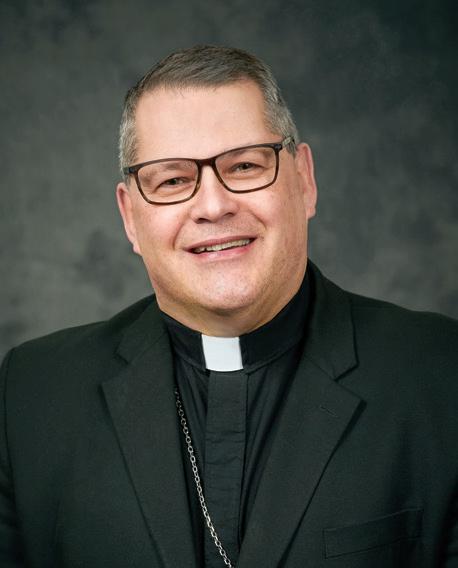
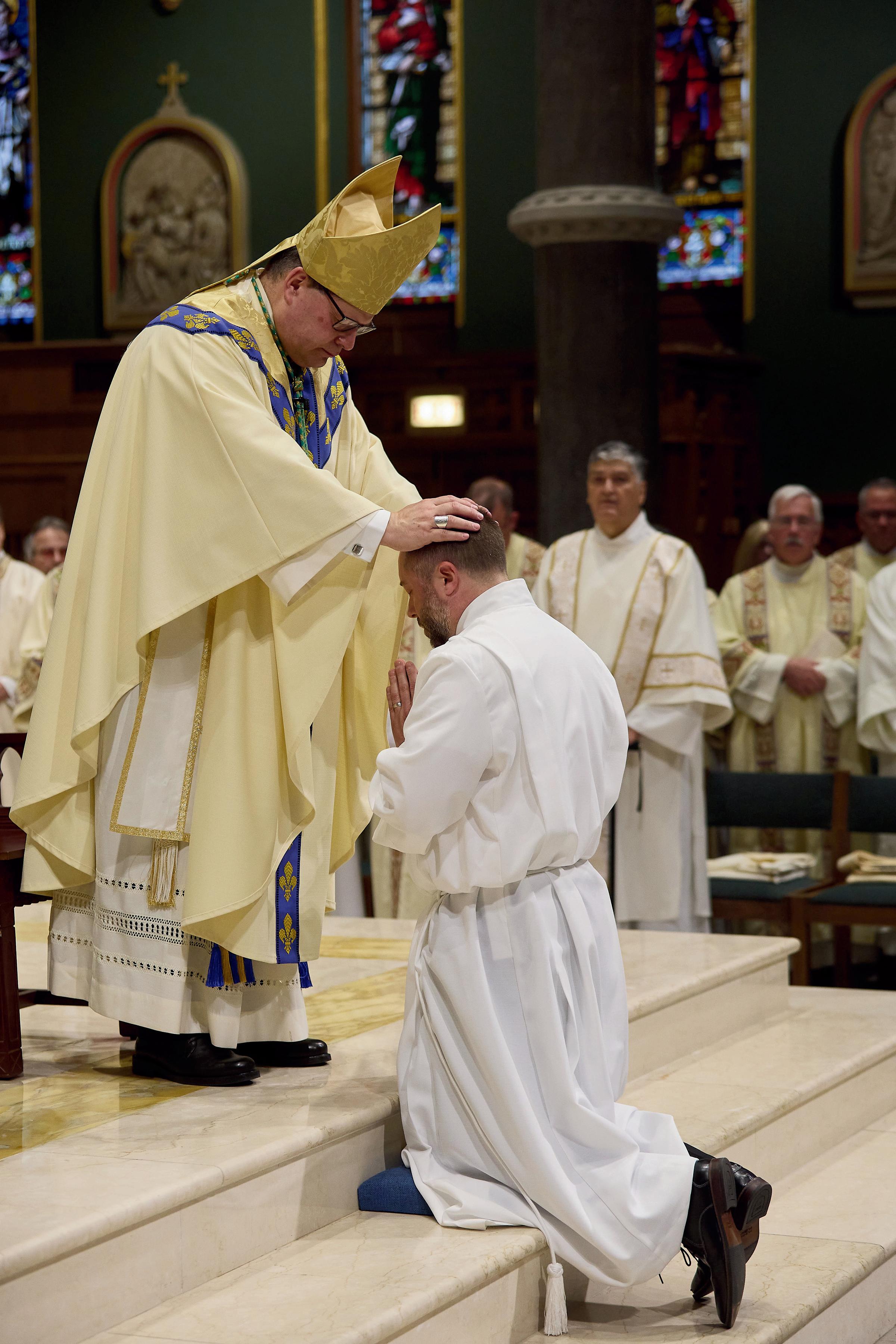
As I walk around the city of Syracuse, I am fascinated by the architecture of so many of its buildings and the history that goes with them. As some writers may say, “Stories to be told.”
Well, that is what you will find in this edition of our diocesan magazine, SOLIS. Not only will we explore the architectural details and landscape of the only basilica in our diocese, with its towering spires just off Genesee Street, but also the burial crypt beneath the sanctuary of our Cathedral, where stories do lie.
We will also find in these pages stories of people whose lives reflect the greater story God continues to write in each of us. So, I invite you to some autumn reading and reflection as daylight grows shorter, and we might like to curl up with writing that will inspire us.
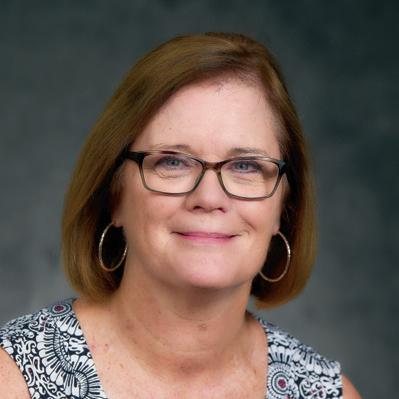
Once more, I wish to thank Tami Scott, the editor of The Catholic Sun, and all her associates, for all they have done to produce this new issue, and all who contributed to this edition. May this publication continue to fuel the desire in each of us to soar to new heights in our spiritual lives.
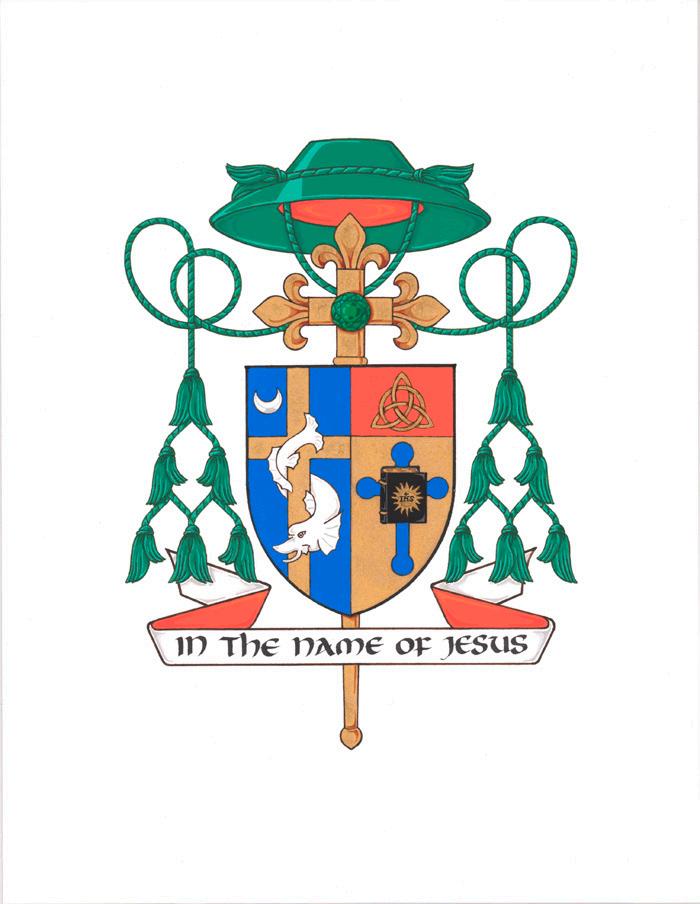
In the Name of Jesus,
Most Reverend Douglas J. Lucia Bishop of Syracuse
From the Bishop
From the Editor
Dear friends,
The “ber” months are here! And boy, did they come fast. It feels like it was just yesterday that we published our spring issue of SOLIS — when Lent was coming to an end and the Easter season was on the horizon. Now we have Thanksgiving, Advent, and Christmas in front of us — and a whole new year to begin again.
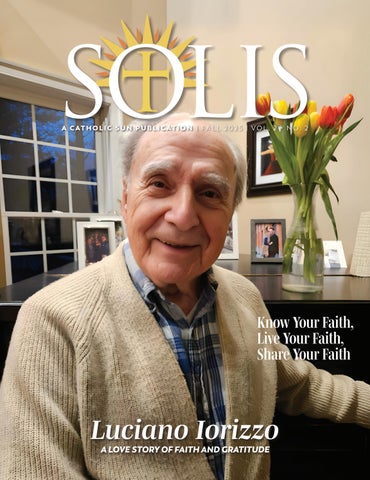
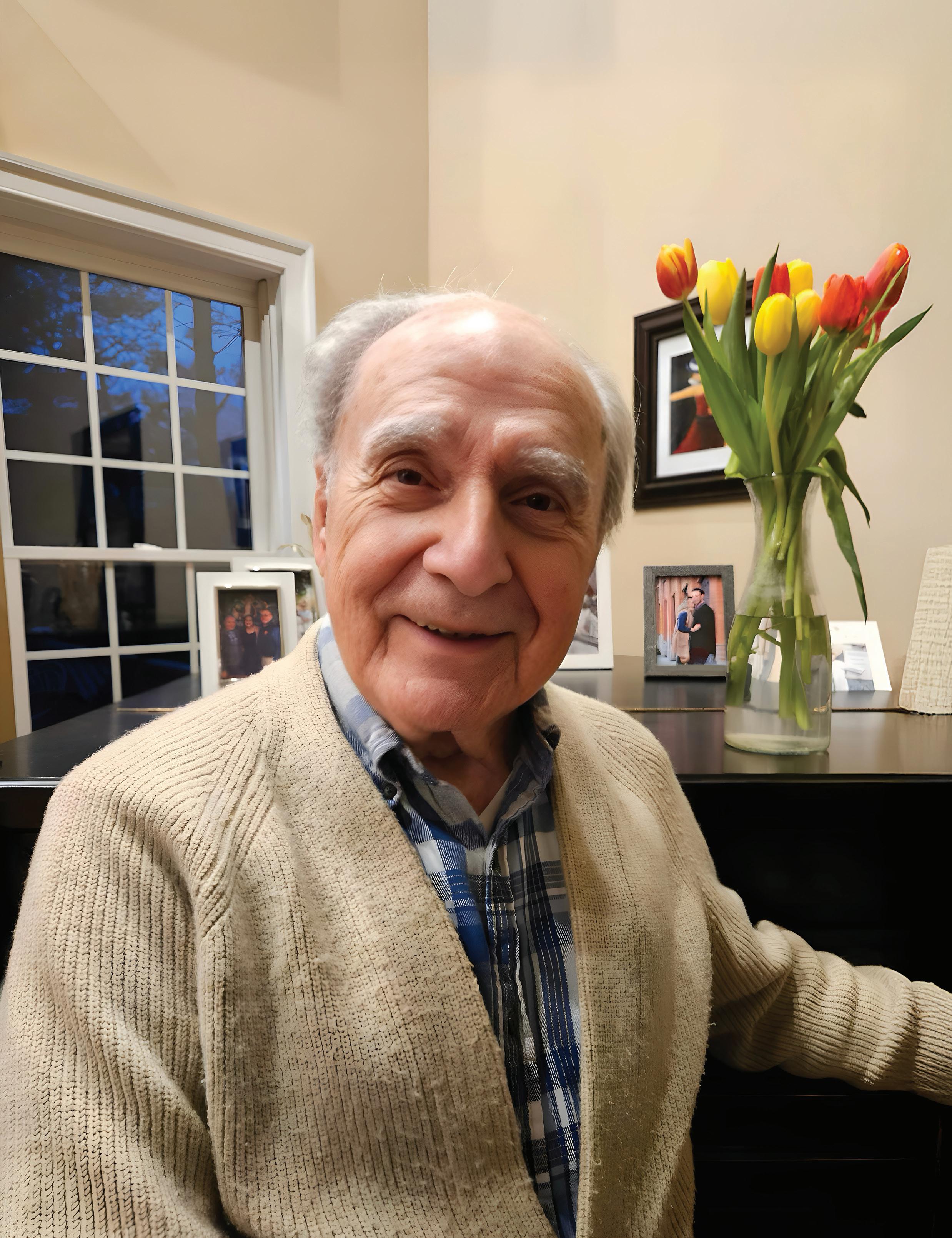
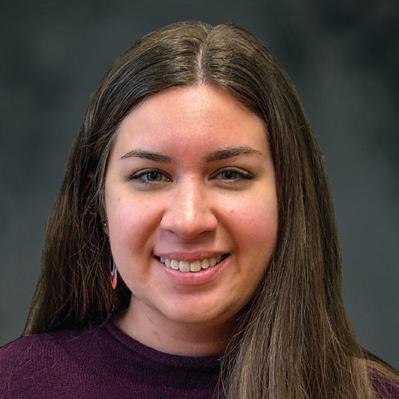
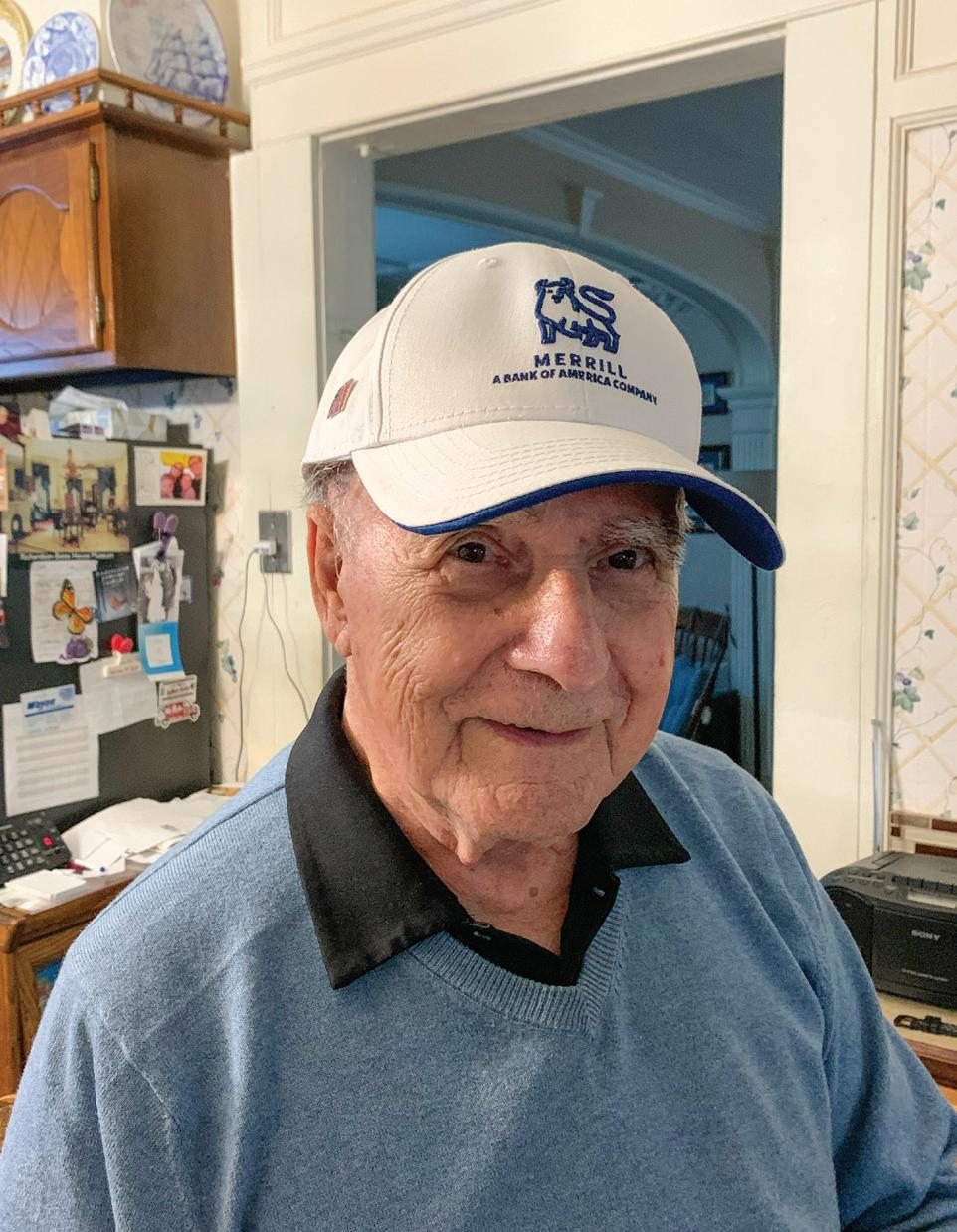
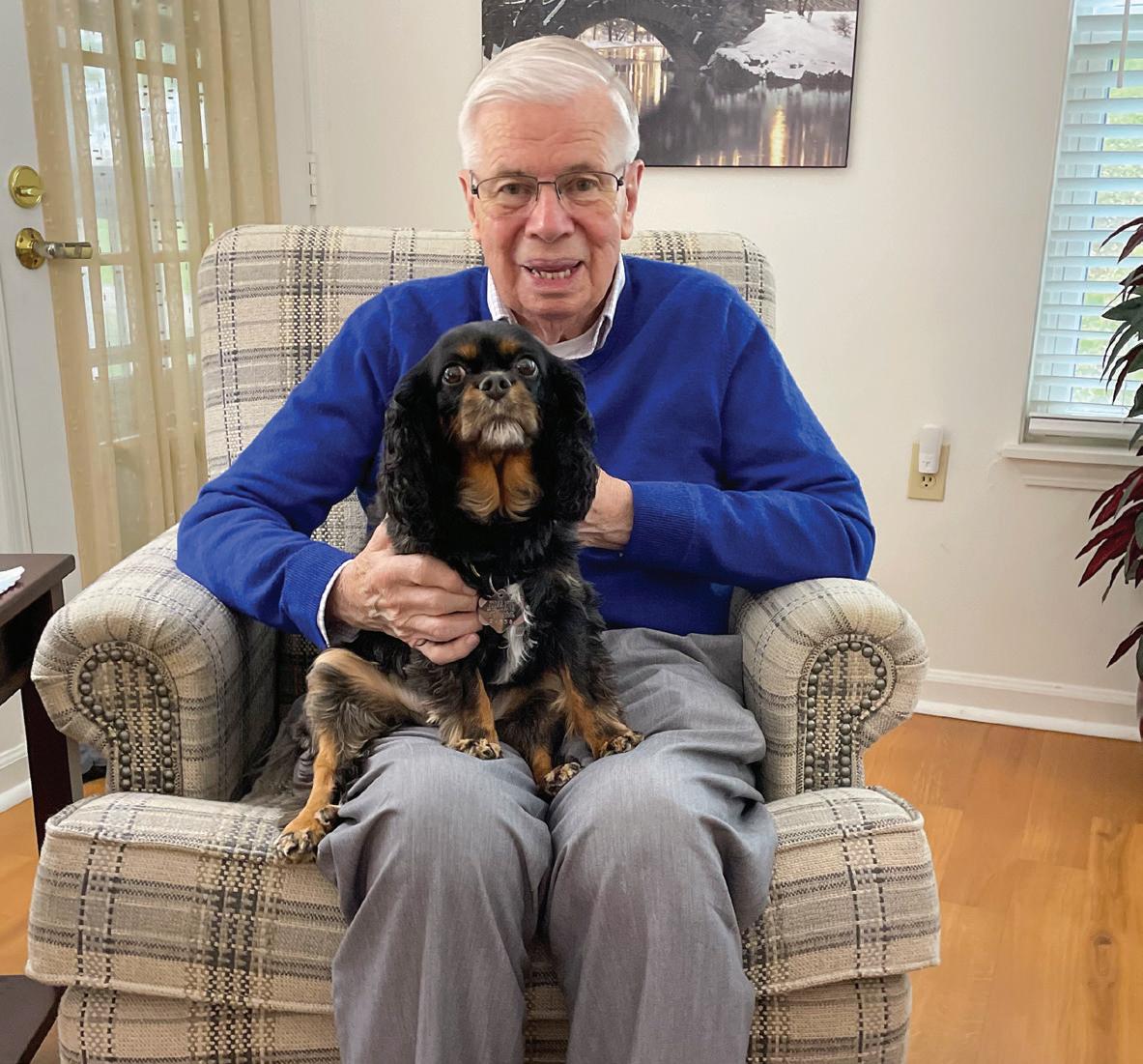
We hope this issue will inspire, educate, and entertain you in good and holy ways. Our cover story reflects on one man’s life, love, and faith. Nonagenarian Luciano Iorizzo shares his heartfelt gratitude to God with not only SOLIS readers, but also in his book released earlier this year.
Other features explore the crypt beneath the Cathedral of the Immaculate Conception in Syracuse, explain deliverance with diocesan exorcist Monsignor Stephen Rossetti, raise awareness about a local nonprofit organization that financially assists women with breast cancer, and discover the humanity behind jail ministry.
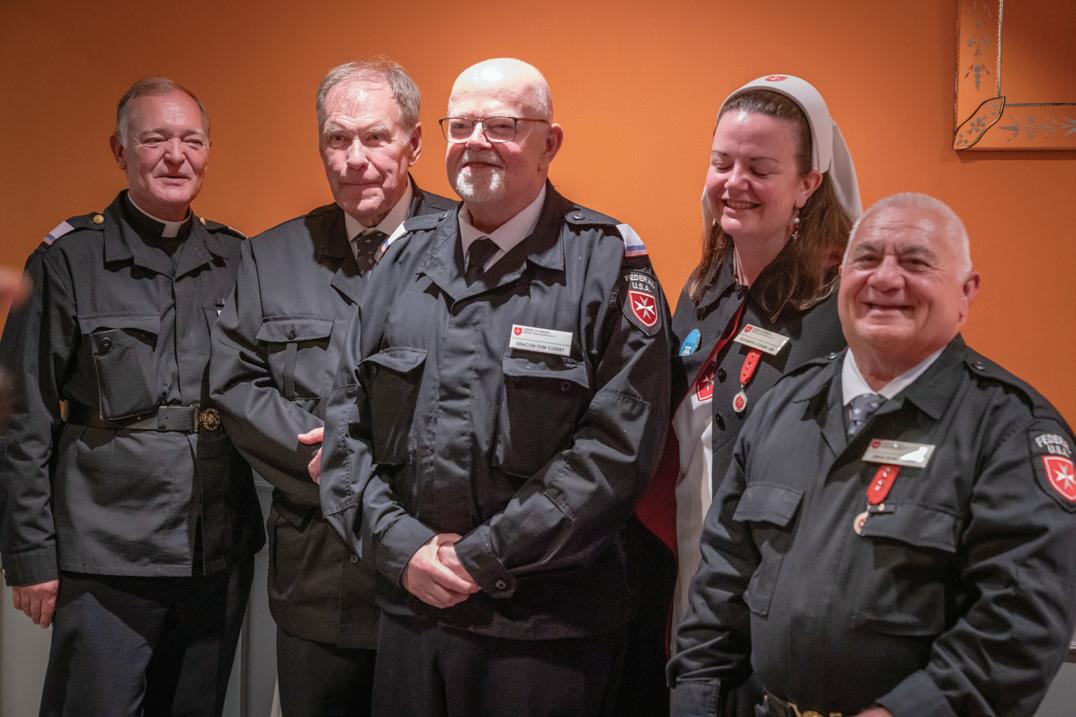
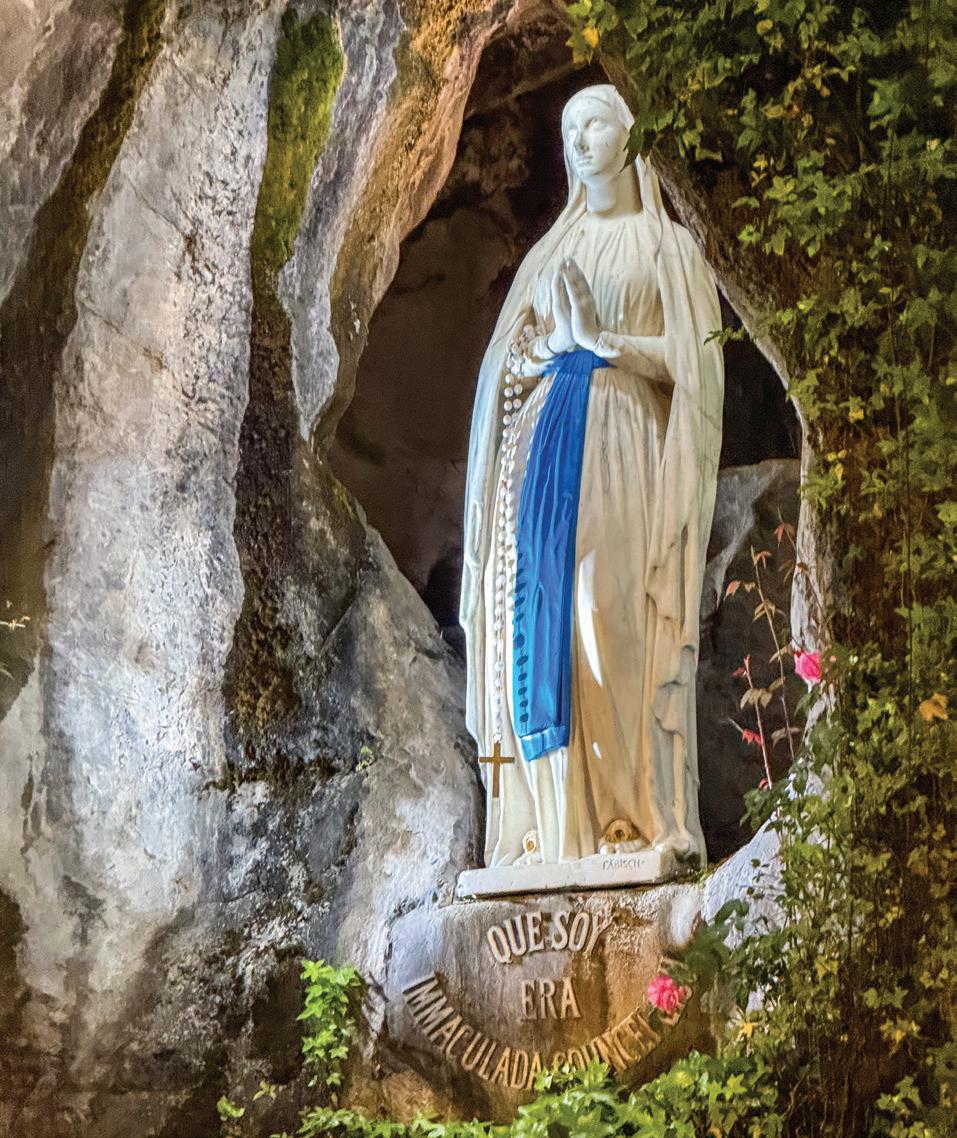
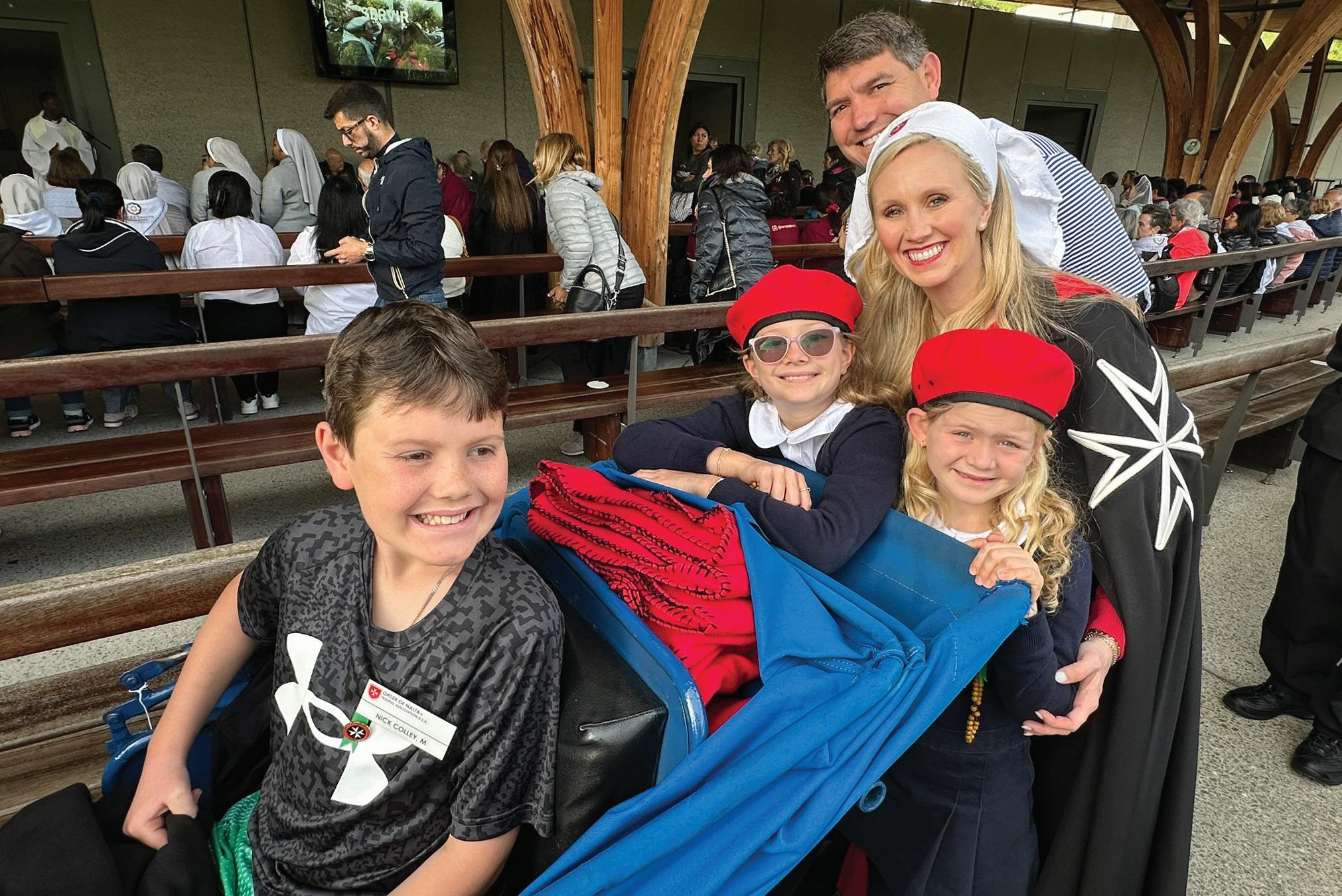
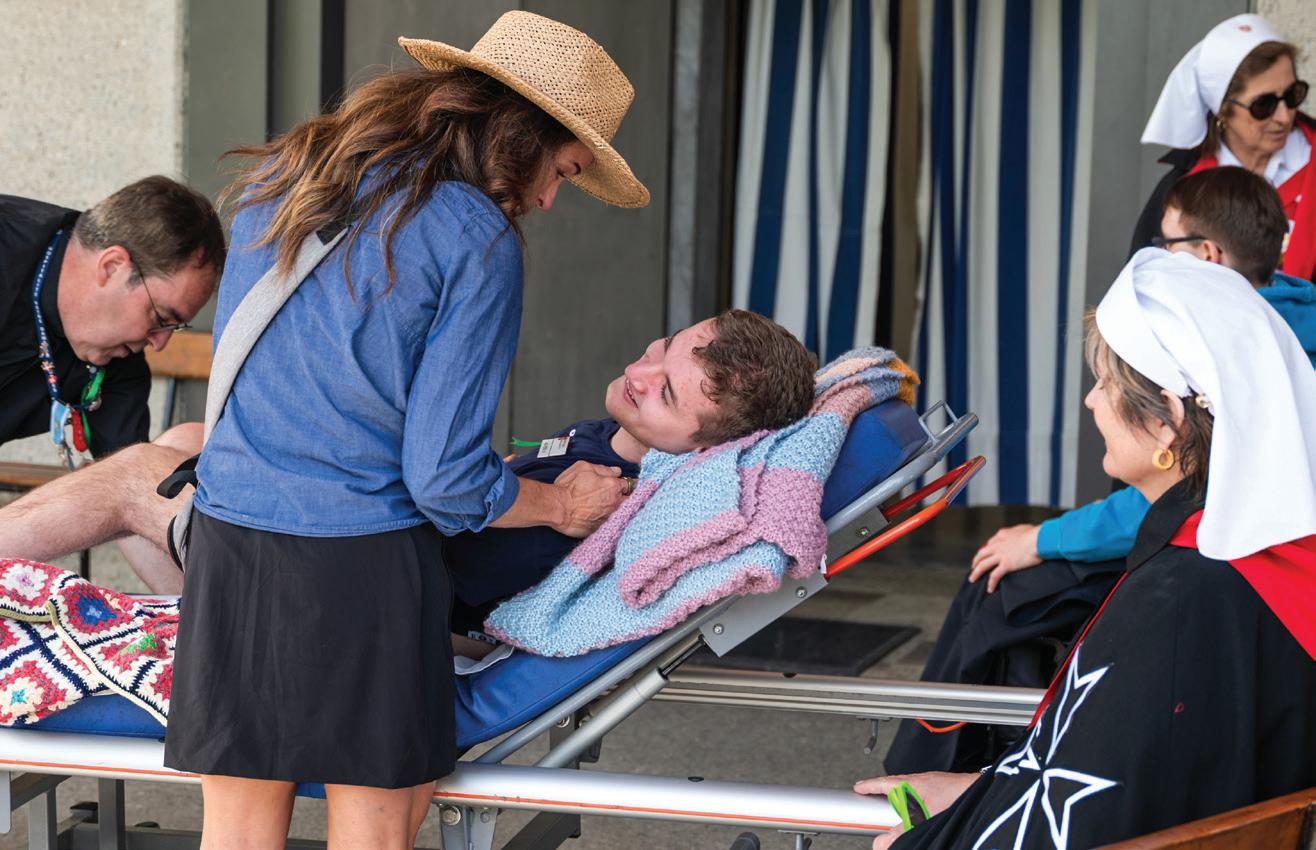
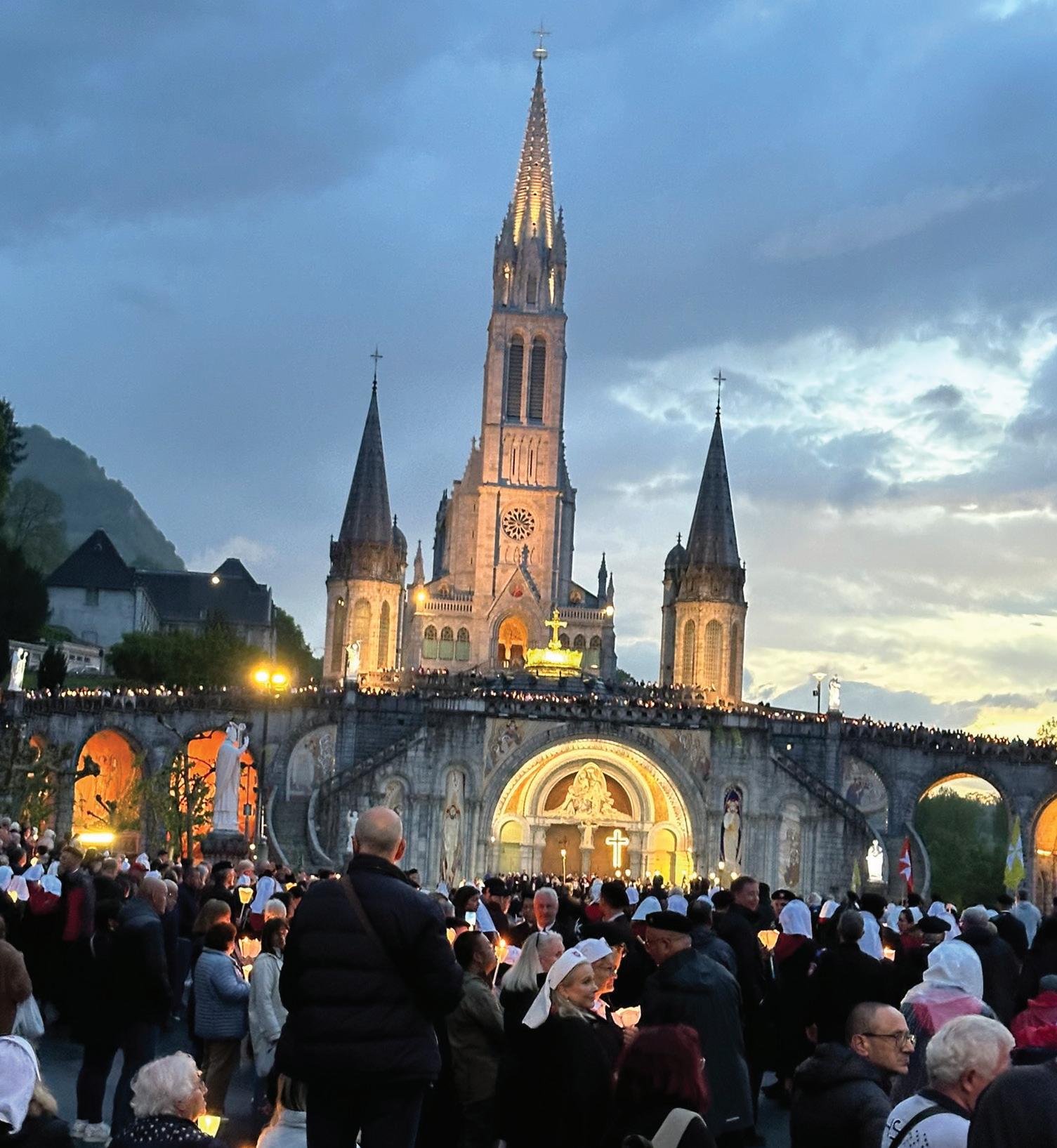
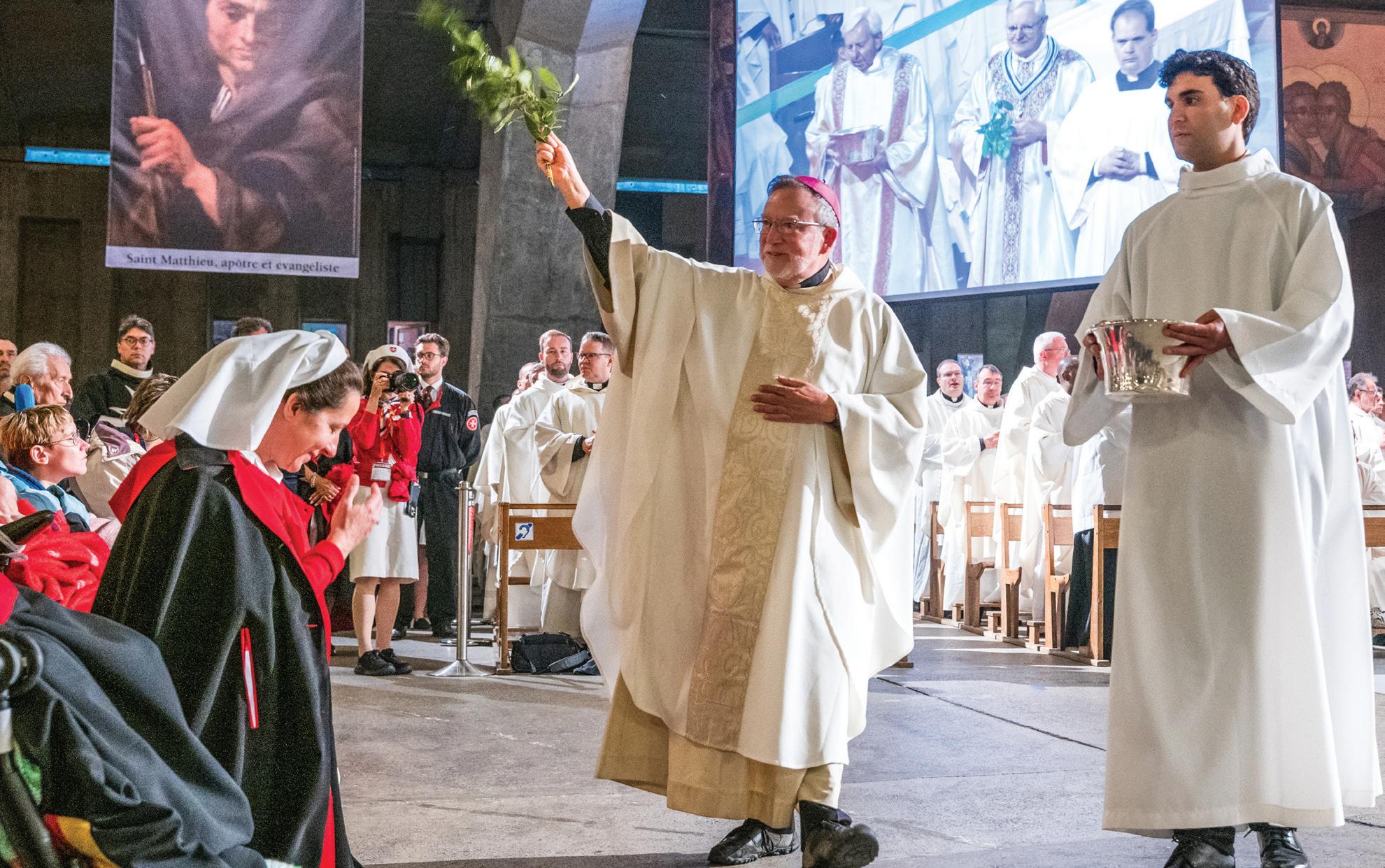
Deacon Tom Cuskey shares his experience as a first-time Lourdes volunteer on a pilgrimage to France with the Knights of Malta, and “following in the footsteps of PierGiorgio Frassati,” Emily Long tells of her journey to Rome, Italy, just weeks before the new saint was canonized.
As we enter the Season of Giving, we are humbly reminded that, without you and your generous contributions of time, talent, and treasure, our seven-county diocese couldn’t minister to the thousands of people it does each day. We thank you for supporting the Hope Appeal and subscribing to the one-and-only diocesan newspaper, The Catholic Sun. We appreciate you!
Many blessings,
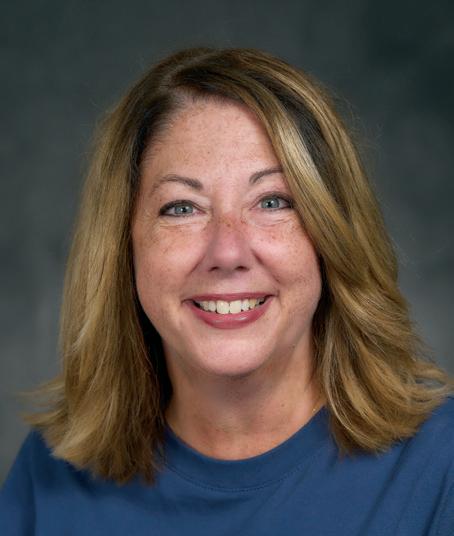
Tami Scott Editor-in-chief
Tami S. Scott is also the editor-in-chief of The Catholic Sun. A Liverpool native, Tami is an award-winning writer and editor, formerly with Scotsman Publications and Eagle Newspapers in Syracuse. She has contributed as a freelance writer to a number of media outlets and served as newsletter editor for the former Bishop Ludden Junior/Senior High School. She is a member of St. Augustine Church in Baldwinsville.
CONTRIBUTORS
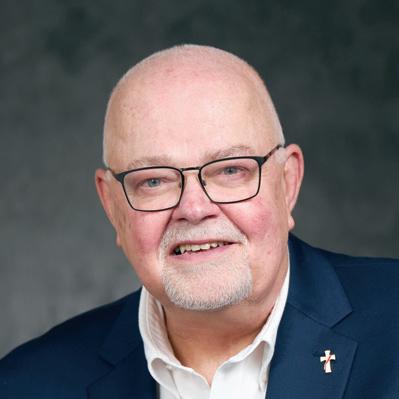
Deacon Tom Cuskey is former editor-in-chief and current consultant at The Catholic Sun and has a media career that includes radio news, directory publishing, and 35 years in weekly community publications. Tom was ordained a permanent deacon in 2010 and worked in the deacon formation program for 11 years, including time as director of the program. He is assigned to the linked parishes of Christ the King and Pope John XXIII in Liverpool.
This is Eileen Jevis’ second stint with The Catholic Sun after serving as staff writer in the early 2000s. She covered the relocation of Mother Marianne Cope’s remains from Molokai to Syracuse in 2005. Upon retirement from University College of Syracuse University, Eileen returned to The Sun as a staff writer. In addition to her multiple journalism awards, she also received the Commander’s Award for Public Service from the U.S. Army. She worships at Holy Family Church in Fairmount.
Elizabeth Landry is a staff writer at The Catholic Sun with more than 10 years of experience in various content roles. She has written for CNY Publications, created online content for a local e-commerce publishing firm, and managed content operations for a local tech startup. A native of Lyncourt, Liz graduated from Bishop Grimes Jr/Sr High School and SUNY Geneseo. She worships at St. Matthew Church in East Syracuse.
Emily Long is a freelance writer for The Catholic Sun. She graduated in 2020 from Lasell University where she was an editor of The 1851 Chronicle. At the Diocese, she works for the Foundation and The Catholic Sun. She is a member of the Church of the Nativity in LaFayette. You can read more from Emily at her substack emilyisonfire.substack.com.
Renée Romance, an active parishioner at St. Mary of the Assumption in Baldwinsville, is a gifted writer who shares her work in many capacities. In 2012, her haiku was selected for the Syracuse Poster Project. In May 2020, the St. Mary’s Ministry Team created a weekly email, A Spiritual Connection, for those who could not attend church during the pandemic. It continues today under Renée’s direction.
Know Your Faith
10 Architectural Highlight: Sacred Heart Basilica
FEATURES
7 Lessons and Carols: An evangelistic Advent experience of Scripture, song, and prayer
14 What lies beneath: Behind-the-scenes visit reveals sacred crypt, remnants of bathhouse
18 “Sunshine, and Shadow:” Book chronicles the personal journals of Saint Marianne Cope and Sister Leopoldina Burns
20 Out of the darkness: Diocesan priest shines a bright light on exorcisms and the ongoing battle against evil
Live Your Faith
FEATURES
24 Called to serve: Formation for Ministry program designed for laypeople who want to deepen their relationship with God and the Church
28 Compassion in confinement
30 Postcards from Frassati
Share Your Faith
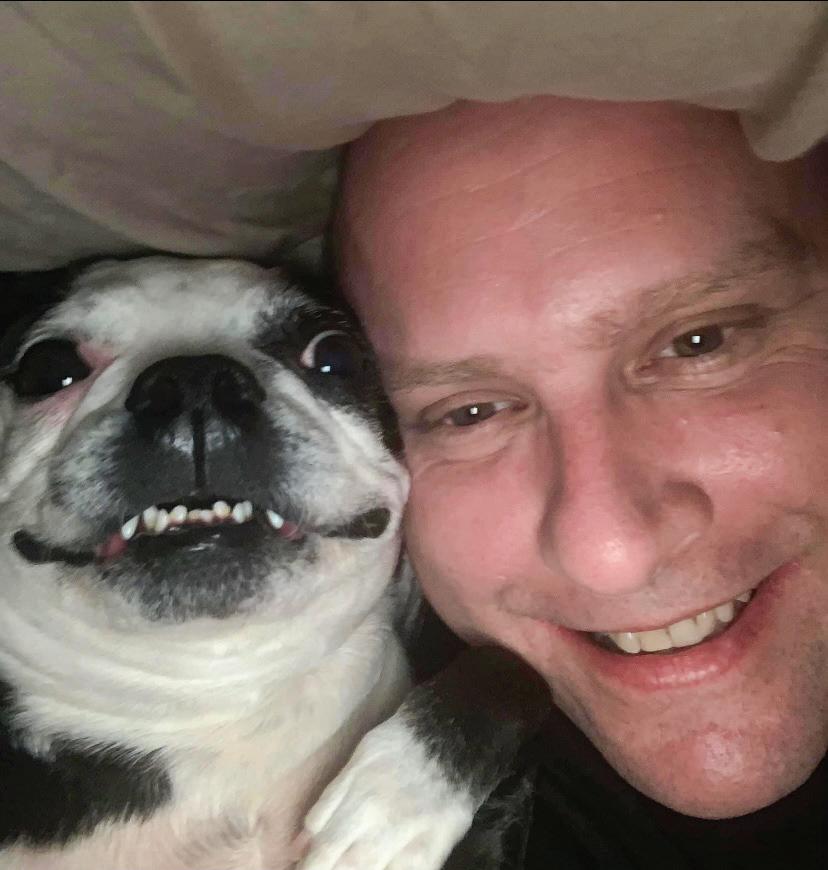
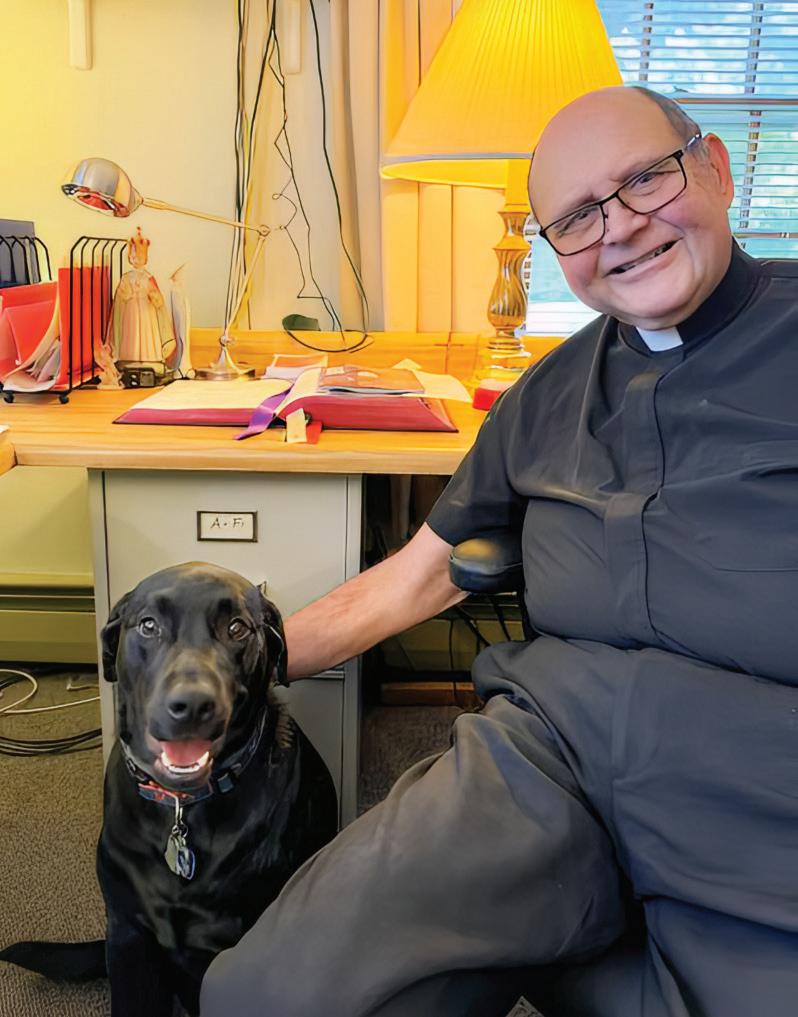
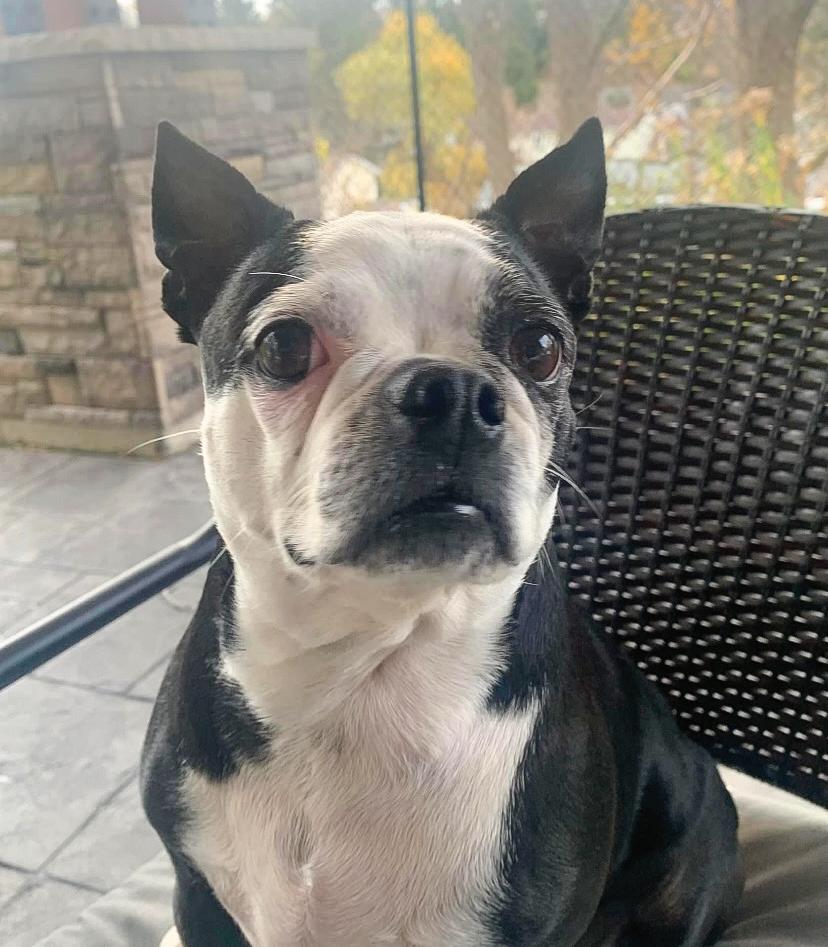
27 Well versed 46 Priests with pets
FEATURES
34 Luciano and Marilee: A love story of faith and gratitude
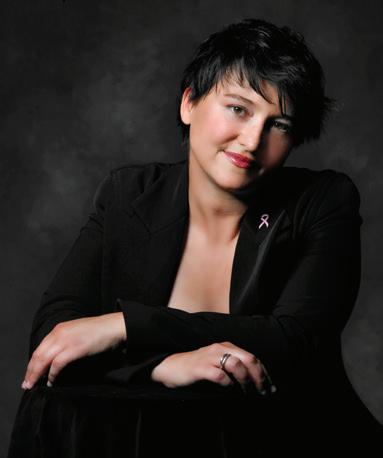
38 A greater purpose: Cancer patient establishes foundation to help others
42 Lourdes: A pilgrimage of healing and hope
PRESIDENT AND PUBLISHER
Most Reverend Douglas J. Lucia
CHANCELLOR & DIRECTOR OF COMMUNICATIONS
Danielle Cummings
EDITOR-IN-CHIEF
Tami S. Scott
FORMER EDITOR-IN-CHIEF & CONSULTANT
Deacon Tom Cuskey
STAFF WRITERS
Eileen Jevis
Elizabeth Landry
MAGAZINE DESIGNER
Colleen Kiefer/Kiefer Creative
BOARD OF DIRECTORS VOLUNTEER
CREATIVE ADVISOR
Amy Bleier Long
GRAPHICS SUPPORT
Willie Putmon
ADVERTISING
Mark Klenz
CIRCULATION/OFFICE SUPPORT
Emily Long
PHOTOGRAPHER
Charles Wainwright/ Wainwright Photography
SOLIS is a publication of The Catholic Sun, official newspaper of the Roman Catholic Diocese of Syracuse, NY, serving Broome, Chenango, Cortland, Madison, Oneida, Onondaga and Oswego counties.
SOLIS is direct mailed to subscribers of The Catholic Sun and supporters of the annual diocesan Hope Appeal campaign. Subscriptions are available for $26 annually by calling 315-422-8153.
ALL INQUIRIES: The Catholic Sun Diocese of Syracuse 240 East Onondaga St., Syracuse, NY 13202 (315) 422-8153
solis@thecatholicsun.com www.thecatholicsun.com
Office hours: 8:30 a.m. - 4:00 p.m., Mon-Fri.
The Catholic Sun is published by the Syracuse Catholic Press Association, Inc. SOLIS is made possible in large part thanks to a McDevitt Evangelization Grant. We are very grateful for this generous support.
Lessons and Carols
AN EVANGELISTIC ADVENT EXPERIENCE OF SCRIPTURE, SONG, AND PRAYER
BY ELIZABETH LANDRY
Put up the decorations and the Christmas tree, shop for gifts, bake cookies, plan gatherings with family and friends — the list of things we do to prepare for Christmas during the season of Advent can feel a mile long. In the midst of all this busyness, how often do we take the time to do what is most important as Catholics, to prepare our hearts for the coming of Jesus on Christmas Eve?
In the Diocese of Syracuse, we are fortunate to have a beautiful, thoughtful presentation of Lessons and Carols to help us redirect our focus on the coming of the Christ child in the weeks leading up to Christmas.
Lessons and Carols is a combination of prayer, Scripture, and song that originated in 1880 at King’s College in Cambridge, England. Iterations can be found in various Christian settings around the world, but the presentation organized and led by music director Tom Andino in the Diocese of Syracuse is special. This version of Lessons and Carols presented at Our Lady of Hope Parish in Syracuse for the first time last year, is a beautiful mosaic of talents found within our diocese, comprised of singers, musicians, readers, and all those behind the scenes. A year-round effort, this year’s program has been in the works for several months and will be held once again at Our Lady of Hope on Sunday, Dec. 14.
The seasonal program is the result of years of evolution, beginning with a small production Andino helped organize more than 20 years ago at Le Moyne College. That year, it was a student-only program, and about
30 people attended. Over the years, the Lessons and Carols program steadily grew as faculty, staff, students, and alumni collaborated to bring fresh ideas for readings, music, and the overall structure of the evening. In 2024, after moving on from Le Moyne, Andino brought the program to Our Lady of Hope, where he serves as director of music. He shared that he was initially hesitant to bring the program to a new setting, with finances and resources being of most concern, but thanks to his pastor and Le Moyne alum, Father Michael Galuppi, he found the support he needed.
“Father Galuppi said to me, ‘I’ll find the money if you’ll do it.’ How often do we hear that? So he went out and got corporate sponsors to cover the whole thing,” Andino recalled.
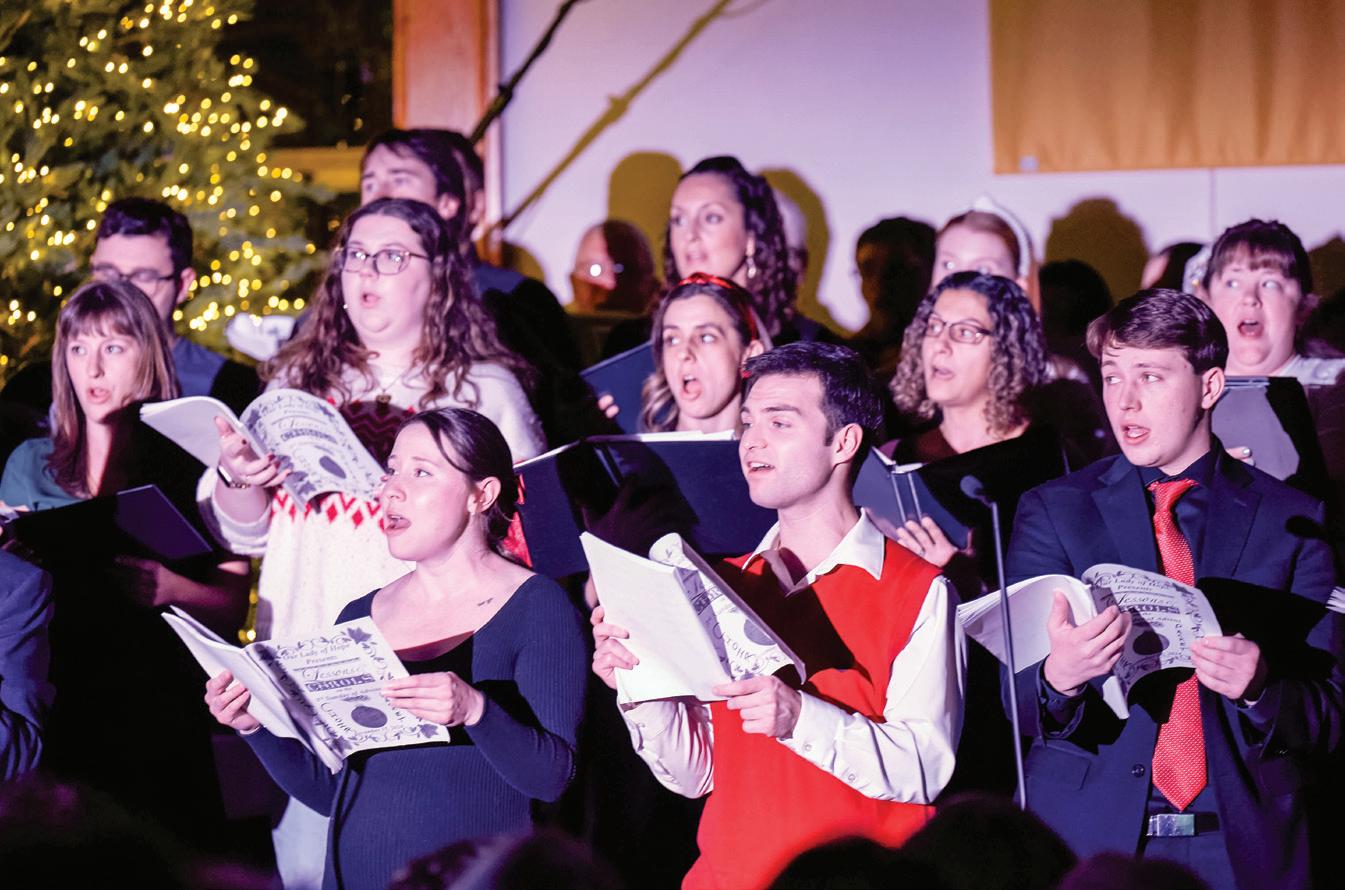
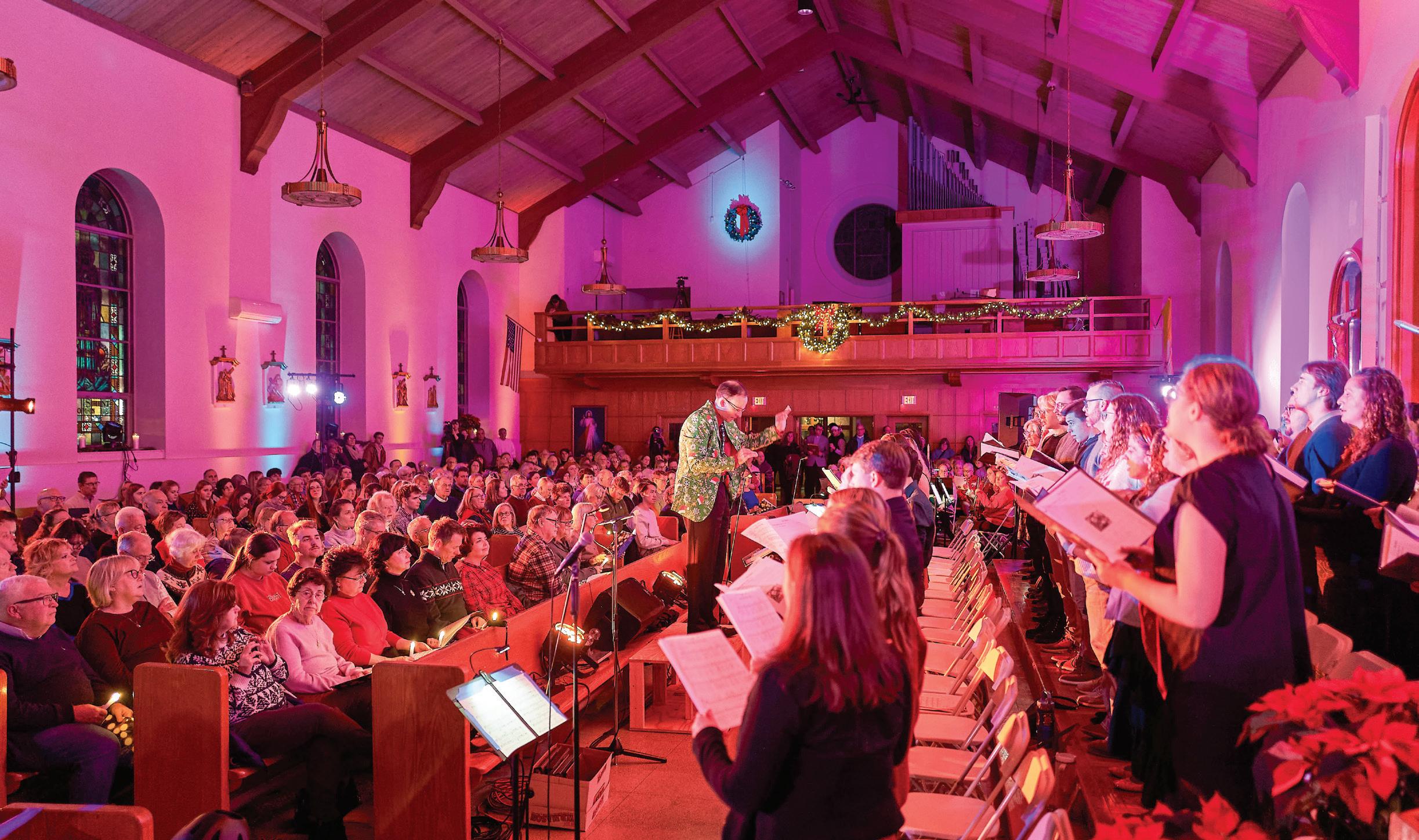
The 2024 presentation of Lessons and Carols at Our Lady of Hope Church featured a choir of almost 100 singers from the combined choirs of St. Michael/St. Peter and Our Lady of Hope, the Camillus Community Choir, Holy Cross Church in Dewitt, and St. Joseph Church in Camillus.
CHARLES WAINWRIGHT
In its first year at Our Lady of Hope, Lessons and Carols was a huge success, with somewhere between 750 and 800 people in attendance.
“It was absolutely incredible,” Andino said. “I knew there would be people there. I knew there would be a crowd, but I didn’t think it would be standing room only.”
An engaging, immersive experience
Reflecting on her first time attending Lessons and Carols as directed by Andino last year, Sister Katie Eiffe shared her awe at how the different elements of the presentation came together.
“It was amazing. The spiritual focus of both Advent and Christmas really touched my heart, and the music was just — it sounds cliché — but it was so inspiring. It really was. And [so was] the integration of Scripture into the music.”
Andino explained that as different singers and musicians have become involved in the presentation, he has learned to make changes to the readings and song choices, maintaining the program staples but also keeping it new and different.
“I’ve learned not to change too much, but you have to still keep it fresh,” he said.
The weaving together of Scripture and songs is very intentional, meant to help us unpack and better understand the people and events we read about in the Christmas story.
“What I think is different about the [program] that I’ve put together over the years is that I try to allow time for all of us to contemplate the humanity of the figures involved — Mary, Joseph, the shepherds, the kings, King Herod — to get inside their heads a little bit, while also using familiar carols that the assembly knows to move the story forward.”
Andino explained that it’s important to bring these more than 2,000-year-old events into the present, to help us living in the modern world feel their significance more deeply in a way that resonates.
“I remember the first time one of the people in the audience heard the line [in one of the songs], ‘As they escaped King Herod’s evil scheming, the Son of God became a refugee.’ And I just saw [the person] start crying, because this story from 2,000 years ago hit home. ... As time goes on, we forget, right? Every year, on Christmas Eve, we hear the same Gospel, it’s the same thing, but the world is in a different place. We’re in a different place. And so I think those things in our life that call us back to the center are so important.”
The result of these connections, the music, the Scripture, the reflections? An immersive experience that draws viewers in and makes them part of the program.
“I was really struck this [past] year, hearing from people who had never experienced this thing before, saying, ‘I don’t know what I expected, but it wasn’t this. This was amazing,’ or, ‘I heard the story again for the first time,’” Andino said. “So often, once it starts, people lose all sense of time, [saying], ‘Oh my gosh, that was
“It’s been a real gift to have been able to pay attention to the promptings of the Spirit over the years. To hear the stories of how it impacts people in such a real way has been so powerful for me that I feel like it’s not even mine anymore.
—TOM ANDINO
two hours — it just went by so quick,’ because they’re a part of it, as opposed to just watching a production. There’s [an] engagement of the assembly, and they feel drawn into it.”
Fulfilling the evangelistic mission of the Diocese
Andino shared that another reason this presentation of Lessons and Carols is so engaging is that it’s consistently kept within the context of prayer, rather than a production or show to be viewed and enjoyed from afar. For example, applause is held until the end, and reverence is maintained throughout: “You’re part of this prayer experience from beginning to end,” he said.
“To experience an event like this, where you have the luxury of all the forces, from instrumentation to fourpart harmony, and all in the context of prayer ... I’ve seen some Lessons and Carols where it starts as prayer and then about halfway through it becomes a concert and you lose that sense of prayer,” Andino explained.
Father Galuppi described Andino’s presentation as “a very balanced liturgical program. It’s very Scripture-based, the prayerfulness, the symbols that they bring in — the Paschal candle, which we only see at Easter is brought in as the symbol of Christ, and the book of the Gospels, food for the poor — it really is a nice blending of symbol and ministry and Scripture and song,” he said, adding, “I was really impressed with the thought that went into all those details.”
Both Andino and Father Galuppi agreed that all the elements of Lessons and Carols come together to make it a great tool of evangelization within the Diocese.
“Christmas is something that is across the board, whether you’re Christian, non-Christian — it’s [become] quite a secular thing, even though it’s originally religious. And so, you can draw people in because everybody loves Christmas ... to come into an environment where it’s not just “Jingle Bells” and Rudolph and Santa, but to hear the full, balanced story of Christmas and its meaning, I think is a great tool of evangelization,” explained Father Galuppi.
Shortly after last year’s program, Andino shared that he happened to meet a younger parishioner of Our Lady of Hope at the gym who was blown away by Lessons and
Carols. Andino didn’t even know this young man belonged to the parish, but he was so inspired by the program that he felt called to approach Andino and share how the program had affected him.
“You know, [it’s great] to see young kids, high school kids, college kids think that this is actually cool,” Andino said.
Bringing the Diocese together
Longtime friend of Father Galuppi, Pat O’Brien is a parishioner who’s attended and enjoyed many Lessons and Carols over the years.
“I just think it’s a wonderful thing. It brings a lot of Syracuse musicians and families together, and it brings the religious community together, too. It brings a good amount of Catholics together, and I’m sure some non-Catholics, too. It brings a sense of hope. You leave there with a smile on your face. You really do,” O’Brien said.
This sense of drawing the community together is an aspect of the program that Father Galuppi also highlighted.
“One of the things that impressed me when I first saw it with Tom was the amount of people in the choir from all different areas of the Diocese — from parishes, from the college, from the Chancery. I thought it would be beautiful for the parish to experience, but really it was the drawing of people from across the Diocese and beyond for this event that really excited me,” Father said.
At the same time, Father Galuppi also recognizes the sacrifices that people from Our Lady of Hope Parish make each year for the event.
“We have to close the church a few days before, and we have to move all the Masses up to St. Michael’s,” Father said. “So it’s a bit of an investment or a buy-in for the whole parish. And I just want to express my appreciation that it’s something that all the parish is sort of supporting implicitly, by allowing Lessons and Carols to sort of take over the building for five days. My hope is that the parishioners here continue to be excited about it, that it continues to be something that’s important for people’s celebration of Christmas, and that it continues to pull from all sectors of the community.”
A sacrifice for some and a blessing for many, Lessons and Carols is cherished by hundreds of faithful throughout the Diocese as a beautiful way to return, together, to the roots of our faith.
“It’s been a real gift to have been able to pay attention to the promptings of the Spirit over the years,” Andino reflected. “To hear the stories of how it impacts people in such a real way has been so powerful for me that I feel like it’s not even mine anymore. There’s so many people involved that each plays a part and it’s much bigger than me. It’s much bigger than any one person. It’s rare that that happens in life where you have that gift of just starting something so small ... and just being faithful to those small seeds along the way that give birth and rebirth to this event over and over again.”
More than 750 people were in attendance on the evening of the 2024 presentation of Lessons and Carols. This year, it will be held again at Our Lady of Hope on Sunday, Dec. 14.
ARCHITECTURAL HIGHLIGHT: Sacred Heart Basilica
PHOTOS BY CHARLES WAINWRIGHT
TEXT
CONTRIBUTED BY FATHER ANDREW E. BARANSKI AND PAUL WROBEL
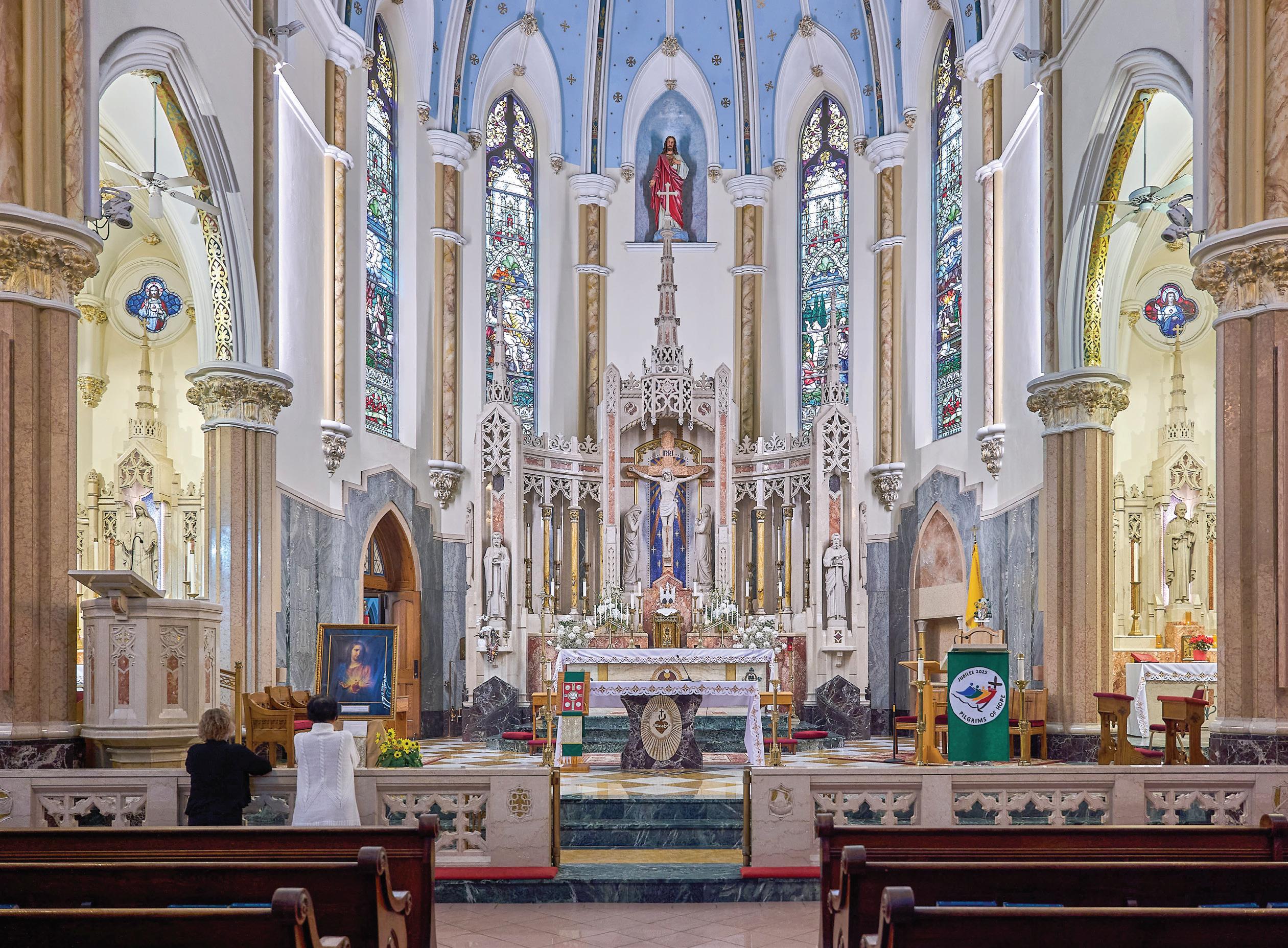
WELCOME TO THE BASILICA OF THE SACRED HEART OF JESUS! Our hope and prayer is that this brief introduction to our church brings you joy and encourages you to come and visit us. Founded in June of 1892, the Sacred Heart Basilica, located at 927 Park Ave. in Syracuse, was the first Polish church in the Diocese of Syracuse. Built of Onondaga limestone and veneered with Gouverneur marble, the Basilica was designed by architects Merrich and Randall. Marble altars and statues, a multitude of stunning stained glass windows, and the historic E.M. Skinner Opus 669 pipe organ adorn the interior. Stop in for a prayer, a quiet moment, or a service. We hope that in doing so, you will find faith, peace, joy, fellowship, and a closeness to God, which is enhanced by the many images that guide you through the Holy Bible. May God bless you in ALL ways, ALWAYS.
Father Andrew, pastor, and the parishioners of Sacred Heart Basilica
1 The theme of the central altar is “Sacrifice.” The sacrifices of Abel, Isaac and Jacob, Melchizedek, and Noah are depicted in the stainedglass windows behind the altar. The Ultimate Sacrifice of the Christ is at the center of the altar, and Mary and St. John are at His side. St. Peter and St. Paul stand on each wing.
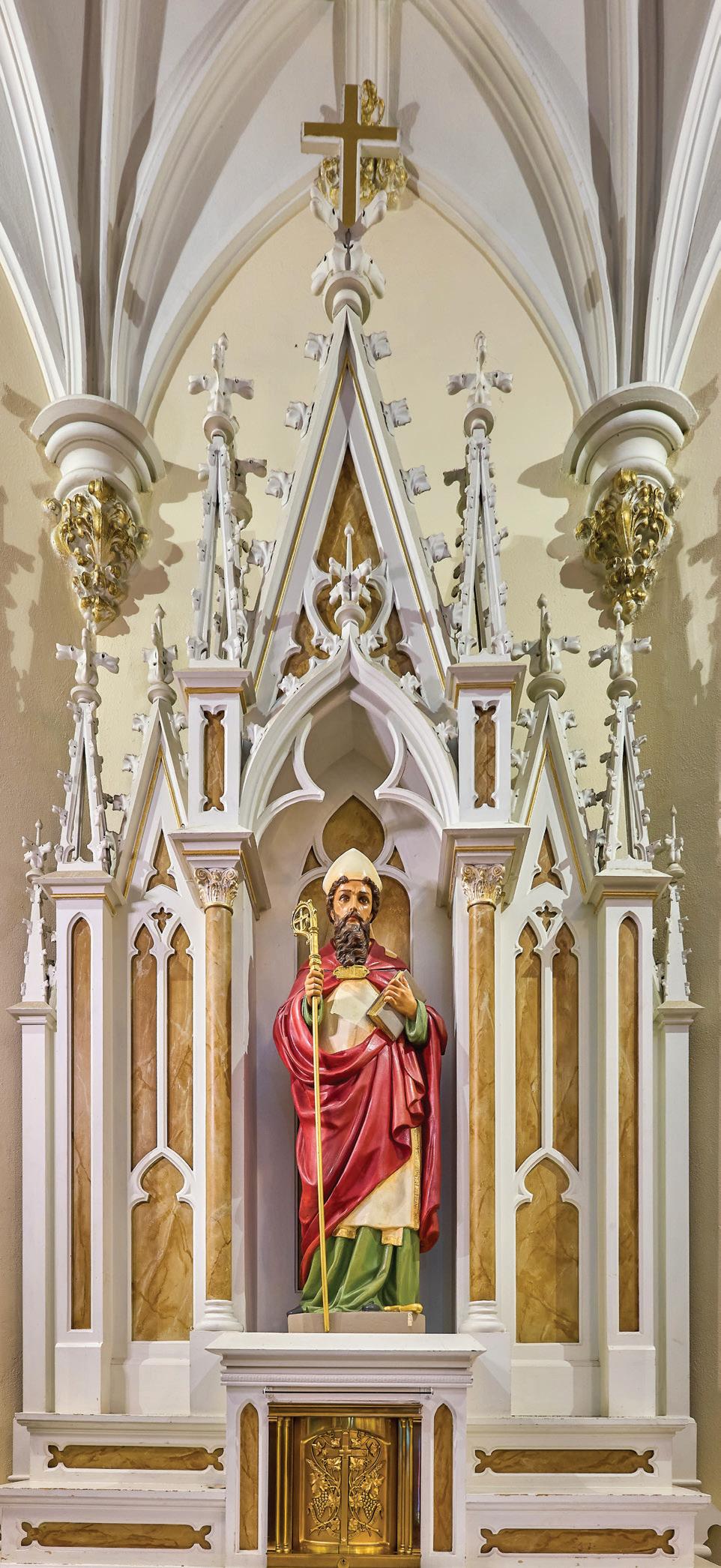
2 St. Adelbert, a bishop of Poland, stands watch over one of the four side altars of the Basilica. A missionary, he converted many Eastern Europeans to Christianity and died a martyr’s death. His representation serves both as spiritual inspiration and a reminder of the Polish parishioners who originally built the Basilica.
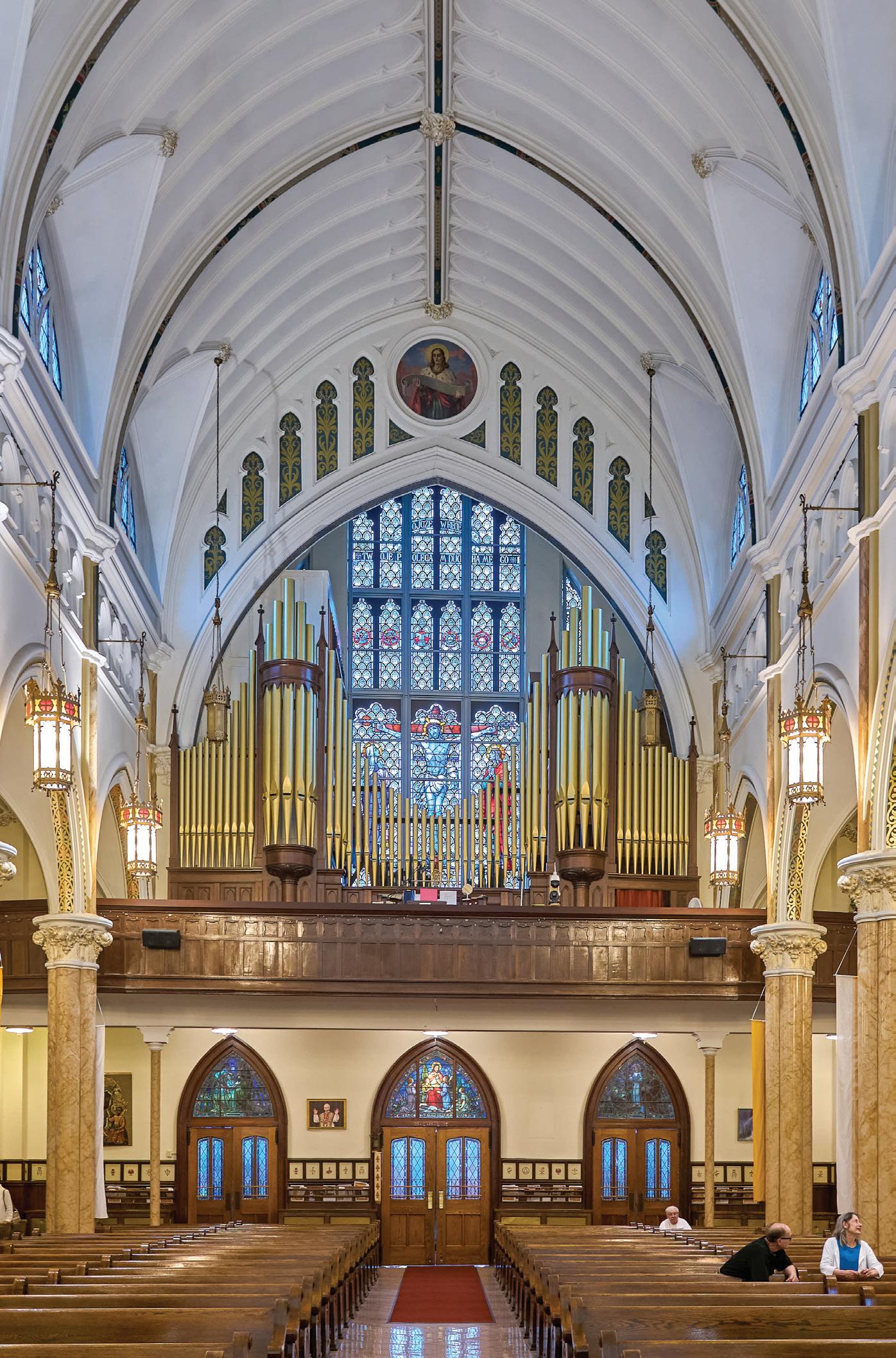
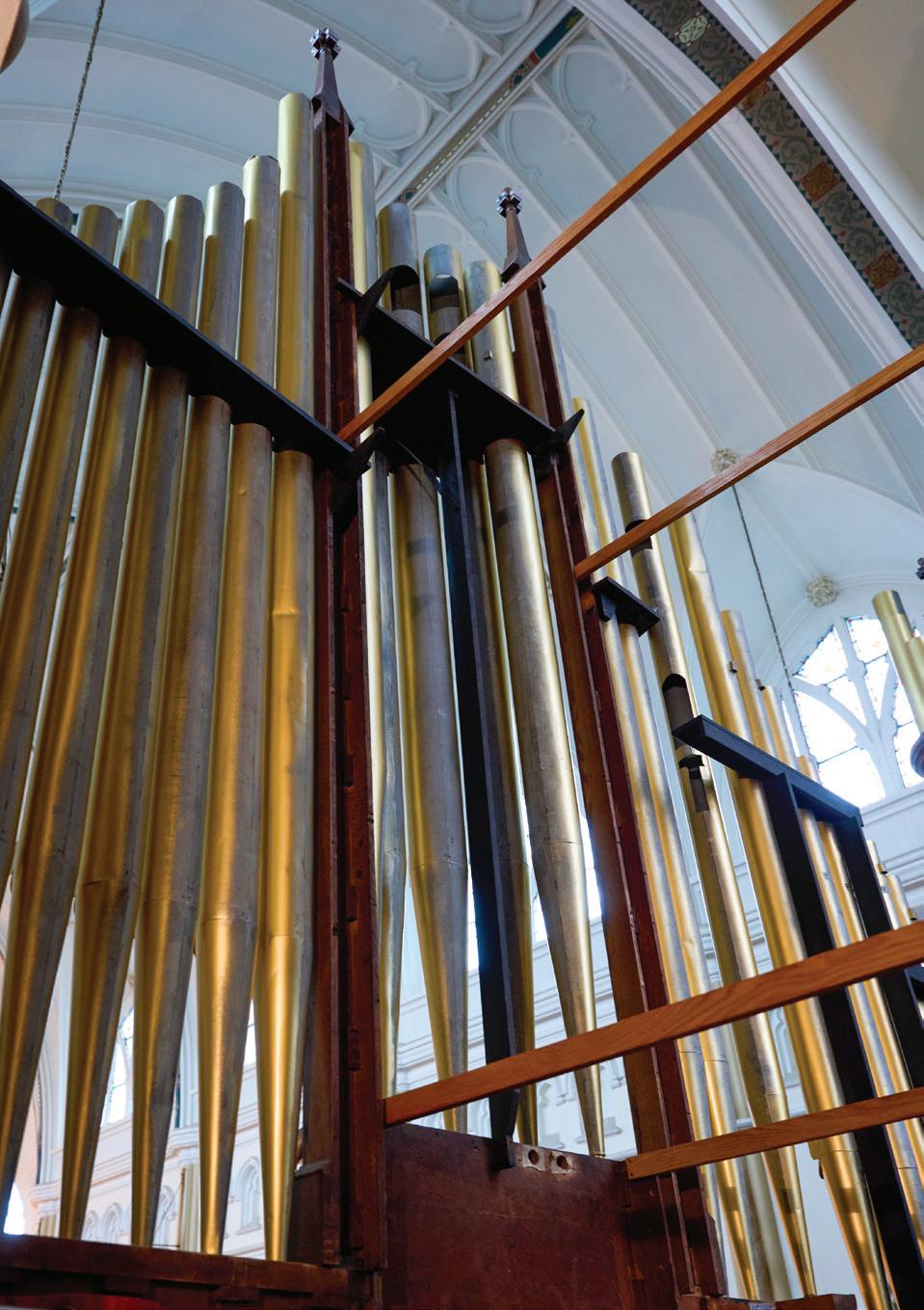
3 One of the characteristics of Gothic churches is their outstanding acoustics. The choir loft houses a rare 1927 E.M. Skinner Opus 669 organ that, with the choir, fills the church with beautiful music. Behind the choir loft is an outstanding stained glass of the Crucifixion, with Mary and St. John on either side of Christ.
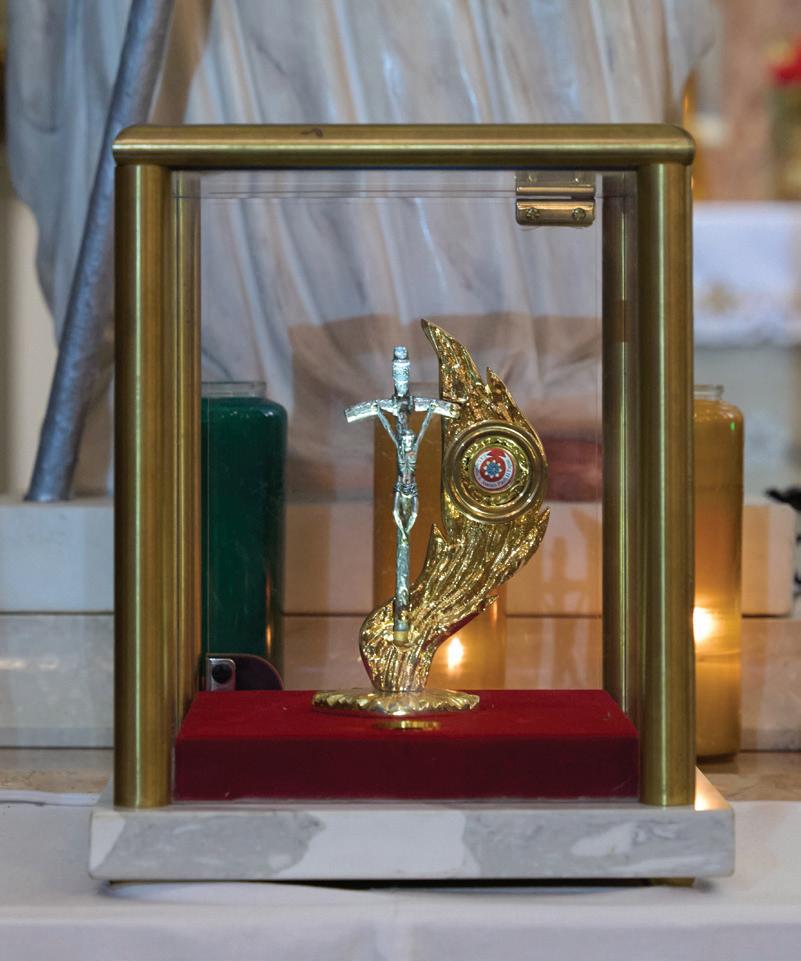
4 A first-class relic of St. John Paul II, the first and only Slavic pope, is displayed before his statue.
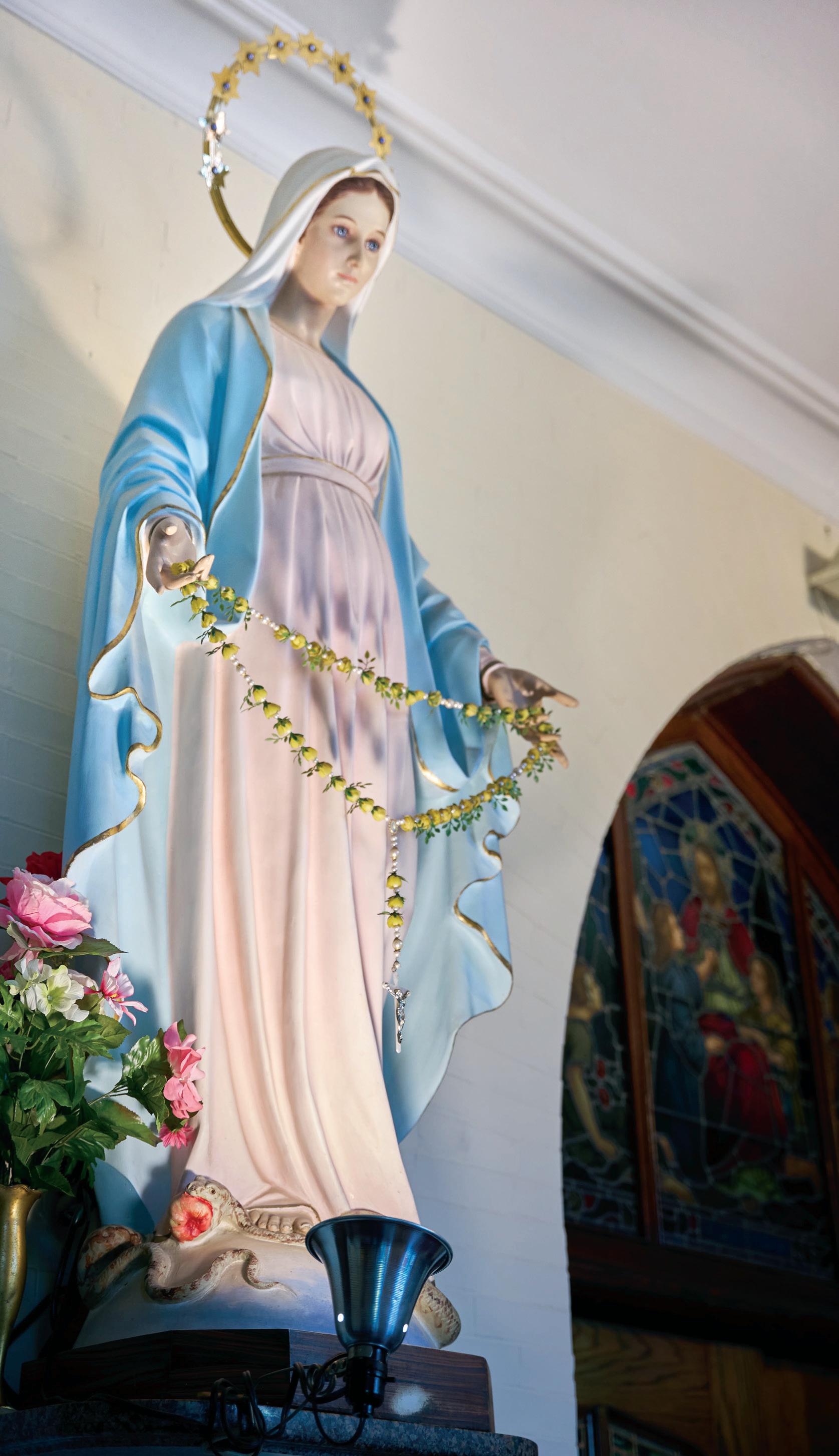
5 This statue of Mary, the patron of the United States and Poland, is in the entryway. It depicts her as in the Book of Revelation, a “woman clothed with the sun, and the moon under her feet, and upon her head a crown of twelve stars.” The Blessed Mother is also depicted in a side altar. An annual Rosary Rally is held on the first Sunday of October, where all are invited to attend.
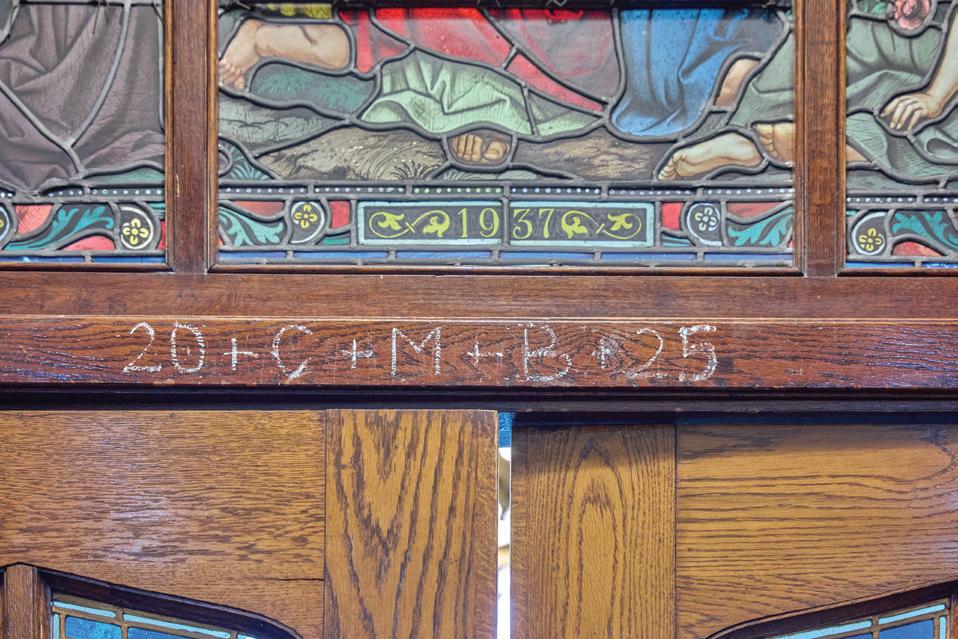
6 On the Feast of Epiphany, traditionally, the initials of the Three Kings are inscribed above the doors with blessed chalk. A prayer asks the Blessing of the Kings on all who enter. However, the real meaning behind the “C+M+B” comes from Latin, “Christus Mansionem Benedicat,” May Christ Bless This Dwelling.
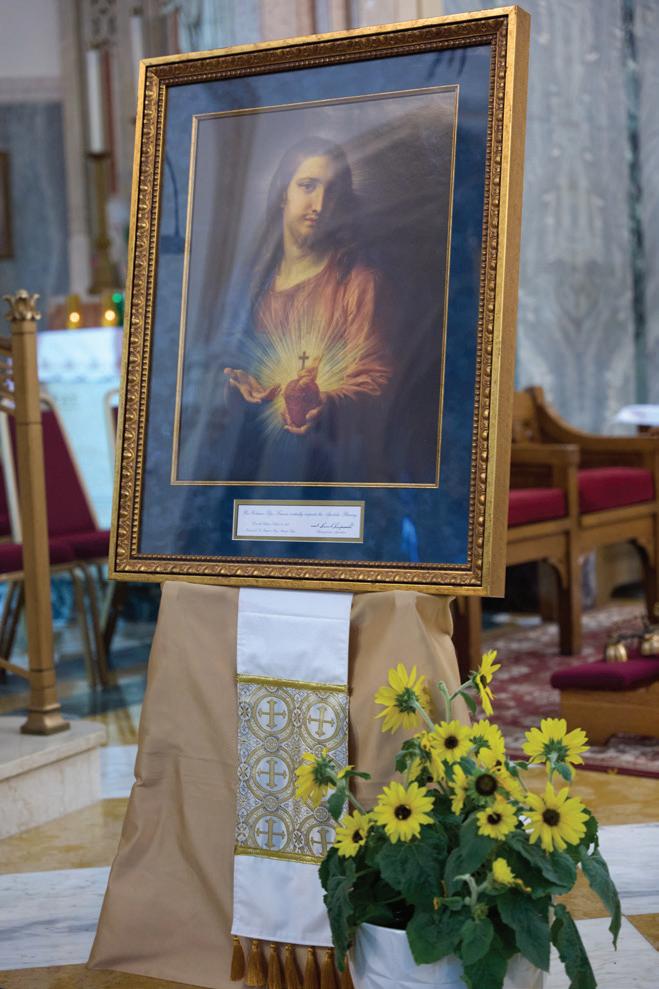
7 The Sacred Heart of Jesus shows God’s love for us. It features a cross, flames, a crown of thorns, a wound, and rays of light. The Sacred Heart displays Christ’s great love for us in that He suffered so much for the forgiveness of our sins.
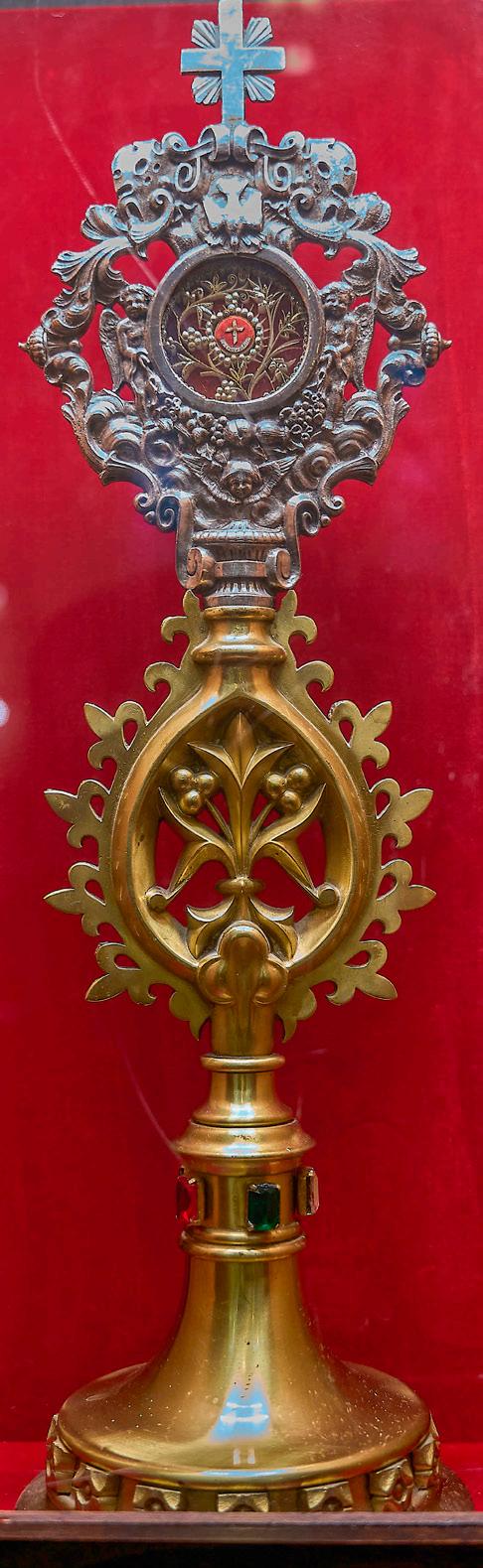
8 The Basilica reliquary includes a number of first-class relics, including one of local Saint, Mother Marianne Cope, and of the Blessed Ulma Family, who harbored Jews during World War II and were executed. The most treasured is the relic of the True Cross (depicted), which, like the Sacred Heart, brings us close to Jesus’ love for us, proven by His sufferings to free us from the burdens of sin.
9 A beautiful facade decorates the face of the organ. Behind the facade are 2,431 working organ pipes, as small as a pencil to as large as a stovepipe.
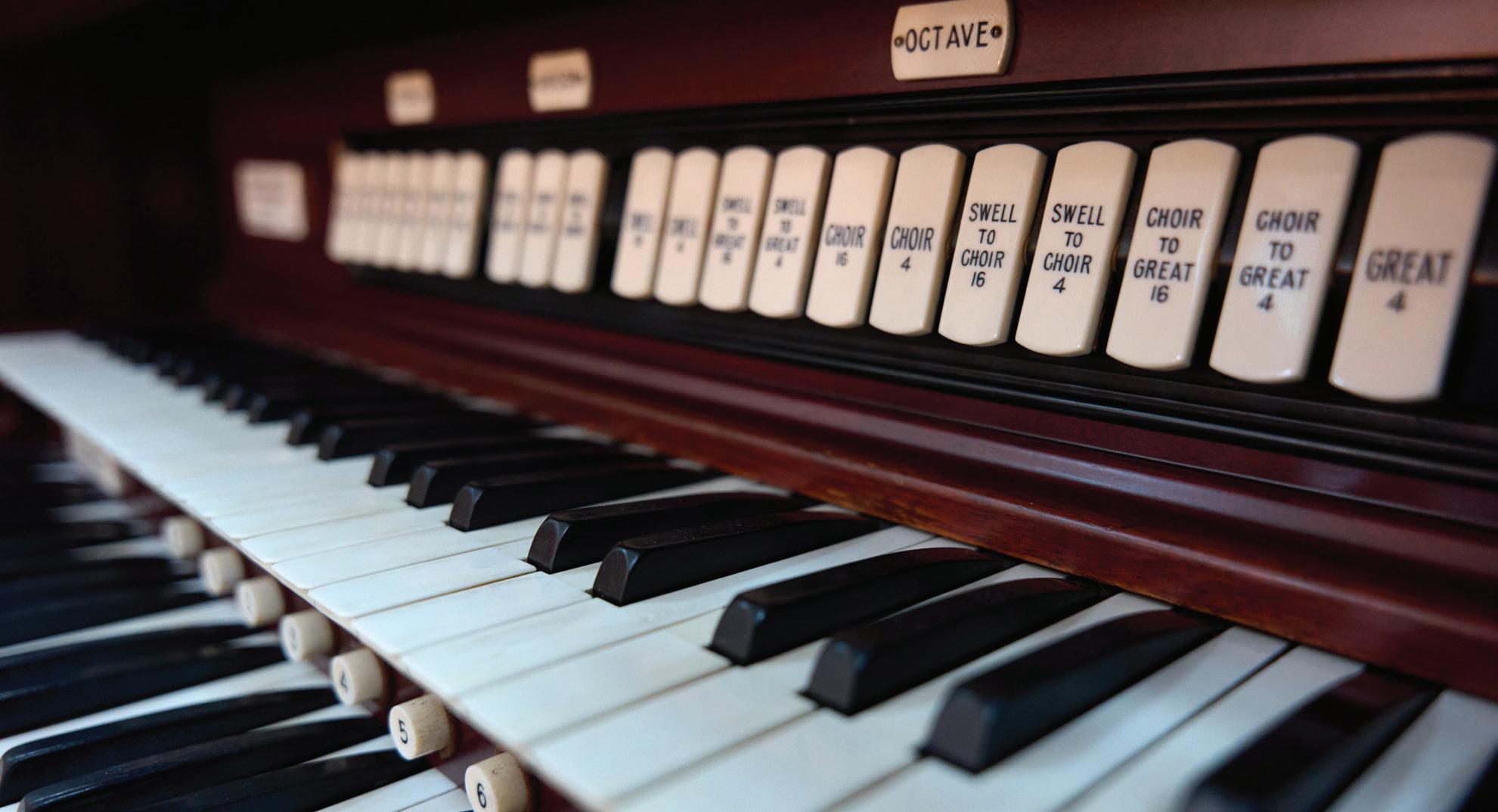
10 The rare Skinner organ’s keyboard makes all those pipes work and turns them into beautiful music. As evidenced by the number of keys, the organ is very complex; it has 36 stops, 40 registers, 36 ranks, and produces a robust sound. It can also produce the sound of several musical instruments, including the cornet and flute.
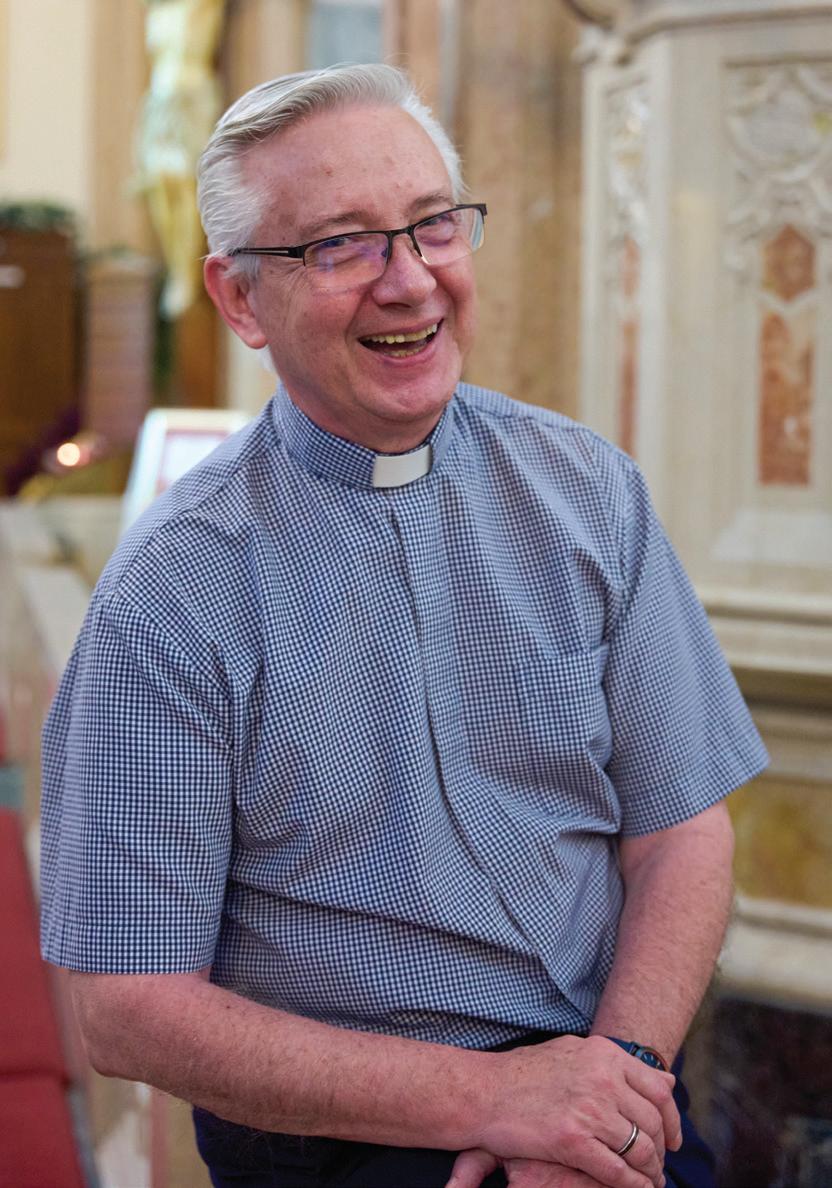
11 Father Andrew Baranski’s smile welcomes all. Doors are open weekdays from 8 a.m. to 3 p.m. Masses are celebrated on Tuesdays at 7 a.m., other weekdays at 12:10 p.m., Saturday Vigil at 4 p.m., Sunday at 9 a.m. (English) and 11 a.m. (English and Polish). The Novena to St. Jude is on Wednesdays at 6 p.m., the Divine Mercy Chaplet is on Thursdays at the conclusion of the 12:10 p.m. Mass. Adoration of the Blessed Sacrament is on the First Friday of every month, beginning at the conclusion of the 12:10 p.m. Mass until 3 p.m. Check sacredheartbasilicasyr.org for updates.
What lies beneath Behind-the scenes visit reveals sacred crypt, remnants of bathhouse
By Eileen Jevis
The Cathedral of the Immaculate Conception in Syracuse was established in 1904. Its origins, however, trace back to the mid-19th century when Irish immigrants arrived in Central New York in search of work and new beginnings.
St. Mary’s Church, on the site where the Cathedral now stands, was initially constructed in 1874 by Lawrence J. O’Connor. It was originally under the Diocese of Albany, as the Diocese of Syracuse wasn’t formed until
1887. In 1904, Bishop Patrick Ludden, the Diocese’s first bishop, selected Saint Mary’s Church to be elevated to Cathedral status and the church underwent significant expansion. The expanded church, renamed The Cathedral of the Immaculate Conception, was consecrated in 1910. Within the soaring spires and intricate limestone construction are magnificent and symbolic paintings, sculptures, and stained-glass windows that tell the story of the Bible through imagery.
The Cathedral was designed in the Gothic Revival
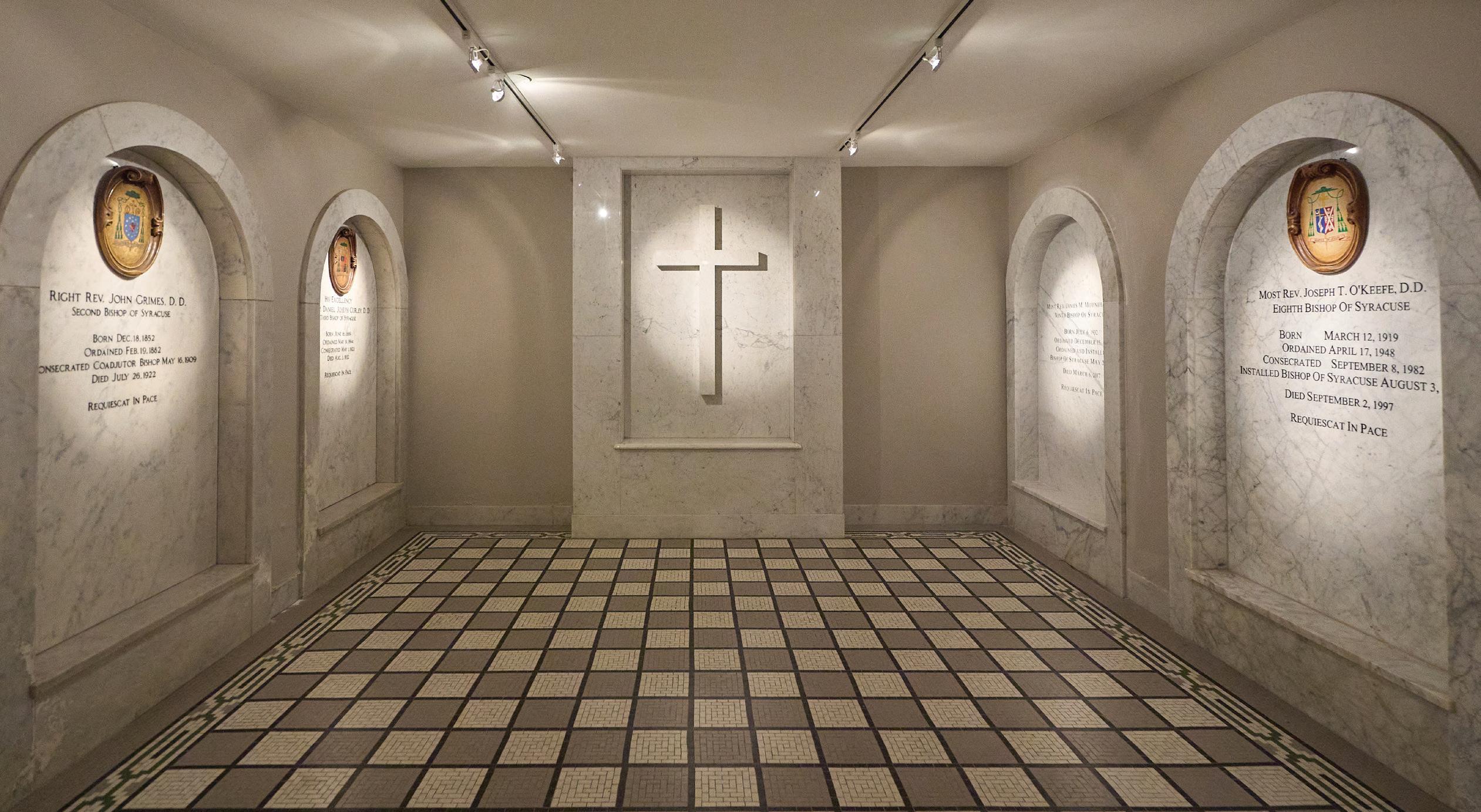
The crypt beneath the High Altar is the final resting place for five bishops and two rectors of the Cathedral.
style, echoing the medieval cathedrals of Europe. Its architects and artisans sought to create not just a house of worship, but a sanctuary that would inspire awe and reverence for generations.
A place of remembrance and history
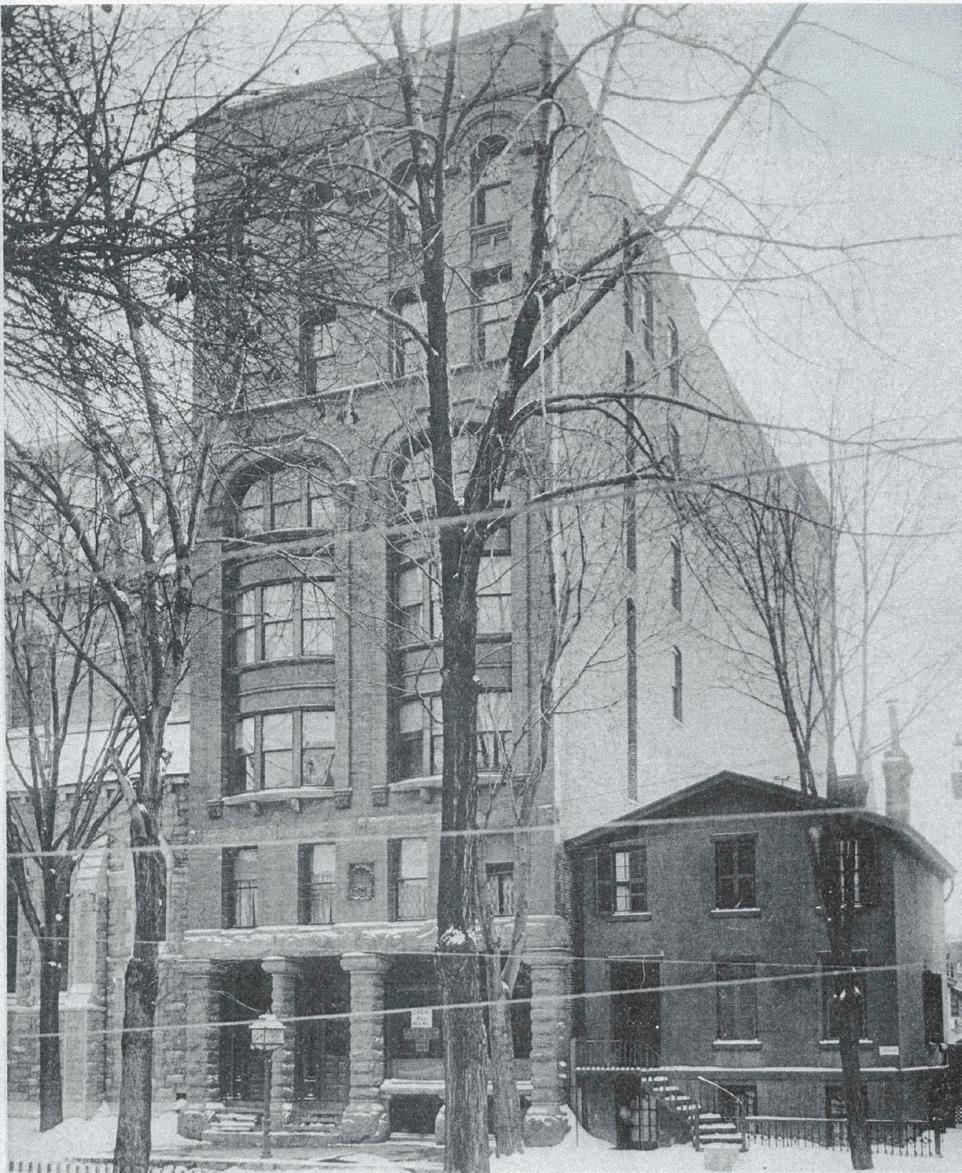
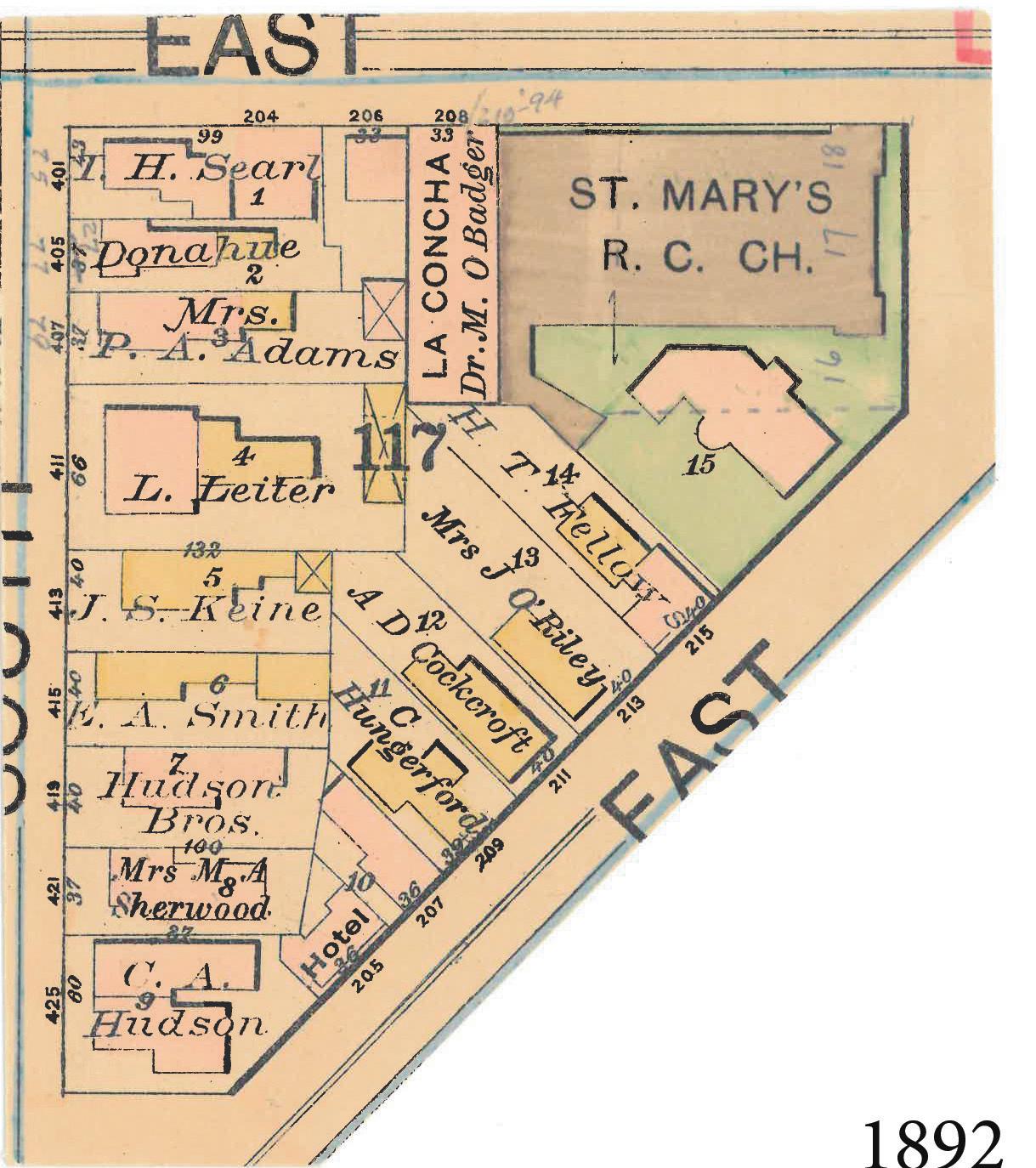
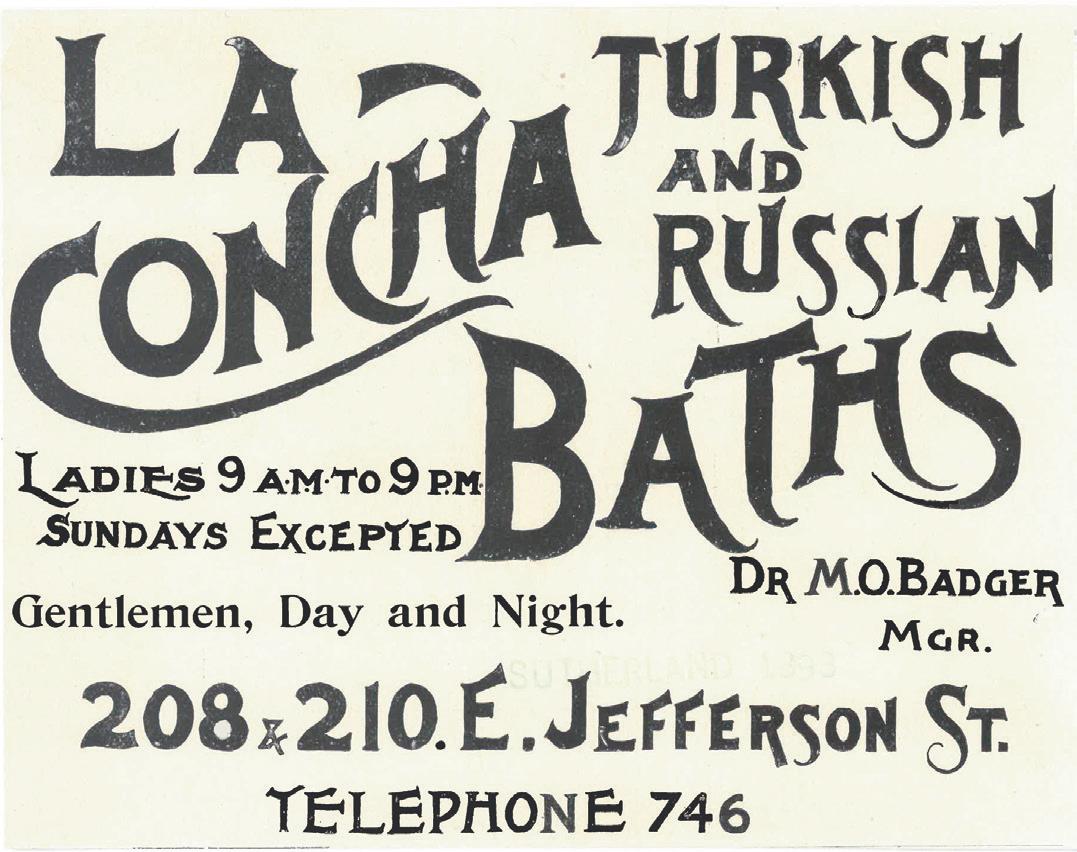
An interesting and surprising artifact lies under the Cathedral — the remains of the La Concha Turkish bath house. According to a Dec. 8, 1991, story in the HeraldAmerican written by M.C. Burns and Hart Seely, “the bath house was built in 1886 in a vain attempt to drive the parish from downtown Syracuse.” A March 3, 1990, announcement in the Herald said the seven-story bath house on East Jefferson Street, just west of St. Mary’s Church, “boasted sulfur vapor baths, luxury furnished bachelor apartments, and a first-rate restaurant.”
Records show that Bishop Ludden purchased the property in 1902 with his personal funds and had the bathhouse demolished to begin construction of a sanctuary for his new cathedral.
One will also find a significant and sacred space below the High Altar: the crypt. A steep and narrow staircase leads to the silent chamber that serves as the spiritual and historical foundation of the Cathedral. The crypt is pristine and peaceful, with white marble walls and floors, and subdued lighting. Those who enter feel a
sense of peace and an air of quiet solemnity. “In peace I will lie down and sleep, for you alone, Lord, make me dwell in safety.” (Psalm 4:8)
The crypt was planned as a final resting place where the remains of bishops and notable priests could lie close to the main altar, the holiest part of the church. It signifies the enduring connection between the living and their spiritual leaders who have passed on.
In a 1991 interview with the Herald-American, Bishop Joseph O’Keefe said the crypt was a symbol of stability. “You can’t go into the crypt without getting a sense of the history,” he said. “You can never get discouraged if you have that sense. Because if that remains, you aren’t discouraged by every crisis that comes along in the Church, in the government, and in your life . . . You just know that the Church remains.”
The former St. Mary’s Church on East Jefferson Street stands in the shadow of the La Concha Bath House. The site is now the Cathedral of the Immaculate Conception.
A map, dated 1892, shows the proximity of the La Concha Bath House to St. Mary’s Church
The five bishops and two rectors buried in the crypt are:
Bishop Patrick Anthony Ludden (1836–1912), the first bishop of Syracuse, was a visionary leader. During his 25-year-long tenure, he presided over a period of great growth in the Diocese. His motto was “Justice and Peace.” The former Bishop Ludden Junior/Senior High School was named in his honor. Ludden’s burial in the crypt set a precedent for his successors.
Bishop John Grimes (1852–1922), the second bishop of Syracuse, served as a curate at St. Mary’s Church in Syracuse until 1887, when he became pastor of St. Paul’s Church in Whitesboro, New York. In 1890, he returned to St. Mary’s as its pastor. His motto was “Be a Mother to All of Us.” The former Bishop Grimes Junior/Senior High School in East Syracuse was named in his honor.
Bishop Daniel Joseph Curley (1869–1932) served as the third bishop of the Diocese. He established a Society for the Propagation of the Faith, 28 parishes, 18 schools, Loretto Rest, and Lourdes Hospital. At his invitation, the Sisters of Perpetual Rosary opened the first home for cloistered nuns in Syracuse.
Reverend Monsignor James P. McPeak (1877–1972) served as rector of the Cathedral for 49 years until his death in 1972. In his 69 years of priesthood, Msgr. McPeak was considered a kind and exemplary priest, a fatherly counselor, and a man of wit and wisdom. He was identified with the administrations of six bishops of the Diocese and held trusted and official duties in the Episcopates of Bishops Ludden, Grimes, Curley, Duffy, Foery, and David F. Cunningham.
Bishop Joseph T. O’Keefe (1919–1997), the eighth bishop of the Diocese, served in many parishes and schools in downstate New York. He was appointed auxiliary bishop of the Archdiocese of New York in July 1982 and titular bishop of Tre Taverne, consecrated in St. Patrick’s Cathedral in September 1982. He was appointed bishop of the Syracuse Diocese in 1987.
Reverend Monsignor Joseph M. Champlin (1930–2008), who served as rector of the Cathedral from 1995 to 2005, was one of the most beloved priests in the Diocese of Syracuse. He served as pastor in three parishes, traveling more than two million miles in the
U.S. and abroad lecturing on liturgical and pastoral matters as well as conducting retreats and missions for parishes. He authored 50 books with over 20 million copies of his publications in print, hosted local radio spots, and founded the Guardian Angel Society.
Bishop James M. Moynihan (1932–2017), the ninth bishop of the Diocese, was the final person to be buried in the crypt. His episcopal motto was “Support One Another in Love.” During his tenure as bishop, he spearheaded some of the most successful fundraising campaigns in the Diocese’s history and supported the cause for sainthood for Marianne Cope. Moynihan led the Diocese during the national clergy sexual abuse crisis, which led the Diocese to implement the standards of the U.S. bishops’ Charter for the Protection of Children and Young People.
The Cathedral is a significant part of Syracuse’s rich history. It stands as a monument to the waves of immigrants who built the city and the church, to the clergy who guided them, and to the enduring faith that continues to shape the community. In the shadows of the soaring arches and stained-glassed windows, the crypt is testimony to lives devoted to service — to God, our country, and each other.
Know Your Faith
‘Sunshine, and Shadow’
BOOK CHRONICLES THE PERSONAL JOURNALS OF SAINT MARIANNE COPE AND SISTER LEOPOLDINA BURNS
BY EILEEN JEVIS
It’s an honor to claim a globally recognized person as a hometown hero. It’s especially momentous when that hero is a saint. Mother Marianne Cope (1838–1918) was canonized a saint by Pope Benedict XVI on Oct. 21, 2012.
A newly released book, “Sunshine, and Shadow” gives the historic and personal account of Saint Marianne Cope and Sister Leopoldina Burns, two Franciscan nuns from Central New York who spent decades in Hawaii caring for patients with leprosy (now known as Hansen’s Disease).
Born Barbara Koob in Germany, Mother Marianne Cope and her family immigrated to Utica when Marianne was a child. Marianne received her First Holy Communion and Confirmation at the Historic Old St. John’s Church. Upon settling in Upstate New York, the family Americanized their name to Cope. Her deep faith sparked her desire to become a nun, and she entered the Sisters of St. Francis in Syracuse in 1862, taking the name Sister Marianne.
Among her many accomplishments, Mother Marianne co-founded the first two Catholic hospitals in Central New York: St. Joseph’s Hospital (where she served as administrator) and St. Elizabeth’s Hospital in Utica. Mother Marianne was in charge of St. Joseph’s Hospital from 1870 to 1877, when she was elected Provincial Mother of the St. Francis Community.
In 1883, while serving her second term as Provincial Mother, Marianne received a letter from Father Leonor Fousnel, a priest assigned to the Catholic mission in Hawaii. Father traveled to the United States to find Sisters willing to take charge of the hospitals and schools
on the island. The Franciscan Sisters in Syracuse were the only Order that would consider the mission.
After months of communication, questions answered, and conditions met, Mother Marianne and five other Sisters agreed to the mission. They arrived in Honolulu on Nov. 8, 1883, to care for patients with leprosy and manage the Kaka‘ako Branch Hospital on O‘ahu.
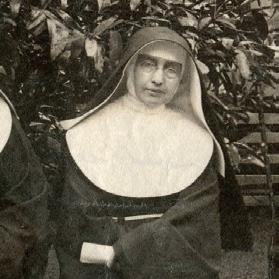
Sister Mary Leopoldina Burns (1856–1942), a Utica native, joined the Sisters of St. Francis of Syracuse in 1881. Shortly after her profession, she was assigned to St. Francis Convent in Albany. Three years later, she was among the second group of Sisters arriving from Syracuse in April 1885 to assist in caring for the patients. Throughout the years, many more Franciscan Sisters would arrive to serve the sick. Mother Marianne and Sister Leopoldina, who worked together for nearly 40 years, became close companions. During that time, Sister Leopoldina recorded the history of Bishop Home and the work of the Sisters in Hawaii in her daily journals.
Much has been written about Mother Marianne, including letters, journals, and official records chronicling her extraordinary life of service and sacrifice for others. A comprehensive biography titled, “Pilgrimage & Exile: Mother Marianne of Molokai,” written by Sr. Mary Laurence Hanley, O.S.F. and O.A. Bushnell, and published by University of Hawaii Press in 1991, gives an extensive account of Mother Marianne’s life. The book tells the story of Mother Marianne in the context of the social, political, religious, and scientific setting of her time.
Sister Leopoldina is mentioned often in the book, with quotes about daily life, and her feelings about
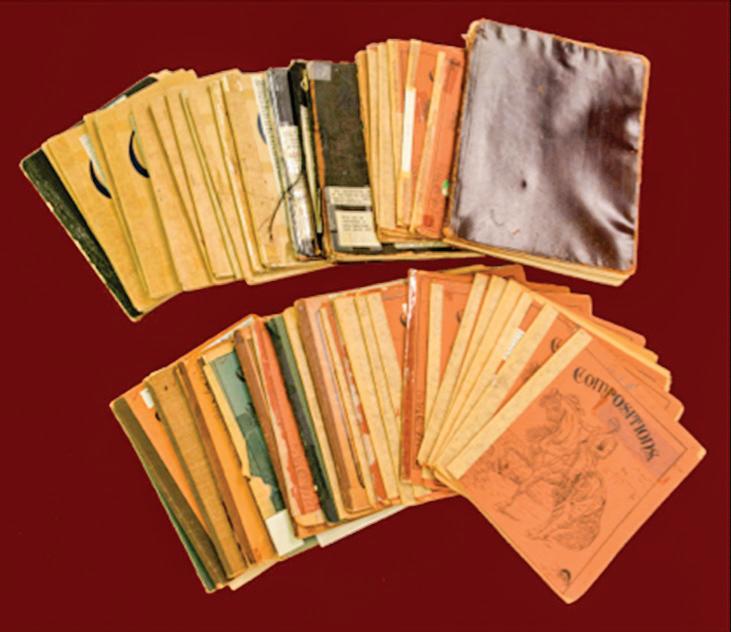
Sister Leopoldina recorded the history of Bishop Home and the work of the Sisters of St. Francis in Hawaii in 46 composition books.
the people and places. Sister Mary Laurence said in her book, “Hers is the best picture we have about Mother Marianne’s career in Hawaii. Truly Irish, and therefore unabashedly romantic, Sister Leopoldina could be sentimental, even gushing, when she wrote about the scenery, fellow religious, and most especially about Mother Marianne.”
Sister Mary Laurence served as a Sister of St. Francis in Syracuse for 67 years. For 37 years, she devoted her skills, talents, and energies as the director of the Cause of Blessed Mother Marianne Cope. She made it her life’s work to advance the Cause of Mother Marianne to sainthood, presenting Marianne’s life work to cardinals and the pope in Rome. Sr. Mary Laurence died on Dec. 2, 2011. The official announcement that sainthood was imminent arrived on Dec. 7, 2011, the day of her funeral.
The Saint Marianne Cope Shrine & Museum in Syracuse is honored to have received the neverbefore-published journals of St. Marianne and Sister Leopoldina. The journals are currently being transformed into a book entitled “Sunshine, and Shadow.” The book, written by Anwei Skinsnes Law, M.P.H., an award-winning researcher and producer of multiple publications and documentaries on the history of leprosy in Hawaii, covers the years the Sisters worked at the Kaka’ako Branch Hospital in Honolulu (1883-1888) as well as more than 130 years at the Bishop Home, also known as the Pauahi Home on Kalaupapa (1888-present).
“The journals help us to understand life at Kalaupapa that included ‘traces of intense suffering,’ ‘the natural talent for music,’ ‘the ever-present shadow of death,’ ‘examples of unwavering faith,’ ‘kindness itself,’ and ‘the pain that is in the heart of another,’” wrote Law.
“They tell a story and reflect a ministry of care for those in need. While life was difficult, this is a story filled with compassion, respect, dignity, and empathy for the most outcast members of our society during that time,” added Kristin Barrett-Anderson, director of the Saint Marianne Cope Shrine & Museum. “Sharing such an incredible story of the Sisters and their values-in-action is a timely reminder of how their values can inspire us today.”
While the fragile journals will remain in the archives at the Museum, Barrett-Anderson said the publication of the book, slated to be published in the coming months, will share the history of the story of Mother Marianne Cope, Sr. Leopoldina, and the other nuns in a first-person account of the Sisters’ service to the patients on Kalaupapa.
The book is also a way to preserve the original stories of women who helped shape the healthcare system that began in Syracuse and remind readers of the infectious diseases that have shaped human history, Barrett-Anderson explained.
The Saint Marianne Cope Shrine & Museum is self-publishing the book, which includes excerpts from the historical journals enhanced with photographs, commentary, excerpts from the National Women’s Hall of Fame, and an introduction from Sister Mary Laurence.
The museum is asking for financial support to help with publishing costs. Giving opportunities start at $25. With a $100 donation, donors will receive a coupon redeemable for a first-edition copy. To help fund the publication, visit SaintMarianne.org or contact the museum at 315-422-7999. The book will be available at the museum, the online gift shop at saintmariannegiftshop.org and on Amazon.
According to an April 2024 report by the CDC, about 225 people in the U.S. and 250,000 around the world are diagnosed with Hansen’s disease each year. Hansen’s disease, once feared as a highly contagious, devastating disease, is hard to spread and easily treatable.
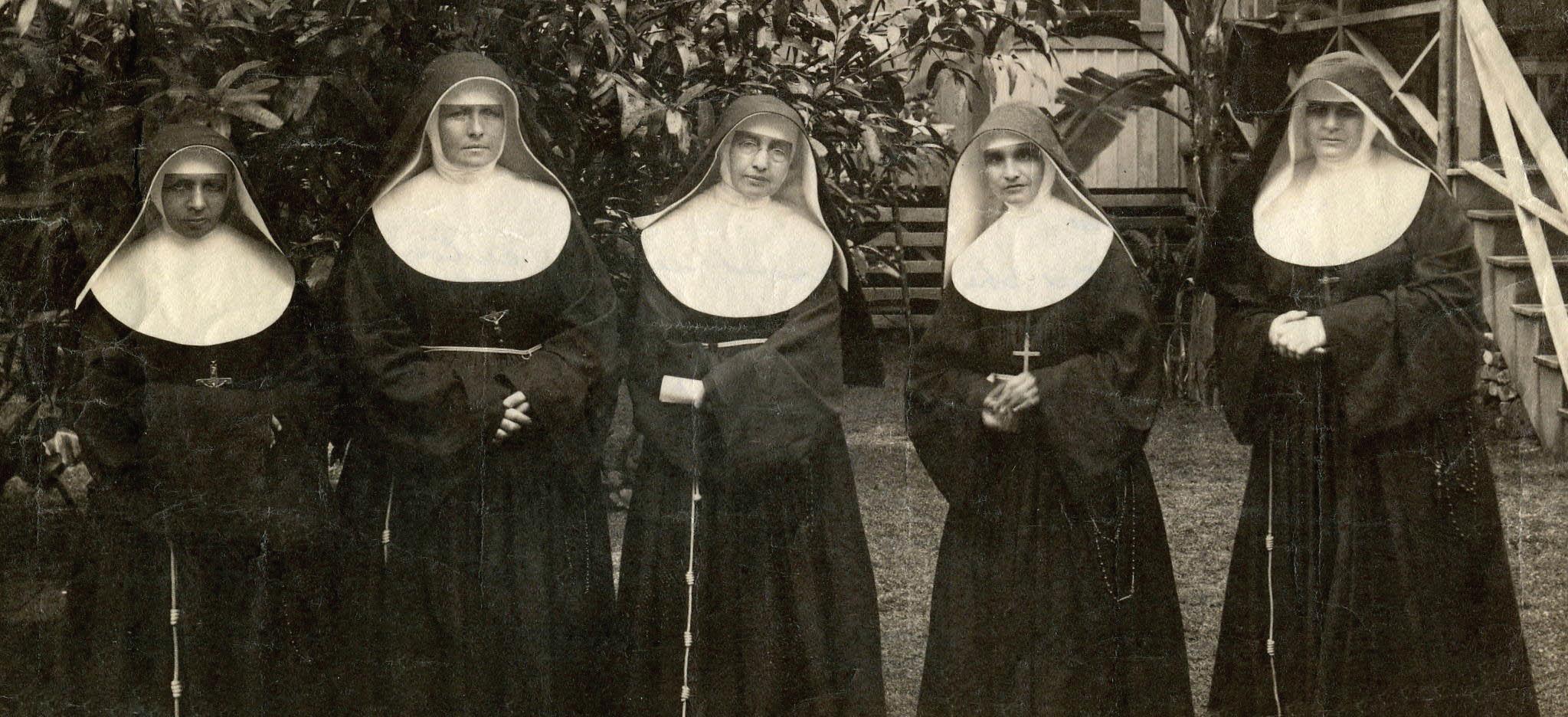
(L to R) Sisters
Crescentia Eilers, Leopoldina Burns, Mother Marianne, Elizabeth Gomes, and Vincentia McCormick
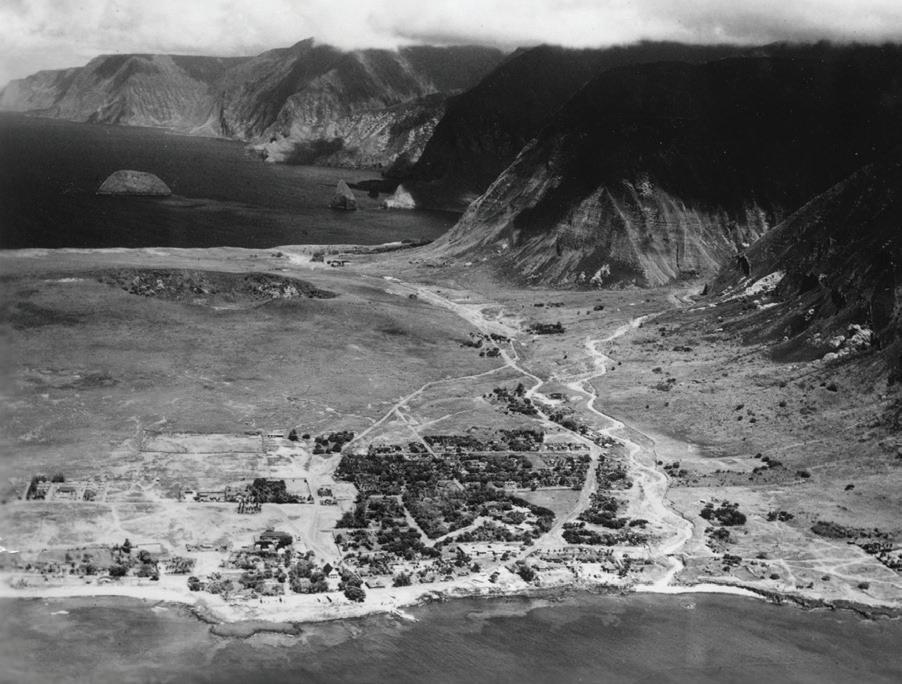
Leprosy patients were banished from society to the Kalaupapa Peninsula on the island of Molokai, Hawaii.
COURTESY
Out of the darkness
Diocesan priest shines a bright light on exorcisms
and the ongoing battle against evil
By Deacon Tom Cuskey
Have you ever attended or been a part of an exorcism? If you’re reading this in SOLIS magazine, chances are strong that the answer is yes, you have, but probably did not realize it.
The Catholic Rite of Baptism — the sacrament by which we truly become children of God — includes a minor rite of exorcism. Following the Invocation of Saints, the celebrating priest or deacon will recite the Prayer of Exorcism ...
Almighty and ever-living God, you sent your only Son into the world to cast out the power of Satan, spirit of evil, to rescue man from the kingdom of darkness, and bring him into the splendor of your kingdom of light.
We pray for this child: set him (her) free from original sin, make him (her) a temple of your glory, and send your Holy Spirit to dwell with him (her). We ask this through Christ our Lord.1
The recipient is then anointed on the upper breast with the Oil of Catechumens, thus dispelling Satan and removing the stain of original sin, preparing the person to be baptized in the faith moments later as a child of God.
As a permanent deacon who has presided at a number of Baptisms, the process of the sacrament and even the exorcism rite sends ripples of joy down my spine, a very different effect when compared to what Hollywood has exposed many of us to. The 1973 film “The Exorcist” is a prime example of that. Loosely based on actual events that took place in 1949 — and highly
sensationalized in the film adaptation according to a professor at UCLA2 — the sight of projectile-vomited pea soup and a young girl’s head rotating 360 degrees were perhaps the most vivid takeaways we have of what, in reality, is a very holy and necessary rite of the Roman Catholic Church.
Meet the exorcist
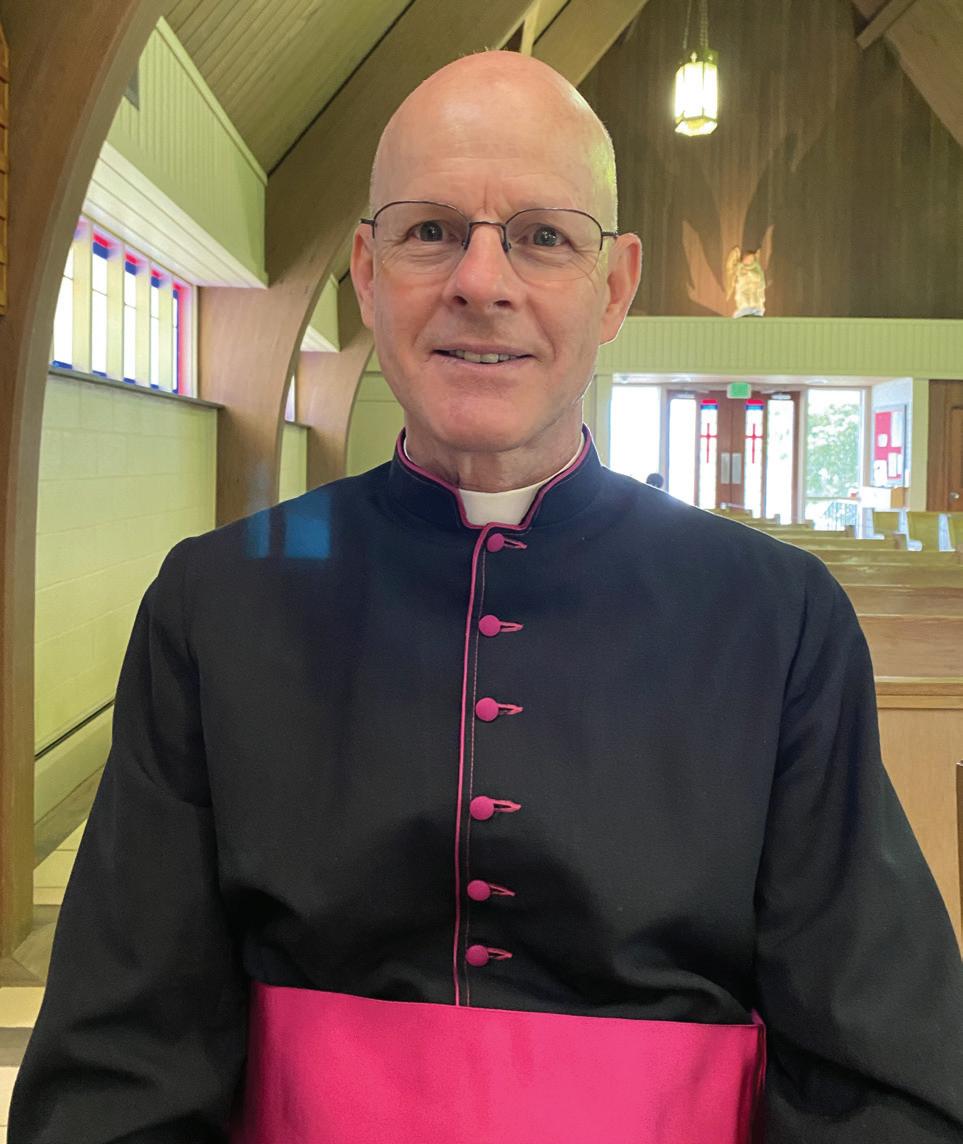
Monsignor Stephen Rossetti is a very youthful 74-yearold who looks a lot like the average guy next door. A native of Onondaga County, he was ordained a priest of the Diocese of Syracuse in 1984. He is a 1973 graduate of the Air Force Academy and a six-year military intelligence veteran who went on to serve two parishes in our diocese after ordination.
And then his course changed.
“They say if you want to make the Lord laugh, tell Him your plans,” he shared, joining the Almighty in the laugh. “I mean, I was supposed to have kind of a quiet retirement. Fat chance.”
The priestly call,“simplistic, but true,” came during his Air Force years.“I just slowly became more and more drawn to things of the Lord,” he said, adding that many vocations come from the military.“There’s a symbiosis there.”
The call did not end there. He followed the Holy Spirit to Washington, D.C., where he had become immersed in helping priests and religious with psychological problems, and then on to the deliverance ministry, helping normal, everyday people who have come under attack by Satan and his minions.
The need is great.
“This whole ministry has just boomed in the last 10 years. So it’s been quite striking.”
We asked Msgr. Rossetti, whose academic credentials include a Ph.D. in psychology from Boston College and a doctorate in ministry from Catholic University, what has fueled the ministry boom.
“I think there’re a couple of reasons. Obviously, we’re speculating, but first of all, I think there are more people who are possessed,” he shared, adding that people often make themselves vulnerable to a demonic presence.
“I often tell [people] there’s typically a three-step process of becoming possessed. I don’t suggest you take it,” he warns. “One: Stop practicing the faith. Ephesians [chapter] six tells us that faith is our shield. So stop practicing faith [and] you drop your shield. Two: Start committing serious sins. We know what those are. We may not want to admit it, but we know what those are. And then three: Start doing things of the occult, witchcraft, or any form of divination, consulting mediums and engaging shamans and pagan healers.”
Sin “wounds the soul,” Monsignor said, adding that the use of Ouija boards, tarot cards, and sim-
ilar items, as well as dabbling in witchcraft, “gives Satan a ticket.” Such practices of divination were thought to be a Third World problem, but now have come home to roost in modern-day America.
“We have a bunch of Americans who, as kids, did not grow up in the faith, whose parents didn’t teach them anything [about faith]. And they are doing all sorts of things they shouldn’t be doing. And now they’re doing the occult stuff like practicing witchcraft. They think it’s fun. They say proudly, ‘I’m a witch,’ but guess what: Do it long enough and you’ll get yourself possessed.” Rossetti explained, “We have a number of cases of converted witches and occult practitioners who became possessed, and the process of liberation is a long one. It’s a very serious sin — a violation of the First Commandment.”
The second reason for the spread of demonic possession is more rooted in recent history.
“There is [Pope] Leo 13th who said that Satan was given a free reign of about 100 years. Well, the 100 years is up, and there really is now a pitched battle which is not hidden anymore. Satan is not hiding, as he did in previous centuries. The battle is obvious and out front!”
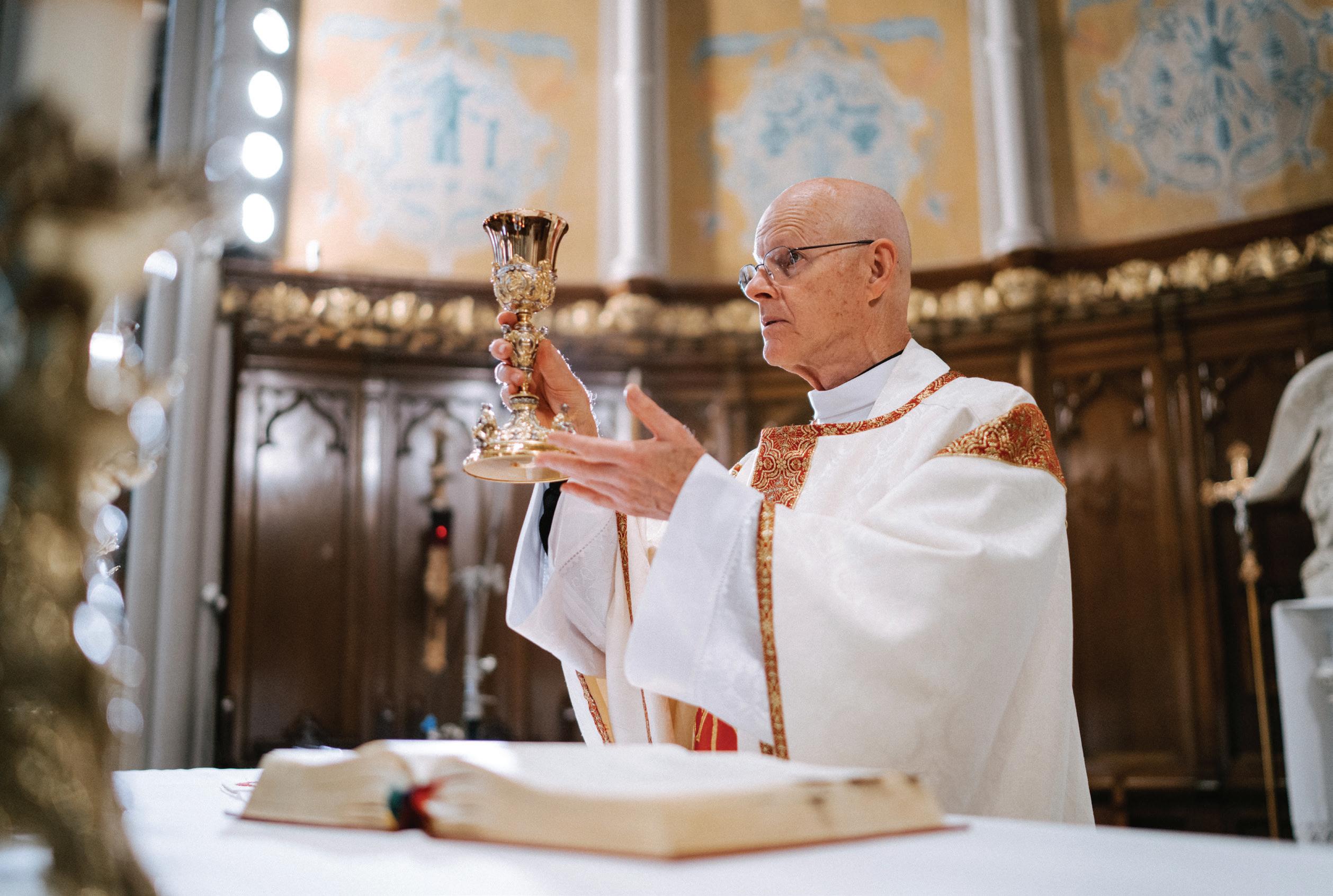
Msgr. Rossetti is an exorcist, psychologist, author, and media personality, among other gifts, but his first calling is to the charism and life of the priesthood.
Thank you, Bishop Lucia
A significant aspect of Msgr. Rossetti’s ministry is sounding the ringside bell to bishops and priests, and engaging in pre-fight training, equipping them with the knowledge and tools needed to provide relief and healing to those under Satan’s attack.
“If you ask priests — which I do, often in a group of 100 priests or so — how many of you have had someone during your ministry say they’ve got demons and they need help? Just about everybody raises their hands. And then I say, ‘How many of you have had any sort of training whatsoever, either in the seminary or post-seminary?’ and almost no one raises his hand.”
Monsignor says confronting Satan was a major part of Jesus’ ministry and it is shocking that our clergy is not better trained to help. And, he says, it’s the Catholic priests who get called on to assist, no matter the faith history of the victim.
“Everyone knows, if you’ve got demons, see a Catholic priest. Would someone say, ‘Just stop off to see some non-denominational minister?’ No, you go to a Catholic priest.” He added, “People implicitly recognize that there is a unique authority and divine power wielded by the priest in the name of Christ and His Church.”
Msgr. Rossetti said Bishop Douglas J. Lucia has been supportive and proactive. Rossetti said he is very appreciative of his faith-filled leadership.
“Everyone knows, if you’ve got demons, see a Catholic priest. Would someone say, ‘Just stop off to see some non-denominational minister?’ No, you go to a Catholic priest. People implicitly recognize that there is a unique authority and divine power wielded by the priest in the name of Christ and His Church.”
— MONSIGNOR STEPHEN ROSSETTI
“The bishop has appointed an exorcist. Probably only half of the dioceses in this country have exorcists. The rest don’t have them, and their priests have not received training. Now, to Bishop Lucia’s credit, he has an exorcist — your exorcist — and he is well trained. Also, I gave a full-day workshop to your priests, on top of this. I commend him for that because he’s ahead of the pack.”
Bridging the gap via media
Since 2020, Monsignor has served as president and CEO of the St. Michael Center for Spiritual Renewal, part of which is an online source of help and information for those seeking spiritual relief and heal-
If you’re happy and you know it
... you’re Catholic!
If you have demons in the house, you call a Catholic priest. Monsignor Rossetti said, “Everybody knows that.”
“But the question is, why?” he added. “The reason why is not because we have any special training, because most priests don’t. It’s because the authority is there. Jesus had the authority to cast out demons, of course, as the Son of God, He passes authority onto the Church. And the Church passes authority onto its exorcist. The bishop tells him, ‘You have my authority as bishop to cast out demons.’
“It’s one of the many great, wonderful graces of being a Catholic, by the way. Being Catholic is the best. And one of those [reasons], of course, is
we have a beautiful mother in Mary. And we have the Eucharist, the sacraments, and we have the priesthood in the Church. We priests have not been perfect, as God knows, but God uses earthen vessels. It is a real grace. And a person struggling with demons knows that because they’re very thankful to have a priest to pray over them. And the demons are terrified of that.
“Somebody asked Father Gabriel Amorth, the famous exorcist, ‘Are you afraid of demons?’ He said no, adding ‘the demons are terrified of me!’ That’s true. Demons are terrified of priests. They are terrified of the Church because they’re terrified of Jesus.”
ing. To overcome any shortfall in local support and access around the globe, the center offers a monthly online deliverance prayer session where those who cannot find a local priest to pray over them can receive the grace and blessings they seek. Live attendance and online views of recorded sessions can total as many as 25,000 per event. Monsignor has more than 275,000 social media followers as well.
Conversely, Monsignor shared that, for example, WitchTok, a part of TikTok focusing on the occult, has more than 41 billion views worldwide. That speaks loudly to the true breadth of the assault Satan is making on the world.
“People are desperate, which is why we have hundreds of thousands of people following us and praying with us.” He adds that there are some members of the clergy who say that prayers don’t work online. To that, Monsignor says, “Nonsense. You can’t do sacraments online, that’s true. But you can pray over people online ... it’s a prayer, and does God hear our prayer? Of course God does and the feedback from thousands has been overwhelmingly positive and encouraging.”
sort of a ho-hum Sunday Catholic. Pray the Rosary, meditate on the cross of Jesus. Receive the Eucharist with gratitude, love, and fervor.”
Also, he warns us not to underestimate the enemy.
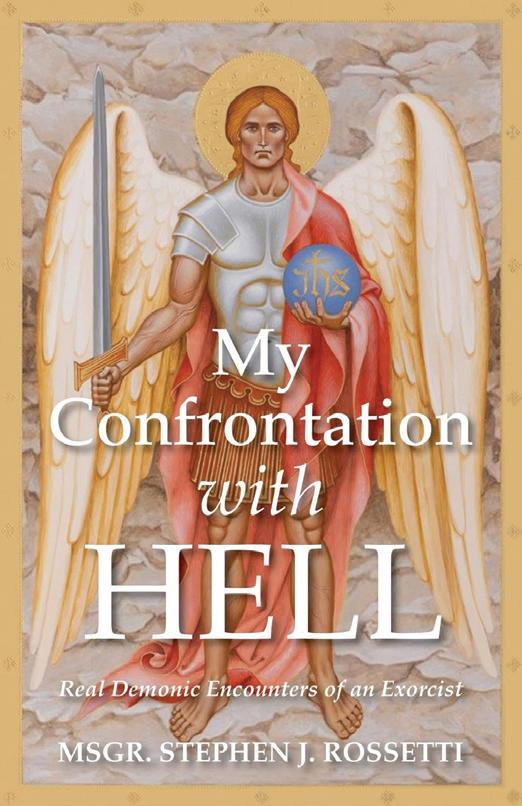
Msgr. Rossetti has a new book that was released this summer, “My Confrontation with Hell: Real Demonic Encounters of an Exorcist” (Spirit Daily Publishing), his 15th book and second involving his life and work as an exorcist. It features a compilation of first-hand experiences Monsignor has had helping people break free of Satan’s torturous grip. And he has personally experienced Satan’s presence.
“Demons are always threatening me. ‘We’re going to kill you; we’re going to crash your airplane. We’re going to attack you.’ They’re always threatening me, and they would kill me if they could. The fact that they don’t, [and] the fact that I’m still alive tells you that Satan is chained. Now, sometimes the demons won’t admit it, but the Scriptures tell us Satan is chained, and Jesus chained him. He’s only allowed to harass us. If he was unchained, I’d be dead by breakfast. His modus operandi is to torture, destroy, and kill and he’d do that if he could, but he can’t, because Jesus is Lord.”
And here is what you and I need to do to embrace the Lord.
“Practice the faith. That’s the most important thing. Practice the faith, but do so with diligence. Don’t just be
“Satan is a lot faster and a lot more powerful than you. And if you think you’re going to go fight a demon by yourself, you’re nuts. He’ll kill you right away. But compared to the Blessed Mother, he’s dust. So hang on to her and to Jesus, and you’re safe. Our daily prayer at our center is ‘Jesus, I trust in You.’”
Monsignor Stephen Rossetti is a priest of the Diocese of Syracuse, a licensed psychologist, and research associate professor at The Catholic University of America. He is known internationally for his work on spiritual and psychological wellness for priests and has served as chief exorcist for the Archdiocese of Washington.
Learn more about Monsignor Rosetti’s ministry at catholicexorcism.org. Watch deliverance ministry videos and more at youtube.com/@stmichaelcenter.
SOURCES/FOOTNOTES:
1Prayers: Rite of Baptism for One Child https://www.ibreviary.com/m2/preghiere.php?tipo=Rito&id=103#exorcism
2“The real story behind ‘The Exorcist’: A Q&A with Henry Ansgar Kelly.” https://www.college.ucla.edu/2023/10/19/ humanities-english-exorcism-henry-ansgar-kelly2023#:~:text=While%20its%20sensationalized%20depiction%20 of,14%2Dyear%2Dold%20boy.
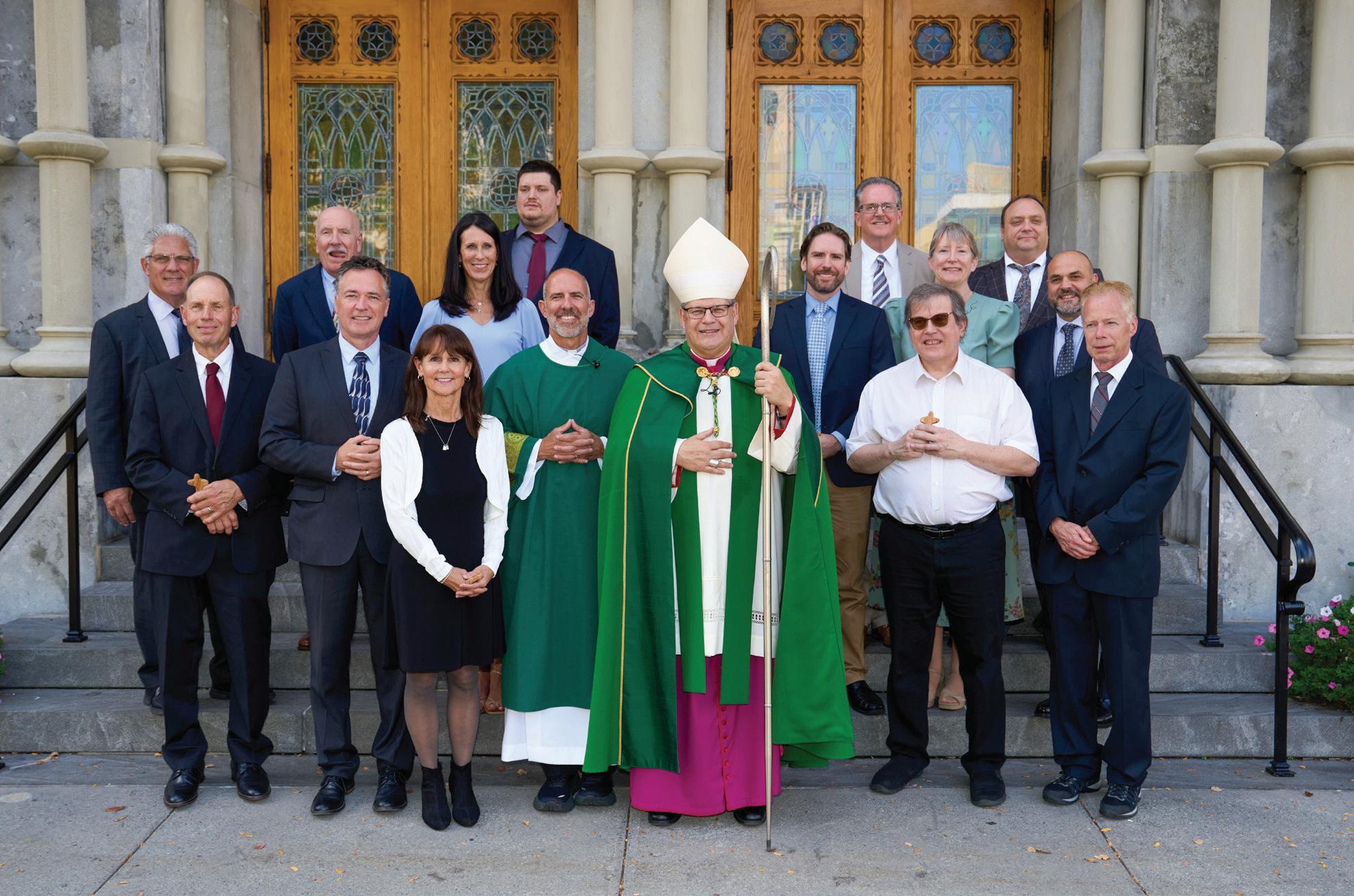
Bishop Lucia stands with this year’s candidates outside the Cathedral of the Immaculate Conception in Syracuse. The Formation for Ministry Commissioning Ceremony was held on September 22.
Called to serve Formation for Ministry program designed for laypeople who want to deepen their relationship with God and the Church
By Renée Romance
The Diocese of Syracuse recognized in 1980 the importance of having a program to form adults for ministry. When Bishop Frank J. Harrison established Formation for Ministry (FFM), he told The Syracuse Herald-Journal: “Our program is based on the understanding that all believers are called to ministry — to share in the ministry of Christ. ... The spirit is present and active in every believer and must become evident in service — in ministry.”
Forty-five years later, the program continues.
Nicole Kelly was taken aback in 2023 when her hus -
band, Ron, shared that he had quietly been discerning a call to the diaconate and invited her to attend the FFM information session with him, FFM being a prerequisite for deacon formation. Although surprised by his announcement, she thought it was a fantastic opportunity and agreed to accompany him. A few weeks later, he had already decided to move forward, prepare the paperwork, and apply for the program. What happened next surprised them both as Nicole blurted out, “Well, I want to do it, too!” referring to the FFM program. Ron was shocked. Nicole was shocked. “It just came out of me, and I can only attribute it to
the Holy Spirit at this point, because I was honestly not discerning it in any way. But it came out and I said it, and once I said it, I was going to do it. I was ready.”
The couple spent the next two years accompanying each other through the program. On Sept. 28, 2025, they were commissioned by Bishop Douglas J. Lucia as lay ecclesiastical ministers. As Nicole reflects on the two-year journey, she looks back at the beginning and acknowledges, “I was faithfully going to church every week. I believed in God. I believed in prayer, but I was missing something. I was missing a lot. I really didn’t have a relationship with God.”
Today, Nicole will tell you that the program transformed her life and her marriage. Though she and Ron already had a close bond at the start of the journey, the program brought them even closer together as they moved their relationship with God to the center of their marriage. Through the courses, the readings, the instructors, and the written reflections, Nicole learned so much more about herself. “Now I spend ample time with God, praying and just kind of reflecting and really just trying to listen to where He’s calling me and what He wants me to do next.” Her journey continues with new ministries at Sacred Heart Church involving the Rosary and guiding people in the OCIA (Order of Christian Initiation) process. Most importantly, Nicole hopes that her “joy shows through to people ... shows them how they can develop a relationship with God themselves.”
Transmitting the faith
Deacon Jeff Dixe was appointed as the director of Adult and Ministerial Formation for the Syracuse Diocese a little over a year ago. Reflecting on his first year, he noticed that the participants in Formation for Ministry are people of joy. “It is so incredibly powerful to watch,” he said. “And so, what happens is that our faith is transmitted. Let’s put it this way: People are attentive to a person of joy. At our last retreat, you could see just the sense of joy and camaraderie and family and connectedness, and it’s so beautiful.”
Deacon Dixe has observed that what leads someone to inquire about the program is inspiration from another person and movement from the Holy Spirit. “Everyone is called. The question is are you going to respond? So, the ones that respond, you know, there’s a fire going on inside of them. And what we do then is help those people discern that call. We want to know their story. We’re going to listen.”
Dixe continued, “We utilize an adult learning model to
teach the core tenets of the faith in an age-appropriate way, utilizing — and this is the beautiful thing about it — utilizing that person’s life experiences.”
A focus on the four pillars of Formation — Intellectual, Spiritual, Pastoral, and Human — is a focus on the whole person. In particular, by strengthening each participant’s relationship with God and helping them mature in their faith so that when they go out into the world and respond to their call, everyone witnesses their joy and growth as disciples. This is accomplished through a two-year commitment that includes five Zoom courses each year taught by experienced and engaging instructors who are responding to their own call by sharing their gift of teaching. Retreats, reading, and written reflections are also part of the program.
Sister Laura Bufano, CSJ, the diocesan vicar for pastoral leadership and the associate director of pastoral planning for the Office of Pastoral Leadership, has a long history with the Formation for Ministry program. She began teaching formation courses in the 1980s, and from 1993 to 2000, as part of her job in the Liturgy Office, she taught Introduction to Liturgy. Sister Laura appreciates the wide range of people participating in the program and the fire they have for their faith. “It’s a gift and a grace from Formation for Ministry, because you are journeying with other people who are also called and have an appreciation for the gifts of others.”
As Sr. Laura reflected on the 1980 quote from Bishop Harrison, she noted that the essence of the program remains the same, but she, along with Deacon Dixe and Tom Andino, the director of Deacon Formation, work together “... on an ongoing basis, assessing what’s best, and meeting the needs of the time. ... This doesn’t happen in a vacuum. It happens, ideally, in the context of the bigger picture and dialogue with other people.”
Expressing the faith
Ryan Bracht’s decision to apply to the Formation for Ministry program came in bits and pieces. He felt nudges from the Holy Spirit, spoke with a friend who had been in the program, noticed bulletin blurbs, and finally went to an information session. From there, his journey started. This fall, Ryan began his second year in the program, and when asked how his first year went, his response was simple: “It’s been fantastic!”
Married, with three daughters and a full-time job in Oswego, Ryan leaned on God when he found juggling everything challenging. “It’s not me that has strength, it’s Him who gives me strength.” Ryan found the Zoom
classes a big benefit and appreciated the times when he could get together in person with his cohorts at workshops and a retreat. “These wonderful instructors who have a great depth of knowledge in these areas, great perspectives ... but also my classmates, a diverse group ... they just bring so much to the class.”
One common thread he found in all the classes was the importance of the Bible and realizing that “the Bible is not just a good book. This book is an entire library. Carry the library around in your hand. ... As far as wealth, depth of knowledge, and understanding of the Bible, it has been unbelievable for me as an adult.”
At his workplace, Ryan shared that he was taking the classes. Throughout the year, people with different beliefs stopped by his office to ask questions, and he found himself giving them faithful answers about what he believes and what he was learning. “And I think that’s important ... if you learn something, [and] you keep [it] to yourself, it doesn’t do anybody any good. Expressing [your faith] and being able to talk [about] that, I think, is very important.” Ultimately, though, for Ryan, the program “is just so worth it, to take the next step in your faith journey, because you should never be done learning anything in life, and you should definitely never be done learning your faith.”
The 2025 candidates are asked to stand for a blessing during their commissioning ceremony.
Deacon Jeff Dixe
Well Versed
Sister Laura Bufano, CSJ currently serves the Diocese of Syracuse as vicar for Pastoral Leadership. A Syracuse native, she became a Sister of St. Joseph of Carondelet in 1968 and since then has served the people of God in a wide variety of capacities, from music educator and pastoral associate to administrative leadership positions, both within her religious community and the Diocese. Somehow, amidst her scheduled diocesan responsibilities and participation on a number of boards and committees, Sister Laura finds time to explore her creative side through writing poetry. She is part of a Syracuse-area poetry group that regularly meets to write and share poetry as a spiritual practice.
Last Night
I sat in the darkness stared through the slatted wooden blinds of my treehouse then raised them for an unobstructed view of the tree outside.
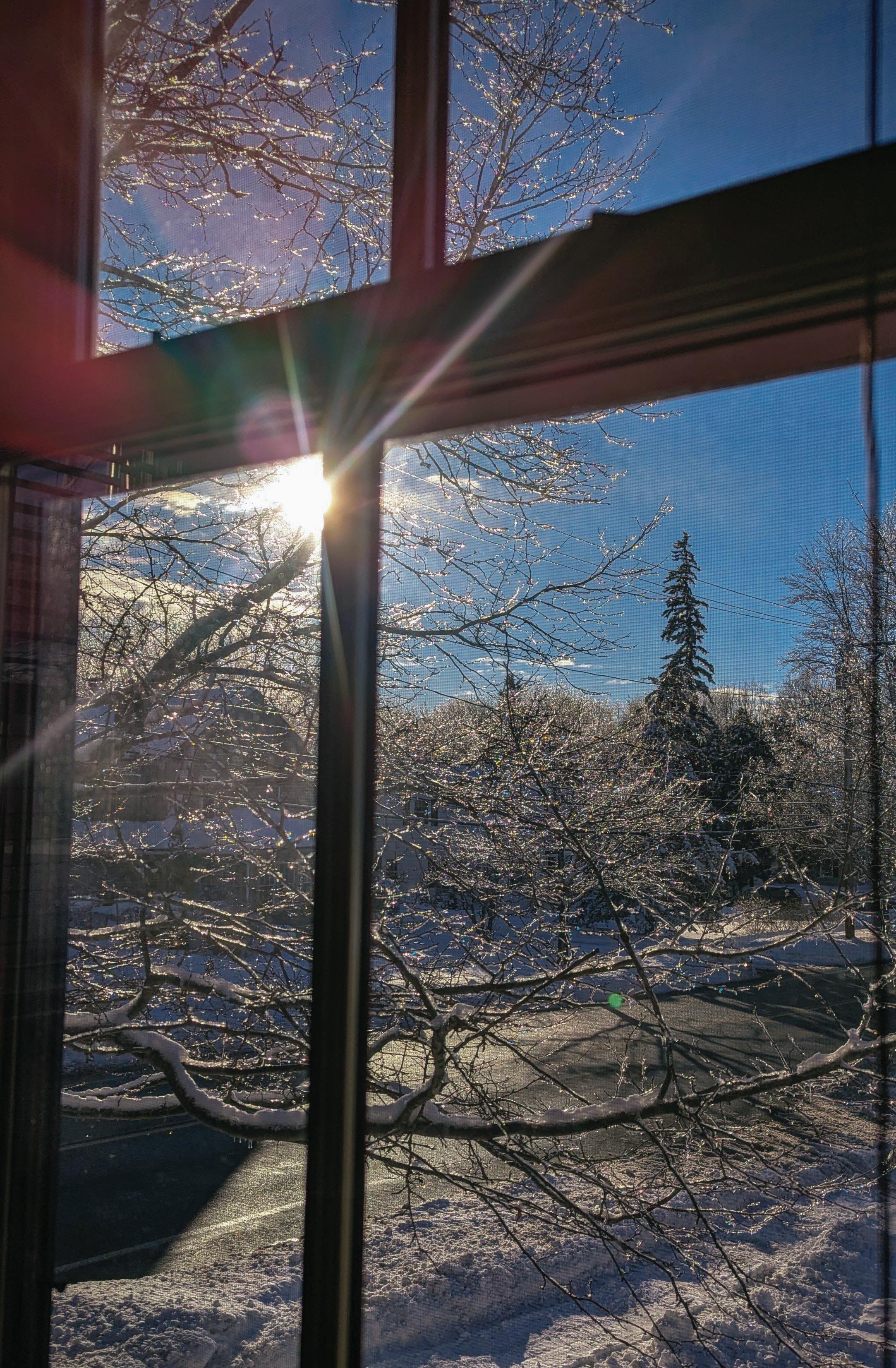
I sat in the darkness mesmerized as snowflakes cascaded like confetti in a ticker-tape parade while bejeweled branches bobbed and swayed in unmetered rhythms orchestrated by the wind. Limber limbs sparkled in costumes adorned with ice crystals illuminated from below by a single lamppost and backlit by a distant streetlight. After a breathtaking performance the branches bowed and curtsied then paused~ as if awaiting their next cue ~ while I hoped for an encore.
Laura Bufano, CSJ 2.17.2025
Compassion in confinement
By Tami S. Scott
Bibles, socks, Rosaries, Daily Bread devotionals, and reading glasses. Those are just a handful of items requested through Jail Ministry by people incarcerated at the Onondaga County Justice Center. The spiritual mission was founded in 1976 by the late Bill Cuddy, a former diocesan priest who left the clergy in 1995 to marry but continued a life of service and activism, with this ministry remaining his greatest passion.
Detainees fill out referral forms that executive director Keith Cieplicki picks up religiously. “We’ll get 60 to 70 of those a week,” he told SOLIS, handing over a thick stack of papers that carried a heavy emotional weight. Requests are handwritten, with some appearing to be jotted down quickly, others more thoughtfully, and each evidently written in distress. He emphasized that the maximum security facility houses a daily population of 450 people charged with crimes ranging from traffic violations to murder. Some inmates, Cieplicki said, are there for three months to three years, depending on how complicated the case is.
Providing wants and needs similar to, but not exhaustive of the list above, are an important part of the ministry, but it’s not the most critical. The core mission is “really just to be present with people,” Cieplicki said. “It’s how we started.”
And that component relies heavily on volunteers becoming visitor advocates.
One hour, once a week
Visitor advocates can be any age, either gender, and often have no experience — just a willingness to spend time with someone who has asked for company — for one hour, once a week.
Barclay Damon LLP Syracuse attorney John Sindoni is one such person. Currently the Jail Ministry board president, he became involved with the ministry about 15 years ago, and has since visited about 100 people. “It’s been quite an experience. I did it with trepidation,” Sindoni admitted. “It was a little outside of my comfort zone
Jail Ministry executive director Keith Cieplicki stands outside the Onondaga County Justice Center.
in many respects, but I’m very glad I got involved and will stay involved as long as I’m able.”
When asked if he ever had a life-changing encounter, Sindoni shared his story of a friendship that formed with a man who didn’t deny that he had committed “a very heinous crime” while under the influence.
“After talking with him for a few months, he’d say, ‘John, do you think God could ever forgive me for what I did?’ I said, ‘That’s what we believe.’” Sindoni convinced him to let Father John Schopfer (now retired) visit. While there, he asked Fr. Schopfer to hear his confession. “To have that happen was a wonderful thing.”
“He was very intelligent,” Sindoni recalled. “I’m not going to whitewash what he did [but] to be able to say ... prodigal son, lost sheep. That was probably the most meaningful thing that happened to me.”
When talking about his work, Cieplicki shared why advocacy holds such a special place in his heart: “To go in and sit in front of somebody who you probably can’t do anything for, who’s suffering, and to just share [in] that suffering and not give advice, not judge, just be there for them and let them drive the conversation and the direction, [it’s] a beautiful thing. [It] doesn’t happen a lot in this world.”
Longtime volunteer Ellen Golden spent years committed to helping people who are marginalized, who struggle, who don’t have a support system. Being a visitor advocate is one way to connect with them, she said. “There’s much more to [the people in the jail] than being just in the margins, you know? I met so many people who were such good people, such experienced people, and some of them could make a good life for themselves, and others could not. Many could not. That’s what drew me [in].”
Golden is still involved in the ministry, but now volunteers in a support role outside the jail.
At the time of the interview, Cieplicki said he had 36 visitor advocates with credentials to enter the justice center. About 25 of them are consistent visitors. The ministry is allowed to distribute up to 60 passes at a time. The numbers ebb and flow. “We train them. They are well trained,” Cieplicki said of his volunteers. “You’d be surprised at how safe the environment is. [The Justice Center does] an outstanding job.”
‘The face of God’
The benefits of being a visitor advocate are reciprocal. Not only are the people in jail provided a listening ear, but the advocate is blessed with a growing “sense of compassion,” said Sindoni, who became emotional at times when comparing his own upbringing with others.
Small gestures, big impact
Jail Ministry offers several opportunities for volunteers to get involved. Visitor advocates are trained volunteers who spend one-on-one time with individuals for one hour, once a week. A ministry of presence, visitors fulfill a critical role for residents who ask for support. For many, visitors are the only ones incarcerated people see, so they look forward to their time together, even if just for a short time. Jail Ministry provides thorough training for this unique ministry, described as one of the most fulfilling experiences you will ever have.
Other opportunities outside of the Onondaga County Justice Center include office support, answering phone calls, and letter writing. To learn more about how to become a volunteer, email jailministry@gmail.com or call Keith at 315-680-3466.
The vision of Jail Ministry is that all individuals incarcerated in Onondaga County have access to spiritual, emotional, and personal support, leading to the betterment of our entire community.
“I had every opportunity in life,” he paused, “with wonderful parents, a wonderful environment ... that’s the exception in what we’re experiencing in our world,” he said. “So the opportunity to see people who had none of that makes me appreciate more of what I have. I think that should inspire us all to reach out in whatever way. It doesn’t have to be Jail Ministry. It could be working at the Samaritan Center, Meals on Wheels. It can just be being nice to a person on the street. I mean, we’re blessed.”
“[Being a visitor advocate is] not the challenge people think it is,” Sindoni said. “These are screened people. They want to visit.” And if they’re having a bad day and the advocate senses they don’t want to talk, they can let them know they’ll come back next week when they’re feeling ready. “They’ve got a life that you and I can’t ... we can’t be in their shoes ... it’s so different.”
One recent morning, Cieplicki stopped in the justice center to see a man he’s been visiting with for about nine months. “The man said, ‘I’m learning so much from you,’ and I said back, ‘I’m learning so much from you.’
“We’re really the face of God for them and they’re the face of God for us,” Cieplicki added. “[And] that’s the beauty of this ministry.”
Postcards from Frassati
By Emily Long
Emily Long, administrative assistant for the Foundation of the Diocese of Syracuse and circulation coordinator for The Catholic Sun, recently spent 10 days in Italy (starting on July 26) with 206 Tours on a pilgrimage titled, “Following the Footsteps of PierGiorgio Frassati ”
Istepped out of my brother’s truck while he grabbed my suitcase from the back. “Good grief, what did you put in here? You know you can’t smuggle the dog to Italy!” he exclaimed as I laughed. I gave him a hug and said goodbye, and I walked into Hancock International Airport to start my journey to Italy to follow in the footsteps of PierGiorgio Frassati.
It wasn’t totally smooth sailing to get here. A month before, I had been sitting in my office at the Diocese scrolling X (formerly Twitter), when I found out that Frassati’s canonization would be moved from Aug. 3 to Sept. 7, and I wouldn’t be there for that Mass. I was disappointed. I had been planning and saving and preparing for this trip for over a year! As I sat at my gate, I was excited, but nervous. Would this trip be everything I had hoped for? Would it still be worth going without the canonization? Well, let me tell you a little bit about the young man who’s bringing me to Italy — PierGiorgio Frassati (1901-1925).
How did we get here?
In 2023, I started attending meetings of the Syracuse Frassati Fellowship. The group models its activities on the life of PierGiorgio Frassati by learning about our Catholic faith, doing service projects, and creating genuine friendships around our love of Jesus. I started coming to Frassati Fellowship because I needed friends. At first, I wasn’t super interested in PierGiorgio. He is often characterized as an avid outdoorsman who found
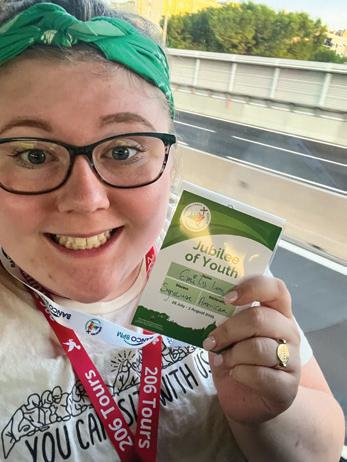
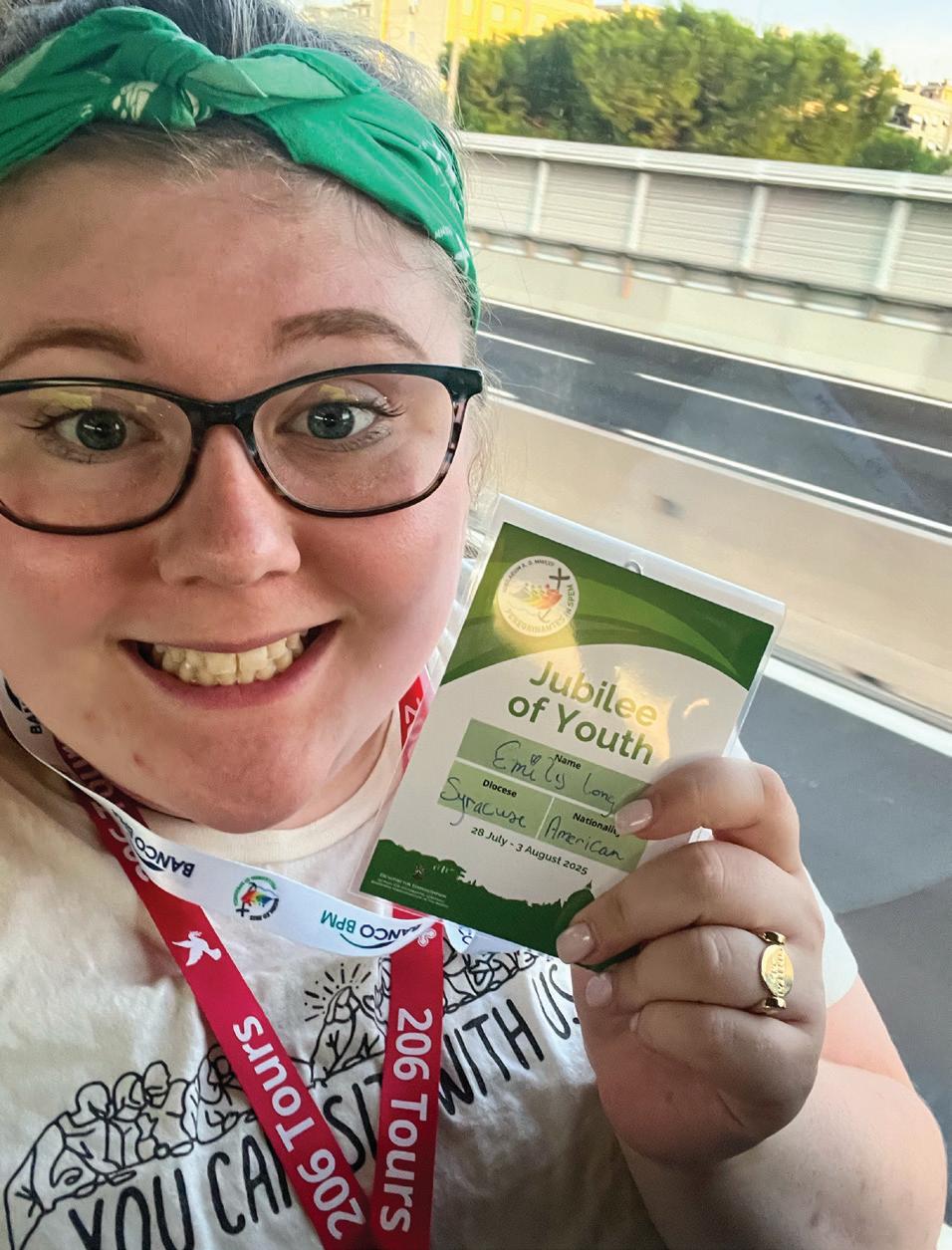
On the bus to the Jubilee of Youth. All pilgrims received a name tag that included their diocesan affiliation and country of origin.
God in the outdoors. I am more of an inside person who finds God by reading my Bible. As I learned more about him, my perspective changed. PierGiorgio was a young man of deep faith, who loved praying the Rosary, going to Adoration, and was always serving the poor. So now that I’ve given you the basics about PierGiorgio, let's hop on this plane and visit the place he called home. I can't wait to share the highlights of this very special journey with you!
Greetings from Turin!
July 27, 2025
Ciao da Torino!
After over 12 hours traveling, I’m thrilled to say I arrived in PierGiorgio Frassati’s hometown of Turin, Italy! We have spent two days touring this beautiful and historic city, visiting many of the churches where PierGiorgio once prayed. As we traversed the old cobblestone streets, I could almost feel Frassati biking all over the city to go to holy Mass, deliver medicine to a struggling family, or to meet a friend for Adoration.
On the third day of the pilgrimage, we loaded onto our tour bus for the Sanctuary of Oropa. Located at the base of the Alps, PierGiorgio would come here to pray before he would go on his daring hiking expeditions. When he returned, he would often return to the Basilica to thank God for making it back safely. We took time at this beautiful place for Adoration and confession. I left that day feeling renewed and ready to make the pilgrimage a fruitful experience.
On our fourth day of the pilgrimage, we traveled to Pollone to visit the Frassati family’s summer home. The
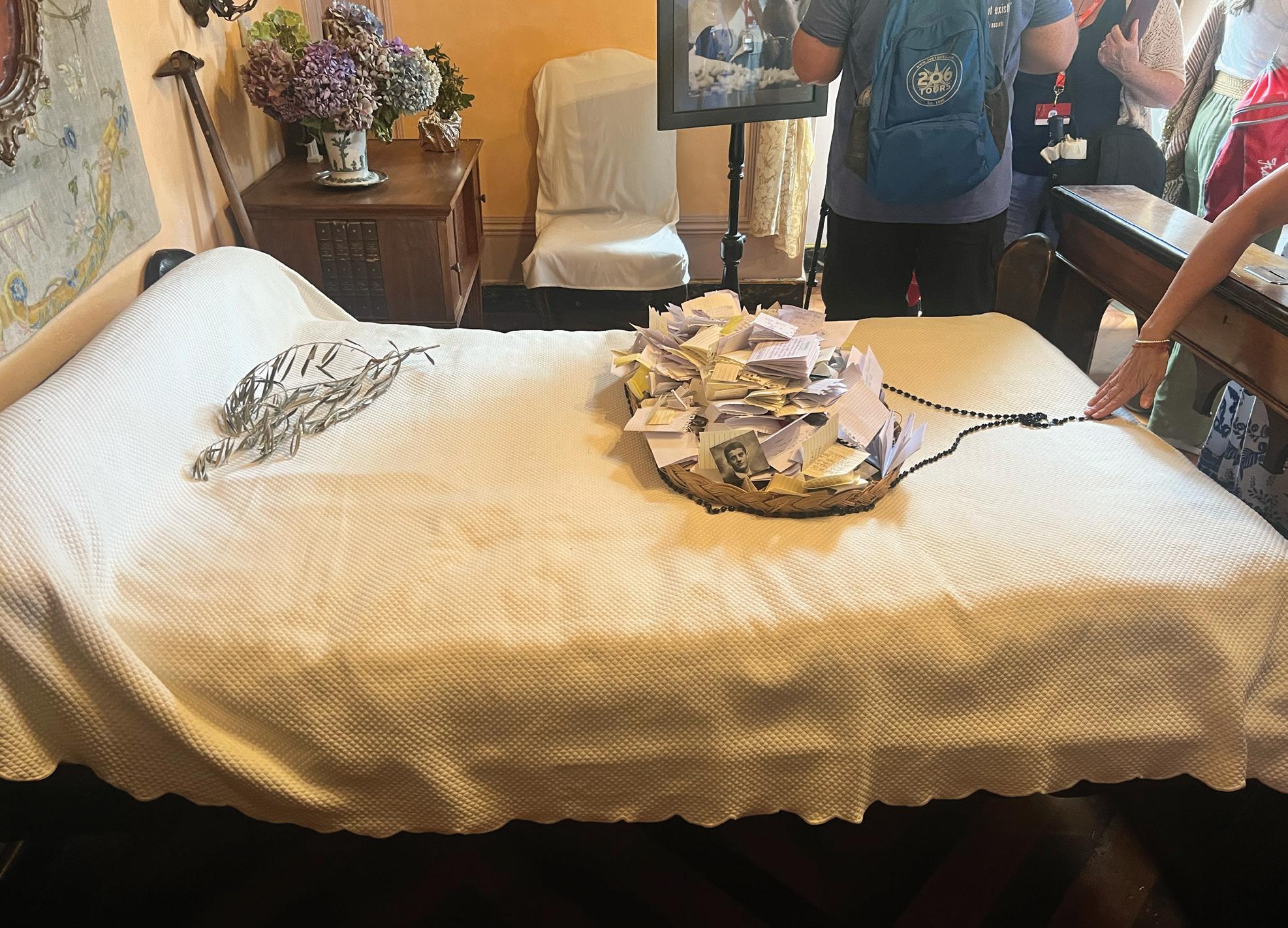
family still owns the house and property and maintains the first floor for guests to come and learn about PierGiorgio’s life. PierGiorgio spent many weeks at this house with his grandparents, playing with his pets, spending time with friends, and enjoying the outdoors. Outside of time in Adoration, I’d wager a guess that PierGiorgio would have said Pollone was his “happy place.” We were shown some of his belongings, including his pipe, which is featured in many portraits of him! The house felt more like a home than a museum. We were shown the bed he died in, and could place our notes and intentions in a basket on the bed. I left my letter in the basket, and I really felt like I was leaving a letter for a friend.
After a few days in the mountains, we were ready to take our pilgrimage to the next level — the Jubilee of Youth!
Just Emily and 999,999 of her closest Catholic friends
Aug. 3, 2025
Hi readers,
This morning, I pulled myself out of bed at 4:50 a.m.
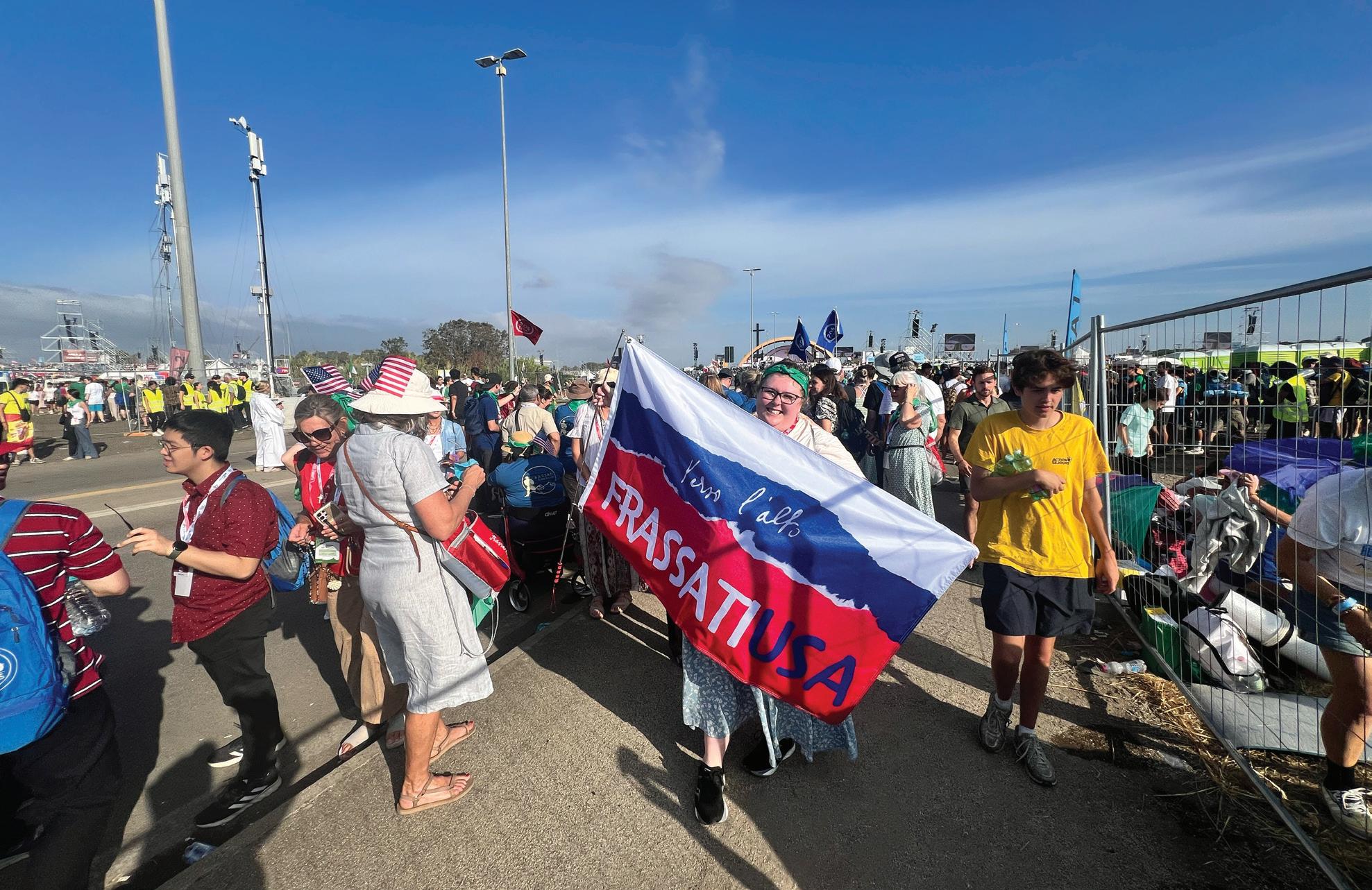
Emily holds the Frassati USA flag at the Jubilee of Youth.
Who could possibly get me out of bed? Pope Leo and the Jubilee of Youth, of course!
We took a short bus ride to Tor Vergata, a university just outside of Rome. In the early morning hours, we walked the two miles to the site of the Jubilee of Youth, where thousands of pilgrims had already spent the night. The morning was pleasantly sunny, with a brilliant blue sky above.
When we arrived at the Jubilee site, music was playing and the vibes were high. As we waited on the sidewalk, we saw a “sundog,” a little piece of rainbow in the clouds, that looked exactly like the Jubilee logo. It felt as if Jesus was smiling from above, happy to see so many young people on fire with love for Him.
We made our way into a corral with pilgrims from Africa, India, and the Philippines. Mass with Pope Leo was an incredible experience. My soul felt not just happy, but legitimately joyful. At the sign of peace, I made it a point to shake hands with pilgrims I didn’t know. I shook hands with a couple from Kenya, whose wide smiles drew me in. After the Mass, our group met a religious Sister from the Order of St. Camillus in India! I was so excited to say that there’s a town called Camillus back home!
We took a very roundabout way to get back to our bus. At times, I felt like a very small fish in a large stream of pilgrims. Although our feet were tired, and we were
dehydrated and hungry, we kept it fun by singing old Vacation Bible School songs and trying to offer up our menial suffering for the souls in Purgatory. However, as we finally approached the bus, I might have cheered louder for the bus driver than I did for Pope Leo!
Rome
Aug. 3, 2025
Hello from our final day in Rome! I’m exhausted from touring the Vatican, the major papal basilicas, and even the ancient catacombs! The basilicas were so ornate, you just don’t know where to look!
Today though, we experienced something a bit more humbling: the Sanctuary of the Holy Stairs.
These 28 steps are the steps that Jesus was brought up to be taken before Pontius Pilate and was sentenced to death on the cross. Pilgrims are only able to ascend the 28 steps on their knees, in silence. It was an incredibly unique, spiritual experience. As I knelt on the first step, I gathered my long skirt, an outfit I do not recommend for this experience. On each step, pilgrims say a prayer. For something so penitential, I did something a little counterintuitive: I began to praise God. My favorite prayer is the Glory Be; it’s so beautiful yet to the point. I started to recite that in my head. Although Jesus would have been in so much pain, his passion is something that is good. Why not praise the Lord for this incredible gift of His Son?
As I was climbing, I glanced at the hem of a fellow pilgrim’s skirt in front of me. I instantly thought of the story in the Gospel of Matthew, of the woman who touched the hem of Jesus’s garment (Matthew 9:20-22). This woman had been bleeding for 12 years and was certain that even if she touched the smallest part of Jesus’ robes, she’d be cured. Jesus was swarmed in the crowd. Imagine how many people were pushing their way toward Him, laying their hands on Him in vain, thinking He could help them, but not having the faith that He would. Still, He felt when she touched the hem of His garment, and asked who it was. The woman identified herself and was healed. Sometimes, the gospels feel so old and out of reach that we wonder why we read them. Then, a moment like this happens, and I’m reminded of how human they are. How often have people failed us, and our only place to put our hope in is Jesus? How often are we grasping at straws or holding
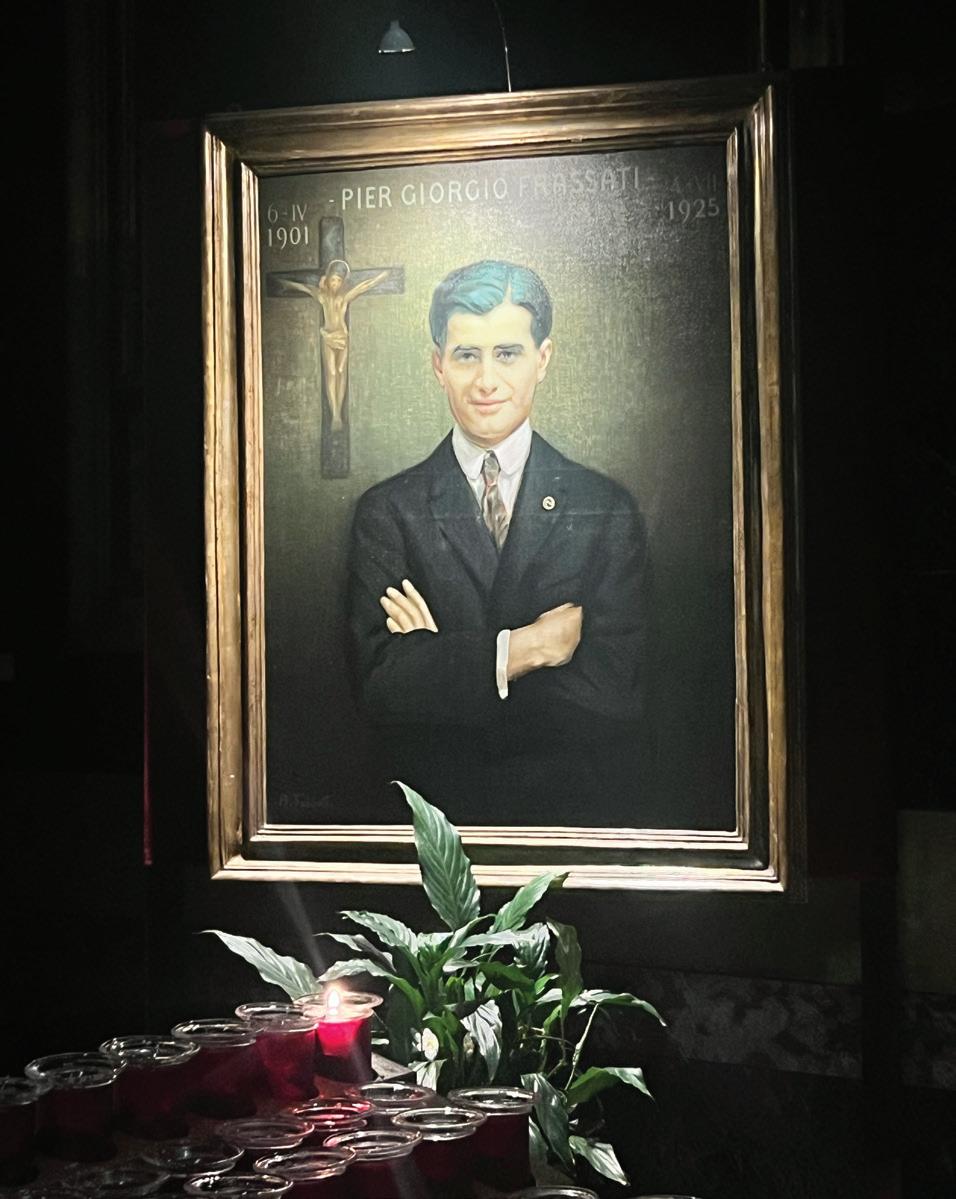
Portrait of Saint PierGiorgio Frassati that hangs in Our Lady of Consolation Church in Turin, Italy. PierGiorgio often came to this church to pray and serve the poor.
onto material items, trying to squeeze some meaning out of something that has nothing to offer us?
PierGiorgio Frassati knew that we should strive to look upward to heaven instead of clinging to this world and putting our faith in institutions or material things. As I head back to the States, I feel renewed on my climb up the mountain, closer and closer to God.
‘To the Heights!’
Sept. 7, 2025
Happy Canonization Day!
Hello from LaFayette! It’s PierGiorgio’s canonization day, and I’m not in Rome. In fact, I’m doing something better! Today, I had 24 friends over for brunch to watch the canonization and celebrate SAINT PierGiorgio Frassati! It’s great to finally be able to say Saint instead of Blessed!
We all crammed into my family’s living room to watch the Mass that had taken place earlier in Rome. I had a minute this morning where I was a bit jealous of the
people who had already been in St. Peter’s for the big moment but I turned my thoughts back to the people who were coming over and focused on not burning the French toast!
One of the final pictures taken of PierGiorgio Frassati has a note on the back, “Verso L’Alto” (“To the Heights!”) PierGiorgio loved his friends and wanted to be a true witness for Christ in this world. He wanted to climb the mountains of life together. Toward the end of his short life, he made a deal with his friends — whoever got to heaven first would help the others climb. Well, PierGiorgio died of polio at just 24 years old. His friends would have to continue the journey on Earth without him, but they gained an even better friend from above.
Although I wasn’t in St. Peter’s Square for the canonization, I was exactly where the Lord wanted me to be, enjoying a celebration with my friends. I’m glad I have them to help me climb on Earth, and PierGiorgio to help me climb truly to the heights.
The bed where Saint PierGiorgio Frassati passed away, now housed in the family home in Pollone. Pilgrims place intentions or messages inside a basket for the saint’s intercession.
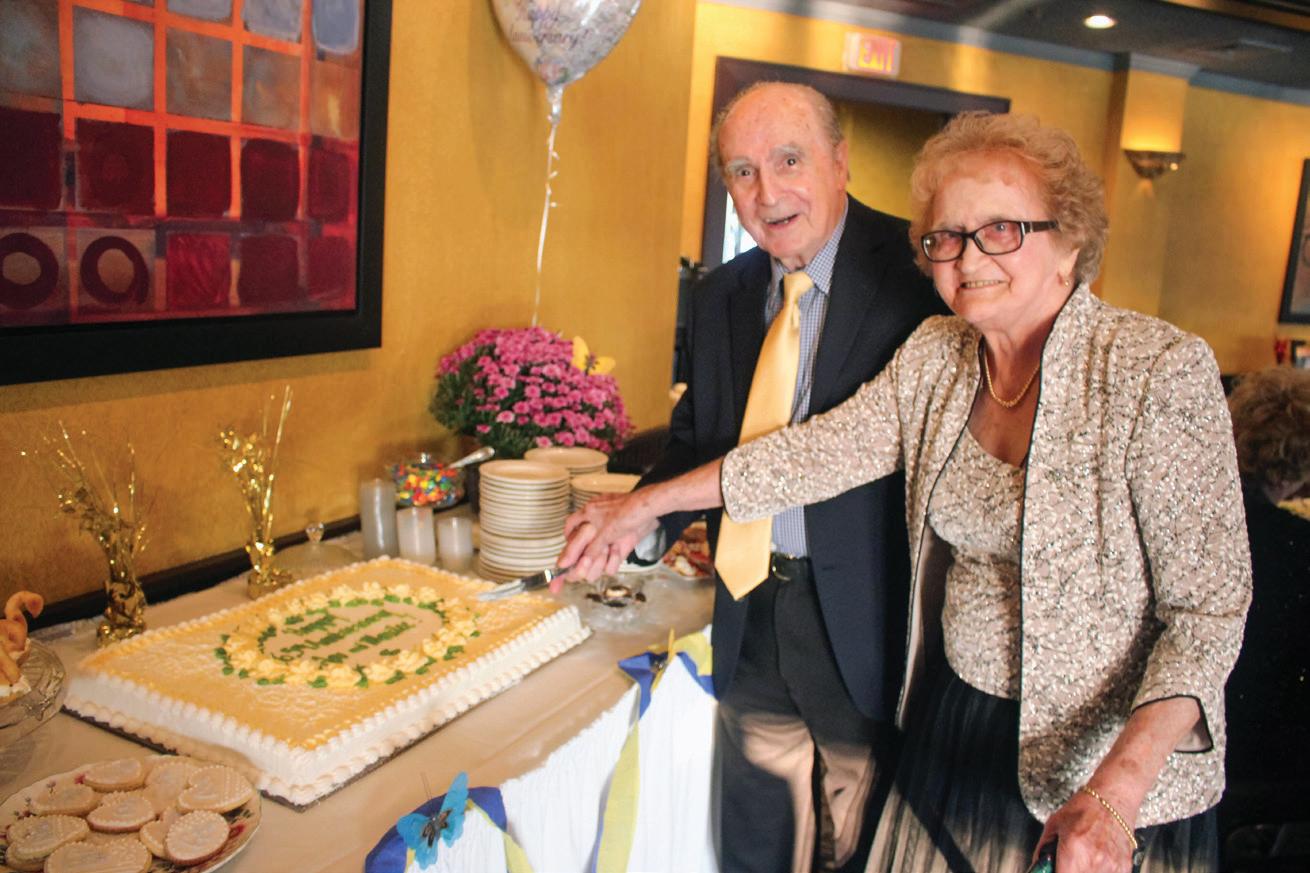
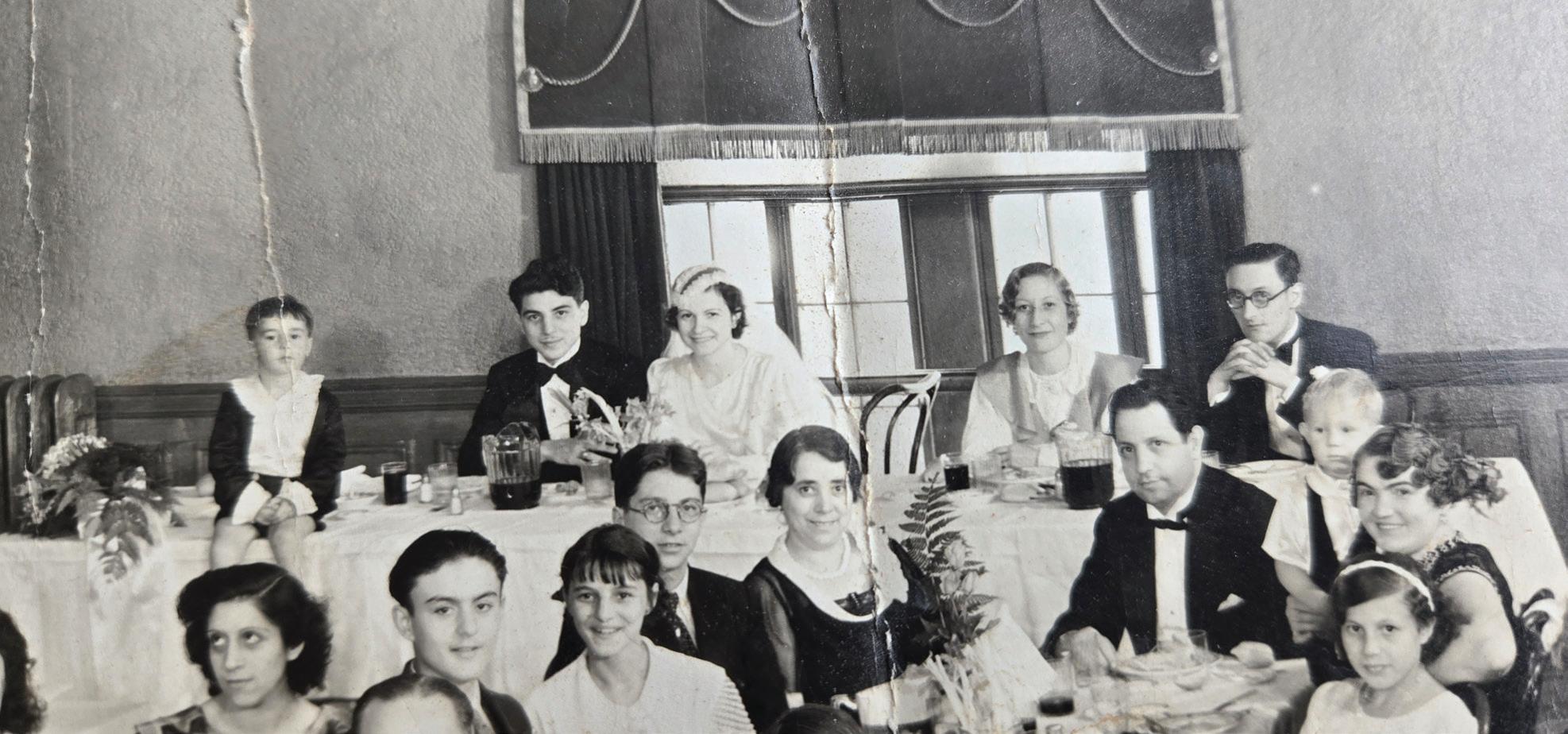
Luciano and Marilee: A love story of faith and gratitude
By Elizabeth Landry
“I like you.”
These were Marilee Iorizzo’s words to her husband of 71 years, Luciano, in early June of 2023. They were resting together in her bedroom at the nursing home where she had lived for almost two years. Her memory had been failing her for some time.
Luciano realized his wife, with whom he had spent the happiest moments of his life, no longer knew who he was. But, in her heart, her care and devotion to him still remained strong.
“Toward the end, I realized that she didn’t know me. But she still treated me the way she always did, with a wonderful smile, and [she was] always glad to see me,” Luciano remembered. “I said [back to her], ‘Well, I like you, too. I love you,’ and then she said to me, ‘I want to marry you.’ And that really hit me. She likes me and wants to marry me. And so I said, ‘We’re married. You want to get married again? Well, we’ll do it.’”
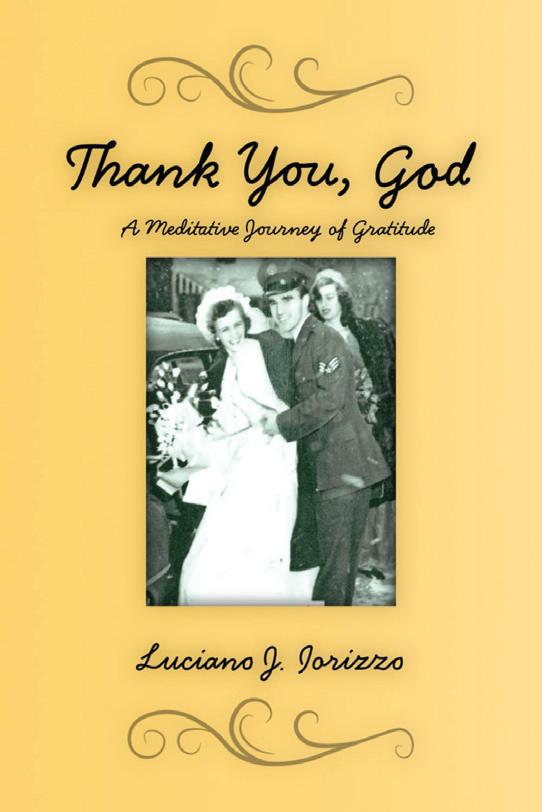
Marilee died unexpectedly, yet peacefully, a few days later, on June 7. In his book, “Thank You, God: A Meditative Journey of Gratitude,” published earlier this year, Luciano wrote, “Thus ended our wonderful life journey together.”
The book is formatted as an interactive gratitude journal and is a follow-up to the autobiography he published two years before, titled “You Are Lucky, Luciano: The Story of Luciano J. Iorizzo.” Each left-side page features information and remembrances from Luciano’s life, essentially autobiographical snapshots, along with a question posed to the reader, asking him or her to reflect on life events and find the hand
of God in ways they may not have understood at the time. Each right-side page offers space for the reader to write down their reflections in his or her own words. Interspersed are photos from Luciano’s life, as well as quotes from Scripture.
An unconventional upbringing
In his life, Luciano has experienced many twists and turns, many ups and downs. In his own words, his life “had an unusual beginning.” Born in Brooklyn in 1930, his mother and father were unwed when he was conceived — a disgrace in the Italian American community at the time. His book focuses on gratitude, and on page 4, Luciano’s first exclamation of gratitude is to his mother for giving him life, despite such severe circumstances.
“My mother did not abort me. She gave me life!” he writes.
Luciano’s mother died shortly after his birth. His grandmother and then various aunts and uncles, feeling that his father was unable to raise him properly, took over care of him. Consequently, Luciano had many mother and father figures in his life who shaped his views and desires. In our interview, he shared that he had made the decision early on to never marry if he joined the military, because he saw how hard it could be for wives who had military husbands.
“I always said to myself, ‘If I get in the military, I’m not going to get married,’ because I saw [how] in World War II, my cousins who got married, they had to go away in the military. In such a case, the wife had to stay with the husband’s [family]. I was in a house where there were two married women staying with their in-laws, and we had dinner together, and it was pretty rough.”
He recalled one summer when he was 15, he had taken a job working on a farm in the Catskills. Luciano had written to his uncle, letting him know he was staying there. Next thing he knew, his uncle made a surprise visit to check in on him.
“He showed up and he wanted to see how I was doing, make sure that I was okay and didn’t do anything bad, you know. And he said, ‘I gotta go, I have to go visit Hannah.’ Hannah was one of my cousin’s wives who took a vacation in the Catskills, and here her father-in-law went up to visit her, to see, you know, what it was all about. So, the women felt like they were under investigation all the time.”
Meeting and marrying the love of his life
In 1951, after high school, Luciano was drafted into the Korean War. In an interesting twist of events and determinations, it was his basic training at Scott Field, Illinois, that led to his chance meeting with Marilee, which would
forever change his life. Luciano was staying in nearby St. Louis, where the downtown Protestant Cathedral Church offered various activities, including dancing. In “Thank you, God,” he writes, “At the dances, I met Martha Marilee Bridges, who instantly captivated me. She was beautiful, with a charming smile and an inviting Southern drawl.”
It seems they couldn’t have been more different from each other — he, a Catholic from Brooklyn, entrenched in Italian American culture, and she, a Baptist/Methodist from St. Louis, raised in a midwestern farming family — but against the odds and after several dates and trips back and forth between New York City and St. Louis, they were married in December 1952.
Based on Luciano’s writings, one of the things that stands out about their relationship is that they were willing to adapt for each other, to become one. Marilee had taken instructions to become Catholic, making her First Communion during their wedding Mass. Luciano disregarded his earlier decision not to marry if he joined the military, and, in a memorable story he shared both in his book and in our interview, even took on a different nickname following their first meeting, upon Marilee’s subtle request.
“Today, I go by Lou or Luciano ... When I met my wife at the church dance, she said to me, ‘What’s your name?’ and I said, Gene. That was the nickname, in Italian, in Naples, they pronounce it Lou-gian, so that became ‘Gene’ in the United States. She said to me, ‘Do you have another name?’ I said, ‘Yes, Luciano,’” he recalled, laughing, and added that she didn’t seem to like that name either, so he worried she wouldn’t want to pursue him.
“Before I could give up on her, she said in the sweetest
Luciano and Marilee cutting the cake at their 65th wedding anniversary party in 2017.
PHOTO COURTESY OF VANESSA MILBYER
YOUR FAITH SHARE
Four-year-old Luciano (top left) sitting on the wedding table of his Aunt Grace and her husband, Angelo Consoli. The couple would often take Luciano out with them during their courtship.
voice, ‘Do you mind if I call you Lou?’ and I never used [the name] Gene anymore. She had a way of helping me [like this] during her entire life. She never ordered me to do this, never wanted me to do that — she always made it a nice question, like, ‘Don’t you think we should do this?’” he laughed.
Life as newlyweds was often difficult, and Marilee became pregnant with their first child (they would go on to have five in total) just before Luciano was deployed to Italy. Upon his return home, Luciano eventually went to college, earned his Ph.D. from Syracuse University, and became a history professor at the State University of New York at Oswego in 1962, where he taught for 30 years. During his career, Luciano balanced work and family life, writing and publishing several books on Italian American history, and becoming involved in local politics and public affairs.
All gratitude given to God
For her part, Marilee was also very involved in the local community. Her obituary, which can be found in Appendix 2 of “Thank You, God,” describes a selfless and devoted woman who served as the director of the American Red Cross in Oswego for many years, worked with Catholic Charities to help care for young women with infants (whom she often took into her home), was active in politics, and was also a dedicated member of the Oswego County Historical Society.
By all accounts, including his own, Luciano was completely dedicated to Marilee during their lifetime together. Maria Franzetti, one of Luciano’s younger
cousins, who helped him with the writing and publishing process of his recent books, recalled how his love for her only continued to grow in the years before her death.
“He was very, very devoted to her. ... He just became more and more attached to her,” she said.
The time after she passed was a time of grieving and pain for Luciano, and in the afterword of “Thank You, God,” he writes, “I miss my wife terribly.” His faith in God, however, brings a strength that, despite his longing for Marilee, allows him to see past his grief with an inspiring focus on gratitude.
Frank Consoli, another of Luciano’s cousins with whom he remains close, explained how faith has always been foundational in Luciano’s life.
“I think God is the center of his life, really. He was
With great-grandchildren Daniel and Lydia at the annual Iorizzo Family Golf Tournament
PHOTO COURTESY OF MARIA FRANZETTI AND
PHOTO COURTESY OF VANESSA
MILBYER
an altar boy. Religion was always there,” Frank said. “It was the traditional Catholic way of living. With his aunts — my mother — and his other aunts who raised him, there were no excuses — you went to Mass. You did your duty. He had a Catholic high school education, which grounded him, I think, forever, into his faith. And when he went up to Oswego, he was always involved with the Church.” Today, Luciano attends Christ the Good Shepherd Catholic community of Oswego.
“I think God is the center of his life, really. He was an altar boy. Religion was always there. It wasn’t like he found it later in life. It was the traditional Catholic way of living. With his aunts — my mother — and his other aunts who raised him, there were no excuses — you went to Mass. You did your duty. He had a Catholic high school education, which grounded him, I think, forever, into his faith.”
—FRANK CONSOLI
In the last section of “Thank You, God,” he reflects on his gratitude to God for his mobility, sight, hearing, speech, ability to eat by himself, his cognitive skills, and his awareness, which he said all took on new meaning for him as he saw others in the nursing home struggling to do daily tasks.
“One day he said to me, ‘You know, I’ve come to believe that I was really very blessed,’ just as he says in the book,” Maria shared. “It was so beautiful to see this 90-something-year-old thinking about how grateful he should be after his wife died. And I think this whole idea of gratitude has become more prominent in his life because of the experience of her in the nursing home. The book became, for him, catharsis — this is how he grieved. This [book] became his tribute for his dear wife, put in a context not of loss, but of gratitude, for all the years they had together and all the oversight that God had done in their lives.”
“Thank You, God” is many things: a life story, a love story, a faith story — and not just told by Luciano, but told by the reader, too — and ultimately, by God.
“What a gift he’s given, to put [his book] in such a format where readers can reflect on their own lives, too,” Maria said. “And his hope is exactly that. ‘Don’t look at my story, look at your own story.’ Where is God day in and day out, taking care of you? That’s what we have to do.”
For Luciano, if more people can come to understand the hand of God in their lives and the gifts we’ve been
given each day, then his writings will have found their purpose.
“I want to let people know that we can share our faith in the things we do daily. Simple things we too often take for granted. We need to be thankful to God for being alive, eating, sleeping, talking, walking, helping others, and getting help from others,” he said. “If I can reach others and move them to understand that and act accordingly, I would consider that my effort is worthwhile.”
With daughter Dolores at granddaughter Vanessa’s wedding.
PHOTO COURTESY OF VANESSA MILBYER
Share Your Faith
A greater purpose
Cancer patient establishes a foundation to
help others
By Eileen Jevis
When women are diagnosed with breast cancer, many experience the stages of grief — denial, anger, bargaining, depression, and acceptance. Fear and anxiety, concerns about work and finances, and the well-being of children and family, are uppermost in their minds. After the initial shock wears off, women find the strength it will take to fight the fight.
Debra MacDougal, a 67-year-old from West Monroe, is one such woman. Debra had a mastectomy in August 2023. Now, in 2025, she acknowledges the significance of the two-year survival anniversary. When she was diagnosed with the disease, Debra met with the entire multidisciplinary team in the Breast Cancer Program at Upstate Medical Center, who collaborated to provide her with personalized and coordinated care. “It is there that I was told about the Saint Agatha Foundation,” said MacDougal. “I believe the Creator surrounded me with caring and intelligent people in the medical field, at the Saint Agatha Foundation, and the Susan G. Komen Breast Cancer Foundation.
“The Saint Agatha Foundation helped me pay my bills and provided transportation to and from doctors’ visits. Emotionally, the counselors, who are breast cancer survivors themselves, helped me as well. They also offer self-care programs like meditation, massages, etc.,” explained Debra. The care and support Debra receives is due to the Saint Agatha Foundation and its compassionate and empathetic founder, Laurie Mezzalingua.
About Laurie
In 1997, at age 29, Laurie was diagnosed with breast cancer. As she battled the disease, she became a passionate and vocal advocate for patient support. Her leadership skills drew the attention of the Komen Foundation, which elected Laurie as president — a position she held for two years. She also served as a board member and twice led the Race for the Cure event. In 2005, Laurie was honored with the Foundation’s Outstanding Volunteer Award. Those who knew Laurie witnessed her love of music and life. She was a pianist and a gifted video editor who created moving tributes of the lives of her family and friends.
Her most precious moments were time spent with her family, especially her nieces and nephews. “She loved the authenticity and kindness of children and connected with them on all levels,” said her mother, Kathy Mezzalingua. That enthusiasm led her parents to donate funds to construct a building for the pre-K and kindergarten programs at Manlius Pebble Hill. The building is named the Laurie Mezzalingua Early Education Center.
Kathy said that Laurie had a gift for expressing herself in her speeches and her writing with grace, feeling, and clarity. She was named 2005 Citizen of the Year by Temple Adath Yeshurun and was the 2006 commencement speaker at her high school alma mater. “On both occasions, she spoke movingly about the ability to see the remarkable in her cancer diagnosis,” said Kathy. Laurie once said in a speech, “There is more beauty, triumph and truth in an infusion room than you will ever see on a stage, in a stadium, or in song.”
Her faith got her through
“When Laurie became sick, she turned to God for support and when she realized a cure was not meant to be, she offered up her suffering with love to Mary and
Debra MacDougal was diagnosed with breast cancer in 2023.
PHOTO COURTESY OF DEBRA MACDOUGAL
God,” said Kathy. “We prayed together every day. We realized through our faith that as much as we prayed for a cure, for her to be healthy again, it was really God’s will. There was a greater purpose out there — for her to be chosen by God from so many other women.”
Through her years of illness and suffering, Laurie’s faith never wavered. Then-pastor of Holy Cross Msgr. J. Robert Yeazel said that Laurie was as loved as she was loving. “Everything she did was from the heart,” he said. “I would visit her to provide support in her final days, and she would ask, ‘What can I do for you?’ Her sense of humor and compassion resulted in instant connections with people she knew and those she just met.”
Compassion drives the creation of Saint Agatha Foundation
Kathy said that during Laurie’s hospital stays, she made friends with everyone on the unit. While visiting with other patients, she wondered why they didn’t have many visitors. She learned that some families couldn’t afford parking fees to visit loved ones every day. They couldn’t afford gas to travel to Syracuse. “After reading the story of St. Agatha, Laurie felt a strong connection to the woman who suffered so much,” Kathy said. “Before she died, Laurie came to me and said, ‘Mom, I want to start a foundation to help these people. You’ve got to help them.’ So, that’s how it all began.”
St. Agatha, the patron saint of breast cancer, dedicated
“Laurie’s
devotion to God and her enduring faith brought her peace. Her daily prayers began with an expression of gratitude for all her blessings and her acceptance of the disease. She was comforted in the knowledge that she would be welcomed by her family and friends who went before her.”
—KATHY MEZZALINGUA
her life to God at an early age. Born in Sicily, Agatha was a great beauty who attracted many suitors. She refused many marriage proposals in order to commit her life to her faith. The magistrate Quintianus believed himself to be of high enough rank to be worthy of her affection, but Agatha refused him also. After rejecting Quintianus’ advances, she was beaten, imprisoned, tortured, and her breasts were crushed and cut off. She had a vision of St. Peter who then healed her wounds. Imprisoned further, then rolled on live coals, she was near death when an earthquake struck. She thanked God for an end to her pain and died.
The Saint Agatha Foundation provides financial support to breast cancer patients in eight counties throughout Central New York. Since 2011, the foundation has helped alleviate the suffering, pain, and financial burden of over 13,000 breast cancer patients by providing grants in excess of $13.5 million to local hospitals and partner organizations.
MacDougal is still undergoing treatments. She said her journey with breast cancer is all about attitude. “The journey is what you make it. Accept it and surrender to it for you are loved and cared for. Don’t let cancer define you.”
MacDougal encourages every person diagnosed with breast cancer to cherish their bodies, eat healthy, and work out as often as possible. “I meditate and pray every day. It clears my mind and keeps me in the moment and stops my mind from racing,” she said. “The Creator has
Laurie Mezzalingua was “an elegant and independent woman who charted her own course in life,” her mother said.
given us a challenge and we have to face the challenge with strength, courage, love, joy, determination, and faith. Not just faith in ourselves but faith in our Creator. The Saint Agatha Foundation is there for any individual who needs assistance to help them get back on their feet. They are a Godsend.”
Laurie’s Legacy
“Laurie’s devotion to God and her enduring faith brought her peace,” Kathy said. “Her daily prayers began with an expression of gratitude for all her blessings and her acceptance of the disease. She was comforted in the knowledge that she would be welcomed by her family and friends who went before her.”
Kathy said that Laurie’s departure on the Fourth of July 2009 was symbolic. “She was an elegant and independent woman who charted her own course in life. She died in a state of grace and at peace, knowing that this is what God wanted for her. I know that if she had not passed at age 41, we would not have had the amount of success and the amount of impact we’ve experienced.
“I’ve accepted her death because I knew it was for the greater good. We had her for 41 years, and we were blessed,” Kathy said. “She packed a lot of life into those 41 years. Her illness and death have strengthened my faith because it brought us both so much closer to God. She had a beautiful life.”
Kathy Mezzalingua continues the legacy her daughter began. She serves as the president and board chair of the Saint Agatha Foundation. She encourages people battling this disease to visit SaintAgathaFoundation.org, or call 888-878-7900. “The website will guide them step by step,” Kathy said. “If they’re uninsured or underinsured, we will take care of them. And it isn’t only their hospital or their medical bills. We will support them while they’re going through treatments with gas money, utilities, mortgage, Wegmans cards, and other needs,” she said. “This was Laurie’s dream. She wanted other women fighting breast cancer to be free of financial worry so they could just focus on healing.”
October is Breast Cancer Awareness Month
According to the American Cancer Society, breast cancer is the most common cancer in women in the United States and accounts for about 30% (or 1 in 3) of all new female cancers each year. The American Cancer Society estimates that in 2025 about 316,950 new cases of invasive breast cancer will be diagnosed in women; 59,080 new cases of ductal carcinoma in situ (DCIS) will be diagnosed, and about 42,170 women will die from breast cancer.
Kathy Mezzalingua hosts a fundraising event to raise awareness and funds for breast cancer patients.
“While I was in treatment, it was a tremendous comfort to receive support from Saint Agatha Foundation.”
The costs of fighting a breast cancer diagnosis mount quickly. Fortunately, breast cancer patients in our region with financial need may qualify for support from Saint Agatha Foundation, made available through medical and non-medical service providers.
If you have been diagnosed with breast cancer, visit our website to see if you qualify for financial support and how to apply: saintagathafoundation.org
SHORTEST
Photos were contributed by a number of Malta pilgrims, including the author.
Lourdes: A pilgrimage of healing and hope
BY DEACON TOM CUSKEY
As you read this, I hope you enjoyed a beautiful October, the “other” month of Mary, our Blessed Mother. Officially, October is designated as the Month of the Holy Rosary, a time when prayer — one beautiful bead at a time — through the Mother of God is especially encouraged. And if ever there were times when Marian prayers for peace and harmony are needed, it is now.
The true month of Mary, of course, is May. Devotions like May Crowning and Rosary are part of our tradition honoring the Blessed Mother as the Queen of Heaven and Earth.
There is another annual May tradition you may not be aware of. It has some local ties but is international in scope. Its epicenter is a small town in the southeastern corner of France that you and every person who calls Mary their Mother are no doubt very aware of.
Malta welcomes you to Lourdes
Malta, referenced above, is the Sovereign Military Order of Malta. For one week each May, Knights and Dames from around the world make a pilgrimage to Lourdes, France, not for themselves but for those they have pledged to serve. It’s a 970-yearold tradition. Their familiar uniforms, adorned with the eight-point Maltese Cross, are worn by members, candidates, and other volunteers on the trip. I had the humble privilege of being invited along as a volunteer this year. The Malta representatives seem to be everywhere as nearly 7,000 Knights, Dames, volunteers, and Malades converge on the small town that was home to Bernadette Soubirous. Her story of faith began in 1848; Malta’s history goes back much further.
In brief, the Order’s roots trace back to the mid-11th century and the Order of Saint John of Jerusalem. The monastic community’s founder, Blessed Gerard, led the order’s knights — who took vows of poverty, chastity, and obedience — in operating a hospital serving pilgrims to the Holy Land. The Order would soon be charged by the Kingdom of Jerusalem with military defense of pilgrims and the sick, and would ultimately be sworn to defense of the faith as the Crusades came to pass.
Known as The Order of Malta in 1530, the name changed, but the mission remained intact. Through the centuries since, the Sovereign Military Order of Malta has become noted worldwide for its charitable work with special emphasis on caring for the sick, called Malades. Their Knights and Dames are active in 130 countries around the world, many represented this year. That includes the Syracuse region, part of the Federal Association.
The Order’s worldwide annual pilgrimage to Lourdes began in 1958, 100 years after Bernadette met a beautiful lady in the grotto. The lady was adorned in a white dress with a blue sash and gold roses at her feet. That was February 11, the first of 18 apparitions ending in mid-July of that year. Only Bernadette could see and hear the lady. When the teenager shared with her priest that the lady said her name was ‘the Immaculate Conception,” a concept Bernadette did not understand, he knew that there was something extraordinary at hand. Bernadette, who would later enter the convent and ultimately died in 1879, proved to be the gateway to Lourdes’ transformation into a busy avenue of ongoing devotion to Mary.
As a first-time volunteer, Deacon Tom (center) is welcomed by the Federal Association of Malta pilgrimage leadership team.
This is not a vacation!
As a candidate in my deacon formation days, I first met Doreen Simmons, a local attorney and guest instructor for segments of the Pastoral Foundations class. Some years later, she recruited me as a Rosary leader and musical entertainer at Malta House, a Christopher Community senior living facility in North Syracuse supported by the Syracuse group. And it was she, a Dame of Malta, who conveyed an invitation from the Syracuse region Order to be part of the 2025 team. Of course, I said “yes!”
One of the first things I learned in preparation is that accepting the invitation was actually an agreement to serve and minister to the Malades from our region making the trip. The application to be accepted as a volunteer was pretty simple. It consisted of personal info and two basic questions that went something like this:
Are you able to pull a carriage carrying a 200-pound person up a small hill?
Are you able to push a carriage carrying a 200pound person up a small hill?
I am a 70-ish (chubby) male and open heart surgery veteran who really wanted to be accepted for this journey. So I said a couple of Hail Marys, checked the “no” boxes next to the questions, and put it in God’s hands.
A few weeks later, I received my acceptance letter (Hail Marys work in so many situations).
I would be a member of a four-person crew: a pusher, a puller, an escort, and a floater. Each day, we would help transport and serve a Malade as they made their journey of prayer for healing in this incredible place.
What a team effort!
I was assigned as a member of the White Team, one of 32 team leaders, medical professionals, chaplains, pushers, pullers, escorts, and floaters. We were responsible to serve six Malades and their companions over the eight-day pilgrimage.
This beautiful statue adorns the space in the Grotto where the Blessed Mother appeared to Bernadette.
The blessing received by those visiting the Grotto baths is a point of great joy as evidenced by this family. The sick often include children whose parents and siblings seek a miracle of healing and peace.
Malades — those seeking healing from illness — are served by a companion, usually a family member or close friend. Malta volunteers are everywhere; they include nurses clad in traditional cape and cap.
The way assignments are managed is ingenious. Each day, the team members rotated and the assigned Malade and companion changed, so that, by the end of the visit, a person would have served each of the Malades at least once and with almost every other volunteer on their team. It was an opportunity to meet people of faith from all around the U.S. and to hear the personal stories of each of the Malades assigned to the team. It was one of the most fascinating, inspiring, and humbling experiences of my life.
We started serving a Malade from the time we arrived in Baltimore for our chartered flight to France to the time when we landed back there and made sure that each Malade was safely on their way to their final destination.
It never seemed like work.
We served aging people suffering from various challenges, afflicted young children and their families, and many others in between.
We attended Mass in the various, beautiful basilicas and churches on the Sanctuary grounds, ate meals together, and visited the various sites in the compound and neighboring town.
While every experience carried great opportunity for faith and grace, there are events that deserve special mention (in the order we experienced them):
Visit to the Baths — The baths are facilities where tubs can be filled with the flowing waters of the Grotto for immersion of the Malades. Since the advent of COVID-19, though, full immersion does not take place. Instead, each Malade and their companion are served by a Baths volunteer in a ritual washing. As a first-time volunteer, I was also allowed to enter the Baths. In groups of three, we participated in the form that the Blessed Mother instructed Bernadette to follow during the ninth apparition. Mary’s instructions were to “wash
your head, your hands, and drink.” We were then ushered out of the baths to an area where clergy from the larger Federal group were available to pray over us individually and confer a special blessing.
Marian Candlelight procession — Each night from April through October, hundreds, sometimes thousands, of pilgrims process around the perimeter path of the sanctuary. Each person carries a candle in a magnificent display, like a river of light, illuminating the way for a statue of the Blessed Mother that is carried on a platform throughout the procession.
Mass in the Grotto — The teams escort their Malades and companions to the Grotto where Mass is held just feet away from the site where Our Blessed Mother appeared to Bernadette.
International Mass in the underground Basilica — Imagine an intimate Mass in a small chapel. Now transfer that same feeling to a space where up to 25,000 people gather in the huge underground St. Pius X Basilica. It was constructed and consecrated in 1958, marking the 100th Anniversary of the Marian Apparitions. Enjoy the photos, courtesy of the Federal Association team. Information and applications for those interested are available at orderofmaltafederal.org.
As the sun sets, a huge crowd assembles to participate in the Marian Candlelight Procession, walking the sanctuary perimeter.
‘A great honor and ... significant responsibility’
The above headline is a direct quote from the Order of Malta Membership webpage. There, anyone interested can find information about membership and programs like the Lourdes Pilgrimage.
Tom Valenti is the Hospitaller of the Syracuse Region. He is serving a three-year term in the role, moderating the activities of the local region within Malta’s Federal Association. He personally has made three trips to the shrine at Lourdes, including the annual pilgrimage, which took place April 30 through May 7 of this year.
“They’re different and the same,” Valenti said, comparing his experiences over the three trips he’s made. “They’re different in that the people that you meet, and the circumstances of their lives are different, but the movement of the Holy Spirit at that pilgrimage is the same. He’s moving all of us, not only those who are Malades, or the sick, but those of us who go as volunteers.”
What’s more, the movement of the Spirit has played a specific role following each of Valenti’s visits to Lourdes.
“Each time I have gone, it became evident to me, after I got back, that I was being prepared for a significant event that was about to happen in my life,” he shared. “And I’m very grateful for each of those strengthenings, the enlightening preparation.”
Obviously, the patronage of the Blessed Mother permeates every moment spent in Lourdes.
“She touches us as a Mother,” Valenti said, adding that Mary’s love for us goes much deeper than what we normally think of as motherly love. “[Mary's love is about] how we need to care for and support our brothers and sisters, especially the sick.”
Valenti estimates that the Syracuse region has sponsored between 60 and 70 Malades on the annual visits through the years. Applications for the opportunity to travel there are available in September and October.
“It’s a pretty extensive application,” he said. “You need to have the support of your doctor or doctors who have to fill out information about your condition. It’s all very private.”
We asked Valenti about his personal Malta journey leading to his investiture in 2011.
“I didn’t think I was right for the Order of Malta. I didn’t think that I fit the profile. I thought that maybe this was out of my lane. My friends who were in the Order kept encouraging me, and I’m glad that they did. When I went to the Mass for my investiture, I got there early. I was sitting in the pew, and I clearly heard, ‘I called you here.’”
For more information visit orderofmaltafederal.org or email info@orderofmalta-federal.org.
A large number of bishops and priests concelebrated Mass in the St. Pius X Basilica, an underground church that can accommodate 25,000 worshipers. The priest pictured was one of a group that fanned out, blessing all the faithful with Holy Water via a freshly trimmed branch.
Priests with pets
Father Bob Yeazel, below, who retired in 2017, poses with his 6-year-old pup, Sophie. Sophie is a Cavalier King Charles. “She is a great companion,” he said.
Father John Manno with his 8-year-old Boston Terrier, Samson, right and far right. “He is my second Boston Terrier and my second dog since becoming a priest in 2001,” said the pastor of Holy Family Syracuse and St. Marianne Cope Parish in Solvay, and Our Lady of Peace in Lakeland. “He loves to play catch, go for a ride in the car, go for walks, play with his toys, and, most importantly, hang out with me. In the dog days of summer, he loves to go for ice cream. He is a great companion and always shows unconditional love!”
Father James Serowik, above, takes a break from his busy schedule to smile with his fur buddy, Vianney. Father Serowik is the pastor of St. Vincent de Paul Blessed Sacrament, Vestal, and Sts. John and Andrew, Binghamton. He is also the canonical pastor at St. Agnes Mission, Afton, St. John the Evangelist, Bainbridge; St. Joseph, Deposit; St. Joseph, Sanitaria Springs; Immaculate Conception, Greene; and St. Mary, Kirkwood.