with Kentucky Explorer
THE 2026 LITERARY ISSUE

with Kentucky Explorer
THE 2026 LITERARY ISSUE
joins Debbie Dadey, Marcia Thornton Jones, Jeff Worley, Lowell Harrison and Fred Smock as the 2026 Kentucky Writers Hall of Fame Inductees

Youth Poet Laureate Program
Black Artisans in Kentucky
Penned Literary Contest Winners College Traditions
Back-to-back

2023-2024 & 2024-2025

85.5%
First-to-second year retention rate
Textbooks and course materials for all students
Nearly 1 in 4 of first-year students receive the UPIKE PLEDGE
A full-coverage scholarship for Kentucky residents who display full eligibility for Pell, CAP and KTG grants
Writers
Inductee


39 Thinking Bigger A Mount Sterling arts organization helped launch Kentucky’s Youth Poet Laureate Program and gave young writers a public voice
43 Rising to the Call Louisville’s Speed Museum honors Kentucky’s Black artisans who contributed to the cause of liberty in the 19th century

The Kentucky Historical Society and the Louisville-based National Society Sons of the American Revolution are two of the many groups (including the Daughters of the American Revolution and First Families of Kentucky) organizing special events this year to honor the 250th anniversary of the Declaration of Independence on July 4. Look for many references to these events in Kentucky Monthly this year.
1. During the Cherokee War of 1776, “The Savage Napoleon” led the indigenous people in raids, ambushes and skirmishes against the 500 settlers who called “Kentucke” home. His Cherokee name was Tsiyu Gansini, but he was called what in English?
A. Fallen Timber
B. Dragging Canoe
C. Howling Coyote
2. Richard Henderson, the namesake of both the present Kentucky city and county, attempted in 1775 to colonize Kentucky as the 14th colony under which other name?
A. Transylvania
B. Franklin
C. West Carolina
3. Col. Johannes “John” Bowman, along with his three brothers, were called the “Four Centaurs of Cedar Creek.” They presided over the first what in Kentucky?
A. Horse race
B. Beauty contest
C. County court
4. John Todd (1750-1782), the grandfather of Mary Todd Lincoln, co-founded which Kentucky city?
A. Elkton
B. Lexington
C. Leestown
5. Benjamin Logan, who died in Shelby County, founded Logan’s Station—also known as St.
For answers, see page 4.
Asaph’s—just northwest of which present-day Kentucky city?
A. Harrodsburg
B. Danville
C. Stanford
6. In 1774, James Harrod and 37 men led an expedition into present-day Mercer County under orders from Lord Dunmore, the royal governor of which colony?
A. Maryland
B. Virginia
C. Pennsylvania
7. In 1739, Frenchman Charles III Le Moyne is credited with discovering which Kentucky landmark?
A. The Falls of the Ohio
B. Mammoth Cave
C. Big Bone Lick
8. On July 14, 1776, two Cherokee and three Shawnee warriors captured the daughters of which noted pioneers?
A. Daniel Boone and Simon Kenton
B. Simon Kenton and Richard Callaway
C. Richard Callaway and Daniel Boone
9. Ownership of the land we call Kentucky has been held by numerous groups and nations, including New France until 1763 and France’s loss of which war?
A. Lord Dunmore’s War
B. Queen Anne’s War
C. French and Indian War
©2026, VESTED INTEREST
PUBLICATIONS VOLUME TWENTYNINE, ISSUE 1, FEBRUARY 2026
Stephen M. Vest Publisher + Editor-in-Chief
EDITORIAL
Patricia Ranft Associate Editor
Rebecca Redding Creative Director
Deborah Kohl Kremer Assistant Editor
Ted Sloan Contributing Editor Cait A. Smith Copy Editor
SENIOR KENTRIBUTORS
Jackie Hollenkamp Bentley, Jack Brammer, Bill Ellis, Steve Flairty, Gary Garth, Kim Kobersmith, Brigitte Prather, Walt Reichert, Tracey Teo, Janine Washle and Gary P. West
BUSINESS + CIRCULATION
Barbara Kay Vest Business Manager
ADVERTISING
Lindsey Collins Senior Account Executive + Coordinator
Account Executives: Kelley Burchell Laura Ray • Teresa Revlett
Kentucky Monthly (ISSN 1542-0507) is published 10 times per year (monthly with combined December/January and June/July issues) for $25 per year by Vested Interest Publications, Inc., 102 Consumer Lane, Frankfort, KY 40601. Periodicals Postage Paid at Frankfort, KY and at additional mailing offices.
POSTMASTER: Send address changes to Kentucky Monthly, P.O. Box 559, Frankfort, KY 40602-0559.
Vested Interest Publications: Stephen M. Vest, president; Patricia Ranft, vice president; Barbara Kay Vest, secretary/ treasurer. Board of directors: James W. Adams Jr., Dr. Gene Burch, Gregory N. Carnes, Barbara and Pete Chiericozzi, Kellee Dicks, Maj. Jack E. Dixon, Mary and Michael Embry, Judy M. Harris, Jan and John Higginbotham, Frank Martin, Bill Noel, Walter B. Norris, Kasia Pater, Dr. Mary Jo Ratliff, Randy and Rebecca Sandell, Kendall Carr Shelton and Ted M. Sloan.
Kentucky Monthly invites queries but accepts no responsibility for unsolicited material; submissions will not be returned.


My mother passed away in 2025, and she marveled over your magazine. Thanks for keeping her updated about all of the great things in Kentucky.
Gary Gribble, Essex, Maryland
My brother and I really appreciate your wonderful Kentucky articles, photos, poems and stories.
I enjoy the unique writing and reading you provide.
Leslie Dodd, Lexington
Pertaining to your mention of KET in its early days (October issue, page 52) and “Uncle Bert” T. Combs, a sibling of my mother, here’s a bit of background on how KET went from a thought to actual production: Uncle Bert was born and grew up in Eastern Kentucky, with educational guidance from his mother, Martha (my grandmother), who thought those in poverty might be able to rise via education.
Lois Combs Weinberg and I are the same age and have been appreciative of Bert
Combs’ uplifting actions for Kentucky. A bit of history is being offered to understand more fully why. He worked his way through college, as well as law school, with many tales that are inconceivable in today’s world. He also participated in World War II, and was an attorney and a judge after war. His interest in education stemmed from the past.
Most of us might forget that when Combs was elected governor, part of the platform was to create a sales tax to partially help support higher salaries for the educational community. His administration developed the Mountain Parkway to bring commerce to the eastern part of Kentucky. Uncle Bert was always open minded and sought out solutions to improve Kentucky’s education.
It was about this time, the 1960s, that his association with Leonard Press and others were developing the notion of helping educate the public via public TV. Unfortunately, the leader of our government has decided that KET and NPR are not worth the government support. Where else can you find programs such as Masterpiece Theater, Ken Burns series, objective reporting, and the education it provides our citizens?
Ben C. Kaufmann, Lexington
We Love to Hear from You! Kentucky Monthly welcomes letters from all readers. Email us your comments at editor@kentuckymonthly.com, send a letter through our website at kentuckymonthly.com, or message us on Facebook. Letters may be edited for clarification and brevity.


Even when you’re far away, you can take the spirit of your Kentucky home with you. And when you do, we want to see it!
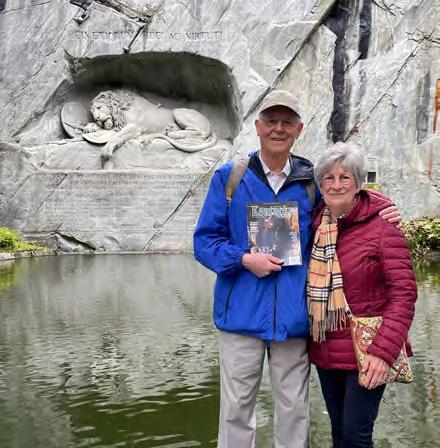
Frankfort residents Richard and Sally Smothermon ventured to Switzerland, Austria, Liechtenstein and Germany. They are pictured in Lucerne, Switzerland, in front of the relief sculpture often referred to as the “Lion of Lucerne,” which commemorates more than 700 Swiss Guards who were killed in 1792 during the French Revolution.
KWIZ ANSWERS
SUBMIT YOUR PHOTO
Take a copy of the magazine with you and get snapping! Send your high-resolution photos to editor@kentuckymonthly.com or visit kentuckymonthly.com to submit your photo.
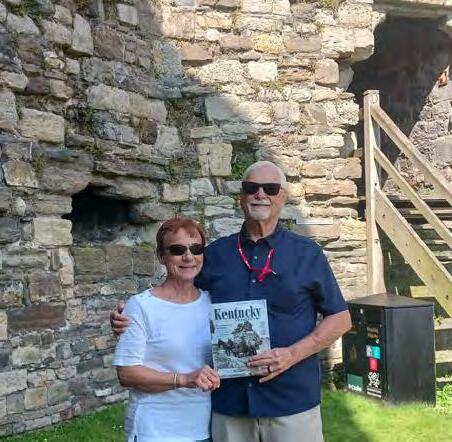
Patricia Dorton Whitaker and Morris Hunter of Maysville visited the ancient Beaumaris Castle on the island of Anglesey in Wales. Construction began on the concentric, symmetrical stronghold in 1295, but the castle was never completed. It is designated a UNESCO World Heritage Site.
1. B. Dragging Canoe was a formidable champion of resistance to colonial expansion; 2. A. The short-lived colony got its name from Henderson’s Transylvania Company, which engaged in land speculation; 3. C. John Bowman, whose grandson founded the University of Kentucky, was the state’s first justice of the peace, county-lieutenant and military governor; 4. B. John Todd was killed fighting at the Battle of Blue Licks, and a county is named in his honor; 5. C. Stanford is Kentucky’s second-oldest city; 6. B. Kentucky was a part of Virginia until it attained statehood in 1792; 7. C. In 1744, fur trader Robert Smith confirmed Charles III Le Moyne’s discovery of large fossils and bones; 8. C. Elizabeth “Betsy” and Frances “Fanny” Callaway and Jemima Boone were rescued three days later; 9. C. The French and Indian War raged from 1754-63 between Great Britain and France and their respective Native American allies.
Murray State University’s 2026 Shakespeare Festival features two plays by the bard. Romeo and Juliet will be performed onstage at MSU’s Lovett Auditorium March 4-5 at 10 a.m. The curtain rises on The Tempest at the auditorium March 6 at 7 p.m. and March 7 at 2 p.m. Free tickets are available before each performance at the auditorium.


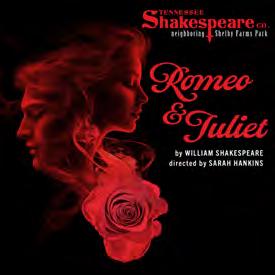
The Tennessee Shakespeare Company (Memphis) presents Romeo and Juliett, and Kentucky Shakespeare (Louisville) performs The Tempest. School group tickets can be arranged in advance.
Since 2001, the Murray Shakespeare Festival has brought high-quality productions to the Four Rivers Region. More than 10,000 students, teachers and the general public have attended at affordable prices or no cost. Throughout performance week, the festival offers free programming, including on- and off-campus lectures, hands-on experiences and community programs.
For more information, contact Dr. William R. Jones, chair, Murray Shakespeare Festival Department of English and Philosophy, wjones1@murraystate.edu, 270.809.2397. Follow the festival on Facebook or consult the MSU website, murraystate.edu/shakespeare — Constance Alexander
The Boone County Public Library in Burlington has received a $25,000 grant from the National Endowment for the Arts (NEA) for Celebrating America250: Arts Projects Honoring the National Garden of American Heroes for outdoor mural wall panels featuring American trailblazers through their words, actions and advocacy.
“Libraries are places where stories are preserved, shared and brought to life,” said Julie Althaver, grant writer for the BCPL. “This project allows us to take history beyond our walls, using public art to honor American heroes, while inviting reflection, learning and conversation as we approach the nation’s 250th anniversary.”
This project consists of an outdoor exhibit at the main library featuring eight mural wall panels each measuring 8 by 16 feet. The panels will showcase three images of individuals identified as American heroes by Executive Order 13934, issued by President Donald Trump
Those chosen for this exhibit have Kentucky ties or have advanced freedom, justice and equality through the power of their words. For information on the other 49 projects, visit arts.gov/news



When Stanford author Angela Correll and her husband, Jess, found a deep connection with the Tuscan region of Italy during visits there, they decided to purchase a house, which they have since made into a comfortable, cozy home. An author of several books, including the May Hollow Trilogy of novels, Angela wrote Village Life: Discover Tuscan-Inspired Hospitality and Intentional Living to share the connection to “art, beauty, craftsmanship, creation, a slower pace, a nurturing meal, a rhythmic period of rest, and long walks in nature.” In Village Life, Angela shares recipes, a few of which are featured here.
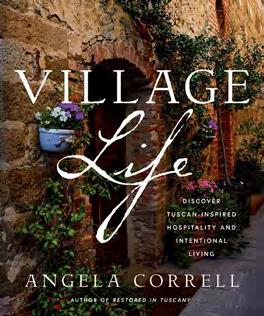
Text and images reprinted with permission from Village Life: Discover Tuscan-Inspired Hospitality and Intentional Living by Angela Correll, copyright ©2025. Published by Ten Peaks Press, an imprint of Harvest House Publishers.

SERVES 6
3 cups fresh ricotta (about ½ cup per person)
3 tablespoons white sugar
2 cups pine nuts
Honey, for drizzling
1. Whip the ricotta and add sugar to desired sweetness (this may be more or less than the 3 tablespoons recommended).
2. Lightly toast the pine nuts in a dry pan.
3. Put the whipped ricotta in a small dessert dish and top with a sprinkle of toasted pine nuts and a drizzle of honey.

SERVES 4-6
4 cups fresh basil
½ cup pine nuts
½ cup fresh Italian parsley
½ cup olive oil
3 cloves garlic
1 teaspoon salt
½ cup Parmesan cheese
1. Put the basil, pine nuts, parsley, oil, garlic and salt in a food processor and mix well.
2. Add the cheese and process until desired texture is reached.
Note: The pesto sauce can be frozen in pint or jelly jars for later use in flavoring pasta or pasta salad. It also can be spooned into ice cube trays, frozen overnight, then popped out and placed in a freezer bag for small amounts of flavoring for soup or vegetables, such as carrots or roasted potatoes.

SERVES 10-12
¾ cup all-purpose flour
Pinch of salt
¾ cup beer or sparkling water
Peanut oil for frying
24 clean, large sage leaves
Salt to taste
1. Mix the flour and salt and then add the beer or sparkling water, little by little, blending with a fork or whisking until it is well mixed.
2. Heat the peanut oil. You’ll know the oil is ready when you flick droplets of water into the oil and it sizzles.
3. Dip the leaves one by one in the batter and drop in hot peanut oil. When golden brown—under 30 seconds—remove the leaves with a slotted spoon and lay them on a plate covered with paper towels to drain the excess oil.
4. Sprinkle a bit of salt on top to taste. Serve hot.

1 large orange slice, halved Prosecco
Aperol
Sparkling water or club soda
1. Place one half of the orange slice in the bottom of a large wine glass. Fill with ice.
2. Add equal parts of prosecco, Aperol and sparkling water or club soda. Stir gently and garnish with the other half of the orange slice.
San Pellegrino sparkling water or club soda
Fruit juice
Simple syrup
Fruit slice or berry for garnish
1. In a glass, pour one part sparkling water or club soda and one part fruit juice.
2. Add simple syrup to taste, depending on the sweetness of the juice you choose.
3. Add a slice of fruit or a berry and stir.
Note: Depending on the fruit in season and preferences, try limes, strawberries, grapes, cranberries, raspberries, blueberries or oranges.








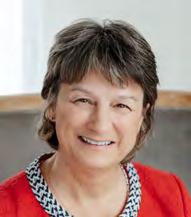
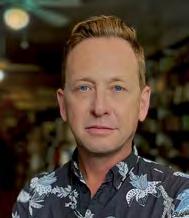
Silas House is one of Kentucky’s most acclaimed contemporary authors—a best-selling novelist and former Kentucky poet laureate who recently published his first two books in new genres for him: a collection of poetry and a mystery novel.
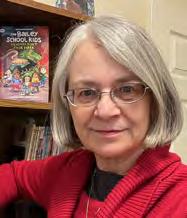
Marcia Thornton Jones and Debbie Dadey were Lexington educators 35 years ago, when they decided to write a children’s book. Now, often writing as a team, they have become among the most prolific and successful children’s authors in the business, with an estimated 46
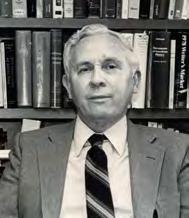
million books sold worldwide.
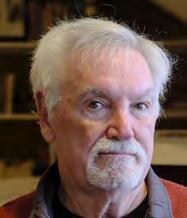
Jeff Worley is a former Kentucky poet laureate who has published 10 poetry collections and more than 500 poems in journals. His poems sometimes display a mastery of something many modern poets often avoid: humor.
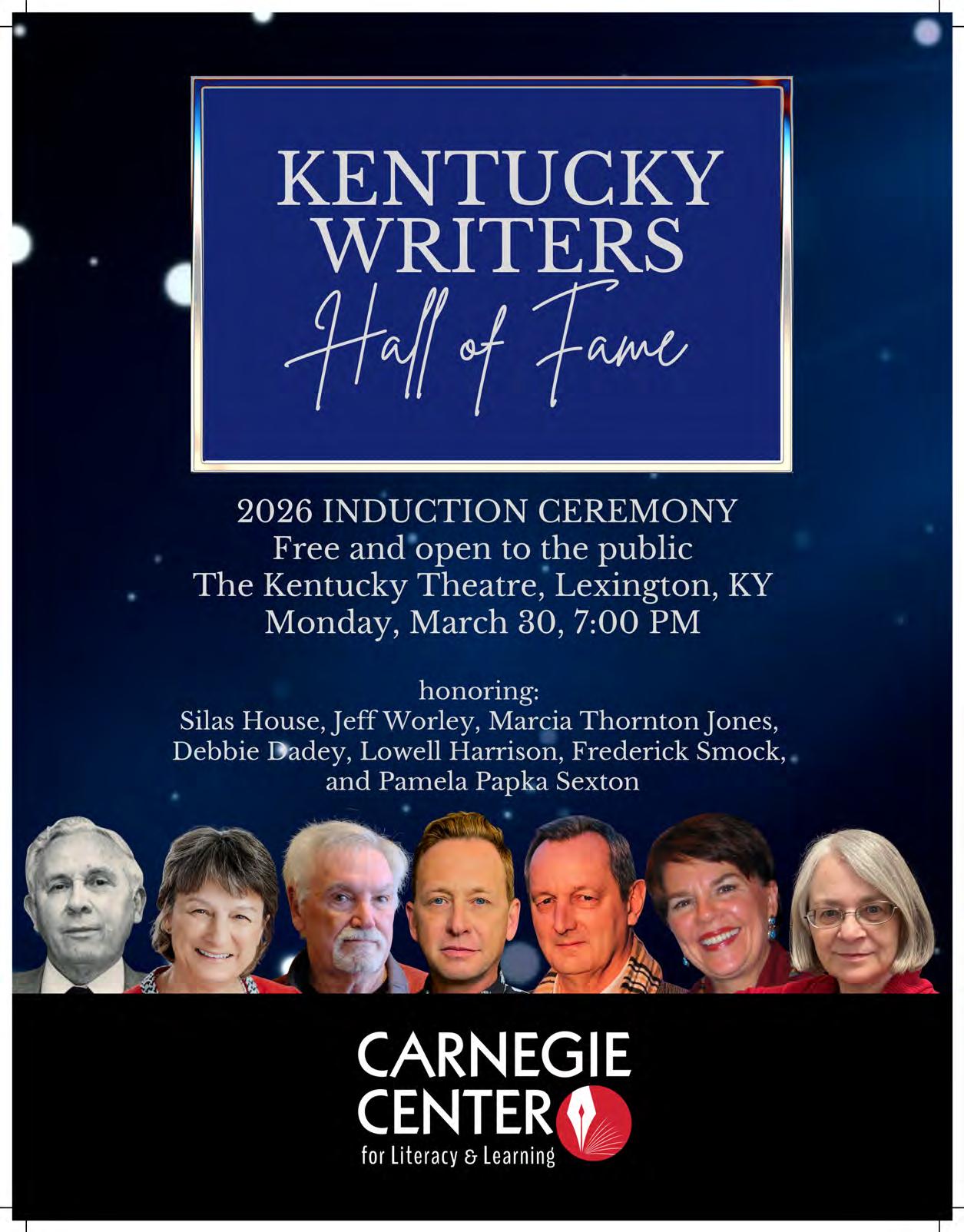
These four writers will be inducted into the Kentucky Writers Hall of Fame this year, along with two deceased authors: Frederick Smock, an acclaimed Louisville poet and teacher at Bellarmine University, who died in 2022; and Lowell Harrison, a renowned Kentucky historian, author and longtime history professor at
Western Kentucky University, who died in 2011.
The induction ceremony, which is free and open to the public, will be at 7 p.m. on March 30 at the historic Kentucky Theatre in downtown Lexington. All four living inductees plan to attend.
Learn more about these Kentucky literary icons in this special section, written by Tom Eblen, a former Lexington Herald-Leader columnist and managing editor who is now the literary arts liaison at the Carnegie Center for Literacy & Learning in Lexington.
ilas House is one of Kentucky’s best-known literary figures: author of bestselling novels, plays and a nonfiction book; a former state poet laureate; an essayist in national newspapers and magazines; a music journalist; an editor and teacher; a social activist; a movie producer; a podcaster; and even a Grammy Award finalist.
Never one to sit still, House recently published two more books in the past few months in genres new for him: a poetry collection and a murder mystery, both of which have become national bestsellers.
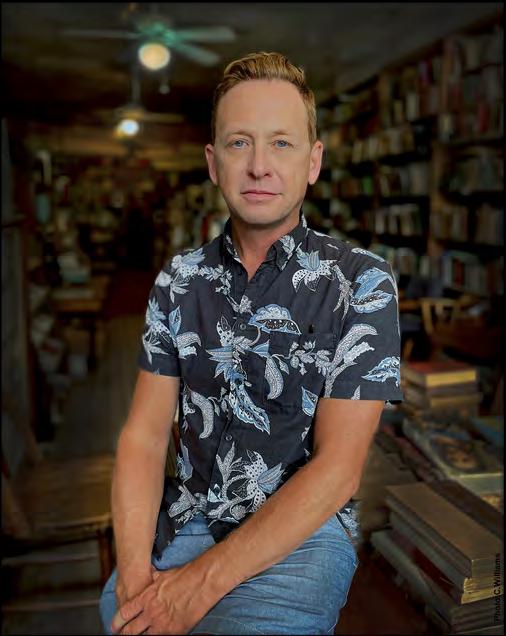
And in March, House will become the youngest living inductee into the Kentucky Writers Hall of Fame. At 54, he shows no sign of slowing down.
“It means a lot to be voted in by your peers,” House said in an interview about his selection for the Hall of Fame, a joint project of the Carnegie Center for Literacy & Learning and the Kentucky Arts Council.
“I always have imposter syndrome about everything,” he added. “Some of that, I think, is what fuels an artist. It challenges you to keep going and to be better. Despite being published for so long, I still feel like I’m trying to earn my spot.”
House loves classic murder mystery novels, so he studied the form before writing Dead Man Blues under
the name S.D. House. Set along the Kentucky-Tennessee line, the novel has become a USA Today bestseller and a Barnes & Noble pick. He hopes it will be the first in a series of books.
House was even more serious about studying poetry before compiling his first collection, even though he has published occasional poems for more than a decade and was Kentucky’s poet laureate in 2023 and 2024.
“I mostly felt like an imposter as a poet for most of my writing career, because I had been trained formally as a prose writer,” he said. “And I really believe that if you’re going to call yourself something, then you really have to put in the 10,000 hours to earn that. So, I took a lot of poetry workshops and poetry classes. I studied with a couple of poets I really respect. I immersed myself in poetry,
especially during the pandemic. I devoted myself to the craft.”
The work paid off. His collection, All These Ghosts, is a finalist for the Southern Book Prize and has become a USA Today bestseller, an unusual feat for any poetry book. NPR’s Neda Ulaby interviewed House about the book in November.
Still, he hedged: “I want my fellow poets to know that I still feel very much like a greenhorn as a poet. But I think any good writer is always learning.”
House was born in Corbin and grew up in the nearby Laurel County community of Lily. He earned a bachelor’s degree in English from Eastern Kentucky University. He was working as a rural mail carrier in 2000 when the Millennial Gathering of Writers of the New South at Vanderbilt University chose him as one of 10 emerging talents in the region. Soon afterward, he sold his first novel, Clay’s Quilt, followed two years later by A Parchment of Leaves, which became an award-winning national bestseller.
House earned an MFA in creative writing from Spalding University. After being a writer in residence at EKU and Lincoln Memorial University in Harrogate, Tennessee, he joined the faculties of Berea College and Spalding University.
His later novels include The Coal Tattoo (2005), Eli the Good (2009), Same Sun Here (2012, co-written with Neela Vaswani), Southernmost (2018) and C. Williams
Lark Ascending (2022), which won the 2023 Southern Book Prize. Little, Brown will publish his newest novel, The Tulip Poplars, an epic story that follows two couples over 70 years, this fall.
Four of House’s plays have been produced. He wrote a 2009 book of creative nonfiction, Something’s Rising, with Jason Kyle Howard, his husband. He has been a prominent activist on environmental issues— especially opposition to mountaintop-removal coal mining— and LGBTQ rights.
In 2022, House received the Duggins Prize, the nation’s biggest award for an LGBTQ writer. His essays have appeared in The Washington Post, The Atlantic, Time, The New York Times and other publications. He has been a commentator for NPR’s All Things Considered and was the executive producer of the film Hillbilly, winner of the Los Angeles Film Festival’s documentary prize and the Foreign Press Association’s media award.
In 2023, House served as writer, co-producer and creative director of Tyler Childers’ music video “In Your Love,” earning a Grammy nomination. His 2018 novel Southernmost is currently in pre-production as a feature film. On his podcast, Writing Lessons With Silas House, he interviews Kentucky writers about various aspects of the craft.
House is a member of the Fellowship of Southern Writers and the recipient of three honorary degrees. His awards include an E.B. White Award, the Storylines Prize from the New York Public Library/NAV Foundation, the Lee Smith Award and the Caritas and Hobson medals.
Barbara Kingsolver, a Hall of Fame writer from Carlisle (Nicholas County) whose novel Demon Copperhead won the 2023 Pulitzer
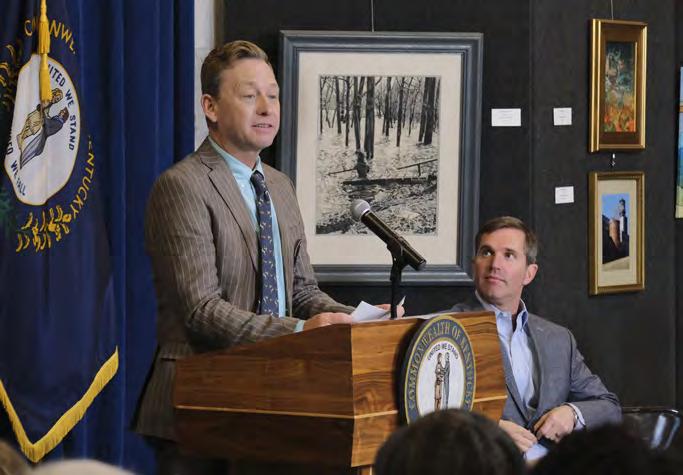
Prize for Fiction, calls House “an Appalachian treasure.”
“When I claim Silas as my friend, I feel like I’m joining a huge family, not just because he’s a dear and generous friend to so many people,” she said. “He’s also a friend to our mountains, our traditions, our music, literature, culture and history.”
House said he was in seventh grade when he decided to become a writer, but “I cannot remember a time when I didn’t love to read and tell stories. I was born that way, but I also grew up around people who just had an innate sense of telling a story and really understood the importance of storytelling.”
A beloved aunt, Dorothy “Dot” Kelsey, ran a community store. “I spent a lot of time in her store, and everybody who came in had a story,” he said. “I also grew up around a lot of really quiet social justice. I would see Dot give people food who needed it. My parents were always helping other people very quietly, never wanting any attention for it.
“Also, when I was a child, there
was a massive strip mine right across from our house,” he added. “I think early on that gave me a real sense of not only injustice, but also that nothing lasts.”
House said he also has been nourished by the community of Kentucky writers. When he was a young writer, famous authors such as Kingsolver, Wendell Berry, George Ella Lyon and Chris Offutt took his work seriously and encouraged him. He also feels a special kinship with two Spalding classmates who were inducted into the Hall of Fame last year: Crystal Wilkinson and Frank X Walker
“That has meant a lot to me, and I try to pass that on,” he said of the support he has received from other writers. “One way I’ve done that is through editing a series at the University Press of Kentucky” to help promising Kentucky and Appalachian writers get published.
“When somebody helps you, the way you can really repay them is to do it for somebody else,” he said. “I think most Kentucky writers are that way.”
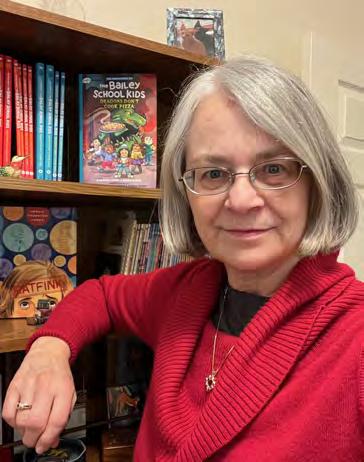
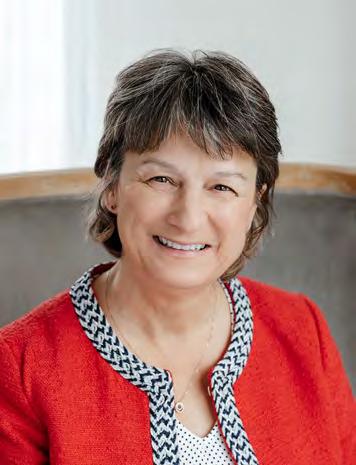
Marcia Thornton Jones and Debbie Dadey were faculty members at a Lexington private school in the late 1980s when they began talking one day about children’s books: what they liked, what they didn’t like, and how they might like to write one someday.
“And then Marcia just said, ‘Well, why don’t we do it? Let’s start tomorrow,’ because that’s the way she is,” Dadey recalled.
While on lunch break the next day, they jotted down story ideas and made homework assignments for each other. Dadey was Sayre School’s librarian, and Jones was the computer lab teacher. Week after week, month after month, they collaborated on new stories, mailed them off to publishers—and got rejection slips.
“Our primary goal was to see our names on the cover of a book like the ones we liked to read to kids,” Jones said. “We came into this business not knowing a lot about it, and, to be honest, I think that was to our benefit, because we did not accept rejections as a ‘no.’ We thought rejections were just a statement that it wasn’t good enough yet.”
After nearly two years of this, a representative from Scholastic, one of the nation’s largest publishers for young people, called the Sayre School library one day. The company wanted one of their manuscripts.
The novel Vampires Don’t Wear Polka Dots was published in 1990. In the 35 years since then, Dadey and Jones have written and published about 100
books together, as well as dozens more books as solo writers. They estimate their books have sold about 46 million copies worldwide, making them among the most prolific and successful authors for young people.
In 2000, they even wrote a how-to book for adults—Story Sparkers: A Creativity Guide for Children’s Writers They updated it with a complete rewrite in 2019—Writing for Kids: The Ultimate Guide
Jones, 67, was born in Joliet, Illinois, and moved to Lexington when she was 5. She earned elementary education degrees from the University of Kentucky and Georgetown College.
Dadey, 66, was born in Morganfield (Union County) and grew up in Henderson (Henderson County). She earned degrees in elementary education and library science from Western Kentucky University.
Most of their jointly written books are part of what became the Bailey School Kids series. The stories are about the adventures of kids who attend the Bailey School and encounter teachers and other adults who may or may not be mythical beings, such as vampires, werewolves or dragons.
Dadey’s and Jones’ first published novel was the result of a bad day at school.
“I’d been a teacher for many years, and usually, the kids were great,” Jones said. “But I had a very bad day one day. Debbie came over to my classroom at lunch when we would write. She could tell I was upset and
asked what was wrong. I said, ‘It’s been a horrible day, worst day ever. I guess I would have to grow 10 feet tall, sprout horns and blow smoke out my nose just for them to realize I’m the teacher. I’m in charge. They have to do what I say!’ I mean, I was really upset.
“But Debbie started to laugh and said, ‘Well, what if a teacher could do that?’ And so we sat down and started writing Vampires Don’t Wear Polka Dots simply as a joke to make me feel better. We wrote about a teacher who was indeed a monster who could grow 10 feet tall, sprout horns and blow smoke out her nose. It took us two weeks. We had a blast writing it. And when we were finished with it, we thought, we’ve got a book.”
They had noticed how much kids like books with elements of fantasy and the supernatural. “Kids really like to read about monsters, and it’s both of our passions to reach kids who maybe didn’t like to read,” Dadey said. “As a librarian, I was always trying to find the right book for the right kid.”
That first book became a huge seller, so Jones and Dadey wrote more stories about the Bailey School Kids, developing their four main characters—Howie, Melody, Eddie and Liza—and recurring adult characters such as Mrs. Jeepers, Mr. Jenkins and Dr. Victor.
“We were actually writing side by side,” Jones said of their initial collaborations. “I think that helped us learn authentic dialogue because we were speaking it.”
Jones said publishers are reluctant to commit to a “series,” so additional
titles were at first branded as “companion” books.
Dadey’s husband, Dr. Eric Dadey, was a pharmaceutical scientist who taught at the University of Kentucky. When he got a job in Texas in 1992, Jones and Dadey thought their writing partnership wouldn’t survive the long distance. But about the same time, Scholastic asked them to rewrite the sixth Bailey School Kids manuscript they had submitted—and write four more to turn it into an official series.
“And so that’s when we learned about faxing,” Dadey said, referring to facsimile machines, which predated email for fast electronic document transmission. “So we’d work on an outline, then one of us would start the book. A lot of times I started them, and I would send it to Marcia. We would kind of be each other’s editors, and we would send it back and forth.”
“By the time a book would be finished, it had been through multiple revisions,” Jones said. “And each of us had mucked with every single chapter so that sometimes, we could not tell who wrote what chapter. It was a system that worked really well.”
More recent additions to the series include four graphic novels, which have become popular. The most recent is Dragons Don’t Cook Pizza. They also have another popular series of books called Ghostville Elementary.
Over the past couple of decades, Dadey has also developed children’s book series on her own: Mermaid Tales, Mini Mermaid Tales, Keyholders, Swamp Monster in Third Grade and others. She is especially proud of a picture
book published in 2023 called Never Give Up: Dr. Kati Karikó and the Race for the Future of Vaccines, illustrated by Juliana Oakley. For that project, Dadey interviewed Dr. Katalin Karikó, a Hungarian-American biochemist who laid the scientific groundwork for mRNA vaccines in time for the COVID-19 pandemic and won the Nobel Prize in Physiology or Medicine in 2023.
Jones’ many solo books include the mid-grade novels Woodford the Brave and Ratfink and Champ, as well as the picture books The Tale of Jack Frost and Leprechaun on the Loose. She also has taught and mentored other authors.
“I’ve done some reflection over the last couple of years, especially this last year,” said Jones, whose husband, Stephen Jones, died in September 2024. “I realized I’m not really sure if I’m a writer or if that writing was just part of my teaching experience. I get energized through the teaching of things. My classroom has just gotten really big through my writing.”
Dadey and Jones said the secret to a
good children’s book is the same as any other book: compelling characters and a story the reader can relate to and feel part of. But there are differences.
“Children’s books need to be very tightly written,” Jones said. “Those characters have to be realistic, because our audience has a short attention span. I think writing for kids can be more difficult than writing for adults, because every word matters. Every character matters. Everything matters because the audience is just not going to suffer fools for very long.”
Writing for children is rewarding, they said, because it can literally change lives.
“Kids are learning their place in their world,” Jones said. “They’re learning what type of person they are, and how do they relate to the character, what characters might help them build their own character.
“We have to treat our audience with respect,” she added, “because children are smart, much smarter than we think.”
When Jeff Worley was an English major at Wichita State University in the late 1960s, he made a little money playing guitar and singing, mostly in bars around his Kansas hometown.
“I wasn’t ever a particularly good guitarist, and my singing was maybe acceptable,” he said. “But I never forgot the words to a song.”
His favorite songs were by Bob Dylan, Leonard Cohen and Gordon Lightfoot—writers who could tell a story in poetry. But it wasn’t until Worley took a poetry class that he got up the courage to begin writing his own poems—and go on to earn a master of fine arts degree from Wichita State in 1975.
“I think what attracted me to poetry was the serious play with language,” he said. “And the possibilities of making something that other people would appreciate. I always wanted my poetry to be understandable and, at its best, memorable.”
Worley, 78, has produced 10 books of his poetry and published more than 500 poems in journals and magazines. His most recent book, The Poet Laureate of Aurora Avenue (Broadstone Books, 2022) includes some favorite poems from his previous books, plus new work. He edited the book What Comes Down to Us: 25 Contemporary Kentucky Poets (University Press of Kentucky, 2009). And he served as Kentucky’s poet laureate in 2019 and 2020.
“Jeff Worley is a poet’s poet,” said Richard Taylor, another former state poet laureate who was inducted into the Kentucky Writers Hall of Fame in 2023. “His work seems motivated not by the latest fad or fancy that editors want to publish but by what ordinary readers want to read. He decodes the confusing world with which we are confronted and renders it knowably, often humorously, lest we take ourselves too seriously.”
Worley moved to Lexington in 1986 when his late wife, Linda Kraus Worley, was hired by the University of Kentucky as a professor of German
studies and folklore/myth. They met while Worley was teaching English in Germany as part of the University of Maryland’s European division. She died in 2021.
After what he described as a lackluster stint as a freelance writer in Lexington, Worley became a writer for and later editor of Odyssey magazine, which the University of Kentucky published from 1982 until 2010 to highlight research and scholarship on campus.
In Lexington, Worley found the writing community he needed to develop and improve as a poet. He and Marcia Hurlow, a former English professor at Asbury University, formed a poetry group in 1989 that featured several notable Kentucky writers, including Taylor, Michael Moran and Devin Brown
Critical feedback from his wife and fellow poets was invaluable. “So were some of the rejection slips I got from magazines, with an editor pointing out that this and this don’t work very well,” Worley said. “I have a whole
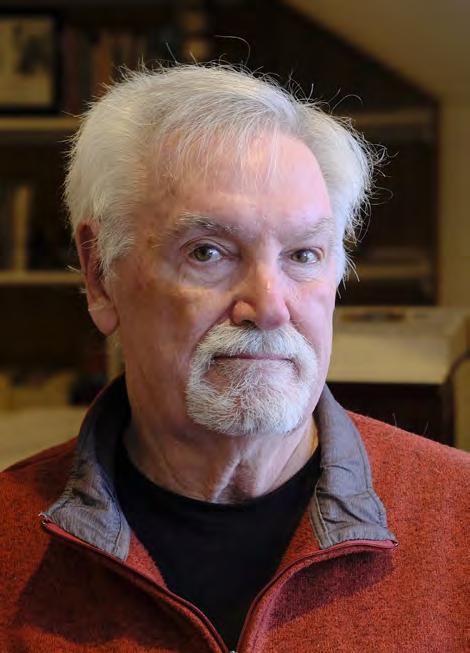
drawer full of these rejection slips.”
For Worley, writing has always been a process of discovery.
“I kind of don’t know what I think about anything unless I write about it,” he said. “The more I write about something, the more I understand what it is I feel about it. And so, a lot of my poems are about my parents and about extended family.”
Worley started writing poems about animals two decades ago, after he and his wife bought a weekend cabin on Cave Run Lake.
“Animals really intrigue me,” he said. “It’s a total delight to sit in the morning with my coffee and my roll
on the screened-in back porch and just watch the deer come in. This time of year, they’ll be coming in with their babies. And to me, that’s about as delightful as anything can be.”
Other poems spring from things he overhears, and he advises students to always carry a pen and notecard to jot down gems. Such as when he overheard a little boy in the grocery produce section ask his father, “Dad, we have two legs and two eyes and two arms; why don’t we have two penises?”
“I reached in my back pocket for my notecard, and it wasn’t there,” Worley recalled. “I discovered that you can write on a banana. I wanted to get his words exactly, this kid. My failing is that I don’t know how the dad answered. This other little kid came by and stared at me a long time and went over and said something to her mother. I bet it had to do with, ‘There’s a crazy man over there
writing on a banana.’ ”
And, yes, a bit of that story ended up in a poem.
Humor is the secret weapon of Worley’s poetry, often inspired by his own misadventures or the absurdities of life. Humor is a rare commodity in modern poetry, and Worley thinks that is a shame.
“I think a lot of poets, like a lot of people, don’t have a very good sense of humor,” he said. “And there still are a lot of poets out there who believe in poetry as a serious calling and that there’s no room for levity.”
Worley has hundreds of books by other poets on his study shelves and reads widely. His favorites include Mary Oliver, Sharon Olds, William Stafford, Stephen Dunn and Michael Van Walleghen, his first poetry teacher at Wichita State.
In recent years, Worley has found himself writing fewer short poems and more long, narrative pieces. “I like to get into a subject that is really difficult to write about and see if I can do it without falling into various traps that a difficult poem lays out for you,” he said. “That’s a challenge, and I never get tired of it.”
Frederick Smock was a Kentucky poet laureate, a literary journal editor and a Bellarmine University professor whose straightforward poetry lyrically evoked the natural world.
“As soon as I met Fred Smock, then a graduate student at the University of Louisville, I knew I was in the company of a special and wonderful sensibility,” said Sena Jeter Naslund, a Hall of Fame novelist and former Kentucky poet laureate who was his teacher at UofL. “To have seen his journey as a distinguished poet, trailblazing editor and splendid teacher has been both comforting and inspiring.”

reading and talking about poems, and reminding listeners of the joy in sound, rhythm and rhyme that we have as children,” George Ella Lyon, another former Kentucky poet laureate and Hall of Fame member, said after Smock’s death at age 68 in 2022.
Bingham, the late writer and philanthropist, co-edited The American Voice, a literary journal. Smock later joined Bellarmine University, teaching English and creative writing. Smock’s 11 collections of poetry included Gardencourt (Larkspur Press, 1997), The Good Life (Larkspur Press, 2000), Guest House (Larkspur Press, 2003), The Blue Hour (Larkspur Press, 2010) and The Bounteous World (Broadstone Books, 2013). He also wrote two books of prose, two collections of essays and a memoir.
Naslund said the Louisville Review, a magazine she founded in 1976, and her Fleur-de-Lis Press now run a triennial contest in Smock’s memory. The Frederick Smock Poetry Prize is a first-book prize for Kentucky writers that includes book publication and a $1,000 award. The winner will be announced in March.
“As poet laureate, Fred’s intent was to bring poetry to as broad an audience as possible, and he did that by simply
Smock was born in Louisville on June 23, 1954. When he was 6, his physician father moved the family to suburban Fern Creek, where he often spent time wandering forests and fields. “I am drawn to nature,” he once said.
After graduating from Seneca High School, Smock earned a bachelor’s degree at Georgetown College and his Master of Arts at UofL. He did postgraduate study at the University of Arizona.
From 1985-98, Smock and Sallie
He published in many prominent literary journals, including The Southern Review, The Iowa Review, The Hudson Review, Poetry East, Ars Interpres (Sweden), The Georgetown Review and Olivier (Argentina).
Smock received the 2005 Wilson Wyatt Faculty Award at Bellarmine University, the Al Smith Fellowship in Poetry from the Kentucky Arts Council, and the Jim Wayne Miller Prize for Poetry from Western Kentucky University.
Smock died of heart-related issues on July 17, 2022. He is survived by two sons, Ben and Sam Smock
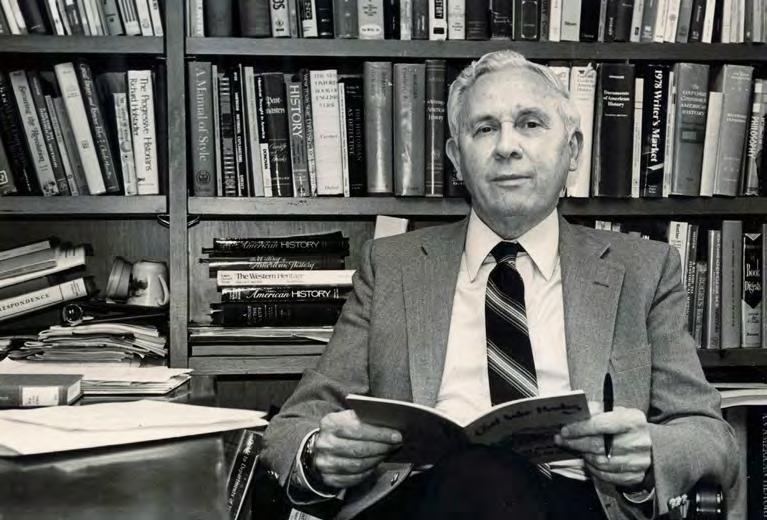
Lowell Harrison was an influential Kentucky historian who wrote or edited 15 books and taught history at Western Kentucky University for two decades.
Harrison’s books include The Civil War in Kentucky (1975), George Rogers Clark and the War in the West (1976), The Anti-Slavery Movement in Kentucky (1978), Kentucky’s Governors (1985), Western Kentucky University (1987), Kentucky’s Road to Statehood (1992) and Lincoln of Kentucky (2000).
He co-edited The Kentucky Encyclopedia in 1992 with fellow Kentucky historians Thomas D. Clark and James C. Klotter (both Kentucky Writers Hall of Fame inductees) and John E. Kleber. Also with Klotter, Harrison wrote A New History of Kentucky (1997). He published 115 articles in journals.
“As a writer and historian, Dr. Harrison published groundbreaking scholarship that reframed how we
think about Kentucky Civil War history, our state history, the Commonwealth’s governors and more,” said Stuart Sanders, director of research and publications at the Kentucky Historical Society. “Most important, his writing made the Bluegrass State’s past accessible to the public and demonstrated how our history influences Kentucky today.”
Harrison received several awards from WKU, including the Faculty Research Award in 1971, the Public Service Award in 1986, and inclusion in the Hall of Distinguished Alumni in 1999. He received the Thomas D. Clark Award for Excellence in Kentucky History from the Center for Kentucky History and Politics in 2001 and was awarded the Kentucky Historical Society Distinguished Service Award in 2010.
Harrison was involved with many historical associations, including the Kentucky and Filson historical societies and the Kentucky Oral
History Commission. He served on the University Press of Kentucky’s editorial board.
He was born Oct. 23, 1922, in Russell Springs (Russell County). He served in the Army during World War II as a combat engineer in Europe. He graduated from WKU in 1946 with a bachelor’s degree in history and earned his M.A. (1947) and Ph.D. (1951) at New York University. He attended the London School of Economics as a Fulbright Scholar.
From 1952-67, Harrison taught and was head of the history department at West Texas State University. In 1967, he returned to his alma mater in Bowling Green as a senior scholar and graduate adviser. He was twice elected to WKU’s Board of Regents.
Harrison retired from full-time teaching in 1988 but continued to teach part time until 1994. He died Oct. 22, 2011. Harrison’s wife of 63 years, Elaine “Penny” Harrison, died in 2016.
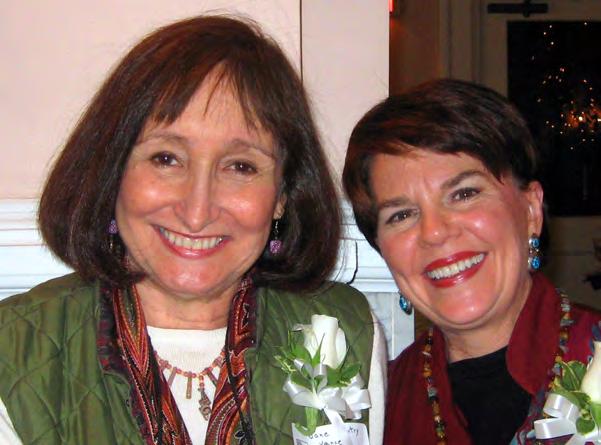
n conjunction with the annual Kentucky Writers Hall of Fame ceremony, the Carnegie Center for Literacy & Learning occasionally presents the Kentucky Literary Impact Award. This is awarded to someone who has had a major impact on helping Kentucky’s literary community. The previous two honorees were Gray Zeitz of Larkspur Press and the late Mike Mullins, director of Hindman Settlement School and the Appalachian Writers Workshop. This year, the third honoree is the late Pam Sexton.
Pamela Peyton Papka Sexton was a writer, poet, artist and community volunteer who helped create the Carnegie Center for Literacy & Learning in Lexington and was a dynamic advocate for the arts and education in Kentucky.
She was born Jan. 13, 1946, in Thermopolis, Wyoming, to parents who valued education and volunteerism. After leaving Wyoming,
she lived in New Orleans and Puerto Rico before moving to Lexington in 1971. Sexton had a variety of jobs in banking, business writing, women’s health and the arts.
Sexton studied at the University of Kentucky and Spalding University, where she earned a master of fine arts degree in writing in 2003. She also studied sculpture at the Museum of Fine Arts in Boston and the Cambridge Arts Center in Cambridge, Massachusetts.
Sexton helped create the Carnegie Center in the historic Lexington Public Library building and later chaired its board of directors. “The Carnegie Center is a place where the light streams in, even on cloudy days,” she once wrote.
Her writing was widely published in Kentucky. She received a poetry award from the University of Kentucky’s Oswald Research & Creativity Competition and won the Leadingham Prize for Poetry from the Frankfort Arts Foundation. She was a founding member of KaBooM (the Kentucky Book Mafia), a writing group, and Mosaic, a group of women poets.
Sexton served on the boards of the Kentucky Folk Art Center in Morehead, Lexington Children’s Theatre, the Lexington Arts and Cultural Council (now LexArts) and the Lexington Philharmonic.
She was a founding member of the Prichard Committee for Academic Excellence. Robert Sexton, her second husband, later became its director. Pam Sexton died in 2014 at the age of 68. She had three children: Ouita Michel of Midway, Perry Papka of Mount Sterling and Paige Walker of Lexington.









LIMERICK
Don Fleming
Camila Haney
Katie Hughbanks
Jon Pryor
POETRY
Bethany Broughton
Nancy K. Jentsch
Jay McCoy
Marianne Peel
Samantha Stotts
Cassie Whitt
Ashton Woodard
FICTION
Carla Carlton
Richard Day
Leanne Edelen
NONFICTION
Mary Casey-Sturk
Hayden Petty
kentucky monthly ’s annual writers’ showcase
I come from mountains, even the ones I’ve never stood on.
Somewhere in my blood there’s a memory of the Scottish Highlands stone ridges, cold wind, people shaped by weather, work, and a spine that doesn’t bend.
My ancestors crossed an ocean and found the Appalachian hills of Eastern Kentucky waiting for them like an echo. Fog curling the same way, ridges rising in familiar hymns, the land rolling out soft and fierce in a language they already knew.
Maybe that’s why Kentucky has always felt older than my own lifetime like the hills recognized me long before I understood them.
Here, we’re known for being stubborn, and we are.
We come from folks who hold their ground even when the world tries to move them. People who don’t back down from truth, who raise their voice when something matters, who carry faith like a lantern through the darkest hollers.
But we’re also the kind who help a neighbor first, even when our own cupboards sit thin. We give what we have a plate, a hand, a prayer because we know struggle, and we refuse to let someone else face it alone.
I grew up in a place where creeks carve their way through the hills with the patience of saints, and where winter settles like an old story everyone already knows.
Snow quiets the mountains, makes the world stand still long enough to remember.
In fall, the ridges burn red and orange, like the mountains setting themselves on fire just to remind us how beautiful endings can be. And spring spring turns everything green again, the color of forgiveness, the color of beginning, the color of a place that refuses to stay broken.
The hills teach us how To endure.
To bend without breaking. To grow back after every frost. To work for everything worth keeping.
Sometimes I think about my ancestors, how they must have stood here with the weight of a whole ocean behind them and felt something in their bones say, You know this land. You can build a life here.
And maybe that’s what it means to be from Eastern Kentucky: to be shaped by two sets of mountains the Highlands they carried in their memories, and the Appalachians that raised me.
To be tough where it counts, gentle where it matters, faithful even when the world shakes.
To stand my ground, love without holding back, and carry the kind of pride that doesn’t have to shout to be heard.
I am a Kentuckian because they saw home in these hills and now these hills live in me.
Ashton Woodard | Mount Sterling
In 1957, Kentucky had more bookmobiles than any other state in the country. But only one of them was haunted.
Marjorie Mae Crawford stood shivering in the parking lot of Little Flock Baptist Church. The early April breeze still carried the sharp edge of winter; it took spring a while to travel up the hollers in Sturgill. But Marjorie Mae hardly noticed the weather. She trembled with excitement as she strained for her first glimpse of the bookmobile.
Once a month, the sturdy white van growled its way up, down and around the hills of Southeastern Kentucky, its cargo area lined with shelves of books—everything from Dick and Jane reading primers to dog-eared copies of East of Eden. Marjorie Mae still couldn’t quite believe that the bookmobile lady allowed her to choose any book she liked and take it home for a whole month.
The town hadn’t had a library since the Roaring Paunch Creek, fed by days of unrelenting rain, had jumped its banks 20 years before, sweeping away the schoolhouse that had once stood on this very spot, along with 25 students and their teacher. The bodies of all but one had been found downstream in the desperate hours and days following. Rather than rebuild the school, the devastated community had instead erected the clapboard church.
Marjorie Mae read again the words engraved on the metal sign in front of the church: “In eternal remembrance of the little flock lost on April 3, 1937.
Jesus loves the little children.” Listed below were 26 names. She lingered on the first one, Daisy Lou Allen, the 10-year-old who had never been seen again.
Marjorie Mae, who had celebrated her 10th birthday the day before, shivered again, but her attention was quickly diverted by the sound of grinding gears: The bookmobile was here! Miss Birdwhistle turned off the engine, opened the back doors, and lowered the three folding steps.
First in line, as always, Marjorie Mae climbed inside and breathed in the lovely, dusty perfume of the pages.
“Hello again, Marjorie Mae,” Miss Birdwhistle said, taking an E.B. White book from her hand. “What did you think of ‘Charlotte’s Web’?”
“Oh, I loved it ever so much. But I wish Charlotte could have lived longer.”
“Well, that’s nature for you,” Miss Birdwhistle replied. “Everything has its time and season.”
“I suppose, but it still doesn’t seem fair,” Marjorie Mae said. “I think she had more living to do.”
She started toward the children’s chapter books as usual, but something stopped her. Without remembering exactly how, she found herself in front of a section of books she had never seen before: Kentucky Folklore. Her hand was drawn to a slim, ragged volume with threads trailing from the worn edges of its cover. “The Bell Witch, the Gray Lady, and Stories of Other Haunts
and Haints, by W.L. Montell,” she read softly to herself. She opened the back cover. The last date stamped on the checkout card inside the glued-on pocket was April 3, 1937.
This book hasn’t been checked out for 20 years, Marjorie Mae thought. But how can that be? The Bookmobile just started coming when I was 7.
Intrigued, she flipped through the pages until a story grabbed her. It was called “Trouble on Crawford Creek.”
She began to read.
The chalk squeaked as Charlie Johnson applied too much pressure on the blackboard. Ciphering was his worst subject, and darned if Miss Harris didn’t always call on him first. I could see his ears getting red, which was never a good sign.
But before he could turn around and confess to Miss Harris that he had no idea what to do next, we all heard another sound. The low rumbling built like the thunder that had shaken the town for days, but unlike the thunder, it didn’t ease. It sounded almost like a train, but the train hadn’t run in Sturgill since the Kingfisher Mine had closed the year before.
Whatever it was, it drew closer and closer, and louder and louder.
The wall of the schoolhouse buckled. I saw Charlie’s puzzled expression and Miss Harris’ horrified one and then all I saw was water, a wall of it, shoving aside desks and benches and the coat rack and the potbellied stove and the trees and the rocks and I couldn’t swim and I couldn’t float and I couldn’t breathe and …
“Marjorie Mae Crawford! Are you
going to check out that book or read the whole thing right here?” Miss Birdwhistle’s voice was warm with amusement and affection, but she did have other stops to make.
“What? Oh, my goodness, I got carried away,” Marjorie Mae said, shaking her head slightly. Her eyes, which had seemed slightly out of focus, fixed on Miss Birdwhistle’s. “Yes, I’d like to check this out, please.”
She laid the checkout card on Miss Birdwhistle’s tiny desk and carefully autographed it. The librarian had rolled the bands on her book stamp to display May 3, 1957, but she checked them again before pressing the stamp firmly into her ink pad and then onto the card.
“I’ll see you in a month,” she said to Marjorie Mae as she handed the book back to her.
“Yes, ma’am,” the girl replied. “I have more living to do.”
Miss Birdwhistle watched as she walked down the three steps and set off toward home. What an odd thing to say, she thought, picking up the checkout card. As she placed it in the box with the other cards, she noticed how yellowed it was. And the signature was smeared—highly unusual for that meticulous child. She looked closer at the autograph, then frowned with puzzlement.
Daisy Lou Allen.
Carla Carlton | Louisville
I had the inclination to write with my left hand as a child. But the teachers corrected me.
Told me it was wrong. So they made me write with my right. I learned my writing wasn’t the only thing left about me. I carried this questioning of my nature through my youth. And I’ve spent the rest of my life trying to be left again.
Because what They really told me was that I don’t have the right.
The right to— be like this.
to feel this way.
to act how I do.
I’ve spent my whole life unlearning the right way. For the glorious experience of getting to be wrong. I may not have the right according to Them. But that hasn’t stopped me yet.
Broughton | Barbourville
On the bar in front of me
Sits a glass of Woodford and Coke. It’s chilled with memories of you, But the taste burns with smoke.
The fire is out now; the flavor remains true.
I write three words in the ashes— Drinking of you.
Samantha Stotts | Nortonville (Hopkins County)
(Belle Brezing’s refined bawdy house, 59 Megowan Street, Lexington, Kentucky, 1894)
The parlor at Belle Brezing’s was warm and inviting that evening. Crimson velvet curtains shut out the autumn chill; lamps glowed on gilt-framed mirrors and mahogany Queen Anne tables. Perfume mingled with cigar smoke, softened by the rustle of silk and bursts of laughter. Belle herself presided in emerald satin, one hand on her crystal flute as she surveyed her well-schooled girls making easy conversation with the gentlemen.
At the center sat Gen. Basil W. Duke—famed Morgan’s Raider— genial, sharp-eyed, his mustache twitching with amusement. To his right lounged Col. Jack “Dirk Knife” Chinn, resplendent in ascot and patterned waistcoat, his laugh booming over every jest. Opposite them, Congressman Willie Breckinridge, florid and silverhaired, sipped a weak Old Crow, delighted to hold the floor, and holding an unlit cigar.
“General Duke,” Breckinridge declared, “you have discoursed on railroads, tariffs, and bourbon—each a Kentucky necessity. But what is your opinion on the suppression of dueling?
Surely you agree our legislature sought the higher plane.”
A ripple of mirth moved through the room. Sallie Fleming, whose popularity rivaled her décolletage, fluttered her fan. “Why, I like a man who fights for a
lady’s honor,” she said.
“Though it does depend on who wins.”
Laughter rose. Duke lifted his glass.
“My dear Congressman, the General Assembly has a peculiar genius—not for discouraging combat—but for tormenting politicians. To decree that a man convicted of dueling may hold no office and practice no law? Sir, you strike the Kentuckian at the heart of his pleasures. Denied office, he becomes a lawyer. Denied law, he seeks office. Denied both—he runs for Congress.”
The parlor erupted. Breckinridge bowed with a rueful smile.
From her corner Josie Roe, the sharp-tongued redhead, leaned forward. “Well said, General. But do you truly favor the duel? Seems a dreadful waste of handsome men.”
Duke bowed. “Madam, I favor no quarrel. But if one must occur, the duel is the least dishonest: two men, equally armed, equally imperiled. The coward finds no advantage; the bully, no refuge. Even a poor shot has a chance—more than he has in a street fight, where the other fellow begins by shooting him in the back.”
Chinn slapped his thigh. “True enough! More men in Frankfort fall to surprise than to honor at dawn. With pistols, a man knows when to stand tall.”
Belle raised her glass with an arch
smile. “And how many quarrels in this town were provoked by bourbon? If we banned whiskey instead of dueling, we might save lives—though it would ruin my business.”
“That,” Duke said with mock gravity, “would be tyranny of the blackest sort. Far better we banish the legislature than bourbon.”
Laughter rolled through the room. Sallie leaned toward Breckinridge and stage-whispered, “Wouldn’t it be easier if you politicians settled your rows with pistols at dawn? It might leave more offices for others.”
Breckinridge drew himself up. “Madam, if that were the case, there would be no one left to govern Kentucky.”
“Then we should be better governed,” Josie shot back, to general delight.
“How charming,” Chinn chuckled. Belle smiled, lifting her chin. “Charm, gentlemen, is a woman’s protection in a world built for men. We wear kindness like armor—and sharpen our smiles to a razor’s edge.”
Duke rose slightly, glass in hand. “To honor—whether on the field or in the parlor. In Kentucky, neither is ever without its combat.”
Glasses clinked. Laughter rose again. And Belle’s parlor glowed brighter for the Raider’s well-timed toast.
Richard Day | Lexington
Myrtle Watkins drove down the darkened two-lane highway in her 1995 Toyota Avalon.
The gnarled fingers on her right hand wrapped tightly around the steering wheel, while two of her left wrapped around a drug-store cigar. The knocking noise grew louder. Thankfully, she was headed to her son Randal’s service shop. She had called him after leaving the Piggly Wiggly. She inhaled the spicy smoke of the cigar. The cherry on its end blazed, lighting up the interior of the car far more than the faint dashboard lights. The knocking noise stopped. Her sturdy shoulders relaxed a little. Problems. She didn’t like these types of problems. But what was she to do since her Donald passed away? He was far from the best husband, taking to the drink a little more than most. But he kept the bills paid, and she could count on him when trouble called.
She rolled down her window, breathing in the fresh air with scents of pine and fallen leaves. The knocking started again. She shook her head. Randal had better fix this. He wasn’t the man his father was. He could handle problems but fluttered around a little too much in the career department. Partly because of her mothering. She coddled him, Donald used to say.
Myrtle saw it as helping Randal find his path to success and was willing to put her own back into making that happen. Probably took it too far, she thought. She’d delivered his papers when he overslept as a boy. When he was in his 20s, she battled bulls as a
rodeo clown for him when he went on fishing trips with his friends. Hell, when he was in his 30s, she let him use her as a teaching partner when he opened that Jiu-Jitsu studio so often, she eventually earned her black belt.
Blue strobe lights broke through the darkness.
“Damn.”
She pulled over. Her lips pulled tight. She butted out the cigar and gripped the steering wheel, her wrinkled knuckles whitening. The knocking noise stopped.
“Good evening, ma’am. Do you know why I stopped you tonight?” the officer asked.
Myrtle leaned into her age, slumping her shoulders for effect.
“Well,” she said quizzically, “I couldn’t have been speeding. I drive like a grandma. Was I going too slow?”
The police officer’s strong jaw relaxed and a smile spread between his cheeks.
“No ma’am. Your speed was fine. I pulled you over because one of your taillights isbroken.”
“Well, sadly, my car is in need of quite a few repairs. I’m on my way to my son’s shop right now. I’ll be sure to add the taillight to the list.” Myrtle turned her head a little to the side and smiled again.
“Where are you coming from?”
“I just went to get my groceries. That’s about the only time I come into the city anymore,” she replied.
“May I have your license and registration, please?”
Myrtle handed him the paperwork and her license.
“Hold tight. I’ll be right back,” he
said as he tipped the front of his wide-brimmed hat and returned to his car.
The knocking started again in a frantic cadence. Myrtle turned on the radio and tapped her foot for several minutes until the officer returned.
“Ma’am,” he said, handing her the license and registration back. “Everything is good. You’re free to go. Just gonna let you off with a warning. But also, I’d like to warn you about another matter. I heard on the radio that a robbery happened pretty near the grocery store. Just be careful driving to your son’s shop. Don’t pick up any strangers or stop anywhere. The suspect is still at large.”
“Oh, thank you. I’ll be very careful, officer.”
Myrtle watched the police car pull off before she reached into the console ashtray and retrieved her half-smoked cigar.
The knocking started back up.
Myrtle thought again about Randal. He had a bigger problem to solve than she originally thought. The cops knew about the misguided young man in the Piggly Wiggly parking lot. This definitely complicated things.
She inhaled her cigar.
That man made a very poor choice today. Not the robbery; Myrtle didn’t care about that.
But picking an old lady putting her groceries in her trunk to carjack— that was a mistake.
Myrtle put the car in drive. The knocking grew louder and much more frantic.
Leanne Edelen | Louisville
“Rain has buried her seed and her dead.” – James Still Shriveled seeds sleep in tombs but leap millennia when sown. Alive, they plead for rain, burst their eon-shells, outdoing what prophets promised.
So too, asleep, we barely inhale, shrouded by feathers and flannel, dead weight on our beds. But what lay dormant in mind’s core gathers rest’s rain, stretches, seeds scenes beyond foretelling.
Nancy K. Jentsch | Melbourne (Campbell County)
with a dear friend, I mention I’d rather keep talking than say, goodbye, so she offers, Did you know in Cherokee there is no word for goodbye?
We are connected—one by the Creator—and thus never leave one another. When we part, we say, when we meet again, always when, never if, & never goodbye.
It sounds so final farewell, so long like a severing, a parting, or losing a limb, rather than loosing the spirit to quest for beauty, for good, by and by,
until we can hold the same space. Even in the end, when we pass, the door opens to a new realm, a new beginning, something fresh. Even in death, saying goodbye
is too strong, too final, too much like the trickster trying to hide his stygian being under feathers colored by sky, by sea. Screeching, he does not sing; he calls, goodbye
Jay McCoy | Lexington
My father kept a flock of feral pigeons on the garage roof. Built the cages himself. Liked to watch the parent birds do their courtship dance, the male puffing up his neck feathers, bowing and pirouetting in front of the female. A ritual dance of trying to impress, emitting soft cooing notes to serenade his mate for life. My father believed in their affection for one another.
He would pick huckleberries off the mountainside, urging fruit, one by one, into hungry beaks. He’d steal worms from Uncle Joe’s coffee can, the one he kept next to the tackle box, and then coax the pigeons to devour them, bit by bit.
My father knew a platoon of pigeons carried messages across enemy lines at Normandy, delivering secrets to Allied forces. In a ceremony at Buckingham Palace, these birds received medals. Eternal gratitude for patriotism. My father paid respect to his pigeons, solemnly saluting his flock every night before he descended the rooftop aviary.
One night his own daddy hankered for some pigeon pie, knowing the breast muscles make for good-eating meat. My Nana used to serve pigeon pie at Thanksgiving, when they couldn’t afford a turkey. She’d cook the bird up with lard and onions and chicken livers, mushrooms if they could be found. Then stuff it all into Crisco pastry. She’d poke holes in the crust, letting it breathe while baking.
But my father wouldn’t hear of it. He’d named these birds, every one. They answered when he summoned them by name. So, that night, he ascended to the roof, unhinged the cages, and set those pigeons free. Neighbors, even those drunk on homemade moonshine, claimed they could hear wings flapping, even over church bells ringing.
Marianne Peel | Lexington
I’ve lied a few times. More than a handful. More than two handfuls. More than you could count on ten fingers and ten toes. Some were little and white, some big and black, and some were a rusty red, the words metallic tasting, coppery coins on my tongue. But some were delicious, sweet.
A few I even ate myself like cake.
Other lies weren’t born in words but in half-truths, which I told with my eyes and the places I put my hands when I shouldn’t have.
Still, I think I know the truth when I see it.
It’s in the dizzy feeling you get when you inhale too deeply and think you’ll never breathe again. But then you do.
Other times it comes out gently, like when the sunlight shines just so through the leaves of a tree, their dancing shadows confiding a grand universal in an unremarkable movement.
Maybe the truth is not something we tell or know but something we notice, if we look hard enough.
Maybe it is something we might even become.
Cassie Whitt | Winchester
The dog across the street is something like a Doberman— slick black hair, slim frame and pretty damn big. Until that night, her sheer size had been lost on me— she had refused to make friends. On a normal day, she barked at me from the safety of her front porch, as if scolding me for even looking her way, until that night when she was staring at me through the shadowy glass of the storm door. A succession of sound rapped like knuckles against the doorframe, as if she were shouting, “Let me in!” I hardly recognized Royal; her panting distorted her face into a half-grin, half-cringe-like expression—teeth exposed and tongue bouncing rapidly in time with the heaving of her chest.
I frowned at first, crept toward the door, and moved to unlatch its silver lock. My muttish hound dog failed to alert me that the beastly sized animal had approached. Any other evening, my dog would be coming out of her skin over the trespasser. I’d barely managed to crack open the door before a blur of black clung to my
side, desperately trying to squeeze past me. What the hell? I pushed her back, the storm door crashed shut behind me as I joined her in the darkness. I expected her to flee. Weirdly, her hips pushed into my thighs, clung to me instead. Panting, tail wagging, moving with me as I took another step. We were seemingly long-lost friends reunited. All right, maybe all those times I cooed at her from the side of the road really paid off. Except, that thought didn’t really make sense, did it? It’s against a paranoid’s nature. I brushed her fur back with the pads of my fingertips, feeling the sudden maternal urge to comfort her. I questioned her, a onesided interrogation, puzzle pieces taking shape. She didn’t really watch me as I repeated the motion—hardly looked at me, actually. No, her eyes were fixated elsewhere ... across the street. Humans are innately creatures of habit, set in their ways, comfortable in a routine. Rarely do they change—hardly ever is it coincidence when they do. Animals are hyper aware of danger. One piece
clicks together with the next.
Alarm bells frantically echoed in my head as more pieces started shifting together, one odd detail after another. The blinds were completely drawn; those are almost always open. Their front door was shut; they never close the door when Royal is outside. The porch lights were on; they’re usually off by now, the neighbors assumingly asleep inside. Packages sat on the edge of a step; those were delivered hours ago. She wouldn’t let me go back in without barking all over again; was she trying to tell me something?
One unfamiliar detail, maybe even two, would be reasonable on its own, but this many? Fissures formed amidst attempts to rationalize the sudden change in temperament, the bizarre breaks from routine, the stiffness in my chest that I couldn’t seem to shake. Every worst-case scenario took a breath of life. I felt myself gripping at Royal’s fur, as we stared together, synonymously. My neighbors were dead.
Hayden
Petty | Franklin
1956. The year my grandmother, also named Mary, came from Maidenhead, England, to Covington. Why, you might ask? There, it gets complicated. She had met and married someone from Kentucky during the chaos of World War II. About 18 months later, my mother came along. About six months before that, my grandfather had returned to the United States, leaving them behind for good.
Grandma didn’t let that deter her from building relationships with her new Kentucky relatives. She formed a bond with her former mother-in-law and her former sister-in-law.
Loving letters were sent, thoughtful gifts exchanged, and hope grew within my grandmother that maybe she’d have more opportunities here.
So, she came with daughter, mother and Pinky the cat in tow. A humble beginning with high hopes.
Mary Brenner Gibson had worked hard all her life. That continued in America. As the three generations of Brenner women settled in Covington, Mary found a job at the local newspaper. It was there that she bloomed and found her footing in a new land.
Not that it was easy. There were language barriers. Yes, really.
American slang and British slang (words I should not share here) are quite different, as are general terms for basic things such as toilets (loos) and lines (queues). Her desire for hot tea at meals in restaurants inevitably resulted in a tall glass of sweet tea being presented.
She caught on and embraced Kentucky. In fact, she loved it!
As time passed, she remarried, and more children came along. She became a den mother, a Girl Scout leader, a school volunteer and an avid camper. Grandma could name every bird, tree and shrub. Ask her anything, you got an accurate response.
Once, during the 1970s pet rock craze, she presented each child in my second-grade class with a pet rock, all lovingly painted by her. Unfortunately, some of the more rambunctious kids in the class decided that these made better projectiles than pets.
Undeterred, she continued to volunteer year after year—even after the principal banned all pet rocks and nearly banned my grandma.
She loved animals, too. Horses,
dogs, cats—you name it. Once, when she was in her 80s and living in Williamstown, I came down for a visit. I needed to use the bathroom, and when I opened the door, I was greeted by a hairy surprise—an alpaca! I shouted, “Why is there a llama in your bathroom?” and Grandma’s calm response was, “It’s an alpaca.” There was never an explanation beyond that. I didn’t ask, and she wasn’t telling.
Year after year, Grandma took the Girl Scouts to Campbell Mountain Girl Scout Camp, where I was always dazzled by her energy and ingenuity. Her annual treks to the Kentucky State Fair were infamous, as she tried to see how many of us could fit into one hotel room (for the record, it was 10), and there was nothing that excited her more than stopping to look at a waterfall. You can imagine her reaction at Cumberland Falls!
In case you wondered, yes, she loved Kentucky Fried Chicken. Eleven herbs and spices and one cup of hot tea, please!
Mary Casey-Sturk | Wilder
Three weeks with the man she adored, By then she learned how loud he snored. She’d pledged from the start, Till death do us part; So pawned her gold band for a sword.
Don Fleming | Crescent Springs
A man who was free and was lucky, Left town with his dog and his truck, he Drove somewhere urban, Discovered good bourbon, And decided he’d move to Kentucky.
Jon Pryor | Bowling Green
Mamaw’s fingers with needle and thread quilt a blanket to stretch across grandchild’s first bed stitched with love and care a silent blessing and prayer— not just a gift, a sacred heirloom instead.
Katie Hughbanks | Louisville
There was an old lady from Zemm they said who could cut, sew and hem. Often stitches too short. She ended up in court. Now she must go and make amend.
Camila Haney | Grayson





BY DEBORAH KOHL KREMER
Kentucky colleges and universities
bridge generations of students through traditions
Kentucky institutes of higher learning have deep-seated traditions that tie students and alumni to campus. Schools across the country boast epic fight songs and memorable hand gestures. Others are more extravagant, with campus bonfires or allowing students to jump in campus fountains one day per year. Here is a sampling of some of the rituals on campuses across the Bluegrass State.
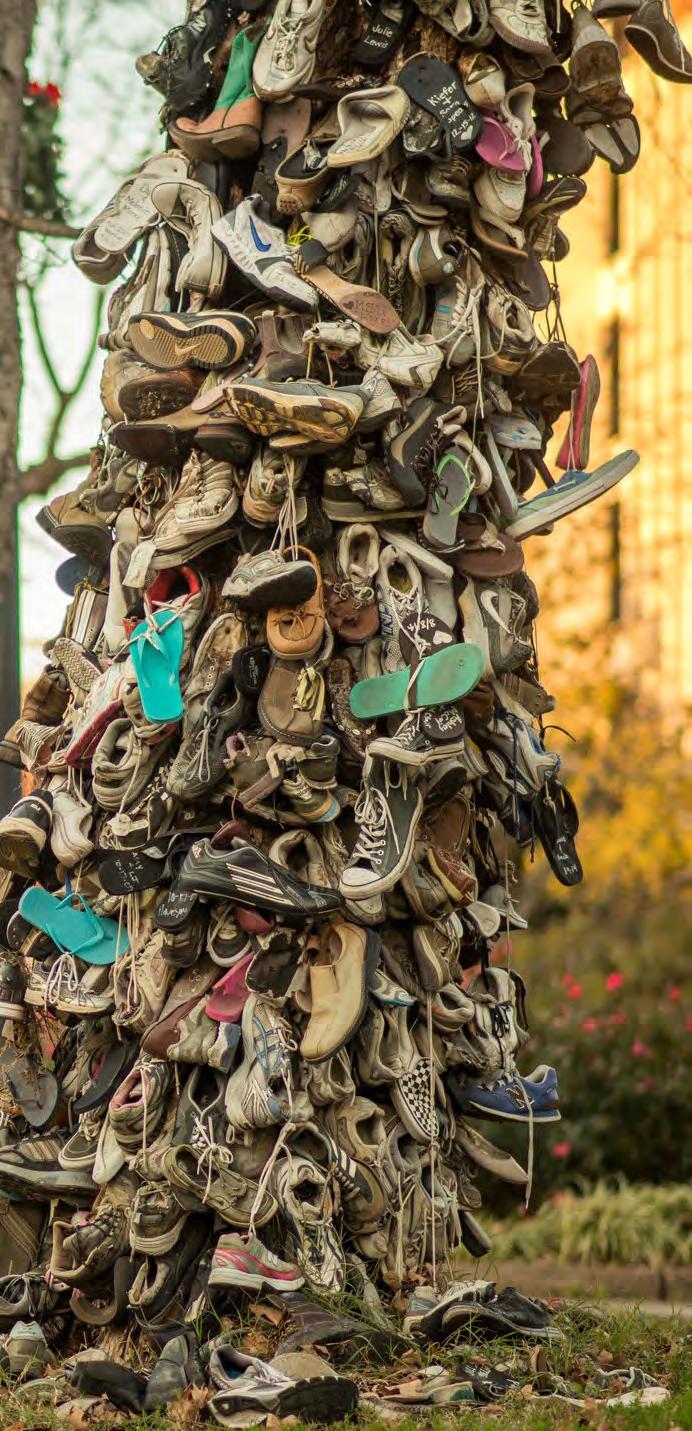
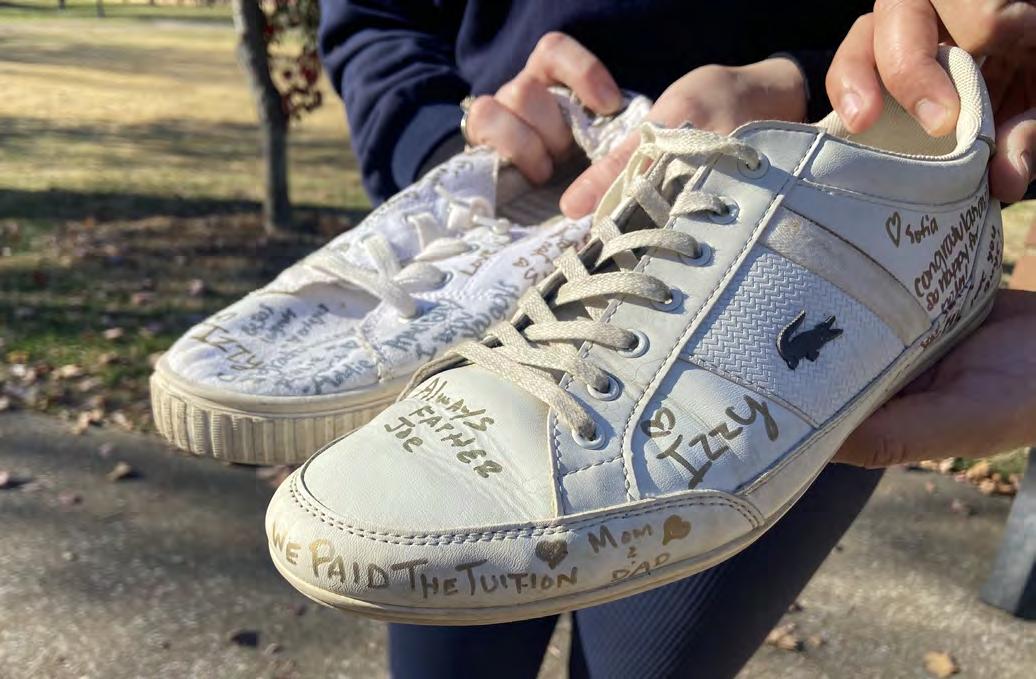
A tradition for more than 60 years, Racer “sole” mates who meet on campus hang their shoes on the Shoe Tree, which is said to bring them a lifetime of good luck. Murray State’s shoe tree is believed to have started in the mid1960s. However, it didn’t quite catch on and become a tradition until decades later. It is a way for two people who met on campus to illustrate their love and devotion. Couples usually write their anniversaries on their shoes, and it is common for alumni to return to nail a baby shoe to the tree when they’ve started their family.
|| murraystate.edu
In Pippa Passes, the Christmas Pretties Program is one of Alice Lloyd College’s most cherished traditions, dating back to 1917, when Alice Lloyd and her mother, Ella Geddes, learned that few families on Caney Creek had ever celebrated Christmas. Determined to change that, they wrote to friends in Boston and across the Northeast, who sent dolls, toy trucks, mittens, candy, ornaments and other “pretties” that students carefully wrapped and delivered— sometimes on horseback—to families throughout the mountains. That spirit of service continues today as ALC students spend months preparing nearly 3,000 gifts to distribute at elementary schools, ensuring that the joy first shared on Caney Creek more than a century ago continues to reach new generations.
|| alc.edu
Berea College’s Mountain Day, which celebrated its 150th anniversary last October, is a time for students to celebrate nature and environment— specifically, exploring the Appalachian culture that is a key element of Berea College’s mission. The celebration of Mountain Day involves hiking up Indian Fort Mountain, located within the 9,000 acres of the college’s forest. Students are encouraged to hike up to the East Pinnacle before dawn to greet the sunrise atop the mountain.
Mountain Day activities include performances by many of the college’s dance, ensemble and choir groups.
|| berea.edu

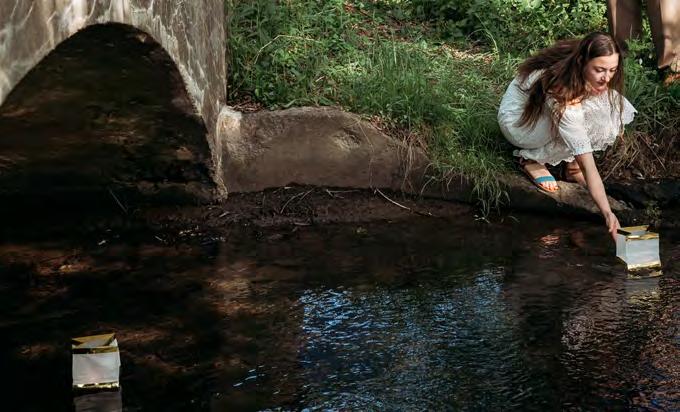

Held each May, the Night of Lights marks the end of the academic year at Midway University. Students gather to say their farewells and light small candles to float down the stream by the Path of Opportunity on campus. Legend has it that if the candle stays aflame while passing beneath the bridge, one’s wish will come true.
|| midway.edu

One of Centre College’s most cherished traditions takes place just moments before commencement begins. As seniors proceed across the Danville campus, faculty and staff line the path in front of Crounse Hall, applauding the soonto-be graduates and honoring the hard work, dedication and perseverance that shaped their four years at Centre.
|| centre.edu
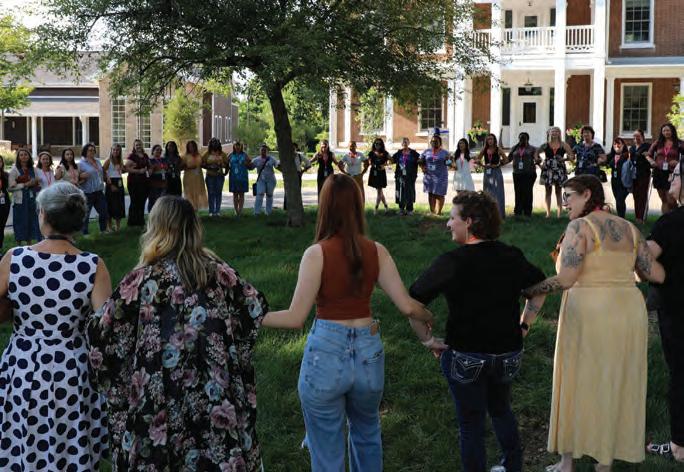
Frontier Nursing University, originally in Hyden and now in Versailles, has been home to the Circle-Up tradition for decades. At the end of each campus experience, students, faculty and staff join hands to form a circle. Each person in the circle is invited to reflect or share their thoughts, emotions or takeaway points from their experience. Circling up is based on an old Quaker tradition of taking a moment at the end of the day to share members’ thoughts with the community. As part of the FNU community, circling up continues virtually from home as a show of support when needed.
|| frontier.edu

Like clockwork, Campbellsville’s homecoming football game kicks off at 2:01 p.m. in honor of former head coach Ron Finley. The varsity coach from 1988-2002 established “Finley Time,” which involved starting a practice at 4:31 or a meeting at 8:01. His theory was that the players could remember the odd time better.
|| cambellsville.edu
Kentucky Christian University in Grayson has a longstanding tradition of hosting Grounds and Sounds, a monthly coffeehouse held in the McKenzie Student Life Center that features hot coffee and live music. Once each semester, the event is combined with Donald’s Pancake House, named after Donald Damron, vice president of student services, where pancakes and sausage are served hot off the grill—making it a favorite tradition among students and staff.
|| kcu.edu
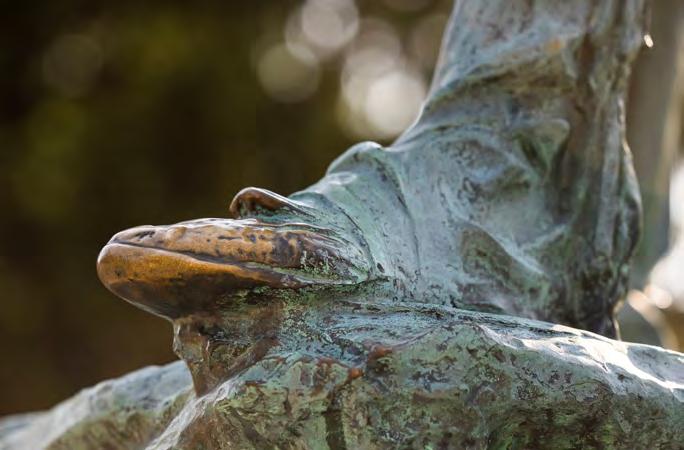
Before exams at Richmond’s Eastern Kentucky University, students don’t just study, they give Daniel Boone’s toe a quick rub for a dose of good luck. The bronze statue of explorer Boone has been standing on EKU’s campus outside the iconic Keen Johnson Building for almost 60 years. His left foot shines more brightly, a result of the many rubs by students, alumni and visitors.
|| eku.edu
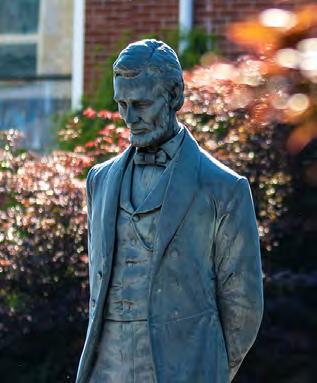
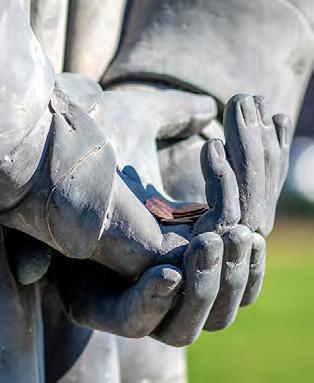
At the University of the Cumberlands in Williamsburg, a beloved statue of Abraham Lincoln has stood outside the Gatliff Administration Building since 2014. The statue stands with his hands cupped behind his back. On the way to exams, students drop a penny into Abe’s hands hoping he will bring them good luck.
|| ucumberlands.edu
For 21 years, Asbury University in Wilmore has hosted the Highbridge Film Festival. The festival showcases curated student films judged by industry professionals and celebrates the creativity that defines Asbury’s School of Communication Arts. Students run every aspect of the event, from promotion to production, making it both a celebration and a hands-on learning experience. Highbridge is one of Asbury’s most anticipated annual gatherings and a testament to the storytelling spirit woven into campus life. || asbury.edu.


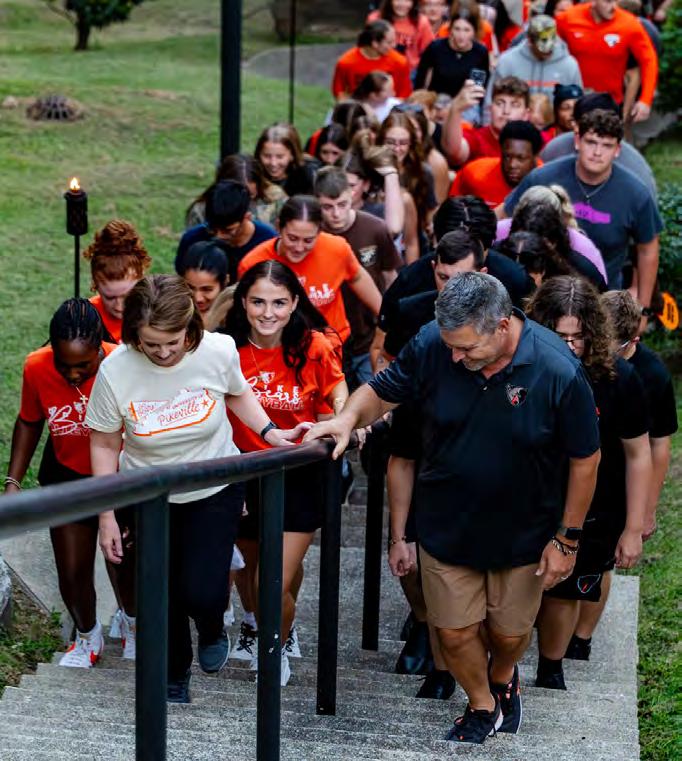

The Old Fort Bridge at the top of the hill on Western Kentucky University’s campus in Bowling Green was built 100 years ago to allow students to cross a former Civil War embankment that once was used by both Union and Confederate soldiers. Through the years, a legend developed that if a couple visited the bridge on their first date and shared their first kiss there, they will be together forever.
|| wku.edu
During students’ first week on campus, they participate in a ceremony called “The Climb.” The president and the vice president of academic affairs lead students up “the 99” (UPIKE’s iconic stairs that lead to upper campus) to signify the beginning of their college journey. At the top, they are welcomed and celebrated by family, friends and alumni. They also receive a “first year” pin to commemorate their participation in the tradition.
Four years later, students participate in a complementary tradition called “The Next Steps.” Graduating students walk down the 99, signifying the next chapter of their lives. At the base of the stairs, they are greeted by family and friends and presented with a UPIKE alumni pin. || upike.edu
At Union Commonwealth University in Barbourville, freshmen take part in the C.I.R.C.L.E.S. ceremony during new student induction each fall. The ceremony introduces students to Union’s core values—Celebration, Integrity, Responsibility, Civility, Lifelong Learning, Engagement and Spirituality—and students commit to upholding these values throughout their college experience. During the ceremony, each student receives a medallion as a tangible reminder of this commitment. They keep it with them their entire time at Union.
At baccalaureate during commencement week activities, students “bring it full circle” by presenting their medallions to someone who has had a profound impact on their journey—whether a professor, staff member or even family member—symbolizing gratitude, growth and the lasting influence of the Union community.
|| unionky.edu
To learn more about the Kentucky Youth Poet Laureate Program, visit grackentucky.org/ky-ypl or contact Jordan Campbell at director@grac.org.
A Mount Sterling arts organization helped launch Kentucky’s Youth Poet Laureate Program and gave young writers a public voice
BY TOM MUSGRAVE
Jordan Campbell, executive director of the Gateway Regional Arts Center in Mount Sterling, was interested in creating a youth poet laureate program for Montgomery County, so he contacted Urban Word, the New York-based organization that administers the National Youth Poet Laureate Program, to find out how to get started.
Campbell received a reply from Michael Cirelli, founder of the National Youth Poet Laureate Program, asking him to “think bigger.”
Urban Word was piloting a new program for statewide youth poet laureates, Cirelli wrote, and asked Campbell if the Gateway Regional Arts Center would be interested in being the statewide sponsor for a Kentucky Youth Poet Laureate Program.
The “yes” was immediate, though Campbell admitted he wasn’t sure the national program had found the right organization to lead the charge in Kentucky. “In a phone call, I said, ‘Are you sure you want to go with us? We’re less than a million-dollar organization, and we’re growing, but there are larger organizations in the state that I think would have more clout in the literary arts world,’ ” Campbell said.
The National Youth Poet Laureate Program organizers believe organizations like the Gateway Regional Arts Center have more capacity to administer the statewide youth poet laureate programs than some state-level organizations. “Some of those [state level] organizations, or government organizations, are often overrun, or they already have a really strong poetry initiative,” Campbell said. He cited as an example the Kentucky Arts Council,
which administers the statewide poetry recitation competition Poetry Out Loud and leads the selection process for the Kentucky Poet Laureate program for adult professional writers.
“So, they said they actually seek out organizations like ours that can handle the capacity of the youth poet laureate program, and also where it would sort of be a flagship program
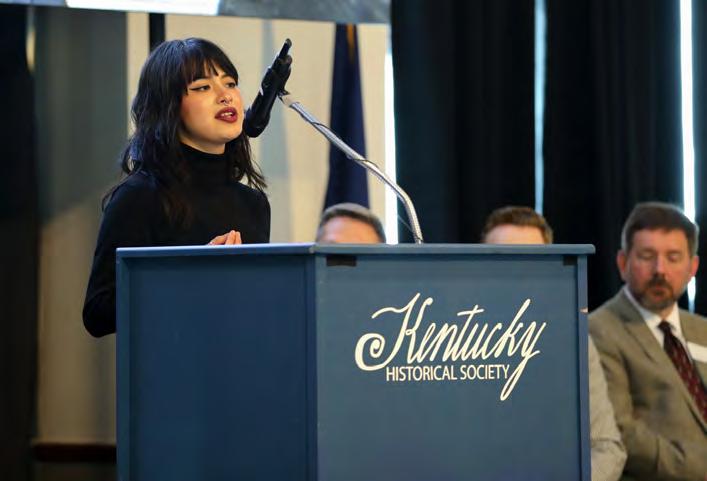
The Kentucky Youth Poet Laureate Program operates under guidelines set forth by the national program. Applicants must be between the ages of 13 and 19. Applications may be submitted through Feb. 28. The youth poet laureate usually is announced in April to coincide with the announcement of the National Youth Poet Laureate and Kentucky Writers’ Day.
for us,” Campbell said. “And so, we were very grateful and excited to take that on.”
Campbell was interested in bringing a youth poet laureate program to Kentucky long before he became the Gateway Regional Arts Center’s executive director in 2022. As a graduate student at Harvard University in October 2018, he met Amanda Gorman, who had been named the first United States Youth Poet Laureate a year earlier.
Gorman entered the national spotlight more than two years later reading her work at President Joe Biden’s inauguration. But in October 2018, Gorman, then a Harvard undergraduate, was making an impression on Campbell. “We were there in Harvard Yard, and Amanda Gorman spoke, and I was like, ‘Oh my god. She’s going somewhere. She’s amazing,’ ” he said.
Campbell spoke with Gorman after and found out she was the National Youth Poet Laureate and learned a little more about the program from her. When he returned to his hometown in 2022, he brought with him the intent to shine a light on the young writers there.
Campbell said that after the inaugural year, 2023, the number of applications has decreased, but the quality of applicants’ submitted work has improved. “I think that means people know it’s an opportunity now, which is great,” he said. “The word is getting out, and those people who are the cream of the crop across the state—who are really excited and interested in poetry and the written word—are getting ready for this throughout the year. They’re honing their craft, they’re editing their poems, they’re really figuring out what they want their portfolio to be when they submit.”
Literary excellence, though, is only 50 percent of the application. Being the youth poet laureate involves more than good writing. The program wants to see applicants demonstrate community involvement and leadership. “A core tenet of the program is identifying students who will represent the Commonwealth of Kentucky in a manner that will bring honor and pride to us through poetry but also through their leadership,” Campbell said.
Being youth poet laureate carries with it a component of ambassadorship for the literary arts. Like the Kentucky Poet Laureate, the youth poet laureate must
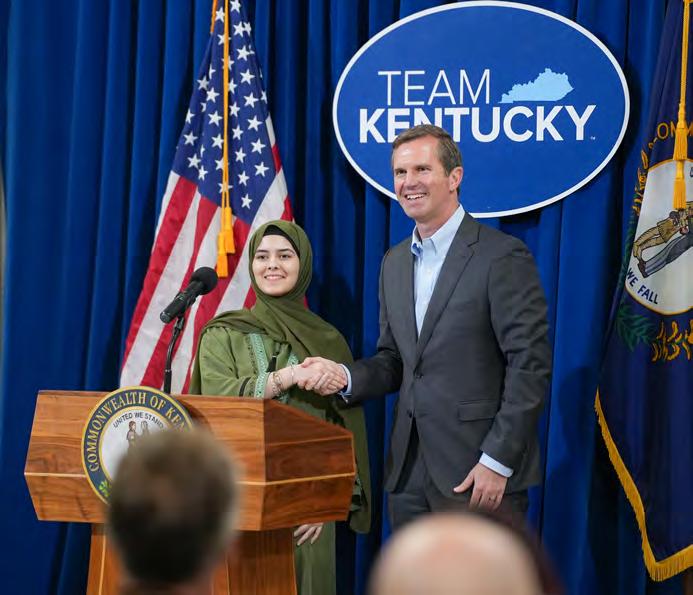
travel, as their schedule allows, to libraries, community centers, schools and other venues across the state. “I think that this program is saying it’s not just about your poetry,” Campbell said. “It’s about the person behind the poetry, and we want you to be a good citizen as well, if you’re going to represent the state.”
Since its inception in 2022, Kentucky has produced three youth poets laureate. The inaugural Kentucky Youth Poet Laureate was Amy Roblero-Perez of Bardstown, who served from 2023-24. She was succeeded by Maira Faisal of Florence for 2024-25. The current Kentucky Youth Poet Laureate is Esme Morris, a junior in Lexington’s School for the Creative and Performing Arts, where she studies in the literary arts program.
Faisal and Roblero-Perez currently are undergraduate students at Northern Kentucky University and Swarthmore College, respectively. Faisal is a senior, double majoring in biological sciences and English, and Roblero-Perez is a sophomore majoring in sociology and anthropology. Serving as Kentucky Youth Poet Laureate
gave them insight and validation that each said they might not have gained otherwise.
Faisal said the honor helped allay a sense of impostor syndrome. As she began taking stock of her literary accomplishments, the identity as a writer and poet took root. It also made her realize that, even though her academic leanings are toward biological sciences, she still has things she wants to say as a poet. “I had always really loved [studying English], and I never wanted to neglect it, but I didn’t want to make it into a career,” Faisal said. “So, it kind of made me reflect and say, ‘No, this is really important to me, and I’ve put a lot of time [into it], even though I didn’t have to at all.’ So, I think it just made me more appreciative of my accomplishments and of my appreciation and love for English as a whole.”
Roblero-Perez said that being named youth poet laureate was the deciding factor—“the final sticker label” as she put it—that nudged her into identifying as a writer. She also learned what it looks like to be a working artist in Kentucky by traveling to places like the Hindman Settlement School in Knott County, a frequent destination for professional writers seeking continuing education and inspiration. “I think getting to meet all these other people
that also are working—whether it be in a different art form, dance or theater—helped me to definitely appreciate what’s going on all over Kentucky,” she said.
For current youth poet laureate Morris, the honor has been a validation. “I felt like I was actually a professional poet, because I was getting up there, and I was reading my stuff, and I was explaining everything, and people were looking at me like my words mattered,” Morris said. “It’s not something you experience, especially if you’re writing for a grade.”
Both Faisal and Roblero-Perez, having completed their terms, count their attendance at Kentucky Writers’ Day as highlights of their respective tenures. Each of them read from their work, Roblero-Perez in 2024 and Faisal in 2025. In addition to meeting Gov. Andy Beshear and several of Kentucky’s former poets laureate, Faisal spoke with then-incoming Kentucky Poet Laureate Kathleen Driskell at the luncheon after the 2025 ceremony.
“I got to sit with her for an hour and just, like, talk to her about poetry and life and writing and what inspires her,” Faisal said. “You don’t get that anywhere else. So that was really cool. She’s talking to me like an equal.”
Roblero-Perez said she remembered the positive

reaction she got to her reading from the former poets laureate in attendance, including Frank X Walker, Crystal Wilkinson and George Ella Lyon
Morris, who will attend and read at Kentucky Writers’ Day in May, is excited for the opportunity. “I’m just gonna fangirl over everyone there,” she said. “It’s gonna be great.”
Faisal, now more than a year after her term concluded, recognizes that the title will follow each of them forever. She continues to accept invitations to open-mic events and poetry discussions in the Northern Kentucky and Cincinnati area. Similarly, Roblero-Perez has taken her experience into spoken-word clubs at Swarthmore and is exploring the intersections of English and sociology in her studies.
For Campbell, those trajectories—from impostor syndrome to confidence, from student to ambassador, being able to have a conversation about their work and that of others—are precisely the point. “How do you share with people who may disagree with what you’re writing about or your interpretation?” Jordan asked. “How do you have the conversation around work that sparks tension?
“We want to create artists who are thinking about all of those things.” Q


Louisville’s Speed Museum honors Kentucky’s Black artisans who contributed to the cause of liberty in the 19th century
BY JACKIE HOLLENKAMP BENTLEY
In the throes of the Civil War, on March 2, 1863, a call crafted by writer and abolitionist Frederick Douglass was put out to enslaved and free African American men to fight for the Union.
“What is life without liberty? We say that we have manhood; now is the time to prove it. A nation or a people that cannot fight may be pitied, but cannot be respected. If we would be regarded as men, if we would forever silence the tongue of calumny of prejudice and hate, let us rise now and fly to arms!”
In Louisville, William Bell answered that call in November 1864 and offered his carpentry skills to construct barracks at Fort Smith in Smithland (Livingston County). He continued his carpentry work in the years
following. Bell married and raised two children.
John Collier, who was enslaved at the time, took advantage of the promised freedom if he joined and contributed his blacksmith expertise to the cause. He later became a prominent minister in Kentucky, preaching at the AME church in Barbourville.
Anderson Fields, an enslaved stonemason from Danville, joined the military in the waning moments of the war but continued to serve his country until he mustered out in 1876.
Initially, these men were just names on historical records who joined the Union Army in Kentucky, but a new exhibit at Louisville’s Speed Art Museum brings them to life.
BY JACK BRAMMER
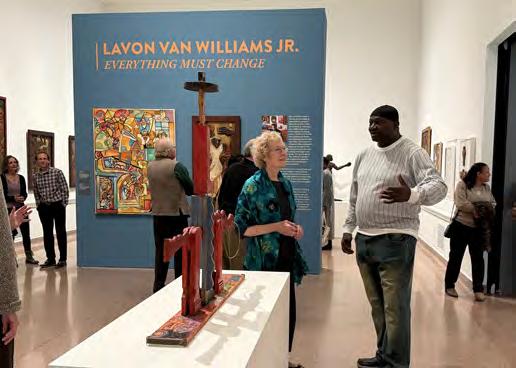
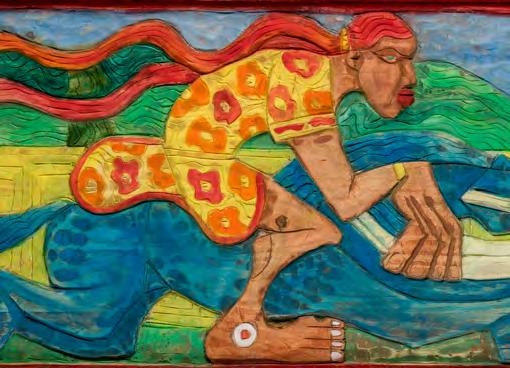
LaVon Van Williams Jr. used his big hands to bring glory to the University of Kentucky Wildcats men’s basketball team, scoring 226 points and grabbing 501 rebounds from 1976-80 and helping Kentucky win its fifth national championship in 1978 against Duke University.
Today, the 6-foot, 7-inch Williams grips a chisel, mallet and brushes in his work studio on Jefferson Street in Lexington to create colorful, dynamic pieces of art as a wood-carver.
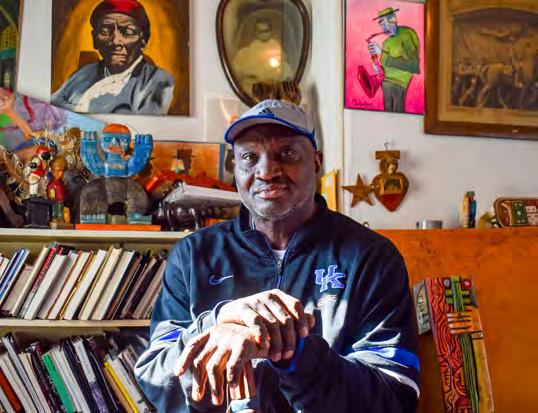
community. Edna Williams kept many pieces of Black sculpture in the family’s home.
“If I ever had an art teacher, it was my mother who instilled in me her love of art,” LaVon said.
His carvings and panels rattle the emotions. He depicts jazz musicians, dancers, lovers, religious leaders, community life, even spirituality. Though grounded in the African American experience, Williams’ work has universal appeal. “It is based on being an American and being human,” he said.
Williams calls himself “an urban
artist.” He is self-educated. His work has found widespread acceptance, especially in numerous exhibits across the country, and is constantly growing. His exhibit, Everything Must Change, is at the Speed Museum in Louisville until March 6.
Williams was born in Lakeland, Florida, in 1958. His father was a jazz aficionado and passed his love of music on to his namesake. LaVon grew up with strong ties to his mother’s hometown of Sanford, Florida, a close-knit, segregated
His brother, Dave Williams, taught him to carve toys from wood when LaVon was 7. He excelled at it and never stopped. “I took right to it. It was my passion, and I was gifted. Some people said I was a basketball player, but I always felt I was an artist,” LaVon said. “Many people didn’t understand why I spent so much time with my art.”
After his parents divorced when he was 10, LaVon moved to Colorado with his mother. His basketball prowess drew attention, eventually landing him a spot on UK’s roster.
Williams did not stop painting and carving at the university. “It was the only way I could keep my sanity as a basketball player at UK,” he said with
a laugh. “It relaxed me. Nothing distracted me from it.”
After college, he played professional basketball for a few years in the United Kingdom and Japan. He was doing more painting than carving. On the advice of a mentor, he focused on carving and found his specialty. He first draws his subject and then masterfully shapes the image into a piece of wood. He uses power and hand tools to carve and finishes with vibrant paints.
Williams’ first sale was to a Washington, D.C., attorney in December 1983—three pieces depicting street life. His lifelong career was set. Awards and public attention followed, and they continue.
In 2006, the artist received the Kentucky Governor’s Award. In 2009, a retrospective of his work, Rhythm in Relief, was held at the Kentucky Folk Art Center in Morehead, and the exhibit traveled extensively in Kentucky and Ohio.
Williams’ works have been on display at the Hickory Museum of Art in Hickory, North Carolina; the University of Kentucky Art Museum; KMAC Museum in Louisville; the Smithsonian Anacostia Community Museum in Washington, D.C.; and New York’s Outsider Art Fair.
The current exhibit at the Speed Museum covers Williams’ practice from the late 1980s to today.
Williams summed up his passion in a personal statement on his résumé: “We are a work of art. I work to capture the visual spirit and flare that reflect the art in us. Art for me is a further glance at what is and what can be in life. I want to accentuate and preserve the humanizing connection to art. My passion is to capture our spirit, flare and movement in artful presentation.”
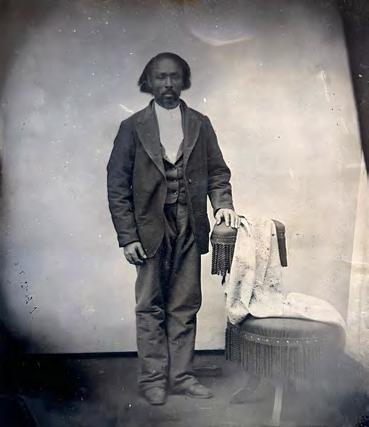
continued from page 43
We Will Rise! Kentucky Black Artisans and the Civil War tells their stories, culled from three years of research by Scott Erbes, the curator of the exhibit.
“You’re talking about individuals who really have been forgotten in a lot of ways … and until I started working on this a few years ago, mostly anonymous,” Erbes said. “[It’s] stories of these men who were skilled artisans and then what happened to them during the war. Did they continue in their trade? Many of them did. But did the opportunity of freedom give them a chance to do something new with their lives?”
Erbes began the project after discovering in a history book footnote that recruits listed their trades when they signed up.
“I was so excited to start working on this when I discovered that there were these records in the National Archives … and that alone, to have as an archival record of artisans—particularly free and enslaved Black artisans in Kentucky in the 19th century—blew my mind,” he said.
“From that, it’s just a slow process of sitting at your computer finding their Civil War service records, which are fairly easy to find, and then looking for their pension records, which is a little more plodding ... because most of them aren’t digitized in the National Archives.”
After working with a firm in Washington to pull the documents, Erbes pored through the pension records, some of them nearly 200 pages long for just one veteran.
“For Black veterans, it was doubly hard to get their pension,” Erbes said. “Even when they did … they were often at a lower level than [those of] white veterans with the same service level. And they had to fight twice as hard to get it, too.”
Erbes said that was due to bureaucratic hurdles for these men to prove their identities to government agents. Many changed their last names since they initially were named after their enslaver.
“I mean, they would apply over and over and over,” he said. “It was very
The Speed Art Museum created a website containing the enormous volume of information Erbes gained over the past three years. It can be found at www.speedmuseum.org/exhibitions/we-will-rise
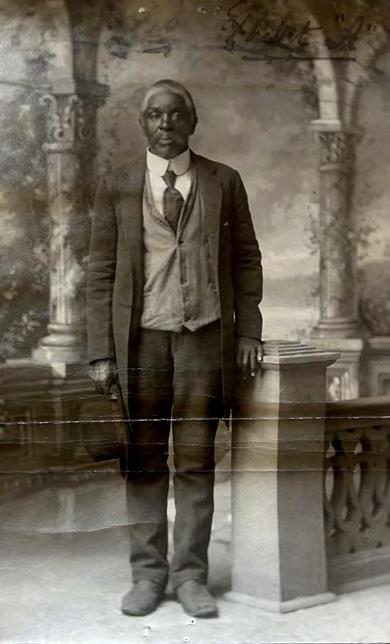
much a sort of an institutionalized racist view in the Washington, D.C., pension office about whether ‘can you trust the word of these men that they fought?’ ”
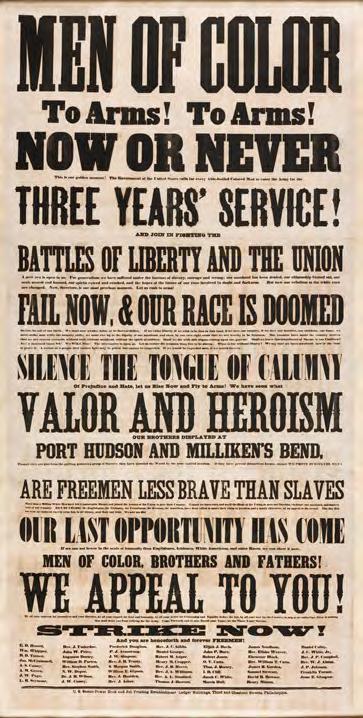
Those documents detail the lives these veterans led after the Civil War. “The details in their pension records were very specific, very personal,” Erbes said. “Like who their children were, the children they have, which children survived childhood, who they were working for, or did they start their own business after the Civil War?”
Now, everyone can know.
“To my knowledge, this is the first exhibition that I’ve
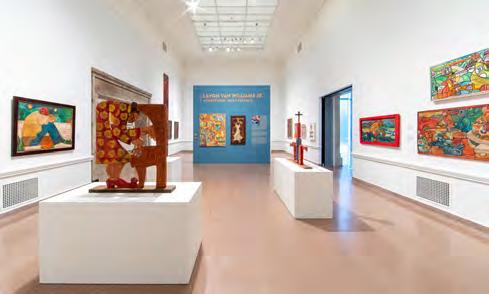
encountered in Kentucky focused on this larger group of Black artisans who served in the Civil War, who are patriots,” he said.
•
• •
It’s not a regular art exhibit. The work of these artisans was more pragmatic. They were blacksmiths, shoemakers and construction workers. But Erbes didn’t let that stop him from getting their stories out there.
“Museums, which are object based, also need to account for the presence of absence,” he said. “Just because we don’t have the objects, you can still share with our visitors this history and these life stories of skilled artisans.”
Visitors to the exhibit will be engaged visually via historical photographs, reproductions of historical photographs, data visualizations, maps and word clouds, so that viewers can “leave with a memory of just one of those men in the back of their head and what [the artisans] went through and think about how that might affect the way they think about their life today,” Erbes said.
QR codes linking to additional resources will be located throughout the exhibit for further personal research. Q
The 1901 Kentucky Derby was the 27th running of the Kentucky Derby. The race took place on April 29, 1901.
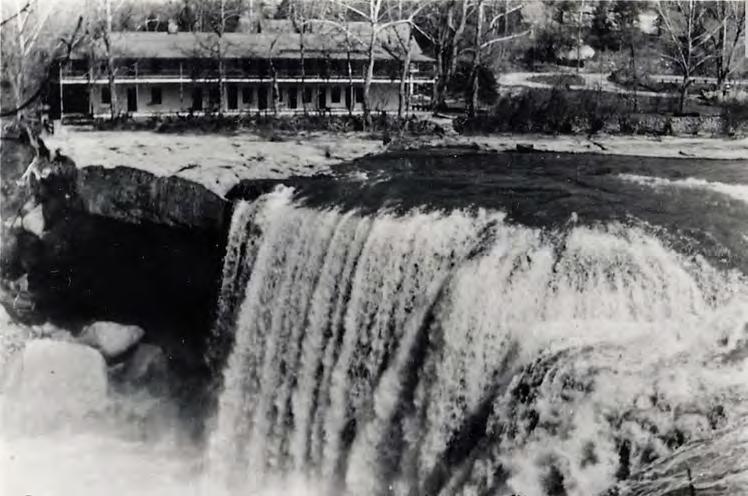
It is hard to believe this hotel sat on the edge of Cumberland Falls for decades. Built in 1875 as the Cumberland Falls Hotel, it was renamed the Brunson Inn in 1902. In the early 1930s, the name was changed to Moonbow Inn to reflect the monthly phenomenon of a rainbow that can be seen at night when the moon is full. Its time next to the 68-foot falls came to an end when the hotel burned to the ground on March 13, 1949.
One-Year Subscription to Kentucky Monthly: $25
Letters may be edited for clarification and brevity.
I enjoyed the article about the War of 1812 (December/ January issue, page 52-53) and would like to add a name to the list of Kentucky counties and communities named for veterans of that war. Though not a Kentucky native, the hero of that war was Oliver Hazard Perry, for whom my hometown Hazard, the county seat of Perry County, and Perryville in Boyle County, where I now reside, are named. Bill Owens, Danville
Correction: The list of places named for War of 1812 veterans in the above-referenced article should have not have included “Wickliffe County,” as Wickliffe is the county seat of Ballard County.
I really enjoyed Mike Leising’s story on Newport (September issue, page 44). The part that discussed the effort to blackmail George Ratterman and force him out of the race for sheriff in 1961 by photographing him in bed with a stripper brought back a memory for me.
One of the best parts of growing up in Frankfort in the 1960s was that many of my friends were the children of politicians or those otherwise involved in Kentucky politics. I spent many days at the home of Henry H. Carter, then secretary of state, and I remember vividly the scandal that arose out of the Ratterman case.
The unnamed stripper in the story was Juanita Hodges, who danced under the name April Flowers. When she was scheduled to testify before a federal grand jury in Lexington on June 12, 1961, she brought a commission as a Kentucky Colonel, properly signed by Lt. Gov. Wilson Wyatt and Secretary of State Henry Carter and issued to “Hon. Juanita Hodges.” She stated that a Lexington judge had seen her act in a Newport nightclub and asked her if she would like to be a Kentucky Colonel. She didn’t disclose the name of the judge.
On June 13, 1961, Kyle Vance, a staff writer with the Louisville Courier-Journal, reported that Wyatt revoked her commission. Carter took full blame for the incident but said he couldn’t recall who made the initial request on her behalf and refused to release any further information.
To my knowledge, no one was ever able to determine the name of the Lexington judge who procured the Kentucky Colonel commission for April Flowers … but someone knows!
Bill
Stone, Louisville
Share your stories about growing up or how things used to be, and your memory could be included in an upcoming issue of Kentucky Explorer
Requirements:
n story must have taken place in Kentucky; please include county or town.
n must include the era or decade the story happens.
n must be prior to 1980.
n must be less than 800 words.
Tell us about a heartwarming, funny or memorable holiday from years ago. This could include giving or receiving a favorite present, a treasured family tradition, or a description of what others did to make your holiday magical. Please use the requirements above.
Also, does anyone remember this practice? In the 1950s, folks sent holly branches to churches in New York for them to use as Christmas decorations. In return, the church members helped out the family by sending treats for the children and items the family might need. One reader recalls receiving a stack of comic books that he sure appreciated. Do you have memories of this?
Please send via email to deb@kentuckymonthly.com or mail (hand written is fine!) to Kentucky Monthly, Attn: Deb Kremer, P.O. Box 559, Frankfort, KY 40602.
By Bobbie Bryant, Jefferson County
The holiday season has come and gone. Our home always serves as the gathering place for the family. Some come from distant lands, while others live just a stone’s throw away. This celebratory gathering is a time where, at any moment, you might hear squeals of laughter or perhaps see a tearstained face as we share stories from our busy lives with one another. It also is a time when we borrow customs and traditions from loved ones that no longer walk among us.
The feeding frenzy that is our family’s tradition is packed into three full meals a day. And let’s not forget to crowd in the snacks, appetizers, cocktails and desserts. It is a repeat performance of delicious gluttony that we pass from generation to generation.
whom we prepare the food. The preparation and serving is our tribute to those who taught us by their example and shared recipes, decorating tips and holiday customs.
It was commonplace for me to help my elders as they toiled in their warm and inviting kitchens. I was taught as a child how to stir the pot and add the seasoning. Rarely did we measure ingredients. Our senses gauged the proper amount by touching, watching and tasting. Throughout the ages their kitchens served as the central heartbeat of the home. All good things emanated from there.
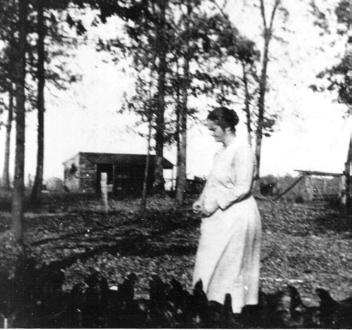
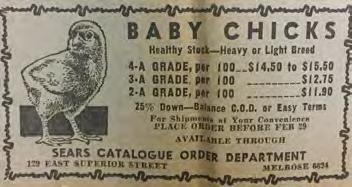
I marvel at how my foremothers had the physical stamina to prepare and serve holiday meals for our family. Even in their advanced years, they insisted on everyone coming to their house for the big celebrations of Thanksgiving, Christmas and Easter. Each time, they shooed us out of their kitchen when we tried to help in the preparations or the cleanup.
It was their way of showing love.
I am incredibly honored to carry on a tradition that transcends the ages. Planning, preparing and serving a traditional holiday meal is most certainly an art form, improved upon over time with patience, perseverance and practice.
In its simplest form, it is known as cooking. In its spiritual form, it is love, which is conveyed to those for
I recall the chirping baby chickens in my great-grandmother’s kitchen. She ordered them every year through a mail-order catalogue, and they were delivered by the mailman. Like other women in western Kentucky, she contributed to the family’s income by raising chickens in order to sell eggs. Both country stores and city businesses took eggs or chickens in exchange for payment for items or services, even newspaper subscriptions.
I ran to her kitchen every afternoon after school to touch their soft feathery down. Mama Brewer kept them in a brown cardboard box next to the refrigerator to catch the warm air from underneath.
In time, the chirping baby chicks could create quite a noisy commotion as they grew large enough to be put out in the hen house. Pecking around the yard and squawking at one another; chickens were a staple of the family farm.
I can still hear the soft cluck, cluck, clucking of those hens. They provide a gentle lullaby, playing softly in my memory.
2 small potatoes, diced
1 medium onion, chopped
Butter for sautéing
1 cup breadcrumbs
½ cup water
3-4 slices leftover beef, chicken or pork roast
¼ teaspoon each of garlic powder, salt, pepper, sage and water
1. Sauté onions and potatoes in butter-coated skillet until all are tender.
2. Add 1 cup crumbled bread (Mama Brewer used her leftover biscuits) and ½ cup water.
3. Stir in leftover meat and seasonings.
4. Simmer until liquid is gone. Serve hot.
Send memories to Deborah Kohl Kremer at deb@kentuckymonthly.com or mail to Kentucky Monthly, Attn: Deb Kremer, P.O. Box 559, Frankfort, KY 40602.
“I
By Kurt Ford, Ohio County
The Big House was on Centertown Road, between Hartford and Centertown, in Ohio County. It was built too close to Ky. 69—so close that 6 inches of the front porch was state right-of-way. So close that family pets had a high mortality rate.
So close that Bobby Brown missed the curve below the house on his way to work and almost drove himself and his passengers into the front parlor. He probably would have, too, if Kurt and Brenda’s new car hadn’t been there playing defense for the sleeping family.
I’m not sure when it was built, that big house on Centertown Road. It was 1911, I think, when Sam Buck was about a year old. It was built by John Sam Ford Harry D. Tinsley once told me, “Your grandfather, Mr. John Sam, went out to Col-o-ray-do and came back rich and built that big house on Centertown Road.”
I’m not sure about the “rich” part, but John Sam and Miss Sally did go out to Colorado, where Aunt Laura was born. The only other thing they came back with, as far as I know, was a recipe for salsa. We all called it Grandma Ford’s Hot Tomato Relish or just “hot stuff.” We still make it when we can.
They came back from Colorado, opened a coal mine or two, and built that big house on Centertown Road. They had five children: Laura, Lockett, Beatrice, Sam Buck and Isabell
There was another house built on property they owned across Ky. 69. John Sam called it the weaning pen. It was where the children lived after they got married but before they could move into a home of their own.
My memories began when we still lived in the weaning pen in the mid-1940s.
The Big House had a cool, concrete wraparound porch. It wrapped about a third of the way around the house, but it wrapped all the way around our lives—especially in the summertime.
There was a day bed and a swing and chairs, where you could sit and sip iced tea or lemonade while you talked and
joked and laughed with each other. There was an endless parade of family and friends who came to see us. Reception on television wasn’t good below that big hill in front of the house, but reception of real life was just fine.
Once we watched as the Everly brothers (no, not Don and Phil but Squirt and Eddie Gill) tried in vain to run over Nero, our car-chasing dog. Nero had been hit many times but always seemed to survive and take back up where he left off while recuperating. That day, the brothers were determined to get him. One came from the Centertown side, while the other came from the direction of Hartford. The dog simply let one pass, then chased the other. They tried to get him all afternoon but never even came close. I’m not sure if the dog was smarter than his tormentors or just less inebriated. At any rate, the canine was superior that day.
One of the more improbable things we witnessed was Nero playing with a mallard duck who had taken up residence in our pond and gave up the crazy North/South migration. The dog chased the duck. Then the duck chased the dog. One day, the duck got too close to the road and was hit by a car and killed. Nero lay with his head on his fallen friend’s body until Dad came home and took the duck away. The dog mourned his friend for a long time after that—or so we all believed. Truth is stranger than fiction.
Our family no longer owns the Big House. It was sold piece by piece to new folks so that they could build their own memories. But my family still has our own memories—different perhaps, as we all are different—but all based on the same foundation.
There are few of us left who even consider that particular piece of property “The Homeplace”—far too few of us. And someday—not too soon, I hope—the last of the family reserve will pass, and someone will read the obituary in the county paper and say, “Now, who were they? Where did they live?” and someone else will say, “Oh, you know, they were kin to the Fords who lived in that Big House on the Centertown Road.”
This story was submitted by Kurt’s wife, Brenda. Kurt passed away on Oct. 20, 2024.
By Lorna Chandler Tribble, Richmond
My dad was a tenant farmer and a “preacher man.” We lived a quiet country life in a section of Madison County called Poosey Ridge
In the late 1940s, when I was around 7, my dad became pastor of a church in a part of Garrard County named Cartersville. He served at Level Green Christian, a small white, wooden country church. We went there every Sunday and stayed all day for Sunday night service.
Different families had us for Sunday dinner. My sister, Joyce, and I enjoyed this because some of the girls our age went with us, which meant an afternoon of play.
One sweet lady, Mrs. Williams, lived in a big house that sat on a hill. We thought this was a grand place. One
By Shelby Roy Hopkins, Stanford
Spending most of my formative years in the rural enclaves of Central Kentucky, I found myself surrounded by a host of country stores. Many of the little stores were poorly lit and could never be described as “sanitary” by any definition of the word.
One staple these stores had in common was pickled bologna, usually sitting in a one-gallon glass jar on the store’s counter. It was coiled up much like a rattlesnake in the confines of its jar with a voluminous metal lid. The customer told the storekeeper how much of the delicacy they wanted, often using terminology such as, “Cut me off about 6 or 8 inches of it.”
By Jolene Lord, Bowling Green
Children in the tobacco warehouse on sale day in the late 1940s was a rare sight. The massive building was cold. The distinct smells of the cured burley and strong cigarette smoke made it evident that this place was a man’s world. So how was I, an 8-year-old girl, witness to a tobacco sale?
In Springfield in Washington County, my daddy, David Curtis Thompson, worked in the small, heated office of a tobacco warehouse, where the weight was recorded by each producer’s name and eventually the amount of the sale. I was with him on sale day for our crop. He saw the
Sunday after lunch, she had all the girls come into her kitchen. On the counter was a shiny appliance we had never seen before. She put two slices of bread in, which soon popped out toasted brown.
We were amazed, because the only toast we’d had was in the oven on an iron pan or in a skillet on top of the stove. She left the room, leaving us with a loaf of bread. She told us to have fun, and we did. She also left butter and jam.
A little while later, my mother came in and was not happy. There was no bread and very little jam left.
We were thankful that Mrs. Williams laughed about the situation and said everything was OK!
With a large butcher knife located beside the jar, the storekeeper opened the lid and slid his hand down into the briny liquid to retrieve the bologna. Then, he pulled the tasty treat out of the brine until the desired amount was obtained. His sharp knife cut easily through the outer skin protecting the bologna. As the knife sliced through, the remaining bologna plopped back in the jar, splashing the liquid upwardly as it returned to its coiled position.
The pickled bologna was laid on the nearby scales, and the price was obtained. The smell from the brine permeated the entire little building. The storekeeper usually just wiped off the knife and his fingers with a paper towel before finishing the transaction with the customer.
entourage of bidders and buyers from the big tobacco companies coming down the row toward his neatly stacked hands of tobacco.
He thought it would be fun to set me on top of the stack (about 5 feet high), and he instructed me to say “Bid ’er up!” when the buyers got to our tobacco. A few cents on the pound could make a difference in the sale of the total crop. The bidders and buyers hurried down the many rows of neatly stacked burley, paying little attention to conversation around them.
I don’t know if a little girl in a blue coat with a fur collar made any difference, but Daddy and the tenant farmer were lighthearted and relieved that the hard work for an entire year culminated in a tobacco check to take to the bank.
By Donnie Corbin, Campbellsville,
Well A year has passed, and it’s that time again For Cupid to show up, with his cute little grin. Now everyone thinks, he’s the sweetest little thing, With his bow and arrows, and soft little wings.
But let me tell you about, what happened to me, And after you hear, I’m sure you’ll agree, This Cupid thing, can get way out of hand, And be the awful ruin, of a really honest man.
This all came about, as I’m about to say, When I went to get a card, at Walmart one day. I wanted to get, for my wife, a special Valentine verse, That told how much I cared, and thought about her.
I was standing in the aisle, where all the cards were at, When up from behind me, on my shoulder, came a pat. I turned around, with great surprise, to see who it could be, And there was little Cupid, floating right in front of me.
Now he was all dressed out, in a white and shining robe, And surely was the cutest thing, from his head down to his toes. His long blond hair was curly, and his little eyes were blue, And he said, “I’ve come to do this thing especially for you.”
On his back hung a quiver, with heart-shaped arrows there, And in his hand, a golden bow, made with utmost care. He said, “I’ll shoot an arrow, into the card you want to choose, “And your wife will feel the arrow, and know you love her too.”
So I picked the card I wanted, and felt good within my heart, And waited for little Cupid, to fling his magic dart. He loaded up his little bow, and was just about to start, When calamity came upon us, by way of a shopping cart.
Down the aisle came a screaming kid, with shopping cart in tow. And how he managed to get that cart, no one will ever know. But just as Cupid aimed his bow, to let his arrow fly, Was when the shopping cart struck him, and he shot the arrow high.
Now there was standing next to me, this little gray haired lady, And I could tell, from the sighs she made, that she was hoping maybe, She, too, could find the love of her life, someone to steal her heart, But that’s when things got out of hand, as she was struck with Cupid’s dart.
Now all of a sudden, all things changed, and I was in an awful mess, As she waddled up beside me, and ruffled the hem of her dress. Then she looked right up at me, and with a big wide toothless grin, Said, “You can be my Valentine! So let the loving begin!”
Well, I took off, like a scalded cat, not knowing where I was going, But I had to get away from her, that much I sure was knowing. I ran through clothes, and baby things, then tripped over a wooden rocker, But here she came, a-breathing hard, dragging her aluminum walker.
I made a dash for the front of the store, through any aisle I could take, And thought, if I could just get out, I’d sure make my escape. I knocked over dishes, and scattered the flowers, trying to find running room, But my luck ran out as I turned the corner, and she tackled me in the perfume
Well there we lay, a smelly pair, with her wrinkled arms wrapped ’round me, With kisses and hugs, she stuck like leech, it was worse than a Roman orgy! Then thoughts of what my wife might do, rolled o’er me with terrible dread, And I jumped and ran, but as I did, she tore my shirt to shreds.
I ran from the store, and through the lot, my pickup I had to find. I’d never encountered a person like this, that woman done lost her mind! I started my truck, and stomped on the gas, and now at last I was free, But as I looked back, I could see she was there, waving her walker at me!
Now you might think, what just happened, had been awful rough, But when I got home, and met my wife, things got really tuff! For there I stood, in front of my wife, waiting to meet my doom, With lipstick smears, a tore-up shirt, and smelling of strange perfume.
Well … the doctors all say that I’ll walk again, And I’m learning to speak through my stitched-up chin. I can move my right arm when I really try, And some of the swelling gone down in both my eyes.
But I guess I was lucky, after it was all sorted out. The wife said I could stay, and still live in a house. But there’s one thing more, that I must remember to do, To see if there’s room, in that dog house, for me and Fido, too!
So now listen, young fellows, and take my advice. This Valentine business, for some is all right. But if Cupid’s in Walmart, when it’s Valentine’s again, Either take your wife with you, or for Heaven’s sake, don’t go in!!
By Pamela Ciafardini Casebolt, Alexandria
The Wiedemann Brewing Company was founded in 1870 by German native George Wiedemann Sr. (born 1833), who had immigrated to America in 1853. Wiedemann formed it along with his business partner, Johannes Butscher, and named it The Butscher and Wiedemann Brewing Company. In 1878, Wiedemann became the sole owner. He built a new malt house at Monmouth and Liberty streets. Additionally, he rebuilt the entire brewery complex in 1888 on 5 acres at Sixth and Columbia streets in Newport. The brewery was constructed in the German Romanesque Revival architectural style by architect Charles Vogel
The brewery building included a reception room, brew house, milling rooms, cold storage room, and engine and boiler rooms. The bottling room bottled 325,000 units per day. An additional building included the stable, which housed 150 horses to pull beer wagons to local taverns.
The Wiedemann product line in 1889 consisted of Standard Lager, Extra Pale Lager and Muechener, with distribution within Kentucky, Tennessee, Indiana and
Ohio. After experiencing much growth in the 1890s and by adding to the facilities, the brewery had the capacity of holding 100,000 barrels a year. The Bavarian-style Deutsche Gast Haus, which served as a Bierstube (beer hall), was added to enable visitors to sample the brewery’s products.
George Wiedemann Sr. passed away in 1890, and his sons, Charles and George Jr., took over the business. By the 1900s, Wiedemann was the largest brewery south of the Ohio River and east of the Mississippi River.
To contribute to the local community and to provide recreation for its employees, Wiedemann established a baseball team known as The Brewers. The team played in Newport’s West End on Andrews Field (Wiedemann Park), which was built in 1908.
In 1912, Wiedemann brewery donated a bell made by the Verdin Bell Company for the belfry of St. Francis de Sales Roman Catholic Church in Cote Brilliante.
World War I and Prohibition presented challenges for the company, with Carl Wiedemann, Charles’ son, at the helm. In 1927, the company was charged with a violation of the Volstead Act, and the business was closed. Carl served eight months in a federal penitentiary. The brewery
reopened in 1933, and in 1937, it was reorganized by another of George Sr.’s grandsons, H. Tracy Balcom Jr. Wiedemann family members continued to operate, innovate and grow the business. In 1938, the brewery produced 150,000 barrels of beer, rising to 850,000 barrels by 1955.
Major changes in the beer industry during the 1950s led to the beginning of the consolidation of local beer businesses in favor of national brands. By 1967, Wiedemann still was a privately owned corporation producing 900,000 barrels of beer annually, with sales totaling $20 million and distribution within an eight-state region. Its product line consisted of Wiedemann Lager and Royal Amber beer.
In 1967, Wiedemann Brewery was purchased by G.
Heileman Brewing Company of La Crosse, Wisconsin. Production remained in operation as the Wiedemann Division for Heileman until 1983. The Newport location was closed 1984. Wiedemann had been the largest employer in Newport, and its closing resulted in 400 regular employees and many seasonal workers losing their jobs. The buildings were demolished in 1995.
In addition to the brewery, the family owned three houses: 709 Overton, 401 Park Avenue and the beautiful Wiedemann Hill Mansion at 1102 Park Avenue, a 10,000-square-foot home that is a landmark in the historic Cote Brilliante neighborhood of Newport. The home and carriage house, designed by well-known local architect Samuel Hannaford, were completed in 1895. It remains today as a National Historic Landmark.
Clockwise from top: Wiedemann had 150 horses to pull its delivery wagons, as seen in this 1944 photo. The company stopped using horses in 1947. Photo courtesy nkyviews.com; Wiedemann Hill Mansion, completed in 1895. Photo courtesy of nkyviews.com; a company truck from the 1930s. Photo courtesy nkyviews.com; the Wiedemann steel cans from the 1950s evolved to the “stubby” or “hand grenade” glass bottles of the 1970s; the Wiedemann logo featuring the “W” and an eagle was created by George Wiedemann Jr.
By John Mitchell Johnson, Lexington
The pinto is a variety of common bean (Phaseolus vulgaris) often used in dishes throughout the world. In Spanish, it is called frijol pinto, literally translated “speckled bean.” Frijoles refritos, or refried beans, is a staple of Mexican and Tex-Mex cuisine. It is made from cooked and mashed pintos seasoned with lard and spices, then fried or baked. According to Wikipedia, the term “refried” is misleading, as the beans are fried only once.

Back home, we just called them soup beans. Perhaps no dish is more closely associated with the Southern Appalachians as the lowly pinto. Pintos are cheap, easy to store, easy to cook, and filled with protein and fiber. A big bowl full—served with a helping of sauerkraut, wienies and a slab of hot corn bread dripping with butter—can satisfy the heartiest of appetites. The only downside to the consumption of soup beans can be found in this poem: Soup beans, soup beans, Good for your heart.
The more you eat ’em, The more you ______.
Well, you probably know the rest of that clever little quatrain. Suffice it to say, the humble soup bean has been blamed for many a gaucherie.
Now, for a point of clarification, soup beans and bean soup are not one and the same—not even close. Some bean soup recipes call for pintos, but once you add anything other than water and a piece of pork, you are no longer making soup beans. Some variation on the type of pork
used can be an allowable deviation, but the mainstay is salt pork, sometimes called fatback. However, salt pork usually comes from the pork belly, not the back. Folks may use the hocks or jowl bacon as flavoring or even leftover scraps of ham. I fear, though, such practice puts one on a slippery slope and is just a hair’s breadth away from bean soup. I’ll admit, I’m a soup bean purist—even a bit of a snob, clinging to the traditional use of a chunk of salt pork, scored with a few crosswise cuts to release the full flavor and body.
To soak or not to soak, that is the question. Some soup bean chefs insist upon soaking their beans overnight before cooking. I have always felt this was a waste of time and energy. Granted, not too many ergs are expended in allowing beans to soak; I just never saw the point. Perhaps such an exercise does cut down slightly on the cooking time. Even so, I have not found the finished product to be telltale of either method.
As far as toppings are concerned, chopped onions or chowchow are perfectly fine—even crumbled-up corn bread is OK. Ketchup, however, is a sacrilege.
In summation, here is my time-honored process for preparing a pot of soup beans.
First, pick through a couple of pounds of pintos for rocks or dirt clods, then rinse in a pan of cold water and drain. Cover with fresh water in a big pot, add a slab of salt pork, and cook the heck out of them. Add water as needed, and it definitely will be needed.
The more you eat ’em,
The better you’ll feel.
So eat them soup beans, Every meal. Bon appétit!
deb@kentuckymonthly.com
Highlighting rural Kentucky events from 1865, this adventurous story by C.W. Shumate waited 160 years to be shared. The Butler Books novel is available at www cwshumate.com. (F)
FOR
— Boys of the Burg is not just a tale about growing up; it’s a tribute to camaraderie, a homage to personal growth, and a reflection on the unique beauty of rural Kentucky. Available at The Kentucky Bookstore in Lawrenceburg or online from Barnes & Noble, Bookshop and Walmart (F)
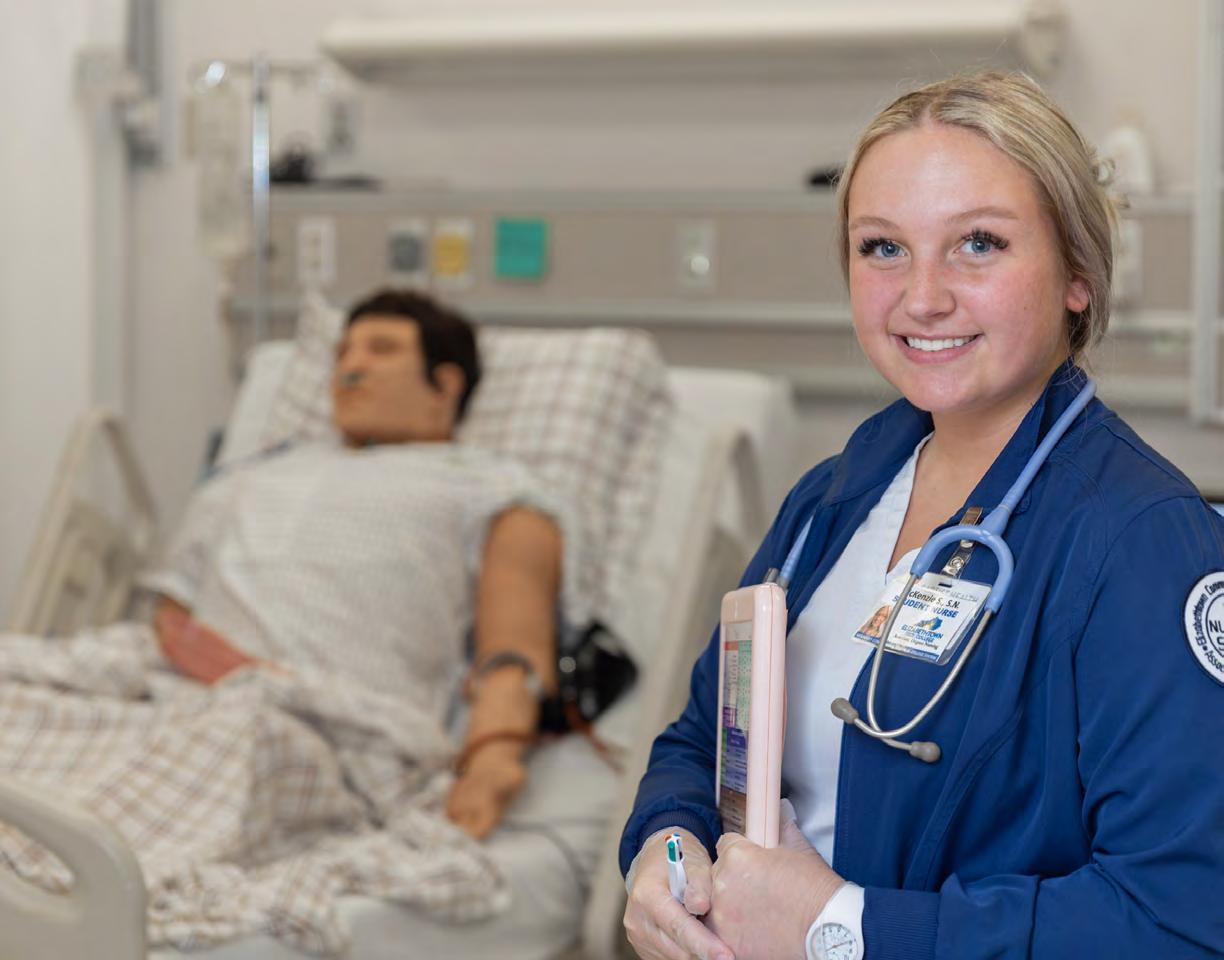
Whether you’re starting a career, advancing your skills, earning a short-term credential, or preparing to transfer to a four-year university, KCTCS is the place to get you REAL WORLD READY!
WITH 16 COLLEGES ACROSS KENTUCKY, KCTCS OFFERS AFFORDABLE, ACCESSIBLE EDUCATION DESIGNED FOR THE REAL WORLD. LEARN

BY BILL ELLIS
Iturned 86 on January 1. Like the old saying: “If I’d known I was gonna live this long, I would have taken better care of myself.”
I try hard not to be ornery, but it is difficult these days, as aches and pains make me less tolerant of politicians and others who appear beyond my understanding.
February is usually a difficult month for all Kentuckians and folks in other states. The weather can be cold and snowy, or cold and rainy, and just plain miserable. I can’t do anything about the weather, so I might as well just shut up, but about other matters, I can speak freely, at least so far in the United States of America.
As John Wilson Townsend in 1902 concluded his poem, “In Kentucky”: “Thunder peals the loudest, The Landscape is the grandest—And Politics the damnedest in Kentucky.” Some things in Kentucky never change, do they?
It is time for non-political humor once again. By the way, if y’all want to purchase my book, Irvin S. Cobb: The Rise and Fall of an American Humorist , it is still available through the University Press of Kentucky in Lexington.
Some of Cobb’s “stuff” was somewhat below the standards of today, if there are any standards today. What little I see or read today quite often displays no standards.
I am not above a curse word occasionally, but only occasionally. An example was told to me by a Baptist preacher friend some years ago. A well-dressed stranger entered through the creaking door of an old rural church after the minister had already begun his heated sermon. The stranger followed the words of the minister closely, and whenever the minister said some words the stranger agreed with, he shouted, “Hallelujah.”
The preacher ended his sermon in a flourish of Biblical quotes. The stranger shouted a round of hallelujahs joined in by the meager congregation. However, there were no souls saved that day in this little church.
The stranger waited until all the parishioners had filed out. “That was a damned fine sermon,” he said to the bewildered preacher.
“Sir, I appreciate your enthusiasm,” the preacher said, “but we don’t speak that way in the Lord’s house.”
“Well, I thought it was so damned good, I put a $1,000
bill in the offering plate.”
The preacher looked at the gentleman, then blurted out, “The hell you say!”
•
Kentucky mountain humor is subtle in many ways as exampled by this old story.
Way up on the mountain, an old couple were living out their last days. The wife died, and the local funeral home had to use four-wheel-drive vehicles to climb the steep mountain. When they arrived, the old man sat rocking in his chair on the wooden porch. He motioned for the men to go up the rickety old stairs, and they returned with the deceased wrapped in a blanket.
As the men braced themselves in their descent, the left arm of the deceased fell from the blanket, touching the limb of an old gnarly tree. She immediately came alive, breathed deeply, and shouted, “Hallelujah! Touching that tree done saved my life.”
The old man and his wife lived on for a few more years in their mountain fastness. Alas, the woman died rather suddenly. Again, her husband called for the funeral home to bring its best mountain-climbing vehicle.
This time, as the pallbearers descended the rickety old stairs, the husband of the deceased said in a clear but loud voice, “Boys, watch out for that tree over there!” •
Appalachia abounds in preacher jokes. Most are subtle. Small churches, of course, cannot afford to pay large salaries, and many ministers are bi-vocational.
One story has it that a none-too-good minister asked for a raise, maintaining: “I’m just a poor preacher.” A wily lady who heard him preach Sunday after Sunday replied, “Yes, I know you are a poor preacher. I hear you preach every Sunday.”
•
Perhaps the most famous dog story of all time can be told in a gathering of young and old alike and a favorite of the recent Doc Martin series on PBS and in movies such as The Pink Panther
Several times a year, I run into a person leading their dog or sometimes more than one dog, and without shame I ask, “Does your dog bite?”
About half of the folks already know the joke and share a laugh with me, but others react in different ways. Most laugh and let me play for a few minutes with the animal.
Occasionally, I run into a person with absolutely no sense of humor, which reminds me that some people do not read this magazine. While walking one day to get the mail, I offered a copy of Kentucky Monthly to a passing couple.
“We don’t read magazines” the woman said.
I don’t recall my reply, but it was something like: “I am giving you a free copy.”
Alas, they were a younger couple, and fleeing from me, the woman said, “We don’t read anything.”
The scene played out with me hobbling along on my bad knees still proffering Kentucky Monthly to the fleeing couple.
The following story was told by Irish humorist, playwright and novelist John B. Keane
A traveling salesman is wandering about the countryside lost and happens to come upon a man “seated upon a milestone” by the side of the road. The salesman asks the location of a particular town. The local man says he does not know the place. The salesman persists, naming places, to which the local man says he does not know of such places.
The exasperated salesman finally blurts out, rather

heatedly, “What a fool, what an ass, what a lout!”
To which the local man replies: “Fool, yes, and an ass, a lout, yes, but lost, no.”
In the Kentucky version of this tale, the lost man also is a traveling salesman. The local man replies to all the salesman’s denunciations, “Well, at least, I ain’t lost.”
Much humor today seems to be wasted on me. To prove how nutty I am, my favorite TV shows are Funny You Should Ask and Whose Line Is It, Anyway? I do not find politics as humorous as I once did, and even our homegrown variety seems vindictive.
The joke is on me most of the time. I dearly love old movies and TV shows. For some unfathomable reason I can always remember Gabby Hayes when he appears in an old Western, but I can watch an old movie starring Kentucky native Patricia Neal in its entirety and, for the life of me, not recall her name and must look up the movie on the internet. Go figure.
Does “old age beat the alternative?” I reckon, but having witnessed the decline of friends and relatives into dementia, I am not so sure any longer.
Readers may contact Bill Ellis at editor@kentuckymonthly.com.
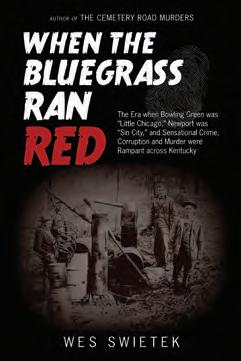

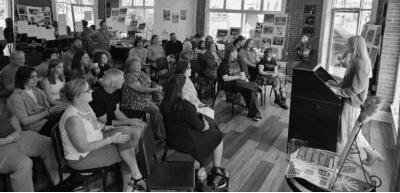


BY GARY GARTH
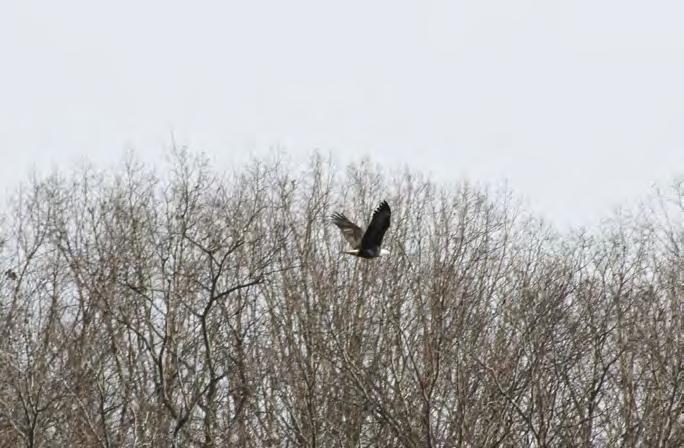
Christmas afternoon and with the weather warm as springtime, I stepped onto the rear deck of my home and stood beside my niece, who was casually scrolling her phone. She glanced up, smiled and returned to her phone.
I scanned a patch of timber to the south and in the brilliant winter sunshine spotted the unmistakable glint from the white head of a bald eagle. Once spotted, it stood out like a beacon.
It’s not uncommon to spot an eagle on a winter afternoon, but I rarely see one from my backyard.
“Look!” I said in an excited whisper. “It’s an eagle!”
She looked up, more, I suspect, to satisfy her uncle than out of any real interest or curiosity.
“That’s nice,” she said, again smiling sweetly. Then she returned to her phone and walked into the house.
This young lady has a keen interest in wildlife, but her casual interest in the national bird is somewhat understandable. She grew up with an
abundance of eagles. That was not always the case.
On June 20, 1782, when the Continental Congress adopted the Great Seal of the United States, the bald eagle, which is featured prominently on the obverse side of the seal fiercely clutching an olive branch with 13 leaves in one talon and 13 arrows in the other, became the country’s national symbol.
(It didn’t become the national bird until 2024, when President Joe Biden signed legislation signifying it as such.)
When the bald eagle had its image plastered on the Great Seal, there were an estimated 100,000 nesting eagles in the United States, then a smattering of 13 states strung along the Eastern Seaboard and covering about 430,000 square miles. The estimated number of eagles filling that landscape is little more than a guess, but it’s fair to say that in colonial America, eagles were plentiful.
Fast forward to 1963, when many who are reading this (including me) were alive. According to the United States Fish and Wildlife Service, the
number of nesting bald eagles in the contiguous U.S.—by then a 3.12-million-square-mile coast-tocoast swath—had dwindled to 417. The number of eagles in Kentucky, if there were any, could almost certainly have been counted on one hand. The big birds were on the way out.
Eagle numbers had been plunging for decades, victims of—among other outrages—habitat destruction, pollution and the free-range killing of the birds. It was enough to alarm even politicians, who had afforded the national symbol some legal protection a few years earlier with passage of the Bald Eagle Protection Act of 1940. (Golden eagles were added in 1962, and the law, still in force, became the Bald and Golden Eagle Protection Act.)
However, the almost unregulated and widespread use of pesticides following the Second World War did the most damage, with dichlorodiphenyl-trichloroethane (DDT) usually identified as the primary culprit. Thanks in large part to the work of Rachel Carson and her groundbreaking book Silent Spring, published in 1962 (two years before the author’s death at age 56 from breast cancer), public awareness increased, and eventually, the government acted. The Environmental Protection Agency was established in 1970, and two years later—a decade after the publication of Silent Spring DDT was banned for general use in the United States. (It was banned worldwide for agricultural use by the 2001 Stockholm Convention, a ruling that took effect in 2004.)
Eagle recovery was at first slow and steady but then skyrocketed, both nationwide and in Kentucky. No one knows precisely how many wintering
eagles Kentucky attracts today, but numbers are strong, evidenced by the known number of eagles that nest in the state. According to the Kentucky Department of Fish and Wildlife Resources, in 1986, there was one known bald eagle “nesting territory” in Kentucky. In 2019, there were 187. As of August 2023, 95 of Kentucky’s 120 counties were known to be home to as least one bald eagle nest. The U.S. Fish and Wildlife Service said that in 2007, the number of know nesting pairs of eagles in the contiguous U.S. was “at least” 9,789. By 2019, it has swelled to 71,467 nesting pairs and 316,700 individual birds.
Winter is the best time for eagle watching. Look for the big birds near Kentucky’s numerous lakes and other bodies of water. They are most prevalent in the western part of the state. Get out and enjoy them.
The vast majority of Kentucky’s wintering eagles are bald eagles, but each year, a few golden eagles are reported, including a female bird that researchers at the Bernheim Forest and Arboretum in Bullitt County have named Athena and have been tracking since 2019. As of press time, Athena had returned to Bernheim. For more details, go to bernheim.org
For more eagle information, check the Kentucky Department of Fish and Wildlife Resources’ eagle page at fw. ky.gov/Wildlife/Pages/Bald-Eagles. aspx, the U.S. Fish and Wildlife Service at fws.gov/species/bald-eaglehaliaeetus-leucocephalus, the U.S. Geological Survey at usgs.gov and the Cornell Lab of Ornithology at allaboutbirds.org/guide/Bald_Eagle/id
Readers may contact Gary Garth at editor@kentuckymonthly.com.
Court Appointed Special Advocates are community-based volunteers appointed by judges to provide best-interest advocacy for children involved in child abuse, neglect, and dependency cases. CASA volunteers makes recommendations in court regarding services, placement, visitation, reunification, and permanency for the children on their case. Become a CASA volunteer today.
kentuckycasanetwork.org/volunteer




Kentucky Monthly Magazine is your guide to the Commonwealth and the exceptional offerings that make the Bluegrass State such a wonderful place to visit or call home.

A Streetcar Named Desire
Stained Glass Theatre, Newport, through Feb. 15, 859.291-7464
The Great Gatsby Kentucky Center for the Arts, Louisville, through Feb. 15, 502.584.7777

Comedian Marlon Wayans
Norton Center for the Arts, Danville, 877.448.7469
Gabby’s Dollhouse Live!
Lexington Opera House, Lexington, 859.233.3535
Dinosaur World Live RiverPark Center, Owensboro, 270.687.2770 >>>
Todd Hill and the Dixieland Devils
Stage Door Series, Glema Mahr Center for the Arts, Madisonville, 270.821.2787
National Farm Machinery Show
Kentucky Expo Center, Louisville, through Feb. 14, 502.367.5000
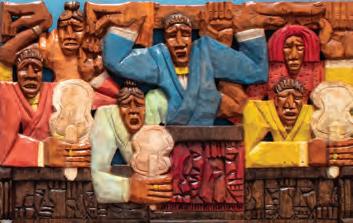
Jerry Seinfeld Live!
EKU Center for the Arts, Richmond, 859.622.7469
Sundy Best in Concert
The Virginia Theatre, Somerset, 606.679.6366
Jump: America’s Van Halen Experience
RiverPark Center, Owensboro, 270.687.2770
Leslie Odom Jr in Concert
EKU Center for the Arts, Richmond, 859.622.7469
Valentine’s Day

Fleetwood Mac Tribute
The Virginia Theatre, Somerset, 606.679.6366 Love, Loss, and What I Wore
Village Players, Fort Thomas, also Feb. 21-22 and 26-28, 859.781.3583
Justin Moore in Concert
Corbin Arena, Corbin, 606.258.2020
22 25 26 27 28
Exile in Concert
Mountain Arts Center, Prestonsburg, 606.886.2623
Charles Cameron
A Curious Modern Quilter, National Quilt Museum, Paducah, through March 24, 270.442.8856
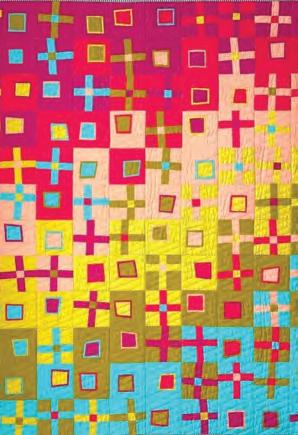
Disney’s Descendants: The Musical Market House Theatre, Paducah, 270.444.6828
Swan Lake
Presented by the Louisville Ballet, Kentucky Center for the Arts, Louisville, through Feb. 28, 502.584.7777 Ongoing Ongoing Ongoing Ongoing Tangents to Heaven
Kentucky Museum, Bowling Green, through March 31, 270.745.2592
LaVon Van Williams Jr.
Everything Must Change, Speed Art Museum, Louisville, through March 8, 502.634.2700
Bailey Zimmerman in Concert Appalachian Wireless Arena, Pikeville, 606.444.5500 Jerry Garcia: A Bluegrass Journey
Bluegrass Music Hall of Fame, Owensboro, through March 28, 270.926.7891

Exchange vows beneath open skies, surrounded by natural beauty, warm wood accents, and timeless charm. Our outdoor venue is the perfect place to begin your love story.
Celebrate your love in a setting designed for unforgettable moments. From “I do” to the last dance, our venue offers elegance, rustic charm, and memories that last a lifetime. Scan the QR code or find us at weddings@cliffviewresort.com or (606)-362-8066 Where



We all have those colorful relations we’d like to know more about. My friend Phil’s great-grandfather, nicknamed “Wild Bill,” once shot a Butler County man because he didn’t like the way he played the fiddle.
Mine is “Mad Dog” Stafford, my second-great-grandfather on my mom’s side. I know when and where he was born, when and where he died, and his nickname, but that’s about all. His father, Alexander, enlisted in the Civil War, was quickly captured and never returned home, so George was fatherless at 3.
Adding to the problem is that Gallatin County, which today is one of Kentucky’s smallest counties, originally was much larger, stretching along the Ohio River from Big Bone Creek to the Kentucky River—the parent of Owen, Trimble and Carroll counties. Port William—now Carrollton—was the original county seat. Loyal reader Jim Perry gifted me an 1818 map that shows the original Gallatin County borders.
George Lewis Stafford was born in Carroll County, near Indian Creek, on Oct. 24, 1859. His parents and grandparents were born in Gallatin County, which makes them harder to trace because of the often-changing boundaries.
George and his wife, Belle, were parents to five children, but George died young—in 1890, when my greatgrandmother, Maggie, was 4. Belle later married Frank Rex and had three more children.
In the early days of Kentucky Monthly, we did a photo shoot at Keeneland, and one of the models, whose day job was at Owen County Rural Electric, was named Rex
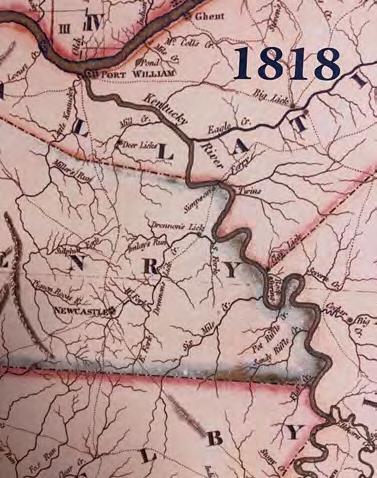
Stafford. “Oh, we must be cousins,” I said as I quickly explained the Stafford and Rex connection.
“No,” he said. “We’re not related.”
“But have you ever heard of George Stafford? I believe he was nicknamed ‘Mad Dog.’ ”
“No,” he said.
“But my great-grandmother was married to a Rex and a Stafford, and your name is Rex Stafford.”
“No,” he said. “Sorry.”
As for “Mad Dog,” the story I heard was that he survived being bitten by a rabid dog but was so mean afterward that people hid when he was seen coming into town.
Flash forward to last year, when Dallas Stafford, a Marine and retired banker from Owen County, joined my Sons of the American Revolution chapter. Dallas’ family descends from Leah Westerfield and William Stafford, a sharpshooter who came to Kentucky with Daniel Boone William is credited with firing the first shot in defense of Fort Boonesborough. Born in 1753, William died in 1820 in Carroll
County and is buried in the Stafford Cemetery on Stafford Ridge Road, just over the hill from Indian Creek, where George was born.
“Oh, we must be cousins,” I said to Dallas.
“Really? Why do you think we’re cousins?”
When I mentioned George, he asked if I meant “Mad Dog.”
“Yes,” I said. “So, you’ve heard of him?”
“Yes, but I’m sure we’re not related.”
“But he was born within sight of Stafford Ridge Road. His parents were Alexander Stafford and America Burns Webster …”
“I’ve heard of America,” said Melody, Dallas’ wife, overhearing the conversation. “But Dallas can’t be related to ‘Mad Dog’—he’s as nice as the day is long.”
“He sure is,” I said. “And I think I’m a pretty nice guy, too, but I haven’t been bitten by a rabid dog.”
. . .
I can’t help but think there is more to “Mad Dog’s” story. If you know more, I’d love to hear from you.
Who is your most elusive or colorful relative? As the 250th anniversary celebration of the United States takes place this year, it is a time to celebrate our past in all its checkered glory. For more information on the 250th anniversary events, visit history.ky.gov/participate/ america250ky
Vest can be contacted at steve@kentuckymonthly.com





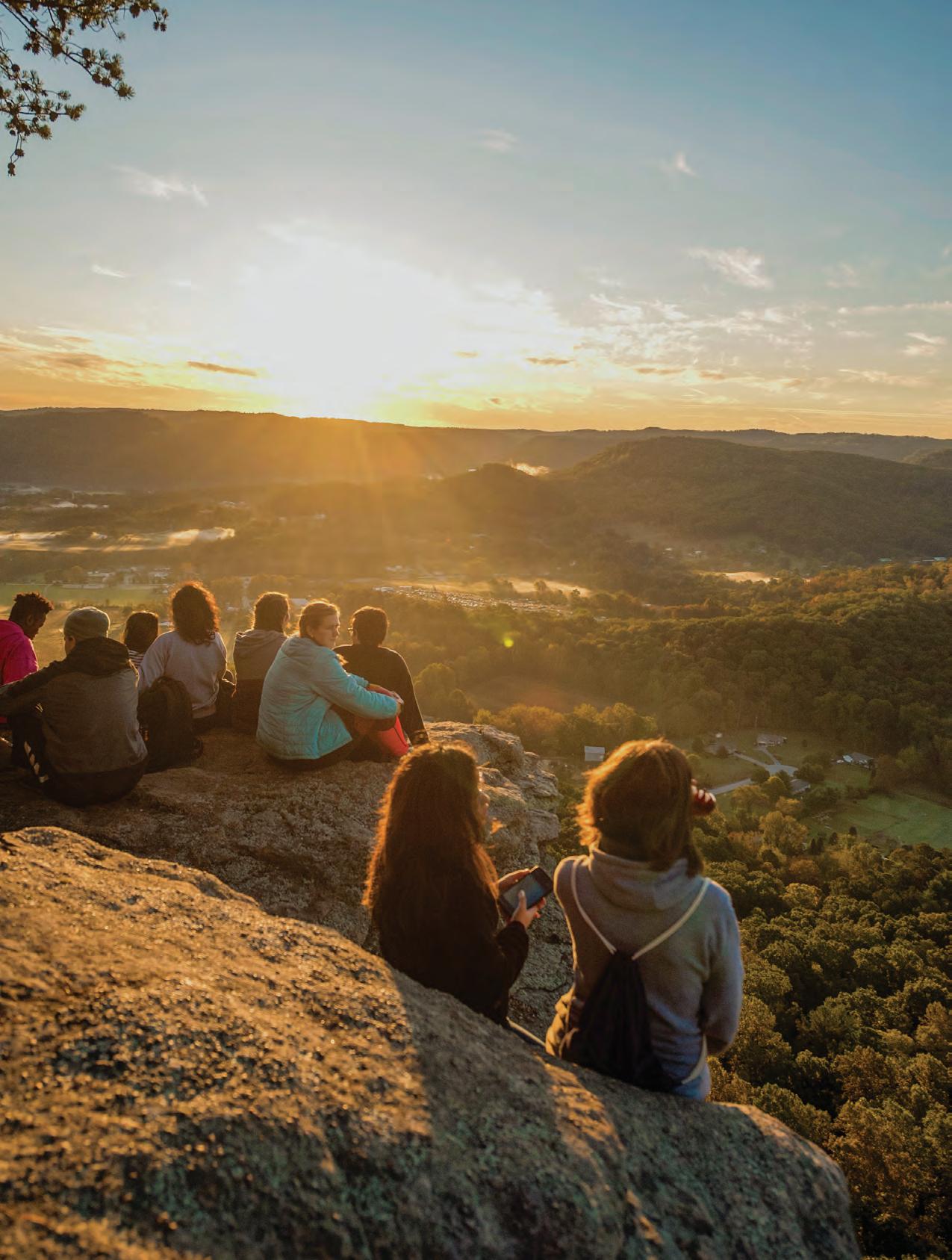
BEREA COLLEGE IS
COLLEGE IS
The future of American higher education for 170 years.
The future of American higher education for 170 years.
education
BEREA COLLEGE IS highly ranked nationally.
#1 Overall College (Washington Monthly, 2025)
#1 among National Liberal Arts Colleges for lowest student debt (U.S. News & World Report, 2025)
#1 for educational access (New York Times, Sept. 7, 2023)
5-star rating from Money magazine
(Only Kentucky institution among 54 nationwide)
BEREA COLLEGE IS investing in students of unlimited potential and limited means.
:: Free tuition for every student
:: No-loan financial aid for housing and meals
:: Free laptop for every student
:: Free medical and dental clinic
:: Paid internships for every student
:: Professional clothing funds
:: Subsidized study abroad
:: Up to $1,000 for every graduate for what’s next