







YOSS Robotics Team Wins Big








What does vacation mean to you?
Does it mean a day at the beach with a book and an icy boba tea? Or does it mean a full day on the slopes, skiing down the hills, racing to the bottom? Or maybe it just means sitting on the couch with a journal and a pen, allowing your thoughts to meander as you take in the stillness of the day?
There are so many ways to spend time during vacation – and each one speaks to each person differently. There are those who are always doing, doing, doing – vacation means taking in another museum or activity or exhibit. And then there are those who are begging to do nothing, allowing the day to slip by as they let their minds relax and wander.
Any way you spend it, vacation is about resetting and recharging. And that refresh looks different depending on the type of person you are.
With kids around, for many days at a time, vacations can sometimes be stressful for families. There’s a pressure to fill the days. But perhaps, instead of trying to cram more activities into the packed schedule so no one’s “bored,” we focus on imbuing the days with the vacation feeling. We concentrate on making it a vacation atmosphere with the emphasis on unplugging from our
daily routines and reaffirming our connections to each other.
Every encounter we have with our children will contribute to the feelings that define our children’s lives. It’s not necessarily about creating memories each day. It’s really about reinforcing the feelings of love, comfort, and security in that relationship.
Vacation is a wonderful opportunity to foster those feelings. There’s no pressure about homework or getting up early for the bus. There’s more time to spend together to schmooze and have fun. And it’s not just kids letting go of their pressures during vacation; it’s also a time for parents to let their hair down and join in the excitement. When kids see that we’re having a good time, their enthusiasm and their feelings of enjoyment are only amplified. It creates a sense of worthiness – that people whom they admire enjoy being around them, spending time with them, sharing in the good times together.
Whether you’re spending the next few days working on your tan, conquering the slopes, or padding around the house in your slippers, make sure you mindfully take a reset so you can come back recharged and reenergized with a more buoyant sense of purpose.
Wishing you a great week, Shoshana

Yitzy Halpern, PUBLISHER publisher@fivetownsjewishhome.com
Yosef Feinerman, MANAGING EDITOR ads@fivetownsjewishhome.com
Shoshana Soroka, EDITOR editor@fivetownsjewishhome.com
Nate Davis Editorial Assistant
Nechama Wein Copy Editor
Rachel Bergida
Shana Brecher
Lani White Design & Production
Gabe Solomon Distribution & Logistics
P.O. BOX 266
Lawrence, NY 11559
Phone | 516-734-0858
Fax | 516-734-0857
Classified Deadline: Monday 5:00PM classifieds@fivetownsjewishhome.com text 443-929-4003
PAYMENT VIA CREDIT CARD MUST BE SUBMITTED ALONG WITH CLASSIFIED ADS
The Jewish Home is an independent weekly magazine. Opinions expressed by writers are not necessarily the opinions of the publisher or editor. The Jewish Home is not responsible for typographical errors, or for the kashrus of any product or business advertised within. The Jewish Home contains words of Torah. Please treat accordingly.






Dear Editor,
Please explain to me why all the people I meet want to know where I went to high school, where I was born. What relevance does that have to me being here in 2025?
You don’t know me, so let me fill you in on one big clue: I’m 70-plus years old!!
Why would anyone want to know where I went to school when I was 16? Is my high school building still standing? That was a long time ago.
Why don’t people ask me about my professional career? For the record: I am the only shomer Shabbos person to work on the Space Shuttle.
Our daughters are Hollywood bigwigs who work in the most interesting part of making movies. Want to know in what capacity? Ask me!
Our travels have taken us to the most obscure parts of the world—with Sabbath observance and kosher food in tow.
I am fascinated by the line of questioning we get. Where are these questions going?
How boring is it to be asked the same questions by everyone I meet? Isn’t there something more interesting to talk about?
After the Holocaust, I can understand why survivors wanted to know where people were from—whether family members were alive, whether their cities survived. But this is 2025.
Find out about me. My current status. My interests, talents, and accomplishments. That is something I would love to talk about—and we can go on from there.
Can anyone enlighten me? Why these questions?
Today, I am an eclectic, interesting person. When they find out I’m from Chi-
cago or Cincinnati or Timbuktu… what difference does it make?
My hearing aid has new batteries, so please open the floodgates and let all your thoughts pour in.
A Bubby
Dear Bayla,
I read about your predicament in TJH and proceeded to read the responses. I then reread your blurb and felt the key concern was not addressed. You describe how what hurts the most is the unpleasant opinion that your mother and sister have shared with you regarding your body odor. The pain you feel is no doubt legitimate. At the same time, it doesn’t sound like your mother and sister are trying to break you down and make you feel inferior. It sounds like they are the only ones in your life that can address this challenge from a place of love. The intention appears to be pure. However, the way in which they go about discussing it with you may be an entirely different story which could call for some basic boundary setting on your end.
I will not suggest you see a different doctor or try a new product. It appears to me you have tried many options and exhausted much effort down that road. Instead, I would like to shift gears and call something else to your attention. I noticed how you begin by stating, “I am told by my friends and rabbanim…” and then proceed to describe the opinion of your mother and sister. This leads me to believe that the core issue at play is one of self-confidence. I am further convinced of this since you felt the need to seek other opinions regarding your situation on this very platform.
Continued on page 14

Dating feels good when you feel good about yourself, when you know your worth. I am not concerned about what others say about you, I would like to hear what you think of yourself. Validation from others can feel good when the report is good and can feel really hurtful when the report is negative. This is why it is of the utmost importance that you begin to do some self-esteem building preferably with a trained professional, someone who can help you identify your positive qualities so that you don’t need to hear it from others.
One of my mentors, R’ Joey Rosenfeld, once said, “It’s the belief in myself enough to know that even without the affirmation I’m valuable.” What you need is not a new deodorant but to reach a place of a healthy-sense of self-confidence and a mindset of “I know myself and that’s all that matters.”
A Reader
Dear Editor,
As time passes, more of our chosheveh Torah families hear of distant relatives who elect cremation (r”l) rather than burial, in their last wishes and wills. Rabbi Elchonon Zohn’s organization (NASCK) has had a major impact but not always are his people able to get the kind
of access available to a family member. One argument that could possibly change minds is the insult to the environment caused by cremations.
A single cremation releases 500 to 600 pounds of carbon dioxide, in addition to nitrogen oxides, sulfur dioxide, soot and (sometimes) mercury vapor. Maintaining a temperature of 1,400 to 2,000 degrees for hours at a time involves a major expense of energy. In spite of efforts to mitigate some factors, cremation represents a person’s last offense against humanity and against the Earth.
Jews who are buried traditionally are not embalmed, so there is no possibility for water contamination from embalming fluids. And concerns relating to land space are inconsequential: European Jews faced with restriction on cemetery land simply buried the dead in earth-separated layers.
A person buried in a wooden casket is soon one with the Earth, replenishing and enhancing the burial area. A conventional Jewish burial is a person’s last gift to a grateful planet.
This kind of argument could, as a last resort, perhaps make a difference.
Sincerely,
Bernard Fryshman, PhD Queens,
NY

Dear Editor,
One thing I applaud the Obamas for was tackling obesity in America. The then-president eliminated whole milk from schools, aiming to reduce fat kids in this country. I’ll also never forget when Obama imposed a sugar tax on junk food.
Today, President Trump – himself old, fat, and unhealthy, likely due to his poor diet of eating burgers, fries, and KFC – set a poor example for kids’ health by reversing this. Schools can now serve whole milk. Kids clearly learn from their surroundings and will obviously never forget a president setting a poor example to MAFA – Make America Fat Again.
A Reader
Dear Editor,
It is well known that this is the generation that can’t handle rebuke, even though it’s a mitzvah in the Torah to correctly rebuke your fellow man as required. When done correctly and politely, it saves another person from possibly going years on end doing the wrong thing. Would they not be happy to have that prevented? That is the Torah’s approach. It is unfortunate in today’s day and age that many people think they are on an equal wavelength with talmidei chachamim, as if whenever they issue a ruling or an opinion, we are free to comment and disagree. Just because the internet (which they’ve warned about) gives everyone a blank page to share their thoughts, doesn’t mean they should. It is a huge sin to go up against gedolei Yisrael on anything, no matter how far your emotions and feelings pull you. If you feel they have erred in something, you are allowed to discuss it confidentially with a knowledgeable rav of your choice who can hopefully guide you in understanding of the topic better and pull out sources for you as well. But never is there permission to tell other people negative opinions on them or write columns online somewhere bashing their rulings or making light of their qualifications. I don’t think I need to
elaborate on where such a person could end up.
If anyone out there really thinks that a person who brazenly stands against the gedolei hador of this world will be somehow warmly welcomed in Shamayim as a hero who really “showed them” is only fooling themselves. I think after painting that picture it becomes obviously clear how careful we have to be.
Benyamin Rivlin
Dear Editor,
If one were to be asked if there’s a connection between the Makkah of locusts and the power of the rabbis, a connection wouldn’t seem obvious.
But Rav Dovid Hirsch makes a poignant observation regarding this. By all of the other Makkot, G-d pronounces what the Makkah would be and that is conveyed to Pharaoh. However, by the locusts, Moshe himself (Shemot 10:4) declares that Makkah Arbeh will be the next without G-d’s instruction. This powerful idea illustrates G-d’s agreeability to the will of the righteous. This can also explain G-d’s allowance of Moshe in Vayikra (1:1) to use a small aleph at the end of the word.
My great-great-grandfather brings down a Midrash (Bamidbar Rabbah 11:7) in Naso that the bracha from the Kohanim of shalom to Bnei Yisrael refers to Torah. The last page in Tractate Berachos (64a) says rabbis increase shalom, peace, in this world, a logical reality considering they are so close to the Torah. The Midrash (Bamidbar Rabbah 21:1) says, “No vessel can hold a blessing like shalom,” aligning with Tractate Berachos (a masechata whose name hints to bracha) to indicate that the rabbis increase shalom. So being close with and getting a bracha from the righteous, who have G-d’s confidence in initiating events, can bring shalom, peace and tranquility into one’s life and remove one from any doubts (Pirkei Avot 1:15) in decision-making.
Steven Genack




Protests in Iran have largely subsided, according to residents and human rights groups, after authorities reportedly killed more than 2,000 demonstrators.
Since mid-last week, the United States has scaled back its rhetoric on supporting Iranian protesters. Saudi Arabia and Qatar urged the Trump administration to avoid involvement, citing regional stability concerns.
On Thursday, President Trump warned Iran of “grave consequences” if killings continued. White House Press Secretary Karoline Leavitt said Trump was aware that 800 planned executions had been paused and that he was keeping “all options on the table.”
Protests erupted on December 28, spreading nationwide amid anger over Iran’s currency collapse and economic crisis. According to the U.S.-based HRANA rights group, 2,478 protesters and 163 government-affiliated individuals were killed and more than 24,000 people were arrested.
Iranian officials, including Supreme Leader Ayatollah Ali Khamenei, accused the U.S. and Israel of orchestrating the unrest. Trump said on Saturday that Khamenei bears responsibility for “the complete destruction of the country.”
A day later, Iranian President Masoud Pezeshkian warned that any attack on Khamenei would trigger an “all-out war.”
Since the protests have subsided, the Iranian government will be going after the rioters who they have arrested.
“Our main work at the judiciary about the recent developments has just started,” judiciary chief Gholam-Hossein Mohseni-Ejei wrote in a post on X on Monday. “If, without justification, we grant leniency to someone who is not deserving of leniency, then we have acted contrary to
justice.”
Ejei met with President Masoud Pezeshkian and parliament chief Mohammad Bagher Ghalibaf, when the three leaders vowed to mete out punishments.
In a joint statement released by state media, they said “murderers and terrorist seditionists” will face decisive action, while people who were “tricked” by foreign powers into protesting could potentially benefit from “Islamic compassion” shown by authorities.
Iranian authorities have also emphasized that they intend to make up for some of the financial losses incurred during the protests by confiscating the belongings of those who publicly backed the protests or participated in them.
“Based on the law, the damages of recent riots must be demanded from the backers of the ‘monarchy sedition’ and these people must be held to account,” said Mohammad Movahedi Azad, the hardline cleric who heads the prosecutor general’s authority.
The Fars News Agency, affiliated with the Islamic Revolutionary Guard Corps (IRGC), said all of the assets of a major businessman, including a string of renowned cafes across the country and several top food brands, were seized. The total value of the assets is reportedly believed to be close to the cost of damages incurred in Tehran.
Popular former footballer Voria Ghafouri, who had been arrested in 2022 for supporting previous nationwide protests, also had his cafe confiscated.

One month after Australia enacted a sweeping social media ban for children, nearly five million accounts have been deleted or deactivated, according to government data.
Under the law, platforms including Instagram, Facebook, Snapchat, and Reddit must block access for users under 16 or face fines of up to $33 million. The law took effect in December.
Prime Minister Anthony Albanese called the legislation groundbreaking.

“Change doesn’t happen overnight,” Albanese said. “But these early signs show it’s important we’ve acted.”
The eSafety Commissioner reported that about 4.7 million underage accounts have been removed, though many minors continue using social media through accounts with falsified ages. Several countries are monitoring Australia’s experiment as they consider similar policies.
In the United Kingdom, Prime Minister Keir Starmer told MPs this week that he’s alarmed at how much time children spend on screens. In the U.S., a Fox News poll showed that out of 1,000 respondents, 64% favored a social media ban for teens and banning cellphones from K-12 classrooms. Two-thirds of parents also were in favor of the ban, while 36% were opposed.
Craig Guildford, chief of the U.K.’s West Midlands Police force, announced his immediate retirement on Friday after facing heavy criticism for banning Israeli soccer fans from attending a Europa League match at Aston Villa on November 6.
The decision, which police said was based on security concerns, drew condemnation from the governments of Israel and Britain, as well as from Jewish community leaders.

A recent report by the police watchdog found that the West Midlands force made several serious errors. In explaining the ban, police cited a match that never occurred and failed to consult with the Jewish community.
After Home Secretary Shabana Mahmood said she no longer had confidence in Guildford, he announced his retirement.
“I have come to the conclusion that the political and media frenzy around myself and my position has become detrimental to all the great work undertaken by my officers and staff in serving communities across the West Midlands,” Guildford said.
The November match itself was large-
ly uneventful, aside from the arrest of 11 individuals after pro-Israel and pro-Palestinian demonstrators clashed outside the stadium.
In its report, police labeled the game “high risk,” citing previous Maccabi matches, including one in Amsterdam where Israeli fans were targeted. The report also referenced a non-existent match between Maccabi Tel Aviv and West Ham. Guildford initially blamed the error on a Google search but later admitted in a letter to Parliament that the false information came from an AI chatbot, Microsoft Copilot.
The force also relied on reports blaming Israeli fans for clashes in Amsterdam in 2024, claims that were later refuted by Dutch police and politicians.
On Friday, South Korea’s ousted president, Yoon Suk Yeol, was sentenced to five years in prison after being convicted of using the presidential security service to block authorities from arresting him for unlawfully declaring martial law.
The Seoul Central District Court also
found Yoon, 65, guilty of falsifying official documents and bypassing the legal process required to impose martial law. The ruling was issued by a panel of three judges.

“The defendant abused his enormous influence as president to prevent the execution of legitimate warrants,” the presiding judge said, adding that Yoon effectively privatized state security for personal gain.
Yoon’s lawyers vowed to appeal, claiming the ruling was politically motivated.
In a separate case, prosecutors are seeking the death penalty, accusing Yoon of leading an insurrection through unjustified military rule.
Yoon maintains that his December 2024 martial law declaration was lawful and necessary to stop opposition lawmakers from obstructing the government. The measure lasted about six hours


22 before Parliament overturned it and subsequently impeached him. In April 2025, South Korea’s Constitutional Court formally removed Yoon from office.
Supporters protested outside the courthouse following the verdict.

Raging wildfires in southern Chile have killed at least 18 people, destroyed scores of homes, and burned tens of thousands of acres, authorities said on Sunday.
Entire neighborhoods were wiped out in the Biobío region, prompting mass evacuations. Penco Mayor Rodrigo Vera said fires trapped firefighters and forced more than 20,000 residents to flee.
“I beg you, from the deepest part of my heart: come help us,” Vera pleaded.
President Gabriel Boric declared a state of catastrophe in Ñuble and Biobío, allowing the military to assist. Officials said heat exceeding 100°F and winds up to 55 mph fueled the fires.
Chile has already recorded 2,825 fires this summer season, compared to 3,018 last year. The government allocated $180 million in November for wildfire preparedness.

Two high-speed trains collided near Córdoba, Spain, on Sunday, killing at least 40 people in Spain’s deadliest rail disaster since 2013.
Investigators said a northbound train derailed and struck a southbound train on an adjacent track, causing both to overturn.
One little girl, a six-year-old, was found barefoot on the tracks after she escaped the crash through a broken win-
dow. She lost her parents, brother and cousin in the crash.
“There are many people who are very sad for the victims of this terrible accident, but there were also many who survived, like the miracle of the girl who is safe,” Punta Umbria’s Mayor José Carlos Hernández said on Tuesday after leading a minute of silence for the victims.
Prime Minister Pedro Sánchez visited the site and declared three days of mourning, vowing transparency. He canceled a planned trip to the World Economic Forum in Davos.
Transport Minister Óscar Puente called the crash “extremely unusual,” noting the trains were traveling below their speed limits.
Spain’s King and Queen expressed condolences, as did European leaders, calling the tragedy “deeply distressing.”

On Saturday, smoke began to billow out of ducts in the Gul Plaza shopping complex in Karachi, Pakistan. Soon, flames began to spread through the structure that housed 1,200 stores. At least 21 people were killed in the blaze. Sixty people remain missing.
According to a shop owner, the fire “engulfed the whole mall in front of our eyes.”
It took firefighters 24 hours to combat the flames.
“We thought it was a small fire. No one ever thought it would be this bad,” the shop owner said.
Many exits were locked because the mall was about to close. Senior police official Syed Asad Raza noted that all but three of the mall’s 16 exits were locked.
Hundreds of protesters gathered around the smoldering remains of the building on Monday calling for accountability from the authorities.
Chief Minister Murad Ali Shah has promised an investigation into the fire and response time, while Karachi Mayor Murtaza Wahab, who arrived on the scene nearly 24 hours after the fire broke out, was met with jeers from the angry crowd.

For decades, Chinese families were told that one child was enough — more than enough. Now, the message has flipped. Have more children, the government urges. Three, if you can. Subsidies are offered. Matchmakers and day care centers get tax breaks.
Still, the cradles remain empty.
New population figures released this week show China’s population shrank for the fourth straight year, slipping by about 3 million in 2025 to roughly 1.404 billion people. Births fell sharply to just 7.92 million — a 17% drop from the year before — and the birth rate sank to the lowest level recorded since 1949, the year the Communist Party came to power.
The numbers tell a story that policies alone can’t fix.
In cities across China, young couples quietly do the math. Housing costs are crushing. Jobs feel less secure. Education is hypercompetitive and expensive. Adding a child — let alone two or three — feels less like a blessing and more like a financial cliff.
“It’s these big structural issues which are much harder to tackle,” said Stuart Gietel-Basten, director of the Center for Aging Science at the Hong Kong University of Science and Technology. Housing, work prospects and education expectations, he said, all loom large. “It’s gonna be difficult to make a major change in those number of births until those are addressed.”
There are cultural factors, too. Last year was the Year of the Snake, traditionally considered an unlucky year to have a child. State media optimistically suggested the snake was shedding its bad reputation. Parents, apparently, were unconvinced.
The demographic consequences are serious. China now has 323 million people over the age of 60 — nearly a quarter of the population — while the working-age population continues to shrink. Fewer workers will be supporting more retirees, straining pensions, taxes and economic growth.
Economist Gary Ng of Natixis warned
that even advances in robotics and hightech manufacturing can only soften the blow. “The bigger concern is whether economic growth can stay afloat with a shrinking population,” he said.
Officials have tried carrots and sticks. Families now receive a cash subsidy of about $500 per child. Day care centers and matchmaking services are tax-exempt.
After two generations of enforced limits, China is discovering that once people learn to live with fewer children, persuading them to reverse course is far harder than issuing a decree.

A Russian court has sentenced an American sailor to five years in prison, a ruling his family says is less about justice and more about leverage.
Charles Wayne Zimmerman, 57, was convicted of illegally transporting firearms after Russian authorities said a rifle and ammunition were found aboard his private yacht when it docked in the Black Sea port city of Sochi last June. Russian media reported that Zimmerman allegedly smuggled the weapons on his vessel over the course of a year, from July 2024 through June 2025.
In a brief statement, the regional court’s press service said Zimmerman “admitted his guilt in full” and was sentenced to five years behind bars. An appeal has already been rejected, the court said. Russian officials did not specify when the sentence was handed down, and the case had not previously been reported in state media — unusual in a country that typically publicizes trials involving foreign nationals.
Zimmerman’s family tells a very different story.
According to his sister, Robin Stultz, Zimmerman was sailing in international waters when he was intercepted by the Russian Navy and forced to steer his 35foot sailboat to Sochi, a journey she said took more than 22 hours.
“He was sailing from the U.S. to New Zealand. Of course, he had a firearm on board,” Stultz said in a statement shared

with CBS News. “You can’t call 911 in the middle of the ocean. He voluntarily disclosed it, and they charged him with arms smuggling.”
Stultz says her brother has been denied access to U.S. diplomatic representatives and insists any confession attributed to him cannot be trusted. She is urging the U.S. State Department to formally designate Zimmerman as “wrongfully detained,” a status that could elevate his case in diplomatic negotiations.
Dozens of Americans and other Westerners have been jailed in Russia since the start of the war in Ukraine in 2022, with several later freed in high-profile prisoner swaps. Washington has repeatedly accused Moscow of detaining U.S. citizens to use as bargaining chips.
Last week, Stultz said she met with State Department officials and members of Congress. “There is strong support for Chuck’s release being a priority,” she said.
For one American family, a solo sail-
Eleven students died at the scene, while two succumbed to their injuries later on. One other pupil remains in critical condition. The bus had been taking the children to different schools in the area. It crashed into the truck head-on.

Gauteng province’s department of education said the driver of the minibus was “reportedly” being treated in the hospital while the details of what happened to the truck driver were “uncertain.”
Fatal road collisions are common in South Africa, due to factors such as rampant speeding, reckless driving and poorly maintained vehicles.
South African President Cyril Ramaphosa called Monday’s crash “distressing.”
“Our children are the nation’s most precious assets, and we must do all we can – from observing the rules of the road to the quality of service providers appointed to transport scholars – to protect learners,” he said.

On Sunday, Portuguese voters lined up at polling stations to elect a new president, with eleven candidates on the ballot.
ing adventure has turned into a geopolitical nightmare — and a race against time.
On Monday morning, 13 students lost their lives when the minibus they were traveling in collided with a truck near Vanderbijlpark, South Africa.
By Sunday evening, the numbers revealed that Antonio Jose Seguro, of Portugal’s center-left Socialist Party, will head to a presidential election run-off against far-right leader Andre Ventura, of the Chega party, following a preliminary round of voting.
Seguro won 31.1 percent of the vote against Ventura’s 23.5 percent. Liberal pro-business candidate Joao Cotrim de Figueiredo came in a distant third place, with about 16 percent of the votes.


In the five decades since Portugal threw off its fascist dictatorship, a presidential election has only once before –in 1986 – required a runoff. This year’s numbers highlight how fragmented the political landscape has become with the rise of the far-right and voter disenchantment with mainstream parties.
The presidency is a largely ceremonial role in Portugal but wields some key powers, including in some circumstances to dissolve parliament, to call a snap parlia-

Two dozen aid workers who had been involved in rescuing refugees in Greece were acquitted on charges last week in a multi-year case that many say was pursued to ban migrants from heading to Europe.
European Union countries, including Greece – where more than one million people came ashore during Europe’s refugee crisis in 2015-16 – are tightening rules on migration as anti-migrant parties gain ground across the bloc.
In the trial on the Aegean island of Lesbos, the 24 defendants faced charges including involvement in a criminal group facilitating the illegal entry of migrants as well as money laundering linked to their organization’s funding. The defendants were affiliated with the Emergency Response Center
The court dismissed all charges, a ruling which defense lawyer Zacharias Kesses called “courageous” but said it was met with “bittersweet relief.”
Although the charges were unfounded, Kesses said, Greece’s judicial system delayed a resolution of the case, leading hundreds of people to withdraw from humanitarian aid activity.
“It took 2,897 days for justice to be delivered and for the authorities’ false narrative to collapse. The largest case of criminalization of humanitarian assistance was built on a manual of inhumanity,” Kesses declared.
mentary election, and to veto legislation.
Chega’s surge in public support made it the second-largest party in Portugal’s parliament last year, just six years after its founding. Last May, Chega became the main opposition party in a parliamentary election, winning 22.8% of the vote.
One of Ventura’s main targets has been what he calls “excessive immigration.”
During the election campaign, Ventura put up billboards across the country, declaring, “This isn’t Bangladesh” and
“Immigrants shouldn’t be allowed to live on welfare.”
The winner of the runoff will replace President Marcelo Rebelo de Sousa, who has served the limit of two five-year terms.
In recent years, Greece has toughened its stance on migrants. Since 2019, the center-right government has reinforced border controls with fences and sea patrols.
“The Greek authorities should stop criminalizing solidarity, end pushbacks, and prioritize saving lives,” said Eva Cossé, senior researcher in the Europe and Central Asia division at Human Rights Watch, calling the prosecutions “abusive.”



died after being caught in avalanches in various Alpine resorts.

At least four people in the U.S. have been killed by avalanches this month. Last week, a snowmobiler died after he was buried by an avalanche in Wyoming. That incident unfolded two days after two men were killed in an avalanche in central Washington state. Earlier this month, a snowmobiler in California’s Sierra Nevada died after being buried by an avalanche.
Each winter, 25 to 30 people are killed by avalanches in the U.S., according to the National Avalanche Center.

A state of emergency was declared in Guatemala this week after violence broke out on Saturday and led to the deaths of at least nine people.
Over the weekend, inmates took control of three prisons in what seemed to be a coordinated riot. They took 43 guards hostage. The gangs were demanding privileges for their members and leaders, according to authorities. Shortly after police liberated one prison on Sunday morning, suspected gang members attacked police across the capital.
Eight skiers were killed on Saturday in three separate avalanches in Austria.
A female skier was fatally buried by an avalanche in the Bad Hofgastein area in western Austria, at an altitude of about 2,200 meters (7,200 feet), around 12:30 p.m. on Saturday.
Roughly 90 minutes later, an avalanche in nearby Gastein Valley, south of the city of Salzburg, swept away seven people. Four were killed, two seriously injured, and one escaped unharmed.
In the town of Pusterwald in central Austria, three Czech skiers were killed in an avalanche shortly before 4:30 p.m., police said. Four of their companions were evacuated to safety.
“This tragedy painfully demonstrates how serious the current avalanche situ-
ation is,” said Gerhard Kremser, district head of the Pongau mountain rescue service, noting the “clear and repeated warnings” about avalanche risk.
Avalanches in other parts of the world took people’s lives over the past few weeks.
In Switzerland, a German man was killed in an avalanched on Friday while he was cross-country skiing. Four other people were hurt in the tragedy.
Last weekend in France, six skiers
On Monday, National Civil Police Director David Custodio Boteo said that a ninth police officer had died early Monday from his injuries, adding that “there are several wounded who are in critical condition. ... Some also suffered amputations.”
Police honored the fallen officers in a ceremony on Monday, where flag-draped coffins sat in the Interior Ministry.
On Monday, the government gazette published President Bernardo Arévalo’s declaration of a 30-day state of emergen-


cy, saying there were “coordinated actions by self-named maras or gangs against state security forces, including armed attacks against civilian authorities.”
Among the rights that the declaration limits are freedom of action, demonstrations, and carrying weapons. It also allows police to arrest people without providing a just cause, and security forces could also prohibit the movement of vehicles in certain places or subject them to searches.
The state of emergency requires congressional approval, and lawmakers were expected to vote on Monday. However, it went into effect on Sunday.
President Yoweri Museveni will continue to lead Uganda, as he was declared the landslide winner of the presidential election on Saturday.
Wine had alleged that there was massive fraud during the election. The voting was held under an internet blackout that authorities said was needed to prevent “misinformation.” Wine had called on supporters to protest.

On Saturday, Wine escaped his home after a military raid on his house. He is supposedly still in Uganda.
“Last night was very difficult at our home... The military and the police raided us. They switched off power and cut off some of our CCTV cameras,” Wine, whose real name is Robert Kyagulanyi, said in a post on X. “I want to confirm I managed to escape from them. Currently, I am not at home.”
Episodes of violence were reported on Saturday. In the hours after the polls closed, seven people were killed and three people were injured in central Uganda after officers fired in self-defense against opposition groups organized by local MP Muwanga Kivumbi. Kivumbi disputes police accounts and said that ten people were killed by security forces around his house.
Museveni’s victory on Saturday was of no surprise to anyone. Since taking power in 1986 as the head of a rebellion, he has changed the constitution twice to remove age and term limits and dominates state institutions. He defeated Wine with 58% of the vote in the last election in 2021, which the United States said was neither free nor fair.
Under Museveni, Ugandans have seen relative stability. Economic growth is expected to jump into double digits this year when crude oil production starts.
Museveni is far from young, and there is speculation about who will succeed him, with many believing Museveni is grooming his son, military chief Muhoozi Kainerugaba, for the position.
The outcome hands 81-year-old Museveni the decisive victory he sought to bolster his fifth decade as president and his political position as speculation mounts about his eventual succession.
Uganda’s electoral commission said at a ceremony in the capital Kampala on Saturday that Museveni had received just under 72% of the vote. His main challenger, the pop singer-turned-politician Bobi Wine, was credited with earning 24% of the vote.
This week, Museveni brushed off talk of stepping down.
“If I am available, not dead, not senile, but I’m still around and I have some knowledge – if you are really serious about your country – why would you not want to take advantage of me?” he said.


Last week, the United States designated three branches of the Muslim Brotherhood as terrorist organizations, imposing sanctions on the Islamist movement.
The designation process began in November. On Tuesday, the State Department formally designated the Muslim Brotherhood’s Lebanese branch as a Foreign Terrorist Organization, its most severe classification, criminalizing material support for the group. The Treasury Department simultaneously designated the organization’s branches in Jordan and Egypt as Specially Designated Global Terrorists for aiding Hamas.
“These designations reflect the opening actions of an ongoing, sustained effort to thwart Muslim Brotherhood chapters’ violence and destabilization wherever it occurs,” Secretary of State Marco Rubio said.
Under the sanctions, the Muslim Brotherhood’s assets in the U.S. will be frozen, transactions will be criminalized, and members will be restricted from traveling to the United States.
Founded in Egypt in 1928, the Muslim Brotherhood is among the world’s oldest Islamist movements.
Egypt’s Foreign Ministry praised the decision as a “crucial step” against a group it described as a threat to regional and international security. According to U.S. officials, the Lebanese branch collaborated with Hezbollah in rocket attacks on Israel, while the Jordanian and Egyptian branches supported Hamas.
to carry out terror raids on communities in Judea and Samaria. The documents included, among other things, correspondence and conversations between senior Hamas officials showing an intention to raid the communities.
Unlike what was planned in detail for communities bordering the Gaza Strip, the terror group didn’t list specific communities in Judea and Samaria that it wanted to raid or even detail any exact plan. Rather, the documents exposed the terror organization’s intentions.

Because of this information, Defense Minister Yisrael Katz recently instructed Central Command to prepare an operational plan to seize additional refugee camps in Judea and Samaria, similar to the operations in Tulkarm, Jenin, and Nur Shams. The goal is to capture the refugee camps and remain in them, not to enter and withdraw, according to the report released on Friday.
The IDF Spokesperson’s Unit said in response that “the IDF is committed to the security of Israel’s citizens. Accordingly, ongoing situational assessments are conducted in light of all threats and developments as part of implementing the lessons of October 7. The reference scenarios approved by the General Staff and the political echelon have been practiced in several drills, including the two-division exercise held in November.”
The IDF Spokesperson’s Unit also stated that “no tunnel infrastructure is known to exist in the seam-zone area. The IDF and security forces operate in the Central Command arena at all times to deny offensive capabilities and thwart terrorism.”
The fact that the family survived was one factor in the decision to choose their home, as was its location in the Kerem (vineyard) neighborhood on the edge of the kibbutz– residents will not need to see it every day.

Be’eri was one of the hardest-hit communities during the attack. Of the over 1,200 people killed when Hamas terrorists invaded southern Israel, 102 were residents of Be’eri — around a 10th of the community. Thirty more people were kidnapped to Gaza from the kibbutz.
The kibbutz members felt that demolishing most of the homes and rebuilding, rather than living in a perpetual monument to the devastating attack, was crucial in allowing them to move on.
The Dvori house will remain standing for at least the next five years, according to the decision. It will form a part of the community’s testimony, along with documents, visual materials and various items selected as part of a special visual history program at the Yad Ben Zvi research institute.
Yogev Dvori was among those in the kibbutz who had voted to demolish all the homes. He told the Ynet, “My position was that we should destroy everything and leave no trace, not turn the kibbutz into Auschwitz or a pilgrimage site for visitors. Simply erase everything and commemorate beloved people, not buildings.”
He went on, “From the first day, we didn’t care about people entering our house, because we didn’t go through a traumatic event there. Moreover, after we realized that there was nothing to save, we didn’t really care about the house. As far as we were concerned, the door could remain open, and whoever wanted could come in, take pictures, do whatever they wanted. It had become a showhouse anyway. Anyone who wanted to see burned houses entered our house.”
home because it reeks of smoke, so we keep it in storage.”
Around 80 Be’eri residents have returned to the kibbutz, while most are in temporary accommodations at Kibbutz Hatzerim in the Negev. The Dvori family now lives in Hatzerim and are planning to return to Be’eri next summer to a new home, which is currently being built.

On Friday, the Trump administration named several officials who will serve on the Gaza Board of Peace’s Executive Committee, an international body tasked with supervising Gaza’s postwar management. The committee includes 11 officials: Turkish Foreign Minister Hakan Fidan; senior Qatari diplomat Ali Thawadi; Egyptian intelligence chief Hassan Rashad; UAE Minister of International Cooperation Reem Al-Hashimy; former U.K. prime minister Tony Blair; U.S. Special Envoy Steve Witkoff; Jared Kushner, President Donald Trump’s son-in-law and senior adviser; Apollo Global Management CEO Marc Rowan; Israeli-Cypriot businessman Yakir Gabay; former U.N. humanitarian coordinator Sigrid Kaag; and former U.N. Middle East envoy Nickolay Mladenov.
Though Israel objects to Qatari and Turkish involvement in Gaza’s restoration, Trump believes their participation is essential, crediting them in part with pressuring Hamas into the October 2025 ceasefire. Israeli Prime Minister Benjamin Netanyahu criticized the committee’s makeup, noting that it “was not coordinated with Israel and runs contrary to its policy.”
According
The community of Kibbutz Be’eri recently voted to demolish all the houses in the kibbutz except for one home that was destroyed during the October 7, 2023, massacre. The burned-out house that will remain as testament to the horror belongs to Yogev and Yael Dvori, who were in Cyprus with their four children at the time of the attack.
When the Dvori family returned home from Cyprus, they only had a few of their belongings that they had traveled with. They lived at a hotel where other surviving kibbutz members were sent.
Dvori added, “Later, we went into the house just to take items that were meaningful to us, such as a family photo album that was covered in soot. To this day, it is impossible to have it at [our current]
The newly appointed National Committee from the Administration of Gaza (NCAG), a panel of Palestinian technocrats tasked with providing basic services to Gaza’s population, will operate under the supervision of the Executive Committee.
The Executive Committee will implement the vision of the largely symbolic Board of Peace, an international group led by President Trump. As of Sunday, several world leaders — including the


presidents of Russia and China — have been invited to join. Hungary, Argentina, Morocco, and Vietnam have already accepted membership.
Permanent membership will cost $1 billion. Some observers have framed the board as a potential competitor to the United Nations, as it aims to address other international crises. Many countries remain hesitant to join. Trump will serve as chairman indefinitely.
Mladenov was named the board’s High Representative for Gaza, serving as “the on-the-ground link between the Board of Peace and the NCAG,” according to the White House. He will support oversight of Gaza’s governance, reconstruction, and development.
The NCAG met for the first time on Thursday in Cairo, with Kushner and Witkoff joining virtually. Ali Shaath, a former Palestinian Authority deputy planning minister, was named head of the NCAG.
Trump also appointed Central Command Special Operations Commander Maj. Gen. Jasper Jeffers to lead the future International Stabilization Force, which will replace the IDF in securing Gaza.

Three caregivers were detained on Monday at a Jerusalem daycare following a tragedy in which two infants died and 53 other babies and toddlers were injured.
Police are investigating whether a malfunctioning heating system caused the deaths. Authorities identified the two babies who died as four-month-old Leah Goloventzitz and six-month-old Aharon Katz.
Emergency responders from Magen David Adom and United Hatzalah found both infants unresponsive and transported them to Hadassah Hospital and Shaare Zedek Medical Center, where they were pronounced dead.
Two caregivers are suspected of negligent homicide and negligence; a third was reportedly released.
Police and Fire and Rescue Services evacuated 53 additional children suffering from respiratory distress. Responders said they initially were unaware of the number of children on site.
“We heard children screaming,” a United Hatzalah member said. “We found children in closets, strollers — everywhere — covered with blankets.”
Authorities said the heater was operating at a “life-threatening” temperature. Preliminary findings indicate the infants died of dehydration after being confined in a sealed, overheated room.
The Abu Kabir Institute for Forensic Medicine said there was no evidence of poisoning. At least one infant is believed to have died hours before responders arrived.
The National Council for the Child demanded an immediate investigation into both the negligence and the daycare’s lack of licensing.
“Operating early childhood frameworks without licensing, supervision, and mandatory standards is nothing less than a life sentence,” the council stated.
Twenty-seven hospitalized children were released in good condition on Tuesday, according to Shaare Zedek Medical Center.

Twenty-six people have been federally charged in a scheme to rig, or attempt to rig, 29 college basketball games to benefit sports bettors, officials announced last week.
According to U.S. Attorney David Metcalf, 39 players and 17 NCAA Division I men’s basketball teams were implicated in the scandal.
The indictment, unsealed last Thursday, details how players were allegedly bribed to underperform so their teams would lose against the betting spread, allowing gamblers to profit. Metcalf said several attempts to fix games ultimately failed.
“In basketball, one player can substantially influence a game in ways that you can’t in other sports, but it’s not a guarantee,” Metcalf said. “By and large, the scheme was very successful.”
From September 2022 through February 2025, men’s basketball games in

38 the Chinese Basketball Association were also allegedly manipulated. Some of the individuals accused of orchestrating the scheme were former college players themselves. Bribes reportedly ranged from $10,000 to $30,000 per player.
“If a team was favored to lose by four points, the player would receive a bribe to underperform so that his team would lose by more than that,” Metcalf said.
Investigators said teams from the following colleges were affected: Abilene Christian, Alabama State, Butler, DePaul, Duquesne, East Carolina, Florida Atlantic, Fordham, Georgetown, Kennesaw State, Kent State, La Salle, McNeese State, Nicholls State, Ohio University, Saint Louis University, St. John’s, SUNY Buffalo, Tulane, and Western Michigan University.
“This was an extensive international criminal conspiracy involving NCAA players, alumni, and professional bettors who fixed games across the country and poisoned the American spirit of competition for monetary gain,” Metcalf said.
Among those charged was Kevin Cross, a former forward at Tulane University. Prosecutors allege Cross accepted a $30,000 bribe to sabotage a game against East Carolina and later discussed fixing a matchup against Florida Atlantic. Tulane said it would cooperate with authorities “where appropriate.”
Several universities issued statements distancing themselves from the scheme. Ohio University said no players, coaches, or staff were involved. St. John’s reported that none of its former players were cited for wrongdoing, while Kent State said the same. DePaul and La Salle said the indictment did not name any current players.
Prosecutors said the scheme began when former Chicago Bulls player Antonio Blakeney conspired with professional bettors Marves Fairley and Shane Hennen to fix Chinese Basketball Association games.
“The scheme proved lucrative,” Metcalf said, adding that Hennen allegedly texted a confederate that the only certainties in life were “death, taxes, and Chinese basketball.”
NCAA President Charlie Baker said the pattern of misconduct revealed by law enforcement “is not entirely new information,” noting that the organization has been conducting its own investigation.
FIFA said last week that it has received more than 500 million ticket requests for this year’s World Cup, which will be held in the United States, Mexico and Canada this summer.
Soccer’s organizing body said outside the host countries of the United States, Mexico and Canada, the most requests were made by fans residing in Germany, England, Brazil, Spain, Portugal, Argentina and Colombia.

FIFA is asking for up to $8,680 per ticket. After criticism, FIFA said last month it will offer $60 tickets for every game to the 48 national federations in the tournament, and the federations will decide how to distribute them to their fans who attended their previous games.
It said the most-requested match in the third sales phase was Colombia vs. Portugal on June 27 at Miami Gardens, Florida; followed by Mexico vs. South Korea on June 18 at Guadalajara, Mexico; the final on July 19 at East Rutherford, New Jersey; the opener between Mexico and South Africa on June 11 at Mexico City; and a second-round match on July 2 at Toronto.

If you lived in some parts of the United States, you may have been able to take in the Northern Lights this week.
The aurora was visible across Canada and much of the northern tier of U.S. states — and possibly farther south — on Monday night following a major disturbance in the Earth’s magnetic field. Some other states were able to view them on Tuesday night.
Geomagnetic storms that can lead to vivid northern lights also can interfere with satellite operations, GPS communications and other infrastructure, according to the U.S. Geological Survey.
In November, solar storms brought vibrant auroras to parts of Europe including Hungary and the United Kingdom and as
far south in the United States as Kansas, Colorado and Texas.
The northern lights, which is officially known as the aurora borealis, is a natural phenomenon that projects colorful lights in the night sky as a result of an interaction between the sun’s plasma and Earth’s magnetic field, according to the National Weather Service.

As Wikipedia marked its 25th anniversary this week, the famously free encyclopedia quietly acknowledged a new reality of the internet age: knowledge may be free but infrastructure isn’t.
The Wikimedia Foundation announced on Thursday that it has signed new licensing deals with a slate of artificial intelligence companies, including Amazon, Meta, Microsoft, Perplexity, and France’s Mistral AI. The agreements allow AI firms to access Wikipedia’s vast database “at a volume and speed designed specifically for their needs,” the foundation said, without disclosing financial terms.
For a platform built on volunteer editors and free public access, the move reflects how dramatically the web has changed. Once a symbol of the early internet’s open, collaborative spirit, Wikipedia now finds itself powering the AI boom — often without compensation — as chatbots and search tools train on its content.
Wikipedia founder Jimmy Wales says cooperation, not confrontation, is the goal.
“I’m very happy personally that AI models are training on Wikipedia data because it’s human-curated,” Wales told the Associated Press. “But you should probably chip in and pay for your fair share of the cost that you’re putting on us.”
Those costs are mounting. While human traffic to Wikipedia fell 8% last year, bot traffic surged as AI developers scraped massive amounts of data, often straining the site’s servers. Wikimedia leaders have warned that donations from individuals — about 8 million donors worldwide — were never meant to subsidize trillion-dollar tech companies.
“Our infrastructure is not free,” said Wikimedia Foundation CEO Maryana Iskander, who is stepping down later this
month. “It costs money to maintain servers that allow both people and companies to draw data from Wikipedia.”
The site remains a global powerhouse, ranking ninth among the world’s most visited websites, with more than 65 million articles in 300 languages edited by roughly 250,000 volunteers.
Wales also sees upside. AI tools could eventually help editors by fixing dead links or improving search, shifting Wikipedia from keyword-based queries to something closer to a chatbot that cites exact passages.
Still, Wikipedia’s role as a trusted reference is increasingly contested. Conservatives have criticized it as “Wokepedia,” and Republican lawmakers are probing alleged bias in its editing process. Elon Musk, whose AI venture launched a rival “Grokipedia,” has accused Wikipedia of spreading propaganda and urged people to stop donating.
Wales isn’t worried.
“Large language models aren’t good enough to write quality reference material,” he said. “A lot of it is just regurgitated Wikipedia — and often it talks nonsense.”

María Corina Machado, Venezuela’s opposition leader and last year’s Nobel Peace Prize winner, presented her prize to President Donald Trump on Thursday during a meeting in the White House.
Trump took to social media several hours later to thank her.
“María presented me with her Nobel Peace Prize for the work I have done,” he wrote. “Such a wonderful gesture of mutual respect. Thank you María!”
The White House shared on social media an image of Trump holding the frame containing the Nobel medal. The inscription reads that his “Principled and Decisive Action to Secure a Free Venezuela” has been recognized. The Nobel Committee has said the Peace Prize is not transferable.
For her part, Machado, speaking to reporters earlier after meeting with Trump, said she had made the presentation “as a


recognition for his unique commitment to our freedom.”
The highly unusual gesture came after months of joking by the American president that he had deserved the prize that she was awarded for seeking to usher a peaceful transition to democracy in Venezuela.
Machado had repeatedly dedicated the prize to Trump and praised the U.S. military operation nearly two weeks ago that ousted Venezuela’s longtime author-
itarian leader, Nicolás Maduro. Trump has made clear that he thought he had deserved the prize, saying he had ended several wars and castigating Norway for overlooking him.
Beyond cheering U.S. intervention in her country, Machado has remained mum about a bombing campaign against boats Trump says are smuggling drugs.
The American strikes have killed more than 100 people.
It is unclear what Machado gained out
paign against critics of the outcome.
Speaking to supporters and reporters in Washington on Thursday, Machado said she was “impressed” by how clear Trump was on her country’s situation and “how much he cares.”
Her efforts to cozy up to Trump have been met with scorn across the Atlantic Ocean in Norway, where the prize is regarded not just as prestigious and freighted with symbolism, but also as the country’s primary soft-power tool — and where Trump is deeply unpopular. The Nobel Institute, which awards it, has been in serious damage-control mode. (© The New York Times)

More than 100 cars smashed into each other or slid off the highway in Michigan on Monday as snow blanketed the state.
The massive pileup prompted the Michigan State Police to close both directions of Interstate 196 on Monday morning just southwest of Grand Rapids while officials worked to remove all the vehicles, including more than 30 semitrailer trucks. Thankfully, there were no fatalities in the incident, although there were some injuries.
One driver said he could barely see the cars in front of him as the snow blew across the road while driving 20-25 mph before the crash. He was able to stop his pickup safely but then decided to pull his truck off the road into the median to avoid being hit from behind.
“It was a little scary just listening to everything, the bangs and booms behind you. I saw what was in front of me. I couldn’t see what was behind me exactly,” he said.
of her meeting with Trump. After ousting Maduro, he declined to install her in power, saying that “she’s a very nice woman, but she doesn’t have the respect” needed to lead the country.
Independently verified vote counts in Venezuela’s 2024 presidential election showed that Machado’s party had beaten Maduro by a wide margin. The Venezuelan authorities, nonetheless, declared Maduro the victor, and his government embarked on a harsh repression cam-
The National Weather Service issued warnings about either extremely cold temperatures or the potential for winter storms across several states starting in northern Minnesota and stretching south and east into Wisconsin, Indiana, Ohio, Pennsylvania and New York.
A day earlier, snow fell as far south as the Florida Panhandle and made it harder for football players to hang onto the ball during playoff games in Massachusetts and Chicago.


On Thursday, NASA officials related that the astronaut who had been experiencing a medical issue aboard the International Space Station is back on Earth and in good condition.
“The crew member of concern is doing fine,” Jared Isaacman, the NASA administrator, said during a news conference after the landing.
The four astronauts who splashed down in the Pacific Ocean on Thursday were Zena Cardman and Michael Fincke of NASA; Kimiya Yui of JAXA, the Japanese space agency; and Oleg Platonov of Roscosmos, the Russian space agency. NASA did not identify which astronaut was ill or the nature of the medical issue.
Their spacecraft, a SpaceX Crew Dragon, splashed down in the calm waters of the Pacific Ocean off San Diego at 3:41 a.m. Eastern time. Within an hour, the astronauts had been helped out of the spacecraft for initial health checks.
“They’re safe,” Isaacman said. “They’re in good spirits.”
The four astronauts, part of a mission called Crew-11 that spent 167 days in space, had been scheduled to leave the ISS next month after the next rotation of astronauts arrived. Because of limited medical equipment on the space station, NASA officials decided to conduct a “controlled medical evacuation” — following the standard departure procedures but at an earlier date.
This was the first time in the 25-year history of astronauts living on the International Space Station that someone had to return to Earth because of a health issue.
“We took this action, because it was a serious medical condition,” Isaacman explained.
Three other astronauts remain on the space station: Christopher Williams of NASA, and Sergey Kud-Sverchkov and Sergey Mikaev of Russia. They arrived there in November on a Russian Soyuz spacecraft and are scheduled to remain in orbit until the summer.
Another Crew Dragon with four new astronauts is scheduled to launch in mid-February.

Michael Wallhead is moving fast. The British inventor doesn’t let time go to waste. He recently announced that his tricked-out trash can that broke the Guinness World Record for the fastest wheelie bin can now reach a speed of 66 mph.
Wallhead had captured the record with a 55 mph run in 2023. He has continued to work on his motorized trash can, dubbed The General Waste, since taking the title.
“The record stands at 55 mph but I have done 66 mph now,” he told Guinness World Records.
Wallhead said he was inspired to build The General Waste by Andy Jennings, who originated the record at 45 mph in 2020.
“After Andy, I got my backside in gear and decided to build a bin,” he said.
He bought the wheeled trash can from Facebook marketplace for about $25 and then proceeded to make nearly $900 worth of modifications, including a Suzuki GP125 two-stroke engine, magnesium go-kart wheels, a rear axle, a five-gear box, a chassis, a steering damper and an extra wheel at the front.
Although the garbage can is large, Wallhead’s knees touch the front when he sits down. Between his legs are a set of handlebars he uses to steer and brake. His foot sits so close to the engine that it actually burns through his shoe.
Essentially, the bin houses a small tricycle that’s souped-up with a motorcycle engine.
“I spent many evenings practicing at low speeds as stability is a real problem, but it all paid off on the day,” he said.
What a waste of time.

Ken Johnson of Altadena, California, had an unpleasant tenant living underneath his home for more than a month.
A giant black bear had set up residence in the crawl space around Thanksgiving time. The bear would come in and out of the space as it needed, twisting gas lines, toppling bricks, and tearing away screening.
Johnson tried to evict the animal and asked state wildlife officials for help, but the air horns and paintball guns they deployed didn’t work.
Finally, he turned to BEAR League, a California-based nonprofit that bills itself as specializing in “living in harmony with bears.”
One member of the League crawled into the space behind the 500-pound bear and “encouraged” it to leave.
After around 20 minutes, the bear left the space, and the group placed an “unwelcome” mat, which delivers an electric shock, at the opening. When the bear returned to the house, it stepped on the mat, was shocked, and then ran away.
wanted a quiet place for the winter. But he’d done a tremendous amount of damage to Ken’s house. And so, you don’t want Ken’s house to burn down or the rest of Altadena to burn down because of a ruptured gas line.”
We’ll bear that in mind.

When Rachel Bloor woke up in middle of the night, she thought her dog was sitting on her chest. But then she felt something smooth moving around and realized that this was not her cuddly pet.
Her husband turned on the lights, and that’s when she saw that an 8-foot python had made itself comfortable in her bed.
“Don’t move,” her husband told her. “There is like a 2.5-meter python on you.”
Bloor quickly had her husband get their dogs out of their Brisbane, Queensland, second-floor room.
“I thought if my Dalmatian realized that there’s a snake there, it is gonna be carnage,” the Australian woman said.
Then she shuffled out slowly from under the covers. Remaining calm, Bloor took care of the giant snake without any help from professional snake catchers.
“I grabbed him,” she said, adding that the python “didn’t seem overly freaked out.”
“He sort of just wobbled in my hand,” she said.
Bloor suspects that the snake entered through plantation shutters on her window and crawled onto the bed while she slept.
“It was that big that even though it had been curled up on me, part of its tail was still out the shutter,” she said.
Did you know?
South Florida is the only place in the world where crocodiles and alligators live together in the wild.
“There’s the relief — it feels like, you know, you had a bunch of dinner guests over and now the party’s over — well it wasn’t a party — but you know they’re gone and now you’ve got a bunch of dirty dishes and empty glasses to deal with,” Johnson said.
Dave Fleishman, a BEAR League spokesperson who helped evict the animal, said it was one of the largest black bears he has seen.
“He’s in my top three,” Fleishman said. “He’s an old soul ... I think he just
The snake was identified as a carpet python, a non-venomous constrictor commonly found in Australia’s coastal regions
Despite the frightening encounter, Bloor said she was relieved it was not another animal.
“Toads freak me out,” she said.
Toad-ally ssscary.



The Robotics team at the Abraham and Sara Silber Middle School at Yeshiva of South Shore achieved an extraordinary milestone, placing 1st, 2nd, and 3rd overall at the recent CIJE VEX Robotics Competition, organized by CIJE.
YOSS entered seven robots, designed and built by 23 middle-school 7th and 8th graders, into a highly competitive field of 31 robots representing many yeshivos throughout the tri-state area. Each robot team consisted of three to four students, all working collaboratively to engineer machines capable of speed, precision, and durability under pressure.
From the very start of the competi-
tion, the YOSS team led by Moshe Shuman’s robot set the tone. Scoring over 100 points early on, the robot surged ahead and maintained a commanding position, consistently ranking between first and second place throughout ten intense preliminary rounds. Each round paired two robots into an alliance—sometimes with competitors from other yeshivos, and at other times with fellow YOSS teams— adding an unpredictable and thrilling strategic element to every match.
As the competition progressed, tension mounted. Nail-biting rounds saw YOSS’s second- and third-place robots steadily climb the leaderboard, powering through match after match to secure spots in the Top 16 robots advancing to


the finals. The championship round—a fast-paced 90-second showdown—featured a high score of 148 points, underscoring the elite level of engineering and strategy on display.
Behind this success lies months of dedication. The students devoted countless lunch breaks to planning, building, testing, debugging, rebuilding, and practicing. Through repeated trial and error, they learned firsthand that engineering is an iterative process—requiring patience, precision, and perseverance to refine every articulation, optimize speed, and reinforce structural integrity.
The Robotics program is coached by Mrs. Elisheva Pinsky, who has been an educator at YOSS for 22 years. While she
guided students through the engineering and programming process, she is quick to credit the boys themselves.
“The success belongs to the students,” Mrs. Pinsky shared. “They showed extraordinary dedication, teamwork, and grit. The skills they’ve developed—problem-solving, collaboration, and a deep understanding of engineering principles—will stay with them for life.”
The podium sweep was more than a competitive victory; it was a celebration of learning, perseverance, and the power of hands-on STEM education. YOSS is incredibly proud of its Robotics team for representing the school with excellence, innovation, and determination.

On the evening of Saturday, January 10, Young Israel of Hewlett in Hewlett, NY, served as the backdrop for a milestone event: the first in-person gathering of United Jewish Teachers (UJT). Designed as a post-holiday and post-vacation celebration, the event successfully brought together a diverse group of Jewish educators under one roof to foster community and solidarity. Attendance far exceeded expectations.
The timing of the gathering was particularly significant. Since the events of October 7, 2023, antisemitism has surged globally, with New York City public schools often finding themselves at the center of these tensions. For many attendees, the evening was more than just a party; it served as a much-needed sanctuary from the “Jewish hate” that has impacted the educational landscape in recent years.
UJT was founded on the core principle of standing by Jewish educators and their families across New York City. The organization provides vital support on two primary fronts: School Level – As-
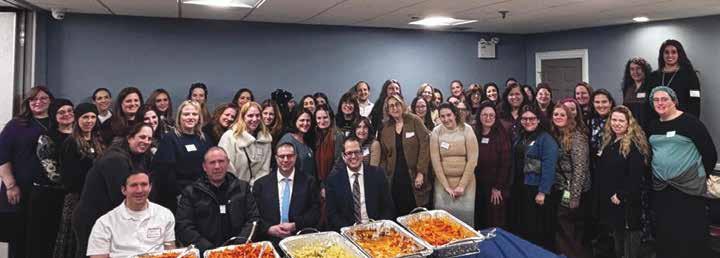
sisting teachers with immediate issues and environmental concerns within their specific school buildings; Union Level –Advocating for the rights and fair treatment of Jewish members within larger labor structures.
In a rare show of grassroots dedication, United Jewish Teachers does not charge membership fees. The organization relies entirely on its leadership, who volunteer their time and expertise for the
This past Motzei Shabbos, our BY5T parents experienced an uplifting and meaningful melava malka that celebrated the unique partnership between our homes and our school.
The atmosphere was set by the moving music of Mordechai Levovitz, which provided a perfect backdrop for an eve -
ning of connection. We were privileged to hear inspiring and insightful remarks from Dudi Gross, Shloime Kaufman, and our rav, Rabbi Plutchok. The evening culminated in a profound and transformative speech by Rabbi Joey Haber, who addressed how to form meaningful connection with today’s children.
Beyond the program, the elegant cu-

betterment of the greater Jewish community.
The event also highlighted the team driving the organization forward. UJT continues to be guided by its founding leadership: Moshe Spern, president, Shana Pollack, vice president, Yonah Pitterman, secretary, and Sarah Albaz, treasurer.
The group is also expanding its reach with the addition of Debbie Phillips,
and Shandi
who have officially joined the leadership team to help navigate the challenges facing Jewish educators today.
As the evening concluded, the sense of unity in the room served as a powerful reminder that while the challenges within NYC schools remain, these educators no longer have to face them alone.
linary spread and the beautiful decor created a warm, welcoming environment for all. Our parents were thrilled to bring home gorgeous Lucite tzedaka boxes featuring our students’ photos, a touching reminder of our children, who are at the heart of everything we do.






Yarden Bibas cut the ribbon this week at the Ariel and Kfir Playground, named in loving memory of his children. This new playground opened in central Israel at Geha Mental Health Center, operated by Clalit Health Services. The hospital houses a preschool serving children ages three to six who are at the facility receiving treatment for mental health challenges.
The idea for the playground emerged when the bodies of the Bibas family were returned to Israel. Jen K Design, led by Jen Krup, created a custom gold bracelet with orange hearts in solidarity with the Bibas Family. Proceeds from the bracelet sales would fund a project in memory of Ariel and Kfir Bibas. Jen connected with Rabbi JJ Hecht II of Toys for Simcha, whose organization designs and builds
playrooms in pediatric hospitals in Israel. Together, they partnered with Geha Hospital to design and build the playground.
“I felt an intense yearning to turn their grief into hope and keep their memory alive. Being here today, seeing children playing and laughing is a great way to honor the memory of Ariel and Kfir,” shared Jen.
The bright orange structure and balancing bridge immediately welcomed the children. It was heartwarming watching a little boy run over to the friendly fox sculpture with wide, hugging arms, inspired by the photograph of Shiri Bibas holding her children, and go in for a hug. Anxiety and stress visibly lifted as their faces shifted from pensive to smiling. For children navigating mental health chal-

lenges, time outdoors and play provide essential opportunities for exercise, social connection, and emotional release.
JJ Hecht II of Toys for Simcha said, “Watching the children play showed the real impact of this space. A fun and welcoming playground brings a sense of normalcy. We’re so glad that these children will be able to play, laugh, and heal.”
The playground was made possible in partnership with Mrs. Jen Krup, JJ Hecht II of Toys for Simcha, Eldad Adar from Clalit Health Services, and the amazing team at Geha Mental Health Center, under the guidance of Mrs. Ziva Levin-Barabi, Geha’s COO.
“We are excited to open the modern playground designed specifically for children receiving care at our hospital. This initiative reflects our commitment
to creating a safe, supportive, and healing environment for young patients and their families. The playground, honoring the Bibas beloved children Ariel and Kfir, symbolizes hope, resilience, and the importance of nurturing our youngest generation. It will provide a space for play, relaxation, and social interaction—essential elements in promoting emotional well-being and recovery, says Prof Amir Krivoy, Geha’s CEO.
This playground will be at Geha, thanks to the supporters around the world who purchased the bracelets. The ribbon cutting was attended by Yarden Bibas, Jen Krup, and other friends and family.

Episcopal Health Services-St. John’s Episcopal Hospital (EHS) has once again been awarded the Certification for Excellence in Person-Centered Care by Planetree. This Silver level Person-Centered Care Certification® recognizes the organization’s achievement and innovation in the delivery of person-centered care.
EHS is one of only 40 organizations worldwide to be Certified for Excellence in Person-Centered Care at the Silver level!
What distinguishes Planetree Certification among other health care quality awards is its distinctive focus on person-centered care, defined as a model of care delivery in which health care professionals partner with patients and families to identify and satisfy the full range of patient needs and preferences. The award is conferred based on a variety of factors, including performance improvement on traditional quality indicators, review of policy documents and, most importantly, how patients and staff assess the organization’s person-centered culture. Silver Certification was awarded to EHS following a series of focus groups with patients and their loved ones, as well as staff from a multitude of disciplines and divisions within the organization. Considered collectively, these dis -
cussions with patients and staff attested to a genuine culture of person-centered care.
“The experience of EHS shows what can be accomplished when a team of deeply committed, supremely innovative and highly-driven caregivers take the courageous leap to re-define priorities and re-organize systems to put patients first,” Michael Giuliano, President of Planetree International, a not-forprofit organization that has been at the forefront of the movement to transform healthcare from the perspective of patients for over 45 years.
“Planetree Silver redesignation confirms that person-centered care has remained a foundational operating principle at EHS,” said Donald T. Morrish, MD, MMM, Chief Executive Officer of Episcopal Health Services. “Through periods of transformation, investment and growth, our physicians, nurses and team members have sustained care that is clinically strong, operationally sound, and defined by dignity, respect and partnership with every patient.”
“This redesignation demonstrates that the patient and family voices continue to be systematically integrated into how care is delivered at EHS,” said Edison Bond Jr., MPH, MDiv, DMin, EdD, CPXP, ACTCP, Chief Patient Experience
MTA concluded the semester by bringing the entire yeshiva together for a powerful Leil Chazarah, filling the Beis Medrash with focused learning, energy, and a strong sense of achdus. Beginning with Maariv and continuing through hours of chazara, the evening created a shared moment for students across all grades to learn side by side and reflect on a semester of growth. After a brief welcome, talmidim
Did you know?
joined together, settled into serious learning, and returned to their shiurim throughout the Beis Medrash. Rebbeim circulated among the students, reinforcing the goals of chazara and helping foster an atmosphere that balanced intensity with excitement. The Beis Medrash buzzed with Torah as the yeshiva learned together late into the evening.
Adding to the momentum were exciting raffles and meaningful prizes that
Virginia, Ohio, New York, and Massachusetts are the home states of half of all U.S. presidents.
Officer of EHS. “From how feedback is collected and analyzed to how teams communicate and make care decisions, we have built processes that keep the experience aligned with what matters most to patients and families.”
The achievement of Silver Certification by EHS is a significant milestone in the organization’s culture change journey, evidencing that effective policies, practices, tools, and systems are in place to meet a broad range of patient, family, and professional health caregiver needs and preferences.
“Planetree awards Silver Certification in Person-Centered Care to celebrate organizations’ progress along the culture change journey,” said Giuliano. “In this spirit, we look forward to witnessing how the team at EHS builds on this achievement to take its commitment to delivering person-centered care to even greater heights.”
The criteria that EHS satisfied to achieve Planetree Silver Certification reflect what patients, residents, family members and healthcare professionals in hundreds of focus groups say matters most to them during a healthcare experience. This qualitative data aligns with the growing evidence-base for person-centered care, and establishes the Person-Centered Care Certification
Program as a concrete framework for defining and measuring excellence in person-centeredness.
The criteria address components of a person-centered healthcare experience, including the quality of patient-provider interactions, access to information, family involvement and the physical environment of care. Importantly, the criteria also focus on how the organization supports staff, opportunities for staff, patients, and families to have a voice in the way care is delivered, and the ways that EHS is reaching beyond its walls to care for its community.
As part of the Certification process — which included a site visit assessment by representatives from Planetree — discussion with EHS patients, families and current staff validated that specific person-centered policies are in place. The process also included a review of the organization’s performance on patient experience and quality of care measures, and how measurement of these indicators improves organizational outcomes.
For more information on Planetree’s Person-Centered Care Certification® Program, including the criteria, the application process and more, visit planetree.org/certification
kept the energy high while reinforcing the focus on learning. From gift cards and individual sefarim to larger prizes such as a sports jersey, AirPods, Mishnah Berurah, and even a full set of Shas, the raffles added a celebratory element to a night centered on Torah.
The Leil Chazarah was held in honor of Rabbi Siegfried, whose life and career reflect the values the night embodied. Rabbi Siegfried graduated Yeshiva University High School for Boys in 1983 before continuing his studies at Yeshiva University. He later returned to MTA in 1997 as a rebbe and teacher, where he became a living model of Torah u’Madda for generations of talmidim.
As the buses pulled away and the semester officially came to a close, the message of the night lingered. Ending

together in the Beis Medrash, immersed in Torah, MTA once again affirmed what lies at the heart of the yeshiva: learning, connection, and growing together as one community.

Last Sunday, the Maidenbaum JSL Scholarship Fund celebrated an incredible milestone: the 500th scholarship provided to enable local boys to participate in JSL youth sports leagues. The milestone was celebrated prior to the puck drop of the first game of the Winter Season. Shalom Maidenbaum dropped the honorary first puck of the season, and he was presented with a plaque and a custom hockey stick from the league.
The fund was launched in 2020 as a way to ensure that no boy was turned away from participation due to financial difficulty. Each season, an average of 100 boys receive a full or half scholarship, enabling them to join their friends in the league. Maidenbaum Property Tax Reduction Group, LLC became the headline
scholarship fund sponsor in 2023 and has been teaming up with JSL ever since in the mission of letting every boy have access to this healthy outlet.
JSL is the largest local youth sports league with over 1,500 participants each season across hockey, basketball, football, soccer and Little League baseball.
Maidenbaum Property Tax Reduction Group, LLC has been a committed partner and sponsor of the league from the very beginning. Shalom Maidenbaum explained, “Every boy deserves a chance to join a league and be active. I see how much they thrive from the opportunity. We are proud to be working with JSL and furthering our mission of: From the Community. For the Community. Giving back is our privilege.”
These scholarships are given to boys
Another exciting week of JSL Winter by FM Home Loans delivered overtime thrillers, clutch goals, elite goaltending, and standout basketball performances across every division.
Yeled LI Panthers defeated Smash House 5–3 behind calm, composed goaltending from Yisroel Atkin, who made key saves down the stretch to seal the win. Maidenbaum earned a dominant 7–0 shutout over Exclusive Cabinetry, powered by Shmuel Brodsky’s monster performance of 3 goals and 3 assists. SD Shades defeated MoldPro thanks to a J Works Hat Trick from Shimmy Biegeleisen. Marciano PD outlasted Demo & Cleanouts 7–5 in a thriller, led by Yitzy Lazar, who put the team on his back with 4 goals.
K/P Soccer
Sunflower Cafe stormed to victory over Arise Real Estate, led by a massive multi-goal performance from JJ
Did you know?
Stan
Rabinovicci. SR Whee earned a big win over 5 Towns Central, with Raphi Lewis and Nissim Schwartz combining for a strong team effort.
1st Grade Hockey
Zlotowitz Law rolled past Posh Home & Bath 14–6 behind Eli Bryks, who lit up the scoreboard in an impressive offensive showing. In a back-and-forth battle, Chosson Central edged Posh Home & Bath 9–8, sealed by a crucial save in the final seconds from Aryeh Ingber.
Nate Builders jumped out early and never looked back in their win over TNB Architecture, led by a huge game from Ezra Mernick. J Works Construction defeated Newman Dental 5–3, with Dovid Levitan playing a key role and scoring 4 goals. Styles Design Interiors shut out Growtha 5–0, as Dovid Goldman found the back of the net twice. Town Appliance edged Remsen Auto 5–4 in a shootout, with Aaron Blob-
Kroenke, owner of the Los Angeles Rams, Colorado Avalanche and Denver Nuggets, is the largest landowner in the United States.

from single-parent homes, or to parents who recently lost their income, or to other unique cases of need in the community. Scholarship recipients are nominated by local organizations like Achiezer, the JJCRP, or by local school officials who
stein standing tall in net and not allowing a single shootout goal.
Frank Kitchen & Bath defeated Styles Design Interiors 8–3 behind a 2-goal performance from Avi Flegmann. Smash House topped Wieder Orthodontics 5–3, led by the hustle and scoring touch of Asher Kamenetzky. J Works Construction knocked off SR Whee 6–4, with Izzy Weiler scoring twice in the win.
Extreme Vent Cleaning remained undefeated, beating BlueBird Insurance 7–4 behind Aryeh Lifshitz’s 2 goals.
Emporio defeated SD Shades 5–3, powered by Binyomin Tennenberg’s 2-goal effort. Twillory earned a big win over Town Appliance, as the Silverman brothers combined for a masterclass between the pipes and added 2 goals on offense. Wieder Productions beat Sperling Productions 7–3, with Tani Polansky stepping in at goalie and delivering a strong performance.
Marciano PD defeated Posh Home & Bath, led by a big day from Gavriel Kranzler. The Shoppe earned a 12–6 win over Seasons, with Yonatan Waller scoring 8 points.
Wieder Orthodontics put together an excellent team performance in a 23–11 win over White Glove Concierge, showcasing unselfish play, crisp ball move-
know of a family in need.
The opening game itself was a thriller with the 4- and 5-year-old division’s Team Maidenbaum coming back from down 5-1 to tie the game in the final minute!

ment, and strong shooting throughout. 5 Towns Landscaping earned a big win over Rita’s, led by Nechemiah Oratz, who did it all on both ends of the floor in a standout effort.
In an overtime thriller, Central Pizza Co. defeated Seasons Express, as Yehuda Stein hit a clutch shot to secure the win. Tikva Fire beat Elegant Lawns 17–8 behind Dani Grabie’s game-high 8 points.
4th/5th Grade Basketball
Newman Dental defeated Tal By Luxe 26–10, with Aryeh Reich dominating the paint. Zlotowitz Law edged Wieder Orthodontics 24–20, powered by Dovi Seltzer’s 10-point performance.
6th/7th Grade Basketball
Maidenbaum defeated TNB Architecture 48–33, as Shmuel Ahron Finman put on a complete performance with 16 points, plus strong playmaking and defense.


Every year, a group of esteemed rabbeim from DRS including Rabbi Kaminetsky, Rabbi Storch, and Director of Israel Guidance Rabbi Avi Weber, visit our alumni studying in nearly 20 different yeshivas in Israel. The purpose of this visit is to reconnect with the alumni and continue to strengthen the Rebbe-Talmid relationship that DRS is known for.
The annual visit provides a unique opportunity for the rabbeim to connect with former talmidim, to hear about their experiences in yeshiva, and offer guidance and support as they continue their journey of growth and learning. The rabbeim take great pride in visit-
ing each and every student, documenting their experiences and using that information to better serve future students in their decision-making process. This year, Rabbi Kaminetsky held a beautiful reunion in Yeshiva HaKotel for all alumni studying in Israel.
DRS has a long-standing tradition of encouraging its students to spend a year learning in Israel after high school, and this visit serves as a testament to the success of this program. With 96% of alumni choosing to study in Eretz Yisroel, it is evident that the experience is both transformative and enriching for our graduates.
HAFTR was honored to welcome Dr. Richard Laub (HAFTR grandparent), a renowned paleontologist, who shared firsthand stories from the field and the thrilling process of uncovering the ancient past. Students learned what it takes to excavate fossils, analyze discoveries, and piece together clues about life thousands and even millions of years ago.
Through Dr. Laub’s experiences, students saw how perseverance, critical

thinking, and a love of discovery drive scientific exploration. His visit sparked curiosity and imagination, reminding students that every great discovery begins with a single question and the courage to go looking for the answer.

The Village of Lawrence is proud to announce the launch of its first History Reel Series, led by Mayor Samuel Nahmias and produced by Social Media Liaison Michele Justic with the assistance of Village Historian Reuven Guttman.
The inaugural video, released in November, received widespread acclaim for highlighting the transformation of Lawrence from farmland into a thriving village, capturing the community’s unique heritage and evolution over time.
The second video, released in January, showcases the rich history of the Lawrence-Cedarhurst Fire Department.
Former Fire Chief Meyer Adler guides viewers through the pivotal moments that led to the formation of the department as it exists today.
The Village History Reel Series will continue to spotlight the people, places, and events that have shaped the Lawrence community throughout its history.
Residents are encouraged to view the

videos on the Village of Lawrence’s YouTube, Instagram, and Facebook channels. Community members are also invited to suggest future topics or historic moments to be featured in upcoming reels by emailing communications@villageoflawrenceny.gov
At Zareinu, we believe every child deserves to thrive alongside their peers. By embedding our classrooms within six local community schools, we provide the perfect balance of academic support and social inclusion. From single-subject assistance to fullday instruction, our flexible programs are customized to meet each student’s individual needs, empowering them to succeed within their own school community.
New year, new goals! Our YOSS second and third graders have been hard at work envisioning what they want to achieve in the coming months.
Our more experienced writers took on the challenge of drafting complete paragraphs, carefully balancing schoolbased objectives with personal aspirations. They didn’t stop at the first draft, either—they spent time “polishing” their work by editing for grammar and clarity. Our developing writers also joined in the excitement, working one-on-one with teachers to sound out their words and get their big ideas onto paper. We are so proud of the ambition and effort shown by every boy in the class!



By Chaim Gold
“When all of Klal Yisrael come together, especially when they come together through learning Torah,” the Toldos Aharon Rebbe, shlita, exclaimed, “they create a tremendous nachas ruach for Hashem!”
These remarks of the Toldos Aharon Rebbe were made earlier this month at an inspiring Dirshu event held in the Rebbe’s home that was also graced by the presence of HaGaon HaTzaddik HaRav Shimon Galei, shlita, Rav Dovid Hofstedter, Nasi of Dirshu, and numerous Dirshu Daf HaYomi B’Halacha maggidei shiur
The Rebbe explained, “There are so many maalos that come along with belonging to Dirshu. One of them is the achdus factor. Dirshu is an organization that belongs to everyone: Ashkenazim, Sefardim, Chassidim and anshei maaseh all learn in Dirshu’s programs, ‘kulanu bnei ish echad nachnu – We are all the sons of one man.’ The pasuk says, ‘Hashem Ish milchama.’ Hashem is called Ish and we are all sons of that Ish.”
The event at the Rebbe’s home was just one of a series of Daf HaYomi B’Halacha siyumim and haschalos as the program recently completed hilchos Shabbos and began hilchos Eruvin.
Other events were held at the homes of HaGaon HaRav Shraga Shteinman, shlita, Rosh Yeshiva of Yeshiva Orchos Torah, HaGaon HaRav Sariel Rosenberg, shlita, Av Beis Din of Rav Nissim Karelitz’s Bais Din, and in Modiin Illit where, HaGaon HaRav Bunim Schreiber, shlita, Rosh Yeshiva Nesiv Daas, HaGaon HaRav Chaim Feinstein, shlita, Rosh Yeshivas Ateres Shlomo and Hagaon HaRav Meir Kessler, shlita, Rav of Modiin Illit, attended and addressed the event.
One of the most gratifying aspects of the Amud HaYomi and Daf HaYom B’Halacha is the way it has brought entire kehillos together, literally on the same page! One such kehillah is Khal Adas Yerushalayim, commonly known as Kehillas Hamasmidim, led by Rav Elimelech Mintzberg.
Their siyum, which was held at the Mondial Hall, began with each member learning three hours b’retzifus, without interruption! Hundreds of participants joined with some fifty maggidei shiur to
celebrate the siyum. In fact, one of the community leaders said, “Wherever I go, I see our baalei battim and avreichim deeply immersed in the limud, learning, chazering and taking tests in a way that we have never witnessed before. Yes, yemos haMashiach is an age when everyone has the ability to become a talmid chochom! That is what I am seeing today in our kehillah. Everyone is so taken up with the limud! There are no words to describe our profound gratitude to Dirshu for being the catalyst for this revolution!”
Another memorable event was the major gathering of Daf HaYomi B’Halacha maggidei shiur in Modiin Illit.
That event was graced by Rav Bunim Schreiber, who despite undergoing grueling treatments for a serious illness, still felt compelled to come and show how much he values the maggidei shiur who are the heartbeat of the program.
HaGaon HaRav Chaim Feinstein, shlita, and Rav Dovid Hofstedter also delivered words of chizuk and bracha Collective Success
Rav Sariel Rosenberg has been delivering shiurim in Daf HaYomi B’Halacha since the program’s inception some fifteen years ago. In a voice full of heartfelt emotion, Rav Sariel addressed some of the most prominent maggidei shiur from the Bnei Brak area at the beautiful siyum on Chelek Gimmel held in his home.
In addition to Rav Sariel, divrei bracha were given by HaGaon HaRav Messoud Ben Shimon, shlita, Sephardic Rav of Bnei Brak and a Daf HaYomi B’Halacha maggid shiur, HaGaon HaRav Ephraim Newhouse, shlita, a son-in-law of HaGaon HaRav Moshe Shaul Klein, shlita, leading posek in Bnei Brak, and Rav Dovid Hofstedter.
Rav Dovid cited the Meshech Chochma that writes that Yehuda was moser nefesh for Binyomin, putting his life in this world and the next world on the line. That power of mesiras nefesh was passed on to his descendent Nachshon ben Aminadav who jumped into the Yam Suf and was further passed on to Bezalel who built the Mishkan. It was from that koach of shevet Yehuda’s mesiras nefesh that the Mishkan, which contained the Torah, emanated. The power of Torah comes only from mesiras nefesh.
Rav Hofstedter then reminisced on how he came, during the first machzor of
Daf HaYomi B’Halacha, to HaGaon HaRav Aharon Leib Shteinman, zt”l, before the machzor was to begin hilchos Eruvin. He was worried about whether or not it would be successful. “Will people actually learn hilchos Eruvin?” he asked.
Rav Shteinman, however, laughed and said that when Rav Meir Shapiro instituted the Daf HaYomi there were also naysayers. They wondered how people would learn Seder Kodshim, etc.
“Rav Shteinman told us not to worry, and he was right! This tremendous success in hilchos Eruvin is only with the koach of the collective tzibbur’s mesiras nefesh. Klal Yisrael has this koach in their DNA from Yehuda and we see how it continues in our time.”
From “What Will Become of Me?” to a Siyum!
The siyum at the home of Rav Shraga Shteinman was very unique. It was a siyum made by R’ Zev Shechter, Chairman of the Ezer Mizion Organization, and the history behind the siyum is fascinating.
Four years ago, R’ Shechter attended the previous Daf HaYomi B’Halacha siyum held at the Yad Eliyahu Stadium. He related, “At that Siyum, there was such a beautiful atmosphere of simcha… but for me, it felt like there was a dagger in my heart! After a while, I felt so bad that I couldn’t stay anymore, and I went home. Why? Because I felt so worthless. Here I saw all these Yidden learning and knowing so much! But me…? I kept wondering, ‘What will become of me? I know so little!’ Being very close to Rav Shraga Shteinman, I went over to him the next day and said, ‘I feel like such a piece of nothing! Look at all those Yidden who learned and took tests on Daf HaYomi B’Halacha. They are full of simcha, they have accomplished and me…? Yes, I do a lot of chessed in Ezer Mizion but what about my Torah?’
“Rav Shraga Shteinman responded, ‘R’ Zev, this is what I want you to do. I want you to start giving a daily shiur in Daf HaYomi B’halacha. The participants in the shiur will be your sons and sons-inlaw. Every day, either in person or on the phone, you must deliver the shiur.’
“I followed his advice,” R’ Shechter continued, “and when we recently finished Chelek Gimmel of Mishnah Berurah I felt such profound feelings of thanks to Hashem, of accomplishment!”

One of the most meaningful events took place at the office of the great tzaddik, HaGaon HaRav Binyomin Finkel, Mashgiach of Yeshivas Mir. Among the best kept secrets in the Dirshu world is the fact that hundreds of Mirrer bachurim and avreichim participate and take tests in Dirshu programs. There are shiurim before Shacharis, shiurim at lunch bein hasedarim, shiurim at supper bein hasedarim and shiurim at night seder in both Amud HaYomi and Daf HaYomi B’Halacha.
The Mir Yeshiva also offers bus transportation for the avreichim who live in various neighborhood and locales a bit further from the yeshiva so that they can come to yeshiva on time every day with the least possible hassle. It is fascinating to note that on almost every bus, there is a Dirshu Daf HaYomi B’Halacha shiur and a large contingent of those shiur participants take the tests every month.
One of the siyum’s highlights at the home of the Toldos Aharon Rebbe was the sight of the deep friendship and mutual respect between the Toldos Aharon Rebbe and Rav Shimon Galei. The Rebbe, who looked at Rav Shimon with love, mentioned their decades’ long relationship, thanked him for participating and then explained that Rav Shimon has a tremendous zechus in serving as a Daf HaYomi B’Halacha maggid shiur who has spread so much Torah and so much light among Klal Yisrael.
Indeed, the siyumim on Chelek Gimmel were not just celebrations of previous accomplishments. Rather, they were catalysts for further growth because when someone is a member of the Dirshu family, he is always looking forward to accomplishing the next goal and conquering the next frontier!
All of a sudden, everybody is talking about Moshiach. Remember, not so long ago when the cynics used to sneer at those of us who were still waiting for a “personal Messiah”? Remember also, that even to us who were convinced of the assertion of achakeh lo b’chol yom sheyavo — that his coming is to be expected any day, that conviction — let us be honest — was often mere lip service. “Any day” used to be very, very far away, indeed…
To be sure, there were great tzaddikim in all generations who were simply homesick for Moshiach, waiting daily for his arrival, longing for it with all the pious impatience of their saintly hearts. But to most of us, Moshiach used to be outside of all immediate reality. His arrival was confined to the remote future — in G-d’s own time, which used to be an enormous distance away from us.
Something must have happened to our collective minds that “Moshiach” all of a sudden has emerged as a household word within our rank and file, a familiar term, part and parcel of our here and now.
Only a short time ago, a lecture on “The Coming of Moshiach” might have scarcely attracted an audience. But just a few weeks ago, precisely this topic resulted in a record crowd of eager listeners.
We ask ourselves: Is this a healthy sign of a spiritual awakening, or might a caution be in order at this juncture? For history has taught us many a lesson of high-pitched pseudo-Messianic hopes that were cruelly thwarted, resulting in bruised souls plunging into an abyss of disillusionment and dangerous despair.
For all we know, the stage has been set for the advent of the ultimate promise for
quite a while, and the signs predicted by our sages for the period of chevlei Moshiach, the birth pangs of geulah, seem to have all but materialized.
All the nations of the world are in an uproar. All the haters of Zion, all the G-d-less governments, the atheists, as well as the sacrosanct hypocrites, have banded together to converge on the remnant of our people, upon the fugitives of the Holocaust who have found a haven of hope in our ancient homeland.
The stage is set, but the curtain has not been raised. The labor pains are here, but the birth has not begun. And there is no true prophet yet who has brought us a Divine message as to the duration of the pre-Messianic turbulence and turmoil, and when and how it will come to its conclusion.
When shall it come to pass? Within days, years, decades? Nobody knows. Nobody is supposed to know. It is all part of the Divine plan. We have already been warned by the Rambam (Laws of Kings and Wars 12:2) not to delve into the profundities of the Midrashic passages that describe the how and when of Moshiach’s coming. Looking forever to the ultimate salvation — tzipisa l’yeshuah — is of the essence (see Shabbos 31a), for the very process of hoping is able to bring out the very best within us. Hope purifies our hearts, it cleanses our soul, it ennobles our actions and it kindles the lamp of teshuvah, which is a prerequisite to the new world order. What kind of Moshiach do we expect? Dream of another Bar Kochba who will succeed where the old one failed? Is our preoccupation with Moshiach merely a result of our frustrations in a crisis-ridden world? Is this Messianic syndrome a psychological reaction to the feelings of help-

lessness and hopelessness that has gripped so many of our brethren? Or is it the legitimate upsurge of our innermost yearnings to seek peace with G-d, truth, righteousness, love and sanctity? Do we look out merely for the miraculous superman who will avenge the blood of our martyrs and mete out punishment to our foes and prosecutors? Or is it the authentic stirring of our Jewish souls toward Moshiach tzidkeinu, who will eventually bring back all of G-d’s children to their Heavenly Father?
If this is indeed our ultimate hope, then why don’t we flock daily to our batei midrashos and batei knessios? Why don’t we finally make peace with our fellows? Why don’t we insist more stubbornly on more truthfulness in our dealings with others? Why don’t we more urgently propagate tznius and self-sanctification? In short, why don’t we get ready and prepare ourselves to be worthy of the ultimate coming of G-d’s anointed?
We have become witnesses to a bewildered generation fast drowning in the

quicksand of G-dlessness, violence, and lasciviousness. In order to be worthy to welcome the messenger of our salvation, we must first purify the pollution of our souls, which is the only reason Moshiach is so slow in arriving.
Therefore, let’s quit talking so much about it. Let us rather be on alert, wide awake, and ready for the break of dawn that is bound to come, speedily in our days — any day now!
Reprinted from The Collected Works of Rav Shimon Schwab, Vol. 1, with permission from the copyright holder, ArtScroll Mesorah Publications.
Rabbi Moshe Kurtz, an alumnus of Yeshiva Darchei Torah and Mesivta Chaim Shlomo, presenting his newly published sefer, Meoros Moshe, to Rosh HaYeshiva Rabbi Yaakov Bender this week. Rabbi Kurtz, a Far Rockaway native, is the rabbi of Congregation Sons of Israel in Allentown, Pa. His new sefer (in Lashon HaKodesh) is a collection of insights on Pirkei Avos by Rav Moshe Feinstein zt”l. During his visit, Rabbi Bender presented his talmid with his own new sefer, Divrei Yaakov, which feature his discourses on the Chumash in Lashon HaKodesh. (Two volumes of the latter have been released so far: Bereishis and Shemos.)



1. What is the capital of Florida?
a. Tallahassee
b. Miami
c. Orlando
d. Jacksonville
2. Which U.S. city in Florida has the largest population?
a. Miami
b. Jacksonville
c. Tampa
d. Orlando
3. What is the average annual temperature in Florida?
a. 58°F
b. 64°F
c. 70°F
d. 78°F
4. Approximately how many people live in Florida, as of the most recent U.S. Census estimates?
a. 15 million
b. 18 million
c. 22 million
d. 27 million
5. Florida has more golf courses than any other U.S. state. Approximately how many are there?
a. 500
b. 800
c. 1,200
d. 2,000
7. Which industry contributes the most to Florida’s economy?

Tourism
Agriculture
Aerospace
d. Fishing
6. Florida has the longest coastline in the continental U.S. Approximately how long is it?
a. 900 miles
b. 1,350 miles
c. 1,800 miles
d. 2,400 miles
Wisdom Key:
6-7 correct: Not only do you have Florida intelligence, you also have a Florida tan!
3-5 correct: You are a Panhandle person— yes, it’s Florida but not “real Florida.”
0-2 correct: Fried your brain in the sun?
Zelda, Goldie, Sarah, and Pearl are by the pool in their retirement home in Miami.
Zelda, shaking her head: “Oy.”
Goldie, wringing her handkerchief: “Oy vey.”
Sarah, staring heavenward: “Oy vey ist mir.”
Pearl: “Girls, didn’t we promise we were not going to talk about our children?”

UThe traffic on Rockaway Turnpike is so light you start to panic and assume there’s a sinkhole.
UWhatsApp groups are still blowing up — but every message includes a palm tree emoji.
UThe bagel store has zero line, and the guy behind the counter is smiling like, “So… how’s your day?” (Super unsettling.)
UThe only people you see outside are the Amazon driver, the UPS driver, the Amazon driver again, the FedEx driver, another Amazon driver, the DoorDash driver, and of course, another Amazon driver.
UHachaim V’Hashalom has minyanim every 12 minutes instead of every 7 minutes.
UThe free giveaway chat goes silent for a few minutes…and you wonder where you can get a third of a box of free baking soda.
UYou hear actual birds. Like, multiple birds. Enough birds that you consider calling 911.
UPorch lights are on 24/7 like it’s a low-budget Home Alone sequel.
UThe pizza store is “closed for renovations” (aka: they’re also in Florida).
UAnyone you do see outside looks shocked to see another human being: “Wait, you also realize that this is the best time to be in the Five Towns?”
UThere are no restaurant grand openings.
David is flying to Florida with his dog. As he is about to get on the plane, the flight attendant tells him, “Dogs are not allowed on this plane, but your dog can stay under the plane.” David reluctantly agrees to let his dog go under the plane.
Shortly into the trip, the plane experiences trouble and lands in Virginia, where everybody switches planes. As they are removing the contents from the storage compartment, the flight attendants are horrified to discover that David’s dog is dead. They know how attached David
is to his dog and anticipate a rather large lawsuit. Acting quickly, they summon a dog seller who is able to sell them a dog that looks exactly like David’s dog. He guarantees the flight attendants that there is no way that David would be able to tell that this is a replacement dog.

Once they land in Florida, the flight attendants bring the barking dog to David. The second David sees the dog, he panics and says, “Liars! This is not my dog. You replaced her with another one.” David knows this despite the fact that the dog is an exact replica of his dog.
How does David know she is not his dog?

barking, he knew she was not his.
Answer: David’s dog was dead the whole time. He was bringing her to Florida to be buried, so when he saw the dog



By Rabbi Berel Wein z”l
At the beginning of this week’s Torah reading Moshe is commanded by G-d to come to Pharaoh. The commentators of the Bible all deal with the strange verb used in this commandment. What does “bo ” mean here – to come to Pharaoh? Should not a different verb such as approach or visit Pharaoh have been used? Hebrew is a very exact language, and as I have often mentioned, the opinion of the great Rabbi Elijah of Vilna is that there are no synonyms in the Torah. So, this word “bo”
must carry with it a special significance, a nuanced insight that the Torah wishes to communicate to those who read and study its written word.
Among the many interpretations regarding this use of the word “bo,” I find it fascinating that many commentators say that the word does not really mean “to come” but means “to come into.”
Moshe is instructed to come into the psyche of Pharaoh, who has been afflicted with many plagues and yet remains stubborn and unyielding regarding free -


ing the Jewish people from bondage in Egypt. By understanding the psychology of Pharaoh, they will realize that Pharaoh’s behavior is illogical, unrealistic and self-destructive.
Pharaoh himself is vaguely aware that this is the case, and every so often, he offers to compromise with Moshe and grant some sort of temporary relief to the Jews from their bondage. Yet, at the end of the matter, Pharaoh remains obstinate
even disappear. The rabbis commented that both love and hate cause people to behave irrationally and out of character for self-preservation and personal honor. When that point is reached, it becomes apparent then that heavenly guidance has entered the picture and governs even the ultimate freedom of choice ordinarily granted to human beings. This is one of the important lessons that Moshe will learn from his encounter with Pharaoh.
When one has crossed the ultimate line, one’s powers to exercise wise choices become diminished and even disappear.
and unwilling not only to free the Jews but unwilling to save himself and his nation from destruction.
By delving deeply into the psyche of Pharaoh, coming into him so to speak, Moshe realizes clearly that Pharaoh is no longer an independent agent given to make free and wise choices. Rather, he is now being controlled directly by Heaven, and it is Heaven that has hardened his heart with hatred of the Jews, so that he can no longer even choose to save himself, as any rational human being would do.
Apparently, both in wickedness and goodness, when one has crossed the ultimate line, one’s powers to exercise wise choices become diminished and
It helps explain the behavior of tyrants and megalomaniacs who seem determined to burn their house down while still inside. It also helps explain why righteous people are capable of extraordinary acts of goodness and kindness even at the expense of all rational understanding.
By coming into Pharaoh, by understanding him and by realizing how unhinged he really is, Moshe concludes that there is no point in his negotiating with him further. The L-rd has hardened his heart, and the L-rd will be the sole agent for the redemption of the Jewish people from Egyptian bondage.
Shabbat shalom.

Did Hashem inflict the ten plagues on Egypt as a prank?
The pasuk in this week’s parsha says, “In order that you should relate in the ears of your son and your son’s son that I have made a mockery of Egypt and the signs that I have placed on them, and they shall know that I am Hashem” (Shemos 10:2). Rashi explains that Hashem was saying, “I made a joke” of Egypt. First, can it really be that Hashem performed all those miracles in order to play a joke on the Egyptians? And why does Hashem care so much that “they [the Egyptians] shall know that I am Hashem?”
The Degel Machaneh Ephraim, zy”a, taught in the name of his grandfather, the Baal Shem Tov, zy”a , that there is a little Egyptian within every Jew. He explains that because we lived in Egypt for so long, they became almost completely immersed in the impurity of Egypt. When the pasuk says that Hashem did the plagues so “they,” the Egyptians, would know that “I am Hashem,” this was not referring to the Egyptians themselves. It was referring to the Egyptian aspect within each Jew. Hashem did the plagues so that the Jewish people themselves would finally be able to let go of their attachments to the coarse physicality of Egypt.
Why is this force of impurity within a Jew called “Egypt”? According to the Mei HaShiloach, the Torah calls Egypt the “garden of G-d” (Bereishis 13:10) because it was a such a lush environment, filled with every blessing from G-d, where one could enjoy all of the pleasures of the physical world. This level of physical luxury is why the Midrash says that until the Jewish people left, a slave had never fled Egypt (Mechilta Yisro 1).

By Rav Moshe Weinberger
Adapted for publication by Binyomin Wolf

There was no constituency of Egyptians demanding that a wall be built around the country and that the Canaanites should pay for it. No slave had ever fled before because despite all of the hard physical labor, those in bondage were also enslaved to the physical desires they could only satisfy in Egypt.
Even today, we see so many people enslaved to substances or behaviors even though they know how bad they are. They feel they are simply unable to flee. There are those who engage in illicit behaviors, whether online or with other people, even though they know they are, in some cases, destroying their jobs, their families, and themselves. They cannot imagine life without their drug of choice.
We see this with regard to the desire for wealth as well. I know people who made enough money to live on for the rest of their lives 30 years ago, but they continue trying to make new fortunes rath-
er than learn in the beis medrash or use their entrepreneurial spirit to spearhead projects that would help other people directly. Such people also cannot imagine living without a certain type of home or without a certain type of kitchen.
Whatever the flavor of excessive attachment, whether to money, illicit desires, food, some substance, or almost any other form of pleasure to which a person can become obsessed, the intense form of pleasure forms a border around the person. It blinds him from seeing the broader world. It makes him or her small-minded. The Hebrew word for Egypt comes from the word meaning “border” or “limit.” Being a slave to the pleasures of this world puts blinders on a person, binding him into a tiny world where he cannot imagine anything greater than a life filled with his indulgence of choice.
But imagine if a person could see these silly little pleasures not as his whole world
but for the absurd joke that they are. Anyone who reads the book of Devarim or has read Tanach knows that the desire to worship idols used to be overpowering, intoxicating, and almost inescapable. Yet do any of us feel drawn to bow down to a crucifix on a Sunday morning? Even the suggestion is laughable. Ever since Chazal nullified this desire (Yuma 69b), the temptation for idol worship has become ridiculous in our eyes. It was critical that Hashem make a mockery out of their pleasure-seeking lifestyle that the Egyptian part of ourselves felt drawn to. He knew the only way we would be able to be the first slaves to flee Egypt was to first release the psychological stranglehold that materialistic place had on our psyches by demonstrating its absurdity.
Similarly, when Moshiach comes and Hashem slaughters the evil inclination (Sukkah 52a; Bava Basra 16a), “our mouths will be filled with laughter” (Tehillim 126:2) when we look back at the years we spent working excessively or pleasure-seeking. “How ridiculous we were. How could we have been so foolish? How could we have fallen into an obsession with such drivel? What have we done?!”
How did the miracles of the Ten Plagues accomplish this? Hashem knew the only way we could escape from the small-mindedness of Egypt was to expose us to true greatness. As Rav Moshe Chaim Luzzatto, zt”l , explains at the beginning of Mesilas Yesharim, “Man was only created to delight in Hashem…. This is the true pleasure.” When a Jew tastes the pleasure of plumbing the depths of a Gemara or experiencing that “Aha!” moment when he comprehends the profound depth hidden in the
words of a particularly difficult Tosafos, the shallow, small, material pleasures of this world feel like a joke by comparison.
This is the entire theme of Shir HaShirm, which begins, “Your love is better than wine” (Shir HaShirim 1:2) because “your love [is better] to me more than any wine banquet and more than any pleasure and joy” (Rashi). The pasuk uses this expression “because He gave them His Torah and spoke to them face to face, and that love is still more pleasant to them than any pleasure” (ibid.).
All of this is why the Torah separates the first seven plagues into last week’s parsha and the last three into this week’s parsha. The Torah only explains that the purpose of the plagues is to inculcate “knowledge” beginning with the first of the last three plagues (Shemos 10:2). This is because the first seven plagues correspond to the seven
Rav Yaakov Weinberg, zt”l , relates a parable to help us understand how to pass this higher perspective onto our children. In it, a boy is playing baseball with his friends in a park that happens to be adjacent to a Jewish cemetery. In the midst of the game, this boy is playing in the outfield when the batter hits a homerun. The ball sails over the fence into the cemetery. The rule of the game is that the outfielder closest to the ball must jump the fence to retrieve it so that the game can continue. So, this boy begins to put his leg over the fence to jump over when he suddenly feels his father embrace him, saying, “No, my son, you cannot go into the cemetery.” Not wanting to be different from others or have restrictions placed on him, the boy responds, “But, Dad, the outfielder always has to get the ball. All of the other boys do it. Why am I worse than them?”
Hashem knew the only way we could escape from the small-mindedness of Egypt was to expose us to true greatness.
emotional characteristics (chessed, gevurah, tiferes, netzach, hod, yesod, and malchus). The last three plagues, on the other hand, correspond to the three intellectual faculties, chochmah , binah , and daas, wisdom, insight, and knowledge. It is only when our minds absorb the message that the pleasure-seeking Egyptian life is a joke that we can begin to leave Egypt.
How can we, today, rise to a level where the pleasures of the world seem silly compared to the greatness we are capable of attaining? Rabbeinu Yona, at the beginning of Shaarei HaAvodah, writes, “The first step for a spiritual seeker is to know his own value, recognizing his own strengths and the strengths of his forefathers, as well as their greatness, esteem, and beloved status to Hashem. And he should work and continually strengthen himself to live up to that standard.” By taking out time to think about the greatness Hashem placed within us and the inner power we have inside as a birthright passed on to us from Avraham, Yitzchak, and Yaakov, we eventually start to see the absurdity and silliness of materials pursuits by comparison.
The boy’s father responds, “No, my son. You are not ‘worse’ than the other boys. On the contrary, you are a descendant of Aharon HaKohein, and you have within you an even higher level of holiness than other Jewish people. You cannot go into a cemetery not because you are lower than others, but because, in a certain way, you have an even greater level of holiness within you. It is beneath you to enter a place of impurity because you are part of something greater.”
May Hashem bless us to recognize our own greatness and the awesome potential to conquer the emptiness of the world’s pursuits for G-dliness. May He cause us to experience the depth, intense pleasure, and sweetness of Yiddishkeit so that we will not have to struggle so mightily to escape from the small-mindedness of a purely material life and be able to connect to Hashem and the broadminded path of Torah.


By Rabbi Shmuel Reichman

There is a story told of a man who was captured behind enemy lines during war. To his horror, he was sentenced to death by firing squad. However, the captain gave the man another option. He told him, “You can go to the firing squad tomorrow morning at 6:00 a.m., or you can choose to walk through this door.”
Feeling hopeful, the man asked, “What’s on the other side of that door?”
The captain answered, “No one knows. All I can tell you is that there is some unknown power behind that door.”
The man thought it over, and the next morning, when it came time to choose his fate, he selected the firing squad.
After the shots rang out, the captain’s secretary asked him, “You’ve offered so many people the other option, and every time, they choose the firing squad. What’s beyond that door?”
With a look of dismay on his face, the captain answered, “Freedom! But people would rather face a known death than journey into the unknown.”
Walking into the Unknown When Hashem commands Avraham to leave his home and embark on a journey, Avraham is told “Lech lecha me’artzecha…go for yourself, from your land...”
(Bereishis 12:1). This directive is quite strange. Avraham is told where to leave from, but he is not told his destination. What kind of journey lacks a destination? Generally, the destination, not the starting point, is most important. For example, imagine being invited to a wedding, but instead of being told where the wedding will take place, you are told only where to leave from. Good luck getting to that wedding!
The fact that Avraham is not told his destination is not merely a practical issue; it is a fundamental challenge to the idea of a meaningful venture. In order to accomplish anything great, we must first identify a clear target and then determine the path required to get there. One does not accidentally achieve spiritual greatness; it requires extreme focus and dedication. A great journey must begin with a clear goal and destination. As we
say every Friday evening in Lecha Dodi: “Sof ma’aseh be’machshavah techilah,” the physical result originates first within the mind. Only when we first determine a clear destination can we achieve the extraordinary. If so, why wasn’t Avraham given a clear destination for his journey?
The answer to this question lies within the words “lech lecha.” While this phrase is often translated as “go for yourself,” it can also be translated as “go to yourself.” Avraham was commanded to embark on a journey toward “himself,” toward his true and ultimate self. In a genuine journey to the self, we don’t know the destination; we don’t know where it will take us. All we know is where we’re leaving from; where we are right now. Only once we arrive will we retroactively see where the journey was taking us all along. Of course, we have goals, destinations, and proposed directions, but anyone who has achieved anything of substance knows that the vision they once had is nothing
like the actual journey they took. The goals create the process, but the actual journey transcends the limited goals that initially motivated the journey.
The inability to fully understand the destination of one’s own growth can be compared to a child’s inability to grasp a complex scientific or spiritual concept. Imagine explaining to a young child the relationship between quantum mechanics and general relativity, or the unique connection between the physical and spiritual world, or the different approaches to a complex Gemara sugya. The concepts would be completely beyond the child’s comprehension, as his limited intellect cannot grasp such sophisticated and abstract ideas. The same is true for each of us: imagine meeting a younger version of yourself anad explaining all the things you will eventually accomplish, all the ideas you will learn, and all the experiences you will have. Your younger self would simply be unable to grasp the full meaning of this conversation. Now imagine instead that your older self does the same to your present self. The same would happen; you
would not even begin to understand all that you will eventually become. You can have great goals and a clear direction, but that simply creates the journey. What will actually happen is a mystery. Therefore, to genuinely venture on the path toward your true self requires a leap of faith into the unknown, ready to embrace whatever future Hashem has in store for you.
This is why Hashem didn’t give Avraham a clear destination. In a journey to the self, all that we know is the starting point. Reaching the destination requires a courageous journey into the unknown. You don’t know what you’ll find, the challenges you’ll face, what people will think, or if you will even succeed. Many people refuse to step outside their comfort zone, embrace challenge, overcome their fears, and take the unpaved and uncharted path, the path toward greatness. Greatness therefore requires us to be courageous enough to journey into the unknown — to embark on the lech lecha journey to our true and ultimate selves.
As we embark on this journey into the unknown toward our true selves, we must be willing to find our unique self that lies in wait. Each one of us has a unique purpose and mission in this world. This is why life can be compared to a journey at sea. Unlike dry land, where paths and roads can be paved, water has no pathways; the journey is a voyage through the unknown. While traveling on dry land, we can follow the path that others have paved. While traveling at sea, we must create our own path. There are no landmarks on the ocean; there is just endless sameness. We can use the sky and constellations as guides, but the water itself gives no hint of direction, remaining completely formless. This is why the word for ani, the self, shares its root with the word for ship, aniyah; each of us is a ship in the middle of the ocean. There is no looking around to see which path others are taking; we can only forge our path by looking within, finding our own unique purpose, and then journeying toward the ultimate version of ourselves
With this principle in mind, let us explore the process of human growth. Many people grow from the outside in. They look around at their friends, society, and the people around them, and then shape themselves to fit their surroundings. The clothes they wear, the food they eat, and the things they talk about all become a reflection of their external environment. In this model,
a person is a slab of clay, and the goal of life is to fit as neatly as possible into the molds that society creates for you.
This is not the Jewish path; this is not the lech lecha path. Each one of us is created with our own unique potential, waiting to be actualized. Our job in life is to discover who we really are, to express our latent perfection. Growth isn’t about becoming great, it’s about becoming you; learning isn’t about discovery, it’s about self-discovery. You are born as a masterpiece, masked by confusion; your job in this world is to uncover yourself. To do so requires a lech lecha journey.
Instead of becoming a mirror, reflecting everything outside ourselves, we can become projectors. We can build something majestic and beautiful within ourselves and then express that outward into the world. This is also the difference between thermometers and thermostats. A thermometer reflects its environment; the temperature outside determines its internal state. A thermostat, however, is unaffected by the external state of affairs. It first determines its desired reality within itself and then expresses it outside, building toward that goal in its external environment. A true model of growth is where we first develop ourselves internally and then express that out into the world.
Sometimes, we must also be willing to walk alone on the right path, instead of following the masses on the wrong path. Avraham was called the Ish Ivri because he walked on the other side of the river (Bereishis Rabbah 42:1). All of humanity walked one path, and he chose a different one. He walked alone, choosing to live a life of truth rather than a life of social acceptance. Sometimes, we can see most clearly when we have the time to distance ourselves from our current surroundings, rethink, redirect, and then return with newfound purpose and meaning. Many leaders throughout history went through this process along their journey to greatness:
Avraham completely removed himself from his culture and then became the father of the Jewish people.
Moshe Rabbeinu spent years alone in the desert, developing his clarity and understanding of life before returning to lead the Jewish People.
David HaMelech grew up as an outcast before being appointed king by Shmuel HaNavi.
Esther HaMalka was separated from the rest of Klal Yisrael, alone in Achashveirosh’s palace, and then found
the courage to risk her life to save the Jewish people.
This is not always necessary, but often, taking a step back leads to a giant step forward. This is why teenagers who leave their homes in chutz la’aretz and spend time learning Torah in Eretz Yisrael often find it to be so transformative to their spiritual development.
This model of growth, however, is only effective when undertaken within the framework and guidance of Torah. The only way to find your greatness is to see yourself within a greater self, namely, Hashem, the Source of everything. Perhaps this is why a ship is called aniyah, a combination of the words ani (I) and yud-kei (Hashem’s name). The only way to journey toward yourself (ani ) is when you are journeying to [and with] Hashem ( yud-kei ). The journey to your “self” is also the journey toward Hashem, the Root of all self.
May we all be inspired to follow in the footsteps of Avraham and have the courage to embark on our own lech lecha journey, on our unique journey at sea, and discover who we truly are and who we are meant to be.
speaker, bestselling author, business coach, the CEO of SMA, and a TED Talk Speaker. His online content reaches millions of people every month, and he lectures internationally on topics of Torah thought, psychology, leadership, and business – uniquely blending many areas of Torah and wisdom together. His bestselling book, The Journey to Your Ultimate Self, serves as an inspiring gateway into deeper Torah thought. After receiving his BA from Yeshiva University and Semicha from Yeshiva University’s RIETS, Rabbi Reichman received a Masters degree in Philosophy and Religion from the University of Chicago. As part of his Masters Degree at the University of Chicago, Rabbi Reichman received an Ivy Plus Scholarship to Harvard where he spent a year studying Religious Philosophy and Literature as an Ivy Scholar. Additionally, he received a Masters degree in Educational Psychology from Azrieli Graduate School and a Masters degree in Jewish Thought from Yeshiva University’s Bernard Revel Graduate School. As a business and leadership coach, Rabbi Reichman provides a unique 1-on-1 coaching program where he helps high-achievers, coaches, and business owners achieve their financial and personal goals. To learn more or to get in contact with Rabbi Reichman, visit his website: ShmuelReichman.com

By Rabbi Avrohom Sebrow
Aman once wanted to buy a bar mitzvah present for a relative. He went to Zundel Berman together with his son and thought that a newly re-typeset Ketzos HaChoshen would be a wonderful gift, something a budding talmid chacham could use for years. He pointed to a particular set, but his son objected: “It’s not the Jimmy! All the boys in yeshiva only use the Jimmy!”
A “jimmy,” of course, is a crowbar, and the father was certain that could not be what his son meant. The boy explained that there was a new edition of the Ketzos HaChoshen that included extensive footnotes and a comprehensive compendium of commentaries, compiled by a noted talmid chacham, HaRav Yechiel Michel Ber Jimitrovsky. Hence the nickname “Jimmy.” The boy added that one rebbe had complained that referring to the edition by that nickname was disrespectful, and as a result, some boys stopped using the name.
There is another sefer that some refer to as “the Green Monster,” or simply “the green book.” When it was first published, it was a groundbreaking work. It was called Otzar Meforshei HaTalmud, an encyclopedia of the various commentaries on a chapter or two of Gemara, bound in a uniquely green cover. No longer did one need to search through mountains of sefarim to see which Acharonim discussed a given passage. Instead, one could consult this work for a concise summary of the relevant commentaries and then proceed to study the originals. At the time of its publication, it was the only sefer of its kind. Since then, the genre has exploded. While the Otzar has competition today, it may still be the most comprehensive resource on any given passage.
Rav Yitzchak Hutner, zt”l, wrote a letter of approbation for this work. In that letter, he lamented that the contemporary generation had, in some respects,
replaced yegiyas haTorah, toiling in Torah, with mere source-hunting. A student might find a source, such as the Chasam Sofer, and thereby know that the Chasam Sofer addresses a certain topic and even have a superficial sense of what he says. But instead of striving to truly understand the Chasam Sofer, the student is satisfied simply with having located the source and grasped its general thrust.
Rav Hutner clearly wanted Torah students to engage in deep understanding of the Gemara and its commentaries. But would he concede that looking for sources itself constitutes yegiyas haTorah? A straightforward reading of his letter suggests that he did not view source-hunting alone as genuine toil in Torah.
However, a sugya we recently studied may suggest otherwise. The Gemara in Menachos (7a) relates that the great scholar Avimi forgot Maseches Menachos and went to his student, Rav Chisda, to relearn it. The Gemara asks: why didn’t Avimi simply summon Rav Chisda to come to him? The Gemara answers, “Avimi thought this way would be more beneficial.” No further explanation is given. Was Rav Chisda’s beis midrash quieter or more conducive to learning?
Rashi offers a different explanation, citing the Gemara in Megillah: “If a person says, ‘I toiled and I found it,’ believe him.” According to Rashi, Avimi deliberately expended the effort to travel to Rav Chisda’s beis midrash. The Gemara in Megillah teaches us that success in Torah comes through toil. Even the act of walking is considered yegiah. Although the walking itself does not directly enhance one’s understanding of the Gemara, it still counts as toiling for Torah.
The commentators note an interesting linguistic point regarding the phrase in Megillah: “I toiled and I found it,” matzasi. “Finding” is a term usually used to describe discovering a lost
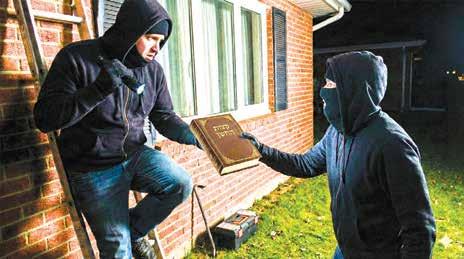
object. The Gemara could have said, “I toiled, and I acquired it.” The meforshim explain that Torah is given by Hashem as a gift to those who toil. It is not a purely logical or cumulative process like mathematics or science, where effort reliably produces understanding. A person can spend hours or days struggling over a Torah concept and still not grasp it. Understanding ultimately comes as a gift from Hashem, bestowed upon those who exert themselves. Accordingly, as long as one toils, even in preparation for Torah, he earns the gift. From this perspective, effort expended in seeking sources should also qualify as yegiyas haTorah.
Perhaps, then, Rav Hutner meant that searching for sources does count as toil but only if it culminates in actual study. If the effort ends with merely locating a source, without engaging it deeply, that is not true toil in Torah. The goal then was not knowledge of Torah but the appearance of knowledge.
From this emerges a practical lesson. If someone has the option of attending a shiur via Zoom or traveling to hear it in person, he should choose to travel. The physical effort involved constitutes yegiyas haTorah, and that toil enhances success in learning.
Additionally, Pirkei Avos (3:6) teaches that when people study Torah together, the Shechinah dwells among them. One who studies alone forfeits this special opportunity. Of course, if a person cannot learn in a group, he should certainly learn alone, and at times, learning independently requires great self-disci-
pline and motivation. Still, Pirkei Avos makes clear that when learning in a group is possible, it is preferable.
The Chofetz Chaim writes in Biur Halacha (siman 155):
“Regarding the essence of Torah study: even though one who learns alone fulfills the positive commandment of Torah study, nevertheless, ideally, it is a mitzvah to beautify it as much as possible by studying in a group, for through this there is greater honor to Heaven. As our Sages said in several places, ‘In the multitude of people is the King’s glory.’ And all the more so when ten study together, for then the Divine Presence precedes them, as it is written, ‘Hashem stands in the congregation of Hashem.’ And our Sages further said, ‘Torah is only acquired in a group.’”
Thus, beyond the added yegiah involved in traveling to hear a shiur in person, one gains the additional blessing of learning in a group, both of which enhance success in Torah learning. Whether through searching for sources, walking to a shiur, or learning in a group, the defining question remains the same: are we exerting ourselves in pursuit of Torah itself? When we do, we merit the Divine gift that makes Torah truly ours.
Rabbi Avrohom Sebrow is a rebbe at Yeshiva Ateres Shimon in Far Rockaway. In addition, Rabbi Sebrow leads a daf yomi chaburah at Eitz Chayim of Dogwood Park in West Hempstead, NY. He can be contacted at ASebrow@gmail.com.
By Rabbi Yair Hoffman
It is one of the most widely used, yet controversial, methods of reheating food on a blech for the Shabbos day meal. Across the country, this method is used every Shabbos to reheat fully cooked food. However, there is an ongoing debate among contemporary poskim as to whether it is permitted.
The method involves taking food out of the refrigerator and placing it on top of an upside-down 9-by-13 pan that sits on the blech.
The Shulchan Aruch (Orach Chaim 253:5) discusses the permissibility of putting fully cooked food on top of another pot on Shabbos. The reason given is lefi she’ein derech bishul b’kach, because it is not the normal manner of cooking. Food, even if dry and fully cooked, may not be placed directly on a blech on Shabbos if it can reach a heat of yad soledes bo. This prohibition is not due to actual cooking on Shabbos, but rather because of another concern known as mechzi k’mevashel, it appears like cooking.
But what kind of pot are we discussing? Does it have to be a pot containing food, or can it simply be an empty 9-by13 pan placed upside down on top of the blech? This very question is at the heart of the controversy.
Some poskim, including Rav Elyashiv, zt”l, (cited in Rabbi Yitzchok Rubin’s Orchos Shabbos, Vol. I, p. 100) and Rav Binyomin Zilber, zt”l, (1917-2008), hold that it cannot be an empty upside-down pan. Rather, it must be a pot containing food that is already on the blech.
Other poskim, including Rav Shlomo Zalman Auerbach, zt”l, (cited in Shmiras Shabbos K’hilchasa, Tikkunim, Chapter One, note 112) and Rav Shmuel Vosner, zt”l, (1913-2015) in his Sheivet HaLevi (Vol. I, #91, “M’achar”), disagree and rule that it is entirely permitted.
Rav Zilber, in his Az Nidberu (Vol. III, #14, “V’halom Ra’isi”), cites Rav Vosner

and questions how two forms of covering a flame could be equivalent to a full pot.
There appears to be a contradiction in the words of the Shulchan Aruch between what is written in se’if gimmel and se’if hei.
In se’if gimmel, the scenario is as follows: You wake up on Shabbos morning and see that the food in your pot is burning. Concerned that it will burn further, you may—if you fulfill the five conditions of chazarah—remove the pot and place an empty vessel on top of the kirah and then place the burning pot on top of that empty vessel.
It is essential that the pot is not placed on the ground and that it remains boiling. We see clearly that placing the pot containing food on the ground is not permitted. The only way it may be placed on top of the empty pot is if all five conditions of chazarah are met.
However, in se’if hei, the Mechaber rules that one may place food that is cool but was fully cooked before Shabbos on top of a pot that is on a covered fire—such as bread—because this is not the normal manner of cooking.
From se’if hei, it appears that one may place food on top of a pot without fulfilling the five conditions of chazarah. How, then, do we resolve this apparent contradiction?
The Biur Halacha’s Resolutions
The Chofetz Chaim, in his Biur Halacha (“V’yezahir shelo yasim” in se’if gimmel), offers two resolutions. One is that of Rav Yechezkel Landau (1713-1793) in his Dagul Mervavah, and the other is that of Rav Yoseph Teomim (1727-1792) in his Pri Megadim (Aishel Avrohom 253:33).
The Dagul Mervavah explains that the Shulchan Aruch follows the position of the RaN, who limits the leniency in se’if hei to bread, since bread is not typically baked on a stovetop. However, the Chofetz Chaim notes that both the Magen Avrohom and the Vilna Gaon hold that the Mechaber rejects the RaN’s view, rendering this resolution somewhat dochak (forced).
The Chofetz Chaim strongly favors the explanation of the Pri Megadim. He writes that se’if hei deals with placing food on top of a pot, which is not considered equivalent to placing it on a covered flame (ketumah) or on an oven whose fuel
has been removed ( grufah). In contrast, se’if gimmel refers to a case where the empty pot merely reduces the heat, and the food is still considered to be on top of a ketumah or grufah oven.
There is a debate among poskim as to how to understand the Pri Megadim, notably between the Chazon Ish (O.C. 37:11) and others.
The Chazon Ish maintains that the distinction depends on which heat source is heating the upper pot. If the lower pot is empty, the heat comes directly from the oven, making it no different from a standard ketumah or grufah oven, upon which placing a pot is forbidden. If, however, the lower pot contains food, then the heat warming the upper pot comes from the food itself, which is not a normal manner of cooking. According to the Chazon Ish, an upside-down empty pot would therefore be ineffective under the Pri Megadim’s reasoning.
Rav Shlomo Zalman Auerbach disagreed. When asked by the author of Me’or HaShabbos (Vol. II, p. 557), Rav Shlomo Zalman responded that the Chazon Ish did not consider a blech to be equivalent to ketumah.
It is this author’s opinion that most poskim permit the use of an empty, upside-down, ubiquitous 9-by-13 pan to heat cold food on Shabbos, notwithstanding Rabbi Yitzchok Rubin shlita’s disagreement with this heter. While on the subject, this author would also like to recommend ninebythirteencatering@gmail.com (053-3196164) for anyone wishing to send food to a child in Eretz Yisroel. The owner grew up in this author’s home and is a fantastic chef.
This article should be viewed as a halachic discussion and not practical advice. The author can be reached at yairhoffman2@gmail.com.

By Barbara Deutsch
My feeling good feels good; sometimes, it’s not so simple to attain. When you push yourself out of your comfort zone and go solo to simchas , it takes a lot to find a happy space.
This past Shabbos, I attended the bar mitzvah for a young man whose family traces back to connections made in Brooklyn, Yeshivah of Flatbush, Morasha, and most importantly, the East Pond Bungalow Colony. The bar mitzvah boy is named for his Uncle Jason, whom I knew, loved, and taught. Everyone did!
Within the family, they call him Little Jason.
As a middle school teacher and administrator, I had the privilege of attending many bar/bat mitzvot. I always found it remarkable how a 13-year-old boy could have the confidence and maturity to lead an entire synagogue of mispallelim in the recitation of the Torah portion and oftentimes the tefillah. Little Jason was flawless; he read the entire parsha, the haftorah and davened Mussaf.
Little Jason delivered a short, meaningful speech accompanied by a siyum.
There are two powerful standout moments garnered from the images that continue to flash through my mind’s camera. Little Jason standing on the bima next to his cousin Joe; Joe’s father was Big Jason, Little Jason’s uncle.
Before Mussaf, Little Jason carried the Sefer Torah back to the Aron Kodesh; dropping a Sefer Torah results in multiple days of fasting by the entire community. As the yet not-so-large in physical stature Jason carried the heavy Torah back to its home, he was flanked by a coterie of men walking close to him as careful escorts.
This spectacular image may be compared to watching a beautiful float pass by during a celebratory parade; the participants were slow, steady, smooth.
Sitting in the back of the YIW women’s bleacher section, not far from the Botnick family members, I could not help but be transported to the long-ago
time when his uncle, Big Jason, a”h, became a bar mitzvah in Brooklyn’s Young Israel of Flatbush. I remember the pouring rain as Bob and I walked with our Canarsie friends to Flatbush (doable but long). I wore a brand-new long black linen blazer I had bought it for the occasion. I usually don’t remember the clothes that I wear to simchas other than my own. This one stands out because the rain ruined my jacket’s shape and fabric. As an added bonus, the blazer stayed wet the entire morning.
Big Jason was amazing; his charismatic, dynamic and friendly personality infused the packed-house simcha. Jason’s zest for life was palpable and huge. Everyone wanted to be his friend and part of his exciting world. May his neshama have an aliyah.
The next day, I got a beautiful note from Little Jason’s proud father, Steven (a ben bayit), and grandmother, Jinny (a dear friend); each one took the time to thank me for my participation in their nachat.
When you get an invitation to a “smaller” simcha, unless it is for immediate family, we oftentimes, especially if it’s a work/school night, think twice about attending. We note it on our calendar but continue to weigh the pros and cons about attending. Since losing Bob, I have done my best – both in Israel and here – to participate when invited.
Walking into a room without your partner is daunting. Luckily, there is usually someone to greet me with a welcoming smile and, when appropriate, a warm hug.
In the past four months, I have attended multiple brit milah, bar/bat mitzvot, weddings in Israel and soon, in America, too. Family, close friends, former colleagues and random old friends, students and colleagues who learn that I am back in New York reach out to fill my dance card. It has been daunting, overwhelming, fattening and fabulous.
Messages like, “I hear you are here, come to the brit milah of my new grand-
son,” “Irv and Miriam told me you are around; please join us in sheva brachot for my grandson,” and more fill my inbox.
I went to a brit milah today. The grandfather is Tamar’s first cousin, David; Dov, my son, went to camp with him. David came over to me a number of times, after the brit and during the seudah, to share heartfelt appreciation for my making the effort to come. He understands; he lost his own wonderful dad Seymour not too long ago.
David was a camper in Camp Seneca Lake where I worked as the camp Director’s secretary; suffice it to say that I was and am a terrible one. At the brit, David reminded me of the day I marched him into the camp office to call home. His mom (Aunt Gail) had complained that she had not heard from him all summer. I don’t remember the story, but apparently, he does.
“It makes me so happy to have you here to see me all grown up and a responsible grandfather,” he said with a wide grin.
Me too, David!
I have been wined and dined in almost every Five Town dairy restaurant and have begun ticking off the meat options as well. I reminisce, cry and laugh with the remarkable people who continue to be my inspiration and support. I am blessed with family and friends who don’t mind my lost filter and are not deterred by my cloudy face or sometimes too blunt conversations.
On Sunday, when I attended the HANC Siddur Celebration held in the brand-new, state-of-the-art building in West Hempstead, the beloved custodian, Santiago, welcomed me and announced my presence.
I had wanted to see HANC’s new home in a quiet way, to be there and kvell with friends and colleagues over the manifestation of a wonderful reality that had been years in the planning.
It still gives me great pleasure to feel

my HANC family’s love and respect; it’s a wonderful school home for children and teachers.
I told my sister-cousin Miriam, sick with the flu but now better, that on the advice of my daughter-in-law Tamar (she always guides me to do the right thing) that I would be extending my stay in order to attend her granddaughter’s upcoming wedding. Miriam told me that knowing I will be there fills her with joy.
I got the haircut that makes me happy from my guy in SoHo, Rodney. I also had my broken and healing tooth checked out by dentist friend, Irv. I am being given what I need right now.
I plan to spend this Shabbat with my three gorgeous great-granddaughters in Queens, visit with another beautiful toddler in the city, and hang out with the two adorable kids who live close by in Woodmere.
Our grandson Yoav and his wife, magnificent Michal, have a brand-new baby boy; he now joins his older brothers Moshe (Moshe Manus Doniel) named for his maternal great-grandfather and Shmuel (Pinchas Shmuel) named for Bob’s dad, his great-great-grandfather.
In the Ashkenazi Jewish tradition, giving a baby a beloved family member’s name is a big deal. The new baby’s brit milah was Sunday; he is named for his great-grandfather Bob, Avraham ben Chaim Yoav. They are calling him Avi.
Barbara Deutsch is the former associate principal at HANC, middle school principal at Kushner, and Dean of Students at Yeshiva of Flatbush. A not-retired educator, she is trying to figure out life in Israel through reflections on navigating the dream of aliyah as a wife, mother, grandmother, great-grandmother and friend.



By Eliyahu RosEnBERg
ake a peek at Rav Eli Stefansky’s Daf Yomi shiur, and you might be momentarily fooled into thinking it’s your run-of-the-mill Torah lecture. But step inside his packed beis medresh (or watch him online), find yourself a seat, and it won’t be long before you recognize the same qualities that have hooked 45,000 daily viewers and made Rav Eli’s shiur, Mercaz Daf Yomi (MDY), a household name.
MDY’s a phenomenon. A community. And, for countless, a life-changer. But what makes it so special?
“One of the beautiful — really beautiful — things about MDY is the achdus,” Rav Eli shares. “It’s very hard to find in one room so many different types of Yidden sitting together, learning Torah, gathering to serve Hashem. Every day, we have Yerushalmi guys, with their special jackets and white yarmulkes, sit-
it’s always great to start by a new masechta, but it’s a mistake – just like it’s a mistake to start your diet after yom tov or next month or after the new year. That’s the yetzer hara. That’s his biggest trick: ‘Don’t start today. l et’s push it off until tomorrow’... one of our key rules is that you should just start whenever you have inspiration.
sometimes, you daven, and hashem says no. sometimes, you daven, and he doesn’t answer you right away. sometimes, it takes 10 years, 20 years, and sometimes, he takes your tefillah and puts it somewhere else, and he says, ‘ you don’t need that. you need this instead.’ so, don’t be discouraged. hashem is always listening, and hashem always answers.
Many people feel that when you do something every single day, it becomes a part of you. it’s very, very difficult to stop. a nd that’s the beauty of the Daf yomi.
ting next to chayalim. And then, we have Litvish, Chassidish, Breslov, Lubavitch, Sefardim, Teimanim. Eight-year-olds. Ninety-year-olds. Kollel guys. Talmidei chachamim who just finished all of Shas. Amei ha’aratzim. Guys who are in the process of geirus. We have Kippah Sruga guys. We have guys who come without kippahs. But it’s for everybody. It’s for all levels. All Yidden.”
As Rav Eli puts it, his shiur is like the “United Nations” of the Jewish world, catering to a hundred demographics.
But the secret behind MDY’s magic — the reason why it attracts nearly every type of Jew — isn’t only about the viewers; it’s also about the man at the center of the movement: the maggid shiur himself.
* * *
For most people, the word “slave” is a pejorative. For Rav Eli Stefansky, it’s an honor.
“I’m a slave to the Daf. But it’s geshmak to be a slave!” Rav Eli admits, chuckling. “Ivdu es Hashem b’simcha.”
While it’s no doubt geshmak to be Rav Eli, it’s certainly not easy. Being MDY’s maggid shiur is a massive undertaking, given that it’s not the sort of job that gives you vacation or sick days. As Rav Eli puts it, “I can’t say, ‘Oh, today, I don’t feel like giving the Daf. I want to take a one-day break.’ It’s impossible, because if I do that, I’m going to let down 45,000 people.”
So, he often misses family weddings. Only once in a blue moon can he go to a restaurant with his wife or take his family on vacation. And even when he does go away, it always requires complex arrangements and tight time management
to ensure that, no matter where he is, he still gets a shiur out to his talmidim every day. When he’s not giving shiur, he’s preparing for it. By his estimation, he spends 12 to 14 hours a day preparing for a single lecture.
And yet, for the six-plus years that he’s been giving shiur, he has, bli ayin hara, yet to miss a single day.
“I’m a very inconsistent person. For example, I’ve started a lot of stuff in business, and everybody knows that I start and somebody else finishes. I just lose interest, and I move on to the next thing,” Rav Eli confesses. “But when it comes to the Daf, it’s incredible — the consistency, the day-in, day-out commitment. For me, it’s an incredible feat. I gave shiur when I had the flu and COVID. I gave shiur during my son’s chasanah a few years ago, while my daughter was giving birth. The consistency. There’s no stopping. And many people feel that when you do something every single day, it becomes a part of you. It’s very, very difficult to stop. And that’s the beauty of the Daf Yomi.
“So yeah, I’m a slave,” he says. “But I love every minute. Literally every minute.”
But, besides his hard work, how else does Rav Eli keep the masses captivated? How does he win over men who haven’t learned Gemara in years? The answer: through warmth. By sprinkling in jokes and stories, he makes his shiurim entertaining. If he were stressed, you’d never know it. He sits there during his shiur, wearing a wide smile, clearly energized, enjoying every minute of teaching Torah. His endless enthusiasm for Torah, one could say, is contagious. Somehow, he strikes the perfect balance between re -
spectability and warmth, like a rebbi and a friend. Watching his shiurim, you can’t help but feel like you know him.
Rav Eli prioritizes clarity in his shiurim. And to teach the Gemara clearly, especially in more complex mesechtas, he employs groundbreaking technologies. Most notably, MDY’s team has recently started using AI to make videos and visuals meant to demystify the Gemara. As of this writing, the current Daf Yomi cycle is up to Menachos, a masechta that deals with flour karbanos. But it’s oftentimes difficult to, for example, visualize Kohanim performing the avodah. MDY’s videos solve that problem.
“I think that’s why AI was created: for the Daf, for Torah,” Rav Eli says. “For Yiddishkeit.”
* * *
A year ago, Ari Chaimowitz, a Jewish video producer, interviewed Rav Eli Stefansky.
“I kept on bugging him, like I do to everybody. If you’re going to come in my daled amos, I’m going to ask you about the Daf,” Rav Eli half-jokes.
So, Rav Eli encouraged Ari to start doing Daf Yomi. But the man refused.
“And then, basically, he breaks down,” Rav Eli recounts. “He’s sitting on my porch, and he says…that he hates Gemara.”
The interviewer explained that his hatred of Gemara began years ago in cheder.
One day, the class was having some sort of celebration, and the rebbi brought doughnuts for the boys. Young Ari stared in awe at the doughnuts. These weren’t your typical doughnuts; they were top-tier. But just as the young boy’s excitement peaked, his rebbi made a soul-shattering announcement:
“Only boys who know the Gemara are allowed to have these doughnuts,” his rebbi declared.
As it turns out, every boy got doughnuts. Every boy except for Ari and an-
other kid.
Being deprived of the doughnuts would’ve been bad enough. But then, his classmates started teasing him.
“The other kids rubbed it in. They started singing this nasty tune: ‘He’s a loser. He can’t get a doughnut.’ And that gave him this hatred towards Gemara,” Rav Eli shares.
After meeting Rav Eli Stefansky, Ari decided to give Gemara another shot. He committed to a 30-day challenge where he consistently watched Rav Eli’s shiurim. And it changed his life and relationship with Torah. Now, he watches Rav Eli’s shiur every day.
Rav Eli has heard countless stories like that one: tons of men, who haven’t learned in years or ever, have reported falling in love with Torah after watching Rav Eli’s shiurim. And people who have struggled with their Yiddishkeit credit MDY for bringing them back to G-d. Part of MDY’s magic is, no doubt, Rav Eli’s warmth and stimulating teaching style. But he stresses that Daf Yomi, in itself, is life-changing.
As he says, “It’s not about the Daf. It’s about the day.”
“If you learn Daf for 60, 90 days straight and you don’t give up, then you realize that you could do better in so many other areas of your life. You could be consistent. Even in exercise: how many times have you bought a piece of equipment or a gym membership, and then you forget about it after a week or two? But when you do the Daf, and you become consistent in that area, you tell yourself, ‘Hey, I was successful over there. Maybe I could be successful in another area!’” Rav Eli shares.
“The Daf enhances your marriage, your chinuch with your kids, all these things. You pick up so many different ideas that could enhance your life. And people tell me that, and that’s why I have the right to say to other people, ‘Hey, this will change your life, too.’”

This article is based on a podcast, “Inspiration For the Nation,” hosted by Yaakov Langer. To catch more of this conversation, you can watch it on LivingLchaim.com or YouTube.com/LivingLchaim or listen wherever you listen to podcasts (just search for “Inspiration For The Nation”) or call our free hotline: 605-477-2100

Moderated by Jennifer Mann, LCSW of The Navidaters

My now ex-wife recently moved out of the house we’ve been (reluctantly) sharing since separating. While we were initially planning to sell it, I ended up buying it in the end so I can stay in my community and my shul where I’m an active member while also allowing our youngest child to maintain some stability. It might’ve cost a pretty penny, but I know it was the right decision.
We were married for over 30 years, have three wonderful children, and we were even getting along well even after separating until she realized she wouldn’t be able to push me around as much as she had hoped. Needless to say, I am very relieved to have this chapter behind me. While I’d certainly like to start dating and find that someone special again, I have reservations about getting remarried just because of how unpleasant the experience was and the thought of going through it again is horrifying. I guess you can say it’s caused me to have some trust issues. I also don’t know if I really need that again at my age but know there are societal expectations in the Orthodox community specifically, which I also feel would make it tough to get past for someone to accept if I may not be looking to get married again.
I was wondering what you and the panel would recommend I do in this situation and the best way to be honest about my intentions/feelings with any future prospective women that I meet or am set up with?
Tzvi*
Dear Readers,
We want to offer YOU an opportunity to be part of the discussion! Please email us at MichelleMondShadchan@gmail.com, subject line “reader’s response,” if you would like to participate in the new “A Reader’s Response” columnist spot. We will send you a question and publish your answer in an upcoming Navidaters edition.
If you have a question you would like the Navidaters to answer, please reach out to this email as well.
Looking forward!
Michelle, the “Shadchan”
Rebbetzin Faigie Horowitz, M.S.
Tzvi, you are correct in understanding that the Orthodox Jewish world does not look favorably on dating for companionship rather than marriage.
Do you really think you are ready to date just after exiting a thirty-year marriage? People are probably offering suggestions. You are lonely and are not used to being on your own. Our community is largely a couple’s environment within social circles.
It is clear that you have lots of resentment, trust issues, and probably more baggage from your marriage. Give yourself the gift of quality therapy. Invest in the work of resolving your feelings, getting to know your past and present better, and moving to a place of self-awareness, understanding, and emotional health.
Do join some classes, get a pet, travel, and join some volunteering groups. Develop relationships. In time, you will be included in social groups and receive invitations.
I would suggest that you not venture into the dating world for a while. Women want to find a mate, not just date for companionship without the possibility of a commitment down the road. Besides, you have a lot of baggage right now that astute women will notice.
it makes sense that you are relieved to close it. Ending a marriage of over thirty years must be so, so painful. Wanting stability and staying within your community all reflect responsibility. That said, before stepping back into dating, there is an important piece of work that should not be skipped. Until you take the time to reflect honestly on your role in the story of what happened in your previous marriage, and how it went awry, it will be very hard to build something healthy going forward.
Ask yourself some uncomfortable questions. What patterns existed in the marriage that went unaddressed? Where did you shut down or contribute to resentment? Why were problems allowed to linger for years instead of actually being dealt with? What would you do differently if you were starting again today?
This is not about assigning blame or reliving pain. It is about growth for you. Without that reflection, how do you expect to heal and move forward without carrying all the same issues into your next relationship? It is also important to be clear with yourself about your intentions. If you know that you do not want marriage again, then you should not be dating women who are looking for it. In shidduchim, dating is not casual by default. Many women, especially later in life, are dating with marriage in mind. Entering that space without the possibility of commitment will almost certainly lead to disappointment on both sides.
If what you are truly seeking right now is companionship or social connection, there are more honest ways to pursue that. Shiurim and volunteer
opportunities for people in your stage of life can offer connection without the pressure of marriage expectations. That can be a healthy bridge while you continue processing your past and clarifying your future.
If and when you do decide to date, lead with honesty. You can say that you are newly divorced, still reflecting on a long marriage, and taking things slowly. What matters is that you do not leave room for assumptions that you already know you cannot meet.
Dr. Jeffrey Galler
You have gone through a very rough time. Now, you are looking for new companionship but are justifiably fearful of, once again, living through a horrifying ordeal.
Do not leave room for assumptions that you already know you cannot meet.
When word gets out that you are interested in dating, you will be, literally, bombarded with suggestions. Some women will come through shadchanim, some through mutual friends, and some you will meet on your own.
I like what you wrote and agree with your instincts. You should certainly be very upfront with all of these potential dates and honestly explain that at this

point in your life, you are just looking for companionship. You would love to have a female friend who you can talk to and go with you to movies, restaurants, museums, or Yankees games.
(As an aside, when I read this to my wife of 53 years, she laughed and said, “Who are you kidding? You hate museums. And if you expect me to go to a Yankees game with you, forget it!”)
In any event, you will very likely come across two types of women. In the first category are women who will be desperate to get married, and it wouldn’t be fair to waste their time with unrealistic expectations.
In the second category are women who have also suffered with terrible past experiences and like you, seek friendship and companionship, without the expectation of marriage.
Of course, you should be dating women in that second category.
Understand that over time, your opinions might slowly evolve. Right
now, you both might be saying, “I never want to get married again,” when what you may really mean is, “I don’t know if I can ever again trust someone sufficiently to consider remarrying.”
You have been through quite an ordeal. For now, allow yourself companionship without pressure, and let time do the rest.
Shani Green* A Reader Who’s Been There
Tzvi, firstly I want to say how sorry I am that your marriage of 30 years ended in divorce and for all the hardships it has caused you.
My first question is: are you ready to date/get remarried already? Speaking with a rav or therapist about these things is always a great way to not end
The Navidaters
Dating and Relationship Coaches and Therapists
Tzvi,
What you’re describing is actually a very sane response to a very big life change. When a long marriage ends, especially one that shaped your adulthood, your nervous system doesn’t magically reset just because the logistics are done. There’s often relief, yes, but also a kind of emotional jet lag. You’ve been in something for decades, and even when leaving was the right thing, it still takes time to metabolize what you lived through and who you
were inside it. So I want to say this plainly: it is complete - ly normal, and often very healthy, to pause.
In a culture that values marriage so deeply, pausing can feel suspicious or even selfish. But a pause isn’t a rejection of connection or of values. It’s a way of making sure that if and when you do open your heart again, you’re doing it from steadiness rather than exhaustion or fear. There’s no prize for rush-
up in a similar situation or worse. By speaking to people such as a rav or therapist, you will really learn who you are and what’s important to you.
As for your trust issues, I can completely understand. The way I’ll put it is as long as you can get the right help and guidance, you won’t make the same mistake again. This is what I was told by my rav who I keep a close kesher with after my own divorce. I see way too many people going right back into the dating pool after a divorce, especially after a very long marriage. You really need to take the time to think about what’s important to you in your life.
I was divorced for almost four years, and those four years were the best of my life and the most growth filled. Marriage is not the end all-to-be all in life. Our society does put a lot of pressure and emphasis on marriage, maybe because we are supposed to be a growing nation. And we can talk about other reasons at another time. At this point in
There’s wisdom in knowing when to move forward and wisdom in knowing when to rest.
your life, personal growth comes first. You can date with the end goal of marriage when you and your rav or therapist feel that you are ready and can give it your best shot! Furthermore, if you’re not dating for marriage, why are you even dating? You’re wasting your time and stringing someone along and playing with their emotions. It wouldn’t be fair to them or to you.
ing. Healing doesn’t run on a shidduch calendar.
It’s also OK not to know yet what remarriage means to you. After thirty years, it makes sense that your system might say, “Let’s breathe before we sign up for this again.” That doesn’t mean never. It means not yet, and not automatically.
If you do date, honesty doesn’t have to be heavy or dramatic. It can sound simple and human: “I’m open to meeting someone and seeing where things go. I’m also being thoughtful about my pace after a long marriage, and I want to be upfront about that.”
That kind of clarity isn’t a red flag. It’s actually a kindness. It allows the right person to meet you where you are, and it filters out situations where you’d
feel pushed, rushed, or misunderstood.
And here’s something important. Taking time to heal isn’t indulgent. It’s protective. It’s how we avoid carrying any unfinished pain into something new.
You’re not failing by slowing down. You’re not betraying the value of marriage by being honest about your limits. You’re doing the work that makes future connection healthier, whatever form it eventually takes.
There’s wisdom in knowing when to move forward and wisdom in knowing when to rest. Right now, it sounds like you’re listening to yourself, and that’s not something to override lightly.
Sincerely, Jennifer

By Rivka Kramer, PMHNP-BC
There is a particular kind of mental discomfort that many people struggle to describe. It is not quite sadness and not exactly anxiety. It feels more like walking through a thick fog where thoughts move slowly, words feel just out of reach, and even familiar tasks demand unusual effort. People call it brain fogginess, a term that has quietly entered everyday language because so many recognize the experience instantly.
For some, brain fog appears during periods of stress, illness, sleep deprivation, or hormonal change. But for a growing number of people, it emerges after stopping or reducing a psychiatric medication. When this happens, the fog is often interpreted as proof that an underlying mental illness has returned. The result is fear, confusion, and frequently a rushed decision to restart medication without understanding what the brain is actually doing.
This misunderstanding is not a small issue. It shapes treatment decisions, self-identity, and long term trust in mental health care. And yet it is rarely discussed outside clinical circles.
To understand why medication withdrawal can so convincingly mimic psychiatric relapse, we need to first understand what brain fog really is and what happens inside the brain when medications are removed.
Brain fog is not a diagnosis. It is a description of cognitive disruption that affects attention, memory, processing speed, and mental clarity. People often describe feeling spaced out, mentally dull, or disconnected from their usual sharpness. Reading becomes harder. Conversations require more effort. Decision making feels overwhelming.
Emotionally, brain fog can be distressing because it interferes with a person’s sense of self. Someone who prides themselves on being quick thinking may suddenly feel incompetent. A parent may struggle to track details. A professional

may worry they are losing their edge.
Unlike depression or anxiety, brain fog does not always come with sadness or fear. In fact, many people report feeling emotionally neutral or oddly flat while their cognition feels impaired. This distinction matters, because it is one of the clues that the fog may not be a return of illness at all.
Psychiatric medications work by altering neurotransmitter signaling. Antidepressants influence serotonin, norepinephrine, and dopamine pathways. Antipsychotics affect dopamine and other receptor systems. Mood stabilizers modify neuronal firing and glutamate signaling. Stimulants adjust dopamine and norepinephrine availability.
Over time, the brain adapts to these changes. Receptors adjust their sensitivity. Neural pathways recalibrate. The brain establishes a new balance that includes the presence of the medication.
When a medication is reduced or stopped, especially quickly, the brain does not instantly revert to its original state. Instead, it enters a transitional period where neurotransmitter signaling is temporarily dysregulated. This adjust-
ment phase can last weeks or months depending on the medication, duration of use, and individual biology.
During this period, cognitive symptoms are extremely common. Concentration suffers. Memory feels unreliable. Thinking slows. Sensory processing may feel off. Many people describe feeling like they are watching their life through a pane of glass.
These symptoms are not signs of damage or disease. They are signs of a brain recalibrating.
The overlap between withdrawal symptoms and psychiatric symptoms is significant. Poor concentration is a hallmark of depression and anxiety. Mental slowing is associated with depression. Disorganization and forgetfulness can resemble attention disorders. Emotional blunting can be mistaken for anhedonia.
Because of this overlap, both patients and clinicians may assume that the original condition is returning. This assumption feels especially convincing if the medication was started during a difficult time in life and seemed to help.
What is often missed is the timing. Withdrawal related brain fog frequently
begins days to weeks after a dose reduction. It may fluctuate throughout the day. It often improves temporarily with rest or gentle stimulation. And it may exist without the emotional patterns that defined the original illness.
In contrast, true relapse tends to reintroduce familiar emotional themes. The same types of intrusive thoughts. The same triggers. The same behavioral changes. Brain fog from withdrawal often feels unfamiliar even to someone with a long psychiatric history.
Fear plays a powerful role in how symptoms are interpreted. When someone has experienced severe anxiety, depression, or psychosis in the past, the prospect of relapse is terrifying. Any mental change can feel like a warning sign.
This fear can amplify symptoms. Worry about cognitive performance increases mental load, which worsens fogginess. Hyper monitoring of thoughts disrupts natural flow. The nervous system shifts into a stress response that further clouds cognition.
In this state, reassurance is hard to accept. The mind searches for certainty and often lands on the most threatening explanation.
This is one reason why education about withdrawal effects is so important. Understanding that cognitive symptoms can be temporary and reversible reduces fear and allows the brain to recover more smoothly.
While many medications can produce withdrawal related cognitive symptoms, some are more commonly reported.
Selective serotonin reuptake inhibitors and serotonin norepinephrine reuptake inhibitors are frequently associated with brain fog, dizziness, and sensory changes when stopped too quickly. Benzodiazepines can cause profound cognitive disruption during with-
drawal, including memory impairment and slowed thinking. Antipsychotics may lead to emotional flattening and concentration difficulties. Even stimulants can produce cognitive dullness when discontinued after long term use.
When withdrawal symptoms are mistaken for relapse, several consequences follow.
First, people may restart medications unnecessarily, reinforcing the belief that they cannot function without them. Second, clinicians may escalate treatment, adding medications or increasing doses when the issue was temporary. Third, individuals may lose confidence in their own resilience and misinterpret a normal neurobiological process as personal failure.
This cycle contributes to long-term polypharmacy and chronic dependence on medications that may no longer be needed.
None of this means medications are bad or inappropriate. Many people benefit enormously from them. The problem lies in not recognizing the difference between illness and adjustment.
There is no single test that distinguishes withdrawal from relapse, but several questions can help guide understanding.
Did the symptoms begin after a dose change?
Do they feel qualitatively different from past episodes?
Are emotional symptoms or thought patterns the same as before?
The brain is remarkably resilient. Given time and support, cognitive clarity often returns fully.
Key supports include adequate sleep, stable routines, hydration, gentle physical activity, and minimizing additional stressors. Overstimulation such as excessive screen time can worsen fogginess, while gentle engagement like walking or light reading can help.
It reminds us that not all mental symptoms are psychological.
Do symptoms fluctuate rather than steadily worsen?
Is there gradual improvement over time even if uneven?
Tracking symptoms in a journal can reveal patterns that are hard to see day to day. Consulting a knowledgeable clinician who understands withdrawal physiology is also essential.

about mental health. It reminds us that not all mental symptoms are psychological. Some are physiological transitions that deserve compassion rather than diagnosis.
As conversations around mental health become more open, it is time to include this nuance. People deserve to know that feeling mentally clouded after stopping medication does not automatically mean they are unwell again. It may mean their brain is healing.
Recognizing this difference can reduce fear, improve outcomes, and empower people to make informed decisions about their care. In a world where clarity is prized, understanding the nature of fog may be one of the clearest steps forward.
Most importantly, patience matters. The pressure to feel normal again quickly often backfires. Recovery is not linear, and temporary setbacks do not mean failure.
We Need to Have
Brain fog during medication withdrawal challenges the way we think
Rivka Kramer is a Board Certified Psychiatric Nurse Practitioner. She has a psychiatric private practice based in Cedarhurst, NY. She serves as a member of the board of JANPPA, the Jewish American Nurse Practitioner Psychiatric Association. She can be reached at 516-945-9443.


By Aliza Beer MS, RD, CDN

Nutrition is often discussed in terms of calories, macronutrients, and food choices, but what we eat and how much we eat is heavily influenced by hormones. Hormones act as chemical messengers that regulate hunger, fullness, stress responses, metabolism, and energy balance. Rather than appetite being driven solely by willpower, eating behaviors are largely shaped by internal hormonal signals responding to food intake, sleep, stress, and overall health. Understanding these nutrition-related hormones provides valuable insight into why weight loss can be difficult, why hunger fluctuates, and how certain dietary patterns may support better appetite regulation and long-term weight maintenance.
Leptin: The Satiety Hormone Leptin is a hormone primarily pro -
duced by fat cells (adipocytes) that helps control hunger and fullness. Its main function is to communicate to the brain, specifically the hypothalamus, that the body has enough energy stores, thereby reducing appetite and promoting energy expenditure. When leptin levels are working properly, higher body fat leads to more leptin, which helps reduce appetite and tells the body it does not need to eat as much.
However, many individuals with overweight or obesity experience leptin resistance, a condition in which the brain does not respond properly to leptin signals. Even when leptin levels are high, a person may still feel hungry, and their metabolism can slow down. This helps explain why chronic dieting and weight regain are common and why simply “eating less” is often unsustainable.
Nutrition plays a significant role in
leptin sensitivity. Diets high in ultra-processed foods, refined carbohydrates, and added sugars may worsen leptin resistance, while diets rich in whole foods may support leptin signaling. Adequate protein intake is particularly important, as protein increases satiety and may help improve hormonal responses related to fullness. Additionally, consistent meal timing and avoiding extreme caloric restriction can help prevent leptin levels from dropping too low, which can otherwise increase hunger and slow metabolism during weight loss.
Ghrelin: The Hunger Hormone
Ghrelin is often referred to as the “hunger hormone” because it stimulates appetite and signals the brain to initiate eating. It is primarily produced in the stomach and rises before meals, then decreases after food intake. Ghrelin
levels increase during periods of fasting, sleep deprivation, and weight loss, which explains why individuals often feel hungrier when dieting.
From a nutritional perspective, ghrelin responds differently depending on the macronutrient composition of meals. Protein-rich meals are particularly effective at suppressing ghrelin levels compared to meals high in refined carbohydrates or fats alone. Fiber-rich foods such as vegetables, legumes, whole grains, and fruits also slow digestion and promote prolonged ghrelin suppression, helping individuals feel fuller for longer.
Highly processed foods, especially those high in sugar and refined carbohydrates, may lead to rapid spikes and crashes in blood glucose, which can cause ghrelin levels to rebound quickly, increasing hunger shortly after eating.
For weight management, meals that combine protein, fiber, and healthy fats tend to provide the most stable appetite control by keeping ghrelin levels more balanced throughout the day.
Cortisol is commonly known as the “stress hormone,” but it also plays an important role in metabolism and energy regulation. Cortisol is produced by the adrenal glands and helps the body release energy during stress by raising blood sugar levels. While this response is helpful in acute stress situations, chronically elevated cortisol, often due to ongoing psychological stress, poor sleep, or restrictive dieting, can negatively affect eating behaviors and weight.
Elevated cortisol levels are associated with increased cravings for high-calorie, palatable foods, particularly those high in sugar and fat. This stress-driven eating pattern may contribute to weight gain, especially in the abdominal region, as cortisol promotes fat storage in visceral adipose tissue. Additionally, chronic stress may disrupt hunger and satiety hormones, making it harder to recognize true hunger and fullness cues. Nutrition can both influence and be influenced by cortisol. Skipping meals, consuming excessive caffeine, or following overly restrictive diets can raise cortisol levels further. In contrast, balanced meals that include complex carbohydrates, lean proteins, and healthy fats can help stabilize blood sugar and reduce stress-related hormonal fluctuations. Foods rich in magnesium, such as leafy greens, nuts, seeds, and whole grains, may also support stress regulation and cortisol balance.
Insulin is a hormone produced by the pancreas that regulates blood glucose by allowing cells to absorb glucose for energy or storage. While insulin is often discussed in the context of diabetes, it also plays a role in appetite control and fat storage. Frequent spikes in insulin, commonly caused by high intakes of refined carbohydrates and sugary foods, can contribute to insulin resistance over time, making blood sugar regulation more difficult. When insulin resistance develops, the body requires higher levels of insulin to manage blood glucose, which may promote fat storage and increase hunger.
Stable blood sugar levels, supported by balanced meals, can help prevent energy crashes and excessive hunger. Meals that pair carbohydrates with protein, fiber, and fat slow glucose absorption and reduce sharp insulin spikes. For weight maintenance and metabolic health, focusing on whole carbohydrate sources such as fruits, vegetables, legumes, and whole grains rather than refined grains and added sugars is beneficial. These foods support insulin sensitivity while providing essential nutrients that aid overall hormonal balance.
Several additional hormones contribute to appetite and satiety. Peptide YY (PYY) is released from the gut after
nored. Nutrition strategies that prioritize quality, consistency, and adequacy tend to work with the body’s hormonal systems rather than against them.
Practically applying hormonal knowledge does not require tracking hormones or following strict rules. Instead, small, consistent habits can help support hormone balance and healthier eating patterns. Eating regular meals that include protein can help control hunger by lowering ghrelin and increasing fullness hormones like PYY and CCK. Including fiber-rich foods such as vegetables, fruits, legumes, and whole grains helps you feel full longer and keeps blood sugar levels steady. Avoiding extreme calorie restriction is
A nutrient-dense, balanced eating pattern supports hormonal stability and natural appetite regulation.
eating and promotes fullness, particularly after protein- and fiber-rich meals. Cholecystokinin (CCK) is another satiety hormone released in response to fat and protein intake, helping slow digestion and signal meal termination. Glucagon-like peptide-1 (GLP-1) plays a role in appetite suppression and blood sugar regulation and is the hormone targeted by certain weight-loss medications. These hormones work together with leptin, ghrelin, insulin, and cortisol to form a complex regulatory system. No single hormone determines eating behavior; rather, nutrition, lifestyle, sleep, and stress all interact to influence hormonal responses.
Understanding how hormones influence appetite highlights why sustainable weight management requires more than calorie counting. Extreme dieting can disrupt leptin and ghrelin, increase cortisol, and slow metabolism, making long-term success difficult. In contrast, a nutrient-dense, balanced eating pattern supports hormonal stability and natural appetite regulation.
Weight loss and maintenance are more achievable when meals are satisfying, blood sugar is stable, and hunger signals are respected rather than ig-
satiety hormones, reduce hunger, and keep blood sugar levels steady throughout the day.
Breakfast Ideas
• Greek yogurt with berries, high fiber cereal, and chia/flax seeds
• Scrambled or boiled eggs with sautéed vegetables and whole-grain toast
Lunch Ideas
• Baked salmon with roasted vegetables and brown rice
• Turkey salad with mixed greens, quinoa, and olive oil–based dressing
• Eggplant pizza made with no-sugar-added tomato sauce, low-fat mozzarella, and fresh herbs, served with a bowl of zucchini cauliflower soup
Dinner Ideas
• Grilled chicken with sweet potatoes and steamed or sautéed greens
• Blackened branzino with assorted roasted mushrooms and farro
Snack Ideas
• Apple slices with peanut butter
• Hummus with raw vegetables
• Air-fried eggplant chips with tahini and pomegranate seeds
also important, as it can lower leptin and raise cortisol, which may increase hunger and overeating.
Equally important is learning to recognize and respond to the body’s natural hunger and fullness cues, which are influenced by these hormones. Feelings of hunger, satisfaction, energy levels, and cravings are all signals that help guide eating decisions. Paying attention to these cues—rather than ignoring them or eating on a rigid schedule—can support better appetite regulation and a healthier relationship with food.
Managing stress through adequate sleep, mindful eating, and realistic expectations is just as important as food choices. Prioritizing sleep helps balance leptin and ghrelin, while poor sleep can increase hunger and cravings. Choosing mostly minimally processed foods while allowing flexibility can reduce stress around eating and improve longterm consistency. Rather than focusing on “hormone hacks,” a balanced, sustainable way of eating that nourishes the body and respects its signals is the most effective approach for supporting hormonal health and overall well-being.
Meal Ideas
Building meals that include protein, fiber, and healthy fats helps support
These meal/snack combinations help regulate hunger hormones, promote fullness, and support consistent energy levels, making them practical choices for weight maintenance and overall hormonal balance.
Hormones such as leptin, ghrelin, cortisol, insulin, and others play a powerful role in shaping hunger, satiety, stress responses, and metabolism. Nutrition both influences and is influenced by these hormonal systems, making food choices a key component of appetite regulation and weight management. By understanding how different foods and eating patterns affect hormones, individuals can make informed, practical choices that support health, weight maintenance, and overall well-being. Ultimately, working with the body’s hormonal signals, rather than fighting them, creates a more sustainable and compassionate approach to nutrition.
Aliza Beer is a registered dietitian with a master’s degree in nutrition. She has a private practice in Cedarhurst, NY. Patients’ success has been featured on the Dr. Oz show. Aliza can be reached at alizabeer@gmail.com, and you can follow her on Instagram at @alizabeer
By Etti Siegel
Q:Dear Etti, Is it really so terrible to call a teacher and ask for a higher grade for my daughter?
She works hard, studies diligently, and puts in real effort. Sometimes, I look at a mark she shows me and feel that her grade doesn’t fully reflect how much she put in. I’m not trying to argue or be difficult. I just want her effort to count.
A friend of mine thinks I’m completely wrong and says parents shouldn’t interfere with grades at all. Now I’m second-guessing myself.
What’s your opinion?
- Wondering If I Overstepped
A:Dear Wondering, Thank you for writing in. This is something many mothers grapple with, and the fact that you paused to reflect after your friend disagreed already says something positive about your intentions.
So here’s my take: advocating for your child is not wrong. Parents are meant to care deeply, notice effort, and want their children to be seen fairly. That instinct usually comes from love. The issue is rarely why parents reach out; it’s how they do it and what they’re asking for.
In recent years, teachers have reported a growing number of requests to raise grades after they’ve already been issued, a practice often referred to, somewhat unkindly, as “grade grubbing.” According to survey data reported by Education Week in January 2026, nearly half of teachers say they’ve been asked to change a grade at least once, and many describe those moments as uncomfortable or stressful. Teachers often feel caught between their professional judgment, parent pressure, and a lack of administrative support. When grades are changed, it’s most often to correct an error or because new work was legitimately submitted for extra credit, not simply because a student “tried hard.”
That distinction matters.
Effort is incredibly important. But grades are meant to communicate demonstrated mastery of skills or content, not effort alone. When parents ask for a higher grade without new evidence of learning, teachers can feel pressured to blur that line. Over time, this can unintentionally undermine both the grading system and the teacher-student relationship. It can also leave teachers feeling resentful and disrespected.
That doesn’t mean parents should stay silent.
A productive conversation sounds less like, “Can you raise her grade?” and more like, “Can you help me under-

stand what she still needs to work on?” or “What specific skills should she focus on strengthening going forward?”
Those questions respect the teacher’s role while still advocating for your child’s growth. They also model an important life lesson for your daughter: feedback is information, not a judgment, and improvement comes from understanding, not negotiating outcomes.
There’s another layer here that’s worth discussing. In the younger grades, I found that children were often far more affected by their parents’ reactions to marks than by the marks themselves. Many children weren’t especially worried, until they saw disappointment, anxiety, or urgency reflected back at them. As children get older, though, something shifts. Many students don’t understand the true value of a grade; they simply want a 100. “Very good” or even “good” comes to mean nothing.
That mindset is largely societal, and it would behoove parents to take effort into account when reacting to their child’s marks. The message children absorb isn’t just about the number, it’s about what their parents value: growth, persistence, and learning, or perfection at all costs.
Another important point: When children see adults trying to “fix” results after the fact, they may internalize the idea that effort should automatically guarantee outcomes, or that persistence means persuading someone in authority to change a decision. Over time, this can chip away at resilience, accountability, and the genuine pride that comes from earning good grades the hard way.
It’s also essential to reflect on how your daughter prepared for the exam. Studying hard and studying effectively are not always the same thing. Helping her think about how she organized her time, practiced the material, reviewed mistakes, and assessed her own readiness can be far more valuable than focusing on the final grade itself.
Teaching strong preparatory skills and gradually reducing parental involvement over the elementary and middle school years is part of helping children become indepen-
dent learners. Over time, this gentle shift moves responsibility away from “the teacher didn’t reflect my effort” and toward a more empowering message: your preparation, your strategies, and your choices matter. That mindset builds ownership, confidence, and long-term success far beyond any single test score.
Once a child reaches junior high, they should be encouraged when appropriate to advocate for themselves respectfully and thoughtfully. As someone who taught junior high, I can say honestly that while I occasionally made an error when marking, it was rare. By this stage, effort no longer carries the same weight it did in earlier grades; mastery does.
What never sat well with me was grade-grubbing; it’s unpleasant and, frankly, petty. I always had far more respect for the student who approached me with genuine concern about a mark and asked what they could do to improve it. That kind of question signals a willingness to learn the material more deeply and a willingness to put in the work required to earn that extra bump, rather than simply trying to negotiate for points.
Sometimes, though, there was no wiggle room. It was time to move on, and the grade was the grade. That, too, is an important lesson; learning to accept outcomes, reflect honestly, and keep going. And when a child genuinely needed modifications, that was something I was already aware of. Those supports were built in before the test, not added as an afterthought once the grade was earned.
So to summarize my opinion: it is usually more effective and healthier to shift the goal from changing the grade to understanding the learning.
Your daughter doesn’t need a higher grade to know her effort matters. She needs adults who help her turn that effort into stronger skills, clearer strategies, and confidence that improvement is within her control.
Believe in your daughter, and let the process work.
- Etti

“Stop and smell the roses.” I used to think of this phrase often as I took my toddlers on walks. The phrase was clearly not referring to toddlers who stop for every flower, leaf and blade of grass. If it exists, then they are observing it. The world is exciting, and they don’t want to miss a single part. Those quick walks took a very long time.
As adults, we truly are very busy. We don’t have the time to simply sit back and observe. Without specific intent, we lack the opportunity to just reflect and think. Children are naturally curious and interested in their surroundings, but adults rarely notice.
Shabbos is the exception to this rule. Shabbos is our opportunity to slow down our physical world and step off the hamster wheel to nowhere. Shabbos is our lifeline and hope for sanity. Rather than rely exclusively on the Divine blessing of Shabbos, we can add some of that menuchas hanefesh into other parts of our week, enhancing ourselves in the process.
There are many benefits to taking the time to think and observe. Step back and evaluate. Analyze and plan. It’s simple and effective, yet we often don’t do it
By Sara Rayvych, MSEd

enough. It felt prudent to take a little time to focus on this easily overlooked topic.
Watching the World Speed By
The world is faster than it used to be. Many things are instant. Years ago, waiting for a doctor’s appointment may have been spent enjoying a book or magazine, speaking to the person sitting near you, or listening to music. There were many options. In practice, today, most people sit with their phones. There is always something to check – perhaps an email or text. The news is updated constantly and scrolling through a few sites will keep you up to date. There is work, relaxation, and everything we could need in the palm of our hand. FOMO is real and not to be taken lightly.
The world is passing us by, and we risk losing the fine art of simply being with ourselves. Many people can’t imagine how to function without something ready to entertain them or provide distraction –often from themselves. It’s stressful and emotionally unhealthy. Sitting back and taking time for our own thoughts can be relaxing and therapeutic.
Parents have always been busy, but today’s adults are continuously un -
der pressure to check or be involved in something. It’s stressful and not a recipe for menuchas hanefesh . Taking a little time to sit back and recharge our overworked minds is important. Stressed-out parents risk producing stressed-out children. Without our own emotional energy reserves, we lack anything to spare for our children.
Humans quickly get into patterns and routines. This is incredibly functional. Imagine how much time would be wasted if we had to consciously think about completing everyday tasks. Showering and daily care, chores, and many tasks are done nearly automatically. Without the bracha of routine and muscle memory, washing hands would take minutes rather than seconds. Throwing in a load of laundry would be emotionally draining if we had to figure out the purpose of every dial or button each time. It’s truly a bracha that we can do so much without additional thought or effort.
There are some areas where this tendency is not to our advantage. Parenting by rote is comfortable but less effective. It’s shocking how often parents handle a given situation the same way again and again,
making the same mistakes each time.
One of our most powerful tools is the ability to reevaluate and think anew about our parenting. We see something isn’t working, we take a step back, and think it through clearly. What are we doing, and how is our child responding to this technique? Is this approach working? It’s surprising and sad how rarely we adults ask ourselves these basic questions.
We do things as we’ve always done them, even though it has rarely worked in the past. Or, perhaps it worked with a different child. Maybe it worked when they were younger but has not been effective since toddlerhood. We do it because it’s easy. It’s convenient. It’s familiar. It’s all we know. But we don’t do it because it’s the best option. A momentary pause. That brief time can help us stop before we scream or say something hurtful. Perhaps it prevents us from threatening a punishment that would be wrong. Maybe we simply listen instead of act.
We can go one step further. A quick step back, a moment of reflection, and we can ask ourselves those basic questions, evaluating if we are making the best choice. We now have the opportu-
nity to plan better and respond more effectively next time.
Reactive or Proactive?
We can parent reactively or proactively. Most parents will do both, but it’s important to understand the difference so we can use them appropriately.
Reactive parenting is what we tend to do most often. A child misbehaves, and we react to their actions. For many adults, this is all they know. You see what the child does and then you try to find an appropriate response. It’s reactive and lacks planning.
Proactive parenting is anticipating the child’s actions before the events occur and having prepared an appropriate response to address or prevent the impending disaster. We know that nevuah ended, but we can still take some well-educated guesses. Each day, a little one gets off the school bus hungry and begins a tantrum. A toddler consistently throws their near empty plate off their highchair tray. A teen is struggling in math and just had another frustrating math quiz. If this behavior occurred most days in the past, we can assume it will happen again in the future.
We can use these examples to illustrate the difference between these two methods of parenting. Reactive parenting may rebuke or redirect the already tantruming little one. A proactive parent would take their child off the bus, speaking gently as they immediately walk towards an already prepared snack
ready with empathy, support, and validation for a frustrated child coming home after a difficult exam. Both these plans would either fully prevent or minimize the imminent mess.
We know it’s more effective to parent proactively than reactively. Ideally, the goal of proactive parenting is to prevent
One of our most powerful tools is the ability to reevaluate and think anew about our parenting.
waiting on the table. These actions could completely avoid any tantrum from starting. Having a snack ready and waiting doesn’t take much effort, just some forethought.
Proactive parenting may involve recognizing the toddler is about to finish their meal and standing ready to remove the dish prior to the toss. A proactive parent of a teen would be emotionally

work. It’s dizzying just thinking about our day. We will not have time to think about our own ruchniyus and personal growth if we don’t carve out that time slot. Our children will not give it to us. Life won’t set it aside. It’s our job to prioritize those precious moments for ourselves.
Another benefit of taking time to think and be mindful is that we set a positive example for our children. They know nothing more than the world they were born into, one that functions faster than the speed of light. If we don’t teach them differently, they may never realize there is any other way to be. May Hashem grant us always the bracha of peace and menuchas hanefesh in our lives.
the need for reactive parenting. Taking time to think and plan when there is no crisis brewing is an optimal way to prepare for proactive parenting.
Parents have little time to focus on anything beyond the here and now. We’re running around with carpool and errands, preparing meals, and going to
Sara Rayvych, MSEd, holds a master’s degree in general and special education. She has been homeschooling for over 15 years. Sara provides personalized parent mentoring services, addressing a variety of general and specific parenting concerns. She can be contacted at Sara.Rayvych@gmail.com with comments, questions or for private consultations.

There are so many people in the world who don’t have kids, but they do have pets. And I don’t get it. All the pets we’ve had in our life are because we have kids. The people who don’t have kids – how are they getting into these situations?
I bring this up because our son, Daniel, showed up at our house on a Friday afternoon with two quails. This is at least the fifth time this child has brought in a new animal on a Friday. If a kid brings home an animal any other day of the week, you can do the research, figure out if you want to keep it, maybe find someone else to take it… But if it’s a Friday, you don’t have time for that. You just pull out an empty clothing storage bin and put it in your fireplace, and before you know it, it’s Motzoei Shabbos and it has a habitat and everyone’s invested and now there’s no particular rush to get rid of it.
He got the quails from my brotherin-law, who got them from his brother, who bought them for my brother-in-law as a joke.
“Look what I got you! More mouths to feed! Get it?”
I don’t get it.
But then my brother-in-law’s twoyear-old son smushed one of the quails

By Mordechai Schmutter

and possibly gave it brain damage, so my brother-in-law decided that’s enough.
He said, “Give them to Mordechai; he has chickens.”
(I have chickens. I don’t know if I’ve ever told you guys.)
I mean, we have chickens; why not also have quail? It’s the same thing! Is it? Honestly, only if they can live together.
And it turns out they can’t – that’s what I found out on Motzoei Shabbos.
My son actually called me ahead of time to ask, “Can I bring home quails?” like an hour before he showed up. And one of the big things people don’t tell you about parenting is that the kids will surprise you with unanticipated questions at bad times, and you have to have an answer prepared that your spouse is hopefully on board with.
For now, I figured that we do have the infrastructure to keep the quails until we decide whether we want quails, from when the chickens were little and living in the house. And I figured it might be interesting to see how they were actually different from chickens.
For example, one of the annoying things about baby chickens is that they’re babies for five minutes. You tell people
you have chicks, and they say, “Maybe we’ll come by!” and a month later they show up and see adult chickens and say, “OK, but where are the chicks?”
“These are the chicks.”
“No, the baby chicks,” they say, not understanding why we’re being so difficult. They promised their kids that they’d get to see baby chicks.
“These are the baby chicks.”
That makes no sense. The kids they promised this to are still kids.
So number one if you ever held a chick and said, “I wish it would be this size forever, but not as cute,” this is the answer to your prayers.
They’re not as cute. For example, chickens come in all different colors. Quails are the color of dead leaves.
And the noises they make aren’t as cute either. Except when they crow. You don’t even immediately realize it’s a crow. It’s not nearly as loud as a rooster and has fewer syllables.
A rooster says, “Cock-a-doodle-doo!”
A quail says, “Cah-doo!” Short and to the point.
And then everyone says, “Gesundheit!”
And anyway, we figured that if it turns out we don’t want them, we could always
give them to my son’s friend who runs a farm, where we got some of our chickens and also recently dropped off the one that turned out to be a rooster because his crow wasn’t cute.
But his friend said, “I don’t want them. No one’s coming to a petting zoo to see quails.”
And he’s right. When was the last time you went to the zoo and said, “Ooh! Quails!”?”
In fact, most people picture quails as having one poofy feather sticking up. That’s not quails. At least not halachically.
And no, as it turns out, you can’t keep them with the chickens. It happens to be that as much as I write about chickens being good-natured and timid, they actually have a dark side. And it’s not just that they will way too enthusiastically eat your leftover chicken.
Chickens would beat up quails. In fact, chickens aren’t very nice to any newcomers. They’ll beat up baby chicks. If you want to introduce chicks, you have to get them used to each other in neighboring pens first, or you can have one of the hens hatch the chicks herself and then she’ll protect them from the others. Or you can wait until she hatches a couple and then sneak extra babies under her at exactly
the right time, and hope she says, “Did I lay a duck? I guess I laid a duck!”
But even if I could convince one of these hens that the quails are her chicks, she’s not going to protect them forever. She’s going to be like, “Why aren’t these babies growing up? It’s been two years! I think my babies are a bit special.”
The chickens would also eat all the quails’ food, because they clearly do not discriminate. And they’d eat the quail eggs for sure.
My brother-in-law didn’t actually look into whether I can keep his quails with my chickens, but he did know that quails can’t be kept with two-year-olds. For many of the same reasons.
But there are definitely upsides to quails. (Over chickens, not over two-yearolds.) I think the biggest upside is that if you have quails, people aren’t constantly asking if you’re going to use them for kapparos, and then giving you this self-satisfied look that indicates that they think that you must think that they are by far the cleverest person on earth for being the 25 th person to think of this line. As you explain to them, “You know kapparos get killed immediately afterward, right? Why would I want to kill chickens I know, that are still giving me eggs, that are all
female by the way hence the eggs?”
For the most part, quails are like chickens,but easier. But also a little dumber. At least mine are. Maybe it’s the brain damage?
For example, whenever I come near their bin, they panic and run through their food, scattering it everywhere.
Why? The food is in the front, near where I’m standing!
Apparently, the shortest way from the middle of the bin to the back is to circle through the front.
And then when they do get to the back, they don’t stop running. They circle back to the front again and spill more food. Maybe step in their water while they’re at it.
Chickens are scared of everything, but when they sense danger, they run away from the danger. That’s a survival instinct. Quails will run toward the danger, and then run back. Then toward the danger, and then back.
And I’m not even a danger! I’m the one who feeds them!
“Yeah, that’s how farming works! You feed us so you can eat us.”
“I don’t know how to shecht you!”
So I decided to put one of those honey-wheat pretzel buckets in their bin, on

its side, so they can run into it if they feel threatened.
It took them weeks to figure out that that’s what it was for. For a while, they were just trying to climb over it and it would keep turning, like a treadmill.
But they eventually figured it out. So now, if they feel threatened, they run into the bucket, then back out, then back into the bucket, then back out…
It’s like they feel safer in the bucket but also not. They’re thinking, “Well, what happened to the previous occupants of the pretzel buckets?”
We ate them.
So sometimes we think, “OK, we’ll stay away from them, and that way, they won’t run through the food.”
But then they chase each other. They do laps around the bin. And my wife yells, “Look! They’re exercising as a couple!”
And then one of them jumps out and lands next to the bin and stops, like, “Where am I?” Like, “I did not expect this to happen when I jumped. I just jumped. What planet did I land in?” and immediately tries to get back in so they can resume getting chased.
Which is another reason we can never bring them outside. They’re too dumb to be outside.
With chickens, if I let them out of the coop, by nightfall, they’ll have put themselves away, where it’s safe. I don’t think the quails would find their way back. They would just chase each other, get very turned around, and we’d never see them again.
They’re tiny, and they’re the same color as dead leaves.
But on the other hand, quails can be kept inside. They don’t need as much space. You can’t keep chickens in your living room forever, because they grow up and start exploring the rest of your house. Quails jump out once in a while and go, “Oh.” And then they try not to jump out again, until they forget.
They also make an excellent conversation piece for the living room.
“Wait, that’s what quails look like?”
“Did that one just sneeze?”
“Why are they doing hakafos?”
“Yeah, but are they kosher?”
Let’s find out next week.
Mordechai Schmutter is a freelance writer and a humor columnist for Hamodia and other magazines. He has also published eight books and does stand-up comedy. He can be contacted at mschmutter@gmail.com.



OBy Nati Burnside
ne thing I often hear about the kosher restaurant scene these days is that so many places are the same. And to be honest, there’s some truth to that.
One of the biggest reasons that the statement has merit is because the restaurant industry is hard. That makes the kosher restaurant industry even harder (higher cost of product, paying a hashgacha, and – most of all – being closed on so many days that restaurants make good money). So when the kosher restaurant industry finds something that works, you’re bound to see a lot of copycats.
But sometimes, I urge people to take a closer look. Because sometimes, a place looks like many of its kosher brethren, but there’s something that makes it unique.
For me, Munchy’s Grill is one of those places. If you pass by it, you’d assume it’s like any kosher grill type place. And don’t get me wrong, it’s got that. But it also has that extra something.
First of all, it has the very rare option of having two types of shawarma (chicken and turkey with lamb fat) on the menu. Sure, you can get these in typical shawarma place fashion (in pita or laffa with all the requisite fillings), but at Munchy’s, these are used as an additional bullet in the arsenal of many options to give you exactly what you want.
Speaking of giving you exactly what you want, Munchy’s doesn’t really have waiter service. But if you ask Yair Jacobs (Munchy’s owner and operator), Munchy’s has whatever you need.
“If a party comes in, and they need waiter service, we have it,” Jacobs said about his Swiss Army knife of a restaurant. “We get all sorts of people, and everyone has a home at Munchy’s.”
That’s not just a slogan, either. Jacobs will tweak things to accommodate the crowd during the day – from the lighting to the volume and genre of the music, Munchy’s is a place that’s there to make customers feel at home.
You can even act like you’re at home when you’re at Munchy’s. For instance, if
it’s not too busy, they’ll let you help cook your meal in the kitchen (especially if you’re a kid). Also, they’ve turned their backyard into a kind of outdoor lounge with a TV that they use to accommodate those looking to watch a game like they would at home.
Maybe the strangest thing of all? There’s free cholent on Thursday nights. And Yair isn’t making sure that you buy something to go along with it (though almost everyone does). But especially in the winter, people will stream to the counter, place an order, and grab a bowl of free cholent to eat while they wait for their food.
When I was invited to Munchy’s, I was somewhat struck by the size of their menu. That said, it’s not that complicated if you divide it into two categories: combining and customizing. Some of my top recommendations are their famous combos, the first of which is their Blush Munchy & Buffalo Poppers Combo. This is an ingenious item that they developed after studying how people ordered poppers. It’s a duo of their two most popular popper preparations, one sweet and one spicy. It comes out to a large portion that’s either great for sharing or perfect for one person as a main dish. It’s the most popular item on the menu and a must order when you walk in the door.
Most of the menu at Munchy’s is understandably sandwiches. And you can customize pretty much anything on your own. But there are a couple suggestions assembled on the menu that you should consider ordering. The first is the Hot Wheels Schnitzel & Burger Combo. It’s just what it sounds like. It’s a burger patty with a piece of schnitzel tacked on for good measure. The crunch from the schnitzel is a nice addition to the usual softness of the burger, and you can style the rest of the sandwich as you wish. But this kind of thing isn’t available just anywhere, so if it appeals to you, go for it.
Another menu item that falls into a very similar sweet spot is the Empire Seats Pastrami & Schnitzel Combo. Again, it’s what it sounds like. Plenty of places have pastrami burgers, so why not a pastrami schnit-


zel sub? After tasting one at Munchy’s, I’m pretty surprised this kind of sandwich isn’t on the menu everywhere. Mix some of that salty pastrami with the crispy schnitzel and whatever toppings you think should complete the order (I added some standard LTOP plus avocado), and you’ve got yourself an amazing meal.
Switching over to an example of being able to fully customize anything, might I suggest that you build something like the Shick’s Munchy Burger Wrap. This was an order that I kept fairly simple. I added pickles, caramelized onions, and some of their spicy schug mayo. The result was a delicious wrap with a slight crunch from the pickles and notes of savory and spicy. I could’ve easily eaten two of them. But you might choose a totally different set of fillings. And if you’re unsure, ask somebody at the counter! They’ll be happy to help point you in the right direction.
Of all the things that separates Munchy’s from other places, I think one of the most surprising for me is how great some of their healthier options are. For instance, I ordered a Turkey Lamb Shawarma Plate with all sorts of vegetables to go along with the hummus on the bottom, and it was one of the best things I tasted all night. I love a good fleishig salad, and this was one of the best ones I’ve had in a long time.



Again, while most places might be slightly more limited in protein options, Munchy’s has two types of shawarma available, and it certainly paid off here.
Only slightly different, but the Pargiot & Salad Rice Bowl was also a big hit for me. This was kind of like a poke bowl with both rice and lettuce but using grilled dark meat chicken instead of raw fish. Whatever it was, it worked out great. I’d recommend that you ask for either double the sauce or select two different ones to avoid the rice component making it a little dry, but other than that, the flavors were amazing. If somebody made me choose something to eat every day for lunch for an entire year, I’d choose something like this. Fresh, flavorful, and filling… it had everything.
Find a time to get to Munchy’s Grill whenever you can. I can almost assure you they are open because they’re open almost 90 hours a week! Choose from eight types of poppers, get shawarma from a non-shawarma place, customize or combine whatever you want… the options are actually almost endless.
And if you go there just once, or all the time, it may start to feel like home.
Meat - Israeli Grill - Counter Service 12 Irving Place, Woodmere, NY 11598
516-595-3500
MunchysGrillNY.com
Vaad Hakashrus of the Five Towns & Far Rockaway


By Naomi Nachman
My daughter Simi, who lives in Israel, served a delicious gefilte fish when we went to her house for Shabbos lunch this past summer. The recipe is inspired by Rivky Kleiman and has become our new Shabbos favorite.


◦ 1 gefilte fish loaf
◦ 1 tablespoon canola oil
◦ 1 medium onion, sliced into half-moon rings
◦ 2-3 garlic cloves, crushed
◦ 2 tablespoons honey
◦ 1 teaspoon kosher salt
1. Unwrap the gefilte fish loaf, removing the parchment paper, and place the fish into a Pyrex loaf pan. It is not necessary to defrost the fish.
2. Heat oil in a small frying pan. Add onions and sauté till golden (about 7 minutes). Add garlic, honey and salt to onions. Mix well and simmer for 2 minutes.
3. Pour onion and honey mixture evenly over the fish.
4. Bake covered at 350°F for 1½ hours.
Naomi Nachman, the owner of The Aussie Gourmet, caters weekly and Shabbat/ Yom Tov meals for families and individuals within The Five Towns and neighboring communities, with a specialty in Pesach catering. Naomi is a contributing editor to this paper and also produces and hosts her own weekly radio show on the Nachum Segal Network stream called “A Table for Two with Naomi Nachman.” Naomi gives cooking presentations for organizations and private groups throughout the New York/ New Jersey Metropolitan area. In addition, Naomi has been a guest host on the QVC TV network and has been featured in cookbooks, magazines as well as other media covering topics related to cuisine preparation and personal chefs. To obtain additional recipes, join The Aussie Gourmet on Facebook or visit Naomi’s blog. Naomi can be reached through her website, www.theaussiegourmet. com or at (516) 295-9669.


The interesting thing about the president is that he eats really bad food, which is McDonald’s, and, you know, candy and Diet Coke. He drinks Diet Coke at all times. I don’t know how he’s alive, but he is.
- Health Secretary Robert F. Kennedy Jr. in an interview on the Katie Miller Podcast
If you travel with him, you get this idea that he’s just pumping himself with poison all day long and you don’t know how he’s walking around, much less being the most energetic person any of us have ever met. - ibid.
They were born with a gun in the hand.
— President Donald Trump, in an interview with Reuters, commenting on Hamas fighters’ stance during discussions on ceasefire enforcement
The rioters must be put in their place.
— Iran’s supreme leader Ayatollah Ali Khamenei
Several thousand individuals have died amid recent nationwide protests. — ibid.
Have you ever been an agent of the Israeli government?
- What Kamala Harris’s vetting team asked Pennsylvania Gov. Josh Shapiro, who is Jewish, when they were vetting him for the role of vice president
Have you ever communicated with an undercover agent of Israel?
- ibid.
“If they were undercover,” I responded, “how … would I know?”
- Pennsylvania Gov. Josh Shapiro disclosing what his retort was


If you claim to support human rights yet can’t bring yourself to show solidarity with those fighting for their liberty in Iran, you’ve revealed yourself. You don’t give a [darn] about people being oppressed and brutalized so long as it’s being done by the enemies of your enemies.
- JK Rowling on X




From the time I first began meeting with lawyers from the Manhattan DA’s Office and the New York Attorney General’s Office in connection with their investigations of President Trump, and through the trials themselves, I felt pressured and coerced to only provide information and testimony that would satisfy the government’s desire to build the cases against and secure a judgement and convictions against President Trump.
- Turncoat attorney Michael Cohen, who testified against Pres. Trump in his felony trial, now claiming that he was coerced into testifying
The left keeps whipping up mobs looking for their next George Floyd moment, but they’re the ones getting people killed—Renee Good included—in their fantasy fight against “Nazis.” Reality check: the majority voted for this, so stop pretending your tantrum is democracy.
- Jesse Watters
When streets are allowed to spiral out of control, when police are restrained, when the rule of law is weakened, ask yourself one question: who benefits? Not Donald Trump. This disorder is being used to scare Americans into thinking the country is broken beyond repair—and then conveniently blame the one man demanding law and order.
– ibid.
Trump won so he gets to increase the amount of ICE officers, just like when Biden won, he increased the amount of IRS officers and nobody tried to run IRS officers over!
- ibid.

Dear Jonas: Considering your Country decided not to give me the Nobel Peace Prize for having stopped 8 Wars PLUS, I no longer feel an obligation to think purely of Peace, although it will always be predominant, but can now think about what is good and proper for the United States of America. Denmark cannot protect that land from Russia or China, and why do they have a “right of ownership” anyway? There are no written documents, it’s only that a boat landed there hundreds of years ago, but we had boats landing there, also. I have done more for NATO than any other person since its founding, and now, NATO should do something for the United States. The World is not secure unless we have Complete and Total Control of Greenland. Thank you! President DJT
- The letter that Pres. Trump sent this week to the Prime Minister of Norway
Karoline Leavitt: Why was Renee Good, unfortunately and tragically, killed?
Niall Stanage: Are you asking me my opinion? Because an ICE agent acted recklessly and killed her unjustifiably.
Karoline Leavitt: Oh, OK, so you’re a biased reporter with a left-wing opinion... You’re a left-wing hack. You’re not a reporter. You’re posing in this room as a journalist. And it’s so clear by the premise of your question. And you and the people of the media who have such biases but fake like you’re a journalist, you shouldn’t even be sitting in that seat. But you’re pretending like you’re a journalist but you’re a left-wing activist, and the question that you just raised — and your answer — proves your bias. You should be reporting on the facts... Do you have the numbers of how many American citizens were killed at the hands of illegal aliens who ICE is trying to remove from this country? I bet you don’t... I bet you never even read about Laken Riley, or Jocelyn Nungaray, or all of the innocent Americans who were killed at the hands of illegal aliens in this country. Shame on people like you in the media who have a crooked view, and have a biased view, and pretend like you’re a real, honest journalist.
People always say, “Oh, and I bet you missed it with Trump being president.” No, not really. It’s like shooting fish in a barrel.
– Jay Leno on a recent podcast talking about how the late night hosts are hurting themselves by making all their jokes about Trump


This time, it will not miss the target.
- Iranian state-run TV caption accompanying an image of Trump during a 2024 assassination attempt
This isn’t about immigration, ICE, or Trump—it’s about the left needing martyrs faster than a vegan needs validation. When agitators storm a church during service, suddenly the real victims are the ones interrupting prayers, not the congregants whose rights were trampled.
- Greg Gutfeld
The mayor of Jackson, Mississippi, signed a proclamation declaring Kamala Harris Day to honor all of her accomplishments. They are calling it Cinco DeDrunko.
- Greg Gutfeld
Kamala was also offered Jackson’s key to the city, which was offered right after she took the keys to her car.
– ibid.

There are a lot of smart people in Washington, but that doesn’t mean they have any common sense. Americans are sick of high-IQ stupid people trying to run their lives.
- Sen John Kennedy (R-LA) on the Plante Tyrus podcast



By David Ignatius

When thinking about the political transition that’s so desperately needed in Iran, it’s useful to conduct a thought experiment: When have outside attempts to encourage political change succeeded and when have they made the situation worse?
The list of negative examples is long. Iraq and Afghanistan are the most bitter recent examples. But arguably the misapplication of force is the leitmotif of modern U.S. foreign policy, a chain of failure girdling the globe from Cuba to Somalia, Nicaragua to the Democratic Republic of Congo.
We’re not alone in our inability to use military power to impose political change. Israel, supposedly the master of covert operations, has been trying without success to [influence] the Palestinians into compliant coexistence for half a century. China doesn’t do much better trying to combat Taiwanese democra -
cy, nor does Russia in its campaign to throttle Ukrainian sovereignty. Foreign pressure tends to stiffen people’s resolve rather than break it.
So let’s think carefully about how the United States should help overthrow the despotic clerical regime in Iran that has slaughtered thousands of its own people over the past week, according to the group Iran Human Rights. Bombing the military and security forces would send a righteous message, but would it help create a pathway to a modern, democratic Iran? The Trump administration seems to have growing doubts, along with Persian Gulf allies like Saudi Arabia and Qatar. They’re right to wonder.
“The Pottery Barn rule is wrong,” said one former senior U.S. official. “You break it. You don’t own it. There’s nothing to own.”
Successful foreign interventions have a common theme: They create or exploit
fissures in the ruling elites, especially in security forces. Foreign support encourages people to jump ship rather than cling to a battered hull. It peels away disenchanted elites by giving them a chance to survive and even prosper under a future regime.
For some examples, start with the American Revolution 250 years ago: French assistance didn’t defeat the British, but it allowed George Washington’s ragged forces to survive repeated defeats and eventually prevail. The Soviet Union wasn’t toppled by force. It rotted from the inside out, and the KGB decided the choice was reform or die. Slobodan Milosevic wasn’t overthrown in Serbia. His regime collapsed beneath him in a mostly bloodless electoral putsch.
The good guys succeeded in each of these cases because outside pressure was steady and systematic, rather than a spasm of violence. The CIA pressured
the Soviet Union at the edges – shipping Qurans to Uzbekistan and samizdat manuscripts to Moscow – but not head-on. And when elites like Boris Yeltsin began to defect, Washington was there to catch them. The United States managed to dissolve the huge security services in Eastern European countries like Poland and East Germany by artful transition, rather than killing the bad guys.
The problem in Iran: Rather than splitting the regime, threats by President Donald Trump and the Israeli government seem to have fostered cohesion.
Farzin Nadimi, an Iran expert at the Washington Institute for Near East Policy, told me Wednesday that he sees “no signs of fragmentation, purges, or refusal to follow orders.” Unlike in some past crises, civil servants and oil workers mostly stayed on their jobs. As for the regular military, he says, “they hate the regime, but they stood silent.”
Iranian security forces may be winning this week’s street battles, but many analysts remain convinced that they have lost the war. The regime maintains power only at the point of a gun. It may kill enough dissenters to survive for months or even years (though I doubt the latter). But it cannot govern effectively atop a pile of corpses.
Here are some ways to foster a transition in the aftermath of this month’s bloodbath. Tighten sanctions and other pressures on the security forces. Add incentives for business and political leaders to demonstrate independence. Force Iran to open the internet or lose its access to international financial transactions. Iran’s regional governors are unaffiliated with the Islamic Revolutionary Guard Corps and mostly dislike the regime: Where possible, work with them and help them prosper.
Vali Nasr, a prominent Iran expert who was dean of the Johns Hopkins School of Advanced International Studies, fears that “a very dark tunnel” lies ahead. “Currently there is no organized political movement in Iran that can lead the protests and assert authority in a day after and take over security and governance,” he argues.
If Nasr is right, then change those parameters: Iran’s friends should operate on the assumption that regime change is inevitable – and keep planning for the transition. Reza Pahlavi, the son of the deposed shah, may be too much a creature of the past to lead a new Iran. But his “Iran Prosperity Project” published a superb transition blueprint in July that’s smarter than anything the U.S. government or Iraqi exiles produced before the 2003 invasion.
Study that plan, whatever you think of Pahlavi. Agency by agency, it details how to rebuild a cohesive Iran. It lists 34 military, intelligence and police organizations and describes the approach that should be taken to each – dissolving a few, retaining and vetting the others.
Iranian “moderates” aren’t the face of a new Iran. But most of them know that the regime has failed, and they’re waiting for the death of Supreme Leader Ali Khamenei and an inevitable period of transformation. The U.S. should test figures like parliament speaker Mohammad-Bagher Ghalibaf, national security secretary Ali Larijani, former defense minister Ali Shamkhani, and even President Masoud Pezeshkian. As the regime weakens, they’ll have incentives to save themselves and their families. “Saying we will work with people who have rea-

sonable policies is a good policy,” says the former senior U.S. official.
The most important part of a longterm strategy of regime change is to work with Iran’s amazing diaspora – which is a walking advertisement for how future Iran could prosper. Dara Khosrowshahi, the CEO of Uber, told me this week that he has been talking regularly with a group of more than 20 Iranian American
chief executives about how to encourage transition: “We are willing to help. We are willing to get our hands dirty,” he said.
Khosrowshahi told a group of opposition supporters by video last year that in Iran’s future role as a regional technical hub, “the sky’s the limit.” Bring it on! The Middle East battle I’d like to see is one among Iran, Israel, Saudi Arabia and the United Arab Emirates for tech supremacy.
Despite this week’s bloody repression, the campaign for Iran’s political transition is just beginning. A strong, steady American policy can help eventually sink this regime. It may look strong, but it signed its death warrant this week, in blood.
KBy David Ignatius
YIV - It’s a bitterly cold Saturday night here, the temperature 10 degrees Fahrenheit and falling, and a few pedestrians are skittering down the icy sidewalks to get inside before the midnight curfew. Because the heat is out in some homes in the wake of savage Russian bombing of power facilities this month, they may have to visit one of the hundreds of warming centers in the city to get through the night.
This grim winter scene is a snapshot of Russian President Vladimir Putin’s brutal strategy for victory. By pounding Ukraine’s sources of power and heat, he hopes to freeze the country into submission. President Donald Trump sometimes talks as if he agrees with Putin that Russian victory in this bloodbath is inevitable – and that Kyiv must give up territory in a peace deal.
But conversations here Sunday with Ukraine’s new Defense Minister Mykhailo Fedorov and other senior officials convinced me that this bleak picture is misleading. Ukraine will soon deploy a new generation of domestically produced air-defense interceptors, powered by artificial intelligence, that could allow the country to fight on indefinitely.
“We have a clear plan about how to stop Russia in our skies,” Fedorovsaid in a meeting on Sunday in the defense ministry’s headquarters on a quiet Kyiv side street. A few minutes later, he signed an agreement with the U.S. defense software company Palantir to build an advanced AI “Dataroom.” It will use the millions of bits of sensor data and imagery that Ukraine has gathered over four years of war to train
AI systems that can predict Russian attacks – and then guide cheap, autonomous interceptors to defeat them.
“It’s not about us winning, but about us becoming unconquerable,” said Andrii Hrytseniuk, chief executive of Brave1, a technology incubator that has coordinated Ukraine’s astonishing battlefield innovation with drones and AI. “The war stops when the enemy realizes that its political goals cannot be achieved,” he argued.
I traveled here with Louis Mosley, a Palantir executive vice president who since 2022 has overseen the company’s attempts to help Ukraine fight an “algorithm war” against Russia. If the new Dataroom effort works as planned, six months from now, Ukraine will have the framework for a nationwide system of autonomous air-defense missiles that could finally make Ukraine’s cities safe from Russian attack. (The Post paid my share of the cost of the trip.)
The Dataroom project illustrates a crucial variable in this war. In its desperate attempt to fend off Russia, Ukraine has developed what may be the world’s most innovative defense-technology sector. Fedorov embodies this drive. He’s just 34, dressed like a tech bro in a simple sweatshirt. But back in 2022, he convinced President Volodymyr Zelensky to seek help from Palantir and Starlink and launched a project known as the Army of Drones.
Another champion of using technology aggressively has been 40-year-old Lt. Gen. Kyrylo Budanov, the former chief of military intelligence, who Zelensky just elevated to head his presidential administration. This tech savvy is a big reason Ukraine has

survived the onslaught from the much larger and more powerful Russia.
Brave1 coordinated this technology push. When the war began, Ukraine had just seven companies making small drones; a year later, it had 70, and today there are 500 – producing millions of aerial drones annually, according to Hrytseniuk. Another 280 companies are developing autonomous ground vehicles – unmanned tanks, in effect. In 2022, nearly all of Ukraine’s attack strikes were from artillery; today, nearly 90 percent are by drones.
The war has produced an extraordinary arms-industry boom: Brave1 told me Ukraine’s defense manufacturing capacity has surged 35-fold - growing from $1 billion in 2022 to an estimated $35 billion in 2025. The defense ministry authorized more than 1,300 new models of domestically made weaponry for service in 2025, a 25 percent increase over the previous year.
Though Ukraine has fought Russia to a stalemate on the ground, its biggest weakness has been air defense. Relentless Russian attacks have destroyed power and heating plants and other critical infrastructure. Ukraine wages a brave nightly battle against as many as 1,000 missiles and drones, but the attacks have made life miserable for civilians. The Dataroom interceptor project is an attempt to create an air-defense shield to end this nightly onslaught.
“No country in the world has the experience of defending itself against air attacks on the scale Ukraine is facing today,” explained Fedorov in an email Monday. “In learning how to counter these attacks, Ukraine is building … the next generation of AI-enabled air defense.”
Ukraine defenses must be cheaper than Russia’s attacking drones and missiles. And
they must operate instantly, nationwide, to respond to attacks more quickly than humans could. That’s the system Dataroom is building using Ukraine’s library of data to train its AI system to recognize an incoming attack and target it with precision. The AI software will be integrated with homemade interceptors built by Ukraine’s ever-expanding defense tech sector.
“We will be trading pawns for rooks,” says Hrytseniuk. The “Octopus,” for example, costs just a few thousand dollars, but Ukrainian officials say it can reliably hit Shahed attack drones costing much more. The Octopus has a radius of nearly 200 kilometers and can carry electro-optical, infrared or thermal targeting sensors, which will be trained on AI to recognize attackers. The cost ratio means Ukraine can keep sustain its defense against the Shaheds.
Trump continues to press Russia and Ukraine for a peace agreement, and U.S. negotiators believe that a deal is achievable this year. They’ve agreed with Zelensky’s team on a “prosperity plan” to rebuild Ukraine’s economy, and they think they have 95 percent of the details of a security agreement in place. The big remaining hurdle is Russia’s demand for territory in Donetsk that Ukraine still controls, at a cost of thousands of Ukrainian lives.
Putin doesn’t want to make concessions because he still thinks he can win. But Ukraine’s new network of AI-driven air defenses will make that less likely. If Ukraine can protect the civilians on Kyiv’s frozen streets – and reassure them that they won’t face another winter in the deep freeze, even if the war continues – perhaps Putin will reconsider his bet.
By Bret Stephens
Notable among the slogans being chanted by the protesters flooding Iran’s streets is this one: “Neither Gaza nor Lebanon, my life for Iran.” That’s more than a repudiation of the regime’s foreign policy. It’s a reminder that a policy of antisemitism has a way of eventually destroying the antisemite.
Since the Islamic Revolution of 1979, the regime has had a singular obsession with Jews. The suppurating hatred of Israel is downstream from that.
The foundational political text of the regime, Ayatollah Ruhollah Khomeini’s “Governance of the Jurist,” is shot through with antisemitism. As in: “From the very beginning, the historical movement of Islam has had to contend with the Jews, for it was they who first established anti-Islamic propaganda.” Iran’s current leader, Ayatollah Ali Khamenei, is an avowed Holocaust denier. Though Iran officially tolerates its dwindling Jewish community, the vast majority of Iranian Jews have fled the country, often under perilous circumstances.
Iranian foreign policy freely mixes anti-Israel furies with anti-Jewish ones. It has supported Hezbollah, sworn to Israel’s destruction, to the tune of billions of dollars over four decades. It has ordered antisemitic terrorist attacks at long range, including the 1994 bombing of a Jewish cultural center in Buenos Aires, Argentina, that killed 85 people. It has supplied weapons and training for Hamas, along with ballistic missiles for Yemen’s Houthis. It has repeatedly courted international outrage by hosting a conference of Holocaust deniers and antisemitic cartoon contests.
The regime also spent decades assembling the elements needed to build a nuclear weapon. One motivation was deterrence and self-defense. Another was given away by this chilling cost-benefit analysis from Ayatollah Ali Akbar Hashemi Rafsanjani, a former president, in a 2001

speech: “The use of one atomic bomb in Israel leaves nothing left, but in the Islamic world, there will only be damage.”
All this might at least be intelligible if Iran and Israel had ancient grievances or territorial disputes. There are none. Iran was among the first predominantly Muslim states to de facto recognize Israel, and Jerusalem and Tehran maintained close ties while the Shah was in power. Even today, ordinary Iranians themselves are markedly less antisemitic than people in other Middle Eastern states, according to surveys published by the Anti-Defamation League. The current regime’s obsession is purely a function of Islamist ideology, not national interest.
That’s what’s at the root of that anti-regime chant.
This month, the regime tried to mollify protesters by offering most of its citizens a pathetic $7 monthly stipend amid skyrocketing inflation and a collapsing currency. Yet the same regime managed to send an estimated $1 billion to help Hezbollah rebuild its military capabilities while refusing to make
meaningful concessions over its nuclear portfolio, leading to European sanctions that have further crippled the economy. What ordinary Iranians are revolting against isn’t just economic mismanagement and corruption. It’s also a regime that would rather pursue a perpetual jihad against the Zionist enemy than feed its own people.
For years, the cruelty of the policy was disguised by its apparent success, as Iranian proxies entrenched themselves across the Middle East and built a so-called ring of fire around the Jewish state. But after the attacks of Oct. 7, 2023, Israel systematically dismantled that ring in the Gaza Strip, Beirut, Damascus, Syria, Sanaa, Yemen, and ultimately Tehran, whose skies the Israeli air force dominated throughout a 12-day war in June.
At a stroke, it turned decades of Iranian investment in its efforts to destroy Israel to rubble and ash. It exposed to the Iranian people the regime’s military incompetence and helplessness. And it reminded Iranians that there’s a different path for Muslim states — like
the United Arab Emirates, they can be moderate, prosperous, at peace with Israel and just across the Persian Gulf.
The knowledge that the regime is brittle is surely part of what is driving Iranians into the streets despite the mounting toll in lives — at least 2,000 so far, according to the regime itself, though possibly much higher. Iran’s leaders seem to realize that their rule is close to being shattered, which is why they’re responding to the protests with a mix of ferocity and diplomatic flexibility. Maybe it will work for a while.
But when the regime collapses, as sooner or later it will, its antisemitic politics will have played a large role in its demise. It’s a historic paradox, given what Khomeini and Khamenei intended. It’s also a historic fulfillment: Jews have owed a debt to Persians ever since Cyrus the Great ended the Babylonian Captivity 2,564 years ago and restored Jews to Zion.
There’s a broader lesson here in an era when anti-Jewish politics are gaining broad purchase. Antisemitism is wicked for many reasons, but it’s also wickedly dumb: for fostering a mindset of lurid conspiracy theories; for seeking scapegoats for national failures rather than taking responsibility; for stigmatizing and suppressing a productive and educated minority. Societies that have expelled or persecuted their Jewish communities, from Spain to Russia to the Arab world, were all destined for long-term decline. The same has been true for modern-day Iran.
It needn’t be like that forever. A regime that sought to project on Jews its own malevolence may soon have its long overdue comeuppance. And an Iranian people who reclaim their freedom as individuals can also reclaim their reason as a nation.

At first, it seemed as if it was just one more example of President Donald Trump trolling his critics. When, following his re-election in 2024, the president revived the idea of the United States acquiring Greenland by one means or another, most of his supporters probably didn’t think he was all that serious about it.
But in recent weeks, as his demands that Denmark sell the Arctic land mass escalated, it became clear that he wasn’t kidding. His threats that America might punish NATO allies with tariffs if they didn’t go along with the scheme or that the United States might even take Greenland by force have turned the question of the ownership of one of the least green places on earth into a foreign-policy crisis.
Rather than just a function of what critics consider his megalomania and instinctive authoritarianism, control of Greenland is an important issue that requires serious examination. More than that, the discussion raises serious questions about not just how to value allies but what the United States has a right to expect from them. This applies not just to U.S. relations with NATO but to what America can expect from Israel, as well as what, in return, Jerusalem should expect from Washington. Meanwhile, NATO countries are wringing their hands and bewailing what they consider to be Trump’s bad behavior.
The spectacle of Trump and other administration officials bullying little Denmark has gone over badly abroad. And for Trump’s domestic critics, who are already acting as if his enforcement of immigration laws marks the end of democracy, if not Western civilization itself, outrage about his Greenland policy is just one more reason for them to view him with disgust.
It may be difficult as it is to look beyond the bad optics of picking on the Danes or
By Jonathan S. Tobin

the question of whether a dispute about Greenland is worth risking the possible destruction of the NATO alliance. But it turns out that Trump’s concerns about the strategic importance of the massive ice-covered island are not frivolous. Nor is it outrageous for him to think that leaving it in the hands of the Danes while the United States is obliged to pay for its defense, as well as the rest of the West, is unfair.
That was the upshot of one of a flurry of New York Times articles aimed at skewering Trump’s position. In it, the liberal newspaper conceded that in an era of cyber warfare and development of the Arctic driven by sophisticated technology and concerns about the future of the ice that covers most of it, Greenland really is vital to the security of the West.
Despite the obsessive concerns of environmentalists about the polar icecaps, the world hasn’t paid much attention to the fact that the Arctic has become the scene of a new “great game” rivalry between the United States and its allies on the one hand and the Chinese and the Russians on the other.
The article also claimed that Trump had an “exit ramp” he could easily take to end the controversy. Since an existing treaty gives America the right to build bases there, Washington could just go ahead and do so with Denmark’s blessing, and spare Europe and the world from further tensions.
Yet, as the piece makes clear, although Denmark and other NATO nations that have spent the last weeks huffing and puffing about Trump’s bad manners in raising the question of Greenland’s future, these countries have no intention of contributing to dealing with what even the Times agrees is the danger posed by Russian and Chinese aggression in the Arctic.
In other words, they expect the United States to do in Greenland what it has essentially done for the rest of Europe since 1945: pay for its security and meekly accept that the beneficiaries of its largesse get to complain about Americans pushing them around.
Much of the coverage of the controversy centers on some of the less than flattering aspects of Trump’s bluster about a country that is more ice than green, such as the report that he sent a text to Norway’s prime minister, saying since he had been denied the Nobel Peace Prize (which is awarded by the Oslo-based Nobel Committee and not the Norwegian government), he doesn’t feel obligated to play nice with Europe. But when placed in the context of the necessity for the West to invest heavily in security in Greenland and the long record of prosperous NATO countries letting the American taxpayers pay the bill for their defense, Trump’s demand seems less unreasonable.
So, if the Times and the other Trump critics are going to wax lyrical about the way Trump’s rhetoric and potential actions could break up the NATO alliance, it might be a good time to ask what should be expected from America’s allies, other than smoldering contempt for the president.
“America First” Model Ally
That’s why the Greenland controversy sheds insight on why the U.S.-Israel alliance — despite the carping about it from those who hate the Jewish state and resent the $3 billion in aid it receives from Washington—is actually far more equitable in many ways than the much-lauded NATO alliance.
The price tag for U.S. military assistance to Israel does remain high. And yet, to put it in perspective, it is a fraction of the hundreds of billions of dollars that Washington has sent to Ukraine in the last four years. Israel would be wise to reduce and eventually phase out the aid completely since it is a political liability to the Jewish state and its supporters.
But what those Israel-bashers who moan about billions going to Israel that they think should be spent at home forget is that almost all of the money is spent in
the United States, not overseas. It does enable Israel to purchase weapons and ammunition that are vitally needed to maintain its strategic advantage over its foes and to fight long wars such as the battles against Hamas and Hezbollah terrorists.
Even if the aid continues, it is money well spent in terms of the advantages it brings. Israel’s victories in those battles also benefit America, which is the ultimate target of its Islamist foes. And the arms that Israel buys in the United States are then improved by Israel’s technological prowess. The joint projects have not only enabled our nation to have a viable missile-defense program, but the intelligence shared by Israel with Washington offers invaluable advantages.
More than that, Israel is an ally that is prepared to defend itself. It just needs help procuring the weapons it needs.
By contrast, the NATO nations have been relative freeloaders for many decades, sitting back and letting Americans pay for their defense and even stationing troops and bases in Europe to ensure that it remains free. Rich Western European countries like Denmark have enjoyed the umbrella of U.S. security since World War II and have only occasionally reciprocated the assistance by actions that show they
are ready to share the burden.
While, thanks to Trump’s advocacy on the issue, many NATO allies are now paying for more of their defense, the current situation remains one in which America is still largely subsidizing European defense, despite heightened regional concerns because of Russian aggression against Ukraine. And rather than that assistance doled out in legislation labeled as “aid,” much of what U.S. taxpayers give to Europe is hidden in the U.S. defense budget, making it harder to see just how indebted these nations are to their generosity.
By contrast, and as Vice President JD Vance said in a speech last year, Israel is the ideal American ally from an “America First” perspective. He spoke of how it is “on a per capita basis one of the most dynamic and technologically advanced countries in the world.” That is beneficial to the United States because, as he noted, it gave America “missile-defense parity” with its foes. More than that, he said, it was fair to ask what America should want from its allies.
“Do we want clients who depend on us, who can’t do anything without us? Or do we want real allies who can actually advance their interests on their own with America playing a leadership role,”
Vance said. As he made clear, Israel fits his definition of “real allies,” while the NATO countries do not.
That’s why all the European posturing about divorcing from NATO and the United States because of the dispute over Greenland is just hot air. If the countries involved wanted to pay for their own defense, they could do so. However, it’s painfully obvious that most of them consider even minimal contributions to the effort to deter Russia and China to be unreasonably burdensome. What they want from America is for it to keep quiet and continue to fork over funds for their security, including the massive investment needed in Greenland.
Trump thinks that’s not fair. And he’s not wrong to view it that way.
Does America require sovereignty over Greenland to ensure that the Arctic doesn’t become a Russian or Chinese lake? Not necessarily. But if the Europeans aren’t going to pay their fair share for defending it, then it’s not crazy for Trump to say that Denmark should just sell it.
Prior American governments have sought to purchase it, going back to the postwar Truman administration and even
to the 1860s (when Secretary of State William Seward vainly sought to buy it but then settled for getting Russia to sell Alaska). So, depicting the request as just vintage Trumpian insanity is misleading, even if the manner in which the president has pursued it is hard to defend. On the flip side, if he wasn’t blustering and making threats about Greenland, would the Europeans even listen to his arguments?
Regardless of how this matter is resolved, the dustup over Greenland should serve as the starting point for a serious discussion about what alliances mean in the 21st century. NATO served a vital purpose during the Cold War. But as the debate about Greenland and the Europeans’ reluctance to either support its development as a security hub or to sell it to the Americans illustrates, it increasingly seems more a tribute to the past than an essential element of U.S. security in 2026. By contrast, Israel, which does not have the advantage of being a member of NATO—and all the rights and privileges that go with it—is more important to U.S. defense than ever.
Jonathan S. Tobin is editor-in-chief of JNS (Jewish News Syndicate).

By Rafael Medoff
You wouldn’t think Vladimir Putin, the BBC, and the National Education Association have much in common. But in recent weeks, they have demonstrated that they share a peculiar understanding of the Holocaust—one which omits the Jews.
Putin last week announced the establishment of a “Day of Remembrance for the Victims of the Genocide of the Soviet People” by the Nazis during World War II. The actual victims of that genocide, Europe’s Jews, were not mentioned in Putin’s description of what the Nazis did.
Not that this is anything new for the Soviet dictator. Back in 2005, Putin spoke at the site of the Auschwitz death camp about Soviet soldiers who died while liberating Poland from the Nazis and about other Russians who were killed in World War II. But no mention of the Jews.
Coincidentally, the BBC last week aired a television program about the Kindertransport, which brought 10,000 children from Nazi territory to Great Britain in 1938-1939. Somehow, the writers and producers forgot to mention that nearly all the children were Jewish and were fleeing antisemitic persecution. According to the London Jewish Chronicle, actress Helen Mirren, who appeared in the program, did mention the word “Jew,” but it was edited out.
Meanwhile, on this side of the Atlantic, the National Education Association— the largest union of public educators— has been circulating a similarly revised version of the Holocaust.
The NEA’s annual handbook contains a description of the Holocaust as having claimed the lives of “more than 12 million victims of different faiths, ethnicities, races, political beliefs, genders, and gender identification, abilities/disabilities, and other targeted characteristics.”
The “12 million” figure was calculated by combining the fatality numbers among various people who suffered in the war but who were not targeted by the Nazis for mass annihilation. And, incredibly, the NEA did not even mention the

actual victims of the genocide, the Jews.
All of this is painfully reminiscent of the way in which President Franklin D. Roosevelt and his administration omitted Jews from their references to the Holocaust—even as the mass murder was still raging.
The Roosevelt administration’s statement announcing a conference in Bermu-
people of Poland”—but not Jews.
President Roosevelt did not use the word “Jews” even in his 1944 statement commemorating the anniversary of the Warsaw Ghetto revolt, a revolt by the Jews against the Nazis.
In early 1944, officials of the U.S. War Refugee Board prepared a draft of a statement that they wanted the president
naming various other nationalities who were suffering because of the war.
In September of that year, the War Refugee Board ran into a similar problem with General Dwight D. Eisenhower, Supreme Commander of the Allied forces in Europe.
The Board drafted a leaflet which it wanted U.S. planes to drop over Europe, warning civilians to refrain from participating in Nazi atrocities against Jews. But Eisenhower insisted on deleting the leaflet’s reference to Jews. The final version urged readers not to “molest, harm or persecute” any of the “great many men” who were being held by the German authorities, “no matter what their religion or nationality may be.”
Arthur Szyk, the famous artist and Jewish activist, charged that the persecution of Europe’s Jews was being “treated as a [hands off] subject—you cannot discuss it in polite society.”
President Roosevelt did not use the word “Jews” even in his 1944 statement commemorating the anniversary of the Warsaw Ghetto revolt.
There was a reason behind the Roosevelt administration’s policy of downplaying or denying the Jewish identity of Hitler’s victims. FDR and his advisers were concerned that if they publicly recognized that the Jews were being singled out, then “the various [Allied] Governments would expose themselves to increased pressure from all sides to do something more specific in order to aid these people,” as one State Department official explained in an internal discussion.
da in 1943 to discuss the Jewish refugee crisis emphasized: “The refugee problem should not be considered as being confined to persons of any particular race or faith.”
Senior American, British, and Soviet officials met in Moscow later that year to discuss the war effort. Afterwards, they issued a statement threatening postwar punishment for Nazi war crimes against “French, Dutch, Belgian or Norwegian hostages...Cretan peasants...[and] the
to send to the people of Axis-occupied countries, warning them not to collaborate in atrocities against Jews. But White House aides informed the Board that President Roosevelt “wanted the statement rewritten so as to be aimed less directly at the atrocities against the Jews.”
The final version deleted a reference to Jews being murdered “solely because they were Jews.” It also removed three of the statement’s six references to Jews. And it added three introductory paragraphs
Obviously, the motives of today’s Holocaust-revisers are different from those of the Roosevelt White House. But whether today’s distorters are motivated by callousness, political convenience, or simply ignorance, the result is the same—the Jews are still regarded as unmentionable.
Dr. Rafael Medoff is founding director of The David S. Wyman Institute for Holocaust Studies and author of more than 20 books about Jewish history and the Holocaust. Follow him on Facebook to read his daily commentaries on the news.
By Avi Heiligman


Aerial combat during World War I was in its infancy as militaries worldwide were forced to work out the basics of aerial dogfighting, bombing strategies, and observation missions on the fly. The interwar period saw the development of new aircraft, so by the time World War II began in 1939, airplanes were a central part of combat strategies. Aircraft rolled off the production lines in unprecedented numbers, and the call went out for airmen to man these machines. Thousands of Jewish airmen answered the call, serving across all Allied fronts, with many highly decorated and recognized for their extraordinary contributions.
Michael Oser Weizmann, the son of Israel’s first president, was a pilot for the Royal Air Force’s Coastal Command Development Unit. A physicist by training, he had the job of developing new strategies and implementing technological equipment to defend against U-boats. One of his most important contributions was pioneering the use of air-to-surface radar and using it successfully to attack submarines. On February 11, 1942, his plane, a Whitley bomber, suffered engine problems and went down in the Bay of Biscay while on an anti-submarine patrol. His body was never recovered. His cousin, Ezer Weizman, also joined the RAF during World War II and served as a sergeant pilot in Egypt and India during
World War II. Later, during the Israeli War of Independence, Ezer took part in Israel’s first fighter mission and in 1993 became the president of Israel.
Airmen were the recipients of many decorations due to the nature of their high risk missions. Bombers of all types flew over highly defended areas and had to stay in formation without taking evasive maneuvers. Captain Edwin F. Radin from Brooklyn was a navigator on a B-26 Marauder medium bomber and was awarded 29 medals and decorations for heroism while in the air. Over the course of 56 missions over Europe, he often served as the lead group navigator for large formations of bombers. In one mission over Italy, he led 48 bombers in an attack on a bridge through hazardous weather conditions and exceptionally heavy anti-aircraft fire. He received the Distinguished Flying Cross, two Presidential Unit Citations, and the Air Medal with two dozen oak leaf clusters for bravery in the air.
Over 18,000 Consolidated B-24 Liberator four engine heavy bombers rolled off the production lines by the end of 1945, making it the most produced American military aircraft in history. The aircraft were known for their long range and bomb capacity and were the only bombers to have flown in all theaters of operation during World War II. Lieutenant Colonel Howard F. Bier, from Buffalo, New York,
was a Jewish pilot decorated for heroism in the B-24. As a squadron commander, he led several flights over the oil fields in Romania. Bier flew 58 missions and was awarded the Distinguished Flying Cross, the Air Medal with six oak leaf clusters, and a Presidential Unit Citation with one oak leaf cluster.
Captain Morris Miller, from San Bernardino, California, was another highly decorated Jewish B-24 pilot. He flew missions in the Pacific Theater of Operations and was awarded the Distinguished Flying Cross with an oak leaf cluster and the Air Medal with three oak leaf clusters.
Robert S. Levine was a high-ranking pilot in the Army Air Forces. The Ohio native joined the military in 1940 and was first sent to North Africa as a Spitfire pilot. He led his squadron from bases in Tunisia, Sicily, and Italy and was awarded the Distinguished Flying Cross for his “outstanding leadership, resourcefulness and initiative,” and “his superior tactical knowledge” and was of “high inspiration to all who have served under him.” He was credited with at least three enemy kills and flew over 60 missions. As a major, Levine was the commanding officer of the 4th Fighter Squadron, 347th Fighter Group, Twelfth Air Force and was awarded the Silver Star. The citation reads in part: “Major Levine participated in some sixty sorties, destroyed at least two enemy aircraft during the Tunisian
Campaign in which his command was accredited with many exceptional victories. His observation and evaluation of air tactics and technique employed by fighters during combat has resulted in greatly improving the tactics of his unit.”
During the Italian Campaign, his squadron earned the Presidential Unit Citation while flying the versatile P-51 Mustang. In February 1944, Levine was put in command of the 52nd Fighter group and attained the rank of lieutenant colonel. In addition to the Silver Star and the Presidential Unit Citation, Levine was awarded the Air Medal with ten oak leaf clusters and the Croix de Guerre.
These are just a few of the thousands of Jewish airmen who took part in the air war for the Allies during World War II. From helping develop new technology to participating in the grueling bombing missions across the globe to leading fighter commands, their contributions helped turn the tide of the war. The stories of these Forgotten Heroes are often overlooked in history books, yet their actions in the air are history to be remembered.
Avi Heiligman is a weekly contributor to The Jewish Home. He welcomes your comments and suggestions for future columns and can be reached at aviheiligman@gmail.com.
DU N DURT
Power & Soft Washing
We clean siding, stucco, decks, driveways, concrete, pool patios, pavers & sidewalks.
Say goodbye to grime, mold & allergens!
Call/WhatsApp: 718-688-2964
Email: dundurtny01@gmail.com
THE LEATHER SHOPPE
The spot for all your custom leather Judaica. Tallis/tefillin bags, lulav and esrog bags, havdallah sets, challah covers, shtenders, pesach sets, matzah/afikomen bags. WhatsApp: (732) 523-0007 or email: theleathershoppe732@gmail.com for a full catalog. We ship.
PEACEFUL PRESENCE STUDIO
Men’s private yoga, Licensed Massage & Holistic Health Guidance 436 Central Ave, Cedarhurst Info. & free video training www.peacefulpresence.com 516-371-3715
GERBER MOVING
Full Service Moving
Packing Moving Supplies
Local Long Distance. Licensed Insured 1000’S Of Happy Customers Call Shalom 347-276-7422
HANDYMAN AVAILABLE
For big or small jobs, Sheetrock, carpentry, painting, electrical, plumbing, install & repair appliances Call Ephraim at 347-593-4691
MANAGEMENT STAFF WILL ASSIST
you with: * Obtaining Medicaid and Pooled Income Trust
* In-home Assessments, Individual and Family Counseling
* Securing reliable home care assistance
* Case and Care Management services
Dr. S. Sasson, DSW, LCSW (718) 544- 0870 or (646) 284-6242
DIAL-A SUB … DIAL A TEACHER
Legendary & experienced teachers available for emergencies. Substitutes teaching all subjects. $180 per day. Payment a must before entering a class. Please call (516) 265-4872
VACUUM SALES AND REPAIR
All areas call Max Flam 718-444-4904
HAIR COURSE:
Learn how to wash & style hair & wigs. Hair and wig cutting, wedding styling Private lessons or in a group Call Chaya 718-715-9009
ZEVIZZ WOODTURNING JUDAICA
Challah knifes, batei mezuzah, besamim holder, kiddish cups, havdalah candle holders, yad for sefer torah, pens, stenders, bowls and more 952-356-2228
MY MOTTO IS DON’T WAIT TO buy real estate
Buy real estate and wait Your realtor for life 516-784-0856 Alexandra at Realty Connect USA
REAL ESTATE MANAGEMENT
Services – Do Not Manage Your Properties Alone!
Contact Aliyah Suites for all your real estate management needs and affordable office space near you! (516) 366-1049
Management@aliyahsuites.com
Marc Jeret (MJ) Team Leader & Licensed Real Estate Agent




















classifieds@fivetownsjewishhome.com • text 443-929-4003
CEDARHURST
Prime Restaurant Location For Lease. For more information: Call/Text/WhatsApp Owner: (516) 206-1100
5 TOWNS - OFFICES FOR LEASE
250SF to 500SF Offices in Inwood & Cedarhurst Utilities, Internet & Parking incl. with some Kosher kitchen - Minyan Next to LIRR - No broker fee Call/text/Whatsapp: 516-206-1100
Don’t Get Stuck With a Two Story House Ya Know, It’s One Story Before You Buy It But a Second Story After You Own It!
Call Dov Herman For An Accurate
Unbiased Home Inspection InfraredTermite Inspection
Full Report All Included NYC 718-INSPECT Long Island 516-INSPECT www.nyinspect.com
CEDARHURST
Spacious, modern 2 bedroom, 2 bath apartment, new kitchen, terrace, 2nd floor elevator building, near LIRR,
Available immediately Call/Text 516-448-9539
DELIVERY PERSON NEEDED to deliver this Newspaper every Thursday morning to locations in Brooklyn. Must have Mini van or SUVand availability to work Consistently every week. Good pay - Please email gabe@fivetownsjewishhome.com or call (917) 299-8082
ORTHODOX SYNAGOGUE
In Atlantic Beach seeks a warm, engaging youth leader for Shabbat & holiday groups. Competitive pay & perks! Send resumes/inquiries to youth@jcabshul.org

Be a Direct Support Professional F/T & P/T and flexible positions available Brooklyn, Queens and 5 Towns $18.05-$18.30 per hour
855-OHEL-JOB or resumes@ohelfamily.org
A Five Towns Real Estate Company is seeking a full-time Bookkeeper. The right candidate must be proficient with QuickBooks and Excel. They must also be self-motivated, organized, detail oriented, reliable, and able to work independently or as a team player. Warm, frum office environment with excellent salary & benefits. Please email resume to HR@capsprop.com
YESHIVAT KOL YAAKOV
In Great Neck, NY, is seeking general studies teachers for both the elementary and middle schools, for the upcoming academic year. Mon-Thur afternoons. Competitive salary, warm and supportive environment. Send resume to m.kalati@kolyaakov.org
For current school year, starting from end of January: Seeking assistant teacher for General Studies. Candidate should have skills to take over for teachers if needed. Far Rockaway area boys’ school, M-Th, PM hours, strong support. Excellent salary. Possibility to continue for next year. Send resume to teachersearch11@gmail.com






classifieds@fivetownsjewishhome.com • text 443-929-4003
ARE YOU A DOULA?
Or have a passion to be? Come join our great referral group and get access to a vast new clientele through Medicaid.
JUST CALL 347-668-7886
REGENTS EXPERT
Tutoring regents in Algebra and Geometry A Darchei Torah instructor. Guaranteed results Text 347-491-8045
WhatsApp 347-767-1755
HASHAVAS AVEIDA
Looking for a
in a Kosher Kitchen in the Five Towns area. Five days a week, Sun-Thurs, 12-8 PM. Starting Rate $35.00 hour.
If possible, please send a resume with contact information.
Email: rbt@vkkosher.org Phone: 845-782-4615

5 Towns area Nursing Home management office seeking a Regional/Corporate level MDS Nurse to work in our office. Must be an RN. Regional experience preferred. 2-3 years MDS experience with good computer skills required. Position is Full Time but Part Time can be considered. Great Shomer Shabbos environment with some remote options as well. Email: officejob2019@gmail.com
A multi-tasker needed for general office work. The ideal candidate is someone who is detail-oriented, responsible, and can take ownership. Looking for someone who is eager to learn, and expand his/her skill set while possessing the ability to work independently and as part of a team. Experience with Excel required. Five Towns location. In-office position only, not remote. Please send resume to 5tpart.timecareer@gmail.com
Apple airpods found on Wednesday morning on the way to the Woodmere dock. To claim, 516-351-8105.
SHMIRAS HALASHON
Text 516-303-3868 with a time slot of your choice to be careful on lashon hara. Be a part of the 1,000 people for klal yisroel!
BEIS HAMEDRASH CONG.
Chasdei Uvois Oshpitzin
Talmidei chachomim are willing to learn mishnayos, say kaddish and be the shliach tzibbur to daven for the umid on the yartzeit yom hashanah of your parents or close relatives or loved ones To arrange please call Rabbi Miller 917-445-6220






















By Rivki D. Rosenwald Esq., LMFT, CLC, SDS
Yes, it’s that time again No, not December break. Or February break.
It’s that break we think is all ours and ours alone: the quiet little “sneak away in January” break.
But is it really all ours?
Maybe it’s true that there’s a whole group that doesn’t vacation this time of
year. But still, don’t we somehow meet everyone we’ve ever known wherever we travel?
Of course, there are those popular places where one can’t actually expect to be alone, like Florida during winter break. And truthfully, some part of going there might even be to socialize and see other people.


Often, we enjoy it that way. And if we don’t—but our kids do—well, that’s terrific, too. Because we all know: if they’re happy, we’re happy.
Still, there are times when we are not so ecstatic that others are there. For instance, when we’ve trudged all the way through the sand—prickling our toes and filling our shoes—only to find out that they used up all the beach chairs.
And even worse, later, when we’re ready to enjoy the varied and delectable eateries, only to discover that not a single reservation is left.
The sun, after all, can be found in many places. But the food we were planning on trying is only there, a stone’s throw away, in that limited-seating restaurant. Ah, so close and yet so far.
And what about when we opt for skislope trips?
Are we there, sailing down a snowcapped mountain, enjoying panoramic views in isolation and solitude? Or do we see our neighbors flying past us with better form and cooler-looking ski clothes?
Well, at least we can be comforted that our kids have company from home—in their ski school. And we know: when they’re happy, we’re happy.
And honestly, if you’re going to take
a hilarious flop on the slopes, isn’t it better to share the hilarity with a friendly face rather than a stranger?
So, you may not be in a place with endless space or total privacy on this vacation. Most of the time, that only happens if you sneak off when no one else does—probably rare, other than the weeks of Sefira between Passover and Shavuos or the Three Weeks in the summer. Though what fun would it be to vacation then?!
So, let’s look at it this way: you may still board crowded planes or wait on long lines. You may feel that the crowds are a bit of a nuisance wherever you go. And truthfully, no one’s saying that this feels delicious.
But be comforted. At least we’ve cut the crowd down significantly from what it would be like traveling in December or in February.
Embrace the joy of January. Call early for restaurant reservations. And moreover, take action. If you forgot to do it this year and you’re closed out, get on top of it now and do it for next year! Have an awesome time wherever you go.
Enjoy your family.
Enjoy your friends.
Enjoy your break.