A DIFFERENT KIND of Battlefield
Meet Israel’s warriors on the home front— IDF wives who exhibit extraordinary faith while juggling housework, jobs and toddlers.
By Carol Green Ungar
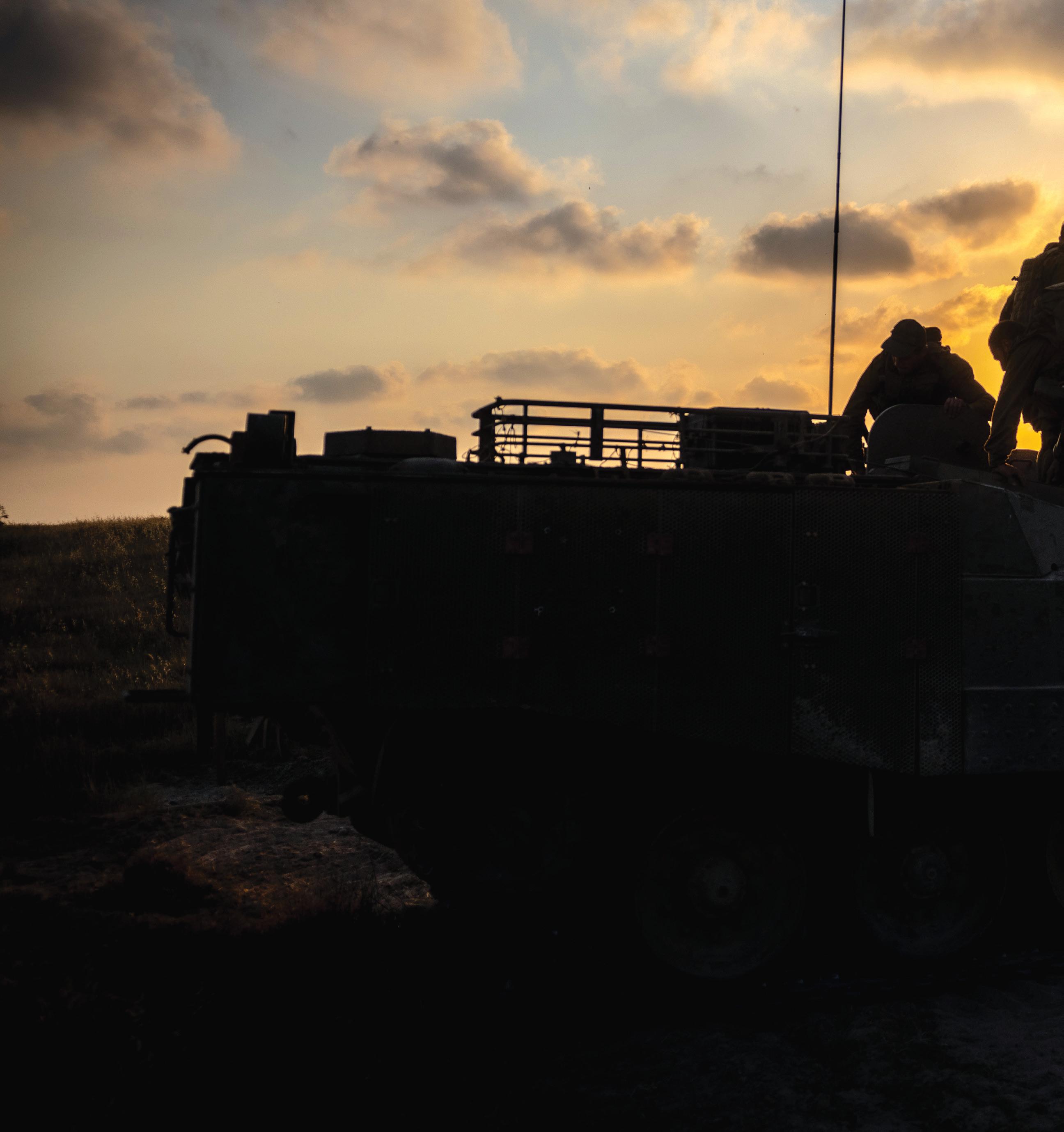
Photo: Chaim
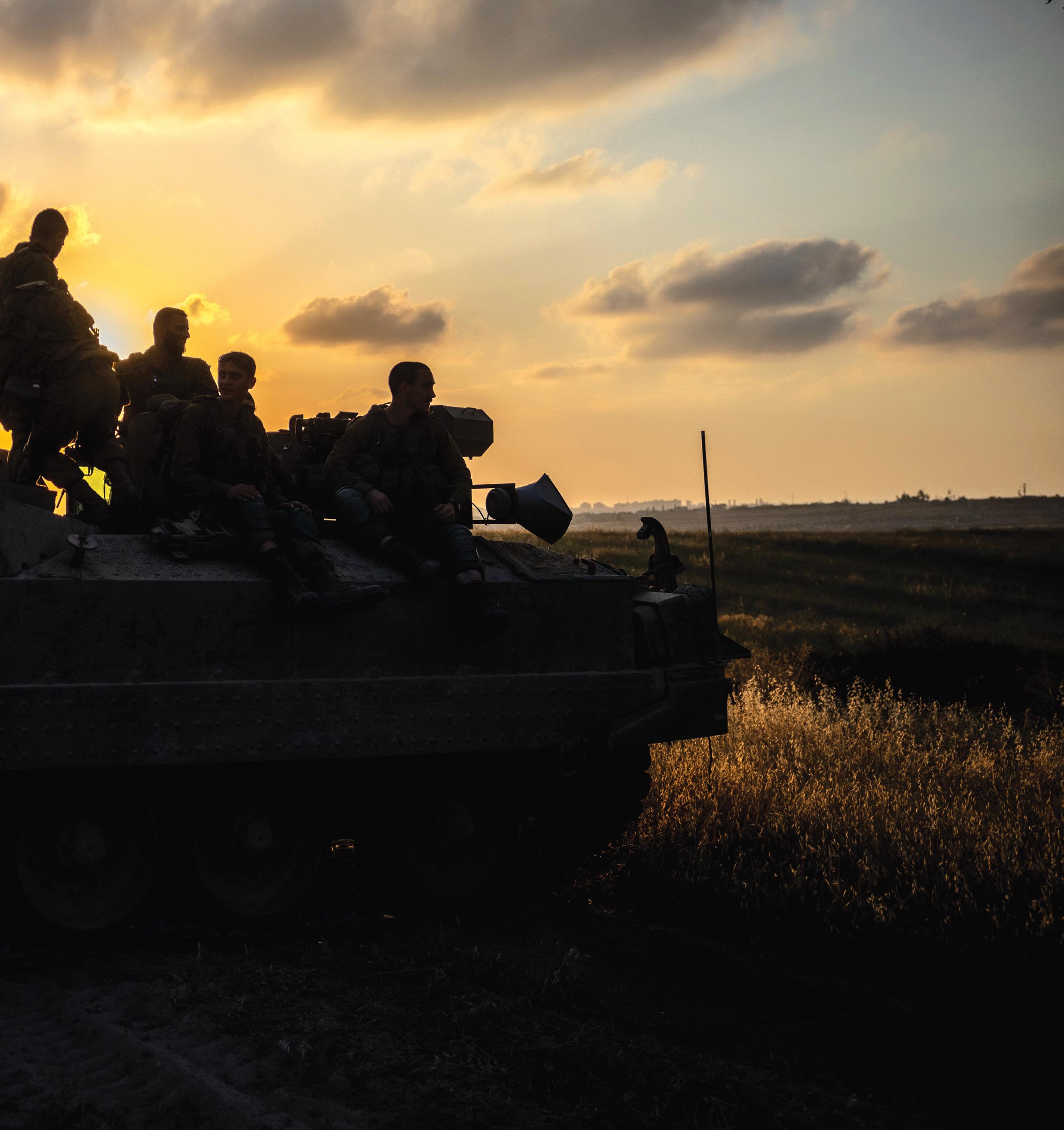
Photo: Miriam Alster/Flash90
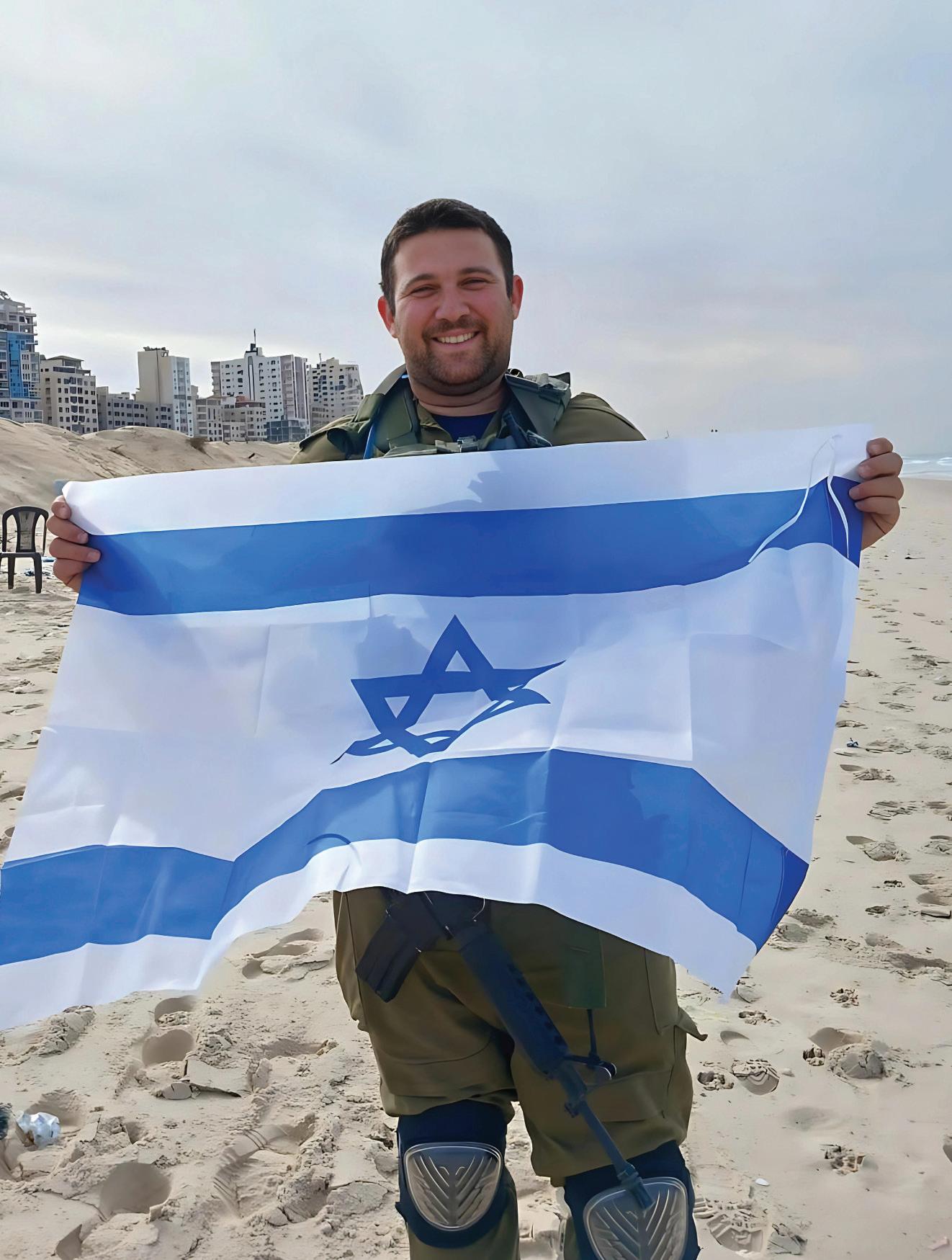
Here’s a new addition to your Hebrew vocabulary—miluima Te portmanteau, which has become popular during the Israel-Gaza war, combines the words milu, short for miluim, or IDF reservist, and Ima, or mother, to describe a woman with children whose husband has gone to war. Sadly, Israel has never enjoyed sustained peace; Israeli women have always had to endure their husbands’ army stints. But since October 7, the number of miluimot has increased as never before.
Te October 7 tzav shemoneh emergency draf was the largest mobilization in IDF history. (Tzav shemoneh, “Order 8,” is a military term that refers to the emergency call-up notice that summons Israelis to drop everything and serve their country.)
Along with the standing army, the IDF called up 300,000 reservists, among them 98,000 married men, many of them fathers.
What about the women they lef behind? How do they cope?
It isn’t easy. “ Tis war has been longer, scarier and more life-changing than previous wars,” says Leah Gelband, a Jerusalem-based psychologist who works with miluimot and their families.
With the men in Gaza for weeks or months at a time and ofen unreachable by phone, fear plays a major role. “It’s not easy to live with the feeling that that knock on the door can come,” says miluima Hila Levi, who was born and bred in Israel. Tragically that knock was heard too many times—as of this writing in May, 286 IDF soldiers have been killed in the war in Gaza.
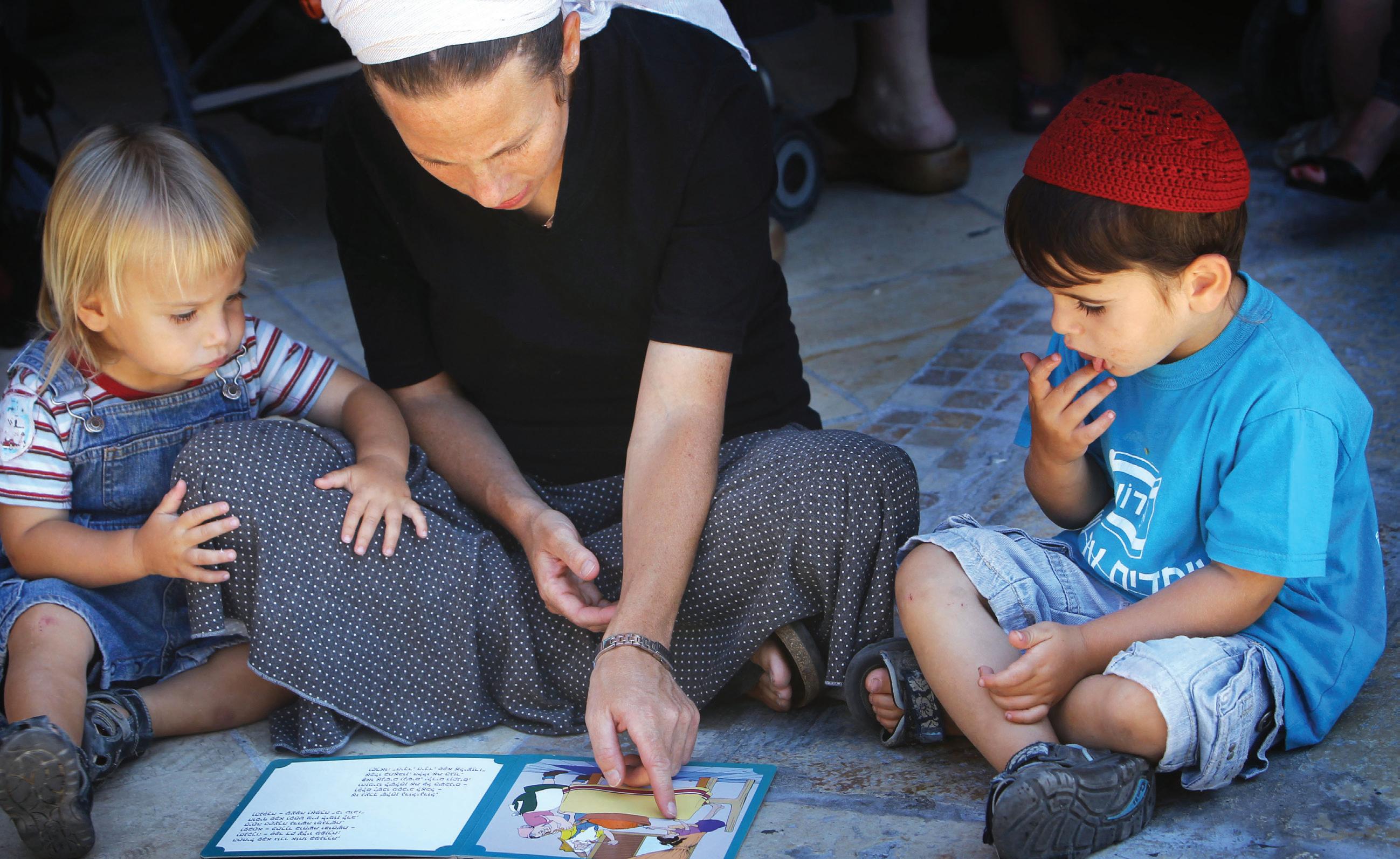
Mishpachah Ba’Tzava, a children’s book, speaks to the experience of IDF families; when one member is in active duty, the whole family is really serving.
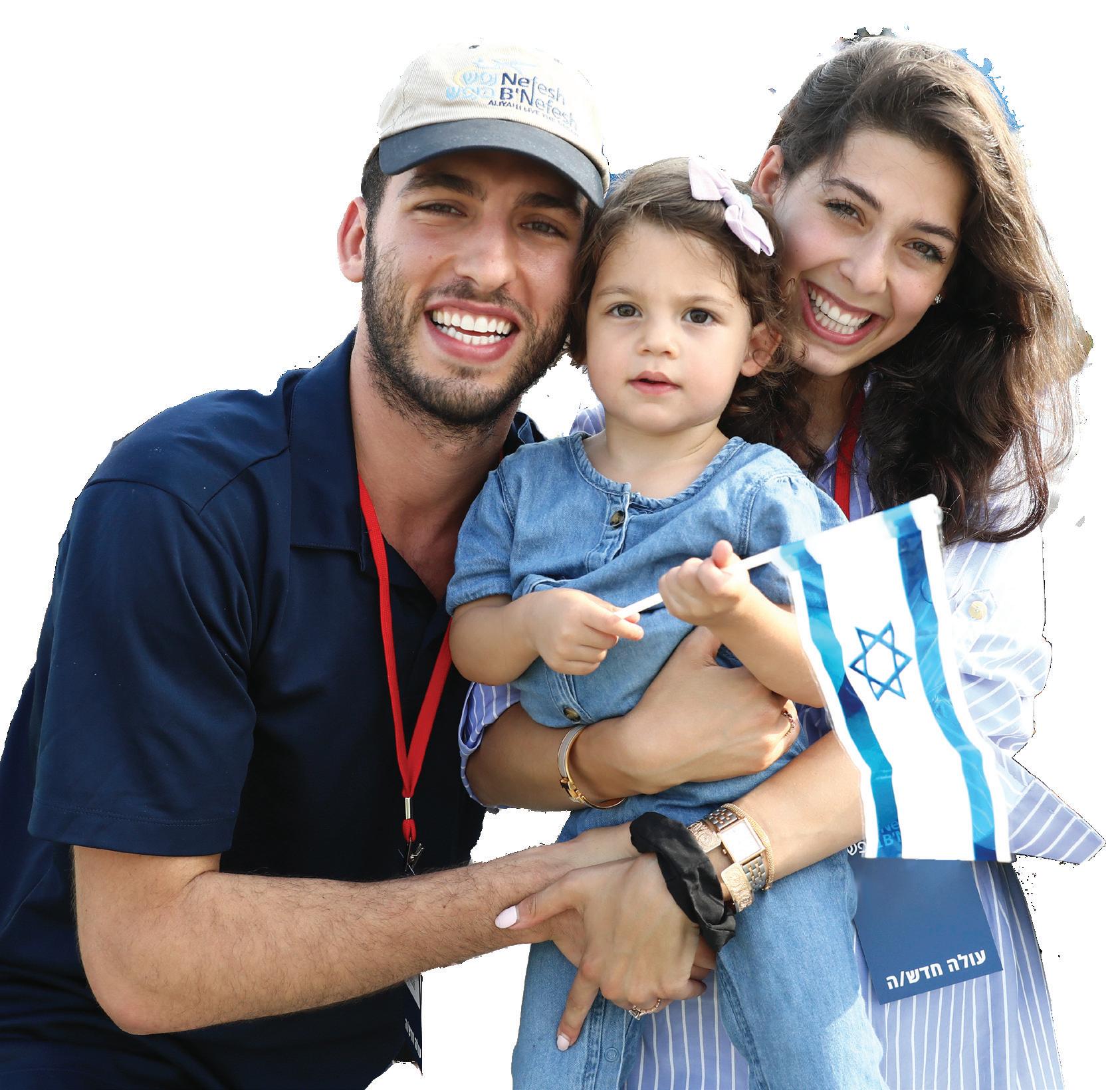
Tali Wohlgelernter, a thirty-fve-yearold mother of four including one child with special needs, experienced frsthand the loneliness of being a miluima, as her husband Tzvi was gone from October to early March. Still, she sees herself as one of the lucky ones—her family was there to help.
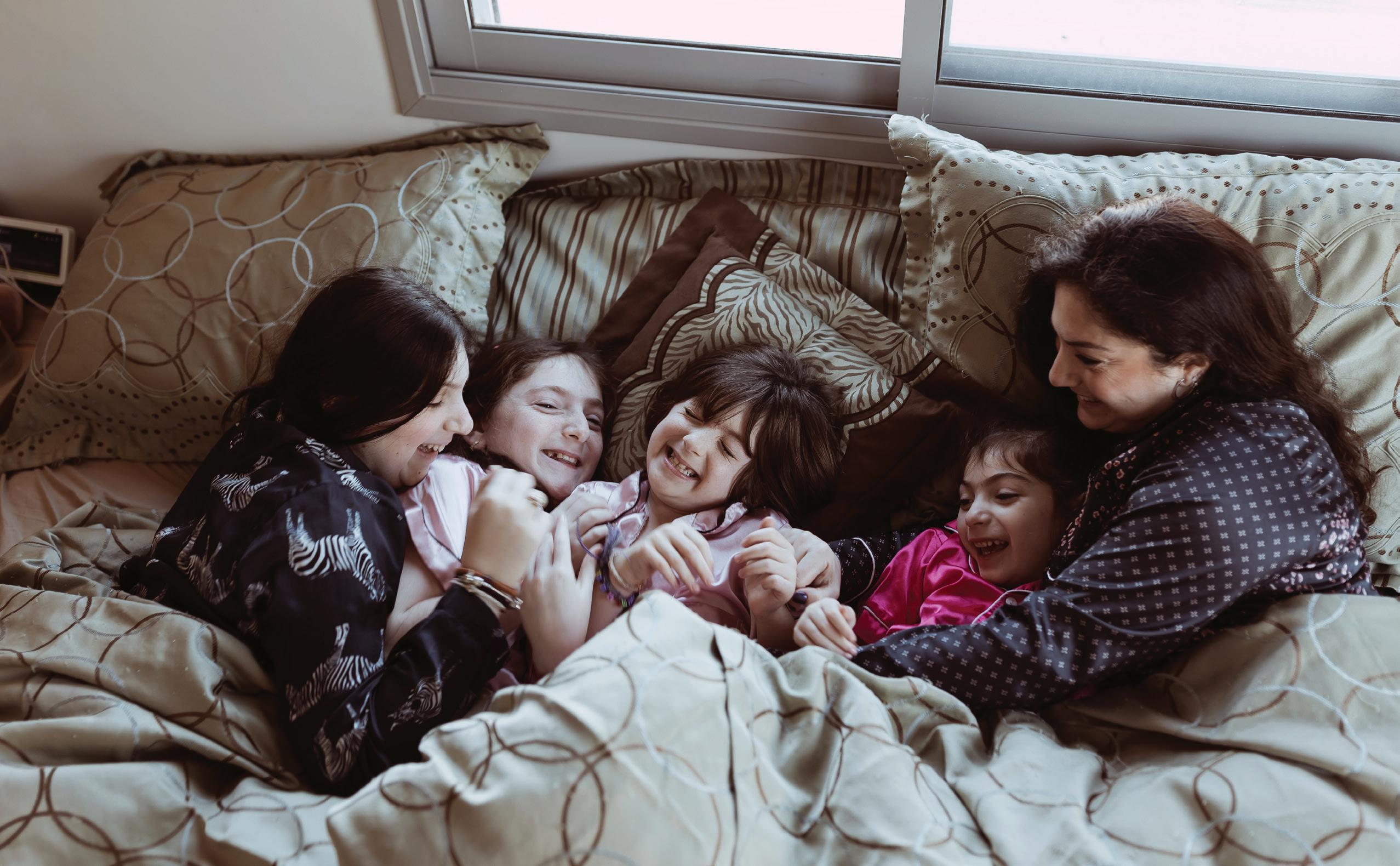
Photo: Sharoni Galeano
Israel has never enjoyed sustained peace; Israeli women have always had to endure their husbands’ army stints. But
since October 7, the number of miluimot
has increased as never before.
Levi has more experience in this regard than most—her husband has devoted twenty-fve years to the defense of his country as a career ofcer in the IDF. She even co-authored a children’s book called Mishpachah Ba’Tzava [Family in the Army], emphasizing the idea that when a father serves in the army, really the whole family is serving. She holds onto her mental health by avoiding media. “I don’t follow the news. I don’t watch TV. I go to funerals only when I have to.”
She feels that this war has been especially hard. “No one expected it. It was a horrible surprise,” she says. Although she’s always been religious— Levi heads the Jerusalem branch of the Emunah Religious Zionist women’s organization—she’s been leaning into her faith as never before. “I never prayed so much in my life as I did during those frst weeks.”
Prayer may help to dial down the anxiety, but miluimot must still cope with the loneliness that comes from being separated from one’s partner. “When my husband lef, half of me went with him,” recalls miluima Tali Wohlgelernter, a thirty-fve-year-old mother of four including one child with special needs, whose husband was gone from October to early March. During the day, she kept herself together by staying busy—Tali and her husband Tzvi are North American olim who direct JLIC-Mizrachi at Bar-Ilan
University and are responsible for coordinating religious programming for the dynamic and growing Anglo student community in Givat Shmuel. (JLIC is the OU’s program that serves to support Orthodox men and women on secular campus environments across the United States, Canada and Israel.)
FAMILY FILLING IN
In the evening, things would get tougher. Wohlgelernter’s youngest daughter sufers from a rare and severe form of epilepsy. Te war caused her seizures to get worse. “Our doctor said that wasn’t uncommon,” she says. Still, Wohlgelernter sees herself as one of the lucky ones—her family was there to help. While her husband was at war, her dad flled in. “He made sure the house was locked, the dog was walked, and the car was flled with gas. Tese are the little things that are big things when you are doing them by yourself,” she says. Having her father move in with her is atypical. More common was the reverse—miluimot who moved back in with their parents. At the start of the war, grandmother Esther Einstein, who lives in the Kiryat HaYovel neighborhood of Jerusalem, hosted
Abby Scheinfeld's husband is in and out of Gaza. “He's fghting a milchemet mitzvah,” his wife says.
three of her eight daughters, including eight of her grandchildren, for a month, with all the kids sleeping together in her safe room. Her daughters traveled many miles to return to their mother’s nest—one from Tel Aviv, another from the Golan and a third from Or Akiva, a city in the Haifa District. “We felt safer together,” she says. Einstein sees her daughters as heroines. “ Tey feel that they are doing something very meaningful for Am Yisrael.”
Now they have all returned home, but Einstein and her husband still help out. “We want to give the kids a sense of normalcy. If a husband isn’t home for Shabbat, we go to them or they come to us,” she says.
With two toddlers and a husband who is in and out of Gaza, twentyseven-year-old singer and songwriter Abby Scheinfeld has yet to leave her parents’ Beit Shemesh home, which is fortunately within walking distance from her own home. Scheinfeld, an olah who moved with her family to Israel from Teaneck, New Jersey, when she was nine, is grateful to be welcomed by
Carol Green Ungar is an awardwinning writer whose essays have appeared in Tablet, the Jerusalem Post, Ami Magazine, Jewish Action and other publications. She teaches memoir writing and is the author of several children’s books.
her family. “To really cope, you need to be around people you love. Tis isn’t the life we had planned, but it’s okay to realize when things are too hard for you. I’m a better mother when I have help,” she says.
OTHER SOURCES OF SUPPORT
Not everyone has this option. Grandparents aren’t always available to help. “Many are working, or they have several children in the army whom they need to help,” observes Efrat Gnatek, an educator who heads a neighborhood support team in Efrat’s HaZayit neighborhood.
Such teams have sprung up all over Israel. Gnatek’s is fairly typical in that it provides meals, babysitting, and recreational programming for the women. Gnatek goes the extra mile by ofering a volunteer who does home repairs. “When a husband is in miluim, a pipe can burst, the solar heater can break; we help.”
She acknowledges that even this is sometimes not enough. “We discovered families who needed assistance taking out the garbage—the need was that basic.”
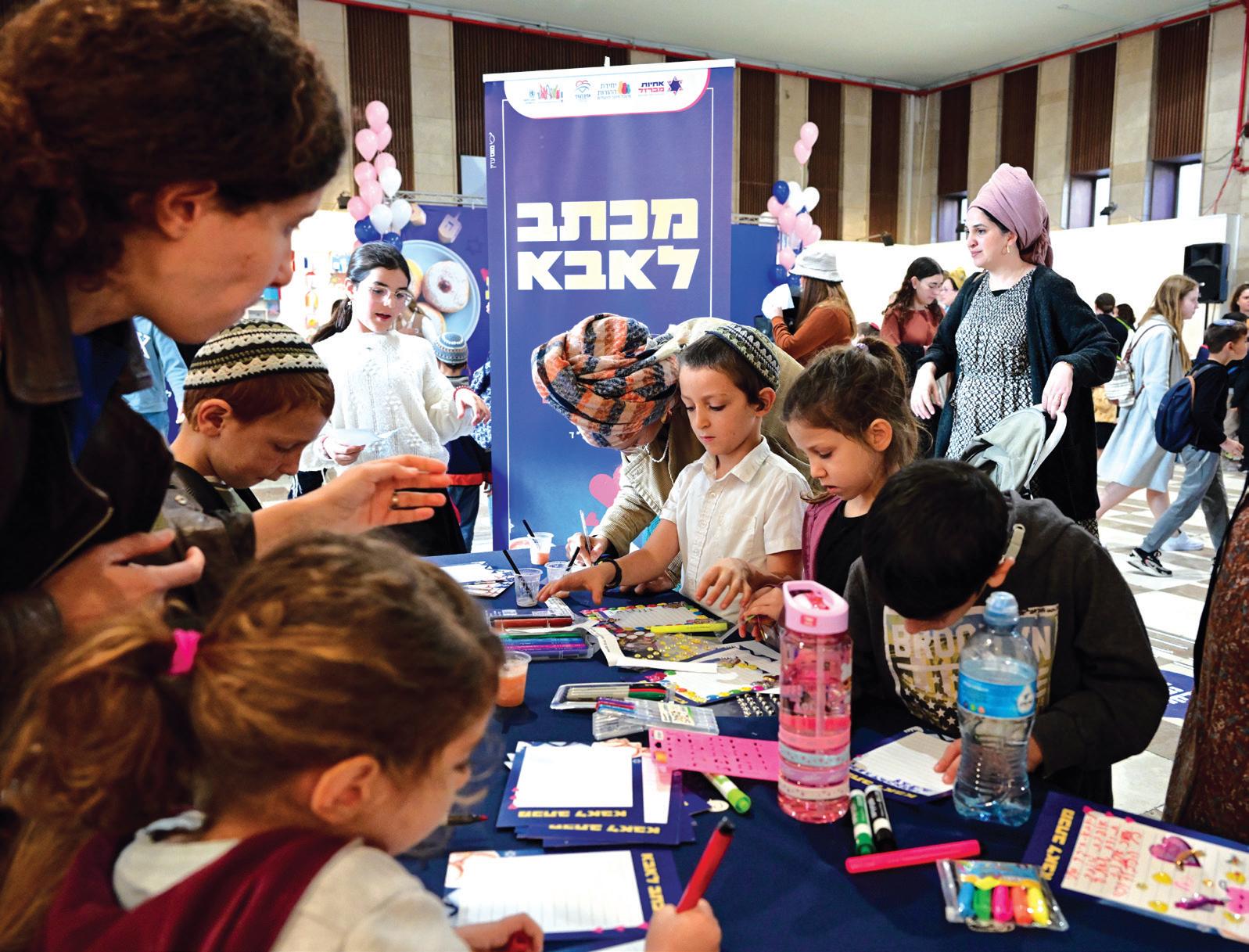
Sometimes help can come from outside of one’s community. On October 8, Chana Irom of Jerusalem, a Chareidi woman and a social activist, got together with friends to discuss what they could do to help. Together they founded Sisters of Iron or Achayot MiBarzel, which sends 2,500 volunteers,
Children write letters to their fathers in the army at Sisters of Iron’s Chanukah event this past December. Founded by Chana Irom, Sisters of Iron sends 2,500 volunteers, most of them Chareidi mothers, into the homes of miluim families to help with housework and childcare. Since October 7, the organization has reached nearly 700 miluimot. Photo: Yossi Zeliger
most of them Chareidi mothers, into the homes of miluim families to help with housework and childcare. Based in a Jerusalem wig shop, the organization has six volunteers working the phones eight to ten hours a day, fnding out what women need and then conveying the requests to teams of volunteers located throughout the country.
Reaching nearly 700 miluimot, Sisters of Iron matches woman to woman, ofen a Chareidi woman with a non-religious woman who comes to the miluima’s home and assists with whatever is necessary. Te organization, says Irom, provides “anything that a sister would do for a sister. Tose hours of help are a breath of fresh air for the miluimot,” says Irom.
“Miluimot are on automatic mode,” agrees Gelband. “ Tey are spread so thinly, they feel they are losing themselves. One used to run. Another used to love to dress nicely. Now they
can’t anymore.” Te Sisters of Iron volunteers give them the downtime they need to reclaim their pre-war selves. Irom says requests have been increasing. “ Te regular support systems are tired, so many more women are turning to us.” She estimates that nearly a third of the families Sisters of Iron helps are secular, yet none of the volunteers have heard negative talk about the Chareidi resistance to being drafed. “ Tere is no resentment. Instead, the women thank us and tell us how beautiful it was for them to spend time with a Chareidi woman,” says Irom. She hopes the spirit of unity generated by Sisters of Iron will continue long afer the war has ended. Another resource for miluimot is Tzalash, an organization launched in 2013 to provide religious and emotional support for soldiers and their families. Since October 7, not surprisingly, requests for help have ballooned.
Being part of the future of this nation is hard, but it’s also a privilege; the hardest thing and the right thing are sometimes the same. We have a part in ensuring the future of Am Yisrael and Medinat Yisrael.
“Before the war, we worked with 350 women. Shortly afer the war started, 2,400 signed up,” says director Rabbi Dovid Gottlieb.
Tzalash organizes barbecues for soldiers’ wives and families. “ Tis gives them a chance to interact with others in the same situation,” says Rabbi Gottlieb. Tzalash volunteers also drive around the country to deliver gifs to the miluimot—chocolates, skin creams, fowers and religious texts on faith.
“A woman has a husband in Gaza and this is what she needs?” asks Rabbi Gottlieb. Te answer, he asserts, is an emphatic yes. “Having a volunteer drive out to deliver these packages gives these women the message that someone is thinking about them.”
OU Israel has been very active supporting miluim families as well. For many families evacuated from places like Sderot and Kriyat Shemona and now living in hotels in Jerusalem, the fathers are away, serving in the IDF. To lif spirits and provide chizuk, OU Israel’s Zula Band—Zula is a unique program for at-risk youth—provides ongoing concerts, visiting hotels scattered throughout Jerusalem. A mega concert, sponsored by OU Israel specifcally for the wives of IDF soldiers
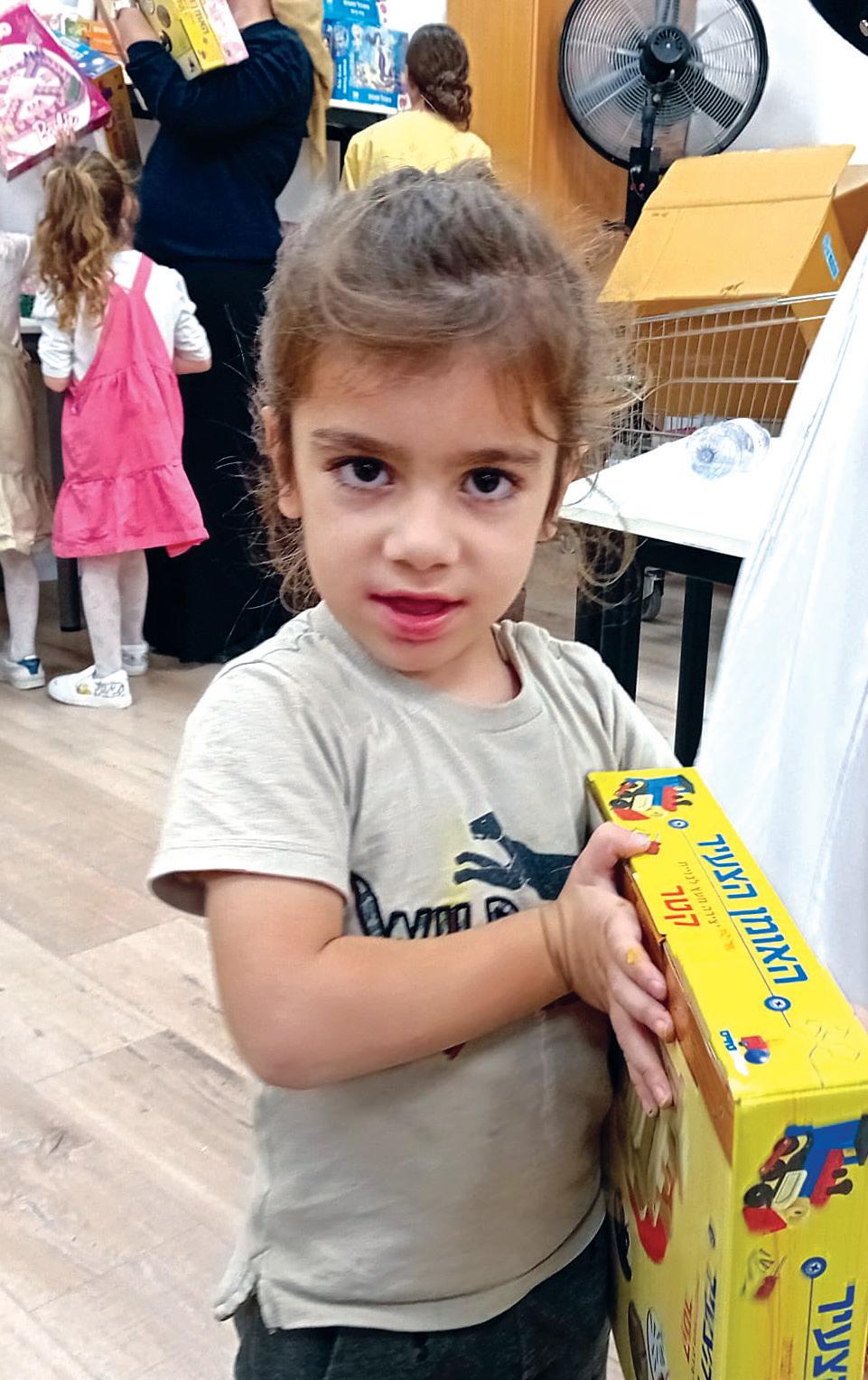
OU Israel has been very active supporting miluim families by providing weekly meals, arranging toy drives and carnivals, and sponsoring ongoing concerts for evacuees from communities such as Sderot and Kiryat Shemona. (Many of these concerts are performed by OU Israel’s Zula Band.) Seen here, a child receives a toy at a carnival sponsored by OU Israel.
and held at Jerusalem’s Ramada Hotel, featured singer Ruchama ben Yosef and attracted some 600 women.
Additionally, OU Israel has been providing weekly meals for miluim families and arranging toy drives and carnivals. “In Israel today, when a soldier enters a bakery or falafel place and tries to buy something, everyone steps aside and lets him go to the front of the line and someone inevitably will cover his bill,” says Rabbi Avi Berman, executive director, OU Israel. “Why? Because we all recognize that soldiers are being moser nefesh for Klal Yisrael. Te incredible wives of our soldiers, who are coping with endless stress managing their children and their homes all alone, may walk into the same bakery or the same falafel place, but their mesirut nefeseh is not as obvious. Tat’s why we want to be there for these women—and give them the chizuk, the concerts, the dinners and the pampering that they need.”
All the help, however, doesn’t take away the fact that war is hard. “Some women are beyond strong. Others sufer crippling anxiety,” says Rabbi Gottlieb.
Stress-related conditions, including insomnia, skin problems, and weight gain caused by emotional eating are common among miluimot. In an Instagram reel, comic Bazy Rubin, herself a miluima, facetiously boasts that she’s serving her kids balanced meals while she gobbles an entire challah.
Te war also challenges the kids. Miluimot point to sleep problems and displays of anger and anxiety. “ Tere’s a lot more bedwetting. Every morning, I have to change the sheets,” says miluima and attorney Shvut Raanan, a Sabra and mother of four who lives in Yokneam, a city in northern Israel.
Making ends meet is another challenge, and government help isn’t always forthcoming. “We are
stuck in a bureaucracy. We were supposed to get a discount on arnona [Jerusalem real estate tax], but the Jerusalem municipality makes it very complicated,” says teacher and miluima Sarah Weller, a Hartford, Connecticut, olah in her forties. “We get by with food donations and very careful budgeting,” she says.
Employers aren’t always understanding, either. “Employers expect these women to function as they did before the war. If they don’t, they may be put on unpaid leave or fred,” says Raanan, who has become active in the Reservists’ Wives’ Forum. Te Forum is a 5,000-member organization started during this war to advocate for the rights of soldiers’ wives in the workplace.
Even the long-awaited reunion with one’s spouse may be fraught with tension. “ Tere is ofen a gap because the couple were apart and having such diferent experiences,” says psychologist Leah Gelband.
Te mitzvah of taharat hamishpachah can also be complicated; the Tzalash staf felds many halachic questions pertaining to this. Along with the halachic complexity, emotions may be jumbled. Leah Aharoni’s organization Our People prepares beautifully wrapped gif packages containing selfcare products and cosmetics that are placed in mikvahs throughout Israel. “Getting a gif makes the women feel supported; many of them cry when they receive it,” says Aharoni.
Even if all goes well with the couple, children may struggle to make room for a dad who has been gone for months. “Sometimes the kids won’t speak to their father,” says Raanan. She notes that the Reservists’ Wives Forum grew out of a Facebook discussion sparked by a miluima’s post about just this situation.
MAKING IT ALONE
Most wives of IDF soldiers have some kind of support system—whether it’s family living nearby, neighbors or friends. But when Ellie Menora’s husband returned to Israel to join his IDF unit, Ellie was lef alone. Ellie and Rabbi Ben Menora live in Binghamton, New York, where they serve as the OUJLIC directors for the Orthodox students at Binghamton University. “We have no family here in the States,” she says—and being in the middle of Binghamton, there’s not much social support, aside from the students, of course. “It’s pretty isolating,” says Menora, who is one of three OU-JLIC directors based in the States whose husbands returned to Israel afer October 7.
Afer Rav Ben got the call to return, there was no hesitation. “It was very clear to both of us that one of us [or both of us] will go back,” says Ellie, an ER nurse and medic who worked in Israeli hospitals. In the end, Rav Ben went alone, leaving almost immediately afer the chag. Ellie stayed behind, caring for their fve children under the age of ten, the youngest only ten months old. But
despite the isolation and the challenges, Menora wouldn’t have it any other way. “If people like us were unwilling to fght for Israel, there wouldn’t be an Israel.”
HOLDING ONTO FAITH
Tere’s no way around it—the miluima life isn’t for the fainthearted. “Te only way we can get through this is by believing. My husband constantly says that Medinat Yisrael exists because Hashem willed it,” says Rachael HirschZores, forty-three, a Be’er Sheva–based kindergarten teacher whose husband spent two months in Gaza. “If I didn’t believe in Hashem and didn’t believe that this was something Hashem wanted, I don’t know how I’d get through this.”
Like the soldiers, miluimot are long on morale. “Being part of the future of this nation is hard, but it’s also a privilege; the hardest thing and the right thing are sometimes the same,” says Wohlgelernter. “We have a part in ensuring the future of Am Yisrael and Medinat Yisrael.”
“I thank Hashem that my husband isn’t home, that he’s fghting a milchemet mitzvah—he has a special role in the
army, performing a unique mitzvah,” says Scheinfeld, whose husband is part of a unit tasked with retrieving bodies of fallen soldiers so they can be brought to kever Yisrael.
In times like these, life is bittersweet. Te realities of war seep into daily life. “My children ask me, ‘What should I do if they come to kidnap me?’ My husband and I talked about who we would want to raise our children if we both died. Tese possibilities are no longer theoretical,” says Hirsch-Zores.
Te war, says Hirsch-Zores, has made her Yiddishkeit more emotional. “I cry every time I light Shabbat candles—I didn’t use to. And I think about the hostages constantly—do they even know when it’s Shabbat? ‘Matir assurim’ has taken on new meaning.”
For many, music can be a source of relief, spiritual strength and even validation.
“Music and song are almost as essential as food and sleep,” says Scheinfeld, who graduated Emunah College for the Arts in Jerusalem and specializes in theater and music. Since the war began, Scheinfeld has shared her spiritual Jewish music with other IDF wives and moms. “Music has been my therapy, and it also uplifs others,” she says.
Te music that resonates most deeply with miluimot is music of faith. At chizuk events, Scheinfeld, who performs under the name Avigail, sings songs with stirring religious themes such as “Shir HaMaalot,” “V’aflu B’hastarah” and “Tov L’hodot LaHashem.” She has also written and recorded a song for her fellow miluimot called “Kol Yachol,” or “You can do it all.” “Be there for yourself,” she sings. “Fly up. You will see everything from there. You will realize you can do it all.”
Te medals have yet to be struck, but the IDF acknowledges the miluimot and their contribution. “Te heroes of this war are the women at home,” says reserve General Yosef Hazut in an ofcial IDF video (https://www.youtube.com/ watch?v=Xy5OPG9kmIk).
Tey may even know how to win it. Send them to Gaza, and, as they joke on their WhatsApp groups, they’d catch Sinwar in a minute.
If only it were so easy.
Sisters of Iron, founded by Chana Irom (third from lef), has brought together women across religious sectors in support of each other. Irom hopes the spirit of unity will continue long afer the war has ended. Photo: Yossi Zeliger