Primary School Teacher feedback

Primary School Teacher feedback
ISSUE 141 | FEBRUARY 2026

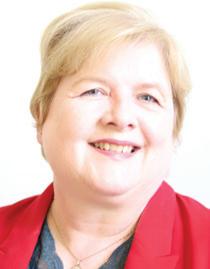
Angela Corcoran Principal Officer of the SNA Workforce Development Unit at the Department of Education and Youth
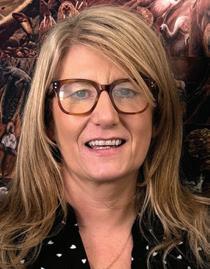
Co-leadership in a Special School Setting
Debbie O’Neill Principal of Scoil / Coláiste Eoin, Crumlin

The Power of Play in the Redeveloped Primary School Curriculum

Bobby Kenny Principal of Scoil Mhuire, Rosslare, Co. Wexford
What Shapes a Child’s School Life? The Lasting Power of Relationships SNA Workforce Development Plan 6 8 11 7
Fighting Admin With AI: What Actually Works Implementing Bí Cineálta in Irish Primary Schools: Procedure, Policy and Practice 10 17

Maria Caesar Principal, Castlebridge NS, Wexford
Siobhán Keenan Fitzgerald Principal of Eglish NS, Co. Galway
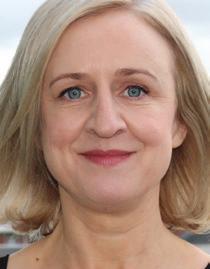
Professor Selina McCoy Head of Education Research, ESRI
Creating an Environment where Leadership can Flourish – GloballyBrian O’Doherty, Deputy CEO
Curriculum, Culture, Connections: Reflections on International ExchangeEileen Pike, Principal of Tullyallen NS, Co. Louth
Everybody is Watching: The Hidden Legacy of Teaching and LeadingPaul O’Donnell, Principal of St Patrick’s NS, Slane, Co. Meath
Education Support Centres supporting schools with the Primary Curriculum FrameworkDr. Linda Dennehy, Director of West Cork ESC
Leading Ireland’s Future Together - In Primary Schools in 2026LIFT Ireland
And much more…
Irish Primary Principals’ Network, Glounthaune, Co. Cork 1800 21 22 23 • www.ippn.ie
Editor: Geraldine D’Arcy
Editorial Team: Geraldine D’Arcy, Brian O’Doherty and Deirdre Kelly
Comments to: editor@ippn.ie n Advertising: Sinead O’Mahony adverts@ippn.ie ISSN: 1649-5888 n Design: Brosna Press
The opinions expressed in Leadership+ do not necessarily reflect the official policy or views of IPPN
ÁINE COSTELLO BARNARDOS
As a teacher, if you suspect a student is living with domestic violence and abuse at home, what can you do?
Barnardos delivers trauma-informed support to help vulnerable children overcome adversity, in Ireland. Its National Childhood Domestic Violence and Abuse (CDVA) project aims to raise the visibility of children as co-victims of domestic violence and abuse. Crucially, it asked children for their perspective on the help they want from teachers, at an event where 28 young people shared messages for change across five themes with school leaders.
1. Check in
Children want strong home-school links, proactive teacher check-ins, and view teachers as a supportive ‘one good adult’ beyond their own family.
‘When school checks in at home, it’s very useful and appreciated.’
‘Sometimes they would take me out of class and talk to me, and have a little chat, it would calm me down.’
‘Have one person in the school so if anything is going on, we can talk to them.’
2. Teacher Training
Children observed that many teachers lack awareness of domestic violence and feel uneasy addressing it, emphasising the need for teacher training in the area of CDVA.
Need to be open-minded, (be aware) that fighting at home happens to so many children
Schools need to be taught about domestic abuse, so they know how to handle it and so they can see the signs.
3. Stop and consider
When supporting children living with CDVA, teachers should approach behavioural changes with curiosity and compassion. Instead of disciplining, ask ‘why?’ when behaviour shifts. Punitive
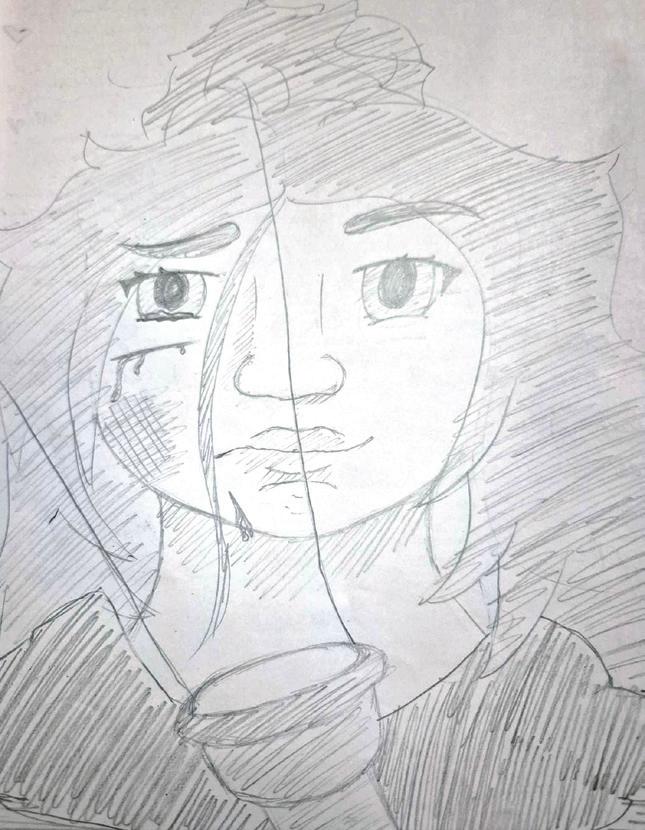
responses like shouting can mirror home dynamics and make children feel unsafe. Think about why we might find it hard to concentrate
‘It’s scary and overwhelming if they shout – and it has an effect (on us).’
Ask first – instead of yelling –because you don’t know what is going on at home for them
Be more observant – if a child is visibly upset, don’t yell at them.
4. Take care of us
Children said they feel most protected when schools provide a safe environment and respond with care and compassion. Even small, creative gestures help them feel seen and valued. Take the child to a safe place in the school
Kids need some comfort and reassurance in school when they are upset, so they feel safe enough to talk ‘Teachers were concerned about me missing days, not doing homework (but) not my wellbeing or what was happening for me, I couldn’t get my head around it...’
‘Have a strong idea of our arrangements re: safety order/ access.’
5. Impact
Children shared that domestic violence – and schools’ lack of awareness – can hinder their ability to learn and thrive. When schools are uninformed or illequipped to respond sensitively, it adds barriers for children already facing challenges at home.
‘Sometimes it’s a bit hazy in school – our heads are not in it....’
‘It’s hard to learn – impossible.... I couldn’t even sit still - I was running away from classroom because I was so scared…’
‘After years of no help, I ended up staying out of school.’
These messages share the honest voices of children with lived experience of CDVA. Their words demand attention and action – listen deeply and commit to one meaningful action. Their goal is simple but powerful: to create change that helps other children in similar situations. Tune into the CDVA webinar that was created by Barnardos and the NCCA
If you would like to get in touch with Áine in relation to this article, she can be reached at aine.costello@barnardos.ie.
Children said they feel most protected when schools provide a safe environment and respond with care and compassion. Even small, creative gestures help them feel seen and valued.
The beginning of a new year offers an opportunity to reflect on recent achievements while looking ahead with renewed energy and purpose. This sense of reflection and momentum is very much present in IPPN. The milestone of 25 years of IPPN in 2025 has been acknowledged and celebrated and school leaders will soon receive the IPPN Members’ Report for 2025, which will highlight all of the work done in the areas of supports and services, advocacy, communications, and IPPN governance since last January.
We have started the work towards realising the vision set out in Leading for Impact – Strategic Plan 2026-2030 with vigour and a renewed sense of optimism. We are clear on the priorities, on the actions that will be required and our capacity to deliver on them.
Capturing and articulating the real experience and professional insight of school leaders is at the heart of this work. The 31-member Advocacy and Communications Committee of the National Council plays a vital role in strengthening IPPN’s advocacy work. It provides a dynamic forum where key priorities are explored in depth and progressed with purpose. Through E-scéal, IPPN notifies all members about consultation processes – including the development of submissions and position papers – and seeks input from leaders of all types of primary school, to ensure that the lived reality in all schools is reflected, and to tap into your expertise on specialist settings. In our communications with external stakeholders, we consistently emphasise the diversity of primary school contexts and relevant examples from schools of every type and size help to reinforce that reality. We invite school leaders to reach out with your perspectives and insights to inform and strengthen this work.
2026 is an important year in the education sector with the work of the National Convention on Education now underway. As Chair, Professor Anne Looney has confirmed that school leaders will have a voice within this process, and IPPN will avail of every opportunity to make evidenceinformed contributions designed to better ensure the

EDITORIAL TEAM
system’s capacity to offer a high-quality, inclusive education experience for all children.
This is a key theme in 2026, starting with IPPN’s recent survey on inclusion in mainstream schools, a forthcoming survey on inclusion in special schools, as well as the development of a Guide to the Leadership of Inclusion, to complement the Guide to the Leadership of Teaching and Learning which was published in November 2024. Our advocacy work on inclusion will build on the 2024 position paper on SEN, which has yielded some positive movement on several of the recommendations. The new survey data will further inform our work, enabling us to refine, advance, and introduce recommendations that reflect current realities and emerging needs.
These are just a few of the projects that are underway as part of our workplan for 2026, and we are off to a positive start. We will inform you of other elements as the year progresses, both in Leadership+ and in E-scéal.
Sincere thanks to all of the contributors to this issue. Feedback and suggestions are welcome to editor@ippn.ie

Geraldine D’Arcy Deirdre Kelly Brian O’Doherty Editor President Deputy CEO

DAVID RUDDY BL
Ireland currently has one of the more robust child safeguarding and reporting procedures in the world. Testament to this is the fact that Child Protection Procedures have been revised for the third time, building on more recent developments such as the reporting of retrospective allegations and the strengthening of provisions in the previous publications. These Procedures, unlike guidelines, are underpinned by numerous legislative provisions. At its simplest, there are four categories of abuse: neglect, emotional, physical, sexual. The key principle is that Tusla must be informed where there are reasonable grounds for concern. No proof is required as it is Tusla’s task to assess the concern.
What does oversight by the Board look like?
It means checking that the school’s safeguarding system is functioning correctly. The Board does not investigate or handle individual cases. It means having appropriate structures in place. Oversight means asking questions like: Have the procedures been followed? Has the DLP sought advice or made a report where required? Are records being kept securely and confidentially? Oversight does not mean examining evidence, questioning parents, or staff about allegations, deciding whether an allegation is true or false, or revisiting the DLP’s professional judgment on thresholds. The Designated Liaison Person – usually the Principal – manages cases and Tusla investigates. The Board checks that the process was followed.
This oversight role is critical. It is how the Board fulfils its statutory duty under the Children First Act 2015 and the Child Protection Procedures for Schools 2025. Without good oversight, the procedures can fail.
At its simplest, there are four categories of abuse: neglect, emotional, physical, sexual. The key principle is that Tusla must be informed where there are reasonable grounds for concern. No proof is required as it is Tusla’s task to assess the concern.
Oversight is mainly exercised through: the appointment and support of the DLP and DDLP confirming that safeguarding programmes such as SPHE and the Stay Safe Programme are in place and delivered across the school adopting and reviewing the Child Safeguarding Statement and Risk Assessment.
The following are also important aspects of oversight:
The Board receives only redacted/ anonymised reports. All copies distributed to the Board must be collected and destroyed. Retrospective allegations must now be included in the Child Protection Oversight Report (CPOR).
The child’s welfare is the priority, whilst the staff member must be treated fairly and confidentially. The BOM may be required to take protective measures to include temporary absence of staff under the Immediate Action Protocol.
Schools must comply with Garda Vetting legislation. Ensure that it is policy that the formal vetting is accompanied by a statutory declaration and a letter of undertaking before the staff member commences employment.
All BOM members must keep Board matters private. For example, Board meetings - discussions must not be disclosed unless authorised CPOR – Oversight only, use anonymised codes, no investigation Records – Redacted copies used for oversight must be collected and destroyed.
Consequences of Breach – Breach may lead to removal by patron(s) and possible legal liability.
All school staff by now should have availed of the Oide whole school faceto-face training. It is understood that an online wrap-up training module will be provided to any staff that have missed out on the face-to-face training. Failure by a staff member to engage in training may result in disciplinary proceedings. Management bodies will be providing training for Board members. CPSMA will provide face-to-face training for all Board members in Spring 2026. Every effort should be made to encourage Board members to avail of the training. This training will be through the lens of management rather than staff training.
If you would like to get in touch with David in relation to this article, he can be reached at david.ruddybl@gmail.com
DEIRDRE KELLY IPPN PRESIDENT
There are particular sounds that stay with you when you leave school leadership. It’s not the phone in the office ringing, nor the hum of the photocopier or the alerts about copious amounts of unread emails. It’s the chorus of everyday sounds that define a school day – the burst of chatter as children spill into the yard, the echo of footsteps in the corridor, the muffled reading voices through an open classroom door, the scrape of chairs on the floor, and the laughter that tells you learning is happening long before you see it. It’s the sound of children – arriving in the yard, calling down the corridor, sharing news they simply have to tell you before the day can properly begin. Stepping from the role of teaching principal in St Michael’s NS in Cloonacool, Co. Sligo into President of IPPN has been an exciting transition, but if I’m honest, it has also come with a fair amount of missing the everyday life of school.
I miss the classroom moments that were never on the timetable – the quiet breakthrough with a child who had been struggling, the collective intake of breath before a school performance, the shared laughter when a lesson went slightly (or spectacularly) off script. I miss the informal connections that define school life: the quick check-in with a colleague at the staffroom door, the knowing look exchanged during a busy day, the conversations with parents at drop-off and pick-up that told you far more than any formal meeting ever could. These connections are the glue of school communities, and stepping away from them has been one of the most poignant parts of the transition. School life has a rhythm and richness that stays with you long after you’ve stepped away. And while I am no longer in the school, I carry
School life has a rhythm and richness that stays with you long after you’ve stepped away. And while I am no longer in the school, I carry those moments with me into every engagement and conversation in my new role.
those moments with me into every engagement and conversation in my new role.
One of the most important realisations in this transition has been acknowledging that for the duration of my time as President of IPPN, the school has new leadership. That recognition brings with it a mix of pride and perspective. Schools are living communities, constantly evolving, and leadership is not about holding on, but about trusting the next chapter. It has been a privilege to watch the school continue to thrive, knowing that leadership, like learning, is always a shared and ongoing journey.
The role of President of IPPN is, without doubt, a busy one. There are meetings, consultations, events and conversations that span the length and breadth of the education system. However, at the heart of every engagement is a simple guiding principle: I share the voice of a school leader. Whether discussing policy, initiatives or future planning, I constantly ask one central question –what will this mean for children in our schools?
That grounding in the lived reality of school leadership is essential. In my interactions with stakeholders across the system, I consistently refer back to what is happening right now in schools: the competing demands, the leadership pressures, the joys, the challenges and the deep commitment of school leaders to their communities. These conversations are most powerful when they are rooted in reality, not theory, and when the impact on children remains front and centre.
As you know, in 2025 IPPN celebrated 25 years of supporting school leaders. During that milestone year, we looked back and acknowledged the extraordinary work and vision of those who were there at the very beginning. IPPN exists today because of leaders who recognised the need for a strong, collective voice and who worked tirelessly to build a support network grounded in collegiality, professionalism and care.
We now look ahead with optimism and purpose. Our new strategic plan sets a clear direction for the future and responds to the evolving landscape of education while staying true to our core values. It will strengthen support, amplify the voice of school leaders and advocate for conditions that allow schools – and the children within them – to flourish.
While my daily routine may no longer involve yard duty or a busy classroom, the heart of my work remains the same. It is still about schools, still about leadership and always about children. And that, perhaps, makes this transition not a departure at all, but simply a new way of serving the school communities we care so deeply about.
Deirdre.Kelly@ippn.ie
When I think back to when my colleague Richie Doran and I first started in this school over twenty years ago, it’s hard not to smile. We were both young, full of energy, and at the same stage on life’s journey. A stage which in those days involved lots of nights out, loads of laughs, and more than a few moments of divilment. Those early years built a friendship and a respect for each other, and that friendship and respect are the foundation of how we now lead the school together.
Three and a half years ago, we stepped into the roles of Principal and Deputy Principal at the same time. It was a big change not just for us but for the whole school. Moving from being in the trenches with your friends to leading them was a seismic shift for everyone.
Three and a half years ago, we stepped into the roles of Principal and Deputy Principal at the same time. It was a big change not just for us but for the whole school. Moving from being in the trenches with your friends to leading them was a seismic shift for everyone. Going from being the last ones to leave the party to sitting at the adults table took a bit of getting used to for all, but we were both ready and had a shared understanding of the vision for our school.
Scoil Eoin is bilocated, split across two buildings on either side of the road. I’m based in the Senior building with the
2nd to 6th years, while Richie looks after the Junior building, home to the Infant classes and 1st years. It could easily feel disconnected, but communication and a ginormous daily step count ensures that we always know the goings-on in each space.
Trust is huge for us. I use Richie as my sounding board constantly – whether it’s talking through a decision or just needing to vent about something without it going any further. That kind of openness is priceless. We’ve also learned that dividing responsibilities is key. Richie, among many other duties, takes care of all subbing and OLCS, which frees me up massively. Given the pressure that MGLD schools have been under in recent years with redesignation, having someone you can rely on completely is not just helpful – it’s essential.
From day one, we agreed that honesty and openness with staff would be our priority. We’ve worked hard to build a strong ISM team around us, and trust has been central to that too. People are given real responsibility and trusted to do their jobs well. As a result, we have one of the hardest-working ISM teams in the country, and it’s a joy to work with a group who respect each other and always have each other’s backs.
It’s not always plain sailing of course and there are times when we disagree on a plan or how to deal with an issue. But that is vital too. In the words of Matthew Syed ‘collective intelligence emerges not just from the knowledge of individuals, but also from the differences between them.’
Richie is calm and measured, while I can be a bit more reactionary at times. I often see people’s dilemmas through a lens he might miss, and his steady approach helps me take a breath when I need to. We’re constantly learning from
Leading a school isn’t easy, but doing it with someone who shares your vision, your values, and your sense of humour makes all the difference.
each other, and that’s what makes this partnership so strong.
Leading a school isn’t easy, but doing it with someone who shares your vision, your values, and your sense of humour makes all the difference. We are not just Principal and Deputy – we are allies, sounding boards and friends. Together and with our whole school community we are building something we’re proud of and hopefully that will continue for years to come.
You can contact Debbie by email at principal@scoileoin.ie and on Instagram @themildprincipal
With thousands of listens, the IPPN podcast has taken off! Don’t miss out. You can access it wherever you get your podcasts, as well as on ippn.ie.
ANGELA CORCORAN PRINCIPAL OFFICER, DEPARTMENT OF EDUCATION AND YOUTH
Special needs assistants (SNAs) have become an integral part of school communities, growing in number to more than 23,000 in response to increased demand for support for students with special education needs. In December 2022, as part of a broader strategic approach to special education supports, the Department of Education (DEY) established the SNA Workforce Development Unit (SNA WDU). This new unit aims to develop an enhanced SNA service which delivers the best outcome for children with special educational needs.
The focus of the SNA WDU has been on the first SNA Workforce Development Plan (the plan).
The plan addresses five pillars:
Review and Development of the SNA role
Establishment of a Quality Assurance Framework
Establishment of a SNA Learning and Development Programme
Supporting SNA Recruitment, Retention and Diversity
Development of a Communications Strategy.
Learning by Listening
Extensive consultation has been undertaken to inform the plan. Each pillar is supported by a working group comprising stakeholders including IPPN, providing valuable frontline input to policy decisions.
Significant primary research has been undertaken providing a range of perspectives regarding the SNAs role in the school community:
Focus groups with SNAs
Focus groups with school leaders
The first national survey of SNAs
Focus Groups with teachers on role of SNA
Consultation with children on role of SNA
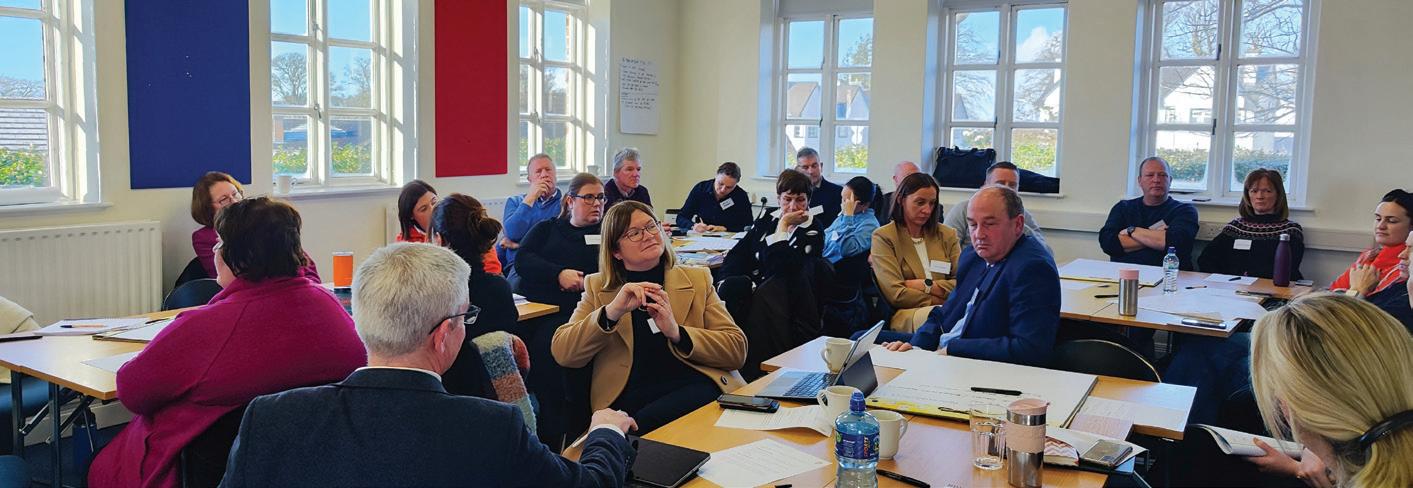
In response to feedback from SNAs, the DEY established the SNA Information Hub on www.gov.ie to provide information such as circulars, reports and updates in one central location.
Clarity and Support
The plan will be underpinned by some key work packages:
A New Circular on the Role of the SNA Stakeholders have been unanimous in seeking a review of DEY Circular 30/2014 to bring clarity to the SNA role and associated duties and responsibilities for all stakeholders. There is strong support for a circular that more accurately reflects the range of duties SNAs undertake in schools.
SNA Redeployment Scheme
The Scheme is currently in development and will be operational in 2026 and, for the first time, will allow SNAs in posts which may no longer be required for reasons such as falling enrolments, reduced care needs or changing demographics, to be redeployed to a school which has a vacant post. The introduction of this scheme will ensure that knowledgeable and experienced SNAs are retained by schools. The scheme will be administered by the National Council for Special Education (NCSE).
Learning and Development Programme
Input from stakeholders provides a strong impetus for a Learning and
Development Programme for SNAs. At present, while SNAs are enthusiastic and engage to a significant extent with training, it is largely unstructured and there is a level of uncertainty around what training is appropriate or in line with best practice. The plan will address the training needs of SNAs, putting in place arrangements to support continuous professional development.
of the SNA Contract of Employment
A commitment set out in successive public service pay agreements, the review was deferred to align with work on the plan. The review includes an examination of provisions within the current contracts to ascertain to what extent they remain relevant and to reflect the requirements of current employment legislation.
Consultation on the plan has largely been concluded. The plan is expected to be published shortly, followed by an implementation phase. This is an important initiative, not just for SNAs and their school colleagues but also for the students they support. Workforce planning is an ongoing process so, rather than being the end, this is the start of ongoing collaboration to ensure the SNA workforce is supported to deliver the best service to children and young people.
You can contact the SNA Workforce Development Unit at snaworkforce development@education.gov.ie.

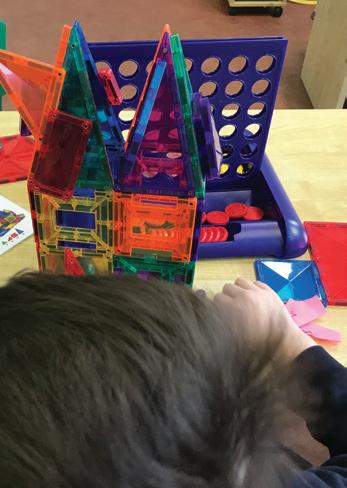
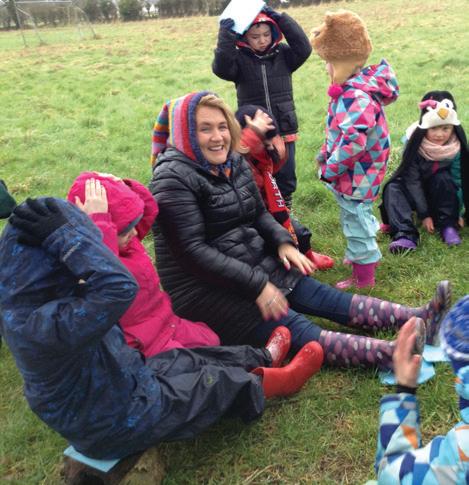
Albert Einstein reportedly said, ‘Play is the highest form of research’. He was someone who played with a lot of ideas that changed the world. At the recent IPPN Conference’s PrincipalMeet session, I presented on ‘The Power of Play in the Redeveloped Primary School Curriculum.’ Preparing for this caused me to wonder, have we, as Principals, stopped playing?
When you hear the word ‘play’, does it connect you with deep feelings from your childhood? Perhaps, the promise of adventure, exploring, excitement, wonder, choice, agency, friendships, freedom and fun? Now, as a Teaching Principal, I’m wondering what if rekindling my own desire to play could actually enhance my leadership?
The OECD 2025 speaks of the ‘unique opportunity play provides for children to build social connections; acquire negotiation skills; support language and communication abilities; foster imaginative, creative, cognitive and physical development.’ When a disagreement arises in a game, children learn compromise. When a peer feels left out, they learn inclusion. When they lose, they learn resilience.
How do we as teachers and school leaders view play in our schools? Do we connect play with learning in all classes and across the school? Across my own teaching career, hands down
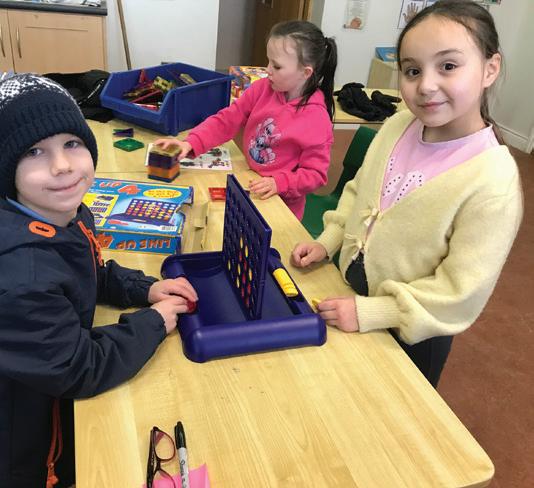
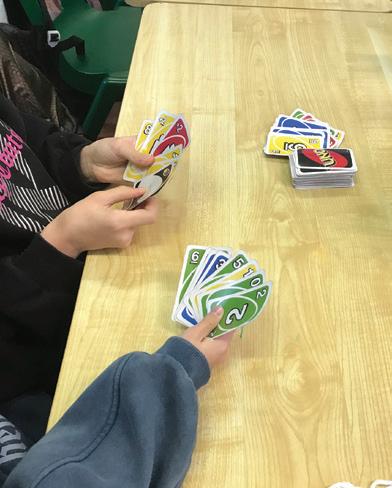
the best and most productive days have involved a significant amount of play. Furthermore, I’ve experienced that there’s much that I, as Principal, can learn through watching children play. Recently, during a ‘rainy day’ break, I had the opportunity to join a game of UNO a child with SEN was playing with an SNA. Not only did I learn to play UNO that day, but I learned that he could take turns, explain and follow rules and he could strategise for himself, and for me.
Not only do children have a right to play (UNCRC, 1989, Article 31), they also have the right to have a say in matters that affect their lives (Article 12). How do children view play? Recent research with children across all primary school class levels consistently report that children want more play, reporting play together with friends as ‘among the most valued aspects of school life’ (Devine et al. 2020), helping them ‘remember’ (Kiely et al. 2024: p.41). There is a clear link between their suggestions for more project and active learning activities and the concepts of play and playfulness.
Play is one of the overarching pedagogies of the redeveloped Primary School Curriculum. The Primary Curriculum Framework (DoE 2023a, p.25.) talks about ‘play that is completely led by children; playful
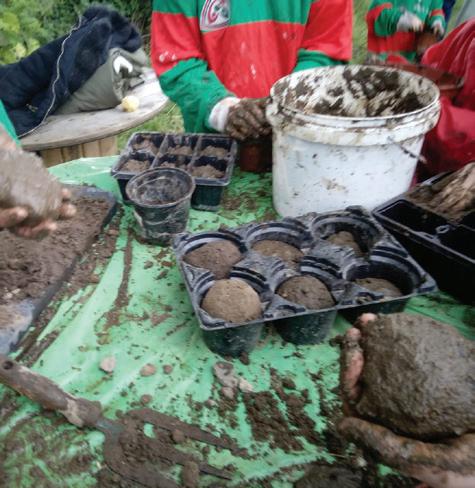
activities that are planned for and led by the teacher; and times when the teacher and the children share play activity, developing the play together.’ There’s physical play, object play, symbolic play, pretend play, role play, games with rules and plenty of ways to play with language. In our schools, principals can certainly be the loudest voice that proclaims, ‘Play matters here’ and like children playing with building blocks, build on what’s already working well.
The life of a primary school principal can be very serious indeed. With so much play around us, could we principals join in too? We frequently say, ‘What’s at play here?’ “I’m playing around with a few ideas?’ ‘A level playing field.’ We perform in plays; we play instruments and sports. Yes, we play various roles in our lives. Maybe, just maybe, we haven’t completely lost our propensity for play. We must keep our own spark for play lit because as George Bernard Shaw said, ‘We don’t stop playing because we grow old. We grow old because we stop playing.’
If you would like to get in touch with Siobhán in relation to this article, you can email her at principal@eglishns.com Research references are available on request to editor@ippn.ie
In today’s digital world, we understand the importance of personal service and building strong relationships. Our team of expert representatives is locally based to ensure that your School receives the dedicated support it deserves. We’re always here for you, whenever you need us.


National Customer Relationship Manager
T: + 353 879938227
E: alan.black@allianz.e
Customer Relationship Executive - West
T: 087 0376298
E: Jennifer.folan@allianz.ie
Customer Relationship Executive – North West
T: 087 430 2246
E: ronan.cassidy@allianz.ie
What we do?


Provide a local personal service for your school. Act as a single point of contact for anything you require from us at Allianz.
Provide reassurance on all insurance needs.
Customer Relationship Executive – North East
T: 087 1493521
E: Kyle.Boland@allianz.ie
Customer Relationship Executive- South
T: 087 920 3992
E: martin.mckeogh@allianz.ie
Customer Relationship Executive – South East
T: 087 6862329
E: martin.sinnott@allianz.ie
Provide guidance on sums insured and any potential claims.
Carry out risk assessments and provide tailored risk improvement plans.

BOBBY KENNY PRINCIPAL OF SCOIL MHUIRE, ROSSLARE, CO. WEXFORD
A few weeks ago, I was helping my Board of Management chairperson, a wonderful priest and excellent Chair, set up his new laptop. He’s been using a laptop for over 30 years but, in his own words, ‘hadn’t been keeping up with recent developments.’ He mentioned he was busy that evening drafting a homily for a wedding. I suggested he try ChatGPT. He was naturally sceptical but willing to give it a try. He typed in three words: ‘Homily priest wedding.’ I watched his eyes widen as psalms, scriptures and reflections appeared in seconds. He told me afterwards that while he didn’t copy and paste anything, he was ‘amazed by what it produced.
If you’ve used GenAI (Generative AI), you recognise that moment. That strange mix of excitement and unease. I have serious reservations about GenAI’s longterm impact on education and society. However, I also believe it is one of the most powerful tools school leaders have to combat administrative overload. IPPN’s Sustainable Leadership Progress Report (2023) revealed that 54% of principals are experiencing high or severe burnout. Let’s focus on solutions. At the recent IPPN conference, I shared practical uses of GenAI to combat administrative overload. Here’s what works.
The real value is in getting those ten minutes back every single day. I use it for routine announcements, drafting correspondence, and for summarising this month’s department circulars and updates into a brief staff update email. It’s useful for enhancing early draft policy frameworks and brainstorming solutions for difficult scenarios. The goal is simple: less time hunched over your laptop.
I’ve been a teaching principal myself and know how hard it is to balance administration on top of preparing for
teaching and learning. Last year for my master’s research, I ran hands-on CPD sessions on GenAI with teachers. Here’s what we did: Teachers typed into ChatGPT: ‘Give me a Vikings starter activity for 3rd class.’ We then asked it to make that a group task.
Next: Canva for Education. Teachers typed ‘Viking poster for 3rd class’ into Magic Design AI and got a template. Pupils can use this same tool to create their own posters – they’re researching, making design choices and presenting information visually, rather than filling in worksheets. The AI handles the layout, so pupils focus on content and creativity. We finished by asking ChatGPT for a quick quiz on Vikings for assessment.
In one session, teachers had a lesson ready: starter, group task, pupil activity, and assessment. Those who’d never touched AI before discovered it wasn’t complicated. It was practical, accessible, and genuinely useful.
Rolling out the Voluntary Smartphone Code was a project I’d put off for months. These rollouts are time-consuming: PA communication, survey design, data analysis, follow-up correspondence. The whole process typically takes weeks of back-and-forth. ClaudeAI assisted me to: Draft parent letters and survey questions aligned to our school context Analyse anonymised survey results and identify the top three parental concerns
Calculate approval rates and draft targeted follow-up responses. The entire process took about an hour of focused work instead of many hours spread across several weeks.
The DEY published guidance on AI in schools in October 2025, emphasising that AI supports us rather than replaces
us. Here are my own practical guidelines: GDPR: Public tools like ChatGPT are not private. Never input personal data: student names, staff details, PPS numbers or sensitive identifiers. Check Everything: GenAI can hallucinate facts or misinterpret circulars. These tools remain unaccredited with no liability. Always verify outputs against statutory requirements like circulars, policies and contracts. It won’t replace your professional judgment or the IPPN helpline.
Know Its Limits: GenAI is great for structure and summary. It’s less effective for creative or nuanced work that requires your personal touch. It is a great place to start a task, but a terrible place to finish one.
My chairperson didn’t need GenAI to write his homily. What he needed was a sounding board so he could focus on what actually mattered: the message he wanted to share with that couple on their wedding day. That’s what we need. Not a replacement for our judgment or experience, but something to clear the noise. Every report you summarise or email you draft efficiently gives you back the capacity to do what you are actually here for: leading teaching and learning.
Try something small today. Pick one tedious task: a circular that needs summarising, an email or letter you’re dreading. It won’t solve everything, but it might give you an hour back in your day. And right now, that hour matters.
You can get in touch with Bobby in relation to this article at principal@scoilmhuirerosslare.ie
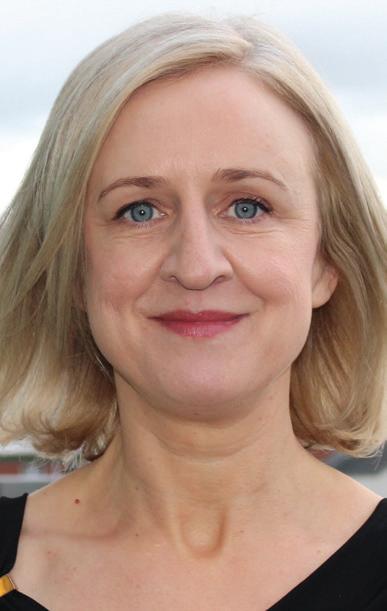
PROFESSOR SELINA McCOY HEAD OF EDUCATION RESEARCH, ESRI
Recently, I had the opportunity to reflect on progress in education research in Ireland at the inaugural Education Research Summit, hosted by the Department of Education and Youth, on 18 November 2025. From Damian Hannan’s pioneering work in the 1980s and 1990s, to the vibrant and diverse research community of today, our approaches to studying education have evolved in ways that mirror the transformation of Irish society itself.
Today, schools sit at the frontline of many of the country’s most pressing social challenges. They are key sites for integrating newly arrived families, building an inclusive society for disabled people, and addressing persistent generational inequalities. Increasingly, they are also arenas where deep questions about the role of faith and secularism in public life are negotiated, as well as debates about how to ensure all young people thrive, regardless of their gender or sexual orientation. Schools continue to grapple with the lingering impacts of the pandemic, while trying the navigate both the promise and risks of rapid technological change and the complex online worlds of children. As places where children spend much of their formative years, they have also become central to supporting mental health and wellbeing.
Three recent studies, each using different methods, underscore a longstanding truth in education research: relationships sit at the heart of children’s experiences in school.
Dempsey and McCoy (2025), examining how primary school experiences shape later progression into higher education, find that students from low-SES backgrounds complete primary school with lower academic self-concepts, which decline even more sharply in second level. While parents’ educational expectations typically rise as their children move to second level, this
Positive relationships are enduring human needs – ones that neither AI nor any technological innovation will replace. Research continues to show the profound impact of connection and belonging in schools. That these matter even more for children with diverse learning or physical needs, or from vulnerable backgrounds, only reinforces the importance of valuing and nurturing the relational in education.
is not the case for low-SES students. Crucially, strong positive teacherstudent relationships are a protective factor. Even when low-SES parents hold high expectations, students still require positive relationships with teachers to reach similar attainment levels as their more advantaged peers.
A second study shows that students whose school relationships are marked by isolation or low relatedness, face heightened risks of wellbeing difficulties. Feelings of belonging and strong teacher relationships are especially important for students with additional needs, and those from low SES families. This highlights the central role schools play in supporting the wellbeing of children and young people with diverse needs, and those from vulnerable backgrounds (Dempsey et al., 2025).
Finally, innovative case study research in special school settings demonstrates how vital positive relationships are for young people with complex needs (McCoy, et al., 2025). Young adults preparing to leave school highlighted the significance of connections with staff and peers for their development. Strong parental engagement and collaborative transition planning were also key. The sudden loss of these relationships after leaving school had a profound impact for some. Parents described a stark drop-off in social opportunities in adulthood: ‘When they’re children, there’s literature coming in the door every day, camps, art classes. But once they hit adults, there’s no literature coming in your door... There’s nothing coming through my door that offers support in that [social] area. Now is when they need social interaction. They’re adults just sitting in houses.’
Parent (McCoy et al., 2025, p.123)
With innovative methods and a commitment to listening to all voices, we have made real progress in understanding how to help every learner to thrive. I am reminded of the phrase: ‘There should be no numbers without stories and no stories without numbers.’ (Carter and Jones, 2025). Positive relationships are enduring human needs – ones that neither AI nor any technological innovation will replace. Research continues to show the profound impact of connection and belonging in schools. That these matter even more for children with diverse learning or physical needs, or from vulnerable backgrounds, only reinforces the importance of valuing and nurturing the relational in education.
References available on request by email to editor@ippn.ie. You can contact Selina about this article at Selina.McCoy@esri.ie
THANK YOU TO OUR CONFERENCE SPONSORS









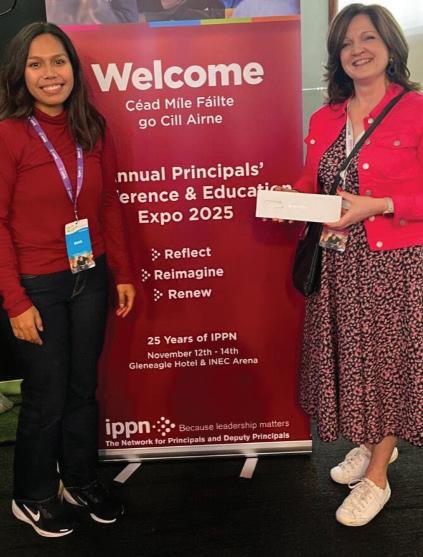
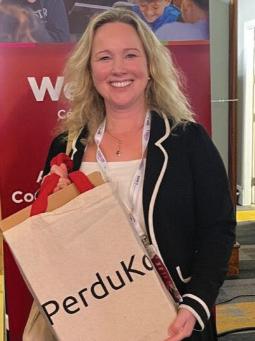
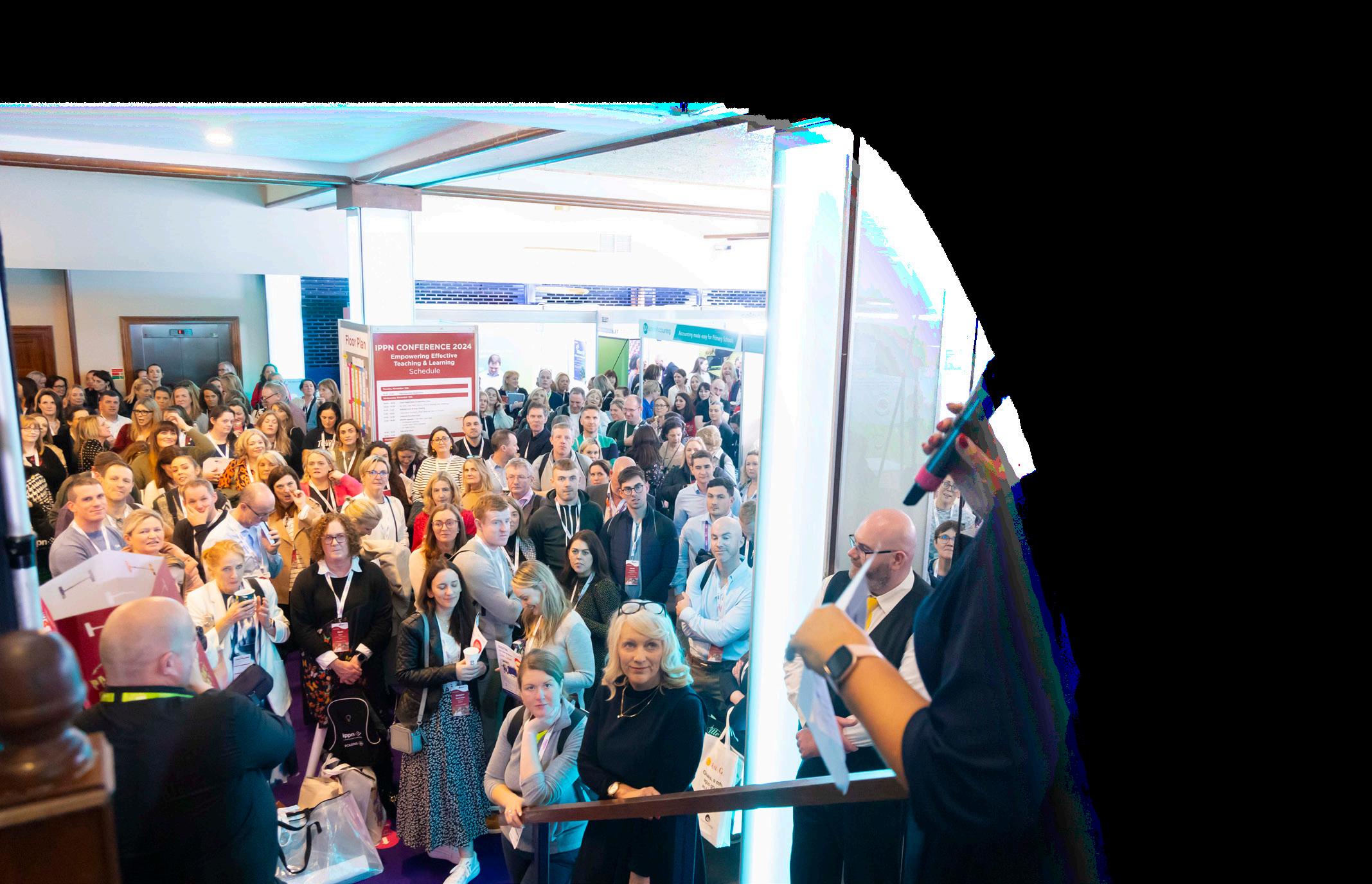
IPPN would like to thank all of our exhibiting companies that went to great effort in presenting their products and services at the Education Expo 2025. Their support helps IPPN to deliver our Annual Principals’ Conference. Please consider these companies when making purchases for your school over the coming year.











BRIAN O’DOHERTY IPPN DEPUTY CEO
All of the research points to the fact that school leadership is a key determinant of pupil learning. The equation is simple and has been clearly established –empowered school leadership leads to dynamic schools which, in turn, leads to thriving children. It is, therefore, a priority that school leaders should be empowered and supported to deliver that effective leadership in our schools. In short, we need to create the conditions for leadership to flourish.
If we aspire to creating the conditions for leadership to flourish, agreement is needed on what those conditions might be. We have reflected deeply on this in Ireland, and concluded that there needs to be clarity on what the focus of the work of school leaders should be sufficient time for school leaders to do that work appropriate structures and sufficient resources to allow school leaders to lead effectively capacity for leadership to be shared, and the embedding of a culture of sharing leadership through facilitated support agreement that leadership should not have an adverse impact on the health and wellbeing of the school leader.
These conditions would make it more likely that school leadership will not only be more sustainable but also more effective.
IPPN’s research confirms that primary school leadership in Ireland is not flourishing. The workload of school leaders continues to expand relentlessly and there is a disproportionate focus on administrative and bureaucratic tasks. 97% of school leaders identified
...empowered school leadership leads to dynamic schools which, in turn, lead to thriving children. It is, therefore, a priority that school leaders should be empowered and supported to deliver that effective leadership in our schools. In short, we need to create the conditions for leadership to flourish.
that what most undermined the effectiveness and the sustainability of their roles was the sheer volume of tasks that have nothing to do with children, let alone teaching and learning.
As an organisation, IPPN has responded to this leadership reality in two ways –through the development of tools and supports to scaffold leadership practice and to facilitate a greater focus on core purpose, including
• a leadership effectiveness reflection tool aligned to the quality framework for leadership and management, to provide a means to balance and share leadership
• PIEW the capacity planning framework to maintain schools’ focus on their stated priorities
• a guide to the leadership of teaching and learning to provoke reflection on instructional leadership practice
through targeted advocacy aimed at creating the conducive conditions for leadership to thrive.
In October 2024, UNESCO published its Global Education Monitoring (GEM) Report on leadership in education. It recognised the importance of school leadership as a key lever of educational reform and a determinant of improved outcomes for children. Referencing IPPN’s research, it also identified the issues that constrain leadership effectiveness. The report concludes that school leaders are consistently diverted from focusing on teaching and learning because of the extent of their non-educational administrative workload. It further concludes that school leaders have insufficient time to focus on instructional leadership, which compromises the quality of teaching and learning.
The publication of the GEM report proved to be a catalyst for Irish policymakers to act. Two pilot programmes have been initiated that have the potential to transform and profoundly impact on school leadership practice.
Over the past several years, IPPN has engaged with school leaders around the world through EHSA, the European School Heads Association, and ICP, the International Confederation of Principals. The experience of the practice of leadership is universal, despite the differing ways in which leadership is resourced and supported. There is a shared frustration about the lack of opportunity to focus on teaching and learning. There is a shared belief in the transformative power of school leadership as a force for good in the lives of children and the individual organisations that are
The discourse on school leadership needs to move beyond the limited ambition of it being merely sustainable and should aspire to the creation of the conducive conditions that would allow it to flourish. This research collaboration could be the catalyst for initiating that international conversation about school leadership to better ensure its effectiveness and the consequent effectiveness of schools all around the world. The children in our schools would be the ultimate beneficiaries.
members of ESHA and ICP share a desire to have a positive impact on leadership effectiveness.
This shared focus and ambition presents an opportunity. We have seen the power of the international voice in terms of influencing and shaping policy locally. We also know the power of networks of school leaders, where our collective voice is louder than our individual voices. The opportunity now exists to create a greater impact on school leadership practice across the world.
How? By joining forces and collaborating on an international research project. To that end, IPPN developed a proposal to deepen the understanding of the current state of school leadership, promote healthier professional and work environments and strengthen leadership effectiveness and sustainability. By drawing on both available and new data across diverse contexts, this collaboration would identify shared challenges and opportunities, inform global policy conversations and support advocacy
efforts that drive meaningful improvement within and across national systems. This would generate valuable comparative insights, reinforce the international voice on school leadership, and contribute to shaping more supportive conditions for leaders worldwide.
The discourse on school leadership needs to move beyond the limited ambition of it being merely sustainable and should aspire to the creation of the conducive conditions that would allow it to flourish. This research collaboration could be the catalyst for initiating that international conversation about school leadership to better ensure its effectiveness and the consequent effectiveness of schools all around the world. The children in our schools would be the ultimate beneficiaries.
Brian.ODoherty@ippn.ie
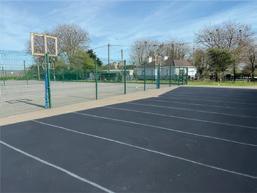
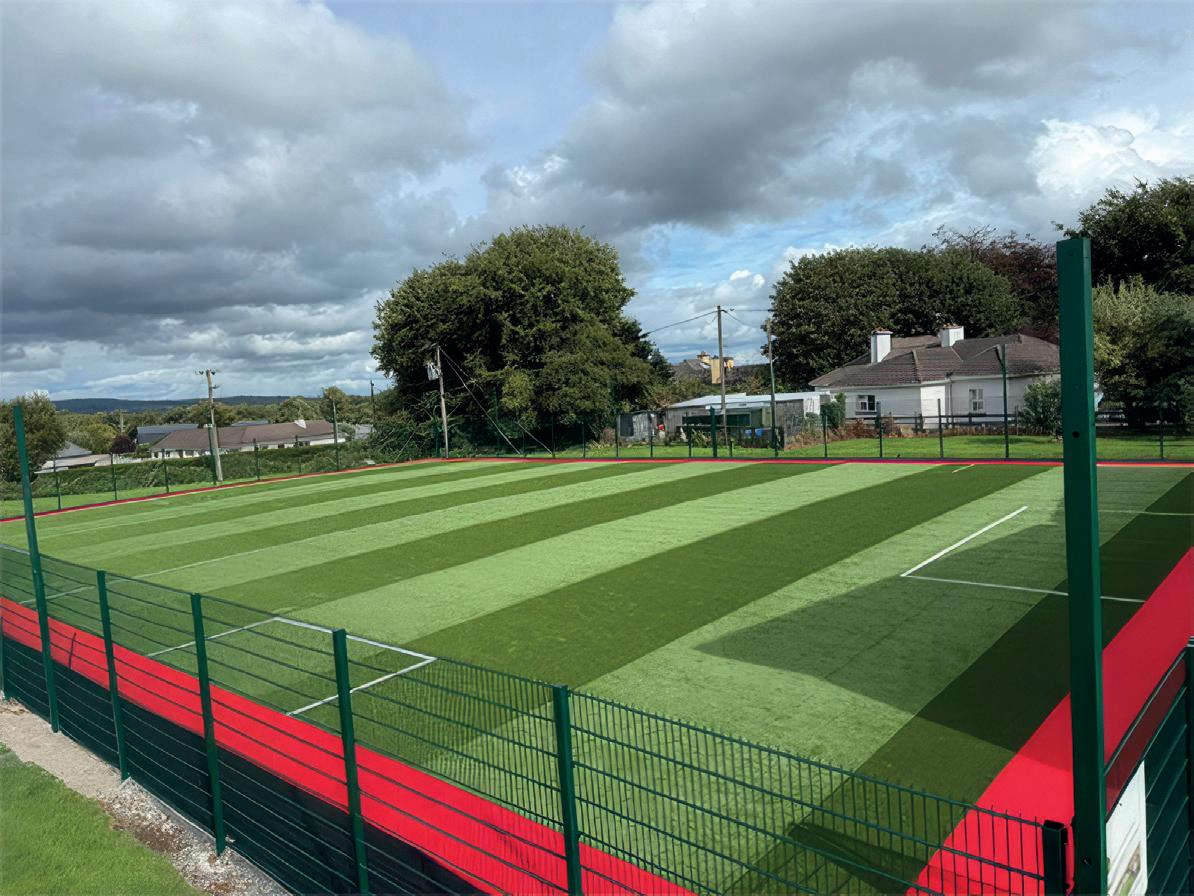
Turn tarmac, concrete, and mucky grass into safe, year-round playgrounds




As a child, who inspired you to be a teacher or school leader, if anyone at all? They say you should never meet your heroes, but that wasn’t an option for me, given that Kathleen O’Toole was both my sixth-class teacher and athletics coach, in my formative years. I suppose it is best described that I gravitated towards her, and she couldn’t get away from me.
The common description of Mrs. O’Toole’s classroom management style was that she ran a very tight ship. Throughout the 1987-88 school year, in Hugh Roe Boys’ National School, Donegal Town, she needed to, given that there were thirtysix boys aboard, all full of cheap sugar, crispy pancakes and endless amounts of energy. She was some captain.
Mrs. O’Toole was using integration and student voice long before it became fashionable. And when concentration waned, we were brought outside for rounders, nature walks and famously extended two o’clock breaks. Meeting her exacting standards was a bar too high for anyone, but it did not stop us from trying to earn even a morsel of praise.
Good teachers know their students, and Mrs. O’Toole, unfortunately for her, knew far too much about me. I just could not sit still and concentrate in class. My mother had cajoled me, threatened me and dosed me for worms, but all to no avail. Mrs. O’Toole, however, regularly sent me on messages, and, at my most excitable, she had me out in the corridor counting traffic. On one occasion, not being able to keep up with the volume of cars, I knocked on the door for a pen
Mrs. O’Toole was using integration and student voice long before it became fashionable. And when concentration waned, we were brought outside for rounders, nature walks and famously extended two o’clock breaks. Meeting her exacting standards was a bar too high for anyone, but it did not stop us from trying to earn even a morsel of praise.
and a sheet of paper. She handed me an empty 88-page copy. No words were needed.
But it was as our athletics coach, where we saw her softer, caring side. She drove us all over the country to events, including twice to the All-Ireland finals in Morton Stadium, Santry. I peaked at under 12, with joint second place in the high jump. Two full bottles of Lucozade, ten minutes beforehand, surely gave me the extra spring. Those experiences formed a lifelong exercise habit. I still run almost every day.
David Walsh wrote in his book Seven Deadly Sins that ‘Trouble is always in the hallway doing press-ups.’ You can imagine then, Mrs. O’Toole’s horror
when I turned up in her class on student placement, seven years after leaving it. It was here that I got to see a brilliant teacher at her craft. Her knowledge of the children was so detailed, and each lesson was perfect in both pitch and duration. She encouraged me to work hard and give it everything. I’m still trying to this day. Later, Mrs. O’Toole became the principal of the school. I expect that she led it as she had taught; both straight and true.
A few years ago, I wrote a book of lesson plans on teaching and learning outdoors and mentioned her in the preface. I signed a copy ‘to the best teacher I ever knew’ and put it in the post. That Christmas, a card fell through the letterbox. The handwriting was unmistakable all those years later. ‘I felt you always had the potential to make something of yourself,’ Mrs. O’Toole wrote. It was the closest to a compliment I ever got.
We sometimes forget that being a teacher or school leader is a privilege. What global brands wouldn’t give to be able to influence children for six hours a day for a year or more. Don’t ever forget the impact you have on those in your care, especially sometimes those you least expect.
If you would like to get in touch with Paul in relation to this piece, he can be reached at donegalpaul@gmail.com

MARIA CAESAR PRINCIPAL, CASTLEBRIDGE NS, WEXFORD
The Bí Cineálta Procedures 2024 provide a framework for preventing and addressing bullying behaviour in Irish schools. All schools and centres for education were required to develop and ratify their Bí Cineálta policy in 2024/2025 as per circular 0055/2024.
This year, school communities must lead the effective implementation and embedding of Bí Cineálta in their schools. As such, it is useful to situate Bí Cineálta within the wider wellbeing landscape and mechanisms set out by the Department of Education and Youth.
The Department’s Wellbeing Policy Statement and Framework for Practice 2019 frames wellbeing as a wholeschool responsibility and requires schools to embed wellbeing promotion across and beyond the curriculum. Schools implementing Bí Cineálta should therefore map their anti-bullying actions to the key areas of wellbeing (Curriculum, Policy and Planning, Relationships and Partnerships, Culture).
School Self-Evaluation (Circular 0056/2022) requires schools to use the SSE six-step process to review and plan for improvement – including wellbeing promotion and bullying prevention. Practical implementation of Bí Cineálta should therefore be an explicit SSE focus: gather baseline data (incidents, pupil/parent/staff voice), set measurable wellbeing targets, trial interventions and monitor impact in subsequent SSE reviews.
Concrete Whole School Strategies:
For Bí Cineálta to be effective, a culture of care, empathy, respect and inclusion is required. Prevention and education strategies and a positive whole school culture is how we
For Bí Cineálta to be effective, a culture of care, empathy, respect and inclusion is required. Prevention and education strategies and a positive whole school culture is how we achieve this
achieve this. Some examples from our school would include:
Core Values: Championing empathy, care and respect as core values of our school. Professionals and the wider school community living these values in their relationships and in their actions within the school community.
Curriculum integration: Build bullyingprevention and education programmes into SPHE lessons and wider classroom routines. Explicitly teaching empathy, perspective-taking and supporting relational, restorative responses.
Student voice and participation: Establish student council committees and involve children in drafting student-friendly versions of the school’s Bí Cineálta policy. This increases ownership and aligns with national guidance to involve pupils and parents in policy development.
Staff CPD and designated roles: Assign a designated wellbeing lead to coordinate prevention, resources and supports; provide staff training so teachers can identify and respond to incidents of alleged bullying.
From my experience as a leader and facilitator, one area of concern for schools is cyberbullying. The Bí Cineálta procedures explicitly recognise cyberbullying and require schools to include education and
prevention strategies in their antibullying policies.
Cyberbullying prevention should be multi-layered and age-appropriate and include clear internet-use expectations and supervision (Acceptable Use Policy), education and prevention strategies (SPHE) and involve developing strong home/school links in this regard.
DCU FUSE: A research-based anti-bullying and online safety programme for primary (3rd to 6th Class) and post-primary classrooms. FUSE is grounded in evidence, including a bystander intervention model, and offers lesson plans and whole-school activities to build pupils’ confidence to notice, report and safely intervene
Webwise DigiTown: A structured learning path for 9- to 12-year-olds covering ten digital-citizenship themes; useful for covering trust, privacy and respectful online behaviour in class
HTML Heroes (Webwise): An interactive lesson packages for 1st to 4th classes that introduce safe internet use, searching critically and online wellbeing through ageappropriate activities and stories, ideal for early primary classes as part of an SSE wellbeing plan.
As school leaders, it is important to make the links between procedures, policy development and practice. Situating our work within the curriculum, guidelines and frameworks already in existence allows for a coherent, focused and strategic implementation and embedding of the values of Bí Cineálta in our schools.
Maria can be contacted at maria.caesar@castlebridgens.ie if you would like to get in touch with her in relation to this piece.
IPPN offers sincere thanks to Selina Carmody, who has stepped down from the Board of Directors. Selina was coopted to the Board in 2023, having served on the National Council since 2018. Best wishes to Selina in her new role with Oide.
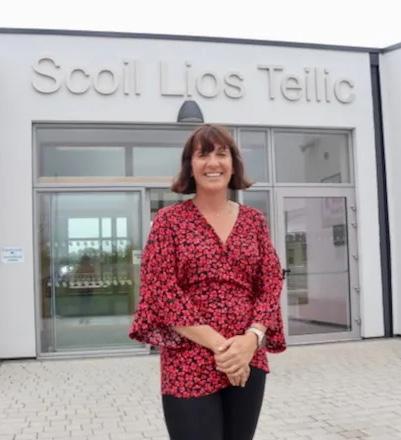
Two new Directors were elected at the National Council meeting on Saturday, 6th December at the Killeshin Hotel in Portlaoise. We congratulate and welcome Rosemarie Lawlor, principal of Scoil Lios Teilic, Tralee, Kerry and David O’Callaghan, principal of St Brigids & St Patricks NS, a DEIS Band 2 school in Drogheda, Louth.
Congratulations also to Diarmuid Hennessy and Diarmaid Moore, who were re-elected to serve a further term on the Board.
We wish them all every success in their role as Board members over the coming three-year period.
IPPN very sincerely thanks those who served on the Council in the school year 2024–2025, including those who have stepped down from their role, for their work and commitment to their city/county networks and to IPPN.
The Council now comprises school leaders from the following roles and school categories.
Rachel Dolan Carlow Advocacy
Colette McBreen Cavan Advocacy
Miriam Smyth Clare Advocacy
Mags Moore Cork City Advocacy
Aidan Crowley Cork County Advocacy
Anna Marie Nic Giolla Easpaig Donegal Advocacy
Eddie Fox Dublin City Advocacy
Colmán Ó Drisceoil Dublin DLR Advocacy
Karen Deans Dublin Fingal Advocacy
Niamh Thompson Dublin South Advocacy
Máire De Brún Galway City Advocacy
Cian Boyle Galway County Advocacy
Rosemarie Lawlor Kerry Advocacy
Claire Finnerty Kildare Advocacy
Margaret Keane Kilkenny Advocacy
Jemma Lynch Laois Advocacy
Caroline Healy Leitrim Advocacy
James O’Donoghue Limerick Advocacy
Frances McDonnell Longford Advocacy
David O’Callaghan Louth Advocacy
Noel Loftus Mayo Advocacy
Brian Kearns Meath Advocacy
Joanne Gormley McKenna Monaghan Advocacy
Brian McArdle Offaly Advocacy
Adrian Cregg Roscommon Advocacy
Maria Goretti Surlis Sligo Advocacy
Will Ryan Tipperary Advocacy
Pat O’Mahoney Waterford Advocacy
Karena Kavanagh Westmeath Advocacy
Vicky Barron Wexford Advocacy
Scott Vance Wicklow Advocacy
Helen Oxley Carlow Eservices
Ailish Fay Cavan Eservices
Deirdre Reidy Clare Eservices
Fiona Meehan Cork City Eservices
Sheila O’Connor Cork County Eservices
Luke Kilcoyne Donegal Eservices
Helen Fields Dublin City Eservices
Irene Connor Dublin DLR Eservices
Ciara Brangan Dublin Fingal Eservices
Michele Hamilton Dublin South Eservices
Máire de Báicéir Galway City Eservices
Jennifer McDonnell Galway County Eservices
Séana Ni Chuain Kerry Eservices
John Goff Kildare Eservices
Elizabeth Fitzgerald Kilkenny Eservices
Denise Talbot Laois Eservices
Richella Kelly Leitrim Eservices
Liam Guiney Limerick Eservices
Teresa Kearney Longford Eservices
John Weir Louth Eservices
Eóin Browne Mayo Eservices
Eileen McCaughey Meath Eservices
Marietta Graham Reynolds Monaghan Eservices
Michael McConigley Offaly Eservices
Jacinta Ni Chonghaile Roscommon Eservices
Linda McMahon Sligo Eservices
Ellen Courtney Tipperary Eservices
Maria O’Connor Waterford Eservices
Sé McCarthy Westmeath Eservices
400 school leaders have already registered to access this 9-step
Find out more
Bobby Kenny Wexford Eservices
Emer Whyte Wicklow Eservices
Rory Healy Carlow Prof. Dev
Serena Prior Cavan Prof. Dev
Siobhán Barry Clare Prof. Dev
William Casey Cork City Prof. Dev
Elizabeth Scanlon Cork County Prof. Dev
Grace McCarron Donegal Prof. Dev
Mary Flynn Dublin City Prof. Dev
Dervla Nic Mhathúna Dublin DLR Prof. Dev
Kieran Lyons Dublin Fingal Prof. Dev
Rachel Brennan Dublin South Prof. Dev
Clare Brennan Galway City Prof. Dev
Roisin Reilly Galway County Prof. Dev
Robbie O’Connell Kerry Prof. Dev
Eimear Hennessy Kildare Prof. Dev
Anita Foley Kilkenny Prof. Dev
Jackie Cooper Laois Prof. Dev
Paula Loughlin Leitrim Prof. Dev
Conor Griffin Limerick Prof. Dev
Kevin Mollaghan Longford Prof. Dev
Regina O’Malley Louth Prof. Dev
Regina Corrigan Mayo Prof. Dev
Amy Boylan Meath Prof. Dev
Nuala Mhic Gabhann Monaghan Prof. Dev
Bridget Clear Offaly Prof. Dev
Arthur Geraghty Roscommon Prof. Dev
Tony Gallagher Sligo Prof. Dev
Marguerite Kelly Tipperary Prof. Dev
Denise Keating Waterford Prof. Dev
Pat Canty Westmeath Prof. Dev
Gerry Moran Wexford Prof. Dev
Kim Kelly Wicklow Prof. Dev



RUTH COULTER PRINCIPAL OF ELIZABETH SIMCOE JUNIOR PUBLIC SCHOOL, TORONTO
EILEEN PIKE (IPPN), PRINCIPAL, TULLYALLEN NS, CO. LOUTH
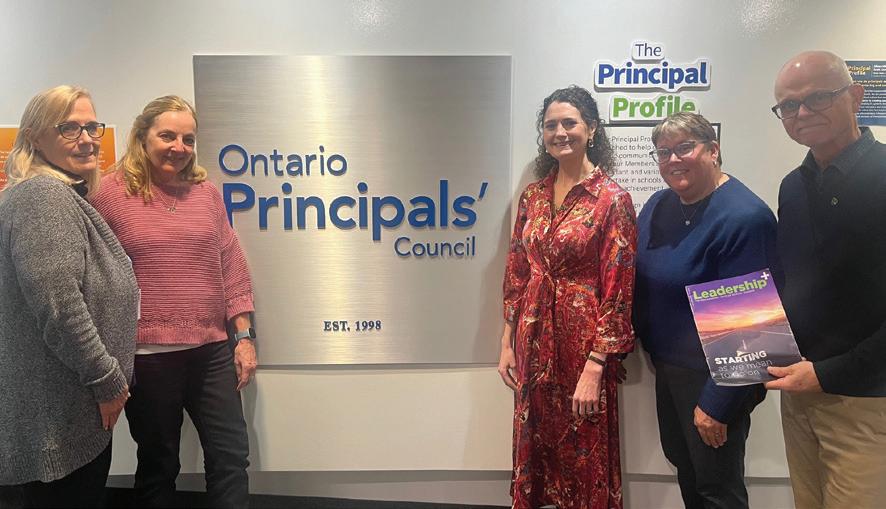
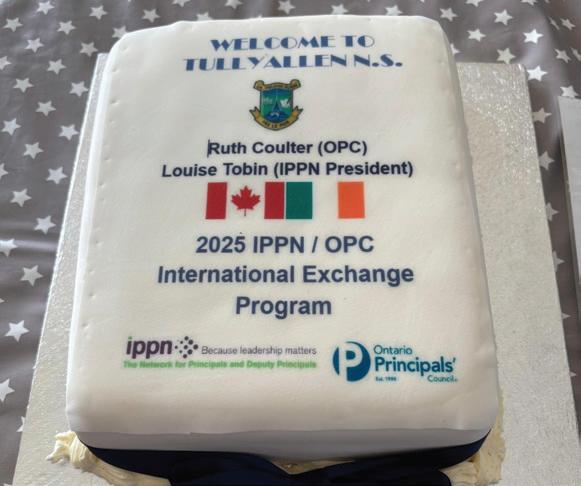
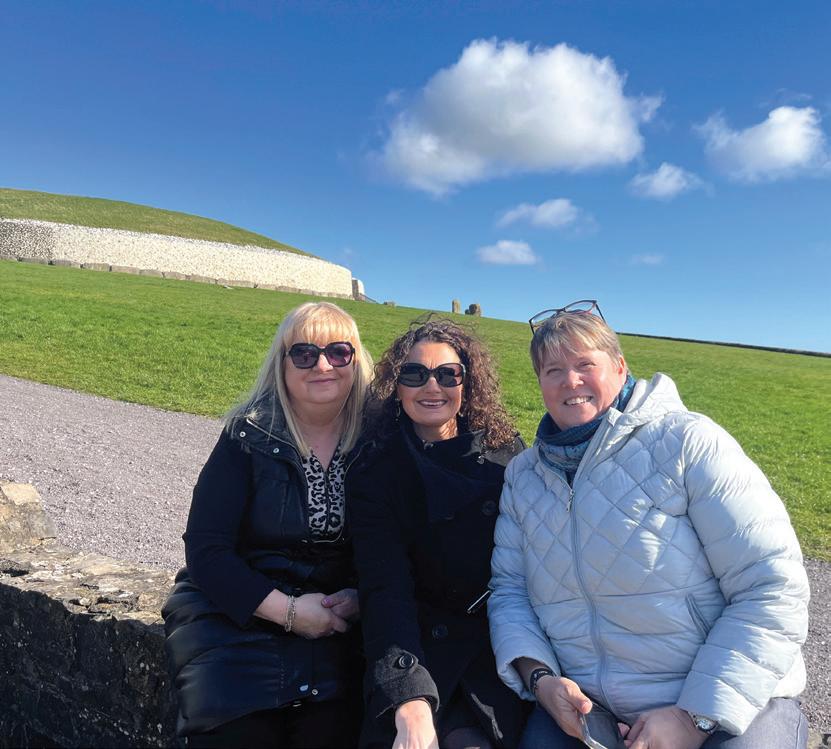
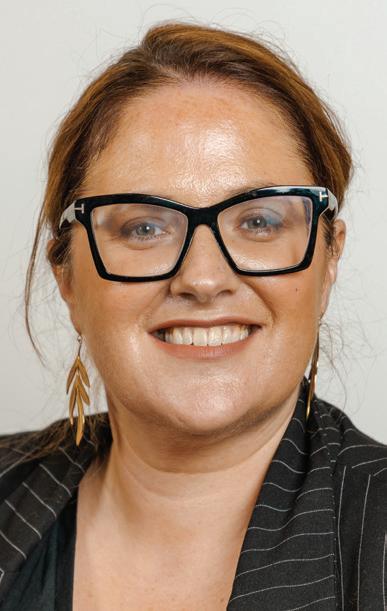
As we become more targeted about improving student performance, we recognise that we have much to share and to learn from our colleagues in other countries, engaged in the same pursuit. The IPPN International Exchange Program offers Irish principals and deputy principals a formalised job-shadowing experience with international colleagues. Recognising the mutual benefits of shared insights in the pursuit of improving student performance, IPPN partnered with the Ontario Principals Council (OPC) to facilitate a week-long exchange between school leaders in Ireland and Canada. Ruth and I were paired up and so began the exchange. I travelled to Toronto in the October Mid-term 2025 and Ruth came to Ireland in her Spring Break March 2025, both scheduled during school closures in our respective countries to minimise disruption to our leadership role in school.
As practicing principals, Ruth and I observed numerous similarities: the heavy workload, teacher shortages, the increase in students with special needs and the demand on time taken away from teaching and learning due to managerial duties. The exchange also provided contrasting and complementary insights into educational systems.
KEY TAKEAWAYS: IRELAND VS. CANADA
Canadian Perspectives on Irish Education
Ruth was impressed by the wealth of Special Education supports in Ireland, including specialist classes, SETs
The IPPN International Exchange Program offers Irish principals and deputy principals a formalised jobshadowing experience with international colleagues. Recognising the mutual benefits of shared insights in the pursuit of improving student performance, IPPN partnered with the Ontario Principals Council (OPC) to facilitate a week-long exchange between school leaders in Ireland and Canada.
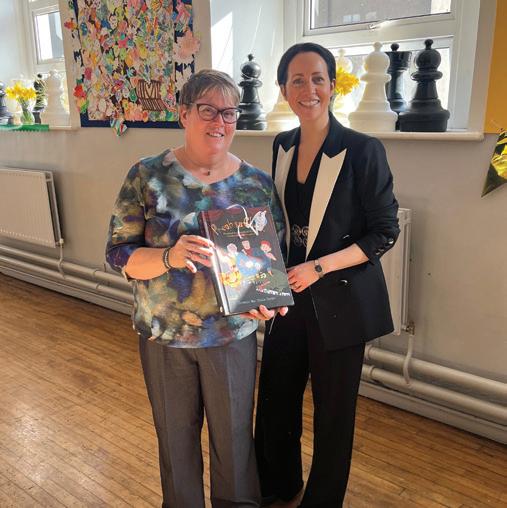
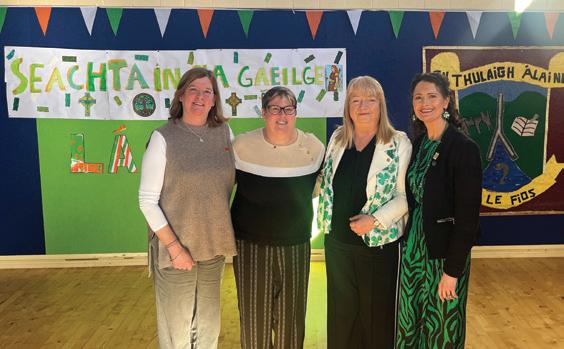
(Special Education Teachers), and SNAs (Special Needs Assistants). Her base was Tullyallen N.S., Drogheda, a school of 400+ pupils with three special classes for autism. The visit to Scoil Naomh Bríd, Ardaghy, Omeath, highlighted the complexity and challenge of the teaching principal role, which was an alien concept to her. The cultural immersion, from a Céad Míle Fáilte to picking up the cúpla focal during Seachtain na Gaeilge, was deeply appreciated.
Irish Perspectives on Canadian Education
I was struck by two key differences in
administrative support: the system for substitute school secretaries (trained and skilled on a local list) and the use of a substitute principal (often a retired principal) who assumes full leadership responsibilities when the principal is absent. This was contrasted by the fact that a school of 300+ pupils was not entitled to a Vice Principal, with leadership relying on the principal and two post holders (APII equivalent) with leadership qualifications.
The School Support Team (SST) modelbringing together a psychologist, speech and language pathologist, social worker, principal, teachers, and parents monthlyrepresented a significant structural resource. All Individual Education Plans (IEPs) are centralised, and the principal holds the ultimate authority to create, implement and monitor them.
In Toronto, I observed key differences in teaching and learning: Gifted Programs: Ruth’s school runs three gifted programs for students in Grades 4-6, offered to students scoring at the 98th percentile or higher on psychological assessments. The application of Building Thinking Classrooms by Dr. Peter Liljedahl and the use of Unlearn Cards to foster critical conversations around equity and inclusion were impressive
Junior Kindergarten: The full-day, play-based kindergarten for four and five-year-olds (8.55am to 3.30pm) featured explicit expectations for routines and behaviour, leading to remarkable independence among the young learners
Equity Focus: Equity is the overriding theme of the Canadian school improvement plan. The Toronto District School Board (TDSB) implements a strategy for ‘Combatting Hate and Racism’ and the staff at Ruth’s school were formulating an affinity group for students of colour to discuss their lived school experiences.
A visit to the OPC head office provided insight into their advocacy, professional growth, and unique protective services offered to members.
Cultural Immersion and Reflection
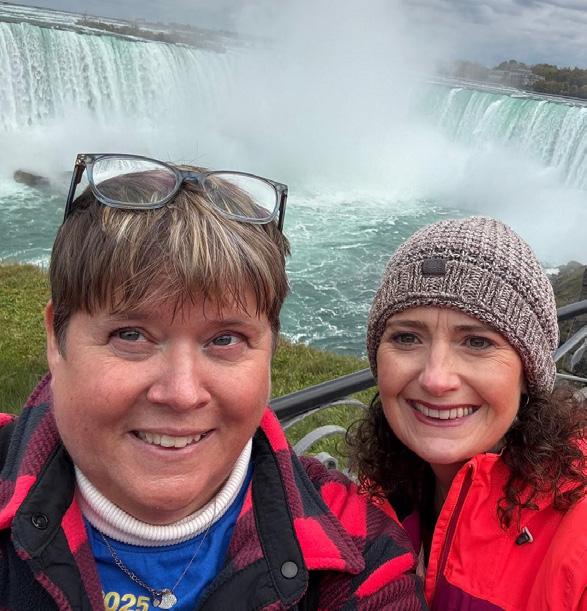
Beyond the professional, the exchange offered deep cultural absorption. Ruth’s Irish experience included a tour of the local Newgrange monument, and visits to Dublin (Book of Kells) and Belfast (Giant’s Causeway). My Toronto trip included exploring gifted programs at Ruth’s school, seeing the city awash in Blue Jays support, visiting Niagara Falls, and a moving visit to the Woodland Cultural Centre and Mohawk Institute Residential School, a sobering insight into a harrowing chapter of Canadian history.
This exchange opportunity allows participants to learn about different systems while reflecting deeply on the opportunities and challenges within their own. One thing is for sure, leadership conversations and ‘aha’ moments were often found over a cup of tea!
We thank the IPPN Board of Directors for the opportunity to take part in the first IPPN/OPC Ireland/Canada School Leadership Exchange Program, OPC and the participating schools in Louth and Toronto.
You can reach Ruth Coulter by email at rcoulter280@gmail.com and Eileen Pike by email at principal@tullyallenns.ie

Building Thinking Classrooms OPC
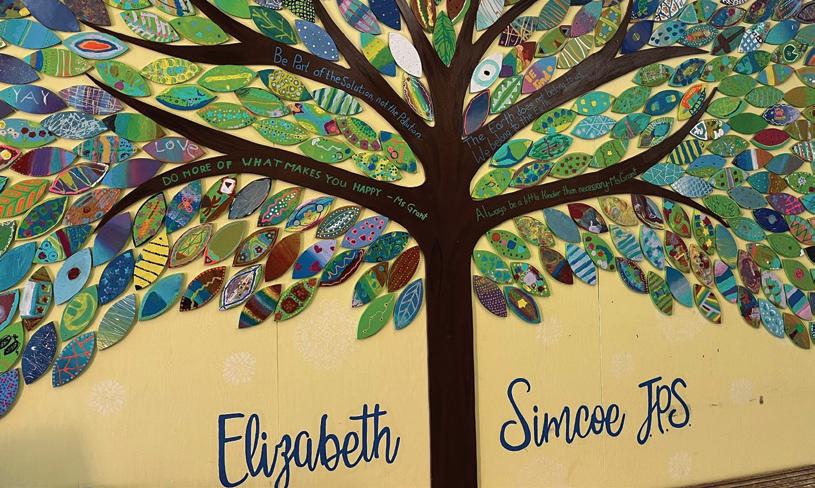
Elizabeth Simcoe Junior Public School, Toronto
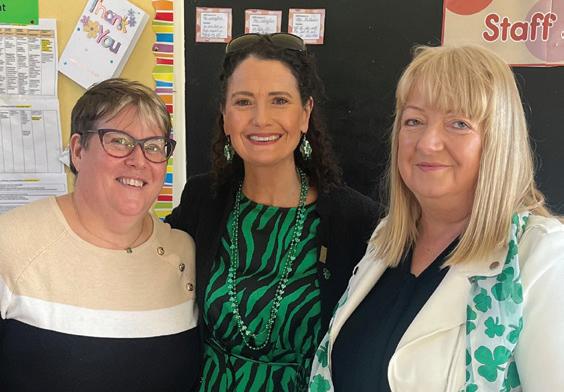
Tullyallen N.S., Co. Louth
LINDA DENNEHY DIRECTOR OF WEST CORK EDUCATION SUPPORT CENTRE
Planning PCF Closure Days: The Role of ITEN.ie
As schools prepare for the upcoming Day 1 and Day 2 planning closures linked to the Primary Curriculum Framework (PCF), school leaders are considering how best to structure these days so that the entire staff team benefits. While teachers participating in curriculumfocused sessions will be engaged in their required learning, many other staff members will not take part in this training. Schools often ask how they can provide meaningful professional learning for these colleagues.
An additional practical solution is ITEN. ie, a free online professional learning platform developed and hosted by seven Education Support Centres –Blackrock, Cork, Kilkenny, Limerick, Waterford, West Cork and Wexford. ITEN.ie offers flexible, high-quality CPD that supports teachers and the wider school community – SNAs, administrative staff and ancillary staff – during PCF closure days and throughout the year.
ITEN.ie complements CPD provided by Oide and Education Support Centres, offering flexible online learning options for staff who are not engaging in curriculum-focused sessions. This article shares one example of how Education Centres are supporting schools; other Centres will have similar or alternative approaches to meet local needs.
ITEN.ie provides a purposeful option. Its short, practical courses enable all staff to engage in relevant CPD while curriculum sessions are taking place. This helps ensure closure days are meaningful for everyone and that time
is used productively across the school. Making the Most of PCF Closure Days For School Leaders, ITEN.ie provides a ready-made CPD option for staff not participating in curriculum training. Schools have used the platform in a variety of ways, such as:
SNAs completing modules on sensory needs, communication strategies and inclusive practice
School secretaries and administrative staff engaging with digital tools, communication supports and organisational skills
Ancillary staff exploring courses on wellbeing and supporting the school community.
This supports a whole-school approach to professional learning, even when staff are engaged in different types of CPD on the same day.
ITEN.ie has grown significantly and now offers a diverse suite of selfpaced courses tailored to the needs of Irish schools. Modules are available on demand, making them suitable for PCF closure days, Croke Park hours or ongoing professional development. Course categories include:
Behaviours of concern and the SNA
The role of the SNA
Inclusive and special education
EAL and intercultural practice
Digital tools for classrooms and administration.
The platform is user-friendly. Registration is free, and each user receives a personal profile where certificates of completion can be stored or downloaded.

ITEN.ie is the result of strong collaboration between seven Education Support Centres. Through shared expertise, course development and quality assurance, the Centres have built a platform that is accessible and robust. ITEN.ie supports schools in the catchment areas of this collaboration, ensuring access to high-quality professional learning.
Across Ireland, there are 21 fulltime and 7 part-time Education Support Centres, each committed to supporting school leaders and staff through a range of locally responsive CPD opportunities.
Your Local Education Support Centre
If you’d like to explore options for professional learning on planning days, connect with your local Education Support Centre. Each Centre offers a unique combination of resources, programmes and supports tailored to the needs of its school communities.
Engaging with your Centre ensures your school benefits fully from the wide range of supports available throughout the year. This strengthens collaboration across the system and ensures all schools can access CPD that aligns with their context and priorities.
This article was prepared by Dr. Linda Dennehy, Director of West Cork Education Support Centre, on behalf of and with contributions from Dr. Brian Barron, Edmond Hussey, Niamh Murray, Lorraine O’ Gorman, Norma O’ Brien and John O’Sullivan.
If you would like to get in touch with the ITEN team, you can get in touch with them at Info@iten.ie

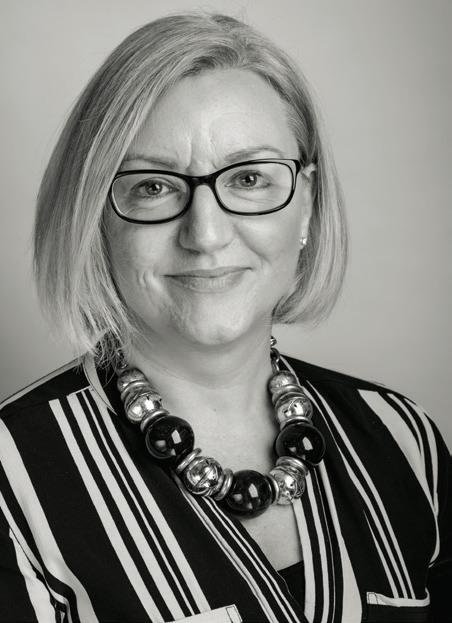
GERALDINE D’ARCY IPPN ADVOCACY & COMMUNICATIONS MANAGER
STAY UPDATED
See www.ippn.ie Advocacy/On Your Behalf for up-to-date information about IPPN’s advocacy and communication on behalf of members, including media interviews. Follow IPPN on social media – X (@ippn_education) and LinkedIn (@ippn)
The following activities have been progressed since the last issue of Leadership+:
The following were raised by members to advocacy@ippn.ie. The information provided supports IPPN’s advocacy with key stakeholders in relation to school leadership:
One-year CID and the implications for schools
Unmanageable water charges, leaks AON process – serious concerns about proposed changes to special education access.
The Leading Out series provides a space for education partners and leaders to share perspectives, strengthen alignment across the system, and identify the conditions that enable successful curriculum change.
The workshop focused on practical ways to sustain collaboration and support schools during this next phase. It included key messages on supporting curriculum enactment and their implications in practice experience of teachers and school leaders in introducing curriculum redevelopments children’s voice throughout the redevelopment process
Deputy CEO Patrick Sullivan examined common pitfalls with curriculum enactment: symbolic change, lack of time and space, weak connections, mixed messaging, lack of professional learning and lack of capacity building.
Attendees contributed ideas on sharing collective learning and ensuring responsiveness and coherence in supporting schools and wider stakeholders. A keynote address and facilitated discussion
were delivered by Professor Emerita Louise Hayward of the University of Glasgow on ‘Pivoting towards future engagement and partnership for change’ Notable quote: ‘The real task of leadership is climate control’.
Therapy and Inclusion Services Workshop was hosted by the Special Education Section of the DEY. The focus was on insights gathered by a research team on the voice of the parents and how we can work together to make sure the service responds appropriately.
Primary Education Forum
Key matters discussed include Special Education Section Focus, Leadership and Governance Support Project, Consultations subgroup update, Small Schools Research Project, Schools’ Communications/Customer Service Update.
Presentations and discussions were based on the report on relevant European and international good practices in teacher workforce planning relevant to the Irish system. A workshop on 15–16 January 2026 is designed to refine proposals on practical, evidenceinformed recommendations to address teacher shortages in Ireland.
Local Community Safety Partnerships
Deirdre Kelly is the nominated representative for the education sector on this committee, which aims to promote the concept of people being safe and feeling safe in their own community. By making community safety a whole of Government responsibility and priority, the new community safety policy will ensure communities are safer and feel safer. There will be a new focus by relevant
Government services on prevention and early interventions, and the impact that a shared approach to problem solving can have in ensuring that situations do not develop to the point where they impact on the safety, or feeling of safety, of the community at large.
Other meetings, events and conferences attended:
Oide professional learning day in Athlone
IPPN Board of Directors
IPPN National Council
25 Years of IPPN lunch - attended by past IPPN Presidents, past and current members of the IPPN Board of Directors and support office staff
NPC and NAPD
Consultation – Periodic Critical Review of the NCSE Charities Regulator – A Regulatory Update
Teaching Council re. School placement in special classes
Inspectorate Review and Thematic Review
INTO Special Education and Inclusion Conference
NCSE Annual Research Conference
DEY Primary School Survey Briefing ESHA Conference
Seminar on Learning Analytics as a Catalyst for Educational Improvement.
Our social media platforms host content about events, submissions and other advocacy work, supports and services and various updates from E-scéals. On Instagram, the main IPPN account now has 2,100 followers. There are 2,275 followers on LinkedIn and 10,112 on X. There are also social media accounts for Education Expo and EducationPosts.ie.
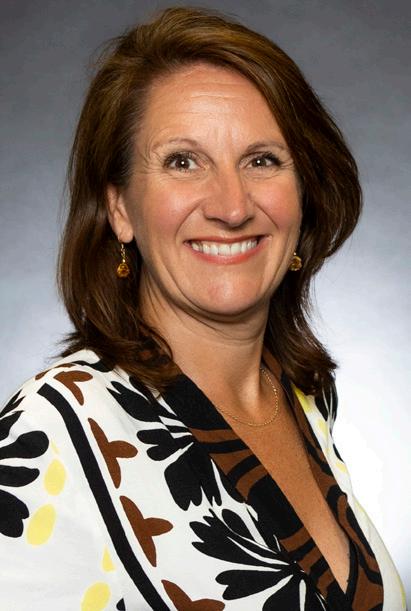
MARY DALY & JOANNE HESSION LIFT IRELAND
LIFT (Leading Ireland’s Future Together) is a self-leadership organisation that has been improving the lives and wellbeing of people across Ireland since 2018. Over 400 secondary schools have now collaborated with LIFT to facilitate their students to develop their self-leadership skills. We believe that they need to understand what matters to them, stay focused, and perform effectively. In 2025/2026, we plan to launch an extension of LIFT into Ireland’s Primary School sector after piloting the programme in a small number of schools with the assistance of neighbouring Second level schools.
LIFT is a 100% Irish initiative, led by CEO Joanne Hession, and was launched with the ultimate objective of raising the standard of leadership across the country, with a focus on ‘one person at a time’. The LIFT philosophy is that, in order to build better families, classrooms and communities, people need to look at their own behaviour. They need to think about what standards they expect from themselves and how they can make sure that their own actions live up to those standards: How well do I listen to the people around me? How well do I think about others? How do I behave when things start getting difficult? We all realise that students and all young people are drowning in distractions, many of them struggle not with the curriculum but with the challenges of life. We all know a young person who has difficulty in focusing, struggling to handle stress, glued to screens and losing confidence. LIFT encourages and equips young people to develop a positive attitude, show kindness and respect to each other.
We believe that the main reason for LIFT’s incredible growth in secondary schools over the past 7 years has been its simplicity. As LIFT’s Head of
Over 400 secondary schools have now collaborated with LIFT to facilitate their students to develop their selfleadership skills. We believe that they need to understand what matters to them, stay focused, and perform effectively. In 2025/2026, we plan to launch an extension of LIFT into Ireland’s Primary School sector after piloting the programme in a small number of schools with the assistance of neighbouring Second level schools
Education, Sarah-Lyn McKenna says, ‘LIFT ‘roundtables’ are run by the young people themselves. They follow a clear and consistent script. The rules are simple; each young person gets the same chance to reflect and speak. In this way, the fear of judgement that is so prevalent, when young people are together just melts away. It’s been amazing to watch!’
LIFT’s new primary school programme is ready for your school. A specially revised set of LIFT materials have been developed for younger children.
How is the programme organised? Where possible, each primary school links with a local secondary school that is already doing LIFT. Transition
Year students (who will already be experienced LIFT facilitators) from that school go into the primary school 6th class and facilitate LIFT roundtables with the younger students.
The advantages are very clear; the primary school students are given a voice and a chance to reflect on themes and values e.g. kindness, respect, fairness, determination etc. More importantly, they are led not by teachers or adults but by older teens from schools that many of them will be moving to the following year; and the older students see the power and value of mentorship.
The programme has been incredibly successful so far and students have commented that ‘it will improve my listening skills and will help me focus’ ‘treat everyone equally and don’t judge on where they come from or religion.’
The advantages are very clear; the primary school students are given a voice and a chance to reflect on themes and values e.g. kindness, respect, fairness, determination etc
Students have stated that they understand ‘how to show respect better, how to make new friends and how it has reduced the fear of moving into Post Primary school.’
If you would like to introduce LIFT to your school, see https://liftireland. ie or contact Sarah-Lyn McKenna sarahlyn@liftireland.ie or Mary Daly mary.daly@liftireland.ie.
QUOTATION
True Power is restraint. If words control you, that means everyone else can control you. Breathe and allow things to pass.
Warren Buffett
“A collection of mistakes is called experience.”
Denis Waitley
Dear Parent, Your expectations of teachers should match your commitment as a parent,
Sincerely