
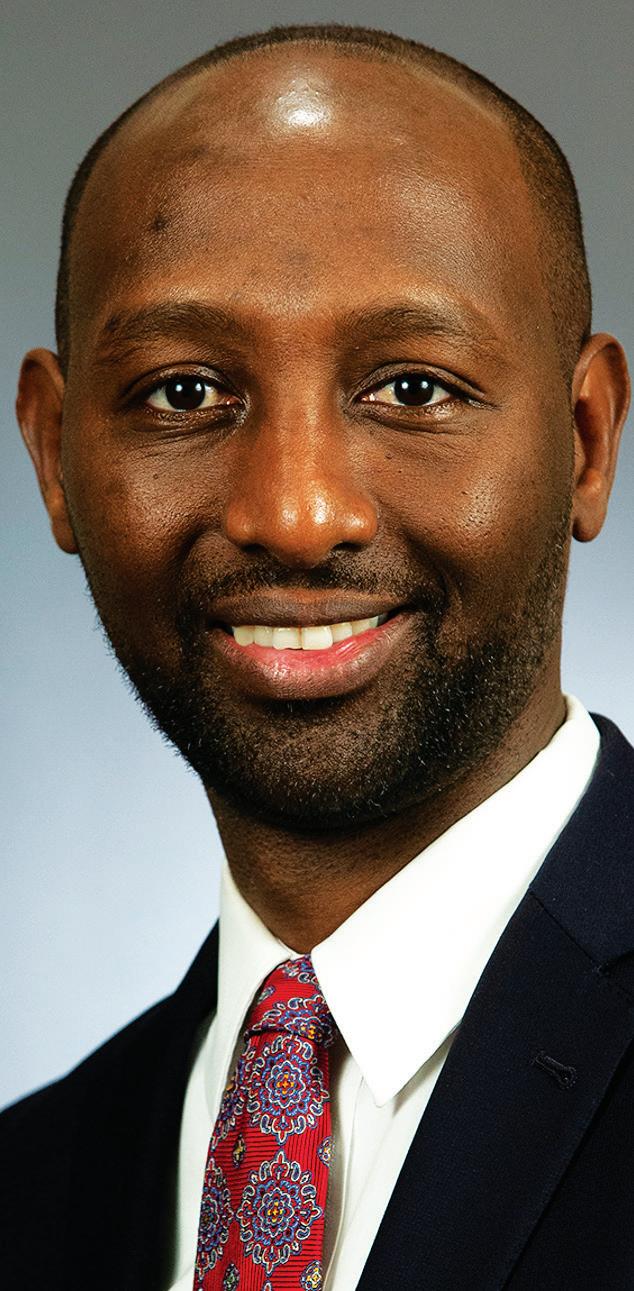
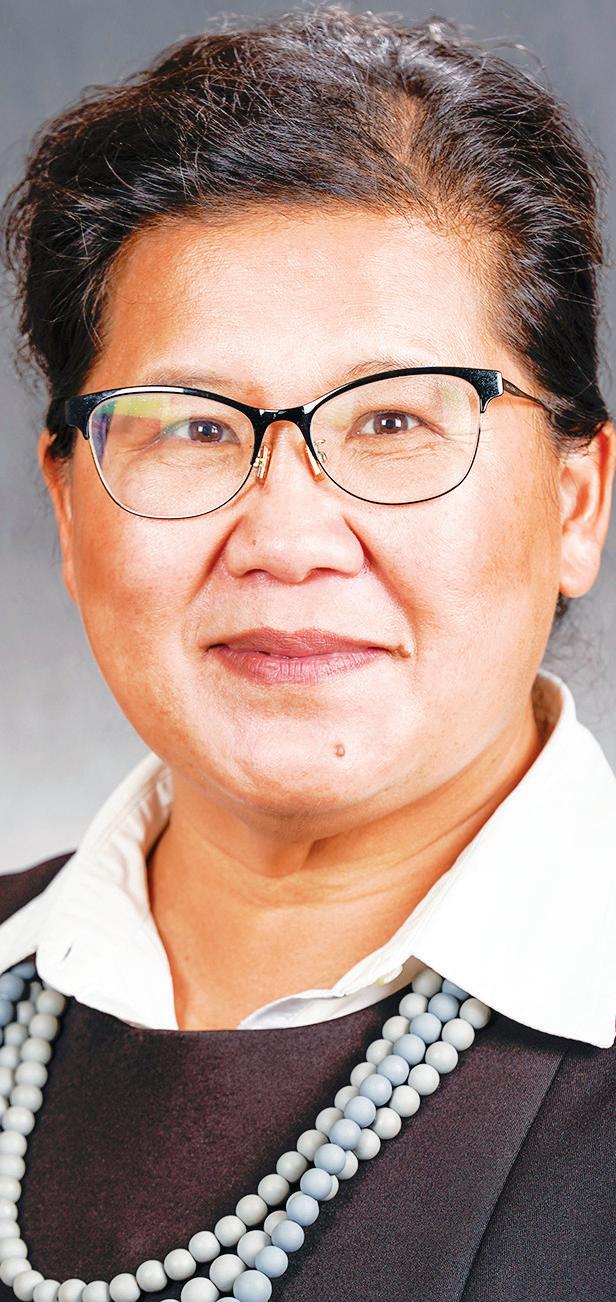

In the wake of bombastic comments from President Donald Trump — in which he called Somali immigrants in Minnesota “garbage,” said he didn’t want them in the country, and pledged to end protections for some under Temporary Protected Status (TPS) — SomaliAmerican elected officials and community leaders in Minnesota are responding forcefully. Their reactions reflect outrage, fear for community safety, and a reaffirmation of Somali Minnesotans’ long-standing place in the state.
U.S. Representative Ilhan Omar,(MN-5) called Trump’s remarks “completely disgusting,” reported The Guardian and Reuters. In a December 7, 2025 interview on CBS’s Face the Nation, Omar
said:
“These are Americans that he is calling ‘garbage.’” Omar called the disparaging comments “dehumanizing” rhetoric — that could incite “dangerous actions by people who listen to the president.”
Though acknowledging serious fraud cases involving some individuals of Somali origin, Omar rejected attempts to use those cases to smear the whole community. She emphasized that no terrorism charges have been filed and called the blanket accusation against Somali Minnesotans baseless. Omar backed investigations into COVID-relief fraud, including the Feeding Our Future case, but stressed that claims of money going to al-Shabab have not resulted
in terrorism charges, saying if there were evidence, “that would be a failure of federal investigators” not to bring it.
She said Trump is using racism “to distract from the failures of his administration,” especially his economic promises that have not materialized.
On TPS, Omar warned against what she called an unlawful targeting of a community: she noted that ending TPS for Somalis could violate the program’s required legal process, which doesn’t allow a president to single out a state or ethnic group.
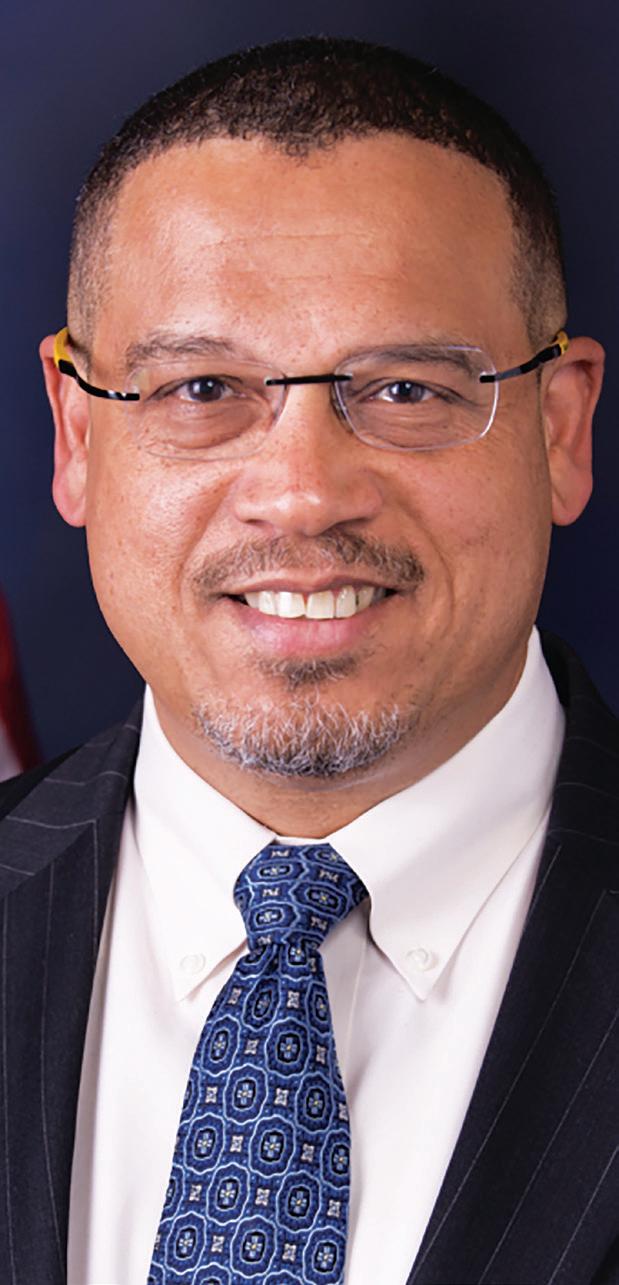
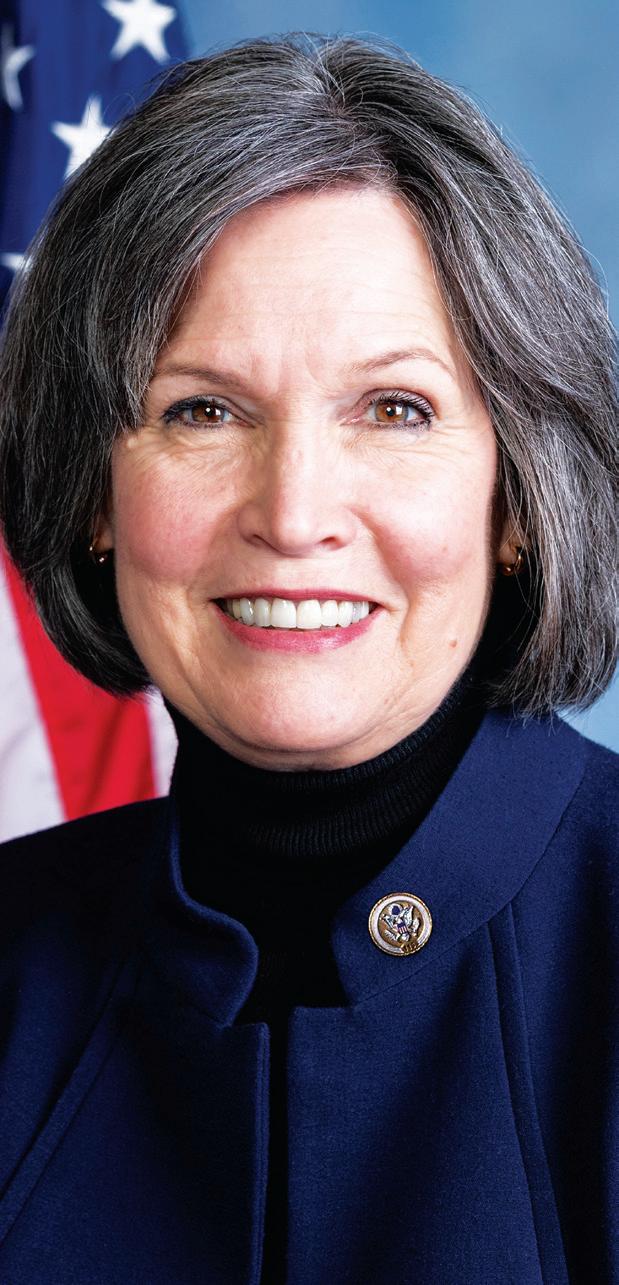
U.S. Reps. Betty McCollum and Minnesota Attorney General Keith Ellison, St. Paul Mayor-elect Kaohly Her, members of the Minnesota Legislature and community activ-
ists spoke out against Trump’s actions and urged support of the Somali community during last Monday’s event at the State Capitol.
“Painting an entire community with a broad brush because of the actions of a few has created an untrue narrative,” Her said.
“Somalis are a fabric of the state of Minnesota,” says State Representative Mohamud Noor, (DFL–Minneapolis), “they’re in every profession, they’re our neighbors, they’re our friends, they’re our family.” In interviews with KSTP.com 5 Eyewitness News, Noor called Trump’s remarks “dangerous,” warning they foster fear and risk scapegoating an entire community for the crimes of a few. Noor’s remarks came
at a gathering of Minnesota lawmakers, community leaders and activists who condemned Trump’s pledge to end TPS protections for Somali immigrants — a move they argued would destabilize lives of many who have long been part of Minnesota’s social fabric.
Following Trump’s statements and the announcement of a planned immigration crackdown targeting undocumented Somali immigrants in Minnesota, community gatherings have reflected collective anxiety. At a widely attended event in south Minneapolis, hundreds of Somali-American community members, faith leaders, and local allies assembled to condemn what they termed Islamophobic, xenophobic rhetoric.
Many expressed concern that the targeting goes beyond policy disagreements — that it represents a broad attack on Somali-American identity and belonging.
The tensions stem partly from a large-scale fraud investigation tied to welfare and state social-service programs — including the COVID-era nutrition program administered by the nonprofit Feeding Our Future. Many of the people charged in the scandal are Somali. In recent weeks, the combination of fraud allegations, Trump’s portrayal of the community as criminally complicit, and a planned inten-
By Stacy M. Brown Black Press USA Senior National Correspondent
The case of Rodney Taylor, a disabled Black immigrant detained by U.S. Immigration and Customs Enforcement, is forcing Congress to confront new evidence of medical neglect, unchecked raids, and a hiring system that has shifted under President Donald Trump’s order to build the largest deportation force in modern history. Taylor’s family was scheduled to speak outside the Capitol on Dec. 4, following a House Judiciary Subcommittee hearing on Immigration Integrity, Security, and Enforcement.
Taylor, who lost both legs years before his detention, has been held in Georgia since January. CNN reported earlier this year that Taylor said, “Going back to Liberia is like going back to a foreign country,” as ICE pressed forward with deportation efforts despite a full pardon, he received in 2010 for a 1997 burglary conviction. His wife, Mildred Pierre, said Taylor’s health has declined sharply since entering custo-



















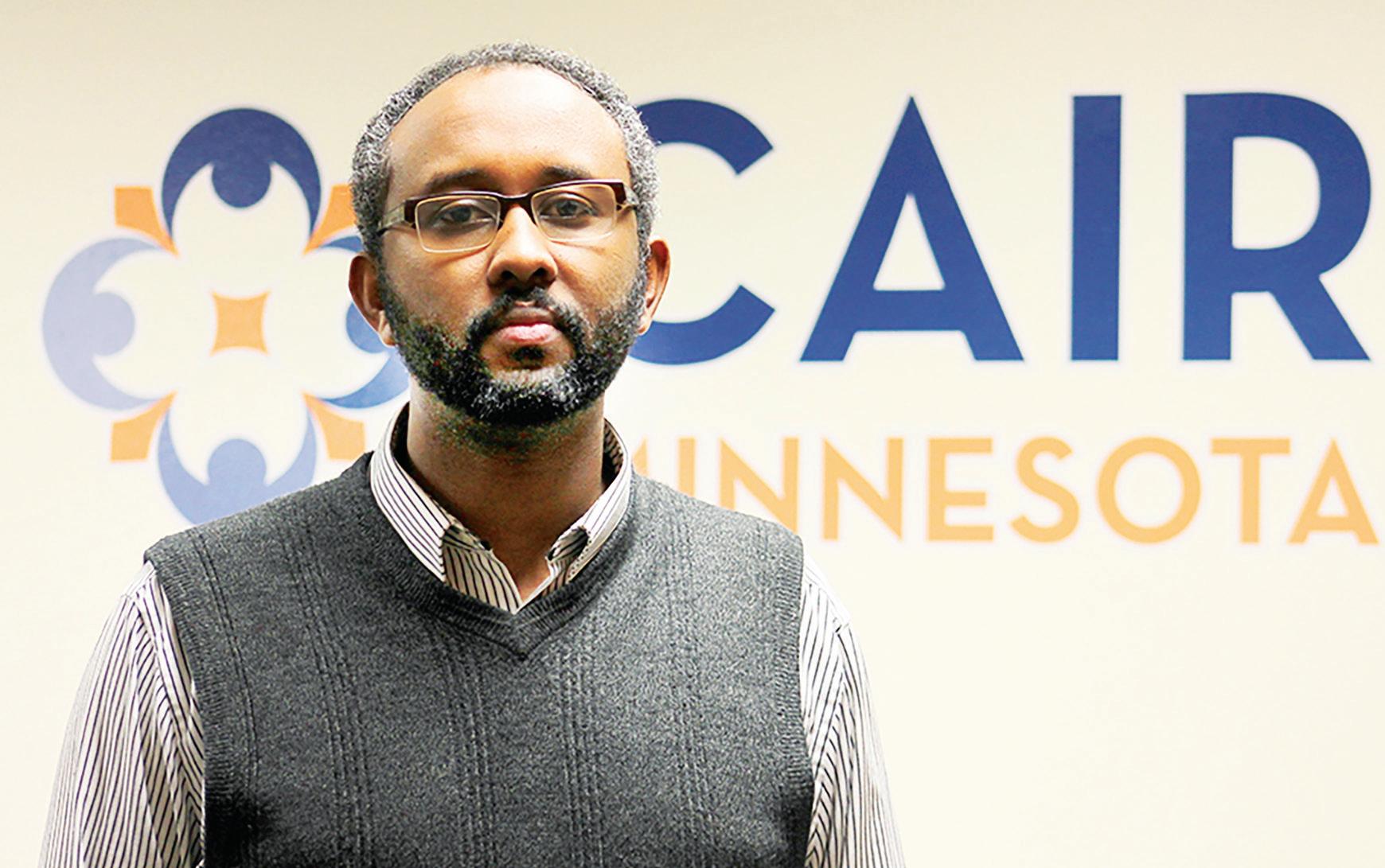
The Minnesota chapter of the Council on American-Islamic Relations (CAIR-MN) denounced what it described as a sharp and politically driven surge in ICE actions aimed at Somali Minnesotans, calling the developments alarming and damaging to community trust.
In recent days, Somali families across the state have reported surprise visits from immigration agents, intimidation at private homes, and increased surveillance in neighborhoods with large Somali populations.
CAIR-MN said it is actively documenting cases while coordinating rapid-response legal aid and community support.
c“This is not standard immigration enforcement. This is political targeting,” said Jaylani Hussein, CAIR-MN’s executive director. He said the actions appear to stem from directives tied to President Donald Trump and his allies, and accused federal officials of using “secret-police style operations” against law-abiding Somali residents, including U.S. citizens. Hussein
called the tactics an abuse of power and urged leaders across political lines to publicly reject what he described as Islamophobic scapegoating.
CAIR-MN said fearbased enforcement erodes public safety by undermining trust between community members and government agencies. It warned that broad punitive actions against entire communities only deepen fear, further marginalize immigrant families, and contradict Minnesota values.
“In Minnesota, we believe in safety, fairness, and treating our neighbors with dignity,” Hussein said. “Targeting whole communities for the actions of individuals is dangerous, unjust, and out of step with who we are.”
CAIR-MN, the state’s leading Muslim civil rights and advocacy organization, continues its work to protect civil rights, strengthen understanding of Islam, promote justice, and empower American Muslims.
By Stacy M. Brown Black Press USA Senior National Correspondent
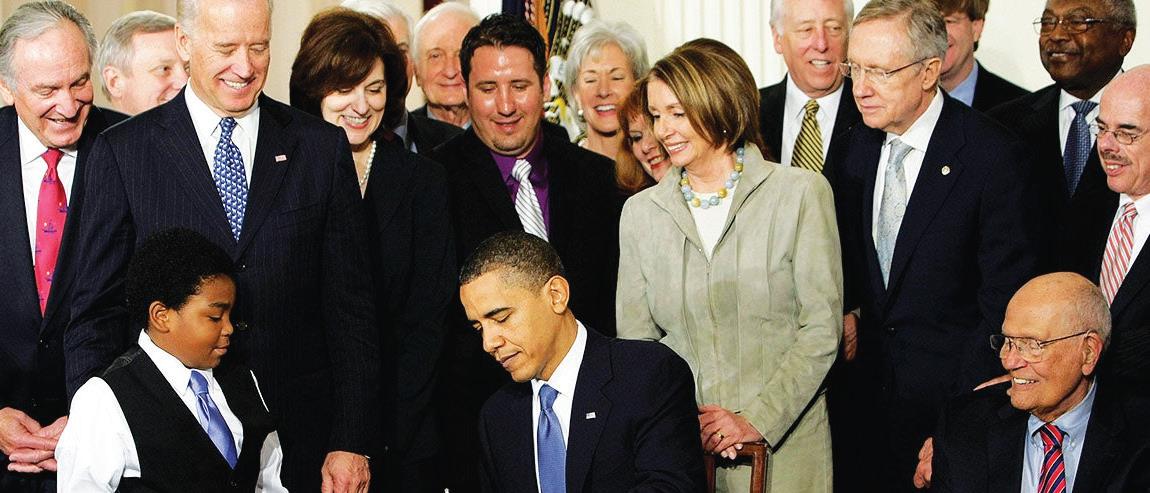
The battles over the Affordable Care Act were never only about policy or the price of insurance. They were never simply arguments about federal subsidies, individual mandates, or the markets that hold the system together. From the moment America elected a Black president and that president dared to place the health of the poor and the marginalized at the center of national law, a deeper truth rose to the surface. That truth
has followed the country for centuries. It was waiting for its next target. The target became Barack Obama. The instrument became Obamacare. Long before Republicans vowed to “repeal and replace,” the lines were already drawn. The same forces that spent years questioning Obama’s citizenship, intellect, and legitimacy turned their fury toward the most expansive health care protections in generations. Black lawmakers and health equity advocates understood the stakes. They had spent years shaping the Affordable Care Act so it would cut into the country’s long trail of
At
administration
racial health disparities. Daniel Dawes, a leading figure in that fight, stated that the ACA was “the most comprehensive minority health law” in United States history and identified sixty-two provisions that “direct-
ly address inequities in health care.”
The law carried the fingerprints of the people who fought for it. For African Amer-
To help Minnesota families with food and direct assistance
Fourteen grants will provide support for communities across the state ahead of the holiday season
McKnight Foundation, a family foundation based in Minnesota, announced Monday, Nov. 24 the deployment of $1 million in grants to help more Minnesotans across the state access the nourishment and stability they deserve this holiday season amidst growing economic insecurity.
In a press statement announcing the grants, the foundation said, “Families across the

United States are increasingly struggling to afford food, rent, energy and other essentials due to rising costs of living—challenges that were compounded when SNAP benefits lapsed earlier this month, creating uncertainty for 42 million Americans and 440,000 Minnesotans. Proposed cuts by the U.S. Department of Housing and Urban Development to federal funding to address homelessness would further compound the crisis in Minnesota and beyond, as food banks across the nation struggle to remain stocked. With

the holiday and winter seasons underway and budgets already stretched thin, it is a critical time to provide immediate and vital support for our communities and neighbors who are experiencing increased uncertain-

ty and difficulty.”
one should have to make impossible choices like whether to pay for food or medicine or rent. Minnesotans show
Walz shrugs off Trump attack, doubles down on serving Minnesotans
Minnesota Governor Tim Walz said he wasn’t surprised when President Donald Trump took another swipe at him from the Oval Office earlier in the day.
According to Walz, the President “just can’t seem to keep my name out of his mouth,” but the governor made clear he has no intention of being rattled.
Walz said he doesn’t care what Trump calls him on television, insisting that his focus remains on protecting Minnesota families from what he described as the “chaos and cruelty” coming from the current administration. He added that he refuses to be intimidated or distracted, arguing that too much is at stake for the state.
The governor emphasized his commitment to defending progress already made in Minnesota and continuing the work he has long priori-

tized: serving residents and caring for communities. He called on supporters to stand with him as he seeks reelection, saying that as Trump escalates his attacks, Minnesotans’ support becomes even more important. Walz closed by expressing gratitude for those who continue to back his campaign and his work on behalf of the state.
Minnesota congresswoman Angie Craig is opening up about the path that shaped her run for the U.S. Senate, highlighting both the challenges and victories that marked her life as a mother, a partner and an advocate for equality. Craig, known as “Mimi’’ to her grandchildren, grew up in a small rural town where she saw few people who looked or lived like her. She did not come out until college, a reflection of the risks many LGBTQ+ people faced at the time. Her desire to build a family led to a three-year legal battle to adopt her son Josh, a process marked by a judge’s declaration that a child could not be raised in the “best interests’’ of two mothers. Craig persisted, even-
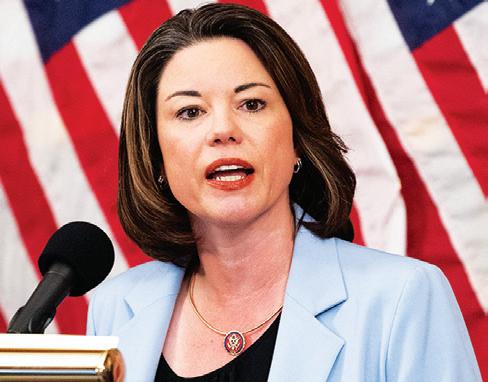
tually securing the adoption and helping pave the way for broader recognition of LGBTQ+ parents.
Her family story continued when she met Cheryl, who later became her wife, while both were supporting their children’s basketball team.
meeting young

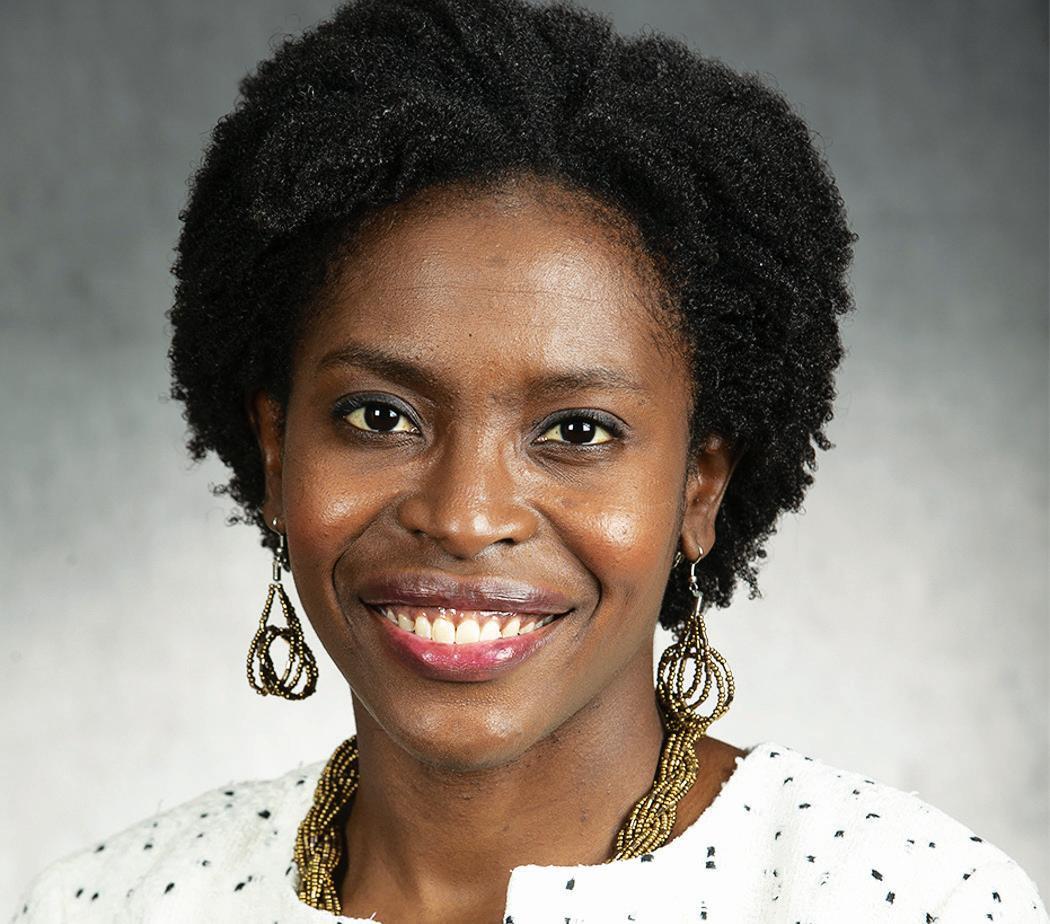
State Representative Esther Agbaje is lifting her voice alongside community leaders as Minnesota confronts a new wave of federal hostility toward immigrants—particularly Somali Minnesotans. Speaking as the daughter of Nigerian immigrants, Agbaje says the rhetoric coming from the White House is causing grief, fear and anger across communities that have long contributed to the social, cultural and economic fabric of the state.
Agbaje described the President’s remarks—targeting Somali Americans with racist accusations and xenophobic language—as both dangerous and dehumanizing. She emphasized that immigrants are not political pawns, but neighbors, families and essential contribu-
sification of enforcement actions targeting undocumented immigrants has triggered deep fear and unrest among Somali— from business losses to concerns about racial profiling, deportations and community safety.
Many in the Somali community say they feel under siege, worrying about ICE raids, arrests, and racial profil
ing — regardless of their immi
gration status.
Critics charge Trump’s move violates the legal protections and statutes governing TPS, which do not allow a president to single out a state or ethnic group.
Minnesota’s Somali-American leaders reject the
tors to Minnesota life. “Above all,” she said, “they are human beings who deserve to be treated as human.”
Agbaje reminded Minnesotans that the state’s strength lies in its cultural diversity and its longstanding commitment to care for one another. Immigrants, she said, are “an essential fabric of our identity, who we are, and the values that bond us.”
Her message underscores an unwavering commitment: to defend immigrant communities when they are targeted and to ensure residents have the tools to protect themselves and their rights. Fear and division, she said, cannot be allowed to outweigh justice or community unity.
Agbaje recently ap-
peared on NewsNation to counter false narratives about fraud prevention and to explain Minnesota’s work to hold accountable those who commit fraud— facts she says the administration continues to distort to justify sweeping attacks on immigrant communities. She joined the Minneapolis House Delegation in issuing a statement condemning the rhetoric and the decision to bring ICE into local neighborhoods.
The legislator says the administration’s approach is harming Minnesotans by manufacturing crises and inciting fear, rather than addressing affordability, stability or safety for all residents.
Agbaje says communities must respond not only with condemnation but with
preparation and solidarity. She highlighted the work of local advocates who are building rapid-response networks to protect residents from targeted immigration raids and to ensure everyone understands their con
stitutional rights. Upcoming train
ings—such as legal observ
er workshops, rapid response training led by the Minneso
ta Immigrant Rights Action Committee, and nonviolent direct-action sessions—are equipping residents to support neighbors facing harassment or detention. She also pointed to a comprehensive immigration resource toolkit created by Senate DFL members, along with legal support provided by the Immi
grant Law Center of Minnesota

internal oversight weakened. Reportedly, the Department of Homeland Security attempted to eliminate its civil-rights and detention-ombudsman offices earlier this year before lawsuits
At the same time,




forced the offices to reopen. Hundreds of oversight staff members were laid off afterward during a government-wide reduction in force, and inspectors general who had monitored detention conditions were dismissed.
The administration’s hiring campaign has transformed ICE’s workforce. Government Executive reported that ICE was granted $8 billion to hire 10,000 new officers and agents. Reports suggest that Tyshawn Thomas, the agency’s chief human capital officer, left ICE to return to another federal position during what sources described as a disordered hiring system. Further, ICE lowered age requirements, offered $50,000 signing bonuses, and rushed recruits into the Federal Law Enforcement Training Center before completing fingerprinting, drug testing, or background checks.
Training standards also shifted. “Recruits are now
relying on translation apps,” said the Department of Homeland Security, during communications with USA Today, as the agency acknowledged ending a five-week basic Spanish requirement. The outlet reported that training for recruits without prior law enforcement experience was cut from sixteen weeks to eight.
A separate investigation detailed deeper problems inside the training center in Georgia. “We have people failing open-book tests and we have folks that can barely read or write English,” said one Department of Homeland Security official, during an interview with the Daily Mail. The outlet reported that one recruit asked to leave class to attend a court hearing on a gun charge, several recruits displayed gang-related tattoos, and others were involved in fights, harassment, and misconduct on campus. “They only care about how


narrative advanced by Trump — that Somali immigrants are a drain, a criminal network, or outsiders to American life. Instead, they reassert that Somali Minnesotans are integral to the state: working, raising families, running businesses, serving as elected officials, and contribut-
many unique individuals ‘Enter on Duty.’ What happens after that is irrelevant to them,” said another Department of Homeland Security official.
Raids across the country highlight these shifts.
People’s World reported that ICE agents entered churches in Chicago after the administration reversed longstanding policies restricting enforcement in religious spaces. “It is the aim of the administration to terrorize people,” said Rev. Primo Racimo of St. Margaret of Scotland Episcopal Church.
In New York, amNewYork published security-camera footage showing ICE agents forcing their way into a basement apartment in Queens while searching for someone who did not live there. The outlet said an agent pointed a gun and flashlight at a mother holding her infant as she pleaded for them to stop.
“Then I’m coming to get you by your baby,” said one ICE agent, during the inci-
ing to every facet of community life.
Sen. Omar Fateh (DFL–Minneapolis), the first Somali American in the Minnesota Senate and now a high-profile statewide figure, has also publicly pushed back.
In an international piece on Somali reaction to Trump from Mogadishu to Minneapolis, Fateh is quoted condemning the president’s language:
Fateh called Trump’s comments “disgraceful” and described them as “political theatre” aimed at riling up his base rather than addressing real policy issues.
Fateh’s framing: Trump is using Somalis as a political prop—a foil for culture-war messaging—rather than approaching immigration or fraud issues seriously.
dent recorded on video. Human Rights Watch documented similar raids in Los Angeles in which agents wearing masks and carrying military-style weapons took people into custody based on race, ethnicity, language, or occupation. “They tear apart families, cause people to live in fear, and showcase the cruelty of the Trump administration’s immigration policies,” said John Raphling, associate United States program director at Human Rights Watch, during an interview with the organization.
For Pierre, the testimony is both a warning and a plea. “The world needs to know what is happening to people like Rodney including solitary confinement, no access to water, impairment and even falling as a result of limited medical attention for his prosthetics that require charging daily,” said Pierre, during remarks prepared for Congress.


icans who had faced a lifetime of inequitable access, predatory pricing, and the cruel arithmetic of race and illness, the ACA was a rare affirmation. Obama spoke about it using language palatable to a country still clinging to the mythology of a post-racial nation, but the communities that long suffered under the weight of indifferent systems knew exactly what the law meant.
The backlash knew it, too.
Republican attacks intensified the moment the bill became law, but the pursuit of its destruction began before a single vote was cast. It followed the same path as the claims that Obama was not born in the United States. It echoed the same insistence that he was foreign, illegitimate, clever enough to reach the White House only through something other than
talent or discipline. It came from the same places that insisted affirmative action must explain the achievements of a man who graduated from Columbia University and Harvard Law School.
Trump nurtured those claims for years, and he used them as a launchpad for his political identity. He became the chief promoter of birtherism. As The Independent reported, Trump spent years asserting that Obama was secretly born in Kenya and that he only ended the crusade when confronted with the long-form birth certificate. But even then, he would not release his grip. At the White House Correspondents Dinner in 2011, Obama addressed the conspiracy with biting precision, noting that Trump could “finally get back to the issues that matter.” Footage from the event captured Trump staring ahead as the audience laughed. Those close to him have said that night marked the moment he decided to run for president.
The resentment did not fade. According to Michael Cohen’s memoir, Trump held “hatred and contempt” for Obama and even hired a man who resembled the 44th president so he could “ritualistically belittle the first Black president and then fired him.”
Trump continued his public fixation, calling Obama “the most ignorant president in our history” and declaring that he “founded ISIS.” He accused Obama of wiretapping him. He mocked him repeatedly, even years after leaving office. The Independent documented that Trump “repeatedly called Obama a jerk” and continued to attack him at rallies.
This hostility toward Obama cannot be separated from the fury directed at the ACA. Obamacare became a symbol of something beyond policy. It became a symbol of a Black man’s authorship over the nation’s moral priorities. In a country still wrestling with its stitched-in contradictions,
the ACA represented a rebuke of the belief that the poor must earn their right to live. It dared to reduce disparities. It dared to remove barriers. It dared to place humanity above profit. Republicans answered year after year with votes to dismantle it. They drafted lawsuits aimed at wiping it from the books. They promised its end during the campaigns. Not once have they produced a plan that meets or exceeds its reach.
Politico, academic researchers, and public opinion studies have all shown that the hostility toward Obamacare has remained strongest among groups where resentment of Obama himself was strongest.
The Kaiser Family Foundation’s polling showed that support for ACA tax credits drops sharply among Republican and MAGA voters, even as the same benefits remain popular when described without Obama’s connection. These conflicting responses re-
veal a political truth that is not accidental. It is structural. The hatred of Obama and the hatred of Obamacare live in the same house.
The ACA confronted the very inequalities that race created. It attempted to relieve the burden placed on Black Americans by centuries of withheld care and denied treatment. It reduced racial gaps in health insurance coverage. It expanded Medicaid in states willing to accept it. It forced the country to look directly at disparities instead of treating them as the natural order.
Those gains came from a president who carried the weight of history and the expectations of a community often ignored until the moment it becomes politically convenient.
Obama knew the country he led. He knew the contradictions. He once noted that if he had a son, “he’d look like Trayvon,” and the words drew a fiery response. Every policy he touched carried
the shadow of race, whether he said so publicly or not. A nation that has never resolved its fear of Black advancement reacted the only way it knows. It tried to destroy the work because it could not destroy the man.
Republicans continue their assault on the Affordable Care Act, not because the law failed but because the law succeeded. It made the country fairer. It made the poor healthier. It gave millions access to care they had long been denied. And it stands as evidence that a Black president changed the material conditions of people who were never meant to be served.
One of the clearest explanations still comes from Daniel Dawes, who called the ACA “the most inclusive health law” in American history. He said, “It directly addresses inequities in health care.”
The law did exactly what its creators set out to do. The fight against it did too.
up for each other when it matters most—whether we’re digging each other out of the snow or making sure there’s food on the table. Now is a time for all of us to stretch out our hands and open our hearts in support of our neighbors who are in need,” said Tonya Allen, President of the McKnight Foundation. “Philanthropy means the love of humanity, and at McKnight, we aim to demonstrate that love by helping more families experience greater comfort and security this holiday season and every day of the year.”
The grants will be spread across fourteen organizations in the Twin Cities and Greater Minnesota, totaling $1 million.
$100,000 grants will be given to each of the six Minnesota Initiative Foundations to fund vehicle maintenance, gift cards for gas, groceries, diapers and baby formula, and heating assistance: Southern Minnesota Initiative Foundation
• Southwest Initiative Foundation Initiative Foundation West Central Initiative Northwest Minnesota Foundation
• Northland Foundation Additionally, eight $50,000 grants will go towards emergency housing assistance, including rent and utilities, food assistance, and holiday “toy store” cash assistance, through the following organizations: Comunidades Latinas Unidas en Servicio
• Sabathani Community Center
• Hallie Q. Brown Community Center People Serving People Pillsbury United Communities
• Communities Advancing Prosperity for Immigrants (CAPI) Merrick Community Services
• Little Earth Residents Association
“My maternal grandmother worked three jobs to
make ends meet, and it wasn’t always enough to put food on the table. She relied heavily on the generosity of her neighbors, who would drop off baskets to ensure that she and my mother were getting what they needed. That’s the reality for so many in our community, especially this holiday season, and many of those who have traditionally given or supported their neighbors are feeling the stress too,” said Erika Binger, a McKnight board and family member and founder of V3 Sports. “The McKnight Foundation was built on the principle that we step up in moments like this—responding to urgent needs while investing in long-term solutions that strengthen communities. These grants honor and continue this tradition, and we hope they inspire others to do what they can to support our neighbors across the state today and every day of the year.”
By providing direct support to communities across the state, McKnight aims to inspire others to do their part to show up for their neighbors when it matters most. Learn more at www.mcknight.org/ good-neighbor-grants.
Quotes from Participating Partners:
“In critical times like this, our community’s strength shines through the ways we support one another. As many of our neighbors face financial challenges, every act of generosity—whether through donations, volunteering, or helping spread the word—makes a real difference. Your support ensures families have essential resources and reminds them they are not alone.” – Ruby Azurdia-Lee, President and CEO, Comunidades Latinas Unidas En Servicio (CLUES)
“It is so hard to be present right now. The news cycle keeps us in a state of anxiety, and we have seen how quickly that once stable systems can be decimated overnight. In this moment, it is critical that we show up for each other. Instead of feeling helpless because of the shaky ground around us, find a nonprofit that aligns with your values and volunteer, donate funds, host a food drive… get your hands in the dirt and create something beautiful to


share with your neighbors and your community. Giving feels like an act of resistance. Let’s choose to live in that space.” –Mary Niedermeyer, CEO, Communities Advancing Prosperity for Immigrants
c“Hallie Q. Brown exists to improve quality of life, to increase longevity, and to make our community immortal through historical archiving. We believe that in times like these we need community more than ever. We provide holistic lifespan support to ensure that our neighbors can thrive. Investment from McKnight positions local organizations to be flexible to meet changing demands while continuing to stay mission driven. HQB and other social service organizations like ours provide excellent services while also being committed to community development. We are grateful for aligned funding partners that scale the work in ways we are unable to alone.” – Benny Roberts, Executive Director, Hallie Q. Brown Community Center “We are fortunate to have friends who remember that deep winter brings sparks of light but also pain to many who cannot both afford to put protein on the table and pay their utility bill. Unasked, McKnight responded to the need. This winter, with the cost of basic groceries so high, no one should think their donation— however much—will not make a difference. It will, and the need isn't going away soon. Direct-serving nonprofits are running lean. Unrestricted funding allows them to run even leaner and serve those most in need."
– Holly A. Raab, Development Director, Little Earth Residents
Association
“For over 117 years, Merrick Community Services has appreciated the generosity of our donors, volunteers, and funders, whose vital support allows us to provide wrap-around, basic, and emergency/crisis services and interventions to those we are privileged to serve on the East Side of Saint Paul and beyond. The year-end holidays are a great time for individuals to support our Employment and Career Services, Family and Community Services, Food Shelf, Meals on Wheels Programs, and also our Annual Holiday Share Toy Distribution. To get information on how to donate or volunteer, please go to merrickcs.org.” – Daniel A. Rodriguez, Executive Director, Merrick Community Services People Serving People supports families experiencing housing instability and advocates for systems change to create a community where no family has to experience homelessness. Since 1982 we have been providing families with essential shelter and meals, facilitating housing stabilization, and nurturing early childhood education.
“In heightened moments of conflict and uncertainty, it is our responsibility to turn to one another. As the holidays approach, the disparities we see negatively impacting our communities are ever present and increasing. For those of us committed to a better future, rapid action is required. We thank partners like the McKnight Foundation who recognize the urgency of the moment and move with and in support of
community.” – Signe V. Harriday, Artistic Producing Director, Pillsbury United Communities
“In times like these, the strength of our community is measured by how we show up for one another. Every act of giving—whether it’s a warm meal, a donated coat, a financial contribution, or simply checking in on a neighbor—helps someone feel seen, supported, and valued. When we each offer what we can, we remind our neighbors that they are not alone and that this nation will always rise together.” – Scott Redd, President & Chief Executive Officer, Sabathani Community Center
“This special grant round reflects the power of partnership and responsiveness in times of need. By working with the McKnight Foundation, we can quickly channel resources to address urgent challenges—whether it’s food insecurity, heating assistance or other essentials—so families and communities feel supported right now. It’s about neighbors helping neighbors, and we’re honored to play a role in that.” –Amy Trombley, Vice President for Community, Initiative Foundation
“McKnight’s Good Neighbor Grantmaking support is timely and deeply appreciated. Right now, many of our neighbors are facing food insecurity and too many are struggling to put meals on the table. This generous funding will support hope and action in our rural northeastern Minnesota communities.” – Tony Sertich, President and CEO, Northland Foundation
“Many of our neighbors are facing real hardships right now. Together, we’re working to respond quickly and get help where it’s needed most for food and heating. In moments like this, Northwest Minnesota shows what it does best—taking care of one another. We invite everyone to join us in helping our neighbors stay safe, warm, and supported this season.” – Karen White, President, Northwest Minnesota Foundation
"Giving flows from
gratitude, and this holiday season we are grateful for the neighbors who band together in support when times are hard. This generous gift from McKnight helps us fuel the work of those who serve their neighbors, activating the power of our community partners to keep food shelves stocked, energy bills paid, and local dollars flowing through our local businesses." – Benya Kraus, President and CEO, Southern Minnesota Initiative Foundation
“Please consider supporting your neighbors in this moment by giving to your local food shelf, crisis relief fund, community foundation, and the many nonprofits who provide critical services and assistance for families. The costs to provide access to food, shelter, fuel, transportation, childcare, and funding for emergencies and unplanned expenses continues to grow, so these organizations need our support now more than ever. We are grateful for McKnight Foundation’s generosity and investment in our region’s communities and families, and for sharing our vision of a region where all people can thrive.” – Scott Marquardt, Southwest Initiative Foundation
“In uncertain times, the true measure of a community is how we care for one another. A meal shared. A warm coat passed on. A kind word that reminds someone they’re not alone. When each of us gives what we can—whether time, resources, or compassion—we help ensure every neighbor’s basic needs are met. Every gift, no matter its size, strengthens the bonds that keep us resilient, caring, and hopeful.” – Anna Wasescha, President, West Central Initiative About the McKnight Foundation
The McKnight Foundation, a Minnesota-based family foundation, advances a more just, creative, and abundant future where people and planet thrive. Established in 1953, the McKnight Foundation is deeply committed to advancing climate solutions in the Midwest; building an equitable and inclusive Minnesota; and supporting the arts in Minnesota, neuroscience, and international crop research.
They married in 2008 with their kids proudly standing by them. Weeks later, Proposition 8 put marriages like theirs at risk, a moment that reinforced for Craig how fragile progress could be.
Craig says that community solidarity and difficult
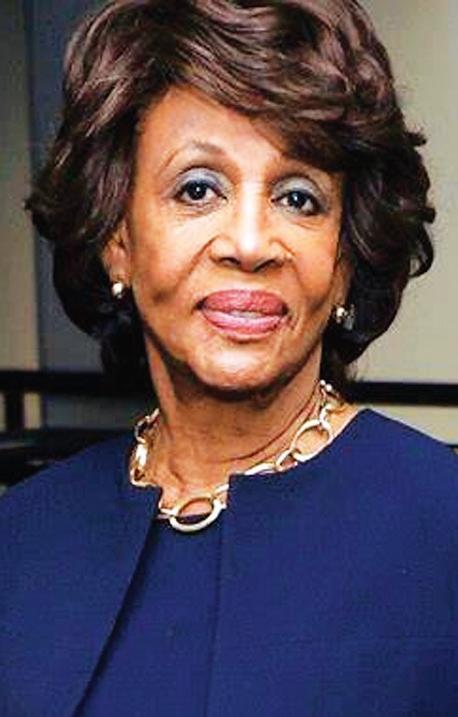
Black men who had been abandoned by their families, and joining community leaders to help fund the project’s launch. Waters also noted her role in establishing the federal Minority AIDS Initiative, which has expanded prevention,
conversations helped shift the nation toward broader acceptance, reaffirming that “love is love.’’ Today she and Cheryl live openly in Minnesota, but Craig warns that the work is far from finished. More than 600 anti-LGBTQ+ bills have been proposed nationwide this year, and recent signals from the Supreme Court have raised concerns about the stability of marriage equality itself. Craig is running for the U.S. Senate with the aim of
screening, and treatment for communities of color. Funding has grown from $156 million in 1999 to more than $400 million annually.
The congresswoman warned, however, that national progress is “in grave danger,” citing former president Donald Trump’s refusal to recognize World AIDS Day and his proposed cuts to global and domestic HIV/AIDS programs, including PEPFAR, Ryan White care, and
becoming the first lesbian mom ever elected to the chamber. She argues that representation matters and says she wants to serve as a voice for dignity, equality and working families. Her campaign faces well-funded opposition, but she insists the stakes require determined grassroots engagement.
In her announcement, Craig criticized what she called the Trump administration’s alignment with billionaires and special interests over the mid-
CDC HIV prevention. Waters urged Congress to restore and expand funding. She highlighted two bills she introduced this year:
• The HIV Prevention Now Act (H.R. 5126): Provides more than $2 billion for HIV, viral hepatitis, STD, and tuberculosis prevention.
• The PrEP and PEP are Prevention Act (H.R. 5127): Requires insurers
dle class. She warned that the upcoming campaign could be one of Minnesota’s most expensive and emphasized the need for broad community support to counter the influence of large political war chests.
Craig continues to frame her campaign around accountability, inclusion and the belief that every Minnesotan deserves a seat at the table — and a champion in Washington.
to cover PrEP and PEP without out-of-pocket costs.
“On World AIDS Day 2025, we must rededicate ourselves to stopping the spread of HIV/AIDS, caring for those who are infected, and searching for a cure,” Waters said. “We must never give up.”
Source: Press release from the Office of Congresswoman Maxine Waters, December 2, 2025.
Council Member LaTrisha Vetaw is closing out 2025 by lifting up Ward 4’s resilience, community care and organizing power in her December newsletter.
Speaking to neighbors across north Minneapolis, Vetaw describes Ward 4 as “the heart of Minneapolis,” pointing to residents’ willingness to show up for each other in hard times and joyful ones. Her office is centering immigrant protections, winter survival resources, public safety and holiday traditions as the year comes to an end.
She said in response to reports that the Trump administration is targeting Somali immigrants in the Twin Cities, Mayor Jacob Frey has signed an executive order blocking civil immigration enforcement operations on City-owned parking lots, ramps, garages and vacant lots.
The order mirrors similar protections enacted in Chicago and reinforces Minneapolis’ longstanding policy against City participation in civil immigration enforcement. City leaders say the message is clear: Minneapolis intends to protect the rights and safety of all residents, regardless of immigration status.
The City will also design a sign template for private property owners who want to mark their lots as off-limits for civil immigration enforcement staging. While officials acknowledge they cannot keep ICE out of the city, they affirm that the Minneapolis Police Department is here to protect everyone and maintain public safety, she reported.
City staff are directing impacted residents, especially members of the Somali
community, to free legal clinics and know-your-rights resources coordinated through the Office of Immigrant and Refugee Affairs and partner organizations.
To mark Human Rights Day and International Migrants Day, Minneapolis and Saint Paul are partnering on a citizenship workshop where community members can learn about citizenship rights and the naturalization process.
Vetaw reported that the Minneapolis Office of Immigrant and Refugee Affairs and Saint Paul’s Immigrant and Refugee Program continue to host a biweekly immigration forum. The virtual space delivers federal immigration updates, City news and information from community advocates for immigrants, refugees and new Americans.
Vetaw said she is continuing a growing neighborhood ritual: the Ward 4 holiday ornament.
She is offering a free, limited-edition 2025 ornament to Ward 4 residents as a thankyou to neighbors who work, volunteer and care for each other year-round. The ornament, she says, is meant to symbolize the heart and spirit of the ward and to become part of a yearly series residents can collect.
Ornament pickup is scheduled during Holiday on 44th, at the ward’s new community office, 2140 44th Ave. N. Ornaments are first-come, firstserved.
Holiday on 44th, the neighborhood’s signature winter event, returns with trolley rides between Loring Elementary and Camden High School, a craft fair spotlighting local artisans, live music and DJs, and an outdoor dance party.
Families can visit
Santa, participate in craft activities across multiple sites, stop by a petting zoo hosted by Faith Baptist, and browse a winter market at Dancing Bear Chocolate featuring local goods and seasonal treats. With snow season underway, the city is urging residents to stay ready for snow emergencies. Parking rules change when a snow emergency is declared so plows can clear the streets curb-to-curb.
Ward 4 households are encouraged to: Sign up for text, email and phone alerts or download the MPLS Parking app for push notifications.
• Call the snow emergency hotline at 612-348-SNOW (7669).
Check the City website for detailed parking rules. Officials also remind
residents that shoveling sidewalks and around garbage carts is both a legal requirement and an act of neighborliness, especially for elders and people with disabilities. The State of Minnesota is urging eligible households to apply now for energy assistance through the federally funded Energy Assistance Program. Families are encouraged to: File for assistance before bills pile up. Set up payment plans with utilities under the Cold Weather Rule.
• Contact the Public Utilities Commission or the Citizens Utility Board for guidance on preventing shut-offs and managing energy costs.
Minneapolis Solid Waste & Recycling is offering tips to help residents cut down on holiday waste:
Donate or share working holiday lights; take broken strands to county drop-off sites.
• Reuse gift bags and remember that most decorative wrapping paper isn’t recyclable; plain kraft paper can go in the recycling cart. Recycle aluminum pie tins, trays and foil if they are mostly clean, making sure foil is balled up to at least three inches. Keep cartons in their three-dimensional shape so they can be processed correctly.
Residents without City collection are urged to check Hennepin County’s Green Disposal Guide for disposal options.
Cold weather isn’t stopping local farmers and makers. Several winter farmers markets across Minneapolis are open in December, giving Ward 4 residents a chance to buy sustainable gifts, fresh local food and handmade goods while circulating dollars in the community.
Vetaw rportd that Minneapolis continues to share critical news in English, Spanish, Somali, Oromo and Hmong through community radio and two television programs. Schedules are posted on the City website so residents can catch updates in the language that works best for their household. As temperatures dip below zero, the City is warning that water in service lines can freeze where pipes are shallow or basements are unheated.
Property owners are responsible for the pipes running from the street to their buildings. If service lines
With cannabis products more widely
is
Residents
ucts
WARD 4 8



By Anne Pisor Assistant Professor of Anthropology and Demography, Penn State
Imagine going from having a book club with your co-workers to seeing them only on a Signal chat where every member has to be vetted – and the main conversation topic is when you might lose your job.
That’s what it was like for workers at one federal agency earlier this year.
“I’d never seen anything like the sort of organization that happened during the RIFs (layoffs, or reductions in force) in supporting each other with news, information and job resources,” said Anthony, a federal worker who’d been with the agency for almost a decade before his position was eliminated. He asked that his real name and other identifying details not be published, out of fear of retaliation.
Anthony’s not alone.
So far in 2025, tens of thousands of federal workers have lost their jobs. And during the shutdown, approximately 600,000 were threatened with layoffs.
But something else happened alongside the cuts: Federal workers began building support networks online – connecting with colleagues inside their agencies and with strangers outside them.
I’m an anthropologist, which means I study human nature and human diversity,
and I’m an expert in how people cooperate to manage risk. Watching federal workers use social media to provide mutual support offered a rare real-time view of the process. To deepen my understanding, I interviewed several federal workers who work in different parts of government.
They told me that in the past, federal workers haven’t always interacted with their co-workers outside of work, much less connected across federal agencies. But thanks to online platforms, that’s changing.
As they’ve faced RIFs, operational changes from the Department of Government Efficiency (or DOGE) and the longest government shutdown in history, current and former federal workers have come together in online spaces to support one another. The result is a vivid example of how people create resilient networks, often spanning group boundaries and distance, in response to uncertainty and threats.
Reaching out across groups and across distance
In 2025, federal workers built social networks like the ones we study in my lab. When experiencing widespread shocks – things such as droughts or mass job loss – humans past and present have relied on relationships that stretch beyond the individuals affected. Often that means getting support from people at a distance, and it can also mean reaching out across groups.
When just a few people reach across groups, social scientists call these connectors

“brokers.” They often move information across groups. As a user of LinkedIn and Bluesky, I have observed that federal workers in positions of power, or who have been recently RIFed and thus have less to lose, are often brokers, because with visibility comes risk of retribution. These brokers share information on where to find unemployment benefits or how to sign petitions calling for scientific independence. There are even more connections spanning distance and agencies when workers can remain anonymous. Platforms such as Reddit and Bluesky are places where workers feel safer to speak freely. There, workers can share information and also frustration, little wins, and some laughs. What’s more, as my lab has shown, these long-dis-
tance relationships can also bolster collective action – working toward a shared goal, often across space and across groups, such as federal agencies. For example, Julia Simon – who agreed to let me use her name but asked that other identifying details be withheld – has a friend who works at the same federal agency as her but lives in a different part of the country. This year, her friend suggested that Julia join the Federal Unionists Network. Members from across agencies provide mutual support and work together toward change in their union – the American Federation of Government Employees – and beyond.
“I’ve felt that within my own local and district I’ve been seen as too radical so my ideas tend to get shot down or ignored,” Simon told me in an interview. “But finding a group of other AFGE activists who have similar views and goals
has been validating.”
Hunkering down among trusted others That said, when people fear surveillance and possible retaliation, they may not reach out to long-distance connections. Instead, networks often shift toward tight-knit clusters, reducing risk of exposure and increasing trust.
In 2025, many federal workers leaned into private Signal chats with their co-workers. Users are vetted before they can join Signal chats to help workers feel safer in these spaces.
When workers were faced with RIFs, a visit from DOGE or the government shutdown, Signal chat activity would increase, workers told me.
“The content was largely ‘I heard from our division director that the RIF notices will go out Friday’ or ‘If you’re comfortable with it, here’s a Zoom workshop on
how to manage your emotions during layoffs,’” Anthony said. At their peak, he told me, these chats had hundreds of participants.
Mason, furloughed from a different agency during the shutdown, gave another example. “Today, there are about a dozen messages among federal employees who are trying to provide information and support to each other about applying for unemployment benefits,” he said in an interview.
Though these Signal groups are tight-knit, long-distance relationships still are a source of information – bringing news from spouses and friends at other agencies and content from Reddit, LinkedIn and Bluesky.
For some workers, the most important benefit of these Signal chats is the sense of community they provide.
“These group chats and communities sprung up because we were being terrorized and we only had each other for support,” Anthony said. “I remember seeing some wild statistic early on that said a lot of folks support DOGE’s mission – from our side, it was like, ‘Guess we’re on our own.’ I can’t tell you how many times I heard, ‘Nobody is coming to save us’ – so that’s why we needed these groups.”
Learning from federal workers’ experiences
These stories from federal workers are a reminder of how hundreds of thousands of Americans working for the public may be experiencing un-
Brooklyn Park is marking the Season of Small Business with a community-centered roundtable designed to elevate the voices and experiences of local entrepreneurs. In partnership with the Minnesota Department of Employment and Economic Development, the City is inviting small business owners to gather, reflect and build connections.
The event offers a space for business owners to share their stories — the wins,
the hurdles and the lessons learned — while exchanging ideas with others who understand the daily realities of running a business. Organizers say the goal is simple: strengthen relationships, spark collaboration and reinforce the backbone of Brooklyn Park’s economy.
The roundtable will take place Thursday, Dec. 11, 2025, from 10:00 to 11:30 a.m. at the Brooklyn Park Small
packaging, and learn the signs of cannabis poisoning in children: sudden drowsiness, agitation or euphoria, rapid heart rate, dizziness, slurred speech, poor coordination, nausea or vomiting, seizures or loss of consciousness. If a child consumes cannabis that is not prescribed to them, families are advised to call a medical professional or the Poison Control Center at 1-800-222-1222.
On January 1, 2026, the Minneapolis minimum wage will adjust for inflation to $16.37 per hour for workers at all businesses, regardless of size. Coverage is based on where work is physically performed inside city limits. Residents with questions or concerns can contact the Labor Standards Enforcement Division or call 311, and workers can report violations through the City website.
Minneapolis has opened a second Safe Station at Fire Station 7, serving Cedar-Riverside, Ventura Village and Seward—neighborhoods that see some of the city’s highest overdose and addiction-related call volumes.
Built on the model of the first Safe Station at Fire Station 14, which has connected more than 7,500 people to help in two years, the program partners the Minneapolis Fire Department with the Twin Cities Recovery Project. Anyone seeking recovery support can walk into Fire Stations 7 or 14 without an appointment, cost or judgment and receive peer support, treatment referrals, assessments and housing referrals. Vetaw reported that Minnapolis City Council and mayor have officially designated one of Prince Rogers Nelson’s childhood homes, located at 2620 Eighth Ave. N. in today’s Willard-Hay neighborhood, as a local landmark. Prince lived in the home from age 6 to 12, a formative period when he learned piano and began developing his songwriting, performance and vocal skills. Any future exterior changes to the property must now be reviewed by City Historic Preservation staff. The designation is part of broader efforts to honor African American heritage in Minneapolis. Early data from Minneapolis’ traffic safety camera pilot program is showing promising results. Across five camera locations in the first month: The rate of drivers traveling 10 or more miles per hour over
Business Center, 7970 Brooklyn Blvd. Light refreshments will be available.
City staff note that whether an entrepreneur is launching a new venture or sustaining an established one, the conversation will offer chances to learn from peers, expand networks and deepen ties to the broader business community. Registration is open now.
NorthPoint Health & Wellness Center is closing the year by sounding an urgent but hopeful message: as needs rise across North Minneapolis, so does the organization’s resolve to meet them. In a note to supporters, NorthPoint underscored that community instability, inflation and ongoing disparities continue to drive families to seek help with food, housing, medical care and emotional support.
NorthPoint’s response remains grounded in core values—dignity, cultural relevance and trust. Staff describe these values not as abstract principles, but as the daily foundation for care that meets people where they are. The organization credits donors and partners for making this work possible and is urging supporters to include
NorthPoint in their year-end giving plans.
NorthPoint says its model works because it operates as more than a clinic or food shelf. As a Federally Qualified Health Center paired with a full human services agency, NorthPoint integrates medical, dental, behavioral health and social supports under one umbrella.
Across all of its programs, NorthPoint describes its mission as “partnering to create a healthier community,” a commitment now more than five decades in the making. cWith demand rising and services expanding, NorthPoint is calling on supporters to help sustain the momentum. Leaders say donor investment ensures that North Minneapolis residents—from new parents to el-

ders, from students to jobseekers—can continue to access care rooted in dignity and belonging.
“Together,” the message reads, “we can ensure that every person in North Minneapolis has access to the health, hope and dignity they deserve.”
Leaders describe every point of contact—a meal box, a counseling session, a clinic visit—as an entryway to deeper support. “A bag of groceries isn’t just a bag of groceries,” the organization tells sup-
Minnesota residents affected by the end of Strategic Limited Partners coverage can enroll in new health insurance through MNsure
MNsure is opening a limited special enrollment period (SEP) for Minnesota residents who bought insurance from Strategic Limited Partners outside the MNsure website. The SEP follows enforcement action by the Minnesota Department of Commerce. Commerce determined that Strategic Limited Partners, an unlicensed company, sold unauthorized and deceptive health coverage to Minnesotans using misleading ads. Under a consent order, the company must cease operations by December 31, 2025, notify customers of its closure, repay outstanding claims, and pay a civil penalty.
To protect affected consumers, MNsure is offering
this limited SEP: Eligibility: Consumers who attest that their Strategic Limited Partners coverage ended on or after November 1, 2025. How to enroll: Call MNsure at 651-539-2099 (or 855-366-7873 outside the Twin Cities).
• Coverage start dates: Retroactive to November 1, 2025, or the first of the month after plan selection. Deadline: Apply and enroll by December 31, 2025.
• “Consumers deserve the peace of mind that comes with a MNsure-certified health insurance plan,” said MNsure CEO Libby Caulum. “This special enrollment period allows
Minnesotans impacted by this company to transition into comprehensive, regulated coverage without delay.”
MNsure, the state’s health insurance marketplace, also urges Minnesotans to stay alert for fake health insurance offers following recent enforcement actions. Three tips to confirm you’re working with MNsure:
1. Check the website URL. Go directly to MNsure.org and be cautious of lookalike sites.
2. Use MNsure’s free cost estimator. You can shop anonymously without providing your phone number; sites that require one may lead to unwanted calls.
By Stacy M. Brown
The signs were visible to anyone willing to look. Clinics running out of medicine, health workers sent home in silence, and governments bracing for a wave they could no longer afford to stop. Now the evidence is written in hard numbers. For the first time this century, the number of children dying before their 5th birthday is rising. The Gates Foundation’s 2025 Goalkeepers Report states that 4.6 million children died before age 5 in 2024 and projects that the total will reach 4.8 million this year, reversing decades of progress in child survival. The report’s modeling, completed by the Institute for Health Metrics and Evaluation, warns that the coming decades could bring even heavier losses. If recent global health funding cuts continue, as many as 16 million more young children could die by 2045. The findings show that development assistance for health fell 26.9 percent below the previous year, leaving already strained health systems exposed in regions where clinics were fragile long before budgets began tightening.

“We have to do more with less, now,” Bill Gates wrote in the Goalkeepers Report. “I wish we were in a position to do more with more because it’s what the world’s children deserve.”
The projections grow heavier when paired with the collapse of programs once funded through the U.S. Agency for International Development. A Lancet analysis cited by NBC News shows that the Trump administration’s 83 percent cancellation of USAID programs could lead to more than 14 million deaths over five years, including 4.5 million children under age 5. “The numbers are striking,” Davide Rasella told NBC News. He said multiple research teams reached similar conclusions: “Millions and millions of deaths that will be caused by the defunding of USAID.” Before the cuts, US-
AID-funded programs prevented nearly 92 million deaths from 2001 through 2021 across 133 countries. NBC News reported that once the programs shut down, food kitchens, HIV clinics, malaria treatment sites, and maternal health centers went dark. “If you wanted to reduce USAID funding, it could have been done in a more gradual manner,” Amira Albert Roess told NBC News. She said the sudden closures left people unable to refill lifesaving medications, adding, “That’s creating a situation where the individual can start to deteriorate fairly rapidly.” The workforce behind these programs also collapsed. Newsweek reported that about 50,000 jobs were disrupted worldwide. “These were the most educated people … and then ‘poof’ overnight they don’t have an income and a livelihood,” Lara Andes told Newsweek. U.S.-based nonprofits endured deep layoffs, some cutting 40 to 60 percent of their staff. “It has been nothing short of devastating,” Christy Grimsley told Newsweek after losing her job and health insurance during the cuts. On the ground, the unraveling is visible in commu-
porters. “It’s an entry point to a network of care.” That network includes housing navigation, trauma-informed counseling, employment coaching and financial stabilization services that help families rebuild longterm security. In 2025 alone, NorthPoint reports serving more than 92,000 individuals through food shelf and human services programs—an unprecedented level of need. Integrated medical and dental teams have seen over
30,000 patients, marking a 20 percent increase from the previous year.
For NorthPoint, these numbers are more than metrics; they are evidence that as hardship deepens, the community increasingly relies on the organization as an anchor institution. Every meal, appointment and case-management visit represents what leaders call “a moment of stability—and a step toward lasting health equity.”
3. Watch out for unsolicited calls. MNsure will never cold call you to sell insurance, request payment, or ask for sensitive information such as your Social Security number or bank account details. Consumers with questions about their rights under the settlement should contact the Minnesota Department of Commerce at 651-539-1500. For more information about special enrollment periods, visit MNsure.org/special.
NorthPoint’s work includes: Food Shelf and Economic Stability programs, helping families meet basic needs while rebuilding financial footing. Behavioral Health and Substance Use Services, providing culturally grounded, trauma-informed care for youth, adults and families.
Free help from an expert Thanks to MNsure’s community partnerships, Minnesotans can get free application and enrollment help from certified health insurance experts, including brokers who offer personalized plan advice at no cost. MNsure’s 22 Broker Enrollment Centers (PDF) provide free walk-in assistance, and hundreds of MNsure-certified assisters across the state offer in-person, phone, and virtual support. Find a trusted broker or
Maternal and Family Health, offering prenatal education, doula support, postpartum care and essential resources that strengthen families from birth onward. Youth and School-Based Health Services, bringing trusted medical and behavioral care directly into North Minneapolis schools to reduce barriers to learning and wellness. Workforce Development and Community Wellness, equipping residents with skills, mentorship and pathways to economic stability.
to apply for financial help to lower monthly premiums and out-of-pocket costs, and most Minnesotans who enroll through MNsure qualify for financial assistance.


By Lauren Burke
“It is a shame that organizations like the NCAA, who last year
touted $1.4 billion in revenue
— a $91 million increase from the prior year — have for so long been able to benefit from college athletes’ hard work and sacrifice while the athletes themselves are often exploited and mistreated,” a blunt Dec. 3 statement by the Congressional Black Caucus, in part, asserted.
After days of animat-
ed back-and-forth on legislation that would hand even more power to the National Collegiate Athletic Association (NCAA) over rules for student athletes and “name, image, and likeness’ money, the Congressional Black Caucus has come out in loud opposition to the college sports-related legislation.
The SCORE Act, which stands for “Student Compensation and Opportunity through Rights and Endorsements Act,” has now been removed from the U.S. House schedule after being scheduled
for a vote by the entire U.S. House on December 3 and then again on December 4th. The removal of the bill from the voting schedule is a sign that the legislation may not have enough support to pass. Several Republicans, including Texas firebrand Rep. Chip Roy stated their opposition to the SCORE Act on December 3.
On December 3, the Congressional Black Caucus, led by Congresswoman Yvette Clarke of New York, issued a strong statement against the legislation. Black Press USA
has learned that only two members of the Congressional Black Caucus were planning to vote in favor of the controversial legislation. They are Reps. Shomari Figures and Janelle Bynum (DOR). A third CBC member may also be in support of the legislation.
“We cannot lose sight of the human impact here. At the center of this issue are the college athletes, many of whom are Black students and who may not come from sizable financial means. College athletes too of-
ten report struggling with injuries, food insecurity, poverty, and homelessness. It is wholly unfair that universities and coaches are lining their pockets while leaving so little, if anything, for the college athletes who make those profits possible,” the December 3 statement by the Congressional Black Caucus wrote in part.
The SCORE Act grants the National Collegiate Athletic Association (NCAA) legal immunity against lawsuits regarding any legal actions athletes might bring. “We don’t have college athletics. It’s a joke. We’ve destroyed college athletics. We have minor league sports masquerading as collegiate,” Republican Chip Roy stated this week at a Rules Committee hearing on the bill. Republicans in support of the SCORE Act argued this week that the legislation would “protect” college athletes. Florida Republican Rep. Gus Bilirakis is the lead sponsor of the SCORE Act.

Children’s Theatre Company announced the full cast and creative team for Go, Dog. Go! • Ve Perro ¡Ve!, a bilingual musical adaptation of P.D. Eastman’s classic children’s book.
The production runs January 20–February 22, 2026, on the UnitedHealth Group Stage, with opening night on January 23. The show is adapted by playwrights Allison Gregory and Steven Dietz, with music by Michael Koerner, arrangements by Robertson Witmer, and Spanish translations by Ana
Maria Campoy.
ccArtistic Director Rick Dildine said the production reflects CTC’s commitment to representation and belonging. He said the bilingual musical invites children to see themselves and their languages reflected onstage. Gregory and Dietz added that blending English and Spanish was a core artistic goal, aiming to welcome, delight, and surprise young audiences.
cDirector Juliette Carrillo described the show as “nothing but fun and delight,” promising
roller-skating, scootering, and fiesta-filled chaos as dogs race, play baseball, swim underwater, and show off silly hats. Choreography is by Erin Leigh Crites, with music direction by Victor Zupanc, who also performs live alongside musician Joe Cruz. The cast includes Kimberly Richardson as MC Dog, Cooper Lajeunesse as Blue Dog, Zachary David Hodgkins as Red Dog, Anna M. Schloerb as Yellow Dog, Julia Diaz as Green Dog, and Eric Samuel Romero as Hattie/Spotted Dog.

Understudies include Becca Claire Hart, Keegan Robinson, and Janely Rodriguez. CTC notes the show is tailored for younger audiences and runs 75 minutes without intermission. Behind the scenes, the creative team includes scenic designer Sara Ryung Clement, costume designer Danielle Nieves, lighting designer Paul Whitaker, and sound designer Jaime Lupercio. Stage management is led by Jenny R. Friend, with Kenji Shoemaker as assistant stage manager and Ashley Pupo as stage management fellow. The production continues CTC’s history of developing new work for young audiences,
contributing to its national reputation as a leader in youth-focused theatre. Tickets start at $20 and are available online or by phone. CTC encourages school groups and families
By Roger J. Kreuz
Associate
Which terms best represent 2025?
Every year, editors for publications ranging from the Oxford English Dictionary to the Macquarie Dictionary of Australian English select a “word of the year.”
Sometimes these terms are thematically related, particularly in the wake of world-altering events. “Pandemic,” “lockdown” and “coronavirus,” for example, were among the words chosen in 2020. At other times, they are a potpourri of various cultural trends, as with 2022’s “goblin mode,” “permacrisis” and “gaslighting.”
This year’s slate largely centers on digital life.
But rather than reflecting the unbridled optimism about the internet of the early aughts – when words like “w00t,” “blog,” “tweet” and even “face with tears of joy” emoji (��) were chosen – this year’s selections reflect a growing unease over how the internet has become a hotbed of artifice, manipulation and fake relationships.
When seeing isn’t be-
lieving
A committee representing the Macquarie Dictionary of Australian English settled on “AI slop” for their word of the year.
Macquarie defines the term, which was popularized in 2024 by British programmer Simon Willison and tech journalist Casey Newton, as “low-quality content created by generative AI, often containing errors, and not requested by the user.”
AI slop – which can range from a saccharine image of a young girl clinging to her little dog to career advice on LinkedIn – often goes viral, as gullible social media users share these computer-generated videos, text and graphics with others.
Images have been manipulated or altered since the dawn of photography. The technique was then improved, with an assist from AI, to create “deepfakes,” which allows existing images to be turned into video clips in surreal ways. Yes, you can now watch Hitler teaming up with Stalin to sing a 1970s hit by The Buggles.
What makes AI slop different is that images or video can be created out of whole cloth by providing a chatbot with just a prompt – no matter how bizarre the request or ensuing output.
Meet my new friend,
with a sense of community.
certainty, fear, loss and isolation this year.
They also offer important lessons on how to build the resilient networks that sustain us as people.
First, if you feel you cannot trust others, trust can emerge in highly connected clusters that can pool information and take action. As Anthony highlighted, forming these clusters can provide individuals
Second, connections spanning groups and distance open doors for transmitting information and, as Julia experienced, for engaging in collective action. Long-distance relationships can also help you access things that can be hard to find, such as information about what’s next, support with food or loans, and even new job opportunities.
These resilient networks are a reminder that online platforms have a silver lining. Many news stories focus on how social media use can negatively affect people’s mental

The editors of the Cambridge Dictionary chose “parasocial.” They define this as “involving or relating to a connection that someone feels between themselves and a famous person they do not know, a character in a book, film, TV series … or an artificial intelligence.”
These asymmetric relationships, according to the dictionary’s chief editor, are the result of “the public’s fascination with celebrities and their lifestyles,” and this interest “continues to reach new heights.”
As an example, Cambridge’s announcement cited the engagement of singer Taylor Swift and football player Travis Kelce, which led to a spike in online searches for the meaning of the term. Many Swifties reacted with unbridled joy, as if their best friend or sibling had just decided to tie the knot.
But the term isn’t a new one: It was coined by so-
health or social relationships. What federal workers highlight, however, is that the effect of online platforms on your well-being can depend on how you use them.
LinkedIn, Reddit, Signal and other platforms can allow you to create and sustain networks that might be impossible to have in person, either because trust is low or simply because you’re busy. Online platforms allow people to build tight-knit clusters or to have more long-distance relationships at greater distances than ever before.
ciologists in 1956 to describe “the illusion” of having “a faceto-face relationship” with a performer.
However, parasocial relationships can take a bizarre or even ominous turn when the object of one’s affections is a chatbot. People are developing true feelings for these AI systems, whether they see them as a trusted friend or even a romantic partner. Young people, in particular, are now turning to generative AI for therapy.
Taking the bait The Oxford Dictionary’s word of the year is “rage bait,” which the editors define as “online content deliberately designed to elicit anger or outrage by being frustrating, provocative, or offensive, typically posted in order to increase traffic to or engagement with a particular web page or social media content.”
This is only the latest word for forms of emotional manipulation that have plagued
So whether you’re looking for like-minded others, people who can help you face something you’ve never faced before, or a sense of community when you’ve lost so much,
the online world since the days of dial-up internet. Related terms include trolling, sealioning and trashposting.
Unlike a hot take – a hasty opinion on a topic that may be poorly reasoned or articulated – rage baiting is intended to be inflammatory. And it can be seen as both a cause and a result of political polarization. People who post rage bait have been shown to lack empathy and to regard other people’s emotions as something to be exploited or even monetized. Rage baiters, in short, reflect the dark side of the attention economy.
Meaningless meaning
Perhaps the most contentious choice in 2025 was “6-7,” chosen by Dictionary.com. In this case, the controversy has to do with the actual meaning of this bit of Gen Alpha slang. The editors of the website describe it as being “meaningless, ubiquitous, and nonsensical.”
Although its definition may be slippery, the term itself can be found in the lyrics of the rapper Skrilla, who released the single “Doot Doot (6 7) ” in early 2025. It was popularized by 17-year-old basketball standout Taylen Kinney. For his part, Skrilla claimed that he “never put an actual meaning on it, and I still would not want to.” “6-7” is sometimes accompanied by a gesture, as if one were comparing the weight
online platforms remain an important tool to help us find each other.
Disclosure statement Anne Pisor receives funding from the National Sci-
of objects held in both hands. British Prime Minister Keir Starmer recently performed this hand motion during a school visit. The young students were delighted. Their teacher, however, informed Starmer that her charges weren’t allowed to use it at the school, which prompted a clumsy apology from the chastened prime minister. Throw your hands in the air?
The common element that these words share may be an attitude best described as digital nihilism.
As online misinformation, AI-generated text and images, fake news and conspiracy theories abound, it’s increasingly difficult to know whom or what to believe or trust. Digital nihilism is, in essence, an acknowledgment of a lack of meaning and certainty in our online interactions.
This year’s crop of words might best be summed up by a single emoji: the shrug (��) . Throwing one’s hands up in resignation or indifference, captures the anarchy that seems to characterize our digital lives. Disclosure statement Roger J. Kreuz does not work for, consult, own shares in or receive funding from any company or organization that would benefit from this article, and has disclosed no relevant affiliations beyond their academic appointment.
ence Foundation, National Institutes of Health, and Penn State Social Science Research Institute. She has a long-distance social relationship with a source for this article.
nities already carrying heavy burdens. In Nigeria’s Gombe State, Governor Muhammad Inuwa Yahaya described taking office in 2019 amid a historic deficit and failing clinics. He discovered 500 ghost workers on the state payroll and spent ₦2.8 billion (US$1.8 million) saved from payroll reform on training and rehiring. “You don’t need perfect conditions to make progress,” Yahaya told the Goalkeepers Report. “You need clarity, and the courage to stick to it.” In Kenya, community health worker Josephine Barasa received an abrupt email ending her employment after years spent mentoring young mothers and survivors of violence.
“They could take away the money, but they couldn’t take me away from my women,” Barasa said. She returned to her
work unpaid, gathering donations from churches, mosques, and community centers to continue screenings, health lessons, and support for children who lost access to services when the funding ended.
The stakes remain high in Uganda, where malaria still threatens millions. Entomologist Krystal Mwesiga Birungi recalled her younger brother falling ill with fever when her family could not afford mosquito nets. “Nets are for rich people,” Birungi remarked, describing what her mother often said. Now she develops next-generation tools aimed at reducing mosquito populations and preventing infections that continue to claim lives. “Ending malaria is not only possible, it is urgent,” Birungi stated.
The Goalkeepers Report details solutions that could save millions of children. Next-generation vaccines for pneumonia and RSV, new malaria-prevention technologies, maternal immunization programs, and strong primary
care systems that cost less than $100 per person per year and can prevent up to 90 percent of child deaths. Every $1 invested in vaccines returns $54 in economic and social benefit. Gavi has already helped deliver vaccines to more than 1.2 billion children since 2000.
Still, even the most promising innovations cannot overcome systems deprived of resources. “It takes infrastructure to get an organization and keep it going,” Andes said. “And all that infrastructure has collapsed.”
At the end of the road — beneath the numbers, the projections, and the policy reversals — are the people still trying to hold the line. Their work carries a reminder that even when global systems falter, individuals continue to move forward on determination alone.
“The support systems may have disappeared, but the need has not,” Barasa explained. “And neither have I.”