insightnews.com
Insight News • December 22, 2025 - December 28, 2025 • Page 1
Insight News
INSIGHT NEWS WON THE MESSENGER AWARDS 2024 F OR THIRD PLACE IN WEBSITE EXCELLENCE, THIRD PLACE IN LAYOUT & DESIGN AND FIRS T PLACE F OR NEWSLETTER EXCELLENCE.
December 22, 2025 - December 28, 2025
Vol. 52 No. 51 • The Journal For Community News, Business & The Arts • insightnews.com
Building Wealth Part 3:
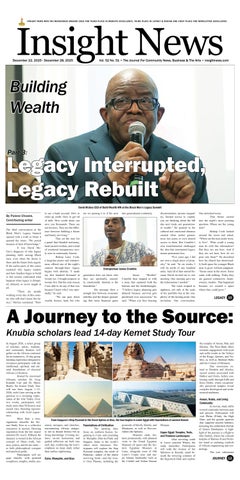
Legacy Interrupted, Legacy Rebuilt David McGee CEO of Build Wealth MN at the Black Men’s Legacy Summit
By Pulane Choane, Contributing writer The third conversation at the Black Men’s Legacy Summit opened with a truth so blunt it quieted the room: “We perish because of lack of knowledge.” It was David McGee’s diagnosis of why legacy planning stalls among Black men, even when the desire is there and the future feels urgent. If the earlier parts of this series explored why legacy matters and how families begin to build it, this session confronted what happens when legacy is disrupted, delayed, or never taught at all. “There are people working every day in this country who still don’t know the basics,” McGee continued. “How
to use a bank account. How to clean up credit. How to get rid of debt. How credit alone can save you thousands. These are not luxuries. They are the difference between building a future and barely surviving.” That set the tone for a panel that blended testimony, hard-earned wisdom, and a kind of emotional transparency rarely seen in community forums. Bishop Larry Cook, a longtime pastor and entrepreneur, offered one of the night’s clearest through-lines: legacy begins with identity. “I made my first hundred thousand at twenty-six. I bought property at twenty-five. But the only reason I was able to do any of that was because I knew who I was spiritually,” he said. “We can pass down wealth, houses, land, but who
are we passing it to if the next
into generational continuity.
Entrepreneur James Crumble generation does not know who they are spiritually, mentally, emotionally. Identity is the foundation.” His message drew a straight line between economic stability and the deeper grounding that turns financial gains
James “Brother” Crumble then stepped in with a story that captured both the barriers and the breakthroughs. “I believe legacy planning gets delayed because survival gets prioritized over succession,” he said. “When you face housing
discrimination, income inequality, limited access to capital, you are thinking about the bill due next week, not generational wealth.” He pointed to the cultural and emotional distance created when earlier generations lost assets or were denied access to them. But Crumble’s own transformation challenged the idea that interrupted legacy means permanent loss. “Five years ago, I did not own a single piece of property,” he said. “In six weeks, I will be north of one hundred units. And all of that started because David invited me to one meeting. One meeting gave me the information I needed.” The room erupted in applause, not only at the scale of his portfolio but at the simplicity of the turning point. One invitation. One conversation.
One unlocked room. That theme carried into the night’s most pressing question: Where are the young men? Bishop Cook looked around the room and asked, “Where are the men under twenty five? What could a young man do with this information? But they are not here. And if they are not here, how do we pour into them?” He described how his church has intentionally built space for younger Black men to grow without judgment. “Some came in the street. Some came with nothing. Today they are general contractors, homeowners, leaders. That happened because we created a space where they could grow.”
LEGACY 10
A Journey to the Source:
Knubia scholars lead 14-day Kemet Study Tour In August 2026, a select group of scholars, artists, students, and community thinkers will gather on the African continent for an immersive, 14-day group learning experience designed to reconnect participants with the intellectual, spiritual, and cultural foundations of classical African civilization. Hosted by renowned Africana scholars Dr. Greg Kimathi Carr and Dr. Mario Beatty, the Kemet Study Tour will run from August 1–15, 2026, with Cairo serving as the gateway to a sweeping exploration of the Nile Valley. Over two weeks, participants will study more than 50 historic and sacred sites, blending rigorous scholarship with lived experience. More than a tour, organizers describe the Kemet Study Tour as a collective classroom in motion. Drawing inspiration from the late master educator Dr. Asa G. Hilliard, the itinerary is rooted in the African concept of Maat—truth, balance, justice, and divine order— as both philosophical compass and practical guide. Participants will engage directly with pyramid complexes, temples, tombs, mu-
the temples of Amun, Mut, and Khonsu. The West Bank offers intimate engagement with royal and noble tombs in the Valleys of the Kings, Queens, and Nobles, as well as Medinet Habu and the Colossi of Memnon. Day excursions extend to Dendera and Abydos, sacred centers associated with Hathor and Osiris, before continuing south through Edfu and Kom Ombo, where exceptionally preserved temples reveal complex theological and architectural traditions.
Aswan, Nubia, and Living Community
From Saqqara’s Step Pyramid to the Great Sphinx at Giza, the tour begins in Lower Egypt with foundations of ancient Kemet. seums, mosques, and churches, encountering African antiquity not as distant history but as living knowledge. Evening lectures, on-site instruction, and guided reflection are built into each day, reinforcing the tour’s emphasis on deep study rather than surface sightseeing.
Cairo, Memphis, and Giza:
Foundations of Civilization
The opening days focus on northern Kemet, beginning in Cairo and extending to Memphis (Hut-ka-Ptah) and Saqqara, home to the world’s oldest stone structures. Participants will explore the Step Pyramid complex, the tomb of Ptahotep—author of the oldest surviving book—and the iconic Giza Plateau, including the
pyramids of Khufu, Khafre, and Menkaure, as well as Hor-emAkhet (the Sphinx). Museum study features prominently, with planned visits to the Grand Egyptian Museum (if open) and the historic Egyptian Museum in Cairo, alongside tours of Old Cairo’s Coptic sites and major Islamic landmarks such as the Citadel and Sultan Hassan
Mosque.
Upper Egypt: Temples, Texts, and Timeless Landscapes
After traveling south to Luxor (ancient Waset), the study intensifies. Participants will walk the Avenue of the Sphinxes at Karnak, stand beneath the towering columns of the Hypostyle Hall, and explore
In Aswan, study shifts toward continuity between past and present. Participants will visit Philae (Pilak), the High Dam, and the granite quarries that supplied ancient builders, including the unfinished obelisk of Queen Hatshepsut. A highlight of the journey is a flight to Abu Simbel, where the colossal temples of Ramses II and Nefertari stand as enduring symbols of African engineering and cosmology. The tour culminates
JOURNEY 12
Page 2 • December 22, 2025 - December 28, 2025 • Insight News
insightnews.com
Helping Black Families Own a Home!
Build Wealth MN & Partners are closing the Homeownership Gap! FINANCIAL EDUCATION SUPPORT The 9000 Equities Fund will provide affordable first mortgages to households struggling to access financial support in the African American community!
CREDIT REPAIR FAVORABLE MORTGAGE LOAN PRODUCTS DOWN PAYMENT ASSISTANCE ACCESS TO REPUTABLE LICENSED PROFESSIONALS
Since 2004, Build Wealth MN, has helped thousands of first time homebuyers not just buy a home...but keep it!
612-871-9000
info@9000Equities.com
www.9000Equities.com
insightnews.com
Insight News • December 22, 2025 - December 28, 2025 • Page 3
Insight News
INSIGHT NEWS WON THE MESSENGER AWARDS 2024 F OR THIRD PLACE IN WEBSITE EXCELLENCE, THIRD PLACE IN LAYOUT & DESIGN AND FIRS T PLACE F OR NEWSLETTER EXCELLENCE.
December 22, 2025 - December 28, 2025
Vol. 52 No. 51 • The Journal For Community News, Business & The Arts • insightnews.com
Ranking Member Maxine Waters secures Defense Bill provision
To expand financial access for Caribbean nations WASHINGTON, D.C. — A key provision aimed at improving financial access for Caribbean nations has been included in the Fiscal Year 2022 National Defense Authorization Act (NDAA), following sustained advocacy by Maxine Waters, Ranking Member of the House Financial Services Committee. The provision mirrors legislation Waters introduced as H.R. 6829, the International Financial Access Improvements Act, which sought to reform how the U.S. State Department reports on anti-money laundering efforts in countries covered by its International Narcotics Control Strategy Report (INCSR). The NDAA language directs the State Department to include examples of progress made by countries in strength-
Congresswoman Maxine Waters ening their anti-money laundering (AML) regimes—an issue long cited by Caribbean governments as a driver of financial “de-risking.” De-risking occurs when global banks restrict or terminate correspondent banking relationships with countries deemed high risk, often leading to higher transaction costs or the loss of cross-border banking services altogether. The measure has its origins in regional discussions
WATERS
6
Keeping the spirit of Rondo alive Kemet immigration PSA
As economic and political challenges continue to impact nonprofit organizations, the Rondo Center of Diverse Expressions (RCODE) is calling on the community for year-end, tax-deductible support. Donations help sustain public events, maintain the Rondo Commemorative Plaza—the nation’s first monument to Black and brown communities displaced by highway construction and urban renewal—and preserve the Rondo Research Collection. Whether a lifelong Rondo resident or a newcomer
to the story, supporters are encouraged to contribute in whatever way they can to ensure that Rondo’s spirit, history, and future remain strong. The historic Rondo neighborhood has long stood as a symbol of resilience, culture, and community in St. Paul. From its early days as a haven for German, Irish, and Eastern European immigrants to its role as the cultural and political heart of the city’s Black community, Rondo has always been defined by neighbors looking out for one another and building
something greater together. That legacy—shaped by civil rights leaders, everyday workers, artists, entrepreneurs, and families—continues today through the work of RCODE. The organization is dedicated to preserving Rondo’s history while fostering a renewed sense of connection and possibility for future generations. Over the past year, RCODE has welcomed hundreds of visitors to the Rondo Commemorative Plaza, hosting groups ranging from youth scholars to national founda-
tions. The organization advanced its preservation work by completing a collections survey and inventory plan for artifacts housed in the Rondo Center archives, ensuring that the stories of the community are properly documented and protected. RCODE also organized the fifth annual Juneteenth Celebration, drawing hundreds of attendees, supporting local vendors, and honoring Rondo Achievement Award
RONDO
6 By Robenia McKinley,
Special Correspondent/JYE
Reports from Belly of the Beast
Counternarcotics, Cuba, and the politics of erasure Under the banner of fighting drug trafficking, the Trump administration has intensified pressure on Venezuela, actions critics warn could escalate toward open conflict. While the administration frames these measures as counternarcotics enforcement, analysts and international observers point instead to oil interests and regime change objectives targeting both Venezuela and Cuba. This narrative persists despite longstanding U.S. government findings that Venezuela is not a major driver of drug consumption in the United States—and that Cuba, far from being a threat, has played a key role in preventing narcotics
Cuban Border Guard and U.S. Coast Guard cooperation has long been acknowledged in U.S. government reporting, despite political tensions. from reaching U.S. shores. What has received comparatively little attention
in mainstream media is Cuba’s record as one of Washington’s most consistent regional part-
ners on counternarcotics enforcement. According to reporting by Belly of the Beast, Cuba has spent decades actively disrupting drug trafficking routes through the Caribbean, often in coordination with U.S. agencies. Each year, the U.S. State Department submits its International Narcotics Control Strategy Report (INCSR) to Congress, offering a country-by-country assessment of the global drug trade. The 2024 report stated plainly that Cuba is “not a major consumer, producer, or
CUBA
America’s poorest families have long lived on the edge of darkness. Today, that edge is widening. Utility shutoffs are rising across the country as households buckle under soaring electric bills, mounting debt, and a level of financial despair that now mirrors what researchers describe as the lowest happiness rating ever recorded in the United States. The suffering is no longer hidden. It is the new
face of life under the Trump administration. “Electricity is becoming unaffordable in many parts of the country,” Mark Wolfe, executive director of the National Energy Assistance Directors Association, stated. His assessment is borne out in the data. About 14 million Americans are behind on their utility bills, with overdue balances up 32 percent since 2022. National electricity prices have risen 11 percent this year, and some states have seen increases of up to 37 percent. In cities like New York, residential shutoffs in Au-
The National Newspaper Publishers Association (NNPA), whose Black Press USA network carries the Kemet Youth Activity Sheets weekly to member publications nationwide, spotlighted a significant milestone for the youth-centered franchise this weekend. Supported in part by Washington Informer executive and NNPA leader Ron Burke, creator and executive producer Joe
Michigan tells the same story. Nearly 942,000 households are behind on their Consumers Energy or DTE bills, including 339,000 who are more than 91 days delinquent. In September alone, utilities
HAPPINESS
Sports
Twins add veteran first baseman Josh Bell
PAGE 10
NNPA
6
School choice is a path forward for our communities
Photo: Christopher Stewart
Southwest Atlanta Christian’s Head of School Patrice Francis speaks on the community garden at their school in Atlanta, Georgia
By Dawn Montgomery
gust were five times higher than the previous year. In Pennsylvania, more than 270,000 households have already lost electricity as average bills climbed 13 percent. Each number represents a home gone cold. A refrigerator is no longer running. Children doing homework in the dark.
Young premiered his new PSA, Kemet: One Nation, Many Journeys, at the National Press Club on Saturday, December 9. The event brought together human rights advocates, educators, community leaders, and media professionals for an advance screening ahead of the PSA’s national broadcast premiere on major TV affiliates and across social media platforms on Human Rights Day, December 10. The PSA can be
6
Utility shutoffs surge as Americans hit lowest level of happiness on record By Stacy M. Brown Black Press USA Senior National Correspondent
debuts at National Press Club; earns Congressional honor and NNPA support
6
Earlier this year, in March, the current President signed an executive order to begin dismantling the Department of Education. If carried out, this will completely change the landscape of public education at all levels. Ninety percent of students attend public K-12 schools. Despite funding tied to a student’s zip code, Black communities have always found ways to educate each other, and we have routinely chosen where we learn. Church schools, ho-
meschooling, as well as charter or private schools, are part of our Historically Black Colleges and Universities. These various forms of educational institutions still exist today. However, opponents of school choice rarely center Black and Brown communities in their arguments. Meanwhile, some proponents use White America’s fears to exclude us from these options. There’s a shift happening where more Black parents are sharing why
SCHOOL
6
Books, Art & Culture
Statue of Barbara Rose Johns, Virginia civil rights activist, replaces Robert E Lee statue in the U.S. Capitol
PAGE 11
Page 4 • December 22, 2025 - December 28, 2025 • Insight News
insightnews.com
Commentary
Violence against journalists
is America’s new normal … and it’s unacceptable Commentary
By Harry Colbert, Jr. Center for Broadcast Journalism Back in 2016, just days before the November presidential election – a most consequential election – I was in St. Petersburg, Florida at the Poynter Institute for an opinion writers seminar. I was in an impressive cohort of writers from across the nation, and in fact other parts of the world. Most of us shared the assured belief that the country was about to elect its first woman president because there was almost no way the voters would select a man so crude, so divisive. In any other time, this man chosen to represent the Republican party would have been immediately disqualified for mocking a disabled journalist, for going after a judge because of his Hispanic heritage … for being caught on a hot mic saying he had dominion over any woman’s body, entitled to grab in the most sacred of places because he was “a celebrity.” Therefore our “assurances” were valid. But just for giggles, as a writing exercise, we threw out the improbable scenario of what if this rude, crude, divisive man won. One writer offered
a somewhat satirical piece of Americans fleeing to Mexico – keeping in mind the key tenant of the soon-to-be 45th president’s campaign was, “build a wall” keeping those south of us from coming up to the U.S. But what stood out then – and strikes an ominous cord now – is the testimony of a few in our cohort who faced persecution from their governments for their journalistic efforts to hold officials accountable. In 2016 America, their stories seemed so unfathomable. At least unfathomable here. Going into 2026, nearly 10 years post, this is now our reality. At the Center for Broadcast Journalism we’re training the next generation of journalists to advance representation in media. As a part of that training, we are now updating our curriculum to reflect the times in which we live, which sadly means we have to offer sessions dedicated to field and online safety. Violence or threat of violence against journalists in
America isn’t new, but it wasn’t by any means the norm. It certainly wasn’t championed. Here in Minnesota, we have a checkered recent history. In 2020, during the uprisings post the murder of George Floyd, a reporter and camera crew from CNN were arrested live on air in Minneapolis. Their “crime?” Doing their jobs. Yes, that’s why they were arrested. For reporting. A year later, the president of the Center for Broadcast Journalism, Georgia Fort, was struck by “less lethal” munitions and gassed while covering the uprisings following the murder of Daunte Wright in Brooklyn Center. It was during those same uprisings where I was placed under arrest for reporting on law enforcement actions during the days of protest. For me, mental scars from that arrest have yet to be erased. I will say that’s also true for Georgia. I don’t have to ask her, I know. And to be honest, it hurts to know the pain a fellow journalist is going through – let alone
the journalist closest to me professionally. On Nov. 25 ICE agents descended upon St. Paul to execute an arrest, and as a part of our job – the central part of our job – area journalists arrived on scene to document both in real time and for history, the actions of the day. They were there to document the actions of ICE, of the protesters and, as it turns out, the actions of the St. Paul police. And while I personally have issues with the actions of those acting on behalf of the federal government, it was the actions of the St. Paul Police Department that were on that day most egregious. The assaulting of physically noncombatant protesters with chemical agents is egregious in itself. Full stop. To assault members of the press with those harmful chemical agents is both egregious and absolutely unacceptable. But that’s exactly what happened. Again, before 2016, in the “land of the free” actions such as this were almost unfathomable. Now it’s expected.
And the tactics of state sponsored violence are working. Just ask Georgia Fort. Wait, let me put the full respect on her name – three time Emmy-award winning Georgia Fort. As other journalists were being assaulted – and that’s exactly what it was, assault – Georgia, the prior victim of police assault for doing her job, had to make an in-the-moment decision to step back from the frey. She remained on the scene, she kept her camera rolling, but for her safety, she made the difficult, but correct choice to step back. Her reasons were simple and the most understandable. She had to get home to her family. And that’s literally where we are now. As journalists, simply doing our job could temporarily or permanently separate us from our families, from our friends, from our earthly existence. I halfheartedly joke that I know I’m on some government watch list. But the joke is missing a punchline. It’s a fear many of us in this profession have. Many feel we’re one wrong word away from being removed from our posts, from the streets – from our lives – over the words we speak and the pictures we broadcast. Sadly, the threats are being amped up by followers of the current (and former, twice impeached) president as well. In addition to the arrest and assault, Georgia and I have each received death threats for our
reporting. And we’re not alone. According to a survey conducted by the International Women’s Media Foundation, 597 respondents – 36% – reported being threatened with or experiencing physical violence while working as a journalist. That’s about 597 too many. Some will say that’s the risk associated with the job. I say that’s bull. To take it to the social media streets, “how Sway!?” How is being barraged with threats of death – acts of physical violence – a part of the job? As journalists we sign up for a lot, but this damn sure ain’t what we signed up for. This can’t be our new normal. Violence against and targeting of the press shouldn’t be tolerated nor championed. Freedom for the press is enshrined in the very first amendment of our Constitution. It should be absolute. In geometry, a "given" is “any piece of information that is accepted as true at the start of a problem or proof without needing to be proven.” In being a journalist, being safe from violence should also be a “given.” Getting home to one's family should be a given. In an age of division, can we at least come together on this? Can we? The question isn’t rhetorical – and it deserves an answer in the affirmative. Harry Colbert, Jr. is the Vice President of Programming & Editorial at the nonprofit Center for Broadcast Journalism and Power 104.7 FM in St. Paul.
We celebrate a refugee savior while treating immigrants as a threat Columnist
By Haley Taylor Schlitz, Esq.
Somewhere in a Minnesota church right now, children are lining up in bathrobes and tinsel crowns, practicing the story of a baby whose family had to flee for their lives. In the Christmas pageant version, the danger stays inside the script. Herod is a villain in a bathrobe. The fam-
INSIGHT NEWS www.insightnews.com Insight News is published weekly, every Monday by McFarlane Media Interests. CEO/Editor-In-Chief Al McFarlane COO/Associate Publisher Trena V. Stubbs Publisher Batala-Ra McFarlane Associate Editor & Associate Publisher B.P. Ford Web Administrator Sunny Thongthi Yang Associate Editors Afrodescendientes Jesús Chucho Garcia Macdonald Anyanwu Book Review Editor W.D. Foster-Graham Sports Editor Leahjean M. Denley Contributing Writer Pulane Choane Columnist Haley Taylor Schlitz Distribution Sound Construction Photographer Uchechukwu Iroegbu Roy Lewis - Washington D.C. Artist Donald Walker Digital Producer Jared McMullin
Graphic Designer Syed Fahad Fayyaz Contact Us: McFarlane Media Interests, Inc. Marcus Garvey House 1815 Bryant Ave. N. Minneapolis. 55411 Ph.: (612) 588-1313 Fax: (612) 453-3853 Member: Minnesota Multicultural Media Consortium (MMMC) Minnesota Newspaper Association (MNA) National Newspaper Publishers Association (NNPA) Postmaster: Send address changes to McFarlane Media Interests, Marcus Garvey House 1815 Bryant Avenue North, Minneapolis, MN, 55411
ily escapes. The crowd sings. Everyone goes home feeling a little better about the world. Outside that sanctuary, in this same season, American families of Somali ancestry in Minnesota are weighing whether it is safe to open their front doors. Parents are carrying extra documents when they drive to work. Business owners are watching customers disappear. All because the President of the United States has decided that their community is the problem that explains what is wrong with America. It is tempting to answer that cruelty with a familiar line: this is not who we are. As a Black woman, an attorney, and a former U.S. history teacher, I have heard that impulse. It lets America pretend the ugliness is a temporary glitch instead of a pattern. But what Somali Minnesotans are living through is not a break from American history. It is part of it. Our history is full of moments when people in power picked a community, painted them as a threat, and told everyone else that if we could just get rid of them, the country would be fine. The pattern repeats across generations. You choose a group of people who are visibly different or religiously unfamiliar. You flood the public square with images and language that turn those neighbors into a danger in the public imagination. You point to real problems, crime or poverty or economic insecurity, and you pin them all on that one group. Then you promise that if the country is just a little harsher to them, life will somehow get better for us. We have done this before. Irish and German immigrants were depicted as invaders whose faith or language made them unfit for democracy. Eastern European Jewish people were painted as carriers of disease and radicalism. Chinese workers who helped build the railroads were thanked with laws that barred them from
entering. Japanese Americans were locked behind barbed wire. Native peoples had their land taken and their very existence treated as an obstacle to someone else’s idea of progress. Hispanic Americans are torn away from their families. And we have done it, over and over, to Black Americans. Our community has been called less than human to justify slavery, naturally criminal to justify mass incarceration, uneducated to justify being underpaid, and systematically depicted as dangerous so that millions of people would learn to fear before ever learning to dream. We know exactly how language and image are used in this country to turn people into targets. So when a president talks about Somali neighbors as if their very presence is a stain on the country, when he takes fraud committed by individuals and treats it as the defining trait of an entire community, none of this is new. The names have changed. The script has not. Right now, Somali Minnesotans are living inside that script. They are working jobs, paying taxes, raising families, and suddenly being told that their existence is a problem to be solved. They are watching federal power turn toward their neighborhoods and hearing the most powerful elected official in the country tell them to go back to places many of their children have never even seen. As an attorney, I know this is not just about ugly talk. When you normalize describing
human beings as garbage, you shift what seems acceptable in policy. Equal protection under the law is meant to apply to persons, not only to citizens who are popular this election cycle. Due process is not supposed to depend on your passport or your accent. If individuals committed fraud, they should be prosecuted. What we are seeing instead is the old move of turning the wrongdoing of a few into the guilt of an entire people. The timing of all this matters. During Advent, Christians light candles and talk about hope, peace, joy, and love. We tell the story of a brown child born under occupation who survives because his parents cross borders in search of safety. Then, in that same season, our country turns its back on real families who fled real violence, including many Somali Minnesotans, and tells them they are a burden, a threat, a problem to be removed. If that contradiction stings, it should. It ought to trouble anyone who talks about this as if it is some shocking break from our values. The truth is harder. This is one of our values, or at least one of our habits. We have always told ourselves beautiful stories about welcoming the tired, the poor, the huddled masses, while quietly making exceptions whenever it becomes politically useful. As a Black woman and as a lawyer, I refuse to participate in the national amnesia that pretends this is abnormal or inevitable. As a former history teacher, I know that every gen-
eration gets a test. We do not get to choose the exact form it takes. We do get to choose how we respond. So let us stop saying, this is not who we are. It lets us off the hook too easily. A more honest starting point is, this is who we have been, again and again. Once we tell the truth, we can decide whether we are finally ready to be something different. Being different would mean that when Somali neighbors are targeted, the rest of Minnesota does not simply shake its head and move on. It means we insist that individuals be judged on their actions, not their ancestry. It means we support legal organizations, mosques, and community groups that are working to protect rights on the ground, and that we challenge the lies we hear at our own dinner tables, in our own group chats, and in our own congregations. It also means that Black Minnesotans, Native Minnesotans, immigrant communities from every continent, and white Minnesotans who believe in justice see this for what it is, not an isolated storm that will pass on its own, but another turn of a very old wheel that has rolled over many communities before. Somali Minnesotans are not a test of our brand, our slogan, or our self image. They are our neighbors. They are part of the we in “We the People.” The least we owe them is the truth about the country we share, and the courage to change it together.
insightnews.com
Insight News • December 22, 2025 - December 28, 2025 • Page 5
Page 6 • December 22, 2025 - December 28, 2025 • Insight News
Rondo From 3 recipients including Minnesota
Cuba From 3 transshipment point for illicit drugs.” It noted that Cuba’s “robust and aggressive security presence” severely limits the ability of transnational criminal organizations to establish operations on the island, adding that traffickers “typically bypass Cuba in favor of neighboring countries.” The report further highlighted a “long-standing relationship” between Cuba’s Border Guard and the U.S. Coast Guard, including frequent information-sharing on suspected trafficking activity. Yet in the 2025 edition of the report, released under the supervision of Secretary of State Marco Rubio, Cuba was removed entirely—without explanation. The State Department declined to respond to questions from Belly of the Beast regarding the omission. Journalists and analysts have raised questions about
Happiness From 3 disconnected more than 40,000 customers. “The organizations that provide energy assistance are seeing a significant increase in applications,” said Anne
Waters From 3 dating back to April 2022, when Waters co-hosted the Caribbean Financial Access Roundtable in Bridgetown, Barbados, alongside Barbadian Prime Minister Mia Amor Mottley. The event brought together members of Congress, nearly a dozen Caribbean heads of government, international financial institutions, and civil society representatives to address declining financial
NNPA From 3 viewed on major social media platforms @kemetcomic. Filmed at the Statue of Liberty and Ellis Island with support from the National Park Service, the PSA blends live-action scenes, archival immigration footage, and comic-style animation featuring Kemet the Time Traveler. The film traces the shared stories of immigrants whose resilience and hope have shaped the United States. Please see the KONMJ YOUTUBE LINK at https://www.youtube.com/ watch?v=UfbsU1uAXT0. Panel Highlights: Immigrant Journeys, Youth Education, and Our Shared Humanity
School From 3 they’re pulling their children out of certain school districts across the country. Some of these schools have used funding to hire additional school resource officers and to purchase more metal detectors to enhance surveillance. For example, Pennsylvania Governor Josh Shapiro recently announced $160 million in funding in order to enhance school safety in the Commonwealth. In October, Ohio Attorney General Dave Yost announced $9.01 million in grants are available for school safety. In Georgia, each school will receive $61,000 for safety upgrades, upon the passage of House Bill 268 – the Comprehensive School Safety & Student Well-being Act. The State of Georgia also set aside $20
Governor Tim Walz, In Black Ink, ReConnect Rondo, and the late community icon Norman “Speed” Rawlings. Additional community gatherings included the Rondo Block Party, Jazz at the Plaza, and National Night whether the removal reflects political considerations rather than changes on the ground, given that the department’s own prior assessments undercut the administration’s public narrative. Cuban officials maintain that cooperation with U.S. agencies continues, even as formal acknowledgment has diminished. Colonel Ybey Carballo, chief of Cuba’s Border Guard, recently stated that Cuban authorities provide U.S. officials with real-time intelligence, including vessel descriptions, crew details, and trafficking routes. However, Colonel Juan Carlos Poey, head of Cuba’s Interior Ministry anti-drug unit, has described U.S. cooperation as “sporadic,” despite a bilateral counternarcotics agreement signed in 2016. Poey also noted that a significant share of drugs entering Cuba originate in the United States. Still, Cuban enforcement actions persist. Last week, authorities announced the dismantling of a network traffick-
Out. Arts and cultural programming remained central to the organization’s mission, with events such as a private tour of the Minneapolis Institute of
insightnews.com Art’s Giants exhibit and a book reading for Debra Stone’s novel The House on Rondo. Educational outreach expanded online as well, with updates to the RCODE website that added
new resources for educators, research databases, and interactive tools celebrating Rondo’s history. The year concluded with the 2025 Every Brick
U.S. State Department reports have repeatedly cited Cuba as a minor transit point for drugs and a cooperative partner in interdiction
Counts Ceremony, where residents and visitors shared memories and reflections on the neighborhood’s past and present—reinforcing the idea that Rondo is more than a geographic place; it is a living state of mind. vulnerable to fuel shortages, with the blockade threatening to deepen ongoing power outages. Military historian Hal Klepak has described Cuba as “the most efficient partner of the United States in security terms in Latin America.” That assessment aligns with years of official U.S. reporting—now absent from the most recent counternarcotics strategy. As Belly of the Beast documents in its latest reporting and accompanying video investigation, the contradiction between stated policy goals and documented realities raises a central question: why erase evidence of cooperation that undermines the justification for confrontation?
ing synthetic cannabinoids from the U.S. into Havana, seizing more than one million doses of the drug known locally as el químico. Evidence linking U.S. residents to the operation has reportedly been shared with Washington. Alongside counternarcotics rhetoric, the administration has rolled back multiple immigration programs affecting Cubans and other Latin American nationals. The termination of the Family Reunification
Parole program has left many families separated and stripped thousands of legal residents of work authorization. At the same time, 22 Cuban men have been transferred to the Guantánamo Bay Detention Center as part of broader deportation efforts, a move criticized by human rights organizations and challenged in federal court. Legal advocates argue that the use of overseas military facilities for migrant detention lacks statutory authorization and operates with mini-
mal transparency. The administration has also announced a “complete blockade” of Venezuelan oil tankers, deploying the largest U.S. military presence in the Caribbean in more than 60 years. Both Cuba and Venezuela have condemned the actions as violations of international law, warning of severe humanitarian and economic consequences. Despite declining oil shipments from Venezuela in recent years, Cuba remains
Armstrong of the Michigan Public Service Commission. Even families earning far above the poverty line are now seeking help. When keeping the power on competes with groceries and rent, the question becomes how to survive another month. The latest data on national well-being echoes the
hardship. A YouGov poll conducted for MarketWatch found that only about half of Americans feel any happiness from how they use or manage their money. Thirteen percent said they do not know what would bring them financial happiness at all, a signal of deep instability. The United States ranked at its lowest position ever record-
ed in Gallup’s World Happiness Report, a decline researchers linked to financial strain and weakening trust in institutions nationwide. Some states are trying to respond. In Delaware, lawmakers advanced legislation to strengthen protections for residents at risk of losing heating or cooling. The bill would prevent
winter shutoffs during freezing temperatures, block cooling Shutoffs during extreme heat, require utilities to make direct attempts to reach customers before cutting service. “Residents need long-term security and clear, consistent protections,” said Rep. Melanie Ross Levin, a Democrat and the bill’s primary sponsor.
Her colleagues added that no family should face life-threatening conditions because of one overdue bill. “Any one of us can be affected by energy insecurity,” said Rep. Rae Moore, a Democrat. “An entire family’s health shouldn’t suffer because they couldn’t afford to pay a high energy bill in the middle of summer.”
access across the region. Those conversations continued later that year during a full House Financial Services Committee hearing on Caribbean de-risking. Mottley’s appearance marked the first time in nearly four decades that a Caribbean prime minister testified before Congress. Participants consistently emphasized concerns over the INCSR’s “Money Laundering” volume, which correspondent banks frequently use in their risk assessment processes. Caribbean officials ar-
gued that the report often failed to adequately reflect improvements made to domestic AML frameworks, giving the impression of elevated risk even where reforms had been implemented. The NDAA language instructs the State Department, where information is available, to highlight remedial actions taken by countries to combat financial crime. These include regulatory reforms, criminal prosecutions, asset forfeiture actions, and positive evaluations by international standards-setting bodies.
Supporters say the change could help correct what many Caribbean nations view as an incomplete portrayal of their efforts, potentially easing access to essential banking services. Improved financial access could have tangible effects across the Caribbean, including lower costs for trade and tourism-related transactions and reduced fees for remittances sent by diaspora communities in the United States. Remittances play a critical role in household incomes and national econo-
mies throughout the region. U.S. policymakers have also framed the measure in strategic terms, arguing that strengthening financial alternatives in the Caribbean may reduce dependence on China’s Belt and Road Initiative by expanding access to Western-backed financial systems. Waters credited Prime Minister Mottley, leaders of the Caribbean Community (CARICOM), and participants in both the roundtable and congressional hearing for helping translate
regional concerns into actionable policy. While the NDAA provision marks a significant step, Waters has indicated that further work is needed to fully address the structural causes of financial de-risking. For Caribbean governments and U.S. lawmakers alike, the provision represents a rare point of convergence— linking financial inclusion, regional stability, and broader geopolitical considerations within a single legislative reform.
A distinguished panel followed the screening, featuring voices from media, education, and human rights: Ron Burke, Washington Informer executive, NNPA leader, and longtime mentor to Joe Young Dr. Walter Milton, Co-Founder of Black History 365 Sir Shefik Macauley, Emmy-winning producer of the Paris Olympics, and producer on the PSA Attorney Cheryl Sharp, Deputy Director, Connecticut Commission on Human Rights and Opportunities Moderator: Alleah Redd Opening Prayer: Bishop Derek L. Calhoun Panelists explored the PSA’s themes of immigrant journeys, youth education, and
America’s shared humanity, emphasizing the importance of using creative media to help young people understand the nation’s multicultural roots. Ron Burke highlighted the broader significance of the project: “Kemet represents the power of storytelling to heal, educate, and unite. What Joe has created isn’t just a PSA — it’s a tool for understanding who we are as a nation. The Black Press has always amplified these kinds of stories, and I’m proud to see this one take its place among them.” He also reflected on Young’s development as a creator and educator: “Joe’s dedication to young people and to truth-centered storytelling is something I’ve admired for years. This project gives educators, fam-
ilies, and communities a new way to talk about immigration and identity, and I’m honored to support his vision.” Gratitude for NNPA and Mentorship Young acknowledged the meaningful support he has received from the NNPA community, particularly through its weekly distribution of Kemet youth materials. He expressed gratitude for the Black Press’ belief in Kemet’s mission and credited Ron Burke’s mentorship as a guiding influence throughout the PSA’s development and national rollout. A Project Recognized at the National Level During their visit to Washington, Joe Young and the Kemet team received a Certificate of Special Congressional Recognition from the office of U.S. Congressman John Larson,
honoring the PSA’s focus on unity and its contribution to national human rights education. Young emphasized the project’s purpose: “America’s strength has always come from the journeys of people from around the world. Through Kemet, we want young viewers to recognize themselves as part of a larger American story.” Music and Youth Talent Give the Film Its Emotional Pulse Featuring an original score by Grammy-nominated producer Curtis Richardson, vocals by Cruz Angel (winner of Amateur Night at the Apollo), and music student performers from the University of Bridgeport, the PSA uses intergenerational creativity to strengthen its emotional and educational
impact.
million for student behavioral health and $7 million to hire student advocacy specialists. Parents believe in protecting their children. One of the most common reasons why Black parents choose to homeschool is that the public-school environment is no longer a good fit for their child. Why? Some public schools don’t have the resources to help students who struggle with behavior or learning challenges. In other instances, city and state governments view education as a zero-sum game. As a result, parents will stress to administrators and the media that they believe they can better support their children compared to the public education system. We all have that right, and we should all have that privilege in this country. Supporting diverse educational options for our children fosters innovation, healthy competition, and promotes school choice. Too many parents
are forced to watch their kids become just another number in a school system shaped by systemic racism and unequal resources. These schools don’t see the whole child—they never have. Therefore, it’s important to encourage everyone to explore other options. If the Trump Administration is successful in taking a meat cleaver to the Department of Education, parents can’t afford to wait and see what happens. The time to understand school choice is now, before the system around us changes. School choice can empower families, and it’s okay to seek out the best educational environment that serves your child. Here’s what you can do right now to prepare for this shift so that your family won’t be left behind.
hear what’s being discussed and meet other parents. These spaces often serve as hubs for sharing insights about available school choice programs. In many districts, options already exist—but families must ask questions and seek out details. School choice resources are available in most public-school districts. However, school choice isn’t uniform across the country. The options available depend on state laws and district policies: States like Georgia and Florida have public choice and voucher systems, including Educational Savings Accounts and tax-credit scholarships. Meanwhile, the State of California focuses mainly on intra-district transfers, magnet schools, and charter schools, but does not offer vouchers or ESA programs. Open enrollment policies differ widely in terms of eligibility, transportation, and
capacity constraints.
When you create space for real conversations about educational experiences, what succeeded, and what failed, communities can design creative and effective approaches to learning. You’ll address educational gaps that may help create better schools and programs for everyone. If what you need doesn’t exist in your area, you can build it. There are microschools flourishing across this country. Reach out to learn what’s working for their communities. We don’t have to start from scratch. If we explore how we can help each other with what already exists among school choice options, we won’t be caught off guard when the Department of Education falls. Our children depend on us to help them identify the best institutions, and we have established schools for them in this space.
Start Local: Show Up and Engage
Show up to your local school board meetings to
Build Your Network: Connect and Share Knowledge
Once you’ve learned about the options available in your county, city, and state, consider sharing that information with others. Partner with community groups, churches, and non-profit organizations to help raise awareness. You must create your own educational community if you aren’t invited to join one. This network will help you explore the available resources and prepare for the next school year.
Think Bigger: Create What Doesn’t Exist
Federal agencies haven’t provided much clarity beyond vague talking points about reducing bureaucracy. But relying on guidance from Washington means waiting too long. Instead, bring students and parents together to share what’s actually working on the ground.
This article is excerpted from the Reports for Belly of the Beast newsletter, offering investigative insight into U.S.–Cuba relations, regional security, and the political use of counternarcotics narratives.
A Classroom and Community Resource for 2026 and Beyond Kemet: One Nation, Many Journeys highlights the histories and contributions of Indigenous peoples, Europeans, Africans, Asians, Latinos, and others whose stories are woven into the fabric of America. With its national release underway, the PSA is positioned as a resource for schools, museums, libraries, youth programs, and cultural institutions, with expanded educational outreach planned for 2026. For more on KEMET please visit https://joeyoung. org/kemet/ and please see the KONMJ YOUTUBE LINK at https://www.youtube.com/ watch?v=UfbsU1uAXT0
insightnews.com
Insight News • December 22, 2025 - December 28, 2025 • Page 7
Community With training complete, 12 new Predatory offenders register DNR conservation officers begin new addresses in St. Paul field duty across Minnesota
Newly trained Minnesota conservation officers completed academy and field training before reporting to stations across the state. ST. PAUL — Twelve newly trained conservation officers with the Minnesota Department of Natural Resources have completed their training and are now reporting to field stations across Minnesota, filling positions that had previously been vacant. The officers completed the 15-week Conservation Officer Academy at Camp Ripley, followed by nearly four months of field training under the supervision of veteran officers. Several of the new hires entered the agency through the DNR’s Conservation Officer Prep program, which includes an additional four months of coursework at Hennepin Technical College to obtain peace officer licensure prior to academy training. DNR officials say the cohort brings a wide range of professional backgrounds and life experience to the role, strengthening the agency’s abil-
ity to serve communities statewide. “Our conservation officers are on the front lines of ensuring future generations have the same or better opportunities to enjoy our state’s natural resources than we have today,” said Rodmen Smith, director of the DNR Enforcement Division. “All 12 of these new officers have proven they have what it takes to carry on the proud, 138-year tradition of serving the people and natural resources of Minnesota.” The officers have been assigned to communities across the state: • Grey Corbus — Pelican Rapids • Ryan Schaefer — Bemidji #2 • Jack Lien — Walker • Jacob Kaden — Long Prairie • Jayden Frank — Mound • Kris Ryan — La Crescent
•
Nathan Garza — Duluth West • Rheanna Deal — Duluth East • Kaitlyn Istvanovich — Onamia • Danielle Reuss — Benson • Jacob Peterson — Redwood Falls • Josephine Homeier — Spring Valley The DNR announced it plans to begin hiring again in late winter or early spring 2026 for a Conservation Officer Academy scheduled for spring 2027. Interested applicants can sign up for notifications through the conservation officer careers page on the DNR website. Agency leaders say the addition of the new officers will help maintain public safety, enforce conservation laws, and protect Minnesota’s natural resources as recreational use continues to grow statewide.
The City of St. Paul has issued a notification regarding several predatory offenders who have recently relocated and registered addresses within the city. According to officials, two Level I and Level II offenders have registered to reside in the 400 block of Roy Street North: James Williams (born June 21, 1955) and Darren Loveless (born December 7, 1960). In addition, Robert
Alexander Marshall (born February 22, 1982), also classified as Level I or II, has registered an address in the 600 block of Arundel Street. The city also reported that two Level III predatory offenders have relocated to St. Paul. Norberto Lazaro Neira (born January 3, 1989) has registered to live in the 200 block of Dayton Avenue, while Bob Orina Masaki (born July 17,
1985) has registered in the 800 block of Aurora Avenue. Community members are encouraged to review the Offender Community Notification Release for additional details regarding the offenses. Questions may be directed to the St. Paul Police Department’s Sex Crimes/Predatory Offender Registration Unit.
Nexus trains for board and commissions Board service is increasingly recognized as a catalyst for leadership development and civic advancement. For many emerging leaders, serving on a board provides a pathway to broader influence, including opportunities to pursue public office. Once appointed, board members often gain visibility that leads to additional roles on boards and commissions, along with consideration for higher-profile leadership positions. Chai Lee, Program Director of Nexus’ Boards & Commissions Leadership Institute (BCLI), highlights how intentional engagement in governance can open doors and position leaders to shape public outcomes. Learn more about
how to make governing work for you at https://lnkd.in/gqjaa6gi. Applications for the next Boards & Commissions
Leadership Institute cohort are now open through January 23. More information is available at https://lnkd.in/gETbXu-j.
At The Capitol Governor Walz takes historic executive action on gun violence in Minnesota Tim Walz has become the first governor in Minnesota history to take direct executive action aimed at preventing gun violence, signing two executive orders that establish new statewide coordination and direct agencies to reduce gun-related injuries and deaths. Executive Orders 2512 and 25-13 create a Governor’s Statewide Safety Council and instruct state agencies to pursue data-driven strategies to address firearm violence. The move follows repeated legislative stalemates, after Republican leadership declined to bring gun safety measures—supported by an estimated seven in ten Minnesotans—to a vote. “Gun violence has inflicted heartbreak and loss for families in Minnesota time and time again,” Walz said at the
signing. “Enough is enough.” Under the executive orders, the Governor’s Statewide Safety Council will convene leaders from law enforcement, education, mental health, and community organizations to develop a comprehensive blueprint to prevent mass violence, domestic terrorism, and politically motivated attacks. The council will provide policy and funding recommendations directly to the governor. Additional directives include: • Firearms Data and Insurance Analysis: The Minnesota Department of Commerce will collaborate with insurers to collect and analyze firearm-related claims, offering new insight into the economic and societal costs of gun
violence. Extreme Risk Protection Orders (ERPOs): The Department of Public Safety will expand training and public education for law enforcement, courts, schools, and mental health professionals to prevent individuals in crisis from accessing firearms. • Safe Storage Education: In partnership with the Department of Education, families will receive guidance and access to gun locks and safes to reduce accidental shootings, particularly involving children. Walz said the orders are intended to lay the groundwork for future legislative action, including bans on high-capacity magazines and •
assault-style weapons. In separate remarks this week, Walz applauded fraud charges brought against individuals accused of defrauding public assistance programs, calling the prosecutions evidence that Minnesota’s multiyear anti-fraud strategy is working. The governor pointed to earlier decisions to pause payments to 14 high-risk Medicaid programs and to shut down Housing Stabilization Services entirely, moves taken amid a federal investigation. “These prosecutions show why we acted early,” Walz said, adding that the state will continue working with federal partners to protect taxpayer dollars and pursue criminal accountability. Walz also criticized
Governor Tim Walz signing the order Congress for recessing without extending enhanced Affordable Care Act premium tax credits, warning that health insurance costs could spike for tens of thousands of Minnesotans. State analysis shows roughly 133,000 Minnesotans are enrolled in ACA marketplace plans, with about 83,000 relying on federal subsidies to afford coverage. Without congressional action, eligibility for assistance could fall sharply, increasing monthly premiums by hundreds of dollars for many families. Walz also highlighted
the imminent launch of Minnesota Paid Leave, set to begin January 1, 2026. The program guarantees eligible workers up to 12 weeks of paid, job-protected leave for family or medical needs, with up to 20 weeks available for combined use. More than 5,000 Minnesotans have already applied for leave to bond with children born in 2025. Minnesota now joins 12 other states with statewide paid leave programs, a move supporters say will strengthen families and improve workforce retention.
Minneapolis Council Member Aisha Chughtai condemns federal immigration actions, secures people-centered 2026 budget Minneapolis City Council Vice President Aisha Chughtai said the City has adopted a balanced 2026 budget that protects core services and workers while advancing housing, labor protections, climate investments, and small-business recovery—amid what she described as an unprecedented escalation of federal immigration enforcement in the city. As the Council concluded its final legislative session of the year, Chughtai said negotiations with the administration of Jacob Frey resulted in a budget that avoids increases to the city’s property tax levy and prevents layoffs of frontline and union-represented workers, while directing new investments toward priorities raised by residents during public hearings. Chughtai used her end-of-year update to condemn recent federal immigration actions in Minneapolis, describing
Minneapolis City Council Vice President Aisha Chughtai them as a “campaign of fear” that has traumatized immigrant communities and separated families. While working on budget negotiations, she said her office and others documented Immigration and Customs Enforcement (ICE) activity, alleged violations of state and local law, and coordinated resources for impacted residents and business owners.
City officials have also observed widespread community mobilization, including neighborhood-led rapid-response efforts, elders monitoring school areas, and public demonstrations opposing immigration raids. Chughtai reiterated that Minneapolis’ separation ordinance limits cooperation with federal immigration enforce-
ment and urged residents who encounter ICE activity to know their rights, including the right to remain silent, to refuse entry without a judicial warrant, and to contact local rapid-response organizations. The City Council unanimously adopted the 2026 budget following multiple Budget Committee hearings and a Truth and Taxation hearing on December 9. Dozens of residents testified in person, with hundreds more submitting written comments. Key concerns raised by the public included opposition to proposed cuts to public access television funding and calls to restore full funding for labor standards co-enforcement programs that combat wage theft. As budget chair, Chughtai said she worked with colleagues and city departments to eliminate duplicative spend-
ing while preserving essential services and maintaining fiscal stability.
Major budget amendments Emergency Shelter Operations
The Council approved $1 million in one-time funding to expand staffing and bed capacity at emergency shelters, addressing ongoing gaps in services for residents experiencing unsheltered homelessness.
Emergency Housing Vouchers
The budget reinstates emergency housing vouchers, a program modeled on successful pandemic-era housing initiatives. Implemented in partnership with Hennepin County and the Minneapolis Public Housing Authority, the program will provide housing and supportive services for at least three years.
Vacant Retail Activation
Chughtai and Coun-
cil Member Andrew Johnson Cashman advanced an $800,000 cost-share program to renovate vacant storefronts in areas such as Downtown and Uptown, supporting small businesses as the city’s commercial landscape continues to recover.
Climate and Energy Investments
More than $4 million in franchise fee revenue was allocated to weatherization and retrofitting projects in state-designated Environmental Justice areas. Supporters say the measure will reduce greenhouse-gas emissions while lowering energy costs for residents, particularly in working-class and BIPOC communities.
Labor Standards CoEnforcement
Responding to public testimony, the Council restored
BUDGET
8
Page 8 • December 22, 2025 - December 28, 2025 • Insight News
insightnews.com
Business Nominations open for
2026 National Small Business Week Awards The U.S. Small Business Administration (SBA) has opened nominations for the 2026 National Small Business Week (NSBW) Awards, including its top honor, the Small Business Person of the Year. Since 1964, National Small Business Week has been recognized through a presidential proclamation honoring the vital role entrepreneurs and small business owners play in the U.S. economy. The annual awards highlight outstanding business achievement, innovation, and community impact. Nominations may be submitted by individuals or by those nominating a business owner in their community. All entries must be received by December 22, 2025, at 1:00 p.m. CT. Nomination forms, eligibility criteria, and guidelines are available through the SBA.
National Awards
The SBA will accept nomina-
Budget From 7 proposed cuts and fully funded the city’s labor standards co-enforcement program, which partners with worker centers and trusted community organizations to address labor violations.
Humane Encampment Response Ordinance
Chughtai co-authored the Humane Encampment Response Ordinance with Council Members Jason Chavez and Aurin Chowdhury, establishing standardized procedures for
tions for several national-level awards, including: • Small Business Person of the Year – Nominees from all 50 states, the District of Columbia, Puerto Rico, the U.S. Virgin Islands, and Guam will compete for the SBA’s signature award. Candidates must demonstrate strong business performance and meaningful community contributions. • Small Business Exporter of the Year • Phoenix Awards for Disaster Recovery, including: » Phoenix Award for Small Business Disaster Recovery » Phoenix Award for Small Business Disaster Recovery – Mitigation • 8(a) Graduate of the Year • Counseling Awards, including: » SCORE National Chapter of the Year » Small Business Development Center (SBDC) encampment response, including sanitation services, notice requirements, and coordination with service providers. Although Mayor Frey signaled an intent to veto the measure, the veto was not issued in time for a Council override vote.
Strengthened Separation Ordinance
The Council unanimously approved amendments strengthening Minneapolis’ separation ordinance, including prohibitions on using city property or resources for immigration enforcement, mandatory employee training, public reporting requirements, and disciplinary processes for vio-
Excellence and Innovation Award » Veterans Business Outreach Center Excellence in Service Award » Women’s Business Center of the Year Award
Local District Office Awards
In addition to national honors, the SBA’s 68 District Offices recognize local entrepreneurs through District Office Awards. The Minnesota District Office will accept nominations for the following categories: • Veteran-Owned Small Business of the Year –
•
Recognizing a veteran business owner who has navigated the rewards and challenges of entrepreneurship. Veteran Small Business Champion – Honoring an individual dedicated to advancing opportunities for
lations. The changes now await the mayor’s signature.
Call to Support ImmigrantOwned Businesses
Chughtai and fellow council members who are immigrants or children of immigrants issued a joint call urging residents to shop at immigrant-owned businesses during the holiday season, citing reports of dramatic declines in customers linked to fear generated by federal enforcement actions. Council members said some businesses have experienced customer drops of up to 80 percent, threatening livelihoods and neighborhood eco-
veteran-owned small businesses. • Woman-Owned Small Business of the Year – Recognizing leadership in advancing women’s business ownership. • Women in Business Champion – Honoring an individual committed to supporting women entrepreneurs. • Encore Entrepreneur – Recognizing an individual who started a business after age 50. • Family-Owned Small Business – Honoring a multi-generational business with at least a 15-year operating history. • Young Entrepreneur – Recognizing a majority owner and operator who will not have reached age 30 by June 1, 2026. For additional information or questions, contact Saolia Tucker, Business Development Coordinator, at Saolia.Tucker@ brooklynpark.org. nomic stability. As Minneapolis enters 2026, Chughtai said local government must serve as “the last line of defense” for residents facing federal overreach and the first provider of essential services. She credited community members across the city for showing solidarity and resilience during what she described as a difficult and defining moment for Minneapolis. Residents are encouraged to contact council offices with questions, reports, or concerns related to federal activity and to stay engaged through neighborhood organizations and upcoming city events.
HELP IS HERE. NO JUDGMENT, JUST CARE.
NorthPoint can help you work through opioid use, alcohol use, and chemical dependency. We have medications, harm reduction resources, supportive services, and more.
612-543-2500 (main) 612-543-2888 (direct) northpointhealth.org
insightnews.com
Insight News • December 22, 2025 - December 28, 2025 • Page 9
Insight 2 Health How C-reactive protein outpaced ‘bad’ cholesterol as leading heart disease risk marker By Mary J. Scourboutakos Adjunct Assistant Professor in Family and Community Medicine, Macon & Joan Brock Virginia Health Sciences at Old Dominion University
Heart disease is the leading cause of death in the United States. Since researchers first established the link between diet, cholesterol and heart disease in the 1950s, risk for heart disease has been partly assessed based on a patient’s cholesterol levels, which can be routinely measured via blood work at the doctor’s office. However, accumulating evidence over the past two decades demonstrates that a biomarker called C-reactive protein – which signals the presence of low-grade inflammation – is a better predictor of risk for heart disease than cholesterol. As a result, in September 2025, the American College of Cardiology published new recommendations for universal screening of C-reactive protein levels in all patients, alongside measuring cholesterol levels.
What is C-reactive protein?
C-reactive protein is created by the liver in response to infections, tissue damage, chronic inflammatory states from conditions like autoimmune diseases, and metabolic disturbances like obesity and diabetes. Essentially, it is a mark-
er of inflammation – meaning immune system activation – in the body. C-reactive protein can be easily measured with blood work at the doctor’s office. A low C-reactive protein level – under 1 milligram per deciliter – signifies minimal inflammation in the body, which is protective against heart disease. An elevated C-reactive protein level of greater than 3 milligrams per deciliter, signifies increased levels of inflammation and thus increased risk for heart disease. About 52% of Americans have an elevated level of C-reactive protein in their blood. Research shows that C-reactive protein is a better predictive marker for heart attacks and strokes than “bad,” or LDL cholesterol, short for low-density lipoprotein, as well as another commonly measured genetically inherited biomarker called lipoprotein(a). One study found that C-reactive protein can predict heart disease just as well as blood pressure can.
Why does inflammation matter in heart disease? Inflammation plays a crucial role at every stage in the development and buildup of fatty plaque in the arteries, which causes a condition called atherosclerosis that can lead to heart attacks and strokes. From the moment a blood vessel is damaged, be it from high blood sugar or cigarette smoke, immune cells immediately infiltrate the area. Those immune cells subsequently engulf cholesterol particles that are typically floating around in the blood stream to
can predict heart disease more accurately than cholesterol levels. This is because the presence of lipoprotein(a) makes cholesterol particles sticky, so to speak, and thus more likely to get trapped in an atherosclerotic plaque. However, unlike other risk factors, lipoprotein(a) levels are purely genetic, thus not influenced by lifestyle, and need only be measured once in a lifetime.
What’s the best way to prevent heart disease?
form a fatty plaque that resides in the wall of the vessel. This process continues for decades until eventually, one day, immune mediators rupture the cap that encloses the plaque. This triggers the formation of a blood clot that obstructs blood flow, starves the surrounding tissues of oxygen and ultimately causes a heart attack or stroke. Hence, cholesterol is only part of the story; it is, in fact, the immune system that facilitates each step in the processes that drive heart disease.
Can diet influence C-reactive protein levels?
Lifestyle can significantly influence the amount of C-reactive protein produced by the liver. Numerous foods and nutrients have been shown to lower C-reactive protein lev-
els, including dietary fiber from foods like beans, vegetables, nuts and seeds, as well as berries, olive oil, green tea, chia seeds and flaxseeds. Weight loss and exercise can also reduce C-reactive protein levels.
Does cholesterol still matter for heart disease risk?
Though cholesterol may not be the most important predictor of risk for heart disease, it does remain highly relevant. However, it’s not just the amount of cholesterol – or more specifically the amount of bad, or LDL, cholesterol – that matters. Two people with the same cholesterol level don’t necessarily have the same risk for heart disease. This is because risk is determined more so by the number of particles that the bad cholesterol is pack-
aged into, as opposed to the total mass of bad cholesterol that’s floating around. More particles means higher risk. That is why a blood test known as apolipoprotein B, which measures the number of cholesterol particles, is a better predictor of risk for heart disease than measurements of total amounts of bad cholesterol. Like cholesterol and C-reactive protein, apolipoprotein B is also influenced by lifestyle factors like exercise, weight loss and diet. Nutrients like fiber, nuts and omega-3 fatty acids are associated with a decreased number of cholesterol particles, while increased sugar intake is associated with a larger number of cholesterol particles. Furthermore, lipoprotein(a), a protein that lives in the wall surrounding cholesterol particles, is another marker that
Ultimately, heart disease is the product of many risk factors and their interactions over a lifetime. Therefore, preventing heart disease is way more complicated than simply eating a cholesterol-free diet, as once thought. Knowing your LDL cholesterol level alongside your C-reactive protein, apolipoprotein B and lipoprotein (a) levels paints a comprehensive picture of risk that can hopefully help motivate long-term commitment to the fundamentals of heart disease prevention. These include eating well, exercising consistently, getting adequate sleep, managing stress productively, maintaining healthy weight and, if applicable, quitting smoking. Disclosure statement Mary J. Scourboutakos does not work for, consult, own shares in or receive funding from any company or organization that would benefit from this article, and has disclosed no relevant affiliations beyond their academic appointment.
One easy $0 premium plan HealthPartners® Minnesota Senior Health Options (MSHO) (HMO SNP) bundles Medicare, Medical Assistance and prescription drug coverage into a simple $0 premium plan. It saves you money. And it comes with valuable perks and support.
Plan highlights •
A dedicated care coordinator helps you navigate your health
•
Rides to appointments
•
Extras like tablets with well-being tools and lifelike support pets*
•
Up to $450 in rewards for health screenings
Easy, guided enrollment Call 855-394-8845 (TTY: 711) to find out if you’re eligible. Oct. 1 to March 31: 8 a.m. to 8 p.m. CT, seven days a week April 1 to Sept. 30: 8 a.m. to 8 p.m. CT, Monday through Friday
HealthPartners is a health plan that contracts with both Medicare and the Minnesota Medical Assistance (Medicaid) program to provide benefits of both programs to enrollees. Enrollment in HealthPartners depends on contract renewal. *The benefits mentioned are a part of special supplemental benefits for members with certain chronic conditions such as: heart failure, dementia, diabetes, cancer, or a disabling mental health condition. Not all members will qualify, and all applicable eligibility requirements must be met. For details and a complete list of eligible conditions, please contact us. Discrimination is against the law. HealthPartners does not discriminate because of race, color, national origin, creed, religion, sexual orientation, public assistance status, marital status, age, disability or sex. H2422_004969_M Accepted 8/30/25 25-3491751-3609006 (9/25) © 2025 HealthPartners
or
No NoEnglish? English?
877-713-8215 TTY 711 mshosales@healthpartners.com
Page 10 • December 22, 2025 - December 28, 2025 • Insight News
insightnews.com
Sports Twins add veteran first baseman Josh Bell The Minnesota Twins added experience and power to their roster Friday, signing first baseman Josh Bell to a one-year contract through the 2026 season, with a mutual option for 2027. Bell, 33, spent last season with the Washington Nationals, appearing in 140 games. He hit .237 with 16 doubles, 22 home runs and 63 RBI, while scoring 54 runs and recording a .325 on-base percentage, .417 slugging percentage and .741 OPS. A switch hitter, Bell brings a strong track record
to Minnesota. He was named an All-Star in 2019 and won a Silver Slugger Award in 2022. Among active switch hitters, Bell ranks fourth in RBI and fifth in home runs, hits, extra-base hits (438) and total bases (1,997). He also ranks sixth in doubles, walks, OPS and weighted on-base average (.349). Since 2017, Bell has played in 1,242 games, tied for the ninth most in Major League Baseball during that span. He has appeared in 887 games at first base, the seventh most in
the majors over that time. The 6-foot-3, 261-pound slugger is known for his durability and consistent offensive production. A native of Irving, Texas, Bell was selected by the Pittsburgh Pirates in the second round of the 2011 MLB First-Year Player Draft. He has played parts of 10 major league seasons with the Pirates (2016– 20), Nationals (2021–22, 2025), San Diego Padres (2022), Cleveland Guardians (2023), Miami Marlins (2023–24) and Arizona Diamondbacks (2024). In 1,287 career major
Josh Bell
league games, Bell has posted a .256 batting average with 225 doubles, 20 triples, 193 home runs, 676 RBI and 604 runs scored, along with 577 walks and a .785 OPS. He is a two-time MLB Players Alumni Association Heart and Hustle Award winner and was Washington’s nominee for the Roberto Clemente Award in 2022. The signing gives the Twins a veteran presence at first base as they prepare for the upcoming season.
Legacy From Cover Crumble agreed. “Mentorship bridges the gap between aspiration and execution,” he said. “When you see someone who looks like you managing real estate or running nonprofits, you begin to believe it is possible. One meeting. That is all it takes.” Then came a pivot that stunned the room into silence, as elder McGee spoke openly about a painful argument with his son, a moment that revealed how emotional absence can fracture legacy as deeply as financial instability. “I was listening, but I was not hearing the pain,” he said, voice breaking. He recounted how his son confronted him about not being present, even though he was home every night. “He said, you should have come and got me. And he was right.” The confession became a lesson. “Find the time and make the time to pour love into the people in your life. Sons, brothers, daughters. Lega-
Bishop Larry Cook, David McGee, James Crumble cy fails without that love.” By the end, the panel had sketched a fuller vision of legacy than any single program or policy could capture, that is legacy is knowledge. It is identity. It is mentorship. It is lis-
tening, apologizing, teaching, repairing. It is elders building men, families building continuity, and communities building rooms where younger generations can enter and rise. The first two parts of
this series showed why legacy matters and how families step onto the path. Part one showed what disruption cost, while part two mapped the practical tools needed to reclaim stability. Finally, this chapter, part 3, ex-
plains how families should hold on to that stability for generations. Not property alone. Not income alone. But the everyday work of men choosing to grow, teach, reach back, and stay present.
Legacy, as the panellists have insisted throughout this series, is not rebuilt all at once. It is rebuilt slowly. Intentionally. And as one panellist said, “Always, always, one conversation at a time.”
SCIENTIST 11
B L A N CO & R E P OSA D O 75 0 M L 8 8 P R O O F | 4 4 % A BV 1 0 0 % P U R O D E AG AV E D O U B L E D I ST I L L E D 5 0 % S M O K E D A N D 5 0 % ST E A M E D D I S C OV E R M O R E AT F O R YO U M A S E S P I R I T U !
R E V E L S P I R I T S .C O M
insightnews.com
Insight News • December 22, 2025 - December 28, 2025 • Page 11
Books, Art & Culture Statue of Barbara Rose Johns, Virginia civil rights activist, replaces Robert E. Lee statue in the U.S. Capitol By Lauren Victoria Burke BlackPressUSA Newswire Contributor “The Commonwealth of Virginia will now be properly represented by an actual patriot who embodied the principle of liberty and justice for all, and not a traitor who took up arms against the United States to preserve the brutal institution of chattel slavery,” said House Democratic Leader Hakeem Jeffries stand-
ing on stage at the U.S. Capitol on December 16. The line earned applause and Leader Jeffries was cheered loudly before saying a word as he approached the stage. The event: A dedication of the Barbara Rose Johns statue in the U.S. Capitol. Johns will replace a statue of Robert E. Lee as one of two statues that represent Virginia in the U.S. Capitol. The Lee statue was removed from the Crypt on the first floor of the U.S. Capitol in 2020. In a Capitol Building
Photo: Jack Mayer/Office of Governor Northam
Statue of Robert E. Lee being removed from the U.S. Capitol in December 2020.
that still has statues in honor of Jefferson Davis, Barbara Rose Johns will be on the first floor of the U.S. Capitol in the same position the statue of Lee formerly occupied. The Johns statue now joins Sojourner Truth, Mary McLeod Bethune and Rosa Parks as one of four Black women honored in the U.S. Capitol in statue form. The official dedication and unveiling event featured over 200 members of the Johns family including her two brothers Ernest Johns and Roderick Johns, and sister Joan Johns Cobbs. Over 800 witnessed the unveiling which made the event one of the most well attended unveiling events at the U.S. Capitol. Under federal law, each state is represented by two statues in National Statuary Hall. The statues are selected by the state to honor notable individuals from that state’s history. In 2018, the Johns statue was recommended by Virginia’s Commission for Historical Statues to replace Virginia’s statue of Robert E. Lee in the U.S. Capitol. “On April 23, 1951, a 16-year-old Barbara Johns led a walkout of students at the Rob-
Photo: X / GOVERNOR GLENN YOUNGKIN
Barbara Rose Johns statue ert Russa Moton High School in Farmville, Virginia, to protest school segregation and the discriminatory education conditions of Black students. Her courage forced this country to reckon with its conscience on a scale much larger than she ever could have imagined,” said Sen. Mark Warner at the December 16 dedication ceremony. “I’m proud to unveil Barbara Johns’ statue in the U.S. Capitol where she will represent
the Commonwealth of Virginia and be recognized for the vital role she played in ending school segregation,” he added. “At the age of 16, Barbara Johns’ refused to accept inequality in our public schools. Her determination led to the lawsuit Davis v. County School Board of Prince Edward County, which ultimately became part of the landmark case of Brown v. Board of Education of Topeka. Her strength and un-
wavering belief in equality and justice helped change the entire nation for the better. It is hard to think of a better example of a Virginian to represent the Commonwealth in the United States Capitol,” said Rep. Bobby Scott during the ceremony. Sen. Warner and Rep. Scott are both cosponsors of the Confederate Monument Removal Act. That legislation is focused on the removal of individuals who voluntarily served the Confederate States of America from display in National Statuary Hall in the U.S. Capitol. Sen. Warner has spoken publicly about the need to remove public symbols honoring the Confederacy as part of broader efforts to advance racial justice. Lauren Victoria Burke is an independent investigative journalist and the founder of Black Virginia News. She is a political analyst who appears on #RolandMartinUnfiltered and hosts the show LAUREN LIVE on YouTube @LaurenVictoriaBurke. She can be contacted at LBurke007@gmail.com and on twitter at @LVBurke.
THE VOICE OF HIND RAJAB
gains global momentum with high-profile screenings THE VOICE OF HIND RAJAB, shortlisted for the Academy Awards for Best International Feature Film, continues to make an international impact with a series of high-profile screenings across diplomatic, humanitarian, and political institutions in New York, Ramallah, and Washington, The film was screened at the United Nations Headquarters during a special event commemorating the International Day of Solidarity with the Palestinian People. The screening was hosted by the Committee on the Exercise of the Inalienable Rights of the Palestinian People (CEIRPP) and attended by diplomats, UN agencies, and leading international civil society organizations. Following the screening, a panel discussion featured director Kaouther Ben Hania, Dr. Younis Al-Khatib, actor Amer Hlehel, and producer James Wilson. The discussion was moderated by Maher Nasser, Director of the Outreach Division in the UN Department of
Representative Joaquin Castro at the Washington, DC screening
The Voice of Hind Rajab Movie Poster
Director Kaouther Ben Hania addresses diplomats and UN officials following the screening at United Nations Headquarters in New York. Global Communications. Opening remarks were delivered by Coly Seck, Chair of CEIRPP. THE VOICE OF HIND RAJAB was also screened at the Palestine Red Crescent Society (PRCS) headquarters in Ramallah. The event
was attended by PRCS President Dr. Younis Al-Khatib, alongside branch and division directors, staff, volunteers, and partners from the International Red Cross and Red Crescent Movement. The screening held
special significance as it was attended by the real Palestine Red Crescent workers portrayed in the film: Rana Hassan Faqih, Omar A. Alqam, Nisreen Jeries Qawas, and Mahdi M. Aljamal. Dr. Al-Khatib welcomed the audience and underscored the
importance of bearing witness to humanitarian experiences through cinema. In Washington, DC, the film was screened for members of Congress, with Rashida Tlaib, Delia Ramirez, Sara Jacobs, and Joaquin Castro serving as honorary co-hosts. The event included a post-screening discussion organized with Oxfam America and the IMEU Policy Project. Panelists included director Kaouther Ben Hania, Abby Maxman, and
Janeen Rashmawi, with moderation by Nabil Ahmed. The screenings come amid continued success for WILLA, whose recent projects include FAIRYLAND (Sundance), THE QUEEN OF MY DREAMS (TIFF, BFI London, SXSW), A LIEN (Academy Award® nominee), LA COCINA (Berlinale), ANOTHER BODY (SXSW Special Jury Award, Emmy nominee), and YOU RESEMBLE ME (Venice Film Festival). With its growing international recognition and institutional engagement, THE VOICE OF HIND RAJAB continues to resonate as both a cinematic achievement and a vital contribution to global dialogue.
Page 12 • December 22, 2025 - December 28, 2025 • Insight News
Journey From Cover on Elephantine Island (Yebu), where participants will engage directly with a Nubian village— visiting homes and a local school, sharing fellowship, and offering a collective voluntary donation of funds and supplies. A farewell dinner with Nubian music and dance closes the experience. Preparation Before Departure Intellectual preparation begins well before departure. Through the Knubia platform, Dr. Beatty leads archived instruction in Medu Netcher, the classical language of Kemet, complemented by curated readings on history, cosmology, and site-specific study. Beginning January 2026, participants will also attend periodic orientation sessions addressing travel logistics and field questions, coordinated with Consolidated Tours Organization, Inc. Tour Details at a Glance • Dates: August 1–15, 2026 • Location: Egypt (Cairo, Luxor, Aswan, Nubia) • Hosts: Dr. Greg Kimathi Carr & Dr. Mario Beatty • Sites: 50+ historic, sacred, and cultural locations • Cost: $6,099 per person (from JFK or Washington Dulles) • Deposit: $500 due at booking • Final Payment: Due June 1, 2026 • Travel Agent: Consolidated Tours Organization, Inc. (Atlanta) Organizers hope the Kemet Study Tour will stand as a historic convening—one that nourishes mind and spirit while reaffirming Africa’s central place in the story of human civilization. As the hosts write, the journey is about “building for eternity”—drawing from the deep well of ancestral wisdom to live more meaningful lives and strengthen communities across the African world. Additional readings and orientation sessions will be provided beginning in January 2026, offering guidance on travel logistics, historical context, and participant questions. These sessions will complement logistical coordination handled by Consolidated Tours Organization, Inc. The tour cost is $6,099 per person, based on departures from JFK and Washington Dulles airports. A $500 deposit is required at booking, with final payment due by June 1, 2026. Late payments and last-minute bookings are subject to additional administrative and airfare fees. The package includes roundtrip economy airfare, deluxe and superior first-class hotel accommodations (double occupancy), daily breakfast and dinner, guided sightseeing with licensed English-speaking guides, entrance fees, tips, airport taxes, fuel surcharges, and visa fees. Single rooms are available for an additional fee. Organizers note that travel protection insurance is strongly recommended and that cancellation fees apply based on proximity to departure. The Kemet Study Tour is planned and operated by Consolidated Tours Organization, a firm that has served international travelers since 1975. CTO officials say their long-standing experience in educational and cultural travel underpins the tour’s logistics and safety planning. Organizers describe the 2026 Kemet Study Tour as a rare convening intended to nourish participants intellectually and spiritually, drawing from what they call the “deep well” of African knowledge traditions while fostering connections across the global African community. Additional details and booking information are available through Consolidated Tours Organization. A major component of the tour’s preparation is already underway through the Knubia platform, where Beatty is teaching Medu Netcher,
the ancient Kemetic language. Archived lessons are available for participants to study at their own pace, providing linguistic and conceptual tools to interpret inscriptions, texts, and symbolic systems encountered on-site. Organizers say additional readings and structured materials will further support site-based study. Beginning in January 2026, participants will also attend periodic orientation sessions addressing travel logistics, cultural expectations, and questions not covered by Consolidated Tours Organization, which is managing tour operations.
insightnews.com
Dr. Greg Carr
Dr. Mario Beatty