
02, 2026 - February 08, 2026
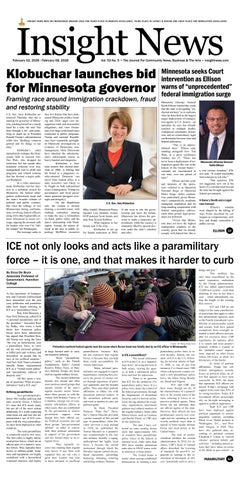
02, 2026 - February 08, 2026
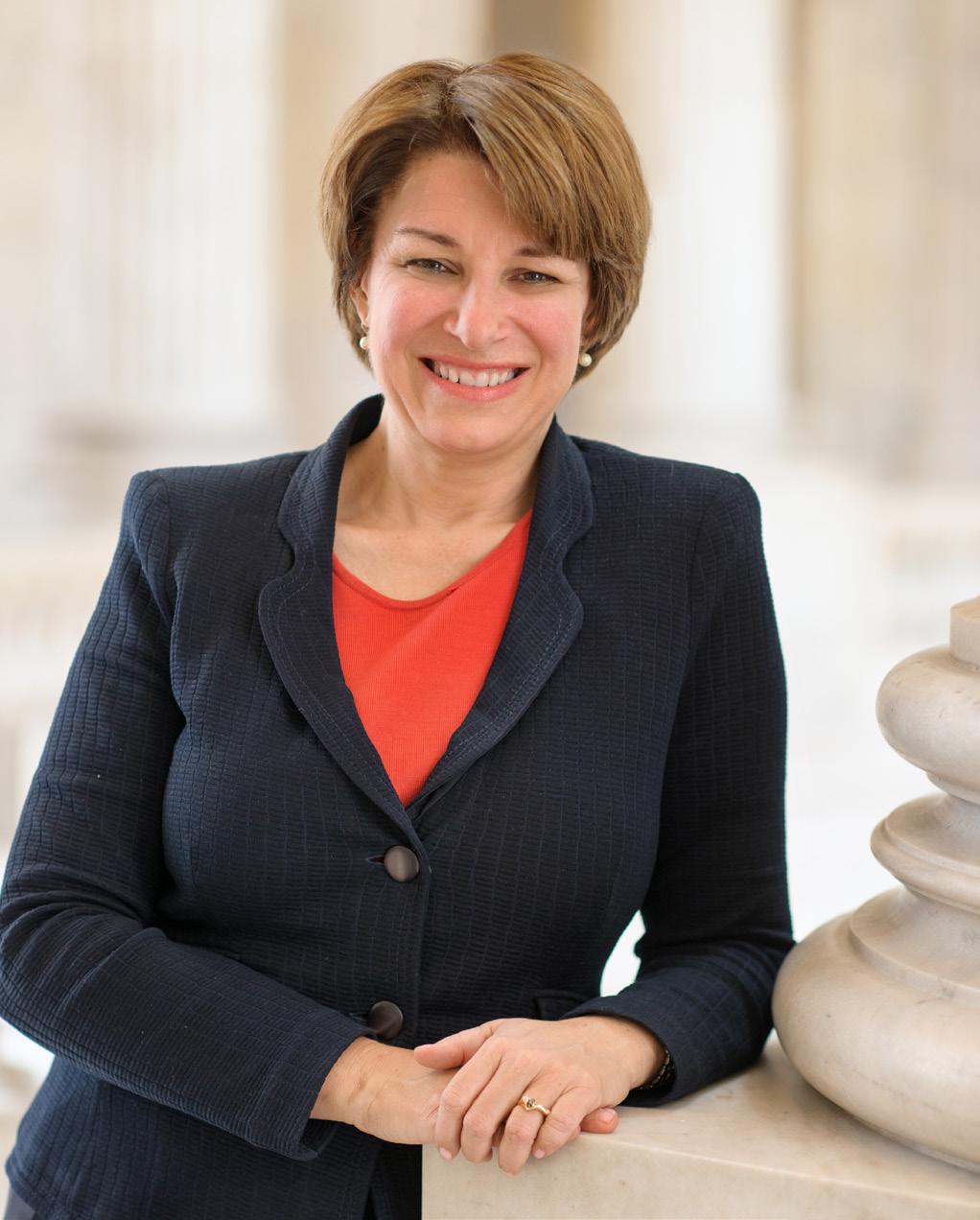
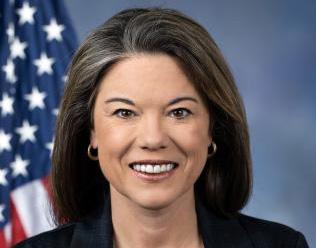
U.S. Sen. Amy Klobuchar announced Thursday that she is running for governor of Minnesota, pitching herself as a steady hand for a state she said “has been through a lot” and promising to stand up to President Donald Trump’s administration while also “find[ing] common ground and fix things in our state.”
Klobuchar’s entry immediately reshapes the Democratic field to succeed Gov. Tim Walz, who dropped his reelection bid last month after sustained criticism over mismanagement tied to child care programs and related scrutiny that has become a major political flashpoint.
In a video announcement, Klobuchar tied her decision to a turbulent stretch for Minnesota: the federal immigration enforcement surge and the state’s broader climate of political and public violence. She cited the killings of two Minnesotans during confrontations involving federal officers, along with other high-profile attacks referenced in recent coverage, arguing the moment calls for leaders who won’t be “rubber stamps” for Washington.
Her message seeks to
fuse two themes that have dominated Minnesota politics heading into 2026: anger over immigration raids and misconduct allegations, and voter frustration over large-scale fraud cases connected to public programs. Trump and national Republicans have repeatedly spotlighted Minnesota investigations as evidence of Democratic mismanagement, while Democrats have attacked the administration’s enforcement tactics as heavy-handed and dangerous.
Klobuchar, a fourterm senator first elected statewide in 2006, is betting that her brand as a pragmatic, results-oriented Democrat can travel from federal office to a state executive race likely to be fought on both nationalized issues (immigration, Trump-era governance) and local governance questions (program oversight and integrity).
On the Republican side, the contest is already drawing a crowded roster, with multiple contenders running to make the race a referendum on fraud, public safety and the state’s relationship with Washington. Among the names already in the mix in public reporting: MyPillow executive
Mike Lindell, Minnesota House Speaker Lisa Demuth, former GOP nominee Scott Jensen, and state Rep. Kristin Robbins. What happens to her Senate seat if she wins Klobuchar is not up for Senate reelection in 2026.
If she were to win the governorship and leave the Senate, Minnesota law allows the governor to make a temporary appointment, while the vacancy is ultimately filled by special election under the state’s schedule and rules.
Minnesota seeks Court intervention as Ellison warns of “unprecedented” federal immigration surge
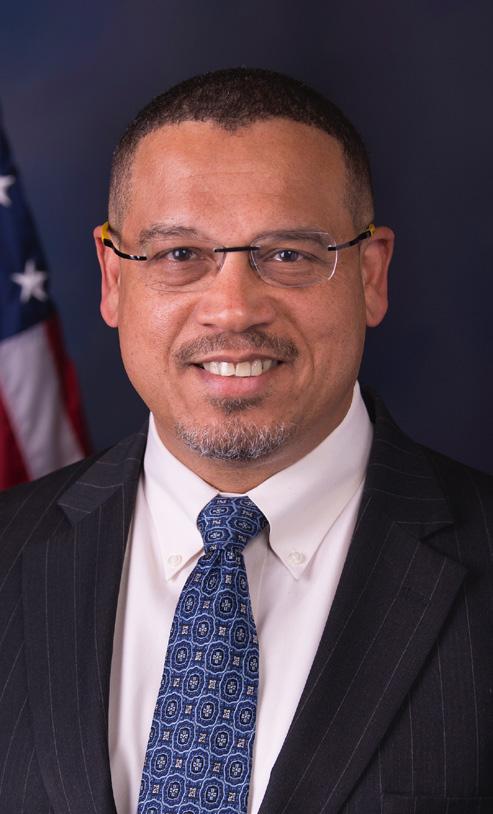
Minnesota Attorney General Keith Ellison warned this week that the state is navigating “uncharted territory” as it confronts what he described as the largest single deployment of immigration agents in U.S. history—an operation he says has already resulted in multiple deaths, widespread community disruption, and an extraordinary legal confrontation between state and federal authorities.
“This is an unprecedented time,” Ellison said, standing alongside Gov. Tim Walz, in a press conference Sunday, Jan 25. “There has never been a deployment of immigration agents this size in the history of the United States— certainly not concentrated in one state, over one period of time.”
Ellison said the scale and intensity of the operation—referred to as Operation National Surge or Operation Metro Surge—defies explanation, particularly given Minnesota’s comparatively moderate immigrant population and its long-standing cooperation with federal immigration enforcement when proper legal procedures are followed.
“Given that Minnesota does not have the highest immigration numbers in the country, given that we already comply with federal law, this is a very curious situation,” Ellison said. “It would reasonably lead someone to ask why.” That question, Ellison suggested, now sits at the heart of a constitutional lawsuit the state has brought against the federal government.
A Nurse’s Death and a Legal Line Crossed Ellison’s remarks were shaped by the killing of Alex Pretti, described by colleagues as compassionate, selfless, and deeply committed to public service.
ICE not only looks and acts like a paramilitary force – it is one, and that makes it harder to curb
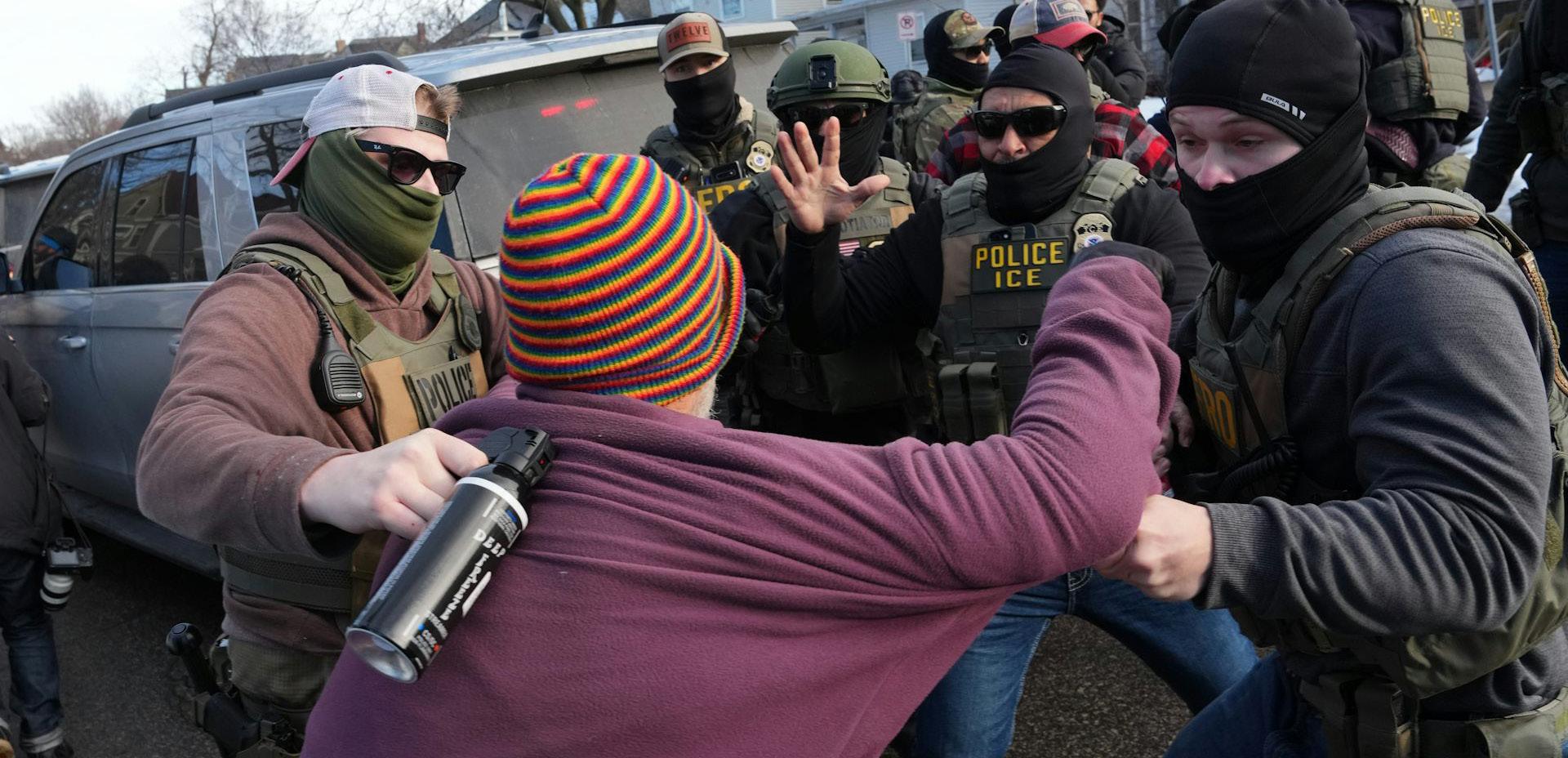
As the operations of Immigration and Customs Enforcement have intensified over the past year, politicians and journalists alike have begun referring to ICE as a “paramilitary force.” Rep. John Mannion, a New York Democrat, called ICE “a personal paramilitary unit of the president.” Journalist Radley Balko, who wrote a book about how American police forces have been militarized, has argued that President Donald Trump was using the force “the way an authoritarian uses a paramilitary force, to carry out his own personal grudges, to inflict pain and violence, and discomfort on people that he sees as his political enemies.” And New York Times columnist Jamelle Bouie characterized ICE as a “virtual secret police” and “paramilitary enforcer of despotic rule.” All this raises a couple of questions: What are paramilitaries? And is ICE one?
Defining paramilitaries
As a government professor who studies policing and state security forces, I believe it’s clear that ICE meets many but not all of the most salient definitions. It’s worth exploring what those are and how the administration’s use of ICE compares with the ways paramilitaries have been deployed in other countries.
The term paramilitary is commonly used in two ways.
The first refers to highly militarized police forces, which are an official part of a nation’s security forces. They typically have access to military-grade weaponry and equipment, are highly centralized with a hierarchical command structure, and deploy
in large formed units to carry out domestic policing. These “paramilitary police,” such as the French Gendarmerie, India’s Central Reserve Police Force or Russia’s Internal Troops, are modeled on regular military forces. The second definition denotes less formal and often more partisan armed groups that operate outside of the state’s regular security sector. Sometimes these groups, as with the United Self-Defense Forces of Colombia, emerge out of community self-defense efforts; in other cases, they are established by the government or receive government support, even though they lack official status. Political scientists also call these groups “pro-government militias” in order to convey both their political orientation in support of the government and less formal status as an irregular force. They typically receive less training than regular state forces, if any. How well equipped they are can vary a great deal. Leaders may turn to these informal or unofficial
paramilitaries because they are less expensive than regular forces, or because they can help them evade accountability for violent repression.
Many informal paramilitaries are engaged in regime maintenance, meaning they preserve the power of current rulers through repression of political opponents and the broader public. They may share partisan affiliations or ethnic ties with prominent political leaders or the incumbent political party and work in tandem to carry out political goals. In Haiti, President François “Papa Doc” Duvalier’s Tonton Macouts provided a prime example of this second type of paramilitary. After Duvalier survived a coup attempt in 1970, he established the Tonton Macouts as a paramilitary counterweight to the regular military. Initially a ragtag, undisciplined but highly loyal force, it became the central instrument through which the Duvalier regime carried out political repression, surveilling, harassing, detaining, torturing and killing ordinary Haitians.
Is ICE a paramilitary?
The recent references to ICE in the U.S. as a “paramilitary force” are using the term in both senses, viewing the agency as both a militarized police force and tool for repression.
There is no question that ICE fits the definition of a paramilitary police force. It is a police force under the control of the federal government, through the Department of Homeland Security, and it is heavily militarized, having adopted the weaponry, organization, operational patterns and cultural markers of the regular military. Some other federal forces, such as Customs and Border Patrol, or CBP, also fit this definition.
The data I have collected on state security forces show that approximately 30% of countries have paramilitary police forces at the federal or national level, while more than 80% have smaller militarized units akin to SWAT teams within otherwise civilian police.
The United States is nearly alone among established democracies in creating a new
paramilitary police force in re-
cent decades. Indeed, the creation of ICE in the U.S. following the terrorist attacks of Sept. 11, 2001, is one of just four instances I’ve found since 1960 where a democratic country created a new paramilitary police force, the others being Honduras, Brazil and Nigeria. ICE and CBP also have some, though not all, of the characteristics of a paramilitary in the second sense of the term, referring to forces as repressive political agents. These forces are not informal; they are official agents of the state. However, their officers are less professional, receive less oversight and are operating in more overtly political ways than is typical of both regular military forces and local police in the United States. The lack of professionalism predates the current administration. In 2014, for instance, CBP’s head of internal affairs described the lowering of standards for post-9/11 expansion as leading to the recruitment of thousands of officers “potentially unfit to carry a
badge and gun.”
This problem has only been exacerbated by the rapid expansion undertaken by the Trump administration. ICE has added approximately 12,000 new recruits – more than doubling its size in less than a year – while substantially cutting the length of the training they receive.
ICE and CBP are not subject to the same constitutional restrictions that apply to other law enforcement agencies, such as the Fourth Amendment’s prohibition on unreasonable search and seizure; both have gained exemptions from oversight intended to hold officers accountable for excessive force. CBP regulations, for instance, allow it to search and seize people’s property without a warrant or the “probable cause” requirement imposed on other forces within 100 miles, or about 161 kilometers, of the border. In terms of partisan affiliations, Trump has cultivated immigration security forces as political allies, an effort that appears to have been successful. In 2016, the union that represents ICE officers endorsed Trump’s campaign with support from more than 95% of its voting members. Today, ICE recruitment efforts increasingly rely on far-right messaging to appeal to political supporters. Both ICE and CBP have been deployed against political opponents in nonimmigration contexts, including Black Lives Matter protests in Washington, D.C., and Portland, Oregon, in 2020. They have also gathered data, according to political scientist Elizabeth F. Cohen, to “surveil citizens’ political beliefs and activities – including protest actions they have taken on issues as far afield as gun control – in
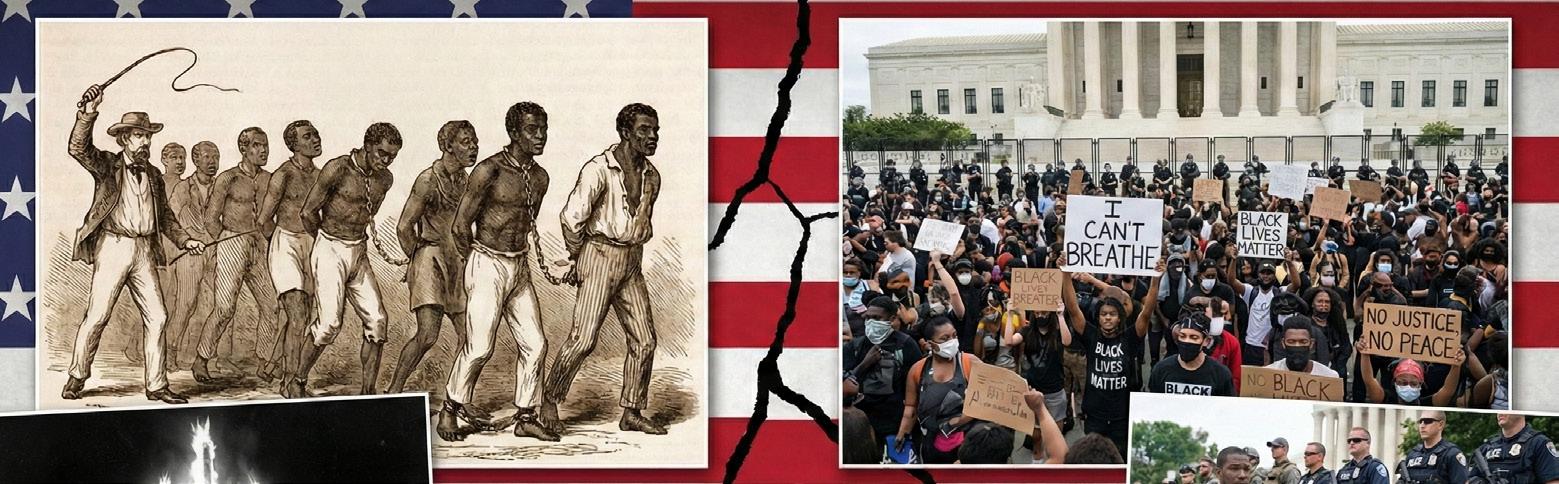
Whenever tragedy strikes in the United States—through bombings, mass shootings, or the killing of American citizens by law enforcement, from George Floyd and Breonna Taylor to Tamir Rice, Philando Castile and countless others—the same hollow refrain emerges: “This is not America.” It ripples through news cycles, social media, and political speeches, as if repetition alone could make it true.
Now, as Immigration and Customs Enforcement (ICE)—created in 2003 under the Department of Homeland Security and often compared to slave catchers empowered by the Fugitive Slave Acts of 1793 and 1850—is unleashed on American cities, terrorizing Black and brown communities and killing those who resist, Black and white alike, the phrase resurfaces once more.
But these are not anomalies. They are not deviations from an imagined national ideal. They are patterns—repeated with chilling consistency. And it is not our slogans or denials, but our actions—relentless, visible, and violent—that reveal to the world who America truly is. Throughout American history, these events have repeated themselves. To dismiss them is to deny the reality of what America has been—and what it continues to be. A nation is defined not by its ideals or slogans, but by its actions. America was built through violence, death, and the systematic oppression of non-white people. This is America!
Many historians characterize the actions of European
colonists and the U.S. government toward Native Americans as genocide, marked by massacres, forced removals, disease, destruction of livelihoods, cultural eradication, and coercive policies that systematically targeted Indigenous communities and ways of life.
Consequently, the Native American population in North America declined dramatically, from an estimated 5–15 million prior to 1492 to approximately 237,000 by 1900—a significant loss that has been increasingly acknowledged by scholars and government bodies as genocide including California’s 2019 official apology explicitly naming it genocide. This is America!
From 1619 to 1865, during chattel slavery, and then from 1877 to 1965 under Jim Crow laws, the United States upheld systems of slavery and racial segregation targeting African people forcibly brought to Virginia. Over these three centuries, millions of Africans and their descendants were legally considered lifelong property, forced to work for no pay, and helped produce immense wealth for enslavers. The widespread dehumanization of African individuals shaped America’s economic systems, legal structures, and social order.
The enduring effects of institutionalized injustices were not fully addressed by the ratification of the 13th and 14th Amendments and continue to influence patterns of racial inequality and various facets of American society. It is evident that the nation's economic, political, and social development has been significantly shaped by the contributions of enslaved Black individuals; their forced labor played a foundational role in shaping the United States as it exists today. This is America! Or rather, it's the version of America that “whiteness” wants.
When I speak of
"Whiteness," it is important to
clarify that I am not referring to white people (Europeans) as individuals, but rather to a social construct that emerged from European colonialism. This construct centers on the false notion of white superiority and has been used to justify the domination and oppression of non-white peoples.
Whiteness is not merely an idea—it is embedded and perpetuated through legal, political, and economic systems that systematically advantage those identified as white. These advantages often operate independently of individual intent or awareness, meaning that white people may benefit from the structure of whiteness even if they do not consciously support or uphold it.
It is also essential to recognize that not every white person (of European descent) personally subscribes to or endorses the ideology of whiteness. However, all white people continue to benefit from the privileges and systemic advantages that whiteness affords. Also, if white people are not actively fighting to dismantle whiteness, they are complicit.
Dante D. King in his book, Diagnosing Whiteness & Anti-Blackness. White Psychopathy, Collective Psychosis and Trauma in America, he defined whiteness as malignant narcissistic psychopathy and said:
“White America was built upon a foundation of collective White American psychopathological violence, collective psychosis, and Black trauma. The delusion and perversion of whiteness inform every aspect of American culture and its institutions.”
The ideological foundation that supports and sustains whiteness is clearly articulated in Chief Justice Roger B. Taney’s majority opinion in the 1857 Dred Scott decision. In this infamous ruling, the
Supreme Court declared that enslaved Black people were “altogether unfit to associate with the white race, either in social or political relations,” and were “so far inferior that they had no rights which the white man was bound to respect.” These words did not merely reflect the prejudices of the era—they codified a legal and social order that entrenched white supremacy and Black subjugation. This is America!
Though the Dred Scott ruling was formally overturned with the 13th and 14th amendments, the underlying logic of racial hierarchy has persisted. This core belief in the superiority of whiteness and the inferiority of Blackness has continued to manifest—not only in overt acts of discrimination, but also through the ongoing practices, policies, and structures of power within American society. Rather than being decisively repudiated, the ideology expressed by Chief Justice Taney and the U.S. Supreme Court has been perpetuated in various forms, continuously reaffirming the false framework of white dominance. This is America!
Four years after the deleterious Dred Scott decision, the United States was plunged into the Civil War in 1861. This conflict erupted primarily because white Americans were determined to preserve the institution of slavery and subjugation of African people, seeing the enslavement of African people as a profitable enterprise and rationalizing it through systematic dehumanization. This is America!
Although the South— staunch defenders of slavery— ultimately lost the war and the physical fight to maintain this system, the passage of the 13th
Amendment did not bring about an end to their opposition. Instead, those who supported the ideology behind slavery adapted their approach, shifting to a long-term strategy aimed at maintaining racial hierarchy and whiteness in other forms.
This is America!
The underlying belief that Black and brown people are inherently inferior to whites, and that they possess no rights which whites are obligated to acknowledge or respect—as articulated by Chief Justice Taney and held by the Supreme Court—remained entrenched. This ideology persisted long after the formal abolition of slavery, shaping attitudes and policies that continue to marginalize and oppress Black and brown communities to this day in 2026. This is America!
The current turmoil and chaos that the world observes unfolding in America and, more specifically, in Minnesota, are not mere abstractions or exaggerated reports— they are tangible and undeniable events. Whether you are witnessing these scenes from your own window, following updates on television, or scrolling through social media on your smartphone, what you see is real. This is not some simulation; it is happening right now, in real time. Although, it may be a rehearsal. It is crucial not to avert your gaze, ignore, or attempt to minimize, underestimate, downplay, or deny the magnitude of what is occurring. The events before you demand acknowledgement and recognition. The reality being broadcast and shared is not a distortion— it accurately reflects a version of America that is actively shaped and perpetuated by the construct of whiteness.
The images emanating from Minnesota are not scenes from a movie, a theatrical production, or a staged performance. They portray authentic situations with serious consequences, involving issues of life and death. What is being shown is precisely the version of America that the false ideology of whiteness seeks to maintain and promote.
On January 11, 2026, President Donald Trump gave an interview to the New York Times in which he shared his perspective on the Civil Rights Act of 1964. The Act, which was enacted to end discrimination against Black Americans and to ensure equal access to education and employment opportunities, was characterized by Trump as having led to white people being “very badly treated.” He described the effects of the legislation as “reverse discrimination.”
Trump further asserted that white people are now the “real victims of discrimination.” These comments underscore a narrative in which efforts to address racial inequity are portrayed as unfairly disadvantaging white Americans, reframing the discussion around civil rights and systemic discrimination in a manner that positions whiteness as the aggrieved party.
I call this the violent tantrum of whiteness—a sore loser’s response to realizing the game is changing and it may no longer always win. Rather than accept the outcome, it lashes out, insisting the rules were unfair, the game was rigged, or that victory was stolen. Anyone who has
AMERICA 6

It was the kind of clip you almost scroll past, a night skyline, a quick sweep of drone footage, a young man narrating in real time like he cannot believe what he is seeing. Addis Ababa lit up, streets alive, the city breathing the way cities do when they are not being flattened into somebody else’s story. And in the background, offscreen but not out of mind, was the other story America keeps trying to tell right now, the one delivered from podiums and press gaggles and cable-news chyrons. The one where immigrants are reduced to a threat, a punchline, a scapegoat, where Somali communities in particular are spoken about as if their humanity is optional. Two narratives. Two channels. Two very different kinds of power.
On one side, the President of the United States calling Somali immigrants “garbage” and suggesting they “contribute nothing.” That language is not policy, it is permission. It is the kind of talk that makes neighbors into targets and turns ordinary life into a series of calculations, where people start carrying documents “just in case,” even when they were born here.
On the other side, a Gen Z creator, IShowSpeed, sprinting through a continent Western media has spent generations compressing into a single, gloomy image. His “Speed Does Africa” tour has been chaotic, loud, unserious, and at times exactly what you would expect from a livestream built for teenagers and young adults. It has also been, whether he planned it or not, a public undo-
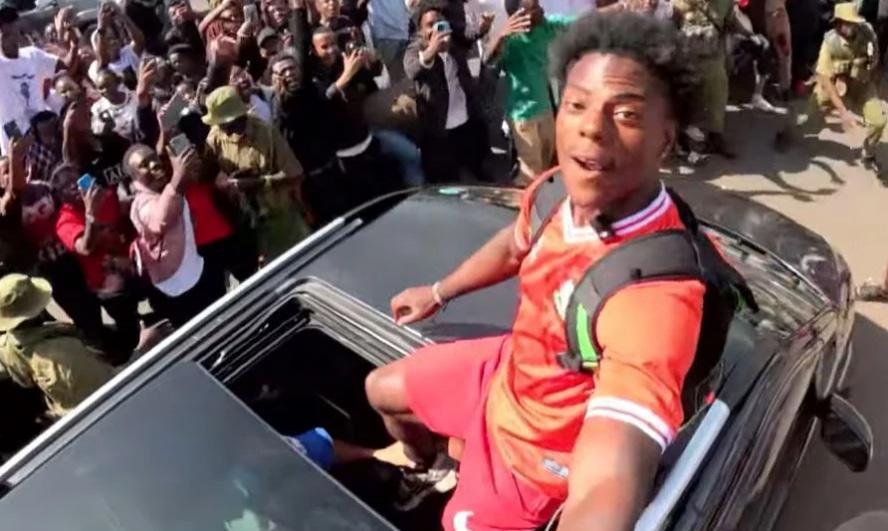
ing of propaganda.
This is what I keep coming back to, especially here in Minnesota, where politics has been turned into a testing ground and immigrant communities into a talking point, with consequences you can feel in real time. As enforcement intensifies across the Twin Cities, and the national conversation gets dragged into the gutter, millions of young people are watching a different reality unfold on their phones.
And they are reacting in the most honest language they have, disbelief.
“Why does this look like a city in America?” someone comments under a TikTok clip from Ethiopia, as if modernity has a zip code and only one continent gets to own it. Then comes the chorus, people pushing back, people laughing, people annoyed that the compliment is still framed through American supremacy. The comment section becomes a classroom, and it is not the kind that assigns a unit on Africa as tragedy and calls it global awareness.
That is the quiet revolution here. Not that a streamer is “showing Africa,” plenty of Africans have been showing Africa. The revolution is that the gatekeepers are being bypassed at scale.
For a long time, Western institutions have relied on a dependable script: Africa as charity, Africa as warning, Africa as “developing,” always on its way to something, never already something. Even the way we talk about the continent gives the game away. We say “Africa” when we mean fifty-four countries, hundreds of languages, economies, cities, and histories that do not need an American narrator to be real.
Speed’s livestream does not fix that, but it interrupts it. It refuses to let the story be edited down into the familiar montage of suffering. It leaves the camera rolling, and the world that appears in the frame is not the one many American classrooms and newsrooms trained us to expect. Here is what that interruption does to a young Black American watching. You can hear it in the voice of a man reacting through tears to a clip from Ethiopia, saying they “made us think” Africa was poor, unlivable, hopeless, and then admitting something that sounds like grief, because it is grief: “America is the trap.” That is not a policy argument. That is a spiritual diagnosis. It is also what happens when propaganda collapses too fast for your nervous sys-
tem to keep up. Propaganda is not only what you are told. It is what you are not allowed to see.
For many Black Americans, the distance between our lives and the continent has been filled with manufactured images, famine commercials, simplified history lessons, the implication that “home” is somewhere you should fear, not somewhere you might recognize yourself. That story did not happen by accident. It is convenient for a world that benefits from extraction, from brain drain, from keeping Black people divided by geography and by myth.
Then a young Black man from Cincinnati shows up in Angola, South Africa, Rwanda, Ethiopia, and something that is supposed to be impossible happens over and over again. He is welcomed. He is embraced. Kids cry when they meet him. Elders bless him. People do not treat him like a problem. They treat him like family. And for viewers, especially young viewers, that love lands like evidence. Not perfect evidence, not complete evidence. But enough to make the old story feel suspicious.
Even the numbers tell their own story. Ethiopia’s stop,
by local reporting, pulled record viewership for the tour, the kind of attention tourism boards spend years trying to buy.
So now look back at what is happening in America, and ask what story our leaders are trying to lock in.
When the President calls Somali immigrants “garbage,” he is not describing reality. He is constructing a lens. A lens that makes it easier to accept cruelty as administration, and fear as governance. And when his administration moves to end Temporary Protected Status for Somalis, the policy rides on top of the same dehumanization, the same suggestion that people are disposable, that families can be uprooted with a signature and a deadline.
What makes this moment so sharp in Minnesota is that we are not talking about an abstract “immigrant population.” We are talking about a community that has built neighborhoods, businesses, careers, congregations, and culture. We are talking about people who are not a headline, not a rumor, not a political prop. They are the small business on Lake Street, the student walking into class, the family sitting in the bleachers, the neighbor who knows your name. This is where the contrast with Speed’s tour becomes more than a cultural curiosity.
While official America tries to train the public to see Somali people as fraud, as danger, as “other,” young people are watching a Black American move through African countries and be treated with dignity, warmth, even reverence. They are watching a continent they were taught to pity, and realizing pity was never the point. They are also watching the hypocrisy of the world’s self-appointed “civilized” places. Fame did not protect Speed everywhere. In some countries outside Africa, he has faced public racism, the kind people love to pretend is “rare” until it is caught on camera. In much of
Africa, the tone flips. The same person, the same fame, different reception. And suddenly “progress” looks less like a Western possession and more like a question. This is why I keep thinking about words versus reality.
Words are cheap, but they are not harmless. Especially when they come from presidents. Words shape what gets funded, what gets raided, who gets stopped, who gets forgiven, who gets mourned. But reality has a way of leaking through, especially now, especially for Gen Z and Gen Alpha, whose political education is happening in comment sections and livestreams as much as in classrooms. That is not always good news. The internet can lie faster than any history book. Deepfakes exist. Propaganda is not exclusive to governments. But sometimes the internet does something else. Sometimes it exposes a truth you were never meant to hold in your own hands. The algorithm can amplify lies, but it can also accidentally deliver clarity.
A skyline at night. A crowd chanting a name. A young man saying, almost surprised, “I love the love in Africa.”
And then you look back at a president calling people “garbage,” and you realize what is actually being tested in America right now is not immigration policy. It is whether we are willing to let anyone rewrite human beings into trash, and whether we will accept that rewrite as normal.
Here is my snarky, professional conclusion: if the United States is so advanced, why does it need dehumanization to make its arguments? If we are the model, why do we require cruelty as persuasion?
Gen Z is not perfect, but we are observant. Gen Alpha is not naive, they are being
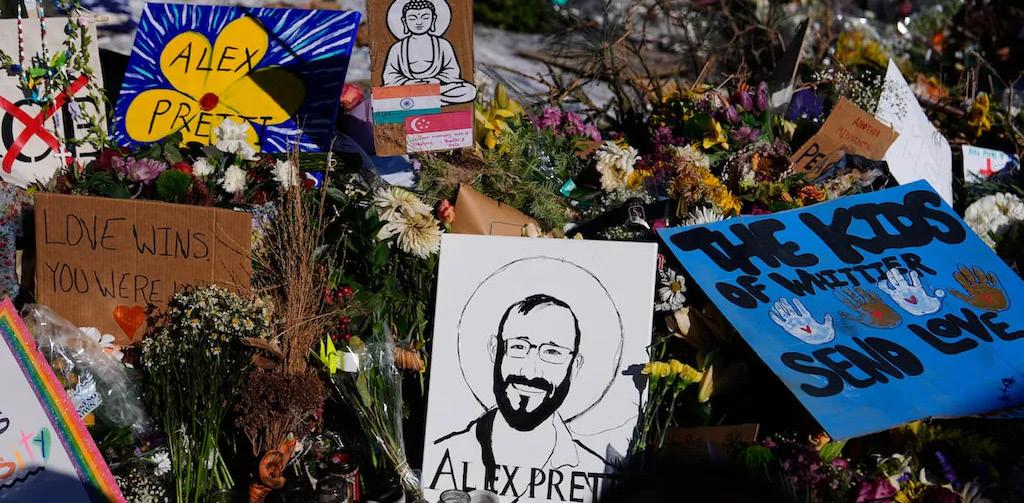
Minneapolis is reeling after the killing of Alex Pretti, a South Minneapolis resident shot and killed by federal immigration agents near 26th Street and Nicollet Avenue, an incident that city leaders across the political spectrum are calling an unprecedented escalation, a constitutional violation, and a moral breaking point for the city.
The killing — the third ICE-related shooting in Minneapolis in recent weeks, according to city officials —
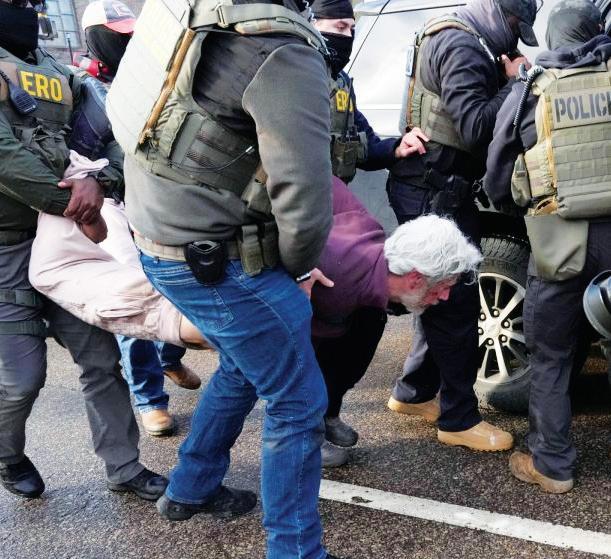
was captured on video showing multiple masked agents beating Pretti before fatally shooting him. The footage has circulated widely, sparking mass protests, candlelight vigils, whistle alerts, and a unified response from the mayor and City Council demanding the immediate withdrawal of federal agents and independent accountability.
Mayor Jacob Frey described the federal presence as an “invasion” that has made Minneapolis less safe, not more.
“How many more Minnesotans must die before this ends?” Frey asked in a message to residents. “This is not a
partisan issue. This is an American issue.”
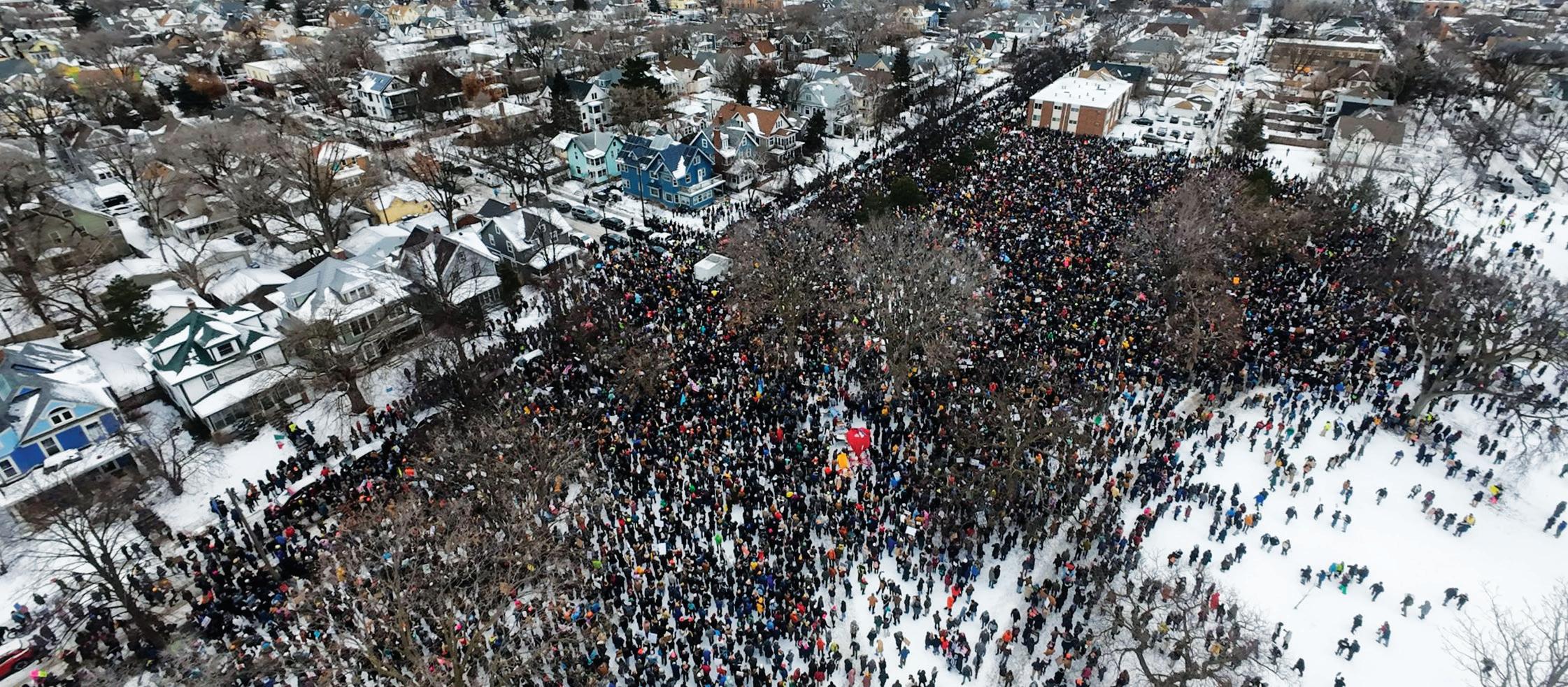
Frey contrasted the violence with a peaceful downtown demonstration the previous day that drew more than 50,000 people without injury, arrests, or property damage. He said the conduct of masked, militarized federal agents operating without clear identification represents a collapse of trust and democratic norms.
In response, the City of Minneapolis has filed a declaration urging a judge to rule immediately on a temporary
Rep. Ilhan Omar led a delegation of state and federal lawmakers at a Minneapolis mall Thursday, Jan. 29, to condemn what she described as a "federal occupation" by immigration enforcement agents and to address the recent assault attempt against her.
Speaking from the atrium of Karmel Mall, 200 W Lake St., a central hub for the city's Somali community, the Minnesota Democrat stood with local and national leaders to decry "Operation Metro Surge." The lawmakers characterized the federal immigration campaign as a "siege" that has paralyzed local commerce and terrorized residents.
"This is not about public safety. This is state-sanc-
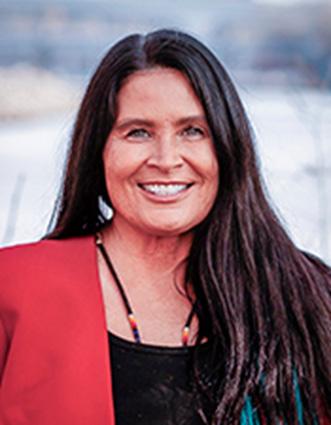

Shelley Buck, a nonprofit executive and former local leader of the Prairie Island Indian Community, ran unopposed in District 47A. She replaces Amanda Hemmingsen-Jaeger who won a November special election for a Senate seat. Meg Luger-Nikolai, a labor lawyer and longtime community advocate, easily won the District 64A seat over Republi
can Dan Walsh with 95.28% of the vote. The district that includes the Macalester-Groveland and Summit-University areas of St. Paul was formerly represented by St. Paul Mayor Kaohly Her. Results are expected to be certified by the respective canvassing boards later this week.
House DFL Leader
Zack Stephenson (DFL-Coon Rapids) said in a statement, “As the former President of the Prairie Island Indian Community, Shelley Buck brings unique leadership experience and perspective to the House DFL and will be a fearless champion for working families. Meg Luger-Nikolai has dedicated her life and career to standing up for workers, defending public schools, and protecting access to affordable health care. Both Shelley and Meg are going to be exceptional legislators, and I am excited to welcome them to our team.”
The 2026 legislative session is scheduled to begin Feb. 17 and must end by May 18. Committee information for Buck and Luger-Nikolai will be determined in coming weeks.
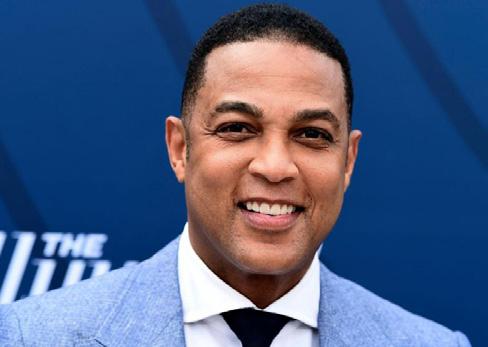
In a significant escalation of legal action tied to a January 18 protest in St. Paul, Minnesota, independent journalists Georgia Fort and former CNN anchor Don Lemon were taken into federal custody this week — raising alarms among press freedom groups and civil liberties advocates.
tioned violence," Omar said. "This is political retribution." The briefing occurred just one day after a man attacked Omar with a syringe. Omar directly addressed the motive, stating the attacker expressed frustration that deportation orders under the Trump administration were not removing Somali people quickly enough. She linked the incident to the political climate in Washington.
Federal and Local Leaders United Rep. Ayanna Pressley, D-Mass., joined Omar in Minneapolis, highlighting the severe economic impact of the federal operation. She estimated that businesses on Lake Street are losing approximately $30 million monthly due to the disruption. "We are here to say to the occupant in the Oval Office, you do not dampen our spirit," Pressley said. "You traffic in hate, you govern with malice, and you are inflicting trauma on the most vulnerable."
"The rise in death threats against me is directly linked to his rhetoric," Omar said of President Trump. "Intimidation tactics do not work on me."
Local officials described a neighborhood under duress. State Sen. Omar Fateh,
Attack on Rep. Ilhan Omar is second assault on a Congressional Black Caucus member in five
By Lauren Victoria Burke Political Analyst
A man attacked Congresswoman Ilhan Omar at a town hall
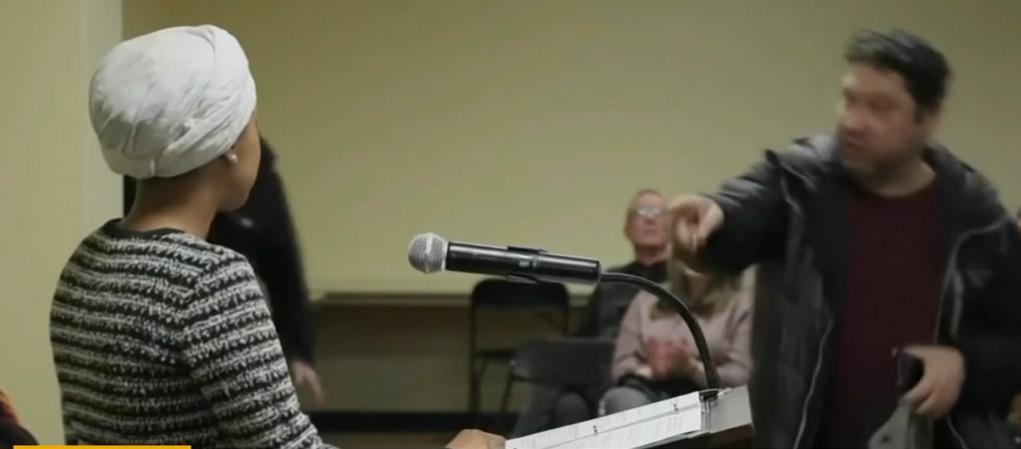
Trump has often verbally attacked Rep. Omar and the Somali community. The constant verbal attacks by Trump have prompted a situation where she requires extra security by the US Capitol Police. Threats on members of Congress have doubled in the last year, according to the New York Times. Political rhetoric from Trump and his Senior Advisor Stephen Miller has featured vitriol, unsubstantiated claims, and over-the-top rhetoric.

Federal agents, acting on the direction of U.S. Attorney General Pam Bondi, arrested Lemon late Thursday, Jan. 29, in Los Angeles, where he had been covering the Grammy Awards, and arrested Fort early
Immigration
Immigration policy and the role of federal enforcement agencies have become the defining issues in Minnesota’s Democratic U.S. Senate primary, drawing national attention as candidates spar publicly over their records and values.
Friday morning at her Minnesota home, according to official statements and local reporting. Bondi publicly stated that Lemon and Fort were among those apprehended “in connection with the coordinated attack on Cities Church in St. Paul, Minnesota.” Both journalists have maintained they were present solely in their professional capacities — reporting and documenting the event rather than participating as protestors. Fort
and relieved that Congresswoman Omar is safe. We thank the Minneapolis Police Department for their swift response and the apprehension of the individual responsible,” stated the Congressional Black Caucus in an evening statement on January 27.

Trump has repeatedly stated that Rep. Omar should be “sent back to Somalia” or “thrown the hell out” of the
President Donald
In a Jan. 26 report, NOTUS detailed how two fatal shootings of U.S. citizens by federal immigration enforcement officers in Minnesota intensified an already competitive race between Rep. Angie Craig and Lt. Gov. Peggy Flanagan. The article, “Minnesota Senate

Democratic Primary Grows Heated as Immigration Takes Center Stage,” was written by NOTUS reporter Ursula Perano and published on Jan. 26, 2026. According to NOTUS, Craig and Flanagan were already engaged in a close contest for the open Democratic Senate seat being vacated by retiring Sen. Tina Smith. But tensions escalated following the fatal shooting of Renee Good by an Immigration and

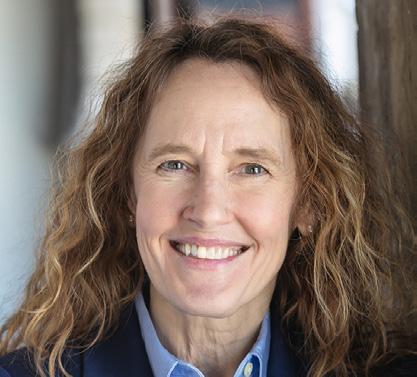
I moved to Minneapolis in the aftermath of George Floyd’s murder to lead the McKnight Foundation, drawn by the chance to be on the ground floor of healing and transformation. Now, just a few blocks from where that tragedy occurred, Renee Nicole Good, a Minneapolis poet and mother of three, was shot and killed by federal immigration agents. A few days ago, another shooting occurred in a North Minneapolis residential neighborhood following enforcement activity. And just this weekend, we watched in horror as videos emerged of the brutal killing of Alex Pretti, a Minneapolis resident and ICU nurse caring for our veterans.
“Patriotism isn’t passive. If we love this country, then we must defend our constitutional rights and our neighbors. And we must continue to protest peacefully, assert our American privileges to hold government accountable, and demand justice for Ms. Good and all others who have been harmed by the reckless and chaotic enforcement activities we are experiencing across our state.”
- Tonya Allen




No American city or region should experience this. But what is happening here can happen to any American, in any city, on any street. When it comes to immigration, Minnesotans expect everyone to follow the rules— both the immigrants who come to this country and the government officials entrusted with enforcing our laws. What we’re seeing is something else entirely.
This madness needs to stop. Since the start of the federal surge, thousands of masked, unidentified agents have been patrolling our streets, harassing everyday residents and denying their basic rights. Many parents are too scared to bring their kids to school, forcing hybrid learning. Chemical irritants have been sprayed and faculty and students have been tackled on a high school campus.
People are protesting peacefully and strongly,
because from where we are on the ground, one thing is clear: the violence and lawlessness are coming from reckless, unqualified federal agents. It doesn’t matter what kind of papers you have; it doesn’t matter if you’re a peaceful protester; it doesn’t matter if you’re a mom of three in an SUV.
Recent threats to invoke the Insurrection Act are based on a lie about who Minnesotans are and what we are doing to respond to this historic crisis for our state and country. So let me tell you the truth.
The real story is about the Minnesotans who refuse to respond with fear or fury. People who are showing up with love of community, neighbor, and country. Ordinary people, community leaders, and institutions stepping forward to peacefully insist on our constitutional rights. They are right now modeling not just the best of Minne-
“The real story is about the Minnesotans who refuse to respond with fear or fury. People who are showing up with love of community, neighbor, and country. Ordinary people, community leaders, and institutions stepping forward to peacefully insist on our constitutional rights. They are right now modeling not just the best of Minnesota, but the best of America.”
- Tonya Allen
sota, but the best of America. Organizations are training constitutional observers—volunteers who monitor and document interactions between law enforcement and the public. These trainings are grounded in de-escalation, nonviolence, and civic education— teaching people about their constitutional rights and how to exercise them responsibly in the face of federal overreach.
Because of neighbors willing to bear witness in the face of reckless and dangerous conduct, we have video footage and eyewitness accounts that reveal the truth about what is happening here and make it possible to demand justice. Interest in these trainings has surged, and every day, our neighbors are documenting scenes that were once unthinkable in this country. These constitutional observers are everyday Minnesotans peacefully standing up for their neighbors. To be even more explicit, they are American patriots.
Minnesotans are showing up with heart
This same spirit of duty and love of neighbor has shaped the broader response across Minnesota. Retirees have been organizing carpools so children can get to school when parents are too afraid to leave their homes, fearing racial profiling. Mutual aid networks formed to deliver groceries and essentials to families sheltering in place. And in the days after Renee’s killing, Somali women—members of a community under particular siege—stood on Portland Avenue all weekend, handing out sambusas and tea to keep people who were honoring her memory warm and fed in the freezing Minnesota winter.
If you walked down that street, where Renee Good was killed, during a recent protest, you would have seen children, mostly young and Latino, quietly observing from windows and porches—waving, making hearts with their hands, and holding signs that read “Thank you, MN.” This is who we are. A place shaped by
many cultures, where neighbors look out for one another, where people raise families together, where the winters may be cold, but the communities are deeply warm. Our algorithms may reward outrage, but what I wish the country could see is the quiet, stubborn goodness on display in our streets. And yet, Minnesota is not being targeted despite this strength—it is being targeted because of it.
Minnesota is the latest to be assailed because we are building a genuine, multi-racial, multi-faith community: from the Somali and Hmong communities that anchor neighborhoods in the Twin Cities, to the Latino and East African families revitalizing small towns across Greater Minnesota alongside the Indigenous and Scandinavian families that have anchored these places for generations. We’re proud to be a place where anyone—whether they were born here or chose to make their home here—can put down roots and build a better future for their family.
This is not just an assault on individuals or families—it’s an attempt to unravel the vibrant, diverse, and modern Minnesota—and America—we have built together.
And history shows us that assaults on pluralism succeed only when people decide it’s someone else’s fight, so now is the time to get off the sidelines.
Patriotism isn’t passive. If we love this country, then we must defend our constitutional rights and our neighbors. And we must continue to protest peacefully, assert our American privileges to hold government accountable, and demand justice for Ms. Good and all others who have been harmed by the reckless and chaotic enforcement activities we are experiencing across our state.
Renee Good should be alive today. The fact that she is not should be a wake-up call to all Americans.
Take it from Minnesota.

restraining
Across City Hall, council members echoed the mayor’s outrage while repeatedly urging residents to remain peaceful.
come a test case for expanded federal military authority.
Council Member Elizabeth Shaffer (Ward 7) called the killing “nothing short of an extrajudicial act” and warned Minneapolis could be-
whose district includes the mall, pointed to the "closed shops and quiet hallways" around them.
"We are being denied our freedom from fear," Fateh said, comparing the federal tactics to the segregationist rhetoric of George Wallace in 1963. "Go back to where you belong."
Community Response
country.
On January 24, masked individuals sent to Minneapolis by the Trump Administration and wearing no badges or identifying nameplates while patrolling the city of Minneapolis shot and killed a second American citizen, Alex Pretti.
On January 7, masked individuals shot and killed Renee Good as she navigated her car around an individual who shot her three times. The federal government claims that the masked
From 3
livestreamed portions of her arrest on social media, asserting that she was being detained for filming the protest as a member of the press.
Lemon’s attorney, Abbe Lowell, characterized the action as “an unprecedented attack on the First Amendment,” arguing that Lemon’s presence was journalistic newsgathering, a constitutionally protected activity.
Immigration
From 3
Customs Enforcement (ICE) officer, and the subsequent killing of Alex Pretti by a Border Patrol agent—an incident captured on camera that sparked protests and renewed scrutiny of federal enforcement actions in the state.
Council Member Soren Stevenson (Ward 8) called the killing “federally sponsored terror” and demanded ICE leave
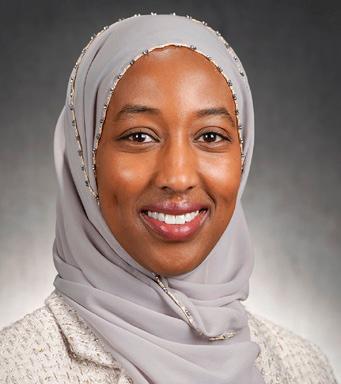
and "Siege" Atmosphere State Rep. Aisha Gomez described the last 58 days as an "invasion" by secret police, noting that 22 neighbors
individuals without badges are “agents” of the federal government, affiliated with immigration and customs.
In an incident outside Minneapolis, Rep. Frost was assaulted over the weekend in Park City, Utah.
“Last night, I was assaulted by a man at the Sundance Festival who told me that Trump was going to deport me before he punched me in the face. He was heard screaming racist remarks as he drunkenly ran off. The individual was arrested, and I am okay. Thank you to the venue security and Park City PD for assistance on this incident,” wrote Congressman Maxwell Frost of Florida.
The legal actions stem from an anti-immigration enforcement demonstration that disrupted a Sunday service at Cities Church in St. Paul on Jan. 18, where activists chanted slogans including “ICE out” and “Justice for Renee Good,” in reference to a Minnesota woman fatally shot by a federal immigration officer earlier this month.
Federal authorities have characterized the incident as an unlawful interruption of religious services, invoking statutes meant to protect the right to worship without coercion or interference.
“ Minnesotans are paying attention to this issue because it is impacting their lives every single day,” Flanagan told NOTUS, emphasizing that border security and immigration enforcement should not come at the expense of due process or human dignity.
Flanagan accused Craig of shifting her position on immigration amid the heightened federal presence in Minnesota, pointing to Craig’s vote for the Laken Riley Act last year. As NOTUS reported, the measure was the first major immigration policy victory of President Donald Trump’s second term and requires the detention of undocumented immigrants charged with certain crimes, even without a conviction.
“This was not in the fine print,” Flanagan said in the NOTUS interview, referencing Trump’s campaign promises of mass deportations. “This was on bright red signs, all caps.”
watched a sore loser knows the pattern: flipping the board, shouting at the referee, intimidating other players, and trying to force the game to stop rather than accept defeat. The goal is not fairness, but disruption— making continued play impossible unless the loss is reversed. That is what we are seeing now. Whiteness, confronted with limits on its dominance, is not adapting or competing within new rules. Instead, it is throwing a public, violent tantrum—hoping that enough chaos will compel others to concede what it can no longer claim outright.
To be clear, Donald Trump functions as a powerful avatar—a personification and symbolic representation—of whiteness. Whiteness did not begin with him, nor did he introduce it into the presidency. It has existed since the colonization of what is now the United
States and is deeply embedded in the nation’s foundations. That whiteness is “baked into the cake” of America is evident in the fact that more than 77 million people—nearly half of the popular vote (49.8%)—supported Donald Trump despite his role in the January 6 insurrection, two impeachments, 91 felony indictments, and 34 felony convictions—convictions that would have resulted in imprisonment had he not been elected president. As many have observed, a Black man—such as Barack Obama—would almost certainly never have been elected president if he had been indicted for even one crime, let alone convicted of 34.
The critical question we face is: how should Black, Brown, and Indigenous communities respond to the ongoing legacy of dehumanization, oppression, and subjugation? Our answer, rooted in history and reinforced by tradition, is to draw strength and grace from faith. This spiritual grounding empowers us to persevere through even the most challenging times.
had recently been charged in federal court. "We have been under siege," Gomez said. Despite the tension, she emphasized
A white male was arrested at Park City’s High West Saloon on Jan. 23, during CAA‘s Sundance Film Festival celebration, after allegedly assaulting Rep. Frost.
The man allegedly punched Rep. Frost after initiating a verbal confrontation with him in a restroom.
“Security detained the man, and police later took him into custody,” according to a report in Variety.
“A spokesperson for the Park City Police Department identified the man as Christian Young. The department spokesperson said an officer arrived at High West Saloon after midnight on Friday and conducted
Friday’s announcement also confirmed the arrest of two other Minnesotans alongside Lemon and Fort: Trahern Jeen Crews – a leader with Black Lives Matter Minnesota.
• Jamael Lydell Lundy – a political activist and community figure. These additions bring the total number of individuals federally arrested in connection with the protest to four, though local prosecutors had previously acted against others.
Earlier this month, federal authorities charged three
Craig pushed back on Flanagan’s criticism, telling NOTUS that Democrats should focus on actively confronting the Trump administration and Department of Homeland Security leadership over enforcement actions in Minnesota. Craig highlighted her congressional oversight role and noted that she introduced articles of impeachment against Homeland Security Secretary Kristi Noem.
Both candidates told NOTUS they oppose the current direction of ICE under Trump, though neither fully embraced calls to abolish the agency. Flanagan said ICE is “beyond fixing,” while Craig argued that meaningful reform requires re-
Unity and collective resistance remain central to our response. We persist in standing firm, pushing back against injustice, and maintaining solidarity, especially when confronted by adversity. It is essential that internal disagreements over strategy do not become sources of division. Instead, collaboration is vital as we strive together to alleviate the burdens imposed by oppressive and authoritarian systems.
Every strategy available to us—whether voting and civic engagement, organized protest, boycotts, institution-building, public advocacy, education, or mutual support— should be carefully considered. However, it is imperative that the strategies, methods, and tactics we choose never undermine our shared progress toward justice.
We must never acquiesce, capitulate, or yield. Instead, it is incumbent upon us to utilize our abilities, talents, and resources to their fullest extent, sustaining our efforts and driving meaningful change. Strength, courage, resilience,
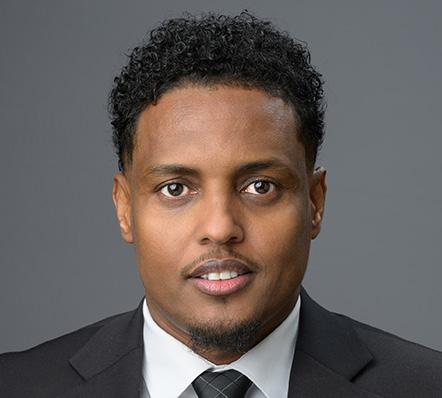
Minnesota entirely. Council Vice President Jamal Osman (Ward 6) framed the killing as a constitutional crisis and called for an
non-violent resistance. "We will protect each other with whistles and with love."
Council Member Aisha Chughtai, representing Ward 10, praised the resilience of the "International Neighborhood," which she described as a young, renter-majority community. She commended residents for organizing to protect one another from "masked agents of chaos."
The lawmakers also mourned the recent deaths of Renee Good and Alex Pretti, al-
an investigation, which determined that Young “unlawfully entered a private party” after being turned away for not having an invitation, Variety also reported.
Once inside, Young assaulted Florida Congressman Maxwell Frost and a female who was attending the private event,” the police statement reads. Young was booked into the Summit County Jail on charges of aggravated burglary and two counts of simple assault, a police spokesperson said.
“I am horrified by the attack on Congressman Maxwell Frost. Grateful that he is okay but appalled that this ter-
separate protestors — civil rights attorney Nekima Levy Armstrong, St. Paul school board member Chauntyll Allen, and U.S. Army veteran William Kelly — for alleged conspiracy against religious freedom and interference with worship.
A magistrate judge declined to approve charges against Lemon at that time, citing insufficient evidence; authorities have since secured a grand jury indictment.
Legal and Political Backlash
The arrest of journalists, particularly Lemon — a figure with a long national
moving Trump and his administration from power.
The NOTUS report framed the Minnesota primary as a reflection of a broader national debate within the Democratic Party following its 2024 election losses—whether progressives or centrists are better positioned to win back power in the 2026 midterms. Craig is widely viewed as a moderate Democrat and has received endorsements from party leaders such as House Minority Leader Hakeem Jeffries and several centrist senators. Flanagan, who openly identifies as progressive, has been endorsed by figures including Sens. Bernie Sanders and Elizabeth Warren.
and steadfastness are our guiding qualities. Our commitment must be firmly rooted: to oppose oppression, tyranny, subjugation, and violence directed against us. Throughout history, Black people have had to struggle for recognition and humanity, from the era of slavery and Jim Crow to the present day. While significant achievements and progress have been made, our journey toward justice and equality remains unfinished. Despite this, our enduring struggle has forged us into a resilient and powerful people. The challenges we have faced have not broken our spirit; rather, they have strengthened our persistence, determination, and unwavering commitment to resist any attempts to silence or destroy us.
God stands on the side of justice and will ultimately vindicate the oppressed. This truth has echoed through generations, and it finds powerful resonance in the words of Thomas Jefferson—who, despite being a principal author of the Declaration of Independence and the
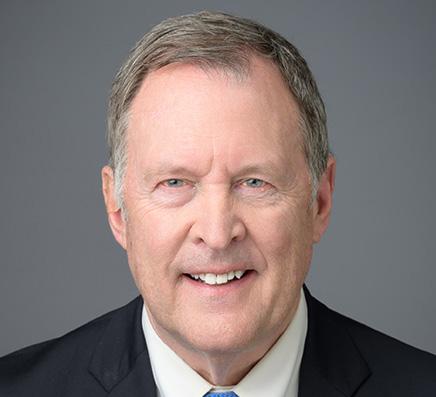
independent, state-led investigation.
Council Member Michael Rainville (Ward 3) criticized federal agents for block-
leging they were killed by federal agents while attempting to defend their neighbors.
"They acted as judge, jury, and executioner," Omar said of the agents involved.
Demands and Upcoming Protests
The delegation outlined specific demands, including a "No" vote on an additional $28 billion in funding for Immigration and Customs Enforcement (ICE), the impeachment of DHS Secretary Kristi Noem, and a state-level eviction mora-
rifying assault took place. The perpetrator must be aggressively prosecuted. Hate and political violence have no place in our country, and the entire House Democratic Caucus family stands with Maxwell,” wrote US House Democratic Leader Hakeem Jeffries about the attack on Rep. Frost.
Political violence has increased in recent years.
On June 14, 2025, Minnesota state representative Melissa Hortman was assassinated in a shooting at her home in Brooklyn Park, Minnesota. Hortman, the leader of the state’s House Democratic caucus, was shot and killed along-
profile — has triggered swift criticism from national press organizations, civil liberties advocates, and political commentators. Many have framed the actions as a chilling precedent for journalists covering controversial events.
Civil rights leaders, including Rev. Al Sharpton, have decried the arrests as an overreach that threatens First Amendment freedoms.
At the same time, supporters of the federal action defend it as a lawful enforcement response to what they describe as a coordinated attempt
“The choice is between an institutional, corporate Democrat versus a progressive fighter,” Flanagan told NOTUS, arguing that voters are frustrated with what she described as cautious, defensive leadership.
Craig rejected ideological labels, telling NOTUS that voters care less about whether a candidate is labeled moderate or progressive and more about “who you’re fighting for,” pointing to her work on insulin costs, campaign finance reform, and congressional ethics.
ing state investigators.
Council Member Aisha Chughtai called the killing an “execution” and demanded arrests and an eviction moratorium.
Council Member Jamison Whiting described the situation as a “militarized occupation” and launched an emergency rental assistance fundraiser.
Council Member Linea Palmisano urged peaceful demonstrations and unity.
torium.
State Rep. Anquam Mahamoud thanked Omar and Pressley for their bravery in the face of danger. "The work that ICE does is to tear communities apart," she warned. The briefing concluded with an announcement of a mass gathering at the Whipple Federal Building and a nationwide shutdown scheduled for Friday, Jan. 30. "We are not afraid," Omar told the crowd.
side her husband,
injuries from gunshots in their nearby home earlier that morning.
President Trump did not honor their deaths.
Lauren Victoria Burke is an independent investigative journalist and the founder of Black Virginia News. She is a political analyst who appears on #RolandMartinUnfiltered and hosts LAUREN LIVE on YouTube @LaurenVictoriaBurke. She can be contacted at LBurke007@gmail.com and on X @LVBurke
to disrupt a house of worship — a defense rooted in protections for religious assembly. What’s Next Details on the specific charges against Lemon, Fort, and the other defendants have not been fully unsealed, and court proceedings are expected to unfold rapidly in both Minnesota and California. More clarity is anticipated as the cases move into preliminary hearings, where defense attorneys are likely to challenge both the legal basis and the constitutional framing of the government’s actions.
With the Democratic primary not scheduled until August, other issues—including health care, affordability, and state government investigations—are expected to shape the race. However, as NOTUS reported, immigration is likely to remain front and center, especially as Senate Democrats threaten to withhold funding for the Department of Homeland Security and the Trump administration signals a continued federal presence in Minnesota. As national media scrutiny intensifies, the Minnesota contest is increasingly viewed as a bellwether for the Democratic Party’s internal struggle—and for how immigration politics may shape key races heading into 2026.
third President of the United States, lived as one of the largest slaveholders, holding nearly 600 people in bondage. Even Jefferson was gripped by anxiety over the moral cost of slavery, warning that divine justice cannot be put off forever. Jefferson wrote:
“Indeed, I tremble for my country when I reflect that God is just: that his justice cannot sleep for ever: that considering numbers, nature, and natural means only, a revolution of the wheel of fortune, an exchange of situation is among possible events: that it may become probable by supernatural interference! The Almighty has no attribute which can take side with us in such a contest.”
—Thomas Jefferson, Notes on the State of Virginia (1778)
Those who perpetrate grave injustices, who uphold systems of oppression and deny the humanity of others, will not escape judgment. Jefferson acknowledged that the social forces of history can—and will— bring about reversals of fortune, and he recognized the possi-
bility, even the likelihood, that the positions of enslavers and the enslaved might one day be overturned by supernatural intervention. God’s justice cannot and will not endorse inhumanity; change is not just possible, but inevitable.
Let us draw strength from this conviction, knowing that the struggle for justice and equality is not in vain. Our perseverance is fueled by faith, unity, and the unwavering belief that transformation will come. As we face adversity, let us refuse to yield. Together, we will resist, we will insist on justice, and we will stand unapologetically—undaunted, unbroken, and united—until the day arrives when oppression and whiteness are relegated to history.
The path ahead demands courage and solidarity, and with our eyes fixed on justice, we will see America become what it promised to be. Until then, whenever injustice, tyranny, and oppression occur, we will continue to say, this is America.
More than 340 Minneapolis residents gathered this week—both in person and online—for a Know Your Rights Training and Town Hall focused on immigration enforcement, civil liberties, and community safety, underscoring a growing demand for clear information and collective support amid heightened federal activity.
The event, held Monday and cohosted by Ward 12 City Council Member Aurin Chowdhury and State Sen. Zaynab Mohamed, drew more than 200 attendees in person, with an additional 140-plus participants joining virtually. The town hall was organized in partnership with the City of Minneapolis Office of Immigration and Refugee Affairs, the Longfellow Community Council, the Standish-Ericsson Neighborhood Association, the Nokomis East Neighborhood Association, and ACLU Minnesota.
Speakers and organizers emphasized that strong, connected communities are essential in moments of uncertainty. Residents received updates from local elected officials, learned about their constitutional rights regardless of immigration status, and were connected to neighborhood-based organizing and legal resources.
Chowdhury, the daughter of immigrants and a U.S. citizen, highlighted the personal and collective stakes of the moment, noting that fear and uncertainty have become a reality for many families, even those with citizenship status. At the same time, she pointed to the turnout as a sign of resilience and solidarity, particularly in support of immigrant neighbors.
The town hall is part of a broader set of coordinated efforts by local elected officials across the Twin Cities.

Chowdhury, who chairs the Minneapolis City Council’s Intergovernmental Relations Committee, has also been hosting regular “Metro ICE Out” briefings, which provide updates on multi-jurisdictional responses to Immigration and Customs Enforcement (ICE) ac-

tivity in Minneapolis and across Minnesota. These briefings feature state legislators, county officials, city council members, school board members, and park board representatives, and are livestreamed and archived on YouTube every Monday, Wednesday, and Friday at noon.
City officials reiterated that Minneapolis does not participate in civil immigration enforcement and that city employees, including police, do not inquire about immigration status or assist ICE without a valid judicial warrant. Residents were also directed to resources explaining what to do if ICE comes to their home, including the right to remain silent and the requirement that agents present a judge-signed warrant to enter a residence. In response to increased stress and disruption in daily life, the city continues to promote its Virtual Resource Center, which connects residents to food, housing, mental health, and domestic violence support. Hennepin County’s COPE mobile crisis team was also highlighted as a 24/7 resource for individuals, families, or communities in crisis, with bilingual and bicultural staff available.
Officials additionally urged residents to report any threats of violence against schools or community organizations immediately by calling 911, citing reports of heightened tensions and intimidation tied to immigration enforcement fears. City leaders said they will continue to share verified information, track reports of federal activity, and work with community partners to protect residents’ rights and safety. While acknowledging the limits of municipal authority over federal agencies, they stressed that Minneapolis will continue using all available legal tools to uphold local policy and constitutional protections.
“Minneapolis is strongest when neighbors show up for one another,” city officials said in a statement. “The city remains committed to the safety and dignity of everyone who calls Minneapolis home.”
Most people
any kind is unacceptable; however, there is little to no doubt what state agencies and departments have been doing to fight program fraud has been insufficient.
“This is so outrageous for the people of Minnesota that our state government at its largest size in state history can’t fix this mess,” Rep. Isaac Schultz (R-Elmdale Township) told the House Fraud Prevention and State Agency Oversight Policy Committee recently.
“We all share the fury,” echoed Rep. Dave Pinto (DFL-St. Paul), who expressed hope the committee and Legislature can reach agreements in the upcoming session to better fight activity that is costing the state billions of dollars.
“Whatever it is we’ve got to find a way forward,” he continued. “I hope we can get back to the place we were at the very start of this process of being able to work in a collaborative way.”
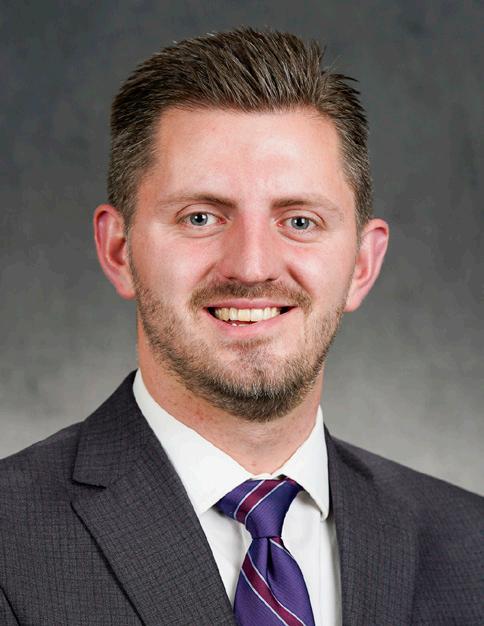
Rep. Kristin Robbins (R-Maple Grove), the committee chair, said “several bills” are being developed for introduction when legislators return to St. Paul Feb. 17 and Minnesota Management and Budget
are also working on language. “We absolutely want
to make this a bipartisan effort to give the agencies what they need.”
What Minnesota Management and Budget and the Department of Administration are doing to fight fraud — and what could be improved — was the focus of the recent meeting.
“Fraud of any kind is unacceptable,” said Erin Campbell, commissioner at Minnesota Management and Budget.
“… Unfortunately, there’s not a silver bullet to stop the type of fraud that we’ve seen in our public assistance programs.
“State government is about as complex an enterprise as it gets in terms of the range of functions and its legal regulations. By design, it relies on a de-centralized structure of state agencies to carry out its functions and services to the public.
To address fraud systematically and enterprise-wide requires layers of coordinated activities, increased control and security, better uses of data and changes to state statute.”
Examples, she said, could include laws that set
appropriate requirements for provider eligibility to get state funds, updating IT systems to provide data analysis and date sharing, authority for agencies to suspend payments when fraud is suspected and prohibiting someone suspended from receiving frauds from one program to receive funds from another.
No recourse is now available for Minnesota Management and Budget to hold other agencies and departments accountable.
“We step in with support,” Deputy Commissioner Britta Reitan said, citing examples such as agency personnel looking at improving internal controls, better training and working through Office of the Legislative Auditor findings. “We need tools that are more robust and more advanced that we currently have in some of our large-scale programs.”
Added Stacie Christensen, deputy commissioner at the Department of Administration, “There is more work ahead.”
Or choose to blame the victim and pin it all on ‘domestic terrorism'
By Stephanie A. (Sam) Frank and Bethine Church Endowed Chair of Public Affairs, Boise State University
The question the First Amendment keeps asking, across wars and panics and moral crusades, is whether a democracy can tolerate the possibility of persuasion.
There’s a certain school of thought that says no. Persuasion is too perilous. I call this way of thinking “swallow-a-fly logic.”
I’m referring, of course, to the popular children’s song where a woman ingests a fly and then keeps devouring bigger animals to fix it, until she dies from eating a horse. It leads to the “old lady who swallowed a fly” theo-
From 2
ry of obedience: If we let someone with a message we don’t like speak out, people might be persuaded. If people become persuaded, they might stop supporting the war, the president, the government, itself. If support evaporates, enlistment drops or compliance weakens as the state loses leverage. If enlistment drops, the government might fall. And if there is no government, then who cares about the First Amendment? By this way of thinking, free speech is dangerous because the public is too influence-able, and influence is too unpredictable, and security is too precious. The constitutional tradition of free speech, when it is working at its best, says yes anyway, go ahead and speak. The alternative is a politics in which the state survives by making dissenters illegitimate as citizens.
That’s what happened to Renée Good when she was shot and killed by ICE in Minneapolis on Jan. 7, 2026. Her resistance had made her menacing.
Dissent as a virus I’m a professor of public service and vice chair of the National Communication Association’s Communication and Law Division. My research examines how news institutions shape civic life and how freedom of expression is both a fundamental human right and a fundamental part of democracy. In modern First Amendment doctrine, the government usually cannot punish speech unless it crosses narrow lines like incitement. But when national security is invoked, the rules for speech appear to change. Dissent is treated less as per-
suasion to be debated and more like a virus to be contained before it harms public morale. That containment logic, either overt or covert, has repeatedly reappeared whenever protest has become politically inconvenient and unpalatable to those in power. It’s the kind of thinking that led to Jimmy Kimmel’s suspension from “Jimmy Kimmel Live!” after poking fun at President Donald Trump.
A terror memo. A protest. A killing.
National Security Presidential Memorandum 7, issued by the Trump administration in September 2025, relies on logic from the lady and the fly. It frames “domestic terrorism” and “organized political violence” as national security crises. It tells federal agencies to work together to investigate and stop suspected threats, a framework that enlarges the set of things the state can plausibly treat as suspect, including the freedoms of association and belief.
The language in the memorandum affirms legitimate
counterterrorism work while leaving room to treat political dissent as out of bounds. But the First Amendment protects protest speech.
Still, if the language of the Trump memo is somewhat abstract, Minneapolis has provided a brutally concrete example.
When an ICE agent shot and killed Good, a 37-yearold U.S. citizen, federal officials characterized the encounter as an act of self-defense by an agent afraid of being run down by Good in her car.
Local authorities have disputed that framing.
The incident was captured on video that widely circulated and intensified public scrutiny. According to Good’s wife, the couple were protesters who confronted heavily armed agents determined to scare them away. No one tried to run anyone over, she said.
Amid this controversy, the story took a sharp turn.
Homeland Security Secretary Kristi Noem said Good appeared to have been committing “an act of domestic terrorism.”
Trump called Good “very violent” and “very radical.” Reports claim that Department of Justice leadership pushed federal prosecutors to investigate Good’s widow, even as the department declined to open a civil rights probe into the shooting itself.
At least six federal prosecutors in the Minneapolis U.S. attorney’s office resigned in response.
Turning victims into suspects
The state has two choices when a death occurs that’s politically dangerous to the government.
It can investigate the killing with transparency and center the victim’s rights alongside public accountability as organizing principles. Or it can treat the killing as an opportunity to put the victim on trial in the court of public legitimacy. The second choice avoids holding government accountable, shifts conversation toward the target’s supposed
By Ben Crump
We honor Dr. Martin Luther King Jr. each January with speeches, service projects, and by reciting powerful quotes we know by heart.
But too many Black families will spend much of MLK Day the same way they spend most Mondays.
With the gas tank hovering near empty, hoping the car can go until the next paycheck arrives. With a prescription waiting at the pharmacy counter because they cannot afford the cost.
With a paycheck that has to stretch further than what seems possible.
Dr. King understood that true dignity means being able to afford and build a good life. In one of his clearest reminders, he asked what it means to “eat at an integrated lunch counter” if you cannot “buy a hamburger and a cup of coffee.”
That question still carries weight for many. Person-
al freedom will not be achieved without financial freedom.
Dr. King spent the final chapter of his life pushing the country to face economic injustice. The day before he was tragically assassinated, Dr. King stood with sanitation workers in Memphis to call for economic equality. He helped launch the Poor People’s Campaign because he knew freedom hollowed out by poverty is not freedom at all. Dr. King kept pushing America to match its promises with practical pathways.
That is the part of his legacy we should sit with this MLK Day. This work has never been more important or needed. The cost of groceries, rent, and childcare have become an increased burden. And many families go from stable to scrambling with just one unexpected expense.
These realities are on display in a recent national survey commissioned by DreamFi, echoing what so many families already feel so deeply. More

than one in four respondents told us they used check-cashing services in the past year. This finding makes it clear that too many households still need simpler and more accessible options for moving money.
The survey also shows how unexpected expenses impact families. Only 41% of Black respondents said they could cover a $1,000 emergen-
cy, compared with 56% of white respondents. When a tire blows out, when a child gets sick, when hours get cut, the question is not theoretical. The question is immediate and the impact is real.
We must shine a light on this struggle and work to equip families with tools to build better futures. We must recognize Dr. King’s wisdom
and acknowledge that financial stability is a civil rights issue, because financial instability limits the ability to have choices.
The survey also found hope that can guide how we move forward.
Black families are not turning away from the idea of building stability. In fact, they are reaching for it. In the survey, 79% of Black respondents said they sought out financial education in the past six months. Ours is a community hungry for tools and a fair shot at creating a better tomorrow.
So, what does it mean to honor Dr. King right now?
It means we get practical.
Dr. King asked America to make its promises real. The best way to honor him now is to provide opportunities for everyone to achieve Dr. King’s dream.
Ben Crump is a nationally renowned civil rights attorney and founder of Ben Crump Law. Known as “Black America’s attorney general,” he has represented families in some of the most high-profile civil rights cases of our time, including those of George Floyd, Breonna Taylor, Tyre Nichols, and Ahmaud Arbery. He is also co-founder of DreamFi, a financial empowerment platform focused on helping everyday people build stability through practical resources.
It means we expand access to clear, trustworthy financial education that respects people’s time and speaks to real solutions. It means we support savings pathways that help families prepare for emergencies before emergencies arrive. It means we encourage options that make routine transactions easier and less costly, so a family is not paying extra simply to manage their own money. Most of all, it means we stop treating financial instability as normal. Because normal is not the same as acceptable.
Mexico and Brazil have had more success with nationalizing
By Skip York Nonresident Fellow in Energy and Global Oil, Baker Institute for Public Policy, Rice University
U.S. President Donald Trump has ignited a contentious debate over who has the right to control Venezuela’s vast oil reserves.
Speaking on Jan. 3, 2026, after the U.S. military seized Venezuelan President Nicolás Maduro, the U.S. president declared, “We built Venezuela’s oil industry, and now we’re going to take it back.”
By Jan. 6, Trump was saying that Venezuela would provide the U.S. with up to 50 million barrels of oil in the near future.
The next day, the U.S.
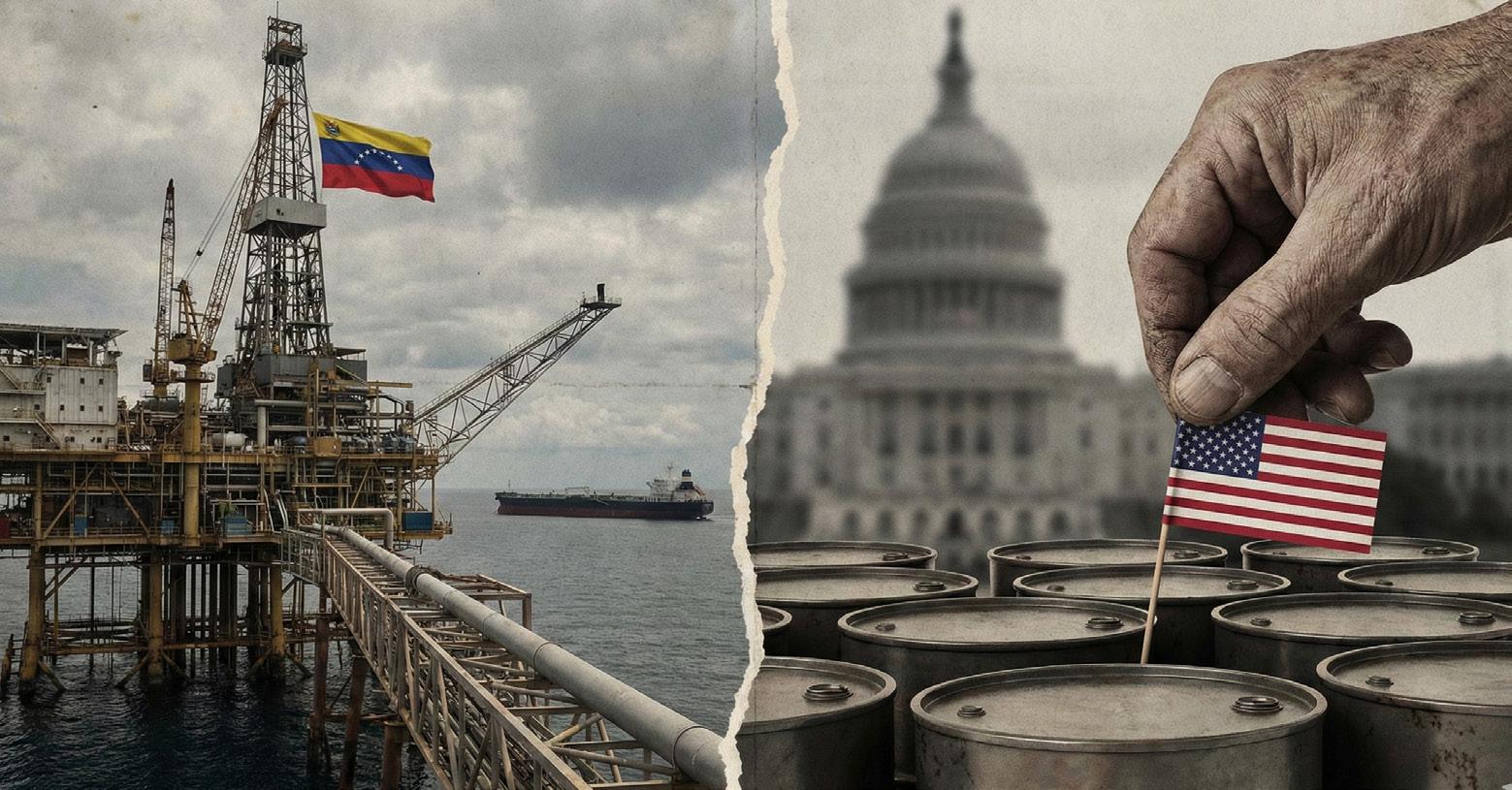

seized two tankers bound from Venezuela for other markets –less than a month after it seized two others it said were transporting Venezuelan oil.
Long-term plans go much further. Trump envisions major U.S. oil companies, such as Chevron and ExxonMobil, to invest some US$100 billion into reviving Venezuela’s struggling industry, with the investing companies reimbursed through future production. So far, neither Venezuelan authorities nor U.S. oil companies have said whether they’re willing to do this.
As a scholar of global energy, I believe that Trump’s words and actions, including his consultations with oil executives before Maduro’s removal, signal a bold push to reassert American dominance in a country with vast oil reserves.
Trump’s rationale Trump’s “Venezuela took our oil, we’re taking it back” rationale apparently references the South American nation’s initial nationalization of its oil industry in 1976, plus a wave of expropriations in 2007 under Venezuelan President Hugo Chávez.
U.S. oil companies played a big role in launching and sustaining Venezuela’s oil boom, starting in the 1910s. Companies such as Standard Oil, a predecessor of ExxonMobil, and Gulf Oil, which eventually became part of Chevron, invested heavily in exploration, drilling and infrastructure, transforming Venezuela into a major global supplier. Contracts from that era often blurred lines between reserve ownership and production rights. Venezuela legally retained subsoil ownership but granted or sold broad concessions to foreign operators, such as Royal Dutch-Shell. That effectively gave control of reserves and production to the oil companies, but not forever. This ambiguity likely has played a role in Trump alleging outright theft through nationalization, a claim that holds little grounding in the historical precedent of how Venezuela and other nations have managed ownership of their natural re-
serves.
Oil nationalization
When a country nationalizes its oil industry, control is transferred from private, often foreign-owned, companies to the government. Nationalization can involve the outright expropriation of facilities and reserves – with or without compensation – or the renegotiation of oil production contracts. Alternatively, a government may get a bigger stake in the joint ventures it already has with foreign oil companies.
While privately owned oil companies primarily are accountable to their shareholders and focus mainly on maximizing profits, most government-run oil companies have other priorities too. These might include pumping revenue into safety net programs, domestic energy security, the development of other industries and military spending.
Sometimes those other goals take so much money out of the oil company’s orbit that they interfere with operational efficiency and reinvestment, slowing growth or even reducing production capacity. That’s what happened in Venezuela, where oil production has fallen sharply since 2002. But other Latin American countries have also nationalized their oil industries with better results.
Mexico’s experience In Mexico, President Lázaro Cárdenas’ 1938 expropriation of foreign oil assets –primarily from U.S. and British companies – was the region’s first such assertion of economic independence.
Amid labor disputes and perceived exploitation, 17 privately owned companies were nationalized, creating Petróleos Mexicanos as Mexico’s government-run oil monopoly. Mexicans celebrate the formation of this company, known as Pemex, every year on March 18 as a symbol of national sovereignty.
Despite initial boycotts and diplomatic strain, Mexico eventually compensated the foreign companies that
lost their property. But it isolated its oil sector from international capital and technology for decades.
Due to the depletion of Pemex’s largest oilfields, chronic underinvestment, a failure to adopt new technologies and unwise policy choices, production, which peaked at 3.8 million barrels a day in 2004, began to decline. Mexico responded in 2013 and 2014 with reforms that opened the oil, gas and power generation industries to private capital.
By 2018, political backlash around a perceived loss of sovereignty and uneven benefits led to a policy reversal. Oil output continues to shrink; it now stands at 1.8 million barrels per day.
Mexico’s experience underscores how oil nationalization can foster self-reliance while hindering production.
Brazil’s approach Brazil also nationalized its oil industry in 1953, when President Getúlio Vargas established Petróleo Brasileiro S.A. as a state-owned company. From the start, Petrobras had a monopoly over all Brazilian oil exploration and production. The government expanded the company’s scope when it nationalized all privately owned refineries by 1964. Brazil’s oil nationalization was part of the country’s broader effort to develop its own industrial capacity and reduce its dependence on foreign oil.
Petrobras has changed significantly since its founding, especially after President Fernando Henrique Cardoso signed an oil deregulation law in 1997. It’s now a state-controlled company, in which investors may buy and sell shares. The government has forged many partnerships with private oil companies, drawing foreign investment. This strategy succeeded. Production has quadrupled from 0.8 million barrels per day in 1997 to 3.4 million in 2024.
Shell, Total Energies, Equinor, ExxonMobil and other foreign oil companies have provided capital, technology and execution capacity, particularly with deep-water drilling. Venezuela’s nationalization Venezuela’s oil nationalization, by contrast, shifted from cooperation with foreign oil companies to confrontation with them.
President Carlos Andrés Pérez first nationalized Venezuela’s oil industry in 1976, creating Petróleos de Venezuela, S.A. Foreign companies received compensation of about 25% for losing their as-
A sweeping global analysis of mental health — the World Mental Health Survey Initiative
— offers both a stark diagnosis of shared human struggle and a mirror for local communities, including Minnesota and the Twin Cities. The international data expose a widespread mental health crisis shaped by decades of inequality, policy neglect, and unaddressed trauma. It also underscores what too many Minnesotans already know: wellbeing is unevenly distributed, and access to care remains painfully limited.
The World Mental Health Survey, coordinated by the World Health Organization and major research universities, synthesizes data from dozens of countries to map the prevalence of depression, anxiety, trauma, substance use disorders, and other conditions. Globally, one in eight people live with a mental disorder — and the proportion of those needing treatment but not receiving it remains alarmingly high.
Minnesota: Front lines of a larger system failure
Closer to home, Minnesota’s mental health reality reflects many global patterns. Roughly 820,000 adults in Minnesota live with a mental health condition — and that doesn’t include those struggling without a diagnosis. Statewide, more than 1 million people experience symptoms of mental illness, an estimated one in five residents.
Yet access to care remains woefully insufficient. National mental health data rank Minnesota among the states with growing shortages of mental health professionals, even as the number of providers increased in recent years. In Hennepin County residents report an average of 3.5 poor mental health days per month, and provider access can be as strained as 198:1 residents per mental health professional.
“We need mental health to be treated as infrastructure — not an afterthought or luxury,” says Insight News editor Al McFarlane, who hosts weekly podcast – The Healing Circle - with Dr. Bravada Garrett Akinsanya, Twin Cities community mental health leader and advocate and CEO of African American Child Wellness Institute (AACWI), “Our neighbors are hurting, and many never get the support they need before or after crisis hits.”
Unequal burdens, deep roots
Just as the World Mental Health Survey finds stark disparities across coun-
tries, Minnesota’s data reveal deep inequalities across race, income, geography, and age. African American, Indigenous, and other communities of color report consistently higher rates of “mentally unhealthy days” compared to white residents. Minnesota’s youth are similarly facing escalating challenges: local student surveys document significant increases in anxiety, depression, and stress flags among 11th graders statewide.
At the University of Minnesota–Twin Cities, over 80% of students reported stress in the past year, with more than half indicating sleep disturbances — a common indicator of broader mental health strain.
LGBTQ+ young people reflect another telling local dimension. A state-level survey by The Trevor Project found nearly two-thirds of young LGBTQ+ Minnesotans reported anxiety in the past year, with more than half experiencing depression and over a third considering suicide. Almost half who sought care couldn’t access it due to cost and other barriers.
“Politics and stigma compound the struggle,” said Aaron Zimmerman, executive director of PFund Foundation, a Twin Cities LGBTQ+ support nonprofit. “Mental health isn’t happening in a vacuum — it’s happening inside systems that have historically undervalued queer and Black lives.”
The treatment gap — global and local
One of the most sobering insights from the global survey is the treatment gap: millions of people worldwide who would benefit from care receive none. For low- and middle-income countries, this gap can exceed 75 %, and even in affluent nations like the United States, roughly 35–50 % of people with mental health needs receive no treatment at all.
Minnesota’s own gaps reflect this. A Mental Health Fact Sheet reports that roughly 800,000 adults in the state with a diagnosable condition did not receive needed mental health care — and 200,000 had significant barriers to access.
Barriers are multiple: cost, provider shortages, insurance restrictions, transportation challenges, and cultural misalignment of services. In rural communities, provider deserts can make care nearly impossible, while urban areas still grapple with wait lists and underfunded services.
Community-led healing: A counter-narrative Despite these chal-
lenges, Minnesota communities are generating innovative models rooted in connection rather than isolation.
In Minneapolis, the Behavioral Crisis Response program dispatches trained mental health professionals — not armed officers — to 911 calls involving mental health crises. Since its launch in 2021, BCR has responded to roughly 20,000 calls, offering an alternative to criminalization during moments of crisis.
Peer support networks, mutual aid circles, cultural healing spaces, and school-based programs also fill critical gaps. These grassroots approaches reflect what the global survey emphasizes: healing is more than clinical intervention — it’s social, relational, and collective.
Where do we go from here?
Policymakers and advocates argue that meaningful change requires systemic investment: expanding community-based care infrastructure, integrating mental health in schools and workplaces, reducing insurance barriers, and building workforce capacity.
“If we don’t address the root causes — poverty, discrimination, trauma — all the therapy in the world won’t be enough,” said McFarlane.
The World Mental Health Survey — and Minnesota’s own data — make clear that mental health is not merely an individual medical issue, but a community and societal challenge. As global leaders call for investment and equity, Minnesota’s leaders, organizers, and residents face their own reckoning: how to turn data into dignity, and pain into a foundation for collective well-being.
Who wrote the World Mental Health Survey — and
drug policy expert
By Chris Meyers Adjunct Professor of Philosophy, George Washington University
Medical marijuana could soon be reclassified into a medical category that includes prescription drugs like Tylenol with codeine, ketamine and anabolic steroids. That’s because in December 2025, President Donald Trump signed an executive order to reschedule marijuana to a less restricted category, continuing a process initiated by President Joe Biden in 2022. Currently, marijuana is in the most restrictive class, Schedule I, the same category as street drugs like LSD, ecstasy and heroin. For years, many researchers and medical experts have argued that its current classification is a hindrance to much-needed medical research that would answer many of the pressing questions about its potential for medicinal use. In January 2026, Republican Senators Ted Budd, of North Carolina, and James Lankford, of Oklahoma, introduced an amendment to funding bills trying to block the rescheduling, claiming that it “sends the wrong message” and will lead to “increased risk of heart attack, stroke, psychotic disorders, addiction and hospitalization.” As a philosopher and drug policy expert, I am more interested in what is the most
reasonable marijuana policy. In other words, is rescheduling the right move? Broadly speaking, there are three choices available for marijuana regulation.

The U.S. could keep the drug in the highly restricted Schedule I category, move it to a less restrictive category or remove it from scheduling altogether, which would end the conflict between state and federal marijuana laws. As of January 2026, cannabis is legal in 40 of 50 states for medical use and 24 states for recreational use. Rescheduling would only apply to
why it matters
The World Mental Health Survey is not a single report authored by one institution or research team. It is a long-running, international collaboration coordinated by the World Health Organization (WHO) and carried out by a global network of psychiatrists, epidemiologists, public health researchers, and social scientists. Together, these researchers have conducted face-to-face interviews with hundreds of thousands of people across more than 30 countries, making the initiative one of the most comprehensive mental health research efforts ever undertaken.
The survey is led by the WHO Department of Mental Health and Substance Use, which oversees the project’s methodology, ethical standards, and cross-national comparability. At the center of the research effort is Dr. Ronald C. Kessler, a professor of health care policy at Harvard Medical School, who serves as the principal scientific investigator for the World Mental Health Survey Initiative. Kessler is widely recognized as one of the world’s leading
psychiatric epidemiologists and has spent decades studying how social conditions shape mental health outcomes.
Alongside Kessler, the survey’s core leadership includes senior WHO mental health officials and international scholars who specialize in trauma, depression, anxiety disorders, substance use, and health inequities. These researchers work in partnership with local research teams in each participating country, ensuring that the data reflect cultural context rather than imposing a single Western framework of mental health.
Importantly, the World Mental Health Survey is not limited to measuring diagnoses. Its authors intentionally examine exposure to violence, political instability, poverty, discrimination, and early-life adversity — recognizing that mental health is inseparable from social and structural conditions. Many of the survey’s lead writers have emphasized that mental illness cannot be addressed solely through clinical treatment without confronting the environments that produce
harm.
WHO officials involved in the project have repeatedly stressed that the survey is designed to inform policy, not just scholarship. The findings are used to guide national mental health strategies, resource allocation, and recommendations for integrating mental health into primary care, education systems, and community-based services.
The authors also acknowledge the limits of traditional systems. In multiple published analyses, WMHS researchers note that formal mental health services alone cannot meet global need, particularly in communities facing chronic violence or state instability. This conclusion aligns closely with what many Black, Indigenous, immigrant, and marginalized communities have long asserted: healing must be culturally grounded, community-led, and supported — not controlled — by institutions.
By grounding its conclusions in both data and lived conditions, the World Mental Health Survey challenges governments to move beyond rhetoric. Its authors argue that mental health is a public good, shaped by policy decisions around housing, policing, employment, and education as much as by health systems themselves. For communities in the Twin Cities — where residents live with the cumulative impact of police violence, civil unrest, and unequal access to care — the survey’s authors offer an implicit validation: the distress people experience is not imagined, exaggerated, or individual failure. It is measurable, predictable, and preventable. And that, the researchers argue, makes action not just possible — but necessary


“He was described by coworkers as the first person who would ‘jump into hell’ to help someone,” Ellison said.
“He was our neighbor, and he should still be with us right now.”
The attorney general drew a personal connection to Pretti’s death, referencing his own son’s service as a combat medic and subsequent career as a nurse.
“This hit his colleagues very hard,” Ellison said.
“They were crying. And I was brokenhearted too—because I know the love and compassion Alex brought to the people he cared for.”
But beyond grief, Ellison said the case revealed something even more alarming: state investigators were blocked from doing their jobs.
According to Ellison, agents from the Minnesota Bureau of Criminal Apprehension (BCA) were denied access to the shooting scene—even after obtaining a judicial warrant.
“They secured a warrant signed by a judge, which has never been needed before,” Ellison said. “And they were still refused access. This is uncharted territory.”
Court orders evidence preserved Ellison said the Pretti case followed other recent incidents—shootings in north and south Minneapolis—where state investigators were similar-
itaries used in many countries to carry out political repression along partisan and ethnic lines, even though they are official agents of the state.
addition to immigrants’ rights.”
In these ways, ICE and CBP do bear some resemblance to the informal paramil-
Why this matters
An extensive body of research shows that more mil-
president of Venezuela in 1998, reversed course.
sets. Many transitioned into service providers or formed joint ventures with the new company, PDVSA.
Venezuela made its oil sector more open to foreign capital in the 1990s. It aimed at the time to boost output and develop the Orinoco Belt in eastern Venezuela, which has some of the world’s biggest oil reserves. This policy contributed to Venezuelan production reaching a historical peak of more than 3 million barrels per day in 2002.
Chávez changes everything
Hugo Chávez, elected
medical use.
Let’s examine the arguments for each option:
The Controlled Substances Act
The Controlled Substances Act places each prohibited drug into one of five “schedules” based on proven medical use, addictive potential and safety.
Drugs classified as Schedule I – as marijuana has been since 1971, when the Controlled Substances Act was passed – cannot be legally used for medical use or research, though an exception for research can be made with special permission from the Drug Enforcement Administration. Schedule I drugs are believed to have a high potential for abuse, to be extremely addictive and to have “no currently accepted medical use.”
As a Schedule I drug, marijuana has been more tightly controlled than cocaine, methamphetamine, PCP and fentanyl, all of which belong to Schedule II.
The status quo option
Some policy analysts and anti-marijuana activists argue that marijuana should re-
From 7
behavior and character, and expands the blame to include the people who loved and stood with the dead.
When this happens, the government does not have to win in court. It only has to keep the stigma circulating by asserting that a particular speaker undermines respect for elected officials. Indeed, that’s one of the reasons Trump offered for Good’s shooting by the ICE officer: “At a very minimum, that woman was very, very disrespectful to law enforcement,”
ly denied access to evidence and investigative files.
“This is not a rash decision,” Ellison said of the state’s legal response. “To have to get a court order just to preserve evidence in a homicide should alarm everyone who believes in equal justice under the law.”
Late last week, Ellison’s office joined the Hennepin County Attorney’s Office in seeking a temporary restraining order to prevent federal authorities from destroying or altering evidence.
“Within two hours of filing,” Ellison said, “a judge granted the motion.”
The order now bars the Department of Homeland Security and other federal entities from tampering with evidence related to Pretti’s death.
“The irreparable harm
itarized forms of policing are associated with higher rates of police violence and rights violations, without reducing crime or improving officer safety.
Studies have also found that more militarized police forces are harder to reform than less-militarized law enforcement agencies. The use
to resolve disputes.
In 2003, after a strike briefly but severely slashed national output, Chávez consolidated control over the oil industry. He purged PDVSA of his critics, replacing managers who had expertise with his political allies, and fired over 18,000 employees.
Venezuela expropriated operating assets, converted contracts held by private companies into PDVSA-controlled joint ventures and made sharp and unpredictable increases in the taxes and royalties foreign oil companies had to pay.
Foreign oil companies suffered from chronic payment delays, along with restrictive foreign exchange rules and new laws that weakened contract enforcement and made it harder for companies to use arbitration
main a Schedule 1 drug.
A common objection to rescheduling it is the assertion that 1 in 3 marijuana users develop an addiction to the drug, which stems from a large study called a meta-analysis.
A careful reading of that study reveals the flaws in its conclusions. The researchers found that about one-third of heavy users – meaning those who use marijuana weekly or daily – suffered from dependence. But when they looked at marijuana users more generally – meaning people who tried it at least once, the way addiction rates are normally measured – they found that only 13% of users develop a dependency on marijuana, which makes it less habit-forming than most recreational drugs, including alcohol, nicotine and caffeine, none of which are scheduled under the Controlled Substances Act.
Further, if the 1-in-3 figure were accurate, then marijuana would be more addictive than alcohol, crack cocaine and even heroin. This defies both common sense and well-established studies on the comparative risk of addiction.
Critics of rescheduling also deny that there is convincing evidence that marijuana or its compounds have any legitimate medical use. They cite research like a 2025 review paper that assessed 15 years of medical marijuana research and concluded that “evidence is in-
he told reporters.
The United States has been here before. Around World War I, the U.S. Supreme Court issued several free speech decisions in cases mostly remembered as disputes over protest and draft resistance. But their underlying engine was the swallow-a-fly theory. Opposing the war might ruin the nation, so political dissidents had to be stopped, and the court affirmed the government’s right to silence strident speakers. The Cold War era sharpened the same approach but made it about identity. The Smith Act, passed in 1940, curbed speech that advocated the violent overthrow of the government. In practice, Smith
of losing that evidence is so great,” Ellison said, “that any alleged harm to the federal government doesn’t even move the scales.”
“Tremendous damage” to communities
Ellison said the immigration surge has already inflicted deep harm across Minnesota, particularly in immigrant and working-class communities.
“We’ve had two killings within two weeks and an additional nonlethal shooting,” he said. “People have been stopped and demanded to show their papers. Homes have been entered without cause. Stores have shuttered. Kids have stopped going to school.” He added, “Markets have closed. Restaurants have been disrupted. Workers are
of such forces can also create tensions with both the regular military and civilian police, as currently appears to be happening with ICE in Minneapolis. The ways in which federal immigration forces in the United States resemble informal paramilitaries in other countries – operating with less
In 2007, Chávez forced foreign oil companies partnering with PDVSA to renegotiate their agreements, leading to the partial nationalization of their stakes in those ventures.
Several foreign oil companies, including ConocoPhillips and ExxonMobil, rejected the new terms of engagement and left Venezuela.
Their legal disputes with Venezuela over billions of dollars in joint venture assets and severed revenue-sharing agreements have never been resolved.
Chevron, however, stayed put. The Houston-headquartered company, which has had a presence in Venezuela since 1924, now plays the largest role of any foreign oil company in the country. It produces
sufficient for the use of cannabis or cannabinoids for most medical indications.”
This claim is problematic, however, given that the Food and Drug Administration has already approved several medicines that are based on the same active compounds found in marijuana. These include the drugs Marinol and Syndros, which are used to treat AIDS-related anorexia and chemotherapy-induced nausea and vomiting. Both of these contain delta-9-tetrahydrocannabinol, or THC, the substance that is responsible for the marijuana high.
If the active ingredients of marijuana have legitimate medical use as established by the FDA, then it stands to reason that so must marijuana.
Option 2: Moving marijuana to schedule III
Moving marijuana to schedule III would make it legal at the federal level, but only for medical use. Recreational use would remain federally prohibited, even though it is legal in 24 states as of early 2026.
The most obvious benefit to rescheduling, noted above, is that it would make research on marijuana easier. The system of cannabinoid receptors through which marijuana confers its therapeutic and psychoactive effects is crucial for almost every aspect of human functioning. Thus, marijuana
Act cases treated any type of communist sympathy as illegal, presumptively falling outside democratic tolerance.
The government did not have to prove a threat was real and required response. Instead, it had to show that certain ideas were too dangerous to be part of open conversation.
Finally, in Brandenburg v. Ohio from 1969, the Supreme Court went in the opposite direction, affirming free speech rights even for those advocating vile ideas. The justices overturned the conviction of a Ku Klux Klan leader and held that the government cannot punish advocacy just because it is extreme, hateful or possibly per-
afraid to go to their jobs.”
According to Ellison, the state has heard no resistance from local or state law enforcement agencies when it comes to sharing information—but has encountered resistance from federal authorities.
“I have not heard a single Minnesota law enforcement agent say they wouldn’t cooperate,” he said. “I’ve heard quite the opposite—from the federal government.”
A Constitutional showdown ahead
Ellison confirmed that the state’s lawsuit against Operation Metro Surge seeks to halt the operation.
“This case exists because of the unprecedented nature of this surge,” Ellison said. “We are making a novel consti-
effective oversight, less competent recruits and increasingly entrenched partisan identity – make all these issues more intractable. Which is why, I believe, many commentators have surfaced the term paramilitary and are using it as a warning.
Disclosure statement
240,000 barrels per day, about 25% of Venezuela’s total output. The government also reclassified vast oil deposits as “proven” at a time when global oil prices were very high, rendering their exploration and production more economically viable. That change tripled this self-reported and never-verified estimate of Venezuela’s proven oil reserves to approximately 300 billion barrels.
Conditions get worse under Maduro Venezuelan oil output further declined while Maduro served as president, falling to 665,000 barrels per day in 2021. Since then, production has recovered somewhat, rebounding to about 1.1 million barrels per day by late 2025 – about onethird of its historic high.
compounds could provide effective medicines for a wide variety of ailments.
Contrary to the 2015 review mentioned earlier, studies have shown that cannabis is effective for treating nausea and AIDS symptoms, chronic pain and some symptoms of multiple sclerosis, as well as many other conditions.
Rescheduling could also improve medical marijuana guidance. Under the current system, medical marijuana users are not provided with accurate, evidence-based guidance on how to use marijuana effectively. They must rely on “bud tenders,” dispensary employees with no medical training whose job is to sell product. If cannabis were moved to Schedule III, doctors would be trained to advise patients on its proper use. On the other hand, medical schools need not wait for rescheduling. Given that many people are already using medical marijuana, some medical experts have argued that medical schools should provide this training already.
Rescheduling, however, is not without complications. To comply with the law, medical marijuana programs would have to start requiring a doctor’s prescription, just like with all other scheduled substances. And it could be distributed only by licensed pharmacies. That might be a good thing, if marijuana is as dangerous
ilous. Only speech “directed at inciting or producing imminent lawless action and is likely to incite or produce such action” may be quelched, the court wrote. The danger has to be real, and it has to be happening right now. Otherwise, citizens are free to say what they will.
New ways to chill speech So, if the Supreme Court has settled the issue, why does it feel alive again now? Contemporary crackdowns rarely present themselves as crackdowns. They present themselves as “coordination,” “threat assessment,” “financial disruption,” “extremism prevention” and, increasingly, as necessary defenses against “do-
tutional argument. This is a novel situation.”
The attorney general argued that Minnesota is being targeted not based on immigration enforcement needs, but political considerations—an action he says violates the state’s First Amendment rights and its constitutional claim to equal sovereignty.
“The federal government is commandeering and coercing the state of Minnesota to bend to its will,” Ellison said. “That is a threat to the people of this state.”
Ellison framed the moment as one that transcends politics.
“This is about evidence. It’s about truth. It’s about justice,” he said. “And every person—no matter who they are—deserves that.”
Erica De Bruin does not work for, consult, own shares in or receive funding from any company or organization that would benefit from this article, and has disclosed no relevant affiliations beyond their academic appointment.
This overall decline is due to mismanagement, corruption and more than a decade of U.S. sanctions. Infrastructure decay – leaking pipelines, outdated refineries held together by makeshift repairs – has exacerbated this crisis. Many hurdles are in the way of the industry’s recovery, including ongoing and potentially future legal disputes, geopolitical risks and the need for massive investments. Returning Venezuela’s oil production to its peak of 3 million barrels per day could cost more than $180 billion.
Better example As Brazil’s experience suggests, governmental control over oil production and sales is not inherently bad for a country’s economic welfare.
and addictive as critics claim. But advocates of medical marijuana might be concerned that this would increase costs to the consumer and restrict access. That concern might be mitigated, however, if health insurance companies are required to cover the costs of medical marijuana once it is rescheduled. In addition, it is unclear how rescheduling would affect state-level bans on medical marijuana. Generally speaking, states cannot legally restrict access to pharmaceuticals that have been approved by the FDA. However, this principle of federal preemption is currently being challenged by six states claiming they have the authority to restrict access to the abortion medication mifepristone.
Option 3: Unscheduling marijuana
Norway is an even stronger example. That oil-rich Nordic country has evaded what some scholars call the “resource curse” by treating the oil that its nationally owned company, now called Equinor, has produced as a source of lasting wealth for the Norwegian people. Revenue from the Norwegian government’s 67% stake in Equinor has accumulated in a sovereign wealth fund worth more than $2 trillion and helped Norway diversify its economy. As the Venezuelan government regroups following Maduro’s removal, there’s much it can learn from other countries that have managed to maintain more stability alongside state-controlled oil production.
In fact, many drugs as, or more powerful than, marijuana are also not scheduled. For example, most over-thecounter cough medicines contain dextromethorphan, a hallucinogenic dissociative, which in large doses causes effects similar to PCP. Removing marijuana from the list of controlled substances would also decriminalize the drug. Over 200,000 Americans were arrested for marijuana in 2024, over 90% of them for mere possession. At the moment, the third option seems very unlikely. Although over 60% of Americans are in favor of full marijuana legalization, it lacks support in Congress.
Medical marijuana rescheduling looks likely to occur in 2026. After all, it has been proposed by both Biden and Trump. Whether it is the right move, only time will tell. This article includes portions of a previous article originally published on Oct. 9, 2024.
Disclosure statement
Chris Meyers does not work for, consult, own shares in or receive funding from any company or organization that would benefit from this article, and has disclosed no relevant affiliations beyond their academic appointment.
The debate over rescheduling ignores a third option: that marijuana could be removed entirely from the Controlled Substances Act, giving states the authority to allow medical marijuana to be distributed without a prescription. Some of the objections to rescheduling come from marijuana advocates. Given that marijuana is safer and less addictive than alcohol – which is not scheduled under the Controlled Substances Act – a case could be made for removing it entirely from the list of scheduled substances and allowing states to legalize it for recreational use, as many states have already.
mestic terrorism.”
The Trump administration’s September 2025 national security memorandum is exactly the kind of framework that makes these routes attractive, because it invites the state to treat political conflict not as disagreement but as a security threat – something to be managed by the tools and instincts of national security.
Seen in this light, the resignations of federal government attorneys in Minneapolis are not just a bureaucratic drama. They are a window into the government’s underlying theory of the case. Investigate victims and their associates instead of scrutinizing the state’s use of force. Frame the victim’s death as the inevitable consequence of being their type. As Trump said of Good: She was a “professional agitator.” Minneapolis is not just a tragedy. It is a test of whether the country still backs the central promise of modern free speech doctrine. Government may not suppress speech and association simply because it fears what the public might come to believe.
Disclosure statement Stephanie A. (Sam) Martin does not work for, consult, own shares in or receive funding from any company or organization that would benefit from this article, and has disclosed no relevant affiliations beyond their academic appointment.
By W.D. Foster-Graham Book Review Editor
By Alcina Washington-Fowler
In these days and times, prayer and faith are needed more than ever, and Spoken Word makes room for that. As long as I can remember, poets and artists are the vanguard and the barometer of social change. That being said, it is my pleasure to bring to you the Spoken Word performing artist and poet, Alcina Washington-Fowler. Washington-Fowler’s poems speak not just at an emotional level, but at a spiritual level. In several of her po-
Reclamation of believing again
ems, she refers to the readers/ hearers as “My LOVELIES.” In her poem “Magnificent Lovelies,” she expands upon this. In her words, LOVELIES “is my connection of addressing others with Kind and Sincere expressions.” It speaks of community and agape love. Throughout her poems are references to the Word and the scriptural texts. We read of perfection in weakness, reclamation of who we are and whose we are, our lives as a testimony, and that God doesn’t make mistakes. She expresses surrender to God as strength and
not weakness, how we endure, and healing (physical, emotional, mental, and spiritual).
In her poem “Racism and Hate – The Comfortless Existence,” Washington-Fowler tackles those issues head on, and exposes the lies for what they are. In “The Wisdom of Yes and No,” she reminds us of the following: “Grant me the wisdom to say ‘Yes’ to what nourishes, restores, and aligns to truth. And the courage to say ‘No’ to what drains, distorts, and demands my disappearance.” Her work also exemplifies the importance of being
seen, knowing that you are, and that you are valued and loved in spite of what is happening around you. There are so many gems of authentic truth and experience here that I could easily take one poem a day and simply meditate upon it, and I am grateful that I have had the opportunity to hear her share her work. Motions of New Faith and Purpose is available through Amazon and Chase Editing Services, LLC. Thank you, Alcina, for sharing your faith journey and your victory!
Ryan Coogler’s Sinners emerged as the biggest contender at the 98th Academy Awards, earning a historic 16 nominations—more than any movie has ever received in Oscar history. The announcement was made Thursday by the Academy of Motion Picture Arts and Sciences.
With this achievement, Sinners surpassed the long-standing record of 14 nominations previously held by classics such as All About Eve, Titanic, and La La Land. In addition to a Best Picture nod, Coogler secured nominations for Best Director and Best Original Screenplay. The film’s leading man, Michael B. Jordan, also reached a career milestone, receiving his first-ever Oscar nomination for Best Actor.
Coogler’s recognition is particularly significant, as he becomes one of only seven Black filmmakers to be nominated for Best Director. He joins an influential group that includes Spike Lee (Do the Right Thing), John Singleton (Boyz n the Hood), Lee Daniels (Precious), Steve McQueen (12 Years a Slave), Barry Jenkins (If Beale Street Could Talk), and Jordan Peele (Nope).
Trailing closely behind Sinners is One Battle After Another, a provocative exploration of radical political movements that garnered 13 nominations. Both films are among the Best Picture contenders for the 2026 Oscars, alongside Frankenstein, Bugonia, Hamnet, Marty Supreme, Sentimental Value, Train Dreams, F1, and The Secret Agent.
The Best Actor race is especially competitive this year. Michael B. Jordan faces off against Timothée Chalamet, whose unconventional promotional campaign helped turn Marty Supreme into A24’s highest-grossing release. Also nominated are Leonardo DiCaprio for One Battle After Another, Ethan Hawke for Blue Moon, and Wagner Moura, fresh off a Golden Globe win for The Secret Agent.
In the Best Supporting Actress category, Sentimental Value earned two nominations for Elle Fanning and Inga Ibsdotter Lilleaas. They are joined by Amy Madigan (Weapons), Wunmi Mosaku (Sinners), and Teyana Taylor (One Battle After Another).
The 98th Academy Awards ceremony will be broadcast on ABC and streamed live on Hulu on Sunday, March 15. Conan O’Brien is set to return as host for the second consecutive year.
A full list of this year’s Oscar nominees follows.
Best Picture Bugonia (Focus Features); Ed Guiney & Andrew Lowe, Yorgos Lanthimos, Emma Stone and Lars Knudsen, Producers F1 (Apple); Chad Oman, Brad Pitt, Dede Gardner, Jeremy Kleiner, Joseph Kosinski and Jerry Bruckheimer, Producers
Frankenstein (Netflix); Guillermo del Toro, J. Miles Dale and Scott Stuber, Producers Hamnet (Focus Features); Liza Marshall, Pippa Harris, Nicolas Gonda, Steven Spielberg and Sam Mendes, Producers Marty Supreme (A24); Eli Bush, Ronald Bronstein, Josh Safdie, Anthony Katagas and Timothée Chalamet, Producers One Battle After Another (Warner Bros.); Adam Somner, Sara Murphy and Paul Thomas Anderson, Producers The Secret Agent (Neon); Emilie Lesclaux, Producer Sentimental Value (Neon); Maria Ekerhovd and Andrea Berentsen Ottmar, Producers Sinners (Warner Bros.); Zinzi Coogler, Sev Ohanian and Ryan Coogler, Producers Train Dreams (Netflix); Marissa McMahon, Teddy Schwarzman, Will Janowitz, Ashley Schlaifer and Michael Heimler, Producers
Best Director Hamnet (Focus Features), Chloé Zhao Marty Supreme (A24), Josh Safdie One Battle After Another (Warner Bros.), Paul Thomas Anderson Sentimental Value (Neon), Joachim Trier Sinners (Warner Bros.), Ryan Coogler
Best Actor Timothée Chalamet in Marty Supreme (A24) Leonardo DiCaprio in One Battle After Another (Warner Bros.) Ethan Hawke in Blue Moon (Sony Pictures Classics) Michael B. Jordan in Sinners (Warner Bros.) Wagner Moura in The Secret Agent (Neon)
Best Actress Jessie Buckley in Hamnet (Focus Features) Rose Byrne in If I Had Legs I’d Kick You (A24) Kate Hudson in Song Sung Blue (Focus Features) Renate Reinsve in Sentimental Value (Neon) Emma Stone in Bugonia (Focus Features)
Best Supporting Actor Benicio Del Toro in One Battle After Another (Warner Bros.) Jacob Elordi in Frankenstein (Netflix) Delroy Lindo in Sinners (Warner Bros.) Sean Penn in One Battle After Another (Warner Bros.) Stellan Skarsgard in Sentimental Value (Neon)
Best Supporting Actress Elle Fanning in Sentimental Value (Neon) Inga Ibsdotter Lilleaas in Sentimental Value (Neon) Amy Madigan in Weapons (Warner Bros.)
Wunmi Mosaku in Sinners (Warner Bros.)
Teyana Taylor in One Battle After Another (Warner Bros.)
Best Adapted Screenplay Bugonia (Focus Features);
Screenplay by Will Tracy Frankenstein (Netflix); Written for the Screen by Guillermo del Toro
Hamnet (Focus Features); Screenplay by Chloé Zhao & Maggie O’Farrell
One Battle After Another (Warner Bros.); Written by Paul Thomas Anderson
Train Dreams (Netflix); Screenplay by Clint Bentley & Greg Kwedar
Best Original Screenplay
Blue Moon (Sony Pictures Classics); Written by Robert Kaplow
It Was Just an Accident (Neon); Written by Jafar Panahi; Script collaborators Nader Saïvar, Shadmehr Rastin, Mehdi Mahmoudian
Marty Supreme (A24); Written by Ronald Bronstein & Josh Safdie
Sentimental Value (Neon); Written by Eskil Vogt, Joachim Trier Sinners (Warner Bros.); Written by Ryan Coogler
Best Animated Feature Arco (Neon); Ugo Bienvenu, Félix de Givry, Sophie Mas and Natalie Portman
Elio (Walt Disney); Madeline Sharafian, Domee Shi, Adrian Molina and Mary Alice Drumm
KPop Demon Hunters (Netflix); Maggie Kang, Chris Appelhans and Michelle L.M. Wong
Little Amélie or the Character of Rain (GKIDS); Maïlys Vallade, Liane-Cho Han, Nidia Santiago and Henri Magalon
Zootopia 2 (Walt Disney); Jared Bush, Byron Howard and Yvett Merino
Best International Feature Brazil, The Secret Agent France, It Was Just an Accident Norway, Sentimental Value Spain, Sirat Tunisia, The Voice of Hind Rajab
Best Documentary Feature
The Alabama Solution (HBO Documentary Films); Andrew Jarecki and Charlotte Kaufman
Come See Me in the Good Light (Apple); Ryan White, Jessica Hargrave, Tig Notaro and Stef Willen
Cutting Through Rocks; Sara Khaki and Mohammadreza Eyni
Mr. Nobody Against Putin (PINK); Nominees to be determined The Perfect Neighbor (Netflix); Geeta Gandbhir, Alisa Payne, Nikon Kwantu and Sam Bisbee
Best Animated Short Butterfly (Sacrebleu Productions); Florence Miailhe and Ron Dyens
Forevergreen; Nathan Engelhardt and Jeremy Spears
The Girl Who Cried Pearls (National Film Board of Canada); Chris Lavis and Maciek Szczerbowski
Retirement Plan; John Kelly and Andrew Freedman
The Three Sisters (Polydont Films/Rymanco Ventures); Konstantin Bronzit
Best Casting Hamnet (Focus Features); Nina Gold
Marty Supreme (A24); Jennifer Venditti
One Battle After Another (Warner Bros.); Cassandra Kulukundis
The Secret Agent (Neon); Gabriel Domingues
Sinners (Warner Bros.); Francine Maisler
Best Cinematography
Frankenstein (Netflix), Dan Laustsen
Marty Supreme (A24), Darius Khondji
One Battle After Another (Warner Bros.), Michael Bauman Sinners (Warner Bros.), Autumn Durald Arkapaw
Train Dreams (Netflix), Adolpho Veloso
Best Costume Design
Avatar: Fire and Ash (Walt Disney); Deborah L. Scott
Frankenstein (Netflix); Kate Hawley
Hamnet (Focus Features); Malgosia Turzanska
Marty Supreme (A24); Miyako Bellizzi
Sinners (Warner Bros.); Ruth E. Carter
Best Documentary Short
All the Empty Rooms (Netflix); Joshua Seftel and Conall Jones
Armed Only With a Camera: The Life and Death of Brent
Renaud (HBO); Craig Renaud and Juan Arredondo
Children No More: “Were and Are Gone” (Sky); Hilla Medalia and Sheila Nevins
The Devil Is Busy (HBO); Christalyn Hampton and Geeta
Gandbhir
Perfectly a Strangeness (Second Sight Pictures); Alison McAlpine
Best Film Editing F1 (Apple); Stephen Mirrione
Marty Supreme (A24); Ronald Bronstein and Josh Safdie
One Battle After Another (Warner Bros.); Andy Jurgensen
Sentimental Value (Neon); Olivier Bugge Coutté
Sinners (Warner Bros.); Michael P. Shawver
Best Live-Action Short
Butcher’s Stain (Tel Aviv University Steve Tisch School of Film and Television); Meyer Levinson-Blount and Oron Caspi A Friend of Dorothy; Lee Knight and James Dean Jane Austen’s Period Drama; Julia Aks and Steve Pinder
The Singers (Netflix); Sam A. Davis and Jack Piatt
Two People Exchanging Saliva (Canal+/The New Yorker); Alexandre Singh and Natalie Musteata
Best Makeup and Hairstyling Frankenstein (Netflix); Mike Hill, Jordan Samuel and Cliona Furey Kokuho (GKIDS); Kyoko Toyokawa, Naomi Hibino and Tadashi Nishimatsu Sinners (Warner Bros.); Ken Diaz, Mike Fontaine and Shunika Terry The Smashing Machine (A24); Kazu Hiro, Glen Griffin and Bjoern Rehbein
The Ugly Stepsister (Independent Film Company/Shudder); Thomas Foldberg and Anne Cathrine Sauerberg
Best Original Score Bugonia (Focus Features); Jerskin Fendrix
Frankenstein (Netflix); Alexandre Desplat Hamnet (Focus Features); Max Richter
One Battle After Another (Warner Bros.); Jonny Greenwood Sinners (Warner Bros.); Ludwig Goransson
Best Original Song
“Dear Me” from Diane Warren: Relentless (MasterClass/Greenwich Entertainment); Music and Lyric by Diane Warren
“Golden” from KPop Demon Hunters (Netflix); Music and Lyric by EJAE, Mark Sonnenblick, Joong Gyu Kwak, Yu Han Lee, Hee Dong Nam, Jeong Hoon Seon and Teddy Park
“I Lied to You” from Sinners (Warner Bros.); Music and Lyric by Raphael Saadiq and Ludwig Göransson
“Sweet Dreams of Joy” from
Viva Verdi! (Viva Verdi!); Music and Lyric by Nicholas Pike
“Train Dreams” from Train Dreams (Netflix); Music by Nick Cave and Bryce Dessner, Lyric by Nick Cave
Best Production Design
Frankenstein (Netflix); Production Design: Tamara Deverell; Set Decoration: Shane Vieau
Hamnet (Focus Features); Production Design: Fiona Crombie; Set Decoration: Alice Felton
Marty Supreme (A24); Production Design: Jack Fisk; Set Decoration: Adam Willis
One Battle After Another (Warner Bros.); Production Design: Florencia Martin; Set Decoration: Anthony Carlino Sinners (Warner Bros.); Production Design: Hannah Beachler; Set Decoration: Monique Champagne
Best Sound F1 (Apple) Gareth John, Al Nelson, Gwendolyn Yates Whittle, Gary A. Rizzo and Juan Peralta Frankenstein (Netflix) Greg Chapman, Nathan Robitaille, Nelson Ferreira, Christian Cooke and Brad Zoern One Battle After Another (Warner Bros.); José Antonio García, Christopher Scarabosio and Tony Villaflor Sinners (Warner Bros.); Chris Welcker, Benjamin A. Burtt, Felipe Pacheco, Brandon Proctor and Steve Boeddeker Sirat (Neon); Amanda Vil Best Visual Effects
Avatar: Fire and Ash (Walt Disney); Joe Letteri, Richard Baneham, Eric Saindon and Daniel Barrett F1 (Apple); Ryan Tudhope, Nicolas Chevallier, Robert Harrington and Keith Dawson
Jurassic World Rebirth (Universal); David Vickery, Stephen Aplin, Charmaine Chan and Neil Corbould
The Lost Bus (Apple); Charlie Noble, David Zaretti, Russell Bowen and Brandon K. McLaughlin Sinners (Warner Bros.) Michael Ralla, Espen Nordahl, Guido Wolter and Donnie Dean
By Joanna Dreby Professor of sociology, University at Albany, State University
of New York
Eunju Lee
Professor, University at Albany, State University of New York
When Immigration and Customs Enforcement agents detained Liam Conejo Ramos, a 5-year-old boy who is an asylum seeker, in Minneapolis on Jan. 20, 2026, the photos quickly became a flash point in the Trump administration’s aggressive immigration enforcement activity.
In one image, a man wearing a black uniform holds onto a gray and red Spider-Man backpack that the worried-looking young boy, wearing a blue bunny hat with floppy ears, has on his back.
Meanwhile, ICE and Customs and Border Patrol operations near schools have become increasingly common over the past year, spreading from Texas to Maine. While some parents in Minnesota have set up patrols around schools, there are families choosing to keep their kids home for days or weeks.
We are scholars of migration and children and childhood adversity.
Our research shows that exposure to severe immigration enforcement experiences during childhood carries long-term, significant consequences: These children are twice as likely to suffer from anxiety in young adulthood.
Why this matters
There is well-documented research showing how immigration enforcement has immediate negative effects on
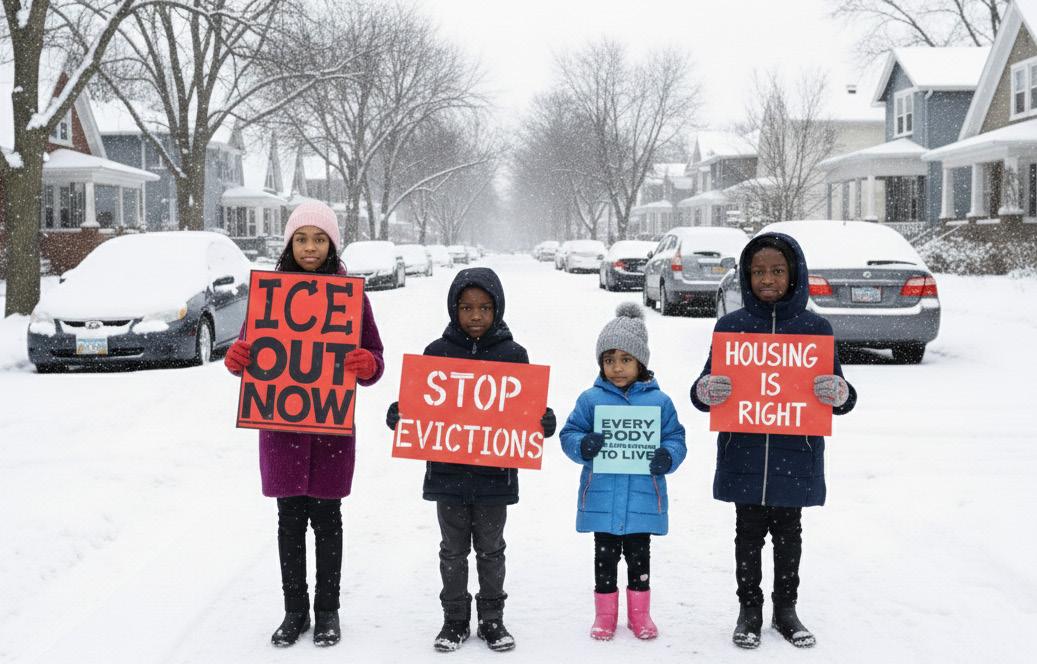
children and adults
Children whose immigrant parents are arrested, detained or deported often experience emotional and behavioral problems, including separation anxiety, school absenteeism, hyperactivity and other behavioral issues.
Yet, until recently, it has not been well understood how experiencing or being subjected to immigration enforcement actions affects children once they grow up to become adults.
That said, over three decades of research shows the clear links between traumatic childhood events and mental health problems in adulthood. Studies show, for example, that adults who experienced temporary separation from their parents as children are more likely to say they’ve experienced depression symptoms years later.
We decided to investigate whether a child being exposed to immigration enforcement actions – meaning the arrest of a parent, or detention of a close family member, for example – is associated with mental health problems among young adults who grew up in immigrant families.
How immigration enforcement unravels families
Our study first combined interviews and open-ended survey questions to define what it means to experience severe immigration enforcement during childhood.
We then examined the link between severe immigration enforcement actions and anxiety among 71 young adults – all U.S. citizens age 18 to 34 – who were raised in immigrant households in New York.
As children, all of these young adults witnessed or experienced the arrest, detention or deportation of an immigrant family member or a member of their communities. Three-quarters of the participants identified as Hispanic.
We analyzed our interviews to develop several criteria to determine what constitutes severe exposure to enforcement during childhood, considering factors like whether they witnessed a detention or arrest more than once, and how old they were when these experiences took place.
We found that approximately 26% of the survey participants – all of whom in
this group were Hispanic, except one – had severe exposure to immigration enforcement actions during childhood. Not all of them had a parent who has been deported.
Some of these young people had relatives who had drawn-out cases in immigration court, or felt constant fear that their parents might be deported.
When we linked our interviews with survey data, our results were striking.
We found that young adults who experienced severe immigration enforcement actions as children were twice as likely to have anxiety, compared with young adults who did not have this experience when they were growing up.
Exposure to severe immigration enforcement actions as a child was not independently associated with depression as a young adult. But all the survey participants who said they were experiencing depression also reported anxiety symptoms – further evidence of a connection between severe immigration enforcement actions and anxiety among young people.
Lasting impact of today’s policies
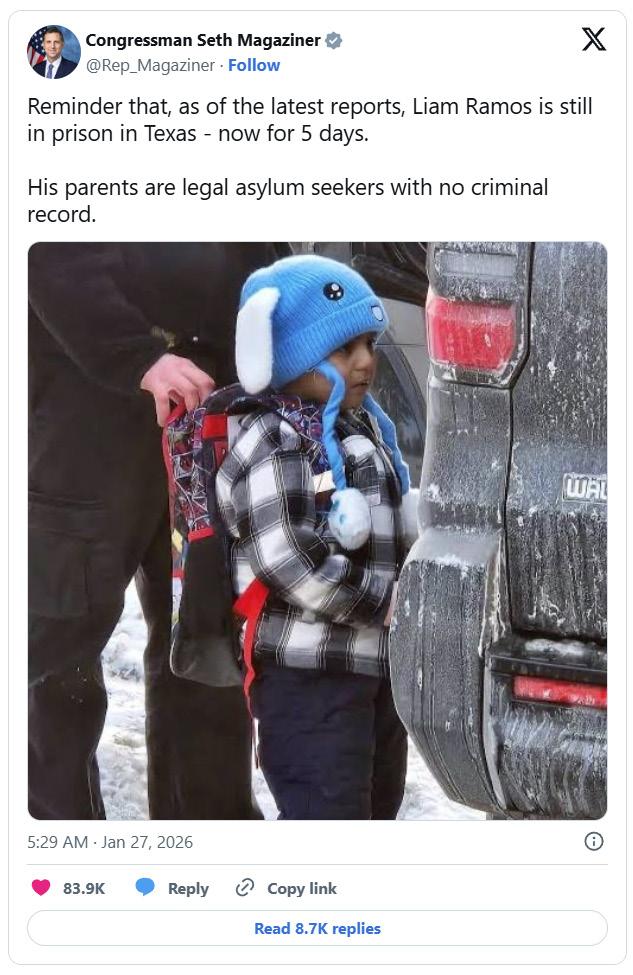
Many legal experts and political observers say that the Trump administration’s immigration enforcement tactics in Minneapolis and in other cities are designed to intimidate and instill fear among civilians. Children are not immune to these tactics, either as witnesses or as targets.
Federal immigration officers deployed tear gas, for example, on students at Roosevelt High School in Minneapolis on Jan. 8. Experiences like this constitute a major adverse childhood event, exposing children and adolescents to significant trauma.
We believe that we can learn from decades of adverse childhood experiences research, which clearly shows the link between childhood adversity and physical and mental
health outcomes in adulthood.
The enforcement tactics ICE is using in Minnesota and other places in the U.S. today are likely, our research suggests, going to harm the next generation of U.S. citizens and residents.
As trauma researchers have long known, our bodies keep score over a lifetime. The question facing policymakers is not whether these enforcement tactics will cause lasting harm – our research suggests they would – but what human costs we, as a nation, are willing to bear.
Disclosure statement
Joanna Dreby receives funding from Russell Sage Foundation
Eunju Lee receives funding from Russel Sage Foundation (PI Dreby).