FORGED FRIENDSHIP
Nippon, China, and Industrial Base Risks
Horizon Advisory is a leading geopolitical and risk intelligence provider that helps businesses and investors understand and respond to geopolitical, economic, and technological change. Visit us at www.horizonadvisory.org to learn more about our data products and services April
HORIZON ADVISORY
HORIZON ADVISORY www.horizonadvisory.org
H ORIZON A DVISORY Actionable Geopolitical Insight
2024
HORIZON ADVISORY www.horizonadvisory.org Executive Summary History Footprint Backbone Steel Industry Partners Partnering to Deliver Technical Value Chinese Market I nfluence Conclusion : Opportunity Cost Disclaimer: The mention of any individual, company, organization, or other entity in this report does not imply the violation of any law or international agreement and should not be construed as such. Table of CONTENTS 1 3 6 7 8 1 1 1 3

HORIZON ADVISORY anticipates geopolitical impacts on markets.
Leaders today face material uncertainty from geopolitical risks. Markets are shaped by new type powers operating in ways and for effects – across supply chains and emerging technology competitions – that are misunderstood by traditional risk analysis and supply chain monitoring. Leveraging unprecedented primary sources and proprietary technology, Horizon Advisory structures novel collection and analysis programs to generate differentiated intelligence for customers looking to stay ahead of risk.


HORIZON ADVISORY www.horizonadvisory.org
ABOUT
ORIZON A DVISORY
IN
LIN
EXAMPLES OF HORIZON’S WOR K PROFILED IN PROMINENT PRESS
LINKLINKLINKLINKL
LINKLINKLINKLINK
Executive Summary
Nippon Steel is poised to acquire Pittsburgh-based US Steel.
The transaction would produce the third largest steel producer in the world. Alarm has been raised about the economic and national security risks presented by potential foreign ownership of America’s keystone steel producer.1
A feature of that foreign investment yet to be scrutinized is Nippon’s exposure to and operations in the Chinese market. This exposure introduces a potential national security risk to the implications of potential Nippon ownership of US Steel.
This is, in part, due to the secular reality of China’s dominance as the world’s workshop. Nippon’s corporate filings note that global market volatility is driven by the “supply/demand trend in China.”2 That reality, and ties to China stemming from it, are understandable. But that does not lessen the potential risk it presents: Further entrenchment in and dependence on the Chinese market is a risk that should inform assessments of any change in ownership of US Steel. Nippon ownership could risk bringing US Steel into more – not less – dependence on China’s non-market economy.
In addition to market dependence on China, Nippon directly owns operations in the country. Those operations risk sharing technology and production expertise with the PRC’s industrial base. Nippon has a long-run history supporting the establishment and foundation of the Chinese steel industry; PRC discourse about industrial modernization has referred to the Japanese conglomerate as a “master.” Nippon is also looked to by Chinese peers as a critical source of strategic guidance for maturing the operations of what has grown into the world’s dominant steel industry.
That relationship brings Nippon into close and frequent interaction with China’s steel industry. Nippon maintains active joint ventures with a range of Chinese state-backed steel champions. In addition to those partnerships, Nippon also works with more niche Chinese champions intended to accelerate up various industrial and engineering value chains; Nippon’s variety of partners in China may risk providing those emergent players access to leading international technology
The Chinese national strategy of military-civil fusion means that core backbone players of the industrial base, including steel sector champions, are inseparable from the military modernization
1 See, for example: Marco Rubio, “U.S. Steel Sale Is Bad News for National Security,” Newsweek, January 5, 2024 https://www.newsweek.com/marco-rubio-us-steel-sale-bad-news-national-security-opinion-1858166; John Fetterman, Bob Casey, and Chris DeLuzio, “Letter to the Honorable Janet Yellen,” December 19, 2023, https://www.casey.senate.gov/imo/media/doc/letter_to_treasury_about_cfius_review_of_uss-nippon_sale.pdf; J.D. Vance, “Statement on the Sale of U.S. Steel Corporation,” December 18, 2023, https://www.vance.senate.gov/pressreleases/senator-vance-issues-statement-on-the-sale-of-u-s-steel-corporation/
2 “Integrated Report: 2023,” Nippon Steel, https://www.nipponsteel.com/en/ir/library/pdf/nsc_en_ir_2023_a4.pdf
HORIZON ADVISORY www.horizonadvisory.org 1
and power projection ambitions of the CCP.3 Chinese press often metaphorically refers to China’s largest steel conglomerate – and the world’s largest producer – Baowu Group as the country’s steel “aircraft carrier.” Nippon has supported the development of that metaphorical “aircraft carrier” over time.
In addition, steel is a critical input into shipbuilding; Nippon’s integration in China’s steel sector means that the company, whether directly or indirectly, feeds into the PRC’s shipbuilding industry, with it the naval buildup that that the People’s Liberation Army draws on, increasingly, to project power globally.
The sum of this history and these ties are reflected in the fact that Nippon has appeared to receive favorable treatment from Chinese industrial policy incentives. For example, in 2022, an automotive-focused Nippon subsidiary was “white-listed” in the Chinese Communist Party’s (CCP) post-COVID commercial and industrial policy, a treatment that allowed it the subsidiary to accelerate imports into China.
As the United States government comes to grips with the threat posed by CCP economic and security ambitions, it is necessary to leverage awareness of China’s aims and influence over thirdparty abilities to undermine and damage America’s industrial base. Nippon’s long, storied, and enduring links to the Chinese market make this line of inquiry relevant to assessing potential risks.
3 Emily de La Bruyère and Nathan Picarsic, “Defusing Military-Civil Fusion,” Foundation for Defense of Democracies, May 17, 2021, https://www.fdd.org/analysis/2021/05/26/defusing-military-civil-fusion/
HORIZON ADVISORY www.horizonadvisory.org 2
History
Nippon is credited by Chinese press, industry, and government sources as critical to the development and maturation of China’s steel industry. Nippon was an early guide for the PRC steel sector’s development. Nippon has maintained close ties to the PRC – despite ebbs and flows in broader Sino-Japanese relations over the past 50 years.
Deng Visits Nippon in Japan (October 1978)
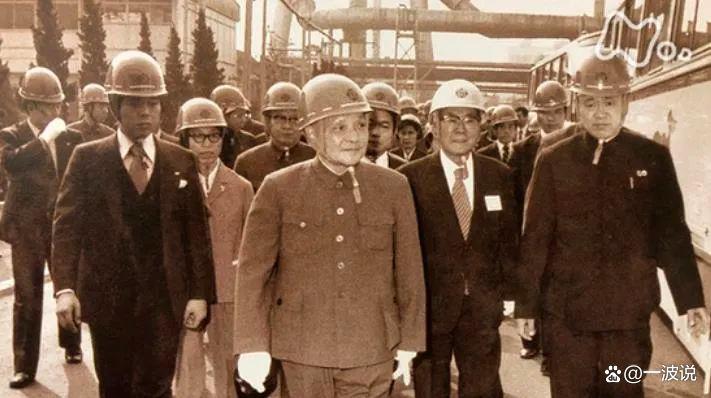
The foundation of Nippon’s relations in China was developed in 1978 when Deng Xiaoping embarked on a trip to Japan for the ratification of the "Sino-Japanese Treaty of Peace and Friendship." His itinerary then also included a visit to Nippon Steel’s factory. That visit featured the signing of a cooperation agreement with Shanghai Baoshan Iron and Steel (Baosteel – and the foundation of what is today referred to as the consolidated Baowu Group). Deng was reported at the time to have requested that Nippon “help us build a factory, just like this.” Then-President of Nippon Steel Yoshihiro Inayama obliged. Nippon’s contributions would prove to be pivotal for the nascent Chinese steel industry and, more broadly, for the trajectory of the Chinese government’s “Reform and Opening” economic agenda.
HORIZON ADVISORY www.horizonadvisory.org 3

That initial cooperation featured a seven year stretch of intensive cooperation between Nippon and Baosteel. This cooperation yielded significant outcomes for China. In 1985, Baosteel’s No. 1 blast furnace was ignited. This was a monumental advance for China’s domestic steel production. It was credited to Nippon: The technical equipment for Baosteel's first phase project was imported from Japan and technical assistance in design, construction, and operating the plant was provided by Nippon Steel. Even the initial operations in 1985 owed to Nippon personnel At that time, operators, covering the gamut from the installation of Japanese equipment to adjustment and operation, were provided by Japan. Press reports even tally the support in pounds: “It is said that the technical drawings flown by Nippon Steel from Japan weighed as much as 3 tons.”
In the decades that followed, Nippon continued its cooperation with the PRC, primarily via partnership with the Baosteel conglomerate. As China’s urbanization push forged ahead in the current century, Nippon was there at the ready, to the point that the many skyscrapers of China today are, according to media discussions, basically "covered by Japan and Nippon.”4
In 2005, Nippon expanded its presence in the PRC via a formal joint venture, BNA, with the Baosteel conglomerate. Nippon’s corporate histories capture this move in the context of expanding the firm’s “Global Production Framework.”5
4 “The Indissoluble Relationship Between Japanese Steel Companies and China,” [背后捅刀,故意造假,日本钢 企和中国的“不解之缘”] 程程瑾瑜. October 13, 2020.
5 “Integrated Report: 2023,” Nippon Steel, https://www.nipponsteel.com/en/ir/library/pdf/nsc_en_ir_2023_a4.pdf
HORIZON ADVISORY www.horizonadvisory.org 4

Despite tensions that have naturally risen as Baosteel has grown and increased its international competitiveness, ties between Nippon and China appear to remain strong and, as Chinese media reports put it, “indissoluble.” Chinese critical reporting on Nippon, for example, hit a fever pitch over a series of iron ore negotiations with Rio Tinto over the past decade, in which Chinese competitors were reported to have been harmed by aggressive tactics deployed by Nippon. But those competitive dynamics have not pulled Nippon away from the Chinese market and its partnerships there. Chinese industry observers continue to recount that “it is not an exaggeration to say that ‘without Nippon Steel, there would be no Baosteel ’”6
6 “How terrible is the strength of Japan's steel industry? Let's take a look at the top five major steel companies in Japan,” [日本钢铁工业实力究竟有多恐怖? 且看日本五大钢铁企业], Xcar Shanghai, October 30, 2017.
HORIZON ADVISORY www.horizonadvisory.org 5

HORIZON ADVISORY www.horizonadvisory.org 6
Footprint
This presence also underscores the degree to which Nippon remains a contributor to China’s tightly State-controlled steel sector, covering both the upstream and downstream of Nippon’s core business.
Backbone Steel Industry Partners
Nippon’s production joint venture partners include China’s steel majors.
Nippon’s BNA joint venture is an equal partnership with its legacy partner and China’s largest steel conglomerate, Baosteel. The company’s current form came together with a series of consolidations over the past ten years that have left Baosteel positioned as the “‘aircraft carrier’ of China’s steel industry.”
Baosteel Executives Celebrating the 96th anniversary of the founding of the Chinese People's Liberation Army

HORIZON ADVISORY www.horizonadvisory.org 7
Xi Jinping, on a visit to Baosteel in April 2007, underscored the central role of the enterprise in China’s “State led, Enterprise driven” economic system: “The great success achieved by Baosteel shows that state-owned enterprises and the state-owned economy can do well.”
Baosteel’s central role extends across the Chinese industrial policy ecosystem, including as a part of the “Go West” campaign that has brought PRC industrial champions to Xinjiang. Baosteel maintains production operations in Aksu and Urumqi in the Xinjiang Uyghur Autonomous Region. And Baosteel’s presence in Xinjiang has been accompanied by indicators of participation in the region’s forced labor regime through “labor transfers” of “rural workers” from “poor areas.”7
Wuhan Iron and Steel Co. (WISCO) is the joint venture partner for Nippon’s other major production partnership in China itemized in Nippon’s corporate records, WISCO-Nippon Steel Tinplate Co., Ltd. (aka, WINSteel). That formal tie-up built on a history of supply and trade between the Wuhan steel hub and Nippon; for example, histories of WISCO’s development in Chinese sources describe a turning point in the 1990s when Nippon started buying equipment from WISCO as a critical validation for the rise of the Chinese industry. The Tinplate joint venture was launched in 2011 and has become a major producer of tinplate for a variety of industrial applications.
WISCO is itself now a subsidiary of the Baosteel conglomerate. The reorganization of the industry that led to that partnership was ushered in as a part of the State-owned Assets Supervision and Administration Commission of the State Council’s (SASAC’s) execution of the management of State-owned enterprises in accordance with the objectives of the 13th Five Year Plan.
WISCO’s central position in PRC industrial policy brings its own risk factors, including ties to Beijing’s military-civil fusion apparatus and the Chinese military industrial base.
Partnering to Deliver Technical Value
Nippon also has a variety of additional subsidiaries operating in China to maintain trade imports and exports, re-selling in China, and distribution and technical services throughout the Chinese market. Nippon’s China subsidiaries top the company’s major group overseas operations: Nippon Steel Plant Engineering (Shanghai) Co., Ltd. and Beijing JC Energy & Environment Engineering Co., Ltd. are often highlighted among the company’s overseas subsidiary operations. They provide telling indicators not only of China’s importance to Nippon, but also the risks that Nippon’s ties to the mainland raise for partners and customers of the Japanese champion.
7 “Driving Force: Automotive Supply Chains and Forced Labor in the. Uyghur Region.” Sheffield, UK: Sheffield Hallam, https://www.shu.ac.uk/helena-kennedy-centre-international-justice/research-and-projects/allprojects/driving-force
HORIZON ADVISORY www.horizonadvisory.org 8

Technology Co., Ltd., which is itself a subsidiary under the the parent entity Beijing Shougang Co., Ltd.
That parent company is enmeshed in China’s industrial policy ecosystem and closely aligned with both central and Beijing government actors. The company’s 2022 annual report declares a government subsidy balance of 472,861,881.90 RMB. That sum includes specific subsidies that demonstrate close ties to China’s military-civil fusion apparatus, including funds from a national government research and development (R&D) program and from the Ministry of Industry and Information Technology (MIIT). Receipt of those funds would register as indicators of a military company according to Section 1260H of the 2019 National Defense Authorization Act.
Beijing Shougang International Engineering Technology Co., Ltd. (BSIET), the Shougang subsidiary that serves as Nippon’s JV partner, is itself designated as key “high-tech enterprise” of
9
the National Torch Program.8 The Torch Program is a guiding plan for the development of China's high-tech industry. It was approved by the State Council in August 1988 and is organized by the Ministry of Science and Technology. The purpose of the Torch Program is to implement the strategy of "rejuvenating the country through science and education," to implement the general policy of reform and opening up, and to give full play to the advantages and potential of China's scientific and technological forces.
Nippon’s collaboration with China’s State-backed champions is not limited to the Chinese market. For example, Nippon is an investor in a coal mine – and Nippon supplier – alongside Chinese government-backed players in Australia. That mine generates 8 mn tons per year. Nippon owns 9.5 percent of the project; Yanzhou Coal Mining Company Limited, a Chinese State-backed coal mining firm, is the majority and controlling owner. This upstream partnership helps to demonstrate the depth of Nippon’s ties to China and the degree to which Nippon’s scale, footprint, brand, and capital operate alongside China’s global ambitions, not only in China but also internationally 8
HORIZON ADVISORY www.horizonadvisory.org 10
“National Program Overview,” Horizon Science and Technology (S&T) Indicator Database.
Chinese Market Influence
Much of Nippon’s strategy in China is premised on supplying downstream applications in China. Through Nippon’s tie-up with Baosteeel, the company has established a joint venture with China International Marine Containers (CIMC). CIMC is a State-backed shipping container giant owned in part by China Merchants and COSCO. It has long been the world’s largest shipping container manufacturer. Nippon’s partnership with CIMC, Xinzhongbao Steel Processing and Trading Co., was announced in 2013 and has helped CIMC move into the offshore drilling platform business. Nippon’s strategy appears to have prioritized this joint venture over alternatives and helped to further CIMC’s ties to international markets.
An even more compelling example of how Nippon’s Chinese ties translate to a prioritization of the Chinese market comes from the positioning of Shanghai Nippon Auto Parts. In May 2022, as efforts to activate the Chinese economy post-COVID were accelerated and impacted Nippon, according to Chinese press coverage. Press reporting at the time noted that “Shanghai Nippon Steel Auto Parts Co., Ltd. urgently transported the imported steel to the factory in Jiading” in order to satisfy demands from a Chinese customer, Casma Automobile System (Chongqing) Co., Ltd.9 These efforts were encouraged through Nippon’s selection among the first batch of commercial “white-listed” enterprises in Jiading District.
Guo
Evening News, May 16, 2022.
HORIZON ADVISORY www.horizonadvisory.org 11
9
Jianfeng, “Providing refined services for automobile enterprises and upstream and downstream, the customs office makes every effort to ensure the stability of the supply chain of the automobile industry chain,” Xinmin

Chinese scholars of Japan and the Sino-Japanese economic relationship have predicted that Japan’s heavy industry champions, like Nippon, will continue to prioritize the Chinese market based on the “determinism of China’s economic development.” Nippon demonstrates how the bilateral relations have grown “from a suspension bridge to an iron bridge” since 1978.10
纪念中⽇邦交正常化 50 周年 中⽇经贸合作的回顾与展望].
HORIZON ADVISORY www.horizonadvisory.org 12
Nippon Coiled Steel at a Chinese Port in May 2022
10 Quotes from a Shanghai University of International and Business Economics seminar titled "Commemorating the 50th Anniversary of the Normalization of Sino-Japanese Foreign Relations - Review and Prospects of Sino-Japanese Economic and Trade Cooperation" [
Conclusion: Opportunity Cost

the Japanese market. The Chinese market is the likely
able to execute on that potential goal.
Recent history suggests that Nippon is focused on continuing down that path: Open-source materials suggest that Nippon may have had a presence in Xinjiang or that its supply chain and business partners introduce exposure to the region; its joint venture partners include the keystone backbone players of the Chinese steel industry; its partners support Chinese shipbuilding and automotive sectors; and Nippon’s variety of value-added businesses downstream in China are technology transfer and acquisition targets for Chinese partners in the CCP’s military-civil fusion system.
All the while, the Chinese steel industry that Nippon helped to bring to life has steadily risen in its own global dominance and continues to fuel overcapacity in the sector globally
Those ties and the inertia they reflect present potential risks that seem yet to be incorporated into broader assessments. They also underscore the opportunity cost of abandoning a domesticallycontrolled and independent industrial base in the United States – at a time of high geopolitical tension.
HORIZON ADVISORY www.horizonadvisory.org 13
American industrial might needs strategic distance and insulation from Beijing’s industrial influence levers – in order better to engage in the reality of industrial base competition and address related national security threats. As ongoing conflicts and an increasingly assertive China make clear, America needs industrial sovereignty now more than ever to maintain the ability to surge and mobilize whenever today’s uncertain global environment may demand.
HORIZON ADVISORY www.horizonadvisory.org 14

15 Contact info@horizonadvisory.org www.horizonadvisory.org Actionable Geopolitical Insight
