Guarding Childhood: How the Law
Steps In to Protect At-Risk Children by Holly DeNeve

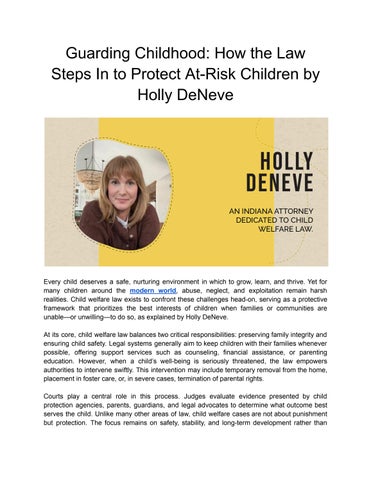
Every child deserves a safe, nurturing environment in which to grow, learn, and thrive Yet for many children around the modern world, abuse, neglect, and exploitation remain harsh realities. Child welfare law exists to confront these challenges head-on, serving as a protective framework that prioritizes the best interests of children when families or communities are unable or unwilling to do so, as explained by Holly DeNeve.
At its core, child welfare law balances two critical responsibilities: preserving family integrity and ensuring child safety. Legal systems generally aim to keep children with their families whenever possible, offering support services such as counseling, financial assistance, or parenting education However, when a child’s well-being is seriously threatened, the law empowers authorities to intervene swiftly. This intervention may include temporary removal from the home, placement in foster care, or, in severe cases, termination of parental rights
Courts play a central role in this process. Judges evaluate evidence presented by child protection agencies, parents, guardians, and legal advocates to determine what outcome best serves the child. Unlike many other areas of law, child welfare cases are not about punishment but protection The focus remains on safety, stability, and long-term development rather than
blame To support this goal, many jurisdictions appoint guardians ad litem or child advocates whose sole duty is to represent the child’s voice and interests in court.
Legal protections also extend beyond emergency interventions. Child welfare law addresses adoption, foster care standards, and the rights of children in state custody. Regulations govern everything from background checks for foster parents to access to education and healthcare for children removed from their homes. These laws recognize that protection is not just about eliminating harm, but about providing consistent care and opportunities for a healthy future
Internationally, child welfare principles are reinforced by agreements such as the United Nations Convention on the Rights of the Child, which emphasizes children’s rights to safety, education, healthcare, and participation in decisions affecting their lives While each country applies these principles differently, the shared global understanding is clear: children are not property, but individuals with rights that must be respected and defended
Despite its importance, child welfare law continues to face challenges Overburdened systems, limited resources, and social inequalities can hinder adequate protection This underscores the importance of continued legal reform, public awareness, and community involvement. When laws are well-designed and properly enforced, they become powerful tools for breaking cycles of abuse and neglect
Ultimately, child welfare law reflects a society’s moral commitment to its youngest members By placing children’s safety and dignity at the center of legal decision-making, these systems strive to ensure that every child, regardless of circumstance, has a chance at a secure and hopeful childhood