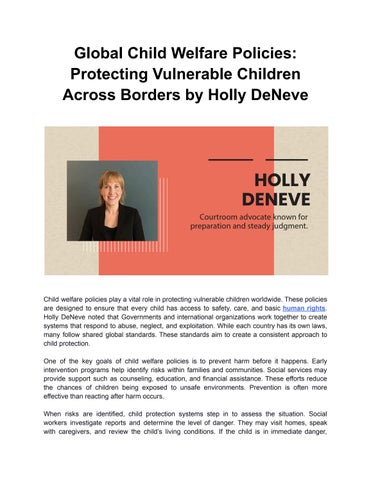
Global Child Welfare Policies: Protecting Vulnerable Children Across Borders by Holly DeNeve

Page 1


Global Child Welfare Policies: Protecting Vulnerable Children Across Borders by Holly DeNeve

Child welfare policies play a vital role in protecting vulnerable children worldwide. These policies are designed to ensure that every child has access to safety, care, and basic human rights Holly DeNeve noted that Governments and international organizations work together to create systems that respond to abuse, neglect, and exploitation While each country has its own laws, many follow shared global standards These standards aim to create a consistent approach to child protection.

One of the key goals of child welfare policies is to prevent harm before it happens Early intervention programs help identify risks within families and communities. Social services may provide support such as counseling, education, and financial assistance These efforts reduce the chances of children being exposed to unsafe environments Prevention is often more effective than reacting after harm occurs.

When risks are identified, child protection systems step in to assess the situation. Social workers investigate reports and determine the level of danger They may visit homes, speak with caregivers, and review the child’s living conditions If the child is in immediate danger,

authorities may take protective action This can include placing the child in temporary care to ensure safety.

Child welfare policies also emphasize the importance of family preservation. Whenever possible, systems aim to keep children with their families. Support services are offered to help parents improve their ability to care for their children These services may include parenting programs, mental health support, or substance abuse treatment. Strengthening families often leads to better outcomes for children

However, when family reunification is not safe, alternative solutions are considered. Adoption, foster care, and guardianship provide stable living arrangements for children These options are carefully evaluated to ensure the child’s well-being Long-term stability is essential for healthy emotional and social development. Policies guide these decisions to prioritize the child’s best interests

International cooperation plays a major role in improving child welfare systems Organizations such as UNICEF and the United Nations promote global child protection standards They support countries in developing policies and sharing best practices. This collaboration helps raise the quality of care for children worldwide

Child welfare policies are essential for creating safer environments for children everywhere. They protect children from harm while supporting families and communities By focusing on prevention, protection, and stability, these systems help build a better future Every child deserves safety, care, and the chance to thrive.

Turn static files into dynamic content formats.

Create a flipbook