HOFSTR A UNIVERSIT Y MUSEUM OF ART
January 27-July 24, 2026 | Emily Lowe Gallery, South Campus
An exhibition commemorating the 250th anniversary of the Declaration of Independence
January 27-July 24, 2026 | Emily Lowe Gallery, South Campus
As the Hofstra University Museum of Art joins institutions nationwide in commemorating the semiquincentennial of the United States, Our Unfinished Revolution(s) invites reflection on the aspirations, contradictions, and evolving legacies of the Declaration of Independence. Presented in conjunction with the campus-wide Untold Stories of Revolution: A Hofstra University Initiative for the 250th Anniversary of the American Revolution, this exhibition also aligns with the broader Revolutionary NY 250 planning and the national America250 campaign. The Museum’s efforts position the American Revolution not as a concluded chapter but as an ongoing project whose promises remain, in many ways, unfinished. It is particularly fitting that this exhibition aligns closely with one of the American Association for State and Local History’s guiding themes, “Unfinished Revolutions.” Its title echoes Alexander Calder’s significant 1975 portfolio Our Unfinished Revolution, created for the 25th anniversary of the National Emergency Civil Liberties Committee. Calder’s 10 vibrant color lithographs advocate for the continued defense of civil liberties, and his Our Unfinished Revolution series anchors the exhibition conceptually, reminding us that safeguarding freedom requires continuous engagement. The Museum is fortunate to hold examples of Calder’s work in its permanent collection, and the frontispiece of the portfolio is included in this exhibition.
The artworks and archival materials on view illuminate the ways in which the Declaration of Independence has been interpreted, challenged, and defended over time. Works drawn from the Museum’s permanent collection, alongside loans featuring artists such as Faith Ringgold, demonstrate the diversity of artistic responses to the Revolution’s legacy across 250 years. Primary source documents from Hofstra University Library’s Special Collections enrich this visual narrative by providing essential historical context and linking artistic expression to the moments in which these debates unfolded An important contribution to the exhibition is the photography of contemporar y artist Jeremy Dennis, an enrolled Tribal Member of the Shinnecock Indian Nation and the founder and lead artist of Ma’s House & BIPOC Art Studio Inc., a nonprofit art space and residency program on the Shinnecock Reservation. Dennis’ work brings Indigenous perspectives into urgent contemporary focus, foregrounding issues of sovereignty, land, and memory.
Special thanks are extended to Dr. Sally Debra Charnow, professor and chair of the Department of History at Hofstra University, whose vision in establishing the Untold Stories of Revolution initiative expands and deepens our understanding of the Revolutionary era. Through coursework, oral histories, geolocated mapping, digital storytelling, and community collaborations, the initiative uncovers narratives often missing from traditional accounts. Hofstra University faculty, together with public historian Dr. James Levy, founder and director of the Whose Land? project (whoseland.org ), contributed to curriculum development and museum-based and digital humanities projects that document these histories and make them accessible to educators and the public.
Presley Rodriguez, assistant director of exhibitions and collections, masterfully curated this exhibition. Her dedication to the theme, rigorous research, and creative vision resulted in an experience that invites sustained engagement with the stories, told and untold, that shape our understanding of American freedom. She was supported by Victoria Unz, collections manager; undergraduate curatorial assistants Sarah Braun and Ashley Jayne; and Abigail Sullivan, graduate curatorial assistant, whose contributions were essential to both the curatorial direction and installation. Exhibitions are truly collaborative endeavors from inception to completion, and the Museum staff’s collective efforts ensure the success of our projects and strengthen our connection with the community.
We extend our thanks to the lenders to the exhibition. Their generosity and enthusiasm have made this project possible.
ACA Galleries
Jeremy Dennis
The Long Island Museum
Museum of the City of New York
Praxis Gallery and the artist Scherezade García
Special Collections, Hofstra University Library
The Hofstra University Museum of Art’s permanent collection has grown through the generosity of donors whose gifts have strengthened our mission since the institution’s founding in 1963.
The Museum is proud to participate in the Wish Wall project, coordinated by Made By Us, a nationwide network of museums, libraries, and cultural organizations dedicated to increasing civic participation, particularly among younger generations. Visitors of all ages are encouraged to share their wish for America. From small acts of kindness to bold visions for change, each contribution becomes part of a national initiative capturing Americans’ hopes and dreams for the future. The Wish Wall is accessible in the Emily Lowe Gallery for the duration of the exhibition, inviting community voices to join hundreds of institutions across the country in this collective reflection.
University museums are vital spaces for fostering inquiry and meaningful dialogue. While the present moment brings its own complexities, this exhibition allows the artwork itself to provoke reflection on liberty, dissent, and belonging. In doing so, it honors those who have continuously reexamined the meaning of freedom so that its promise might be realized more fully.
Alexandra
(Sasha) Giordano Director Hofstra University Museum of Art
July 4, 1776, has long been ascribed as the date that the United States was formed. There are other events that could have represented the birth of the nation — perhaps first battles of the Revolutionary War, or the signing of the treaty that formally ended the conflict. But it is the day that the Declaration of Independence was ratified that is credited with changing the world as we know it.
Today, many consider the Declaration of Independence as the document that proclaimed “life, liberty, and the pursuit of happiness” as guiding priorities of the United States. As significant as the signing of the Declaration of Independence was, however, it was also a rebellious act that those loyal to the English king viewed unfavorably in 1776. For many, the breaking away from monarchical rule was a destabilizing prospect. For others, the fight for independence offered hope for a freer way of life.
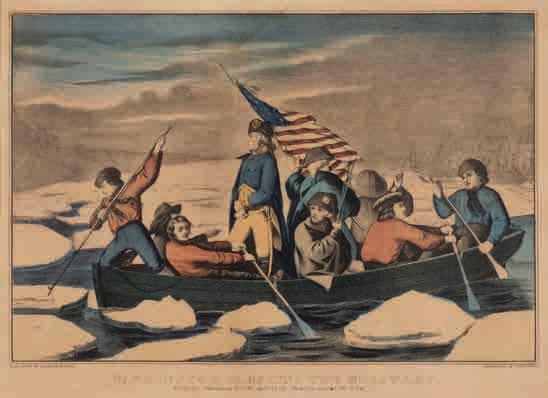
CURRIER & IVES (American, 1835-1907)
Washington Crossing the Delaware –Evening Previous to the Battle of Trenton, December [2]5th, 1776, 1857-71, hand-colored lithograph, ink and color on paper, 9.25 x 12.75 inches, Hofstra University Museum of Art, gift of Mrs. George Estabrook, HU64.98
Our Unfinished Revolution(s) explores how the ideals of the Declaration of Independence have shaped the United States. At the time the Declaration was written, Britain’s North American colonies were home to some of the most diverse populations in the world, which meant that women, Black Americans, Indigenous people, and immigrants were all involved in and affected by the Revolutionary War. Nevertheless, once the United States formally obtained independence from England, these groups were excluded from the new nation’s democracy. Disenfranchised people of the founding generation immediately went to work and carried on the spirit of the Revolution by fighting to obtain the liberties granted to only a small few. While significant victories have been made since then, there is still work to be done.
In the 250 years since the signing of the Declaration of Independence, the document has held a wide array of meanings for countless people. While the exhibition can represent only a handful of those varied viewpoints, every painting, print, and photograph honors the free expression that has opened our minds to new ideas since 1776.
Our Unfinished Revolution(s) uses important anniversary years — 1776, 1876, 1976, and 2026 — as touchpoints for studying ongoing efforts to bring the principles of the United States to fruition. As visitors walk through the gallery, the works on display address the complexities of the nation’s collective memory, history of protest, and definitions of liberty.
As the United States approaches its 250th anniversary on July 4, 2026, there have been differing beliefs on how museums should approach this notable occasion. Our Unfinished Revolution(s) aims to find a balance between celebrating and commemorating the U.S. Semiquincentennial by paying tribute to those who have bravely confronted the country’s shortcomings. We are all inheritors of their visions for a better future.
The U.S. Semiquincentennial offers a rare opportunity for us to jointly reflect on our past and consider our future. As this exhibition demonstrates, history is not a fixed narrative recorded by a single person but a collection of experiences that strengthens our understanding of the country. The Declaration of Independence marked the start of a new nation that was founded upon the actions of many people working in unison. Since 1776, the Declaration has borne witness to many tumultuous moments, but ongoing civic action has continued to imbue the document with meaning. This significant anniversary reminds us that the people of the United States have withstood immense periods of change, and that each of us has a say in determining its next chapter.
Presley Rodriguez Assistant Director of Exhibitions and Collections
Hofstra University Museum of Art
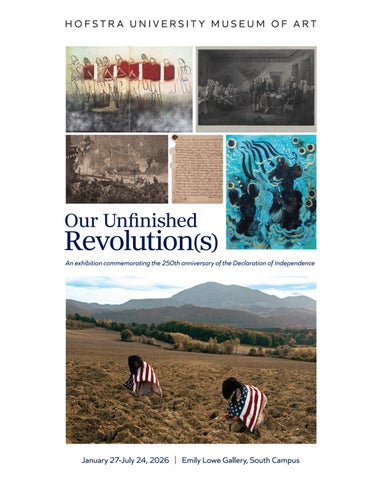
Cover images (clockwise from top left):
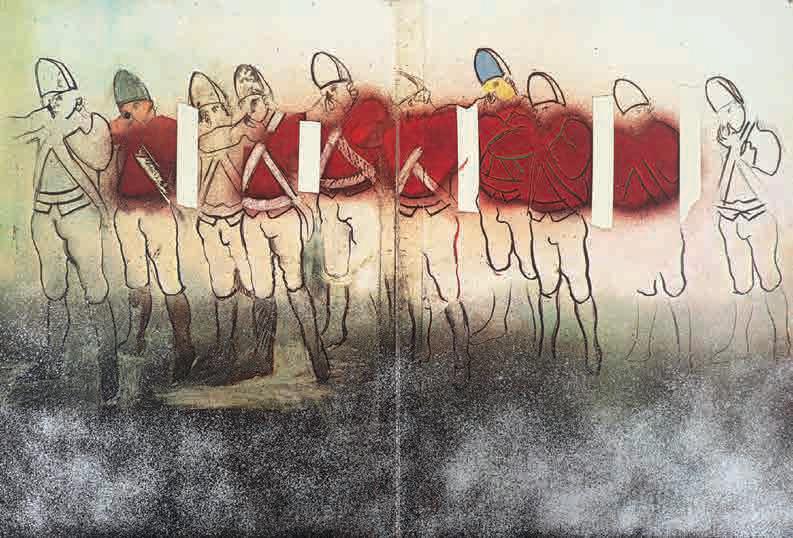
Larry Rivers (American, 1923-2002), Redcoats-Mis t, from the portfolio Boston Massacre, 1970, screenprint, embossing, and collage, 19 x 28.875 inches, Hofstra University Museum of Art, gift of Victor S. Liss, HU79.38.12, © Estate of Larry Rivers / Licensed by VAGA at Artists Rights Society (ARS)
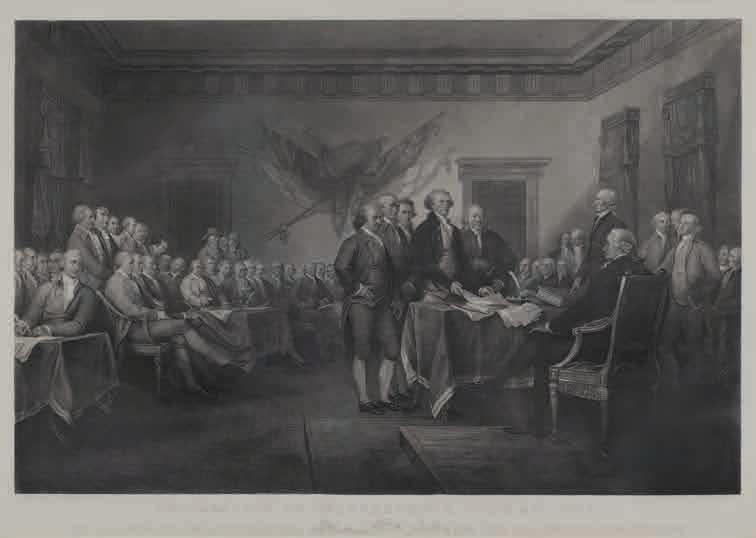
Waterman Lilly Ormsby (American, 1809-1883), Declaration of Independence, July 4th, 1776, after John Trumbull (American, 1756-1843) painting, 1876, engraving, 20.375 x 30.25 inches, Hofstra University Museum of Art, gift of Judge Albert Oppido, HU88.32
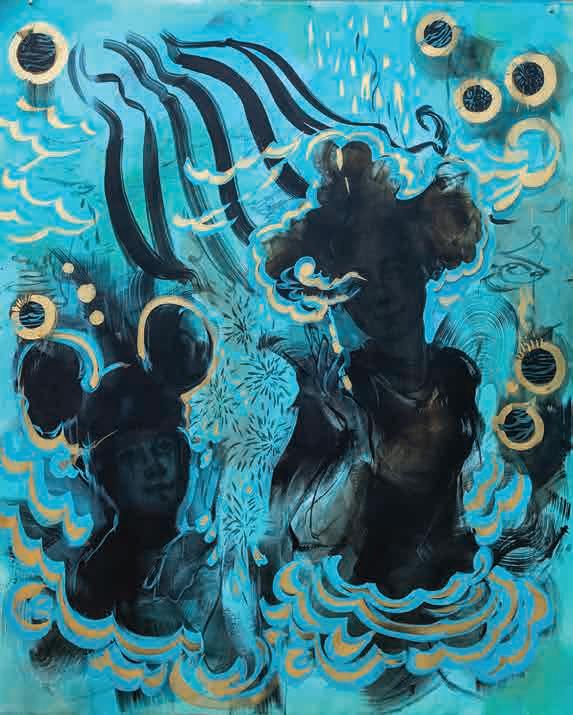
Scherezade García (American, born Dominican Republic, 1966), America: Borders and Fireworks, from the series It’s So Sunny That It’s Dark, 2017, acrylic, charcoal, and ink on linen, 72 x 64 inches, courtesy of the artist and Praxis Gallery
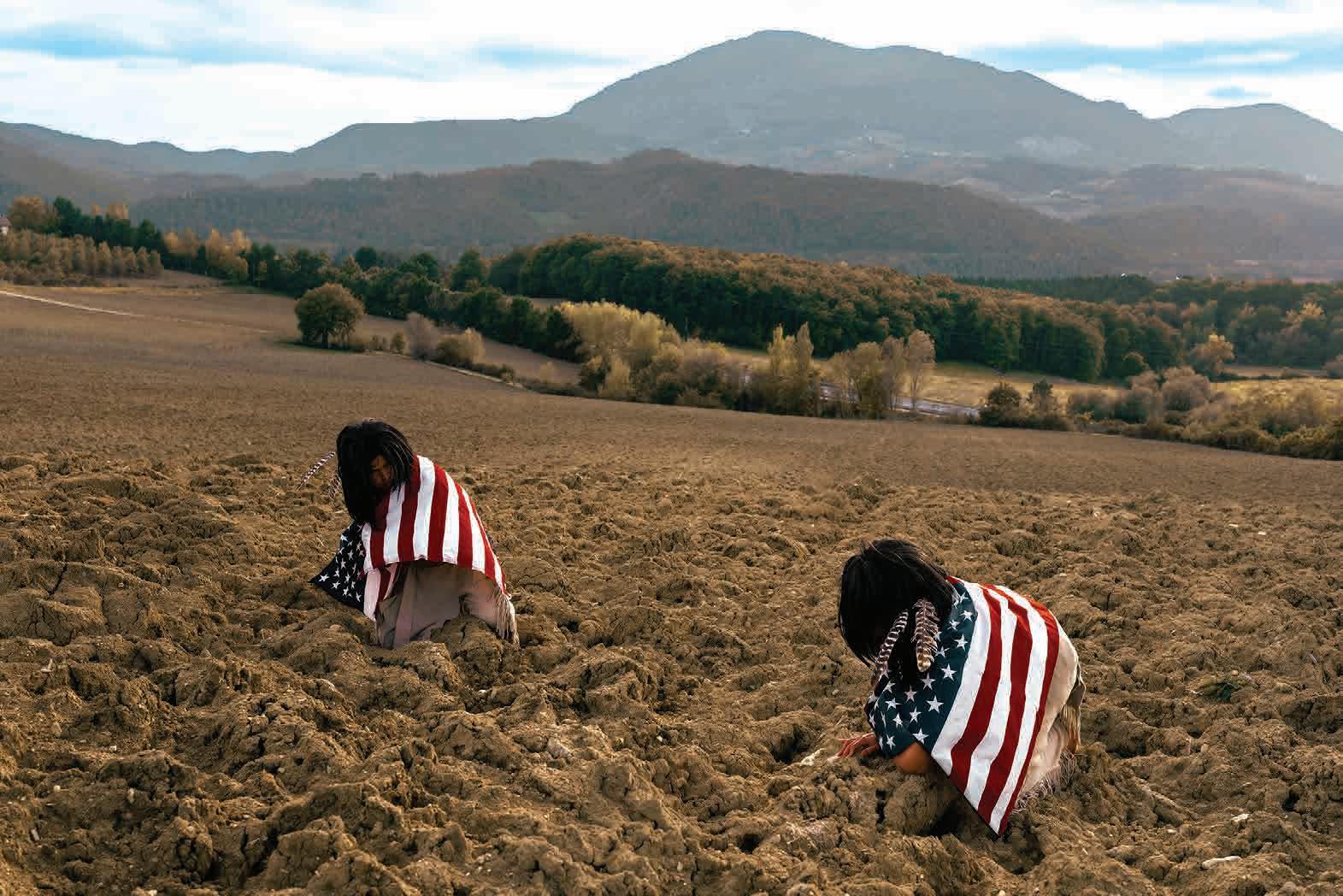
Jeremy Dennis (Shinnecock, born 1990), Cloak of Divisibility, from the series Rise, 2025, archival inkjet print, 20 x 30 inches, courtesy of the artist
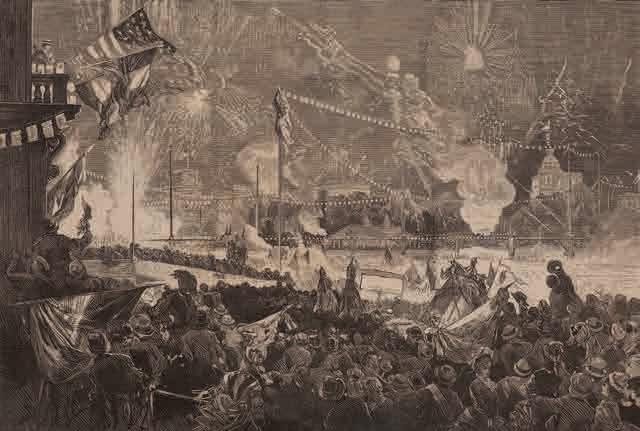
The Centennial Fourth – Illumination of Union Square, New York, drawn by Schell and Hogan in Harper’s Weekly, July 22, 1876, newspaper illustration, 16.125 x 11.188 inches, courtesy of Special Collections/Long Island Studies Institute, Hofstra University Library
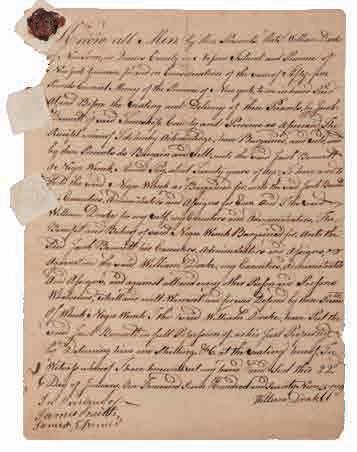
Bill of Sale for Enslaved Person, 1779, 7.75 x 10.75 inches, courtesy of Special Collections/Long Island Studies Institute, Hofstra University Library
JOSEPH FARINGTON
(English, 1747-1821)
Cliefden, 1793
Color aquatint and etching on paper
8.25 x 12.625 inches
Hofstra University Museum of Art Gift of unknown donor HU72.19
WILLIAM HOGARTH
(English, 1697-1764)
Cruelty in Perfection, from the series The Four Stages of Cruelty, 1751
Engraving and etching 15.75 x 13.25 inches
Hofstra University Museum of Art Gift of Gerard Barker HU2016.24
WATERMAN LILLY ORMSBY
(American, 1809-1883)
Declaration of Independence, July 4th, 1776, after John Trumbull (American, 1756-1843) painting, 1876
Engraving 20.375 x 30.25 inches
Hofstra University Museum of Art Gift of Judge Albert Oppido HU88.32
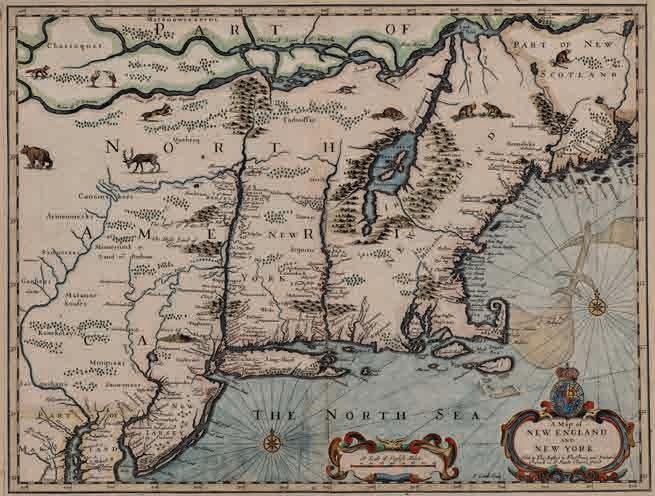
JOHN SPEED
(English, 1552-1629)
Map of New England, 1676 Ink on paper
17.25 x 21.25 inches
Hofstra University Museum of Art Gift of unknown donor HU62.7
YORUBA
(Nigerian, 19th century)
Mother and Child, 19th century Carved wood with pigment
10.5 x 2.75 inches
Hofstra University Museum of Art Gift of Mr. and Mrs. Sol Levitt
HU81.44
Bill of Sale for Enslaved Person, 1779
7.75 x 10.75 inches
Courtesy of Special Collections/ Long Island Studies Institute, Hofstra University Library
“Cato; or An essay on old-age” by Marcus Tullius Cicero Signed by William Floyd, 1774
Printed book
4.313 x 6.75 inches
Courtesy of Special Collections, Hofstra University Library
Indigenous Apprentice Indenture, 1740
7.5 x 12.75 inches
Courtesy of Special Collections/ Long Island Studies Institute, Hofstra University Library
John Birdsall Jr.’s Oath of Allegiance to King George III, 1777
8.25 x 4.625 inches
Courtesy of Special Collections/ Long Island Studies Institute, Hofstra University Library
Revolutionary War order from the Commissary of Cattle, 1780
8.188 x 6.5 inches
Courtesy of Special Collections/ Long Island Studies Institute, Hofstra University Library
Advertisement for Rial and Draper’s “Ideal Uncle Tom’s Cabin,” 1881
Colored lithograph
5.125 x 3.5 inches
Courtesy of Special Collections/ Rare Books and Manuscripts, Hofstra University Library
JOHN CHESTER BUTTRE (American, 1821-1893)
Abraham Lincoln, 1869
Steel-plate engraving, ink on paper
13.125 x 9.75 inches
Hofstra University Museum of Art Gift of Dr. Max Shulman
HU77.24.01
CURRIER & IVES (American, 1835-1907)
Washington Crossing the Delaware — Evening Previous to the Battle of Trenton, December [2]5th, 1776, 1857-71
Hand-colored lithograph, ink and color on paper
9.25 x 12.75 inches
Hofstra University Museum of Art Gift of Mrs. George Estabrook
HU64.98
JAMES MCDOUGAL HART (American, born Scotland, 1828-1901)
Landscape, 1874
Oil on canvas
26 x 40 inches
Hofstra University Museum of Art Gift of unknown donor
HU78.30
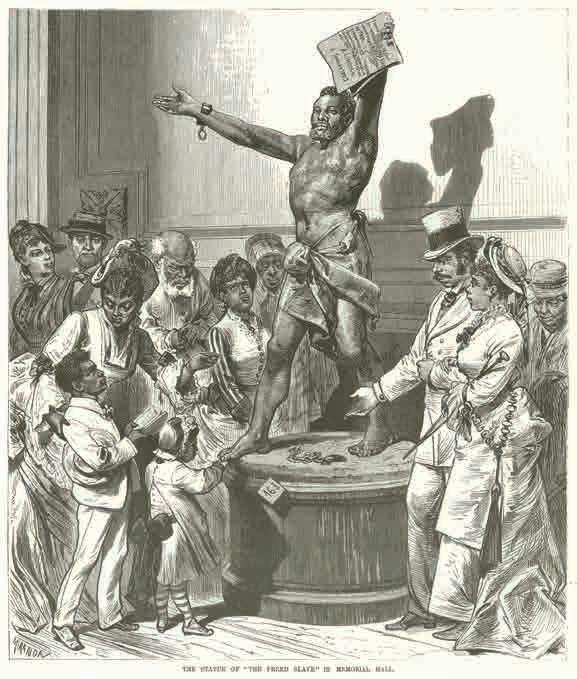
Frank Leslie’s Historic Register of the U.S. Centennial Exposition, detail illustrating The Abolition of Slavery in the United States, 1863 (1873) by Francesco Pezzicar (Italian, 1831-1890), originally published 1876
Book facsimile printed in 1974 11 x 16 inches
Courtesy of Special Collections, Hofstra University Library
HASKELL & ALLEN
(American, 1869-1880)
On the St. Lawrence Indian Encampment, 19th century
Colored lithograph
10 x 13.5 inches
Hofstra University Museum of Art Gift of Mrs. George Estabrook HU64.152
WILLIAM SIDNEY MOUNT
(American, 1807-1868)
Right and Left, 1850 Oil on canvas
30 x 25 inches
The Long Island Museum Collection Museum Purchase, 1956
JOHN SARTAIN
(American, born England, 1808-1897)
Portrait of Lucretia Mott, after Joseph Kyle (American, 1815-1863) painting, 1842
Engraving
5.5 x 7 inches
Courtesy of Special Collections/ Long Island Studies Institute, Hofstra University Library
EPHEMER A
The Centennial Fourth –Illumination of Union Square, New York, drawn by Schell and Hogan in Harper’s Weekly, July 22, 1876
Newspaper illustration
16.125 x 11.188 inches
Courtesy of Special Collections/ Long Island Studies Institute, Hofstra University Library
Frank Leslie’s Historic Register of the U.S. Centennial Exposition, originally published 1876 Facsimile printed in 1974 11 x 16 inches
Courtesy of Special Collections, Hofstra University Library
Long Island children of German immigrants John and Caroline Linder, late 19th century
Photograph 3 x 4.75 inches
Courtesy of Special Collections/ Long Island Studies Institute, Hofstra University Library
The Monmouth Battle Monument in Harper’s Weekly, November 15, 1884
Newspaper illustration 15.875 x 11 inches
Courtesy of Special Collections/ Long Island Studies Institute, Hofstra University Library
THOMAS NAST
(American, born Germany, 1840-1902)
The Liberty Bell from Independence Hall, Philadelphia, on the cover of Harper’s Weekly, January 24, 1885
Newspaper illustration 16.625 x 11.625 inches
Courtesy of Special Collections/ Long Island Studies Institute, Hofstra University Library
THOMAS NAST
(American, born Germany, 1840-1902)
Sitting Bull in Harper’s Weekly, March 22, 1879
Newspaper illustration 15.938 x 10.75 inches
Courtesy of Special Collections/ Long Island Studies Institute, Hofstra University Library
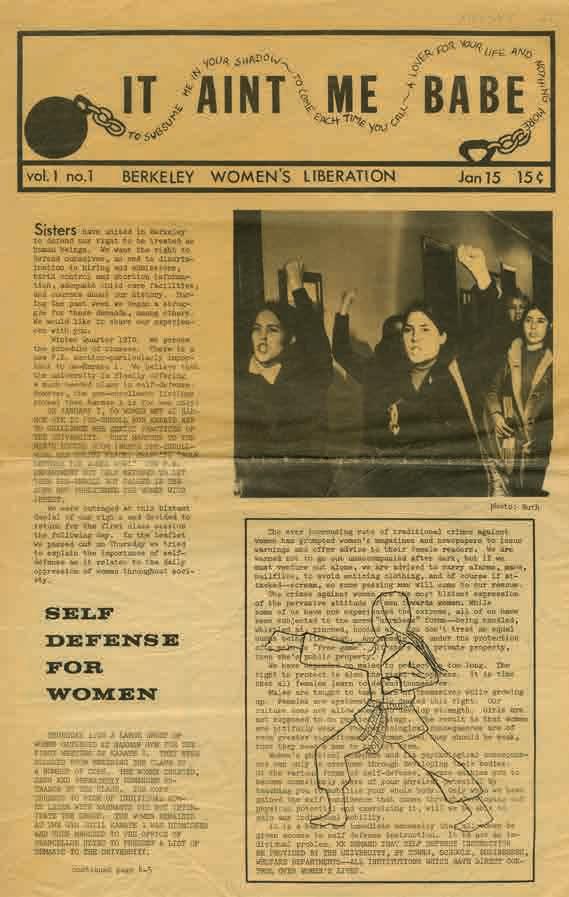
It Ain’t Me Babe, Berkeley Women’s Liberation, Vol. 1 No. 1, January 15, 1970, newspaper, 11.25 x 17.5 inches, courtesy of Special Collections/Long Island Studies Institute, Hofstra University Library
WILL BARNET
(American, 1911-2012)
Dawn, 1975
Lithograph
11.125 x 24 inches
Hofstra University Museum of Art Gift of Andrew Rosenberg HU88.26
LEONARD BASKIN (American, 1922-2000)
Sharp Nose, 1972
Lithograph 34.813 x 24.813 inches
Hofstra University Museum of Art Gift of Leon Harris HU79.112
ALEXANDER CALDER (American, 1898-1976)
Our Unfinished Revolution, frontispiece from the portfolio
Our Unfinished Revolution, 1975
Offset color lithograph 22 x 29.875 inches
Hofstra University Museum of Art Gift of Carole and Alex Rosenberg
HU91.69
ERTÉ
(French, born Russia, 1892-1990)
Liberty, Fearless, and Free, 1984
Bronze
28.25 x 5 inches
Hofstra University Museum of Art Gift of Iris T. Levine HU85.30
JACOB LAWRENCE
(American, 1917-2000)
Confrontation at the Bridge, from the portfolio An American Portrait, 1776-1976, 1975
Color screenprint on paper
19.5 x 25.875 inches
Hofstra University Museum of Art Gift of Carole and Alex Rosenberg HU91.29
LARRY RIVERS
(American, 1923-2002)
Black Revue, from the portfolio Boston Massacre, 1970
Screenprint, embossing, and collage 19.125 x 27.25 inches
Hofstra University Museum of Art Gift of Victor S. Liss HU79.38.8
LARRY RIVERS
(American, 1923-2002)
Redcoats-Mist, from the portfolio Boston Massacre, 1970
Screenprint, embossing, and collage 19 x 28.875 inches
Hofstra University Museum of Art Gift of Victor S. Liss HU79.38.12
JAMES ROSENQUIST
(American, 1933-2017)
A Free For All, from the portfolio
An American Portrait, 1776-1976, 1976
Lithograph 25.875 x 19.5 inches
Hofstra University Museum of Art Gift of Robert Savin
HU86.129
MIRIAM SCHAPIRO
(American, born Canada, 1923-2015)
The Fan, from the portfolio Offset
Lithographic Prints, 1981 Offset lithograph 11 x 22 inches
Hofstra University Museum of Art Gift of Tyler School of Art, Temple University HU83.48.14
Akwesasne Notes: A Journal for Native and Natural People, Vol. 9 No. 4, Autumn 1977
Newspaper
11.375 x 17.125 inches
Courtesy of Special Collections/ Rare Books and Manuscripts, Hofstra University Library
CARECEN, Quarterly, Vol. 3 No. 1, Winter 1988
Newsletter
8.5 x 11 inches
Courtesy of Special Collections/ Long Island Studies Institute, Hofstra University Library
Dr. Martin Luther King Jr. on the cover of LIFE, April 12, 1968
Magazine
10.5 x 13.25 inches
Courtesy of Special Collections, Long Island Studies Institute, Hofstra University Library
It Ain’t Me Babe, Berkeley Women’s Liberation, Vol. 1 No. 1, January 15, 1970
Newspaper
11.25 x 17.5 inches
Courtesy of Special Collections/ Long Island Studies Institute, Hofstra University Library
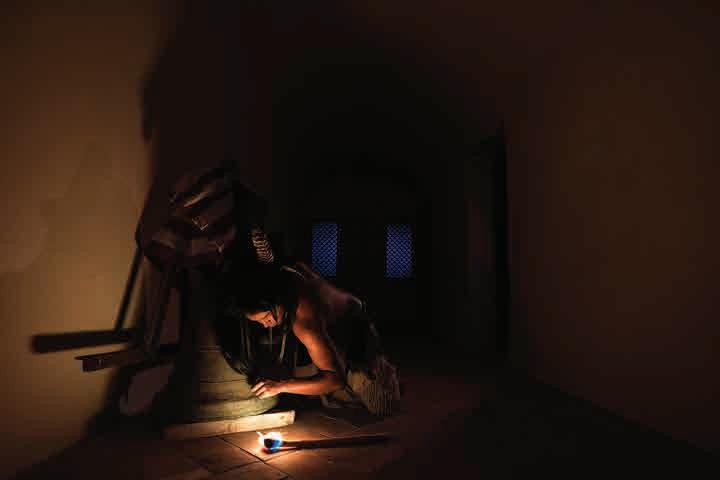
JEREMY DENNIS
(Shinnecock, born 1990)
Cloak of Divisibility, from the series Rise, 2025
Archival inkjet print
20 x 30 inches
Courtesy of the artist
JEREMY DENNIS
(Shinnecock, born 1990)
Liberty Bell, from the series Rise, 2025
Archival inkjet print
20 x 30 inches
Courtesy of the artist
JEREMY DENNIS
(Shinnecock, born 1990)
Many Nations, Under One, All Invisible, from the series Rise, 2025
Archival inkjet print
20 x 30 inches
Courtesy of the artist
JEREMY DENNIS
(Shinnecock, born 1990)
Nothing Happened Here #23, from the series Nothing Happened Here, 2025
Archival inkjet print
20 x 30 inches
Courtesy of the artist
JEREMY DENNIS
(Shinnecock, born 1990)
We’re Seen As Domestic and Dependent, Too, from the series Rise, 2025
Archival inkjet print
20 x 30 inches
Courtesy of the artist
JEREMY DENNIS
(Shinnecock, born 1990)
Unread Letter to King George III, from the series Rise, 2025
Archival inkjet print
20 x 30 inches
Courtesy of the artist
JEREMY DENNIS
(Shinnecock, born 1990)
Tart Message, from the series Rise, 2025
Archival inkjet print
20 x 30 inches
Courtesy of the artist
JEREMY DENNIS
(Shinnecock, born 1990)
Treaty of Paris, from the series Rise, 2025
Archival inkjet print
20 x 30 inches
Courtesy of the artist
SCHEREZADE GARCÍA
(American, born Dominican Republic, 1966)
America: Borders and Fireworks, from the series It’s So Sunny That It’s Dark, 2017
Acrylic, charcoal, and ink on linen
72 x 64 inches
Courtesy of the artist and Praxis Galler y
FAITH RINGGOLD
(American, 1930-2024)
Absolute Tyranny, from the series Declaration of Freedom and Independence, 2009 Silkscreen
15 x 22 inches
26/35 (Edition Record)
Courtesy of ACA Galleries
FAITH RINGGOLD
(American, 1930-2024)
All Men Are Created Equal, from the series Declaration of Freedom and Independence, 2009 Silkscreen
15 x 22 inches
26/35 (Edition Record)
Courtesy of ACA Galleries
FAITH RINGGOLD
(American, 1930-2024)
And Women?, from the series Declaration of Freedom and Independence, 2009
Silkscreen
15 x 22 inches
26/35 (Edition Record)
Courtesy of ACA Galleries
FAITH RINGGOLD
(American, 1930-2024)
As Free and Independent States, from the series Declaration of Freedom and Independence, 2009
Silkscreen
15 x 22 inches
26/35 (Edition Record)
Courtesy of ACA Galleries
FAITH RINGGOLD
(American, 1930-2024)
Taxes On Us Without Our Consent, from the series Declaration of Freedom and Independence, 2009
Silkscreen
15 x 22 inches
26/35 (Edition Record)
Courtesy of ACA Galleries
FAITH RINGGOLD
(American, 1930-2024)
We Have Appealed to Their Native Justice and Magnanimity, from the series Declaration of Freedom and Independence, 2009
Silkscreen
15 x 22 inches
26/35 (Edition Record) Courtesy of ACA Galleries
DIANE ARBUS (American, 1923-1971)
A Young Man in Curlers at Home on West 20th Street, NYC, 1966
Gelatin silver print
14.75 x 14.25 inches
Hofstra University Museum of Art Gift of Steven Yager
HU89.38
MARY ELLEN MARK (American, 1940-2015)
Father and Son, Christian Bikers, Arizona, from the portfolio In America, 1988
Gelatin silver print
10.25 x 10.25 inches
Hofstra University Museum of Art Gift of Mr. and Mrs. Steven Ball
HU93.17.5
JOEL MEYEROWITZ (American, born 1938)
New Mexico (Indians on Street), from the portfolio Joel Meyerowitz: The Early Works, 1972
Gelatin silver print
8.813 x 13.375 inches
Hofstra University Museum of Art Gift of Mr. and Mrs. Steven Ball
HU2000.9.10
JOEL MEYEROWITZ (American, born 1938)
San Francisco (Man with JFK Posters), from the portfolio Joel Meyerowitz: The Early Works, 1964, Gelatin silver print
8.875 x 13.375 inches
Hofstra University Museum of Art Gift of Mr. and Mrs. Steven Ball HU2000.9.7
RICHARD SANDLER (American, born 1946)
Muslim Family, 42nd Street, New York, 1982
Digital print
8 x 10 inches
Courtesy of the artist and the Museum of the City of New York
GARRY WINOGRAND (American, 1928-1984)
Beverly Hills, California (Mother and Daughter Leaving a Restaurant), from the portfolio Women Are Better Than Men, 1979
Gelatin silver print
8.875 x 13.25 inches
Hofstra University Museum of Art Gift of Dr. Keith Waterhouse HU82.17.4
As the United States prepares to celebrate its 250th anniversary, I am reminded that Shinnecock and other Tribal Nations across Turtle Island have existed here for more than ten thousand years — creating systems of governance, ceremony, and belonging long before any declaration of independence was signed. Yet those millennia of continuity and care rarely receive the same recognition or celebration. The anniversary of the U.S. marks a quarter-millennium of settler nationhood, but for us, it also marks 250 years of survival within a revolution that was never ours.
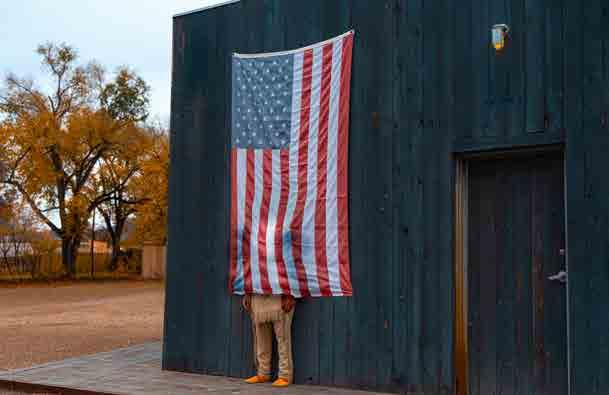
Rise is my counter-revolution — a visual and spiritual reclamation of the stories buried beneath the founding myths of America. Using self-portraiture, performance, and allegory, I revisit the language of the Declaration of Independence through an Indigenous lens, revealing how many of its grievances against the British Crown were simultaneously enacted against Native peoples. The colonists demanded freedom while denying it to others; they fought tyranny while becoming its new architects on stolen land.
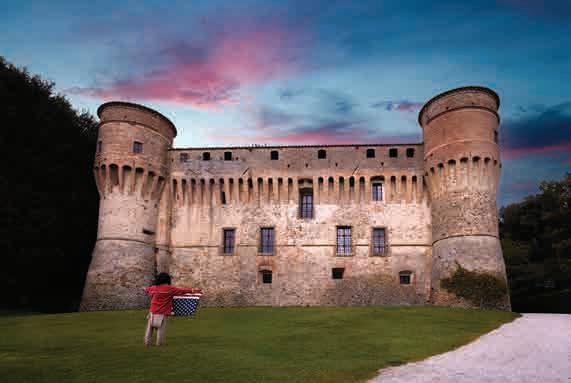
Through haunting, cinematic imagery, I place myself within landscapes of both ancestral and colonial memory — from Shinnecock territory to European castles and fields connected to Columbus’ legacy. These spaces become charged with ghosts of history and acts of return. The candle, the soil, the flag, and the body itself are transformed into ritual objects — summoning not the dead, but the truths that were buried with them.
For the Shinnecock Nation, sovereignty is not an abstract political term; it is the way we have always lived — in relation to the land, to each other, and to the sacred. Rise celebrates that resilience while confronting the unacknowledged histories that shape the present. The work asks: How do we commemorate “independence” when the very concept came at the expense of Indigenous freedom? What might a new declaration look like — one that honors coexistence, repair, and shared stewardship rather than conquest?
Rise stands as both elegy and uprising. It insists that the 250th anniversary of the United States must also be a moment of reckoning and reconciliation — an opportunity to listen to the Nations whose stories predate the republic and whose futures continue to rise beyond it. Through self-portraiture, I return as both witness and ancestor, to remind us that we were never erased — we are still here, and we are still rising.
Long before Hofstra was founded, indeed before there was “Long Island,” the Indigenous peoples called this region Sewanhacky, Wamponomon, and Paumanake — sacred territory inhabited by the Carnarsie, Rockaway, Matinecock, Merricks, Massapequa, Nissequoge, Secatoag, Seatauket, Patchoag, Corchaug, Shinnecock, Manhasset, and Montauk. Each tribe had its own territory, whose boundaries were respected by the others, and all inhabitants were united in their shared desire for peace. The land that surrounds Hofstra is part of that history. We want to protect its legacy and honor the Indigenous peoples who have made untold contributions to our region.

The Hofstra University Museum of Art’s programs are made possible by the New York State Council on the Arts with the support of the Office of the Governor and the New York State Legislature. © 2026 Hofstra University Museum of Art