Just prior to Christmas 2015, Sussan Ley, the Australian Health Minister, announced 1 billion dollars for new hepatitis C direct acting antiviral (DAA) medications to be made available on the Pharmaceutical Benefits Scheme (PBS) to all Australians with hepatitis C from 1 March 2016. This was a world first and a watershed moment in the response to hepatitis C in this country.
It followed many months of advocacy by many people, including all hepatitis organisations and many community advocates, but I would particularly like to acknowledge the leadership of Hepatitis Australia CEO, Helen Tyrrell, and Hepatitis NSW’s equal treatment access campaign as key factors in achieving this result.
Following the PBS listing in March, Hepatitis SA was kept busy updating information resources, promoting information relating to the new DAAs, and organising education events for GPs, allied health and community members. As PBS access was also available for prisoners, briefings were also arranged for Department for Correctional Services and Community Corrections staff and the annual Heplink Forum in early May had the title ‘Eliminating Hepatitis C in SA Prisons: Realistic Target or Wishful Thinking’. Our Information and Resources team continued to develop Hepatitis SA’s social media presence during the year, and many tweets were sent out re the new DAAs. Board member Jeff Stewart also did
Chairperson’s Report
a radio interview to inform the SA community about the new treatments.
It was indeed heartening to hear from the Kirby Institute, which was monitoring the uptake of the new DAAS, that in the first 3 months since the PBS listing of the DAAs, close to 1,000 South Australians had commenced treatment.
In early September 2015, Hepatitis SA’s Executive Officer, Kerry Paterson and Helpline Coordinator, Deborah Warneke-Arnold represented our organisation at the inaugural World Hepatitis Summit in Glasgow. The World Hepatitis Alliance and the World Health Organisation partnered to organise the Summit, which was hosted by the Scottish government and had delegates from 80 countries. The Summit concluded with the Glasgow Declaration which urged national governments globally to develop and fund viral hepatitis strategies for their countries and to support the adoption of new global elimination targets at the World Health Assembly in May 2016. Subsequently, the first global viral hepatitis strategy, with elimination goals by 2030, was unanimously endorsed.
There was also some good news for Hepatitis SA in relation to hepatitis B in May 2016, when we learnt we had secured funding for 5 Hepatitis B Community Education grants from the Australian government, and administered by Hepatitis Australia, to work with community partners from the Filipino, Chinese, Vietnamese and African communities over the next 2 years.
Amidst all the excitement generated by the HCV medications and more funding for hepatitis B work, we also sadly know that the HCV DAAs arrived too late for some, and that there is still much work to be done to better support South Australians with advanced liver disease. We must also continue to develop models of care to ensure that the most disadvantaged in our community can access testing, monitoring and treatment, and, if we are ever to realise our elimination goals, we must continue to enhance our prevention efforts.
Thank you to all staff and volunteers for your hard work and I congratulate you all on your many achievements during the year. Dr Judith Peppard and Howard Jillings left the Board this year and I would like to thank them both for their valuable contributions to our organisation. I would like to welcome Sam Raven and Sharon Jennings who joined the Board at our 2015 Annual General Meeting and thank them and the other members of the Board for their support during the year.
I would like to finish by thanking all our partner organisations who supported our work this year and our main funding administrators, the staff at the STI & BBV Section at SA Department of Health and Ageing, the SA Branch of the Australian Government Department of Health, and Drug and Alcohol Services South Australia.
Arieta Papadelos Chairperson
CNP Peer Projects Report
The CNP Peer Projects team provide a range of services to people who inject drugs (PWID), including an extended range of sterile injecting equipment such as tourniquets, sterile water and specialised filters, on a cost recovery basis. As well as providing equipment, they deliver information and education on health issues relating to injecting drug use, from a harm reduction perspective, and make referrals for their CNP clients to a range of health and social services. Peers provide services through CNP sites that are co-located with agencies that provide general health and community services to priority population groups such as people who inject drugs, youth, CALD, homeless, Aboriginal etc. There are three fixed CNP sites which are staffed full time by Peer Educators at Wonggangga Turtpandi (Port Adelaide), GP Plus Noarlunga and Salisbury Anglicare.
In addition to the fixed sites, CNP peer educators also provide services at other high volume CNP sites in order to reach a broader cross section of the community by working at these sites part time on regular days, generally one full day per week. These sites are referred to as sessional sites. During 2015-2016 the sessional CNP sites were Community Access and Services (CASSA), Streetlink Youth Services, Mission Australia Hindmarsh, Nunkuwarrin Yunti, Northern DASSA and Drug Arm, Warradale. During the year CASSA ceased being a sessional site due to needing more CNP peers at Mission Australia Hindmarsh, the busiest site in South Australia,
when funding changes for Mission Australia impacted their capacity to staff the site. Hepatitis SA peer educators now work at Hindmarsh each afternoon from Tuesday –Friday.
During the 2015-2016 year, there were 13,614 client contacts at fixed sites and 2,693 at sessional sites, with 983 referrals at fixed sites and 346 at sessional sites being made to services such as other CNP outlets, medical practitioners, mental health, legal, hepatitis, accommodation, HIV and alcohol and other drug services. The CNP Peer Projects team also provided peer education about harm reduction and other topics as well as more intensive support for individuals. During the year, there were 2,396 occasions of peer education/information provided at fixed sites and 867 at sessional sites; with 241 occasions of intensive support provided to clients at fixed sites and 101 at sessional sites. Intensive support mostly related to safer injecting, drug effects, blood-borne virus (BBV) testing, vein care, mental health, domestic violence, withdrawal/dependence, drug treatment and specialised injecting equipment such as filtering.
EDUCATION
There were more than 15 workforce development sessions provided to a range of groups including university students, Aboriginal health workers, clean needle program staff and prison staff. Sessions covered a wide range of topics including equipment use, specialised equipment/cost recovery, prevention of BBVs, stigma/
discrimination, performance and image enhancing drugs, methamphetamine, overdose awareness and response, how to engage with people who inject drugs (PWID), common health issues experienced by PWID and ways to help reduce potential harms associated with injecting drug use.
We also provided 19 community education sessions, including a joint project with Hepatitis SA educators and other partners within the Adelaide Women’s Prison entitled ‘Keeping Safe.’ Our contribution to the project was providing education relating to harm reduction.
AWARENESS RAISING
In the past year the team produced Overdose Awareness response cards to raise awareness of access
to naloxone from GPs or over the counter at pharmacies due to its rescheduling. The cards provide information on responding to an opioid overdose, using CPR and administering naloxone.
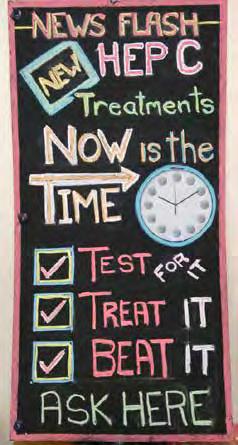
In response to the new hepatitis C treatments, each site has raised awareness and promoted the new regime. Use of blackboards at each site has helped to commence conversations and referrals for the treatment pathways.
RURAL DISTRIBUTION
Due to difficulty accessing injecting equipment in rural areas, this project continues to provide country orders for clients in need of equipment they cannot access in their area, whether due to confidentiality or lack of the range of equipment outside of 1mls syringes. There were 31 client contacts for this service in the past year. Primarily we provide barrels, winged infusion kits, needle tips and wheel filters through this program on a cost recovery basis.
SALEN
Carol Holly, Project Officer in the CNP Peer Projects, continued to co-facilitate the SALEN (SA Lived Experience) Peer Network.
A network of peer educators from agencies including mental health, HIV, CALD and gambling. The forums continue to have high attendance rates and are an opportunity for peers across other agencies and areas to brainstorm, network and provide support to one another.
CONCLUSION
The CNP Peer Projects team would like to acknowledge and thank the community accessing our services, our partner organisations with whom we have worked collaboratively, and the broader team of Hepatitis SA for their support.
CNP Peer Projects is staffed completely by peers, the team consisting of a Coordinator, Project Officer and eleven peer educators. I would like to thank them all for the dedication to their work in the past year, including Patrick Kavanagh who resigned from his position at the end of the year. Patrick had been a CNP peer educator for over ten years and we were sad to see him go. We wish him the best in whatever the future may bring him.
The CNP Peer Projects are now in their third year with Hepatitis SA, and all is running smoothly. We continue to raise awareness of issues affecting the injecting community, including stigma and discrimination. We believe through the CNP Peer Projects, understanding and knowledge of what peer education is amongst sector workers has increased as has the level of respect for peer educators being ‘experts in their field’ and valued for the unique support and services they provide for their clients.
Michelle Spudic CNP Peer Projects Coordinator
Education Program Report
WORKFORCE
This year the Hepatitis SA education team provided 159 education sessions to 2,218 people from various workforces across South Australia (up from 2014/15 - 108 education sessions to 1,570 people), including health care, Aboriginal health, alcohol and other drug services, multicultural services, youth services, general practice, sexual health services, mental health services, correctional services, dental services, residential youth services, tertiary education institutions and social services.
Education sessions for Department for Correctional Services staff begun late in the previous year continued in 15-16, with 42 sessions provided for 612 participants across the following South Australian prisons: Port Augusta, Mt Gambier, Adelaide Pre-release Centre, Adelaide Women’s Prison, Adelaide Remand Centre, Mobilong, Cadell and Port Lincoln, as well as new officers.
COMMUNITY
In addition to workforce development sessions, the education team also provided 102 community sessions for 1,306 community members.
The community education sessions mainly targeted various priority populations, which included people who inject drugs, young people (including those in the juvenile justice system), indigenous Australians, people from culturally and linguistically diverse backgrounds, people
affected by mental illness, people in custodial settings, people experiencing homelessness, as well as people affected by viral hepatitis and people from the broader community who do not identify with any particular priority population.
Some of the community education highlights in the 2015/16 year included:
New Hepatitis C Treatments Community Forum
Hepatitis SA Educators held a community information forum in April 2016. The forum was to increase community knowledge of the new hepatitis C treatments which were made available by the Australian Government on the 1 March 2016. A total of 28 community members attended the event where information was provided by a Viral Hepatitis Clinical Practice Consultant, a peer educator with lived experience of the new treatments and the Coordinator of Hepatitis SA’s Helpline and Support Services. The attending community members asked lots of questions of the presenters and all provided positive feedback about the event.
Tarpari Wellbeing Day – Port Pirie
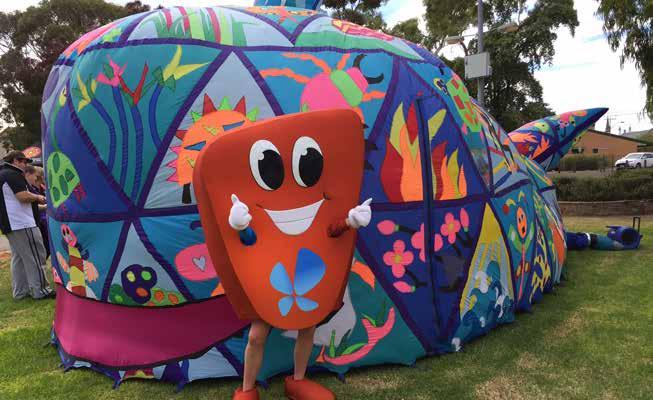
Tarpari Wellbeing Day is Port Pirie’s biennial celebration of health, community and Aboriginal culture and reconciliation. ‘Tarpari’ means ‘healing’ in the Nukunu language and this year’s theme was ‘Together, let’s close the gap’. This event had much to offer the whole community of Port Pirie and the Mid North area,
including traditional Aboriginal Dancers, Aboriginal Entertainers, art displays, health information and attractions, such as a reptile zoo and Kondile the story-telling whale.
To engage community members at the event, Hepatitis SA educators facilitated a quiz with a $50 voucher prize. Over 100 people visited the Hepatitis SA information stall to learn about the new hepatitis C treatments through the quiz. The participating community members were very interested in learning about the new treatments, and informed the educators they would pass the information onto family and friends who were living with hepatitis C.
Pass the Parcel – New interactive activity
In order to engage community members in education sessions, the Education Team is continually devising new activities. During the 2015/16 financial year the Education
Team implemented the ‘Hepatitis C Pass the Parcel’ game. It proved to be a highly effective means of assessing knowledge gained by participants during education sessions. Following an education presentation, often with the use of pictorial Powerpoint, participants play pass the parcel, where each layer of the parcel has a question about hepatitis, and if a participant answers it correctly, he/she gets to unwrap the layer and get a chocolate. It is then passed to the next person. The final layer contained a large block of chocolate. Educators were able to evaluate the level of knowledge increase in the group through the correct answers provided during the game. It also gives the educators a chance to address any incorrect information. It was a huge success and it will be continued to be used into the future.
The Educators facilitated a project with young people within
Mission Australia’s Flexible Learning Options (FLO) Program. This program offers educational opportunities to young people aged 12-19 who have dropped out of school, or are at risk of doing so. The project consisted of three 1-hour sessions over a three week period. Up to 8 students attended each session, with most attending all three.
The sessions covered hepatitis C, safer body art, and drugs and harm reduction. The students reported enjoying the sessions and through various evaluation methods, demonstrated that they had increased their knowledge of the topics covered.
THE EDUCATION TEAM
The Education Team for 2015/16 was comprised of Claire Hose, Jenny Grant, Nicole Taylor, Shannon Wright and Tess Opie. Thank you to all the team for a tremendous effort.
Jenny Grant Education Coordinator
O’liver at Tarpari Wellbeing Day
Information & Resources Program Report
The listing of revolutionary new hepatitis C treatment on the PBS was undoubtedly the highlight of 2015-16. For Hepatitis SA’s Information and Resources program this meant a massive review and update of resources to reflect new treatment information, as well as developing new resources to promote the new medicines and how to access them. In all, we distributed over 97,023 resource items. About 8% of resources distributed this year were hepatitis B specific and 21.6% ,hepatitis C-specific. Others were resources relevant to both hepatitis B and C. The flood of interest in the new treatments contributed to the large amount of hepatitis C information disseminated. Over 16,600 items were distributed during the World Hepatitis Day 2015 campaign, and over 19,800 through Down Your Street 2015, totalling almost 34,500 items going to the affected community, workforce and the wider community.
Over 22,600 items were distributed to individuals in the wider community and over 16,500 items went to drug and alcohol services which in the last three years have topped the list of services receiving resources from Hepatitis SA. This was clearly driven by Hepatitis SA’s CNP Peer Program.
WORLD HEPATITIS DAY
There were two major community events: Love Your Liver day at Victoria Square and the Love Your Liver Day Lunch organised in partnership with PEACE multicultural services. The first event gave us the opportunity to make contact with about 125 members of the public around the square providing them with information about viral hepatitis. The second event was attended by 150 people from multicultural communities who were given a presentation on hepatitis B, followed by a Q&A session.
2015-16 New Resources
Liver check-up reminder card
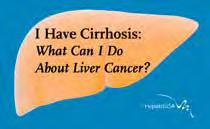
This card was developed in response to suggestions from liver nurses who were concerned about people with liver cirrhosis missing regular screening for liver cancer. It was designed in consultation with the liver nurses, and distributed to relevant clinics at the Flinders, Royal Adelaide and Queen Elizabeth hospitals.
This is a self-directed learning package aimed at health workers in country hospitals. Piloted in 2014-15, it was tweaked and polished, based on feedback from the pilot, and deployed this year.
Hepatitis SA offered small grants which were taken up by 12 community groups and three partner organisations. There were six first-time groups who participated in our World Hepatitis Day small grants this year.
ONLINE SERVICES
We maintained an active online presence and stepped up our social media activities. A more coordinated and concerted effort in engaging with social media was started around May2015. Between July 2015 and June 2016, we gained 215 new twitter followers and received over 5,600 profile visits. Check out our pages: Twitter page: twitter.com/hep_sa Facebook: www.facebook.com/HepatitisSA/ The Hepatitis SA library online collection continued to provide credible, up-to-date resources
Hepatitis B & Mothers-to-be
Following a request for Chinese language resources from the Women’s and Children’s Hospital (WCH) Infectious Diseases team, the brochure, originally from Stanford University, was redeveloped for local context in consultation with WCH doctors. It was translated into Chinese in consultation with the local Chinese community and will be translated into Vietnamese next year.
available at the click of a button. Our online collection of 1,470 plus items makes up about half of our total collection, and continues to grow.
PUBLICATIONS
In all, 26 new or redeveloped resources were produced in 201516. This does not include regular issues of Hepatitis SA Community News which goes out to about 600 recipients – individuals as well as organisations – in printed form. Electronic versions of the magazine go to over 200 recipients. See boxed section for examples of our new resources.
SUPPORT
The Information and Resources team also provided ongoing support to all Hepatitis SA programs and activities, producing certificates, promotional posters, flyers, cards and other items too numerous to list.
New hepatitis C treatment posters and postcards
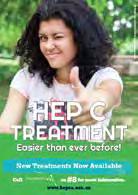
Set of posters promoting the new hepatitis C treatments. Different variations target prisoners, CNP clients and the clients of mental health and liver clinics. Set of postcards for distribution in prisons, promoting the new hepatitis C treatments.
VOLUNTEERS
The nine volunteers who worked with us during the year were from diverse backgrounds: with ages ranging from 18 to over 50; five were of Nepalese cultural background, one Burmese and three Anglo. Two have been in Australia all their lives, one had been here less than a year; one was born, and spent her childhood, in Africa, another was born in Burma and had lived 13 years in Saudi Arabia; one was born in a refugee camp in Nepal, others in Bhutan. Two volunteers have lived experience with viral hepatitis. We are very grateful to Bal, Jo, Michelle, Nisha, Ruth, Sabitra, Sandy, Soma and Susmita for their contributions – and very interesting company.
Cecilia Lim Information & Resources Coordinator
Blood Spills posters
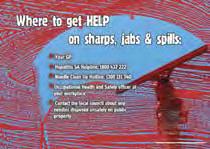
This set of posters was developed together with the education team, for the Youth Training Centre, using the development and consultation process as an awareness raising exercise for the residents as well as the staff
Hepatitis SA Helpline & Support Services Report
The Hepatitis SA Helpline & Support Services Program operates a state-wide Helpline, a free call phone service for prisoners, in-person information and support, and facilitates support groups in the metropolitan area. Clients are provided with written information and appropriate referrals as required. The Helpline is staffed by the Coordinator and a team of experienced volunteers with support for overflow calls by other Hepatitis SA staff. This year volunteers contributed 697.25 hours to staff the Helpline. This ranged from 116 to 296 hours for individual volunteers. We would like to thank Will, Debra, and Louise for their ongoing dedication to delivering a quality service to the community and especially thank Karan for many years of service and wish her success as she now focuses on other areas of hepatitis education within Hepatitis SA. This year also marks a significant milestone for Debra with 10 years of volunteering at Hepatitis SA. Debra has been an exceptionally reliable and conscientious worker who has demonstrated caring and sensitivity in all her interactions with clients. It has been a pleasure to have Debra working in our team.
Comments from clients working with Debra:
“Thank you for talking to me so honestly and I appreciate openness.”
“Thank you, you have made a big difference to me—I wish I could hug you!”
“I feel much better now that we
have talked it through.”
“Have you got a boss I could talk to, because you need a pay rise!”
HELPLINE
There were 515 contacts to the Hepatitis SA Helpline, including 28 emails. The bulk of contacts (93%) were from the primary target groups. Again this year, nearly half of calls were from people new to the service. The majority (79%) resided in the metropolitan area, 17% from country SA, five from interstate and 14 lived overseas, eight of whom lived in New Zealand. The majority of queries (89%) related to hepatitis C, 9% were about hepatitis B and the remainder were viral hepatitis coinfections and other liver disease not related to viral hepatitis.
IN-PERSON INFORMATION & SUPPORT
There were 50 people who preferred to come in to Hepatitis SA to talk in person about hepatitis. Again, the majority of enquiries were hepatitis C related and most were from people who lived in Adelaide. Just over half the discussions were about the new treatments, with many people eager to access them as soon as possible.
SUPPORT GROUPS
Attending a support group can bring a sense of community and connection. Knowing that you’re not alone can provide much needed hope and empowerment. Over the financial year, Hepatitis SA facilitated support groups
Affected by hepatitis C?
Calming the C
• Information and support in a confidential, friendly environment
• Speak to others who have had treatment
• Partners, family and friends welcome
Sixty-six SA prisoners called the service for information and support. The majority of calls (41) came from rural prisons (Port Augusta 34, Mount Gambier 5, Mobilong 1 and Port Lincoln 1). Seventeen were from Yatala or the pre-release centre and eight from the Adelaide Remand Centre.
TRAINING
All Helpline volunteers are expected to keep their knowledge up-to-date including attending four-weekly team debriefing and professional development sessions. The main focus of training over the year was the new direct acting antiviral treatments, common call scenarios and
“Not much to say other than great understanding between us for me to receive what I needed!”
“Excellent service.”
Deborah Warneke-Arnold Hepatitis SA Helpline Coordinator
Outreach Hepatitis C Peer Education & Support Report
The Hepatitis C Peer Education and Support team have had an exciting year with the new hepatitis C treatment options becoming available. They were kept busy informing clients about these long awaited direct-acting anti viral (DAA) medicines, as well as providing support and a vast range of information about liver health and living well. Hepatitis C peer education and support services were provided at 19 host service locations in 15/16, mainly in AOD, mental health and homeless services throughout the metropolitan area, and in rural prisons.
Over the past 12 months, peer educators had a total of 599 client contacts whom they engaged one-on-one about a broad range of hepatitis C information. They also provided 112 hepatitis C information and education sessions to 715 client contacts from the hepatitis C priority population groups in Adelaide. Of these 1,314 clients contacts, there were 716 (54%) clients who were new to our service and the remainder were return clients, who had engaged with a peer educator on a previous occasion.
The peer educators also provided a further 38 group sessions for 548 prisoner contacts and 85 individual sessions with prisoners across 8 of the 9 adult custodial settings in this state. Peer educators engaged a further 589 male prisoners at various activities within prisons, such as health expos, an event for NAIDOC Week at Yatala Labour Prison and during two promotional activities for World Hepatitis Day at Pt Lincoln and Mobilong Prisons.
In conjunction with the other programs at Hepatitis SA, for World Hepatitis Day (WHD) 2015, which is celebrated globally each year on the 28 July, we held an event in Victoria Square/ Tarntanyangga in the Adelaide CBD. Entertainment was provided by The South Australian Police Band, and local television personality Rob Morrison demonstrated visually spectacular liver related science experiments to educate and entertain. A henna artist and a DJ also attracted members of the public throughout the day, while peer educators engaged with 211 members of the general community, who stopped by. The event received attention from ABC local radio and some social media with the assistance of some of our host agency services and we were honoured to receive a visit from, The Lady Mayoress of Adelaide, Genevieve TheseiraHaese, who we all found to be delightful and gracious.
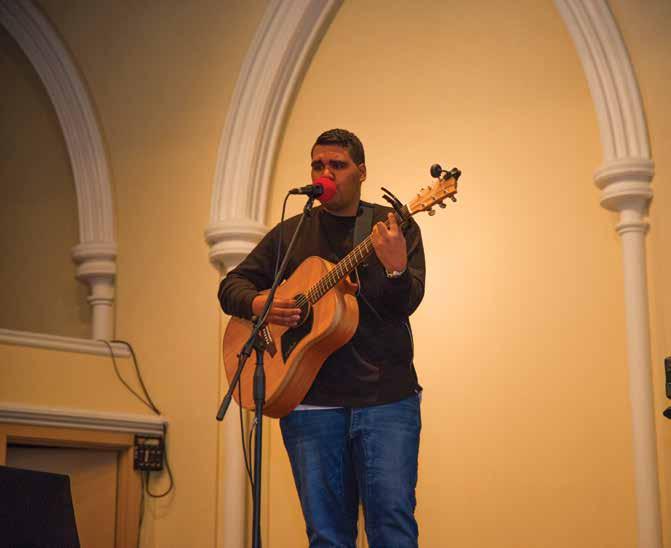
The peer educators also conducted 8 other WHD activities, as well as participating in numerous other community events throughout the year to raise awareness about hepatitis C. A number of these were Aboriginal focused community events, such as an event during Reconciliation Week 2016. The theme of this event was “Together we are strong, together we are healthy”, funded by a $2000 Quick Response Community Development Grant from the Adelaide City Council.
Later in the year for NAIDOC Week, peer educators provided 473 printed resources regarding all aspects of hepatitis C, engaging with 276 people at the NAIDOC
Reconciliation Week 2016
Family Fun Day at Bonython Park on the Western outskirts of the Adelaide CBD.
The team also staffed a stall at the annual Aboriginal Sobriety Group (ASG) Sober Walk, At this event, 63 participants, all of whom were Aboriginal or Torres Strait Islander participated in the “Little Liver Quiz”. There were 10 other Indigenous service providers also in attendance and over 270 people took part in the ‘Sober Walk’, aimed at encouraging people who are affected by drugs and alcohol to seek the help they need, and to increase awareness of the harmful impact drug use and alcohol is having on Indigenous families, individuals and the community. 416 printed information resources and Hepatitis SA promotional items were distributed at this event.
Nathan May performs at Hepatitis SA’s Reconciliation Week event
In an effort to highlight the change in hepatitis C treatment options this year the peer educators developed a short video with a series of hand-drawn cards that demonstrate the key differences between the “old treatment” and the “new treatment” contrasting the difference in treatment work up, duration, ease of administration, side effects and success rates. The video was shared on Hepatitis SA social media channels, and is viewable on YouTube Channel at https:// youtu.be/ofYkbRnrZls. Peer educators are also able to show the video to their clients on their personal electronic devices, to increase awareness about the new treatments.
This has been a momentous year with the introduction of the new treatments, and the peer educators
have been promoting the treatments as well as providing a number of their clients with a simple pathway to treatment, through South Australia’s wonderful viral hepatitis nurses - who always go that extra step. Since the DAAs became available on the 1 March, two of the team have also commenced and completed the new treatments, and at the time of writing, they are awaiting their post-treatment test results. We all look forward to the elimination of hepatitis C in our lives and in our community in the near future.
Lisa Carter Coordinator
Town Hall Meeting Hall
Featuring NathaN may Live (‘Reflections’ ep Out Now)
Treasurer’s Report
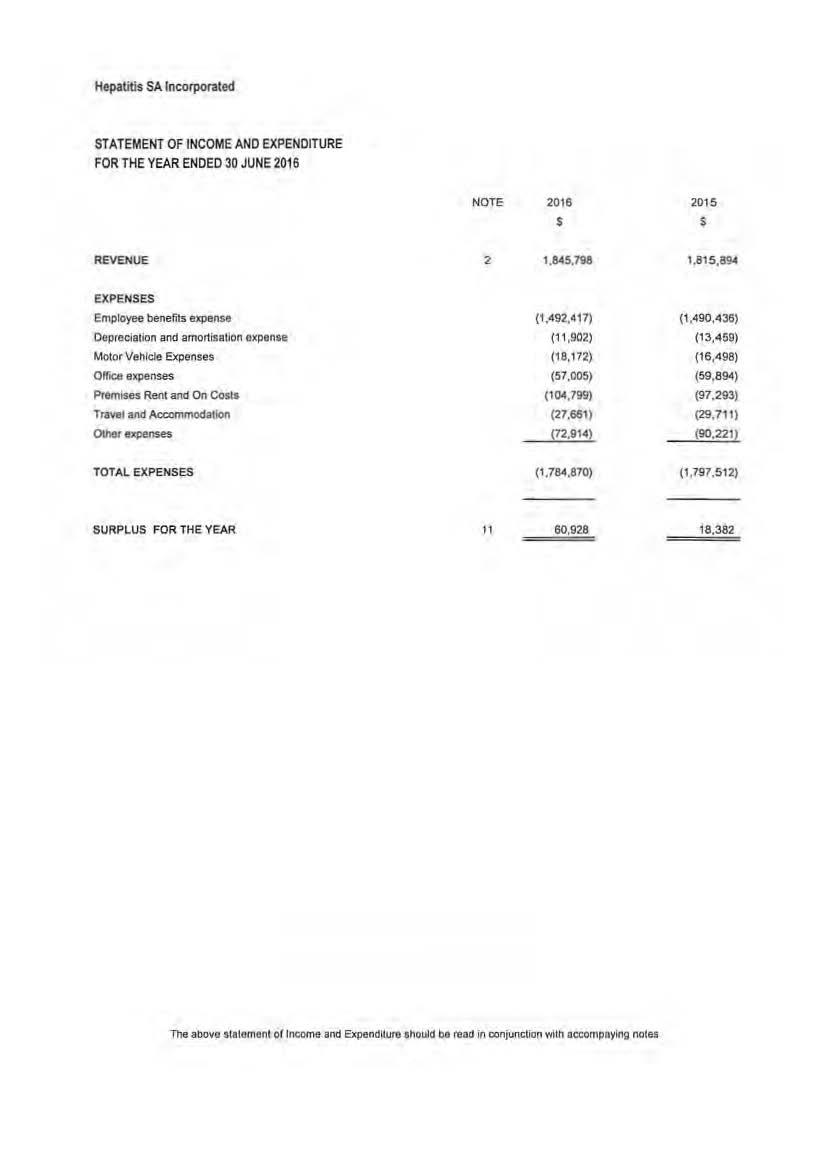
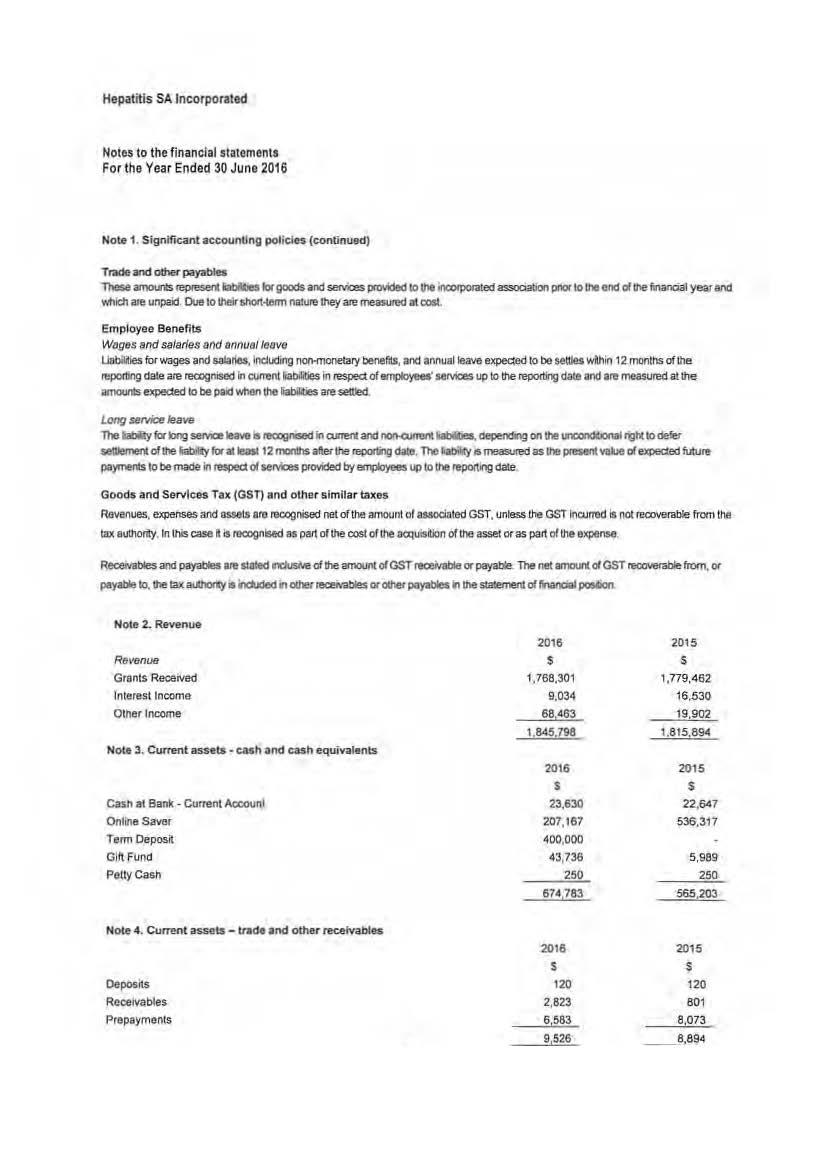
Total revenue for 2015-2016 was $1,845,798. This was largely made up from grant income, which was the net result of 12 months recurrent funding for the financial year for Hepatitis SA’s 4 main grants consisting of $831,366 for the SA Viral Hepatitis Prevention and Health Promotion Program; $108,083 for the Viral Hepatitis Workforce Development Project; $479,377 for the Clean Needle Program Peer Education Projects from SA Health; and $243,640 for the Outreach Hepatitis C Peer Education and Support Project from the Non-Government Organisation Treatment Grants Program funded by the Australian Government Department of Health.
As well as the main grant income, other sources of revenue included $15,644 Social and Community Services supplementation from the Australian Government Department of Health and $77,306 from SA Health as their contribution to costs for the Equal Remuneration Order; $9,034 interest; $11,159 in recoupments, being mainly cost recovery for information resources distributed interstate, and for the full range of Clean Needle Program equipment distributed in South Australia, $37,728 in donations, $6,672 in sponsorship mainly for World Hepatitis Day and GP education events, $3,992 in sundry income, and $2,453 in fund raising distribution of funds raised in the previous year.
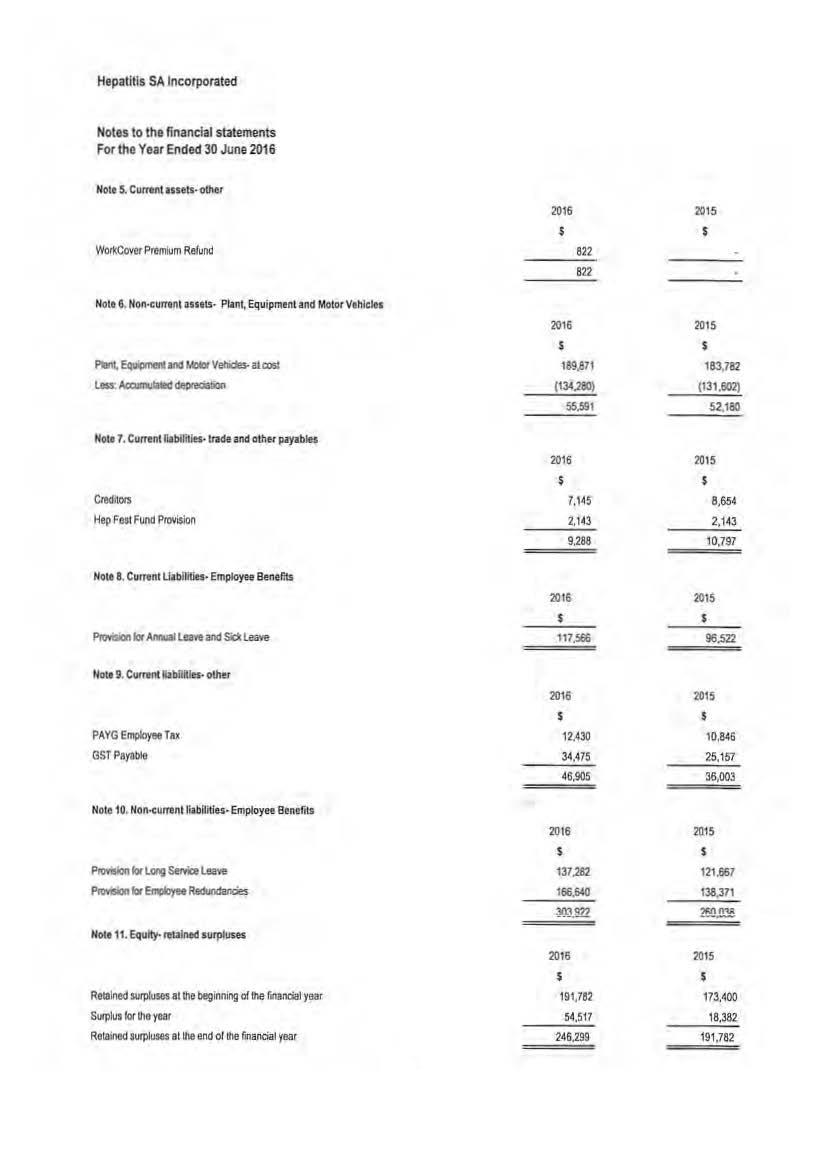
Total expenditure for the year was $1,784,870. The major expense was the Employee Benefits expense of $1,492,417 comprised of Salaries and wages
of $1,285,384 and On-costs of $207,033.
Other large expenses were Premises Rent and On-costs of $104,799; Office expenses of $57,005, as well as Other expenses of $72,914, which were comprised of Program costs of $67,972, and Other staff costs of $4,942.
Motor vehicle expenses were $18,172, Travel and accommodation was $27,661, and the Depreciation and amortisation expense was $11,902.
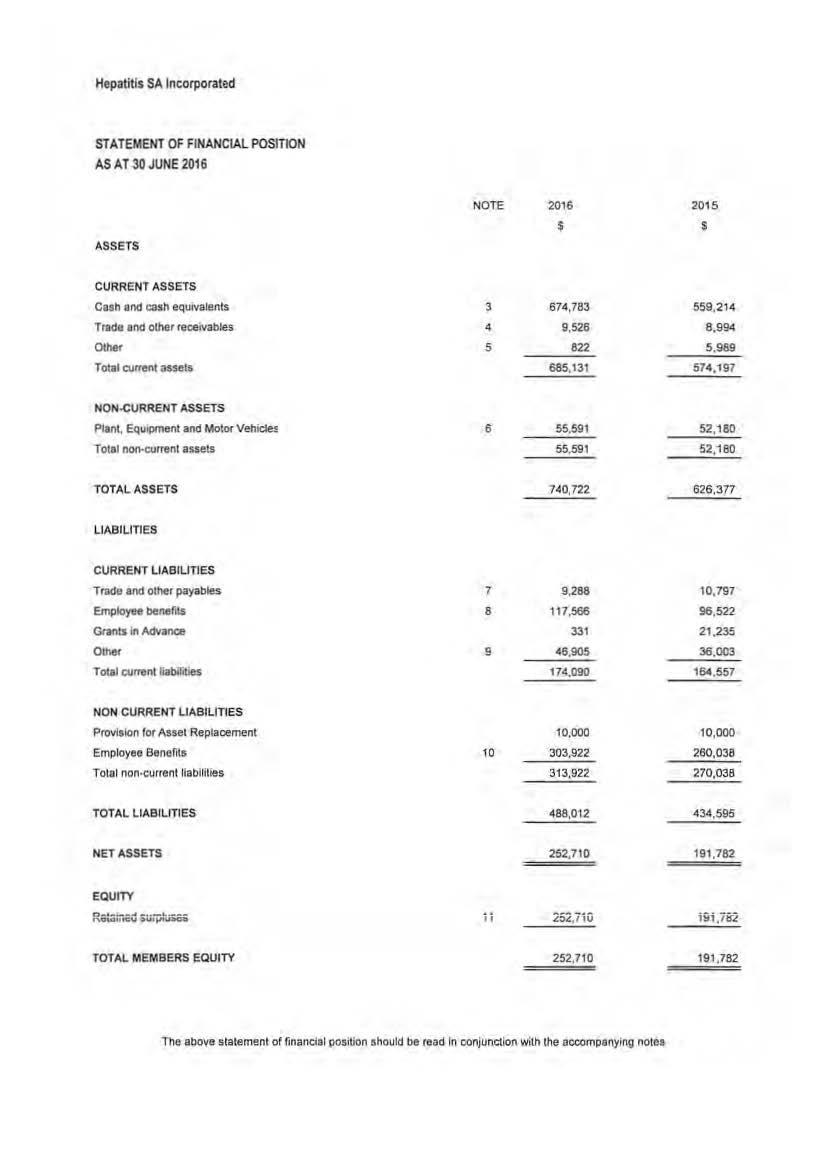
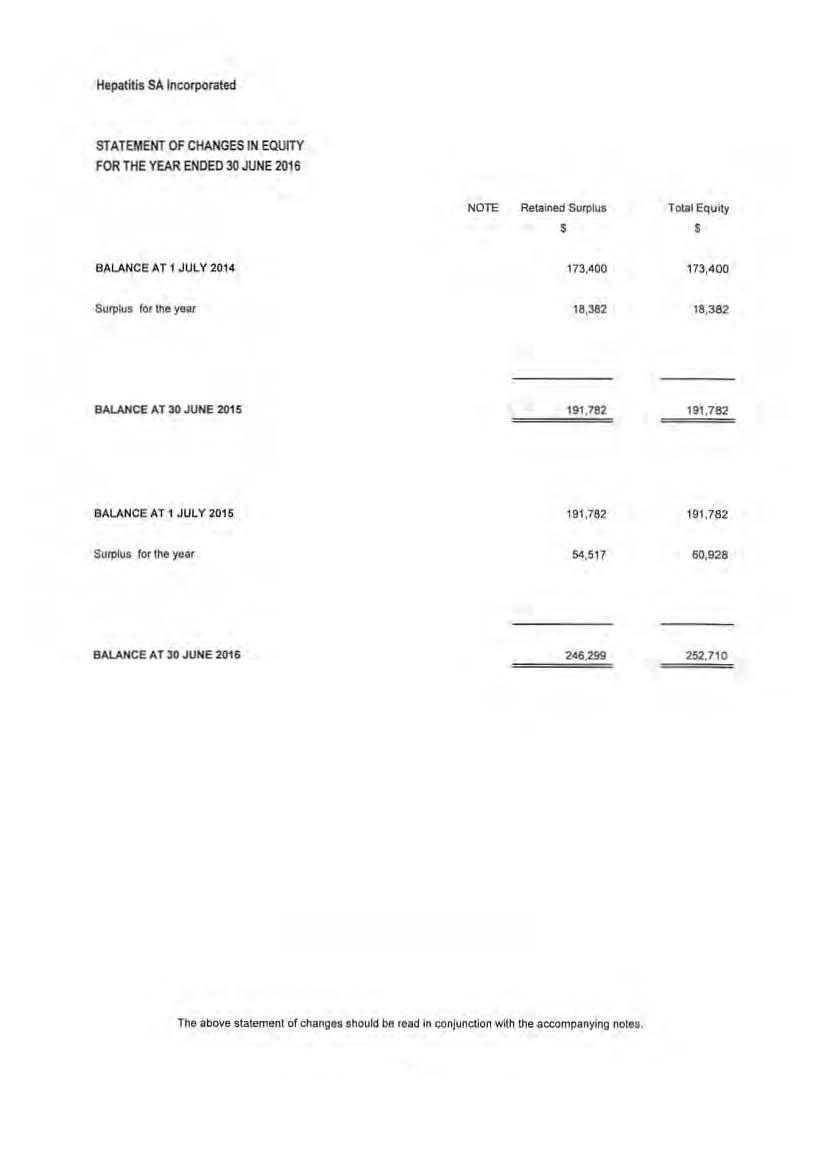
For the 2015-2016 financial year, Hepatitis SA had a surplus of $60,928 resulting in total equity of $252,710 as at 30 June 2016.
Hepatitis SA would like to thank the STI and BBV Section at the SA Department of Health and Ageing, Drug and Alcohol Services South Australia and the SA State Office of the Australian Government Department of Health, for administering Hepatitis SA’s major recurrent funding during the 20152016 financial year.
Sam Raven Treasurer
INDEPENDENT AUDITOR'S REPORT
Hepatitis SA Inco rporated
We have audited the accompanying fi nancial report of the H epatitis SA Incorporated , which comprises the Statement of Financial Posit ion as at 30 June 2016 , and the Stateme nt of Income and Expend iture for the year then ended , a summary of significant accounting policies and other explanatory notes
the financ ial report i n accordance with Australian Accounti ng Standards (including the Australian Accounting In terpretations). This responsibility includes designing, implementing and maintaining i nternal control relevant to the preparation and fair presentation of the f inancial report that is free from material misstatement, whether due to fraud or error; se lectin,g and apply ing approp riate accounting po licies; and making accounting estimates that are reaso nable in the circumstances.
Auditors responsibility
Our responsibi lity is to express an opi nion on the financial report based on my audit We conducted my audit in accordance with Australian Auditing Standards. These Auditing Standards require that we comply with relevant ethical requirements relating to audit e ngagements and plan a nd perform the a udit to obtain reaso nable assurance whether the f inancia l report is free from materi al mi sstatement.
An audit invo lves performing procedures to obtain audit ev idence about the amounts and disclosures i n the fi nancial report. T he proced ures selected depend on the auditor's judgement, incl ud ing the assessme nt of the risks of material misstatement of the financi a l report, whether due to fraud or error In making those risk assessments, the audito r considers internal control releva nt to the e ntity's prepa ration and fair presentation of the financia l report in order to des ign aud it procedures that are appropriate in the circumstances, but not for the purpose of expressing an op inion of the effectiveness of the entity's internal control. An audit also i ncl udes evaluating the appropriateness of accounting pol icies used and the reasonableness of accounting estimates made by the Hepatitis SA Incorporated, as well as evaluating the overall presentation of the fina ncial report.
We believe that the audit evidence we have obta ined is sufficient and appropriate to provide a basis for my audit opinion.
Auditor's Opinion
In my opin ion , the fi nancia l report prese nts fairly, in all materia l respects, the financial position of the Hepatitis SA Incorporated as of 30 June 2016 , a nd of its financial performance for the yea r then ended in accordance w ith Australian Accounting Standards (i ncl uding the Australian Accounting Interpretations) ,
Peter Hall Chartered Accountant
n; Dated '2b
Genera l infonnaUon
The report oove<s HepaOOs SA ln<Ofl'<)ratecl as an in<fMdual entity Tha financial report iS presented in doUars, wl1idl is HepaOOs SA lnco!pOrnted 's functional and presentation currency,
The f11ancial report consists of the flnancial stmements, notes to the ffnai1Cial statements the board members' dedamtion.
The flnanciaJ report was autl1orised fa< iSsue by 111• board membeo; at the Annual General Meeti119 held fn Adelaide
STATEMENT OF INCOME AND EXPEND IT URE FOR THE YEAR ENDED 30 JUNE 2016
OF FINANC1Al POSITION AS AT 30 JUNE 2016
STATEMENT OF CHANGES IN EQUITY FOR THE YEAR ENDED 30 JUNE 2016 NOTE Re tained Surplus s BALANCE
Hepatitis SA In corpo rated
Notes to tha financial For tht Ytar Ended 30 Junt 2016
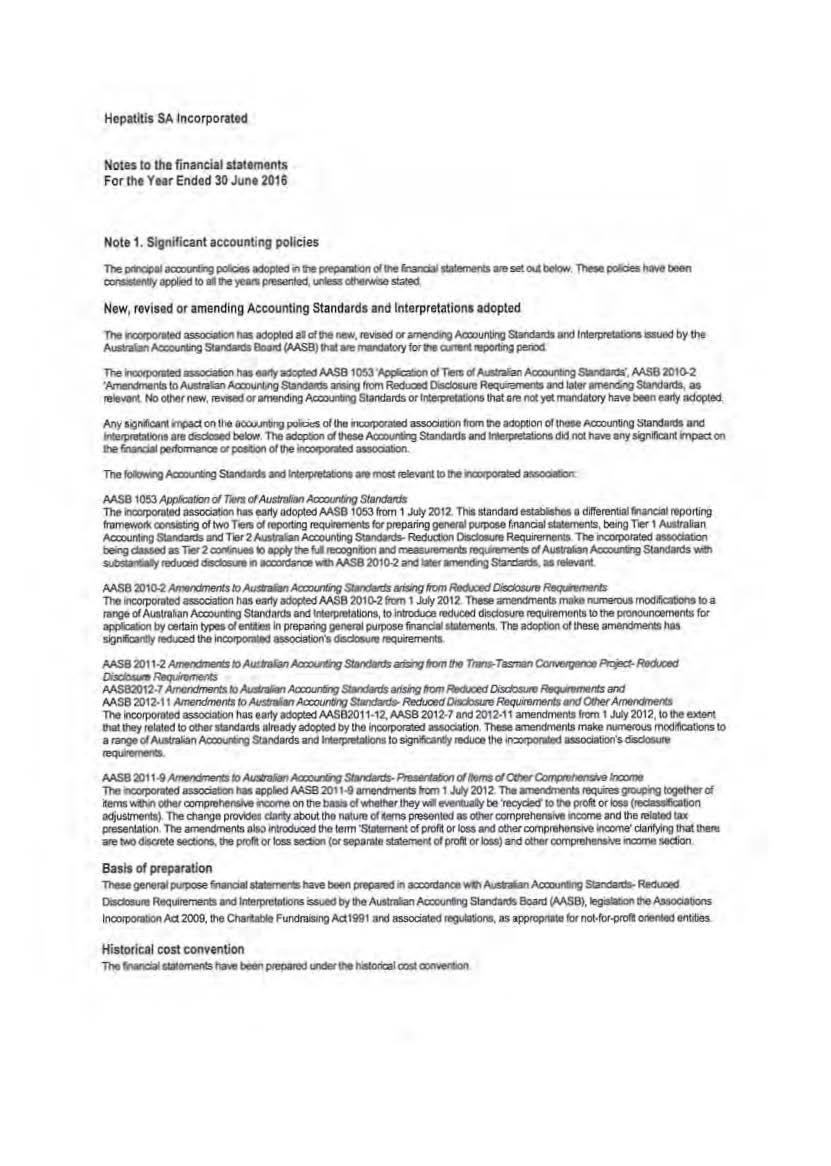
Note I. Significant accounting policies
ldoQied ... cs...,set...-- l!WMpc6Jeohwe-..
QOI l'fiW( lj)l)ioed 10 ""'- pre51!<11ed, stUd
New, revised or amending Accounting Standa rds and Interpretation• adopted
ll1e ,.ldoll4od aid tile,_, revMd 01 .,,,."'"G Acla>undrG SUndaftlo end ISIUftCI by thO
--ning-
-(MSB)Ihlt.,.,.-ro.yforlno..-.1-""'' porod.
The flt(ltjiOIIIIid ,........, hot Mtly ldcl*d MS810$3 _,,. !I oll'eca - · MS8 2010:2 toAUI!ralan -01119 Sla- """""9 11om Redllood o..a.ure R__.ll1d ,_ ome<lllori!ISWldilllls, as No ecllot .- I"OVI5od ctlll180d1ng Aaloun1lrG Stalldards ot 11\at ore IICII yet mend.ttory """"boon early adO!'(!!d kly olgnilcolnl ompaa on u,. pdici<:s ol tho n:orporMd assodolion 11om 1tte odopclon d \1- AoooUnlillg Sla- end 1111 below r:J t11ese Acalunllrg Standi> Ills did IICII h any on peobma1101 .,,.,...,., r:J ll1e iCQp<li- IOOOO"IM
The 8nd lncorpoecaCIOI• MlnCI&I releYifiiO 1M iiC>DijiOI'*<I .....,..., d Au-A<xxxllllng standatds
The inOOijiOintld ossod3bon lla OOI1y odopeed MSB 10531mm I »y 2012 Th•standald ostaiJiehee e reporting ,_00'11 '1' g olrwo Te11 r:J repol1ilg ror preparing goMrllpurpoee f,nanaar _,Is, bemg T• I -..uan ll1d Thr 2,.,.._Aa:lo1Jnling Redt.ldlon Doodclue The IOCXIII)OI3ted toiOdallon beo'lg-as Toor2"""""'* 10 opply lr1e lui reoognibon 8nd ,.,.,....,..,_ ,_..... ol S\bUWfreduc.d_,..,...,..da,u-MS8201C).2 .-.I'll
AASB
The inc:olponoted assoOalion has early odo!o(ec!AASB 201().21mm I My 2012 "!"'- iJIIOIIdme<lll"''ka......,.,.. modillca:lons 10 a r:J Al4lrllan AccOIIntng Slandlli'CIIand lrilelprl4atlons, to lnlroduce lwdute<l disdosure noqlirMillnllro t11a pnlnOUOC.mtnta for 111• •" by oortain types r:J erd.elln prepali'G giiW1II P"fllOS8 finantial61111.11menll The adopCIOn Of tlleSe """" Oli8tiCS has IWdua!d ""' ,__ ISSOC:iotion cledoMuolrequirernellta
The fneof1>0<1)'.ed asSOCia11011 nas ul1y ldopteCIAASB2011·12.MS8 2012-7 and 2012·11 amelldmtntt from 1 J\Ay 2012 , to ll1e ex!ef1t lhallhoy related to Olher -•rd• almldy adoplod by lhe frloorporzec! auoo:otlon n- .,., -nts mal<e """'"""" modrllcetiom ID a rangooiAula'aian &andards and......,......, lo Signif'unlfy reduct the hr.:orjiOI- 11S$0C181101l'sdisdoolurw
The .IC>DijiOI-.d ISb: • ""'' hOIIIIPiod MS8 2011.Q II1'IOJ dl lOIIlS tom IJ\Ay 2012 The •16d1e ill requies IOgoCiler d item1Wilv1 C>lhot QltTijlllll',onlt.e ._on the- ol-ho< IIley wil........ay be 'r&cfdttt! 10 cr. poor.& or los$ (I " 1 ncouon The cllange p- dilly about t11e na\!JIII .,_ pre$01110<1 to OO.r compmllens,... ._,. and "'"-laX preseratton Tho -IS m iriii'Oduced tho 11111'11 of prol1t or tos.ll1d Olher compreh8,...,1ncorne' clar)Mng lllallhent ""'r.o dclllle -!he pll)l'll or loss_, (Of seperola Slll:enwt ol pl'olll and Olher seaion_
Basi1 of illllllil ___ ,._.,.,.,..,.,.._...,__,ill:tlaul*ngSta!daido:
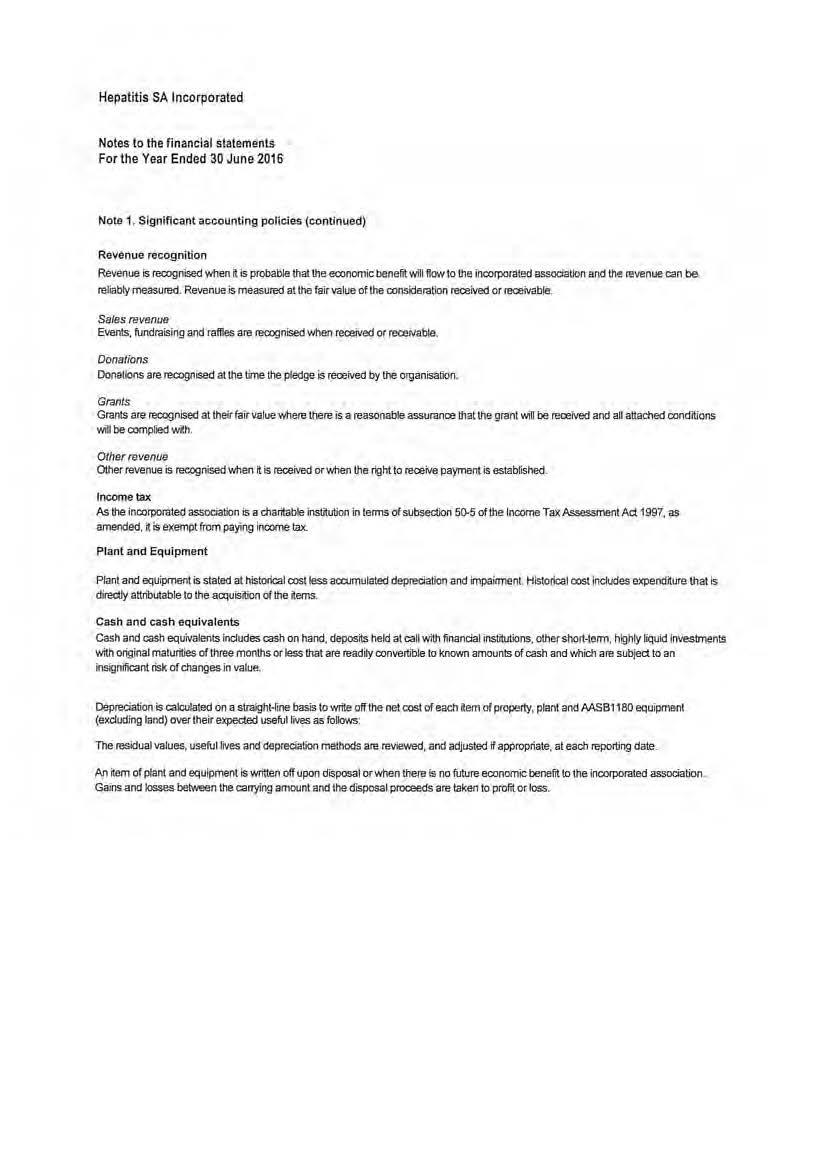
Revenue is reoognlsed y.lten probable lhallhaeconomic benelit will !low to llle incorpcmU!!d association and Ill< revenue can be reliably measured. Revenue .is measured at the fair value of the consk:laratloll received or reoefvabft!.-
Saf8s revenue
Events, rundraising and raffles are reoognlsed whe1l received or recell/abkl
Donslions
Ociletloos at llle trne tl1e pledge is received by lila
Grants
Grants are reoognised at lllwlair '"'luewhere lila"' is a reasonable asstJrnnce lllat lhe grant Will be received and all attad1ed will be ex>mplied With
Other
Other revenue is reoognisad Wllen received or Wllen the rl!ht to ...ceive payment is es1ablished
Income tax
As tl1e inco<l)Oiated associalion is a d1alitall!e instiMion in terms ol SIJbseclion 5().5 of the Income Tal( Ass<&ment Act 1997, as amefided, exempt from pa)W>Q inex>me tax.
Pla nt and Equipme nt
Plant and equipnnent is stated at historical COS! less aCCU!l11Jiated depreclallotl and impaflm<lnt Hlslorlcal OOSIInciudes tilat Is diredly attnbutable to the acquismn ol the items
Cash and cas h equi va lents
Cash and casl1 equivale<lGincludes casl1 on hand , depos'ils held at call wi1l1 finandal institutions, olher short-torrn highlY liquid with orl!illal matuliies ol three months or less !hat are readily conveltl'ble to known amouniS of cash and wnicll a"' subject to an il.."Clnificant rlslt orchangas in val ue
Depreciation is calculated on a stlalght·r,ne basis to write olfthe net eos1 of each aem of pr<ljl!!rty, plant and AASB1180 equipment (exdudlng land) over their expected useful lives 115 follows:
The residual values, useful lives and depredalioo melllOds are reViewed, and adjusted Wapl)ropnate, at ead1 reporting date
M item or Plant and equlpmeot Is written off upon disposal or when there Is no Mure economic benefit to Ule Incorporated association Galns<Jnd loss$belw!!en the canying amoont and the disposal proceeds are taken to profito r loss
Notes to the financial statements
Fo r t he Yea r Ended 30 June 2016
Note 1 S ignificant accountlng potlclas (continuod)
Traclo and othe< payables
These amo1r1ts represe<1l iallllles lor goocfs and seMre5 providod 10 tile inoo<potated assooation pnor to the end cl111e mandai Y"'N a!1Cl wlllc:l1 are unpaid Clue to nature lhey are measured at CCII
Emp l oyee Bener.ts
Wogos af!d Slllarles and annustteow
I.Jnllililies for w.J9BS and sola if&. incloding nOIWllonetary and annual leave expeQed 10 be selUes wfthln 12 monlns oiUle repor6ng dale are 19<X>gnised fn cuoenl labilities In respect of eooijll;yees' seMc:es up 1o the reporting dote and are measured atlhe iiiTlCl<JiliS e>eped2<1 to be paid when the llablllios are sewed
Long Sl4rvice lea..., for long seMCO toaw is """9Med in ClJIII!tll and I'IO!><Umlftllolil>lliies. dePeollliog on rgl'( lo defe1 se111emert of 1/le ol least 12 monllls after the "''Xlllilg dale os measured as li'e po-.sent value cl._aed fulure be made in respect cl sel\bo providod by"""*'- up 10 the reponing dale
Goods and Services Ta• (GST) and oth er simila r taxes
Revenues, e>penses and ossels arn recognised net of !he amount nf assodoled GST, unless tile GST incum!d Is noc oeooveralie from the taX aUlllotiy In !his case ft is """'911ised as or the eos1 or tile a<quisition or !he asset or as pa of the expense
ReoeM!bles and payaiJies are atliled ondusNe af lhe amolJJ1t of GST rec:e-..- or payable. The net amount ol GST 1'1!C0Y8111bie from. or to,ll>e laX a..chonty • irw:U!ed fl cehl!r rec:eiva!lles or- 1l>e stmemeod clllnancool
Note 3 .
Note 4 Current
..
Notes t o the financial statements For the Year Ended 30 June 2016
Hepatitis SA Incorporated
No tes t o the financial statemen ts For th e Yea r Ended 30 June 2016
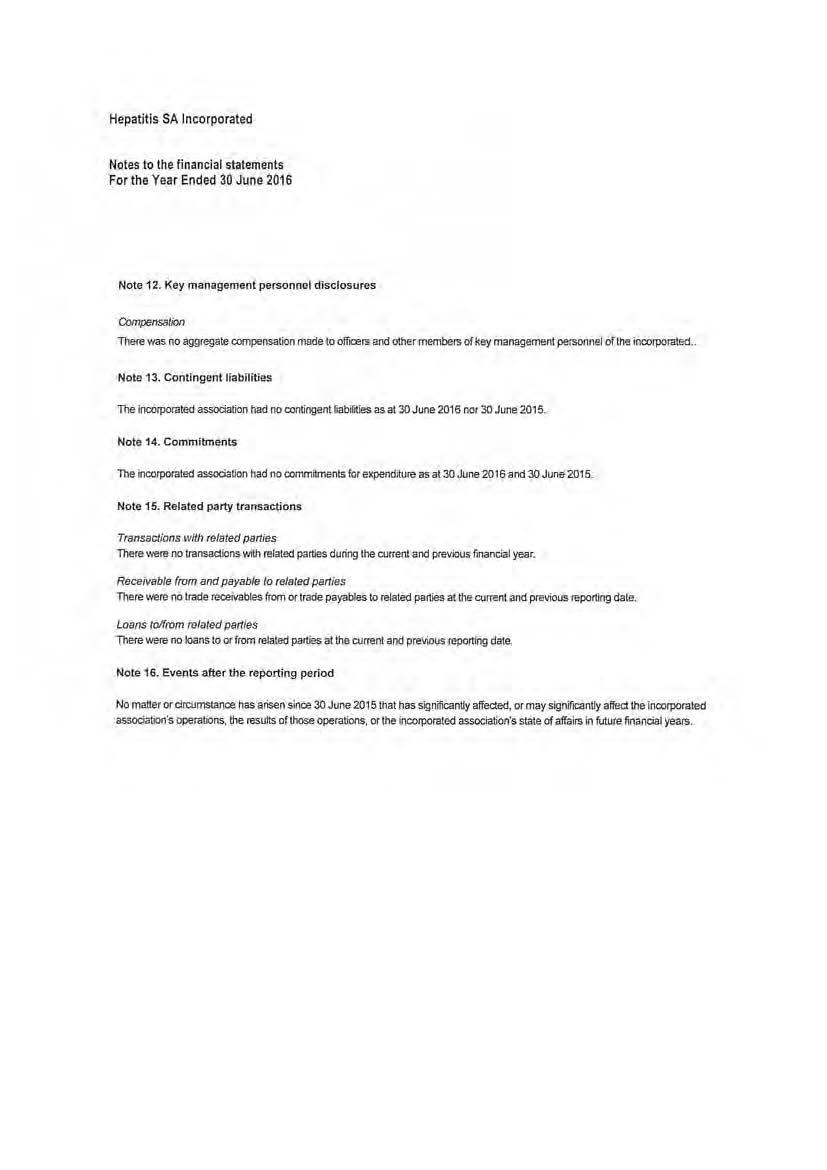
N o te 12 Key management perso n nel disclosures
Compensotbn
There was oo aggregate CQfTlPeMation made to officers and other members ofkey managemen1 pemonn11 incorpora1ed
Note 13 Contlng ontllabllities
The l nco<porated association ha<l no cormogent as at :lOJune 2016""' 30 June 2015
Note 14. Commitmen ts
The incorporated associa6on had no commitments for aut:lO June 30 Junft2015
No l o 15. Relatsd party transactions
Transactions wftJ ) related parties
There were no transactions y.J!th mlated parties du ring the oorrent and Pf'evious financial year
Receivable from and payable to related pari/Bs
There were no trade rectovables from or trade payables to related panies at the cu""nt and previoLJS repolllng date
Loans /Oif!Om rotated panles
There were no loans to or from related pllf1ils at tho cu""f11 aDd preVious reponing daw,
Note 16. after the. reporting period
No matter ordrdlmstrulce has arisen s1nce 30 June 2015 that has slgnfficanUy affected , or may signifK:anUy affect the inc:orpotated assoctotion's 01>0rabons, the results of those operations. or lh• rtcotporated assoclalio.o'-s state of al!ai!S in MUte financial yeao;
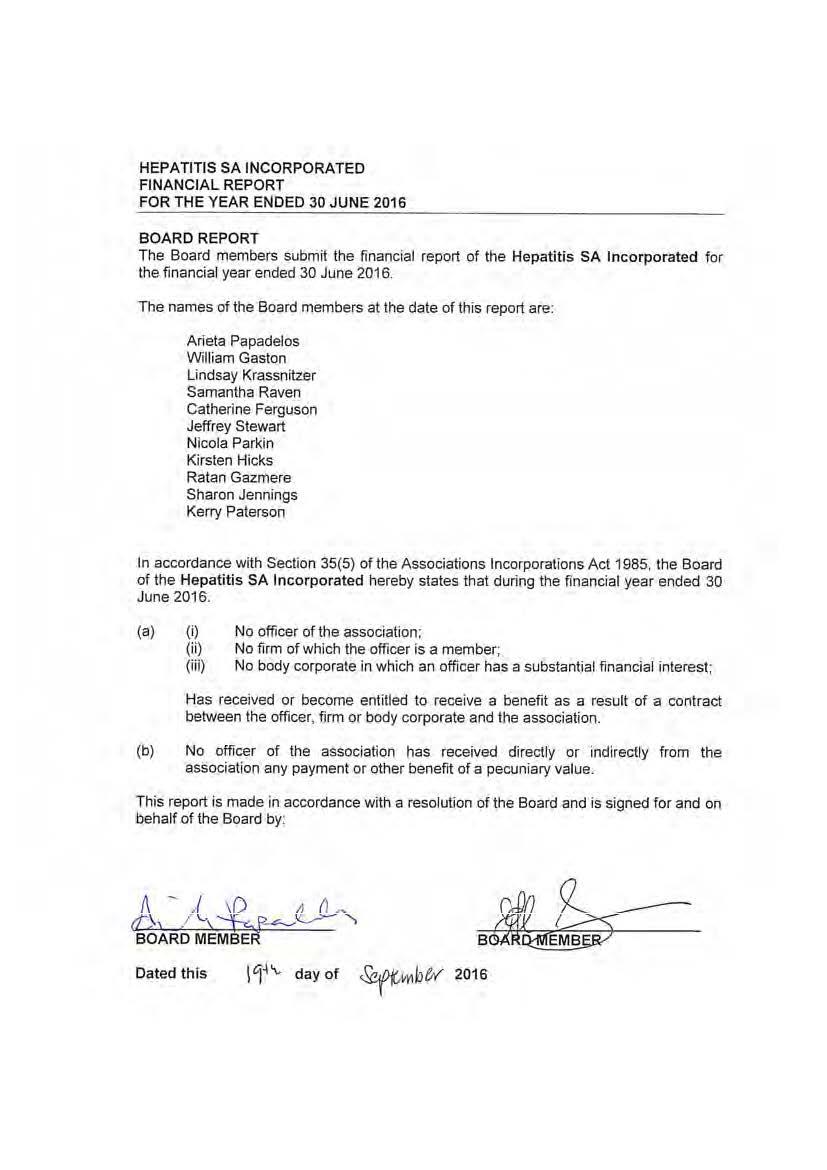
HEPATITIS SA INCORPORATED FINANCIAL REPORT FOR THE YEAR ENDED 30 JUNE 2016
BOARD REPORT
T he Board members submit the fi na ncial report of the Hepatitis SA Incorporated for the fi nancia l year ended 30 J une 2016
The names of the Board members at the dale of this repo rt are :
Arleta Papadelos
William Gaston
Lindsay Kras snitze r
Samantha Raven
Catheri ne Ferguson
Jeffrey Stewart
Nicola Parki n
Kirsten Hicks
Ratan Gazmere
Sha ro n Jenni ngs
Kerry Paterson
In acco rda nce wi th Secti on 35 (5) of t he Associatio ns Incorporations Act 1985, the B oard of the Hepatitis SA Incorporated he reby sta tes that during the financial year ended 30 J une 2016
(a) ( i) (ii) (ill) No officer of the association ; No ffrm of which the officer i s a member ; No body corpo ra te in which a n officer has a s ubsta n tial financial in terest;
Has received or become entitled to receive a be nefit as a result of a cont ract between the officer, firm or body corporate and the association .
(b) No office r of the association has received di r ectly or indirectly from the associa tion any payment or other benefit o f a pecuniary value.
This report is made in accordance wi th a resolution of the Board and is signed for a nd on beha lf of the Boa rd by: