Understanding self harm: fact sheet for parents and carers
It can be really upsetting to learn that someone you care about is harming themselves As a parent or carer you may feel angry, shocked, guilty and upset These reactions are understandable However, the young person will benefit most from calm, supportive responses. Staying calm and listening without judgement can help them feel safe enough to open up. Many people use selfharm as a way to cope with intense or overwhelming emotions that build up and which they cannot express. Support can help them develop safer, healthier ways of coping with distress
Self-harm refers to intentionally hurting oneself as a way of coping with emotional distress. It is more common than many people realise and can affect anyone, regardless of age, gender or background.
How common is self-harm?
Around 1 in 10 young people engage in some form of self-harm. It is most common during teenage years, especially in girls. Self-harm is not always a sign of wanting to die, but it can increase someone’s risk of suicidal thoughts or behaviours.
What you can do
Try to stay calm and listen with empathy. Avoid reacting with judgement or anger.
Keep communication open. Let your child know they can talk when they are ready.
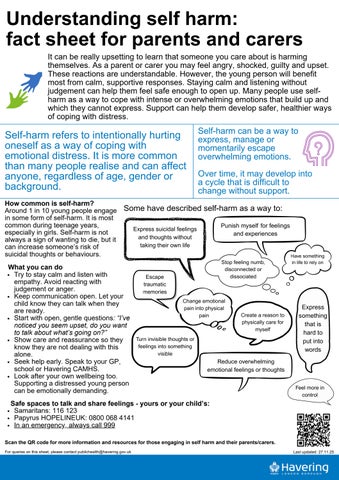
Self-harm can be a way to express, manage or momentarily escape overwhelming emotions.
Over time, it may develop into a cycle that is difficult to change without support.
Some have described self-harm as a way to:
Express suicidal feelings and thoughts without taking their own life

Start with open, gentle questions: “I’ve noticed you seem upset, do you want to talk about what’s going on?” Show care and reassurance so they know they are not dealing with this alone.
Seek help early. Speak to your GP, school or Havering CAMHS. Look after your own wellbeing too. Supporting a distressed young person can be emotionally demanding.
Turn invisible thoughts or feelings into something visible
Punish myself for feelings and experiences
Reduce overwhelming emotional feelings or thoughts
Safe spaces to talk and share feelings - yours or your child’s:
Samaritans: 116 123
Papyrus HOPELINEUK: 0800 068 4141
In an emergency, always call 999
Scan the QR code for more information and resources for those engaging in self harm and their parents/carers.