

CANU intercepts vehicle, seizes over 8kg cocaine in Kitty operation

Anti-trafficking operation screens 77 foreign nationals in G/town; firearms, drugs seized in Linden

Miner arrested as Police find firearm, ammo at Quartzstone

Gunshots fired during attempted robbery at Durban Street mechanic’s home

Officials warn against bright headlights, urge helmet use after fatal electric bike crashes


Guyana and Indian will be celebrating 60 years of diplomatic relations in May this year and according to Indian High Commissioner to Guyana, Dr Amit Telang, capacity building has been the bedrock of cooperation between the two countries.

Outgoing Indian High Commissioner to Guyana,
The Indian diplomat made these remarks on Sunday at Amazonia Mall, East Bank Demerara (EBD), where the inaugural screening was held for an Indian Technical and Economic Cooperation (ITEC) documentary on ’60 years of India-Guyana cooperation in Capacity Building.’ Over the years, the ITEC programme has played a vital role in capacity building and human resource development in Guyana, empowering professionals and strengthening institutions across many sectors. In the last 10 years alone, over 1,000 Guyanese have benefitted from training under this initiative in areas ranging from e-governance, engineering, information technology (IT), agriculture, health, public administration and diplomacy among others. Delivering remarks at the screening,
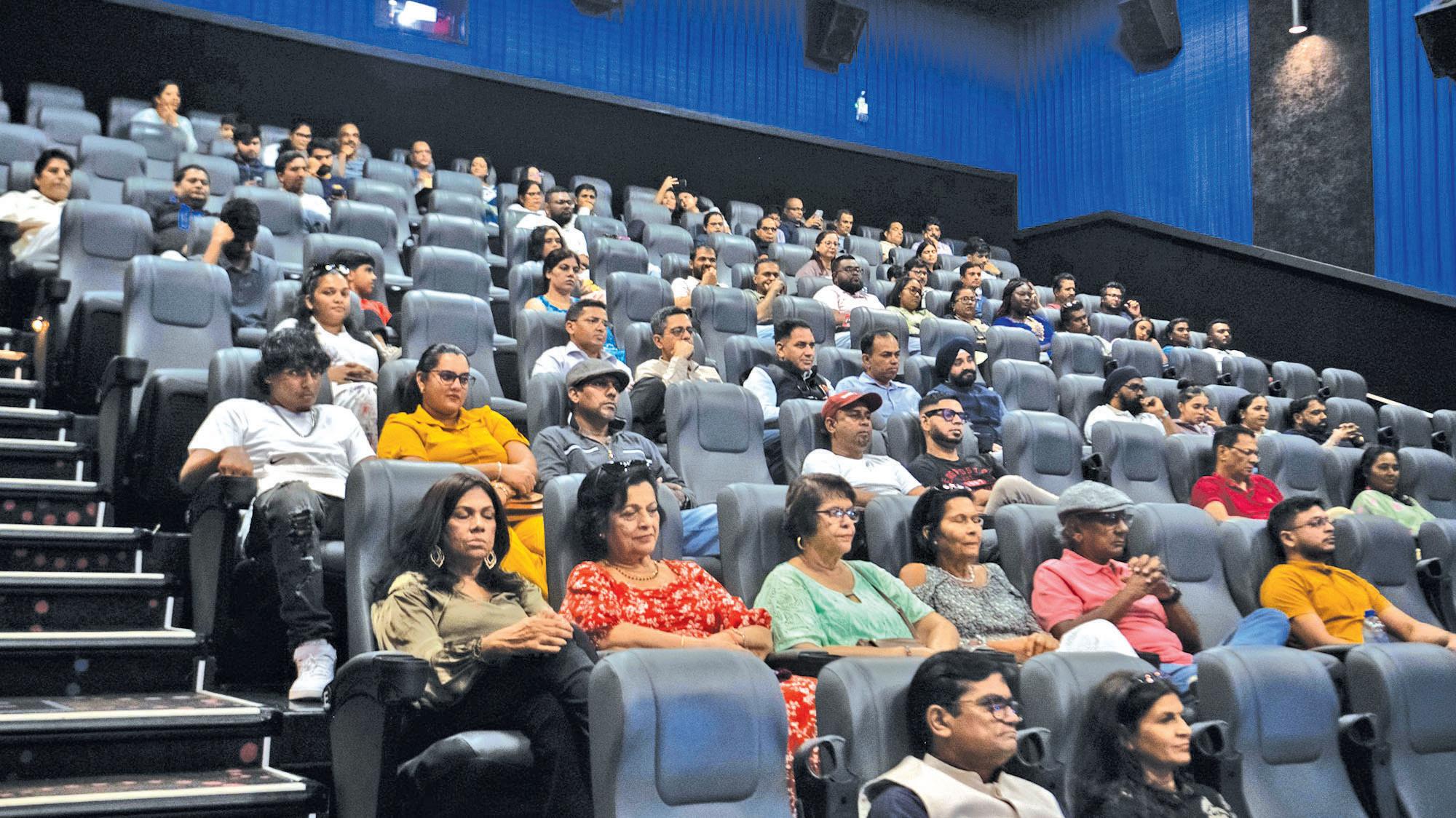
High Commissioner Telang stated the documentary highlights the important role this ITEC has played in bilateral ties between the two countries. “The main purpose of this event is also to underline that over our 60 years of formal diplomatic relations, if there is one area which has been
Bad Bunny on Sunday gave a shout-out to Guyana, the rest of the Americas and countries in the Caribbean during his performance at the Superbowl LX Halftime Show held at the Levi’s Stadium.
He closed his performance with a message for the Americas and the Caribbean, as flags from the various countries were displayed on stage:
“God bless America: Canada, United States, Mexico, Belize, Costa Rica, El Salvador, Guatemala, Honduras, Nicaragua, Panama, Bahamas, Barbados, Cuba, Dominica, Dominican Republic, Grenada, Haiti, Jamaica, Argentina, Bolivia, Brazil, Chile, Colombia, Ecuador, Guyana, Paraguay, Peru, Suriname, Uruguay,

Venezuela. The only thing more powerful than hate is love,” he declared.
the backbone of this cooperation, it has been capacity building,” Dr Telang, who is wrapping up his two-tenure in Georgetown, stated. The Indian High Commissioner went on to express appreciation to the Guyana Government, for its constant and unwavering support for the ITEC programme, which is not only restricted to civilian areas but also extends to defence cooperation. In fact, Vice Minister (Development Cooperation) of the Ministry of External Affairs in New Delhi, Sudhakar Dalela, shared via a video message that India has been one of Guyana’s major development partners with the ITEC initiative playing an indispensable role.
“In recent years, with the economic and development transformation in Guyana, the focus and scope of the ITEC programme has also expanded in Guyana. Commensurate with the increase in demand, we have increased the number of ITEC slots made available to Guyana every year… It is constant endeavour to prioritise these courses, keeping in mind Guyana’s requirement in accordance with the Government of Guyana’s vision for cooperation,” the senior Indian offi-
cial stated in his video message.
The ITEC initiative
Meanwhile, also at Sunday’s documentary screening was Public Service, Government Efficiency and Implementation Minister, Zulfikar Ally, who delivered remarks on behalf of President Dr Mohamed Irfaan Ali – both of whom are alumni of the programme. The Minister also underscored that the ITEC initiative has played a major part in the development of Guyana and its civil service, with many citizens both public servants and private sector workers returning after receiving training to contribute locally. “This is not just about going to study. This is not just going to learn something. This is about the hospitality of the people of India, the hospitality of the Government of India in extending this programme, not only to Guyana, but over 160 countries around the world… and I think we are all very grateful for that hospitality, for that show of support, the show for development that the people and the Government of India has extended to the world over the last 60 years.”
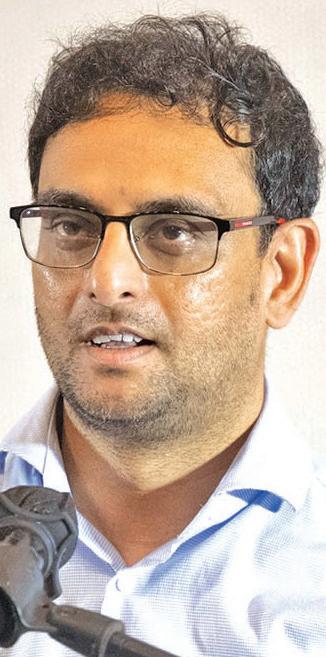
“Many Guyanese who have returned from India, they came back with very rich experiences, a good understanding of the rich cultural tapestry that India has… Many of the students who came back are now serving from the Head of State, to Ministers of Government, to heads of agencies in all sectors, and they have benefited extremely from this cooperation and the ITEC programme,” Ally stated. According to the Public Service Minister, he will be working closely with the Indian High Commission in Georgetown to ensure that all of the increased ITEC slots extended to Guyana are utilised. He further pitched the idea of having Indian professors and experts coming to Guyana so that more Guyanese can be trained, especially in the emerging sectors. Nevertheless, Minister Ally said that even as Guyana and India celebrate this milestone achievement of 60 years of strong friendship has been unbroken, these ties will continue to strengthen over the coming years.


The Berbice Bridge will be closed to vehicular traffic on: Monday, February 9 –08:50h-10:20h and Tuesday, February 10 – 10:25h-11:55h.


Parika and Supenaam departure times – 05:00h, 10:00h-12:00h, 16:00h, 18:30h daily.




Sunny skies are expected throughout the day. Clear skies followed by light showers are expected at night. Temperatures are expected to range between 22 degrees Celsius and 30 degrees Celsius.
Winds: North-Easterly to Easterly between 3.58 metres and 5.36 metres.
High Tide: 09:12h and 21:44 reaching maximum heights of 2.30 metres and 2.15 metres.
Low Tide: 15:15h reaching a minimum height of 0.95 metre.










...outlines 40 Bills to be tabled as part of Govt’s legislative agenda
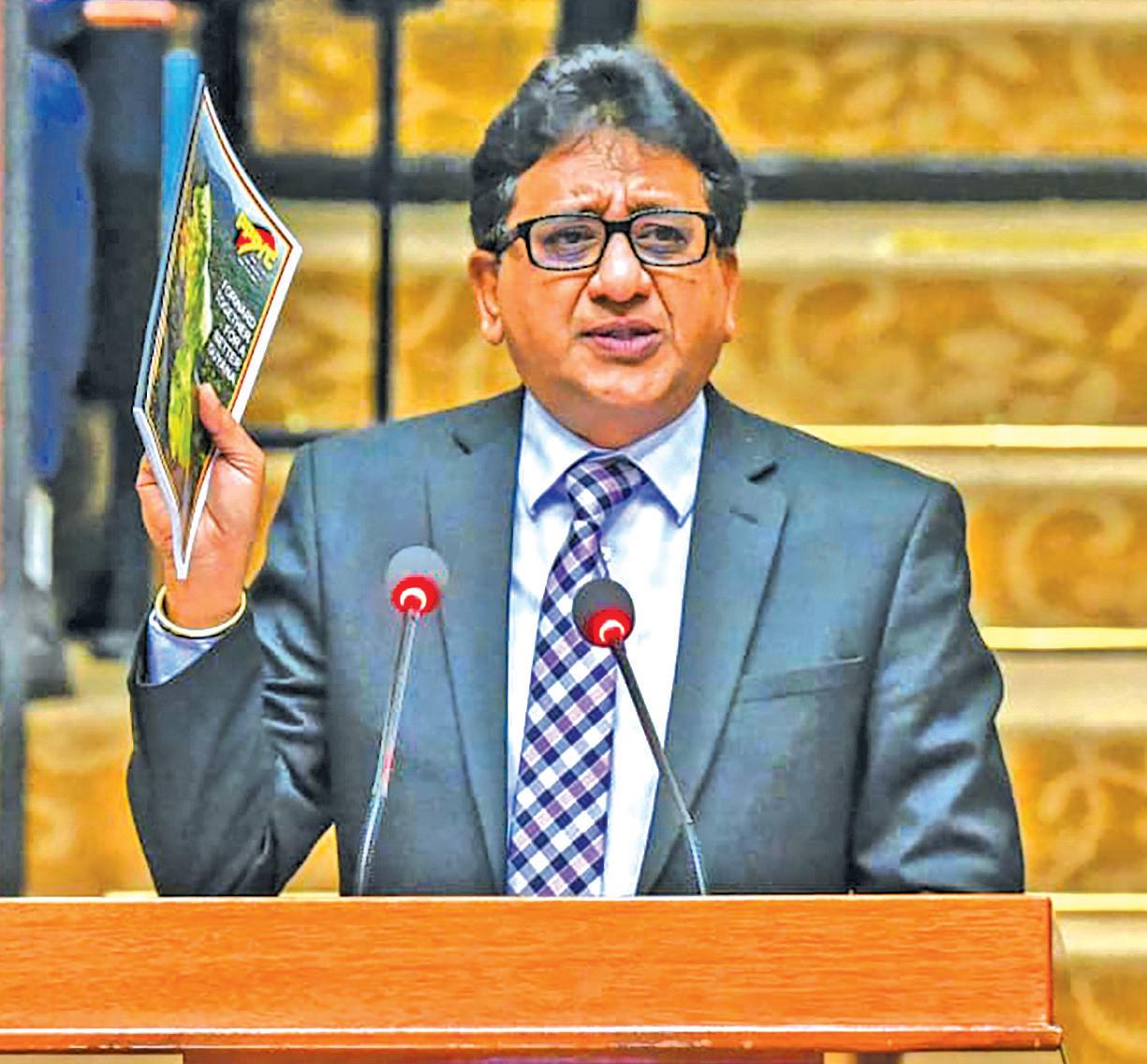
The Guyana Government will soon be launching the latest editions of the Revised Laws of Guyana and the Updated Law Reports of Guyana as part of the modernisation of the legal sector. This is according to Attorney General (AG) and Legal Affairs Minister Anil Nandlall, S.C., during his recent debate presentation on Budget 2026 in the National Assembly. According to Nandlall, the AG Chambers has been engaged in these two projects since 2023. He went on to explain the importance of revising the Laws of Guyana. “All the legislation that we are passing, at some point in time, we have to insert them in the consolidated volumes of the Laws and reprint the Laws [of Guyana] to reflect those insertions... We last revised our laws in 2012 and we are doing a second one. And I am proud to inform the House that we have completed revision of the laws from 2012 to December 31, 2022, and we will be launching them shortly,” he stated on Friday. Currently, there are 14 volumes of the Laws of Guyana, known as the “Purple Book/Volumes,” but with launch of the new editions, this number will double to 28 volumes due to the massive increase of newly enacted laws and legislations as well as amendments to existing ones done in recent years. Previously, AG Nandlall had indicated that Government will print 200 sets of those 28 volumes. In addition, to the hard copies, the soft copy of the revised Laws of Guyana will also be available.
On the other hand, Guyana’s Law Reports contain important cases that have been decided by the courts. These cases are recorded and kept in volumes to serve as precedent for similar cases that might arise in the future. Compiling these cases in volumes ensures accessibility and facilitates ease and consistency in the judicial process. “Case law reports allow easy access to past decided cases. So, if there is a case going on in Guyana and there is a particular legal issue, I can draw from a jurisdiction with a similar legal system across the
Commonwealth – India, Africa, Australia, Canada, England, the Caribbean –and I can go to those countries’ reports…and find a case of similarity which can apply,” the Legal Affairs Minister noted. He explained that Guyana has a long tradition of compiling its own law reports, dating back to the mid-19th century, but there has been gaps for recent years. In 2012, 10 reports from 1977 to 2007 were published with plans now to release newer editions. “After these Budget Estimates are completed, we are going to launch, along with the revision, Law Reports of Guyana from 2008 to 2022 in which you will find all the important cases that we have decided in all the courts of our country – a very important institution for lawyers, judges and even academically-inclined people,” Nandlall emphasised. This consolidation and revision initiative is a collaborative effort between the Law Revision Commission – a Unit within the AG’s Chambers and Ministry of Legal Affairs – and the Improved Access to Justice in the Caribbean (IMPACT Justice) Project, a regional justice sector reform project funded by the Government
of Canada to improve access to justice in the Caribbean. The exercise commenced in February 2022 by the Regional Law Revision Centre Inc. (RLRC), an Anguilla company that specialises in consolidation and revision, among other things.
Sweeping legislative agenda
Meanwhile, AG Nandlall, during his budget debates, also detailed that more than 40 bills and regulations are slated to be introduced in the National Assembly as the Government moves to modernise Guyana’s legal and regulatory framework.
The wide-ranging legislative programme will address areas including finance, business regulation, public security, justice reform, healthcare, agriculture, energy, environmental management and social services. Among the finan -
cial and economic measures to be introduced are the Fiscal Enactments Bill, Development Bank Fund Bill, Guyana Natural Gas Bill, Virtual Assets Bill and amendments to strengthen security interests in movable property. These measures are intended to support investment, expand access to financing and advance the country’s energy and digital economy initiatives. Several bills are also aimed at improving the business environment and commercial regulation, including a new Companies Bill, Business Names Registration Bill, Hire Purchase (Amendment) Bill and legislation addressing the sale of depreciating assets and the establishment of trusts. In the justice sector, the Government plans to table several reforms designed to improve efficiency and access to justice.



Editor: Tusika Martin
News Hotline: 231-8063 Editorial: 231-0544, 223-7230, 223-7231, 225-7761
Marketing: 231-8064 Accounts: 225-6707
Mailing address: Queens Atlantic Industrial Estate Industrial Site, Ruimveldt, Georgetown
Email: news@guyanatimesgy.com, marketing@guyanatimesgy.com
With the Government deploying $24.3 billion for education, it demonstrates its commitment to human development. Today, however, much of the national education system retains elements built for the agrarian economies that existed 50 years ago when it was enough to master the “Three Rs” (reading, writing and arithmetic). In the modern world, the “Three Rs” simply aren’t enough and if we want to compete in this global society, we must also be proficient as critical thinkers, creators, communicators, and collaborators (the “Four Cs”).
Critical thinking has been an essential skill through the centuries. However, technology has changed its platform. Critical thinking means looking at problems in a new way and linking learning across subjects and disciplines. It can be defined in several ways; the first being to reason effectively by using various types of reasoning (inductive, deductive, etc) as appropriate to the situation. Secondly, we can use “systems thinking” by analysing how parts of a whole interact with each other to produce overall outcomes in complex systems. Then thirdly, we can make judgements and decisions by effectively analysing and evaluating evidence, arguments, claims, and beliefs to evaluate major alternative points of view such as presented in the recent budget debate. We can further synthesise and make connections between information and arguments to interpret information and draw conclusions based on the best analysis. Finally, we can use our minds to solve different kinds of unfamiliar problems in both conventional and innovative ways by identifying and asking significant questions that clarify various points of view and lead to better solutions.
The 21st century is a fun time to be creative. Though the traditional ways of creativity are still available, with the emergence of technology there are numerous new possibilities available. Creativity means trying new approaches to getting things done: innovation and invention. Instead of just painting a picture, we can animate it or arrange a piece of music on a computer without ever learning how to play an instrument. While it is said that the spread of AI might dull creativity, it can be used to augment our personal, innate talents.
Communication is about sharing thoughts, questions, ideas, and solutions. In the technological age, it is much easier and, at the same time, harder to communicate. Technology has provided with more convenient ways to communicate, but sometimes the various ways can become overwhelming. Without effective communication, however, there is no way to get anything done. We have to decide which ones are effective and which ones are not? And how they can be used or leveraged effectively? The power of modern media and the ubiquity of communication technologies in all aspects of life make teaching strong communication skills even more important. While education has always emphasised fluent reading, correct speech, and clear writing, there is evidence that students are not mastering these most basic skills. Employers note that although oral and written communication are among the top four skills they seek in new hires, all graduates are lacking in these areas. We must practice communicating clearly by articulating thoughts and ideas effectively using oral, written, and non-verbal communication skills in a variety of forms and contexts. Just as importantly, we must listen effectively to decipher meaning, including knowledge, values, attitudes, and intentions. Today, we can use multiple media and technologies to increase and assess the impact and effectiveness of our communication.
Collaboration is about working together to reach a goal and putting talent, expertise, and smarts to work. Just like with communication, technology has made collaboration easier. Actually, technology takes collaboration a step farther, making types of collaboration possible that weren’t before technology. As the world grows more interconnected, collaboration will become a more and more essential skill than it already is. Collaboration can be defined as demonstrating an ability to work effectively and respectfully with diverse teams while exercising flexibility and willingness to be helpful in making necessary compromises to accomplish a common goal. We should always, assume shared responsibility for collaborative work, and value the individual contributions made by each team member.
Welcome to the 21st century!!

So the Epstein scandal is about politics? Silly me for thinking it’s about the mass abuse of women and girls – obsessing over individual players and political chaos leaves less time to focus on the misogyny. And that’s for the best, isn’t it, guys?
B y M arina H yde
Fair play to Bill Gates’s ex-wife, Melinda French Gates, a woman who fronted up to appear on a podcast this week while so many of the men who feature in the latest Epstein files drop found that their diaries had them scheduled to stay hiding under their rocks. Melinda was asked about Jeffrey Epstein, obviously, and executed a very graceful drive-by. “Whatever questions remain there of what I don’t – can’t – even begin to know all of it, those questions are for those people, and for even my ex-husband. They need to answer to those things, not me. And I am so happy to be away from all the muck that was there.” Oof. Yet she also said, more generally: “I think we’re having a reckoning as a society, right?”
Cards on the table, I don’t think we’re having one at all. Look at the headlines, or what’s dominating all the news bulletins. We’re talking about anything but the things that most need to be reckoned with. In the UK, we’re talking round the clock about Peter Mandelson, the one guy in this we at least know wasn’t making sexually abusive use of Epstein’s trafficked women and girls. Even if he did offer Epstein image rehab advice, which, as discussed
here in depth on Tuesday, was a foray into the moral abyss. (Again.) But the frenzied and remorseless focus on political fallout – and not the male-on-female debasement that is the entire heart of this story, and always has been –is weird, isn’t it? I had a mirthless laugh at the New Statesman’s cover this week, which characterised the Mandelson affair as “the scandal of the century”. Guys, it’s not even the biggest scandal of the scandal.
Let me be clear. I think all the bits of the fallout we’re focusing on now are a mass displacement activity, driven subconsciously or consciously by men so we don’t have to reckon with the fact that we now have searchable records of the way some of the most powerful guys in the world, who have huge sway over our lives, talk and think about women. And about girls.
In some ways this is the dark switcheroo we should all have been prepared for. There really is no bad vibe/criminal abuse operation that a properly enterprising scumbag can’t just buy up and take ownership of, and then flip into the appearance of do-gooding. There is an incredible clip of Epstein being interviewed in some wood-panelled, gentleman’s clubstyle room, shot in either late 2018 or early 2019. “I
made my living from old thinking,” Epstein reflects expansively in it. “But the future is for the way women think.” We pan out to see that the interviewer is his buddy Steve Bannon. “Is that a sop because of all the depravity you’ve done against young women?” asks Bannon. “Your new sop is that women’s thinking is the future?” “No,” smirks Epstein. “… I’m a firm believer and supporter of Time’s Up.” I wonder if he literally donated money to this #MeToo-era charity. I bet he did.
Anyway, all shapeshifters gotta shapeshift.
A couple of years after Epstein’s death, Bannon repackaged this footage into a documentary called The Monsters (producer: Stephen K Bannon) and now calls Epstein “a globalist child molester”. Well, he would say that, wouldn’t he? But oh look –what do we have here? Also included in a recent file dump was some correspondence where Bannon spitballs a survival strategy for Epstein. “What about establishing THE major Center for human trafficking, teenage prostitution etc. etc. etc. – global problem, needs to be solved”.
You laugh – again, mirthlessly – but I firmly believe that only accelerating events, most pertinently the July 2019 arrest and incarceration of Epstein, deprived the world of
The Jeffrey Epstein Underage Sex Trafficking Foundation. Sure, it sounds like an off-colour Saturday Night Live sketch idea that never makes it to air. But sex abusers creating fake philanthropy ventures that bring them closer to vulnerable victims? Let’s face it, we’ve seen it before, everywhere from the church to aid charities. And if these files show us anything, it’s that there would have been so, so many mega-rich male donors. So many fathers-of-daughters who are quite happy to turn a blind eye to the use and abuse of other fathers’ daughters. Maybe the foundation’s lavish fundraising brochure could have been shot by “arthouse” bondage photographer Andres Serrano. “I was prepared to vote against Trump for all the right reasons,” Serrano moans to Epstein in one 2016 email. “But I’m so disgusted by the outrage over ‘grab them by the pu..y’ that I may give him my sympathy vote.” Elsewhere, Epstein reckons the way to deal with any Senate hearing into his activities would be to ape Trump’s successful Supreme Court nominee, Brett Kavanaugh, whose confirmation hearings notably featured him denying allegations of sexual assault. “I guess I can mimic Kavanaugh. ‘Yes senator I like pu..y, pu..y yes.
CONTINUED ON PAGE 5
Dear Editor, I had the opportunity, an unfortunate one I would say, to listen to the newly minted Opposition Leader’s maiden address to the Parliament on February 6, 2026. His typed address was clearly a futile and disingenuous attempt to mislead, deceive and dupe the Guyanese people. Of course, such behaviour is in his DNA. One need not look further than the charges he is attempting to avoid in the United States. But more on that another day.
The Opposition Leader waxed lyrical about the budget not providing any pay increases for public servants. This is a downright lie! In 2024, the Government and
the Guyana Public Service Union (GPSU) approved a three-year agreement which provides for a nine per cent pay rise this year. This is public knowledge, yet the Opposition Leader says nothing is there. Clearly, he is out at sea.
The out-of-depth leader goes on, gleefully reading and telling the country that the budget has nothing for the ordinary people. Again, deception and misdirection. Everything – policy, programme and initiative – in the budget seeks to uplift the ordinary man, woman and child. Direct cash transfers, improvements in benefits and conditions, and reductions in taxes collectively and cumu-
latively contribute to their well-being. The zero-taxation of fuel keeps the cost of living at bay. Similarly, the flagship gas-to-energy plant will slash energy costs and put more money in the pockets of the workers and their families, about whom the Opposition Leader feigns concern.
Understandably, the Opposition Leader has been thrust into a position he is clearly not ready for nor qualified to hold. Rather than offering tangible suggestions as a credible opposition, he and his pack of misfits have chosen to offer sound bites, sensational quotes and personal attacks. His degenerate attack on Minister Gail Teixiera is a
glaring example. He chooses to single out a woman who has done more with her little finger for our country and people than he can ever aspire to do in his lifetime.
As I consider the Opposition Leader and his party’s expressions, if they can be called that, they mirror a lot of what the now-defunct AFC was saying in its heyday. As we all know, and as we see again, it was all bluster and bluff. I urge our people to remember our past lest we be bound to repeat it, and I want to echo the Minister of Culture and tell the opposition that “readers are leaders”.
Yours sincerely, Patricia Persaud
Don’t you, senator’”. Well, why not? For the benefit of the lawyers, I should clarify that those weren’t Kavanaugh’s words and he majored on how much he liked beer … But, his approach famously worked, and Justice Kavanaugh will have huge influence over American women’s lives for the rest of his. And even more famously, the pu..y-grabber became president – twice.
So really: spare me the half-arsed elite pearl-clutching over Epstein’s crimes and look at what is actually happening. What has anyone
in power, at all, done to attack the structures and attitudes that allowed them to happen? We’ve known about Epstein’s world for so long. As Julie K Brown, the brilliant Miami Herald Journalist whose watershed 2018 investigation into Epstein was built on the back of years of her meticulous reporting, stated baldly: “Epstein got away with his crimes because nearly every element of society allowed him to get away with them.”
I agree. And years on from that investigation, we can see that the reaction to every file dump is born


of the same look-the-wrong way impulse that allowed it all to happen. From Noam Chomsky to Steve Bannon, from Bill Gates to the former Prince Andrew – this is nothing to do with left or right, or new money or old. There will always be something more important than grappling the roots of misogyny – money, power, access, information, a political project, “how the
FROM PAGE 4
world works”, whether you can use Mandelson to bring down Keir Starmer, “philanthropy”, realpolitik …. A million other priorities. The abused women and girls are nothing but a plot device, just like they always were. It’s the pu..y-grabbers’ world – we just live in it. The only difference is you can now see it laid out in black and white. (The Guardian)

Dear Editor, Many citizens are frustrated by the fierce criticisms and sharp rhetoric currently displayed in Parliament. The common sentiment is that our representatives should “stick to the budget” and abandon the vitriol. However, this perspective overlooks the fact that Parliament is an institution of ritual performance, much like our national celebrations or religious ceremonies.
As Michel Foucault famously explored in his work on “Governmentality”, political order is maintained through the “conduct of conduct”. This means that the rules of the institution shape how power is exercised. If we look across the globe, we see that violent conflict is often the result of people being unable to navigate or talk out their disagreements because these political institutions have broken down.
In Guyana, our Parliamentary debate serves as a “structured engagement” governed by rules, norms, and a Speaker who maintains formal autonomy from the political fray.
The key to understanding these sessions is that they represent a ritualised substitute for what may otherwise be physical confrontations. As long as the talking continues, no matter how bitter it becomes, fighting is not seen as necessary. When the talking stops, the
real danger begins. In this sense, Parliamentary debate functions as a necessary proxy for violence, providing a psychological and social release for sectional conflicts.
Democracy is inherently messy because it requires us to talk out our differences. When we hear Senior Finance Minister Dr Ashni Singh, Minister Dr Vindhya Persaud, or Minister Priya Manickchand engaging in heated exchanges with Opposition figures like APNU’s Terrence Campbell, we are witnessing a conversation. It may be an unfriendly conversation, but as Pierre Bourdieu might suggest, it is a “symbolic struggle” that validates the institution itself.
In the context of Guyana, where racial tensions are a sensitive reality, it is vital to protect this space for discussion. If we do not allow these arguments to happen in an environment governed by rules, they may inevitably move to the streets, where rules are harder to enforce.
Physical conflict begins where the conversation ends.
Therefore, we should see these debates not as a distraction from governance, but as the very mechanism that preserves our social peace.
So let them talk!
Yours sincerely, Dr Randy Persaud Dr Walter H Persaud

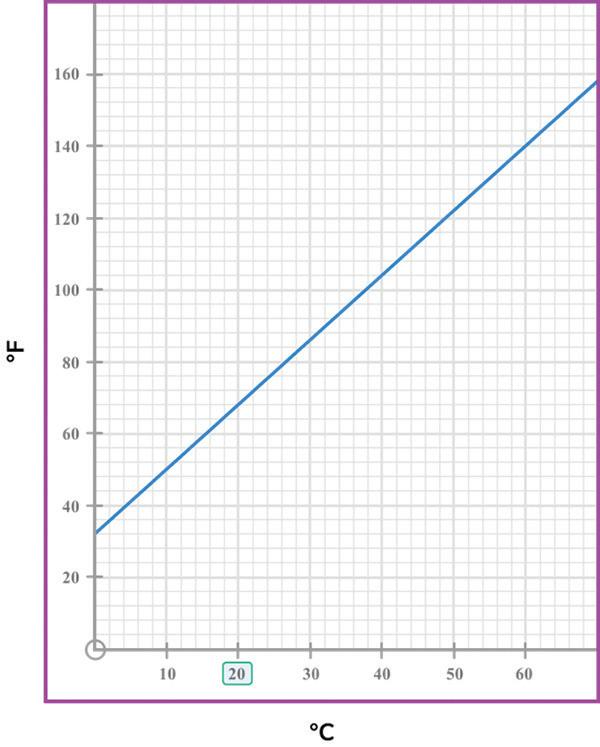
Example 2: converting Celsius to Fahrenheit
The graph shows the conversion between degrees Celsius to degrees Fahrenheit.
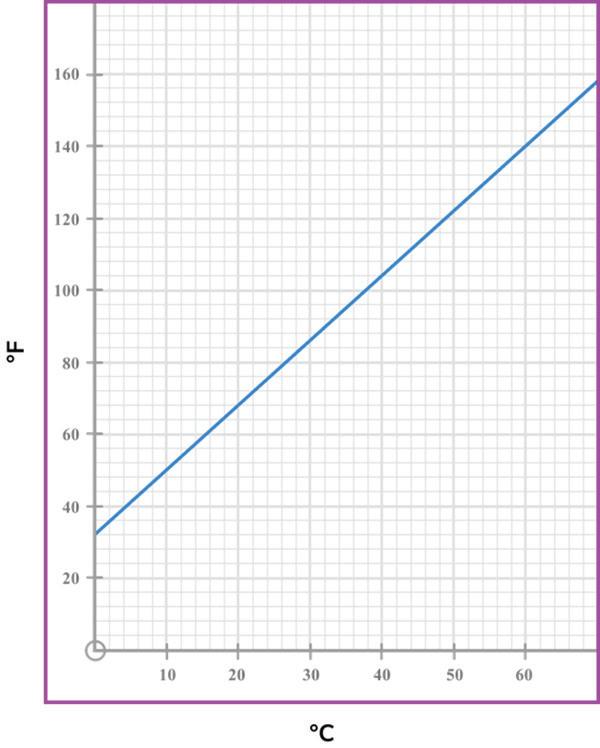
Use the graph to convert 20o C to Xo F.

Draw a perpendicular line from the value on the axis to the conversion line.
Draw a vertical line from 20o C to the conversion line.

Locate the values on the axis representing the unit you wish to convert.
Degrees Celsius are represented by the horizontal axis.
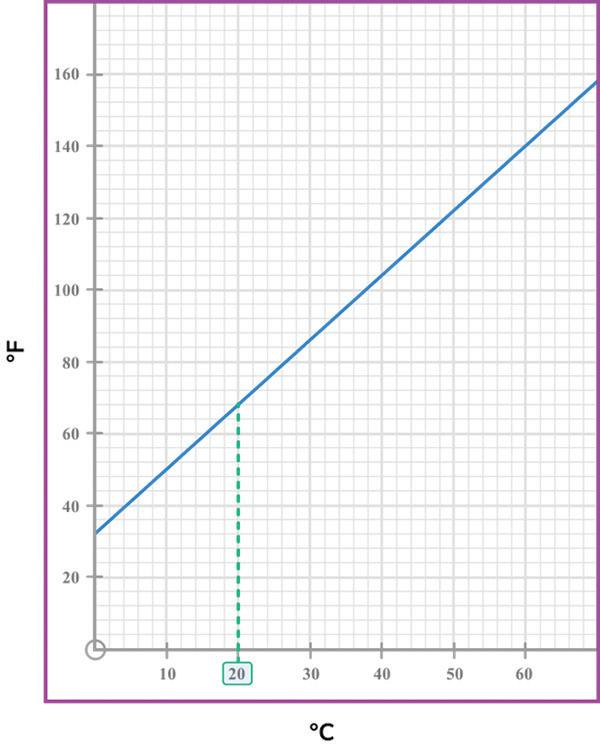
GDraw a line from the conversion line perpendicular to the other axis and read off the conversion value.
Now draw a horizontal line to the vertical axis and read off the value.

et hands-on with this colourful Valentine’s Day heart! Using finger paints to create bright swirls and patterns, this craft is a fun and messy way for children to share love and creativity.
What you’ll need
White cardboard red, pink & purple finger paints
Paper plate
Pencil

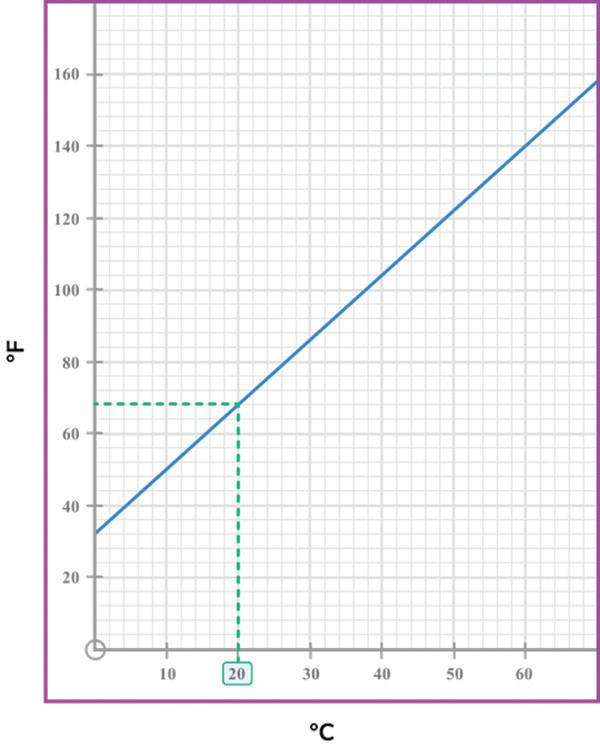
20o C is approximately 68o F.
How to make
Step 1: Draw a heart shape on cardboard or paper. Add blobs of red, white, and pink paint onto a paper plate.
Step 2: Using your index finger lightly swirl the paint around in the plate.
Step 3: Place your fingertip onto the page, filling up the heart template and leave to dry!
Top tip: Scale down the size of the heart and fold the cardboard in half to create a cute and simple Valentine’s Day card! (Adapted from bakerross.co.uk)

By ABner DormienDo
Translated By Ethan Chua
I was dragged to by my feet, memories misled me with their leavings, an engkanto made my native city strange. Meaning, Samantha, I’ve been brought here again, facing a painting I can’t comprehend: is its subject love or disaster?
In times like these when the wind is muggy and the cars parked by city hall rumble their boredom, it’s as if everything’s the same. Plus, I don’t have the strength or the time to divine distinctions, make out each shape and think, yes, this means something to me. Like when I looked at the ceiling in the room of our last meeting and whispered to myself, this is it. This is the art of all parting— your shadow squeezing into your jeans, the creak of a door I wished wouldn’t close. Each line and curve of recollection’s architecture was screaming your name. Your face a painting and I the wall on which, by a hook, it hung.
(Source: Poetry [November 2025])

Write a poem about creating a story for the first time.



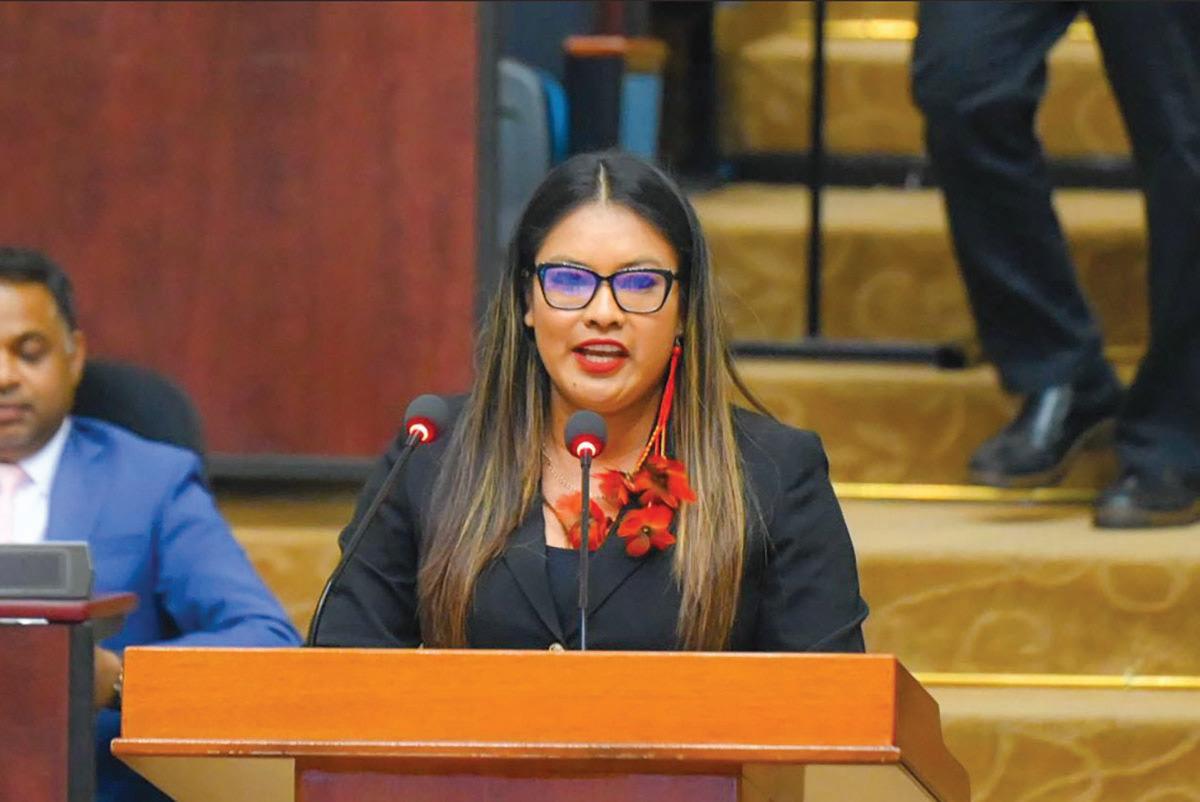
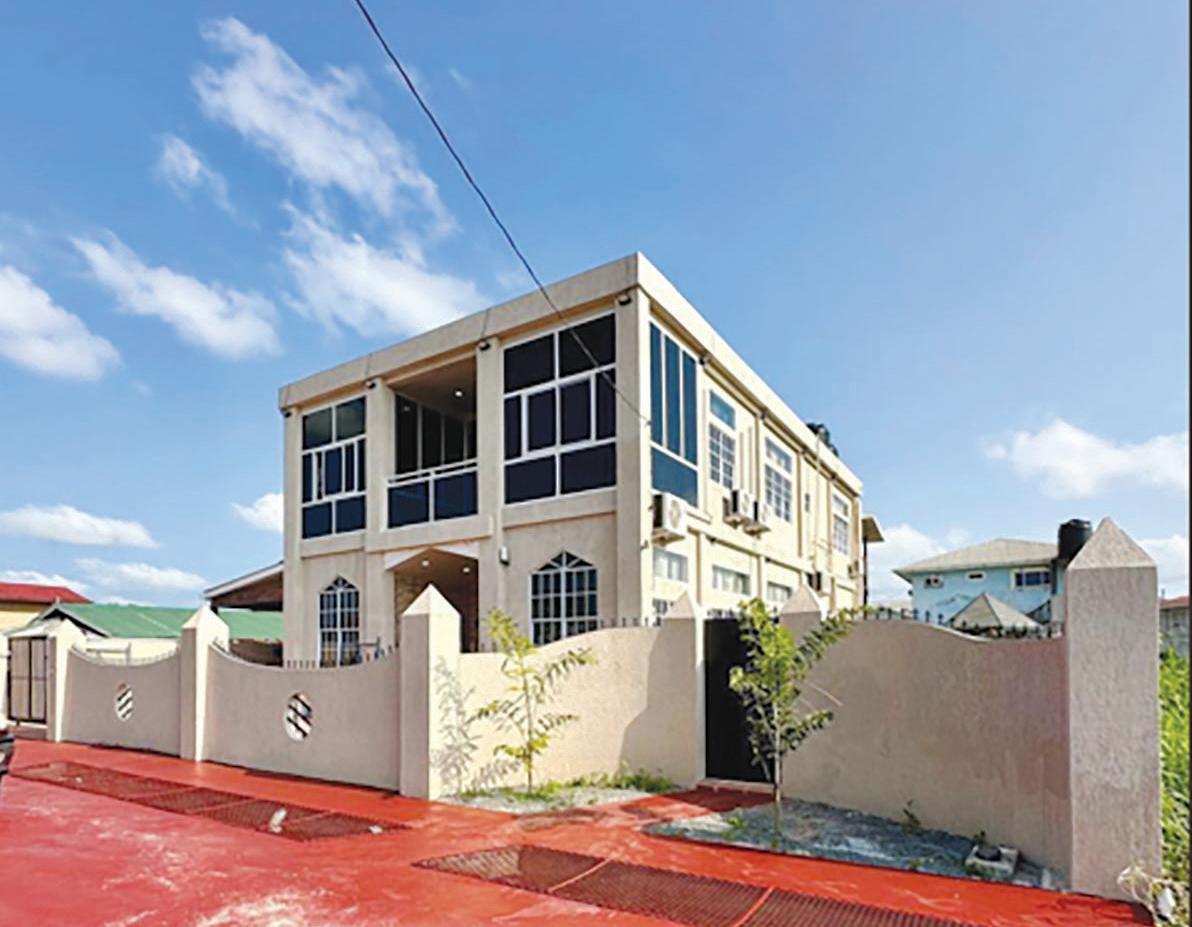
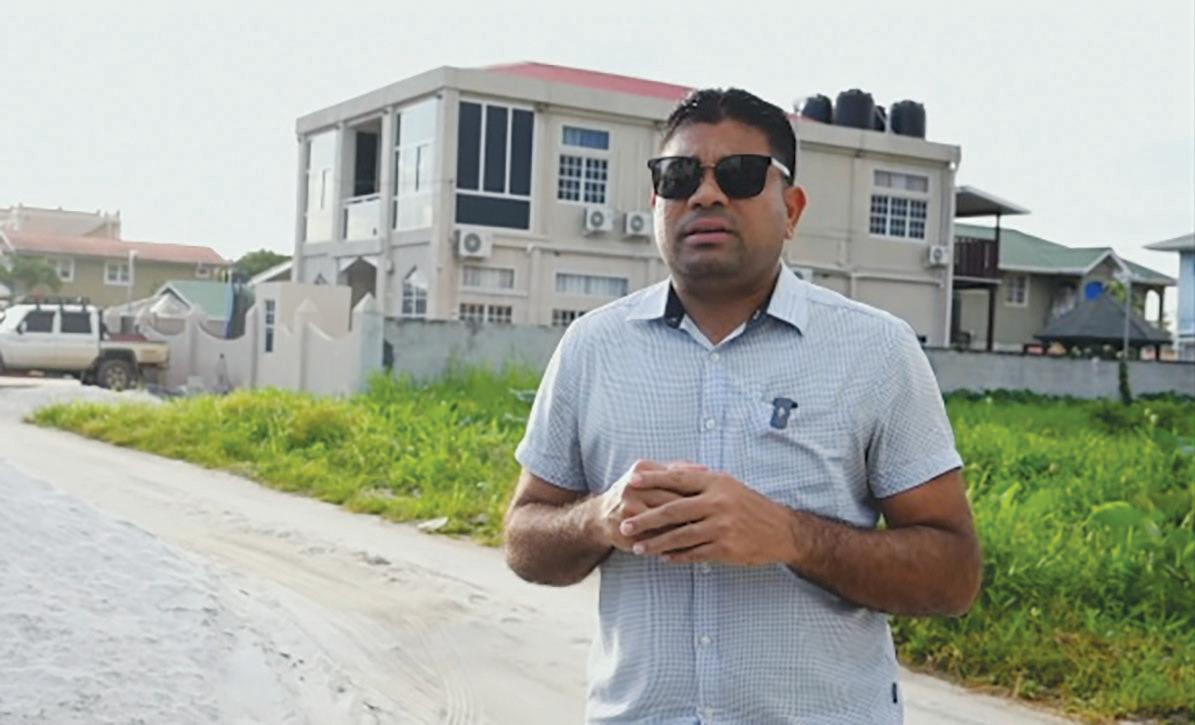
Minister of Amerindian Affairs Sarah Browne-Shadeek on Sunday expressed concerns about her family’s safety after observing drones being flown over her home and other suspicious activities over the past few days. In her Sunday Facebook post, the Minister said she was forced to request a security guard in light of these events. “This morning. A drone was flying over the home of my husband. Over the past few days I have noticed suspicious activities and for the safety of the family I was forced to ask for a security guard. The drone came so low that a close female relative of mine who had just exited the bathroom felt exposed and ran for cover,” she stated in the social media post. Minister Browne went on to add, “…a series of suspicious activities took place before this, vehicles have been following me since the incident at the hostel where I was bullied, and everyone saw this.”
The incident the Minister referenced was a December 2025 confrontation outside the Amerindian Hostel in Georgetown with supporters and senior leaders of the main parliamentary opposition party, We Invest in Nationhood (WIN), including its founder, United States (US)-indicted businessman-turned politician Azruddin Mohamed, who is also Opposition Leader. In fact, hours after the Minister’s post on Sunday, the WIN party admitted to taking the photos on Saturday. WIN posted a series of photos of Browne’s house on social media, levelling certain allegations against the Minister’s
husband, Fiaz Mohamed Shadeek. On another Facebook page – Team Mohamed’s, a video was posted of the Opposition Leader standing nearby the Minister’s home. Nevertheless, Browne declared that these actions would not dissuade her from carrying out her duties. “I want to let those involved know that this will not move me or deter me from representing my people. My ancestors were a strong first people and as a proud Lokono, my ancestors will keep me and my family safe… I will always make them proud,” the Amerindian Affairs Minister stressed in her post on Sunday morning. Meanwhile, the Guyana Civil Aviation Authority (GCAA), which has regulation oversight over Guyana’s airspace, on Sunday issued a firm warning to drone operators. In
tory under Guyana’s laws. Irresponsible and unlawful use of drones poses grave risks to public safety, national security and personal privacy,” the missive detailed. Consequently, the GCAA reminded drone users of a series of directives that are legally binding and must be strictly observed including the fact that the pilot in command of a drone, also called an Unmanned Aerial Vehicle (UAV), is strictly prohibited from operating the air-

the missive on drone safety, the Authority cautioned operators that there is a zero tolerance for violations.
“The Guyana Civil Aviation Authority hereby issues this unequivocal warning to all drone operators and the general public that compliance with safe and responsible drone operation is manda-
craft over or near private or public property without first obtaining explicit permission from the property owner.
It added too that drones are expressly forbidden from operating within 150 metres of any congested area, organised open-air assembly, or within 100 metres of any vessel, ve-

hicle or structure not under the operator’s control. Additionally, drone operators must, at all times, maintain a minimum safe distance of 50 metres (164 feet) vertically or horizontally from any person, property, or structure not under their direct control, unless explicit written authorisation has been granted by the GCAA. The Authority further reminded that the any breach of these regulations constitutes a serious criminal offence and will result in fines up to G$1,000,000 and/or imprisonment for up to two years. It went on to note that non-compliance with permit conditions and operations outside the limitations specified in the GCAA UAV Directive — Operation and Surveillance of Unmanned Aerial Vehicles (GCAA/ASR/DIR/2017-01) or failure to adhere to an approved operations manual will result in immediate suspension of UAV/Drone Permit and will be prosecuted as a breach of the GCAA Regulations. To ensure that persons adhere to these regulations and avoid undue violations, the GCAA is appealing to the
public to comply accordingly with the above. “The public is urged to immediately report any and all unauthorised operations, suspicious or unsafe drone activity to the nearest police station to the GCAA safety hotline at 608-4222. The full force of the law will be applied to defaulters. The GCAA is committed to maintaining the integrity of Guyana’s airspace,” the Authority said in Sunday’s missive.

ACustoms AntiNarcotic Unit (CANU) operation in Kitty, Georgetown on Saturday led to the interception of two vehicles and the seizure of more than eight kilograms (KG) of suspected cocaine, following a high-speed pursuit along city streets. The operation was conducted after CANU officers acted on information received and moved to intercept two motor vehicles in the vicinity of David Street. During the interception attempt, the driver of a white Volkswagen motorcar, registration number PAL 4117, reportedly fled the scene at high speed while attempting to evade law enforcement, leading to a collision involving several CANU vehicles as officers pursued the vehicle. As the pursuit continued along Sheriff Street, before the intersection with Rupert Craig Highway, officers observed a brown cardboard box being thrown from the Volkswagen. Some ranks stopped to retrieve the box, while others continued the pursuit. The fleeing vehicle was later intercepted at the intersection of Rupert Craig Highway and Sheriff Streets, Georgetown. The vehicle was being driven by Shaquille Gordon, who was the sole occupant at the time.
The brown cardboard box recovered during the pursuit was shown to suspects at the scene. A search conducted in their presence revealed seven bricklike parcels suspected to be cocaine. Both Gordon and Ravindranauth Persaud, the driver of the second vehicle, a white Pitbull minibus bearing registration number BAB 6337, were arrested and escorted to CANU



LHeadquarters along with the suspected narcotics. At CANU Headquarters, the substance tested positive for cocaine and was found to weigh approximately 8.226 kg, or 18.135 pounds. Investigations are ongoing. CANU has reiterated its commitment to intelligence-led operations aimed at disrupting narcotics trafficking and safeguarding communities across Guyana.
The CANU report comes just a day after CANU noted in a press release that they have removed approximately 161.09 kg of illicit drugs, along with two firearms and 137 rounds of ammunition from the streets of Guyana during January, following 11 intelligence-led operations across sever-
al regions. According to CANU’s January newsletter, the seizures included 92.46 kg of cocaine, 68.39

kg of cannabis, 229 grams of ecstasy (MDMA) and 84 grams of suspected crystal methamphetamine. Cocaine and cannabis accounted for the majority of the seizures, with CANU noting that while synthetic drugs remain low in volume, their presence signals an emerging threat. Most of the drugs (88 per cent) were intercepted on roadways, reinforcing road transport as the primary trafficking method. Smaller quantities were seized at airports and residences, though airport interceptions were deemed significant due to their link to international trafficking. Region Two (Pomeroon-
Supenaam) recorded the highest seizures, accounting for 43 per cent, followed by Region Nine (Upper Takutu-Upper Essequibo) with 31 per cent, highlighting continued vulnerabilities along hinterland and border routes, particularly the Guyana–Brazil corridor. CANU estimated the domestic street value of cocaine at G$92.456 million, rising to US$2.773 million and €3.698 million on international markets, underscoring cocaine’s high profitability and its impact on organised crime financing. During the month, 17 persons were arrested, 12 charged with narcotics offences and three convicted for possession with intent to distribute. The operations also led to the seizure of a .32 revolver, a 12-gauge shotgun and assorted ammunition, highlighting the ongoing link between drug trafficking and illegal firearms. CANU said January’s results reaffirm the importance of intelligence-driven operations, border vigilance and inter-agency cooperation, while the Unit continues to strengthen its operational capacity through specialised training and regional collaboration.
A55-year-old gold miner was found brutally chopped to death at a mining camp at 14 Miles Issano, Middle Mazaruni River, during the early hours of Saturday. The dead man has been identified as John José Marciano, also known as “José,” of One Mile, Wismar, Linden. The incident reportedly occurred around 03:45 hrs on Saturday, February 7, 2026. Preliminary investigations revealed that Marciano was at his mining camp when an incident occurred. He was later discovered slouched on the ground within the camp, suffering from multiple chop wounds about his body. A cutlass believed to be the murder weapon was recovered in close proxim-
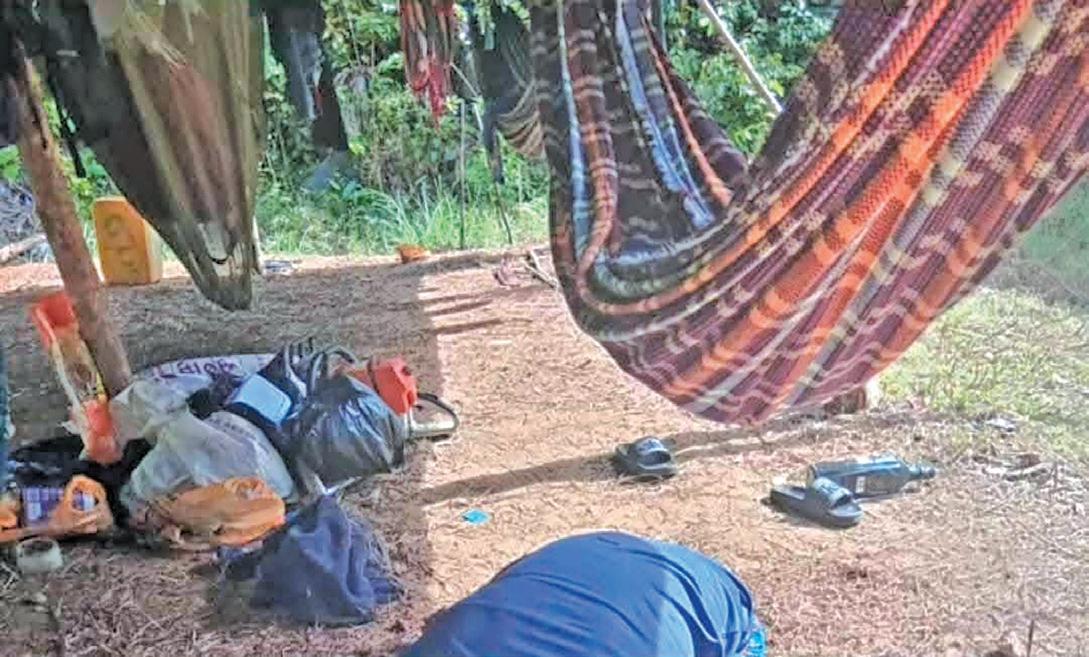
ity to the body. Up until the time the report was released, police said the body would be escorted to the Bartica Regional Hospital for an official pronouncement of death and would thereafter await a post-mortem examination. However, it was also reported that two persons are currently in custody in connection with the incident. Among them is a 35-year-old female cook of Ann’s Grove, East Coast Demerara (ECD) who is assisting investigators. Additionally, a 19-year-old
gold miner of Tapakuma, Essequibo Coast was arrested in Anna Regina, Region Two, at about 07:45h on Sunday, following information received. He remains in custody as investigations continue. This incident comes more than two months after Samuel Marciano, a 22-year-old miner from One Mile, Wismar, Linden, was shot multiple times at 14 Miles, Issano Landing, Middle Mazaruni during a social gathering. Police reported that Marciano was shot by two known individuals. Some time later, Mike Caesar, called “Lil Man” and “Spanish Man”, a 27-yearold gold miner of Blue Berry Hill, Wismar, Linden, were charged in connection with the murder.
ast October, following the surprise performance of Sanction Man’s WIN party, your Eyewitness had written about some amazing parallels between the young, mega-billionaire, narco-smuggling Columbian Pablo Escobar -and the WIN leader!! They both were super rich and had been sanctioned by the US OFAC for violating American law by smuggling stuff into that country – cocaine for the Columbian and gold for the Guyanese. Pablo had so much money he couldn’t launder he took to burying tons of cash in the ground!! He also built houses, parks and community centres for the poor while distributing money freely to them!! Not surprising, this made him very popular – and had his crimes excused!! Since the money was obtained illegally it would seem that a decision was made to use it to evade being extradited to the US to face trial!! Gaining the gratitude of the folks he’s helped, he finally he decided to become President of Columbia by running and winning a Congressional Seat from his district!!
In his traditional climatic ending of the Budget debate – following the LOO’s contribution that was read by the incumbent Sanction Man – the Finance Minister drew the same parallels as had your Eyewitness! Saying he got the Pablo Escobar story from the Guardian newspaper he cautioned, “This is a cautionary tale. We are at an extremely important juncture in our country’s history, and we have a duty to ensure that politics is not used to shield wrongdoing, or to ensnare innocent and vulnerable people”!!
As is his wont, the FM was very circumspect since the Sanction Man’s extradition request by the US is presently engaging our Courts. “I will not pronounce judgment. I defer to the courts.” Now enquiring minds – such as yours, dear Readers! – probably wanna know what was the eventual fate of Pablo!! As your Eyewitness (and the Guardian) had pointed out, he did win a seat to their national assembly – and in this Sanction Man did one better by winning 16 seats and becoming LOO!!! A much higher platform than Pablo’s!! Unlike here where the Govt withdrew the substantive cases on Sanction Man’s crimes in our Courts, in Columbia, they allowed them to go through and he was sentenced to prison!! But amazingly his influence ran so deep – he was allowed to construct his own prison to serve his sentence – and made it into more like a hotel!!
Eventually he “escaped” from this facility – and after a manhunt by a Special Squad that had to be formed since he’s bribed the usual law enforcement establishment! –he was shot and killed. Some say he might’ve taken his own life cause he’s said he would rather dying in Columbia rather than being extradited to the States!!
Meanwhile…
…(medical) move
The Health Minister quietly revealed during his Budget contribution that he’d clearly been following the international moves by the US to FINALLY bring down the Cuban Communist Regime that had defied them and their sanctions for over SIXTY YEARS!! That Cuba wasn’t just in America’s backyard but literally on their backsteps – not to mention Secty of State Rubio’s of Cuban anti-communist stock! – grates more!!
Anyhow, the Health Minister clarified that unlike other countries which pay the Cuban doctors serving their communities through the Cuban Government – and as such provides foreign exchange – Guyana was recruiting and paying Cuban doctors privately, thank you!! And at the same rates for Guyanese doctors!! But for now, he clarified, the scholarships allocated for training Guyanese doctors in Cuba – gonna be taken up!!
Some feel this may not sit well with the Yanks – but your Eyewitness doesn’t think so, Their main concern is that the Cuban GOVT not be supported in no way, shape or form!!
Like with Mexico still sending oil and undercutting their US Venezuelan cut-off!!
If lawyers are disbarred and priests are defrocked, then are electricians “delighted”; Corpses “decrypted”; Cowboys “de-ranged”; Models “de-posed; “Underwear models “debriefed”; Jilted women “de-brided”; Florists “de-flowered”; Students “de-tested”; Hostels “de-bunked”; and Spies “debugged and de-tailed”???

Stakeholders are blaming a breakdown in oversight by the Consumer Affairs Department at the Ministry of Tourism for ongoing bus fare overcharging, as commuters continue to complain about being forced to pay more than the approved rates. During a recent road safety programme, President of the United Minibus Union, Eon Andrews, said mechanisms once existed to address fare complaints swiftly through collaboration between agencies. “Initially, they were still Consumer Affairs Department… that’s where a lot of complaints go into.”
He claimed that enforcement weakened after leadership changes within the department. “What had happened is that they had decided that they would form this group of people, road safety, police, the minibus and we would look at it holistically.” Andrews said the system deteriorated after the departure of key officials. “Since [an official] would have left, what I find happening is people going in, a torrent of complaints going in and they’re giving the people mean number. Those people ain’t want no headache.” He warned that the absence of firm oversight has left commuters vulnerable. “Somebody has
to have some level of control”, he insisted. During the programme, traffic ranks acknowledged that enforcement is difficult without formal reports and witnesses. “Without you - [if you] don’t make a report, there’s nothing they can do”, Chairman of the Road Safety Council, Earl Lambert noted. Lambert noted too that many cases collapse because complainants fail to attend court. “These persons, they don’t turn up for court… and it might be something where they might be working, and it is not easy for them to get time off.” Andrews added that any long-term solution requires Government inter -
vention. “The Government has to step in here. There’s no price control on anything, and everybody is doing what they feel like.”
Just a few months ago,
the Guyana Police Force (GPF) Traffic Department announced stricter enforcement measures against minibus operators who overcharge passengers, particularly along the Georgetown to Parika (Route 32) and Georgetown to Timehri (Route 42) corridors. According to Assistant Commissioner of Police Mahendra Singh, operators are reminded that fares must not be unreasonable under the Motor Vehicles and Road Traffic Act, Chapter 51:02. Approved fare tables must be carried in each vehicle and displayed upon inspection. Non-compliant operators will face necessary sanctions. Passengers are being urged to familiarise themselves with official fares and to report incidents of overcharging to the nearest police station, via the 911 emergency system, or through the Traffic Department’s WhatsApp hotline at (592) 620-6713. Mandatory stops will also be conducted to ensure compliance, Singh added, emphasising that enforcement is aimed at preventing abuse and exploitation of commuters. The Traffic Department underscored that the initiative is part of its wider community relations thrust, ensuring fair treatment of passengers while holding minibus operators accountable under the law.
Aserving officer of the Guyana Defence Force (GDF) has achieved a significant academic milestone after earning a Doctor of Philosophy (PhD) in Management, marking a first for the Force. Major Dr Sven Douglas, MEM, completed his PhD through Texila American University (TAU) under the Government of Guyana’s Online Academy of Learning (GOAL) programme. He is the first serving Regular Officer in the GDF to attain a doctoral degree. Chief of Defence Staff, Brigadier Omar Khan, MSS, along with the Officers and Ranks of the GDF, extended congratulations to Major Dr Douglas on the achievement, which the Force described as a

Major Dr Sven Douglas
milestone in its pursuit of academic and professional excellence.
Major Dr Douglas’ doctoral research, titled “An Investigation of Leadership Styles’ Influence on Employees in Guyana’s Public Sector –A Case Study,” examined how different leadership approaches impact employee performance and morale within public institutions. The study provides analysis specific to Guyana’s public sector and offers insights into organisational effectiveness, leadership practices and management within Government agencies. Reflecting on the programme, Major Dr Douglas said the academic expe -
As Grade 10 and 11 students prepare to sit their second Mathematics Mock Examinations today, Education Minister Sonia Parag on Sunday delivered a message of encouragement, urging students to remain focused and motivated. In a video message shared on February 8, on the Ministry’s Facebook page, Minister Parag encouraged students to remain calm and to see the mock exam as an important step in preparing for the final Caribbean Secondary Education Certificate (CSEC) Examinations scheduled for May 2026. “I wanted to say to you, just remain focused –this once again is your mock exams that will test your knowledge of certain areas topic areas in mathematics and will, of course, prepare

you for the final exams the CSEC exams which you’ll be sitting in May the Minister said. “I just wanted to tell you, remain focused, stay calm.” The Minister acknowledged the hard work students have put in since their first Mock examinations and encouraged them to continue building on their efforts and to continue to work towards improvement.
“I know you’ve been working from the first mock
exams to now, to ensure that you’re in a better position to sit the final exams,” she added. Parents were also urged to support their children during this period, without placing undue pressure on them. She said, “I wanted to say to parents, don’t feel pressured. Don’t let your kids feel pressured because we want them to be able to focus and remain focused.”
Minister Parag expressed confidence in the students’ abilities and concluded by wishing them success. “I am looking forward to seeing all of you shine in May 2026,” she said. The Ministry of Education has reminded students that regular practice, focus and a calm mindset are key to performing well in both the mock and final examinations.
rience strengthened his analytical reasoning and problem-solving skills, allowing him to adopt a more structured approach to addressing complex organisational challenges. He also noted the professional responsibility that comes
with applying advanced academic training within operational environments. The achievement also highlights the role of the GOAL programme in expanding access to higher education and advancing professional develop -
ment among Guyanese. According to the GDF, Major Dr Douglas’ achievement reinforces the Force’s commitment to continuous learning and academic growth among its personnel.

While critics of Budget 2026 have questioned whether the $1.5 trillion budget plan does enough to lift ordinary citizens out of poverty, experts say the impact is measured not in months, but over years. According to respected economist Richard Rambarran, in an interview on the Starting Point Podcast on Sunday, the true value of Budget 2026 lies in the long term, transformative investments in supports. “I'm talking about earning capacity, not just the temporary measures that may bring a little relief – let's say with a cash grant or so for a
monthly basis – but true wealth creation. So it's important to understand or couch the budget within the context of broader economic planning and broader developmental policy,” he explained. Budget 2026 continues to fund major infrastructure projects aimed at reducing rural-urban divides and expanding access to schools, hospitals and transportation. Projects such as fixed-span bridges and highways are designed to save citizens hours of travel while improving commerce and connectivity. “Transformative infrastructure using revenues that this country has to be able to support inter-

generational wealth and act as an equaliser of rural-urban divides and ensure that everyone has access to good public goods or good public services, as is
used in common parlance,” he added. Beyond infrastructure, Budget 2026 maintains policies that help families manage dayto-day expenses. Measures
such as zero excise tax on fuel and the reversion of shipping costs to pre-pandemic levels may seem minor, but Rambarran says they are crucial in keeping household budgets stable. Rambarran also stressed the importance of viewing the budget as part of a broader, multi-year strategy. One-off cash transfers can stimulate spending temporarily, but they are difficult to sustain and can lead to inflationary pressures. Capital investments, on the other hand, have long-lasting benefits for both current and future generations. “It's important in my view to understand that multi-year plan-
ning, multi-year execution is absolutely necessary to facilitate and foster development in the way that is incremental, development in the way that is non-disruptive to the economy and does not engender an economy becoming imbalanced, if you will,” he said. The economist emphasised that while the results of Budget 2026 may not be immediate, its focus on strategic infrastructure, cost-of-living measures and multiyear planning aims to create lasting opportunities. For Guyana, the real measure of success will be the doors these investments open for future generations.
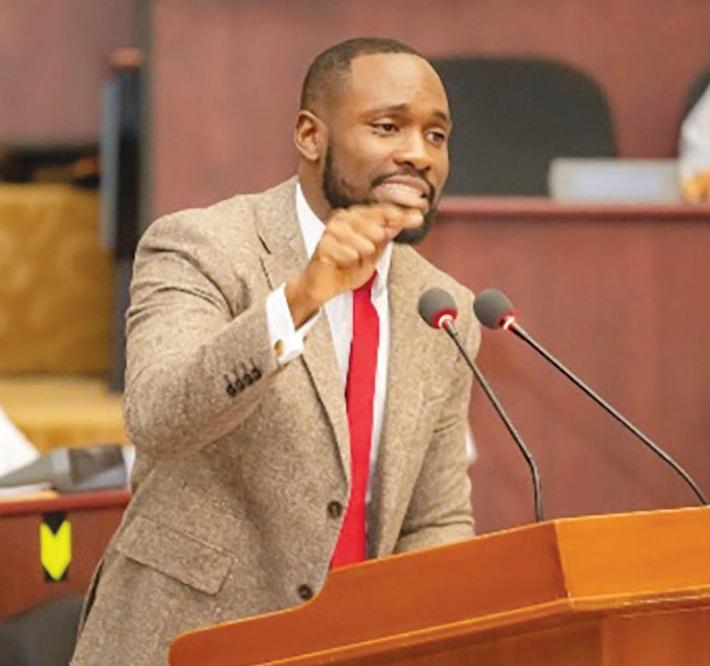
Minister of Labour and Manpower Planning, Keoma Griffith, on Wednesday said hundreds of Guyanese have already secured employment through the Gasto-Energy Project (GtE), as the Government intensifies efforts to align workforce development with major national investors. Delivering his maiden speech during day three of the National 2026 Budget Debates at the Arthur Chung Convention Centre (ACCC), the Minister dis-
closed that more than 350 persons have already been employed following a recent job fair linked to the project. “Just two months ago, we had a job fair because we were looking for a thousand people to employ. Thousands of persons came and signed up and so far over 350 persons are already employed at the gas the energy project. That is how you make impact, that is how you put the people first,” the Minister declared to the National Assembly. He described the initiative
as a practical example of the Government’s “Putting People First” agenda, ensuring that planned largescale infrastructure is converted into direct employment opportunities for the Guyanese people. According to Griffith, workforce placement for the GtE Project is being supported directly by the Ministry’s Central Recruitment and Manpower Agency (CRMA) as well as the National Job Bank which was launched in 2022 to connect job seekers with employers. He not-

ed that by 2025, more than 11,000 job seekers were registered on the platform, with over 2,100 vacancies solicited from employers. The system has already facilitated employment for hundreds of young people between the ages of 18 and 35. To further strengthen labour market coordination, Griffith announced plans to establish a National Manpower agency, supported by a Labour Market Observatory. The new body will collect and analyse data on skill demand, wage trends and workforce gaps and employment compliance. “Evidence-based manpower planning isn't just policy talk. It's what
we need right now with the kind of rapid growth and demographic change we're seeing. To this end, we intend to establish a national manpower agency in this country which will include provisions for our labour market observatory that will generate labour market information and statistics in relation to labour demand, skills gaps, wage trends and compliance metrics. We have strategically positioned ourselves as one of the world's most attractive investment hubs in order to safeguard the future of work in our country” the Minister said. Griffith said the Ministry has expanded its role beyond job
placement to better protect workers and enforce labour standards, especially in high-risk sectors such as construction, mining, oil and gas and agriculture. Between 2020 and 2025, more than 12,800 labour inspections and over 6,100 occupational safety and health inspections were carried out nationwide. He noted that these efforts helped to reduce workplace fatalities by 12.7 per cent and cut non-fatal accidents by nearly 50 per cent. The Minister also pointed to improved staffing at the Occupational Safety and Health (OSH) and Labour Departments, with the number of health and safety officers rising from nine in 2015 to more than 32 under the current administration. In addition, he highlighted progress in industrial relations, reporting that 111 collective labour agreements have been concluded since 2020, almost double the number under the previous administration. Recent agreements include those with Aurora Gold Mine, the Guyana Public Service Union (GPSU) and the Georgetown Mayor and City Council (M&CC). He ended by reaffirming his commitment to strengthening labour institutions and ensuring that workers remain central to national development.

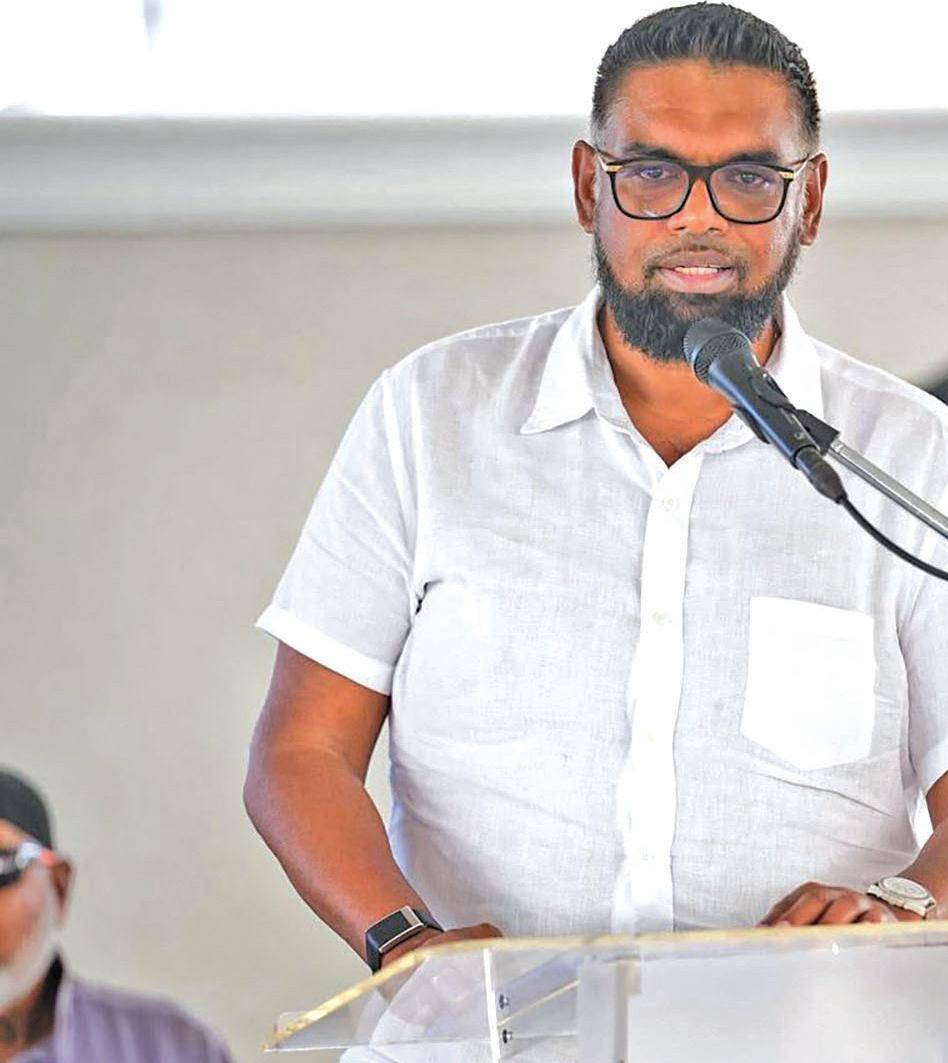
resident Dr Irfaan
PAli has warned that Guyana’s political culture risks being overtaken by greed and superficial engagement, cautioning that the erosion of conscience and sacrifice in public life could undermine the country’s future if left unchecked.
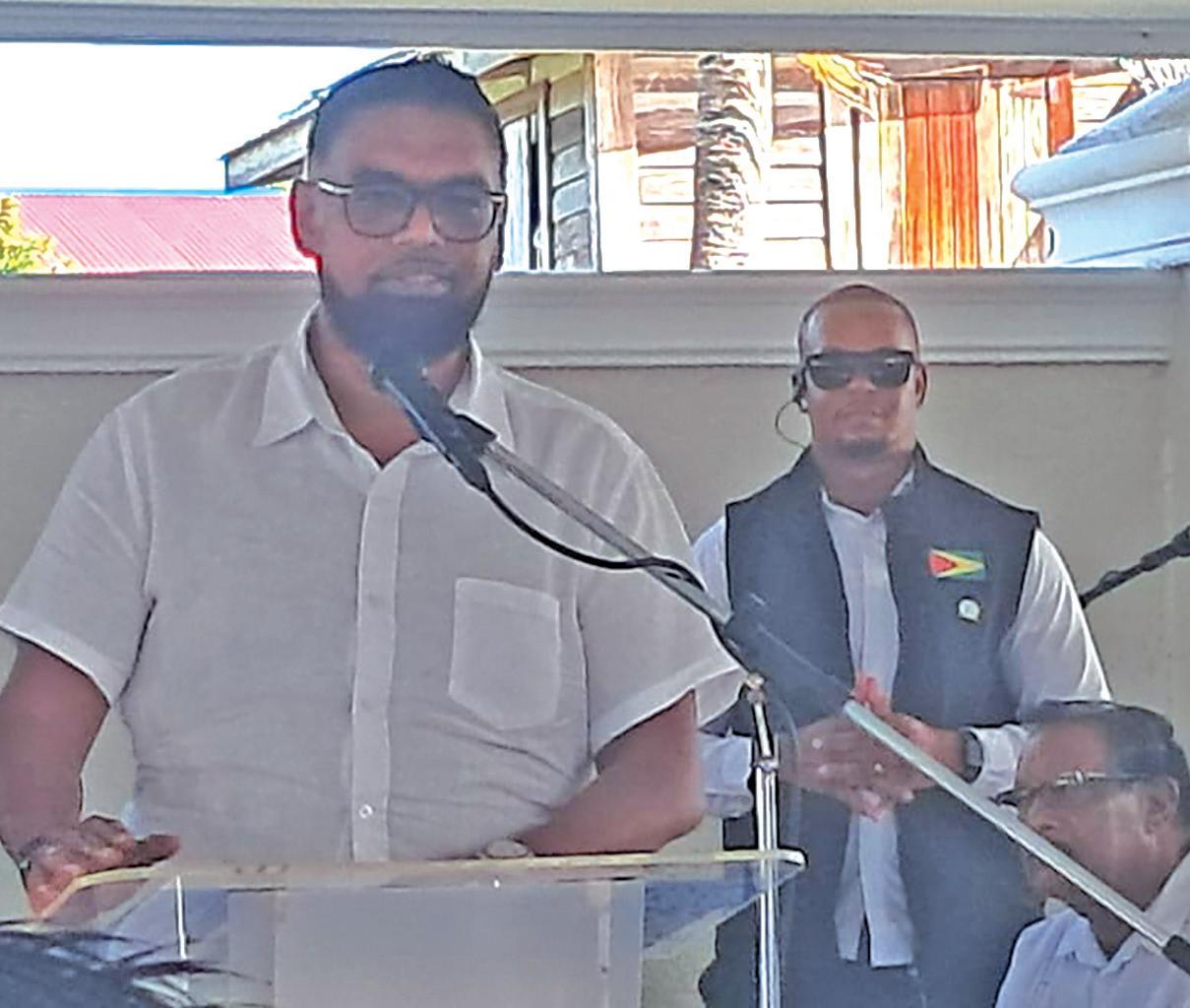
Reflecting on the broader direction of national leadership, the Head of State said, “the politics today, politics of serious politics, politics of conscience, politics of sacrifice, is being replaced by politics of greed and shallowness,” adding that the possibility of losing hardwon national gains “worries me every night.” The remarks were made on Sunday at Bloomfield
AUniversity of Guyana (UG)-led construction training programme aimed at upskilling the Region Six (East BerbiceCorentyne) workforce, while creating new opportunities for school dropouts and grassroots workers, was officially launched at the Tain Campus, as part of wider Government efforts to ensure Guyanese are equipped with the skills needed to participate meaningfully in the country’s rapidly expanding construction sector. The programme, being delivered by UG in partnership with the National Council of Construction Registrars (NCCR), is structured as a modular, stackable initiative covering several areas within construction sciences. It is designed to cater to contractors, tradesmen and workers already active in the sector, as well as individuals seeking to formalise skills they may already be practising or those looking to enter construction for the first time. Speaking with this publication, Vice-Chancellor Professor Paloma Mohamed explained that the programme was intentionally designed to be inclusive, with no university-level entry requirement, allowing persons who may have left the formal education system early to participate. “One of the things that is wonderful about it is that you do not have to have a university-level entry. You could come in with nothing… we have remedial work, persons standing by you to help you up to that level so that you can complete,” she said. Each component of the programme comprises approximately 90 hours of training and can be completed within six weeks

to two months, depending on the pace of participants. Upon completion, graduates will receive multiple certifications, including credentials from UG and the NCCR, as well as an internationally recognised Occupational Health and Safety (OHS) Certificate. Professor Paloma noted that the certification is portable internationally and, at present, is being offered free of cost through Government support. “So you get a certificate from UG, you get a certificate from NCCR, which is portable around the world, and you get an Occupational Health and Safety international Certificate as well… and it’s, for the moment, free, supported by the Government of Guyana,” she said. In an invited comment, Deputy Chief Education Officer (DCEO) Dr Ritesh Tularam described the programme as timely and critical, particularly for Region Six, where construction activity has accelerated alongside national development. “This programme is very, very significant… not only for Region Six, but by extension, what is the Government’s position as it relates to upskilling, reskilling and ensuring that we have persons who possess the requisite skills and competencies to
Village, Corentyne, Region Six (East BerbiceCorentyne) during the funeral service of Owal Mustapha Rahman, a long-standing member of the People’s Progressive Party (PPP) and the father of Agriculture Minister Zulfikar Mustapha. While addressing mourners, President Ali used the occasion to offer a wider reflection on the state of national leadership and the values that should guide political life, particularly at a time of rapid economic and social change. The President cautioned that political engagement driven by self-interest, person -
al gain, or transactional expectations poses a longterm risk to national development. He stressed that leadership must be grounded in responsibility to future generations rather than short-term rewards, warning that failure to uphold those principles could result in the squandering of opportunities secured through decades of struggle and sacrifice. President Ali’s comments come amid ongoing public debate about governance, accountability and the character of political participation in Guyana, as the country navigates accelerated de -
velopment alongside rising expectations. His remarks underscored the importance of maintaining a moral compass in public life and preserving the foundational values that underpin democratic stability and social cohesion. The Head of State reiterated that sustained progress requires a return to politics rooted in conscience, service and national responsibility, noting that vigilance is necessary to ensure that the pursuit of personal benefit does not eclipse the collective good or weaken the country’s long-term prospects.
Kato lights up as hydropower plant at full capacity
Tmake a significant contribution to the construction sector,” Dr Tularam said. He noted that many individuals are already practising construction trades without formal certification, limiting their employability and earning potential. “With a certification, it means that your employability rate becomes higher. It means you can earn more significantly,” he added. Dr Tularam further emphasised that the programme supports the national development vision by targeting people at the grassroots level, including those who may not have completed secondary school but possess the desire to contribute productively.
“This programme, it is critical. It is timely, and it is aligned with what is the national vision as it relates to ensuring that we are having people who possess the requisite skills,” he said. The short duration of the training – six weeks or 90 hours, depending on the student, combined with internationally recognised certification, positions the initiative as a practical pathway for Region Six residents to benefit directly from Guyana’s ongoing construction expansion while strengthening the local labour force to meet present and future demand.
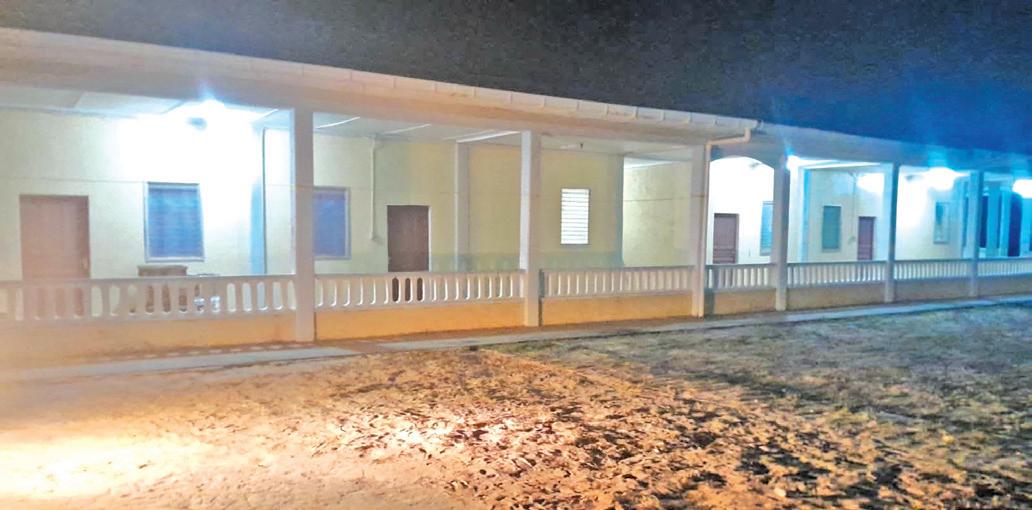
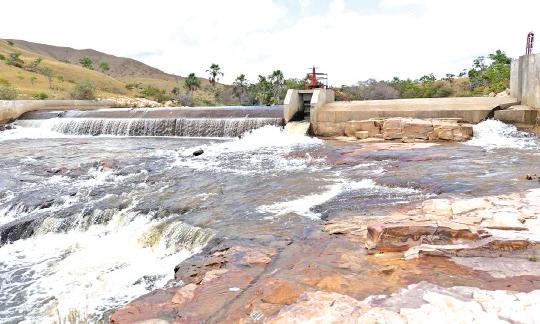
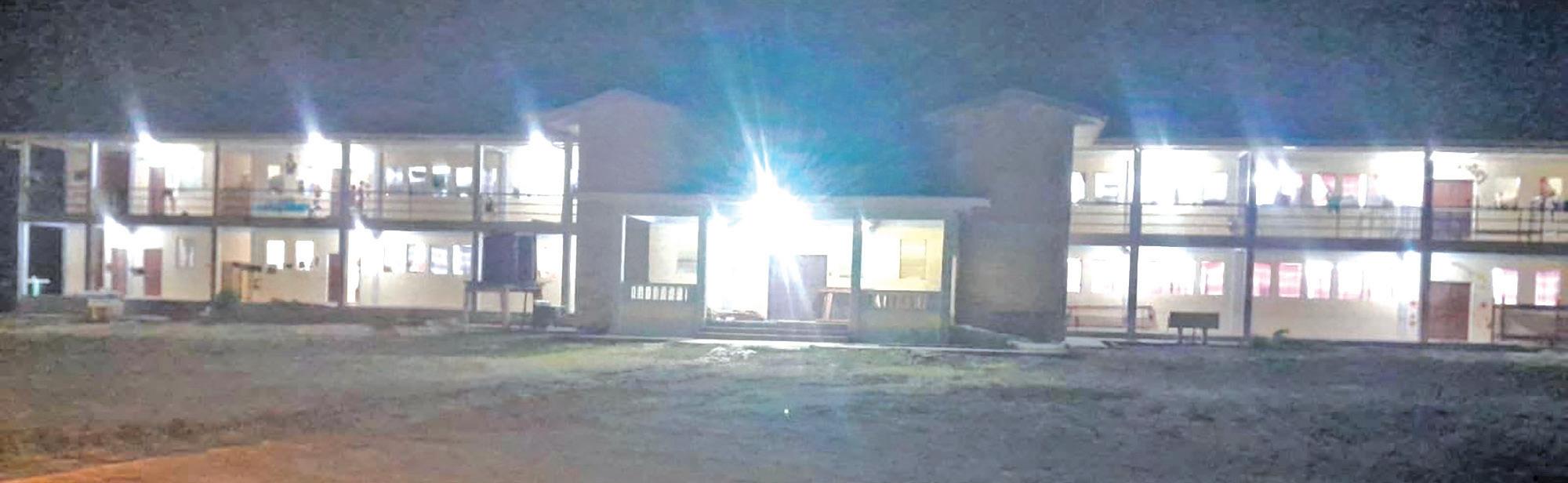
he 150-kilowatt (KW) hydropower plant at Kato, Region Eight, (Potaro–Siparuni) is operating at full capacity and several community buildings are being powered. Kato Secondary School and its dormitory, teachers’ quarters, as well as the Kato Cottage Hospital and police station, are all receiving optimal electricity from the renewable energy plant. The hydropower plant was commissioned November last by Prime Minister (PM) (Ret’d) Brigadier Mark Phillips, where it was expected to benefit over 30 buildings while providing 17 residents of the community with permanent employment. At the time the PM had noted that beyond its economic benefits, 34 community buildings will be supplied by the hy-
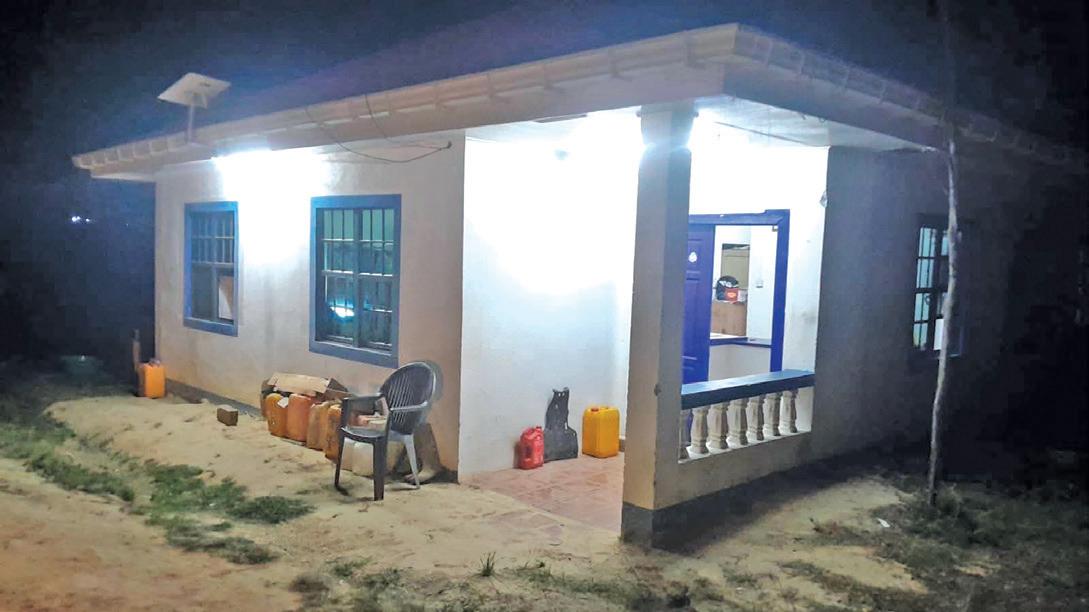
dropower system. They include community buildings such as schools, health facilities and commercial spaces, enabling income-generating activities like sewing, agro-processing and digital services. The over US$2 million project was funded through the Inter-American Development Bank (IDB) under the Sustainable Energy Programme for Guyana. The project has
made Kato one of the first 100 per cent renewable energy-powered Indigenous communities in Guyana, powering Government buildings, schools and households. The completed hydropower project aligns with the People’s Progressive Party/ Civic (PPP/C) Government’s goal to promote an energy mix that prioritises renewable energy, the Ministry of Public Utilities noted.
These include the Evidence Bill, Judge Alone Trial Bill, Alternative Sentencing Bill, Rehabilitation of Offenders Bill, amendments to the High Court Act, and changes to the Summary Jurisdiction (Offences) Act. Additional legislation will address international child abduction, recovery of child support and measures to strengthen protections against harassment and sexual offences. Public security and defence will also be addressed through the Firearms Control Bill, Prisons Bill, Border Patrol Bill, and the Guyana Defence Force (GDF) Training Institute Bill, along with amendments to immigration laws and new regulations gov-
erning emergency lights, sirens and speed-limiting devices for motor vehicles. Several bills will focus on health and social protection, including the Telehealth Bill, Medicines Regulation Bill, Ambulance Services Bill, Medical Practitioners (Amendment) Bill, Social Workers Bill and regulations governing human organ and tissue transplants. In agriculture, food safety and environmental management, the legislative agenda includes the Food Security Bill, amendments to the Food Safety Act, Pesticides and Toxic Chemicals Act, and regulations related to plant protection and rice farmers’ security of tenure. The Government also plans
to introduce legislation to strengthen national development and heritage preservation, including the National Heritage Preservation Bill, Solid Waste Management Bill, Port Authorities Bill, and amendments to support electricity sector reform. The AG said the legislative programme forms part of the Government’s broader effort to modernise institutions, improve governance and create a legal framework suited to Guyana’s rapidly expanding economy. He emphasised that the measures are designed to strengthen the rule of law, improve public services and ensure that the country’s legal system keeps pace with economic and social transformation.



The state-of-the-art Bayrock National Stadium in Linden was Ali and Prime Minister Mark Phillips were among the speakers included Ministers and other Government officials. Here



was officially opened Saturday, February 7. President Irfaan speakers who addressed the thousands in attendance, who Here are some images captured at the historic milestone

16 firearms seized, 11 charged in January
The Guyana Police Force (GPF) has stated that it is steadily and successfully moving forward in its targeted fight against narcotics and illegal firearms across the country.
In a Sunday Facebook post report, the GPF noted that field operations have intensified in response to criminal activities, yielding notable results. Between the period 2020 to present, it noted, field operations have led to the seizure of over 790 illegal firearms, significantly disrupting the availability of weapons which could potentially be linked to violent and organised crime. Firearm seizures increased steadily from 133 in 2020 to a peak of 178 in 2024, reflecting targeted intelligence-led operations. During that time more than 290 persons were charged for firearm related offences bridging the link between seizures and in-
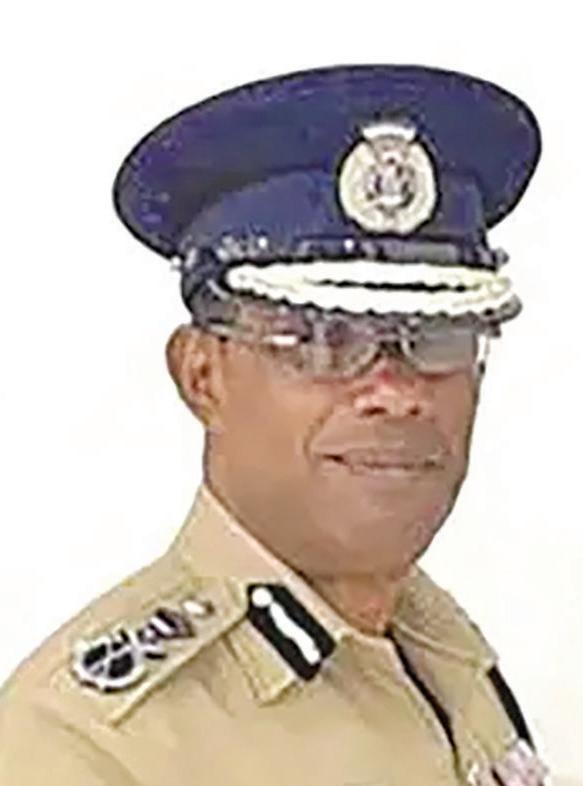
vestigations. The momentum continues with 16 firearms seized and 11 persons charged for the month of January, 2026 alone. According to the Commissioner of Police, Clifton Hicken “Every illegal firearm taken off the streets represents a life potentially saved.” Narcotics also remains another major focus area under the Force’s oper-
ational strategy in efforts to disrupt the supply and distribution of illegal drugs. A critical aspect of this effort is the protection of schools, ensuring that the lives of young people are not ruined due to the influence of criminal forces or the use of these life-threatening substances. This was demonstrated recently in Regional Division #2, where officers responded to a report of narcotics found on school grounds, recovering nearly 6 grams of suspected Ecstasy/ MDMA and detaining juveniles and a young adult linked to the incident. The swift action of the officers not only removed drugs from the school environment but also reinforced ongoing efforts to safeguard youths and uphold community well-being. From 2020 to present, the GPF intercepted thousands of kilograms (kg) of illegal drugs, with cannabis and cocaine re-

maining the most prevalent.
Cannabis seizures accelerated, reaching over 1,500 kg in 2023 and remaining consistently high in subsequent
years. Cocaine interdictions also fluctuated in response to trafficking patterns, with notable seizures such as over 536 kg in 2021 and 234 kg in
2025, indicating the Force’s ability to adapt operations to evolving threats.
The efforts of police ranks resulted in hundreds of individuals charged and placed before the court annually. The consistency of these outcomes reflects hard work, training and operational planning. As the Guyana Police Force (GPF) continues to modernise and build upon its community relations, the focus remains clear “to disrupt criminal activity, remove illegal weapons and drugs from our communities, and ensure the safety of all citizens through professional and disciplined policing,” Commissioner Hicken said. Guided by the strategic pillars Operations and Performance, the Force continues to enhance policing efforts with the use of technology, regional collaboration and community engagement, the post noted.
Hailed as a champion of Guyana’s tourism industry, former British High Commissioner to Guyana, Jane Miller, believes that the country has
a unique boutique offer that is attracting a growing number of nature enthusiasts and the local eco-lodges, especially in the hinterland regions, need to expand
their capacity to accommodate these travellers. Miller recently wrapped up a fouryear tenure in Guyana during which she visited all 10 Administrative Regions
Paratroopers from the 31 Special Forces Battalion of the Guyana Defence Force (GDF) executed a precision airborne display during the 52nd Independence Anniversary of the Republic of Grenada on February 7, 2026. According to the GDF in its Facebook post, conducted before dignitaries, security forces and the Grenadian public, the display demonstrated a high level of training, coordination and discipline. The controlled descent and landing reflected the Squadron’s operational proficiency and highlighted Guyana’s contribution to regional military professionalism. The contingent was led by the Commanding Officer of the 31 Special Forces Battalion, Lieutenant Colonel Loring

Captain Kaya Dover, Staff Sergeant Chris Corbin, Sergeants Rock Watson, Rod Jeffrey and Keron Nyle, and Corporals Troy Miggins and Hosea Glen, it added. The GDF’s participation, it noted, carried regional significance, reflecting long-standing defence coop-

Benons. It comprised Captain Ekundayo Jeffrey,
eration among Caribbean states through the Regional
Security System (RSS) and the Caribbean Community (CARICOM). Such engagements reinforce interoperability, mutual support and collective security across the region. For Guyana, the participation also reflects ongoing efforts to strengthen defence ties across the Caribbean and to project solidarity during key national milestones in partner states. Feedback from the Grenadian public was overwhelmingly positive. Silvan Chan, a member of the Grenadian National Celebrations Committee, described the GDF personnel’s display as exceptionally well executed, noting that it fully achieved its intended objectives and was warmly received.
across the country, including most of the nature resorts, as well as participated in some of the most unique adventures in the hinterland. Speaking with the Guyana Times prior to her departure on January 29, the former British envoy noted that birdwatching here is very popular among United Kingdom (UK) visitors, attracting dozens of them annually. However, she posited that the offerings within Guyana’s vast hinterland regions, including its pristine rainforest, is a top-selling point that needs to be capital-

ed by lots of other people.

ised on. “I think what you have is a very unique offer. You go into the interior…into the rainforest and you’re not surround-
It makes it a very special offer. So, I think having this very boutique offering makes Guyana special. And I think the key thing for me is for Guyana to promote
to the world what it does have at the moment. And they’ve been doing that… That’s why the numbers are increasing,” she noted. But with the influx of tourists, Miller says there needs to be adequate facilities in place even as she cautioned against large-scale resort developments in the hinterland regions. “Over time, if tourism is going to have a major impact on the economy, there needs to be more bed space. So, some of the lodges that just have two or three rooms need to become six or 10 rooms or whatever. There needs to be some expansion.” “What I hope we don’t see as an interior is massive resorts – because for me, that would spoil Guyana’s unique selling point. There will be parts of the country where that kind of resort would be wonderful. But for the genuine eco-tourism, the amazing small boutique, attention to detail, sitting with communities, the opportunity to get to know your hosts is a real special thing,” the former British envoy stated.
Ajoint anti-trafficking operation carried out in Georgetown late Saturday night has triggered an ongoing investigation into suspected Trafficking in Persons (TIP) activities while hours later, a separate operation in Linden resulted in the discovery of firearms, ammunition and more than four kilograms (kg) of suspected cannabis.
It was reported that between 22:15h on Saturday and 00:03h on Sunday, a coordinated exercise was conducted at a building located at the corner of Charlotte and Albert Streets, Georgetown, following information received by law enforcement authorities. The operation involved ranks from the TIP Unit and the Criminal Investigation Department (CID) Headquarters, supported by personnel from the Ministry of Home Affairs and the Ministry of Human Services and
Social Security’s CounterTrafficking in Persons (C-TIP) Unit. During the exercise, 77 Cuban nationals, comprising both men and women, were contacted and screened for indicators of trafficking. Several individuals reported that they travelled to Guyana under credit arrangements and claimed that their travel documents were being held
pending repayment. These allegations are now forming part of the ongoing investigation. Following the screening process, the foreign nationals were handed over to the Ministry of Human Services and Social Security for further assessment and assistance. A search of the premises was conducted; however, no illegal items were found

and no arrests were made. Investigations remain ongoing.
Meanwhile, hours later, at about 01:30h on Sunday, a separate operation in Regional Division #10 led
to the discovery of firearms, ammunition and suspected narcotics at a residence in Central Amelia’s Ward, Linden. Acting on information received, ranks conducted a search of a motor
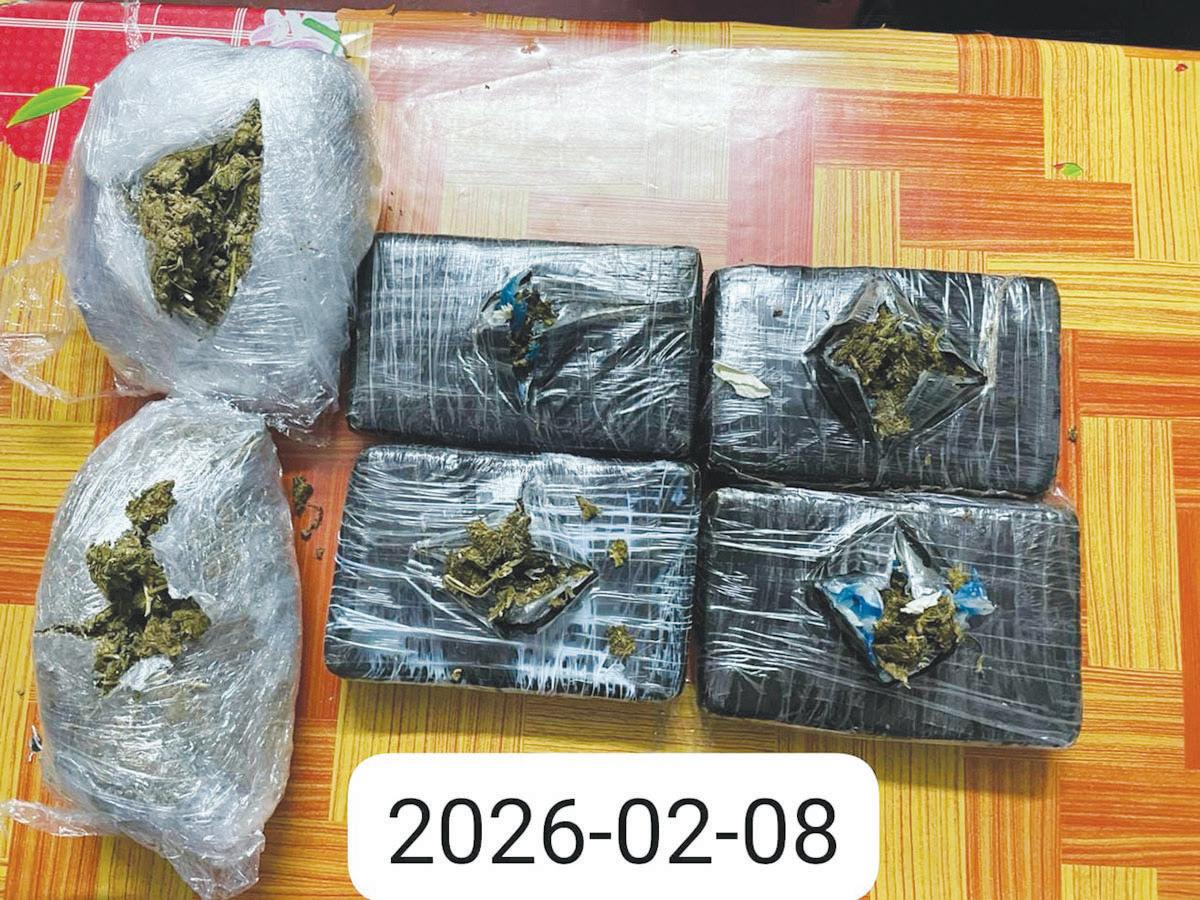
lorry parked in the yard of the residence. During the search, a haversack was found behind the driver’s seat containing several parcels of leaves, seeds and stems suspected to be cannabis. Further checks resulted in the discovery of three 9mm pistols and nine .32 rounds of ammunition concealed among the suspected narcotics. A 42-year-old businesswoman of Central Amelia’s Ward was arrested and taken into custody. Subsequent investigations led to the arrest of a 36-year-old male driver from Bamia, SoesdykeLinden Highway, at his residence. The suspected cannabis was weighed in the presence of the suspects and amounted to 4.536 kg. The firearms, ammunition and narcotics were later lodged pending further investigation.
Both suspects remain in custody as investigations continue.
Traffic officials are once again warning motorists against the use of improperly fitted and excessively bright headlights, while renewing calls for motorcyclists and electric bike riders to wear safety helmets, following a recent fatal accident on the East Coast of Demerara (ECD). The issue was raised during a road safety programme, where members of the Guyana Police Force (GPF) and the National Road Safety Council addressed several factors contributing to road accidents and fatal-
ities. National Road Safety Council President Earl Lambert and President of the United Minibus Union, Eon Andrews, said attention must be paid to vehicles that are being retrofitted with brighter lights, particularly at night. “We spoke about these lights that they’re retrofitting the vehicles with. The vehicles come with one thing and then these people take out that and they put on, and it’s because some people say because of the tint, the windscreen”, Lambert said. Andrews indicated that the issue is being
examined and could soon be addressed through enforcement and policy measures. “I think we are going to be addressing it from April.”
The discussion turned to a fatal accident involving an electric bike rider in the vicinity of Ann’s Groove on the East Coast, which Andrews said occurred under dark road conditions. “Last Saturday night, a young man… lost his life on the public road in the vicinity of Ann’s Groove. He was riding an electric bike and was not wearing a helmet, based on what I saw.” According to
Gunshots rang out during an attempted robbery at a Durban Street, Georgetown mechanic’s home and workshop on Saturday night after two men reportedly confronted him and opened fire during a struggle. The incident occurred at about 21:45h when two men arrived on a red and black KTM motorcycle while the 45-year-old mechanic was in the yard of his residence, where he operates his busi-
ness. One of the suspects reportedly dismounted, approached the man, brandished a handgun and attempted to relieve him of a chain. A scuffle ensued, during which several rounds were discharged in the victim’s direction.
The mechanic managed to run into his house. A friend, who armed himself with a knife, intervened as one of the suspects pursued the victim. During the confrontation, the suspect is
said to have sustained injuries before escaping with his accomplice on the motorcycle. No injuries were reported among the intended victims. Investigators later recovered two suspected 9mm spent shells and one suspected 9mm projectile at the scene. CCTV footage is being reviewed as efforts continue to identify and apprehend the suspects. The matter remains under investigation by Regional Division 4 ‘A’ (Georgetown).

Andrews, a video of the incident suggested that the rider was travelling in the middle of the roadway moments before the collision. He explained that the rider later collided with an oncoming vehicle after attempting to cross the roadway. “This young man was riding in the middle of the road in and out of traffic”, he said. “The one with the electric cycle turned behind him into the path of the vehicle coming from the east, and he was struck down.” In that light, Andrews stressed that the absence of a helmet may have contributed to the fatal outcome. “If you’re not wearing a helmet, the first
thing that happens when you fall from those bikes on the road is that you hit your head.” He added: “Had he been wearing a helmet, the situation might have been different.”
Sergeant Anjan Bhangradian, who is in charge of traffic at the Kitty Police Station in Georgetown, said motorcyclists remain among the most vulnerable road users.
“The most vulnerable part of the body, especially when you’re using the road, and you’re riding, is your head.” He warned that failure to wear a helmet can have fatal consequences. “If you don’t protect your head,
then it’s very likely that you will sustain serious injuries, be hospitalised, or even die.” Bhangradian also reminded motorists that road safety is a shared responsibility. He urged road users to obey traffic laws at all times, not only in the presence of police ranks. “Road safety is everyone’s business. It is not just the police business. You must not just do the right thing only when the police are there to see you.”
Officials urged the public to encourage family members and friends who ride motorcycles or electric bikes to wear helmets and to operate vehicles responsibly, particularly at night.

In 2023, as Shein was taking Brazil by storm with trendy styles, low prices and endorsements from megastars like Anitta, the company made an audacious pledge to turn the country into a manufacturing hub for all of Latin America. The China-founded fast-fashion retailer promised to invest $150 million in partnerships to make clothing in 2,000 local factories, creating 100,000 fashion manufacturing jobs in Brazil by 2026. Shein got off to a fast start, announcing partnerships with 336 Brazilian factories by the end of 2023. Since then, progress has stalled as Shein demanded that local suppliers lower prices and deliver orders faster than they could manage, according to a dozen former manufacturers in its supply chain, industry officials and union leaders.
“Working in Brazil is different from working in China. Brazil has very different regulatory frameworks and standards,” said Fernando Pimentel, managing director of the Brazilian Association of Textile and Apparel Industry, which represents more than 25,000 companies across Brazil. “I regret it didn’t work out.” Shein struggled with transportation and logistics challenges in Latin America’s biggest economy, a vast country of more than 200 million people, due to the rural locations of some of its partners’ plants, as well as strict labour regulations, including controls on working hours and high taxes. Two executives familiar with Shein’s strategy in Brazil, who asked not to be named, confirmed that local
production had fallen short of the company’s original goals, without providing figures. In a written statement, Shein conceded that the initiative did not go as planned. “Production in Brazil required time to mature and soon differences in business and industrial infrastructure became apparent,” the company said. “As such, progress has been slower and more challenging.” Going forward, Shein said it is taking a more “selective” approach to deepen partnerships with “the most capable factories.” Shein declined to say how many local suppliers it currently has but added that its online marketplace in Brazil “supports more than 45,000 local entrepreneurs and sellers, reinforcing Brazil as one of the company’s most dynamic markets worldwide.”
village”
Shein’s setbacks in Brazil – Shein’s largest market after the United States (US) – highlight the hurdles the company faces in expanding its low cost, rapid production model beyond China as it seeks a stock market listing in Hong Kong later this year. Reuters interviews with manufacturing groups, unions and associations in all 12 states where those factories once operated found just one producer still making clothes for Shein, GB Manufacturing, based in the southeastern state of Espirito Santo.
‘I can’t accommodate your business model’
Shein’s push to localise production in Brazil gained urgency in 2024, when Brazilian officials, alarmed by
a surge of ultra cheap clothing imports, imposed a 20 per cent duty on online purchases valued under $50 that were previously duty-free, a levy dubbed the “little blouse tax” by consumers. “The aim was promoting fair competition,” said Uallace Moreira, Brazil’s secretary of industrial development in an interview and to level the playing field between Brazilian and Chinese firms. Six factory owners interviewed by Reuters said they ended their partnerships after Shein demanded steep price cuts and tighter deadlines they deemed impossible to meet. “To get to the price they wanted, we would have to work with a different type of fabric,” said Januncio Nobrega de Azevedo, owner of Nobre Confecções, a 59-employee company that was part of an apparel consortium in northeast Brazil fulfilling Shein’s orders in the second half of 2023. After producing for Shein for just six months, he was left with excess material that he had to offload in the local market for an undisclosed amount. “I told them, ‘Look, unfortunately I can’t accommodate your business model,’” he said. Shein declined to comment on the issues raised by Azevedo.
Shein’s manufacturing hub Shein’s supply chain bucks the traditional fast-fashion model in which retailers typically place orders with suppliers in Asia months ahead and import the clothes in bulk by container ships to their stores and warehouses. Shein’s vast network of roughly 7,000 factories in China, mostly
in the southern province of Guangdong, produces small initial orders and rapidly ramps production up or down based on demand – enabling the platform to offer a seemingly endless array of clothes in different sizes and colours.
Its manufacturing hub in Guangzhou can churn out huge quantities of cheap clothing thanks to large numbers of specialised workers, low-cost polyester fabric made in China, and the close proximity of factories making zippers, buttons and other trims.
Shoppers’ online orders are packaged individually in China and sent by air directly to them, saving on costs both because many countries give low-value parcels duty-free access, and because sorting and packing orders in warehouses in Europe or the US is much more expensive. But the model has proven difficult to replicate outside China, which has a highly integrated and efficient supply chain keeping costs low. In an interview with several Brazilian news outlets early last year, Felipe Feistler, Shein’s General Manager (GM) in Brazil, acknowledged challenges in applying its production method to the country.
Small factories face price pressure
Four of the six former suppliers interviewed by Reuters across Brazil operate in small towns where garment production is an economic mainstay, making them eager to work with the fast fashion giant. “We had very high hopes,” said José Medeiros de Araujo, owner of Zaja, a small gar-
ment factory in Cerro Cora, a northeastern Brazilian town of just over 11,000 residents. Araujo, whose 128 employee factory produces clothing for major Brazilian retailers and its own brand, considered adding 50 jobs to fulfil Shein orders. After he produced an initial order for Shein in mid2023, Araujo said the retailer suddenly demanded faster delivery times, reduced its total number of orders and demanded price cuts of as much as 30 per cent. “The plan was to grow,” he said. “But, for us, here in the Northeast it wasn’t viable.” He did not disclose his profit margins on the products sold to Shein. Shein declined to comment on its work with Araujo.
Logistics, labour challenges Shein’s revenues in Brazil have grown fast and the country became Shein’s second-biggest market after the US in 2025, accounting for $3.5 billion, or 7 per cent of its estimated global sales of $48.6 billion, according to Coresight Research. As a private company, Shein does not disclose its financials and declined to say whether the estimate was accurate. Markets like Brazil and Europe have become much more important to Shein over the past year as US tariffs on imports from China have made its business there significantly more costly. Shein is facing similar headwinds in the European Union (EU) and United Kingdom (UK), which are both planning to end their customs duty waivers on low-value parcels in 2026 and 2028 respectively.
(Source: Reuters)
Building out Guyana’s ecotourism product
Already, Guyana has been named among some of the world’s top eco-tourism destinations and has even received multiple global awards in recognition for its commitment to sustainable tourism and diverse ecosystems. To further push its eco-tourism product, the Guyana Government is looking to build out several eco-lodges across the country and has already received approximately 30 proposals, which are currently being vetted by the Tourism Ministry. The areas identified for suitable investment of these eco-lodges were Mashabo in Region Two, Vreed en Hoop Waterfront and Leguan in Region Three, Stabroek Waterfront in Region Four, Bartica, Sakaika Falls and Kumerau Falls in Region Seven, Kamana and Orinduik Falls in Region Eight, and Lethem in Region Nine. In its request for proposals (RFPs), the Ministry of Tourism, Industry and Commerce said it was prepared to offer attractive incentives for the development of the eco
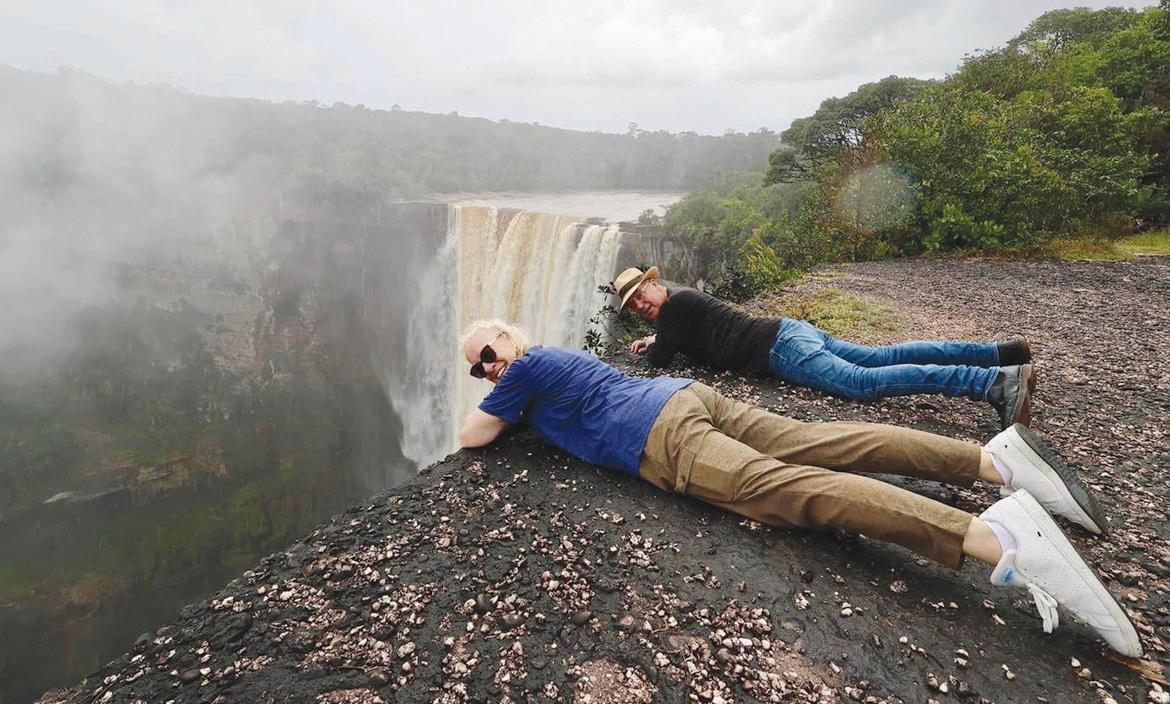
lodge and resort industry, including fiscal incentives. The Government had said it will use the responses to the RFP to rank and select those parties who will be invited to negotiate a Memorandum of Understanding (MOU), including land terms, zoning, development conditions and other incentives that will be provided.
Personalised services
Meanwhile, recalling on her experience over the last four years, Miller said engaging with residents in remote hinterland communities is something she and her husband particularly enjoyed
during their travels across Guyana over the years.
“Sitting down and talking to people about their life and their history and the history of the ranch, or the history of the river, or wherever we are – that made it so special. So, I think you have to promote Guyana as this boutique offer where you have that personalised service. Yes, you have incredible fishing opportunities, incredible bird watching, but getting to know the people, for me, has been the most special thing,” the former diplomat stated. A part from her favourite pastime activity – the Mahaica River tour, Miller told this newspa-
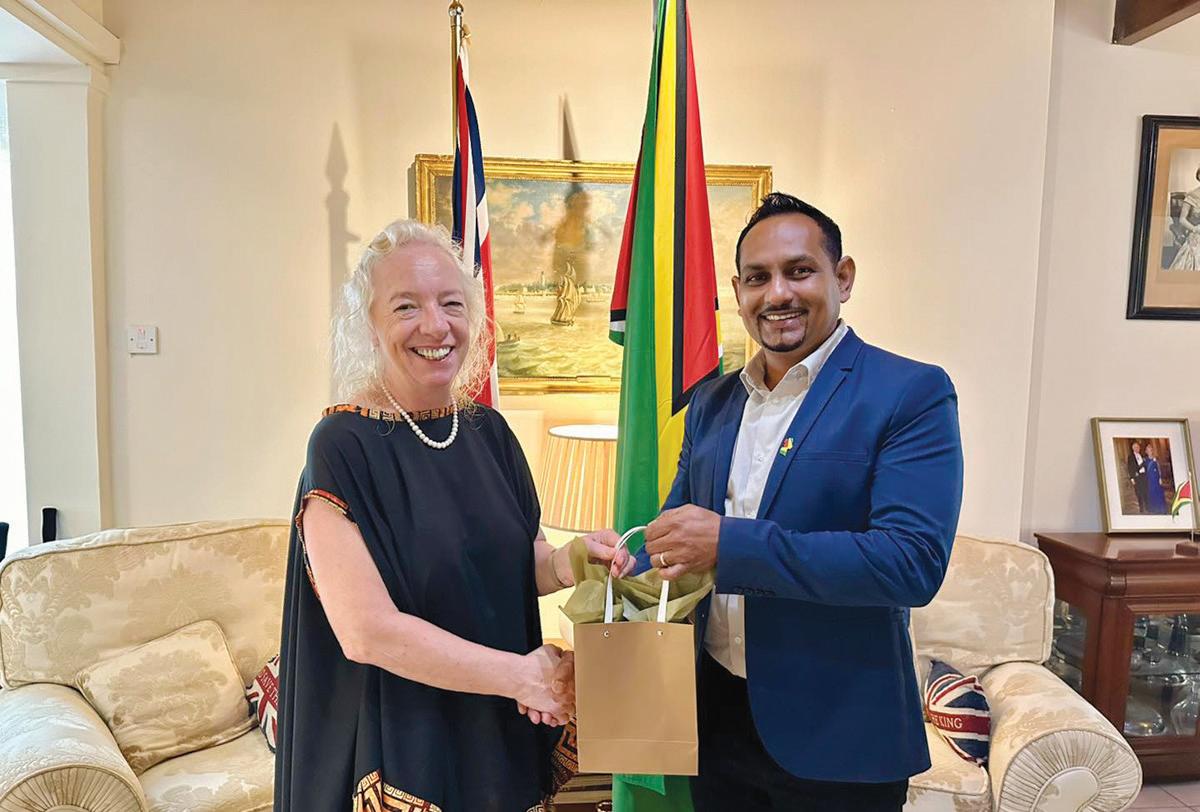
per that climbing up to the Kaieteur, the world’s longest single-drop waterfall at 741 feet that is located in Region Eight (Potaro-Siparuni), is amongst the top of her cherished adventures in Guyana.
“That was an incredibly special experience. Going along the river and then climbing up the hill is absolutely stunning. One of my favourite things in this country is just going into the rainforest and the silence and all you hear is birds – the screaming piha –or you just hear the crickets, the frogs, and just that special, complete peace and sur-
rounded by nature. And you have that all over your country, so it makes that special almost anywhere… You have a very, very beautiful country, and it’s not known about enough. So, I think the more we promote what is here, the more people you’re going to get coming to Guyana,” she emphasised.
THAG appreciation Just days prior to her departure, Miller was presented with a token of appreciation by the Tourism & Hospitality Association of Guyana (THAG). According
to THAG, since her appointment as the UK’s resident representative to Guyana in July 2021, Miller has shown an exceptional and genuine dedication to experiencing, understanding and championing Guyana’s tourism product. “She is not only a supporter of the sector, but a true tourism ambassador, curious, engaged and deeply appreciative of the country, its people and its natural heritage. Jane didn’t just speak about tourism — she actively supported its development,” the tourism body stated. In recognition of her impact to local tourism, the former British diplomat had received the President’s Choice Award at THAG’s President’s Awards Dinner in 2024 as well as contributed to two editions of THAG’s Explore Guyana magazine. In the 2022 edition, “Impressions of a Newbie,” she shared her early encounters with the city and hinterland, while her 2024 piece, “Falling in Love with Beautiful Guyana,” highlighted her top recommendations for visitors, reflecting her growing connection to the destination.


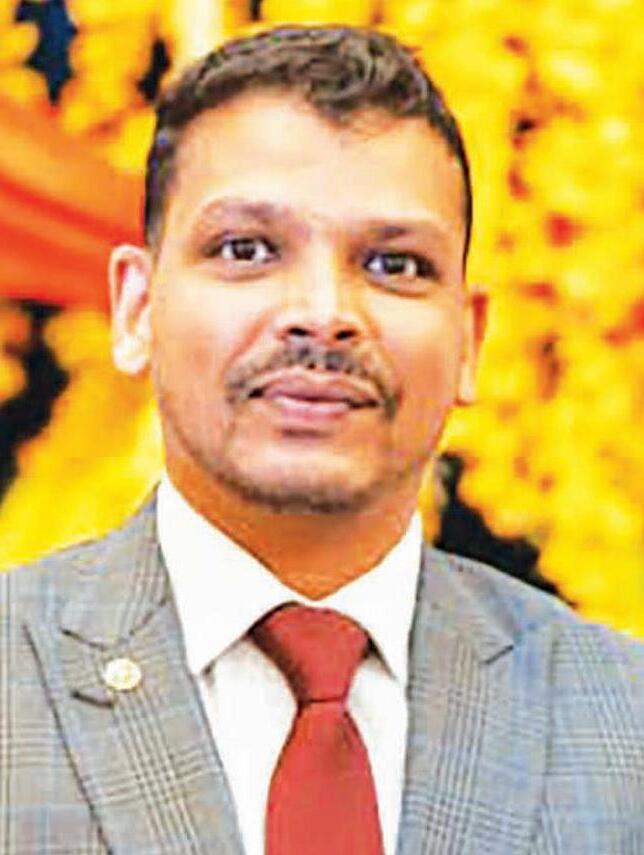
By Dr Tariq Jagnarine Fam meD, enDocrinology/ DiaBeTes
Why are more people in their 30s and 40s suffering heart attacks, and how can they be prevented?
Understanding a heart attack
A heart attack occurs when blood flow to part of the heart is suddenly blocked, usually by a clot forming in a blood vessel that supplies the heart muscle. When this happens, the heart muscle begins to die due to a lack of oxygen. Without quick treatment, the damage can be severe or fatal. Many people still believe heart attacks only affect the elderly. In Guyana, this belief is becoming increasingly dangerous. More young and middle-aged adults are experiencing heart attacks, often with little warning and during the most productive years of their lives.
Why this matters in Guyana
Heart disease is one of the leading causes of death in Guyana, and the age at which people are being affected is dropping. Hospitals are seeing patients in their 30s and 40s presenting with chest pain, shortness of breath, and collapse. These are people who were working, raising families, and supporting households just days or even hours before. The impact is devastating. Families lose breadwinners, children lose parents, and communities lose productive members. What makes this especially tragic is that many heart at-
tacks are preventable.
What health workers are seeing
Doctors and nurses across Guyana increasingly report younger patients arriving with severe heart attacks. Many are shocked by the diagnosis, often saying, “Doctor, I’m too young for this.” In many cases, these patients had undiagnosed or poorly controlled high blood pressure, diabetes, high cholesterol, or obesity. Others smoked, drank alcohol heavily, or lived under constant stress. Some had no previous symptoms at all before the heart attack occurred.
What causes heart attacks
high cholesterol, or obesity.
Smoking and excessive alcohol use significantly increased risk. Men tend to experience heart attacks earlier than women, though women often have worse outcomes.
A family history of heart disease also increases risk. Importantly, stress, long working hours, poor diet, and lack of exercise are placing younger Guyanese in increasing danger.
Warning signs that should never be ignored
Heart attack symptoms can vary, especially in younger people. Common warning signs include chest pain or pressure; pain spreading to the arm, neck, jaw, or

The most common cause of heart attacks is blockage of the blood vessels supplying the heart. Over time, unhealthy habits lead to fatty deposits building up inside these vessels. Eventually, a clot can form and suddenly stop blood flow.
High blood pressure damages blood vessels, diabetes accelerates blockage, smoking narrows arteries, and high cholesterol contributes to plaque formation. Obesity and physical inactivity worsen all of these risks. Heart attacks rarely result from one factor alone; they develop from years of combined risks.
Who is most at risk
Although anyone can have a heart attack, younger adults are at higher risk if they have high blood pressure, diabetes,
back; shortness of breath; sweating; nausea; dizziness and extreme fatigue.
Some people experience mild symptoms and delay seeking help, hoping the pain will pass. This delay can be deadly. Early medical attention saves heart muscle and lives.
What to do during a suspected heart attack
If someone experiences sudden chest pain, severe discomfort, or shortness of breath, they should seek medical help immediately. Do not wait, do not self-medicate, and do not attempt home remedies. Getting to a hospital quickly can mean the difference between survival and death.
Family members and coworkers must take symptoms seriously and act fast.
Police in Regional
Division # 7 have arrested a 45-year-old gold miner of Belfield Village, East Coast Demerara (ECD), as investigations continue around the discovery of a firearm and ammunition on Sunday, at about 14:30hs during an operation conducted at Quartzstone Landing, Cuyuni River. According to police, during the February 8 operation, ranks observed a wooden boat arriving at the landing with several occupants, during which a male was seen acting in a suspicious manner as he disembarked. As such, he was stopped by

The firearm and ammunition discovered Sunday
ranks and a search was conducted on his person. A further search was conducted on the haversack he was carrying, where a cloth bag was found containing one CZ .32 pistol along with 12 live .32 rounds of ammunition. The
suspect was arrested and escorted to the Bartica Police Station along with the suspected firearm and ammunition, which were lodged pending investigation.



Diagnosis and treatment
Heart attacks are diagnosed using clinical assessment, heart tracings, blood tests, and imaging. Treatment focuses on restoring blood flow to the heart as quickly as possible and preventing further damage.
After survival of a heart attack, long-term treatment
includes medication, lifestyle changes, and regular follow-up to prevent another event. Many people can return to productive lives with proper care.
Preventing heart attacks
Most heart attacks can be prevented by addressing risk factors early. Regular blood pressure and blood sugar
checks are essential. Eating a balanced diet, reducing salt and fatty foods, staying physically active, avoiding smoking, limiting alcohol, and managing stress all protect the heart.
Taking prescribed medication consistently, even when you feel well, is critical. Prevention starts years before symptoms appear.
Being young does not make you immune to heart disease. Ignoring your health today can cost you your future. Strength is not pushing through pain; strength is protecting your life and your family.
Know your numbers. Make healthier choices. Seek care early. Heart attacks are no longer a disease of old age alone. In Guyana, they are striking younger adults with devastating consequences. Yet many of these events are preventable.
Do not wait until a heart attack forces a change. Protect your heart now. Your heart must last a lifetime. Take care of it today.
New York City was colder than parts of Antarctica on Sunday after brutal, life-threatening winds swept across much of the Northeast and New England over the weekend — but there is good news to warm New Yorkers’ frozen hearts. Temperatures hit 3 degrees in the city on Sunday, with bitter wind chills dragging the real feel temperatures to 14 degrees below zero. Parts of the northeast reported wind chills that hit 40-below.
However, we’ve already seen the bottom, forecasters say. Temperatures are expected to increase every day this week. The high Monday is expected to be 31 degrees, with a low of 19 — higher than Sunday’s high temp. The rest of

the week will be a veritable heat wave, according to AccuWeather — with a week of highs above freezing starting Tuesday. By Wednesday, the high temp will hit a tropical 41 degrees in NYC.
Rare Extreme Cold Warnings have been issued
for more than 43 million people, including major metro areas such as New York and Philadelphia, through Sunday evening by the National Weather Service. Antarctica, by contrast, was a balmy 21 degrees at McMurdo Station — 18 degrees warmer than the frozen Big Apple.
New Yorkers can thank a blast of Arctic air that is heading south from the frozen tundra north of Hudson Bay, Canada, for the latest round of winter misery.
This weekend is set to be the coldest day in what has already been a record cold snap, the worst in over two decades. “The deep freeze is returning to the northeastern United States this weekend,” AccuWeather Chief Meteorologist Jon Porter said.
So far this year, at least 17 people have died outside in New York City — with 13 confirmed to have perished from hypothermia. (Excerpt from New York Post)
Haiti’s Transitional Presidential Council has handed power to US-backed Prime Minister Alix Didier Fils-Aime after almost two years of tumultuous governance marked by rampant gang violence that has left thousands dead.
The transfer of power between the nine-member transitional council and 54-year-old businessman Fils-Aime took place on Saturday under tight security, given Haiti’s unstable political climate.
“Mr Prime Minister, in this historic moment, I know that you are gauging the depth of the responsibility you are taking on for the country,” council President Laurent Saint-Cyr told FilsAime, who is now the country’s only politician with executive power.
In late January, several members of the council said they were seeking to remove Fils-Aime, leading the United States to announce visa revocations for four un-
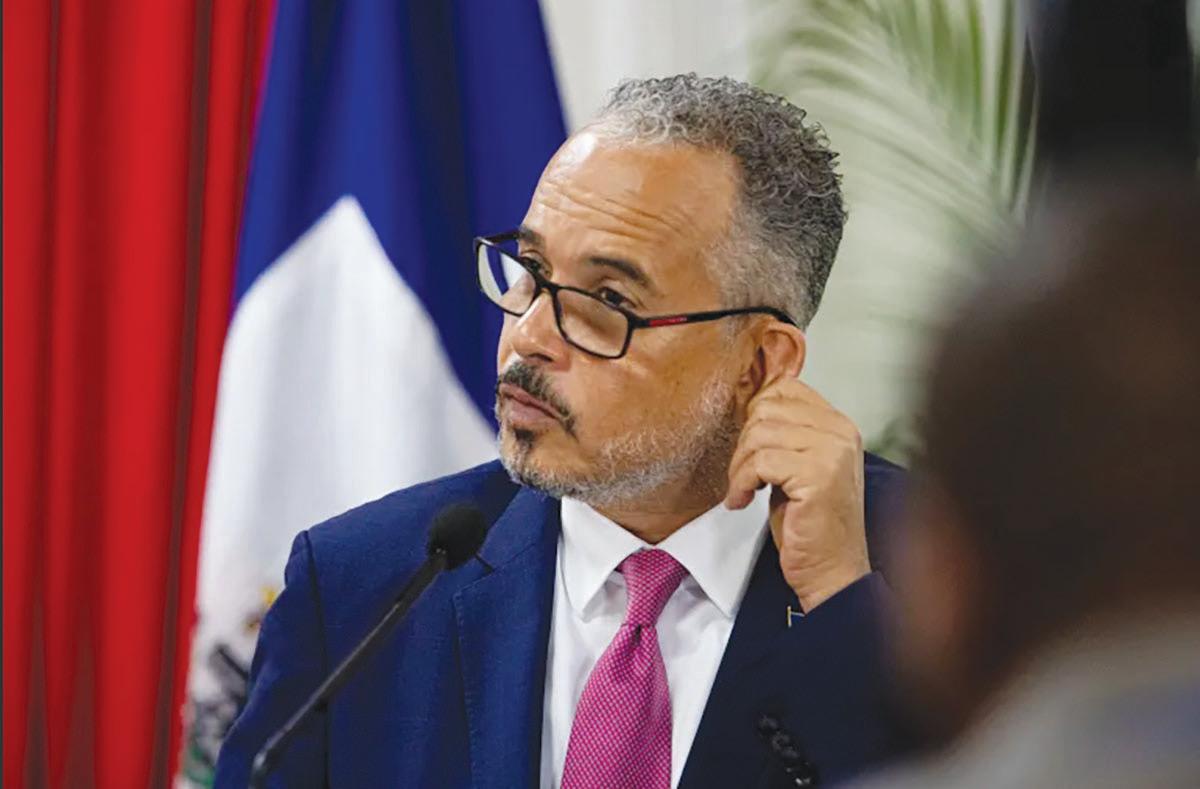
identified council members and a cabinet minister.
Days before the council was dissolved, the US deployed a warship and two US coastguard boats to waters near Haiti’s capital, Port-au-Prince, where gangs control 90 percent of the territory.
US Secretary of State Marco Rubio stressed “the importance” of Fils-Aime’s continued tenure “to combat
terrorist gangs and stabilise the island”.
The council’s plan to oust Fils-Aime for reasons not made public appeared to fall to the wayside as it stepped down in an official ceremony on Saturday. Fils-Aime now faces the daunting task of organising the first general elections in a decade. (Excerpt from Al Jazeera)
Amagnitude 5.5 earthquake struck Cuba on Sunday, the European Mediterranean Seismological Centre (EMSC) said, as tremors were felt in parts of The Bahamas and Haiti Sunday morning.
DR:
Residents in Inagua, The Bahamas reported brief shaking lasting several seconds around 7am Sunday.
The earthquake was centred offshore about 34km from Imías, Cuba, and was
also felt in parts of Haiti.
International seismic agencies said the quake was initially measured at 5.9 before being revised to 5.5, occurring at a depth of approximately 15km. (Source: Reuters, The Tribune)
time of the altercation.
Finance Minister Davendranath Tancoo has signalled that Government will not accept any recommendation from the International Monetary Fund (IMF) that undermines its development agenda for Trinidad and Tobago.
In a WhatsApp exchange with Guardian Media on Thursday, Tancoo confirmed that he met IMF representatives last week as part of the Fund’s Article IV consultation, a routine assessment that allows IMF economists to examine a country’s finances, meet with officials and evaluate the stability of inflation, debt and economic growth.
In the Caribbean, such reviews often influence credit ratings and investor confidence.
Tancoo acknowledged that IMF consultations typically produce recommendations such as reducing transfers, subsidies and devaluing national currencies. In some cases, it can also include re-
structuring state-owned enterprises and even increasing the retirement age. However, the minister said those prescriptions do not always align with the Government’s priorities.
“The IMF has its own methods and calculations to justify their recommendations, but Government is never about mathematics and numbers. It is about improving the lives of citizens and that requires a kind of creativity and people focus that the IMF mathematics do not (consider),” he said.
“So, while we will take note of what the IMF says, we will not allow them to dictate our development objectives.”
Tancoo pointed to the United National Congress’ manifesto, its Revitalisation Blueprint, the planned transition of the energy sector and recent public policy statements as evidence that Government is already responding to prevailing economic conditions.
“I think this country un-
derstands that the PNM left us in a financially difficult position with massive debt levels and an economy in need of resuscitation. Under the able leadership of the Hon Prime Minister Kamla PersadBissessar, we have frontally taken on the challenge and I believe that we are already seeing positive movements towards the growth and development of the country that we all want.”
When asked whether the IMF had assessed Trinidad and Tobago’s foreign reserves or made any pronouncement, Tancoo said the Fund had requested extensive information and held several meetings.
On the specific question of whether he had rejected the possibility of devaluing the TT dollar, he said no decision had yet been taken.
“I await their 2026 article IV consultation report and recommendation before I respond,” he said. (Excerpt from Trinidad & Tobago Guardian)
Two junior high school students were remanded in custody Friday after a serious violent incident at a school. A 42-year-old was stabbed in the abdomen, and the rear window of his vehicle was smashed.
According to preliminary information, the victim was at the school to pick up his son and daughter. He confronted one of the students, claiming his son was being harassed by him daily. During this
conversation, three or four more boys joined, after which the situation escalated.
The victim got into an argument with the students and shoved the student accused of harassment in the head. Another student then smashed the rear window of the victim’s car. Shortly after, the student accused of bullying who had left earlier, returned and stabbed the victim in the abdomen with a sharp object.
After the incident, both students ran away. A passing soldier saw one of the students with blood on his arm and gave chase. He was taken to the police station, while the other later turned himself in.
After consultation with a member of the Public Prosecution Service, both students were remanded in custody. The case has been transferred to the Youth Affairs Department for further investigation. (Source: Suriname Herald)
The Dominican Republic’s (DR) Chamber of Deputies has in its hands a piece of legislation that seeks to curb violence in hospitals and proposes to punish with sentences of up to seven years in prison those who physically or verbally assault doctors, nurses and administrative and security personnel of hospitals while they are performing their duties.
The initiative, submitted by Representative Miguel Arredondo of the Modern Revolutionary Party (PRM), arises as a response “to the deterioration of security in hospital centers,” as indicated in the arguments of the initiative.
The bill will be studied amid a context of confrontations between relatives of patients and medical staff, the most recent case being one that occurred on Friday at the Francisco E. Moscoso
Puello Hospital, where relatives of a patient shouted profanities against the nursing staff and scratched a security agent of the center.
According to Article Nine of the proposal, physical assault against a healthcare worker would carry a penalty of one to seven years in prison. If the attack is verbal, the penalties would range from one to three years, leaving open the possibility of additional civil lawsuits.
However, the bill includes scenarios where penalties will be increased when the following aggravating circumstances occur: attacks carried out by groups or with the use of weapons; attacks that cause prolonged physical or psychological disability; those actions that prevent emergency care and cause, as a consequence, the death or disability of the patients being treated at the
The project not only seeks to punish, but also to transform hospital culture. In that sense, it orders the Ministry of Public Health and the National Health Service (SNS) to launch awareness campaigns about the respect that healthcare personnel deserve.
Furthermore, health institutions, along with the Dominican Medical Association, would be required to train their employees in conflict prevention and management techniques to prevent situations from escalating to violence.
Deputy Arredondo bases his proposal on a reality he considers “worrying” since, as he expressed, violence in public health centers has been increasing, turning hospitals “into hostile environments.” (Source: Diario Libre)
During patrols by land, river, and air, members of the Bolivian Special Force for the Fight Against Drug Trafficking (FELCN) and its special units, such as UMOPAR, raided the Villa Tuari area in the Cochabamba tropics and discovered at least two large cocaine crystallization laboratories, nine factories, and a clandestine airstrip used by traffickers.
The destruction and incineration of the two laboratories and the nine factories were ordered early Sunday morning by the Vice Minister of Social Defense and Controlled Substances, Ernesto Justiniano, with various media outlets present.
During the operations, agents also seized various quantities of cocaine in sol-
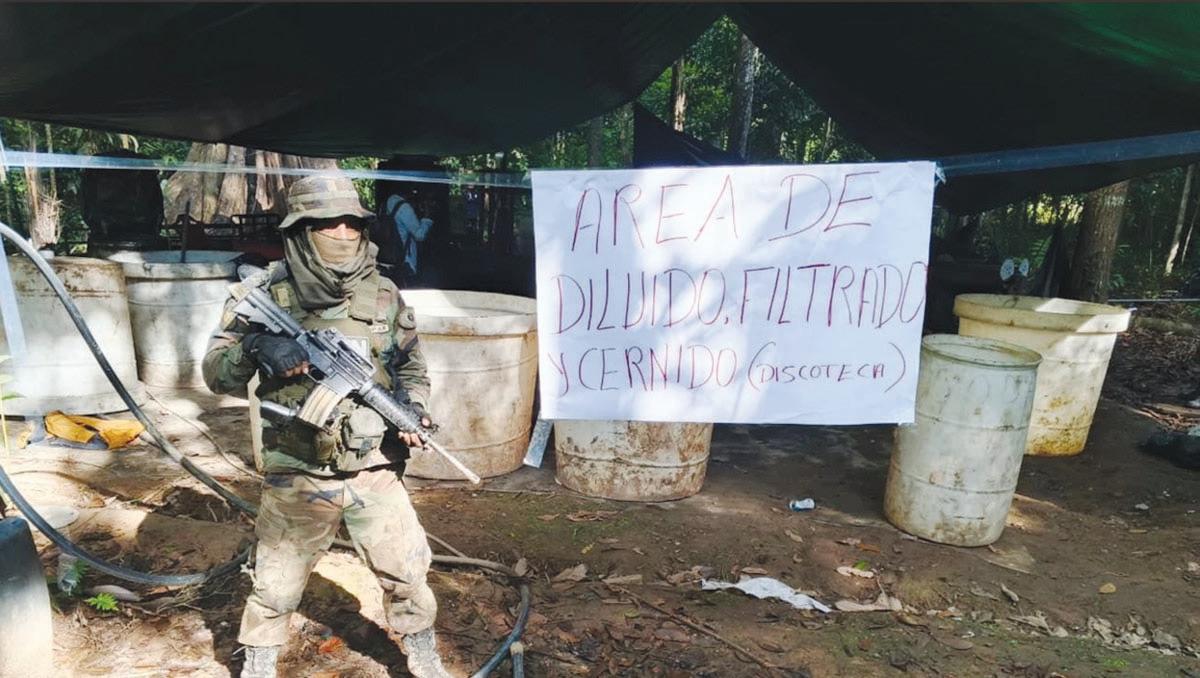
id and liquid form, as well as large volumes of chemical precursors. The equipment was used for the production of high-purity cocaine.
According to reports, the destroyed infrastructure included processing, drying, pressing, and storage areas, as well as electric generators and the lo-
gistical capacity to operate continuously.
During the operation, vehicles used by drug traffickers who operate with impunity in the tropical regions were also seized. No arrests have been made so far, but the investigation into the latest raid in Chimoré continues. (Excerpt from El Deber)
The Dalai Lama has denied meeting Jeffrey Epstein after the spiritual leader’s name was mentioned dozens of times in files released by the US department of justice.
The paedophile financier wrote: “Im working on the dalai lama for dinner,” in May 2015 email sent to Soon Yi Previn, the wife of the film director Woody Allen.
In another email Epstein wrote to Joichi Ito, a Japanese venture capitalist, saying:“fun dinner would be dali lama. woody allen chomsky? lets do it.”
Reacting to the disclosure the spiritual head of Tibetan Buddhism said he never met the paedophile.
“We can unequivocally confirm that His Holiness has never met Jeffrey Epstein or authorised any meeting or interaction with him by anyone on His Holiness’s behalf,” a statement issued by the office of the Dalai Lama said.
The Dalai Lama was mentioned 169 times in the Epstein files. He is not accused of wrongdoing. Records

show it was Epstein who wanted to meet the Dalai Lama, rather than the other way round.
The Dalai Lama’s name appeared in multiple personal emails and in the index of a book titled “Massage for Dummies”, which was included as a scanned document among the case records.
The Dalai Lama has faced previous controversies. In 2023 he was filmed kissing a young boy on the lips and asking him to “suck my tongue,” at a public event in India. After widespread pub-
lic backlash, the Dalai Lama regretted the incident and apologised to the boy and his followers.
In 2019 he triggered a backlash after suggesting that if the Dalai Lama returned as a woman “she should be more attractive”, for which his office apologised.
The spiritual leader has lived in exile in northern India since 1959, after fleeing a failed uprising against the rule of China’s then-ruler Mao Zedong. (Excerpt from The Telegraph)
Dozens of flood warnings and alerts have been issued across England following days of rain.
There were 97 warnings and 217 alerts in England as of Sunday evening. Most of the warnings are located in the south-west and the Midlands. There are currently seven flood warnings and two alerts in Scotland and none in Wales.
The rainfall is set to continue into next week, with the Met Office issuing a yellow warning for rain that covers southwest England and parts of south Wales, lasting from 12:00 to 23:59 on Monday.
The Met Office said on Thursday that rain had fallen every day of 2026 in south-west England and South Wales, with both areas seeing 50% more rainfall than usual.
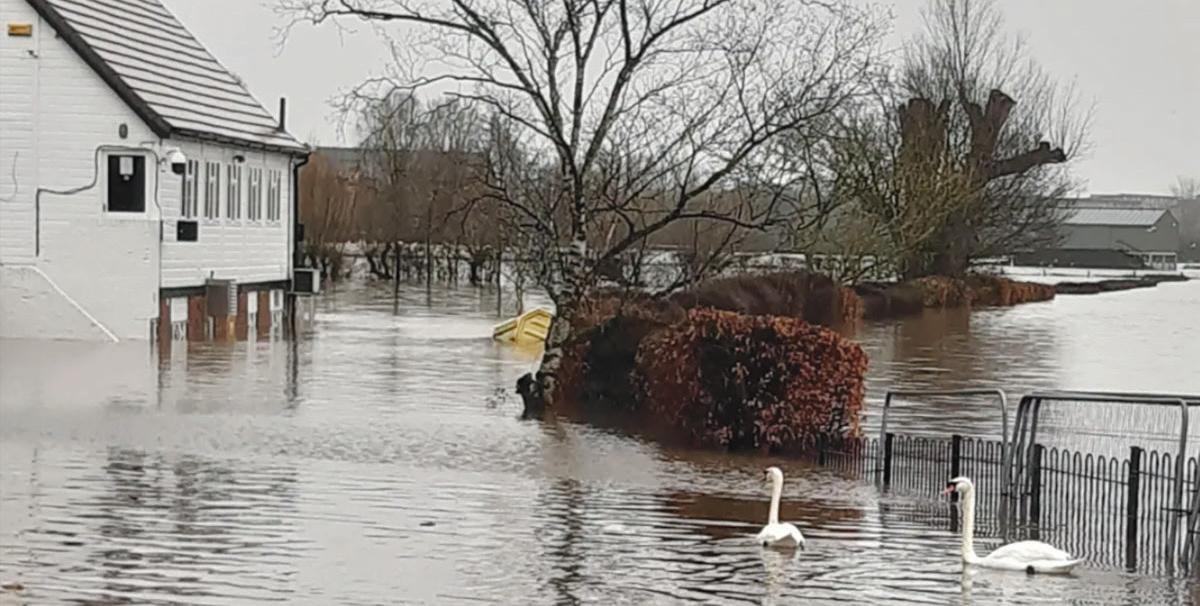
parts of the UK recorded more rainfall in the first five days of the month than it would normally expect over the course of the whole month
The UK was hit by a succession of three named storms in January, bringing heavy rain, strong winds and disruption.
In a statement on Sunday, the agency said it estimated at least 300 properties had been reported as flooded, with around 16,200 more now having been protected. Flood warnings are cluste-
red in Devon and Hampshire, as well as between Gloucester and Worcester. However, more than 200 flood alerts are scattered across much of England apart from the far north and East Anglia.
Rain is expected to continue falling throughout the weekend and into the start of the new week. (Excerpt from BBC News)
The World Health Organization said on Friday that a woman had died in northern Bangladesh in January after contracting the deadly Nipah virus infection.
The case in Bangladesh, where Nipah cases are reported almost every year, follows two Nipah virus cases identified in neighbouring India, which has already prompted stepped-up airport screenings across Asia.
The patient in Bangladesh – aged between 40 and 50 –
developed symptoms consistent with Nipah virus on 21 January, including fever and headache followed by hypersalivation, disorientation and convulsion, the WHO added.
She died a week later and was confirmed the day after to be infected with the virus.
The person had no travel history but had a history of consuming raw date palm sap.
The WHO said all 35 people who had contact with the patient were being monitored and had tested negative for the virus, and no furt-
Japanese Prime Minister Sanae Takaichi’s party has won a landslide in Japan’s general election, securing a supermajority in the country’s lower house of parliament.
Takaichi’s Liberal Democratic Party (LDP) won 316 of the 465 seats in the powerful lower house in Sunday’s election, well above the 233 needed for a majority, according to results collated by public broadcaster NHK.
“We have consistently stressed the importance of responsible and proactive fiscal policy,” Takaichi told reporters after media projections showed her party triumphing in the snap election.
“We will prioritise the sustainability of fiscal policy. We will ensure necessary investments.”
While Takaichi is hugely popular, the ruling LDP, which has governed Japan
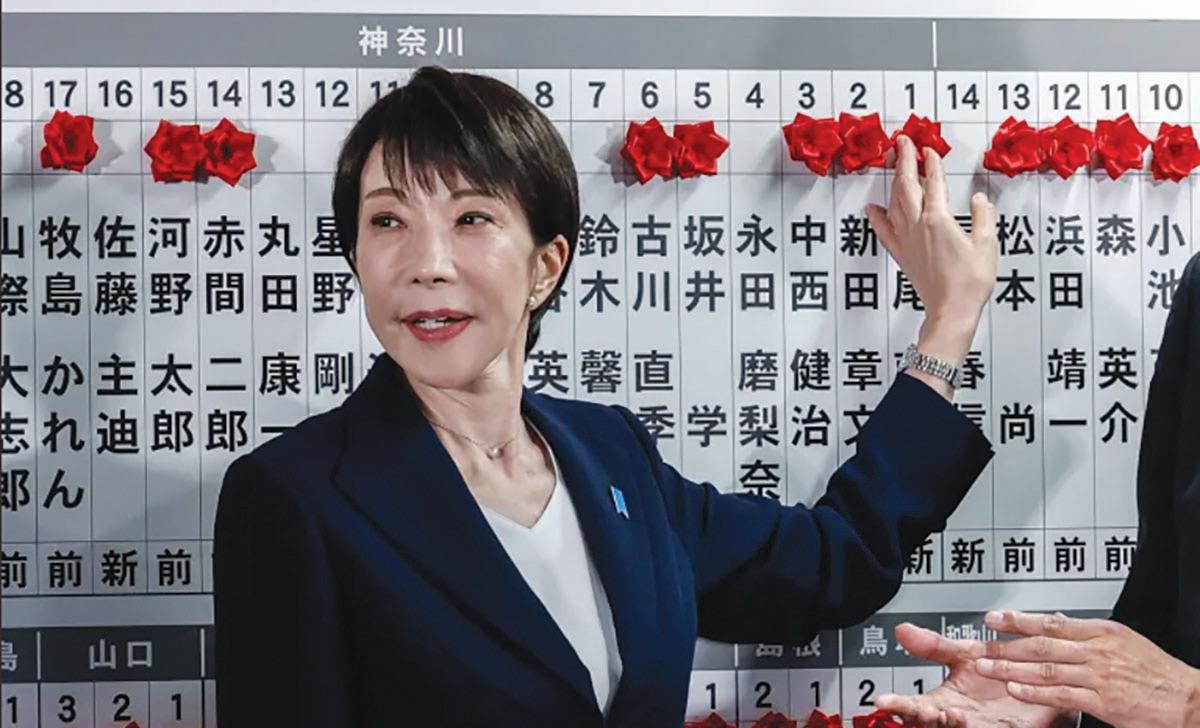
for most of the last seven decades, has struggled due to funding and religious scandals. The PM called Sunday’s snap elections only after three months, in hopes of turning the party’s political fortunes.
However, Takaichi’s election promise to suspend the eight percent sales tax on food to help households cope with rising prices has spoo-
ked investors, who are concerned about how the nation with the heaviest debt burden among advanced economies will fund the plan.
Nevertheless, residents trudged through winter weather to cast their ballots, with record snowfall in parts of the country snarling traffic and requiring some polling stations to close early.
(Excerpt from Al Jazeera)
Iran has sentenced the Nobel peace prize laureate Narges Mohammadi to more than seven more years in prison after she began a hunger strike, her supporters said Sunday, as Tehran cracks down on all dissent following nationwide protests and the deaths of thousands at the hands of security forces.
The new convictions against Mohammadi come as Iran tries to negotiate with the US over its nuclear programme to avert a military strike threatened by Donald Trump.

has been on hunger strike since February 2, her supporters say
Mohammadi’s supporters cited
her cases had been detected to date.
Nipah is an infection that spreads mainly through products contaminated by infected bats, such as fruit. It can be fatal in up to 75% of cases, but it does not spread easily between people.
Countries including Malaysia, Thailand, Indonesia and Pakistan implemented temperature screenings at airports after India said cases of the virus had been found in West Bengal. (Excerpt from The Guardian)
When Team USA entered the San Siro during the parade of nations, the speed skater Erin Jackson led the delegation into a wall of cheers.
Moments later, when cameras cut to US vice-president JD Vance and second lady Usha Vance, large sections of the crowd responded with boos. Not subtle ones, but audible and sustained ones. Canadian viewers heard them. Journalists seated in the press tribunes in the upper deck clearly heard them.
But American viewers watching NBC did not.
NBC has denied editing the crowd audio, although it is difficult to resolve why the boos so audible in the stadium and on other broadcasts were absent for US viewers. On the NBC broadcast the boos were not heard or remarked upon when Vance appeared on screen, with the commentary team simply saying “JD
lawyer, Mostafa Nili, who had spoken to her. Nili confirmed the sentence on X, saying it had been handed down on Saturday by a court in the city of Mashhad.
“She has been sentenced to six years in prison for ‘gathering and collusion’ and one and a half years for propaganda and two-year travel ban,” he wrote. Mohammadi had received another two years of internal exile to the city of Khosf, about 740km (460 miles) south-east of the capital, Tehran, the lawyer added. Iran did not immediately acknowledge the sentence.

Vance”.
That didn’t stop footage of the boos being circulated and shared on social media in the US. The White House posted a clip of Vance applauding on NBC’s broadcast without any boos.
Friday was not the first time there have been moves to stop US viewers from witnessing dissent against the Trump administration. At
September’s US Open, tournament organizers asked broadcasters not to show the crowd’s reaction to Donald Trump, who attended the men’s final.
Part of the message read:
“We ask all broadcasters to refrain from showing any disruptions or reactions in response to the president’s attendance in any capacity.”
(Source: The Guardian)








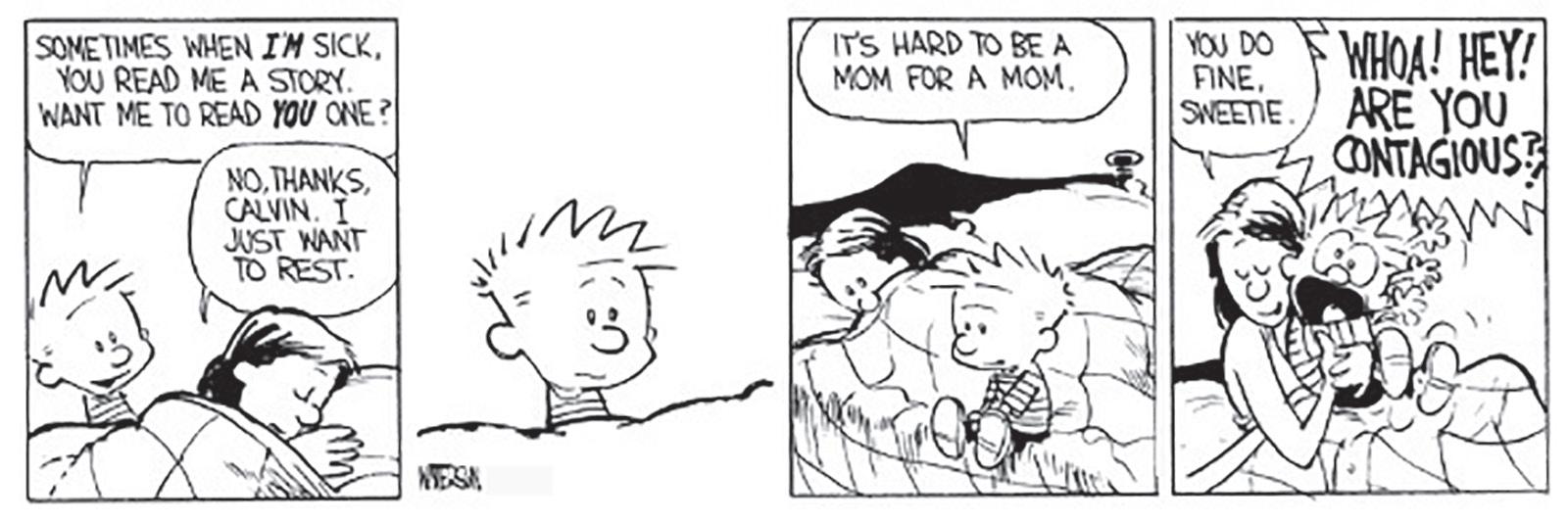
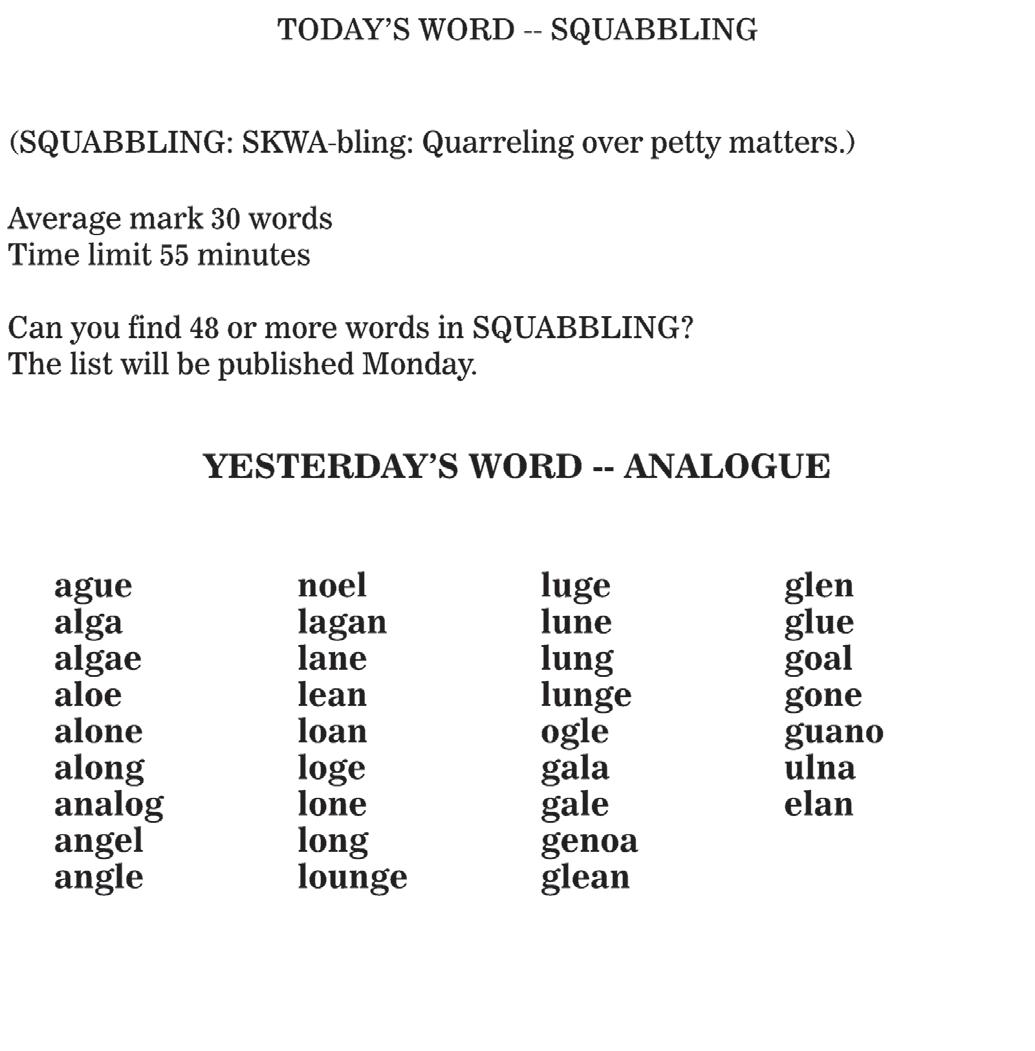
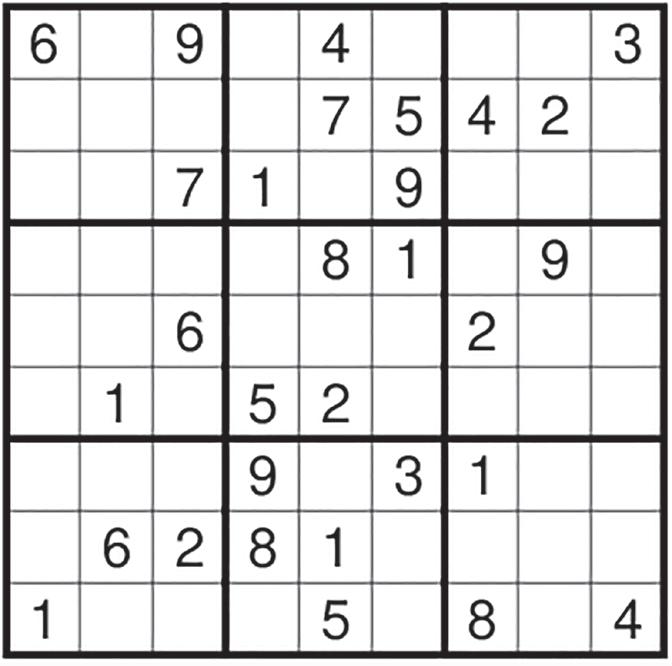




Set a strict budget before you agree to home improvements. Give more thought to how you can use your space efficiently and create surroundings that make your life easier and cost-efficient.






You’ll face opposition if you put pressure on others. Take your time and consider what’s important to you before jumping into something you’ll regret. Distance yourself from anyone who makes you feel uneasy.
Gather information and put it to good use. What you learn can lead to a career turning point or enhance your reputation. Be careful about sharing personal information.
Observation is in your best interest. What you learn will boost your confidence and help you avoid a costly mistake. Gather information, calculate your next move and be secretive.


Make choices that benefit you. Being a people-pleaser will lead others to take advantage of you. Pay attention to detail and timelines. Avoid shared expenses or ventures.


It’s best to verify data you receive before passing it along or letting it guide you. Misinformation is likely to surface. Pay attention to detail and follow through with what makes the most sense to you.


Entertainment and joint ventures will cost more than you want to pay. Set a budget and boundaries. Choose pastimes and habits that lead to better health.


Think before you act. Plan every move strategically and learn by watching how others respond. An overwhelming change will turn out better than you expect.


Pay attention to what things cost. Be willing to do the work yourself to save money. What you learn will help you gain insight into how you can bring in extra cash.


A difficult situation is likely to cost you if you aren’t careful. Keep your eyes and ears open and consider your options. Set budgets and stick to what you can afford.


Choose wisely; spontaneity may tempt you, but having a little reserve and giving yourself time to let situations play out will be the way to go. Discipline will help you make better decisions.


Figure what your ideas will cost to implement and what you’ll need to do to reach your goal. Pursue only what’s worthwhile and leave the impossible for another day. Avoid taking physical risks.





New Zealand 183 for 5 (Seifert 65, Phillips 42, Mitchell 25*, Mujeeb 2-31) beat Afghanistan182 for 6 (Naib 63, Ferguson 2-40) by five wickets
New Zealand may have felt a sense of déjà vu after Gulbadin Naib’s half-century and Mujeeb Ur Rahman’s double-strike in their opening game of the 2026 T20 World Cup in Chennai, India. But Tim Seifert’s own half-century and a punchy knock from Glenn Phillips offset the early damage caused by Afghanistan and set New Zealand on the path to victory in the group of death, which also includes fellow title-contenders South Africa.
After Afghanistan opted to bat in a day game, they posted 182 for 6, on the back of Naib’s 35-ball 63, which looked like an above-par total on a challenging Chepauk surface, which offered substantial bounce, especially in the early exchanges, and some grip to the slower bowlers.
That total looked a whole lot bigger once Mujeeb blasted out Finn Allen and Rachin Ravindra in the second over of the chase off back-to-back balls.
Phillips, however, kept out the hat-trick ball and



combined aggressively with Seifert to loosen Afghanistan’s grip on the game. They snatched it from Afghanistan’s hands when they cracked Rashid Khan for 14 in his first over. Rashid – and Afghanistan – never really recovered from that as New Zealand wrapped up the chase with five wickets and 13 balls to spare.
Ferguson shows his range
The first five overs were cagey. While Matt Henry and Jacob Duffy banged the ball away on hard lengths, Rahmanullah Gurbaz tried to manufacture scoring opportunities. He shuffled across the stumps and scooped Duffy for six in the fourth over.
Afghanistan were fairly well-placed at 35 for 0 in five overs. Lockie Ferguson, whose return to play is being managed by the team management, struck twice in his first over and showed his range.
He started with a hardlength delivery outside off, which Ibrahim Zadran sliced to point. Ferguson closed out the over with a 122-kilometre-per-hour (kph) legcutter, which fizzed back in off the pitch and had Gurbaz dragging on for 27 off 22 balls.
Ferguson also cranked it up to speeds north of 140kph, showing everyone that he could be New Zealand’s point-of-difference bowler in this World Cup in the injury-enforced absence of Adam
Milne.
Naib lifts Afghanistan
Naib and Sediquallah Atal came together when Afghanistan were 44 for 2 in six overs. They carried Afghanistan to 123 for 2 in the 15th over until the pair was separated by Duffy.
Naib, batting at number
not sustain the pressure created by the frontline bowlers. Jimmy Neesham, playing his first international game for New Zealand, since November 2025, conceded 33 runs in his three overs.
Though Duffy snagged Atal with a slower bouncer and Rachin Ravindra drew a mishit from Naib in the 18th over,

three, for the first time in a T20 International (T20I) since the 2024 T20 World Cup, crashed his career-best score. He had a Chepauk crowd of over 21,000 cheering for him when he unleashed his signature bicep-flexing celebration after bringing up a 29-ball fifty.
Naib was on 18 off 16 balls at one point, but a swat over long-on off Phillips’ part-time offspin got him going. While Mitchell Santner was accurate, the change bowlers could
cameos from Darwish Rasooli and Azmatullah Omarzai took Afghanistan past 180.
Seifert, Phillips crash Mujeeb’s party Mujeeb, picked ahead of left-arm wristspinner Noor Ahmad who has also had success at Chepauk with Chennai Super Kings (CSK) in the Indian Premier League (IPL), set to work by rattling the stumps of Allen with a 100kph skidder. Next ball, he got one to angle in from around the
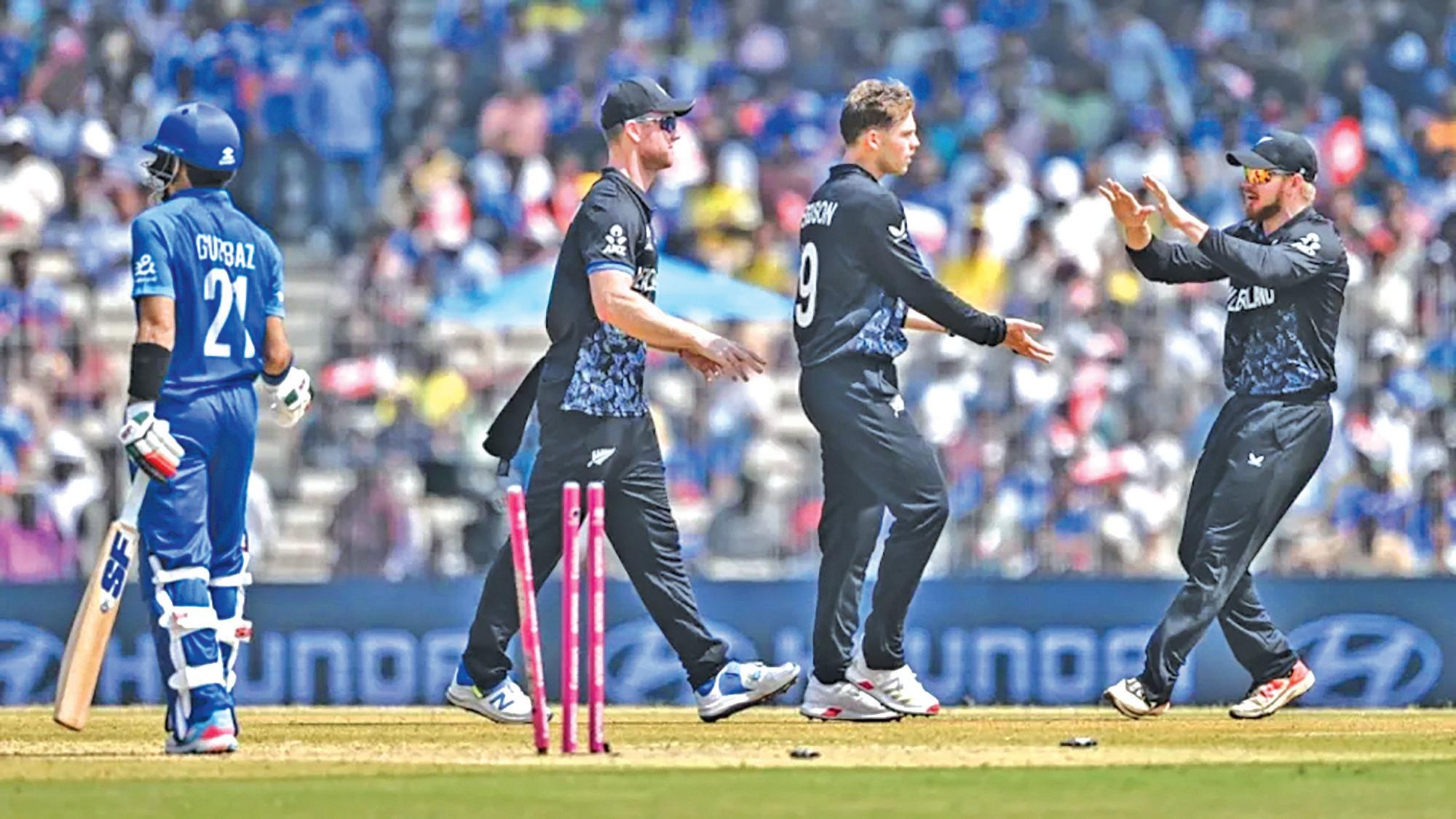
wicket and swing away to brush Ravindra’s off stump. New Zealand were reduced to 14 for 2 in the second over.
Despite the double blow, Seifert stayed true to his attacking style and claimed 31 of the 52 runs New Zealand scored in the power play. He was onto anything that was remotely full and whacked left-arm seamer Fazalhaq Farooqi for 24 off 11 balls. Rashid then came into the attack after the power play, and it was Phillips who threw the first punch. When Rashid pushed one through on the
slot, Phillips pumped the legspinner for six and next ball he went right back to swat him away to the midwicket boundary. When Rashid returned for his second over, he castled him for 42, but by then New Zealand had slashed 88 runs off their target. Seifert then went on to raise his half-century off 38 balls with a six. Though Nabi stopped Seifert’s innings at 65 off 42 balls, Captain Santner and his close friend Daryl Mitchell got the job done for New Zealand. (ESPNcricinfo)

Afghanistan (20 ovs maximum)
Rahmanullah Gurbaz b Ferguson 27
Ibrahim Zadran c Phillips
b Ferguson 10
Gulbadin Naib c †Seifert
b Ravindra 63
Sediqullah Atal c †Seifert
b Duffy 29
Darwish Rasooli c Phillips
b Henry 20
Azmatullah Omarzai run out
(Neesham/Ferguson) 14
Mohammad Nabi not out 10
Extras (lb 3, w 6) 9
Total 20 Ov (RR: 9.10) 182/6
Did not bat: Rashid Khan (c), Fazalhaq Farooqi, Ziaur Rahman, Mujeeb Ur Rahman
Fall of wickets: 1-35 (Ibrahim Zadran, 5.1 ov), 2-44 (Rahmanullah Gurbaz, 5.6 ov), 3-123 (Sediqullah Atal, 14.3 ov), 4-156 (Gulbadin Naib, 17.2 ov), 5-164 (Darwish Rasooli, 18.1 ov), 6-182 (Azmatullah Omarzai, 19.6 ov)
Bowling O-M-R-W
Matt Henry 4-0-27-1
Jacob Duffy 3-0-30-1
Lockie Ferguson 4-0-40-2

England 184 for 7 (Bethell 55, Brook 53, Jacks 39*) beat Nepal 180 for 6 (Airee 44, Bam 39*, Paudel 39, Dawson 2-21) by four runs Nepal came within a single blow of the biggest win in their sporting history, falling agonisingly short of chasing 185 against England in Mumbai, India. They needed 13 off the last nine balls after Lokesh Bam’s late assault, but Sam Curran’s nerveless, five-run final over allowed England to breathe a huge sigh of relief as they made a winning start to the International Cricket Council (ICC) T20 World Cup.
Tasked with chasing a stiff target after half-centuries from Jacob Bethell and Harry Brook, Nepal came out swinging. Kushal Bhurtel set the tone by hitting three boundaries in four balls off Jofra Archer, before Dependra Singh Airee and Rohit
Nandan Yadav 3-0-25-2
Sandeep Lamichhane 4-0-25-1
Kushal Bhurtel 4-0-40-0
Paudel’s superb stand –worth 82 off 54 balls – left 62 runs required off the final six overs. When both men fell in the space of eight balls, the game looked as good as done. But nobody told Bam, who hit consecutive streaky boundaries off Curran before launching Archer for two towering sixes. Luke Wood’s 19th over cost 14 runs as he struggled to find his line, slashed away for two more boundaries by Bam, leaving 10 required off the last and sending the thousands of Nepalese fans who had travelled to Mumbai into bedlam.
But Curran stuck to his yorker plan at the death, leaving Bam needing to clear the ropes off the last ball. He could only toe-end it out to deep extra cover, and England celebrated a nerve-jangling win. It was more heartbreak for Nepal, after their one-run defeat to South Africa in St Vincent in the 2024 edition of this tournament, but they ran England – the two-time world champions in this format – incredibly close.
Will Jacks was named Player of the Match, dismissing Bhurtel and belting 39 not out from number seven, including three final-over sixes to end England’s innings on a high note. The contrast with Nepal’s run chase was evident and Paudel must have rued his decision to return to his seamers at the death, leaving the effective Airee’s fourth over unused.
“The whole of Nepal came here to support us,” Paudel said after a heart-breaking
Nepal (T: 185 runs from 20 ovs) Kushal Bhurtel c & b Jacks 29
Aasif Sheikh † c Wood b Dawson 7
Rohit Paudel (c) c Salt b Dawson 39
Dipendra Singh Airee c Banton b Curran 44
Aarif Sheikh c †Buttler b Archer 10
Lokesh Bam not out 39
Gulsan
(Aasif
defeat. “It’s great to see them here and that motivates us: when we went to the ground, we carry your hopes, we carry your belief. Today, we gave everything, and all of Nepal will be very proud of us.”
England’s off-night England came into this World Cup riding high after a 3-0 series win in Sri Lanka, but looked off the pace with the ball. Liam Dawson, finally playing his first match at an ICC event aged 35, was the exception, taking 2 for 21 from his four overs, but Archer and Adil Rashid – usually England’s bankers – were uncharacteristically expensive as Nepal took them down. Paudel and Airee built steadily, running hard between the wickets and seizing on any width. Airee was strong on the sweep and reverse, while Paudel hoisted

of the innings, as England’s legspinner went wicketless for the first time in 25 T20
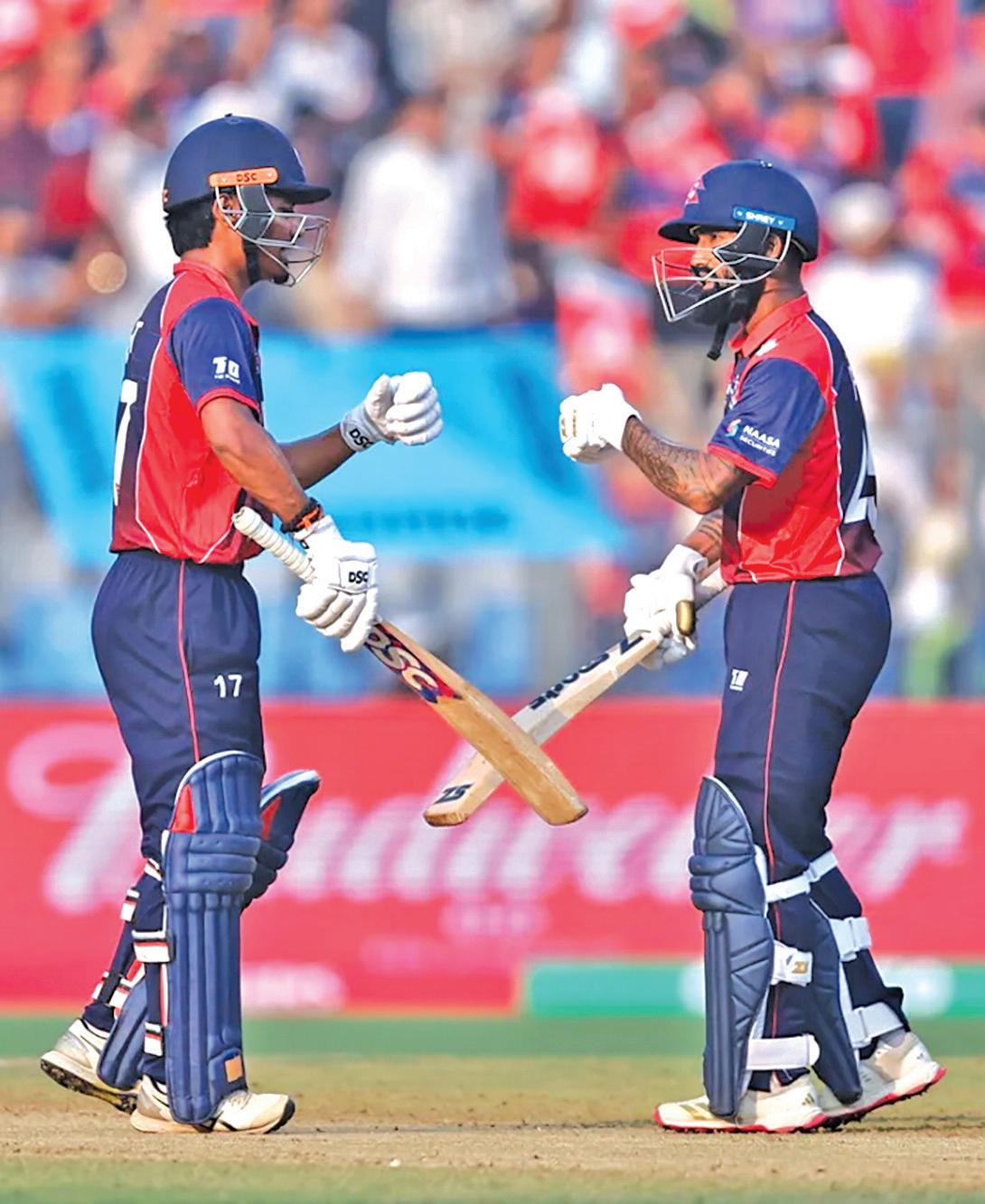
Rashid over midwicket for a slog-swept six. Nepal were slightly behind the required rate for most of the innings, but never let it creep past 12 runs per over.
The pair took 19 runs off Rashid’s third over, the 14th
Internationals (T20Is). Paudel clattered a drag-down for six, Airee drilled him through the covers, and then played the shot of the night when reverse-slog-sweeping him over point.
Both men were caught in
the deep in quick succession, Airee holing out to cover off Curran and Paudel brilliantly held by a diving Phil Salt at midwicket off Dawson. But Bam was rewarded for his attacking intent, slamming two slower balls for six during Archer’s 22-run final over, and taking the game right down to the wire.
Nepal’s lively start England looked to exploit the fielding restrictions on a pitch that they expected would slow down as the day wore on, but lost three wickets within the first 6.1 overs. On each occasion, a Nepal bowler struck inside the first three balls of their first over, perhaps benefiting from the fact that they had never previously come up against England in any international match.
Neither England opener made it out of the power play.
Sher Malla, the debutant offspinner, sparked wild celebrations when his first ball was top-edged to short fine leg by Salt, while Jos Buttler fiddled Nandan Yadav’s length ball behind for 26, just as he looked like he was about to take the game away from Nepal.
Tom Banton, preferred to Ben Duckett at number four, after a strong series in Sri Lanka, was given an early life when Malla put down a
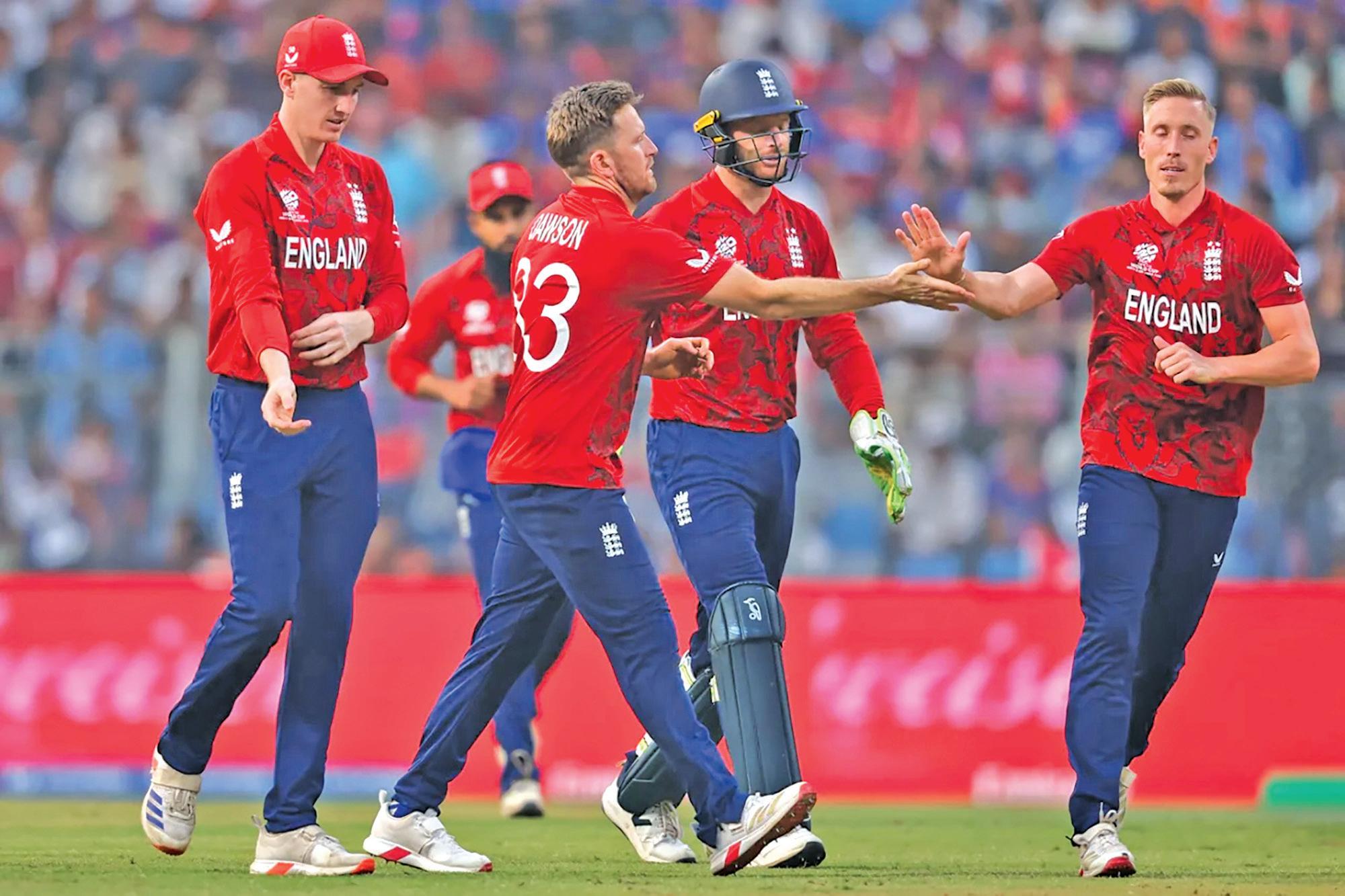
caught-and-bowled chance in his follow-through off the final delivery of the power play. But he did not make Malla pay for his drop, and was trapped lbw by Sandeep Lamichhane off the very next ball of the innings to leave England 57 for 3.
Bethell, Brook lead recovery Bethell has had a quiet run at number three for England in T20Is, but was not in the mood to second-guess himself in his first innings at a senior ICC event. He belted Malla for four, six, four to get his innings moving, and reached a 28-ball half-century with consecutive towering blows off Bhurtel’s legspin. Brook also got going after a slowish start, launching Lamichhane for a huge six over long-on, but got stuck at the non-striker’s end after Bethell picked out long-on off Airee’s offspin. He only faced seven of the next 26 balls as Curran and Jacks both struggled to get going, Curran dragging Airee onto his own stumps.
Brook miscued to deep point after reaching a 31-ball 50 with a six over midwicket, but Jacks tucked into Karan Khatri Chhetri’s final over, shimmying outside leg stump to launch him over the off side for three sweetly-struck sixes. “The way that he batted at the end there has won us the game,” Brook reflected. (ESPNcricinfo)

Hors- racing fans across Guyana are still buzzing after an unforgettable showdown last Sunday when Dataman once again stamped his authority on the local racing scene, defeating the previouslyunbeaten Olympic Kremlin, the Horse of the Year for 2024, in a heart-stopping finish at Port Mourant Turf Club.
With that victory, Dataman now stands alone as the only unbeaten champion currently racing in Guyana, holding an extraordinary three consecutive major titles: the Guyana Cup, the President’s Cup, and now the Banks Classic. His wins have come at both major venues, with one triumph at Rising Sun Turf Club and two at Port Mourant, further cementing his reputation as a horse that delivers wherever he lines up.
In the immediate aftermath of the race, Slingerz Racing Stable, the owner of Olympic Kremlin, wasted no time in calling for a
rematch of champions, igniting what many are already calling one of the greatest rivalries in modern Guyanese racing.
Sunday’s clash carried deep layers of history and emotion. Olympic Kremlin, undefeated prior to the Guyana Cup, returned to the competition following his dramatic scratch at Rising Sun, where he lost his rider at the gates. With no major injury sustained, his connections elected to give the champion time to regroup and come back stronger, a decision that led to Sunday’s much-anticipated appearance.
Known throughout Guyana as the ultimate closer, Olympic Kremlin surprised many by adopting a much sharper early pace, staying prominently involved from the opening strides rather than launching his trademark late charge. The change caught even his own camp off guard.
After the race, the trainer

and rider acknowledged that the performance likely reflected a horse still sharpening his edge.
“He showed speed we’ve never asked him to show before,” one connection noted. “Some horses just need that prep race to come fully alive again.”
Despite finishing third, the Slingerz camp was relieved and encouraged, pleased above all to have their champion return safely and competitively to racing.
Dataman’s journey to Sunday’s victory was no less dramatic. In the tight-knit Guyanese racing community
where horsemen know each other’s barns almost like family, it was no secret that Dataman had endured a non-threatening setback that briefly interrupted his training schedule.
His trainer, Mr Roberts candidly admitted after the race that Dataman was not supposed to run.
“To be honest, he wasn’t supposed to be there,” Roberts said. “He missed some training days, and we were leaning toward scratching him.”
However, once the longawaited return of Olympic Kremlin was confirmed,
Dataman’s owner made the call to run, confident it was safe and in the spirit of competition.
“We felt it was the right thing to do,” Roberts added. “The horse was sound. He was checked before and after the race, and the most important thing is that everyone came home safe.”
That decision paid off spectacularly.
What followed was one of the most thrilling finishes Guyanese racing has seen in years. Three horses charged across the line together, with Olympic Kremlin refusing to yield from start to finish and Dataman digging deep to preserve his unbeaten status.
The clock told its own story, a blistering 1:34, a time rarely seen locally and one that sent fans into a frenzy.
In defeat, Slingerz Racing Stable owner Javed Ali showed nothing but confidence.
“That was not our best
Olympic Kremlin,” Ali said. “He’s fitter now than he was going into that race, and the signs we saw after he came home tell us there’s much more to come.” Ali made it clear that his stable is ready and eager for another showdown.
“We want the rematch, and we want it as soon as possible. The next time, Guyana will see an Olympic Kremlin like never before.”
With Dataman unbeaten and Olympic Kremlin hungry for redemption, fans can already sense that the next chapter in this rivalry may be even more explosive.
In a country where racing is as much family as competition, Sunday’s clash reminded everyone why Guyana’s turf continues to captivate. If this was only the opening act, the rematch promises to be one for the history books and the fans will not be disappointed.
After seven intense rounds of chess on Saturday, February 7, 2026, at the School of the Nations, Abel Fernandez Ciria emerged as the new National U14 Open Rapid Chess Champion, while Kataleya Sam was crowned the National U14 Girls Rapid Chess Champion for 2026.
The U-14 Championships were proudly sponsored by Jade’s Wok, Pinnacle Business Services, and Cubs in Action International. The tournament attracted 40 boys and 34 girls vying for a top place in the championships, the largest number contested in this category.
Leveraging his experience as a former U12 champion, Fernandez Ciria demonstrated tactical maturity throughout the tournament. His prowess was on full display as he finished with an impressive six points; his lone defeat came only in the final
Up-and-coming cyclist
Ajani Cutting of the Kaieteur Attack Racing club did the unthinkable on Sunday morning, claiming his first “big win” on the Elite Circuit in a Beacon Cafésponsored road race.
The youngster crossed the finish line on Sheriff Street, Georgetown in first place ahead of seasoned racer Alex Mendes of Kaieteur Attack and shockingly, Guyana’s cycling ace Briton John of We Stand United Club, who settled for second and third, respectively, in the open race.
Jamal John, Robin Persaud, and Aaron Newton completed the open category’s top six, in
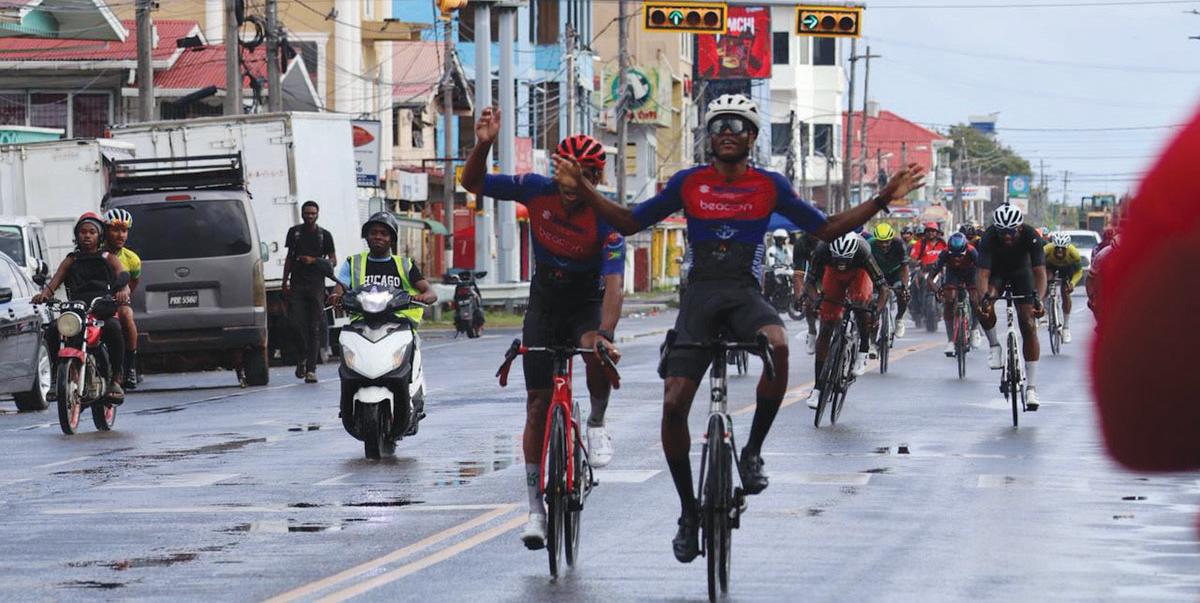
by proprietor Ramdeo Kumar during the presentation ceremony. Cutting’s sponsorship will be to the tune of $50,000 per month.
Over in the 35+ category, Kaieteur Attack’s Mendes

A look at the top six in the elite category of the Beacon Café-
that order.
As a reward for his belligerent ride on Sunday morning, Cutting will now be sponsored over the next year by Beacon Café, as announced
claimed first place to accompany his second-place finish in the open division. Persaud and Lynn Murray completed the podium in that
division.
In category four, Tyrone Hamilton of Continental crossed the line first, followed by Kaieteur Attack duo of Kwame Fortune and Julio Melville in second and third. Andy Karan and Roy Mangre completed the top five, respectively.
The Masters Over 50 race saw Jolyne Joseph claiming top honours, trailed closely by Junior Niles in second place and Mark Spencer in third.
KFC Evolution’s Alex Newton was the top rider in the junior category, with his lone competitor unable to finish the race after experiencing difficulties with his cycle.
KFC Evolution’s Denise Jeffrey was the top female cyclist of the day, finishing in first place while Tandia Noel was second and Abigail Jeffrey claimed the third position.
This was the fifth edition of the Beacon Café-sponsored race, with the proprietor, Jumar, promising a bigger and better spectacle in the next edition.

round against the reigning U12 Open Chess Champion, Aiden Tinnie.
Alek Ubaldo-Singh also finished with six points, securing second place after the tiebreak criteria. His skills and understanding of the game were evident throughout the tournament, with his only defeat coming against Fernandez Ciria.
Tinnie secured third place with 5.5 points. Tinnie’s performance further cements his reputation as a promising young talent. Finishing fourth on a tiebreaker with 5.5 points was Jeremy Cole. As a former U12 Champion, his performance underscored his mental fortitude and his ability to compete at the highest level of the U14 category. Vir Narine finished fifth with 5 points. He is one of the young rising talents in Guyanese chess.
In the girls’ category, Sam drew upon her years of competitive experience, talent, and skill in her determined quest for the title, which she secured with a dominant six points, suffering her only setback against Divya Persaud in a hard-fought sixth round.
Rebha Lachhman finished on six points, too, but in second place due to tie-break regulations. Lachhman played with a level head and sharp technical skills, with her only loss occurring against Sam in the third round.
Finishing in third place with five points, Persaud demonstrated her tactical
while Roshan Ali was recognised as the youngest player in the open section.
Certificates of participation and prizes were presented to the players during a simple prizegiving ceremony by Mr and Mrs Lucknauth, proprietors of Jade’s Wok and Pinnacle Business Services.
Thanks were extended to the Chief Arbiter, John Lee, and the assistant arbiters, FIDE Master (FM) Anthony Drayton, Kim Shing Chong, Marcia Lee, Ethan Lee, Jessica Callender, Kishan Puran, Matthew Singh,

prowess by securing a series of dominant victories. She suffered losses in rounds three and seven against Chelsea Harrison and Lachhman, respectively. Securing five points for a fourth-place finish, Amaya Sharma displayed tactical brilliance despite falling in rounds four and six. Due to tiebreaker points, Sana Sreebalakumar took fifth place with five points. She showcased remarkable resilience and skill throughout the event, despite stumbling in rounds two and seven.
Special prizes recognised outstanding young talent in the U12 and U10 categories. Current U12 Open Champion Tinnie and Girls’ Champion Persaud secured the top U12 honours. In the U10 division, Landon Mohabir and Malia Thompson claimed the open and girls’ prizes, respectively. Rounding out the youth awards, Pranav Suman took home the Best U8 prize,
Oyeyipo and Nathan Williams, who ensured that every move was played in strict accordance with international rules and regulations through their diligent supervision and hard work.
The Guyana Chess Federation (GCF) expressed its sincere gratitude to sponsors Jade’s Wok, Pinnacle Business Services, and Cubs in Action International for their unwavering support and commitment to sponsorship and the development of chess within Guyana.
“We also wish to thank the School of the Nations, a steadfast partner that continues to provide a premier venue for the Federation’s tournament for several years,” the GCF shared. For more information on the Federation or on how to become a member, interested persons can visit the official website at guyanachess.gy.


Linden came alive on Saturday night as the Bayrock National Stadium was officially commissioned, marking a major milestone in Guyana’s sporting development. A packed crowd gathered to witness an exciting blend of track and field and football action, while soaking in the atmosphere of a brand-new, world-class multipurpose facility.
The opening ceremony and sporting showcase were attended by President, Dr Mohamed Irfaan Ali; Minister of Culture, Youth and Sport, Charles Ramson Jr; Minister within the Ministry of Culture, Youth and Sport, Steven Jacobs; and Labour and Manpower Minister Keoma Griffith. Their presence underscored the national importance of the project and its significance to the people of Linden, a community renowned for its deep sporting heritage.
From the opening moments, the stadium buzzed with energy as spectators celebrated what many described as a proud and
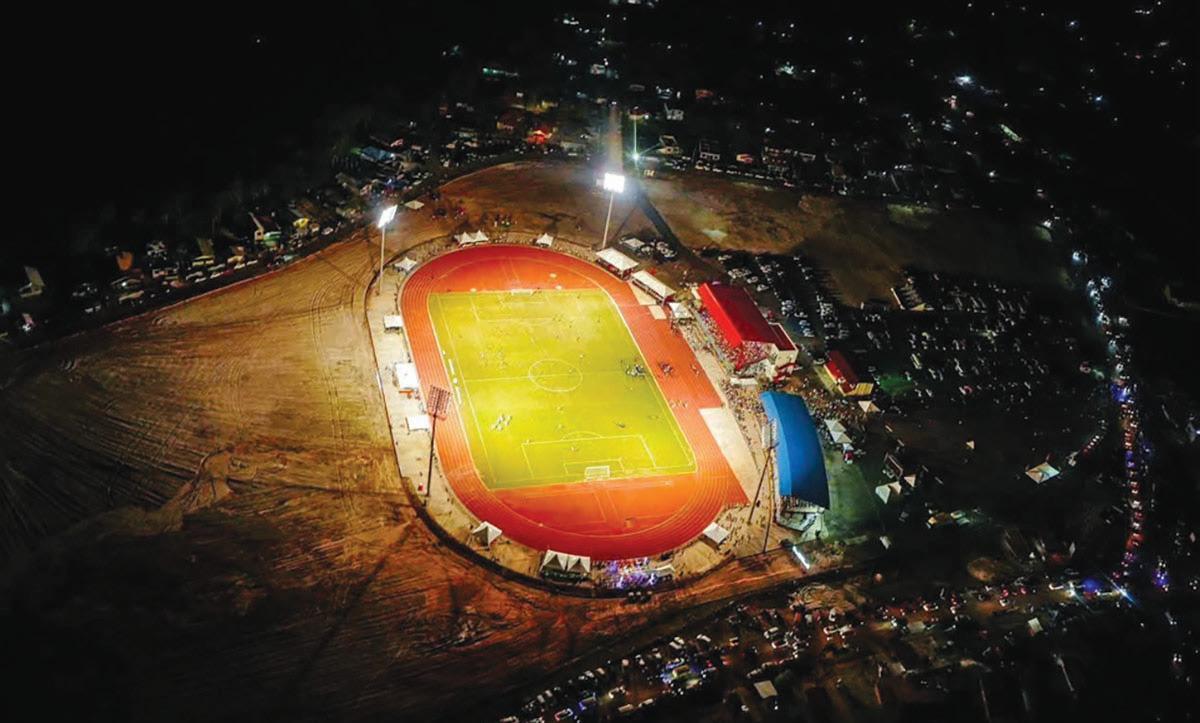
long-awaited achievement. Linden, long known for producing elite athletes, now boasts one of the country’s top sporting facilities – one designed to preserve and elevate that legacy.
The night’s programme featured standout performances on the track, with Arinze Chance capturing the 400 metres and Emanuel Archibald sprinting to victory in the 100 metres, drawing loud cheers from the crowd.
Football action followed, adding to the excitement. Linden struck first when



Keshawn Leacock found the back of the net in the 33rd minute, giving the home side a 1-0 lead at halftime. Georgetown responded early in the second half through
Deon Alfred, who scored in the 49th minute to level the contest. With full time ending with the scores tied 1-1, the match was decided by a penalty shootout, which
Georgetown won 5-4.
Addressing the gathering, President Ali highlighted the broader vision behind the stadium’s development.
“We have set out with a clear understanding that development cannot grow with wishful thinking; it must be built, planned and supported. The commissioning of the Bayrock National Stadium represents that commitment in a tangible form,” the President said.
Minister Ramson Jr reflected on the journey of the project, noting that it required decisive leadership and sustained support to
bring it to completion.
“From its conception when I inherited it, there were no plans, no blueprints, no bill of quantities –nothing that was left for us to implement. It was our ministry, supported by His Excellency President Irfaan Ali and our Cabinet, that delivered everything you see here today,” he stated. He also emphasised the technical quality of the facility, pointing out that the track meets the highest international standards and has been certified accordingly. The playing field, he added, is built with underground drainage similar to that of the Providence National Stadium and is certified to FIFA standards, ensuring it will not be affected by flooding. As the celebrations concluded, one message rang clear: the opening of the Bayrock National Stadium is not just the unveiling of a new venue, but a powerful investment in sport, youth development, and the future of Linden and Guyana as a whole.
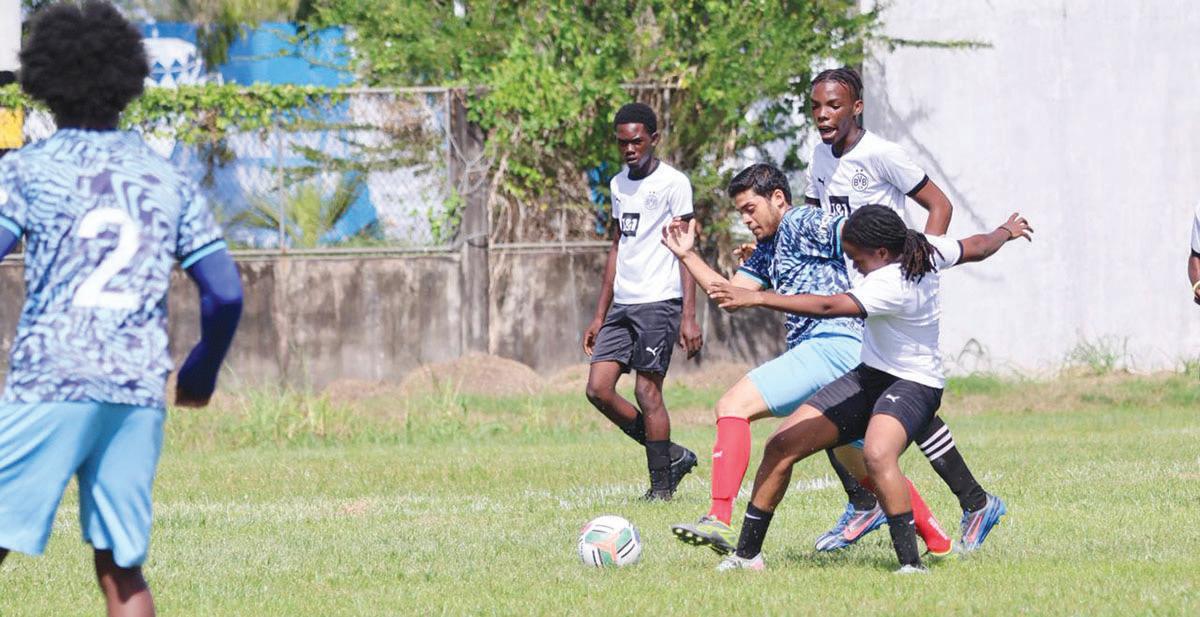
Excitement and high expectations coursed through the Queen’s College Ground on Sunday afternoon as the inaugural edition of the MODEC Tertiary Education Football tournament kicked off, the first of its kind for football in Guyana.
During a simple marchpast and opening ceremony, MODEC Technical Manager Joao Soares encouraged the players to make the most of the on-field opportunity while also adhering to the rules of the sport.
Aside from Soares, MACORP’s Marketing and
Communications Manager Nadia De Abreu; Demerara Mutual’s Oceola Van Doimen and Head of the Ministry of Education’s Allied Arts Department, Nicholas Fraser were on hand to witness the tournament’s commencement.
After the University of Guyana (UG) was awarded a trophy and $20,000 for having the best march-past team, the Turkeyen Campus team followed up with another win, downing the Guyana Industrial Training Centre (GITC), 5-0.
Keron Soencer opened the scoring for UG in just the

10th minute, but they were made to wait a bit more for their second, which came off the boots of Ronalhdo Sobers in the 32nd minute.
Romeo Bradford’s 35th-minute strike sent the Turkeyen troops into the half-time break with a 3-0 advantage. In the second segment, Deandre Anderson extended their lead in the 55th minute while Jaleei Alcindor
added the cherry on top in the 75th minute for UG’s dominant win.
Another lopsided victory followed, as the Government Technical Institute (GTI) decimated Texila American University (TAU) 7-1.
It was only until the 24th minute that the first goal was witnessed in that contest, coming off the boots of Akeem Smith. Two minutes lat-
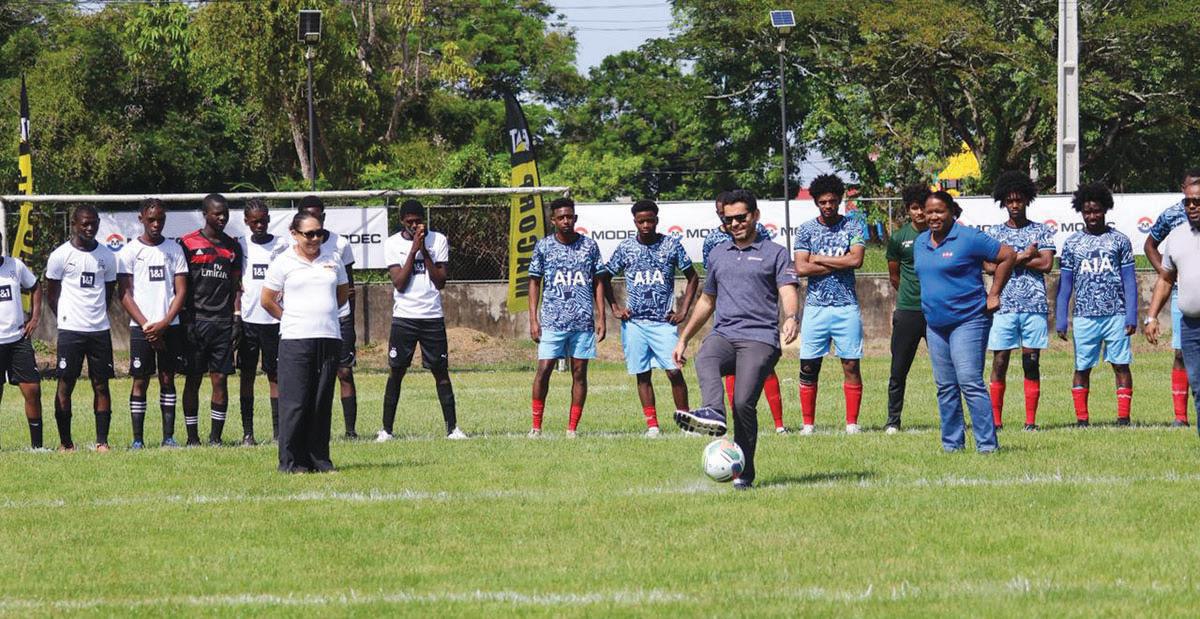
er, Alton Fraser doubled the lead for GTI while goalkeeper Emmanuel Lewis made it a 3-0 affair by the 47th.
Madu Chukwudera (55th); Seaton Rogers (60th), Elijah Desouza (85th) and Kevin David (89th) all added their names to the scoresheet for GTI, completing their seven. At the other end of the pitch, Kevin David punctuated GTI’s scoring with a strike in the 81st for Texila’s consolation.
The MODEC Tertiary Education football action will continue on Tuesday, February 10 at the Scotts
Ground in New Amsterdam with another double-header. There, the Upper Corentyne Technical Training Centre (UCTTC) will take on UG’s Tain Campus from 16:00h while at 18:00h, Port Mourant Technical Institute (PMTI) will do battle with New Amsterdam Technical Institute (NATI).
The following day, a single clash is scheduled for the Bayrock Stadium in Linden where Linden Technical Institute (LTI) will look to defend their home turf against the Cyril Potter College of Education (CPCE) from 16:00h.