
Sunday, February 8, 2026

is currently studying and working in Jamaica, aiming to inspire the next generation of Guyanese athletes

Sunday, February 8, 2026
is currently studying and working in Jamaica, aiming to inspire the next generation of Guyanese athletes
Balances sport, studies, and community support as he trains in Jamaica, aiming to inspire the next generation at home
SINCE its establishment in 2005, Humanitarian Mission Guyana Inc. (HMG) has played a pivotal role in uplifting vulnerable populations across Berbice, with a strong focus on women, single mothers, professionals, school dropouts, and at-risk youth, through education, skills training, and humanitarian support.
Headquartered at Babu Jaan, Ankerville, Port Mourant, HMG was founded on the principle that empowerment begins with opportunity. Over the years, the organisation has grown into a trusted pillar within communities, providing safe and
supportive spaces for learning, healing, and personal development, particularly for women and others facing economic hardship, domestic challenges, and social marginalisation.
President and Founder, Suresh Sugrim, noted that women make up a significant portion of HMG’s beneficiaries, including professionals seeking new skills, single parents striving for independence, and survivors of domestic and gender-based violence.
“Access to education and skills training remains a challenge for many women. At Humanitarian Mission Guyana Inc., we are committed
to empowering women with practical skills while helping them rebuild confidence, dignity, and hope,” Sugrim said. Through vocational programmes such as sewing, cosmetology, balloon décor, cooking, pastries/baking, cake decoration, food handling, and information technology, thousands of women have gained the ability to earn an income, establish small businesses, and contribute meaningfully to their households. These opportunities have proven especially critical for single mothers seeking financial stability and long-term self-reliance.
Beyond vocational training, HMG addresses

the social, emotional, and health-related needs of its beneficiaries. The organisation regularly hosts counselling sessions, life-skills workshops, and community outreach programmes aimed at addressing domestic violence, substance abuse, and mental health challenges. In collaboration with medical professionals, HMG also conducts health outreach programmes and provides support to persons living with disabilities.
While women continue to form a large percentage of programme participants, HMG’s mission remains inclusive and far-reaching. The organisation also supports men, youths, school dropouts, and unemployed adults, recognising that sustainable community development requires empowering all segments of society.
“Our work is humanitarian at its core. Whether it is a woman seeking independence, a young person searching for direction, or a man who feels left behind by society, our doors are open.
Everyone deserves a second chance,” Sugrim emphasised.
Over the past five years, more than 6,000 persons have benefitted from HMG’s training and outreach programmes. Although based in the Lower Corentyne, its impact extends to Region Five and the Upper Corentyne, with services offered at minimal or no cost to ensure accessibility.
As demand continues to grow, HMG is actively seeking partnerships with the Government of Guyana, private sector organisations, and international donors to expand its reach and deepen its impact, particularly for women and other vulnerable groups who remain underserved.
Sugrim reiterated that investing in people creates lasting, generational change.
“When you empower one woman, one family, or one individual, the impact extends far beyond that person.
It strengthens communities and builds a better Guyana for all.”
HMG also aligns with
H.E. Dr. Ali’s vision for education in Guyana, which focuses on transforming the sector through digital integration, equitable access, and high-quality training to support national development.
HMG remains a cornerstone of humanitarian development in Berbice and beyond, delivering training and outreach across multiple sectors, including education, health, disability support, LGBTQ+ advocacy, and single-parent empowerment.
“Handouts offer shortterm relief, but lasting change comes from empowerment,” Sugrim said. “We are building capacity, restoring hope, and helping people take control of their own futures.”
The organisation’s continued success is made possible through the dedication of donors, volunteers, and community partners. Special recognition was extended to the Greater Guyana Initiative and its partners for their support in sponsoring trophies and awards that recognised student excellence.

By Shaniya Harding
TWENTY-one-year-old
Akandy Vammaalson is a young Guyanese athlete seeking to prove that success can be both self-built and community-backed. Leaving Guyana to study just a few months ago, Vammaalson is a talented and promising track athlete, lighting up the tracks at his university in Jamaica. Venturing into his first semester with funds raised by both his community of Buxton and himself, Vammaalson completed it.
Now heading into his second year, he faces a familiar issue: funding. Although his grades and track performance have been successful, school tuition remains a hurdle. Now, Vammaalson is appealing to the public for support. Moreover, his reasoning for asking for support is as simple as it is inspiring: his pursuit of sport is bigger than just himself, says Vammaalson, adding that he aims to return to Guyana to continue sport development at home, to teach, train, and inspire young athletes like himself.
Born and raised in Buxton, Vammaalson learned responsibility and commitment at an early age. Due to an absent father and the death of his mother when he was just ten years old, Vammaalson was raised by his grandmother. “I grew up with my grandmother because my father was a doctor and my mother died when I was ten years old.
I grew up with my grandmother and my siblings, and I went to Buxton Secondary School. My uncle was a father figure to me, and my grandmother was always there for me. I listened to them and obeyed them. It was not so hard, but it was tough.” While it was challenging, Vammaalson said his childhood shaped his resilience and cultivated a commitment that would fuel his success.
Vammaalson’s step into track and field happened
through another sport: football. As he explained, football was a staple game in Buxton in his early years, and a young Vammaalson fell in love with it, eventually playing professionally with some of Guyana’s most recognisable football teams. “I used to play football. When I was small in primary school, I used to run for fun. When I went into secondary school,
impressed a coach with just his talent, initially asking to attend a high school but later being admitted to a college due to his age. “I contacted a coach from Jamaica, a high school coach, but he said I was too old because I was 19 and could not go to high school. I had to go to a college. He told me not to worry and that he would be in contact with a friend for me.
he raised the majority of the funds through fundraising and the rest through work and savings, an impressive feat at just twenty-one years old. “I had to pay US$9,000 for the first year and another US$9,000 for the second year. I wasn’t having the money, but God ended up providing. I raised US$5,500, and I decided to work to try to get through.” Getting off
I loved it and started getting to know people.”
Although he balances sport with classes, Vammaalson says his days, while long, are fun for him. Sharing what a day split between classes and the track looks like, he added that he wakes up in the wee hours of the morning to head to training. After training, it is a rush against time to get to his classes. “Some

I still ran for fun, sports day, just running for hours, and I used to do good. I loved football, but when I made nationals in Form Five, the coach told me I could go far in running and get scholarships. I decided to do both running and football, but the football coach told me I had to choose one. I chose running because I get more opportunities from it. That’s how I started running.”
Vammaalson’s journey to Jamaica was an interesting one. While he did not have a scholarship, Vammaalson
I contacted the coach again, we talked, and we signed up with the school.” Today, Vammaalson is a student of the G.C. Foster College of Education and Sport, an institution focused on sport development across an array of areas. Vammaalson is pursuing a degree in Physical Education and Sport. While inspirational, Vammaalson’s move to Jamaica was challenging, with the biggest hurdle being tuition fees. This is where he says his community, faith, and family became his pillar, as
the plane in Jamaica last year was a dream come true for Vammaalson, despite the challenges of being in a new country on his own for the first time in his life.
“I was excited because Jamaica is a good sports country, and they love sports. I wanted to train with people better than me and build myself stronger mentally and physically. I was excited to train with the pros. It was scary at first because I was leaving home and coming to a place where I did not know anyone, but afterwards
days I wake up at 5:30 to train, or 6:30. Training usually finishes around 7:30 or close to 8, and school runs from 8:00. Sometimes I go to school tired, but I fight through it and get through it,” he shared. This display of commitment is what has fuelled Vammaalson’s success. Highlighting the advancement he has made in his training, he shared that he has become faster and more committed. “I’ve improved a lot since leaving Guyana. When I left, I wasn’t in good shape and wasn’t really fit.
When I came to Jamaica, training was hard, and sometimes I couldn’t finish the programme, but I stayed consistent and disciplined. Now I can finish the programme and train with people faster than me, and I know I’ve improved a lot.”
While Vammaalson is excited and hopeful about the development of sport infrastructure in Guyana, he shared that public support remains one of the biggest hurdles threatening progress and one of the reasons he ventured to Jamaica in the first place. “When someone gets the support they need, it boosts them and helps them perform better. Even when you feel down, support makes you want to do it for the people supporting you,” he shared. Vammaalson is seeking that support more than ever right now. With the semester already underway and his tuition still unpaid, he is appealing to Guyanese. “For my second semester, I’m facing financial challenges. I need US$3,500 for this semester, and next year, for year two, it will be US$9,000. So far, people from Buxton have helped me, and I’ve raised about US$1,100.”
Vammaalson hopes his call will go beyond Buxton, as he aims to inspire other young athletes that sport is a viable avenue. Those seeking to help Vammaalson on his journey can donate via MMG number 665-8768, Demerara Bank Account: Akandy Vammaalson Account #: 006002173383, or through his GoFundMe page. Vammaalson’s story and goal reflect commitment and big-picture dedication.
“It is important to me to finish this degree because I am not really doing this just for myself. I am doing it for the younger kids growing up. If I get an associate degree and a bachelor’s degree in coaching, I can coach and help bring up younger youths who love sports.”
Through mentorship and global exposure,
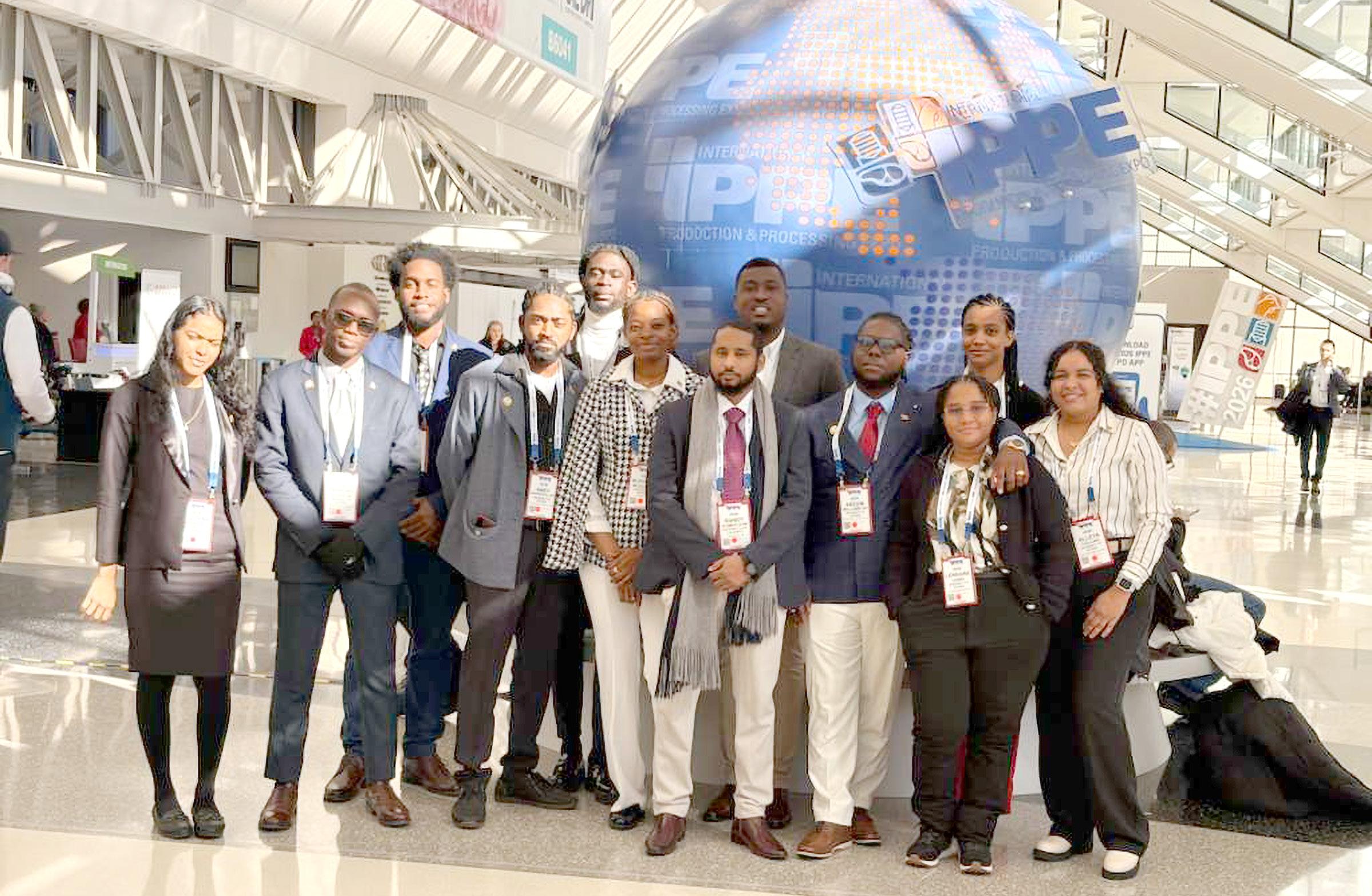
WHAT began as a longheld vision to “reach back and help” has grown into a pathway of opportunity, connecting Guyanese students to the global poultry and animal science industry. At the heart of that effort is Dr. Colwayne Morris, whose mentorship has helped place University of Guyana students on international platforms such as the International Poultry Scientific Forum (IPSF) and the International Production and Processing Expo (IPPE) in Atlanta, some of the largest poultry-focused conferences in the world. Speaking to Pep-
perpot Magazine last year during Agriculture Month, Dr. Morris championed the impact of education in developing what is already one of Guyana’s most successful sectors: agriculture. While he has spearheaded and guided various batches of Guyanese students to higher education exposure in America, his most recent batch of students say this year’s conference was more than a reminder of how far Guyana still has to go, but an eye-opening experience that highlighted the strides already made. Held annually, these conferences bring together academics, researchers, students, and industry leaders to share research,
showcase new technologies, and explore developments across nutrition, genetics, processing, feed, and food safety. Student Shamar Simon was a part of this year’s attendees and sat down with Pepperpot Magazine to share this experience and next steps. Sitting down with Pepperpot Magazine once again, Dr. Morris spoke with pride about the most recent conference and the participation of Guyanese students. The International Production and Processing Expo (IPPE) in Atlanta is a two-day event, but it remains a pillar of the international agricultural science community. As Dr. Morris shared, “The International

Production and Processing Expo is one of the largest poultry expos in the world, and it’s held in Atlanta every January. Companies from around the world come to showcase what they offer to the poultry industry.” He added, “The conference has
research-based sessions for about a day and a half, usually from Monday to Tuesday at noon. That is where students showcase the research they have been doing and interact with academics and industry professionals.” Here, students at various levels
from across the country and beyond see what each other are working on, including research, findings, and even a few breakthroughs.
Dr. Morris’ drive to help young Guyanese agricultural scientists began almost a decade ago, in 2017, when a Guyanese undergraduate student began working with him. It was there, Dr. Morris said, that he saw the challenges education could address and the role he could play in helping Guyanese access that information.
“This vision started back in 2017 when I brought a Guyanese undergraduate student to work in my lab at the University of Missouri. That experience planted the seed for always reaching back and giving others similar opportunities.”
This effort later grew into a well-thought-out collaborative initiative to support Guyanese students studying abroad under Dr Morris’s guidance. “The University of Guyana faculty nominated three scholars. Others who had already graduated were also included, and we scheduled meetings with professors across different universities so students could share their research interests and graduate goals.”
This batch in particular, consisting of eleven scholars from Guyana, underwent five months of working alongside specific professors, conducting research and completing projects that also fulfilled TURN TO PAGE XV
By Michel Outridge
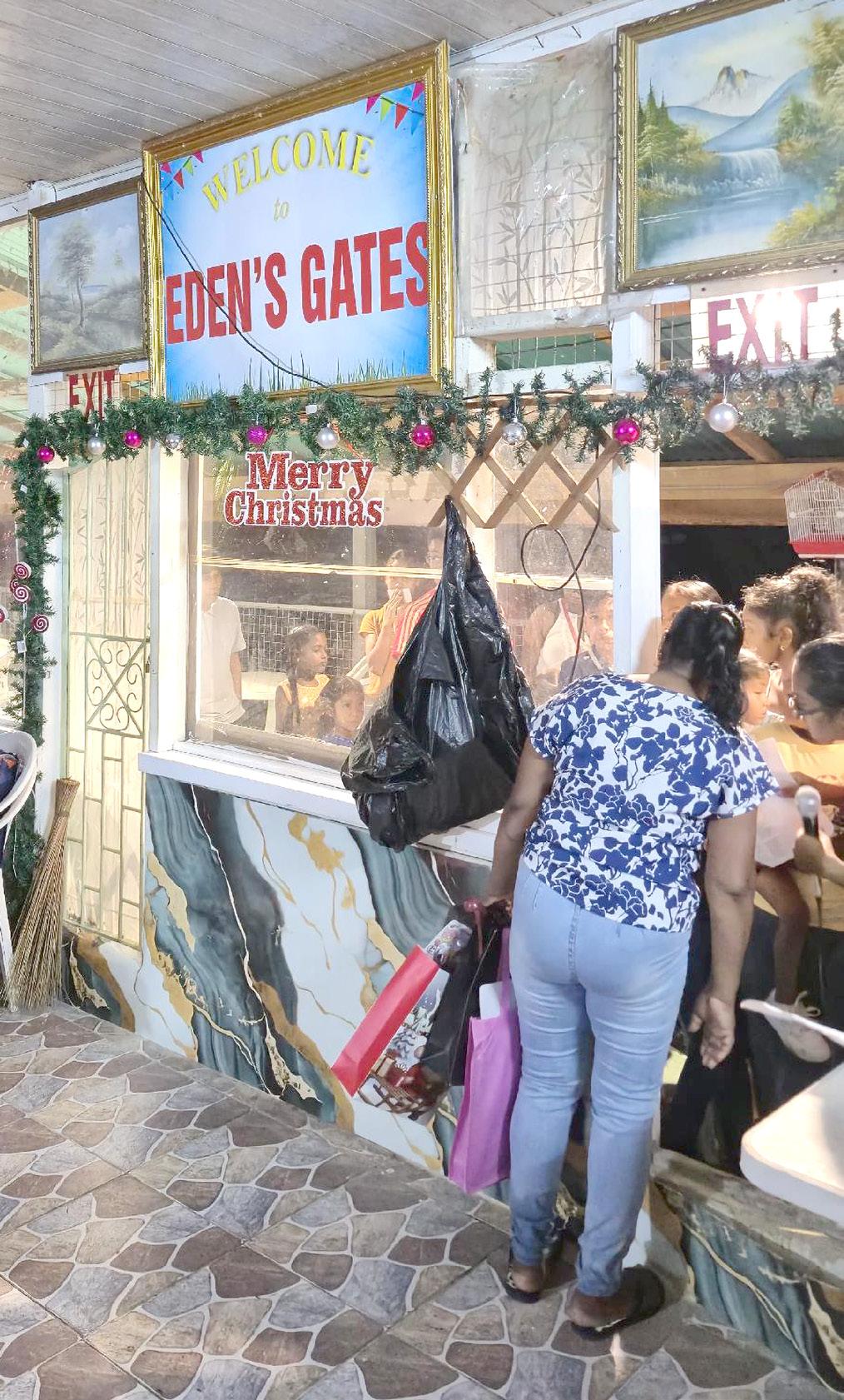
OPEN Gates Community Group (OGCG) is a skills-training project designed to address unemployment and societal ills within the community. It falls under the umbrella of Eden Gates Farm, which was formed and registered in 2022 by a group of like-minded persons for farming and as a safe space for the community, but later evolved into a training facility for the common good of society.
From farming, they developed into a snackette, a recreational facility (safe space), a variety store, a meeting place, and an OGCG to facilitate training and capacity building for villagers in Parika.
The farm is multi-purpose: they grow long-term crops like citrus, and they raise fish, poultry, and coconuts. They hope to build a shade house in the near future to expand the farm.
The OGCG comprises seven administrative members, but 14 volunteers and ground support personnel are scattered across the country.
Eden Gates Farm will also be part of training people in agriculture, as well as getting villagers, especially those with small businesses like cement block-making
and workshops, involved by taking on trainees to empower people, including youths and the elderly.
So far, people are responding favourably, but they need some more support. People are more excited about the training sessions that started in January this year in catering, sewing, computer, and mechanical training.
Parika, East Bank Demerara, has two housing schemes with about 140 households and an additional immigrant population of more than 40 households, so capacity and human capacity building are needed, but not limited to that area alone.
Dr Godfrey Washington, speaking on behalf of the group members, told Pepperpot Magazine that OGCG encompasses two aspects of training and development: human capacity building and community capacity building.
He explained that, with emphasis on holistic development for each participant, enabling them to be more grounded individuals, community welfare is a point of focus for residents as they seek to make their community a safer, healthier, and more progressive one.
Dr Washington added that, on the other hand, the Summer Camp is a three-day
programme designed to build each participant’s mindset in survival tactics, emotional and physical well-being, and in developing good social skills among peers and mutual respect for individuals.
He related that OGCG is a registered not-for-profit non-governmental organisation geared towards community development through personal and interpersonal human and community capacity-building initiatives aimed at impacting the vulnerable populace within communities.
Dr Washington reported that, with just over three years in existence, OGCG has remained focused on the interests of the residents of Parika, East Bank Essequibo, blending civil society activism into many households as its membership increases annually.
“This was not a hard task as people eagerly support such diverse initiatives that continue to mould the minds of the residents, seeking togetherness as a community for a better future for their offspring within the said area, so as to avoid migration from within the community and rather become a self-sufficient and resilient community,” he said.
Dr Washington stated that, with this in mind, the TURN TO PAGE XXII
By Michel Outridge
JOY Washington is a Guyanese who came from very humble beginnings and who defied the odds of hardship. With a leap of faith and determination, she was destined to make a name for herself.
Today, she is recognised worldwide for her work as a creative fashion designer.
Washington grew up in Springlands, Corentyne, Berbice, Region Six (East Berbice-Corentyne) and is the fifth child of nine siblings.
She came from a simple home where her parents were working-class people. Her mother was a seamstress in the village, known for her excellent sewing skills.
The seamstress made all her children’s school clothes and also did the same for others in the community, and back then, late into the night when there was no electricity.
And when her mother had to
sew, Washington used to stay up with her and stand by her as she pedalled the old-fashioned sewing machine with a little oil lamp in her hand, so her mother could see to thread the needle and continue sewing way after dark.
“I was so happy doing this because Mum and I were very close since I was the oldest daughter at home at that time. I saw it as our time together, and I envisioned myself becoming someone like her,” she said. However, something happened when Washington was nine years old: her mother suddenly passed away.
Recalling that day, she told Pepperpot Magazine that it was the hardest day in her life since she did not just lose her mother, who was also her only dear friend and teacher.
After that, Washington had to go live with her grandmother, and she decided to let her take sewing

classes right in the village to equip her with a life skill.
Washington stated that over time she developed a great love for sewing and drawing, and at 15 years old, she began teaching her friends at school how to sew and design.
However, in 1975 she left Guyana and migrated to Holland, where she began working in sewing factories, but that was not enough for her, since she knew in her heart she wanted more.
In 1992, she decided to explore the possibilities and went to London to work, study, and live to build her career in the fashion industry.
Washington told Pepperpot Magazine that in 1993 she decided to go to college in London, where she studied creative fashion design and was awarded a certificate in that field after successfully completing her studies.
Washington added that in 1996
she opened a small dressmaking store on High Street, London, until 1999, after which she returned to her homeland, Guyana.
Once she came home, she found work in the local fashion industry, and in 2000, she did some styling for television shows.
She reported that as her creative fashion design career accelerated, she got work doing some organised on-stage fashion shows, and she loved it.
Washington disclosed that between 2002 and 2005, she began teaching fashion, modelling, and design at the Burrowes School of Arts in Guyana.
While in Guyana, she resides at Kururu along the Soesdyke/Linden Highway, but has her family roots in Berbice, her place of birth, which remains a part of her life.
The Guyanese-born creative fashion designer is also a naturalised Dutch citizen of Holland,


and she often divides her time, life, and career between Guyana and Holland.
Washington pointed out that in Holland, she has established herself as a freelance businesswoman, fashion designer, and founder/producer of Joy Washington Creative Fashion Magazine.
She is widely known for her work in the local fashion industry, with her career highlights including the launch of her own fashion line. Her work has been recognised within Guyana’s regional fashion scene, with launches in 2010 attended by a wide audience and supported by others in the local fashion industry.
Washington is very passionate about passing on her knowledge to others and will continue to contribute to Guyana via her teachings at the recognised Burrowes School of Arts for as long as she can.

By Michel Outridge
EVEN though Oswin Ross wasn’t able to secure a job in the medical field as his first choice, he didn’t let that setback define him. He was patient enough to realise his dream of becoming the first Medex in his family and for the Guyana Prison Service (GPS).
For him, it is a great achievement because, personally, it was a job he aspired to, and he set out to make it happen, even if it meant exercising patience.
Ross is attached to the Mazaruni Prison as the fulltime in-house Medex, an achievement he credits to hard work and consistency and his personal goal, which he had to fulfil.
The 24-year-old told Pepperpot Magazine that he always had a passion for the medical field, but after finishing high school, his options were limited. He had to work, and he opted to become a Prison Officer with the GPS.
But it did not deter him from setting high standards for himself, and he used it as the first step in realising his dream job as a Medex.
However, one day, while browsing online, he came across an application for the Medex programme offered by the Ministry of Health (MOH), and without even thinking, he signed up.
At that exact moment, he knew he wanted it, and he set about to do so in his own subtle ways.
And when his application was approved, he was beyond elated. His focus shifted, and he knew he had to put in the work over the next four years to be successful.
In January 2021, Ross knew he was built for greater things that extended beyond the walls of the Mazaruni Prison.
The Belladrum, West Coast Berbice resident told Pepperpot Magazine that he was housed in the dormitory at the West Demerara Regional Hospital (WDRH) with fellow students, who leaned on each other for moral support.
Almost all the students, both male and female, came from remote places, and they knew it would take team -

work and camaraderie to get through the process.
“During the course of those four years, it was not easy. There were some good days and also some bad ones, but I endured it and made it out due to perseverance and defiance when the odds were against me,” he said.
Ross explained that the transition period from prison service to science was challenging, but he had an open-minded approach, which made it easier to cope, and he trusted his ability foremost.
The new Medex added that he is from a family of five siblings; he is the fourth child, and it is solid family support, foundation, and values that enabled him to get it together and keep going.
He is grateful for the unwavering support he received from his own family, his parents, the Waffle family, his colleagues, and others, whose contributions made his journey possible.
As the only Medex in his family, he feels very good about his achievement, and he also appreciates the GPS,
where he is readily available to treat prisoners on the spot, and it is a 24-hour job.
Ross revealed that since he returned to the Mazaruni Prison, Region Seven (Cuyuni-Mazaruni), to serve as the full-time Medex, they have significantly reduced patient transfers and transport to Bartica Hospital by at least 75 per cent.
He stated that they only take patients there for services which include X-rays, dentistry, and ultrasound.
At the Mazaruni Prison Infirmary, Ross is in charge of the facility and has a support staff of three nursing assistants, as well as access to consultants if the need arises to deliver primary medical care to prisoners.
Ross joined the Guyana Prison Service (GPS) in January 2021, the same year he also applied to become a Medex. He was accepted in the Medex programme in October 2021.
He said the decision was well thought out because it was what he wanted in a career, and looking back now, it was worth it.


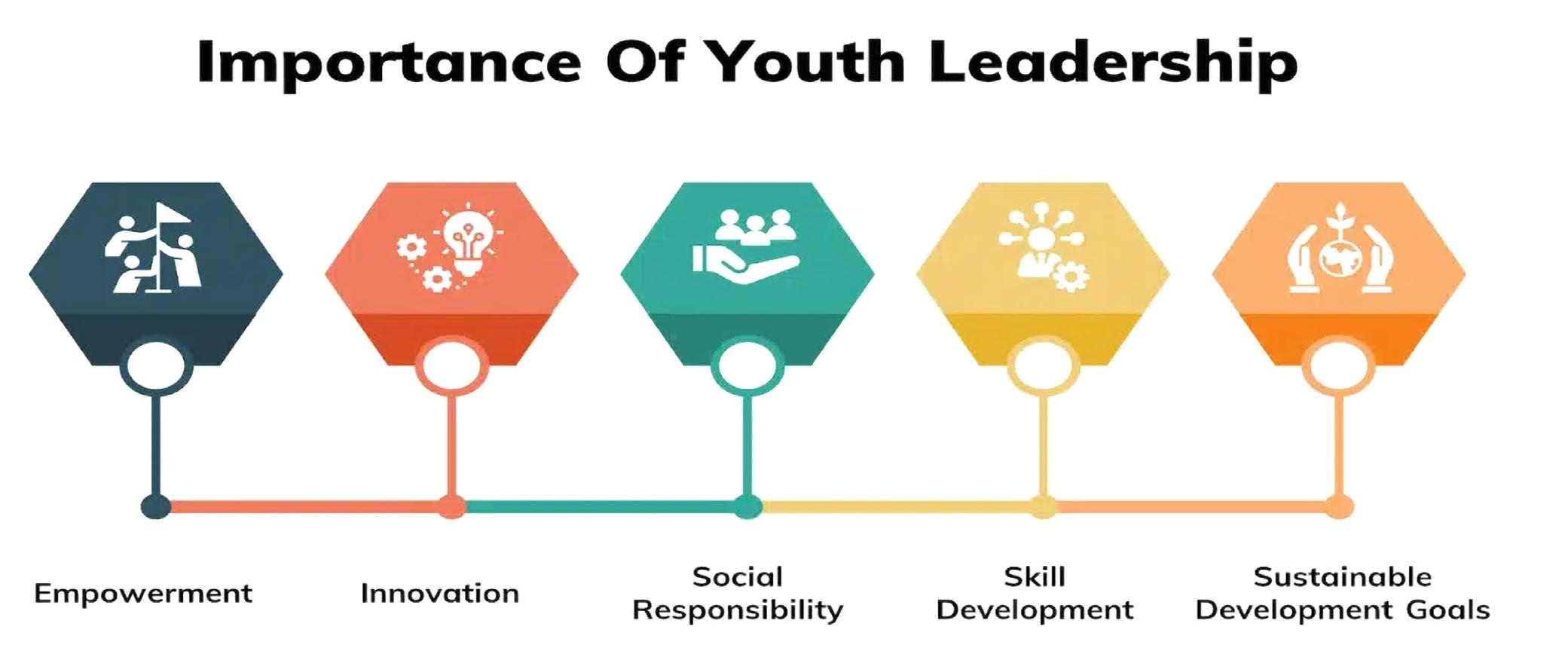
AS a youth leader in various spaces, I always believed that it is best to raise awareness and ask questions when necessary. In fact, it is the very essence of that belief that led me to create this column section. From time to time, I often reflect on what my next column topic should be.
As I reflected recently on my journey as a columnist and the important work I’ve done through this section, I thought it was time to highlight why youth work, such as Youth Perspective, is useful, timely, and meaningful to
national discourse.
I often see young people being celebrated and acknowledged for their commitment, energy, and thoughts. However, I rarely see us being praised for our critical thinking, questions, and debates. This is not an isolated phenomenon to only Guyana’s shores. Unfortunately, many young people are marginalised across the world simply for having a voice and an opinion. You are told not to challenge existing systems because it can be disrespectful.
I often listen to the un-

dertones and sarcasm that are thrown into discussions young people are a part of. There is often a question asked, and I often hear it informally, but I am sure it surfaces internally when young people take a stance on issues that challenge the status quo – “Who do you think you are?” Young people are often told they have an identity crisis, they are inexperienced, and the basis of our arguments has no merit due to our age or life experiences. What merit do these claims have? Are we not also citizens, with human rights just like everyone else?
I see the contrasting treatment we give to different youth leaders. I see the youth leaders that “play it safe” and are awarded and recognised for their work. In the same spaces, I also see youth leaders who advocate and challenge systems with the same passion (or even more) being
sidelined.
Let’s use the school system as a general example: a student representative might want teachers and administrative staff to consider how mental health issues affect students and their academic studies. They might suggest that students receive more mental health support and intervention if needed. In some instances where mental health and youth voices are simultaneously marginalised, the outcome of such advocacy might lead to, “We didn’t have that growing up, so why should you?”
Or, let us consider the young professional who is now joining the workforce and notices that certain “office cultures” within the workplace are unethical and not in line with best practices. He/she might be told they have no right to enter the space to demand reform. Even though they might be
correct in their stance, their youthfulness can be used against them.
These practices, and many more, are deliberately carried out to frustrate, annoy, and insult young people. It can be detrimental to the growth and participation of young people in leadership roles. Trust in institutions is eroding among young people. It suppresses young people’s voices and interests and ultimately demotivates them.
Unfortunately, I have been on the other side of being sidelined for my advocacy, and as such, I speak from experience. It is a responsible practice to encourage young leaders to share their voices. We collectively need to understand that social politeness does not automatically equate to strong leadership. Our voices are not just for thanking the system—they are for improving it.


THE next generation needs vital guidance, support, and education from teachers, as they will shape the future.
1. The desire to become a teacher
MANY people want to see others learn, but helping people occasionally is different from being a teacher. A person who wants to become a teacher has to go through many training programmes.
In some families, there is a common profession; for example, most members of that family may be teachers, which can lead to family pressure to join that profession. Becoming a teacher may be a simple decision for some people, while it may not be so simple for others.
Some people view teaching as a logical career choice. That is, they see others teaching and decide they can do the same. Similarly, when jobs are scarce, some people become teachers with the intention of leaving the profession as soon as another opportunity arises.
However, there are cases in which people become teachers temporarily until the economy begins to boom, but even after the economy improves, they remain teachers for years. They usually say that after a few years, they fell in love with teaching.
When the desire to teach comes from the heart, a person may try other professions, but the calling to teach others remains. Some people have said they tried other forms of employment but never found the same joy or job satisfaction.
When teaching gets into the blood, it may be difficult to get it out. Some people with full-time jobs dedicate evenings and weekends to educating others, while retired teachers may still seek parttime teaching employment,
as they have a burning desire to educate others.
Parents will be happy if more teachers view teaching as a calling rather than a logical career choice, as teachers who see teaching as a calling are often willing to go the extra mile to help children. Because of their passion, they often leave home without eating breakfast, because they want to get to the classroom to help students.
When teaching is a calling, students benefit most. Teachers often put the students’ needs above their own.
Teachers often leave their own needs unmet so that their students will improve.
Students may not know this, but some teachers even leave their families’ needs unmet to attend to their students’ needs. For example, money that can be used to purchase groceries for a teacher’s family is sometimes spent on students’ development or needs, especially those who are less fortunate. Some teachers “adopt” their students, despite having children of their own, and take some of the things they can use for their children for the students in the classroom.
To be a teacher requires sacrifice. It is sad to know that some parents abuse teachers, ignoring the sacrifices teachers make for their children’s success.
In many countries, to be a teacher is a sacrifice. Teachers choose to help students rather than do more for themselves. Moreover, in some countries, teachers are paid less than recent graduates and receive limited recognition. Spending a lot of time in the classroom helping students is not easy. When a teacher leaves the classroom, they often have to go home and prepare teaching materials for students. To be a teacher is like having a
twenty-four-hour job. Some teachers’ family members have said that teachers frequently talk in their sleep, especially after a challenging day. Teachers sometimes have to use health supplements, nerve tonics, and other things to remain stable and fit for the profession they love.
Issues parents cannot address at home are sometimes left to teachers. Many parents who cannot discipline their children expect teachers to do so. Parents often want a finished product, with their children receiving a good education, but without recognising that it takes great sacrifices from teachers to produce well-rounded children.
Those who want to join the teaching profession must know that it is not an easy path. Prospective teachers must carefully think about whether they want to join the teaching profession.
Their parents and friends may not agree with their
choice to become a teacher, but they know it is their calling. Thus, despite the condemnation of their friends and families, they follow their hearts and join the teaching profession.
While the decision to become a teacher may be tough at first, it can be the best decision for some, as they find much joy in helping others improve. Teachers often say that the joy of helping students achieve their goals is immeasurable. Therefore, many teachers enjoy their output—the students’ success—rather than the process and the numerous challenges they have to endure.
2. Classroom interactions and actual teaching
At times, teachers will have to stand in front of the classroom, not to be autocratic, but to guide students’ discussions. Although teachers can sit at their desk and guide some discussions, standing in front of the class often focus-
es students’ attention.
Similarly, the teacher must be able to see and engage different students. If the teacher chooses to sit and engage students, the teacher must have good visibility of the students.
Often, students who do not want to participate avoid teachers’ attention by hiding. However, when the teacher stands in front of the class, they can see which students have not participated and engage them.
Standing in front of the class will help the teacher deal with unwanted behaviour. For example, some students fail to participate in classroom discussions by doing something else or resting their heads on their desks. Students sometimes think participating in classroom discussions is unnecessary, without realising its importance for their development. For example, those who practise discussions in class may be better able to verbalise
their answers in an oral examination.
Thus, some students avoid taking part in classroom discussions. Teachers must remember this when engaging with students. Skilled and experienced teachers know which students to call upon to comment.
Getting students involved is not always easy. Some students do not need an invitation to get involved, while others need more grace and reminders. The teacher must take whatever approach is necessary to ensure greater student participation.
For more information about Geary Reid and his books, please use this contact information:
Amazon: http://www.amazon.com/author/gearyreid Website: www.reidnlearn. com
Facebook: Reid n Learn
Email: info@reidnlearn. com
Mobile #: 592-645-2240


I CAN recall our youthful days when we imitated grown youth, but looked over our shoulders to see who was coming as we copied the foul language to express our make-believe grownup jargon, which, if taken too far out, would have real-real consequences, not no play-play reaction… then a neighbour could have dropped two slaps, as we called it then, to put things in order, and we best not make that a complaint.
Things do change, and rum shop parents could not have made the same fatherly or motherly claim of force over offspring without being accused by neighbours,
who would very well call the police, whether in the village or on the street in Georgetown. The business of children was viewed with seriousness, and that’s where the problem starts today.
There were always delinquent parents. I used to sip a beer at KID’s Beer Garden on Evans Street when two of my buddies drew attention to a situation. It involved a female child, whom an elderly adult male imposed upon as an unofficial nursemaid.
The child’s mother had, by then, made contact and was benefitting from the elder’s overseas children.
We observed some commotion
but ignored it.
When it was translated to us, it was a shock we couldn’t believe: it seems that the old fire stick was blaming the old man for touching her child….. We doubted it and saw it as the old scamp’s wicked hustle.
We took it seriously when we saw the police vehicle enter the street, and later learnt that she had threatened the old guy’s folks overseas, forcing them to send her bribe money, threatening that she would put the old guy in jail.
None of us, including our female friends on the street, ever questioned the child, even as she grew older, to verify whether any-
thing actually happened.
But later, we learnt that ‘mom’, who was known to us for her tricks, boasted about the rewards of her scheme, which covered her expenses.
We debated it and concluded that poverty is a fierce tormentor, more so for an old scamp. But it was indeed deadly as we watched that child grow, and other things occurred.
My conclusion was that childhood is a frail and sacred period of life, more so into the teens, that requires attention and teaching— helping them, “children”, to grow to learn about the haunted forests of life, using modern terms of
drama that will institute a wider understanding of self-awareness and consciousness of self-protection, against actions that could inflict mental damage beyond repair in our country, and muchness in our grassroots society, that at this point does not have the tools and time to explore the modern techniques to nurture the necessary insights to find safe passage through certain stages of life’s shaded forests and devastating whispering temptations.
Judgement must never be quick; we must balance every responsibility to truly stand before the truth that distinguishes itself as guilty.


OUR skin and bodies are our perpetual company. Wrapped around us like a cocoon, they have accompanied us across every stage of our lives. They hold the memory of every wound and of every battle in the form of scars. Similarly, they also hold the lines of growth and sudden changes.
Some even say that our skin holds marks that remind us of our past lives. It is a strange thing to be able to love or hate something like our skin, our bodies, as we can never truly exchange them for another or get rid of them. We must live, grow, change, and die all in the same skin that we were born in.
As we approach our teenage years, many of us begin to feel the first twinges of insecurity. At this stage, we begin to see our bodies not as an extension of ourselves, but as the inception of others’ perception of us.
Although we know deep down that beauty is not skindeep, we begin to feel uncomfortable in our own bodies. Every flaw is magnified tenfold in our eyes, and we begin to compare ourselves
with the people around us who do not have the flaws that we are so worried about.
Of course, they themselves would have their own insecurities. In fact, they may view us as lucky to have the features they desire! Eventually, as we grow, the pressure of these insecurities would fade. Although we may occasionally feel self-doubt, we do not usually feel the immense pressure to appear a certain way. We grow into a more comfortable sense of self-identity so that even feelings of insecurity do not change the stability we find within ourselves.
Over the last few years, however, this has begun to change. Even in adulthood, we feel immense doubt and pressure. We feel as if our appearance is not just part of how a person is perceived, but the entirety of who a person is!
Perhaps this is owing to the level of exposure our generation has to social media. The importance of appearance is magnified intensely in almost every form of media. Some people have dedicated their platforms entirely to preaching the importance of appearance and leading
young people to believe that not being conventionally attractive is the source of all their downfalls.
There are some who spend their time pointing out small flaws we would never have noticed otherwise and sell products to ‘fix’ those non-existent flaws.
Some even go so far as to spend their time rating the appearance of human beings on a number scale as if they were inanimate objects without any value beyond the way they look! A few hours on the internet is enough to strike a burning sense of insecurity in anyone.
It takes a special kind of strength to survive these platforms and today’s era without losing sight of the goals that truly matter.
Think about the people we love most in our lives— the people who made extraordinary impacts on who we are, and how far we have grown. Are they conventionally attractive? Are they flawless beyond any measure?
Even if the answer to those particular questions were no, we would have to agree that those persons are truly beautiful. Their beauty is simply not measured in

ratios, proportions, or scales. Their beauty is measured by the mark they have made in our lives and in the effect they have had in moulding us into better people.
Some may say that beauty is subjective. Beauty is not subjective; it is quite objec-
tive. It is just that we forget that beauty does not lie only in how someone looks, but also in their hearts. Sometimes, all it takes is a little effort to unravel the beauty that inherently lies within every human being.
As we step out into the
world, we must vow to become comfortable with our own company, for our inability to see our own beauty can inadvertently poison our ability to connect with others and to see the beauty that lies within them, far, far beneath their skin.


CLAIRE Adam’s debut novel, Golden Child, a vivid pastiche of the contemporary ethos of Caribbean life, arrived with the knowing confidence of a seasoned writer—someone long in command of her material. It was a confident, lyrical, and engaging debut, rich with the Caribbean characters we recognise: archetypes of West Indian personalities who populate the islands.
The novel is also keenly observant and astute about the criminal realities of the
archipelago—the guns, politics, drug dealing, kidnappings, and murders that have become distressingly prevalent. Adam’s métier lies in her almost granular examination of the inner workings of Caribbean families, and of how our mistakes can rever-

berate across a lifetime. In Golden Child, a single wrong choice sets in motion a series of dreadful events with tragic consequences for one family.
Adam writes with acuity about the seething conflicts within families, and about the fragile restraint that underlies attempts at peace—the daily negotiations required to get along. Much of this sensibility carries over into her second novel, Love Forms (Hogarth, $28.00), which was shortlisted for the 2025 International Booker Prize.
The title gestures toward the many shapes love assumes: its conception, evolution, dilution, loss, and rebirth. All kinds of love inhabit this novel—the longing for it, the waiting for it, the embracing, and the grieving of it. Love Forms is a beautiful work, one in which the central object of love is absent and obsessively sought.
The first chapter of the novel possesses the tautness of a literary thriller—something reminiscent of John le Carré or Robert Ludlum. Its opening reads like a spy novel or the frenetic start of a police procedural: a witness must be extracted from a safe house as assassins close in.
This opening functions as the novel’s MacGuffin. Love Forms is not, in fact, a thriller, but a deeply literary meditation on personal error, on filial bonds, and the costs of betrayal. It is, at heart, a novel of excavation—a mystery of the self, and of loss and regret.
In my review of David Szalay’s Flesh for this column, I noted that the International Booker Prize winner told the plain story of a life, without literary gimmicks. The same can be said of Love Forms. It is a straightforward narrative, grounded in the reflexive imprimatur of the real. The circumstances of the characters’ lives never veer into the magical or the inexplicable; their ways of being remain fully in sync with lived experience.
This is a novel about love, yes, but it is also about regret that may last as long as life itself, and about mistakes that lie beyond the horizon of correction, for which neither time nor circumstance offers a cure. This is partially true for Dawn Bishop, the protagonist of this sad, sweet, and haunting novel.
Dawn is born into a relatively well-off, close-knit white Catholic family in Trinidad, where her parents are in the beverage business. At sixteen, during Carnival in 1980, she meets a white tourist—a stranger—with whom she has a one-night stand and becomes pregnant. Her parents discover the truth in a roundabout way, confront her, and offer her a choice. She accepts it and is sent to nearby Venezuela to give birth and place the child for adoption.
The story resumes nearly forty years later. Dawn now lives in London, where she went to study medicine. She is newly divorced and living
alone. Her two grown sons remain in touch, though not closely; they have their own lives. For decades, Dawn has been trying to find the daughter she relinquished.
Love Forms, lyrical yet direct, carries the tone and feel of a haunting. Dawn’s repeated, failed attempts to locate her lost child are rendered with piercing poignancy, and the reader inherits her sadness almost by osmosis. The novel reads as an accurate distillation of lived experience, of actual history. This is evident in Adam’s rendering of Trinidad during the years covered by the novel—its rancorous politics, periodic violence, and attempted coups—as well as in her depiction of Venezuela, which appears here with a prescient awareness of its current turmoil.
The novel spans nearly 45 years as Dawn moves between London and Trinidad and reflects on her life in these very different cultural geographies. Place—where one is born versus where one lives—is constantly interrogated.
The attitudes, values, and mores of England are contrasted with those of Trinidad and Tobago, which is portrayed as less tolerant than those of the northern city. Dawn herself—insular, self-examining—embodies this tension. London is where she lives; Trinidad is where she feels, where her deepest and saddest connections remain.


SHE took off the broadbrimmed hat she was wearing and wiped the sweat from her forehead. The sun was mercilessly hot, and she took a break under the shade of a mango tree in her garden, taking a long drink of water.
She was a simple country woman from a small farming family in a little remote village. Her father, a devotee of Lord Krishna, had named her Radha, and she grew up with the disciplines of kindness and compassion, and learnt contentment, though she was a poor girl.
She looked at the work in the vegetable garden she had done since morning and inhaled deeply with satisfaction. The tomatoes, wiri-wiri pepper, sweet peppers, boulanger, and pakchoy would soon be ready for the market. Gardening was intensive labour, but it was fulfilling, for she was doing something she loved and, more importantly, it was her livelihood.
The tragic death of her husband five years ago had shaken her so badly that it had left her grieved and broken, unsure how to go on with life. It was another cruel blow by fate, for five years prior to her husband’s death, her son had died from a mysterious illness. He had been only five, and the pain she had gone through as a mother, spending their last dollar to save him, was indescribable.
That early morning when the hospital had called, she had felt numb, and looking at her son, lying so peacefully, she couldn’t cry. She had cried for days and weeks after, losing the will to live, but one year after his last ritual was performed, she managed to pick up the pieces of her life, one piece at a time.
She and her husband hadn’t much to live on and started the vegetable garden together, working side by
side and succeeding in building something good.
“Why, dear Lord?” she had cried. “Why are you taking my loved ones away from me?”
There was no answer, but she did not give up on faith, knowing there must be a reason.
She was left once again to pick up the pieces of her life to survive, but this time alone, and as time went on, she expanded into the rearing of ducks and creole fowls.
The fruit trees, when in season, added to her earnings, and she became a strong, self-sufficient woman.
She rose before the sun and finished her work after it dusked. Her nights were lonely, sitting on the verandah, watching the stars or the moon, the chair beside her empty.
“I guess it’s fate,” she had voiced in the past years, but now she said nothing, just sitting there in her quiet moments. Some nights she would fall asleep in her chair, the cool wind on her face, and never did she ask for a better life nor someone to share her life. She loved the peace and simplicity of her life, and the cosiness and warmth of her little house.
That little house she shared with a small number of cats and dogs. They were her steady companions who brought a special kind of joy to her life that only pets can. The dogs were trained to be her guardians, given she was living alone.
And because of that, and because she was still young, her family often advised her to remarry.
“You need a partner in your life for strength and security, plus you can still have another child.”
She always smiled tolerantly because she knew, in her heart, that she was happy with her life and had worked hard over the years to build
her security.
“I had a husband, I had a child,” she said to herself. “I survived their losses on my own, and picked up the pieces of my life, alone. Why do I need anyone now?”
As she continued to rebuild her confidence and courage in a life of solitude, an unexpected opportunity to embrace that journey arose.
She was picking vegetables in her garden one very hot day when a luxury vehi-
cle pulled up in front of her house. A beautiful woman, fabulously dressed, got out, followed by two others.
Radha paused and looked at them as they walked to the gate, thinking maybe they were lost. She sent the young worker who was assisting her to inquire, and he came back saying, “Is yuh they want to see.”
She went to the gate, not recognising any of them, and TURN TO PAGE XVI



THE International Day of Clean Energy was observed on January 26, as designated by the United Nations General Assembly in its resolution A/77/327. This global observance aims to raise awareness and encourage action toward a fair, inclusive shift to clean energy that benefits both people and the environment.
The selection of this date is significant because it marks the anniversary of the founding of the International Renewable Energy Agency
(IRENA) in 2009. IRENA, a global intergovernmental organisation, supports countries in their energy transitions by providing policy advice, data and analysis, capacity-building, and a platform for international co-operation on renewable energy technologies.
What is clean energy and why is it important?
With increased manufacturing worldwide and AI technology on the rise, we need to expand our use of clean, renewable energy
sources. Clean energy refers to energy sources that do not release pollutants or greenhouse gases, primarily carbon dioxide, into the atmosphere when generating electricity. This includes technologies such as solar, wind, nuclear, geothermal, and hydropower.
Unfortunately, the world is lagging behind in its pursuit to achieve Sustainable Development Goal 7, which seeks to provide universal access to affordable, reliable, sustainable, and modern energy by 2030. Approximately

666
people still live

Additionally, burning fossil fuels has gravely undermined our efforts to achieve this goal. The continued use of oil, gas, and coal for energy has led to the release of greenhouse gases into the atmosphere, which trap heat and worsen the effects of climate change and natural disasters.
Therefore, transitioning to clean energy is important because it holds benefits not only for the planet but also for human well-being. Apart from its evident positive environmental effects, shifting to clean energy can spur economic growth by creating millions of jobs in manufacturing, installation, maintenance, and research.
It can also reduce reliance on imported fuels, making countries more energy-independent and stable. While building the infrastructure for clean energy takes planning and investment, the benefits of having cleaner air, lower healthcare costs, stable energy prices, and a safer environment for future generations make it a necessary and worthwhile transition.
Global and local efforts to transition to clean energy
Across the globe, countries and cities are proving that clean energy isn’t just possible, it’s already happening. Denmark, for example, generates nearly half of its electricity from wind turbines, creating thousands of jobs while cutting emissions. Costa Rica operates on more than 90% renewable
energy, relying on hydropower, wind, and geothermal sources, showing that even small nations can aim for carbon-neutral power.
Even Iceland runs almost entirely on renewable energy, harnessing the power of rivers, waterfalls, and underground heat.
In a local context, Guyana has begun transitioning toward clean energy under its Low Carbon Development Strategy (LCDS) 2030, with several renewable projects now underway.
Solar energy is a key focus: utility-scale solar farms like the 5 MW Onderneeming facility and 3 MW plants at Prospect and Hampshire are now in operation, and more are being constructed across regions to add roughly 50 MW of solar and mini-hydropower capacity by the end of 2026. Smaller solar systems are also expanding access in hinterland communities.
How you can play your part
To support International Clean Energy Day, you can join businesses, government bodies, and non-profits by raising awareness on your social media platforms. You can create and share short videos, facts about clean energy, or your personal stories on how you are applying sustainable energy practices at home. Add hashtags to your post, such as #CleanEnergyDay or #Renewables to make it more discoverable and impactful.
their undergraduate requirements at the University of Guyana. This rigorous research period proved successful, Dr Morris said, with all students completing their work and several presenting their findings on the international stage. “Despite challenges like severe weather during the conference, they performed exceptionally well. Seeing peers present at an international level motivates others to believe they can do the same.”
He added that, like himself, students are reminded of the larger responsibility they carry. “Students are reminded that they are representing something bigger than themselves. They represent Guyana and those coming behind them, so presentation quality and professionalism are critical.”
For Shamar Simon, a recent graduate of the University of Guyana and one of the few students to formally present his work, the conference was both eye-opening and affirming. Having presented research at IPPE before, he described the experience as one that broadened his perspective, highlighted Guyana’s limitations, but also reinforced that local students are not far behind international standards.
His work in food safety has since placed him on a PhD track at the University of Georgia, a transition he credits to exposure, mentorship, and preparation. Having been in agriculture for several years at just 27, Simon said his work in the field is fuelled purely by passion. “My journey into agriculture wasn’t driven by a single moment.
It was a gradual process shaped by my experiences at the School of Agriculture, secondary school, and handson work with animals.” He added, “This was my second IPPE conference. At both conferences, I delivered presentations. The first focused on nutrition, and the most recent one was based on my final-year undergraduate research project at the Uni-
versity of Guyana.”
Apart from networking, learning, and teaching opportunities, the conference also prompted a shift in Simon’s perspective. He shared that, from a Guyanese standpoint, the experience broadened his understanding of where Guyana’s agriculture sector stands internationally.
“From a Guyanese perspective, it is one of the most eye-opening conferences I’ve attended. It broadens your horizons and shows both how limited we are back home and where opportunities for development exist.”
He added, however, that internationally, Guyana is performing better than often assumed. “It exposed me to different cultures, professional standards, and ways people interact outside of Guyana. It shifted my perspective and showed that while we have work to do, we are not as far behind as we sometimes think.”
For students like Simon, the experience represents more than a conference or a line on a résumé. It marks a turning point, one shaped by exposure, discipline, and belief in what is possible beyond Guyana’s borders.
Now on a PhD path, Simon’s journey reflects what can happen when talent meets opportunity and guidance. His story, alongside those of his fellow scholars, stands as a reminder that Guyanese students are capable of competing, contributing, and excelling on the international stage.
For Dr. Morris, the journey is far from complete. His work continues to centre on ensuring that Guyanese students not only access global opportunities, but return equipped with knowledge, confidence, and a responsibility to uplift others. As more young Guyanese scholars step onto international platforms, the ripple effect grows, strengthening Guyana’s agricultural future through education, exposure, and the power of reaching back.


asked, “You wanted to see me?”
“Radha?” was the shocked response. “What happened to you?”
They looked at her with a little scorn, and Radha asked, perplexed, “Who are you?”
“You don’t recognise us? We were in the same class at high school.”
It took a moment for Radha to recognise the two rich girls who had always teased and taunted her
for being poor.
“Oh, yeah,” she acknowledged. “Why are you here?”
“We are having a class reunion, and you’re the only one who didn’t respond, so we kind of wondered if you were still around.”
Radha smiled wryly. “I don’t socialise much.”
“Yeah, we can understand given your outlook,” Reya, the
meaner of the two, said in a mocking tone.
“I guess you won’t be attending the reunion ball unless you can find a fairy godmother to transform you.”
They laughed and left, leaving her an invitation to the ball.
In her room that night, as she got ready for bed, Radha let her long hair down and looked at herself in the mirror—the bright

brown eyes, flawless and natural complexion. For a long moment, she stood there staring at her reflection, then said quietly, “Maybe I should change my outlook for that one night to show them I could be beautiful and fabulous if I want to.”
She went to sleep with a smile on her face. “I don’t need a fairy godmother to transform my looks when I have money.”
The reunion was two weeks away, and Radha quietly spoke to a stylist, a make-up artist, and she visited one of the top boutiques in the city and a jewellery store.
That night for the ball, she looked exquisite in a long, flowing red gown, her hair styled
beautifully to complement it, accentuated by a gold necklace and diamond earrings. It was a magical transformation. When she stepped in the ballroom that night, everyone looked at her stunned, having known her as a shy, poor girl.
Reya and the others asked, “How?”
Radha smiled. “Actually, from years of hard work in a vegetable garden.”
In taking the bold step to attend the ball, she had won sincere admiration from those who used to ignore her and those who had been unkind.
Radha – a phenomenal woman.














substance of OGCG projects and programmes lies in addressing matters relevant to the development of Parika as a whole.
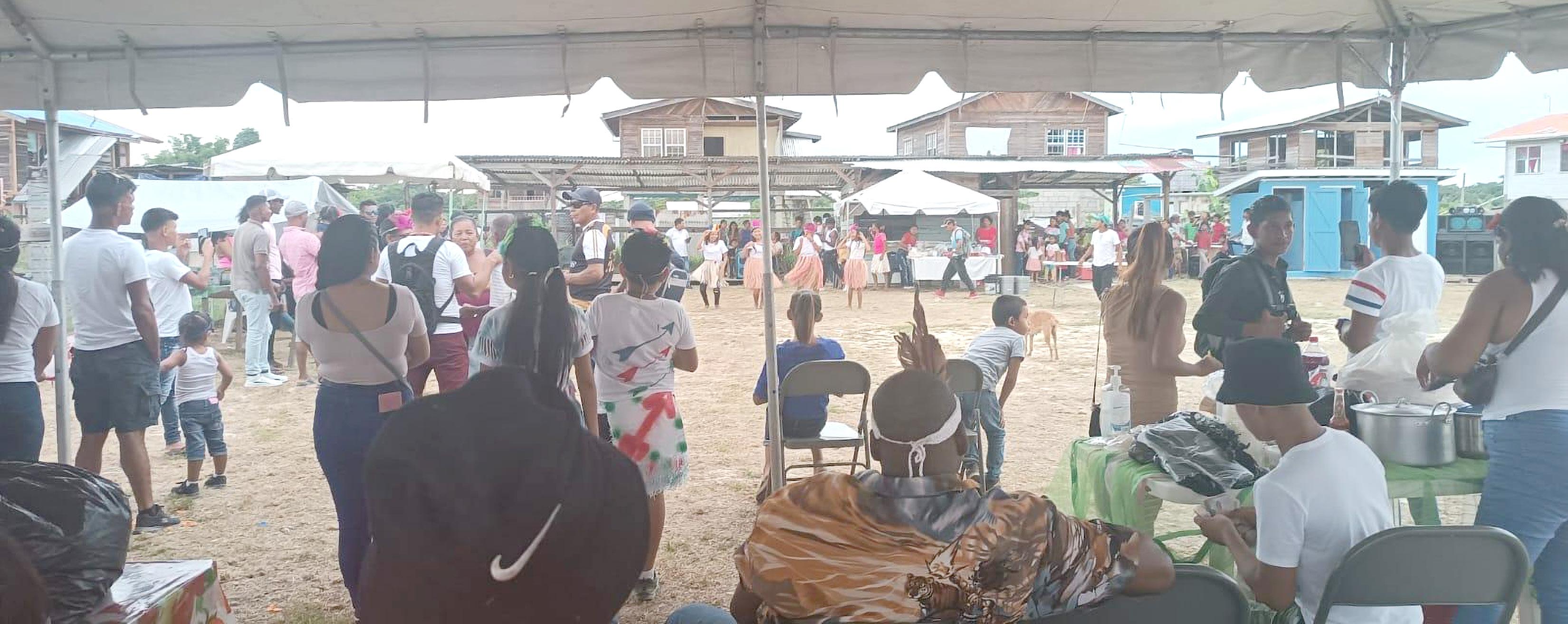
Some of the programmes and projects include the annual Family Fun Day, facilitation of the annual Amerindian Heritage celebration, annual Christmas Village

celebration, Summer Camp, and skills training.
He pointed out that OGCG’s motto is simple and they stand by it: ‘Promoting cooperation, mutual respect, peace, harmony, and social development within our communities,’ and that their work revolves around that. Dr Washington added that their annual Family Fun Day is geared toward bringing families closer and further supporting children with school items for the new school year, easing the burden on parents and villagers as well.
In addition, the Annual Christmas Village celebration is an event where locals get a chance not only to share love and joy for the season of giving, but also for many children to receive their first gifts heading into the Christmas season, he stated.
“With this background, members therefore seek to continue the work that was initiated in 2022 using modern technology and best practice as a guide in making the livelihood of our youths a meaningful one,” Dr. Washington said.


































Welcome, reading friend. Your memory can be improved if you practise efficient understanding of your subject areas under study. Practise the habits of deep and sustained attentiveness, keeping good notes, repeating information, growing confident yet calm in speech, and completing assignments on time. Interact in teacher-student affairs and well-sustained study groups. Seek so -
lace in supportive parents and siblings, well-wishers, nightly study, and daily prayer. All this efficiency in learning, dear friend, is essential to your academic success. Be smart.
Love you.
February 8th, 2026
Knowing about the letter of excuse
Today we continue the series of everyday letters or notes that had its beginning in our last publication.
►What to know about

Bell, book, and candle shall not drive me back, When gold and silver becks me to come on.
the letter or note of excuse:
Most institutions of learning require that students bring along written excuses for absences, sometimes before but not later than the day they return from their period of absence. This is a stipulation for other organisations like clubs, ministries, juries, and even practised at some small churches.
►Try the following suggestions of key components to make the missive quite befitting the purpose for which it is written.
1. Heading the letter –writer’s name, address, contact number, date, institution address. 2. Address letter to specific schoolteacher, principal or leader. 3. Purpose(s) of letter (Excuse letter, etc.).
4. Student’s full name, Grade/ Form/ identify. 5. Exact dates or range of dates and time(s) of day(s) absence.
6. Specific reason for the absence (illness, appointment, hospital visit, home/ family emergency/ out of area, etc.).
7. Plan for catching up with schoolwork for students as guided by class teacher. 8. Any attached medical notes or appointment slips. 9. Parent/ Guardian/ next of kin’s signature. 10. Courteous wording overall. 11. Formal tone and closing. 12. Brevity is the key.
►Now pay attention to the following example of a reasonably acceptable letter of excuse from a child’s mother.
[Teacher/ Principal’s Name]
[Address]
[Date]
Subject: Excuse for George Anderson (with particulars)
Dear [Teacher’s Name],
Please excuse George Anderson, my son, from the morning sessions tomorrow, February 9th. There is to be a ripping down of one section of our house roof. George needs to take care of his belongings. A shed is currently being erected in the backyard and will be completed between 9:30 to 11:00 tomorrow. Here he will pack away his things so they can be easily found for the next four days of the week. He will proceed to school after this is done.
He has prepared aids in advance for presentation at the Grammar Lesson tomorrow morning. Please accept his English Language homework which was due this morning. He has it neatly packaged for submission.
Thank you for your understanding.
Yours truly, Neola Anderson [Parent, printed], [Phone number]
►Note that the following much simpler approach can be used if it is appropriate. It can be considered a hurried yet informative note: [Date]
Dear [Teacher/ Principal’s name],
Please excuse [Student Name] from [Class] on [date(s)] due to [Reason]. I will see that he makes up TURNTO PAGE XXXIX
Assignment: Your home has not been weathering the rainy season too well, so some home improvement must be made right away. Your mother needs to write a letter of excuse if she is to keep you home from school for some time. How to assess your mother’s letter: Overlook her style and presentation for she is from another time of learning. The following note is what came from her hands to yours to present to your class teacher.

THERE are times when patients only want to ask their dentist a question because of a problem they are currently encountering. Logically, why should they visit the dentist, pay consultation fees, and wait—occasionally for up to an hour— just for simple information which they can utilise to decide a course of action or have an idea of the dentist’s diagnosis and treatment plan ahead of their scheduled date? Hence, this column today seeks to answer
some common questions posed by patients.
Atypical Toothaches
I feel pain in some of my teeth. I had checked it out with my dentist and I am still having mild pain and am irritated by it. I want to extract those teeth. Why is my dentist refusing to do it?
A less common condition is the atypical toothache. The pain is chronic and usually has no obvious cause. Extracting the teeth usually does not solve the problem, as the
FROM PAGE XXXVIII

for any missed classwork as directed by you.
Thank you, [Your Name] [Your Phone Number]
►Try these three exercises:
1. Use the suggested pointers to evaluate the letter of excuse (see first letter above for this) written by your mother, Neola Anderson. Let your study partners give their observations and suggestions. Does your situation warrant more information? Why? Why not?
2. You must see the eye specialist for an eye checkup at a prescribed time of year. Draft the kind of letter that you think your parents would give you for your class teacher’s information.
Discuss your finished product with your study partners. Make alterations wherever needed.
3. Write a formal, brief, and honest letter of excuse for a fifth-form student. Include parent/guardian’s contact information, the exact date(s) of absence, and the reason. Choose one reason: illness, doctor’s appointment,
or family emergency. Address it to the form teacher or subject teacher, requesting the absence be excused. Mention that the student will make up for missed work as stipulated by the teacher. Start this formal letter with particulars and date of writer, followed by teacher’s name, designation, and school name. Have a subject heading stating, “Excuse Letter for [Student’s Name] –[Grade/ Form].” Assess your effort based upon stipulations given in this exercise. Let your study partners also be guided by the same stipulations.
Recognising words through taking them apart
Prefixes: Here are four prefixes: re, in, un, dis. Find out what meaning each points to, and then use them with the words below to make as many new words as you can. Use each word in a meaningful sentence. Words: easy, direct, qualify, natural, decent, appoint.
pain tends to persist, and the problem’s complexity can even include psychological implications.
Symptoms generally consist of a distressing, continuous pain condition from a tooth or teeth that persists for more than 4 months, while the tooth/teeth and surrounding gum and bone appear normal.
Facial Nerve Pain
I suffer from spontaneous, sharp, electric-like pain on my face. This can be a few times a day, for a very short duration. So far, the condition has not improved and can even happen when I wash my face or mouth. Is this common?
This could be an uncommon nerve condition that tends to affect older age groups. The most common disease in this group is called Trigeminal Neuralgia. The features are sudden, brief pain of varying intensity in the face or jaw, triggered by jaw movements or touch.
This can occur several times a day, be very severe
or throbbing, but often comes and goes. The definite cause of neuralgia has never been proven, although it is commonly attributed to nerve instability. Medication is the treatment of choice. However, head imaging may be recommended to rule out a brain lesion.
Gum Infections
I have very severe pain, ulcers, and bleeding gums for the past three days. My whole mouth is sore, and I cannot eat properly. My spouse tells me I have bad breath. What could I be suffering from?
The condition you described is termed Acute Necrotising Gingivitis. The general symptoms include ulcers on the tips of the gums between the teeth and along the gum line. The gums also bleed with sudden onset of pain, increased saliva, foul odour, and a metallic taste.
Repeated infections lead to bone loss or periodontitis, with additional features including enlarged gum margins and triangular gaps between the teeth.
The teeth sometimes appear longer. Factors which increase the likelihood of this infection are poor oral hygiene, smoking, systemic diseases e.g. diabetes, and stress. Treatment consists of proper tooth brushing and mouth rinsing, professional cleaning of gum areas, antibiotics, oxidising antiseptics, and gum surgery.
I have had pain and gum swelling near my tooth for the past few months. It lasts for a few days and then disappears. Why is this so?
What you have is a gum abscess, commonly referred to as a “gum boil”. Most gum diseases are without symptoms. However, acute periodontal abscesses can predominantly feature pain. In these cases, we observe localised gum swelling that is red and tender.
This situation appears suddenly. Then the tooth may shake and be tender on biting. There is soreness at the site, resulting in throbbing pain, pus discharge from the gums, and loss of supporting bone (detected on X-rays).
My last tooth in my lower jaw is causing some discomfort. I can only see part of the tooth and food gets trapped in the overlying gum. Occasionally, the overlying gum swells a little and the sides of my neck appear swollen too. Do I need to remove this tooth?
Wisdom teeth appear during early adulthood, and in some cases, the jaw size does not allow for their proper eruption. This leads to impaction against the tooth in front of it. Surgical removal of wisdom teeth is a common procedure. The symptoms of when an impacted tooth becomes infected are:
• Pain on lower jaw is usually found around last molar teeth
• Pain can be acute and mouth opening may be limited
• Possible swelling
• Lymph nodes in the neck may swell
• Touching the region around the molar can be painful.