








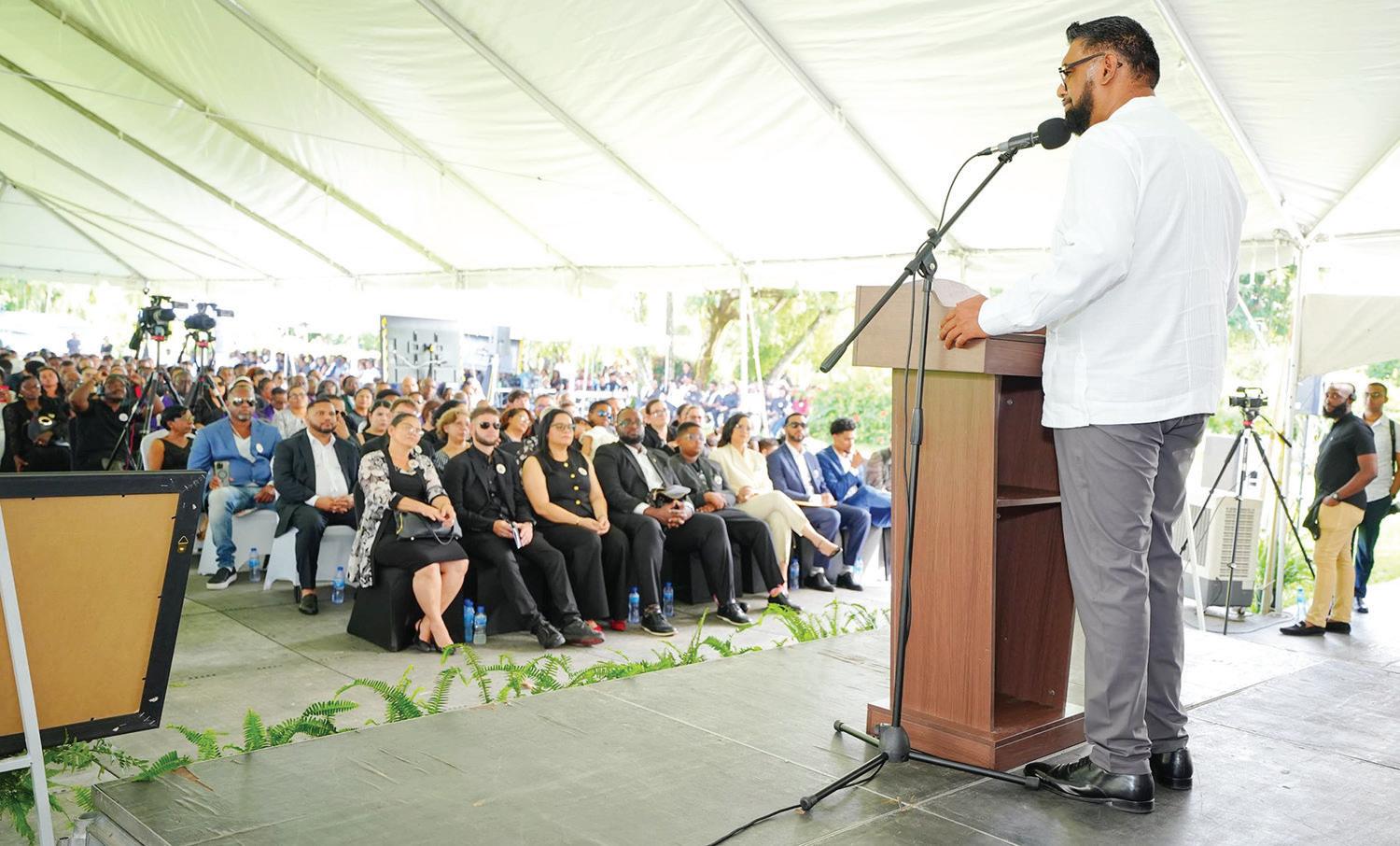
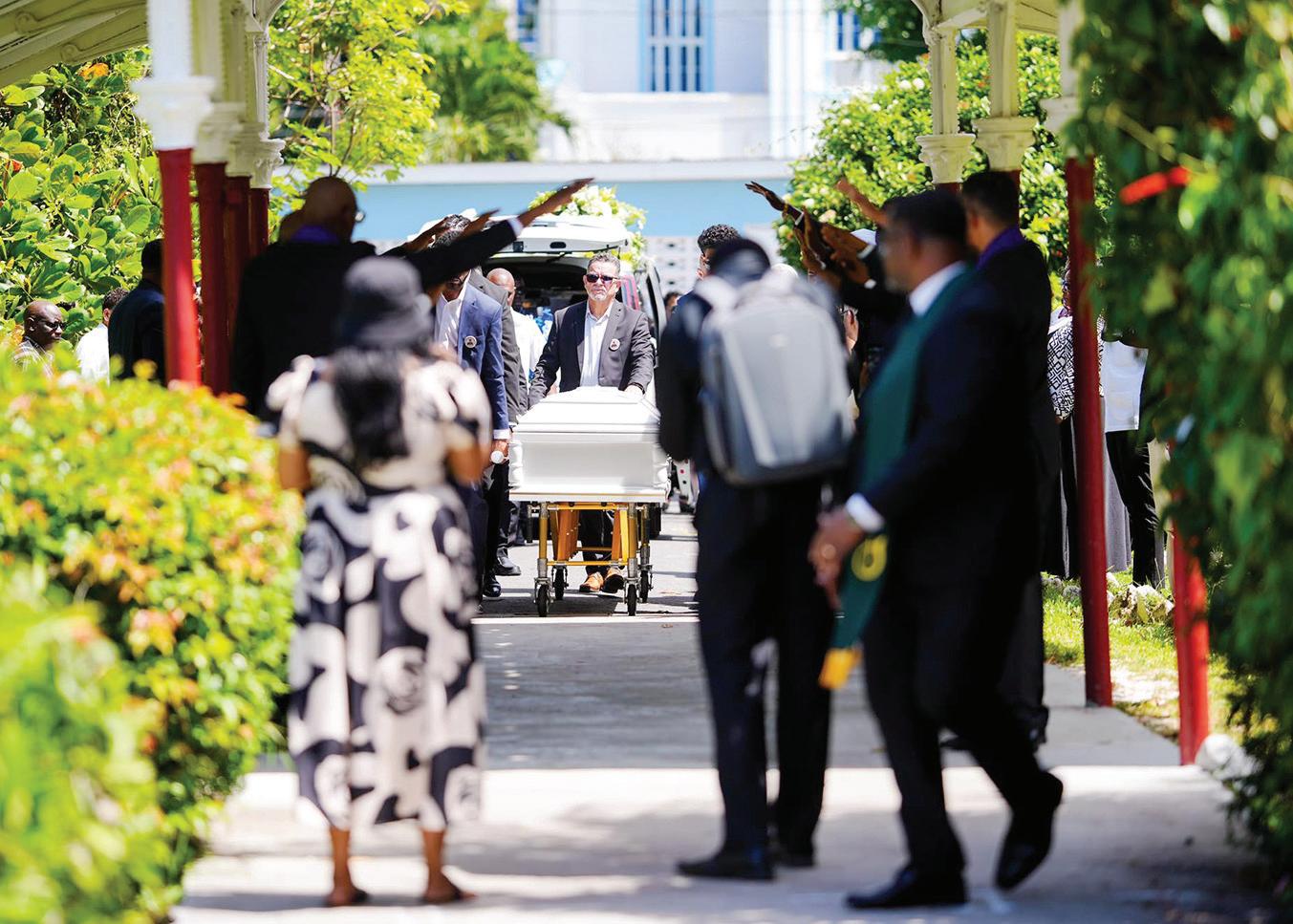
BISHOP Patrick Findlay, a respected clergyman and public servant who served with distinction as Chairman of the Police Service Commission, was laid to rest on Saturday following a Homegoing Service at Promenade Gardens.
In a tribute on Saturday, President Dr. Irfaan Ali described Bishop Findlay as “a devoted servant of God and country,” whose life was defined by integrity, hu-
mility, and an unwavering commitment to public service. The President noted that Bishop Findlay’s stewardship of the Police Service Commission reflected a deep respect for justice, service and the rule of law.
“Pastor Findlay was an outstanding Guyanese whose life was marked by integrity, humility, and unwavering commitment to public service. His contributions to nation-building and
his guidance within the Commission reflected a deep respect for justice, service, and the rule of law.,” President Ali said.
The Homegoing Service, was attended by President Irfaan Ali, government ministers, senior officers, other public officials, along with family and friends who gathered to pay their final respects.
In public life, Bishop Findlay was best known for his leadership of the Police Service Commission, where he played a key role in upholding standards of accountability and professionalism within the Guyana Police Force.
His career in government service began in 2010 at the Ministry of Labour, Human Services and Social Security, where he served as Men’s Affairs Administrator.
Two years later, he was appointed Deputy Permanent Secretary, with responsibility for critical portfolios including Men’s Affairs and Counter-Trafficking in Persons. In 2014, he was
elevated to the post of Permanent Secretary at the Ministry of Labour, a position he held until 2015.
Beyond his titles and offices, Bishop Findlay was widely regarded as a man of principle, who consistently sought to bridge faith and public service with humility and purpose.
He was also widely known for his decades of spiritual leadership as Senior Pastor of the Full Life New Testament Church of God, where he guided and mentored generations of members and remained a steady moral voice within the wider community.
Bishop Findlay is survived by his wife, Denise Findlay; his children, including Press Secretary to the President, Dr. Suelle Findlay-Williams; his grandchildren; and other members of his extended family.
His passing marks the loss of an outstanding Guyanese whose contributions to both church and state left a lasting imprint on national life.
- President Ali tells Linden residents; implores them to embrace the partnership that will drive continued development
PRESIDENT, Dr Irfaan Ali, in a clear message to residents of Linden, Region 10 (Upper Demerara-Upper Berbice), emphasised that the People’s Progressive Party/Civic (PPP/C) has earned the love, respect and support of the people after consistently delivering on its commitments throughout the years.
In yet another demonstration of its commitment to the people of Region 10, the government, on Saturday evening, commissioned the modern Bayrock National Stadium,
which opens up new opportunities for the region's youth and residents.
The President used the beaming lights of the stadium as an example of the "brighter" days ahead for residents once they continue to put their trust in the PPP/C.
“I speak to you frankly today, because there is no use for us to stand here and massage the message. The message needs no massaging. The message must be clear. This People’s Progressive Party/Civic government has stood by you, stood with you, and
we will continue to do so,” the Head of State said.
He underscored that the PPP/C is not a government built on promises, but on execution.
“We are not a party or a government that orient ourselves only on promises. We deliver. We deliver every single day. We deliver because we care. We deliver because we love you,” President Ali declared.
The President stressed that development under his administration is inclusive, with no region marginalised.
“We see no difference in Regions One, Two, Three, Four, Five, Six, Seven, Eight, Nine and 10. We deliver for every Guyanese, every family, every region, every community. We deliver as one Guyana,” he said.
Turning to the new stadium, President Ali described the facility as a catalyst for wider economic transformation in Region 10, noting that it is only the beginning of a broader development trajectory.
“This is not the end. This is the means to the
end, because the next part of the journey is to bring world-class events, to create opportunities for your local economy,” he said.
According to the President, the stadium is expected to spur investment in restaurants, hotels and entertainment complexes, creating sustained economic spin-offs across the region.
Meanwhile, Prime Minister Brigadier (retired) Mark Phillips said that it was a “proud moment” especially for him, as he reflected on his childhood in Linden.
“As a fellow Lindener, I am proud tonight because this is a dream realised for all the people of Guyana,” the Prime Minister said.
The Bayrock Track and Field Stadium features a modern synthetic track, an integrated football field, spectator stands, security fencing, and drainage with the aim of being a key hub for athletics and football, decentralising sports facilities beyond the capital and supporting talent development with facilities for training, events and community use.
TO bring miners within the formal financial system and reduce dependence on informal credit, President Dr Irfaan Ali has announced that commercial banks will be deployed to Puruni Landing, Region Seven to facilitate onsite banking services for small and medium-scale miners.
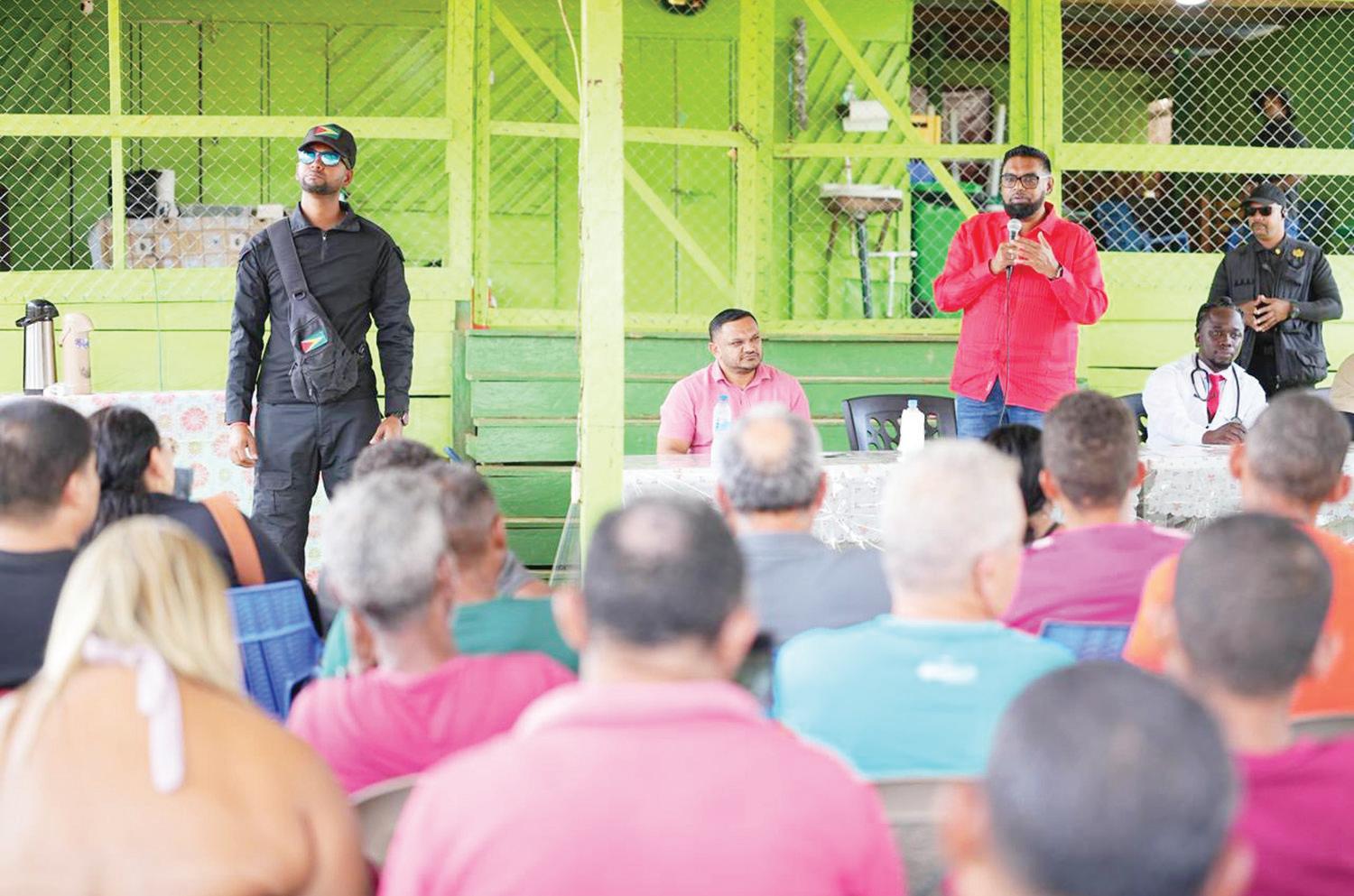
Addressing scores of miners and stakeholders in the hinterland community on Friday, President Ali said the initiative forms part of a broader strategy to ensure that miners not only operate legally but also participate meaningfully in Guyana’s financial ecosystem.
“We’re going to send the banks here,” President Ali told miners, adding that representatives from commercial banks will assist miners on the ground with opening bank accounts in Puruni, eliminating the need to travel to Georgetown for basic financial services.
Commercial banking services in Region Seven (Cuyuni–Mazaruni) are largely concentrated in
Bartica, leaving miners and hinterland workers operating in remote mining districts with limited or no direct access to formal financial institutions.
As a result, miners are often forced to travel long distances, frequently carrying large sums of cash, to access basic banking services, a reality that heightens security risks, exposes workers to robbery and violence, and reinforces reliance on informal cash-based transactions.
However, according to the Head of State, decision to take banking services directly to Puruni therefore addresses not only financial exclusion, but also a longstanding safety and governance challenge within the interior mining sector along with empowering miners to leverage their earnings productively, from securing housing loans to acquiring equipment like excavators, without being trapped by predatory, informal credit arrangements.
“Those declaration slips,” President Ali ex-
plained, referring to gold declaration documentation, “will help you get loans to grow larger and larger. You want to build your homes? Those declaration slips are important.”
FINANCIAL
LITERACY AND EMPOWERMENT
As part of the banking outreach, the Government has also committed
to rolling out financial literacy programmes in partnership with the Development Bank, aimed at helping miners better manage savings, understand credit, and build sustainable economic futures.
President Ali acknowledged the entrenched “culture” in mining communities where quick returns often give way to
expenditure patterns that undermine long-term stability. The new approach positions bank accounts, savings habits, and loan access as foundational to miners’ economic growth.
“We want you to have a bank account, so you can save your money, you can own your home,”
President Ali said, adding that earlier practices where miners depended
on informal credit for supplies and equipment often left them “like a slave unto them.”
The deployment of banking services merges with the Government’s push for full compliance with gold declaration and registration requirements.
President Ali stressed the importance of miners selling their gold through legal channels, particularly via the Guyana Gold Board, so that miners’ own production records can be recognised by financial institutions.
“Even if you make a hundred ounces of gold in a year, that’s a hundred ounces of income you show the bank … it unlocks opportunity for you to get a loan,” he said.
As such, President expressed urgency in implementing the reforms, noting that within the next three to four weeks, teams will be working in Puruni to assist miners in obtaining documentation, digital IDs, and opening bank accounts signalling a rapid rollout rather than distant policy intent.
--- says refinery will cut imports, boost regional production
THE Caribbean Private Sector Organization (CPSO) has thrown its support behind major sugar refinery investments underway in Guyana and Belize, describing the projects as strategic moves to strengthen regional food security, reduce import dependence, and rebuild CARICOM’s sugar industry.
In a statement on Saturday, the CPSO said joint ventures involving Sucro Limited, Santander Sugar Limited and GAICO Construction & General Services Inc. will significantly expand the Community’s capacity to
refine sugar within the CARICOM Single Market and Economy (CSME).
According to CPSO estimates, CARICOM imported just over US$150 million in refined sugar in 2024, largely from extra-regional sources.
The organisation said the refinery projects in Guyana and Belize will help reverse that trend by allowing more raw sugar produced within the region to be refined locally.
“The Belize and Guyana sugar refinery investments will add regional refining capacity and reduce the Region’s dependence on external sources by allowing more


of the Region’s raw sugar to be processed within the Community,” the CPSO stated.
In Belize, the refinery will be developed under Caribbean Sugar Refinery Limited and located within the Santander complex at the Valley of Peace. The facility is expected to commence operations before June 2026.
In Guyana, Demerara Sugar Refinery Inc. will be established at the former Wales Estate, utilising refinery assets and technology being relocated from Canada. The refinery will process raw sugar supplied by Guyana Sugar Corporation (GuySuCo), allowing for a rapid start-up once operations begin.
The CPSO also commended President Dr Irfaan Ali and Prime Minister of Belize, John Briceño, for their leadership in advancing the refinery investments and publicly reaffirming government support for the regional sugar industry.
The organisation noted that Prime Minister Briceño reiterated Belize’s policy commitment before the Belize National Assembly on February 2, 2026, signalling strong political backing for private-sector investment in agri-processing.
“The clear policy signal transmitted from the highest political level will further bolster private-sector confidence to increase investments



in the agri-food sector and position CARICOM as a stable and secure market for regionally produced goods,” the CPSO said.
Chief Executive Officer and Technical Director of the CPSO, Dr Patrick Antoine, described the refinery projects as critical to rebuilding the region’s sugarcane production and agro-industrial capacity.
“These investments are strategic for the rebuilding of CARICOM’s sugarcane production capacity and are closely aligned with the region’s agri-food policy and strategy under the 25 by 2025 plus 5 (2030) agenda, as well as the Community’s Industrial Policy,” Dr. Antoine said.
He highlighted that meeting intra-regional demand must be the immediate priority, noting that securing the
CARICOM market would allow the refineries to achieve the scale and competitiveness needed for long-term sustainability.
“Private capital can only transform regional agriculture into agro-industry where market certainty and policy coherence exist across CARICOM,” Dr. Antoine said. “For these investments to achieve their full regional impact, they must be supported by coordinated trade, agriculture, and industrial policies.”
The CPSO said the refinery projects, alongside expanded sugarcane production, mark a critical shift in the Caribbean’s sugar and sweetener value chain and are fully aligned with CARICOM’s goal of reducing the region’s extra-regional food import bill while deepening regional value chains.

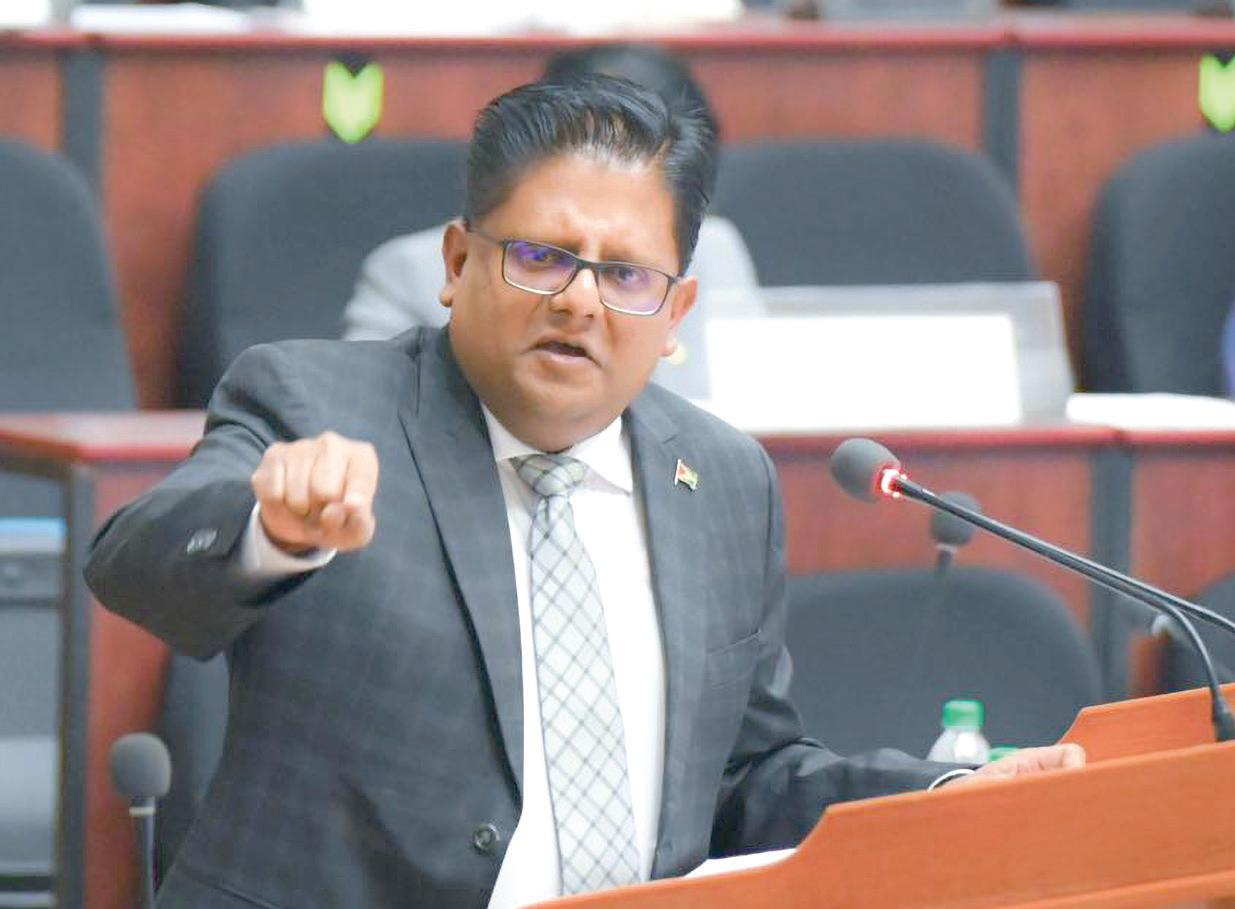
SENIOR Minister in the Office of the President with responsibility for Finance, Dr Ashni Singh, has rejected claims made by opposition parliamentarians during the 2026 Budget debate that Guyana’s current poverty rate stands at 58 per cent, stating that the data being relied upon reflects the period when the APNU+AFC was in government.
Singh made the clarification on Friday while responding to presentations in the National Assembly, noting that the poverty statistics cited by the opposition were drawn from an Inter-American Development Bank (IDB) working paper that analysed survey data from 2016 to 2018, as well as 2021, the height of the COVID-19 pandemic.
According to the Finance Minister, the report clearly identifies the timeframe of the data used, but opposition speakers repeatedly failed to disclose this context while presenting the figures as reflective of present-day conditions.
“On page 41 of the report, under the appendix titled Surveys Analysed by Country, it states clearly that the data for Guyana comes from the Labour Force Survey for the years 2016 to 2018 and 2021,” Singh told the House.
He pointed out that the 2016–2018 period fell squarely under the APNU+AFC administration, while 2021 coincided with the economic disruptions caused by the COVID-19 pandemic, when the incumbent People’s Progressive Party/Civic (PPP/C) admin-
istration returned to power in 2020. “That poverty statistic they were citing is an APNU legacy. It states it clearly in the document,” Singh said.
The IDB publication, titled Ten Findings about Poverty in Latin America
and the Caribbean (Working Paper IDB-WP-01644), was released in November 2024.
Singh said opposition members selectively referenced figures from the report while omitting the context of when the data was collected.
“Not one of them chose to turn to page 41 and disclose that the data related to the period 2016 to 2018,” he said.
Singh further explained that the report measures poverty using World Bank international poverty lines, including a moderate poverty threshold of US$6.85 per day, which he argued does not align with prevailing wage realities in Guyana.
Using an exchange rate of G$200 to US$1, Singh said the threshold equates to approximately G$1,400 per day, adding that such a figure does not reflect current labour-market conditions.
“I challenge the Honourable Member to find anyone in Guyana working for $1,400 per day, including unskilled labourers,” Singh said. He noted that national labour market surveys show
rising incomes, increased employment and a reduction in unemployment, outcomes which he attributed to the current administration’s economic policies.
Singh said the continued citation of outdated data without context formed part of a broader pattern of what he described as selective interpretation of statistics by the opposition. “The Guyanese people are wiser today,” he added, noting that voters had already rendered judgment at the polls in 2025.
The Finance Minister reaffirmed that the PPP/C government remains committed to improving living standards and addressing poverty through expanded employment, education, health care and social-support programmes outlined in Budget 2026.
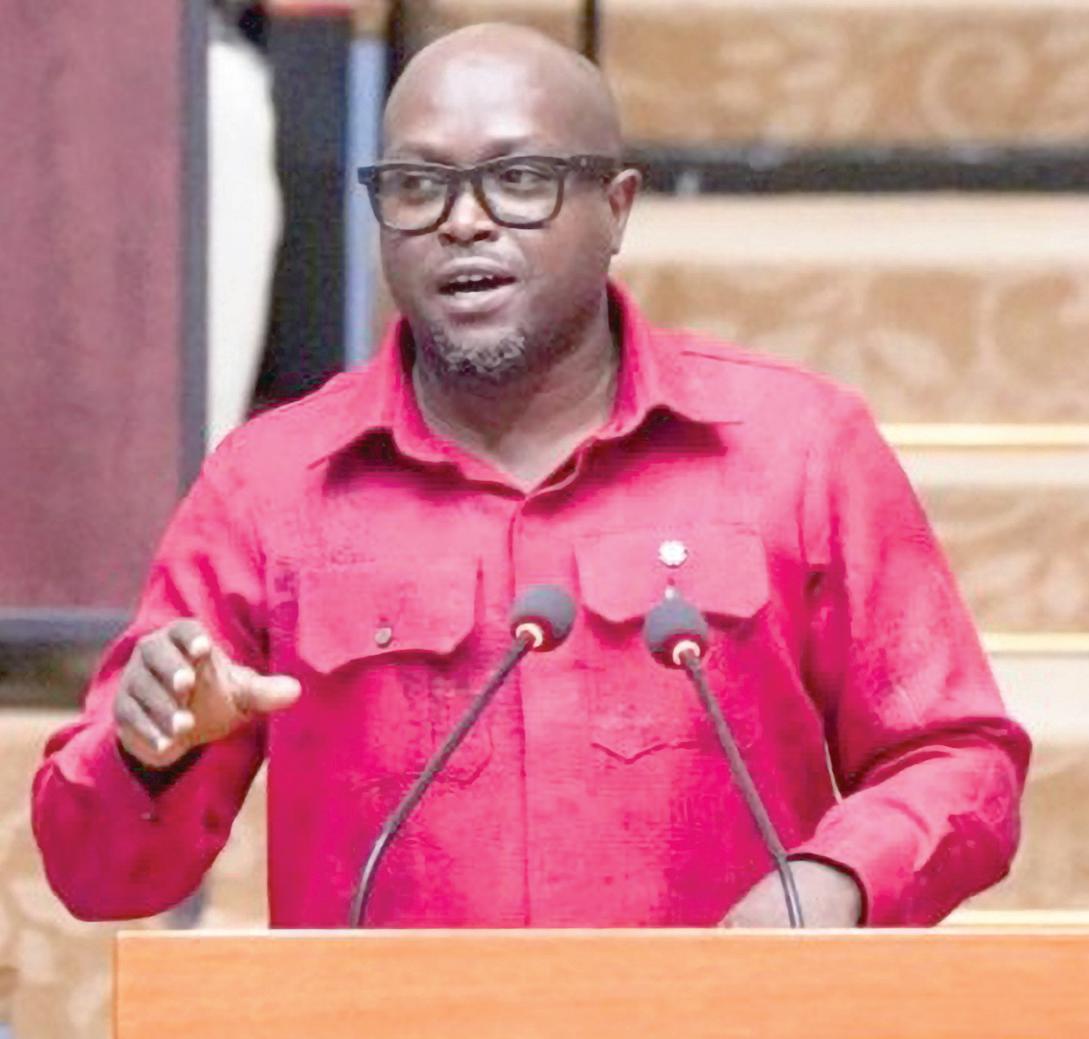
MEMBER of Parliament
James Bond has described Budget 2026 as a transformative plan that creates jobs, empowers communities, and expands economic opportunities for young people across Guyana.
During his contribution to the budget debate, MP Bond highlighted the government’s targeted interventions in communities including Tiger Bay, Kingston, Golden Grove, Haslington, and Melanie. He cited a recent initiative in Tiger Bay, where residents were employed for community enhancement works, including beautification projects linked to the opening of a new recreational facility.
MP Bond also noted that President Dr Mohamed Irfaan Ali has committed to building a shade house in the Tiger Bay/Kingston area to support income generation for women.
“They have the opportunity… to get $1.6 million per year,” the MP said, explaining that structured agricultural initiatives can provide sustainable earnings for residents.
Bond also highlighted youth-focused investments in sports facilities and technical training programmes. He noted that young people who enrol in government-supported training initiatives receive stipends, transportation, and uniforms while acquiring
skills.
“Whilst training you, they pay you,” he said, encouraging young people to take advantage of the opportunities provided.
The parliamentarian also mentioned access to small business financing through the Guyana Development Bank, urging youths to meet compliance requirements and position themselves to access up to $3 million in support.
“If you want to be in the picture, you got to position yourself,” MP Bond stated.
In defending the budget’s overall framework, the
MP stressed that the $1.558 trillion allocation benefits all Guyanese, regardless of political affiliation.
“Everything about this $1,558,000,000,000 is for the people of this country, irrespective of what you look like, irrespective of who you vote for,” he affirmed.
Bond commended the Senior Minister in the Office of the President with Responsibility for Finance, Dr Ashni Singh, and the Ministry of Finance’s team for what he described as dedicated service in crafting Budget 2026. [DPI]



WHEN Finance Minister Dr Ashni Singh rose to wrap up the 2026 Budget debate on February 6, he did not merely close a parliamentary exercise, he presided over the political funeral of an opposition so fractured, so feeble, and so bereft of ideas that the Guyanese people must now wonder whether these 29 persons serve any purpose at all.
Let us begin with Terrence Campbell, the man catapulted into the parliamentary leadership of APNU the smallest PNC contingent in the entire history of Guyana's post-independence parliament. 12 seats. Not 22, not 33, not 54 as in the rigged Burnham era 12. And what did the man entrusted with this diminished rump deliver
during his allotted 20 minutes?
Vile personal attacks, body-shaming insinuations disguised as policy critique, and the audacity to brand every private-sector body in Guyana from the PSC to the Georgetown Chamber of Commerce as "politically captured."
When your political strategy consists of insulting the very stakeholders who validated a $1.558 trillion people-centred budget, you deserve the political wilderness you inhabit. Singh's surgical dissection of Campbell was devastating. The Finance Minister exposed a man who could not even confirm when or whether he became a PNC member, who was secretive about his party affiliation,
and who plagiarised Shirley Chisholm's famous "Unbought and Unbossed" slogan, while accusing others of thievery.
He further revealed Campbell's attempt to secure a write-off of tax penalties and interest only for Campbell to rise, confirm the very charge, and sit down to uproarious laughter.
Even a senior PNC member described Campbell as a political “T-baller” a child playing a child's game on a grown-up field. The night watchman, as the cricketing analogy goes, holding the crease until someone serious arrives.
Then there is the spectre hovering over the entire opposition landscape: U.S.-indicted Azruddin Mohamed, whose WIN party holds 16
seats, yet whose leader faces federal charges for wire fraud, money laundering, and conspiracy to defraud the Guyana government of over US$50 million in gold-export taxes.
Singh's extended “Pablo” analogy was no accident it was a chilling reminder that tens of thousands of Guyanese abandoned the PNC not for a credible alternative, but for a party led by a man whom OFAC has sanctioned and the U.S. Department of Justice has indicted.
That a shadow minister from WIN openly stated, "even when they carry him, the money will still be there," tells you everything about the moral bankruptcy pervading those benches.
The opposition could
not even agree among themselves on who would speak and for how long. APNU and WIN spent weeks locked in a petty squabble over shadow-cabinet allocations, with Campbell unable to extract meaningful portfolio representation from a party barely a year old.
The result? APNU MPs were reduced to 15-minute backbencher slots the parliamentary equivalent of being told to sit down and be quiet.
Against this carnival of incompetence, the PPP/C presented towering parliamentary performances from veterans such as Gail Teixeira to newcomers such as James Bond, Tandika McAllister, and the inspiring young indigenous MPs Sarah Browne and Sonia
Latchman. The contrast was not subtle; it was annihilating.
The people of Guyana spoke clearly in September 2025 when they handed the PPP/C its largest majority in two decades and consigned the PNC to historic irrelevance.
Budget 2026, with its social safety nets, its provisions for infrastructural advancement, investments in human capital development, and significant costof-living measures, speaks for itself.
The opposition had five days to present a credible counter-vision. They squandered every minute. They were not merely defeated in debate. They were decimated by their own mediocrity.
Dear Editor,
LONG before the discovery of oil, successive PPP/C governments had already established a strong record of providing both cash and in-kind transfers to support Guyanese families.
Since 2021, both the number and value of these transfers have increased, reflecting a continuation and expansion of long-standing social policies rather than a new phenomenon driven solely by oil revenues.
Guyanese are well familiar with initiatives such as the Because-We-CareCash grant; the One Laptop per Family programme; the school-feeding programme and the provision of free
textbooks, many of which predate the discovery of oil.
Similarly, the national housing programme, which has transformed the lives of tens of thousands of citizens, began in the 1990s at a time when the country was heavily indebted and emerging from decades of economic and social decay.
Of all these interventions, I believe the housing programme is among the most effective in preventing intergenerational transmission of poverty. Under this programme, beneficiaries receive multiple layers of support. To begin with, there is a substantial land subsidy: low-income beneficiaries pay only 25 per cent of the market value of house lots,

effectively receiving a transfer equivalent to 75 per cent of the land price.
This is complemented by infrastructural subsidies that increase the value of these lots as roads, drains, water, electricity, and other utilities are installed within housing schemes.
Over the years, low-income households have also benefitted from reduced interest rates on low-income mortgages.
The savings generated by these interest-rate adjustments, made possible by the government forgoing taxes on income from such loans, amount to a significant share of the interest that would otherwise be due and payable.
The government went further by introducing Mortgage Interest Relief, allowing homeowners to benefit from tax breaks.
Over the life of a loan, these savings are equivalent to countless mortgage instalments, further easing the financial burden on working families.
When these transfers are monetised, they amount to millions of dollars received and enjoyed by beneficiaries of government house lots. More importantly, the receipt of a government house lot often leads to ownership of one of the most valuable assets a household can possess, a home.
That home, in turn, is linked to the accumulation
of other assets, including household furnishings and vehicles, thereby enhancing overall household wealth and stability.
Based on my calculations, the housing programme has been responsible for a significant number of individuals moving from low-income to middle-income households.
All members of these households benefit from this upward mobility, not only through access to adequate housing, but also through the long-term security the home provides, including the potential to be inherited by future generations.
These transfers, such as free tertiary education, scholarships for post-sec
ondary training, government payments for CXC subjects, and other education-related programmes, deliver benefits that extend far beyond a single year. They provide a lifetime of opportunity, creating households that can stand on their own and thrive without dependence on handouts. I therefore welcome this budget and look forward to future budgets that will continue to deliver such transformative interventions, further reducing intergenerational poverty and helping to build a more progressive and resilient society well beyond 2030.
Dear Editor,
I HAD the opportunity, an unfortunate one I would say, to listen to the newly minted opposition leader’s maiden address to the Parliament on February 06, 2026. His typed address was clearly a futile and disingenuous attempt to mislead, deceive and dupe the Guyanese people. Of course, such behaviour is in his DNA.
One need not look further than the charges he is attempting to avoid in the United States. But more on that another day.
The opposition leader waxed lyrically about the budget not providing any pay increases for public servants. This is a downright lie! In 2024, the government and the Guyana Public Service Union (GPSU) approved a three-year agreement which provides for a nine per cent pay rise this year. This is public knowledge, yet the opposition leader says noth-
ing is there. Clearly, he is out at sea.
The out-of-depth leader goes on, gleefully reading and telling the country that the budget has nothing for the ordinary people. Again, deception and misdirection. Everything policy, programme and initiatives in the budget seeks to uplift the ordinary man, woman and child.
Direct cash transfers, improvements in benefits and conditions, and reduction in taxes-- collectively and cumulatively-- contribute to their well-being. The zero-taxation of fuel keeps the cost of living at bay. Similarly, the flagship gas-to-energy plant will slash energy costs and put more money into the pockets of the workers and their families, about whom the opposition leader feigns concern.
Understandably, the opposition leader has been thrust into a position he is clearly not ready for nor qualified to hold. Rather than
offering tangible suggestions as a credible opposition, he and his pack of misfits have chosen to offer sound bites, sensational quotes and personal attacks.
His degenerate attack on Minister Gail Teixeira is a glaring example. He chooses to single out a woman who has done more with her little finger for our country and people than he can ever aspire to do in his lifetime.
As I consider the opposition leader and his party’s expressions, if they can be called that, mirror a lot of what the now-defunct AFC was saying in its heyday.
As we all know, then and we see again, it was all bluster and bluff. I urge our people to remember our past lest we be bound to repeat it, and I want to echo the Minister of Culture, Youth andSport and tell the opposition that “readers are leaders.”
Yours sincerely, Patricia Persaud
Dear Editor,
YOUR letter column came alive in the past few days with enlightening discussions on poverty in Guyana. This is a very important debate which I hope the opposition and government officials will consult.
I appreciate the quality of the writings and the high level of content from Dr. Gampat, Dr. Yhip and Professors Khemraj and Persaud. These men exposed us to a high level of economic commentary ranging from economic development, budget matters and issues of finance. I hope these standards will be sustained in the letter columns. Unfortunately, during the enlightening debate, one University of Guyana Senior Lecturer, Dr. Thomas Singh, threw a low blow at our President, His
Excellency Dr Mohamed Irfaan Ali.
While the above-mentioned experts discussed complex and high-level topics, this UG ‘scholar’ showed us that his contribution is at the level of Introduction to Macroeconomics which is taught to first-year students.
Sincerely, Kevin Persaud

Dear Editor,
MANY citizens are frustrated by the fierce criticisms and sharp rhetoric currently displayed in Parliament. The common sentiment is that our representatives should “stick to the Budget” and abandon the vitriol. However, this perspective overlooks the fact that Parliament is an institution of ritual performance, much like our national celebrations or religious ceremonies.
As Michel Foucault famously explored in his work on “Governmentality,” political order is maintained through the “conduct of conduct.” This means that the rules of the institution shape how power is exercised. If we look across the globe, we see that violent conflict is often the result of people being unable to navigate or talk out their disagreements because these political institutions have broken down.
In Guyana, our parlia -
mentary debates serves as a “structured engagement” governed by rules, norms, and a Speaker who maintains formal autonomy from the political fray.
The key to understanding these sessions is that they represent a ritualised substitute for what may otherwise be physical confrontations.
As long as the talking continues, no matter how bitter it becomes, fighting is not seen as necessary. When the talking stops, the real danger begins.
In this sense, parliamentary debate functions as a necessary proxy for violence, providing a psychological and social release for sectional conflicts.
Democracy is inherently messy because it requires us to talk out our differences. When we hear Senior Finance Minister Dr Ashni Singh, Minister Dr Vindhya Persaud, or Minister Priya Manickchand engaging in heated exchanges with
opposition figures such as APNU’s Terrence Campbell, we are witnessing a conversation. It may be an unfriendly conversation, but as Pierre Bourdieu might suggest, it is a “symbolic struggle” that validates the institution itself.
In the context of Guyana, where racial tensions are a sensitive reality, it is vital to protect this space for discussion. If we do not allow these arguments to happen in an environment governed by rules, they may inevitably move to the streets, where rules are harder to enforce.
Physical conflict begins where the conversation ends. Therefore, we should see these debates not as a distraction from governance, but as the very mechanism that preserves our social peace. So let them talk!
Sincerely,
Dr Randy Persaud
Dr Walter H. Persaud

I AM most certainly not homophobic or will ever be. I don’t know how I will vote if there is a referendum to have same sex marriage. Honestly, I don’t know how I will vote, but I may lean toward voting no. I certainly don’t think it is anybody’s business if people have different sexual orientations once they do not impose their orientation on others.
What I reject is the way imperialist nations that control the economy of a majority of nations in the Global impose sexual preferences on people in the post-colonial world. I resented what then President Obama did on his first visit to Kenya and the way the Kenyan president put him down is one of the golden moments in the relation between the West and the post-Independence countries.
Obama and President
FOR a long time, many young people in Guyana felt that their dreams stopped at the edge of our coastline. Today, that horizon has stretched far beyond it, opening up a new world of opportunity driven by the oil and gas sector. As Guyana changes rapidly, the skills shaping this new chapter are rooted in STEM: science, technology, engineering and mathematics.
But local content is not
Kenyatta held a joint press conference in which Obama made a pitch for the acceptance of homosexual practice as a part of the recognition of human rights. The Kenyan President put Obama in his place.
You should see the video clip. He said people in Kenya do not have some of the rights the American people enjoy like access to drinking water. He said that when Kenya achieves those rights, then, it will move to gay rights.
The relentless forcing of gay rights and the abolition of the death penalty on the peoples of the Global South should be resisted. Let the countries of the world decide if they want gay rights and the abolition of the death penalty.
One of the most wellknown faces in Guyana told me he was refused a visa by the American embassy
because he was too condemnatory of gay rights. But he would not have been refused a visa if he said that colonialism civilised the non-White world.
Anyway, let’s get back to the opening line of this article. I am not homophobic, but I believe man and a woman and their love for each other that produces a family is the way of the world. 48 years ago, I met Janet Mohamed on the seawall and one year after married her on this day.
After living for 47 years with Janet, I cannot shake off the feeling that civilisation is better shaped and will have more meaning when a man falls in love with a woman and a woman falls in love with a man and together, they populate the world. I am not and will never be the kind to apologise for what is in my Freudian mind.
This is what I believe in.

This is how I see the essence of civilisation. I have no problems with homosexual behaviour. It is none of my business and I will not publicly denounce the practice of homosexuality. In the same breath, I think people’s right to reject homosexual behaviour should be tolerated.
So I am off this morning with my wife to celebrate my 47th marriage anniversary. I am going to Parika to look at the river, shop and be with the class I was born into. I came back to Guyana in 1984, and in those intervening 46 years, I visit Parika and shop at the alfresco market often.
I have never turned my back on the working people of Guyana and I have been integrated into that class since I left poverty in Wortmanville in south Georgetown. I am genetically a working-class boy. I feel a sense of belonging when I
am at the Parika Market. I feel a sense of loyalty to my history when I am at Parika’s alfresco market.
What saddens me as I get older, moving on in my seventies, is how intellectual society in Guyana no longer has polemics in which class analysis is featured. Our sociologists and economists no longer mention the term, “proletariat.” Gone from intellectual debate in this country are the words, “socialism” and “Marxism.”
This country, at one time from the late 1940s right up to the middle 1990s, used to engage in the viability of socialism and the philosophical usefulness of Marxist philosophy.
That has disappeared. It is incredibly unbelievable that in the heart and bowels of capitalism, perhaps one of the most admired legislators is a proclaimed socialist, Bernie Sanders. The most
popular politician in New York City is Mayor Mamdani, who is a socialist.
Yet in one of the countries in the world, Guyana, that gave the word “socialism” an enduring legacy, no one any longer talks about socialist economics. I admire Karl Marx and Sigmund Freud as profound philosophers and readily admit that there are many holes in their theorising zeal.
But Marx was blazingly right when he wrote on class exploitation. I believe rich people should be allowed as many yachts and private jets as they want to have. But the working classes must never be exploited.
DISCLAIMER: The views and opinions expressed in this column are solely those of the author and do not necessarily reflect the official policy or position of the Guyana National Newspapers Limited.
just about ticking boxes or filling quotas. It is about making sure Guyanese are genuinely prepared to take up the opportunities created by this industry.
From a primary school pupil building their first robot at a community centre, to a young technician learning advanced welding at a technical institute, the road to opportunity is paved with problem-solving, practical skills and curiosity. If Guyana is to truly benefit from its natural

resources, it must first invest in building the skills needed to manage them.
That journey does not begin at graduation. It starts early. Exposure to STEM subjects at the primary school level lays the foundation for confidence later on. When children are introduced to coding, basic engineering concepts and scientific thinking at a young age, mathematics and science become less intimidating. Programmes offered by organisations such as STEMGuyana and the Remote Area STEM Summer Residency are already showing that students exposed to STEM early are more likely to stick with it. Instead of watching Guyana’s transformation from the sidelines, young people can become active participants in driving it.
As demand grows for workers across the energy sector and related indus -
tries, Guyana’s education and training systems are stepping up.
The National TVET Policy is modernising technical education, with thousands of graduates expected in areas such as electrical installation and welding.
The University of Guyana has expanded its programme offerings, including Petroleum Engineering, while facilities like the Guyana Technical Training College in Port Mourant represent a major investment in skills development.
Built through support from ExxonMobil Guyana and its partners, the college closely reflects real offshore working environments, helping students transition confidently from classroom learning to real-world application. Alongside private training providers, students are also gaining essential safety certifications and hands-on ex-
perience that prepare them for industry demands.
Technical skills, however, are only part of the picture. Employers are also looking for strong teamwork, clear communication, problem-solving ability and a solid work ethic. In high-pressure environments, the ability to think clearly, follow procedures and work safely with others matters just as much as technical knowledge.
That is why training today focuses not only on passing exams, but on building the right mindset.
Perhaps most encouraging is that access is no longer the barrier it once was.
Through programmes such as the Guyana Online Academy of Learning (GOAL), many students now have access to free tertiary education. Companies, including SBM Offshore and GYSBI, are supporting STEM scholar-
ships and technical training, while the Ministry of Public Service continues to fund studies at technical institutes across the country. More doors are open than ever before.
This moment should not be allowed to pass by. To parents, a child’s curiosity about how things work, whether it is a phone, an engine or a computer, could be the first step towards a future career. Encourage that interest. To students, do not be intimidated by the size of the industry. There is a place for you in it. Oil and gas resources belong to the nation, but the future belongs to those who prepare themselves to lead it.
DISCLAIMER: The views and opinions expressed in this column are solely those of the author and do not necessarily reflect the official policy or position of the Guyana National Newspapers Limited.
THERE were a lot of takeaways from last week’s Budget 2026 debates in the National Assembly, some serious, some comical, and a few so theatrically absurd they would shame a roadside Ole Mas band. I am not joking. When I saw and heard David Hinds’s and Dexter Todd’s presentations in particular, it did occur to me that these men in suits might have imagined themselves performing political theatre at the corner of Lamaha Street and Vlissengen Road.
By contrast, listening to the interventions from the government benches, senior ministers and fresh‑faced MPs alike, most Guyanese must have felt, as I did, a deep sense of relief that they had put their X next to the cup in last September’s National and Regional Elec tions.
However, I wondered what those Guyanese – and yes, there are many of them – who voted for APNU/ WIN heard when their MPs
took the floor of the august National Assembly this last week. More to the point, what on earth did they hear when the Leader of the Op position rose to address the House two nights ago?
There were buffoons, bullies, and then came the sanctioned messiah with a script. Guyana has now lived long enough to see an indict ed gold dealer, denounced by the United States Treasury and facing a multi‑count indictment abroad, rise in the National Assembly, clutch ing his prepared text, and attempting to pass himself off as the moral conscience of our nation. It is one thing for a man to tell his own story, but it’s quite another for 109,000 voters to have decided that this is the story they want representing their best interests.
From the moment Azrud din began his Budget 2026 presentation, it was clear he had come not to scrutinise the nation’s finances but to audition for the role of Pablo Escobar with a parliamentary
pass. He opened by listing his own alleged sins like a twisted résumé – “sanc tioned man, gold smuggler, international fugitive” – the only thing missing was a LinkedIn endorsement from OFAC.
Then, with the straightest of faces, he declared himself “first a humanitarian before a politician,” as though a few houses built with ill‑begot ten gains can wash away a decade of allegations and an unsealed indictment.
This, apparently, is the new morality of Opposition politics in Guyana. What played out in the House on Friday night was not an al ternative vision for Guyana; it was an infomercial for Brand Azruddin, complete with product placement.
Azruddin reminded the nation that in his glory days, the banks would call him at midnight to get a couple of million US for the next day. He has never explained how he got those millions that enabled him to run a parallel central bank from the back
of his daddy’s gold shop.
Ashni Singh put his fin ger on the central moral horror: tens of thousands of Guyanese have jeopardised themselves by their associ ation with Azruddin. I hope they were paying attention when his mask kept slipping. Their “humanitarian” who claims to feel the people’s pain could not resist sneering at a veteran parliamentari an’s “cigarettes”, reducing a woman old enough to be his grandmother to a punchline on the floor of the House.
This is what makes Ash ni’s Pablo Escobar analogy so apt. There was no need to say the name; every Guy anese listening understood the silhouette: the sanctioned businessman who uses the poor as props for his social media reels.
The ethical question is not complicated: how did we get to a place where our Parliament ended up with a man whose curriculum vitae comes with its own OFAC annexe? What exactly are we teaching young Guyanese
when we allow Azruddin to stand there, read a speech he did not write, and pronounce judgement on the very in stitutions that will be called upon to process his case?
It is tempting to dismiss him as a temporary specta cle, a noisy, gaudy interlude in our political history that will pass when the courts are done. That would be a mistake. The real danger is not Azruddin himself; it is the normalisation of his type. And for that I blame his father’s shocking behaviour, which he should be ashamed of.
The idea that you can be sanctioned abroad, indicted for elaborate schemes of fraud and tax evasion, and your response is not to re treat in shame but to form a party, demand a state salary, and promise to “get you out of power 2031” is a stain on our political culture.
Guyana deserves an Op position that can hold a gov ernment’s feet to the fire without standing in gasoline. It deserves criticism of the
State from someone who is not ‘wanted’ elsewhere. It deserves scrutiny from an individual whose signature achievement is not having taught the banks how to beg at midnight. Above all, it deserves that its poor are not used as human shields by men who discovered “the voiceless” the minute they got whiff of an indictment. The courts will do what courts do. In the meantime, the rest of us have a civic duty. We cannot stop any one from calling himself “first a humanitarian before a politician.” But we can insist that the title “Leader of the Opposition” belongs to someone whose greatest claim to fame is not a sanc tions list, a race car, and a very well‑rehearsed script.
DISCLAIMER: The views and opinions expressed in this column are solely those of the author and do not necessarily reflect the official policy or position of the Guyana National Newspapers Limited.
JUST over a week ago, the world marked, for the first time, the International Day of Peaceful Co-existence.
Given the upheaval and unprecedented turmoil in the world today at every level, this concept is one we should seek to put into practice as a matter of great urgency For peaceful co exis tence is defined as “the ability of diverse nations, cultures or groups with op posing ideologies to live to gether harmoniously without resorting to war or violent conflict. It promoted mutual respect, tolerance...”
At the level of the indi vidual, gender based abuse, sexual harassment, domestic violence and the increasing ly widespread use of lethal weapons to solve disputes reveal a concerning lack of restraint and grave intoler ance. Domestic violence,
crossing social, cultural and ethnic boundaries, still plagues the world.
Sexual misconduct and human trafficking continue to leave a trail of physical and mental distress that re mains with victims for the rest of their lives.
The current Jeffrey Ep stein case in the US, of the sexual trafficking of young women on a massive scale for the pleasure of rich and powerful men, is a prime example of the ‘severe re percussions of gender ex ploitative practices.
Guns are being used against or by children in hor rific shootings, in drive by killings, robberies and even disputes among neighbours and friends
Societies are being ripped apart by ethnic griev ances, which have led to genocide in various parts of the world. Cultural divides seem more and more diffi
cult to bridge and prejudice has given rise to protests and violent demonstrations or simmers uneasily be neath the surface in many countries
There have been ump teen examples of racial dis crimination sparking nation al and international outrage, some captured on film and going viral, such as the kill ing of African American George Floyd by a white police officer five years ago.
Worst of all, wars and armed conflict have turned too many countries into bloody battlefields, with a mounting body count, mil lions displaced and wide spread destruction.
There are over 170 active armed conflicts taking place across the globe and every indication that these are worsening.
Right on our doorstep, our Venezuelan neighbours have been threatening to in
vade, claiming two thirds of our country and challenging our territorial integrity.
An AI Overview states that, “In 2026 the world is experiencing heightened instability...Major intensi fying conflicts include the Russia Ukraine war, the Is rael Palestine crisis and civil wars in Sudan, Myanmar and Syria”.
Additionally, Israel has been accused of genocide of the Palestinian people and of causing a humanitarian crisis where, particularly children, have been dying of starvation.
The International Day of Peaceful Co existence, proclaimed by the UN in March last year, aims at en couraging greater” dialogue, participation and inclusion” at all levels of society, pro moting peace and justice.
It emphasises the impor tance of living together, fos tering tolerance and respect

for one another, which, to my mind, must begin with our individual interactions.
As Wayne Dyer, a re nowned American moti vational speaker and psy chologist, said, “Conflict cannot survive without your participation”.
DISCLAIMER: The views and opinions expressed in this column are solely those of the author and do not necessarily reflect the official policy or position of the Guyana National Newspapers Limited.
I AM shocked and appalled at the quality and substance of this year’s budget debate. 2026 will go down in history as the year in which the parliamentary standards dropped to the lowest level.
It was at such a vile level that I had to turn briefly away from the parliament to reset myself.
The 13th parliament, honestly, was turned into a busy ‘common’ marketplace. In this marketplace, there was chaos, confusion and drama being sold. The buyers seemed to be mostly young and new parliamentarians. The behaviour of some of the older MPs was equally worrying, as they too seemed to dabble in both sides, taking dirty and obnoxious positions in relation to each other.
Throughout the five days of debate, there were a couple of parliamentarians whose lights shone so brightly, it reminded me of why I fell in love with politics, public administration, public policy, communication, research and philosophy.
First, the Minister of Governance and Parliamentary Affairs, Gail Teixeira, did a fantastic presentation-style debate that was gripping and a lesson in politics. It was masterful the way she commanded the parliament chamber and the attention of government and opposition members.
She schooled Dr David Hinds on understanding history, while giving a class on how to debate to the younger parliamentarians. She, for me, is the best in the 2026
debate that took place last week.
Minister within the Office of the President with Responsibility for Finance, Dr Ashni Singh, came in second as his debating was entertaining, masterful and very strong. He displayed a very classy intelligence during the debate, right down to the last feisty moment when he unleashed the beast, it would seem, on the opposition.
Led by Prime Minister Mark Phillips, Attorney General and Minister of Legal Affairs, Anil Nandlall; Minister of Education Priya Manikchand; Minister of Culture, Youth and Sport, Charles Ramson; Minister of Agriculture, Zulfikar Mustapha; Minister within the Ministry of Housing, Vanessa Benn and Minister within the Office of the Prime Minister with Responsibility of Public Affairs, Kwame McCoy and Minister of Amerindian Affairs, Sarah Browne, were all very good in defending the government and their portfolios.
James Bond, Minister within the Ministry of Culture, Youth and Sport, Steven Jacobs, and Thandi McAllister reached the top of the debate, which was entertaining, spirited, good and unmatched as parliamentarians. They surpassed my expectations.
Bond told the APNU MP Ganesh Mahipaul, “Sit down… You're my son…”, and Browne----------------told the opposition, “President Irfaan Ali is the people’s choice. And if you have a problem

with that, cry a river, build a bridge and get over it!”
WIN Member of Parliament Odessa Primus was the person to watch as she delivered food for thought in a very serious, dramatic, yet comedic manner, telling the government benches, "things suh hard in this country." She upstaged WIN Member of Parliament Vishu Panday and Tabitha Sarabo-Halley, who delivered an emotional speech which called for the government to put the people first by investing more in health and elderly care.
But Primus gets away with several glaring faults because she was entertaining. To professionals, politicians and some within the culture, youth and sport industry, the MP was misled, misinformed, and misguided when one considers the truth and facts about sport, culture and youth in Guyana.
The other WIN MPs read their presentations, and at times, Primus's loud and distasteful behaviour overshadowed them. She might have thought she was protecting them against the heckling Minister McCoy and others were doing, but it caused the public to realise how dense and daft many of WIN’s MPs were, even with their closely followed CHAT GPT and AI-generated scripts.
Opposition Leader Azruddin Mohamed, turned out to be a big disappointment if I am to be objective and serious. Despite it being his first time, he was a slave to his carefully written and vetted script. And, when
he was not reading, he hurled insults and took personal jabs at the government MPs. I must point out that when he insulted and sought to heap shame on Teixeira, I was boiling up with anger, but soon after the shouting and faces in defence of Teixeira were enough to tell him it was in bad taste.
He clearly did not know any of the issues which he raised throughout his speech, which I suspect his sister, Hana Montana, no, Hana Mohamed wrote. It was uncomfortable watching him speak, almost unfortunate that there was no teleprompter to rescue him. His weak but glossy performance proved that he cannot be classed with the weakest of the former opposition leaders and presidents of Guyana.
Donald Ramotar, David Granger, Desmond Hoyte, Robert Corbin, Janet Jagan, and Joseph Harmon did not like the cameras and public speaking, but the nation could not tell whenever they delivered. Mohamed was bluffing, and he knows it.
Reading out what a WIN manifesto would do for the people is not smart at all. Mohamed knows that the people discarded WIN at the polls in September and sent WIN to prove itself in opposition.
There were no bright stars in APNU last week, but Sherod Duncan, Juretha Fernandes and Saiku Andrews stole the show.
Perhaps the worst leader and most disappointing parliamentarian
who graced the 13th Parliament, in my opinion, was Terrence Campbell. He was too emotional and ignorant of parliamentary customs, norms and practices, despite owning Erskine May's "Parliamentary Practice Book.
He was boisterous, raucous and totally irrational at times. He got riled up whenever Minister Singh was addressing the parliament and had an obsession, it would seem, with Minister Manickchand because he tried to ‘shade’ and insult her. Mohamed should know by now that universally, parliamentarians think insults are the arguments employed by those who are in the wrong. It’s the last strike of a drowning politician who is seeking the relevance and validation of the House and country.
The purpose of this debate was to be prepared and not to read well-written speeches or rehearsed lines. It was a debate about portfolios and what was in Budget 2026 for people, and what was left out of the budget. It was to be a contest where the MPs would compete to prove their worth and represent their constituents.
Instead, it turned out to be a circus and a shouting match for some. At times, the heckling turned into a diatribe of insults and personal attacks. I am truly disappointed in the level of politics, which appeared puerile and petty. We must do better in parliament.
As parliamentarians, they must come up with better arguments for the
debate, which Guyanese could not find on ChatGPT and AI.
It seems as though the parliamentary debates are going down the wrong road, and the speaker should not take this development lightly.
After all, debate is combat, and one’s words are one's weapons. One does not have to raise one's voice during a debate, as Campbell and the other WIN MPs did. One must raise the quality of one’s argument. If the goal was understanding and attaining progress in government services, then one must argue and persuade the government to change its course of intended action.
Robert A. Heinlein said, “You can sway a thousand men by appealing to their prejudices quicker than you can convince one man by logic.” And that’s why the WIN/APNU opposition failed.
Their luck is running out. I think more and more, the Guyanese public will see them for just who they are. They are just masking the reality, and the debate has some daunting truths. WIN's grab at power is convenient and temporary. It will be its own undoing. In the end, the Men (good debaters) met face to face with the mice (poor debaters).
DISCLAIMER: The views and opinions expressed in this column are solely those of the author and do not necessarily reflect the official policy or position of the Guyana National Newspapers Limited.
By Bebi Shafeah Oosman
DURING the 2026 budget debate, Minister of Public Utilities and Aviation, Deodat Indar, said Guyana’s economy is on a clear upward trajectory, supported by measurable growth across all major sectors, particularly manufacturing, energy, agriculture and aviation.
Indar told the National Assembly that “every metric is on the rise, every sector is rising,” pointing to concrete data that demonstrates expanding economic activity nationwide. He criticised the parliamentary opposition for refusing to acknowledge these gains, despite what he described as overwhelming evidence embedded in the national budget.
A major focus of Indar’s presentation was the private sector, noting that manufacturers are already benefitting from government policy, citing industry data that shows increases across the sectors.
According to Indar, manufacturing remains central to Guyana’s economic stability.
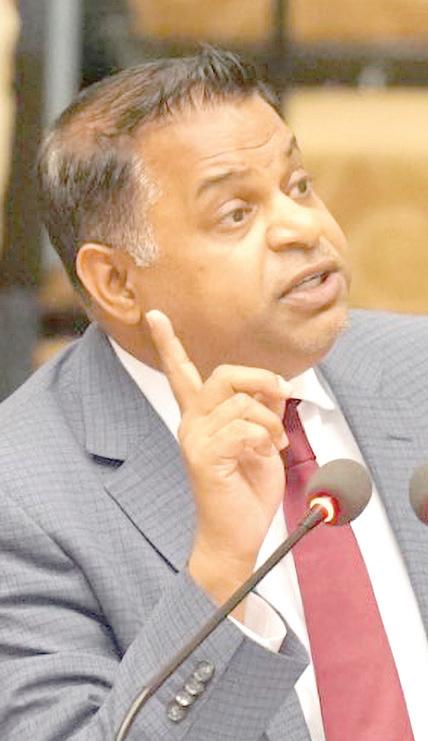
Minister of Public Utilities and Aviation, Deodat Indar
He warned that heavy reliance on imports exposes the country to imported inflation, reinforcing the need to build domestic productive capacity.
“If you do not manufacture, you have to import,” he said, adding that local production is essential to protecting consumers and sustaining growth.
The Minister outlined
several large-scale industrial and energy initiatives aimed at strengthening that capacity. Among them is a proposed gas bottling and logistics facility, for which requests for proposals (RFPs) will be issued this year. The facility is designed to produce more than three million gas cylinders annually, allowing Guyana to manufacture both gas and cylinders locally.
The government is also advancing plans for fertiliser production, another initiative tied to the country’s natural gas resources and the Minister explained that between 70% and 90% of natural gas is used globally as feedstock for fertiliser manufacturing.
An RFP has already been issued for a fertiliser plant capable of producing 300,000 tonnes per year. The project is intended to lower input costs for farmers and reduce food prices by making agricultural production more affordable.
Renewable energy also featured prominently in the
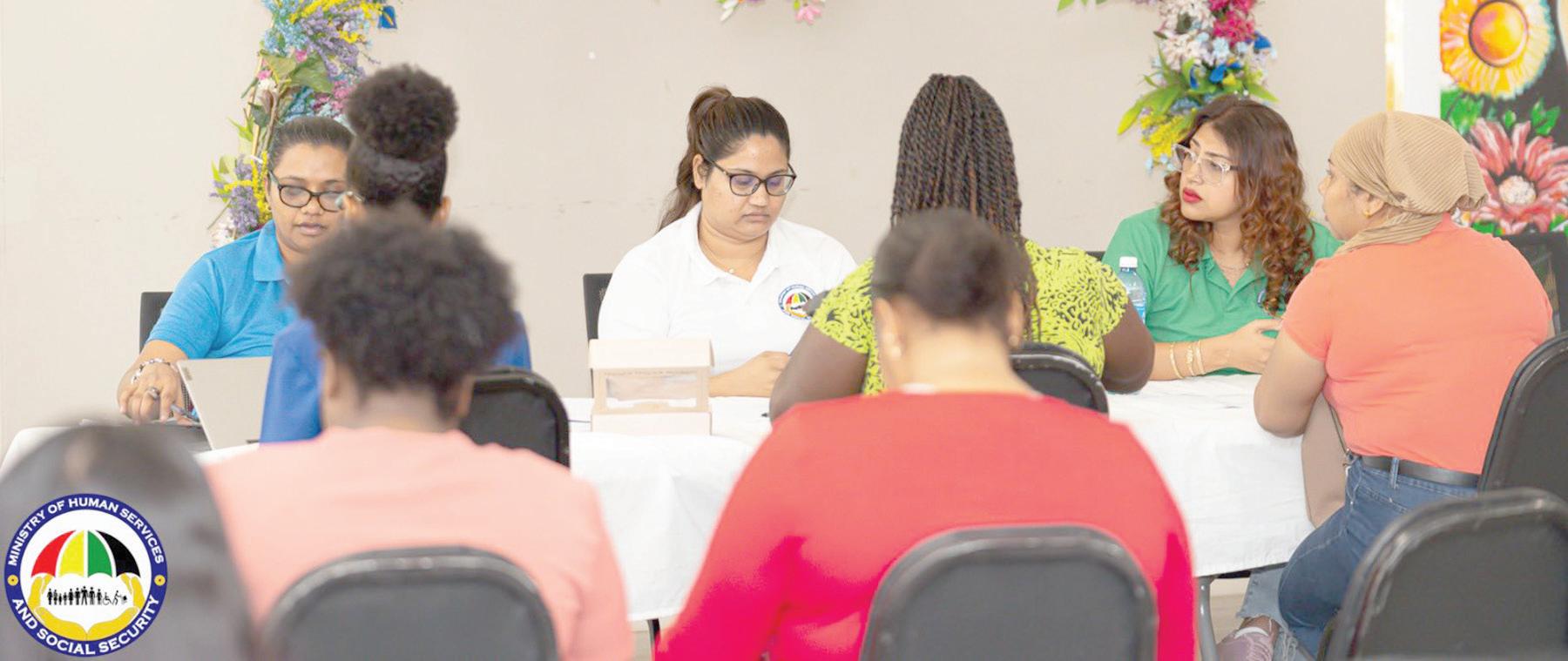
BRINGING opportunities for employment to those persons who need it, the Ministry of Human Services and Social Security, on Friday, took its job fair to the Guyana Women’s Leadership Institute (GWLI) building at Cove and John, East Coast of Demerara.
The initiative follows a series of job fairs held over the past few weeks at the Ministry’s offices in Region Six, Region Three, and on the East Bank of Demerara. At the GWLI location, vacancies were available for positions including Social Services Assistant, PC Technician, Senior Training Officer, and Probation and Social Ser -
vices Officer, among others. On-the-spot interviews were conducted by Ministry staff. Several participants welcomed the outreach, describing the process as efficient and professional. Kimberly Persaud of West Enmore said the exercise was well organised and the staff approachable, describing it as a “really good experience.”
Afina of Paradise Village noted that the interviews were particularly helpful for young people entering the workforce. “I think personally, thinking of the interview that happened today, it was very beneficial to young adults and newly graduates who just came out of school and looking for a job,” she
presentation and he confirmed that the Amelia Falls hydropower project, expected to generate 65 megawatts of electricity, is moving forward after years of stagnation by the previous administration.
“We will make it a reality, the project will play a critical role in diversifying Guyana’s energy mix and supporting long-term industrial growth.
Turning to employment, Indar dismissed claims that the government has failed to create jobs. He referenced data from the Ministry of Labour indicating that tens of thousands of jobs have been created over the past five years, with additional opportunities emerging this year, particularly in aviation.
He noted that job fairs are now required to meet demand at the Cheddi Jagan International Airport, with openings for engineers, electricians, plumbers, cargo agents, ramp attendants, administrative staff, aviation security personnel, customer service workers, and duty-free employees.
Significant investments are also being made to modernise aviation infrastructure and he disclosed that $800 million has been allocated this year to relocate the airport’s control tower to accommodate increased aircraft parking, a development he said reflects the rapid expansion of air traffic.
An additional $100 mil-
lion has been earmarked for training Guyanese pilots, engineers, and aviation professionals, alongside the establishment of a dedicated aviation training school.
In maritime infrastructure, Indar pointed to an allocation of $6.3 billion for dredging the Demerara River, a move expected to improve navigation and support increased commercial activity.
The Minister concluded by stressing that these initiatives reflect deliberate long-term planning and investment, arguing that large-scale projects, not short-term thinking, are what will continue to move Guyana’s development forward.
said. Shalini of Ann’s Grove commended the decision to take the job fair to the East Coast. “I think it’s a great idea that they came up to East Coast to have the job fair. And it was very smooth and nice. We got through quick; it was very professional. And I think it was a great idea,” she stated.
The Ministry reiterated that the job fairs form part of its wider mandate to support sustainable development and rehabilitation for children, women, families, the elderly, and other vulnerable groups, while expanding access to training and social and welfare services for persons in difficult circumstances.

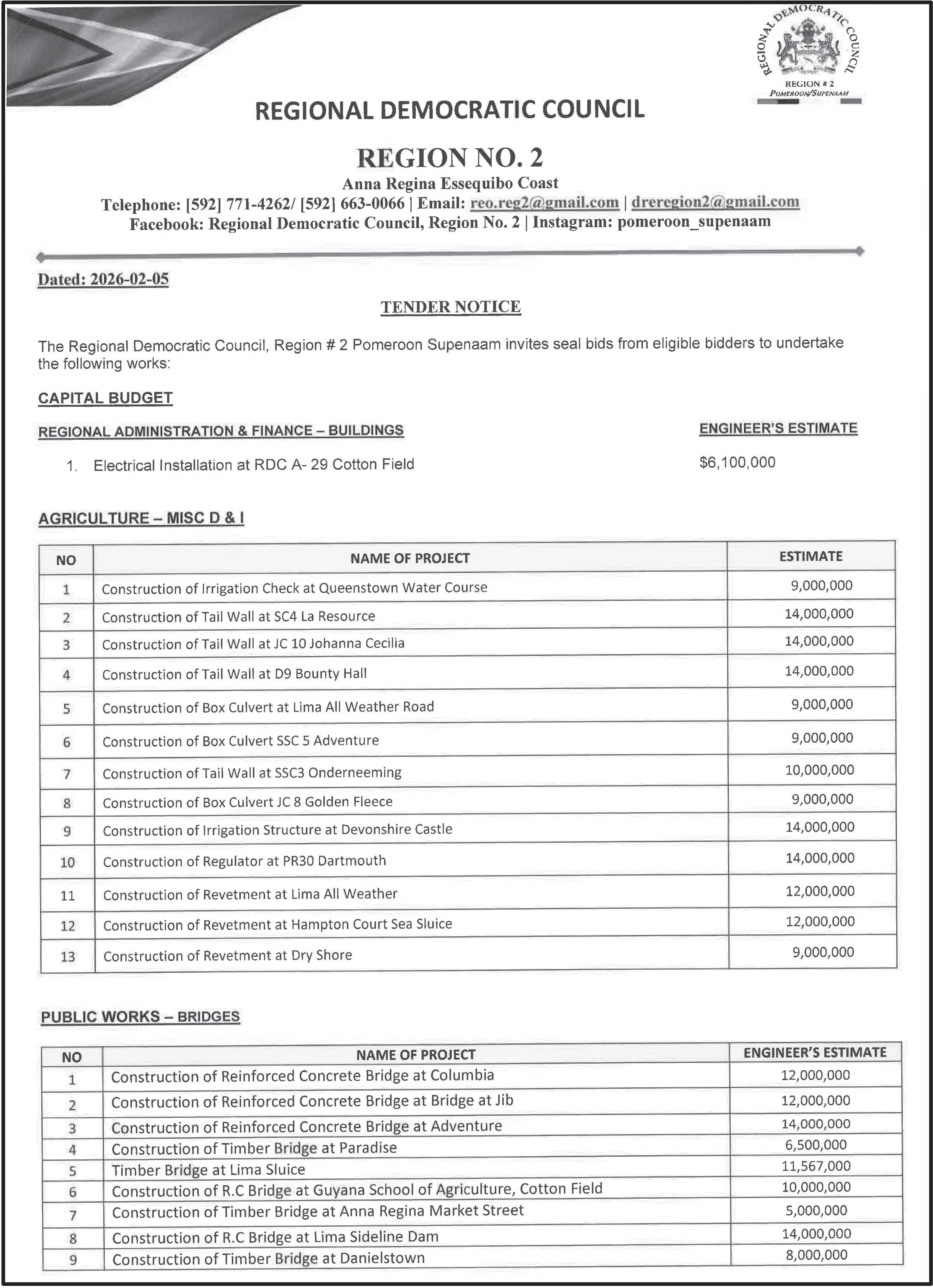

- Finance Minister warns against politics being used to shield alleged criminal conduct
SENIOR Minister in the Office of the President with responsibility for Finance, Dr Ashni Singh, has warned against the use of politics as a shield to escape or frustrate criminal accountability, cautioning that such practices can endanger institutions and exploit vulnerable citizens.
He issued the warning on Friday during his closing presentation for the 2026 Budget debate in the National Assembly, where he referenced the widely documented case of Colombian drug lord Pablo Escobar as a cautionary tale, while stressing that legal processes must be allowed to run their course in Guyana.
In making his point, the Finance Minister cited publicly available international reporting and official United States government statements, including sanctions imposed on Leader of the We Invest in Nationhood (WIN) party and opposition leader, Azruddin Mohamed,
whose case is currently engaging the courts.
Dr Singh stressed that he was not making allegations, but drawing attention to the broader danger of political movements being used to cloak or defend alleged criminal conduct.
“This is a cautionary tale. We are at an extremely important juncture in our country’s history, and we have a duty to ensure that politics is not used to shield wrongdoing, or to ensnare innocent and vulnerable people,” he told the House.
Dr Singh quoted from a June 11, 2024, press release issued by the United States Department of the Treasury, which announced sanctions imposed by its Office of Foreign Assets Control (OFAC) against Azruddin Mohamed, his father Nazar Mohamed and associated business entities.
The sanctions notice alleged, among other things, tax evasion and corruption-related activities.
Dr Singh noted that these allegations form part of an ongoing legal process and said he had full confidence that the matter would be determined by the courts.
“I will not pronounce judgment. I defer to the courts,” Singh said, noting: “If the Honourable Leader of the Opposition is innocent, then let the court process proceed and let him prove his innocence, as is his right.”
He added, "these documents are publicly available,” Singh said.
The Finance Minister said: “I have simply quoted from public documents, and I will not elaborate further
since the matter is engaging the courts.”
According to Dr Singh, the country had also learned of an unsealed indictment in the United States involving Azruddin Mohamed.
“I have full faith in the court system of Guyana that it will be properly considered and determined,” the Finance Minister said.
Dr Singh cautioned that the greater danger lies not only in alleged misconduct, but in what he described as the recruitment of ordinary citizens into political movements that may ultimately expose them to legal, financial, or reputational harm.
He warned against what he characterised as the exploitation of disenfranchised or vulnerable supporters under the guise of political activism.
“Do not ensnare innocent, vulnerable Guyanese people in this effort to save yourself. If you are innocent, you will prove that innocence. But do not ensnare poor, innocent Guyanese people,” Dr Singh said, directing the remark broadly and urging political actors
to allow the justice system to function independently.
‘THE PABLO LESSON’
To illustrate his warning, the Finance Minister read from an article published by The Guardian, recounting the rise and fall of Pablo Escobar, describing how Escobar sought political office, cultivated a public image of generosity, and attempted to use political influence to avoid prosecution.
“I ask all Guyanese people, while keeping your eyes wide open, ask yourself if this story sounds familiar, if it rings a bell,” Dr Singh said.
He stressed that the reference was intended purely as a historical analogy and a warning about how criminal influence can corrode democratic systems if left unchecked.
“I felt as sad as I sat here and listened to the Leader of the Opposition speak or read. Because he too is a young Guyanese person and I asked myself how he ended up here, in this situation. And I went beyond. I thought of all of the innocent people who are being
recruited and seduced into this effort with no thoughts of consequence for them, who are being recruited and seduced with one objective in mind.
“If the Honourable Leader of the Opposition is innocent, then let the court process proceed and let him prove his innocence, as I'm sure he will endeavour to do if he could. But tragically, the Leader of the Opposition has chosen to ensnare everybody, all the members of his family, innocent, poor people, vulnerable people, recruiting them by whatever means, to this quote-unquote ‘political movement.’ With, one might speculate, the hope that somehow this will protect him,” Dr Singh said as he stressed that the reference was intended as a warning, not an accusation.
The Finance Minister urged all political actors to act responsibly and to respect the legal process, warning that short-term political gain should never come at the expense of national stability or public confidence.
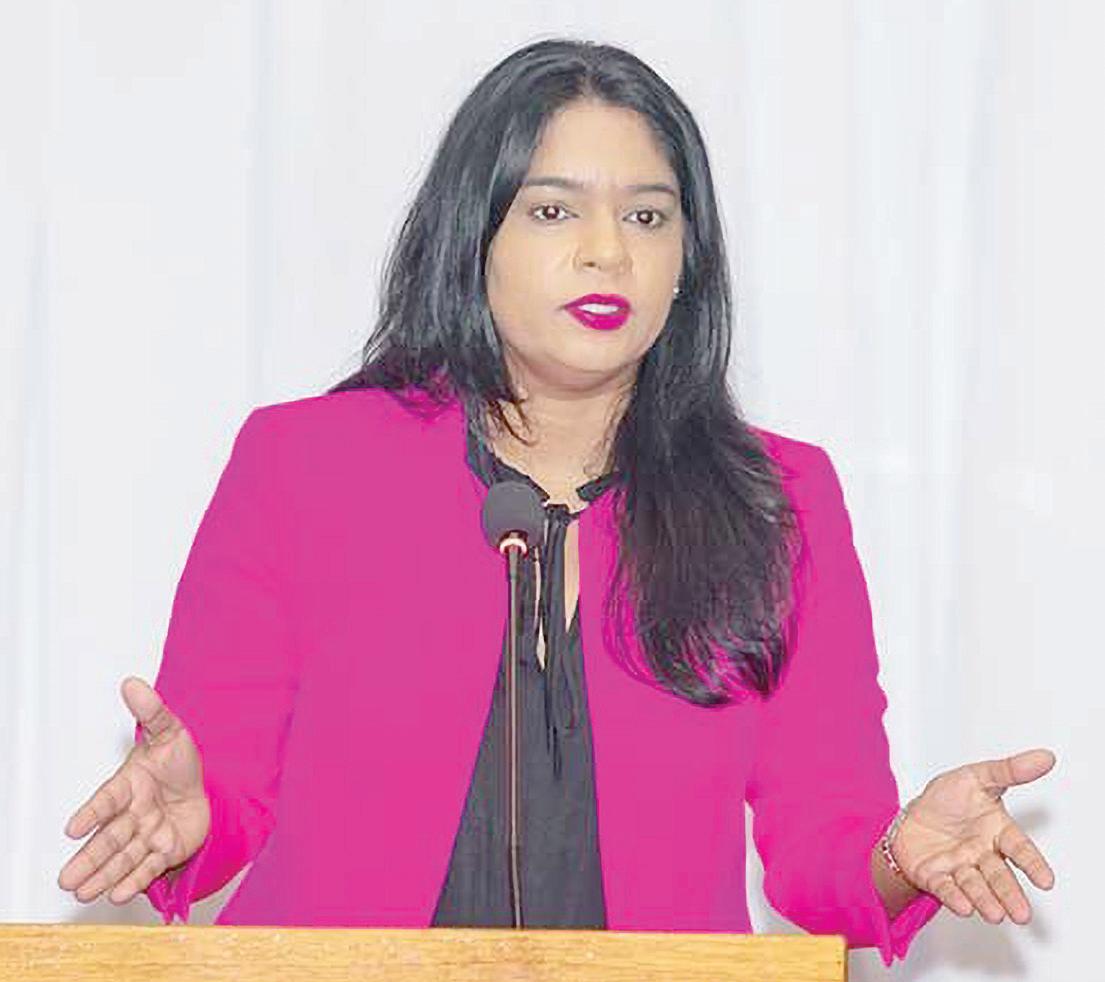
MINISTER of Education, Sonia Parag, has defended remarks made during the 2026 Budget debate, saying they were rooted in accountability and transparency, not political motivation, as she responded to criticism from the Guyana Teachers’ Union (GTU).
In a statement on Saturday responding to the GTU’s press release on her contribution to the 2026 Budget debate, Parag said she had “taken note” of the union’s concerns but stressed that “no breach of confidential or sensitive information occurred at any point” during her presentation.
“I wish to clarify that no breach of confidential or sensitive information occurred at any point during my contribution to the Parliamentary Budget Debate,” the minister stated.
The clarification follows comments made during Tuesday’s debate, when Parag called on Opposition Member of Parliament Gordon Barker to “lead by example” after detailing his record of repeated lateness while employed as a teacher.
Barker, a representative of the We Invest in Nationhood (WIN) and a teacher
by profession, had used his maiden contribution to the Budget 2026 debate to criticise the quality of education delivery, arguing that educators lacked sufficient incentives and resources.
Responding in the House, Minister Parag said that while the Opposition MP spoke extensively about education policy, he failed to address his own professional record. She then listed several instances of lateness during the month of September along with the longest period being 45 mins late. In her subse-
quent response to the GTU, Parag emphasised that Barker is now a sitting Member of Parliament and therefore subject to scrutiny in the National Assembly.
“It is also important to underscore that the Honourable Gordon Barker is now a sitting Member of Parliament,” she said, adding that “as with all elected officials, his public conduct and professional record are subject to legitimate scrutiny within the National Assembly.”
The Education Minister further stressed that “Parlia-
DURING the Budget 2026 debate in the 13th Parliament, Minister of Labour and Manpower Planning, Keoma Griffith, confidently emphasised the government’s unwavering commitment to investing in inclusive skills training, prioritising women and persons living with disabilities.
Minister Griffith used his maiden presentation in the National Assembly on Wednesday to endorse Budget 2026, stating that between 2020 and 2025, the Board of Industrial Training (BIT) graduated more than 16,300 persons across all regions, supported by an investment exceeding $1.5 billion.
The programmes spanned a wide range of technical and vocational areas, including heavy-duty equipment operation, welding, electrical installation and commercial food preparation.
Minister Griffith highlighted the deliberate inclu-
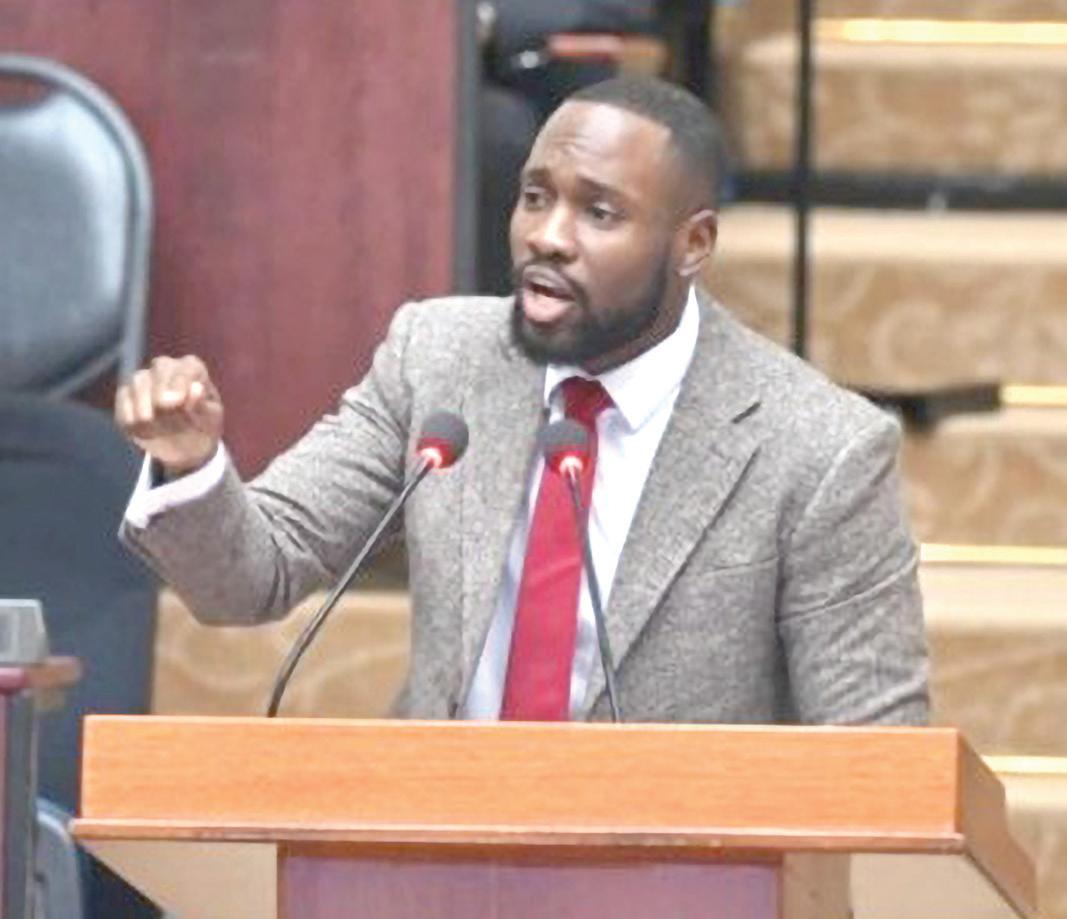
Minister of Labour and Manpower Planning, Keoma Griffith, during his presentation in the National Assembly
sion of women in traditionally male-dominated fields, noting that 615 women were trained in areas such as welding and heavy-duty equipment operation.
Minister Griffith also pointed to targeted support for persons living with dis-
mentary debate, by its nature, involves accountability and transparency, particularly where public service delivery is concerned.”
Rejecting claims that her remarks were politically motivated, the minister said her
abilities, stating that more than 400 persons with disabilities benefitted from BIT programmes over the last five years.
“We have undoubtedly enhanced the capacity, efficiency and resilience of our
TURN TO PAGE 16
comments were intended to advance standards in education.
“I categorically reject any suggestion that any remarks were politically motivated or intended to undermine the dignity of the teaching profession,” Parag said. “On the contrary, my comments were made in the context of advocating for accountability, improved standards and the best possible outcomes for our children.”
BY Bebi Shafeah Oosman
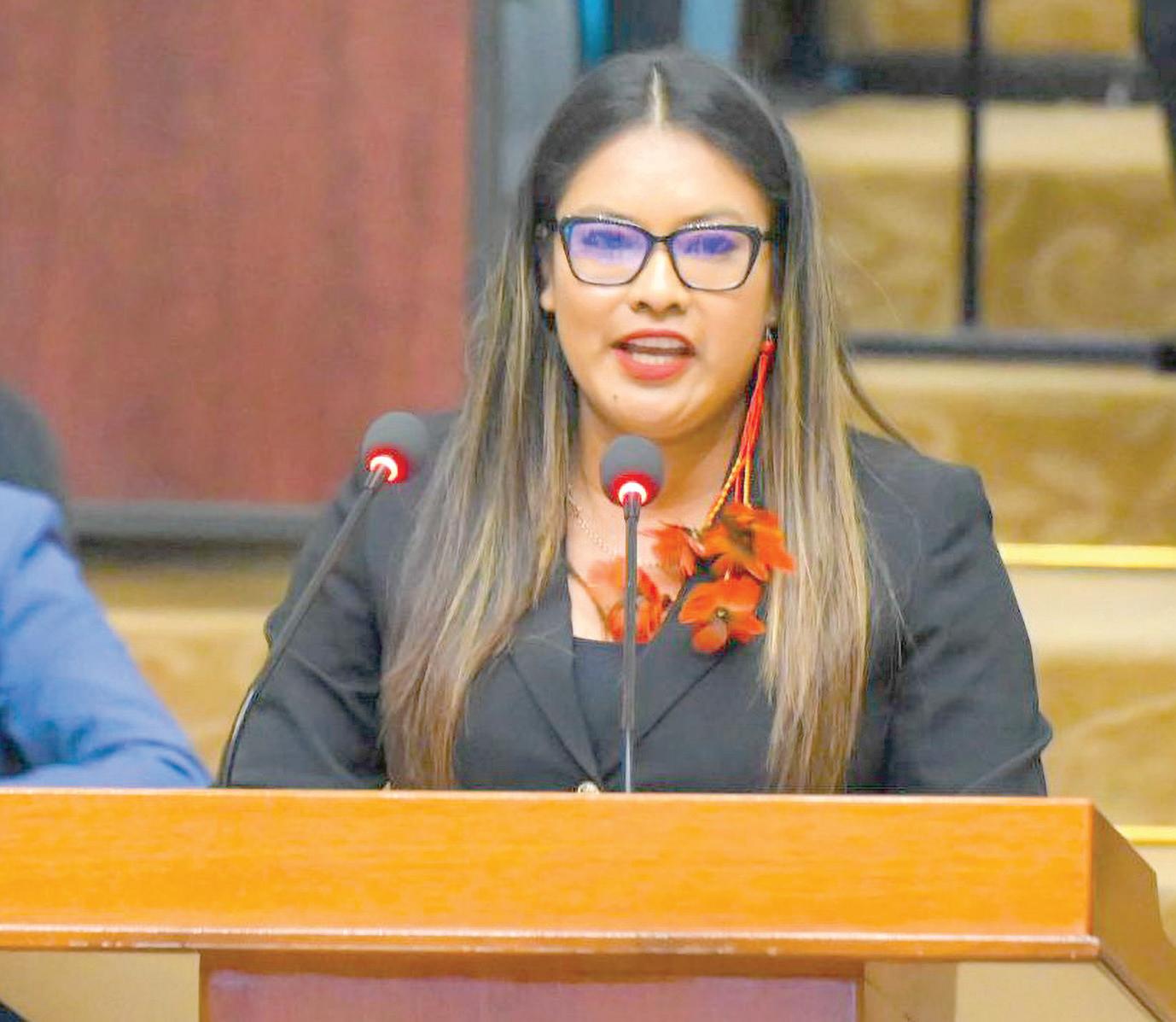
MINISTER of Amerindian Affairs, Sarah Browne, has highlighted the tangible benefits Indigenous and hinterland communities are receiving under Guyana’s Low Carbon Development Strategy (LCDS), pointing to the direct transfer of carbon credit revenues to villages as clear evidence of a people-first approach by the PPP/C Government during her debate of the 2026 budget.
According to the Minister, in 2023, 15 per cent of revenues earned from the sale of carbon credits were transferred directly to Indigenous and hinterland villages. This increased to 26.5 per
cent in 2024 and stood at 21 per cent in 2025, ensuring that villages consistently received no less than their guaranteed share.
“That is putting people first,” Minister Browne told the National Assembly.
She outlined several community-led projects already delivering results across the country.
In the Mabaruma Sub-District, Region One, the Banabo Guest House, funded through the LCDS, now provides employment and essential services.
In the remote village of Kamana, the Kamana Mini Mart supports local commerce, while the Kaikan Women’s Group in Region Seven currently employs 29

women. Further, she said, in Region Two, the Mainstay Tourism Project features two self-contained cabins that are fully booked every weekend, and in Karasabai, Region Nine, two self-contained cabins, funded under the LCDS and implemented by the village, are generating employment and income.
Minister Browne stressed that these projects represent only “the tip of the iceberg.” Funds have also been disbursed to villages for initiatives in agriculture, infrastructure, transportation, women and youth development, livelihoods, social welfare, and the preservation of culture and heritage.
She reaffirmed the government’s commitment to ensuring that LCDS resources continue to support sustainable livelihoods, strengthen climate resilience, promote village-led development, and protect the environment for future generations.
This commitment, she noted, was reinforced in Budget 2026, where Senior Minister Dr. Ashni Singh confirmed that villages will continue to receive, at a minimum, 15 per cent of revenues earned from carbon credits to implement their Village Sustainable Development Plans.
Land tenure, Minister Browne emphasised, remains a top priority for Indigenous peoples and the government. She underscored the importance of land to sustenance, environmental protection, identity, and culture, noting that Guyana is among the few countries with legislation that guarantees legal ownership of land by Indigenous peoples.
She reminded the House
that the Amerindian Land Titling Project was initiated under a PPP/C administration and supported through the LCDS, but remained dormant for five years.
Since the government’s return to office, the programme has been revitalised, with 15 villages demarcated and 17 villages receiving certificates of title.
Over the past five years, an estimated 16,174 Amerindians have secured legal ownership of their lands. In 2025 alone, seven villages received certificates granting
absolute ownership of their traditionally occupied lands.
To further advance land security, Minister Browne noted that $400 million has been allocated to expand Amerindian land titling, safeguarding and strengthening tenure within the framework of national legislation.
She also stressed that land tenure must be accompanied by strong village economies.
Over the past five years, the government has invested more than $16.7 billion in village-led projects through
presidential grants, capital grants, and the Amerindian Development Fund.
These investments have reached 253 villages, satellite communities, and Community Development Councils, improving the lives of approximately 107,000 residents. Budget 2026, the Minister said, continues this focus through expanded support under the Amerindian Development Fund.
Presidential grants have increased by 125 per cent, amounting to more than $2 billion in investments over the last five years. Additionally, $5 billion has been allocated for economic projects targeting women and youth, including sawmilling, tourism initiatives, agro-processing facilities, shade houses, printeries, bakeries, cosmetology centres, and heritage sites.
Minister Browne, in her fiery presentation, concluded by emphasising that youth development remains central to the government’s vision, noting that sustainable village economies can only be realised through skilled and empowered young people whose capacities continue to be built.
national workforce, ensuring that Guyana has the manpower readiness to sustain and accelerate economic growth,” he said. Minister Griffith further added that under Budget 2026, persons living with disabilities will continue to benefit from expanded support. The minister said the theme “Putting People First”
reflects the People’s Progressive Party/Civic (PPP/C) Government’s long-standing approach to development, where growth is measurable when lives are improved through job creation, stronger labour protections, skills training and expanded opportunities in every region.
“The theme of this year’s budget, putting people first, is not merely a rhetorical slogan. It embodies the guiding principles of our administration and the very foundation upon which the people’s Progressive Party government has structured its economic and social policies,” he explained. [DPI]

THE Toastmasters International is an internationally recognised organisation dedicated to helping individuals develop confidence, excellence, and clarity in communication, while also building leadership skills, advancing careers, mentoring others, and strengthening professional presentation.
In Guyana, there are currently 13 Toastmasters clubs, all based in Georgetown, with some offering online meeting options, according to information published by Toastmasters International.
Among them is the Georgetown Toastmasters Club (GTC), the oldest Toastmasters club in Guyana and the wider Caribbean. Speaking with this publication were Bindya Deokaran, Vice President, Public Relations and Bernadette Giddings, Vice President – Education, both active members of the club.
The Georgetown Toastmasters Club was founded by Derek Adamson, with its first official public meeting held in Georgetown on March 18, 1959. Since then, the club has remained a cornerstone for public speaking and leadership development in Guyana.
According to Deokaran and Giddings, while Toastmasters is widely known for public speaking, the club’s scope extends beyond speeches.
Members also develop leadership, communication, and critical-thinking skills in a structured and supportive environment. They described the club as more than an organisation, likening it to a family or community united by a shared goal of improving public speaking and effective communication.
Both women said they joined Toastmasters to strengthen their leadership and communication abilities, gain structure in how they speak, and build personal confidence.
They noted that regular evaluations are a key part of the programme, allowing members to receive constructive feedback and continuously improve areas identified for development.
The Georgetown Toastmasters Club currently has 29 active members, representing a wide range of age groups, including young adults, middle-aged, and more mature individuals. Deokaran highlighted that the club is

non-discriminatory and open to all, including persons living with disabilities.
“Meetings are held every Monday from six to eight pm at the Red Cross building. Anyone is invited to come, once they know the location, they can come to that location and sit in, in the meeting,” she said.
Before becoming a member, however, Giddings explained that prospective members are encouraged to attend at least three meetings before formally expressing interest in joining the club.
Reflecting on the club’s achievements last year, the Toastmasters highlighted the successful hosting of the Ewart Adams Debate, which featured two teams debating a moot point. The club also held a dinner and awards ceremony recognising members who completed various levels and categories.
“For example, we had a category for the most improved speaker; an award was given (for the) most prepared speeches [at] the speech contest last year; we had a contest, where yours
truly won the contest,” Giddings said. The club also achieved the Distinguished Club Programme (DCP) Award under Toastmasters International, a prestigious annual recognition given to clubs that provide an outstanding member experience.
Beyond education, the Georgetown Toastmasters Club engages in social and community-building activities, including an annual fitness walk in October, anniversary celebrations, and fundraising initiatives.
Currently, the club is
preparing for an upcoming debate competition and, in March, will celebrate its 67th anniversary with a church service, brunch, and other commemorative activities.
The Georgetown Toastmasters Club continues to position itself as a platform for empowering individuals to become effective communicators and leaders, providing a positive and supportive learning environment that fosters self-confidence, personal growth, and professional development.
SINCE its establishment in 2005, Humanitarian Mission Guyana Inc. (HMG) has played a pivotal role in uplifting vulnerable populations across Berbice, with a strong focus on women, single mothers, professionals, school dropouts and at-risk youth, through education, skills training and humanitarian support.
Headquartered at Babu Jaan, Ankerville, Port Mourant, HMG was founded on the principle that empowerment begins with opportunity. Over the years, the organisation has grown into a trusted pillar within communities, providing safe and supportive spaces for learning, healing and personal development, particularly for women and others facing economic hardship, domestic challenges and social marginalisation.
President and Founder, Suresh Sugrim, noted that women make up a significant portion of HMG’s beneficiaries, including professionals seeking new skills, single parents striving for independence, and survivors of domestic and gender-based

violence.
“Access to education and skills training remains a challenge for many women. At Humanitarian Mission Guyana Inc., we are committed to empowering women with practical skills while helping them rebuild confidence, dignity and hope,” Sugrim said. Through vocational programmes such as sewing, cosmetology, ballon decor, cooking, pastries/ baking, cake decoration, food handling and information technology, thousands of women have gained the ability to earn an income, establish
small businesses and contribute meaningfully to their households. These opportunities have proven especially critical for single mothers seeking financial stability and long-term self-reliance.
Beyond vocational training, HMG addresses the social, emotional and health-related needs of its beneficiaries. The organisation regularly hosts counselling sessions, life-skills workshops and community outreach programmes aimed at addressing domestic violence, substance abuse and mental health challenges. In
collaboration with medical professionals, HMG also conducts health outreaches and provides support for persons living with disabilities.
While women continue to form a large percentage of programme participants, HMG’s mission remains inclusive and far-reaching. The organisation also supports men, youths, school dropouts and unemployed adults, recognising that sustainable community development requires empowering all segments of society.
“Our work is humanitarian at its core. Whether
it is a woman seeking independence, a young person searching for direction, or a man who feels left behind by society, our doors are open. Everyone deserves a second chance,” Sugrim emphasised.
Over the past five years, more than 6,000 persons have benefitted from HMG’s training and outreach programmes. Although based in the Lower Corentyne, its impact extends to Region Five and the Upper Corentyne, with services offered at minimal or no cost to ensure accessibility.
As demand continues to grow, HMG is actively seeking partnerships with the Government of Guyana, private sector organisations and international donors to expand its reach and deepen its impact, particularly for women and other vulnerable groups who remain underserved. Sugrim reiterated that investing in people creates lasting, generational change.
“When you empower one woman, one family, or one individual, the impact extends far beyond that person. It strengthens communities
and builds a better Guyana for all.” We shared H.E. Dr. Ali’s vision for education in Guyana focuses on transforming the sector through digital integration, equitable access, and high-quality training to support national development.HMG remains a cornerstone of humanitarian development in Berbice and beyond, delivering training and outreach across multiple sectors, including education, health, disability support, LGBTQ+ advocacy and single-parent empowerment.
“Handouts offer shortterm relief, but lasting change comes from empowerment,” Sugrim said. “We are building capacity, restoring hope, and helping people take control of their own futures.”
The organisation’s continued success is made possible through the dedication of donors, volunteers and community partners. Special recognition was extended to the Greater Guyana Initiative and its partners for their support in sponsoring trophies and awards that recognised student excellence.
MEMBER of Parliament
Pater Ramsaroop told the National Assembly on Thursday that he supports the 2026 National Budget because it reflects the priorities and needs of Guyanese.
During his contribution to the budget debates, MP Ramsaroop said the focus of the budget extends beyond financial handouts, emphasising long-term development that improves the quality of life for all Guyanese.
“Our people of this country deserve this budget,” Ramsaroop stated, while highlighting significant investments in key sectors, including health, education and social services.
“Dr Anthony is building hospitals across this country,
and that is what our people have asked for. Whether it’s $10,000 more in the threshold, whether it’s money for the pensioners, it is not all about the giveaways, ” he stated. Ramsaroop also referenced infrastructural upgrades, noting that communities such as Victory Valley in Region 10 have seen significant improvements under the current administration.
He also highlighted the transformation in Kwakwani, where residents now benefit from paved roads and improved connectivity, with the airport expected to reopen shortly.
On the issue of education and skills development, Ramsaroop said initiatives such as free university education
and technical training programmes are equipping citizens with skills to participate meaningfully in the economy.
He pointed to training opportunities in areas related to trades – welding, heavy-duty equipment operation, hospitality and in the oil and gas sector – describing them as critical to national development.
Ramsaroop also spoke about Guyana’s growing international engagement, citing strengthened bilateral relations and private-sector collaboration, including a recent agreement involving Guyana and Belize in the refined sugar industry.
He said that investor confidence remains strong, with growing interest from both
foreign investors and Guyanese living abroad.
“When you look at investments that have come into this country, investments in the private sector, Guyana has delivered,” he stated, adding that “When there’s confidence in our economy, our country gets better, people get better, that means we have delivered as a government for our people.”
He underscored the role of the oil and gas sector in supporting the non-oil economy, noting that the construction of a 300-megawatt power plant will create opportunities for local producers to expand their operations.
MP Ramsaroop said measures such as tax exemptions on education, healthcare, ag-
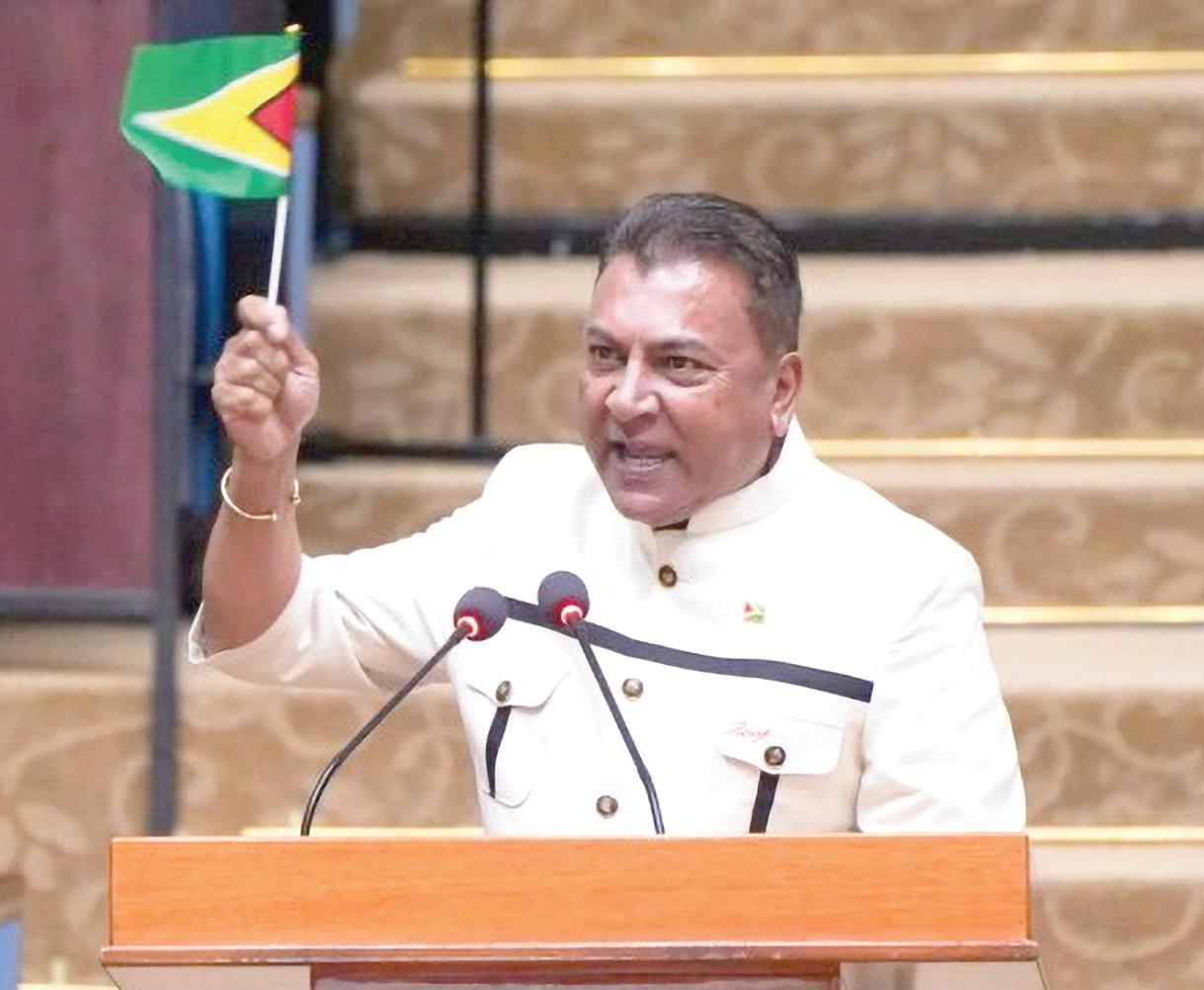
riculture and agro-processing are laying the groundwork for increased manufacturing and private-sector growth.






From Page 32
Hetmyer struck six sixes and two fours, while Rutherford clobbered four fours and one six.
The West Indies then made a promising start with the ball, claiming the early wickets of Michael Jones for one, Brandon McMullen for 14 and Munsey for 19 to a spectacular diving catch by Hetmyer, to restrict Scotland to 38 for three at the end of six overs.
But captain Richie Berrington and Tom Bruce put on 78 runs for the fourth wicket in just eight overs to put Scotland in a strong position of 115 for three at the start of the 14th over.
Bruce was dropped twice, with Jason Holder failing to hold on to a catch running back at mid-off when he was five, while Matthew Forde dropped a regulation catch at

ENGLISH RACING TIPS
CHELMSFORD
09:37 hrs Aneirin’s Sword
10:07 hrs Picture Palace
10:37 hrs Sandition
11:07 hrs Monks Mead
11:37 hrs Jodhpur Blue
12:07 hrs Little Miss Magic
12:37 hrs Mio Amico
SOUTH AFRICA RACING TIPS
SCOTTSVILLE
08:25 hrs Bruh
09:00 hrs Actor
09:35 hrs King Pelles
10:15 hrs Littleblackjem
10:52 hrs Tladi Mothwana
IRISH RACING TIPS
NAVAN
09:50 hrs Coyote Spirit
10:20 hrs Zanoosh
10:50 hrs Staffordshire Knot
11:20 hrs Vallon Du Plessis
11:50 hrs Oscars Brother
12:20 hrs Evies Vladimir
12:50 hrs Soul Asylum

cover when he was 25.
Holder redeemed himself by having Berrington caught on the deep point boundary for 42 off 24 balls, before Shepherd snared four wickets in the 17th over to decide the contest.
After Gudakesh Motie trapped Bruce lbw for 35 to make the score 122 for five in the 15th over, Shepherd had Matthew Cross and Leask caught in consecutive deliveries and then bowled Davidson to complete the hattrick, becoming the 10th bowler to achieve the feat at a T20 World Cup.
For good measure, he closed out the over by having Sharif caught at long off, to end with the impressive figures of 5-20 from his three overs, as Scotland slumped to 133 for nine.
Holder then wrapped up the match by dismissing last man Mark Watt, to finish with 3-30.
CUMMINGS ELECTRICAL COMPANY LTD83 Garnett Street, Georgetown (Tel: 225-6158)
Answers to yesterday’s quiz: (1) IND won by 7 wickets (2) Aaron George (IND)
Today’s Quiz:
(1) Which two of these teams are not contesting the current Men’s T20 World Cup? (Omai, Bermuda, Italy, Bangladesh) (2) Which two nations are hosting the current Men’s T20 World Cup?
Answers in tomorrow’s issue.


WEST INDIES
Brandon King c Munsey b Davidson 35
*+Shai Hope b Leask 19
Shimron Hetmyer c McMullen b Sharif 64
Rovman Powell c Jones b Currie 24
Sherfane Rutherford c Jones b Currie 26
Romario Shepherd not out 6
Matthew Forde not out 1
Extras (b1, lb2, w4) 7
TOTAL (five wickets; 20 overs) 182
Did not bat: Jason Holder, Akeal Hosein, Shamar
Joseph, Gudakesh Motie.
Fall of wickets: 1-54, 2-58, 3-139, 4-175, 5-175.
Bowling: McMullen 1-0-7-0, Currie 4-0-23-2, Watt 4-0-38-0, Sharif 4-0-46-1, Davidson 3-023-1, Leask 4-0-42-1.
SCOTLAND
George Munsey c Hetmyer b Joseph 19
Michael Jones c Rutherford b Holder 1
Brandon McMullen b Shepherd 14
*Richie Berrington c Joseph b Holder 42
Tom Bruce lbw b Motie 35
+Matthew Cross c Rutherford b Shepherd 11
Mark Watt c Shepherd b Holder 15
Michael Leask c Powell b Shepherd 0
Oliver Davidson b Shepherd 0
Safyaan Sharif c Holder b Shepherd 0
Brad Currie not out 2
Extras (lb1, nb1, w6) 8
TOTAL (all out; 18.5 overs) 147 Fall of wickets: 1-7, 2-31, 3-37, 4-115, 5-122, 6-133, 7-133, 8-133, 9-133, 10-147. Bowling: Forde 2-0-15-0, Holder 3.5-0-30-3, Shepherd 3-0-20-5, Joseph 4-0-26-1, Motie 4-0-29-1, Hosein 2-0-26-0.
Result: West Indies won by 35 runs. Player-of-the-Match: Shimron Hetmyer.

English Premier League

VIKTOR Gyokeres scored twice as Arsenal comfortably beat Sunderland to extend their lead at the top of the Premier
Havertz after keeper David Raya fumbled a long ball into the area.
Declan Rice and Havertz went close with curling strikes before substitute Gyokeres slammed the ball into the net after being
The Swedish international then page time after Gabriel Martinelli rolled the ball across the box to him.
nemouth and Manchester City not in action until Sunday afternoon, sure on Arsenal’s title (BBC

KAWHI Leonard produced a gamehigh 31 points and Kris Dunn and Derrick Jones Jr. contributed to a fourth-quarter pull-away and the visiting Los Angeles Clippers handed the Sacramento Kings their 11th straight defeat, 114-111 on Friday.
Playing short-handed in the aftermath of trades this week that saw them export James Harden and Ivica Zubac, the Clippers trailed 84-81 early in the fourth quarter before outfinishing the Kings for an 11th win in their past 15 games.
Leonard put the rally in motion with a long 2-pointer, after which Brook Lopez gave the Clippers the lead for good on a 3-pointer with 9:50 remaining.
Dunn’s big contribution came on an 11foot floater on which he was fouled, setting up a three-point play, and two minutes later on a 3-pointer that increased the visitors’ lead to 96-89 with 6:52 left.
Jones then drilled a 24-footer as he was being fouled. He also hit the free throw for a four-point play and a 99-91 margin with 8:36 to go, and the Kings never recovered.
Leonard went 12-for-12 at the free-throw line en route to his 13th 30-point performance of the season.
He also found time for nine rebounds and a game-high seven assists.
John Collins added 22 points for the Clippers, while Lopez and Dunn finished with 15 points apiece and Jones had 13.
Lopez tied Leonard for teamhigh rebound honours with nine and also blocked three shots.
The Kings held out star centre Domantas Sabonis because of a sore back but still got plenty of produc tion from substitute big man, Max ime Raynaud, who had 12 points and five rebounds, and his backup, Dylan Cardwell, who snatched a game-high 14 rebounds to go with 14 points.
Malik Monk came off the bench to pace the Kings with 18 points, all on 3-pointers, while Nique Clifford had 16 and Devin Carter 14.
Sacramento veteran starters De’Andre Hunter, Russell Westbrook, DeMar DeRozan and Zach LaVine combined to shoot just 6-for-25 overall and 0-for-12 on 3-point at tempts, the latter contributing to 27.0% team accuracy from beyond the arc. None of the four scored more than six points.

Teenager Rayan scored his first goal in English football as Bournemouth drew with Aston Villa, who missed the chance to go second in the Premier League.
Visitors Villa went ahead in the 22nd minute with their first shot on goal. Morgan Rogers linked up with fellow England international Jadon Sancho and blasted a finish high into the Cherries’ net.
Rayan had headed against the crossbar in the first half and grabbed a memorable equaliser 10 minutes into the second half with a fine solo effort.
The 19-year-old Brazilian, making a first start following his recent move from Vasco da Gama for an initial £24.7m, collected the ball close to the right touchline, ran away from Lucas Digne and shot low
Bournemouth came closest to scoring a winner but substitute Ryan Christie had an effort superbly pushed over the bar by Martinez.
Villa would have gone above Manchester City with a victory. However, this draw leaves them third, on the same points as Pep Guardiola’s City but having played one more game, and now nine points behind leaders Arsenal after the Gunners defeated Sunderland at Emir-
Rayan made an impressive start as a substitute with an assist during Bournemouth’s 2-0 win at Wolves and that earned him a first start, with the youngster playing on the right
Head coach Andoni Iraola, speaking to Match of the Day, said of the new recruit: “He is an amazing player. He can go inside and outside when there’s space, and he can go one to one against the defender and it is very difficult for the defender. He’s finished it really well. He’s still a young player who needs to improve some
THE ICC has asked the PCB to explain in detail the reasoning behind an invocation of the force majeure clause in their boycott of the India clash at the T20 World Cup on February 15. ESPNcricinfo understands the PCB sent an email to the ICC citing government orders as the reason for the boycott of the clash in Colombo. The development comes as both sides continue engaging in dialogue, with the ICC keen to find a resolution.
Force majeure is a legal concept that excuses a party from performing their obligations in the face of an unforeseeable event beyond their control -- most commonly a major natural disaster or war -- but in terms of the participation agreement for ICC events, it also categorises a government order as a force majeure. In this instance, the government of Pakistan first posted a statement on X that Pakistan would not take the field on February 15, before the Prime Minister Shehbaz Sharif told his cabinet the same and linked it to showing solidarity with Bangladesh, who were removed from the tournament.
In its written response, the ICC is understood to have asked PCB to demonstrate what it has done to mitigate the force majeure event, as is required by the Members Participation Agreement (MPA). The ICC is also believed to have detailed conditions under which force majeure can legitimately be invoked, and the evidentiary threshold re-
quired for non-participation and the sporting, commercial and governance implications of such a step. The ICC has also pointed out to the PCB the potential material damage the global governing body could claim in case the boycott went ahead. The ICC has told the PCB it is keen to avoid confrontation, but that its constitution allows the ICC Board to activate the extreme step of suspension and termination of membership if it deems there to have been a serious breach of obligations.
There is a belief within the PCB that if the matter does become disputatious, it has a strong case. There has been reference to an older dispute, between the PCB and BCCI, that went to the ICC’s Dispute Resolution Committee (DRC). That case was, however, a bilateral matter, stemming from the BCCI’s failure to honour a 2014 MoU between the two boards to play six bilateral series between 2015 and 2023. The PCB lost their claim for damages but believes the fact that the Indian government’s refusal to give the BCCI permission to play was cited as a reason presents a precedent for them.
The two sides, who have been engaged in back-channel negotiations -- with ICC directors Imran Khwaja and Mubashir Usmani -- ever since the PCB chairman cast doubt over Pakistan’s participation in the T20 World Cup, are continuing dialogue in a bid to find a resolution. Neither the ICC nor the PCB has made any official statement on the matter.(ESPN Cricinfo)

ENGLAND’S white-ball captain, Harry Brook, opened up on the “horrendous” fallout from the New Zealand nightclub controversy, saying he hopes the episode does not shadow the rest of his career.
Brook, who is set to lead England in the ongoing Twenty20 World Cup, has been in the eye of a storm since news emerged of his altercation with a nightclub bouncer in New Zealand late last year.
“It has been pretty horrendous, to be honest, but that is part of it,” Brook, 26, told the BBC on Saturday, a day before his side’s opening match against Nepal.
“All I do is hit a ball with a bat and that’s what I want to carry on doing for the rest of my career.
“I’d rather it had not happened, but it’s happened now and we’ve got to move
forward. Hopefully things can blow over and things are brighter on the other side.”
Brook, who was fined by the English cricket board for his conduct in New Zealand, said the episode had reinforced how much responsibility comes with the captaincy.
“I’ve definitely learned there’s a hell of a lot more responsibility on your shoulders when you’re captain,” he said.
“When you’re a leader you can’t take that responsibility lightly.
“You have got to lead from the front on and off the field, and anything you do can really turn against you, so you have got to be on the ball pretty much all of the time.”
England, placed in Group C, alongside Italy, Nepal, Scotland and West Indies, will begin their campaign against Nepal today in Mumbai. (Reuters)
THE national men’s Under-17 football team has ignited their World Cup qualifying campaign with a hard-fought 1-0 victory over Bermuda at the Estadio Francisco Morazán in Honduras.
In a tournament where only the group winners secure a ticket to the FIFA U-17 World Cup Qatar 2026, Matthew Stewart’s second-half goal proved the difference in a cagey Group H opener in San Pedro Sula. The contest was balanced on a knife-edge during a tense first half. Guyana had goalkeeper Nyall Kendall to thank for keeping
the scores level in the 42nd minute, as he produced a vital fingertip save to deny Na’im Zuill’s goal-bound long-range effort.
The breakthrough finally arrived in the 66th minute. Mark Glasgow turned provider, carving out space to find Matthew Stewart on the left side of the area. Stewart made no mistake, rifling a left-footed strike into the back of the net to spark jubilant celebrations on the Guyanese bench.
The result puts Guyana in a strong position in a formidable Group H, which also features hosts Honduras and regional
rival, Suriname. Under the qualifying format, there is no room for error; 34 nations have been split into eight groups, with only the eight group winners progressing to the World Cup.
Guyana is aiming to join the likes of Mexico and the USA, who secured their berths in the previous edition of the qualifiers.
Guyana faces a daunting task on Sunday as they take on Honduras in what is being billed as a group-deciding fixture. They will then conclude their group campaign against Suriname on February 11.


COLOMBO, (Reuters) - THE Netherlands nearly pulled off a major upset before Faheem Ashraf’s breezy cameo secured a nervy three-wicket win for Pakistan in their Group A match at the Twenty20 World Cup on Saturday.
Put in to bat, the Dutch were bowled out for 147 with one delivery left in their innings at Colombo’s Sinhalese Sports Club ground. They then produced a lion-hearted effort with the ball, but dropping Faheem proved costly as he went on to smash 29 not out off 11 balls to secure Pakistan’s victory with three balls to spare.
“They managed to pull wickets down and the pressure came in,” a visibly relieved Pakistan captain Salman Agha said. “Credit to Faheem, the way he batted.”
Pakistan has little margin for error in their bid to qualify for the Super 8 stage after deciding to boycott their group match against arch-rivals India.
Having bowled out the Netherlands with a ball to spare, they made heavy weather of their small target with the bat, and the outcome could have been different had Max O’Dowd held the catch offered by Faheem.
Earlier, the Dutch side had reached 100 in the 13th over but lost the plot at the death, giving up six wickets in 24 balls for just 20 runs. They had lost openers Max O’Dowd and Michael Levitt in successive overs but their middle order refused to throw in the towel.
Bas de Leede (30), Colin Ackermann (20) and captain Scott Edwards (37) all made useful contributions.
But Pakistan spinner, Saim Ayub, claimed two wickets in the 17th over and Salman Mirza (3-24) struck twice in the 20th to restrict the Netherlands to a below-par total.
Ayub (24) returned to hit four fours and a six when Pakistan began their chase but Dutch spinner Aryan Dutta dismissed him and rival captain Salman Agha in successive overs to keep his team in the game.
Babar Azam’s strike rate in T20 is often debated, and his departure after an 18-ball 15 will do little to convince his critics.
With Pakistan reeling on 119-7 after 18 overs, player-of-the-match Faheem hit Logan van Beek for a six but then skied the next ball. O’Dowd, at long-off, floored the catch, allowing Faheem to go on and seal Pakistan’s victory with a four.
‘Never counted my
- Rashid on nearing 700 mark in T20
RASHID Khan is on the verge of going where no other player has gone before: 700 T20 wickets. The impending landmark - he is just four wickets awayhad him in great spirits during his press conference on the eve of Afghanistan’s opening game of the 2026 T20 World Cup, against New Zealand in Chennai.
“Feeling Nalla [good],” Rashid said, breaking into Tamil with a laugh. “Like I only played nine-ten years of international cricket overall, and then to be the leading wicket-taker is something more than a dream for me. T20 cricket came... I don’t know [in] 2004-05, we had players playing a lot, but for me to achieve that would be something very special.
“But I never counted my wickets. I only knew about it in the media: okay, I have reached 400, 500, 600, but I really didn’t think about it much. I only tried my best, every single day, I have to keep performing well for the team and I have to pick up wickets. I want to bowl in a tough situation where the team needs [me], and that made me focused… Seven hundred wickets is not something small - getting there needs a lot of time and hard work and I’m blessed. I’m happy to reach that milestone and hopefully can make it to 7000 (laughs).”
Rashid is only 27, and is poised to smash more T20 records, but he has already inspired the next generation of Afghanistan bowlers to take up spin and conquer the world. Noor Ahmad, now 21, for instance, grew up idolising Rashid and went on to play alongside him for Afghanistan, and in the IPL. Then, there’s the new kid on the block, Arab Gul. Beyond Rashid, Noor, Mujeeb Ur Rahman and AM Ghazanfar, Afghanistan has more spinners who are working their way up to the top.
When asked about it, he responded: “Pretty much happy… If I’m not playing
SURYAKUMAR Yadav rescued India from an almighty scare and ensured the T20 World Cup co-hosts opened their tournament with a 29-run victory over the United States in Mumbai.
After being put into bat the defending champions and overwhelming favourites slumped to 77-6, putting them at risk of the biggest shock in cricket history – and one of the biggest upsets in any sport.
• (Scores: India 161-9 (20 overs): Suryakumar 84*; Van Schalkwyk 4-25 vs USA 132-8 (20 overs): Ranjane 37, Krishnamurthi 37; Siraj 3-29)
But the US crucially dropped Suryakumar on 15. Bowler Shubham Ranjane, one of five India-born players in USA’s XI, was the guilty party low in his follow-through.
The India captain punished the miss with a brilliant 84 not out from 49 balls, counter-
ing the situation perfectly by starting slowly before unfurling thrilling scoops and flicks to drag the hosts to 161-9.
That denied the underdogs any momentum and India seamers, Arshdeep Singh and Mohammed Siraj, took three wickets in the first four overs of the chase to reduce the US to 13-3.
As the required run-rate climbed, the expectant locals grew more comfortable and the US scraped to 132-8 in their 20 overs without ever threatening to complete the chase.
It means, after an entertaining opening day in which the Netherlands were a dropped catch away from stunning Pakistan and Scotland threatened West Indies; India set the early pace at the top of Group A as expected in this World Cup.
England enters the tournament today with a fixture against Nepal at 09:30 GMT. Ireland plays Sri Lanka in Colombo at 13:30.
India’s margin of victory was, in the end, comfortable.
Make no mistake, however. The upset, which would have topped USA’s super over win over Pakistan at the last T20 World Cup, was on at one stage.
The home crowd was quiet and in the 13th over Suryakumar and Axar Patel were at the crease with only three tailenders remaining.
India’s opener, Abhishek Sharma, many people’s tip for player of the tournament, slashed his first ball to deep cover and when South Africa-born seamer, Shadley van Schalkwyk, mix ed his pace to take three wickets in the sixth over, including Tilak Verma and Shivam Dube in consecutive deliveries, the hosts were 46-4.
Suryakumar - known by his nickname SKY - defended Van Schalkwyk’s hat-trick ball and took only five runs from his first 10 deliveries and 20 from his first 21.
His team-mates all struggled to time the ball but he took time to feel comfortable, putting on 41 with Axar.

tomorrow or if I’m not there, we have the back-ups, and we have the options where they can come [in] with the good skills and do well for the team.
Arab Gul, there is Qais Ahmad who is ready, Mujeeb is now there, we have Ghazanfar, we have Wahidullah Zadran who is doing well in Under-19 [cricket], then Noor Ahmad, we have Waqar Salamkheil, which is great. And it made us push [ourselves] a lot, it makes us work very hard.
“If we don’t take things seriously, they are the ones who are going to step in. If you don’t perform in cricket, you can’t be just playing and playing. I don’t think nowadays, [a big] name should be like always, always, always there. If you are not performing, a youngster will have more hunger than you and will have more commitment than you, so you have to step back and give him an opportunity. So, that’s why we have to keep pushing ourselves and that’s why I set the target of 7000 (laughs).” (ESPN Cricinfo)

Making the most of the reprieve by Ranjane, Suryakumar was playing trademark sweeps off seamers for six and tumbling scoops by the end with the US hurt by the loss of Ali Khan to injury with two of his overs unbowled.
India’s captain took 20 runs from the last over, meaning he ended the innings with 10 runs more than the 74 his team-mates managed combined. (BBC Sport)
INDIAN 14-year-old Vaibhav Suryavanshi unleashed a ferocious batting masterclass in the Under-19 World Cup final against England on Friday, smashing a record-breaking 175 off just 80 balls as India claimed their sixth title with a 100-run victory.
The teenage sensation’s explosive knock at Harare Sports Club, featuring an eye-watering 15 fours and 15 sixes, propelled India to 4119 in 50 overs after they won the toss and elected to bat first.
The Reuters Inside Track newsletter is your essential guide to the biggest events in global sport
Suryavanshi’s innings shattered the previous record for the highest individual score in the tournament final, surpassing compatriot Unmukt Chand’s unbeaten 111 against Australia in 2012.
“We were just thinking that, like we did well in the tournament, we should focus on our process and everyone should try to play to their strengths,” Suryavanshi said after picking up awards for both the play-

er of the match and the tournament.
“I had faith in my skills. I knew that I would contribute to the team in a good game or a bad game. Today it happened on the ground.”
Despite Caleb Falconer’s fighting knock of 115 in the middle order after opener Ben Dawkins set up England’s run-chase with a quickfire 66, they were all out for 311 as India registered the biggest victory margin in an Under-19 World Cup final.
Suryavanshi brought up his fifty in just 32 balls before reaching his century in 55 deliveries, ultimately posting the highest score by an Indian in Under-19 World Cups, surpassing Raj Bawa’s unbeaten 162 against Uganda in 2022.
After a 142-run partnership with skipper Ayush Mhatre (53), Suryavanshi fell in the 26th over when he was caught behind going for a slog sweep and as he walked back to the pavilion, England’s players approached him to shake his hand.
“We have no words for his
innings. We know he is a fabulous batsman and he’s shown in this match what he can do,” Mhatre said.
His six-hitting spree also broke new ground as he cleared the rope 30 times in the tournament to eclipse South Africa’s Dewald Brevis, who struck 22 in the 2022 edition.
The Indian opener burst onto the scene last year when he became the youngest player to score a century in men’s Twenty20 cricket in an Indian Premier League match when he scored 101 off 38 balls for Rajasthan Royals against Gujarat Titans.
The prodigious talent had already shown his appetite for big scores against England, scoring his maiden ton for the Under-19 side in July with 143 off 78 balls in Worcester.
“It’s always going to be tough when a player like that gets going,” England captain Thomas Rew said.
“He’s showed us before what he can do and we were scratching our heads a little bit. Today Vaibhav came off and fair play to him.” (Reuters)

Williams calls for more women’s cricket to be played in the region
KINGSTON, Jamaica, (CMC) – SUCCESSFUL Jamaica Women’s captain, Rashada Williams, has urged Cricket West Indies (CWI) to provide more playing opportunities for female cricketers in the Caribbean.
Williams led her side to their sixth CG United Women’s Super50 Cup title last weekend in a truncated tournament that only featured three rounds of matches.
CWI had earlier announced a shortened competition, citing financial strain as the main reason behind the move.
Jamaica Women emerged victorious on 21 points, one more than second-placed Windward Islands Women and third-placed Guyana Women.
Speaking on the Mason and Guest radio programme earlier this week, Williams said while she was thrilled to have captained Jamaica to the title, she lamented the fact that only three rounds were played.
“So, I think that it’s only fair that they add more games to the
Super50 tournament. It doesn’t make sense holding a tournament where we are only playing three games and then you want to determine a winner. It’s just not enough cricket.
“As I said before, we play in the regional tournaments in January, February every year and then there is a long break until next year January, February again, and if you’re not selected in the West Indies team or signed a league to play outside of the Caribbean like the WPL or the Big Bash, then you won’t have any cricket to play,” Williams contended.
The Jamaican captain also suggested a slight tweak to the way bonus points are awarded in the Super50.
She said bonus points on offer should not be more than the points for winning a match.
“For a win you get four points and I think you can probably get eight or more bonus points, so I think you could probably adjust it. I don’t think the bonus points should be more than the actual points you get for winning,” Williams said.

KOLKATA, India, (CMC) –LESS than 24 hours after arriving in India, Shimron Hetmyer announced himself in spectacular fashion by smashing a match-winning half century to help West Indies defeat Scotland by 35 runs in their first match of the ICC Men’s T20 Cricket World Cup.
Hetmyer had been stuck in South Africa since January 31 because of visa issues, resulting in him missing the team’s lone warmup match against Afghanistan on Wednesday.
He arrived on the subcontinent on Friday, where he took part in the ICC’s official photoshoot. The 29-year-old, who came to the tournament in ripping form after scoring 171 runs in the three-match series against South Africa, blasted 64 off 36 balls, including six sixes and two fours, as the Windies posted 182 for five in their 20 overs at Eden Park.
He brought up his half century in only 22 balls, the fastest by a West Indian at a T20 World Cup. Speaking in a post-match interview, Hetmyer, who was named
Player-of-the-Match, said he did not allow his late arrival to dampen his spirit.
“I guess everything happens for a reason, so I’m not really complaining. I’m just giving thanks to the Almighty for giving me the strength and helping me to get here.
“When I got here it was just to focus and put that behind and just make sure that when I came out here today, I focused on the game ahead and focused on my batting and making sure I give the bowlers a good score for chasing down [a target],” Hetmyer said.
With the now retired Nicholas Pooran absent from the West Indies’ squad, Hetmyer has been promoted to number three.
He said while he was accustomed being used as a “finisher” he was relishing the opportunity to bat a bit higher in the order.
“It’s fun. It’s something that I used to do in the beginning, but I guess playing more T20s, finishing was also fun for me but if I had to choose, I’ll stay up top,” Hetmyer said.

THE long-awaited Bayroc National Stadium in Linden was officially commissioned on Saturday evening.
As part of the opening ceremony, the stadium hosted an Athletics Championship, football match and concert.
The Ministry of Culture, Youth and Sport plans to open four other stadiums in 2026. Chronicle Sport will provide further details in a subsequent report.
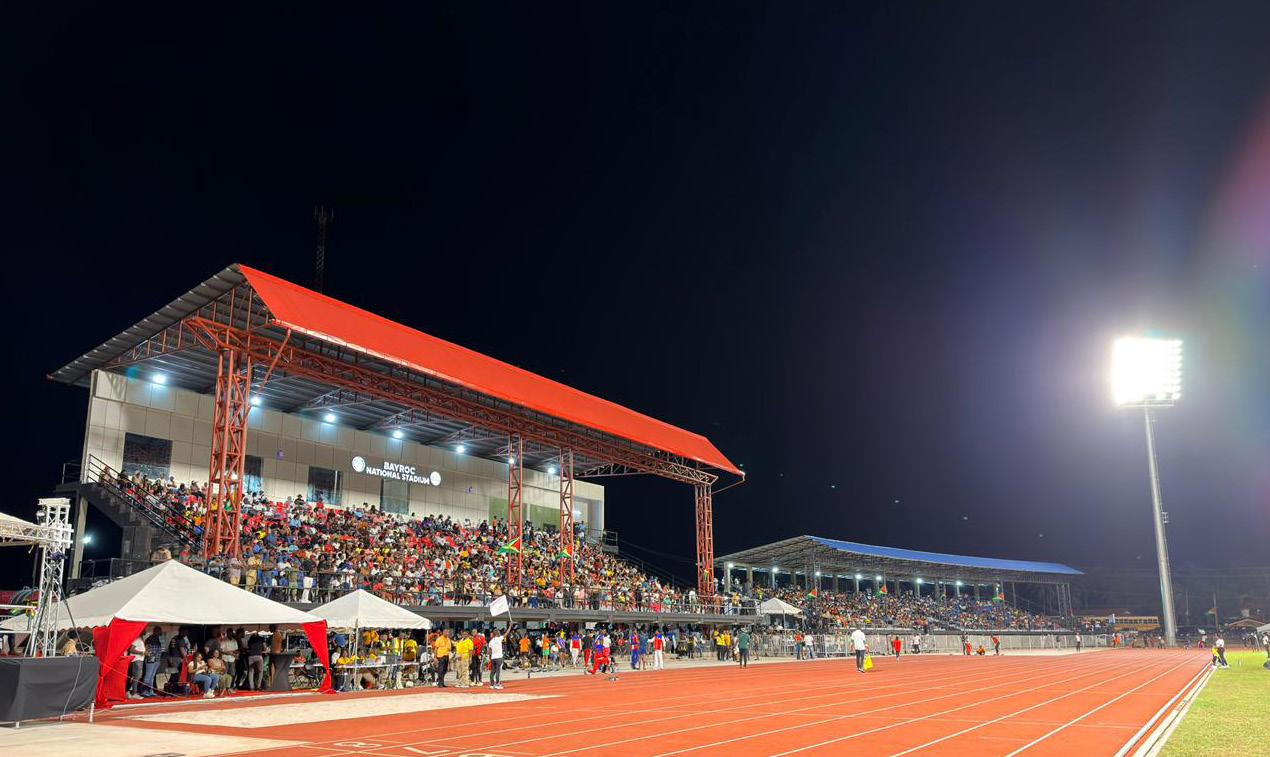
KOLKATA, India, (CMC) – Shimron Hetymer and Romario Shepherd’s record-breaking performances propelled West Indies to a comprehensive 35-run victory over Scotland in their opening match of the ICC Men’s T20 World Cup here on Saturday.
Hetmyer, who only arrived in India on Friday, showed no signs of jet lag on the way to scoring the fastest half century by a West Indian at a T20 World Cup, with his 64 off 36 balls the mainstay of their total of 182 for five in 20 overs at Eden Gardens.
At one stage Scotland was in the hunt for a historic win, before Shepherd’s hat-trick – the first by a West Indies bowler at a T20 World Cup – saw them being bowled out for 147 in 18.5 overs.
It was an important win for the Windies, who will face one of the pre-tournament favourites, England, in their next Group C match on Wednesday. The win was setup by Hetmyer’s scintillating knock, which resuscitated life back into the Windies’ innings following a slow start by openers Brandon King and Shai Hope.
The opening pair struggled to

get going and by the end of the power play had only mustered 33 runs.
King started to accelerate, hitting pacer Safyaan Sharif for a six and two fours to start the seventh over that leaked 17 runs to bring up the Windies’ 50. Four runs later, off spinner Michael Leask put Hope out of his misery by bowling him for a pedestrian 19 off 22 balls, as he played across the line of a straight delivery, Batting at his new position at number three, Hetmyer started
streaky, with two attempted slogs ballooning into the air but landing safely between fielders.
After scoring 35 off 30 balls, King slapped a delivery from left-arm spinner Oliver Davidson straight into the hands of George Munsey at backward point to leave the score 58 for two in the 10th over.
His dismissal brought Rovman Powell to the crease, and the pair transformed the West Indies’ posi-
tion during an 81-run partnership in six overs.
Hetmyer slapped Davidson over long off for six and followed up by smacking Leask over long on for another maximum. Spinner Mark Watt was given the same treatment, with Hetmyer hitting him for consecutive sixes in the 10th over.
He moved into the 40s with a six and four off Sharif in the 13th over and brought up his 50 off just 22 balls, bettering Chris Gayle’s 23-
ball half century against Australia in 2009.
Powell bludgeoned Leask for another six to end the 15th over, but three balls later he hit Brad Currie down the throat of deep backward square leg to be out for 24 off 14 balls.
Hetmyer and Sherfane Rutherford, who made 26 off 13 balls added 36 runs in just over three overs, but their dismissals in the space of two balls helped Scotland fight back at the death. • Continues on Page 27