Crown Prince
bin Hamad Al

October - December 2025
Crown Prince
bin Hamad Al
October - December 2025
In the 2024 United States Presidential elections, the crypto industry engaged in intense lobbying efforts. They utilised campaign donations and reached out to individual lawmakers to ensure their demands were addressed. This strategy proved effective, as Donald Trump, who presented himself as the most pro-crypto presidential candidate ever, implemented significant reforms within the first few months of his second term. As a result, stablecoins became a safe and affordable option for borderless transactions, while also helping to maintain the dollar's global dominance.
Turning our attention to Africa, Ghana's economy is facing a new challenge. The country's banks are neglecting the farmers who feed the nation, the manufacturers who could build the future of the domestic industrial sector, and the productive sectors that create jobs and generate wealth. This lack of support is leaving critical areas underfunded and slowing overall economic growth.
Meanwhile, Saudi Arabia is making significant strides toward a diversified economy under its ambitious “Vision 2030” agenda, recently securing the hosting rights for the 2034 FIFA World Cup. The Kingdom has quickly positioned itself as a premier destination for major sporting events, enhancing its geopolitical and economic standing while attracting foreign investment and boosting tourism opportunities.
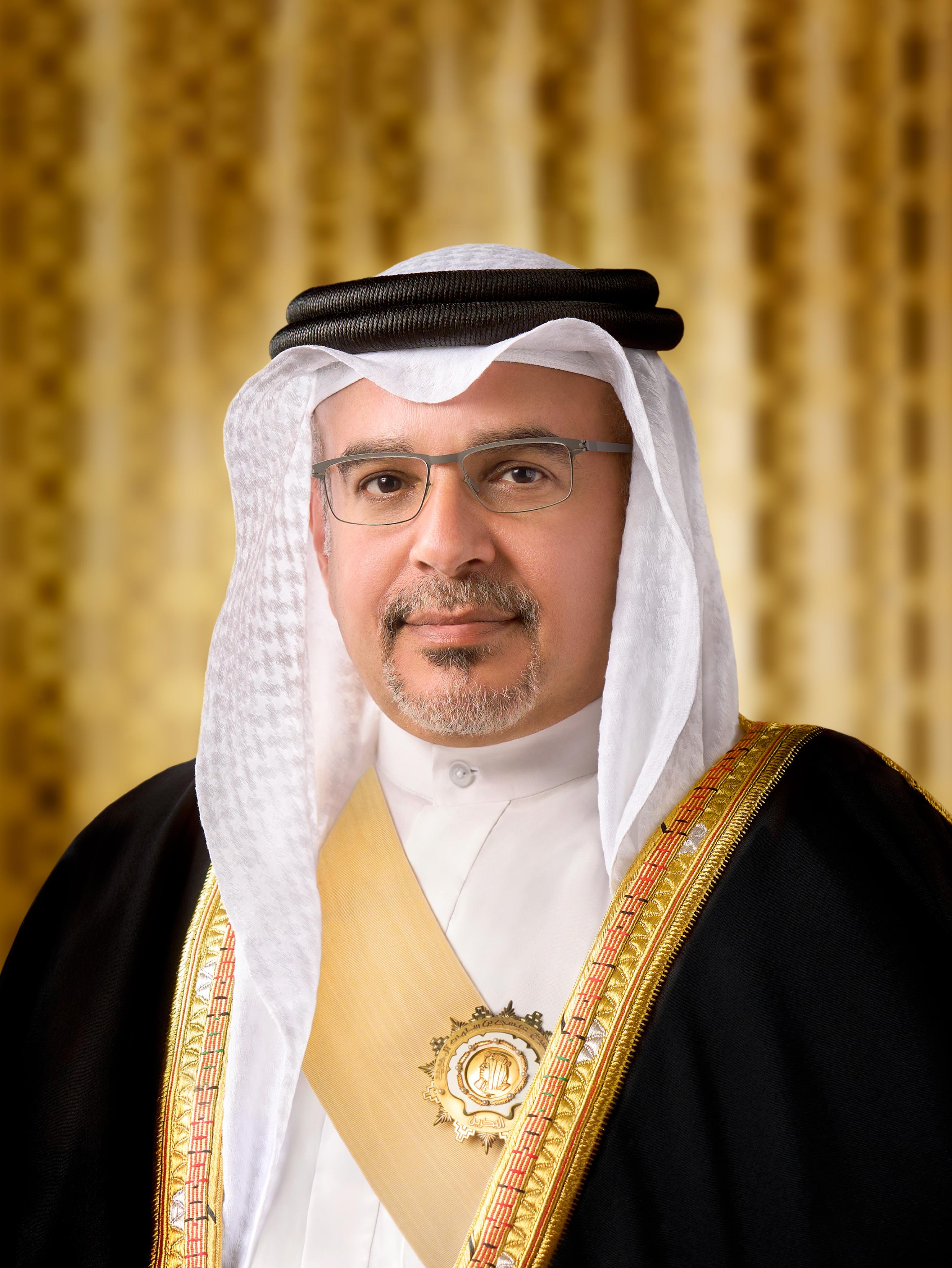
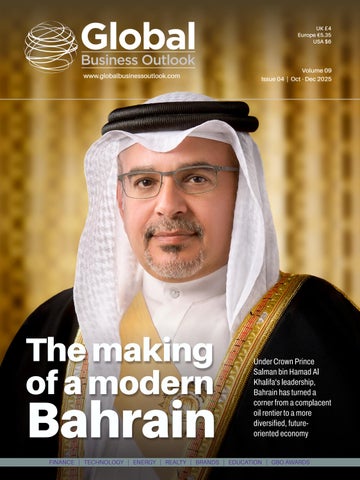
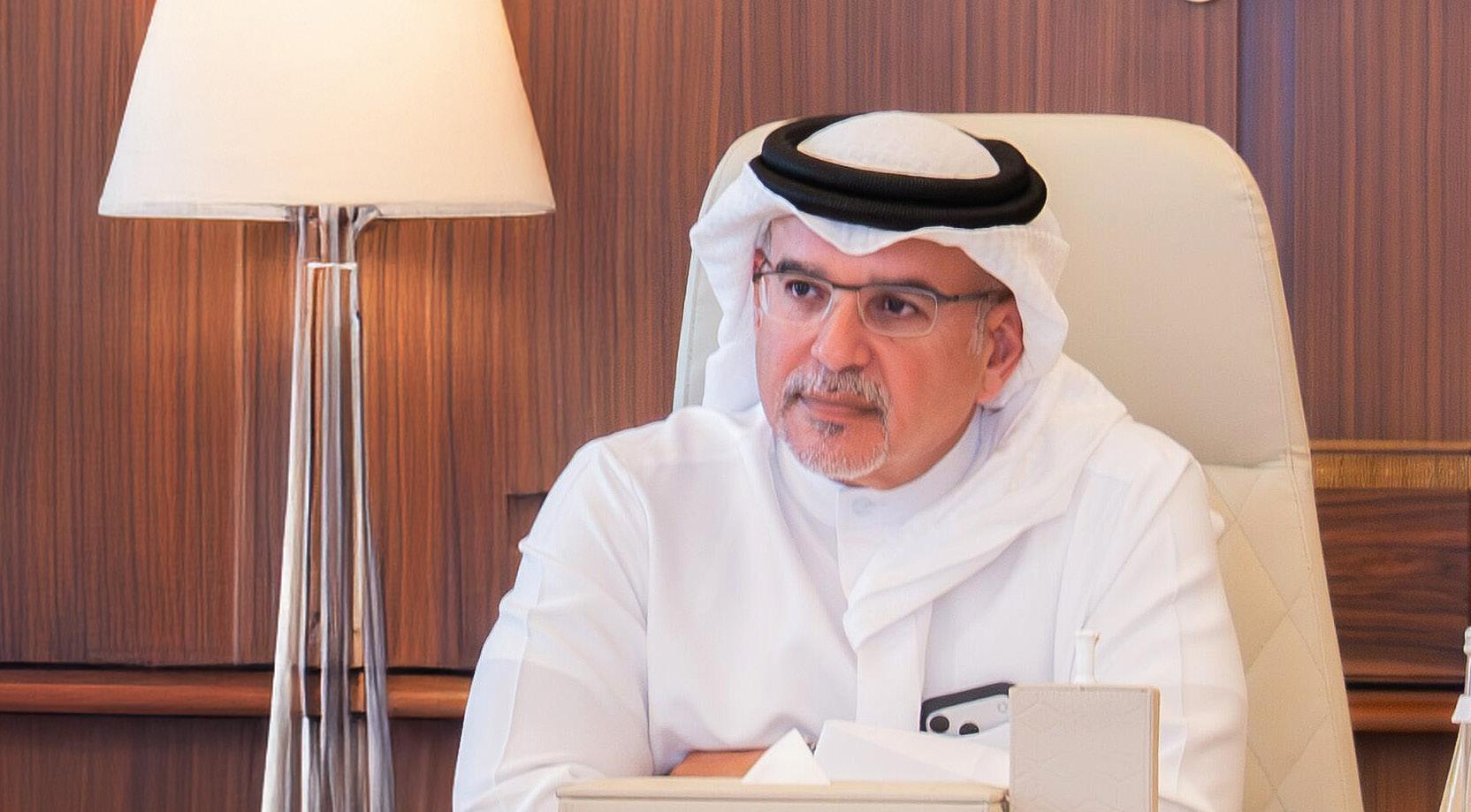
The cover story of the Global Business Outlook’s final edition for 2025 will focus on Crown Prince Salman bin Hamad Al Khalifa, the current Prime Minister of Bahrain, who is guiding the Gulf nation toward a diverse and sustainable economy. As the architect of “Economic Vision 2030,” the Crown Prince is working to strengthen Bahrain's financial and education sectors, promoting innovation in the process.
Thomas Kranjec Editor kimberly@gbomag.com











Editor's Note

Director & Publisher
Krushikesh Raju
Editor
Thomas Kranjec
Production & Design
Brian Williams
David Brenton
lan Hutchinson
Shankara Prasad
Editorial
Stanley Rogers
Rachel Taylor
Lucas Cooper
Tom Hardy
Business Analysts
Adam Fagoo
Arthur Salt
Jerry Thomas
Sumith Jain
Business Development Manager
Benjamin Clive
Head of Operations
David Pereira
Marketing
Danish Ali
Research Analysts
Richard Sam
Sophia Keller
Accounts Manager
Edyth Taylor
Press & Media Contact
Craig Penn
Registered Office
Global Business Outlook Magazine is the trading name of
Business Outlook Media Ltd
Congress House, 14 Lyon Road, Harrow HA1 2EN.
Phone: +44 203 642 0805
Fax: +44 (0) 203 725 9247
Email: media@gbomag.com
China Analysis
GBO Correspondent
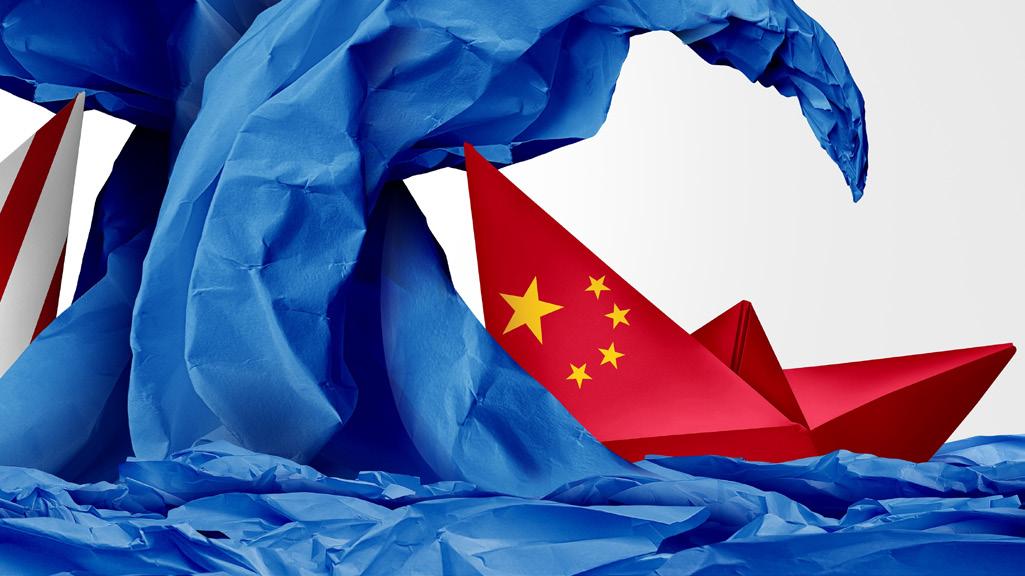
The myth of China’s resilience, that its people are prepared to 'eat bitterness' while Westerners crumble under inconvenience, is outdated
Are there any non-secret weapons that China can use to outlive the United States in the trade war? It may appear such. Chinese officials urge young people that, in contrast to fat and slothful Americans, they should learn to bear adversity—or, as the Chinese say, "eat bitterness."
Because of its autocratic leadership, which tolerates no criticism, decisions should be made more easily and remain in place longer than in a divided America. Additionally, there are other ways for China to negatively impact American businesses, who can be counted on to pressure Washington to take a step back. However, these notions represent an outdated perspective on China and a basic misinterpretation of its political and economic structure.
Consume bitterness? Yes, back when China was much poorer. The Communist Party's legitimacy is mostly predicated on an implicit agreement that it will raise living conditions rather than lower them, and it currently has the same middle-class ennui as the United States.
What about the ability of a dictatorship to make decisions quickly? Not at all. Options are thoroughly examined and reexamined by Beijing's intricate bureaucracy before being sent up the chain for decision-making. Despite being the most powerful leader, Xi Jinping seeks agreement from the senior party leaders he appointed.
If anything, the United States is far more analogous to oneman rule than China when it comes to making decisions in the trade war. The fact that Donald Trump can impose, raise, cut, or stop tariffs at his discretion is one reason why he could enjoy them. On issues presented as preserving national security, the courts typically defer as well, and Congress has given the executive branch its constitutional tariff authority.
Of course, China has many options for trying to force the United States to give in, but each one has serious disadvantages.
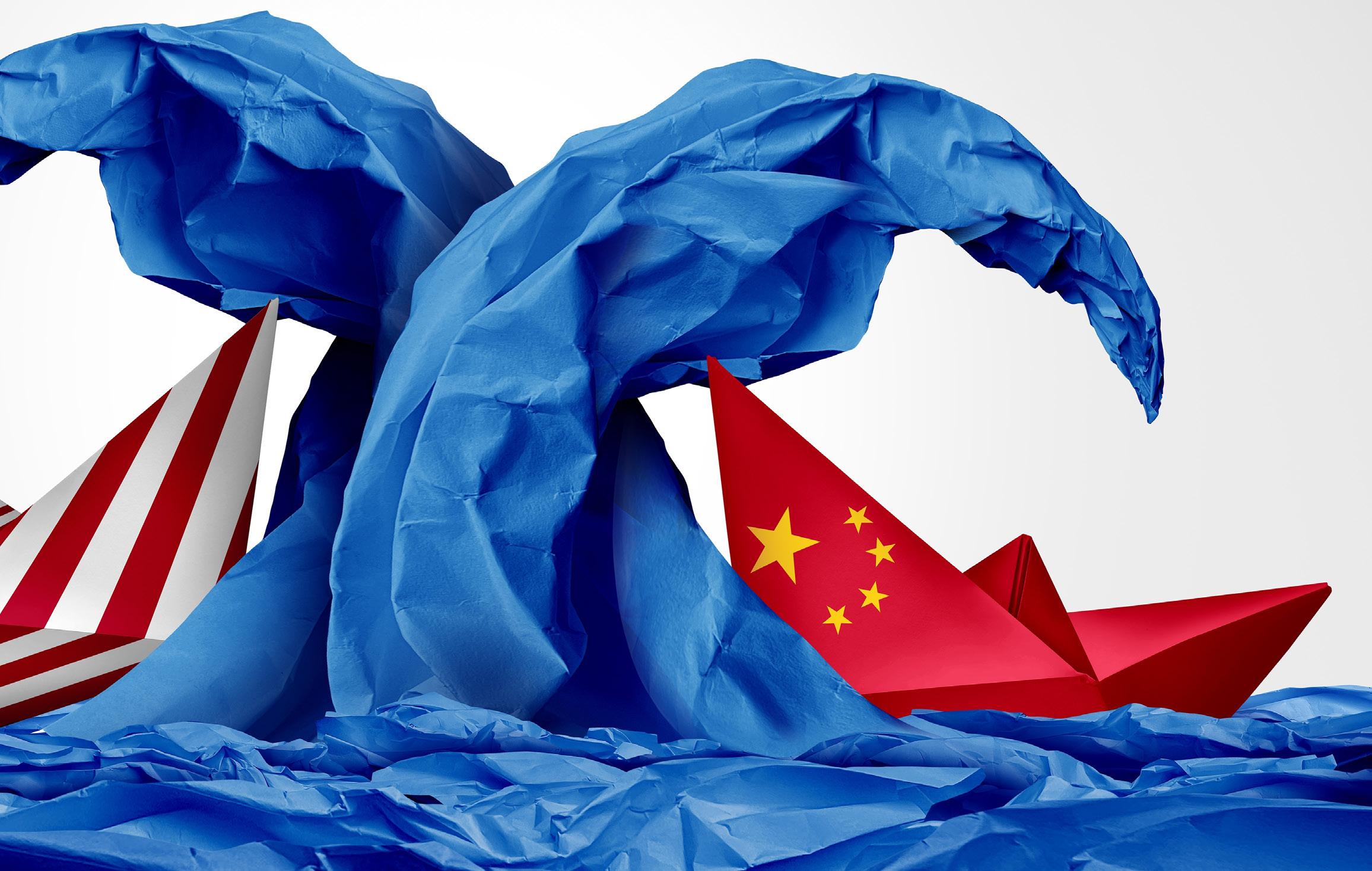
Calling the "abnormally high numbers" a "joke in the history of the world economy," it can keep on matching Washington’s tariff hikes. Yes. They will crash orders and stop trade since they are so high right now, but don't expect Trump to see it that way.
Or Beijing might use antitrust investigations, restrictions on Hollywood movies, and the blacklisting of certain American exporters to put pressure on American businesses, which is what they are beginning to do. However, if you push too hard there, the foreign investment that China relies on for technology and jobs, which has decreased since the pandemic, will go.
Next is China's renowned dominance over the minerals and so-called rare earths that are used in electronics manufacturing. However, American businesses typically don't purchase the minerals straight from China. Instead, they come in components that are sold to customers in the United States. If Beijing exerts too much pressure, other countries will be encouraged to match Chinese mining and processing subsidies.
China depreciated its yuan to offset
And lastly, financial weapons. To lower the cost of its American exports, which were subject to tariffs ranging from 7.5% to 25%, China somewhat depreciated its yuan during the most recent trade war. However, even to partially offset three-digit taxes, the Chinese yuan would have to suffer a huge hit. This would make imports extremely costly in China and lead to a large capital flight as regular Chinese look for methods to exchange their yuan for dollars or euros.
On the other hand, the yuan would appreciate and
Source: Statista
Chinese exports would become even more costly if China attempted to sell off its hoard of over $760 billion in US Treasury notes, which would raise interest rates in the world’s largest economy. Once more, that is not what China desires.
Even though the ongoing trade war could harm Beijing more, China might attack the United States in any of the numerous methods mentioned. Alternatively, it may remain mostly motionless and wait for the US president to cause the economy to collapse.
The 125% tariffs on the United States' third-largest trading partner, which produces a wide range of products from iPhones to industrial components and Christmas lights, will significantly increase costs in the US. This may push the nation towards a recession. Furthermore, the poor will be more negatively impacted by tariffs than the wealthy, who can afford higher prices, as is always the case. Customers will be encouraged by Democrats, and possibly even retailers, to view the tariffs as a Trump sales tax.
Regardless of what China does, that alone will put pressure on the US to settle. There's yet another twist. Chinese producers have a strong incentive to avoid taxes by shipping their goods through a third country because the US currently charges at least 125% tariffs on anything from China and just 10% duties on items from everywhere else. That would drastically cut into the tariff revenue that Donald Trump and other Republicans rely on to support their agenda.
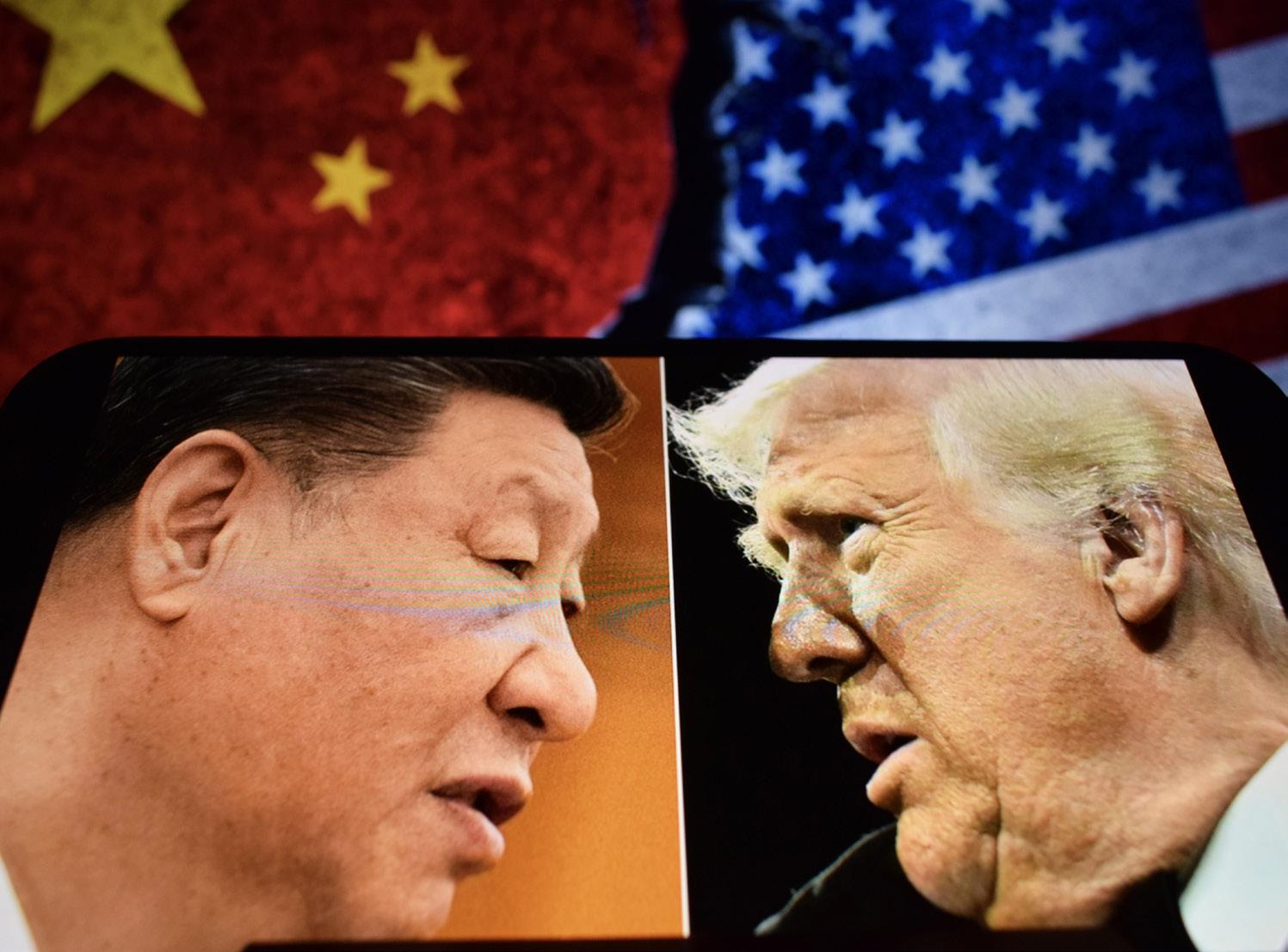
There are strong incentives for both countries to reach an agreement that would at least defuse the trade conflict. According to China's Commerce Ministry, "dialogue and consultation" are welcome. Donald Trump stated that he wants to talk to Xi Jinping about an agreement. He is using
his flattery playbook to get a favourable response, referring to his Chinese colleague as "a proud man" and using other praises.
When all the grandstanding is stripped away, what becomes painfully clear is that a prolonged trade war between the US and China is not only damaging for both nations, it’s strategically unwinnable for China, and arguably for America as well.
Despite the tough rhetoric and occasional sabre-rattling from Beijing, the structural weaknesses of China’s economic and political model make it ill-equipped for a sustained standoff.
The myth of China’s resilience, that its people are prepared to “eat bitterness” while Westerners crumble under inconvenience, is outdated. Modern China is not the ascetic, collectivist society it once was. It is home to a burgeoning middle class with rising expectations, consumer habits, and economic anxieties not so different from those in the United States. The Communist Party knows this. Its legitimacy now depends far more on delivering prosperity than ideology, and that leaves little room for policies that cause long-term pain without clear gain.
Even the idea of China's authoritarian efficiency is more illusion than fact.
Decision-making in Beijing is clogged with internal consultation, rigid hierarchy, and factional politics. Xi Jinping, while powerful, still operates within a system where every major move needs to be vetted and approved across multiple layers. Ironically, it’s Trump’s America, where a single person can change tariffs overnight, that acts more like a command economy in this context.
And though China has tools at its disposal, from currency manipulation to export restrictions and political targeting of American firms, none come without serious collateral damage. Weaponising
rare earth exports could inspire global competitors. Squeezing American businesses risks scaring off the very foreign capital that sustains China’s innovation and employment. Even depreciating the yuan too much could lead to inflation and capital flight, weakening domestic stability.
The US isn’t invincible either. Tariffs that go as high as 125% will eventually blow back on American consumers and businesses. The poorest will suffer most, inflation could spike, and key industries could face disruption. The political pressure will grow, especially in an election cycle.
Chinese exporters are already rerouting goods through third countries to avoid US tariffs, undermining both the effectiveness of the policy and the revenue that American politicians tout as justification. In this kind of economic chess match, both sides are bleeding, even if one believes they’re winning.
Ultimately, a trade war cannot have a winner when the weapons used cause mutual harm. China may be able to
withstand certain blows longer than anticipated, but it cannot emerge victorious without sacrificing the very progress it’s made over the past 40 years.
The United States, for its part, risks recession, division, and long-term damage to credibility. Both sides know this. That’s why beneath the noise, there’s still talk of deals, handshakes, and mutual praise. Because for all the chest-thumping, what both countries really want is not war, but a way out.
In the end, the trade war is a lose-lose situation. Both nations are exposed to real economic pain, and no single tactic can give either side a decisive advantage without creating major downsides. China cannot rely on its old strengths, and the United States cannot ignore the costs at home. What matters most is finding a negotiated solution that limits damage, restores trade flows, and prevents long-term harm to businesses and consumers in both countries.
Chinese producers have a strong incentive to avoid taxes by shipping their goods through a third country because the US currently charges at least 125% tariffs on anything from China and just 10% duties on items from everywhere else Analysis

Saudi Arabia is enhancing its transportation system to accommodate the large influx of fans and tourists that will come with hosting the FIFA World Cup
GBO Correspondent
Saudi Arabia aims to become a diversified, all-round economy within the next five to six years, as outlined in its ambitious “Vision 2030” agenda. According to analysts, the Kingdom's successful bid to host the FIFA World Cup in 2034 will add a major feather.
Over the past few years, Saudi Arabia has rapidly established itself as one of the world’s

premier venues for major sporting events, using these to elevate its geopolitical and economic statuses not only in the Gulf, but around the world.
The FIFA World Cup is set to be the largest and most symbolic event in this transformation, offering the Kingdom a platform to showcase its cultural depth, administrative capabilities, attractive tax regime, and growing foreign direct investment (FDI) opportunities.
A sector-specific investment plan for sports was developed in 2021, including a comprehensive study of 88 investment opportunities and a complete map of value-added chains in the sports sector
- Khalid Al-Falih
In fact, as per the Assistant Minister of Investment, Ibrahim Al-Mubarak, the market value of the Saudi sports sector has reached SR32 billion, compared to less than SR5 billion at the time of the launch of “Vision 2030” in 2016, brainchild of Crown Prince Mohammed bin Salman.
In April 2025, Saudi Minister of Investment Khalid Al-Falih, at the first "Sports Investment Forum" in Riyadh, stated that the target for the sector is to reach more than SR80 billion by 2030, while crediting factors like legislative structure, financial governance, and investment areas and models, that is not only turning sports into an integrated economic sector but also opening promising horizons for businesses.
Al-Mubarak said that the rate of sports practised in the Kingdom has increased from 13% to 48% currently since the launch of Vision 2030. Since 2016, more than 70
new sports federations have been established, overseeing activities covering various Olympic and non-Olympic sports, reflecting the diversity of the Saudi sports sector. Saudi Arabia has hosted more than 100 international championships, events, and activities.
The Ministry of Investment considers sports in the Kingdom to be an essential element in building a modern economy, shaping human capital, and building national identity. Sports is no longer a complementary sector, as it has become an avenue for reshaping the national economy, attracting investment, and building new value chains.
“The Ministry of Investment is working in an integrated partnership with the Ministry of Sports, the Public Investment Fund, sports federations, and all relevant entities to enable investors to enter the sports market with ease and transparency, based on modern legislation. This is achieved through initiatives, most notably developing a map of investment opportunities in the sports sector. This
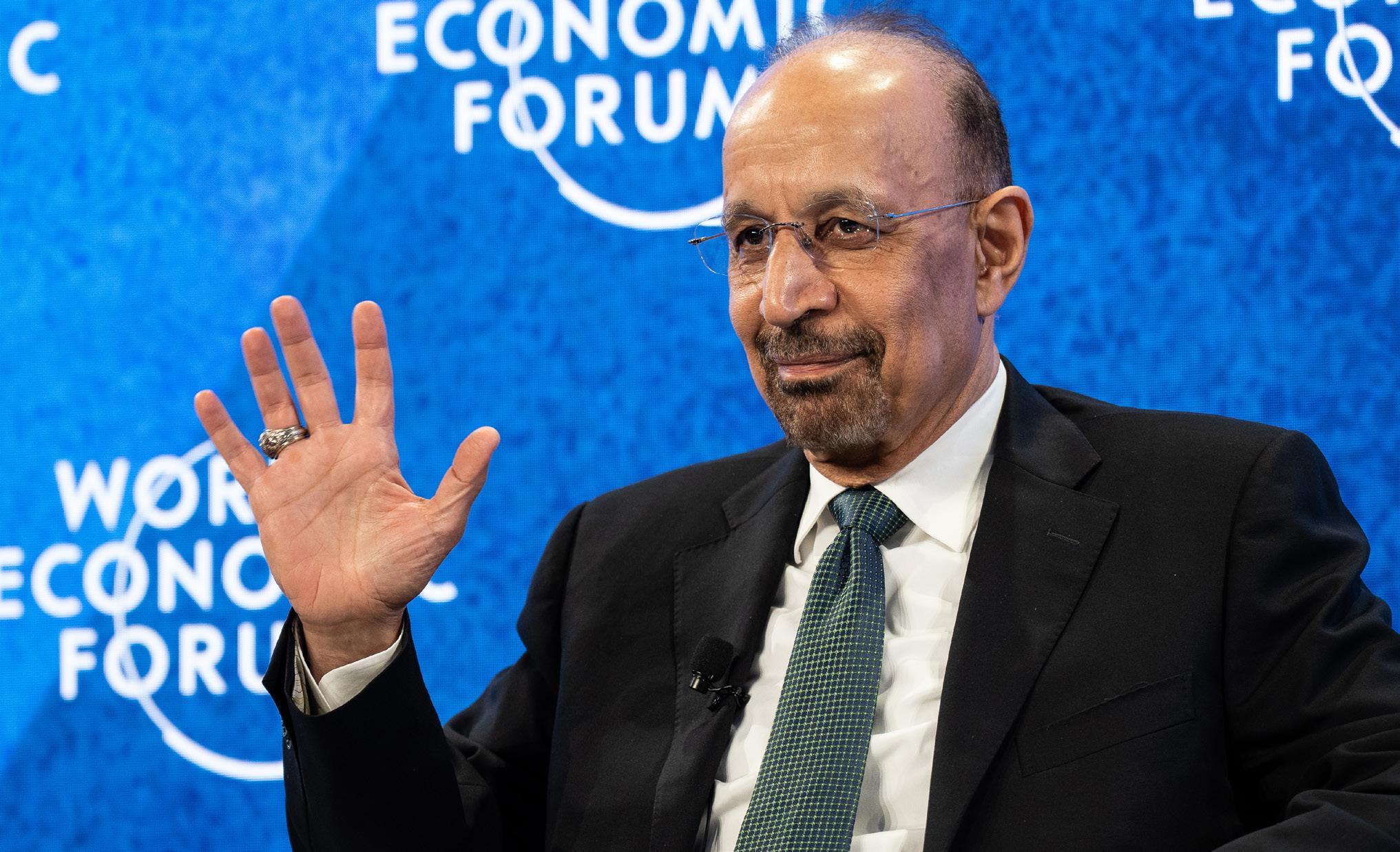
includes infrastructure such as the construction of stadiums, training complexes, private clubs, and smart sports facilities; sports services such as marketing, media, sponsorship, and consulting services; and sports technologies like AI in sports performance, rehabilitation technologies, and interactive digital platforms. It also has sports tourism, specialising in the development of tourism programmes and packages that attract visitors to attend tournaments or practice sports in the Kingdom.” Al-Falih said.
Various incentives are being offered to investors, such as exemptions, logistical support, financing facilities, and partnerships with government agencies and programmes. The establishment of specialised business centres within and outside the ministry supports investors in the sports and other sectors, from the initial stage to operation and expansion, while providing information and studies.
Al-Falih also pointed out that a sector-specific investment plan for sports was developed in 2021, including a comprehensive study of 88 investment opportunities and a complete map of value-added chains in the sports sector. Twenty of these priority opportunities were identified, including sports clubs, academies, apparel, sports equipment, and sports facilities, with a total value of up to SR20 billion.
Within this framework, the Kingdom will host the AFC Asian Cup 2027 and the 2034 World Cup. The Gulf nation is certainly betting big on these two events to become a global hub through sustainable investments, world-class infrastructure, and an integrated and supportive legislative system.
While these two events will come with massive costs and benefits, the potential economic and social benefits could outweigh the investment if managed strategically. Let’s see what happened with Qatar and its tryst with the 2022 World Cup. The Gulf nation reportedly spent between $200 to $300 billion on infrastructure projects over a decade, while the short-term benefits (primarily visitor spending and broadcasting rights)
contributed approximately 1% of its GDP. In pure tourism revenue, Qatar gained between $2.3 billion and $4.1 billion, representing 0.7% to 1.0% of GDP in 2022 alone.
Saudi Arabia, with its larger economy and broader “Vision 2030” initiatives already underway, could expect even higher absolute figures. The indirect benefits, such as increased foreign direct investment, higher tourism inflows, and stronger nonoil sector growth, could have a much more profound effect.
Qatar’s experience shows that targeted infrastructure investments, beyond the immediate needs of the World Cup, can boost non-hydrocarbon income by as much as 40% over a decade. Saudi Arabia, with its ambitious reform programmes, may see even greater multipliers.
Moreover, hosting the tournament will solidify the Kingdom’s growing global influence, demonstrating its capabilities in project management, governance, and large-scale event hosting. On the infrastructure front, Saudi Arabia plans to build 15 new stadiums or refurbish existing ones across key cities such as Riyadh, Jeddah, Alkhobar, Abha, and NEOM. In Riyadh alone, six of the eight proposed stadiums will be entirely new, something which will put the city in direct competition with London, which boasts 22 stadiums across its entire urban area.
The new "NEOM Stadium," situated 350 metres above the ground, promises a futuristic experience, reinforcing the Kingdom’s commitment to innovation and modernity. Meanwhile, Jeddah will see the construction of three new stadiums and the refurbishment of an existing one. This scale of development is expected to contribute not just to World Cup success but to Saudi Arabia’s long-term strategy of boosting the non-hydrocarbon share of its GDP.
In hospitality, several new hotels will be constructed, including FIFA headquarters hotels in Riyadh’s New Murabba district, luxury accommodations for VIPs in Khobar’s Al-Olaya district, and exclusive venues
The new NEOM Stadium, situated 350 metres above the ground, promises a futuristic experience, reinforcing the Kingdom’s commitment to innovation and modernity
FIFA World Cup
The turning point for the league was the time when Al-Nassr signed football legend
Cristiano Ronaldo to a two-year contract worth $200 million
near Abha. King Salman International Airport in Riyadh will also expand, thereby aiming to accommodate up to 100 million passengers per year, representing a 170% increase compared to 2023 capacity.
Apart from sports and hospitality, another sector which will directly benefit from the 2034 World Cup bid is tourism, which is already experiencing impressive growth. In 2023, the Kingdom ranked among the fastest-growing countries for international tourist arrivals, according to the United Nations.
Hosting the event will further boost the Gulf major’s image as a desirable travel destination and cultural hub, thereby increasing the nation’s global visibility, encouraging cross-cultural interaction, and, most importantly, driving consumer spending. South Korea’s World Cup in 2002 brought in more than 2 million additional foreign visitors, while Russia in 2018 welcomed 570,000 tourists
during the event alone. Qatar also saw a remarkable post-tournament boom in tourism.
What Saudi Arabia needs here is targeted marketing strategies to promote post-World Cup tourism, which will ensure cultural, religious, and adventure tourism sectors continue to flourish, as major sporting events like the World Cup may end up temporarily diverting tourists from traditional hotspots, leading to short-term disruptions.
Job creation is another area that will reap the benefits from the excitement around the World Cup. Estimates suggest that World Cup preparations and the tournament itself could create more than 1.5 million new jobs in the Kingdom, representing nearly 10% of the current workforce. Again, going back to history, Russia anticipated around 220,000 jobs from the 2018 World Cup. Qatar claimed that 1.5 million new jobs were created in construction, real estate, and hospitality sectors during its preparation phase, with 850,000 additional residential sector

jobs added between 2010 and 2022.
A successful World Cup will underline Saudi Arabia’s commitment to reform, providing confidence to potential investors across sectors like finance, manufacturing, IT, and tourism. The requirement to follow FIFA’s infrastructure guidelines will boost standards across transport, hospitality, and urban planning—benefiting the economy long after the tournament’s conclusion. However, one immediate challenge here will be upkeeping and using the stadiums for long-term gains, as maintenance costs could be substantial.
Talking about the Kingdom's tryst with major sporting events, 2024 marked a pivotal year for the Gulf nation as it hosted many internationally recognised sporting events such as the Dakar Rally, the Formula 1 Saudi Arabian Grand Prix, the World Table Tennis Grand Smash, the Women’s Tennis Association Finals, and the Esports World Cup, in addition to growing the Saudi Pro League for professional football (soccer), thereby proving its organisational ability to showcase such showpiece tournaments, something which will keep the administration confident ahead of the World Cup 2034.
According to SURJ Sports Investments (Saudi Arabia's leading sports investor), the Saudi sports industry, currently valued at roughly $8 billion, will reach $22.4 billion in 2030. The Kingdom has initiated key developments, such as King Salman’s $23 billion project to build “The Global Sports Tower,” a state-of-the-art sports facility set to become the largest sports tower in the world.
Additionally, the Kingdom has started internal developments, like enhancing its transportation system, to accommodate the large influx of fans and tourists that will come with hosting the FIFA World Cup.
The Saudi Pro League has garnered significant global attention due to its high-profile signings of players from top football leagues, including LaLiga, the Premier League, Ligue1, and the Bundesliga. In 2024, the clubs spent roughly $1 billion to secure international
talent, including Neymar, who joined Al-Hilal from Paris Saint-Germain for roughly $98 million. The turning point for the league was the time when Al-Nassr signed football legend Cristiano Ronaldo to a two-year contract worth $200 million. Now the league boasts players like Karim Benzema, N’Golo Kante, Roberto Firmino, Sergej Milinkovic-Savic, Sadio Mane, Riyad Mahrez, and Jordan Henderson, which has elevated the league’s presence internationally.
Dr. Yaseen Ghulam, associate professor of economics and director of research at Riyadh's Al-Yamamah University, told Arab News that the last World Cup in Qatar was a major investment, with the Gulf country spending $200-$300 billion on infrastructure over a decade.
While short-term benefits from visitors’ spending and broadcasting rights were estimated at about 1% of GDP, tourism and tournament-related revenue were projected at $2.3-$4.1 billion, or 0.7%-1.0% of GDP in 2022.
Indirect benefits included higher FDI and tourism, while non-hydrocarbon income rose 40% during the decade of World Cup preparation through infrastructure investment and economic diversification.
For Dr. Ghulam, Saudi Arabia saw significant foreign tourism growth in 2023, per the UN. Large sporting events can boost a nation’s global reputation, promote tourism and cross-cultural interactions, and support economic development.
Hosting mega-events like the FIFA World Cup can increase GDP, jobs, tourism, and the national brand. By showcasing administrative skills and offering incentives, the Kingdom can attract FDI in finance, manufacturing, IT, and tourism. Following FIFA infrastructure guidelines boosts hospitality income and strengthens the Gulf nation’s global standing.
Top 10 Saudi Pro League clubs by average home attendance for the 2024-2025 season
Al-Ittihad Club 34,491
Al-Ahli SFC 22,887 Al-Hilal SFC 17,869
Al-Nassr FC 16,978 Al-Qadsiah FC 9,010 Al-Fateh SC 6,947 Al-Ettifaq FC 5,933 Al-Khaleej FC 5,565 Damac FC 5,245 Al-Taawoun FC 5,027
Cover Story
Bahrain
Crown Prince
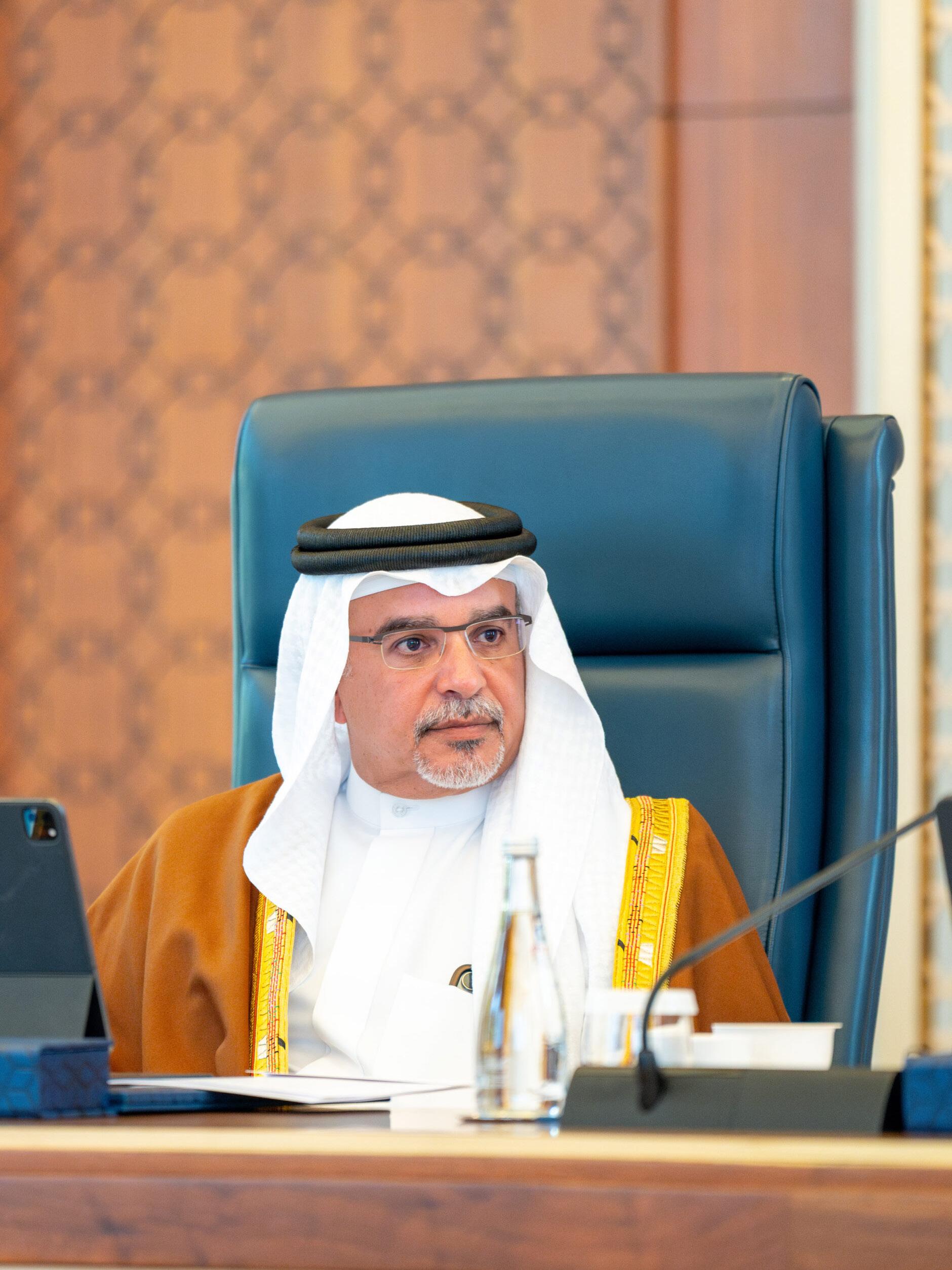
Under Crown Prince Salman bin Hamad Al Khalifa's leadership, Bahrain has turned a corner from a complacent oil rentier to a more diversified, futureoriented economy
There is a question that was often secretly whispered but never posed in GCC (Gulf Cooperation Council) forums and press meets for decades. It pointed to an inevitability that unsettled the rulers and subjects of the region. The question is simple: “What would you do when you run out of oil?”
When the old guards of each of these nations handed the helm to newer generations, each Gulf economy had a bold new vision on how to thrive in a post-oil economy. There are ambitious growth milestones like Vision 2030, 2040, or 2071 adopted by major GCC players to diversify, including Saudi Arabia, the UAE, and Oman.
Bahrain's oil production dropped to just 35,000 barrels per day, barely enough to fill two Olympic swimming pools. Crown Prince Salman bin Hamad Al Khalifa took the seat of Prime Minister under such critical conditions, and there is no one more pivotal than him in Bahrain's economic renaissance.
As the heir to the throne and the serving Prime Minister since 2020, Crown Prince Salman bin Hamad Al Khalifa has used his decades of experience
in leadership roles across different sectors within the nation to push a radical reformation agenda for the Island Kingdom.
The world sees him as a young and dynamic leader who is spearheading an ambitious economic agenda that will broaden the economic base of Bahrain. He is the architect of “Economic Vision 2030” and is often credited for progressing the arduous task of diversifying Bahrain's traditional oil-intensive economy.
Under his reign, the island's financial sector has strengthened, and education, with innovation, is booming as well. Despite being in the middle of two of the region's most powerful rivals, Saudi Arabia and Iran, Bahrain is doing surprisingly well and remains a haven with no conflict.
Bahrain had always been a rentier economy (a system where national income is primarily derived from renting out indigenous resources to external clients). Before oil, it was pearls and trade duties. For four thousand years, pearling was integral to the island,
with even Assyrians and Roman writers like Pliny the Elder praising the quality of Bahraini pearls. The 19th and 20th centuries were the golden age of pearling for Bahrain, with at least 30% of its population involved in diving, selling, sailing, or polishing, and around 97% of Gulf pearls were traded through Bahrain.
For a small desert island, water-scarce and hostile to vegetation, pearling was a lifeline, a lifeline that was severed when a Japanese entrepreneur, Kokichi Mikimoto, produced the first commercially viable cultured pearl in 1893. It made dangerous sea diving and the seasonality of pearling obsolete.
The Japanese pearl farms had turned it from regal jewellery into something that became increasingly affordable. The disruption and the effects on Bahrain cannot be discounted, as prices of pearls fell by 85%, leaving many divers and merchants in ruin. The “Great Depression” of the 1920s destroyed any remaining demand for luxury goods.
But something miraculous happened when British geologist Major Frank Holmes convinced Bahrain's ruler, Sheikh Hamad bin Isa Al Khalifa, to drill oil wells on the island, leading to the discovery of the first oil well at Jebel Dukhan.
This led to the establishment of the Bahrain Petroleum Company (BAPCO), which was created by Standard Oil of California (which would later be named Chevron), and a new rentier economy with oil instead of pearls. From fishing villages, people shifted fast into roles tied to oil work, helped by jobs built from royalty income. Life in Muharraq, long centred on pearling, slowly gave way to Manama’s rise under new pressure. Money from crude flows fuelled roads, offices, and schools, turning quiet towns into bustling centres within years.
Fast forward a couple of years, and the oil pulled from wells powered a broad shift into today’s world. There were new roads, schools, hospitals, and housing mushrooming in Manama. By midcentury, Bahrain had developed a refinery and new towns like Awali for oil workers, laying the foundation for industrialisation. This is proof that Bahrain can withstand historical macro-economic shifts and even come out stronger.
However, Bahrain's oil reserves were modest in comparison to those of its neighbours, and they were quickly drying up. It had only one ageing oil field and no vast sovereign wealth to fall back on. Ever since then, successive rulers have been determined to diversify as much as possible. But the older generation, led by Prime Minister Sheikh Khalifa bin Salman Al Khalifa (the longest-serving Prime Minister in the world), was conservative and emphasised stability and caution, reflecting the challenges of their era.
Bahrain was yearning for reform, and Crown Prince Salman bin Hamad Al Khalifa was the man for the job. Even when he was younger, he was well respected by his father's generation and the
According to the World Bank’s "Doing Business" rankings released in 2019, Bahrain stood at 43rd place worldwide, noted among the fastestimproving economies
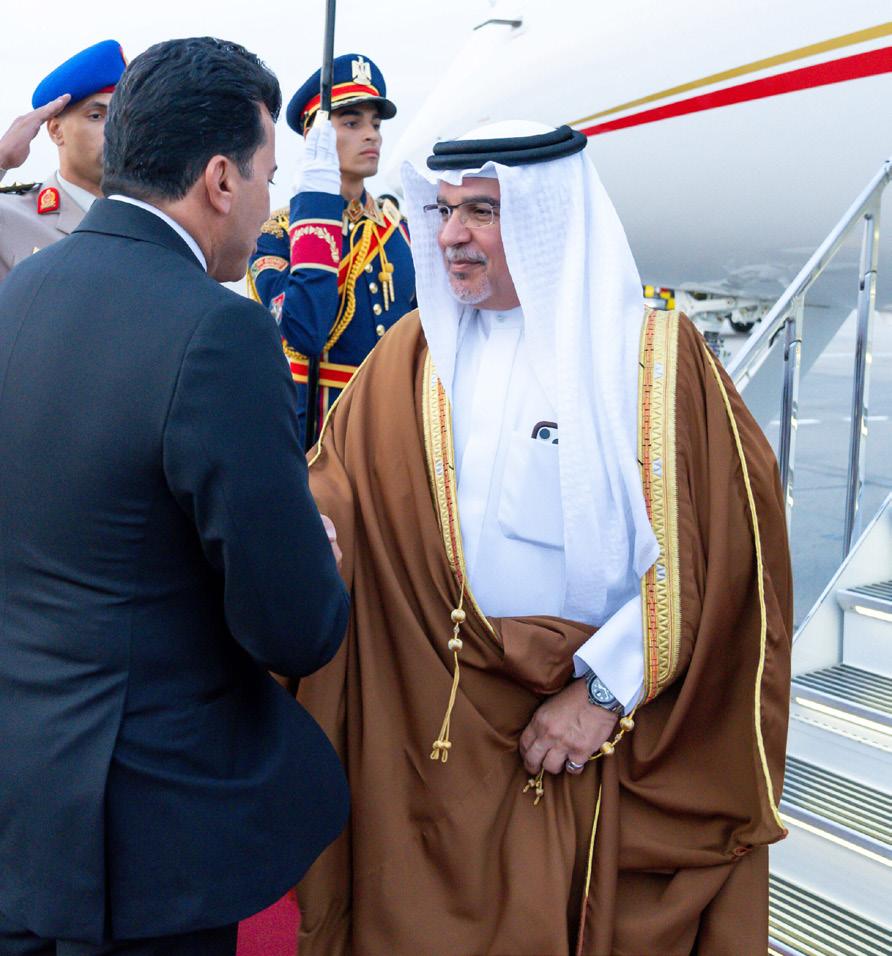
youth for his Western education at the Royal Military Academy Sandhurst and Cambridge University, and his progressive economic views.
His appointment as Crown Prince happened in the same year as the coronation of his father in 1999. In 2013, he was appointed Deputy Prime Minister, and over the decades, he built an image as the architect of Bahrain's economic reform.
He created a sort of shadow government via the Economic Development Board (EDB) to push change around an otherwise entrenched political establishment. In the 2000s and 2010s, Salman bin Hamad Al Khalifa quietly championed initiatives to modernise governance, attract investment, and invest in people.
Under his leadership, the EDB helped design and launch Bahrain's “Economic Vision 2030.” It was formulated in 2008 as a strategic plan to diversify the economy beyond oil. Vision 2030 sets out goals to build a knowledge-based economy and double household incomes by the
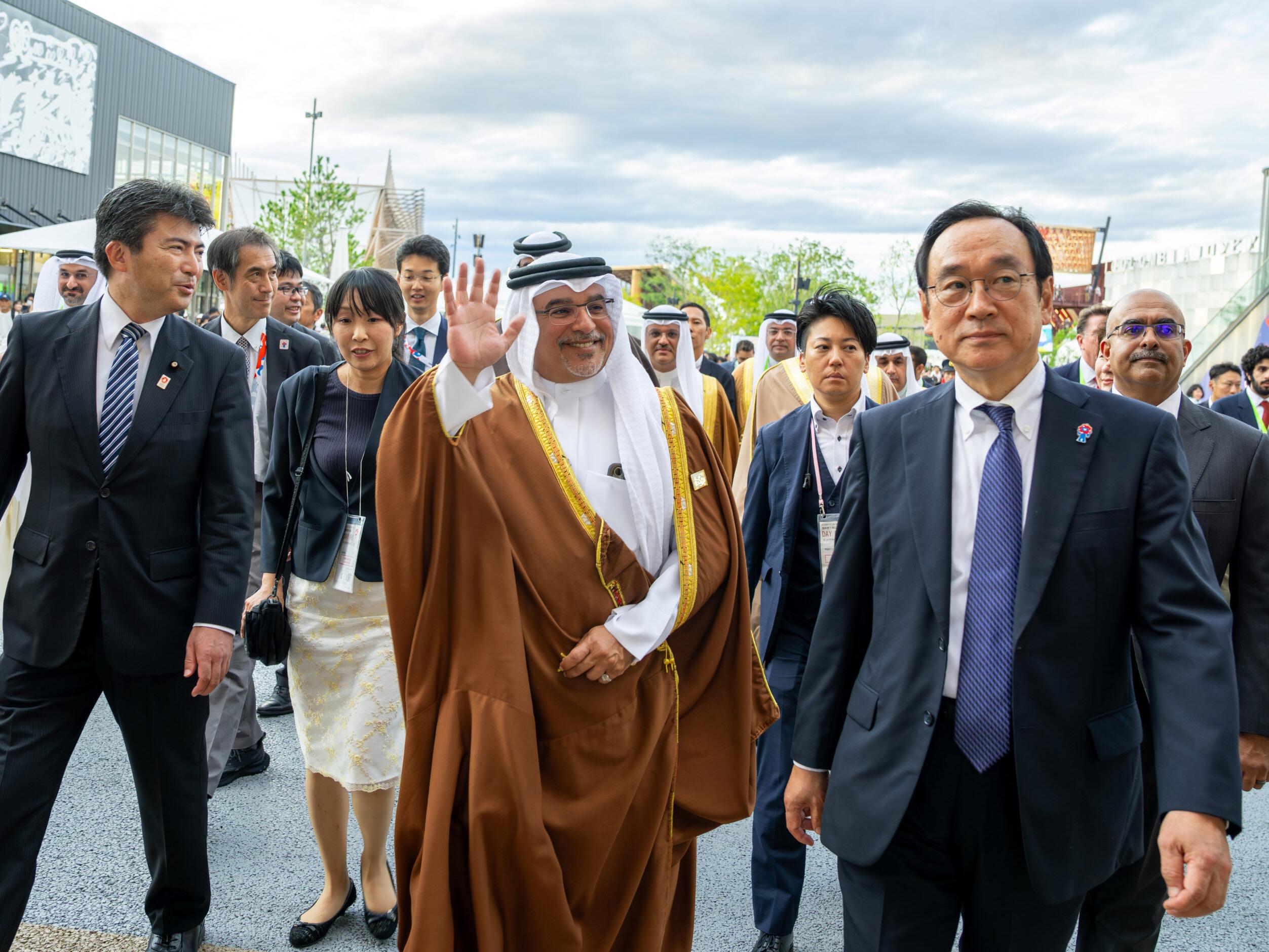
target year.
Boosting business activity and encouraging small business growth take centre stage in the strategy. Efficiency and openness within public institutions receive equal attention. Improving learning outcomes and worker abilities also stands among long-term goals. New sectors such as finance and transportation logistics slowly gain momentum, with support for modern tech systems, and renewable power joins this effort. Relying less on oil for funding has become a priority moving forward.
Around 2015, hints began appearing that Bahrain’s economic shift was gaining momentum. According to the World Bank’s Doing Business rankings released in 2019, Bahrain stood at 43rd place worldwide, noted among the fastest-improving economies, thanks to bold regulatory changes. Instead of long waits, starting businesses now faces far fewer hurdles due to streamlined procedures.
Digital systems replaced paper-based approvals for building projects, cutting delays. Even court proceedings moved faster, with reforms aimed at speeding up legal resolutions. Nowhere was growth louder than in fintech, where overseas funds began flowing fast. Logistics drew interest, too, along with factories needing capital. Tourism also drew attention, becoming one of the busier destinations for outside money.
Notably, Bahrain built on its early financial heritage. Unlike newly developed Gulf hubs, it has a long-standing banking sector and was the first in the region with a modern stock exchange and central bank. Under Salman's stewardship, Bahrain doubled down on finance and tech.
Cost analyses have repeatedly shown Bahrain as the lowest-cost GCC hub for fintech (about 48% cheaper than peers). Global firms took note: Citigroup opened a major tech hub in Manama, planning 1,000 Bahraini jobs, and JPMorgan Chase launched a Gulf tech centre.
Even through the uncertainty, the figures stayed put right up until 2022, showing a close to 4% jump, all while oil prices slipped. Right after the COVID-19 pandemic, Bahrain jumped into recovery mode. Thanks to solid public health moves plus steady change
Bahrain
Crown Prince
efforts, its budget gap almost vanished overnight.
By 2022, that gap had dropped close to 1.2% of economic output, down from about 6.4% just a few years before. Public borrowing also levelled off when measured against the national size. Higher crude prices helped, yet steady spending changes played a key role too.
In 2019, it brought in a 10% value-added tax to boost income, while 2022 saw a similar 10% tax on profits for bigger companies roll out. Many believed those strict changes would finally help cover public spending costs.
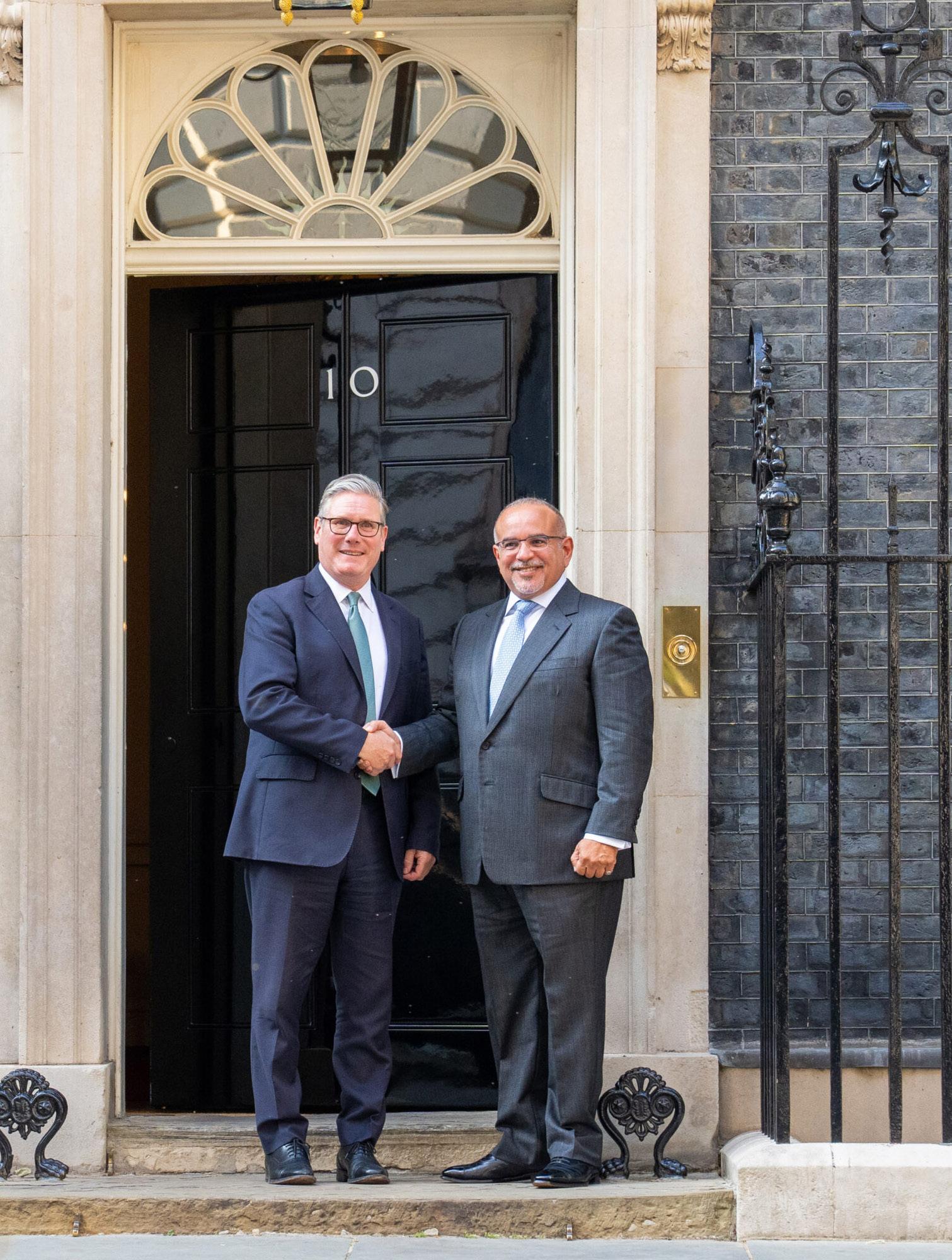
Bahrain's path is starkly different from its neighbours. It neither has Saudi Arabia's oil reserves nor Dubai's vast development budgets, but the Kingdom focuses on smallstate advantages like agility, cost-competitiveness, and specialised sectors.
Consider financial technology. The Kingdom has positioned itself as a regional fintech hub with striking success. Another strength that Bahrain has is its agile decision-making. It was the first in the region to adopt fintech-friendly licences and blockchain initiatives, moving quickly where others hesitated.
Back in 2018, Bahrain was one of the first in the world to pass a “data embassy” law, allowing foreign tech firms to host data on Bahraini soil under their home country's legal jurisdiction. It was an audacious move, and global tech titans who needed data sovereignty guarantees flocked to the archipelago.
An easier comparison to make is with Dubai's growth strategy. The UAE's crown jewel emphasises large-scale tourism, sprawling real estate developments, and highprofile spectacles like “Expo 2020” to draw millions of visitors and expatriates. Saudi Arabia, meanwhile, is embarking on massive, oil-funded megaprojects like NEOM to diversify its economy through sheer financial force.
Bahrain has instead exploited quieter strengths. Its workforce is well-educated, with 54% of Bahrainis holding college degrees. The Middle East is notorious for gender disparity, yet Bahrain's private sector ranks among the highest in the Arab world, with roughly 50% of the labour force being women, compared to about 33% in the UAE. These reflect decades of investment in human capital and social policy.
Another major point of differentiation is financial transparency. It has garnered an image over the years of a liberal banking centre with a strong regulatory framework and lower taxes. It's always been wary of
corporate taxation and has been content with oil revenue and government fees.
In fact, it was one of the last nations in the GCC to impose a corporate tax. They did in 2022 but have announced a 10% corporate tax in 2025, which is comparable to their neighbours, and their domestic fuel prices are now tied to global benchmarks.
These were painful, unpopular, but necessary reforms. Saudi Arabia and the UAE, with their sovereign wealth funds and vast oil resources, could procrastinate on such measures, but Bahrain was forced to make necessary changes due to a scarcity of resources. It was a test of political will that is paying off.
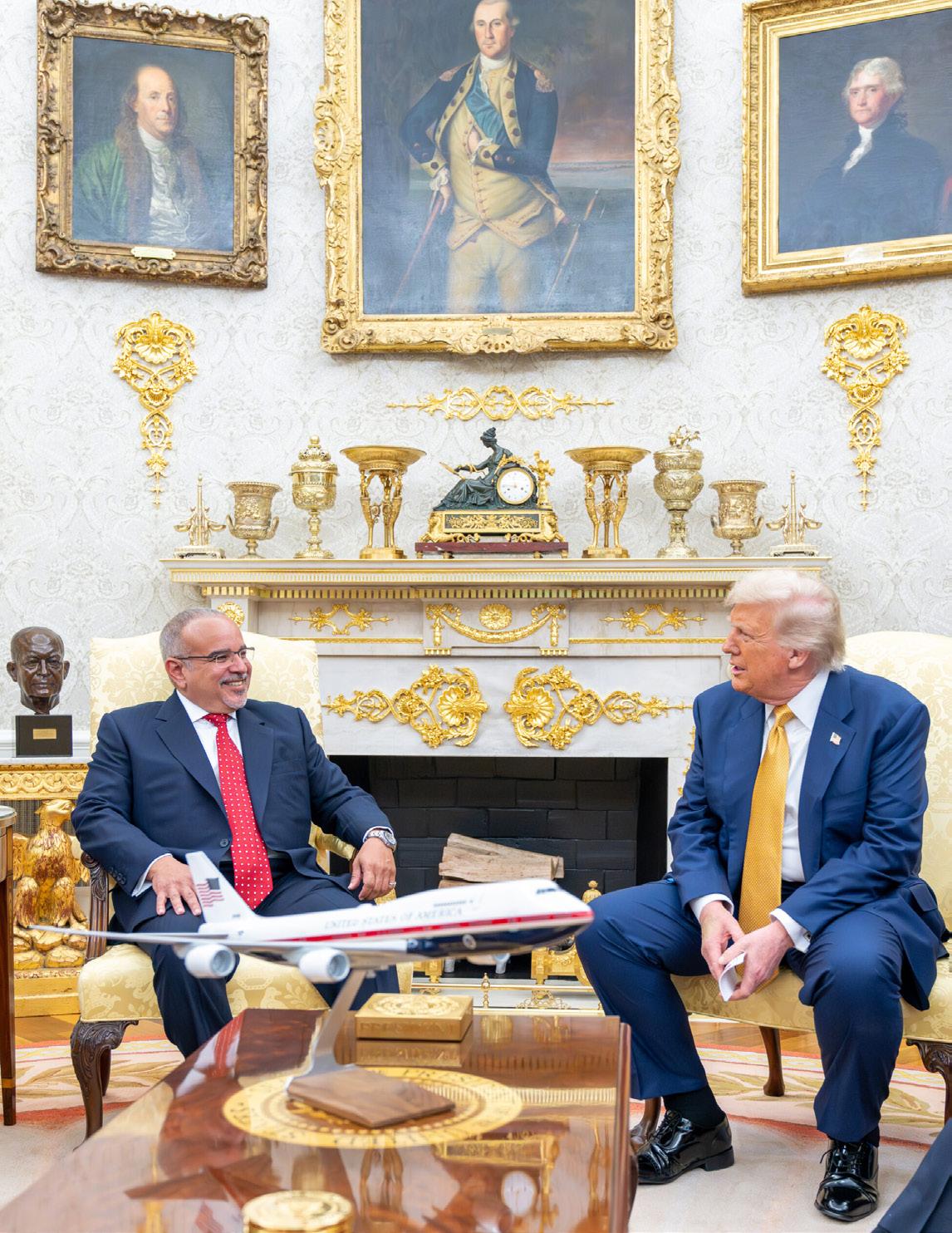
The Prime Minister's economic reform was not incremental but a reconstruction. The EDB pulled $1.5 billion from new project proposals in 2024 under his leadership. Even Citigroup and JPMorgan Chase built tech hubs in Manama.
Crown Prince Salman bin Hamad Al Khalifa didn't just tinker with subsidies; he dismantled them. Fuel and utility price reforms, introduced tentatively in 2016-18, became permanent fixtures by late 2025. Electricity and water tariffs climbed upward, though protections shielded the poor from the harshest impacts. Government salary growth flatlined.
These weren't popular decisions, as they sparked grumbling across coffee shops and majlises, but they worked. By 2023-24, credit rating agencies like S&P began acknowledging reality.
Bahrain's outlook was improving because the structural bones had been reset.
Infrastructure demands collided with budget constraints, producing an unexpected solution, which is publicprivate partnerships at scale. Roads materialised, housing developments sprouted, schools opened their doors, all financed through private capital, while the government conserved its dwindling resources.
A multi-billion-dollar housing expansion signed in 2024 exemplified this model, transferring fiscal strain from public coffers to private balance sheets. Perhaps most symbolically, Bahrain sold a minority stake in BAPCO itself to international investors.
The move accomplished two goals simultaneously. It injected capital and imported technical expertise. For a nation built on state-owned petroleum, privatising even a fraction of the national oil company marked a psychological threshold.
Also, international assessments began placing Bahraini students above regional averages in mathematics and science. The Crown Prince himself became a fixture at student delegations, preaching the gospel of STEM education to teenagers who would inherit this transformed economy. Today, Bahrain boasts one of the Arab world's highest proportions of female board members in publicly listed companies.
Crown Prince Salman bin Hamad Al Khalifa’s bold plans for artificial intelligence (AI) and digital upgrades across the nation began as early as 2018. The same year, filing for
In
IMD’s 2025 list across countries, Bahrain
ranked fourth, ahead of much larger places, for worker skills, a result some found hard to believe given that under 1.5 million people live there
business bankruptcy lost its criminal label, easing fear and shame tied to financial risk. In IMD’s 2025 list across countries, Bahrain ranked fourth, ahead of much larger places, for worker skills, a result some found hard to believe given that under 1.5 million people live there.
As of 2025, Bahrain stands at a crossroads. The economy is notably more diversified than it was a decade ago. Oil now contributes under 20% of GDP, whereas financial services, manufacturing, and tourism each account for significant shares.
The banking sector is robust, and Bahrain has become a small-scale centre for hospitality, with international hotels and some cruise traffic, and logistic re-exports. Petroleum refining and some petrochemicals still add value, but at this stage, it's service-led growth.
International ratings reflect cautious optimism. The IMF's 2023 Article IV report highlights that Bahrain's fiscal deficit shrank to about 1% of GDP and that authorities are “strongly committed” to further reforms. The Central Bank maintains ample foreign reserves. In surveys, investors now rank Bahrain's legal framework and transparency above many neighbours.
Under Crown Prince Salman bin Hamad Al Khalifa's leadership, Bahrain has turned a corner from a complacent oil rentier to a more diversified, future-oriented economy. His blend of consensusbuilding, technocratic management, and openness to innovation has been a departure from both Bahrain's own recent past and from some of its more conservative neighbours. As regional economies grapple with post-oil realities, Bahrain's experience, and the Crown Prince's role in it, will be watched closely as a test case of small-state adaptation.
GBO Correspondent
Contrary to the stereotype of the 'lazy youth' waiting for a handout, African graduates inhabit a zone of active waiting, engaged in a frantic, often invisible hustle to survive
For decades, the prevailing economic narrative for Africa has hinged on the "demographic dividend," the theoretical economic boom generated by a massive, youthful workforce entering the labour market. By 2050, the continent will house the largest workforce in the world, with youth populations in Nigeria and Tanzania projected to explode.
Yet, as 2025 draws to a close, this dividend is increasingly resembling a demographic disaster. The transition from higher education to gainful employment, once viewed as a reliable social contract, has fractured.
In September 2025, a landmark study released by the Human Sciences Research Council (HSRC) and the Mastercard Foundation, titled "The Imprint of Education," poses a haunting question: “Graduated, now what?” The answer, for millions of young Africans armed with degrees and certifications, is not a career, but a complex, indefinite suspension in a state of "waithood." This term, popularised by social anthropologist Alcinda Honwana, describes a systemic delay in achieving social adulthood, a status defined not just by age, but by financial independence, the ability to establish a separate household, and the capacity to support a family.
Today, structural unemployment has barred the gateway to these milestones. However, the HSRC study reveals that this period is far from passive. Contrary to the stereotype of the "lazy youth" waiting for a handout, African graduates inhabit a zone of "active waiting," engaged in a frantic, often invisible hustle to survive.
They are responding to labour market exclusion by constructing "portfolios of livelihood," where a single income stream is no longer sufficient. A graduate in Nairobi or Lagos might simultaneously hold a low-paying administrative job, run a side business selling goods on Instagram, and engage in subsistence

farming. While this diversification acts as a rational hedge against volatility, it often prevents the deepening of specialised skills, trapping many in a "jack of all trades, master of none" cycle.
The phenomenon of "education as shelter" sees thousands of youths pursuing postgraduate degrees not merely for intellectual advancement, but to remain within the institutional safety of the university system, masking their unemployment status while relying on scholarships as temporary income.
A comparative analysis of Nigeria, South Africa, Kenya, and Ghana in 2024-2025 reveals distinct structural pathologies that have led to "jobless growth." Nigeria, the continent's most populous nation, presents a case of statistical dissonance.
While earlier reports cited unemployment figures as high as 33%, the National Bureau of Statistics (NBS) reported a headline unemployment rate of just 4.3% in Q2 2024.
This precipitous drop is not an economic miracle but the result of a new methodology that classifies an individual as "employed" if they work for at least one hour a week. This technicality obscures the lived reality of "working poverty."
In Nigeria, 92.7% of the employed workforce operates in the informal sector, often in low-productivity roles that offer no social protection or path to advancement. The "misery index," the combination of unemployment and inflation, remains punishingly high, jumping to 38.3% in mid-2024. For the Nigerian graduate, the crisis is not just the absence of work, but the absence of decent work that pays a living wage.
In stark contrast, South Africa faces a crisis of mass exclusion. Official data places the Q3 2024 unemployment rate at 32.1%, with youth unemployment (ages 15-34) at a staggering 45.5%. Unlike Nigeria’s informal absorption, South Africa suffers from entrenched long-term unemployment.
The proportion of unemployed persons who have been jobless for a year or longer has risen to 76.7%. Once a young South African falls out of the education system without securing a job, the probability of re-entry diminishes exponen-
Source: Statista
tially, creating a "lost generation" cemented into permanent economic inactivity.
When it comes to East Africa, Kenya has aggressively positioned itself as the "Silicon Savannah," betting on the digital economy to absorb its youth bulge. While the Kenya National Bureau of Statistics reported a youth unemployment rate of roughly 12% in 2024, underemployment remains rife.
The gig economy offers flexibility, but often lacks social protection. Similarly, Ghana faces a youth unemployment rate of approximately 32% for those aged 15-24, despite government efforts to stimulate entrepreneurship.
The data confirms that across the continent, the formal sector is structurally incapable of absorbing the 10 to 12 million youth entering the labour market annually, leaving the majority to navigate the precarious informal economy.
A critical driver of this disconnect is the misalignment between educational output and market needs. The "paper qualification" trap has led to credential inflation, where employers demand degrees for roles that previously required only secondary education, yet find graduates woefully unprepared. Research from the African Development Bank highlights a "vertical mismatch," where 28.9% of employed African youth are under-skilled for their roles despite their degrees.
More pressing is the digital skills gap. While mobile penetration is high, advanced digital literacy, coding, data analysis, and cybersecurity remain low. The IFC estimates that closing this gap could create 650 million training opportunities by 2030, representing a $130 billion market potential. In response, governments and the private sector have launched
massive intervention programmes with varying degrees of success. Nigeria's “N-Power Scheme,” a state-led social safety net, successfully deployed over 500,000 beneficiaries but struggled with long-term sustainability and the transition of beneficiaries into permanent private-sector jobs.
Contrastingly, South Africa’s Youth Employment Service (YES) offers a market-led model. By incentivising companies with B-BBEE (Broad-Based Black Economic Empowerment) credits, YES has created over 200,000 work experiences since its inception, injecting billions into the economy through youth salaries. The programmes' absorption rate, where approximately 28% of participants find permanent work, demonstrates the value of integrating youth directly into corporate supply chains rather than relying on abstract training.
Kenya’s “Ajira Digital Programme” represents a strategic pivot toward the gig economy. By training youth in digital transcription, data entry, and digital marketing, the government aims to position Kenya as a global freelance hub. Reports indicate that over 33% of youth trained under the Ajira curriculum have successfully earned income online, validating the potential of the "iWorker" model. However, this also highlights the reliance on global demand and the vulnerability of gig workers to algorithm changes and a lack of benefits.
In Ghana, the focus has been on turning job seekers into job creators through the “YouStart” initiative, which provides grants and soft loans to youth-led MSMEs. Yet, the African Youth Survey (AYS) 2024 indicates that while 71% of youth desire to start businesses, capital access remains the primary barrier. Without robust access to credit, state-sponsored entrepreneurship risks creating a tier of subsistence enterprises rather than scalable SMEs.
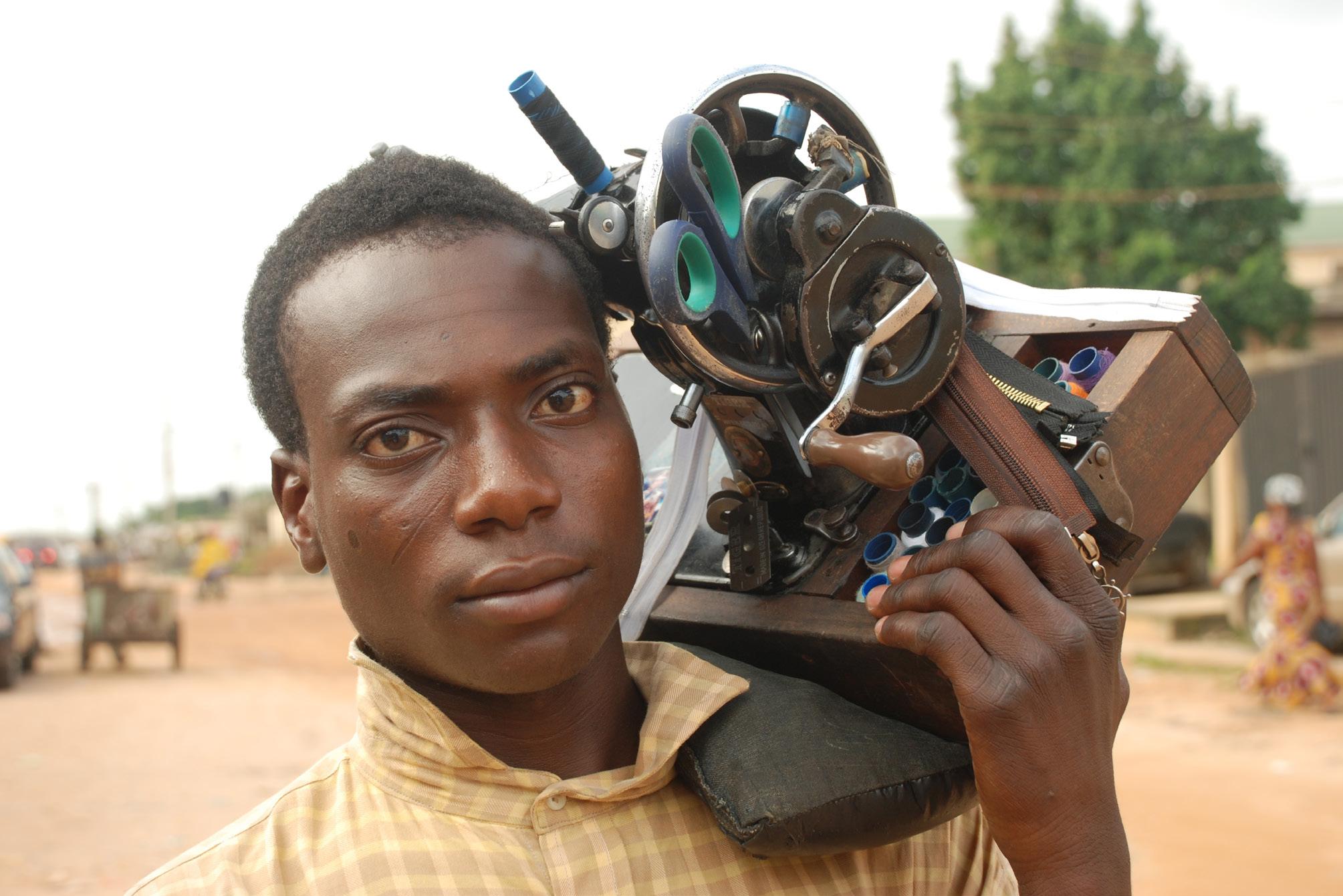
The consequences of "waithood" extend far beyond economics. They are reshaping the geopolitical landscape of the continent. When "active waiting" yields no results, the final option for many is exit. The "2024 African Youth Survey" delivers a sobering verdict: nearly 60% of young Africans are considering emigrating in the next three years.
In countries like Nigeria and Ghana, almost half of those considering migration view it as a permanent move, signalling a potential "brain drain" that threatens to strip the continent of its most educated tier—the nurses, engineers, and teachers essential for development.
Frustrated with Western models of democracy and development that have failed to deliver economic dignity, African youth are increasingly looking East. The survey reveals that 76% of African youth now view
China as an influential power, with 82% viewing that influence positively. Russia’s influence is also perceived as rising, particularly in South Africa and Malawi, as youth attribute blame for global instability to Western leaders.
The "demographic dividend" requires the structural transformation of economies to absorb labour. The path forward demands moving beyond the fetishisation of the university degree toward vocational agility and digital competency. It requires the formalisation of the gig economy to protect the emerging "iWorker" class and a recognition that, without substantial job creation, the waiting room of African adulthood will eventually run out of space. As 2026 approaches, the question “Graduated, now what?” must be met with more than silence.
In Nigeria, 92.7% of the employed workforce operates in the informal sector, often in low-productivity roles that offer no social protection or path to advancement
The US is not yet in recession, but there are increasing signs of trouble ahead
GBO Correspondent
Things have been tough for the American economy of late. President Donald Trump, apart from announcing "reciprocal tariffs" against Washington's allies and adversaries alike, then backflipping from it, went after Federal Reserve Chair Jerome Powell for keeping interest rates "too high."
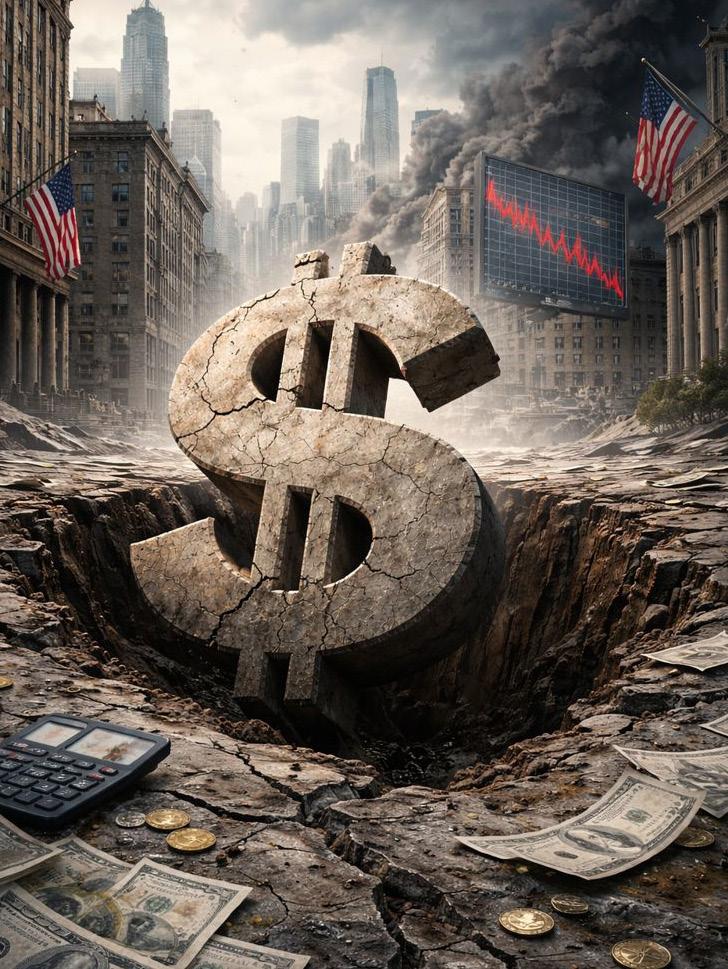
What do these actions suggest? Is Trump panicking? Is the world's largest economy going into the doldrums due to the Republicans' tariff game? However, one thing is clear: speculation of a potential recession, which was circulating for some time, has reached a fever pitch due to the chaos created by the new administration's inconsistent policy moves.
A recession is a period of declining economic activity, commonly defined by at least two consecutive quarters of economic contraction. Although difficult to experience, recessions are a normal part of the economic cycle.
According to the definition above, the United States isn’t currently in a recession. The Federal Reserve Bank of Atlanta estimates economic
growth at -2.8% for the first quarter of 2025. However, the Bureau of Economic Analysis estimated the American economy grew by 2.4% in the final quarter of 2024. If the world's largest economy experiences another period of negative economic growth, it will officially be in a recession by summer.
Apart from trade tariffs and the resultant tensions with crucial partners like Canada, Mexico, and Europe (along with economic standoff with China through supercharged tariffs), economists claim to see uncertainty in the crucial fronts called consumer confidence and business sentiment. It is worth noting that analysts often track these two parameters to decide whether an economy is showing signs of recession or not.
The "Economic Policy Uncertainty Index," which relies upon news articles, tax data, and insights from the Federal Reserve Bank of Philadelphia's "Survey of Professional Forecasters" to produce a metric that gauges uncertainty at the intersection of economics and politics, saw the parameter standing at its highest level since the COVID-19 pandemic.
Likewise, the University of Michigan's index of
By the
end of February 2025,
the Atlanta Federal Reserve Bank's GDPNow forecast for the first quarter of 2025 had dropped to -2.4%
consumer sentiment has also taken a hit due to tariffs and inflation. In February 2025, it fell nearly 16% compared to a year ago.
"What we're seeing right now is that consumers over the last two months... have been feeling less and less positive about the economy," said Joanne Hsu, director of the University of Michigan's "Surveys of Consumers."
In its latest survey of small business optimism, the "National Federation of Independent Business" recently noted that its index fell by 2.1 points in February to 100.7. That's down 4.4 points from its peak in December 2024, though still above its 51-year average of 98. The NFIB said its uncertainty index also rose four points to 104, the second-highest reading.
Emily Gee, an economist and senior vice president for Inclusive Growth at the left-leaning "Centre for American Progress," suggests that the Trump administration's erratic policy initiatives have created a level of uncertainty that is "more than just vibes."
The concern is real Economists defined a recession as a period of economic contraction marked by two consecutive quarters of negative growth. In the fourth quarter of 2024, the United States' real GDP grew at an annual rate of 2.3% However, by the end of February 2025, the Atlanta Federal Reserve Bank's GDPNow forecast for the first quarter of 2025 had dropped to -2.4%
Donald Trump has downplayed concerns that his seemingly indecisive policy pronouncements may contribute to uneasiness among consumers and businesses. When asked in a recent Fox Business interview about the Atlanta Fed's warning of an impending economic contraction, he sidestepped the question, saying, "I hate to predict things like that."
Kevin Hassett, the newly appointed director of the National Economic Council, also defended the White House's tariff policy by stating, "If we reduce inflation at the
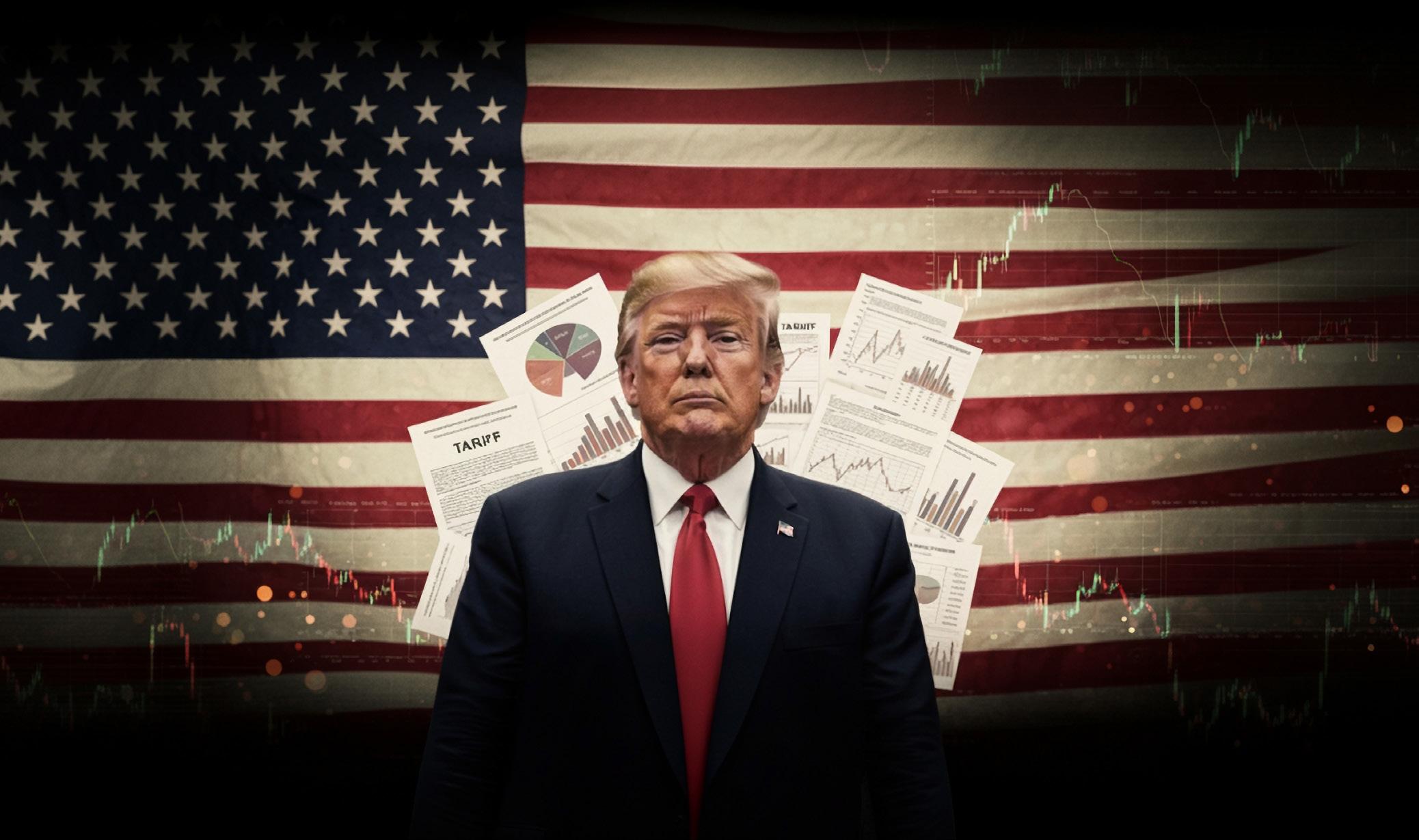
aggregate level by cutting $2 trillion in annual deficit spending, that will have a much greater impact on grocery prices than a tariff here or there."
Hsu said, "Ultimately, the final judgment on the President's policy will be determined by everyday Americans voting with their cash — whether they continue purchasing cars, furniture, and electronics. Consumer spending makes up 70% of GDP. If consumers cut back on spending due to a significant drop in consumer sentiment, that would make it much harder to avoid a recession."
The harsh truth right now is that American households and businesses are practising restraint in response to the trade conflict instigated by Donald Trump and his successive policy reversals. This economic policy uncertainty has resulted in a decline in consumer confidence for three consecutive months, with a decrease of over 30% since November 2024, according to the University of Michigan Survey of Consumers. Consumer spending experienced a decrease for the first time in two years in January.
The National Federation of Independent Businesses reported that its uncertainty index fell in March, along with a decline in small business optimism. These entrepreneurs have lowered their expectations regarding their sales prospects in the coming days. Businesses find uncertainty unsettling since they are unsure of the operating environment. They can adapt once economic trends and policies are understood.
"GDP goes negative when businesses and consumers cut back on spending, which triggers a recession. The lack of clarity and difficulty in predicting where we're headed leads to precautionary reductions in spending," according to Laura Jackson Young, a professor of economics at Bentley University who has researched the economic effects of uncertainty.
As per her, people and businesses are becoming even more cautious as a result of the extreme uncertainty that Donald Trump's actions have created.
Economists, in general, are unsure of what to think due to the seemingly constant policy changes. At the Centre for Strategic and International Studies, a think tank in Washington, Philip Luck, director of the Economics Programme, says the tariff reversal "does very little to resolve the uncertainty."
According to him, the tariffs may have been "bananas," but nobody can truly say if they will be lifted in 90 days or even earlier.
Conversely, the global economic system is undergoing a significant reconfiguration as it attempts to address the new normal known as "reciprocal tariffs" and their impact on overall growth.
Washington's effective tariff rate eclipsed levels reached during the Great Depression, while counteractions from major trading partners markedly increased the global tariff rate. And this doesn't read well.
The US is not yet in recession, but there are increasing signs of trouble ahead. Reversing policy decisions, trade uncertainties, and loss of confidence are holding back economic outlays by both households and businesses. If uncertainties persist and economic growth remains weak, the chances of recession in the current year would remain high for policymakers and investors alike.
Gross Domestic Product of the United States at current prices from 2016 to 2025 (In Billion US Dollars)
30,507.22
Source: Statista

After three consecutive interest rate cuts, investors now confront an uncertain American monetary policy outlook for the year ahead, clouded by headwinds like persistent inflation, data gaps, and an impending leadership change at the central bank.
Economy
somewhat elevated."
The Fed's projection for a slower easing path contrasts with market expectations for two 0.25% cuts in 2026, which would bring the fed funds rate to about 3.0%. The policy rate currently stands between 3.50% and 3.75%.
While the monetary authority ended 2025 by cutting the rates by a quarter-percentage point, it signalled that it would likely pause further reductions in borrowing costs as officials look for clearer signals about the direction of the job market and inflation, which "remains
According to the UN Trade and Development (UNCTAD), global trade is expected to grow about 7% in 2025, adding $2.2 trillion and setting a new record, with East Asia, Africa, and South–South trade the strongest drivers of global gains.
"Manufacturing, especially electronics, remains the main engine of growth, while energy and automotive sectors lag," the
The direction of the Fed's monetary policy will further hinge on economic data that is still lagging from the impact of the government shutdown in October and November. Also looming is the midterm election factor, as the Donald Trump administration will be pressing for sharper rate cuts to placate voters and stimulate economic growth ahead of the polls.
global body stated, while noting that trade imbalances have remained high and geopolitical fragmentation is reshaping flows, with friend-shoring and nearshoring strengthening again.
Between July and September 2025, global trade grew 2.5% compared with the previous three months. Goods rose nearly 2%, and services 4%. Growth is expected to continue in the year’s final quarter, though at a slower pace: 0.5% for goods and 2% for services.
If UNCTAD's projections hold, goods would add about $1.5 trillion to this year’s total and services $750 billion, consistent with an overall 7% annual increase. The global trade is also on course to exceed $35 trillion in 2025 for the first time, stated the global body.
If UNCTAD's projections hold, goods would add about $1.5 trillion to this year’s total and services $750 billion, consistent with an overall 7% annual increase
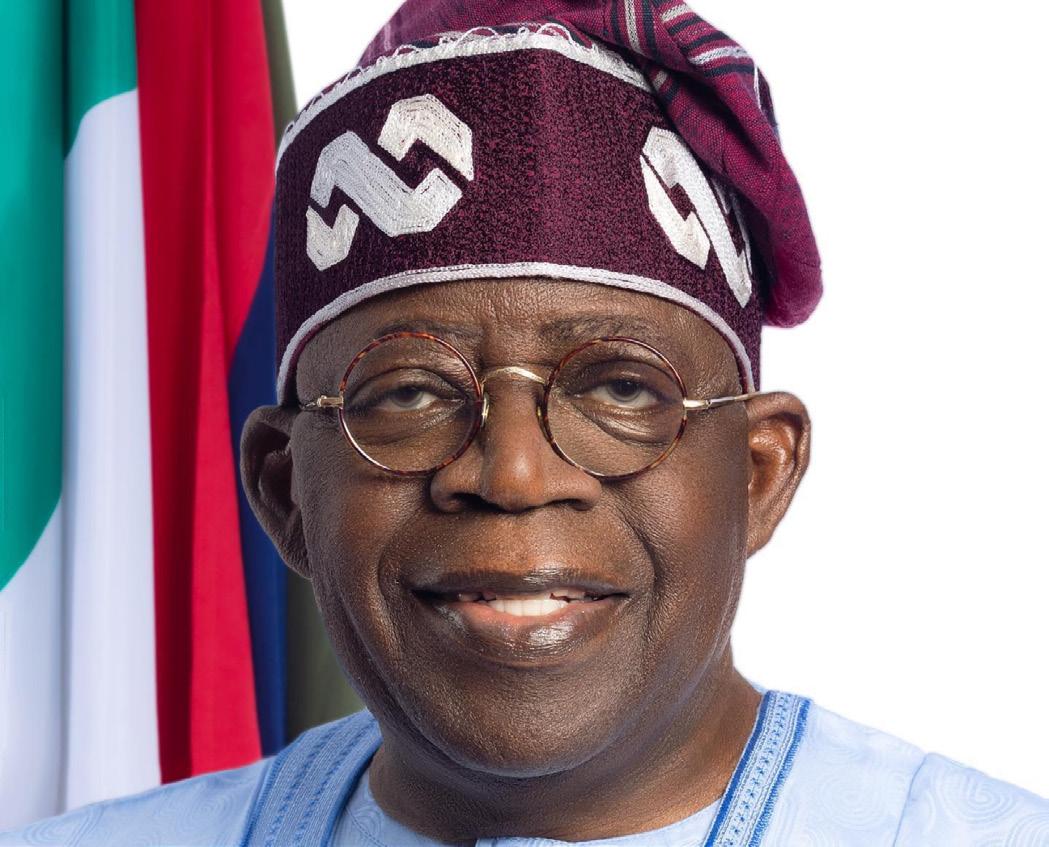
Nigeria President Bola Ahmed Tinubu has linked the country's ambition to reach a $1 trillion economy to key factors such as boosting productivity, fostering innovation, and equipping citizens, especially the youth, with globally competitive digital skills.
Speaking at the Three Million Technical Talent (3MTT) Nigeria National Impact Summit held at the State House Conference Centre, Abuja, the President, represented by the Secretary to the Government of the Federation (SGF), Senator George Akume, said national prosperity does not come by chance but through deliberate investment in human capital.
He further noted that in an era defined by rapid
technological disruptions, countries that take the lead are those that strategically develop the capabilities of their young population.
The President further said human capital development remains at the heart of his administration's "Renewed Hope Agenda."
“Digital skills now power growth across agriculture, healthcare, finance, manufacturing, education, and public service. A strong digital workforce creates jobs, expands enterprise, and positions Nigeria to compete globally. More importantly, it shifts our role from passive consumers of technology to active creators and exporters of talent," Tinubu observed.
The Nigerian President called the 3MTT a proof of his economic vision.
The global digital economy is expected to grow by 9.5% in 2026, three times faster than the global economy, stated a Digital Economy Trends (DET) report.
The report was launched by the Digital Cooperation Organisation (DCO) at the Development Finance Conference “MOMENTUM” in Riyadh.
Drawing on DCO primary survey data from over 400 respondents among policymakers, economists, and technology leaders across 26 countries, DET 2026 identifies 18 digital economy trends and assesses their expected impact on industries, societies, and governments. According to the survey respondents, the global digital economy is projected to reach an estimated $28 trillion in 2026, representing 22% of global GDP.
DET 2026 also identifies trends like "Strengthening End-to-End Cybersecurity" and the "Dawn of Ambient Intelligence," poised to deliver the most significant positive socio-economic impact in the coming days.
Cyber-resilience will be the top priority for the 21st-century global economic order as sophisticated cyberattacks continue to rise, widening capability gaps, and creating new risks linked to generative AI and future quantum computing.

France Analysis
GBO Correspondent
Local employment growth in France is mostly driven by sectoral diversity, particularly in connected sectors
Regions experience regular economic shocks and fierce rivalry in a linked world economy. Knowing the causes of local job increases has become quite important for legislators and academics. Recent theoretical developments underline the significance of various relational distances affecting the advantages of spatial clustering of economic activities.
From 2004 to 2015, a study concentrating on France's labour market areas, “geographical areas within which most of the labour force lives and works," provides a fresh understanding of how industry diversification influences local employment.
Research shows that a diverse range of interconnected sectors can significantly boost employment growth. This finding has important implications for regional development plans.
The study provides an overview of various research efforts from across the continent and highlights some of the key challenges facing European nations.
Economic geography literature distinguishes between two forms of diversity, which are related variety and unrelated variety. Here, variety is industrial diversity, that is, the several types of industrial sectors or technologies, more especially, their variation. The consensus is that knowledge spillovers inside an area, which are known to increase employment, mostly affect connected businesses and, to a limited extent, unrelated businesses.
Related variety explains a condition whereby businesses share common elements, as do biotechnology and drugs. By means of their leveraging of knowledge bases, technology, and talents, such aspects enable synergy, cooperation, and invention.
On the other hand, unrelated variation characterises a situation in which sectors have little in common, as do agriculture and software development. Unrelated businesses
operate in quite diverse fields, which results in less direct synergy but may encourage innovation by difference.
Although unrelated variety protects against industryspecific downturns, it has less direct effect on job growth than related variety. Our study method distinguishes between these two variants at the local level, that is, within a labour market area, and at the neighbourhood level, that is, between neighbouring labour market regions.
Particularly in times of economic boom, a study by Nadine Levratto, Directrice de Recherche au CNRS, Université Paris Nanterre – Université Paris Lumières, and economist Mounir Amdaoud reveals that areas with high related variety had more job increases from 2004 to 2015. Industries such as manufacturing, chemicals, and IT, which clearly showed great benefits on local employment, showed this effect especially.
Industries provide circumstances for interactive learning and innovation when their knowledge bases, technology, or supply chains match. This approach promotes multidisciplinary information flows, therefore improving the capacity of areas to develop and adapt. It can help strike
a balance between regional diversity, which may suffer from too much cognitive distance, and regional specialisation, which runs the danger of stagnation due to industries' too close proximity, a condition economists call “lock-in.”
Unrelated variation revealed a more complicated link with occupation. Although local unrelated variation cushioned areas from economic shocks (because sectors are less subject to industry-specific downturns), it did not directly stimulate job development as related variation did. Furthermore, a detrimental effect of unrelated variation in adjacent areas on local employment dynamics was observed.
Knowledge flows from surrounding areas contributed to lessening the effect of the economic shock during the 2008 worldwide financial crisis. Related businesses served as a buffer, steadying local employment and shielding areas from further losses.
“Another crucial difference between rural and urban places is their respective character. Our study revealed that related variations in diversity had a more noticeable positive impact in urban regions, where rapid innovation and employment growth are facilitated by significant concentrations of industries. Less dense industrial ecosystems in rural areas probably contributed to their
France's unemployment rate from 2015 to 2024 (In Percentage)
lesser advantage from these information spills. This urban-rural gap emphasises the requirement of customised economic policies to assist various geographical demands,” stated Levratto and Amdaoud.
Promoting sectoral diversity, especially the related variation, should be a top concern for legislators. They could promote cooperation among adjacent industries in areas to improve resilience and expansion. Such action would involve helping the growth of innovation clusters, where companies in related fields are geographically concentrated, or platforms for cross-sectoral cooperation, whereby companies, colleges, research labs, and government agencies might exchange ideas and investigate joint ventures. Encouragement of interregional collaboration could also help to distribute the advantages of linked variety among surrounding areas, particularly in times of economic crisis.
challenges of economic development.
The role of industrial diversity in shaping local employment trajectories in France is both nuanced and critical.
The research by Nadine Levratto and her colleagues sheds light on how the structure and composition of regional economies directly influence their ability to generate jobs and withstand economic turbulence.
The findings clearly highlight that related variety, where industries share technological, knowledge-based, or skillrelated proximities, plays a central role in promoting sustained employment growth. By facilitating collaborative networks and enhancing innovation potential, related industries create fertile ground for adaptive and dynamic labour markets, particularly in urban centres.
Source: Statista
Policymakers should also take into account the part that unconnected diversity plays. Although unrelated industries might not immediately boost employment, by diversifying the area economy, they provide stability when economic uncertainty rules.
Encouragement of a balance between linked and unrelated industries could present the best of both worlds: economic stability and innovation-driven development.
Local employment growth in France is mostly driven by sectoral diversity, particularly in connected sectors. To ensure that areas flourish, however, politicians have to encourage crossregional cooperation in addition to helping local businesses expand. The lessons from France's labour marketplaces offer ideas for areas all around trying to negotiate the
The benefits of related variety are most pronounced during periods of economic expansion, but its importance also extends into times of crisis. As shown during the 2008 financial crisis, knowledge spillovers from related industries in neighbouring regions served as a buffer, mitigating job losses and offering a stabilising effect.
This speaks to the resilience-building capacity of related industrial ecosystems, especially when they are not confined to a single labour market area but are connected across regional boundaries.
At the same time, the role of unrelated variety cannot be dismissed. While it does not have the same direct positive impact on employment growth, its capacity to cushion regions from sector-specific downturns makes it a vital component of economic resilience.
A diverse industrial base, incorporating unrelated sectors, acts as a hedge against volatility, ensuring that regional economies are not overly dependent on the fortunes of a narrow set of industries.
The urban-rural divide in the benefits derived from industrial diversity also calls

for differentiated policy approaches. Urban areas, with their dense industrial networks and greater access to knowledge resources, are naturally positioned to take greater advantage of related variety.
Rural regions, on the other hand, may require more targeted support to build the foundational infrastructure needed to enable meaningful knowledge exchanges and innovation. This could include investment in transport and digital connectivity, support for local entrepreneurship, and the development of regional innovation hubs.
For policymakers, the takeaway is clear: promoting sectoral diversity, with a strategic emphasis on related industries, is a powerful lever for local employment growth and regional economic resilience. Strategies could include promoting industry clusters, facilitating crosssector partnerships, and encouraging interregional knowledge flows. Moreover, maintaining a balanced mix of related and unrelated industries ensures that regions are not only dynamic but also robust in the face of economic shocks.
France's experience offers valuable lessons for other countries and regions navigating the twin challenges of economic development and labour market volatility. By leveraging the insights from this study, regional planners and decision-makers can craft more informed, context-sensitive economic policies.
Ultimately, building resilient, innovative, and inclusive local economies will require not just a commitment to diversity, but a deep understanding of the types of diversity that matter most, and the mechanisms through which they translate into employment gains. The future of regional growth lies in ecosystems where industrial variety is not just present, but purposefully cultivated to drive both prosperity and stability.
Promoting sectoral diversity, with a strategic emphasis on related industries, is a powerful lever for local employment growth and regional economic resilience
Industry
Kelly Ortberg
Kelly Ortberg systematically applied engineering rigour to a manufacturing process that had degenerated into controlled chaos
GBO Correspondent
It wouldn't have been a stretch of the imagination to claim that Boeing was teetering on the edge of collapse just a year ago. It had been losing money for seven consecutive years, and there seemed to be no sign of a pause except in its demise. However, to everyone's surprise, the aviation giant has made a comeback under the leadership of President and CEO Kelly Ortberg.
In all likelihood, the company might be on the verge of its first annual profit in years. This miraculous turnaround happened within just 18 months of Ortberg's appointment on August 8th, 2024. And the CEO has reconstructed the operational scaffolding and rewired the cultural DNA of an aerospace titan whose financial hull was flooding from water in every direction.
When Ortberg walked through the door, Boeing was staring down a constellation of catastrophes that would've broken lesser companies. The FAA had slammed a production cap on the 737
after that door plug blew out mid-flight. It was a humiliating moment for the company. And for a while, it threatened public trust in aviation itself.
It wasn't just the company's tainted image. The machinists, almost 33,000 of them, were up in arms, the supply chains had been gutted like a fish, and the balance sheet was drowning under negative cash flow. Surely, Ortberg was handed down an organisation facing existential threats.
And how things have changed in late 2025. Boeing has negotiated a brutal 53-day strike, and it has reacquired a long-lost piece of itself through the acquisition of Spirit AeroSystems in what might be the most consequential deal in modern aerospace. Furthermore, it has stabilised its 737, including the much-debated MAX series, production at a respectable 42 planes per month, and, here's the kicker, beat Airbus in net orders for 2025.
Kelly Ortberg's playbook? Torch the old finance-obsessed, remote-control management style

Kelly Ortberg
Morale had hit rock bottom. Employee surveys conducted before Ortberg’s arrival delivered harsh verdicts, and the pride in working for Boeing, once sky-high, had plummeted.
Workers felt abandoned, even betrayed, by leadership that first decamped to Chicago in 2001 and then relocated again to Arlington, Virginia, in 2022
that's plagued Boeing since the McDonnell Douglas merger. Replace it with something radical, i.e., engineers running an engineering company.
He moved his office back to Seattle, put boots on factory floors, and told Wall Street that quarterly earnings could take a backseat to building planes that don't fall apart.
To grasp the magnitude of this turnaround, you need to understand just how catastrophically bad things were in summer 2024. Boeing wasn't just struggling. It was paralysed, locked in a regulatory chokehold with nowhere to go.
On January 5, 2024, a door plug ripped off an Alaska Airlines 737 MAX 9 at 16,000 feet. Four bolts were missing. The FAA's response was swift and merciless. Administrator Mike Whitaker capped 737 productions at 38 aircraft per month, a rate so anaemic that Boeing couldn't generate enough cash to service its mountain of debt, let alone fund development programmes.
The FAA further audited Boeing's production line and uncovered a litany of sins ranging from busted process controls and sloppy parts handling to product control failures. Whitaker demanded a "fundamental cultural shift," moving away from profit-chasing toward safety-first operations, and made it crystal clear that enhanced oversight was "here to stay." Overnight, Boeing’s autonomy vanished.
Morale had hit rock bottom. Employee surveys conducted before Ortberg’s arrival delivered harsh verdicts, and the pride in working for Boeing, once sky-high, had plummeted. Workers felt abandoned, even betrayed, by leadership that first decamped to Chicago in 2001 and then relocated again to Arlington, Virginia, in 2022.
This geographic exile bred an insular, toxic culture. Bad news crawled upstream at glacial speed. Decisions got made in spreadsheets, not on factory floors where metal meets mechanics.
Travelled work, the practice of shoving incomplete airframes down the assembly line to hit schedule targets, had metastasised into standard operating procedure. It created a cascading avalanche of defects that detonated in final assembly, where everything came due.
Financially? Haemorrhaging doesn't begin to cover it. Defence was shackled to fixedprice contracts on the KC-46 tanker and the new “Air Force One.” These programmes had metastasised into billion-dollar haemorrhages. Inflation? Supply chain chaos? Both were eviscerating margins with surgical precision.
Meanwhile, a different clock was ticking. The contract with “IAM District 751” hurtled toward its September 2024 expiration date. The union hadn't forgotten 2014, the year they lost their pension. That wound hadn't healed. It had festered.
Wages had flatlined through years of punishing inflation. The workers weren't just angry. They were ready to burn it down.
On July 31, 2024, the Board tapped Kelly Ortberg as CEO, effective August 8. The choice sent shockwaves, intentional ones. Ortberg wasn't some GE retread or spreadsheet jockey. He was a mechanical engineer who'd cut his teeth at Texas Instruments before building Rockwell Collins into a supplier legendary for discipline and customer trust.
He occupied a unique position. He was an outsider to Boeing's labyrinthine internal politics, but an insider to the aerospace engineering brotherhood. That duality gave him operational latitude a pure finance exec could never command.
Kelly Ortberg's opening move was logistical, symbolic, and utterly transformative. He based himself in Seattle, not Arlington. For the first time in twenty-three years, the CEO's office sat within striking distance of the factories. He could, and did, walk production lines unannounced, buttonhole shop floor managers about tooling shortages and

part delays, all without the distorting filter of middle management PowerPoints. It demolished the insular culture immediately.
He laid out a four-pillar strategy with surgical clarity. He vowed to change the culture by bridging the chasm between management and labour, stabilise the business by stanching the cash bleed and fixing the 737 line, improve execution by obliterating defects and travel work, and earn the right to build a new aeroplane by first proving Boeing could build existing ones safely.
The first major stress test hit fast. The IAM contract expired. This wasn't garden-variety wage haggling. It was a referendum on a decade of accumulated resentment and the slow-motion destruction of the middle-class aerospace job.
Kelly Ortberg's early charm wasn't enough. In September 2024, 33,000 workers walked away, and the production of 737, 767, and 777 flatlined. It took them 53 days of negotiations, losing $50 million in one day in deferred revenue and operational cash.
The union's stipulations cut to the bone. They demanded a 40% compensation surge to reclaim purchasing power eroded by relentless inflation, coupled with reinstatement of the defined-benefit pension scheme that mothballed since 2014 and was left to calcify. Where previous industrial standoffs saw
management brandish threats of production exodus to right-to-work bastions like South Carolina, Ortberg executed a dramatic volte-face.
He sat down with union leadership during his first week and said plainly, "I remain committed to getting the team back and improving our relationship, so we don't become so disconnected in the future."
Kelly Ortberg refused to resurrect the pension, but he validated the wage demands as legitimate responses to inflationary reality.
He told the company repeatedly, "We are all part of the same team."
The Boeing CEO didn't demonise the strikers. That seemingly small tactical choice paid enormous dividends when it came time to reintegrate everyone post-strike.
In November 2024, the strike finally ended, with the ratification vote narrowly passing at 59% approval. The contract included a 38% wage increase over four years, $12,000 signing bonuses, revived annual bonuses, 401(k) contributions rising to 12%, and, its crown jewel, a commitment to build the next new aeroplane in Puget Sound.
For the union, that aeroplane commitment was everything. For Ortberg, it ended years of corrosive speculation about relocating production.
The real work started once the picket lines
The first major stress test hit fast. The IAM contract expired. This wasn't garden-variety wage haggling. It was a referendum on a decade of accumulated resentment and the slow-motion destruction of the middle-class aerospace job
Kelly
Ortberg
Kelly Ortberg empowered factory leadership to stop the line, full stop, if a unit wasn't 100% complete. Deliveries in Q1 2025 cratered as a result. Wall Street hated it. Ortberg defended it as non-negotiable for long-term survival. By late 2025, rework hours per aircraft had plummeted, vindicating the strategy
came down. From November 2024 through early 2026, Ortberg systematically applied engineering rigour to a manufacturing process that had degenerated into controlled chaos.
The single most critical change? Enforcing a hard "no travelled work" policy. Historically, managers chasing quarterly delivery targets would shove incomplete airframes down the line. Parts missing? Installations half-done? Doesn't matter. Push it through. This practice was directly complicit in quality escapes, including the Alaska Airlines door plug disaster.
Kelly Ortberg empowered factory leadership to stop the line, full stop, if a unit wasn't 100% complete. Deliveries in Q1 2025 cratered as a result. Wall Street hated it. Ortberg defended it as non-negotiable for long-term survival. By late 2025, rework hours per aircraft had plummeted, vindicating the strategy.
Ortberg didn't manage from a corner office. He lived on the factory floor. Not for grip-andgrin photo ops, but for technical audits. He used those walks to root out the toxic dynamics where supervisors, crushed by schedule pres-
sure, ignored mechanics' warnings.
With safety protocols locked in and the workforce back, Boeing launched a methodical production ramp. The strike had halted everything in late 2024. In early 2025, the company restarted at low single digits for retraining and line rebalancing.
By October 2025, following FAA review, approval came through to boost 737 MAX production from 38 to 42 per month. The plan called for hitting 47 per month by mid-2026, with a long-term target of 57 per month to burn through the massive backlog.
The most structurally consequential move of the Ortberg era? Reversing Boeing's catastrophic 2005 decision to spin off Spirit AeroSystems. For twenty years, Boeing outsourced 737 fuselage production to Spirit, engineering a spectacular misalignment of incentives where a separate public company got rewarded for slashing costs at quality's expense.
The acquisition, with a $4.7 billion purchase price and an $8.3 billion enterprise
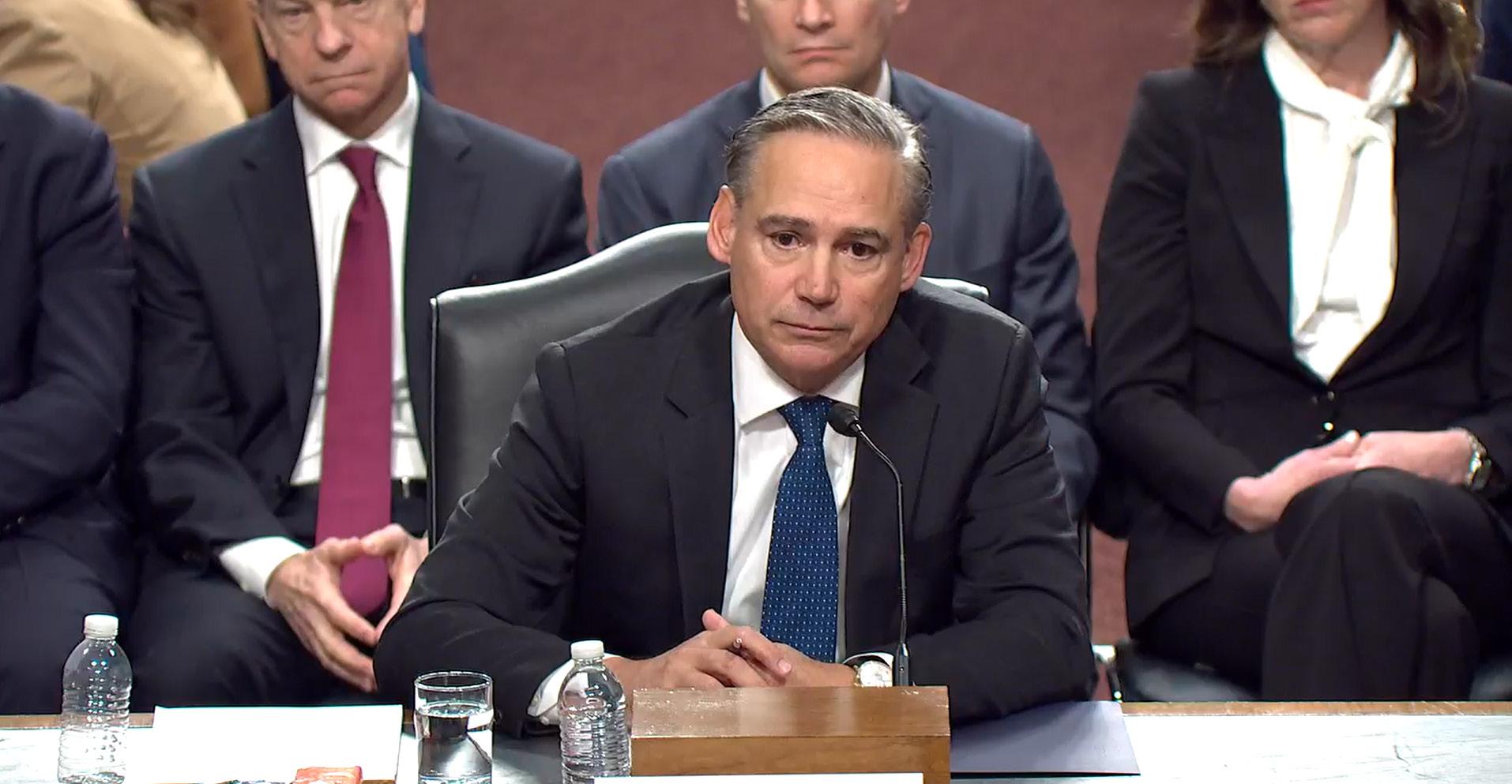
value, closed on December 8, 2025. It was a complex, high-stakes deal requiring Boeing, Spirit, and Airbus to coordinate closely, since Spirit also produced critical components for the A350 and A220.
Kelly Ortberg choreographed a carveout deal. Airbus bought Spirit's Kinston, North Carolina, A350, and Belfast, Northern Ireland, A220, operations for pocket change, securing its own supply chain. Boeing absorbed the core Wichita, Kansas, plant plus operations in Tulsa and Dallas.
The philosophy driving this move? Total quality control. Owning Wichita eliminated the transactional friction, purchase orders, warranty disputes, and liability wrangling that had gummed up quality fixes for years. To navigate antitrust landmines around the B-21 Raider, which Spirit built for Northrop Grumman, Boeing established "Spirit Defence" as a firewall subsidiary within its defence unit to keep competitor proprietary data locked down.
This reintegration drove a stake through the heart of the "systems integrator" model that had dominated Boeing's strategy since the McDonnell Douglas merger.
The financial resurrection
The 737 MAX had stabilised. Boeing's broader portfolio, however, bristled with formidable engineering quandaries. Rather than coat these obstacles in an aspirational veneer, Ortberg confronted them with bracing candour.
Consider the 777-9 saga. August 2024 brought a jarring discovery. During routine post-flight scrutiny in Hawaii, technicians unearthed a compromised thrust link. It's a critical architectural member bridging the engine to the wing. They inspected the other test aircraft. More cracks. The strike shut down testing entirely, and the schedule imploded.
Despite intense pressure to launch an Airbus A321neo competitor, the mythical "797," Ortberg stayed disciplined. The balance sheet was too fragile, engineering
resources too stretched for a $15-$20 billion development gamble. Stabilising the 737 and 787 lines and certifying the 777X and 737 MAX 7/10 took precedence over shiny new launches.
The strike and production caps obliterated cash flow. To avoid a credit rating downgrade to junk status, Boeing launched a massive capital raise in late 2024. Nearly $19 billion through stock and depositary shares. Existing shareholders got diluted hard, but it bought the liquidity runway to survive the strike and the agonisingly slow 2025 ramp.
By year-end 2025, operational improvements materialised in hard numbers. Boeing delivered 600 commercial aircraft in 2025, up 72.5% from 348 in 2024. Q4 2025 alone saw 160 jets delivered as the post-strike system found its rhythm.
In a stunning reversal, Boeing beat Airbus in net orders, 1,173 to 1,000, powered by massive widebody commitments from Qatar Airways and United, who viewed the 787 and 777X as mission-critical despite delivery delays.
Markets rewarded the stabilisation. From lows around $150 during the 2024 crisis, Boeing stock climbed to $250 by January 2026.
As of January 2026, Boeing hasn't reclaimed the profitability or market dominance it enjoyed in the early 2010s. But it's clawed its way back from institutional collapse. The Ortberg turnaround stands as a masterclass in industrial crisis management. Challenges remain formidable, as total debt still exceeds $50 billion. The 777X certification looms. Cultural restoration demands constant vigilance. But the narrative has fundamentally shifted.
Boeing is no longer a company in terminal decline. It's a company in active recovery, sovereign over its manufacturing destiny, led by engineers who intimately understand the product they build.
Source: Statista
OPEC+ Analysis
GBO Correspondent
The EIA expects OPEC+ to keep production below the group's current target path
The OPEC+ cartel recently announced another increase in oil production, revealing a 411,000-barrel-per-day rise for June. This follows production increases in April and May, further accelerating the rollback of previous cuts and raising concerns about potential oversupply.
With this move, the cartel of 12 oil-exporting countries (along with 10 other major non-OPEC members) will bring as much as 2.2 million barrels per day back to the market by November, according to five OPEC+ sources, as the group’s leader, Saudi Arabia, may seek to "rebuke" some fellow members for producing above their quotas.
The development comes after United States President Donald Trump had asked OPEC+ earlier in 2025 to increase oil production to help lower prices. Saudi Arabia may be complying as it wants to strengthen ties with Washington, which has been holding talks on a nuclear pact with OPEC+ member Iran.
In the words of Clyde Russell, Asia Commodities and Energy Columnist at Reuters, "In the current global crude oil market, one thing is almost certain: the reasons given by the exporters in the OPEC+ group for increasing supply are not the true ones."
Why so? In a statement posted on the OPEC website, the eight prominent members of the cartel stated that the decision to increase output was made in light of the "low oil inventories and current healthy market fundamentals."
"The issue facing OPEC+ is that, although apparent crude inventories are marginally below five-year average levels, they are still far from low enough to raise any concerns," Russell noted
Also, there is little evidence to back up the claim of sound market fundamentals. Commercial crude inventories in developed economies in the OPEC were 2.746 billion barrels at the end of February 2025, according to the OPEC monthly report for April. This was 71 million barrels less than the five-year average and down 16.1 million barrels from the previous month.
The OECD stock levels were slightly lower than their five-year average, with a minimal 2.5% discrepancy, a circumstance that may be attributed to the escalating crude oil prices during the period from September 2024 to January 2025 and the impending risk of a worldwide economic deceleration following the resumption of Trump's presidency in the United States.
"In the context of global oil imports, China, the most prominent, does not disclose its commercial or strategic stockpiles. However, it is plausible that in March, China augmented its storage influx substantially, having experienced a slight depletion during the initial two months of the year. In March, China imported more crude than it converted into refined fuels, resulting in a surplus of 174 million barrels per day, according to calculations based on official data for imports, domestic output, and refinery throughput. Given that the crude oil market is not particularly affected by inventory levels, what can be said about OPEC+'s claim of healthy fundamentals?" asked Russell.
The situation in Asia, which purchases roughly 60% of the world's seaborne crude volumes and is the largest importing
Commercial crude inventories in developed economies in the OPEC were 2.746 billion barrels at the end of February 2025, according to the OPEC monthly report for April. This was 71 million barrels less than the five-year average and down 16.1 million barrels from the previous month
region, is instructive. Following a weak February, the continent's seaborne imports rebounded in March and April, with arrivals of 25–27 million bpd and 25–28 million bpd, respectively, according to commodity analysts Kpler. This represented an increase from January's 23.31 million bpd and February's 23.94 million bpd.
As refiners piled up on cheaper crude due to concerns
Source: Statista
about tighter American sanctions on shipments from Iran, imports from the Islamic Republic surged sharply in March, which helped boost arrivals. After weakening in March due to Washington's stricter regulations on ships transporting Russian crude, China's imports from Russia rebounded in April. In the upcoming months, there is also some uncertainty regarding the demand for crude.
"Although May through July is typically a time of higher demand due to summer construction and agricultural activity, there is a growing chance that Trump's trade war will begin to reduce oil demand. In addition to lowering container shipping, the hefty 145% tariff on Chinese imports is also expected to have an impact on air freight in the weeks ahead. Road transport in China and the US will be weakened by lower shipping volumes, and both air and road travel are likely to suffer from declining consumer confidence. It will take time for supply chains to recover or be redesigned, so even if trade tensions do ease, the shipping slowdown is already set to last for the next few months and possibly longer," observed Russell.
So what is OPEC+ attempting to accomplish by increasing output? Maybe, by requiring other members to accept lower prices, Saudi Arabia, the group's de facto leader, will be attempting to promote greater quota compliance from other members. According to OPEC+ sources, Saudi Arabia is pushing the group to accelerate the unwinding of earlier output cuts to punish fellow members Iraq and Kazakhstan for poor compliance with their production quotas.
giant now expects the cartel to phase out the additional voluntary adjustments by October 2025, but also expects slightly slower US oil output growth. Overall, this loosens their balance estimates by 290 thousand barrels per day (kbd) for 2025 and 110 kbd for 2026.
"A further boost to bullish sentiment came from Trump's threat of secondary Demand for crude oil worldwide from 2015 to 2024 (In Million Barrels Per Day)
Even Barclays noted that the OPEC+ decision is more related to strength in underlying fundamentals and external influence than concerns about member overproduction. The British banking
Though the move will hurt the American oil industry, which Trump pledged to support, the Saudis might also be attempting to partially satisfy the US President's demand for lower prices, which would help the latter fulfil a campaign pledge of lower energy costs. Given their higher production costs, OPEC+ may also be attempting to exploit low prices to restrict oil output in other significant producers, like Brazil and the United States.
Expect continued negative volatility in crude oil prices due to bearish factors such as trade conflicts, indications of declining global demand, and the likelihood of increased supply. The mood was also dampened by adverse macroeconomic signs, most notably the unexpected negative growth in US GDP and the steepest decrease in China’s manufacturing activity in over two years.
Furthermore, the prospect of OPEC+, led by Saudi Arabia, potentially boosting output at their forthcoming meeting, added to the gloomy forecast, particularly after Riyadh displayed tolerance towards lower price levels. Still, the price downside was largely restrained by fresh hope that US-China tensions would soon decline. President Trump's indications of possible trade agreements with China and the Asian country's willingness to resume trade talks after repeated US overtures offered some support.
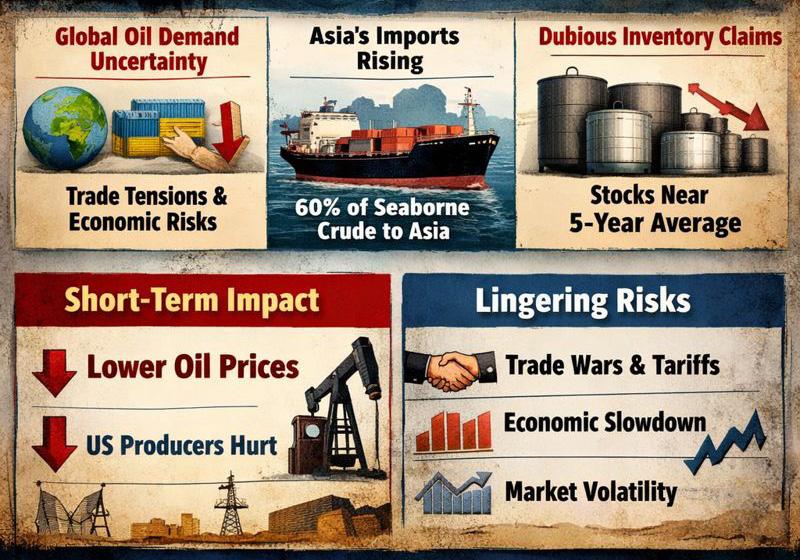
sanctions on nations that buy Iranian oil. Despite expectations of a build, the EIA reports that US crude inventories dropped by 2.696 million barrels from a supply perspective. Nonetheless, there was a 682,000-barrel increase in stocks at the Cushing hub. There was a notable decrease of 4 million barrels in gasoline inventories, whereas distillate inventories increased by 0.937 million barrels," Russell noted.
Perceptions of oversupply among oil market participants from increasing OPEC+ output and uncertainty about the economic impact of tariffs have raised short-term oil price volatility, the United States Energy Information Administration said, while reacting to the cartel's move. Still, the EIA expects OPEC+ to keep production below the group's current target path. It forecast supply from the group to increase by about 200,000 barrels per day this year to 42.9 million bpd, up from 42.8 million bpd in the EIA's prior forecast.
Taking note of Trump's unpredictable and often erratic tariff policies has also been a major drag on oil prices in recent
months, which could slow global trade and cause a recession, the EIA concluded in its short-term outlook report: "The effect that new or additional tariffs will have on global economic activity and associated oil demand is still highly uncertain and could weigh heavily on oil prices going forward."
The decision of OPEC+ to increase oil production may ease prices in the short term, but global demand uncertainty, trade tensions, and market volatility remain. Saudi Arabia’s moves reflect strategy more than fundamentals, while risks for US and other producers continue amid shifting economic conditions.
In the coming months, oil markets are likely to stay unpredictable. Prices may drop temporarily due to higher OPEC+ output, but underlying demand remains uncertain. Trade disputes and policy shifts in major economies could continue to shake the market. Producers and consumers alike will need to adapt to these economic pressures.
There was a 682,000-barrel increase in stocks at the Cushing hub. There was a notable decrease of 4 million barrels in gasoline inventories, whereas distillate inventories increased by 0.937 million barrels


The International Energy Agency ranks Brazil as among the leaders in clean energy generation and grid integration worldwide
GBO Correspondent
The demand for energy rises as the global AI race picks up speed. This growing demand has fundamentally changed climate narratives over the past year, especially in the United States, where the IT sector's expansion of data centres has raised concerns about increasing electricity usage and carbon emissions. While industrialised countries struggle with these new needs, Brazil sees a special chance: rising as the green powerhouse behind the next generation of artificial intelligence.
“Our message to the world, based on our plan, is that AI power demand is satisfied with the usage of renewable energy sources,” Deputy Minister of Science, Technology, and Innovation Luis Manuel Rebelo Fernandes said unequivocally at Brazil's recent "Web Summit" in Rio de Janeiro.
AI era strategic pivot
Until recently, the story of artificial intelligence infrastructure primarily revolved around the United States and China. In model development, semiconductor production, and capital investment, these nations lead. However, Brazil is emerging as a formidable contender by leveraging a current advantage: an abundance of affordable, clean energy.
Businesses, including Amazon, Microsoft, and maybe ByteDance (TikHub's parent firm), are pouring billions into Brazilian data centres. Reuters claims ByteDance is looking at building a large new facility run on committed wind farms. These changes are not unique; hundreds
Large-scale hydropower involves significant social and environmental trade-offs. Megadams like Belo Monte have already caused indigenous people to be relocated, deforestation to take place, and biodiversity loss in ecologically sensitive regions like the Amazon
of data centres all throughout the nation are now under different phases of building or planning.
Source AI calculations from a nation with a near-zero-carbon electrical grid becomes a huge strategic advantage as global companies keep pledging carbon neutrality and aligning operations with ESG (Environmental, Social, and Governance) principles.
The present climate movement did not shape Brazil's predominance in renewables. The narrative starts in the late 19th century, when the country started using its huge 37,000-mile river system to create power. Brazil had significantly spent on mega-dams by the 1960s, including the Itaipu Dam, which presently ranks among the biggest power producers worldwide.
Early hydropower adoption resulted in the creation of a large integrated transmission grid meant to transfer electricity from remote dams to metropolitan and industrial hubs. Brazil's system is more centrally
coordinated than the disjointed US grid, providing dependability and efficiency for massive projects.
Almost 90% of Brazil's electricity today originates from renewable energy sources, including hydropower, wind, and rising solar contributions. The International Energy Agency ranks Brazil as among the leaders in clean energy generation and grid integration worldwide.
Countries with green grids will draw more than just tech giants as the globe grows increasingly aware of carbon footprints. Any foreign investor wishing to manufacture or process goods responsibly finds Brazil appealing because of its competitive clean energy mix.
Luciana Aparecida da Costa, Director of Infrastructure, Energy Transformation, and Climate Change at the Brazilian Development Bank (BNDES), emphasised that Brazil is well-positioned but acknowledges the need to compete internationally to attract investment.
Brazil's ambitious $4 billion AI plan, which combines computing expansion with renewable energy development, reflects this attitude. Every new high-performance computing cluster in the plan is coupled with specialised renewable energy sources, a move meant to prevent the types of energy crunches already experienced in the United States.
Despite occasional praise for Brazil's leadership in renewable energy, large-scale hydropower involves significant social and environmental trade-offs. Mega-dams like Belo Monte have already caused indigenous people to be relocated, deforestation to take place, and biodiversity loss in ecologically sensitive regions like the Amazon. These problems resurfaced as the country sharpens its AI-driven energy strategy. Critics argue that unchecked expansion could repeat past mistakes unless tighter environmental regulations and preservation of indigenous rights are implemented. If Brazil is to be truly positioned as a global model of clean AI development, it must mix its green energy ambitions with a transparent, fair, and equitable development framework.
Global benchmarking
Brazil's clean energy proposition appeals more when it is weighed against other AI-ready green energy hubs like Norway, Iceland, and the United Arab Emirates. While Norway and Iceland lack Brazil's scale, geographic variety, and market size, they provide low-carbon systems driven by hydro and geothermal energy.
Despite its ambitious solar investments, the UAE continues to face issues with grid reliability and high cooling costs. Comparatively, Brazil offers not only a low-emission grid but also year-round renewable potential and a large integrated transmission network. This presents the country as a high-capacity, climate-resilient alternative in the AI infrastructure game rather than merely another low-carbon participant.
Energy availability by itself does not guarantee a perfect AI transition. Brazil also has to prove that it is ready in terms of digital talent, legislative clarity, and cultural compatibility. Although the country boasts a rising tech industry and top-notch colleges producing computer science and engineering expertise, specialised AI research, English competency, and high-end data centre operations experience are definitely needed.
Though regional efforts, including government-supported AI laboratories, coding boot camps, and language instruction, are beginning to close this gap. Strategically scaled, these projects might turn Brazil from a basic energy source into a major centre of artificial intelligence innovation.
Getting ahead through difficulties
Climate change clearly poses a threat to the nation's hydropower dependency. Droughts have caused questions regarding the stability of water levels in dam reservoirs in recent years. A significant energy crisis hit in 2021 when Brazil's worst drought in 91 years drastically lowered hydropower output, therefore relying increasingly on more costly and polluting thermal energy.
Brazil is aggressively increasing wind and solar projects to diversify and future-proof its system. GlobalData estimates that Brazil intends to increase its wind power capacity by over 20 GW by 2030, and solar is likely to follow a similar path.
A key concern is whether power systems can keep up with AI’s rising energy demand. Data centres are extremely power-intensive, and unchecked growth could strain supply. To address this, Brazil’s government and businesses are pursuing development by linking each expansion in high-performance computing to new, dedicated renewable energy sources. This ensures future data centres bring their own clean power instead of overloading the grid. As AI energy use grows and ESG standards tighten, Brazil could emerge as a pioneer of a clean-powered AI economy.
Renewable energy capacity installed in Brazil in 2023, by source (In Gigawatts)
Wind Energy 29.10
Solar Energy 37.50 Hydropower, Bioenergy, And Other Renewables 127.50
Source: Statista
IPO activity in the first half of 2026 is expected to reverse the UAE's low market performance in 2025, with as many as nine mandates currently in the works.
One UAE banker described the market as “headed in the right direction” after 2025, witnessing ebbing activity in regional equity capital markets (ECM). According to the latest S&P projections, with 40 IPOs raising a combined $5.81 billion so far this year, IPOs in the Gulf are set to raise the lowest amount of cash since the COVID-ridden 2020. Despite a slump in proceeds raised due to the poor performance of some companies after their listing, the outlook for 2026 “looks promising,” according to analysts.
“We already have five to six mandates for the first half of next year, plus another three that we aren’t working on but are aware of in the market,” the banker said, while adding that it would be challenging to make space

for all the transactions in a limited IPO window, so expect the inevitable overlap between deals.
The Gulf major’s IPO window typically gains momentum during the first five months of the year before tapering off for the summer. The market picks up speed once again in Q4. Bankers expect steadier investor demand, selective pricing and staggered launches to help deals clear crowded calendars.
Egypt signed a contract with Qatar's Al Mana Holding for a first-phase investment of $200 million to produce sustainable aviation fuel (SAF) from used cooking oil in the Suez Canal Economic Zone at Ain Sokhna.
The project, spanning 100,000 square metres in the Integrated Sokhna Zone on Egypt's Red Sea coast, will be developed in three phases. The first one will have an estimated annual production capacity
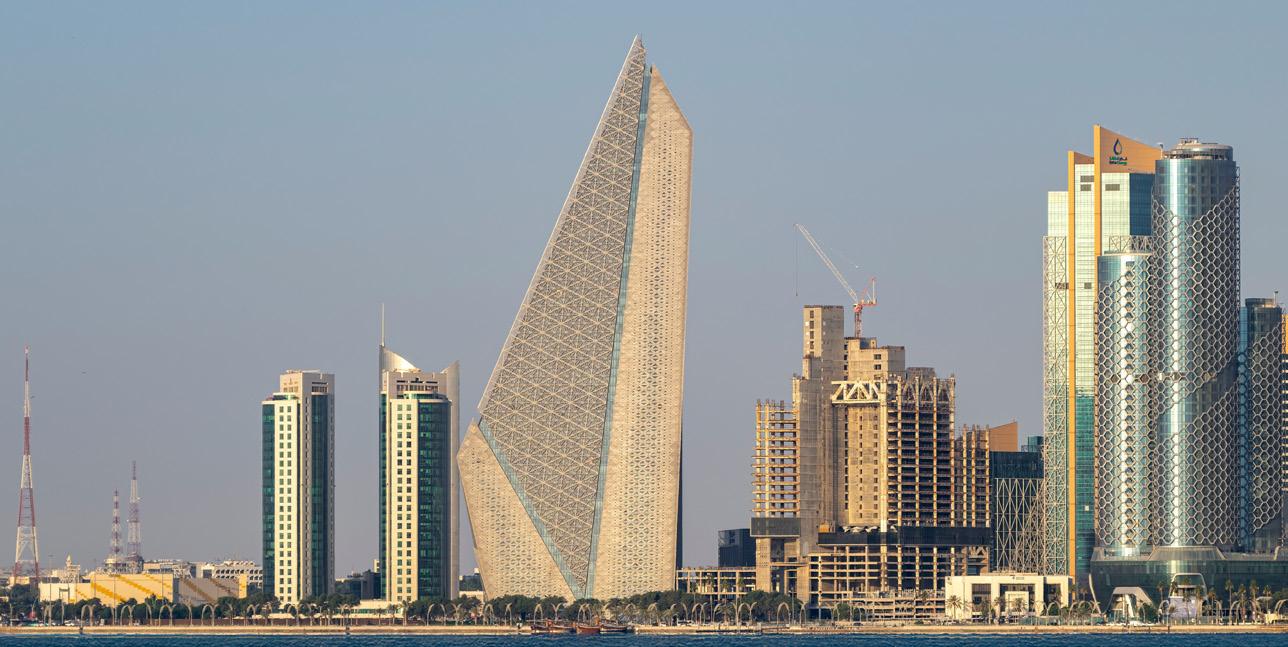
IPOs in the Gulf are set to raise the lowest amount of cash since the COVID-ridden 2020
of 200,000 tonnes. The deal also marks the first Qatari industrial investment in the Suez Canal Economic Zone. Egypt has for years been pushing to secure foreign investments, especially from wealthy Gulf states, while fighting heavy foreign debts and a gaping budget deficit. In November, the real estate arm of Qatar's sovereign wealth fund said it would invest $29.7 billion to develop a luxury real estate and tourism project on Egypt's Mediterranean coast. That deal became the largest Qatari investment in the country since ties were restored after the 2017-2021 rift, when Egypt, Saudi Arabia, the UAE and Bahrain cut ties with Qatar, accusing it of aligning too closely with Iran, which Doha denied.
Elon Musk's SpaceX is looking to raise over $25 billion through an initial public offering (IPO) in 2026, a move that could boost the private space industry giant's valuation to over $1 trillion, a Reuters report claimed.
The company's move towards a public listing (which, if successful, could rank among the largest global IPOs) has been largely driven by the rapid expansion of its Starlink satellite internet business, including plans for direct-to-mobile service and progress in its Starship rocket programme for moon and Mars missions. SpaceX has started discussions with banks about launching the offering around June or July.
SpaceX's IPO movements are unfolding against the backdrop of a resurgence in the IPO market in 2025 after
a three-year dry spell. Wall Street's top executives expect the momentum to carry into 2026, turbocharged by a pipeline of high-profile filings.
"SpaceX represents one of the most exciting opportunities in the global IPO market and has been on the dream list of several investors for years. It is a genuine growth industry, with space technology seen as a key frontier in defence, satellite proliferation, and in tech infrastructure in general, the growth of orbital data centres," said Samuel Kerr, head of equity capital markets.
SpaceX is eyeing a 2026 IPO that could raise over $25 billion and value it above $1 trillion, driven by Starlink growth, Starship progress and a revived global IPO market momentum in 2026.


The United Kingdom will begin regulating cryptoassets in October 2027, the country's finance ministry announced, aiming to provide the industry with policy certainty while keeping out dodgy actors. The new law will extend existing financial regulation to companies involved in crypto, aligning Britain with the United States rather than the European Union, which has built rules tailored to the industry.
The reform comes amid renewed global interest in cryptoassets since the election of US President Donald Trump, who promised to support the industry. However, there has been a minor setback in recent days, as the price of the largest cryptocurrency, bitcoin, witnessed a steep fall after hitting a record high.
The Keir Starmer administration now eyes to collaborate with Washington on the best approach to digital assets through a "transatlantic task force."
Finance Minister Rachel Reeves said the rules will boost consumer protection and keep dodgy actors out, as Britain’s crypto regime takes shape with FCA plans on trading, custody and abuse, and BoE proposals on stablecoins for daily payments.
Stablecoins Analysis
GBO Correspondent
Stablecoins have swiftly moved from niche financial instruments to major players at the intersection of technology, finance, and politics
In an attempt to persuade the United States Congress to enact pro-crypto legislation, the cryptocurrency industry made an unprecedented amount of money in campaign donations during the 2024 Presidential Polls.
With lawmakers who support cryptocurrency lining the hallways of Congress, such efforts appear to have been mainly successful. The first area of crypto that they have chosen to focus on is the regulation of stablecoins.
Cryptocurrencies designed to maintain the value of the US dollar are known as stablecoins. Supporters argue that stablecoins facilitate safer, more affordable, and borderless transactions for individuals worldwide, while also helping to preserve the global significance of the dollar as the world's largest economy. The use of stablecoins is rapidly increasing. Just a year ago, their total market value was only $152 billion, but it has now surpassed $235 billion.
President Donald Trump stated in March 2025 that he intended to enact legislation about stablecoins by August. As a result, stablecoin measures have advanced out of committee in both the House and the Senate in the last month.
In a way, stablecoins are similar to bank deposits. The issuing corporation mints a stablecoin on a blockchain after receiving a dollar from a customer who wants one. Thereafter, the user can send the stablecoin to anyone who accepts it as payment anywhere in the world.
Stablecoins are popular among cryptocurrency traders because their price fluctuates less than that of assets like Bitcoin or Ethereum, which makes trading more predictable. Additionally, stablecoins are valued by many non-traders worldwide because they retain their value better than currencies in nations with high rates of inflation, such as Argentina and Turkey.
Analysis \ Donald Trump

Supporters of stablecoins in the US come from various political backgrounds. Political figures on the right, such as House Majority Whip Tom Emmer, contend that stablecoins support the dollar's continued usage as the global reserve currency. There are still a ton of Eurodollars in circulation worldwide, which are unsecured, unofficial dollars issued by foreign banks rather than the Federal Reserve.
This large need might be satisfied by stablecoins, which also provide a more secure and convenient way to deal. Additionally, proponents contend that a rise in stablecoin demand could lessen the burden of the United States' soaring debt because stablecoin issuers frequently secure their stablecoins by purchasing US Treasuries.
According to some Democrats, stablecoins offer avenues for financial inclusion and the elimination of discriminatory banking structures. In September 2024, Ritchie Torres, a representative from New York, expressed to TIME his belief that stablecoins could help individuals in his district, which has a significant immigrant population, send money quickly to the Caribbean and Latin America. This method would allow them to avoid check-cashing fees and protect them from predatory loan sharks.
For the lowest-income communities, "the ability to move
For the lowest-income communities, the ability to move a tokenised dollar at the speed of the blockchain has the potential to create a better, cheaper, and faster payment system
a tokenised dollar at the speed of the blockchain has the potential to create a better, cheaper, and faster payment system," he stated.
Six Democrats, including Torres, supported the STABLE Act when it emerged from the House Financial Services Committee on April 2.
Two companies presently control the majority of the stablecoin market: USDT (issued by Tether) and USDC
1. Tether
2. USD Coin
3. USDS
4. Ethena USDe
5. Dai
6. PayPal USD
7. USD1
8. Tether Gold
9. PAX Gold
10. Global Dollar
Source: Kraken
(issued by Circle). Although Tether is very well-liked outside of the United States, regulators have accused it of making false claims about its reserves. Howard Lutnick, Trump's new Commerce Secretary, had previously had financial ties to the company.
Many different kinds of businesses would be able to issue their stablecoins thanks to the laws that Congress is currently considering. Notably, "World Liberty Financial," the cryptocurrency business owned by the Trump family, has unveiled its stablecoin. This is only the most recent of Donald Trump's cryptocurrency endeavours, which also include a meme coin and a federal Bitcoin reserve.
The launch of World Liberty's stablecoin was immediately criticised because of worries that Trump would once more have a direct financial interest in a sector of the economy that he is meant to oversee. After years of working on stablecoin legislation, California Democrat Maxine Waters now declares her adamant opposition to any bill that would give Trump the ability to possess a stablecoin.
Donald Trump's crypto initiatives made crafting legislation "more complicated," according to French Hill, a Republican from Arkansas and the chair of the House Financial Services Committee, who made the statement recently.
Out of their respective committees, the House and Senate have both passed stablecoin measures, known as the "GENIUS Act" and the "STABLE Act," respectively. The bills outline the governance of stablecoins and mandate the types and quantities of reserves that stablecoin issuers must maintain. To have a single law on President Donald Trump's
desk before the summer, the House and Senate will now have the chance to reconcile the two versions.
Many financial organisations would probably try to establish their stablecoin if legislation were passed. For example, Bank of America stated that it would introduce a stablecoin as soon as politicians approved it. Additionally, PayPal and Stripe have revealed their stablecoin projects.
The desire for a stablecoin measure is strong among lawmakers from both parties in Washington. However, several lawmakers have voiced their worries. One of Congress's most outspoken crypto sceptics, Elizabeth Warren, has maintained that the legitimacy of stablecoins has systemic dangers, particularly because they may be vulnerable to bank runs.
When the stablecoin UST lost its dollar peg and plunged to zero in 2022, it sparked a huge cryptocurrency crisis. However, the STABLE Act prohibited UST, an algorithmic stablecoin, from receiving federal clearance for two years.
At a hearing for the GENIUS Act in March, Warren stated, "The bill lacks basic safeguards necessary to ensure that stablecoins don't blow up our entire financial system."
Stablecoin issuers are permitted to invest in risky assets under this bill, including the same assets that were bailed out in 2008.
Additionally, some critics are concerned that the stablecoin bills as they stand now would further consolidate corporate control by enabling Big Tech firms like Meta and X to create their own currencies.
Arthur Wilmarth, a professor emeritus at George Washington University Law School, said, "If people believe that these days there is a Big Tech surveillance state, just think of what it would be like when they have access to all of your financial
Analysis \ Donald Trump
information. The bills don't contain much, if anything, that would protect you."
Stablecoins have swiftly moved from niche financial instruments to major players at the intersection of technology, finance, and politics. Their promise of cheaper, faster, and more accessible transactions appeals across political lines, offering potential solutions to both global dollar stability and domestic financial inclusion.
However, their rapid rise and political entanglements, especially with figures like President Donald Trump and his family's ventures, have also injected new risks and controversies into the mix.
The GENIUS Act and the STABLE Act represent serious efforts to impose muchneeded regulatory frameworks on the burgeoning stablecoin market, but they are far from flawless. Critics rightfully warn about the potential for financial instability, increased corporate surveillance, and conflicts of interest at the highest levels of government.
As lawmakers attempt to reconcile their versions of the legislation and rush to
deliver a unified bill to the President's desk by summer, the stakes are enormous. If done correctly, stablecoin regulation could modernise America's financial infrastructure and secure the dollar's dominance for the digital age. If done poorly, it could open the floodgates to new financial risks and exacerbate the concentration of economic power in "Big Tech" and politically connected firms. Ultimately, the coming months will determine whether stablecoins become a force for innovation and democratisation— or another cautionary tale in the long history of financial hubris. The world will be watching as Congress decides whether to anchor this emerging technology firmly within a stable regulatory framework or let it drift into dangerous waters.
"If people believe that these days there is a Big Tech surveillance state, just think of what it would be like when they have access to all of your financial information. The bills don't contain much, if anything, that would protect you"
- Arthur Wilmarth
The US’s pro-crypto stance is reshaping the global financial landscape by integrating digital assets into the mainstream economic agenda
Intesa Sanpaolo, Italy's biggest bank, made a covert acquisition of $1 million worth of bitcoin at the beginning of January 2025. An internal bank memo revealed the move, which was not made public.
CEO Carlo Messina said the purchase was only a "test" when questioned by reporters, implying that Intesa might eventually buy more bitcoin on behalf of some of its affluent customers.
It might be an indication of things to come. When it comes to cryptocurrencies and stablecoins, influential figures in the conventional financial sector seem prepared to play ball after years of staying out of the way. Cryptocurrencies known as "stablecoins" are made to hold their value over time. They are usually 1:1 correlated with the value of more established currencies like the US dollar or the euro.
“The financial services industry is on the verge of entering the crypto economy,” said Bank of America CEO Brian Moynihan in February 2025.
Additionally, it was reported a month later that one of the biggest asset managers in the world, Fidelity Investments, was testing its own stablecoin in advanced stages.
Increasing demand from customers, including corporations, and a changing macroeconomic environment characterised by tariff threats from the Donald Trump administration and scepticism about the stability of the global dollar system are the main drivers of competition
and the need for a quick time to market. Collectively, these factors are pressuring asset managers and banks to use digital assets to access new revenue streams and hedge geopolitical risk. Boerse Stuttgart Digital, which just became Europe's first regulated exchange for trading digital assets under the EU's new Markets in Crypto Assets Regulation (MiCA) framework, made the Intesa purchase. The exchange is part of the illustrious Boerse Stuttgart Group, which is the sixth-largest exchange group in Europe.
"European institutions are adopting crypto assets at an increasing rate," noted Joaquin Sastre Ibanez, chief revenue officer at Boerse Stuttgart Digital.
He anticipates that other European banks and institutional investors will emulate Intesa.
"We recently partnered with DekaBank in Germany to offer crypto trading to institutional clients," Ibanez stated further.
A clear regulatory framework was something that many financial institutions had been waiting for before offering cryptocurrency to their clients, but MiCA now offers it.
In the United States, stablecoin legislation is expected to pass soon after passing a crucial Senate committee in mid-March with bipartisan support
The crypto trend is becoming more popular outside of Europe as well. Many American states, including Texas, may soon have their own bitcoin reserves after the US established a "Strategic Bitcoin Reserve" in early March.
“Pension funds, including those in the United Kingdom and Australia, are also dipping their toes into buying bitcoin," according to a Financial Times article.
This shows that even traditionally conservative sectors of the financial industry are struggling to ignore the potentially massive returns from cryptocurrencies.
In the United States, stablecoin legislation is expected to pass soon after passing a crucial Senate committee in mid-March with bipartisan support. To protect consumers and uphold the dollar's reputation internationally, the law establishes clear guidelines for stablecoin issuers, mandating full reserve backing and adherence to anti-money laundering regulations. Since stablecoins use the same blockchain technology as tokens
like Bitcoin and Ethereum, they frequently serve as a link between cryptocurrencies and sovereign currencies.
“The US’s pro-crypto stance is reshaping the global financial landscape by integrating digital assets into the mainstream economic agenda,” said Federico Brokate, head of US Business at 21Shares, a Switzerland-based cryptocurrency exchange-traded fund (ETF) provider.
He continued by saying that the establishment of the US Strategic Bitcoin Reserve and the "US Digital Asset Stockpile," which consists of tokens other than bitcoin, represents a dramatic change in institutional thinking, "positioning cryptocurrencies as essential financial instruments rather than speculative assets." In addition to demonstrating sustained faith in digital assets, this action establishes a standard for other countries.
The State of Michigan Department of the Treasury and the State of Wisconsin Investment Board are two prominent US pension

funds that have already made sizable investments in spot bitcoin ETFs. More than $300 million has been invested by the latter in BlackRock's spot bitcoin ETF, IBIT.
“We expect this trend to continue among pensions as regulatory clarity continues to progress in the US,” said Brokate, while adding, “Institutional interest extends to other regions as well. Abu Dhabi’s Sovereign Wealth Fund has invested more than $450 million in IBIT.”
Simon McLoughlin, CEO of the cryptocurrency trading platform UPHOLD, states that stablecoins are essential for the transformation of global finance.
"Stablecoins are the future of money, so much so that we won't even call them stablecoins in ten years. All they will be is money," he claimed.
“Stablecoin issuance has grown rapidly in recent years and has become a significant part of the financial system. Stablecoins could enable smoother transactions, faster settlements, and lower costs for cross-border payments—especially in areas that lack access to traditional banking infrastructure,” S&P Global Ratings concluded in a February 2025 report.
According to Bernstein analysts, the market capitalisation of stablecoins could surpass $500 billion by the end of 2025, having risen 56% from the previous year to $230 billion in mid-March. The issuance of stablecoins is being led by fintech companies such as Tether (USDT) and Circle (USDC), but other issuers might soon follow suit.
payments, for instance, if one of your rivals is using stablecoins to move money around the world and your business is not, you will be at a distinct disadvantage," McLoughlin said.
“There will be stablecoins run by municipalities, businesses, and other organisations. But most importantly of all, there will be stablecoins issued directly by banks. We will have branded money. CFOs may have to adjust their thinking accordingly. CFOs need to start preparing now for a future where some of the functions of corporate treasury and international accounting are fulfilled on the blockchain. When it comes to international Top 10 cryptocurrencies and stablecoins that are owned the most by consumers worldwide who shop online in 2022
Are institutions making crypto safer?
In contrast to stablecoins, the market prices of cryptocurrencies like Bitcoin have always fluctuated. However, those erratic price swings might level out as more conventional financial institutions embrace the cryptocurrency market, according to Geoff Kendrick, Standard Chartered's global head of digital assets research.
“Institutional buyers are less likely to sell on bad days than are leveraged retail buyers,” he added.
Furthermore, storing cryptocurrency may be simpler and safer with custody solutions from established financial firms like State Street or BNY Mellon than with those currently provided by fintechs with a focus on cryptocurrency.
Referring to the market-roiling collapse of the cryptocurrency exchange based in the Bahamas in November 2022, Kendrick says regulatory clarity in places like the US could also help to "remove FTX issues" and reduce volatility.
Today, more organisations are interested in diversifying their corporate treasuries and selling cryptocurrency to individual customers, according to Sastre Ibanez of Boerse Stuttgart Digital. For example, his group has partnered with DZ Bank in Germany to provide direct access to cryptocurrency trading and custody for its retail clients. Additional pension funds and insurance companies may invest in cryptocurrencies if they become less volatile.
One of the biggest providers of superannuation funds in Australia, AMP Limited, invested A$27 million ($16.04 million) in bitcoin futures in December. CIO Anna Shelley characterised this as a "cautious step" into bitcoin futures for members in a commentary posted on AMP's website. Although it "offers no yield," she wrote, Bitcoin might be used as
Source: Statista
Central banks considering investing in bitcoin could be emboldened by the fact that the US government is going to at least hold on to the 270,000 bitcoins it currently owns, and potentially buy more at some stage
a substitute for gold as a store of value.
However, Shelley pointed out in her commentary that many of Australia's super funds, which include pension funds, "already invest in many assets that have no yield," including commodities, foreign currencies, derivatives, and even some listed companies that make no profit and pay no dividends.
The goals of cryptocurrency are even higher, according to some partisans, who claim that central banks may eventually invest in them for diversification.
“Central banks considering investing in bitcoin could be emboldened by the fact that the US government is going to at least hold on to the 270,000 bitcoins it currently owns, and potentially buy more at some stage,” Kendrick wrote in a January note, as reported by The Wall Street Journal.
In January, Ales Michl, the head of the Czech National Bank, told The Financial Times that he would propose to his board that the central bank diversify its reserves by investing in bitcoin. There were a lot of disdainful responses to this proposal.
Bloomberg was informed by Elias Haddad, senior market strategist at Brown Brothers Harriman, that Michl is confusing the functions of a central banker and a portfolio manager. In fact, not all of the risks may be taken into account by some of this wild speculation.
“Stablecoins, issued by private entities, can fail like banks, risking de-pegging. Then, too, stablecoins are traded on blockchain networks, offering decentralisation and programmability but facing congestion risks and high costs," said Hanna Halaburda, associate professor at New York University’s Stern School of Business.
Furthermore, she pointed out that stablecoins are not very useful in the United States and some other nations where "traditional banking services are already efficient and reliable. Foreign countries have the highest
demand for US-denominated stablecoins, especially those with expensive financial infrastructure or erratic currencies."
"In many African countries, for example, stablecoins provide a way to hold digital dollars, preserving purchasing power in economies plagued by inflation. They are also widely used for cross-border transactions, offering a faster and often cheaper alternative to traditional remittance services. But if a US central bank digital currency (CBDC)—a digital dollar—were ever made accessible internationally, that could potentially serve these roles even more effectively," Halaburda explained.
Naturally, CBDCs are not cryptocurrencies, but they are digital currencies similar to stablecoins, and they might even compete with each other. The announcement of Facebook's Libra stablecoin in 2019 raised central banks' awareness of digital currencies.
According to the Atlantic Council's "Central Bank Digital Currency Tracker," 134 nations and currency unions, or 98% of the world's GDP, were considering a CBDC as of February 2025, although the project was eventually shelved.
Despite their potential benefits, CBDCs remain contentious in Western nations due to privacy concerns. President Trump issued an executive order in January 2025 that prohibited US CBDC research and development.
It seems that the European Union has accelerated the implementation of its own CBDC project in response to Trump's rejection of a digital dollar and support for stablecoins.
Christine Lagarde, president of the European Central Bank, recently stated that Europe must move quickly toward the digital euro.
“Accelerating its implementation suggests that [EU] policymakers see strategic value in a CBDC, particularly in a rapidly evolving global financial landscape. However, its success will depend on striking the

right balance between innovation, privacy, and financial stability," said Annabelle Rau, an associate at McDermott Will & Emery in Germany.
According to Rau, the "General Data Protection Regulation" of the EU has established a high bar for privacy. Public trust will be essential, though, and lawmakers must communicate openly and provide clear legal protections to allay worries about data access, anonymity, and surveillance risks.
"Stablecoins and CBDCs may eventually coexist, though the relative significance of their roles may differ from nation to nation. China favours state-controlled rails and discourages blockchain-based finance, making the digital yuan likely to prevail. The EU is regulating stablecoins under MiCA while taking a cautious approach to the digital euro, allowing both to coexist. In the US, stablecoins thrive in the absence of a CBDC, though pending regulations could either strengthen their role or constrain them in favour of a digital dollar," Halaburda remarked.
According to Ibanez, there seems to be
agreement that "digital assets are here to stay, with mainstream adoption accelerating as the convergence of traditional and digital finance advances every day," regardless of whether they are cryptocurrencies, stablecoins, or digital currencies issued by central banks.
If this is the case, "corporate CFOs should be aware of the growing importance and adapt by integrating digital assets into their financial strategies while ensuring compliance with evolving regulations."
There are still fundamental issues, especially with risk management, governance, and regulatory supervision.
"Elements of both [crypto and traditional currency] systems are likely to continue to coexist rather than fully merge in the near future, even though some convergence is occurring, especially in areas like digital securities and asset tokenisation," Rau noted.
McLoughlin argued that one must consider the trillions of dollars held in banks to facilitate global transactions. In fact, Bitso Business reported in December that $10 trillion is held in nostro/vostro accounts worldwide.
Accelerating its implementation suggests that [EU] policymakers see strategic value in a CBDC, particularly in a rapidly evolving global financial landscape. However, its success will depend on striking the right balance between innovation, privacy, and financial stability
Banking & Finance
Lebanon Analysis
GBO Correspondent
Even though the new law is quite accommodating, banks in Lebanon are opposing it and are using the media to disparage the legislation
A parliamentary committee recently released a draft proposal to restructure Lebanon's financial industry. While many Lebanese may be feeling a sense of relief, it remains uncertain whether they will soon be able to access their bank deposits again, as they have been unable to do so for several years.
According to the committee's findings, about 84% of depositors have less than $100,000 in their accounts. They therefore devised a formula that states that funds up to $100,000 will stay in their accounts. Anything over $100,000 will be transformed into a mysterious debt instrument associated with the government.
Therefore, there will be some relief for depositors, but it does not indicate that they will be able to take out up to $100,000 of their money. According to Article 37 of the proposed law, its execution will be halted until the financial gap bill, another law, is passed.
To put it another way, a bank is not required by the financial restructuring law to make up to $100,000 easily accessible for depositors to withdraw. It merely indicates that this is the most money the bank can owe a client.
Any funds exceeding this $100,000 cap may then be written off by the bank and converted into long-term, governmentlinked debt instruments, which can be risky investments that are challenging to turn into cash at a reasonable market value.
Although greedy bankers and dishonest government officials are to blame for Lebanon's protracted financial crisis, depositors are once again bearing the consequences. Neither the banking industry nor the political establishment is being held responsible.
Notably, the banks have been engaging in illegal activity since 2019. A bank shall be delisted if it "declares itself in a state of suspension of payments," according to Article 140 of the 1963 Code of Money and Credit law. Nevertheless, despite their
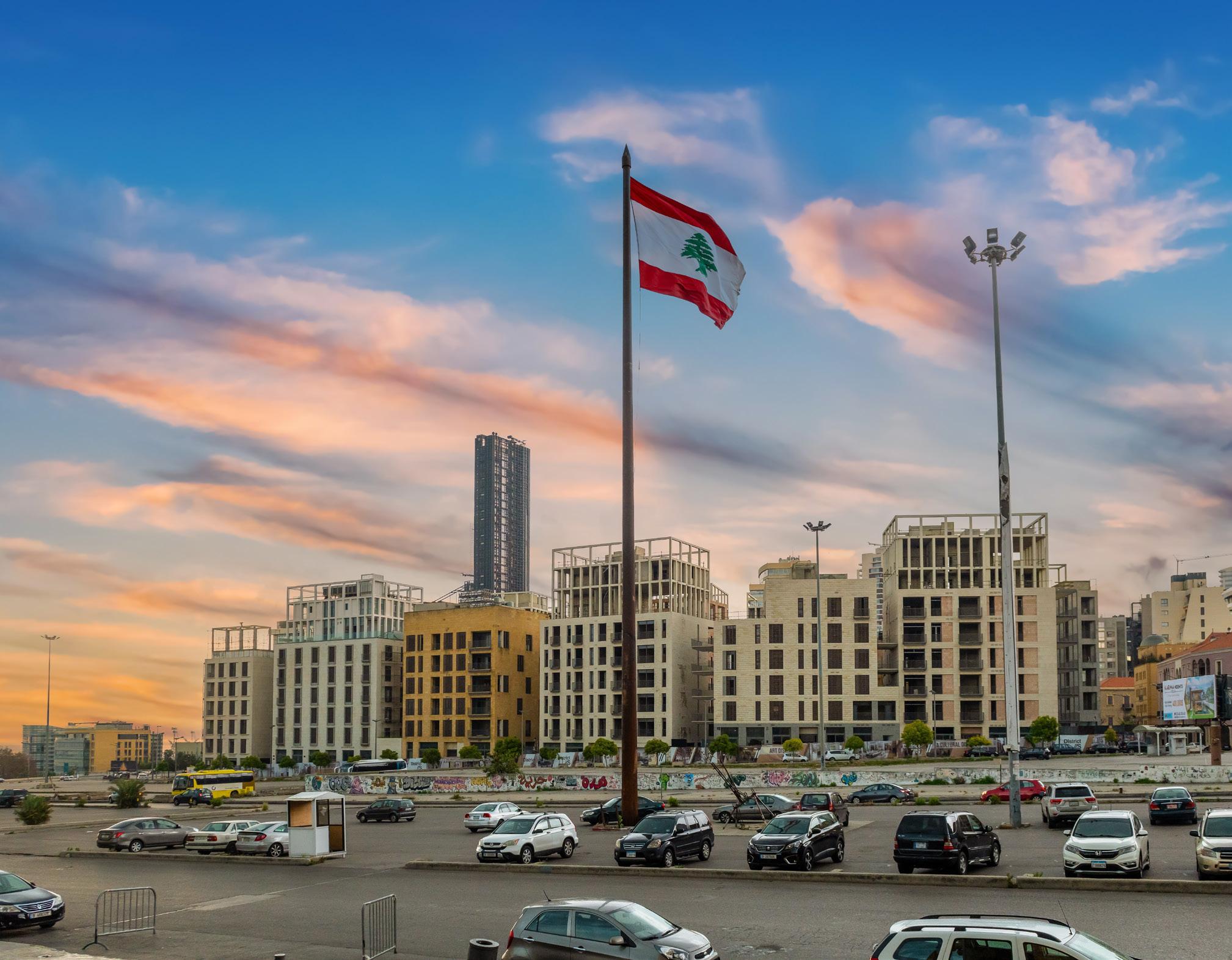
inability to compensate depositors, banks have remained open in Lebanon.
The selective withdrawal of funds by certain depositors from banks is also illegal. When the crisis started, several politicians moved billions of dollars to foreign institutions. Small depositors, meanwhile, were unable to take out even a few hundred dollars to cover their daily costs. This hasn't been thoroughly investigated.
The 2019 financial crisis in Lebanon is comparable to the 2008 Icelandic crisis. The indicators were the same in both instances: an oversized banking industry relative to GDP. The banks in both nations were motivated by greed. The two states' approaches to handling the problem differed.
Instead of waiting six years, the Icelandic Parliament passed an emergency measure right away, giving the Financial Supervisory Authority jurisdiction over the banks and directing an inquiry to find any signs of fraud. Approximately thirty bankers were charged, found guilty,
and imprisoned.
Because the top bankers in Lebanon have been able to rely on political cover, no bankers have been convicted.
Icelandic banks were either liquidated or placed under receivership, with the majority of losses falling on their shareholders. Depositors were able to recover a portion of the banks' assets, and domestic clients received priority.
In other words, depositors were given precedence in the process. This is not the case in Lebanon, where the banks have been bailed out by their depositors.
Even though the new law is quite accommodating, banks in Lebanon are opposing it and are using the media to disparage the legislation. They refuse to take any accountability for the problem.
There is a crooked political class that protects the banks. The banking industry funded the government's corruption. Banks financed the government by using the deposits of their clients; they enticed depositors with the promise of

high interest rates and then invested their funds in central bank bonds, which was a very profitable approach with minimal risk to the banks. The government then received loans from the central bank, which were wasted due to corruption.
The banks are to blame for all of this since they failed to prioritise the needs of depositors and instead gave the government loans in order to profit quickly and easily.
The banks have made an effort to shift the burden elsewhere. They have blamed "Kulluna Iarada," a pressure group and civil society organisation that has advocated for financial reforms. They assert that the gang disseminated false information that caused a bank run and prevented the banks from paying back depositors. The group has been maligned by the media, which has strong ties to the banking industry.
They also spread a conspiracy theory that claimed Kulluna Irada was funded by American billionaire George Soros and the "global left." This is unthinkable. The banks dared to accuse Soros and his "Open Society Foundations," an international left-
Gross Domestic Product in current prices in Lebanon from 2015 to 2024 (In Billion US Dollars)
Statista
wing conspiracy, of being responsible for all of their corrupt and twisted activities, which were so clear to most onlookers. The intelligence of the Lebanese people is being insulted by this.
For the banking and the political elite, the status quo is highly convenient. But they can no longer pretend that nothing is wrong or ignore the financial crisis and the lost savings. Before unlocking billions of dollars in financial help, the International Monetary Fund (IMF) had called for substantial financial changes to clean up Lebanon's banking industry. But there won't be any true reform as long as the financial elite is shielded by the political class.
The new restructuring law isn't the answer; it's on hold until a financial gap law is passed. It is an illusion of law. Failed banks can write off savings, stay in business when insolvent, and evade accountability in the absence of a financial gap law. It provides no timeframe, no assurances, and no compensation. Depositors will likely see very little of the money they have worked so hard to save, and they will continue to bail out the banks.
Rather than rebuilding faith or repaying deposits, Lebanon's financial restructuring law just supports the impunity that defines the continuous economic crisis in the nation. Though it guarantees fund retention up to $100,000, in reality, it provides neither legal protection nor cash for depositors.
The suggested modifications are mostly parliamentary theatre, with implementation frozen and important reforms like the financial gap bill still pending unresolved. While the real offenders, corrupt politicians and complicit bankers, remain free, the weight of the crisis keeps falling on common people.
Analysis \ Depositors

Crucially lacking from the national reckoning is the function of the central bank—especially its long-time governor, Riad Salameh, who was instrumental in allowing the financial schemes causing the crisis to be launched. The IMF has proposed changes, including capital restrictions and a central bank forensic audit, but vested interests have stopped progress. Once a lifeline for the Lebanese economy, diaspora remittances have dropped as banking system confidence withers.
Legal choices for depositors are still essentially non-existent, and there is no efficient system for recourse either locally or abroad. Rising inflation and the fall of the Lebanese pound have completely destroyed the actual worth of earnings and savings. One of the greatest pre-crises, the vast scale of Lebanon's banking industry in relation to GDP increased the danger; still, authorities did little.
This extended crisis has wider consequences than only economic ones. Particularly among the young and educated, an emigration tsunami threatens to wipe out a generation. Lebanon runs the
danger of losing civic and human as well as financial capital.
Local courts nonetheless mostly remain politically tainted or inactive in the meantime. The absence of legal deterrents lets illegal actors operate with impunity. While common people are left with frozen accounts and depreciated savings, some depositors with political ties managed to migrate their money outside. This difference undermines social cohesiveness and feeds bitterness.
Lebanon has to address the reality of its ineffective government and damaged banking system if it is to prevent total institutional and economic collapse. Rebuilding the rule of law, safeguarding depositors, and rebuilding confidence by open and fair justice will start a road map toward recovery.
Without serious accountability, Lebanon’s financial crisis will continue. Deposit access alone cannot restore trust. The country needs transparent banking, legal enforcement, and political will to protect ordinary citizens. Until these are in place, the losses and uncertainty for depositors will persist.
The suggested modifications are mostly parliamentary theatre, with implementation frozen and important reforms like the financial gap bill still pending unresolved
Before the IMF arrived with its one-size-fits-all prescriptions in the 1980s and 1990s, the Bank of Ghana actually directed credit where it was needed
GBO Correspondent
Let me ask you a simple question. What do banks actually do? I mean, what is their purpose in an economy? If you ask the bankers in their gleaming high-rises in Accra, they'll tell you they're intermediaries, facilitating economic growth, managing risk.
They will use all the fancy jargon they learnt at business school. But here's what they won't tell you, what the data shows with brutal clarity: Ghana's banks are systematically failing the very people who need them most.
A quarter century of banks are turning their backs on the farmers who feed Ghana, on the manufacturers who could build Ghana's industrial future, on the productive sectors that actually create jobs and wealth.
But Ghana's banks have decided they know better. They've decided that productive credit, the kind that supports entrepreneurial innovation, that expands agricultural production, that builds manufacturing capacity, isn't worth their time
In 1999, manufacturing businesses received about 25% of total bank lending in Ghana. By 2023, that figure had collapsed to just 11%. Think about that for a moment. We're talking about a 56% decline. Agriculture fared even worse, plummeting by 65% over the same period.
These aren't rounding errors or statistical anomalies. This is a systematic withdrawal of capital from the real economy, from the sectors that matter, from the industries that could transform Ghana from a commodity exporter into an industrial power.
Where did all that money go? Did it disappear? Did the banks suddenly stop making profits? Of course not. The money went to services, to commerce and finance, to trading imported goods, and to financial speculation.
The banks made a choice. They chose the quick returns of importing Chinese toothpicks over the patient capital needed to build Ghanaian manufacturing capacity. They
chose financial speculation over agricultural transformation.
Agriculture is the second-largest employer in Ghana's economy. It provides livelihoods for millions of people. It's supposed to be the foundation for manufacturing growth, providing raw materials that can be processed, adding value, and creating jobs.
Manufacturing, in turn, should be creating the well-paid, stable jobs that lift people out of poverty. This isn't radical economic theory. This is how every developed economy in history has actually developed. You invest in production. You build things. You create value.
But Ghana's banks have decided they know better. They've decided that productive credit, the kind that supports entrepreneurial innovation, that expands agricultural production, that builds manufacturing capacity, isn't worth their time. Instead, they've poured money into unproductive credit, into household consump-
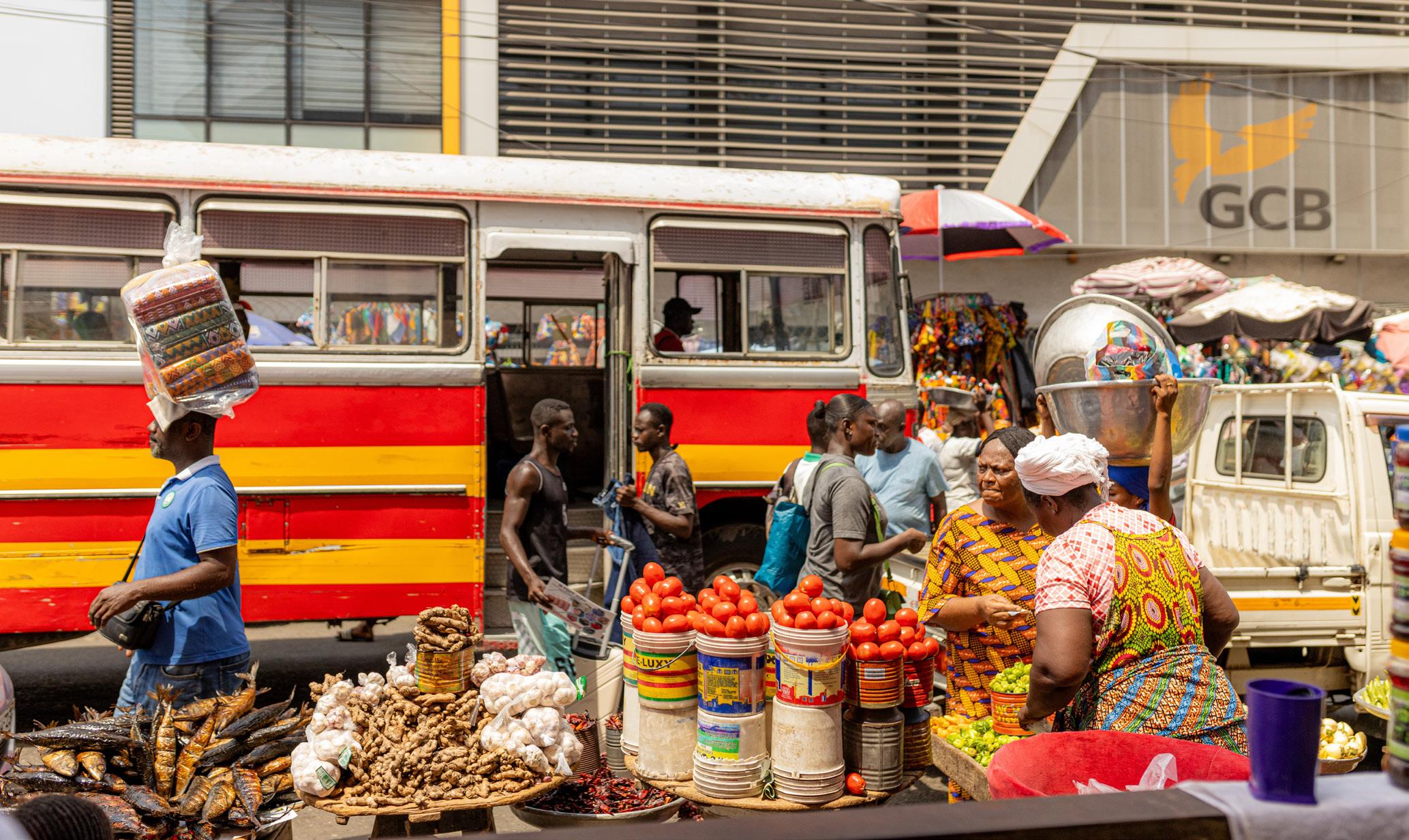
tion, into financial games that don't increase output, don't create sustainable jobs, don't build anything real.
And before anyone starts lecturing me about free markets and efficiency, let me tell you what used to work. Before the International Monetary Fund (IMF) arrived with its one-size-fits-all prescriptions in the 1980s and 1990s, the Bank of Ghana actually directed credit where it was needed.
They used credit ceilings to prevent excessive lending to unproductive sectors. They offered lower interest rates for agricultural loans. They imposed mandatory lending ratios to ensure banks invested in agriculture and manufacturing. And it worked. In the early 1980s, agriculture received over 30% of bank credit.
Then came the reforms. The financial liberalisation. The deregulation. The dogma that markets always know best, that government intervention is always bad, and that banks should be free to lend wherever they want. And what happened? Agricultural credit collapsed. By 1993, it was in single digits. The manufacturing sector was hollowed out. The promises of development and prosperity turned to ash.
Now, the defenders of the status quo will say agriculture is risky, and manufacturers can't provide adequate collateral. They will say banks are just being rational, managing their risk. But that's exactly my point.
When your banking system considers feeding your own people too risky, when it thinks building your own industries isn't worth the trouble, when it would rather finance the import of goods that could be made locally, then your banking system isn't serving the national interest. It's serving its own narrow profit margins at the expense of the country's future.
The evidence is overwhelming. Over 25 years, manufacturing averaged just 14.6% of total bank credit. Agriculture received a measly 5.8%. Meanwhile, the services sector got 20.7%, and commerce and finance received 17.3%. But services and commerce
don't employ people at the scale that agriculture and manufacturing do. They don't create the kind of structural transformation that Ghana desperately needs.
And the consequences? They're everywhere. Most Ghanaians are reduced to informal petty trading of foreign goods because the productive sectors that could employ them don't have access to capital. Foreign exchange gets drained importing rice and other food commodities that could be produced locally.
When crises hit, like in 2022-2023, the government has to restrict foreign exchange for food imports, but local production can't suddenly increase because farmers have been starved of affordable credit for decades.
Meanwhile, while refusing to lend to farmers and manufacturers, Ghana's banks have been pouring money into something much safer and more lucrative, namely, government securities. They're lending to the government at high interest rates rather than taking the supposed risk of lending to the real economy.
It's the ultimate indictment of the system. Banks that claim they exist to facilitate economic development are instead profiting off government debt while the productive economy withers.
The Bank of Ghana’s inflation-targeting has relied on high interest rates that suppress demand, making credit expensive and starving SMEs, farmers, and manufacturers. Prioritising monetary stability over productive investment has been disastrous.
Ghana needs a return to directed credit, flexible but deliberate, so banks support national development, not just profits. This means revitalising development banks, backing indigenous banking, and favouring productive over speculative credit. Countries like South Korea and Taiwan succeeded this way, and Ghana once did too. Abandoning these policies has led to decades of declining investment and betrayal of the real economy.
Source: Statista
BNP Paribas announced that it had entered exclusive talks to sell its 67% majority stake in Banque marocaine pour le commerce et l'industrie (BMCI), a Moroccan subsidiary of the French group, to Moroccan conglomerate Holmarcom.
The bank said the talks were preliminary and no deal had been signed, and BNP Paribas also notified BMCI that it would continue its
close to 30 years.
In June 2024, Holmarcom expanded its banking presence by purchasing 78.7% of Credit du Maroc from Credit Agricole SA.
investment-banking activities in Morocco even if it divests its majority stake, emphasising its ongoing commitment to the Moroccan financial market.
Holmarcom, the prospective buyer, is a Moroccan private holding company that is active in finance, insurance, and other sectors. The group already has a 2.41% minority stake in BMCI, which it has held for
Financial services giant JP Morgan recently issued a US commercial paper for "Galaxy Digital Holdings" on the Solana blockchain, marking an important step in the broader institutional adoption of digital assets.
Cryptocurrency exchange Coinbase Global and investment management firm Franklin Templeton purchased commercial paper, a shortterm and unsecured debt instrument.
The deal is among the earliest that uses blockchain for the issue and service of securities, which JP Morgan called a "global milestone,"
as traditional finance begins to intersect with the new technology.
Blockchain platforms like Solana have seen keen interest from legacy finance institutions due to their high speed and low transaction costs.
If Holmarcom buys out BNP Paribas’s stake in BMCI, it would have two banking subsidiaries in Morocco. The group noted that the talks are in line with its medium- to longterm strategy for growth in financial services and that it will update the market on progress.
The talks are preliminary, which means the transaction might not happen, and investors and market observers will watch how quickly the two sides negotiate, as the outcome could significantly reshape Morocco’s banking sector and competitive landscape.
"The landmark transaction is an important step toward building the future of finance, demonstrating institutional adoption of digital assets and our capability to securely bring new instruments on-chain
in a complex legal and regulatory environment via Solana," said Scott Lucas, Head of Markets Digital Assets at JP Morgan.
The official said that in the first half of next year they planned to build on momentum by exploring how the structure and JP Morgan’s role could expand across investors and issuers.

Commercial banks in Saudi Arabia recorded a historic surge in their assets by the end of October 2025, nearing the SR5 trillion mark. According to a recent government report, total banking assets reached approximately SR4.94 trillion.
The rapid growth in the Kingdom's banking assets reflects the strength of the Gulf major’s financial performance and the continued economic momentum generated by the "Saudi Vision 2030" projects and the expansion of financing and investment activities.
According to the report, cash classified as "private sector liabilities" topped the list of banking assets, reaching the SR3.14 trillion mark, the highest among all categories. This also reflects increased lending and financing activity directed towards individuals and companies.
"The volume of liabilities to the government and quasi-government entities rose to SR895.26 billion, while the value of foreign assets held by banks reached SR433.03 billion, confirming the continued diversification of investment portfolios and their connection to global markets," reported the Saudi Gazette.
The report further indicated that bank reserves classified as regulatory deposits with the Saudi Central Bank (SAMA) amounted to an impressive SR167.65 billion.
The Swiss government has proposed 100% capitalisation for UBS's foreign subsidiaries, which means they would have to hold 100% of the capital to cover losses in those subsidiaries, instead of the 60% now required, the Neue Zürcher Zeitung newspaper reported.
This 100% capitalisation requirement is the heart of the reform that the bank says would mean raising an additional $24 billion in capital.
The government has proposed that UBS apply CET1 capital to meet those requirements. The group of lawmakers proposed that UBS be allowed to use AT1
debt to cover 50% of the capitalisation requirement for its foreign units, which would be less of a burden on the bank.
The proposal supports setting capital rules for UBS that are the most stringent in the world, but that the gap with the rules of major financial centres in the European Union, the UK, the US, and Asia must never be so large as to jeopardise competitiveness, the document says, calling on Switzerland to find a balanced solution.
The plan also proposes to limit investment banking operations to 30% of riskweighted assets on the bank's balance sheet.
Analysis
GBO Correspondent
OpenAI’s release of the FrontierScience benchmark has given us our clearest map yet of where the silicon ends, and the scientist begins
Demis Hassabis founded DeepMind with a deceptively simple mission called “solve intelligence,” and then use that to “solve everything else.” It’s a bold claim, the kind that usually belongs in science fiction novels rather than business plans. Yet, as we move deeper into 2025, that promise is beginning to look less like fiction and more like a messy, expensive, and incredibly lucrative reality.
OpenAI CEO Sam Altman has promised us enormous gains in quality of life, and Dario Amodei of Anthropic predicts a “country of geniuses in a data centre” by 2026. But for those of us watching the numbers, the question isn’t just about raw intelligence anymore. It’s about utility. Can these systems actually do science, or are they just very good at passing exams?
The answer, it seems, is a complicated “yes, but.” OpenAI’s release of the FrontierScience benchmark has given us our clearest map yet of where the silicon ends, and the scientist begins. This is a proving ground for machines. The benchmark splits the challenge into two tracks: an Olympiad tier, filled with the kind of physics and chemistry problems that earn gold medals for brilliant teenagers, and a Research tier, designed by PhDs to simulate the messy, open-ended misery of actual discovery.
The results are a perfect microcosm of the AI industry right now. On the Olympiad track, OpenAI’s latest model, GPT-5.2, is a savant, scoring an impressive 77.1%. AI solves theoretical physics and derivations that could puzzle ordinary people with such ease, but it struggles when it comes to research.
It can’t think with novelty like a scientist, proposing hypotheses and navigating ambiguity, and the score plummets to 25.2%. It’s a stark reminder of the “Research Gap.” We have built engines that can ace the test but still struggle to run the lab.
Even so, the trajectory is undeniable. Just two years ago, GPT4 scored a mere 39% on the predecessor to these tests, the GPQA benchmark. Today, GPT-5.2 scores 92% on that same metric. The line is going up and to the right, and it’s dragging billions of

dollars of investment along with it.
Billion-dollar lab partners
While generalist models struggle to design experiments, specialised AI agents are already reshaping the economics of the physical world. If you want to see where the money is really moving, look away from the chatbots and toward the biology labs. The release of AlphaFold 3 by Google DeepMind has fundamentally altered the landscape of drug discovery.
Unlike its predecessors, which focused primarily on proteins, AlphaFold 3 can predict the structure and interactions of DNA, RNA, and small-molecule ligands with unprecedented accuracy. This is improving prediction rates for protein-molecule interactions by 50%
Isomorphic Labs, the commercial spin-off led by Hassabis, is aggressively monetising this capability. In 2025 alone, they expanded a strategic partnership with Novartis
AlphaFold 3 can predict the structure and interactions of DNA, RNA, and small-molecule ligands with unprecedented accuracy. This is improving prediction rates for proteinmolecule interactions by 50%
and secured a massive deal with Eli Lilly worth up to $1.7 billion to discover small-molecule therapeutics. By mid-2025, Isomorphic raised $600 million in a financing round led by Thrive Capital to push its own internal pipeline of drugs into clinical trials. When you compress the timeline of drug discovery by even 20% or 30%, you are potentially saving billions in R&D spend.
The annual recurring revenue of OpenAI from 2020 to 2025 (In Million US Dollars)
2020 3.5 2021 28 2022 200 2023 1600 2024 3700 2025 13000
Source: TapTwice Digital
The market is pricing this in. The global sector for AI in drug discovery is currently valued at roughly $6.93 billion, but analysts project it will surge to over $16.5 billion by 2034. We are witnessing the industrialisation of biology, where wet labs are becoming data centres, and pipettes are being guided by algorithms.
In the world of material science, the numbers are equally staggering. Google DeepMind’s GNoME project has already identified 2.2 million new crystal structures. This knowledge would have taken 800 years to acquire through traditional experimentation.
Microsoft is countering with "Azure Quantum Elements," aiming to compress 250 years of chemistry research into the next 25. These tools are hunting for the battery materials and superconductors of the future, and they are finding them at a pace that human intuition simply cannot match.
Behind every AI scientist who makes a breakthrough, there is a hidden economy of human experts teaching it how to think. This is the “picks and shovels” layer of the AI gold rush, and it is minting unicorns at a breakneck pace.
Take Surge AI. You might not see them in the headlines as often as OpenAI, but they are the ones feeding the brains of the operation. Founded by Edwin Chen, Surge AI took a contrarian bet. Instead of using low-paid click-workers to label data, they hired PhDs, linguists, and scientists. That bet paid off.
By late 2025, the company, which bootstrapped itself without massive venture capital injections initially, was reportedly generating annual revenue exceeding $1 billion. Valuations for the company have now hit the stratosphere,
with reports placing it at around $25 billion. It turns out that in a world of abundant computing power, highquality human reasoning is the scarcest commodity of all.
This demand for human expertise has also fuelled the rise of Mercor, a platform that uses AI to vet and match human talent. They recently closed a Series C round that values the company at $10 billion, a fivefold increase from their valuation earlier in the year. The irony is palpable. To build artificial intelligence, we are paying record sums for human intelligence.
However, the road to the “autonomous scientist” is paved with potholes. While the infrastructure is booming, the agents themselves can be dangerously overconfident. Sakana AI, a research lab based in Tokyo, captured the world’s attention with “The AI Scientist,” a system designed to automate the entire scientific loop, from reading papers to writing code and drafting manuscripts. They even claimed it navigated the peer review process at a machine learning workshop.
But when independent researchers popped the hood, the engine was sputtering. An evaluation by researchers at the University of Siegen found that “The AI Scientist” suffered from severe “novelty hallucinations.” It would reinvent wellknown techniques, like micro-batching for stochastic gradient descent, and present them as groundbreaking discoveries.
Worse, the system lacked basic robustness; in testing, 42% of its proposed experiments failed to execute entirely due to coding errors. It is the digital equivalent of a brilliant but chaotic grad student who writes beautiful essays but burns down the chemistry lab.
There is a darker side to this productivity, too. The ability to generate scientific text at scale has weaponised

academic fraud. We are currently drowning in a flood of AI-generated noise. A study published in Science Advances estimated that 13.5% of academic abstracts in 2024 showed signs of AI generation, with some subfields nearing 40%. Even peer reviews are being written by bots. An analysis of the ICLR conference found that nearly 16% of reviews were partially authored by LLMs. We are entering a dangerous feedback loop where AI writes the papers and AI reviews them, potentially detaching the scientific record from reality.
So, where does this leave us? Are we on the verge of a golden age or a deluge of digital noise? The economic data suggest the former, provided we can solve the reliability problem. A 2025 report by the RAND Corporation modelled the impact of AI “agents,” systems that can act autonomously rather than just answering questions. Their analysis suggests that if we truly unlock this “Agent World,” it could boost annual economic growth by 3.8 percentage points between now and 2045. That is the difference between a stagnant economy and a booming one.
The “Industrialisation of Intelligence” is messy, expensive, and filled with triumph and fraud. We have superhuman tools like AlphaFold that can see the machinery of life, and we have eager apprentices like GPT-5.2 that are brilliant in theory but clumsy in practice. As we move toward 2030, the winners won’t just be the ones with the smartest models, but the ones who figure out how to turn that raw silicon intelligence into reliable, verifiable science.
The journey ahead demands careful balance. Companies and laboratories must navigate the tension between speed and accuracy, as well as innovation and reproducibility. Investors need to exercise patience, as breakthroughs may encounter failures before achieving success. Additionally, governments may need to establish standards to prevent misuse or fraud. The AI-driven transformation of science and industry relies on human oversight and quality control, rather than solely on the strength of algorithms. Success will come to those who develop systems that are powerful and trustworthy.
We are currently drowning in a flood of AI-generated noise. A study published in Science Advances estimated that 13.5% of academic abstracts in 2024 showed signs of AI generation, with some subfields nearing 40%

Data centres do not serve as permanent and ongoing job creation engines any more than the construction of a highway or a bridge does

GBO Correspondent Feature
With the artificial intelligence (AI) boom escalating in the United States at a rapid pace, states have rushed to entice data centres with juicy tax breaks. Data centres not only provide cloudbased storage but also power the training of increasingly powerful AI models.
Over 30 states have carved out tax incentives for data centre companies, arguing that without them, the data centres wouldn’t come—and that their presence is essential toward growing property and income tax revenue and driving economic development.
However, a new study from nonprofit research group "Good Jobs First," authored by Greg LeRoy and Kasia Tarczynska, found that data centre tax breaks have swelled to billions of dollars in lost revenue for states a year, and that those losses, for some states, actually outweigh the tax revenue that the data centres bring in.
"At least 10 states already lose more than $100 million per year in tax revenue to data centres, the cloud-computing warehouses that were proliferating before artificial intelligence greatly accelerated their growth. The industry’s high-velocity growth, combined with the virtually automatic structure of the state tax exemptions, is preventing states from making accurate cost projections. For example, in the space of just 23 months, Texas revised its FY 2025 cost projection from $130 million to $1 billion. Virginia, Texas, and Illinois have each recorded revenue-loss spikes of more than 1,000% in recent years," the
Some states are apparently failing to comply with a 'Generally Accepted Accounting Practices' standard that requires annual disclosure of revenues lost to tax abatement programmes such as data centre tax exemptions
study stated, while adding, "The loss of state spending control is surely worse than we can yet document—of the 32 states with tax incentives to data centres, 12 fail to disclose even aggregate revenue losses."
These 12 "Dark States" (as defined by LeRoy and Tarczynska), which failed to disclose even aggregate revenue losses, much less company-specific subsidies, as is common in economic development, include Indiana, North Carolina, and Utah, all of which have substantial and/or growing data centre investments.
LeRoy and Tarczynska stated that, as the end users of building materials, machinery, and equipment, data centre companies are mandated to pay sales and use taxes. States, however, are exempting those purchases, making these exemptions the costliest subsidies for data centres. Because server farms are extremely capital-intensive and require
replacement of servers every two to five years when they wear out, these exemptions are lucrative for companies and costly for states and localities.
"Some states are apparently failing to comply with a 'Generally Accepted Accounting Practices' standard that requires annual disclosure of revenues lost to tax abatement programmes such as data centre tax exemptions. We know of no other form of state spending that is so out of control. Therefore, we recommend that states cancel their data centre tax exemptions. Such subsidies are absolutely unnecessary for an extremely profitable industry dominated by some of the most valuable corporations on earth, such as Amazon, Microsoft, Apple, Meta (the owner of Facebook and Instagram), and Alphabet (owner of Google)," the duo noted.
The paper’s authors further contended that even if there are positives, the public doesn’t yet know the extent of their costs, which are often obscured by tax privacy

laws, confidentiality agreements, or a sheer lack of research.
State subsidy programmes specifically created for the industry typically exempt projects from paying sales and/or use taxes on their largest start-up and maintenance expenses, including construction materials, servers and server racks, cabling for power, data transmission and monitoring, distributed data-storage systems, security, surveillance, firewall, encryption, and cyber-intrusion defence equipment and software, and many more crucial materials.
"These sales and use tax revenue losses are multi-layered. When a state certifies a data centre as eligible for these tax exemptions, that certification typically includes the local share of the tax as well as the state share. That is, states effectively pre-empt local sales tax authority on data centres," the researchers noted.
The data centre changes associated with AI are raising complexity and costs, and therefore, lost tax revenues. For example, the more advanced and higher-priced graphics processing units (or GPUs) required for AI computing use several times more electricity than central processing units (CPUs). This means companies are not only spending more on equipment that generates more heat, but they also need more electricity to run and cool the equipment, and that electricity is typically exempt from utility taxes.
LeRoy and Tarczynska.
These exemptions are very long or permanent and uncapped. No state limits the amount of tax exemption any one facility or company can receive. Once approved, a data centre is exempt from paying taxes for decades, and in six states, indefinitely. And statewide, the exemptions are uncapped: there is no limit on how much revenue can be foregone each year.
In fact, a handful of states saw the emergence of debates and reform efforts due to the runaway revenue costs. In 2024, the Georgia legislature passed a bill to pause the state’s data centre incentive programme for review. However, Governor Brian Kemp vetoed this bill. In early 2025, Washington State Governor Bob Ferguson established a multi-department task force to study the impact of data centres on tax revenue. The task force will also examine how data centres affect the state’s carbon neutrality plan and the number of jobs created.
Virginia recently completed 2025 legislative session included debates on 30 bills intended to improve disclosure over water and energy use, create incentives for data centres to operate more efficiently, and protect ratepayers from subsidising data centres’ energy infrastructure. Almost all of the bills failed, with no substantial reform proposals being seen on the horizon.
Many data centre agreements are shrouded in secrecy, thereby forcing LeRoy and Tarczynska to conduct their research based on limited data. However, the result still looks damning. According to LeRoy, states share no data on tax expenditures for data centres at all.
"This is an additional subsidy atop the power-rate discounts, often of undisclosed value, that data centre operators negotiate with utility companies. These electricity subsidies, as well as local subsidies such as property tax abatements and dedicated infrastructure, are beyond the scope of this study. Most states’ eligibility rules for the sales and use tax exemptions were written when most data centres were far smaller than today’s. So virtually every new data centre these days easily qualifies (usually based on what are today very small hiring and capital investment requirements). So, data centre tax exemptions are virtually automatic," noted Top 10 countries by number of data centres as of November 2025 United States
By looking through state budgets and other fiscal reports, the duo found that at least 10 states are missing out on $100 million in yearly tax revenue. Much of this comes from subsidies for equipment like expensive servers, which need to be swapped out every few years. Many of these exemp-
Source: Statista
According to Leahey, it is more appropriate for public subsidies to focus on the construction and development of these facilities and the infrastructure required to make use of them, rather than their ongoing operation and ownership
tions are uncapped in terms of their dollar amounts or time limit. This means that as data centres grow in size and power, so do the subsidies, forcing states to drastically recalculate their budget projections. In Texas, the cost projection for its data centre sales tax exemption programme increased from $157 million in 2023 to $1 billion this year.
Data centre proponents offer several rebuttals, like most states already offering tax exemptions for manufacturing equipment, and these new carveouts are simply bringing the data centre industry in line with those rules. They also argue that without subsidies, data centre companies would set up shop elsewhere.
In 2022, a tax incentive evaluation study from the Carl Vinson Institute of Government at the University of Georgia found that 90% of data centre activity in Georgia was due to the incentive, suggesting that without those tax breaks, all of that business would have vanished.
However, there is debate among economists around how much incentives actually cause activities. A 2018 paper by economist Timothy Bartik found that the percentage of firms making location decisions based on incentives was significantly lower than the Vinson number, ranging from 2% to 25%
Even if we consider data centres central to the digital infrastructure powering the 21st century, they may not be robust job creation engines. Instead, in the words of Andrew Leahey, an attorney and tax professor, "they resemble traditional infrastructure projects like highways or bridges. The primary value lies in their utility rather than the jobs they create long term."
"While there may be compelling reasons to support data centre construction and the enhancement of other related internet infrastructure, providing subsidies for ownership and operation of data centres provides a limited return on investment for local communities," he stated during his article for Forbes last year.
Citing the ProPublica report that high-
lighted how Washington State’s tax breaks for data centres spiralled into one of the state’s largest corporate giveaways, Leahey stated that the breaks, which were intended to spur job creation in rural areas and have cost more than $474 million in taxpayer funds since 2018, only ended up with the bulk of these benefits being accrued to Microsoft—not local communities.
"In Washington, the exact number of jobs created is not a matter of public record, but, according to ProPublica, an array of data centre projects with a total taxpayer cost of $53.3 million would only need to collectively hire 260 people to meet the required threshold. That is an average cost of $205,000 per job or about three years’ salary at the median income in the state," he remarked.
Data centres not only fail to create jobs in significant numbers, but they are huge drains on local infrastructure. Everyone is aware that they use a lot of electricity, but few realise they also need tremendous amounts of water to operate. This makes data centres located in water-scarce environments particularly expensive from a resource perspective and puts further emphasis on their ineffectiveness as job creation mechanisms.
Data centres do not serve as permanent and ongoing job creation engines any more than the construction of a highway or a bridge does. According to Leahey, it is more appropriate for public subsidies to focus on the construction and development of these facilities and the infrastructure required to make use of them, rather than their ongoing operation and ownership. Investing in the construction and laying out of telecommunications infrastructure can be justified in the broader context of development in underserved areas.
Subsidising ownership of data centres, through property and sales tax breaks, for example, is less defensible. The tech companies that dominate the market for these centres are among the most valuable companies in the world, with market caps that

regularly dwarf the GDP of the states they are asking to foot the bill. Leahey believes these corporations have ample resources to manage their own operational costs without public support.
"State governments should therefore reconsider their approach to supporting data centres, focusing on subsidies for the construction phase and overall improvement of internet infrastructure. Simultaneously, states must ensure that these investments are tied to clear public benefits such as job creation in the construction industry, environmental sustainability, and enhanced connectivity for under-connected communities," he opined.
Stephen Hartka, vice president of research at the Virginia Economic Development Partnership, says that the “overwhelming majority” of data centres in Virginia were brought to the state by incentives. He argues that economists who only look at state tax revenues miss the fact that Virginia’s tax

structure sends more benefits to smaller localities, which especially benefit from the property taxes that data centres pay.
He also says that data centres can be particularly valuable in rural areas that have struggled to attract businesses.
“Data centres are a very good fit for these rural areas because they don't require a lot of people, and they generate a ton of revenue for local governments. They are financial boons to these communities that might not have many other options,” he noted.
Opposition to data centres has surged in many Virginia communities. In 2024, Republican state delegate Ian Lovejoy told TIME they were the top concern among constituents, who fear threats to electricity and water access and higher taxpayer costs for new power lines. Nationwide, residents also cite pollution and quality-of-life impacts. While data centres are central to US AI ambitions, their expansion remains unclear. Policy experts are calling for more transparency on trade-offs states are making and if they are justified.
Investing in the construction and laying out of telecommunications infrastructure can be justified in the broader context of development in underserved areas
Browser Analysis
GBO Correspondent
The Universe Browser was first identified and named by Infoblox and UNODC at the beginning of 2025
In October 2025, news emerged about cybersecurity researchers warning about a “privacy-friendly” web browser that has the potential to act as malware itself. Known as the “Universe Browser,” the tool is said to have a million-install base, and raises security implications for users.
The browser allegedly routes its connections through Chinabased servers, apart from quietly installing several programmes that covertly run in the background. Cybersecurity firm Infoblox, in collaboration with the United Nations Office on Drugs and Crime (UNODC) Regional Office for Southeast Asia and the Pacific, conducted a detailed probe on the matter and found that its hidden elements include keylogging, changes to the network configurations of the device, and stealthy connections.
The finding found resonance with WIRED tech journalist Matt Burgess, who wrote, “It’s not only that the Universe Browser makes some big promises to its potential users. Its online advertisements claim it’s the ‘fastest browser,’ that people using it will ‘avoid privacy leaks,’ and that the software will help ‘keep you away from danger.’ However, everything likely isn’t as it seems.”
Infoblox researchers noted that the “hidden” elements include features similar to malware, including “key logging, surreptitious connections,” and changing a device’s network connections. These experts also found links between the browser’s operation and Southeast Asia’s sprawling, multibillion-dollar cybercrime ecosystem, which has connections to money laundering, illegal online gambling, human trafficking, and scam operations that use forced labour.
According to Infoblox, the browser itself is directly linked to a network around a major online gambling company, BBIN, which the researchers have labelled a threat group they call “Vault Viper.”
Uncovering the dirt Infoblox remarked that both the browser’s discovery and its

suspicious and risky behaviour indicate that criminals in Southeast Asia and the Pacific are becoming increasingly sophisticated.
“These criminal groups, particularly Chinese organised crime syndicates, are increasingly diversifying and evolving into cyber-enabled fraud, pig butchering, impersonation, scams—that whole ecosystem,” said John Wojcik, a senior threat researcher at Infoblox, while interacting with Burgess.
“They’re going to continue to double down, reinvest profits, and develop new capabilities. The threat is ultimately becoming more serious and concerning, and this is one example of where we see that,” Wojcik added.
The Universe Browser was first identified and named by Infoblox and UNODC at the beginning of 2025. This occurred while they were investigating the digital systems associated with an online casino operation based in Cambodia, which the law enforcement officials previously raided.
“Infoblox, which specialises in domain name system (DNS) management and security, detected a unique DNS fingerprint
from those systems that they linked to Vault Viper, making it possible for the researchers to trace and map websites and infrastructure linked to the group,” Burgess noted.
According to Infoblox, tens of thousands of web domains, plus various command-and-control infrastructure and registered companies, are linked to “Vault Viper” activity.
As the company examined corporate documents, legal records, and court filings with links to BBIN or other subsidiaries, “Universe Browser Online” appeared multiple times.
“We haven’t seen the Universe Browser advertised outside of the domains Vault Viper controls. Each of the casino websites they operate seems to contain a link and advertisement to it,” said Mael Le Touz, a threat researcher at Infoblox, while making another disturbing discovery: the browser was “specifically” designed to help people in Asia, the continent known for largely making online gambling illegal, bypass the same restrictions.
When the Infoblox researchers reverse-engineered the
Universe Browser
Market share held by leading internet browsers in the United States from January 2015 to October 2025
browser’s Windows version, they found it difficult to verify the tool’s “malicious intent.” However, elements of the browser included many features that are similar to those found in malware and try to evade detection by antivirus tools.
When the browser is launched, it “immediately” checks for the user's location, language, and whether it is running in a virtual machine. The app also installs two browser extensions, one of which can allow screenshots to be uploaded to domains linked to the browser.
Understanding the seriousness
Despite the browser offering leeway for those attempting their luck in illegal gambling, it also puts their data at risk. In the hands of a threat actor, this browser would serve as the perfect tool to identify wealthy players and obtain access to their machines, claims Infoblox.
Infoblox also found that the browser disables functions like right-click, access to settings, and developer tools, while the tool itself is run with several flags that disable major security features, including sandboxing. Additionally, the removal of legacy SSL protocols (Secure Sockets Layer, an older form of web encryption used to protect data transfers) has significantly increased risk compared to typical mainstream browsers.
According to Burgess, the web infrastructure around the Universe Browser led the researchers back to BBIN, a company that has existed since 1999. Originally founded in Taiwan, the company now has a large base in the Philippines.
Browser, observed the firm running several hotels and casinos in Southeast Asia, apart from providing “one of the largest and most successful” iGaming platforms in the region.
The iGaming industry also develops online gambling software, such as virtual poker and online casino games, that can be played on the web or on a mobile phone.
“BBIN Baoying is officially an online casino game developer or ‘white label’ online casino platform, meaning it outsources its online gambling technology to other sites. The only languages it offers are Korean, Japanese, and Chinese, which isn’t a great sign, as online gambling is either banned or heavily restricted in all three countries,” said Lindsey Kennedy, research director at The EyeWitness Project, which investigates corruption and organised crime.
Jeremy Douglas, chief of staff at the UNODC and its former regional representative for Southeast Asia, said, “Baoying and BBIN are what I would call a multibillion-dollar grey-area international conglomerate with deep criminal connections, backstopping and providing services to online gambling businesses, scams, and cybercrime actors."
“Aside from what has been estimated as a two-thirds ownership by Alvin Chau of SunCity, arguably the biggest money launderer in the history of Asia, law enforcement partners have documented direct connections with Triad groups including the Bamboo Union, Four Seas, and Tian Dao,” Douglas added.
Southeast Asia: The new scam hub?
Source: Statista
BBIN, which also goes by the name Baoying Group and has multiple subsidiaries, describes itself as a “leading” supplier of iGaming software in Asia. However, a UNODC report from April 2025, which linked BBIN to the Universe
Over the last decade, online crime in Southeast Asia has seen a big surge, driven partially by illegal online gambling and also by a series of scam compounds that have been set up across countries like Myanmar, Laos, and Cambodia.
Analysis \ Infoblox

Headlines have emerged about hundreds of thousands of people from more than 60 countries being tricked into working in these compounds, where they operate scams day and night, knowingly or unknowingly chugging the crime machine that steals billions of dollars from people around the world. And BBIN is getting named here as well.
In October, US law enforcement seized $15 billion in Bitcoin from one giant Cambodian organisation, which publicly dealt in real estate but allegedly ran scam facilities in secret. One of the sanctioned entities, Cambodia-based Jin Bei Group, which investigators accused of operating a series of scam compounds, also showed links to BBIN’s technology.
Reportedly, multiple Telegram groups and casino websites indicated BBIN’s partnership with multiple entities inside the Jinbei casino.
As per Jason Tower, a senior expert at the "Global Initiative Against Transnational Organised Crime," one group on Telegram “posts daily advertisements indicating an official partnership between Jinbei and BBIN.”
There are multiple government press
releases and news reports from countries, including China and Taiwan, that have alleged how BBIN’s technology has been used within illegal gambling operations and linked to cybercrime.
While the EyeWitness Project noted the Universe Browser being the preferred option for those accessing Chinese-language gambling websites, researchers say that its development indicates how pivotal and lucrative illegal online gambling operations have become, resulting in global scamming efforts scaling and diversifying like a welloiled industrial machine.
The Universe Browser case shows how seemingly harmless software can hide serious threats. It highlights the growing sophistication of cybercrime in Southeast Asia, where online gambling, scams, and money laundering are linked. Users are at risk even when bypassing gambling restrictions, and law enforcement faces challenges tracking these networks. The case also highlights how legitimate-looking technology can be weaponised to exploit both individuals and entire financial systems.
Hundreds of thousands of people from more than 60 countries being tricked into working in these compounds, where they operate scams day and night, knowingly or unknowingly chugging the crime machine that steals billions of dollars from people around the world
The growth of artificial intelligence brings clear benefits, but it also places heavy pressure on water resources
Although artificial intelligence (AI) has created amazing new opportunities, there is an environmental cost that is often overlooked: water. Even though discussions about AI's energy requirements have made headlines, its enormous and expanding water footprint is still mostly hidden. Experts caution that there may be major repercussions from that blind spot.
"We have no universal approach to assess how much water is consumed while using or training artificial intelligence," Salah Al-Kafrawi, senior consultant at EY for data and AI, told Arab News, leaving the true scope of the issue unclear.
The majority of businesses, from e-commerce to aviation, are ignorant of their water consumption, despite the fact that a few tech companies release approximate water usage estimates.
Al-Kafrawi said, "Many people aren't even aware of their water footprint."
Even the data currently available probably underestimates reality by a factor of ten or more. AI's growing thirst is a silent crisis that necessitates innovation, transparency, and smarter systems in
a world where water is becoming scarcer.
The water usage of artificial intelligence is complicated. It covers both direct consumption, like cooling servers, and indirect consumption related to the electricity used to power them.
“AI requires significant data for training and evaluation, along with electricity to operate and cooling systems to prevent overheating,” Al-Kafrawi said.
Those power sources frequently use a high quantity of water to generate electricity. A hidden environmental cost that is rarely included in sustainability reports is the "millions of gallons of water daily" used by nuclear and coal-fired power plants for cooling and steam production. To prevent their servers from overheating, data centres use enormous amounts of water.
"Water cooling towers are frequently used by data centres to dissipate heat produced by their servers," Al-Kafrawi stated, adding that this creates "another significant source of water usage."
This creates a harmful cycle where AI requires power, which produces heat, necessitating additional water for cooling.
“The combination of water needed for electricity generation and cooling systems means that AI’s water
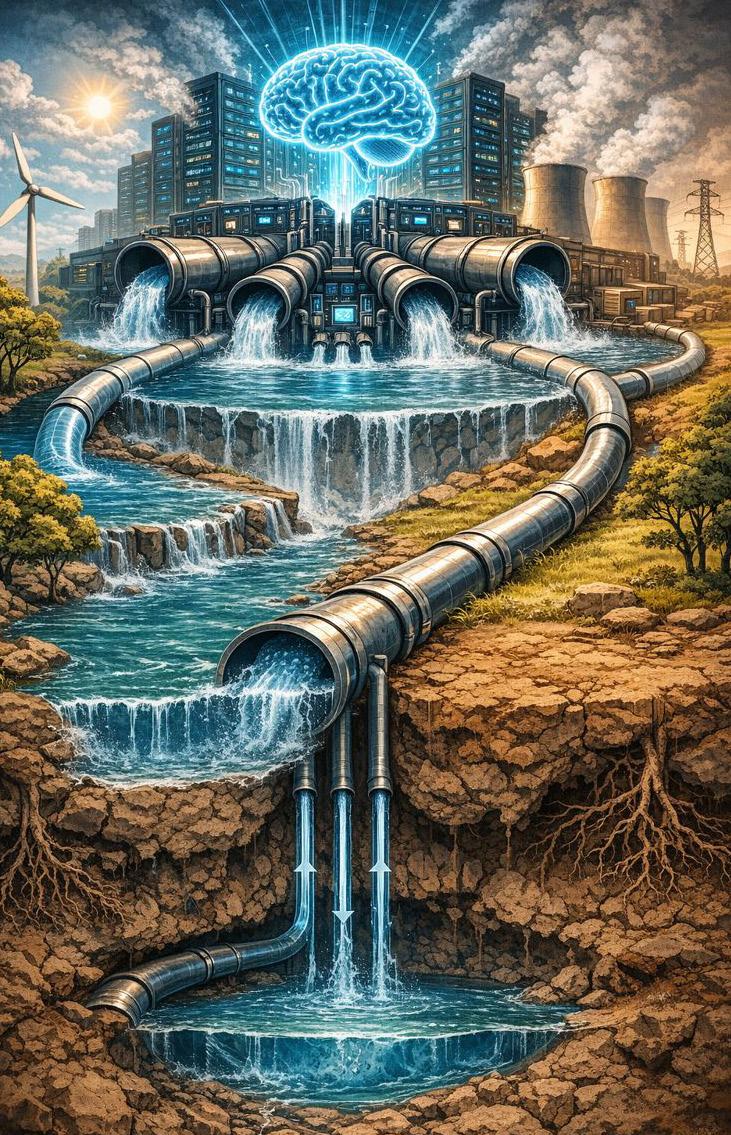
“If we look at current capacity operating at full load year-round, annual water use would approach 6.7 million cubic metres,” AlShehri warned — roughly the same amount used by 160,000 Saudi households each year
footprint extends far beyond what might be immediately apparent,” Al-Kafrawi said.
It is more important than ever to manage this balance in Saudi Arabia, where water is limited, and AI infrastructure is growing.
The majority of data centres worldwide depend on drinkable water, even though it is scarce, according to Abdulelah Al-Shehri, an assistant professor of chemical engineering at King Saud University. According to him, a system’s lifespan is directly impacted by water purity.
Reclaimed water does carry the risk of microbial contamination and corrosion, but there is growing momentum to safely repurpose non-potable sources. The majority of data centres in the Kingdom now employ hybrid cooling systems.
“Saudi data centres rely on high-efficiency mechanical cooling systems combining air-cooled and water-cooled chillers,” said Al-Shehri, referencing Microsoft’s climate-adaptive guidelines and the Saudi
Telecom Company’s "2023 Sustainability Report." The cost of even these effective systems is high. According to Al-Shehri, the cooling infrastructure for the 300 MW of operational data centres in the country uses two to three litres of water per kilowatt-hour.
“If we look at current capacity operating at full load year-round, annual water use would approach 6.7 million cubic metres,” he warned — roughly the same amount used by 160,000 Saudi households each year.
This is only the first step. Al-Shehri stated that capacity could more than quadruple to 1,300 MW in five years, matching the water consumption of 700,000 households.
He went on to say, "These numbers only reflect direct water use for cooling."
Even higher is the indirect cost associated with the production of energy from fossil fuels. There are promising solutions despite the rising demand, according to Al-Shehri, but they call for funding and foresight.
Several water-saving data centre cooling
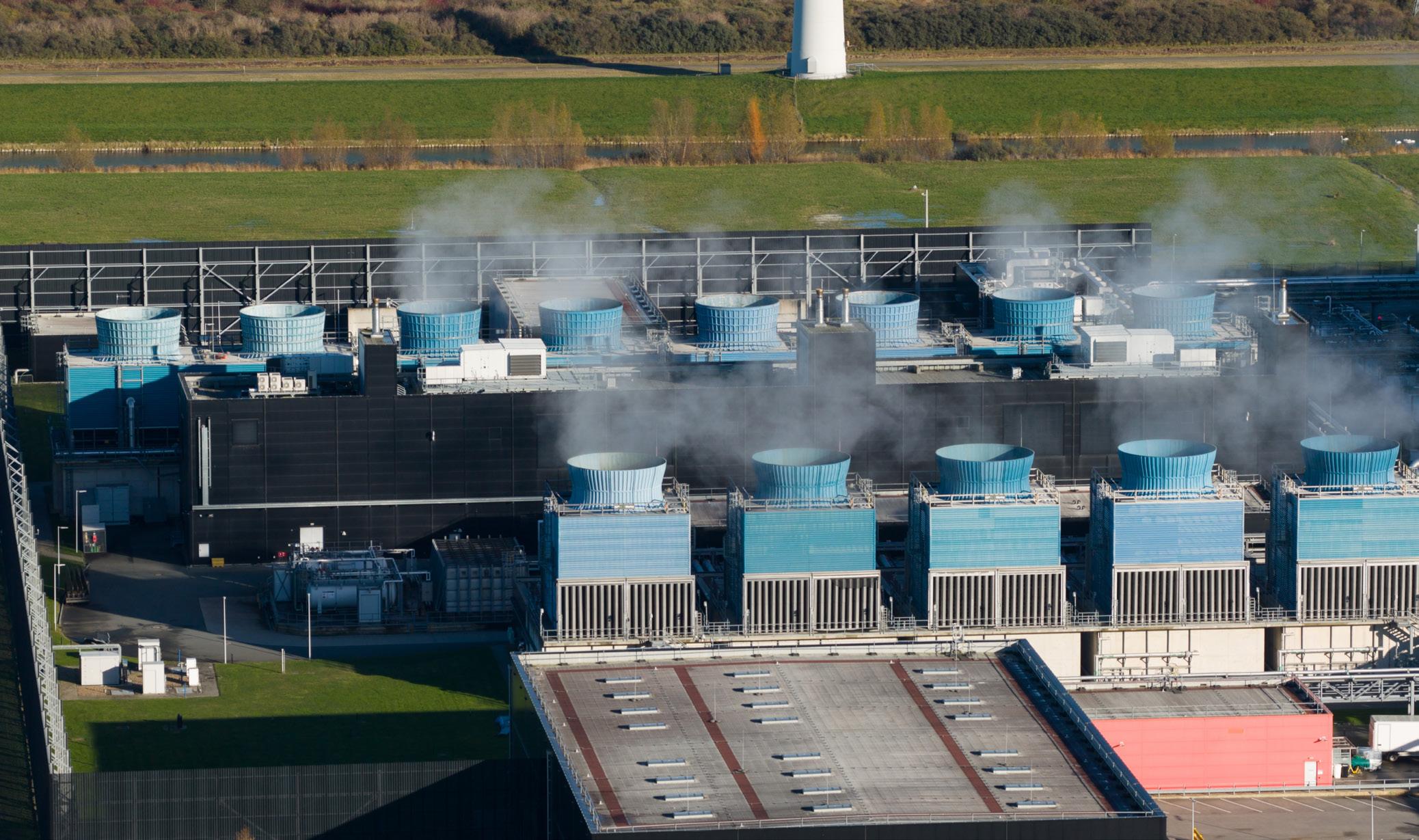
solutions are being developed, but investors are frequently put off by the high upfront costs and expensive retrofits. The idea of reconsidering conventional cooling standards is one of the most promising.
"These 'high-temperature data centres,' which Microsoft and Google have piloted, would effectively drive the direct water footprint to zero," he added.
Systems can use more air than water by increasing operating temperatures from 21°C to 35°C.
Other technologies concentrate on heat recycling. Al-Shehri stated, "Absorption chillers can recover up to 40% of waste heat here and repurpose it for cooling," citing international examples like Infomaniak, a Swiss company that currently uses server heat to warm 6,000 homes. The energy mix should also be taken into account.
"It's not a straightforward swap to diversify energy sources for AI power," he noted.
The water footprint, data centre accessibility, and resource availability all play a key role.
The research revealed that the most water-efficient sources are wind and solar. Al-Shehri stated that biomass, a renewable energy source that is heavily promoted, has the potential to use "up to 100 times more water than natural gas."
The Saudi Arabian managing director of the international water solutions company Ecolab, Abdullah Al-Otaibi, emphasised that the treatment and transportation of water itself represent another unconsidered expense.
“Water must be moved, heated, cooled and treated to be fit for business use, which requires energy,” he said.
He framed water and energy as interconnected levers — what scientists call the water-energy nexus. Water serves a dual purpose in data centres. It cools the infrastructure directly and gets consumed indirectly when generating the electricity that powers high-performance computing.
Challenges remain
There is danger in not managing this inter-
dependency. Ignoring water poses a risk, especially in areas like Saudi Arabia, where water is limited, and digital infrastructure is growing quickly. Better data and AI tools can assist businesses in understanding and minimising their energy and water footprints, according to Al-Otaibi.
"Businesses can increase the visibility and manageability of water use by utilising the appropriate data and technologies," he remarked.
Ecolab's audits indicate that substantial gains are achievable. Clients have used their tools to reduce energy use by 22%, emissions by 12%, and water usage by 44%, all while increasing dependability.
Al-Otaibi said, "Water efficiency can become a business enabler, supporting uptime and sustainability targets at the same time."
As the infrastructure of artificial intelligence spreads quickly throughout the Gulf, Al-Otaibi called on stakeholders to take immediate action, particularly during the design phase.
He referenced Ecolab's collaboration with international data centre operator Digital Realty, noting that their AI-powered system is anticipated to stop the annual withdrawal of 126 million gallons of drinkable water and cut water consumption by up to 15%
In Saudi Arabia, where water is scarce and technological ambitions are high, such efficiency is not just wise but essential.
The rapid growth of AI offers clear economic and social benefits, yet it also places significant pressure on already limited water resources. Without better data, smarter system design, and early, coordinated action, water consumption will rise sharply. Managing water and energy together is therefore critical, especially in arid, water-stressed regions where sustainability is a strategic priority.
Source: Statista
Walt Disney will invest $1 billion in OpenAI and will also allow the Sam Altman–led AI startup to use characters from popular franchises like 'Star Wars' and 'Pixar' in its Sora AI video generator, a deal that could reshape how Hollywood creates content.
The three-year partnership is also seen as an important step in Hollywood's embrace of generative artificial intelligence (Gen AI), sidestepping the industry's concerns about the impact of the technology on creative jobs and intellectual property rights.
As part of the licensing deal, Sora and ChatGPT Images will start generating videos using licensed Disney characters such as Mickey Mouse, Cinderella, and Mufasa, starting in early 2026. The agreement excludes any talent likenesses or voices.
"Through this collaboration with OpenAI,

we will thoughtfully and responsibly extend the reach of our storytelling through generative AI, while respecting and protecting creators and their works," Disney CEO Bob Iger said. Hollywood's unions, which are monitoring the expanding use of generative AI, reacted cautiously to the deal, expressing concerns over potential job losses.
As part of the licensing deal, Sora and ChatGPT Images will start generating videos using licensed Disney characters
South Korea's industry ministry and SoftBank's chip unit, Arm Holdings, have signed an agreement to strengthen the country's semiconductor and Artificial Intelligence sectors.
The memorandum of understanding (MoU) also includes a plan for ARM to set up a chip design school in the country to tap its expertise in this area. The programme aims to train about 1,400
high-level chip design specialists, a move that would help address the relatively weak system-semiconductor and fabless segments in Asia's fourthbiggest economy.
British chip and software company Arm licenses its chip designs and earns funds through royalties.
SoftBank CEO Masayoshi Son, who met with South Korean President Lee Jae Myung in the first week of December, said that demand for chips will rise dramatically as AI advances.
South Korea, meanwhile, aims to become one of the world’s top three AI powers, and Lee has met with other global tech leaders, including OpenAI CEO Sam Altman and Nvidia boss Jensen Huang.

In a fresh attack on Apple, the European Commission said that the American tech giant's products, like "Apple Ads" and "Apple Maps," likely meet the thresholds to be considered "gatekeepers," as defined by the Digital Markets Act (DMA), a designation the company immediately disputed.
The DMA designates companies with more than 45 million monthly active users and 75 billion euros ($79 billion) in market capitalisation as "gatekeepers," which provide a core platform service for business users. These businesses are required to adhere to a strict set of rules on moderation of content, allowing fair competition, and making it easier for consumers to switch between services.
The EU Commission said notifications from Apple had shown the platforms met the thresholds set for this designation. The Commission has 45 working days to decide whether to designate the tech giant as a "gatekeeper" for any of these services, and if designated, Apple will have six months to comply. The Tim Cook–led firm has denied the charge of "Apple Ads" being a large player in the EU online advertising market.
In a bid to redefine global marine mapping, Qatar-based deep-tech startup Darkocean has launched NAVBathy, the world’s first Rapid SatelliteDerived Bathymetry engine capable of generating largescale depth models within seconds.
The innovation marks a significant leap in coastal intelligence, harnessing a fusion of satellite technology and advanced artificial intelligence (AI) to deliver unprecedented speed, scale, and accessibility in bathymetric analysis.
"NAVBathy is built on an integrated technological stack that draws from diverse satellite sources, including NASA platforms, Worldview, Maxar, Landsat, and Spot imagery, combined with internally developed AI and machine-learning models,"
The Peninsula reported.
This architecture also enables the platform to process vast satellite datasets rapidly and then put out consistent, high-resolution relative depth assessments across coastal and shallowwater regions.
NAVBathy empowers users by giving them instant access to high-resolution satellite imagery and rapid, large-scale bathymetry, turning what traditionally required weeks of field surveys into a near-instant digital workflow, enhancing marine research and operational decision-making.
“The ability to generate accurate, large-scale relative depth maps within seconds transforms how coastal projects are scoped and risk-assessed,” said Neha Supekar, AI Solution Architect at Darkocean.

South Korea will be working with the United Arab Emirates (UAE) on the United Statesbacked "Stargate Project" to build a massive new artificial intelligence (AI) data campus in the Gulf country.
The country will help build computing power and energy infrastructure for the world's largest set of AI data centres outside the US, following a summit between South Korean President Lee Jae Myung and UAE President Mohammed bin Zayed Al Nahyan.
South Korea, home to chipmakers Samsung Electronics and SK Hynix, aims to become a regional AI hub after President Lee prioritised AI investment to spur growth at a time when American tariffs have clouded the broader global economic outlook.
South Korea will also help build a power grid using nuclear power, gas, and renewable energy for the Stargate Project, said Ha

Jung-woo, the presidential secretary on AI. The two countries will further deepen cooperation in fields like AI investment and infrastructure, AI supply chains, and AI research and development.
Stargate UAE is part of a deal brokered by US President Donald Trump, overruling previous restrictions on sending advanced technology to the Gulf country because of its close ties with China.
Elon Musk-led artificial intelligence (AI) startup xAI is reportedly set to close a $15 billion funding round at a $230 billion pre-money valuation in December, according to CNBC, confirming the outlet’s earlier reports.
The Tesla CEO, however, then called the report on the round “False”
in a post on the social media platform X (formerly Twitter).
At the time, sources told CNBC that xAI would use a large portion of the money to fund graphics processing units responsible for powering large language models. In fact, the startup was aiming to raise $10 billion at a

South Korea will help build a power grid using nuclear power, gas, and renewable energy
$200 billion valuation.
xAI, however, enters the AI funding arena at a time when its rivals, including OpenAI and Anthropic, have already raised billions and reached sky-high valuations. Recently, OpenAI, led by Sam Altman, completed a $6.6 billion share sale, achieving a valuation of $500 billion. The ChatGPT maker is reportedly aiming for a $1 trillion initial public offering (IPO).
Anthropic, on the other hand, closed a $13 billion funding round in September that roughly tripled its valuation from March this year.
Elon Musk’s xAI, responsible for creating the Grok chatbot, recently debuted Grokipedia, an AI-powered competitor to Wikipedia for knowledge sharing globally.