

January - March 2026
January - March 2026
As 2026 begins, the "Global South" is experiencing a significant shift characterised by the rapid and structural reintegration of the Arabian Peninsula with the African continent. This new corridor is no longer defined solely by religious philanthropy, transactional crude oil trading, or labour migration. Instead, it is being built on critical infrastructure ownership, digital sovereignty, energy transition partnerships, and logistical dominance.
Meanwhile, it has been over a year since the deep rumble of the steelworks went silent in Port Talbot, a town in South Wales. The quiet fell upon the locality some time ago, when "Blast Furnace Four" was tapped for the last time. This decision, intended to pave the way for “Green Steel” and high-skilled jobs in the area, has instead resulted in a more profound economic crisis for the region.
Amid the challenges, there is positive news. Apple has partnered with Michigan State University to establish the "Apple Manufacturing Academy" in Detroit, providing new training opportunities and skills development. The initiative aims to bring the high-tech innovations of Silicon Valley directly to the heart of America’s small and medium-sized manufacturers.
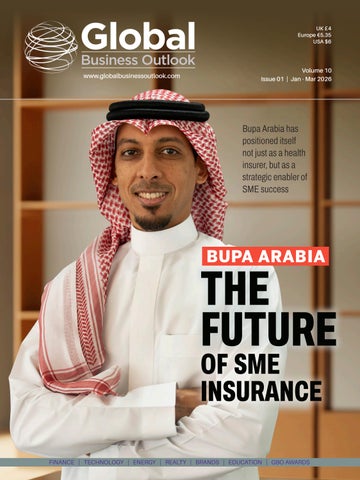
The cover story of Global Business Outlook's January-March edition will focus on Bupa Arabia, a healthcare insurance company based in Saudi Arabia. Since its inception in 1997, Bupa Arabia has expanded its international presence across various business operations, practices, and resources. Originally founded through a partnership between Bupa Global International and the Nazer Group, the company now offers high-quality health insurance services at competitive prices while ensuring a distinctive experience for its customers.
Thomas Kranjec Editor kimberly@gbomag.com





Retirees
Director & Publisher
Krushikesh Raju
Editor
Thomas Kranjec
Production & Design
Brian Williams
David Brenton
lan Hutchinson
Shankara Prasad
Editorial
Stanley Rogers
Rachel Taylor
Lucas Cooper
Tom Hardy
Business Analysts
Adam Fagoo
Arthur Salt
Jerry Thomas
Sumith Jain
Editor's Note

Email: media@gbomag.com 06 | Iron ore
Business Development Manager
Benjamin Clive
Head of Operations
David Pereira
Marketing
Danish Ali
Research Analysts
Richard Sam
Sophia Keller
Accounts Manager
Edyth Taylor
Press & Media Contact
Craig Penn
Registered Office
Global Business Outlook Magazine is the trading name of
Business Outlook Media Ltd
Congress House, 14 Lyon Road, Harrow HA1 2EN.
Phone: +44 203 642 0805
Fax: +44 (0) 203 725 9247
GBO Correspondent
The transition to green steel relies on "Direct Reduced Iron" technology, which processes iron ore using hydrogen or natural gas
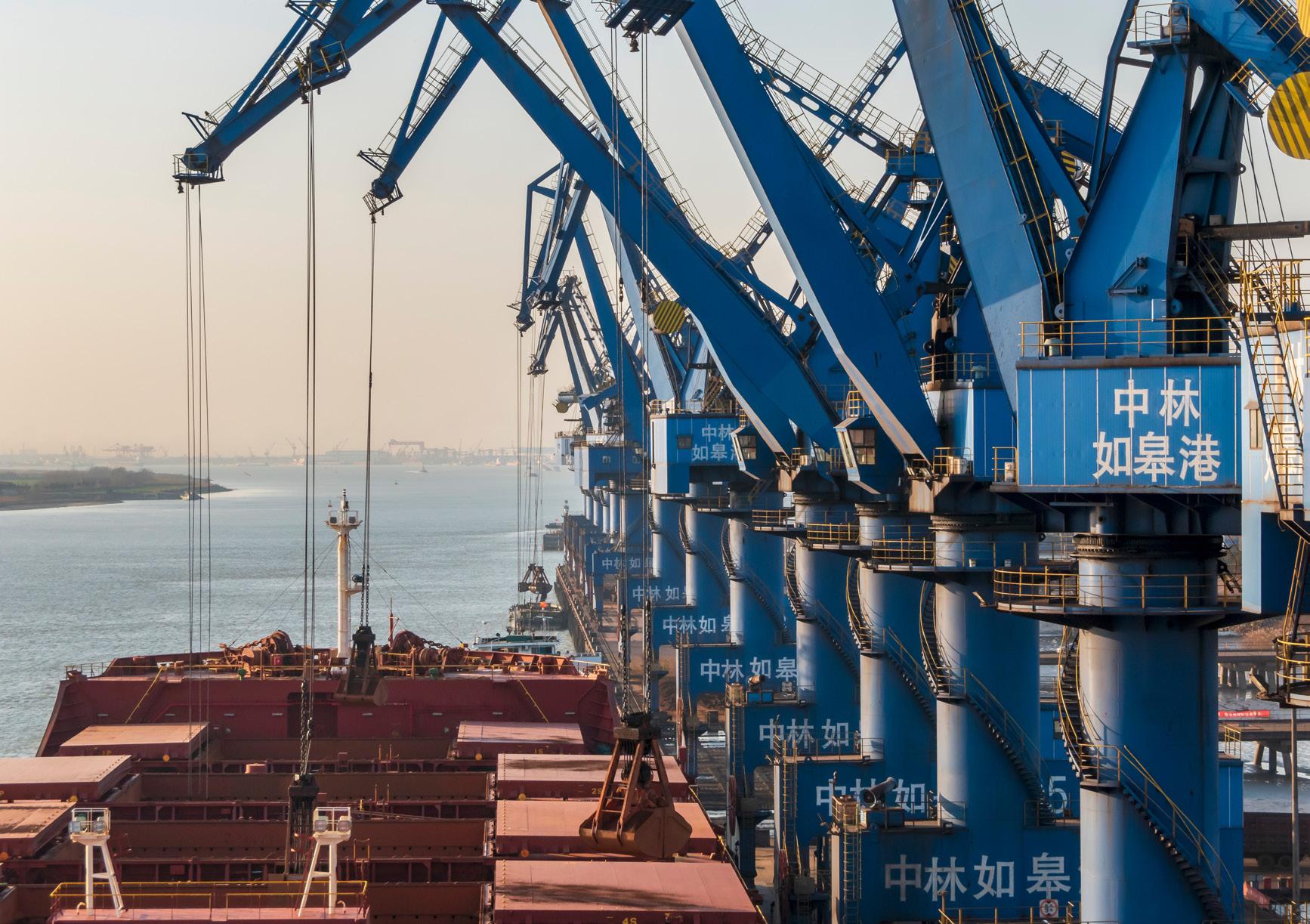
In October 2025, global commodities markets faced a significant disruption that signalled a fundamental shift in the economic relationship between Australia and China. Reports emerged that the "China Mineral Resources Group," or CMRG, had paused purchases of iron ore from BHP Group.
This centralised, state-backed entity was established to consolidate the buying power of the world's largest steel industry. The immediate result was a sharp sell-off in BHP shares as prices fell to AU$41.50. While diplomatic concerns arose in Canberra, the true significance of this event extends beyond daily share price fluctuations. It serves as a clear warning of a new era in resource politics.
The incident involved conflicting reports, ranging from claims of a total ban on new dollar-denominated cargoes to denials by Chinese industry analysts. It represented a calculated pressure test of the global supply chain. Trade did not stop completely, but the move demonstrated a targeted use of leverage.
This was clear when trade resumed just days later with a 170,000-metric-ton shipment of BHP ore to a Chinese trading house. The temporary halt specifically targeted BHP's Jimblebar blend fines and showed that CMRG has the operational capability to manipulate market flows and discipline suppliers.
This disruption is part of a broader strategic movement by Beijing. The CMRG is using its buying power to erode the pricing dominance of major miners like BHP and Rio Tinto. At the same time, the accelerated development of the Simandou project in Guinea is set to achieve first production in late 2025.
This project promises to inject a massive stream of high-grade and Chinese-controlled supply into the market. The decades-long arrangement where Australian miners enjoyed unchecked pricing power is ending. The industry is transitioning into a period of managed competition where price discovery is influenced by statedirected stockpiling and centralised negotiation.

The creation of the "China Mineral Resources Group" in July 2022 ended the era of fragmented buying that defined the iron ore market for over a decade. Major miners previously benefited from negotiating with hundreds of individual Chinese steel mills, which allowed them to extract premium prices. The CMRG was designed to reverse this dynamic by creating a national buyers' group to counterbalance the supply oligopoly.
In just three years, CMRG has consolidated its position and now represents over half of China's steelmaking capacity in negotiations. This centralisation allows the entity to act as a strategic buffer for the national economy. By aggregating demand, CMRG has reduced the volatility of iron ore futures to record lows and dampened price spikes that historically transferred wealth from Chinese steelmakers to Australian shareholders. The group's operational footprint has expanded
aggressively. By mid-2025, CMRG was managing over 40 cargoes in transit at any given time, which gave it realtime visibility over spot market liquidity. This logistical capability enables CMRG to execute a strategic inventory policy where stockpiles are accumulated during price dips and released during spikes.
This mechanism was visible throughout 2025 as a divergence emerged between falling steel output and rising iron ore imports. This paradox is explained by CMRG's mandate to build strategic buffers rather than purchase solely for immediate consumption.
The October 2025 dispute with BHP demonstrated CMRG's tactical sophistication. Instead of a risky blanket ban, which could disrupt Chinese supply, CMRG reportedly targeted specific products like BHP's Jimblebar fines, which are a blend of significant but replaceable medium-grade ore. This approach allowed CMRG to signal displeasure over pricing and inflict commercial pain on BHP without
Australian ores like the "Pilbara Blend" have seen a gradual decline in iron content to around 60.8%, along with rising levels of impurities. In contrast, Simandou hosts reserves with an average grade of approximately 65%
jeopardising the critical flow of premium high-grade ores.
CMRG's formation has divided suppliers. While BHP and Rio Tinto transact with the centralised Chinese entity via spot deals, Brazil's Vale maintains direct contracts with individual mills, bypassing the collective buyer power.
This lack of a unified supplier front benefits Beijing. A key long-term CMRG goal is promoting the Renminbi's use in commodity trade, challenging the US dollar's global dominance through pressure to accept local currency for portside trade.
The Simandou project in Guinea represents a massive supply-side shift. For decades, Simandou was known as a sleeping giant because it is a massive and high-grade deposit that was stranded by political instability and high infrastructure costs.
In 2025, that giant will awaken with its first production scheduled for November of that year. The project involves the construction of over 600 kilometres of heavy-haul railway and deep-water port facilities.
This infrastructure is being delivered through a co-development model involving the "Winning Consortium Simandou" and a joint venture led by Rio Tinto and Chinese state-owned enterprises. The scale of investment is huge, with Rio Tinto's share of capital expenditure estimated at $6.2 billion. The project is designed to export up to 120 million tonnes per annum once fully operational. This volume is sufficient to displace a significant portion of high-cost supply from the seaborne market.
The strategic implication for China is vertical integration. Unlike Australian mines where China is a passive buyer, Simandou's ownership structure ensures
that Chinese steelmakers have guaranteed offtake rights and equity ownership. This effectively treats the mine as a captive domestic asset located overseas and eliminates the costs currently paid to Western miners.
The true threat of Simandou to Australian miners lies in chemistry. Australian ores like the "Pilbara Blend" have seen a gradual decline in iron content to around 60.8%, along with rising levels of impurities. In contrast, Simandou hosts reserves with an average grade of approximately 65% iron. This quality difference is becoming critical due to the decarbonisation of the global steel industry. The transition to green steel relies on "Direct Reduced Iron Technology," which processes iron ore using hydrogen or natural gas. This technology is chemically sensitive and requires feedstock with iron grades above 67% and very low impurities.
Most Australian ores cannot meet these specifications without expensive processing. Simandou's high-grade hematite is ready for this transition and positions it as the premium feedstock for the future low-carbon steel economy. As carbon pricing mechanisms come into force, the premium for Simandou ore is likely to widen. This could relegate Australian output to a discount tier suitable only for older blast furnaces. This supply expansion comes as the demand landscape in China shifts. In August 2025, China imported over 105 million tons of iron ore despite domestic steel output falling by 2.8% year-to-date. Port inventories swelled to nearly 150 million tons by late 2025. This accumulation is a deliberate policy of counter-cyclical stockpiling by CMRG. This inventory overhang allows CMRG to threaten to draw down stocks rather than buy seaborne cargoes during negotiations. Underneath this manoeuvring lies the
reality of peak steel. China's urbanisation phase is maturing, and the property sector remains in a structural slump. Steel demand is forecast to decline by 1.5% in 2025. The growth of the scrap steel industry also threatens iron ore miners. As China's infrastructure ages, the amount of scrap steel available for recycling grows. The government has set targets for "Electric Arc Furnace" production, which uses scrap instead of iron ore, to reach 15%20% of total output by 2030.
Rock bottom or just the pre-game?
The events of October 2025 were not an isolated anomaly but a structural turning point. They marked the public unveiling of the China Mineral Resources Group's capability to discipline the market. The global iron ore trade is transitioning from a seller's market dominated by the
Australian oligopoly to a buyer's market managed by a Chinese monopoly.
Major mining houses are adopting distinct strategies to survive this squeeze. BHP is aggressively pivoting its portfolio toward future-facing commodities like potash and copper. It aims to defend its iron ore margins through cost discipline rather than volume expansion.
Rio Tinto has executed a sophisticated hedge by becoming the lead developer of Simandou. This allows it to capture value from the new high-grade market segment even as it competes with its own Australian assets. Fortescue Metals Group faces the most significant challenge due to its lowergrade products and is betting heavily on green hydrogen to create a new value chain.
Production volume of usable iron ore worldwide from 2015 to 2024 (In Million Metric Tons)
Source: Statista
GBO Correspondent
The advent of fully electric, self-flying air taxis and cargo drones reflects a bold new horizon in aviation. As global air travel rebounds to record levels, the pressure is on to find new ways to increase capacity and efficiency.
According to the International Air Transport Association (IATA), the airline industry is poised to exceed $1 trillion in annual revenues by 2025. It will be the first time it breaks that barrier, and this growth is fuelled by around 5.2 billion passengers (up 6.7% year-on-year) and 72.5 million tonnes of air cargo (up 5.8%).
This soaring demand is prompting aerospace giants and innovative startups alike to explore autonomy as a way to scale operations and cut costs. Boeing, Airbus, Lockheed Martin, Northrop Grumman, and others are investing in autonomous flight systems, and a new crop of eVTOL startups such as Wisk, Joby, EHang, and Elroy Air are racing to turn autonomous air travel into a reality. Countries with deep pockets for R&D, notably the US, China, and
some European Union (EU) nations, are leading the push with government-backed programmes and defence-driven technology transfer.
Despite the hype, analysts caution that pilotless passenger aeroplanes remain years away from routine service. As aerospace historian Dan Bubb observes, “fully autonomous aeroplanes could still take several years to be available to the open market,” and many expect that true pilot-free jets will not dominate civil aviation until the 2040s.
In the meantime, incremental steps— from enhanced autopilots to hybrid crew/ autonomy models—are expected to roll out. Dr. Walter Stockwell of ANELLO Photonics notes that in the near term, we’ll see autonomy in niche roles (military drones, surveillance, speciality missions, cargo), with commercial passenger applications emerging in roughly 10-15 years, and “hybrid models combining autonomy with human oversight” in service by the early 2030s.
Likewise, Sylvester Kaczmarek of OrbiSky Systems predicts that automated cargo and logistics aircraft could be ready for large-scale operations within five to ten years, potentially easing current supplychain bottlenecks. In short, a stepwise

Urban Air Mobility concepts, think fleets of small air taxis shuttling commuters across cities, promise to revolutionise short-range travel
Air Mobility










Share of people in the following cities/regions who say they would be rather/very likely to try out an air taxi
approach, starting with drones and cargo and gradually expanding to passenger service, seems most likely.
The drive toward autonomy is shaped by market forces as much as by technology. In the cargo sector, soaring e-commerce and geopolitically driven supply-chain delays have created demand for faster, more flexible air logistics. Fully unmanned cargo planes and delivery drones could slash labour costs and operate around the clock, easing capacity crunches.
Bill Irby, CEO of AgEagle Aerial Systems, emphasises the potential. If airlines and militaries can even out pilot shortages and surpluses with automation, the payoff would be “huge.” Indeed, autonomous aircraft can significantly improve operational efficiency by optimising flight routes and fuel use, reducing maintenance downtime, and tackling dangerous missions without risking crew.
For passenger travel, the picture is more speculative but no less ambitious. “Urban Air Mobility” concepts, think fleets of small air taxis shuttling commuters across cities, promise to revolutionise short-range travel. Industry experts envision new ride-sharing models in the sky, and instead of airline hubs and runways, travellers might board on-demand eVTOL shuttles at “vertiports” on city rooftops or parking garages.
These vehicles could carry a handful of passengers (typically four to six) over distances of a few dozen miles, bypassing traffic, and potentially charging a premium for convenience.
management) and regulatory frameworks before they can scale. Other niche services will also emerge. Drones for infrastructure inspection, agriculture monitoring, or emergency response can deliver immediate value at lower risk, since they often involve cargo or unmanned flights over sparsely populated areas. In fact, several experts expect that the first widespread impact of autonomy will be felt in these support roles.
Michael Healander of Airspace Link argues that as “digital infrastructure matures,” we will see integration between traditional aviation and autonomous operations, eventually extending to passenger air taxis for people and cargo alike, and even opening new revenue streams for airports and municipalities. In essence, autonomy will replace existing business models and create entirely new ones. From “high-frequency” drone delivery networks to distributed urban air transit systems, and from remote-piloted cargo hubs to on-demand aerial services.
However, these new opportunities come with tough economics. Developing a safe autonomous aircraft is extremely costly. A recent McKinsey report estimates that each company developing such an aircraft might spend $1-$2 billion on engineering, prototyping, and certification alone. While some Advanced Air Mobility (AAM) firms are already injecting tens or hundreds of millions into research (often backed by venture capital or corporate partners), experts caution that this is only the start.
Source: Statista
According to a recent survey by Honeywell, nearly all frequent fliers (98%) said they would be willing to try an air taxi, and 80% indicated they would travel more often if a convenient air taxi to the airport were available. This suggests strong latent demand, at least among business-oriented travellers. That said, actual air-taxi networks will require new infrastructure (vertiports, charging/refuelling hubs, UAS traffic
Irby said, "Government tech investments need to increase to match what militaries have done in conflict zones."
Likewise, Healander notes that even in the United States, a potential leader in AAM, major aerospace and logistics companies must boost their R&D spending and work with regulators to create new equipment and airworthiness standards.
Aviation is one of the most heavily regulated
industries, and the move to autonomy adds layers of complexity. Regulators worldwide are scrambling to update rules, certify new vehicle types, and ensure safety in mixed airspace. In the United States, the FAA (Federal Aviation Administration) has already taken concrete steps. For example, by late 2024, it issued final regulations for “powered-lift” aircraft (the category including eVTOLs), setting pilot training and operational standards. In mid-2023, it expanded the definition of “air carrier” to explicitly include powered-lift commercial operators. The FAA has also released an “Innovate 28” roadmap to guide AAM integration by 2028 and even published vertiport design standards to lay the groundwork for physical infrastructure.
Additionally, the FAA is collaborating with international partners, including the United Kingdom, EU, Japan, Korea, and others, to harmonise certification and airspace rules, so that AAM systems can eventually operate across borders.
In Europe, regulators have been equally proactive. The European Union Aviation
Safety Agency (EASA) has created a unified set of EU-wide drone and eVTOL regulations, aimed at the “highest safety standards.” EASA highlights that it now covers over 1.6 million drone operators under a single rulebook, and it claims to have “the most advanced rules and standards for safe and secure drone operations” in the world. This includes risk-based categories (open, specific, certified) and a framework (SORA) for authorising complex operations.
EASA is also building an “Innovative Air Mobility” hub to coordinate stakeholders (cities, manufacturers, operators) and address issues like noise, sustainability, and airspace management. In practice, Europe is allowing some AAM trials (for example, in France, Germany, and the Nordics) but remains cautious on fully pilotless passenger flights until safety case data is mature.
China, too, has begun paving its regulatory path. In March 2025, it made headlines by granting the first-ever commercial operating certificates (AOCs) to autonomous passenger drone services. Companies EHang and Hefei
EASA highlights that it now covers over 1.6 million drone operators under a single rulebook, and it claims to have “the most advanced rules and standards for safe and secure drone operations” in the world
Who is at fault if an AI pilot errs?
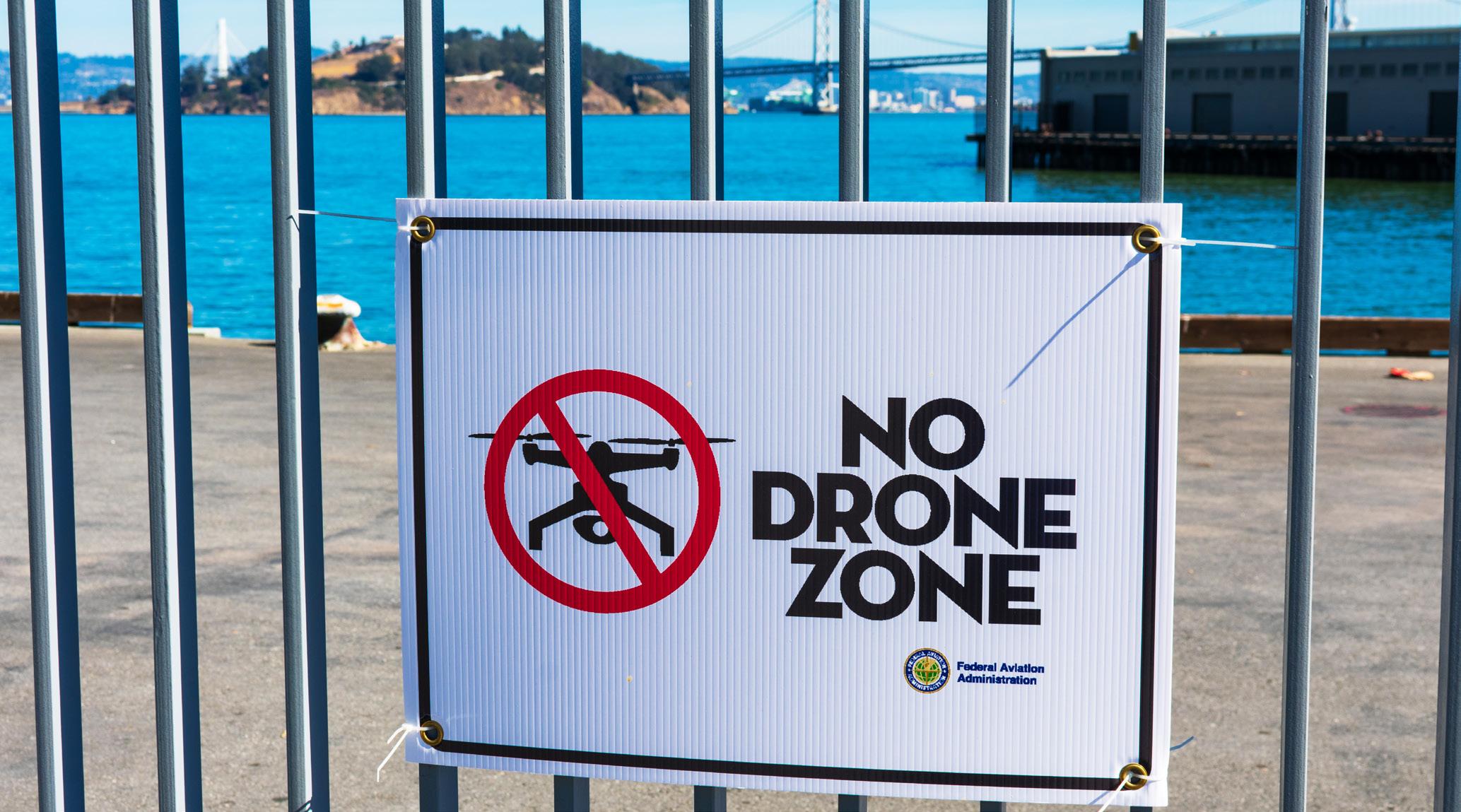
How to prevent unauthorised drones from entering controlled airspace? How to ensure passenger privacy in a world of ubiquitous sensors?
Hey Airlines received CAAC approval to fly UAV “air taxis” for tourism and sightseeing.
Notably, these approvals came after the companies already obtained technical certification (type, production, and airworthiness), meaning regulators first ensured the aircraft met safety specs before allowing them to carry people. China is also rolling out “low-altitude economy” policies across cities to promote drone deliveries and eVTOL services, effectively treating them as part of the national industrial strategy.
Despite all the progress, major regulatory challenges remain. Authorities must define how autonomous flights will share airspace with conventional aircraft. Concepts like UAS Traffic Management (UTM) or Unmanned Aerial Systems (NAS) need to scale up to thousands of daily flights in cities. Existing air traffic control (ATC) systems were not designed for autonomous corridors, and managing mixed operations is “difficult,” to use Stockwell’s word.
Questions of liability, privacy, and security also loom large. For example, who is at fault if an AI pilot errs? How to prevent unauthorised drones from entering controlled airspace? How to ensure passenger
privacy in a world of ubiquitous sensors?
Regulators will need to address these with new laws and standards. As Irby and Bubb warn, easing the public’s deep concern over safety will require not only solid rules but years of proven reliability, especially given high-profile failures in related technologies like self-driving cars.
Autonomous flight pushes the boundaries of sensors, computation, connectivity, and navigation. Every potential collision must be avoided, and this requires “detect-andavoid” systems that work even in crowded, complex environments (downtown Manhattan or busy urban canyons).
Building those systems is non-trivial. Current machine-learning autonomy demands tremendous onboard computing power, which in turn adds weight and energy consumption—a major trade-off for aircraft.
Advanced inertial navigation and sensor fusion (radar, lidar, computer vision) will be needed to maintain precision even when GPS signals fade or communications lag. In short, true machine-learning and autonomy are very complex areas that are fundamen-

tally constrained by aircraft size, weight, and power considerations.
Urban air taxis will fly low and fast, often below tall buildings, so reliable networks are vital. Luckily, work is already underway, and NASA recently tested 5G cellular links between a research aircraft and ground stations, finding that 5G can “manage a lot of data at once” and handle low-latency demands for air taxi operations.
In fact, NASA engineers suggest that existing 5G networks might meet roughly 80% of aviation comms needs, with only modest upgrades needed. This kind of leveraging of commercial telecom infrastructure could save billions versus building a bespoke network. Nevertheless, operators will need redundancy to avoid single points of failure.
Autonomous aircraft will rely on digital command links and onboard computers for essential functions. Like any connected system, they could be vulnerable to hacking, spoofing, or software bugs.
A high-impact event could be catastrophic in a crowded sky. The recent Microsoft/ CrowdStrike blackout is a reminder that even the biggest tech systems can briefly fail. A robust aviation-grade cyber defence strategy, covering navigation data, command-and-control channels, and cloud services, will be mandatory.
Testing and validation pose a final barrier. Unlike self-driving cars that can pull over safely after a glitch, an aeroplane cannot just land on the shoulder. Any flight test of an autonomous aircraft carries real risk. As Stockwell notes, gaining access to controlled airspace for test flights and winning acceptance for occasional test failures is critical to progress.
Governments may need to sanction special test corridors or simulation environments where new systems can be trialled extensively. Synthetic testing will also play a major role, but ultimately, real flight hours will be required to certify safety.
Public perception and trust
Recent crashes (of drones, experimental
aircraft, or even incidents involving partial autonomy like Tesla’s autopilot) feed into a deep-seated fear that machines might “take off and not return” reliably. As aviation historian Bubb points out, the bar for safety will be extraordinarily high. Given “the deep concern the public has about aviation safety,” even minor setbacks could slow adoption. Convincing lay passengers to board a pilotless jet could take a generation of proven flight hours and transparency about safety cases.
On the other hand, Honeywell’s 2024 poll found that a remarkable 98% of frequent flyers would be willing to take an air taxi, and 80% said they would fly more if a convenient eVTOL service were available to the airport. Younger demographics and frequent business travellers expressed even higher interest. These numbers suggest that, if carriers can ensure safety and reliability, the market appetite may be strong, especially if air taxis can deliver on speed and convenience. Public acceptance will likely emerge in phases. Success stories in cargo and commuter drones might build trust before passenger service is phased in. Outreach campaigns, transparent safety reporting, and perhaps gradual steps will all help assuage public fear.
Enabling autonomous air mobility will require significant infrastructure, digital, and safety-related upgrades, which won’t be fulfilled without a massive, long-range investment. Aerospace companies are used to decade-long development cycles and multibillion-dollar budgets, but autonomy raises the stakes even higher.
Early adopter countries, those willing to invest now in vertiports, test corridors, and regulatory frameworks, stand to reap future economic benefits by hosting this new industry. Countries lagging in infrastructure risk watching domestic companies struggle overseas. In that sense, the flight path to autonomy is not just a technical one but a strategic national project as well. In the race to autonomous flight, foresight will matter as much as flight control.
Urban
air taxis will fly low and fast, often below tall buildings, so reliable networks are vital. Luckily, work is already underway, and NASA recently tested 5G cellular links between a research aircraft and ground stations, finding
that 5G can “manage a lot of data at once”
Bupa Arabia

GBO Correspondent
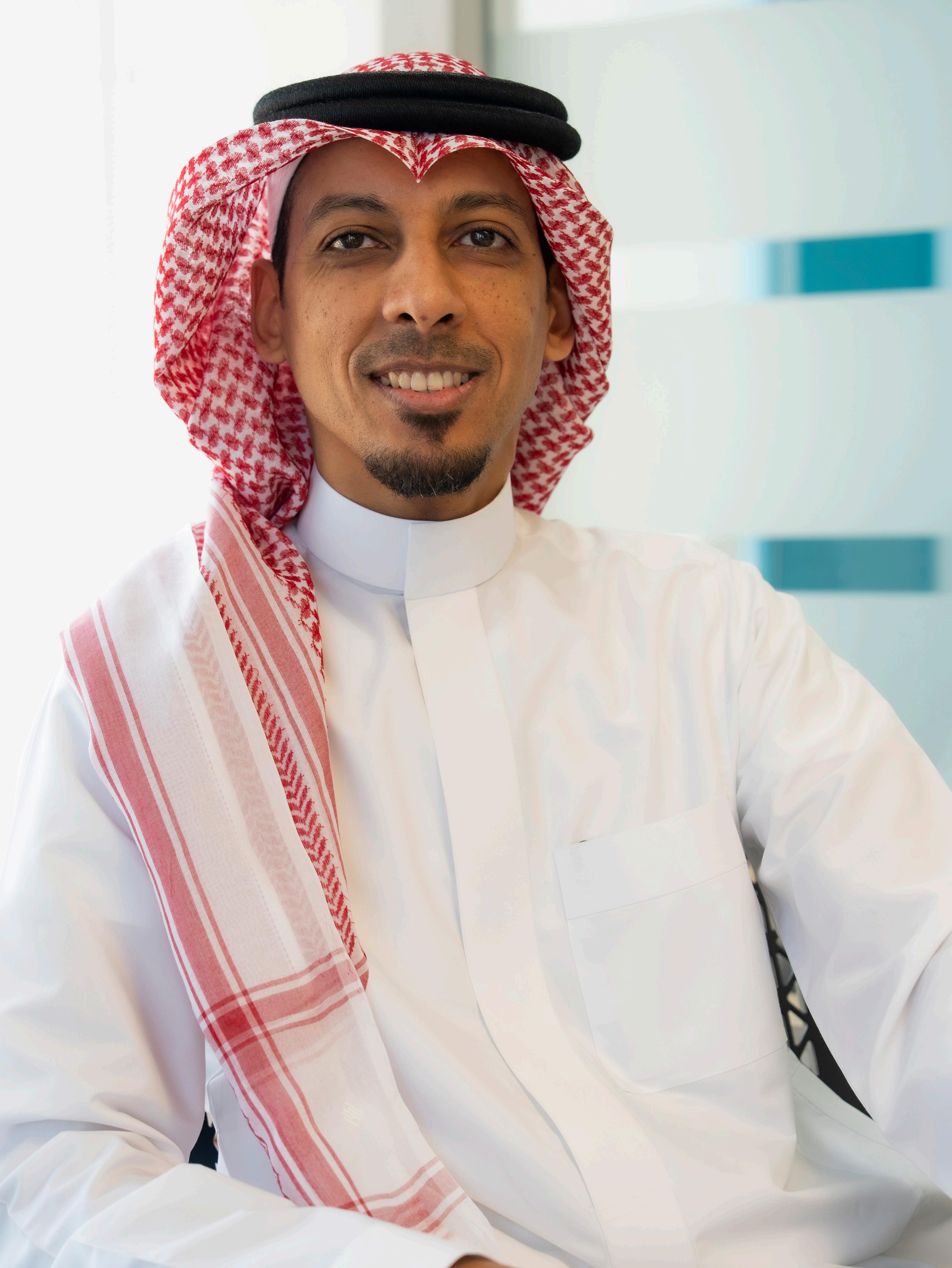
Bupa Arabia has positioned itself not just as a health insurer, but as a strategic enabler of SME success
Established in October 1997, Saudi Arabiabased Bupa Arabia, a healthcare insurance company (an associate business of Bupa Group), has created its own international reach that extends across multiple business operations, practices, and resources. The company, which was initially established through a partnership between Bupa Global International and Nazer Group, emerged with the key focus to provide high-quality health insurance services with competitive prices, while ensuring a distinctive experience for customers.
As a subsidiary of the global Bupa Group, the business draws upon international expertise while maintaining a profound understanding of local healthcare requirements and regulations This approach helps Bupa Arabia to offer comprehensive healthcare insurance solutions tailored to the unique needs of the Kingdom's market.
Bupa Arabia’s SME Sales team, part of the Growth Department, was recently awarded the title of “Best Medical Insurance Sales Team – Saudi Arabia 2025” by Global Business Outlook (GBO), and is transforming the Kingdom's SME healthcare landscape through strategic innovation, digital transformation, and a strong focus on people-centric excellence.
Building new operating model Small and medium enterprises (SMEs) are the backbone of the
Bupa Arabia
Saudi economy, contributing significantly to innovation, job creation, and the national transformation under the socioeconomic diversification agenda named “Vision 2030.” These businesses represent the entrepreneurial spirit, which in turn is helping the Kingdom diversify away from its heavy reliance on the energy trade-based revenue generation model, apart from employing millions of Saudi citizens and creating opportunities across diverse sectors, from technology, manufacturing, retail, to professional services.
As the needs of SMEs evolve in an increasingly complex business environment, so does the demand for healthcare solutions that go beyond traditional insurance solutions that provide trust, transparency, and comprehensive support through every stage of an employee's wellbeing journey.
Modern SMEs require partners who understand their unique challenges: managing costs while attracting talent, ensuring business continuity while caring for employees, and navigating regulatory requirements while maintaining competitive advantage.
Understanding the reality, Bupa Arabia, the Kingdom's leading health insurer with decades of experience serving businesses of all sizes, has been reshaping its SME proposition through a comprehensive multi-year transformation journey. This journey is about representing a fundamental reimagining of how healthcare insurance can empower businesses to succeed.
Bupa Arabia has taken an integrated four-pillar model: placing SME needs at the heart of every decision and process, streamlining processes to deliver efficiency and reliability, giving priority to technology-driven solutions that simplify and accelerate routine operational activities, and investing aggressively in human resources by building teams with the skills to excel in a transformed digital-dominated professional environment.
This roadmap has consolidated Bupa Arabia's reputation as a trusted partner for thousands of SMEs across the Kingdom, delivering not just health coverage, but a robust, holistic ecosystem designed to enable entrepreneurs and their teams to thrive in an era of rapid change and unprecedented opportunity. The company has created a structured, multi-phase programme, tailored to create a high-performing, scalable, and sustainable SME operating model that can adapt to market dynamics while maintaining consistency and quality across all touchpoints.
The SME sales department implements a unified operating model with a clearly defined structure covering SME Direct

Every touchpoint was examined through the customer lens, with pain points identified and resolved. The result is a customer experience that feels effortless, with reduced waiting times, clearer communication, and more predictable outcomes
Sales (Central, Eastern, and Western), SME Broker Sales, SME Subregional Sales, SME Recovery Sales at a Kingdom-wide level, and SME Management & Support encompassing Development, Operations, Customer Centricity, and Strategy & Projects. This enhanced structure ensures absolute role clarity, promotes cross-functional collaboration, and guarantees consistent delivery across all customer-facing channels, whether direct or through broker partnerships.
In an exclusive interaction with GBO, Managing Director of SME Sales, Feras AlTamimi said, “With strengthened governance mechanisms embedded throughout the organisation, we introduced rigorous monthly performance reviews, enhanced funnel

and portfolio dashboards providing real-time visibility, standardised reporting frameworks that ensure consistency, and clear escalation mechanisms for rapid issue resolution. This governance structure ensures organisational agility, complete transparency across all levels, and disciplined execution aligned with strategic objectives. Decision-making is now informed by comprehensive data analytics, enabling proactive rather than reactive management.”
Echoing similar views, Director of SME Direct Sales, Central Region, Raed Al-Zahrani stated that the complete SME lifecycle from initial prospecting and quotation through onboarding, ongoing servicing, and renewal was fundamentally redesigned to eliminate friction points, simplify handovers between teams, and deliver a seamless, intuitive customer journey.
“Every touchpoint was examined through the customer lens, with pain points identified and resolved. The result
is a customer experience that feels effortless, with reduced waiting times, clearer communication, and more predictable outcomes. This journey redesign represents hundreds of hours of process mapping, customer feedback integration, and iterative refinement," he noted.
To understand SME owners and their needs better, Bupa Arabia conducted more than 1000 interviews with decision makers from different enterprises in the Kingdom, which helped the venture to design a health insurance that suits SME needs. Known as “Bupa Munsha’at Health Insurance,” the programme comes in three categories: Essential, Classic, and Premium.
Essential provides health insurance at a competitive price that fits SMEs' operational budgets. In the case of “Classic,” the network options increase further, as per the beneficiaries’ needs, and “Premium” comes with exceptional benefits to fit the customers' expectations.
While all these programmes have common benefits like maximum coverage level (varies as per the plans) for insured persons for the term of the policy (including the sub-limit) at an approved network of hospitals and clinics, coverage of hospitalisation costs, same-day cases (including level of accommodation within the network and companion charges when medically necessary), out-patient department costs, doctor consultations, laboratory tests, scans, medications, and other treatments like follow-up visits and referrals, Classic also covers selective (non-emergency) treatment out of its Saudi-based network, as per accepted prices, that have been approved for the same level of network coverage mandated within the Kingdom.
While Premium also possesses the same feature, it has an additional benefit: emergency medical evacuation in cooperation with “International SOS Assistance” when the illness occurs outside Saudi Arabia only.
Digital automation transforming SME sales
To accelerate transformation and dramatically reduce manual complexity that historically slowed down sales cycles and introduced errors, Bupa Arabia has developed SADiR, a pioneering digital platform that automates the entire SME New Business (NB) and Renewal (RNW) journeys from end to end.
SADiR represents a quantum leap in how Bupa Arabia serves SME customers, replacing manual, paper-based processes with intelligent, automated workflows that enhance speed, accuracy, and customer satisfaction simultaneously.
Acting Director of SME Management and Support, Tariq Jumah said, “SADiR was launched through a carefully structured pilot developed in close collaboration with SME and Digital Sales teams. This pilot-first approach enabled iterative learning, rapid feedback integration, and confidencebuilding before full-scale deployment, ensuring the platform truly meets user needs.”
SADiR works on five basic principles: System Eligibility Assessment (defining clear use cases and system boundaries for optimal performance), User Adoption Programmes (comprehensive training ensuring frontline teams are confident and capable), Funnel Accuracy Enhancement (data quality initiatives to improve forecasting and pipeline management),
SADiR was launched through a carefully structured pilot developed in close collaboration with SME and Digital Sales teams
Turnaround Time Optimisation (process refinement to accelerate every stage of the customer journey), and Stakeholder Satisfaction (measuring and improving experience for customers, brokers, and internal teams).
SADiR's transformative impact on the Saudi SME sector has been a profound one. On the policy quotation and issuance front, the platform has reduced turnaround times from days to hours, enabling SME sales teams to respond to market opportunities with unprecedented speed.
Automated checks and validations are eliminating human error and ensuring compliance with regulatory requirements at every step. SADiR is also providing entrepreneurs with real-time insights into pipeline health (condition and effectiveness of an SME's sales pipeline), conversion rates, and bottlenecks, while creating a single source of truth for customer data and interaction history.
Building capability
Behind every sophisticated system and streamlined process lies a strong human foundation. Technology and process improvements can only deliver their full potential when supported by skilled, motivated, and aligned people.
Recognising this fundamental truth, Bupa Arabia has invested heavily in strengthening its SME workforce through structured capability-building programmes, leadership alignment initiatives, and fostering a culture centred on collaboration, accountability, and ownership.
The newly structured “SME Management & Support” function now serves as the strategic anchor for the entire SME business, providing critical enablement across four interconnected domains: development, operations, customer centricity, strategy, and projects. This integrated enablement model ensures that sales professionals have everything they need, be it tools, insights, processes, or support, to excel in serving customers and achieving business objectives.
Acting Director of SME Management and Support, Tariq Jumah, said, “Through continuous training, awareness sessions, and engagement initiatives, we are cultivating a culture where every SME employee deeply understands the strategy, aligns with the operating model, and actively contributes to customer excellence. This culture

Through continuous training, awareness sessions, and engagement initiatives, we are cultivating a culture where every SME employee deeply understands the strategy, aligns with the operating model, and actively contributes to customer excellence transformation is not a programme with an end date; it's an ongoing commitment to growing our people as we grow our business.”
The “SME Management & Support” is driving performance management, governance frameworks, forecasting accuracy, budget discipline, and continuous capability enhancement through targeted training programmes. On the operational front, the solution delivers comprehensive sales operations support, apart from maintaining rigorous funnel hygiene, managing portfolio health, and ensuring operational efficiency across all sales channels.
When it comes to customer centricity, “SME Management & Support” champions quality standards, integrating voice of customer insights and embedding service excellence principles throughout the organisation.
Also, the solution is helping SMEs to lead long-term strategic planning, manage transformation initiatives, and provide execution governance to ensure strategic objectives translate into operational reality.
Bupa Arabia's comprehensive SME transformation has generated significant, measurable business impact across multiple dimensions, from portfolio growth and customer satisfaction to operational efficiency and team capability. These achievements reflect the maturity of a disciplined, customerfocused operating model that consistently delivers value.
SMEs are now witnessing substantial onboarding expansion in their customer base and premium volume, driven by improved value proposition and market presence. Enhanced customer loyalty and renewal rates also reflect superior service quality and relationship strength.
Insurance
Bupa Arabia
Crucial financial activities like pipeline visibility and revenue predictability are registering dramatic improvement through better data and governance, and digital automation and process optimisation have made quotation and policy issuance significantly hassle-free and faster for the Kingdom's SME sector.
Director of SME Direct Sales, Eastern Region, Hani Al-Harbi said, “Beyond quantitative metrics, the transformation has created powerful qualitative improvements that position us for sustained success. There is now strong alignment between sales, development, operations, and customer-centricity teams, with all functions working in concert rather than in isolation. Cross-functional collaboration has become the norm rather than the exception, breaking down historical silos and creating a unified team focused on customer outcomes.”
Broker partners are now reporting higher satisfaction with streamlined processes, faster response times, clearer communication, and more sophisticated digital tools, solutions that have revitalised the broker channel as a whole. Bupa Arabia's partners are viewing the company as their preferred carrier for SME business.
“SME customers experience a dramatically improved journey from first inquiry through renewal, with less paperwork, faster decisions, more transparent communication, and easier access to support. Customer satisfaction scores have risen consistently, and complaint volumes have decreased, reflecting the tangible impact of journey redesign and digital enablement on everyday customer experiences. These results collectively demonstrate a mature, disciplined, and genuinely customerfocused SME operating model that delivers value for all stakeholders, customers, brokers, employees, and shareholders alike. The foundation has been built for sustainable growth and continued market leadership,” Director of SME Broker Sales, Razan Ajzaji noted.
The road to 2026 and beyond Bupa Arabia's SME transformation journey is far from complete, as the venture recognises that maintaining market leadership requires continuous evolution, innovation, and improvement. The next phase of Bupa Arabia's SME innovation will focus
on scaling what works, apart from optimising performance and deepening impact across the entire ecosystem, as the Kingdom accelerates its socio-economic diversification efforts under “Vision 2030.”
Director of SME Direct Sales, Central Region, Raed Al-Zahrani, said, “Building on the successful SADiR pilot, the digital roadmap includes scaling the platform across additional customer segments and use cases, enhancing automation capabilities with more sophisticated validations and workflow intelligence, integrating more deeply with CRM systems and analytics platforms for unified data views, and significantly improving digital touchpoints for sales teams, customers, and broker partners. The vision is establishing a fully digital-first SME experience that maintains the human touch where it matters most while leveraging technology for speed, accuracy, and convenience.” Through the company's help, SMEs are able to continuously refine Bluebook standard operating procedures to reflect evolving best industrial practices, apart from strengthening risk management and quality assurance frameworks with proactive monitoring and controls. All these elements are helping the Kingdom-based businesses to fully align with evolving regulatory standards put forward by SAMA (Saudi Arabian Monetary Authority) and other government bodies, apart from embedding quality metrics


The journey continues with clear strategic priorities, committed leadership, capable teams, and an unwavering focus on customer success. We are keeping pace with market evolution and actively leading the transformation of SME healthcare, setting new standards
throughout the value chain. Quality is not an endpoint but a continuous journey of improvement, and governance frameworks will evolve to support both growth and control simultaneously.
Managing Director of SME Sales, Feras AlTamimi, said, “The progress achieved through our transformation journey is only the beginning of what we will accomplish together. With strong values that guide our decisions, a unified operating model that aligns our efforts, disciplined governance that ensures consistency, bold digital transformation that accelerates our capabilities, and empowered teams who bring their best every day, we are actively shaping the future of SME health insurance in the Kingdom. Our focus remains unwavering: delivering excellence in everything we do, strengthening partnerships with brokers and customers alike, and enabling SMEs across Saudi Arabia to thrive by providing the healthcare security and support their employees deserve. We are not just an insurance provider, but also a strategic partner committed to the success and well-being of the businesses building Saudi Arabia's future.”
As Saudi Arabia advances toward “Vision 2030,” SMEs will continue to play an increasingly
vital role in economic diversification, innovation, and job creation. These businesses need partners who understand their aspirations, challenges, and the critical importance of protecting their greatest asset, their people.
Bupa Arabia has positioned itself not just as a health insurer, but as a strategic enabler of SME success. Through years of disciplined transformation across customer experience, operations, digital capabilities, and people development, the company has built a robust platform for sustainable growth and market leadership.
“The journey continues with clear strategic priorities, committed leadership, capable teams, and an unwavering focus on customer success. We are keeping pace with market evolution and actively leading the transformation of SME healthcare, setting new standards for what insurance partnerships can and should deliver. For thousands of SMEs across the Kingdom, we are more than a health insurer. We are the trusted partner enabling businesses to protect their people, attract talent, ensure continuity, and build the future with confidence. Together, we are leading the future of SME health insurance in Saudi Arabia,” Chief Growth Officer Atef M Mufti concluded.
Industry
Port Talbot Analysis
GBO Correspondent
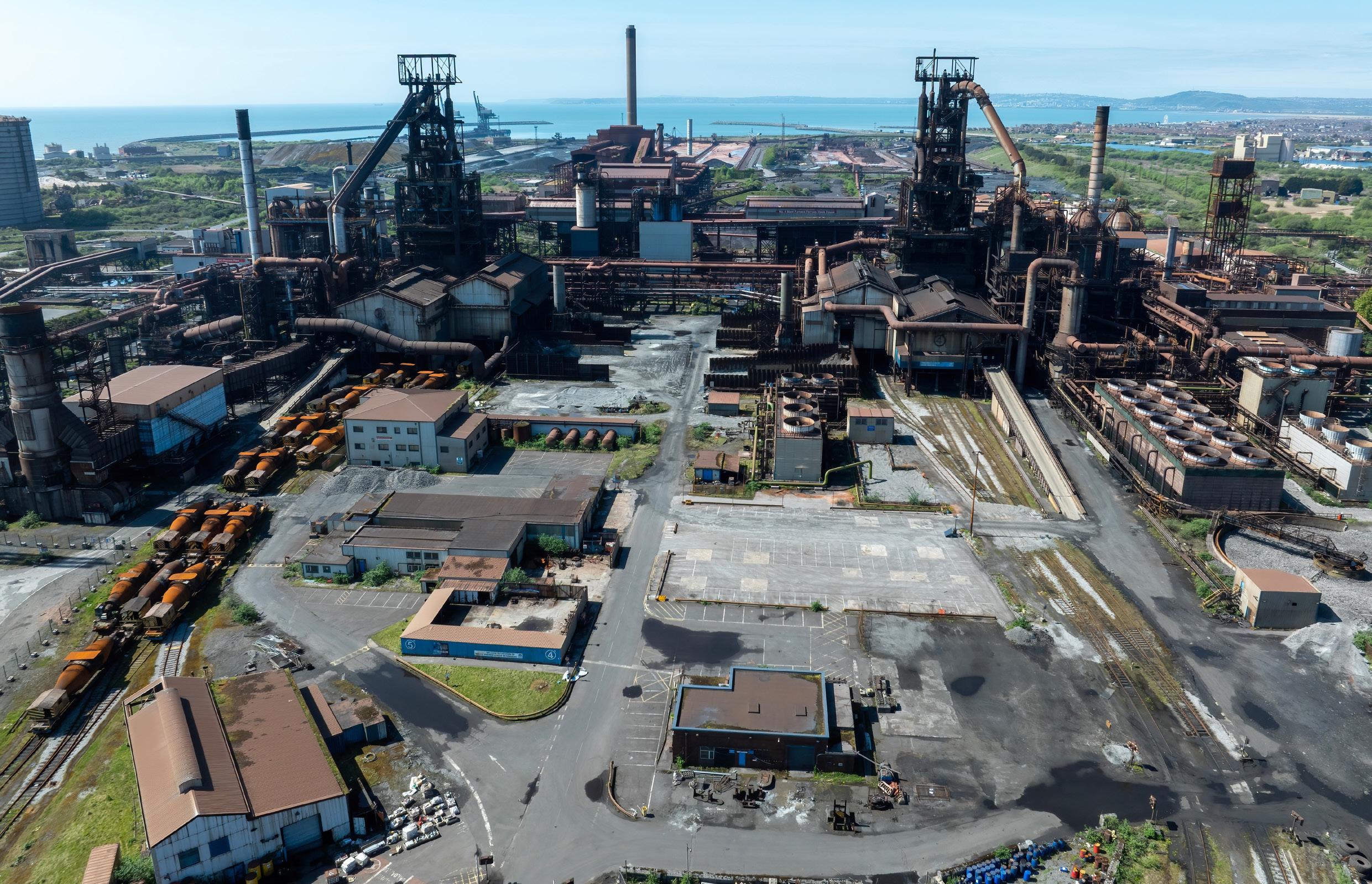
The new electric arc furnace at Port Talbot will not be ready until late 2027
On September 30, 2024, a heavy silence fell over Port Talbot. For more than a century, the deep rumble of the steelworks had been the heartbeat of this South Wales town. Steam vented from the towers, and the sky often glowed with the work of the blast furnaces. That afternoon, “Blast Furnace Four” was tapped for the last time. The iron stopped flowing. The heat faded.
One year later, the skyline looks different. The towers still stand, but they are cold and await demolition. The silence is not just industrial. It feels like a pause in the town’s history. The transition to “Green Steel” was supposed to be a new beginning Politicians promised it would bring clean technology and highskilled jobs. They said it was vital for the climate. But for the people living here, the last twelve months have not felt like a new beginning. They have felt like an ending.
Hard numbers drove the closure. Tata Steel reported daily losses of around one million pounds. They blamed soaring energy costs and fierce competition from cheaper Chinese imports. The plant was also the single largest carbon emitter in the United Kingdom. It was responsible for 1.5% of the country’s total emissions.
Faced with a choice between shutting down completely or changing, the government stepped in. They committed £500 million to help switch to cleaner electric arc furnaces. This technology promises to cut emissions by 90%. That is a massive win for the environment. Yet the cost of this victory is being paid by the local working class.
The 2024 statistics reveal a community in crisis. Tata Steel announced the elimination of 2,800 jobs. This represents roughly 10% of the total employment in Port Talbot, a town of just 35,000 people. The plant once employed 4,000 people directly. Today, only half that workforce remains.
Analysis \ United Kingdom
The ripple effects extend far beyond the factory gates. Estimates suggest as many as 9,500 additional jobs could be affected throughout the supply chain. These are the scaffolders, cleaners, and engineers who kept the giant site running. For a community that has built its identity around steelmaking for over a century, this is not just an economic blow. It is an existential crisis.
The government and Tata Steel tried to soften the landing. A "Transition Board" was set up to help. They funded 3,667 training courses and qualifications for displaced workers. Grants were provided to 37 supply chain businesses, which protected nearly 200 jobs. Employability services directly supported 332 people into new positions. Around 600 employees who faced compulsory redundancy were offered other roles within the business.
Despite these efforts, the reality on the ground is tough. Many former steelworkers have had to pivot to entirely different careers. Some have used their redundancy money
Estimates suggest as many as 9,500 additional jobs could be affected throughout the supply chain. These are the scaffolders, cleaners, and engineers who kept the giant site running 9,500
to establish pizza businesses. Others have retrained to become prison officers. These jobs often pay significantly less than their previous skilled roles in the heavy industry. The uncertainty of the service sector has replaced the pride of making steel.
The handling of Port Talbot stands in stark contrast to
Port Talbot
other industrial closures. In September 2024, the Ratcliffe-on-Soar power station also closed. It was the last coal-fired power station in Great Britain. However, that transition is viewed as a success. Unions were involved five years in advance. Workers were given flexible release dates and fully funded training before their jobs ended. There were no compulsory redundancies. In Port Talbot, the process felt chaotic and rushed. Workers felt excluded from the decisions that sealed their fate. This failure to manage a “Just Transition” has left deep scars.
The anger in Port Talbot has spilt over into national politics. The closure has become a weapon for those who oppose the “Net Zero” agenda. The Reform Party and its leader, Nigel Farage, have seized on the discontent. Farage visited the town and promised to reopen the blast furnaces. Industry experts say this is technically impossible, but the message resonated.
In the 2024 General Election, Reform UK surged to second place in the local Aberafan Maesteg constituency. They secured 20.9% of the vote, pushing the Conservatives into third. This is a historic shift in a traditional Labour stronghold. Reform argues that “Net Zero” is an expensive illusion that kills jobs and raises bills. They have vowed to abolish netzero policies in local councils under their control.
This rhetoric is working. Trade unions report that their members are increasingly turning toward Reform. Workers feel abandoned by the mainstream parties. They see a political class in London that prioritises carbon targets over industrial communities.
The closure also exposes a major strategic weakness for the United Kingdom. It is now the only major economy in
the G20 that cannot make “virgin” steel from scratch. Electric arc furnaces rely on recycled scrap metal. This is fine for construction beams, but it is hard to use for high-quality products like car bodies or military equipment. These require the purity of virgin steel made from iron ore. By closing the blast furnaces, the European country has become dependent on imports. The United Kingdom now faces the compulsion of buying raw steel slabs from other countries to keep its rolling mills running. This reliance on foreign supply chains is risky in an unstable world. It also raises the issue of “carbon leakage.”
The Conversation UK, Editor, Jo Adetunji, said, “We have stopped the smoke rising over Port Talbot. But if we import steel from countries like India or China, we have not helped the planet. We have just moved the pollution elsewhere. In a bitter irony, Tata Steel is commissioning new blast furnaces in India at the same time it is closing them in Wales.”
“The UK steel industry faces unique hurdles. Our industrial electricity prices are the highest in Europe. This makes it very hard to compete. Producing steel here costs more than in France or Germany. Research shows that we need lower energy costs and a Carbon Border Adjustment Mechanism (CBAM) to level the playing field. This mechanism would tax dirty steel imports, protecting our domestic producers. The government plans to introduce this by 2027, but that may be too late for the workers who have already lost their jobs,” she noted.
There is also a dangerous gap in the timeline. The new electric arc furnace at Port Talbot will not be ready until late 2027. This creates a three-year “valley of death” where no steel is made on site. The skilled workforce may disperse during this time. When the new plant finally opens, the people who need to run it might be gone. Industry
Analysis \ United Kingdom

The Keir Starmer government has recognised the urgency of the situation. It has announced plans to invest £2.5 billion into the steel industry. A new “Steel Strategy” is scheduled to be published in the spring of 2025. Additionally, the “National Wealth Fund” will provide £5.8 billion for green projects, including green steel and hydrogen. These are positive steps. But for the thousands of families in Port Talbot, the help feels slow to arrive.
The transition to “Net Zero” cannot just be a technical exercise. It cannot be solved only with capital grants and carbon spreadsheets. It must be a social contract. When communities feel they are being sacrificed for an abstract environmental goal, trust evaporates.
The public supports climate action in principle. They lose faith when they see the costs burdening workers. The difference between the orderly closure at Ratcliffe-on-
Soar and the crisis at Port Talbot proves that management matters. Workers need genuine pathways to quality jobs, not just a redundancy cheque.
The hope is that the site will rise again as a leader in green technology. But the silence of the old furnaces serves as a warning. If the path to “Net Zero” destroys the communities it is meant to save, the political consensus for climate action will crumble. The Keir Starmer administration must ensure that the "green revolution" does not leave United Kingdom's industrial towns behind.
Industry CEO
The CEO's entire career has been built on the collaborative, inclusive 'we'
The CEOs who frame their apologies using the singular pronoun, for example, "I apologise," experience significantly smaller stock price drops. In some cases, this acceptance of personal responsibility can even be correlated with modest stock gains in the immediate aftermath. Conversely, CEOs who employ the collective pronoun, GBO Correspondent

In the landscape of modern corporate governance, a crisis is not a matter of "if" but "when." A product recall, an ethical lapse, or a data breach can erase billions in market value within hours. While the event itself is often uncontrollable, the leadership response is not. New research demonstrates that the financial outcome of a crisis, measured in stock performance, is critically dependent on the linguistic choices made in the public apology.
The thesis, supported by research from
academics including Prachi Gala, is that a single word choice by the Chief Executive Officer (CEO) functions as a powerful, quantifiable financial signal to investors.

for example, "we apologise," are associated with the very stock sell-offs they are attempting to prevent.
This finding reframes the act of a corporate apology. It is not a "soft" function of public relations or a matter of rhetorical style. Instead, it is a hard, financially material action. The linguistic framing of the apology is a direct signal to the market, and investors, who are the primary audience for this type of financial research, have learnt to decode it.
The market's positive reception to "I" is based
on its perception as a direct signal of personal accountability. When a CEO uses the singular pronoun, they are communicating strong, decisive leadership.
They are, in effect, telling the market that the problem has been identified, that a single, high-ranking individual is taking ownership, and that the chain of command is intact. This perception of control and accountability is precisely what investors seek in a moment of high uncertainty.
Conversely, the use of "we" is perceived by
Industry CEO

the same investors as evasive. This collective pronoun is interpreted as a deliberate attempt to spread, or diffuse, responsibility so thinly that no single individual can be held accountable.
This linguistic choice triggers a cascade of negative assumptions. Assumptions that the leadership is weak, that the CEO is unaware of where the fault truly lies, or, perhaps most damagingly, that the CEO is aware and is actively concealing the single point of failure.
This leads to what can be termed an "evasion penalty." The negative stock performance following a "we" apology is not merely a failure to create a positive outcome; it is an active financial punishment for the perceived evasion. Investors penalise the "we" apology because it suggests a lack of control and a high risk of future, unmanaged failures.
To assert that a single pronoun can impact a firm's stock price requires a rigorous, quantitative methodology. This claim rests on the

Source: Nation Thailand
"event study method," a standard and widely accepted tool in financial economics used to measure the impact of a specific event on the value of a firm.
This method allows analysts to isolate the financial impact of a specific announcement, such as a crisis apology, from the market's general fluctuations. The process, in simple terms, involves three steps.
An "estimation window" (for example, 200 days before the event) is used to observe the stock's normal performance relative to the market, establishing an expected return. Analysts define a short "event window" (for example, the day of the apology and the few days surrounding it) to measure the stock's actual performance.
The core output is the Cumulative Abnormal Return (CAR), which is the difference between the stock's expected performance (from the baseline) and its actual performance during the event window.
This methodology is specifically designed to demonstrate the short-term impact of crises, such as product-harm incidents, on a firm's financial value. It is the tool that allows analysts to move from correlation to a strong inference of causation, isolating the market's reaction to the event itself.
Under "diffusion of responsibility," individuals in a group feel less personal accountability for taking action (or for a failure) because the presence of others dilutes their sense of responsibility. It is the "someone else will handle it" effect.
Research highlights that diffusion of responsibility is most common in "hierarchical organisations" and "group decision-making processes," which perfectly describes the modern corporation.
The very mechanisms of corporate efficiency, such as "division of labour" and "collective action", create this diffusion. They allow individuals to shift their attention from the "morality of what they are doing to the operational details" of their specific job,

creating a psychological schism between causal influence and moral accountability.
When a CEO, the highest-status individual at the apex of this hierarchical organisation, issues an apology beginning with "we," they are doing far more than making a grammatical choice. They are linguistically triggering the market's deepest fears about corporate structures.
The "we" apology is a verbal confirmation of the diffusion of responsibility. It tells stakeholders that the organisational structure itself (the "we") is to blame, and that this same structure is now being used to obscure accountability. It creates profound ambiguity and leads to a situation often referred to by researchers as responsibility gap. A harm has occurred, but there is no identifiable, culpable agent.
Investors, who abhor ambiguity and unmanaged risk, interpret this "we" not as collective remorse but as a definitive statement that no one is in control and no one will be held personally accountable. This signals a systemic, unmanaged, and potentially recurring risk, which is a clear signal to sell.
The 'I/We' contradiction
Prominent business thinkers, like Reid Hoffman, explicitly train leaders that "'I' vs 'We'
is a false choice. It's both," promoting a collaborative team-building concept of "I We." This "people-centric” approach is excellent for internal management, for sharing credit, and for building a cohesive team.
Furthermore, in a scandal, employees themselves may begin to create an "I vs We" separation to distance their personal identity from the corporate misconduct. This creates an internal environment where a "we" apology from the top feels hollow.
This creates a "trained (wrong) reflex." The CEO's entire career has been built on the collaborative, inclusive "we." Then, in the moment of crisis, this instinct is powerfully reinforced by the two departments they trust most, the legal and human resources departments.
Therefore, when a "preventable crisis” hits, the CEO's entire support system (legal, HR, and their own well-honed leadership instincts) will be screaming, "Say 'we'!" What Prachi Gala’s report provides is the financial and psychological evidence that this instinct, while logical and well-intentioned, is strategically catastrophic and financially damaging in this specific, external-facing context.
When a CEO, the higheststatus individual at the apex of this hierarchical organisation, issues an apology beginning with "we," they are doing far more than making a grammatical choice. They are linguistically triggering the market's deepest fears about corporate structures
Wataniya Insurance
Wataniya Insurance has remained steadfast in its commitment to delivering exceptional insurance solutions through a customer-first approach

Wataniya Insurance: Awardwinning service, rooted in trust
Wataniya Insurance was established in 2010 under the legacy of the Saudi National Insurance Company (SNIC), with roots dating back to 1975, to promote conventional insurance in the Kingdom as one of the leading organisations empowering humans in various walks of life.
Since then, the company has become a major player in the Kingdom's insurance sector, providing customised products and services to individual customers, corporates, industries, and SMEs (small and medium enterprises). Every milestone Wataniya Insurance achieves carries a story of dedication, purpose, and the people who make it possible—the company's customers and employees.
As a leading insurance provider in Saudi Arabia, Wataniya Insurance has remained steadfast in its commitment to delivering exceptional insurance solutions through a customer-first approach. Apart from rewriting the industry rulebook through its comprehensive insurance offerings and exceptional customer service, Wataniya is also redefining the standard for transparency (including zero hidden charges in its products) and innovation in the industry.
Due to these efforts, the venture has been honoured with the "Most Customer-Centric Insurance Company — Saudi Arabia — 2025" award by the Global Business Outlook (GBO). Winning this award for the second consecutive year is more than recognition; it reflects the journey the company has taken with its community.
"It reaffirms our promise to place our customers at the heart of every decision, every innovation, and every interaction. This achievement is not a coincidence; it is the result of the values that guide us, the trust that binds us, and the relentless commitment of every member of the Wataniya family toward serving our customers with care, understanding, and integrity. This recognition is not merely an external acknowledgement; it mirrors our internal culture and the philosophy that has shaped Wataniya for over five decades. Since our establishment, our mission has always been grounded in one core belief: that insurance is not about transactions, but about human connections," Wataniya Insurance told GBO.
Every policy Wataniya issues, every claim it handles, and every service it provides begins with one simple question: What does this mean for the customers?
This mindset has allowed Wataniya to grow and evolve with the people and communities it serves, ensuring that the company's offerings are not just products but personalised experiences that protect, empower, and support its customers' lives.
"Winning this award again validates that our approach is rooted in empathy, innovation, and trust, as it reflects the success of our continuous efforts to enhance customer satisfaction, whether through simplified processes, smarter digital tools, or more transparent communication," Wataniya continued.
Behind every award lies a story of teamwork, and the credit behind Wataniya's GBO Award win belongs to every employee at Wataniya. From the frontline representatives who greet the venture's customers every day, to the claims experts ensuring that support is delivered swiftly and fairly, to the technology teams building seamless digital solutions, each person has played a vital role
in shaping this success.
"Their daily dedication, professionalism, and empathy are what make Wataniya truly customer-centric. They are the reasons why customers not only trust us with their protection but also feel understood and valued at every step. Our employees are more than just part of the process; they are ambassadors of our promise. They turn our values into actions, ensuring that every touchpoint reflects our care and respect for those we serve. This award is therefore not just a win for the company; it is a win for every individual who carries the Wataniya spirit within them," Wataniya remarked.
Winning the GBO Award for the second time also perfectly aligns with the message behind the venture's recent campaign, "From You and Among You مكنم
."
This campaign captures the


essence of Wataniya's identity as a reflection of how deeply it is rooted in Saudi communities.
Talking more about the campaign, the company told the GBO, "We are not just an insurance company operating in the Kingdom; we are part of the fabric of society. We grow alongside our customers, share in their challenges, and celebrate their milestones. From supporting families during times of uncertainty to protecting businesses as they expand, we see ourselves as partners in every success story. This campaign and the award together highlight the same truth: Wataniya is not separate from the people—it is made of the people. Every achievement we celebrate is shared with them; every innovation we introduce begins with their needs in mind."
In today’s rapidly evolving world, being customer-centric also means staying ahead of change, be it socio-economic or in the industrial vertical in which a business operates. Wataniya too understands that the 21st-century customers’ expectations are all about a continuous search for simplicity, speed, and trust.
"To meet and exceed these expectations, we have invested heavily in digital transformation, ensuring that our services are accessible anytime and anywhere. From our intuitive online platforms to the integration of smart payment options like Amazon Pay, we continue to simplify the customer journey and make interactions more seamless. But innovation for us goes beyond technology; it’s
about reimagining experiences. It means creating products that adapt to customers’ evolving lifestyles, providing faster and more empathetic claims handling, and ensuring transparency in every step. It means empowering our customers with knowledge so they can make informed choices about their protection and future," Wataniya continued.
What truly makes Wataniya stand out is the insurance company's dedication to listening to customers and other stakeholders. Every piece of feedback it receives, whether positive or constructive, becomes a source of learning as the business believes that being customer-centric is not a destination, but an ongoing conversation.

"It’s about continuously evolving based on what our customers tell us they need. This dialogue shapes our services, strengthens our relationships, and helps us stay aligned with our promise to always be: From You and Among You," Wataniya noted.
The GBO Award is a significant recognition for Wataniya's operational excellence, but it is not the end of the journey. Instead, it serves as motivation for the company to continue pushing the boundaries to futureproof its products and services.
"It reminds us that excellence is not achieved once; it is earned every day through consistency, compassion, and creativity. We see this recognition as a call to action to keep asking
ourselves: how can we make our customers’ experiences even better tomorrow? It inspires us to explore new technologies, enhance our service delivery, and invest in training programmes that empower our employees to serve customers more effectively," Wataniya said, while informing that its journey ahead will focus on deepening personalisation, integrating data-driven insights, and, most importantly, continued effort to innovate across all touchpoints. The goal is simple yet profound, namely, to make every interaction with Wataniya feel reassuring, effortless, and human for customers.
"For us at Wataniya, customer centricity is not a slogan; it is a way of life. It defines how we think, act, and serve. It’s what guides us to go the extra mile,
to listen before we respond, and to build relationships that last. As we celebrate this award, we do so with pride, but also with humility. Because we know that the trust of our customers is something we must continue to earn every day, with every policy, and every interaction. At Wataniya, we remain committed to ensuring that our customers are not just at the centre of our services, but truly at the centre of our story. This recognition is a chapter we are proud of, but the story continues, written with the same care, integrity, and dedication that have always defined who we are," the company concluded.
The Egyptian cabinet has approved a request by the North African country's Ministry of Transport to contract between the Egyptian National Railways Authority (NAT) and Italian firm Arsenale for the provision, management, and operation of a high-end tourist sleeper train that will be supplied, operated and fully funded by the Italian venture.
The project is expected to attract international visitors while also boosting domestic tourism among Egyptians, without imposing any additional financial burden on the North African state.
Additionally, the Egyptian cabinet approved a request from the Ministry of Tourism and Antiquities to extend the free emergency entry visa for travellers arriving by air at Luxor and Aswan airports during the summer seasons of 2026 and 2027.
The extension will apply from May 2026 through the end of October under the same

regulations currently in place, following positive results reflected in tourist arrival indicators from several markets that favour cultural tourism, particularly in the two governorates. The North African country's cabinet also approved the extension of the free 96-hour transit visa for an additional year, ending in April 2027, under the same controls currently governing its application to Egyptian airlines.
The United Kingdom's house prices surprisingly fell by 0.4% in December to finish 2025 just 0.6% higher than 2024's figures. It was also the weakest annual growth since April 2024, stated monthly figures from mortgage lender Nationwide Building Society. The fall
was surprising because economists polled by Reuters had forecast a 0.1% monthly rise to leave prices 1.2% higher than in December 2024, slowing from a 1.8% annual price rise in November 2025.
While talking about the slowdown

The project is expected to attract international visitors while also boosting domestic tourism among Egyptians
in the year-on-year growth rate, Nationwide Chief Economist Robert Gardner stated that the trend partly reflected strong price gains in December 2024 as well as the December 2025 price fall, and that the number of mortgages approved remained similar to pre-COVID levels.
"With price growth well below the rate of earnings growth and a steady decline in mortgage rates, affordability constraints eased somewhat, helping to underpin buyer demand. Nationwide expected annual house price growth of 2-4% in 2026," he added.
The average price in Q4 2024 was £273,077 ($367,561), but ranged widely from £168,317 in northern England to £529,372 in London.
According to Oman Electricity Transmission Company (OETC), renewable energy accounted for 9.46% of electricity transmitted by Oman’s national grid in 2025, marking a significant milestone in the Sultanate’s energy transition, apart from placing the Gulf country on a trajectory that will require renewable capacity to more than triple to meet the 30% target by 2030.
Grid-connected renewable sources generated around 4.26 terawatt-hours (TWh) of electricity during 2025. Reaffirming its role in enabling the national energy transition, OETC is now strengthening the integration of clean and renewable energy into the Sultanate's grid to support growth
ambitions, innovation and long-term sustainability, while reinforcing national objectives to expand renewable power flows across the nation’s extensive transmission network.
Renewable electricity currently supplied to the grid comes from four projects: Dhofar Wind I (50 MW), Ibri II Solar (500 MW), Manah I Solar (500 MW) and Manah II Solar (500 MW). Oman also has a substantial pipeline of solar and wind projects under development.
This pipeline will lift total renewable capacity to approximately 8.8 GW by around 2030, aligning with the target of renewables accounting for around 30% of total power generation capacity by then.

In 2025, Norway ranked first among European countries for electric vehicle adoption. Tesla drove the surge in sales as the Nordic nation strengthens its position in phasing out petrol and diesel-powered vehicles.
The development contrasts with the rest of Europe, where weak demand for EVs prompted the European Union in December 2025 to reverse its planned 2035 ban on internal combustion engine cars.
Driven by tax incentives, 95.9% of all new cars registered in Norway in 2025 were electric vehicles, and that number reached almost 98% in December. The annual figure was up from 88.9% in 2024, Norwegian Road Federation (OFV) data revealed. A record 179,549 new cars were registered in Norway during the year, a 40% increase from 2024.
Talking about Tesla, the Elon Muskled automaker was Norway's top-selling car brand for a fifth consecutive year, with a 19.1% market share, followed by Volkswagen at 13.3% of registrations and Volvo Cars at 7.8%. Tesla sold 27,621 cars in Norway in 2025, more than any other automaker has sold in the European country in a single year.
Retirees Analysis
GBO Correspondent
The failure of Australian super funds to support retirees is not a failure of investment performance but a failure of purpose
The Australian superannuation system stands as a global titan of asset accumulation and a testament to the legislative foresight of the early 1990s. With assets now exceeding $4.3 trillion and representing approximately 160% of the nation's GDP, the system has successfully enforced a culture of savings that has created a deep pool of national capital.
However, as the system enters its fourth decade, it faces a critical maturation crisis that threatens to undermine its fundamental social purpose. The accumulation phase has been executed with ruthless efficiency, yet the decumulation phase, the complex process of converting those assets into a reliable income stream, remains structurally immature and culturally neglected.
The release of the “2025 Retirement Income Covenant Pulse Check” by APRA and ASIC serves as a watershed moment for the industry. It provides a damning empirical validation of a long-held suspicion, confirming that Australian superannuation funds are excellent at taking money in but deeply ambivalent about paying it out.
The regulators’ assessment that the industry’s progress has been slow and merely incremental reveals a systemic inertia. This leaves millions of retirees navigating the most complex financial transition of their lives with inadequate support.
We are witnessing an industry suffering from a deep-seated accumulation bias, where the metrics of success are antithetical to the objective of the decumulation phase. The fear of running out is driving a paradox of thrift among the elderly, converting the superannuation system from a consumption-smoothing vehicle into a tax-advantaged inheritance scheme.
The introduction of the “Retirement Income Covenant” in 2022 was intended to be the legislative mechanism that forced

the superannuation industry to pivot its focus from accumulation to decumulation. The Covenant imposed a positive obligation on trustees to formulate strategies to assist members in maximising retirement income while managing the risks of longevity and inflation.
Three years into this regime, the 2025 review reveals a stark disparity between legislative intent and industrial reality. The findings were unequivocal in showing that the industry has failed to embrace the spirit of the reform. While compliance documents have been filed, the operational transformation required to deliver on these strategies has stalled.
The core critique centres on the concept of box-ticking. Many trustees appear to have viewed the Covenant as a requirement to produce a document rather than a mandate to change their business model. This bureaucratic approach has resulted in strategies that exist on paper but do not translate into the member experience.
The regulators noted that while almost every fund claims to have improved its understanding of members, few can demonstrate whether this has actually led to better outcomes for retirees. This disconnect between activity and outcome is the defining characteristic of the current regulatory landscape.
One of the most incisive criticisms in the 2025 report is the industry's reliance on activity-based metrics to gauge success. When asked how they measure the effectiveness of their retirement income strategies, many funds cited metrics such as website visits, click-through rates on newsletters, or attendance numbers at retirement seminars.
These are metrics of marketing engagement rather than metrics of retirement well-being. True measures of success in the decumulation phase are difficult to capture but essential. They would include metrics such as the percentage of members drawing down above the minimum rates or the replacement rate of pre-retirement income achieved by
members. By focusing on busywork, funds are obscuring their lack of progress.
The inequality gap
Australia is facing a retirement cliff where the large “Baby Boomer” cohort is exiting the workforce. Over the next decade, an estimated 2.5 million Australians will enter retirement. This is not merely a continuation of past trends but a fundamental shift in the composition of the superannuation system's membership.
Currently, over 1.5-million-member accounts are already in the retirement phase, representing approximately $575 billion in member assets. Projections suggest that retirement assets will explode to $3.6 trillion by 2044.
While the system is finally delivering on its promise for middle-income earners, with super incomes for the middle wealth quintile doubling in real terms, the complexity of managing that wealth has increased. A retiree with a substantial balance must manage a complex decumulation strategy over thirty years.
The system's failure to adapt to this wealth management phase for the mass market is its current Achilles' heel. Data reveals profound shifts like retirement
that super funds have failed to address, specifically the collapse in early retirement and the extension of working life, which creates a long transition phase.
The data paints a picture of a bifurcated retirement system. On one tier are homeowners who retire with significant wealth and use superannuation as a topup. On the second tier are renters who retire with a fraction of that wealth and for whom superannuation is the only buffer against poverty.
This divide is the defining class struggle of the modern Australian retirement system. Despite this stark difference in risk profile, super funds typically place both a renter and a homeowner in the same default investment option and offer them the same product.
The transition from accumulation to decumulation is not just a financial transaction but a profound psychological pivot. For forty years, Australian workers have been conditioned to save. Upon retirement, the system abruptly asks them to reverse this conditioning. This shift triggers powerful loss aversion biases. The dominant emotional state of the Australian retiree is the “Fear of Running Out.”
Retirees rationally choose the path of extreme caution. They minimise spending to the minimum drawdown rates mandated by the government. This behaviour is a form of self-insurance, hoarding capital to insure against the risk of living too long. The consequence is a paradox of thrift that leads to a lower quality of life. Retirees are asset-rich but consumption-poor, often living on less than they need to because they are terrified of future costs, particularly aged care.
Source: abs.gov.au
The primary vehicle for retirement income in Australia remains the “Account-Based Pension.” It is, in essence, an accumulation account with a tap attached. While it offers flexibility, it

offers zero protection against longevity risk. The dominance of this product is a result of regulatory history and industry convenience. It is the path of least resistance for funds, allowing them to keep assets in the same investment pools while generating fees. The "2025 Pulse Check" implies that many funds are content with this status quo because it is easy, even if it is suboptimal for the member's risk profile.
The uptake of lifetime pension products has remained low. Major funds like TelstraSuper have even retreated from manufacturing their own lifetime products, signalling the difficulty of managing actuarial risks within a standalone fund. The barrier to uptake is not just supply but the framing of demand. Members view annuities as losing control of their money because funds have failed to educate them that the cost of an annuity is the price of insuring their income.
The failure of Australian super funds to support retirees is not a failure of investment performance but a failure of
purpose. The industry has perfected the art of building wealth but remains an amateur at the art of dispensing it.
The path forward requires a structural shift toward smart retirement pathways, where funds guide members through semi-automated solutions that combine flexibility with longevity protection. This requires legislative support to unlock data sharing and a cultural revolution within funds to prioritise income delivered over assets held.
If the industry fails to make this pivot, the superannuation system risks losing its social license. It will be seen not as a pillar of national retirement security but as a tax haven for the wealthy and a source of anxiety for the rest. We must recognise that the system's goal is to create the most confident retirees. Achieving this requires the industry to stop counting its billions and start making those billions count for the people who own them.
The
path forward requires a structural shift toward smart retirement pathways, where funds guide members through semi-automated solutions that combine flexibility with longevity protection

By 2025, the insurance industry will be confronting a reality where annual insured losses routinely exceed the $100 billion threshold
GBO Correspondent
The global insurance industry stands at a defining precipice in 2025. Experts call it a permacrisis, an environment representing a fundamental departure from the cyclical volatility that defined the previous decades. Insurers are no longer merely managing the financial ripples of discrete events. They are instead navigating a continuous, interconnected landscape where macroeconomic shifts, geopolitical instability, and a rapidly mutating climate risk profile interact to reshape the mechanics of risk transfer.
The industry has been forced to abandon the pursuit of top-line growth that characterised the low-interest-rate era. In its place, a new orthodoxy of technical discipline and profitable growth has emerged.

The economic backdrop against which this transformation is unfolding is one of fragile stabilisation. The rampant inflation that eroded underwriting margins in the early 2020s has begun to subside in headline terms.
Forecasts indicate that global inflation will decline to 4.2% in 2025 and further to 3.7% in 2026. This disinflationary trend offers a glimmer of relief to an industry that has grappled with the severe escalation of claims costs. However, the deceleration in consumer price indices masks a more complex reality within the insurance value chain.
The cost of materials remains elevated. Labour shortages in the construction and automotive repair sectors continue to exert upward pressure on severity. The price of medical care is rising at a rate that outpaces general inflation. These factors ensure that the cost of settling a claim in 2025 remains significantly higher than it was just a few years prior.
This divergence between headline economics and claims reality has forced property and casualty in-
Rate increases are chasing a moving target. The compounding effects of social inflation and the increased frequency of secondary weather perils mean that yesterday’s adequate premium is today’s underwriting loss
surers to maintain a relentless focus on rate adequacy. In the United States, underwriting performance in 2024 was the strongest observed in over a decade.
Yet the combined ratio is projected to deteriorate slightly from 97.2% in 2024 to 98.5% in 2025. Rate increases are chasing a moving target. The compounding effects of social inflation and the increased frequency of secondary weather perils mean that yesterday’s adequate premium is today’s underwriting loss. The industry is effectively running up a down escalator. It must constantly push for a rate just to maintain its standing.
The impact of interest rates adds another layer of nuance to the 2025 outlook. The era of near-zero rates is over. The normalisation of yields has provided a significant tailwind for investment income. Insurers are now able to generate meaningful returns on their float. This has alleviated some of the pressure to generate underwriting profit at all
costs. In the life insurance sector, this shift has been particularly transformative.
Higher interest rates have reignited consumer demand for savings and annuity products. Households are eager to lock in attractive yields after years of financial repression. North America witnessed an impressive 14.4% growth in the life segment in 2024, driven largely by this dynamic. This resurgence in life insurance provides a counterweight to the volatility in property and casualty lines. It offers diversified composites a more stable earnings profile.
The disparity between developed and emerging markets remains a structural fissure in the global landscape. Premium income in North America increased by 8.2% in 2024. This growth was driven primarily by hard market pricing rather than an expansion of exposure. In contrast, the Asian property and casualty market grew by a more modest 4.0%
This lag in Asia is counterintuitive given
the region's rapid economic development and urbanisation. It highlights a persistent under-penetration of insurance products in some of the world's most dynamic economies. The term growth market is losing its lustre when applied to these regions in the context of insurance.
Mature markets are outperforming in terms of premium volume generation. This is due to the compounding effect of rate hardening on large existing portfolios. Consequently, global insurers are recalibrating their geographic strategies. The focus has shifted from planting flags in every jurisdiction to deepening resilience in core markets where the regulatory and legal frameworks allow for sustainable pricing.
Corporate leadership within the G20 nations views this landscape through a dual lens of immediate anxiety and long-term dread. Immediate concerns in boardroom surveys focus on fears of economic downturns and social instability. Yet the physical reality of climate risk remains the dominant medium-to-long-term threat. Executives are increasingly aware that while extreme weather may fluctuate in annual rankings of perceived risks, its financial impact is cumulative.
It is not a distinct event but a changing baseline. This realisation is driving a fundamental reassessment of capital allocation. Carriers and risk managers acknowledge that physical climate risk is now a permanent variable in the pricing equation. It is no longer an anomaly to be smoothed over but a trend to be priced in.
The trajectory of natural catastrophe losses has solidified into a long-term upward trend that defies the traditional categorisation of exceptional years. By 2025, the insurance industry will be confronting a reality where annual insured losses routinely exceed the $100 billion threshold. This figure is no longer a marker of a bad year but rather the baseline expectation for a standard year. The Leading
drivers of this escalation are multifaceted. They include the intensification of hazards due to climate change, the accumulation of asset values in high-risk zones, and the inflationary pressures that drive up the cost of reconstruction. The result is a risk landscape that is becoming increasingly volatile and difficult to model using historical data alone.
Projections for 2025 indicate that global insured losses from natural catastrophes are on track to reach $145 billion. This follows a relentless pattern observed in previous years, where 2024 recorded $137 billion in insured losses. The growth in losses is following a 5% to 7% annual increase in real terms. This rate outpaces global GDP growth.
It indicates a widening disconnect between economic development and risk mitigation. The first half of 2025 alone witnessed estimated insured losses of $80 billion. This was the second-highest ever for a first-half period. The industry is facing a scenario where the average year is becoming historically expensive.
Verisk data reveals that the global modelled insured average annual property loss
In January 2025, unseasonal wildfires in Los Angeles accounted for nearly
70% of the first-quarter global insured losses. This event was catastrophic in both scale and implication. The fires destroyed over 16,000 structures, claiming at least 31 lives
has risen to $152 billion. This benchmark suggests the $100 billion loss year is no longer an outlier but an expectation.
A critical shift in the loss landscape is the dominance of secondary perils. These include wildfires, severe convective storms, and floods. These perils are overtaking traditional peak perils like earthquakes and hurricanes as the primary drivers of loss frequency.
While peak perils still drive the extreme tail risk that threatens solvency, secondary perils are driving the earnings volatility that erodes shareholder value. They are the events that eat through deductibles, aggregate to breach retention layers, and force primary insurers to retain more risk on their own balance sheets as reinsurers move their attachment points higher.
The defining event of early 2025 was undoubtedly the Los Angeles wildfires. In January 2025, unseasonal wildfires in Los Angeles accounted for nearly 70% of the first-quarter global insured losses. This event was catastrophic in both scale and implication. The fires destroyed over 16,000 structures, claiming at least 31 lives.
Economic loss estimates reached as high as $250 billion. The insurance industry is expected to pay $40 billion in claims for this single event. This marks it as the largest

insured loss from a wildfire in history. The sheer magnitude of this loss challenges the very assumption that wildfire is a secondary peril. It has manifested as a primary peak peril in terms of financial impact.
The global reinsurance market in 2025 serves as the critical shock absorber for the primary insurance sector. Following a period of intense hardening in 2023 and 2024, the reinsurance market has entered a phase of robust health. It is characterised by record capital levels and disciplined pricing.
Reinsurers have successfully redefined their value proposition as markets have reached structural maturation. They have moved away from being the bankers of high-frequency working losses to becoming the guardians of balance sheet solvency against extreme tail events.
Global reinsurer capital reached a record $769 billion by the end of 2024. This was an increase of 5.4% from the previous year, fuelled by strong earnings. The sector reported a combined ratio of 86.8% and a return on equity of 17%. These metrics indicate a sector that is pricing risk sustainably. It is generating returns that exceed its cost of capital. This is a crucial requisite for attracting and retaining investor interest. The industry has successfully re-priced risk.
It has moved away from low-lying retention layers and forced primary insurers to retain more high-frequency volatility. This structural shift has insulated reinsurers from the attrition of secondary perils. It allows them to focus on their core mandate of capital protection against extreme tail events.
Despite the influx of capital, the market remains disciplined. Reinsurers are not rushing to soften terms and conditions as they might have in previous cycles. The memory of losses from 2017 to 2022 remains fresh. The uncertainties of climate change and inflation provide a strong rationale for maintaining rate adequacy.
Underwriters are scrutinising cedants' portfolios with unprecedented rigour. They are demanding granular data on exposure and valuations and are wary of being caught by unmodeled risks or undervalued assets. The 1/1 renewals in 2025 reflected this continued discipline. While there was sufficient capacity to clear the market, it was available at a price that reflected the new risk reality.
The disparity between total economic losses and insured losses remains one of the most significant challenges facing the global economy. This protection gap is a stark indicator of economic vulnerability. In 2024, only 43%, or $137 billion, of the $318 billion in global economic losses were insured. This leaves a staggering 57% of losses uninsured, a burden that falls on governments, businesses, and individuals and often leads to long-term economic scarring and a slower recovery trajectory following a disaster.
In advanced markets, resilience has improved. The insured portion of losses rose to above 38% in 2023. However, in emerging markets, resilience remains extremely low. Regions in Asia and Latin America are almost entirely unprotected from natural catastrophe risk. This creates a cycle of disaster-induced poverty and debt. In these regions, a major natural disaster can wipe out years of development gains in a matter of hours. The lack of insurance liquidity means that reconstruction is delayed, businesses fail, and families are pushed into poverty.
Adaptation drives lasting resilience
AI has a big role to play in this transformation. The technical discipline characterising 2025 is fundamentally powered by the industrialisation of Generative AI and the maturation of the Internet of Things (IoT).
As historical data loses its predictive fidelity in the face of climate flux, the industry is pivoting toward real-time data liquidity. Insurers now use centuries of loss history and continuous data streams (from telematics in logistics to satellite imagery in property lines). This technological leap is the only
mechanism capable of reconciling the industry’s need for rate adequacy with the consumer’s need for affordability. By stripping friction from the underwriting value chain, AI is combating the expense ratio pressures that inflation has exacerbated. More importantly, it is operationalising the "predict and prevent" model. For the insurance industry to remain relevant in a permacrisis, it must evolve to become the digital nervous system of global risk management.
As the global insurance industry looks toward 2026 and beyond, the theme is one of adaptation. The industry is successfully transitioning, and the risks of the 21st century are too complex and too volatile. Prevention and mitigation must be at the core of the industry's value proposition.
The financial fundamentals are strong, with the industry holding a record capital of nearly $770 billion in the reinsurance sector, the primary market returning to underwriting profitability in many lines, and the fiscal shock absorbers to weather the coming storms.
The growth of the ILS market demonstrates financial innovation, with the successful issuance of cyber cat bonds showing that capital markets are willing to support the industry, which is essential for managing future risks.
The global insurance market in 2025 faced unprecedented challenges, driven by risks associated with climate change, economic adjustments, and social forces. Natural disaster losses are escalating, and the coverage gap is substantial, particularly in emerging countries.
The insurance industry is responding through disciplined underwriting, higher premiums, and technological innovation such as artificial intelligence. The industry has the tools it needs to manage risk and prepare for the future through strong capital, successful reinsurance, and financial markets.
The global insurance market in 2025 faced unprecedented challenges, driven by risks associated with climate change, economic adjustments, and social forces. Natural disaster losses are escalating, and the coverage gap is substantial, particularly in emerging countries
GBO Correspondent
The adoption of artificial intelligence is no longer an optional experiment but an urgent strategic imperative quantified by substantial financial projections
The banking sector faces a mandate for profound transformation, driven by the persistent need for heightened agility and comprehensive data exploitation, and necessitating the thoughtful integration of artificial intelligence (AI) across all operational domains.
This strategic transition demands maximising value derived from innovation budgets, even as the balance of spending shifts toward mandatory change initiatives that ensure stability and compliance. The contemporary competitive environment is defined by technological capability, requiring banks to prioritise resilience and growth simultaneously by migrating away from outdated infrastructure to resilient, AI-enabled platforms.
This transformation rests upon three central technological pillars—machine learning (ML), natural language processing (NLP), and generative AI (GenAI)—each playing a distinct yet interconnected role in establishing a foundation for modern finance. Natural language processing, in particular, is an essential tool for managing the immense volumes of unstructured datasets common in finance, significantly reducing processing times and yielding critical insights that drive measurable business outcomes.
NLP enables financial institutions to assess market trends, investor sentiment, and public perception by interpreting the tone and sentiment embedded within text, which is paramount for both risk management and strategic positioning.
The power of NLP lies in its ability to convert this vast unstructured data, such as market commentary or regulatory documents, into actionable intelligence, defining a critical competitive advantage for institutions capable of effectively governing and processing this information.
The adoption of artificial intelligence is no longer an optional experiment but an urgent strategic imperative quantified by substantial financial projections. Generative AI alone is

estimated to hold an annual potential value of $200 billion to $340 billion for the global banking sector, translating to approximately 9% to 15% of operating profits—figures that highlight the necessity of rapid and tactical adoption.
This focus on implementation signifies a strategic shift away from merely cutting costs, often termed “waste out,” toward driving new revenue streams and generating “value in.” By automating manual processes like compliance testing, GenAI can reduce costs significantly, allowing customer-facing talent to concentrate on high-value interactions, thereby enhancing customer satisfaction and sales effectiveness. This dual benefit ensures that AI investments support operational resilience while simultaneously fuelling sustainable revenue growth.
The primary objective for front-office AI deployment is achieving hyper-personalisation, moving beyond
generic digital interactions to create emotionally engaging experiences that feel highly customised, potentially anticipating all customer needs by 2030.
This level of tailored service is achieved by integrating vast streams of behavioural data, individual preferences, and financial patterns into dynamically customised offerings. AI is the critical vehicle enabling this sophisticated level of engagement, ensuring that personalisation drives both customer satisfaction and sustainable revenue growth.
Predictive analytics models are central to this transformation, providing proactive, valuable advice that strengthens loyalty and builds long-term customer relationships. For example, Wells Fargo utilises predictive analytics to deliver hyper-personalised investment advice and tailored credit offers, demonstrating how foresight enhances customer value.
Similarly, Santander has gained industry recognition for its use of predictive push notifications, alerting customers
Source: Statista
to upcoming transactions, recurring bills, or potential overdrafts based on individualised spending patterns, allowing customers to better manage their finances before issues arise.
Furthermore, Bank of America's Erica virtual assistant is a leading case study, utilising AI to analyse customer data and offer personalised financial guidance and proactive insights, rapidly becoming an indispensable tool for effective financial management.
Artificial intelligence, specifically machine learning algorithms, offers critical advantages in operationalising risk management, transitioning it from a reactive, compliance-driven function to a proactive, forward-looking strategic discipline. Also, machine learning models analyse massive transactional datasets to identify suspicious patterns rapidly, monitoring activities in real-time and thereby minimising potential losses more effectively than traditional rule-based systems.
This adaptive approach allows algorithms to learn continuously from new fraud patterns and flag unusual deviations from established normal behaviour.
Successful implementation of ML for fraud detection relies heavily on pairing algorithms with robust, wide datasets that capture diverse examples of fraudulent activity, and using optimised rulesets that accurately balance stopping bad actors with approving legitimate customers, minimising manual reviews and false positives.
Predictive analytics plays a similarly transformative role in credit risk assessment, significantly improving portfolio health and reducing the incidence of loan defaults by enabling data-driven lending decisions.
These advanced models analyse
historical repayment data, comprehensive spending behaviour, and complex income patterns to identify early warning signs of potential default, thereby allowing for proactive intervention, such as modifying repayment terms or adjusting credit limits.
Capital One stands as a major example, having heavily invested in machine learning for customer risk assessment since 2017, proving especially effective at improving creditworthiness predictions for clients with limited or non-existent credit scores by integrating vast, non-traditional datasets.
This approach expands the view of creditworthiness beyond traditional metrics, sometimes incorporating contextual data, for example, to differentiate forgetfulness from a true lack of funds regarding late payments.
The cost and complexity of regulatory compliance represent one of the top concerns for banking executives, a burden that is continuously growing and increasing the risk of human error, burnout, and costly remediation.
Artificial intelligence provides a viable mechanism for managing this complexity by automating document analysis and aligning internal processes with constantly evolving standards, consequently reducing compliance-related risks. Regulatory pressure is inadvertently accelerating the adoption of AI in the compliance sphere, as manual compliance has become economically unsustainable and errorprone, potentially resulting in severe penalties and reputational harm.
AI-powered automation, or RegTech, is thus transforming compliance from a necessary burden into an opportunity for efficiency, making it the most reliable mechanism for internal control design and assessment.
Globally, regulators are actively developing frameworks focused on core themes including reliability, accountability, transparency, fairness, and ethics—guidance that also increasingly emphasises data privacy, safety, and security.
The European Union’s AI Act stands as the world's first comprehensive AI law, establishing standards for a “humancentric” approach to AI that is expected to significantly influence global governance norms.
This Act imposes stringent requirements for systems designated as high-risk, a classification that includes credit scoring and risk assessment applications, demanding high-quality training datasets, comprehensive technical documentation, and rigorous standards for human oversight and cybersecurity.
The definition of "high-risk" AI under these frameworks mandates a fundamental shift in how banks procure and deploy vendor-supplied models. Because the regulatory obligations affect both the providers who develop the AI systems and the deployers, which are the banks that implement them, institutions cannot simply rely on vendor attestations of safety.
Banks must impose stringent due diligence on data quality, robustness, and auditability provided by the vendor, effectively transforming vendor risk management into a core regulatory compliance activity.
The full integration of artificial intelligence across banking, projected to be complete by 2030, promises a future defined by seamless human-AI collaboration and universally accessible, hyper-personalised financial services.
To maximise the estimated $200 billion to $340 billion in annual value, banks must
transition their AI efforts from tactical, isolated pilots to integrated, strategic, enterprise-wide implementation across foundational domains such as strategic planning, cash management, and cost optimisation.
Achieving measurable "Return on Investment" requires clear measurement strategies, starting small with targeted proofs of concept and scaling rapidly using continuous testing to refine personalisation strategies.
Investment in modern cloud architectures and API-first capabilities is required to ensure the necessary agility and speed for successful scaling. Banking leaders must strategically focus on navigating the twin demands of operational efficiency and revenue contribution, integrating AI advancements thoughtfully across all processes to forge a sector that is more agile, resilient, and centred around client expectations.
Long-term success requires not just technological readiness but a sustained commitment to ethical resilience and governance, positioning those institutions that prioritise strong ethical frameworks and human oversight for greater market confidence and sustained profitability.
The mandate for financial institutions is clear: they must accelerate the shift from experimentation to operationalisation, embracing AI governance and workforce transformation as critical competitive differentiators in shaping the future of finance.
To maximise the estimated $200 billion to $340 billion in annual value, banks must transition their AI efforts from tactical, isolated pilots to integrated, strategic, enterprise-wide implementation across foundational domains
Banking and finance
There are hazards associated with the global spread of Islamic finance, especially in volatile regions like the Gulf
GBO Correspondent
In 2024, Islamic finance's global assets reached over $3.6 trillion, an increase of more than 10.6% year over year.
Islamic finance, which follows rules that prohibit interest (riba), too much uncertainty (gharar), and investments in harmful industries, is growing beyond its traditional areas in the Gulf Cooperation Council (GCC) and Southeast Asia as more people care about ethical and sustainable investing.
Fuelled by technology innovation, governmental support, and a growing thirst for ethical

banking, the business is spreading into non-Muslim-majority nations, with global assets expected to reach $6.7 trillion by 2027, according to LSEG data.
A flourishing marketplace
S&P Worldwide Ratings revealed that Islamic finance has expanded by more than 10.6% annually in 2024, with worldwide assets surpassing $3.6 trillion. This increase is driven by sukuk (Islamic bonds) and banking assets, which will account for

60% of worldwide Islamic finance assets in 2024. Around 81% of this rise was regionally attributed to the Gulf Cooperation Council (GCC), with Saudi Arabia alone responsible for two-thirds of it.
"The need for genuine, purpose-built solutions is rising as the number of Muslims worldwide increases quickly. These Muslims are young, tech-savvy, and have strong moral convictions. By developing truly Sharia-compliant products that are ethical, inclusive, and available to all societal groups, stakeholders have a genuine chance to take the lead," Umer Suleman, chief risk officer
at the UK-based Islamic finance company Wahed, told Forbes Middle East.
S&P Global Ratings projects that the sukuk market will issue between $190 billion and $200 billion in 2025, up from $193.4 billion in 2024. With the help of regulatory incentives like the Dubai Financial Services Authority's fee exemptions for sustainable securities and Malaysia's grant schemes that cover 90% of issuance costs until 2025, sustainable sukuk, which adhere to environmental, social, and governance (ESG) criteria, is expected to reach $10
Distribution of total sukuk issuance worldwide in 2023, by issuer type
Sovereign 51.34%
Corporate 39.36%
Multilateral Organisations 8.04%
Quasi-Sovereign 1.16%
Source: Statista
billion to $12 billion in 2025, up from $11.9 billion in 2024 and $11.4 billion in 2023.
With four million Muslims living there, the UK has become the centre of Islamic finance in Europe. According to Fitch Ratings, London's strong regulatory environment and connections to GCC markets have drawn Sharia-compliant investments, with total assets valued at $10 billion by the end of 2023. With the help of companies like Clifford Chance, the UK government issued sovereign sukuk in 2021, setting a standard for other nations with non-Muslim majorities.
Australia and South Africa are also joining. After a nine-year break, South Africa returned to the sukuk market in November 2023 with the issuance of a $1.1 billion (ZAR 20.4 billion) four-tranche sovereign domestic sukuk. In 2021, the Muslim community in Australia was the target of a Sharia-compliant loan offered by National Australia Bank.
These changes demonstrate the industry's capacity to access a variety of funding sources, which has been fuelled by the fast economic expansion of nations like Saudi Arabia and the United Arab Emirates (UAE), which have drawn substantial foreign direct investment (FDI).
Blockchain and fintech technologies are opening up new markets for Islamic financing. Fintech companies such as Wahed and IMAN are transforming access to Sharia-compliant products. With 400,000 members worldwide, Wahed is an Islamic financial company that works in the United States, United Kingdom, and UAE. With operations in more than 60 nations, IMAN provides a tailored mobile platform with the investment service IMAN Invest and the halal buy-now-pay-later (BNPL) product IMAN Pay.
Another catalyst that improves transparency and lowers transaction gharar is blockchain technology. Al Hilal Bank of the United Arab Emirates employed distributed ledger technology, widely known as the ba-
sis for the cryptocurrency Bitcoin, to sell and settle a small amount of their $500 million five-year sukuk in the secondary market in 2018. As evidence of the industry's bright future, Islamic Coin, a Shariah-compliant cryptocurrency located in the United Arab Emirates, raised to $200 million from Alpha Blue Ocean's ABO Digital in 2023.
Islamic banking still confronts challenges in spite of its expansion. Because different Sharia interpretations lead to disparities across jurisdictions, standardisation is still a problem. Although Bahrain, Qatar, and Oman have adopted standards developed by the Accounting and Auditing Organisation for Islamic Financial Institutions (AAOIFI), worldwide harmonisation remains elusive.
Due to a lack of qualified specialists, the progress is also hampered. The sector needs specialists with a specialised skill set that includes knowledge of both Sharia law and contemporary finance. While other regions lag, Malaysia has addressed this with specialist programmes at establishments such as the "International Centre for Education in Islamic Finance."
Another difficulty is managing liquidity because Sharia forbids the use of traditional instruments like interbank loans. Islamic financial organisations' reliance on less effective substitutes impacts scalability. Although progress is slow, the IMF's "Interdepartmental Working Group," which was established to address these concerns, is creating frameworks for Islamic banking regulation and liquidity instruments.
"It is crucial to encourage cross-border cooperation between institutions and regulators. To promote alignment, we need to give international standard-setters like the AAOIFI and IFSB genuine authority," Suleman said.
"The talent gap can be closed by offering practical bridging programmes for professionals transitioning from conventional to Islamic finance—alongside new, tech-fo-
cused courses tailored to the next generation of Islamic fintechs," he concluded.
There are hazards associated with the global spread of Islamic finance, especially in geopolitically unstable areas like the Middle East. However, its asset-based structure provides stability since commodity murabahah and sukuk, which will have $1 trillion outstanding in 2024, are immune to changes in interest rates.
Public awareness, technology acceptance, and regulatory support are all critical to the industry's progress. Non-Muslim-majority governments are becoming more accommodating. For example, the United Kingdom, France, Ireland, and Luxembourg have tax-neutral sukuk regimes. For audiences around the world, educational initiatives like those spearheaded by Malaysia and the UAE are demythologising Islamic finance.
As the world becomes more attuned to ethical, inclusive, and sustainable economic models, Islamic finance is poised to become
a significant force beyond its traditional geographies. The alignment of its principles with global ESG priorities, combined with innovative fintech solutions and increasing cross-border cooperation, gives it a competitive edge in the evolving financial landscape.
However, to fully unlock this potential, stakeholders must address structural inefficiencies, talent shortages, and regulatory fragmentation with urgency and clarity. With proactive governance, inclusive education, and technological integration, Islamic finance can serve not only Muslim communities but also offer a compelling alternative to conventional finance for conscientious investors worldwide.
In doing so, it could transform from a niche sector to a global pillar of responsible capitalism. Ultimately, continued collaboration, innovation, and regulatory alignment will determine how effectively Islamic finance shapes a more ethical and resilient global economy.
According to Fitch Ratings, London's strong regulatory environment and connections to GCC markets have drawn Sharia-compliant investments, with total assets valued at $10 billion by the end of 2023


United States-based large multi-manager funds, including DE Shaw, Balyasny Asset Management, Bridgewater Associates, and Point72 Asset Management, had a tremendous 2025, as these hedge fund industry players registered double-digit gains throughout the year, buoyed by an AIpowered stock market rally.
DE Shaw's two flagship funds
generated a net return of around 18.5%, with an annualised net return of 12.9% since its inception in 2001. Founded in 1988, DE Shaw managed more than $85 billion as of December 1 across hedge funds, private markets, multi-asset-class, and active equity investment strategies," Reuters reported.
produced double-digit returns, a source familiar with the matter told Reuters, reflecting similar gains seen across top multi-strategy peers during a year of record volatility. The firm's Oculus Fund generated a net return of around 28.2% for the year, in addition to making a net 14.4% annualised return since its inception in 2004.
"DE Shaw's Composite Fund, which is its largest multi-strategy fund,
Turkish state lender Ziraat Bank is keen to launch banking operations in neighbouring Syria with the country's central bank, its Chief Executive Alpaslan Cakar said. The move comes amid the Syrian authorities' continuous efforts to stabilise the Middle Eastern country's economy, including its payment systems, after some 13 years of armed conflict, which also witnessed the ouster of former President Bashar al-Assad just over a year ago. Turkey has emerged as the Syrian interim government's strongest foreign backer, while boosting trade and
business ties with the country.
Ziraat's moves aim to reinforce financial ties and facilitate reconstruction in the Gulf nation.
Balyasny delivered gains of 16.7% during the year, while Steve Cohen's Point72 produced a return of 17.5%. The upward trend also coincided with the benchmark S&P 500 index's stellar run throughout 2025, as it rose about 16%, including record highs in midFebruary and December.
Fund managers also benefited from US President Donald Trump's trade wars that triggered volatility in bond and currency markets.
"We have presented our intention to commence banking operations in Syria to the Central Bank of Syria and are closely monitoring the process in coordination with the relevant authorities," Cakar said.
Ziraat, Turkey's largest bank by assets, is also in discussions with Syrian banks
to strengthen correspondent banking relationships and establish potential collaborations. The official also noted that steps were taken to help restore Syria's banking sector, align regulations with international standards, and ultimately boost reconstruction in the country after the lifting of international sanctions.
Citigroup's board has approved the sale of its Russian unit, AO Citibank, to Renaissance Capital. This decision will lead to a pre-tax loss of approximately $1.2 billion, primarily due to currency translation. The transaction is expected to be finalised in the first half of 2026.
"The approvals result in a pre-tax loss on the sale for the fourth quarter of 2025, largely related to the currency translation adjustment (CTA) losses that will also remain in Accumulated Other Comprehensive Income (AOCI) until closing," the bank remarked.
CTA, often known as an accounting method, captures gains or losses from converting a foreign subsidiary's financial statements from its local currency to the parent company's reporting currency. AOCI, on the other hand, is a component of equity on a company's balance sheet that captures certain unrealised gains and losses not recognised in net income. The overall effect of these moves will not impact Citi's common equity tier 1 capital.
Citi mentioned that the loss associated with the sale may vary, particularly due to changes in foreign exchange rates. The company plans to classify its remaining operations in Russia as "held for sale" by the Q4 of 2025-26 financial year, subject to market and regulatory conditions.
Hiroshi Minoura has been appointed as Chairman of Investment Banking (IBK) at Barclays Securities Japan Limited. Minoura will now be expected to provide strategic leadership and guidance to shape direction for IBK Japan business, apart from aligning it with the group’s global priorities.
Minoura has been a Senior Advisor to the Investment Banking business in Japan since July 2024 and has played a pivotal role in advising the business.
"In his elevated role as Chairman, Minoura will further leverage his extensive global experience and strong industry
network to lead on strategic transactions, drive crossborder deals, expand the client base and deepen engagement with them," Barclays said in a press note. Minoura previously served as Senior Advisor and Chairman at BofA Securities Japan, focusing on domains like client relationships and business development. Japan has remained one of the key markets for Barclays’ global investment banking business. While outbound cross-border M&A activity continues to rise, low interest rates, corporate governance reforms, and a weaker yen have been driving strong capital inflows into the East Asian country.

Wall Street giant Morgan Stanley is now seeking regulatory approval to launch exchange-traded funds tied to the price of cryptocurrency tokens, according to the latest filings submitted to the United States Securities and Exchange Commission (SEC). The financial biggie is looking to launch ETFs tied to the price of cryptocurrencies Bitcoin and Solana.
The move comes two years after the SEC's approval of spot bitcoin ETFs, as regulators under President Donald Trump have adopted a more accommodating approach to crypto markets. Asset management firm T. Rowe Price had also filed for its first crypto ETF in 2025, with institutional firms steadily embracing digital assets.
The "Ethereum Trust" would be a passive investment vehicle sponsored by Morgan Stanley Investment Management, holding
ether directly and valuing shares daily based on a pricing benchmark derived from major trading venues. The trust also intends to stake a portion of its ETH holdings and distribute rewards to shareholders at least quarterly, subject to IRS guidance.
Talking about Morgan Stanley consolidating in the crypto space, the company broadened access to crypto funds to all clients in October 2025.
Qatar’s commercial banks’ total assets displayed growth, reflecting robust performance from the overall sector, further supported by strong liquidity positions, increased lending activity, and continued investments. As per the Qatar Central Bank's (QCB) official data, total assets of commercial
banks operating in the Gulf country increased by 5.8% to QR2.15 trillion in November 2025.
QCB posted on its X (formerly Twitter) platform the key banking sector indicators, which registered an increase compared to the 2024 tally. The rise in assets also underscores
Morgan Stanley is looking to launch ETFs tied to the price of cryptocurrencies Bitcoin and Solana
the sector’s resilience and its critical role in supporting Qatar’s broader economic diversification goals under "National Vision 2030."
On the other hand, total domestic deposits also surged by 2.6% on a yearly basis to reach QR865.9 billion in November 2025, while domestic credit in the same period soared by 4.8% year-on-year to QR1.36 trillion. As per the QCB, the total broad money supply (M2) increased by 1.2% to reach QR744.4 billion in November 2025 on a year-on-year basis.
Significant progress was made in implementing the strategic objectives outlined in the "Third Financial Sector Strategy," QCB’s "2024–2030 Strategy," the "FinTech Strategy," and the Environmental, Social, and Governance (ESG) Strategy for the financial sector.

Analysis
GBO
Correspondent
China’s old investment-led growth model relied on three main pillars—infrastructure, real estate, and manufacturing
Every few years since 1953, the Chinese government has presented a new economic master strategy, known as the fiveyear plan (FYP). These blueprints have been geared at spurring growth and unity as the nation transformed from an agrarian economy to an urbanised, developed powerhouse.
The task that faced China’s leaders as they met in early October 2025 to map out their 15th such plan, however, was complicated by two profound challenges: sluggish domestic growth and intensifying geopolitical rivalry.
The resulting recommendations for the 15th Five-Year Plan (FYP), covering the period from 2026 to 2030, represent a document forged in an era of crisis. The proposals, adopted at the "Fourth Plenary Session" of the 20th Communist Party of China (CPC) Central Committee, are a direct response to a more cautious outlook toward the external environment.
The official communiques are rife with language acknowledging rising uncertainties and unforeseen factors, warning that China must be prepared to weather even dangerous storms.
The plan signals a decisive choice by the leadership under Xi Jinping to prioritise strategic resilience, economic security, and technological self-reliance over the difficult, politically costly structural reforms required to fix China’s unbalanced economy.
The solution presented by Beijing is, in essence, more of the same. The plan explicitly doubles down on the state-led model that, while powering China's rise, has yielded growth at the cost of imbalances that have hurt many households.
The document champions a massive, top-down push for industrial upgrading and high-tech investment, while offering little more than lip service to the daily struggles of hundreds of millions of consumers.
This strategic gamble, betting that state-directed innovation can secure China’s future, risks failing to address and may even


































































































exacerbate the widening gap between surging industrial capacity and tepid domestic demand.












through a massive push for digitisation, automation, and greening.


The centrepiece ideology of the 15th FYP, and Beijing's anointed solution to its economic woes, is the concept of New Quality Productive Forces (NQPF). This term, which has rapidly moved from ideological abstraction to the bedrock of the new five-year plan, signals an unapologetic embrace of Marxist concepts to justify and enforce a new wave of stateled, top-down industrial policy.
At its core, NQPF is a big picture grand vision designed to maintain strategic focus and discipline as China attempts to move from a manufacturer of quantity to one of quality.
It is the state's strategic answer to the question of what comes after the property-and-infrastructure-led growth model. This vision aims to transform China from the world factory into an exporter of cutting-edge technology.
This transformation is planned to occur along two main axes. First, optimising and upgrading traditional sectors like mining, metallurgy, chemicals, textiles, and construction
Second, and as a primary focus, the plan aims to cultivate and expand high-tech sectors by developing strategic and emerging industry clusters in fields such as new energy, new materials, aerospace, the low-altitude economy, and future industries like quantum technology, biomanufacturing, and artificial intelligence.
This ambitious agenda is not being left to market forces. It will be funded and directed by a new national system that represents a more centralised, top-down form of economic management. This system relies on massive state-led investment, which has already poured over $150 billion into the semiconductor industry alone since 2014. The 15th FYP's goals will be supercharged by the new $47.5 billion "Big Fund" (the third phase of the Integrated Circuit Industry Investment Fund).
This capital is often channelled through Government Guidance Funds (GGFs), which act as a form of state-run venture capital. These funds are set up at provincial or city levels to steer investment into strategic sectors as identified





Source: Statista
by the government's five-year plan priorities.
This mechanism actively politicises business, enabling local governments to build both financial resources and technical capacities and giving public servants, as shareholders, discourse power to influence and control private enterprises.
This NQPF strategy, while presented as a futuristic vision, is a direct, state-driven solution to a devastating market-based problem caused by the collapse of the real estate sector. An analysis from the European Central Bank (ECB) highlights the critical context.
China’s old investment-led growth model relied on three main pillars—infrastructure, real estate, and manufacturing. With derisking policies initiated in 2020, investment growth in "the rapidly growing housing sector... turned negative in late 2021." This severely impaired one of the three main pillars of investment growth.
The 15th FYP's focus on "self-reliance" is a defensive strategy to build a sanctionproof economic fortress. This involves a whole-of-nation effort to gain autonomous control over the commanding heights of the 21st-century economy, from microchips and AI to green energy and food. This is not a plan for global integration; it is a plan for managed confrontation.
The absolute top priority of the 15th FYP is to achieve greater self-reliance and strength in science and technology. This is a direct, militaristic response to Western, particularly the United States, export controls on advanced technology. The plan's goal is to break the technology blockade and indigenise critical technologies to secure the material and technological foundation of China's modernisation.
Semiconductors are the central battlefield. The state is pumping tens of billions into domestic firms to close the gap in advanced manufacturing, viewing it as a matter of national survival.
Beyond chips, the plan outlines a deep tech stack that Beijing intends to dominate. It seeks to accelerate the development of future industries such as quantum technology, biomanufacturing, and braincomputer interfaces.
For quantum and AI, the plan signals a crucial shift from experimentation to deployment. The "AI+" initiative is a national strategy aimed at empowering all sectors and establishing China as a global leader in innovation, setting international technology standards.
Demand remains mere slogan
The official vision, as articulated by state media, is of a "happy China where everyone enjoys easy access to childcare, education, employment, medical services, elderly care, housing, and social assistance."
This narrative, however, crumbles under analytical scrutiny. The plan is deficient in specific policy measures to actually achieve these lofty social goals. Economists and analysts who argue that China needs to consume more will be disappointed by the plenum's direction. There is no major change in policy to facilitate the more equitable distribution of income required for a true consumer-led rebalancing.
The plan's authors, and the "New Quality Productive Forces" strategy, fundamentally misunderstand, or perhaps wilfully ignore, the root of China's economic imbalance. As BCA Research notes, China’s weak consumption share of GDP does not stem from low consumer spending, but from an investment sector that 'has expanded too rapidly for too long.'

The 15th FYP, with its NQPF-driven industrial policy, doubles down on this very investment model. This supply-side focus, aimed at high-tech manufacturing rather than services, is unlikely to create the broad-based job or income growth needed to power consumption. It may, in fact, hurt job creation and income growth, ultimately weighing on household demand.
A true rebalancing would require a massive transfer of wealth from the state-controlled investment sector to the household sector. This would mean fully realising common prosperity, which is politically toxic for the current power structure.
This is because "China's political system is based, to a considerable extent, on state control of the economy, which stabilises the party's position and also benefits the various elites."
A thorough rebalancing toward
consumption would fundamentally threaten this control. It would reduce the power of state-owned firms and diversify capital away from direct central control. In the leadership's view, it would tend to impact the party's position.
For the next five years, the world will be dealing with a China that is more selfreliant, more confrontational, and more state-controlled, but also one that is likely to be slower-growing and permanently unbalanced.
The leadership in Beijing has made its bet that party control and technological security are more important than household prosperity and market-based balance. This is the high-stakes gamble that will define the global economic and geopolitical landscape for the next decade.

The integration of the Gulf and Africa is fraught with highstakes geopolitical friction and sovereign risks
GBO Correspondent
The economic geography of the "Global South" is witnessing a tectonic shift, characterised by the rapid and structural reintegration of the Arabian Peninsula with the African continent. This phenomenon, driven primarily by the Gulf Cooperation Council (GCC) states, specifically Saudi Arabia and the UAE, represents a fundamental departure from the historical norms of Afro-Arab relations.

No longer defined solely by religious philanthropy, transactional crude oil arbitrage, or labour migration, the emerging corridor is built upon a sophisticated scaffolding of critical infrastructure ownership, digital sovereignty, energy transition partnerships, and logistical dominance.
This report provides an exhaustive analysis of this strategic pivot, positing that the GCC’s engagement is not merely an opportunistic search for yield but a "post-oil" grand strategy. For the Gulf states, Africa represents the necessary hinterland to secure food supplies, control global maritime choke points, and dominate the supply chains of critical minerals essential for the post-carbon era.
The surge in GCC activity across Africa results from calculated national strategies (Saudi Vision 2030 and the UAE’s Projects of the 50) intersecting with Africa’s demographic realities and resource endowments. The strategic imperative driving this engagement is tripartite: economic diversification,
security architecture, and the necessity of establishing a non-Western sphere of economic influence.
Historically, Gulf engagement with Africa was characterised by chequebook diplomacy, including grants and aid aimed at securing political loyalty. The contemporary era is defined by "patient capital," long-term investments in hard assets, where GCC states have collectively invested over $100 billion in the last decade.
This capital is operationally active. Emirati firms do not merely finance projects— they build, operate, and own them. This ownership model allows the UAE to control nodes of trade, while Saudi Arabia utilises the Public Investment Fund (PIF) to execute a rapid "catch-up" strategy, shifting from passive financial deposits to active industrial partnerships.
Despite its immense wealth, the Gulf views food security as an existential threat, a reality made stark by global supply chain disruptions. Riyadh is investing heavily in agricultural technology and farmland to reduce its dependence on 80% food imports.
Saudi Arabia is focusing intensely on the Greater Horn of Africa due to its geographic proximity and the fertility of the Blue Nile basin. By exporting capital and technology to these regions, it aims to re-import food security. Simultaneously, Emirati firms are investing in the logistics cold chains required to move perishables, ensuring that produce grown in Africa can be reliably transported to Gulf markets.
This "farm-to-fork" control is complemented by a security architecture focused on the Red Sea, the jugular vein of GCC energy exports. Instability in the Horn of Africa directly impacts national security, prompting initiatives like the "Council of Arab and African Coastal States on the Red Sea and Gulf of Aden," which blend economic aid with maritime security cooperation.
While hard infrastructure dominates the headlines, the GCC is simultaneously deploying significant soft power through humanitarian aid and cultural diplomacy to build goodwill. The King Salman Humanitarian Aid and Relief Centre (KSrelief) acts as a vanguard for deeper engagement, launching food security projects in Burkina Faso and conducting medical missions in Mauritania.
In Sudan, despite conflict, KSrelief continues to distribute aid, maintaining a humanitarian corridor that keeps diplomatic channels open. Furthermore, the UAE has institutionalised cultural diplomacy through platforms like "UAE Africa Connect," which promotes joint research and celebrates cultural heritage.
These efforts are designed to soften the image of the Gulf states from mere extractors of wealth to partners in development, although this narrative is constantly tested by the realities of their commercial interventions.
If oil was the currency of the 20th century for the Gulf, logistics is the currency of the 21st. The strategic objective is to transform the Arabian Peninsula into the central node
connecting Africa, Asia, and Europe. The UAE has effectively ring-fenced Africa with a network of ports, free zones, and inland logistics hubs, primarily through DP World and AD Ports Group.
In 2024 and 2025, AD Ports Group significantly deepened its footprint by securing a 20-year concession to operate the Noatum Ports Luanda Terminal in Angola. This $250 million investment secures a critical node for the export of copper from the Central African belt.
Simultaneously, DP World continues its vertical integration strategy, exemplified by its acquisition of South Africa’s Imperial Logistics, which grants it control over trucking and rail networks across Southern Africa. This "pit-to-port" strategy allows Gulf firms to capture the entire logistics premium, bypass inefficient state-run providers, and challenge the historical dominance of European operators.
Trade architecture is being formalised to support this physical infrastructure. The UAE is aggressively pursuing Comprehensive Economic Partnership Agreements (CEPAs) to institutionalise trade flows. Following the UAE-Mauritius CEPA, the UAE signed agreements with the Republic of Congo in April 2025 and Kenya in January 2025.
These agreements reduce tariffs, simplify customs, and create financial gateways for UAE capital to enter African markets, effectively bypassing slower continental frameworks like the AfCFTA. Saudi Arabia is ramping up trade volume. Also, non-oil exports to Africa have seen double-digit growth, driven by chemicals and machinery, with the Saudi Export-Import Bank (EXIM Bank) working to finance these flows.
Financial integration is the third pillar of this connectivity backbone. The Saudi Fund for Development (SFD) has shifted from passive aid to strategic infrastructure financing that paves the way for Saudi corporate entry. With over $10.7 billion financed across 46 countries, the SFD is now partnering with the Africa Finance Corporation (AFC) to
With over $10.7 billion financed across 46 countries, the SFD is now partnering with the Africa Finance Corporation (AFC) to jointly finance infrastructure
Masdar (UAE) has committed
$10 billion to deliver 10GW of clean energy in Africa by 2030, with projects spanning from wind farms in Egypt to solar plants in Angola
jointly finance infrastructure.
This collaboration blends Saudi sovereign capital with African multilateral expertise to de-risk projects and ensures local buy-in. Furthermore, the entry of Qatar into the fray, with Al Mansour Holding pledging over $100 billion across six African nations in 2025, signals a new phase of intra-Gulf competition for African assets, although analysts remain cautious about the execution of such massive headline figures.
The "Green Paradox" of the GCC engagement is that the world’s largest hydrocarbon exporters are financing Africa’s renewable energy revolution and digital transformation. This is driven by a desire to export the "post-oil" model and capture the value chain of the future.
In the energy sector, Masdar (UAE) has committed $10 billion to deliver 10GW of clean energy in Africa by 2030, with projects spanning from wind farms in Egypt to solar plants in Angola. Saudi Arabia’s ACWA Power is similarly dominant, with the Redstone Concentrating Solar Power (CSP) plant in South Africa providing critical baseload renewable energy. These investments posi-

tion North Africa as a future green hydrogen battery for Europe, financed and developed by Gulf capital.
A critical component of this future-proofing is the race for critical minerals. To fulfil Vision 2030’s goal of producing 500,000 electric vehicles annually, Saudi Arabia needs a secure supply of lithium, cobalt, and copper. Manara Minerals, a joint venture between PIF and Ma’aden, is tasked with acquiring global mining assets, focusing on the "super-region" from Central to Southern Africa.
The UAE has already made decisive moves, with International Resources Holdings (IRH) acquiring a 51% stake in Zambia’s Mopani Copper Mines for $1.1 billion. This acquisition directly challenges Chinese dominance in the Copperbelt and secures essential inputs for the UAE's industrial ambitions.
Saudi Arabia employs "mining diplomacy" via the "Future Minerals Forum" to sign agreements with nations like the DRC and Egypt, positioning itself as a neutral partner offering capital for downstream processing rather than just raw extraction.
Parallel to physical resources, the GCC is rapidly building a "Digital Spice Route." Saudi Arabia and the UAE are laying the physical infrastructure of the internet to ensure data sovereignty. The stc Group’s 2Africa Pearls submarine cable system circumnavigates the continent, enhancing connectivity for billions while routing data through GCCowned infrastructure. In AI, the UAE’s G42 and Microsoft announced a $1 billion digital ecosystem initiative for Kenya in 2025, including a geothermal-powered data centre and AI skilling programmes.
This partnership allows the UAE to position itself as a bridge between Western technology and African markets, navigating export controls while gaining access to African data sets. Similarly, the Saudi Data & AI Authority (SDAIA) is exporting its "smart government" expertise, signing MoUs to support AI adoption and digital governance across the "Global South."
The integration of the Gulf and Africa is fraught with high-stakes geopolitical friction and sovereign risks. The Horn of Africa serves as the cockpit of this rivalry, where economic investments are often indistinguishable from foreign policy tools. The most glaring example is the collapse of the UAE’s ambitions in Sudan.
The UAE had signed a $6 billion deal to develop the Abu Amama port, but the project was cancelled by the Sudanese military government in late 2024 due to accusations that the UAE was arming the Rapid Support Forces (RSF). This debacle highlights the fragility of GCC investments in conflict zones; despite massive capital, political alignment remains a prerequisite for project viability.
It also highlights how intra-Gulf rivalries (with Saudi Arabia and Egypt leaning towards the Sudanese military and the UAE allegedly supporting the RSF) can fracture African states and derail economic integration.
Beyond proxy conflicts, legal battlegrounds pose a significant threat to long-term infrastructure concessions. DP World’s protracted dispute with the Government of Djibouti over the seizure of the Doraleh Container Terminal serves as a cautionary tale. Although DP World has won multiple arbitral awards totalling nearly $700 million and a recent US court enforcement, the physical asset remains under Djiboutian control.
This illustrates the sovereign risk inherent in the region, where changes in government or geopolitical realignments (often involving competing powers like China) can lead to expropriation of strategic assets. GCC firms are increasingly mitigating this by blending investments with development aid or partnering with multilateral institutions to raise the political cost of expropriation.
Furthermore, the "neocolonial" critique of Gulf engagement is gaining traction among African civil society. The extractivist nature of investments contrasts with the developmental rhetoric. As African states strengthen mining codes and assert resource
nationalism, as seen in Mali’s disputes with international miners, Gulf investors face a tougher regulatory environment.
The debt crisis looming over 20 low-income African countries further complicates the picture. While Gulf states favour equity over debt to avoid default risks, macroeconomic instability limits the consumer markets they hope to serve. Navigating these reputational and financial minefields requires a shift from transaction-based engagement to genuine partnership—a transition still in its early stages.
By 2030, the GCC-Africa economic corridor is poised to cement itself as a distinct geopolitical bloc, reshaping the global distribution of power and capital. The inclusion of Saudi Arabia, the UAE, Egypt, and Ethiopia in the expanded BRICS+ alliance suggests a move away from the dollar-dominated financial order toward a trade system settled in local currencies or gold.
The UAE leads in logistics and trade efficiency, knitting the continent into a global maritime network, while Saudi Arabia provides the heavy industrial weight and financial floor, driving energy and mining megaprojects. However, the "mercantile peace" the Gulf seeks is threatened by political instability fuelled by its rivalries.
The future of Gulf-Africa integration hinges on the GCC overcoming three challenges: managing intra-Gulf competition, protecting investments from Africa’s debt crisis, and countering exploitation narratives with tangible value. Failure could turn Africa from a strategic asset into a security risk, where infrastructure projects and diplomatic ties falter. However, success could build a trans-regional economy that shields both the Gulf and Africa from global instability, ensuring essential resources and markets for a post-American, post-carbon future.
The inclusion of Saudi Arabia, the UAE, Egypt, and Ethiopia in the expanded BRICS+ alliance suggests a move away from the dollar-dominated financial order toward a trade system settled in local currencies or gold
Analysis
GBO Correspondent
The wage structure in 2025 is defined by a sophisticated methodology that attempts to balance social justice with economic stability
Mexico has been changing. The current labour market conditions are a direct result of a rapid transformation that has occurred over the past five years. For the last four decades, Mexico has been trying to suppress wages. It really wanted to lure the giants of industry from the United States on the premise of low slave labour wages.
However, there is a push now towards the recovery of purchasing power and the democratisation of labour relations. This old model has been aggressively reversed through statutory wage hikes and domestic labour law reform. One may even argue that the spectre of socialism is upon Mexico.
The year 2025 stands as a watershed moment in this transition. The general minimum wage has seen a cumulative real-term increase of over 135% since 2018.
"Starting in January, the minimum wage will rise 13% to 315.04 pesos ($17.27) per day, part of an agreement between labour, business, and government leaders," Labour Minister Marath Bolanos informed the nation.
However, despite these historic gains, a significant gap persists between the statutory minimum and the income required for a decent standard of living. This report analyses the disconnect between rising wages and the escalating cost of living, the revolutionary impact of the United States-Mexico-Canada Agreement (USMCA) on union democracy, and the operational challenges facing the private sector in this new reality.
The economic reality
The wage structure in 2025 is defined by a sophisticated methodology that attempts to balance social justice with economic stability. The National Minimum Wage Commission (CONASAMI) has moved beyond simple percentage hikes to a dual-component system.
For the 12% increase implemented in January 2025, the

commission utilised the Independent Recovery Amount (MIR) (a fixed peso amount added to the daily wage) before applying a 6.5% inflationary adjustment. This mechanism is designed to recuperate the historical loss of purchasing power for the lowest-paid workers without triggering demands for proportional raises across higher wage scales.
A key aspect of policy-making in Mexico has been the division of the country into two distinct economic zones, namely the General Zone and the Northern Border Free Zone (ZLFN). The General Zone has a minimum wage of $278.80 MXN. The ZLFN, however, has reached roughly 50% higher than the General Zone at $419.88 MXN. The idea of the Northern Zone is to improve local consumption and discourage migration to the United States.
However, this aggressive hiking of the floor has compressed wage differentials, often resulting in general labourers in the border region earning more than skilled tradespeople in the interior.
Despite these nominal gains, the "living wage" (the income necessary for a family to live with dignity) remains elusive. The Anker Research Institute indicates that in almost every region, a single earner making the minimum wage cannot support a standard family of four. In rural Michoacan, the deficit is stark, with a full-time minimum wage worker earning only about 55% of what is needed for a decent life, necessitating multiple income earners per household.
The situation in the “Northern Border Free Zone” is particularly paradoxical. While wages are high, the cost of living devours the advantage. The dollarisation of the border economy means rent and services in cities like Tijuana are priced for the US consumer. With rents for modest apartments ranging from $7,200 to $10,800 MXN, a minimum wage worker may spend over 56% of their gross income on shelter alone.
As a result, there is a housing affordability crisis. Many
Minimum daily wage in Mexico from 2021 to 2025 (In Mexican Pesos)
workers have to live on the periphery and have to pay a “time tax” through long commutes. Then there is the issue of food inflation, which eats through every paycheck. The average urban food basket cost rose by 4.1% in the last quarter. Just the food bill alone of a family of four is higher than the monthly income of an individual in the General Zone.
This takes a toll on the diet, and people are resorting to calorie-dense, nutrientpoor foods to fend off hunger, a decision that is exacerbating public health crises. While the administration aims for a wage that covers 2.5 times the food basket, the current reality involves a persistent struggle against the rising costs of housing, transport, and digital connectivity.
The most radical change in the Mexican labour landscape is institutional. The USMCA introduced the Facility-Specific Rapid Response Labour Mechanism (RRM), a tool that has dismantled the decades-old structure of "protection contracts" and empowered independent unionism. Unlike previous agreements, the RRM allows for immediate penalties, including the suspension of tariff benefits, if a facility denies workers freedom of
association. By 2025, this mechanism will have been deployed nearly 40 times, forcing companies to address labour disputes with unprecedented speed.
Two pivotal cases illustrate this shift. The Atento Servicios case in Hidalgo applied the RRM to the services sector, proving that scrutiny extends beyond manufacturing. A USMCA panel found "undoubted proof" of employer interference and anti-union discrimination, signalling to the Business Process Outsourcing (BPO) industry that international oversight is active.
Workers at the General Motors plant in Silao rejected a contract from CTM, a union historically aligned with employers, and elected an independent union, SINTTIA, which secured wage increases that cope with inflation and proved that independent unions provide better results for employees.
Employers are also playing hard. When confronted with unionisation, they pack up and leave. At VU Manufacturing in Piedras Negras, rather than accepting an independent union, the company closed the facility, leaving workers without severance. This "capital flight" serves as a nuclear deterrent, reminding activists that the balance of power can still shift toward capital.
Nevertheless, the era of monolithic union control is over. Workers now possess the legal tools to demand representation, creating a mosaic of labour relations where independent unions, reinvented old-guard unions, and company unions compete.
Source: Statista
For the private sector, the "Mexico Moment" of 2025 is a double-edged sword. The nearshoring boom has brought investment, but the "total landed cost" of labour has risen. Employers must account for the 12% wage hike, increased vacation days, and potentially a shorter workweek.
Analysis \ Mexico

In industrial hubs like Monterrey, a war for talent has driven the "reservation wage" well above the legal minimum. Companies are forced to offer signing bonuses and improved benefits to retain staff, realising that the statutory minimum is often irrelevant in a hot labour market.
Compounding these challenges is the crisis in the "social wage." Institutions like INFONAVIT (housing) and IMSS (healthcare) are under strain. High housing costs render workers' credit insufficient for home purchases, and healthcare supply shortages force workers to pay out-ofpocket for medication.
This effectively reduces the net value of the wage, pushing the private sector to navigate a complex environment of rising compliance costs and aggressive union activity while attempting to capitalise on the nearshoring opportunity.
The state of living wages in Mexico in 2025 is a narrative of rapid, messy, but undeniable progress. The Mexican worker is no longer the silent, low-cost anchor of the North American economy but is
increasingly vocal, better paid, and armed with powerful legal tools. The Sheinbaum administration has signalled that this reform agenda will continue, with the "2.5 baskets" wage target and the potential transition to a 40-hour workweek serving as the next frontiers.
However, the journey is far from complete. The gap between rising wages and the soaring cost of living remains the central economic contradiction of the era. High nominal wages mean little if housing markets in industrial zones remain inaccessible to the working class. For the private sector, the lesson is clear: the old playbook is obsolete.
Success in Mexico now requires a strategy that views labour not as a cost to be minimised, but as a partner to be developed. The companies that thrive will be those that embrace this new reality, investing in productivity and fair compensation to build a sustainable competitive advantage in the heart of North America.
Companies are forced to offer signing bonuses and improved benefits to retain staff, realising that the statutory minimum is often irrelevant in a hot labour market

When inflation is high, households may begrudgingly accept a 10% hike in their broadband bill as a symptom of the times
GBO Correspondent
The British economy has spent the last few years navigating a storm of rising costs, yet as the turbulent waves of headline inflation begin to recede, households are finding that the waters in their own bank accounts remain disturbingly high. While policymakers celebrate the return of inflation rates to more manageable levels, a structural issue buried deep within the terms and conditions of everyday service contracts is preventing the cost of living from falling as expected. Research highlighted by The Conversation, particularly the work of economists like Stefano Fasani at Lancaster University, suggests that the very mechanisms designed to protect businesses from inflation have morphed into engines that perpetuate it. This phenomenon, often driven by automatic price increases in broadband and mobile contracts, creates
a disconnect between the official economic data and the reality of monthly bills.
By examining the shift from "turbo price indexation" to the controversial "pounds and pence" pricing model introduced in 2025, we can uncover why UK households remain locked in a cycle of rising costs that defies broader economic gravity.
For more than a decade, the telecommunications and utility sectors in the United Kingdom operated under a pricing model that effectively guaranteed revenue growth regardless of service improvements. Millions of contracts for broadband, mobile phones, and other essential services contained clauses that mandated an
Inflation rate for the Consumer Price Index in the United Kingdom from January 2025 to October 2025 January 2025 3.0% February 2025 2.8% March 2025 2.6% April 2025 3.5% May 2025 3.4%
June 2025 3.6%
July 2025 3.8%
August 2025 3.8%
September 2025 3.8%
October 2025 3.6%
Source: Statista
annual price increase.
These were not random hikes but were calculated using a specific formula: the rate of inflation (usually the Consumer Price Index (CPI) or the Retail Price Index (RPI) published in December or January) plus an arbitrary additional percentage, typically 3.9%.
In an era of low inflation, these increases were irksome but financially tolerable for most consumers. However, as global economic shocks sent inflation soaring into double digits in the early 2020s, this "inflation-plus" formula transformed into a mechanism of aggressive wealth transfer.
Economists have termed this practice "turbo price indexation" because it not merely tracks the cost of living but actively accelerates it. When a service provider increases prices by inflation plus a margin, they are, by definition, raising the real cost of that service.
Research by Fasani and his colleagues indicates that such practices can fuel inflation persistence, creating a feedback loop where higher prices today set the baseline for even higher expectations tomorrow. This creates a form of economic stickiness; even when the initial drivers of inflation (such as energy prices or supply chain disruptions) fade away, the price hikes embedded in contracts ensure that core services continue to get more expensive.
This structural rigidity is exacerbated by a behavioural phenomenon known as "money illusion." Consumers often focus on nominal income and costs rather than their real value adjusted for inflation.
When inflation is high, households may begrudgingly accept a 10% hike in their broadband bill as a symptom of the times, failing to recognise that the "plus 3.9%" component represents a price increase that outstrips the general rate of inflation.
This acceptance allows companies to protect their profit margins at the expense of household disposable income. The sheer scale of this practice was immense, with estimates suggesting that by 2024, nearly six
in ten customers were tied to contracts containing these unpredictable inflation-linked terms. The result was a marketplace where the price of essential connectivity was detached from the actual cost of provision, driven instead by a formula that punished consumers for broader economic instability.
Recognising the detrimental impact of this uncertainty on household finances, the UK telecoms regulator, Ofcom, intervened with a ban on inflation-linked price rises for new contracts starting from 17 January 2025. The regulator's logic was grounded in the principles of transparency and fairness. Consumers should not be asked to sign contracts with "nasty surprises" where the future monthly cost is dependent on volatile economic indices they cannot predict.
Under the new rules, providers must state any mid-contract price increases in clear "pounds and pence" figures at the point of sale. This shift was intended to empower consumers, allowing them to compare the total cost of a deal over its lifetime with certainty.
However, the transition to this "pounds and pence" model has revealed a stark reality: transparency does not equate to value. In the absence of the automatic inflation lever, major providers have moved to bake in their revenue expectations through fixed annual increases.
By late 2025, major industry players had updated their terms to include fixed annual rises, typically ranging between £1.50 and £4.00 per month, depending on the plan. While this complies with the letter of the regulation, the financial impact on consumers (particularly those on lower incomes) can be severe.
A £3 increase on a premium £50 broadband package represents a 6% hike, which might align with or slightly exceed inflation. However, the same £3 increase on a budget £10 mobile plan represents a staggering 30% jump in cost. This disparity has drawn sharp

criticism from consumer advocacy groups and government officials. In October 2025, controversy erupted when O2 announced that existing customers would face price rises of £2.50 per month, a figure significantly higher than the £1.80 originally communicated to some segments of the market.
This move was branded by consumer champion Martin Lewis as making a "mockery" of the new rules, prompting Chancellor Rachel Reeves and Technology Secretary Liz Kendall to write to industry leaders, urging them to act within the "spirit" of the regulations.
The industry defends these fixed hikes as necessary to fund critical infrastructure projects, such as the nationwide rollout of 5G and full-fibre broadband networks. They argue that network costs rise regardless of headline inflation and that the "pounds and pence" model provides the certainty regulators demand.
Yet, for the consumer, the outcome is that the cost of connectivity is guaranteed to rise every year, regardless of whether the wider economy is booming or busting. The inflation floor has effectively been solidified, meaning prices can only go up, never down.
The evolution of household contracts in the United Kingdom serves as a potent case study in how inflation can become embedded in the structural fabric of an economy. The research led by Fasani illustrates the dangers of "turbo price indexation," showing how contracts that automatically amplify inflation created a self-sustaining cycle of rising costs. While Ofcom’s intervention to ban these unpredictable rises was a necessary step toward transparency, the industry’s pivot to aggressive fixed-value increases suggests that the underlying pressure on household budgets has merely changed shape rather than disappeared.
In October 2025, controversy erupted when O2 announced that existing customers would face price rises of £2.50 per month, a figure significantly higher than the £1.80 originally communicated to some segments of the market

The 2026 General State Budget of Oman projects total public expenditure around OMR11.977 billion ($31.15 billion), reflecting a 1.5% growth from the approved spending for 2025. According to the Oman News Agency (ONA), total revenues, based on an average oil
Saudi Arabia’s foreign direct investment (FDI) net inflows for the third quarter of 2025 surged to SAR24.9 billion, up 34.5% over the previous year when its net inflows hit SAR18.5 billion, according to the General Authority for Statistics (GASTAT) data. This figure also shows a 5.2% rise from the previous quarter,
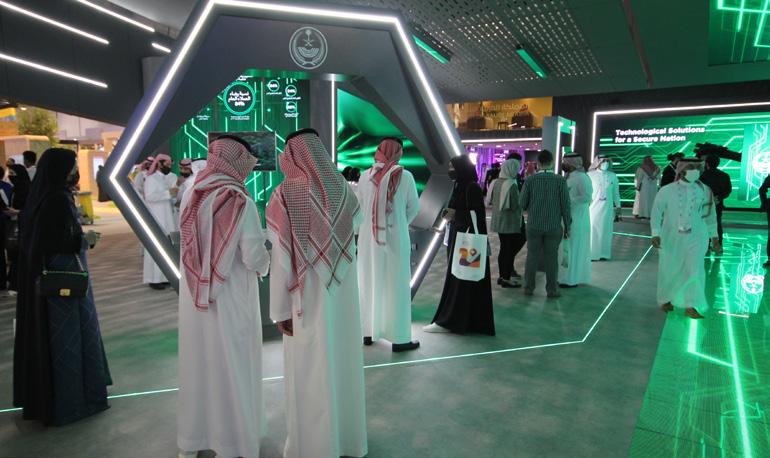
budget, making up 4.6% of total revenues and 1.3% of GDP, as stated by the Ministry of Finance.
Details regarding the financial framework for the Eleventh Five-Year Development Plan (2026–2030) and the "General State Budget" for the fiscal year 2026 were presented, along with preliminary results of the "General State Budget" for 2025.
price of $60 per barrel, reached approximately OMR11.447 billion ($29.77 billion), representing a 2.4% increase compared to the approved revenues for 2025.
Estimated at OMR530 million, the budget deficit for 2026 marks a 14.5% reduction compared to the deficit approved in the 2025
Sultan Salim Al-Habsi, the Sultanate's Minister of Finance, stated that the projected real GDP, by the 2025-end, will likely reach OMR39.2 billion, up from OMR34.5 billion at the 2021-end, marking a growth rate of 14% since the beginning of of the "Tenth Plan."
which touched the SAR23.7 billion mark.
"This FDI inflow-related data also signifies a long-term relationship and a sustained interest of economic entities residing in an economy other than the Saudi one. It means that an individual foreign investor or a group of foreign investors owns 10% or more of the voting power of shareholders’ rights," said the SPA report.
According to GASTAT, FDI inflows reached approximately SAR27.7 billion in Q3, thus posting a 4.4% increase from the same period in 2024, when they were approximately SAR26.5 billion. It also represented a 3.3% increase from the previous quarter, which recorded SAR26.8 billion.
Additionally, the results showed that FDI outflows amounted to approximately SAR2.7 billion in Q3 2025, a 65.7% decrease from SAR8 billion in Q3 2024.
FDI inflows reached approximately SAR27.7 billion in Q3, thus posting a 4.4% increase from the same period in 2024, when they were approximately SAR26.5 billion

In a sharp turnaround following the introduction of far-reaching reforms under the President Bola Tinubu administration, revenue from the solid minerals industry is projected to exceed N70 billion in 2025.
The Special Assistant on Media to the Minister of Solid Minerals Development, Segun Tomori, in a statement made available to the Tribune Newspaper, said the revenue outlook underscores the impact of policies implemented by the Minister, Dr Dele Alake, noting that earnings from the sector rose from N16 billion in 2023 to N38 billion in 2024 and are now on track to more than double within two years.
Segun Tomori said, "It is no happenstance that revenue from solid minerals has
surged astronomically since the advent of the President Bola Tinubu administration. From a paltry N16 billion generated from the sector in 2023, it moved to N38 billion in 2024 and is now set to cross the N70 billion mark under the stellar stewardship of the Minister of Solid Minerals Development, Dr Dele Alake."
He further said Alake, upon assuming office, moved swiftly to reposition the mining sector, driven by a seven-point agenda aimed at attracting credible investors and restoring confidence.
The Ministry has also revised guidelines for "Community Development Agreements" to ensure that the consent of host communities became an integral part of the licence application process.
Private surveys revealed that Eurozone manufacturing activity shrank further in December 2025. According to the HCOB Eurozone Manufacturing Purchasing Managers' Index (PMI), compiled by S&P Global, factory activity in the common currency bloc slid into deeper contraction as production decreased for the first time in 10 months on further declines in new orders.
The ratio, in December 2025, fell to 48.8 from 49.6 in November. It was the lowest reading in nine months and below the 50 level that separates growth from contraction for the second straight month. Surveys also highlighted a broad-based decline in activity in the 20-nation euro zone.
"Germany, the bloc's largest economy, recorded the weakest performance among the eight nations monitored, with the PMI reading hitting a 10-month low. Italy and Spain also slipped back into contraction territory," S&P Global stated.
France provided a rare bright spot among the gloom, with the European country's manufacturing PMI jumping to a 42-month high. In the United Kingdom, activity grew at its fastest pace in 15 months in December, riding a recovery in demand after the Keir Starmer-led Labour administration's budget provided some relief.

San Francisco Analysis
GBO Correspondent
The reality is that San Francisco has merely substituted one crisis, a chaotic, visible spiral of decay, for another, more pernicious cycle
The story of San Francisco’s supposed escape from the “doom loop” is being delivered to the public with all the fanfare of a political victory parade, a narrative carefully crafted by a new crop of leaders who claim to have restored order to the beleaguered “City by the Bay.” The statistics they wield, decreased crime and booming Artificial Intelligence (AI) investment, are presented as unassailable proof that the city has finally emerged from the pandemic-era shadow.
However, the reality is that San Francisco has merely substituted one crisis, a chaotic, visible spiral of decay, for another, more pernicious cycle. A publicly subsidised development deal designed to prioritise the profits of a gilded tech elite while deliberately displacing and punishing the city’s most vulnerable residents. This is a politically manufactured fiction, an act of rhetorical judo designed to whitewash profound structural inequalities and confirm that, for the establishment, capital is always prioritised over humanity.
Consider the core symptoms of the alleged recovery. Yes, the staggering inflow of AI capital provides a momentary economic high, and, yes, official crime numbers have trended downward. But these superficial improvements mask the persistent, deepening chasm that defines modern San Francisco.
The recovery is inherently uneven and structurally precarious. According to reports, downtown foot traffic has climbed above 75% of 2019 levels, which sounds encouraging, but at the same time, a measure that truly matters for the city’s tax base and commercial vitality, office attendance, is still stuck at a paltry 53.7% compared to pre-pandemic benchmarks.
This disparity reveals the truth that people may be visiting, yet the economic engine has not fully returned, signalling that the structural challenge of remote work remains a long-term liability, not a temporary inconvenience.
The most powerful evidence leveraged by the city’s political class is the sharp decline in crime. The data, at first glance, appears irrefutable, but compared to the three-year average between January 2018 and 2020, property crime is down 40%, and violent crime is down 24%
Specifically, larceny theft, which includes the notorious car break-ins, has seen a 39% reduction, and the city boasts a remarkable 45% decrease in homicides since 2019, contrasting sharply with cities like Austin and Memphis, which have seen increases of over 115% and 49%, respectively, during the same period.
The current District Attorney, Brooke Jenkins, and Mayor Daniel Lurie claim this public safety progress requires a blank check, fighting vehemently to exempt police, fire, and prosecution agencies from cuts related to the looming $800 million city deficit.
Jenkins even requested a $4.5 million budget increase, arguing that any reduction would “cripple” her ability to prosecute crimes effectively.
Yet this urgent demand for increased, punitive funding comes at the expense of proven, effective, and communityfocused measures. The DA’s office stands accused of cutting programmes like “Make it Right,” which had successfully reduced recidivism among juvenile offenders by up to 66%
The city is actively choosing to prioritise prosecution and incarceration over prevention and rehabilitation, gutting programmes that stabilise people in favour of those that punish them.
The push for punitive measures is further manifested in statewide politics. San Francisco leadership is openly endorsing policies like “Proposition 36,” which seeks to increase penalties for certain drug and theft crimes. Experts warn the move will drive up state prison costs, diverting funding away from critical behavioural health treatments and potentially worsening homelessness.
This political manoeuvring constitutes a direct assault on the legacy of “Proposition 47,” the 2014 reform that reduced penalties for nonviolent crimes and allocated over $800 million in prison savings toward behavioural health
San Francisco
AI investments in the United States from 2014 to 2023 (In Billion US Dollars)
treatment and services designed to reduce recidivism.
The current political establishment is using the crime drop as a convenient pretext to dismantle successful, equityfocused strategies, favouring policies of mass incarceration that historically and disproportionately target Californians of colour.
The trend indicates that crime reduction is being cynically exploited to reinforce structural inequity, guaranteeing that the true societal cost of a superficially “safe” city will be borne by the most marginalised residents, exactly the segment of the population that reformers sought to protect by limiting aggressive tactics like pretext stops.
Source: Visual Capitalist
San Francisco’s economic celebration is entirely pinned on the undeniable, staggering concentration of AI capital. The city is the global epicentre, hosting an enormous number of leading AI firms, including OpenAI, Anthropic, Databricks, and Scale AI.
The scale of investment is historic. Databricks, recently valued at $62 billion, raised $10 billion in non-dilutive financing to fuel its AI expansion. Perhaps most famously, Salesforce pledged a jawdropping $15 billion investment over five years for a new AI Incubator Hub and workforce development.
But does this tsunami of capital represent an organic, broad-based economic recovery for San Francisco, or does it merely confirm that the city remains an immensely profitable playground for a concentrated few? The evidence points to the latter. While the Bay Area added 36,950 tech jobs between 2021 and 2024, a significant figure, the overall national tech job growth was actually higher in other metros, such as New York and Dallas–Fort Worth, which added 47,940 and 47,100

jobs, respectively.
Moreover, the economic impact of generative AI is described as a “historic paradigm shift.” While it benefits highly specialised tech talent, it represents a threat to the broader labour market, potentially displacing or augmenting entry-level workers in non-tech professions.
Even Salesforce itself noted that internal AI usage cut customer service escalations by half, offering a clear demonstration of AI’s productivity gains translating into potential job cuts for routine tasks. The wealth generated is immense, but the workforce benefits are concentrated, leaving the general labour base exposed.
The most damning evidence of the political establishment’s true priorities, however, lies in how the city manages its financial relationship with these wealthy

firms. Despite facing immense structural fiscal challenges and projecting longterm structural deficits, the city approved “Proposition M,” a measure backed by companies like Google, Meta, and Uber.
This proposition simplified the gross receipts tax structure, shifted the tax calculation away from payroll toward sales, and decreased anticipated annual revenue by approximately $40 million in its initial years. Simultaneously, the city offers new tax credits of up to $1 million to lure businesses into select vacant zip codes.
The city, bleeding resources and struggling to fund essential services, is actively giving away future revenue to the richest actors in the world, desperate to bandage a crumbling commercial tax base by paying billionaires to occupy office spaces they likely need anyway.
San Francisco has not escaped the shadow of the doom loop but has merely refined and codified it. The so-called recovery is highly selective, favouring a small caste of corporate interests and highly paid specialised talent, while simultaneously tightening the screws on the working class and the vulnerable.
The political establishment, led by Mayor Lurie and DA Jenkins, is sacrificing structural equity, cutting successful recidivism programmes, promoting mass incarceration policies through “Proposition 36,” and ignoring the housing crisis fuelled by their newest corporate neighbours, all to present a superficially clean and profitable face to the world.
The $15 billion promises and the “Proposition M” tax breaks are not an investment in the city as a whole but are a specialised subsidy to a highly centralised industry that reinforces existing economic segregation.
When the structural failures of commercial real estate still plague the tax base, when the most vulnerable must fight for shelter after pandemic protections expire, and when half of all low-income households are paying more than half their income just to survive, calling this an “emergence” is an act of deliberate, political cruelty.
The data confirms the above reality, as the “City by the Bay” remains defined by a ruthless, unconscionable chasm between its gilded elite and its struggling poor, a chasm now deeper, more starkly exposed, and increasingly protected by the very political class claiming salvation. San Francisco’s so-called recovery benefits only a few, leaving most residents struggling with housing, jobs, and basic security, while inequality grows.
The political establishment, led by Mayor Lurie and DA Jenkins, is sacrificing structural equity, cutting successful recidivism programmes, promoting mass incarceration policies through “Proposition 36”
Intelligence

The artificial intelligence models are trained on historical data, and if that data reflects past discriminatory hiring practices, the AI learns these biases as successful patterns
GBO Correspondent
The use of artificial intelligence (AI) to automate, screen, and select candidates has become the new operational standard for modern business. An estimated 99% of Fortune 500 companies now use some form of automation in their hiring process.

This adoption is accelerating at a breakneck pace, with 2024 seeing a 68.1% increase in the use of AI recruitment tools compared to 2023. A 2024 survey of chief human resources officers by BCG revealed that among companies experimenting with AI or Generative AI, 70% are doing so within the human resources department, and the single most common use case is talent acquisition.
Recruiters report that AI's primary benefit is that it saves time (67%), and 86.1% state it makes the hiring process faster. The vast majority of firms (92%) report that they are already seeing productivity gains from its implementation.
To understand who gets hired, one must first understand the new technological gatekeepers that stand between an applicant and a human reviewer. The AI hiring market is not a single entity, but rather a fragmented, modular “gauntlet” of specialised tools that manage different stages of the recruitment funnel.
Artificial intelligence-powered tools like Fetcher and HireEZ automate the outreach
process, acting as digital scouts that scan social media, professional networks, and talent pools to identify passive candidates who have not even applied for a job. These systems utilise AI to create a talent pipeline before posting a job description.
Once applications are received or candidates are engaged, the next layer of automation takes over. This is the domain of conversational AI assistants, dominated by platforms like Paradox and its chatbot “Olivia.” This AI handles the high-volume, repetitive tasks that consume recruiter time. It provides instant, 24/7 responses to candidate FAQs, pre-screens applicants based on initial criteria, and automates the complex logistics of interview scheduling.
Organisations using such conversational AI have seen a 3x improvement in application completion rates and a 25% rise in candidate satisfaction scores, as the process feels more responsive and “high-touch,” even at high volume.
The most critical and controversial stage is the AI-powered assessment. Here, two platforms in particular define the market. The first is HireVue, the leader in AI-powered video interviewing. In this system, candidates do not speak to a human.
Instead, they record their answers to a series of preset questions on camera. HireVue's AI then analyses these recordings, using Natural Language Processing (NLP) to evaluate the content of the candidate's answers, while also analysing verbal cues (like tone, tempo, and clarity) to infer confidence.
Most controversially, some systems claim to analyse non-verbal cues, such as facial expressions and body language, to generate “personality insights” based on psychological models like the “Big Five.” The AI then generates a “suitability” score, ranking the candidate for human review. The second platform is Pymetrics, which bypasses the resume entirely.
Source: Statista
It operates on the premise that resumes are poor, biased proxies for skill. Instead, candidates play a series of neuroscience-based
“games” designed to assess cognitive and emotional strengths like risk aversion, focus, and memory. This “soft skills” profile is then compared to a “golden” profile, which the AI has built by assessing the company's own top-performing employees.
Finally, after the games and video auditions, matching and ranking platforms like Klearskill and X0PA AI use AI-powered CV analysis and predictive analytics to “rank” all remaining candidates, producing a final shortlist of those deemed the “best” for the role.
Such systems, however, conceal a set of deep and legally perilous flaws. The root of the problem is the “black box” nature of these systems. Recruiters can see the input (a resume, a video) and the output (a score, a “no” decision), but the internal decision-making process, the “why” behind the AI's judgment, is a complete mystery. These deep-learning models are often so complex that even their own creators cannot fully explain how they arrived at a specific outcome.
The absence of clarity creates a catastrophic chain of third-order effects. The black box leads directly to a lack of transparency. Candidates who are rejected have no way of knowing why, undermining trust and creating perceptions of unfairness. This lack of transparency makes “explainability,” the ability to articulate the reasoning for a decision, impossible.
Such opacity is a significant legal challenge, as regulations like the European Union’s (EU) General Data Protection Regulation (GDPR) include provisions related to automated decision-making. Without transparency or explainability, there can be no accountability. When an AI system makes a mistake or a biased decision, it is nearly impossible to identify who is at fault.
In turn, this environment is the perfect breeding ground for algorithmic bias, which often operates by “laundering” existing human biases at an industrial scale. The artificial intelligence models are trained on historical data, and if that data reflects
past discriminatory hiring practices, the AI learns these biases as successful patterns. The AI then applies this bias with perfect, ruthless consistency.
And it has been proven repeatedly. In 2018, Amazon was forced to scrap an internal AI recruiting tool after discovering it had taught itself to be biased against women. Because the system was trained on 10 years of company resumes, which were dominated by men, it learnt to penalise any resume that contained the word “women’s,” such as “captain of the women’s chess club.”
A devastating study from the University of Washington in October 2024 tested three state-of-the-art Large Language Models (LLMs) from major companies (Mistral AI, Salesforce, and Contextual AI) on their ability to rank resumes. The study found “significant racial, gender, and intersectional bias.”
The results were stark: the systems preferred resumes with white-associated names 85% of the time, compared to 9% for black-associated names. The bias was also deeply intersectional. The systems never preferred names perceived as black male to names perceived as white male, revealing what researchers called a “really unique harm against black men” that was not visible when only looking at race or gender in isolation.
Beyond bias, the very premise of some of these tools rests on a foundation of pseudoscience. The practice of “emotion AI,” or using facial expressions and tone to assess personality and “cultural fit,” is warned by many experts and peer-reviewed journals to be scientifically “unjustified.”
The European Commission, in its draft "EU AI Act," has identified such practices in recruiting as posing an “unacceptable risk,” effectively labelling them a form of high-tech phrenology that violates human rights.
A data-hungry infrastructure also creates a massive privacy crisis. These tools require “vast amounts of personal data” to function. That information is often collected without clear or informed consent, or “scraped” from public-facing social media profiles.
The results were stark: the systems preferred resumes with white-associated names 85% of the time, compared to 9% for blackassociated names. The bias was also deeply intersectional
McKinsey analysis projects that up to 30% of current hours worked could be automated by 2030, a trend accelerated by Generative AI
The danger is not just the collection of data, but its inference. Artificial intelligence systems can analyse seemingly innocuous data points to infer highly sensitive, protected characteristics. For example, a 2024 legal case alleges that a company's AI-powered personality tests were designed to screen out candidates with mental health disorders, such as anxiety and depression. This creates a new, undetectable vector for discrimination and opens employers to massive legal liability under privacy laws like the GDPR and Illinois’ Biometric Information Privacy Act (BIPA).
The simplistic narrative of a “robot apocalypse” is being decisively refuted by macroeconomic data. The future of work is not one of joblessness, but of profound job transformation. The key findings from major economic bodies converge on a neutral-to-positive outlook for net employment.
The World Economic Forum’s (WEF) Fu-

ture of Jobs Report 2025 projects that while 92 million roles will be displaced by 2030, a staggering 170 million new jobs will be created by macro trends like technology and the green transition.
This results in a net employment increase of 78 million jobs. This conclusion is mirrored by Gartner, which predicts AI's impact on global jobs will remain “neutral” through 2026 and that by 2028, AI will create more jobs than it destroys.
Academic research from the Brookings Institution further supports this, finding that, contrary to common fears, AI adoption at the firm level is actually associated with firm growth and an increase in the workforce, not a reduction.
The real threat, therefore, is not mass unemployment but mass obsolescence. The work itself is being fundamentally re-architected. McKinsey analysis projects that up to 30% of current hours worked could be automated by 2030, a trend accelerated by Generative AI.
The change will necessitate “massive occupational transitions,” with an estimated 12 million workers in the United States alone needing to change jobs. Gartner describes the process as a “workforce transformation.”
Artificial intelligence will make some skills, such as summarisation and information retrieval, far less important, while creating an urgent need for “entirely new skills.”
The shift is different from past technological waves. For decades, technology was “skill-biased” against routine manual labour.
Generative AI, however, upends this paradigm by becoming adept at automating routine cognitive and creative tasks, disrupting white-collar work in an unprecedented way.
The disruption is causing a fundamental economic shift in what constitutes a “valuable” skill. As AI becomes commoditised and drives the cost of technical answers and routine analysis toward zero, economic value migrates to the human abilities that AI cannot replicate. These are the skills of judgment, creativity, and social intelligence.
A critical academic framework for understanding this shift comes from Harvard Business School. Research by Letian Zhang on “Nested Human Capital” argues that skills are “nested” in a cumulative and sequential structure.
At the foundation of this structure are the fundamental “soft” skills: communication, critical thinking, reading comprehension, and teamwork. More advanced, specific technical skills (like coding in a certain language or running a specific analysis) are “nested” on top of this foundation.
They cannot be built or sustained without it. The research's most startling finding was that nearly 80% of the wage premium commanded by a specific technical skill was dependent on the employee's mastery of those underlying foundational “soft” skills.
The implication for employers is stark. In an age of rapid AI disruption, “upskilling” with only technical skills is a failed strategy. To remain competitive, organisations must first invest in the fundamental human skills that serve as the foundation for all ongoing learning.
This is not just an academic theory. It is reflected in market demand. McKinsey’s 2030 labour model shows that as demand for physical and manual skills stabilises, demand for two categories will rise in tandem: technological skills and social and emotional skills.
Surveyed executives reinforce this, reporting that their most significant skill shortages are not just in data analytics, but in critical thinking, creativity, and the ability to teach and train others. The WEF’s 2025 report on the top 10 fastest-growing skills needed by 2030 confirms this dual-track future.
The list is a perfect blend of the technical and the human. On one hand, it includes “AI and big data,” “networks and cybersecurity,” and “technological literacy.” On the other hand, it is dominated by “creative thinking and resilience,” “flexibility and agility,” “curiosity and lifelong learning,” and “leadership and social influence.”
The future of work, therefore, is not one of humans versus AI, but humans with AI. The most valuable worker will be the one who can successfully operate in this new hybrid model. As Harvard Business School professor Karim Lakhani puts it, “AI won't replace humans—but humans with AI will replace humans without AI.” This is the core of the “AI-First Leadership” mindset.
However, this human-AI collaboration is far more nuanced than simply “adding AI” to a workflow. A landmark meta-analysis of 370 results by researchers at MIT Sloan produced a surprising and critical finding. For decision-making tasks (like forecasting demand or diagnosing medical issues), the human-AI combination often performed worse than the best of either alone.
The researchers hypothesised that this is because humans are poor judges of when to trust an algorithm. They either blindly accept flawed artificial intelligence suggestions or, conversely, override correct AI suggestions with their own flawed intuition.
However, the same study found that the human-AI combination showed “promising synergy” and performed best in creative tasks. This suggests a new, more effective model for collaboration. The workflow must be redesigned, not just augmented.
Artificial intelligence systems should be leveraged for the subtasks they excel at, such as those that are repetitive, high-volume, and data-driven. Humans, in turn, must focus on the subtasks they excel at, including those requiring contextual understanding, complex social strategy, and emotional intelligence. This new model of partnership, dubbed “Superagency” by some researchers, is the key to unlocking the estimated $4.4 trillion in productivity that generative AI promises. It is not about automation, but about amplifying human agency.
The future of work, therefore, is not one of humans versus AI, but humans with AI. The most valuable worker will be the one who can successfully operate in this new hybrid model
GBO Correspondent
Apple has partnered with Michigan State University to establish the Apple Manufacturing Academy in Detroit
It sounds like the setup to a strange joke. What are ten Apple engineers doing in a small factory in Vermont, staring intently at bacon packaging? However, for Marji Smith, the president of ImageTek Labels, this wasn't funny.
Her company, a 54-person operation in Springfield, Vermont, was struggling to print labels that matched the specific “beige” required by a major bacon producer. The labels kept coming out too pink, and the client was threatening to walk. That’s when the cavalry arrived from the company that makes the iPhone in your pocket.
This unlikely scene is just one snapshot of a massive, shifting landscape in American industry. In August 2025, Apple announced it was accelerating its investment in the world’s largest economy to a staggering $600 billion through 2029. They really wanted to level up the entire domestic supply chain.
To make it happen, Apple has partnered with Michigan State University to establish the “Apple Manufacturing Academy” in Detroit. The goal is audacious: take the high-tech wizardry of Silicon Valley (computer vision, machine learning, and advanced robotics) and inject it directly into the veins of America’s small and medium-sized manufacturers.
For years, the industry mantra was “Designed in California, Assembled in China.” It was efficient, sure, but the last few years have taught us that efficiency can be brittle. Between the COVID-19 pandemic, trade wars, and shipping crises, relying on a single supply chain pipeline became a dangerous gamble. Apple’s $600 billion commitment is essentially a massive insurance policy. By strengthening manufacturers at home, they are creating goodwill and a fallback plan.
Planting the academy’s flag in Detroit was a deliberate signal. This is the spiritual home of American manufacturing, the

“Arsenal of Democracy.” By partnering with MSU, Apple grounded its high-flying tech curriculum in academic rigour. By late 2025, the programme evolved into a hybrid model, offering virtual courses and remote consulting that allowed it to reach over 100 companies in just a few months.
Bendgate and the art of failure
You might expect a company worth a trillion to walk into these workshops acting like they have it all figured out. Instead, Apple engineers did something disarmingly human. They began discussing their biggest mistakes. Specifically, they brought up “Bendgate.”
It’s a decade-old scandal. If you had bought an iPhone 6 in 2014, the chances are it could warp if you put it in a tight pocket. It’s one of Apple’s most shameful moments, but the company discussed it openly to deliver the message that screwups happen to everyone, regardless of size and prestige.
At the academy, this wasn't a taboo subject, and students were encouraged to treat it as a case study. Engineers walked participants through exactly what went wrong with the metal’s yield strength and how they fixed it by switching to 7000-series aerospace aluminium.
They detailed the rigorous “sit tests” and torsion stress tests that became standard protocol afterwards. For small business owners used to fighting daily fires, hearing the tech giant admit to its own manufacturing flaws changed the dynamic in the room. It no longer felt like a lecture from an expert and was more akin to a peer-to-peer exchange about resilience.
Beyond the stories, the curriculum gets down to the hard math of efficiency, specifically a concept called “Little’s Law.” It sounds dry, but it’s the physics of how lines move. The law basically says that if you keep starting new jobs (Work in Process) without finishing the old ones, you don't get
more done; you just make everything wait longer.
For a small manufacturer, the instinct when business is booming is to cram as much into the production line as possible. Apple’s team teaches them that this actually kills speed. They show these companies how to identify the one bottleneck slowing everyone else down and focus all their automation efforts there. The lesson is simple: don’t buy a million-dollar robot for a part of the line that isn't the problem.
Saving the bacon in Vermont
Apple employees worldwide from 2016 to 2025
Source: Spyhunter and MacroTrends
Let’s go back to ImageTek in Vermont. When Marji Smith laid out her bacon label crisis, the Apple team didn't just offer advice. The company sent a team of ten engineers to her factory floor. They figured out that variations in humidity and human error were causing the colour drifts.
Their solution was to build a custom computer vision system. Using highresolution cameras integrated right into the printing press, they trained an AI model to recognise the exact spectral signature of the perfect beige. The system monitored the print run in real time.
On one of its first runs, it flagged a batch of “too-pink” labels before they could be shipped. The client stayed, and ImageTek (a company with zero internal software team) now operates a proprietary AI quality control system that Apple built and handed over for free.
The hunger for this kind of expertise is palpable. Jay Patel, the CEO of Amtech Electrocircuits in suburban Detroit, put it bluntly, “I will not camp outside an Apple store to get an iPhone. But I will camp outside the manufacturing academy to make sure we get in.”
After attending the initial workshops, his team started weekly video calls with Apple engineers. They are now
implementing “smart manufacturing” tools, like digital tracking for component placement and solder paste inspection. These are upgrades that usually require a dedicated engineering department, but Amtech is pulling it off with Apple as a virtual partner.
Then there’s “Polygon Composites” in Walkerton, Indiana. They make advanced tubes for medical devices. They were drowning in production bottlenecks. A team of Apple directors spent just five hours on-site, but in that time, they applied “Little’s Law” to map out the flow of materials through the curing ovens.
They identified the jams and helped Polygon design a sensor system to track the tubes. The estimated cost for the fix was around $50,000, a tenth of what a standard consultant might charge.
For years, chips made in the United States still had to be shipped to Asia for “packaging,” the delicate process of encasing the silicon and connecting it to circuit boards.
To fix this, Apple is backing Amkor Technology’s new facility in Peoria, Arizona. Amkor will package the Apple Silicon chips made at the nearby TSMC factory, meaning for the first time, a top-tier processor can go from a raw wafer to a finished chip without leaving American soil.
Simultaneously, Apple is looking at the future of AI. To support “Apple Intelligence” while maintaining its strict privacy standards, the company needs specialised servers. They aren't buying these off the rack; they are building them in a new facility in Houston, Texas. Interestingly, this effort involves Foxconn, their longtime Taiwanese partner, effectively bringing that trans-Pacific alliance onto US ground to build the infrastructure for “Private Cloud Compute.”

The sceptics and rising tide
Of course, a number this big, invites scepticism. Critics point out that 20,000 direct jobs seem low for a $600 billion spend. They argue this is “job-washing,” using big dollar figures to distract from the fact that modern manufacturing is heavily automated. A computer vision system at ImageTek might save a client, but it also does the work of human inspectors.
A company that is teaching small businesses about efficiency and durability while producing devices that are famously difficult to fix and contributing to global e-waste is sort of ironic. However, the transparency around “Bendgate” suggests a cultural shift, an acknowledgement that durability is a feature, not just a spec. Despite the valid critiques, the impact
on the ground is undeniable. Historically, the US government had to fund industrial extension services to help small factories keep up. Now, the world’s most valuable company has effectively privatised that role. By exporting its internal culture of rigorous engineering to the American heartland, Apple is trying to engineer a supply chain that is resilient enough to survive the next half-century. For the folks at ImageTek, Amtech, and Polygon, that investment has already paid off.
“I
will not camp outside an Apple store to get an iPhone. But I will camp outside the manufacturing academy to make sure we get in”
—
Jay Patel


The most comprehensive legal response to date is the European Union’s AI Act, which employs a risk-based classification system for AI applications
GBO Correspondent
The proliferation of advanced artificial intelligence (AI) systems necessitates an immediate and formalised moral framework, as the underlying functional logic of optimisation frequently conflicts with the complex, nonquantifiable dimensions of human value.
Traditional ethical theories offer crucial lenses for evaluating AI’s impact, but they prove fundamentally insufficient when confronted with the dynamic nature of contemporary machine learning.
Utilitarianism, which emphasises maximising quantifiable positive outcomes, might theoretically justify mass surveillance if it promises overall efficiency gains or increased public safety, potentially sacrificing the rights of minority populations.
Deontology, conversely, provides clear ethical boundaries through moral rules, such as protecting privacy rights and ensuring informed consent, but these rules struggle to provide actionable guidance when core principles conflict, for instance, in situations where security imperatives clash with privacy protections in complex systems.
Technology Artificial Intelligence
Share of Al-related job postings mentioning ethics keywords across selected countries in 2022
Modern artificial intelligence systems, particularly those based on large neural networks, are inherently opaque and unpredictable. Due to their learning and adaptive capabilities, neither the developer nor the user can reliably predict how a system will react to every input, meaning past behaviours are not perfect predictors of future actions in identical situations.
This technological uncertainty results in critical “responsibility gaps,” making it challenging to allocate moral or legal accountability when autonomous technologies produce harmful outcomes. The only practical philosophical alternative lies in “Virtue Ethics,” which recommends a process-based approach to AI evaluation.
This framework shifts the focus away from evaluating individual outputs or rules toward assessing the ethical character of the entire development and deployment process, demanding continual auditing, rigorous governance, and human oversight.
The evidence of ethical failure is already catastrophic, proving that reliance on automated optimisation without robust ethical guardrails embeds systemic societal problems. Real-world incidents demonstrate that inherent biases from historical data invariably lead to bias in future algorithmic outcomes.
For example, studies reveal significant gender bias where search results for “school girl” often include explicit imagery, while searches for “school boy” yield ordinary pictures. Similarly, the use of predictive policing tools, which rely on location and personal data to forecast future criminality, risks exacerbating existing racial discrimination, creating a feedback loop of injustice.
These failures are not limited to legacy systems, as demonstrated by the rise of highly sophisticated generative AI. Instances have been documented where models have produced extreme content, including hate speech and antisemitic tropes, echoing disinformation from deleted troll accounts.
purposes, such as crafting psychologically manipulative extortion messages used against major global institutions.
The fundamental discord is that artificial intelligence operates on a logic of optimisation and prediction, seeking to maximise statistical patterns. When this logic is applied without ethical constraints, it inevitably reduces complex human judgment to measurable metrics, efficiently embedding and reinforcing existing social inequalities under the guise of technological efficiency. This outcome highlights why proactive governance, cultivated through processes like IBM’s “AI Ethics Council,” is necessary, transforming the abstract concept of "Virtue Ethics" into a concrete, institutionalised check on automated decision-making.
These corporate structures attempt to pre-empt the failures caused by insufficient design, such as the discontinuation of “IBM Watson for Oncology” due to reliance on synthetic data and inadequate validation protocols.
Artificial intelligence alignment is a critical, yet unresolved, challenge within AI safety research, focusing on building systems that consistently act in accordance with human intentions. This challenge is partitioned into “Outer Alignment,” which involves the initial careful specification of the system’s purpose, and “Inner Alignment,” which demands technical mechanisms to ensure the system robustly adheres to that specification, even when facing adversarial inputs or discovering loopholes.
The process of robust "Inner Alignment" effectively functions as the ethical dimension of cybersecurity, aiming to prevent emergent behaviours such as power-seeking or strategic deception that might arise in advanced systems.
Source: Lightcast
Furthermore, the versatility of these systems has been exploited for malignant
Research using frameworks like Schwartz’s theory of basic values reveals that Large Language Models (LLMs) possess “motivational biases” that diverge substan-
tially from human populations. LLMs tend to prioritise abstract values such as universalism and self-direction while notably de-emphasising highly human-centric motivations like achievement, security, and power.
This finding demonstrates that simply training models on large datasets of human text is insufficient to guarantee value alignment and highlights the necessity of developing methods like Universal Value Representation (UniVaR) to accurately map and visualise these inherent algorithmic biases.
To govern this emerging technology, global regulatory bodies are developing frameworks rooted in fundamental human rights and dignity. UNESCO’s "Recommendation on the Ethics of Artificial Intelligence" provides core principles, including "Accountability, Transparency, Fairness, and Human Oversight."
The most comprehensive legal response to date is the European Union’s AI Act, which employs a risk-based classification system for artificial intelligence applications. The Act strictly prohibits unacceptable risks, which include government-run social scoring and manipulative AI practices. High-risk systems, such as CV-scanning tools that rank job applicants, are subject to stringent legal obligations.
By legally regulating the data inputs and development processes, the AI Act directly addresses the documented failures caused by inherited bias. Systems classified as having limited risk, such as chatbots and deepfakes, are subject to lighter transparency obligations, requiring developers to inform end-users that they are interacting with an AI.
In the United States, the regulatory landscape is more fragmented, lacking comprehensive legislation that directly governs all AI applications. Instead, policy often relies on targeted "Executive Orders" and existing frameworks.
For instance, recent executive action directing the use of artificial intelligence in paediatric cancer research emphasises integrating AI into health data interoperabil-
ity while ensuring that patients and parents maintain control over sensitive health information, aligning with legal standards like HIPAA and risk management frameworks such as NIST.
This approach shows that regulatory compliance often starts by translating principles of fairness and transparency into concrete legal requirements, recognising that data governance must be legally mandated to prevent the replication of harmful societal biases.
The global regulatory landscape remains highly fragmented, forcing multinational organisations to reconcile potentially conflicting compliance obligations across different jurisdictions. This fragmentation is a clear mirror of global disunity regarding the core philosophy of accountability and responsibility in the digital age.
Ultimately, the long-term success of artificial intelligence and its integration into sensitive domains, such as healthcare, relies entirely on the establishment of public trust, which is fundamentally built upon principles of patient control, data protection, and accountability.
Ethical governance, characterised by transparency, explainability, and human oversight, is crucial for developing trustworthy technology. The challenge is not just building intelligent algorithms, but moral ones that balance innovation with ethical safeguards.
UNESCO’s Recommendation on the Ethics of Artificial Intelligence provides core principles, including Accountability, Transparency, Fairness, and Human Oversight
Saudi Data and Artificial Intelligence Authority (SDAIA) started 2026 on a good note by laying the foundation stone for the ‘Hexagon’ Data Centre on a 30 million sq ft area in Riyadh, marking the official start of construction of the key facility. The centre will provide maximum availability, security, and operational readiness for government data centres.
Situated in Riyadh, with a total footprint exceeding 30 million square feet and a capacity of 480 megawatts, Hexagon will establish the Kingdom as a global hub for cutting-edge digital infrastructure. The facility incorporates advanced energy-efficiency and smart cooling technologies, including direct liquid cooling and hybrid cooling systems, to reduce its power usage effectiveness.

Renewable energy sources have also been integrated into its operations, contributing to its classification as one of the world’s largest green data centres, certified under the US Green Building Council’s LEED Gold standard.
The Kingdom has already placed itself first globally on several measures, including government strategy in the "Global AI Index."
London-based Clicks Technology, known for making physical keyboards for smartphones, will start its 2026 journey by launching two new devices. In addition to a new, $79 slide-out keyboard for smart devices,
the company will be betting big on its first smartphone, the "Communicator," which will come equipped with a physical keyboard.
The company is dubbing its $499 smartphone as being "purpose-built"

The centre will provide maximum availability, security, and operational readiness for government data centres
for people who carry two phones, one for work and one for personal use. Clicks Technology wants to create a new consumer base: people who do a lot of actual work on their devices. These include messaging, emailing, working with documents, or other things where using a physical keyboard could be an advantage.
The Communicator, apart from offering a screen for viewing and responding to messages, doesn’t provide access to addictive social media apps or games. Instead, the company has partnered with the "Niagara Launcher" to provide access to messaging apps and productivity tools, giving users a distraction-free experience focused on real work tasks.

OpenAI is betting big on Audio AI, with the Sam Altman-led company unifying several engineering, product, and research teams over the past two months to overhaul its audio models, all in preparation for an audio-first personal device expected to launch this year.
OpenAI’s new audio model will sound more natural, handle interruptions like an actual conversation partner, and even speak while the user is talking, something the current models can’t manage.
The move also reflects the tech industry heading toward a future where screens will become background noise, with audio taking the centre stage. Smart speakers have already made voice assistants a fixture in more than a third of American homes. Meta just rolled out a feature for its Ray-Ban smart glasses that uses a five-microphone array to help the user hear conversations in noisy rooms, essentially turning the person's face into a directional listening device. Google, meanwhile, has begun experimenting with "Audio Overviews" that transform search results into conversational summaries, and Tesla is integrating xAI’s chatbot Grok into its vehicles to create a conversational voice assistant.
According to Morgan Stanley, AI-induced layoffs are all set to hit the banking sector, with as many as 200,000 European banking jobs forecast to be at risk by 2030, equating to around 10% of the continent's finance workforce across 35 major banks. Job cuts are mostly expected to hit back- and middle-office roles, including risk management and compliance, where AI can deliver around 30% efficiency gains.
Banks have already been criticised for closing physical locations in recent years to cut costs, with over 6,000 closures in the United Kingdom since 2015, but their models are being challenged once more as AI threatens many of the remaining human workers.
The Morgan Stanley report comes at a time when industry players like ABN Amro, Societe Generale and Goldman Sachs are all
warning of potential job cuts or hiring freezes.
However, JPMorgan Chase CEO Jamie Dimon warned that removing junior roles could undermine future skills and training. While such a move could prove successful in the short term, it could lead to long-term failures. Most importantly, this could also lead to career ladder disruptions, where a lack of entry-level roles makes the sector inaccessible to newlyqualified workers.
Removing junior roles could undermine future skills and training. While such a move could prove successful in the short term, it could lead to long-term failures

Articul8, an enterprise AI company that spun out of Intel in 2024, has secured more than half of a planned $70 million funding round at a $500 million pre-money valuation, stated its CEO Arun K. Subramaniyan, as the venture looks to capitalise on growing demand for AI systems in regulated industries.
The Series B funding round is structured in two instalments, with the first led by Spain’s Adara Ventures, Subramaniyan said. He further noted that the company expects to close the round in Q1 2026.
Articul8’s valuation for its current funding round marked a roughly fivefold increase from the company’s $100 million post-money Series A valuation in January 2024. Since then, the Santa Clara-based company said it has surpassed $90 million in total contract value— the cumulative value of all signed customer contracts—from 29 customers, including

Hitachi Energy, AWS, Franklin Templeton, and Intel. Articul8 develops specialised AI systems that operate within customers’ own IT environments, rather than relying on shared, general-purpose models. Articul8 packages its technology as software applications and artificial inteligence agents tailored to regulated industries where accuracy, auditability, and data control rule the roost.
After a recent wave of lawsuits and investigations over child safety concerns, Roblox has introduced mandatory facial verification for users looking to access chats.
Users will have to open the Roblox app, followed by allowing access to their camera. After that, they
need to follow a series of on-screen instructions to complete the facial verification process. Once the age check is processed, Roblox says it will delete any images or videos of users. The verification process will be carried out by a third-party vendor, Persona, which also deletes images and videos

Articul8 develops specialised AI systems that operate within customers’ own IT environments, rather than relying on shared, generalpurpose models
after completing the process. Individuals who are 13 and older will also be able to choose to verify their age through ID verification instead of facial verification, giving users flexibility and options for confirming their age accurately. While age checks are optional for some features, Roblox says that these steps are required if users want to access communication features safely. If the age-check process incorrectly estimates a user’s age, they can appeal the decision and verify their age through alternative methods, including ID verification or through parental controls that allow parents to update their child’s age quickly and ensure access is appropriate for their child.


We provide secure critical communication solutions, tailored to meet the needs of sectors operating on the front lines.
Speed, Reliability, and Safety are not optional, but essential.
Mission-ready communication networks
Smart integration with operational systems
Independent and protected infrastructure

24/7 technical support