Balancing Code and Calm in Modern Tech Education by Glenn Wayne Trede

Technology degrees open doors to exciting careers, but they also come with intense demands Students spend hours coding, testing software, attending virtual lectures, and completing complex assignments. While these activities build strong technical knowledge, they can also create stress and mental exhaustion To support digital wellness, many educators are exploring how to integrate meditation into tech programs.
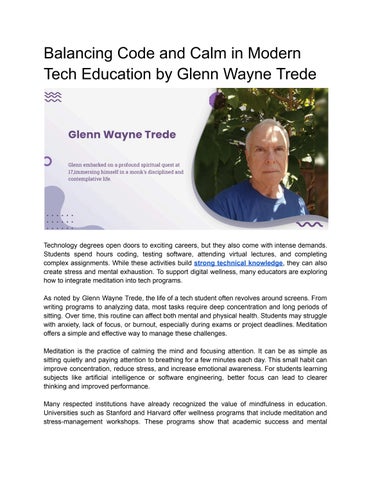
As noted by Glenn Wayne Trede, the life of a tech student often revolves around screens From writing programs to analyzing data, most tasks require deep concentration and long periods of sitting Over time, this routine can affect both mental and physical health Students may struggle with anxiety, lack of focus, or burnout, especially during exams or project deadlines Meditation offers a simple and effective way to manage these challenges.
Meditation is the practice of calming the mind and focusing attention It can be as simple as sitting quietly and paying attention to breathing for a few minutes each day. This small habit can improve concentration, reduce stress, and increase emotional awareness For students learning subjects like artificial intelligence or software engineering, better focus can lead to clearer thinking and improved performance
Many respected institutions have already recognized the value of mindfulness in education. Universities such as Stanford and Harvard offer wellness programs that include meditation and stress-management workshops These programs show that academic success and mental
health are closely connected When students feel balanced, they are more likely to stay motivated and engaged.
Meditation also helps students respond calmly to setbacks. In technology studies, errors are common. Code may fail, systems may crash, and projects may not work as planned. Without emotional control, these problems can feel overwhelming Mindfulness teaches patience and resilience. Instead of reacting with frustration, students can pause, reflect, and try again with a clear mind
Creativity is another important benefit. Technology is not only about solving problems but also about designing new ideas A relaxed and focused mind is more open to innovative thinking Short meditation breaks between study sessions can refresh the brain and spark new solutions
Integrating meditation into tech degrees does not require major changes Professors can begin classes with a brief moment of silence. Universities can provide quiet spaces for relaxation. Even student clubs can organize guided meditation sessions before exams
Digital wellness encourages students to build a healthy relationship with technology. By combining technical training with mindful practices, tech programs can prepare students for successful and sustainable careers In a world driven by speed and innovation, the ability to slow down and think clearly is a valuable skill.