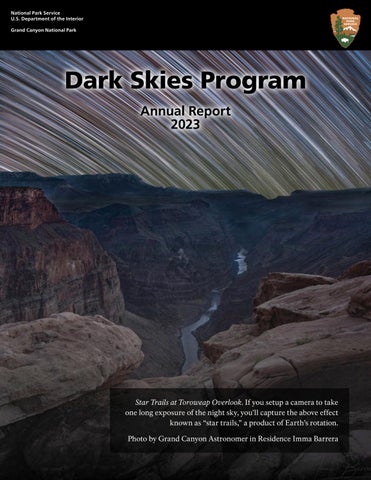
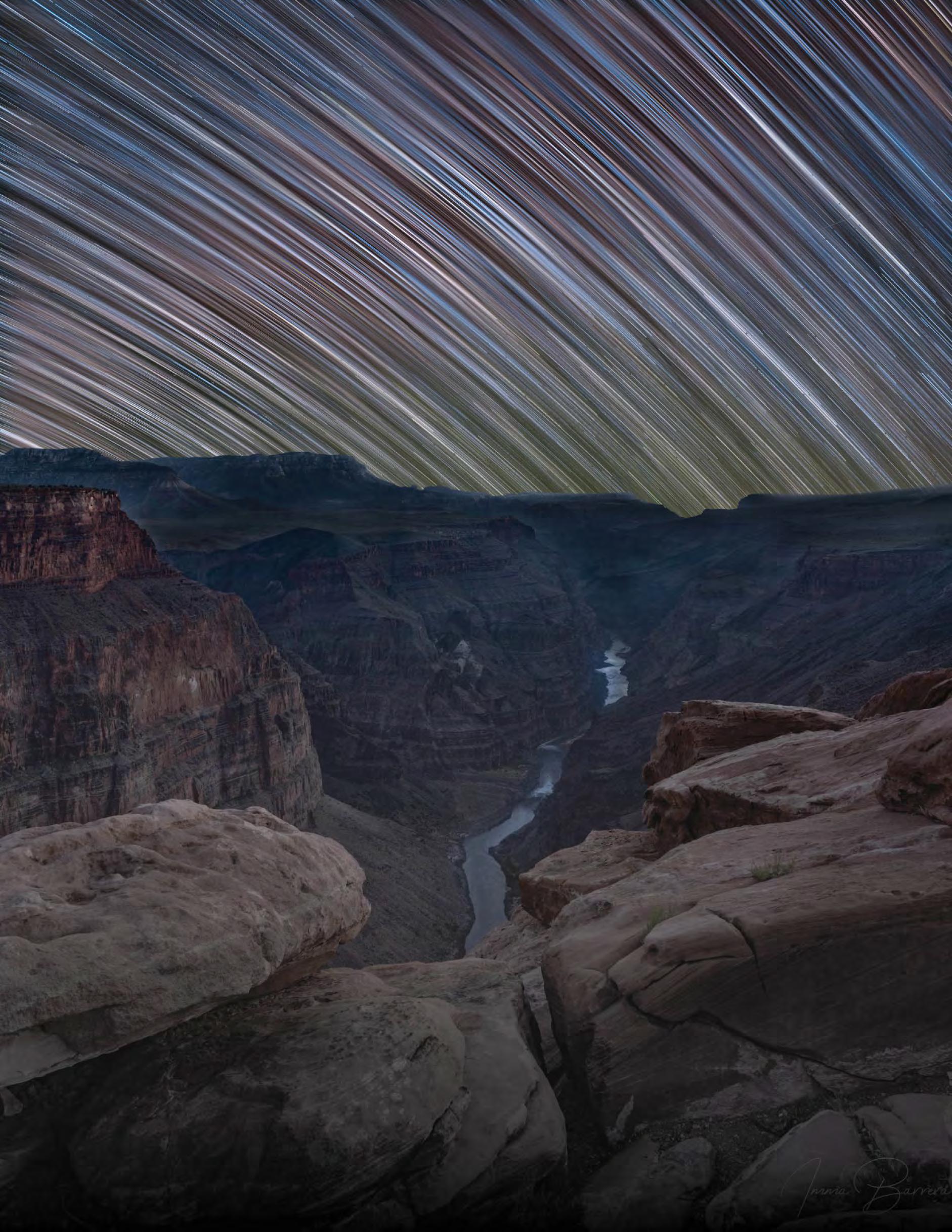
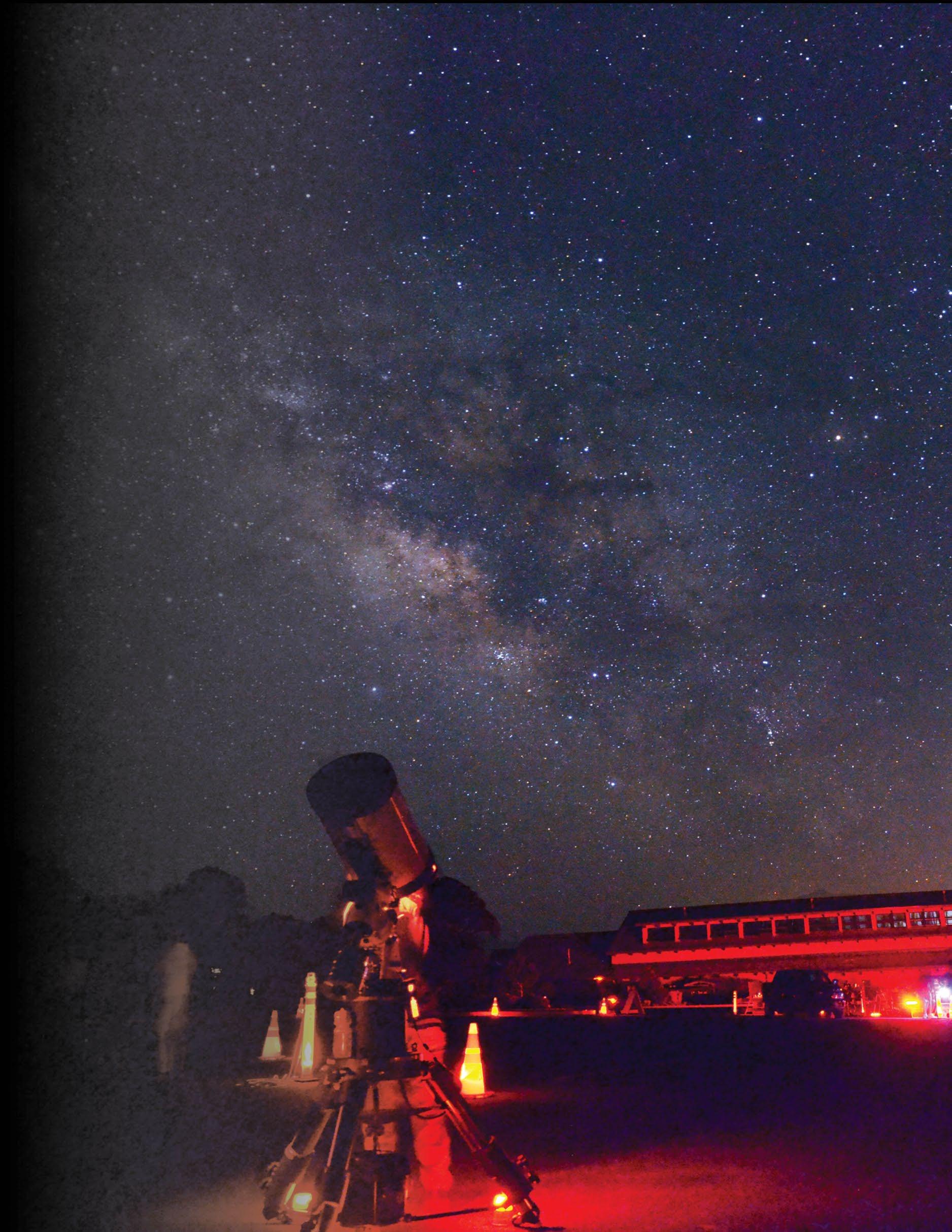
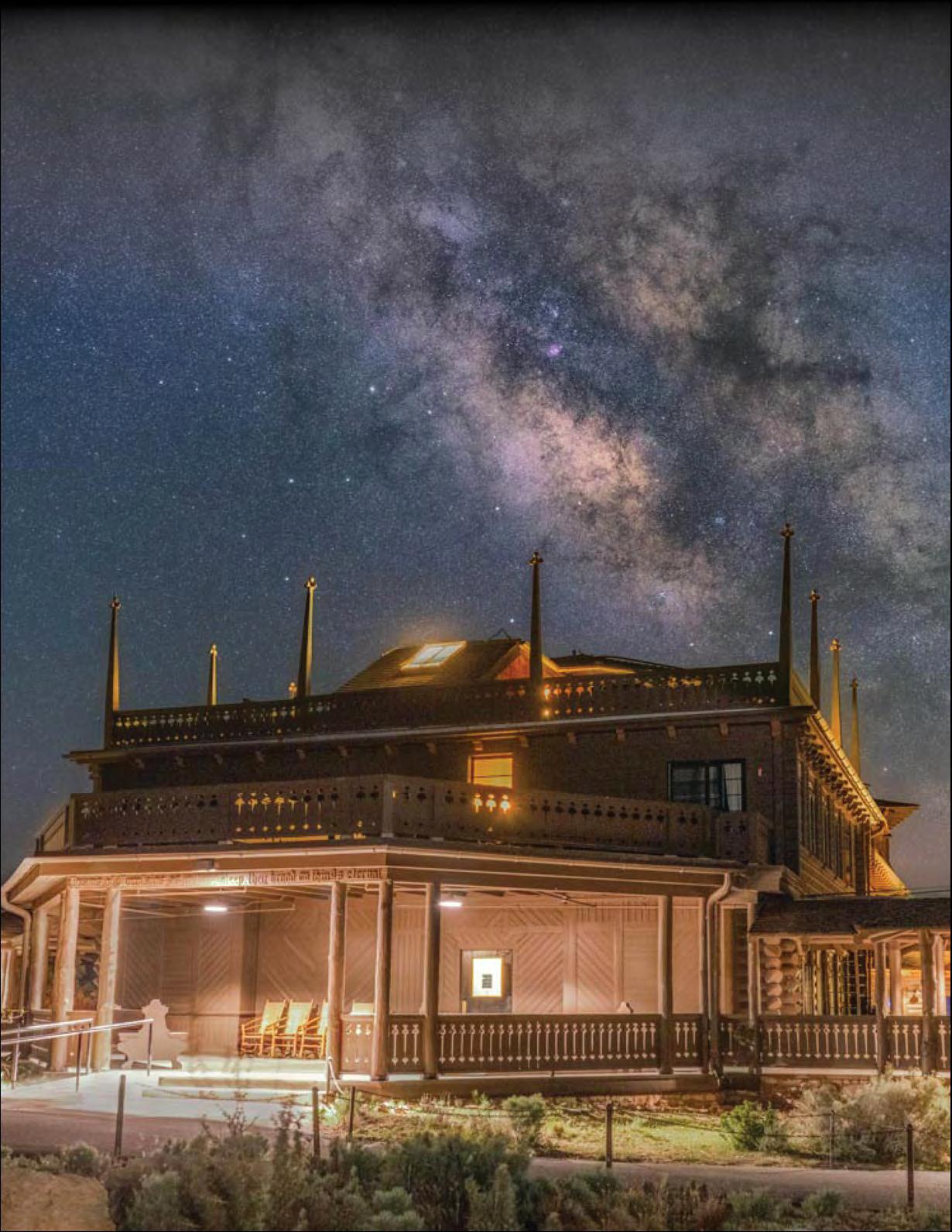
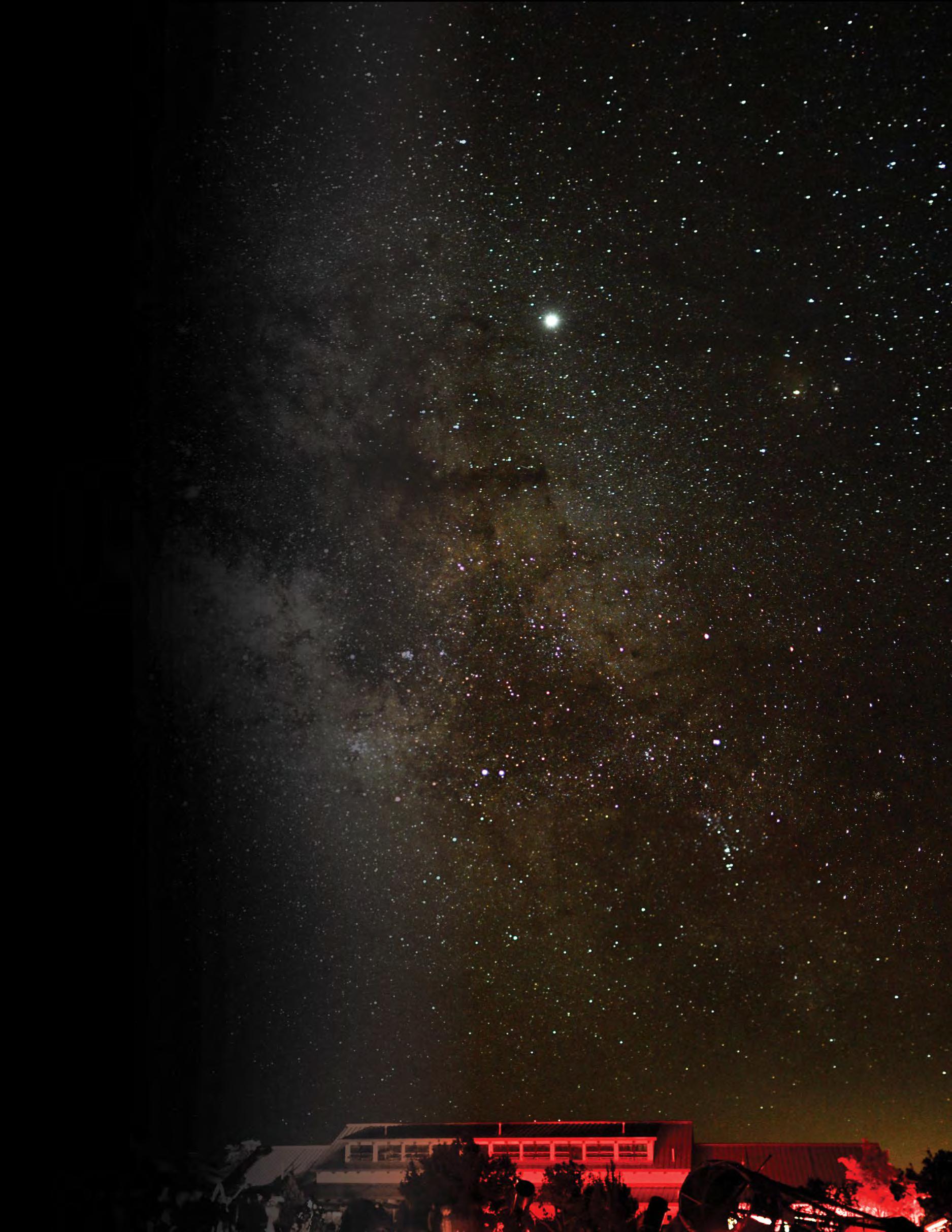
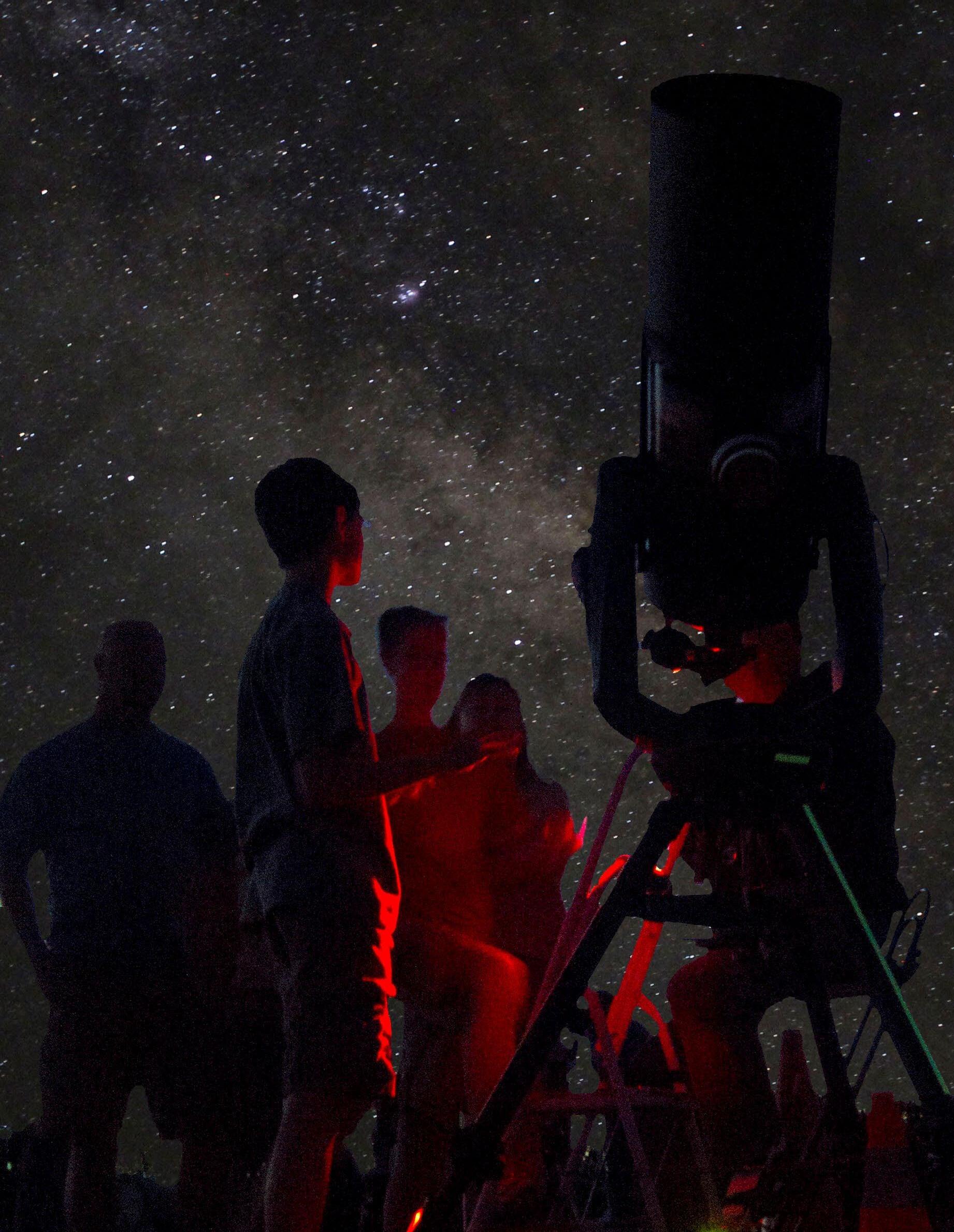
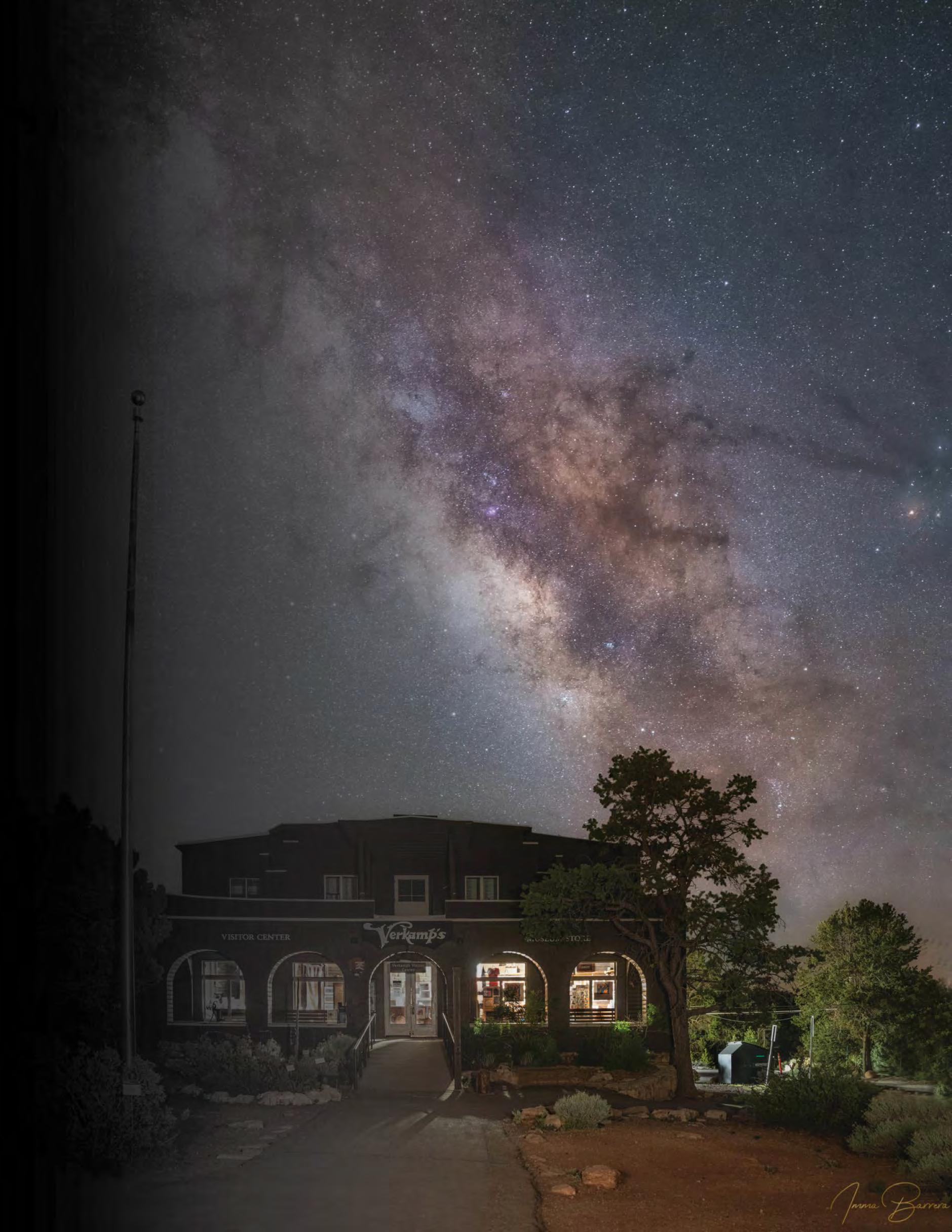
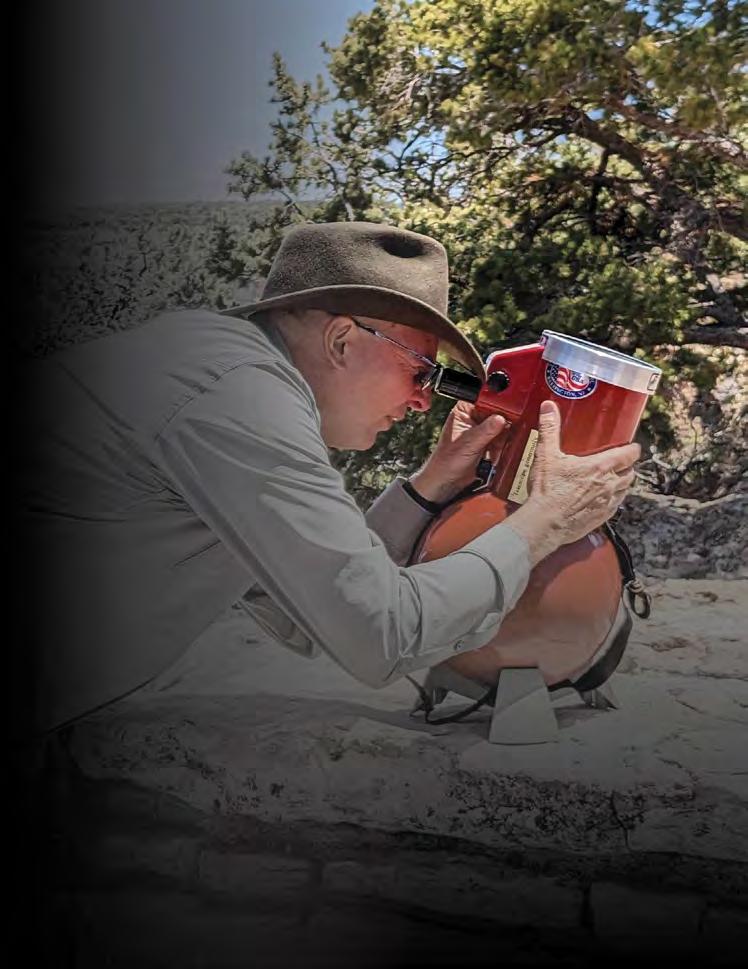
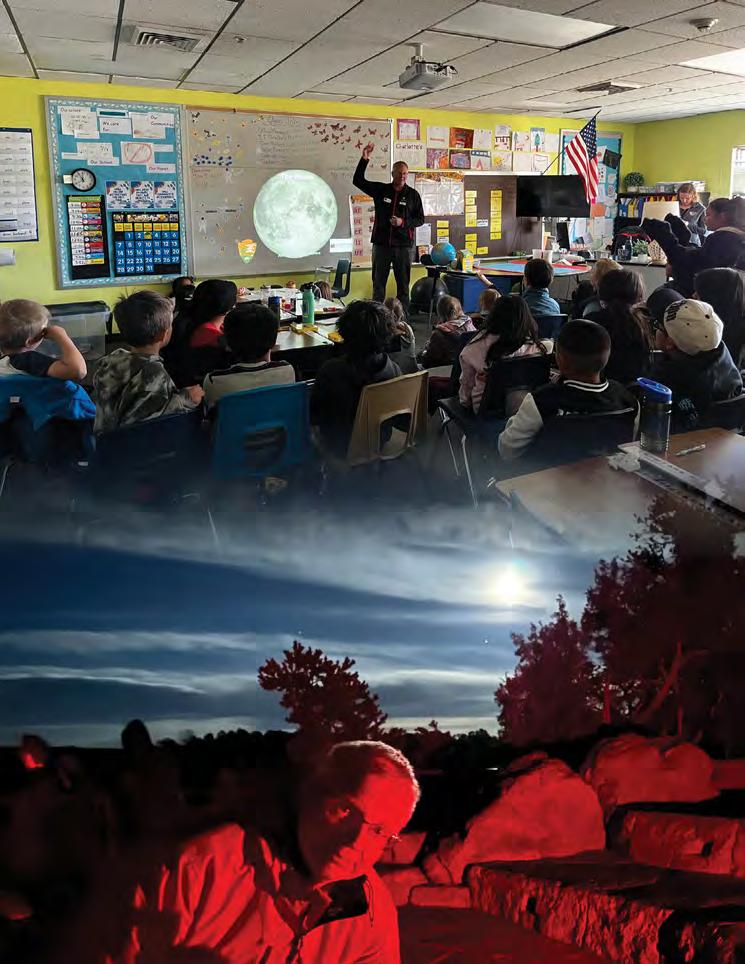
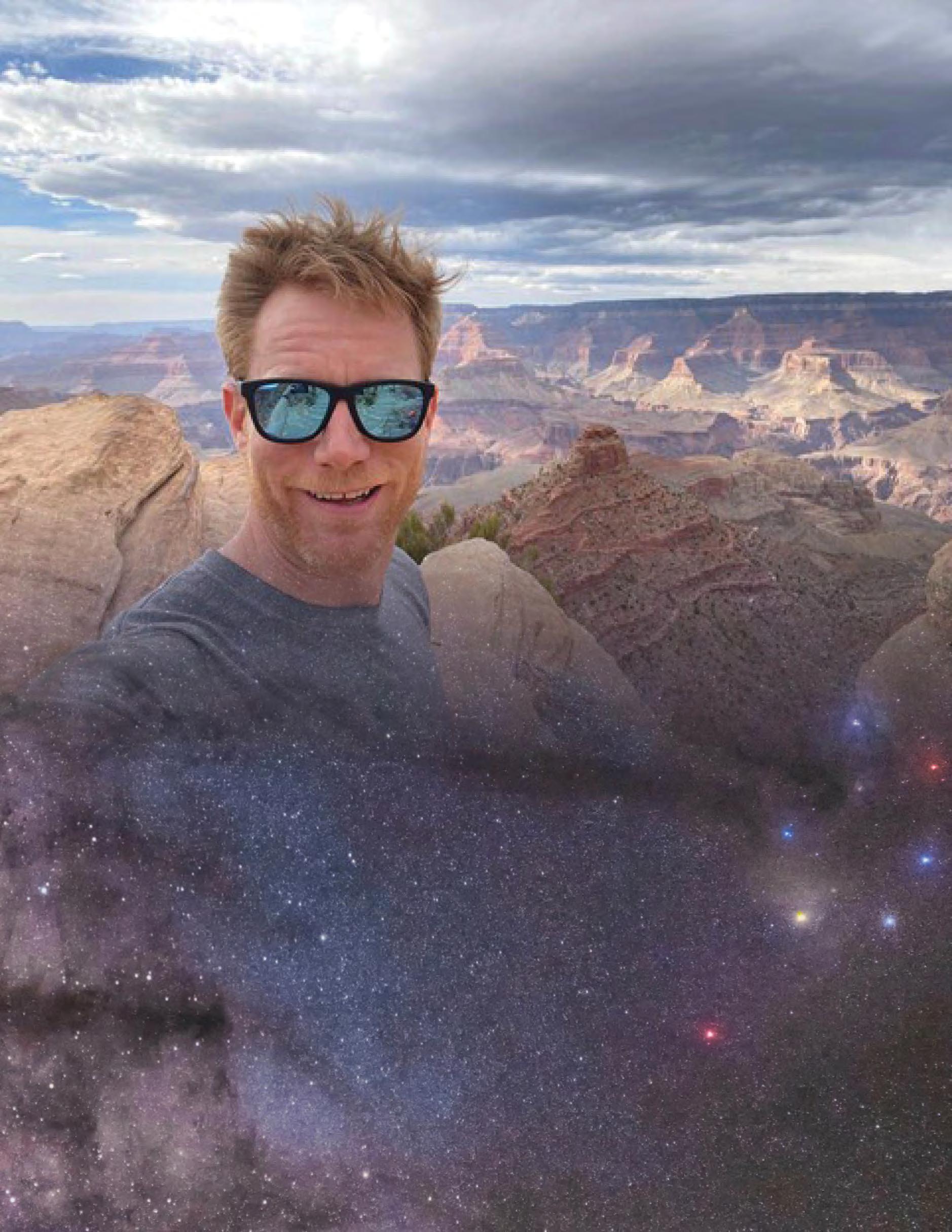
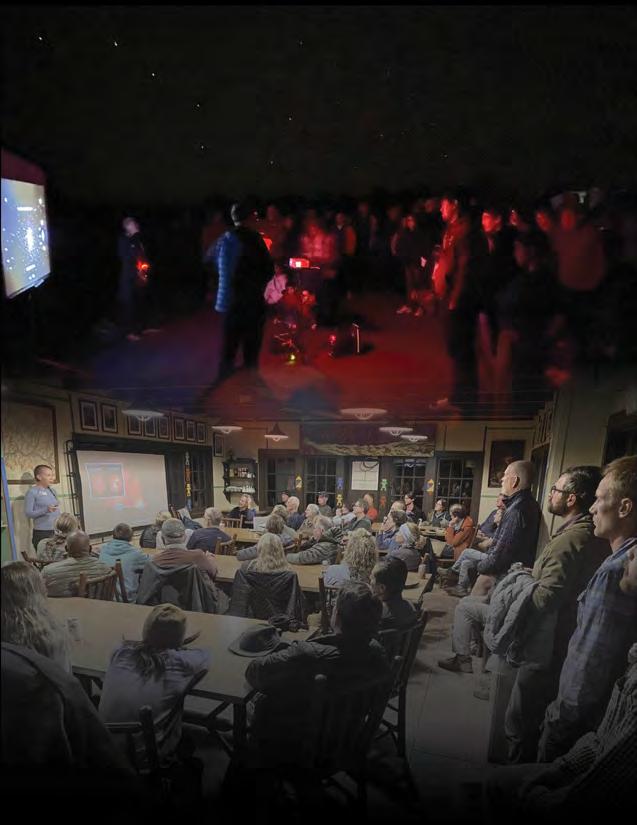
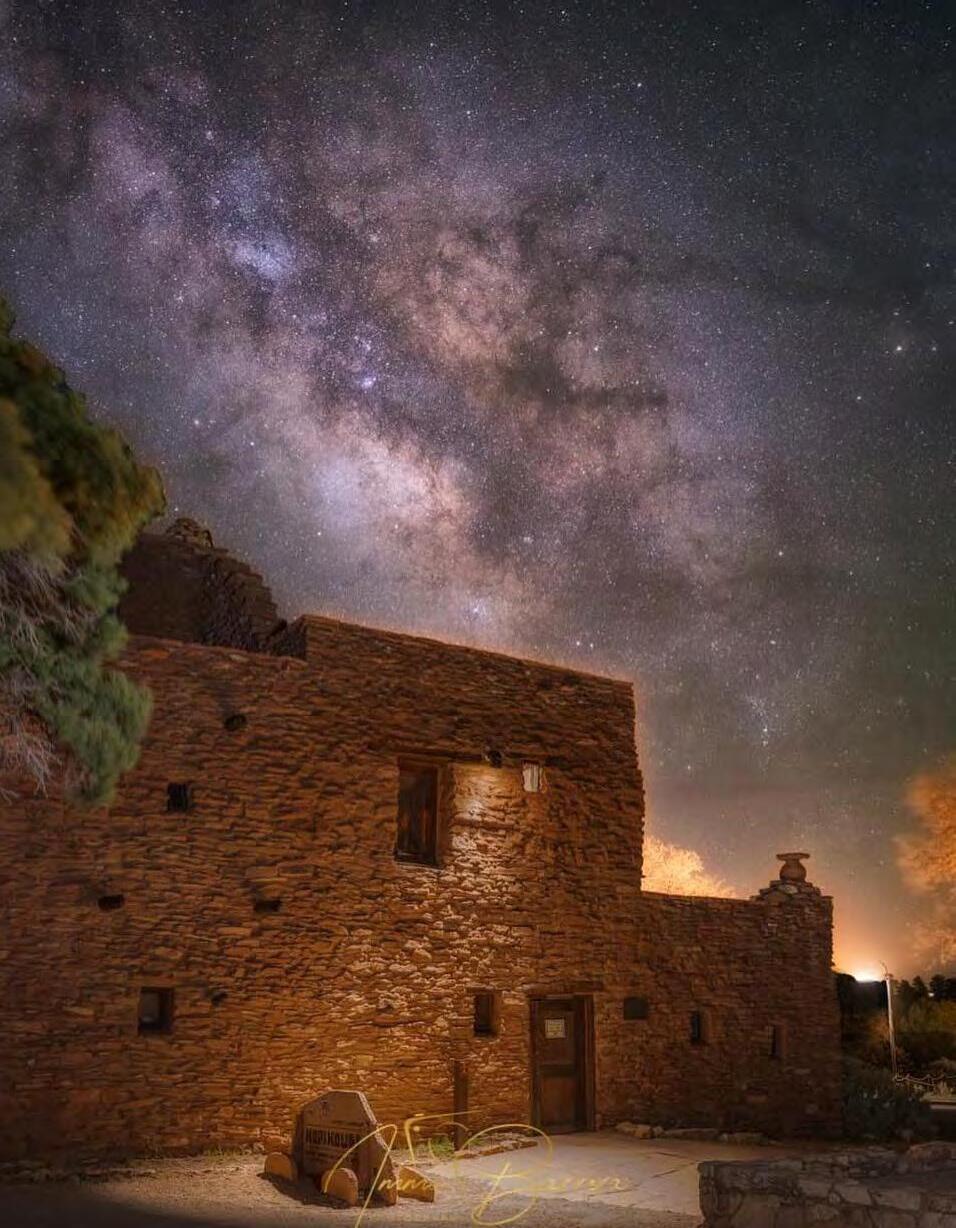
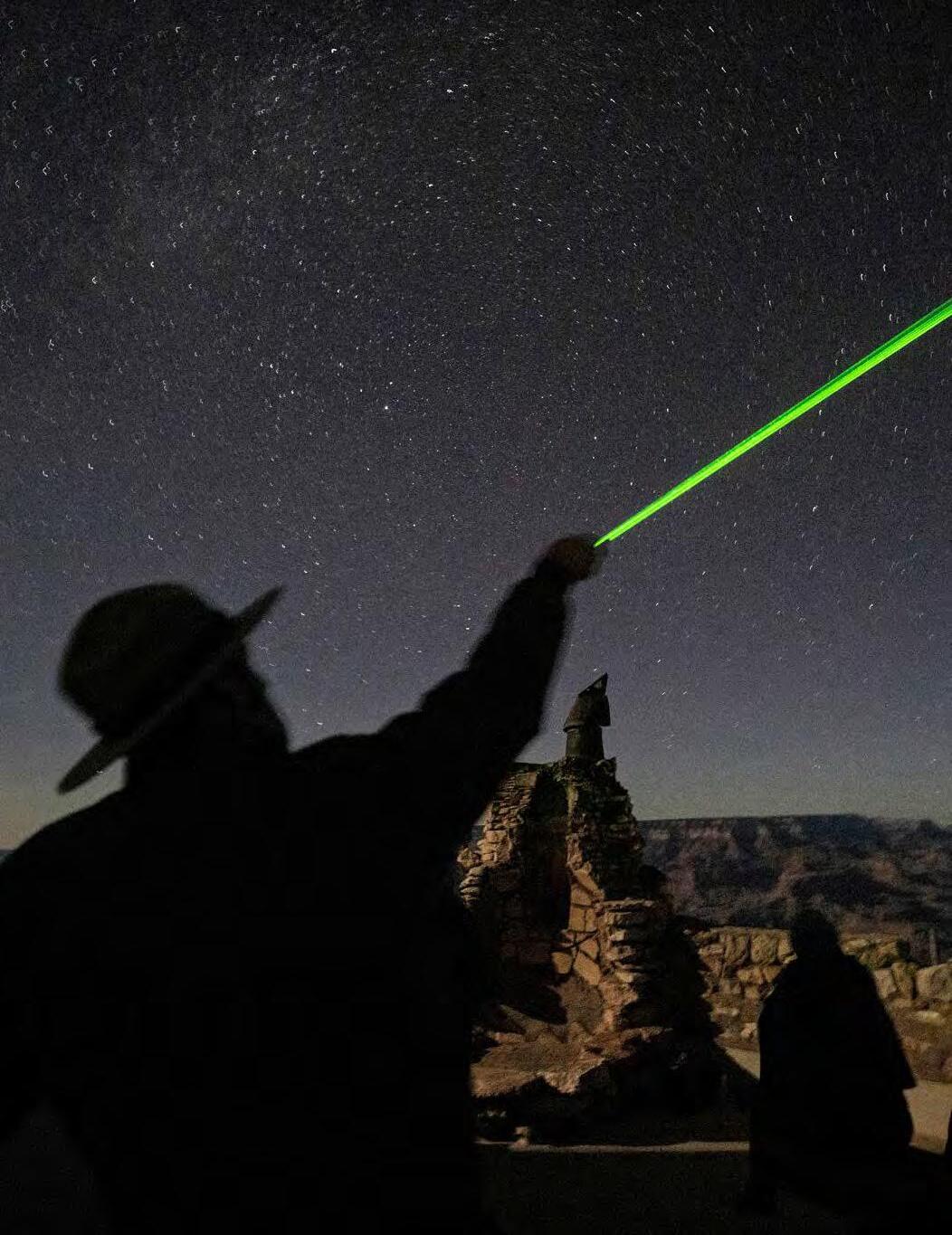
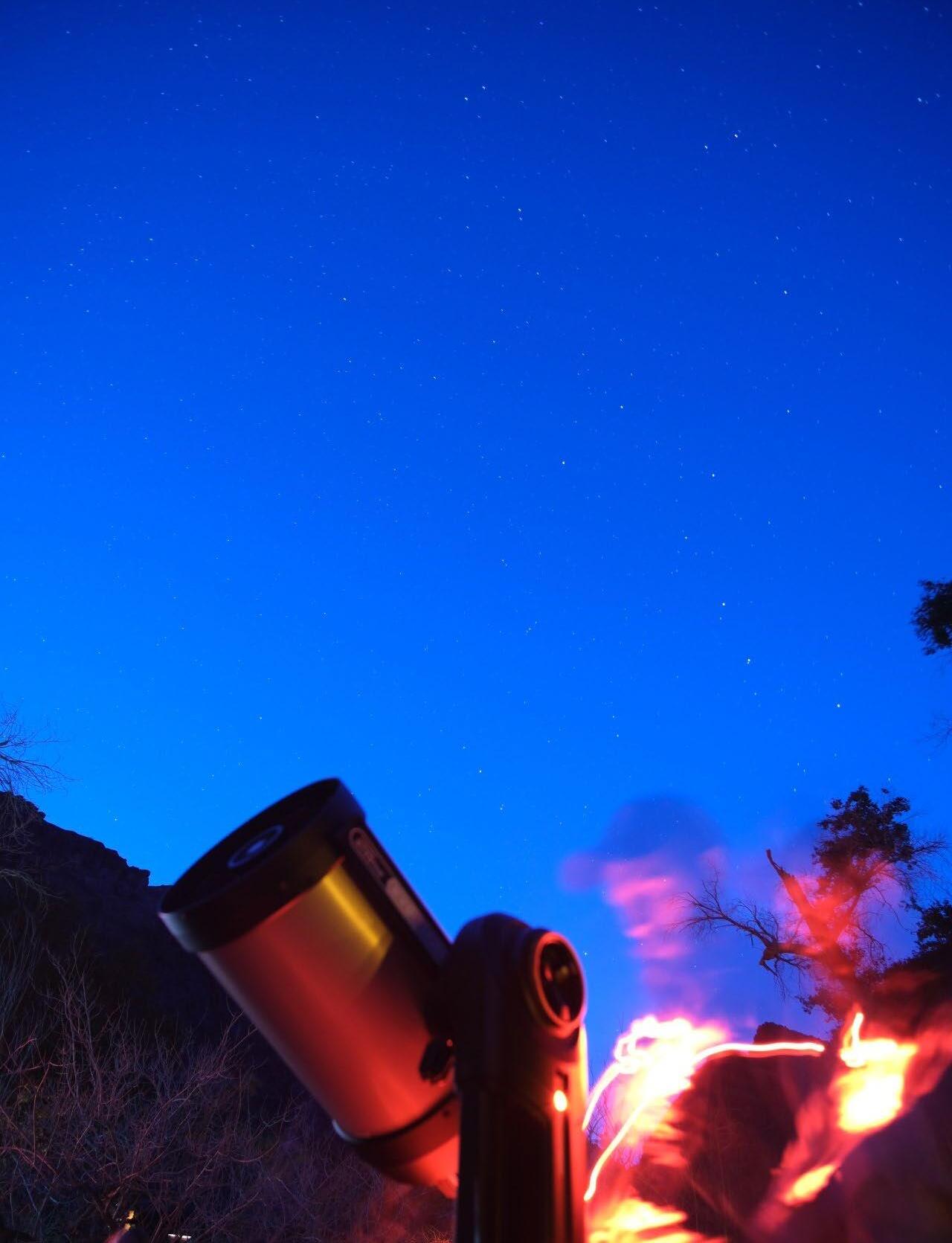
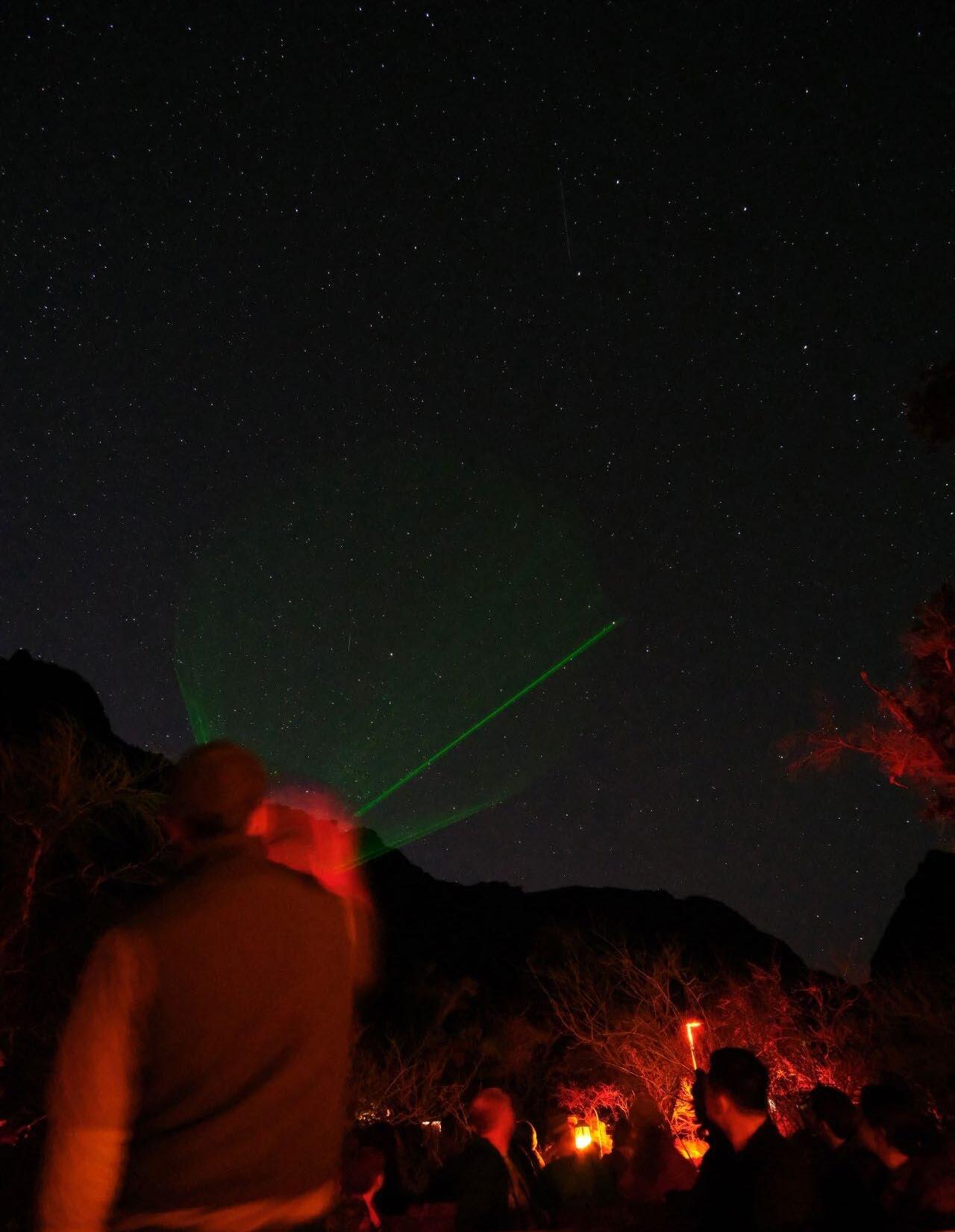
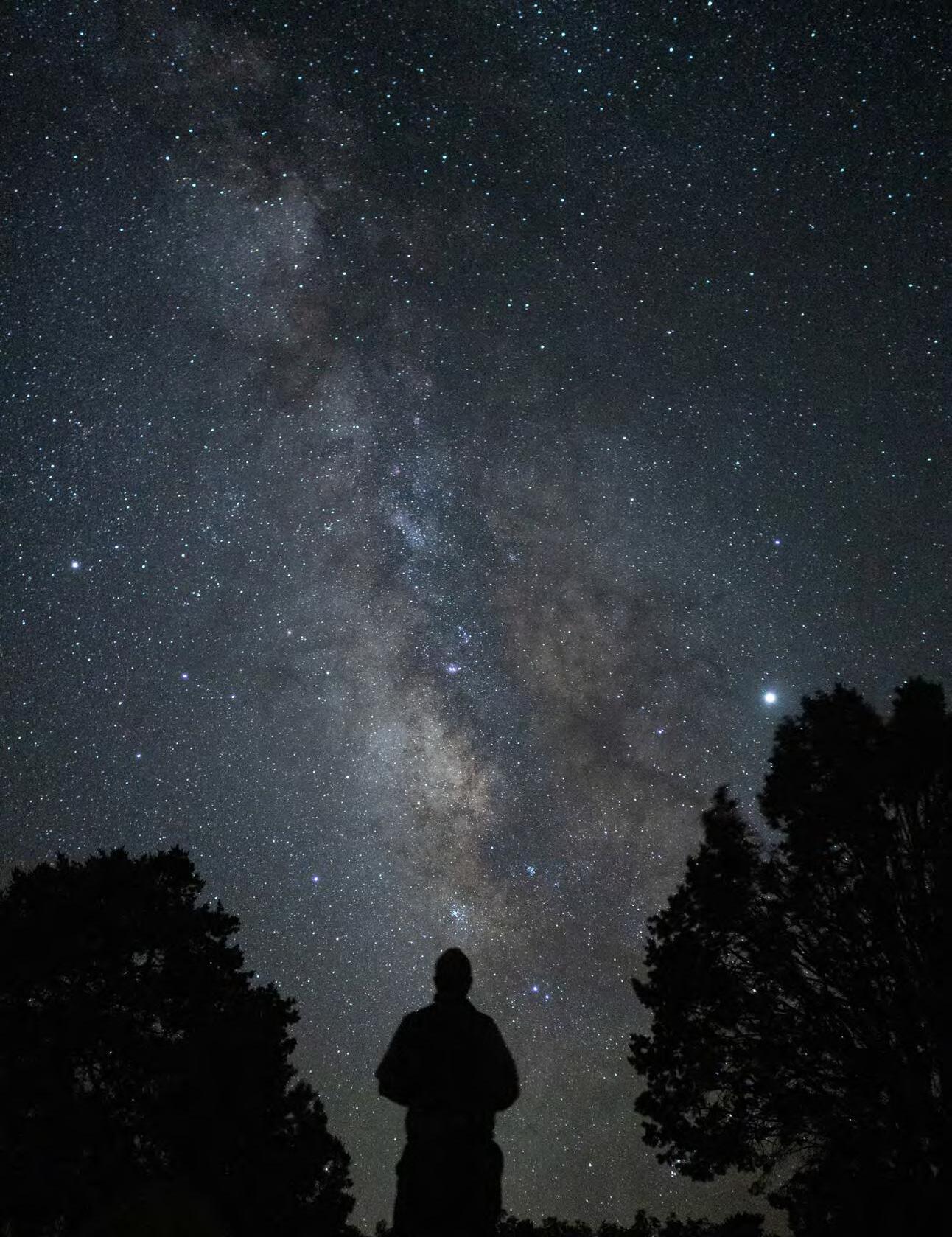
Star Trails at Toroweap Overlook. If you setup a camera to take one long exposure of the night sky, you’ll capture the above effect known as “star trails,” a product of Earth’s rotation.
Photo by Grand Canyon Astronomer in Residence Imma Barrera
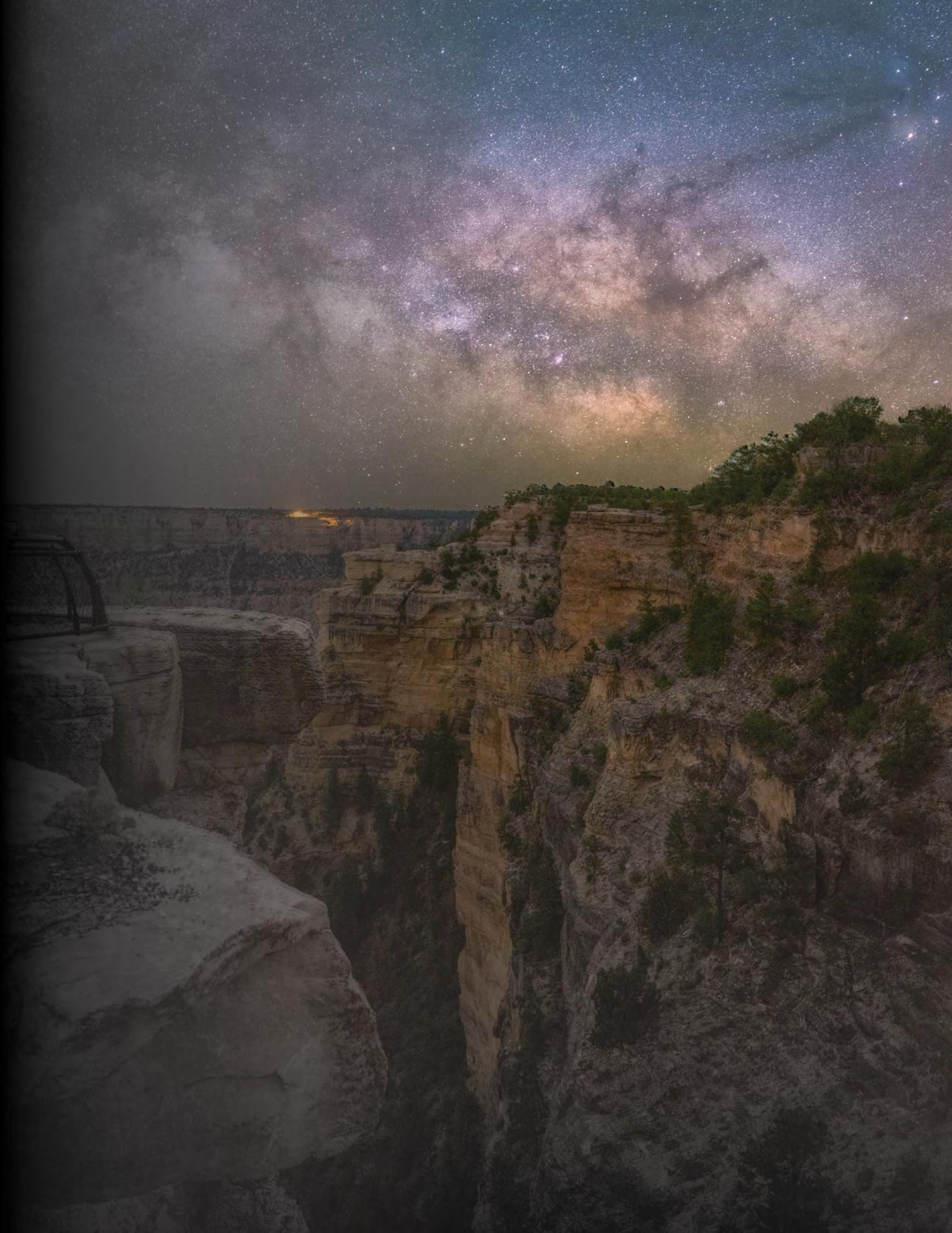
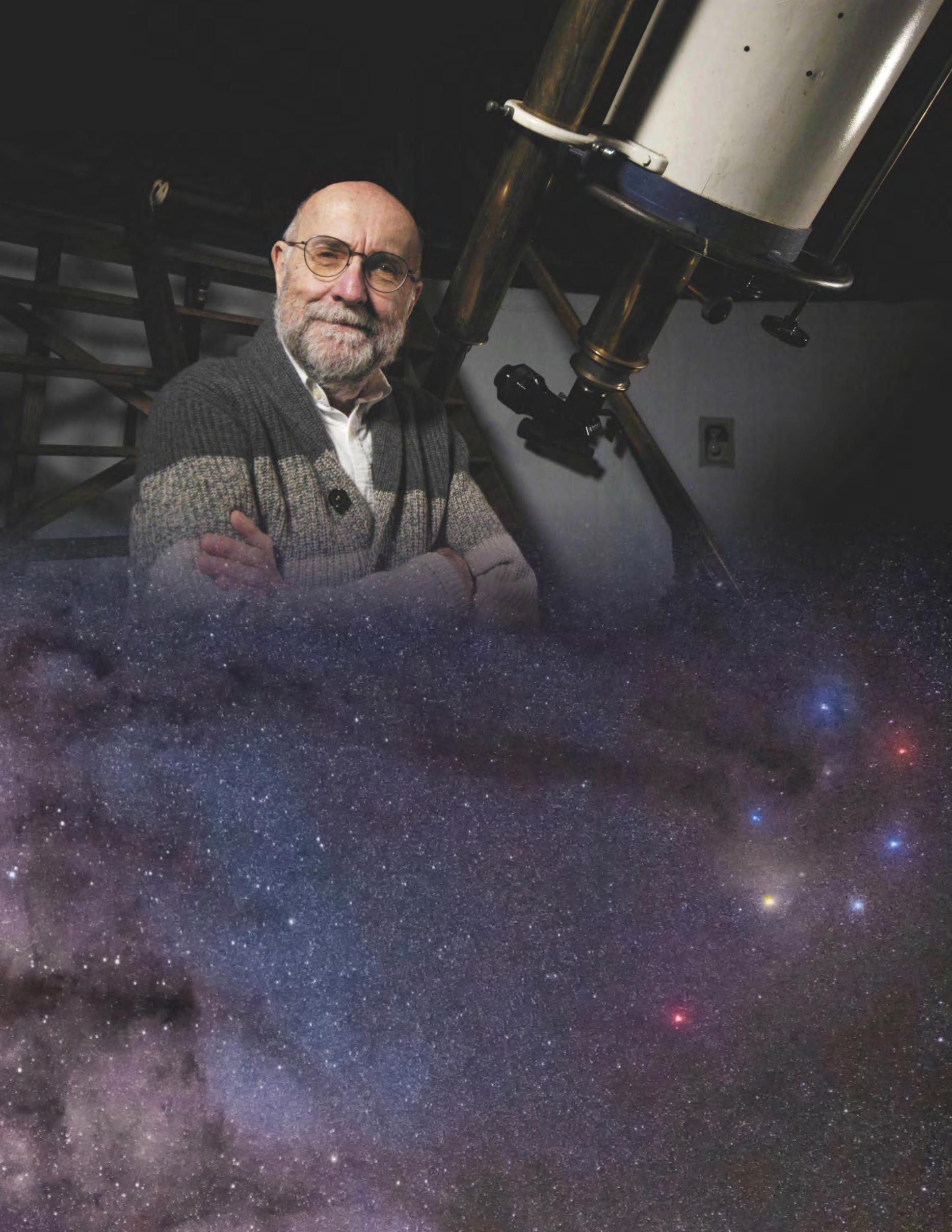
Photo by Imma Barrera
Introduction to the Dark Skies Program
Rader Lane
Park Ranger—Interpretation and Resource Education
Dark Skies Program Manager
Grand Canyon National Park
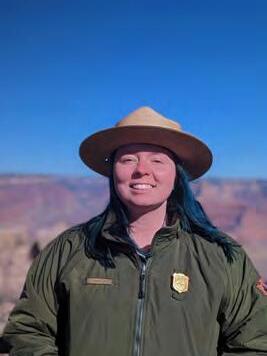
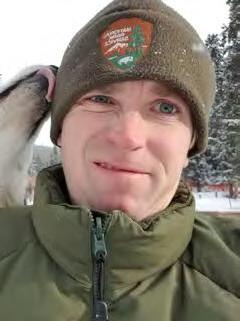
Hi all, my name is Rader Lane, I am a park ranger in the Division of Interpretation and Resource Education. I recently pivoted my position to focus on developing our park’s Dark Skies Program. Among the many resources we interpret, our superintendent has named Dark Skies as one of his three emphasis areas for our Division, the others being Inclusive Stories and Climate Change.
There are two main pillars to this program. First, our Dark Skies Team works to keep the park dark. We were certified an International Dark-Sky Park in 2019. During our initial pursuit, we inventoried over 5,000 lights parkwide—and we have a plan to retrofit every single one of them to be “dark-sky-friendly.”
Second, we maintain the park’s dark skies outreach programs. There are several programs upon this pillar: The Grand Canyon Star Party, the Astronomer in Residence Program, and the Astronomy Volunteer Program, to name a few.
We have a unique situation here at Grand Canyon—no other place provides as much visitor-access whilst maintaining such pristine night skies. And our park leadership is taking this fact to new heights. We won International Dark-Sky Place of the Year in 2019 for our work, and we continue to set the bar for DarkSky Parks worldwide. I hope this report provides perspective on our work this year. And remember, “Half the Park is After Dark!”
Meet the Dark Skies Team
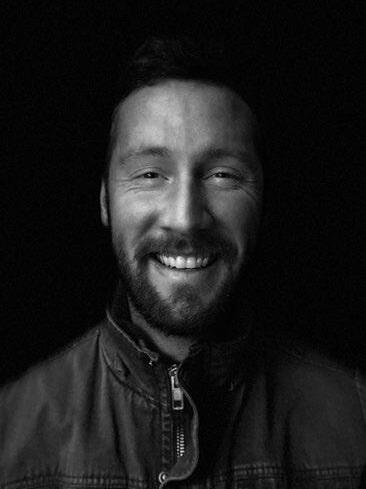
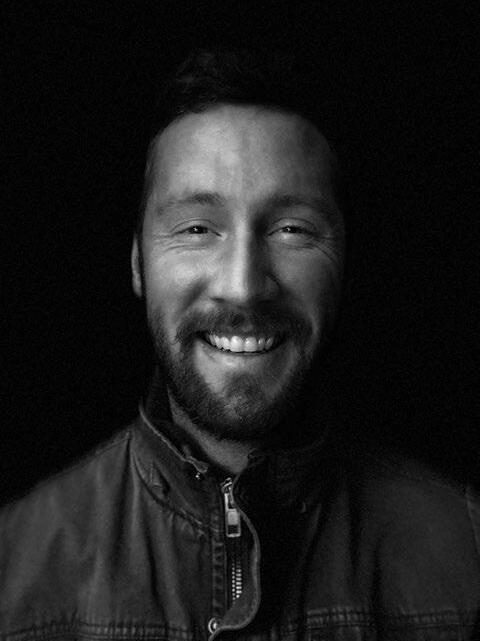
“Hi, I'm Rader. My focus is on managing our public night sky programs in the park. I like to say I am a park ranger by day, and a DARK ranger by night. Ask me about why my favorite star is Arcturus sometime (warning— it is nerdy.)!"
Rader Lane - Dark Skies Program Manager Division of Interpretation and Resource Education
Employee Spotlight
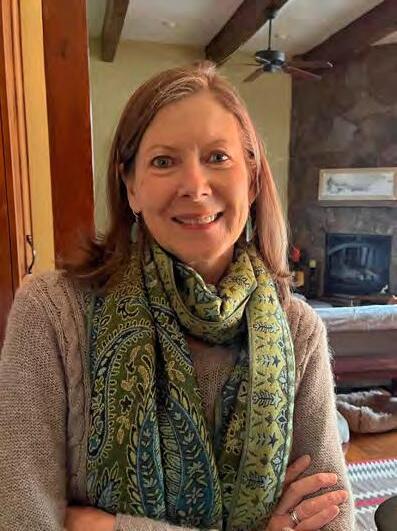
“Vicky Stinson here. One of my most interesting projects was working with our team to retrofit approximately 2,000 outdoor lights to make them dark sky compliant. The most rewarding part is hearing visitors' exclamations of awe when seeing the GRCA’s dark skies for the first time.”
Vicky Stinson - Project Manager (retired) Division of Planning, Environment, and Projects
Vicky Stinson, Landscape Architect and Project Manager at Grand Canyon National Park, retired after an exceptional career with the National Park Service. Thirty years ago, Vicky began her career with NPS at the Denver Service Center and came to work at the Grand Canyon in 2001. Among her many accomplishments, Vicky spearheaded our dark-sky planning efforts that led to the park being certified as an International Dark-Sky Park. She is a real hero of our dark-sky story. Due to the immensity of this park, the level of dark-sky planning was unprecedented in scale. Vicky led the way to earning the park “International Dark-Sky Place of the Year” in 2019 thanks to her excellence in retrofitting thousands of the park’s lighting fixtures. Vicky—thank you for your years of service to Grand Canyon’s night skies!
“Hola, I’m Santiago, helping lead data efforts at Grand Canyon. Being a part of the Dark Sky Team to help preserve night sky is one of the most rewarding projects I’ve participated in.”
Santiago Garcia - Data Management Science and Resource Management
“I'm Maggie! I've been with the NPS for 2 years, and I am grateful to be spending my 4th season at GRCA. It is an honor to work at a Dark Sky Park—my goal is to inspire our visitors to slow down and always take a moment to stop and appreciate our expansive universe.”
Maggie McGuffie - Visitor Services Assistant Division of Interpretation and Resource Education
“I'm Rachel, I am on my 3rd season in Interpretation with the park service. This is my first dark skies park—being able to share simple wonders of the night sky with visitors has been a memorable experience. I look forward to developing my night sky knowledge as my career continues.”
Rachel Baer - Visitor Services Assistant Division of Interpretation and Resource Education
"Hello, I'm Aiden. I have enjoyed the night sky since I was a child and it is a great honor of mine to be able share Grand Canyon's night sky views from our International Dark Sky Park with visitors!"
Aiden O’neil - Visitor Services Assistant Division of Interpretation and Resource Education
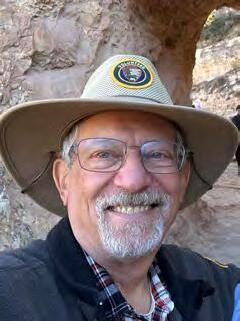
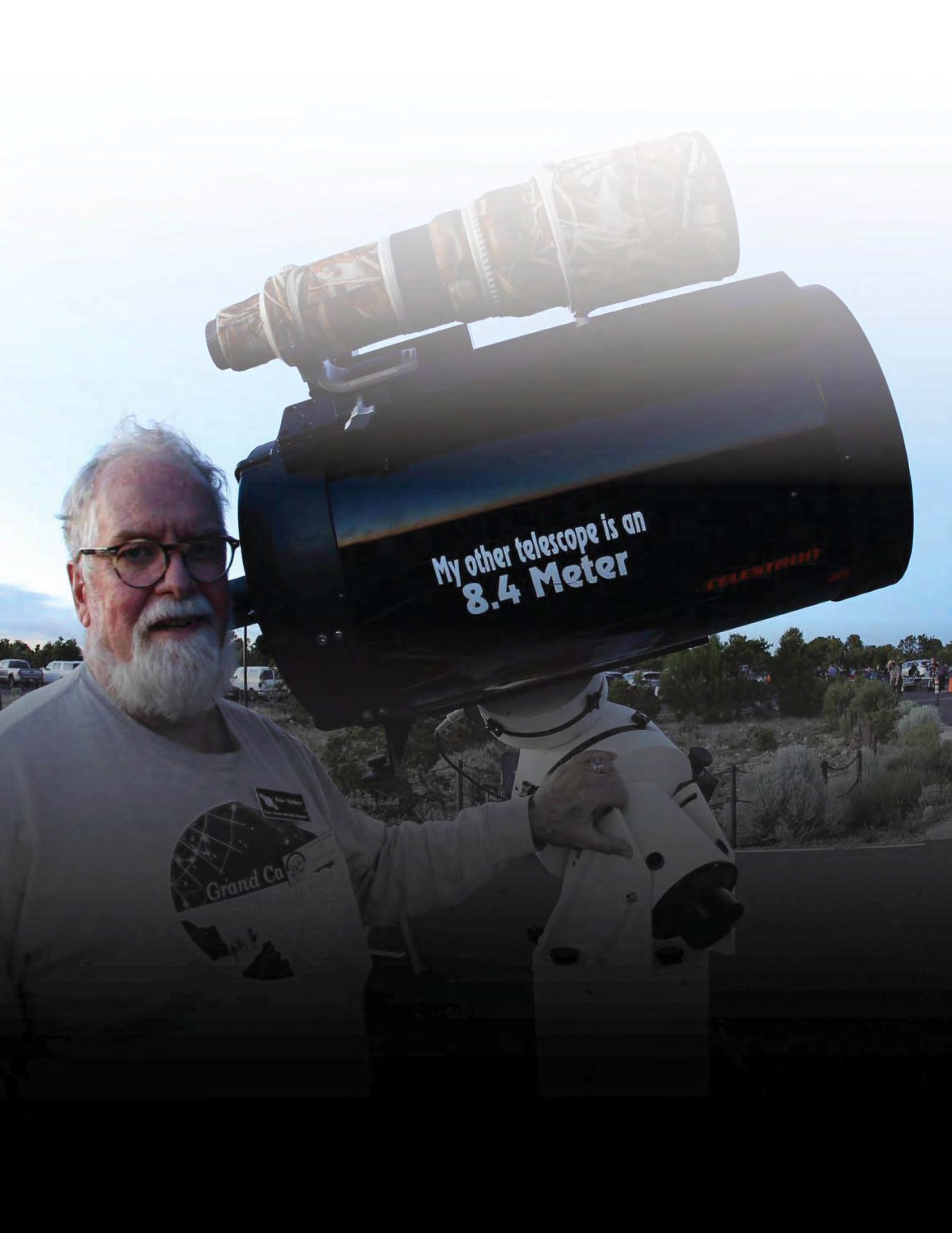
"I'm Bernie, a retired engineer. I have the privilege to share the night sky as an Astro VIP under one of the country's darkest locations. My goal is for every person I meet to experience a celestial wonder through my telescope under the majestic arc of our Milky Way. I expect this to take a while."
Bernie Sanden - Astronomy Volunteer Division of Interpretation and Resource Education
“Hello, I'm Ted, a retired computer nerd and also a dark sky advocate. I'm passionate about astronomy outreach to the public, and also enjoy contributing to science by studying asteroids. The night sky always reminds me how awesome it is that we humans can understand even a tiny bit of it.”
Ted Blank - Astronomy Volunteer Division of Interpretation and Resource Education
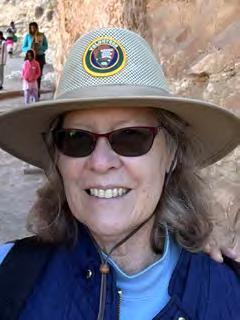
“Hello, I’m Peggy, a retired teacher and a dark sky advocate. I enjoy volunteering in my community, especially at the Dark Sky Festival. I met Ted when he invited me to view the night sky through his telescope, and we’ve been stargazing together ever since.”
Peggy Yeargain - Astronomy Volunteer Division of Interpretation and Resource Education
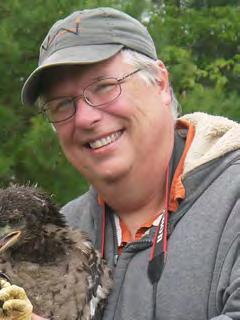
“I'm Steve, a retired Florida State Park Ranger and 10 year volunteer for NPS, USFWS, USFS, and BLM. There aren't many things in today's world people can agree on, but the majesty of a dark sky is one and that is why I love sharing it with visitors.”
Steve Dimse - Astronomy Volunteer Division of Interpretation and Resource Education
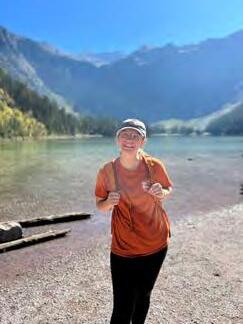
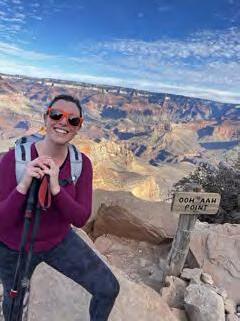
"Howdy, I'm Lucy! A born and raised Midwesterner turned Park Ranger, I'll be the first to invite someone over for a game night or to convince you to head out on a 15-mile hike with me."
Lucy Pabst - Astronomy Volunteer Division of Interpretation and Resource Education
“Hey everyone, I'm Nate. I've been a seasonal interpretive or backcountry ranger for the last 10 years and I'm super excited to announce I recently accepted a permanent position at Theodore Roosevelt in North Dakota.”
Nate Hughes - Astronomy Volunteer Division of Interpretation and Resource Education
“Hello! I’m Clover, Residency Program Manager with Grand Canyon Conservancy. I have the honor of running the Astronomer in Residence program. It’s been an incredible inspiration to work with dark sky experts in this magical place where we can see and treasure our place in the universe. Astronomers are really far out!”
Clover Morell - Residency Program Manager Grand Canyon Conservancy
Dark Skies Program 2023 at a Glance...
289 astronomy programs
48,157 visitor attendance
125 astronomy volunteers
4,011 volunteer hours
4 Astronomers in Residence
33rd Annual Grand Canyon Star Party
89% of lights in park are dark-sky friendly
11% increase of retrofitted lights over 2023
It’s not all about quantity. It’s also about quality:
“I've lived a long time and have done many things. This was one of the most profound nights of my life. In all my years on this Earth, I’d never seen the Milky Way! I just started crying.”
-Visitor at night sky talk
International Dark-Sky Park
Certification Progress
In 2013, Grand Canyon Conservancy hired a specialist to map out all the lights in the park. She inventoried 5,094 lights! In order to become an International DarkSky Park, an initial 67% of the lights had to be retrofitted as “dark-sky-friendly.” That meant shielding fixtures, using warm bulbs, adding timers, or removing some all together. We achieved 67% compliance in June 2019.
Now, the park has five years to make 90% of the lights compliant, then five years after that to make the park 100% compliant. We are currently at 89%, well on our way to achieving 90% and beyond by June 2024. Our dark-sky efforts have been unprecedented in scale—we are undoubtedly the largest, most complex, International Dark-Sky Park in the world. Learn more about dark skies here.
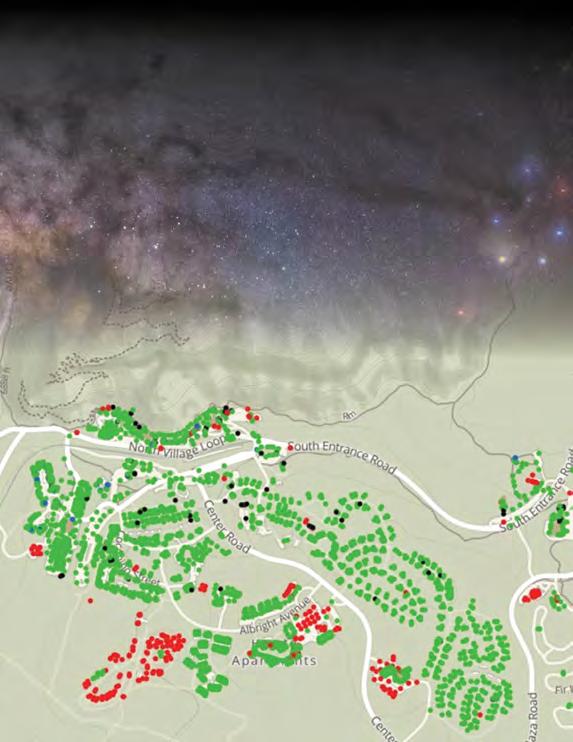
The Dark Skies Team (DST) uses GIS to map and track all the light fixtures in the park. Green means they are dark-sky-friendly, red means they are not, black means they have been removed, purple means they are emergency lights (both black and purple count toward compliance).
We can click on each dot in our map and find details about each fixture. The vast majority of lights are in the Village District. It’s an amazing system developed and maintained by Santiago Garcia, the data manager for the DST!
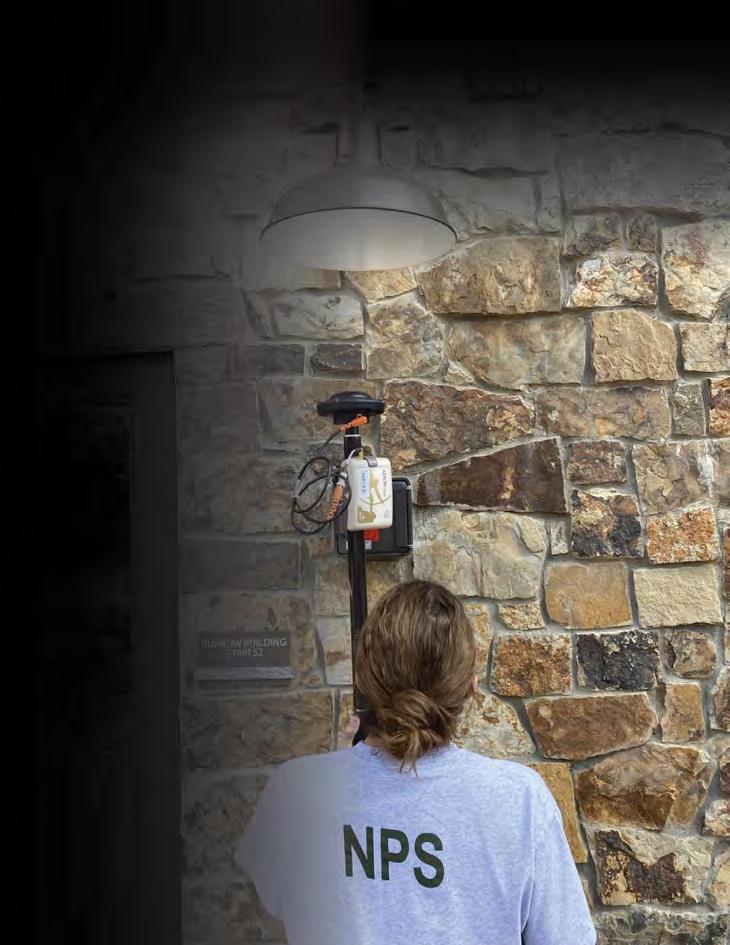
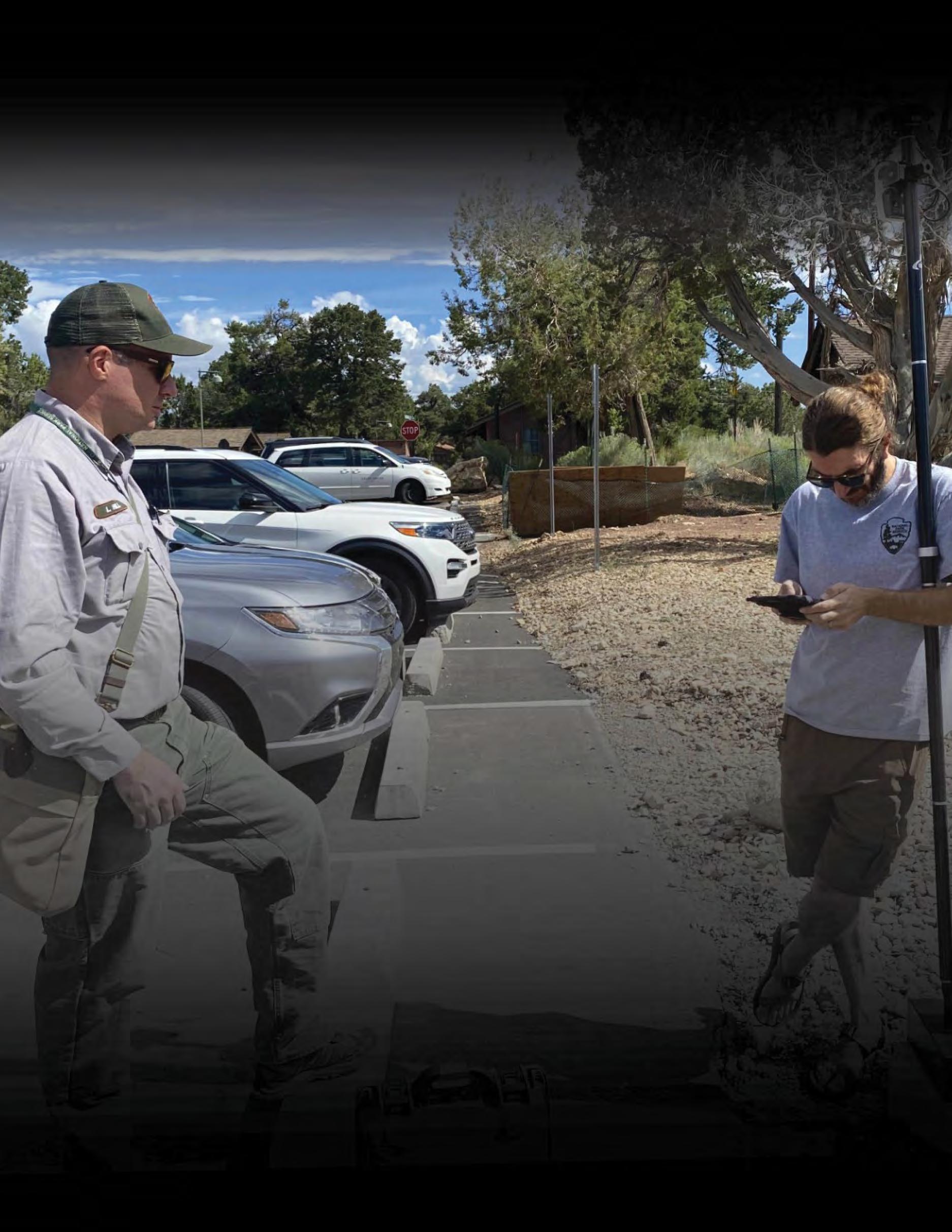
Ranger Wesley Bond marks the GPS coordinates for the new Maswik Lodge light fixtures, to add to our GIS map. Notice how the fixture is fully shielded, and the bulb is tucked deep inside the fixture, reducing glare in our eyes, shining only where the light needs to be, down onto the entrance way, not into the starry sky!
Click here to learn more about dark-sky friendly lighting for your private home.
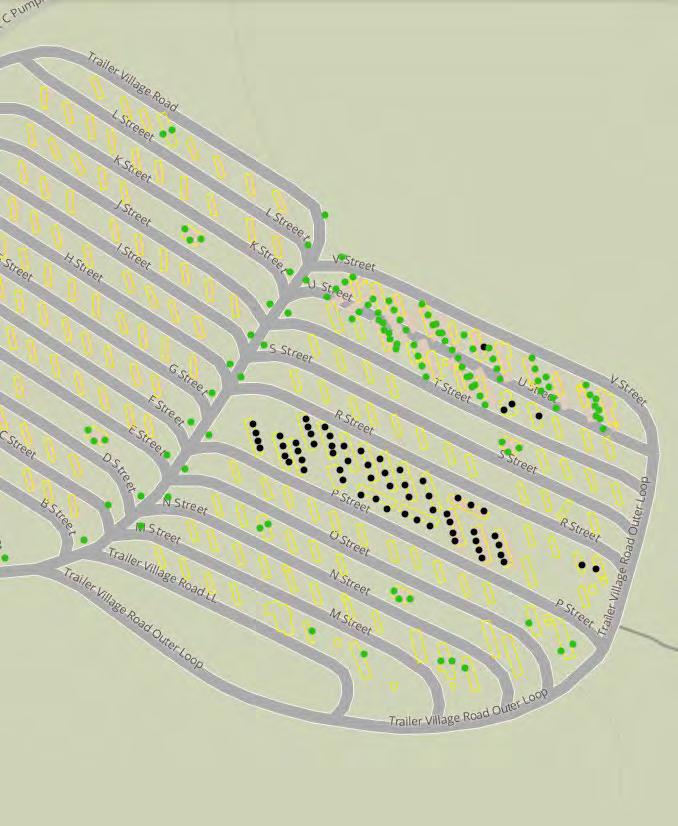
Trailer Village (above) was completely retrofit this year. Earlier this year, all the compliant fixtures (green dots) in this diagram were not compliant. We were 78% dark-sky compliant at the beginning of 2023. Now we are 89%. An 11% increase is equivalent to around 550 fixtures. We need to be 90% compliant by June 2024.
Completed in 2023:
• Yavapai Lodge
• Market Plaza
• Rec Center and Kaibab Learning Center
• HQ Parking Lot
• New Maswik Lodge
Next Up in 2024:
• Pinyon Park
• Supai Camp
• Museum Collection/ Purchasing
• Clinic Parking Lot
• Desert View
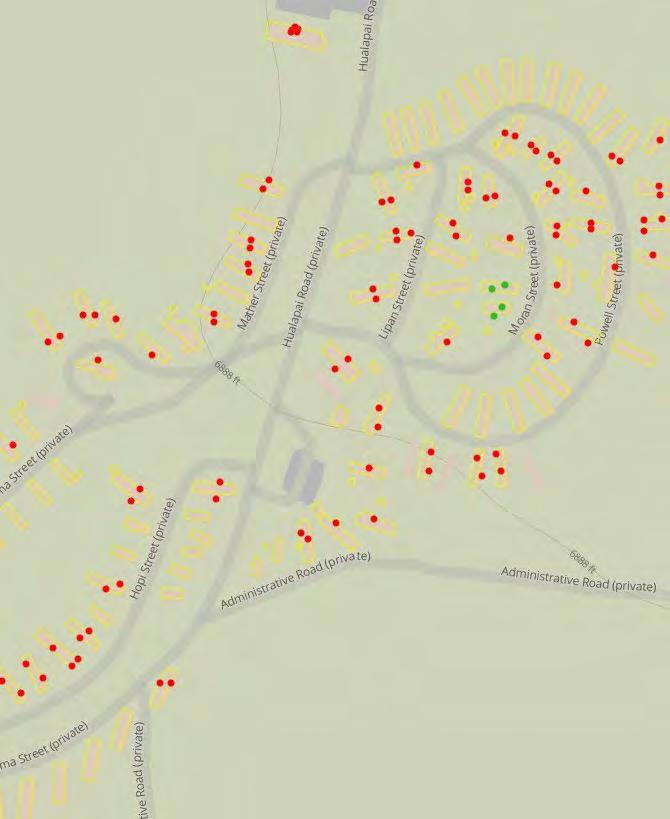
Neighborhoods like Pinyon Park still need to be retrofit. But the Dark Skies Team prescribed dark-sky-friendly fixtures to each one of these red dots this year. Fixtures are being ordered and contractors are being awarded for installation. If you own a private home in Pinyon Park, don’t worry, we are not changing your lights. However, you can do your part by assessing your own lights and seeing how you might change them to be dark-sky friendly. Reach out to us for suggestions.
“Our team uses a spectrometer to measure the ‘temperature’ of a given light bulb. Most dark-sky lights are supposed to be at or below 2700 degrees Kelvin, which gives them a nice yellow glow. Lights that are bright white or even blue can get up to 5000 kelvin— bad for our night vision, and not in compliance with our lighting codes.”
“We also use a GPS device to update where exactly fixtures are located in the park. We add those to our GIS map. We’re working on an app that will allow us to update our GIS map in the field.”
Rangers Lucas and Wesley of the Dark Skies Team on site at Maswik Lodge to map the new light fixtures with GPS. This year, the team also retrofitted Market Plaza, Yavapai Lodge, Trailer Village, The Rec Center, and the HQ parking lot. We visited many more sites, prescribing fixtures to be installed soon!
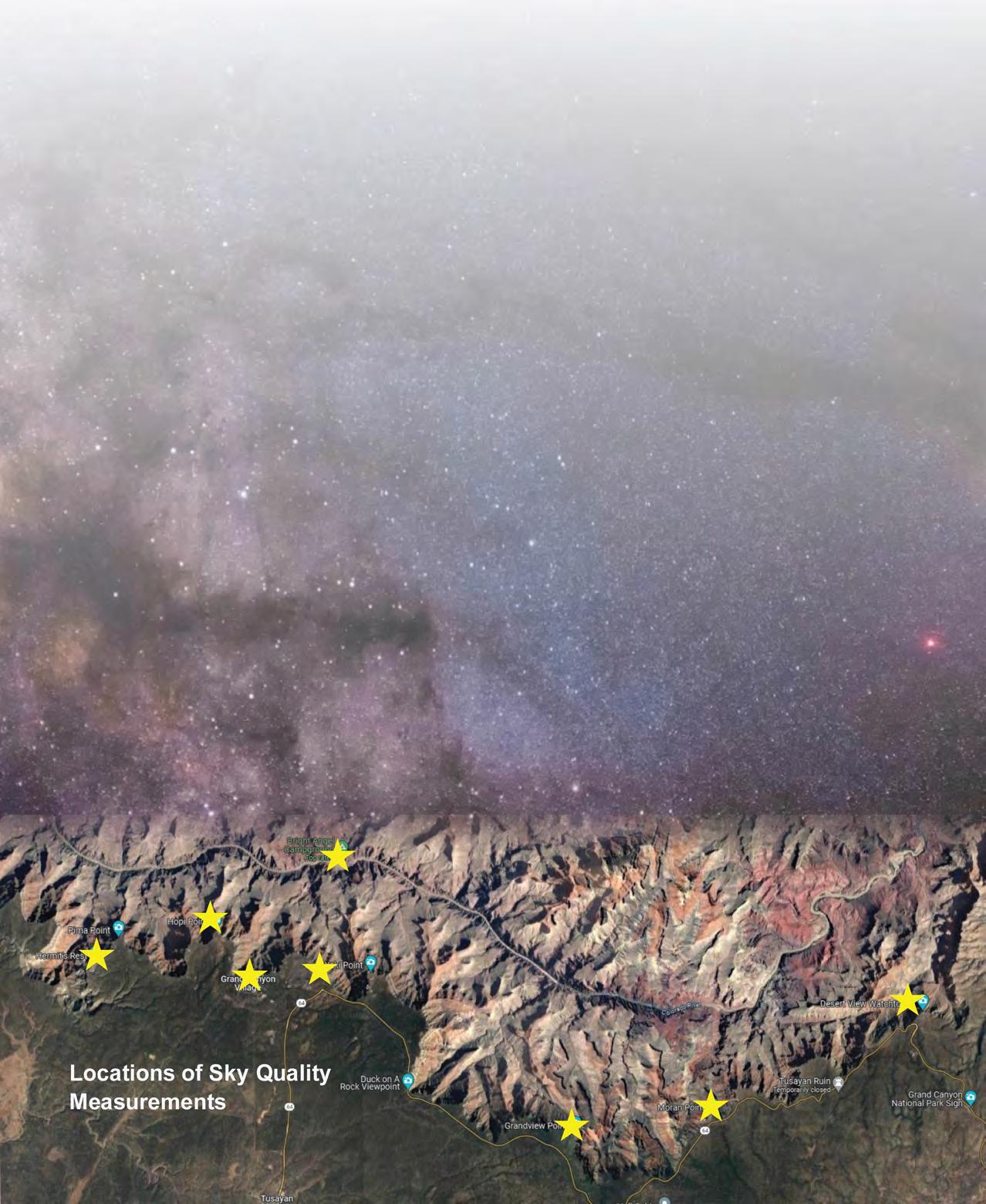
Another component of maintaining our International Dark-Sky Park status is to monitor the darkness of our night skies. We do this using a Sky Quality Meter. Once a year, our team goes out at night to several locations around the park and uses this device to measure the darkness (or brightness) or our night sky. When the moon phase is just right (not out), we point the device towards the top of the sky, or the zenith. We take several readings then derive the median. Readings above 21.00 represent very dark sites. For technical folks, the unit is magnitude per arc-second squared. The park average is 21.77 mag/arc².
33rd Grand Canyon Star Party
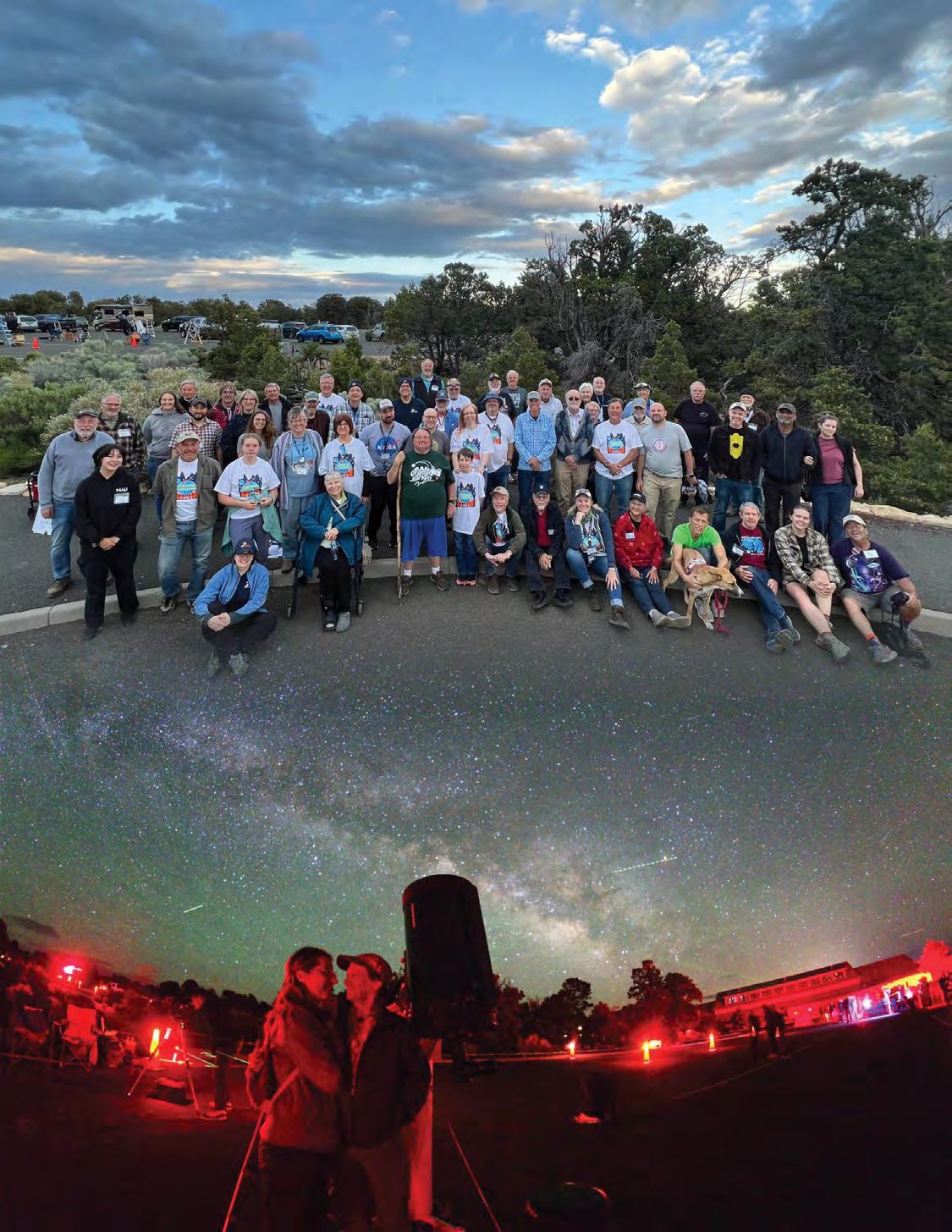
What started as a few astronomers in the Yavapai Geology Museum Parking Lot in 1991, has turned into the largest night sky festival in the National Park Service. For eight nights in June, we celebrate the night skies with over one hundred volunteer astronomers, 50-60 telescopes every night, special guest speakers, constellation talks, and more. Nearly 10,000 visitors attended this year. Learn more about Star Party.
33rd Annual Grand Canyon Star Party
At a Glance...
9,279 visitor attendance
79,296 visitor telescope views
9,752 solar telescope contacts
4,302 theater talk attendance
107 astronomy volunteers
1,700 constellation talk attendance
49 average number of telescopes per night
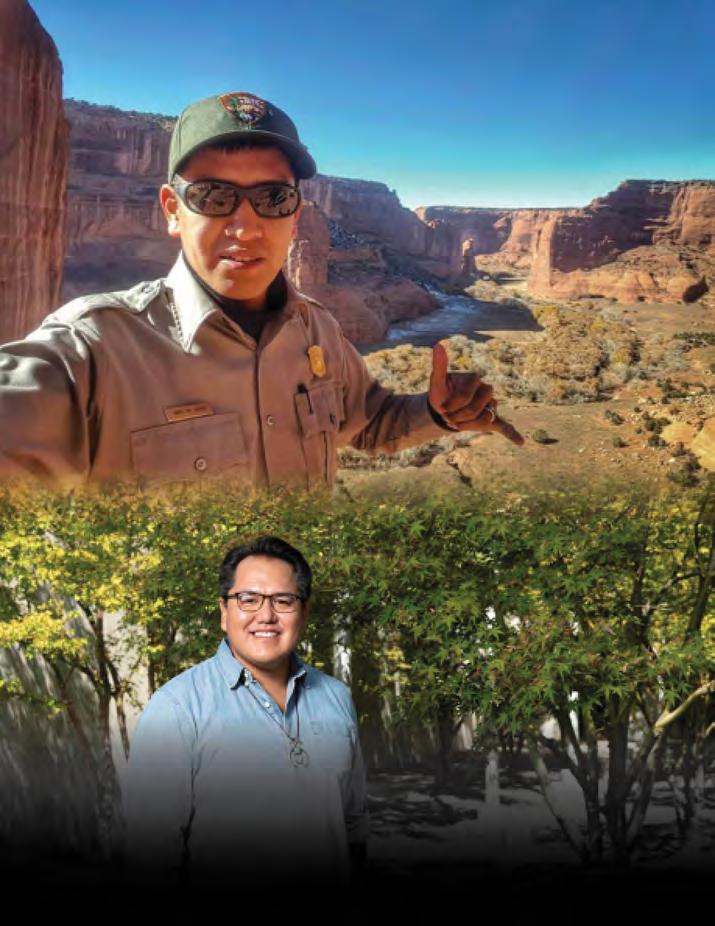
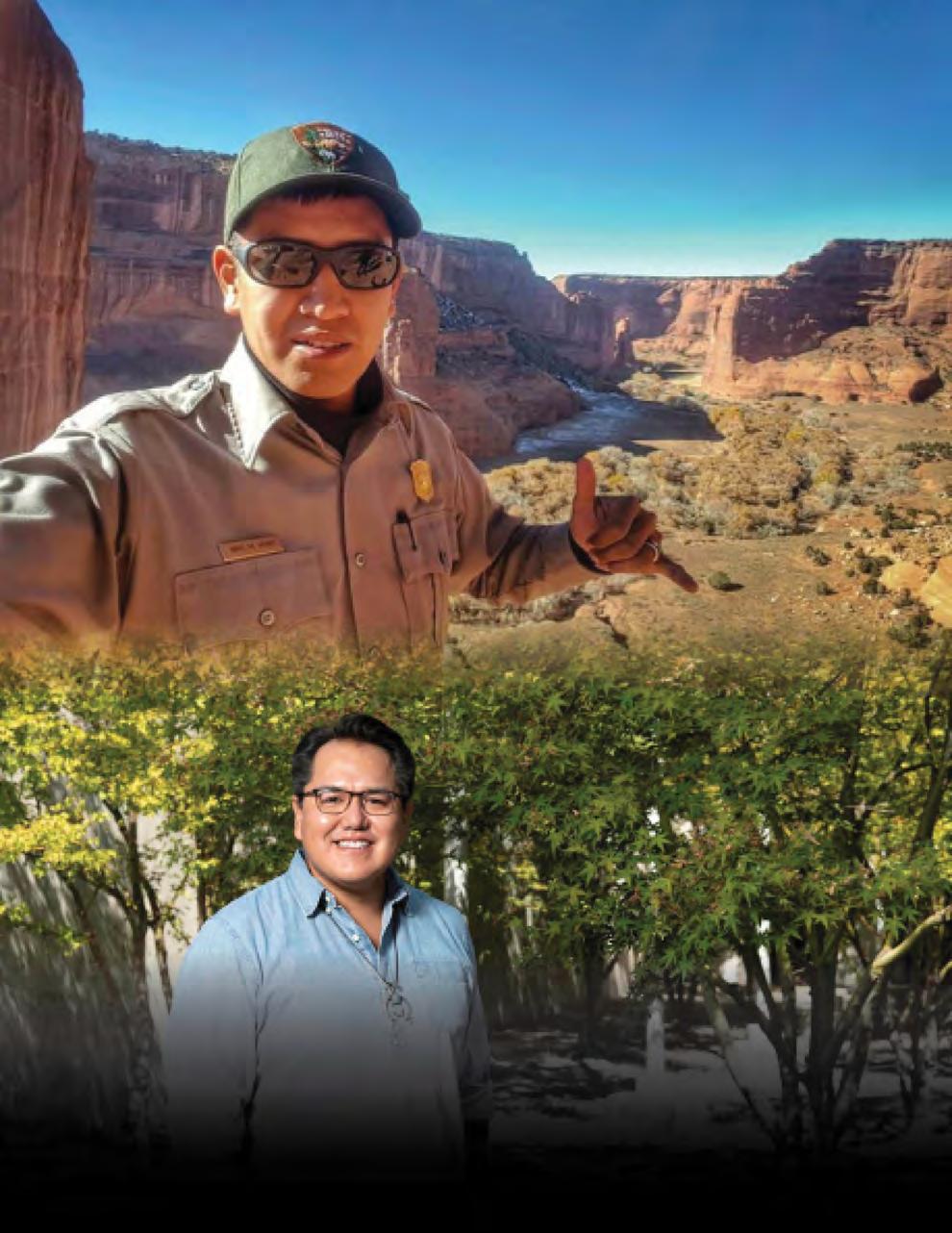
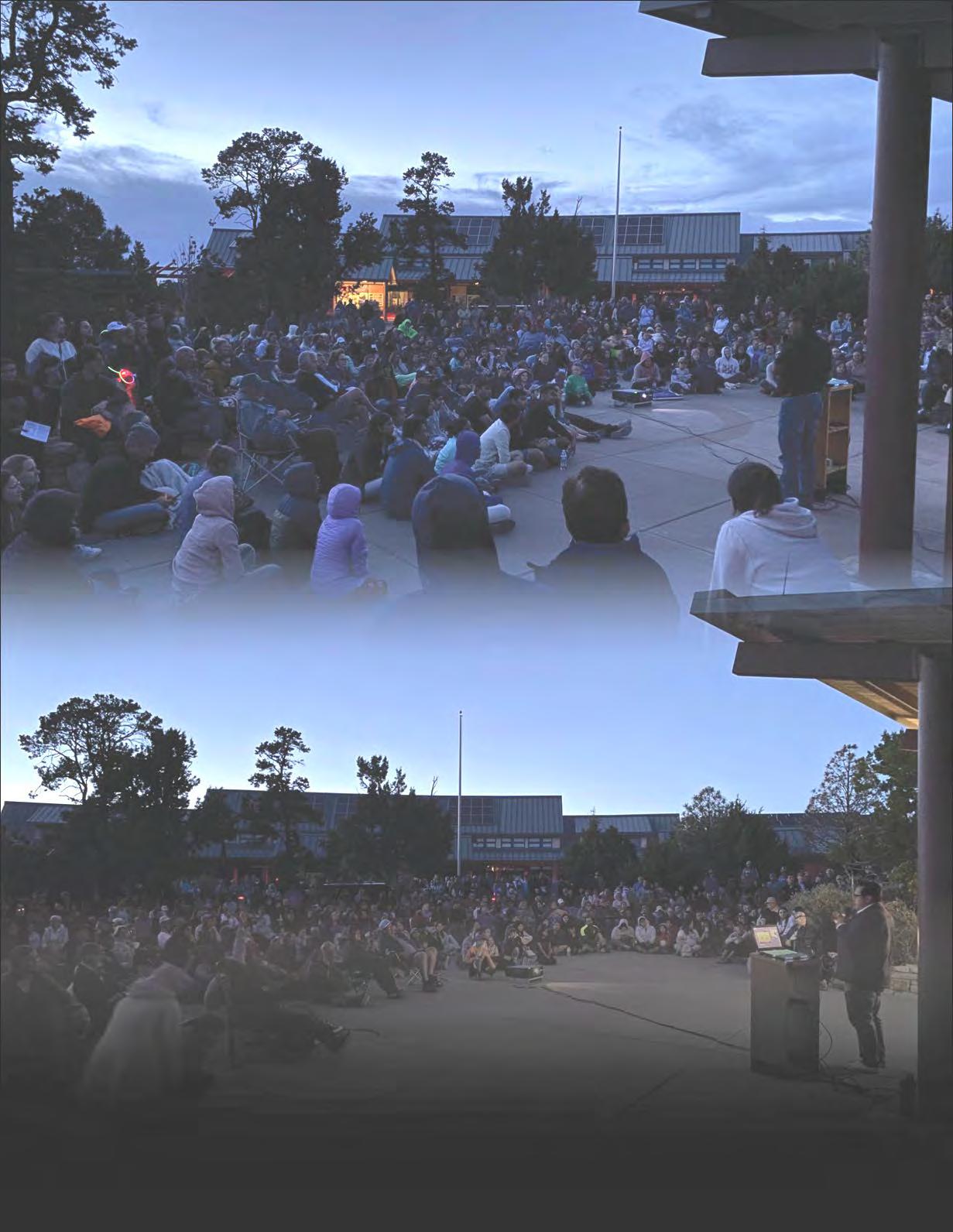
The Dark Skies Program is proud to work closely with our Tribal Affairs Office to bring traditional astronomical knowledges to Grand Canyon Star Party. This year, 5 of our 8 special guest speakers were representatives from some of the 11 traditionally associated tribes. Above, Ravis Henry, park ranger at Canyon de Chelly, presents “Seeing the Skies Through Diné Eyes” to over 500 visitors.
Here, Aaron Yazzie, mechanical engineer for NASA’s Jet Propulsion Laboratory, presents “Mars: Perseverance.” Yazzie grew up in Tuba City watching his grandmother dig into the dirt to plant crops. Today, he built the drill bits that are currently on the rover Perseverance, which digs into the dirt on the surface of Mars.
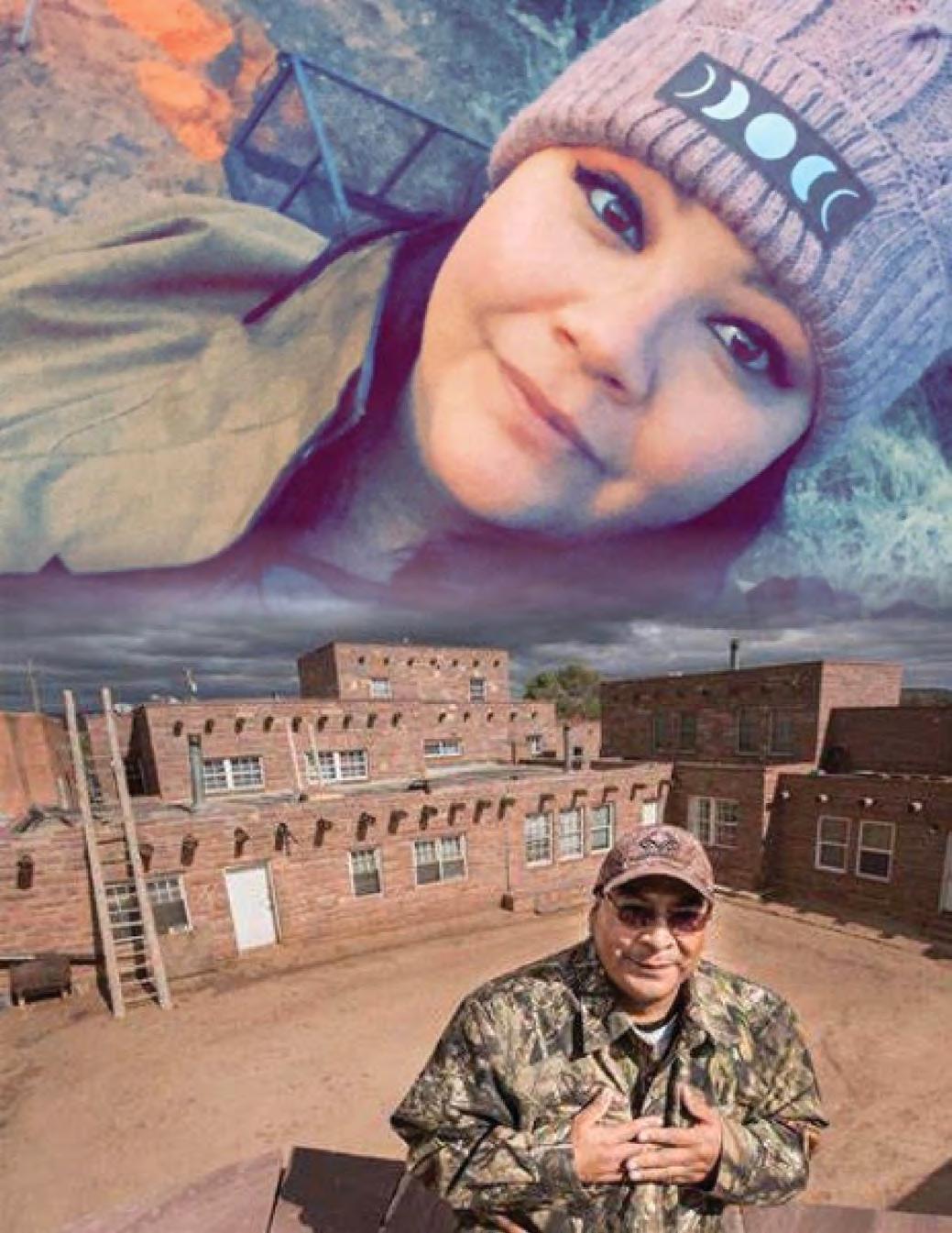
Kenny Bowekaty, lead tour guide for the Pueblo of Zuni, presented “Zuni World View.”
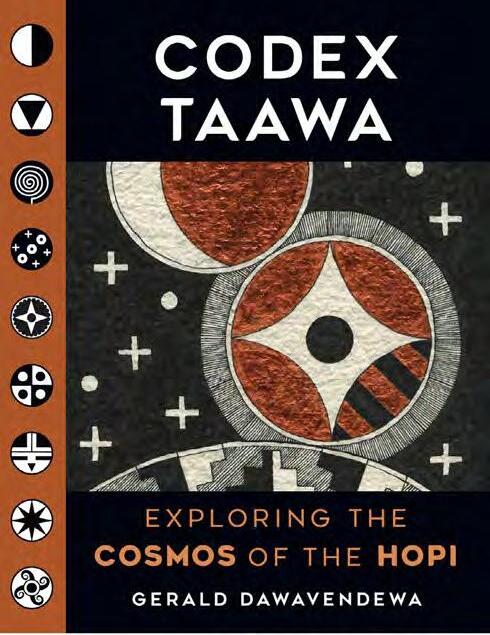
Gerald Dawavendewa, Hopi Artist and Author, presented his talk “The Hopi Cosmos,” based off his book, Codex Taawa. Click the book to listen to Gerald on the Grand Canyon Speaks podcast!
Click to watch the video from the Star Party livestream! 33rd Grand Canyon
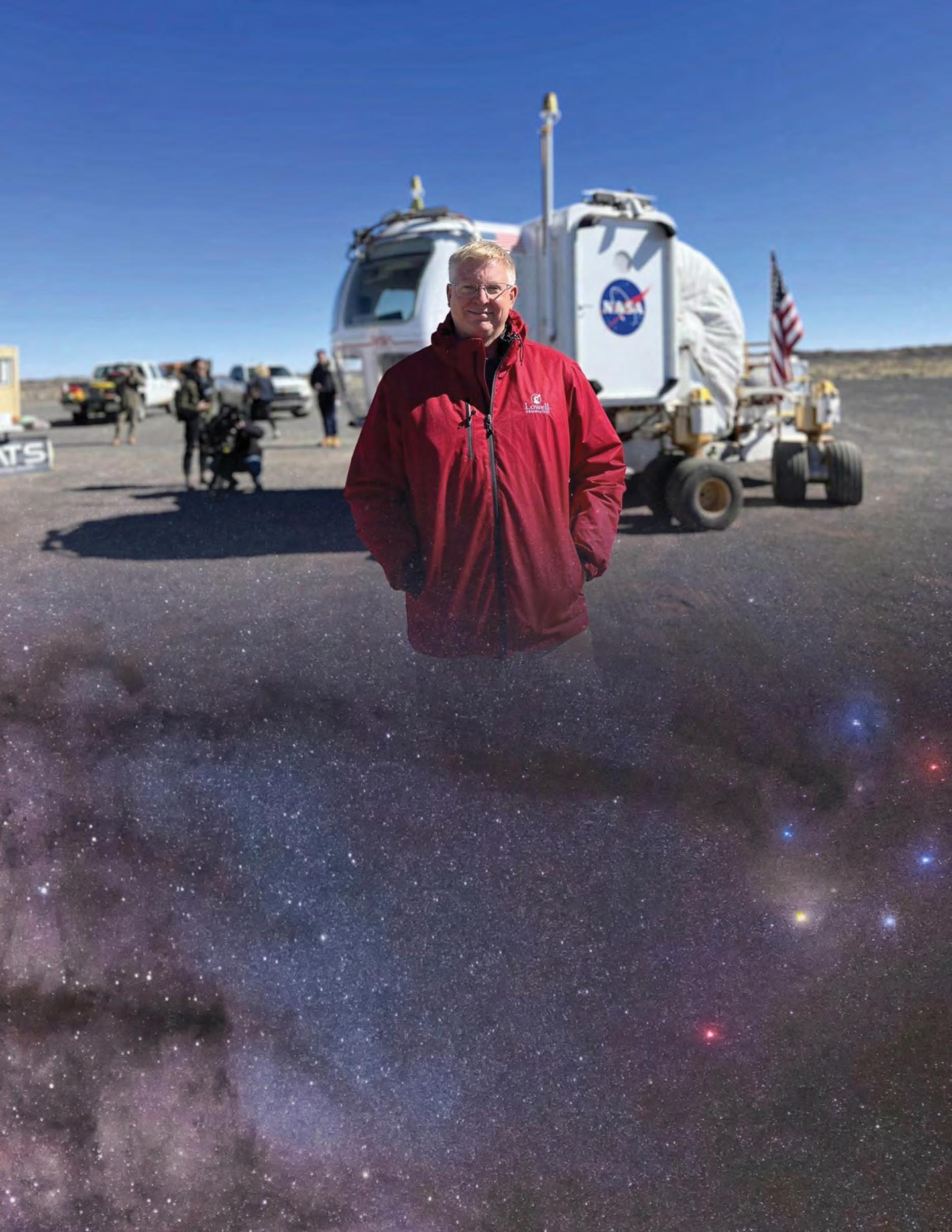
The park partnered with NASA as well as Lowell Observatory this year to bring additional educational outreach to visitors. NASA setup booths by day, informing the public about their latest space telescopes. Lowell Observatory provided live streams of the Star Party, hosted by two Grand Canyon Astronomer in Residence alumni, Kevin Schindler (left) and Dean Regas (right). They were also two of our special speakers this year for the event. Online visitors heard commentary from these two as Lowell Observatory telescopes live-imaged deep sky objects into viewers’ homes. They clearly didn’t have any fun with this.
(Left) A couple gets founder Dean Ketelsen his camera. Thanks,
In Fond Memory Dean Ketelsen
Founder of Grand Canyon Star Party
December 16, 1953 - August 9, 2023
It is with great sadness that we share with you the loss of Grand Canyon Star Party’s founder, Dean Ketelsen. Dean started the event in 1991, and had come every single year since, including 2023. He saw GCSP grow beyond him into the largest night sky event in the NPS, and in that way, he lives on through it. Thank you Dean, for your years of good cheer, wisdom, and passion for night skies. We’ll see you in the stars at next year’s Grand Canyon Star Party.
See you next year at the 34th annual Grand Canyon Star Party June 1-8, 2024!!
Astronomer in Residence Program
Grand Canyon Conservancy’s Astronomer in Residence Program started in 2021.
Modeled after the Artist in Residence Program, the program offers astronomers, educators, scientists, visual and performing artists, and writers, the opportunity to practice and share their discipline under one of the most pristine night skies in the United States. Through artwork and educational outreach, the ASTiR inspires visitors to see the values of dark skies, spreads awareness about the threats of light pollution, and explores society’s complex relationships with natural darkness. Learn more about the Astronomer in Residence program here.
GCC Astronomer in Residence Program
Astronomer in Residence 2023 at a
Glance...
4 Astronomers in Residence
103 astronomy programs
12,742 visitor attendance
214 local students engaged
14 podcasts, projects, and products
7 astronomy-institution relationships forged
The Astronomer in Residence Program forged relationships with the following institutions in 2023:
• Wittenberg University
• University of Denver
• Northern Arizona University
• Lowell Observatory
• Caltech
• University of Arizona
• U.S. Naval Observatory
Dan’s Residency At a Glance:
• 45 astronomy presentations
• 3,000 visitor attendance
• Daily Solar Observing sessions on the Rim
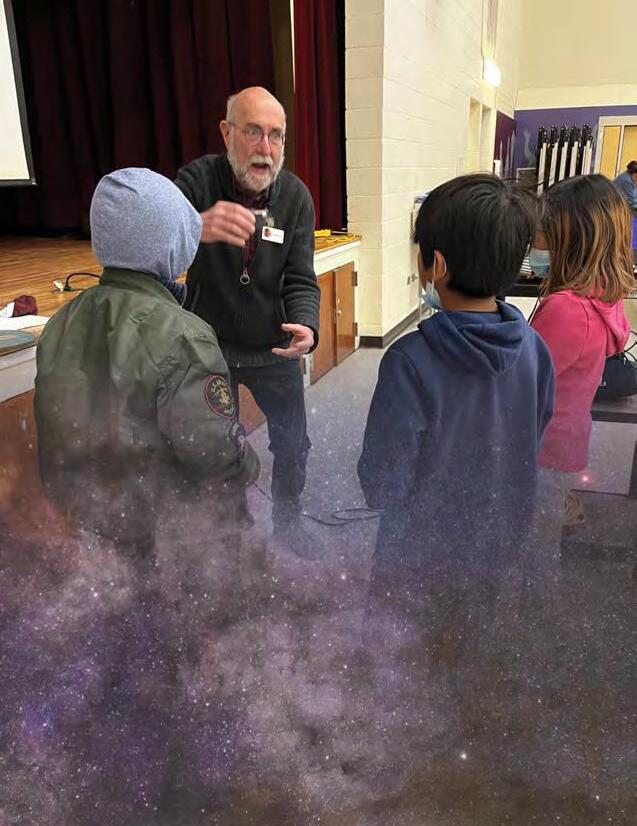
• Visit to Grand Canyon School
• Lowell Observatory podcast guest
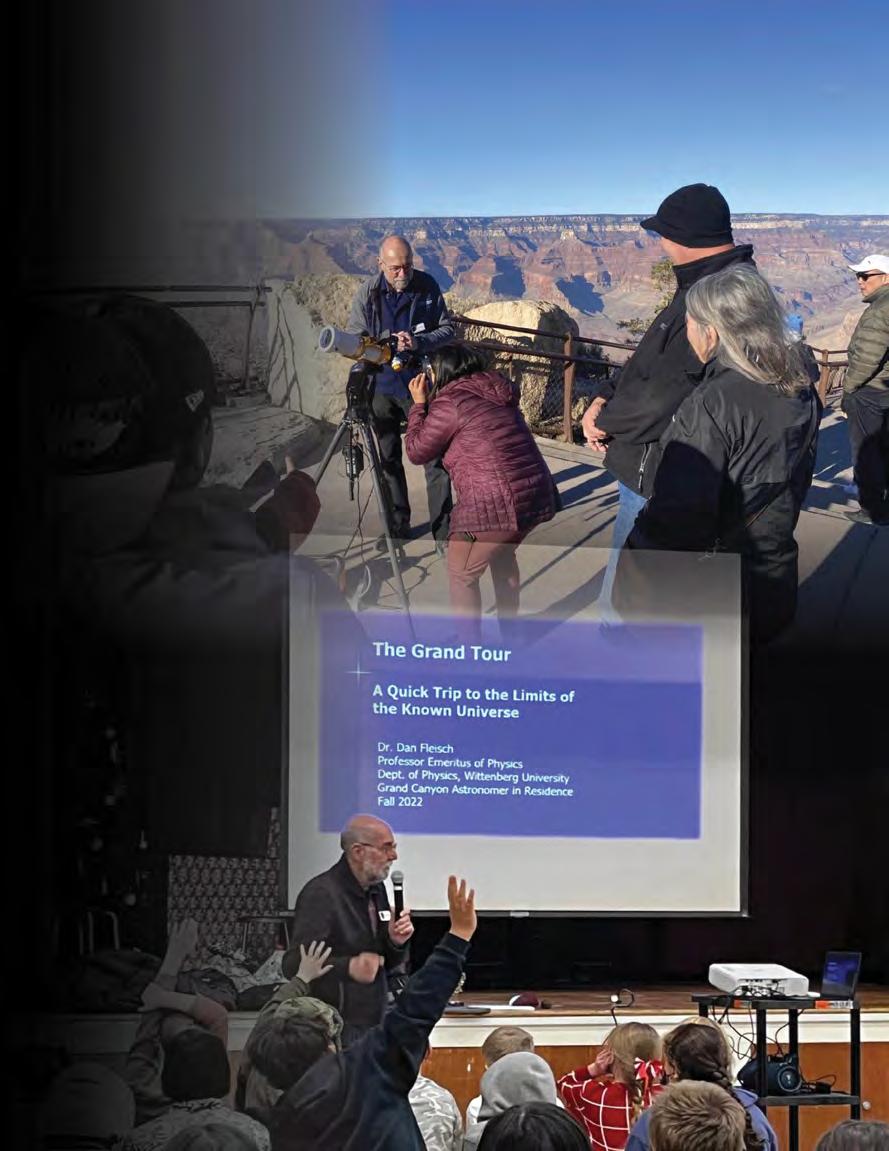
Dr. Daniel Fleisch
Nov 21—Dec 30 , 2022
Dr. Dan Fleisch is the award-winning Professor Emeritus in the Department of Physics at Wittenberg University, where he specializes in electromagnetics and space physics. He is the author of many internationally best-selling books, such as A Student’s Guide to Maxwell’s Equations.
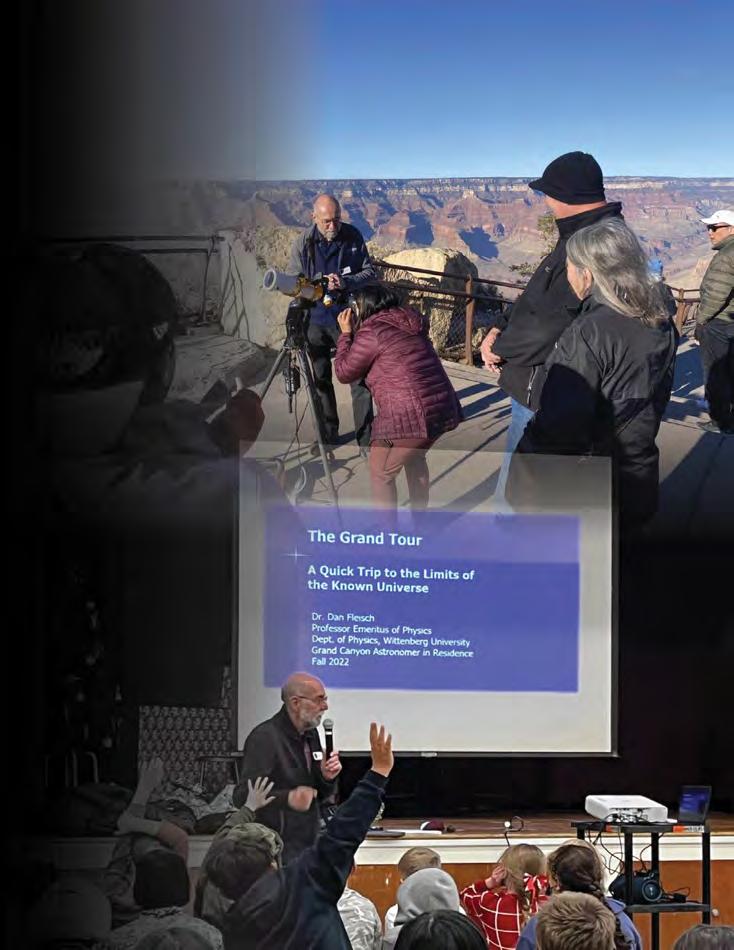
As Grand Canyon's fifth Astronomer in Residence, Dan spent his time presenting more than 20 unique public programs on many aspects of astronomy, from moons and planets to cosmology and black holes. He reached over 3,000 visitors from his formal programs, and countless more through informal solarobserving sessions, pop-up telescope viewing, and constellation talks along the rim of the Canyon.
GCC Astronomer in Residence Program (Left) Astronomer in Residence Dr. Daniel Fleisch presented 20 different astronomy programs in GCVC Theater followed every night by constellation talks and live telescope imaging of deep sky
Watch Dr. Fleisch on Lowell Observatory’s Podcast!
Dr. Jennifer Hoffman
March 6th—April 19th, 2023
Jennifer’s Residency At a Glance:
• 200 visitors at theater presentation
• 1 week of Moonlight Walks with visitors
• 1 week of visitor-based sunset mapping project
• 49 students at Grand Canyon School Visit
• 491 registered for GCC Webinar presentation
• 80 participants at Phantom Ranch night sky talks
• Lowell Observatory podcast guest
• “Looking Up” podcast guest
• Minute Out In It film
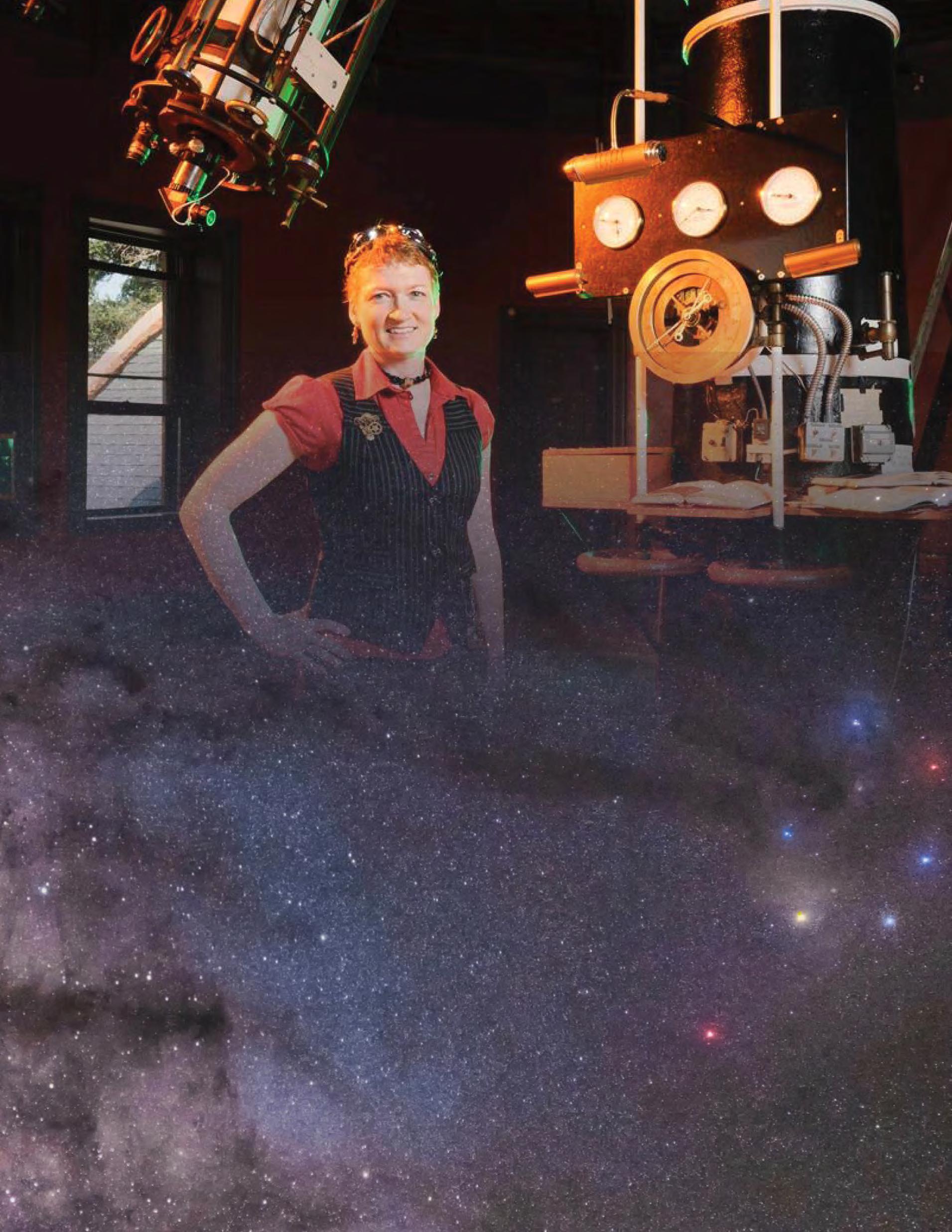
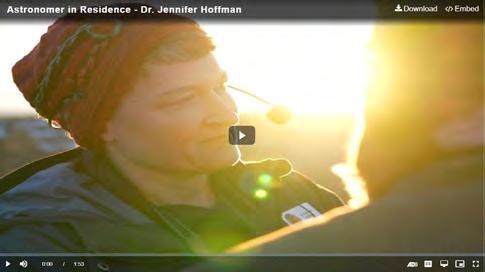
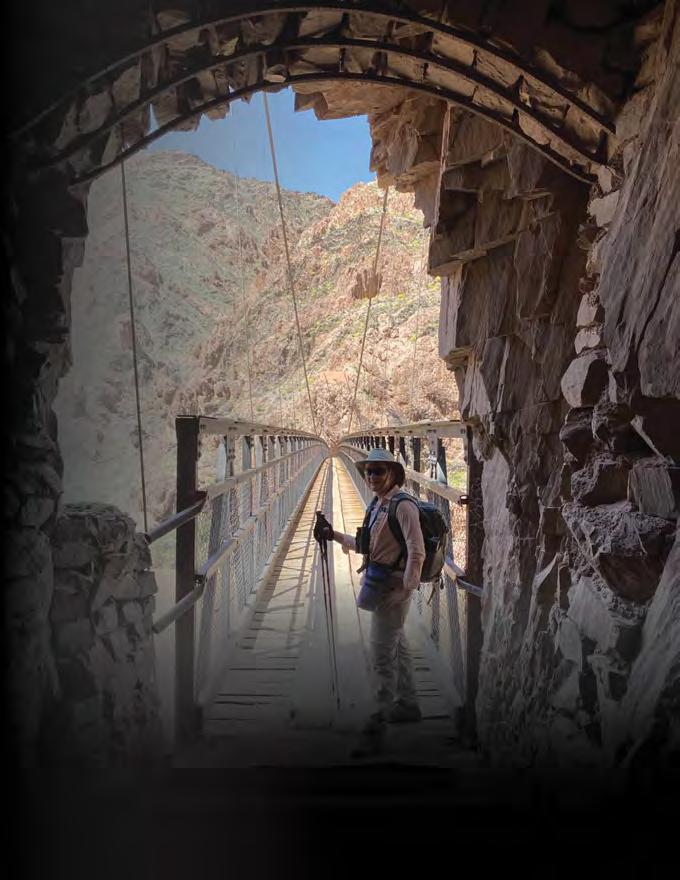
Jennifer L. Hoffman is a professor and astronomer at the University of Denver (DU), where she holds the Womble Chair of Astronomy and directs DU's historic Chamberlin Observatory. She earned her Ph.D. in Astronomy from the University of Wisconsin and held a National Science Foundation Astronomy & Astrophysics Postdoctoral Fellowship at UC Berkeley before joining the Department of Physics & Astronomy at DU. As Grand Canyon's sixth Astronomer in Residence, Dr. Hoffman conducted a sunset mapping project out at Hopi Point, provided a week of moon walks for hundreds of visitors, presented her research to a crowd of 200 in Grand Canyon Visitor Center Theater, presented a digital talk about night skies to over 400 Grand Canyon Conservancy members and followers, provided a talk about careers in astronomy to the 6th-8th graders at Grand Canyon School, and wrapped up with two nights of constellation talks and telescope viewing down at Phantom Ranch to packed amphitheaters, among many other amazing accomplishments.
Watch a short video about Dr. Hoffman’s residency here!
Listen to Dr. Hoffman on the “Looking Up” podcast
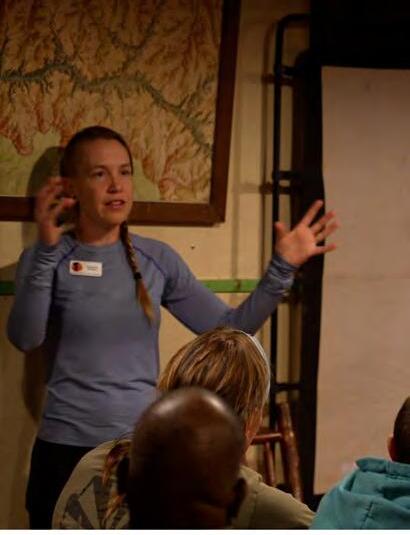
packed amphitheaters of backpackers and mule riders. Stargazing at Phantom Ranch is a fantastic experience—the dark canyon walls provide a beautiful contrast to the sky above!
Listen to Dr. Hoffman on Lowell Observatory’s podcast!
Watch Dr. Hoffman’s online presentation to GCC members!
Kevin’s Residency At a Glance:
• 27 public programs
• 2,584 visitor attendees
• 7 inner canyon programs
• 2 Grand Canyon School visits to 90 students
• GCC Grand Gathering
Special Speaker
• Grand Canyon Star Party
Special Speaker
• Lowell Observatory podcast guest
• Wrote an Arizona Daily Sun column
Kevin Schindler
May 1—June 1, 2023
Kevin Schindler is the historian and Public Information Officer at Lowell Observatory in Flagstaff, Arizona, where he has worked for 28 years. Schindler contributes a bi-weekly astronomy column, “View from Mars Hill,” for the Arizona Daily Sun newspaper and has authored seven books, including Images of America: Northern Arizona Space Training, which features a chapter about the Grand Canyon.
As Lowell Observatory’s Historian for over two decades, Kevin Schindler was selected as Grand Canyon’s seventh Astronomer in Residence for his extraordinary record of unveiling the history of astronomy in the Grand Canyon region. His residency focused on researching and sharing NASA’s Apollo Astronauts’ connections with the region in preparation for their historic missions to the Moon.
Kevin presented an extraordinary number of public programs, as well as several informal telescope “popups” where visitors would find him
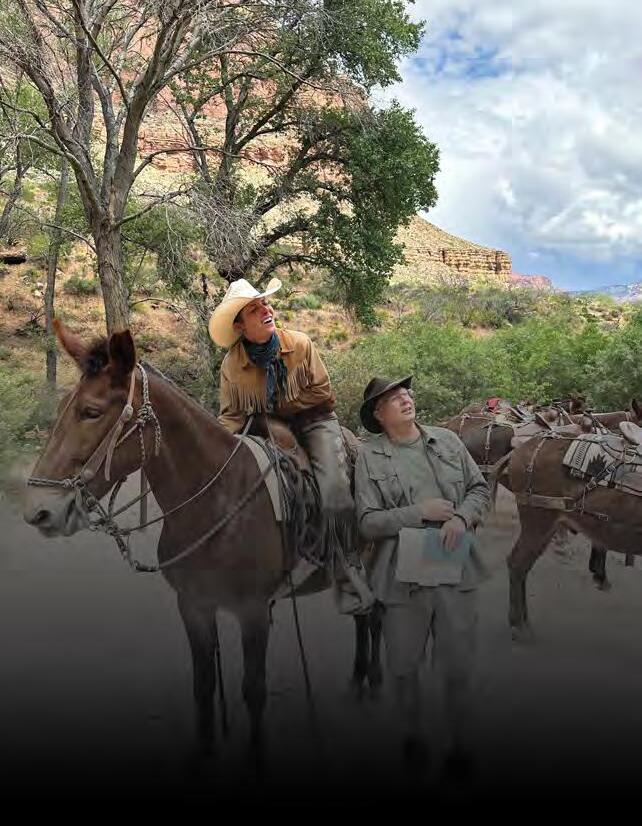
Kevin spent a good portion of his residency re-creating historic photos from the Apollo Astronaut training which took place at Grand Canyon in the 1960s. Here he is with mule wrangler Lisa “Tex” Parker as they re-create a funny photo of one of the astronauts atop a mule. He presented several night sky
Click the icon to watch Kevin Schindler and Rader Lane talk about astronauts at the Grand Canyon on Lowell Observatory’s podcast!
Cameron’s Residency At a Glance:
• 23 public programs
• 2,000 visitor attendees
• 2 Grand Canyon School visits
• 6 Astronomy on Tap presentations
• Public talks on both rims and Phantom Ranch
• Special speaker for Tusayan Night Sky Event
• Over 300 miles traveled in the backcountry
• Minute Out In It Film
Dr. Cameron Hummels
September 30 - November 11, 2023
Dr. Cameron Hummels is a computational astrophysicist at Caltech. His research uses supercomputers to simulate how galaxies like our own Milky Way form and evolve over billions of years. In addition to his scientific work, Dr. Hummels acts as Director of Astronomy Outreach at Caltech. As a professional scientist and science communicator, Dr. Hummels focused his time at Grand Canyon on engaging visitors in science education.
He hosted a series of live presentations, including: “Understanding the Formation and Evolution of Galaxies;” “Black Holes;” “Space Exploration;” “Meteor Showers and the Birth of the Solar System;” “Understanding Our Moon;” “The Search for Life in the Universe;” and “The Science of Star Wars.” He also led several “Astronomy on Taps” around the park. He was Grand Canyon’s eighth Astronomer in Residence.
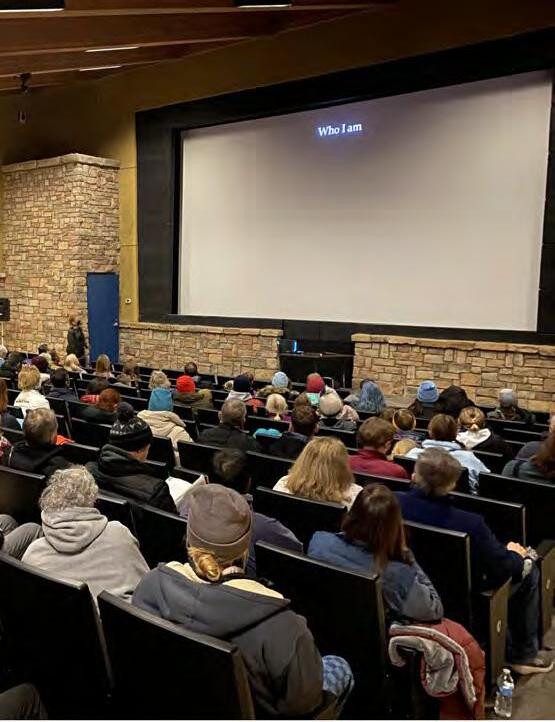
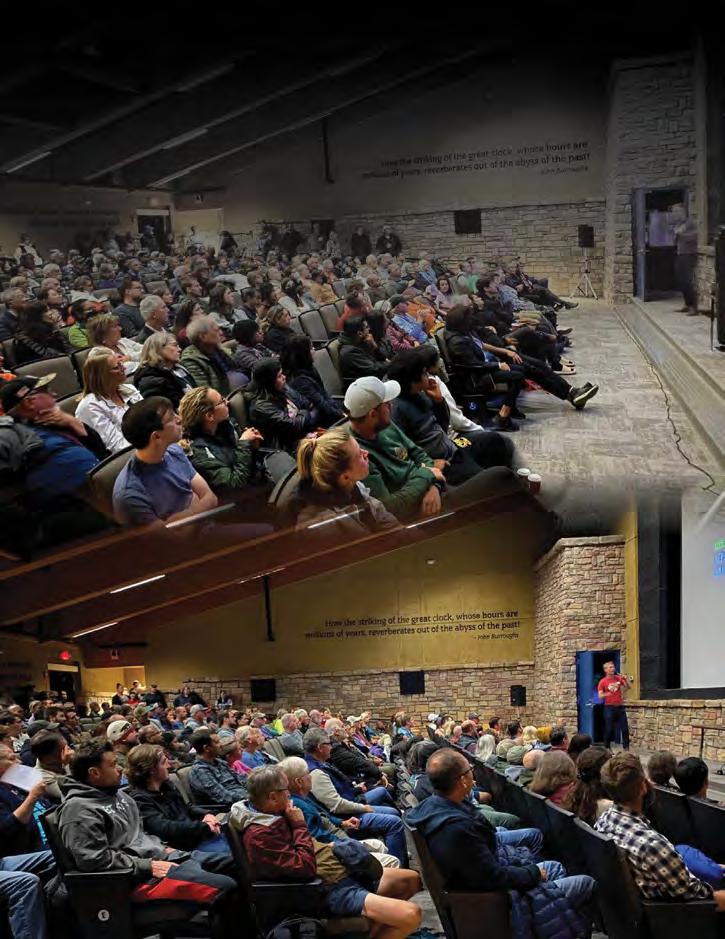
Cameron filled the visitor center theater to capacity night after night, averaging 240 visitors per program! Here he is in early October.
Cameron brought an “Enhanced Vision” telescope to the park. It takes live images of deep-sky objects like galaxies, then stacks the images, so the detail of the object improves over time. He showed these images on projector screens for all to see.
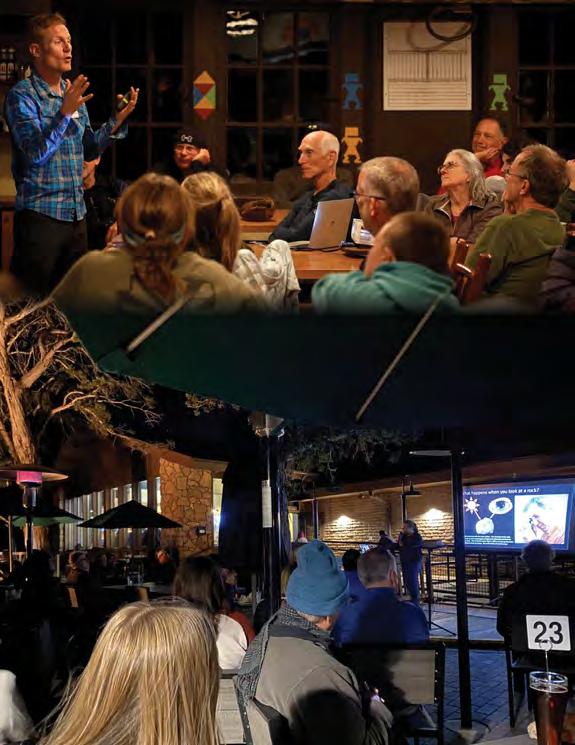
Cameron also offered several “Astronomy on Tap” presentations during his residency. Two short astronomy lectures were interspersed with “Astro Pub Trivia.” He invited astronomy researchers from universities around the southwest to provide various talks. Here they are at the Phantom Ranch Cantina.
Special thanks to Dr. Katherine de Kleer who provided several talks throughout Dr. Cameron Hummels’ residency. Dr. de Kleer is an Assistant Professor of Planetary Science and Astronomy at Caltech. She and Dr. Hummels’ are partners, so Grand Canyon was lucky enough to have two amazing astronomers here at the same time! Thank you, Dr. de Kleer!
Astronomy VIP Program
The Astronomy Volunteer Program was piloted for two months this year, from October 15 to December 15. The goal of the program is to provide opportunities for telescope viewing and constellation talks on a more consistent basis throughout the park. Our Astro VIP team was made up of a great mix of amateur astronomers, retired rangers, and seasonal interpreters this year. The program was highly successful so we plan to expand it into 2024. Learn more about the Astronomy VIP Program here.
Astronomy VIP Program
2023 at a Glance...
18 Astronomy Volunteers
91 astronomy programs
15,000 visitor attendance
7,000 solar astronomy contacts
13,000 spotting scope contacts
2,500 constellation talk attendance
1,500 volunteer hours
Dr. Daniel Fleisch Returns as a Volunteer!
August 1-17, 2023
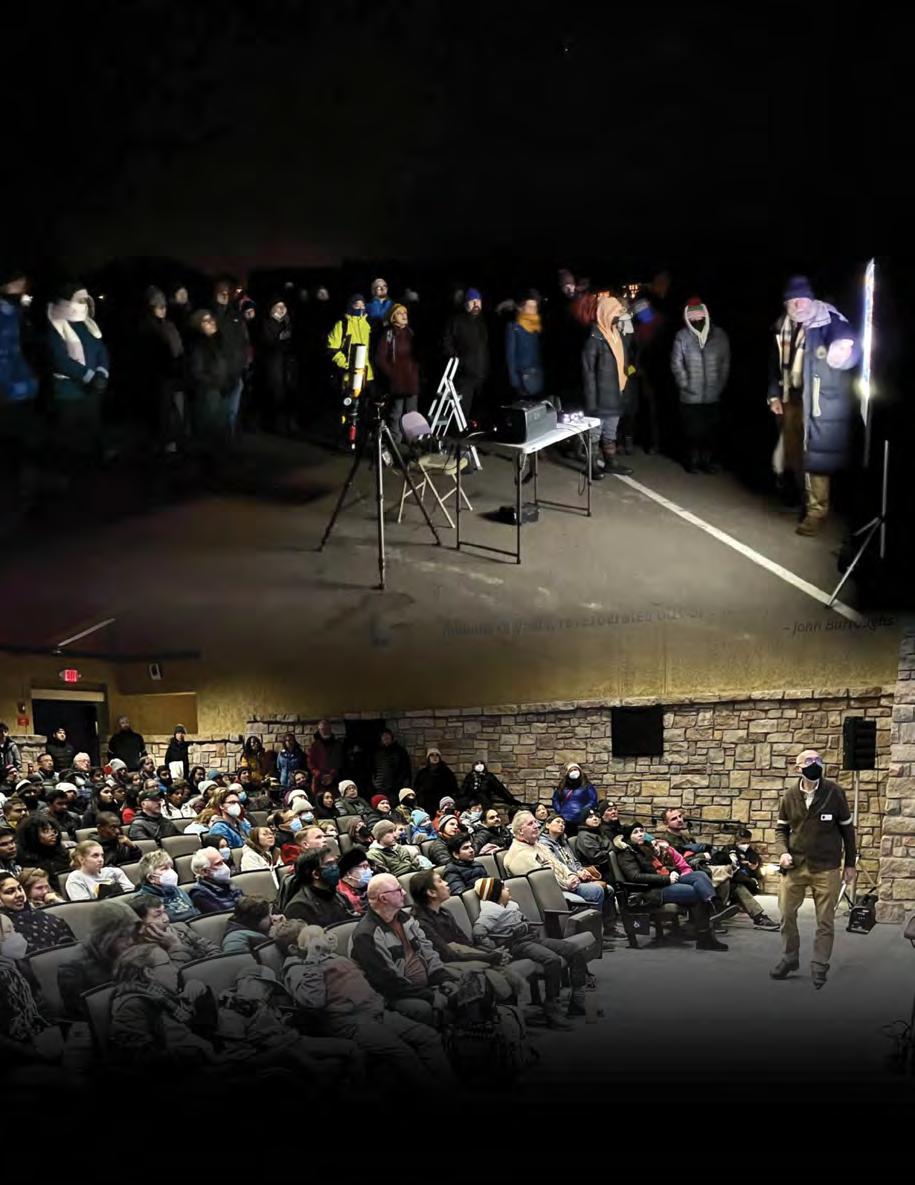
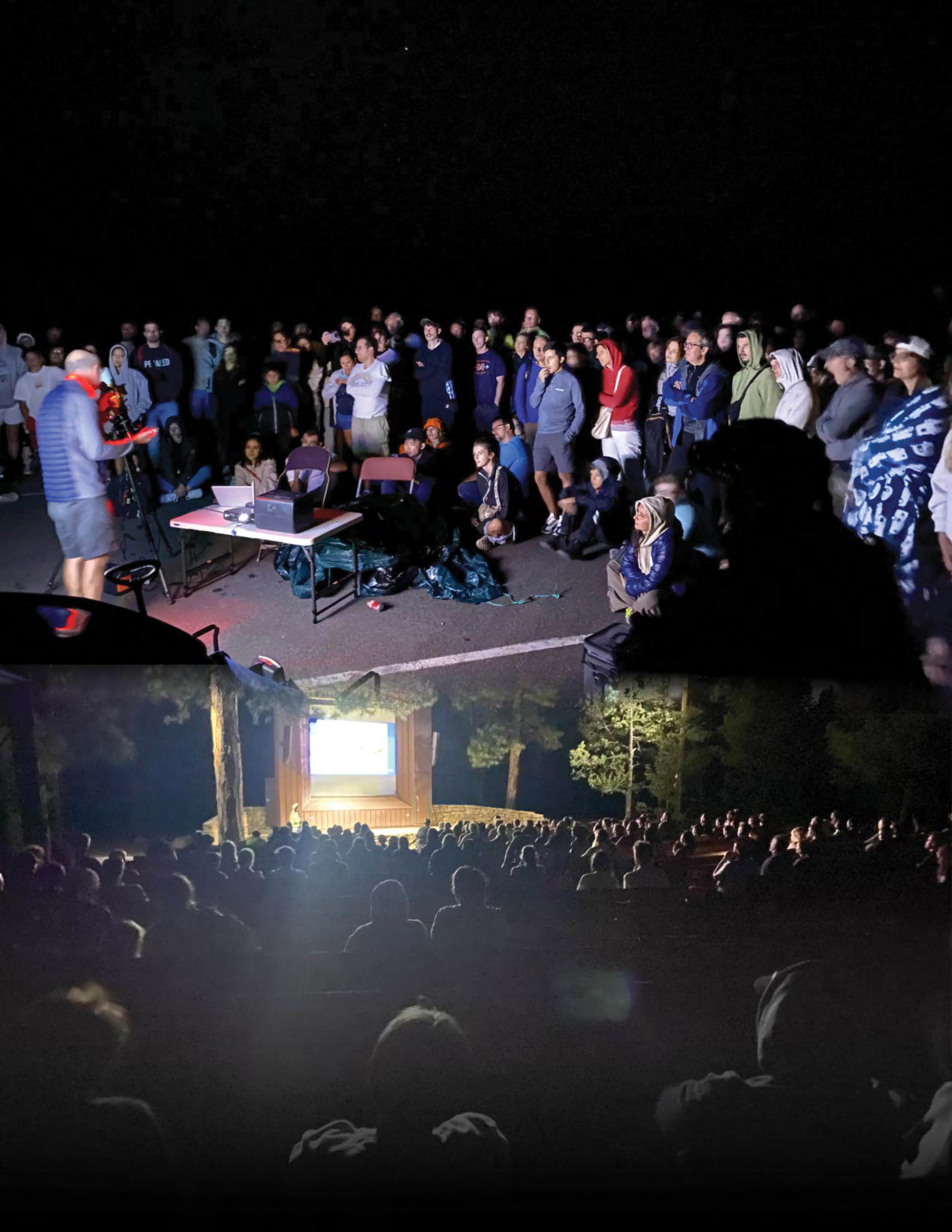
Dr. Fleisch offered several evening presentations, filling multiple venues. Liveimaging deep sky objects involves setting up a telescope, taking long exposures of deep-sky objects like galaxies, and projecting those images onto a screen for all to see. Here he is at the visitor center (above) and McKee Amphitheater (below).
Dean Regas Returns as a Volunteer!
September 9 - 21, 2023
Astronomer in Residence alumni Dean Regas returned for an Astronomy Volunteer stint in September. He provided a week of talks on the South Rim, then descended into the Canyon to finish out his volunteer stint with four nights of constellation talks at Phantom Ranch and Havasupai Gardens. In his short time, he connected with several hundred visitors. Thanks, Astro Dean!
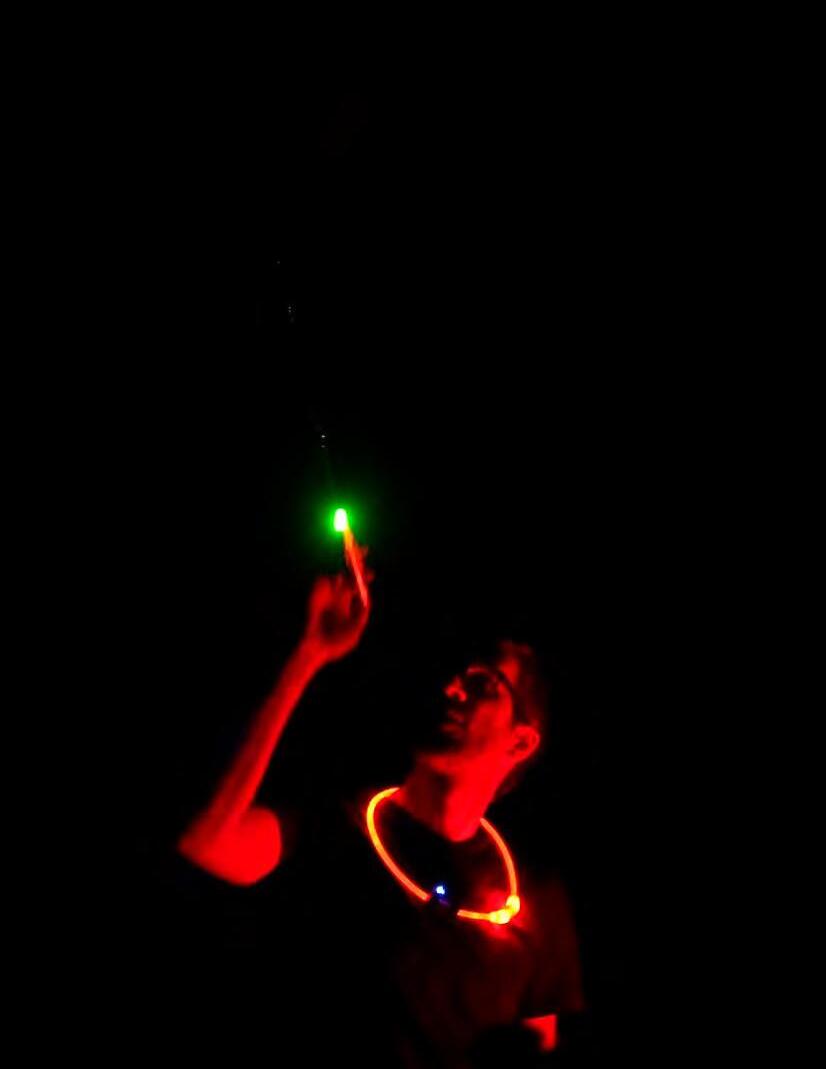
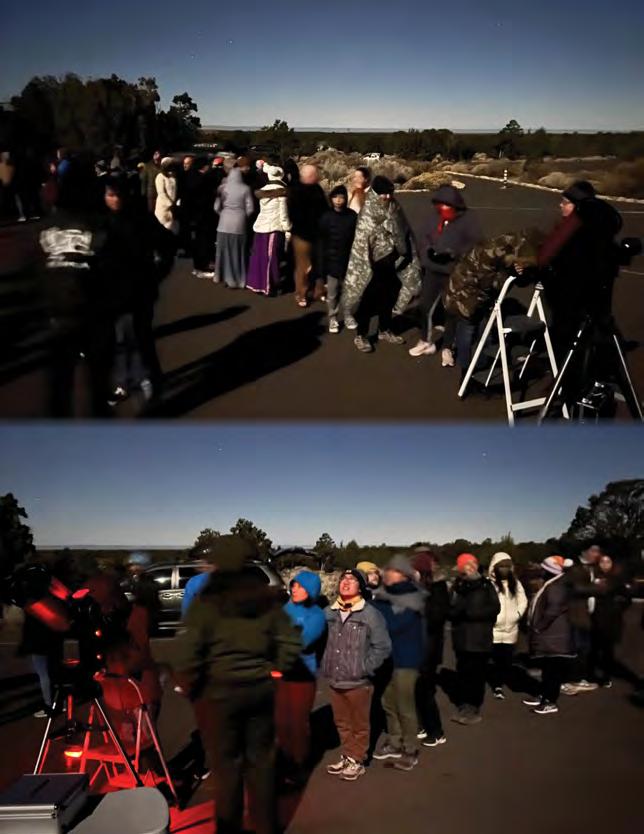
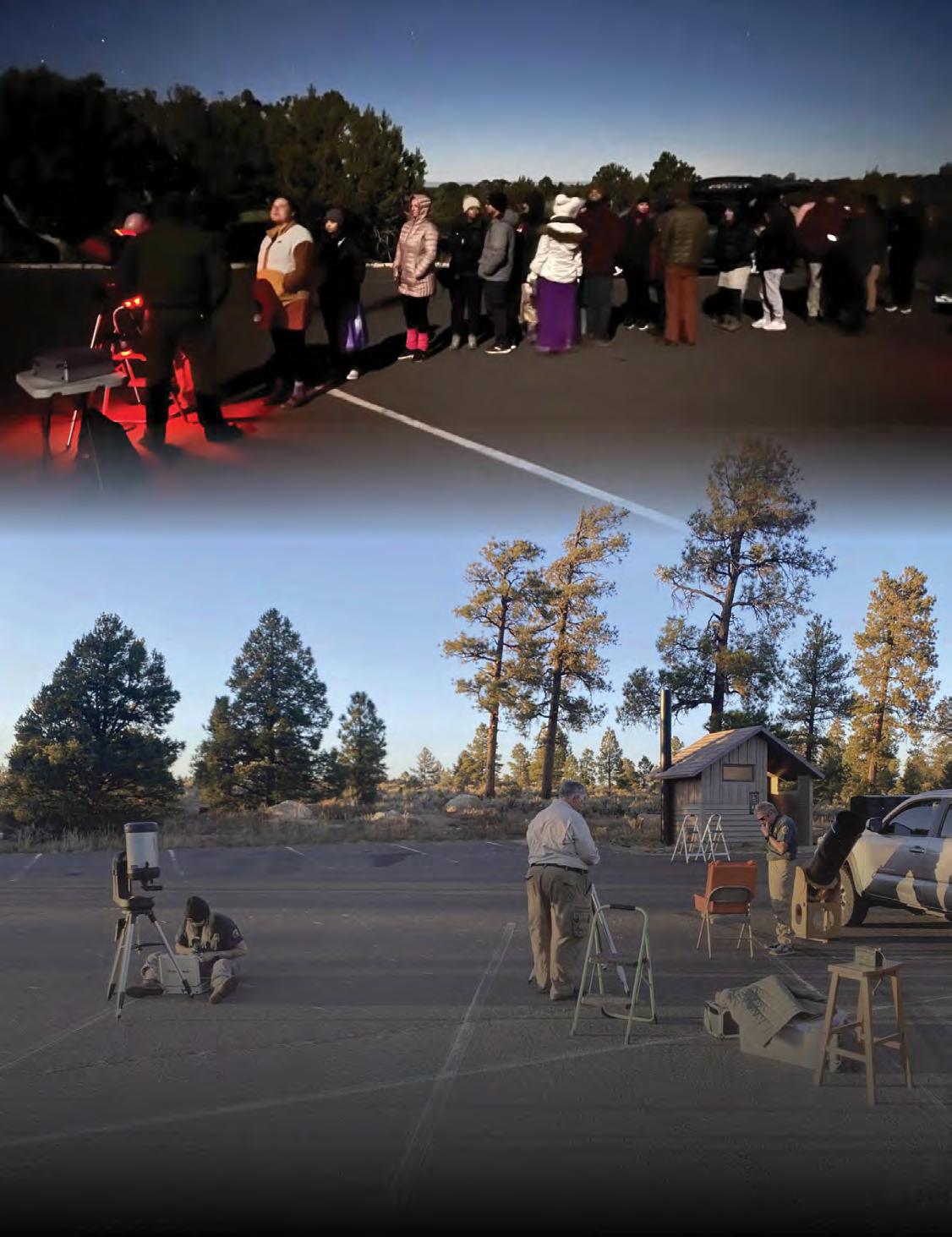
(Top) Astro VIPs hosted “Astronomy Nights” every Friday, Saturday, and Sunday. We would setup 5-6 telescopes for a few hours, weaving in a couple laser-guided constellation talks throughout the evening. Park rangers often operated telescopes as well! Shout out to rangers Rachel (bottom), Aiden, and Maggie of the DST for their great work this year!
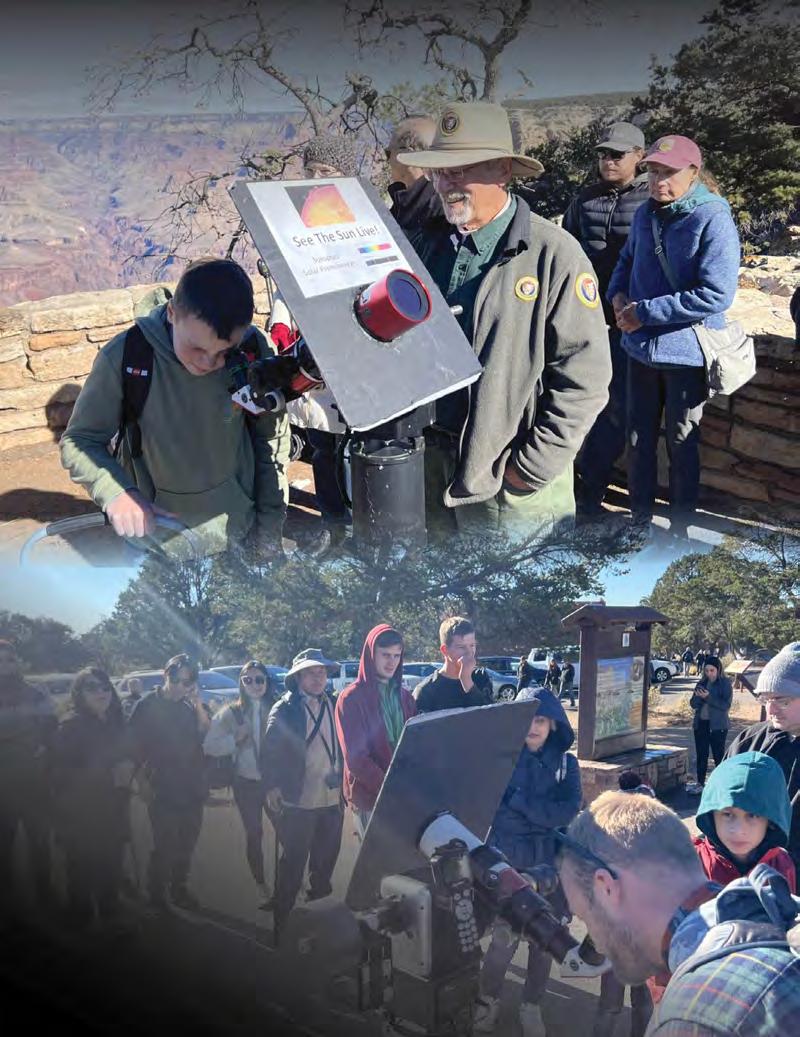
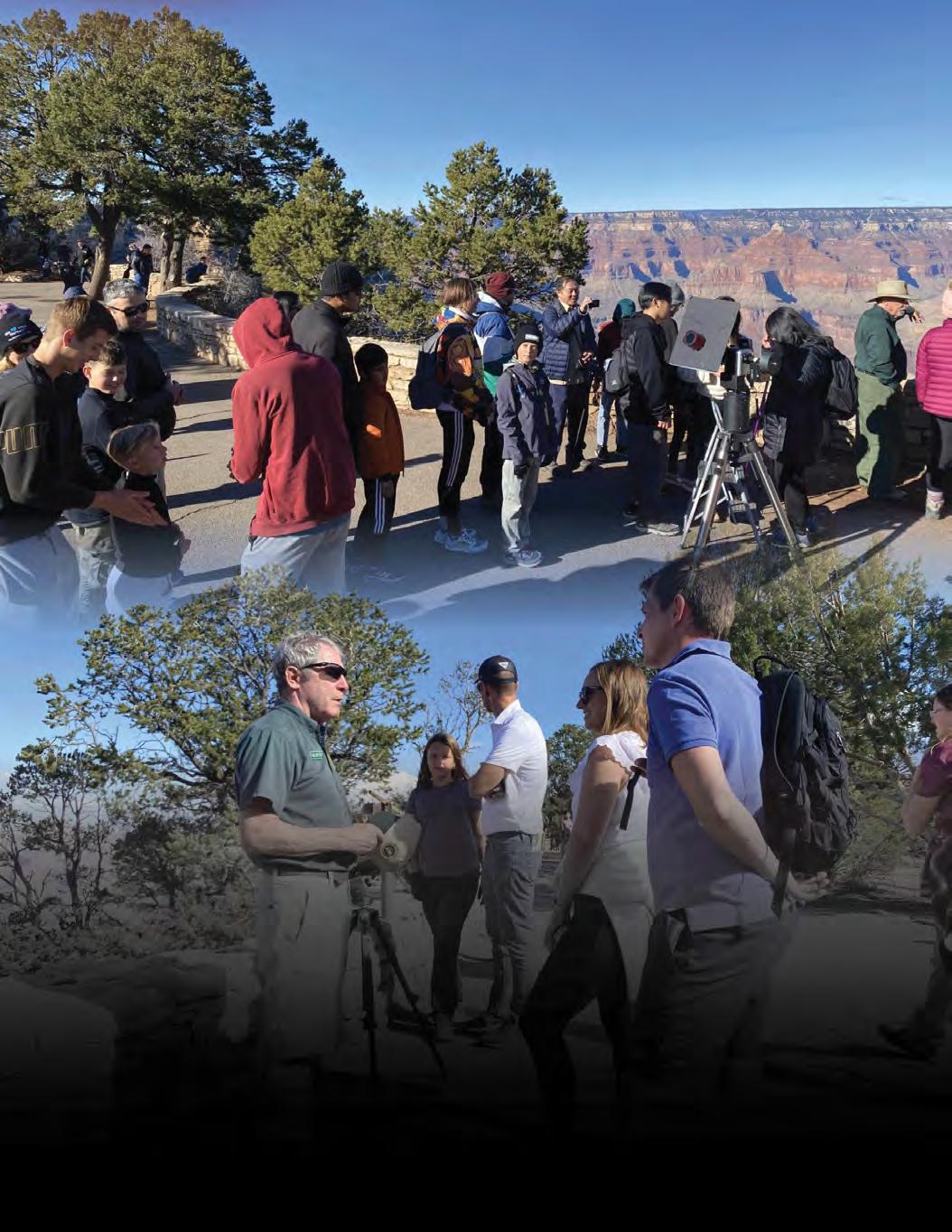
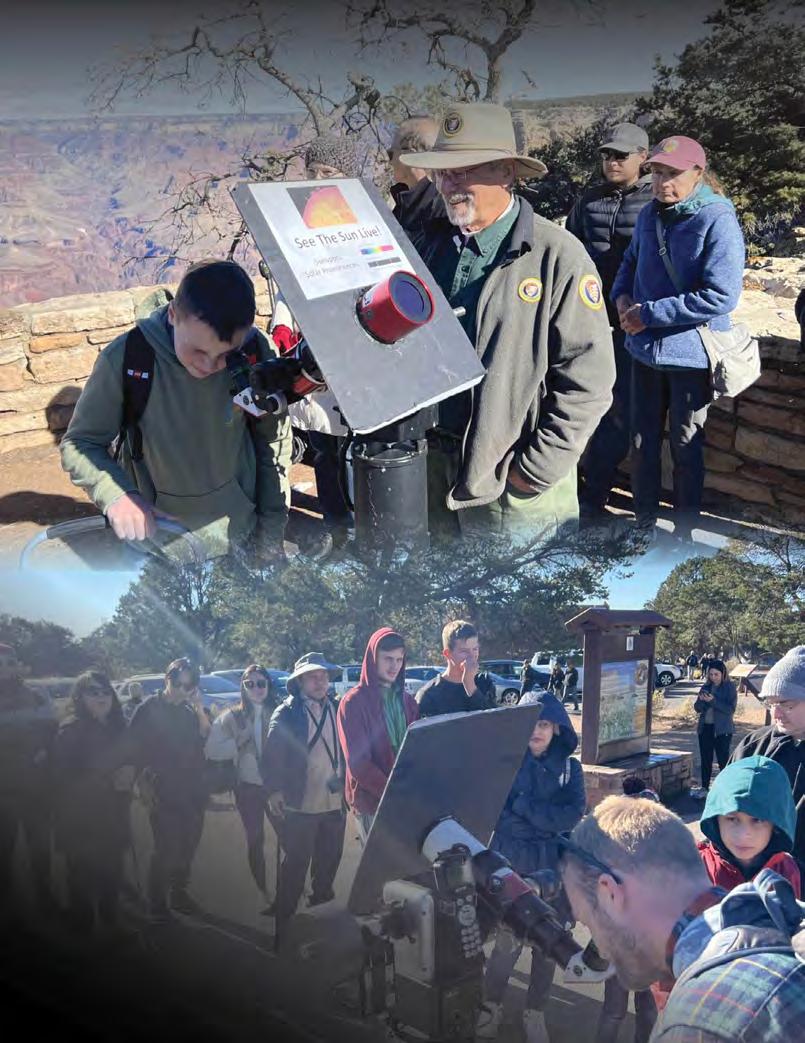
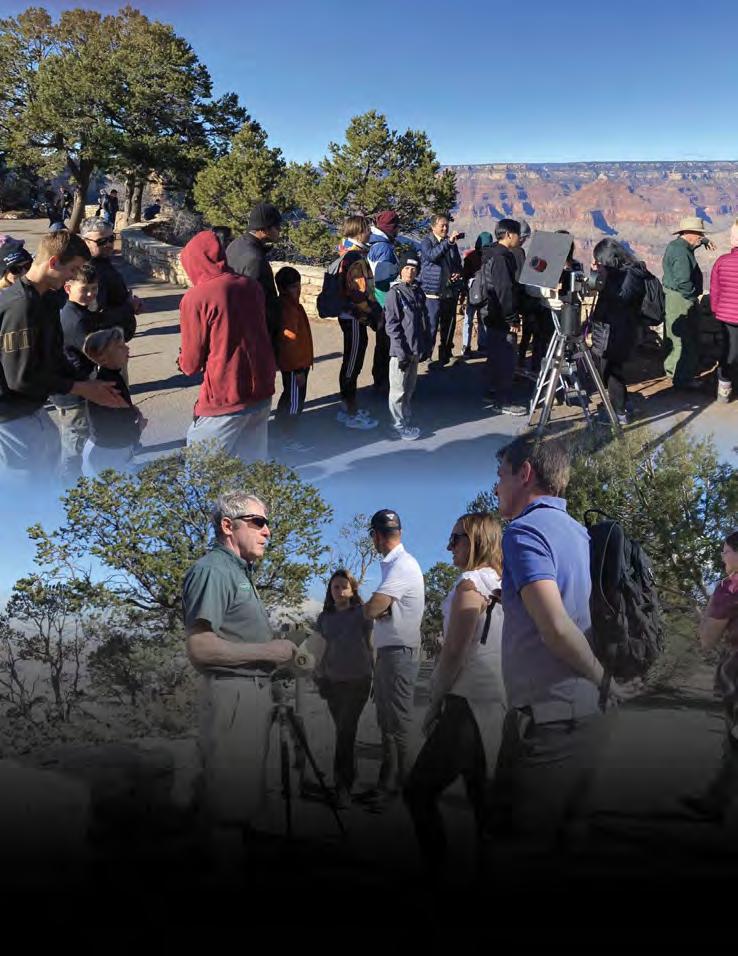
Solar Astronomy was a big hit. Astro VIP Ted often contacted 300 visitors in a single session with the solar telescope. A solar scope lets you safely look at the details of our own Sun, like
(Left) Astronomy VIP Bernie showing visitors distant objects with a spotting scope. (Right) Astro VIP Ted with a long line of visitors waiting to look at the Sun through his H-Alpha telescope. VIPs offered these views daily, attracting thousands of
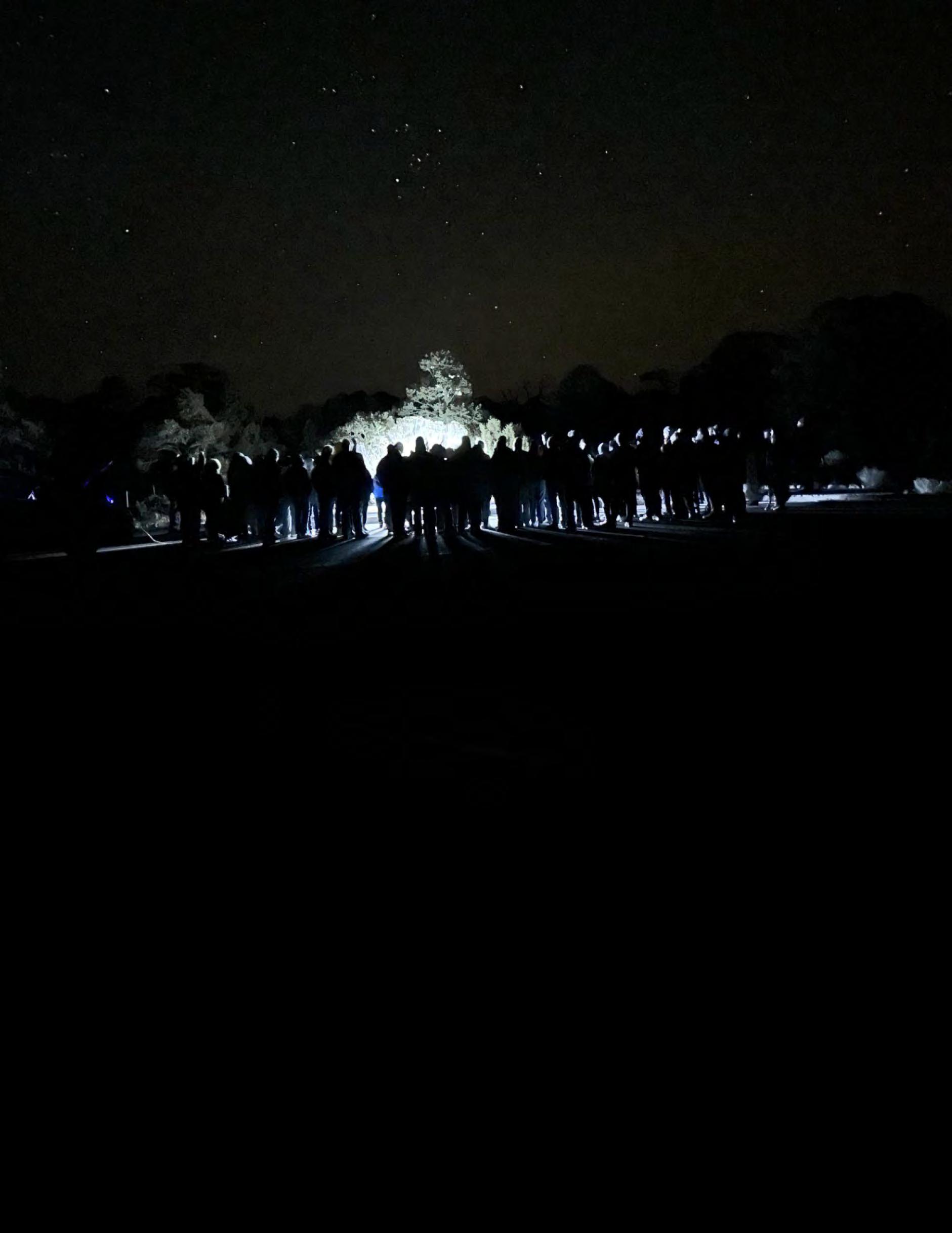
On Monday, Dec 4th at 7:00 PM, a 33 km diameter asteroid passed in front of a star in the constellation Auriga, an event called an occultation. The star would disappear for up to 4 seconds depending on what part of the asteroid passed in front of it.
Astro VIP Ted Blank is a member of an amateur group that records these events on video for scientific purposes. Data goes to the Minor Planet Center at the Smithsonian Astrophysical Observatory in Cambridge, Mass. The shadow of the asteroid was to pass directly over Grand Canyon, so Ted set up his occultation recording kit that night and shared this exciting scientific event with the public. Here is the public, entranced by Ted’s projector...or experiencing Close Encounters of the Third Kind.
NPS Night Sky Programs
Weaved throughout every month, NPS park rangers provide public programming on various topics related to night skies, from nocturnal ecology, to cultural astronomy, from constellation talks to light pollution talks. They also create digital media about night skies. The NPS has a long tradition of DARK rangers interpreting the vanishing resource of the stars to thousands of visitors per year. Learn more about NPS Night Sky Programs here.
NPS Night Sky Programs
2023 At a Glance...
46 astronomy programs
2,271 visitor attendance
3 districts of the park
7 digital products
1 online talk
200 online attendance
Ranger Rader presenting a laser-guided constellation talk at Phantom Ranch. NPS Interpretive Rangers provided dozens of inner canyon night sky programs this year to packed amphitheaters, including assisting with many more from our Astronomer in Residence Program. Nice photo, ranger Chad!
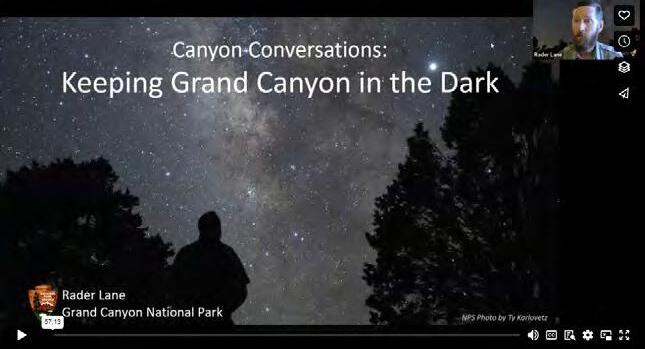
Click above to watch Rader’s online talk about Grand Canyon’s dark skies to Grand Canyon Conservancy members!
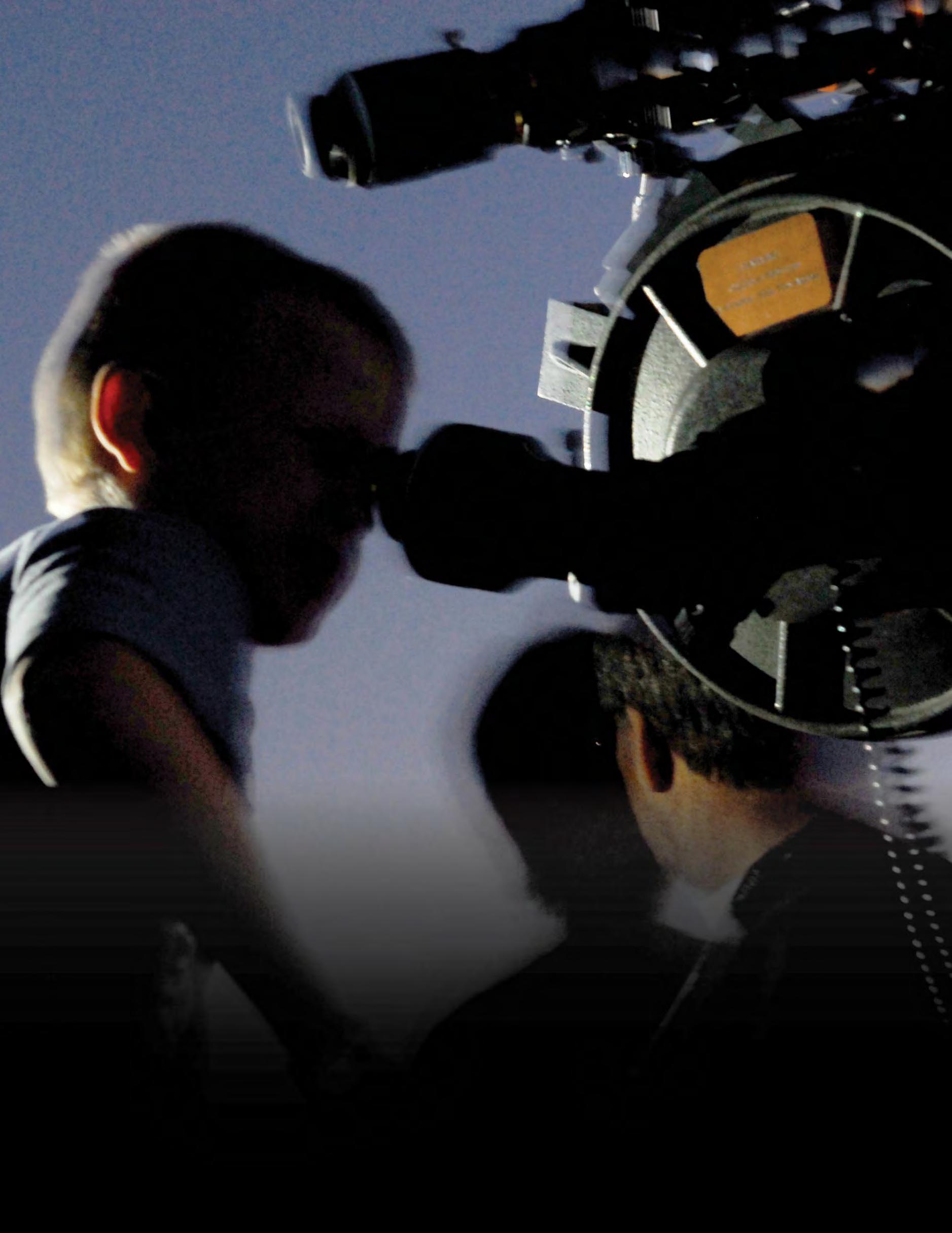
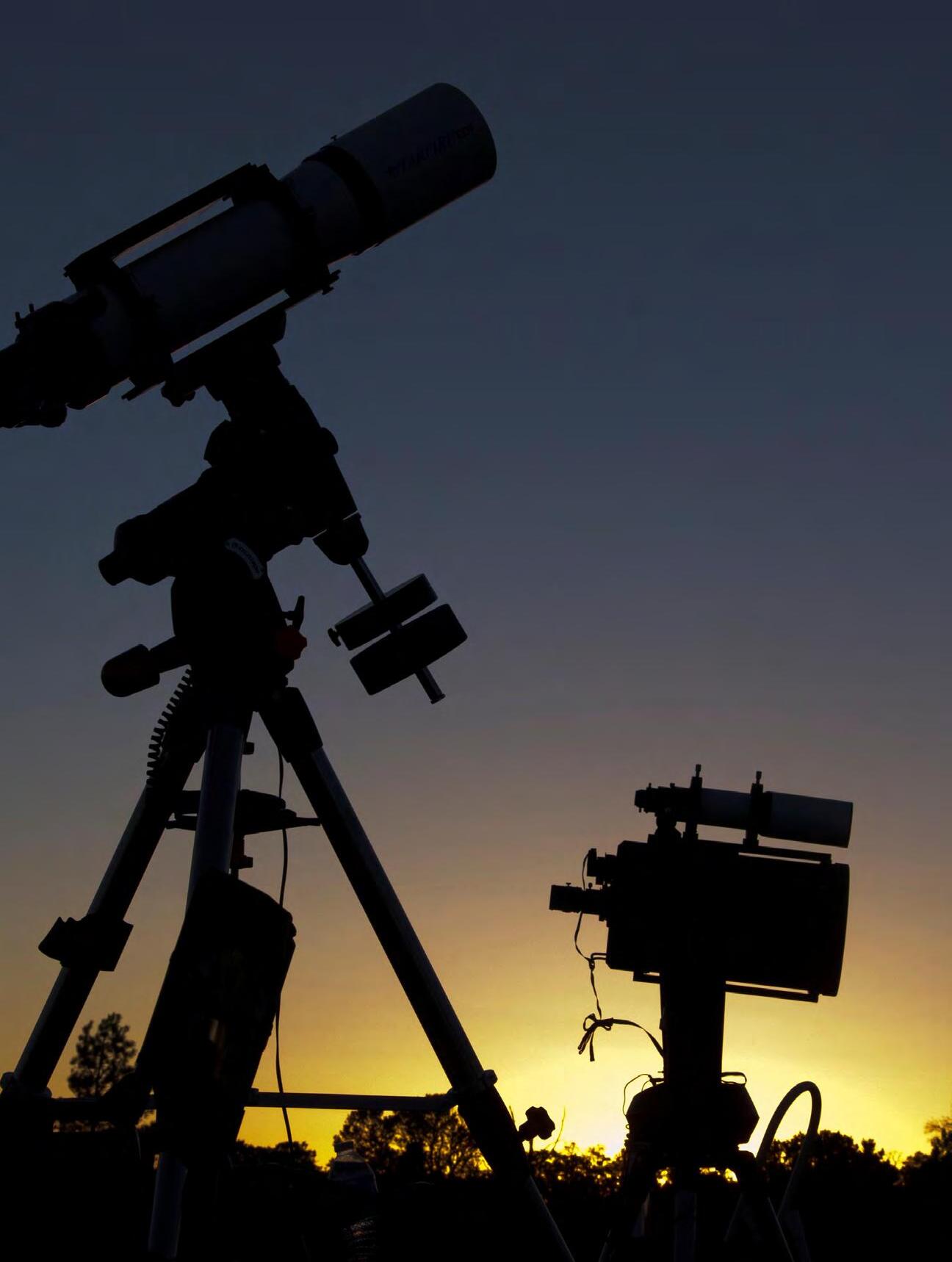
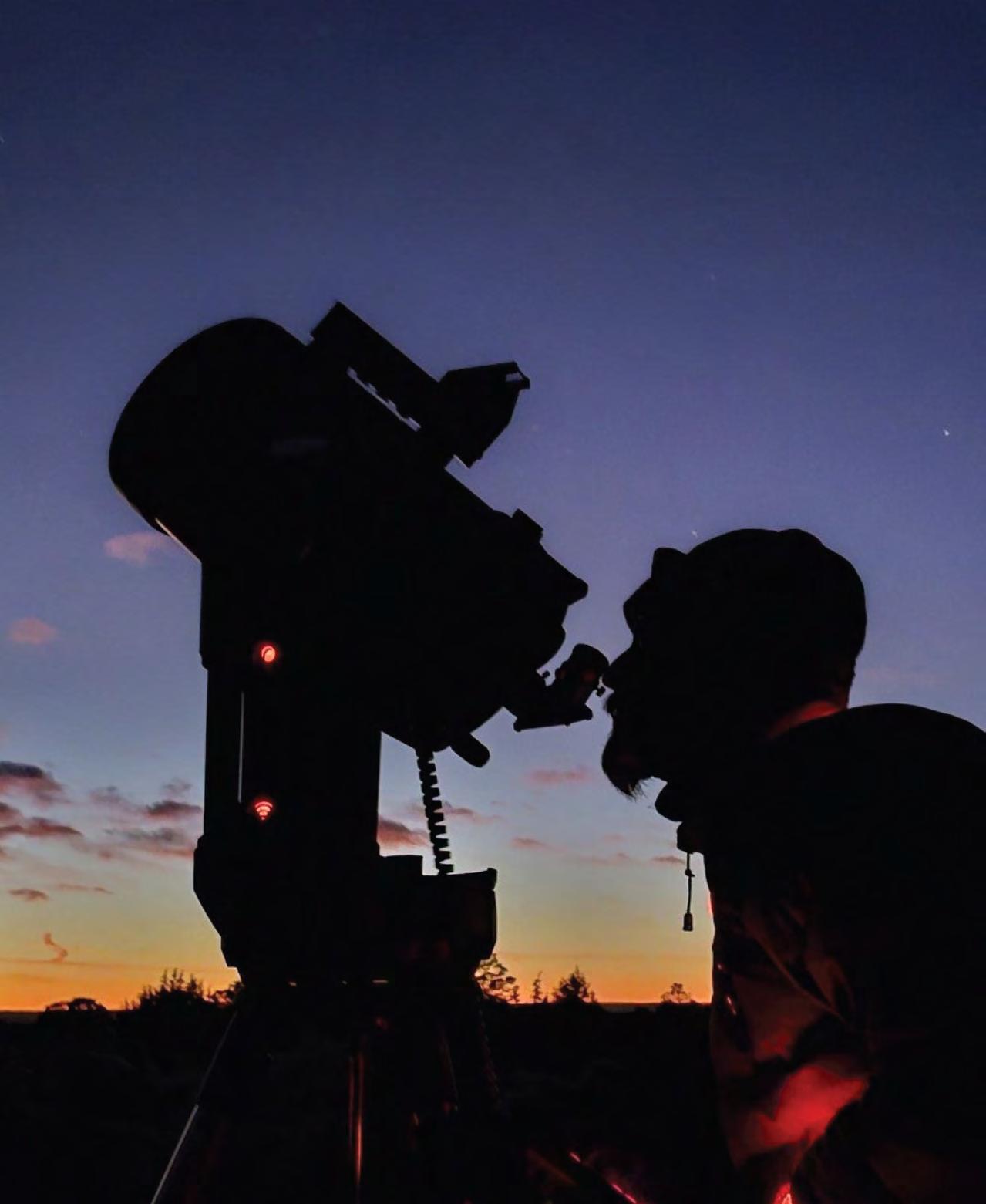
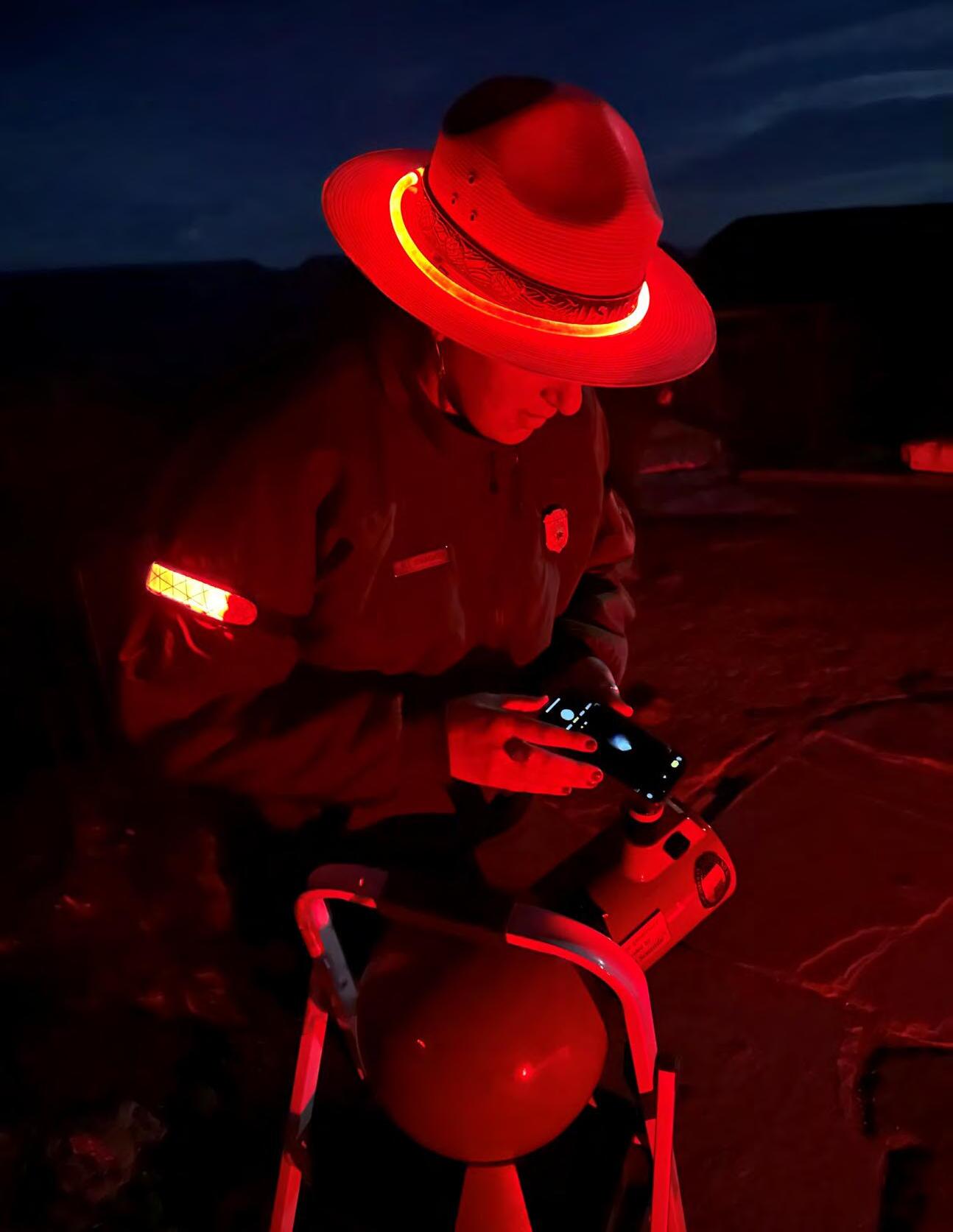
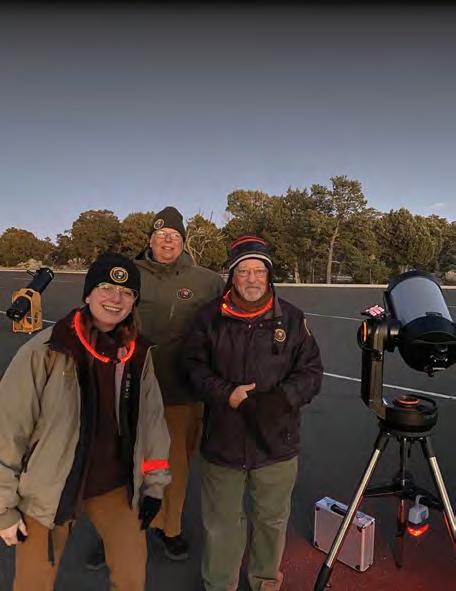
Ranger Rader aligns his telescope for an astronomy event. Be sure to bookmark our Upcoming Night Sky Events webpage that we created this year to find out about the next dark skies event!
Listen to “In the Shadow of the Milky Way with Ranger Rader Lane” on the Night Sky Tourist Podcast!
(February) Kwiyamuya (April)
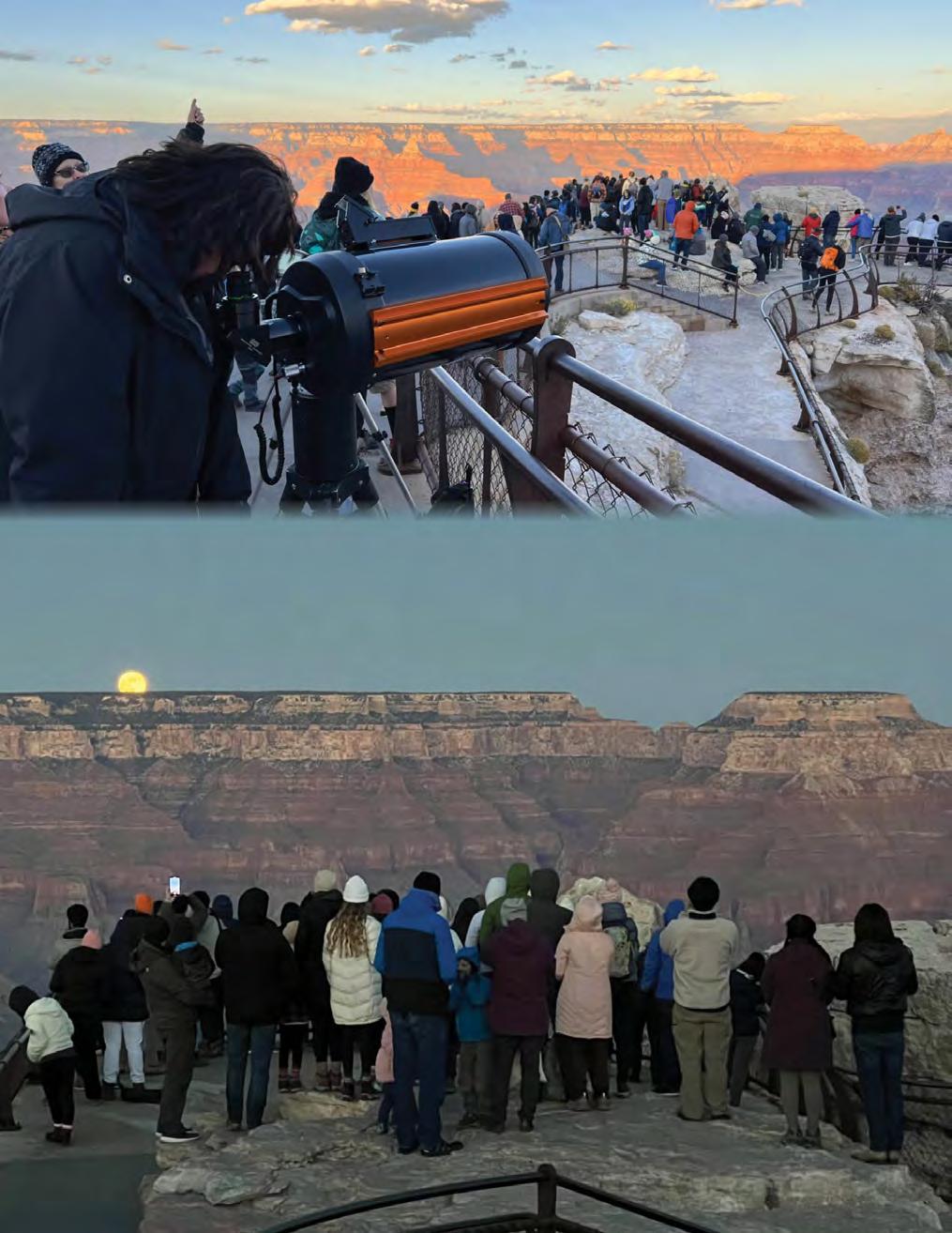
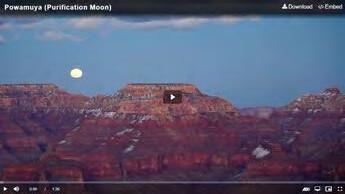
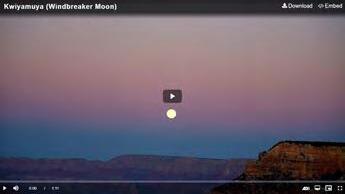
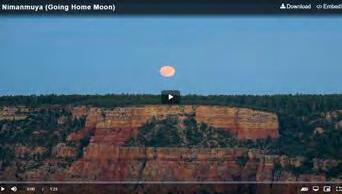
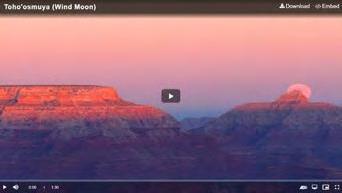
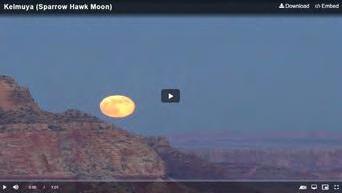
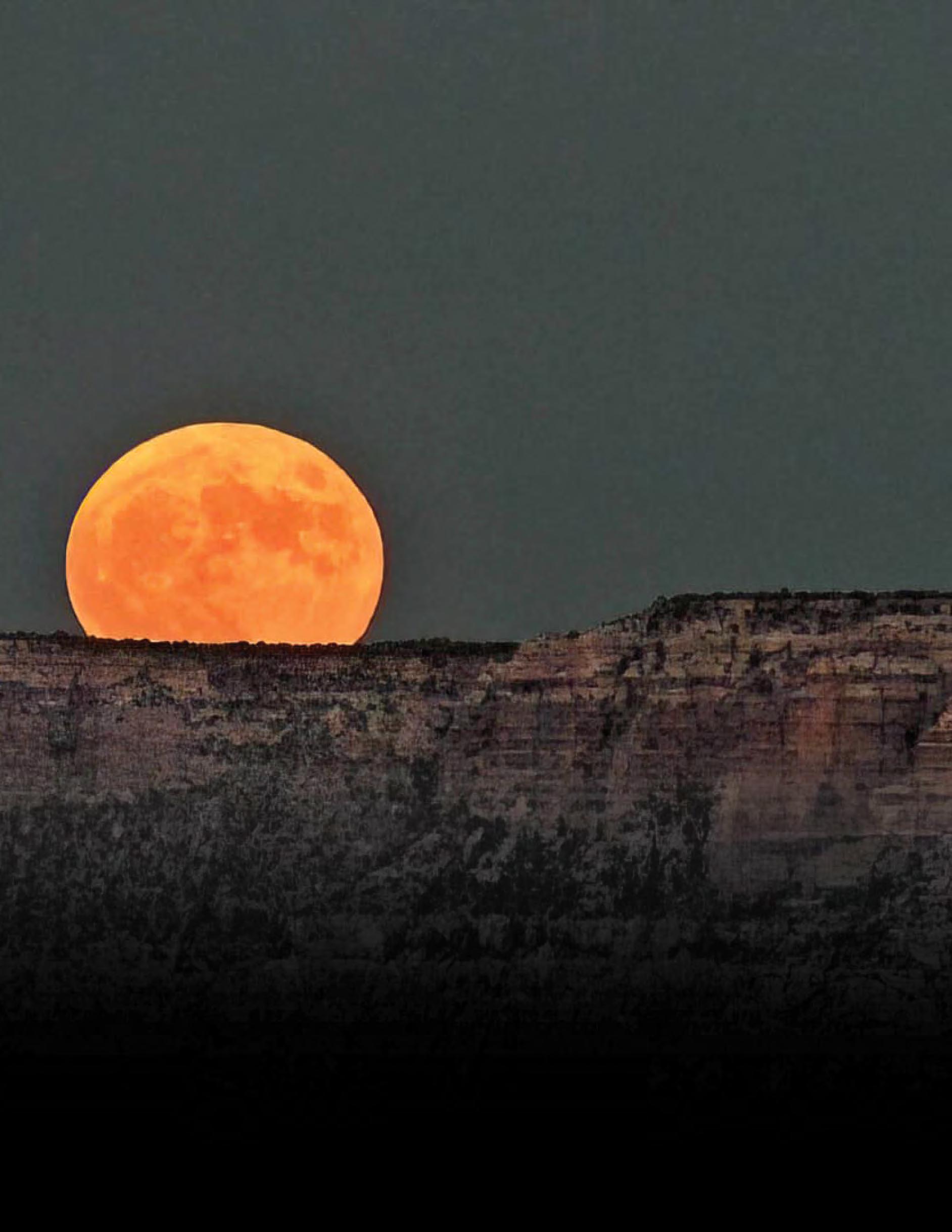
Rangers Michael Quinn and Rader Lane film and photograph the Full Moon rise every month over the Canyon. Michael posts his beautiful photos on social media. They consistently have some of the highest engagement online. Rader creates “Minute Out In Its” and frames the moon rises in the context of the Hopi people. Did you know, the traditional Hopi calendar names the months after different moons? Watch the above videos from 2023 to learn more!
Powamuya
Nimanmuya (July)
Kelmuya (November)
Toho’osmuya (October)
Ranger Jill attempting the famous “Moonthrough-the-telescope” shot. Almost there, Jill!
Special Events
NPS Rangers provided a special talk on the night skies for Secretary of the Interior Deb Haaland at Havasu Falls in May. We discussed how the park’s indigenous partners might use “astrotourism” as a means for promoting economies.
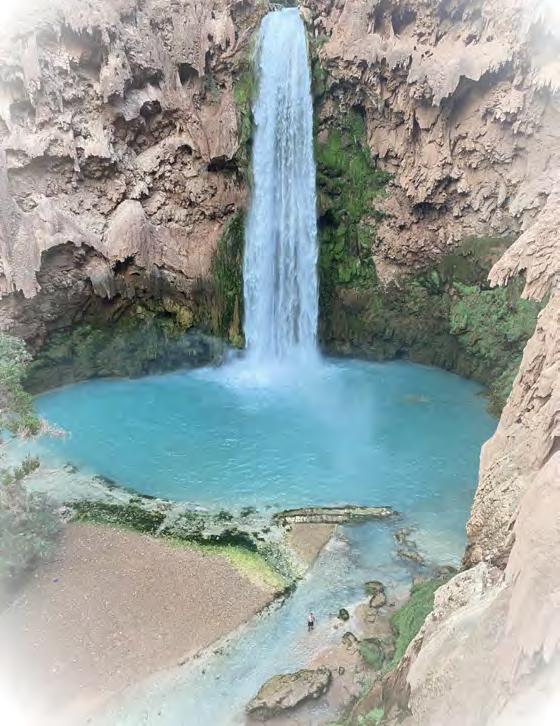
Can you find Superintendent Ed in this picture of Mooney Falls?
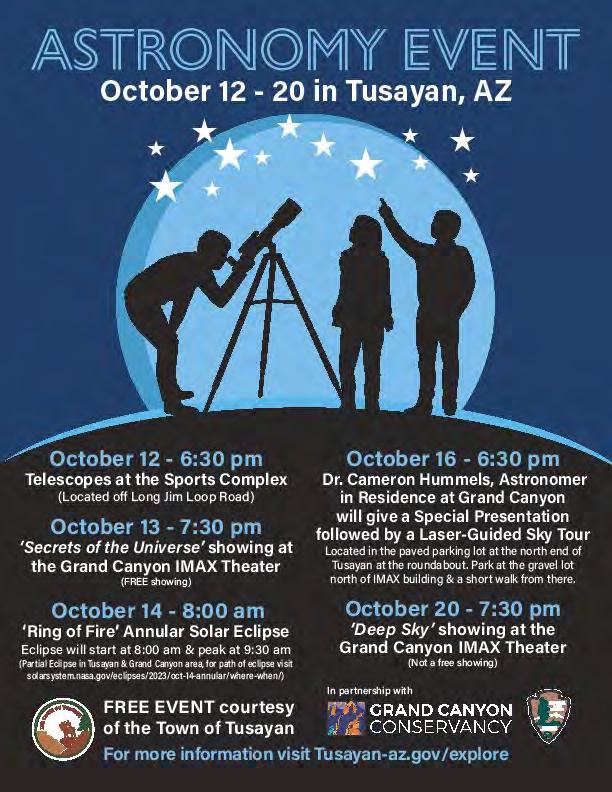
The Town of Tusayan held their first set of night sky events this year with the assistance of the Dark Skies Team. Tusayan is pursuing International Dark-Sky Community status. Part of the certification mandates that the town hosts a few night sky events per year. The Dark Skies Team gave talks to the Town Council about the status, and worked with them on the logistics of the events. This was a huge step for their Dark-Sky Community efforts! Did you know Flagstaff, Arizona is the world’s first International Dark-Sky Community? Learn more about International Dark Sky Places here.
The Dark Skies Team works with other national park units to share knowledge, create best practices, and to collaborate on events. Here, Astronomy Intern Serena Wurmser from Zion National Park sets up telescopes for one of GRCA’s astronomy events alongside our Astro VIPs. She spent a weekend at GRCA learning how a similarly high-volume park runs its Dark Skies Program. Thanks for collaborating, Serena!
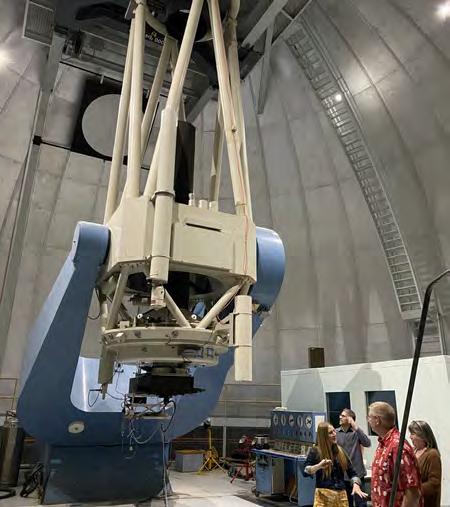
The Dark Skies Team spends time building partner-ships with other astronomy institutions in the region. Here we are on a tour of the U.S Naval Observatory in Flagstaff. Ranger Sarah Acomb speaks with research astronomer Dr. Merri Sue Carter, about the “Kaj Aa. Strand 1.55-meter (61-inch) Astrometric Reflector” Tele-scope. Two Astronomer-in-Residence alumni, Dean Regas and Kevin Schindler, stand baffled at the immensity of the scope!
Members of the Dark Skies Team made a trip to the UA SkyCenter in Tucson to establish relationships with astronomers. Here, Ranger Rader stands next to Gerard Kuiper’s historic telescope, the discoverer of the “Kuiper Belt”— the collection of planet-like objects just beyond Neptune. Look for UA SkyCenter at Star Party next year!
In the Media
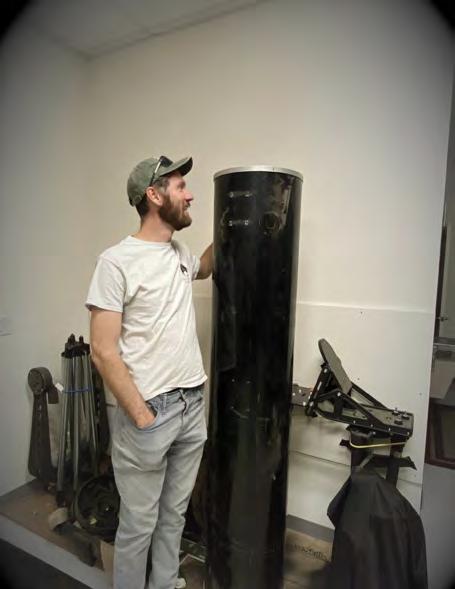
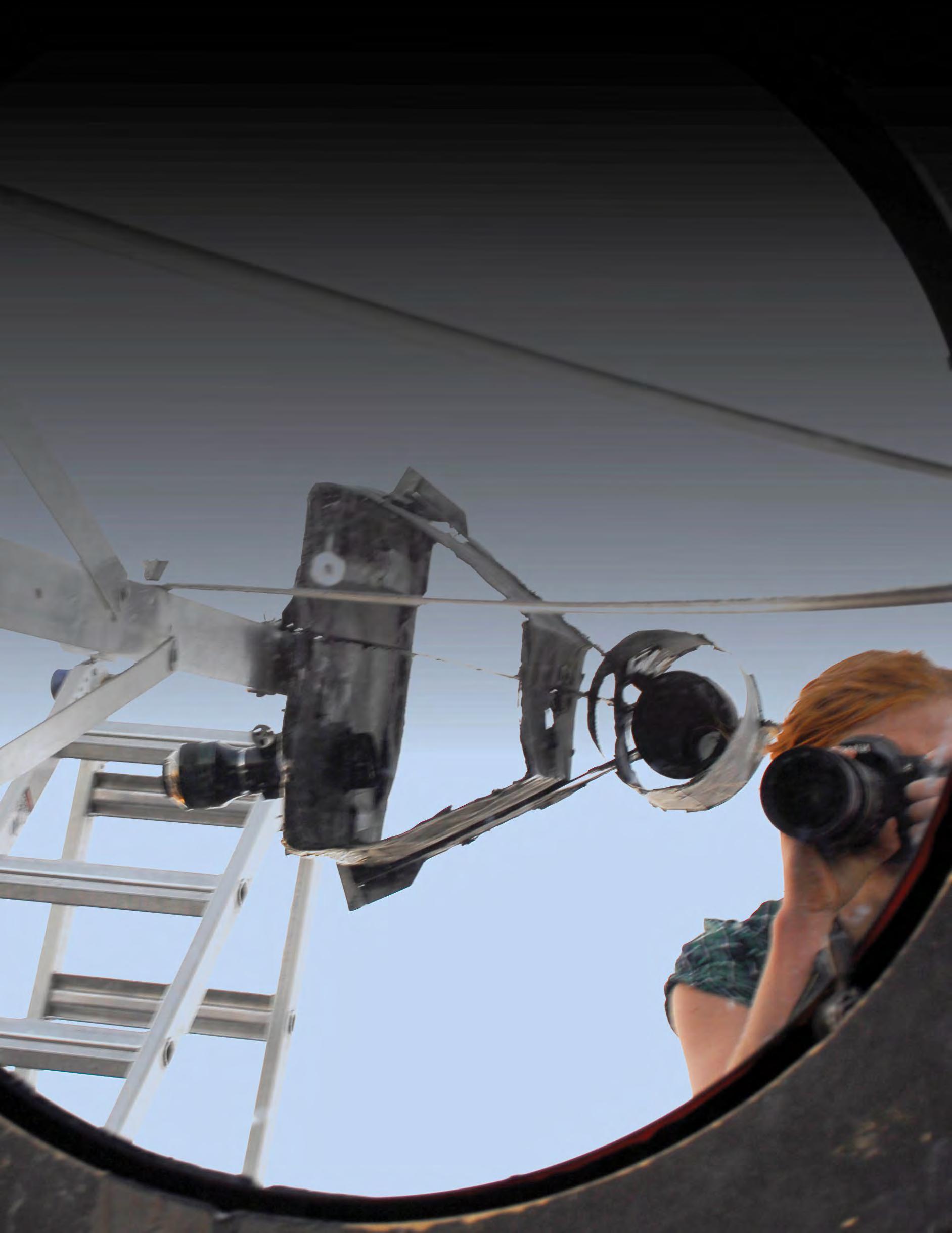
The world loves talking about Grand Canyon’s dark skies! The following are a collection of media coverage from this year, from news articles to podcasts, television to other digital media. Here, Kristen O’Neil takes a photo of the primary mirror of a 28” telescope on the lot of Grand Canyon Star Party from 2012. It’s kinda famous around here.
News Articles
Grand Canyon Star Party
• New York Times - These National Parks Are Welcoming Stargazers This Summer
• Sky and Telescope - Grand Canyon Star Party
GCC Astronomer in Residence Program
• Williams News - Physics professor is Grand Canyon’s new Astronomer in Residence
• Wittenburg University - Astronomer in Residence
• KJZZ - Grand Canyon astronomer in residence to present series of astronomy programs
• KNAU - Grand Canyon astronomer wraps up residency with sunset mapping project
• University of Denver Magazine - Professor to study the night sky as the Grand Canyon’s Astronomer in Residence
• Williams News - Dr. Jennifer Hoffman is Grand Canyon’s next Astronomer in Residence
• Williams News - Grand Canyon astronomer-in-residence Kevin Schindler aims to bring Apollo back down to Earth
• KNAU - Historian retraces steps of astronauts at Grand Canyon
• Arizona Daily Sun - View from Mars Hill: A residency for astronomy at the Grand Canyon Podcasts
• Star Stuff Podcast - The Math of the Universe & Elements of Awe with Astronomer Dr. Daniel Fleisch
• Star Stuff Podcast - Making Science Accessible with Dr. Jennifer Hoffman
• Star Stuff Podcast - Apollo Astronauts at the Grand Canyon? We talk to Dark Sky Ranger Rader Lane
• Night Sky Tourist Podcast - In the Shadow of the Milky Way with Ranger Rader Lane
• Looking Up Podcast - A Fellow Grand Canyon Resident (featuring Dr. Jennifer Hoffman) Television
• Arizona PBS - Former Grand Canyon astronomer in residence discusses her experience
Digital Media
• Minute Out In It: Astronomer in Residence - Dr. Jennifer Hoffman
• Minute Out In It: Astronomer in Residence - Dr. Cameron Hummels
• Minute Out In It: Kwiyamuya (Windbreaker Moon)
• Minute Out In It: Powamuya (Purification Moon)
• Minute Out In It: Nimanmuya (Going Home Moon)
• Minute Out In It: Kelmuya (Sparrow Hawk Moon)
GRCA’s Dark Skies Team:
• Rader Lane—Dark Skies Program Manager (rader_lane@nps.gov)
• Lucas Hill—Construction Control Representative (lucas_hill@nps.gov)
• Santiago Garcia—Data Manager (santiago_garcia@nps.gov)
• Clover Morell—Residency Program Manager (cmorrel@grandcanyon.org)
GRCA Dark Skies Annual Report 2023 Created December 2023 by Rader Lane and Carmen Kraus
Park Ranger - Dark Skies Program Manager
Grand Canyon National Park—National Park Service P.O Box 129, Grand Canyon, AZ, 86023