July–Dec. 2025

July–Dec. 2025
Our advisory council members bring expertise, insight and passion that help drive progress for our metro.
• Mike Arntson, Cardinal IG
• Jim Buus, JBC Commercial
• Andrew Curley, Midco
• Chad Flanagan, Eide Bailly
• Tony Grindberg, Cass County Commission
• Colin Irvine, Concordia College
• Tiffany Lawrence, Sanford Health
• Paul Matthys, Cass County Electric Cooperative
• Tami Norgard, Vogel Law
• Jason Seger, Border States
• Taya Spelhaug, Microsoft
• Julie Whitney, Gate City Bank
• Joe Raso, GFMEDC
• Shannon Full, FMWF Chamber
As chair of the Innovate28 Advisory Council, I am proud to report that our first full year of coordinated regional action delivered measurable results across workforce development, business growth and public policy.
Innovate28 continues to prove that a focused, three-pronged approach works. By aligning workforce, business development and public policy efforts, we are creating a connected regional economic system. That alignment is translating into real outcomes for the region and positioning our area as a premier destination for business expansion and attraction.
Our workforce initiatives are strengthening the talent pipeline that employers rely on. All 40 participating companies are fully utilizing recruitment tools, and 33 of 35 engagements were completed through the Community Concierge program. Nearly 3,900 students connected with career opportunities through the Health, Tech and Trades Career Expo, helping young people see a future for themselves right here in our region.
Business development efforts are also delivering strong returns. Innovate28 supported 17 primary sector expansions and relocations, contributing to $3 billion in capital investment and 1.9 million square feet of utilized space. In addition, 90 companies received strategic assistance to help them grow, invest and succeed locally.
Equally important is the progress made in public policy and civic engagement. The launch of the Center for Civic Engagement, with 22 founding members, is building the next generation of informed and engaged leaders. We engaged 84% of regional policymakers, exceeded our outreach goal and helped recruit three candidates to run for public office. These efforts strengthen the civic foundation that supports long-term economic success.
Innovate28 is proving to be a durable platform for regional growth. Early investments are building lasting economic infrastructure, from talent pipelines to capital investment to civic leadership. This system approach ensures recruitment leads to retention, retention to productivity and productivity to sustained growth.
None of this progress would be possible without our investors. Your support enables strategic alignment across workforce, business and policy systems. Every engagement, program and partnership strengthens the region’s competitiveness, delivering a return not only in economic impact but also in community resilience.
Looking ahead to 2026 and beyond, we will build on the momentum of 2025 by scaling what works, strengthening partnerships and sustaining measurable results. Continued emphasis on workforce development, business attraction and retention, and civic leadership will ensure our region remains competitive in a rapidly changing economy.
Thank you for believing in this work and for staying engaged. With your continued support, Innovate28 will keep driving long-term growth, strengthening talent pipelines, attracting high-value investment and cultivating the civic leaders our community needs.
Sincerely,

Paul Matthys Chair, Innovate28 Advisory Council President and CEO, Cass County Electric Cooperative
Innovate28 is aligning recruitment, retention and workforce development into a connected regional system that helps employers turn hiring into long-term productivity and growth. Through coordinated leadership, employers and workforce partners are moving from fragmented efforts to shared solutions, with strong engagement across the system in 2025. More than 220 employers and HR leaders participated in Workforce Breakfasts, strengthening employer readiness by directly connecting labor market data and regional tools to hiring decisions. Industry Sector Partnerships convened over 60 workforce leaders in quarter four alone, aligning employers, educators and partners around immediate skill needs, upskilling priorities and early-career pipelines. Retention efforts gained traction, as 33 Community Concierge connections helped protect employer investment by accelerating newcomer integration and reducing turnover risk while 16 companies actively participated in the Culture Program, using workplace experience as a competitive advantage. On the pipeline side, 3,900 students engaged hands-on with careers in health care, technology and the trades through the Health, Tech and Trades Career Expo, strengthening future talent supply in high-demand industries. Together, these outcomes reflect a workforce system that is improving return on talent investment and building durable capacity for longterm regional growth.
Innovate28’s business development efforts are focused on accelerating employer growth, attracting new investment and positioning the region to compete effectively for high-impact projects. In 2025, the EDC supported 17 primary sector expansion and attraction projects, representing $3 billion in capital investment, while maintaining a strong pipeline with 40 active and homestretch projects underway. Engagement with existing employers remained a priority, with 152 company engagements and 90 direct company assists delivered to help businesses navigate expansion planning, workforce needs and site readiness. Together, these efforts underscore the role of business development as a cornerstone of shared regional growth, supporting job creation, private investment and long-term economic prosperity across the Fargo–Moorhead–West Fargo region.
Through Innovate28, public policy engagement is strengthening the connection between business priorities and the decisions that shape the region’s future. In 2025, The Chamber achieved 84% engagement with area policymakers, ensuring the business community’s voice is consistently represented across local and state conversations. Innovate28 also supported the launch of the Center for Civic Engagement, establishing a long-term platform to educate, connect and prepare leaders for public service, with 22 Founding Circle Members investing in its foundation. Beyond the Center, The Chamber convened more than 300 business and community leaders in Q4 alone through policy conversations and forums, deepening understanding of key issues and strengthening cross-sector relationships. These efforts are building informed leadership, advancing constructive dialogue and supporting policy outcomes that contribute to workforce stability, business confidence and shared regional prosperity.
Innovate28’s coordinated efforts across workforce, business development and public policy continue to strengthen the region’s economic foundation, supporting investment, job creation and long-term competitiveness. In 2025, the region saw 4,298 non-residential permits issued, representing an estimated $755 million in total value, while more than 1.18 million square feet of commercial space and 969 multi-family units were added, reflecting continued confidence in regional growth. Taxable sales remained strong, with $875 million in the third quarter and the labor force expanded to 155,239, up from 152,175 the previous year, supporting both business expansion and workforce development. With a metropolitan population of 271,870, Innovate28’s work is contributing to a business environment where growth is measurable, opportunities are expanding and the region is positioned for sustained economic success.
• ESTABLISHMENT OF BASELINE AND YEAR-OVERYEAR GROWTH OF CAREER AWARNESS AND EXPLORATION OPPORTUNITIES. IN PROGRESS - SEE PAGE 16 FOR DETAILS.
• RANK IN THE TOP 25% OF SMALL METROS FOR JOB GROWTH IN THE MILKEN INSTITUTE’S BEST PERFORMING CITIES LIST (CURRENTLY 65%).
• ACHIEVE A TOP 25% RANKING FOR TALENT ATTRACTION (CURRENTLY 27%) IN LIGHTCAST REPORTS.
Workforce outcomes do not come from a single program or organization. They are built through a connected system where recruitment, onboarding, belonging, skill development and career advancement reinforce each other. When any link is weak, employers feel it through vacancies, turnover and lost productivity.
Through Innovate28, the Fargo–Moorhead–West Fargo region is intentionally aligning these efforts into a shared workforce system that turns attraction into retention, retention into productivity and productivity into long-term growth.
Through joint leadership of the Fargo Moorhead West Fargo Chamber and the Greater Fargo Moorhead Economic Development Corporation (GFMEDC), employers, educators, workforce partners and community organizations are operating in coordination, building capacity today while strengthening the talent pipeline for the future.
• 40 OF 40 COMPANIES USING RECRUITMENT TOOLS
Employers are fully utilizing regional recruitment resources to expand hiring reach, reduce time-to-hire and support growth.
• 16 OF 25 COMPANIES ENGAGED IN CULTURE PROGRAMS
Businesses are strengthening workplace experience as a competitive advantage in a tight labor market.
These outcomes show employers are actively using regional tools to expand hiring reach and differentiate themselves in a competitive labor market, reducing time-to-hire and increasing growth readiness.
• 33 OF 35 ENGAGEMENTS WITH THE COMMUNITY CONCIERGE PROGRAM
Employers are actively using community integration as a retention strategy to reduce costly turnover.
• 576 INDIVIDUALS UPSKILLED OR TRAINED
Workforce development efforts are expanding skill capacity aligned with employer demand.
• 465 INDIVIDUALS PLACED IN NEW JOBS OR ADVANCED IN THEIR ROLES
Training investments are translating into productivity, mobility and business growth.
These results reflect a workforce system that attracts talent, strengthens retention and supports employers in maximizing their investment in people and productivity.
WORKFORCE BREAKFASTS AND EMPLOYER READINESS
GFMEDC hosted Workforce Breakfasts, connecting HR leaders with tools, labor market data and regional resources to fill open positions and plan for future workforce needs.
• 220+ attendees across four events
• Regional HR Workforce Survey results shared directly with employers
These sessions accelerated employer readiness and strengthened alignment between workforce data and business decision-making.
Lightning Recruitment is a data-driven workforce tool the GFMEDC uses to help employers identify out-of-market talent by showing where wage and cost-of-living differences make relocation to the FM region financially attractive.
• Integrates wage, occupation and cost-of-living data
• Identifies regions where relocation makes economic sense for job seekers
• Expands recruitment beyond the local labor shed
• Delivered customized reports and hands-on assistance to 6 companies in 2025
• Demonstrated growing adoption through multiple data releases
This tool enables employers to move from reactive to proactive recruitment, supporting expansion, reducing vacancy time and strengthening the region’s labor pipeline.
The GFMEDC Cost-of-Living Calculator is a data-driven tool that compares the cost of living across cities and regions. Built on the nationally recognized Cost of Living Index published by the Council for Community and Economic Research (C2ER) since 1968, it uses locally gathered pricing data to show how everyday expenses stack up between metros in near real time.
• Shows how employee pay compares across regions
• Supports competitive compensation and relocation decisions
• Helps employers attract and retain talent by negotiating expectations with data
• Tracks key cost drivers like housing, food, utilities and everyday expenses
Industry Sector Partnerships (ISPs) are a core component of Innovate28, aligning employers, educators and workforce partners across health care, cybersecurity/IT, advanced manufacturing and agriculture/food to solve talent challenges at scale. These convenings bring the full workforce system together to identify shared barriers and advance employer-driven solutions.
2025 ISP HIGHLIGHTS AND IMPACT
• Advanced Manufacturing ISP (December): Convened 26 workforce leaders from 20 organizations aligned around immediate and emerging skill needs.
• Health Care/Caring Professions ISP (August): Convened 37 leaders from 28 organizations, demonstrating strong employer engagement and cross-sector alignment. Through these partnerships, employers and partners have:
• Identified talent access challenges, including immigration, integration and retention, now directly informing public policy priorities and legislative conversations.
• Prioritized upskilling of the existing workforce, shaping regional education and training strategies with a focus on advanced technology and applied AI.
• Strengthened early-career pipelines through apprenticeships, leadership development and coordinated work-based learning, reducing friction for employers and improving access for students.
Building on the momentum of our Industry Sector Partnerships, The Chamber is leveraging your Innovate28 investment by successfully securing state-allocated Regional Workforce Impact Program (RWIP) funding to deepen and formalize sector strategy work in the health care and advanced manufacturing industries. This investment strengthens the overall workforce system by anchoring employer-validated priorities in shared regional plans, improving coordination across education and workforce partners and converting ISP insights into durable, longterm strategies that extend beyond individual programs or funding cycles. The result is a more aligned, responsive and resilient workforce system that can adapt as employer needs evolve.
ISPs are converting employer insight into coordinated regional action, reducing misaligned training investments, accelerating workforce readiness and ensuring the region is building the skills employers actually need. The result is stronger alignment, greater return on investment and sustained capacity for long-term economic growth.
Based on a joint GFMEDC–FMHRA survey identifying culture as a top workforce priority, the Culture Program supports employers in building environments that attract and retain talent.
• 173 employers surveyed, representing 25% of the regional workforce
• 16 companies actively participating in the Culture Program
As competition for talent intensifies, culture has become a differentiator that directly affects retention, engagement and productivity.
In 2025, 33 Community Concierge engagements represented 33 opportunities to protect employer investment, strengthen retention and accelerate long-term community connection. Through the Community Concierge and Icebreakers programs, newcomers are paired with trusted local connectors who help them build personal and professional networks faster, reducing the risk of early departure and costly re-recruitment.
“The Concierge Program is a vital part of our recruiting toolkit. It allows our HR team to focus on hiring, while the Concierge team helps candidates truly experience the community and see themselves living here.”
- Bobcat, Human Resources Team
Another partner emphasized the value of neutrality and trust:
“Having a non-biased party like The Chamber provide these tours allows candidates to ask honest questions and get honest answers. It has helped remove the stigma and highlight the growth and opportunity in the region.”
- Aldevron, Talent Recruitment
Hosted by the FMWF Chamber, the Health, Tech and Trades Career Expo connects students with high-demand careers critical to regional growth.
• 42 schools
• 3,900 students
• 70 exhibitors
• 400+ employer and educator representatives This event accelerates awareness and entry into health care, technology and skilled trades pipelines.
“This event was one of the most organized events I have ever attended. From multiple forms of communication, with every question possible asked. From friendly and helpful staff the day of to help with anything and everything. The detail that went into the planning of this event did not go unnoticed. ...I was so impressed by the organization as a whole of this event. Job well done!”
- Exhibitor feedback
“Overall, students left the expo with greater career awareness, increased confidence and a stronger sense of direction. The event was valuable, engaging and aligned well with our goals, and we look forward to attending again next year.”
- Educator Feedback

In just one senior-level relocation, the cost of these services is more than offset, making talent integration and belonging a high-leverage workforce strategy for employers and a smart, cost-effective investment for the region.
Innovate28 supports the expansion of WBL by convening partners, aligning processes and reducing barriers for both employers and schools, ensuring students gain meaningful, career-connected experiences while businesses can engage with confidence and ease.
Through coordination led by The Chamber, the Cass County Career and Technical Education Center, Moorhead Area Public Schools and Golden Path Solutions collaborated to standardize forms and processes, significantly lowering the barrier for employer participation. This work also advanced shared regional goals for WBL, including common approaches to participation tracking, outcome measurement and employer engagement.
The result is a more efficient, employer-friendly WBL system that expands access for students, reduces friction for businesses and strengthens the region’s future talent pipeline.
Building on this progress, planning is underway for a regional WBL convening in Q2 2026, bringing education and industry partners together to align priorities, reinforce shared goals and scale high-quality WBL experiences across the region.
Women Connect continues to provide a platform for professional connection, leadership development and community engagement, supporting women across the region in their career growth and peer networking.
• 10 sessions delivered in 2025
• 17% increase in attendance, averaging 150 participants per event
• Participant satisfaction remained high with an average Net Promoter Score of 81
• Demonstrated sustained demand for programming that strengthens women’s leadership and professional networks
YPN remains a key driver of emerging talent engagement and retention, creating meaningful opportunities for professional development, leadership growth and peer connection.
• 20 events delivered in 2025, averaging 24 attendees per event
• 75 new members welcomed into the network
• Participant satisfaction exceptionally strong, with an average Net Promoter Score of 95
• Second annual YP Summit attendance increased by 40%, expanding impact and reinforcing YPN’s mission
Leadership FMWF strengthens individual leadership impact and builds community awareness preparing participants to take on meaningful community and professional roles.
• Class of 2025 graduated 40 participants
• Average Net Promoter Score of 67, reflecting strong participant experience
• Alumni engagement included 2 professional development events and 2 social events, each with ~30 attendees
• Monthly alumni newsletter averaged 170 views per issue
• Participants advanced several Community Change Initiative (CCI) projects addressing homelessness, bullying prevention, digital well-being, intergenerational connection and women’s support services
Led by the GFMEDC, this summit connected students with emerging bioscience careers through collaboration with NDSU, MSUM, Concordia, M State and NDSCS.
• 90+ students engaged
• Clear education and training pathways highlighted
• Workforce development aligned with future industry demand
• Part of the larger Bioscience Summit allowing students to engage with a larger bioscience community
After moving to Fargo from Vancouver, Ashley Kedra built a successful remote career but struggled to feel rooted locally. Through the Icebreakers directory, a Chamber program supported by Innovate28, she found a clear path to connection and community.
“It was the first time I felt like there was a clear path to building real relationships here,” Ashley shared.
Through conversations with Christine Vangsness, a marketing professional and long-time resident, Ashley came to a powerful realization. “I thought about moving to a bigger city like Vancouver again, but then I realized no matter where I go, I’d still need to build community. I hadn’t really given Fargo a chance. Now I want to.”
Read the full article

Shared at the GFMEDC Workforce Breakfast and compiled in partnership with FMHRA, the 2025 FM Workforce Survey provides a comprehensive snapshot of employer needs and workforce trends as the region navigates a rapidly changing labor market.
The survey reflects input from 173 employers representing more than 38,000 employees across 17 industry sectors, more than a quarter of regional employment.
Key insights include:
• Employers expect to fill 4,900+ positions in the next 12–18 months, driven primarily by turnover
• Continued recruitment pressure as employers expand regional and national searches
• Persistent gaps in foundational workplace skills such as work ethic and initiative
• Growing openness to foreignborn talent as employers seek new workforce pathways
• Remote work emerging as a competitive advantage for primary-sector employers
• Improving retention trends, with company culture playing a critical role
This workforce intelligence ensures that recruitment, training and policy investments remain targeted, responsive and aligned with real business demand.
Read the full article
Through Innovate28, the region’s business development system, led by the Greater Fargo Moorhead Economic Development Corporation (GFMEDC) in close alignment with regional partners, ensures companies can expand, locate and invest with confidence, speed and long-term certainty.
• 17 of 25 company projects supported
• 5 of 7 certified sites available These outcomes reflect continued progress toward longterm site readiness and a strong pipeline of investmentready projects, both critical for attracting capitalintensive growth.
• 152 of 150 existing company engagements
• 90 of 75 companies supported through direct assists These engagements protect existing employers, surface expansion opportunities early and reduce the risk of business attrition.
In 2025, the regional business development system supported 17 primary-sector expansion and attraction projects, advancing toward the annual goal of 25 and the long-term target of 130 by January 2029. These projects represent primary-sector companies that bring new wealth into the regional economy and expand long-term employment capacity. While total project count finished slightly below target, capital investment and new square footage far exceeded annual goals, demonstrating that the system is attracting larger, higher-impact projects.
Key outcomes:
• Strong sector alignment, led by advanced manufacturing (12 projects), with growth in value-added agriculture, bioscience, medical devices, data centers, software/hardware and professional services
• Capital investment and utilized space exceeded goals, signaling project quality and scale
• Targeted connections and insights converted interest into action, accelerating decision-making and investment timelines
Sheyenne Forming | Integrity Steel Supply | Immersive Reality USA | Lura Concrete Screed | SpaceAge Synthetics
GoodBulb | Bert’s Truck Equipment | Long Creek Steel | SignBadgers | Corvent Medical | Applied Digital Reach Right | Office Sign Company | Northern Stone | OHT Workforce Solutions | Norwood Sales | VerumGen Labs LLC
• $3B in capital investment (goal: $83M)
• 304 new jobs created (goal: 500)
• 1.9M sq. ft. of utilized space (goal: 300,000)
• $555,000 in Growth Initiative Fund loans approved (11 approvals), leveraging $1.2M in state buydown grants
• 40 active and homestretch projects in progress
• Potential impacts: 539,000 sq. ft., 295 jobs, $106.4M capital investment
• 21 active targeted sector prospects sourced through national and international partners
Targeted sectors include:
• AgTech (11)
• Bioscience / Medical Device (8)
• UAS / Autonomous Systems (2)
Business development success is built through consistent, smaller engagements that remove friction and build trust over time. In 2025, 90 company assists supported employers across five core areas:
• Primary-sector certification and recertification
• Workforce and talent development alignment
• Capital access, financing and incentives guidance
• Business connections and ecosystem navigation
• Marketing, visibility and media features
The GFMEDC supports the attraction, retention and expansion of primary-sector businesses bringing new wealth to our regional economy and supporting job creation.
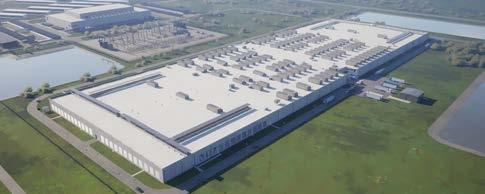
Applied Digital broke ground in September 2025 on a new campus named “Polaris Forge 2”, near Harwood, North Dakota, where they are initially constructing two buildings totaling 300 MW of Critical Load. Spanning more than 900 acres, Polaris Forge 2 is engineered to deliver best-inclass efficiency with a projected Power Usage Effectiveness (PUE) of 1.18 and near-zero water consumption. The initial 200 MW are phased within two buildings and are expected to begin to come online in 2026 and reach a total of 200 MW in 2027, with the campus being designed for future expansion. This new AI Factory campus further advances Applied Digital’s rapid growth and reinforces North Dakota’s position as one of the most strategically important destinations for AI infrastructure in the United States.
The GFMEDC worked closely with Applied Digital, local civic leaders and utility partners on various aspects of this project to support the attraction of the $3 Billion data center investment which was recently announced.

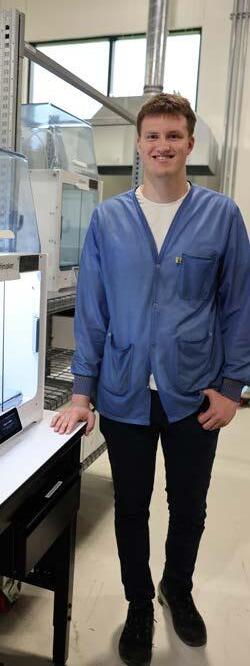
GFMEDC staff have already conducted various workforce assessments that show our market’s ability to provide the talent needed to support this facility and are confident Applied Digital’s operations will fit nicely with our region’s talent pool. In addition, the GFMEDC is working with Applied Digital to conduct an economic impact analysis to demonstrate the broader metrowide economic impacts to the community during construction phase and eventual annual operations.
“We believe Polaris Forge 2 represents the next stage in Applied Digital’s rapid growth and our position as a leader in delivering high-performance AI infrastructure,” said Wes Cummins, CEO of Applied Digital.
“The demand for AI capacity continues to accelerate, and North Dakota continues to be one of the most strategic locations in the country to meet that need. We believe this new campus will strengthen our operations, increase our ability to scale, and create lasting value for both our customers and the communities we serve.”
Economic competitiveness is shaped by decisions made in city halls, state capitols and Congress—often years before their impacts are visible in the marketplace. Regions that succeed are those that engage early, consistently and strategically.
Innovate28 ensures the Fargo–Moorhead–West Fargo business community is not reacting to public policy but helping shape it. Through coordinated advocacy, leadership development and civic education, this work strengthens the policy and leadership systems that support business growth, workforce stability, infrastructure resilience and long-term regional competitiveness.
PUBLIC POLICY AND ADVOCACY
• 84% Area Policymaker Engagement (annual goal: 80%)
• Completed launch of the Center for Civic Engagement (annual goal)
• 68 External Elected Officials Engaged (annual goal: 50)
• 22 Founding Circle Members (annual goal: 20)
• Cultivated 3 Legislative Candidates (Year 1)
With systems in place, 2025 focused on translating alignment into action. Through targeted convenings, direct engagement and employer education, The Chamber advanced regional priorities by connecting business leaders and policymakers on issues that directly influence economic performance and community growth. This work strengthened relationships, improved employer readiness and increased the region’s influence at the local, state and federal levels.
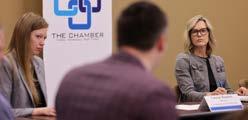
Convened over 300 business and community leaders alongside policymakers for meaningful discussions on key business issues. These gatherings included roundtable conversations with Sen. John Hoeven, Rep. Julie Fedorchak, and other state and local leaders, providing a platform for policymakers to hear directly from business voices and fostering stronger alignment between policy decisions and regional economic priorities. Topics spanned immigration, flood mitigation, agriculture, military and more.

In 2025, The Chamber led a comprehensive employer education and compliance initiative around Minnesota’s Paid Family and Medical Leave program, equipping businesses with the tools and knowledge needed to implement new requirements effectively. This multi-channel effort ensured broad engagement and measurable impact, helping employers navigate compliance while minimizing disruption to operations.
• Event attendance: More than 150 participants at inperson educational sessions
• Digital engagement: 4 blog posts reaching 1,260 active users
• Podcast: Chamber Link Podcast (September), live broadcast and recording for ongoing access
• Email outreach: 3 emails, including a compliance checklist, sent to 10,286 contacts with a 44% open rate; 3 additional blog mentions in The Chamber’s eBridge weekly newsletter totaling nearly 450 clicks.
• Print coverage: 2-page feature in the Nov/Dec issue of Bridge Magazine, reaching 2,000+ recipients
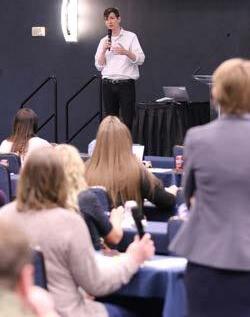
The Chamber’s resources provide business leaders with clear, actionable information to stay informed and engaged in public policy. In 2025, these publications were enhanced for accessibility and convenience, helping members quickly find key legislative priorities and guidance.
• 2025 Legislative Review Guide
Summarizes key legislation from the previous session, highlighting the business community’s position, final outcomes and local legislators’ voting records. Provides a clear snapshot of the legislative session and its impact on the region.
• 2026 Public Policy Guide
Outlines the guiding principles for policy engagement across a range of issues, presenting a high-level view of the business community’s stance and priorities.
• 2026 Legislative Priorities
Details the top priorities for both Minnesota and federal legislative sessions in 2026, focusing on actions that support a strong, competitive business environment.
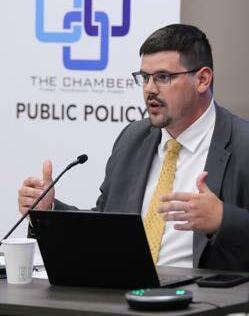

Strong economies rely on informed participation, capable leadership and trust in the systems that shape public decisions. When civic engagement declines, whether in voting, leadership participation or civic literacy, the quality and stability of those decisions decline with it.
The Center for Civic Engagement was created to rebuild that civic capacity. It expands participation, strengthens civic literacy, and prepares current and future leaders—from students to executives— to engage meaningfully in the public life of the region. By supporting voter engagement, leadership development and employer-supported civic service, the Center ensures the people shaping policy understand business realities, workforce needs and long-term consequences. This work strengthens the civic foundation that supports long-term economic growth.
The initiative kicked off with high-level engagement and strong visibility across the region.
• Pre-launch CEO Dinner with Governor of North Dakota, Kelly Armstrong: 45+ business and community leaders convened with Gov. Armstrong to build early momentum.
• Official launch: 460+ attendees attended The Chamber’s Annual Celebration, where the initiative was officially launched, signaling strong community interest and support.
• Press conference: Shared on The Chamber’s Facebook page and mentioned by local news outlets, the press conference generated 1.3 million impressions, amplifying awareness statewide.
• Local media coverage: Featured on WDAY, KVRR, KVLY and in The Forum, extending reach to diverse audiences.
• The Bridge magazine: 3-page feature reached 2,000+ readers, providing in-depth coverage of the initiative’s mission and goals.
Since the launch of the Center, 22 businesses have signed on as Founding Circle Members, indicating their active support for the initiative. Programming has provided business community members with opportunities to deepen their understanding of civic engagement. Through targeted events and resources, participants gained insights into the civic process, explored current issues and strengthened their ability to engage effectively.
• Civics on Tap with Michael Howe: 86 attendees engaged in interactive discussions with Secretary Michael Howe and other leaders.
• Pulse of Civic Engagement event: 95 attendees explored current trends and insights in regional civic participation.
• Center for Civic Engagement website: 517 active users accessed resources, event information and updates.
• Founding Circle Members: 22 businesses signed on to actively promote civic engagement to their employees.
The Center for Civic Engagement (CCE) was created in response to declining civic participation and growing interest from business leaders to shape solutions designed to inspire, prepare and support business-minded individuals to step into public service roles that directly influence economic competitiveness and community growth.
CCE aligns employers, employees and institutions around a shared goal: placing the right people in the right leadership roles to build a stronger community and a more competitive regional economy.
The CCE moves beyond awareness by providing practical, employer- and candidate-focused tools that lower barriers to civic participation:
• Employee and Employer Toolkits that guide individuals from interest to candidacy and help businesses support civic service through policies, flexibility and benefits
• Mentorship and Candidate Institutes that connect aspiring leaders with experienced public servants and demystify the path to elected or appointed roles
• Civic Insights such as Elections 101, Local Government 101 and Legislative 101 that build confidence and understanding of how government works
• VoteFMWF.com, elected positions web tool and candidate forums that provide nonpartisan, accessible information to encourage informed participation
“The Chamber’s Center for Civic Engagement has the potential to be one of the most significant, positive forces our region has seen in decades. Its impact will come from actions that encourage strong, capable leaders to step into the arena and serve our communities.
When business-minded individuals serve on city commissions, county boards, school boards, park boards and in the legislature, our region becomes stronger, more competitive and better positioned for growth. That is the outcome this work is built to achieve.
The participation of our business community and leadership in this effort matters. This will help get the right people in the right roles, to build a stronger community and economy. Continuing to build a pro-growth, business-driven future for the Fargo-Moorhead-West Fargo region will positively impact everyone.”
By cultivating a pipeline of informed, businessminded civic leaders, the CCE strengthens the systems that underpin economic development— from workforce policy and infrastructure decisions to education and quality-of-life investments. The initiative aligns employers, employees and institutions around a shared goal: placing the right people in the right leadership roles to build a stronger community and a more competitive regional economy.
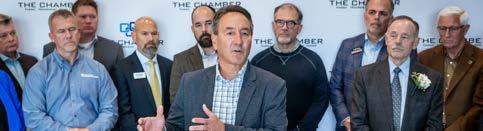

As we close out 2025, we want to begin with a sincere thank you. Your investment and leadership have made it possible for Innovate28 to move from vision to execution, and to begin delivering the kind of coordinated long-term impact this region has never attempted at scale before.
This year marked an important shift. Innovate28 is no longer a strategy on paper. It is an operating system for regional growth. Across workforce, public policy and business development, we saw alignment turn into action and action turn into outcomes. Systems that were intentionally built are now functioning together, reinforcing one another and accelerating progress in ways that isolated efforts simply cannot.
You’ve seen the data throughout this report: the workforce gains, the business investment, the policy engagement, the leadership that is emerging. Those results tell a clear story that when we align around shared priorities, we reduce friction, increase capacity and position our region to compete at a higher level. The return goes beyond projects, programs or participation and shows itself in momentum, confidence, systems and long-term readiness.
And, just as importantly, 2025 proved something else: THIS MODEL WORKS.
Innovate28 was designed as a four-year commitment because meaningful regional change requires sustained focus, trust and follow-through. With year one behind us, we now carry both the opportunity and the responsibility to scale what’s working, deepen collaboration and continue investing where impact is greatest. The next three years are where alignment becomes an advantage—for our employers, our workforce and our communities.
We are energized by what has been accomplished and deeply committed to what lies ahead. The foundation is strong. The direction is clear. And with your continued partnership, the Fargo–Moorhead–West Fargo region will be more competitive, more resilient and better positioned for long-term prosperity.
Thank you for believing in this work and for carrying it forward with us.
With gratitude and confidence,

Shannon Full President and CEO, FMWF Chamber of Commerce

Joe Raso President and CEO, Greater Fargo Moorhead EDC
3,100
3,100
with the Community Concierge Program
4,000
WorkBased Learning goals.


Thank you to these leading businesses for investing in the future of our region. Innovate28 powers The Chamber’s and the EDC’s Public Policy and Workforce and Talent efforts.



CHAMPION | $15,000+ ANNUALLY


CONNECTOR | $10,000+ ANNUALLY
SUPPORTER | $5,000 ANNUALLY


The work of Innovate28 both directly and indirectly impacts the region’s economic performance. Coordinated efforts around workforce, business development and public policy help foster a strong business environment that supports investment, employment growth and long-term economic competitiveness.
NON-RESIDENTIAL PERMITS ISSUED IN TOTAL VALUE, BY PROPERTY CLASS
Permits issued (2025) 4,298
Estimated total value: $755.15M
ADDED SQUARE FOOTAGE BY PROPERTY CLASS (Q4 2025)
Office: 122,651 SF
Retail: 172,043 SF
Industrial: 890,135 SF
Total: 1,182,717
Multi-Family: 969 Units (Permitted YTD)
TAXABLE SALES AND YEAR-TO-DATE COMPARISON TO PREVIOUS YEAR
3rd Quarter 2025: $875,013,833
3rd Quarter 2024: $874,266,765 VACANCY RATES
FORCE GROWTH - TOTAL AND YEAR-TO-DATE COMPARISON TO PREVIOUS YEAR
December 2024: 152,175
YTD November 2025: 155,239
Data note: All data shown reflects the most recently finalized figures available at the time of publication. Due to reporting cycles, some metrics may not yet be available for Q4. Subsequent updates may occur after publication.