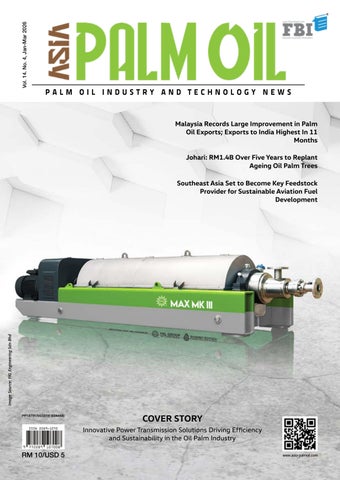
Malaysia Records Large Improvement in Palm Oil Exports; Exports to India Highest In 11 Months
Johari: RM1.4B Over Five Years to Replant Ageing Oil Palm Trees
Southeast Asia Set to Become Key Feedstock Provider for Sustainable Aviation Fuel Development
Innovative Power Transmission Solutions Driving Efficiency and Sustainability in the Oil Palm Industry
As we step into the first quarter of 2026, Malaysia’s palm oil industry is entering an important new chapter. One of the most interesting developments this month is the government’s shift in strategy, moving away from expanding new plantations and focusing instead on productivity, mechanisation and technology driven growth. With land availability getting tighter and sustainability expectations rising globally, this direction is both timely and necessary.
This move signals a stronger push to embrace innovation across the value chain, from mechanised harvesting to data driven estate management and downstream optimisation. Rather than increasing acreage, the industry is now prioritising higher yields, better labour efficiency and long-term sustainability. It is a clear message that Malaysia wants to remain globally competitive by being smarter, not larger.
For the industry, this opens the door to new opportunities. Technology providers, research institutions and plantation players will play a bigger role in shaping a modernised sector. At the same time, this shift strengthens Malaysia’s position as a responsible and future focused producer that continues to balance economic growth, environmental care and global market expectations.
As always, thank you for your continuous support for Asia Palm Oil Magazine. We look forward to bringing you more insights, breakthroughs and stories that matter to our industry.
PUBLISHER
FBI Publications (M) Sdn. Bhd.
PUBLICATION MANAGER
Vanny Lim vanny@asiafbi.com
PUBLICATION EXECUTIVE
Jocelyn Ong jocelyn@asiafbi.com
PROJECT EXECUTIVE
Ethan Loi ethan@asiafbi.com
MARKETING COMMUNICATION MANAGER
Nur Izyan binti Dzulkifli izyandzul@asiafbi.com
CREATIVE DESIGNER
Muhammad Fadzil design@asiafbi.com
BOARD OF DIRECTORS
Kenny Yong Susan Tricia
OFFICIAL MAGAZINE OF
CONTRIBUTOR
- Alfa Laval
- Datin Lorela Chia
Susan Tricia Editor
Follow us:
: Asia Palm Oil Magazine
: Asia Palm Oil Magazine
FBI Publications (M) Sdn Bhd (1168942-P) Unit 9-3, Jalan PJU 5/6, Dataran Sunway, Kota Damansara, 47810 Petaling Jaya, Selangor. | Tel: (+603) 5636 1952
PRINTED BY
MMS PRINT SHOP (M) SDN. BHD. (1246387-v) NO 43G, Jalan PBS 14/2, Taman Perindustrian Bukit Serdang, 43300 Seri Kembangan, Selangor.
ENDORSED & SUPPORTED BY DISCLAIMER
The assertions and opinions expressed in articles and announcements on this magazine reflect the views of the author(s) and do not (necessarily) reflect the views of the publisher. Asia Palm Oil Magazine can in no way be held responsible for the content of such views nor can it be held liable for any direct or indirect damage that may arise from such views.
The information in this magazine is regularly supplemented and/or modified. Asia Palm Oil Magazine reserves the right to make any changes with immediate effect and without providing any notice thereof
Interview with Krisada Chavananand: Crushing the Challenges: Krisada Chavananand on Tech, Efficiency & the Future of Thailand’s Palm Oil Sector
08 - FGV Showcases Sustainability Efforts
12 - Stop Demonising Palm Oil, Says SD Guthrie
Hopes to Alter Palm Oil Bias
14 - Boosting Plantation Productivity Through Modernisation, Genetic Innovation
18 - Gig Economy Approach Proposed to Revitalise Malaysia’s Plantation Industry
20 - Malaysia Focuses on Sustainable Palm Oil While Respecting Indonesia’s Land Measures
22 - Undervalued Plantation Firms Could Become Privatisation Targets
24 - Malaysia Records Large Improvement in Palm Oil Exports; Exports to India Highest In 11 Months
26 - M’sia Hopes to Alter Palm Oil Bias > INTERNATIONAL NEWS
30 - EU Proposes to Trim Anti-Deforestation Rules to Ease Rollout
32 - US Tariff Relief Positive Step for Malaysia’s Palm Oil Industry: MPOC
> GREEN SOLUTIONS
34 - RSPO, MSPO To Align Certifications to Ease Smallholders’ Burden
36 - Southeast Asia Set to Become Key Feedstock Provider for Sustainable Aviation Fuel Development > REFINERY NEWS
38 - Ecoscience Wins RM40 Million Johor Palm Oil Refinery Project Contract
M’sia
RSPO, MSPO To Align Certifications to Ease Smallholders’ Burden
COVER STORY
42 - Interview with Krisada Chavananand: Crushing the Challenges: Krisada Chavananand on Tech, Efficiency & the Future of Thailand’s Palm Oil Sector
US Tariff Relief Positive Step for Malaysia’s Palm Oil Industry: MPOC
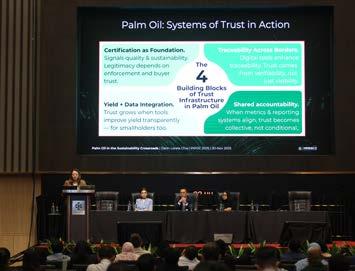
Palm Oil at the Sustainability Crossroads: Designing Architecture for a Coherent, Verifiable Future
> TECHNOLOGY AND PRODUCT
50 - A New Technological Breakthrough for Increasing Oil Extraction Rate (OER): How Pulsed Electric Field (PEF) Treatment is Transforming Palm Oil Extraction
54 - Palm Oil at the Sustainability Crossroads: Designing Architecture for a Coherent, Verifiable Future
58 - Malaysia Defends Palm Oil Industry’s Role in Orangutan Conservation
59 - Transparency Pays Off for Malaysian Plantation Companies
69 - Palm Oil: The Business of Green Absolution
FGV Showcases Sustainability Efforts
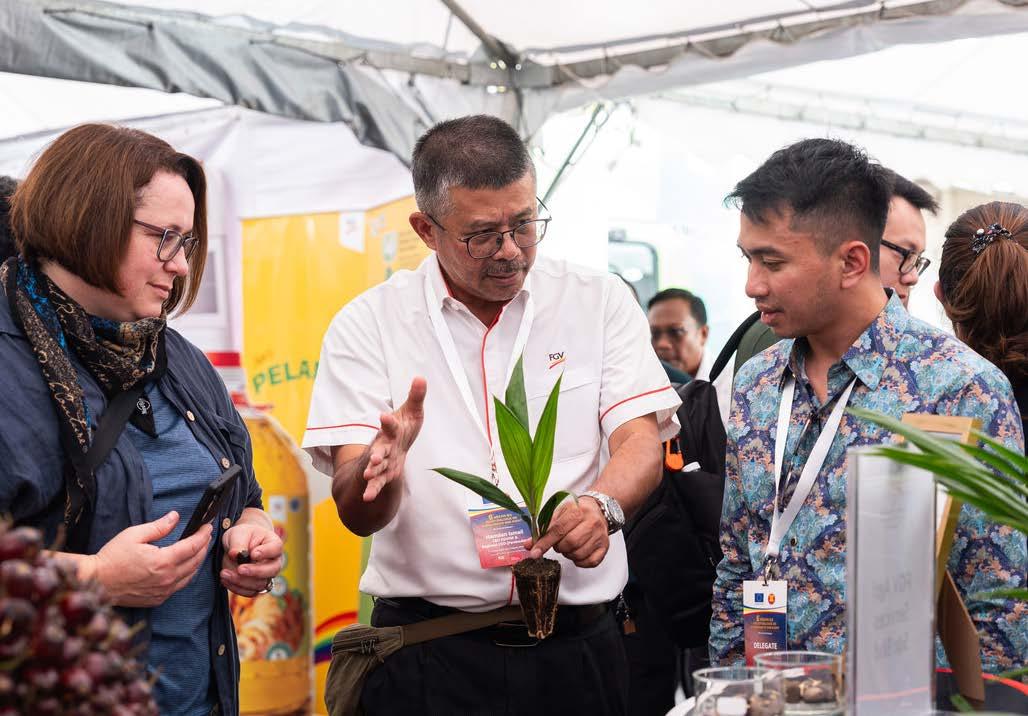
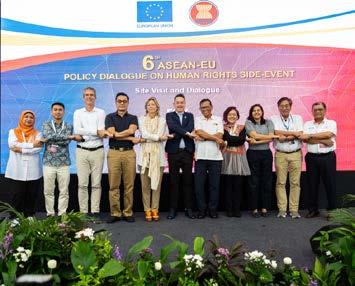
FGV Holdings Bhd (FGV) recently welcomed a high-level delegation of around 40 participants from the sixth ASEANEuropean Union (EU) Policy Dialogue on Human Rights to its Krau Complex in Pahang, reaffirming its steadfast commitment to responsible business practices, human rights protection and sustainable palm oil production.
The visit formed part of the ASEAN-EU Side Event on Intensifying Actions and Overcoming Barriers in Implementing Business, Human Rights, and Environment in ASEAN and the EU, jointly organised by the ASEAN Intergovernmental Commission on Human Rights (AICHR) and the EU.
The initiative aims to foster stronger regional cooperation in advancing inclusivity, sustainability and human rights across Southeast Asia and Europe.
The delegation included key representatives from ASEAN, the EU, government agencies, academia, and civil society.
ASEAN, European Union, Felda, and FGV delegates joining hands at the 6th ASEAN-European Union Policy Dialogue on Human Rights in Pahang recently. - File pic credit ( FGV Holdings Bhd)
Key figures included Edmund Bon Tai Soon, chair of AICHR and Malaysia’s representative to AICHR; Kajsa Ollongren, EU special representative for human rights; Datuk Astanah Abdul Aziz, ASEAN deputy secretary-general for the political-security community; and Rafael Daerr, EU ambassador to Malaysia, alongside AICHR representatives from Indonesia, Laos and Vietnam.
Also present were Federal Land Development Authority (Felda) chairman Datuk Seri Ahmad Shabery Cheek, directorgeneral Datuk Dr Suzana Idayu Wati Osman, and FGV group chief executive officer Datuk Fakhrunniam Othman, as well as board members and senior management from Felda and FGV.
“We are honoured to host this delegation and hope the visit provides a practical perspective on how we do business at FGV, where we translate human rights principles into meaningful action.
Safeguarding the well-being of our people and respecting the rights of local communities are not only integral moral imperatives in FGV, but they’re also essential foundations for sustainable business success, as enshrined in our Group Sustainability Framework,” said Fakhrunniam.
During the visit, FGV chief sustainability officer Nurul Hasanah Ahamed Hassain Malim presented an overview of the group’s sustainability and human rights initiatives.
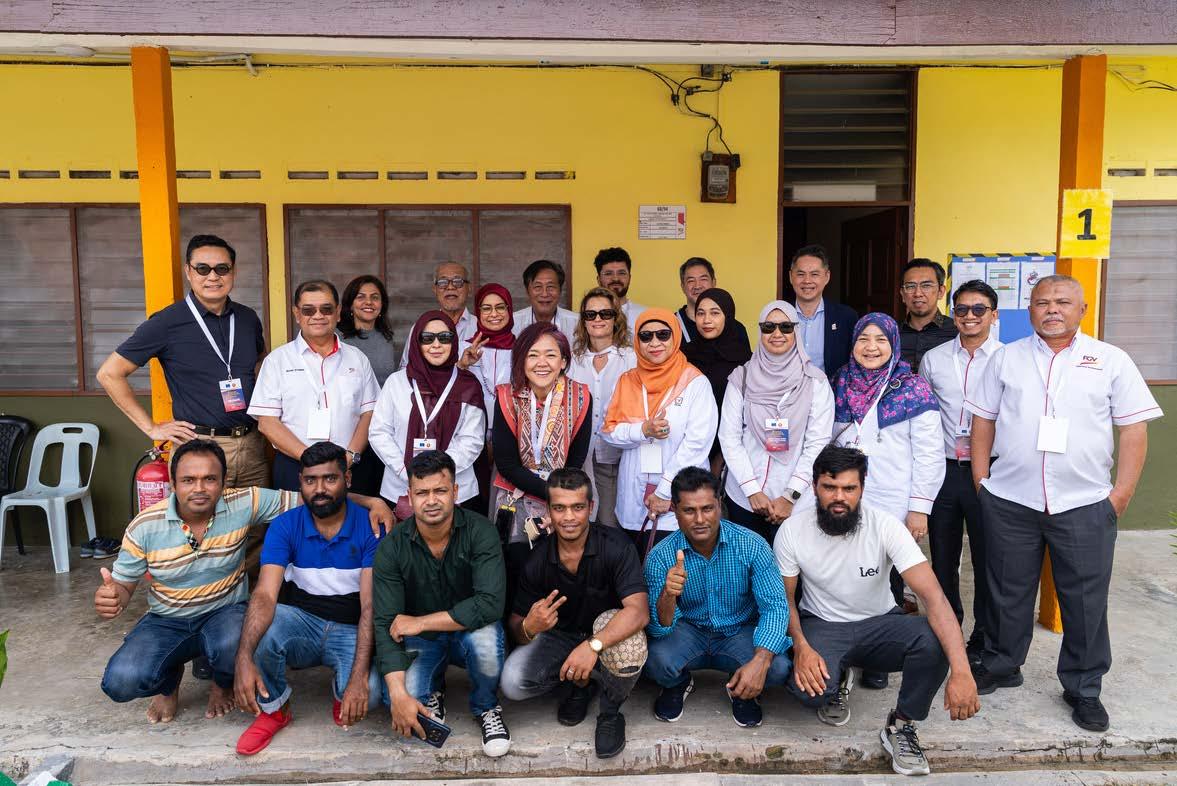
Delegates were taken on a site tour of workers’ housing and welfare facilities, where they interacted with independently elected migrant workers’ representatives to better understand FGV’s approach to fair labour practices, worker engagement, and welfare enhancement.
FGV showcased several concrete measures that underpin its sustainability agenda, including stringent due diligence in migrant recruitment, a firm no recruitment fee policy to prevent worker exploitation, continuous upgrades to workers’ housing, amenities, and living standards, as well as a strengthened thirdparty grievance channel designed to enhance transparency and accountability.
FGV’s Group Sustainability Policy, first introduced in 2016, is built upon three key pillars — promoting inclusive economic growth, respecting human rights, and protecting the environment — and aligns with global benchmarks such as the Universal Declaration of Human Rights and the UN Guiding Principles on Business and Human Rights.
In 2023, FGV advanced this agenda with the rollout of an enhanced Five-Pillar Sustainability Framework, expanding its focus on environmental, social, and governance (ESG) priorities to strengthen ethical and responsible business practices across its supply chain.
“We see great value in collaboration and partnership. By engaging directly with key stakeholders and regulators, we can better understand expectations, anticipate change and strengthen our practices to meet global standards.”
The visit concluded with a reaffirmation of FGV’s dedication to embedding human rights, inclusivity, and sustainability across its value chain — empowering smallholders, uplifting local communities, and contributing to Malaysia’s broader sustainability agenda, in line with the theme of Malaysia’s ASEAN Chairmanship 2025: ‘Inclusivity and Sustainability’.
Stop Demonising Palm Oil, Says SD Guthrie
SD Guthrie Bhd has called for an end to the skewed perception on palm oil that paints it as an environmental villain.
Group managing director Datuk Mohamad Helmy Othman Basha said the relentless negativity towards palm oil has resulted in markets pushing the commodity away.
“Over the past three decades, while palm oil was being painted as one of the great environmental villains, fossil fuel producers — whose emissions are the largest direct cause of climate change — often escaped equivalent moral outrage, despite having far greater, global-scale impacts.
“When fossil fuel use is often excused in the name of ‘energy security’, sustainable palm oil is banned in the name of ‘deforestation’.
“Thanks to all these double standards that developing countries cannot afford to fight against, a new challenge is emerging — one that affects global availability itself,” he said at the roundtable conference on sustainable palm oil here today.
He noted that Indonesia, the world’s largest producer of palm oil, is turning inward.
“The anti-palm oil folk may soon get their wish, the world is already seeing the steady disappearance of palm oil from the global market.”
He added that palm oil was often associated with deforestation, with powerful images to back the alleged claims.
However, the narrative has changed and showed that the problems the world is facing was never all about palm oil.
“We all know that if every hectare of oil palm plantation in the world is returned to forest, the world would be much worse off.”
SD Guthrie Bhd has called for an end to the skewed perception on palm oil that paints it as an environmental villain.
Deforestation would increase as less efficient replacement crops were planted to meet global vegetable oil demand.
“Socio economic challenges will befall thousands of smallholders and small companies in the producer countries, as they turn towards less financially rewarding crops,” said Mohamad Helmy.
He cited the World Resources Institute and Global Forest Watch that revealed primary forest loss in Malaysia and Indonesia had significantly dropped over the past decade.
Forest loss in Malaysia dropped more than 60 per cent in its peak while Indonesia is seeing a decline in deforestation every year, he added.
This resulted in more than 50 per cent of forest cover for both countries.
“These are verifiable facts. Take for example the European Union Deforestation Regulation.
“A record of declining deforestation and maintaining forest cover at above 50 per cent, landed Malaysia a standard risk rating. And yet, other countries with worse track records and lower forest cover, were rated low risk.
He added that applying a single standard for land use change is unfair. However, applying a more stringent standard on a poor or developing country is economic apartheid.
“The only equitable and ethical solutions for poorer countries are to allow them to use their natural resources and they should be allowed to lose some of their forest to stimulate economic activity for their people,” he said.
On biodiesel blending, he said a rise in blending means more palm oil is used domestically for energy, making it less available for export.
Indonesia is eyeing a B60 biodiesel mandate while Malaysia is aiming towards B30.
“Analysts estimate that if Indonesia reaches B50, that alone could absorb an additional three-four million tonnes of palm oil per year.
“So, while the global North debates whether to ‘phase out’ palm oil, the two biggest producers are blending it for fuel.
“Is this the outcome that the anti-palm oil lobby wanted? The world is losing access to the most efficient, most productive, and most sustainably produced vegetable oil,” he added.
Boosting Plantation Productivity Through Modernisation, Genetic Innovation
Two key targets under the 13th Malaysia Plan (13MP) are set to drive long-term transformation in Malaysia›s plantation sector. The first aims to modernise agriculture into a competitive and sustainable industry, while the second seeks to reduce reliance on foreign labour from 15 per cent today to 10 per cent by 2030 and 5 per cent by 2035.
From 2026, the government will roll out a multi-tiered levy mechanism (MTLM), charging different rates based on a sector’s dependence on foreign workers. Revenue will fund automation and mechanisation initiatives across industries.
While major plantation players have mechanised some labourintensive processes like harvesting, full automation remains a challenge due to terrain, crop height, and operational complexity.
Bank Muamalat Malaysia Bhd chief economist Dr Mohd Afzanizam Abdul Rashid said the sector’s transformation is underway, with some companies diversifying into agri-food ventures to expand revenue.
He added that the MTLM and its dedicated fund for automation are steps toward higher productivity and profitability.
“This will result in greater productivity and improved profitability,” he told Business Times.
Dr Afzanizam stressed that labour reduction targets must be implemented carefully to avoid disrupting productivity, given the industry’s pivotal role in Malaysia’s exports.
Industry leaders also see genetic innovation as the next breakthrough. Advancements in genomics, selective breeding, and biotechnology are enabling shorter, high-yielding, diseaseresistant, and climate-resilient oil palms, potentially reducing reliance on manual labour and boosting long-term output.
“Genetic innovation is the next major leap for the industry. Mechanisation alone can only go so far when dealing with tall palms and uneven terrain. But with shorter or semi-dwarf oil palms, harvesting becomes faster, safer, and more compatible with automation,” a source told Business Times.
He added that such innovations would not only lower harvesting costs but also boost yield per hectare and enable sustainable intensification, producing more output with fewer resources.
From 2026, the government will roll out a multi-tiered levy mechanism (MTLM), charging different rates based on a sector’s dependence on foreign workers. Revenue will fund automation and mechanisation initiatives across industries. NSTP/AIZUDDIN SAAD
“If Malaysia can accelerate collaboration between plantation firms, research institutions, and biotech companies, we could see real breakthroughs within the next decade. It’s not just about productivity – it’s about future-proofing the industry,” he added.
This aligns with a growing consensus among plantation players that biological innovation must complement mechanisation, ensuring Malaysia’s long-term competitiveness amid stricter labour policies and rising sustainability expectations.
United Malacca Bhd (UMB) chairperson Datin Paduka Tan Siok Choo echoed this sentiment, noting that scientific innovation could reshape palm cultivation in the years ahead.
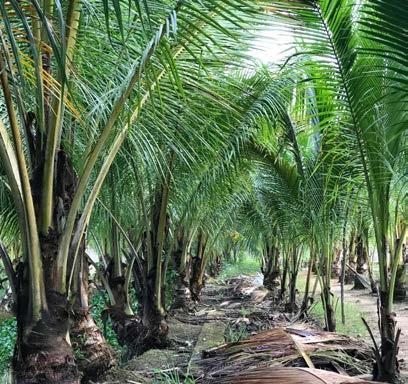
“One possibility is shorter oil palms. Dwarf coconut palms are now a reality; this suggests nurturing shorter oil palms is feasible. Because the genomes of oil palms are more complex than that for coconuts, cultivating a shorter oil palm is technically more challenging than that for coconuts,” she said in UMB’s 2025 Annual Report.
With a 115-year legacy, UMB, one of Malaysia’s oldest plantation companies, is entering a new era of disciplined renewal and strategic growth, rebalancing its ageing Malaysian estates with rising contributions from its Indonesian operations.
Despite near-term challenges from replanting and labour constraints, UMB remains confident in the long-term fundamentals of the palm oil industry.
For the foreseeable future, palm oil’s twin advantage as the highest-yielding and most cost-efficient vegetable oil per hectare is unlikely to be challenged, said Tan.
She added that while UMB remains firmly grounded in its core plantation business, the group is actively pursuing crop diversification to reduce its full dependence on palm oil in Malaysia and Indonesia.
Looking ahead, UMB expects improved fresh fruit bunch (FFB) production in the financial year ending April 30, 2026 (FY2026), driven by a better age profile of palms and enhanced operational efficiency.
“Management’s priority will focus on improving labour productivity, stepping up mechanisation, and enhancing cost efficiency as well as increasing oil yield. Assuming CPO prices remain at the current level, the group expects satisfactory results for FY 2026,” Tan said in the annual report.
Analysts, meanwhile, said UMB’s emphasis on operational efficiency, sustainability, and asset rejuvenation will strengthen its long-term resilience, helping the group navigate replanting cycles, land constraints, and adverse weather conditions.
Founded in 1910 as a 460-acre rubber estate in Melaka by the late Tun Tan Cheng Lock, UMB has weathered over a century of commodity cycles, land reforms, and structural change. Today, it is recognised for balancing legacy with innovation and disciplined stewardship.
Its shareholder base remains tightly held, led by Prosper Group (32 per cent), Great Eastern Life Assurance (13.4 per cent), and the Tan family – descendants of its founder – with 12.5 per cent. Collectively, they own nearly 58 per cent of UMB, ensuring strong governance continuity.
At the end of April 2025, UMB’s total landbank stood at 48,189 hectares, including 10,434 hectares of plasma estates in Indonesia. Of this, 32,842 hectares were planted with oil palm, supported by three mills across Pahang, Sabah, and Central Kalimantan with a combined processing capacity of 125 tonnes per hour.
Malaysian estates remain UMB’s earnings backbone, contributing 67 per cent of total revenue and 77 per cent of EBITDA in FY25. However, its younger Indonesian estates –72 per cent of which are in their prime production years – are expected to drive growth through FY26–FY28F.
To boost integration and efficiency, UMB plans to construct a new mill at its Millian-Labau estate in Sabah to lower logistics costs and enhance extraction rates. In FY25, its two Malaysian mills processed 374,734 tonnes of FFB – up 38 per cent since FY2019 – producing 70,890 tonnes of CPO and 17,006 tonnes of palm kernel.
CIMB Securities Sdn Bhd estimates UMB’s FY25 production cost at RM459 per tonne in Malaysia. Every RM100 per tonne increase in CPO prices could lift group net profit by RM9–10 million between FY26F and FY28F.
As of April 2025, UMB managed 19,479 hectares of planted estates in Malaysia, anchored in Sabah and Peninsular Malaysia. Sabah remains its production powerhouse, contributing 65 per cent of FY25 fresh fruit bunch (FFB) output, led by the Meridian and Millian-Labau estates.
Despite maturing estates, UMB continues to outperform national benchmarks, averaging 19.5 tonnes per hectare between FY2019 and FY2025 – 17 per cent above the Malaysian Palm Oil Board’s average. Its crude palm oil (CPO) yield of 3.7 tonnes per hectare also exceeded the national benchmark of 3.28 tonnes.
While total Malaysian FFB production climbed 10 per cent between FY2019 and FY2025, output fell 7.6 per cent year-onyear to 226,478 tonnes in FY25 due to ageing palms and active replanting. Flooding at the Meridian estate trimmed yields by nearly 20 per cent, but stronger performance at the MillianLabau and Peninsular estates helped offset losses.
According to CIMB Securities Sdn Bhd, about one-third of UMB’s local estates are over 21 years old, underscoring the urgency of replanting. With just 48 hectares of reserve land remaining, the group plans to replant 400–600 hectares annually over the next decade, a strategy that may cap short-term yields but safeguard long-term productivity.
Financially, UMB remains robust with a net cash position of RM155 million as of April 2025, giving it room for capital expansion and acquisitions. Dividends have steadily climbed from 10 sen per share in FY21 to 18 sen in FY25 – its highest payout on record.
Indonesia is now emerging as UMB’s next growth frontier. The group completed its full acquisition of PT Lifere Agro Kapuas (LAK) in Central Kalimantan in August 2025, consolidating control of a high-potential estate portfolio with an average palm age of just 10 years.
In Sulawesi, UMB’s 60 per cent-owned PT Wana Rindang Lestari (WRL) – with rights over 59,920 hectares under a forestry concession – remains a long-term strategic asset pending environmental approval.
CIMB Securities projects core net profits of RM101.8 million, RM97.4 million, and RM96.9 million for FY26F–FY28F, easing from FY25’s record RM116.7 million on softer CPO price assumptions. However, improving yields from replanted areas, mechanisation, and maturing Indonesian estates are expected to sustain healthy margins.
Trading at about 0.8 times FY26F book value with a forecast dividend yield of 2 per cent, UMB, with a current market capitalisation of about RM1.24 billion, is rated a “Buy” by the firm with a target price of RM6.42, implying a 20 per cent upside to its sum-of-parts valuation.
Gig Economy Approach Proposed to Revitalise Malaysia’s Plantation Industry
The plantation industry requires a gig system to attract participation from youths to suit their lifestyle today, a top industry executive said.
National Association of Smallholders (NASH) president Adzmi Hassan said the association is collaborating with a well-known system developer to build a mechanism that will integrate digitalisation into the industry, increasing youth’s involvement in palm oil management.
Adzmi said the system will allow users to monitor a plantation remotely while still managing the required day-to-day tasks.
“The problems faced by smallholders is the lack of interest from the younger generation to take up the operations.
“We are going to introduce a gig system so the youth can work based on their lifestyle.They are independent individuals who do not want to feel trapped in their jobs.
“This technology will lure youths into the industry as it provides them that freedom to manage a plantation,” he said in a press conference at a roundtable on sustainable palm oil on 4th Nov 2025.
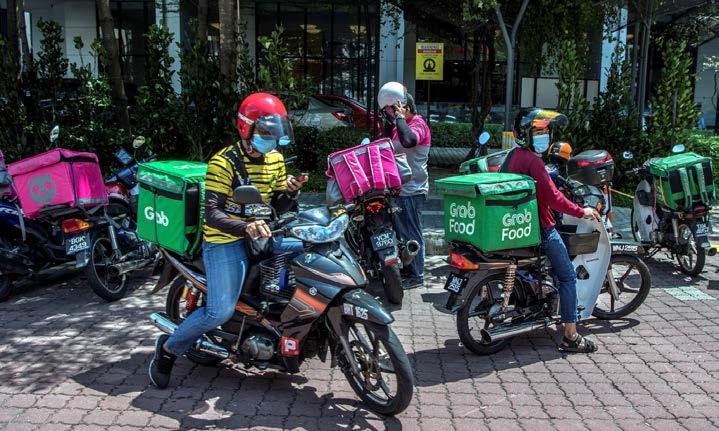
Adzmi cited the e-hailing industry as an example where it managed to encourage youths to work as drivers.
He said the younger generation would not have been attracted to a job that is similar to a conventional taxi driver but the gig economy has made this industry more acceptable for young people.
“Young people need motivation to get into this industry and we believe that this may solve the problem,” he added.
The pilot project for the system is likely to begin early next year.
National Association of Smallholders (NASH) president Adzmi Hassan cited the e-hailing industry as an example where it managed to encourage youths to work as drivers.
Meanwhile, the Roundtable on Sustainable Palm Oil (RSPO), Asia School of Business (ASB) through its Centre for Sustainable Small-owners (CSS), and NASH have signed a memorandum of understanding (MoU) to strengthen the resilience of smallholders in Malaysia through training, digital readiness, and sustainable financing.
The collaboration builds practical pathways for smallholders to address the challenges and to achieve both RSPO and national certification readiness, which are two complementary systems that underpin Malaysia’s global credibility in sustainable palm oil production.
“This MoU shows that Malaysia’s smallholders are not the problem, they are the solution.
“By aligning national and international standards, we are turning compliance into opportunity, restoring pride to our smallholders, and securing Malaysia’s sustainable future,” said Adzmi.
RSPO head of smallholder unit Guntur Cahyo Prabowo said the MoU represents a broader strategic effort across major producing countries.
“Each national context is unique. Indonesia, Malaysia, and Thailand have different certification challenges, levels of organisation, and market dynamics, but across all these collaborations runs one unifying thread which is empowering smallholders through capacity building, innovation, and access to markets.
“Together, these partnerships translate RSPO standards into real-world, measurable impact. They connect global market demand with local transformation, ensuring that sustainable palm oil is both inclusive and scalable,” he added.
Guntur said there are over 180,000 smallholders worldwide certified under RSPO to date, representing nearly 450,000 hectares of land under sustainable management.
“Through the RSPO Smallholder Support Fund, over US$5.2 million has been disbursed to date, supporting 141 projects in 14 countries, reaching more than 44,000 independent smallholders directly.
“Just this year, nine new projects were launched, impacting over 4000 farmers. These numbers reflect more than progress. They represent livelihoods improved, forests protected and communities strengthened.”
Malaysia Focuses on Sustainable Palm Oil While Respecting Indonesia’s Land Measures
Malaysia prioritises higher palm oil yields alongside sustainable production and will not interfere with Indonesia’s measures concerning land tied to oil palm plantations.
Plantation and Commodities Minister Datuk Seri Johari Abdul Ghani emphasised that Malaysia’s policy is not to open new oil palm plantations and instead to rely on existing areas.
“We remain committed to good planting materials, sound agricultural practices and increasing yields rather than expanding land use,” he said.
“As for (what’s done in) Indonesia, that is Indonesia’s jurisdiction, and we cannot interfere. We have to respect their laws, and any action taken against industry players is entirely within their rights,” he told a media conference on the sidelines of the Malaysian Palm Oil Board (MPOB) International Palm Oil Congress and Exhibition (PIPOC) 2025 here on Tuesday.
He said Malaysia is very clear on its direction and will ensure there is no further deforestation.
“All players in the industry must fulfil the Malaysian Sustainable Palm Oil requirements at every level of production, from upstream to midstream and downstream,” he said.
Johari was responding to a question on Indonesia’s actions and the potential impact on Malaysian companies operating there.
Indonesia has reportedly seized 9.1 million hectares of plantations through a military-backed initiative and plans to open 600,000 hectares of new land for oil palm cultivation to boost stagnant output.
Malaysia is the world’s second-largest producer of palm oil, contributing 24% of global output and 35% of global exports in 2024.
Malaysia produced 19.34 million tonnes of palm oil from about 5.6 million hectares of planted area in the country.
Meanwhile, on the topic of palm oil prices, Johari said crude palm oil has remained steady at about RM4,000 per tonne for the past 10 months.
“We are quite happy with the price level,” he added.
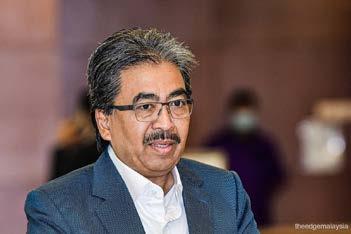
File photo by Zahid Izzani/The Edge
Undervalued Plantation Firms Could Become Privatisation Targets
Small- and mid-cap plantation companies that trade at steep 37 to 49 per cent discounts to average transacted estate prices could be prime privatisation targets, said Maybank Investment Bank Bhd (Maybank IB).
This comes amid rising merger and acquisition (M&A) activity in the plantation sector, with about RM2.06 billion worth of deals announced so far this year alongside firm crude palm oil prices.
Maybank IB expects the momentum to continue into 2026, driven by the monetisation of prime estates by players such as SD Guthrie Bhd, Genting Plantations Bhd and Kuala Lumpur Kepong Bhd.
Maybank IB highlighted Sarawak Oil Palms Bhd and Hap Seng Plantations Holdings Bhd among its preferred candidates, while maintaining SD Guthrie and Sarawak Oil Palms as its top “Buy” calls.
The M&A momentum has nearly doubled year-on-year, following major privatisation exercises such as FGV Holdings Bhd and Boustead Plantations Bhd.
FGV’s privatisation in August, estimated to cost the Federal Land Development Authority up to RM600 million, lifted total plantation-related deals this year to RM2.06 billion. About 45 per cent of the total value in 2025 was linked to property development purposes.
One notable transaction was SD Guthrie’s sale of 484 hectares of Malaysia Vision Valley 2.0 land for RM573 million, or RM1.6 million per hectare — about 33 times higher than the average estate land price of RM49,100 per hectare between 2023 and 2025.
Regionally, First Resources Ltd’s March 2025 acquisition of a 91.2 per cent stake in PT Austindo Nusantara Jaya Tbk for US$330 million (RM1.47 billion) valued its 48,353 hectares at US$10,202 (RM45,383) per hectare on an enterprise-value basis.
Maybank IB said the motivations behind the sector’s M&A and privatisation wave include compliance with no deforestation, no peat and no exploitation (NDPE) policies, which have increased demand for brownfield assets, and efforts to unlock value from legacy estates.
Small- and mid-cap plantation companies that trade at steep 37 to 49 per cent discounts to average transacted estate prices could be prime privatisation targets, said Maybank Investment Bank Bhd (Maybank IB). NSTP/DANIAL SAAD
It added that rising cost pressures, labour shortages and undervalued land assets are fuelling consolidation, as listed planters continue to trade below replacement-cost levels.
Sarawak Oil Palms’ implied enterprise value (EV) stands at about RM25,000 per hectare, while TAH is valued around RM36,000, both below replacement cost.
Maybank IB said Sarawak Oil Palms and Hap Seng Plantations are supported by strong balance sheets, making them compelling privatisation or takeover prospects.
Sarawak Oil Palms currently trades at RM25,001 EV per planted hectare, 0.76 times price-to-book value (PBV) and seven times FY2026 earnings, with a net cash position of RM1.41 per share.
Hap Seng Plantations trades at RM32,556 EV per hectare, 0.82 times PBV and 11.6 times FY2026 consensus earnings, with net cash of 74 sen per share.
Another underappreciated name, Chin Teck Plantations Bhd, trades at RM26,387 EV per hectare, 0.96 times PBV and nine times historical earnings, backed by a net cash balance of RM5.27 per share.
Maybank IB said the combination of undervalued land assets and solid financial positions makes these companies standout candidates amid the sector’s ongoing consolidation wave.
Malaysia Records Large Improvement in Palm Oil Exports; Exports to India Highest In 11 Months
Presently, palm oil is trading at a premium to soybean oil in the global market.
Malaysia’s palm oil exports have risen by 102,000 tonnes (+7.7% month-on-month) to 1.42mn tonnes in September. The largest improvement came from South Asia, where exports to India reached the highest in 11 months. Shipments to SubSaharan Africa, the Middle East and North Africa (MENA), the Americas and Central Asia have also registered increases during September 2025.
This latest economic data comes from Malaysian Palm Oil Council (MPOC), which also noted that despite export growth outpacing production, the stock for palm oil in the nation is, in fact, currently at its highest in 22 months. This, MPOC said, is likely, because domestic consumption has normalising to its usual range of 300,000 to 350,000 tonnes per month, while imports also rose by 20,000 tonnes (+33.9% month-on-month), further contributing to the stock buildup.
Presently, palm oil is trading at a premium to soybean oil in the global market, priced US$42 per tonne higher than soybean oil in Europe and US$26 higher in India as of mid-October.
Speculation over Indonesia’s potential implementation of the B50 biodiesel mandate remains a key factor supporting palm oil prices, MPOC stated.
A little background on this development - The B50 programme is estimated to require around 17mn tonnes of palm oil for blending – an increase of 3mn tonnes from the current B40 mandate, equivalent to roughly 35% of Indonesia’s palm oil production. The country also consumes around 10mn tonnes for food purposes, leaving only about 22n tonnes or less available for export if the B50 is implemented.
This would result in a notable decline in exportable supply, as Indonesia has historically exported between 24 and 28 million tonnes of palm oil annually over the past five years.
MPOC anticipates that palm oil prices are projected to hold steady above RM4,400 per tonne but market sentiment will remain cautious amid weak crude oil prices, high vegetable oil inventories in major consuming markets (such as China and India), US – China trade tensions, and a buildup of global soybean stocks.
M’sia Hopes to Alter Palm Oil Bias
Plantation and Commodities Ministry (KPK) plans to request membership to International Union for Conservation of Nature (IUCN) to provide a fact-based narrative of the palm oil industry.
KPK deputy secretary-general (plantation and commodities) Datuk Razali Mohamad said this would improve communications about the industry’s sustainable practices in Malaysia.
“It is a crucial step so that we can tell the world that Malaysia’s palm oil industry is sustainable, complies with the law and does not cause environmental destruction or displace wildlife.”
He said this after officiating the last leg of Malaysia-wide roadshow series Jelajah Sawit Hijau, by Malaysian Palm Oil Green Conservation Foundation (MPOGCF), in Kuala Lumpur.
The series, themed “Conservation is the Key to Sustainable Palm Oil”, combines science and sustainability with entertainment to raise awareness among Malaysians from all walks of life.
Razali said the welfare of industry players was also taken care of through the Malaysian Palm Oil Board (MPOB), which supervises more than 200,000 independent smallholders and those under Federal Land Development Authority (Felda), Federal Land Consolidation and Rehabilitation Authority (Felcra) and Rubber Industry Smallholders Development Authority (Risda).
“The welfare of smallholders is taken care of and training is provided so that planting practices comply with standards.”
Razali added that over RM10mil was spent annually on conservation programmes such as replanting and wildlife protection by smallholders.
The event also saw the unveiling of a 94-page Panduan Pengecaman Tapak Hidupan Liar di Lapangan (Field guide to the identification of wildlife tracks).
Razali said the publication aimed to inform local estate managers and smallholders about wildlife species within the oil palm ecosystem.
“Once they can identify the animals, whether dangerous or friendly, they will be better prepared to face any situation.”
The roadshow was organised in collaboration with Suria FM and Majoriti, the Malay language digital news portal of Star Media Group.
There were several booths by MPOGCF’s strategic partners such as Department of Wildlife and National Parks (Perhilitan), Earthworm Foundation, Felda, Malaysian Palm Oil Council, Nature Sustainable Ecosystem Society, Johor Plantations Group and Universiti Sains Malaysia.
Present at the event were MPOGCF general manager Hairulazim Mahmud and board of trustees member Andy Lee Yiew Meng; Perhilitan wildlife conservation division senior assistant director Chek Salan @ Mohd Saiful Mohd Zin; MPOB director-general Datuk Dr Ahmad Parveez Ghulam Kadir; and Suria FM manager Borhanuddin Abdullah.
Borhanuddin said Suria FM was thrilled to collaborate with MPOGCF to promote awareness about the protection of endangered wildlife.
Visitor A. Fatin, who works in the field of conservation, said it was good to promote mitigation efforts to new plantation companies as it could help avoid costly environmental damage.
Nur Hanis Akmal, who attended the roadshow with her two children, said the event offered insight into the industry’s sustainability commitments and protection of wildlife.
Hairulazim said the roadshow series aimed to address the misinterpretations and inaccurate views of palm oil production.
“The roadshow kicked off at Aman Central mall in Alor Setar then moved on to Kuala Terengganu’s Mayang Mall, Johor Baru’s Paradigm Mall and now Melawati Mall,” he said.
Activities included a palm fruit weight-guessing contest, podcast segment with MPOGCF, meet-and-greet session with Suria FM radio announcers and performances by local artists such as Alyah, Zarul Umbrella and Ameng Spring.
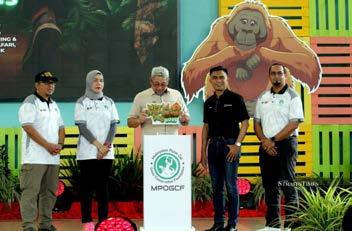
(From left) Borhanuddin, Razali, Hairulazim, Lee, Chek Salan and Ahmad Parveez launching the roadshow in Kuala Lumpur. — Photos: FAIHAN GHANI/The Star
Fatin looking through the new field guide.
EU Proposes to Trim Anti-Deforestation Rules to Ease Rollout
The European Commission said Tuesday it wanted to ease sweeping anti-deforestation rules by exempting thousands of firms from paperwork and cutting back requirements for small companies.
EU officials said the proposed changes -- including a sixmonth grace period for large companies -- seek to solve some underlying technical issues and lower the administrative burden for businesses covered by the rules.
They mark the latest reversal by Brussels on a landmark law banning imports of products driving deforestation that was cheered by environmentalists but assailed by key trading partners.
The law was initially meant to come into force at the end of 2024 but that deadline was pushed back by a year, and then last month the EU’s executive cited IT issues to propose postponing its rollout by a further year to the end of 2026.
It partially backtracked on Tuesday, proposing to keep the end of 2025 deadline for large and medium companies, but withholding sanctions for non-compliance for six months.
Small firms would have until the end of 2026 to comply, the commission said.
The amendments, which need approval by member states and the European Parliament, also envisage a lighter compliance regime.
The law, known as EUDR, bans goods produced using land deforested after December 2020.
At-risk items include anything from coffee to cocoa, soy, timber, palm oil, cattle, printing paper and rubber.
Firms importing such merchandise to the 27-nation European Union will need to provide a statement alongside geolocation and satellite data to show the goods did not originate from deforested zones.
Under the original plan, such papers had to be submitted also by companies who then purchase, process and sell the items -for example, sweet makers who buy cocoa to make chocolates.
- ‘Good News’ -
But the commission said last month that the extra layer of checks risked overloading the IT system designed to support implementation of the rules.
So, on Tuesday it axed the requirement for all but first importers, something EU officials said would exempt thousands of companies from filing paperwork.
In another cut, small-hold producers in Europe and countries designated as being at low risk from deforestation will have to provide only a one-off declaration when registering on the system, the commission said.
Fern, an environmental group, welcomed the changes, after the earlier suggestion of a blanket one-year delay had brought renewed scrutiny to the EU’s commitment to a greener future.
“It’s good news that the European Commission has heeded the calls not to delay the EUDR for everyone -- and therefore reward the laggards who aren’t ready to comply,” said the group’s forest campaigner Nicole Polsterer.
Adopted in 2023, the deforestation law was hailed by green groups as a major breakthrough in the fight to protect nature and combat climate change.
It has, however, faced opposition from trading partners including Brazil and the United States, and some EU capitals, who allege businesses will suffer from red tape and increased costs.
But the commission’s flip-flopping over the rules has also rankled firms that have already invested large sums to comply.
Italian chocolate-maker Ferrero and Swiss food giant Nestle were among the businesses that this month warned Brussels against using its IT troubles as an excuse to “reopen, delay, or change” the law.
“Companies need to know what to prepare for, and by when,” they wrote in a letter.
The European Commission said Tuesday it wants to ease sweeping anti-deforestation rules by exempting thousands of firms from paperwork and cutting back requirements for small companies.
US Tariff Relief Positive Step for Malaysia’s Palm Oil Industry: MPOC
The Malaysian Palm Oil Council (MPOC) has welcomed the United States› (US) tariff exemptions for selected Malaysian products, including palm oil, under the newly concluded Agreement on Reciprocal Trade.
Chief executive officer Belvinder Sron said the zero-tariff for Malaysian palm oil is a positive development.
“Our exports to the United States have recorded strong growth over the past two years, and this measure will further strengthen Malaysia’s competitive position in a high-value and rapidly evolving market.
“The deeper commercial cooperation with the US will benefit both industry players and the Malaysian economy, particularly through downstream expansion and technology integration,” she said in a statement today.
The council said the decision comes at a time of strong bilateral trade performance.
Over the past two years, Malaysia’s palm oil exports to the US have shown consistent growth, supported by rising demand from advanced manufacturing and consumer goods sectors.
MPOC noted that from January to September 2025, Malaysian palm oil and products exports increased by 8.1 per cent to 346,000 tonnes, compared to 320,000 tonnes during the same period in 2024.
“The growth was primarily driven by certified palm oil, with shipments increasing from 75,000 to 98,000 tonnes.
“Certified palm oil and palm stearin currently account for 79 per cent of Malaysia’s palm oil product exports to the US and are used in high-value industries, from specialty food ingredients to personal care products, where substitute options are limited,” it said.
This reflects the expanding role of Malaysian palm oil in US supply chains.
With improved tariff conditions in the US, continued expansion of downstream capabilities, and an assertive market diversification agenda, MPOC is confident in sustaining palm oil export growth and reinforcing Malaysia’s role as a reliable partner in bilateral trade with the US.
It added that while the US trade outcome is highly encouraging, MPOC emphasised that Malaysia will continue broadening its market portfolio to support long-term trade resilience.
Sub-Saharan Africa, the Middle East and North Africa (MENA), and ASEAN remain key focus regions, backed by growing demand for edible oils and downstream palm-based products.
The Malaysian Palm Oil Council has welcomed the US tariff exemptions for selected Malaysian products, under the newly concluded Agreement on Reciprocal Trade. NSTP/DANIAL SAAD
RSPO, MSPO To Align Certifications to Ease Smallholders’ Burden
The Roundtable on Sustainable Palm Oil (RSPO) is working with Malaysian Sustainable Palm Oil (MSPO) to align both certification schemes in an effort to ease the burden on smallholders.
RSPO chief executive officer Joseph D’Cruz said the move aims to avoid overlapping audit processes and streamline sustainability requirements for the industry.
“The main objective is to reduce compliance cost and lessen administrative issues for smallholders,” he told reporters at the Annual Roundtable Conference on Sustainable Palm Oil here today.
“Both certification schemes require audits on plantations every year. If this can be done together, it will save cost and facilitate smallholders in compliance.”
D’Cruz said discussions with MSPO are ongoing, focusing on adopting similar audit instruments so that data collected can be used for both certifications.
He added that collaboration with MSPO is crucial to ensure the industry moves in the same direction on sustainability.
“We often engage with the ministry and MSPO to see how both systems can be combined without compromising respective integrity standards,” he said.
Similar efforts are being carried out in Thailand, Indonesia and Papua New Guinea, where RSPO works with government agencies to strengthen policies based on its principles.
Chief Executive Officer of RSPO, Joseph D’Cruz. -NSTP/EIZAIRI SHAMSUDIN
Southeast Asia Set to Become Key Feedstock Provider for Sustainable Aviation Fuel Development
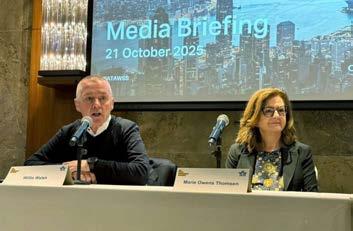
Southeast Asia, including Malaysia, has the opportunity to become a key player in the global shift towards sustainable aviation fuel (SAF) production.
This is by leveraging the region’s vast feedstock potential, said International Air Transport Association (IATA) director general Willie Walsh.
Walsh said countries in Southeast Asia such as Malaysia, Thailand and Vietnam are well-positioned to develop feedstocks that can be converted into sustainable fuels for the transport sector.
“All of these countries have an opportunity to provide feedstock that can be used for the development of sustainable fuels. It’s not just for air transport, it’s also for road transport.”
“When we look at Asia and Southeast Asia, we see lots of feedstock opportunities there,” Walsh said during a media briefing at the IATA World Sustainability Symposium.
“So, there’s an opportunity to develop a whole new industry, generate employment, reduce dependence on importing oil, and create a positive outcome for the environment as well,” he added.
According to IATA’s Global Feedstock Assessment for SAF Production – Outlook to 2050 report, the world could produce up to 400 million tonnes of SAF by 2050, a major increase from the estimated two million tonnes in 2025 but still short of the 500 million tonnes required for the industry to reach net zero carbon emissions.
The report highlights Southeast Asia as one of the most promising regions for feedstock availability due to its agricultural residues, palm oil mill effluent (POME), and municipal solid waste that can be processed into SAF.
Asean nations such as Indonesia and Malaysia together with China could supply about 240 million tonnes which is 15 per cent of the world’s total biomass feedstock for SAF by 2050.
Biomass feedstock potential is projected to exceed 12,000 million tonnes by 2050 globally, but less than 35 per cent of that will realistically be available for bioenergy and biofuels due to competing needs in other industries.
The report estimates that around 1,580 million tonnes of feedstock could be allocated to SAF, enough to produce more than 300 million tonnes of bio-based SAF in 2050.
Walsh said Asia would play a world leading role in the transition to net zero by 2050.
“So, it’s important that we have the opportunity to stay in touch with airlines in this region and the leaders in this region to understand what’s happening here,” he said.
He added that Cathay Pacific is a world leader in sustainability given their commitment to ensure the industry can transition to net zero.
IATA senior vice president for sustainability and chief economist Marie Owens Thomsen added that Asia would most likely generate the solutions needed for airline decarbonisation over the coming decades.
“We think that this region is the main generator of the solutions we need for airlines’ decarbonisation over the coming decades and that’s good.
“We also look forward to the growth in demand for air transport services in this region, which we also think is going to be the predominant growth generator in our industry going forward,” she said.
She added that while optimism remains high, the industry must take a clear-eyed view of where it stands today.
“We unfortunately have only 0.7 per cent of airlines’ total fuel demand satisfied by SAF, and we are well short of these carbon credits that airlines need to buy under Carbon Offsetting and Reduction Scheme for International Aviation.”
“We sort of know what needs to be done. We know what the path should look like going forward. But we’re really struggling getting world leaders to want it as much as we do,” Thomsen said.
Willie Walsh (left) and Marie Owens Thomson (right). Pix by Bilqis Bahari
Ecoscience Wins RM40 Million Johor Palm Oil Refinery Project Contract
Ecoscience International Bhd has secured a RM40 million contract to build and install a new palm oils and fats refinery plant in Johor, marking another milestone in its engineering and construction portfolio. Source:
The contract, awarded to its wholly owned unit Ecoscience Manufacturing & Engineering Sdn Bhd, covers building and infrastructure works as well as installation for the proposed refinery. The project is scheduled for completion by July 1, 2026.
Ecoscience said the award is expected to contribute positively to its earnings for the financial years ending 2026, with no impact on its share capital or substantial shareholders’ holdings.
The company, a specialist in oil palm industry engineering solutions, noted that the win reflects its competitive capabilities in delivering large-scale projects within Malaysia’s palm oil downstream sector.
Interview with Krisada Chavananand
Crushing the Challenges:
Krisada Chavananand on Tech, Efficiency & the Future of Thailand’s Palm Oil Sector
Krisada Chavananand
Managing Director of Vichitbhan Palmoil Public Co., Ltd
Vice President of Palm Oil Crushing Mill Association
Vice chairman of Palm Oil Industry Club (The Federation of Thai Industry)
Mr.Krisada Chavananand is currently the managing director at Vichitbhan Palmoil Public Co., Ltd. With more than 30 years of experience toward Palm Oil industry, he has been granted the honor for the position of vice president of the Palm Oil Crushing Mill Association and vice chairman of Palm Oil Industry Club (the Federation of Thai Industry).He graduated Bachelor of Science in Computer Science, Sam Houston state University, USA and Master of Science, the Trustees of Columbia University, USA. Moreover, he has been invited to be a guest speaker, committee and subcommittee, both for government and private arrangements, in many occasions.
1. As VP of the Crushing Mill Association, you’re at the heart of the supply chain. What’s the biggest operational headache mills are facing right now — and why isn’t it being talked about more?
Industry Challenges and Overcapacity
I must say, we’re facing a lot of challenges in the industry. One clear sign of this is the oversupply of mills. While I agree that regulations are important, having no regulations at all is equally problematic. What do we do when there are too many mills? At the Palmex Jakarta Conference, we presented data showing that many mills were operating at below 40% of their installed capacity. When mills are over capacity, operational costs increase, competition becomes more intense, and discussions around fruit quality become irrelevant. Grading is no longer feasible. It’s like walking through a forest while starving—if you find rice on the ground, you’ll eat it regardless of its condition.
Smallholders, Mills, and the Grading Dilemma
This is why smallholders are complaining. They wonder why mills don’t grade or reward those who deliver quality fruit. But it’s not that simple. Smallholders may manage about 8–10 hectares, while mill receives around 2,000 tonnes per day. How can we possibly grade 2 million kilograms manually? The manpower required would be unrealistic. This is one of our core challenges.
Lack of Centralised Data and Poor Investment Guidance
Another issue is the absence of centralised data. In Thailand, we lack a system to inform investors or policymakers about the actual number of mills and supply capacity in different regions. We’re not against building new mills, but there should be transparency. The government should provide data showing where there is already an oversupply. This would guide not just mill owners, but also banks and investors. In Malaysia, for example, you must prove your supply before getting a mill license from MPOB. In Thailand, we say we’re a “land of the free,” yet on the other side, there’s regulation without clarity. It’s contradictory.
Roadmaps That Were Never Implemented
I’ve been in this industry for more than 30 years and was involved in long-term planning, including Thailand’s 20-year palm oil development roadmap. We updated the roadmap five
years ago, but unfortunately, none of it has been implemented. Governments change, and with them, policies change. One administration may promote B10, then a new one comes in and changes it to B5, causing confusion among investors who had already made long-term plans based on the previous policies. That’s how we ended up with overcapacity.
No Clear Alternatives for Farmers
Now, the government is telling farmers not to plant more palm. But then what’s the alternative? Rice? That’s not viable in the South. Durian? You can’t plant durian across 4,000 hectares for a single company. It’s not realistic.
Leadership That Understands the Industry
I must give credit to the new Deputy Prime Minister who now chairs the Palm Oil Board of Thailand. He seems to understand the industry well, having come from the private sector. Hopefully, he stays in the role long enough to make a real impact.
Mills and Farmers: Interdependent but Divided
The key point here is that mills cannot survive without farmers, and farmers cannot survive without mills—yet we’re constantly in conflict. For example, as a listed company, you can look at our financial records over the past 11 years. How many years did we actually turn a profit? The biggest problem is the oversupply of mills. Our industry is fragmented. Each sector works in silos, making collaboration very difficult. I used to tell the government long ago that politicians often need to play hero, which leads to finger-pointing. And since smallholders hold the voting power, governments naturally favour them over mill operators.
Government Support Comes Too Late
Unfortunately, government support only comes when there’s a crisis. Their priorities often lie elsewhere—such as industrialisation or developing EV hubs—while forgetting that Thailand has the potential to be the “kitchen of the world.” They say it, but they don’t act on it. With each change in government comes a new agenda. At one point, the only focus was national security—meaning no protests, no disruptions. So, when farmers threatened to demonstrate, the government would quickly respond just to prevent unrest. They’d listen, label mills as the villains, and try to appease the farmers.
A Call for Policy Consistency and Collaboration
Ultimately, our biggest challenge is policy inconsistency and the lack of awareness. If the government doesn’t understand how the palm oil ecosystem works, they should at least facilitate better cooperation between mills and farmers—because one cannot thrive without the other.
2. Production’s down, costs are up, and government price controls are squeezing margins. How close are Thailand’s mills to a breaking point?
I would say we are very close to a breaking point—if not already there. The real question is: are we operating above that breaking point, or have we already slipped below it? In my view, we’re slightly under. You can see this reflected in the statistics: the number of mills previously operating, how many have closed, and how many new ones have been built. Even in my own company, we operate two palm oil mills—one with a capacity of 120 tonnes, and the other 60 tonnes. We’ve had to shut down one of them for quite some time, not because of inadequate supply, but because the larger mill can now handle everything. That wasn’t the case 10 to 15 years ago. Back then, the 120-tonne mill couldn’t keep up. Farmers were forced to wait up to three days during peak season just to unload their fruit.
To honour my promise to the farmers, I expanded by building a second mill. I told them that as long as there was a queue, I would continue expanding. But when I expanded, others did the same. And now, we’re all competing. This is the kind of situation that defines a breaking point—but few recognise it. In the past, we made healthy margins, especially during peak seasons. That’s no longer the case.
Today, fruit distribution in Thailand follows a bell curve. In some years, output flattens due to weather conditions like El Niño, and during those times, every mill suffers. The reality is that mills used to rely on strong profits during peak seasons to offset losses during the off-peak. But competition has intensified, and margins have thinned. What’s more frustrating is that when prices spike during off-peak periods—often exceeding global market prices—there’s no intervention. Yet during peak times, the government attempts to regulate and control the market.
At this point, only a handful of mills are managing to turn a decent profit. The majority are either at or slightly below the breaking point. And if nothing changes, the situation will only get worse.
3. When the government imposed the export ban, were crushing mills consulted — or was the decision dropped on your lap?
From what I recall, there was only one instance when the Thai government directly intervened in the market, and that was around 15 years ago—during a time when global palm oil prices were particularly high. It’s important to understand that Thailand operates as a semi-open market—we are allowed to export palm oil, but we cannot import it. That year, there was significant export activity, which in turn drove up domestic prices. Concerned that the rising prices would negatively impact local consumers, especially end users of palm oil products, the government decided to act.
The Ministry in charge convened a single consultation meeting, and then immediately imposed an export ban—despite industry concerns. The ban only lasted for one month, but its longterm impact was significant. At the time, Thailand was being considered as a potential hub for new industrial development, such as the Thailand Industrial Zone (TIZ). There was serious discussion around establishing sustainable aviation fuel (SAF) facilities, and international companies—such as Neste or Loxensen—were expressing strong interest in investing, particularly due to upcoming regulations around carbon credits for aviation emissions.
However, when the government unexpectedly halted exports, it raised a red flag. For investors, the core question became: If the government can impose a ban once without warning, what’s to stop them from doing it again? That one-month decision created lasting uncertainty, and for potential investors, regulatory unpredictability is one of the greatest deterrents.
It’s similar to today’s concerns with EU deforestation regulations. But in my view, the biggest challenge isn’t even the regulation—it’s the uncertainty. Uncertainty makes business planning nearly impossible. How do you account for it? How do you weigh the risks—positively or negatively—when the rules can change overnight? When the government introduces such unpredictability into the system, it significantly discourages long-term investment.
4. AI and automation are gaining ground across agriculture. Has Thailand’s palm oil sector — especially at the milling level — started embracing these technologies, or are we still playing catch-up?
When discussing the future of palm oil milling, we need to separate two things: automation and artificial intelligence (AI). In terms of automation, we used to be quite ahead of our time—not by inventing new systems ourselves, but by adopting
innovations from Malaysia early and implementing them faster than both Malaysia and Indonesia. In my own mills, we’ve invested heavily in automation, particularly in monitoring and control systems. But as with all technology, it comes at a cost.
Now, AI is the new frontier. When I first encountered AI applications, it was hard to imagine how it could be incorporated into mill operations. But today, the potential is clearer. For example, instead of relying on traditional web-based sensors, AI could analyse patterns and make real-time decisions—such as identifying when the process is running too aggressively and recommending a slowdown. In that sense, we are now falling behind, not because of unwillingness, but because of economic pressure.
The real issue is this: when your mill is operating at a loss or barely breaking even, how can you justify further investment? People say that competition drives innovation—but only to a certain point. Beyond that, when competition becomes too intense, it discourages investment. If a mill’s margin only improves by 0.2–0.5% in oil extraction rate (OER) through a costly upgrade, it’s not automatically worth it. Whether that investment pays off depends entirely on the volume of fruit processed. And when there isn’t enough supply to begin with, there’s no confidence to invest—even if the technology is promising.
This is not a matter of disbelief. I believe in automation—I’ve been implementing it for over 20 years. In the past, I’ve seen companies from Malaysia and Indonesia visit my mill in Thailand to learn how we applied Malaysian technologies. It used to be that Thailand was a leader in adoption. But today, people say, “Oh, Thailand…” and see us lagging behind. I still believe Thailand can move forward, but we need budget support to do so. Even if not every part of the mill can be modernised, some sections—especially critical ones—should be prioritised.
For instance, sterilisation is key. It’s like cooking rice: if the rice isn’t properly steamed, it won’t cook well. The same goes for palm fruit. If the steriliser isn’t functioning correctly—if there isn’t enough pressure or steam—the fruit is undercooked, and oil extraction suffers. That’s where automation should begin. You can’t rely on workers alone, especially during night shifts when fatigue sets in. I’ve been there myself, working overnight when I was younger, and I saw how exhausted the workers were. Can you blame them? Of course not. But this highlights the need for automation in key processes—not to replace people, but to support consistency, efficiency, and quality.
5. With Indonesia and Malaysia ramping up automation, is Thailand’s crushing segment at risk of falling behind?
It’s honestly disappointing. Thailand was once the envy of Southeast Asia when it came to biodiesel policy. Believe it or not, we were the first country in the region to implement a national biodiesel programme—and I was directly involved in that early development. If you look back at the history, we were pioneers.
But today, look at Indonesia. They’ve already implemented B40, and are preparing to move to B50 next year. Meanwhile, in Thailand, we keep fluctuating—B10, B5, B3, back and forth with no consistency. It feels like we’ve lost our direction.
The frustrating part is that we actually have the capacity to do more. Our biodiesel production infrastructure is capable of supporting more than double the current demand. In fact, everything—from plant capacity to supply chain—has been built to support a higher blending mandate. The problem is that the raw material supply isn’t there, and the policies keep shifting.
So how can we survive in a system like this? Without consistent policy, without the raw materials to match capacity, and with no long-term planning in place, we’re left with overcapacity and underperformance. It’s a serious structural issue—and unless something changes, Thailand will keep falling behind.
6. What kind of support do mills really need from the government in 2026 — beyond policy statements?
We don’t need more policy statements—we need real implementation. Policies must move beyond declarations and be translated into coordinated action. But to be effective, we can’t focus on just one sector. We have to look at the entire palm oil ecosystem as a whole. I’ve said many times: don’t view the palm oil mill in isolation. Think of it like a country or a large corporation—it encompasses multiple interconnected sectors. So, how do you move a country forward? How do you transform a large company? You need all parts working in sync.
In Thailand, look at how many ministries are involved in the palm oil industry. You have the Ministry of Finance, Ministry of Agriculture, Ministry of Industry, and the Department of Internal Trade under the Ministry of Commerce. On top of that, the Ministry of Environment is now involved because of concerns like PM2.5 emissions. Today, every palm oil mill is required to install Electrostatic Precipitators (ESPs)—large devices that trap dust and particles using electrostatic charge. It’s a significant technological advancement and arguably gives Thailand the strictest emission standards among palm oilproducing countries. But that improvement comes at a cost—a very high one.
Yes, the government wants mills to comply, and we’re not against investing in technology. But there needs to be an understanding of economic reality. You can’t keep saying, “Mills make a lot of money—they should give more to farmers,” while continually imposing more regulations and costs on mills. These additional burdens aren’t factored into the overall equation. If mills can’t survive under these conditions, how can the Thai palm oil industry as a whole survive?
I’m not saying that mills are the most important piece of the puzzle. We’re just one part of a larger system, but all the parts— mills, farmers, regulators, ministries—need to move together. If one part fails or moves out of sync, the entire structure becomes unstable.
The real challenge isn’t just policy—it’s execution. We need a serious, comprehensive roadmap that looks at the entire supply chain, includes all stakeholders, and, most importantly, is followed through. Not just words. Not just statements. But concrete actions.
7. Digitization of mill operations, predictive maintenance, and traceability tech are trending. Are Thai crushing mills ready for this shift, or is there still resistance on the ground?
We’ve already implemented automation in our operations— particularly in motor control systems. For instance, when motor load increases, it often signals internal friction or mechanical issues. So, we’ve set thresholds to trigger preventive maintenance (PM) once a certain load level is reached. This is a form of digitalisation—monitoring equipment performance in real time to anticipate failure and take early action. But despite its effectiveness, very few mills are applying this. I would estimate only 2–3% of palm oil mills in Thailand have adopted such practices. Why is the adoption rate so low? Because of cost.
If I were to build a new mill today, my priority would be to minimise investment—to go with the lowest cost option possible. Why? Because we don’t know how government policies will change. There’s too much uncertainty. In the past, I built a mill with high-end, advanced specifications—what I would call the “Mercedes-Benz” of palm oil mills. But if I had to do it again now? No way. Today, I would simply go for “whatever works”— as long as it runs, it’s good enough.
And that’s the real danger. This mindset goes against innovation and against efficiency. When competition is left unregulated and profit margins are tight, there’s no incentive to improve. That’s one of the reasons MPOB (Malaysian Palm Oil Board) was created in Malaysia. If I remember correctly, Malaysia’s palm oil industry used to be in a similar state as Thailand’s today—highly competitive, fragmented, and inefficient. Then the government stepped in.
One of Malaysia’s advantages was political stability—they had a relatively stable government for about 20 years. That allowed them to think long term and make strategic decisions. They established what we now know as MPOB and MPOC, but originally these institutions had different names. One focused on R&D, while the other managed market development. Eventually, they merged and became instrumental in regulating mill operations and supporting sustainable growth.
Malaysia also took steps to limit the number of mills. But that brought a new challenge: ensuring mills didn’t take advantage of farmers. To counterbalance that, they implemented a pricing formula—a structured way to calculate and standardise prices paid to smallholders.
In Thailand, we’ve taken a different path. We don’t control the number of mills, yet we still want to enforce pricing formulas. But how can you do that effectively in an environment with such uneven competition? Each region has different levels of supply, infrastructure, and competitiveness. So how can a single formula work across all areas? How do you create a system of checks and balances that is fair and effective?
These are complex questions, and they highlight the need for a coordinated, long-term strategy. Without it, we risk stalling development, undermining innovation, and further weakening our industry’s ability to compete.
8. Looking ahead, what role do you see smart technologies playing in transforming Thailand’s crushing industry in the next five years?
To be honest—and I say this with a heavy heart—I don’t see anything improving over the next five years. The reason is simple: Thailand lacks a concrete, unified policy for the palm oil industry. Without that, there’s no shared vision. There’s no common goal. Each player in the industry is in survival mode, doing whatever they can to stay afloat. And when everyone is focused solely on survival, how can we talk about the future? How can we plan for progress, cooperation, or innovation?
Let me share one example. In my region, I used to operate one of the largest mills. Not only that—we also owned plantations, which are considered large by Thai standards, though still small compared to Malaysia or Indonesia. Years ago, I set up a leaf analysis laboratory, fully equipped to assess nutrient levels in oil palm leaves—such as nitrogen—so experts could recommend the most suitable fertilisers. Without that facility, we would have had to send samples to Bangkok, and wait over a month to get results. By then, it would be too late to purchase and apply fertiliser for the season.
So, I invested in my own lab and brought in experts. But I didn’t stop there. For the past nine consecutive years, I’ve been offering free leaf analysis to smallholders in my area, with no strings attached. Why? Because it’s win–win. If farmers use the right fertiliser, their yields improve—and that benefits my mill too, through better-quality and higher-quantity fruit.
I’ve never required them to sell to me. As long as they’re in the Chumphon Province area, they can access the service. And this isn’t a small gesture—it costs about RM 300 per sample, and we’ve covered it entirely. The first year, 73 farmers came for the seminar. We taught them how to record and track their farm history—because just like a doctor needs your health records to prescribe treatment, we need plantation data to make proper fertiliser recommendations. But by the next year, participation dropped. Out of 324 people who attended our training, only 48 submitted samples.
And that’s the root problem. Many smallholders don’t treat this as a profession. In most cases, the land was inherited, and farming is just a supplemental income. They often work in factories and don’t have the time or interest to manage their plantations properly. So, if they don’t plan to use fertiliser at all, why would they care to find out which one is right?
Still, I’ll leave you with a suggestion—something I’ve been asked before. People have said to me, “Why don’t Thailand, Indonesia, and Malaysia work together more closely?” From the private sector side, I believe there’s willingness. But from the government level, I’m not so sure.
We are always reacting to pressure from external forces like the EU, which imposes regulations that work against us. But we are ASEAN. We have 600 million people across the region. We share borders, markets, and flight routes. Why not create our own regional palm oil standard—something we define, that reflects our shared interests and realities?
If there’s one thing I hope for, it’s this: that our leaders come together—Thailand, Indonesia, Malaysia—and talk. Because unless we unite, we will always be playing defence, always divided, and always falling behind.
A New Technological Breakthrough for Increasing Oil Extraction Rate (OER):
How Pulsed Electric Field (PEF) Treatment is Transforming Palm Oil Extraction
In an industry where margins are tight, labour shortages persist, and quality demands continue to rise, the quest to improve Oil Extraction Rate (OER) has never been more critical. Today, a revolutionary technology - Pulsed Electric Field (PEF) treatment is emerging as one of the most promising solutions for palm oil mills aiming to boost yield, enhance oil quality, and overcome the pressing challenges faced by the industry.
By collaboration of ELEA’s expertise in PEF, with Alfa Laval’s established expertise in industrial crude palm oil (CPO) processing, the aim was to bring the technology of PEF to the CPO Industry, with aims to improve its yield and product quality. By extensive lab-scale and industrial trials, PEF is making major strides in palm oil extraction, with results showing significant improvements in oil release, fruit detachment, quality indicators such as Degree of Bleachability Index (DOBI), and overall sustainability.
Understanding the Power of PEF Technology
Pulsed Electric Field treatment is based on a simple yet powerful mechanism: electroporation. By applying short, high-voltage pulses across plant or microbial cells, PEF creates microscopic openings in the cell membranes. This structural
change softens plant tissues, enhances mass transfer, and allows for easier release of intracellular components such as oil.
The technology has a long scientific foundation, tracing back to electroporation discoveries in the 1960s and early industrial prototypes developed in the 1980s. The food industry has since embraced PEF for its ability to reduce energy consumption, improve product consistency, and increase extraction yields.
PEF technology has already demonstrated outstanding performance across several industries. In French fries processing, it has been proven to reduce cutting force by as much as 50%, significantly easing the workload on slicing equipment. This reduced strain contributes to up to 60% longer knife life, lowering maintenance costs and downtime. Additionally, by replacing traditional thermal preheaters, PEF systems deliver substantial water and energy savings, making the process more efficient and environmentally friendly. In the olive oil sector, mills have reported higher extraction yields and improved oil quality after implementing PEF. With more than 250 industrial systems now in operation worldwide, the technology has moved far beyond the experimental stage and is firmly established as a reliable, scalable, and energy-efficient solution.
The Challenges Facing Today’s CPO Industry
The palm oil industry, however, continues to face mounting pressures. Climate change has led to greater variability and even mutation in fruit characteristics, while persistent labour shortages particularly in harvesting contribute to irregular fruit handling and delayed processing. The inconsistency in fruit ripeness further complicates separation and oil release, affecting overall extraction efficiency. At the same time, stricter regulations related to quality and sustainability place increasing demands on mill operations, all while rising operating costs and heightened market competition push producers to extract as much value as possible from each bunch of fruit. These conditions underscore the urgent need for technologies that can reliably increase OER while ensuring stable, high-quality crude palm oil production. PEF treatment stands out as a solution capable of addressing these challenges with clear, measurable benefits.
Lab-Scale Trials: Breakthrough Improvements in Oil Release and Fruit Separation
Extensive lab-scale experiments have been conducted to assess PEF’s impact on palm fruits, using up to 500 kilograms of both fresh and sterilized fruits at Elea Technology’s facility in Germany. These tests were designed to mirror real mill processes—covering sterilisation, digestion, fruit separation, pressing, and centrifugation—while integrating PEF treatment to evaluate performance improvements. The results showed that PEF significantly enhances oil release by increasing cellular permeabilization. Microscopic observations confirmed that the treated fruits had softer, more easily broken mesocarp
structures, allowing oimicroscopicracted more efficiently during pressing and recovered more completely during clarification and centrifugation.
Fruit detachment also improved markedly. Even with reduced sterilisation times, PEF-treated bunches separated more quickly and cleanly, leaving fewer unstripped fruits and reducing mechanical resistance during threshing. This advantage is particularly useful for mills that regularly receive fruits of mixed maturity or face harvesting inconsistencies due to labour constraints. Moreover, PEF enables mills to shorten sterilisation time without compromising process performance, resulting in lower steam usage, reduced energy costs, and the potential to increase throughput. Perhaps most impressively, extraction trials demonstrated that PEF treatment can increase oil yield by up to four percent. In a sector where even a minor increase in OER can generate substantial value, this improvement represents a significant economic opportunity.
First Industrial-scale Pulsed Electric Field (PEF) for palm oil fresh fruits bunches
Industrial Scaling: From Pilot to Mill-Level Reality
By collaboration between Alfa Laval and Elea, a full industrialscale initiative is now underway. Supported by a multi-year roadmap, the project includes the installation of production-scale equipment, generator upgrades, and continuous performance monitoring. Industrial PEF systems currently offer a throughput of around 75 metric tons of fresh fruit bunches per hour with peak voltages of approximately 64 kV. Power consumption averages about 150 kW, while water use is typically between two to three metric tons per hour. These specifications make PEF systems well-suited for integration into modern, high-capacity palm oil mills, delivering strong performance without requiring excessive space or resources.
Real Industrial Results: Higher Yield, Better Quality, Lower Losses
Initial industrial results have reinforced the promising findings from the lab. PEF treatment has been shown to reduce oil losses in pressed mesocarp, allowing mills to recover more oil and minimize waste. Quality improvements have also been evident: DOBI values increased, reflecting better oxidation stability, while Free Fatty Acid (FFA) levels in undiluted crude oil were reduced. These benefits were observed even when processing fruits of varying maturity, demonstrating PEF’s ability to stabilise output despite supply chain inconsistencies. The softer fruit tissue resulting from electroporation also reduces the strain on digesters and presses, lowering wear and tear and extending the lifespan of downstream equipment. This contributes to longer maintenance intervals and improves operational uptime.
In terms of sustainability, PEF helps mills meet increasingly stringent environmental requirements by reducing energy consumption, lowering steam usage, and cutting overall water demand. The technology also contributes to less process waste and supports more efficient use of natural resources, aligning with industry commitments toward greener operations.
A Technology Poised to Transform the Future of Palm Oil
Overall, PEF treatment represents a transformative opportunity for the palm oil industry. Alfa Laval and Elea, is confident with its ability to increase oil yield, improve product quality, stabilise processing performance, and enhance sustainability gives mills a powerful tool to navigate the complex challenges of today’s operating environment. As industrial trials continue to demonstrate its value, PEF is rapidly positioning itself not just as an innovative alternative, but as a new benchmark for futureready palm oil processing.
The PEF system installed in a Malaysian palm oil mill
Palm Oil at the Sustainability Crossroads: Designing Architecture for a Coherent, Verifiable Future
By Datin Lorela Chia | Founding President, Malaysia Association of Sustainable Supply Chain & Innovation (MASSCI)
(Adapted from her address at PIPOC 2025 Global Economics & Marketing Conference)
Palm oil now sits at one of the most complex intersections of Malaysia’s industrial landscape — where productivity, climate demands, global narratives, and community livelihoods converge. No longer framed purely as a commodity, it has become a strategic system shaped by industrial ambition, geopolitical scrutiny, and fast-evolving sustainability expectations.
This also means that the architecture surrounding the sector must evolve with equal intelligence. Not because the system is failing, but because the external contexts are shifting faster than current structures were designed to accommodate.
Across industries — not just palm oil — a paradox has emerged:
The more we digitalise, the harder it becomes to prove we are improving.
Dashboards have multiplied, data is abundant, yet confidence in performance narratives remains uneven. The challenge is no longer about validity; it is about legitimacy — whether systems are interoperable, intelligible, and mutually recognised across borders, certification schemes, and downstream markets.
To understand what this means for palm oil, we need to examine the intangible architecture beneath sustainability systems.
Trust as the Operating System
Every industrial system has inputs — land, capital, technology, standards — and outputs such as jobs, exports, emissions, and global competitiveness. But the centre of the loop is something much harder to measure: trust.
Trust functions as:
• a prerequisite for interoperability,
• a signal layer beneath data and assurance,
• the invisible architecture shaping how claims travel across markets.
Palm oil has long relied on tools — certification, digitalisation, ESG reporting — but tools alone do not create trust. They are expressions of intent, not evidence of coherence. What is missing is a semantic layer of trust: the ability for systems to communicate assurance across different domains.
Without it, even verified data becomes unintelligible the moment it crosses institutional or national boundaries.
This becomes especially clear when examining traceability.
The Blind Spots Beneath the Surface
A classic illustration comes from an unexpected place: a World War II survivorship bias study. Engineers once reinforced aircraft areas with the most bullet holes — only to learn from statistician Abraham Wald that those were the planes that survived. The fatal hits were in the areas with no visible damage
Palm oil has its own visibility gaps.
Large estates may use advanced digital monitoring, yet lack supplier visibility beyond Tier 1. Systems are strongest in the areas that are already measurable — but the real vulnerabilities often sit upstream or downstream, where data is inconsistent, informal, or absent.
The danger is not what we see. It is what we are not yet measuring. And this is where transformation needs new architecture.
Palm Oil’s Structural Advantage — and Its Next Step
Malaysia’s palm oil ecosystem is not lagging. In many ways, it leads — through certification logic (RSPO, MSPO 2.0), operational realism, and decades of public–private coordination. The foundations are strong. But alignment across systems remains uneven.
Three strategic shifts are emerging:
1. From visibility to verifiability
Buyers no longer want to know where data comes from; they want to know whether it is credible, transferable, and auditable.
2. From tools to architecture
Digitalisation driven by equipment or audit requirements creates noise. Transformation happens when incentives, data flows, and governance strengthen each other.
3. From isolated upgrades to federated alignment
A Federated Interoperability Framework — where systems remain decentralised but aligned to shared rules and trust anchors — would enable cross-border assurance, downstream verification, and more efficient reporting.
This is not rebuilding the ecosystem; it is synchronising what already exists.
A Case in Point: Turning Biological Impact into Tradeable Value
One of the most compelling demonstrations of system architecture comes from Sarawak’s Carbon XChange initiative — where regenerative agriculture, technology, and traceability converge.
Bamboo is cultivated in zones between oil palm plots, processed into biochar, and applied to rejuvenate soil biodiversity while reducing herbicide dependency — often RM1,000 per hectare per year.
But the breakthrough is not the biochar itself. It is the measurement logic around it:
• soil pH and microbial activity
• intervention specifics
• yield uplift and input reduction
• tonnes of CO₂ sequestered
• blockchain-enabled chain of custody
• compatibility with MRV protocols (Verra, Gold Standard)
This transforms a biological intervention into:
• carbon-linked market access
• sustainability-linked financing eligibility
• procurement incentives
• verifiable regenerative claims
• biodiversity metrics that are financeable and auditable
It reframes plantations as active nodes of climate value, not merely production sites.
The New Measurement Logic
For this model to scale, palm oil needs to shift from passive data collection to active ecosystem valuation.
This includes linking:
• baseline field data
• intervention-specific impacts
• resilience indicators
• verified carbon and biodiversity outcomes
This creates a multi-metric chain of value — essential for carbon markets, ESG-linked financing, EU Deforestation Regulation compliance, and procurement premiums.
The opportunity is clear:
Palm oil does not need to reinvent itself. It needs to synchronise its systems.
The Leadership Edge: Coherence Over Complexity
The palm oil sector does not lack strategy.
It has long demonstrated strategic capacity in Malaysia’s industrial landscape — through coordinated certification, operational discipline, and decades of system stewardship.
What is needed now is a layered upgrade:
• policy that strengthens systemic incentives
• industry that shares interoperable data and value logic
• technology that amplifies what people already do well
This is the work of shared stewardship — aligning purpose, process, and proof.
Malaysia doesn’t need new tools; it needs coherence between existing ones. Systems evolve not in parts, but when the whole begins to move in alignment.
That is palm oil’s next leadership edge.
Conclusion: Designing Systems That Can Stand Behind What They Measure
Palm oil is not at a crossroads of choosing one path over another.
It is at a crossroads of synchronising multiple paths — ensuring that biological impact, digital infrastructure, policy expectations, and market requirements move in one rhythm.
The future of the sector will depend less on having more dashboards, and more on designing systems that can stand behind what they measure.
If Malaysia strengthens the coherence across certification, traceability, regenerative agriculture, and cross-border assurance, palm oil will not only meet global expectations — it will shape them.
Malaysia Defends Palm Oil Industry’s Role in Orangutan Conservation
Malaysia remains committed to striking a balance between environmental protection and sustainable development, particularly in the conservation of orangutans and the management of its palm oil industry.
Plantation and Commodities Ministry secretary-general Datuk Yusran Shah Mohd Yusof said that, globally, orangutans were often used as symbols in environmental campaigns by groups seeking to portray the palm oil industry as the main driver of deforestation.
“In reality, Malaysia has long implemented various sustainable policies and standards, such as the Malaysian Sustainable Palm Oil (MSPO) Certification, which mandates the protection of High Conservation Value (HCV) areas, regulates forest clearing, and promotes the restoration of wildlife corridors.
Plantation and Commodities Ministry secretary-general and chairman of the Board of Trustees of the Malaysian Palm Oil Green Conservation Foundation (MPOGCF), Datuk Yusran Shah Mohd Yusof (third from right), officiating the 2025 World Orangutan Day celebration at Taiping Zoo. - NSTP pic
“We do not dismiss concerns about the fate of orangutans, but this biased narrative must be corrected,” he said.
Yusran Shah, who is also Malaysian Palm Oil Green Conservation Foundation (MPOGCF) Board of Trustees
chairman said this in his speech during the World Orangutan Day celebration at Zoo Taiping and Night Safari today.
He added that statistics showed more than 50 per cent of orangutan habitats in Sabah and Sarawak were now located within protected areas, with a significant portion of conservation funding coming directly from the palm oil industry itself through initiatives such as MPOGCF, Sawit Kinabalu, and other local companies.
“The celebration of World Orangutan Day is not merely symbolic, but a reaffirmation of Malaysia’s commitment to maintaining a balance between economic progress and biodiversity conservation.
“The orangutan should not be used as a tool to attack the palm oil industry; rather, it serves as evidence that a sustainable palm oil sector can be a strategic partner in environmental protection,” he said.
Yusran Shah said MPOGCF, as a trust entity under the ministry, played a vital role in aligning the palm oil sector with conservation goals.
“This approach not only protects the image of Malaysian palm oil but also demonstrates that economic prosperity and environmental sustainability can advance together.
“I would also like to commend Zoo Taiping and Night Safari for their success in integrating education, tourism, and conservation. This collaboration should serve as an example for other agencies and organisations in promoting empathy and appreciation for wildlife,” he added.
Transparency Pays Off for Malaysian Plantation Companies
Malaysian plantation companies have recorded the biggest gains in environmental, social and governance (ESG) standards, emerging among the top global performers in the 2025 Sustainability Policy Transparency Toolkit (SPOTT) ranking.
According to CIMB Securities Sdn Bhd, the five companies under its coverage are SD Guthrie Bhd, IOI Corp, Kuala Lumpur Kepong Bhd (KLK), Genting Plantations Bhd and Hap Seng Plantations Bhd.
“All companies improved their environmental performance, reflecting stronger deforestation monitoring, traceability and emissions disclosure ahead of implementation of the European Union Deforestation Regulation and COP30,” it said.
CIMB Securities said the social pillar also saw improved performance, supported by greater transparency in labour rights, smallholder engagement and community support initiatives.
“Governance pillar scores remained largely stable, with four companies improving and one (IOI Corp) recording a slight decline.”
The research house said SD Guthrie emerged as the top performer globally, securing the highest SPOTT score at 97.5 per cent following enhanced disclosures and the introduction of net-zero targets approved under the Science Based Targets initiative.
It said Hap Seng Plantations (91.2 per cent), IOI Corp (85.1 per cent), KLK (85 per cent) and Genting Plantations (79.8 per cent) were ranked 15th, 20th, 21st and 26th, respectively, out of the 100 companies assessed.
CIMB Securities said this transparency in the sector could help revive foreign investor interest and serve as a potential rerating catalyst.
“This is especially if renewed foreign inflows return to the currently under-owned sector,” it added.
Widely tracked by investors, the SPOTT assessment emphasises transparency and data disclosure, evaluating up to 192 ESG indicators in 10 categories. This makes it a key benchmark for comparing sustainability performance in the palm oil sector.
Malaysian plantation companies have recorded the biggest gains in environmental, social and governance (ESG) standards, emerging among the top global performers in the 2025 Sustainability Policy Transparency Toolkit (SPOTT) ranking.
PALM OIL: The Business of Green Absolution
In the palm oil sustainability debate, contradictions sprout like weeds after rain. Chief among them is the stubborn West-East divide. The irony is pungent: the Global North, which cleared its forests long ago in the march of empire and industry, now steps forward as high priest of ecological morality, wagging fingers at the South for using what little land it still has.
It’s a bit like the guest who emptied the buffet at lunch, then lectures the host at dinner about portion control. Or the neighbour who felled his orchard to build a mansion and pool, then scolds you for planting durians in your yard.
A Western non-governmental organisation (NGO) member once admitted, almost guiltily: “Who are we in the West to lecture the East for eking a living from deforestation, when we stripped our own lands bare long before ‘sustainability’ was a word?”
A rare flicker of honesty – too often drowned out by PowerPoint slides and pious hashtags.
Of Craft Beer and Cold Peanuts
The contrasts are stark. Western sustainability executives sip craft beer while deciding the fate of communities thousands of miles away. Meanwhile, in Kalimantan, I’ve met families unsure
not just of their next meal, but of their dignity. For them, palm oil isn’t “controversial.” It’s survival.
One top planter, eyes bloodshot, once roared at a conference: “Crop apartheid!” Another muttered: “Neo-colonialism.”
Their words may sound dramatic, but who can dismiss the anger? For many, the so-called “level playing field” feels more like a tilted stage – where palm must juggle flaming torches blindfolded, while other oils stroll past to polite applause.
Then there’s the perversity of NGO brass gliding into Africa on business-class tickets while senior planters they audit are wedged into economy. Both fly to the same plantations – but clearly not on the same journey.
One lands to champagne and hot towels, the other to cramped knees and cold peanuts. And somehow, it’s the latter who gets lectured about privilege.
Theatre Of the Green
Call it “sustainability standards” or “traceability requirements,” but for much of the South, it feels like protectionism draped in green robes.
AFP PHOTO / ADEK BERRY
Their frustration isn’t theatre; it’s lived reality. They feed families, pay taxes, and battle floods, pests, diseases and rules that shift faster than monsoon winds.
All actors in this grand sustainability stage play their parts –some for pay-cheques, some for careers, a rare few out of conviction. Scripts differ, costumes vary, but at day’s end, many still queue at the same canteen for supper.
Plantation folklore captures the absurdities best: The VIP’s white sneakers ruined within minutes of a walkabout; the mechanisation guru proposing a 20-tonne harvester for muddy paths; the academic demanding tablets in areas with no WiFi; the donor’s “biodiversity corridor” turned rubbish dump; the bureaucrat insisting drains be covered, only to hear the manager’s dry retort: “Sir, they’re for water, not pedestrians.”
When Eloquence Outshouts Insight
In global debates, success often favours those who speak with confidence rather than depth. Eloquence has become the new measure of authority.
Cultures that value reflection over rhetoric can appear hesitant beside those fluent in persuasion. Yet fluency isn’t the same as wisdom, and silence isn’t ignorance. The challenge is not to outtalk one another, but to ensure every voice is heard.
Not Saints, Not Villains
In this sustainability saga, growers too often get cast as pantomime villains. Yes, some have cut corners – like any sector – and they should be held accountable. But don’t tar the entire industry.
They’re not saints, but neither are they the cartoon villains splashed across NGO brochures. They are ordinary people –surviving, innovating, sometimes leading in sustainability.
Scrutiny is fair, but recognition must follow. Otherwise, we punish the very hands that harvest fruit, keep the industry alive and help feed the world.
Where does this leave us? Honour the sincere across the chain – growers, NGOs, traders, bureaucrats, financiers – for they keep the system credible.
But unmask the opportunists who thrive on spin and seasoning headlines with exaggeration. Ground new voices: welcome the bright-eyed, but let them wade through mud before handing them the microphone.
And simplify the Babel: turn acronyms into real action, not alphabet soup.
Business Of Being Green
Opportunists appear in every corner of the sustainability arena – in boardrooms, where some nod through meetings instead of exercising stewardship; in NGOs chasing grants faster than impact; in trading houses perfecting dashboards while neglecting the supply chains behind them; and on conference stages, where volume sometimes outweighs substance.
Sustainability is too vital to become performance art. A touch of humour and humility may serve the planet better than posturing ever could.
Perhaps the real test of “green” lies not in slogans or spotlights, but in the quiet work done after the applause fades.
Green Double Standard
The contradictions deepen with soy. As Brazil gears up for yet another record harvest, bulldozers continue their slow march through the Amazon and Cerrado. Yet global outrage remains muted.
Palm oil endures relentless audits, certifications and criticism, while soy glides comfortably under the banner of “feeding the world with protein”. A narrative reinforced by its powerful lobbies and political goodwill.
Unlike palm, most soy production operates with minimal traceability or mandatory sustainability commitments. The scrutiny on palm is forensic; the spotlight on soy, forgiving.
This imbalance isn’t just unfair – it’s counterproductive.
Palm oil is the world’s most efficient oilseed, producing two versatile, nutritious oils with a fraction of the land footprint.
As a perennial crop, it protects soil structure and reduces carbon loss from repeated tillage. Yet it carries the heaviest stigma, often painted as the villain of deforestation even when most growers operate under certified, transparent regimes.
If sustainability is to mean anything, it must be universal –guided by evidence, not emotion. Otherwise, what we call global justice is merely global theatre, and the applause echoes only for those with better scripts.
An Honest Harvest
The contradictions are endless – hypocrisies baked into the crust of the debate, as if sustainability were a pie everyone wants to eat, but no one wants to bake.
One man’s palm oil is another man’s ecological sin, yet who decides redemption? And who crowned themselves priesthood, handing out indulgences, carbon absolutions, and certificates of sainthood – conveniently priced and neatly logoed?
Alliances and coalitions mushroom endlessly. Some endure, others fade, new ones sprout overnight.
Credit to those who step up – but is it truly for sustainability or just another round of fees and glossy PR? Today, every organisation must be on the guest list or risk pariah status at green banquets.
Perhaps the East-West divide is best explained by Maslow’s Hierarchy. The West, perched near the top, chases identity and ideals. Much of the South still clings to the middle rungs – job security, survival, dignity. When you stand on different steps of the ladder, it’s little wonder you don’t see eye to eye.
How hard is it to embrace the United Nation’s call for “common but differentiated responsibility”? In plain English: everyone should help clean the house, but those who made the biggest mess shouldn’t scold the rest for holding the broom wrong.
The poor, who only dirtied a corner of the rug, can’t be expected to scrub the whole floor while the rich polish their silverware.
Without fairness and empathy, sustainability risks becoming less about justice and more about theatre. And let’s be honest –who are the world’s biggest carbon emitters anyway?
One Tree, Many Lives
Few crops serve humanity as broadly as the oil palm. Often described through the “4Fs” – food, feed, fibre, and fuel – this single tree sustains kitchens, industries, and communities across the world.
Per hectare, it is unmatched in productivity, supplying over 80% of the world’s edible oils used in everything from infant formula to household cooking. Beyond the kitchen, its derivatives support bioenergy, bioplastics and personal care products.
A truly versatile crop – adaptable, efficient, and indispensable when managed responsibly.
And its potential grows. Top plantations hit six to eight tonnes per hectare, with science pushing higher. More yield from less land means less pressure on forests, stronger livelihood and real climate gains.
At day’s end, scrutiny must be balanced. Palm oil cannot forever wear the villain’s mask while other oils waltz unchallenged. Before pointing the holier-than-thou finger, remember the other four point back.
A reminder that blames, like sustainability, is best shared. And perhaps most of all, we must sit together with equal voice and shared burden.
Stubborn Hope
Friends may call me naive. I call it stubborn hope – the quiet conviction that amid the noise of boardrooms, policies and polished campaigns, there are still those who truly care: not for quarterly profits or the theatre of pseudo “with-heart” advocacy, but for the real future of an industry that feeds millions, for the care of the planet and the dignity of those who work its soil.
Without such conviction, sustainability risks becoming theatre, a performance scripted for checklists and glossy reports, where conscience is reduced to a line item. Real sustainability cannot be staged; it must be lived and led.
What the world needs is not another sermon of slogans, but a renewed covenant – one that unites growth with stewardship, inclusivity with innovation and objectivity with honesty. Palm oil, done right, remains the most efficient, equitable and scalable tropical edible oil to feed and nourish a growing world. But it will take courage – the courage to balance ideals with pragmatism and to ensure that sustainability is not merely a moral claim, but a measurable legacy.
When The Spotlight Fades
In the end, sustainability is not a slogan but a mirror reflecting who we are when the campaigns end and the cameras stop rolling. The real test of conviction begins when no one is watching.
Because when the spotlight fades and the applause die down, what remains is character.
Will you still stand for what is right, or were you merely performing for the crowd? When the stage empties and the banners are folded away, will you live the truth?
Sustainability, after all, is not a role to be acted. It is a responsibility to be lived – quietly, steadfastly, and with courage. For integrity, unlike applause, must echo long after the curtain falls.
Joseph Tek Choon Yee has over 30 years’ experience in the plantation industry, with a strong background in oil palm research and development, C-suite leadership and industry advocacy. The views expressed here are the writer’s own.