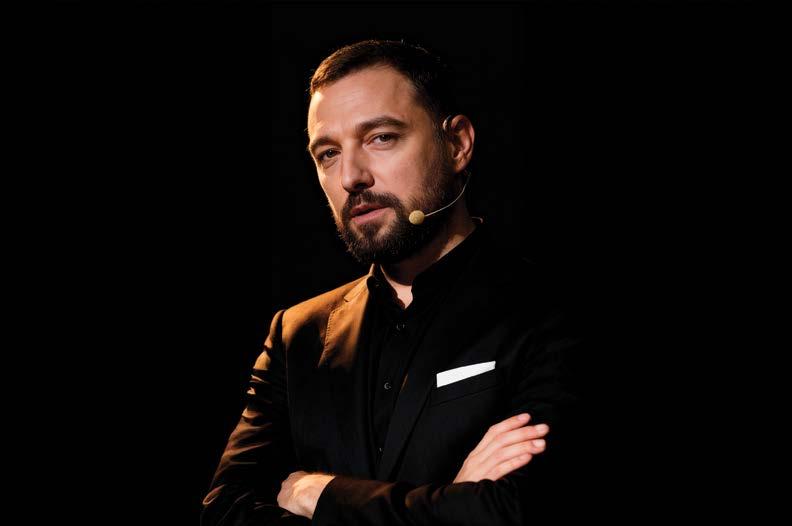
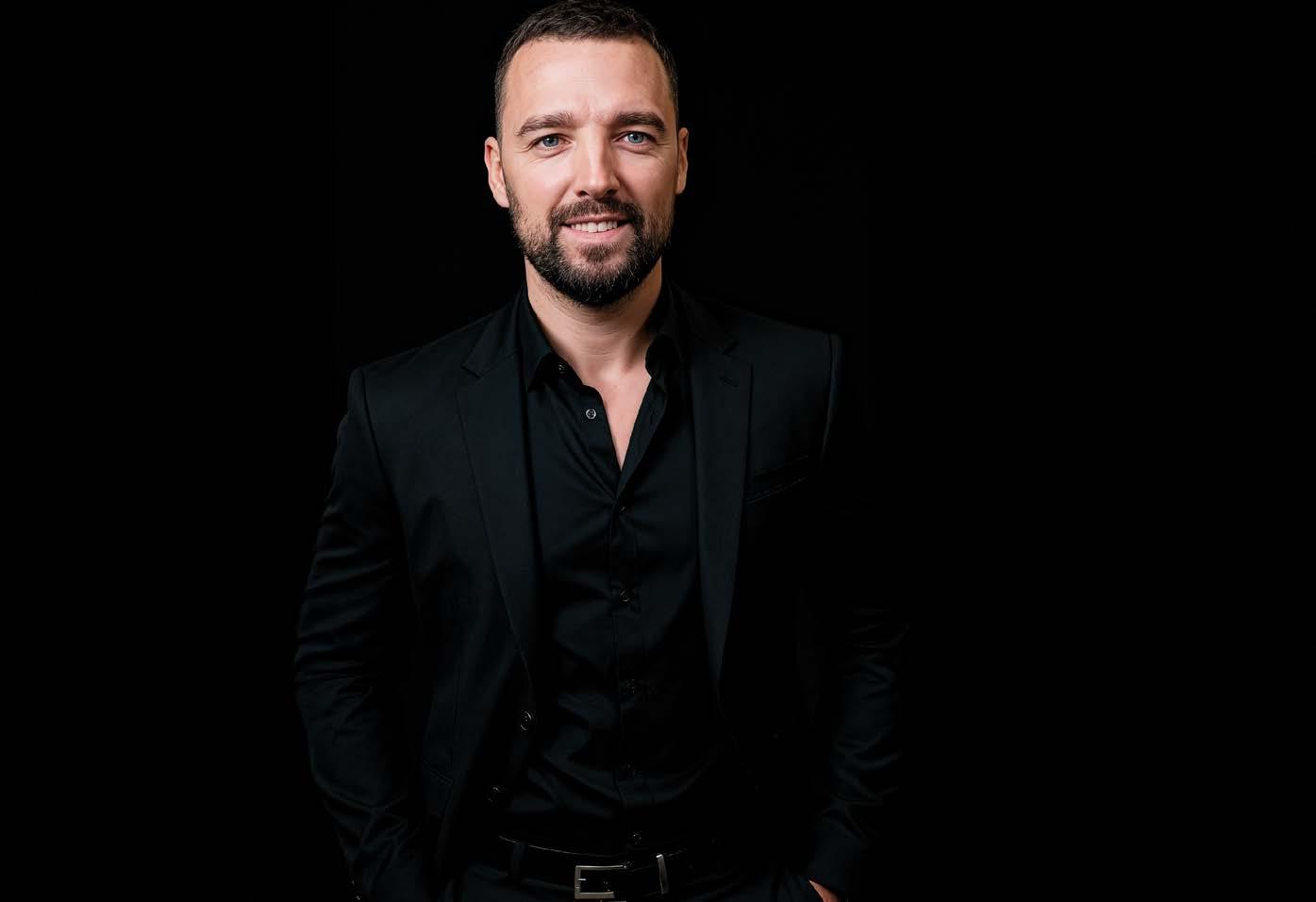
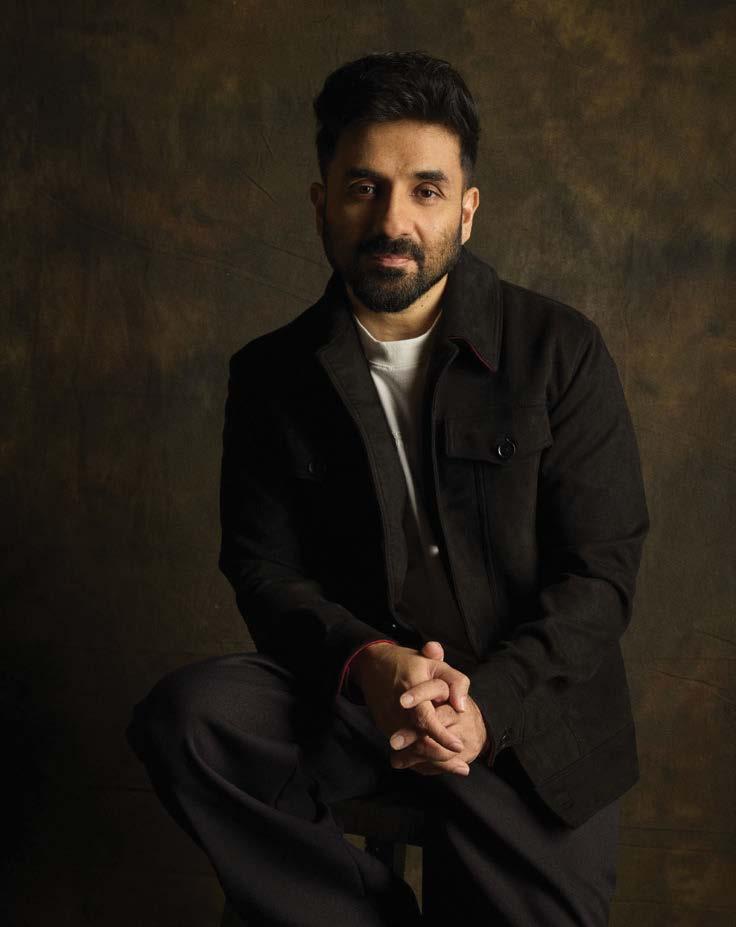
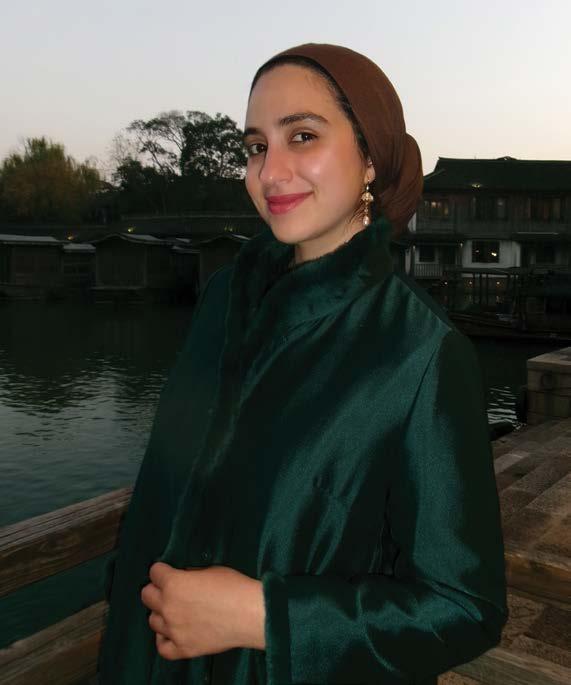
FEATURES EDITOR Aalia Mehreen Ahmed aalia@bncpublishing.net
DIRECTOR OF INNOVATION
Sarah Saddouk sarah@bncpublishing.net
GROUP SALES DIRECTOR – B2B GROUP Joaquim D’Costa jo@bncpublishing.net
HEAD OF PARTNERSHIPS Samir Glor Samir@bncpublishing.net
BUSINESS DEVELOPMENT DIRECTOR Andy Soulahian andy.soulahian@bncpublishing.net
COMMERCIAL LEAD
Anna Chipala anna@bncpublishing.net
COLUMNIST Tamara Clarke
CONTRIBUTING WRITERS Fida Chaaban
SUBSCRIBE
Contact subscriptions@bncpublishing.net to receive Entrepreneur Middle East every issue
COMMERCIAL ENQUIRIES sales@bncpublishing.net
ENTREPRENEUR.COM
Access fresh content daily on our website
PO BOX 502511 DUBAI, UAE P +971 4 4200 506 EntMagazineME Entrepreneur-me
Editor’s Note /
A HOMEGROWN GIANT AND A DEFINING MOMENT FOR MENA TECH
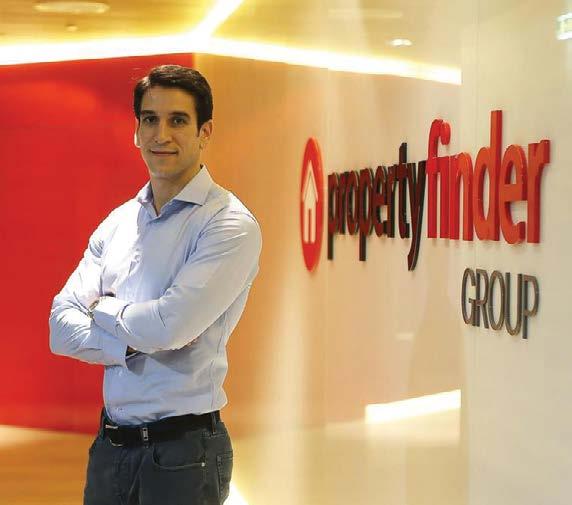
Property Finder’s latest funding round is more than a capital raise; it is proof that the region can build enduring, world-class technology businesses, and a moment of well-earned recognition for founder Michael Lahyani.
Every so often, a deal comes along that says something far bigger than its headline number. Property Finder’s recent US$170 million investment round is one of those moments. It is not just about capital flowing into a successful company; it is about the maturation of the Middle East’s entrepreneurial ecosystem and the validation of a business that has quietly become one of the region’s greatest success stories.
Founded in 2007 by Michael Lahyani, Property Finder set out to solve a deceptively simple problem: bringing transparency, efficiency, and trust to the real estate market. At the time, few could have predicted that a classifieds-style platform would evolve into a data-driven technology company powering property decisions for millions across the region. Yet that is exactly what has happened.
Today, Property Finder stands as a category leader, a regional champion, and a benchmark for what long-term
vision and disciplined execution can achieve. The latest investment, led by major institutional backers, is a clear signal of confidence not only in the company’s growth prospects, but in its role as a foundational digital platform for the region’s real estate sector.
What makes this moment particularly significant is who is backing it. When sovereign capital and long-term regional investors place such a bet, it reflects belief in more than revenue metrics. It reflects trust in leadership, governance, and the company’s ability to create lasting economic value. It also signals something important to founders across the Middle East: you can build at scale here, remain rooted here, and still attract the world’s most serious capital.
This milestone is, in many ways, a tribute to Michael Lahyani’s entrepreneurial journey. Building a marketdefining company over nearly two decades requires resilience, patience, and an unwavering commitment to continuous reinvention. Property Finder did not chase trends; it focused on solving real problems, investing in technology, and building trust with users and partners alike.
For the region’s startup ecosystem, this deal represents proof. Proof that ambition can be matched with outcomes. Proof that MENA-born companies can become indispensable to everyday life. And proof that founders who think long-term can build businesses that endure.
Congratulations are due to Michael Lahyani and the entire Property Finder team. Their success is not just their own; it is a win for the region, and a powerful reminder of what is possible when vision meets persistence.
Anil Bhoyrul Editor-in-Chief
Enlighten Your Eternal Beauty, Inside and Out!
@muarjewels www.muarjewels.com
info@muarjewels.com
The Responsibility of Representation
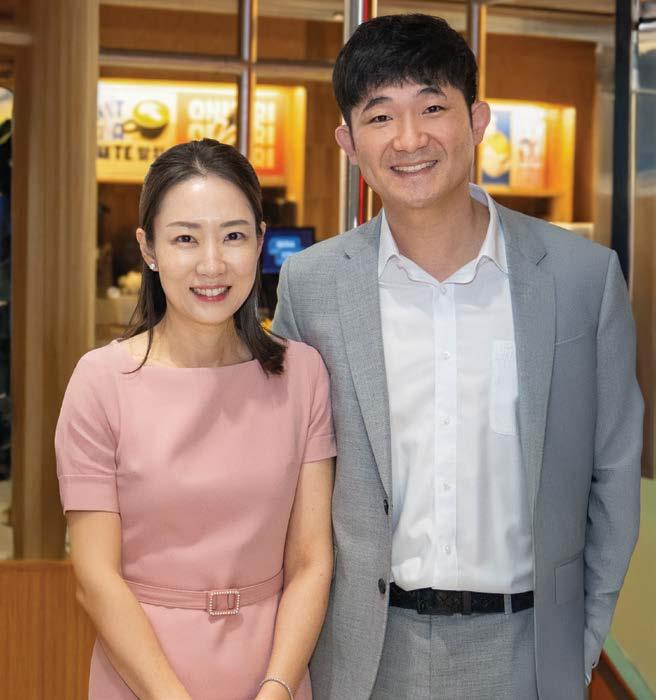
With 1004 Gourmet and Lamise Beauty, husband-and-wife duo Changsup Shin and Kate Wooyeon Park have built two well-established, UAE-born Korean brands. But as they operate in a world increasingly influenced by K-culture trends, they reflect on the added weight that comes with being flagbearers of their homeland across two major industries (and why simply branding something as “Korean” can sometimes do more harm than good). by AALIA MEHREEN AHMED
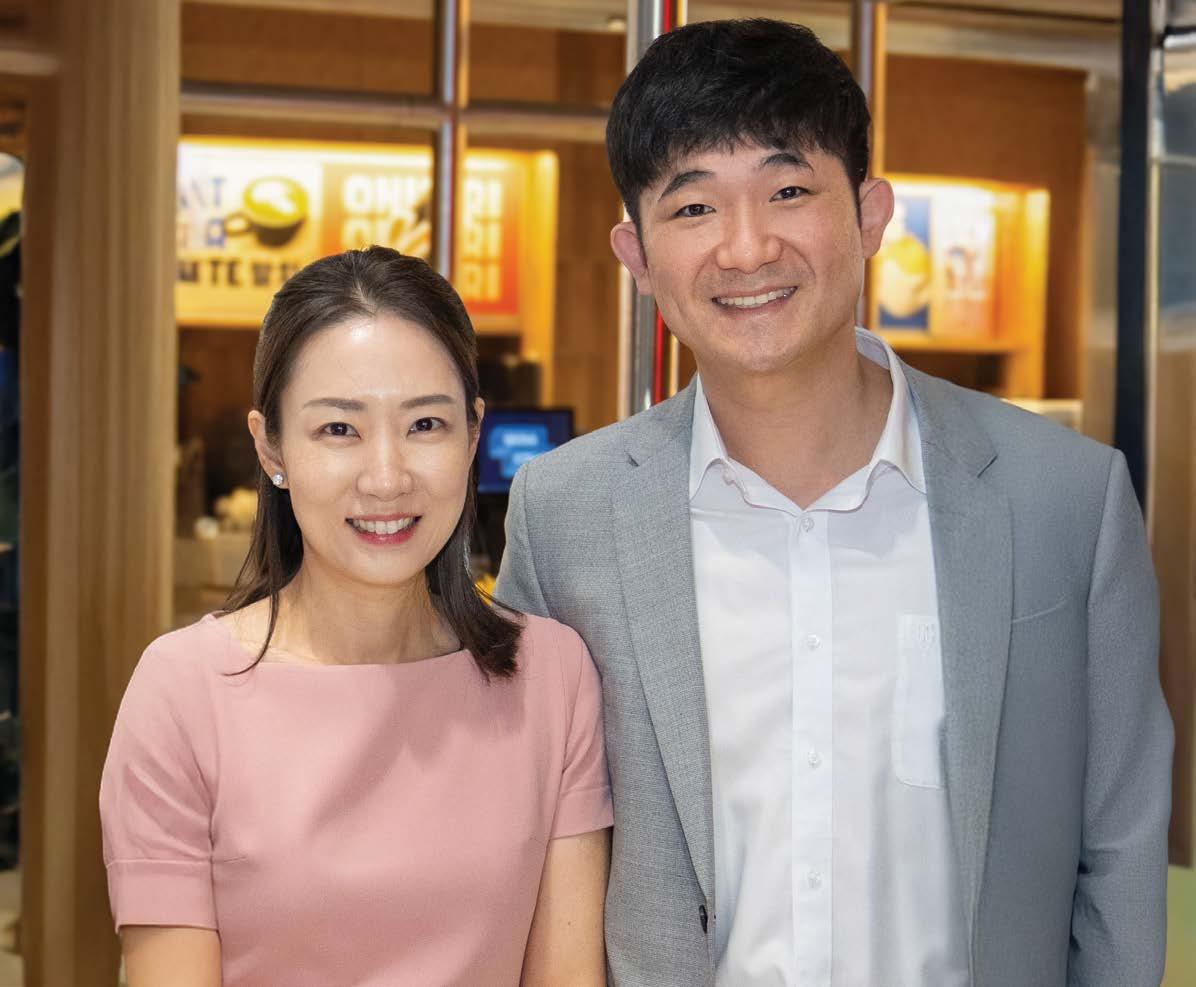
→ Kate Wooyeon Park, founder and CEO of Lamise Beauty, and Changsup Shin, CEO of 1004 Gourmet.
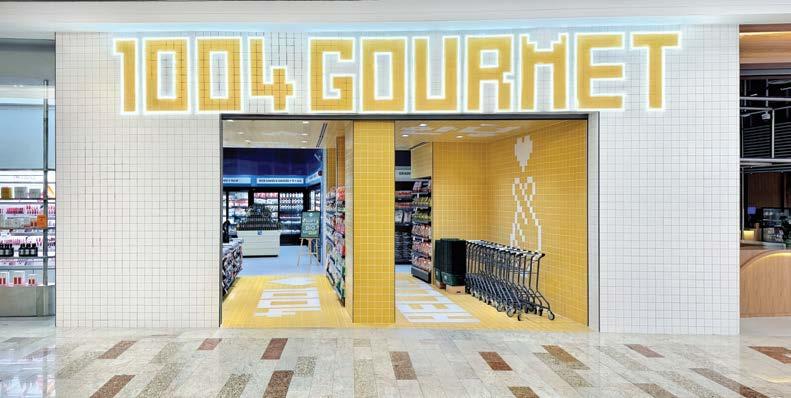
On the ground floor of Dubai’s Al Ghurair Centre—built in the 1980s and easily one of the oldest shopping complexes in the UAE—sit two Korean brands that seem, at first glance, like separate shops, but reveal seamlessly interconnected interiors upon entry: 1004 Gourmet, an Asian food and grocery products store; and Lamise Beauty, a K-beauty skincare and cosmetics shop. The two brands— separated by inner glass walls and distinctly different lighting—were both born in the UAE, but a decade apart.
1004 Gourmet, launched in 2008 by its CEO Changsup Shin’s father Dongchul Shin, offers a tale of how the UAE has been a bedrock of entrepreneurship long before the startup boom began in the nation. Shin, who first moved to the UAE with his family in 1992 when he was only seven years old, started his journey with 1004 Gourmet just after graduating from university. “My
“
OPENING OUR BRANCH IN AL GHURAIR CENTRE LAST YEAR, IN THE SAME AREA WHERE I GREW UP, WAS A VERY NICE ‘FULL CIRCLE’ MOMENT. IT’S SOMETHING THAT I’M VERY PROUD OF.” “
father first opened a Korean supermarket in Al Barsha, at a time when many Koreans living in Dubai were actually clustered around the Al Ghurair area—where our newest shop is today,” Shin says. “But as the diaspora gradually moved towards areas like Dubai Marina and The Greens, he found a good location in Al Barsha before the area was fully developed. We started purely as a Korean supermarket, before branching out into Japanese and Thai imports, and eventually supplying new sales channels such as hotels and restaurants. That growth later led us to our flagship store at Onyx Tower. But opening our branch in Al Ghurair Centre last year, in the same area where I grew up, was a very nice ‘full
circle’ moment. It’s something that I’m very proud of.”
Apart from the branches at Onyx Tower 1 and Al Ghurair Centre, the brand is also located at Dubai’s Nakheel Mall and Alserkal Avenue, as well as the Sky Tower in Abu Dhabi’s Reem Island. These stores also house Seoul Street Cafe, a cozy dining space with Korean street-style bites and drinks. While Shin reflects on this growth, his wife, Park, chimes in with a warm anecdote. “There’s a back story to why 1004 Gourmet was named the way it was, actually,” she says. “My father-in-law once visited a small supermarket where the products were expired, and when he raised it, the storekeepers simply asked, ‘You want to take it or not?’ He was upset, and wondered why the supermarket wasn’t being kind to its customers. He told me, ‘I really wanted to have a very kind place for people to visit and buy from—like an angel.’ In Korean, 1004 is pronounced Cheonsa ( ), which also means ‘angel’. That’s why he named it 1004 Gourmet.”
Park’s brand, Lamise Beauty, has a naming story of its own. Park moved to the UAE in 2013 after marrying Shin (here, almost as if on cue, the radio at 1004 Gourmet –where this interview was held– starts playing an OST from the popular romantic Korean drama ‘Crash Landing on You’) and initially spent her days settling into her new life as a home-
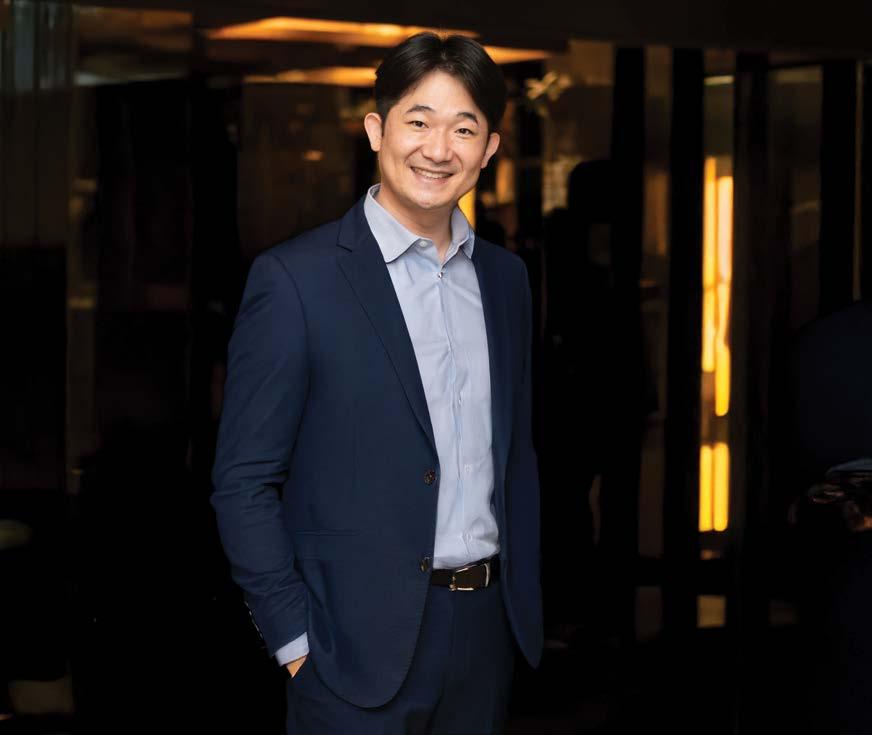
→ Shin is best known for elevating 1004 Gourmet into one of the UAE’s most influential Asian speciality food brands, bridging authentic Asian cuisine offerings with mainstream hospitality and retail markets. He is also the conceptual founder of Ugly Noodles, a spin-off set to open its first brick-and-mortar location in 2026.
maker. “I actually began my career in Korea as an account manager, where I worked on the launch of the Samsung Galaxy mobile phone and led several campaigns over seven years. A couple of years after my move to Dubai, in 2015, the Korean beauty industry was growing rapidly, but almost all the attention was on China—very few brands were interested in the Middle East. So I started bringing Korean beauty products back for my friends, and they kept asking for more. That’s when I realised these brands weren’t just for Korean consumers—they could be used by everyone. Because Changsup was already
importing products from Korea and Japan, I thought, okay, let’s do this properly. I knocked on the doors of many brands, with one clear rule: we would bring everything directly from the source, so the products were 100% genuine. I also knew one brand alone wouldn’t last, so I wanted to build a group of Korean brands under one name. At the time, I was studying Arabic and asked my teacher how to say ‘soft touch’ or ‘gentle touch’. She told me the word was Lamise (سيمل) . That’s how Lamise Beauty began.”
What started as a shop-in-shop venture for
Park, with the first Lamise Beauty store located within the 1004 Gourmet store at Onyx Tower, later saw the opening of a second location in Abu Dhabi, while also securing wider placement within stores across Saudi Arabia and Qatar. The brand has also grown from an online-first platform into an omnichannel business, now offering over 40 Korean beauty brands and 1,300+ stock keeping units (SKUs) across skincare, makeup and targeted treatments. For Park, however, opening Lamise Beauty’s first standalone location at Al Ghurair Centre in July last year has been her “proudest moment so far”and it has bolstered her vision to grow her business into a trusted name in the beauty industry.
“I want us to be more than just a place to buy products; I want Lamise Beauty to be a place that gives people real information—not just sell to them,” she says. “So we installed a skin analysis machine and invested heavily in educating our beauty advisors. There are so many Korean products in the market, and everyone says everything is good—but that’s not fully true. If a product isn’t suitable for your skin, we won’t recommend it. Based on the skin analysis results, we guide customers towards what actually works for them. We also do a lot of events with influencers and directly with the brands themselves, who support us by coming in for educational sessions that are also engaging and fun. Most recently, we collaborated with Kitopi’s SushiDo [a UAE-based food brand that offers a variety of fusion sushi rolls], where customers received two VT face mask packs with their order. The idea was simple: you take care of your skin while enjoying a healthy meal at home. Healthy food, healthy skincare. The response was really good, and it’s helped us communicate what Lamise Beauty stands for—and what our best-selling products are all about.”
At a later point in the interview, Park quietly adds a determined, “I want Lamise Beauty to grow into the region’s Olive Young—that’s my dream.” For the uninitiated, Olive Young is South Korea’s leading health, beauty, and cosmetics retailer, widely regarded by beauty enthusiasts as a trusted authority through its curated offerings, awards, and reviews.
Taken together, the couple’s wider portfolio has recorded steady momentum in recent years. Since 2020, the business has grown at a compound annual growth rate (CAGR) of around 20%, with retail outlets accounting for roughly 40% of operations, followed by beauty at
25% and hotels, restaurants, and cafes (HORECA) supply at 20%.
Smaller lifestyle ventures—including concepts such as Seoul Street Café— make up the remainder. The mix reflects a deliberately diversified approach — one that has allowed steady scaling without becoming
I WANT US TO BE MORE THAN JUST A PLACE TO BUY PRODUCTS; I WANT LAMISE BEAUTY TO BE A PLACE THAT GIVES PEOPLE REAL INFORMATION—NOT JUST SELL TO THEM,”
overly dependent on any single channel or trend.
But while Park and Shin have continued to grow their brands over the years, a euphoric cultural shift has unfolded in parallel: the rise of the Korean Wave, known as Hallyu ( ). What began in the late 1990s as a growing regional interest in Korean television dramas and pop music has since evolved into a global cultural force—shaping everything from food, fashion, and beauty to language, cinema, and consumer behaviour.
→ Park aims to position Lamise as a trusted destination for Korean skincare tailored to the region’s climate and skin concerns. Her strategy centres on brand authenticity, direct partnerships with Korean suppliers, and consumer education.
K-culture’s influence —one that has quietly shifted beyond entertainment to the realms of purchasing decisions and brand marketing— has especially been felt in the region. According to the 2025 Overseas Hallyu Survey, “more than two-thirds of Hallyu experiencers across Saudi Arabia, the UAE, and Egypt engage with Korean cultural content.” The same report also showed that regional K-beauty spending had increased by 62% YoY in 2025, with Saudi Arabia and the UAE ranking among the top three global markets for average monthly spend. Globally, as per Market Research Insights, the K-beauty industry is “projected to increase from US$11.2 billion in 2025 to an incredible $20.4 billion by 2035,” with the major demand drivers being innovative skincare solutions and natural ingredients.
But with such a pace of growth, comes the inevitable pitfalls of businesses simply wanting to hop on a trend. “Right now, everyone is jumping into the Korean beauty space because it’s easy to enter,” Park says. “What I’m seeing instead is a price battle—products being pushed cheaper and cheaper. As a Korean, that worries me, because it starts to position K-beauty as ‘cheap’, rather than considered or trustworthy. Reputation matters—not just here, but back in Korea too. We work directly with the brands, we agree on set retail prices, and we’re clear about
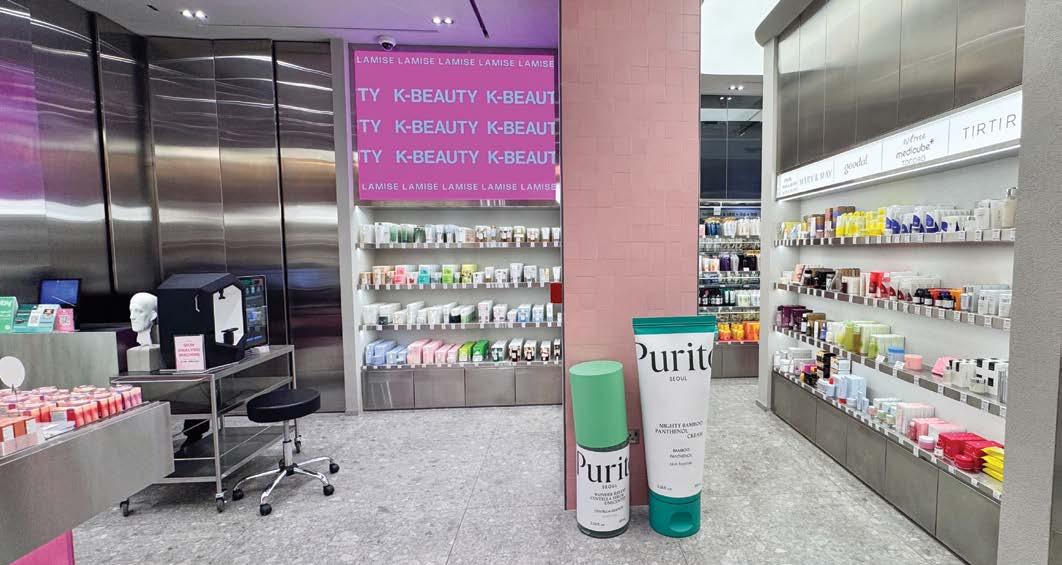
→ Founded in 2017, Lamise Beauty has grown from an online-first platform into an omnichannel business, now carrying 40+ Korean beauty brands and over 1,300 SKUs across skincare, makeup and targeted treatments.
how often promotions happen. Many channels ask for constant discounts, but we don’t do that. I’m building this business for the long term. That also means doing the harder work—educating customers, explaining differences between products, and recommending only what actually works for their skin. Simply calling something ‘Korean’ isn’t enough.”
A similar surge in consumer demand is now being seen across the K-food landscape as well.
According to South Korea’s Ministry of Agriculture, Food and Rural Affairs, the country’s agricultural and food exports reached a record high of US$9.98 billion in 2024, marking a 9% year-on-year increase and extending a nine-year streak of consistent growth since 2015. Another article
“RIGHT NOW, EVERYONE IS JUMPING INTO THE KOREAN BEAUTY SPACE BECAUSE IT’S EASY TO ENTER. WHAT I’M SEEING INSTEAD IS A PRICE BATTLE— PRODUCTS BEING PUSHED CHEAPER AND CHEAPER. AS A KOREAN, THAT WORRIES ME, BECAUSE IT STARTS TO POSITION K-BEAUTY AS ‘CHEAP’, RATHER THAN CONSIDERED OR TRUSTWORTHY. REPUTATION MATTERS—NOT JUST HERE, BUT BACK IN KOREA TOO. WE WORK DIRECTLY WITH THE BRANDS, WE AGREE ON SET RETAIL PRICES, AND WE’RE CLEAR ABOUT HOW OFTEN PROMOTIONS HAPPEN.”
in The Global Korea Post notes that 2026 is widely cited by European food-service trend agencies as the year K-Food fully enters the global culinary mainstream, shifting from niche or ethnic cuisine to everyday consumption.
For Shin, this is a shift he has been able to observe firsthand. “There’s definitely been a notice-
able shift in how people engage with Korean food,” he says. “Of course, products like Samyang’s Buldak noodles helped open the door, but now the interest goes much deeper. People are curious about Korean drinks, ingredients, and even small rituals they see on TikTok—like mixing banana milk with coffee. What’s been especially interesting is seeing this
extend beyond consumers to chefs. As Korean restaurants gained recognition globally—particularly in North America—chefs around the world started paying closer attention to Korean ingredients. I’ve had chefs ask me about products they discovered through shows like Culinary Food Wars on Netflix, or dishes they’ve seen online. From a B2B perspective, that’s a real shift. These are ingredients that were barely on anyone’s radar just a few years ago, and now they’re actively being sought out.”
Having built 1004 Gourmet from the ground up with a strong Korean foundation, Shin is understandably upset when asked about brands jumping on the K-trends bandwagon without much thought. “Look, in many ways, it’s a privilege for
“ }
It’s important to us that our brands are perceived positively, and that we never make ethical or moral compromises that could reflect poorly on Koreans more broadly.”
Korea to be in a position where its culture is so visible globally,” Shin says. “When people who may not fully understand the culture still want to engage with it, that’s a sign of soft power—and that’s a blessing. But it also comes with responsibility. There’s a difference between appreciation and appropriation, and often it comes down to intention and effort. If a brand is simply putting Korean characters on packaging, or misusing symbols like the Korean flag without understanding what they mean, that doesn’t feel respectful. In some cases, it’s outright misleading. Consumers are getting smarter, but at the same time, brands are also becoming more sophisticated in how they present themselves.”
“What matters is transparency and education,” he continues.
“If something looks Korean but isn’t actually Korean, people deserve to know that. And at the same time, there are non-Korean brands— here in Dubai as well— that execute Korean concepts thoughtfully and respectfully, sometimes even better than Korean businesses themselves. Those are the brands that should be supported. Korea isn’t a single ‘flavour’, and calling something ‘Korean’ doesn’t automatically make it authentic. But when brands take the time to learn, to understand nuance, and to execute things properly, that sets a standard. And as people working within Korean industries, I think it’s our responsibility to help guide that conversation, to educate consumers, and to protect the meaning behind what’s being shared.”
Park adds a similar perspective to the discourse when she says that operating in a multicultural nation like the UAE offers a golden opportunity to educate the masses about the intricacies of the Korean culture. “We’re honoured to be seen as representatives of Korean culture,” Park says. “But for us, it goes beyond simply selling products. Through events and experiences that introduce our philosophy—and the culture around skincare—we meet customers from so many nationalities and backgrounds. Those interactions teach us a lot. They help us understand what people are truly looking for, and how we should curate the right products for them. One of the biggest advantages of running a business in the UAE is the diversity of the customer base, and the consistent demand for authentic Korean culture and products. People ask us directly, ‘Is this real? Is this Korean?’ That creates a genuine opportunity to grow while also sharing Korean culture. Building trust and brand awareness takes time and effort. But those challenges are what allow us to form deeper, longterm relationships with customers, and to apply our philosophy more meaningfully. Ultimately, our experience in the UAE has been invaluable—it’s helped us introduce Korean culture
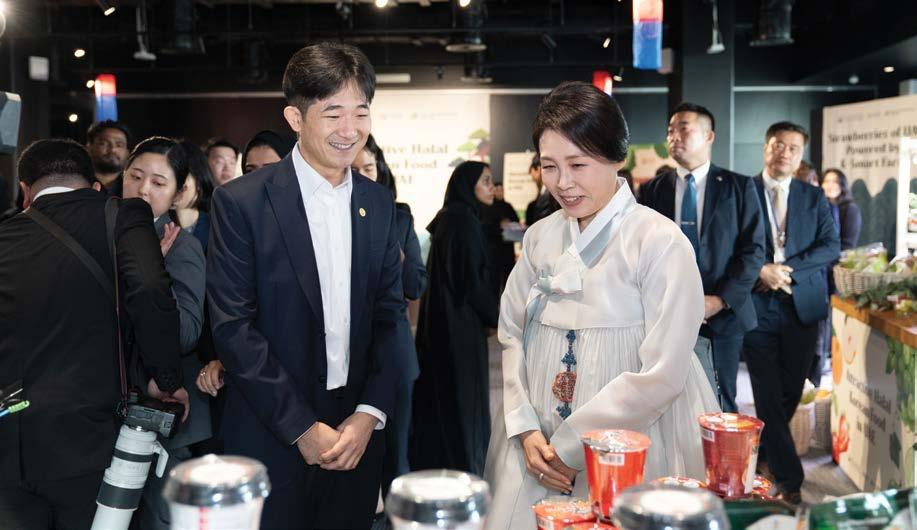
→ Shin with South Korea’s First Lady Kim Hyekyung at the ‘Halal-Certified K-Food Promotion Event’ held at the Korean Cultural Center in Abu Dhabi last year, which was held during South Korean President Lee Jaemyung’s official visit to the UAE.
while also running the brand with a global perspective.”
Perhaps the clearest affirmation of Park and Shin’s insistence on authenticity—at a time when Korean culture is increasingly commodified—came unexpectedly late last year. In November 2025, during South Korean President Jaemyung Lee’s official visit to the UAE, the First Lady Hyekyung Kim visited a ‘Halal-Certified K-Food Promotion Event’ at the Korean Cultural Center in Abu Dhabi. Just days ahead of the high profile event, the 1004 Gourmet team was invited to exhibit their products to Kim. “It was amazing,” Shin says. “Anytime your country’s leader visits, it’s meaningful—especially for Koreans, because we’re very patriotic. And for me personally, having grown up in the UAE, it’s always fulfilling to see our country’s leader meet our [other] country, the UAE’s, leadership as well. What made it even more memorable was how last-minute it all was. A Korean government entity that supports the food sector reached out to us just five days before and said the First Lady would be visiting, and we needed to organise everything. In four days, our team pulled it off—huge credit to them. We set up the full
station and welcomed her just months after the President took office, so it felt genuinely significant.”
“And then it aired on TV, which made it even funnier,” Shin quips with a laugh. “My mother-in-law’s friends started messaging her, asking, ‘Is that your son-in-law?’ So she ended up having to buy them dinner. But honestly—it was a really special experience.”
While 1004 Gourmet and Lamise Beauty remain the couple’s flagship brands, they’ve also quietly worked on other projects that carry the same purpose of celebrating culture and community. One of these was Ugly Burger, a pop-up burger joint that was launched in the midst of the COVID19 pandemic by Shin and his friends Eric Lee and Youngrak Jung. While Ugly Burger was eventually closed down, it paved the way for a new brand, Ugly Noodles. “We realised we wanted to build an Asian concept— not just a burger brand—something that felt cool, rustic, and genuinely authentic” Shin says. “We began with pop-ups and collaborations, and a couple of years ago, after pitching on Shark Tank Middle East, we secured funding. We’re now preparing to open
our first standalone Ugly Noodles location this year.”
Shin then reveals that the evolution of all the brands he and his wife oversee prompted another business idea. “We’ve also spun off our marketing division into its own entity,” he explains . “Originally, it handled all our brands internally, but today it also works on government-led initiatives— particularly projects that promote Korean food and culture. We now operate it as a standalone company called Kimchi Studio,” he says with a laugh. “Simple, easy… though my wife still doesn’t like the name.” (“Anything is better than Kimchi Studio,” Park tells me when I ask her what she would’ve named it instead.)
As Shin and Park now embark into what promises to be another ambitious year —including plans to open more Lamise Beauty branches and make it “the ultimate K-beauty destination”— the two of them iterate that they will carry the responsibility of representing their homeland with pride and sensitivity. “As a family that has been in the UAE for over 33 years—and with my father having served as chairman of the Korean Association for several years—we’ve always been very conscious of the responsibility that comes with visibility,” Shin says. “The Korean community is close-knit and deeply patriotic, and because of that, we believe we have to lead by example. It’s important to us that our brands are perceived positively, and that we never make ethical or moral compromises that could reflect poorly on Koreans more broadly. I genuinely believe that this mindset is one of the reasons for our longevity. We think long term. We don’t take shortcuts, even when it costs more or requires extra effort. We go the extra mile so that our country and our people are represented with integrity. That principle is one of the foundations of our businesses—and it’s something we take very seriously.”
↓ 1004 Gourmet is an Asian speciality food marketplace based in Dubai, offering a curated selection of premium Asian products—from staple ingredients and fresh produce to snacks, sauces, and specialty meats. The brand opened a new flagship branch at Al Ghurair Centre in Deira, Dubai, last year.
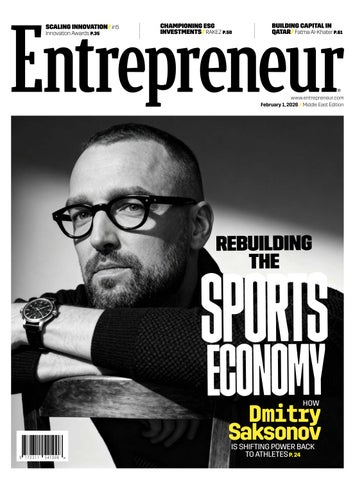
DMITRY SAKSONOV DESIGNING FAIR ARCHITECTURE FOR GLOBAL SPORT
developed Blockchain Sports to rebalance power in the sports economy through data, transparency, and decentralized ownership. by
TAMARA PUPIC
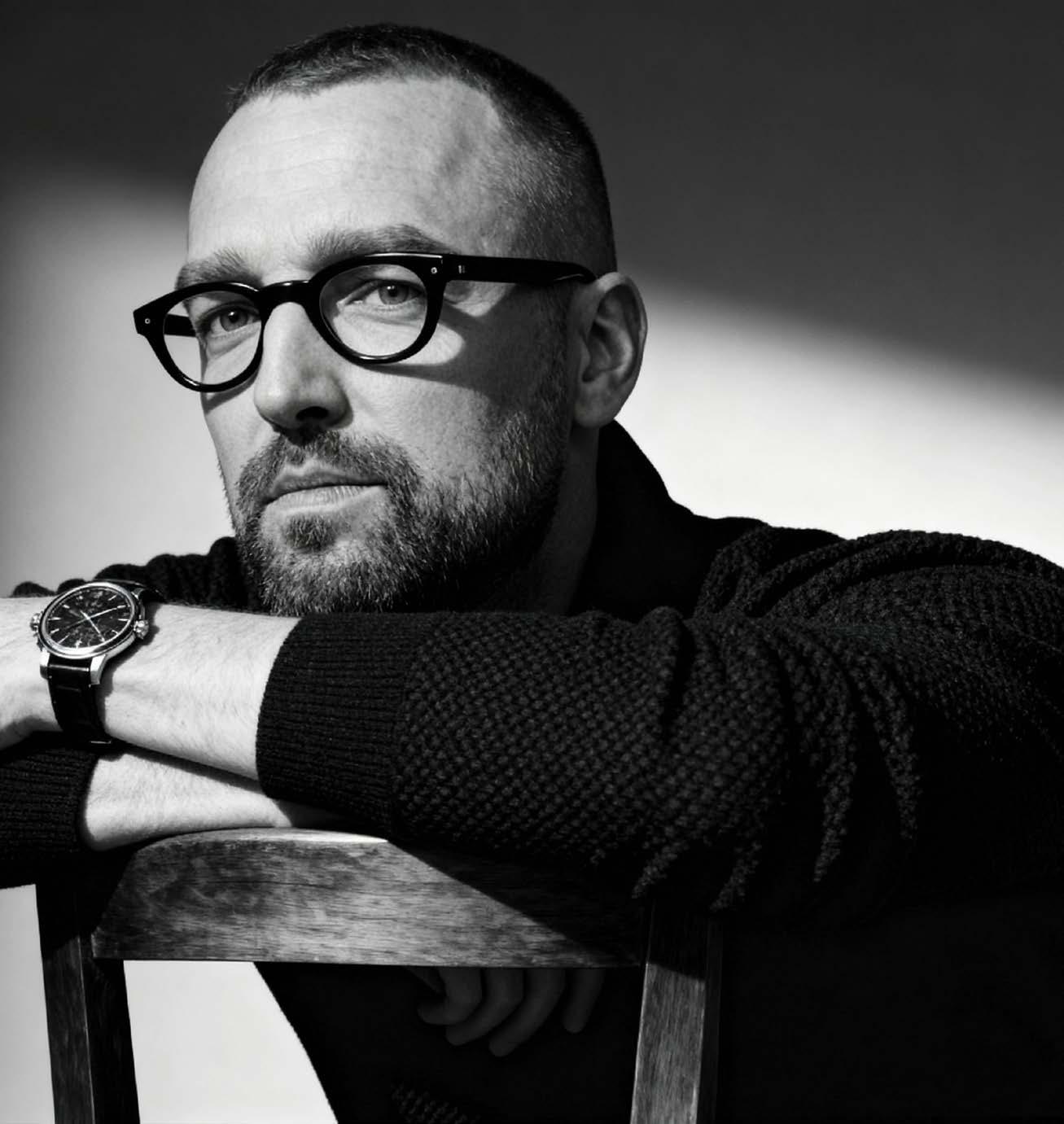
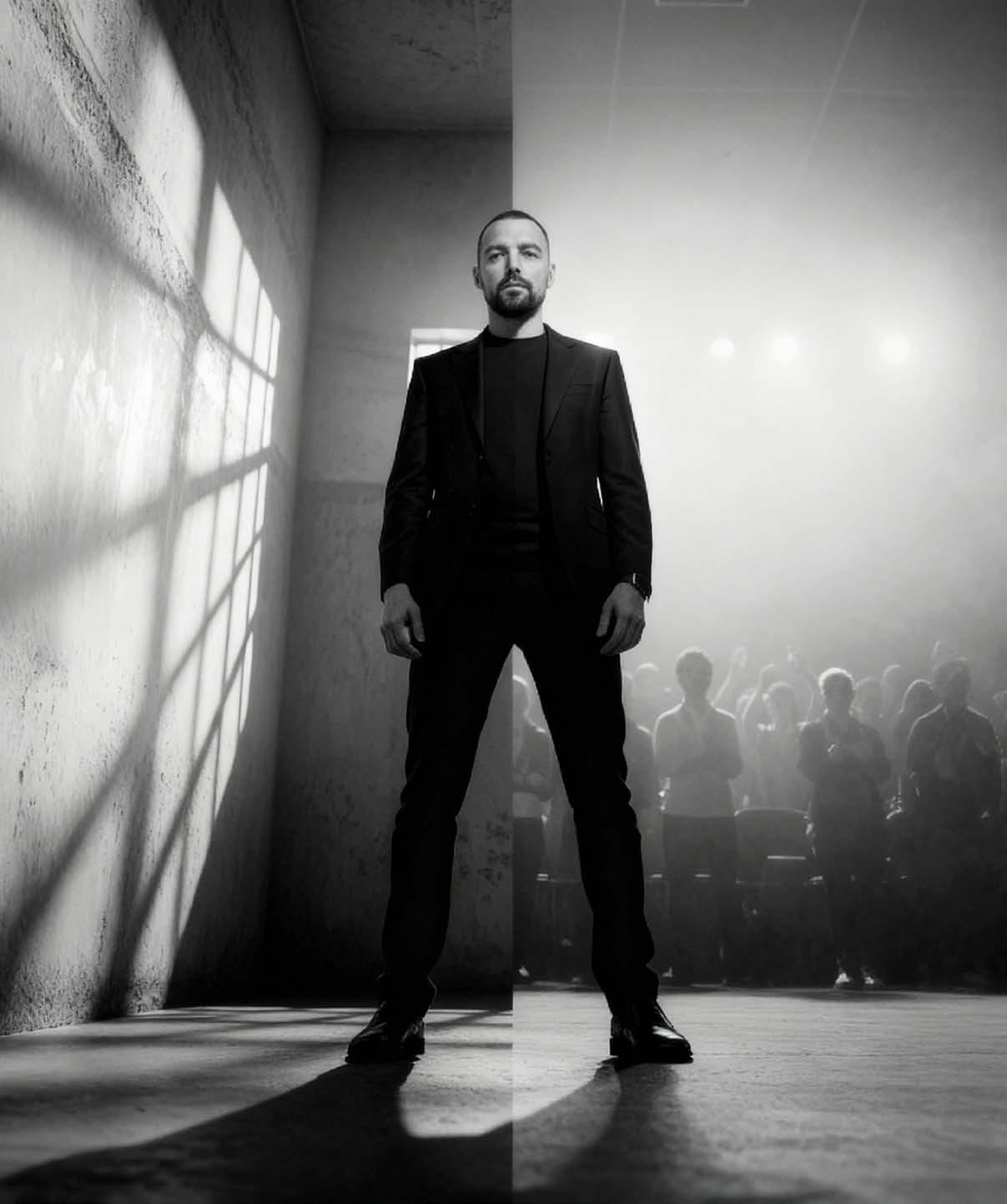
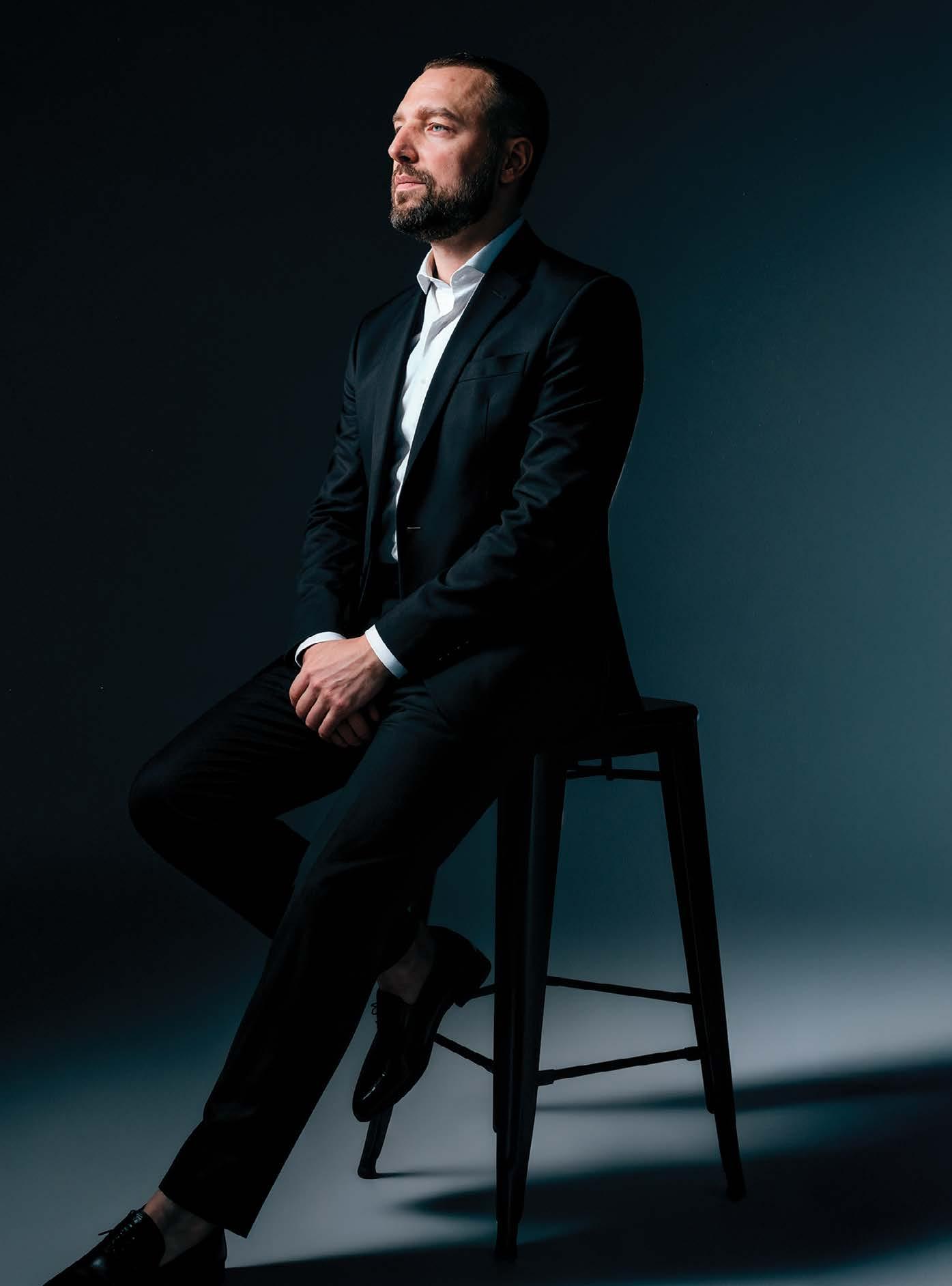
→ DMITRY SAKSONOV is the founder of Blockchain Sports.
~1.0 - 1.2M (primarily Telegram and platformlinked communities)
}Growth dynamics:
Growth driven by episodic viral campaigns and content launches, not linear MoM extrapolation. Sustained growth modeled conservatively of perpetual 35 - 60% MoM.
Audience scale objective:
}Reach: up to 100M+ global audience (content exposure, not MAU). }MAU: 3 - 4M medium-term, scaling via content and club rollout.
I moved to the UAE because it’s a place where strong people can quickly come together into strong alliances. It’s one of the few hubs where global ambition, serious infrastructure, and long-term thinking can align — if you know how to unite the right people and keep your word.”
→ Blockchain Sports is the first global network combining performance tracking, AI, XR, and blockchain technologies to shape the future of sports.
WE’RE BUILDING A SYSTEM WHERE AN ATHLETE’S DEVELOPMENT, PERFORMANCE DATA, AND PROGRESSION EXIST INDEPENDENTLY OF ANY SINGLE CLUB, AGENT, OR LEAGUE. THAT CONTINUITY IS THE BREAKTHROUGH.”
DDubai-based Belarusian expat Dmitry Saksonov traces the origins of his US$250 million blockchain-based sports ecosystem to a defining moment far from the boardroom.
A visit to football academies in Rio de Janeiro in 2022 proved pivotal as it exposed how poverty in the city’s favelas strips young athletes of opportunity. “I spent time in communities where football isn’t a dream, it’s a language. The talent level was extraordinary. The infrastructure was not,”
Saksonov explains. “Players were producing value every day without visibility, protection, or long-term upside.Traditional systems centralize power and extract value upward. If you don’t control access, you don’t control your future. That’s the flaw.
“Decentralization, in this context, isn’t ideological. It’s practical,” he adds. “It allows ownership, transparency, and continuity to sit closer to the individual. Sport doesn’t need disruption for its own sake. It needs fair architecture.”
He subsequently developed Blockchain Sports — described as “a global infrastructure that enables athletes, clubs, and fans to operate within a transparent, data-driven sports economy where value follows contribution”— to serve the entire value chain, not just the top 1%.
“Most systems in global sport were built decades ago for a far smaller, more localized industry,” Saksonov says. “Today, you have millions of athletes
globally producing value every day, but ownership of that value sits with intermediaries. Data disappears when a player moves. Decisions are subjective. Opportunity depends on geography and access, not merit.”
The blockchain-in-sports sector has expanded rapidly in recent years, with decentralized systems enhancing ticketing, memorabilia authentication, fan engagement, and new revenue models.
Within this landscape, Saksonov’s approach focuses on using blockchain to rebalance power dynamics in sport. “We’re building a system where an athlete’s development, performance data, and progression exist independently of any single club, agent, or league. That continuity is the breakthrough,” he says. “It’s not flashy, but it’s foundational.We win because we didn’t start with a token or a fan product. We started with the athlete, in real environments, and built upward.”
Saksonov argues that the structural challenges facing the sports industry cannot be resolved through isolated solutions, positioning Blockchain Sports as a comprehensive ecosystem rather than a single product.
Its model integrates on-the-ground development— through physical academies, training facilities, and early-stage talent programs—with a digital intelligence layer that captures performance metrics, progression data, and longitudinal athlete profiles that persist across clubs and borders. Underpinning this system is a blockchain infrastructure designed to
IF SOMETHING CAN’T BE EXPLAINED CLEARLY TO A REGULATOR, IT DOESN’T BELONG IN PRODUCTION. SCALE WITHOUT RESPONSIBILITY ISN’T PROGRESS.”
ensure that data, rights, and transactions are secure, verifiable, and portable, while maintaining athlete ownership of their records and increasing transparency for clubs and stakeholders. “The value is in the connection between layers,” Saksonov explains. “Remove one, and the system collapses. Together, it compounds.”
The Blockchain Sports venture generates revenue through a combination of proprietary blockchain platforms and digital tools licensed to sports organizations for analytics, performance tracking, and fan engagement. Plus, there are also tokenized participation models that allow supporters to interact with athletes and ecosystems through digital value-exchange mechanisms.
This technology-led foundation is reinforced by strategic partnerships and external investment, which fuel platform expansion and infrastructure growth, as well as by real-world operations, including sports academies and technology-enabled training facilities that integrate seamlessly with the wider ecosystem.
“Our revenues come from institutional partnerships, technology licensing, enterprise data services, and participation across the ecosystem,” Saksonov says. “Tokens exist, but they are not the business. They are an access and alignment mechanism. We built the company to survive cycles. That means real revenue, real users, and real contracts, not speculation.”
To date, Blockchain Sports has reached a significant stage of growth, attracting international attention and tangible market traction. The project has been covered
by global media, including reporting that references a valuation benchmark of around US$250 million. In the UAE, the platform delivered a major live activation at Dubai’s Coca-Cola Arena, drawing 16,000 attendees. Beyond the UAE, Blockchain Sports continues to expand through international markets, building strong local communities across MENA, the United States, and Latin America.
Based on publicly available information, it appears that athletes’ trust in blockchain ventures is cautiously gaining ground as the technology begins to demonstrate clear, practical value—but adoption remains uneven and often tied to proven use cases. Saksonov says, “This industry [Web3] has seen too many promises that didn’t materialize. Too many platforms that prioritized growth metrics over people. We earned trust by staying present, fixing mistakes, and doing the unglamorous work consistently.”
Against this backdrop, the question remains: what is the next major income stream for athletes? “Longterm data ownership,” Saksonov replies. “Verified performance history, development metrics, and progression records will become a form of economic identity. Athletes who control that data will negotiate better contracts, smarter endorsements, and sustainable post-career opportunities. Attention fades. Credibility compounds.”
While blockchain holds transformative potential for sports, gaps in legal clarity, governance, and consumer protection still limit broader adoption. Saksonov’s approach to scaling responsibly is rooted in a simple principle: responsibility must be built into the system from day one, not
'TREP TALK
Blockchain Sports Founder
Dmitry Saksonov Shares
Guidance for Web3
Entrepreneurs Entering Dubai
} BUILD FOR EXPORT MARKETS FROM DAY ONE PEOPLE FIRST — EVERYTHING ELSE SECOND.
“Find the right partners and build a strong team. In Dubai, relationships, trust, and reputation are everything. One strong partner can accelerate you by a year. One toxic partner can destroy the entire project.”
} COMPLIANCE AND TRANSPARENCY ARE NOT BUREAUCRACY — THEY’RE LEVERAGE.
“If you want to build long-term here, build clean from day one. Structure, governance, and legal clarity are what make a business stable, investable, and scalable.”
} REMOVE FRICTION FOR REAL USERS
“Your user should not suffer.
Fiat → crypto rails, KYC delays, holds, banks — these are the points where people drop off. If you remove the pain, you win. The game is to make entry simple, fast, and fair.”
added later. “We work market by market, partner with regulated entities, and design governance into the infrastructure itself,” he says. “If something can’t be explained clearly to a regulator, it doesn’t belong in production. Scale without responsibility isn’t progress.”
With this emphasis on regulatory clarity, it is little surprise that Saksonov chose to establish the business in the UAE, which has already emerged as a global benchmark for Web3, blockchain, and crypto regulation. “Before the UAE, I worked across technology projects
"
I’m being completely honest, I don’t want to leave behind 'just a company.' I want to leave behind a team, a culture, and a movement that can keep growing even without me. That’s what real scale looks like."
and digital infrastructure. In that world, you learn fast: hype means nothing if you don’t have systems, security, processes, and people you can truly trust. I built teams, launched products, and developed strong operations — not just ideas, but execution under real deadlines, real risk, and real responsibility,” Saksonov says.
“I moved to the UAE because it’s a place where strong people can quickly come together into strong alliances. It’s one of the few hubs where global ambition, serious infrastructure, and long-term thinking can align — if you know how to unite the right people and keep your word.”
Looking ahead, Saksonov says the company’s focus remains firmly on disciplined, execution-led growth rather than hype. “Our plan is very practical: scale through people, partnerships, and infrastructure—not through loud promises,” he says. In the near term, Blockchain Sports is strengthening its onboarding and entry rails, particularly for US-based users, while expanding partnerships across MENA and the
United States, spanning exchanges, payment providers, and sports organizations. The company is also advancing its product roadmap and B2B deployments, alongside high-visibility activations designed to build trust and brand credibility. Saksonov adds, “Over the mid term, we’re building a global ecosystem layer where athletes get real opportunity, clubs get data and talent pipelines, and fans gain meaningful participation and value. We’re also expanding into licensing and largerscale integrations.”
Ultimately, Saksonov’s goal is to build one of the world’s leading sports-tech ecosystems—not for valuation headlines, but for measurable impact. “A system that brings people together, gives athletes a path, gives fans participation, and makes sports more transparent and more technology-driven,” he explains. “And if I’m being completely honest, I don’t want to leave behind ‘just a company.’ I want to leave behind a team, a culture, and a movement that can keep growing even without me. That’s what real scale looks like.”
Building Authenticity Amid Algorithms
As businesses race to keep up with algorithms, saturated markets, and dwindling attention spans, four creative entrepreneurs —Vir Das, Sharon King-Chai, Inua Ellams, and Jennah Fakhouri— reflect on how staying rooted in identity, morals, and community has helped them grow without losing authenticity (and why that may be the most scalable strategy of all). by AALIA MEHREEN AHMED
Ithink the mission for every artist is that whether you see 30 seconds of me or you see one hour of me, you should know me,” says Vir Das, an Emmy Award-winning standup comedian, actor and director, when asked if viral social media clips of his hours-long performances nibble away at the nuance of his craft. After all, over the course of his career so far, he has released five Netflix comedy specials, completed multiple standup tours in India and other parts of the world, as well as a handful of Bollywood films and TV shows. When I speak with Das on the sidelines of the Emirates Airline Festival of Literature in Dubai, he’s hours away from leading a session spotlighting his newly released book, The Outsider: A Memoir for Misfits.
“In an hour of a stand-up comedy show, there will be some personal things. There will be some topical things. There will be, hopefully, a plateau. There will be two uncomfortable silences. A stand-up show is like a movie in that sense. There is a climax, a fight in the second act, and a
I do think that, at some point, if you’re not craving beyond a certain level of acceptance, you reach escape velocity. I think I’ve found my people. There might never be more people than this, and maybe that’s okay. But with this audience—my current audience—I’m free. Beyond that, I wouldn’t be. So I think I’ve found my people.
VIR DAS
reunion of romance. There is all of that stuff. So if you take a section of that, in the very best-case scenario, it should still showcase who you are as a human being.”
Das’ insights offer a timely reminder to creative entrepreneurs across the globe who leverage social media as a tool for visibility and reach. In August 2025, research by the news and data analysis platform SQ Magazine showed that “visibility now hinges on behavior, likes,
→ Vir Das is an Emmy-award winning standup comedian, as well as an actor, director and writer. His body of work includes five Netflix specials and a plethora of standup tours across the globe.
watch time, comments, video pauses, and feed-ranking systems.” But while it may be easy to superficially view this as a cycle of engagement and virality defined solely by algorithms, a quiet shift is taking place. In June 2025, marketing platform Stack Influence released a study showing that “micro-creators often see much higher engagement rates than big celebrities,” citing their authenticity and tight-knit communities as the major driving factors.
One individual who has proven the latter statement true is Jennah Fakhouri, a Palestinian poet who’d been declared as
one of the winners of the 2026 ELF Seddiqi Writers’ Fellowship, a creative writing program by the Emirates Literature Foundation, just the night before this interview. To extend her love for creativity to the wider community, Fakhouri has also founded UAE-based literary platform Zajal to celebrate art and culture through literature. “I started this project by putting people on ‘blind dates’ with Palestinian books that enabled them to get access to all of these different stories they wouldn’t otherwise be exposed to,” she explains. “Then that expanded as a concept and I realized, ‘You know what? There is a genuine gap for intellectual conversations and for third spaces beyond the screen!’ So then I utilized having a platform online, and all the trends that define it, to create a safe space offline where we could actually explore different cultures every single month through our book club. And I have a beautiful
I tend to draw upon the stories and the narratives that I’m seeing coming out of Gaza and the West Bank and, of course, Jerusalem as well. And I translate that into powerful poetry that can really connect with people beyond the sound bites and beyond the news headlines.
JENNAH FAKHOURI
community of people that are genuinely culturally curious. And that was only possible because I was authentic to myself.”
However, for Fakhouri, dismissing the idea of algorithmaligned content is a decision that transcends online branding strategies and is more deeply rooted in honoring her heritage. “I can obviously create content for an algorithm, and perhaps that may outperform—but the stuff that really connects people and draws them into your community and into the brand that you’re trying to sustain is going to be the work that authentically feels like you,” she says. “I also am very cognizant of the fact that I have a platform and I have this voice that God gave me. So it’s my job then to amplify voices that are not being heard, especially as a Palestinian. I tend to draw upon the stories and the narratives that I’m seeing coming out of Gaza and the West Bank and, of course, Jerusalem as well. And I translate that into powerful poetry that can really connect with people beyond the sound bites and beyond the news headlines.”
But operating in a creative space that has, so far, been largely insulated from digital trends is Sharon King-Chai, a designer and illustrator who works primarily on children’s books. Among the plethora of awards she’s clinched over the years has been her win for Best Children’s Book Cover by the Academy of British Cover Design for her book Starbird. As such, King-Chai offers insights into how creative entrepreneurship untouched by the fast pace and immediate gratification of the virtual world can look. “I take a long time to do my books, and I have to really feel invested in the story and feel like it’s worth that time,” she says. “I don’t want to go and produce lots and lots of books with a huge output—I want to do things that feel worthy and important, where I can find meaning in the story. As a mother now, and as I’m finding more experiences in life, I do want to go deeper. That means digging more into my own personal stories. Different parts of my career have tapped into different parts of the story—when I started as an illustrator, it was more about creating characters. But as I’ve become a bit older and have more life behind me, I bring the focus more onto myself.”
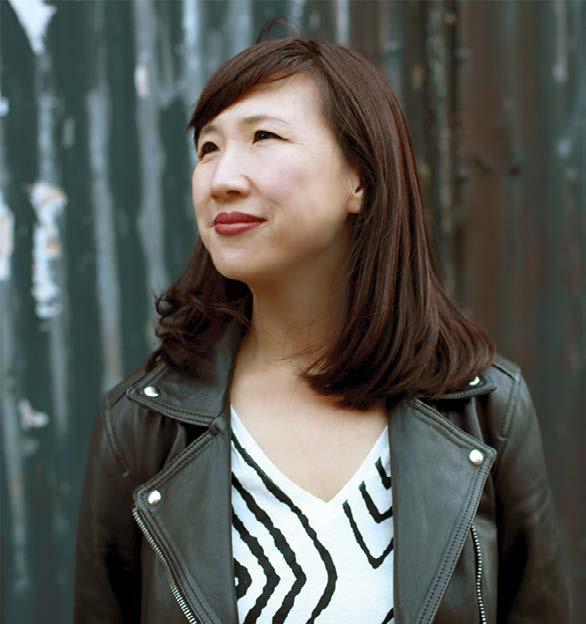
→ Jennah Fakhouri is a Palestinian poet who founded UAE-based literary platform Zajal. She is also one of the winners of the 2026 ELF Seddiqi Writers’ Fellowship, a creative writing program by the Emirates Literature Foundation.
→ Sharon King-Chai is an award-winning author and illustrator, who specializes in children' s books. Among her many accolades, she won the Best Children's Book Cover by the Academy of British Cover Design for her book Starbird.
I don’t want to go and produce lots and lots of books with a huge output—I want to do things that feel worthy and important, where I can find meaning in the story. As a mother now, and as I’m finding more experiences in life, I do want to go deeper. That means digging more into my own personal stories.
SHARON KING-CHAI
King-Chai’s creative approach brings forth a broader dilemma: whether online visibility reduces the ability to be vulnerable in one’s creative process. Offering his insights on the matter is our final voice of creative entrepreneurship in this piece: Inua Ellams, an award-winning poet, playwright, and curator, a Fellow of the Royal Society of Literature and an MBE for services to the arts in the King’s Birthday Honours. “When I think of my brand, I think of myself
as a living, breathing human being who is full of contradictions and full of mistakes and who constantly evolves. I see that in the sweep of my work,” he says. “What I wrote and how I wrote, I don’t know, 15 years ago, isn’t how I write now. I’m embarrassed by those things because the style is terrible, it’s overwritten, it’s long. But what I try to do is embrace all of that, even when I’m embarrassed about it…. So I think on social media, that’s also
what I try to do. I never try to filter myself. I try to embrace all my flaws.
Yet beneath the discourse around authenticity, vulnerability, and belonging lies a quieter, perhaps equally concerning, topic: the need for creative work to be able to monetarily sustain itself. For a line of work that inherently places passion over profits, it is a thin line that modern-day creative entrepreneurs have to tread— especially when “easy” monetization strategies can seem enticing.
“I don’t think you go into writing poetry for money,” says Ellams. “Which means trying to create a quote-unquote product that is sales-driven and reacts to the present is a pointless task. It is, by design, unpoetic. So much of the work required to write poetry—or any art that is of value and that lasts—requires deep thought and time spent thinking and structuring. To present just an iota of it does a disservice to the amount of time you’ve spent creating the work. I also encourage my students and colleagues not to work that way. Feel free to share an excerpt of your work [online], but I think of that excerpt as coming from the side, not the top. The top tends to be the most explosive, the most emotive. Algorithms are primed to exploit human emotion, often bringing out the worst parts of us. If I share
anything, it’s from the side—as opposed to the top.”
Ellams then recalls how he once consulted a social media branding specialist who offered detailed advice on how to better monetise his presence online. “Everything she said was completely correct,” he says. “But I didn’t care. And I still haven’t changed the way that I use it.”
Das exhibits a similar resistance to jumping on the latest trending strategies when asked about the key to balancing creativity and revenue. “I have a social media agency that we hired about three months ago,” he says. “And these are kids who keep telling me, ‘It’s uncool. You write text on black, this thing. You’re putting all your feelings out there. Let’s do some cool transitions and this and that,’ et cetera, et cetera. So I tried a few. Never worked. Text on a black background, if it’s the right kind of feeling for my particular audience, goes much further. I don’t think I have any other choice. Suddenly, if I hired the best editor in the world and used whatever trending song was on Instagram, it would reek of inauthenticity. And I also think that, as opposed to film or television or OTT, stand-up and music really have to have authenticity at their core. Inauthentic music and inauthentic stand-up stick out like a sore thumb and are immediately rejected.”
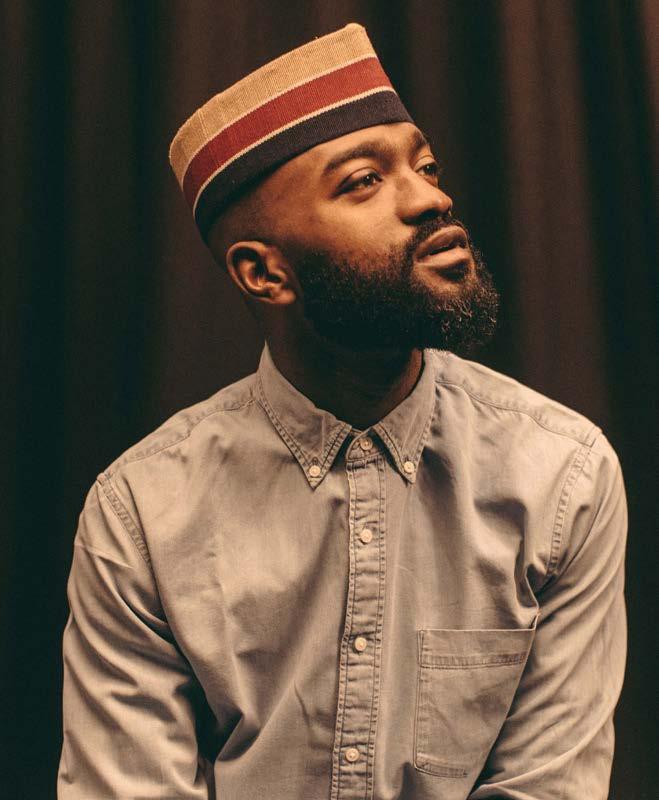
→ Inua Ellams is an award-winning poet, playwright, curator, a Fellow of the Royal Society of Literature, and someone who holds an MBE for Services to the Arts in the King's Birthday Honours.
Jokingly, he then adds that he doesn’t see himself as much of a creative entrepreneur. “If anything, I’m creative and I’m an entrepreneurial failure. I will die penniless, but hopefully having written good things.”
But while Das and Ellams offer perspectives on monetary returns from a purely creative lens, Fakhouri brings one shaped by her vantage point as both a social startup founder and a creative individual. “When something is a passion project and you see people getting really excited about it, but you also start to notice that certain things are pricing people out, it’s hard to stay in a business mindset and say, ‘I’m not going to give this to you for free. You actually have to pay for my service,
to run a business that still feels really valuable to the community. I also think that market research is super important. You have to understand what already exists, what people are willing to pay for, and what makes you unique and how you communicate that. I’m very clear about what my unique selling point with Zajal is, and that’s what helps drive my business and bring new people in every single time we run sessions and events.”
Now, while all the other creative entrepreneurs in this piece largely cater to the teenage to adult audiences, King-Chai’s challenge lies in balancing her commercial opportunities with the unique responsibility of shaping the imagination of young minds through her
responsibility or audience when I’m creating. I’m asking myself what means something to me and how I feel about it, and I make sure I feel good about what I’m doing.”
Adopting what she calls an “open-minded” approach
Feel free to share an excerpt of your work [online], but I think of that excerpt as coming from the side, not the top. The top tends to be the most explosive, the most emotive. Algorithms are primed to exploit human emotion, often bringing out the worst parts of us.
INUA ELLAMS
because it’s my time and my effort,’” she says. “For me, it’s about separating the fact that I am excited to create something from the fact that this is also my business. There’s Jennah the business founder, and then there’s Jennah the poet. I get to bring my creative side to the forefront because she’s funded by my founder side. Managing that separation is how I’m able
illustrations. But King-Chai says that she avoids concerning herself with the weight of such a conundrum. “I don’t really think about it consciously when I’m creating,” she says. “I do it almost for myself, asking what means something to me and how I feel about it—and I trust that, if it’s honest, it will eventually resonate with others too. I’m not consciously thinking about
has helped King-Chai stay true to her creative vision, she says. “At the moment, I’m entirely freelance. It’s nice to work as a designer and be employed by different companies, but now I go where my heart takes me and choose projects, different mediums, and curiosity.”
While King-Chai, Das, Fakhouri, and Ellams continue to forge their
own creative paths in 2026, it appears that human-centered content can remain sustainable despite the algorithm race—and despite not amassing the scale of audiences viral content promises to deliver.
Das puts it best when he says: “I do think that, at some point, if you’re not craving beyond a certain level of acceptance, you reach escape velocity. I think I’ve found my people. There might never be more people than this, and maybe that’s okay. But with this audience—my current audience—I’m free. Beyond that, I wouldn’t be. So I think I’ve found my people.”
So, in an oversimplified sense, does it all come down to quality versus quantity, I ask him as a final question. “The audience will decide whether it’s quality or not,” he says. “But at least it’s authentic.”
Into New Worlds
You’re One LEAP Away
From 13-16 April 2026
Riyadh Exhibition and Convention Center - Malham, Saudi Arabia
Secure your pass now
in5 Innovation Awards
POWERED BY
Entrepreneur Middle East
Across four innovative categories, the in5 Innovation Awards, powered by Entrepreneur Middle East, celebrate founders whose vision, determination, and creativity are shaping the future of entrepreneurship.
POWERED
Building Ecosystems That Scale Innovation
As Vice President of in5 at TECOM Group PJSC, Saeed Alnofeli reflects on more than a decade of nurturing startups in Dubai. by TAMARA
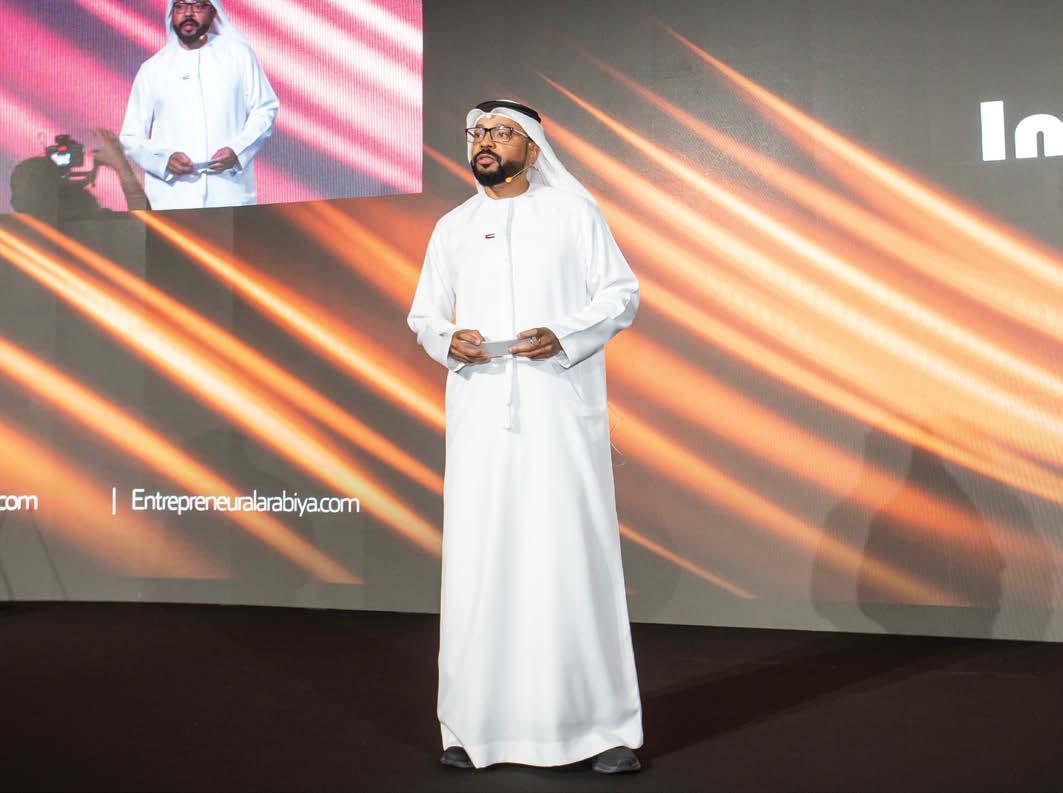
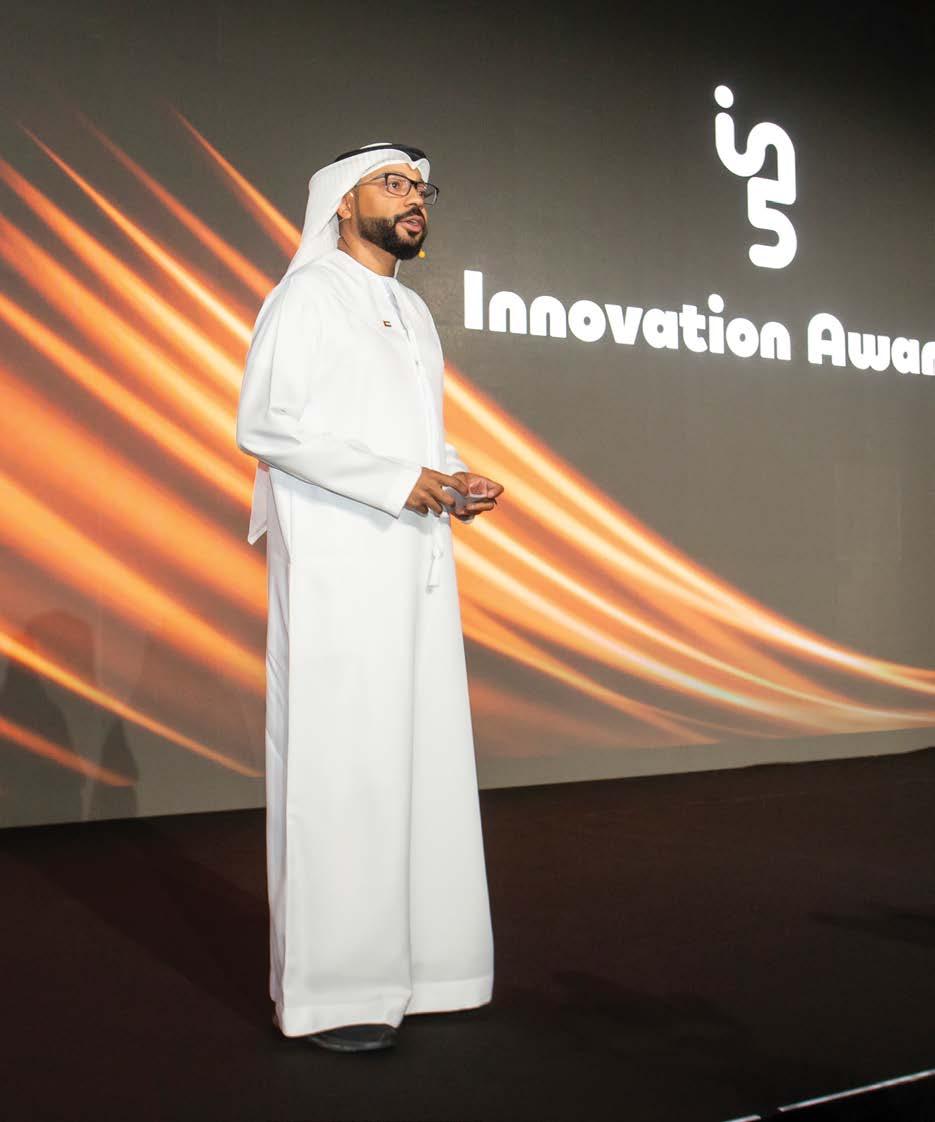
Saeed Alnofeli, Vice President
of
in5 at TECOM Group PJSC, has seen firsthand how the right ecosystem can shape entrepreneurial success. Launched in 2013 by TECOM Group, in5 was built with a clear mandate: to offer founders more than just space, but a fully integrated, nurturing environment tailored to their growth.
Today, that vision has translated into tangible impact, with in5 having supported more than 1,100 startups across its technology, media, design, and science verticals— collectively raising over AED 9 billion. Drawing on this extensive experience, Alnofeli reflects on the core lessons learned from building an ecosystem where innovation is not only encouraged, but systematically enabled.
PUPIC
“Firstly, we’ve found that offering robust infrastructure, insights, mentorship, and extensive networking is essential to directly support ventures from inception to scale as they harness Dubai’s pro-business frameworks for growth,” Alnofeli says.
“Secondly, fostering a vibrant community where
WE’VE FOUND THAT OFFERING ROBUST INFRASTRUCTURE, INSIGHTS, MENTORSHIP, AND EXTENSIVE NETWORKING IS ESSENTIAL TO DIRECTLY SUPPORT VENTURES FROM INCEPTION TO SCALE AS THEY HARNESS DUBAI’S PRO-BUSINESS FRAMEWORKS FOR GROWTH.”
“
IN5 INNOVATION AWARDS SERVES AS A POWERFUL SNAPSHOT OF THE REGIONAL STARTUP
LANDSCAPE’S SUCCESSES
AND UNDERSCORES THE COLLECTIVE AMBITION OF OUR ECOSYSTEM TO WELCOME THE WORLD IN OUR JOURNEY OF INNOVATION.”
entrepreneurs connect, share ideas, and partner is valuable for building sustainable businesses and a strong collective spirit that collaboratively promotes organizational success.”
As a third key point, Alnofeli emphasizes that aligning innovation directly with market
demand and government priorities—such as Dubai Economic Agenda D33— can unlock powerful growth pathways for founders. He adds, “Finally, leveraging TECOM Group’s broad network enables critical knowledge-sharing, which is essential for transforming nascent ideas into
impactful, commercially viable businesses.”
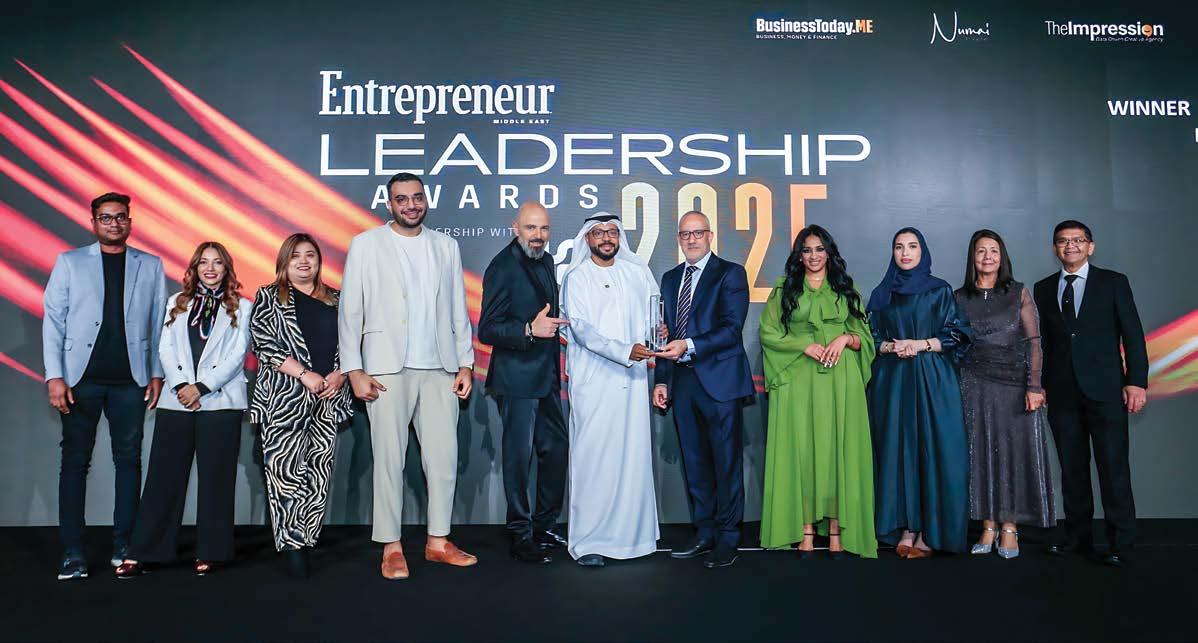
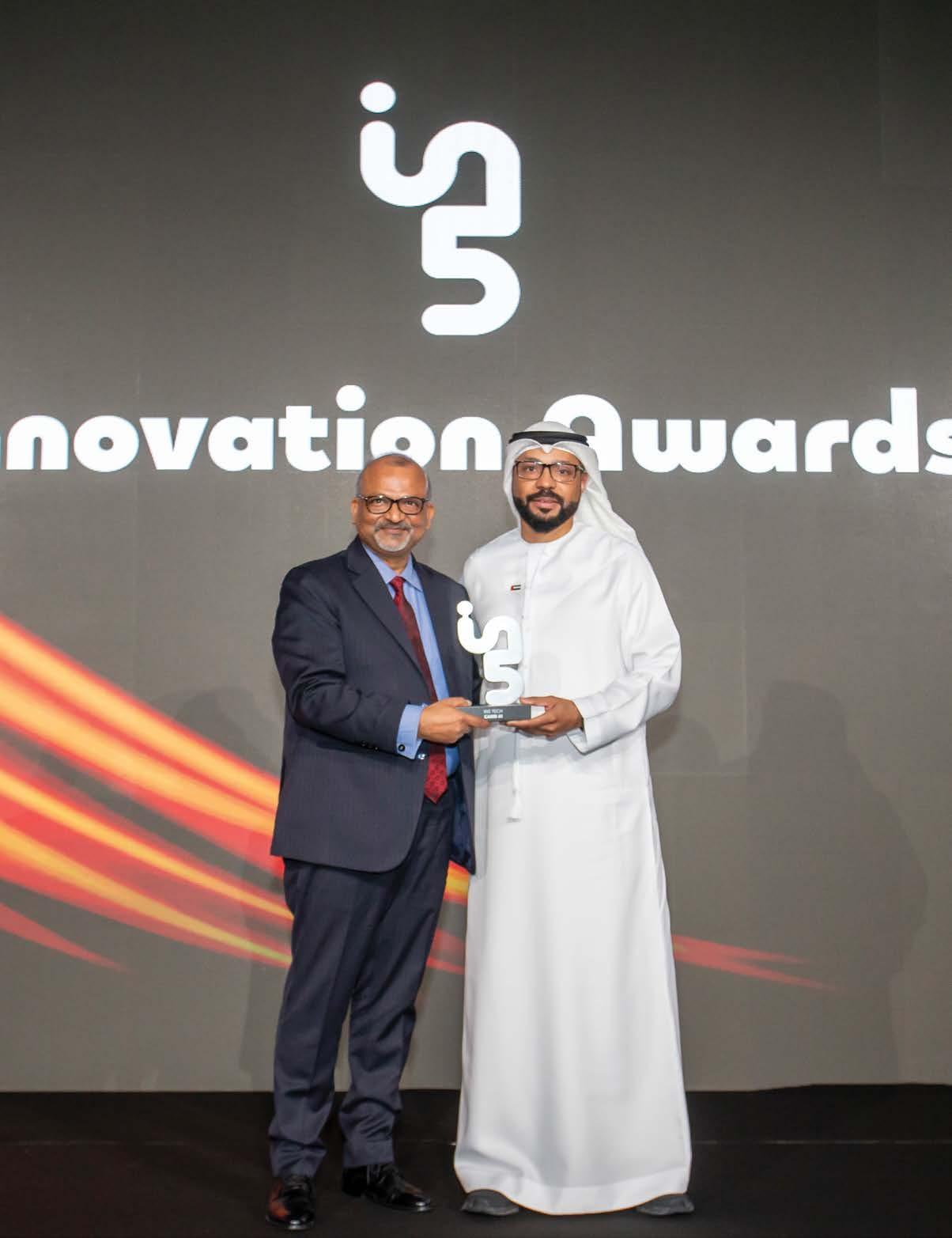
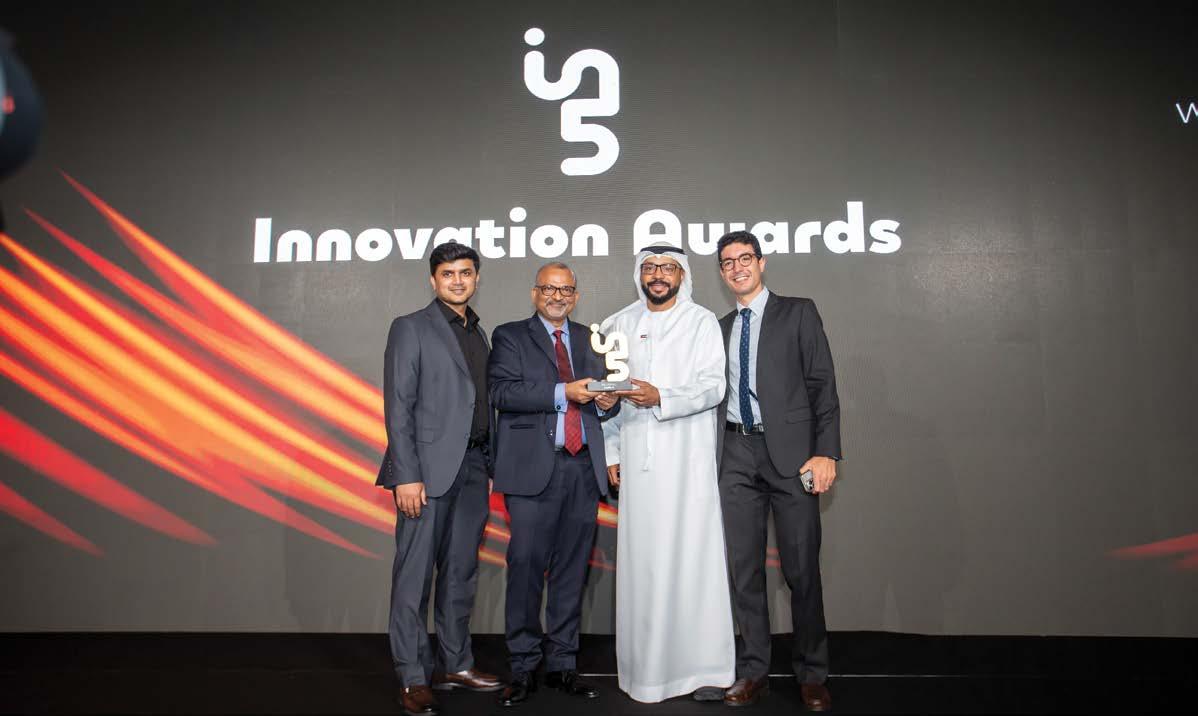
Speaking about the inaugural in5 Innovation Awards powered by Entrepreneur Middle East, Alnofeli explains that the initiative aims to recognize the positive impact the in5 founders have had on the entrepreneurship ecosystem. “in5 Innovation Awards serves as a powerful snapshot of the regional startup landscape’s successes and underscores the collective ambition of our ecosystem to welcome the world in our journey of innovation,” he says. “I congratulate in5 Tech’s CAMB.AI; in5 Media’s Wild Camel Hypermedia; in5 Design’s Makan; and in5 Science’s Albert Health for securing top honors at the inaugural edition of our awards platform and look forward to celebrating such talented ventures for years to come.”
in5 aims to support the next phase of innovation and entrepreneurship, with a growing focus on deep tech, science, pharmaceuticals, and sustainability-driven startups. Going forward, Alnofeli explains, the platform plans to continue expanding and refining its triple helix model to strengthen collaboration between government,
IN5
SEEKS TO REINFORCE DUBAI’S POSITION AS A GLOBAL HUB FOR FUTURE-FOCUSED INDUSTRIES, SUPPORTING LONGTERM ECONOMIC DIVERSIFICATION AND CONTRIBUTING TO THE OBJECTIVES OF THE DUBAI ECONOMIC AGENDA.”
→ Mohamed Sabri is the founder of Pulsar.ML, a Canadaheadquartered tech startup that
industry, and academia. “We also aim to continue providing our startups with pathways to collaborate with and learn from industry leaders based across TECOM Group’s 10 business districts, including through in5’s dedicated innovation centers in Dubai Internet City, Dubai Production City, and Dubai Design District (d3),” he says. “This integrated approach is fundamental to retaining top talent and providing start-ups with sustained support throughout their entire development cycles.”
Ultimately, the initiative seeks to reinforce Dubai’s position as a global hub for future-focused industries, supporting long-term economic diversification and contributing to the objectives of the Dubai Economic Agenda (D33), Alnofeli concludes.
‘TREP TALK: Saeed Alnofeli, Vice President of in5 at TECOM Group PJSC, Advises in5 Startups
“My key advice for all our current and future members is to actively immerse yourselves in the comprehensive support system and collaborative community that in5 offers. It’s incredibly important to proactively engage with experienced founders and leverage our resources for market entry and cultural adaptation, particularly when navigating diverse international regulations and local market nuances. Continual development of leadership, delegation, and internationalization skills, often through in5’s tailored programs, is essential for scaling successfully beyond the incubator stage. I also encourage entrepreneurs to embrace the spirit of collaboration with academia and industry partners, as this collective effort is what truly accelerates innovation journeys and fosters a new generation of successful ventures.”
ODE TO BAG END
Limited Edition
Make ever y epic writing journey a cosy one. Hobbiton handcraft from the makers of the world’s most magical pens
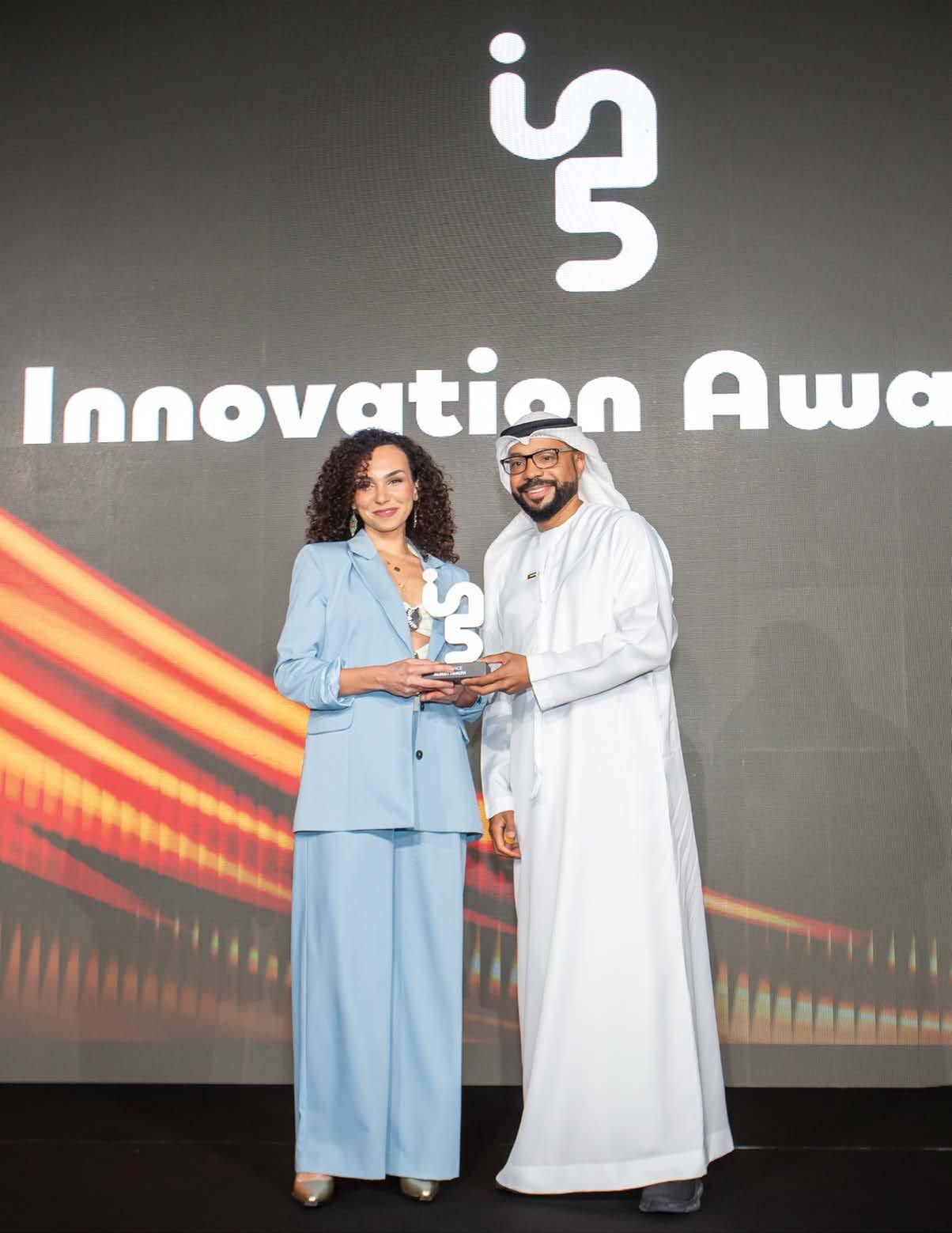
The in5 Science Award celebrates a science-driven startup that is using innovation to improve quality of life and enhance healthcare accessibility. It was awarded to Albert Health, an evidence-based multi-chronic disease management platform that leverages AI to improve medication adherence and health outcomes. The startups clinically validated solution operates in Arabic, English, and Turkish, serving patients across five countries, including Türkiye, the UK, and the GCC. To date, this company has reached more than 500,000 patients, empowering them through AI coaching and behavioral science.
IN5 MEDIA WILD CAMEL
www.wildcamel.tv
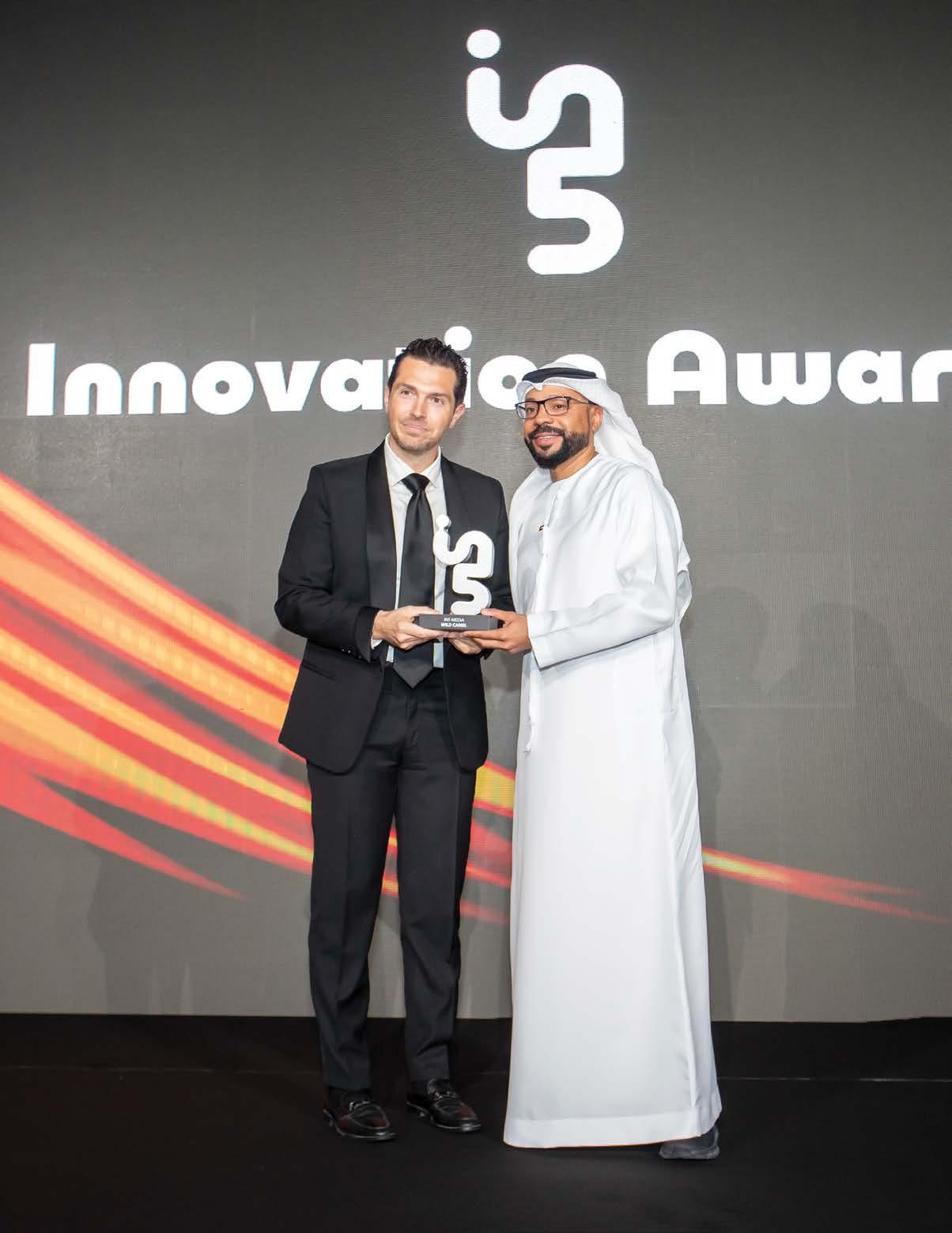
The in5 Media award recognizes creative excellence in the media sector. It was awarded to Wild Camel HyperMedia, a forwardthinking and innovative production company pushing the boundaries of visual storytelling through AI-powered photorealism and videorealism. The result: high-end visuals that feel shot, not generated. Their AI approach solves one of the biggest challenges in today’s content landscape: the high cost, long timelines, and heavy logistics of traditional production. And their overall work demonstrates originality, cultural relevance, and a commitment to high production value.
IN5 DESIGN MAKAN HOME
www.makanhome.ae
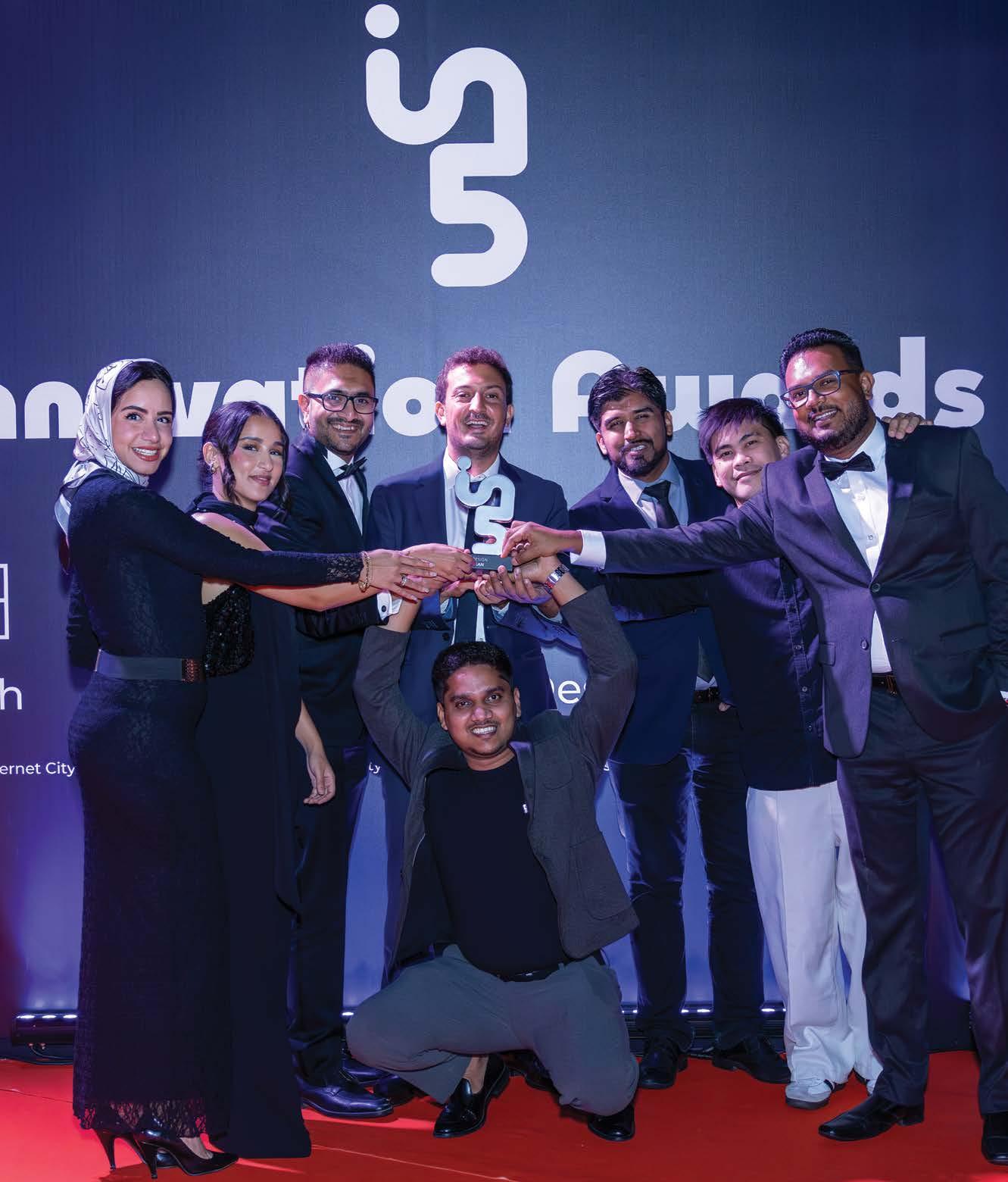
The in5 Design Award celebrated bold design thinking that is embedded in its winner MAKAN Home. By using AI to customize curtains, furniture, and living spaces, MAKAN Home is reshaping how we imagine our homes in Dubai and beyond. Recognizing the realities of home furnishing in Dubai— where only around 15% of properties are furnished and the process can take up to two months—the MAKAN Home team set out to reinvent the furnishing experience, with a focus on convenience, flexibility, and sustainability, tailored to a new generation that is mobile, dynamic, and constantly on the move.
IN5 TECH CAMB AI
www.camb.ai
The in5 Tech Award celebrated a company working to make language barriers a thing of the past.
The in5 Tech awardee, CAMB. AI, is an advanced AI speech synthesis and translation company that enables the translation and localization of content—across video, audio, and text—into more than 150 languages.
Founded in 2023, CAMB.AI has quickly emerged as a significant player in the localization and live multilingual translation space. The company has raised US$18.5 million to build localization
infrastructure designed for the modern internet, with a focus on delivering seamless, AI-powered translation across multiple media formats.
Its technology is deployed across a wide range of use cases, from live sports broadcasts and contact centers to theatrically released films, positioning CAMB. AI as a global leader in AI-driven multimedia translation.
Headquartered in Dubai, the company works with an international portfolio of partners, including Broadcom, IMAX, NASCAR, the Australian Open, the Premier League, and MBC, among others.
Powering a Multilingual Internet
The in5 Awards overall winner - in5 Tech Award winner - Camb.AI is scaling AIdriven localization across media, sport, and entertainment S/ in5 Awards Top Winner
Founded by father-and-son duo Avneesh Prakash (CEO) and Akshat Prakash (CTO), CAMB.AI is a foundational AI company that has rapidly emerged as a global leader in AI-powered multimedia translation. Recognized as both the in5 Tech Award winner and overall in5 Award winner for its groundbreaking innovation, the company is contributing to the future of AI— from its base in Dubai!
“CAMB.AI has always been built as a global company, working with partners across the US, Europe, Asia, and the Middle East, but the UAE has been a powerful launchpad for that ambition,” says Avneesh Prakash. “The country treats
AI as strategic infrastructure, with a level of conviction and speed that is hard to find in more mature ecosystems. That shows up in how quickly you can test with enterprises, work with regulators, and plug into initiatives around AI, media, and the digital economy.
Akshat Prakash adds that, for AI founders, the advantage of building out of the UAE is the combination of global access and local support - and in5 has been an important part of that story. “It lowers the friction on the unglamorous but critical pieces of company-building: infrastructure, licensing, talent access, and early exposure,” he says.
“Programs like in5, and the broader TECOM Group
ecosystem make it easier for founders to focus on building real technology and winning global customers, instead of getting stuck in administrative loops.”
The father-and-son duo explain that they are not just using AI, but building the core infrastructure behind it. “CAMB.AI is a foundational AI company focused on
Akshat Prakash explains. Global telecom companies use CAMB.AI to power multilingual contact centers, while leading publishers and news organizations rely on us to localize their digital properties. NASCAR, Major League Soccer, and Eurovision Sport use us to deliver emotionrich, multi-speaker AI dubbing for live commentary. Some
PROGRAMS LIKE IN5, AND THE BROADER TECOM GROUP ECOSYSTEM MAKE IT EASIER FOR FOUNDERS TO FOCUS ON BUILDING REAL TECHNOLOGY AND WINNING GLOBAL CUSTOMERS, INSTEAD OF GETTING STUCK IN ADMINISTRATIVE LOOPS.”
speech and localization, built to remove language as a constraint for how content, products, and ideas move around the world,” says Avneesh Prakash.
At the core of the platform are CAMB.AI’s proprietary models, MARS and BOLI, which enable real-time text-tospeech, speech-to-speech, and translation across more than 150 languages while preserving nuance, accent, and emotional expression. Designed to ensure creators, broadcasters, and brands retain their authentic voice in any language, the technology supports scalable global storytelling and audience engagement. Its impact is reflected in CAMB.AI’s client base, which includes organizations such as NASCAR, Major League Soccer, the Australian Open, and Eurovision Sport, alongside leading creators and publishers, as well as on-device localization through a strategic partnership with Broadcom.
“Whether it is a live match, a feature film, an interview, a podcast, or a contact center, the same infrastructure can localize it instantly, with broadcast-level quality,” Akshat Prakash says.
Avneesh Prakash explains that the challenge CAMB. AI is addressing has become more pressing than ever: while the world’s attention has shifted fully to digital platforms, language accessibility has yet to keep pace. “Every piece of content that exists in only one language is leaving growth, revenue, and cultural relevance on the table,” he explains. “CAMB.AI exists to flip that equation: if something is worth saying once, it should be available to anyone, anywhere, in their own language, without compromise.”
The founders explain the CAMB.AI’s differentiation lies in being truly infrastructure-grade. “We focus on sectors where there is zero tolerance for errors: entertainment, live sports, critical communications, and publishing,”
of the largest audiobook publishers use our models to create and translate audiobooks into new markets.
CAMB.AI was the first company to fully AI-dub a theatrically released feature film, Three, achieving a level of quality that preserved tone, timing, and nuance— particularly within the horror genre—beyond what traditional AI dubbing systems have been able to deliver.
“Instead of building a single app on top of someone else’s models, we are building the rails everyone else can build on. That is the core of how we differentiate, locally and globally,” says Avneesh Prakash.
The founders anticipate that within the next two years, the notion of a “foreign-language” film, meeting, or website will largely disappear, as language barriers across content and communication are progressively removed. Early indicators of this shift are already visible, with platforms such as Netflix defaulting content into multiple languages and services like YouTube and Instagram rolling out AI-powered dubbing for creators at scale. Rather than a simple feature enhancement, this evolution is reshaping audience expectations, with multilingual accessibility increasingly becoming the default and a prerequisite for relevance in global markets.
“CAMB.AI is the engine driving this shift,” Akshat Prakash says. “By 2026, we won’t just be dubbing movies; we will be powering real-time, cross-language human interaction at the device level. We are targeting to solve the problem for not just a few studios, enterprises or sports leagues but for 8Bn people around the world.”
Avneesh Prakash adds, “We have a research team that has solved problems the giants are still struggling with, we are ready to unleash our proprietary models on a global scale. 2026 is the year we move from ‘adoption’ to ‘ubiquity’.”
From Paper to Infrastructure
How RAKEZ is Championing the New Frontline of ESG Investment
With sustainability considerations no longer limited to corporate policies, disclosures, or annual reports, ESG-aligned infrastructure is becoming a deciding factor for investors. by ENTME STAFF
The discourse surrounding environment, social and governance (ESG) has often underscored the need to move from metrics that appear on annual reports to more tangible, year-round impact. While businesses across the globe have begun to rise to this challenge, the UAE in particular has emerged with some promising statistics: during the 2026 edition of the Abu Dhabi Sustainability Week, a Global Sustainability Pulse Survey by HSBC showed that UAE businesses are embracing sustainability faster than companies in most other markets. Indeed, the report showed that 94% view the climate transition as a commercial opportunity and not just a compliance requirement, while 90% plan to accelerate related investments over the next three years — significantly above the global average. Moreover, the report highlighted that UAE firms are moving ahead of the global average in adopting green technologies and resilient infrastructure.
That final finding aligns neatly with a rising sentiment among investors across the board: awareness of ESG factors has grown rapidly as investors look beyond profit to long-term risk and resilience. A study by Statista reveals that ESG-focused investment vehicles have expanded sharply, with ESG exchange traded funds (ETFs) reaching over US$640 billion in assets by late 2024 – a move that signals that sustainability is no longer niche. A 2025 study by KEY ESG, on the other hand, shows that “ESG is considered by 89% of investors when making investment decisions.” But the }}
‘T/ESG
THROUGH
ITS ABILITY TO DEMONSTRATE HOW INFRASTRUCTURE CAN TRANSLATE ESG AMBITION INTO OPERA- TIONAL REALITY, RAKEZ HAS ALLOWED BUSINESSES TO INHERIT SYSTEMS ALREADY ALIGNED WITH GLOBAL ESG EXPECTATIONS.
same study also highlights a jarring situation: 30% of investors currently have difficulty finding suitable and appealing ESG investing options.
Serving as the missing link between businesses and the right ESG-focused infrastructure are economic zones designed around sustainability. The Ras Al Khaimah Economic Zone (RAKEZ) has emerged as one such example in the UAE. Through its ability to demonstrate how infrastructure can translate ESG ambition into operational reality, RAKEZ has allowed businesses to inherit systems already aligned with global ESG expectations.
Location as an ESG Multiplier
Perhaps the biggest catalyst in this overall shift has been the quiet realizations that
ESG performance is no longer shaped solely inside boardrooms, but also by the environments in which companies operate. Investors are increasingly assessing where a business is located as much as how it is run.
As such, operating environments can either support or hinder a company’s ESG commitments. Factors such as energy efficiency, emissions exposure, waste handling systems, environmental compliance, workplace health and safety standards, and governance frameworks now feed directly into investment risk assessments.
For many startup founders and small business owners, however, attempting to build these capabilities independently and from scratch can burn a significant hole in their pockets. As an ESG-
AT
RAKEZ, BUSINESSES BENEFIT FROM ZONES ALIGNED WITH INTERNATIONALLY RECOGNIZED FRAMEWORKS SUCH AS
aligned zone, RAKEZ reduces that burden by embedding energy efficiency, safety, and environmental compliance into its infrastructure, allowing companies to
meet investor expectations from day one rather than retrofitting sustainability later.
A recent partnership underscores this approach in practice. During the
Ras Al Khaimah Investment Summit, RAKEZ signed a strategic MoU with Emerge — the joint venture between Masdar and EDF — to accelerate renewable energy
adoption across its ecosystem. The collaboration will deploy solar, energy storage, and hybrid clean energy solutions, supporting companies in lowering emissions and operational costs while aligning with the UAE’s Net Zero 2050 goals and Ras Al Khaimah’s Energy Efficiency and Renewable Energy Strategy 2040.
ESG-Aligned Infrastructure as Risk Management
For investors, ESG-ready infrastructure functions as a form of risk insurance. Operating within environments governed by recognised environmental, health, safety, and energy management standards lowers regulatory and compliance exposure,
‘T/ESG
reduces the likelihood of environmental or workplace incidents, and strengthens business continuity.
Standardized systems also minimize operational inconsistencies, an issue that often undermines ESG performance across multi-site operations.
At RAKEZ, businesses benefit from zones aligned with internationally recognized frameworks such as ISO 14001 for environmental management, ISO 45001 for occupational health and safety, and ISO 50001 for energy management.
For new entrants in particular, this means ESG alignment is embedded from the outset rather than added later as a costly corrective exercise.
RAKEZ’S REPEATED REGIONAL AND INTERNATIONAL RECOGNITION FOR WASTE REDUCTION, CORPORATE SOCIAL RESPONSIBILITY, AND WORKPLACE STANDARDS SIGNALS SUSTAINED PERFORMANCE RATHER THAN ONE-OFF INITIATIVES.
Sustainability Without the Cost Premium
A persistent misconception is that ESG-aligned operations inevitably raise costs. In practice, shared infrastructure often delivers the opposite.
Centralized energy-efficient buildings, integrated waste management systems, and common environmental controls can improve resource efficiency while avoiding duplication of investment. For businesses operating within RAKEZ, access to these systems allows environmental objectives to be met alongside operational efficiency and cost control. The result is a model where sustainability supports competitiveness rather
than constrains it — an outcome increasingly attractive to investors focused on predictable, long-term returns.
Beyond the “E”: How RAKEZ Focuses on Social and Governance Policies
Investor scrutiny, however, can sometimes be misconstrued as being limited only to the sustainability results that businesses can show. That couldn’t be further from the truth. The social and governance elements of ESG such as workplace safety, labor accommodation standards, employee wellbeing, data privacy, and operational security now carry significant weight in funding decisions.
Recognition received by
RAKEZ for its workplace safety practices and labour accommodation standards reflects these evolving expectations around the “S” in ESG. The most recent validation of this approach came in November 2025, when RAKEZ was awarded first place in the “Small to Medium Labor Accommodations” category at the Emirates Labour Market Award, presented by the Ministry of Human Resources and Emiratisation and honored by HH Sheikh Theyab bin Mohamed bin Zayed Al Nahyan. The recognition highlighted RAKEZ’s investment in high-quality accommodation infrastructure, welfare services, and sustainability measures designed to enhance workforce stability and quality of life — factors increasingly scrutinized by international investors and supply-chain partners.
Similarly, governance frameworks that prioritize data protection and operational transparency align with the requirements of international partners and lenders assessing long-term risk.
The Value of Independent Recognition
In an era where greenwashing concerns remain high, third-party validation has become essential. Independent awards and certifications offer investors assurance that ESG commitments are embedded into systems rather than confined to marketing narratives.
RAKEZ’s repeated regional and international recognition for waste reduction, corporate social responsibility, and workplace standards signals sustained performance rather than one-off initiatives. For institutional investors in particular, such consistency provides confidence that ESG claims are supported by measurable outcomes.
THE EVOLUTION OF ESG IS THEREFORE CHANGING THE VERY GEOGRAPHY OF INVESTMENT. WHERE SUSTAINABILITY WAS ONCE ASSESSED THROUGH POLICIES AND DISCLOSURES, IT IS NOW BEING JUDGED BY THE QUALITY OF THE INFRASTRUCTURE THAT SURROUNDS BUSINESSES, I.E. THE ENERGY THEY USE, THE STANDARDS THEY OPERATE UNDER, AND THE ECOSYSTEMS THAT SUPPORT THEIR GROWTH.
From Paper to Infrastructure
The evolution of ESG is therefore changing the very geography of investment. Where sustainability was once assessed through policies and disclosures, it is now being judged by the quality of the infrastructure that surrounds businesses, i.e. the energy they use, the standards they operate under, and the ecosystems that support their growth.
For investors, these factors increasingly determine resilience as much as revenue.
This shift has elevated the role of economic zones from passive hosts to active enablers of ESG performance. By embedding internationally recognised standards into the foundations of its ecosystem, RAKEZ enables companies -especially startups and SMEs- to participate in global value chains without bearing the full cost of building ESG capabilities alone. What has thus emerged is a model where sustainability, efficiency, and competitiveness advance together.
FUN COMES GUAR ANTEED
#TamTalksTech
Gadgets and doodads that you might’ve missed out on, sourced by a tech aficionado. by
TAMARA CLARKE
Oura Ring →
Õura, maker of the popular smart ring, commissioned a report exploring how its members in the United Arab Emirates sleep compared with the rest of the world. The report titled, ÕURA UAE: The State of Sleep, revealed that residents in the UAE get some of the world’s best quality sleep, averaging a sleep efficiency score - the time in bed spent actually sleeping - of 85.7%, despite getting just 6.85 hours of sleep per night. The report also highlights several other defining characteristics of sleep in the UAE:
A Nation of Night Owls
The UAE is one of the world’s latest-to-bed, latest-to-rise nations, with an average sleep window from 12:06 AM to 7:57 AM. Instead of a bad habit, this pattern reflects a country of true night owls: the UAE has the highest share of late-evening chronotypes globally at 6.67%, compared with a 3% worldwide average. With research linking “circadian misalignment”- going to sleep and waking at times that don’t match your chronotype - to a higher risk of disease, the UAE’s later sleep patterns should be celebrated as a nation working with its biology, not against it.
UAE Sleep Stands Out on Quality
The UAE averages 6.85 hours of sleep a night, just under the global 7.1 hour norm. Countries like Finland, the United States, and the United Kingdom may log more hours, but they don’t consistently match the UAE on sleep efficiency. Even compared with Japan, which is famous for short sleep, the UAE comes out ahead on both quality measures such as REM, deep sleep and efficiency, as well as quantity, underscoring a country with a unique sleep profile.
Women Take the Sleep Crown
The findings in the UAE point to clear gender differences in sleep. Women average 7.07 hours sleep a night, compared with 6.59 hours for men - a difference of nearly half an hour. Women also show stronger sleep efficiency and more consistent REM sleep patterns. These trends mirror global sleep research, where women typically demonstrate more stable recovery behaviors, signaling that women in the region are prioritizing their health.
“Sleep quality is one of the most important indicators of long-term health, and the UAE is a standout example of protecting quality when life demands make quantity a challenge,” said Doug Sweeny, CMO at ŌURA. “In a place where nights run late and productivity is a cultural norm, we’re seeing a nation work with the body’s natural circadian rhythms rather than against them. By understanding and respecting individual chronotypes - whether you peak early, later, or somewhere in between - UAE residents are tailoring their rest and activity for deeper, more restorative sleep. As we grow ŌURA across the region, we’re bringing science-backed insights that help people understand their unique bodies and identify the small, meaningful changes that can move the needle on their sleep and overall health.”
Put a ring on it
Oura Ring 4 is sleaker, smarter and tailor made just for you. The well-rounded wearable is built around Smart Sensing, a breakthrough sensing technology, which is powered by an algorithm that works with research-grade sensors to dynamically adapt to the finger and
deliver accurate and continuous data. The lightweight, all-titanium design of Oura Ring 4 features recessed sensors for a smooth interior shape and thinner profile, making it more comfortable for 24/7 wear. Oura Membership and Oura Ring work hand-inhand, empowering you to prioritize your long-term health goals and built healthy habits that will last a lifetime. Personalized insights from Oura help you understand what your body needs, for today and for your future. Crafted for quality and precision, Oura Ring 4 provides valuable insights into your holistic health – sleep, activity, stress, heart health, cycle and more. Based on your ring size and your lifestyle, the Oura Ring 4 battery can last between 5–8 days — so you don’t even have to think about charging. The device is available in an expanded range of twelve sizes (4-15) and in six colors: Brushed Silver, Gold, Rose Gold, Silver, Stealth, and an updated Black finish that features a glossy, tungsten PVD coating. What’s more, Oura Ring 4 is now also available in a high-performance ceramic version that comes in four exciting colors: Tide, Petal, Cloud, and Midnight colors.
TAMARA CLARKE, a former software development professional, is the tech and lifestyle enthusiast behind The Global Gazette, one of the most active blogs in the Middle East. The Global Gazette has been welcomed and lauded by some of the most influential tech brands in the region. Clarke’s goal is to inform about technology and how it supports our lifestyles. Talk to her on Twitter @TAMARACLARKE theglobalgazette.com
The Executive Selection
From better goods to better wardrobe bests, every issue, we choose a few items that make the approved executive selection list. In this edition, our picks are from Diesel and Victoria Grant.
DIESEL PRE-FALL 2026 →
The pre-fall 2026 collection builds on Diesel’s strengths and pushes forwards to what’s next, with a focus on the Millennial wardrobe. ae.diesel.com
DUBAI RACING CLUB’S MILLINERY EXHIBITION →/
Dubai Racing Club recently hosted the 2026 Fashion Friday at Meydan Racecourse, marking one of the premier social and sporting highlights of the Dubai Racing Carnival. The event featured the Millinery Exhibition, a dedicated showcase presenting creations by leading international designers, including Victoria Grant, the London-based milliner widely recognized as a key contributor to the enduring global appeal of British millinery. victoriagrant.com
Invests In Entrepreneurs
is
Fatma Al-Khater:
Building Companies—and Capital—in Qatar
Qatari entrepreneur and investor Fatma Al-Khater on what it takes to build lasting companies in Qatar. by TAMARA
PUPIC
→ Fatma Al-Khater
the co-founder and CEO at Torba Market, Partner and Board Director at A-typical Ventures, and founder and Board Director at Qatar Venture Capital Association.
“FOR MANY FOUNDERS, QATAR SERVES AS AN IDEAL PILOT MARKET, ALLOWING THEM TO TEST, REFINE, AND VALIDATE SOLUTIONS BEFORE SCALING REGIONALLY OR INTERNATIONALLY.”
As the co-founder and CEO of Torba Market, partner and board director at A-typical Ventures, and founder and board director of the Qatar Venture Capital Association, Qatari entrepreneur and investor Fatma Al-Khater is deeply versed in the nuances of building a company in a market like Qatar.
This is why she argues that global startup conversations often underestimate the opportunity of emerging ecosystems.
“While the population size is relatively small, what is frequently overlooked is the country’s strategic depth its
global connectivity, strong purchasing power, and deliberate long-term investment in innovation,” Al-Khater says. “For many founders, Qatar serves as an ideal pilot market, allowing them to test, refine, and validate solutions before scaling regionally or internationally.”
Regulation is another area that Al-Khater says is often misunderstood. “Yes, regulatory frameworks in sectors such as food, health, and fintech are rigorous, and navigating them requires patience and strong local insight,” she says. “However, this rigor
creates trust, quality, and credibility often giving startups that succeed here a competitive advantage when entering more complex or regulated markets elsewhere.”
Cultural context, Al-Khater adds, is another defining factor shaping how businesses are built and scaled in Qatar. “Qatar has a strong foundation of family-owned businesses, which continue to shape the commercial landscape. At the same time, we are seeing a clear generational shift, with younger entrepreneurs increasingly embracing startups, technology, and venture-
backed growth models,” she explains. “This blend of tradition and modernity is forming a distinct entrepreneurial identity, one that values long-term relationships, reputation, and impact alongside innovation and scalability.”
Al-Khater’s entrepreneurial and community-building credentials came to the fore with Torba Market, established in 2017 at the Ceremonial Court of Qatar Foundation in Education City. The initiative became Qatar’s first artisan, plastic-free farmers’ market, created to connect small local producers directly with the public. “In its earliest days Torba was a modest farmers’ market, supported by a small group of vendors and visitors who shared a belief in conscious consumption and local entrepreneurship,” Al-Khater says. “Since then, Torba has grown into a landmark destination in Qatar. Today, it attracts thousands of visitors each season, operating from November through April, while the rest of the year our team continues to work from our office on programming, partnerships, and ecosystem development.”
She adds, “Today, Torba stands not just as a market, but as a movement one that supports local entrepreneurs, nurtures community, and invests in the next generation through initiatives like Torba Junior. For me, that long-term impact is just as important as sales performance or scale.”
When Doha-based investor Alina Truhina founded UTOPIA Capital Management, a venture capital platform that includes A-Typical Ventures—a Middle East–focused VC fund backed by the Qatar Investment Authority—Al-Khater joined as Partner and Board Director at A-Typical Ventures. In this role, she gained a firsthand view of investment opportunities and challenges across the region which she describes as “a dynamic and diverse entrepreneurial landscape.” Al-Khater says, “Opportunities are driven by strong demand for disruption and innovation in sectors such as finance, health, logistics, and energy particularly among young, tech-savvy populations. However, challenges persist like access to later-stage capital particularly Series A and beyond varies widely across markets. Talent mobility restrictions in some regions further complicate regional scaling.”
However, Al-Khater remains optimistic. “The appetite for innovation is growing, and mechanisms such as venture studios and cross-border funds are emerging to bridge structural gaps,” she says. “This signals a maturing ecosystem where regional collaboration will increasingly unlock scale and sustainability for startups.”
In 2025, Al-Khater founded the Qatar Venture Capital Association (QVCA) alongside founding members A-Typical Ventures, Golden Gate Ventures, Rasmal Ventures, and Builders VC MENA. The association serves as Qatar’s first national platform and a unified voice for the country’s venture and investment community. “QVCA’s mission is to strengthen investor confidence, coordinate policy advocacy, and create a structured framework for capital and talent entering the country,” Al-Khater says. “In the short term, we focus on strengthening investment networks, improving access to capital, and promoting investor education. In the long term, our vision is to build a globally connected, self-sustaining VC ecosystem that directly supports Qatar’s
economic diversification and innovation goals.”
Looking ahead, Al-Khater sees Qatar’s startup ecosystem entering a phase defined by long-term ambition and global relevance. “Founders today benefit from more sophisticated funding mechanisms, stronger institutional backing, and clearer national direction through initiatives such as Qatar National Vision 2030 and QIA’s US$1 billion Fund of Funds,” she says.
Al-Khater adds that addressing the remaining gaps in later-stage capital, specialized deep-tech talent, and seamless regional integration will be critical for ensuring that Qatar’s startup ecosystem continues to compete confidently on a global stage, but Al-Khater concludes by pointing out that “the ecosystem has matured through improved regulatory frameworks, government-backed accelerators, and deeper collaboration between corporates, universities, and investors.” She says, “Over the past decade, entrepreneurship in Qatar has evolved from a niche pursuit into a core pillar of economic diversification.”
'TREP TALK
} BUILD FOR EXPORT MARKETS FROM DAY ONE
“Qatar is an excellent place to pilot and validate ideas, but long-term growth requires a regional or global mindset from the outset. Founders should design products, teams, and business models that can scale beyond the local market.”
} CHOOSE PARTNERS STRATEGICALLY
“Capital alone is not enough at early stages. Entrepreneurs should align themselves with investors, mentors, and institutions that bring operational experience, long-term commitment, and the ability to open doors across markets.”
} EMBRACE REGULATION AS A COLLABORATOR RATHER THAN A CONSTRAINT
“Engaging early and transparently with regulators helps founders navigate complexity, build credibility, and ultimately create stronger, more trusted businesses especially in regulated sectors.”
} INVEST DEEPLY IN TALENT AND CULTURE
“Competing for specialized technical and leadership talent requires more than compensation. Building purpose-driven cultures, clear growth pathways, and meaningful ownership is critical for long-term success.”
} FOCUS ON IMPACT ALONGSIDE RETURNS
“In our region, businesses that deliver real social, economic, or environmental value tend to resonate more deeply with customers, partners, and policymakers. Mission-aligned entrepreneurship is not just good ethics it’s good business.”
Qatari Entrepreneur and Investor Fatma Al-Khater’s Advice for Building a Business in Qatar
In the Loop / WEF 2026: UAE Participation and Key Outcomes
UAE Advances FutureReady Agenda at Davos 2026
The UAE’s participation at the World Economic Forum highlighted its focus on economic resilience and societal readiness, with several agreements and initiatives announced during the forum.
The UAE delegation participated in the 2026 Annual Meeting of the World Economic Forum (WEF) in Davos, held under the theme “A Spirit of Dialogue,” reflecting the country’s continued focus on international cooperation and the exchange of
best practices with global partners.
Led by Sheikha Latifa bint Mohammed bin Rashid Al Maktoum, Chairperson of the Dubai Culture and Arts Authority, the UAE delegation was the fifth-largest at the forum, comprising more than 100 participants, including senior government officials, founders, and CEOs from leading UAE companies.
The UAE Government and WEF launched a new phase of their strategic knowledge partnership and signed a memorandum of understanding to host the annual Global Future
Councils meetings in Dubai for the next five years.
In addition, the UAE and WEF introduced the Global Strategic Intelligence Program to support governments and institutions in anticipating global developments and improving strategic decision-making.
In the health sector, the Department of Health –Abu Dhabi and WEF announced the next phase of their collaboration to advance smart health systems and healthy longevity. The Technology Innovation Institute, part of the Advanced Technol-
ogy Research Council, also announced the launch of the Abu Dhabi Centre for Advanced Technologies, in partnership with WEF, focusing on Fourth Industrial Revolution technologies.
The Ministry of Foreign Affairs signed an MoU with WEF to support preparations for the 2026 UN Water Conference, which the UAE will host later this year.
Mohamed bin Zayed University of Artificial Intelligence signed a cooperation agreement with WEF to establish the Abu Dhabi Centre for the Future of Artificial Intelligence.
The UAE also released the third edition of the TradeTech Report, highlighting the use of advanced technologies in global supply chains as part of the TradeTech initiative launched in Davos in 2023.
Mubadala CEO Khaldoon Al Mubarak Named First Middle Eastern Chair of WEF Business Council Khaldoon Khalifa Al Mubarak, Managing Director and Group CEO, Mubadala Investment Company, has become the first leader from the Middle East to be appointed the Chair of the World Economic Forum’s
AI IS QUICKLY RESHAPING ECONOMIES. SOME ROLES GROW;
OTHERS DISAPPEAR. WE MUST INVEST IN SKILLS AND PREPARE COMMUNITIES.
International Business Council (IBC) since the council’s establishment. Al Mubarak will serve a two-year term.
The IBC is a strategic advisory body within the World Economic Forum, comprising more than 120 CEOs and chairpersons from leading multinational corporations. The council focuses on strengthening the role of the private sector in addressing global economic and societal challenges.
UAE Doubling Down on Openness to Build a Resilient Economy, Says Badr Jafar
Held under the title The Great Rebalancing: Artificial Intelligence, Jobs, and the Future of Inclusive Growth, the session at the UAE Pavillion at the WEF Annual Meeting in Davos brought together H.E. Badr Jafar, the UAE’s Special Envoy for Business and Philanthropy, and Kristalina Georgieva, Managing Director of the Internation-
al Monetary Fund (IMF), for a fireside discussion on the risks and opportunities shaping the global economic outlook.
Badr Jafar highlighted the UAE’s long-term strategic choice to build an economy optimized for resilience, openness, and global connectivity. “At a time when global systems are fragmenting, the UAE is doubling down on connection. We are known for open skies, open ports, and open minds – and the data shows the value of this approach,” he said.
“Last year, the UAE attracted over US$45 billion in foreign direct investment, up nearly 50% year-on-year, even as global FDI declined by 11%. We accounted for more than half of all
investment flows into the Middle East, ranked second globally for new greenfield projects, behind only the United States, and welcomed in nearly 10,000 new millionaires, more than any other country worldwide. In an age of fragmentation, our connectivity is a clear strategic advantage.”
Drawing on the IMF’s latest assessments, Kristalina Georgieva noted that while global uncertainty remains exceptionally high – and is likely to persist – the world economy has demonstrated notable resilience, with growth holding steady and IMF projections upgraded for the period ahead. She cautioned, however, that this resilience should not be taken for granted amid profound structural transformations driven by technology, geopolitics, climate change, and demographic shifts.
“A tsunami is hitting the labour market,” said Georgieva. “AI is quickly reshaping economies. Some
In the Loop /
roles grow; others disappear. We must invest in skills and prepare communities. The world as a whole is already experiencing the arrival of AI, but I do worry about the accordion of opportunities that are much more present in some places than in others.”
UAE Education Minister Highlights Education and Future Skills as Pillars of Soft Power
H.E. Sarah Al Amiri, UAE Minister of Education, emphasized the role of education, science, and future skills as foundational components of national soft power during a session at the 2026 Annual Meeting of the World Economic Forum (WEF) in Davos.
Speaking at the Global Soft Power Summit—held in Davos for the first time—Al Amiri highlighted the importance of sustained investment in human capital, knowledge systems, and innovation ecosystems in shaping global perceptions, strengthening economic resilience, and enabling societies to adapt to rapid change.
The session featured The
Rt. Hon. Justin Trudeau, former Prime Minister of Canada; H.E. Sarah Al Amiri; and David Haigh, Founder and CEO of Brand Finance. Discussions focused on soft power as a strategic asset in a global environment increasingly shaped by conflict, competition, and economic fragmentation.
The dialogue centered on findings from the Global Soft Power Index 2026, which evaluates the perceptions and influence of 193 countries based on insights from more than 150,000 respondents worldwide. Participants examined how factors such as reputation, trust,
education, governance, innovation, and economic credibility are influencing long-term national competitiveness and resilience alongside traditional measures of hard power.
Al Amiri noted that countries prioritizing education and future readiness are better positioned to build trust, attract talent, and support sustained long-term growth in an increasingly complex global environment.
UAE Positions Itself as Global Hub for Capital Flows, Says Abdulla bin Touq Al Marri, UAE Minister of Economy and Tourism Investopia participated in the 2026 Annual Meeting of the World Economic Forum in Davos through the “Investopia–Davos” platform that hosted a high-level panel discussion titled “Where Will Global Capital Move Next? Platforms, Policies, and Partnerships Shaping the New Economy.”
The panel was attended by Abdulla bin Touq Al Marri, UAE Minister of Economy and Tourism and Chairman
of Investopia; Roberto Hoornweg, CEO of Corporate and Investment Banking at Standard Chartered and CEO for Europe, the Americas, the Middle East, and Africa; along with senior policymakers, business leaders, and international investors.
The minister invited participants to leverage the UAE’s position as a global economic hub, citing its advanced regulatory framework, economic stability, and broad investment opportunities across key sectors.
“Investopia plays a strategic and central role in shaping the future of the global investment landscape. It goes beyond traditional individual deals by developing integrated, actionable investment pathways characterized by diversity and flexibility across new economy sectors. Investopia aims to effectively align sovereign priorities with private sector capital, ensuring that investments are directed toward projects that deliver tangible and sustainable economic impact, while reducing risks arising from misalignment between policies, projects, and financing.”
The minister noted that this approach enables Investopia to foster a connected and trusted investment environment that strengthens the UAE’s ability to attract global capital and high-quality investments, while accelerating the implementation of projects with significant economic and strategic value.