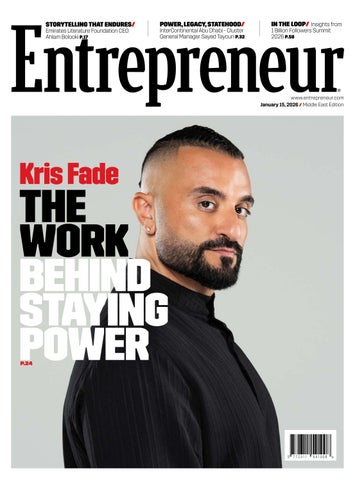
THE WORK BEHIND STAYING POWER



Media personality KRIS FADE opens up on the long journey of forging
Emirates Literature Foundation CEO AHLAM BOLOOKI on why human storytelling will endure in the age of AI.
InterContinental Abu Dhabi and InterContinental Residences
Abu Dhabi’s Cluster General Manager SAYED TAYOUN on stewarding one of Abu Dhabi’s most iconic properties.





SUITE TREAT
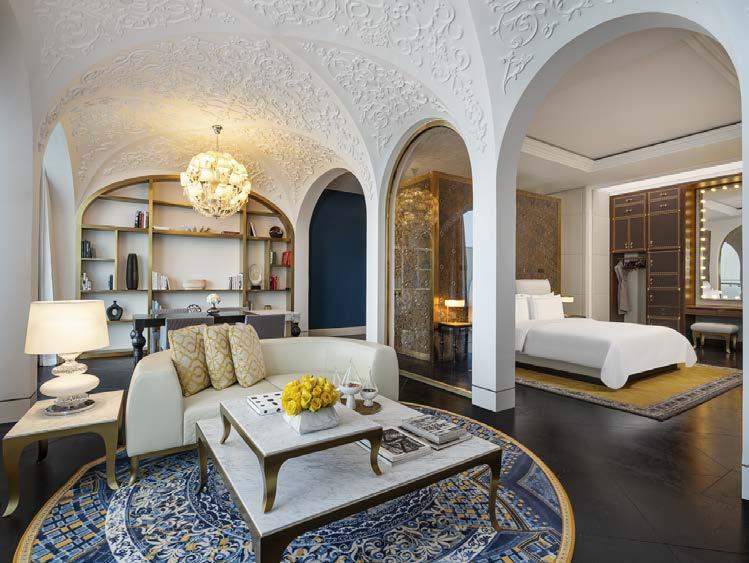
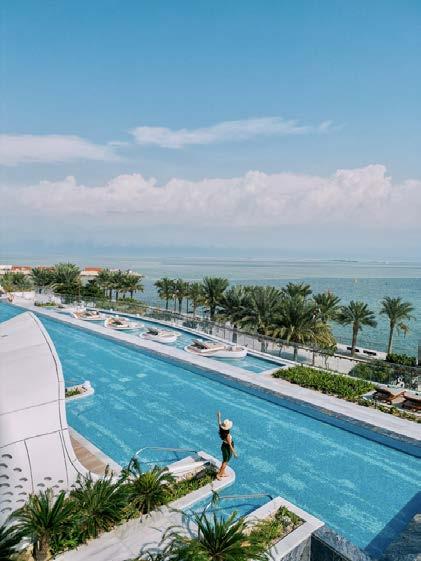
Step into a world of opulence when you book a Suite at Raffles Doha.
Experience the added luxury of QAR 750 credit to spend on dining in the hotel, and QAR 500 towards any Spa treatment.
Children aged 12 and below are welcome to indulge in the enchantment of complimentary dining.
Rates starting from QAR 3,500 per night
For reservations, please call +974 4030 7100 or email reservations.doha@raffles.com


January 15, 2026
‘TREPONOMICS
P.39 Gold, Freedom, And The Architecture Of Wealth
Alluca Group’s ALEX CHINIBORCH believes the future of financial security looks a lot like the past.
P.42 Sell More, Pitch Less Stop chasing funding; start chasing sales, writes Ecocoast’s LACHLAN JACKSON
P.44 Understanding the Middle East Consumer
Above Digital’s NAMITA RAMANI dissects where international brands fall short
STARTUP SPOTLIGHT
P.53 The Resale Reset
CHARLIE AND MAX LOVETT on reimagining the UAE’s used-car resale market with Carabia.
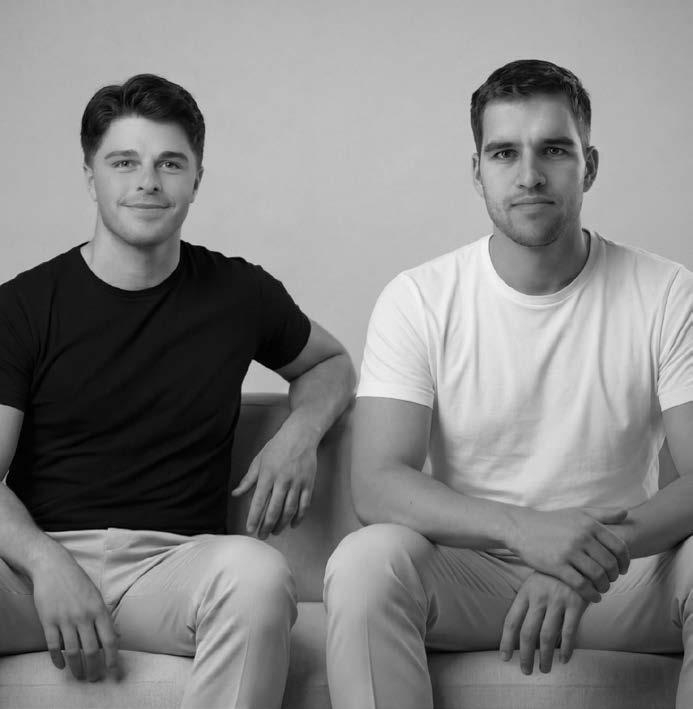
↑ Charlie and Max Lovett are the co-founders of Carabia, a UAE-based online used car resale platform.
IN THE LOOP
INSIGHTS FROM 1 BILLION FOLLOWERS SUMMIT 2026
P.58 KHALID AL AMERI on moving beyond virality to create real impact.
P.59 H.E. MOHAMMAD AL GERGAWI on the expanding power of creators.
P.60 H.E. REEM BINT EBRAHIM AL HASHIMY on the power of digital solidarity.
P.61 SAMANTHA PRABHU on breaking the stigma around women’s health conversations.
P.62 KAREN WAZEN on why authenticity matters for long-term success.
P.64 MOHAMED ALABBAR says “AI will replace much of what expats in the UAE do”
P.65 LARA TRUMP advocates for authenticity on social media
P.66 Dubai spotlights global good as MRBEAST unveils “1 Billion Acts of Kindness” winners.
CEO Wissam Younane wissam@bncpublishing.net
MANAGING DIRECTOR Rabih Najm rabih@bncpublishing.net
ART DIRECTOR Simona El Khoury
EDITOR IN CHIEF Anil Bhoyrul anil@bncpublishing.net
MANAGING EDITOR Tamara Pupic tamara@bncpublishing.net
FEATURES EDITOR Aalia Mehreen Ahmed aalia@bncpublishing.net
DIRECTOR OF INNOVATION
Sarah Saddouk sarah@bncpublishing.net
GROUP SALES DIRECTOR – B2B GROUP Joaquim D’Costa jo@bncpublishing.net
HEAD OF PARTNERSHIPS
Samir Glor Samir@bncpublishing.net
BUSINESS DEVELOPMENT DIRECTOR
Andy Soulahian andy.soulahian@bncpublishing.net
COMMERCIAL LEAD
Anna Chipala anna@bncpublishing.net
COLUMNIST Tamara Clarke
CONTRIBUTING WRITERS
Alex Chiniborch, Lachlan Jackson, Namita Ramani and Fida Chaaban
SUBSCRIBE
Contact subscriptions@bncpublishing.net to receive Entrepreneur Middle East every issue
COMMERCIAL ENQUIRIES sales@bncpublishing.net
ENTREPRENEUR.COM
Access fresh content daily on our website




THE QUIET EDUCATION REFORM THAT WILL HELP UAE GRADUATES GET JOBS FASTER
UAE graduates can how get an easier pathway to top level jobs.
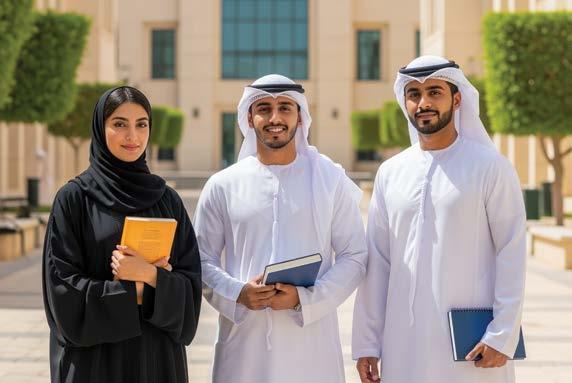
It’s one of those stories that few people wrote about but will have a massive positive impact. The UAE’s move to automatically recognise degrees from 34 universities is set to transform higher education, speed graduates into jobs, and strengthen the country’s position as a global education hub.
Some policy changes make noise. Others quietly reshape systems. The UAE’s recent announcement that degrees from 34 universities will now be automatically recognised falls firmly into the second category. It may not have dominated headlines, but it will fundamentally change how students move from education into employment and further study.
Until now, degree recognition was a bureaucratic hurdle. Graduates often had to submit physical documents, wait for manual checks, and navigate multiple steps before their qualifications were officially recognised. That delay mattered. Job offers, postgraduate admissions and even visa processes could stall while paperwork caught up with ambition.
The new system changes that entirely. Degrees issued by approved universities are now recognised instantly and digitally, using secure electronic verification and QR codes. For graduates, this means recognition happens automatically, without applications, queues or uncertainty. The moment they graduate, their qualification is valid and verified.
This is more than administrative convenience. It is a competitive advantage. In a fast-moving job market, time matters. Employers want certainty, speed and credibility. Automatic recognition removes doubt about qualifications and allows hiring decisions to be made faster. Graduates can apply for roles immediately, start onboarding sooner and enter the workforce without unnecessary delays.
The scale of impact is already clear. Tens of thousands of graduates have used the system since its introduction, and the initiative is set to expand to include Emirati students studying abroad under government supervision. This creates a seamless experience whether students study locally or internationally, a crucial factor in today’s global education landscape.
For higher education, the message is powerful. The UAE is aligning its universities, regulators and employers within a single digital ecosystem. That makes the country far more attractive to students choosing where to study, especially those who value employability and smooth career progression. It also reassures international parents and students that UAE degrees are embedded within a robust, transparent recognition framework.
Postgraduate pathways benefit too. Whether applying for master’s programmes, doctoral studies or professional certifications, graduates no longer face procedural bottlenecks. Recognition is immediate, allowing academic progression to match personal momentum.
This reform also fits squarely within the UAE’s broader vision: reducing bureaucracy, digitising government services, and building a knowledge-based economy. By removing friction at a critical transition point, graduation, the country is investing directly in human capital.
The result is simple but significant. Graduates get jobs faster. Employers hire with confidence. Universities become more competitive. And the UAE strengthens its reputation as a place where education leads efficiently and reliably to opportunity.
It may have been a quiet announcement. The impact will be anything but.
Anil Bhoyrul Editor-in-Chief





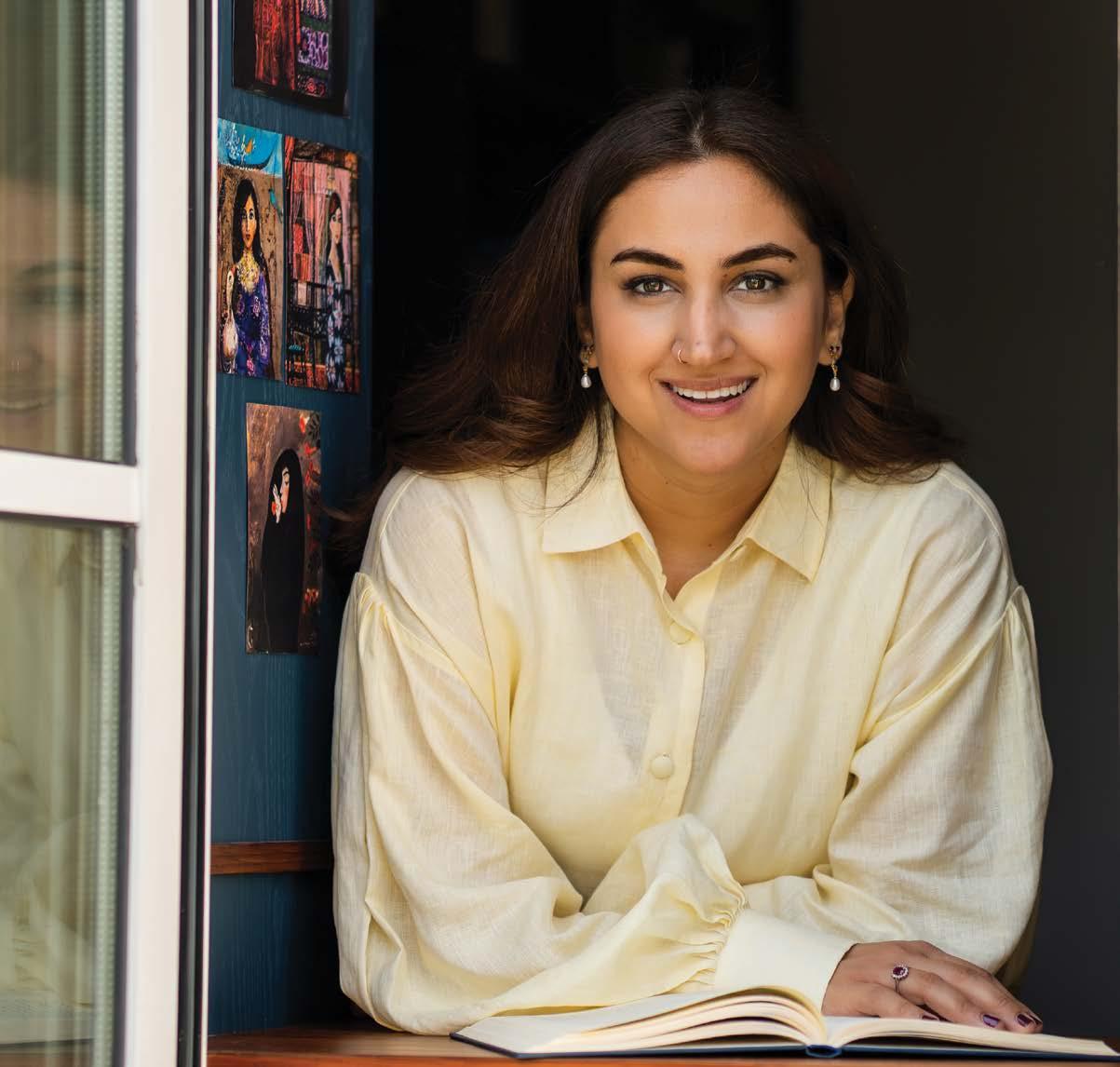
Storytelling That Endures
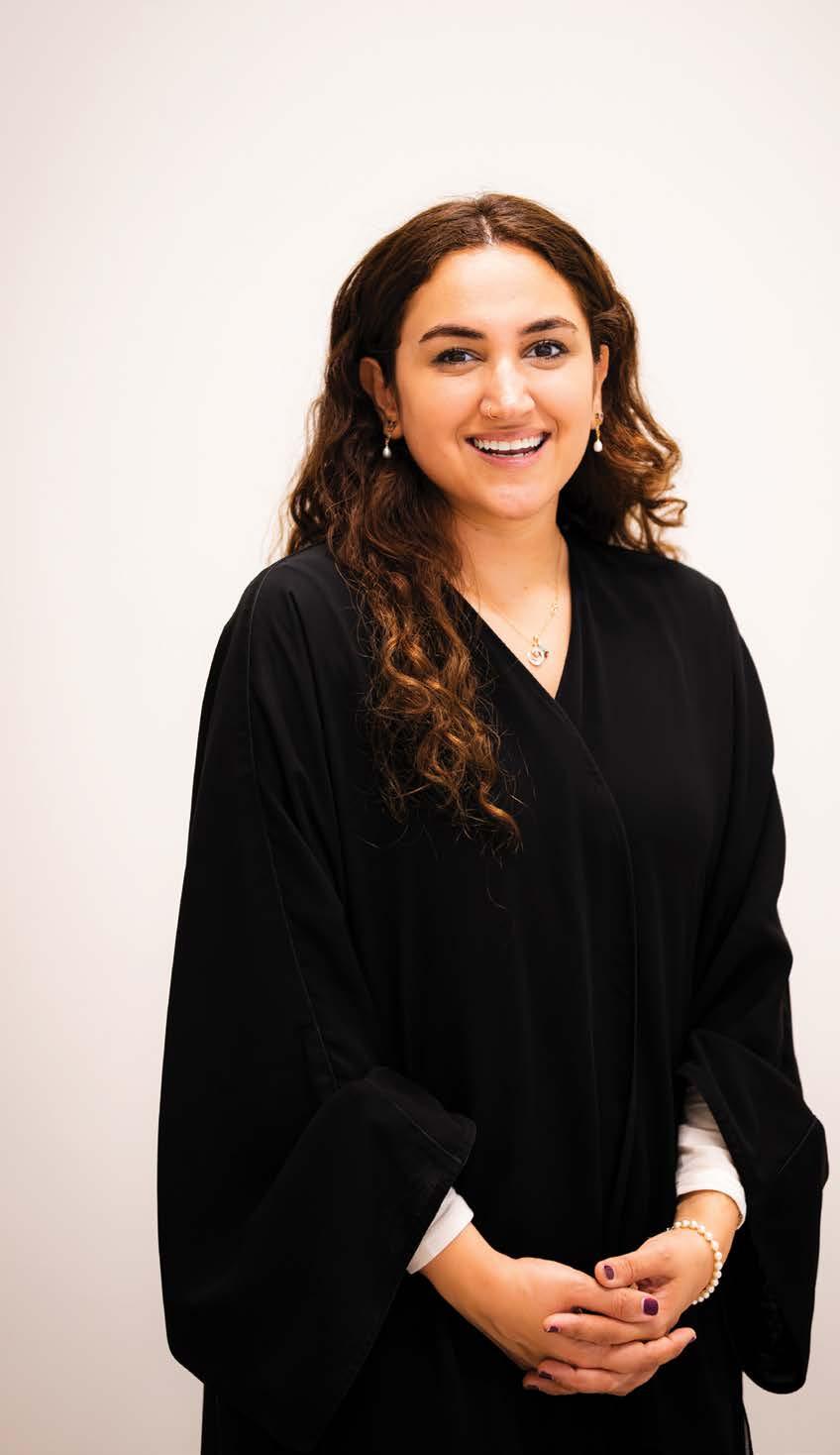
As the CEO of the Emirates Literature Foundation, Ahlam Bolooki has shaped the organisation into a reliable haven for reading, writing, and cultural exchange. Ahead of the 18th edition of the Foundation’s flagship Emirates Airline Festival of Literature, she discusses nurturing local writers, championing translation, safeguarding human creativity in the age of AI, and building a community where stories connect generations and cultures. by AALIA MEHREEN AHMED
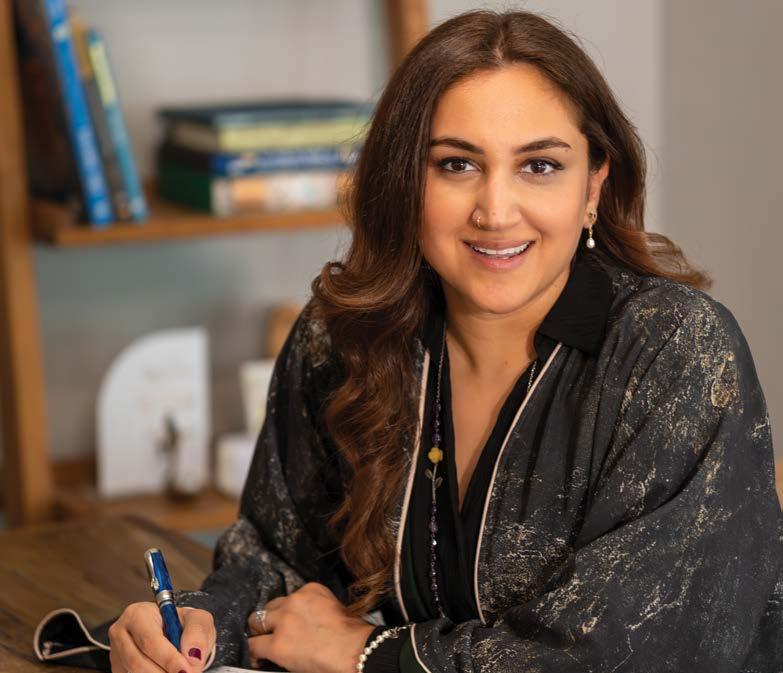
→ Ahlam Bolooki is the CEO of the Emirates Literature Foundation, where she leads one of the Arab world’s most influential literary institutions and oversees the Emirates Airline Festival of Literature.
B/Big Idea
Idon’t believe anything in life is an accident,” says Ahlam Bolooki when describing how a sturdy career in hospitality and marketing —including roles at Jumeirah Group and Dubai Tourism— eventually led her towards becoming the CEO of the Emirates Literature Foundation, the UAE-based not-for-profit non-governmental organisation that offers a roster of cultural initiatives (including its flagship Emirates Airline Festival of Literature) to foster a love for literature across the nation and wider region. “We’re always led towards our destiny, and everything I’ve done in my career or throughout my life, I believe, has led me to this moment in time,” she continues. “So I studied hospitality and worked in restaurant marketing, and through that gained a good understanding of operations and customer service. This is something that you gain from hospitality: how to deal with people and unhappy guests, how to navigate difficult situations, and how to be precise and well presented. And there’s a lot you learn in terms of how to work under pressure, long hours, and follow and build processes. But from there I moved on to the tourism board where we were promoting Dubai as a festival destination, among other things. That was an amazing experience as well, working citywide with a vast range of festivals, and seeing all the operations behind it. But reading, literature, writing…this has always been a love of mine and something I have always set aside time for.”
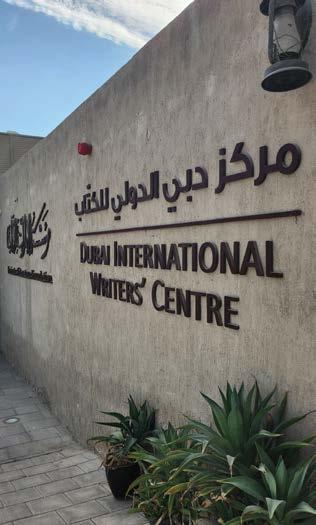
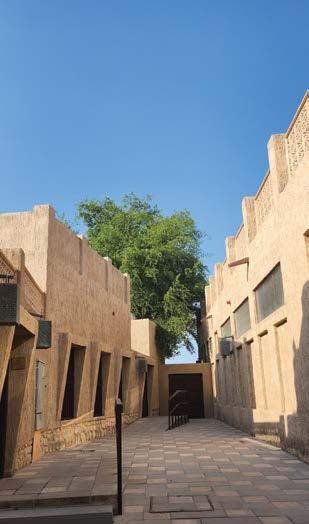
At a later point during the interview, at the Foundation’s tranquil headquarters in Dubai’s culturally rich Shindagha area, Bolooki tells me that an old classmate she met recently reminded her that “you would always make us go to Magrudy’s [one of Dubai’s oldest bookstores]!” That inherent love for books and the written word brought Bolooki, unbeknownst to herself, closer to her current role at the Emirates Literature Foundation. “I would do writing courses whenever I could,” she recalls. “But the way that I came across the Emirates Literature Festival is that I was doing workshops with them, then I was volunteering with them, and later I was moderating and hosting sessions at the
→ As CEO of the Emirates Literature Foundation, Bolooki has played a central role in expanding the UAE’s literary ecosystem through festivals, publishing, education, and global partnerships.

II JUST KNEW FROM THE FIRST DAY WALKING INTO THIS OFFICE IN SHINDAGHA THAT I’VE ARRIVED AT WHERE I NEEDED TO BE. THIS IS THE LONGEST JOB I’VE EVER HAD; I’VE ALREADY BEEN HERE FOR ALMOST NINE YEARS AND I DON’T SEE AN END IN SIGHT ANYTIME SOON.”
festival. When the Writers’ Center initially opened in 2014, I was here at the opening. I attended all the amazing courses: the Joe Rose Fiction Writing course [by British novelist and creative writing lecturer Joe Rose], which was 10 weeks long; and the moderator training that they did with Fiona Lindsay [a UK-based executive coach, keynote speaker, and writer]. So I’ve always been a part of this community and I really believe that if you are passionate about something, you should show up for it and you should create time for it. And I’ve always carved time out for this! That naturally got me from the work that I was doing into this. And, you know, I just knew from the first day walking into this office in Shindagha that I’ve arrived at where I needed to be. This is the longest job I’ve ever had; I’ve already been here for almost nine
I think
the Siddiqui

→ The Emirates Airline Festival of Literature, which has been running since 2009, is the Arab World’s largest celebration of the written and spoken word, featuring international and regional writers, poets, thinkers, and speakers.
years and I don’t see an end in sight anytime soon.”
Bolooki’s tenure with the institution began when she was appointed as the Director of the Emirates Airline Festival of Literature in 2018. One year
Fellowship gave birth to so many great authors from Dubai in a very short amount of time. It’s a really good example of how this foundation sees the gap, and uses its network to benefit the local community. And, Mashallah, this is one of the projects that are so close to my heart and I feel so, so proud of!
later, in 2019, she officially took over as the CEO of the Emirates Literature Foundation – a role previously held by its founder, advisor and trustee, Isobel Abulhoul. It was in 2009 that Abulhoul –then the founding CEO– launched Emirates Airline Festival of Literature. The program’s continued success then led to the launch of the Emirates Literature Foundation in 2013. Stepping into Abulhoul’s shoes was nothing short of daunting, Bolooki admits. “In my first year, I really was an observer as the director, because this is a festival that was already very successful when I came,” she says. “So it’s not something which I was going to look at and say, “I need to fix something here.” Not at all. It started in 2009; I joined in 2017. It already had a strong history, and a strong base. So for me, I was an observer who had to think about, ‘how can we build on this?’
Because there’s always room for growth, and that’s where my focus was. That’s the starting point that I came from. So I was very lucky to inherit something very strong. But I think from there, we’ve been able to expand in a way that’s been really meaningful. And, yeah, we’ve been privileged to take it to another level.”
Indeed, Bolooki is now days away from helming the launch of the 18th edition of the Emirates Airline Festival of Literature. Set to be held from January 21-27, 2026, at the InterContinental Hotel in Dubai Festival City, the latest edition is set to feature nearly 200 authors, creatives, and literary pioneers from 40
publishing giant Holt, it marked the first such book deal in the entire region. Then, in the midst of raving global reviews post its release, the book was also featured on popular American host Jimmy Fallon’s talk show. “Seeing Sarah Hamdan’s name on The Tonight Show with Jimmy Fallon, with him holding her book, was such a powerful moment,” Bolooki says. “And it’s not just Sarah — other fellows are also securing publishing deals that haven’t yet been announced, with much more good news to come from the fellowship. I think the Siddiqui Fellowship gave birth to so many great authors from Dubai in a very short amount of time. It’s a really good example of how this foundation
Another milestone Bolooki has been integral in is the Foundation’s partnership with UNESCO to advance literacy, reading culture, and cross-cultural understanding. “Beyond that, the contribution our foundation has made through our user group on Wikimedia [the global, non-profit movement and network that supports the creation and sharing of free, open-access knowledge; best known for Wikipedia] has been remarkable,” Bolooki adds. “When we began researching Arab authors online, we saw a clear gap: there was no structured data or metadata. So we undertook extensive research, built and supported a community of Wikimedia user groups in the UAE,
FROM UAE MINISTER AND ASTRONAUT DR. SULTAN AL NEYADI’S SPACE DIARY, OUT OF THIS WORLD, WHICH IS SET TO BE RELEASED AT THE UPCOMING FESTIVAL; TO THE ENGLISH TRANSLATIONS OF EMIRATI WRITERS SHORTLISTED OR LONGLISTED FOR THE INTERNATIONAL PRIZE FOR ARABIC FICTION, AS WELL AS BESTSELLING CHILDREN’S AUTHORS – I’M PROUD TO REPRESENT EMIRATI LITERATURE STRONGLY AT HOME, WHILE ALSO CHAMPIONING IT INTERNATIONALLY.”
nationalities, including renowned Palestinian journalist Plestia Alaqqad and Indian actor and standup comedian Vir Das.
But apart from the glitzy annual literature festival, Bolooki has led a number of other literary initiatives that run across the year. The most notable of these is, perhaps, the ELF Seddiqi Writers’ Fellowship, the first global standard mentorship program in the region for aspiring writers from the UAE launched in partnership with UAE-based conglomerate Seddiqi Holding. While the Fellowship has been a launchpad for a number of new-age writers, the biggest success story has been that of Dubai-based Palestinian-American author Sara Hamdan, whose debut novel What Will People Think took the literary world by storm even before its release in May 2025. In 2023, when Hamdan’s manuscript clinched a two-book deal with US-based
sees the gap, and uses its network to benefit the local community. And, Mashallah, this is one of the projects that are so close to my heart and I feel so, so proud of!”
→ The Emirates Literature Foundation, established in 2013, is a not-for-profit non-governmental organisation that supports and nurtures a love of literature in the UAE and across the region through a program of varied cultural initiatives.
and encouraged their growth. The progress has been significant — from 1,500 pages to 70,000 pages in just a few years. We’re now on a journey towards one million Wiki
contributions. This involves working with editors from around the world to enrich information about the Arab world across all UNESCO languages on Wiki platforms, which also feed into large language models. That’s something I’m very proud of.”
Beyond fostering a strong local community of writers, the Foundation has also been extensive in extending its reach towards all readers — specifically through the translated works released by its own independent publishing house, ELF Publishing.
“From UAE Minister and astronaut Dr. Sultan Al Neyadi’s space diary, Out of This World, which is set to be released at the upcoming Festival; to the English translations of Emirati writers shortlisted or longlisted for the International Prize for Arabic Fiction, as well as bestselling children’s authors – I’m proud to represent Emirati literature strongly at home, while also championing it internationally,” Bolooki says beamingly. “There’s also the work of our education department, which continues to grow year on year. Thousands of students take part in our competitions annually, with consistent, significant growth. It may not be a single milestone, but this sustained progress is something to celebrate. A competition that has been running since 2009 and still sees around 35% year-on-year growth is a strong sign of children’s continued interest in reading and literature, and of schools placing the right emphasis on it.”
Here, Bolooki reveals that the Foundation is invested in 30 different initiatives at the moment. “This is an organisation with a great deal of heart, supported by partners, believers, and audiences who have been with us from the beginning, as well as those who’ve joined along the way. It has truly become a community hub — one that, I believe, is helping to make the world a better place,” she adds.
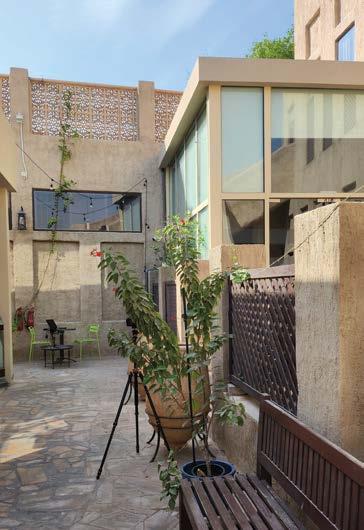
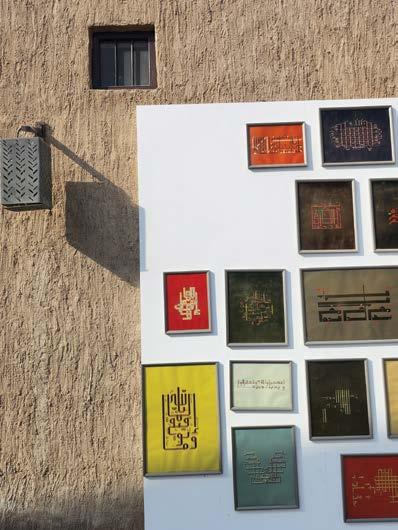
This is an organisation with a great deal of heart, supported by partners, believers, and audiences who have been with us from the beginning, as well as those who’ve joined along the way. It has truly become a community hub — one that, I believe, is helping to make the world a better place.
Bolooki’s aforementioned observational and improvementfocused approach towards leadership is undoubtedly to be attributed for the scale of these successes. But here too, the CEO shares how it is her love for
books that has shaped her psyche. “There’s a very important lesson that reading teaches us, because the more you read, the more you’re aware of how little you know and how much more information there is out there,” she says. “And so you will see that even some of the great writers of this world will be so aware and humble because they are aware of how much they still do not know. And I think this is an important place to start for any leader. I also think when you’re building a team, the best team you can build is one made up of people who have different strengths to you. There’s no point leading an organisation thinking you’re going to be the best at everything — you’re not. Nobody is. You need specialised people in every area who understand that area far better than you do. That requires focus.”
Throughout the conversation so far, there isn’t so much as a slight allusion to the technology that has, quite controversially at times, permeated into the creative and writing spaces, i.e. artificial intelligence (AI). So I raise the subject to gauge Bolooki’s thoughts on the matter.
“I mean…it’s something that’s kind of quite disruptive in our time,” she says.
“But I think as human beings, eventually we need to look at human-centric development on this planet. And I think this is something that eventually we will get to. I think this AI wave is all new now, and we have to live with it. It’s something that’s maybe not going away. But I think that regulations that protect a human-centric future are really important. At the same time, I would say, you know, the arts have always prevailed when it comes to even the darkest moments on our planet. Take even the COVID-19 pandemic when we were all at home in isolation and really disconnected from everything, including being near our families. What was there for us then? Music, books, films — those are the things that stayed. And I think when we read a book or when we engage with a piece of music… Yes, I mean, AI is creating things that you could perhaps enjoy, but at the end of the day, you know, nothing replaces human connection. And what did we miss after COVID-19 more than anything? To be together.
We had Zoom fatigue. We had screen fatigue. And this is where, you know, life outside of screens still exists. And in that space of human connection, the arts are the most powerful thing.”
Here, Bolooki makes a profound point. “AI can only derive from what’s already there,” she says. “It can’t create a new experience. Like, two writers could be in the same room looking at the exact same thing, but there’s no way AI is going to predict what you think and what I think. As human beings, we have infinite capacity to create and to adapt. We just need to have a lot more faith in those innate human features that AI doesn’t have. There are books that have been read for hundreds and sometimes thousands of years — how have they surpassed all these generations? It’s because humans have put their genius into this work. Look, we don’t know what the future brings. But my hope is that humans will always choose a human-centric future and that we would prioritise that connection. You
know, stories are something that will always prevail. I think human beings are — we’re creatures of stories. We understand the world around us through stories. It helps us explain so much. Take religion for example. All the different religions teach their lessons through stories and tales. When we think about history, we learn that through stories. When we look at maths, even at school, you know, the examples which tell a story is the thing that helps it resonate with us. So I think storytelling will always be something that we come back to as human beings.”
Bolooki, and indeed the Foundation’s, views in this regard have found supporters not just within the literary community but also in those within the corporate private sector who support the entity’s endeavors. “It’s such a supportive environment where everyone’s kind of thinking of how they can help and contribute — whether it’s through sponsoring, partnerships, volunteering, or bringing in students. There’s always this willingness to be part of this goal. I think when society believes in your vision, it applies to everyone — your team, the society, the country. When there’s a real buy-in into where you’re headed and how important that is, everyone sort of gravitates towards that journey. I think we’re very lucky to be in that position.”
This collective movement towards more literary programs and outlets has especially supported the greater need for children’s books, notes Bolooki – particularly as the kids of today grow up in an AI-driven world. “When you think about the next generation, it’s a no-brainer that this should be the focus, and that this is the environment that is going to build curiosity, empathy, and the critical thinking skills that they need,” Bolooki continues. “Children’s literature is actually one of the most necessary things to be part of children’s lives because of fairytales and imagination.
And this is what Einstein said too; that if you want your children to be intelligent, read them fairy tales. If you want them to be more intelligent, read them more fairy tales. Because this imagination that you create within them, and the scenarios that they come across and picture in their minds — things that are not part of reality but a possibility in their book — it always helps them navigate whatever they go through in life far into their adult lives. Because if you can imagine a solution, you can navigate anything.”
The upcoming Emirates Airline Festival of Literature 2026 is all set to uphold this sentiment with Bolooki sharing that the 18th edition features “the biggest children’s program we’ve ever had.” But what the Festival is particularly doubling down on this year is its efforts to bring forth more translated works. “Inshallah, we’re really looking forward to the festival,” Bolooki says. “There’s a very strong translation strand —12 sessions focused purely on translation— because we truly believe it’s a bridge between cultures. At a time when the world needs connection, translation sits at the heart of the festival. We’re also celebrating major literary milestones from the Arab world, such as the Saif Ghobash Banipal Prize for Arabic Literary Translation, which has helped bring so many important Arabic literary works into English and made them accessible to a wider global audience. The Sheikh Zayed Book Award [organised by the Abu Dhabi Arabic Language Centre] is also marking 20 years with us, the Ibn Battuta Geographic Literature Prize [by Abu Dhabi’s Arab Center for Geographic Literature] celebrates 25 years, and we’re also honouring the centenary of renowned Emirati poet Sultan bin Ali Al Owais. Alongside this, we’re welcoming outstanding international literary voices from around the world. Inshallah, it’s going to be a very special edition!” This year’s Festival also includes the
inaugural Conversations Fest. “Every year I say this is my favourite program, but this particular addition this year is very special. It allows audiences to dip in and out of sessions and discover new conversations, which is one of my favourite things to do at literary festivals,” Bolooki says.
While the Festival is certainly taking over Bolooki’s schedule for the rest of the month, the Foundation CEO and Festival Director has set multiple other plans in motion in tandem. “Beyond the festival, we’re ramping up our publishing efforts next year, with plans to publish nearly double the number of titles,” she reveals. “We have some exciting books in the pipeline, including important literature from the UAE and new works that reflect our environment in ways that are much needed. I’m also excited about launching the Writers’ Centre in a big way and building this hub as the heart of the writing community across the city and beyond. Internationally, we’re in a unique position. We’re part of several global networks, including the Global Association of Literature Festivals, which we helped establish five years ago. We’re actively exchanging writers,
sending Emirati authors abroad, and next year we’ll be doubling that effort while participating in more international festivals and book fairs.”
As Bolooki thus moves into what promises to be a busy 2026, she reiterates that what remains at the core of the Foundation’s endeavors is the simple vision it first started out with: to inculcate and grow a love for books and literature. “If I’m going to spend all this time working on something, I want it to be something that contributes towards a greater good, something that I believe in, and something that I feel the world really needs or could benefit from,” Bolooki says. “And so in my current role, I’m so lucky to serve in an area where I can see the impact of the work we’re doing on society every single day in a very tangible, direct way. Right now it all feels like a snowball effect — each year building on the work we’ve already done. Long-running initiatives are expanding geographically, across the region and into other countries. It’s an exciting time, and we’re committed to continuing this growth until, ultimately, every person in the world is a reader. That’s the goal!”
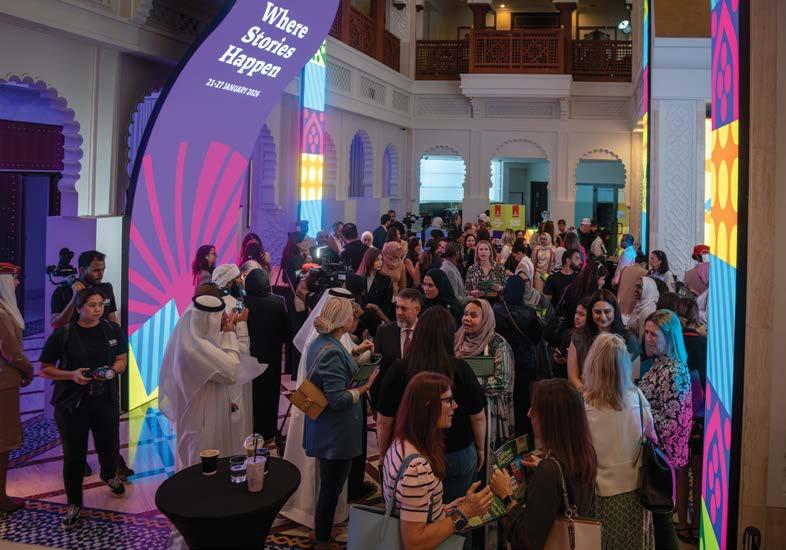
→ The Emirates Airline Festival of Literature, which has been running since 2009, is the Arab World’s largest celebration of the written and spoken word, featuring international and regional writers, poets, thinkers, and speakers.

A LEGACY BUILDING
Kris Fade
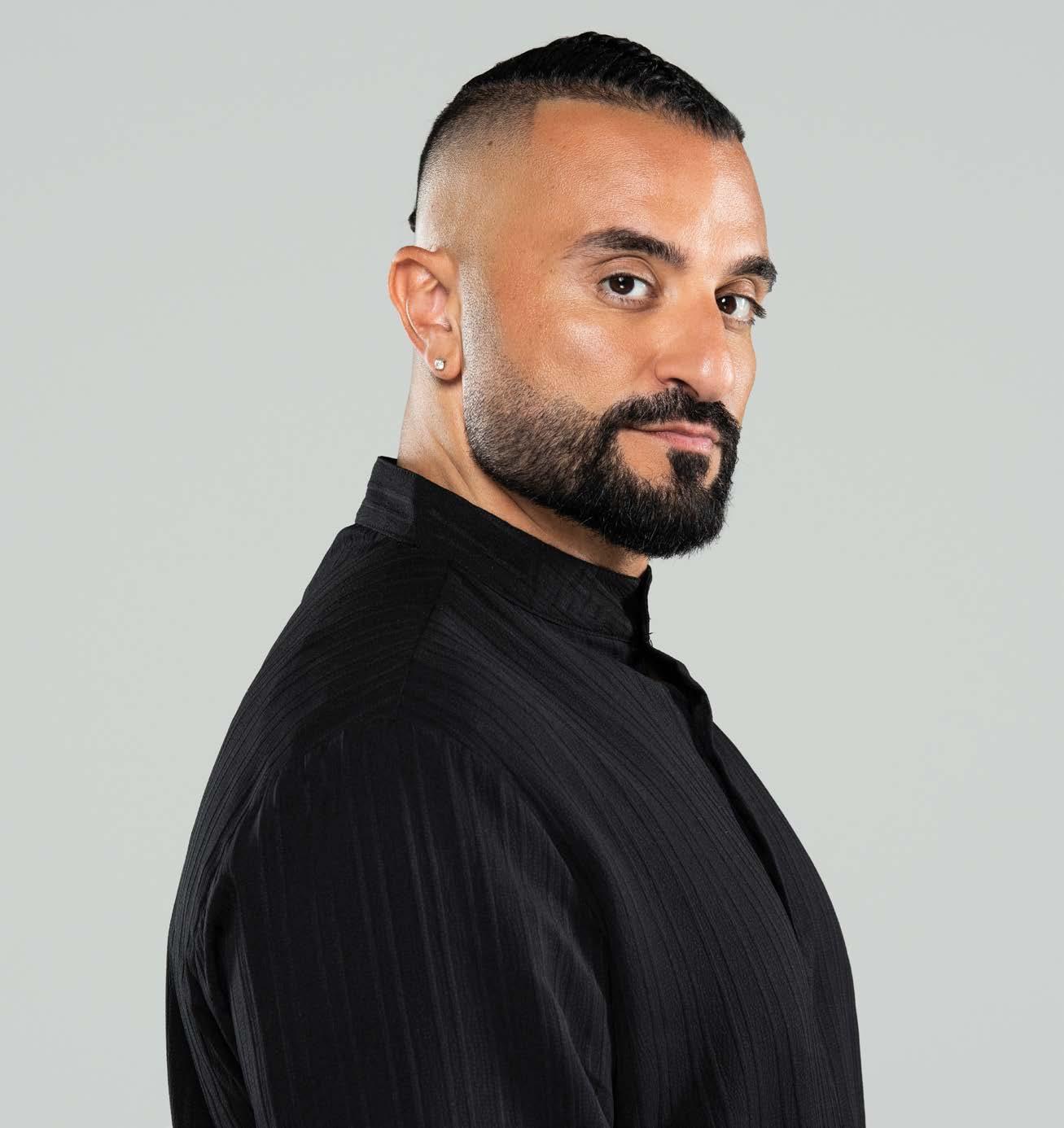
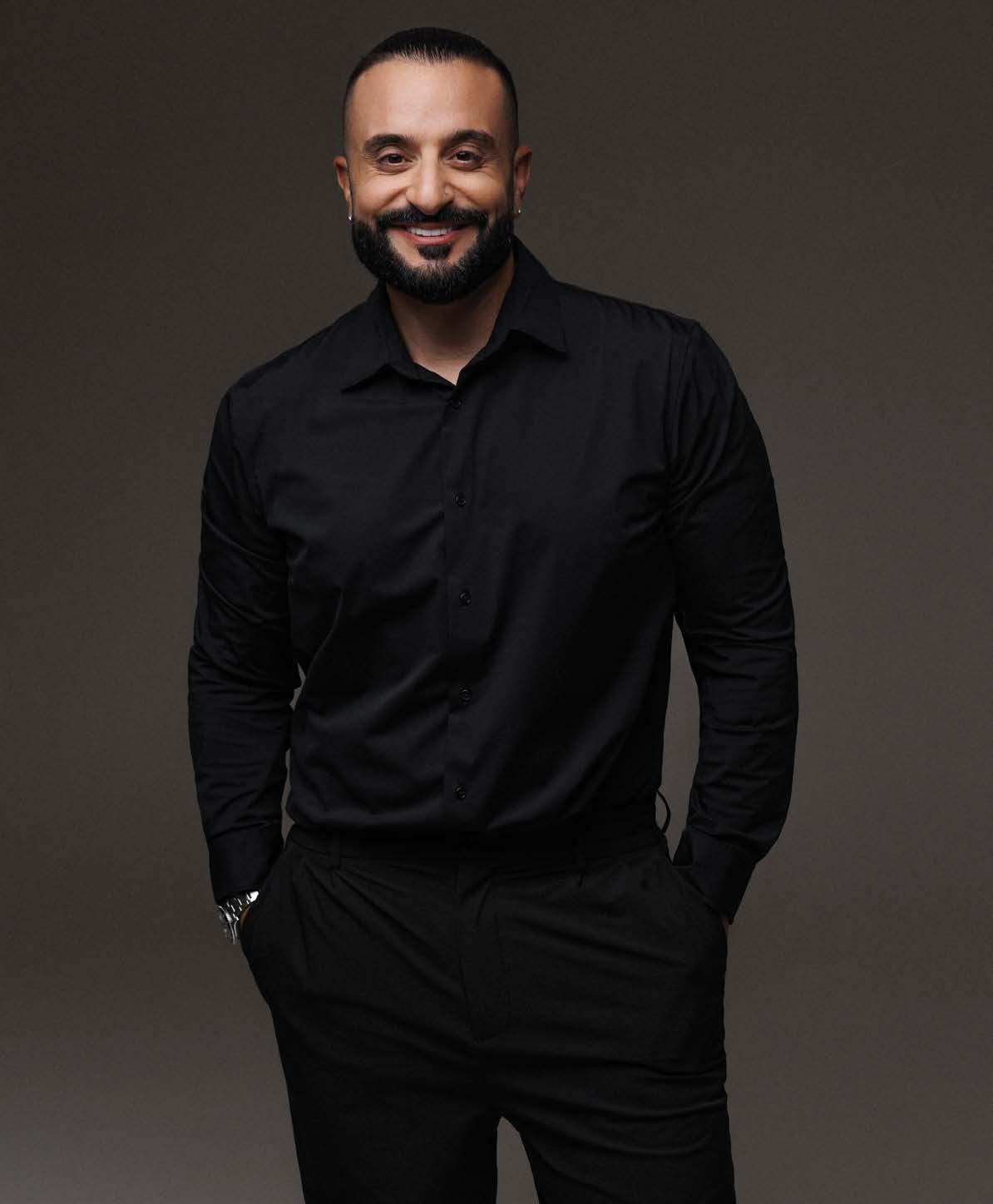
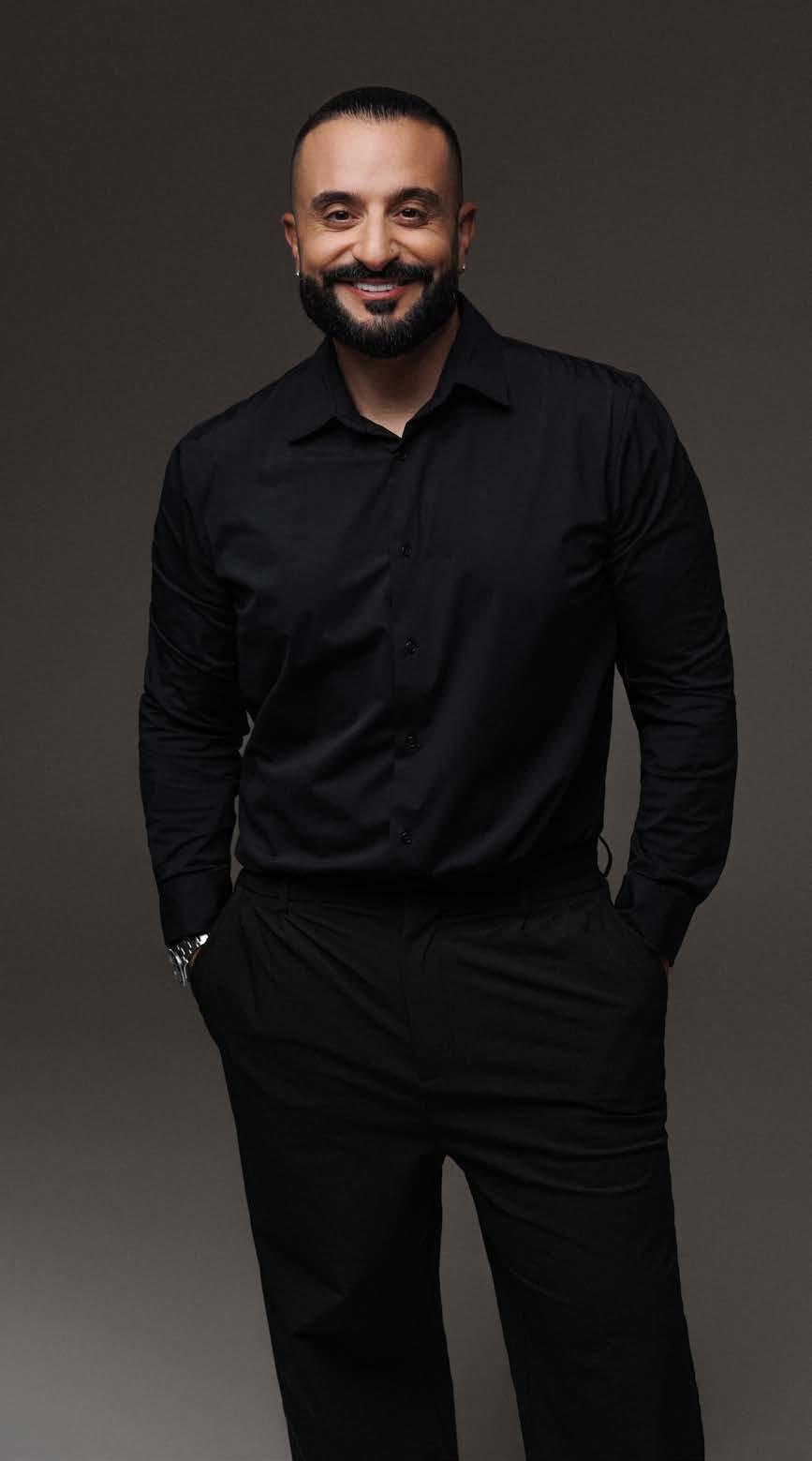
Media personality Kris Fade opens up on the long journey of forging enduring relevance.
by WISSAM YOUNANE
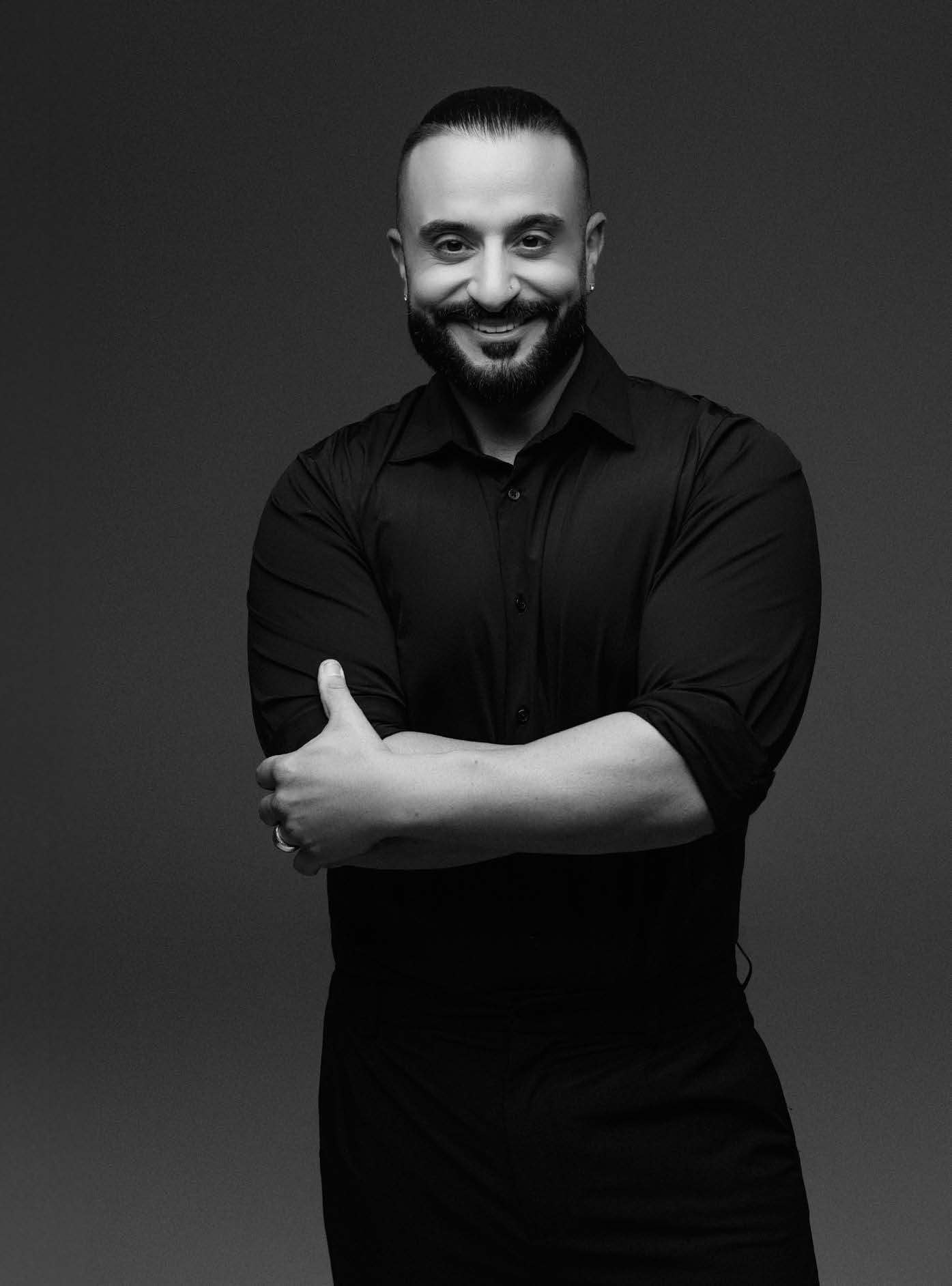
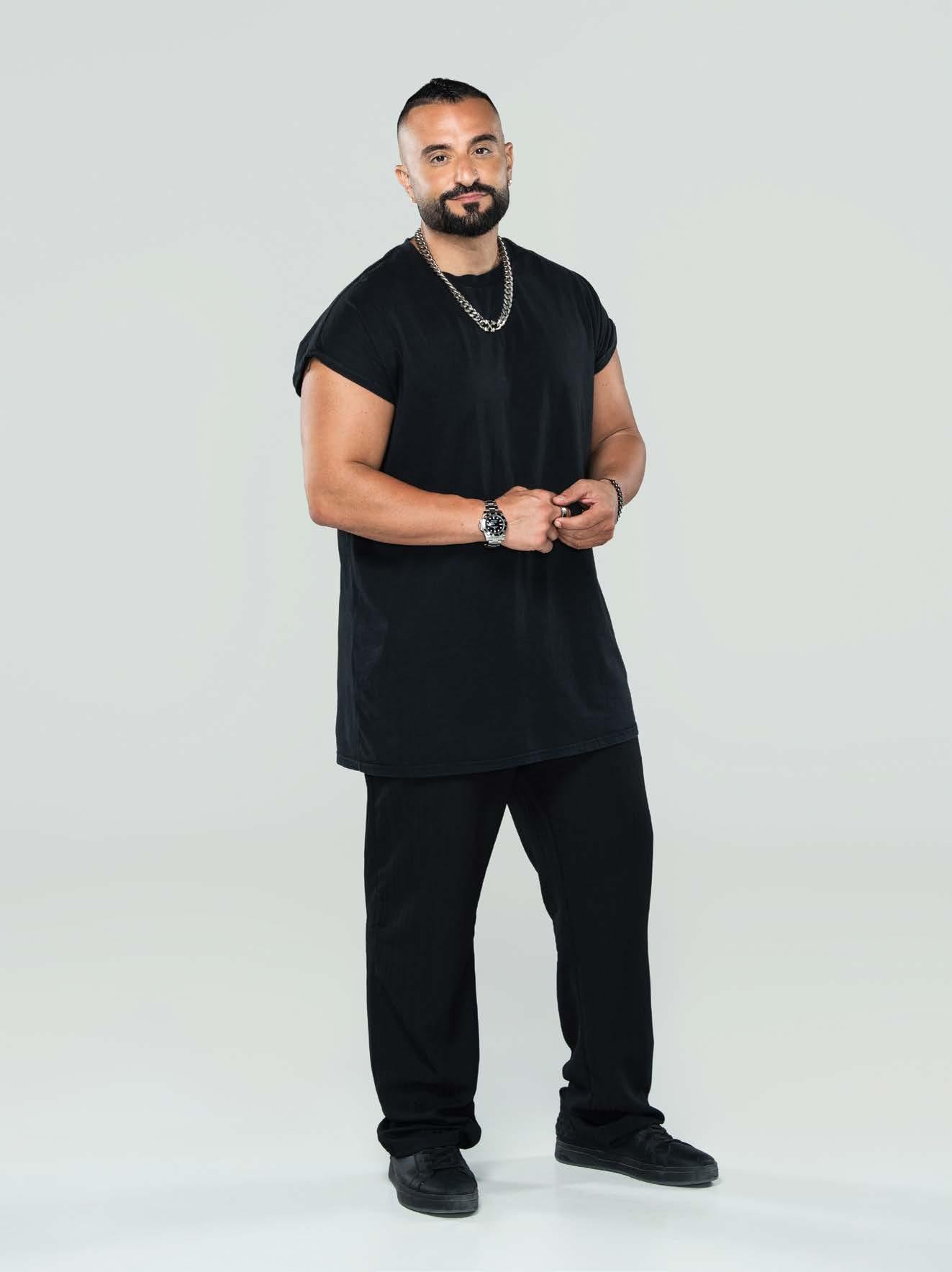
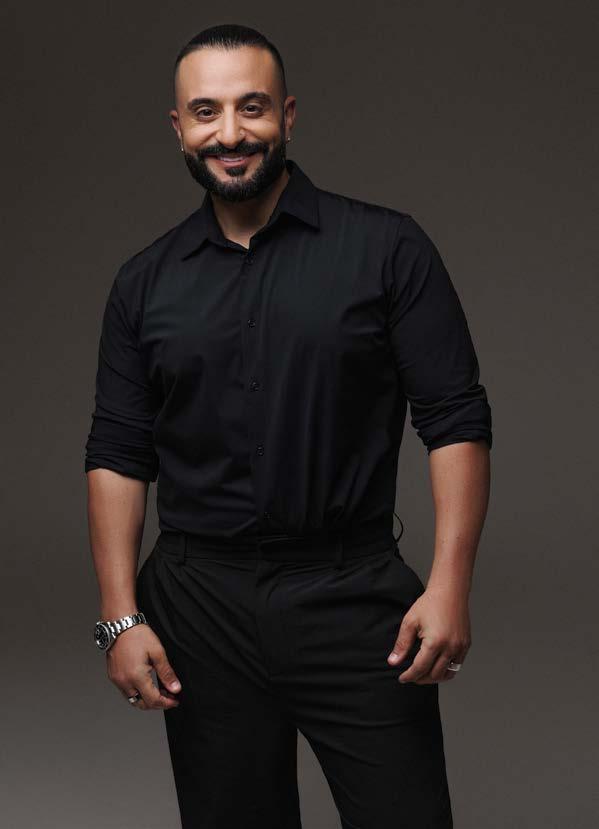
Many people tell me that I’m their Voice of Dubai, and when they come back to the city after many years and still hear me on the radio, it gives them a feeling of comfort, and that’s something that I feel is so special,” says Dubai-based media personality and entrepreneur Kris Fade.
The unofficial recognition as the “Voice of Dubai” is a stark contrast to where Fade’s professional journey began. He got an on-air opportunity at Sydney’s Edge 96.1 in his early 20s when -by his own admission- he was working in cafés and restaurants, washing cars, and not knowing “what I wanted to do because I didn’t do too great at school.” Today, Fade is the host of The Kris Fade Show, Virgin Radio Dubai’s most listened-to English breakfast radio show in the city.
This is not simply the story of a radio career, but a deeper look at how an accidental beginning evolved into the deliberate building of a legacy. “I want to be remembered as the guy who made you feel safe, happy, and loved when you heard me on the radio,” Fade says. “I want my family to know I always did it all for them—the hours, the work, the companies—for them. I want them to be comfortable, never worry about money! Legacies are built. I’m still building mine. Watch this space.”
In 2007, the Lebanese-Australian Fade was presented with a defining choice: help launch a new Virgin Radio station in either
Kuala Lumpur or Dubai. Drawn by a desire to reconnect with his Arab roots, he chose the latter. “It was the first-ever Virgin Radio in the Middle East, I came ready to work and ready to build,” Fade recalls. “It wasn’t until about 2012 that the show started to really impact the city, and it was probably around then that I thought to myself, well, maybe Dubai isn’t a city that I’ll ever want to leave. Let’s keep building and see how far we can go. Over the years, with radio and social media and interacting one-on-one with people, I’ve been able to build this brand that I absolutely love, and I’m so grateful for.”
“I WANT TO BE REMEMBERED AS THE GUY WHO MADE YOU FEEL SAFE, HAPPY, AND LOVED WHEN YOU HEARD ME ON THE RADIO.” }}
I FEEL OUR RADIO SHOW HAS MADE A HUGE IMPACT ON THE COUNTRY BECAUSE I BELIEVE THAT WE CAME IN AT A TIME WHERE THE COUNTRY WAS GROWING REALLY QUICKLY, AND WE KIND OF GREW WITH IT.”
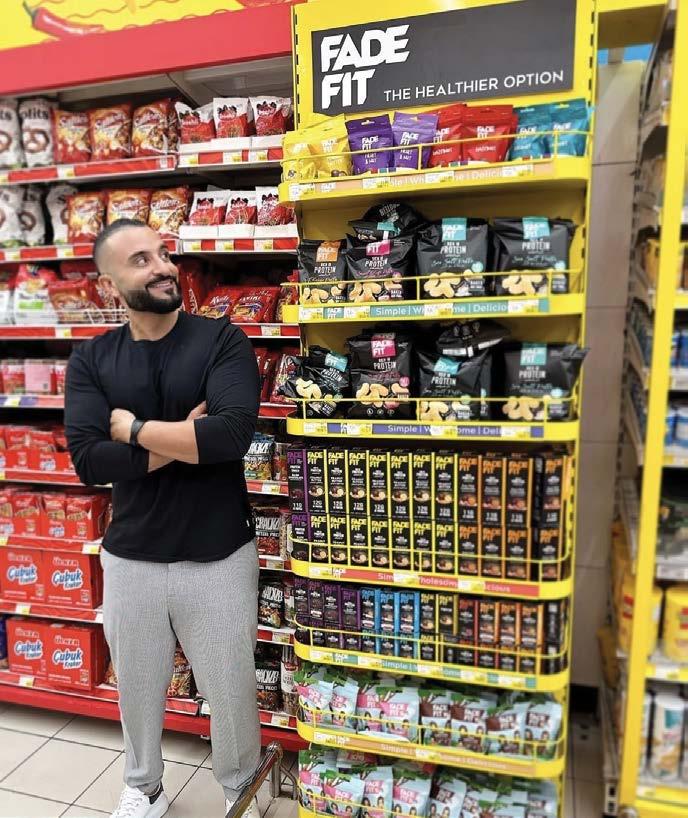
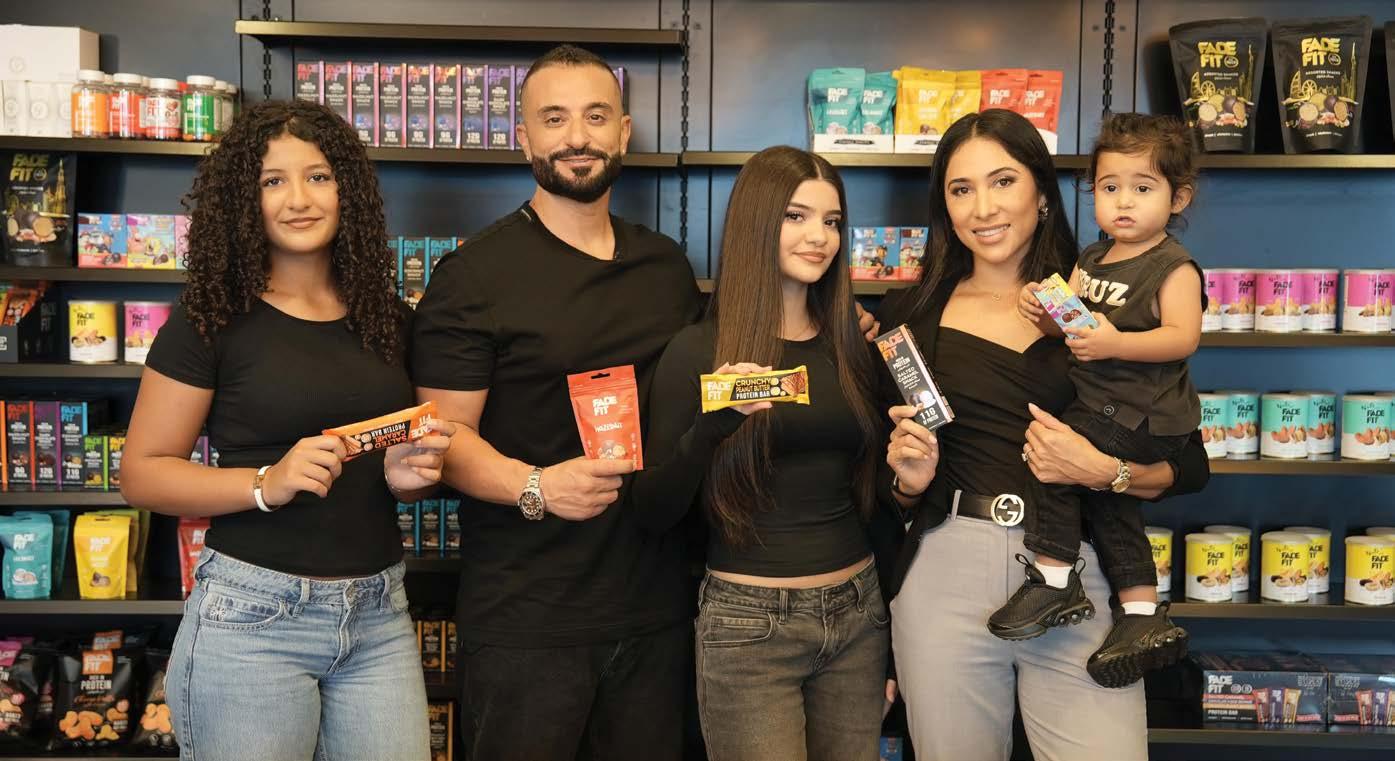
To understand the scale of his evolution, it’s worth unpacking what Fade’s personal brand beyond radio, encompasses today, as evidenced by the ventures he transparently shares with his one million Instagram followers. In the fitness and wellness space, there are Fade Fit, a UAE-born, family-owned health and wellness brand; Enhance Fitness, a certified personal trainers platform; and Dubai-based personal training and group coaching community TEAM 365. His other ventures reflected a diverse set of interestsPepperoni Comedy Club, an American-Italian diner and comedy club; The Code, an advertiser funded consumer goods product platform; and KS Konnect, A strategic platform delivering global talent and high-value sports and entertainment IP. Fade also a part of the DJ duo “Cancelled Music”, a former Netflix’s Dubai Bling Star — and, at the core of it all, a father of three.
“When it comes to my personal brand, I’ve always tried to just be me,” he says. “Be real and authentic; don’t fake things. We live in a world whereby people want to be ‘famous,’ and quickly. Building a brand that can sustain time isn’t easy. Many of my decisions are taken with thought. I do ask myself, will this jeopardize or risk anything I’ve built, especially jumping into business in an unknown territory? It can take years to build a brand and seconds to destroy it. I’m aware of this and always want to be sure I stay true to myself.”
As a writer, with Fade’s biography being this rich, choosing my next focus is no easy task, so perhaps it
is best to go back to the talent that sparked it all. While long-standing radio careers are relatively rare, Fade is entering his 22nd year behind the microphone.
“I’m all about human connection. I believe once you make that connection just once, they’ll listen to you and they’ll be a fan of you for the rest of your life,” he says, adding that he assumes he has spoken with “more people than the average human would.”
“I often get people telling me their deepest, darkest secrets, and through all these stories and all these interactions, it allows me to connect with someone, I believe, on a personal level,” Fade explains. “So sharing those short moments to, you know, diving deeper into more serious moments allows me to create the radio that I do. I feel our radio show has made a huge impact on the country because I believe that we came in at a time where the country was growing really quickly, and we kind of grew with it.”
Alongside acknowledging his co-host, Priti Malik, BIG ROSSI, and the wider Virgin Radio team, Fade stresses the importance of closely following trends, making sure radio hosts are either shaping them or keeping pace as they grow older. “You wanna make sure that you’re relatable to all your audience, and your audience could be kids on the way to school, mum and dad driving to school, or a single person who has just moved to the UAE, so you want to be relatable,” he says. “I really try my hardest to continue to evolve. I never want to stay still and just think that I know everything. I talk to a lot of people from all
different age demographics, from all different job titles, and I love to learn. I love to hear stories from them, and I believe that allows me to stay well current and on top of the game.”
Over time, the genuine connections Fade built on and through radio spilled naturally into social media, where they flourished and sparked the launch of his business ventures. Yet each business seems to have emerged from a deeply personal place—and nowhere is that more evident than in his entrepreneurial journey into the fitness and wellness sector.
“I was pretty much rock bottom when I created Fade Fit,” Fade explains. “I had gone through a brutal divorce. I was overweight, anxious, and depressed, and it was in those moments that I turned to health. I started to hit the gym, and it started to make me feel mentally
“CONSISTENCY FOR ME IS EVERYTHING. FADE
FIT TAUGHT ME THAT THE MORE HOURS YOU PUT IN, THE MORE YOU GET FROM LIFE.”
better, and then physically I became better. I worked on myself, and I became a better version of who I was, and Fade Fit really began then.”
Fade Fit began as a personal hashtag, used informally by Fade himself, before gaining traction among his followers and fans that evolved organically into a small community and continued to grow from
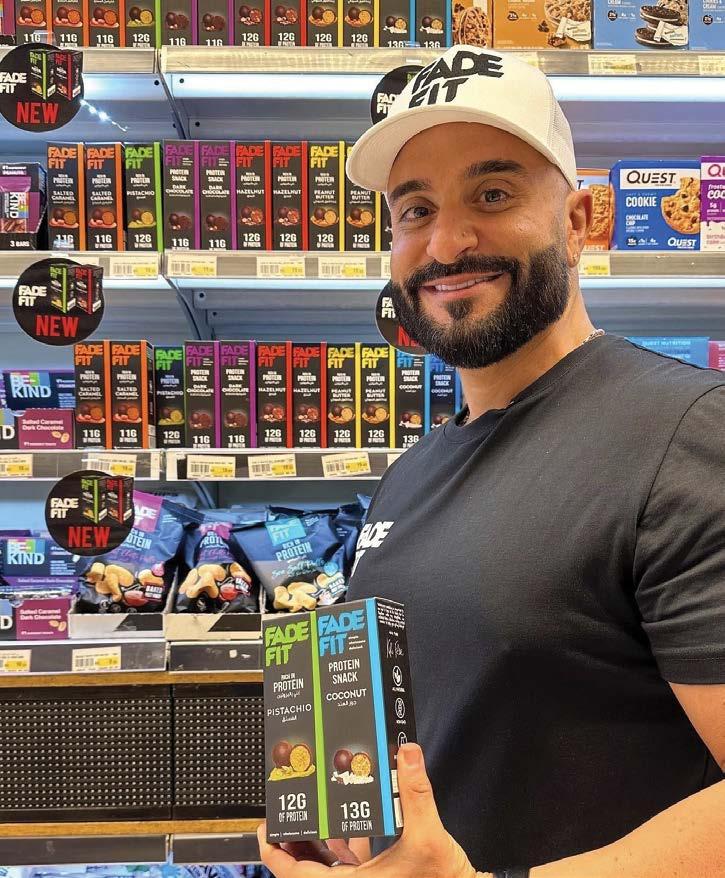
there. “One day, when I was shopping for groceries for my kids, I wanted to give them some healthier snacks, and, well, there wasn’t much on the shelves,” Fade explains. “So I realized, well, maybe I should create my own, and that was the conception of the actual snacks.” Fade Fit now offers a wide range of protein snacks, kids’ products, vitamins, and merchandise, available
across major retailers, F&B outlets, and online platforms.
Enhance Fitness and TEAM 365 were similarly shaped by personal experience. “When I was suffering through anxiety, I remember going to a psychologist and him giving me prescription pills to try to make me feel mentally better. I tried taking them, but I really didn’t feel anything. I didn’t feel better. I didn’t feel anything, really,” Fade explains. “But when I went to fitness, that’s when I became better; that’s when I felt better than I was, and that was the moment that I realized fitness is going to be part of my life forever.”
Fade adds, “It’s not about making money. It’s about people transforming their lives and helping them to do so.”
Now, it is worth revisiting Fade’s first business, Fade }}
IT’S NOT ABOUT MAKING MONEY. IT’S ABOUT PEOPLE TRANSFORMING THEIR LIVES AND HELPING THEM TO DO SO.”
Fit, for one more brief moment, as it revealed a lesson central to building lasting momentum. “Consistency for me is everything,” he explains. “Fade Fit taught me that the more hours you put in, the more you get from life. Anybody can start something. Anybody can do something for a few days, or a few weeks, even a few months, but where you really succeed is where you do it for years and years and you never stop. Creating Fade Fit has then had a domino effect onto other things that I do in my life. Hard work and being consistent, but also having passion, is vital for success.”
That entrepreneurial instinct didn’t stop at wellness—so how did Fade find his way into hospitality? “Before radio, I worked in cafés in Australia. I’ve always loved being behind a
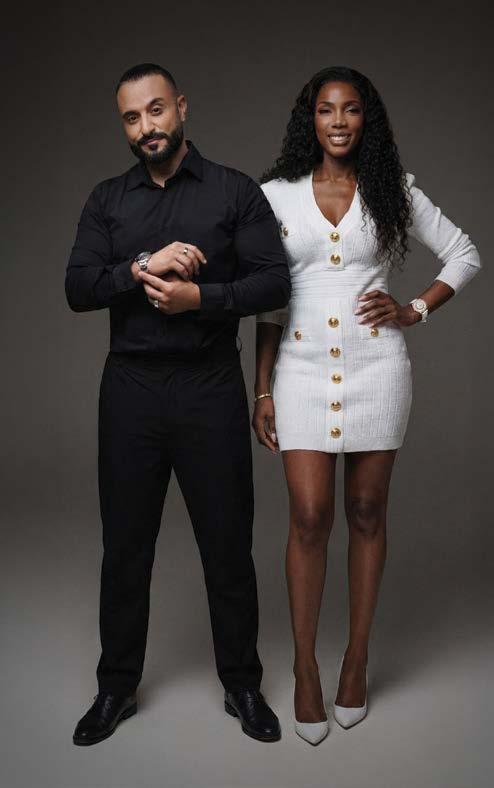
coffee machine or behind a grill, serving customers, taking orders, so there was always a passion to own my own restaurant in the city that I call home,” Fade explains. “My good friend Rizwan Kassim, who owns the Rikas Group, is one of the greatest restaurateurs in the region, if not the world. I had always shared my idea that I’d like to open up an American Italian diner in the city. A few years later, he came to me and said, “We’re ready. Let’s do it.” So he and a few of my other partners came together and created The Pepperoni Comedy Club.”
The hospitality venture introduced another lesson to learn. “The biggest hurdle would be patience,” Fade says. “For me personally, I’ve always worked on being more patient. The hospitality industry is one that moves fast, but at the same time, you need to be patient to make sure all decisions are the right ones. I’m grateful to have great partners like Rikas and Ennismore to assist along the way.
I’m a true believer in making sure you surround yourself with experienced people and trust the process.”
Most recently, Fade teamed up with Abu Dhabi–based entertainment marketing entrepreneur Sarah Omolewu to co-found KS Konnect, a strategic platform connecting global talent, sports and entertainment IP with governments, institutions, and brands across the region. “”KS Konnect is definitely a long-term game,” Fade says. “We’re building an ecosystem that will assist in growing the region’s ideas. Our success will be built on our reputation and results. We have no doubt that we will provide a different perspective than what is currently being offered. Our high-value partners are providing us with the key to access influential international celebrities.” The company has already secured strategic collaborations with The Sustainable City Dubai and the UAE’s sports and entertainment–focused free zone ISEZA, while also producing the Middle East premiere and influencer-led activations for Pole to Pole with Will Smith.
In the end, when the microphone is off, the restaurants close, and the events wrap up, Fade is, above all, a family man. “I’ve raised my daughters as a single father for many years, so I’ve always needed to make sure they were and are my priority. No matter how busy I get, my sole role was to be their dad,” he says. “Years on, I now have a beautiful family unit where my wife, Brianna, baby Kruz, are all there to support one another. I’m blessed and grateful. Dubai has also given me the opportunity to have Virginia and Marylyn, my amazing nannies, who have been part of my family for 16 years. Without them, I couldn’t have done all I’m doing.”
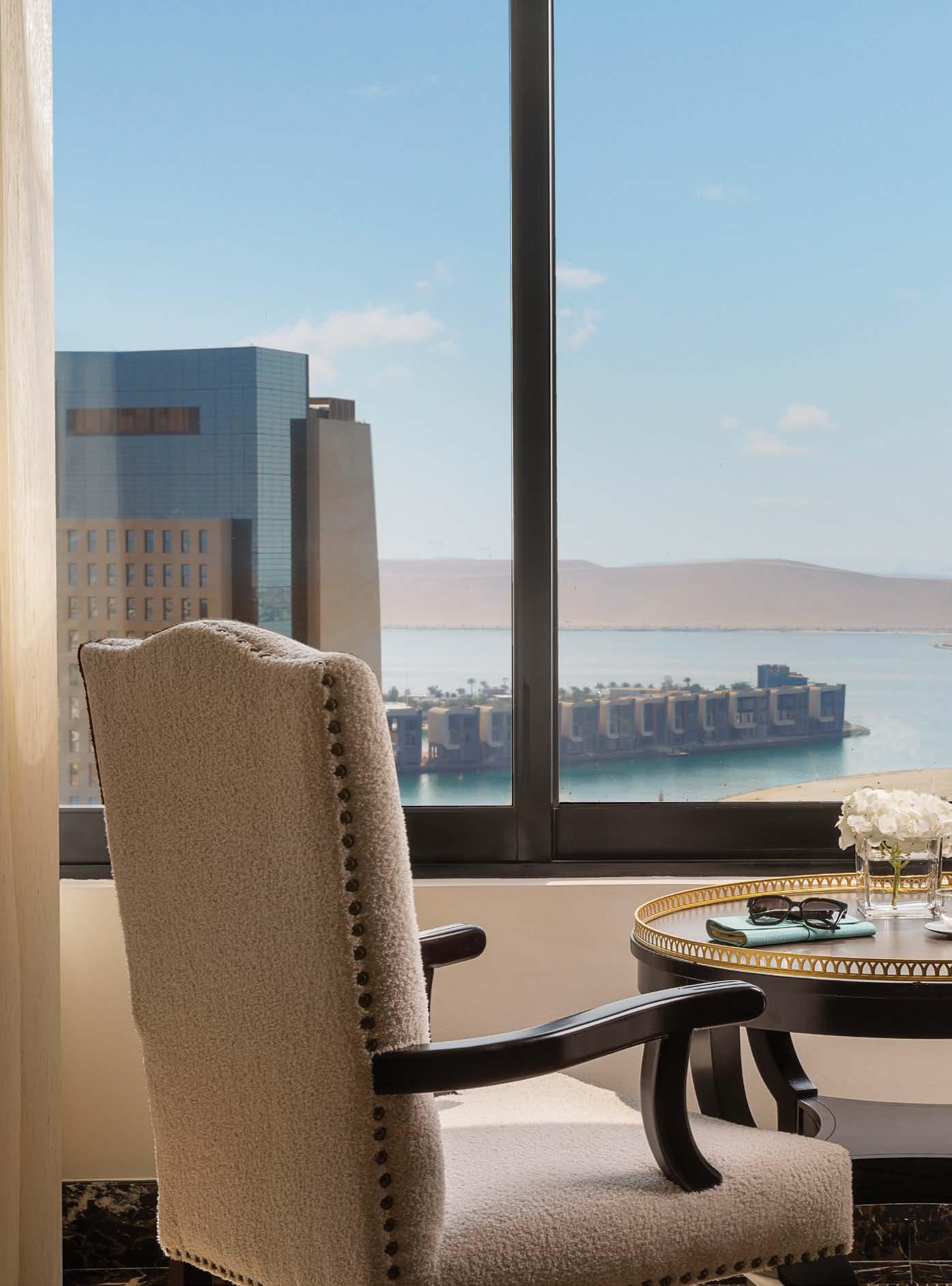
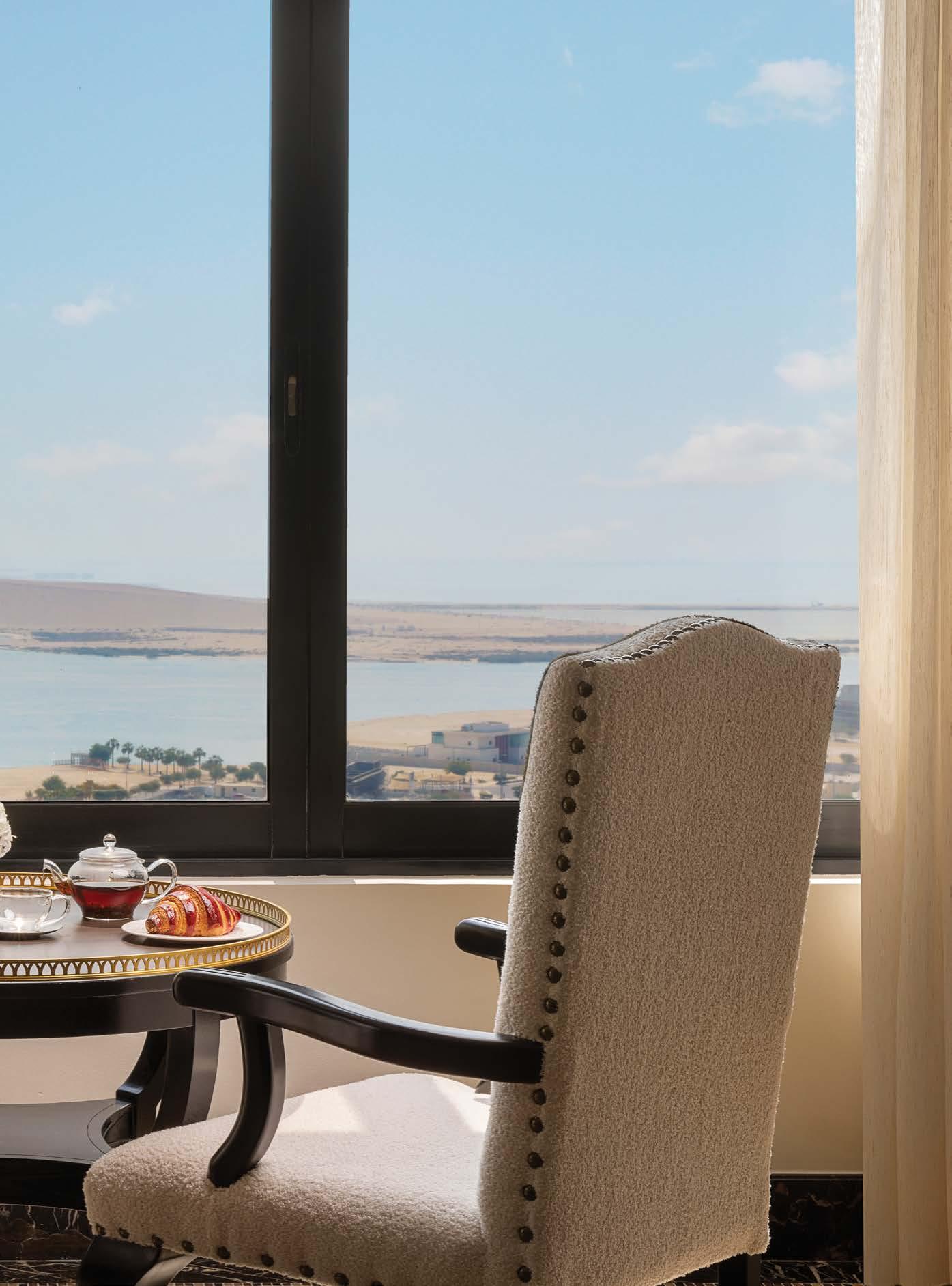
POWER, LEGACY, STATEHOOD:
INTERCONTINENTAL ABU DHABI
Sayed Tayoun, Cluster General Manager of InterContinental Abu Dhabi and InterContinental Residences Abu Dhabi, on leading one of Abu Dhabi’s most historically powerful properties.
by TAMARA PUPIC

Sayed Tayoun, Cluster General Manager of InterContinental Abu Dhabi and InterContinental Residences Abu Dhabi, is unfazed by the rapid expansion of Abu Dhabi’s hospitality market.
With Abu Dhabi Tourism Strategy 2030 targets 40 million visitors annually, aiming to raise the sector’s
contribution to GDP to AED90 billion (US$24.5 billion) by 2030, competition is intensifying. This goal is supported by more than 170 hotel establishments across the capital, many recording strong average occupancy rates of between 80% and 90%. Yet amid this increasingly crowded landscape, Tayoun remains confident that the properties he leads carry an intrinsic value that extends far beyond hospitality.
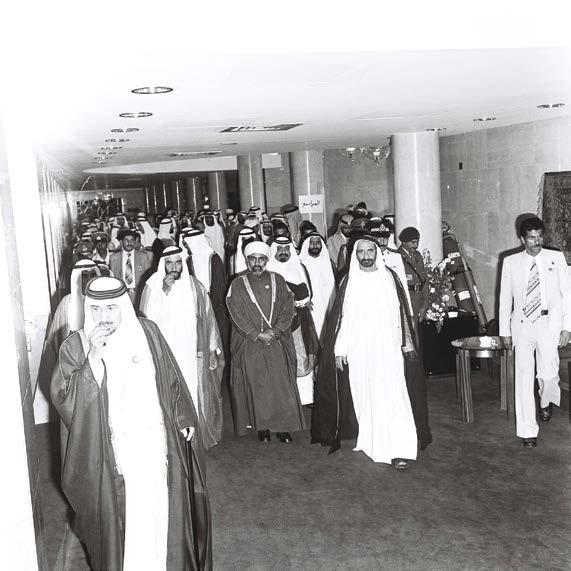
“The hotel was opened by His Highness Sheikh Zayed Bin Sultan Al
Nahyan to host the first GCC Summit in 1981, it occupies a rare place in the UAE nation’s collective memory,” Tayoun says. “The UAE is a young country, a lot of people have seen this country being made, and they are very emotionally attached to the foundations of the country.”
Located in the affluent Al Bateen district, InterContinental Abu Dhabi holds a strategic position at the heart of the capital’s political and commercial life. Alongside its 390 rooms and suites, the property expanded in 2023

with the opening of InterContinental Residences Abu Dhabi, adding 130 serviced apartments and jointly offering hotel accommodation, residences, award-winning dining, and extensive event facilities.
“For decades, InterContinental Abu Dhabi has been the hotel of choice for government delegations, celebrities, and
“THE
HOTEL WAS OPENED BY HIS HIGHNESS SHEIKH ZAYED BIN SULTAN
AL NAHYAN TO HOST THE FIRST GCC
SUMMIT
IN 1981, IT OCCUPIES A RARE PLACE IN THE UAE NATION’S COLLECTIVE MEMORY.”
major conferences in the capital and across the region,” Tayoun says. “It has also long been a gathering place for residents and visitors alike—where people came to swim, dine, and socialize. Generations of families have marked their lives here, like different generations of one family would get married here, so there’s a lot of emotional family attachment.
“We have a lot of plans to bring back this icon at the center of Abu Dhabi’s tourism scene.”
Yet, the heritage value of the property will remain central to its appeal, regardless of future enhancements, Tayoun underlines. “To honor the legacy of Sheikh Zayed Bin Sultan Al Nahyan, we have preserved furniture from the original meeting days,” he says. “The table used during the very first GCC conference remains here to this day. This is our intrinsic value—the collective memory that people in the UAE continue to carry.”
Tayoun is well positioned to restore the hotel’s stature,
drawing on more than two decades of hospitality leadership and a deeply rooted understanding of the industry. A Lebanese native and graduate of Notre Dame University–Louaize, he brings a distinctly people-led approach to leadership. “I’m a people person and that has shaped my career from the very beginning,” he says.
“Hospitality is about making people happy, and that has been deeply rewarding. What drew me in even more was watching the industry evolve—from a simple trade into a multi-billion-dollar global business.”
His journey with IHG began in 2005 at InterContinental Doha, marking the start of a steady rise through the group’s leadership ranks. By 2010, he had assumed the role of Director of Sales and Marketing at InterContinental Abu Dhabi, before going on to oversee commercial operations for IHG Hotels in Abu Dhabi in 2012. In 2016, he expanded his remit further, joining IHG Hotels at Dubai Festival City in a senior leadership capacity.
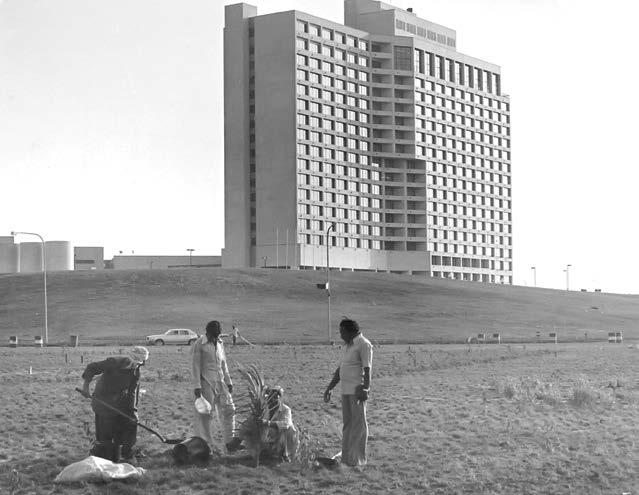
→ The first tree planted in front of InterContinental Abu Dhabi in 1980es. Image courtesy of InterContinental Abu Dhabi.
Most recently, he served as General Manager at Holiday Inn & Suites Dubai Science Park, leading an exemplary pre-opening phase that positioned the hotel as a vibrant, community-centric destination. Prior to
this, he held the role of Cluster Hotel Manager at InterContinental Dubai Festival City Hotels, where he oversaw a large-scale, multi-brand hospitality complex encompassing more than 1,598 rooms, 10,000 square metres of
“THE TABLE USED DURING THE VERY FIRST GCC CONFERENCE REMAINS HERE TO THIS DAY. THIS IS OUR INTRINSIC VALUE—THE COLLECTIVE MEMORY THAT PEOPLE IN THE UAE CONTINUE TO CARRY.”
event space, and 11 award-winning dining venues.
In 2024, Tayoun earned a distinguished place on Hotelier Middle East’s GM Power List, was celebrated as a TOP 40 Hospitality Heavyweight 2024, and was shortlisted for the inaugural GM of the Year Award at the 2024 Hotelier Middle East Awards.
Taking the helm at InterContinental Abu
Dhabi marks the pinnacle of his career to date—one shaped not only by professional achievement, but by deep personal connection.
“I’m emotionally attached to this hotel—its legacy, its history, and its impact on the community and the people of Abu Dhabi. And having a plus-one in the form of our beautiful InterContinental Residences Abu Dhabi, only strengthens that bond,” he says.
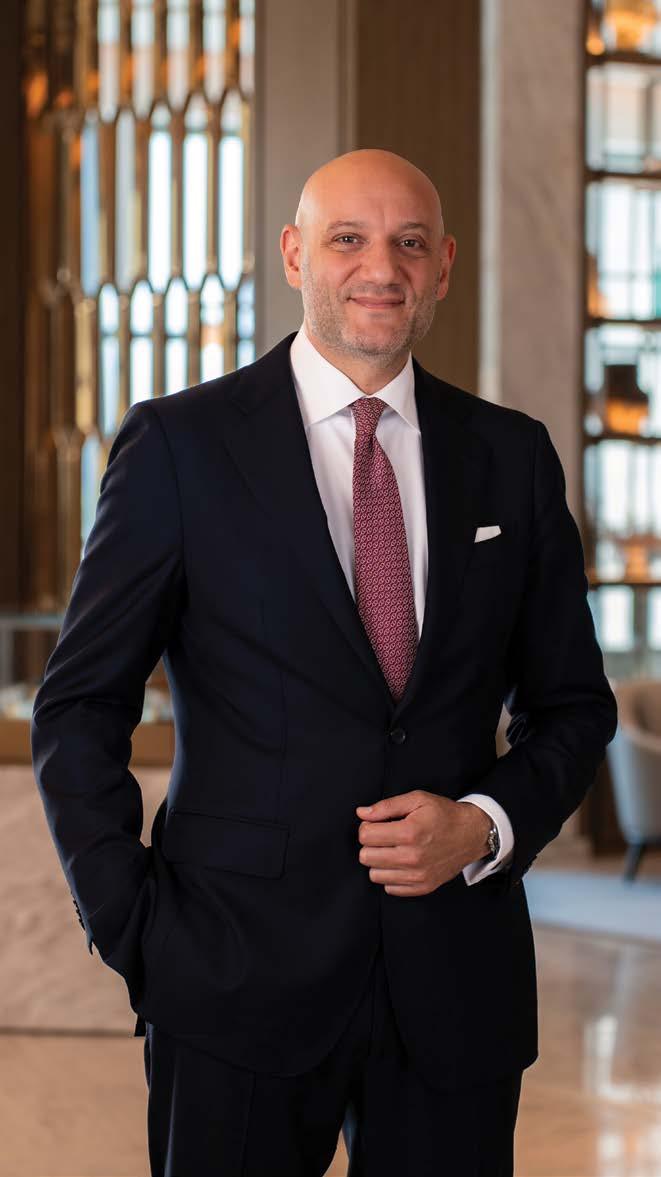
→ Sayed Tayoun is the Cluster General Manager of InterContinental Abu Dhabi and InterContinental Residences Abu Dhabi.
“This area is private, luxury, and high-end. It’s where decisionmaking happens—where power sits. While much of Abu Dhabi’s financial activity has shifted toward ADGM, this is where governance remains: the palace, the ministries, ADNOC.”
The hotel is also known for its seven signature dining venues, including Fishmarket, the Michelin-selected Byblos Sur Mer, and Belgian Café.
“Fishmarket is one of the oldest restaurants in Abu Dhabi. It has remained in the same location, under the same name, for 35 years—and for 28 of those years, it has been led by the same chef,” Tayoun says.
It is the loyalty of both employees and guests that Tayoun is most proud of.
“When you’ve been in the market for a long time, guests come back year after year— some staying with us more than
200 nights annually,” he says. “ Others have been coming here for 30 or even 40 years. These guests are emotionally connected to the hotel; they know our team members.”
As he sets out to reinforce the position of InterContinental Abu Dhabi as one of Abu Dhabi’s leading hospitality institutions, Tayoun points to his most powerful asset—not bricks or branding, but people. “Understanding your team is everything. Being a General Manager is all about talent,” he concludes. “You cannot be an expert in every single thing. It’s massive. You manage a city, a complex system. So you need to have the ability to get the right people at the right place. In hospitality, people matter most. Social skills and emotional intelligence are what ultimately define success.”
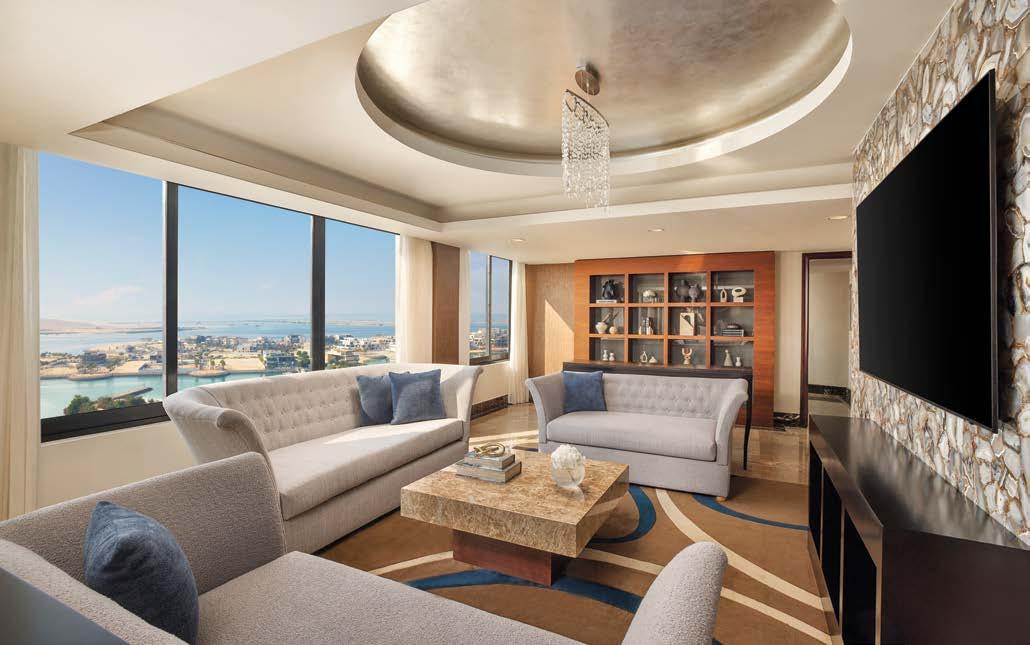
↓ The Royal Suite at InterContinental Abu Dhabi, reflecting the property’s legacy of hosting heads of state and high-level delegations. Image courtesy of InterContinental Abu Dhabi.
“GENERATIONS OF FAMILIES HAVE MARKED THEIR LIVES HERE, LIKE DIFFERENT GENERATIONS OF ONE FAMILY WOULD GET MARRIED HERE, SO THERE’S A LOT OF EMOTIONAL FAMILY ATTACHMENT.”
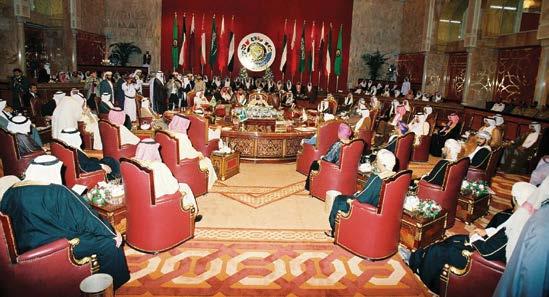
↓ Scenes from the first Gulf Cooperation Council Summit held at InterContinental Abu Dhabi in 1981. Image courtesy of InterContinental Abu Dhabi.

FUN COMES GUAR ANTEED

Gold, Freedom, And The Architecture Of Wealth
Why Alluca Group’s Alex Chiniborch believes the future of financial security looks a lot like the past.

By the time conversations about wealth reach cryptocurrencies, AI-driven trading, and real-time markets, gold is often framed as a relic—stable, yes, but slow, conservative, and uninspiring. Alex Chiniborch sees it very differently. To him, gold is not an investment product competing for returns, but the structural foundation upon which all serious wealth should be built.
Chiniborch is the founder of Alluca Group, a firm he deliberately avoids describing as a traditional gold business. Instead, Alluca positions itself as a “reserve-building institution”, a phrase that reflects both its philosophy and its method. The firm does not sell gold as a speculative asset. It uses gold—and increasingly silver—as financial bedrock, designed to protect individuals, families, and businesses against systemic risk.
At any “There’s nothing simple about financial engineering,” Chiniborch says candidly. “But the principle is straightforward: understand where you are exposed, and then design protection around that exposure.”
Building a personal central bank
Alluca’s process begins not with commodities, but with people. Every engagement starts with an assessment of an individual’s financial life; assets, liabilities, market exposure, age, and long-term needs. Only then does gold enter the picture, calibrated not for upside but for durability over decades. The concept mirrors how institutions operate. Central banks, Chiniborch notes, do not hold gold because it generates yield. They hold it because it anchors trust, underpins leverage, and stabilizes balance sheets during periods of uncertainty.
“What people can learn from central banks is to do what banks do,” he explains. “Create your own personal bank.”
That mindset challenges how many investors, particularly in high-growth regions like the Middle East, think about wealth creation. Real estate, equities, and now digital assets dominate conversation. Yet Chiniborch argues that these assets are often misunderstood; not least because their true cost is rarely calculated.
Rethinking the real estate narrative
Property ownership is frequently framed as the safest long-term strategy. Chiniborch disagrees; not philosophically, but mathematically. Over a 25-year period, a home may appreciate severalfold, but mortgage interest, maintenance, taxes, and operating costs quietly erode headline returns.
“If you actually break down every expense, most people are shocked,” he says. “They’ve confused ownership with saving.”
In contrast, gold’s appeal lies in what
THERE’S NOTHING SIMPLE ABOUT FINANCIAL ENGINEERING. BUT THE PRINCIPLE IS STRAIGHTFORWARD: UNDERSTAND WHERE YOU ARE EXPOSED, AND THEN DESIGN PROTECTION AROUND THAT EXPOSURE.”
it does not require. There is no maintenance, no depreciation, no structural risk. It can be stored, ignored, and retrieved decades later in precisely the same state.
“You could bury it in the ground, come back 25 years later, and it’s exactly the same,” Chiniborch says. “That’s not an investment. That’s insurance.”
Thinking in ounces, not currencies
Perhaps the most radical shift Chiniborch advocates is psychological. He encourages clients to stop thinking in dollars, dirhams, or euros altogether; and start thinking in ounces.
“Money, as people understand it, is fictitious,” he argues. “It’s numbers on a screen. It exists because we all agree it does.”
Gold, by contrast, is tangible, universally
recognized, and permanently in demand-not just for jewellery, but for electronics, energy systems, and emerging technologies. Its value is not derived from policy decisions or monetary expansion, but from physical scarcity and industrial necessity.
This distinction, Chiniborch believes, has profound implications for personal freedom. Digital money can be controlled, restricted, or devalued. Physical assets exist outside that system.
“Freedom comes from having something that’s outside the system,” he says. “And something everybody wants, all the time.”
Where crypto fits—and where it doesn’t
Despite his strong views on precious metals, Chiniborch is not dismissive of digital assets. Instead, he
frames portfolio construction as a three-phase model.
The first phase is hedgingbuilding a base using physical gold and silver. The second is growth, where moderate risk assets can be introduced. Only in the third phase does speculative capital enter the picture, typically limited to 10–15 percent of a portfolio.
“If you’re standing on solid ground, you can afford to take shots,” he says. “If you’re not, you’re gambling.”
This distinction is especially relevant for younger investors navigating inflation, market volatility, and economic uncertainty. For them, Chiniborch sees silver - not gold - as the more accessible entry point.
Why silver may be the opportunity of a generation
Silver’s affordability, liquidity, and industrial demand make it uniquely positioned, particularly for first-time investors.
Chiniborch points to its sharp price movements and the historical gold-tosilver ratio as indicators of long-term potential.
“Silver is cheap, easy to liquidate, and in massive demand,” he explains. “For young people, it’s the smartest place to start.”
He goes further, offering a comparison that may raise eyebrows but reflects his conviction: silver, he says, is the Bitcoin of the future—not because it is digital or speculative, but because it represents
asymmetric opportunity grounded in real-world utility.
Wealth as resilience, not returns
Ultimately, Chiniborch’s philosophy challenges the modern obsession with performance. In a world of dashboards, charts, and constant market noise, Alluca’s approach is deliberately slower—and more structural.
Gold and silver, he insists, are not about winning. They are about not losing. “They never lose value because they are value,” he says. “Everything else is built on top.”
For a region like the Middle East—home to family offices, multi-generational wealth, and a deep appreciation for tangible assets—that message resonates. As markets evolve and technologies accelerate, Chiniborch believes the most forwardthinking investors may be those willing to anchor themselves in something timeless.

Alex Chiniborch is the founder of Alluca Group. Internationally recognized as
‘The Gold Guy’ Alex Chiniborch is redefining wealth by making gold simple, relevant, and accessible in today’s uncertain economy. From early success in Canadian banking to founding Alluca Group in Dubai, Alex has spent decades mastering wealth structuring, compliance, and asset protection.
alexchiniborch.com
Sell More, Pitch Less
Stop chasing funding, start chasing sales by LACHLAN
JACKSON
Waant to start a business? Stop pitching investors and start selling customers.
Too many founders fall into the trap of thinking the key to building a successful company lies in a pitch deck. They spend months refining slides, polishing numbers, rehearsing lines for investors. But none of this matters, if nobody wants to buy what you’re selling. All this time spent pitching is time that is not spent selling.
Raising money isn’t real validation. It’s just fuel. The real test is whether anyone actually cares enough to pay you for your product or service. When you’re out there selling, you’re learning. Every conversation is instant feedback on what works, what doesn’t, what people value and what they’ll pay for. It’s faster, cheaper and far more honest than anything you’ll get from an investor meeting. The market doesn’t challenge your hockey-stick shaped financial projections or ask for follow-up slides. It doesn’t waste your time; it just tells you, very clearly, yes or no.
When you speak to customers, you’re dealing with human beings who are evaluating your offering from a

completely different perspective to an investor, and genuinely hoping it will solve their problems. This is a fundamentally different and less intimidating proposition than pitching to a room full of

“
RAISING MONEY ISN’T REAL VALIDATION. IT’S JUST FUEL. THE REAL TEST IS WHETHER ANYONE ACTUALLY CARES ENOUGH TO PAY YOU FOR YOUR PRODUCT OR SERVICE.”
INVESTORS ARE DRAWN TO TRACTION ANYWAY. THE IRONY IS THAT NOTHING HELPS YOU RAISE MONEY FASTER THAN PROVING
YOU DON’T NEED IT.”
VCs, who spend their days ruthlessly evaluating businesses on a proprietary set of investment criteria.
The typical VC sees hundreds, even thousands of pitches a year, and funds only a handful. Founders often end up tailoring their pitch to please investors, not customers, and take rejection as a sign their idea is bad when it may simply not fit that investor’s criteria. Startups that validate early by selling to customers are far more likely to succeed than those that raise first.
According to CB Insights, the major causes of startup failure are running out of cash and a lack of market need. While a VC can arguably solve the first, getting out there and selling to customers can solve both.
Selling early forces focus. It cuts through the noise of ideas and makes you to build something that works in the real world, not just in your head or on a spreadsheet. Once you can sell, raising money becomes a choice, not a necessity. The conversation
flips. You’re not asking for money to find customers; you’re raising to serve more of them.
Investors are drawn to traction anyway. The irony is that nothing helps you raise money faster than proving you don’t need it. Show consistent sales, even small ones, and suddenly your story isn’t theoretical. It’s working. You’ve already done what most founders are still pitching about.
A pitch deck might open a door. But a customer opens a business. Spend less time trying to convince people with money, and more time convincing people with problems. Because if you can sell, everything else, from funding to hiring to growth, gets easier.
I am not saying raising money is a bad thing, or that it isn’t a necessity to get a business off the ground. But if you want true validation, get it from the market by selling something. Then sell more.

Lachlan Jackson is the Co-Founder of Ecocoast, an international marine company headquartered in the UAE, helping build safer, cleaner and more sustainable coastlines worldwide.

Understanding the Middle East Consumer: Where International Brands
Fall Short
Success in this region depends on recognizing that audiences are multilingual, behaviors shift with seasonality, convenience shapes decision-making, and platforms play different roles across the customer journey. by NAMITA
RAMANI
International brands may often enter the Middle East with confidence in their strategies that have scaled across regions. Their dashboards are filled with healthy benchmarks, and their playbooks are built on years of performance data from successful campaigns.
Yet many of these brands struggle to gain traction in the region.
In markets like the UAE, performance marketing reveals the limitations of global strategy because it reflects on how people actually behave here as opposed to how they are assumed to behave.
Understand the Language, Culture, and Diversity
Dubai’s population reached approximately 3.7 million in mid-2025, driven largely by professionals relocating for work and lifestyle opportunities. At present, Dubai’s population is overwhelmingly expatriate, young and urban. The largest age bracket sits between 25 and 54, with a median age of 31.6 years. The demographic profile creates one of the most digitally active consumer bases globally, who shape everything from platform usage to purchasing speed.
Daily life in Dubai is multilingual by default. Arabic and English dominate official communication, but Hindi, Urdu, Tagalog, Mandarin, Farsi, Bengali, Malayalam and Tamil are spoken across homes and workplaces. French and Russian are also used, influenced by the large Lebanese community and residents from Eastern European countries.
For performance marketers, this means one thing: campaigns built around a single cultural lens or behavioral assumption quickly lose relevance.
In performance marketing, subtle changes in language, phrasing, or tone can materially change outcomes. An English ad may attract attention, while an Arabic or Hindi variant may signal relevance.
Local performance strategies treat language as part of conversion design. It informs creative testing, landing page structure, remarketing sequences, and even customer support. When language aligns with lived context, campaigns can reach the target audiences and resonate with them.
Smaller Markets Demand Smarter Campaign Structure
Another frequent miscalculation is assuming that a smaller population size makes digital marketing easier. In reality, it raises the cost of mistakes. In high-population markets, inefficiency can be absorbed to a certain extent. In Dubai, the population is comparatively small, so you have to have a balance between targeting the right people, but also not limiting the audience a lot. In Dubai, overly narrow targeting restricts delivery, inflates costs, and slows optimization. Platforms such as Meta and Google require room to learn, but that learning must be guided by disciplined structure, strong creativity, and clear intent. This means that there are fewer days for a performance marketing agency to experiment, as the pressure to show results starts building from the first week itself.
Performance marketing in the Middle East rewards flexibility over rigidity. It is less about controlling every variable and more about allowing systems to optimize within locally informed boundaries.
A Digitally Advanced Audience With High Expectations
Statista data consistently ranks the UAE among the most connected markets globally. Fixed broadband speeds exceed 300 Mbps, and mobile internet usage is among the fastest worldwide.
This level of connectivity produces a highly efficient but impatient audience. Social platforms are the primary discovery channel, followed closely by search. Mobile-first experiences are expected.
Nearly half of online shoppers in the UAE expect delivery within two hours, a benchmark that directly impacts conversion across retail, e-commerce, and services. Performance marketing can fail here when the customer’s experience lags expectation.
Why Local Performance Insight is Important
Performance marketing in the Middle East is not about copying what worked elsewhere. It is about understanding how people search, scroll, compare, and decide here. The brands that succeed in the market are those guided by insight built on proximity to the market. They test faster, adapt smarter and respect the nuances that define the region.
Dubai is one of the most competitive advertising environments in the region. Local brands, regional players, and global companies all compete for the same attention, often within the same platforms and timeframes. Seasonality further compresses decision windows. Ramadan, Eid, long weekends, and summer months significantly affect buying behaviour. Do holidays increase buying or delay it? When does intent peak, and when do people browse without converting? Performance data must be read through this lens. Without contextual understanding, optimization decisions are often made too early or too late.
In many markets, payment options are treated as a backend decision. In the UAE, they influence conversion much earlier in the journey. Buy Now, Pay Later (BNPL) has evolved from a convenience feature into a behavioral signal.
BNPL reduces friction, increases confidence, and often determines whether a user completes a purchase or abandons it. From a performance marketing perspective, this changes how offers are framed, how creatives are written, and how remarketing is structured.
Messaging that highlights flexible payment options frequently outperforms generic promotional copy. Creative that acknowledges affordability without discounting can expand reach without diluting brand positioning. Even remarketing performance improves when BNPL is surfaced as part of the value proposition rather than buried at checkout
Platforms Are Tools- Focus on Behavior
A common question global brands ask is whether they should be on TikTok, YouTube, Instagram, Facebook, Snapchat or Google. The more important question is how their audiences use each platform. Search captures intent, social builds familiarity, video builds trust and remarketing sustains presence across longer decision cycles. Treating platforms interchangeably fragments the performance of a campaign; while orchestrating them intentionally compounds it. This distinction becomes clear only when performance is viewed through a local behavioral lens.
Success in this region depends on recognizing that audiences are multilingual, behaviors shift with seasonality, convenience shapes decision-making, and platforms play different roles across the customer journey.
The brands that succeed are those that listen more closely to the market, interpret data through local context, and design performance strategies around real behavior.

Namita Ramani is the founder and CEO of Above Digital, a Dubai-based digital performance marketing agency she established in 2004. With over 25 years of experience in digital marketing, she has built Above Digital into a trusted partner for forwardthinking businesses looking to combine data, creativity, and technology to drive measurable growth.
The voice of entrepreneurship around the world


The Executive Selection
From better goods to better wardrobe bests, every issue, we choose a few items that make the approved executive selection list. In this edition, our picks are from COS, Gentle Monster, and Cullinan Crown.

THE LONDON-BASED FASHION BRAND COS IS ALSO UNVEILING ITS NEW COLLECTION. → COS opens a new store at Mall of the Emirates, Dubai
The London-based fashion brand’s new collection offers fresh interpretations rooted in timeless design and everyday functionality. Defined by signature tailoring, considered prints, and a nuanced color palette, the range reflects quiet confidence and contemporary ease. Tailoring and suiting anchor the collection, complemented by versatile layers designed for daily wear. Select styles are crafted from Responsible Wool Standard (RWS)–certified wool (TE-00047206, Textile Exchange), reinforcing COS’ ongoing commitment to responsible material sourcing.


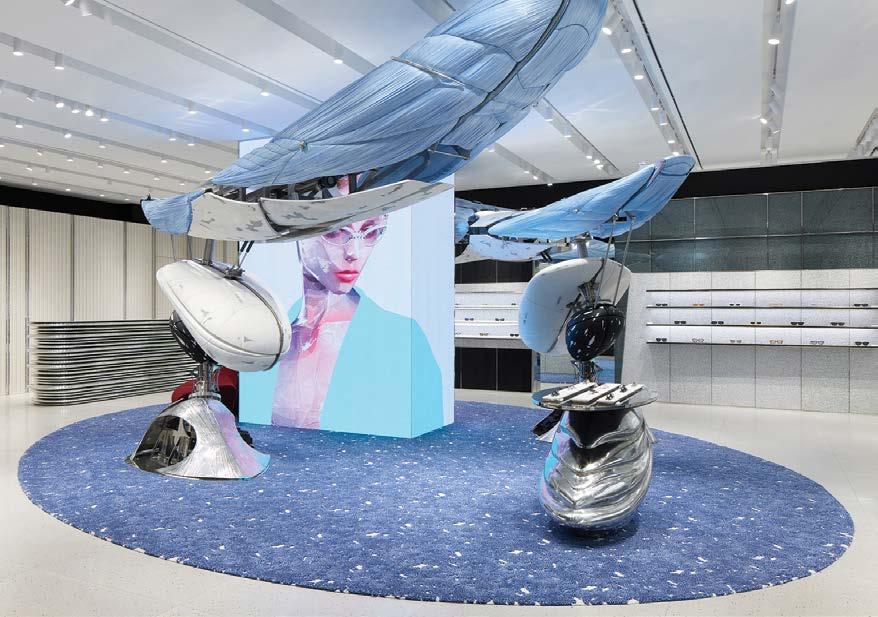
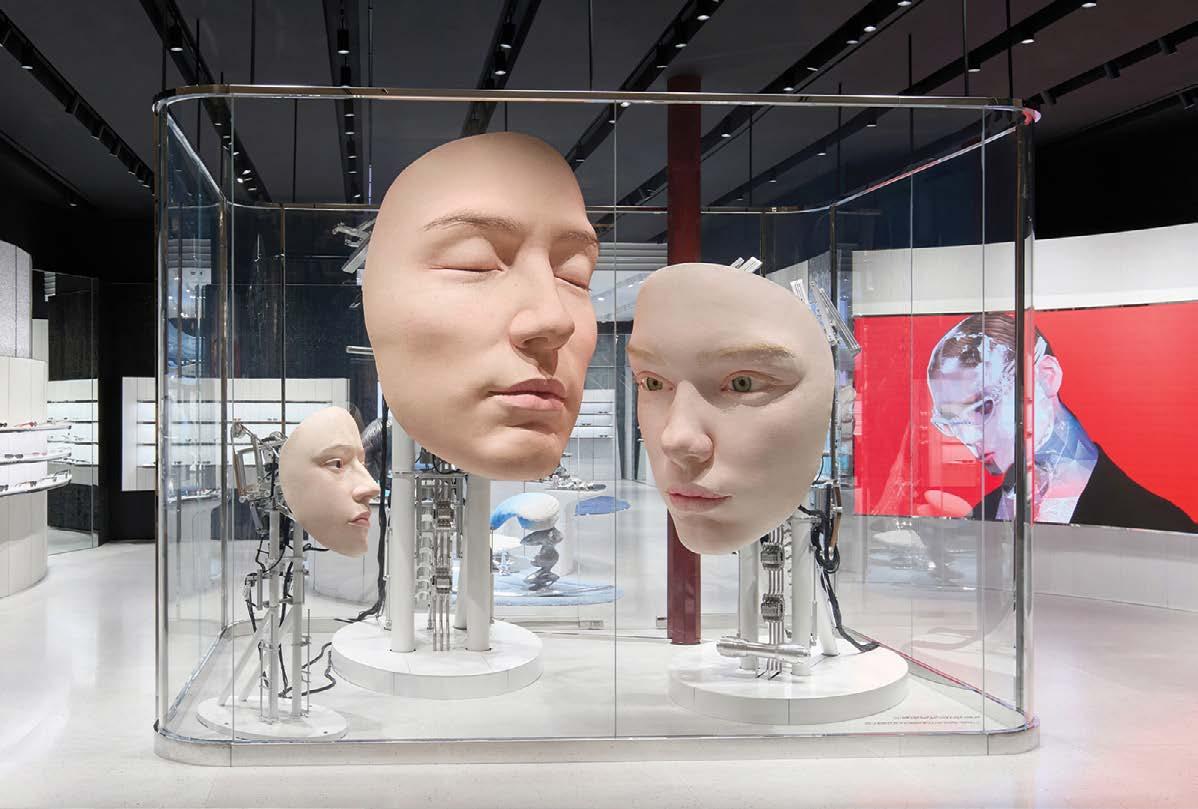
GENTLE MONSTER UNVEILS REIMAGINED DUBAI MALL STORE ↓
The brand reopens its Dubai Mall flagship with a new immersive store concept.
Gentle Monster has reopened its flagship store at Dubai Mall following a comprehensive redesign. The newly reimagined space introduces an immersive retail concept that integrates art and technology as part of the brand’s evolving creative direction. A key feature of the store is the Giant Head Kinetic Object—an animated installation composed of three large-scale faces positioned at the entrance. www.gentlemonster.com

CULLINAN CROWN LAUNCHES
IN DUBAI →/
The Dubai-based brand launches with an emphasis on enduring fine jewelry.
Cullinan Crown is a Dubaifounded luxury jewelry house focused on creating timeless, fine jewelry rooted in craftsmanship and long-term design value. Inspired by the Cullinan Diamond as a symbolic reference, the brand emphasizes strength, rarity, and enduring quality. All designs are developed in Dubai and crafted using high-qualityd materials, with a focus on longevity rather than seasonal trends. www.cullinanuk.com


Invests In Entrepreneurs

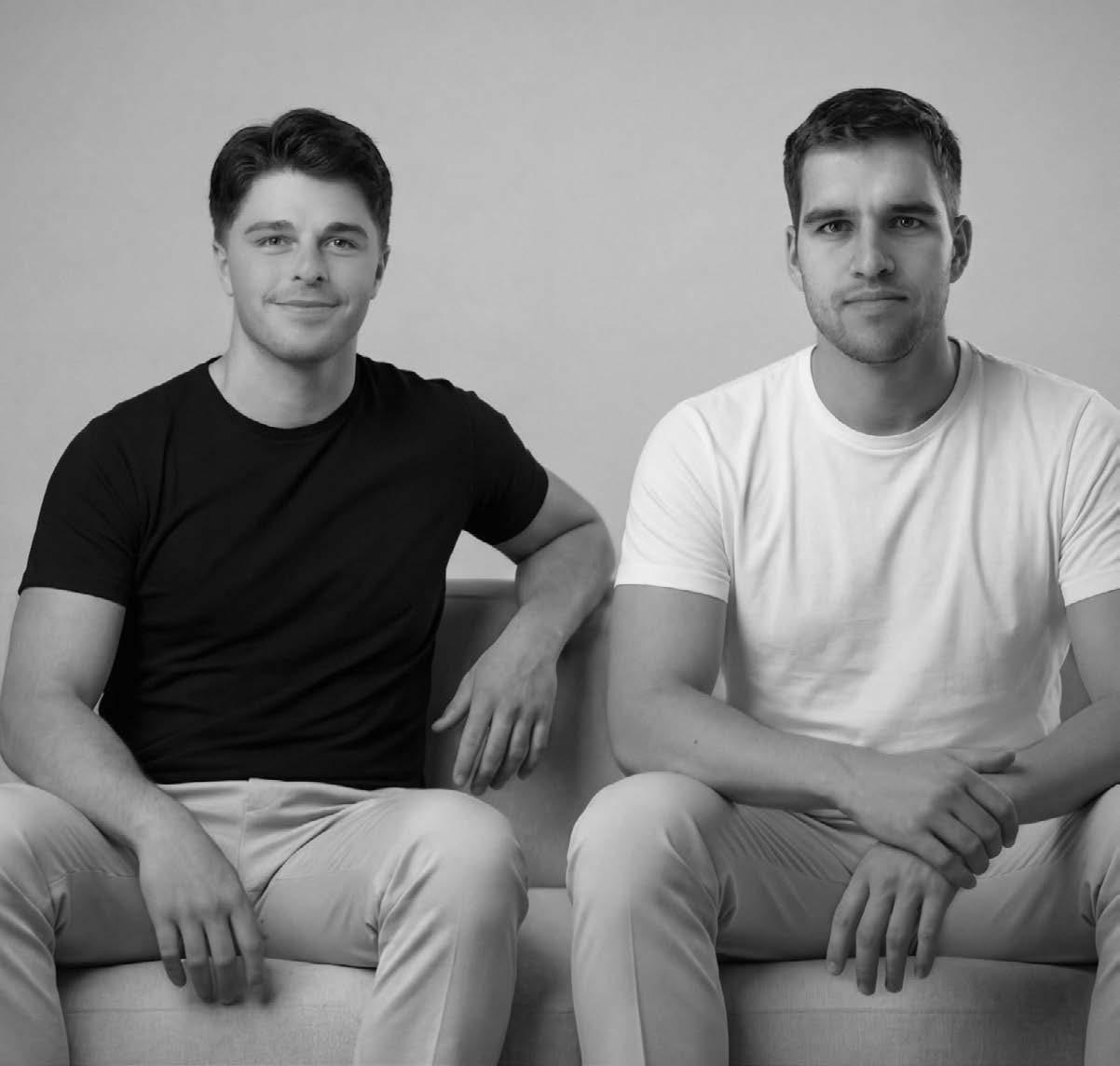
→ Charlie and Max
are the co-founders of Carabia, a UAE-based online used car resale platform that doesn’t involve dealer mark-ups or middlemen.
The Resale Reset
Charlie and Max Lovett—brothers and now co-founders—are on a mission to create a more transparent and seamless used-car resale market in the UAE with the launch of Carabia.
by AALIA MEHREEN AHMED
Lovett
→
career began in a hypergrowth fintech startup, working across marketing, product design, and UX, before joining a FTSE 100 organisation operating within one of the most tightly regulated consumer industries.
Having moved to the UAE in 2003 at a very young age, brothers Charlie and Max Lovett grew up watching Dubai develop into the hub of innovation that it is today — and also into a city that, as they put it, is “one of the most car-centric places in the world.” But having witnessed such a definitive period of transformation also made them privy to some of the unique circumstances faced by the country’s expat population; in particular, the middlemen-heavy car resale market. “We could see that selling a car privately was far harder than it should be, but what initially felt like an expat inconvenience revealed itself to be a deeper structural issue,” Charlie says. “Time and again, people sold to dealers not because they wanted to, but because private selling felt noisy, unreliable, and stacked against them. We
experienced this firsthand when selling our dad’s car. After finding the current options either too difficult or too expensive, it was sold to a dealer - only to reappear on a public marketplace a week later for around 20% more!”
As is often the case with entrepreneurial ideas born out of personal discomfort, the Lovetts too decided to look further into the market. “What became clear was that this wasn’t an edge case; it was a symptom of how the market itself was structured,” Max says. “Value wasn’t being lost because the car lacked quality, but because the system wasn’t designed for private owners. Looking closer, many marketplaces claim to be peer-to-peer, yet are optimised around dealer economics. Sellers are charged regardless of outcomes, while buyers navigate a landscape
dominated by resellers, hidden dealerships, and speculative offers. Carabia was built to address that gap - by removing unnecessary intermediaries, verifying genuine private sellers, and structuring the marketplace around clarity, accountability, and fair outcomes.”
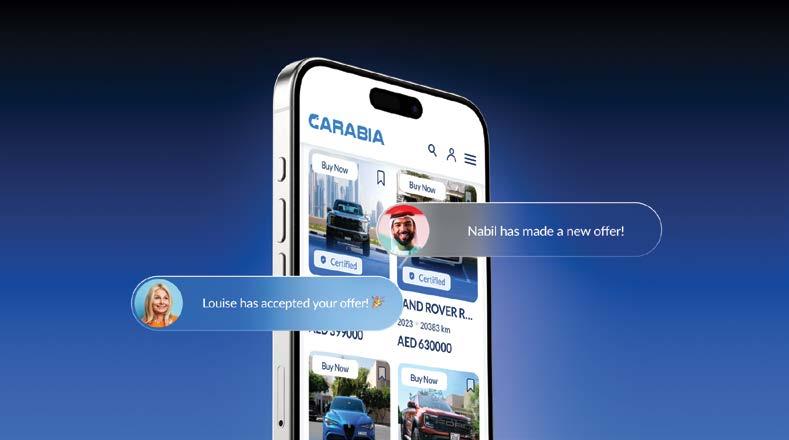
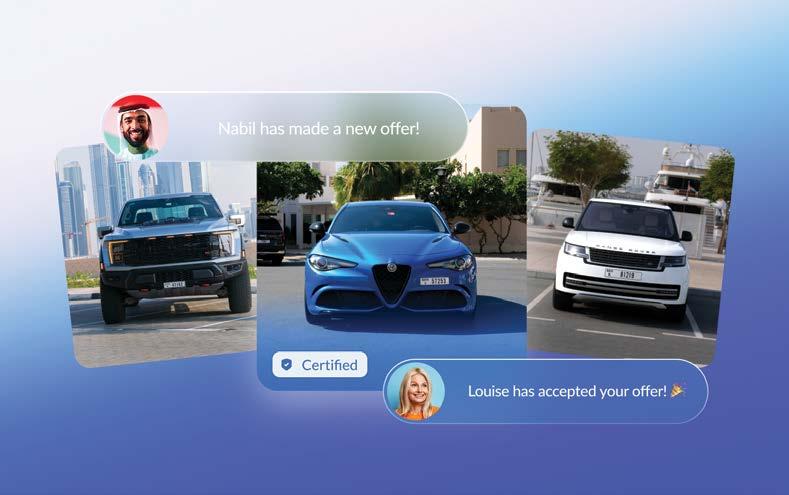
Launched in 2023, Carabia was thus built as an online marketplace that is “powered by private owners”, wherein people in the UAE buy and sell cars directly with each other, without going through car dealers. “At Carabia, the experience is intentionally simple on the surface, supported by structured checks behind the scenes,” Charlie explains. “Private owners list their car for free by submitting key details, photographs, and proof of ownership. Every submission is reviewed to confirm the seller is the
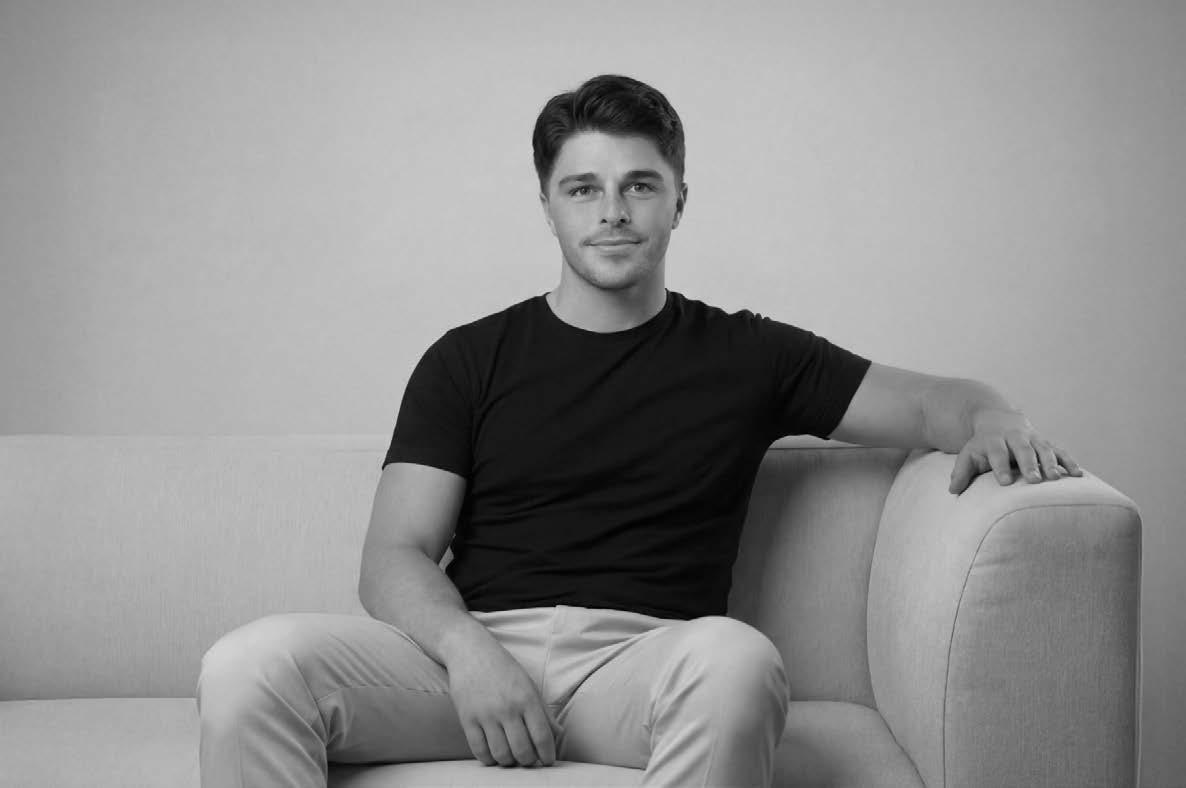
Charlie Lovett is the co-founder of Carabia. His
“CARABIA
AIMS TO
CREATE
A RIPPLE EFFECT ACROSS THE
UAE
AUTOMOTIVE INDUSTRY BY ENCOURAGING LONGER OWNERSHIP CYCLES AND MORE RESPONSIBLE CONSUMPTION.”
registered owner, which protects the integrity of the marketplace and enables fair, direct negotiation. All communication happens onplatform, meaning sellers aren’t exposed to cold calls, unsolicited messages, or off-platform pestering. Sellers never pay to list or to sell. Buyers register to access listings and communicate with sellers through the platform, and offers are made within a structured framework designed to discourage speculative behaviour. For vehicles that meet our criteria - newer models, lower mileage, under warranty, and no damage history - we offer Carabia Certified: a merit-based designation supported by a complimentary thirdparty inspection. This is not a paid upgrade. In practice, a typical transaction sees an owner list their car in minutes, engage with serious buyers over a short period, agree a price, and complete the transfer once inspections and checks are done. Once a price is agreed, we support both parties through the handover process, with the long-term goal of delivering a fully integrated end-to-
end ownership transfer experience.”
Beyond fixing the more obvious dealer-driven entanglements embedded in the system, however, the Lovetts felt that it was especially important to address an imbalance that had quietly become the norm in car resales. “We made a deliberate decision to keep selling completely free,” Max reveals. “Many established marketplaces put pressure on sellers through listing fees or expiry cycles, often forcing them into accepting offers they’re not comfortable with simply to avoid additional costs. Carabia flips that model. Sellers list for free and retain full pricing flexibility, while buyers pay a very
ownership journey, allowing Carabia to act as a single access point without compromising trust or transparency.”
But correcting pricing distortions is only one part of the solution at Carabia — what ultimately underscores its entire mission is the goal of restoring trust between buyers and sellers. “One of the biggest trust challenges in traditional models is the distance between buyer and the true owner of the car,” Max reiterates. “By ensuring every listing on Carabia comes directly from a verified private owner, we remove that opacity. Owners have lived with their vehicles, understand their history, and are motivated by fairness rather than rapid turnover. This results

→ Buyers engage only through the platform, make structured offers, and use inspections where appropriate, while sellers aren’t exposed to cold calls or pressure, and transactions complete without dealer markups or pay-toplay visibility.

small, fixed, clearly disclosed fee (from AED 99) only when engaging in a verified, owner-led transaction. Our incentives are therefore aligned with successful outcomes - we only benefit when a car actually changes hands. As the platform scales, we also see opportunities to integrate complementary services across the
in authentic, individual listings - rather than scripted, homogenous dealer stock - which buyers instinctively trust more. Buyers know who they’re dealing with, why the car is being sold, and how it has been used. That direct accountability fundamentally changes behaviour. Combined with verification and optional inspections, it materially
reduces the trust deficit that characterises dealer-heavy marketplaces.”
Carabia’s multi-faceted vision has so far been indirectly supported by many shifts within the UAE ecosystem. For starters, a 2025 report by Data Insights Market showed that the UAE used car market was valued at US$18.39 million in 2025, and is projected to expand at a compound annual growth rate (CAGR) of 11.73% from 2025 to 2033. Wider market shifts enabled by important governmental authorities have also further aided
Carabia’s model of operation. For example, Dubai’s Roads and Transport Authority (RTA) has introduced an easy transfer process of online vehicle ownership wherein both the buyer and seller can complete the transfer without needing to visit a service center. “The UAE has been an exceptionally strong environment in which to build Carabia, largely due to the maturity and pragmatism of its automotive infrastructure,” Max says.
“Authorities have digitised large parts of the ownership lifecycle - from renewals and inspections to transfers - significantly reducing friction at the
point of exchange. In many ways, the regulatory framework is already doing the heavy lifting; our role is to connect those systems into a coherent, user-friendly experience.”
The Lovetts thus see the UAE’s digitised automotive framework as not just an enabler of transactions, but a catalyst for how resale practices themselves could change. “Beyond transfers, clear ownership and title systems, mandatory testing and registration discipline, insurance clarity, and consistent enforcement all reduce ambiguity and fraud risk,” Charlie explains. “In a perfect world,
“ONE OF THE BIGGEST TRUST CHALLENGES IN TRADITIONAL MODELS IS THE DISTANCE BETWEEN BUYER AND THE TRUE OWNER OF THE CAR. BY ENSURING EVERY LISTING ON CARABIA COMES DIRECTLY FROM A VERIFIED PRIVATE OWNER, WE REMOVE THAT OPACITY.”
→ By improving resale confidence, Carabia encourages longer ownership cycles, reduces unnecessary replacement, and turns the secondary market into a practical sustainability lever for the UAE.
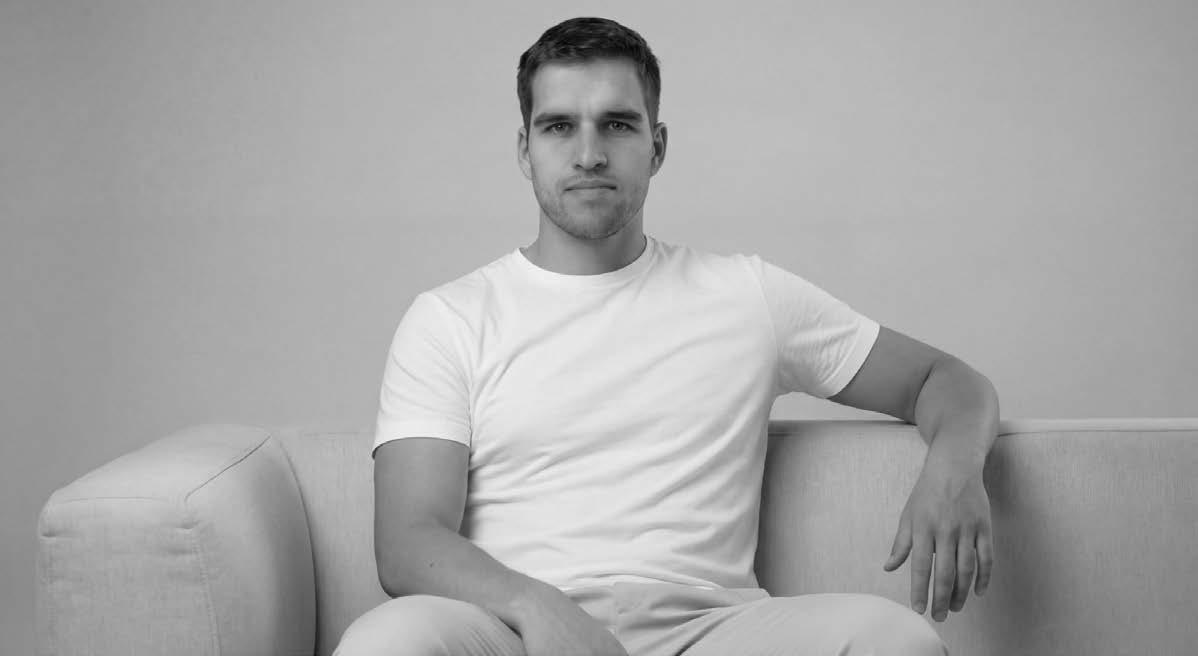
→ Max Lovett is the co-founder of Carabia. Prior to his curr, he worked at an early-stage research consultancy delivering projects for financial institutions, from testing the clarity of communications to supporting regulatory implementation.
price discovery would always be purely marketdriven - auctions are theoretically the fairest way to value a car. In reality, consumer education, trust, and guarantees around vehicle condition are prerequisites. That’s an evolution we think the market will move toward over time. The UAE’s digitised foundation makes that progression possible.”
For the foreseeable future, however, the co-founders have their own sights set on consistently building a startup they’ve built from scratch. “Carabia has been bootstrapped from day one,” Charlie reveals. “This allowed us to remain close to the problem, stay capital-disciplined, and
build the right foundations before introducing external funding. The biggest challenge has been building and scaling in a capital-intensive category while competing against well-funded incumbents. Bootstrapping means every decision must be carefully sequenced - how quickly to grow supply, when to invest in demand, and where to allocate limited resources.”
“Unlike larger players, we don’t have the luxury of buying growth; we’ve had to earn it organically while still creating enough momentum for the marketplace to function,” Max adds. “That discipline has shaped a stronger platform. Looking ahead, we remain open to
strategic capital, but only where it supports long-term integrity rather than short-term scale.”
With a clear-cut plan thus in place, the brothers now look forward to building on the growth they’ve garnered so far. “Carabia aims to create a ripple effect across the UAE automotive industry by encouraging longer ownership cycles and more responsible consumption,” Charlie declares. “By improving resale confidence and transparency, owners are more willing to hold onto cars for longer, which naturally extends vehicle lifecycles. This is significant because new car manufacturing is the most carbon-intensive part of the automotive
value chain. A trusted secondary market reduces unnecessary replacement and supports circular economy principles without requiring behavioural sacrifice from consumers. By tying value to condition, maintenance, and transparency, Carabia also incentivises better ownership behaviourimproving safety, efficiency, and sustainability outcomes across the market over time. The UAE has quietly built one of the most advanced automotive regulatory frameworks in the world. With ownership, testing, and transfers already digitised, platforms like Carabia can focus on fixing trust and coordination rather than reinventing infrastructure.”
In
The Loop/
Emirati influencer Khalid Al Ameri: Stop Chasing
Virality,
Start
Creating Impact
The 2026 edition of 1 Billion Followers Summit in Dubai features over 500 speakers with a combined following of more than 3 billion, and hosts over 100 SMEs and creatorfounded startups to showcase products and ideas.
by TAMARA PUPIC
Emirati influencer Khalid Al Ameri took the stage at the 1 Billion Summit - the world’s largest event dedicated to the content creator economy - to address one of the most pressing tensions in today’s creator economy: the pursuit of virality over purpose.
“A story that will get you a 1 million views - why is that the common question that most creators get asked? My problem with it is because people will do whatever possible to get to that number, instead of doing what is right,” Al Ameri said.
“We know that in this industry there are people with millions of followers, but when they organize a meet and greet, no one shows up. They launch a product and no one buys it.
“When you are not focused on virality and views, you are focused on how to get better and how to offer more. What’s the point of virality if there is no meaningful message behind it? If virality is a formula, then there is one other thing that cannot be hacked—
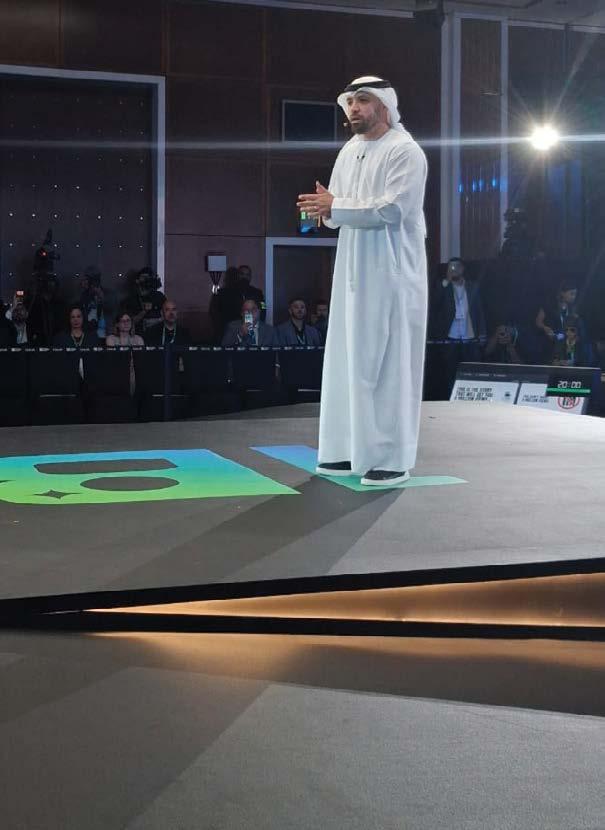
and that is the impact of your work. That is the ‘virality’ you should aim for: when one person comes up to you and says that your content changed their life.”
The third edition of the 1 Billion Followers Summit is taking place in Dubai on January 9-11, 2026, featuring 500 speakers with a combined following of more than 3 billion, and gathering over 15,000 content creators and over 30,000 visitors.
Held under the theme “Content for Good”, the event positions Dubai as a global hub for digital innovation, storytelling, and the future of social media influence.
Organized by the UAE Government Media Office, the 1 Billion Followers Summit is being hosted at Emirates Towers, Dubai International Financial Centre (DIFC), and Museum of the Future.
The three-day-event features more than 580 sessions, workshops and debates across multiple tracks covering content, economy, and technology.
UAE Minister of Cabinet Affairs
H.E. Mohammad Al Gergawi
Warns of Creators’ Expanding Power
“We see you as creators of impact and life. Media is not a job anymore—it is a mission.”
by TAMARA PUPIC
His Excellency Abdullah Al Gergawi, UAE Minister of Cabinet Affairs, delivered a powerful keynote address at the 1 Billion Followers Summit, highlighting the growing responsibility and influence of content creators in shaping societies, values, and future generations.
“In many cases, your impact surpasses that of governments, and your responsibility grows bigger,” Al Gergawi said. “Content creation is no longer a luxury, but the manufacturing of meaning. Meaning is the real fuel of our lives. When meaning falls, the human falls—and society falls.”
Addressing creators directly, he emphasized their role in shaping perception and values, particularly among younger audiences. “Who creates meaning today? You,” he said. “You don’t only transmit information; you shape how young people see the world. That is why this summit comes under the theme ‘Content for Good.’ We see you as creators of impact and life. The media is not a job—it is a mission.”
Al Gergawi also reflected on the historical forces that have shaped humanity, drawing parallels to today’s digital landscape. “Throughout history, governments organized life through laws and regulations, scientists changed how humans understand the world, and businesses transformed economic values and ways of life,” he said. “Today, algorithms are the fourth force. They determine what people will and will not see. They define who becomes a hero and influence our economic decisions.”
He concluded by posing a critical question to the audience: “The question is—who feeds these algorithms?”
Reinforcing the broader message of responsibility, Al Gergawi stated that content creators are no longer simply storytellers, but active contributors to human development.
“Content creators are not just storytellers,” he said. “They are drivers of human development.”
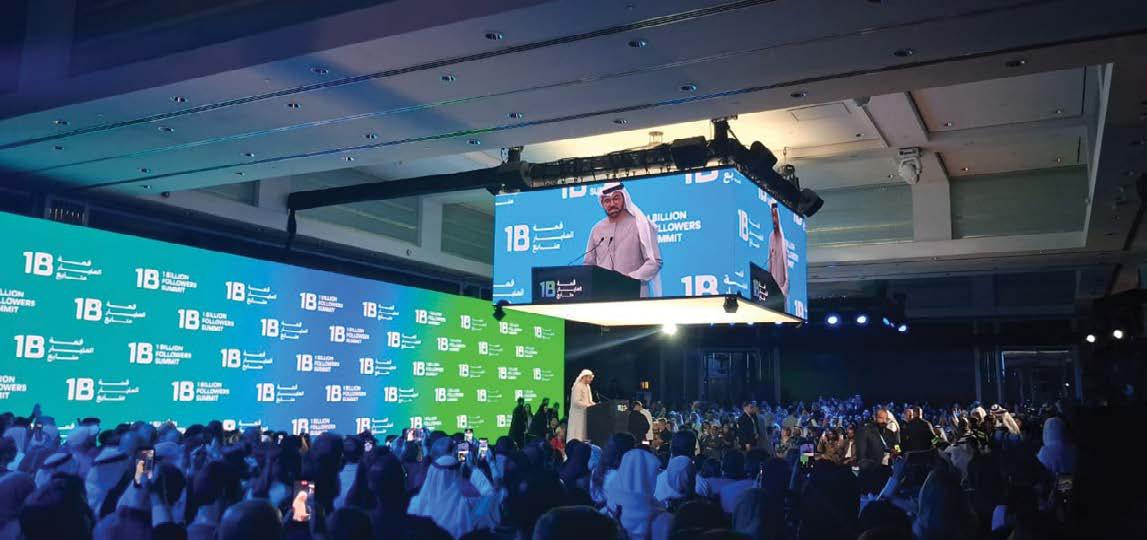
In The Loop/
H.E. Reem bint Ebrahim Al Hashimy Highlights Power of Digital Solidarity
“Content creators have the ability and agency to use their platforms in the service of others—to make things better for those in need.”by TAMARA PUPIC
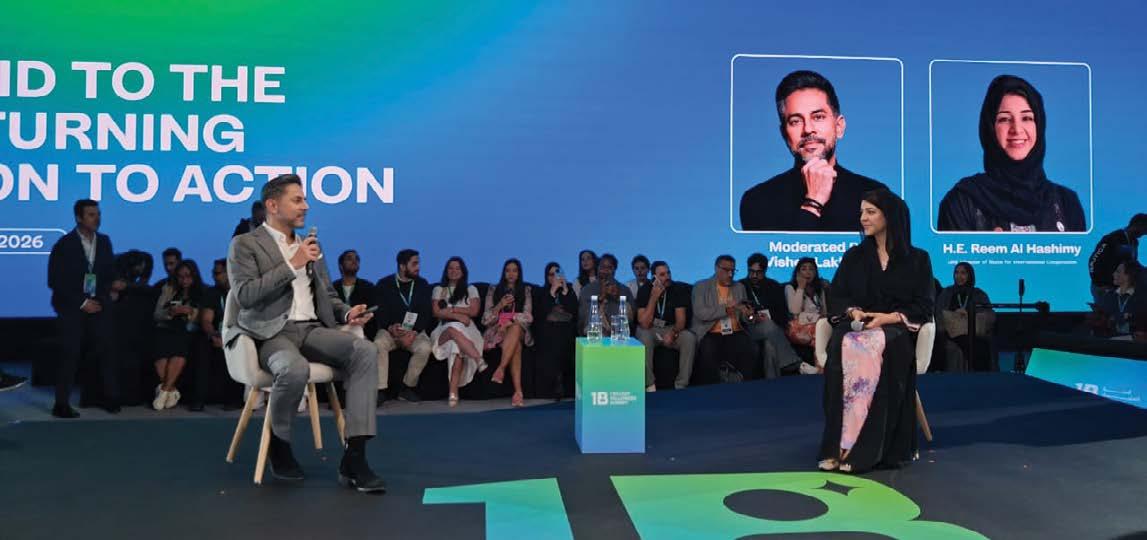
Addressing the global creator economy at the 1 Billion Followers Summit in Dubai, UAE Minister of State for International Cooperation H.E. Reem bint Ebrahim Al Hashimy called for turning online influence into tangible action.
Moderated by Vishen Lakhiani, founder of Mindvalley, the session focused on how digital attention can be mobilized to drive meaningful social impact.
“One of the biggest challenges we face is that crises keep erupting around the world,” she said. “The traditional response is now too limited—we need everyone to help and support. What happens near or far from here is equally important. We need that global sense of solidarity, and so sharing content from all around the world on your platforms and letting us know about those different realities is beyond important.
Addressing the role of content creators, Al Hashimy noted the challenges of sustaining attention around humanitarian crises.
“It’s hard to grab and sustain attention, and the challenge is how to keep these stories relevant and at the forefront of people’s minds in order to inspire them to help.
Content creators talk about these stories in a different way than statistics do.”
Responding to concerns about creators being judged as political when addressing crises such as Gaza or Sudan, she added, “There is nothing political about talking about human suffering. People need to see what life is like there. Ultimately, we all have to live with ourselves, knowing whether we did everything we possibly could. Content creators have the ability and agency to use their platforms in the service of others—to make things better for those in need.”
“Women
Should Be Able To Ask Questions About Their Health Without Shame and Guilt,” Says Indian Actor and Wellness Entrepreneur Samantha Prabhu
by AALIA MEHREEN AHMED
In May 2025, an article published by the World Economic Forum (WEF) declared something that has long been quietly understood by many women across the globe —that “women’s health is systematically under-researched despite higher healthcare use.”
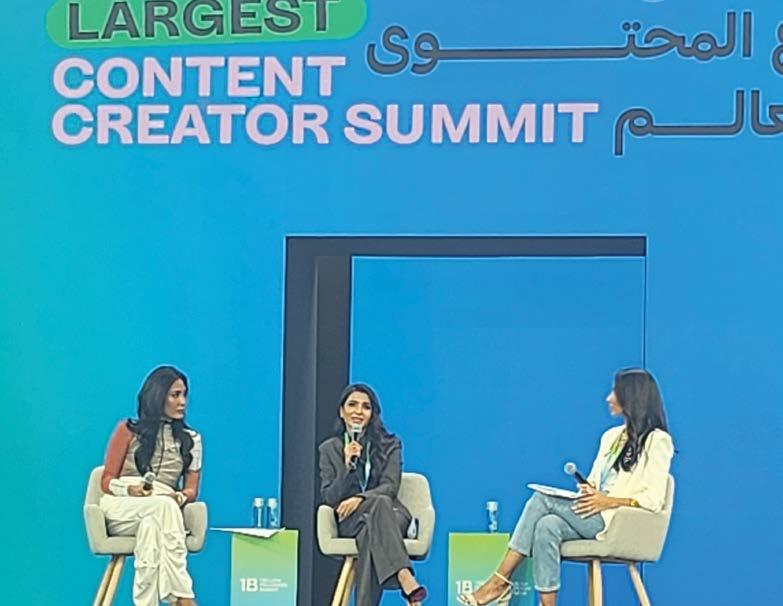
To raise wider awareness on the topic, a panel discussion at Dubai’s 1 Billion Followers Summit 2026 brought together three prominent female wellness entrepreneurs and advocates: Samantha Ruth Prabhu, Indian actress and founder of ZOY [menstrual and feminine healthcare brand], and co-founder of Secret Alchemist [aromatherapy and wellness platform] and Gataca [longevity supplements]; Mona Sharma, nutritionist and founder of Mona Health, an AI-driven diagnostic healthcare solution; and Shayoon Mendeluk (Shayoon), holistic healer and founder of The LightForce Center, a holistic healing and spiritual wellness centre.
“When I started my podcast there was a lot of guilt I had to overcome for asking certain questions,” said Prabhu during the panel discussion, titled ‘The Female Creators Redefining Health.’ “Every woman should feel enabled to ask questions and demand equality from their healthcare providers. When I started out there was information around me, but it was a dark place.... For context, I started because of my autoimmune disease and eventually quit my job for two years so that I could process all this fragmented knowledge. But not everyone can do that; not everyone can quit their job to look after their health solely. So my aim is to ensure no one feels as helpless as I did, and is able to get access to evidence-led knowledge and not be gaslit by what the system says.
The ramifications of an under-researched female wellness ecosystem are certainly being felt more by women today than ever before. As such, the panel highlighted the importance of listening to women and their healthrelated struggles. “Women especially with darker complexions are underrepresented in data,” noted Sharma. “How many of us here have symptoms but are not able to ask their healthcare providers? This is particularly where
In The Loop/
technology is so important in enabling solutions catered to women.”
To put this into perspective, a 2024 report by the Association of American Medical Colleges notes that “before 1993, women were rarely included in clinical trials.” In flipping the script, however, the role of health and wellness influencers cannot be understated. “When truth is served with intention, that becomes connection,” noted Shayoon. “We were taught to suppress our voices, but it is so important to understand how you can use your truth. I want people to tell me the truth, not small talk. My biggest advice to women understanding their health will be to create a space to replace fear with curiosity.”
Indeed, from breaking down stigma around female health-related discourse to introducing topics that have rarely been addressed by mainstream health institutions, the likes of Prabhu, Sharma, and Shayoon have been instrumental in ensuring more women are informed about their bodies and health.
Prabhu also highlighted that the ultimate goal of health and wellness creators is to help women gain agency over their choices and bodies. “We’re often told we need to be quiet and accept half truths,” she said. “And although this upsets the status quo, it is absolutely necessary. I know firsthand because of all the trolling I faced with the pivot to healthcare, how shaky this ground is when you start to ask questions. This is more important than it ever has been.”
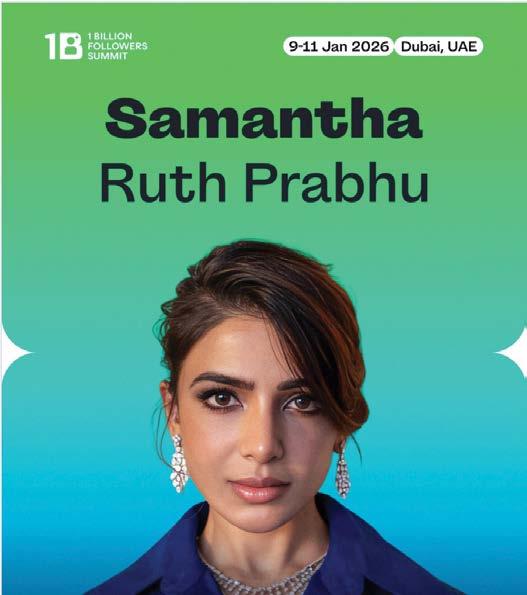
“If You’re In For The Long Run, ‘Fake It Till You Make It’ Won’t Work,”
Says WazenKaren
“I need to always work on something that feeds into my larger purpose. Even the small goals and projects must always be there to support the larger goal.”
by AALIA MEHREEN AHMED
Karen Wazen wears many commendable hats — in addition to being the founder of her eponymous eyewear brand By Karen Wazen, a Partner at investment management company KE Partners, and a recently appointed UNHCR Goodwill Ambassador, she also commands a digital audience of more than 15 million followers across social media, including eight million on Instagram alone.
But during a candid fireside chat at the 1 Billion Followers Summit in Dubai, the entrepreneur and content creator underscored how the weight of accountability only increases with success - a reality for many content creators who’ve built large follower bases across social media.
“Growth is a double edged sword at any stage,” Wazen said. “When you’re starting out a business when you’re relatively unknown and have no community in place, there is room for mistakes...you’re allowed to have learning curves. But when you start a business with a community already in place, there is no room for mistakes. So creators need to know what they’re getting into.”
Wazen then reiterated that bypassing hard work isn’t an option despite the exposure offered by social
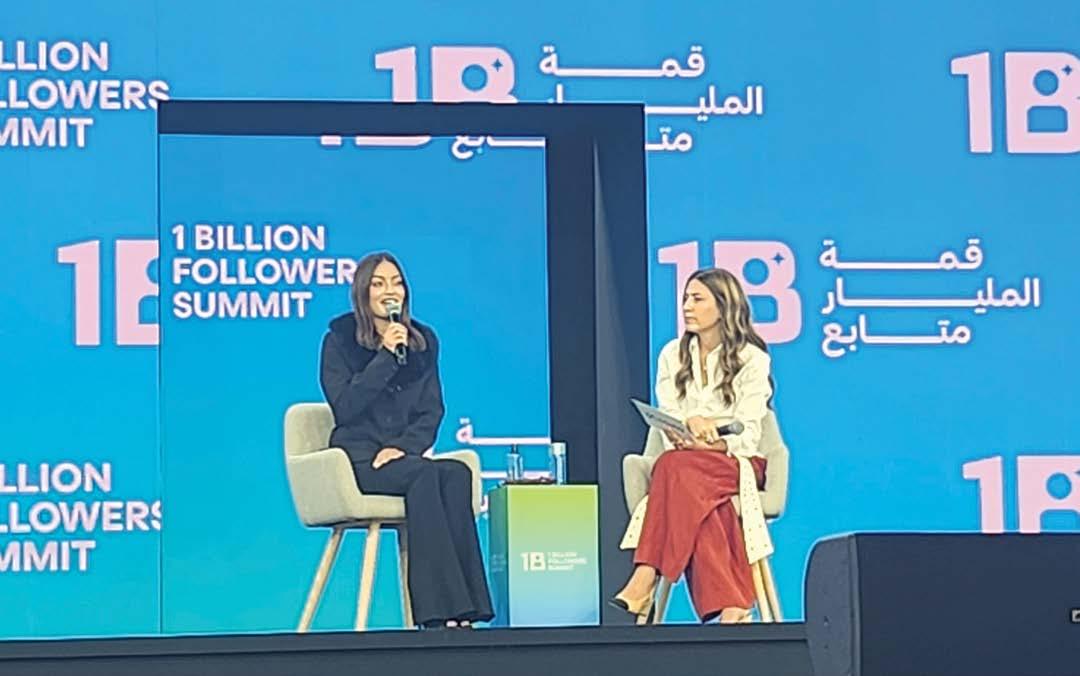
media. “Nothing that you build is easy - there is no successful person who hasn’t put in the work,” she said. “For me, it took some hard work to start out, of course. But what I want to point out is that maintaining that success is just as difficult if not more.”
Wazen also shared the importance of celebrating small wins just as much as the big ones. “We recently reached the numbers that we’d wanted for so long but it took me just a few minutes to scroll online and see the numbers that another company had made, and immediately feel like we’d not done enough...but that is so unfair!” she said. “It is not healthy to dismiss the achievements you’ve made. Celebrating the small wins is so important, but reaching that mindset is a work in progress. And you have to remember, being paid is not just being paid in cash. This is an investment. But being paid can also be in credibility, networking, building contacts - all of this also hold a lot of value to me.”
Sharing that her biggest lesson so far has been to avoid collaborations that don’t align with her values, Wazen stated that pretending to adopt a certain persona does not guarantee longevity and sustainable growth.
“The ‘fake it till you make it’ mindset depends on where you want to make it,” she said. “If you’re in for a quick buck or quick wins, it may work. But if you’re in it for the long run, ‘fake it till you make it’ won’t work. So, for me, I need to always work on something that feeds into my larger purpose. Even the small goals and projects must always be there to support the larger goal. Otherwise I won’t take it on.”
IT IS NOT HEALTHY TO DISMISS THE ACHIEVEMENTS YOU’VE MADE. CELEBRATING THE SMALL WINS IS SO IMPORTANT, BUT REACHING THAT MINDSET IS A WORK IN PROGRESS.” “
In The Loop/ Mohamed Alabbar Warns of a Major Shift Ahead:
“AI Will Replace Much of What Expats in the UAE Do”
Mohamed Alabbar, founder of Emaar Properties and noon, took the stage at the 1 Billion Followers Summit in Dubai with a blunt message on power, scale, and disruption in a rapidly changing economy. by
TAMARA PUPIC
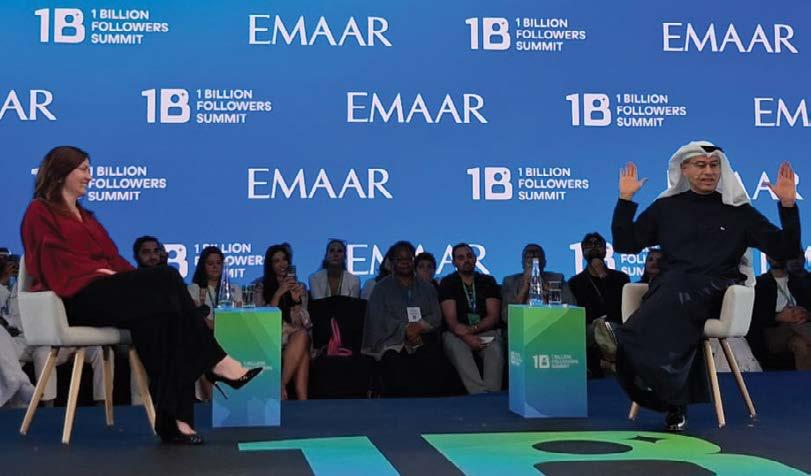
Social influencers need to understand that their brand—their name—is everything,” Mohamed Alabbar, founder of real estate development company Emaar Properties and e-commerce and digital marketplace noon, said at the 1 Billion Followers Summit in Dubai.
“If you’re a social influencer and you’re not building your brand for the long term, you’re not really in business. We think about our businesses long-term, so whoever happens to be in power at any given time doesn’t affect us too much. At the same time, we want the
best for the U.S., China, and others, because that’s what’s good for the global economy.”
During a fireside chat titled “The Art of Thinking Big Enough,” moderated by Hadley Gamble, Chief International Anchor at IMI, Alabbar noted that Emaar was not equally successful across all its global projects, crediting the UAE for the company’s achievements.
“We are mesmerized by how easy it is to succeed in the UAE. We are so spoiled— this country makes you succeed easily. In other countries, you can’t breathe, regardless of all your money,” Alabbar said.
“The story of Emaar is that I was able to solve a problem better than others, but it is the UAE that made it successful. It was about hard work, protecting your brand, and bringing in the best people,” he added.
When asked about the most difficult aspects of running his business over several decades, he jokingly pointed to taking Emaar Properties public on the Dubai Financial Market (DFM) in 2000.
“Emaar going public was a stupid idea. I need to announce my results every 90 days, so every 90 days I need to strip naked in public. So, don’t go public. But the good thing about taking any company public is that it differentiates the men from the boys.
“Shareholders don’t want to listen to your problems, but your results, so discipline and resilience in your business are key.”
In closing, he addressed questions on the impact of AI and the distribution of wealth.
“AI is the greatest news for a country like the UAE,” Alabbar said. “We depend on amazing people coming from abroad, and much of that will change because AI will do a lot of that work for us. But I believe that smart people—if they know how to use AI— will still do well.”
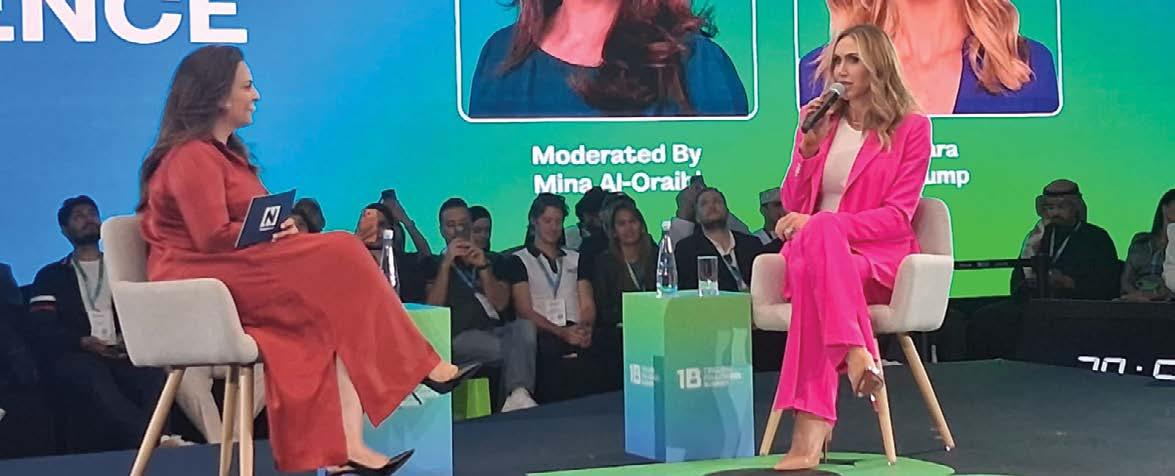
Lara Trump Advocates for Authenticity on Social Media
At the 1 Billion Followers Summit in Dubai, Lara Trump shared her views on media trust, authenticity on social platforms, and how AI is reshaping public perception.
by TAMARA PUPIC
American media personality Lara Trump joined a growing lineup of international voices at the 1 Billion Followers Summit in Dubai, offering her perspective on the shifting relationship between media, public perception, and influence.
Speaking during a fireside chat moderated by Mina Al-Oraibi, Editor-inChief of The National, Trump reflected on the changing media landscape, arguing that a significant segment of the public is actively seeking information outside traditional channels.
“We are moving towards a space
where more people are seeking alternative sources of information.
Donald Trump has exposed that legacy media hasn’t always been entirely truthful, and that has caused a lot of people, especially in the US, to turn to social media. It should be credited to Trump also going to podcasts, not only legacy media, which means that he wanted to reach other audiences.”
Trump also addressed concerns around misinformation, deepfakes, and synthetic content caused by AI. When asked whether regulation could play a role, Trump said, “I’m not too pro-regulation in general, but I do think that in the AI space and in the social media space, some regulation is indeed needed. I’m
pro-regulation for that.”
A recurring theme throughout the discussion was authenticity which Trump identified as central to building trust with an audience. “Authenticity goes a long way,” she said. “We live in a world where people are craving what’s real, which in fact brings many to gravitate to Donald Trump, because he is so real.”
Closing the session, Trump reflected on Dubai’s role as a cultural and geopolitical bridge. “Dubai is sort of a bridge to bring Westerners to the Middle East,” she said. Dubai is a great place to live and visit—it feels like a hub for the world in so many respects. We should have more people travel here.”
In The Loop/
Dubai Takes Center Stage for Global Good as MrBeast Reveals “1 Billion Acts of Kindness” Winners
“We have a lot of influence and it would be shame not to use it for impact, for good. We should not forget that the numbers on the screen are actual people,” MrBeast said. by
TAMARA PUPIC
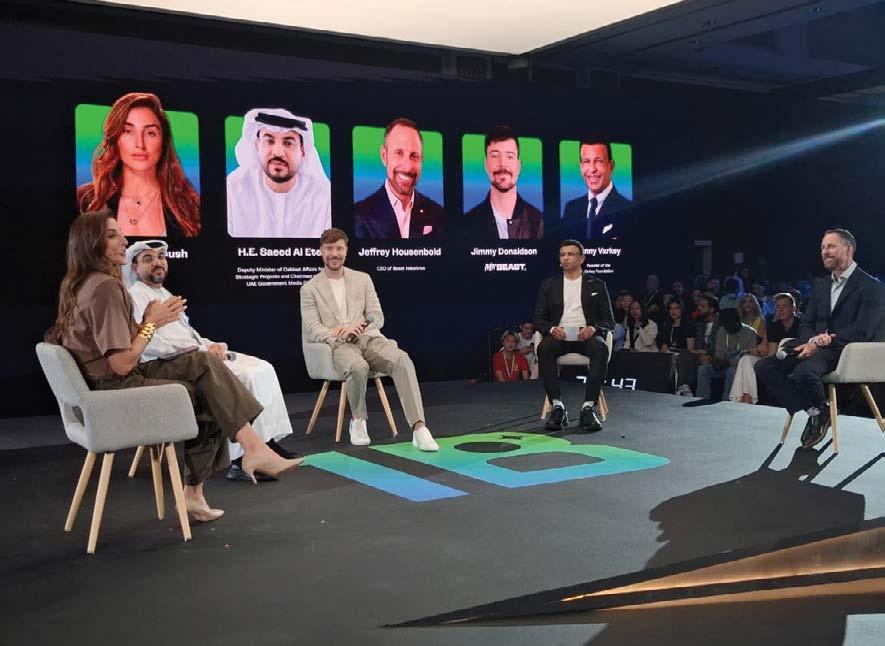
To raise wider awareness on the topic, a panel discussion at Dubai’s 1 Billion Followers Summit 2026 brought together three prominent female wellness
entrepreneurs and advocates: Samantha Ruth Prabhu, Indian actress and founder of ZOY [menstrual and feminine healthcare brand], and co-founder of Secret Alchemist [aromatherapy and wellness platform] and Gataca
[longevity supplements]; Mona Sharma, nutritionist and founder of Mona Health, an AI-driven diagnostic healthcare solution; and Shayoon Mendeluk (Shayoon), holistic healer and founder of The LightForce Center,
a holistic healing and spiritual wellness centre.
“When I started my podcast there was a lot of guilt I had to overcome for asking certain questions,” said Prabhu during the panel discussion, titled ‘The Female Creators Redefining Health.’ “Every woman should feel enabled to ask questions and demand equality from their healthcare providers. When I started out there was information around me, but it was a dark place....For context, I started because of my autoimmune disease and eventually quit my job for two years so that I could process all this fragmented knowledge. But not everyone can do that; not everyone can quit their job to look after their health solely. So my aim is to ensure no one feels as helpless as I did, and is able to get access to evidence-led knowledge and not be gaslit by what the system says.
The ramifications of an under-researched female wellness ecosystem are certainly being felt more by women today than ever before. As such, the panel highlighted the importance of listening to women and their health-related struggles. “Women especially with darker complexions are underrepresented in data,” noted Sharma. “How many of us here have symptoms but are not able to ask their healthcare providers?