CARAVACA TURISMO 2026

Page 1


CARAVACA DE LA CRUZ

Sumario

Pág. 07 BIENVENIDOS A CARAVACA DE LA CRUZ

Pág. 8 UN POCO DE HISTORIA

Pág. 11 LA CRUZ DE CARAVACA

Pág. 12 AÑO JUBILAR “IN PERPETUUM” A PERPETUIDAD

Pág. 13 MONUMENTOS Y MUSEOS

Pág. 29 ARTESANÍA

Pág. 30 FERIAS Y FIESTAS

Pág. 32 SEMANA SANTA

Pág. 34 PEDANÍAS DE CARAVACA DE LA CRUZ

Pág. 36 PARAJE NATURAL LAS FUENTES DEL MARQUÉS

Pág. 37 LA VÍA VERDE DEL NOROESTE

Pág. 38 CAMINOS DE PEREGRINACIÓN

Pág. 40 GASTRONOMÍA

Pág. 42 INFORMACIÓN DE INTERÉS

BIENVENIDOS A CARAVACA DE LA CRUZ

SITUACIÓN

Caravaca de la Cruz, municipio que supera los 25.996 habitantes (INE 2024) y con una extensión de 859,51 km2, es el 5º municipio más extenso de los 45 que conforman la Región de Murcia, ocupando el 7,60 % del territorio de ésta, es cabecera de la amplia comarca del Noroeste de la CC. AA. de la Región de Murcia y población de referencia de otros municipios de las vecinas provincias de Granada, Jaén y Albacete.

Caravaca de la Cruz está situada a 627 m de altitud sobre el nivel del mar y posee un clima mediterráneo algo continentalizado con veranos secos en los que se dan temperaturas osci-

lantes entre moderadas y calurosas, inviernos fríos, pero cada vez más cortos, y primaveras suaves y ligeramente lluviosas. El municipio presenta en su conjunto una altitud elevada, ya que cerca de dos tercios de su territorio se sitúan por encima de los 800 m al norte y al oeste del término se encuentran los núcleos montañosos más elevados: Sierra de Mojantes (1605 m) y Sierra del Gavilán (1477 m).

Atravesada por los ríos Argos y Quípar que recorren el municipio en dirección oeste-este, es zona rica en recursos agropecuarios, lo que ya desde antiguo permitió que se convirtiera en lugar de asentamiento de diversos pueblos.

LOCATION

Caravaca de la Cruz is a municipality of more than 25,756 inhabitants covering an area of 859,51 km2 (approx 332 sq mi) and it is the 5th largest municipality among the total of 45 that conform Region of Murcia, being the 7.60% of its territory. It is the main town in the northwest area of Region of Murcia and a role model for many municipalities in the neighboring provinces of Granada, Jaén and Albacete..

Caravaca de la Cruz is located at an altitude of 627 meters above sea level. It has a Mediterranean climate with some continental characteristics. Temperatures can vary from moderate

to warm during a dry summer. It has cold winters yet growing shorter each year, and soft lightly rainy springs. The average temperature is high since almost two third parts of the area are located at 800 meters above sea level. Sierra de Mojantes (1605 m) and Sierra del Gavilán (1477 m), in the north area and the west area of the town, are the highest mountain ranges.

Argos River and Quípar River pass through the district from west to east, what makes it rich in agricultural resources. This situation has made the area a suitable place for village settlements since ancient times

Panorámica ciudad desde el barrio de Aranjuez

UN POCO DE HISTORIA

En lo que hoy constituye su término municipal, encontramos en el Paleolítico los primeros vestigios de poblamiento. A partir de ese momento otras culturas se van a asentar en estas tierras como atestiguan los yacimientos neolíticos, argáricos, íberos y romanos encontrados.

Es en el período medieval cuando se configura el primitivo trazado urbanístico de la villa que se limitaba al Cerro del Castillo. Es también en dicho período donde se sitúa la llegada de la Cruz a Caravaca. Pero será la conquista del Reino de Granada lo que supondrá para esta zona un notable auge económico, social y demográfico.

La práctica inexistencia de textos de los primeros siglos de dominio musulmán es indicio de su escasa importancia como núcleo urbano; Al-Himyari hace referencia a la Caravaca del siglo XI como a una alquería o aldea perteneciente al distrito de Mula. La necesidad de protección de este pequeño núcleo poblacional le llevó a levantar en lo alto de la colina donde hoy se alza la Basílica-Santuario, una rudimentaria fortificación que fuera amparo de personas y animales. En las postrimerías del dominio musulmán la situación de aislamiento del reino taifa de Murcia obliga a su rey, Muhammad Ibn Hud, a ofrecer vasallaje al rey de Castilla, Fernando III, solicitando el protectorado sobre Murcia. Así mismo, en 1243 se firma la Capitulación de Alcaraz y el 1o de mayo de ese año el entonces infante D. Alfonso, toma posesión en nombre de Castilla de casi todo el reino, incluida Caravaca. En el mes de julio de ese mismo año el catalán Berenguer de Entenza toma posesión de la villa. Unos años

después, en 1266, Caravaca, Cehegín y Bullas son entregadas a la Orden del Temple. Tras la desaparición de ésta, será la Orden de Santiago la que se haga cargo de ella, primero, de hecho, y más tarde de derecho cuando allá por 1344, por un privilegio fechado en Toro el 3 de agosto de dicho año, el rey Alfonso XI conceda a su hijo bastardo Don Fadrique, a la sazón maestre de la Orden de Santiago, las villas y lugares de Caravaca, Cehegín y Bullas.

Con la toma de Granada por los Reyes Católicos se inicia realmente el desarrollo de la villa como tal. El punto álgido de su crecimiento político y económico se alcanzará a lo largo del siglo XVIII favorecida, en gran medida, por la exportación de cereales y cáñamo. El siglo XIX será una centuria especialmente convulsa (Guerra de Independecia, conflictos entre liberales y absolutistas, etc.) y en la que las desamortizaciones afectarán significativamente a la ciudad. El 26 de julio de 1849, la Reina Isabel II concede a Caravaca el título de la ciudad.

Hoy Caravaca de la Cruz es una ciudad moderna, fundamentalmente de servicios, que cuenta con amplios equipamientos de todo tipo: sanitarios, educativos, comerciales... y una moderna autovía que la comunica con Murcia en menos de una hora, todo lo cual, unido a las actividades agropecuarias y al sector industrial, la convierten en una población dinámica y emprendedora.

Puerta de entrada del recinto amurallado.

HISTORY

First settlements of today’s municipal area of Caravaca de la Cruz are from the Paleolithic period. From that moment on, other cultures began to settle on these lands, as vouched for the Neolithic, Agar, Iberian and Roman sites found.

The castle’s hill delimited the primitive urban layout of the village during the medieval period and it is in this period the Cross is thought to have reached Caravaca. But it was the conquest of the Kingdom of Granada that brought significant economic, social and demographic growth for Caravaca.

The almost total inexistence of texts from the first centuries of Muslim control indicates that this urban

area did not have a high significance at that time; Al-Himyari refers to 11th-century Caravaca as a small village belonging to Mula’s district. The need to protect this small village led to the construction of a rudimentary fortification at the top of the hill. This fortification, where the Basilica-Sanctuary stands today, provided shelter for people and animals. At the end of Muslim domination period, the isolation of the Taifa Kingdom of Murcia forced its king, Mohammed Ibn Hud, to offer its vassalage to Fernando III, King of Castile, requesting a protectorate over Murcia. The Capitulation of Alcaraz (“Capitulación de Alcaraz”) was signed in 1243 and on the tenth of May of that year, Prince Alfonso took possession of almost the whole king-

dom, including Caravaca, in the name of Castile. In July that year, the Catalan Berenguer de Entenza took possession of the village and a few years later, in 1266, Caravaca were handed over the Order of Solomon’s Temple (the Knights Templar), along with Cehegín and Bullas. The Order of Santiago took control of the village when this Order disappeared and it became official later in 1344 when, through a privilege dated in Toro on the third of August of such year, King Alfonso XI granted the towns and places of Caravaca, Cehegín and Bullas to his bastard son Fadrique, Grand Master of the Order of Santiago.

The real development of the village started when Granada was taken by the Catholic Monarchs. The highest

point of this political and economic growth was reached in the 18th century. The 19th century will be a difficult lapse of time (Spanish War of Independence, conflicts between liberals and absolutists, etc.) and when confiscations will severely affect the town.

On 26th July 1849, the Queen Elizabeth II gave Caravaca the title of city.

Nowadays, Caravaca de la Cruz is a modern, services-driven town with a wealth of facilities of all types: health,education, commercial, among others. It also has a modern highway that connects it with Murcia in less than one hour. All of this, together with its farming activities and industrial sector, make it a dynamic and enterprising town.

Vista de la Basílica de la Vera Cruz desde los Huertos del Vicario

LA CRUZ DE CARAVACA

ORIGEN

La Stma. y Vera Cruz de Caravaca es una cruz de origen oriental y aspecto patriarcal, por tanto, de doble travesaño o cuatro brazos. Se cree que perteneció al patriarca Roberto de Jerusalén, que fue el primer obispo de dicha ciudad una vez conquistada a los musulmanes en la primera cruzada. En Caravaca de la Cruz se venera desde el siglo XIII, concretamente en torno al año 1231 en que, según la tradición, se fecha el milagro de su Aparición.

CARACTERÍSTICAS

La Cruz de Caravaca es un “Lignum Crucis”, es decir, un trozo de madera perteneciente al leño donde fue crucificado Cristo, conservado en un relicario en forma de cruz de doble travesaño. Esta Cruz, desde antaño, ha sido reconocida por la Iglesia Católica

como “Vera Cruz” (Verdadera Cruz), otorgándosele bulas e indulgencias a los peregrinos que iban a adorarla. Asimismo, la Iglesia le concedió en 1794 el Culto de Latría (equivalente al que recibe el Santísimo Sacramento)..

TRADICIÓN DEL APARECIMIENTO

La tradición nos habla de que la reliquia se apareció un 3 de mayo del año 1231, y dice así: “Las tierras caravaqueñas habían sido conquistadas por el Sayid almohade de Valencia Abu-Zeit que, en el año en que acontece la historia, estaba instalado aquí. Se cuenta que entre los prisioneros cristianos había un sacerdote conquense llamado Ginés Pérez Chirinos. El Sayid interrogó al prisionero sobre cuál era su ocupación, a lo que éste respondió que “decir misa”. La respuesta del sacerdote suscitó la

curiosidad del Sayid, el cual mandó traer todo lo necesario para que Chirinos pudiera realizar una demostración de dicho acto litúrgico en el salón principal del Alcázar. Al poco de comenzada la celebración Chirinos detúvose y expresó la imposibilidad de continuar la ceremonia por faltar en el altar un crucifijo. Y fue precisamente en tal momento cuando, por la ventana del salón, apareciéronse dos ángeles que portaban una cruz que depositaron en el altar a fin de que el sacerdote pudiera continuar la misa. Ante aquella milagrosa aparición, cuenta la tradición, el Sayid y los suyos se convirtieron al cristianismo”.

DIFUSIÓN DE LA CRUZ

La difusión de la Cruz de Caravaca por todo el mundo se debió a las numerosas órdenes religiosas que aquí se establecieron. Fueron sobre todo los jesuitas y los franciscanos los que, en su afán misionero, llevaron el conocimiento de la Cruz de Caravaca a toda Hispanoamérica y Europa.

THE CROSS OF CARAVACA

ORIGIN

The True and Holy Cross (Santísima y Vera Cruz) of Caravaca is a cross of Eastern origin and patriarchal appearance, therefore a double crossbar or four arms cross. It is believed to have belonged to the patriarch Robert of Jerusalem (Roberto de Jerusalén), who was the first bishop of Jerusalem after Muslims lost its control during the First Crusade (1099). In Caravaca de la Cruz, the Cross has been venerated since the 13th century, specifically around the year 1231 when, according to tradition, the date of the miracle of its appearance is held..

CHARACTERISTICS

The Cross of Caravaca is a “Lignum Crucis”, which means it is a piece of wood that came from the timber where Christ was crucified, conserved in a reliquary with the form of a double-crossbar cross. Since ancient times, this cross has been

recognized by the Catholic Church as a “Vera Cruz” (True Cross), granting papal bulls and indulgences to the pilgrims who came to worship the Cross. Similarly, in 1794 the Church granted the “Culto de Latría” (equivalent to the Cult received by the Blessed Sacrament).

TRADITION OF THE APPEARANCE

Tradition tells that the relic appeared on 3rd May 1231 and states the following: “The lands of Caravaca had been conquered by Abu-Zeit, Al-mohad Sayid (Islamic Sultan) of Valencia who, according to history, was settled here in that year. It is said that, among the Christian prisoners, there was a priest from Cuenca called Ginés Pérez Chirinos. The Sayid interrogated this prisoner about his occupation, and so he replied “celebrating Mass”. The priest’s reply filled the Sayid with curiosity, ordering that everything required should

be brought to the main hall of the Alcázar so that Chirinos could demonstrate this liturgical act. Soon after Chirinos started to speak, he stopped and said it was impossible to continue the ceremony due to the lack of a crucifix on the altar. It was right at that exact moment that, through the window of the hall, two angels appeared, carrying a cross that they placed on the altar so that the priest could continue celebrating the Mass. Tradition says that, in the presence of this miraculous appearance, the Sayid and his followers converted to Christianity”.

DISSEMINATION OF THE CROSS

The dissemination of the Cross of Caravaca all over the world was due to the numerous Religious Orders established in Caravaca. Mainly Jesuits and Franciscans, in their missionary work, spread the word of the Cross of Caravaca all over South America and Europe.

Capilla de la Vera Cruz

AÑO JUBILAR “IN PERPETUUM” A PERPETUIDAD

El 9 de enero de 1998 Caravaca fue privilegiada con la concesión de un Año Jubilar Perpetuo en torno a nuestra Patrona, la Stma. y Vera Cruz, en un documento expedido por el Sumo Pontífice Juan Pablo II a través de la Penitenciaria Apostólica de la Santa Sede. La concesión de un “Año Santo” a perpetuidad supone la celebración de un Año Jubilar cada siete años, siendo el próximo en el año 2031.

Entre las causas que motivaron la concesión cabe destacar un hecho religioso cuya trascendencia se remonta a casi ocho siglos en la historia de España, de la Región de Murcia y de Caravaca de la Cruz: la presencia de la Stma. y Vera Cruz en estas tierras desde el siglo XIII, cuyo origen es oriental y en la que la tradición religiosa y la fe cristiana considera depositados varios fragmentos del “Lignum Crucis” en el que murió Jesucristo.”

Este hecho ha supuesto el desarrollo, a lo largo de siete siglos, de un culto

religioso enraizado en el seno de la fe cristiana y admitido por la Iglesia Católica, hasta el punto de asignársele por el Vaticano (siglo XVIII) el culto de “Latría”, equivalente al tributado al Santísimo Sacramento.

Esta realidad transcendió los estrictos límites geográficos regionales, e incluso nacionales, convirtiéndose Caravaca en un punto neurálgico y de referencia religiosa, teniendo su máximo apogeo en los siglos XVI, XVII y XVIII.

La fe regenerada en torno a la Santa Reliquia propició fundamentalmente en los siglos referidos, y aún con anterioridad, verdaderas corrientes de peregrinación hacia su Santuario desde los más diversos puntos de la geografía española, hasta tal punto que ya en pleno siglo XVI en Caravaca había tres hospitales para atender a residentes y peregrinos de origen oriental.

Asimismo, y con la finalidad de propiciar, difundir y mantener el culto a

la Vera Cruz, nació la Real e Ilustre Cofradía de la Stma. y Vera Cruz de Caravaca, cuyos orígenes podríamos situarlo en la Edad Media, aunque documentalmente hasta el s. XVI no se tiene constancia. En el siglo XVII estaba instituida canónicamente con base en las constituciones de Clemente VIII y Pablo V. Como muestra del valor de las referidas peregrinaciones nos pueden servir los jubileos decretados en distintos años de los siglos XVI y XVII, con motivo de las diferentes festividades de la Cruz (mayo, julio y septiembre) o la solicitud concreta que dirigía la Cofradía en 1663 al Papa Alejandro VII, para que se pudieran admitir en esta cofrades procedentes de distintos puntos de España (lo que fue un hecho).

Otros dos motivos pueden servir de móvil justificativo a lo que ha sido la base para la concesión eclesiástica del Año Santo. Por una parte, el hecho de que en 1981 fuese concedido un Año Jubilar a Caravaca con motivo de la celebración del 750 aniversario de la Aparición de la Vera Cruz en nuestra ciudad y posteriormente en 1996 se concediese otro Año Jubilar que atrajo hasta la localidad multitud de peregrinos. Por otra, el deseo de clarificar, a nivel nacional, el verdadero sentido de la Vera Cruz de Caravaca, como símbolo de fe cristiana, frente a la difusión simplista y tergiversada que de ella se venía haciendo en los últimos tiempos.

“IN PERPETUUM” PERPETUAL JUBILEE YEAR

On 9th January 1998, Caravaca was granted the privilege of one Perpetual Jubilee Year around the True and Holy Cross, our Patron Saint, in a document issued by the Supreme Pontiff, John Paul II, through the Apostolic Penitentiary of the Holy See. The granting of a “Holy Year” in perpetuity means celebrating a Jubilee Year every seven years, with the next one in 2031.

One of the most important reasons why the Perpetual Jubilee Year was granted to Caravaca is a religious event, whose significance dates back to almost eight centuries ago in the history of Spain, Region of Murcia and Caravaca de la Cruz. This event is the presence of the True and Holy Cross, which has an Eastern origin, in these lands since the 13th century. Christian tradition and faith believe that it contains several splinters from the “Lignum Crucis” where Jesus Christ was crucified.

This fact has represented the development, over seven centuries, of a religious cult rooted within the heart of the Christian faith and admitted by the Catholic Church, to the extent that the Vatican assigned it in the 18th century the “Latría” Cult, which is equal to the one professed to the Blessed Sacrament.

This reality went beyond the regional and even the national geographical borders. Caravaca became a crucial place and an area of religious model, having its maximum growth in the 16th, 17th and 18th centuries.

The faith built around the Holy Relic caused huge pilgrim movements towards the Sanctuary from many different places in Spain, mainly in the centuries mentioned above and even earlier. There were three hospitals in Caravaca to take care and treat residents and pilgrims. Likewise, and in order to pro-

mote, disseminate and maintain the cult of the Holy Cross, the Royal and Illustrious Brotherhood of the True and Holy Cross of Caravaca was created. We could date its origin back to the Middle Ages, although the first documents found about it are from the 16th century. It was canonically established in the 17th century, based on the constitutions of Pope Clement VIII and Pope Paul V. The value of the afore mentioned pilgrimages is proved by the several Jubilee Years awarded in the 16th and 17th centuries, on the occasion of the different festivities of the Cross (May, July, September) or the specific request made to Pope Alexander VII by the Brotherhood of the True and Holy Cross in 1663, when brothers from different areas of Spain were admitted into the Brotherhood above mentioned.

Two other reasons can justify the ecclesiastic award of the Holy Year. Firstly, the fact that in 1981 a Jubilee

Por último, la acción conjunta de varias instituciones (Ayuntamiento, Cofradía de la Stma. y Vera Cruz, Obispado y Comunidad Autónoma) nos lleva, ya con las experiencias anteriores, a una organización cada vez mejor y una mayor difusión del conocimiento y devoción de la Cruz, con un progresivo aumento de visitantes y un incremento del sentido religioso-crucífero de éstos.

Year was granted to Caravaca on the occasion of the 750th anniversary celebration of the Appearance of the Holy Cross in our town. Subsequently, another Jubilee Year granted in 1996 attracted a multitude of pilgrims to the town. Secondly, the desire to clarify on a national level the real meaning of the Holy Cross of Caravaca, as a symbol of Christian faith, face to the simplistic and distorted dissemination that has been done in the recent past regarding this holy relic.

Finally, the action of several institutions (Town Council, Brotherhood, Bishopric and Autonomous Region) has led, along with the previous experiences, to an improved organization and greater dissemination of the knowledge and devotion of the Cross, with a progressive increase of visitors and a growth of the religious-cruciferous sense of these ones.

Ventana de la Aparición. Basílica de la Vera

MONUMENTOS / MONUMENTS

CASTILLO - SANTUARIO DE LA STMA. Y VERA CRUZ

Tiene dos partes diferenciadas: el recinto amurallado y la Basílica-Santuario. En cuanto al recinto amurallado, sus orígenes son islámicos (siglos X-XI) y desde entonces ha experimentado numerosas transformaciones. Sus murallas se han restaurado en diversas ocasiones. Actualmente la muralla se ve interrumpida por 14 torreones de distinta forma y tamaño. La fortaleza fue de la Orden del Temple y luego de la de Santiago. El castillo se utilizó como fortaleza militar en la Guerra de Sucesión y en la de Independencia. En el corazón de la antigua fortaleza se levantó en el siglo XVII (concretamente entre el 16 de julio de 1617 y el 3 de mayo de 1703) el Santuario de la Vera Cruz en el que destaca un añadido posterior: su espléndida fachada barroca del siglo XVIII hecha con mármoles de

la zona. El conjunto, que responde a ese estilo impuesto por Juan de Herrera en el monasterio de El Escorial, fue declarado Monumento Histórico-Artístico Nacional en 1944. Sin duda el hecho de la presencia en él de la Vera Cruz ha contribuido decisivamente a su conservación. Entre las personas que han intervenido en su ejecución cabe mencionar a Fray Alberto de la Madre de Dios, Miguel de Madariaga, José Bastida, Melchor Luzón, Alonso Ortiz y Antonio del Campo entre otros. La iglesia es de planta de cruz latina con tribuna corrida sobre las naves laterales y cúpula en el crucero. Estas naves abocan al centro por arcos abocinados.

El Museo de la Vera Cruz se encuentra ubicado en las dependencias de esta Basílica-Santuario (ver apartado de Museos).

CASTLE - SANCTUARY OF THE TRUE AND HOLY CROSS

The “Castillo-Santuario de la Santísima y Vera Cruz” has two different parts: the walled enclosure and the Basilica-Sanctuary. The first one has Islamic origins (from the 10th and 11th centuries) and it has undergone numerous changes since that time. Walls from this area have been renovated on several occasions. The wall today has fourteen towers of different shapes and sizes. The fortress belonged to the Knights Templar and further on to the Order of Santiago. The castle was used as a military fort in the War of the Spanish Succession and the Spanish War of Independence. In the 17th century (specifically between 16th July 1617 and 3rd May 1703), the Sanctuary of the Holy Cross was constructed in the heart of the ancient fortress. An extension was built later: its magnificent 18th century Baroque façade, made with

local marble. The complex, in line with the style imposed by Juan de Herrera in the Monastery of El Escorial, was declared to be a Monument of National Historical and Artistic Heritage in 1944. The presence of the Holy Cross has decisively contributed to its preservation. It is worth mentioning those who were involved in its building, like Fray Alberto de la Madre de Dios, Miguel de Madariaga, José Bastida, Melchor Luzón, Alonso Ortiz and Antonio del Campo, among others. The church has a Latin cross floor plan, with a clerestory that runs along the side aisles and a dome in the transept. These aisles head towards the centre through splayed arches.

The Holy Cross Museum is located in the rooms alongside this Basilica-Sanctuary (see Museums section).

Fachada de la Basílica de la Vera Cruz

IGLESIA PARROQUIAL DE EL SALVADOR

Esta bella muestra de arquitectura religiosa, joya del Renacimiento murciano, fue edificada entre los siglos XVI y XVIII. La iglesia, lamentablemente inconclusa, es de planta salón y tiene tres naves que descansan sobre anchos muros y sobre cuatro columnas nervadas, de estilo jónico (de casi dos metros de diámetro cada una de ellas), que sostienen a gran altura las bóvedas con nervios góticos de crucería. Alrededor de las tres naves se disponen siete capillas costeadas por varias de las familias nobles de la localidad. En algunas de ellas pueden observarse las magníficas rejas del artesano Ginés García. Entre los tracistas cabe citar a Jerónimo Quijano y a Pedro Monte de Isla; entre los constructores a: Juan Garzón, Pedro de Homa y su sobrino Martín de Homa, Pedro de Antequera, Pedro y Andrés Monte, Damián Plá y Miguel de Madariaga entre otros. En dicha iglesia también cabe destacar el retablo del altar mayor, obra de José Sáez, proce-

EL SALVADOR PARISH CHURCH

This beautiful example of religious architecture, a jewel of the Renaissance in Murcia, was built between the 16th century and the 18th century. The church, unfortunately unfinished, consists of a hall floor plan and has three aisles that sit on broad walls and four ionic-style ribbed columns (almost two metres diameter each), supporting at a great height the gothic cross-ribbed domes. Seven chapels, initially paid for by several of the noble families of the town, line the three aisles. In some of these, magnificent grilles made by artisan Ginés García can be seen. Among the designers, it is worth mentioning Jerónimo Quijano and Pedro Monte de Isla. Among the builders, Juan Garzón, Pedro de Homa and his nephew Martín de Homa, Pedro de Antequera, Pedro and Andrés Monte, Damián Plá and Miguel de Madariaga, among others, are worth naming. Also worth mentioning in this dente de la desamortizada iglesia de los Jesuitas. Asimismo, merecen mención sus ricas muestras de pintura, orfebrería e imaginería de la escuela de Salzillo. En su exterior destaca su portada dividida en dos cuerpos: el inferior realizado a modo de arco de triunfo; en el segundo, una hornacina rematada por frontón curvo flanqueado por dos escudos (el de la ciudad y el de Santiago). También es digno de mención la famosa arpía con cabeza y pecho de mujer y cuerpo y garras de ave que se encuentra en la conocida “esquina de la muerte”, sobre la que se han tejido numerosas leyendas. Pero, sobre todo, destaca en el exterior su impresionante torre, cuyos cuerpos están hechos de cantería, rematada en el último por el campanario. Desde 2015 guarda en su interior una reliquia de sangre de San Juan Pablo II. Hace unos años se han realizado labores de restauración en su fachada principal recuperándose unos antiguos y llamativos vítores que el paso del tiempo había ocultado. La iglesia de El Salvador fue declarada Monumento Histórico-Artístico Nacional en 1983

church is the high altar reredos by José Sáez, taken out from the disentailed church of the Jesuits. The rich examples of paintings, gold, silver and precious metal ware and imaginery of the Salzillo School are also remarkable. The exterior features a façade which is divided into two sections: the lower part is a triumphal arch shaped door and the upper part has a niche topped with a curved pediment flanked by two shields (the town’s shield and Santiago’s shield). The famous harpy with woman’s head and chest and bird’s body and claws, situated in the area known as the “death corner”, upon which many legends have been created, is also remarkable. But, overall, the most striking exterior feature is the impressive tower, which bodies are stone worked, topped the last one by the bell tower. Since 2015, it keeps a relic of Saint John Paul II. Recently restoration work has been carried out on its facades. El Salvador Church was declared to be a Monument of National Historical and Artistic Heritage in 1983.

Vítores en la fachada de la parroquia de El Salvador
Interior Iglesia Parroquial de El Salvador.

PLAZA DE TOROS

Edificada sobre el antiguo convento de franciscanos de Sta. María de Gracia fue inaugurada en 1880. En el año 1926 se remodeló, añadiéndosele entonces su espléndida fachada neomudéjar..

THE BULLRING

It was built on the site of the ancient Santa Maria de Gracia Franciscan Convent and opened in 1880. In 1926, it was renovated, and its splendid neo-Mudejar façade was added.

IGLESIA DE NTRA. SRA. DE LA SOLEDAD

Es una iglesia del siglo XVI asentada sobre el solar de una anterior ermita gótica. El templo consta de nueve bóvedas vaidas -las tres del eje principal cuadradas y las restantes rectangulares-, que son soportadas por veinticuatro arcos de medio punto que se apean sobre cuatro columnas centrales exentas y doce semicolumnas adosadas a los muros laterales, todas de orden toscano. La edificación se levanta sobre una muralla de mampostería que sirve de muro de contención a la terraza del cerro, formando un plinto natural que sirve de base al inmueble, lo cual, junto a la solidez de los contrafuertes cilíndricos y prismáticos, confieren a la iglesia un aspecto fortificado.

Fue la primera parroquia que tuvo la localidad antes de la construcción de la actual iglesia de El Salvador, actualmente es la sede del Museo Arqueológico, en donde se exponen restos que van desde el Paleolítico a la Edad Media.

CHURCH OF OUR LADY OF SOLITUDE

It is a 16th-century church built on the site of a former Gothic shrine. The temple consists of nine sail vaults: three square ones along the main axis and six rectangular ones. These are supported by twenty-four semicircular arches, which rest on four freestanding central columns and twelve engaged

semi-columns attached to the lateral walls, all in the Tuscan order.

This structure stands atop a masonry wall designed as a retaining structure for the hillside terrace, creating a natural plinth that serves as the base of the building. Together with the solidity of its cylindrical and prismatic buttresses, this feature gives the church a fortified appearance.

Originally the town’s first parish church, it predates the construction of the current Parish Church of The Savior and now serves as the Archaeological Museum, where artifacts from the Paleolithic to the Middle Ages are on display.

IGLESIA PARROQUIAL DE LA PURÍSIMA CONCEPCIÓN

Magnífico ejemplo de arquitectura religiosa popular del siglo XVI. Destaca en su interior el artesonado mudéjar que apoya su estructura en seis columnas dóricas embutidas en las paredes de la única nave del templo sobre la que cruzan los respectivos arcos de medio punto donde cargan las vigas de madera. Sobresale en la hornacina central del retablo mayor la imagen de la Purísima Concepción obra de Francisco Fernández Caro; cabe mencionar asimismo la llamada Torre de los Pastores, torre que tiene cuatro cuerpos: tres de sillería y el cuarto que remata con ladrillo macizo.

CHURCH OF THE IMMACULATE CONCEPTION

This church is a magnificent example of 16th-century popular religious architecture. Noteworthy inside is the Mudejar coffered ceiling, supported by six Doric columns embedded in the walls of the church’s single nave, over which the respective semicircular arches bear the wooden beams.

Particularly remarkable is the image of the Immaculate Conception, housed in the central vaulted niche of the high altar reredos, a work by Francisco Fernández Caro. Equally notable

is the so-called “Tower of the Shepherds,” composed of four sections: three constructed with ashlar stone masonry and the fourth, crowning the top, made of solid brick..

CONVENTO E IGLESIA DE NTRA. SRA. DEL CARMEN

En la fundación del convento (1586) participó personalmente S. Juan de la Cruz, llegando a visitar la ciudad hasta en siete ocasiones. La Orden confía la creación de este convento al P. Nicolás Doria, el cual, a su vez, delega en el P. Juan de la Cruz, Vicario Provincial de Andalucía. En un principio los Carmelitas ponen el Santísimo Sacramento “en una casica harto pobre” que alquilaron cerca de la iglesia de Ntra. Sra. de la Concepción. El 1-de marzo-1587 se traslada el convento a su actual ubicación. Su realización se encargó al arquitecto de la Orden Fr. Alberto de la Madre de Dios y fue posible gracias a las donaciones de la Orden de Santiago y, sobre todo, a la especial ayuda de Don Rodrigo de Moya y Doña Mencía Monreal Chacón. En 1836, con la desamortización de

Mendizábal, los Carmelitas se vieron obligados a abandonar la ciudad. El 29 de septiembre de 1904 regresaron a Caravaca tras 68 años de obligada ausencia teniendo desde entonces una gran presencia en la vida no solo religiosa sino también cultural de la localidad. Actualmente, el Convento alberga en su interior una hospedería

CONVENT AND CHURCH OF OUR LADY OF MOUNT CARMEL

Saint John of the Cross personally oversaw the establishment of the convent in 1586, visiting the town on seven occasions. The Order entrusted the foundation of the convent to Father Nicolás Doria, who delegated the task to Father John of the Cross, Provincial Vicar of Andalusia. At the beginning, the Carmelites placed the Blessed Sacrament in a modest house they rented near the Church of the Immaculate Conception.

On March 1, 1587, the convent was relocated to its current site. The project was executed by the Carmelite Order’s architect, Father Alberto de la Madre de Dios, and was made possi-

Iglesia de la Soledad. Museo Arqueológico

ble through generous donations from the Order of Santiago, particularly the substantial contributions of Mr. Rodrigo de Moya and Mrs. Mencía Monreal Chacón.

In 1836, following the Mendizábal Confiscation, the Carmelites were compelled to leave the town. After 68 years of enforced absence, they returned on September 29, 1904. From that moment onwards, they have maintained a significant presence not only in the town’s religious life but also in its cultural development. Nowadays, the convent houses a guesthouse on its interior

CONVENTO E IGLESIA DE SAN JOSÉ

Fundado por Santa Teresa de Jesús en 1576, siendo el duodécimo convento de monjas de los 17 que finalmente fundó, a través de las gestiones de los PP. Julián de Ávila y Antonio Gaitán. La madre Ana de San Alberto fue la primera priora. Destaca su bellísima iglesia ornamentada en estilo barroco rococó en el siglo XVIII.

Caravaca de la Cruz forma parte de un proyecto de ciudades hermanadas por poseer fundaciones teresianas, proyecto que echó a andar dos años antes de la celebración del V Centenario del Nacimiento de la Santa (28 de marzo de 2015). En él se dan a conocer los valores históricos, culturales y religiosos de los santos del Carmelo, sobre todo de Santa Teresa de Jesús, pero también de San Juan de la Cruz, que está profundamente ligado a nuestra ciudad.

Este proyecto es conocido como la ruta “Huellas de Teresa”.

CONVENT AND CHURCH OF SAINT JOSEPH

Founded by Saint Teresa of Ávila in 1576, this was the twelfth convent for nuns established by her out of a total of seventeen, brought to fruition through the efforts of Fathers Julián de Ávila and Antonio Gaitán. Mother Ana de San Alberto served as its first prioress. The convent features a stunning church adorned in 18th-century Rococo Baroque style.

Caravaca de la Cruz is part of a twinning project among cities with

foundations established by Saint Teresa. The initiative was launched two years prior to the celebration of the 500th anniversary of the saint’s birth (March 28, 2015). This project aims to highlight the historical, cultural, and religious values of Carmelite saints, focusing particularly on Saint Teresa of Ávila, as well as Saint John of the Cross, who shares deep ties with the city. This initiative is known as the “Footprints of Teresa” route

TEMPLETE

Edificio de estilo barroco y planta hexagonal inscrita en una circunferencia en el que se distinguen en su construcción cuatro cuerpos: el pódium, en el que se apoya el edificio y del que sobresalen los pilares; el cuerpo principal que cierra el espacio y configura el monumento; la cúpula sobre tambor cubierta de teja árabe y, por último, la linterna dotada de seis vanos. La obra es de José López.

Su construcción se inició en 1762 y concluyó en 1801. Este edificio también es conocido como El Bañadero, aludiendo así al acto ritual que cada 3 de mayo se realiza en él desde 1384 y que bien puede decirse ha sido la génesis de la fiesta, que

en la primera semana del mes de mayo se celebra en honor a la patrona de la ciudad por la Stma. y Vera Cruz..

“THE SMALL TEMPLE”

This Baroque-style building has a hexagonal plan inscribed within a circle, with four distinct structural sections: the podium, which supports the building and from which the pillars emerge; the main body, which encloses the space and defines the monument; the dome on a drum, covered with Arabic tiles; and finally, the lantern, which features six openings.

The temple was designed by José López, with its construction beginning in 1762 and completed in 1801.

This building is also known as El Bañadero, referring to the ritual that has been performed here every May 3rd since 1384, which is considered the origin of the annual celebration held during the first week of May in honor of the city’s patron saint, the Holy and True Cross.

Templete-Bañadero.
Interior Antigua Iglesia de San José.

AYUNTAMIENTO

Este edificio se sitúa en la plaza del Arco que toma precisamente su nombre del citado elemento arquitectónico que se abre en medio del mismo. La construcción de este edificio fue acordada en 1739. Gran parte de su trazado original se debe a Jaime Bort, reputado arquitecto castellonense autor del imafronte barroco de la catedral de Murcia y del Ayuntamiento de Cuenca con el que el nuestro guarda ciertas similitudes, aunque sufrió modificaciones de fray Juan de Sta. Teresa y de Juan García Galán, siendo finalmente ejecutado por el maestro de obras caravaqueño Antonio del Campo. Las obras principales finalizaron en 1762 y la primera sesión se celebró el 3 de enero de 1763. El edificio está compuesto por tres partes: la central, a la que se accede por una de las dos puertas laterales enmarcadas en mármoles jaspeados rojos y negros, que tiene una fachada sobria con balconada de forja diseñada para servir de tribuna a autoridades en diversos actos y cuya portada está coronada, inserto en un arco y a modo de medallón, por el escudo de la ciudad; y en los cuerpos laterales - formando todo el conjunto una “U”- el antiguo almudí y peso real (donde se almacenaba el cereal para reservas y control de precios) a la izquierda, y a la derecha la cárcel de cabeza de partido que señala la posición de Caravaca como capital comarcal. De su interior desta-

the city’s coat of arms, set within an arch and framed as a medallion. The lateral sections form a “U” shape: to the left, the former almudí and royal weigh-house (where cereal was stored for reserves and price control), and to the right, the head-of-party jail, highlighting Caravaca’s role as the regional capital.

MONASTERIO E IGLESIA DE SANTA CLARA

car la magnífica escalera imperial, enmarcada por dos soberbias columnas de mármoles jaspeados, dos leones y el escudo de la ciudad en alabastro. La escalera conduce al Salón de plenos, presidido por una copia de “Doña Isabel la Católica dictando su testamento”, cuya obra original de 1864 del pintor Eduardo Rosales se exhibe en el Museo del Prado de Madrid.

TOWN HALL

This building is located in Plaza del Arco, named after the architectural element that opens in the center of the square. The construction of this building was decided in 1739. Much of its original design is attributed to Jaime Bort, a renowned architect from Castellón, also responsible for the Baroque façade of the Cathedral of Murcia and the Town Hall of Cuenca, with which ours shares certain similarities. However, it underwent modifications by Fray Juan de Santa Teresa and Juan García Galán, and was ultimately executed by the Caravaca master builder Antonio del Campo. The main construction works were completed in 1762, and the first session was held on January 3, 1763.

The building consists of three sections: the central part, which is accessed through one of the two lateral doors framed in red and black veined marble, features a sober façade with a wrought-iron balcony designed to serve as a tribune for authorities during various events. Its entrance is crowned by

central nave. In the dome, there is a small opening through which the Poor Clare nuns drop thousands of rose petals on the morning of May 4th, when the Holy and True Cross is brought into the church.

Fue fundado el 27 de septiembre de 1609. La iglesia se construyó sobre el solar de la que fuera ermita de San Bartolomé que formaba parte, junto con otras trece, de un Vía Crucis. La iglesia se concluyó entre 1715-18. Su planta es de cruz latina y sus bóvedas son vaídas en el crucero y de cañón en la nave central. En la cúpula existe un pequeño orificio por el que las Madres Clarisas dejan caer miles de pétalos de rosa en la mañana del día 4 de mayo cuando la Vera Cruz entra en la iglesia. La fachada, realizada en piedra, se divide en dos cuerpos: el primero es adintelado y enmarca la puerta de acceso; en el segundo destaca la imagen en su hornacina de Santa Clara realizada por el escultor José Rufete en piedra caliza y sus atributos en acero envejecido. Sobre la puerta de entrada al convento otra hornacina alberga la imagen de San Francisco del mismo autor y características.

Entre sus ocupaciones, las Monjas Claras elaboran dulces artesanos y tradicionales.

MONASTERY AND CHURCH OF SAINT CLARE

Founded on September 27, 1609, the church was built on the site of the former shrine of Saint Bartholomew, which, along with thirteen other chapels, was part of a Via Crucis (Way of the Cross) that ended at the shrine of La Reja (the wellknown Calvary). The construction of the church was completed between 1715 and 1718. It has a Latin cross floor plan, with vaulted ceilings in the transept and barrel vaults in the

The stone façade is divided into two sections: the first, framed by a lintel, surrounds the entrance door; in the second, the image of Saint Clare in her niche stands out, sculpted by José Rufete in limestone, with her attributes in aged steel. Above the entrance to the convent, another niche houses the statue of Saint Francis, also by the same sculptor, following the same style and materials.

Among their activities, the Poor Clare nuns are known for making traditional handmade sweets.

IGLESIA DE LA COMPAÑÍA DE JESÚS

La Compañía funda en la ciudad en 1570 en la ermita de San Bartolomé (donde se sitúa actualmente el convento de Sta. Clara). Años después se traslada al emplazamiento de la calle Mayor erigiendo de obra nueva iglesia y colegio, obras que se prolongan hasta el XVIII. El templo se concluye en 1734 y es consagrado por deseo de su primer patrono Miguel de Reyna a Ntra. Sra. de La Anunciación. La iglesia es de planta de cruz latina y capillas laterales sobre las que se sitúa una tribuna desde la que la nobleza asistía a los oficios: posee bóveda de cañón y una gran cúpula sobre pechinas en el crucero rematada con linterna. En la cabecera del templo, donde se situaba el retablo mayor, podemos ver un gigantesco lienzo sobre San Juan de la Cruz de Santiago Ydáñez realizado para la exposición “Místicos” en 2018. Este edificio se fundó originariamente como Colegio y constaba de iglesia, claustro y numerosas dependencias para educandos y docentes. El edificio perdió su uso original tras la expulsión de los jesuitas en el reinado de Carlos III (1767). Con la desamortización de Mendizábal el edificio pasó a manos de particulares y ha tenido diversos usos, por ejemplo, la iglesia ha sido posada de arrieros y carreteros y, pos-

Interior iglesia de Santa Clara

teriormente, cocheras. Actualmente es un edificio de propiedad municipal que funciona como Centro Cultural.

THE SOCIETY OF JESUS

The Order founded a convent in the city in 1570, on the site of the former shrine of Saint Bartholomew, which is now the location of the Convent of Saint Clare. Several years later, the Order moved to a new site on Calle Mayor, where they built a new church and school, with construction lasting until the 18th century. The church was completed in 1734 and consecrated to Our Lady of the Annunciation at the request of its first patron, Miguel de Reyna.

It features a Latin cross floor plan with side chapels, above which a gallery provided seating for the nobility to attend services. Its structure includes a barrel vault and a large dome on pendentives at the transept, topped with a lantern. At the head of the church, where the high altarpiece was originally located, is a striking large canvas of Saint John of the Cross, painted by Santiago Ydáñez for the 2018 “Mystics” exhibition.

Originally founded as a college, the building included a church, cloister, and numerous rooms for students and teachers. After the expulsion of the Jesuits during the reign of Charles III in 1767, the building lost its original function. Following the Mendizábal Decree of Disentailment, it passed into private hands and was repurposed for various uses, including as an inn for muleteers and cart drivers, and later as stables. Today, the building is municipally owned and operates as a Cultural Center.

TORREÓN DE LOS TEMPLARIOS

Ubicado en el bello paraje de las Fuentes del Marqués es una edificación del siglo XVII posiblemente erigida -pero nunca confirmado- sobre una anterior de origen templario (de ahí su nombre). La torre está hecha en sillería con piedra tosca del lugar, posee tres plantas rematadas por un tejado a cuatro aguas. Formaba parte de una antigua

hacienda agropecuaria. Su origen está relacionado con la figura de Rodrigo de Moya, alcaide de Caravaca durante el mandato de don Pedro Fajardo Chacón, pero las actuales edificaciones se deben al regidor don Diego Godinez y doña María Melgares de Mora, su mujer, que heredaron la hacienda. Actualmente alberga el Centro de Interpretación de la Naturaleza.

TEMPLAR FORTIFIED TOWER

Situated in the beautiful natural park of the Fuentes del Marqués (literally, “Springs of the Marquis”), this 17th-century building was probably constructed—though this has never been confirmed—on the site of an earlier tower of Templar origin (hence its name). It currently houses the Nature Interpretation Centre.

The tower is built of ashlar stone and local rough-hewn stone, consisting of three floors topped with a four-pitched roof. It was part of an old agricultural estate. Its origin is linked to Rodrigo de Moya, the warden of Caravaca during the tenure of Don Pedro Fajardo Chacón. However, the current structure was commissioned by the town councilor Don Diego Godinez and his wife, Doña María Melgares de Mora, who inherited the estate.

ERMITA DE SAN SEBASTIÁN

(O ERMITA DEL SANTO)

Edificio de principios del siglo XVI, ubicada en la Plaza del Santo, de planta rectangular y cubierta con armadura de madera a dos aguas sobre tres arcos de diafragma apuntados; posee presbiterio y coro alto, quedando así la iglesia dividida en tres planos. En su interior destacan unas pinturas murales tardogóticas a modo de retablo.

SAN SEBASTIAN SHRINE (THE SAINT SHRINE)

Located in Plaza del Santo (The Saint Square), this early 16th-century building, known as Ermita de San Se-

bastián or Ermita del Santo, features a rectangular floor plan and a gabled, wood-framed roof supported by three pointed diaphragm arches. Within the shrine, a chancel or presbytery, a rood screen overlooking the nave, and structural divisions define three distinct spaces. Late-Gothic wall paintings decorate the interior, forming a reredos for the high altar.

ERMITA DE LA REJA

Edificio del siglo XVII, de planta ligeramente rectangular. Es una de las 14 ermitas que formaban parte del Vía Crucis. Sobre la reja que le da nombre puede verse una lápida que contiene los nombres de quienes la mandaron construir: D. Fco. Muñoz de Otalora y Dña. Catalina López. Dado su emplazamiento constituye uno de los mejores miradores de la ciudad.

LA REJA SHRINE

This 17th-century building features a slightly rectangular floor plan and is one of the few remaining shrines from the fourteen that originally formed part of the historic Via Crucis or Way of the

Cross. Above the grille that gives the shrine its name, a plaque bears the names of its patrons: Don Francisco Muñoz de Otálora and Doña Catalina López. Situated in an elevated location, it offers one of the most breathtaking viewpoints of the city..

ERMITA DE SANTA ELENA

Pequeña iglesia de una sola nave cuya construcción se inicia en el primer cuarto del siglo XVII. Destaca en ella la imagen de vestir de Nuestro Padre Jesús Nazareno de gran devoción popular, teniendo lugar aquí el solemne besapies del primer viernes de marzo.

SANTA ELENA CHURCH

This is a small, single aisle church whose construction started in the first quarter of the 17th century. Important here is the adorned image of Our Father Jesus Nazarene (Nuestro Padre Jesús Nazareno), of great popular devotion. Here is where the solemn “besapiés” (feet-kissing) ceremony takes place on the first Friday of March

Ermita de San Sebastián

OTROS LUGARES DE INTERÉS

Además de estos monumentos el visitante puede conocer la plaza del Arco, con el Monumento al Moro y al Cristiano, la plaza San Juan de la Cruz, con un monumento al santo carmelita y en la Cuesta del Castillo el conjunto escultórico dedicado a la carrera de los Caballos del Vino, todas estas esculturas obras de Rafael Pí Belda. En la plaza de los Caballos del Vino existe también un monumento dedicado al festejo, de los Caballos del Vino y frente a la puerta principal de entrada al Castillo podemos ver el monumento al Peregrino en Bicicleta de Antonio Campillo. También puede pasear por cualquiera de sus muchas calles repletas de viejas casonas blasonadas

OTHER PLACES OF INTEREST

In addition to these monuments, visitors can explore the Plaza del Arco, home to the Monument to the Moor and the Christian; the Plaza San Juan de la Cruz, featuring a monument to the Carmelite saint; and on the slope of the castle, a monument dedicated to the race of the Wine Horses. All these sculptures are the work of Rafael Pi Belda.

In the Plaza de los Caballos del Vino (The Wine Horses Square), there is also a monument dedicated to this festivity. Opposite the main entrance to the castle stands the Monument to the Pilgrim on a Bicycle, created by Antonio Campillo. Visitors can also enjoy strolling through the city’s many streets that boast magnificent emblazoned large homes of yesteryear.

MUSEO DE LA VERA CRUZ

Ubicado en el recinto de la Basílica-Santuario comprende colecciones de ornamentos, orfebrería y pintura, así como importantes documentos relacionados con la Cruz. Dentro de la pinacoteca destacan: “La curación de Tobías”, óleo

sobre lienzo del pintor caravaqueño Rafael Tegeo, uno de los mejores retratistas del siglo XIX español, de estilo neoclásico; “San Francisco en la Zarza”, óleo sobre lienzo del siglo XVII de la Escuela de Ribera. Además, destacan seis óleos sobre tabla del siglo XVI, originales de Hernando de Llanos, pintor que fuera discípulo de Leonardo da Vinci, en los que se narra el Milagro de la Aparición.

En ornamentos destaca la “Casulla de Chirinos” (un tiraz musulmán adaptado a la forma de ornamento litúrgico que se cree portaba el sacerdote Chirinos en el momento de la milagrosa aparición de la Cruz).

En orfebrería encontramos la Custodia-Ostensorio de la Cruz (de principios del siglo XVI), regalo del primer Marqués de los Vélez, Pedro Fajardo. El Portacruz de los Baños, regalo de Luis Fajardo, segundo Marqués de los Vélez, es otra pieza importante. Digna de mención, en la Capilla de la Cruz, se encuentra la caja-estuche de plata sobredorada donada hacia 1390-95 por el maestre de la Orden de Santiago, Lorenzo Suárez de Figueroa. En dicho museo se encuentra también el carro procesional de la Stma. Cruz, conjunción de tallas policromadas y elementos en plata que dan como resultado una obra de orfebrería excepcional.

También es visitable parte del antiguo Castillo, en donde se puede ver una mazmorra de la época y uno de los aljibes.

THE HOLY CROSS MUSEUM

The “Vera Cruz” museum is located in the premises of the Basilica-Sanctuar. It houses several religious vestments, silverwork and paintings collections as well as important documents related to the Cross. In the art gallery the following paintings can be highlighted: “La curación de Tobías”, an oil on canvas painting

by the artist from Caravaca, Rafael Tego, that describes Tobias healing, one of the best portrait painters of the Spanish 19th century epoch, of neoclassical style; “San Francisco en la Zarza”, an oil on canvas painting from the 17th century from the Ribera School. Other six oil on panel paintings from the 16th century stand out too. These are the original paintings by Hernando de Llanos, Leonardo da Vinci’s disciple, that describe the miracle of the appearance of the Holy Cross.

Among the vestments, the “Chasuble of Chirinos” (Islamic tiraz or brocade tiraz with liturgical vestment shape that the priest Chirinos is believed to wear at the moment of the miraculous appearance of the Cross) is highlighted.

Among the silverwork we can find the Monstrance-Ostensorium of the Cross (beginning of the 16th century), a gift from the first Marquis of Velez (Marqués de los Vélez), Pedro Fajardo. The “Portacruz de los Baños” (Monstrance), a gift from Luis Fajardo, the second Marquis of Velez (segundo Marqués de los Vélez), is another important piece.

Worth mentioning, in the Cross Chapel, is the gilded silver box-case donated around 1390-95 by the grand master of the Order of Santiago, Lorenzo Suarez de Figueroa. In this museum there is also the processional cart of the Holy Cross, conjunction of polychromatic wooden carvings and silver elements that result in an exceptional silverwork.

Part of the old plan of the Castle can now be visited; an old dungeon and one of the cisterns from this ancient period can be seen

“LA SOLEDAD” ARCHAEOLOGICAL MUSEUM

Located at the foot of the slope leading up to the castle-sanctuary, in the heart of the medieval quarter, the former Church of Our Lady of Solitude—Caravaca’s first parish—houses a collection of artifacts discovered during excavations at the numerous archaeological sites around the municipality, particularly the La Encarnación area. The museum exhibits a variety of items, including ceramics, weapons, coins, architectural elements, and more.

Monumento al Peregrino

MUSEO DE LA FIESTA

Se encuentra ubicado en la antigua Casa de los Uribe, sita en la Calle de las Monjas.

En el mismo se muestra todo lo relativo a las fiestas patronales que cada año se celebran del 1 al 5 de mayo. Dos son los festejos que la integran: el de Moros y Cristianos y el de los Caballos del Vino. Podemos ver en él las vestimentas de caballeros que rememoran la época medieval así como los lujosos enjaezamientos con los que se visten a los Caballos del Vino cada 2 de mayo, verdaderas obras de arte de este festejo único en el mundo realizadas con hilo de seda de varios colores, canutillo de oro y plata y pedrería. También el museo tiene dedicada una parte a la música festera caravaqueña, elemento fundamental de la fiesta; a los gigantes y cabezudos y a los rituales que dieron lugar a esta celebración.

FESTIVITIES

MUSEUM

The Festivities Museum is housed in the historic Casa de los Uribe (Uribe House) on Calle de las Monjas. This museum is dedicated to the annual patron saint celebrations held from May 1st to 5th each year. Two main events form the heart of the festivities: the Moors and Christians festival and the Wine Horses festival.

The collection includes medieval-inspired attire worn by the knights, as well as the luxurious traditional costumes used to adorn the Wine Horses on May 2nd—true works of art created specifically for this unique celebration. These stunning decorations are crafted with multi-colored silk threads, gold and silver beads, and gemstones.

A section of the museum is also dedicated to the festive music of Caravaca, an essential element of the celebration, alongside exhibits on the giants and big-heads and the rituals that have shaped these traditions over the years.

MUSEO DE LA MÚSICA ÉTNICA DE BARRANDA. COLECCIÓN

CARLOS BLANCO FADOL

El Museo de Música Étnica de Barranda, colección Carlos Blanco Fadol, es un museo temático que tiene como finalidad presentar a todo tipo de público las formas, sonidos e información general sobre instrumentos y músicas del mundo. La tarea de recopilación de estos instrumentos musicales étnicos ha sido realizada por el etnomusicólogo Carlos Blanco Fadol, a lo largo de casi cuarenta años, por los cinco continentes, haciendo posible esta insólita muestra.

Este museo ofrece una muestra temática de instrumentos musicales de carácter cultural y etnográfico, para que el visitante pueda entender mejor cuáles eran las funciones para las que fueron creados

o los usos que adquirieron con el paso del tiempo. Podemos ver instrumentos asociados a la religión, la esclavitud, la magia y la brujería, instrumentos que imitan el sonido de los animales, usados otros para enamorar, instrumentos de mendigos nómadas o instrumentos de guerra... todo un mundo de sensaciones para oír y mirar, un punto de referencia para que las generaciones venideras tengan conocimiento de la cultura musical de los pueblos del mundo.

ETHNIC MUSIC MUSEUM OF BARRANDA:

COLLECTION

This is a thematic museum for visitors of all ages, aimed at exploring the shapes, sounds, and general information about musical instruments from around the world. The

collection was assembled by Carlos Blanco Fadol over the course of forty years, drawing instruments from all five continents to create this unique exhibition.

The museum offers a curated display of these instruments, allowing visitors to gain a deeper understanding of their original functions and the uses they acquired over time. Among the exhibits are instruments associated with religion, slavery, magic and witchcraft, as well as those that mimic animal sounds, serve as tools of love conquest, were used by nomadic beggars, or acted as instruments of war, among others.

This is an immersive experience that invites visitors to listen, watch, and discover a wide array of musical traditions, serving as a point of reference for future generations to learn about the musical cultures of peoples around the world.

Sala de los Orígenes. Museo de la Fiesta

CASA MUSEO DE LOS CABALLOS DEL VINO

En la antigua casa del siglo XVIII de la familia Muso Muñoz Melgarejo, se encuentra ubicado este espacio dedicado a los Caballos del Vino, un recorrido desde sus orígenes hasta la actualidad donde están representados todos los aspectos de la fiesta: los caballos a pelo, el diseño, bordado y piezas del enjaezamiento, la Carrera… A través de diversas salas y audiovisuales, se muestra lo que son las raíces y el presente de un festejo único en el mundo declarado, desde el año 2020, Patrimonio Cultural Inmaterial de la Humanidad por la UNESCO.

HOUSE MUSEUM OF THE WINE HORSES

Located in the former 18th-century home of the Muso Muñoz Melgarejo family, this museum is dedicated to the Wine Horses, offering a journey from the origins of this unique celebration to the present day. It covers all aspects of the festivity: the bareback horses, the design, embroidery, and components of the traditional Wine Horses costume, and the race itself. Through various rooms and audiovisual displays, the museum aims to convey and proudly share the roots and significance of this extraordinary festivity, which was declared an Intangible Cultural Heritage of Humanity in 2020.

MUSEO CARRILERO

Este museo está ubicado en el que fuera palacete de la familia Muñoz Otarola y casa natal del artista caravaqueño José Carrilero, en el que se pueden admirar las obras escultóricas y pictóricas de este escultor local.

De esta forma se cumple el deseo del autor para que su obra, dispersa durante algún tiempo por diferentes ciudades, pueda exponerse definitivamente en su ciudad natal.

La obra del autor caravaqueño se caracteriza por una expresiva

compatibilización del clasicismo con posturas renovadas, fruto de su aportación personal. Rasgos destacables de su obra escultórica son su particular tratamiento de la figura humana, los contrastes de luz y sombra o el tratamiento de las superficies.

Todo ello, conjugado con el protagonismo concedido a la acción y el movimiento y la capacidad de generar sentimientos dramáticos a partir de recursos formales, lo cual, determina una obra madura que tiene una gran proyección nacional e internaciona

CARRILERO MUSEUM

This museum is housed in the former mansion of the Muñoz Otarola family, which later became the home of Caravaca-born artist José Carrilero. Visitors can admire the sculptural and pictorial works of this renowned local artist, fulfilling Carrilero’s wish for his works, once dispersed across various cities, to be permanently displayed in his hometown.

His art is distinguished by an expressive synthesis of classicism and innovative approaches, reflect-

ing his personal artistic vision. Key features of his sculptural work include a distinctive treatment of the human figure, dramatic contrasts of light and shadow, and meticulous surface detailing. Combined with a focus on action and movement and an exceptional ability to evoke dramatic emotion through formal techniques, Carrilero’s oeuvre represents a mature artistic legacy with significant national and international projection.

Sala de la Belleza. Casa-Museo de los Caballos del Vino
Interior Centro de Interpretación de la Naturaleza

CENTRO DE INTERPRETACIÓN DE LA NATURALEZA

Ubicado en el llamado Torreón de los Templarios. Esta edificación del siglo XVII está situada a la entrada del paseo principal de Las Fuentes del Marqués, y sobre el que la imaginación popular ha tejido numerosas leyendas. El Centro de Interpretación de la Naturaleza viene a ser el colofón didáctico de todo lo que de singularidad, atractivo y natural tiene no solo el marco ya descrito, sino toda la zona noroeste de la Región de Murcia. En él se ha tratado de aprovechar didáctica e interpretativamente las idóneas condiciones del paraje a través de los distintos estudios y proyectos realizados, fomentar la información y formación ambiental del usuario y visitantes de Las Fuentes, potenciar la oferta lúdica y cultural de Caravaca de la Cruz así como ampliar la oferta turística en el campo del turismo de naturaleza.

NATURE INTERPRETATION CENTRE

Housed in the Templar Fortified Tower (Torreón de los Templarios), a 17th-century structure located at the entrance to the main avenue of Las Fuentes del Marqués, the tower has inspired numerous legends, adding to its allure and mystique.

The Nature Interpretation Centre serves as the didactic culmination of all the uniqueness, appeal, and natural beauty found not only in Las Fuentes del Marqués but also throughout the entire northwestern area of the Region of Murcia. Through various studies and projects, the center makes the most of its exceptional location to promote environmental awareness and education.

Visitors can engage with interpretive exhibits designed to foster a deeper understanding of the area’s ecosystems while also enhancing Caravaca de la Cruz’s recreational and cultural offerings. The center plays a vital role in promoting nature tourism in the region.

ZONAS DE INTERÉS ARQUEOLÓGICO

Uno de los lugares arqueológicamente más ricos de la Región es Caravaca de la Cruz y dentro de él un emplazamiento llamado Estrecho de las Cuevas, zona atravesada por el río Quípar próximo a la pedanía de La Encarnación.

Principales lugares de gran interés arqueológico del municipio de Caravaca de la Cruz:

- CUEVA NEGRA (PALEOLÍTICO MEDIO)

Está situada en el complejo arqueológico de La Encarnación. En él se han obtenido piezas dentarias y fragmentos de huesos del hombre europeo del tipo preneandertal así como restos óseos de animales de aquel periodo. Los restos paleolíticos de este yacimiento conforman un singular conjunto “achelense-levaloisomusteroide” que es el más antiguo de semejante clasificación en Europa. Se ha podido constatar que el fuego de la Cueva Negra tiene una antigüedad aproximadamente de 900.000 años, por lo que el yacimiento se convierte en referencia obligada del Pleistoceno de Europa.

- LOS MOLINOS DE PAPEL (CALCOLÍTICO)

Yacimiento situado en las terrazas altas del valle del río Argos al sur del casco urbano de Caravaca de la Cruz. Las estructuras que caracterizan a este poblado son silos, fondos de cabañas semiescavados en la roca y fosos. También se ha podido reconocer una fase ibérica, romana y otra islámica. Próximo al poblado se ha encontrado un enterramiento datado hace unos 4 500 años con más de 1 300 esqueletos humanos y 50 canes, lo que lo convierte en el enterramiento prehistórico más grande e importante de la península ibérica.

- LA PLACICA (POBLADO DEL BRONCE MEDIO)

Situado en el complejo arqueológico de La Encarnación es el más importante yacimiento de este período (1800-1200 a. C.) de la comarca. Protegido por una muralla defensiva ocu-

pa la planicie superior de una colina con escarpes laterales y rodeada, en su flanco izquierdo, por el río Quípar.

- LOS VILLARES (POBLADO IBÉRICO ANTIGUO)

Igualmente, situado en el complejo arqueológico de La Encarnación. Este poblado está ubicado en el margen derecho del río Quípar sobre una amplia meseta protegida por una muralla con torres rectangulares en los sectores sur y este. Dentro del poblado, en su extremo noroeste, aparece un sector ligeramente sobreelevado a modo de acrópolis. Pudo ser habitado entre los siglos VII y VI a. C.

- LOS VILLARICOS (POBLADO ÍBERO-ROMANO)

Situado en el complejo arqueológico de La Encarnación. Constituye un nuevo poblado situado en el margen izquierdo del río Quípar, frente al yacimiento de Los Villares y probablemente de fundación a finales del siglo VI o inicios del V a. C. Ofrece una amplia superficie en pendiente protegida por una elevada muralla. En su interior se observan restos de construcciones y alineaciones de calles y casas. Este yacimiento pudiera corresponder al municipio romano de Asso, mencionado por el geógrafo Ptolomeo en el siglo II d. C.

- CERRO DE LA ERMITA (SANTUARIO ÍBERO-ROMANO)

Situado en un cerro al sur del complejo arqueológico de La Encarnación, delimitado por los barrancos de la Ermita y el de los Canteros y bajo las actuales estructuras de la Ermita y en sus inmediaciones. Consiste en dos templos romanos de orden jónico que sustituyeron al inicio del siglo II a. C. las frágiles edificaciones de un santuario ibérico anterior. A lo largo de tres fases constructivas sucesivas los templos fueron agrandados y monumentalizados. En su fase inicial podemos considerarlos entre los templos romanos más antiguos de la península ibérica.

- CERRO DE LAS FUENTES (ROMANO)

Se localiza en la pedanía de Archivel. En ella, sobre un alto cerro, se encuentra

un castillo romano tardo-republicano de mediados del siglo I a. C., época en la que tuvo lugar la guerra civil entre Julio César y Pompeyo Magno. La construcción está dotada de un excelente sistema defensivo con puerta de acceso flanqueada por torres cuadradas y un antemuro de unos 11 m de longitud, conocido en la arquitectura militar romana como titulum. Los indicios de presencia humana en este cerro (con breves intervalos temporales de abandono) van desde un poblado argárico del segundo milenio antes de Cristo hasta el siglo X d. C., período islámico.

- LA CABEZUELA (ROMANO)

En este yacimiento situado en la pedanía caravaqueña de Barranda, próximo al paraje conocido como Fuente de las Tosquillas, encontramos los restos de una torre romana del s. I a. C. destinada a la vigilancia del valle conformado por los ríos Argos y Quípar, en las mismas fechas que el Cerro de Las Fuentes de Archivel.

- ERMITA DE SINGLA (ROMANO)

En las proximidades de una ermita perteneciente a la pedanía de Singla se encuentran los restos de un establecimiento rural romano del siglo II-III d. C. sobre el que posteriormente se estableció una necrópolis (siglos IV-V d. C.). Este yacimiento romano es uno de los muchos –aunque de menor entidad– que atesora la zona, lo que prueba la importante romanización del noroeste murciano, comparable al del litoral de la Región.

- TERMAS DE EL EMPALME (ROMANO)

Situadas entre Caravaca de la Cruz y Cehegín a la altura de una encrucijada de caminos llamada El Empalme. Se distinguen dos momentos de ocupación que van entre los siglos I d. C. y el VI / VII d. C. La edificación termal inscribe sus habitaciones en un rectángulo a lo largo del cual se suceden el vestuario y las salas para los baños fríos, templados y calientes. Adosada a esta última se halla un profundo pozo (que probablemente albergó una noria) así como una piscina de grandes dimensiones.

- LA CABEZUELA (ROMANO)

En este yacimiento situado en la pedanía caravaqueña de Barranda, próximo al paraje conocido como Fuente de las Tosquillas, encontramos los restos de una torre romana del s. I a. C. destinado a la vigilancia del valle conformado por los ríos Argos y Quípar, en las mismas fechas que el Cerro de Las Fuentes de Archivel.

AREAS OF ARCHAEOLOGICAL INTEREST

Caravaca de la Cruz is one of the most archaeologically rich areas in the Region, particularly a site known as Estrecho de las Cuevas (literally the Strait of the Caves), an area traversed by the Quípar River, near the village of La Encarnación. Key sites of archaeological interest in the municipality of Caravaca de la Cruz include:

- CUEVA NEGRA (MIDDLE PALEOLITHIC PERIOD)

It is located in the La Encarnación archaeological complex. The findings here include teeth and bone fragments of European pre-Neanderthal humans, as well as animal bones from that period. The Paleolithic remains at this site form a unique “Acheulean-Levalois-Mousterian” assemblage, the oldest of its kind in Europe. It has been established that the fire in Cueva Negra dates back approximately 900,000 years, making the site an essential reference for the Pleistocene in Europe.

- LOS MOLINOS DE PAPEL (CHALCOLITHIC PERIOD)

This archaeological site is located on the high terraces of the Argos River valley, to the south of Caravaca de la Cruz’s urban area. The structures found at the settlement include silos, semi-dug rock huts, and ditches. Additionally, evidence from Iberian, Roman, and Islamic periods has also been identified. Close to the settlement, a burial site dating back approximately 4,500 years has been discovered, containing over 1,300 human skeletons and 50 dog remains. This makes it the largest and

most significant prehistoric burial site in the Iberian Peninsula.

- LA PLACICA

MIDDLE BRONZE-AGE SETTLEMENT)

Located in the La Encarnación archaeological complex, it is the most important site from this period (1800 - 1200 B.C) in the region. Protected by a defensive wall, it occupies the upper plain of a hill with steep sides and is bordered on its left flank by the Quípar River.

- LOS VILLARES

(ANCIENT IBERIAN SETTLEMENT)

lso located within the La Encarnación archaeological complex, this settlement occupies a wide plateau on the right bank of the Quípar River. It is fortified by a wall with rectangular towers on its southern and eastern sides. Within the settlement, at its northwestern end, lies a slightly elevated area resembling an acropolis. It is believed to have been inhabited between the 7th and 6th centuries B.C.

- LOS VILLARICOS

(IBERIAN-ROMAN SETTLEMENT)

Located within the La Encarnación archaeological complex, this settlement lies on the left bank of the Quípar River, opposite the Los Villares site. It was likely founded in the late 6th or early 5th century B.C. The settlement spans a large sloping area, fortified by a high wall. Within its boundaries, remains of buildings, streets, and house layouts can be observed. This site is believed to correspond to the Roman town of Asso, mentioned by the geographer Ptolemy in the 2nd century A.D.

- CERRO DE LA ERMITA (IBERIAN-ROMAN SANCTUARY)

Located on a hill south of the La Encarnación archaeological complex, the site is bordered by the La Ermita and Los Canteros ravines and lies beneath the present-day structures of La Ermita (Shrine) and its immediate surroundings. It consists of two Roman temples in the Ionic order, which replaced the fragile constructions of an earlier Iberian sanctuary at the beginning of the 2nd century B.C. Over three

successive construction phases, the temples were expanded and monumentalized. In their earliest phase, these temples are considered the oldest Roman sanctuaries discovered to date on the Iberian Peninsula.

- CERRO DE LAS FUENTES (ROMAN PERIOD)

Located in Archivel, this site features a late Republican Roman fortress perched atop a high hill, dating back to the mid-1st century B.C., a time marked by the civil war between Julius Caesar and Pompey the Great. The construction boasts an exceptional defensive system, including a gateway flanked by square towers and an outer wall approximately 11 meters long, a feature known in Roman military architecture as a titulum.

Evidence of human presence on this hill, with brief periods of abandonment, spans from an Argaric settlement of the second millennium B.C. to the 10th century A.D., during the Islamic period..

- ERMITA DE SINGLA (ROMAN PERIOD)

Near a shrine in the Singla village, the remains of a Roman rural settlement from the 2nd to 3rd centuries A.D. can be found, upon which a necropolis was later established (4th to 5th centuries

A.D.). This settlement is one of many in the area, though smaller in scale, illustrating the significant extent of Roman influence in the northwest region of Murcia, comparable to the Romanization along the region’s coastline.

- TERMAS DE EL EMPALME (ROMAN PERIOD): Located between Caravaca de la Cruz and Cehegín, at a crossroads known as El Empalme, these thermal baths date back to two distinct periods of occupation, from the 1st century A.D. to the 6th-7th centuries A.D. The thermal complex is organized around a rectangular layout, with rooms for changing, as well as cold, tepid, and hot baths. Adjacent to the hot bath area, there is a deep well (which likely housed a waterwheel) and a large swimming pool.

- LA CABEZUELA (ROMAN PERIOD): his site is located in Barranda, a village in the Caravaca district, near the natural area known as Fuente de las Tosquillas (The Tosquillas Springs). Here, the remains of a Roman tower from the 1st century B.C. can be found, which was used to monitor the valley formed by the Argos and Quípar rivers, dating to the same period as the Cerro de Las Fuentes in Archivel.

El Cerro de la Fuente. Archivel.

ARTESANÍA

Hay que destacar que, al igual que el nombre de la ciudad está ligado a la Cruz, una de las principales labores artesanas, que se viene realizando desde tiempos antiguos, es la elaboración de cruces de Caravaca por parte de los joyeros locales, desde las más sencillas en plata hasta trabajos de enorme calidad y valor artístico realizados en oro.

Entre otras actividades del sector que tienen implantación en el municipio podemos destacar: la elaboración de turrones y dulces típicos como el alfajor y las yemas, la chacinería y charcutería con exquisitos embutidos, la panadería, la apicultura y sus derivados, el diseño y la decoración de interiores, la bisutería y los trabajos en metal con especial dedicación a los trajes y ornamentos festeros, la forja y cerrajería artística, la confección de magníficos bordados artísticos, la elaboración de esencias naturales, la carpintería y ebanistería, la camisería y sus complementos, la marroquinería, el calzado con la tradicional alpargata, etc.

As well as the city’s name is directly related to the Cross (Cruz), one of the principal craft works, that has been made from ancient times, is the production of reproductions or copies of Caravaca’s Cross by local jewelers, from the simplest ones made in silver up to works of enormous quality and artistic value realized in gold. Among other activities of the sector that have been introduced in the district, we can stand out: the production of Spanish nougats and typical sweets like “alfajor” (Spanish almond pastry sweet) and “yemas” (sweet yolks covered with chocolate or caramel sauce), the exquisite “chacinería” (pork butcher’s products) and “charcuteria” (specialist butcher’s products) that make exquisite “embutido” (usually cold pork sausages), bakery, apiculture and its byproducts, design and interior decoration, trinkets and metal As the city’s name is closely associated with the Cross (Cruz), one of the main traditional crafts, practiced since ancient times, is the production of reproductions of the Caravaca Cross

A lo largo del año nuestro ayuntamiento promueve la celebración de varios eventos que ofrecen a nuestros visitantes variadas muestras del quehacer artesano:

EL “MERCADO DEL PEREGRINO”

Se celebra en el paseo de La Corredera de nuestra ciudad, entre las 10:00 h y las 14 h. del tercer domingo de cada mes, excepto los meses de verano. En él se puede tener un agradable encuentro con artesanos locales y regionales que ofrecen lo mejor de sus productos puestos al servicio del buen comer, del regalo y la decoración en medio de un ambiente que en cada edición está inspirado en una temática distinta.

EL “MERCADO DE TRADICIONES CAMPESINAS”

Se celebra siempre el último fin de semana de enero coincidiendo con la

“Fiesta de las Cuadrillas”, declarada de Interés Turístico Nacional, en la pedanía de Barranda. En él podemos encontrar una exposición de útiles campesinos y aperos de labranza, un taller de destilación de plantas aromáticas, una taberna para disfrutar de la típica carne a la brasa del lugar, y la gran variedad de artesanos que ofrecen sus productos tradicionales de alimentación, decoración y regalo

EL “MERCADO MEDIEVAL”

Se ubica en pleno centro del casco histó-

HANDICRAFTS

by local jewelers. These range from the simplest silver versions to highly detailed works of exceptional quality and artistic value in gold. Among other notable activities in the local craft sector, we can highlight: the production of Spanish nougats and typical sweets such as “alfajor” (Spanish almond pastry) and “yemas” (sweet egg yolks covered in chocolate or caramel sauce); exquisite “chacinería” (pork butcher’s products) and “charcutería” (specialized butcher’s products), including delicious “embutido” (cold-cured sausages); bakery; apiculture and its byproducts; design and interior decoration; costume jewelry and metalwork, with a special focus on the costumes and ornaments used in local festivities; artistic forging and locksmithing; the creation of magnificent embroidered artworks; the production of natural essences and perfumes; carpentry and high-quality woodwork; haberdashery and accessories; leather goods; and footwear, including the traditional “alpargata” (esparto rope-soled sandal),

among others. Throughout the year, our City Council organizes various events that offer visitors a diverse showcase of local craftsmanship:

THE “PILGRIM’S MARKET”

Held in the “Corredera” street of Caravaca from 10:00 AM to 2:00 PM on the third Sunday of each month, except during the summer months. Visitors can enjoy a pleasant experience meeting local and regional artisans offering the finest of their products, ranging from food items to gifts and decorations. Each edition is inspired by a different theme, creating a distinct atmosphere for every event.

THE “RURAL TRADITIONS MARKET”

It is always celebrated the last weekend of January together with the Las Cuadrillas Festivity (“Traditional Music Festivity”), declared to be of Nation-

rico- artístico de la ciudad: en la Plaza del Arco y Plaza Nueva, y en la calle Puentecilla, calle Las Monjas, calle Mayor, Paseo de Sta. Clara, etc. Se celebra durante el “Puente de la Constitución”, alrededor de los días 6, 7 y 8 de diciembre. En él la artesanía se da cita en nuestra ciudad acudiendo artesanos de toda la geografía nacional con lo mejor de sus productos y, junto a ellos, toda una serie de actividades para el disfrute del visitante: demostraciones artesanas, juegos, animaciones de calle y espectáculos varios para pequeños y grandes.

al Turistic Interest, in Barranda, one of our villages. Here we can find an exhibition of farming tools and tillage equipments, an aromatic plants distilling workshop, a tavern to enjoy the typical charcoal-grilled meat, and also the different craftsmen that offer their traditional products of groceries, accessories and presents.

THE “MEDIEVAL MARKET”

It is located in the historical and artistic centre of the city: Plaza del Arco and Plaza Nueva, calle Puentecilla, calle Las Monjas, calle Mayor, Paseo de Santa Clara, among others. It is celebrated during December long weekend, around December the 6th, 7th and 8th. A market specially dedicated to handicraft where craftmen from the whole national geography arrive to show and sell their best products. Together with them, a whole series of activities take place for the visitor’s pleasure: artisan work exhibitions, games, street entertainment groups, and different shows for children and adults.

Mercado Medieval

FIESTAS EN HONOR

DE LA STMA. Y VERA CRUZ

Declaradas de Interés Turístico Internacional. Tienen lugar del 1 al 5 de mayo. Celebradas en honor a la Stma. y Vera Cruz, patrona de la ciudad, conmemoran hechos acaecidos en el largo período en que Caravaca fue plaza fronteriza con el reino nazarí de Granada. Etnológicamente es de enorme interés el festejo de los Caballos del Vino.

El día 2 de mayo por la mañana se rememora la aparición de la Santa Reliquia ocurrida en 1231. Por esta milagrosa aparición el alcaide moro de la plaza y todos sus hombres abrazaron la fe católica. La Misa de Aparición se celebra tradicionalmente en la mañana de este día 2 en el Templete.

Este festejo es único en el mundo y está declarado Patrimonio Cultural Inmaterial de la Humanidad por la UNESCO. En un principio estos caballos tenían como finalidad subir el vino al Santuario para ser bendecido. Con el paso del tiempo, los odres de vino fueron sustituyéndose por lujosos mantos bordados: verdaderas obras de arte. Este singular festejo incluye tres concursos diferentes: el Concurso de Caballo a Pelo, que es un concurso de morfología equina; la Carrera o prueba de velocidad y el de Enjaezamiento o vestimenta de los caballos. Por la tarde de este mismo día, los Bandos Moro y Cristiano realizan un simulacro de combate en recuerdo de épocas pasadas. La Stma. Cruz es bajada en procesión desde su Basílica-Santuario a la Parroquia de El Salvador.

El día 3 nuevos desfiles. Por la mañana Desfile Infantil, en donde los niños demuestran su capacidad de asimilar la fiesta desde muy pequeños. Por la tarde Procesión del Baño y Parlamento entre los Reyes Moro y Cristiano, y nuevo simulacro de combate. Acto seguido tendrá lugar la ceremonia del Baño de la Cruz para bendecir las aguas que riegan la huerta de Caravaca. El día 4, por la mañana, tenemos la Carrera de Ponis, y por la tarde, la Gran Parada-Desfile de Moros y Cristianos. Finalmente, el día 5 es de un hondo sentido religioso, una multitudinaria pro-

FERIAS Y FIESTAS

cesión acompaña a la Cruz de vuelta a su Basílica-Santuario donde permanecerá el resto del año hasta la próxima salida en las siguientes fiestas patronales.

FIESTA DE LAS CUADRILLAS

Declaradas de Interés Turístico Nacional. Se celebra en la pedanía caravaqueña de Barranda. Interesante Festival de Cuadrillas (folklore tradicional). Esta fiesta vio la luz en el año 1979, al amparo de la Fiesta de la Candelaria, Patrona de Barranda. Las Cuadrillas, tras la antigua incorporación al ámbito de la iglesia, han venido realizando distintos ritos que todavía practican. Están formadas por un número de músicos que suele oscilar entre seis y quince. Los instrumentos que se tocan son de cuerda y de percusión y algunas cuadrillas introducen instrumentos de viento. Se tocan piezas para el baile suelto y cantos de Navidad.

FIESTA DE EXALTACIÓN DE LA CRUZ

Se celebra el 14 de septiembre y tiene carácter religioso. El solemne Quinario comienza el 10 de septiembre, con una serie de actos religiosos previos en la Basílica-Santuario.

FERIA DE CARAVACA

La Feria de Caravaca de la Cruz, que se celebra en el mes de octubre, ofrece al visitante exposición y venta de maquinaria agrícola y automoción, contando con un programa de actividades paralelas adaptado a los distintos gustos y edades, como demostraciones, degustaciones y venta de productos gastronómicos, Mercado de Antigüedades, Coleccionismo y Segunda Mano, actividades de animación y música en directo.

La fiesta de las Cuadrillas se celebra el último domingo de enero
Caballo del Vino
Carrera de los Caballos del Vino.

HOLY AND TRUE CROSS HONORED FESTIVITIES

Declared to be of International Tourist Interest. The festivities in the name and honour of the “Santísima y Vera Cruz” take place from May 1st to May 5th. They are celebrated in honour to the True and Holy Cross, patron saint of the city. They commemorate events that occurred during the lengthy period when Caravaca shared a border with the Nasrid Emirate of Granada. Ethnologically, they are of great interest, particularly the festivity of the Wine Horses.

On the morning of May 2nd, the appearance of the Holy Relic that happened in 1231 is celebrated. Due to this miraculous appearance, the Moorish governor of the town and all his army forces adopted the Catholic faith. The Mass that commemorates this apparition is traditionally held on the morning of May unique festivity holds the pres-

FAIRS AND FESTIVITIES

tigious UNESCO title of Intangible Cultural Heritage of Humanity. At the beginning, the aim of these horses was to bring the wine to the Sanctuary to get it blessed..

As time went by, the wineskins were replaced by luxuriously embroidered costumes, genuine works of art. This unique festivity includes three different contests: the physical beauty of the horse contest, the race or speed test, and the dressing or way the horses are harnessed competition. The same evening, the Moorish Group and the Christian Group simulate a battle to commemorate ancient times. The Holy Cross is taken in a procession from the Basilica-Sanctuary to El Salvador Parish Church.

There are further parades on May 3rd: In the morning, the Children’s Parade. In the evening, there is a dialogue called “El Parlamento” between the Moorish and the Christian Kings and a new simulated battle, followed by the Bathing of the Cross ceremony to bless the water that irrigates the fields of Caravaca.

On May 4th, the Pony Race is in the morning, followed by the Grand Moorish and Christian Parade in the evening. Finally, May 5th is a day of deep religious feelings, when the Cross is escorted back to its Basilica-Sanctuary, where it will remain for the rest of the year until next year’s celebrations.

LAS CUADRILLAS FESTIVITY

Declared to be of National Tourist Interest. This is held in Barranda, a village in the Caravaca district. An interesting “Quadrilles Festival” or “Festival de Cuadrillas” (traditional local folklore music groups that play and dance typical animeras, pardicas, jotas, manchegas, among other songs and dances) takes place in this village. This festivity was first held in 1979, supported by La Candelaria festivities, Patroness Saint of Barranda. The “Quadrilles” groups, following their ancient incorporation under the wing of the church, performed various

rites that are still practised today. Six to fifteen musicians play string and percussion instruments in this group, although some of the quadrilles also play wind instruments. They play pieces for individual and couple dances and Christmas carols.

This Festivity is celebrated the last Sunday of January.

HOLY CROSS EXALTATION FESTIVITY

This praise is held on September 14th and is a religious festivity. The solemn “Quinario” or “Five-Day Religious Devotion” starts on September 10th with a series of religious

acts that take place previously in the Basilica-Sanctuary.

CARAVACA FAIR

The Fair of Caravaca de la Cruz, which is held in October offers visitors agricultural machinery and automotive exhibition and trade. The market has a side program of different activities adapted to different wishes and ages, such as exhibitions, Tastings and gastronomic product sales, Antique Collections Market, Collectionism and Second Hand Products. It also has entertainment activities and live music

Ofrenda Floral a la Stma. Cruz
Fiesta de las Cuadrillas de Barranda

SEMANA SANTA

Celebra Caravaca de la Cruz su Semana Santa realizando diversos actos religiosos que rememoran la Pasión, Muerte y Resurrección de Cristo. Son en estas fechas cuando el patrimonio imaginero de las iglesias de la ciudad sale a la calle en las procesiones que organizan las distintas Cofradías de Martes Santo a Viernes Santo. Destacan especialmente la Solemne Procesión Penitencial del Silencio, el jueves por la noche, y las procesiones de Viernes Santo: la Solemne Procesión del Encuentro, por la mañana, y la Solemnísima Procesión del Santo Entierro, por la noche.

EASTER

Caravaca de la Cruz celebrates its “Semana Santa” with different acts and processions of Nazarenes with images that recall the Passion, Death and Resurrection of Christ. It is then when the image heritage housed on the churches of the town process into the streets in the religious parades organised by the different Brotherhoods from Easter Tuesday to Good Friday on this Holy Week. Particular highlights include the Solemn Penitential Procession of Silence held on Thursday night, along with the Good Friday processions: the moving Procession of the Encounter in the morning and the grand Procession of the Holy Burial at night.

Cristo del Prendimiento
Virgen de los Dolores

PEDANÍAS DE CARAVACA DE LA CRUZ

LA ALMUDEMA

Está situada en el cuadrante S. E. del municipio, en la cuenca del río Quípar, que une la provincia de Murcia a la de Almería. Su nombre parece remontarse a la época musulmana; lo cierto es que en el siglo XV este lugar ya parece conocerse como La Almudema. Dicha pedanía posee una iglesia construida en el año 1769.

ARCHIVEL

Comprende, además del núcleo principal, los caseríos de Casicas y Noguericas, más un conjunto de viviendas diseminadas. Se sitúa en el corredor que se dirige hacia el Campo de San Juan (Moratalla) en la cuenca del río Argos, al oeste de Caravaca. Archivel tiene una iglesia del siglo XVII, aunque recibió sucesivas reformas fundamentalmente en los siglos XVIII y XIX. La economía de Archivel ha sido siempre básicamente agropecuaria.

BARRANDA

Se halla en una encrucijada de vías de comunicación siendo la más importante la carretera que se dirige hacia Granada. Consta de los siguientes núcleos de población: Barranda, El Altico, La Cabezuela y la Vereda.

BENABLÓN

Esta pedanía se sitúa en la cuenca del Argos en su margen derecha. Linda por el Este con la Vega de Caravaca. Benablón ha sido desde la Edad Media jurisdicción del Concejo de Caravaca, salvo en el siglo XIX que pasó a convertirse en diputación del recién creado Ayuntamiento de Archivel.

LA ENCARNACIÓN

Se sitúa al S. O. de la vega de Caravaca. Actualmente su población se distribuye en tres zonas: La Encarnación, Arrabal de la Encarnación y en diseminado. El cristianismo hizo pronta aparición en la zona, llegando a la postre a transformar el templo romano, acondicionándolo

al culto cristiano. También de época musulmana existen vestigios, destacando entre ellos la denominada Cueva del Rey Moro. La Encarnación rinde tributo a su Patrona la Virgen de La Encarnación.

EL HORNICO –TARTAMUDO

Al Hornico se le conoce en el siglo XVI como el Forno de Arana (Horno de Arana). En cuanto al Tartamudo, su topónimo está ya claramente constituido en el siglo XVI. El Hornico, históricamente adscrito a El Moral, ha estado en todo tiempo sujeta a la jurisdicción de Caravaca, mientras que El Tartamudo pasó a ser diputación de Archivel.

LA JUNQUERA – MORALEJO

Comprende los caseríos de la Junquera, El Moralejo y la Capellanía, más el conjunto de viviendas dispersas anejas a cada una de ellas.

NAVARES

Abarca los núcleos de Navares de Arriba y Navares de Abajo más los caseríos dispersos. Hay en esta zona un hermoso paraje conocido como la Fuente de Navares.

PINILLA

El núcleo principal de población está en la cuenca del Quípar. Recientemente se le ha dotado del nombre de Pinilla de San José.

SINGLA

En la actualidad abarca solo y exclusivamente los núcleos de Singla de Arriba y Singla de Abajo más un conjunto de viviendas dispersas.

CANEJA

Se encuentra al pie de la Serrata. El nombre de Caneja es conocido desde la Edad Media tal como es hoy. Lo que sí es casi seguro, es su poblamiento en tiempos de los romanos.

EL MORAL –ENTREDICHO

El territorio de esta pedanía está muy cerca del antiguo reino de Granada, en el corazón de la frontera medieval entre éste y el de Murcia.

LOS ROYOS

Abarca los territorios de Los Royos de Arriba y Abajo, Retamalejo, Poyos de Celda, Peñicas, Tarragoya, Morales y Campo Coy. Los Royos, núcleo principal de la pedanía, se encuentra a 970

metros de altitud y casi limítrofe con la provincia de Almería.

LOS PRADOS

Está en la cuenca del Quípar, en su margen izquierda, a una altitud de 771 metros. La historia de Los Prados se puede vincular en todos los sentidos a la de La Encarnación, por cuanto sus orígenes son comunes. sentidos a la de La Encarnación, por cuanto sus orígenes son comunes.

Ermita Vieja de La Encarnación
Paisaje Pedanía de Caravaca

THE VILLAGES OF CARAVACA DE LA CRUZ

LA ALMUDEMA

Situated in the southeast sector of the district, in the Quípar River Basin that links the provinces of Murcia and Almería. Its name is believed to date back to the Muslim epoch; it seems that in the 15th century, this area was already known as La Almudema. This village has a church that was built in 1769

ARCHIVEL

This village includes not only the main town and Casicas hamlet and Noguericas hamlet, but also a complex of outlying dwellings. It is set in the passage that runs to Campo de San Juan (Moratalla) in the Argos River Basin, on the west side of Caravaca. Archivel has a 17th century church, although it was renovated several times in the 18th and 19th centuries. Archivel’s economy has always been based primarily on agriculture.

BARRANDA

It is set at a crossroads whose most important way is the one that goes to Granada. It comprises the following areas: Barranda, El Altico, La Cabezuela and La Vereda.

BENABLÓN

This village lies on the right bank of the Argos River basin. On the east, it borders with the meadow of Caravaca. Since the Middle Ages, Benablón has been under the jurisdiction of the Caravaca Council except in the 19th century, when it became part of the recently created Archivel Town Council.

LA ENCARNACIÓN

It is located on the Southwest of the Caravaca meadow. Its population is currently distributed in three areas: La Encarnación, Arrabal de la Encarnación and scattered places. Christianity appeared early in the area, resulting in the transformation of the Roman Temple, preparing it

for Christian worship. There are also some remains of the Muslim period, among them the so-called Cave of the Moorish King (Cueva del Rey Moro). La Encarnación is a name honaoured to their Patronnes, the Encarnación Virgin (La Virgen de la Encarnación).

EL HORNICO – TARTAMUDO

El Hornico was known in the 16th century as Forno de Arana (Oven of Arana). As for Tartamudo, its name dates from the 16th century. El Hornico, historically ascribed to El Moral, has always been under Caravaca’s jurisdiction whereas El Tartamudo became part of Archivel Council.

LA JUNQUERA – MORALEJO

La Junquera includes the hamlets of La Junquera, El Moralejo and La Capellanía. Furthermore, It also includes the complex of outlying dwellings belonging to each of them.

NAVARES

It includes the villages of Navares de Arriba (Upper part of Navares Village) and Navares de Abajo (Lower part of Navares village) and the outlying dwellings. This area includes the beautiful setting known as Fuente de Navares.

PINILLA

The town’s centre is in the basin of the Quípar River. It has recently taken the name of Pinilla de San José.

SINGLA

Singla village currently covers only the villages of Singla de Arriba (“Upper Singla”) and Singla de Abajo (“Lower Singla”) and a number of outlying dwellings.

CANEJA

Caneja lies at the lower part of La Serrata mountain. The name of Caneja has been known since the Middle Ages

as it remains today. What is almost sure is that it had a settlement during the Roman period.

EL MORAL – ENTREDICHO

The lands of this village are very close to the ancient kingdom of Granada, in the centre of the medieval border between Granada and Murcia.

LOS ROYOS

Los Royos village includes the territories of Los Royos de Arriba (“Upper part”) and Los Royos de Abajo (“Lower

part”), Retamalejo, Poyos de Celda, Peñicas, Tarragoya, Morales and Campo Coy. Los Royos, main centre of the village, lies at 970 metres above sea level in an area close, almost bordering, the boundary of Almería Region.

LOS PRADOS

Situated on the left bank of the Quípar River basin, it lies 771 metres above sea level. The history of Los Prados can be linked totally and in all senses to the one of La Encarnación, as their origins are the same.

Yacimiento arqueológico de La Cabezuela (Barranda)

PARAJE NATURAL LAS FUENTES DEL MARQUÉS

NATURAL PARK

FUENTES DEL MARQUÉS

Es uno de los grandes atractivos del municipio. Es un Paraje Natural catalogado como Sitio Histórico y situado a 2 km de la localidad. Se puede acceder a él, bien por la Avda. de los Andenes en automóvil, siguiendo el camino de Mayrena, o bien siguiendo el Camino del Huerto, si se prefiere ir andando. La finca debe su nombre a los Marqueses de San Mamés y al nacimiento de varios manantiales de agua. Es el agua, y su distribución mediante acequias y canales, la que ha dado lugar a este frondoso y agradable paraje. Existen cuatro importantes nacimientos, dos de ellos acondicionados en forma de «Sartenes».

De interés son también «Las Cuevas del Marqués», que están situadas sobre una colina que domina Las Fuentes.

Además, en el lugar podemos encontrar el «Albergue Juvenil» con capacidad para 36 personas y desde donde se propician actividades varias como

Literally the “Springs of the Marquis”, this park is one of the town’s great attractions. It is a Natural Park classified as an historic site, two kilometres away from the city. You can reach the park from Avenida de los Andenes. Take Camino de Mayrena by car, or Camino del Huerto if you prefer to walk. The area owes its name to Marquises of San Mamés and the several springs of water that exist there. The water and its distribution through ditches and channels created this pleasant green area. There are four main springs; two of them are roundshaped with the form of a “pan”. Las Cuevas del Marqués (“The Caves of the Marquis”) are situated on the top of a hill overlooking “Las Fuentes” and are also very interesting.

Here we can also find the Youth Hostel which can accommodate 36 people and from where a variety of activities are organised, such as sight-

seeing, monumental, landscape and gastronomic routes, trekking, nature knowledge and awareness studies (next to the Nature Interpretation Centre), conferences, exhibitions, among others, which form a fundamental complex for this magnificent setting. The main walkway leading into the park features the prominent Templar Tower, a historic building that serves as the Nature Interpretation Center. Here, visitors can delve into the park’s natural wonders and discover the rich biodiversity of this region of Murcia. Admission to the park is free and open to all. Please note that on weekends and holidays, vehicle access is restricted. To ensure the preservation of this natural space, visitors are kindly requested to park in the designated area and follow all park rules. For more information, visit: https://lasfuentesdelmarques.com/ rutas monumentales, paisajísticas y gastronómicas, senderismo, conocimiento del medio natural (se encuentra junto al Centro de Interpretación de la Naturaleza), conferencias, exposiciones, etc. que constituyen un complejo fundamental para este magnífico paraje.

En el paseo principal de entrada al paraje nos encontramos el llamado Torreón de los Templarios, edificio histórico que alberga el Centro de Interpretación de la Naturaleza, a través del cual se podrá conocer el paraje y la riqueza natural de esta rica zona de la Región de Murcia.

El paraje es de acceso libre y gratuito. Los fines de semana y festivos el acceso de vehículos está restringido, debiendo aparcar en el parking disuasorio. Para más información y para conocer las normas que regulan el paraje puede consultar la web: https:// lasfuentesdelmarques.com/

Albergue Juvenil (Fuentes del Marqués)
Paraje Natural Fuentes del Marqués.

LA VÍA VERDE DEL NOROESTE

La Vía Verde del Noroeste constituye uno de los corredores ecológicos más importantes de la Región de Murcia, vertebrando la misma y convirtiendo este camino en un recurso turístico de primer orden.

Aprovechando el antiguo trazado ferroviario entre Murcia y Caravaca de la Cruz, durante su recorrido se suceden paisajes de gran belleza y variedad característicos del patrimonio natural y cultural de la Región de Murcia, en el que se incluyen tres espacios naturales en la Red Natura 2000 y numerosos lugares catalogados Bien de Interés Cultural (BIC). Es un recorrido de 78 km de camino natural que atraviesa 9 municipios murcianos: Murcia, Molina de Segura, Alguazas, Campos del Río, Albudeite, Mula, Bullas, Cehegín y Caravaca de la Cruz. Por la Vía Verde del Noroeste, además, transcurre el Camino de la Cruz (Camino del Levante).

NORTHWEST RAIL TRAIL

The Natural Rail Trail of the Northwest area of the Region of Murcia, known as the “Vía Verde del Noroeste” is a green pathway that constitutes one of the most important ecological corridors of the Region of Murcia, crossing part of the province and turning this way into a very important tourist resource.

The trail takes advantage of the former railway traced between Murcia and Caravaca de la Cruz, and during the way we can admire really beauti-

ful and different landscapes that are typical from the natural and cultural heritage of the Region of Murcia, where three natural spaces inside of the Natura 2000 Network and numerous places declared to be of Cultural Interest (Spanish BIC) are included.

It has 78 kilometres of natural way that crosses 9 cities of the province: Murcia, Molina de Segura, Alguazas, Campos del Río, Albudeite, Mula, Bul-

las, Cehegín and Caravaca de la Cruz.

Along the Natural Trail, in addition, it is overlapped the the Way of the Cross (“Camino de la Cruz”) or “Levant Way” (“Camino del Levante”).

CARAVACA GREEN BELT

This is a new walking and cycling route of just over five kilometers that connects with the Northwest Green

Way and borders part of the urban center. It is equipped with informative and directional signage, benches, tables, litter bins, pergolas, footbridges, bridges, lighting, and charging points for electric bicycles.

The route begins on the old Murcia road, at the end of the Northwest Trail Race. In a second and final phase, the route will continue through the train station to its starting point

Vía Verde del Noroeste.

CAMINOS DE PEREGRINACIÓN

CAMINO DE LEVANTE

El Camino de Levante, con un total de 118 km, tiene su inicio en la localidad alicantina de Orihuela. Este camino, el principal por el número de peregrinos que lo realizan, añade a su connotación religiosa la de poseer importantes valores culturales y naturales para todos los peregrinos y visitantes que quieran acudir a nuestra ciudad con motivo de los Años Jubilares, bien sea a pie, en bicicleta o a caballo.

La importancia de esta ruta radica, por tanto, en que aúna en un mismo producto toda una serie de atractivos que refuerzan el turismo de la Región de Murcia en varios ámbitos como son el turismo religioso, turismo cultural, rural, activo, etc.

CAMINO DE LA VERA CRUZ

El Camino de la Vera Cruz es un recorrido para peregrinos que parte desde Roncesvalles o Puente la Reina (Navarra) para llegar hasta Caravaca de la

Camino de Levante

The Camino de Levante, with a total of 118 km, has its beginning in the city of Orihuela, in Alicante. This route, the most popular one due to the number of pilgrims who walk along it, adds to its religious significance the possession of relevant cultural and natural

Cruz, donde se venera la sagrada reliquia de la Cruz en la que Jesucristo fue crucificado, según la religión Católica

El recorrido atraviesa Navarra, transcurre por Aragón, Valencia y Castilla-La Mancha, hasta llegar a la Región de Murcia. Son casi 900 kilómetros que hoy han sido recuperados y puestos en valor para atraer a los peregrinos que desean rendir culto, por su devoción, a la Santísima y Vera Cruz de Caravaca.

CAMINO DE SAN JUAN DE LA CRUZ

Es un camino que parte de Beas de Segura -no siendo este un camino unidireccional, pudiendo recorrerse en un sentido u otro según destino elegido por quien lo transite- un camino exigente de gran valor y riqueza que recorre la Sierra de Segura por tierras de Jaén, Albacete y Murcia, en su mayor parte por los antiguos dominios de la encomienda de Segura de la Sierra,

perteneciente a la Orden de Santiago, pasando por todos los parajes por los que anduvo San Juan de la Cruz a finales del siglo XVI, un camino hacia el interior siguiendo los pasos del Padre de la mística, universalmente reconocido. La persona valora y vive el camino en un mismo caminar. Lo importante no es llegar a un sitio u otro, sino recorrer los mismos paisajes que a él le inspiraron.

CAMINO REAL DE LOS VÉLEZ

Vía de peregrinación en el que se han aunado los esfuerzos de los ayuntamientos de Caravaca de la Cruz y Vélez Blanco. El “Camino Real de los Vélez’, de unos 70 kilómetros, y que da inicio en el municipio almeriense abarcando territorio de las comunidades autónomas de Andalucía y Murcia. El trayecto está dividido en cuatro etapas en el que el caminante o ciclista tendrá la oportunidad de disfrutar

PILGRIMAGE ROUTES

values for all pilgrims. and visitors who want to come to our city on the occasion of the Jubilee Years, either oon foot, by bicycle, or even riding a horse.

The importance of this route is that it combines in the same product a whole series of attractions that reinforce the tourism of the Region of Murcia in several areas such as religious tourism, cultural tourism, rural tourism, active tourism, etc.

Camino de la Cruz

The Camino de la Vera Cruz is a route for pilgrims that starts from Roscenvalles--Puente la Reina to reach Caravaca de la Cruz, where the sacred relic of the Cross on which Jesus Christ was crucified is venerated, according to the Catholic religion.

The route crosses Navarra, passes through Aragon, Valencia and Castilla-La Mancha, until it reaches the Region of Murcia. There are almost 900 kilometers that today have been recovered and valued to attract pilgrims who wish to worship, for their

de forma tranquila de la naturaleza, pues encontrará zonas de pinar, cultivos extensivos de secano, ramblas, aldeas y cortijos.

EL CAMINO ESPIRITUAL DEL SUR

Es un camino de peregrinación de enorme riqueza histórica, cultural y medioambiental que va desde la diócesis de Guadix, “Prima Sede Hispaniae” fundada según la tradición por san Torcuato, uno de los siete santos varones discípulos de los apóstoles Pedro y Pablo a quienes se atribuyen la evangelización de España en el siglo I, hasta la basílica de la Stma. y Vera Cruz de Caravaca, pasando por el Altiplano granadino (Baza, Cúllar, Orce, Galera, Huéscar y Puebla de Don Fadrique). Este camino tiene una distancia de 322 km divididos en 14 etapas de 23 km de media y un desnivel medio de 310 m.

devotion, the Santisima y Vera Cruz de Caravaca.

Camino de San Juan de la Cruz

This is a trail that begins in Beas de Segura and is divided into five stages, adding up to a total of 151 km. It is a road of great value and richness that records the Sierra de Segura through lands of Jaén, Albacete and Murcia, mostly by the former domains of the Encomienda de Segura de la Order of Santiago, passing through all the places through which San Juan de la Cruz walked at the end of the 16th century, a path inland following in the footsteps of the Father of mysticism, universally recognized.

The true value lies not in reaching a specific destination, but in immersing oneself in the landscapes that inspired this great mystic.

Camino Real de los Vélez

A new pilgrimage route in which the town councils of Caravaca de la Cruz and that of Vélez Blanco have joined forces. It is about 70km, and begins in,

about 70 kilometers, and which begins in the municipality of Almeria, covering territory of the autonomous communities of Andalucia and Murcia.

The route is divided into four stages in which the hiker or cyclist will have the opportunity to enjoy nature in a quiet way, as you will find areas of pinewood, extensive dryland crops, ramblas, villages and farmhouses.

The Spiritual Way of the South

This is a pilgrimage route of enormous historical, cultural and environmental richness that goes from the diocese of Guadix, “Prima Sede Hispaniae” founded according to tradition by Saint Torcuato, one of the seven holy men who were disciples of the apostles Peter and Paul and who are attributed with the evangelisation of Spain in the 1st century, to the basilica of the Holy Cross of Caravaca, passing through the Altiplano of Granada (Baza, Cúllar, Orce, Galera, Huéscar and Puebla Don Fadrique). This route has a distance of 322 km. divided into 14 stages of 23 km. on average and an average gradient of 310 m.

V ía Verde del Noroeste

GASTRONOMÍA

La gastronomía de Caravaca de la Cruz está ligada a los productos agrícolas y ganaderos de la zona. Así, las migas, (sobre todo, de trigo y de pan); los arroces en todas sus variantes: con conejo, pollo, garbanzos, caracoles, níscalos, bacalao… (hay que tener en cuenta la proximidad a Calasparra y su famoso arroz DOP) son platos muy solicitados. Destacan asimismo un plato contundente, la tartera, que es un asado —generalmente de carne de cordero y especialmente sabroso si

es de oveja segureña, raza autóctona consideraba la pata negra de la ganadería ovina— y los embutidos de cerdo de esta zona serrana de la Región. Mención especial merece su repostería: las yemas, su dulce estrella —siempre es un buen regalo— y en Navidad: alfajores, mantecados, cordiales..., y licores como el licor café y la mistela.

Sin duda estas y otras muchas delicias gastronómicas son un buen complemento a la visita cultural, natural y/o religiosa.

GASTRONOMY

Caravaca de la Cruz boasts high-quality gastronomy, rooted in local agriculture and livestock. Dishes like migas (fried breadcrumbs with meat and vegetables) and a variety of rice dishes, including paella, are popular choices. Calasparra, known for its Designation of Origin rice, is located nearby. These dishes are highly sought-after in the region.

The region’s gastronomy is a delight. A must-try is the ‘tartera’, a delicious

dish featuring roast meat and local pork sausages. Special mention deserves the town’s local patisserie, particularly its star dessert known as ‘yema’; and at Christmas: ‘alfajores’, ‘mantecados’, ‘cordiales’ together with liqueurs such as coffee liqueur and ‘mistela’. Without a doubt, these and many other gastronomic delights are a wonderful complement to a cultural, natural, and/or religious visit.

Toñas
Yemas de Caravaca

INFORMACIÓN DE INTERÉS

ALOJAMIENTOS

***NEOHOTEL CARAVACA

Avda. Gran Vía, nº 18. T. 968 96 97 00. www.neohotelcaravaca.com

** HOTEL EL ZORRO

Paraje La Loma, s/n (Barranda). T. 968 43 31 40 / 968 72 52 89 www.hotelzorro.com

** HOTEL MALENA

Pol. Industrial Cavila. Ctra. de Granada.

T. 968 72 52 62 / 680 46 15 81 www.hotelrestaurantemalena.com

* HOTEL EL MOLINO DEL RÍO

Camino Viejo de Archivel, s/n, km 8,6. (Benablón).

T. 692 65 48 04 / 968 43 33 81 www.molinodelrio.com

* HOTEL ALMUNIA

Ingeniero Oñate, 3-5. T. 968 70 57 37 / 676 78 99 99 www.hotelruralmurcia.com

* HOTEL LA VERA CRUZ

Domingo Moreno, 9. T. 868 78 46 06 / 626 63 74 95 www.hotellaveracruz.com

* HOTEL CONVENTO NTRA. SEÑORA DEL CARMEN.

Corredera, 7.

T. 968 70 85 27 / 638 30 16 55 www.hospederiacaravaca.org

CÍRCULO ARTÍSTICO 1911. HOTEL BOUTIQUE

Mayor, 5. T. 968 70 24 22 / 625 29 39 50 www.circuloartistico1911.com

ALBERGUE “FUENTES DEL MARQUÉS”

Paraje Natural Fuentes del Marqués. T. 646 77 57 37

APARTAMENTOS TURÍSTICOS

APARTAMENTOS AIXA. Ctra. de Murcia, 31 T. 672767022 www.apartamentosaixa.es

APARTAMENTOS CUESTA DE LA CRUZ.

C/ de la Cruz, 78 T. 680 74 15 71 www.cuestadelacruz.com

APARTAMENTO DOMUS TEMPLI

C/ Nueva, nº 1 T. 968 705 737 www.apartamentodomustempli.com

APARTAMENTOS DON ÁLVARO. Cuesta Don Álvaro, 9. T. 647916222/ 647 91 62 22 www.alojamientosdonalvarocaravaca.com LA CASA DEL BALCÓN. C/ Mayor, 28. T.619741232 www.lacasadelbalcon.com

APARTAMENTOS TEMPLETE. Plaza del Templete. T.657979395 www.apartamentostemplete.com

ALOJAMIENTOS RURALES

CASA AMAPOLA (HUERTA) T. 968 70 03 52 / 696 718 120

CASA BALAZOTE (BARRANDA) T. 609 52 15 30 / 968 72 54 33

CASA BEGOÑA (HUERTA) T. 968 70 03 52 / 696 718 120

CASA CARMELA (HUERTA) T. 968 70 03 52 /

Caravaca nevada desde la ermita de la Reja

CASA CARRASCAL (HUERTA)

T. 698 917 287

CASA CUESTA DE LA MONJAS (CASCO URBANO)

T. 622399970 / 620300863

CASA CRISTEA (BARRANDA)

T. 617 838 799

CASA CHIRREAS (BENABLÓN)

T. 628948828

CASA DE PEDRO (LOS ROYOS)

T. 617 66 05 34

CASA DEL HUERTO (CASCO URBANO)

T. 671 546 572 / 670 320 485

CASA DULCE (ARCHIVEL)

T. 676 52 02 94

CASA EL CHORREADOR (BARRANDA)

T. 699 881 905

CASA GÓMEZ DE HITA (BENABLÓN)

T. 691 315 131

CASA HONDA (BARRANDA)

T. 650 291 001

CASA LA MORERA (HUERTA)

T. 696 718 120

CASA LA TINAJA (HUERTA)

T. 968 70 03 52

CASA LOS TAJONEROS (EL MORALEJO)

T. 629 165 611

CASA MARÍA (HUERTA)

T. 968 70 03 52

CASA MOYA (LA ENCARNACIÓN)

T. 679 015 001

CASA NOGUERICAS I-II-III-IV-V

T. 652 52 55 63

CASA ROSALÍA (SINGLA)

T. 630 208 519

CASA PEDRO BARRERA (LA ALMUDEMA)

T. 628 230 257

CASA REINA I-II

CAMPO DE ARRIBA (ARCHIVEL)

T. 650 03 63 40

CASA RUIZ I-II-III-IV-V-VI (ARCHIVEL)

T. 635 42 13 75

CASA RULERO (LOS ROYOS)

T. 629 05 75 69

CASERÍO PEÑA RUBIA (MONTAÑA CARAVACA)

T. 690 11 10 79

CORTIJO TARTAMUDO DE ABAJO (EL MORAL)

T. 652 52 55 63

DON IGNACIO (PINILLA)

T. 649 46 18 78

LA ESCUELA (HUERTA)

T. 619 65 55 47

LA JIMENA (LOS PRADOS)

T. 680 583 000

LAS MINAS (HUERTA)

T. 968 70 31 78

LAS OICAS (ARCHIVEL)

T. 685 05 22 93

CASA LOS MIRAVETES (HUERTA)

T. 677 829 745 / 608 263 198

RESTAURANTES

ALAMEDA

Ctra. de Caravaca, 44, km 24. Pedanía de Barranda.

T. 968 72 50 28

ALDO RESTAURANTE

Cartagena, 6. T. 619227969

ARCE

Salón Supremo, s/n.

T. 693 59 92 09

CASA DEL ABUELO

Fco. Martínez Mirete, 7. T. 686 50 33 31

MOLINO DE GUARINOS (BARRANDA)

T. 968 70 20 89

PANTANERO (LOS PRADOS) I y II

T. 968 70 40 57 / 650 291 001

PARAJE DE LAS FUENTES (HUERTA)

T. 968 70 30 98

PEÑA MARÍA (CASCO URBANO)

T. 968 70 85 70

RAMBLA DE LA HIGUERA (ARCHIVEL)

T. 649 55 83 87

SIERRA MOJANTES (ARCHIVEL)

T. 679 47 78 00

VILLA PISTACHO (ARCHIVEL-BARRANDA)

T. 605 669 631

VILLA ROSA (NAVARES) T. 684 136 043

VILLA TRINIDAD (NAVARES)

T. 606 73 96 01 / 640 692 630

VUELTA DEL CARRIL (BARRANDA) T. 968 70 33 24

CASA URIBE

C/ De las Monjas, 19 T. 968 700 225

DEMS FJ

Ctra. de Granada, 15 bajo. T. 610 39 87 93 / 868 17 51 38

EL CASÓN DE LOS REYES

Ctra. de Granada, 11. T. 968 72 22 47 / 664 29 84 03

EL MOLINO DEL RÍO (HOSPEDERÍA RURAL)

Camino Viejo de Archivel, s/n (Benablón).

T. 968 43 33 81 / 692 65 48 04

EL ZORRO

Ctra. de Granada. Pedanía de Barranda.

T. 968 72 52 89

Mural de Diego As

FUENTES DEL MARQUÉS

Paraje Fuentes del Marqués. T. 968 70 00 87 / 695 38 56 15

GASOLINERA ALMUDEMA BAR

Ctra.Lorca, 13 (La Almudema)

T. 968 70 41 40 / 649 41 72 40

DONER KEBAB SUNDERBON

Gran via, 33 T. 968 70 09 02

KENTO GASTRO SUSHI

Plaza Tuzla, antigua plaza de abastos.

T. 868 17 51 98

LA BODEGA

Pl. del Arco, 4. T. 659 66 14 71/ 635 50 94 79

LA DESPENSA DEL PEREGRINO

Mayor, 13. T. 868 18 50 63

LA HERRADURA

Pizarro, 18. T. 968 70 50 33 / 968 70 50 53

LA TRAVIATTA

Pl. Hermanos Pinzón. T. 660 46 68 47

LAS DELICIAS DEL HORNO

Mayor, 9. T. 868 17 51 66

LOS GEMELOS

Ciudad Jardín, 7. T. 968 70 87 35

L’ BRASSA

Av. Juan Carlos I, 39. T. 633 76 61 15

MALENA

Pol. Ind. Venta Cavila. Ctra. de Granad. T. 968 72 52 62

MOLIÉRE RESTO-BAR

Avda. de la Constitución, 23 T. 868 18 51 57 / 636 58 23 81

EL PROGRESO

Plaza Nueva, 2. T. 676 359 986

PALADAR

San Simón, 3. T. 968 70 58 29 / 663 01 41 70

PEDRO MARÍN

Raimundo Rodríguez 3. T. 667 69 06 75

PIZZERÍA CAPRY

Puente Molino, 3 bajo. T. 968 70 88 30

PLAZA MASSIMA

(GOOD FOOD & GALLERY)

Gran Vía, 18. T. 968 70 20 90

POLIDEPORTIVO ARGOS

Los Viñales, s/n. T. 629 14 02 31

POLIDEPORTIVO LA LOMA Extremadura, s/n. T. 642 00 95 01

RINCÓN DE FACUNDO

Pl. Hermanos Pinzón, 2. T. 619 92 45 04

SALÓN DE CELEBRACIONES JARDINES

DEL SOL

Paraje de las Caballerizas, s/n T. 679 53 16 01

SALÓN-RTE. PEDRO MARÍN

Paraje Santa Inés. T. 667 69 06 75

SALÓN DE CELEBRACIONES CRISTI

Ctra. de Murcia, Km 2. T. 660 55 15 18

SALONES CASTILLO

Pabellón, s/n. T. 968 70 59 29

TERE

Severo Ochoa, 20. T. 650 94 30 92

VENTA CAVILA

Ctra. de Granada, cruce de Lorca. T. 968 72 52 12

BARES / CAFETERÍAS

AROMA CAFÉ

Av. Juan Carlos I, 9. T. 640 67 86 70

BAR 33

Pilar, 15. T. 968 70 27 19/ 660 16 79 25

BENDITA LOCURA COFFE & DREAMS

Avda. Maruja Garrido, 2. T. 603 40 21 06

BORACOCO

Av.Miguel Espinosa, 10 T. 623613779

Basí lica de la Vera Cruz

BODEGÓN ISI

Pocico, 2. T. 626 64 80 43

BURGUER CJ. Tres Cero

C/ Castilla, 2-bajo

T. 693 04 43 34

CAFÉ & OLÉ

Cartagena, 1. T. 663 79 34 93

CAFETERÍA DOÑA LUISA

C/ Rafael Tejero, 24, bajo. T. 643624732

CAFETERÍA CERVANTES

Av. de los Andenes, 10. T. 968 70 23 06

CAFETERÍA PLAZA

Gran Vía, 18. T. 968 70 54 06

CAFETERÍA ROMA

Av. de la Constitución, 88. T. 649 54 92 57

CARAVACA KEBAB HOUSE

Av. Constitución, 9. T. 926 04 69 76

CERVECERÍA-CAFETERÍA ANA

Plaza Constitución, 5. Archivel T. 650405942

CHURRERIA INMA

Avda. Miguel Espinosa,16 T. 868 08 11 10

CHURRERÍA LA CORONA

C/ Junquico. T. 602 060 553

CHACHI PARK

Av. Juan Carlos I, 39. T. 607180145

CONTAMOS CONTIGO

Dos de Mayo, 8. T. 626 49 16 25

DELICIAS KEBAB

Ctra. Granada, 15. T. 603 66 48 71 / 631 96 86 94

DULCEVIDA

Avda. Miguel Espinosa, 12-A T. 868 175 160

EL EDÉN

Gran Vía, 17. T. 659 276 790

EL HORNO CAFETERÍA

Mayor, 7 / Av. Constitución, 5. T. 868 17 51 66

BAR DON JUANJO

Av. Almería, 6. T. 968 70 10 75

EL CATRE

C/ Bº Nuevo Bajo, 27 T. 630 393 296

EL PATIO DE MI CASA. COMIDAS PARA LLEVAR

C/ Salón Terraza T. 602506858

EL PENÚLTIMO

Pl. Ciudad Jardín, 7. T. 673 79 09 86

GRADA 0 SPORT CAFÉ

Ctra. Murcia, 49. T.628819766

KILIMANJAR

C/Prof.D. José Moya, 7 T. 603124965

LA CAMPANA

Gran Vía, 45. T. 968 70 38 53

LA FUENTE

Av. Miguel Espinosa, 4. T. 659 83 18 90

LA JIJONENCA

Gran Vía, 15. T. 620 83 74 52

LA MAESTRANZA

Pl. Tuzla, 3. T. 968 70 54 92

LA MOCHUELA

C/Nueva, 27. T. 686 74 43 39

LA TASCA DE ENFRENTE

Avda. Miguel Espinosa, 14. T. 722642953 / 682797653

LOS VALENCIANÍSIMOS

Gran Vía, 57. T. 868 18 54 51

MONTOYA

C/ Castilla, nº 4. T. 689 54 92 57

PARADA

Gran vía, 53. T. 609 29 09 21

PASARÁ CAFÉ

Plaza Hermanos Pinzón, 1 T. 605864838

WONKAS, SB

Gran Vía 5. T. 618044000

TATI CONFITERÍA

Avda. de la Constitución, 85 T. 642 445 831

TONY’S PIZZA

Cervantes, 2, bajo. T. 968 72 21 54

UNAI

C/ Almazaríca, 4-6. T. 628 62 79 70

VÍA VERDE

Ctra. de Murcia, 45. T. 642 85 32 53

Plaza Armaos de la Vera Cruz

SANIDAD

- CENTRO DE SALUD

T. 968 70 24 12

- CLÍNICA CARAVACA

T. 968 70 39 04

- CRUZ ROJA

T. 968 72 22 14

- FARMACIA CAPARRÓS BRAVO

T. 968 70 80 96

- FARMACIA GUERRERO QUADRADO

T. 968 70 23 89

- FARMACIA LÓPEZ BATTU

T. 968 70 83 17

- FARMACIA LÓPEZ SALUEÑA

T. 968 70 84 12

- FARMACIA MELGARES CARRASCO

T. 968 70 57 74

- FARMACIA SÁEZ MESTRE

T. 968 70 84 59

- FARMACIA GINÉS SÁNCHEZ GARCÍA

T. 868 08 82 74

- HOSPITAL RIBERA CARAVACA

T. 968 70 55 41

- HOSPITAL COMARCAL DEL NOROESTE

T. 968 70 91 00

- PLANIFICACIÓN FAMILIAR

T. 968 70 86 22

- SALUD MENTAL

T. 968 70 83 22

- TELÉFONO EMERGENCIA MÉDICA

T. 112

- URGENCIAS S.S. HOSPITAL

T. 968 70 91 00

OTROS

TELÉFONOS DE INTERÉS

- AGENCIA TRIBUTARIA. DELEGACIÓN CARAVACA DE LA CRUZ

T. 900 878 830

- ALQUILER DE COCHES

LOUIS REN’T A CAR

T. 868 78 46 16

- APCOM

www.apcom.es

T. 968 70 28 23

- AULA ABIERTA DE INTERNET

T. 968 70 87 93

- AYUNTAMIENTO

Centralita. T. 968 70 20 00

- BIBLIOTECA MUNICIPAL

T. 968 70 56 82

- MUSEOS CARAVACA

Reservas: reservas@caravacadelacruz.es

Guía Turística 2026

T. 968 70 56 20

- CASA DE CULTURA “EMILIO SÁEZ”

T. 968 70 56 82

- CENTRO DE EMPLEO, FORMACIÓN E IGUALDAD

T. 968 70 11 00

- CENTRO DE RECURSOS JUVENILES Y DE EMPLEO PARA JÓVENES

T. 968 70 84 00

- CENTRO DE SERVICIOS SOCIALES

T. 968 70 30 62

- CENTRO DE VISITANTES

“TORREÓN DE LOS TEMPLARIOS”

T. 968 70 56 20

- COFRADÍA DE LA STMA. Y VERA CRUZ

T. 968 70 75 28 - 968 70 85 40

- CONCEJALÍA DE DEPORTES

T. 968 70 35 63

-CONSERVATORIO PROFESIONAL DE MÚSICA. LEANDRO MARTÍNEZ ROMERO

T. 968 70 01 00

- CORREOS Y TELÉGRAFOS

T. 968 70 78 62

- ECOJARDÍN

T. 968 70 75 07

- EMISORA MUNICIPAL “CARAVACA RADIO”

T. 968 70 24 28 / 968 70 56 85

- ESCUELA DE ADULTOS

T. 968 70 25 26

- ESCUELA DE IDIOMAS

T. 968 70 02 22

- ESTACIÓN DE AUTOBUSES

T. 699 91 75 18

- GUARDIA CIVIL

T. 968 70 56 66

- IBERDROLA. Punto de atención al cliente

T. 968 70 84 36

- ENTORNO URBANO

Servicio de Basuras. Recogida de enseres.

T. 968 70 54 96

I. T. V. Polígono Venta Cavila

T. 968 72 55 02

I. T. V. La Cayetana

T. 968 47 61 10

I. T. V. Rotonda de la Cruz

T. 968 10 00 25

I. T. V. Noroeste

T. 868 78 46 46

- MUSEO ARQUEOLÓGICO LA SOLEDAD

T. 968 70 05 12

- MUSEO CARRILERO

T. 968 70 56 20

- MUSEO DE LA VERA CRUZ

T. 968 70 00 02

- MUSEO DE LA FIESTA

T. 968 70 56 20

- MUSEO DE LOS CABALLOS DEL VINO

T. 868 18 50 96

- MUSEO DE LA MÚSICA ÉTNICA DE BARRANDA (COLECCIÓN CARLOS BLANCO FADOL)

T. 968 73 84 91

- NOTARÍA MIGUEL GONZÁLEZ CUADRADO

T. 968 70 84 52

- NOTARIA PRESENTACIÓN CASTILLA ALCALÁ

T. 968 70 32 25

- OFICINA COMARCAL AGRARIA

T. 968 70 76 66

- OFICINA DE DESARROLLO LOCAL

T. 968 70 11 00

OFICINA DE INDUSTRIA

T. 968 70 53 67

- OFICINA DE PARTICIPACIÓN CIUDADANA Y TRANSPARENCIA

T. 968 70 20 00 Ext. 1020

OFICINA DE TURISMO

T. 968 70 24 24

- O. M. I. C.

T. 968 70 84 57

- PABELLÓN POLIDEPORTIVO JORGE BERA

T. 968 70 35 63

- PABELLÓN POLIDEPORTIVO JUAN ANTONIO CORBALÁN

T. 968 70 35 63

- CENTRO DEPORTIVO CARAVACA Juegos Olímpicos, s/n.

T. 968 70 54 84

- PALACIO DE JUSTICIA

T. 968 70 84 29

- PARQUE DE BOMBEROS

T. 968 70 20 30

- PERIÓDICO EL NOROESTE

T. 968 70 09 58 / 968 70 13 10

- PISCINA MUNICIPAL DE VERANO Ctra. de Granada.

T. 968 70 35 63

- PISTAS POLIDEPORTIVAS JUAN CARLOS I

T. 968 70 03 00

- POLICÍA LOCAL

T. 968 70 20 01

- PROTECCIÓN CIVIL

T. 968 92 26 32

- REGISTRO DE LA PROPIEDAD

T. 968 70 83 51

- SANTUARIO DE LA STMA. Y VERA CRUZ

T. 968 70 77 43

- SERVICIO DE AGUAS. AQUALIA

T. 902 13 60 13

- SERVICIO REGIONAL DE EMPLEO

Y FORMACIÓN (SEF)

T. 968 70 84 44

- TAXI ANDREU. 24 H

T. 622 93 65 24

- TAXIS Y GRÚAS HIDALGO. 24 H

T. 630 97 47 33

- TAXI JOSE Mª HIDALGO. 24 H

T. 609 68 25 90

- TAXIS Y GRÚAS MORENO. 24 H

T. 646 22 30 09

- TAXIS JOSÉ MUÑOZ SÁNCHEZ

T. 608 07 16 31

- TELECARAVACA

T. 968 95 37 03

- U. N. E. D.

T. 968 70 02 00

- VALENTIN TRAVEL

Avda. de la Constitución, 15.

T. 968 95 37 21

- VIAJES AIXA

T. 968 70 72 33 / 676 95 70 10

- VIAJES COCOKAY

T. 968 72 21 37

- VIAJES D’ TOURING

T. 968 95 37 10

- VIAJES HTRAVEL

Av. Maruja Garrido 8, bajo. T. 622 94 29 14

Edita:

Coordinación/ Coordination:

Departamento Municipal de Turismo.

Fotografías:

Archivo Ayuntamiento de Caravaca de la Cruz y Serrano Fotógrafos

Producción

editorial:

Turn static files into dynamic content formats.
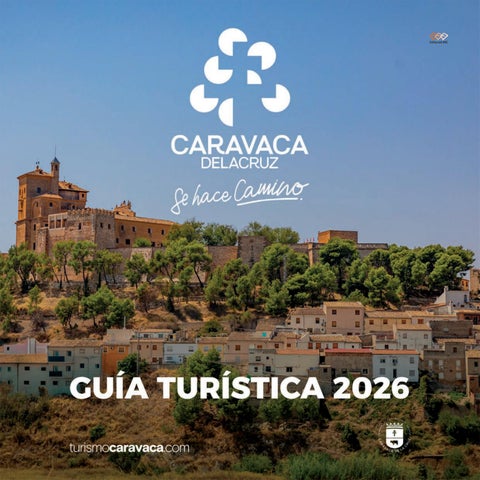
Create a flipbook
Issuu converts static files into: digital portfolios, online yearbooks, online catalogs, digital photo albums and more. Sign up and create your flipbook.