
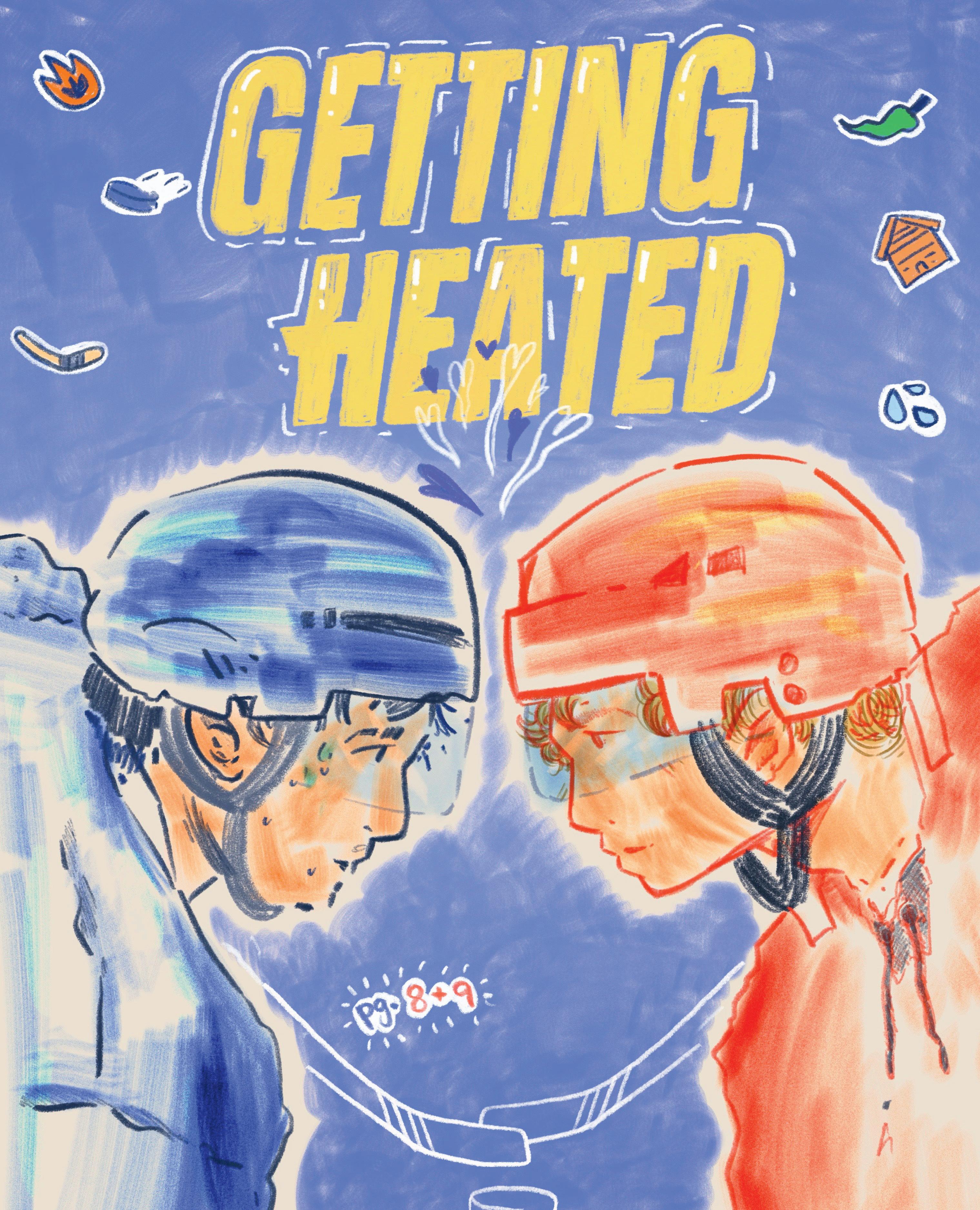
Cover by Saif-Ullah Khan
By Jasmine Makar
Disclaimer: The student interviewed in this article has previously contributed to The Eyeopener.
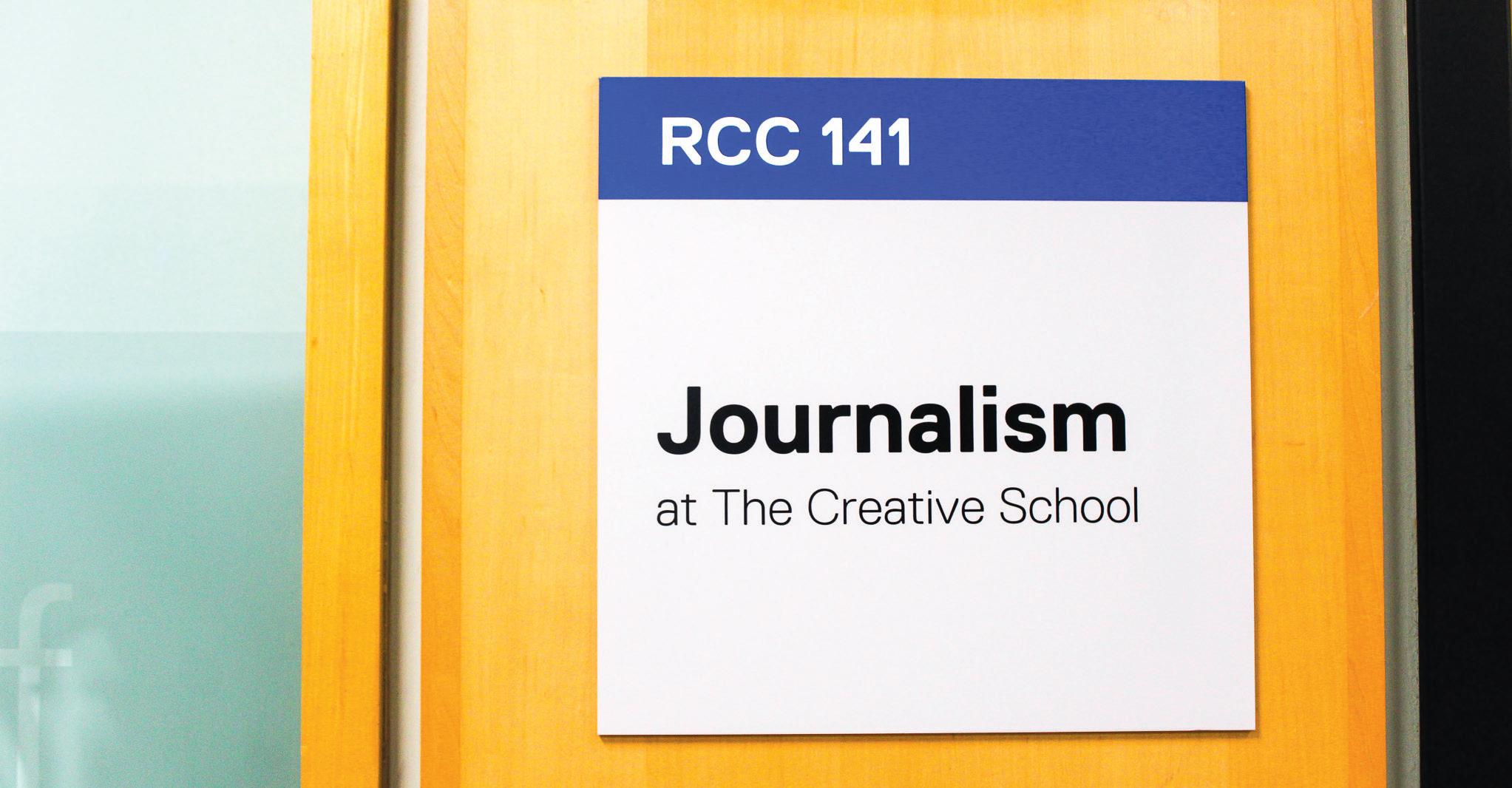
The School of Journalism at Toronto Metropolitan University (TMU) has implemented a pause for interviewing and reporting on Indigenous-focused stories within the TMU community until the fall of 2026.
The pause comes after Indigenous community members at TMU approached the journalism faculty about a significant volume of requests directed towards Indigenous staff, students and student groups on campus.
Chair of the journalism program, Ravindra Mohabeer, stated that the pause was implemented this semester after the Indigenous Education Council on campus sat down with faculty members this past fall to discuss “the footprint of journalism students and vari-
ous forms of demand on time and expertise and relational work that occurs on campus.”
Mohabeer also added that the pause will not stop the faculty and students from relationship building and increasing their knowledge base. This semester will be spent “tooling up, becoming better educated through relationships with the Yellowhead Institute on campus, as a faculty, we’re going to be undertaking multi-module course that the Yellowhead Institute offers,” he said.
Yellowhead Institute is an Indigenous-led education and research institute at TMU. The research centre offers multiple forms of supports and information, including the Land Back free online modules, which was launched in September 2024 as previously reported by The Eyeopener
The Eye reached out to the Yellowhead Institute regarding the pause, but did not receive a re-
By Hannah Sabaratnam
Starting Feb. 1, the Good Food Centre (GFC) will require students to register before accessing the food bank, according to the Semi Annual General Meeting Report released by the Toronto Metropolitan Students’ Union (TMSU) in December.
During the 2023-24 school year, students were required to register by receiving a Daily Bread Food Bank number. The Daily Bread Food Bank is a partner of the GFC and where the majority of the food supply comes from.
However, this changed roughly a year later, when registration was no longer required. The change to go back to registration ensures the GFC receives the amount of food they need from Daily Bread, according to the GFC coordinator Rob Howard and the TMSU report.
“We weren’t able to keep statistics on who was using the [GFC] which helps with reports…and showing who’s using it, how many people use it and how often they
sponse in time for publication.
Fourth-year journalism student and a digital editor at Reconciling Journalism, Jordyn Misura, does not believe this pause will affect her learning as a student. “I think that reconciliation shouldn’t solely fall on Indigenous people to educate nonIndigenous people,” she said.
“As journalists, we’re taught to go and find the best story. And... minority groups aren’t this huge story that we have to exploit.”
She also reflected on her first two years in the program, and how her interview skills have evolved.
“If there’s anything that I could change about the journalism program, it would be to give us extra training and not let us go out and interview people,” she said.
The Eye has previously reported on the effect journalism students
can have while reporting on Indigenous communities.
Canadian media has historically pushed and reinforced negative stereotypes harming Indigenous communities across the country, according to TVO Today. The Truth and Reconciliation Commission’s (TRC) Call to Action 86 also calls for journalism schools to teach Indigenous history, including but not limited to the history of residential schools.
“We want to be able to find a way to thoughtfully guide that process of relationship building, knowledge development and having a repertoire of understanding that you can build from so that you can be a thoughtful and proper contributor to the calls to action from the [TRC],” said Mohabeer.
The pause will be revisited among faculty at the end of this semester,
and an “overall reporting guide” will be rebuilt centred on building relationships off and on campus with the Indigenous community, according to Mohabeer.
Mohabeer also stated that students wishing to pursue a topic regarding the Indigenous community can be considered on a case-by-case basis and will be carefully guided.
“Harm can occur with one person, and harm can occur with 500 people asking the same question. It’s not about the numbers so much as it is about the ability to thoughtfully guide somebody towards something,” he said.
Misura said, “I don’t think that it silences [Indigenous voices]. If they want to speak out, they will reach out, but I think it gives them a break from, again using the word exploited.”
use it,” said Howard.
Currently, the GFC is open to all students at Toronto Metropolitan University (TMU). Students can register by setting up an intake appointment online, followed by going to their meeting in-person in the basement of the Student Campus Centre.
The process takes about five minutes, and after it’s completed, students will receive their Daily Bread Food Bank number. This number will give students access to other food banks in Toronto once a week, so they have the option to either receive food from the GFC or a food bank of their choice that may be more accessible to them. Registration also ensures access to the GFC is limited to students who attend the school.
“Since it is student fees that largely keep the GFC going…we want to make sure that it is being accessed by the TMU community,” said Howard.
Second-year fashion student Katherine Stier recently found out about the GFC when a professor mentioned it during class. For them, as long as registration keeps

the food bank accessible, they do not see any complications.
“I wish it was more known that we had [a food bank],” said Stier.
Ayden Fortier, a second-year fashion student, also did not know about the food bank.
“Toronto prices, groceries, taxes and everything can be crazy, so having a resource for people who need it is good,” he said.
The partnership with Daily Bread has been beneficial for staff and students at GFC, as they receive a wide selection of foods, such as bread, eggs, vegetables, a variety of meats, including halal options and snacks like granola bars or potato chips.
Daily Bread also provides support for the GFC. Set up like a store, the GFC created their layout based
on recommendations from Daily Bread, this way students can choose what they want instead of receiving food they may not need.
Only being in his position since Nov. 3, Howard hasn’t noticed any significant patterns in food bank use.
Interim co-executive director Scott Miller Berry also said in an email to The Eyeopener that TMSU won’t have any accurate data until the end of the winter 2026 semester.
The number of students that have registered for the GFC has increased, which also may be an indication that students are more aware of its operation, according to Berry. Howard and Berry said they have heard from students about the increasing cost of living, which makes the GFC an essential part of the TMU community for those in need.
“[The] cost of living is out of reach for many students…And that cost of living, including food costs, continue to increase and cause more stress,” said Berry.
Stier and Fortier are both from Alberta, where the cost of living is much different than in Toronto. Both agree that access to a food bank is beneficial for students.
According to a report by Daily Bread, Toronto food banks had over 4.1 million visitations between April 2024 and March 2025, and 23 per cent of visitors were students.
“TMSU hopes that we can continue to grow the number of options, number of hours of access and programs to alleviate food security for TMU students,” said Berry.
By Amira Benjamin
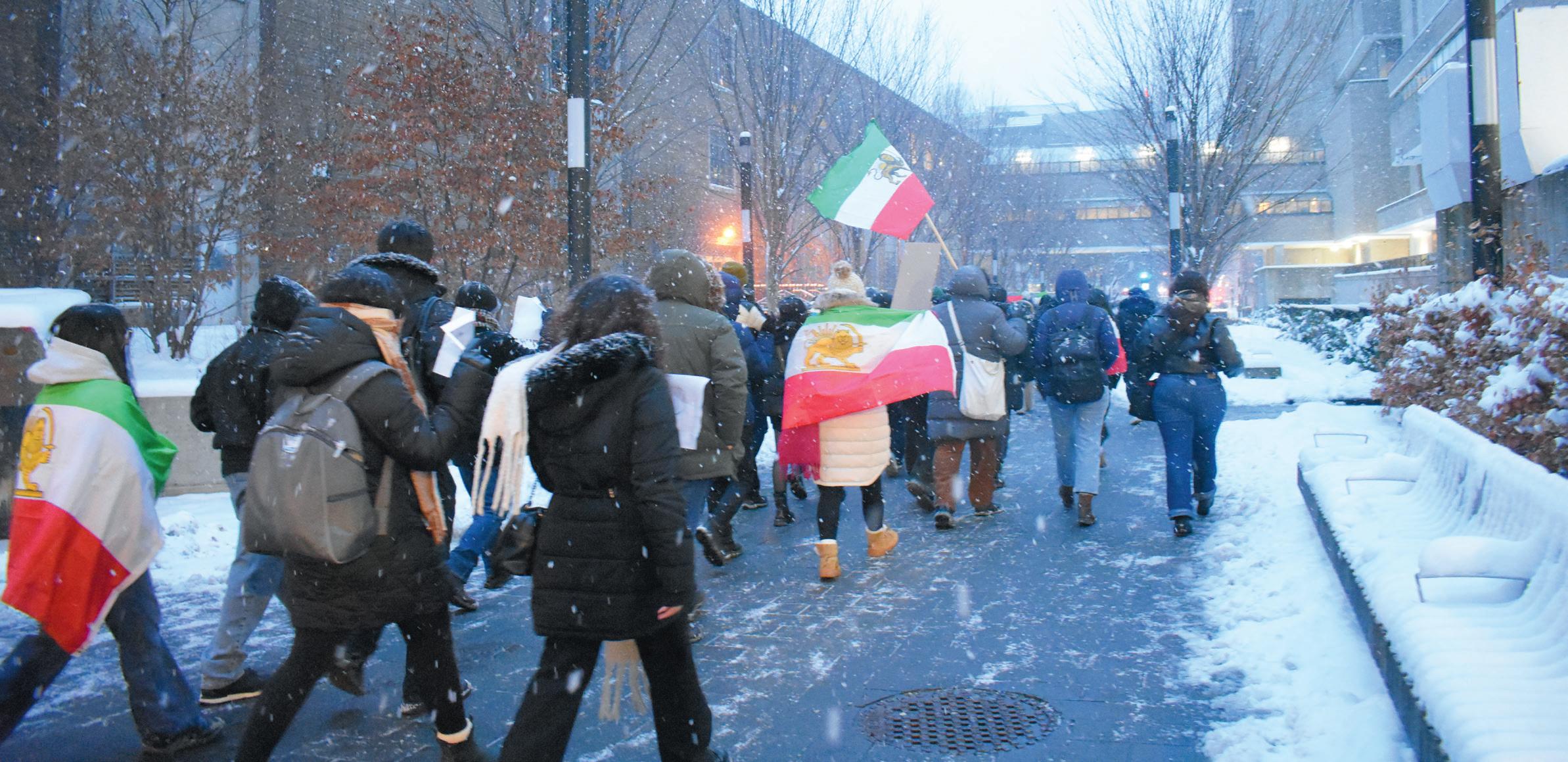
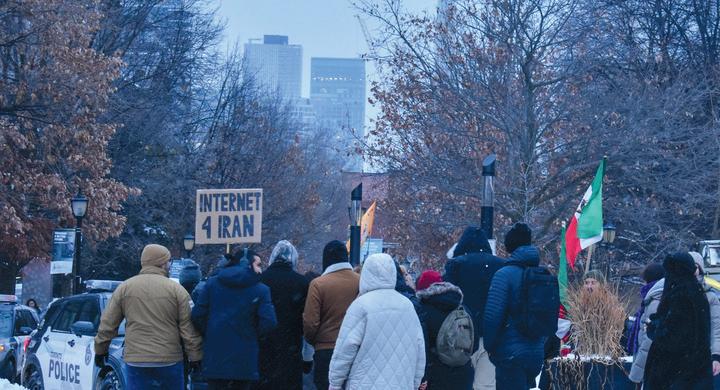
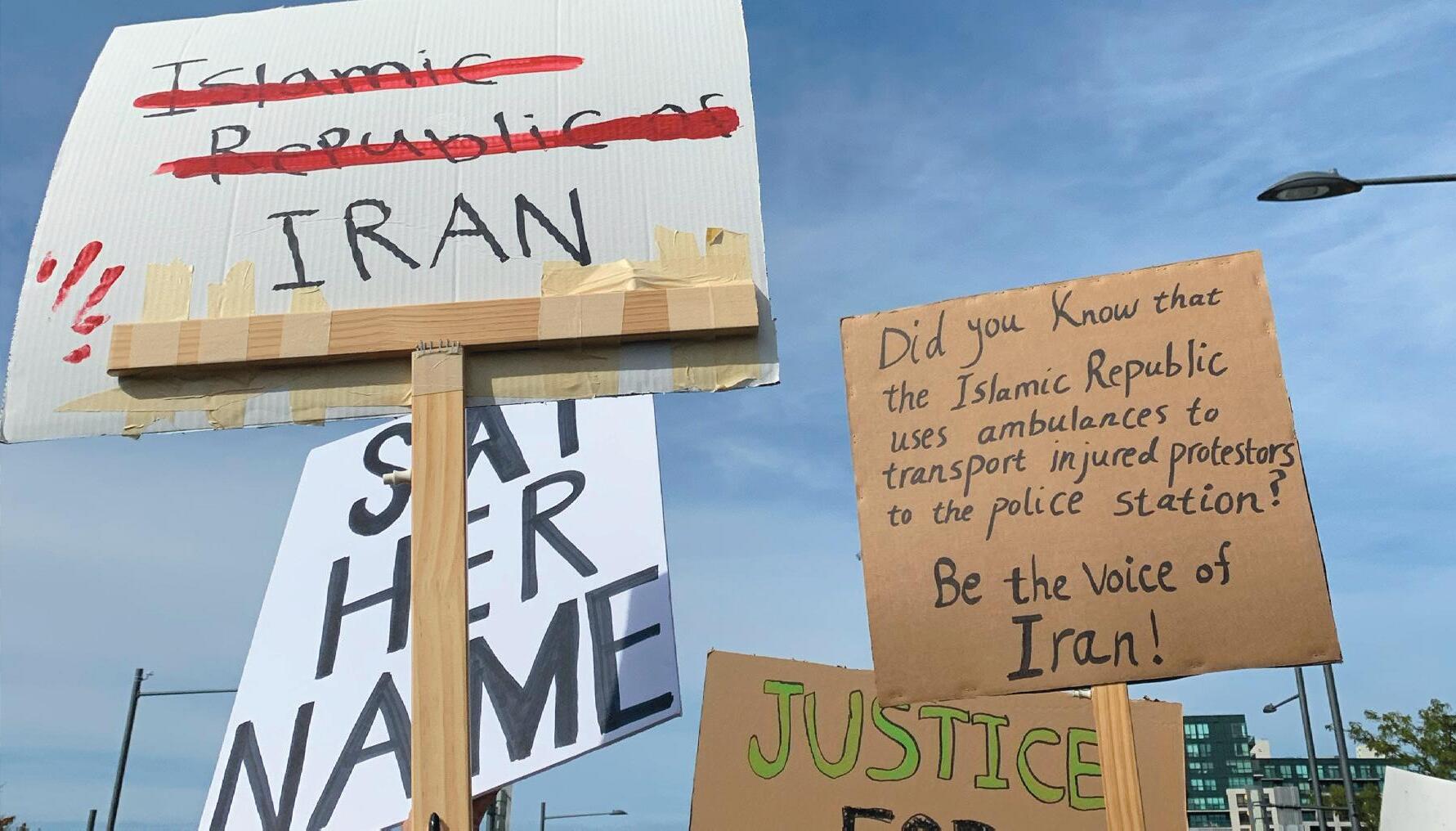
Students and community members from across Toronto came together on this past snowy Friday afternoon to rally in support of Iranians protesting against their government.
Hundreds of demonstrators marched from the University of Toronto (U of T) through Toronto Metropolitan University’s (TMU) Nelson Mandela Walk, then to the U.S. embassy to protest the weeklong internet blackout, government censorship and increasing casualties by the regime in Iran.
Bita Khalghisohi, co-president of the Persian Students Association at the U of T Mississauga, said the main objective of the protest was to “amplify [the] voices” of the Iranian people and combat misinformation and propaganda.
“A lot of Western news outlets headline these protests due to economic reasons,” she said. “Yes, the economic situation in Iran is bad but you can look at that as a last straw that triggered [the protests].”
A flurry of Iranian flags and photos of victims were seen across demonstrators. Chants of “down with dictator” and “your silence is violence” were heard as well.
The protest was organized by several Iranian student groups from universities across the province, including TMU, U of T, Queen’s University and the University of Waterloo.
Arman Naderi, an executive officer for the Iranian Students’ Association at TMU (ISAMET), said many other student group leaders were in conversation with each other for weeks leading up to Friday’s rally.
“Us Iranians in other countries were [asking], ‘how can we support…our people in Iran while [being] in Canada?’,” said Naderi. “That’s when our university and other…Iranian clubs in Canada decided to join together.”
Since late December, Iranians, including shopkeepers who are economic pillars and students, have been protesting the soaring cost of living and generations of deep dis-
satisfaction with the Islamic Republic (IR), the ruling regime in Iran.
Beyond economic hardships, the current uprising in Iran is a culmination of decades of oppression by the IR, the consequences of the IR and Israel’s ongoing relationship and the human cost of the IR’s meddling in the Middle East and abroad.
According to Iran International, as of Jan. 18 at least 16,500 protestors have been killed and 330,000 have been injured by the IR and affiliated groups including the Islamic Revolutionary Guard Corps.
The IR has also cut Internet access since Jan. 8, while state violence against protestors has increased to the thousands. As of Saturday, partial SMS connection restrictions have been lifted, while all communications are strictly monitored. The majority of killings were done in just the first two days of the internet blackout.
Naderi said that once news outlets reported at least 12,000 deaths, students were much more motivated to take action. “Even
The Eyeopener
Masthead
Editor-in-Chief

Negin “Raccoon” Khodayari
News Editors
Shaaranki “Fresh Meat” Kulenthirarasa
Vihaan “IBJ” Bhatnagar
Amira “Twinnn” Benjamin
Arts & Culture Editor
Sophie “L8ter Sk8ter” Wallace
Business & Technology Editor
Aditi “Rich Man” Roy
Communities Editor
Daniel “Drummer Boy” Opasinis
Features Editor
Edward “TL” Lander
Fun & Satire Editor
Dylan “American Boy” Marks
Sports Editors
Jonathan “JR” Reynoso
Victoria “Football”Cha
Production Editors
Jasmine “Bridesmade” Makar
on short notice, we needed to do something now,” he said.
This is reported to be the largest protests in Iran since the 2022 Women, Life, Freedom movement— sparked by the murder of Mahsa Amini while in police custody.
Khalghisohi expressed frustration with online discussions and misinformation she’s seen about the protests, feeling as though social media platforms and posts are not the same as news outlets in terms of effectively spreading information.
“It’s exhausting. My people are dying and I need to explain to everyone why [they] should be supporting me. It’s just sad I need to justify or give evidence why [people] should support this revolution.”
Naderi and ISAMET are working with the university to expand accommodations and support for affected students, especially international students.
“For example, because of a lack of communication and no internet, people, especially international students cannot get money from their home countries,” he said.
Naderi also highlighted how some Iranian community members were willing to hire more Iranians and offer free therapy to support those who need it right now.
“Our request [to the university] has been waiving the late [tuition and ancillary] fees, providing emergency bursaries and if possible, free food,” he explained.
“The university agreed to some of these terms, like waiving the late fees…but I feel like more can be done.”
On Jan. 10, several Iranian student associations across Canada published a joint statement “in solidarity with our people in Iran who are risking their lives to reclaim our country from the dictatorship of the Islamic Republic.”
Sarah “Tomato Soup” Grishpul
Photo Editors
Ava “Opa!” Whelpley
Saif-Ullah “Pheonix” Khan
Pierre-Philipe “Airbrushed” Wanya-Tambwe
Media Editors
Divine “Snorezzz” Amayo
Lucas “Thorne” Bustinski
Digital Producer
Anthony “Broke Butt” LippaHardy
General Manager
Liane “Floaties” McLarty
Design Director
Vanessa “Lil Ol Me” Kauk
Contributors
Charlotte “Chat” Ligtenberg
Evan “Pedestrian” Perry
Eunice “At The Cottage” Soriano
Eliza “Side Quest” Nwaesei
Rin “羊肉抓饭” Yanase
Colin “First Pitch” Morley
Emerson “Bluelight” Williams
Evan “μάγκας” Voutsinas
Jerry “Not Yelling At You” Zhang
A rundown of the Islamic Republic’s meddling in the Middle East and a look at the people’s opposition
By an Eyeopener staff member
The writer of this piece has chosen to stay anonymous for their safety.
Diclaimer: This is a shortened version of an online story published on Jan.13
In the streets of Tehran, Ilam, Mashhad, Lorestan, Kermanshah and hundreds of other cities across Iran today, there is a familiar sound: the chants of people who have lived for decades under a system that promised liberation but delivered repression. The words “Death to the Dictator” and “Death to Khamenei” are not mere slogans—they are the echoes of a public exhausted by a regime that has consistently chosen war abroad over wellbeing at home.
What the world is witnessing now—the largest wave of protest in three years—did not begin overnight. It is the culmination of 47 years of a political project that has prioritized ideological control and regional power over human life.
Exporting violence abroad, importing misery at home
From its earliest days in 1979, the Islamic Republic (IR)—the governing body in Iran—sought to export its version of an ideological “revolution” across the region.
It built militias, funded non-state armies and invested in systems of influence that have often undermined state sovereignty and fueled violence.
One of the most overlooked contradictions of the IR’s rule has been its performative support of Palestine. The regime has spent decades proclaiming itself a defender of Palestinians, yet that support has often only translated into rhetoric and weapons sent through proxies— which in turn further escalate Israel’s already genocidal bombardment—not in direct diplomatic or humanitarian means.
The IR’s regional role is sometimes framed as “peacekeeping” by those who misunderstand it.
While yes, innocent unarmed civilians deserve a defence against their persecutors, deterrence and deterrence alone—enabling armed groups, normalizing proxy warfare—is not peace, but a bandaid solution. It provokes enemies and in-
nocent civilians have to pay, keeping the Middle East in a constant state of distress. It is intentional instability. War without winners. Civilians as collateral damage.
Iranians see this starkly: the regime speaks loudly about foreign causes while ignoring basic needs at home. Bread costs more than many can afford, yet missiles and militia support do not stop.
The domestic cost
For the Iranians, the cost of this foreign policy has been devastating.
Economic hardship, despite sitting on the world’s third largest oil reserve, has become a permanent condition. Chronic inflation, plummeting currency value have destroyed wages, and dignity.
Sanctions, imposed largely because of the regime’s behaviour and nuclear ambitions, have isolated Iran economically, but the effects have hit ordinary citizens hardest, not the elites who evade these consequences.
Human lives have been treated as expendable in conflicts foreign and domestic.
Iranians have shown extraordinary resilience—they have not disappeared, not broken. They have weathered crisis after crisis, cultivating new ways of life and culture.
Beyond economic collapse and foreign policy
Since the 1979 Islamic Revolution in Iran, which saw the IR take power after the fall of the Pahlavi dynasty, Iranians have lived under a system that dictates how they believe, dress and even think.
Religion is enforced by law—despite over 50 per cent of the country not identifying with Islam. Women must wear the hijab.
Courts punish anyone who challenges the state’s interpretation of faith.
State propaganda shapes every part of life. Textbooks, television and online content insist obedience is virtue and dissent is treason or betrayal of God. History is rewritten, foreign enemies are invoked and criticism is framed as corruption or foreign interference. Independent journalism, universities and the arts are tightly restricted.
A collapsing infrastructure adds another layer of control. Decades
of mismanagement and corruption have left Iran’s ecosystems and infrastructure failing.
The decay of infrastructure is not accidental. By making life precarious, the state enforces dependence, constrains mobility and erodes dignity—a tool of oppression and cultural erasure.
Legal discrimination reinforces control. Women face limits on dress, work, inheritance and personal status. Religious and ethnic minorities, including Kurdish people and Baluchis, are excluded from schools, jobs and political life.
The IR has done all this in the name of god—in the name of Islam. In turn, the regime has deepened global Islamophobia by perpetuating the belief that authoritarian brutality reflects the faith itself rather than a pawn in its political game.
Executions and murder
Since 1979, the IR has used death, both openly and in secret, to eliminate opposition.
In the 1980s, thousands of political prisoners were executed after sham trials, culminating in the 1988 mass executions, when prisoners were killed following minutes-long interrogations.
In the 1990s, repression moved outside prison walls. A series of assassinations known as the ‘Chain Murders’ targeted writers and intellectuals critical of the regime. Authorities later blamed ‘rogue agents,’ but investigations were limited and accountability minimal.
Today, the IR remains one of the world’s leading executioners, with political prisoners and protesters still facing death sentences after deeply flawed trials.
How the IR still stands
Many outside Iran still ask why the regime has not fallen. The following could be attributed as a few leading reasons:
First, control of coercive power. The IRGC, Basij and intelligence services are loyal not to the nation but to the regime. Their positions, wages and privileges depend on maintaining the system, not serving the public. Second, fragmented opposition. Unlike the 1979 revolution, today’s opposition lacks a single leadership structure. Yet its decentralized nature
has allowed dissent to persist across generations and regions even as the state works to prevent movements from unifying.
Third, fear of chaos. Many Iranians, especially older generations who carry influence, fear what might follow sudden collapse—Syria-like civil war or foreign intervention. The regime exploits that fear relentlessly.
Fourth, international interests. Major powers prefer containment over the risks of upheaval. Even sanctions, while punitive, function as engagement with the regime.
Fifth, lethal force. The IR uses lethal force as a tool to stay in power, shooting, beating and detaining innocent protestors to punish dissent and instill fear. Every act of disobedience comes with the risk of death, imprisonment or disappearance.
The IR survives not because it is loved, but because it has engineered survival through force, fear and fragmentation.
Iranian resilience
For most Iranians, life has unfolded under constant regional uncertainty. Yet society continues to function. Children are educated. Businesses are built. Art, science and culture persist.
Decades of state efforts to redefine Iranian identity have failed. Language, history, pre-Islamic holidays and non-state traditions endure, while music, poetry, cinema and satire flourish beyond official control. That failure is itself a form of resistance.
Uprisings and protests
Since 1979, the IR has seen repeated waves of mass protest, beginning with women opposing compulsory hijab that year, followed by student uprisings in 1999, the Green Movement after the rigged 2009 election, nationwide economic protests in 2017-18, the Bloody November protests of 2019 and the Woman, Life, Freedom movement in 2022 after the death of Mahsa Amini while in police custody.
Each was met with excessive force, mass arrests, expedited executions and massacres, yet none erased the underlying demand for dignity, accountability and freedom.
Beyond bullets and arrests, repression is psychological. Sur -
veillance cameras, plainclothes agents and social media monitoring track protestors, instilling fear that dissent, even in private conversations or even aboard, can carry deadly consequences.
Internet and lines of communication are shut off across the country to limit unification and gatherings, news circulation and international condemnation. If no one can see what’s going on, the IR can feed its own narrative to the world. Meanwhile they commit massacres in the darkness. Families of activists and demonstrators are harassed, confessions are forced, homes are raided and bodies are abducted, leaving those who speak out weighing the lifelong consequences of protesting.
The unrest currently shaking Iran is a culmination of all the uprisings that came before it—this time sparked by a sudden currency collapse last month. Protests started in late Dec. 2025 in Tehran’s historic Grand Bazaar, where merchants shut their shops in protest against dire conditions.
Since then, demonstrations have spread nationwide, with chants moving beyond economic demands to calls for systemic change.
The response has once again been severe. Security forces have used live ammunition, tear gas and mass arrests against unarmed civilians. Human rights groups report lethal force, detentions including of children and raids on hospitals.
Internet and communication lines have been shut down nationwide for over 100 hours as of Jan. 13. Families on the outside are unable to get in touch with their loved ones on the inside.
Yet again, the IR is murdering innocent protestors in the dark. Shooting them on sight, blinding them, using tear gas, raiding hospitals and Mosques, burning them down and blaming the “rebels.”
The reported total death toll as of Jan.18 is 16,500, most of which were committed during the first couple days of the internet blackout. The estimated toll is much higher.
By The Eyeopener
On Jan. 7, the U.S. didn’t lose its innocence. It lost its cover.
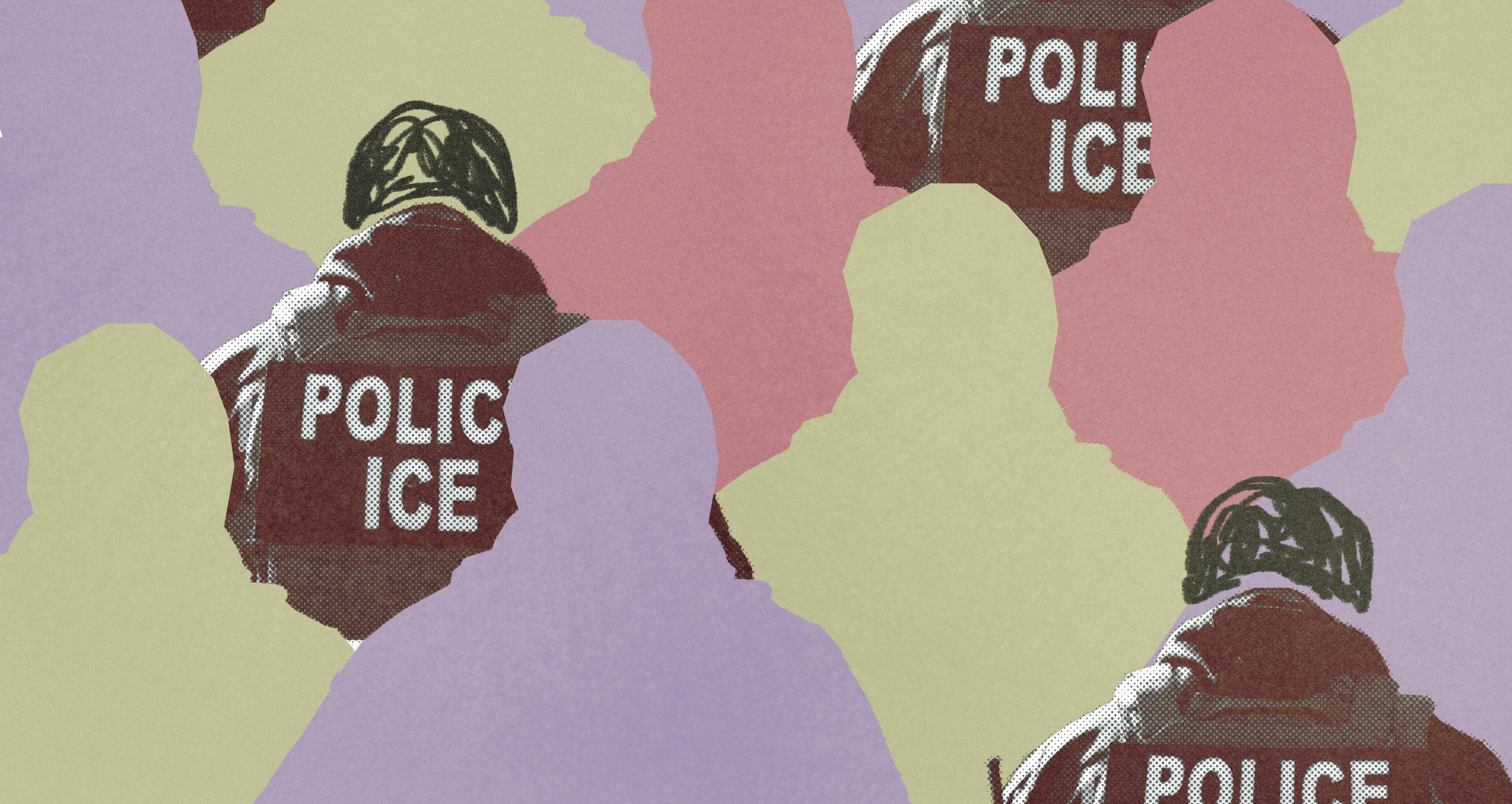
In Minneapolis, an Immigration and Customs Enforcement (ICE) agent fired into a woman’s car on a residential street and murdered her.
Renee Good was 37, a mother, a community member and, according to locals, a legal observer. This shooting did not happen in a border town. It did not happen during a protest. It happened in a neighbourhood, in broad daylight, in front of bystanders, by a federal force under a government openly boasting about launching the largest immigration enforcement operation in modern U.S. history.
The shock was not that it happened. The shock was that it wasn’t hidden.
This is what the death of the American Dream looks like when the facade finally cracks.
The state insists this is protection. Communities experience it as occupation
For centuries, the U.S. has sold the world a myth polished to a mirror shine—a land of freedom, opportunity, refuge. The brutality, the exclusion, the violence were always there, baked into policy and practice, but they were softened by rhetoric and obscured by distance. What has changed this month is not the nature of the country, but its willingness to broadcast what it’s always been.
Immigration enforcement is no longer cloaked in euphemism. Under the second Trump administration, ICE has expanded its operations with militarized confidence. Tens of thousands of people are detained daily, many for civil immigration violations,
with no serious criminal records. Many for no clear reason. Detention centres remain overcrowded and deadly. 2025 was the deadliest year in ICE custody in more than two decades. People died of medical neglect, suicide and untreated illness while the government framed it as law and order.
In Minneapolis, the killing of Good was not an anomaly. In the same week, federal officers shot and wounded another man during a traffic stop. Governors and mayors sued the federal government, calling the deployment of armed Homeland Security agents an invasion. Polling shows a growing number of people in the U.S. believe ICE makes their communities less safe, instead of more. The state insists this is protection. Communities experience it as occupation.
The American Dream was supposed to promise belonging. Instead it offers conditional tolerance enforced at gunpoint.
Gun violence, meanwhile, remains the country’s most faithful export. Nearly 50,000 people died from firearm-related injuries in 2023. Children continue to be killed at rates unmatched by any other western nation. Schools still rehearse lockdowns as routine. Public spaces are navigated through fear. The political response remains frozen, manipulated by money and ideology that hold weapons higher than lives.
The same logic governs reproductive rights. More than three years after the Supreme Court overturned Roe v. Wade, bodily autonomy has been carved into fragments. Nearly half the states ban or severely restrict abortion. Access now depends on geography, wealth and the ability to outrun the law. Pregnant people are investigated, charged and criminalized. Doctors face prosecution for providing care. States attempt to convict those who provide the service, weaponizing basic healthcare.
The American Dream once insisted freedom was guaranteed. In 2026, freedom is transactional.
Economically, the promise is just as hollow. Wages stagnate while housing costs soar. Healthcare remains tethered to employment. Debt shadows entire generations. Upward mobility has slowed to a crawl. The idea that each generation would live better than the last has been replaced by a quieter truth that survival itself is an achievement.
And the illusion collapses under its own weight.
The U.S. has always punished the people it claimed to uplift. Indigenous communities were erased. Enslaved people built wealth they were never allowed to keep. Immigrants were welcomed with one hand and surveilled with the other. Black, brown, poor and marginalized people have always been systemically controlled. What the past several weeks have revealed is not a fall from grace but a removal of pretense.
The American Dream was never universal. It was selectively distributed and aggressively defended. The violence unfolding now is not a departure from history—it is history, unfiltered and unapologetic.
What makes this all even more unbearable is the insistence that this is still freedom. That armed agents in neighbourhoods are “democracy.” That forced birth is moral clarity. That mass death by firearms is the price of liberty. The lie persists even as its consequences pile up in body counts, court cases and grieving families.
Like authoritarian regimes elsewhere, the U.S. has perfected the art of moral branding. The repression wears patriotic language and is masked by rhetoric. The erosion of rights is framed as constitutional purity. Power insists it is protecting the nation even as it fractures it.
To witness all this in a nation that has long made promises of a glorious life to millions of immigrants, is disgraceful. For families who moved to a foreign country with the notion that they were safer here in the West, witnessing this austerity happen in front of their eyes is particularly heartbreaking—to flee oppression only to just end up right back in the heart of it.
The U.S. is no longer hiding its motives behind Cheshire cat smiles and bureaucratic bullshit
The American Dream did not die because it was attacked from the outside. This wasn’t foreign intervention—that’s the U.S.’s specialty abroad. The American Dream died because it could not survive the truth of itself. It died because it never existed.
January 2026 is not a turning point toward something new. It is a moment of exposure. The country is no longer pretending to be what it is not. It is broadcasting its priorities loudly and without apology—enforcement over empathy, control over care, dominance over dignity.
The U.S. is no longer hiding its motives behind Cheshire cat smiles and bureaucratic bullshit. It is shoving them down your throat before you get a chance to object. A dream that requires silence to survive deserves to be dismantled. And a government that insists on myth over accountability cannot be shocked when the dream finally collapses in public view.
The American Dream is dead not because it failed to evolve, but because it was never meant to hold everyone. What remains is a reckoning long overdue—one the country can no longer hide from, no matter how loudly it insists it’s still free.
Pick up a new issue of The Eyeopener on stands weekly.
Academic Important Date
Holiday/Special Date

What happened to the two guys who stole a calendar? They both got six months.













The Eyeopener
We are dedicated to reporting on the stories that matter here at TMU. Visit our office in the Student Campus Centre (SCC207) or email editor@theeyeopener. com if you’d like to come forward with a potential story. If you’re someone who’s interested in volunteer opportunities with us, shoot us a message on any of our platforms!
Community Safety and Security
In all emergency situations, call 911. In other circumstances, call campus security at 416-979-5040 if you see something that needs to be checked out. This is the number for Walk Safe as well. You can email them at walksafe@torontomu.ca.
TMU Human Rights Services
For discrimination and harrassment complaints or sexual violence complaints, call 416-979-5349 or email humanrights@ torontomu.ca.
TMU Medical Centre
Email medicalct@torontomu.ca or call 416-979-5070 for support. Call 911 in all emergencies.
Ombudsperson’s Office
Confidential help for students who need it when dealing with the university’s systems and processes. Call 416-979-5000 ext. 557450 or email ombuds@torontomu.ca.
Student Learning
For academic support and tutors, call 416598-5978 or email slls@torontomu.ca.
Library
For material and search advice call 416-979-5055.
Academics
For academic help, questions and concerns, visit torontomu.ca/contact/student/academic_contacts.
Accommodations for students with disabilities
Email aasadmin@torontomu.ca or call 416979-5290.
Academic appeals
Have a problem with your grades? Visit yourtmsu.ca/services/academic-advocacy.
Legal help - free legal advice legal@yourtmsu.ca



‘Heated Rivalry’ brings a gay romance to professional hockey, sparking a potential shift in the sport’s culture
By Eliza Nwaesei
What started as a modest Crave original, filmed in just 37 days, Heated Rivalry has quickly become one of the most talked about series in recent television. The show is an adaptation of Rachel Reid’s novel of the same name—the third book in her Game Changers male-on-male (M/M) romance series. Produced into six episodes, the show was written and directed by Jacob Tierney and generated buzz well beyond expectations for a small budget Canadian production.
More than just a Canadian success story, Heated Rivalry has emerged as a pop culture moment at the intersection of hockey and 2SLGBTQ+ visibility in sports. The series follows a decade-long, secret relationship between rival professional hockey players Shane Hollander and Ilya Rozanov, exploring identity, masculinity and intimacy within a sport that has a deep history of homophobia.
As discussion around the series spreads both online and offline, various Toronto community members who are all connected to sports and the 2SLGBTQ+ community have much to say about homophobia in hockey, what Heated Rivalry got right, why it resonated with such a large audience and whether it has sparked real change in the sport.
“This is everything I’ve ever wanted so I was really in on it from the very beginning”
Aron Szocs, a member of the 2SLGBTQ+ community, grew up in the Toronto area and was exposed to sports at a young age. He became a hockey fan in 2022, eventually started playing and later became a big Professional Women’s Hockey League supporter.
Szocs recalled being interested in Heated Rivalry early on, when it was announced that the book would be adapted into a series, as he was already familiar with Rachel Reid’s M/M hockey romances and Jacob Tierney, through Letterkenny and Shoresy .
“TikTok really dragged me in and I was right there for the first episode,” said Szocs. “Then every week, right at midnight on the episode release, I was watching.” He immediately fell in love with it and enjoyed the social media buzz around the show and how the weekly releases built an -
ticipation and a strong sense of community among viewers.
“I guess you could say it was love at first sight,” said Szocs. “I’m so happy it became popular. It’s a Canadian show made by Jacob Tierney and it’s about gay hockey players. This is everything I’ve ever wanted so I was really in on it from the very beginning.”
“The story in which it’s trying to tell feels very real to the story we’ve lived as queer people”
Reflecting on the accuracy of Heated Rivalry’s demonstration of a queer relationship, Dylan Lafave— a third-year professional music student at Toronto Metropolitan University (TMU)—responded, from his perspective as a gay man, that he believed it was pretty accurate. He pointed to the contrast between the lack of acceptance and support from Ilya’s family and Shane’s accepting family as reflective of the reality many queer people faced at a point in time, when being openly gay felt unsafe or impossible.
“The story in which it’s trying to tell feels very real to the story that we’ve lived as queer people,” said Lafave, reflecting on the hardships his community went through and still goes through today.
Lafave, who played hockey for 16 years, is familiar with hockey culture and its faults.
“Anytime I, for example, would do anything remotely feminine, there were always comments. It’s one of the only settings that I’ve been in my life where it’s like that,” said Lafave. “Something like this show is really bringing it into conversation.”
Sarah Hergel, a second-year TMU sport media student and also a member of the 2SLGBTQ+ community, was caught up in the social media storm surrounding Heated Rivalry and understands the draw and appreciates the issues it is bringing to the forefront.
“Anytime I, for example, would do anything remotely feminine, there were always comments”
She echoed concerns about hockey culture, noting how homophobic it can be.
“I don’t think it is talked about enough,” said Hergel. “There’s so many stories that are coming out from hockey and how toxic the
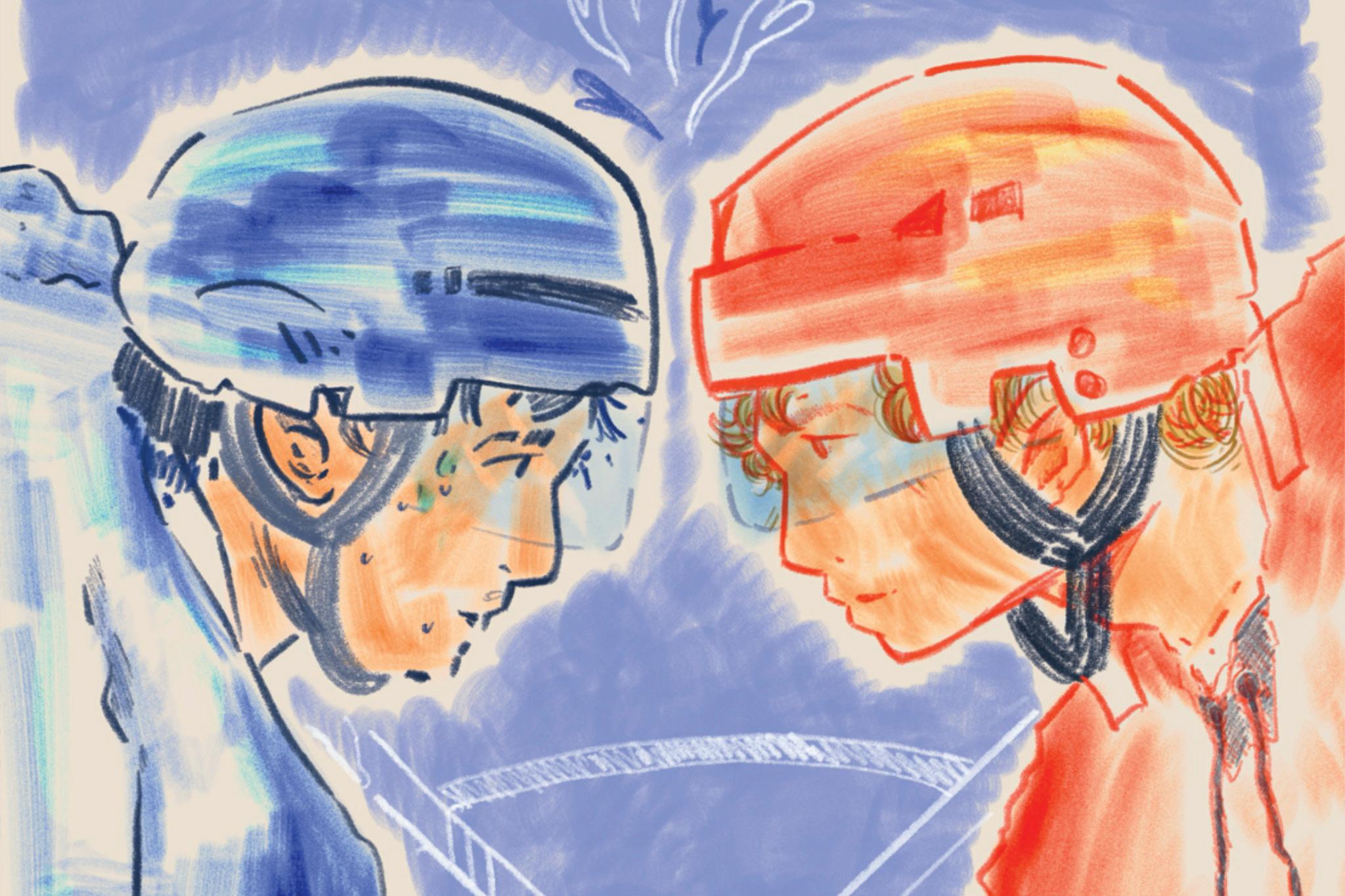
environment can be if you have no connection to hockey, you don’t know…This show is addressing that there is an issue and [with] it becoming more mainstream, people are like ‘Oh, wait, this is real’.”
Despite initiatives such as Pride Nights and specially-designed Pride-themed jerseys, Szocs said progress in professional hockey has been limited. He pointed to fan pushback as a major reason Pride jerseys and tape were disallowed for National Hockey League (NHL) players to wear during games in 2023, highlighting how even small steps toward inclusion met resistance. As a gay man and a fan of a hypermasculine sport, he has heard statements from athletes and learned things about them that have been hurtful to his community.
“It’s unlike a lot of portrayals of queer relationships that we get to see”
Baptiste Segers, a photographer for the Toronto Gay Hockey Association (TGHA) as well as a member of the league, spoke about his experiences within the TGHA. Although he is a straight man, he has found a welcoming community with the TGHA and has become more aware of the stereotypes and exclusion that exists outside of it.
“I went to the Leafs’ Instagram on the Pride Nights, the TGHA was invited there, and Ben Baby our commissioner did an interview,” said Segers. “I read just out of curiosity, the comments for that specific video. I was pretty much disgusted and that’s where you see that we have a long way to go.”
With homophobia being part of hockey culture, that backdrop is perhaps why Heated Rivalry has resonated with fans, particularly within the 2SLGBTQ+ community.
“This show, the relationship is so exciting to watch because they grow so much together,” said Hergel. “I was talking to
someone the other day and they went, ‘I was expecting something bad to happen, but it’s a happy storyline’.”
Like Hergel, Szocs was pleased with the show’s conclusion.
“It’s unlike a lot of portrayals of queer relationships that we get to see because a lot of times they end in tragedy and it’s always miserable,” said Szocs. “There is always a silver lining in [ Heated Rivalry ] that is still happy even though if you really think about the situation they’re in, they could make it very sad.”
“It’s hard to welcome people when it’s just systematic down to the core”
Despite the show’s success, ongoing conversation and resonance with audiences, a question still remains: Has Heated Rivalry led to real progress in hockey culture or is it simply a moment of temporary visibility?
The answers were similar but each offered different perspectives.
Szocs said it is too early to see if the show is having any significant impact on professional sports. He believes it is exposing new people to new ideas and bringing the realization to others that there may be some closeted athletes struggling.
“I think temporary visibility is a necessary step if you want to work towards change,” says Szocs. “There is never going to be long-term change with the snap of a finger.”
He pointed to actor Hudson Williams—who plays Shane Hollander—shared that closeted athletes had reached out to him after the show aired, suggesting that even if professional players are not engaging openly with the series, they are seeing themselves reflected on screen.
Segers and Lafave expressed similar sentiments, that the show is raising awareness to the issues and normalizing 2SLGBTQ+ representation in hockey. Both hope that professional leagues
like the NHL capitalize on this moment, leading to progress and an uphill trajectory for inclusion.
“It’s helping start the conversation,” said Hergel. “It’s helping open people’s eyes, but it’s like the pie crust. We don’t have the filling so we can’t make the whole pie.”
Just earlier this week, the Ottawa Senators sold Shane Hollander and Ilya Rozanov jerseys at the Canadian Tire Centre, with all proceeds going to Ottawa Pride Hockey. What comes next remains uncertain. While Heated Rivalry has drawn in new audiences and sparked conversation, these four individuals, all united by the show, question whether professional leagues, including the NHL, are ready to build on this momentum in a meaningful way.
“This show is probably the biggest draw for new fans and they have no relationship to the [NHL] at all,” said Szocs, pointing out the show’s league was referred to as Major League Hockey. “It’s hard to welcome people when it’s just systematic down to the core. Everything about the league and the people who run it, it’s accessible to a very limited group of people.”
Lafave added that he is unsure whether a show like Heated Rivalry would encourage players to come out or scare them away even more.
“It’s peaking right now and then it will go down, but it will not go as low as it was before”
While some doubt remains about the show having a positive impact, it does not erase the probability of progress.
“You have to start somewhere,” said Segers. “It’s peaking right now and then it will go down, but it will not go as low as it was before, so that is the first step.”
For many viewers, Heated Rivalry may only be the beginning but it has opened the door for conversations that could eventually reshape the culture of hockey.
By Colin Morley
You’ve likely heard of Heated Rivalry, the Canadian television show currently taking the world by storm.
What you might not know is that one of Toronto Metropolitan University’s (TMU) own alumni, Lori Fischburg, who graduated in 1998 with a Bachelor of Fine Arts in film production, is a producer and production manager on the critically acclaimed TV phenomenon.
The show, created by Jacob Tierney and based on the Game Changers novel series by Canadian author Rachel Reid, depicts the secret relationship between two pro-hockey players.
After premiering on Nov. 23, it became the most-watched original series on the Bell Media-owned streamer Crave. The show also had the most-watched debut of an acquired title on HBO Max in the U.S., which
purchased the American streaming rights shortly before the Canadian premiere.
Fischburg was approached to produce the show by Tierney’s producing partner, Brendan Brady, whom she had worked with before on independent horror film The Void
“The industry is smaller than it looks in Toronto. You basically start to know everybody. So, he had this show and called me,” Fischburg said in an interview with The Eyeopener
The show has been praised by critics and viewers for its positive depiction of a queer romance.
First-year civil engineering student Aqib Zaman told The Eye “I think the representation is really unique, you don’t see a happy, long-term, gay relationship in media like this.”
Jessica Lu, a third-year business management student, said, “Being queer myself, it’s just sweet to see these characters navigate their love for each other and have a hap-
py ending. I do feel represented.”
Fischburg is thrilled with the outpour of support for the show. “It’s just so heartwarming to actually make a difference in people’s lives, which is what people have been really reaching out to me about,” she said. “It’s such a good show, in that there’s no real ‘bad guy.’ The relationship is just a beautiful relationship.”
Fischburg has built a career as a well-regarded figure in the Canadian film industry.
As a freelance producer, line producer and production manager, she has worked on shows and films like The Z Suite, SurrealEstate, What We Do in the Shadows, My Old Ass and Seven Veils
A self-described “cinephile,” Fischburg said she credits her time at TMU with giving her the skills to further pursue her career.
“I loved film and photography going into TMU, but it made me have confidence to fall in love with what I want to do in the in-

dustry. It taught me how to think creatively and critically and communicate,” she said.
Another highlight Fischburg recalled from her time at TMU was meeting legendary Canadian filmmaker Bruce McDonald, who came to speak with students.
For those interested in a career in film, Fischburg stressed the importance of maintaining connections.
“Keep in touch with people…I always say to [production assistants she hires for their first show or film] ‘hire me one day’ because you
never know who’s going to be the producer, you never know who’s going to be the director.”
As for what’s next, Fischburg is currently in the planning stages for the second season of Heated Rivalry, which was announced by Crave in December.
“I don’t have any dates or things like that. But we all want it to happen sooner rather than later…so the next year, or two, or five, will definitely be busy, but thank you to everybody for that, it’s just been amazing,” said Fischburg.
By Rin Yanase
One of the highlights of my 2025 was a trip that my university friends and I took to celebrate our graduation from undergrad.
The destination was Xinjiang region, which lies in far western China. It took a day and a half to get to Urumqi, the region’s capital. Xinjiang is not a popular travel destination for most Japanese people—it’s simply too far.
Our plan didn’t feel realistic until the very moment we arrived on Feb. 7. It was freezing out and we were so exhausted––little did we know, 10 days later, we’d be so proud of ourselves for deciding to visit there to explore the amazing food and nature. Let me guide you through some of the most memorable foods I encountered in the two cities we visited, Urumqi and Kashgar.
1. 黑羊羊特色羊羔肉店 (Hēi yáng yáng tè sè yáng gāo ròu diàn)(Black Sheep Speciality Lamb Restaurant), Kashgar
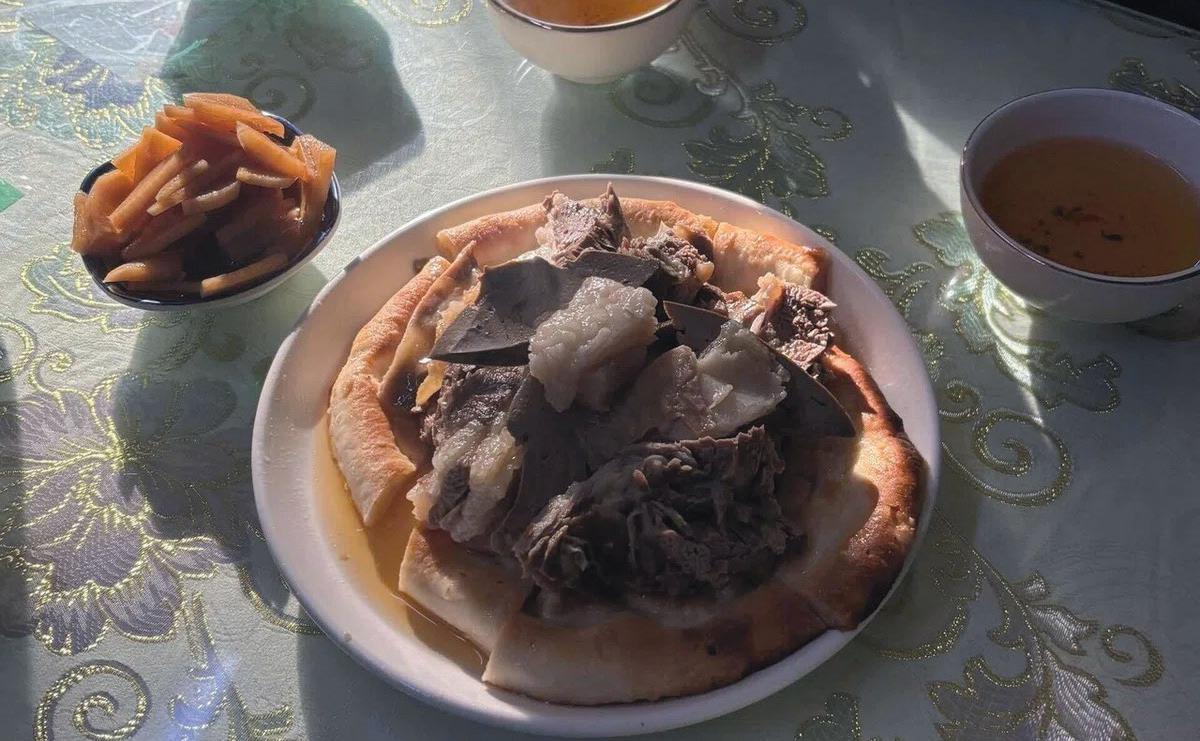
On our last day in Kashgar, we wanted to choose something special. The place we found on 百度地图 (Baidu maps), a local food review platform, was highly rated and known for its lamb dishes. A kind-looking middle-aged man who seemed to be the owner greeted us with a big smile. We didn’t have a single glimpse of the menu—instead, the owner immediately handed us a bite-sized piece of meat and bread, saying that was his recommendation. Of course, we ended up ordering it. The dish was a combination of
lamb liver, fat and soft bread to soak up the broth (pictured).
He pulled out a language translating device that looked just like an iPod, and we chatted while eating. Most local people we met spoke both Uyghur and Mandarin. Younger people seemed more comfortable with Mandarin and English than older generations, since they’d been taught in school.
2. A diner in Kashgar
We came across a vibrant market, around 25 minutes walkingdistance from Kashgar Old Town. There were a bunch of street stalls selling snacks, nuts, fruits, etc. The place we found was already full of people, and the air smelled of broth and boiled chives. At the entrance, people were coming and going like water. Ordering seemed like a challenge. All we had were translating apps, big smiles, loud voices and enormous appetites.
It was a small, cozy restaurant and seemingly cherished by the locals. We had 肉馄饨 (ròu hún tún), a mutton dumpling soup. While the mild soup warmed our bodies, the ladies at the next table kindly lectured us on how to use the spicy sauce in the tiny pots. After chatting a little bit, they said “ 好看(hǎoměi)(pretty),” which made us feel flattered and start bowing like those jiggly head toys.
3. 黑头羊抓饭 (Hēi tóu yáng zhuā fàn), Urumqi 羊肉抓饭(yáng ròu zhuā fàn) (lamb pilaf) had us all obsessed. 羊肉抓饭, known as ‘polo’ in Uyghur, is apparently widely eaten in Xinjiang and
other neighbouring countries. It originated in Uzbek cuisine, known there as ‘plov’ or ‘osho.’
This restaurant let us choose the amount and type of meat we wanted and also offered a free refill of soup. Xinjiang is known for its dairy production and their homemade yogurt was the cherry on top. The sweet bell peppers clung to the fatty spare ribs and the fluffy rice in the mouth. I kept switching up the flavors with the sides, refreshing my palate with yogurt that none of us could wait to start eating until we finished the main. Before realizing, time flew and the plates were empty. Oh, how I miss 羊肉抓饭!
While Xinjiang was a fantastic
travel destination with beautiful nature and a unique food culture, walking through the streets, we frequently encountered subtle reminders of the Chinese government’s power. Surveillance everywhere. Signs that read “please speak Mandarin in public places.” The cameraprohibited exhibits at the state-run museum. It almost felt like that side of the city lay deeply hidden, a dynamic that we, as tourists, couldn’t easily see or touch.
According to Amnesty International, the Chinese government continues to oppress Uyghur language and culture in favour of Han Chinese culture (China’s ethnic majority). China has been accused of banning
religious practices and targeting Muslim religious figures, as well as detaining Uyghur people in so-called “re-education camps.” Persecution and human rights violations that experts say amount to ethnic cleansing are ongoing in the region. I still dream about those dishes— but even more so, I still think about the people we met on the trip. Taking the 20-hour slow train from Kashgar to Urumqi, making friends with local children, playing cards with teenagers and swapping cigarettes from each other’s countries with the train crew. I don’t know if I’ll see them again, but I’ll surely remember them every time I taste Uyghur food.
By Evan Voutsinas
Storefronts are constantly changing on Danforth Avenue—a strip in the east end of Toronto—but the Greek culture that defines area remains held together by a handful of generationally-owned community gem restaurants
Many university students are part of this family-oriented Greektown tradition—clocking in at their families’ restaurants to help with the work and continue their legacies.
Working at family restaurants has been a longstanding practice on the Danforth. Students staff cafes, restaurants and bars while getting themselves through university and learning valuable service skills.
Tony Pethakas, president of the Danforth Business Improvement Area (BIA) and co-owner of the restaurant Mezes, plays a big role in promoting local culture in Greektown.
“Mezes, historically speaking, has always been an advocate as a place for students to earn an income while in university,” Pethakas said.
Preserving Greek culture is exactly why Pethakas got involved in the restaurant business on the Danforth, pushing him to become BIA chair. “We truly believe in keeping the spirit and history and the culture of Greektown alive,” he said. “I’m excited to make sure that I do justice to the energy and the hard work of the first generation.”
Vasha Zindros has spent her life immersed in Greek culture on the Danforth. She has taken over Mezes, her late father’s restaurant, alongside Pethakas, and continues to preserve culture in the neighborhood.
“I genuinely can’t think of a more beautiful business”
“I don’t think my dad, at the outset was like, ‘I picture Mezes as a multi-generational restaurant,” she said. “I think he probably hoped for it, but I don’t think anybody really imagines that going to happen, and we’re doing it. We’re living it every day. I think he would be so proud.”
Zindros said she believes it is important to the community that these generational establishments stay running. “It’s no secret that I think a Greek restaurant owner is kind of a a cliché but I’m so tremendously proud of that, because I genuinely can’t think of a more beautiful business that means more to the people [in the community] than a restaurant,” she said.
To Zindros, this job is more than just preserving culture but rather sharing it, and making it part of the fabric of Toronto.
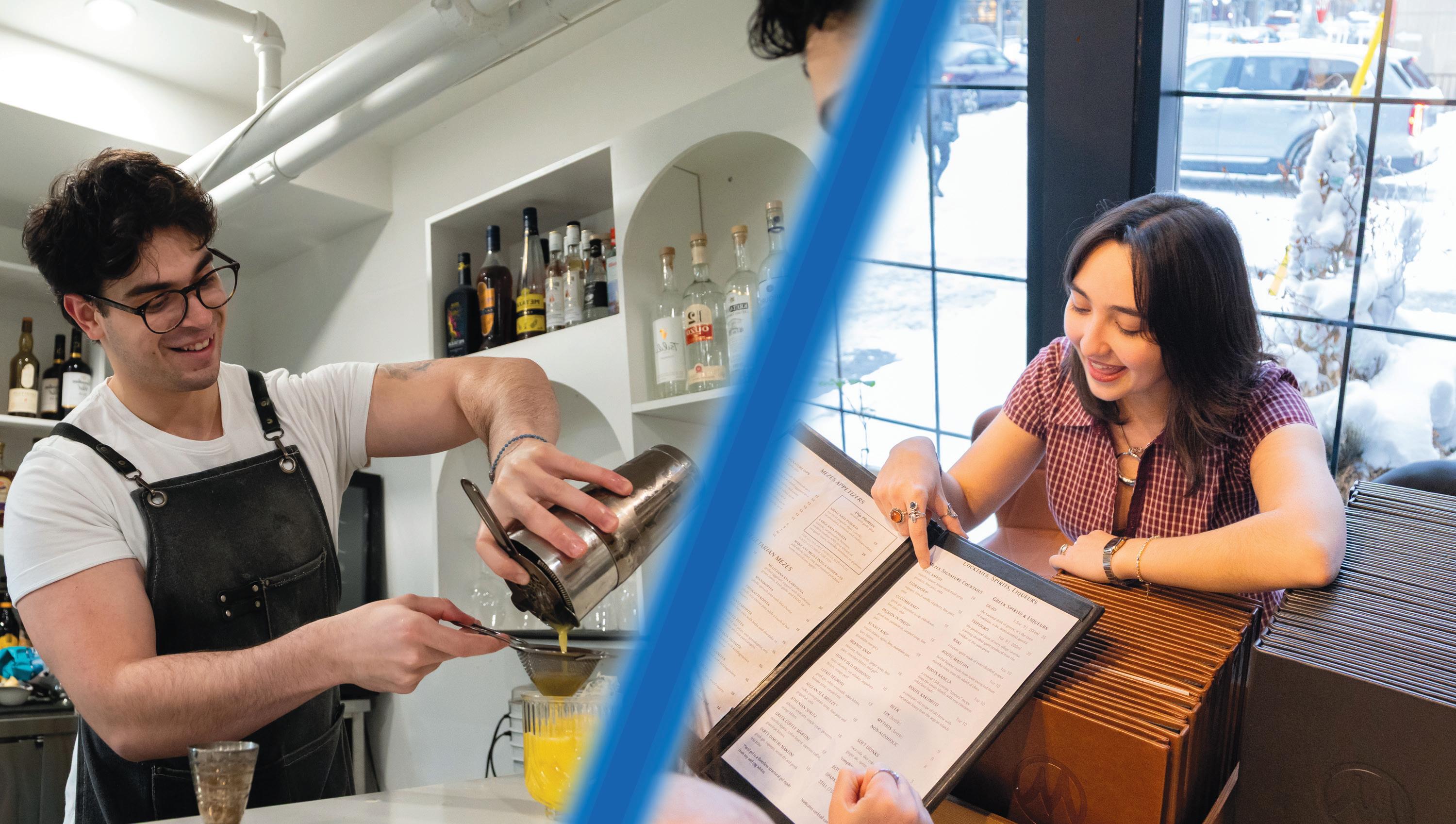
“Greek culture is just based so much on conviviality and welcoming and bright conversation and learning and seeing and sharing and we are all of that,” she said.
“We’re living it every day. I think he would be so proud”
“Our next event here in Greektown is called Fire & Ice.” Pethakas is soundboarding all of the community events on the Danforth with an emphasis on sharing Greek culture. “We want to make sure that we’re constantly adding a Greek component to all the events that we do here in Greektown.” The elements included in the Fire & Ice event are ice sculptures of gods and heroes of Greek mythology.
Mezes brings a whole new meaning to family-style restaurants, Zindros said. “Although the ownership is second generation, we have staff who’s been here for 25 to 30 years, [and] then their children, or nephews or their nieces,” she said. “It’s kids who grew up in the neighbourhood, their first meal they can remember was at Mezes and then they’re working here and putting themselves through school.”
She added that learning how to properly communicate to customers, not only while serving but working with your team, is a genuine skill for students who are going to take this experience and apply it to their careers ahead of them. “I don’t think that there is a skill in life that is not honed working in hospitality,” she said.
Evva Sofia Pereira Liapis is a third-year photography student
at Toronto Metropolitan University. She works at The Image Centre on campus as well as Mezes on the Danforth.
“Working in hospitality has helped me immensely. I’ve learned how to communicate with anybody, time management, team work, but most importantly problem solving,” she said. “I’m going into a field where I’ll have to work with people day in and day out, making sure that their needs are met. All of these skills will help me interact and get the best out of and for my clients.”
Pereira Liapis said she feels that without hospitality experience, you get a very narrow vision of the world. “We’re growing up in an unfortunate moment where common sense isn’t so common anymore. A service industry job allows you to understand the world and the people in it, it also helps you adapt to any situation,” she said, adding that it isn’t easy juggling work around classes, exams, deadlines and other jobs.
“These places that we’re working at have a cultural and sentimental tie, which makes it even more important to uphold and learn how to juggle commitments,” she said.
“Within Greek culture, there’s a concept that whether you know the term formally or not, you’ve felt. Philotimo ( φιλότιμο ), it’s not a directly translatable term, roughly means brotherhood, or love of honour but it goes deeper than that,” Pereira Liapis said, explaining that this term is used to coin the selfless behaviour that Greeks pride themselves with. “Helping out isn’t optional, it’s who you are. Working in family-run businesses is a way to
honour the sacrifices our parents and grandparents made for us to be here.”
George Avgeropoulos is the second-generation owner of Athens Restaurant & Tavern, a well known Greek eatery on the Danforth. Avgeropoulos is carrying a family legacy aimed to provide an authentic Greek dining experience with traditional food and decor.
“Helping out isn’t optional, it’s who you are”
Avgeropoulos said he believes it’s crucial to keep these generational establishments running.
“We won’t have a Greektown if we don’t do that and having it being a generational establishment, you want to continue this experience for other people to have,” he said.
Avgeropoulos is also an advocate for students to work within his restaurant. “They’re meeting people. It doesn’t mean because they’re bussing tables or serving tables or cooking in the kitchens or helping doing the prep work. You meet a lot of people in this industry, and it opens doors to other job opportunities. You can be exposed to more people.”
Kevin Kurteshi is a fourthyear sociology student at York University who works at Athens Restaurant & Tavern. “Student-run groups across several universities tend to host events along the Danforth, providing the attempt to keep our culture deeply rooted in this community,” he said.
“Working in the service industry has given me the experience of working with people from all
walks of life,” he said. “Working at Athens has given me the opportunity to exercise the skills I have learned while earning my sociology degree.”
Kurteshi said that he’s found a way to exercise the skills and theory that he has learned from his degree and incorporate them within the hospitality industry.
Other students like Kurteshi have found the service industry useful for their studies. Nicholas Katsiochristos is a fourth-year University of Toronto student studying evolutionary anthropology who worked on the Danforth at Mezes for seven years.
Katsiochristos said being an anthropology major working in hospitality allowed him “to view various interactions between patrons in a social environment surrounded by other individuals.” No two encounters are the same in a restaurant.
“These places that we’re working at have a cultural and sentimental tie”
“Being a server allows me to build my ethnographic skills that anthropologists use while connecting with foreign cultures and becoming a part of their community and learning about their cultural identity,” he said.
These generationally-run establishments have become central hubs keeping Greek culture alive and students with skills to build have found ways to contribute.
“If you create a space where people are looking forward to being here, look forward to seeing their buddies, look forward to making their jokes…It makes the work go faster,” Zindros said.
By Jerry Zhang
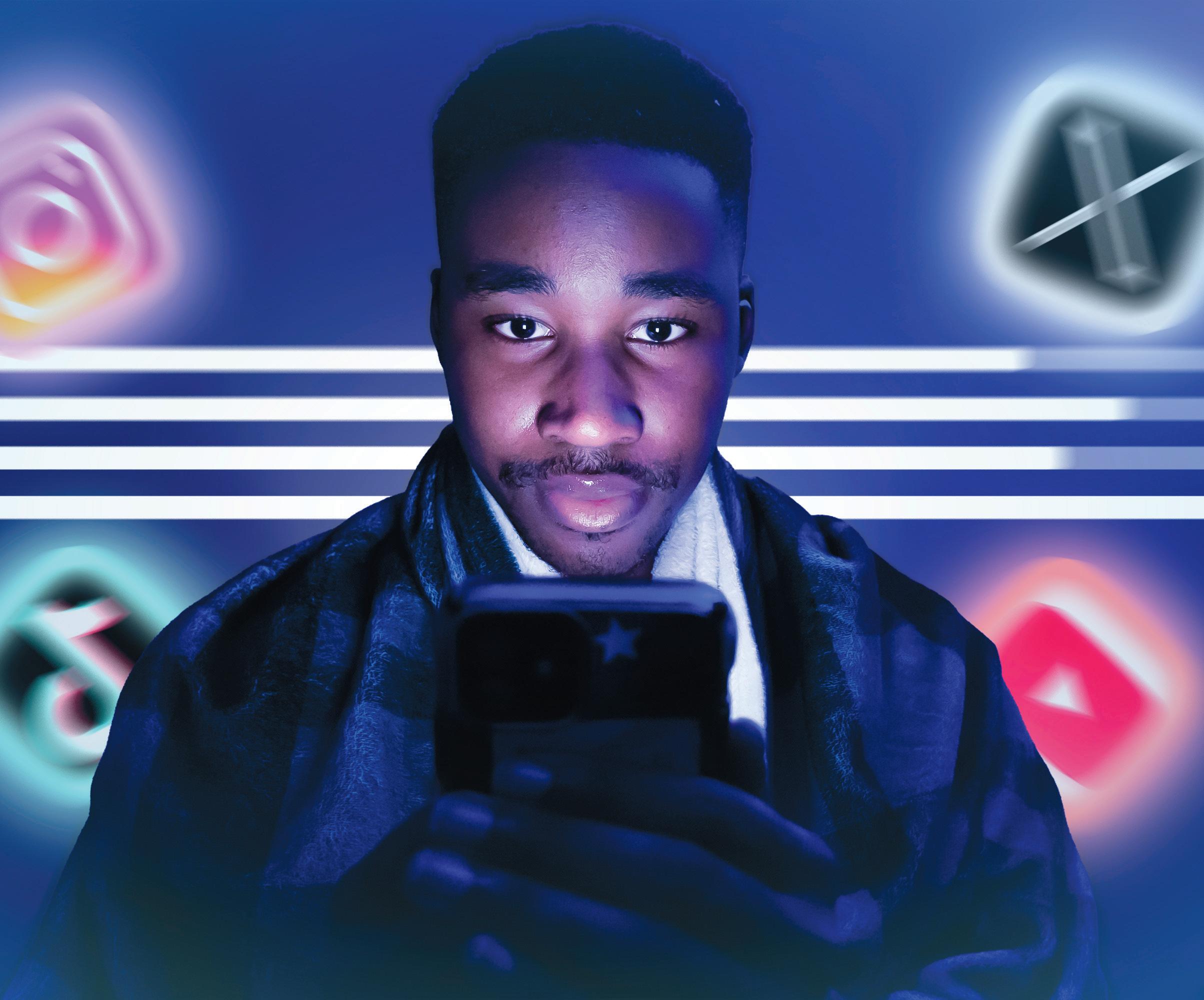
As awareness grows around the importance of mental health and the impact of excessive social media use, the concept of a “digital detox” has begun gaining traction amongst Toronto Metropolitan University (TMU) students. A Talker Research survey from this month revealed that 63 per cent of American Gen Z have attempted to reduce their screen time.
While digital detox trends promote unplugging as a means to reach a state of wellbeing, students and researchers say doing so is far more complicated in practice.
As social media becomes more intertwined with all facets of life, it reveals opportunities for students to network, gain knowledge and socialize, creating a larger challenge for students who decide to disengage, complicating whether unplugging is a realistic solution or largely symbolic.
Hannah Clinton, a fourthyear creative industries student said “I wish I were able to disconnect from social media, but because of my work, it’s not really possible.” She said social media feels necessary for producing work and staying in contact with friends and classmates, making unplugging difficult.
Clinton said she spends about four hours a day, on average, “doom scrolling.” Doom scrolling, a term created in 2020, that reflects the act of mindlessness engaging with social media content. Despite her efforts to use apps that limit her social media usage, she remains unsuccessful as she ignores the time limits.
Clinton isn’t alone in her struggle to limit social media, across Canada young adults are actively struggling to limit their use of such platforms. Statistics Canada reveals only 57 per cent of Canadian adults were able to meet their screen time recommendation of three hours per day from 2022-24.
For some students, attempts havebeen made to unplug.
Darrel Douglas, a second-year computer science student, deleted TikTok and Instagram in 2025 after realizing that the platforms were slowly deteriorating his mental health.
“I was constantly seeing people’s achievements…things about relationships, romance, all that stuff, things that make you feel jealous,” Douglas said. “I just want to distance myself from that, to reflect and start seeing the world through my own lens.”
He said his decision to unplug led to noticeable improvements.
“I slept better, I ate more, went to the gym more…productivity increased…my self-esteem actually went up because I wasn’t constantly seeing people who were doing better than me in different aspects of life,” Douglas said.
But after several months offline, Douglas reactivated his accounts. Without social media, he said he found it harder to stay connected and spot social opportunities, ultimately pulling him back in despite his positive improvements while off the platforms.
According to the Journal of the Missouri State Medical Association, experiences like Douglas’ reflect a broader misunderstanding of how heavy social media use is framed. While framing it as “addiction” has become common, experts caution that the term can oversimplify what is happening.
Josanne Buchanan, a developmental psychology and education PhD student at the University of Toronto and founder of the digital wellness platform Screenspire, said problematic screen use is not defined by time alone. Instead, she looks at whether use becomes compulsive, or disrupts essential activities such as sleep, studying, maintaining relationships and whether it weakens one’s mental health.
She said digital detoxing is part of a broader concept of digital wellness, which is achieved when “we develop intentional, authentic and balanced relationships with the technology in our life.”
Buchanan said awareness alone rarely leads to lasting change, especially when platforms are designed to keep users engaged by evoking anticipation and emotional responses. Even when students recognize that their social media habits feel unhealthy, many return out of boredom and fear of missing out, as digital spaces are deeply embedded in their daily routines.
“I definitely think [digital detoxing] is symbolic,” said Buchanan.
“For a lot of people, it gives them a sense of control, almost like a way for them to prove to themselves that they can be away from all tech and still be okay.”
She added that symbolism is not inherently meaningless. Shortterm breaks can help people reassess how technology fits into their lives. The limitation, she said, is when detoxing is framed as a permanent fix rather than a reset, which seems impossible given the constant need for connectivity.
Buchanan proposed “digital minimalism” as a more sustainable approach that focuses on intentionally curating technology use, rather than quitting platforms outright.
Digital minimalism involves prioritizing “engaging with spaces and content that energize you,” she said.
Clinton said that in order to incentivize people to unplug, there needs to be a larger shift to decentralize social media, “It’s socially almost unacceptable to not be on social media.”
TMU new media associate professor Alex Bal said placing responsibility entirely on users overlooks the economic incentives shaping digital spaces, as these platforms thrive on the attention economy.
“The longer you are within the space, the more money they are going to be making.” She said regarding why these platforms are designed to be addictive, comparing the detox to the likes of quitting smoking or drinking.
Bal said although personal discipline is crucial, platform design and institutional reliance on such platforms makes unplugging more difficult without broader structural changes.
Microsoft’s 2025 productivity data shows workers are interrupted roughly every two minutes by notifications, making it harder for those who seek productivity. Research in the Journal of Applied Physiology, Nutrition, and Metabolism shows that screen time rose during the pandemic, remaining at elevated levels.
For Douglas, the challenge is not deciding whether social media is harmful or not, but how to live with it in a way that feels sustainable.
He said he may attempt another break in the future, particularly as his anxiety becomes harder to manage. But he acknowledges the forces that may draw him back.
“If it wasn’t for boredom and fear of missing out,” Douglas said, “I’d be off it right now.”
By Dylan Marks
Dicksclaimer: Cum on, this story is a load of lies and is not at all based on personal experience. Nobody can jerk off one million times, ask any teenager you know as they’ve probably tried.
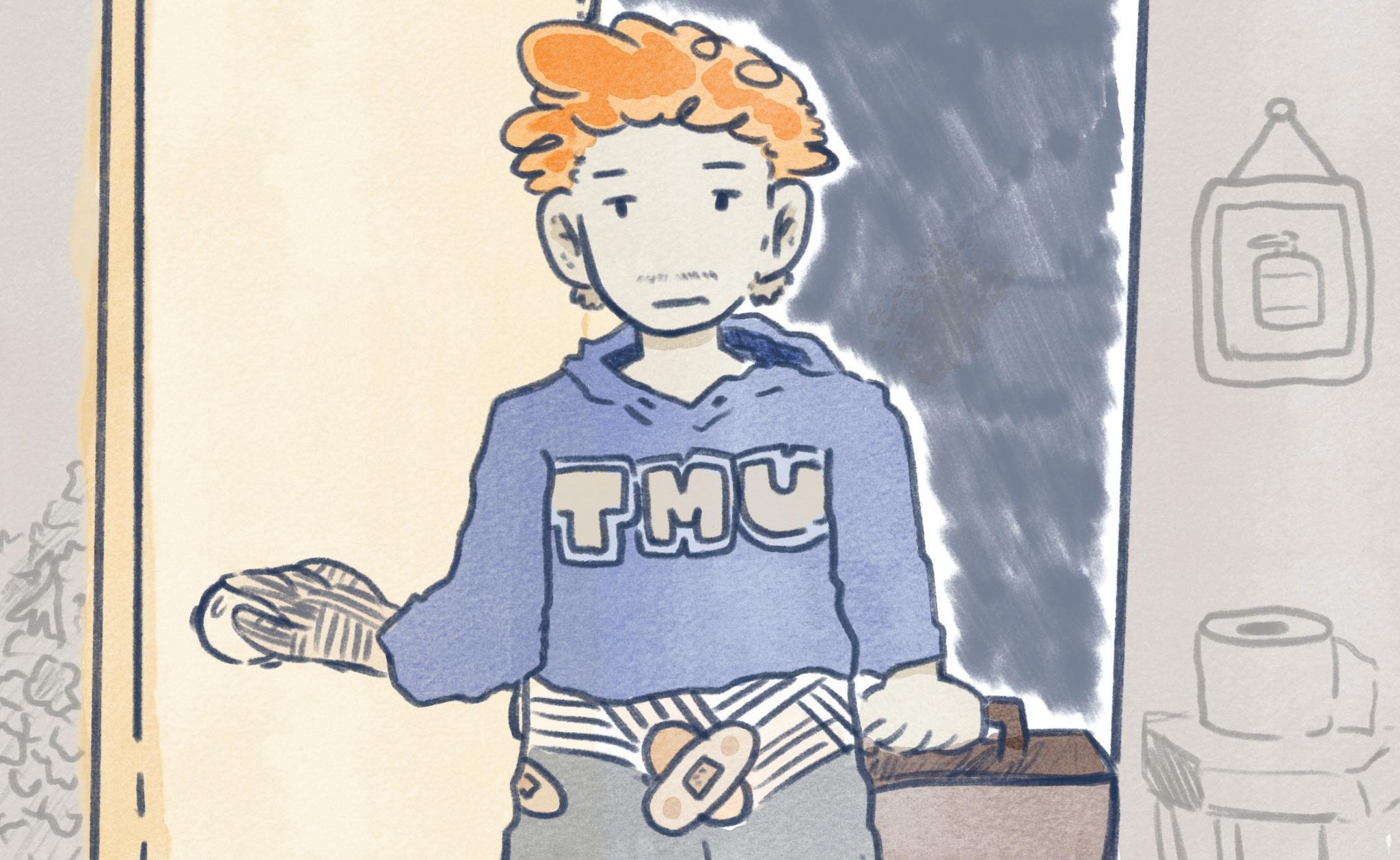
As students come back from their hometowns to the hefty load of day-to-day school life, one self proclaimed ‘king of gooning’ says he spent the majority of his break breaking his penis through excessive amounts of masturbation, one million times to be exact.
Second-year computer science student Jack Ingoff explains that, while for most students winter break entails eating Fritos and doomscrolling on reels, for him the “break” meant “breaking” his “cock.”
“The majority of the time I’d take my pants off, lay flat on my back like a fat seal, boot up the customize genital section of Cyberpunk 2077 and then twist my dick like it’s a Bop-It until my parents called me down for dinner,” said Ingoff.
The Eyeopener is giving away two $25 gift cards to Tim Hortons
“I’d allocate five minutes maximum for meals, then I’d down some orange juice and head back upstairs to pay Mr. Stroganoff, which is what I call jerking off so hard that it comes out with the consistency of beef stroganoff.”
Though jerking off is understood as a healthy growing and learning experience in the young adult process, Ingoff’s mother believes the scale of which her son is engaging in hand-to-gland combat is concerning.
“I walked in on him ‘manhandling his ham candle’ as it says on the warning sign on his door and in my 52 years of living, I’d never seen anything quite like what I saw,” said Ingoff’s mother. “It doesn’t bear repeating but picture the slime scenes from Ghostbusters mixed with the docking scene from Interstellar.”
While Ingoff has reiterated his ability to engage in so many sequential “ménage à mois’s” is linked to his prominent circumcision, a new study shows that jerking off without foreskin leads
to more penis-related injuries than jerking off with it.
Head of corpus spongiosum studies at the Centre for Understanding Masturbation (CUM) Dr. Richard Johnson has uncovered that, while one man’s trash may be another’s treasure, one man’s penis may be another man’s dream.
“There are all kinds of penises out there, long, short, fat, stout, slim, thick, tight, loose, red, pink, orange, up curve, down curve, left curve, right curve, middle center straight, slight uptick at the tip, slight downtick at the tip, micro, macro, marco, polo, dasher,
dancer, prancer, dinky, stinky, clean, cut, uncut, even, uneven, velvet, I mean you name it, I’ve seen it,” said Johnson.
“The real trick in my trade is trying to understand which of these penis types is most optimal for a pleasurable jerking experience,” Johnson added. “In what we have seen so far and so long, it’s clear that it comes down to whether or not foreskin is involved in the ejac-equation.”
Johnson’s long and hard CUM study outcome may sway some without foreskin to be careful when aiming to achieve sexual
gratification by self-stimulating their reproductory glands, however Ingoff stands firm on his ability to “evict some testicular squatters” better than anyone who has come before him.
“That’s why it’s called ‘masterbation’, I am the master of bating. I am the Michael Jordan of slanging my cock-ness monster round n’ round until it spurts out goo harder than the great geysers of Yellowstone,” said Ingoff. “Anyways it doesn’t matter anymore now that my hands have turned into nubs and my dick has been obliterated.”
1. Complete the maze! Only 100 per cent accurate mazes will be accepted.
2. Complete the Google Form via the QR code on the page and add a photo of your completed maze!
3. Await an email! The form will close end-of-day on Jan. 25 and winners will be contacted shortly afterwards and asked to come into our office for photos!
Find the giveaway rules through the link in our Instagram bio. Submit Completed Maze Here

By Julia Herrick
Disclaimer: Though this piece is almost entirely satirical, $1.4 million of TMSU funds were actually mismanaged so…think about that.
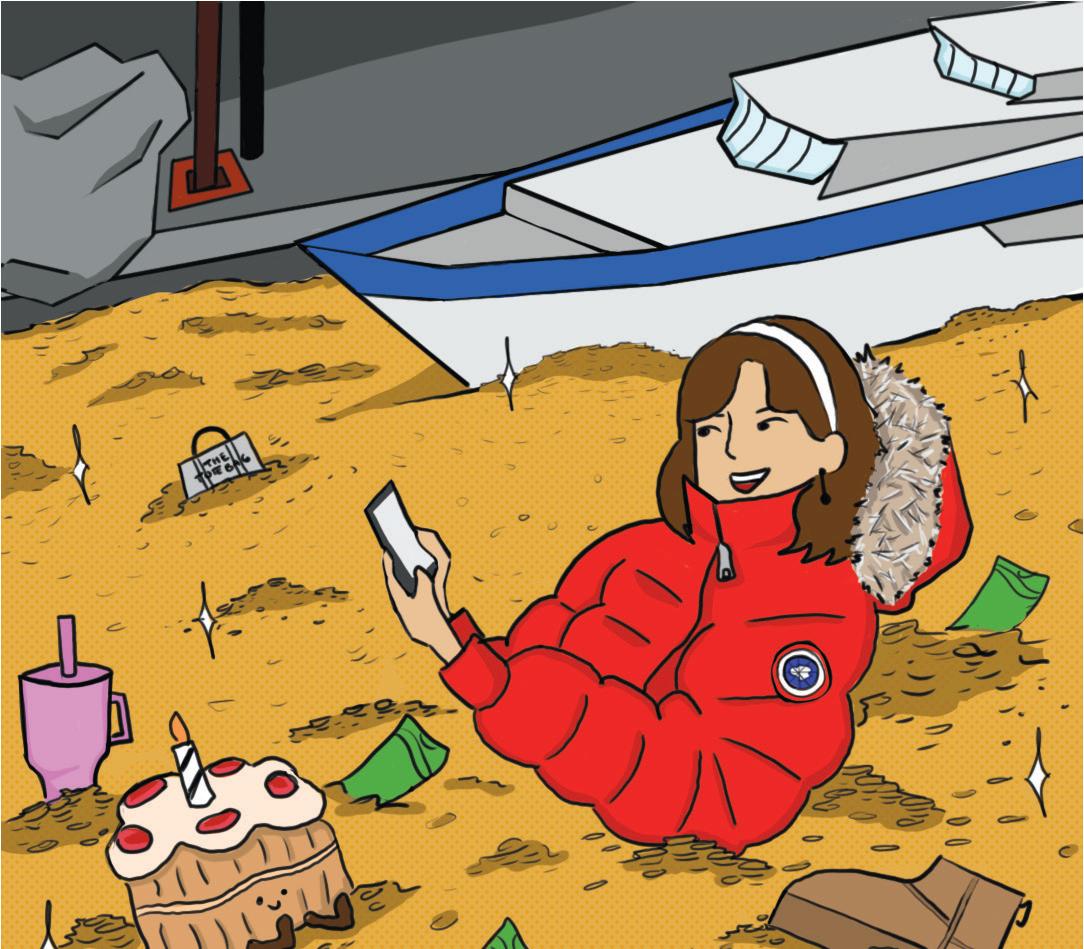
It was recently uncovered that $1.4 million of the Toronto Metropolitan Students’ Union (TMSU)’s funds were reportedly mismanaged including large amounts paid to unknown vendors as previously reported by The Eyeopener. Many students were left with questions, most notably, “how does that even happen?” and “how can a chill guy like me get in on this?” While the true cause behind the mismanagement is still being investigated, I have taken it upon myself to imagine what I, a humble satire writer, would spend this sweet stack o’ cash on.
An insanely large bouncy castle
Not for events, just one permanent, inconvenient bouncy castle that takes up far too much space and ruins foot traffic. Also if I needed to leave an uncomfortable social situation I could say some-
thing like “gotta bounce” and actually mean it.
An unreasonable amount of weird food
Neon tacos, spicy cotton candy, pickle flavoured ice cream, anything that a doctor would tell me not to eat if I wanted to continue living happily.
Every limited-edition McDonald’s cup ever made I don’t even drink soda all that much. I just want the power of owning them all and displaying them like priceless artifacts in a clear glass display case in my home.
An obnoxiously huge chocolate river I could swim in Health inspectors would cry but I’d just be swimmin’. Why would I prioritize hygiene when I could be just like that fat kid in Charlie and the Chocolate Factory?
Giant indoor ball pit No kids allowed. Shoes are optional. Dignity left at the door. Read more at theeyeopener.com