Volume #110 Issue #5
TheDePaulia
January 20, 2026
Former DePaul basketball players face federal gambling charges
By Laura Vázquez David Asst. Sports Editor
Jalen Terry and Da’Sean Nelson were indicted on federal charges that include bribery in sports contests, conspiracy to commit wire fraud and aiding and abetting, federal prosecutors in Philadelphia said Thursday. The indictment alleges that in or about February 2024 the defendants “agreed to fix an upcoming DePaul game in exchange for bribe payments.” The scheme continued throughout several Big East conference games, the last being the matchup on March 5, 2024, against St. John’s.
Federal prosecutors say they have charged more than 20 people, including 15 former college basketball players. The other five defendants were described by authorities as “fixers,” the people who contacted players to arrange schemes for money to get them to shave points or influence game outcomes in other ways.
None of the players indicted are competing today.
Former DePaul player Mac Etienne was indicted in a separate criminal complaint. Former Chicago Bull Antonio Blakeney, Isaiah Adams, Elijah Gray, Corey Hines and Diante Smith also have criminal complaints against them.
Fixers would place bets that would earn players from “$10,000 to $30,000 per game.” Before the February 2024 Georgetown game,
the defendants communicated via text to ensure that the players agreed to participate in the scheme: “Etienne texted defendant Smith, ‘just talked to them it’s a lock ima call you after practice,’” the indictment said.
U.S. Attorney David Metcalf said in a press conference in Philadelphia that this incident “spanned three years and eventually enveloped 17 NCAA Division I men’s programs.”
The indictment references several DePaul games that were “fixed” by players to underperform to cover their first half spreads and cash in. An unidentified “Person 6” was part of the point-fixing at DePaul, but it’s not clear if that person was a DePaul player.
“When criminals pollute the purity of sports by manipulating competition, it doesn’t just imperil the integrity of sports betting markets. It imperils the integrity of sport itself,” Metcalf said.
First half spreads are when the “first half wager” is determined by the score once a game reaches halftime. A halftime wager, for betting purposes, resets the score of a game at 0-0 at halftime of a game,” according to Caesars’ “How to Wager Guide.”
“When individuals choose to manipulate fair competition, they do more than commit financial crimes. They erode confidence in
institutions that bring Americans together,” FBI Deputy Director Andrew Bailey said at Thursday’s press conference.
No current DePaul student-athletes were members of the 2023-24 team.
“When we arrived at DePaul, this was an entirely new group of players and a mostly new staff,” said Chris Holtmann, the DePaul men’s basketball head coach, at a post-game press conference on Jan. 16. “None of our current players were involved in that situation,
and it all occurred before we got here.”
DePaul released a statement following the indictment and reiterated their longstanding commitment to educating student-athletes about the dangers and consequences of sports gambling.
“DePaul University is deeply disappointed that former student-athletes were named in the indictment for alleged gambling activities during the 2023-2024 men’s basketball season,” DePaul communications told The DePaulia in a statement Thursday. “The university will cooperate fully with any investigation.”
The NCAA issued its own statement after the indictment was made public.
“Protecting competition integrity is of the utmost importance for the NCAA,” NCAA President Charlie Baker said in the statement issued Thursday. “We are thankful for law enforcement agencies working to detect and combat integrity issues and match manipulation in college sports.”
Although student-athletes can now earn money through Name, Image, and Likeness (NIL) sponsorships, game fixing can still be attractive for players who are not high earners. “They’re much more
susceptible to bribes because they have less income to lose,” said Noah Henderson, director of the sport management program at Loyola University Chicago.
That vulnerability is heightened when illicit payments eclipse what those athletes can realistically earn through legal channels, a dynamic that helps explain why some still take the risk despite the availability of NIL opportunities.
“They’re being offered more money than they’re making through NIL, more money than they’re making through endorsements, to essentially fix games,” said Brandon Grant, attorney at Murphy, Carter, Gilbreth & Enright. He is a DePaul law school alum who authored a piece on sports and gambling for the DePaul Journal of Sports Law in 2022.
“College sports has been very susceptible to it because paying these players is way more lucrative when they’re in college as opposed to the professional salaries that they all make,” Grant added.
This financial disparity, he and others say, helps explain why lower-earning college athletes are often targeted in these schemes.
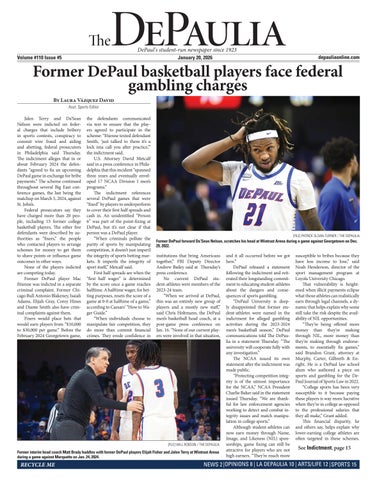
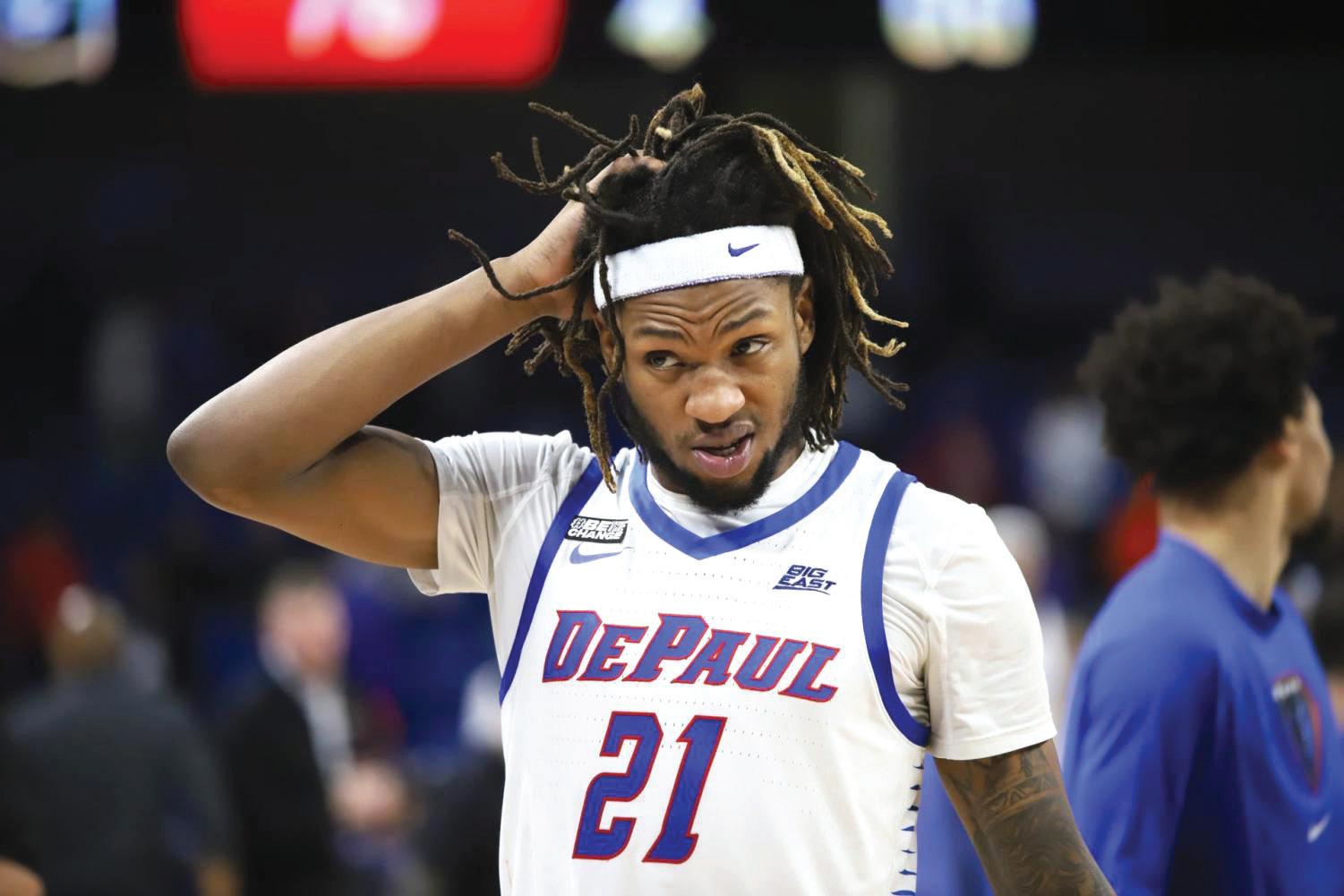
Former DePaul forward Da’Sean Nelson, scratches his head at Wintrust Arena during a game against Georgetown on Dec. 29, 2022.
[FILE] PATRICK SLOAN-TURNER / THE DEPAULIA
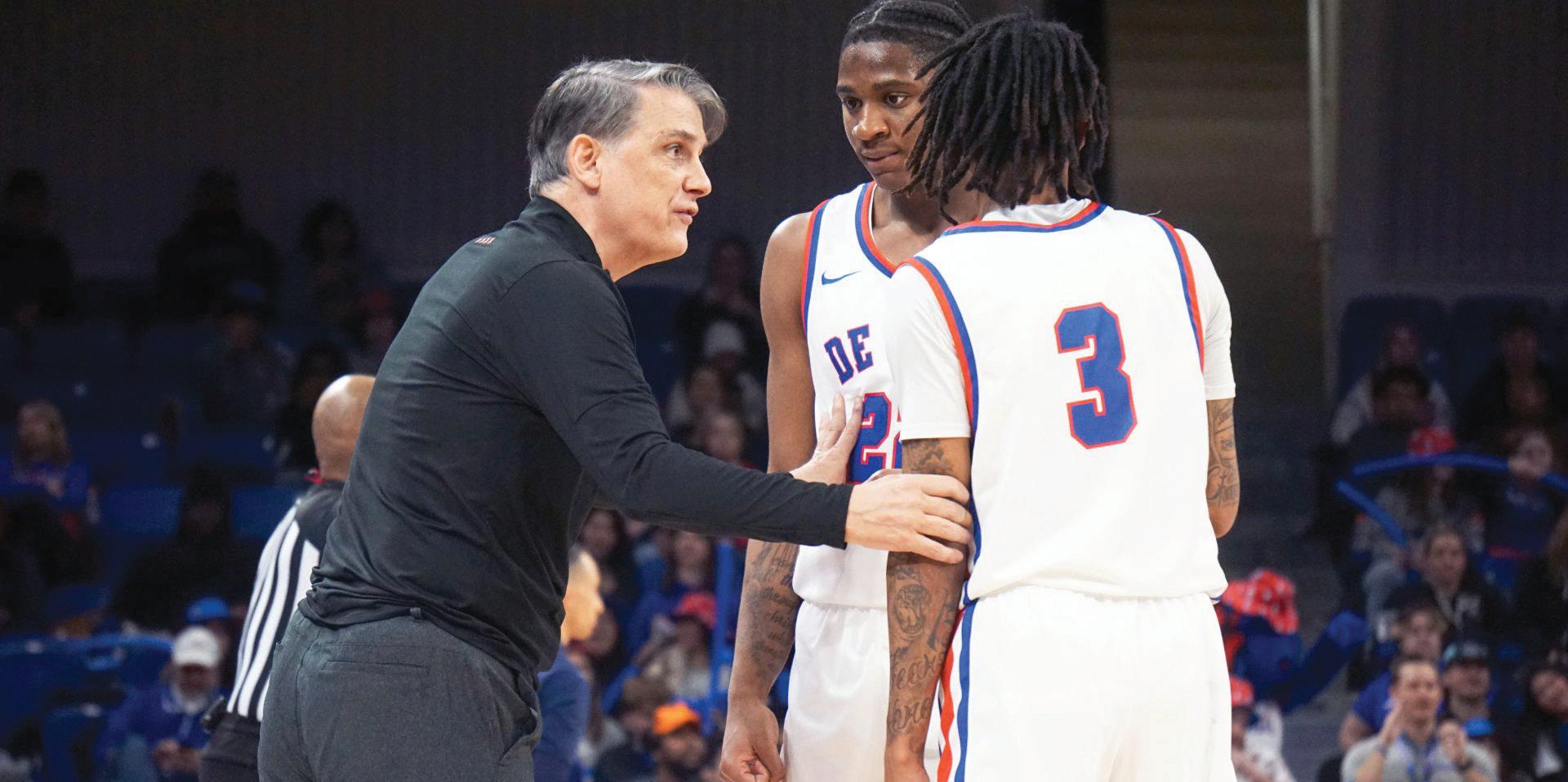
Former interim head coach Matt Brady huddles with former DePaul players Elijah Fisher and Jalen Terry at Wintrust Arena during a game against Marquette on Jan. 24, 2024.
[FILE] WILL ROBSON / THE DEPAULIA
The DePaulia is the official student-run newspaper of DePaul University and may not necessarily reflect the views of college administrators, faculty or staff.
EDITOR-IN-CHIEF LILI JARVENPA
LJARVE@DEPAULIAONLINE.COM
DIGITAL MANAGING SABRINA CASTLE SCASTL@DEPAULIAONLINE.COM
CONTENT MANAGING | BRIELLE KOHLBECK BKOHLB@DEPAULIAONLINE.COM
DIRECTOR OF PHOTO & MULTIMEDIA | JEREMY BATTLE JBATTL@DEPAULIAONLINE.COM
NEWS EDITOR | SADIE SPRINGER SSPRIN@DEPAULIAONLINE.COM
ASST. NEWS EDITOR | KHADIJA MUJAHID KMUJAH@DEPAULIAONLINE.COM
OPINIONS EDITOR ANNA BARTH ABARTH@DEPAULIAONLINE.COM
ARTS & LIFE EDITOR ANNIE KOZIEL AKOZIE@DEPAULIAONLINE.COM
ASST. ARTS & LIFE EDITOR | LINDSAY FREIBERGER LFREIB@DEPAULIAONLINE.COM
SPORTS EDITOR | PEYTON HOPP PHOPP@DEPAULIAONLINE.COM
ASST. SPORTS EDITOR LAURA VÁZQUEZ DAVID LVAZQU@DEPAULIAONLINE.COM
ILLUSTRATION EDITOR | PRECIOSA RIOS PRIOS@DEPAULIAONLINE.COM
ASST. ILLUSTRATION EDITOR MARA LOGAN MLOGAN@DEPAULIAONLINE.COM
DESIGN EDITOR | GENESIS COFFEY GCOFFE @DEPAULIAONLINE.COM
ASST. DESIGN EDITOR | JAVEN OSWALD JOSWAL@DEPAULIAONLINE.COM
PHOTO EDITOR | GIACOMO CAIN GCAIN@DEPAULIAONLINE.COM
ASST. PHOTO EDITOR ZOEY DUCHENE ZDUCHE@DEPAULIAONLINE.COM
MULTIMEDIA EDITOR GRACE LOGAN GLOGAN@DEPAULIAONLINE.COM
ASST. MULTIMEDIA EDITOR | RILEY SOMMERS RSOMME@DEPAULIAONLINE.COM
COPY EDITOR & NEWSLETTER EDITOR | AMBER CORKEY ACORKE@DEPAULIAONLINE.COM
ASST. COPY EDITOR ISABELLA RUSSOMANNO IRUSSO@DEPAULIAONLINE.COM
SOCIAL MEDIA EDITOR | RILEY MOULTON RMOULT@DEPAULIAONLINE.COM
COMMUNITY ENGAGEMENT COORDINATOR LAINE WYATT LWYATT@DEPAULIAONLINE.COM
MARKETING COORDINATOR | SYDNEY MANTEI SMANTE@DEPAULIAONLINE.COM
EDITORIAL BUSINESS MANAGER | AIKO TAI ATAI@DEPAULIAONLINE.COM
AD SALES BUSINESS MANAGER SAGE SLESSOR SSLESS@DEPAULIAONLINE.COM
FACULTY ADVISER | MARTHA IRVINE MIRVINE5@DEPAUL.EDU

La DePaulia es el noticiero oficial estudiantil en español de la Universidad DePaul, enfocado en proveer una voz para la comunidad latinx. Nuestras opiniones no necesariamente reflejan las opiniones de la administración, facultad o personal de la universidad.
EDITORA EN JEFE | SOFIA JOSEPH SJOSEP@DEPAULIAONLINE.COM
EDITORA DE CONTENIDO | LAURA VÁZQUEZ DAVID LVAZQU@DEPAULIAONLINE.COM
EDITORA DE NOTICIAS | IZZY SIEMASZKO ISIEMA@DEPAULIAONLINE.COM
EDITOR DE REDES SOCIALES CRIS SALAS CSALAS@DEPAULIAONLINE.COM
MENTOR DE LA DEPAULIA | ARTURO FERNÁNDEZ AFERNÁ@DEPAULIAONLINE.COM
CAMPUS CRIME REPORT
Jan. 7th – Jan. 13th, 2026

LINCOLN PARK CAMPUS
Drug & Alcohol Assault & Theft Other
Lincoln Park Campus Crimes:
Jan. 7
A Cannabis Control Act report was filed for an incident in the Sheffield Garage.
Jan. 7
A Criminal Trespass report was filed for an individual in Byrne Hall. A Chicago Police report was filed.
Jan. 8
An Illegal Consumption of Alcohol by a Minor report was filed for a person in Ozanam Hall. The subject was transported to the hospital.
Jan. 10
A Graffiti report was filed for markings found on the exterior of the 990 West Fullerton Building.
Jan. 10
A Disturbance report was filed for conduct occurring on the 1st floor lobby of Corcoran Hall.
Jan. 11
An Illegal Consumption of Alcohol by a Minor report was filed for a person in Seton Hall. The subject was transported to the hospital.
Jan. 11
A Theft report was filed after a bicycle that had been parked in the McCabe Hall bike corral since November was reported taken.
Jan. 12
A Disturbance report was filed for conduct occurring on the 1st floor of the Ray Meyer Fitness and Recreation Center.
LOOP CAMPUS
Loop Campus Crimes: No crimes were reported during this period.

DePaul budget cuts impacting staffing at some dorms
By Annie Koziel Arts & Life Editor
As universities nationwide grapple with funding and budget cuts, DePaul has announced another change on campus — this time, reductions in staffing at some residence hall reception desks. On Jan. 4, the university’s Department of Housing and Residence Life announced via email that Sanctuary Townhomes, Sanctuary Hall and McCabe Hall will adopt a new reception desk schedule, while Centennial Hall will no longer have desk receptionists.
The email, sent to residents of the affected halls, states that reception desks at Sanctuary Townhomes, Sanctuary Hall and McCabe Hall (all upperclassmen residence halls in Lincoln Park) will no longer be staffed by student receptionists from 8 a.m. to 4 p.m. — a change from the 24-hour schedule many other halls still have. According to the email, residents are still limited to two guests per person and guests must be accompanied by a resident, but in this they are essentially on the honor system.
The changes are part of wider cutbacks at DePaul that also led to the layoffs of 114 staff members, announced in December. The university also has put a freeze on filling several
positions and has made cutbacks in the Loop library. DePaul communications have attributed these cuts to a drop in international student enrollment, increased student financial need, increased healthcare costs for employees and a lack of federal funding.
“I understand from a business perspective,” said Benjamin Pluta, DePaul sophomore and Sanctuary Hall resident, referring to the layoffs and budget challenges. “But I do think it also raises some safety concerns.”
Until this quarter, student employees staffed reception desks at these halls between 8 a.m. and midnight, while security attendants continue to staff the desks overnight. Residents had to scan into the building and check guests in and out, and guests had to present either their DePaul or government-issued photo ID. All the freshman residence halls on campus still adhere to this system. With the new schedule, residents at the affected halls will now only need to sign in when the desk is staffed.
In a statement to The DePaulia, DePaul University Communications said although the university is cutting back on their hours, it will still retain all current student employees and maintain “essential services for res-
idents.” Referring to the need to cut the budget, they added that the university is “also being good stewards of university resources.”
DePaul sophomore Linus Johnson, a Sanctuary Hall resident, said that although he has noticed confusion among residents about policies like guest check-in, he is “not especially” worried about changes in resident life.
“If a person is really trying to sneak into a housing place, you’d have to go through quite a few barriers,” said Johnson, a Sanctuary Hall resident. “Even once you go past the signin desk, you still need a key to get into any actual room.”
Pluta agreed that a lack of guidance causes confusion and worries about who and what is allowed in the halls when no one is watching the desks.
“Can residents just walk in with any guest they want? Is there any form of ID checking? Presumably not, from what I’ve heard,” he said.
Centennial Hall on Sheffield Avenue also houses DePaul’s Public Safety office. According to University Communications, the decision not to staff its reception desk at all “returns to a previous operational model” from pre-2020. Residents still have access to staff and resident advisors but will
not need to scan anyone in or show ID.
Sheffield Square, another sophomore and upperclassmen residence, also does not have a reception desk.
But these changes do mean cutting hours for the student employees who work the desks, which is a change that happened suddenly for them.
One DePaul student who works at these reception desks said these changes were made by “higher-ups of the school that were likely not aware of how things work on a day-to-day basis.” The student asked to remain anonymous for fear of losing their job.
“The desk changes have affected policies and procedures that don’t have quick and easy fixes,” the student said.
University Communications stated that “Housing and Residence Life met with student employees and is supporting them through these changes.”
Johnson worries more about overall cutbacks than these specific staffing reductions.
“The biggest issue is not in the thing itself but rather in the sign of larger university budget cuts,” Johnson said, adding that those cuts are “generally not great signs for the health of the university.”
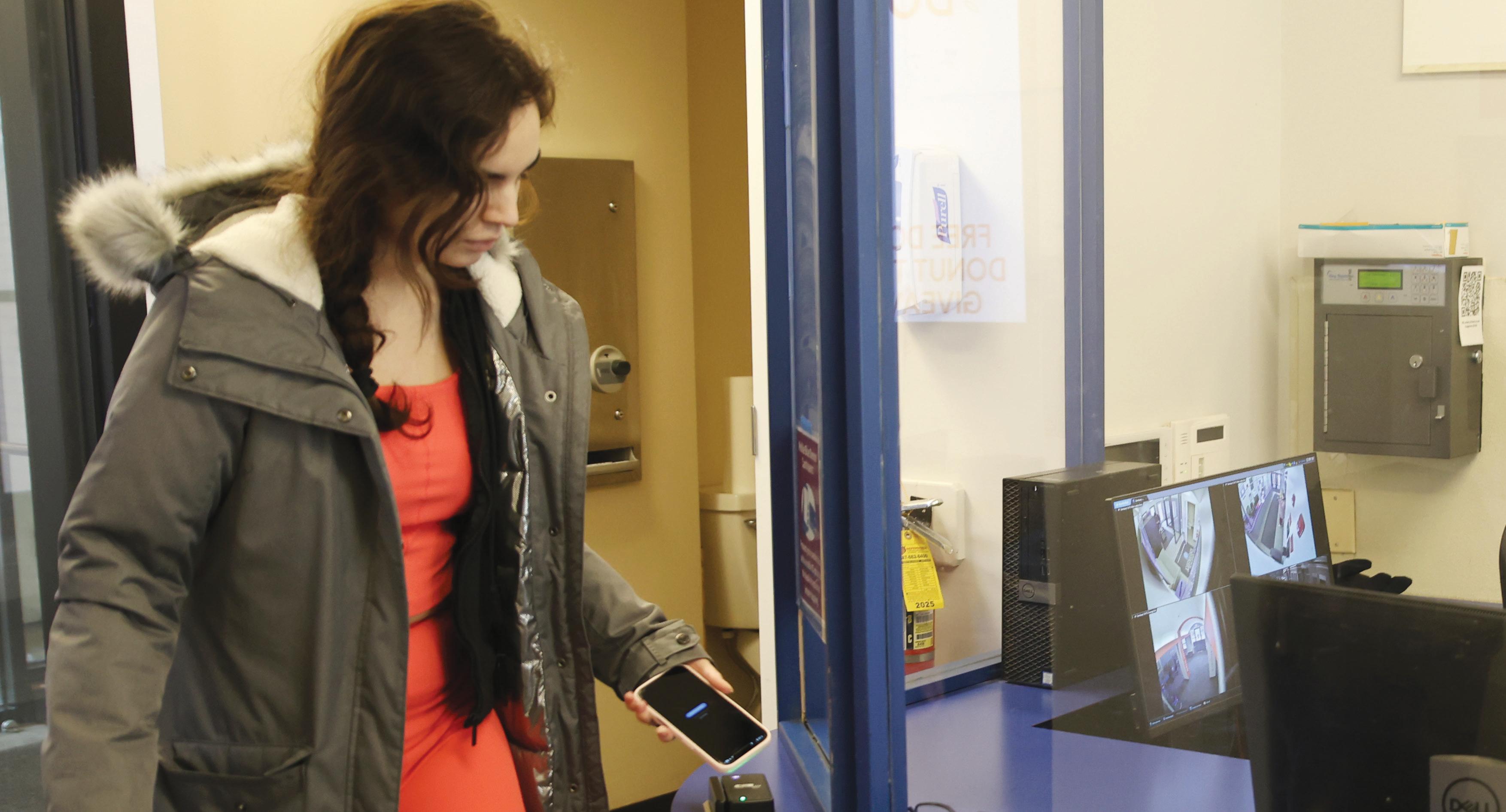
Citlali McDonald Hernandez swipes in to Sanctuary Hall on Saturday, Jan. 17, 2026. Students no longer check guests in and out between 8 a.m. and 4 p.m.
ZOEY DUCHENE / THE DEPAULIA

Trump administration reclassifies graduate programs, limiting loan access for certain fields
By Kathryn Byrnes Contributing Writer
Students and academics across the country are feeling undervalued due to the Trump administration’s proposal to stop classifying multiple graduate and doctoral programs as “professional degrees.”
Programs no longer on the professional degree list include nursing, social work, architecture, education and physical therapy. Some have said the list is largely made up of many female dominant professions, making them think there is another agenda behind the new categorization.
“That may be a goal of this administration … to make it more difficult for women to pursue careers and to be out in the work force,” said Neil Vincent, a professor and the chair of social work at DePaul.
President Trump signed the “One Big Beautiful Bill Act” into law last year. Under this act, the U.S. Department of Education has reclassified which programs at the graduate level are considered professional degrees. Students in professional degree programs can borrow
up to $200,000 in federal loans over the course of four years.
Those pursuing a degree in graduate or doctoral programs not considered professional can borrow $100,000 in federal loans, also for four years.
The Department of Education says their professional degree definition is not based on the programs themselves but that it is a way for the department to classify which programs qualify for $200,000 loan limits.
The department said this limit on student federal loans will cause students pursuing a graduate education to take out less loan debt.
Laura Silveira, a DePaul senior majoring in public policy, disagrees that the limit will mean less student loan debt.
“They’ll just go to loans with higher interest rates,” Silveira said. “At the end of the day, it will definitely benefit the banking system. I think less people end up seeking those degrees, ultimately.”
Tess MacGregor, a junior at Marquette University pursuing a degree in nursing, says her goal is to go back to school and become a nurse practitioner —
which requires an advanced degree.
“It’ll make me consider different avenues or different hospital systems that I might work for, depending on what they provide,” MacGregor said, referring to tuition coverage or reimbursement agreements.
“The federal loan being reduced could definitely either extend my time before I go back to school or deter it completely.”
The “One Big Beautiful Bill Act” is also eliminating the Grad PLUS program that allowed students to borrow loans up to the cost of their programs’ tuition.
The Department of Education says that placing a cap on loans will push graduate nursing programs to reduce their program costs.
But Vincent, the DePaul social work chair, said the loan caps only reduce funding accessibility to students and “will not at all reduce the cost of tuition at any institution.”
Beyond impacting female-dominated fields, Vincent said that excluding social work from the list of professional degrees could reduce the number of mental health professionals.
“By restricting this funding, you are going to very much reduce the potential for mental health professionals that are truly needed right now.”
Neil Vincent DEPAUL CHAIR OF SOCIAL WORK
“Social work provides about 60% to 70% of the mental health services in this country,” Vincent said. “By restricting this funding, you are going to very much reduce the potential for mental health professionals that are truly needed right now.”
Daniel Mead, a Double Demon and former DePaul professor, is an associate professor in the college of nursing at Rosalind Franklin University of Medicine and Science in Chicago.
Mead said despite nursing being the largest division in
health care, the reclassification is “dismissive of the reality of nursing education and the healthcare workforce.”
Alexandra Michel, an assistant professor at Rosalind Franklin and a licensed certified nurse-midwife, agreed that the loan cap will not mean a program’s price will change.
“Remember that universities are businesses,” Michel said. “Are you telling loan companies that they should lower the rate on their mortgages so that home buyers have less debt there?”
A university partnership allows DePaul students pursuing health science degrees to apply for early admission to Rosalind Franklin.
The Department of Education is expected to submit a Notice of Proposed Rulemaking — an explanation of the agency’s intent — to the Federal Register early this year. This allows the public an opportunity to comment on the proposal.
The department will review comments and consider changes before a final rule is published in the Federal Register.
PRECIOSA RIOS / THE DEPAULIA
DePaul student creates AI assistant to serve his fellow veterans
By Tori Malek Contributing Writer
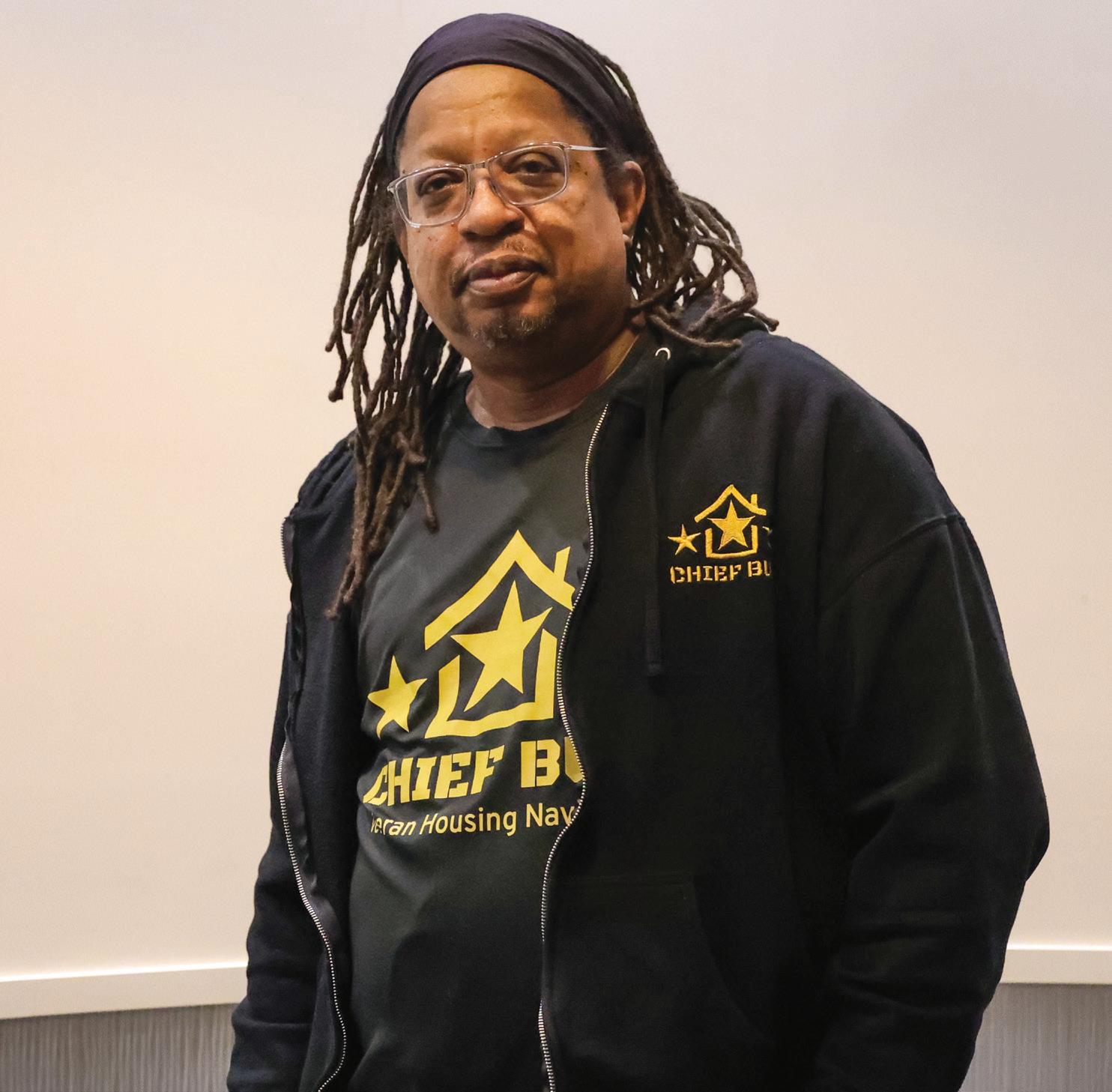
After serving in the Army for seven years, DePaul graduate student Chad King embarked on a new mission to build Chief Bud, an AI assistant designed to streamline the process of attaining Veterans Administration housing benefits and resources.
“There are 18 million veterans in the United States, and I feel a connection to all those people,” said King, who is seeking a master’s of science degree in human-computer interaction.
“I served with them, I know them. And those that are outside in the street and whatnot, I know who they are, and I know that’s not where they want to be.”
King’s goal is to introduce 200 Chicago-area veterans to the basic part of the platform called an “eligibility snapshot.” It collects non-personally identifiable information such as when they served, when they were
discharged and what their discharge type was.
From there, users will receive a bulleted list of services or housing benefits they are eligible for and immediate next steps to take.
King came up with the idea for Chief Bud in the class HCI 590, Design for Startups. During this time, King was facing housing instability of his own.
“The easiest problem to solve is the one you’re dealing with,” King said. “I figured that this would be a perfect use case for AI because part of the problem is there’s so many rules, so many pages of rules — and who wants to read those rules?”
King is currently developing the pilot for Chief Bud and aims to connect individuals to the program in June or July at resource fairs.
The startup features the AI-animated character dubbed Chief Bud, a veteran persona who communicates with users quickly, directly and without equivocation — exactly as is in

the military, King said.
In November, King secured $25,000 to fund Chief Bud when he won the grand prize at P33’s first-ever TechRise Veteran’s Day Pitch Competition.
P33 is a Chicago based nonprofit organization working to turn the city into a tier one technology and innovation hub while driving economic growth.
He was the only competitor without an already established business.
“It’s scary because now I have to go be a businessman and that is not what I am nor have I ever been,” King said.
Despite his limitations, he is rapidly trying to learn the ropes of creating a business and establishing its systems, processes and procedures.
Molly Brown is director at the HARC Lab, the Homelessness Advocacy, Research, and Collaboration Lab. It is a research and advocacy space in DePaul’s Department of Psychology dedicated to informing best practices in homelessness prevention.
It is important that programs be informed by those with lived experience, Brown said.
“Creating that kind of cultural tailoring makes the intervention or the service itself more accessible to that population, so they’re more likely to
use it,” Brown said.
According to Brown, this allows users to feel safer and more comfortable with the technology.
Trevor Harpanionek, an Air Force veteran from Hoffman Estates, said Chief Bud would be a phenomenal resource to have and agreed it would greatly benefit those seeking out Department of Veterans Affairs resources.
He noted that the direct and bulleted format of the program “falls right into our wheelhouse of complete and utter structure and order.”
The name “Chief Bud” is also a salute to military culture.
“In the military, you’re trained to rely on other people,” King said. “Your battle buddy is the framework that they use. The idea is that you’re not alone.”
The program is designed to deliver this familiar experience to users.
King regards AI as “one of the most powerful, interesting tools that has ever been created.”
He has set up Chief Bud as a public benefit corporation to ensure the program stays free and safe for veterans to use.
“I have an opportunity to fulfill a mission that I’ve always wanted to fulfill,” he said, “and that is to help the people around me.”
ZOEY DUCHENE / THE DEPAULIA
Chad King poses for a photo in the Coleman Entrepreneurship Center on Thursday, Jan. 15, 2026. King is a U.S. Army veteran and a grad student at DePaul who recently won the TechRise Chicago Veterans Day Pitch Competition for Chief Bud.


Queer stories go mainstream in ‘Heated Rivalry’
By Taylor Peterson Contributing Writer
Shows like “Heated Rivalry” don’t need an introduction. Even if you haven’t watched it, chances are you’ve heard about it through TikTok edits, group chats or maybe someone insisting you “just give it one episode.” The show has quickly flowed into everyday conversation, and that kind of cultural presence matters, especially when the story at the center is queer.
What makes “Heated Rivalry” stand out isn’t just that it tells a queer love story. It places that story inside professional sports — a space that is still widely represented as straight and hypermasculine. The show explores secrecy, pressure, coming out and intimacy under public scrutiny, while showing that queerness isn’t a monolith, even within the same environment. That complexity is why the show resonates, and why its mainstream popularity is worth paying attention to.
I’ve seen and heard conversations about “Heated Rivalry” from all kinds of people, including straight viewers. On one level, that’s a win. When queer stories break out of explicitly queer spaces, they stop being treated as niche or optional and start becoming part of shared cultural conversation.
But popularity alone doesn’t guarantee understanding.
Charlotte Eich, a DePaul junior, said she was drawn to the show through fan culture before it fully exploded.
“I chose to watch it because I had a friend who was getting really into it, and she told me that the fan fiction was really good,” Eich said. “I’m a lover of fan fiction, and I’m a lover of fan communities. When I hear there’s a big community coming out, I’m gonna jump on that.”
That sense of community is a big part of the show’s appeal. Eich said she hasn’t experienced this kind of collective viewing moment in years.
“I haven’t felt this way about a show and kind of a watching experience since ‘Euphoria’ Sundays during season two,” she said. “I think this being such a mainstream hot topic is really huge, because it’s getting more people to talk about a queer story, a queer romance.”
And that visibility does matter. But it also brings tension, especially when
queer stories become trendy before they are fully understood.
Eich said many conversations, particularly with straight viewers, focus heavily on the show’s sexually explicit scenes.
“I think the conversation, especially surrounding the sexually explicit scenes, has been really interesting,” she said. “Straight people saying, ‘Oh, well, it’s so dirty or it’s so explicit,’ but they watch shows like ‘Outlander’ or ‘Bridgerton,’ which I think have pretty much the same amount.”
The double standard points to a larger issue. Watching a queer show doesn’t automatically translate into understanding queer life. Fandom culture can dilute emotional and political nuance, turning lived experiences into more consumable trends. Straight audiences are not the problem, but engagement without reflection has limits.
Kelly Kessler, a DePaul professor of communication and media, described mainstreaming queer stories as a “catch 22,” saying they are both necessary and complicated.
“I’ve always been a proponent of mainstreaming queer stories,” Kessler said. “I have always thought that the changing of hearts and minds can only occur if the folks who need their hearts and minds changed are seeing identifiable stories about queer folks.”
Still, Kessler said marketability often shapes what audiences see.
“At the end of the day, so much is about marketability and who is going to pay for what,” she said. “As with everything else, this limits who we get to see, who gets to see themselves, and who gets to speak for themselves.”
That challenge makes avoiding tokenism especially important. Samantha Close, a DePaul associate professor of communication, said representation becomes meaningful when queer characters are central and varied.
“It’s when you start to get main characters and multiple characters where the representation becomes more meaningful,” Close said. “Because it’s very easy to have the token person.”
Beyond representation, the show’s popularity also says something about how media still connects people, even in a fragmented streaming landscape.

“When a show kind of breaches containment and becomes generally discussed, I think that shows that we do still have a shared culture in some moments,” Close said.
Shared culture has the power to connect people, but only if audiences engage with the full story. Eich said one of her frustrations has been watching deeper moments get overshadowed.
“Everyone only wants to talk about the sex,” she said. “But the love stories and the relationships, like Shane coming
out to his parents, that was so moving.”
Mainstream attention isn’t the problem. Uncritical consumption is.
Queer stories don’t lose their power by being popular. They lose it when audiences stop listening to what those stories are trying to say. Watching might open the door, but connection takes more than just viewership. It takes care, curiosity and a willingness to sit with the parts that are uncomfortable.

PRECIOSA RIOS / THE DEPAULIA
‘Wicked’ has a way of finding me again, just when I need it most
By Peyton Hopp Sports Editor
I have never really been into the colors pink and green, but these colors together always make sense in my mind. Seeing these colors floods me with memories and emotions of a piece of media that has certainly changed my life.
On Jan. 3, 2018, I saw “Wicked” for the first time when it arrived in Chicago on tour. I had seen it once before when I was younger, but all I could remember was the Wizard of Oz’s ginormous, scary animatronic head.
I decided to give it another shot when it came into town, and I’m thankful I made that decision. The girl I was before and after experiencing it were two completely different people.
I was 15 years old and a freshman in high school. Walking into the James M. Nederlander theatre, I was a shy introvert with no solid friends — at most close acquaintances — and I was still trying to discover who I was. Grade school wasn’t the most beautiful or re-
warding experience for me, so I wanted to start fresh in high school.
Walking out of the theater, I felt something change within me. Elphaba’s evergrowing courage and her spunk made me want to be like her. I wanted to be so confident that I didn’t give a twig what anyone else thought.
Out of the whole musical, one line stuck with me: “My future is unlimited.”
Elphaba sings this lyric during the song “The Wizard and I.” This is when she gets an invitation to visit the Wizard of Oz, the ruler of Oz and someone she looks up to. This is one instance of where she’s most confident in herself because she feels as if someone understands her. Sadly, the Wizard of Oz turns out to be evil, casting Elphaba as a villain despite her good intentions.
Even though things didn’t go too well for Elphaba after that song, I kept on repeating that phrase to myself. I was always wondering where and who I’d be within a few years, but I knew I had all the time in the world to get to a place someday where I’d be happy with
myself.
Alongside a story of a woman trying to discover herself, it was also a story of two unlikely people who formed this unbreakable bond. I craved and hoped for a friendship like theirs — a friendship that made me feel whole.
Thankfully, I have found a friendship that makes me feel like that. Camila Benencia and I met at a concert in 2023 and three years later we are inseparable. I went up to her because she seemed nice and bubbly when she was talking to her sibling. If you told my 15-yearold self I went up to someone to talk to them and they’d become my best friend, I would’ve laughed.
Over eight years later, I’ve seen the musical countless times, both live and online. Over winter break, I watched “Wicked: For Good,” the second movie of the “Wicked” franchise.
Every time I watch “Wicked,” the ending song “For Good” cues my waterworks. It’s the last time Glinda and Elphaba see each other before — spoiler — Elphaba leaves Oz, and it’s heart-
breaking each and every time. The way this song and the following scene were portrayed in the movie had me bawling my eyes out.
This movie came out at a perfect time because I had just finished my first quarter of graduate school, which was a bit difficult. I didn’t feel the best mentally during the last few weeks of fall quarter, but watching “Wicked” helped bring my confidence back.
It always reminds me that while you go through obstacles, you always have yourself to fall back on.
I have come to a point in my life where I can say I’m satisfied with who I am as a person. Of course, I still have a lot of room to grow and get better, but I’m not as shy as I used to be and I have more belief in myself.
If I were to go back and meet my 15-year-old self, I would say she’d be proud of me. I’ve grown to love myself and I still cherish and adore the musical that changed my life years ago.
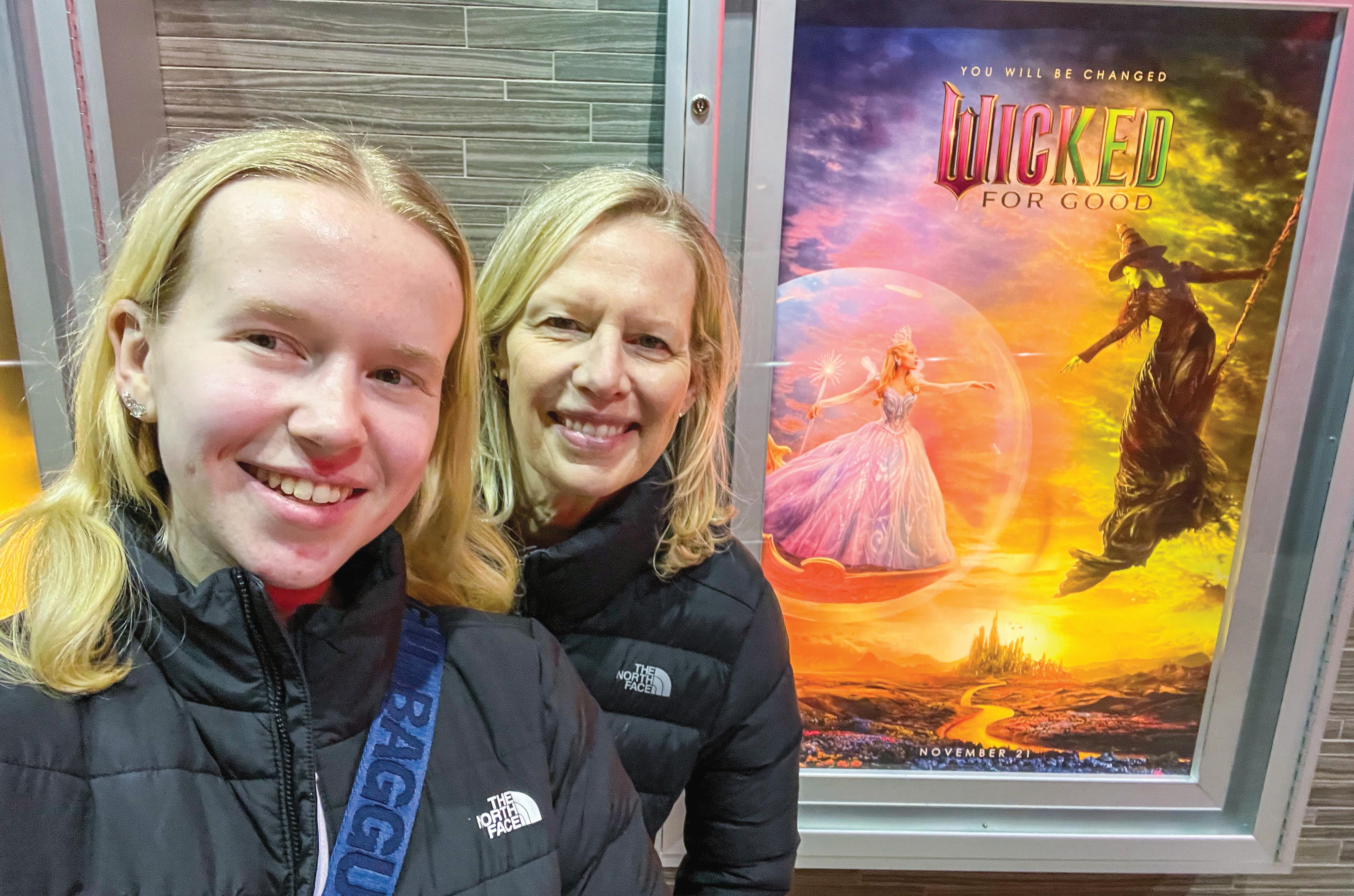
Peyton Hopp poses with her mother, Mary Beth Hopp, in front of the “Wicked: For Good” posted on Thursday, Nov. 20, 2025. Peyton enjoyed the “Wicked: For Good” movie.
PEYTON HOPP / THE DEPAULIA
La DePaulia
Seis años
después:
By Sofia Joseph Editora en Jefe de La DePaulia
¿Dónde están ahora los exalum nos de La DePaulia?
La DePaulia celebró su sexto aniversario el pasado martes. Crear una sección en español para un periódico universitario mien tras otros, como la publicación Hoy del Chicago Tribune, cerraban, requirió valentía y determinación; y prepararla para el éxito después de que sus fundadores se graduaran tomó amor y cuidado. Exalumnos de La DePaulia contribuyeron a mantener vivo un medio latino en Chicago —esto es lo que están haciendo ahora.
Hillary Flores



Hillary Flores es una de las cofundadoras y exeditora en jefe de La DePaulia. Trabajó en la publicación aproximadamente tres años. Completó su bachillerato en DePaul en 2021 y obtuvo su maestría en innovación de medios y estrategia de contenidos en la Universidad Northwestern en 2022. Actualmente es editora adjunta bilingüe en Borderless Magazine, donde ella y su equipo buscan reinventar la manera en que se cuentan las historias de inmigración.
Recuerdo favorito en La DePaulia: Pasar tiempo con los demás cofundadores, bromear, comer pizza y editar historias hasta tarde en la noche.
Deseos para La DePaulia: Que la publicación continúe empoderando a otros estudiantes para comprender mejor a su comunidad y contar las historias que les importan.
Cómo La DePaulia la preparó para el mundo real: Trabajar en la publicación le permitió escuchar a la comunidad y comprender las múltiples capas de las historias de inmigración. “Espero que La DePaulia siga creciendo y que continúe viva a través de generaciones. Que cada vez que una persona lea una historia, pueda ser una máquina del tiempo hacia sus raíces y su país de origen. La DePaulia me sirvió como una plataforma para entender realmente mis raíces, la historia de lo que significa ser latina —lo que significa ser Latinx. Así que espero que la publicación siga compartiendo historias que revelan capas, que enciendan conversaciones dentro de nuestra comunidad y que, especialmente en un momento político cambiante como este, permita a la gente comprender la profundidad de lo que es ser un verdadero inmigrante en este país”.
Erika Pérez
Erika Perez se graduó de DePaul en 2022 con un bachillerato en comunicación y medios y una concentración secundaria en periodismo. Fue editora de contenido de La DePaulia durante dos años. Actualmente trabaja en Univisión como editora de asignaciones.
Recuerdo favorito en La DePaulia: Los domingos de edición, cuando el equipo edita ba historias y finalizaba el diseño de la página antes de enviarla a imprenta.
Deseos para La DePaulia: Que la publicación continúe destacando a la diversa co munidad latina de Chicago e inspire a futuras generaciones de estudiantes a seguir el periodismo bilingüe.
Cómo La DePaulia la preparó para el mundo real: “La DePaulia me dio memoria muscular después de graduarme sobre cómo mantener la calma frente a una crisis. Es difícil cuando una fuente no responde y tienes una fecha límite. La DePaulia me enseñó a resolver problemas bajo presión. Entré con confianza a reuniones editoriales y a proponer historias oportunas después de conseguir mi primer trabajo”.
Alonso Vidal
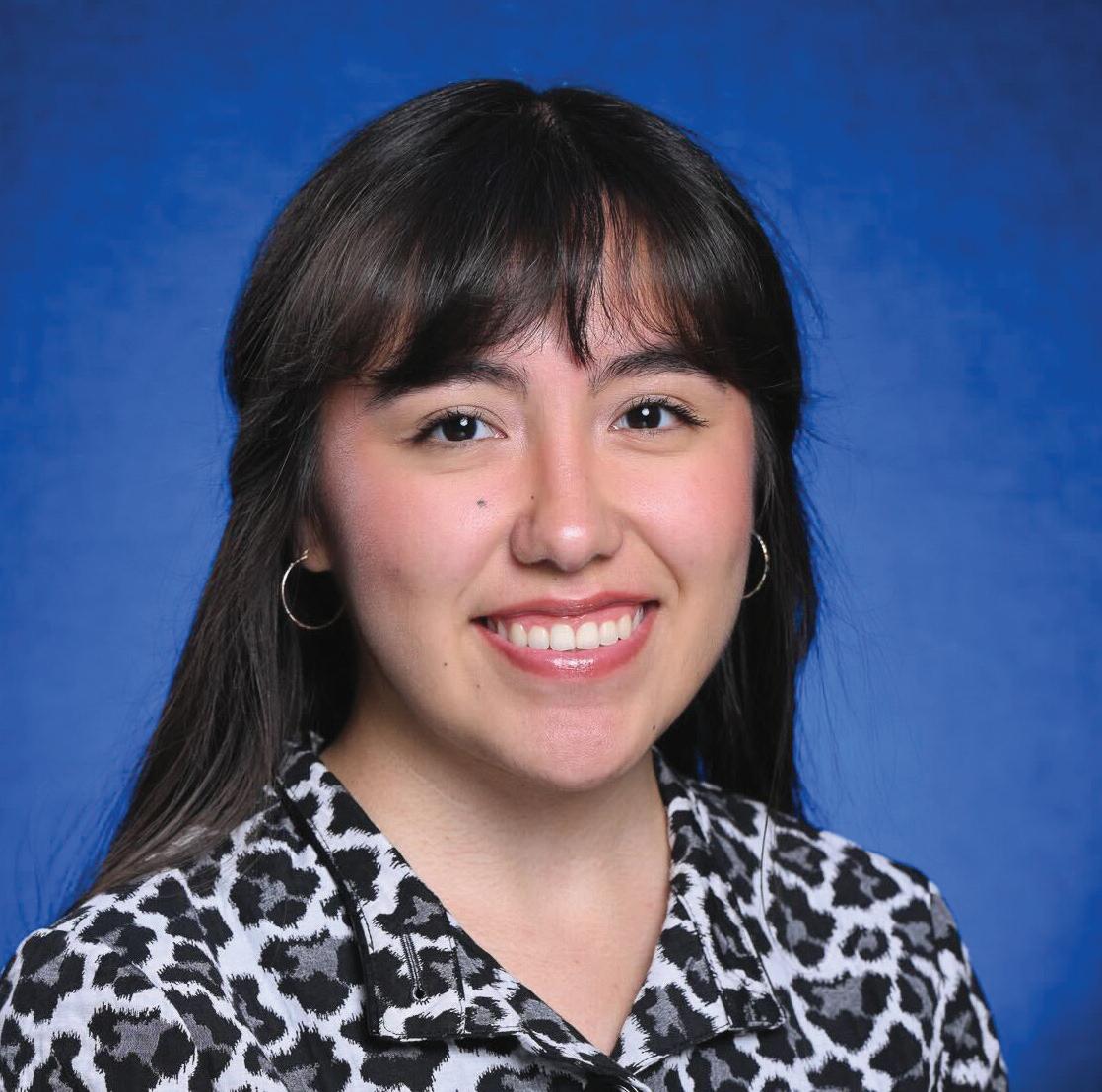
Alonso Vidal trabajó como colaborador y editor multimedia de La DePaulia durante un año. Completó su bachil lerato en DePaul en 2024. Desde que se graduó, ha sido periodista comunitario en La Voz del Paseo Boricua en Humboldt Park, reportero en City Bureau y periodista independiente para South Side Weekly. Actualmente cursa una maestría en periodismo de investigación como becario Stabile en la Universidad de Columbia en Nueva York.
“Antes de La DePaulia, no tenía experiencia en periodismo. Era estudiante de cine. Pero como el español es mi primer idioma, me entusiasmaba escribir sobre temas que me interesaban en mi lengua materna. Nunca imaginé cuánto me gustaría el periodismo.
“Todos en La DePaulia fueron muy acogedores. Me enseñaron a escribir y a pensar como periodista. Pero también fue una comunidad latina que necesitaba al estar lejos de casa. Espero que La DePaulia continúe siendo eso. Y que demuestre a las personas sin experiencia en periodismo que solo se necesita disposición y gente que te apoye.
“Nunca habría podido hacer nada de eso sin La DePaulia y sin todos los que son La DePaulia”.


María Marta Guzmán
María Marta Guzmán se graduó de DePaul en 2022 con un bachillerato en comunicaciones y concentraciones secundarias en español y estudios latinoamericanos. Es una de las cofundadoras de La DePaulia y trabajó en la publicación por más de dos años como editora de noticias, editora de contenido y finalmente como editora en jefe. Acaba de completar su tercer año como periodista multimedia en NBC Knoxville.

Recuerdo favorito en La DePaulia: Crear una visión para La DePaulia y lanzarla.
Deseos para La DePaulia: Que continúe sirviendo a la comunidad hispanohablante, a los estudiantes y a las futuras generaciones.
Cómo La DePaulia la preparó para el mundo real: La DePaulia le enseñó a identificar una historia, proponerla y encontrar fuentes. Trabajar en una publicación impresa le dio una base sólida en escritura y trabajo en equipo.
“Cuando la lanzamos, realmente no sabíamos cómo iba a ser recibida. Así que cuando finalmente salió, recibimos una respuesta inmensa e increíble, no solo a nivel local, sino también nacional. Definitivamente, mi recuerdo favorito son los primeros días y las primeras semanas o meses del lanzamiento de La DePaulia, y la visión y el fuego que teníamos por ella”.
Jacqueline Cárdenas
Jacqueline fue editora en jefe de La DePaulia de 2022 a 2024. Se graduó de DePaul en 2024 con un bachillerato en periodismo. Durante su liderazgo, La DePaulia se transformó de una publicación en español a una bilingüe. En ese tiempo, el equipo también ayudó a establecer una alianza entre NBC 5 y Telemundo para que el trabajo de sus escritores se publicara a través de esos medios. Anteriormente trabajó para Latino News Network como reportera y editora multimedia. Ahora colabora como periodista independiente para BreakThrough
Recuerdo favorito en La DePaulia: Editar historias con el equipo y poder reír y pasar
Deseos para La DePaulia: Que continúe inspirando a periodistas Latinx a conectar con sus raíces y encontrar orgullo en su herencia.
Cómo La DePaulia la preparó para el mundo real: La impulsó a perseguir sus sueños periodísticos sin disculpas.
“Espero que La DePaulia brinde un espacio para que los periodistas no solo se vean como narradores, sino como participantes activos en la sociedad para cambiarla y hacerla más equitativa para todos, sin importar cuánto se nos enseñe la idea supremacista blanca de la ‘objetividad’. … La DePaulia fue el lugar donde pude ser la orgullosa hija de inmigrantes mexicanos y cubrir las historias de nuestra comunidad con la mayor compasión. La DePaulia también me retó a enfrentar mi profundo síndrome del impostor y me convirtió en una luchadora.

“A lo largo de mi tiempo en La DePaulia, constantemente tuvimos que demostrar que el periodismo bilingüe importa, y ahora, cada vez que entro a una sala de redacción, mi bilingüismo siempre está en el centro de mi fortale za. La DePaulia fue construida con amor, sangre, sudor y lágrimas, y por eso sigue en pie hoy. Fue la publicación que encendió el fuego en mí y me hizo darme cuenta de que no hay nada que prefiera ser más que periodista”.

Cary Robbins
Cary Robbins trabajó en La DePaulia durante dos años. Se convirtió en editora de contenido en su último trimestre en DePaul. Se graduó de la universidad en 2024 y ahora trabaja como editora de la mesa de asignaciones en WGN.
“La DePaulia me formó de muchas maneras, y estoy muy agradecida de haber sido parte de una de las pocas publicaciones bilingües de Chicago. Siempre llevaré conmigo los artículos que escribí y a las personas que conocí y que me permitieron escribir y compartir partes de sus historias. También atesoraré los recuerdos de crear historias intencionales con mis amigos en La DePaulia, reír y llorar juntos para crecer como periodistas y ver florecer esta hermosa publicación tan necesaria.

“Espero que La DePaulia siga siendo una publicación escrita por periodistas con corazón y pasión por documentar el corazón de nuestra comunidad de Chicago de una manera significativa. No puedo esperar a ver a cada periodista que se una a La DePaulia y comparta historias que dejarán huella por muchos años. ¡Por seis años más y por siempre!”
Arts & Life
These music students want to make you a guitar from scratch
By James Matthews Contributing Writer
It took one bad guitar repair job for DePaul senior Zach Winkler to take matters into his own hands.
“I made it a personal goal to never have a luthier do a crappy job on one of my guitars ever again,” said Winkler, a musician and now a Chicago-based luthier, or someone who builds and replaces guitars.
Learning the basics of guitar tech work from YouTube tutorials, Winkler practiced replacing parts on his own guitar. Eventually, he had a bigger ambition: to build guitars from scratch.
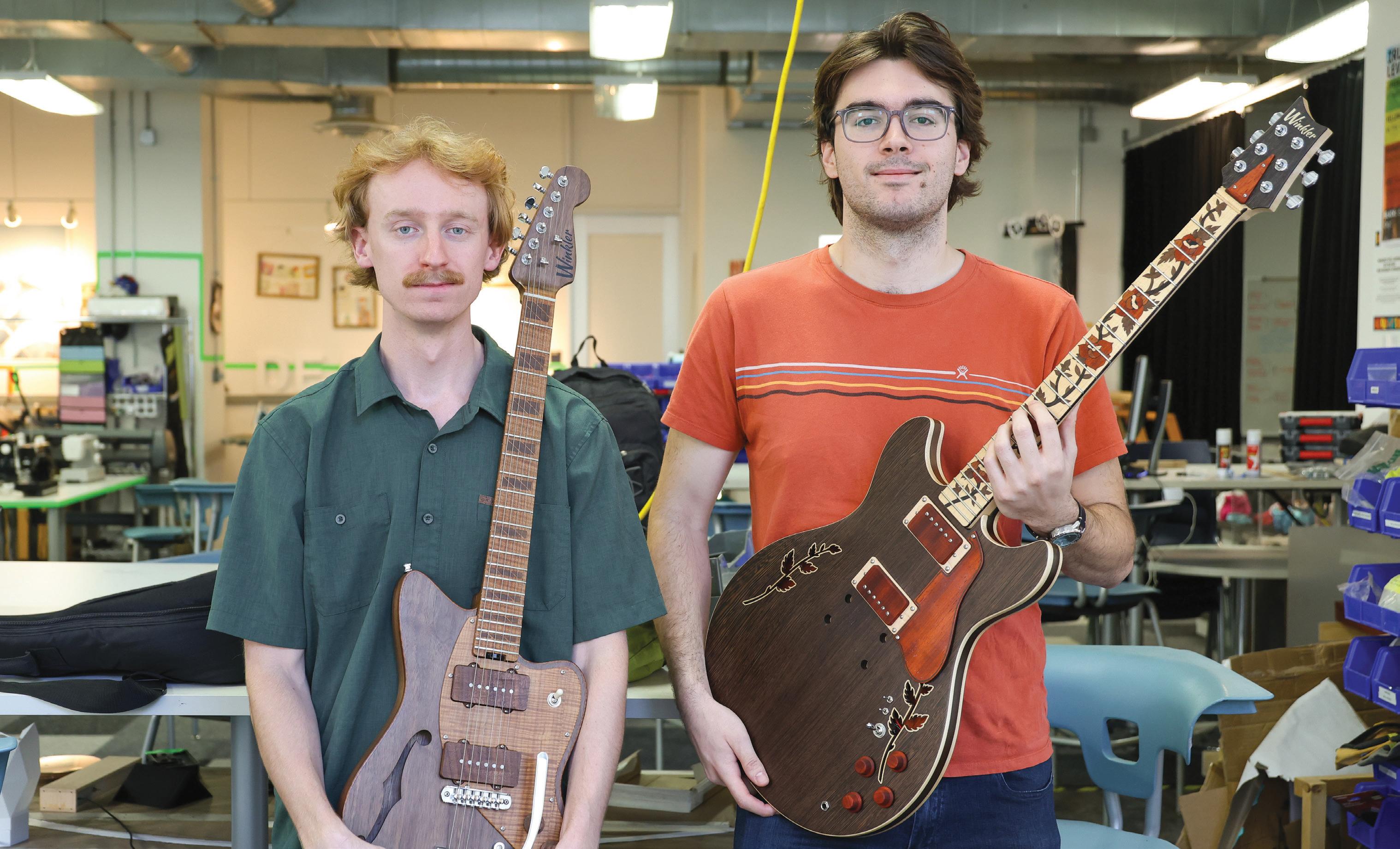
In February 2024, Jonathan Shepard, a friend of Winkler and fellow senior at DePaul, helped create Winkler Guitars, a custom luthier business specializing in handcrafted guitars made from wood of unique tree species. While Winkler handles the electronic side of construction — the frets, pickups and tuning knobs, Shepard takes care of the woodworking and client communication.
“Nowhere are you going to find inlays like this,” Shepard said while gazing at a rose design carved into the neck of their latest instrument made from four different types of wood.
Shepard sources wood from Owl Hardwood Lumber Company, a lumberyard in suburban Des Plaines, Illinois, which carries a variety of domestic and imported woods. Shepard likes to use lesser-known varieties like Wenge — an African hardwood with a rich, dark brown hue.
He started woodworking during his freshman year of college. From there, he landed a job at DePaul’s Idea Realization Lab , a studio space open to all students that offers a variety of resources, from 3D printing to sewing. He and Winkler do the majority of their work in the IRL.
Unlike many commercially-produced guitars, Winkler Guitars are handcrafted at every point of the process, making it tedious work.
“I think the design really sets us apart,” Shepard said. “Most of our clients are going to prefer an instrument that looks like this over an instrument that’s going to sound .5%
First, Winkler and Shepard create a 3D model, deciding what kinds of wood and hardware they’ll use. Next, they begin rough milling, a one- to two-day process where they carve down big blocks of wood into smaller pieces to be glued together. Then, Shepard uses what’s known as a computer numerical control machine to carve out their builds — a process that takes 15 to 20 hours. After this, Winkler takes over, setting up the fretboard and attaching the pick guard and tuners. He then levels the fret board by hand, which takes up to eight hours. They typically leave their guitars with a natural finish.
Before selling their first guitar, Winkler and Shepard built about 10 models that weren’t usable or fully operational. To date, they have finished and sold three guitars, one of which was bought by Gavin Warner, Shepard’s roommate.
“The first guitar they made was floating around the house for a long time, so I had gotten a chance to play it,” Warner said. “It’s super high quality, and when I got to talking about the price with Zach and Jonathan I real-
ized the price was pretty reasonable.”
Winkler Guitars start at $1,000 and go up in price depending on the materials used.
“It feels awesome, I definitely feel more legit,” Warner said. “I think it’s really cool just to have my own … not out of a factory or anything.”
Working closely on each meticulous detail, Winkler and Shepard admit they have run into hiccups and disagreements along the way. Even so, their relationship is “an upward trend,” Winkler said.
“There’s stress involved in making these things, but overall it’s been solid,” Shepard said.
In addition to selling guitars to clients, Winkler Guitars lends one of their builds, the TC-3, to local musicians around the city. After playing, each musician signs the headstock of the instrument. Park Dendy, a guitarist and DePaul alum, played the TC-3 recently in “Surf Cowboy”, a local indie rock band made up partly of DePaul students and alumni. Winkler uses the pictures to promote their product on their Instagram page.
Jonathan Shepard (left) and Zach Winkler (right) show off their guitars at the IRL lab on Friday, Nov. 7, 2025. The duo has been making guitars for almost two years.
GIACOMO CAIN / THE DEPAULIA
‘Ingraining’ healthy snacks in Chicago
By Sadie Springer News Editor
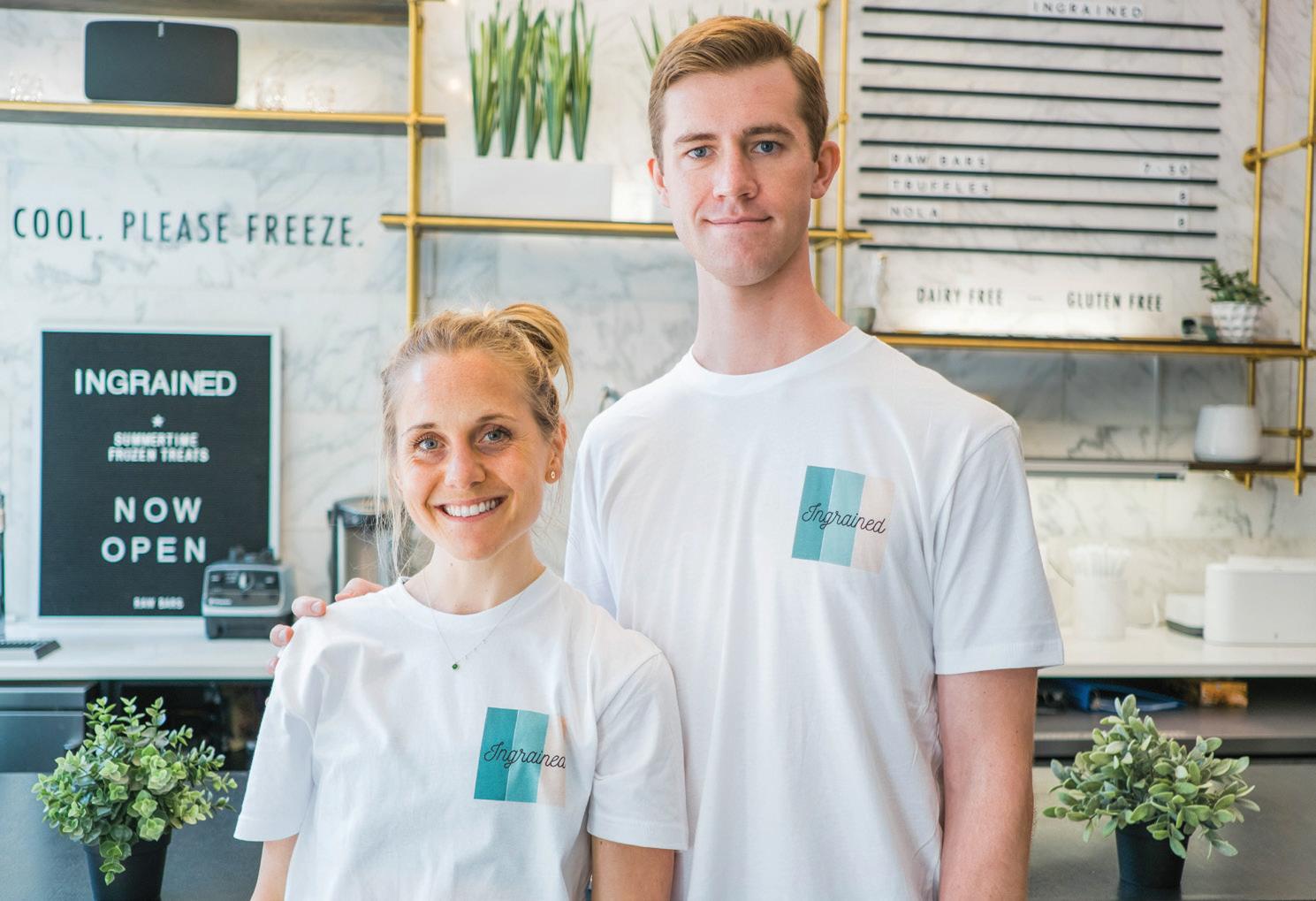
Sydney and Andrew Verwilst opened her Chicago shop, Ingrained, in 2019 with the goal of creating health-conscious snack products and finding her creative outlet.
Ingrained has an ever-changing menu that’s fully vegan and free of refined sugars, oils, gluten and soy.
“I’ve always been into manipulating food to make it healthier for me, more functional, while also being nostalgic and delicious,” Verwilst said. “Is it going to provide me with the nutrients I need and is it balanced, and will I walk away feeling full and like I feel happy?”
In 2016, Verwilst started by selling granola out of her apartment and to vendors like Siniša Rasberger from Chicago Health Foods. Verwilst said the initial support encouraged her to continue with culinary entrepreneurship.
“It catapulted me into believing in myself and believing in what I was doing,” Verwilst said. “Just that initial positivity — it allowed me to stack my wins.”
Now, Verwilst’s primary products are her frozen superfood bars. Rasberger said Verwilst has gained noticeable momentum since opening up the Ingrained storefront.
“She’s your one in a million,” Rasberger said. “Made a cold plunge and succeeded with all the incredibly hard work, and not giving up, and getting over a million obstacles and actually succeeded. And I really admire that. That’s not an easy task by any means.”
After she quit her financial services job in 2019 to fully pursue Ingrained, Verwilst’s husband Andrew quickly followed to help run the business, adding to the small team of Sydney and two part-time employees.
The Ingrained team has always been “lean,” according to Verwilst, because she wants every member of their team to understand the brand and its goals.
“It’s very difficult to add to our team because, in the food space, people often rotate and leave,” Verwilst said.
Verwilst has no formal culinary training, instead studying Mandarin and political science at Saint Mary’s College. But she said food has always been “innate” for her.
“A lot of my things that I do I can’t teach others,” Verwilst said. “I just know what I’m going for in consistency and smell and texture.”
Verwilst says Ingrained prioritizes high-quality products by making small batches
“It’s kind of the Dior of snacks,” Verwilst said. “If you were to buy a Dior bag, it wouldn’t feel so good to see it come off an assembly line and thrown.”
She wants eating her products to be an experience.
“I think your food should be beautiful,” Verwilst said. “I think you should feel like a f---ing queen when you’re eating it. When your food is so thoughtfully made, it’s beautiful.”
Helena Shannon attended Saint Mary’s College with Verwilst and has followed the Ingrained journey from the beginning. She first began supporting Verwilst by buying her granola.
“The quality and integrity is absolutely second to none,” Shannon said in an email to The DePaulia. “When you are someone (like me) who cares deeply about what I put in my body, it’s very important to know that what you are consuming is what they say it is. Sydney and Andrew put the utmost care into the sourcing and producing of their items.”
Verwilst says customer and vendor support mean a lot to the Ingrained team.
“That is one thing that keeps us showing up,” Verwilst said. “Just seeing people feel so good about the food that we make.”
Shannon says there hasn’t been an Ingrained item she hasn’t liked and particularly enjoys the

‘Marty Supreme’ meets audiences before his big screen debut
By Skylah Martinez Contributing Writer
year’s
film to audiences this past Christmas. Like most good presents, this dramatic biography was wrapped in the flashiest wrapping paper, leaving audiences anticipating what was inside.
bars. When Shannon’s wedding was canceled during the pandemic, Verwilst made her a carrot cake, and she had Ingrained products catered for her bachelorette party in 2020.
While Ingrained has been used to build connections with others, Verwilst said she also wants her business to be a way to practice self love. Having struggled with finding a balance with food in the past, she aims for Ingrained to be a source of healing.
“I’ve used food to harm myself in my life, both in restricting it and overdoing it,” Verwilst said. “I want my food to be a catalyst to be good to myself.”
Verwilst said intuitive eating has also been a big inspiration for Ingrained because when she began to trust herself with food, it spread to other areas of her life.
“When you have that strong relationship to what you know is good for you, and you know
In the weeks leading up to the movie’s debut, Chalamet performed multiple marketing stunts that circulated on social media and created buzz around his new role as Marty Mauser, a professional ping pong player in 1950s New York. After its box office success and Chalamet’s recent Golden Globe win for his role in the film, the question remains: Is the movie as hype as its marketing paints it to be?
“It’s all over TikTok,” said Mia Petrovic, a junior at DePaul and student president of the Big Screen Pals film club on campus. Petrovic talked about how the character dynamic from Chalamet’s earliest role in “Call Me by Your Name” to him as “Marty Supreme” is a huge turning point in his career.
“Marty Supreme” earned Chalamet his first Golden Globe. He has previously been nominated for his roles in “Call me by Your Name,” “Beautiful Boy,” “Wonka” and “A Complete Unknown.”
The film draws inspiration from Marty Reisman, the ping pong champion whose hustler mentality paved his way into modernizing the world of ping
what ticks … I think it’s really easy to take that confidence and utilize it outside of the dinner table,” Verwilst said.
Verwilst hopes that Ingrained can do the same for her customers. Verwilst says she’s always wanted to help people with food issues, but knew she didn’t want to be an eating-focused therapist.
“What my goal is at the end of the day, and what I opened Ingrained to do, is to create things that people can eat that heal their relationship with food,” Verwilst said.
Even if Ingrained doesn’t help customers with food, Verwilst hopes her products serve as a source of inspiration.
“Ingrained is an idea,” Verwilst said. “If you’re really passionate about something, whether it be surfing or whatever, if you want to ingrain that in other people, I want my brand to be something that’s more lifestyle.”
pong. Reisman is the man responsible for pitching the idea of an orange ping pong ball to stand out in contrast to players’ white clothing.
During his appearance on “The Late Night Show Starring Jimmy Fallon,” Chalamet talked about the spirit of “Marty Supreme” and his pride in the film, saying, “This is a movie about sacrifice in the pursuit of a dream, and it’s something I can relate to deeply.”
Petrovic’s perception of Marty Mauser as a character is based on what she saw shared on social media. “He’s all about money, work, sex. That’s it,” Petrovic said.
In one promotional stunt for the film, Chalamet climbed on top of The Sphere in Las Vegas, becoming the first person to do so. Atop the sphere, he shouted, “‘Marty Supreme’ is an American film that comes out on Christmas Day, 2025!”
The camera pans out and the tune “Sirius,” most known as the Chicago Bulls theme song, begins to play. As Chalamet shouts and pumps his See Marty Supreme, page 14
Sydney Verwilst and Andrew Verwilst stand in Ingrained in 2019. PROVIDED BY INGRAINED
BECCA HEALY / THE DEPAULIA
This
Golden Globe Award winner for Best Actor in a Motion Picture, Timothée Chalamet, gifted a new

St.Vincent’s
D e JAMZ
“Spinning freSh beatS Since 1581”
By Jeremy Battle Director of Photography & Multimedia
Nothing changes when you turn 22. No new rights like legal drinking, no new benchmarks reached. At 22, reality sets in. I’m nearing the end of my college career, I need to secure a job, and I’m perpetually stressed. But through it all, I want to celebrate this new year of my life not by wallowing in self-pity, but by being more of myself. Let’s give a listen to some of the songs that made me, and yes, that means all of me.
“SELFISH” BY LITTLE SIMZ
It feels wrong to call an artist like Little Simz underrated because real ball knowers know. Simz is a big part of the reason I stopped making fun of British rap, and during the pandemic, this song is what really did it for me. I’m a sucker for smooth basslines, airy choruses and
Simz’ signature pen. In the many years since I first heard this song, it’s grown with me. I intend to enter this new year without that which doesn’t serve me.
“POINT” BY
PERFUME
I’ve never been in one of those videos where people walk up to you on the street and ask what you’re listening to, but if I was, I’d hopefully be listening to Perfume. I’ve always been a sucker for Perfume’s bright, poppy production, and I’m a sucker for this song’s breakbeat beeps and boops. No matter how many times I listen to this one, all the moving parts of this song coalesce into a joy-filled listening experience. It’s sweet and bubbly but never in an overwhelming way. It’s like the auditory equivalent of a tamer cereal, like Raisin
‘Marty Supreme’ continued from 13
fists in the air, the LED lights of the giant sphere turn orange, resembling the ping pong ball seen in the film.
But the movie did not live up to its buzz for everyone.
“I liked it, but it was also just a movie I wouldn’t watch again,” said Jamila Jelks, an AMC Stubs member who sees movies frequently and who didn’t remember seeing any promotions for this film. “I watched it because it was free. … That probably wouldn’t be a movie I would’ve paid to see.”
However, Jelks added that the fast pace of the film and unexpected plot were enjoyable. She also noticed that audience members were “audibly reacting” to the movie, which she found interesting. “It doesn’t happen that often,” she said.
“I feel like Timothée Chalamet really gave his all,” said Xander Cardona, a recent viewer of the film. He did not see much advertising for the film, but his sister, Lexi Cardona, kept up with the Hollywood star’s Instagram posts, including the staged 18 minute Zoom call Chalamet posted to his Instagram in early December as promotion for the film.
Orange was important when it came to marketing the film. During the Zoom call on Instagram, representatives of
A24, the film’s production company, and Chalamet pitched a specific shade of orange to coordinate with the movie — much like pink and the “Barbie” movie.
Lexi Cardona mentioned seeing the “Marty Supreme” clothing line merch that the actor wore during his guest appearance on viral comedian Druski’s “Coulda Been Records” series. Aside from merch, Chalamet hit the red carpet with his girlfriend, media personality Kylie Jenner, in matching head-to-toe orange outfits.
After seeing them on the red carpet together, Petrovic thought about how influential the moment was. “They’re always talked about — always,” she said. She thinks the couple’s popularity adds to the hype not only for this movie but for Chalamet’s future roles, too.
The PR team also floated an orange blimp above cities like Los Angeles. A blimp. For a movie. Blimps are rare.
And yet, “Marty Supreme” has gotten mixed reviews.
“Some people loved it, but I don’t know if they loved it because it’s Timothée Chalamet,” Jelks said. The avid movie watcher argued that, if it were a different actor, the movie might not have been good at all.
“The hype is Timothée Chalamet.”


Bran. I have always loved Raisin Bran.
“ROSE GOLDEN” BY KID CUDI
I’m a Cleveland kid, so I grew up loving Kid Cudi. I didn’t always resonate with his music on a deeper level, especially when he was rapping about his drug addictions while I was in elementary school. Regardless, the appreciation was always there. “Rose Golden,” on the other hand, is a quietly triumphant song about being destined for greatness despite the struggle. It’s been with me since I was 12 years old. I can’t quite put into words what this one means to me.
“I AM...ALL OF ME” BY CRUSH 40
Yes, this is the main theme of the 2005 action-platformer, “Shadow


the Hedgehog.” Yes, this is the game where they made the anthropomorphic hedgehog wield a gun and ride a motorcycle. Yes, it was the coolest thing I’d ever seen when I was a small child, and it still is now as a grown man. I can see how some would think it’s overwhelmingly edgy, but I’ll forever be endeared to media that’s unafraid to be itself. A lesser game would make self-aware jokes about this ridiculously badass hedgehog, but this one doesn’t. It’ll forever have my respect.
LISTEN TO THE JAMZ ON SPOTIFY



Sports
Indictment continued from front
The players targeted in this operation were “role players and rotational players” that earn less than “star players.”
“Thirty thousand dollars means far more to someone making $60,000 a year playing basketball than to someone earning $1 million a year,” Henderson said.
During the 2023-24 campaign, DePaul head coach Tony Stubblefield was fired in January 2024 and Matt Brady, special assistant to the head coach, was appointed interim head coach for the remainder of the season. The Blue Demons ended their season with a 3-29 overall record and 0-20 in Big East play.
Stubblefield spent three seasons at DePaul and is now an assistant coach at the University of Oregon. Brady spent a season at DePaul and is now an assistant coach at Boston University. Holtmann was hired in March 2024.
Holtmann noted that after his hiring there was around “95% new staff.”
The first game mentioned was against the Georgetown Hoyas on Feb. 24, 2024. “The players agreed to underperform in and influence the first half of the Georgetown game so that DePaul would not cover the first half spread,” the indictment said.
The Blue Demons lost that game by one point, 77-76.
Defendant Marves Fairley, one of the fixers and a sports influencer that actively promotes sports betting, placed “at least $27,000 in wagers with sportsbooks on Georgetown to cover the first half spread.”
Fairley was indicted in New York for
another sports betting incident on Oct. 23, 2025.
Shortly after the game, Jalen Smith, another fixer, traveled to Chicago and delivered $40,000 in cash to make the bribe payments owed to the defendants Terry and Nelson. Smith was actively training and developing local basketball players for professional scouting combines during the scheme.
The game between DePaul and Butler on March 2, 2024, was also “fixed.” According to the indictment, some of the defendants placed “at least approximately $123,789 on Butler to cover the first half spread. To increase the profitability of their scheme, these wagers included ‘parlays’ on this game along with other games that the schemers had fixed by bribing players.”
Butler won that game at Wintrust Arena, 82-63.
In the game against St. John’s, the defendants also underperformed and influenced the first half.
During the game, Smith texted Etienne to complain about a player not involved in the scheme performing too well, saying that player needed to “chill the f--- out.”
The defendants would later keep the ball away from the player to prevent him from scoring, the indictment said.
Once the 2023-24 season concluded, Terry and Nelson transferred to Eastern Michigan University, where they continued to fix games. According to the indictment, Nelson and Terry would recruit leading scorers to manipulate the score. In a game against Oakland University in November

2024, the defendants schemed to lose the game by eight points.
The indictments touch on growing concerns about the vulnerability of player-specific betting markets. Grant said scandals like this could push sportsbooks to rethink those offerings. “I think we’ll eventually see legal books stop offering individual player markets,” he said.
While the NCAA already provides mandatory gambling education and is lobbying to remove proposition bets from sports books, according to Henderson, players could use a reminder of the legal consequences of the behavior outlined in the indictment.
“It really is smaller players with less to lose that can be swayed by sophisticated or-
ganized crime or less sophisticated hubris of thinking that they can quickly profit off of these bets,” Henderson said.
The charges against the defendants can carry a maximum sentence of five years for the bribery charges and 20 years for each wire fraud charge. The defendants face three charges on wire fraud and one for conspiracy to commit wire fraud.
Additionally, the indictment includes notices of forfeiture, allowing the government to seek the seizure of any money, gambling winnings or property allegedly obtained through or used to facilitate the scheme.
LiLi Jarvenpa, Peyton Hopp, Ashley Mezewich and Peter Jurich contributed to this report.

[FILE] PATRICK SLOAN-TURNER / THE DEPAULIA
Former DePaul guard Jalen Terry dunks at Wintrust Arena in a loss against Providence on Jan. 1, 2023
Bori Timeout with Lau: I ran a half marathon and it was great!
Laura Vázquez David Asst. Sports Editor
As I took my first gulp of my energy gel at 4 a.m., that’s when it dawned on me that I had to run 13.1 miles — after doing a 5K and a 10K days before.
How was I supposed to do that?
“Trust the work you put in and enjoy it,” my personal trainer, Diego Ramírez, texted me when I told him how nervous I was.
There I was in Old San Juan, Puerto Rico, standing at the start line of my final race of the weekend. Some would call me crazy for flying back home right before finals to do this event, but I was determined.
Lack of sleep, time differences and the daily grind all became irrelevant. I had one goal: to finish those 13.1 miles and become a Lola Challenge 2025 finisher alongside my mom.
The Lola Challenge is a well-known race weekend in Puerto Rico and celebrated its 11th edition Nov. 7-9. The challenge requires runners to complete a 5K on Friday, a 10K on Saturday and finish with a half marathon on Sunday. Some participants choose individual races or relays, but my mom and I signed up for the full challenge — something we trained for months to accomplish together.
It’s easy to say you’ll complete a challenge like this. Actually doing it is a different monster. It was, without question, one of the hardest things I’ve ever done. Bang — and we are off!

As our wave took off, I couldn’t help but smile. As the miles passed, I felt okay — happy, even. The first seven miles felt strong. I was tired, of course, but I was still motivated, still believed in myself.
To get through the races, I asked my friends to leave me audio messages that I could listen to at the start of each mile. Those messages carried me. Some made me laugh, others made me cry. All of them reminded me why I was there.
One of those messages came just as the race began to feel heaviest, cutting through the exhaustion with a familiar voice and a burst of humor:

How DePaul’s club tennis team funds travel,
equipment and maintains accessibility
By Isabella Siemaszko
Club Sports Beat Writer & La DePaulia News Editor
DePaul club tennis members have more to ace than just their serves.
While navigating costs and limited resources, the team has turned to fundraising, alumni support and campus outreach
to keep play going and accessible to students.
The club, which has been around for more than a decade, includes both a recreational team and travel team that practices weekly at Lakeshore Sport & Fitness and competes in tournaments across the nation.
“Hey queen, it’s Marie! I hope you’re not dead yet. I can’t believe you’re already on mile 10. You are so bada--.” I won’t sugarcoat it — I struggled.
After ten miles — the farthest I ever ran before — I began to realize that I still had 3.1 miles left.
“Just a 5K left,” I kept reminding myself. My legs hurt, my energy gels tasted horrible, it was raining, humid and I was alone. I lost my mom a couple miles back and she couldn’t reach my pace. I felt like everything was going wrong and I just couldn’t do it. At the ten-mile oasis, I saw a friend of mine, Alondra Martínez, and I hugged her
For players, finances affect more than just travel opportunities. Sophie Dauterive, a club player and junior marketing major, said additional funding directly impacts the quality of practices, and skill level.
“Getting more funding would mean more equipment,” Dauterive said. “More tennis balls and court access allows us to play longer and get better.”
Accessibility is a concern for club board members. Sonal Matta, co-president and senior accounting major, said tennis can be particularly expensive in Chicago, where court rental often costs far more than students can afford without it turning into a financial burden. At Lakeshore Sport and Fitness, the group pays $75 an hour to reserve a court.
She added that limited court availability has also posed challenges. Despite a long-standing relationship with the fitness center, the club can only practice from 9 to 11 p.m.
“Our player dues are $75 for a quarter,” Matta said. “That covers just one hour of tennis in the city if you think about it.”
According to team leadership, ensuring opportunities remain available takes consistent financial planning and organized fundraising. Currently, most of their funding comes from player dues and money allocated to them through the university.
Matta said the club has also relied on a combination of donations and partner-
and cried. I told her I was tired and I felt like I couldn’t do it anymore.
That’s when a random woman started yelling at me and told me that the pain is part of it, and she encouraged me, to walk, catch my breath and keep running. So, I did, and she started cheering me on.
In the last mile, everyone is cheering you on. All strangers, but all understanding the sacrifice it takes to complete those 13.1 miles.
2 hours and 56 minutes.
As soon as I crossed the finish line, I saw my best friend Mara and my sister Kamila. I started crying again.
Have you ever ugly cried after running for three hours and have no breath or energy? No?
Well, don’t try it. It sucks.
I wasn’t even crying because of the pain. At that point, you don’t feel pain. I was crying because I did it.
Over the summer, I injured my left knee and was uncertain if I could even run. I started taking better care of my body and prioritized recovery, all so that I could complete these races, and I did.
Running this challenge gave me a new sense of understanding that we can do hard things, even if they feel impossible.
I don’t think I’ll do the challenge again this year, not for lack of wanting, but because I want to challenge myself even more … A full marathon is next on deck.
Don’t call me crazy, because I know I am. I’ll just be a crazy marathon finisher and part of the 1% of the population that completes 26.2 miles.
ships to cover expenses.
In recent years, they have collaborated with restaurants local to DePaul, including Raising Cane’s and Red Light Chicken, which allowed customers to eat for a cause. Fifteen percent of net sales went to the athletes when customers mentioned the fundraiser or used a special code while ordering.
These initiatives, however, were not as effective as initially expected.
“I feel like our outreach wasn’t as good as we were hoping with it,” Matta said, noting that turnout depended on timing and member availability. She added that the board hopes to make fundraisers more regular and turn them into a team bonding experience so that people are encouraged to participate.
Aidan Brock, co-president and a junior political science major, said social media has become crucial in promoting both fundraising efforts and general outreach. He added that the club’s Instagram presence was nonexistent in years prior.
“We’ve kind of picked it up,” Brock said. “We posted a lot more last year, and it helped a lot.”
Much of the money the club raises goes toward travel expenses. Brock and Matta said tournaments, transportation and hotel rates account for the largest costs. See full story online
PROVIDED BY LAURA VÁZQUEZ DAVID
Laura Vázquez David bites the medal from her 10K race of the Lola Challenge Weekend on Nov. 9, 2025 in San Juan, Puerto Rico. Vázquez David completed the challenge alongside her mom Tania David Jiménez.
Members of the tennis club play a match during their practice on Monday, Jan. 12, 2026 at Lakeshore Sport and Fitness. During practices they switch off doing rounds of singles, doubles, serving, and more.
ZOEY DUCHENE | THE DEPAULIA