TheDePaulia
DePaul's student-run newspaper since 1923
February 2, 2026

DePaul's student-run newspaper since 1923
February 2, 2026
By Sebastian Alarcon Contributing Writer
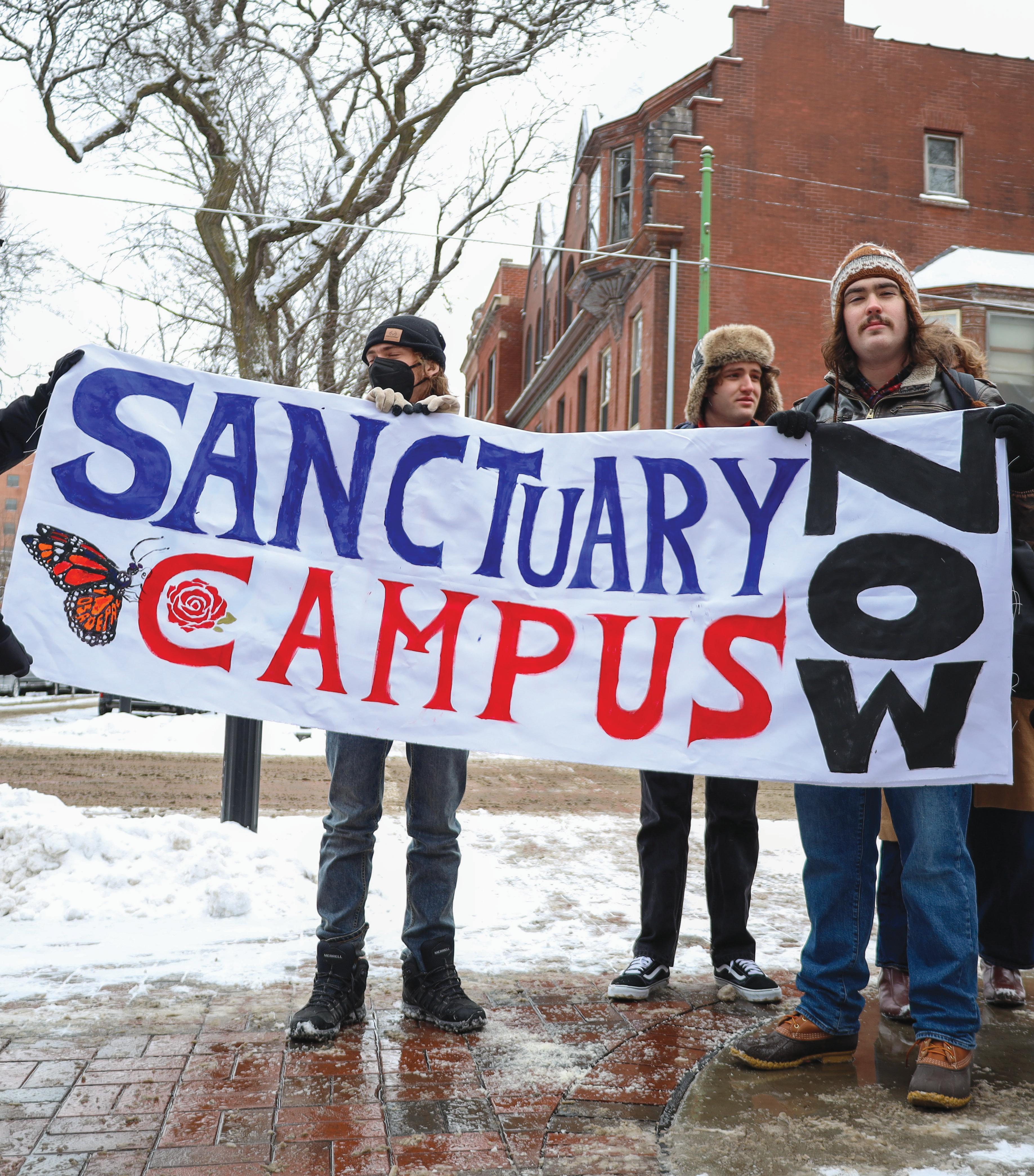
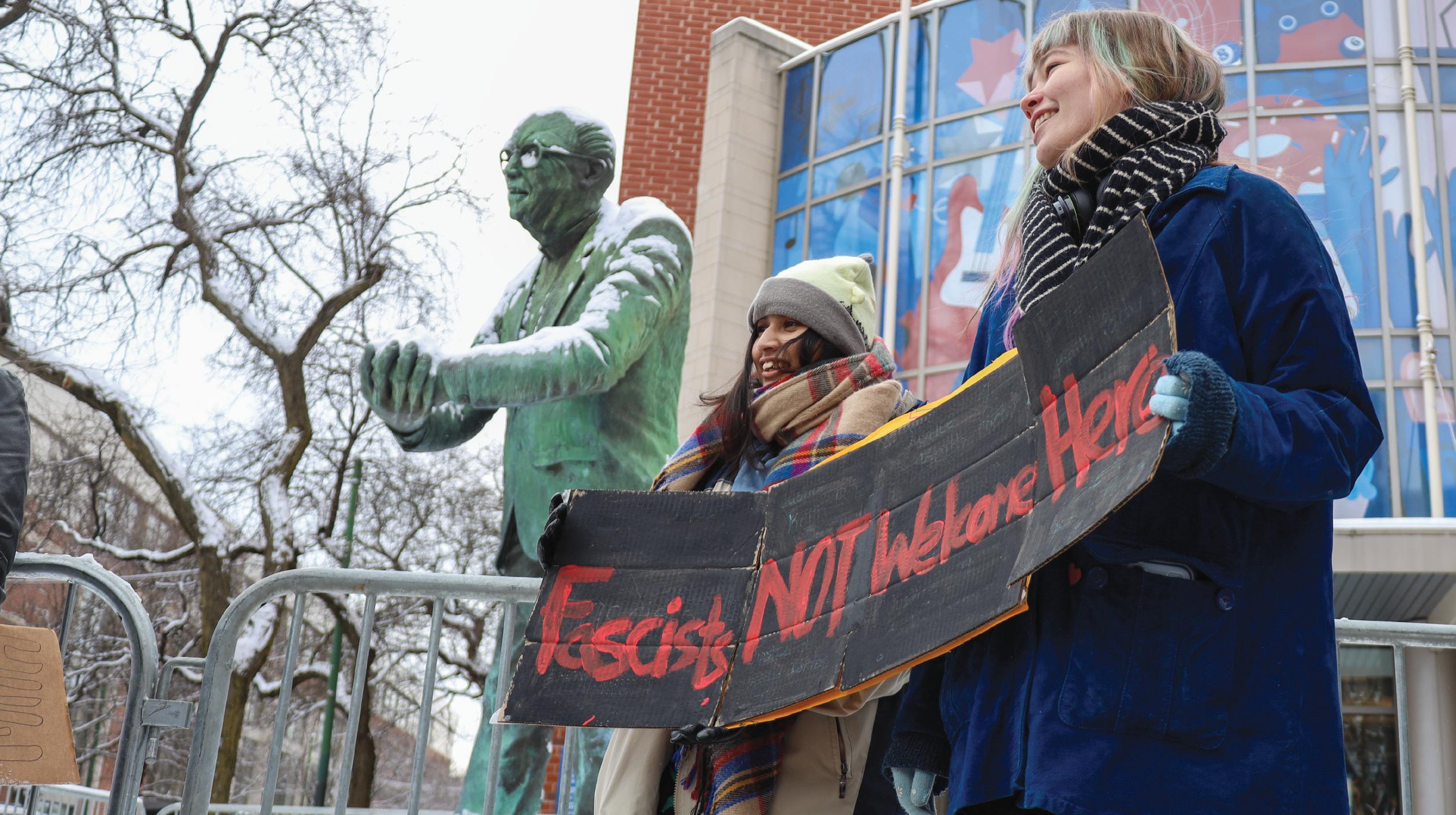
More than 150 people gathered near the Egan statue in DePaul’s Lincoln Park campus in below-freezing temperatures to urge the university to declare itself a sanctuary campus and oppose potential Immigration and Customs Enforcement raids. It was organized by the Young Democratic Socialists of America on Friday, Jan. 30, and included a petition delivery to the university administration.
The rally, drawing YDSA’s largest turnout yet, marked the third time the group has called for DePaul to become a sanctuary cam-
pus to protect students, faculty and staff.
“We have three more years of ICE,” said Aris Taşhan, YDSA’s co-chair. “It makes it all the more important that the university really works with us here and guarantees that we won’t stress about it for another three years.”
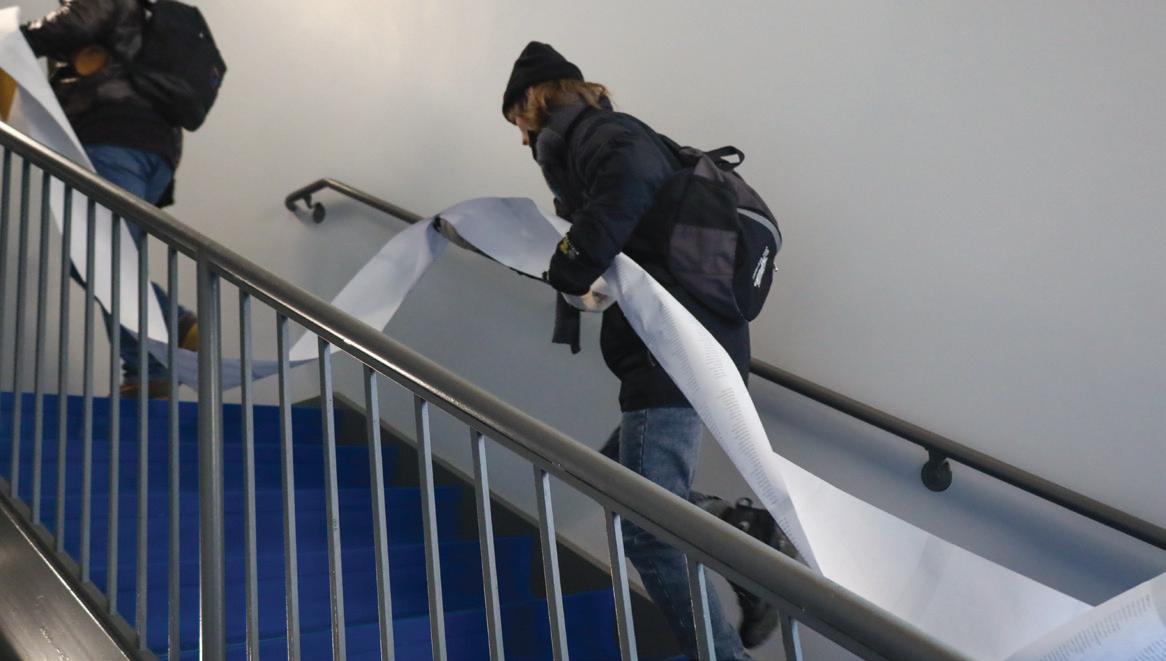
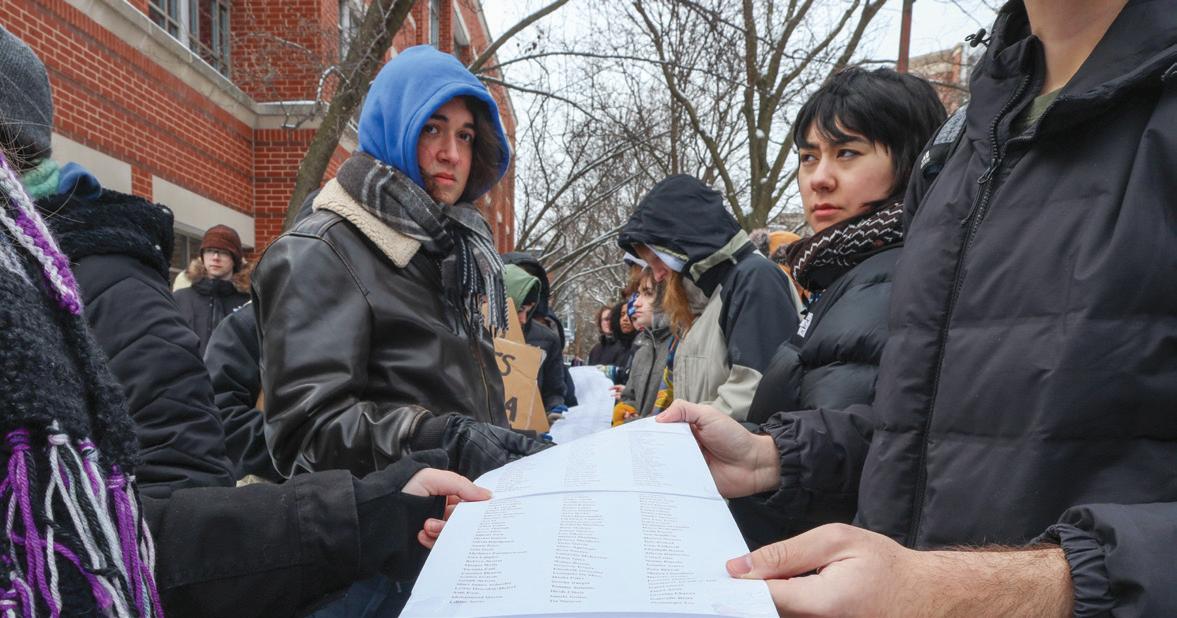
The rally featured remarks from YDSA members, different campus organizations and DePaul faculty in support of the students’ demands. Organizers also delivered a petition with more than 3,000 signatures from members of the DePaul community to the university’s Division of Student Affairs office.
In an email from university communications, they stated DePaul “affirms the dignity of every individual,” and that administrators are “currently reviewing the petition, and appreciate the students’ care and concern for each other and our community.”
The email noted that while parts of the university are open to the public, many are private, meaning that ICE is already restricted from entering them. It also said that Public Safety officers are trained to respond if federal law enforcement or ICE comes to campus.
“We need some part of the administration that is focused on alerting students to ICE presence
on campus,” Taşhan said. “We have the university alert system. We’re aware that there’s a university PA system. The last ICE raid that occurred, there was no use of that for multiple hours.”
A large portion of protesters attempted to enter the Student Center to deliver the petition during the protest but were threatened with arrest by campus security. Only organizers were allowed to enter.
“What YDSA wants and over 3,000 people support is just reasonable and Vincentian in the true meaning of the word,” said Kathleen Arnold, director of the Refugee and Forced Migration Studies program.
“That is not radical in a certain way. It’s just logical,” she said. “We are not consumers, you are not trespassing right now, we are a community together.”
University communications said the school is monitoring the environment, remains in contact with local and state authorities and is providing a list of resources available to the community.
“If students have concerns about attending class/commuting to campus, they should contact their faculty members to discuss flexibility with attendance and assignments,” university communications said.
See Photo Spread , page 6-7
The DePaulia is the official student-run newspaper of DePaul University and may not necessarily reflect the views of college administrators, faculty or staff.
EDITOR-IN-CHIEF LILI JARVENPA LJARVE@DEPAULIAONLINE.COM
DIGITAL MANAGING | SABRINA CASTLE SCASTL@DEPAULIAONLINE.COM
CONTENT MANAGING | BRIELLE KOHLBECK BKOHLB@DEPAULIAONLINE.COM
DIRECTOR OF PHOTO & MULTIMEDIA | JEREMY BATTLE JBATTL@DEPAULIAONLINE.COM
NEWS EDITOR | SADIE SPRINGER SSPRIN@DEPAULIAONLINE.COM
ASST. NEWS EDITOR | KHADIJA MUJAHID KMUJAH@DEPAULIAONLINE.COM
OPINIONS EDITOR ANNA BARTH ABARTH@DEPAULIAONLINE.COM
ARTS & LIFE EDITOR | ANNIE KOZIEL AKOZIE@DEPAULIAONLINE.COM
ASST. ARTS & LIFE EDITOR | LINDSAY FREIBERGER LFREIB@DEPAULIAONLINE.COM
SPORTS EDITOR | PEYTON HOPP PHOPP@DEPAULIAONLINE.COM
ASST. SPORTS EDITOR LAURA VÁZQUEZ DAVID LVAZQU@DEPAULIAONLINE.COM
ILLUSTRATION EDITOR | PRECIOSA RIOS PRIOS@DEPAULIAONLINE.COM
ASST. ILLUSTRATION EDITOR MARA LOGAN MLOGAN@DEPAULIAONLINE.COM
DESIGN EDITOR | GENESIS COFFEY GCOFFE @DEPAULIAONLINE.COM
ASST. DESIGN EDITOR | JAVEN OSWALD JOSWAL@DEPAULIAONLINE.COM
PHOTO EDITOR | GIACOMO CAIN GCAIN@DEPAULIAONLINE.COM
ASST. PHOTO EDITOR ZOEY DUCHENE ZDUCHE@DEPAULIAONLINE.COM
MULTIMEDIA EDITOR GRACE LOGAN GLOGAN@DEPAULIAONLINE.COM
ASST. MULTIMEDIA EDITOR | RILEY SOMMERS RSOMME@DEPAULIAONLINE.COM
COPY & NEWSLETTER EDITOR AMBER CORKEY ACORKE@DEPAULIAONLINE.COM
ASST. COPY EDITOR ISABELLA RUSSOMANNO IRUSSO@DEPAULIAONLINE.COM
SOCIAL MEDIA EDITOR | RILEY MOULTON RMOULT@DEPAULIAONLINE.COM
COMMUNITY ENGAGEMENT COORDINATOR | LAINE WYATT LWYATT@DEPAULIAONLINE.COM
MARKETING COORDINATOR SYDNEY MANTEI SMANTE@DEPAULIAONLINE.COM
EDITORIAL BUSINESS MANAGER | AIKO TAI ATAI@DEPAULIAONLINE.COM
AD SALES BUSINESS MANAGER SAGE SLESSOR SSLESS@DEPAULIAONLINE.COM
FACULTY ADVISER | MARTHA IRVINE MIRVINE5@DEPAUL.EDU

La DePaulia es el noticiero oficial estudiantil en español de la Universidad DePaul, enfocado en proveer una voz para la comunidad latinx. Nuestras opiniones no necesariamente reflejan las opiniones de la administración, facultad o personal de la universidad.
EDITORA EN JEFE | SOFIA JOSEPH SJOSEP@DEPAULIAONLINE.COM
EDITORA DE CONTENIDO LAURA VÁZQUEZ DAVID LVAZQU@DEPAULIAONLINE.COM
EDITORA DE NOTICIAS | IZZY SIEMASZKO ISIEMA@DEPAULIAONLINE.COM
EDITOR DE REDES SOCIALES CRIS SALAS CSALAS@DEPAULIAONLINE.COM
MENTOR DE LA DEPAULIA | ARTURO FERNÁNDEZ AFERNÁ@DEPAULIAONLINE.COM
Drug & Alcohol Assault & Theft Other
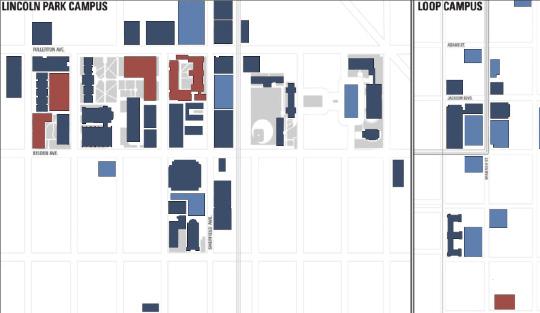
Lincoln Park Campus Crimes:
Jan. 21
1) A Criminal Damage to Vehicle report was filed for an incident that may have occurred on Jan. 20 in the Sheffield Garage.
Jan. 23
2) An Illegal Consumption of Alcohol by a Minor report was filed for a person in Ozanam Hall. The subject was transported to the hospital.
Jan. 24
3) An Illegal Consumption of Alcohol by a Minor report was filed for a person in Ozanam Hall. The subject was transported to the hospital.
Jan. 24
4) An Illegal Consumption of Alcohol by a Minor report was filed for two individuals in Ozanam Hall. The subjects were transported to the hospital.
Jan. 25
5) An Illegal Consumption of Alcohol by a Minor report was filed for a person in LeCompte Hall. The subject was transported to the hospital.
Jan. 27
6) A Theft report was filed for an incident in the Welcome Center.
Loop Campus Crimes: Jan. 21
1) On Jan. 21, a Robbery report was filed regarding an incident that occurred on Jan. 15 at Uni Uni Boba in the DePaul Center. Chicago Police were notified on the date of the incident. A Safety Alert was not issued due to the delayed reporting.
Jan. 27
2) A Threats report was filed regarding conduct involving an individual in University Center.
Jan. 27
3) An Attempted Theft report was filed for an incident in Lewis Center. Chicago Police were notified.

By Kathryn Byrnes Contributing Writer
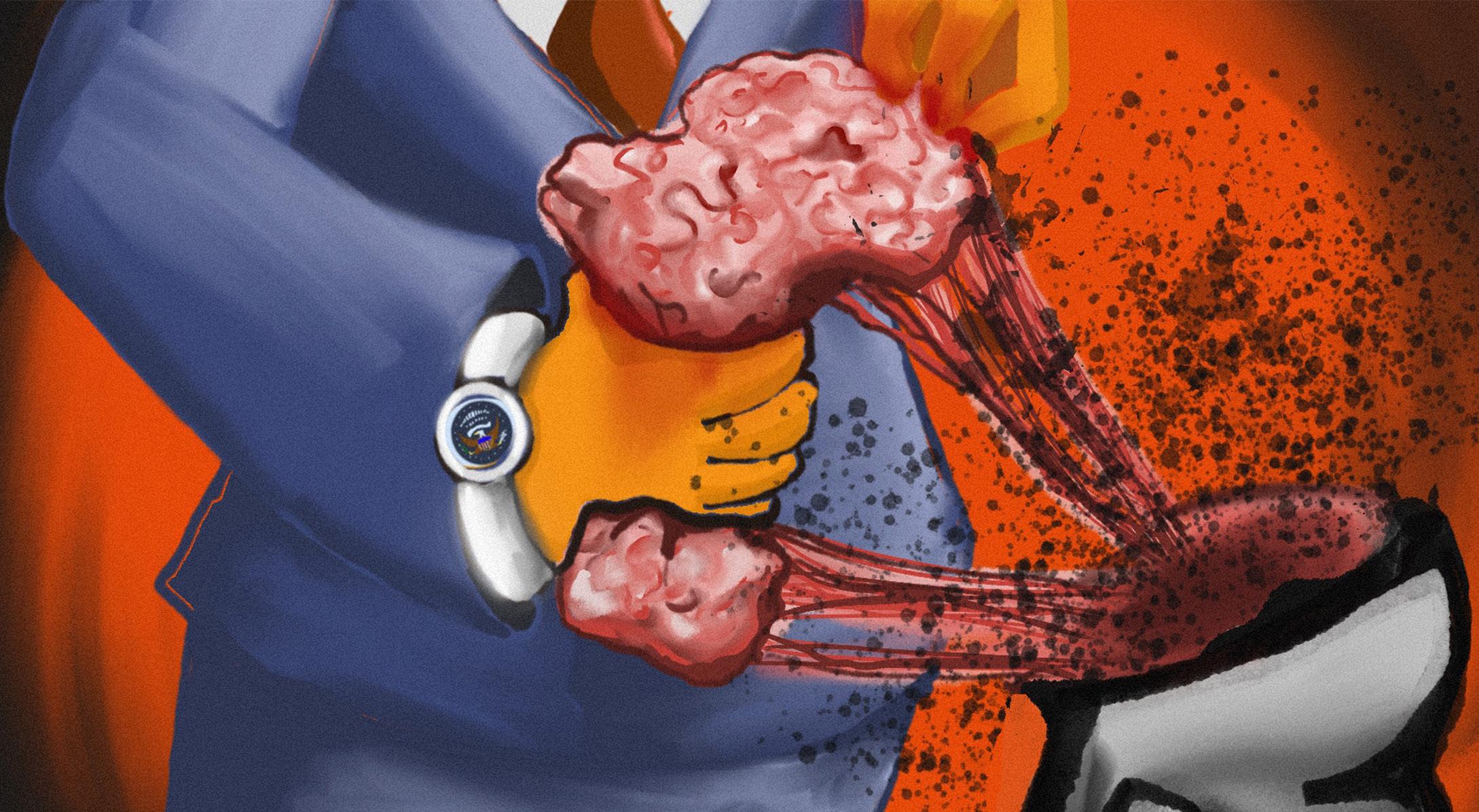
The Substance Abuse and Mental Health Services Administration sent out termination letters last month at the direction of Trump officials, cancelling federal grants to mental health and addiction programs across the country.
The funds were reinstated less than a day later, a move that is causing confusion about the administration’s priorities and even some mistrust.
“I don’t think I would ever join a mental health program or anything … because I don’t want to rely on something that I don’t trust,” said Kathleen Kania, a freshman psychology major at DePaul.
She added that the administration’s shifting decisions leave her unsure of their objective.
The American Psychological Association said the funding cuts totaled about $2 billion. SAMHSA, which is part of the federal Department of Health and Human Services, did not respond to a request for comment. However, the agency’s website says its funds are used to efficiently support all Americans experiencing be-
havioral health problems and claims those funds will “Make America Healthy Again.”
Still, the future of mental health and addiction care remains uncertain as Medicaid — the largest payer for mental health services and substance abuse services — faces funding cuts under Trump’s “One Big Beautiful Bill Act,” signed into law last year.
Kania said she fell into a state of self-isolation and became distant from her family during her freshman and sophomore years of high school.
Kania said she was willing to share her story because she wants mental health programs to have the resources to help people, especially low-income families that need access to mental health services. She said the administration appears unsure how much mental health support it wants to provide.
“I knew that people were there for me, but I feel like no one could really understand what I was thinking,” Kania said. “I could never communicate that.”
Kania, who feels she has helped herself the most along with her mom, said that it would have helped if people outside her family would have
reached out.
“I wish that more people realized that I probably wasn’t in the best state of mind,” Kania said.
She added that she would have appreciated “if teachers noticed and just pulled me aside … and just talked to me a little bit.”
Programs that offer services to educate people on mental health struggles are? at risk of losing funding.
Vince Walsh-Rock, a clinical faculty member in DePaul’s College of Education, worries that the funding threats have created more uncertainty for people receiving and providing mental health and addiction services.
“We’ll further marginalize people in their lives if they don’t have the support that they need to work through whatever it is they’re working through,” said Walsh-Rock, who has a doctorate in counseling and supervision.
CBS News obtained a termination letter stating that SAMHSA initially decided to terminate funding “to better prioritize agency resources.” This statement comes as the agency continues to describe mental health as a national public health concern.
Currently, on its site, SAMHSA describes mental illness and substance abuse as a part of the “chronic disease crisis plaguing our nation.”
Mark Vega, a clinical assistant professor at DePaul and registered nurse, called the initial funding cut decision shortsighted.
Vega also agreed that this funding threat has caused unneeded stress for people receiving mental health care services.
“Anxiety is, like, 90% of mental health,” Vega said. “A lot of studies suggest that stress causes 90% of all physical problems.
“So you’re just adding more stress to a stressful nation.”
Vega also said the administration’s actions towards mental health care discount people receiving mental health support.
“It doesn’t make it feel like they’re a priority,” Vega said, adding that it makes people feel “that at any moment their service can be taken away.”
“As a community, we’re not healthy if our neighbor isn’t healthy,” Vega said. “The community’s health does impact everybody.”
By Banshee McKee Contributing Writer
Rural Illinoisans who voted for President Donald Trump are expressing mixed emotions about his administration’s performance after his handling of economic issues that have failed to cut inflation and kept the cost of groceries, utilities and other basic needs high.
After delivering the highest voter turnout in Illinois by the GOP in decades, rural voters had high hopes that Trump would follow through on his promise to tackle rising prices.
People like Mark Baker, a retired factory worker from Waterman who needs social security to afford food, voted for Trump in the 2024 election, thinking his bills would be lower.
“Eggs and milk were going up — it seemed like everything was over $5 before Biden left, and I can’t do that with the pennies I get,” Baker said. “Hearing from (Trump) that he was lowering costs right as he got elected was what I really was looking for.”
Instead, Baker and others said they face even more uncertainty at the grocery store. In Waterman, a small rural DeKalb County town an hour west of Chicago, the only two stores within 20 minutes of the town are a Casey’s gas station and a Dollar General, where prices have not decreased, according to Baker.
“I wanna get some milk from the store, I have to give over $5 still, though egg prices are cheaper,” Baker said. “It’s not just the milk. Pop keeps going up little bits, 10 cents at a time, creeping on you so you don’t notice them.”
Farmers are also struggling from the Trump administration’s diplomatic choices, including tariffs that have raised the cost to operate and caused countries to stop buying American crops. Kari Ruhl, whose family includes soybean farmers in DeKalb County, said soybean fields that used to yield more than double now are struggling to break even.
“Now we worry next year there might not be a harvest if this keeps up,” Ruhl said. “Your entire livelihood
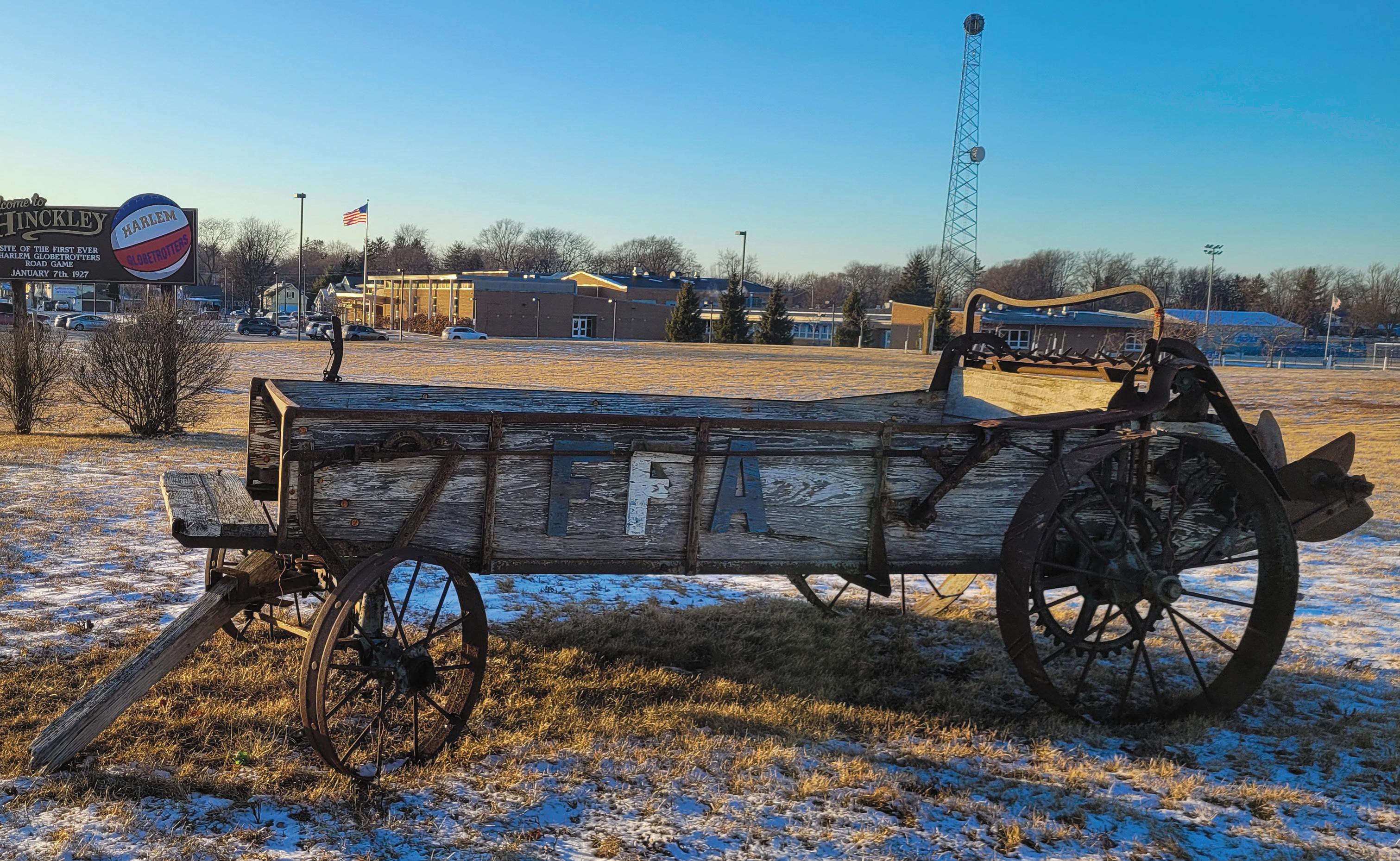
hinges on having a good year, so if that isn’t possible you got to change right away.”
In May 2025, due to the Trump administration’s sweeping tariffs, China stopped all purchases of American crops, especially hurting soybean farmers. Although farmers were promised bailouts and China has resumed buying American crops, some farmers say the slow rollout of the payments and additional tariffs has left a cloud of uncertainty.
“We’re definitely unsure of what is going to happen next,” Ruhl said. “There is always risk when it comes to farming. You’re never guaranteed to make money, but now it feels like you have to fight even harder to make even a little bit of profit.”
Baker also expressed concerns about how Trump was handling relations with European allies, saying how something like this is almost unprecedented.
“These are our allies and for him to say such things about them was astonishing. Taking these places is something you’d never hear a president say about an ally,” said Baker, referencing Trump’s aggressive pursuit to acquire Greenland. “He’s talking like he wants to intervene into a war.”
But not all of Trump’s voters have negative feelings towards him. Sugar Grove resident Anna Flammang was shopping for groceries in a local Dollar General and gave nothing but glowing reviews of his leadership.
“It’s great that we finally have a president who’s willing to use his power to get stuff done,” Flammang said.
“Just in a year, President Trump has cut government spending and deported criminals en masse to make our country safer.”
Figures given by the Trump administration show that arrests involving undocumented immigrants far below initial projections and that over 70% of
arrests involve those with no criminal convictions.
“I really don’t know what we’re going to do this coming harvest,” Ruhl said. “If Trump keeps giving focus to the illegal immigrants instead of to farmers then I don’t think we’ll have a farm.”
By Abigail Shanley
Contributing Writer
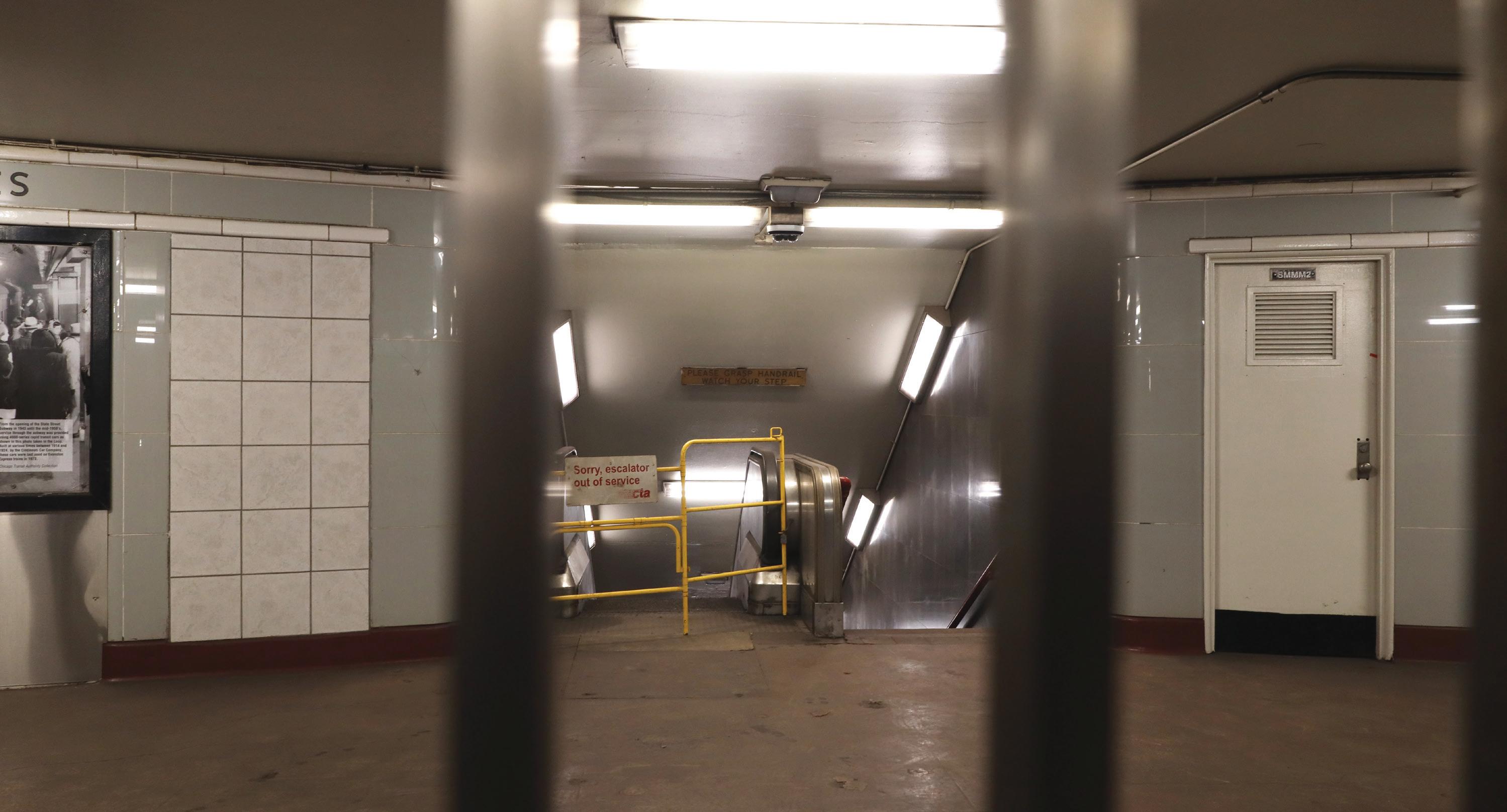
Chicago boasts one of the largest continuous subway platforms in the world — the State Street Subway — clocking in at 3,500 feet long and providing access to the Jackson, Monroe and Lake stops. But, there used to be a fourth: the Washington stop.
Way below the platform is a football field sized cavern hosting the shell of a long-forgotten station.
Back in 2006, a southbound Red Line would make four stops: Lake, Washington, Monroe and Jackson.
Looking at a map of the L today, some may wonder why there was ever a Washington stop in the first place. Washington was a part of the original State Street Subway, and until the 1990s, the Lake stop did not exist. It was added as an easier way for travelers to access the elevated State/Lake stop, which is now closed until 2029 for construction.
Until its closure in 2006, the Washington Red Line stop had been part of State Street Subway since 1943. It had immediate stair access to the Washington Blue Line stop.
The Block 37 Superstation is to blame for the loss of the Washington stop. The project was supposed to provide a faster route to O’Hare and Midway, projecting 15 minutes
to either airport.
The idea, which then Mayor Richard M. Daley originally proposed in the early 2000s, was officially approved by the city council in May 2005 estimated to cost $213.3 million. The CTA paid $130 million of its cost, the city $42.4 million and the Mills Corporation $40.9 million.
The project was officially shut down in June 2008 because of increasing costs and unforeseen difficulties with construction along with the financial crisis. Current estimates say over $400 million was sunk into the project, which resulted in the completion of the shell of the station about the size of a football field.
The Washington Red Line and transfer tunnel to the Washington Blue Line stop were both closed for construction, as the superstation was directly below both, with neither reopening after the project was halted.
The space formerly housing the Washington Red Line station was eventually restored to allow people to walk through again, now a barren stop stripped of the typical features of a station.
Although ultimately not successful, the original idea of the superstation was “feasible,” said Joseph Schwieterman, a public policy professor at DePaul and president of the Chicago chapter of the Transporta -
tion Research Forum.
If it were to have been successful, it would have taken a lot of political willpower, from the city council and the CTA, Schwieterman explained.
“It would have required shutting down some lanes on the Kennedy Expressway,” he said. “And that gets pretty complicated when you start doing that.”
According to Schwieterman, a huge amount of money was spent on a project that could have been useful but wasn’t thoroughly thought through.
“Chicago is a great global city,” Schwieterman said. “A great city like us should have a better connection to one of the world’s busiest airports than the slow and uncomfortable Blue Line.”
In 2018, former Mayor Rahm Emanuel and tech entrepreneur Elon Musk jointly proposed an idea for using the shell of the superstation using his electric sled technology.
“He said he would be able to build this route from this new route from downtown O’Hare for like $1 billion using his patented high-speed tunneling,” said John Greenfield, editor and writer at Streetsblog Chicago, which focuses on transportation news and advocacy.
Musk’s project would have used the shell of the Block 37 supersta -
tion, but it was shelved after Lori Lightfoot took over as mayor, Greenfield explained.
In a statement to The DePaulia, CTA media representative Charles Plouffe said there are no plans to repurpose the unused portions of the Block 37 Superstation at this time.
The CTA also stated they don’t currently plan to reopen the Washington Red Line station.
The State Street Subway, which travelers can walk through from the Lake to Jackson stops, still has a sign for the former stop on the tile walls near the station.
The Washington Red Line stop may not be coming back, but there are potentially bigger things on the horizon for the CTA.
“We have the new big funding bill, which passed a few months ago that’s called the Northern Illinois Regional Transportation Authority,” Schwieterman said. “And that’s going to have all kinds of new funding for transit.”
This bill was a major development, but Schwieterman said it “didn’t lay out any ambitious projects.”
“We want the CTA to be cleaner and have newer cars and all that,” he said. “But we also want a project that makes the whole system work better.”
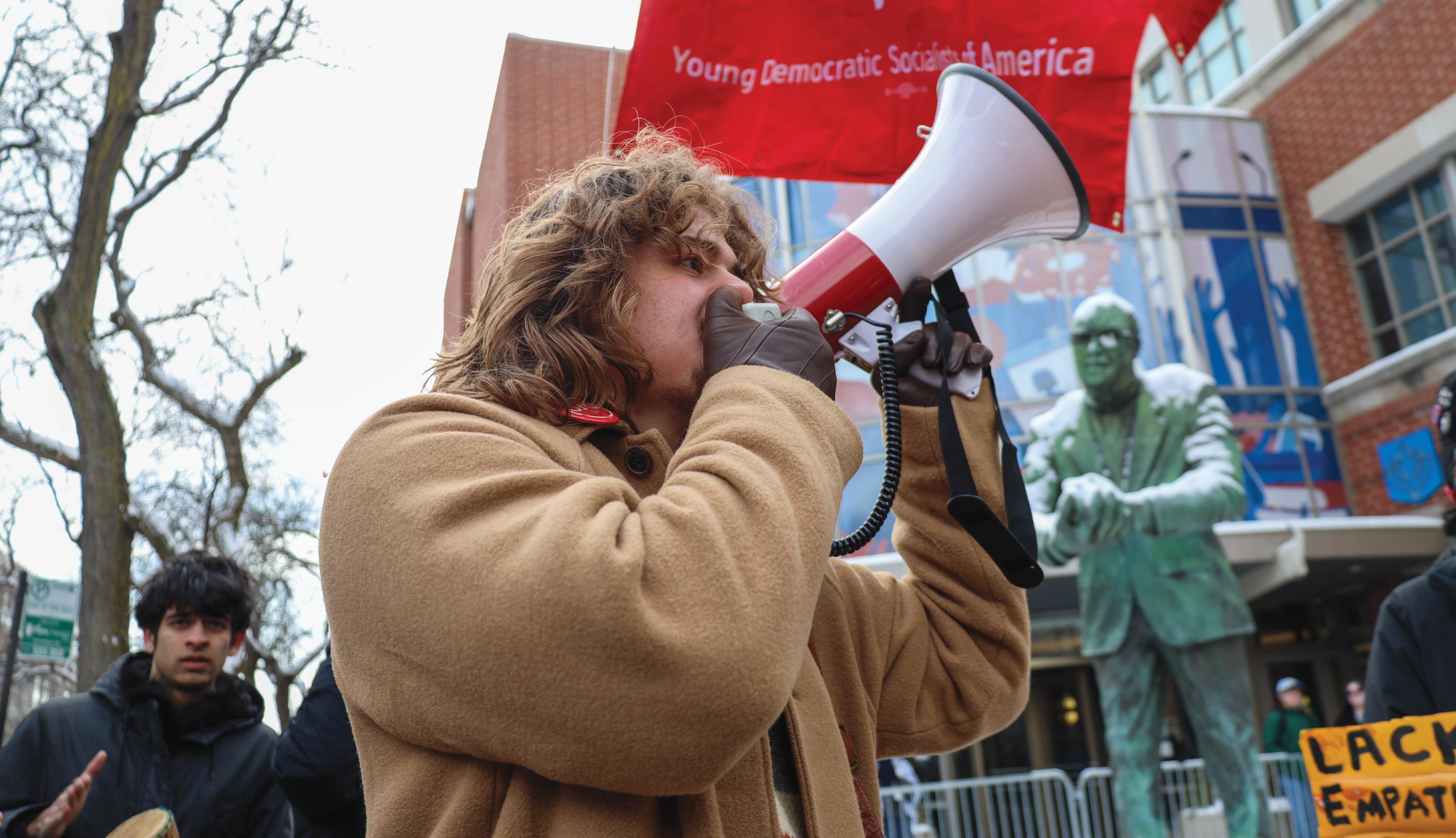
Young Democratic Socialists of America co-chair Aris Tashan speaks into a megaphone at a protest outside of the DePaul Student Center on Friday, Jan. 30, 2026. “We need some part of the administration that is focused on alerting students to ICE presence on campus,” Tashan said. This is the third time the group has called for DePaul to become a sanctuary campus to protect students, faculty and staff.
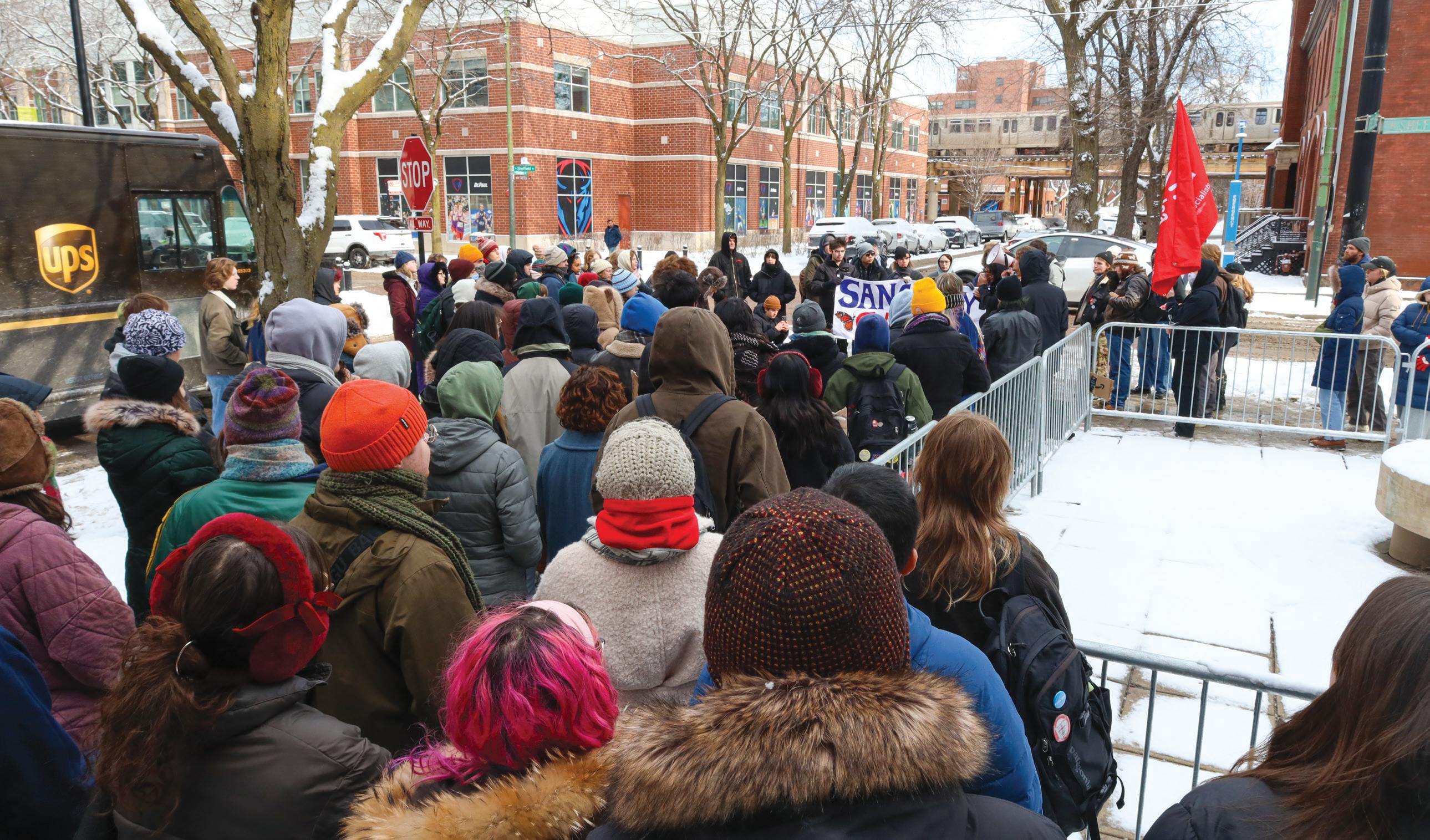
LEFT: People gather at a rally lead by the Young Democratic Socialists of American outside of DePaul’s Student Center on Friday, Jan. 30, 2026. The rally, drawing YDSA’s largest turnout yet, marked the third time the group has called for DePaul to become a sanctuary campus to protect students, faculty and staff. A large portion of protesters attempted to enter the Student Center to deliver a petition with more than 3,000 signatures from members of the DePaul community but were threatened with arrest by campus security.
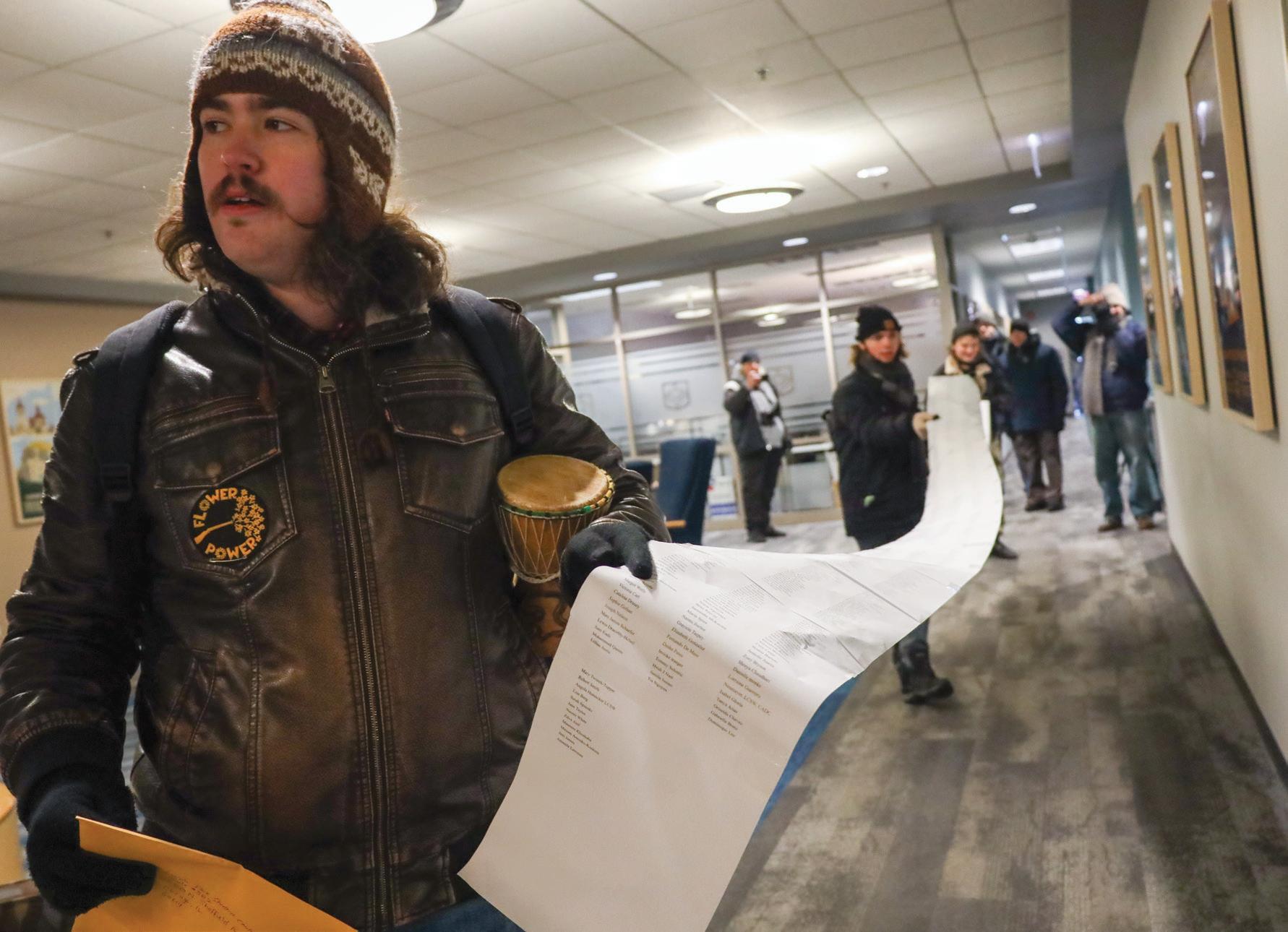
LEFT: Young Democratic Socialists of America Political Education Chair Jackson Hild leads a group carrying a petition to the university’s student affairs office during a rally on DePaul’s campus on Friday, Jan. 30, 2026. Organizers, like Hild, delivered a petition with more than 3,000 signatures from members of the DePaul community to the university’s Division of Student Affairs office. In an email from university communications, they stated DePaul “affirms the dignity of every individual,” and that administrators are “currently reviewing the petition, and appreciate the students’ care and concern for each other and our community.”
TOP RIGHT: Organizers and members of the Young Democratic Socialists of America deliver a petition with more than 3,000 signatures to the DePaul Division of Student Affairs Office on Friday, Jan. 30, 2026. Among other demands, the petition called for action from the university by prohibiting, through binding contracts with university staff and contractors, all cooperation, including physical access to “public” university property, with ICE, Border Patrol and any other law enforcement in regards to immigration enforcement without a judicially approved warrant.
BOTTOM RIGHT: Students hold a petition at a protest outside of the DePaul Student Center on Friday, Jan. 30, 2026. The petition, with more than 3,000 signatures, called on the administration to take immediate and effective action to protect marginalized communities. An email from university communications noted that while parts of the university are open to the public, many are private, meaning that ICE is already restricted from entering them. It also said that Public Safety officers are trained to respond if federal law enforcement or ICE comes to campus.
RIGHT: Students hold a sign at a rally outside of the DePaul Student Center on Friday, Jan. 30, 2026. More than 150 people gathered near the Egan statue in DePaul’s Lincoln Park campus in below-freezing temperatures to urge the university to declare itself a sanctuary campus and oppose potential Immigration and Customs Enforcement raids. The rally featured remarks from YDSA members, different campus organizations, and DePaul faculty in support of the students’ demands.

By Joe Bellisario Contributing Writer
Not too long ago, cloning a beloved pet sounded like science fiction.
However, we’re now in an era where the possibility of pet cloning is rising and it reflects not the progression of science, but human discomfort with grief and a willingness to ignore it.
Grief is unavoidable for pet owners. It’s the price that comes with love. Pet cloning offers an illusion of escape, which is a delay to loss rather than a confrontation of it.
There have been many spotlight cases of high-profile celebrities cloning their pets, such as Tom Brady and Paris Hilton. However, just because celebrities are doing something doesn’t mean you should too.
While still a rather expensive process, costing from $50,000 to $100,000, cloning can create a genetic twin of a living or deceased animal through a process known as somatic cell nuclear transfer. The process puts DNA from an existing animal’s skin cell into an egg from a donor. The egg is then implanted into a mother and born physically identical, though experts say the personality may not be the same.
This distinction matters. If a cloned pet brings back only the appearance and not the personality, memories or experiences, then what is the point in bringing them back?
Josiah Vega, a DePaul criminology student, had a similar thought on the matter.
“While the idea of cloning a pet sounds nice because it feels like you get to enjoy your
pet for a lot longer than they are supposed to live, I feel it completely goes against the inevitable experience of grief that we all go through at some point,” Vega said. He adds that delaying the grief seems unhealthy.
To him, the concerns extend beyond the timing of grief.
You can’t recreate or clone the memories that you have experienced with a pet.”
Josiah Vega DePaul criminology student
“It would be difficult to fully embrace a clone of my dog while knowing that it
is not the same dog I have owned for so long.”
I once had a dog, Misty, a Great Pyrenees who was one of the most loyal companions I could ask for. She fought off cancer multiple times, and it was hard seeing her go when the time came. Still, I would never choose to clone her. One of the things that makes life so special is that it ends. Every animal is unique in their own way and when they’re gone, there’s no recreating that.
Katie Wright, a DePaul senior and film major, thinks pet cloning “crosses a line.”
“When my pet moves on, as badly as I would want them back, it isn’t my place to bring them back,” she said. “They’ve passed and I will always have their memory and their spirit, but it can become unhealthy to linger on their death.”
To Wright, it’s the pet’s
unique personality that helps create the connection.
“There is no way to recreate my dog’s sassy, smart and loving personality,” Wright said. “She is literally one of a kind.”
Everybody deals with grief in their own ways, but delaying it by cloning a loved pet is not the way to go.
In hindsight, pet cloning might seem like a scientific miracle, but it puts the focus on the human avoidance of loss. Labs cannot recreate the bond, love, and personality that made a pet unique. Even though it is a costly process, I think that it is selfish to spend so much money just to clone a pet when there are animals in shelters who are in need of a loving home. Why not focus on them instead of trying to recreate a life that cannot be replicated?
By Kieran Stover Contributing Writer
“I’ll never bail on our dinner plans.” “I’ll never leave dirty dishes in the sink.” “I’ll brave the cold with you.”
These statements plastered on Friend.com advertisements insinuate that artificial intelligence can replace human companionship. The concept dangerously suggests that social connection from a person isn’t needed anymore.
Avi Schiffmann, the 22-yearold CEO of Friend.com, has spent over $1 million in an advertising campaign for an AI companion that first flooded New York City subway stations. The ads have since spread to billboards in Los Angeles and to Chicago Transit Authority trains and stations, including some near DePaul.
In this instance, the “friend” is a $129 pendant worn on a necklace that contains a microphone that’s always listening. The user’s conversations train the AI model to create a hyperpersonalized chatbot designed for companionship.
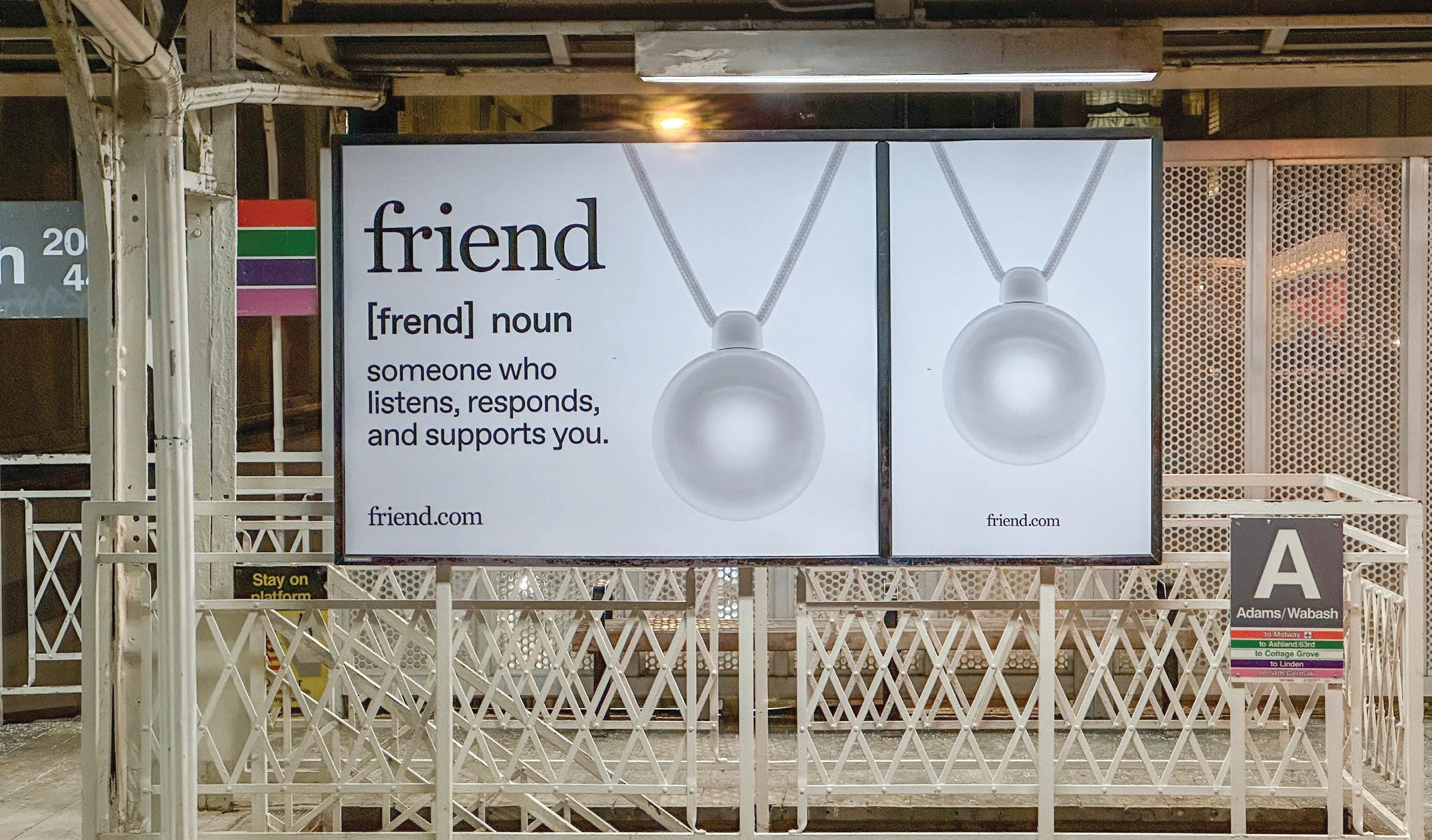
A billboard at the Adams/Wabash L stop shows an advertisement for the Friend.com pendant on Wednesday, Jan. 21, 2026. The pendant’s microphone listens to its user’s conversations to train an AI companion chatbot.
Bridge DePaul, a student organization that facilitates multi-partisan political discussions, recently hosted a meeting on AI media literacy. Marshall Shorten, the presenter and a DePaul junior studying animation VFX and sound design, wanted to openly discuss how realistic

AI-generated media has become and its prevalence online. When asked for reactions to Friend. com, the room exploded with opinions.
Rutaiba Siddiqui, a DePaul junior studying political science and journalism thinks inanimate machines cannot replace human connection.
“It’ll only make the loneliness epidemic worse,” she said.
The loneliness epidemic sprawls beyond the confines of public transit stations.
In 2023, former Surgeon General Dr. Vivek Murthy published an advisory classifying loneliness as an urgent public health issue. Technology — specifically AI and social media — is one of the leading factors driving the loneliness epidemic, Murthy reported.
A separate 2018 study published in the Journal of Social and Clinical Psychology found that limiting social media use decreases feelings of loneliness.
Other countries have taken action to address this research.
Former Prime Minister Theresa May appointed
the U.K.’s first ever Minister of Loneliness in 2018, and Japan appointed its own in 2021. In Australia, Parliament passed the 2024 Online Safety Amendment, which raised the minimum age for social media use in Australia to 16. France has proposed similar legislation.
According to an interview with Fortune, Schiffmann, Friend.com’s CEO, thinks talking with a chatbot that has the context of listening alongside you every day can simulate human companionship.
“Minimum viable companionship is a humanitarian mission to me,” he said in an Instagram direct message. Whether the listener is human or not doesn’t matter to him.
I take public transit every day. Each morning on my way to class, I stand alongside the heaps of commuters patiently awaiting the Red Line.
Despite standing shoulder-to-shoulder with the other morning commuters like sardines in a tin, the train car is always eerily quiet. Looking around, nearly every single person’s neck hangs low, their eyes glued to their phones. This isn’t normal.
Siddiqui agrees. “Everywhere you go, people don’t want to talk to each other,” she said.
And now AI technology is supposed to replace the thing humans have been doing for hundreds of thousands of years?
Social media and their AI algorithms are what occupy much of our attention. Endless doomscrolling keeps us from talking to our neighbors and keeping up with our hobbies.
I worry that Friend.com’s access to vast amounts of personal information will instead cement people to their technology. The AI does nothing to bring people together physically. It only makes us more antisocial.
Bamshad Mobasher, a professor of computer science and the director of the DePaul AI Institute, thinks replacing human companionship with AI may psychologically impact people and their social structures. He’s concerned that AI companies haven’t researched the potential effects of products like the Friend.com pendant.
“They’re more motivated by getting these applications out as quickly as possible,” Mobasher said.
Growing up, my generation was the victim of the unregulated, rapid release of social media that contributed to the loneliness epidemic. As Meta CEO Mark Zuckerberg famously says: “Move fast and break things.” Without thoroughly testing powerful AI technologies before releasing them, are we repeating history with our newest generation?
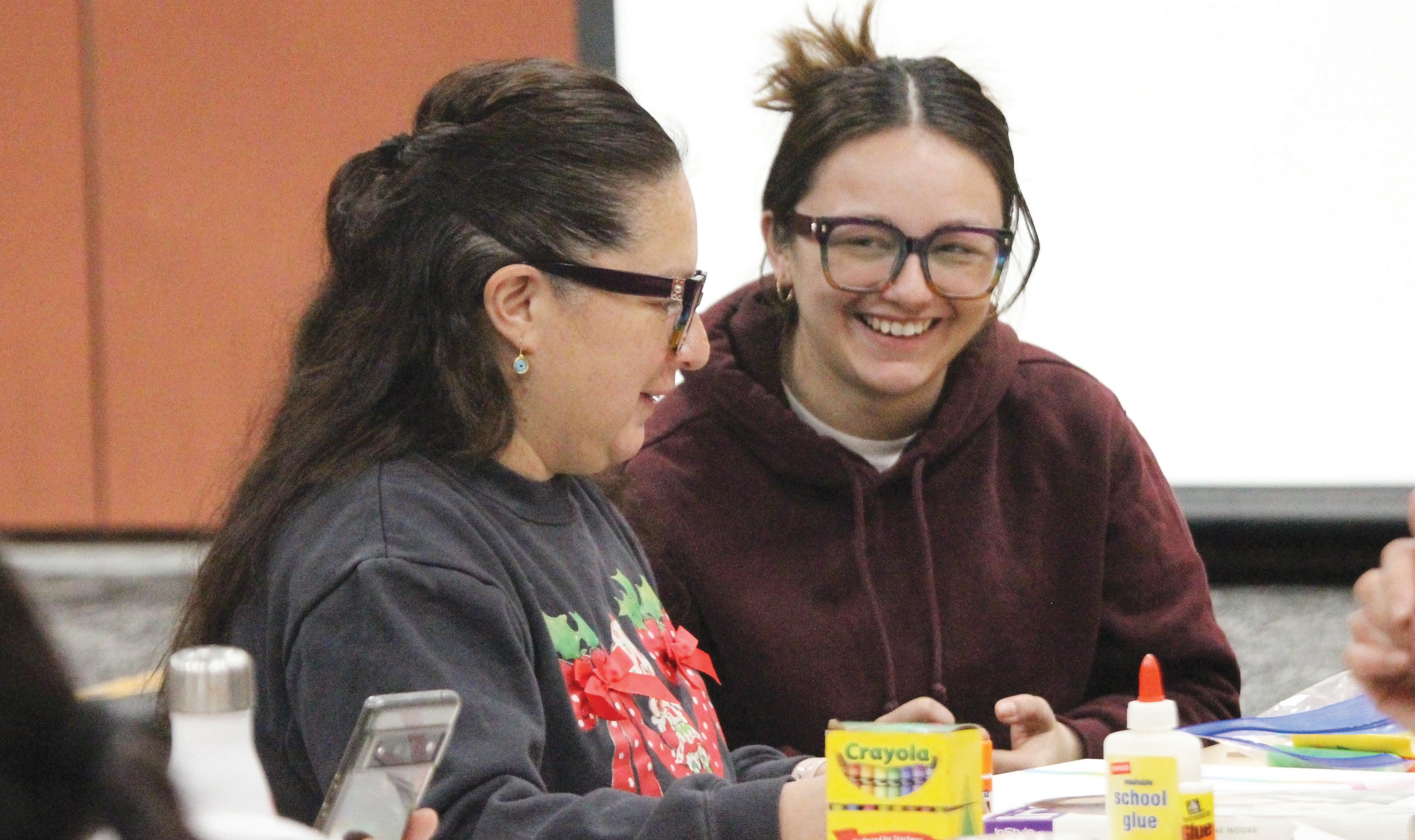
fundadora de Las Chicas de Pilsen, Sylvia Sánchez, comparte
su
la
el sábado, 24 de enero de 2026. Sánchez organizó un evento de fin de semana para que las integrantes del club de lectura se reunieran y crearan tableros de visión que representaran sus metas para el nuevo año.
‘Es un Sustento’: Las Chicas de Pilsen es más que un grupo de lectura
By Skylah Martinez Escritora Colaboradora
El aroma del café recién hecho llena el aire. Las risas y las conversaciones vibran por toda la sala mientras las invitadas llegan a la reunión de la mañana. Una mujer recorre el cuarto lleno de unas 30 mujeres que conversan entre sí, saludando a la gente y señalandoles a una mesa llena de materiales para manualidades.
Ella es Sylvia Sánchez, fundadora del creciente club de lectura Las Chicas de Pilsen, un grupo de latinas que se reúnen para discutir novelas escritas por autoras latinas, organizar talleres de manualidades y realizar actividades de alcance comunitario. Sánchez cofundó el grupo en octubre de 2024 junto con Jessica Schutz, quien respondió a una publicación de Sánchez en redes sociales invitando a mujeres de Pilsen a unirse.
Sánchez dijo que comenzó el club de lectura como una forma de atravesar desafíos relacionados con la salud mental y la sobriedad.
“Simplemente necesitaba alguna conexión”, dijo Sánchez.
Sánchez compartió una publicación en el Facebook del vecindario de Pilsen preguntando si alguien estaba interesado en unirse con
ella. “Antes de darme cuenta, mi publicación se volvió viral”, ella agregó.
Schutz dijo que el grupo ha sido mágico para las mujeres latine que buscan un espacio seguro donde se puedan conectar sin importar sus antecedentes.
“Estos son tiempos difíciles y los libros han sido tan poderosos y significativos que la gente que llega está preparada. Ellos querían hablar”, dijo Schutz.
Ser latina y reunirse en un club de lectura para discutir distintos temas “es político”, dijo Schutz.
Al principio, el grupo estaba formado solo por Sánchez y otro miembro. Poco después, conoció a Schutz y a Lily Valdez, otra cofundadora quien actualmente se encuentra en licencia de maternidad. Las sesiones del club comenzaron en el café Mi Corazón de Pilsen. Ahora, principalmente utilizan un cuarto en la Biblioteca Rudy Lozano.
Después de algunas reuniones, Sánchez propuso que también empezaran a organizar salidas sociales y talleres de manualidades para fomentar la participación comunitaria. También realizan recaudaciones de fondos, como colectas de útiles escolares, para retribuir a la comunidad de Pilsen. Después de dos meses, Schutz dijo que el número de asistentes “explotó”.
Inés Rodríguez, una residente de Pilsen y madre de un niño de un año, estaba buscando un espacio donde pudiera retomar sus pasatiempos y hacer nuevas amistades. Cuando se encontró a Las Chicas de Pilsen, dijo que la constancia del grupo fue lo que más le llamó la atención.
Rodríguez dijo que tener un grupo en el que se puede confiar es “muy importante cuando estás tratando de construir comunidad”.
El club de lectura ha leído novelas como “I Am Not Your Perfect Mexican Daughter” de Erika Sánchez, “Latina Anti Diet” de Dalina Soto, “The Pain We Carry” de Natalie Y. Gutiérrez y “You Sound Like a White Girl” de Julissa Arce. Los libros están seleccionados intencionalmente para cubrir temas como la salud y la cultura.
El grupo también planifica incorporar más libros, como “Cultura and Cash” de Giovanna Gonza, que leyeron para aprender más sobre educación financiera.
Rodríguez también ha puesto en práctica sus habilidades organizativas y ha ayudado a coordinar eventos para Las Chicas, incluyendo un viaje grupal a la Ciudad de México que se realizará a finales de este año.
“El viaje a México va a ser una gran oportunidad porque muchas de nosotras, como
latinas, podemos tener una conexión con un país ajeno, pero nunca nos damos la oportunidad de explorarlo”, dijo Rodríguez.
El grupo se reúne, por lo menos, una vez al mes. En su reunión más reciente, cada asistente creó un tablero de visión con metas para el nuevo año. Casi la mitad de las asistentes estaban allí por primera vez.
Nicole Constante, del área de Little Italy en Chicago, fue una de ellas. Había estado siguiendo al grupo en Instagram durante algunos meses.
“Quería conocer gente nueva y esta actividad sonaba divertida”, dijo Constante. Agregó imágenes de viajes y cocina a su tablero de visión, con la esperanza de llenar el 2026 con más de esas actividades.
Sánchez dijo que Las Chicas de Pilsen la ha ayudado a construir un sistema de apoyo para mantener su sobriedad mientras también enfrenta la vida como “nido vacío”, ya que sus hijos adultos se han ido de casa.
“Me siento tan apoyada sin que ellas siquiera se den cuenta de que me están apoyando”, dijo Sánchez.
El grupo planifica reunirse en febrero para un evento de Galentine’s.
“Es un salvavidas”, dijo Rodríguez. “Hemos construido una comunidad muy bonita”.
Por los editores de La DePaulia
El premiado artista puertorriqueño Bad Bunny, también conocido como Benito Antonio Martínez Ocasio, estará titulando el espectáculo del medio tiempo del Super Bowl. Martínez Ocasio ha sido vocal sobre sus oposiciones a las policías del presidente Donald Trump, que ha promovido controversias entre los simpatizantes de Trump después de la selección de Martínez Ocasio. A pesar de eso, la decisión ha conseguido atención global y ha resultado en un aumento en sus transmisiones de música. Aquí están las predicciones del personal de La DePaulia para el espectáculo del medio tiempo para el Super Bowl.

Láura Vazquez David: Mi predicción es que Bad Bunny cantará “Safaera” e invitará a Jowell y Randy lo acompañen al escenario. Esta icónica canción garantiza que todos bailen. “Safaera” es una de las canciones destacadas de su álbum “YHLQMDLG” (Yo hago lo que me da la gana). Elegí un tiburón que representa esta canción porque es parte de una de sus líneas más memorables: “Mami, ¿qué tú quieres? Aquí llegó tu tiburón”.
Sofia Joseph: Mi predicción es que Bad Bunny va a traer a un amigo cercano o un pariente y tenerlos sentados junto a él en unas sillas blancas de plástico de la portada del álbum “Debí Tirar Más Fotos”, mientras canta su canción, “TURiSTA.” Para mí, las sillas representan la nostalgia y las reuniones familiares. Al sentarte en las sillas, él alude a los temas del álbum sobre los puertorriqueños que reclaman su isla. El tema de la nostalgia es uno que Bad Bunny toca en sus canciones de este álbum y lo ha reiterado en la promoción previa a la presentación.

Isabella Siemaszko: La única cosa que sabemos del Super Bowl es que Stefon Diggs, el receptor de los Patriots y el novio de la rapera Cardi B, está anticipado a jugar. Yo predigo que al medio tiempo, Cardi B bajará de las gradas para tomar su lugar en el campo, donde acompañará a Bad Bunny para cantar una de sus canciones de éxito, “I Like It.” También pienso que antes de que pase eso, Bad Bunny invitará a la audiencia a entrar a su mundo por empezar con “VOY A LLeVARTE PA PR.” Esta canción pinta una fotografía vibrante de una noche en Puerto Rico, y sobresalta la identidad de la isla, la cultura y la conexión fuerte al reggaeton.

Cris Salas: Bad Bunny empezará con una canción de alta energía como, “EoO” para enganchar a todo mundo inmediatamente. Yo creo que él traerá a otro artista puertorriqueño, como Marc Anthony, para expresar su identidad puertorriqueña. El terminará vistiéndose en una pieza llamativa en su interpretación. Se rumora que él tendrá un vestido puesto, y creo que hay una gran posibilidad de que él cumplirá con eso. Por último, yo creo que Concho aparecerá en la pantalla grande, similarmente a cuando él hizo su residencia en Puerto Rico.
By Hugo Pletcher Contributing Writer
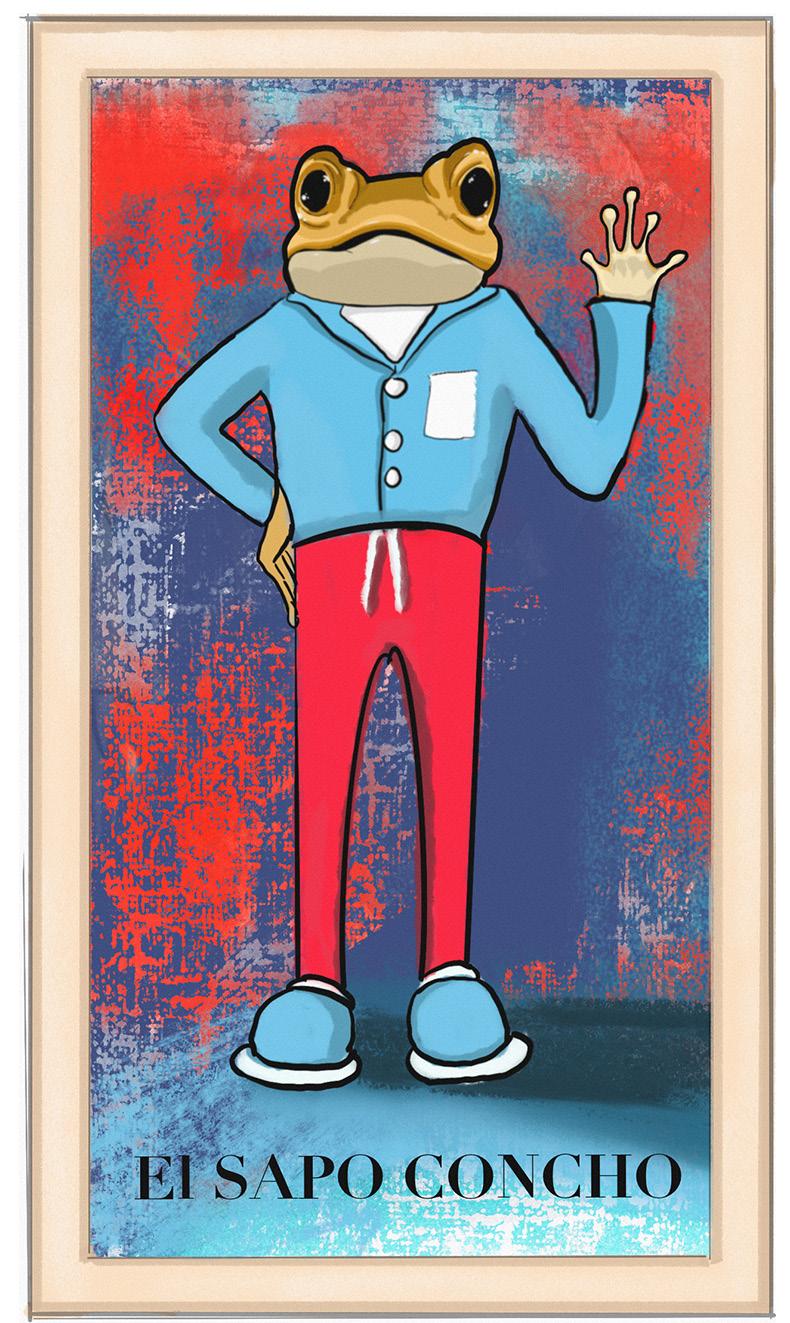
Whether someone is watching “When Harry Met Sally” for the 19th time or “10 Things I Hate About You” for the first time, movies are a place of sanctuary for many during the cold, brutal winter months. These “comfort movies” — films that provide one with a sense of familiarity and safety — give people a break from their stressfilled lives.
“When it’s too cold to go outside, movies can give us an emotional connection with the outside world,” said Blair Davis, a media and popular culture professor at DePaul. “The escapism that movies provide can be both mental and physical, transporting us to a different place on screen as well as showing us someone else’s life.”
Comfort movies vary from person to person. For some, romantic comedies put a warm smile on their faces. For others, rom-coms are cringe-inducing. They would much rather get lost in a fantasy movie’s expansive world. It all boils down to taste and personal experience.
“My mom is Japanese, so I watched a lot of Hayao Miyazaki’s films — especially ‘My Neighbor Totoro,’” Max Weber, a DePaul junior studying film, said. “It is very nostalgic, and it really connects me back to my childhood.”
While Weber finds comfort in films that most would consider “good,” sometimes solace can be found within the “bad.”
Sophie Hartmann, another DePaul junior studying film, spoke to this flip side, saying she finds value and coziness in films that most would turn away from, such as “Journey 2: The Mysterious Island.”
“I am able to turn off that ‘film student mode’ switch in my brain,” Hartmann said. “It is extremely re-
freshing to be able to breathe and watch something without feeling like I’m studying for a class.”
Hartmann added that this can help to prevent burnout and prevent anxieties from spiraling out of control. Comfort movies can help ground people in the present, offering familiar sights and sounds that allow viewers to reconnect with themselves.
The winter months also bring an increase in people affected by
seasonal affective disorder, largely due to the shorter days and long, dark nights. Comfort movies can help to promote positive mental health for those grappling with these challenges.
“There is definitely sometimes a link between people who rewatch films over and over again and some sort of mental health-related issue or trauma,” Hartmann said. “Those people can search for and embrace this nonphysical safe space.”
People often develop special connections with their comfort movies because of the deeply personal relationship they form with the art. Some may gravitate towards films with specific settings, actors or directors.
“So much of what people like in movies is reflective of their personality,” Weber said. “Some people leave a theater and are like, wow, this director understands me perfectly — to the core!”
These movies not only shape how people perceive the world around them, but also influence how they react to situations they may never personally experience.
“Movies allow us to empathize with others, which makes us better people in the process,” Davis said. “Movies usually have definitive endings that allow us to gain a sense of closure and resolution that is often lacking in our personal lives.”
As the popcorn pops in the microwave and “It’s a Wonderful Life” begins to air on the television, consider switching to a film like “Five Nights at Freddy’s 2.” It may just become a personal comfort movie.
“These films remind you of childhood and when you felt safer, or a film that you shared with a loved one that reminds you of them,” Davis said. “If I want to channel that feeling, I turn to those films.”
‘Whimsy’ is trending — but is now the right time?
Kateleen Quiles Contributing Writer
Merriam-Webster defines whimsy as “the quality or state of being whimsical or fanciful,” which social media users interpret as ways to set “whimsy goals” and search for “how to add more whimsy” in their lives. Google trend searches for “whimsy” sharply increased at the start of 2026.
As such, TikTok content creators began sharing ways to embrace whimsy through lifestyle tips and advice for everyday routines to feel more colorful and lively.
But where did the need for whimsy and childlike nostalgia originate from?
Megan Fariello, a DePaul American studies professor, argued that it stems from the lack of connection people experienced during the pandemic.
“The nostalgia is for connec-
tion, and it’s for communication in a way that feels more human-to-human as opposed to just through the digital space,” Fariello said.
Fariello compared the trends occurring now to 2020, when “cottagecore” romanticized a soft, nature-filled aesthetic. She believes individuals search for ways to “fit in” to lifestyle trends.
“There’s a pressure to perform this certain lifestyle in a way that starts to feel less earnest, and more like you’re being sold something,” Fariello said.
However, the beginning of the new year also rang in further ICE immigration violence, with the death of eight individuals. News cycles across the country feel overwhelming. Fariello believes that the whimsy trend is reactionary to political culture.
“My first reaction, hearing that whimsy was trending, was that it is
a reaction to the horrifying things we’re reading in the news. … I think it is this sort of an escapist kind of reaction,” Fariello said.
Josiah Taylor, a history major, similarly weighed in, saying, “I just think it’s weird to say 2026 is whimsical when we’ve begun it with ICE murdering people in the streets. … I don’t really think that it’s whimsical.”
Reviewing 2025, lifestyle tips and trends showed up with similar trends such as the “clean girl aesthetic.” These lifestyle trends on social media are becoming increasingly widespread and cycling more quickly, according to Fariello.
“I think these trends kind of hit fast and hard,” Fariello said. “Because people are growing more connected each year to social media, it becomes a connection point for people’s communication. It feels like these trends drive culture in a
different way.”
So how do individuals balance their consumption between lifestyle content creation and political updates?
Greta Hanson, a playwriting student from Minnesota, feels that both kinds of content can be consumed moderately.
“I think if you exclusively are
like, ‘everything’s great, it’s wonderful, and I’m having so much fun,’ you’re stupid,” Hanson said. “But if you’re also exclusively just sitting in the anger of the world and being sad all the time, that is also just going to make the world worse, because you also then don’t have hope that things can get better.”

By Tori Malek
Contributing Writer
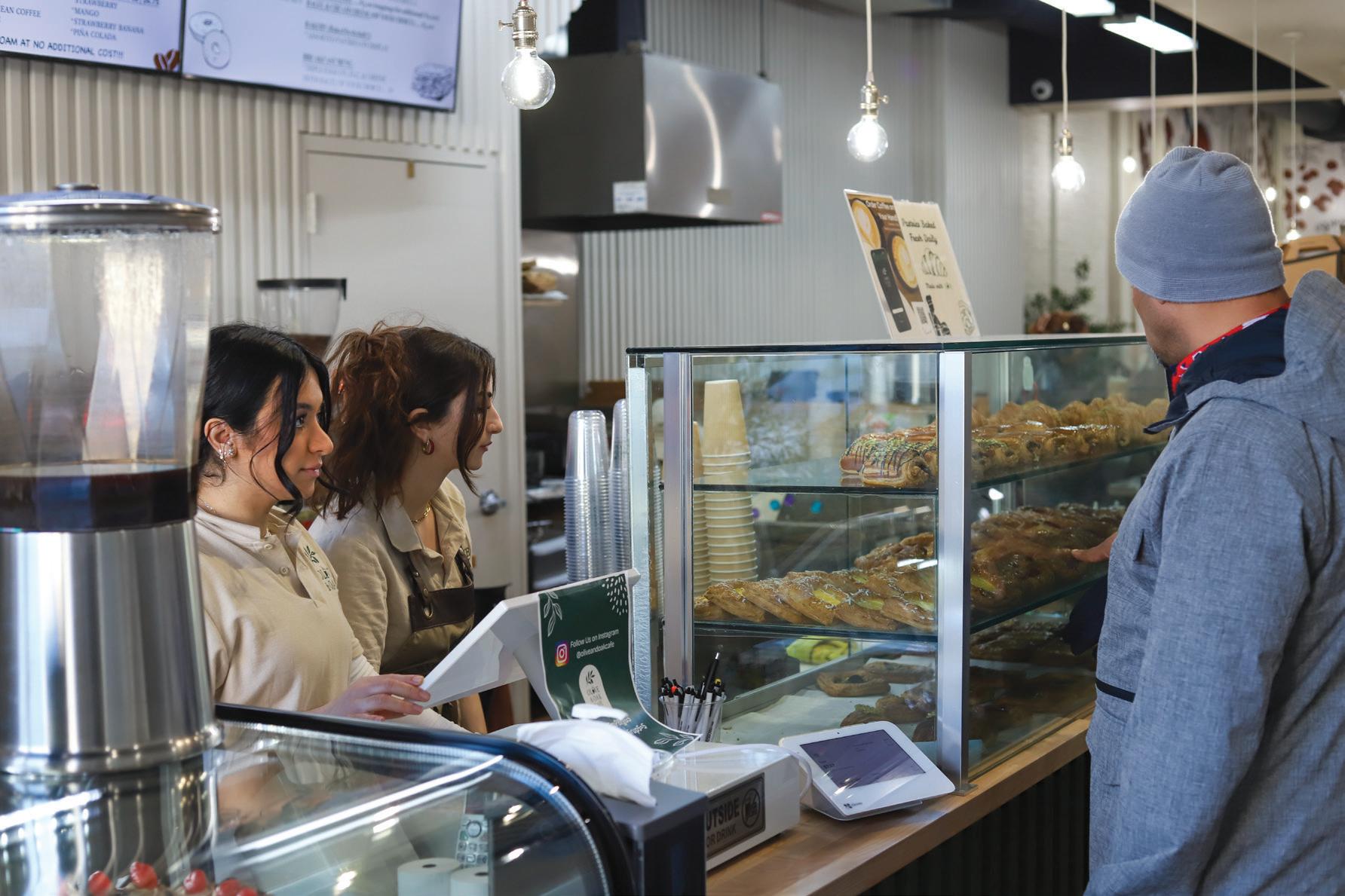
Olive & Oak Cafe lies at the corner of Webster and Sheffield avenues, mere blocks from DePaul’s Lincoln Park campus, as one of the newest additions in a neighborhood where it’s not always easy to stand out.
The shop, operating from 6 a.m. to 11 p.m., offers coffee, smoothies, sandwiches, baked goods and other items. It caters to students with space to study, plenty of outlets for chargers, free Wi-Fi and no time limits for customers, said owner Jay Falanh, who has created a friendly place to study or work.
“I definitely like how it’s more homey,” said Izzy Vega, a freshman studying sports communication. “It’s very welcoming as opposed to a lot of the other places nearby.”
With its brightly lit spacious interior and high ceilings, the cafe has a laid-back atmosphere that serves as an escape from the fluorescent lights and stuffiness of a classroom or library.
A handful of staff members float back and forth behind the counter, crafting drinks, frying bacon and eggs while calling out orders. They interact as a cohesive unit, cracking jokes with one another and laughing while tending to the cafe.
Everyone behind the counter works hard, Falanh said. He added, “Even though we’re not related, it’s like family.”
Vega took a sip of her strawberry matcha with cold foam and added, “I think for the north side of downtown, this is the best you can get.”
At lunchtime, customers rotate in and out of the shop, some grabbing a quick bite and others taking a seat at one of the many tables. Most individuals work on their laptops, headphones on, focused on their task at hand accompanied by a cortado or cherry danish.
Others lounge in the colorful
cushioned armchairs just beyond the small pickup counter.
Tables don’t stay unoccupied for long and the chatter of conversations dampens the upbeat music playing from overhead speakers.
First-time customer Kate Nadler, who is studying neuroscience at the University of Illinois Chicago, said she likes the place so far, calling it “a nice environment, not too loud.”
Along with the welcoming atmosphere, customers like DePaul alum Beth Xanthopoulos say Olive & Oak Cafe’s reasonable prices stand out in an area saturated by more expensive coffee shops.
“I think they were pretty reasonable, especially for the amount of matcha that I got here,” she said. “I’m so used to paying $8 and then getting something that’s literally half the size of this.”
They offer build-your-own bagel sandwiches and paninis for $9, and there is no extra charge for alternative milks or cold foam
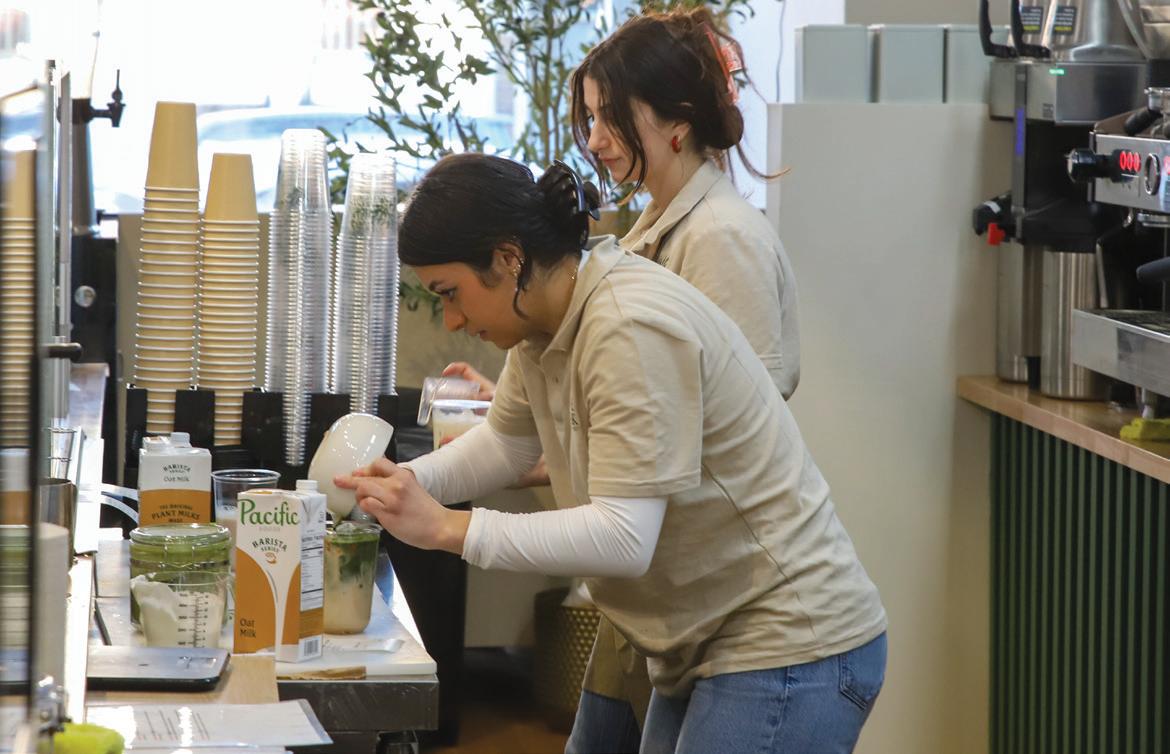
on drinks. Lattes are $6.50 and smoothies are $6.75. The cafe also offers halal options and a signature house latte combining the classic beverage with cardamom — a warm, citrusy and slightly sweet
spice. Falanh said the cardamom gives the drink a bit of a Middle Eastern twist.
“If the experience is good at the register, it just follows all the way through,” Falanh said.
Xanthopoulos said she enjoys patronizing a cafe that isn’t a chain like Starbucks.
“It’s nice that you guys have a small business to support now,” Xanthopoulos said.
Olive & Oak Cafe also has a mobile app that allows users who have created an account to place and pay for online orders for immediate pickup or at a scheduled time.
Past the pickup counter is a staircase descending to the basement of the building, currently closed off by a single metal chain. Falanh and his team are working to turn the downstairs level into a designated quiet area with about 20 spaces for people to “lock in” on their work or studies.
“I want them to have the best atmosphere for them to do that in,” Falanh said.
He added that inspiration for this space came from the workand study-centered environment that has naturally evolved in Olive & Oak Cafe since it first opened in mid-November. Falanh expects to open the cafe’s lower level in March.

“Spinning freSh beatS Since 1581”
By Laura Vázquez David Asst. Sports Editor
With the Super Bowl — and more importantly, the halftime show — less than a week away, these are my recommendations to get on the Bad Bunny bandwagon before he takes the stage. Bad Bunny’s music has been a part of the soundtrack of my life for almost 10 years now and my love for him continues to grow. Here are the Bad Bunny tracks I always come back to and why they stay on repeat.
“Yo Perreo Sola” by Bad Bunny
This song is more than a reggaeton anthem — it’s a declaration. It’s about independence,
such a banger, and the video is amazing as well. When this song plays anywhere, I will be dancing to it. That’s the magic of Bad Bunny’s music.
“Safaera” by Bad Bunny “Safaera” is controlled chaos. It’s loud, unpredictable and switches energy without warning — kind of like me. It’s the song that turns a regular moment into something unforgettable
“Tití Me Preguntó” by Bad Bunny
This track balances humor with truth in a way only Bad Bunny can.



commentary on love, relationships and emotional baggage.
“KLOuFRENS” by Bad Bunny “KLOuFRENS” feels personal. It’s about that one friend that is not really a friend, and the tension that lives between you. It’s a late-night track, reminiscent of someone who’s still around but has also faded out along the way. Bad Bunny sings, “¿Cómo quieres que me vaya bien, si tu no me sacas de los KLOuFRENS?” or “How do you expect things to go well for me if you don’t remove me from your close friends?”
“Otro Atardecer” by Bad Bunny (feat. The Marías)
This song feels like watching the sun go down at the beach: calm, emotional and a little bittersweet. “Otro Atardecer” carries that longing Bad Bunny does so well, making it perfect for moments when you’re stuck between missing the past and appreciating where you are now. Bad Bunny and The Marías are definitely an underrated duo, and this song proves it.
LISTEN TO THE JAMZ ON SPOTIFY

Ashley Mezewich Men’s Basketball Beat Writer
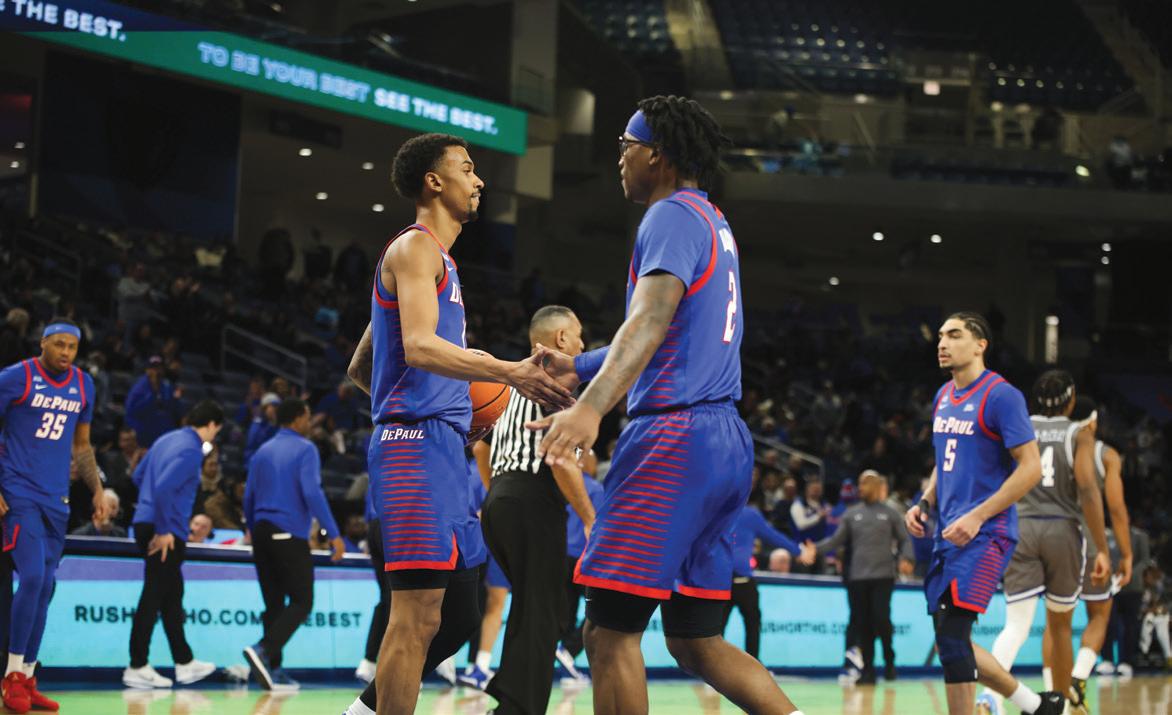
In January, the DePaul Blue Demons hosted the Marquette Golden Eagles at Wintrust Arena, which featured a packed student section. The students stomped their feet, chanted and waved around balloons given to them during the opponents’ free throws in the second half.
That student crowd broke the previous Wintrust Arena student attendance record, which was set during the Blue Demons’ Wintrust Arena opener in 2017.
“Man, it’s so important,” senior guard CJ Gunn said in the postgame press conference, when asked about seeing the filled-up student section during the 80-75 win over Marquette. “From the first day me and NJ (Benson) got here, we (have) been trying to change the culture and the environment in Wintrust.
“And we (are) finally starting to get some wins — finally starting to get our rhythm and our momentum going.”
The Big East wins this season have all come at Wintrust Arena, where the Blue Demons have secured four home wins in a row against conference opponents, matching their total Big East wins from last season after only nine games in this year’s slate.
It also marks the Blue Demons’ longest Big East home winning streak since 2007. And after all four wins, the team made it clear: the fans at Wintrust have an impact.
Head coach Chris Holtmann also applauded the students after the Marquette game.
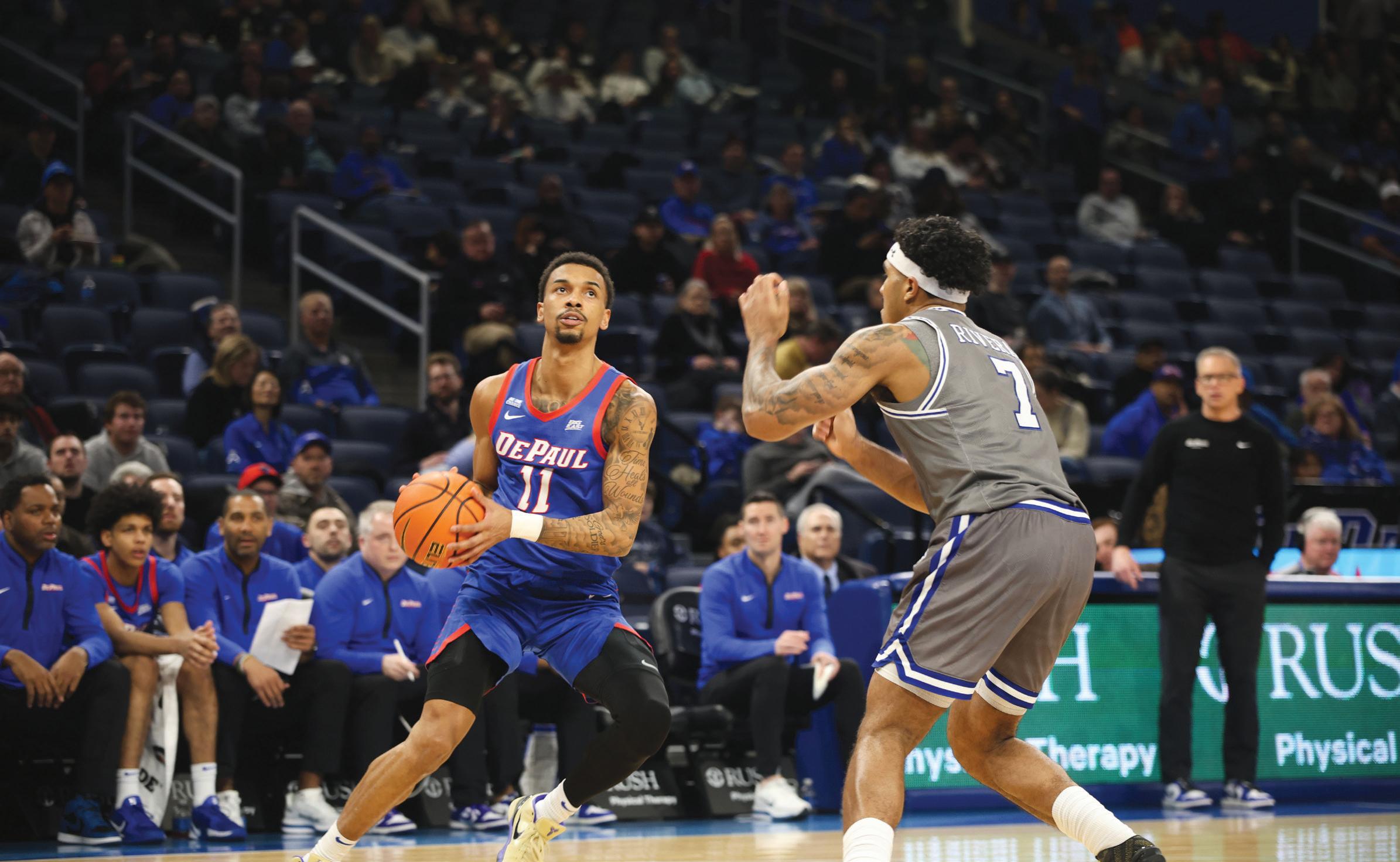
“I want to thank the crowd for their unbelievable energy, carrying us through,” Holtmann said. “We felt them and (are) just really proud of our guys’ effort.”
After the win, Holtmann went to the student section. “I’d have climbed up to the top row if I could have,” Holtmann said, adding that he was so happy he “was looking for people to hug.”
“They’re a big part as we build this program, they’re a big part of what we do,” Holtmann said.
Holtmann and the team have been trying to change the
program for the better. The season before Holtmann’s arrival — 2023-24 — featured no wins in conference play, along with a point-shaving scheme, which did not include any of the current players.
In year one with Holtmann at the helm, the Blue Demons won four conference games.
During a media day last fall, Holtmann said that going through last season’s Big East play, they felt the team was physically overwhelmed too often. He also said the team lacked some offensive efficiency and diversity.
He later added the Blue Demons needed to be more effective on offense and defense this year, and with an identity built around defense, the Blue Demons have found early success.
Noah Telford, a sophomore majoring in sports communication, was in the student section for the Marquette game. When Layden Blocker and Benson both completed dunks, the student section “went nuts,” according to Telford.
The team’s early success is the biggest reason for students
showing up to cheer on the Blue Demons, Telford thinks. He said that looking back on past seasons, the one common denominator is that the Blue Demons were not winning.
“And I think the fact that Chris Holtmann has instilled this belief and then built this roster to have that belief, I think it’s massive,” Telford said.
After the first of those four wins, which came against Xavier on Jan. 3, Holtmann shared in the postgame press conference that he “felt like there was going to be energy” in Wintrust for the game, which he then noted occurred.
He said the fans especially came through in the last 10 minutes, energizing the team. He thanked the fans and said the energy “was phenomenal.”
Before that Xavier game, Holtmann said, at the risk of sounding “corny,” he asked his team where else they’d rather be. He answered his own question.
“I wouldn’t want to be anywhere else than right here at one o’clock in Chicago, in Wintrust, playing a league game right now,”
Holtmann said at the press conference.
In the next home matchup, against Georgetown on Jan. 6, the Hoyas met the same fate as Xavier: a loss to the Blue Demons.
The fourth and most recent win came against Seton Hall on Jan. 24.
“For you guys to support us, and all the support we’re getting and the love we’re getting, it means everything for us,” redshirt junior guard RJ Smith said in the postgame press conference.
Check out The DePaulia online for the latest stories and community updates.

Siemaszko La DePaulia News Editor
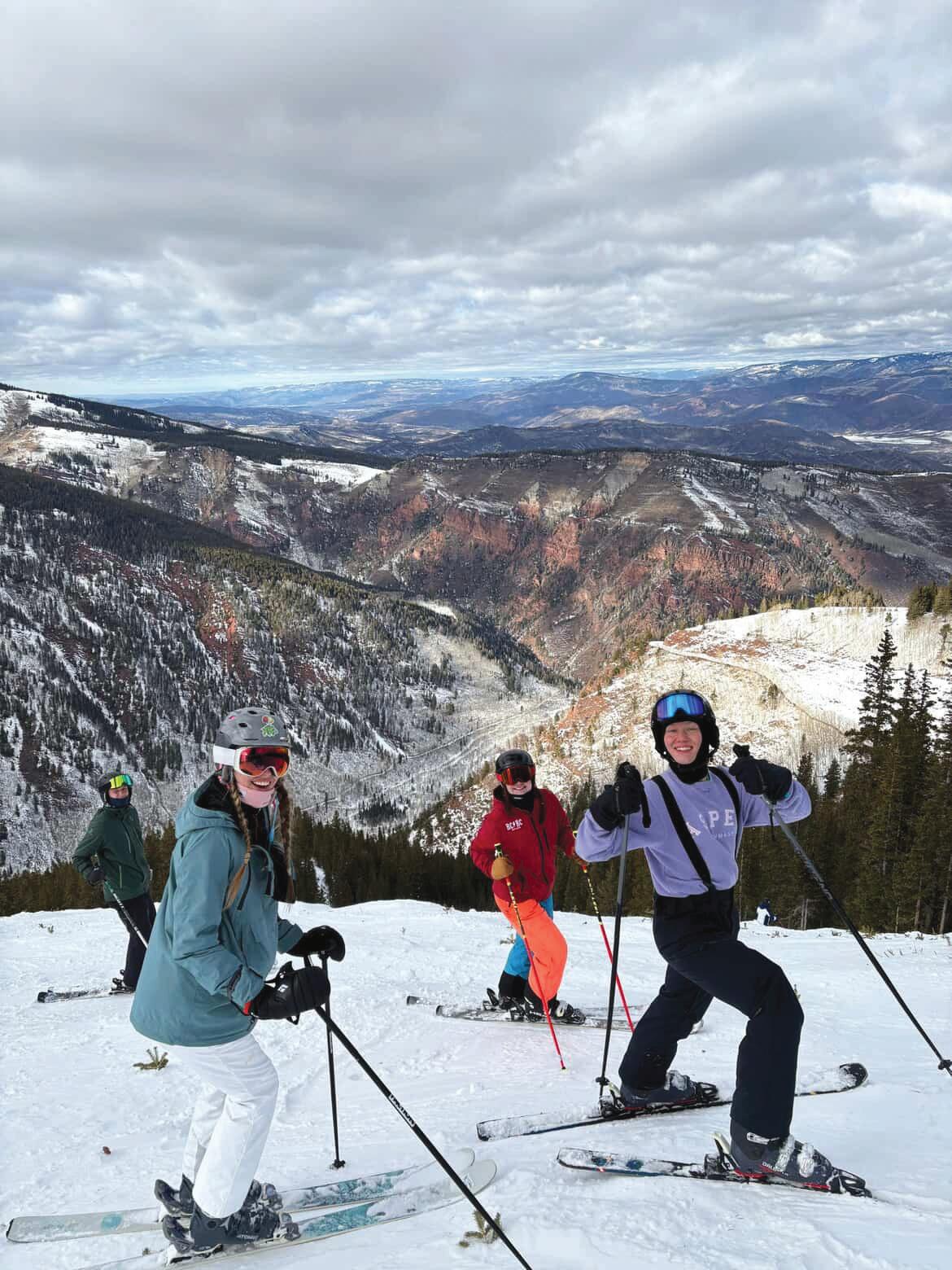
Suspended above the slopes of Aspen Mountain, thousands of miles from the flat terrain of DePaul’s campus, Amelia McQuellon, a sophomore studying history, took in a clear blue sky and whitecapped mountains stretching as far as the eye could see.
“We went up using the gondolas, and the long ride allowed me to appreciate where I was and take in my surroundings,” McQuellon said.
With the 2026 Winter Olympics set this month in Milan and Cortina d’Ampezzo, Italy, global attention has returned to skiing and snowboarding. While the world’s best athletes prepare to compete for gold, members of DePaul’s ski and snowboarding club experienced the sports in their own way.
McQuellon’s view came during the club’s annual multiday trip which brings students together on the mountains each winter. This year, members of all levels skied, snowboarded and spent time together in Aspen, Colorado.
“It was just a really good environment,” McQuellon said. “I had so much fun, even when we were just hanging out at the hotel or getting dinner.”
The club partners with Outside Life, a travel organization that arranges discounted ski trips for col-

lege groups nationwide.
James Troy, vice president and sophomore accounting major, said Outside Life presents the club with several trip options each year. Board
members then evaluate which option works best for everyone and begin the registration process.
“Outside Life does a great job,” Troy said. “The only drawback is that it’s early in the season, so conditions can be variable. This December, the conditions weren’t great in Colorado, but last year it was really nice. It’s something no one can control.”
But one thing students can control is the culture within the club.
“It’s definitely worth it,” Troy said. “Everyone always has a great time, especially on this big trip. It’s rewarding to see the bonds that are created.”
For Millie Boden, social media manager and sophomore political science major, these connections are a reason why she fell in love with skiing.
“On the mountain, you make friends that you wouldn’t normally make, upperclassmen and such,” Boden said. “It’s a really good connector and the best part is that it’s over something I truly love. Skiing is my favorite thing in the world.”
Boden has been skiing since she was three years old. She practiced on a small hill in Illinois before progressing to the black diamond runs of Colorado. She also raced competitively, developing her skills through years of structured training.
“It’s a very adrenaline-filled sport, and I’m an adrenaline junkie, so I love that aspect of it,”
Boden said. “But it can definitely be nerve-racking at first, especially looking at a pitch that’s straight down, that’s scary.”
Boden has drawn inspiration from other athletes, including Olympic skier Lindsey Vonn, who was expected to compete in this year’s games five years after her retirement. Her participation is now uncertain following a recent injury.
“She came from a small mountain, just like me, and now she’s like this insane athlete,” Boden said. “It’s so inspiring.”
While the Olympic stage feels far removed from casual skiing with the club, Boden still sees connections between the two.
“It’s two different worlds, but I think it’s neat how they can combine,” she said. “I focus on my form, so I’ll look at professional athletes, see how they do it and compare their technique to my own while free skiing.” On the slopes of Aspen, students practiced the same discipline and focus that define athletes at the highest level.
“There’s always that moment where your head is spinning,” McQuellon said. “Then it hits me when I’m seeing the view or feeling the sun and the wind on my face. Only then I’m like, ‘Oh, I’m good. I love this.’”
Even without competing for medals, the dedication required to improve resonates with club members. Troy said he admires the commitment shown by top athletes.
“These athletes have an insane
amount of dedication,” he said. “They really have to love what they’re doing and be relentless in how much time and effort they put into it.”
For McQuellon, witnessing this dedication is inspiring, but it’s also a reminder that enjoyment matters as much as performance.
“The grass is always greener on the other side,” McQuellon said. “It makes me feel lucky that I can go to school and have something that I can be passionate about without giving up my whole life for it,” she added.
Seeing Olympic athletes like Vonn step away from the sport and return at the top of their game has shown her that she doesn’t need to be perfect to enjoy skiing.
“I don’t have to be crazy serious about it. I can have fun,” she said. “That’s what I definitely did on the trip.”
Boden feels the great thing about skiing is you don’t have to be winning World Championships or making runs in Cortina d’Ampezzo this winter to enjoy it.
“You can go at your own pace, and there’s a hill for everybody. It’s more about being there than how you get down,” Boden said.
Ultimately it’s the joy it brings that keeps her involved with the club.
“It’s a part of me and something I can’t give up. It’s like my second place, anywhere on the mountain,” she said.