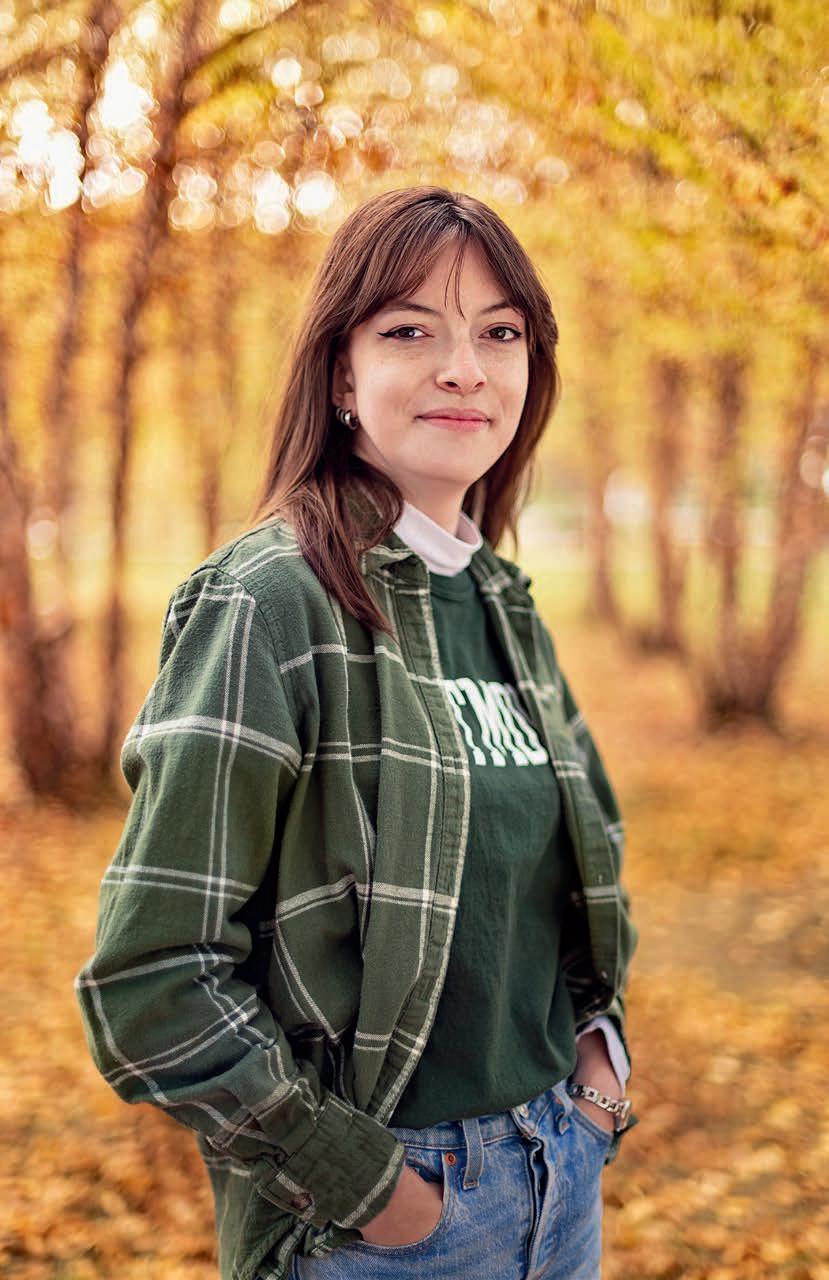
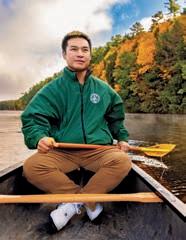
Hear from Daniel Xu ’25 about why he chose Dartmouth and how he’ll carry the warmth he found here into the world.
Hear from Daniel Xu ’25 about why he chose Dartmouth and how he’ll carry the warmth he found here into the world.
Certainly its location in the small college town of Hanover, New Hampshire. Absolutely its fusion of a liberal arts college and a robust research university. Definitely its small classes taught by professors who are leaders in their fields. Home to over 4,500 undergraduates from 51 U.S. states and territories and more than 100 countries, Dartmouth is a place where students, faculty, and staff partner across academic disciplines to take on some of the biggest challenges facing our world.
So what exactly makes Dartmouth ... Dartmouth? The people, of course. We affectionately call them the Humans of Hanover, and you’ll meet several of them in the pages that follow.
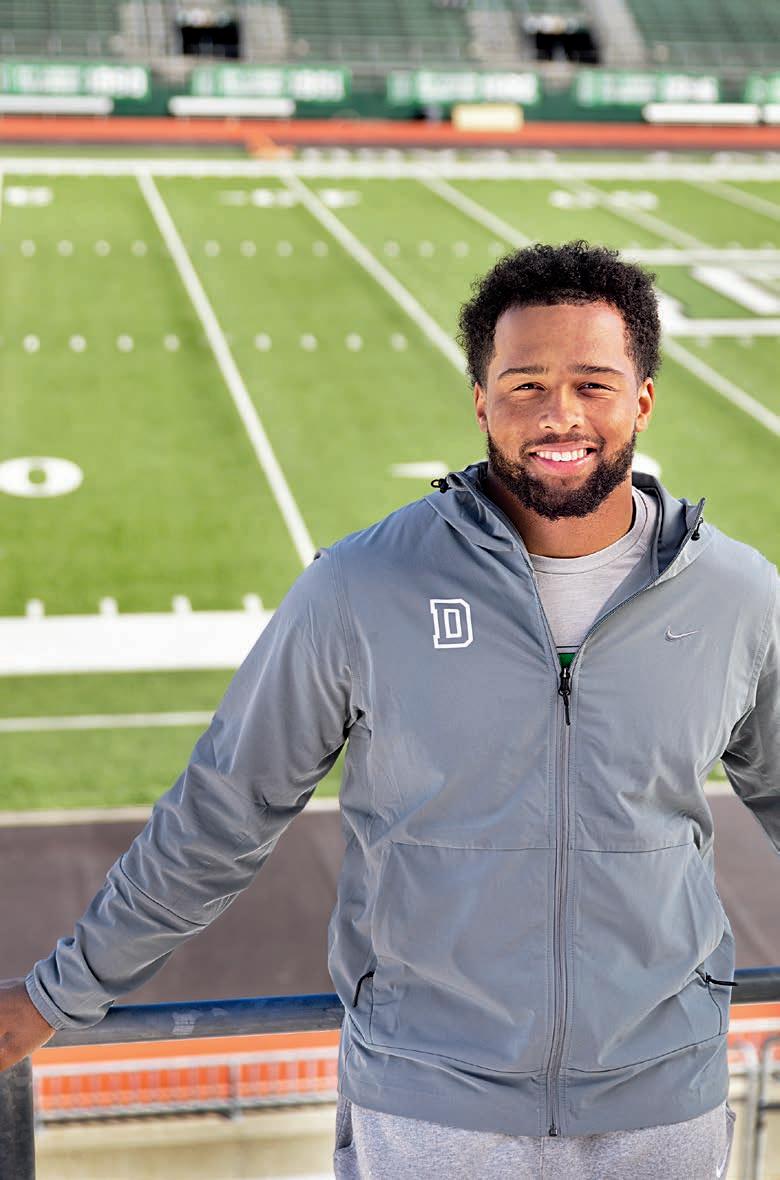
“I felt fortunate to be at a place where I’m encouraged to learn from different perspectives and foster relationships.”

Micah Green ’25 he/him/his
Hometown: Indianapolis, Indiana Majors: Engineering Sciences and Mechatronics
Starting linebacker Micah Green ’25 helped bring home three Ivy League championships for the Big Green football team, served as co-president of the Dartmouth Black Student Athlete Alliance, and completed two degrees—a Bachelor of Arts and a Bachelor of Engineering—in four years.
Micah: Dartmouth was the only school where I could play my sport and major in engineering. Dartmouth’s unique quarter system allows athletes to take a rigorous course schedule without burning out. Before I got to Dartmouth, Douglas Van Citters, Interim Dean of Dartmouth Engineering, helped me map out my accelerated engineering degree over Zoom.
Coming to Dartmouth was a completely new experience for me. There’s a big culture of getting to know your peers and professors. I felt fortunate to be at a place where I’m encouraged to learn from different perspectives and foster relationships.
On our football team of over 100 people, leadership takes many forms. I tend to lead by example, but more recently, I’ve been admitting when I’ve failed. I want people to see how I truly feel instead of trying to be perfect. I’m not afraid to stand up and speak about what I believe.
I’m continuing my academic and athletic careers at the University of St. Thomas in Minnesota this year, pursuing a master’s degree in engineering management. My long-term goal is to become chief engineer of an aerospace company.
Dartmouth’s liberal arts curriculum offers all undergraduates the opportunity to mix and match from 60+ areas of study, with no expectation to declare a major until a student’s second winter.
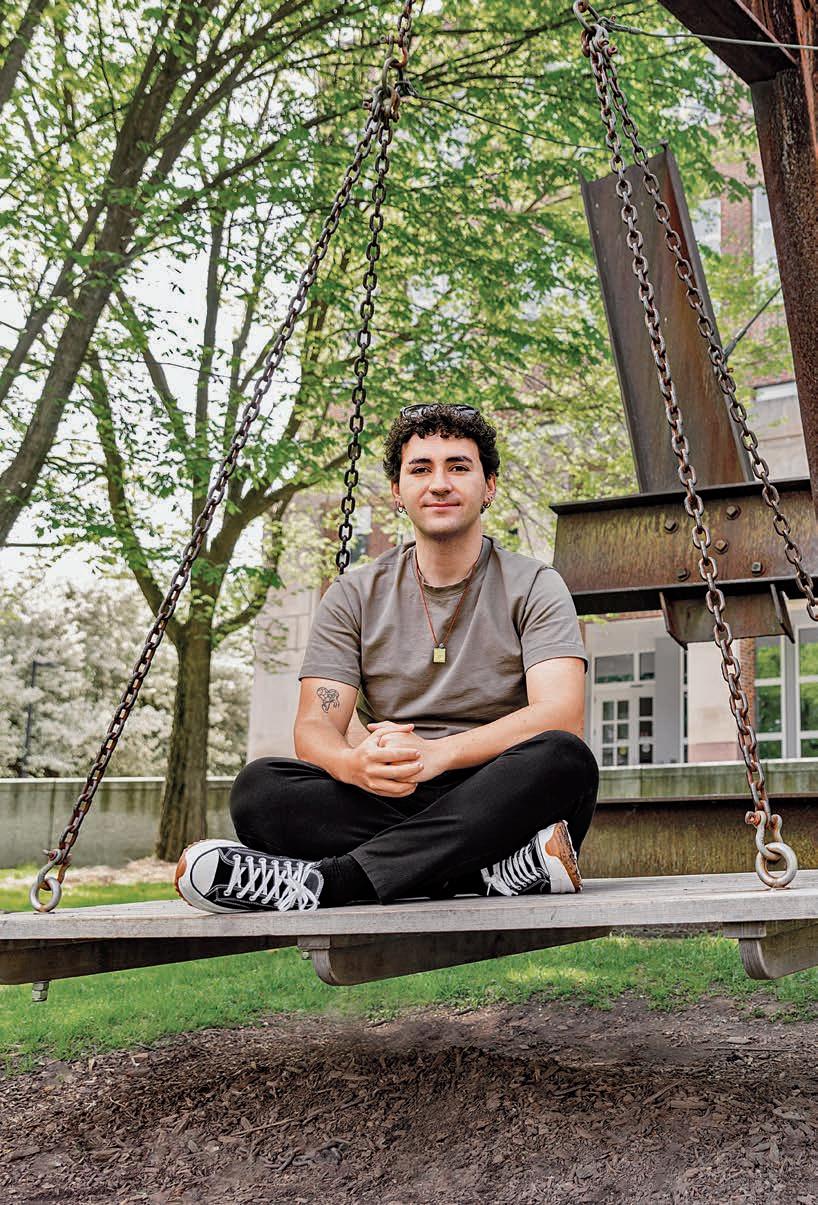
“People here come from many different places, and we’re all growing through that.”
Batuhan Saridede ’26
he/him/his
Hometown: Istanbul, Turkey
Major: Cognitive Science; Minor: French
“I enjoy transforming spaces I occupy to be not only more inclusive but also to be safer,” says Batuhan Saridede ’26, who helped expand LGBTQIA+ programming at his boarding school in Turkey. “In allowing people to have space for curiosity, I expanded the conversation—not just for me, but for future students.”
Batu thought he’d study psychology at Dartmouth until he discovered cognitive science, an interdisciplinary field that analyzes cognition through the lens of linguistics, philosophy, and more. That curiosity led Batu to Dartmouth’s PhilLab, which investigates how minds understand possibilities, and a research group that studies how children and adults differ when generating options in given scenarios.
Dartmouth’s liberal arts curriculum also gave Batu flexibility to take French courses and spend a term on an off-campus study program in Toulouse, France. Though Batu initially worried about affording the program, his financial aid offset extra costs.
Batu is most grateful, though, for the people at Dartmouth. “People here come from many different places, and we’re all growing through that,” Batu says. “Saying hello to a professor from first-year fall, a friend of mine, and the Dean of the College, all within five minutes, is an incredible thing. I think the way Dartmouth is both physically and systematically designed allows for that type of community.”
Students receiving need-based financial aid pay the same net price for a term on a Dartmouth off-campus study program as they would for a term in Hanover.
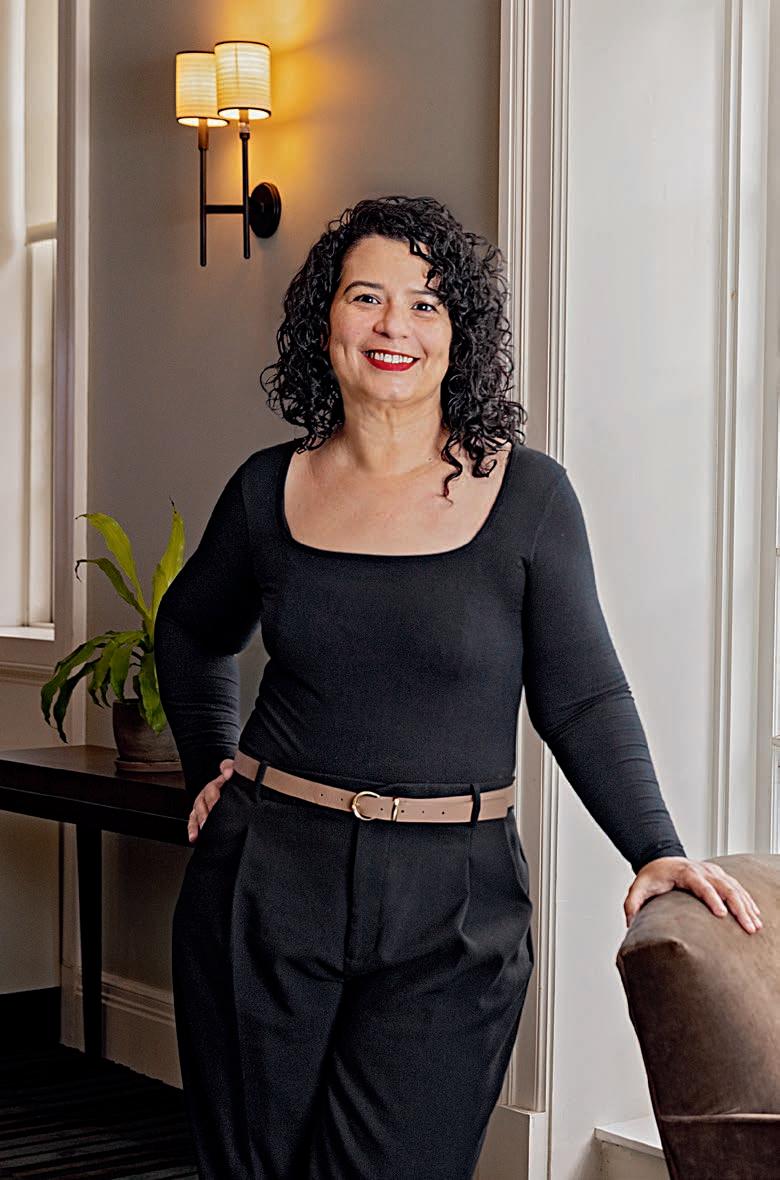
“I try to be the professor I felt I never had.”

Analola Santana she/her/ella Chair, Department of Theater
Affiliated Faculty in Latin American, Latino, and Caribbean Studies
“Theater helps us understand politics, culture, and their place in the world,” says Analola Santana. “It is the beauty we need in times of crisis.”A professional dramaturg and member of Mexico’s Teatro de Ciertos Habitantes (Certain Inhabitants’ Theatre), she teaches courses about Latin American theater and performance.
Professor Santana: I’m from Puerto Rico and was raised in Mexico City. In most Latin American countries, people go to the theater two or three times a week, so theater is integral to understanding what’s going on in those parts of the world. When I teach, I show my students what artists have done all throughout Latin America, and my first book examined the effect of mass media on theater in Mexico, Argentina, and Chile.
In Dartmouth’s theater program, you aren’t competing with graduate students for opportunities—that’s not always true elsewhere. We also have a close relationship with Northern Stage, a theater company in nearby White River Junction, Vermont, where students can spend an experiential term in that professional setting.
I’ve always understood my primary job to be teaching. I try to be the professor I felt I never had. I want students to understand that anybody can write, anybody can perform, anybody can act. It’s our job to help you feel secure enough to get there.
Dartmouth is need-blind for all applicants and meets 100% of demonstrated financial need.
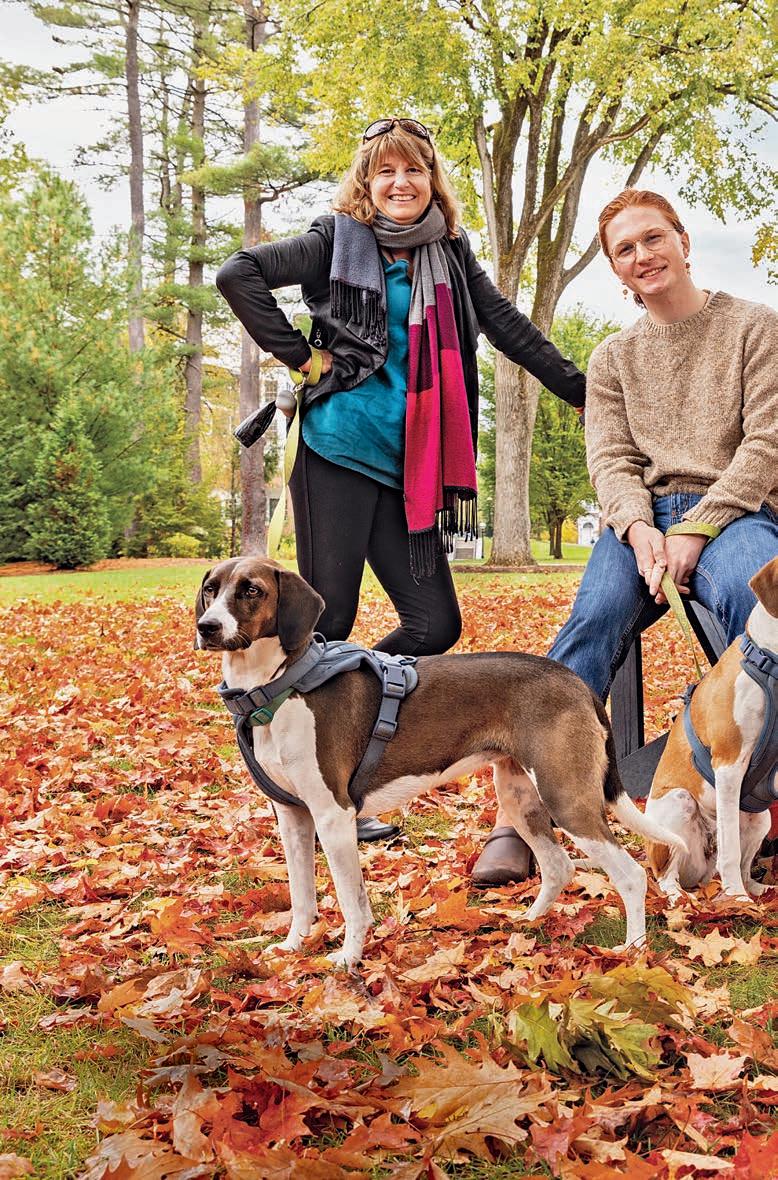
“Research isn’t just for people who can afford to not work.”

Kelby Greene ’25 she/her/hers
Hometown: Knoxville, Tennessee
Major: History
Kelby Greene ’25 met Professor of History Bethany Moreton in the class American Anthropocene: Climate and Power in U.S. History. They’ve since partnered up to study the history of Appalachian coal mining through the lens of the Tennessee Valley Authority (TVA), a federally-owned electric utility corporation. Since graduation, Kelby has worked in Dartmouth’s history department, freelanced as a radio producer, and will be beginning a fellowship studying energy politics in Nepal.
Kelby: I grew up on a farm in Tennessee that’s been in my family since the 1920s, so I’ve always been conscious of history. I’m studying how the TVA shaped early-20th-century energy consumption patterns and policy. Dartmouth’s Stamps Scholars Program funded my travel to the TVA’s archives in Atlanta and helped support my unfunded internship with a historical society. Research isn’t just for people who can afford to not work.
Professor Moreton: Whether I’m collaborating with 19-yearold sophomores or 80-year-old retired professors, we’re having an ongoing conversation in an intergenerational community. We all have relationships with one another, including people who passed away long ago.
Kelby: It’s fantastic to have a working relationship with someone I look up to—Professor Moreton takes the work seriously with me as a peer, which is empowering because I feel like my ideas are important. It’s not just about my time at Dartmouth; my work will continue to matter after graduation.
60% of Dartmouth students engage in research—often funded by a deep well of campus resources.
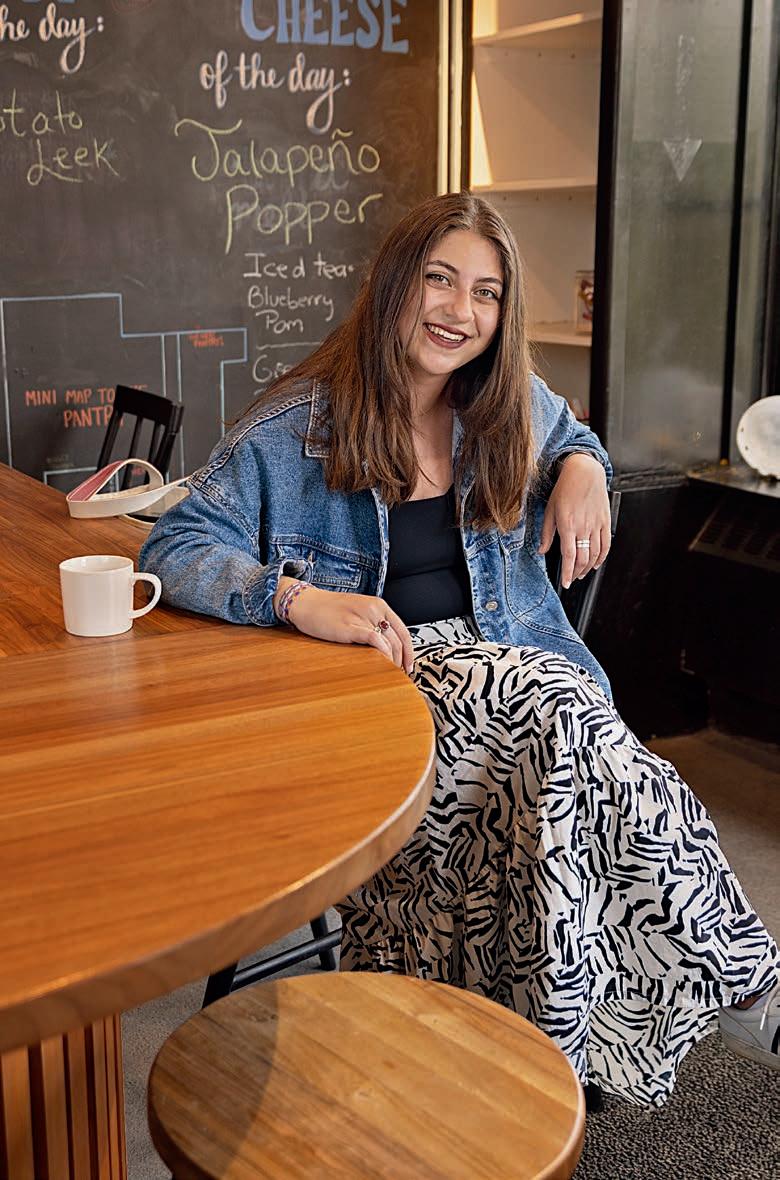
“You can learn so much about yourself when you don’t know where exactly you’re headed.”
Armita Mirkarimi ’25 she/her/hers
Hometown: Irvine, California and Karaj, Iran
Majors: Government and Creative Writing; Minor: Middle Eastern Studies
Born in Karaj, Iran, Armita Mirkarimi ’25 eventually immigrated to Irvine, California, and initially arrived at Dartmouth with thoughts about attending law school. After meeting Associate Professor of History Golnar Nikpour in her Modern Iran course, she was inspired to apply for funding from Dartmouth to research how coverage of Woman, Life, Freedom protests in London inspired nostalgia for Iran’s past.
Armita’s research abroad exposed her to Dartmouth’s powerful alumni network. When her housing arrangement in London fell through, Dartmouth’s Centennial Mentoring Circle connected her with an alumna who offered to house her for the duration of her stay. “Dartmouth provides access to staff and monetary resources, but those relationships are worth even more.”
Dartmouth’s theater department funded the production of Armita’s original play Noon Panir in the Dark, which tells the story of five Iranian girls trapped in a classroom in complete darkness. “The play has to do with what it feels like to read news report after news report of what is happening in Iran. It’s a hybrid of fiction and nonfiction. I think that’s why I like plays so much: the political is also personal.”
Armita plans to work in media before earning her master’s degree in international affairs. “The last couple of years have taught me that you can learn so much about yourself when you don’t know where exactly you’re headed.”
The average scholarship for a member of the Dartmouth Class of 2029 is $74,765— an amount that equals nearly 80% of the cost of attendance.
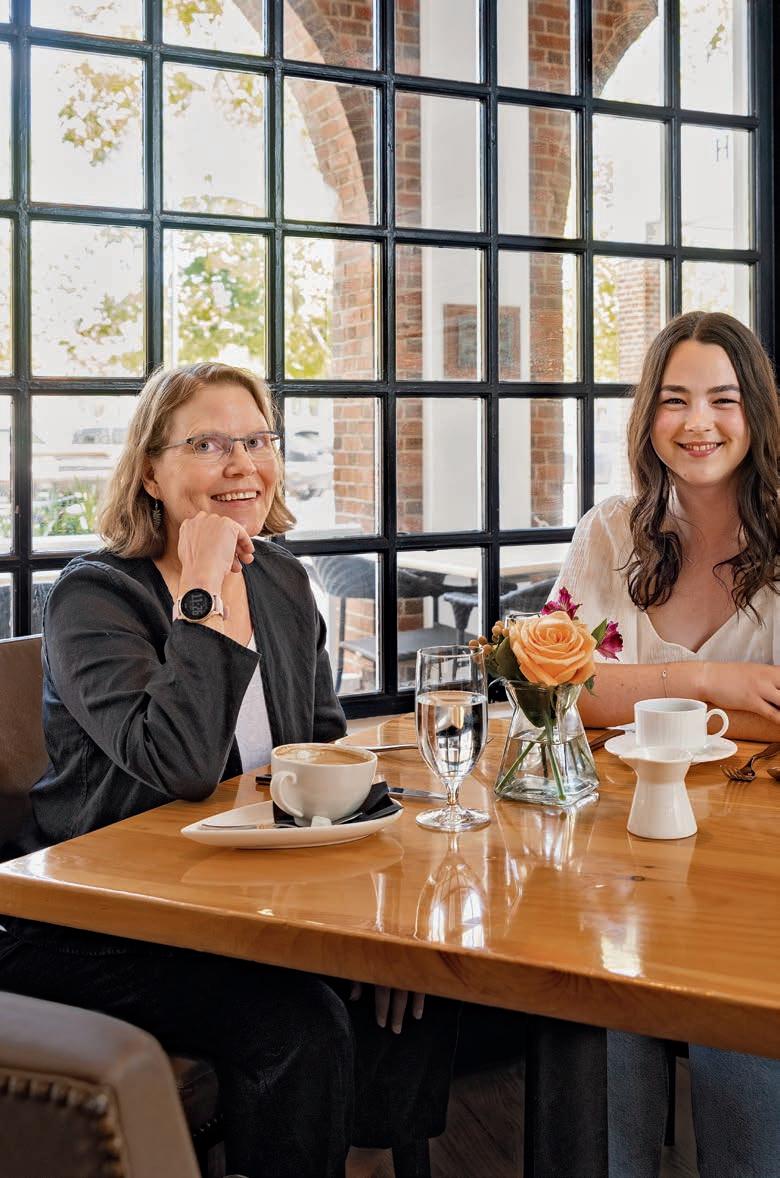
“Research never feels like work; it’s something I get to do.”

Corinne Fischer ’26 she/her/hers
Hometown: Seattle, Washington
Major: Economics; Minor: Theater
Funded by Dartmouth’s James O. Freedman Presidential Scholars Program, Corinne Fischer ’26 is pursuing research at the intersection of psychology, health, and behavioral economics with mentorship from Professor of Psychiatry and Biomedical Data Science Catherine Stanger and PhD student Enzo Plaitano.
Corinne: I saw an Instagram post looking for young women with type 1 diabetes for a study at Dartmouth’s Geisel School of Medicine. I tried to enroll but couldn’t because my blood sugar is where it needs to be, which is good. I reached out to Professor Stanger, saying, “I’m a type 1 diabetic, and your research is so cool. I don’t have research experience, but is there any way I can get involved?” Her team immediately brought me on board.
Professor Stanger: Our scientific question is whether patients who receive one-on-one coaching will show better improvements in blood sugar levels compared to those who don’t.
Corinne: In my research, I coach other young adults with type 1 diabetes through problem solving to improve blood sugar control. We identify engagement predictors by examining which baseline demographics influence the number of coaching sessions attended.
Type 1 diabetes is a constant in my life—that’s why I chose to get involved. Research never feels like work; it’s something I get to do. It’s been amazing to connect with other diabetics. Watching their progress is incredibly fulfilling.
Dartmouth does not include loans as part of the financial aid offer created to meet a student’s demonstrated need.
U.S. Postage PAID
Dartmouth College Permit No. 138
Dartmouth College Office of Undergraduate Admissions 6016 McNutt Hall Hanover, NH 03755
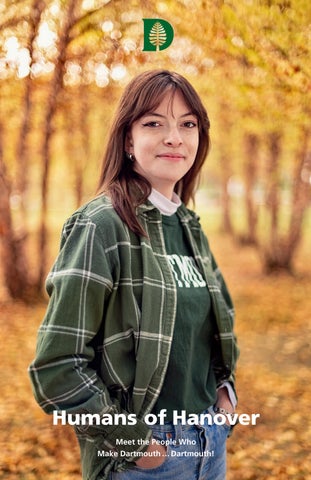
Pictured on front cover: Marietta Hamill ’25 Paris, Texas Member of the Choctaw Nation of Oklahoma Discover Marietta’s research on casinos and health outcomes in the Choctaw Nation.
Read our student blog Looking for the inside scoop on student life at Dartmouth? Visit People Places Pines, where current students share snapshots of their lives in our college town. Visit dartgo.org/blog to meet them.
Connect with us today.
Instagram: @ dartmouthadmissions
Facebook: @ dartmouthadmissions
Student Blog: dartgo.org/blog
YouTube: dartgo.org/admissionsyt Admissions Beat podcast: dartgo.org/podcast