INSIDE THE DISMANTLING OF PENN’S LAST DEI HOLDOUT
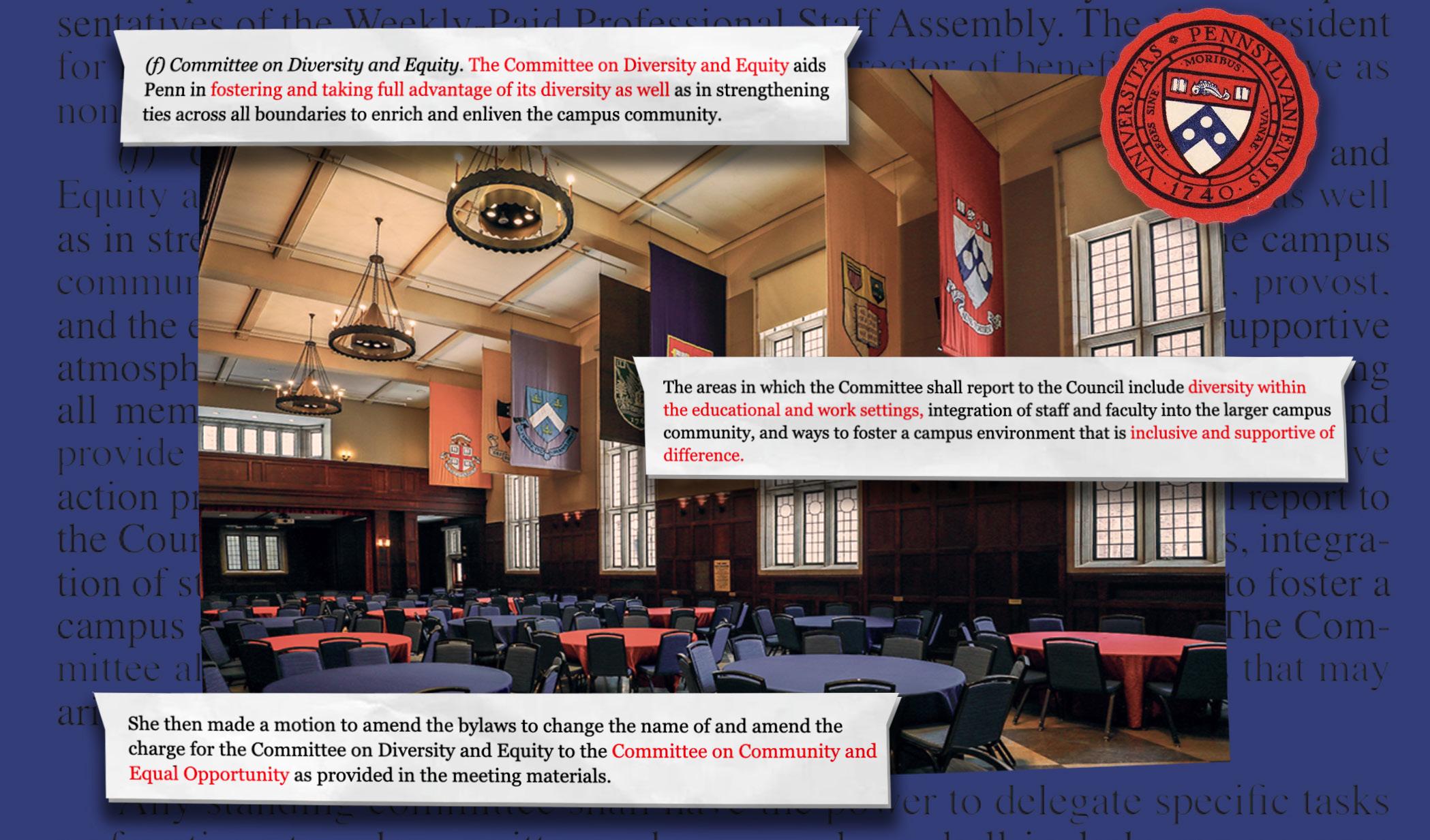
The University Council ‘Committee on Diversity and Equity’ was the one remnant of Penn’s former commitment to DEI that held out for months
On the evening of Dec. 3, 2025, Penn dismantled its last major vestige of diversity, equity, and inclusion — but only temporarily.
Earlier that afternoon, members of the University Council filed into Houston Hall to vote on a motion renaming its “Committee on Diversity and Equity” to the “Committee on Community and Equal Opportunity.” The December meeting marked the second time the Council convened over the matter
Federal agency says Penn ‘impeded’ antisemitism probe
The filing is the latest back-andforth between the University and the federal government
ALEX DASH Senior Reporter
In a new filing Monday, the United States Equal Employment Opportunity Commission doubled down on claims that Penn “impeded” the agency’s investigation into allegations of campus antisemitism.
The Jan. 26 brief came almost a week after Penn asserted that the EEOC’s subpoena seeking information about Jewish students and faculty was “unconstitutional” and should not be enforced. In the filing, the agency called Penn’s concerns “disingenuous” and argued that the University staged a negative public relations campaign in response to EEOC requests.
Requests for comment were left with the University and the EEOC.
“The outcome here should be clear cut: the information sought is relevant to investigating a valid EEOC charge and the subpoena therefore must be enforced,” the EEOC wrote. “Any other outcome would represent a radical departure from longstanding, binding caselaw and constitute clear error.”
The agency described its subpoena as “no different” from other requests for information in previous investigations.
“Courts routinely enforce EEOC’s subpoenas, including to obtain information necessary to communicate directly with victims and witnesses, as central to the agency’s ability to efficiently and effectively investigate and root out unlawful discrimination,” the brief read.
The EEOC also accused Penn of participating in “an intensive and relentless public relations campaign” against the agency. According to the filing, Penn’s arguments “forecast highly speculative and deeply nefarious outcomes should the EEOC’s subpoena be enforced.”
While describing Penn’s “dark prognosticating,” the agency cited reporting by “national, local, and campus outlets” — including by The Daily Pennsylvanian.
Penn’s latest filing stated that the University complied with the agency’s demands but remains unwilling to submit personal information without the consent of the affected parties. Penn described the EEOC’s demands as “disconcerting but also entirely unnecessary,” arguing that disclosing private details would “erode trust between Penn and its employees and the broader Jewish community at Penn.”
Last week, over 150 Jewish faculty members at Penn submitted an amicus brief urging the court to deny the EEOC’s request that the University See EEOC, page 3
— and it wouldn’t be the last.
The room split sharply over the potential renaming. Members, including many student representatives, warned that such a change would undermine the Committee’s values. Others asserted it was necessary to comply with pressure from 1968 Wharton graduate and President Donald Trump’s administration. As the debate wore on, however, conversation
shifted away from the merits of either side’s arguments and towards the council’s parliamentary procedure. A misunderstanding of Robert’s Rules of Order — the procedural playbook used by the University Council — left members playing catch up after a premature vote to rename the Committee was called.
“Many people in this audience were confused, See DEI, page 2
Where your professors studied before teaching at Penn
The Daily Pennsylvanian analyzed the educational backgrounds of 1,131 Penn professors
LUKE PETERSEN Staff Reporter
If you want to teach at Penn, it helps to have an Ivy League degree.
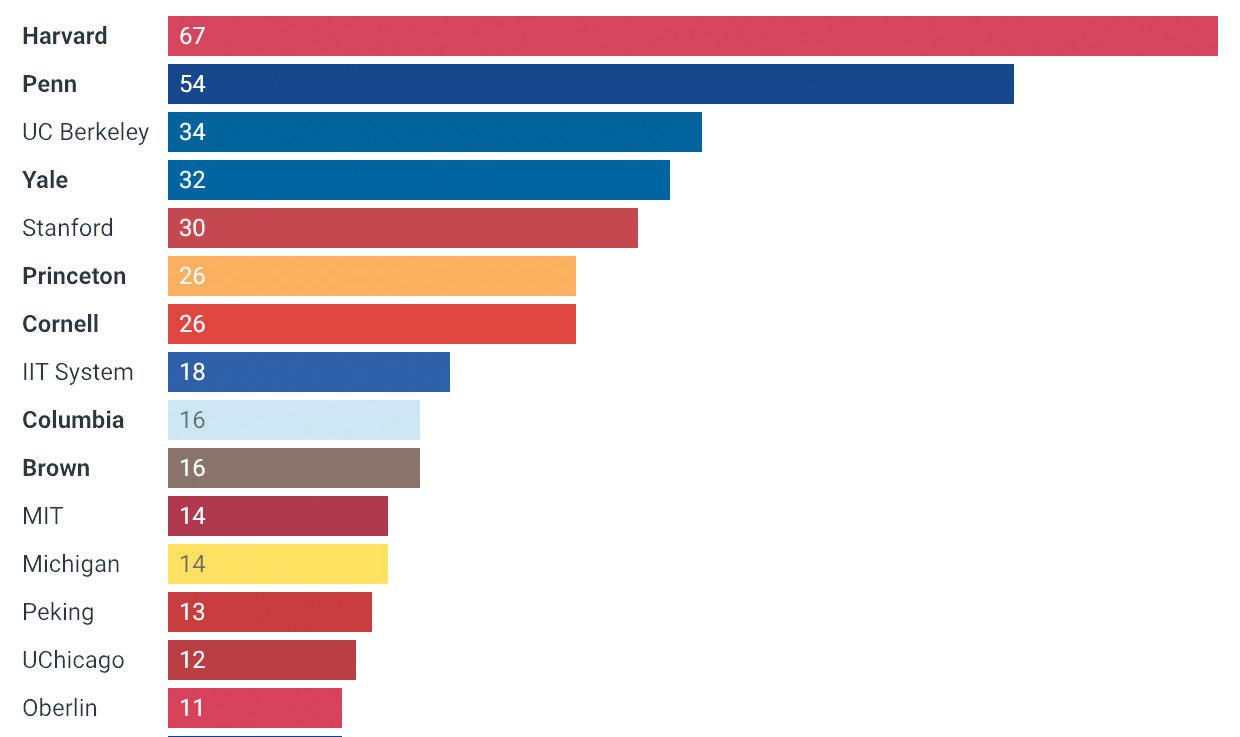
Penn and Harvard University are by far the mostattended undergraduate institutions by University professors teaching at the College of Arts and Sciences, the School of Nursing, the Wharton School, and the School of Engineering and Applied Sciences.
Using publicly available data, The Daily Pennsylvanian analyzed the educational backgrounds of 1,131 Penn professors, including their alma maters and the type of institution. The DP’s analysis accounted for approximately 97% of the University’s undergraduate professors — excluding lecturers, emeritus faculty, and administrators without professorial positions.
Penn professors attended a total of 440 known undergraduate institutions. In both the College and Wharton, Harvard University was the most-attended institution, while at the Nursing School, Penn secured the top spot. Professors in the Engineering School most commonly attended Cornell University and the India Institute of Technology System.
34 Penn professors attended the University of California at Berkeley, making it the most frequently attended public university. The University of Michigan and Pennsylvania State University were the next most-attended public institutions.
Oberlin College was the most-attended liberal arts college, coming in at 15th overall. Almost all Penn professors who studied at Oberlin received Bachelor of Arts degrees.
The DP found that 375 professors attended schools outside the United States — roughly one for every three professors who completed their undergraduate education in the U.S.
The IIT System was the international network with the largest population of Penn professors as graduates. The system — which placed eighth overall — includes campuses in 23 different cities across India.
Peking University and Tsinghua University — both located in Beijing — were also well represented by current Penn professors.
Of the top 10 most-attended schools, eight were private institutions. The Ivy League made up just over a fifth of all undergraduate institutions, and more professors attended Ivy League schools than public universities in the U.S.
Of the 1,131 professors included in the data collection, only 1,122 had their type of degree publicly available. Over half of the bachelor’s degrees conferred were B.A. degrees. The Bachelor of Science ranked second among degree types, trailing behind the B.A. by nearly half.
At the College and Wharton, the most common degree type was a B.A. In the Engineering School, the most common degree was a B.S. All Bachelor of Science in Nursing degrees included in the DP’s analysis were received by current Nursing professors at Penn.
Reporters Srishti Bansal, Skylar Fan, Arti Jain, and Ananya Karthik contributed reporting.
Harvard and Penn dominate University faculty undergraduate alma maters
Classes suspended for winter storm
Philadelphia received nine inches of snow — the most in 10 years
The University suspended normal operations on Monday and Tuesday after a record-breaking winter storm blanketed the Philadelphia area, extending the course selection deadline and canceling classes. Penn students spent the days building snowmen, sipping on hot chocolate, and enjoying extended deadlines in the aftermath of the storm. The Philadelphia area received nine inches of snow on Sunday — the city’s highest snowfall in 10 years — and remained under a cold weather advisory until Wednesday.
Per University policy, classes were not held in person, and only essential services including Penn’s Division of Public Safety, Dining Services and student health services remained open during the suspended operations. College sophomore Jackson Barnes described his experience sledding at the Philadelphia Museum of Art with friends as part of a “cherished tradition.”
“In
no Zoom & no required online instruction,” Matthews wrote.
The University’s Sunday announcement, released at 5 p.m., encouraged Penn community members to “please exercise caution and take your time in traveling to campus.” The Monday evening decision was communicated at 8 p.m., as hazardous conditions persisted throughout the Philadelphia area. Penn’s Facilities and Real Estate Services prepared for inclement weather several days before the storm. Penn also delayed its course registration add deadline by two days in response to student concerns that the snow days impacted their ability to finalize their schedules. In a Tuesday email to the undergraduate community, Matthews wrote that the deadline was moved Jan. 29 at 11:59 p.m. EST to account for the “disruptions” and “difficulties accessing advising and departmental support” during the snow days.
“After hearing from several students who were impacted by the snow days, I spent much of the day in conversation with both students and University administration to better understand the scope of the issue ... the University was very willing to accommodate by extending the add period,” Matthews wrote to the DP. At a Jan. 23 press conference, Philadelphia Mayor Cherelle Parker — who graduated from the Fels Institute of Government at Penn in 2016 — declared that a See SNOW, page 5
What a graduate student union strike could mean for Penn
GET-UP has set a Feb. 17 strike deadline
ANANYA KARTHIK
Senior Reporter
In less than a month, Penn’s graduate student union could strike, sending graduate student workers to picket lines across campus if negotiations with administrators fail. The Feb. 17 strike deadline, announced in January by representatives of Graduate Employees Together — University of Pennsylvania, is the latest and most drastic effort taken by the union since contract negotiations began in April 2023. In interviews with The Daily Pennsylvanian, graduate workers and administrators described how a strike could change campus life and the relationships between students and teaching assistants.
According to GET-UP’s website, a strike would mean that graduate workers holding teaching and research positions would suspend their work responsibilities — including grading, leading recitations, holding office hours, and conducting certain research activities.
Workers with research appointments would also refrain from starting new experiments and attending lab meetings for the duration of the strike.
“I really don’t want to go on strike,” GET-UP member and second-year Ph.D. student Zamora Perez said. “If we do go on strike, it’s the students who are actually going to be missing that oneon-one care, missing that feedback, missing their grades. These are all fundamental things to running this institution that I cannot prepare for if we go on strike.”
Perez, who serves as a teaching assistant at the Annenberg School for Communication, also reiterated the lack of “real communication” she has received from administrators about what a strike would look like on campus.
The Office of the Provost previously sent an See STRIKE, page 3
ANDY MEI | SENIOR DESIGNER
Independence National Park dismantles slavery exhibits
Philadelphia Mayor Cherelle Parker’s administration filed a lawsuit challenging the action
RIANA
MAHTANI Senior Reporter
The National Park Service dismantled exhibits about slavery at the President’s House site in Independence National Historical Park last week.
On Thursday, Independence Park employees began removing all displays at the memorial honoring the nine people enslaved by George Washington. The action prompted a lawsuit from the city of Philadelphia and drew condemnation from historians and elected officials.
The removal of the exhibit comes after 1968 Wharton graduate and President Donald Trump signed a March 2025 executive order directing the Department of the Interior to review national sites and remove displays that “inappropriately disparage Americans past or living.”
The President’s House opened in 2010 after archaeological work uncovered remains of enslaved peoples’ quarters in the house Washington lived in during his presidency.
On Jan. 22, Philadelphia Mayor Cherelle Parker’s administration filed a federal lawsuit against the National Park Service and the Interior Department.
“The Department of the Interior is implementing Secretary’s Order 3431, which carries out
DEI, from front page
likely because of their familiarity with this version of Robert’s Rules,” Executive Vice President of Penn’s Graduate and Professional Student Assembly Adam Ziada said during the meeting. “My assumption was that the vote was on whether or not to call the question, not whether or not to adopt the resolution.”
In an interview with The Daily Pennsylvanian, Faculty Senate Chair-Elect Roy Hamilton called the moment a “parliamentary snafu.”
“I will be the first to volunteer that I was not born with a working knowledge of Robert’s Rules,” Hamilton — who formerly chaired the Committee in question — said. “I now understand that if you want to bring the discussion to an end before everyone’s had a chance to speak their piece, then you must make a motion to do just that.”
A University spokesperson wrote to the DP that the University Council serves as a “function of Penn’s shared governance and, thus, is governed by a prescribed process.”
While the initial vote passed that evening and effectively renamed the Committee, Hamilton said the “slip up” meant “a number of people afterwards were quite clear that they didn’t know that that’s what they were voting for.”
Before stepping into his leadership role on the Faculty Senate, Hamilton held “a number of DEIrelated positions” at the University. He most recently served as Penn Medicine’s vice dean for inclusion, diversity, and equity until that title was scrubbed in March 2025.
“I’ve seen how the school has felt constrained,” Hamilton said while describing “what’s happened to these programs” under the Trump administration’s current guidance.
On Jan. 20, 2025, Trump signed an executive
President Donald J. Trump’s Executive Order on ‘Restoring Truth and Sanity to American History,’” a spokesperson for the Interior Department wrote in a statement to The Daily Pennsylvanian.
In its complaint, the city argued that the National Park Service violated federal law and breached a 2006 agreement by dismantling the exhibit “without notice.”
That agreement, which governed the development of the President’s House project and its 2010 opening, granted the city shared authority over the exhibit’s final design. City officials argued that allowing the National Park Service to alter or remove displays would render the city’s approval rights meaningless.
A request for comment was left with a Parker spokesperson.
“We encourage the City of Philadelphia to focus on getting their jobless rates down and ending their reckless cashless bail policy instead of filing frivolous lawsuits,” the statement from the Interior Department continued.
United States Reps. Brendan Boyle (D-Pa.), Dwight Evans (D-Pa.), and Mary Gay Scanlon (D-Pa.) sent a letter to Interior Secretary Doug
order requiring Penn and other federally funded universities to terminate any DEI programs to comply with his administration’s interpretation of longstanding federal civil rights laws.
Less than a month later, the Department of Education published a letter threatening to revoke funding for all schools and universities that retained DEI initiatives.
The memo — which came to be known as “the Dear Colleague letter” — expanded the interpretation of the United States Supreme Court’s 2023 decision in Students for Fair Admissions v. Harvard, which struck down affirmative action, to apply more broadly across academic programming.
“The Department will no longer tolerate the overt and covert racial discrimination that has become widespread in this Nation’s educational institutions,” the February 2025 letter read. “The law is clear: treating students differently on the basis of race to achieve nebulous goals such as diversity, racial balancing, social justice, or equity is illegal under controlling Supreme Court precedent.”
By the time the Education Department published the “Dear Colleague” letter, Penn had quietly retreated from most of its DEI programs and initiatives. In the weeks that followed, the University enacted sweeping changes to longstanding policies — wiping nearly all references to diversity across its graduate and undergraduate schools.
The Committee’s name was the one remnant of Penn’s former commitments to DEI that held out for months to come.
According to Hamilton, the Committee operated on a “somewhat different timeline than some of the committees that are affiliated with the individual schools in the University.”
The University Council first convened to discuss the vote to rename the Committee in October 2025 — and once again that December. But after the procedural disruption, administrators determined that the Committee’s name warranted a third and final deliberation.
Burgum and National Park Service Acting Director Jessica Bowron on Thursday demanding answers about the removal.
The representatives requested a written response by Jan. 30 outlining who authorized the decision, where the removed panels are being stored, and what plans exist for their reinstallation.
The removal also drew condemnation from historians who helped create the President’s House memorial in the early 2000s.
Emeritus history professor at Saint Joseph’s University and one of the principal organizers of the Ad Hoc Historians, Randall Miller, told the DP that the bare walls left behind may be more powerful than the original displays.
“The empty walls and the panels that have been taken down are going to speak louder than when the panels were up,” Miller — who worked to secure interpretation of slavery at the site from 2002 to 2010 — said. “People are going to want to know what was there and why it isn’t there now.”
He also emphasized the site’s unique role in facilitating difficult conversations about U.S. history.
“The very correct decision was made, in that circumstance, that we have to do this over,” Hamilton said. “That requires another University Council meeting.”
Pushed to the next semester, the vote returned to the University Council’s agenda on Jan. 21.
While most speakers reiterated their previous talking points at that meeting, the discussion diverged when Wharton junior and Undergraduate Assembly President Nia Matthews received a news alert that the Education Department had abandoned its attempt to uphold anti-DEI directives in court.
“We very quickly did some secondary research and verified it,” College senior and University Council representative Anna Bellows said. “The thing that was going through my head at that point was ‘this is a sign that resistance could work.’”
According to Bellows, the news seemed like “a vote-changing piece of information.”
“I was thrilled,” she stated. “I was over the moon. I thought it was going to be a game changer. It did not work out that way.”
Even after students interjected, the council voted in favor of renaming the Committee — a decision Hamilton attributed to lingering uncertainty over the lengths the Trump administration would go to stamp out DEI.
“I think that we are still constrained to, at the end of the day, act in ways that allow us to preserve the values that undergird the Committees and structures that we had,” he said.
Ludwig Zhao — who serves as the president of Penn’s Graduate and Professional Student Assembly — wrote in a statement that the group recognized that “the landscape for DEI-related matters” extends “beyond any single action by the Department of Education.”
In a statement to the DP, Education Department Press Secretary Julie Hartman reiterated the government’s authority to “target impermissible DEI initiatives that discriminate on the basis of race, color, or national origin.”
“This is providing something so rare in America, a place, a space where it’s possible, honestly, not only to address and grapple with and really respect our own history … but also where we can find space enough where we feel that it invites us to talk about things we don’t ordinarily want to talk about,” Miller said.
1991 School of Arts and Sciences Ph.D. graduate Sharon Holt — who helped facilitate the creation of the President’s House site as editor of the Pennsylvania Magazine of History and Biography — described her “rage” after hearing about the removal.
“It’s one of the things I’m proudest of in my career that I was part of,” Holt said in an interview with the DP. “It was one of the moments of my life when people across the race line were working together and building trust.”
Jonathan Zimmerman, the Judy and Howard Berkowitz Professor in Education, also argued that the administration’s success will depend on the public’s response.
“Keep at it,” Zimmerman said. “Whether they succeed or not depends on us, and whether we raise our voice about that history.”
“Title VI has always prohibited schools from racial preferencing and stereotyping, and it continues to do so with or without the February 14th Dear Colleague Letter,” Hartman wrote. “OCR will continue to vigorously enforce Title VI to protect all students and hold violators accountable.”
“I think what ended up happening was people voted in line with their suspicions,” Hamilton said while describing the last meeting. “It seemed unlikely to me that this is the end of this issue.”
The campaign against DEI extends broadly within the Trump administration. His Department of Justice has also threatened to revoke federal funding from colleges and universities that do not remove their references to DEI.
College junior and UA Vice President Musab Chummun told the DP that he “fears that actions taken by the University are a very slippery slope.” He urged the University to “take a higher moral stance” and “just say ‘no’ to all of it.”
University Council graduate representative Mário Junqueira spoke more broadly about the relationship between the White House and DEI projects on college campuses. Junqueira — who attends the University of Pennsylvania Carey Law School — specifically pointed to “how quickly campus conversations get redirected by federal signals and legal developments.”
“Even when courts block one action, it’s reasonable to expect additional measures or pressure points later, which can keep universities in a constant cycle of reacting rather than focusing on core priorities,” Junqueira said.
In this political “context,” Hamilton affirmed he felt the name change was made “in the best interest” of the Committee. However, he stated that this was not a “conclusion that I welcome.”
“I think symbols, names, titles, they’re important,” Hamilton said. “The old name of this Committee was a concise reflection of the values that it stood for — that’s not to be done away with lightly, and it’s not to be treated as if it’s trivial.”




City beautification may reduce violent crime, Penn researchers find
Penn’s Crime and Justice Policy Lab has studied how block beautification can lower crime rates
ALEX
DASH AND COSTA GAY-AFENDULIS
Reporter and Staff Reporter
Senior
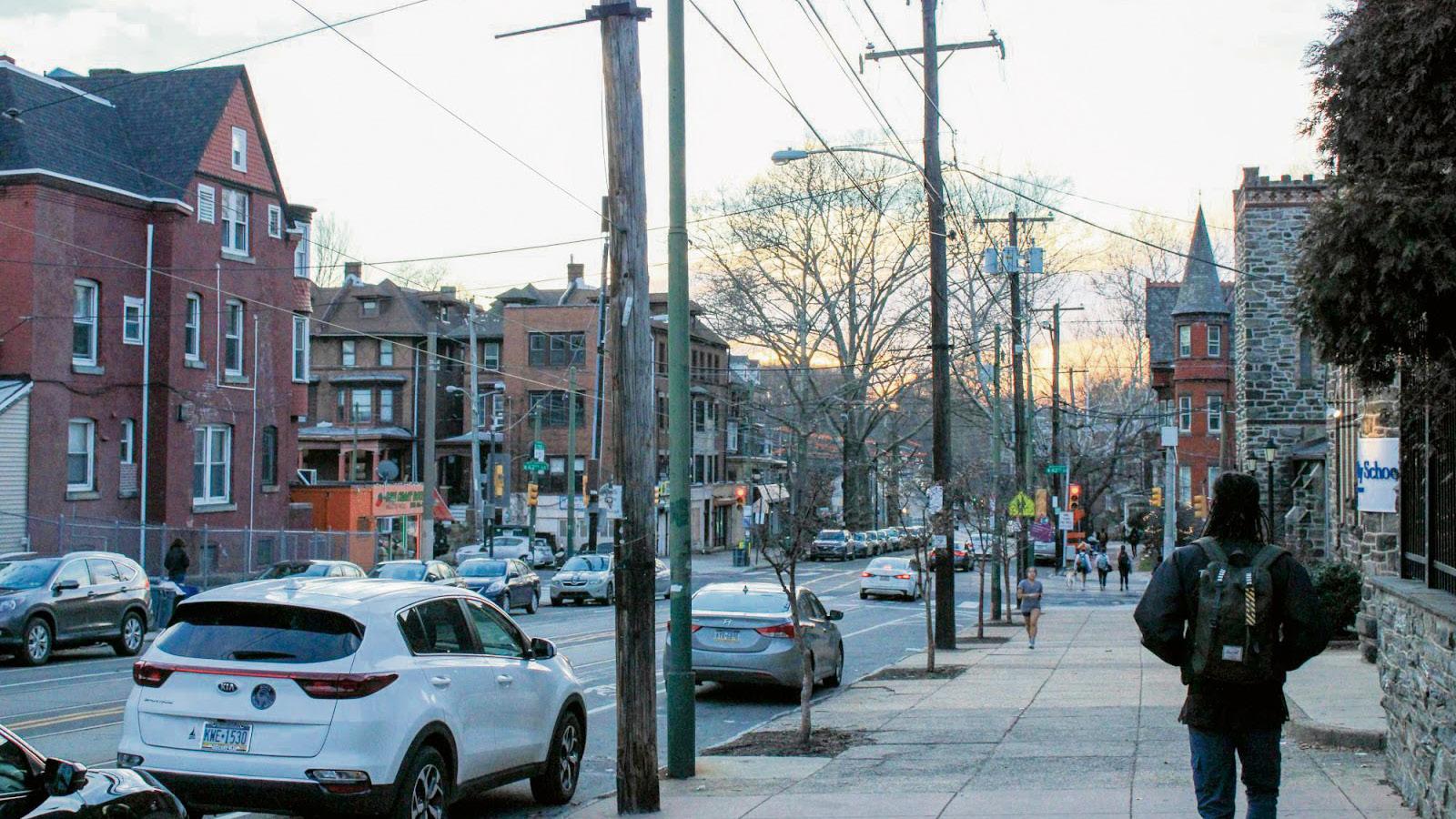
Amid citywide efforts to counteract crumbling infrastructure, professors and researchers associated with Penn’s Urban Planning and Criminology departments spoke to The Daily Pennsylvanian about how improving urban design can decrease crime. Philadelphia’s violent crime rates dropped to record low levels in recent years, coinciding with nationwide trends. As city officials look for new ways to curb violence, Penn’s Crime and Justice Policy Lab has studied how block
STRIKE, from front page
email to union members on Nov. 24, 2025 — three days after GET-UP overwhelmingly voted to authorize a strike. In the message obtained by the DP, Penn wrote that the authorization “does not necessarily mean that the union will call a strike or go on strike,” but simply gives union leadership the authority to do so.
Penn also wrote at the time that members who do not work during the strike “will not be paid.” The email detailed a work attestation process that would require stipend-paid workers to affirm that they performed instructional or research work in order to receive full payment.
According to Perez, graduate students have not received detailed guidance from the University since the November 2025 email.
“The email was so questionably worded that it almost seemed like you had to declare your intent to work or intent to strike, even before you went on strike,” third-year Ph.D. student and Annenberg teaching assistant Vishwanath Emani Venkata said.
A member of the union, Venkata reiterated that a strike is GET-UP’s “last resort” but could be necessary given the “painstakingly slow” negotiations.
“We’re here because we love our research, and we’re here because we love what we’re teaching, and we love teaching it to you,” he said.
In a statement, a University spokesperson wrote that administrators believe a “fair contract for the Union and Penn can be achieved without a work stoppage.”
EEOC, from front page
be required to show why the subpoena should not be enforced.
On Jan. 14, five Penn affiliates filed a motion to intervene as defendants in the lawsuit. On Jan. 20, the affiliates also submitted a response to the EEOC’s motion to show cause, arguing that the agency’s request “does not meet the requirements for judicial enforcement.”
The EEOC countered Penn’s argument that the information it requested was unnecessary.
“EEOC’s application makes clear that victims
beautification — including community gardens, public art, and the restoration of abandoned buildings — can play a role.
“It changes the feeling of a block in important ways,” City and Regional Planning professor Vincent Reina — who serves as the faculty director of the Housing Initiative at Penn — said in an interview with the DP.
In a paper with Criminology professor John MacDonald and Perelman School of Medicine professor Eugenia South, Reina studied the im -
“Efforts are underway to ensure teaching and research continuity, and the expectation is that classes and other academic activities will continue in the event of a strike,” the spokesperson added. History and Sociology of Science Ph.D. candidate Sam Schirvar — who also serves as an organizer for GET-UP — previously told the DP that the strike would cause a “serious disruption” for workers and students.
“That’s not something that we look forward to doing, and it’s really unfortunate that the Penn administration has put us in this position,” Schirvar added at the time. Administrators across the University similarly pointed to a potential strike’s repercussions for undergraduate students.
College of Arts and Sciences Director of Operations and Communications Anne Albert wrote to the DP that the school plans to “support undergraduate students through any disruptions and promote their continued learning and course progress.”
School of Engineering and Applied Science Associate Dean for Undergraduate Education Robert Ghrist also described “taking care” of his undergraduate students as his “highest priority.” He wrote that there is “no circumstance” under which he would “permit their education to be diminished,” adding that students “work so very hard” and that he would “labor alongside them.”
On Oct. 8, 2025, GET-UP held an informational picket on campus to build support for its bargaining efforts, drawing hundreds of graduate workers and community members. Union leaders described the demonstration as an “escalation tactic” amid ongoing contract negotiations.
The union also hosted a press conference on Nov. 3, 2025, alongside local elected officials to formally announce the strike authorization vote.
of and witnesses to a hostile work environment are relevant to a charge alleging such,” the agency wrote. “These requests were tailored to identify individuals with knowledge of the alleged environment, without a focus on an individual’s particular organizational affiliation.”
The agency similarly challenged Penn’s concerns over the security of the investigation, citing the University’s “own recent security breaches of personal information.”
In October 2025, Penn experienced a cybersecurity breach after a series of mass emails were sent to students, faculty, alumni, and parents from accounts linked to the Graduate School of Education.
Referring to Penn’s hack — and the resulting
FactCheck.org, the award-winning political website at the Annenberg Public Policy Center of the University of Pennsylvania, is now accepting applications for its 202627 undergraduate fellowship program. The next class of undergrads will be trained during an eight-week, paid summer program at FactCheck’s offices at APPC from May 26 to July 17. Those who are trained this summer must agree to work 10 to 15 hours per week at FactCheck.org during the fall and spring semesters, if their work merits continued employment.
The fellows at FactCheck.org help our staff monitor the factual accuracy of claims made by political figures in TV ads, debates, speeches, interviews, social media and news releases. Fellows conduct research, contribute to fact-checking articles for publication under the supervision of FactCheck.org staff, fact-check articles written by FactCheck.org and respond to questions from readers. The fellows must have an ability to write clearly and concisely, an understanding of journalistic practices and ethics, and an interest in politics and public policy. The fellows also must be able to think independently and set aside any partisan biases.
If you are interested, please submit your resume and two writing samples by the February 11 deadline to FactCheck.org. Deputy Director Rob Farley at rob.farley@factcheck.org. Please direct any questions about the program or application process to the same address.
A Project of the
crime or violence,” Reina said.
Maya Moritz — a Ph.D. candidate in Penn’s criminology program who studies how commissioning murals and public art can lead to reductions in crime — told the DP that beautification projects can be easier to implement than other crime policies.
“It’s not so high stakes as a policing thing where somebody might die,” she said. “Who doesn’t want to live in a beautiful, well lit, clean neighborhood?”
As with other crime reduction efforts, however, beautification projects can be challenging, according to Criminology professor Aaron Chalfin.
Chalfin — who also works at the Crime and Justice Policy Lab — told the DP that solutions for crime in cities are complex because they depend on the “local context.”
“What works in New York or Philly might not work as well in Dallas or Houston,” he said.
“You really want local policymakers to be empowered to think strategically about what the problems are and how they might be solved.”
He added that while there is no “set of best practices” for reducing crime, areas that “seem as though they are cared for are places that are inhospitable to criminal activity, and that empower residents to take control over their communities to a greater degree.”
He also
pact of providing repair grants to deteriorating houses in low-income neighborhoods. According to their findings, such interventions were associated with a 21.9% reduction in crime.
Much of the lab’s research builds off of a 2016 study by MacDonald, who found that improving the aesthetics of abandoned buildings and lots reduced gun violence by 39%.
“The more we invest in places, the more opportunity it provides residents, and the more likely it is to do things like reduce exposure to
class-action lawsuit — the EEOC wrote that “concerns about the security of EEOC’s IT systems are disingenuous.” The agency also argued that the University failed “to acknowledge that strict statutory confidentiality requirements impose criminal penalties on agency staff.”
The EEOC initially issued its subpoena in July 2025 amid an ongoing investigation into alleged antisemitism at Penn. The subpoena requested a list of antisemitism complaints Penn had received, as well as information about Jewish campus groups and faculty members in the Jewish Studies Program. In November 2025, the EEOC sued Penn for allegedly failing to comply with the subpoena.
Penn filed its brief arguing that the EEOC





OSCAR VASQUEZ | DP FILE PHOTO
West Philadelphia streets on Feb. 23, 2022.
SYDNEY CURRAN | SENIOR PHOTOGRAPHER
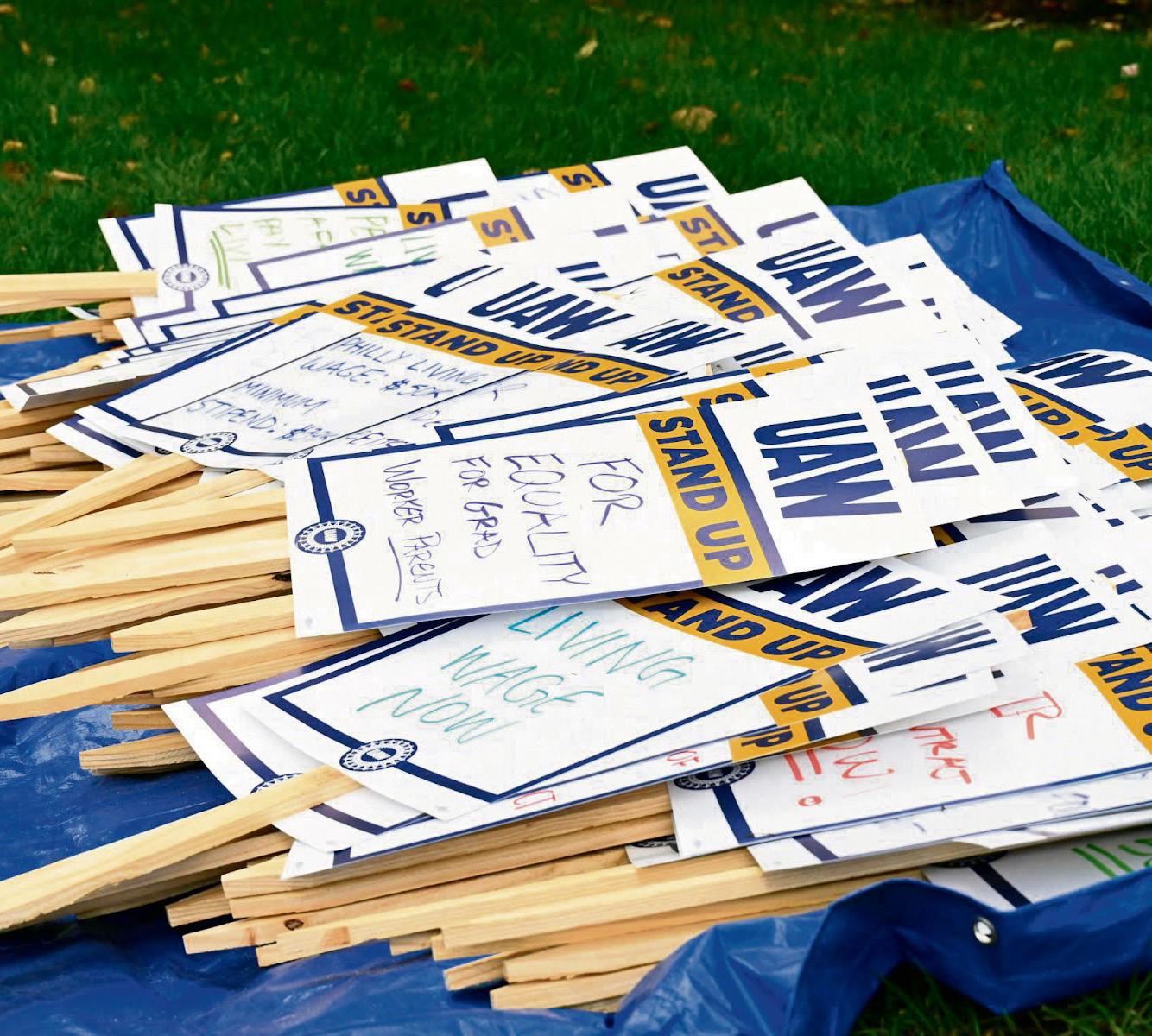
GET-UP pickets on Oct. 8, 2025.
subpoena should not be enforced on Jan. 20. The EEOC’s response came one day before the Jan. 27 deadline set by a judge.
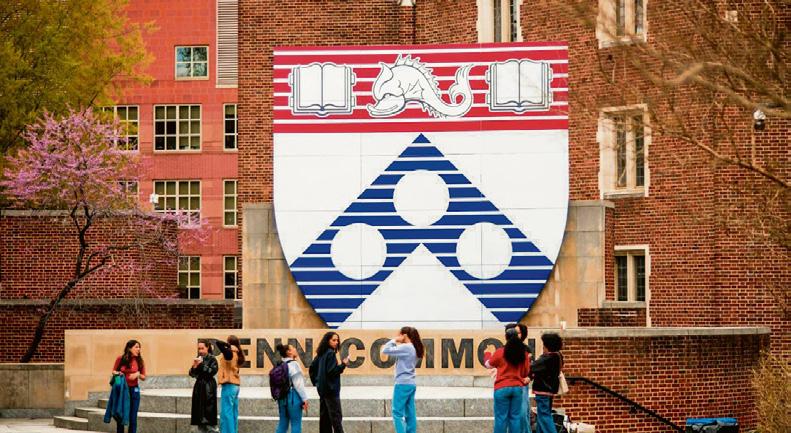
CHENYAO LIU | SENIOR PHOTOGRAPHER Penn Commons on April 15, 2025.
Stop the stealth passage of open expression restrictions at Penn
GUEST COLUMN | What the Penn community should know
The events of the past few weeks have made it painfully clear why it is so important for a democratic society to protect individuals’ rights to protest peacefully, to assemble in the name of a shared viewpoint, and to express their views freely.
Penn’s status as a private university means that members of the Penn community do not automatically enjoy the protections of the First Amendment as faculty, staff, and students do at public universities. However, private universities can and do enter into binding contracts to extend similar rights to their communities. In 1969, in response to protests during the war in Vietnam, the University of Pennsylvania did exactly that. They formulated official Guidelines on Open Expression that committed the University to freedom of speech and assembly:
“The University of Pennsylvania, as a community of scholars, affirms, supports and cherishes the concepts of freedom of thought, inquiry, speech, and lawful assembly. The freedom to experiment, to present and examine alternative data and theories; the freedom to hear, express, and debate various views; and the freedom to voice criticism of existing practices and values are fundamental rights that must be upheld and practiced by the University in a free society.”
In June 2024, the Penn administration suspended those promises in an email notification issuing new “Temporary Standards and Procedures for Campus Events and Demonstrations,” including far more restrictive policies on open expression. These restrictions were issued without formal consultation from Penn faculty, staff, or students. The Temporary Standards gutted many of the protections of the existing Guidelines on Open Expression, creating new violations and bureaucratizing previously spontaneous expression. For example, organizers are required to obtain permission from the administration at least two weeks in advance in order to speak on Locust Walk (or elsewhere on campus), or risk being censured based on the Temporary Standards. Among other new violations are sidewalk chalk, previously

considered an ideal way to produce political graffiti without vandalism, as well as projecting light onto building facades. The Temporary Standards were issued without a sunset provision. Still, at the time they were issued, the administration’s email promised a process consistent with existing University procedures for changing the Guidelines, suggesting that it would “follow the historical precedent for reviewing the Guidelines on Open Expression, which last occurred in 1989.” When the Guidelines were put in place, an independent Committee on Open Expression was established with members appointed from faculty, staff, and students. Precedent and written policy call for the COE to be involved in any revision process. The revision in 1989 was driven by the COE and included open hearings for the University community to respond. They also added a clarification to address situations where university policy might conflict with the Guidelines: “In case of conflict between the principles of the Guidelines on Open Expression and other University policies, the principles of the Guidelines shall take precedence.” It has now been almost two years since these “temporary” restrictions were put in place. In response to our inquiry to the provost this past November, we learned that the process by which the administration is revising the permanent guidelines contradicts the University’s own rules. The first irregularity was appointing their own task force to propose permanent revisions, when the University’s rules specify that revisions to the Guidelines are solely the responsibility of the COE. Importantly, the revision process requires an open hearing for the University community to respond to any proposed changes to the Guidelines. To our knowledge, no such meeting has been held or scheduled. The revision process also requires the COE to approve the final draft after open hearings are held and any necessary revisions are made, before the final version is presented to the University Council. The provost indicated to us that the task force had met with the 2024-25 COE, and approved the new guidelines, even though
the document is still “preliminary” and is undergoing a revision process. The provost indicated that the University Council would be presented with these changes at their meeting in March. Importantly, the University community has yet to see any draft of the new Guidelines, and the provost has indicated that changes are still in progress with revisions having occurred since the February 2025 COE vote. Since the 202526 COE has yet to be constituted, it cannot possibly have approved a final draft. We ask the administration for the following remedies:
1. The proposed changes should be made public to everyone in the University who is affected by them, including students, faculty, and staff.
2. The Faculty Senate should appoint a 2025-26 COE that is charged with revising any document it receives.
3. The mandated open hearing for the community should be scheduled after that document is distributed. Any resulting revisions should be incorporated and publicly distributed before their final submission to the University Council.
To be clear, we are not suggesting that protests be allowed to interfere with Penn’s central educational mission. That will always take precedence. But the existing
ICE doesn’t belong in our cities
VESELY’S VISION | Know your rights
Late last week, less than two miles from where Renee Good lost her life at the hands of an Immigration and Customs Enforcement officer earlier this month, intensive care unit nurse Alex Pretti was killed in the same way. Both videos left me feeling sick to my stomach. What was even more sick was the response from top Trump administration officials, who dubbed Good a domestic terrorist before an investigation had even taken place.
Similar statements have been made regarding Pretti, with top Border Patrol officials stating that he purposefully put himself in the way of the officers. When I watch the video of the altercation, that is not at all what I see. I see a man trying to protect a woman who was shoved, who was then pushed to the ground, pistol whipped and shot at close range. This is unacceptable, and more people should not have to die at the hands of ICE officers for the occupation of Minneapolis to stop.
Pretti had a firearm on his person, which many — including President Trump — have cited as justification for his killing. However, Pretti had a permit to carry and was clearly disarmed before he was shot. He was killed while exercising his First Amendment right to peaceful protest, and that should concern us all.

KENNY CHEN | SENIOR PHOTOGRAPHER Senior Columnist Mia Vesely discusses recent ICE raids and student’s rights.
While Trump initially said Good’s “disrespectful” attitude may have played a role in the shooting, he has since pivoted to calling it a “tragedy.” This shift comes after finding out that Good’s father has been described as a
“tremendous Trump fan.” When government officials are telling people what to see — and our president is seemingly changing his stance on the value of a person’s life based on the political beliefs of surviving family members — we have a big problem.
What’s happening right now in the city of Minneapolis is unprecedented. We must be aware that something similar could happen in Philadelphia. In the wake of these deaths, Philadelphia District Attorney Larry Krasner and others have said that they will arrest ICE agents who violate the law, and that they will not allow ICE to move unregulated throughout the city. Pennsylvania Gov. Josh Shapiro has condemned ICE’s actions as well. But regardless of what state and local leaders call for, we exist in a world where the Trump administration will test the limits of its power, and of democracy more broadly. When officials twist the facts to support their policies, prohibit local law enforcement from investigating these deaths, and insist that this level of brutality is necessary, we all need to pay attention and speak out. I am scared, but fear will not help keep me or the people I care about safe.
It is more important than ever to know your rights. Philadelphia has been offering “ICE Out” trainings that cover how to engage with ICE and what to do if you are asked about someone’s citizenship status. Something
Guidelines have served the Penn community well since 1969, and it is unclear how increased restrictions would benefit the University. Further, they may bring about reputational damage. This is a fragile moment for open expression on university campuses and across the country. Penn faculty, staff, and students for consistency since that’s how they were ordered other times should not be forced to sacrifice the broad speech protections that have been a distinctive and cherished feature of Penn’s culture for more than half a century.
CAROLYN MARVIN is a Frances Yates Professor Emeritus of Communication. Her email is carolyn.marvin@asc. upenn.edu.
DIANA MUTZ is a Samuel A. Stouffer Professor of Political Science and Communication. Her email is mutz@ upenn.edu.
ROBIN PEMANTLE is Christopher H. Browne Distinguished Professor of Mathematics. His email is pemantle@ math.upenn.edu.
notable from these training sessions is the 5 D’s — Direct, Delegate, Delay, Distract, and Document. In the event that Philadelphia does become one of the cities targeted by ICE, I implore Penn to take a stand for students and offer training and campus-wide resources to educate and protect all students and community members.
College campuses should be places of dialogue, as we are not exempt from problems affecting our communities and our country. Over my years as a columnist at The Daily Pennsylvanian, I have consistently written about political decisions that impact students and the broader campus community, and it is times like these that should bring us together. We must share our voices and stand up in the face of injustice, and I ask you to be thoughtful in how you address these issues. As a citizen, I have privileges that others do not, and because of that, I feel a duty to speak for communities that could face brutality if they spoke up themselves. Advocate for your fellow students and friends, know your rights, and stay aware.
MIA VESELY is a College senior studying philosophy, politics, and economics from Phoenix. Her email is mvesely@sas.upenn.edu.
The nickel and diming of graduate student workers
THE CATCH UP WITH KAMAU | What graduate students are fighting for
The Penn administration is at a crossroads with its graduate student workers. The University has gotten itself into a serious predicament and is now forced to choose between its own financial interests or the interests of the student body at large. Penn’s graduate student union GETUP-UAW has announced plans to strike on Feb. 17 if a bargaining contract is not reached. This is the University’s fault, and it is integral that they agree to GET-UP’s demands before it is too late.
University administration has a long history of acting in its own interests and failing to support students and faculty who face the brunt of the pain when issues arise. Whether it was the removal of the University’s DEI language or the erosion of shared governance, the administration has a bad track record. These instances have affected the student body at large and led to Penn administration’s outsized control and prioritization of financial interests. I spoke with Sam Layding, a Ph.D. candidate and member of the bargaining committee, who expressed that a key issue surrounding the strike is pay. Currently, the minimum Ph.D. candidate stipend at Penn is $40,000. This is low compared to other universities. For example, Johns Hopkins University, a peer institution located in a city with a similar cost of living, offers Ph.D. candidates stipends starting at $50,000.
It’s not better for hourly workers like teaching assistants or research assistants, who typically can make as low as $15 an hour and can only work a maximum of 20 hours a week. Combined with the high costs of adding spouses and children to the current insurance plan, graduate students are under a large
amount of financial stress.
In the latest bargaining offer the University offered a $45,000 stipend and a $21.50 hourly minimum wage, which is still below the living wage. According to the MIT wage calculator, a single adult in Philadelphia is estimated to require a wage of $23.26 an hour per 40-hour work week before taxes to meet the cost of living. Even when graduate workers are just asking to be paid like their peers, the administration still tries to undercut them. Penn should not be trying to nickel and dime the very people who keep the University running. The main takeaway from my conversation with Layding is that graduate workers just want things to change. Such an uncomplicated sentiment truly puts into context how Penn’s administration is not meeting basic needs of graduate student workers. The current conditions are not tenable with our University’s value of advancing social good. Penn needs to make an equitable and fair bargaining agreement with graduate student workers. If Penn doesn’t reach a contract agreement with the union soon, consequences could be dire. Over 3,700 graduate students will cease responsibilities such as grading assignments, performing research, and hosting recitations, effectively paralyzing the University and many of its functions.
Looking back at a recent example, Temple graduate student workers went on strike in 2023 for six weeks, which led to the hiring of unqualified replacement instructors who were unfamiliar with the course material. In some cases, classes were moved online or were even left without instructors. Even after the strike concluded, its fallout still heavily impacted
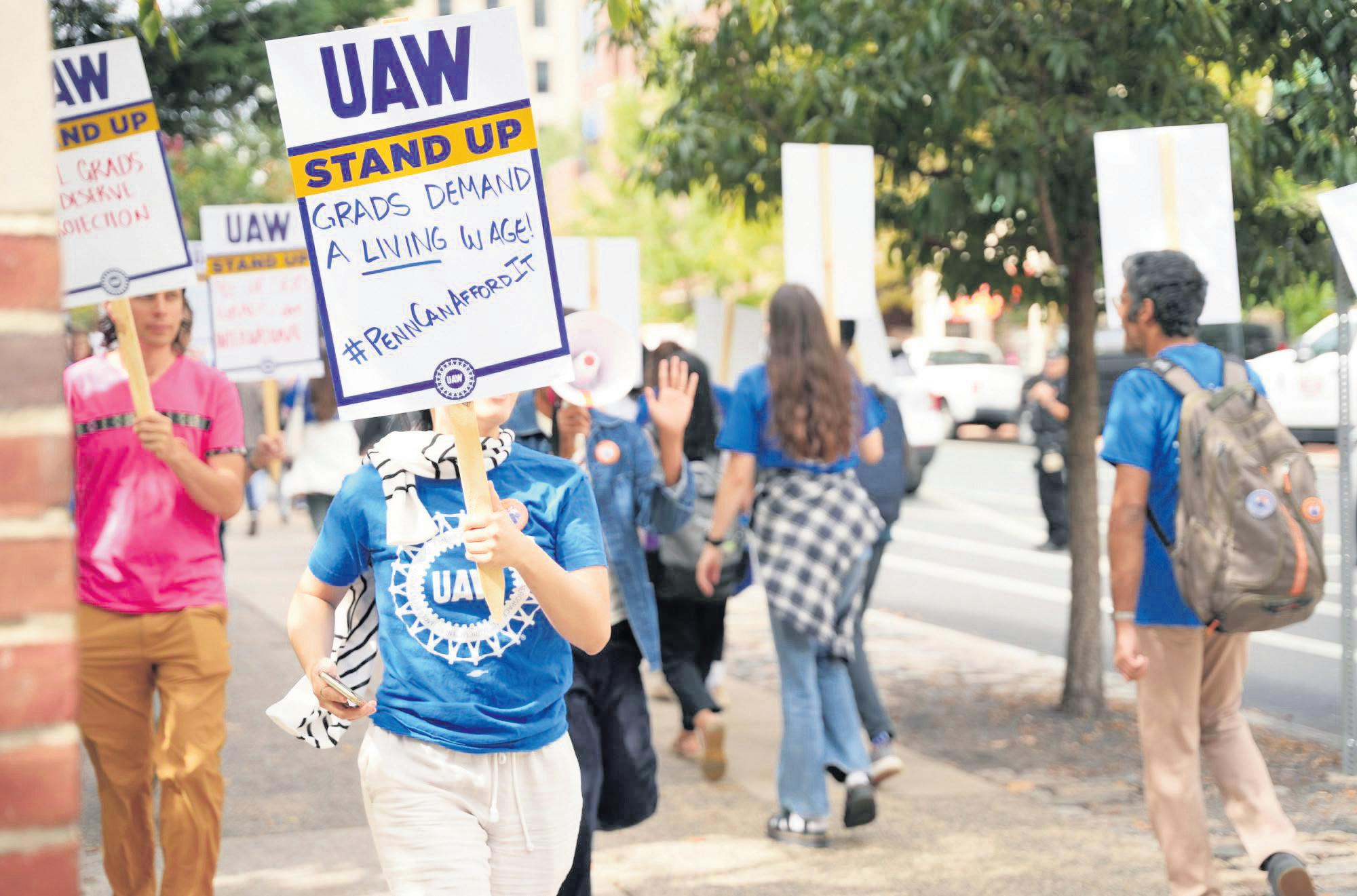
WEINING DING | SENIOR PHOTOGRAPHER Columnist Kamau Louis argues Penn must reach a contract with GET-UP before their strike deadline.
Temple, partially causing the resignation of then-President Jason Wingard and leaving the University with the awkward predicament of dealing with the replacement instructors they had hired. Suffice to say, Penn has to come to an agreement with GET-UP. In a time of high inflation and economic uncertainty, it is important for Penn to fairly compensate workers. Not only because it is the right thing to do, but also to keep attracting capable graduate students. Great students are a key part of a university’s reputation and its standing. Penn prides itself on being leaders of innovation. Now is the time, in a decade where graduate unions are springing up in record numbers, for Penn to be a guide to other universities and set an example of how to negotiate a fair contract that uplifts graduate student workers.
KAMAU LOUIS is a first-year graduate student studying city planning from Orlando, Fla. His email is louis3@ upenn.edu.
JUSTIN ABENOJA | SENIOR VIDEOGRAPHER Guest columnists Carolyn Marvin, Diana Mutz, and Robin Pemantle discuss the University’s Open Expression Guidelines revision process.
The startup, Sandstone, was founded by 2022 Wharton graduate Nick Fleisher and 2023 College graduate Liam Germain
ADVITA MUNDHRA Staff Reporter
Two Penn alumni recently raised $10 million in funding for their artificial intelligence startup, Sandstone.
Founders 2022 Wharton graduate Nick Fleisher and 2023 College graduate Liam Germain — who bonded over their joint interest in startup ventures as first-year roommates at Penn — announced the funding earlier this month. Their Brooklyn-based startup was built alongside cofounder Jarryd Strydom in 2025 to help streamline the high-volume, operational aspects of inhouse legal work.
The new funding round, orchestrated by Sequoia Capital, will help Sandstone market and scale its product, grow its engineering team, and meet increased demand from companies looking to replace manual processes with AI-driven workflows.
In an interview with The Daily Pennsylvanian, Fleisher and Germain explained that Sequoia was a natural fit for seed funding because of the venture capital firm’s prior experience with legal and enterprise AI.
“Sequoia has been a great partner,” Fleisher told the DP. “They’re strong on talent, strong on product, and strong on go-to-market. And Bogomil, the partner we work with, shares our thinking around simple, beautiful, intuitive products that also have very high functionality.”
Fleisher and Germain first met through a Penn Class of 2022 Facebook group. After noticing they shared several common interests, including fishing, the two decided to become first-year roommates together at Hill College House.
Within weeks, they made what Fleisher jokingly called a “handshake deal” to eventually drop out of the University and build a startup together. While both graduated from Penn, they spent much of their time at the University building ventures in their shared dorm room.
“Penn wasn’t historically super pro-startup,” Fleisher said, adding that there was “definitely a shift in our class year where a lot more people were building things.”
SNOW, from front page
The snow emergency was lifted on Tuesday at 6 a.m.
Following a shutdown on Sunday, SEPTA resumed most of its services on Tuesday morning. SEPTA services followed a Saturday schedule on Jan. 27 and bus services were gradually restored as conditions allowed. Before this week, the University had not suspended operations due to winter weather since January 2024 — when a single day of operations was suspended during Panhellenic recruitment.
Both co-founders said their time at Penn directly influenced how they built Sandstone. Fleisher cited an entrepreneurship course taught by Wharton professor Ethan Mollick as particularly formative.
“We would visit different successful tech and startup businesses in New York that are Pennalumni-run, and learn about them,” Fleisher said.
Germain, who studied economics, echoed Fleisher’s sentiment on how Penn’s network shaped the company.
“Even today, some of the people we work with are friends of friends from Penn,” Germain said.
Before founding Sandstone, Fleisher led the legal technology practice at McKinsey & Company, where his work exposed him to challenges facing in-house legal teams.
“Legal teams don’t have a platform to manage their work, so the initial idea was building a very simple board that tracks different requests from email, Slack, and Teams in a single place,” Fleisher told the DP. “Once we built that, it was compelling to add in different business systems like Salesforce and Workday.”
The third co-founder experienced those difficulties firsthand when working as an in-house lawyer.
“We try to find folks like Jarryd while recruiting because not only understanding the problem, but also how hard it is to build the solution, just makes you super effective,” said Fleisher.
“Jarryd taught himself to code while being a full-time lawyer, and is also just a brilliant designer,” Germain added. “A lot of the original core designs all came from Jarryd’s mind.”
Fleisher emphasized that their tool is designed to incorporate, not replace, human oversight.
He explained that the Sandstone AI system leverages “the same legal playbook your team already uses” to review contracts, rather than a “general AI tool.”
“The biggest risk in legal AI isn’t necessarily the tools themselves, it’s how much automation people allow,” Fleisher said.

Sandstone’s system also characterizes requests by risk level when they arrive rather than after review, helping legal teams track improvements in consistency and compliance.
The company competes with traditional contract-management tools and AI redlining plugins, but the founders argue that neither category offers the context or simplicity that legal teams need. Unlike other tools, Sandstone integrates context from across a company’s systems so lawyers can see deal history, prior contracts, and customer information alongside each new request.
“Most traditional contract-management tools can take months to implement,” Fleisher said.
“Ours can be implemented in a week, and I think it’s largely due to the AI.”
When asked about the future of their company, Fleisher described his desire for Sandstone to
become a product that corporate legal teams use daily.
“Our goal is that if you’re a lawyer at a company, the first thing you open in the morning is Sandstone — a place where you check what you’re working on, and what your AI agents are working on for you,” Fleisher explained.
Fleisher also emphasized that Sandstone was the culmination of a long journey in startup creation.
“This is not our first attempt,” Fleisher said.
“We’ve built dozens of things. It’s never too early to build, and it’s never too late.” Germain added that Penn students shouldn’t feel pressured to plan out their next decade.
“You’re never too boxed in,” Germain said.
“Most of what I do now, I didn’t study in college. It’s definitely about the relationships, and the most you can make out of them.”














































































KENNY CHEN | SENIOR PHOTOGRAPHER
Penn men’s tennis is just getting started
The trust-the-process spirit has settled onto Penn, but will we see the results this season?
CAVANCE
SNAITH Sports Reporter
The Penn men’s tennis team is off to a great start, living up to high expectations after completing a 21-9 overall season last year.
The Red and Blue (2-1) opened their season with a home doubleheader against Navy (4-2) on Jan. 18. At the event, the Quakers dominated the Navy, winning all three doubles matches to start the season. The duo of senior and team captain Manfredi Graziani and junior Aaron Sandler, swept their opponents 6-0, as did freshman Vojtech Vales and sophomore Shaurya Bharadwaj.
This is not where it ended for Penn. The team also went on to win its other matches, which gave three freshmen their first singles wins of the 2026 season. It was the perfect way for the Quakers to start their season, in which they hope to capture their first Ivy League championship since 2007.
The opening weekend was only the start of a series of other competitions as they enter one of the busiest periods of the season.
The following matchup against Arkansas on Jan. 24 did not go as hoped, as the Quakers fell 4-2 to the Razorbacks. Freshman Vojtech Vales was the sole Penn victor in the singles column, continuing his winning streak to start a strong 2026 season.
Although the Red and Blue lost, this competitive matchup offers a hopeful outlook on the rest of the season. The game took place at a neutral site on Yale’s campus, as Penn was gearing
MEN’S, from back page
team-high 17 points and attempting more free throws than all of his teammates combined.
Scantlebury, who saw most of his game time in the first half, did an impressive job guarding Townsend, the reigning Ivy League Player of the Week. He spent most of the second half on the bench due to a slight knock he picked up in the game.some of his specialty off-balance shots.
“Michael [Zanoni] missed a couple he usually makes … and that’s tough,” McCaffery said. “We’ve got to get him going.” However, there were some solid individual performances, namely by Levine and freshman forward/center Dalton Scantlebury. Levine was one of Penn’s only players who consistently drove into the paint early on, scoring a team-high 17 points and attempting more free throws than all of his teammates combined.
Scantlebury, who saw most of his game time in the first half, did an impressive job guarding Townsend, the reigning Ivy League Player of the Week. He spent most of the second half on the bench due to a slight knock he picked up in the game.
A stop-start game for a reason
The officiating took center stage at points. While some free throws resulted from smart drives or clear fouls, at other times, the referees whistled on plays where significant contact may not have been visible to all those in attendance. The crowd was quick to object to some of those calls.
There were 41 total fouls called in the game: 19 against the Bulldogs and 22 against the Quakers. Roberts finished with five fouls, while Power had four.
Next weekend, the team will be back on the road for its only set of back-to-back games in Ivy play.
up to play the Bulldogs the following day.
However, due to inclement weather that brought multiple inches of snow to the Northeast Corridor, the game was postponed to Feb. 25.
The matchup between Penn and Yale is not foreign. Last season, the Quakers went undefeated against Yale with comfortable margins, winning all three meetings. It would not be shocking if Penn continued that streak this season. Penn will end its January schedule against Liberty on Jan. 30. Liberty finished last season with an 11-13 record, including two losses to nationally ranked teams. The game against Liberty will be the first of Penn’s two tests before the Quakers head to Princeton to compete in the Eastern College Athletic Conference Indoor Championship from Feb. 13-15. This will prove to be an early-season measure of where Penn stands on a broader scale.
Even with the new freshman talent, the Red and Blue still have room to grow as the season continues. Defending Ivy League champion Columbia and 2024 Ivy League champion Harvard, both teams Penn lost to last season, will pose a challenge.
This season is looking incredibly hopeful for the Quakers. It would be a miss not to pay attention to this stellar team, as it’s brewing up to become national champions in the not-sodistant future.

Don’t count out Penn women’s tennis
Strong players and even stronger opponents make for an especially competitive season
ELLIE CLARK Deputy Sports Editor
The good, the bad, and the ugly. Penn women’s tennis (2-2) current record reflects the mediocre start to the season.
The team opened its 2026 campaign with a home doubleheader against familiar foes Villanova (1-3) and Saint Joseph’s (1-3). Senior Maya Urata and junior Esha Velaga kicked off competition with a 6-3 victory over Villanova’s Maggie Gehrig and Emi Callahan, while junior Liza Tkachenko and freshman Joleen Saw overcame a tight matchup to win their first doubles match of the season.
Velaga and Saw also triumphed in their first singles matches of the season, while sophomore Lara Stojanovski narrowly defeated Gehrig in extra sets. The taste of a single shutout victory wasn’t enough to satiate the Quakers as they played aggressively against Saint Joseph’s the following day.
The Urata/Velaga duo returned with renewed strength, defeating their opponent 6-2 in straight sets, while Stojanovski and freshman Varsha Vedula only allowed a single point from Saint Joseph’s. Luckily for the Quakers, the other sets were called before the Hawks could defeat Tkachenko and Saw in extra serves.
Velaga and Stojanovski dominated in the scoring singles sets against St. Joe’s. Their start is eerily similar to last season, where the Quakers began their 12-9 season with home shutout
victories over Villanova and Saint Joseph’s.
Last season, the Quakers finished second in the Ivy League, posting a 5-2 record. Velaga succeeded in individual play during the fall, capturing her second ITA Northeast Regional title and qualifying for the NCAA Singles Championships.
Unfortunately for the Quakers, their weak away performances carried over from last season as well.
Penn women’s tennis traveled to Ann Arbor, Mich. for the ITA Kickoff Tournament last weekend in hopes of scoring a bid to the ITA National Team Indoor Championships in February. Instead, they walked away with a pair of shutout losses against No. 7 Michigan (1-1) and Notre Dame (3-1).
Michigan played with momentum that wouldn’t let up as the Quakers tested different doubles configurations on away turf. Junior Sasha Motlagh played her first sets of the season alongside Stojanovski in a close match against Michigan. Although Urata notably upset No. 85
Bernales in the tiebreaker round of the No. 3 match, the contest was terminated due to early shutouts against Stojanovski and Tkachenko. The singles thus fell in Michigan’s favor, who advanced to the championship round against No. 19 Vanderbilt.
Close competition defined doubles play, and entering singles, the Quakers were more evenly matched against Notre Dame, but Penn still suffered a hasty defeat at the hands of the Fighting Irish.
Although Velaga won the opening set against No. 58 Bianca Molnar and was on pace to repeat the feat, the match was called. Urata similarly took the first set against Notre Dame’s Akari Matsuno, but their match was also abandoned after early losses elsewhere.
The Quakers have a long road ahead of them if they hope to earn their first Ivy title in nearly 20 years, but the season is already shaping up to be competitive. But with strong players such as Velaga, Urata, and Saw in the mix, its hard to count out the Quakers.

NATHANIEL SIRLIN | SENIOR PHOTOGRAPHER
Team captain Manfredi Graziani played against Cornell on April 13, 2025.
GRACE CHEN | SENIOR PHOTOGRAPHER
Senior Maya Urata played against Princeton on March 29, 2025.
Penn gymnastics earns victory at Lindsey Ferris Invitational
Multiple
CATHERINE ELLIS
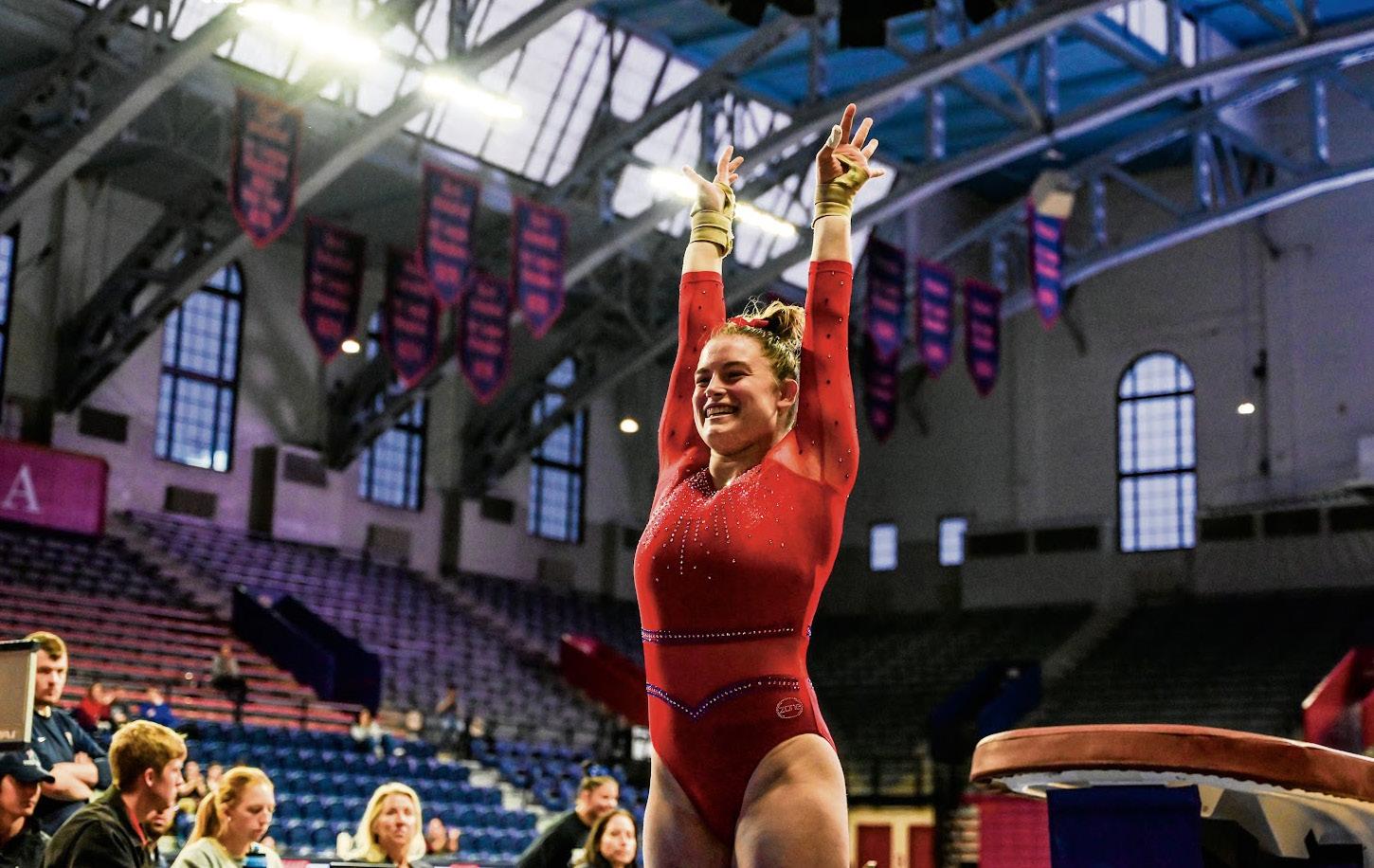
The Quakers won at their first quad meet of the season against Cornell, George Washington, and West Chester. Gymnasts’ nerves are settling as they gain steady confidence in the routines built during preseason. After the first meet of the season, Penn is ranked No. 37, George Washington is No. 50, and the other two opponents are outside the top 50 nationally.
“The philosophy is to keep building, focus on the little details, and bring the same energy and consistency each week,” sophomore Maggie Murphy wrote to The Daily Pennsylvanian.
“If we stay locked in, trust our preparation, and continue supporting one another, we know the momentum will continue.”
Beam Freshman Ruth Whaley demonstrated strong tumbling skills as she led off the rotation. Whal -
TRACK, from back page in her signature short sprints, earning a pair of runner-up finishes behind BYU’s Paje Rasmussen. Freshman sprinter Carson Edwards impressed in the 200 meters, jumping to third place overall after being seeded in the seventh heat. Edwards was beaten only by Penn State’s Ajani Dwyer and Princeton’s Jackson Clarke, whose finishes rank second and third in the NCAA, respectively. Junior distance runner Sarah Fischer won the first section of the 3,000-meter run by three seconds to open the running events, while senior distance runner Anna Weirich finished ninth in the elite section of the 3,000 later in the day. Socarras surged from eighth to sixth in his heat during the final laps of the mile, finishing in just over four minutes.
Many runners and field competitors aim to build upon their performances as the season reaches mid-point, focusing on the goal of bringing a competitive squad at the Heps at the end of February. Next weekend, some of the Quakers face their first away meet of the season in Clemson, S.C., while others defend the Ott Center at the Penn Invitational.
ey was well-grounded throughout her back handspring, back layout series, and front toss. Murphy, who joined the program from the University of Maryland last fall, delivered an incredible routine, hitting every skill while staying grounded. She earned the highest score of the rotation, a 9.800.
Sophomore Mimi Fletcher concluded the rotation with a routine featuring elegant lines and rock-solid tumbling. The Quakers ended their time on the beam with a team total of 48.425, which put them behind George Washington’s 48.500, but still ahead of West Chester and Cornell as the teams completed their first rotations.
Floor
Senior Alyssa Rosen opened the rotation wSenior Alyssa Rosen opened the rotation with a high-energy routine featuring graceful dance flourishes. Fletcher exemplified a superior twist -
ing technique throughout her tumbling passes. Freshman Ava Hooten soared on her skills, demonstrating height and control.
Senior Marissa Lassiter was “the whole package” as the floor anchor, soaking in the spotlight by demonstrating her combined strength in tumbling, dance, and personality. Lassiter and Murphy tied for the highest score of the rotation with a 9.750.
Vault
Lassiter led off the third rotation with confidence, scoring 9.750 to match the score from her floor performance. Freshman Ananya Patanakul built on that energy to deliver a fabulously landed vault, the only one in the lineup with a 10.0 start value. Sophomore Sienna Zuccaro continued the trend, adding a 9.800 for the team, the highest score of the night.
For the first time at the meet, all Quaker scores
were 9.700 or higher, as the team totaled 48.725 to win the vault rotation.
Bars Senior Carly Oniki garnered impressive height in her release as the bars rotation began. Sophomore Skylar Goodstadt improved upon her score with a nearly stuck landing. Sophomore Luci Toczydlowski made the apparatus look approachable with exquisite lines that extended throughout all of her skills.
The Quakers concluded their final rotation with a 48.500, scraping ahead of George Washington’s 46.550 and Cornell’s 47.100 in their last rotations. Penn walked away from the Lindsey Ferris Invitational with a 194.075 victory. “The team is feeling really confident and motivated after our second win,” Murphy said. “It’s a great validation of the work we’ve been putting in every day at practice.”











WEINING DING | SENIOR PHOTOGRAPHER
Then-sophomore Marigold Garrett competed in the Red vs. Blue intrasquad meet on Dec. 3, 2023.
GRACE CHEN | SENIOR PHOTOGRAPHER
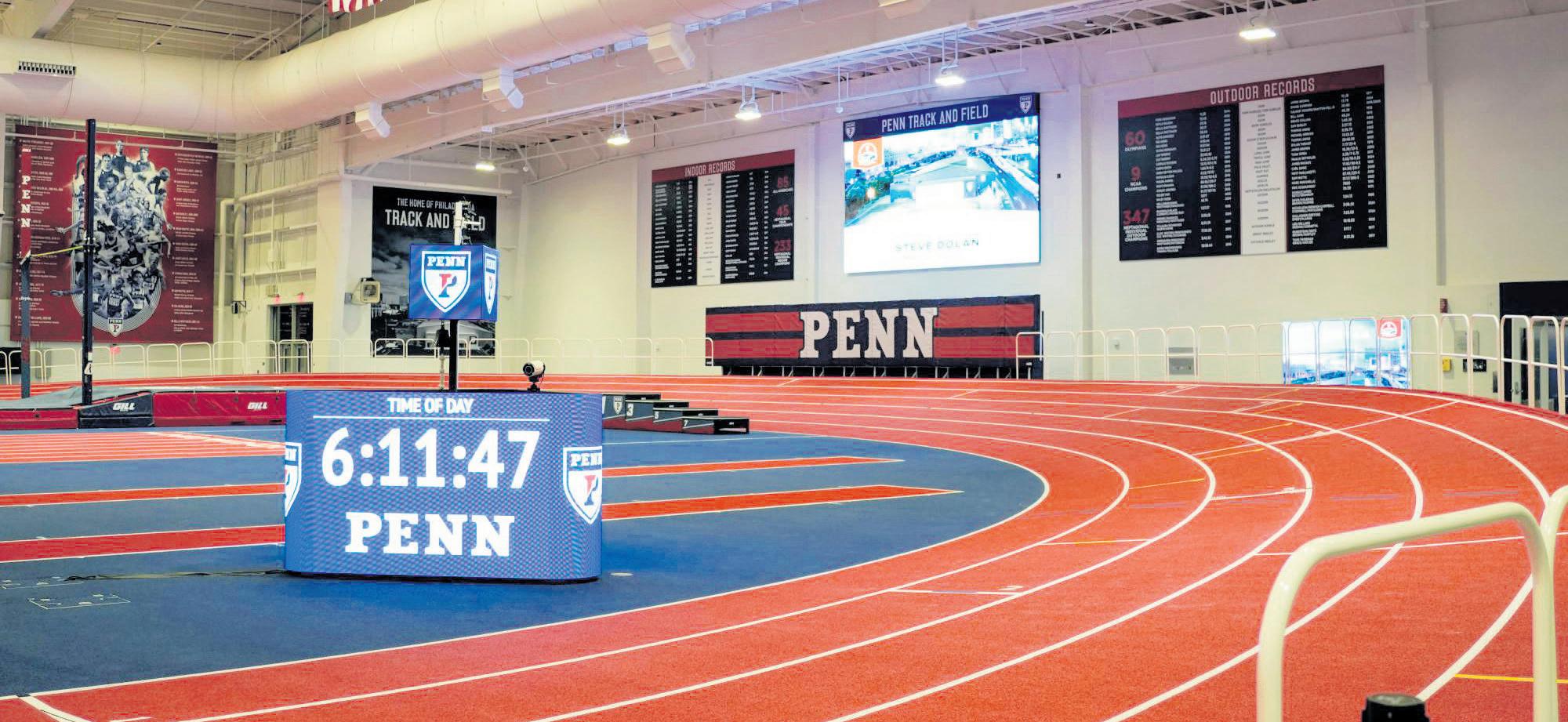
The Ott Center on Nov. 16, 2024.

Kristen and Oji shine as Penn track and field obliterates program records
Penn track and field faced strong competition at the Penn Elite Meet
ELLIE CLARK
Deputy Sports Editor
The Penn Elite Meet certainly lived up to its name. From Jan. 22-24, Penn indoor track and field faced strong competition from across the nation at the annual Penn Elite. The results were inevitably impressive: 15 meet records, six Ott Center for Track and Field records, and four program records were set, while eight events saw top-16 NCAA performances. Junior multis and hurdles specialist Amelia Kristen made her season debut in the pentathlon during the multi-event competition period. Kristen started off with a bang, nearly tying her personal record in the 60-meter hurdles for fifth place out of 18. She followed with a runner-up performance in the high jump and an eighthplace finish in the shot put.
The Vancouver, B.C., native dominated the long jump, earning 899 points for a 6.16 meter jump, breaking the program record and outdistancing the rest of the field despite not being a jumps specialist. Kristen earned 905 points in the 800-meter run to finish off the afternoon, securing a runner-up finish in the pentathlon while beating her own pentathlon program record. She only scored two points less than UConn’s Maresa Hense, who jumped to first place after a 950-point finish in the 800. Kristen currently ranks fourth in the NCAA in the pentathlon.
“I feel super excited about my performance the other day,” Kristen said. “I went into it just focusing on what adjustments I needed to make on each individual event, so honestly, I didn’t even think about what the pent[athlon] score would total up to until it was over.” Freshman thrower Jessica Oji returned to the Ott Center for the first time since her recordbreaking collegiate debut last December. The Livingston, N.J., native performed like a seasoned professional, drawing a crowd of friends and fans alike to the throws area.
Oji bettered her own Ivy League record on her first throw, throwing over 18 meters for the first time in her collegiate career. She went on to reset the Ivy League, facility, and meet record two more times over the next five throws. Her penultimate throw was the strongest of the afternoon, an 18.45-meter launch good for second in the NCAA and third in the world.
“Honestly, I just want to throw as far as I can,” Oji said. “I don’t like to limit myself to the number. Obviously, we do have a number that we’re thinking towards, but I don’t want to limit myself.”
WASILEWSKI STEPS UP BIG
Cross Wasilewski is having a stellar season and embracing his new role
SOO YOUNG YOON Sports Reporter
“Why would I know?”
It’s Penn wrestling sophomore Cross Wasilewski’s gut reaction when a teammate asks him a question. And then he realizes.
“Oh man, wait. I’m like, ‘I’m the guy people should be asking questions [to].’”
All these years in the Penn locker room, Wasilewski has looked up to former wrestling athlete Nick Incontrera, a 2025 College graduate and three-time NCAA qualifier. He’s looked up to former wrestling athlete Ryan Miller, a 2025 Wharton graduate, who is an Ivy League champion and a Unanimous first team All-Ivy selection. He’s trained with senior CJ Composto, who’s had a standout record last season. But now, before he knew it, he became the guy on the team many looked up to. Now a sophomore at Penn, the torch has passed, and Wasilewski is running with it.
He’s more than just a wrestler now. He’s a teammate.
When young Wasilewski first stepped onto the mat, he quickly realized wrestling was nothing like he’d imagined.
“I was six years old, and I thought they were talking about WWE,” Wasilewski recalled. “I remember showing up and there were these mats, and I had to put on these weird shoes, and it was just definitely a lot different of an experience.”
From this point on, Wasilewski began his journey in figuring out what it means to be a true wrestler. Unlike WWE, where you follow a script, wrestling meant “being able to adapt mid-match” and anticipating the opponent with each calculated move. It meant training in the summer even when competitions are in the winter, because “wrestling is a sport that never ends.” It meant crying after losses “just because it means so much … There’s so much work put into the sport, and you’re not relying on anyone.”
And you have to cry after losses, because during a match, “you have to stay stoic,” Wasilewski said. “And sometimes you might get your butt kicked, but that’s something to cry about after the match, not during.”
Though wrestling is an individual sport, and a mental sport, he learned the importance of finding his community, people who are there to support you no matter what. While he tirelessly practiced all season long, his parents were there to support him in every step.
“I’m so thankful for my parents driving me to offseason tournaments almost every weekend,” Wasilewski said. “So thankful for them being able to put me in that opportunity, in those shoes.”
Wasilewski also found his support group in eighth grade when he started training at Edge Wrestling.
“I had a group of five to six guys, and we just continued to push each other,” Wasilewski said. “We call it ‘#EdgeFamily.’ It’s a family. And like a sport so gruesome like wrestling, you need those people to support you and to be able to support someone else.”
“Being able to push through a time where maybe other kids were playing video games, … developing that discipline definitely shaped me as a person,” he added.
That same discipline helps him in the classroom.
“[I’m] putting in all the effort I can on the mat, and then [flipping] that switch in my mind, like, ‘Okay, now I’m a student going to class,’ making sure I’m present,” he
said, “I’m like, trying to beat a guy up and then going to math class trying to rule out some derivatives. I honestly love it.”
Over the course of his high school years, Wasilewski faced some of his toughest challenges in wrestling at regional championships and state tournaments. But his biggest challenge came during his sophomore year when he fell short of winning semifinals in the national championship.
“I was up 8-0, and I blew it,” Wasilewski said. “Two points away from attack, which would have ended the match, and I absolutely blew it. And it’s one of those moments that definitely sticks with me.”
That setback may just have been a blessing in disguise. After the tournament, then-Penn wrestling coach Roger Reina approached Wasilewski and the two quickly connected. Despite losing one of the biggest games of his career, Reina comforted Wasilewski with a more optimistic outlook on how far he had come in the tournament.
“I just broke down in tears, and it was kind of like a beautiful moment,” Wasilewski said. “I wasn’t committed at the time. I was still between Columbia and Penn, but that moment right there really reflected like, ‘Okay, I’m gonna come to Penn. I want coach Reina to be my coach, and he’s gonna be able to push me to push them to this next level.’”
Had Wasilewski chosen another school, Penn wrestling wouldn’t be the same team it is today.
Coming off a monstrous 13-1 dual record from last season, expectations were high — and Wasilewski hasn’t disappointed. With another win this past weekend during the Ivy Opener, he’s now a perfect 5-0 in duals this season. Aside from his hard work and dedication, his success this season may all come down to his mindset.
“Something I’ve really tried to change while I’m in college is just being confident, enjoying the moment,” Wasilewski said. “You’ll see me hop around, kind of pace back and forth … doing that just instantly puts me in the zone.”
“Wrestling is a very mental sport,” he added, “so you really have to care for yourself in terms of taking care of your mind and sharpening it and being ready to go when that whistle blows.”
As an integral member of the team, Wasilewski’s eyes are set on helping his teammates. He’s doing what Reina recruited him to do.
“Something I really hold close to my heart is leading by example, really showing up every day, playing in a full effort … I’m trying to be able to create that strong culture that pushes this team to the next level.”
He’s come a long way from a six-year-old on a mat. Now his second season with the team, Wasilewski has matured in his sport and grown in his mindset.
“I remember early in my high school career, I just cared too much,” he said, “I held [wrestling] like my baby. It was me.”
Wasilewski is learning to “disconnect” wrestling from his identity and embrace his role as a mentor and friend on the team. Looking back now, he has been able to see the sport not as an “end all, be all” but for what it really is. A rock in his life, a discipline, a way to find community.
“Some people call it therapy. Some people call it art. But, you know, at the end of the day, it’s just wrestling.”
Men’s basketball falls to Yale
Even Oji’s shortest throw — 17.28 meters — beat runner-up Maria Deaviz’s best throw by over half a meter.
“Her mental [changed the most since last meet],” throws coach Isaiah Simmons said.
“Coach Johnson did a good job — he’s my volunteer coach. He’s done a great job with working on some breathing techniques and stuff with her … last meet, she was very anxious. [Today,] she had much more steadiness to her.”
The final program record performance came during the final event of the meet: the men’s 4x400-meter relay. The Ott Center was electric as spectators rose to their feet to witness a dynamic back-and-forth bout between Princeton and Penn. Swift hand-offs defined the first two legs of the event, with junior runners Nayyir Newash-Campbell and Ryan Matulonis each running 46-second splits.
Freshman distance runner Joseph “Tiago” Socarras took the third leg in stride as the Tigers closed the one-second gap. A miscue on the handoff between Socarras and sophomore distance runner Ben Markham foreshadowed the finish that the Quakers desperately tried to stave off. The final lap saw Markham make a valiant effort to overtake Princeton, but the Quakers fell short.
Although Kristen, Oji, and the men’s 4x400 squad stole the show, a number of other Quakers also had notable performances. Freshman sprinter Jailyn Milord stunned in her 400-meter debut, running a 54.43 to edge out UConn’s Anna Connors by a hundredth of a second at the finish. Milord placed second overall in the event, but currently ranks first in the Ivy League and 50th in the nation.
Sophomore distance runner Quin Stovall showed out in her first 800 of the season, running a personal-best 2:07.07 to earn the bronze and surpass the previous meet record. Deep competition defined the women’s 800 as the race went down to the wire, with leads constantly shifting between the leading trio. Stovall’s performance leads the Ivy League and ranks 23rd in the NCAA at the time of writing.
“My goal going into the race was to be aggressive and really put myself in a position to win,” Stovall said. “And I felt I executed that really well. So I do have some takeaways for good things to work on, like my back end speed, but overall, I’m really happy with it.”
Senior sprinter Moforehan Abinusawa shined
See TRACK , page 6
Yale dominated the paint in a game of differing offensive approaches
EMILIE CHI AND KAIA FEICHTINGER-ERHART
Sports Editor and Deputy Sports Editor
The Quakers felt the Bulldogs’ bite on Saturday.
After a spirited start, Penn fell to Ivy League preseason poll favorite Yale 77-60 on Jan. 24 at the Palestra.
The Quakers (9-9, 2-3 Ivy) had high hopes at home after a weekend on the road, but sophomore guard AJ Levine’s 17-point effort was not enough to stop the Bulldogs’ (15-3, 4-1) winning ways. Although the squads were seemingly evenly matched at the start of the game, Penn entered the second half with a 10-point deficit, a difference that proved impossible to recover for the remainder of the game.
Here’s how it went down at the Palestra.
Two offensive styles contrast
Since the opening tip, the Bulldogs led an attack-driven offense, scoring 42 points in the paint alone, nearly double Penn’s point total inside. The Quakers’ reliance on the three-point line led to inconsistent offensive swings.
Yale’s around-the-rim effort was particularly notable as guard Casey Simmons and forward Nick Townsend tipped in uncertain shots and dominated on the boards. The Bulldogs accumulated a total of 42 rebounds compared to the Quakers’ 28. It was a game of rebounds and Yale was a complete mismatch for Penn.
Penn struggled to find the rim with a pass-and-shoot offense that went 28% from the three-point line, even when factoring in a hot shooting streak at the beginning of the game. Junior guard TJ Powers and senior guard Ethan Roberts struggled to find consistent momentum from the arc.
“We hit a couple [of three-pointers], but we were settling,” coach Fran McCaffery said. “You don’t get into the bonus shooting threes.”
An off-day for Penn’s reliable offense
Power and Roberts each notched 12 points — a far cry from the game-changing capabilities they typically bring to the table. Senior guard/forward Michael Zanoni also failed to make some of his specialty off-balance shots.
“Michael [Zanoni] missed a couple he usually makes … and that’s tough,” McCaffery said. “We’ve got to get him going.”
However, there were some solid individual performances, namely by Levine and freshman forward/center Dalton Scantlebury. Levine was one of Penn’s only players who consistently drove into the paint early on, scoring a
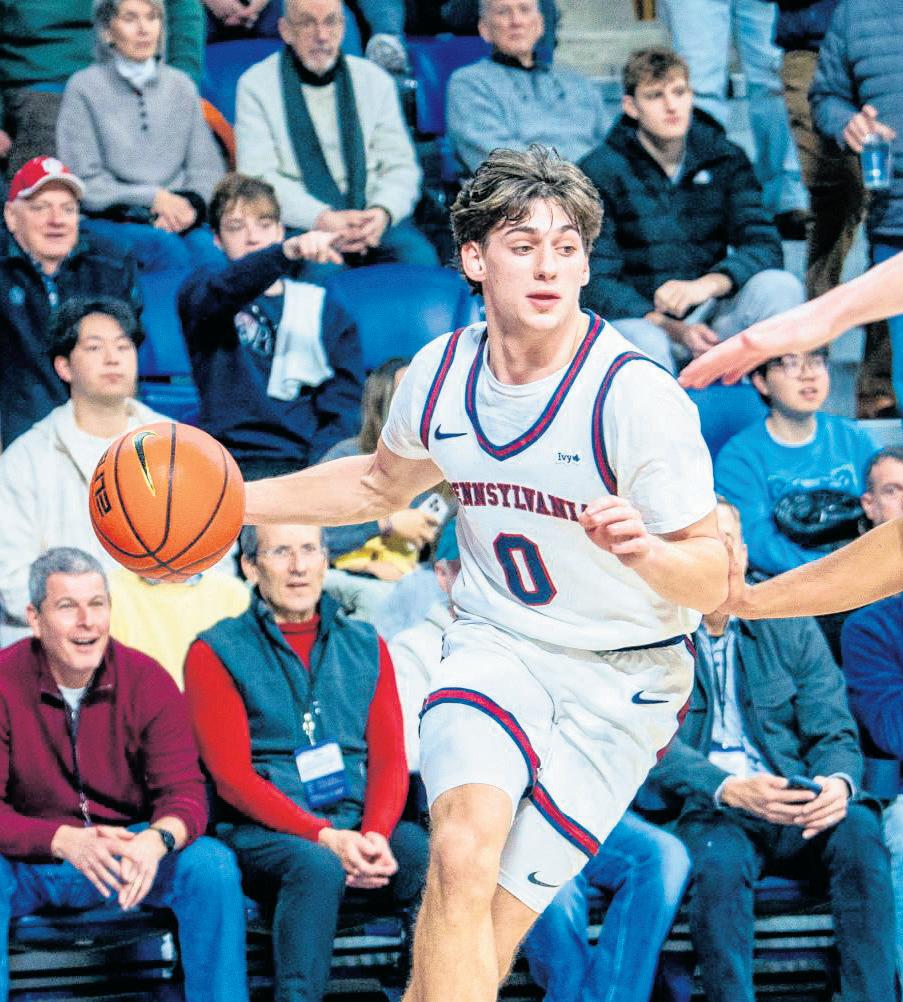

EUNICE CHOI | SENIOR DESIGNER