

VISION MISSION
and Management Sciences
To be a leading provider of business education in Africa and beyond. To achieve our vision, the Faculty will:
• Advance the innovation in business education and practices through excellence in teaching, research and community engagement.
• Develop a culture based on the high academic expectations of our students in partnership with Fundani; we will prepare them for success in business and society in general.
• Elevate the quality of our programmes to educate the citizens of the country and beyond.
• Build mutual business and scholarly relationships with key external constituents.
• Increase and sustain the Faculty resource base.
• Provide transformational leadership to staff and students.
• Ensure the reputation of the Faculty is excellent.
THE FACULTY OF BUSINESS AND MANAGEMENT SCIENCES is committed to be an innovative and people-centred Faculty that strives to create an enabling environment where scholarship, research, service excellence, teaching and learning are promoted to establish Cape Peninsula University of Technology as a world-class university.
MESSAGE FROM THE DEAN
Welcome to the Faculty of Business and Management Sciences (FBMS)
Cape Peninsula University of Technology (CPUT)

PROF KM MAKHITHA Dean: Faculty of Business and Management Sciences
The Faculty of Business and Management Sciences, the largest faculty at the Cape Peninsula University of Technology (CPUT), warmly welcomes you to a vibrant, inclusive, and dynamic academic community in the heart of Cape Town, South Africa.
As a faculty within CPUT, we are proudly celebrating 20 years of CPUT—a remarkable milestone under the theme “Growing from Greats.” Established on 1 January 2005, CPUT has grown into one of Africa’s leading universities of technology, built on the legacy of excellence, resilience, and transformation. As we move beyond this significant anniversary, we continue to grow and innovate—guided by the strength of our past and a bold vision for the future.
At FBMS, we embrace the African philosophy of Ubuntu— “I am because we are”—which anchors our commitment to social cohesion, inclusivity, and a shared sense of purpose. We foster an affirming and supportive academic environment where diversity is celebrated, and every individual is valued and empowered to succeed.
Our faculty comprises 15 academic departments and one academic unit, offering a broad spectrum of industryaligned qualifications, including: Paralegal Studies, Hospitality, Tourism, and Sport Management
Specialised Management programmes in areas like Retail, Marketing, Entrepreneurship, Human Resource Management, Operations Management and Real Estate
A strong suite of Accounting and Financial qualifications as well as the Graduate Centre of Management
The faculty encourage lifelong learning by offering programmes from diploma level to doctoral programmes in specialist areas.
The faculty operates in five different campuses with most programmes being offered at District 6. The CPUT Newlands Campus, a relatively new campus—a stateof-the-art facility hosts our Sport and Management programmes. This development represents not only infrastructural growth but also our dedication to offering students world-class learning environments that integrate academic, professional, and physical development.
The Cape Town Hotel School and its renowned training restaurant are also proudly part of our faculty, offering hands-on experience in the fields of hospitality and tourism.
Through the Graduate Centre of management, we offer short learning programs and courses targeted to industry professionals. Some of our programmes in the department of accounting and Department of Human Resources are accredited by industry bodies.
Our academic staff are passionate experts who bring realworld insights into the classroom and engage in cuttingedge research to ensure our programmes remain relevant, forward-looking, and impactful. Our work is further supported by three strategic units:
Unit for Quality, Risk and Knowledge Management Unit for Research and Information Advancement Unit for Strategic Initiatives and Partnerships
At FBMS, education goes beyond textbooks—we develop socially conscious, innovative, and skilled graduates who are ready to make a difference in South Africa and beyond. We are proud that our graduates are highly employable, and we achieve this by working closely with industry and other stakeholder to ensure that our curriculum is of good quality and that it is relevant.
We invite you to immerse yourself in the vibrant life of our campus, embrace the opportunities ahead, and be part of a connected and caring academic community.
Welcome to FBMS. Welcome to CPUT.
We are still growing from greats—and now, so are you.

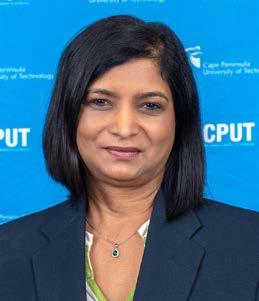


Prof Khathutshelo Mercy Makhitha Dean: Faculty of Business and Management Sciences
Ms Nondwe De Caires Faculty Manager
Prof Renitha Rampersad Assistant Dean: Research, Technology Innovation and Partnerships
Business and Management Sciences
CAMPUS INFORMATION
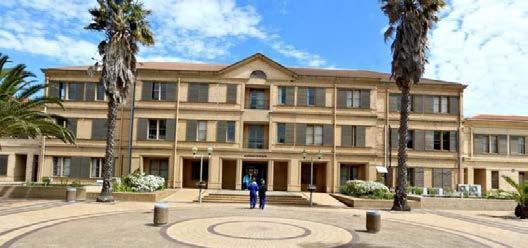
BELLVILLE CAMPUS
Symphony Way (off Robert Sobukwe Road), Bellville PO BOX 1906, Bellville 7535
Contact L Antonie
Email kleinbooiLcput.ac.za
Tel 021 460 3394
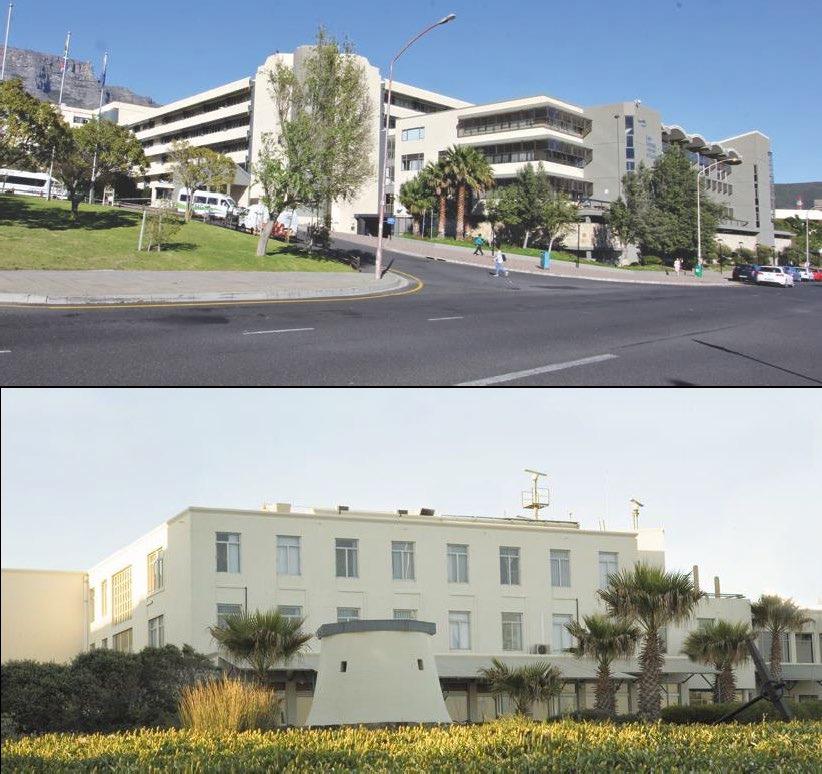
DISTRICT SIX CAMPUS
Hanover and Tennant Street, District Six PO BOX 652, Cape Town 8000
Contact M Mbenene
Email mbenenet@cput.ac.za Tel 021 460 3876
GRANGER BAY CAMPUS
Beach Road, Mouille Point PO BOX 652, Cape Town 8000
Contact O Nyumba
Email NyumbaN@cput.ac.za
Tel 021 440 5748
NEWLANDS CAMPUS
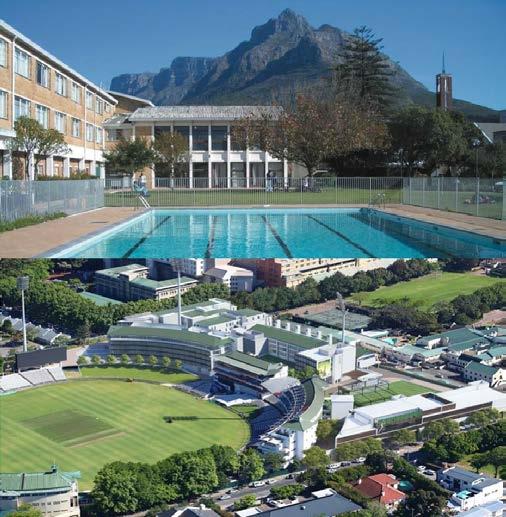
The Wicket Building, Newlands Cricket Ground, 146 Campground Rd, Newlands, Cape Town 7780
Contact F Salie
Email SalieFa@cput.ac.za Tel 021 680 1680
WELLINGTON CAMPUS
Jan van Riebeeck Street, Wellington PRIVATE BAG X8, Wellington 7654
Contact E Maurice
Email manuele@cput.ac.za
Tel 021 864 5246
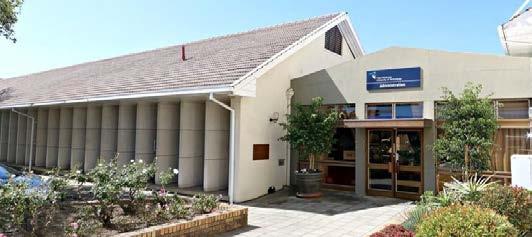
STUDENT ACADEMIC RULES AND REGULATIONS
Students should familiarise themselves with the CPUT academic rules and regulations information obtainable from the CPUT website (Study at CPUT).
Note: By registering, you confirm that you have read and agree to abide by the rules.
STUDENT SUPPORT SERVICES
STUDENT COUNSELLING
The Department of Student Counselling provides psychosocial support to all registered CPUT students through a variety of services offered. All our services are geared towards facilitating healthy student adjustment and integration into student life; and enhancing and maintaining general wellbeing and mental health.
DISABILITY UNIT
The Disability Unit is a multi-functional support service point of the University that strives to implement an accessible and welcoming learning environment for students with disabilities as well as support for staff working with these students. We also play an advisory and advocating role for staff with disabilities. The DU aims to assist prospective students with their enquiries and assesses their individual requirements and needs. We realize that every person is unique and has different needs. Please contact us contact us at disabilityunit@cput.ac.za for any support required.
LANGUAGE USE AND SUPPORT AT CPUT
Student Academic Rules and Regulations: http://www.cput.ac.za/ study
Student Counselling: https://www.cput.ac.za/ students/life/counseliing
Disability Unit: https://www.cput.ac.za/ students/life/disability
At CPUT, language is recognised as a human right, and the university is committed to promoting multilingualism and translanguaging. This means that the use of more than one language is encouraged, with a particular focus on Afrikaans, English, isiXhosa, and South African Sign Language (SASL).
While English is the primary language used for learning, teaching, and assessment, students are encouraged to recognise, respect, and use other languages where appropriate.
To support inclusive learning:
• Glossaries, subject guides, and other resources are made available in isiXhosa and Alanguages to help students understand academic content.
• Multilingual tutorials are provided to explain content in languages that students are comfortable using.
• Students who need help with academic English are encouraged to make use of the Writing Centre, language development resources, or the Unit for Language and Academic Literacies.
Respectful Language Use
CPUT promotes a learning environment that values diversity and inclusion. All students are expected to:
• Use language that respects diversity in race, gender, culture, ability, and identity.
• Avoid any discriminatory, offensive, or derogatory language.
• Use gender-neutral terms where appropriate (e.g., “they” instead of “he/she”, “chairperson” instead of “chairman”).
Interpreter Services
For official matters, such as disciplinary hearings, students have the right to request the services of a language interpreter to ensure fair and clear communication.
and Management Sciences
GENERAL INFORMATION
MODE OF TEACHING
Programmes are primarily delivered face-to-face on campus. Attendance is compulsory.
INTERNATIONAL STUDENTS
International students at CPUT are supported by the Office of International Affairs and applicants interested for formal qualifications are support by the Admissions and Registration Centre (ARC).
RESEARCH
The Cape Peninsula University of Technology actively promotes research of an applied nature, believing that a strong research activity is a necessary feature of any institution offering higher education. Students are sensitised to the importance of information and library skills during their first three years of study, introduced to research methodologies in the degree year, and provided with guidance and facilities to undertake independent research for further studies.
STUDENT IDENTITY CARDS
Students are issued with identity cards at the first year of registration. For security purposes, these cards must be presented on demand when entering CPUT premises. Presentation of these cards when buying materials, booking of theatres, etc. may provide special discount rates.
CLASS FEES, BURSARIES & LOANS
Bursary and financial aid applications must be submitted to the Financial Aid Department. Information on fees, bursaries and the CPUT fees rules and regulations booklet is available from the CPUT website.
PRESCRIBED BOOKS
Class fees, Bursaries & Loans: https://www.cput.ac.za/study/funding/ undergraduate/external-bursaries/ opportunities International Students: http://www.cput.ac.za/study/ international-applicants Guide to Postgraduate Studies: https://issuu.com/cput6/ docs/2025_postgraduate_ prospectus
The titles and prices of prescribed textbooks that students must purchase are available from the respective departments and at the bookshops on the various campuses. Reference books and technical journals are available to students in the library. Students should not purchase textbooks until instructed to do so by the subject lecturers.
HOURS OF TUITION
Full-time (day) classes commence at 08:30 and can be scheduled up until 16:30. If you are unable to view full-time timetable information, please contact your Academic Department. Part-time (evening) classes commence at 17:15 –19:15 and 19:30 – 21:30. For part-time class information, please contact the part-time offices.
PART-TIME OFFICE DETAILS
Bellville Construction Mngt & Quantity Surveying Bld Rm L20
District Six
Commerce Building, room 1.2, D6 Campus
Granger Bay
LIBRARY
The CPUT Library is part of the Cape Library Cooperative (CALICO) that grants access to four million books and numerous magazines in various libraries in the Peninsula. In addition, the library offers excellent facilities for study and provision is made for students who wish to do research work. All students automatically become members of the library.
INDEMNITY
021 460 3394 kleinbooiLcput.ac.za
021 460 3231
021 460 8391
PasquallieN@cput.ac.za SolomonsJ@cput.ac.za
021 440 5748 nyumban@cput.ac.za
Libraries: https://www.cput.ac.za/lib
A student involved in any university-related activity, whether academic, sporting, cultural or relating to experiential or practical training, shall indemnify the Cape Peninsula University of Technology (herein after referred to as CPUT) and its staff and/or any co-operative partner and its staff, or their representatives against any claim of whatsoever nature which such students, his/her executors or assigns may now or in the future have, arising from any injury or the sequelae thereto and which may be instituted against CPUT as a result of such university-related activities; and against any liability that may arise from an action or omission by such student. A student, furthermore, shall undertake not to hold CPUT or any of its employees responsible for any damage of whatsoever nature that such student may sustain during or arising from any university-related activity, irrespective of whether it occurs on or off the premises of CPUT.
MEDIUM OF TUITION
The medium of tuition is English.
ASSESSMENT
Assessment takes place throughout the year with final assessments normally in June and/or September and/or November. Please consult your subject guide provided by your lecturer for more information. The final subject mark will be determined by a student’s performance in class tests, assignments, projects, final summative assessment and in accordance with the requirements for each qualification. The final pass mark for each subject is 50%. Note that assessments may be set after hours and on Saturdays in some instances and may also be conducted across various campuses.
GENERAL INFORMATION
ASSESSMENT RESULTS
Students should frequently use the Student Online System (SOS Portal) to view progress assessment marks as uploaded by the lecturer after each assessment has been conducted. Once the final subject mark has been officially published, the marks for that particular final assessment period can be viewed online for a limited duration. Official printed results may only be issued by the Assessment & Graduation Centre.
Students must make use of the 10-day assessment query period to raise any concerns regarding their marks. Once the marks are finalised and the query period has lapsed, no changes to marks will be permitted.
STUDENT RELATED INFORMATION AND SERVICES
Visit the CPUT website for other student related information and services.
ACADEMIC CALENDAR
View the CPUT calendar link.
For more information please visit: https://www.cput.ac.za/ students/about/results
Student related information and services: http://www.cput.ac.za/students
Academic calendar: https://www.cput.ac.za/about/dates
2026 TERM DATES
APPLICATION DATES:
2026 M&D Full Research Studies: 13 March 2026
JANUARY ENROLMENT DATES:
UNDERGRADUATE STUDIES: 12 - 30 January 2026
Late Registrations: 02 - 27 February 2026
Undergraduate Studies: First Years: 26 Jan - 06 Feb 2026
2026 NSC PUBLICATION DATE: 12 Jan 2026
Late Registrations: 09 - 27 Feb 2026
POSTGRADUATE STUDIES: New Students (Coursebased qualifications): 12 Jan - 27 Feb 2026
Faculties to confirm
All returning students: 12 Jan - 27 Feb 2026
POSTGRADUATE STUDIES: New students: M & D Full Research Studies
12 Jan - 29 May 2026
SUBMISSION OF QUESTION PAPERS:
First Semester: 27 March 2026
Second Semester: 18 Sept 2026
RE-ASSESSMENT DATES (ONLY FOR SICK/ SPECIAL & LSO)
14 - 16 Jan 2026
15 - 17 July 2026
Submission of Graduation lists to AGC for verification after marks discussion meetings (Autumn Graduation): 08 December 202516 January 2026
Senex Feb 2026
Special Senex to be requested for a date (in March 2025) March Senex 2026
Due to various uncertainties, please be advised that these dates maybe subject to change.
Disclaimer: Term dates are subject to change.
Autumn Graduation Dates: 13 April - 18 April 2026 (6 days)
Cut-off dates for Autumn Graduation:
Mark changes approved by first Senex: First SENEX
Master’s and Doctoral candidates: First Senate in 2026
Any changes effected after these dates will stand over to the Summer Graduation
Summer Graduation Dates: 10 Dec 2026
Cut-off dates for Summer Graduation: Mark changes approved by Nov SENEX
OTHER CLOSING DATES
Application for exemptions and recognitions: 06 Feb 2026 - Annual / First Semester
Remarking/ reviewing of scripts for final summative assessments:
26 January 2026 (1st Semester) 27 July 2026 (2nd Semester)
Application for exemptions and recognitions: 31 July 2026 - Second Semester
Minor changes to 2027 Academic Structure: April 2026 APC Meeting
PUBLIC HOLIDAYS
New Year’s Day
Human Rights Day
Good Friday Family Day
Freedom Day
Workers Day
University Holiday Youth Day
National Women’s Day
National Women’s Day Observed Heritage Day Day of Reconciliation
Christmas Day Day of Goodwill
IMPORTANT UNIVERSITY DATES
International Women’s Day
World IP Day
CPUT Open Day Africa Day
Mandela Day Research Festival
International Men’s Day 16 Days of Activism on Non Violence Against Women & Children
World Aids Day
International Disability Day
WELCOMING
01 Jan 2026 21 March 2026
03 April 2026 06 April 2026
April 2026
May 2026 15 June 2026 16 June 2026 09 Aug 2026 10 Aug 2026
24 Sept 2026
16 Dec 2026
25 Dec 2026
26 Dec 2026
08 March 2026
26 April 2026
09 May 2026
25 May 2026
18 July 2026
26-30 Oct 2026
19 Nov 2026
25 Nov10 Dec 2026
01 Dec 2026
03 Dec 2026
GENERAL INFORMATION
STUDENT FEES
CANCELLATION DATES
Students who cancel their studies may be allowed a credit as follows:
BLOCK 1
First Semester Subjects
Last date
06 March 2026
100% Credits
BLOCK 0
Annual Subjects
Last date
20 July 2026
100% Credits
BLOCK 6
Annual Subjects
01 May 2026
100% Credits
Last date for all Cancellations of a Full course with ZERO Fee Credit: 3 October 2026.
CANCELLATION / TERMINATION OF STUDIES
• A student who abandons his/her course or subject must immediately complete the necessary documentation at the respective Faculty Office and advise the relevant Faculty Officer.
• Non-attendance or staying away is not a formal cancellation of studies and will NOT give cause for any adjustment or cancellation of fees.
• Students are advised to follow-up on the cancellation application until it has been processed.
• NO cancellation credit queries will be considered after the prescribed dates.
Disclaimer: Cancellation dates are subject to change.
BLOCK 2
Second Semester
Subjects
26 August 2026
100% Credits
Student Accounts: https://www.cput.ac.za/ study-at-cput/undergraduate/ fees#payment-methods
FOR COMPREHENSIVE INFO WITH REGARDS TO CANCELLATION & AMENDMENTS PLEASE CONTACT YOUR FACULTY OFFICE
FACULTY STAFF MEMBERS
D6 = DISTRICT SIX CAMPUS
BLV = BELLVILLE CAMPUS
OFFICE OF THE DEAN
WELL = WELLINGTON CAMPUS NEWL = NEWLANDS CAMPUS
GBAY = GRANGER BAY CAMPUS
Dean Prof KM Makhitha021 460 3146 makhithak@cput.ac.za
Deans Secretary Mrs A Sallie021 460 3639 SallieA@cput.ac.za
Acting Assistant Dean: Teaching and Learning Prof MS Taliep021 4603311
Acting Assistant Dean Secretary Ms J Roome021 460 3232
Assistant Dean: Research and Innovation Prof R Rampersad021 460 8339 rampersadr@cput.ac.za
Assistant Dean Secretary Ms Z Davids021 460 3429
Faculty Manager Ms N de Caires021 460 3637 fbmsfacultymanag-er@
Acting: Administrative Assistant
Manager: Research and Innovation Advancement
Manager: Strategic Initiatives and Projects
Coordinator: Work Integrated Learning
Manager: Quality, Risk and Knowledge Management
Mr N Mkhatshwa 021 460 3045 mkhatshwan@cput.ac.za
Dr SJ West021 460 3304
Ms A Mrasi021 460 3729
Ms B Allies 021 460 4207
Ms W Martin021 460 9033
WestS@cput.ac.za
MrasiA@cput.ac.za
Alliesb@cput.ac.za
MartinW@cput.ac.za
Bld
Bld
COORDINATORS FOR UNITS, CLUSTERS, CAMPUSES AND CENTRES
POSITION
Information Technology: Coordinator Ms L Luthuli021 460 3246 Luthulil@cput.ac.za D6
Language: Coordinator Ms Nobuhle Luphondo 021 460-3180 luphondon@cput.ac.za D6
Teaching and Learning: Coordinator Ms Nadia Davids021 440 5732 Davidsn@cput.ac.za Cape Town Hotel School
Work Integrated Learning: Coordinator Ms B Allies 021 460 4207 AlliesB@cput.ac.za
Extended Curriculum Programme: Coordinator Mr M Tshaka021 460 3498 TshakaM@cput.ac.za D6
Extended Curriculum Programme: Admin Assistant (Contract) Ms N Mtirara021 460 3579 MtiraraN@cput.ac.za D6 Co-operative Bld Ground Flr Room 2.70
Wellington Campus: Coordinator (Acting) Dr Mohamed Badat 021 864 5291 BadatM@cput.ac.zaWELL
K-Block Building Ground Flr Room K18A
Wellington Campus: Senior Secretary
K-Block Building Ground Flr Room K18A
FACULTY ACADEMIC STAFF
ACADEMIC DEPARTMENTS AND ACADEMIC UNIT
ACCOUNTING SCIENCES
Head of Department (Acting)
Dr AC (Visser) Neethling 021 460 3261
Departmental Secretary Ms C Solomons021 460 3054
ACCOUNTING SCIENCES
Section Head: Postgraduate Studies (Acting)
VisserA@cput.ac.za
SolomonsCO@cput. ac.za
Dr S Le Roux021 460 3732 LerouxSU@cput.ac.za
Departmental Secretary Ms D Nkomo021 460 3477 NkomoD@cput.ac.za
ACCOUNTING SCIENCES
Section Head: Undergraduate Studies (Acting) Mr A Jonginamba021 460 7253 jonginambaa@cput. ac.za
Departmental Secretary Ms JL Ridder021 460 3952
BUSINESS & INFORMATION ADMINISTRATION
Head of Department (Acting)
Dr F Mohsam 021 460 3113
RidderJ@cput.ac.za D6
mohsamf@cput.ac.za
Departmental Secretary Ms CN Taillard021 460 3651 TaillardC@cput.ac.za
ENTREPRENEURSHIP & BUSINESS MANAGEMENT
Head of Department Mr C Cupido021 460 3574 CupidoC@cput.ac.za
Departmental Secretary Mrs NS Arendse021 460 3942 ArendseN@cput.ac.za
HUMAN RESOURCES MANAGEMENT
Head of Department (Acting) TBC 021 460 3300
Departmental Secretary Ms NL Brandau021 460 9016 BrandauN@cput.ac.za D6 Commerce Bld 3rd Flr, Room 3.8
MANAGEMENT AND PROJECT MANAGEMENT
Head of Department Prof B Botha021 460 3928
Administrative Assistant Ms Y Ketse021 460 3805
MARKETING
Head of Department (Acting)
Dr S Williams 021 460 3656
Departmental Secretary Ms T Adams021 460 3306
Bothab@cput.ac.za D6 Commerce Bld 3rd Fl, Room 3.10
KetseY@cput.ac.za D6 Commerce Bld 3rd Flr, Room 3.8
WilliamsSE@cput.ac.za D6 Engineering Bld 3rd Flr, Room E 3.18
AdamsT@cput.ac.za D6 Engineering Bld 3rd Flr, Room E3.18
ACADEMIC DEPARTMENTS AND ACADEMIC UNIT
PUBLIC ADMIN & GOVERNANCE
Head of Department Prof RF Hendrickse 021 460 3450 HendrickseR@cput. ac.za
Departmental Secretary Ms DP Morrison021 460 3173 MorrisonD@cput.ac.za
OPERATIONS MANAGEMENT
Head of Department (Acting) Prof B Yan 021 959 6282 yanb@cput.ac.za
Departmental Secretary Ms N Osman021 959 4310 osmanni@cput.ac.za
RETAIL BUSINESS MANAGEMENT
Head of Department (Acting) Dr TW Hermanus021 460 3017 hermanust@cput.ac.za
Departmental Secretary Mrs MN Felix021 460 3028 FelixM@cput.ac.za
CAPE TOWN HOTEL SCHOOL Director (Acting) Dr T Sunday021 440 5753 nyathelat@cput.ac.za
S Paulse021
Ms F Salie 021 680 1680 SalieFA@cput.ac.za
TOURISM AND EVENTS MANAGEMENT
Head of Department (Acting) Dr C Dube 021 460 4250 Dubec@cput.ac.za
Assistant Ms A Ntelezi021 460 4285 Ntelezia@cput.ac.za
ACADEMIC DEPARTMENTS AND
ACADEMIC
UNIT
POSITION
GRADUATE CENTRE FOR MANAGEMENT
Head of Department Prof S Singh021 460 3876
Departmental Secretary Ms CC Carolissen021 460 3833
APPLIED ECONOMICS
Coordinator (Acting) (Contract)
Administrative Assistant
APPLIED LEGAL STUDIES
Head of Department (Acting)
Mr ME Van Doesburgh 021 460 4291
SinghSh@cput.ac.za Engineering Bld 4th Flr Room 4.4
WaltersC@cput.ac.za Engineering Bld 4th Flr Room 4.5
Ms KB Hector021 460 8350 HectorKB@cput.ac.za D6 Engineering Bld 3rd
Mr S Hungwe021 460 9046
Administrative Assistant Mrs MN Thomas021 460 3265
HungweS@cput.ac.za BLV Construction Mngt & Quantity Surveying Bld, 2nd Flr Room 2.56
ThomasM@cput.ac.za D6 Engineering Bld, 3rd Flr Room E3.33A
FACULTY OFFICE
The Faculty Office of the Faculty of Business and Management Sciences at CPUT serves as the central hub for academic administration and student support. Our mission is to provide efficient, transparent, and studentcentred services that enable both staff and students to excel in teaching, learning, and research.
Students are our main stakeholders, and their success and well-being remain at the heart of everything we do. We are committed to delivering accessible and professional student services, supporting the student lifecycle from application and registration to progression, module changes, and graduation. This includes maintaining accurate student records, managing academic statuses, and assisting with





Ms N De Caires Faculty Manager
Mrs S Nqwazi Faculty Officer


Mr T Mbenene Receptionist
progression, readmission, and other administrative matters in line with faculty and institutional policies.
Key services include examination coordination, marks processing, curriculum support, and committee secretariat functions. We also prioritize quality assurance, accreditation support, and effective communication with students, staff, and external stakeholders.
By integrating operational efficiency with a culture of accountability and care, the Faculty Office contributes to the Faculty of Business and Science’s goal of producing future-ready graduates and fostering a thriving academic environment.
Ms B Sichwaru Faculty Officer

Ms T Malgas Faculty Officer
Mrs MW Moloabi Assistant Faculty Officer (Acting)
Mrs NP Stemela Faculty Assistant


Mr O More Assistant Faculty Officer (Acting)
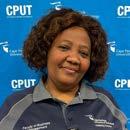
Ms L Antonie Faculty Assistant
Mr L Nontsele Faculty Assistant

Mrs NL Mbula Faculty Assistant

Ms A Nyumka Faculty Assistant

Mr ZS Ntshebe Administrative Assistant

Mr JE Solomons Administrative Assistant (Part-time Office)

Ms P Adonis Faculty Assistant
Ms N Pasquallie Administrative Assistant (Part-time Office)
FACULTY ADMINISTRATION
Faculty Manager
Receptionist
Assistant Faculty Officer (Acting) Planning & Quality Assurance
Assistant Faculty Officer (Acting) Planning & Quality Assurance
BELLVILLE CAMPUS
Faculty Assistant Operations Management
Faculty Assistant Applied Legal Studies (Paralegal)
DISTRICT SIX CAMPUS
Faculty Officer Human Resource Management Entrepreneurship Public Administration Real Estate Cape Town Hotel School
Faculty Officer Management & Project Management
Graduate Centre for Management
Marketing Retail Business Management Operations Management Applied Legal Studies (Paralegal)
Ms N de Caires021 460 3637 fbmsfaculty manager@ cput.ac.za
Mr T Mbenene021 460 3876 mbenenet@ cput.ac.za D6
Mrs MW Moloabi 021 464 7240 ramoeletsim@ cput.ac.za D6
Mr O More021 460 3876 moreo@cput. ac.za D6 Campus
Mr L Nontsele021 460 3308 Nontselel@ cput.ac.za BLV Construction
Ms L Antonie021 460 3394 KleinbooiL@ cput.ac.za BLV Construction Mngt& Quantity Surveying Bld, 2nd Flr Room L20
Mrs S Nqwazi nqwazis@ cput.ac.za D6Campus Commerce Bld 3rd Flr Room
Ms T Malgas021 460 9066MalgasT@ cput.ac.za D6 Campus Commerce Bld 3rd Flr Room
Faculty Officer Accounting Sciences Sport & Leisure Management Tourism and Events Management Business and Information Administration
Faculty Assistant Postgraduate Programmes: Masters & Doctoral
Faculty Assistant Public Administration and Governance
Cape Town Hotel School
Ms B Sichwaru021 460 8307SichwaruB@
Mr LS Mtetwa021 460 3247MtetwaS@
Mrs NP Stemela021 460 3234 StemelaN@ cput.ac.za
Faculty Assistant (Acting) Accounting Sciences Ms A Nyumka021 460 4251 nyumkaa@
Faculty Assistant Human Resource Management Retail Business Management Ms NL Mbula021 460 3187 MbulaN@
Administrative Assistant Unit Of Applied Economics
Faculty Assistant Management And Project Management
Faculty Assistant Tourism & Events Management Entrepreneurship
Faculty Assistant Marketing Accounting Sciences Graduate Centre for Management
Mr ZS Ntshebe021 460 3257 NtshebeZ@
Ms L Antonie021 460 3394 KleinbooiL@ cput.ac.za BLV
Ms P Adonis021 460 3233 AdonisP@ cput.ac.za
Mr L Nontsele021 460 3308 nontselel@
Administrative Assistant Part-time Office Administration Mr JE Solomons021 460 8391 SolomonsJ@
Administrative Assistant Part-time Office Administration Ms N Pasquallie021 460 3231 PasquallieN@ put.ac.za
Office Helper Maintenance
Mr L Ngqisha021 460 3589 NgqishaL@
3.77
CONTACT INFORMATION

2025 VICE-CHANCELLOR’S MEDAL
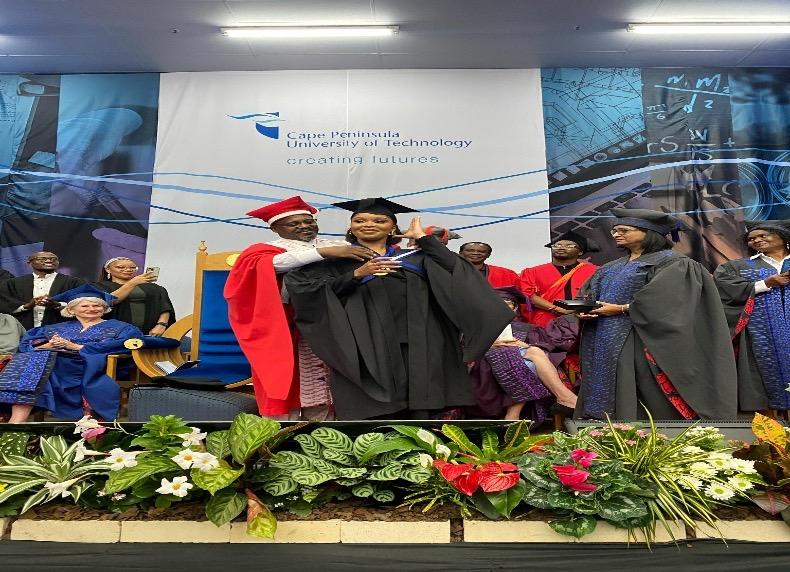
ASEMAHLE JACOBS Diploma and Advanced Diploma in Accountancy
She began her journey as an ECP student — proof that dreams delayed are not dreams denied.

DEPARTMENT OF
ACCOUNTING SCIENCES

Dr AC (Visser) Neethling
HOD: Accounting Sciences



Undergraduate
A brief overview of the department
The Department of Accounting Sciences offers various qualifications aligned with the Higher Education Qualifications SubFramework (HEQSF), spanning Diploma (NQF6) in Accountancy, Advanced Diplomas (NQF7) in Accountancy and Internal Auditing, Postgraduate Diplomas (NQF 8), Master’s degrees (NQF 9), and Doctoral degrees (NQF 10) in Internal Auditing, Management Accounting, and Applied Taxation. These programmes are designed to strengthen South Africa’s accounting, auditing, and taxation professions while contributing to the National Development Plan (NDP), Sustainable Development Goals (SDGs), and Cape Peninsula University of Technology’s (CPUT) Vision 2030. The department plays a critical role in producing advanced, research-capable graduates with specialised knowledge, ethical leadership skills, and digital fluency for an evolving 4IR-driven economy.
The unique aspects of the programme(s)
Professional integration: All programmes are closely aligned with industry needs and professional designations (e.g., IIA, CIMA, SAIT, CIBA, SAIPA).
Articulation pathways: Structured progression exists from the Diploma to Advanced Diplomas, PG Diplomas, Master’s and Doctoral qualifications, ensuring continuous academic and professional growth.
Applied research focus: Master’s and Doctoral students contribute original research addressing pressing African and global challenges such as governance, digitalisation, taxation policy, and corporate accountability.
Innovation and 4IR readiness: Curricula explicitly integrate Artificial Intelligence (AI), data analytics, and automation in accounting, auditing and taxation practices.
Flexibility: Full-time and part-time offerings cater to working professionals seeking career advancement.
Our programmes lead to membership in quite a number of professional institutes as mentioned below:
• for financial accounting, there is the Southern African Institute of Professional Accountants (SAIPA) as well as the Chartered Institute of Business Accountants (CIBA);
• for taxation, the South African Institute of Taxation (SAIT);
• for inter nal auditing, the Institute of Internal Auditors (IIA); and
• for management accounting, the Chartered Institute of Management Accountants (CIMA).
• The quality of teaching and calibre of academic staff.
The quality of teaching and calibre of academic staff
The department is staffed by a highly qualified and research-active cohort:
• 6 staff members hold Doctoral degrees, while several others are pursuing doctoral studies.
• All supervisors meet CPUT’s institutional requirements for postgraduate supervision, with staff regularly participating in CPGS-accredited training and mentorship initiatives.
• Many staff hold professional designations such as Chartered Accountant (CA), Certified Internal Auditor (CIA), Chartered Business Accountant (CIBA), Chartered Management Accountant (CIMA), Professional Accountant (SAIPA), Tax Advisor (SAIT) and Tax Practitioner, ensuring disciplinary relevance and credibility.
• Staff development is supported through funded conference participation, research writing retreats, teaching innovation workshops, and supervision training, all aligned with institutional research and teaching strategies.
Key department achievements
• Successful transition from legacy BTech/MTech/DTech qualifications to fully HEQSF-aligned Advanced Diplomas, Postgraduate Diplomas, Master’s, and Doctorates.
• Growth in research outputs (peer-reviewed publications and conference papers) from both staff and postgraduate students.
• Development of a structured postgraduate supervision model with co-supervision and external examiner engagement, ensuring quality and compliance with international standards.
• Introduction of publication requirements for graduation at Master’s and Doctoral levels, enhancing the department’s national research profile.
• Strengthened student support mechanisms (e.g., Retention Officer system, academic writing workshops, library support and disability services) to improve throughput and success rates.
Notable industry or research partners
• Strong partnerships with professional bodies such as the Institute of Internal Auditors (IIA), Chartered Institute of Management Accountants (CIMA), Chartered Institute of Business Accountants (CIBA), South African Institute of Professional Accountants (SAIPA) and the South African Institute of Taxation (SAIT), which inform curriculum design and graduate competencies.
• Ongoing collaboration with major audit and accounting firms (e.g., PWC, BakerT illy Greenwoods), as well as with public-sector organisations such as the City of Cape Town, which provide input into curriculum and research relevance and employability pathways.
• Engagement with regional and national advisory committees, ensuring responsiveness to the Finance and Accounting Services Sector Education and Training Authority (FASSET) and DHET scarce-skills lists.
Example of successful alumni
• Some alumni from the PG Diplomas have progressed to Master’s and Doctoral study, publishing in accredited journals and advancing into leadership roles in auditing, taxation, and academia.
• Some graduates have taken up lecturing and supervisory roles in higher education, contributing to the academic project of which some of our lecturers in the Department of Accounting Sciences are examples of.
• Other graduates have advanced professionally, e.g., qualifying as Professional Accountants (SAIPA), achieving leadership roles in internal audit functions across government and corporate sectors, and contributing to public-sector governance reforms.
Luyolo Siwangaza: Luyolo is presently employed as a Senior Enterprise Risk Manager at Woolworths. This role follows several prior positions within Woolworths, including Enterprise Risk Manager (Dec 2022 – Jan 2024), Compliance Manager: Monitoring (Apr 2021 – Nov 2022), and Corporate Audit Consultant (Mar 2018 – Mar 2021). Before rejoining Woolworths, he served briefly as an Internal Audit Manager at Standard Bank Group (Feb 2024 – Jun 2024), and as a Lecturer in Internal Auditing at the Cape Peninsula University of Technology (Mar 2015 – Feb 2018)
Robin Petersen: Robin is a Senior Financial Inspector at the Western Cape Liquor Authority (WCLA). He is currently involved in oversight and regulatory functions related to liquor licensing and financial compliance in the Western Cape region.
Ashwin Petersen: Ashwin is an Internal Auditor at KWV, based in Paarl. While employed at KWV, Ashwin was recognised as “Employee of the Month” for two consecutive months. Furthermore, he actively contributes to his community by identifying deserving matric learners, advising them on career pathways and bursaries, and assisting with their tertiary applications.
Wive Asisa: Wive completed his professional evaluation for the designation Professional Accountant (SA) through SAIPA and came second in the country. He is currently employed as a Professional Accountant (SA).
DEPARTMENT OF ACCOUNTING SCIENCES
DEPARTMENT OFFICE-BEARERS
Departmental SecretaryMs C Solomons 021 460 3054 SolomonsCO@
Departmental SecretaryMs JL Ridder 021 460 3952 RidderJ@cput.
PERMANENT ACADEMIC STAFF
Lecturer Mr PC Abrahams Masters in Business Administration; BTech Business Admin; BTech
Lecturer Mr GH Adams PGD in Auditing, Hons Bachelor of Accounting Science, BCom Accounting (Hons), NHD Taxation, SAIPA
Lecturer Mr JB Ansen MTech BIS BTech Information Technology, HD Comp Science
021 460 4236 AbrahamsP@ cput.ac.za
021 460 3575 AdamsGH@
021 460 3102 AnsenJ@cput. ac.za D6
Lecturer Mr P Bikhani MA, CA (SA) 021 460 4297 BikhaniP@ cput.ac.za
Senior Lecturer Dr JP Bruwer DTech Internal Auditing, MTech Internal Auditing, BTech Internal Auditing, ND Internal Auditing, NHC Accountancy, SAP TERP021 864 5502 BruwerJP@ cput.ac.za Wellington Campus K6F
Lecturer Mrs A Du Plessis MComm Taxation 021 460 3485 DuPlessisANN @cput.ac.za
LecturerMr A Sheik Essop Master in Accounting021 460 8318 EssopA@cput.
Lecturer Ms LL Henry MTech (BIS), HD: HET, FIS, BTech Financial Info Systems 021 460 8349 harkerl@cput. ac.za D6
Lecturer Mr N Jali Master of Accounting, B Tech: CMA &
3.25
PERMANENT ACADEMIC STAFF
POSITIONNAME
Junior Lecturer Mr CW Jansen Van Rensburg B.Compt (Hons), B.Accountancy
Lecturer Mr A Jonginamba MTech: Business Information Systems
Lecturer Mr U Kalidin Professional Accountant BAP (SA), Master in Accounting, BTech Taxation, ND Accounting, NHC Internal Auditing
Lecturer Ms RD Lall M Com (Taxation); CA (SA); BAcc(Hons)
021 460 3229 Jansenvan RensburgC@ cput. ac.za
021 460 7253 JonginambaA @cput.ac.za
021 460 3607 KalidinU@ cput.ac.za
021 460 4235 LallR@cput. ac.za
Lecturer Mr GS Le Roux NHD Internal Auditing021 460 3271 leRouxG@ cput.ac.za
Senior Lecturer Dr S Le Roux DTech Information Technology; PhD: Andragogical Education
021 460 3732 lerouxsu@ cput.ac.za
Junior Lecturer Mr IA Loghdey BCompt, BCom (Hons)021 460 3268 LoghdeyI@ cput.ac.za
Junior Lecturer
Mrs MP Lombard BTech Cost & Mngt Accounting 021 460 3260 LombardM@ cput.ac.za
Lecturer Ms L Luthuli MTech Business Information Systems
Lecturer Mr E Mankeyi BCom (Fin Acc); BCom Hons (Taxation); MCom (Taxation), TA(SA)
Lecturer Dr LA Mabesele Doctor of Commerce Internal Auditing
Commerce BLD 1st Flr Room 1.14
D6 Commerce BLD 1st Flr Room 1.9
021 460 3246 LuthuliL@cput. ac.za D6 Room 2.75 Co- op Bld
021 460 3030 MankeyiE@ cput.ac.za
021 460 3620 MabeseleL@ cput.ac.za
Junior Lecturer Ms BN Mda BTech Cost &Mngt Accounting 021 460 3386 MdaB@cput. ac.za
Lecturer Dr AC (Visser) Neethling PhD Commerce and Administration, Professional Accountant (SA), BCompt (Hons), BCompt
Lecturer Mr O Ntshonga Masters in Cost & Management Accounting
Lecturer Mrs CC Oji MTech: Cost and Management Accounting
Lecturer Mr EL Pretorius Master’s in Business Info Systems
Lecturer Mrs KJ Randall HDE Commerce Secondary
Lecturer Dr MI Rapoo Doctor of Philosophy in Economic and Management Sciences with Business Statistics
021 460 3261 VisserA@cput. ac.za
021 460 3523 NtshongaO@ cput.ac.za
021 460 3721 Maduekwec@ cput.ac.za
021 460 3115 PretoriusE@ cput.ac.za
021 460 3507 RandallK@ cput.ac.za
021 460 3310 Rapoom@ cput.ac.za
D6 Commerce BLD 2nd Flr Room 2.36
D6 Commerce Bld 3rd Flr Room 3.25
D6Commerce BLD 1st Flr Room 1.7
D6 Commerce BLD 2nd Flr Room 2.7
D6 Commerce BLD 3rd Flr Room 3.34
D6 Co-Op BLD, 1st Flr, Room 2.86
D6 Commerce BLD 2nd Flr Room 2.27
D6 Commerce Bld 1st Flr Room 1.15
D6 Commerce Bld, 1st Flr, Room 1.40
DEPARTMENT OF ACCOUNTING SCIENCES
PERMANENT ACADEMIC STAFF
Lecturer Mr I Sityata Master of Internal Auditing 021 460 3238 SityataI@cput.
Lecturer Mr M Siyaya Master of Acc (Internal Auditing) 021 460 3621
Lecturer Mr A Smith NHD: Internal Auditing 021 460 3269 SmithA@cput.
Lecturer Mr M Solani Masters in Cost and Management Accounting 021 460 3334 Solanim@cput.
CONTRACT ACADEMIC STAFF
Lecturer Dr O Chakabva
Lecturer Mr A Ezeonwuka MTech: Internal Auditing
T
Lecturer
Lecturer Mr N Mateteni BTech:Internal Auditing, Adv Diploma: Accounting Sciences, MBA, AGA (SA) (SAICA) 021 460 3283 MatateniN@
Lecturer Ms M Mohamed Master of Information and Communication Tech 021 460 3604 Mohameedm
Lecturer Mr N Ntsibantu Masters in Banking and Finance 021 460 8375 NtsibantuN@
Lecturer Dr OO Oke PhD in Accountancy 021 460 3047 OkeO@cput. ac.za
Lecturer Mr S Sandi MPhil IT Governance 021 460 3654 SandiS@cput. ac.za
Lecturer Mr EP Tsague Mbumbo MPhil: Master of Philosophy in Business Management; MTech: Cost and Management Accounting 021 460 3720 TsagueMbumboE@cput. ac.za
Lecturer Mrs A Van Niekerk BA Eng Lit; BA Hons Eng Lit; MA Eng Lit 021 460 3165 VanniekerkAM @cput.ac.za D6
DIPLOMA IN ACCOUNTANCY
ADVANCED DIPLOMA
POSTGRADUATE DIPLOMA
SUBJECT GUIDE TO TERMINOLOGY
Please contact your academic department for information on pipeline qualifications and subjects
CO-REQUISITE: A co-requisite subject is one for which a student must be registered together (i.e. concurrently) with another specified subject.
PRE-REQUISITE: A pre-requisite subject is one which a student must have passed in order to gain admission to another subject. For example, Management 1 is a pre-requisite for Management 2.
DIPLOMA SUBJECTS
ACCOUNTING INFORMATION SYSTEMS 1A
Pre-requisite Business Computer Applications
Subject outline The subject prepares students for real-world accounting software packages, such as Pastel, which will enable them to work across all sectors of the economy.
Assessment All assessments are compulsory. Class tests, tutorials, practical assessments and summative.
ACCOUNTING INFORMATION SYSTEMS 1B
Pre-requisite Business Computer Applications
Subject outline Accounting Information Systems 1B integrates the students’ prior knowledge of Financial Accounting (Financial Statements, Ratios), Business Statistics (Investments, Amortisation of Loans, Present Value, Future Value) and expands the Excel knowledge base by using Solver to assist with decision making. This subject prepares students for real-world accounting which will enable them to be efficient and effective as well as work across all sectors of the economy.
Assessment All assessments are compulsory. Class tests, tutorials, practical assessments and summative assessments
ACCOUNTING INFORMATION SYSTEMS 1C
Pre-requisite Business Computer Applications
Subject outline It is a practical computer-based subject which makes extensive use of Excel. Accounting Information Systems 1C expands the students’ knowledge of Excel in Financial Accounting, (Financial Statements Interpretation, Reporting), Scenario Manager and Pivot Tables and Charts. Students will acquire, apply and integrate computer skills and concepts that are critical for academic and professional use through business-oriented examples taught in a hands-on computerised accounting environment.
Assessment All assessments are compulsory. Assignments, class tests, tutorials, practical assessments, presentations and summative assessments.
Business and Management Sciences
DEPARTMENT OF ACCOUNTING SCIENCES
ACCOUNTING INFORMATION SYSTEMS 2
Pre-requisite
Subject outline
Accounting Information Systems 1
Accounting Information Systems 2 (AIS2) is aligned with the requirements for Internal Auditing and Information Systems Auditing. AIS2 provides the foundation for entrance for specialisation, where students will become conversant with more advanced Information Systems (IS) theoretical and practical knowledge required for IS audit engagements. AIS2 will, therefore, orientate students toward systems thinking and using data analytics and data analysis to facilitate their work, such as assessing a company’s internal controls, financial condition, and compliance with relevant regulations.
Assessment All assessments are compulsory. Assignments, class tests, tutorials, practical assessments, presentations and summative assessments.
BUSINESS COMPUTER APPLICATIONS
Pre-requisite English language basic proficiency, basic Computer Literacy
Subject outline Business Computer Applications (BCA) is a fundamental subject underpinning all the core accounting subjects within the program. BCA is a computer-laboratory based subject with both theoretical and practical components. There are three main themes 1) An Introduction to information Systems, 2) The use of Excel entirely within an accounting context and 3) Databases (Access) and the integration of Access with other applications.
Assessment All assessments are compulsory. Assignments, class tests, tutorials, practical assessments, presentations and summative assessments.
BUSINESS LAW 1
Pre-requisite N/A
Subject outline The purpose of this subject is to provide a brief introduction to the South African legal system, Constitution and a sound understanding of the fundamental principles of the Law of Obligations within a commercial context, to provide a sound understanding of specific types of contracts. This includes the Contract of Sale, Letting and Hiring, Agency and Insurance; as well as the National Credit Act, the Consumer Protection Act and E-Commerce.
Assessment All assessments are compulsory. Assignments, class tests, tutorials and summative assessments.
COMMUNICATION
Pre-requisite N/A
Subject outline Communication is a fundamental course that is taught in the first year of this qualification. The main objective of this subject is to develop competence in written and oral communication and to respond effectively on different cultural context. The skills learned and developed in Communication are applied to all other subjects in this qualification and serves as preparation for both academic and workplace interaction.
Assessment All assessments are compulsory. Assignments, class tests, tutorials, practical assessments, presentations and summative assessments.
CORPORATE PROCEDURES
Pre-requisite Business Law 1
Subject outline Students will be given a strong theoretical background with regards to various business enterprises in South Africa. They will also gain a practical understand of the Companies Act and how it practically applies to companies. Students will develop the required skills to practically apply the law to commerce. They will not only gain the skills to deal with partnership but will develop a sound understanding of the Companies Act and it practically affects various companies. This will range from registering a new company to converting a closed corporation into a company.
Assessment All assessments are compulsory. Assignments, class tests, tutorials, practical assessments, presentations and summative assessments.
ECONOMICS
Pre-requisite None
Subject outline Economics is an introductory course in the foundational principles of both macroeconomics and microeconomics, and their applications. Intended for students without any background in Economics, this course both lays the groundwork for further studies, and provides students with sufficient knowledge of economics to participate in discussions in daily life and in the workplace.
Students will also be able to calculate and interpret the most common economic indicators and statistics independently.
Microeconomics introduces economic decision-making on the part of both the consumer and firm. This culminates in extensive analysis of supply and demand individually, as well as in the context of partial equilibrium under various market structures. Macroeconomics introduces aggregate economic concepts such as GDP and inflation, while also incorporating sector-specific concepts from the public, monetary and international sectors.
The application of Economics to case studies and examples is strongly emphasised in this course. In addition to conceptual understanding, students are consistently expected to demonstrate their mastery of the subject by applying their knowledge to novel scenarios and problems. Students are also expected to demonstrate competence in both qualitative and quantitative analysis.
Assessment All assessments are compulsory. Assignments, class tests, tutorials, practical assessments, presentations and summative assessments
Business and Management Sciences
DEPARTMENT OF ACCOUNTING SCIENCES
FINANCIAL ACCOUNTING 1
Pre-requisite N/A
Subject outline
The purpose of this subject is to develop the competency of students regarding the fundamentals of accounting, based primarily on the principles of the Conceptual Framework for Financial Reporting contained in the IFRS. These principles are applied to a variety of business entities (service rendering business entities as well as trading business entities) which include: sole traders, partnerships and close corporations. Within this context students will be required to record a variety of events and transactions and process them in an accounting system up and unto financial statement level. The subject aims to provide a holistic understanding of the basic accounting process.
Assessment All assessments are compulsory. Assignments, class tests, tutorials, and summative assessments.
FINANCIAL ACCOUNTING 2
Subject outline In Financial Accounting 2 the emphasis shifts to more specialised topics such as International Accounting Standard 1 (IAS1) and the presentation of financial statements according to various applicable accounting standards for companies, basic content of the 2008 Companies Act; basic income tax entries; foreign currency transactions in inventory; Property, plant and equipment (PPE) and introduction to statements of cash flows.
Assessment All assessments are compulsory. Assignments, class tests, tutorials, and summative assessments.
FINANCIAL ACCOUNTING 3
Pre-requisite
Subject outline Statement of cash flows, Analysis of financial statements, Taxation, Deferred Tax, Intangible assets, Impairment of assets, Leases, Accounting estimates and correction of errors, Earnings per share.
Assessment All assessments are compulsory. Assignments, class tests, tutorials, practical assessments, presentations and summative assessments.
INTERGRATED PROJECT IN ACCOUNTING
Pre-requisite The student must have passed all first- and second-year subjects.
Subject outline The subject requires students to comprehend the fundamentals of project management, after which they will work in small groups and/or mitigate real-world accounting related problems faced by accounting entities.
Assessment All assessments are compulsory. Class tests, tutorials, practical assessments, presentations and summative assessments.
INTERNAL AUDITING 2
Pre-requisite None
Subject outline Understanding the auditing profession. Professional ethics. Identifying risks, designing controls to mitigate risks, finding weaknesses in the internal control system, and designing procedures to test the effectiveness of controls. Understanding a business/governmental environment and the typical cycles employed in such entities.
Assessment All assessments are compulsory. A research assignment, class tests (manual and online), a team project (practical assessment) and summative assessments.
INTERNAL AUDITING 3
Pre-requisite Auditing 2
Subject outline Internal Auditing 3 is a core subject, offered at an advance level of the program, as further studies at fourth year level in all other disciplines draw from principles established in this subject. The subject will draw considerably from the theories and applications learned in Internal Auditing 2. A proper understanding of all first and second year subjects is required for students to master this subject. Internal Auditing 3 comprises of conceptual issues which will mainly be dealt with in lectures. This subject covers the basic guidelines and principles, as per the International Professional Practices Framework, for good internal auditing as provided by the Institute of Internal Auditors. Students will also learn how to plan an audit, gather information during the actual audit process and communicate the results to the appropriate bodies.
The purpose, therefor, of this subject is to enable students to understand and adhere to the mandatory guidelines of the Institute of Internal Auditing, being the International Standards for the Professional Practice of Internal Auditing, the Definition of Internal Auditing, the Code of Ethics and Core Principles and also to provide students with the means to enable them to conduct an internal audit from planning to report writing.The mission of the subject is to produce professional internal auditors that will be accredited by the Institute of Internal Auditors (IIA) globally.
Assessment Formative assessments are regularly and continuously scheduled prior to each term’s summative assessments. Some formative assessments are aligned to prepare students for the summative assessments by having similar content. Other formative activities carry no weighting and are purely focused on a student’s development and self- assessment.
MANAGEMENT ACCOUNTING 2
Pre-requisite None
Subject outline Introduction to cost and management accounting, cost concepts, classification and behaviour. Material and inventory control, labour costs, classification and analysis of overheads, cost flows and manufacturing firms, cost-volumeprofit (CVP) analysis, Integrated accounting system and cost ledger accounting systems.
Assessment All assessments are compulsory. Class tests, tutorials, and summative assess-ments.
and Management Sciences
DEPARTMENT OF ACCOUNTING SCIENCES
MANAGEMENT ACCOUNTING 3
Pre-requisite Management Accounting 2
Subject outline In Management Accounting 3 you will learn how to develop and operate a job costing system, a contract costing system, a process costing system as well as a very basic standard costing system. You will also learn how to work with joint and by-products that emerges from the same process as well as the differences
Assessment All assessments are compulsory. Assignments, class tests, tutorials, practical assessments, presentations and final summative assessment
STATISTICS FOR ACCOUNTANTS 1
Pre-requisite N/A
Subject outline This subject provides fundamental knowledge that underpins the role and the relevance of statistics in the discipline of finance and accountancy. Statistics for Accountants 1 is a quantitative subject that introduces threshold concepts such as: 1) numeracy, 2) interest calculations, 3) annuities, then scaffolding into more complex statistical concepts such as 4) probability, and 5) regression, correlation analyses and 6) time series. The subject develops the mathematical acumen of students which is essential in the accounting profession and business environment in general.
Assessment All assessments are compulsory. Class tests, practical assessments and summative assessments.
STATISTICS FOR ACCOUNTANTS 2
Pre-requisite Statistics for Accountants 1
Subject outline In essence, the subject cover the collection, summarising, presentation, and analysis of accounting data.
Assessment All assessments are compulsory. Assignments, tutorials, and summative assessments.
TAXATION 1: INDIVIDUALS
Pre-requisite N/A
Subject outline
Students will be introduced to a basic level of taxation concepts, calculations and legislation relating to the taxation of individuals. Students will be introduced to a basic level of taxation concepts, calculations and legislation relating to the taxation of individuals. Students will also be exposed to a brief introduction to the taxation of other business entities that will be utilised and built upon on in Taxation 2 which will be offered in the third year.
Assessment All assessments are compulsory. Class tests, tutorials and summative assessments.
TAXATION 2: BUSINESSES
Pre-requisite Tax 260S Taxation 1: Individuals
Subject outline Students will be exposed to a wide range of taxation concepts and legislation. They will recognise the important role that taxation can play in the decision-making process in businesses, and in the life of individuals and will be able to apply the knowledge to give input into such decision-making.
Assessment All assessments are compulsory. Assignments, class tests, tutorials, practical assessments, presentations and summative assessments.
Business and Management Sciences
DEPARTMENT OF ACCOUNTING SCIENCES
ADVANCED DIPLOMA SUBJECTS
Note: Admission requirements to register for the Advanced Diploma applies
ACCOUNTING INFORMATION SYSTEMS 3
Pre-requisite:
Subject outline:
Accounting Information Systems 2
Accounting Information Systems (AIS) 3 is a core subject in the Advanced Diploma in Internal Auditing. This subject provides students with more advanced theoretical and practical knowledge of computerised information which is required for Information Systems (IS) audit engagements. These topics include control and security, information technology (IT) governance and strategy, as well as acquiring experience with various software components to support Auditing, Financial Accounting and Management accounting activities. This subject addresses the technology-specific aspects which underpin the outcomes of Internal Auditing 4 and Information Systems (IS) Auditing. AIS 3 is divided into a theoretical and practical component. The theoretical component exposes students to the IT/IS environment from the manager’s perspective for the purpose of understanding the role that IS and IT play in the business for the purpose of IT governance. The practical component will expose students to generating management reports for analysis and decision making. This subject will draw on your knowledge about Internal Auditing, Financial Accounting, Management Accounting, Information Technology, Information systems, relational databases and database management systems, systems modelling, and intermediate Excel spreadsheet knowledge.
Assessment: There are weekly formative exercises which are completed as the syllabus is delivered, which serve to help students to assess their understanding and to prepare them for the summative assessments. There are four summative assessments, and one integrated assignment between the major subjects on the Advanced Diploma in Internal Auditing. All assessments are mark bearing.
ADVANCED TAXATION
Pre-requisite: Taxation 2: Businesses
Subject outline: Advanced Taxation is an elective subject in the Advanced Diploma in Accountancy. It builds on the foundational knowledge acquired in Taxation 1 and Taxation 2 and is designed for students who intend to pursue a professional qualification in accountancy or enter the profession as a tax practitioner.
Students will be exposed to a wide range of taxation concepts and legislation. This module provides students with a sound understanding of taxation matters concerning both individuals and businesses and helps them appreciate the important role taxation plays in decision-making for both personal and business contexts. Through applied learning, students will be equipped to interpret and apply tax principles in a variety of contexts.
Completion of Advanced Taxation prepares students for further study in the Postgraduate Diploma in Applied Taxation, where the foundational knowledge gained will be expanded upon.
Assessment: All assessments are compulsory and administered throughout the year. Assessments include class tests, tutorials and summative assessments.
FINANCIAL MANAGEMENT
Pre-requisite:
Subject outline: In a business environment that increasingly demands value creation for shareholders, this subject introduces students to the core principles and practices of financial management within the corporate context. It focuses on developing the analytical and decision-making skills required to assess investment opportunities and determine appropriate funding strategies. Although not a major subject, Financial Management lays a critical foundation for students intending to pursue careers in areas such as financial analysis or financial management. The subject draws on and reinforces knowledge from earlier diploma-level courses, particularly in financial accounting, management accounting, and applied statistics, helping students approach financial decisions with both technical understanding and strategic insight.
Key areas explored include the fundamental role of financial management, the relationship between risk and return, cost and sources of capital, valuation techniques, capital investment decisions, and working capital management. The subject also emphasizes the use of accounting tools in financial decision-making and provides an overview of dividend policy considerations. These core components support the development of comprehensive financial competencies aligned with the demands of the modern corporate landscape.
While there are no formal prerequisites, students are expected to build on concepts introduced in earlier subjects such as financial mathematics, financial statements, and investment appraisal, forming a coherent and progressive learning experience across the qualification.
Assessment: The assessment strategy for this subject is designed to support and evaluate student learning throughout the academic year. It incorporates both formative and summative assessments, all of which are aligned with the subject’s learning outcomes and assessment criteria.
Formative assessments are conducted at the end of each chapter and primarily consist of online case study analyses. These are automatically marked, providing students with immediate feedback to reinforce their understanding and prepare them for summative assessment.
Summative assessments take the form of formal tests. They are used to measure the extent to which students have achieved the intended learning outcomes and to ensure that meaningful learning has occurred.
Business and Management Sciences
DEPARTMENT OF ACCOUNTING SCIENCES
GENERAL FINANCIAL REPORTING
Pre-requisite: Financial Accounting 3
Subject outline:
General Financial Reporting is a core subject in the Advanced Diploma in Accountancy and the Advanced Diploma in Internal Auditing. It builds on the foundations of Financial Accounting 1, 2, and 3, and provides students with an advanced conceptual understanding of International Financial Reporting Standards (IFRS). The subject equips graduates to interpret and use financial statements prepared in compliance with IFRS, while deepening their knowledge in areas such as Taxation, Leases, and Impairment, and introducing new standards like Related Parties and Events after the Reporting Date. It integrates with Specific Financial Reporting and Management Accounting, supporting future roles as Accountancy Professionals, Internal Auditors, Tax Consultants, or Management Accountants through enhanced understanding of financial reporting in both corporate and non-corporate contexts.
Assessment: Both formative and summative assessments are conducted continuously throughout the year. Students are required to complete two major written assessments in June and November, along with class tests and online quizzes. For the class tests and quizzes, no re-assessments are permitted. These assessments are designed to help students monitor their learning progress by identifying strengths, addressing weaknesses, and focusing on areas that need improvement. Participation in all assessments is compulsory, and students must strictly adhere to the rule that fulltime students write full-time assessments, and part-time students write part-time assessments, with no exceptions allowed.
GENERAL MANAGEMENT ACCOUNTING
Pre-requisite: Management Accounting
Subject outline:
General Management Accounting is a core quantitative subject of the Advanced Diploma in Accountancy that is meant to equip students with detailed management accounting knowledge required to prepare and analyse advanced management accounting reports that facilitate decisionmaking within an organisation. Unlike the Specific Management Accounting Subject which focuses on latest developments in the field of Management Accounting and modern Management Accounting tools, General Management Accounting focuses on traditional Management Accounting tools such as advanced standard costing, advanced variance analysis, traditional investment appraisal techniques, advanced Cost Volume and Profit Analysis, throughput accounting and theory of constraints, advanced marginal and absorption costing, linear programming and their application in facilitating decision-making within an organisation. General Management Accounting builds upon the foundation laid in Management Accounting 3 in the 3rd year of the Diploma in Accountancy, which provides students with an understanding of Cost and Management Accounting to enable them to prepare accurate and timely Management Accounting reports. General Management Accounting horizontally integrates with Specific Management Accounting by complementing the modern and recent developments taught in the latter with traditional Management Accounting tools. General Management Accounting also horizontally integrates with the subject, Management, by providing quantified data to support management decisions. It also integrates with Financial Management by providing the quantitative investment appraisal techniques required for capital budgeting. It further horizontally integrates with General Financial Reporting and Specific Financial Reporting by providing ratios and non-financial data for analysing financial statements prepared. General Management Accounting forms a pre-requisite for articulating to the Advanced Management Accounting subject which will be covered by the envisaged Post-Graduate Diploma in Accountancy.
Assessment: The subject's performance is assessed through continuous assessment, comprising four components that collectively account for 85% of the final mark. Three of these are compulsory written assessments conducted on campus, contributing 45% to the final mark. The fourth is also a compulsory written assessment on campus, accounting for 40%. An assignment makes up the remaining 10% of the final mark. There is no formal examination due to the continuous assessment structure. All assessments are compulsory, with no exceptions for full-time students undertaking part-time assessments or vice-versa.
INFORMATION SYSTEMS AUDITING
Pre-requisite: Internal Auditing 3 & Accounting Information Systems 2
Subject outline: This subject provides students with the foundation for your further studies as Information Systems Auditor. The topics covered range from, understanding the nature of Information Systems Auditing, the relevant governance issues in the field, and the necessary techniques and procedures used to perform an IS/IT Audit in different business environments. The purpose of this course is to expose students to the IT/IS environment from the manager’s perspective for the purpose of understanding the role that IS and IT play in the business for the purpose of IT governance. However, this subject is not aimed specifically to management positions but enables employees at any level in the IT audit function to understand the role of IT governance and auditing at the organisational level. In addition, the practical component exposes students to practical applications for data analysis and auditing.
Assessment: Two formative assessments, and two assignment and schedule for the year.
INTERNAL AUDITING 4
Pre-requisite: Internal Auditing 3
Subject outline: Internal Auditing 4 is a core subject in the Advanced Diploma in Internal Auditing programme. The subject is pitched at an advanced level at NQF 7 with the aim of providing students with the knowledge base to work as entry-level internal auditors within private or public organisations. The subject builds upon the internal auditing foundation laid within the Internal Auditing 2 and 3 courses that form part of the Diploma in Accountancy. In this course, emphasis is placed on the application of knowledge on key internal audit concepts as postulated in the Institute of Internal Auditors (IIA)’s Global Internal Audit Standards and King IV. The subject achieves depth of knowledge by introducing students to different audit and risk management approaches, such as combined assurance, analytical procedures, data analysis, and risk-based auditing. This subject integrates with the other two major subjects offered in the Advanced Diploma by providing a theoretical underpinning for Information Systems Auditing and Accounting Information Systems and will prepare students for the proposed Postgraduate Diploma in Internal Auditing.
Assessment: The Assessment of performance takes place throughout the year on a continuous basis. A final mark of 50 % is required to pass the subject. All assessments are compulsory.
MANAGEMENT
Pre-requisite: Completion of Diploma in Internal Auditing or equivalent
Subject outline: This subject prepares students to examine the dynamics of business management and their implications for operational efficiency, internal controls, risk, and governance. It equips students with tools for analysing external and internal environments, strategy formulation, and organisational competitiveness. The course builds on foundations laid in earlier diploma-level studies and integrates with subjects such as Financial Management and Financial Reporting. Students will perform competitor analyses, stakeholder reviews, and governance appraisals to critically evaluate management activities and their impact on performance.
Assessment: In this subject students’ performances will be assessed throughout the study period by means of FOUR written assessments and ONE project-based assessment:
• Summative written assessment 1 (June) via written exam (weighting of 25%).
• Formative written assessment 1 (Class Test 1) via Blackboard (weighting of 25%)
• Summative written assessment 2 (November) via written exam (weighting of 40%).
• Practical assignment 1 (Groupwork) by completing a case study (weighting of 10%).
Business and Management Sciences
DEPARTMENT OF ACCOUNTING SCIENCES
SPECIFIC FINANCIAL REPORTING
Pre-requisite: Financial Accounting 3
Subject outline: This is a core subject in the Advanced Diploma in Accounting, building on the learning outcomes of Financial Accounting 1, 2 and 3 and General Financial Reporting. The preparation of financial statements prepared in compliance with International Financial Reporting Standards (IFRS) forms part of the daily work environment of financial accountants, while the intensive use of financial statements forms part of the daily work environment of tax practitioners and management accountants.
Specific Financial Reporting horizontally integrates with General Financial reporting, because the focus on conceptual understanding in General Financial Reporting informs the teaching and learning of Specific Financial Reporting.
Assessment:
•In this subject your performance will be assessed throughout the study period by means of 2 written assessments (June 30% and November 40% exams), which count 70% of the final mark, as well as 2 remote/ take-home online assignments which comprise 30% (15% + 15%) of the final mark.
•In addition, there are numerous formative assessments during the year to assist in preparation of the above. Students will have the opportunity for the average formative assessment mark to replace the lower of the two assignment marks above i.e. one 15% component (if applicable).
•All assessments are compulsory.
SPECIFIC MANAGEMENT ACCOUNTING
Pre-requisite: Management Accounting 3
Subject outline: Specific Management Accounting is meant to provide students with a thorough understanding of how to design business decision-support models that form a basis for analytical decision-making, and that incorporate uncertainty amidst qualitative and quantitative components and constraints.
The subject focuses on the latest developments in the field of Management Accounting and modern Management Accounting tools such as modern budgeting techniques, modern forecasting techniques, modern risk and uncertainty management techniques, modern pricing methods and techniques, Activity Based Costing and Environmental Costing, advanced modern techniques of working capital management, and the use of Enterprise Resource Planning systems for Management Accounting purposes. It is meant to equip students with the knowledge required to apply the above, newer Cost and Management accounting techniques that are suited to the modern business environment.
Assessment: All assessments will be compulsory written assessments on campus. There will be a sick assessment with a valid reason e.g. sickness and death in immediate family. Assessment includes formative assessment, summative assessment and assignments. A pass mark of 50% average i.e. required. Internal and external moderation apply.
POSTGRADUATE DIPLOMA SUBJECTS
Note: Admission requirements to register for the Postgraduate Diploma applies
ACCOUNTING FOR TAX PRACTITIONERS
Pre-requisite:
Subject outline: The subject equips students with knowledge and practical skills to understand and apply accounting for tax concepts and legislation relating to companies. It integrates both accounting standards and the Income Tax Act, focusing on how tax is recognised, disclosed, and reconciled in financial statements.
Assessment: All assessments are compulsory. Absence requires valid medical/death certificates. Assessment includes formative, summative and assignments. A pass mark of 50% average is required. Internal and external moderation apply.
ADVANCED INFORMATION SYSTEMS AUDITING
Pre-requisite: Internal Auditing 4 & Accounting Information Systems 3
Subject outline: This subject provides students with the foundation for your further studies as Information Systems Auditor. The topics covered range from, understanding the nature of Information Systems Auditing, the relevant governance issues in the field, and the necessary techniques and procedures used to perform an IS/IT Audit in different business environments. The purpose of this course is to expose students to the IT/IS environment from the manager’s perspective for the purpose of understanding the role that IS and IT play in the business for the purpose of IT governance. However, this subject is aimed specifically to senior positions but enables employees at any level in the IT audit function to apply the knowledge of IT governance and auditing at the organisational level. In addition, the practical component exposes students to practical applications for data analysis and auditing IT controls.
Assessment: Two formative assessments, one assignment and one summative test schedule for the year.
Business and Management Sciences
DEPARTMENT OF ACCOUNTING SCIENCES
ADVANCED FINANCIAL MANAGEMENT
Pre-requisite:
Subject outline: This module provides an advanced study of corporate financial management with emphasis on the principles and practices that underpin effective decision-making in a dynamic business environment. It develops both the theoretical foundations and applied analytical skills required for evaluating financial policy and strategy.
The syllabus includes the following core topics:
•Working Capital Management: liquidity, solvency, cash conversion cycle, and financing strategies.
•Cost of Capital: measurement of the weighted average cost of capital (WACC), marginal versus average cost, and the role of capital costs in investment appraisal.
•Capital Structure: theories of leverage, the impact of financing choices on firm value, and determinants of capital structure in practice.
•Investment Appraisal: advanced capital budgeting techniques, risk-adjusted evaluations, and application to strategic projects.
On successful completion of the module, students will be able to:
1.Analyse and apply advanced concepts in cost of capital, capital structure, working capital management, and dividend policy.
2.Critically evaluate financial management theories in the context of shareholder value creation.
3.Integrate quantitative techniques with strategic reasoning in solving applied financial problems.
4.Demonstrate the ability to communicate financial decisions and recommendations in a clear, professional, and ethical manner.
Assessment: Assessment is based on a combination of formal examination which occurs at the end of the second semester and at the end of the year and there are continuous assessment throughout the year.
ADVANCED FINANCIAL REPORTING
Pre-requisite: General Financial Reporting and Specific Financial Reporting
Subject outline: This subject provides students with advanced knowledge of International Financial Reporting Standards (IFRS) relating to revenue, leases, provisions, financial instruments, intangible assets, income taxes, and foreign currency transactions. Students will learn to prepare and interpret group accounts, address disclosure requirements, and apply the International Integrated Reporting Framework (IIRF), with emphasis on the Six Capitals.
The course also develops skills in integrated reporting and advanced financial statement analysis, enabling students to assess performance, position, adaptability, and prospects, and to make informed recommendations.
Assessment: Assessments in this subject consist of both formative and summative components. Formative assessments are integrated regularly throughout the term to provide ongoing feedback and support student learning. Summative assessments evaluate students’ overall understanding and achievement of learning outcomes and may include written assignments, class tests, case studies, and examinations. In addition, self-assessment and peer-assessment activities may be incorporated to encourage reflection and continuous improvement.
ADVANCED MANAGEMENT ACCOUNTING
Pre-requisite: Specific Management Accounting and General Management Accounting
Subject outline: The subject is meant to enable graduates of the qualification to analyse the performance of responsibility centres and prepare related reports, suggest various approaches to performance measurement and control, and demonstrate behavioural and transfer pricing issues related to the management of responsibility centres. Furthermore, the subject is meant to enable graduates of the qualification to analyse risk and uncertainty associated with medium-term decision-making, as well as employ suitable pricing strategies and support pricing decisions in an imperfect market.
Assessment: All assessments will be compulsory written assessments on campus. There will be a sick assessment with a valid reason e.g. sickness and death in immediate family. Assessment includes formative assessment, summative assessment and assignments. A pass mark of 50% average i.e. required. Internal and external moderation apply.
INCOME TAX ANALYSIS: BUSINESSES
Pre-requisite: Advanced Taxation
Subject outline: Income Tax Analysis: Businesses is a compulsory subject and forms part of the Postgraduate Diploma in Applied Taxation. Income Tax Analysis: Businesses builds on the knowledge acquired in the subject Advanced Taxation in the Advanced Diploma in Accountancy. This subject assists students to obtain the necessary insight and knowledge to apply taxation principles in various scenarios focused on businesses.
On completion of this subject, students are able to: advise taxpayers on tax implications of various business transaction matters, complete income tax returns for taxpayers conducting businesses, and review queries and disputes from SARS.
In addition to the other subjects presented in the Postgraduate Diploma in Applied Taxation, this subject is structured to assist students towards entering a career as a Tax Advisor. This knowledge will be embedded via practical tasks, assignments and relevant case law studies.
Assessment: Assessments take the form of formative and summative assessments (i.e., continuous assessments). Both assessment types demonstrate a holistic approach to the subject so that students do not experience different topics as standalone items.
Business and Management Sciences
DEPARTMENT OF ACCOUNTING SCIENCES
INCOME TAX ANALYSIS: INDIVIDUALS
Pre-requisite: Advanced Taxation
Subject outline: Income Tax Analysis – Individuals is a core subject within the Postgraduate Diploma in Applied Taxation. It builds upon the foundational knowledge acquired in Advanced Taxation, a subject offered in the Advanced Diploma in Accountancy. This subject emphasizes both theoretical understanding and practical application of the relevant tax legislation as it pertains to individual taxpayers. The subject is designed to provide students with advanced, specialized knowledge of individual income tax, aligned with the requirements of a professional qualification in taxation at NQF Level 8. Taxation is a statutory obligation for individuals and businesses alike, and accurate tax reporting is essential for sound financial management. This subject integrates content from related modules such as Accounting for Tax Practitioners and the Tax Administration Act, ensuring a comprehensive understanding of the tax environment for individuals.
Upon successful completion of this subject, students will be able to:
•Accurately complete and submit the ITR12 Income Tax Return for individuals via SARS eFiling.
•Interpret and apply relevant case law pertaining to individual taxpayers.
•Respond effectively to SARS queries and disputes.
•Provide informed advice to individuals on income tax matters administered by SARS.
Assessment: All assessments are compulsory. These would include tasks, assignments and formal tests and examinations.
INTERNAL AUDIT PRACTICE
Pre-requisite: Internal Auditing 4
Subject outline: Internal Audit Practice is a core subject in the Postgraduate Diploma in Internal Auditing programme. The subject is pitched at an advanced level with the aim of providing students with the knowledge base to work as management-level internal auditors within private or public organisations. This subject is built on the foundation laid in Internal auditing 2, 3 and 4 where students were introduced to the requirements and concepts of the Institute of Internal Auditors (IIA)’s International Professional Practices Framework (IPPF). The subject covers work-directed theoretical learning of managing an internal audit function including risk-based audit planning, internal audit communication and reporting skills, quality assurance principles and processes, reporting and monitoring within an organisational setting (underlined by the principles of organisational behavior) and advanced business process reviews.After successful completion of this subject, students will demonstrate competence in managing internal audit functions in accordance with the Institute of Internal Auditors (IIA)’s International Professional Practices Framework (IPPF); organisational behavior principles and be able to effectively communicate within an internal auditing environment. Students will also be able to perform advanced business process reviews.
Assessment: Assessment of student performance takes place throughout the year by means of written tests, projects and presentations. Formal tests are written at the end of Terms 2 and 4 for this subject.
MANAGERIAL ACCOUNTING AND FINANCE
Pre-requisite:
Subject outline: Management Accounting module develops the ability to evaluate complex management accounting techniques and apply them in support of strategic decision-making. It builds upon management accounting foundations to provide insight into cost management, performance evaluation, and strategic planning in modern business environments.
Key areas of focus include:
•Cost Planning and Analysis for Competitive Advantage: activity-based costing, target costing, life-cycle costing, throughput accounting, and environmental cost management.
•Capital Investment Decision-Making: evaluation of long-term investment projects, application of discounted cash flow techniques, risk analysis, and real options in investment appraisal.
•Managing and Controlling the Performance of Organisational Units: divisional performance measurement, transfer pricing, and alignment of performance measures with strategic objectives.
•Risk and Control in Complex Business Structures: analysis of risks associated with modern organisational forms, governance, and control systems.
Learning outcomes:
On completion, candidates will be able to:
1.Apply advanced costing and management accounting techniques to support decision-making and improve competitiveness.
2.Evaluate and recommend capital investment proposals using appropriate financial and riskadjusted methods.
3.Assess divisional and group performance using financial and non-financial measures consistent with strategic objectives.
4.Analyse risks and propose control measures appropriate for complex and modern business environments.
5.Integrate management accounting techniques within the broader framework of performance management and corporate governance.
Assessment: Assessment is based on a combination of formal examination which occurs at the end of the second semester and at the end of the year and there are continuous assessment throughout the year.
PERFORMANCE MANAGEMENT
Pre-requisite: Relevant BCom or Advanced Diploma in Management Accounting/Accountancy
Subject outline: The module develops advanced competencies in designing, implementing, and evaluating performance management systems within organisations. Emphasis is placed on linking strategy to operational goals, using financial and non-financial performance indicators, and integrating ethical and governance considerations. Students will examine real-world case studies, develop decisionsupport tools, and propose performance frameworks for organisational effectiveness.
Assessment: In this subject students’ performances will be assessed throughout the study period by means of FOUR written assessments and ONE project-based assessment:
•Formative written assessment 1 (Class Test 1) (weighting of 25%).
•Summative written assessment 1 (June) (weighting of 25%).
•Summative written assessment 2 (November) (weighting of 40%).
•Practical assignment 1 (Groupwork) by completing a case study (weighting of 10%).
Business and Management Sciences
DEPARTMENT OF ACCOUNTING SCIENCES
PERFORMANCE STRATEGY AND ENGAGEMENT
Pre-requisite: Relevant BCom or Advanced Diploma in Internal Auditing
Subject outline: This subject focuses on strategic performance management and stakeholder engagement within internal auditing functions. It explores frameworks for evaluating organisational performance, aligning audit objectives with strategic goals, and enhancing stakeholder confidence. Students will critically engage with case studies on governance, ethics, and performance metrics, developing skills to provide strategic insights in assurance and advisory roles.
Assessment: In this subject students’ performances will be assessed throughout the study period by means of FOUR written assessments and ONE project-based assessment:
•Formative written assessment 1 (Class Test 1) (weighting of 25%).
•Summative written assessment 1 (Class Test 2) (weighting of 25%).
•Summative written assessment 2 (June) (weighting of 40%).
•Practical assignment 1 (Groupwork) by completing a case study (weighting of 10%).
RESEARCH METHODOLOGY
Pre-requisite: N/A
Subject outline: Research Methodology is a core subject that requires students to understand the fundamentals of Research (theory component) and apply it accordingly (practical component). Considering that students are exposed to pure research for the first time in their scaffold education in the discipline of Management Accounting, students need to become familiar with inter alia what research is, research designs, research methodologies, research methods, ethical clearance, academic writing and referencing during Term 1. Following this, during Term 2, Term3 and Term 4, students need to practically conduct a literature review, logic model and research proposal on a research title pertaining to Management Accounting and the research topic of “South African SMME Sustainability”.
Assessment: Students are assessed through means of two class assessments (formative) and one June assessment (summative) via Blackboard to evaluate their understanding of the theory component. Following this, students are assessed through means of a literature review project and a logic model project (formative) and a research proposal project (summative).
RESEARCH PROJECT IN INTERNAL AUDITING
Pre-requisite: N/A
Subject outline: Research Project in Internal Auditing is a core subject that requires students to understand the fundamentals of Research (theory component) and apply it accordingly (practical component). Considering that students are exposed to pure research for the first time in their scaffold education in the discipline of Internal Auditing, students need to become familiar with inter alia what research is, research designs, research methodologies, research methods, ethical clearance, academic writing and referencing during Term 1. Following this, during Term 2, Term3 and Term 4, students need to practically conduct a literature review, logic model and research proposal on a research title pertaining to Internal Auditing and the research topic of “South African SMME Sustainability”.
Assessment: Students are assessed through means of two class assessments (formative) and one June assessment (summative) via Blackboard to evaluate their understanding of the theory component. Following this, students are assessed through means of a literature review project and a logic model project (formative) and a research proposal project (summative).
RETIREMENT AND WEALTH PLANNING
Pre-requisite: Advanced Taxation
Subject outline: “Retirement and Wealth Planning” is a core subject in the Postgraduate Diploma in Applied Taxation. It builds upon foundational knowledge from “Advanced Taxation” (Advanced Diploma in Accountancy) and “Income Tax: Individuals” (first year of the Postgraduate Diploma). The subject integrates both theoretical concepts and practical application of relevant tax legislation as it pertains to individuals. This subject aims to equip students with advanced, specialized knowledge in retirement and wealth planning, focusing on the application of taxation principles. It supports the development of financial acumen necessary for professional qualification in taxation at NQF level 8. Taxation is a statutory requirement for individuals and businesses, making accurate accounting and analysis essential for effective financial planning.
Upon successful completion of this subject, students will be able to:
•Apply advanced taxation principles to advise individuals on retirement and wealth planning.
•Analyze and interpret financial information to support effective retirement and wealth strategies.
•Demonstrate practical competence through assignments and tasks based on real-world scenarios.
Assessment: All assessments are compulsory. These would include tasks, assignments and formal tests and examinations.
RISK MANAGEMENT AND GOVERNANCE
Pre-requisite:
Subject outline: Risk Management and Governance is a compulsory subject offered at Post Graduate Diploma in Internal Auditing, aiming to equip graduates with specialized skills to be competent in performing risk-based audit engagements (manual and computerized) in accordance with the IIA’s International Professional Practices Framework, and to act as risk management consultants.
This subject articulates vertically to other programmes and subjects, based on the foundations built upon the background knowledge obtained in relevant Internal Auditing 2, 3 offered in the diploma in Accountancy programme which introduces auditing and risk management concepts such as auditing process, risk management, auditing standards and codes of professional conduct of one or more professional bodies such as the Institute of Internal Auditors (IIA) and the South African Institute of Chartered Accountants (SAICA). It also builds upon Internal Auditing 4 offered in the Advanced Diploma in Internal Auditing, which covers Enterprise Risk Management and Governance processes.
This subject train graduates to be conversant with the underlying concept, meaning and principles of risks and risk management; the nature, sources, and categories of risks; policies and other regulations that are applicable, and frameworks relevant to risk management. The subject is also meant to enable the graduates to understand the linkages of risk-based internal auditing to an organisation’s (private and public) overall risk management framework. The graduates will be equipped to demonstrate a coherent and critical understanding of the risk-based auditing methodologies, techniques, and tools relevant to the audit of management’s risk management efforts and its application through participating in interactive activities both in-class and real-life scenarios.
Assessment: Assessment of student performance takes place throughout the 2nd semester by means of written tests, projects, and presentations. Formal tests are written at the end of Terms 3 & 4 for this subject.
Business and Management Sciences
DEPARTMENT OF ACCOUNTING SCIENCES
TAX ADMINISTRATION
Pre-requisite:
Subject outline: The subject focuses on equipping students with practical skills in applying the Tax Administration, SARS procedures, and dispute resolution mechanisms. The emphasis is on compliance, enforcement, taxpayer rights and obligations, and the professional responsibilities of tax practitioners.
Assessment: All assessments are compulsory. Absence requires valid medical/death certificates. Assessment includes formative assessment, summative assessment and assignments. A pass mark of 50% average is required. Internal and external moderation apply.
Pre-requisite: Advanced Taxation
Subject outline:
VAT Analytics is a compulsory subject in the Postgraduate Diploma in Applied Taxation. It builds on the knowledge acquired in the subject Taxation 2 and Advanced Taxation, offered in the Diploma in Accountancy and the Advanced Diploma in Accountancy. This subject is designed to equip students with the insight and practical knowledge required to apply Value-added Tax (VAT) principles in a variety of real-world scenarios.
The subject forms an integral part of the Postgraduate Diploma in Applied Taxation, which is structured to support students in their progression toward a career as a Tax Adviser. Students will engage with VAT legislation and compliance processes and will develop the ability to interpret and apply VAT rules in both advisory and administrative contexts.
Students will recognise the critical role VAT plays in business operations and will be able to apply their knowledge to support decision-making and ensure compliance. The subject fosters analytical thinking and professional judgement in dealing with VAT-related matters.
On completion of VAT Analytics, students should be able to submit online VAT201 returns, respond effectively to queries and disputes raised by the South African Revenue Service (SARS), and advise VAT vendors on compliance and VAT matters.
Assessment: All assessments are compulsory and administered throughout the year. Assessments include tutorials, presentations and written assessments.
WORKPLACE BASED LEARNING
Pre-requisite: N/A
Subject outline: Workplace-Based Learning is a support subject within the Postgraduate Diploma in Applied Taxation, designed to consolidate and apply the theoretical and practical knowledge acquired throughout the first and second years of the programme. This subject bridges academic learning with real-world tax practice, enabling students to engage directly with the application of tax legislation in professional environments. The subject supports students in acquiring the advanced and specialized knowledge required to qualify as a Tax Advisor with the South African Institute of Tax Professionals (SAIT), aligned with NQF Level 8 standards. Taxation is a statutory obligation and a critical component of financial planning and reporting. This subject ensures students are equipped to meet professional standards through supervised workplace experience.
Upon successful completion of this subject, students will be able to:
•Apply taxation principles in real-world scenarios involving individuals and businesses.
•Register taxpayers online for various tax types.
•Submit ITR12 (individuals), ITR14 (businesses), and VAT201 returns via SARS eFiling.
•Respond to and resolve SARS queries and disputes.
•Provide tax advice and draft tax opinions on a range of tax-related matters.
Workplace Requirements:
Students are expected to be employed in an approved tax environment during their studies. This enables them to apply their academic knowledge in practice, particularly in areas related to Financial Accounting and Taxation. Practical experience must align with the requirements set out by SAIT and be documented in the official SAIT Logbook, with oversight and sign-off by a designated line manager as per the programme’s assessment strategy.
Assessment: We expect students to come and do a presentation on their work experience. They also have to start completing their SAIT logbook and we assess the attempt in completion of this document. No other formal assessments take place.
AND BUSINESS MANAGEMENT

Mr C Cupido HOD: Entrepreneurship and Business Management
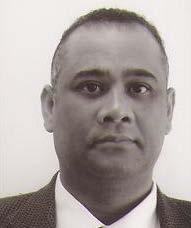
A brief overview of the department
The Entrepreneurship and Business Management Department at Cape Peninsula University of Technology (CPUT) is dedicated to developing the next generation of entrepreneurs, enterprise development practitioners, mentors, SMME advisors, and socio-economic engagement champions. Our innovative courses equip graduates with essential 21stcentury skills to initiate and support small, micro, and medium-sized enterprises (SMMEs) across South Africa, Africa, and globally.
Vision: To become the heartbeat of entrepreneurial, socio-economic, and business development education in Africa.
Mission: To create an enabling environment where teaching, learning, research, and community engagement empower students and staff to apply entrepreneurial skills for Africa’s socio-economic upliftment.
We offer undergraduate qualifications including the Diploma, Advanced Diploma, and Postgraduate Diploma, as well as Master’s and PhD programs. Our approach goes beyond teaching business creation, it cultivates entrepreneurial mindsets and fosters collaboration within a quadruple helix ecosystem that includes civil society, driving innovation and transformation.
Distinctive Programme Features
Our department emphasises practical, hands-on learning, innovation, and social entrepreneurship. Students integrate sustainability into their business models and engage in community projects that address local challenges. A multidisciplinary approach encourages collaboration across faculties, while international exposure prepares students for global markets.
We focus on mindset development, leadership, and soft skills through workshops and mentorship. Strong industry linkages provide real-world insights, and students explore emerging business models and agile strategies. Research and innovation are central, with opportunities for postgraduate specialisation and collaborative projects addressing key economic and social issues. Inclusivity is a core value, ensuring support for students from diverse backgrounds.
Academic Excellence and Staff Expertise
Our team comprises professionals with diverse expertise in research, industry, teaching, and community engagement. Many hold Master’s degrees and are pursuing Doctorates, while senior staff actively supervise postgraduate research. Their collective experience fosters a dynamic learning environment, mentoring students in venture development and embodying resilience, dedication, and excellence.
Departmental and Student Achievements
Graduates have become influential leaders across industries and academia. Student ideas have evolved into award-winning start-ups with real-world impact. The department boasts a strong publication record, strategic partnerships, and high student excellence through impactful projects. New qualifications include Master’s, Doctoral, and Postgraduate Diploma programs, supported by transformation efforts such as inter-university collaborations and industry guest lectures.
Students have earned multiple accolades through ENACTUS and participate in projects via the DAAD and CPUT CESAR initiative. Their achievements are recognised at events like the FBMS Emerging Researcher Conference, and they present research at local and international conferences.
Strategic Partnerships and Industry Engagement
We collaborate with EDHE, THENSA, local businesses, government agencies, and incubators, offering students mentorship, internships, and enterprise development experience. Regular Advisory Board meetings ensure strategic alignment, and international partnerships, such as with the University of Bratislava and Erasmus, expand global engagement. We also maintain strong ties with the Cape Chamber of Commerce and other networks to stay aligned with industry trends.
Successful Alumni
Our alumni have become leaders in sectors including finance, petroleum, academia, public service, NGOs, and agriculture, demonstrating the department’s broad impact.
Social Media
TikTok: @entrepreneurshipcput
Instagram: @entrepreneurshipcput
Twitter: @entrepcput
DEPARTMENT OFFICE-BEARERS
Head of DepartmentMr C Cupido 021 460 3574
Departmental SecretaryMs NS Arendse 021 460 3942
ACADEMIC STAFF
POSITIONNAME
Senior Lecturer
Dr SE Raja Phd (Business Admin); MBA; PGDip: Management; HDE, B.Soc.Sc. 021 460 3623
Lecturer Mr C Cupido ND (Mgt), BTech (Admin Mngt), MBA 021 460 3574
Lecturer Mr S Carr BSc. Ed Maths and Physics, PGCE, MBA 021 464 7255
Lecturer Mr SJ Tlhomola BTech (Mngt), MTech (Ent)021 460 4238
Lecturer ECP
Lecturer ECP
Lecturer (Contract)
Lecturer (Contract)
Lecturer (Contract)
Junior Lecturer (Contract)
Mrs CH Cridland B.Comm, MBL 021 460 4234
Mrs Z Magoda ND Entrepreneurship, BTech Quality, MTech Quality, MTech Business Admin in Entrep
Dr FCG Makoza
CupidoC@ cput.ac.za
ArendseN@ cput.ac.za
D6 Engineering Bld 3rd Flr Room 3.12
D6 Engineering Bld 3rd Flr Room 3.17
RajaS@cput. ac.za
Engineering Bld 3rd Flr Room 3.12
CupidoC@ cput.ac.za
Engineering Bld 3rd Flr Room 3.12
CarrS@cput. ac.za D6 Engineering Bld 3rd Flr Room 3.12
TlhomolaS@ cput.ac.za
CridlandC@ cput.ac.za
021 460 3081
PhD (IS), MCom (IS), B.Sc. (Hon) Business IT 021 460 3946
Mr E Esambe Bachelor of Arts (BA) in English Modern Letters, Honours in English, M.Ed 021 460 3945
Dr R Nchu MTech: Business Admin (Entrepreneurship), PhD: Informatics 021 460 3942
Mr D Koopman BTech Information Technology 021 460 3643
Engineering Bld 3rd Flr Room 3.17E
Engineering Bld 3rd Flr Room 3.17H
NxopoZ@ cput.ac.za D6 Engineering Bld 3rd Flr Room 3.17D
MakozaF@ cput.ac.za
EsambeE@ cput.ac.za
NchuR@cput. ac.za
KoopmanD@ cput.ac.za
D6 Commerce Bld 1st Flr Room 1.1
D6 Engineering Bld 3rd Flr Room 3.17F
D6 Engineering Bld 2nd Flr Room 2.70
D6 Engineering Bld 2nd Flr Room 2.70
QUALIFICATIONS
from 2022 PGPostgraduate Diploma
New from 2023 PGMastersMGBMERMaster of Business and Management Sciences: Entrepreneurship
New from 2023
PGDoctorateDGBMERDoctor of Business and Management Sciences: Entrepreneurship
DIPLOMA IN ENTREPRENEURSHIP
ADVANCED DIPLOMA
SUBJECT GUIDE TO TERMINOLOGY
Please contact your academic department for information on pipeline qualifications and subjects
CO-REQUISITE: A co-requisite subject is one for which a student must be registered together (i.e. concurrently) with another specified subject.
PRE-REQUISITE: A pre-requisite subject is one which a student must have passed in order to gain admission to another subject. For example, Management 1 is a pre-requisite for Management 2.
DIPLOMA SUBJECTS
BUSINESS COMPUTER APPLICATIONS 1
Pre-requisite
Subject outline In this subject, you will be introduced to several computer concepts and environments, which include the following: Computer and Managing Files (Windows 10); Information and Communication (Email and Internet); Basic Concepts of Information Technology (Theory); Word Processing (Microsoft Word 2016); Presentation (Microsoft PowerPoint 2016); Spreadsheets (Excel 2016); Database (Access 2016) . As well as the integration of multiple office applications.
Assessment All assessments are compulsory. Assignments, class tests, tutorials, practical assessments, presentations and summative assessments.
COMMUNICATION 1
Pre-requisite
Subject outline This subject focuses on human communication in a variety of formats media and contexts. (Moreover the business context). Subject content includes: Instruction in the theory and practice of interpersonal, group, professional and intercultural communication; Speaking and listening, reading, writing as well as verbal and non-verbal interaction; Argumentation and persuasion; Technologically mediated communication and various contextual applications.
Assessment All assessments are compulsory. Assignments, class tests, tutorials, practical assessments, presentations and summative assessments.
FINANCIAL MANAGEMENT 1
Pre-requisite
Subject outline Introduces the foundation of accounting principles and highlights a variety of financial/financing decisions used/made in a business setting. Areas covered include: Introduction to accounting: Accounting equations. Analysing, synthesising and evaluating: General Ledgers; Accounting Journals; Trial Balance; Financial Statements and Bank Reconciliation Statement.
Assessment All assessments are compulsory. Assignments, class tests, tutorials, practical assessments, presentations and summative assessments.
Business and Management Sciences
DEPARTMENT OF ENTREPRENEURSHIP AND BUSINESS MANAGEMENT
ENTREPRENEURSHIP 1
Pre-requisite
Subject outline Applies fundamentals of Entrepreneurship most relevant to starting /managing a business. The subject prepares the student to understand entrepreneurship within the South African context as well as globally, to be creative, innovative and to spot viable business opportunities. The subject concentrates on: Introduction to entrepreneurship and small business; The environment for entrepreneurship; The entrepreneur; The entrepreneurial process; The business plan (Defining the concept and providing the basic structure); Entering the world of business (Forms of ownership); Marketing (as a component of a business plan);Human Resource Management(as a component of a business plan);Financial Management(as a component of a business plan) and Franchising, BEE, Ethics and Social Responsibility.
Assessment
MARKETING 1
Pre-requisite
Subject outline
All assessments are compulsory. Assignments, class tests, tutorials, practical assessments, presentations and summative assessments.
Marketing 1 aims to transfer the necessary knowledge, skills and attitude to apply marketing principles in an entrepreneurial setting/business environment. The subject highlights the important interface between Marketing and successful Entrepreneurship and covers areas such as: Practicing a culture of Marketing; conducting a marketing situation analysis; Demonstrating an understanding of the competitive environment; Monitoring marketing information and collecting and processing marketing data; Demonstrating an understanding of the target market; Demonstrating an understanding of product positioning; Identifying the brand mix elements; Creating a culture of customer service in the supply chain; Understanding Pricing Strategies and Services Marketing.
Assessment All assessments are compulsory. Assignments, class tests, tutorials, practical assessments, presentations and summative assessments.
BUSINESS COMPUTER APPLICATIONS 2
Pre-requisite: Business Computer Applications 1
Subject outline: Business Computer Applications 2 represents an important stepping stone for e-Business. It explores the internet as a viable tool for setting up and running a business as well as the day to day usage of the internet within a business. Areas of focus include: Introduction and emergence of e-commerce(In the context of SMME’s); The business impact of the internet; The infrastructure for e-commerce; Online security and risk management; Principles of online marketing; The supply chain and e-procurement; Business to business marketplaces; E-government and e-learning and The future of e-commerce.
Assessment: All assessments are compulsory. Assignments, class tests, tutorials, practical assessments, presentations and summative assessments.
FINANCIAL MANAGEMENT 2
Pre-requisite: Financial Management 1
Subject outline: Builds-up from Financial Management 1and emphasis is on understanding the financial implications of decision-making and what impact they have on the business. The content is structured around Financial Modalities, Concepts, and pre- dominantly the Fundamentals of Time Value for Money; Financial Management decision making, tasks and goals; Financial Markets Environment; Introduction to Interest Rates Calculations: TVM; Higher Purchase (HP) Loan agreements; Amortised Loans; Valuation: Financial Assets; Bonds (Debt) Valuation; and Working Capital Management.
Assessment: All assessments are compulsory. Assignments, class tests, tutorials, practical assessments, presentations and summative assessments.
BUSINESS MANAGEMENT 2
Pre-requisite: Entrepreneurship
1
Subject outline: Builds on the fundamentals of Entrepreneurship 1 and prepares the student to be able to compile a business plan and conduct a few analyses that are critical to business success. The subject also facilitates a Service-Learning component (20% of final year mark) that allows students to get practical exposure in areas such as: Developing successful business ideas; Feasibility analysis; Writing a business plan; Industry and competitor analysis; Preparing the proper Ethical and Legal foundation; Getting Finance; Managing and growing an entrepreneurial firm and Strategies for growth and Franchising.
Assessment: All assessments are compulsory. Assignments, class tests, tutorials, practical assessments, presentations and summative assessments.
ECONOMICS 1
Pre-requisite:
Subject outline: Economics 1 provides an overview of microeconomics and macroeconomics. At this stage, students will be exposed to the study of the production, conservation and allocation of resources under conditions of scarcity as well as instruction in comparative economic systems, utility theory, demand and supply, elasticity, market structures and the theory of the firm.
Assessment: All assessments are compulsory. Assignments, class tests, tutorials, practical assessments, presentations and summative assessments.
MARKETING 2
Pre-requisite: Marketing 1
Subject outline: This course provides an in-depth study of Strategic Marketing tailored for entrepreneurs and business owners, building on concepts introduced in Marketing 1. Strategic marketing is centred on attracting the right audience and building brand loyalty, which is essential for driving growth and resilience within an organisation. The curriculum emphasises market analysis, identifying target customers, and developing effective marketing strategies. The goal is to deliver exceptional customer value and improve overall organisational performance.
Assessment: All assessments are compulsory. Assignments, class tests, tutorials, practical assessments, presentations and summative assessments.
SMALL
Business and Management Sciences
DEPARTMENT OF ENTREPRENEURSHIP AND BUSINESS MANAGEMENT
MERCANTILE LAW
Pre-requisite:
Subject outline: This subject is designed to introduce students to the fundamental principles of law of contracts and the relevant legislation that has a bearing on them. It also provides knowledge of the management of employment relationships and its related legislation. Content covered in this subject includes: Introduction, Definition, Parties to the employment relationship; The historical development of labour relations in South Africa; Employment Contracts; Labour legislation in South Africa; Grievance Procedures, Disciplinary Procedures, Retrenchments; Relationship with a Trade Union (Collective Bargaining); Negotiation; Disputes and Dispute Resolution; The requirements for a valid contract, intention, consensus, contractual capacity, lawfulness, formalities and possibility of performance; The general content and interpretation of a contract; Breach of contract, remedies and termination; Specific commercial contracts include, but are not limited to, contracts of sale and lease, credit agreements, agency, surety and other forms of security, insurance and partnership agreements and The effect of relevant provisions of, for example, the Consumer Protection Act on the rights and obligations of the parties to the contract.
Assessment: All assessments are compulsory. Assignments, class tests, tutorials, practical assessments, presentations and summative assessments.
Comment: Subject presented by the Unit for Applied Law
FINANCIAL MANAGEMENT 3
Pre-requisite: Financial Management 2
Subject outline: This subject expands on the content of Financial Management 2. It uses case studies to provide a deeper understanding of the financial implications of decision-making and what impact, they have on the business. Financial Management 3 enables the student to present and communicate complex information relating to: Financial Management; Overview/Work Program; Financial Management Decision Making; Financial Management Goals; Company Financial Statement Analysis; Analysis of the listed income statement; Analysis of the listed Balance Sheet; Capital Budgeting Principles; Capital Budgeting Techniques; The Management of accounts receivable; Cost of Capital and Enterprise Valuation.
Assessment: All assessments are compulsory. Assignments, class tests, tutorials, practical assessments, presentations and summative assessments.
SMALL BUSINESS MANAGEMENT 3
Pre-requisite: Small Business Management 2
Subject outline: The focus here is centred on the expansion of an enterprise by exploring the following areas: The module provides learners with fundamental theoretical and practical experience to run and start their businesses Entering Family Business; Buying a franchise; The business buyout; Growth Strategies; Business Failure and turnaround strategy; Harvesting and exiting the venture; The business plan (Completion of a bankable business plan) and Corporate Entrepreneurship.
Assessment: All assessments are compulsory. Assignments, class tests, tutorials, practical assessments, presentations and summative assessments.
SMALL BUSINESS OPERATIONS
Pre-requisite:
Subject outline: The emphasis is on production systems, and materials requisition management within an entrepreneurial firm. The topics covered include: Product Development; Production and Manufacturing; Equipment maintenance management; Production control; Productivity analysis; Strategic manufacturing policy; Materials planning and Plant Management and ergonomics.
Assessment: All assessments are compulsory. Assignments, class tests, tutorials, practical assessments, presentations and summative assessments.
ENTREPRENEURIAL PRACTICE (WIL)
Pre-requisite: Small Business Management 2
Subject outline: Presents a real-world experience to students by placing them (for 3 Months) in small businesses, banks, government departments or agencies as well as big corporations to gain practical experience of the field.
Assessment: An assessment of a practical portfolio of the work place.
ADVANCED DIPLOMA SUBJECTS
Note: Admission requirements to register for the Advanced Diploma applies
ENTERPRISE DEVELOPMENT
Pre-requisite:
Subject outline:
Enterprise development can be viewed as an activity that assists or accelerates the development, sustainability and ultimately financial independence of an enterprise. This subject finds its underpinning knowledge in Small Business Management 3 (as in the diploma) and focuses on the total development of an entrepreneurial venture.
The subject serves as the backbone of this qualification. It takes students on a journey of conceptualization and execution of entrepreneurial ideas by exposing them to the following areas: entrepreneurial human capital; entrepreneurial social capital; entrepreneurial environment; entrepreneurial intentions and opportunities; preparing a business plan; selecting a venture form; SA policy framework for start-ups; strategic entrepreneurship; international entrepreneurship, business plan; and impact of technology in entrepreneurship.
Enterprise Development, as a subject, carries the credits not only in terms of the above but also for the integrated workplace project.
Assessment: All assessments are compulsory. Assignments, class tests, tutorials, practical assessments, presentations and summative assessments.
ENTREPRENEURIAL FINANCE
Pre-requisite:
Subject outline:
Entrepreneurial Finance encompasses aspects of financial management which entail the planning, organising, directing and controlling of financial activities such as procurement and utilisation of funds for the enterprise. A good financial system therefore allows for optimum fund utilisation, return on investment, sound capital structure as well as insuring a regular and adequate supply of funds to the enterprise.
The subject introduces students to advanced theory as well as practical elements of managing finances within an enterprise. The entrepreneurial finance process starts with the estimation of funds needed, followed by the composition of capital required, choice of funding resources and the optimum utilisation thereof. It further allows the student to acquaint himself/herself with the practice of record keeping, analysis of financial statements and measuring performance.
The development of a business plan, as part of the integrated workplace project, will reflect the students understanding and ability to apply the above knowledge areas as well as aspects such as budgeting and cash flow.
Assessment: All assessments are compulsory. Assignments, class tests, tutorials, practical assessments, presentations and summative assessments.
MANAGEMENT FOR ENTREPRENEURS
Pre-requisite:
Subject outline: Achieving success as an entrepreneur necessitates not only enthusiasm but also a robust set of management skills that are critical for fostering business growth. The field of Management for Entrepreneurs transcends conventional management practices, placing a significant emphasis on creativity and innovation as essential components of the decision-making process.
As business growth can occur in both local and international contexts, this subject equips students with the necessary competencies to evaluate the viability of South African entrepreneurial ventures across diverse markets, including regional groupings such as SADC, COMESA, and BRICS.
The curriculum is systematically organised around key phases of strategic management, which serve as a foundation for comprehending globalisation. It offers students a comprehensive understanding of strategy while simultaneously enhancing their analytical abilities and critical thinking in relation to pressing domestic and global strategic management issues pertinent to entrepreneurship.
The topics addressed encompass strategic analysis, which involves a thorough examination of both internal and external environmental factors. Additionally, the curriculum covers the development and implementation of strategies aimed at providing clear direction and optimizing enterprise performance. It also incorporates discussions on trade agreements, ethical considerations, and corporate social responsibility (CSR), thereby fostering a holistic understanding of the multifaceted nature of entrepreneurship.
Areas covered include strategic analysis (including internal and external environmental factors), strategy development and strategy implementation to provide a clear direction for the enterprise as well as increasing the enterprise performance. Trade agreements, ethics, and corporate social responsibility (CSR) are also included.
Assessment: All assessments are compulsory. Assignments, class tests, tutorials, practical assessments, presentations and summative assessments.
PROJECT MANAGEMENT
Pre-requisite:
Subject outline: Project management is a methodical approach to planning and guiding project processes from start to finish. Entrepreneurs strive to deliver high quality goods and services to a target market by using the processes of initiation, planning, executing, controlling, and closing.
The process of producing high quality goods and services requires careful planning and coordination of theresources that are to be deployed. In project management, activities and or tasks are not just dabbled into. They are usually well thought-out. Therefore this subject will provide a structural and logical approach to project management as well as an outline of the planning, co-ordination and control techniques which are utilised by entrepreneurs. This subject will also provide better intelligence for conceptualising and acting upon the myriad choices that confront the conscientious entrepreneur.
Projects are one time unique opportunities to deliver a quality good or service in, very often, uncertain environments therefore it is essential to prepare students to efficiently and effectively identify, manage and execute projects successfully. Key concepts in this subject include: Feasibility Study; Project Selection; Project Life Cycle; Project Scope Management, Project Estimation; Quality Management; Risk Management; Project Closure; Project Planning & Control as well as Post Project Management.
Project Management tools and techniques are essential for business success and this subject takes students through the following: Work Breakdown Structure (WBS); Gantt Chart; Critical Path Method and Network Diagram.
The subject content enables students to execute an integrated (across all subjects) work place project. The outcome can be either in the form of a research paper or a business concept.
Assessment: All assessments are compulsory. Assignments, class tests, tutorials, practical assessments, presentations and summative assessments.
DEPARTMENT OF ENTREPRENEURSHIP AND BUSINESS MANAGEMENT
Business and Management Sciences
DEPARTMENT OF ENTREPRENEURSHIP AND BUSINESS MANAGEMENT
RESEARCH METHODOLOGY
Pre-requisite:
Subject outline:
Research is a process that is undertaken in a systematic way in order to find out things thereby increasing knowledge. Whatever we do, even listening to the radio, watching television or reading the newspaper, it is difficult to avoid the term research. The results of research are all around us, therefore the ability to conduct research in business is just as important as it leads to informed decision making as well as opportunity identification.
Research Methodology prepares students to undertake business related research projects using the basic research framework. When applied in the context of a business, the research proposal includes identifying a research topic, stating a problem and hypothesis/objectives and determining the relevant research methodology. Students are also acquainted with report writing which encapsulates the results, findings and recommendations. In addition, students are taken through procedures and guidelines in terms of plagiarism and copyright, confidentiality, ownership and professionalism as well as how to obtain permission and ethical clearance from relevant authorities in order to execute the research proposal /work placed project/business plan/research poster/researcharticle.
This subject forms the basis for the integrated work place project and for writing the business plan.
Assessment: All assessments are compulsory. Assignments, class tests, tutorials, practical assessments, presentations and summative assessments.
POSTGRADUATE DIPLOMA SUBJECTS
Note: Admission requirements to register for the Postgraduate Diploma applies
ENTERPRISE DEVELOPMENT MANAGEMENT
Pre-requisite:
Subject outline: Enterprise development programs are designed to equip business professionals with the essential knowledge, skills, and experience needed to grow their enterprises. This enables them to secure sustainable livelihoods and enjoy long-term benefits. In contrast, enterprise management focuses on applying entrepreneurial knowledge and skills to enhance the effectiveness of business ventures. The primary goal of enterprise development management is to create clear and integrated strategies and activities that not only foster the growth of individual enterprises but also contribute to economic development and maximize job creation opportunities. These strategies play a crucial role in accelerating the development, sustainability, and financial success of businesses.
This subject is rooted in the principles covered in Enterprise Development 4 (part of the Advanced Diploma in Entrepreneurship) and focuses on nurturing the professional growth of entrepreneurial managers. It serves as the cornerstone of the qualification, guiding students through a journey of conceptual understanding and practical application in key areas such as managing diversity in a global environment, creative problem-solving and decision-making, human resource management, organizational leadership, and operational control with respect to quality and productivity.
Assessment: All assessments are compulsory. Assignments, class tests, tutorials, practical assessments, presentations and summative assessments.
ENTREPRENEURIAL MANAGERIAL FINANCE
Pre-requisite:
Subject outline: Managerial Finance and its lack of implementation has been flagged as one of the causes of premature enterprise failure and the aim of this subject therefore is to equip the student with quintessential financial decision making, evaluate good business opportunities, manage the financial division of an enterprise or his/her own. The Entrepreneurial Managerial Finance subject will cover the following areas/modules to equip the students:
Financial Managerial principles: This module will cover the different types of business entities and the goals of managerial finance.
Financial Calculation: Under this subject the student will be expose to financial performance measures and ratios. Trading account analysis (Mark-up, Profit analysis and its effects on the net operating profits)
Financial Statements: This module will cover the enterprise’s financial statement analysis, to instill a cogent understanding of how it is inter-related to each other and laying the foundation of futuristic scenario planning and pro-active financial management.
Financial Accounting Principles: This module will cover the accounting principles and methods including the different forms of budgeting and cash flow principles and its conformance to the legal framework of finance
Credit and Risk Management: In this module the student will be subject to how to establish a credit policy, standards and processes within the financial legal framework.
Costing Principle: The various types of costing methodologies related to running a business or rendering a services.
Assessment: All assessments are compulsory. Assignments, class tests, tutorials, practical assessments, presentations and summative assessments.
DEPARTMENT OF ENTREPRENEURSHIP AND BUSINESS MANAGEMENT
Business and Management Sciences
DEPARTMENT OF ENTREPRENEURSHIP AND BUSINESS MANAGEMENT
CORPORATE PROCEDURES
Pre-requisite:
Subject outline: This subject aims to provide candidates with the theoretical foundation of the law relating to the lifespan of a business entity as contained in the Companies Act, 2008 and the Close Corporation Act 1984, the Regulations promulgated in terms thereof, and its practical application within a corporate setting as required by the Companies and Intellectual Property Commission (CIPC). The learner is therefore prepared to acquire the knowledge of the law that governs the lifespan of a business entity, the procedure that is prescribed for its formation, conversion, administration and dissolution and to execute these actions in practice.
It provides the supporting framework for the subject Enterprise Development Management, which requires a thorough understanding of the legal framework that governs the enterprise and the compliance standards that the entrepreneur must meet. The subject further draws upon Entrepreneurial Managerial Finance which requires a thorough understanding of the reporting standards that the entrepreneur must meet.
The main focus of the subject is on exposing the entrepreneur as manager to the theory, procedure and practice of the administration of business entities which require meeting the compliance and reporting standards prescribed by the Companies Act, Regulations and practice notes.
Assessment: All assessments are compulsory. Assignments, class tests, tutorials, practical assessments, presentations and summative assessments.
INNOVATIVE THINKING AND MANAGEMENT
Pre-requisite:
Subject outline: Building a successful enterprise, and repeatedly introducing innovations to the market, is a daunting managerial challenge.
In this subject students will be made acquainted with innovative thinking - the procedure of translating an idea or invention into a good or service that creates value or for which customers will pay. The procedure of translating an idea should be carefully controlled by a process called innovative management. Innovation management involves the managing of an organization’s innovation procedure, starting at the initial stage of generation, through selection, implementation, sustaining to diffusion. It encompasses the decisions, activities and practices of devising and implementing an innovation strategy. New product (including processes and services) planning and development are vital to an organisation’s success and sustainability.
This subject’s focus is to enable the student to understand that (1) the economic intricacies of firms depends on their ability to meet the needs of the market by constantly innovating and creating products that have the capacity to strongly compete in it; (2) competition is strong and dynamic in emerging markets on the global platform. So it is essential for an enterprise to keep developing new products – as well as modifying its current products – to meet the changing customer needs and competitors’ actions; (3) focusing on new offerings instead of existing offerings and using old methods that stagnate business strategies, will not insure a competitive advantage to the business over the long term.
Assessment: All assessments are compulsory. Assignments, class tests, tutorials, practical assessments, presentations and summative assessments.
INTEGRATED BUSINESS PROJECT (MODULE A)
Pre-requisite:
Subject outline: Building a successful enterprise, and repeatedly introducing innovations to the market, is a daunting managerial challenge.
In this subject students will be made acquainted with innovative thinking - the procedure of translating an idea or invention into a good or service that creates value or for which customers will pay. The procedure of translating an idea should be carefully controlled by a process called innovative management. Innovation management involves the managing of an organization’s innovation procedure, starting at the initial stage of generation, through selection, implementation, sustaining to diffusion. It encompasses the decisions, activities and practices of devising and implementing an innovation strategy. New product (including processes and services) planning and development are vital to an organisation’s success and sustainability.
This subject’s focus is to enable the student to understand that (1) the economic intricacies of firms depends on their ability to meet the needs of the market by constantly innovating and creating products that have the capacity to strongly compete in it; (2) competition is strong and dynamic in emerging markets on the global platform. So it is essential for an enterprise to keep developing new products – as well as modifying its current products – to meet the changing customer needs and competitors’ actions; (3) focusing on new offerings instead of existing offerings and using old methods that stagnate business strategies, will not insure a competitive advantage to the business over the long term.
Assessment: All assessments are compulsory. Assignments, class tests, tutorials, practical assessments, presentations and summative assessments.
INTEGRATED BUSINESS PROJECT (MODULE B)
Pre-requisite: Integrated Business Project (Module A)
Subject outline: The subject Integrated Business Project (Module B) is a continuation of Integrated Business Project (Module A) to complete the integrated business project report (subject outcome). The main focus of this subject is to execute the business research proposal compiled in the subject; Integrated Business Project (Module A). Students must demonstrate advance knowledge of the research process including identifying current business challenges and investigate alternate possible solutions to ensure sustainability of the enterprise; and the use of various high level statistical software will be required to analyse and interpret data to present inferential and descriptive modes of research.
This subject, Integrated Business Project will cover an integration of the other four (4) subjects that are offered on the programme. Students are therefore required to identify an industry problem from a business of their choice. The study should emulate in the real world setting and develop the means, applying research methodology to address the stated problem with the outcome of an end product that can be used as a framework to address the problem.
The subject is subjected to continuous assessment concluded with, the submission/presentation of a report relevant within the specialised field/professional practice in pure academic report writing format. The report will be assessed by the various postgraduate diploma subject lecturers and also external moderators taking into consideration the subject outcomes and associated assessment criteria.
Assessment: All assessments are compulsory. Assignments, class tests, tutorials, practical assessments, presentations and summative assessments.

AND INFORMATION ADMINISTRATION
Dr F Mohsam
A Brief Overview of the Department
The Business and Information Administration (BIA) Department is dedicated to developing multifaceted, futureready professionals equipped with the academic, professional, and personal skills essential for success in Business Administration and Business Information Systems. Home to a diverse and experienced team of 17 academic staff members across the District Six and Wellington campuses, the department currently serves over 1,300 students.
BIA plays a critical role in shaping graduates who are:
• Digitally skilled, with expertise in Information Systems and administrative technologies.
• Business-minded, capable of contributing to strategic and operational objectives.
• Future-focused, adaptable, and resilient in rapidly evolving industries.
• Ethically grounded, committed to professionalism, integrity, and lifelong learning.
By integrating academic excellence with industry relevance, the department ensures its graduates are not only employable but prepared to lead, innovate, and add meaningful value in contemporary workplaces.
Unique Aspects of the Programmes Offered
The BIA department’s programmes are uniquely designed to meet industry needs, integrating theoretical knowledge with practical application. A key highlight is the six-month Work-Integrated Learning (WIL) experience, which bridges the gap between academic study and the world of work. As industries move towards digital platforms, administrators who understand Information Systems and AI-Human Collaboration, can drive transformation initiatives and ensure that their respective organisations remain competitive.
Programmes offered: Diploma in Business and Information Administration; Advanced Diploma in Business and Information Administration; Postgraduate Diploma in Business and Information Administration; Master of Business and Information Administration; and a Doctorate in Business and Management Sciences: Business & Information Administration.
From the undergraduate diploma to the doctoral level, the key focus in the department is to address critical skills shortages by producing highly competent graduates. Core learning outcomes include the ability to:
• Analyse components of modern organisations and their Information Systems.
• Assess the impact of systems on individuals, business environments, and ethical decision-making.
• Communicate effectively in both interpersonal and corporate contexts.
• Understand key business components.
A distinguishing feature of the department is its commitment to an all-inclusive and affirming student development approach; a focus on civic responsibility through community engagement projects and entrepreneurial initiatives embedded in the curriculum which encourages students to apply their skills while contributing to social development and growth.
Graduate Attributes developed:
• Knowing and doing
• Technological capability and foresight
• Resilience and problem-solving
• Relational capability
• Ethical capability
The department integrates 21st-century skills, and covers a range of subjects, such as practical Business Application programmes which is laboratory based and simulates real workplace tasks using Microsoft Office tools, Business Administration, Business Information Systems, Communication, Legal Practice, Accounting, Diversity Management, Law of Contract, Workplace Psychology and Business and Information Administration Practice.
Quality of Teaching, Research and Academic Staff
BIA is distinguished by its academically and professionally qualified staff, many of whom bring significant industry experience into their teaching. The department’s pedagogy is student-centred and technologically enriched, supported by:
• Guest lectures from industry professionals and alumni.
• Locally relevant case studies and organisational site visits.
• Active lear ning strategies that promote participation and critical engagement.
• Research collaboration and guest lecturers in various fields focusing on qualitative and quantitative methodologies and cross-supervision of post-graduate students.
The curricular integration of social justice projects further strengthens the student experience by fostering social awareness and empowering students as active agents of change. Service-learning initiatives focus on corporate social investment (CSI) and support communities in Cape Town and Wellington through targeted fundraising and development projects.
Academic Leadership
The department’s strong academic leadership is evident in its passionate and engaged academics; growing number of doctoral-level staff and ongoing academic engagement in teaching, research and community service. Staff are actively involved in national and international academic networks, with a particular emphasis on collaborations across the African continent.
Academic exchange programmes in India, Turkey, Portugal, Angola, and Russia (Moscow) have further enriched the department’s global perspective. The Head of Department continues to champion scholarly growth and internationalisation efforts. The department engages in multi-disciplinary research projects, focusing on interdepartmental collaboration, community engagement, and publication of accredited research outputs.
Successful Alumni
Skills acquired in the BIA programmes prepare graduates to lead in various industries, and a few of our graduates’ roles in organisations highlighted below:
Shareef Cornelius: Senior Software Engineer at Philips Medical, driving the digitalisation of healthcare to improve local healthcare, infrastructure, and train local healthcare professionals.
Ortem Callaghan: SAP Certified associate and SAP Consultant working for Bulheller Consulting (Pty) Ltd, and Consulting for Mercedes-Benz South Africa.
Charlton Brandt: Business Specialist: Data Management and Analysis at Old Mutual, providing financial solutions in South Africa, the rest of Africa and certain other emerging markets.
Celiwe Mabaleka: Registrar at the Western Cape College of Emergency Medical Services, Western Cape Government.
Ismaeel Jacobs: Learning and Development Specialist at Flash, a South African fintech company, that strives to make people’s lives easier using technology.
DEPARTMENT OFFICE-BEARERS
Head of Department Dr F Mohsam 021 460 3113 mohsamf@cput ac.za D6 Commerce Bld 2nd Flr Room 2.9
Departmental SecretaryMs CN Taillard 021 460 3651 TaillardC@cput.ac.za D6 Commerce Bld 2nd Flr Room 2.9
ACADEMIC STAFF
POSITIONNAME
Senior Lecturer
Senior Lecturer
LecturerECP
Ms AD Richards MBA 021 460 3653RichardsM@cput. ac.za D6 Commerce Bld, 1st Flr, Room 1.26
Dr MS Tshinu PhD: Information Systems 021 460 3956TshinuS@cput.ac.zaD6 Commerce Bld, 3rd Flr, Room 3.35
Mr AR Jacobs Masters in English 021 460 3490JacobsaR@cput. ac.za D6, Commerce Bld, 1st Flr, Room 1.9
LecturerDr MA Badat PhD: Business Leadership 021 460 3515/ 021 864 5291
BadatM@cput.ac.zaD6, Commerce Bld, 1st Flr, Room 1.9 or Wellington Campus
LecturerMr A Gaffoor MTech: BA021 460 3488GaffoorA@cput.ac.zaD6, Commerce Bld, 1st Flr, Room 1.27
LecturerMs V Jagunandan Masters: Business Management TBC jagunandanv @cput.ac.za D6, Commerce Bld, 2nd Flr, Room 2.9
LecturerMr FE Chu MA English021 460 7231/ 021 864 5513
ChuF@cput.ac.zaD6, Commerce Bld, 2nd Flr, 2.29
LecturerDr MP Da Costa DTech: OMT021 460 3295DacostaM@cput. ac.za D6, Commerce Bld, 3rd Flr, Room 3.23
LecturerMr PDEV Le Roux MBA 021 460 3487/ 021 864 5511
LeRouxPD@cput. ac.za D6 Commerce Bld, 1st Flr, Room 1.30 or Wellington Campus
LecturerMr D Dyers MSc: Maritime & Air Transport Management 021 460 9053DyersD@cput.ac.zaD6, Commerce Bld, 1st Flr, Room 1.19
LecturerMrs N Miller Masters: Business Administration 021 460 8336MillerN@cput.ac.zaD6, Commerce Bld, 1st Flr, Room 1.21
LecturerDr F Mohsam DTech: Informatics 021 460 3259mohsamf@cput. ac.za
D6, Commerce Bld, 3rd Flr, Room 3.47
LecturerMr PM Mtwana Masters in Literature 021 460 7235MtwanaP@cput. ac.za D6, Commerce Bld, 3rd Floor, Room 3.10
Junior Lecturer Ms ML Dos Santos BTech: Commercial Administration 021 460 3489DossantosM@cput. ac.za D6, Commerce Bld, 1st Flr, Room 1.28
LecturerMs H Nxozi MTech: Business Administration 021 460 3251Nxozih@cput.ac.zaD6, Commerce Bld, 1st Flr, Room 1.22
LecturerMs V Harry MBA 021 460 3152HarryV@cput.ac.zaD6, Commerce Bld, 3rd Flr, Room 3.24
Coordinator: FBMS WIL: BIA Dept Mrs DM Jansen MBA 021 460 3566JansenD@cput.ac.zaD6, Commerce Bld, 1st Flr, Room 1.29
LecturerDr C Pharoah PhD: Management TBC Pharoahc@cput. ac.za D6, Commerce Bld, 2nd Flr, Room 2.9
QUALIFICATIONS OFFERED
Please contact your academic department for information on pipeline
out Undergrad or Postgraduate
New from 2016 PG Non-Degree (to be registered in conjunction with the Masters Degree)
and subjects
ARTBUS B Tech: Articulation: Business & Management Sciences (Students registering on the new Masters (MGOMTR) are required to add articulation subjects to their registration)
New from 2024 PGDoctoral Degree DGBMIR Doctor of Business & Management Sciences: Business & Information Administration
New from 2024 PGDoctoral Degree DGBMIR Doctor of Business & Management Sciences: Business & Information Administration
Six (full-time)
(part-time)
DIPLOMA IN BUSINESS AND INFORMATION ADMINISTRATION
DIPLOMA IN BUSINESS AND INFORMATION ADMINISTRATION
DIPLOMA IN BUSINESS AND INFORMATION ADMINISTRATION
IN BUSINESS
ADVANCED DIPLOMA
DEPARTMENT OF
AND INFORMATION ADMINISTRATION
SUBJECT GUIDE TO TERMINOLOGY
Please contact your academic department for information on pipeline qualifications and subjects
CO-REQUISITE: A co-requisite subject is one for which a student must be registered together (i.e. concurrently) with another specified subject.
PRE-REQUISITE: A pre-requisite subject is one which a student must have passed in order to gain admission to another subject. For example, Management 1 is a pre-requisite for Management 2.
DIPLOMA SUBJECTS
BUSINESS ADMINISTRATION 1
Pre-requisite:
Subject outline: Students are exposed to a critical evaluation of the economic and business environment in which they will be operating and the role they will play in maintaining and developing it. Aspects such as economic principles, business sectors, forms of ownership, entrepreneurship, the need for effective planning, organising, leading and controlling (POLC) within the administrative environment and an introduction to other business functions are dealt with.
Assessment: All assessments are compulsory. Assignments, class tests, tutorials, practical assessments, presentations and summative assessments.
BUSINESS ADMINISTRATION 2
Pre-requisite:
Business Administration 1
Subject outline: Students will discuss the need for effective planning, organising, leading and controlling within an administrative environment, and will learn how to apply these concepts; apply problemsolving techniques to improve organisational performance; apply conflict management theory and techniques to resolve conflict in the workplace; apply change productivity and safety in the workplace; apply basic workflow techniques to improve productivity in the workplace and discuss economic principles affecting human resources management.
Assessment: All assessments are compulsory. Assignments, class tests, tutorials, practical assessments, presentations and summative assessments.
BUSINESS ADMINISTRATION 3
Pre-requisite: Business Administration 2
Subject outline: Students will learn how to interpret basic economic concepts and principles and recognise the inter-relatedness between human resources management and the economic environment; apply and interpret the processes of acquiring, retaining, developing and motivating the most important resource that any organisation possesses, namely staff or personnel, so that they become an asset to the organisation in a globalised world; interpret the primary labour legislation prescripts (Labour Relations Act, Basic Conditions of Employment Act and Employment Equity Act) to develop a realistic appreciation for and conceptualise practical and sustainable solutions to the many challenges facing the management of human resources relating to its role and function in the labour relations landscape of South Africa.
Assessment: All assessments are compulsory. Assignments, class tests, tutorials, practical assessments, presentations and summative assessments.
BUSINESS APPLICATIONS 1
Pre-requisite:
Subject outline: Students successfully completing this course will be able to process text (computer literacy) and data in office automation; understand the flow of information: origination, input, processing, production, output, reproduction, storage, retrieval and distribution, communication; demonstrate knowledge of computer hardware and software (word processing, spreadsheets, presentations and databases), types of computers, hardware components, peripherals, computer viruses and the care and maintenance of equipment; demonstrate knowledge of file management skills, copying and deleting files and the storage and retrieval of documents for editing; apply keyboarding and mouse skills effectively; apply correct presentation skills and the layout/formatting of text; opening and printing of documents and files for editing.
Assessment: All assessments are compulsory. Assignments, class tests, tutorials, practical assessments, presentations and summative assessments.
BUSINESS APPLICATIONS 2
Pre-requisite: Business Applications 1
Subject outline: This subject focuses on various software applications of which the skills acquired assist in understanding and coping with the impact of the ever-changing computer technology in business environments. Business applications in word processing, spreadsheets, presentations and databases on an intermediate level. Additionally, specialised business applications in project management and accounting will also be introduced.
Assessment: All assessments are compulsory. Assignments, class tests, tutorials, practical assessments, presentations and summative assessments.
DEPARTMENT OF BUSINESS AND INFORMATION ADMINISTRATION
Business and Management Sciences
DEPARTMENT OF BUSINESS AND INFORMATION ADMINISTRATION
BUSINESS APPLICATIONS 3
Pre-requisite:
Business Applications 2
Subject outline: This course focuses on complete advanced functions in word processing, spreadsheets, graphic and macro skills and databases, as well as project management applications.
Assessment: All assessments are compulsory. Assignments, class tests, tutorials, practical assessments, presentations and summative assessments.
BUSINESS ACCOUNTING
Pre-requisite:
Subject outline: After completing this subject, students should have both a solid foundation and knowledge of the fundamental principles of accounting (from a user’s perspective). Topics include basic accounting terminologies, equations and transactions; basic financial statements, journals and ledgers; ratio analysis; value added tax (VAT); bank reconciliation, petty cash and cash budgets.
Assessment: All assessments are compulsory. Assignments, class tests, tutorials, practical assessments, presentations and summative assessments.
BUSINESS INFORMATION SYSTEMS 1
Pre-requisite:
Subject outline: Students will demonstrate basic knowledge of Information System components for instance, data and information, hardware, software, storage and communications. The subject also exposes students to concepts related to the Internet, the Web, Electronic Commerce and the privacy, security and ethical issues related to these technologies.
Assessment: All assessments are compulsory. Assignments, class tests, tutorials, practical assessments, presentations and summative assessments.
BUSINESS INFORMATION SYSTEMS 2
Pre-requisite:
Business Information Systems 1
Subject outline: The subject provides the basis for understanding ever-changing computer technologies and the impact thereof on people and their business environments. By the end of this course students will have gained competence in various topics related to information systems, from the description of different information systems applicable to modern organisations and their impact on business operations to the mastering of interconnectedness and ways of building these information systems.
Assessment: All assessments are compulsory. Assignments, class tests, tutorials, practical assessments, presentations and summative assessments.
BUSINESS INFORMATION SYSTEMS 3
Pre-requisite: Business Information Systems 2
Subject outline: The subject comprises of principles of systems development life cycle, information systems for management and telecommunication. It is intended to equip students with theoretical as well as practical applications in terms of how these modules relate to the working environment. Students should be able to apply the concepts of data and telecommunications and evaluate all types of networks and other current technologies, analyse information systems and subsystems, taking systems development into account in a six-phase systems development life cycle (SDLC), as well as analyse the role of management in a technological environment and relate this to the various information systems and subsystems.
Assessment: All assessments are compulsory. Assignments, class tests, tutorials, practical assessments, presentations and summative assessments.
COMMUNICATION 1
Pre-requisite:
Subject outline: Communication theory, comprehensive and critical reading, small group communication, conflict management and resolution, intercultural communication, listening and oral communication theory, academic writing, information literacy, plagiarism and referencing, business correspondence, meetings, report writing.
Assessment: All assessments are compulsory. Assignments, class tests, tutorials, practical assessments, presentations and summative assessments.
COMMUNICATION 2
Pre-requisite: Communication 1
Subject outline: Small group communication, conflict management and resolution, intercultural communication, academic writing, information literacy, plagiarism and referencing, business correspondence, meetings, report writing, social media, professional self-development, work preparedness skills (CV writing, cover letter, interviews).
Assessment: All assessments are compulsory. Assignments, class tests, tutorials, practical assessments, presentations and summative assessments.
DIVERSITY MANAGEMENT
Pre-requisite:
Subject outline: The curriculum equips students with theoretical and practical knowledge to engage with diversity and transformation in the workplace, and ways in which organisations manage and value diversity in South Africa and globally. It is important for future graduates to engage critically and understand how the past has shaped our present and future and engage through problem-solving to ensure that fair processes are followed in the workplace. The content includes topics such as ethics, culture, sexual orientation and gender identity expression, gender diversity, disability, social justice concepts, inclusivity, legislation and policies, leadership and business case approaches.
Assessment: All assessments are compulsory. Assignments, class tests, tutorials, practical assessments, presentations and summative assessments.
Business and Management Sciences
DEPARTMENT OF BUSINESS AND INFORMATION ADMINISTRATION
LEGAL PRACTICE 1
Pre-requisite:
Subject outline: The subject introduces students to the normative systems and sources of South African law and exposes them to civil procedure in the magistrate courts for application in the context of business administration and office management. The course content includes action and application procedures, debt collection procedures, divorce proceedings, sequestrations, the structure and function of the Department of Justice and the various role players in the administration of justice.
Assessment: All assessments are compulsory. Assignments, class tests, tutorials, practical assessments, presentations and summative assessments.
LAW OF CONTRACT
Pre-requisite:
Subject outline: The subject introduces students to the normative systems and sources of South African law and principles of business ethics; the purpose and layout of the South African Constitution in brief; the principles of delictual liability, unjustified enrichment and interpretation of statutes; the nature, content, and requirements for a valid contract; the various forms of breach of contract; the various remedies for breach of contract; termination of contracts and the application thereof in a range of contexts.
Assessment: All assessments are compulsory. Assignments, class tests, tutorials, practical assessments, presentations and summative assessments.
BUSINESS AND INFORMATION ADMINISTRATION PRACTICE
Pre-requisite: All first- and second-year subjects
Subject outline:
This subject is aligned to the CPUT WIL (Work Integrated Learning) Policy and consists of two components:
WPSP: Work Preparedness Skills Programme (theory, in the classroom) which includes Portfolio of Evidence (PoE) writing, application and interviewing processes, workplace expectations, ethics, and networking.
WPBL: Workplace Based Learning (practical, in industry) which includes industry site visits to monitor and evaluate the student’s progress and development by means of work records, oral presentation and reflection on experiences, Industry-related research project assignment, PoE of workplace experiences, and performance appraisal.
Assessment: All assessments are compulsory. Assignments, class tests, tutorials, practical assessments, presentations and summative assessments.
WORKPLACE PSYCHOLOGY
Pre-requisite:
Subject outline:
The subject includes a variety of topics intended to equip the student with the theoretical as well as the practical application of these topics in the working environment. These include human development, personality, learning, perception, cognition, motivation and emotion, attitudes and values, pro-social behaviours, aggression and conflict, as well as group behaviour.
Assessment: All assessments are compulsory. Assignments, class tests, tutorials, practical assessments, presentations and summative assessments.
ADVANCED DIPLOMA SUBJECTS
Note: Admission requirements to register for the Advanced Diploma applies.
BUSINESS ADMINISTRATION 4
Pre-requisite:
Subject outline: Business Administration is an integrative course for graduating Business Administration students, and includes relevant information in relation to current trends, and explores the AI-Human Collaboration. This is an exciting and challenging course that focuses on how organisations globally formulate, implement, and evaluate strategies. Business Administration concepts and techniques are studied and explored through partnerships with Industry and guest lectures. Students use all the knowledge acquired from prior business courses, coupled with new strategic administrativemanagement techniques learned, to chart the future direction of different organisations. The major responsibility of students in this course is to make objective strategic administrative decisions and to justify them through written communication, oral and presentations evaluated by Industry leaders. Students are expected to acquire the requisite skills to undertake further post-graduate work in the form of the Postgraduate (PG) Diploma and thereafter, a Masters’ degree.
Assessment: All assessments are compulsory. Assignments, class tests, tutorials, practical assessments, presentations and summative assessments.
BUSINESS INFORMATION SYSTEMS 4
Pre-requisite:
Subject outline: In this subject, students will be exposed to the new world of business. This will encompass globalisation, e-business, and customer relationship management and how information systems enhance business processes as well as risk management. In a modern technological business with various information systems and subsystems the role of management is vital, and students will gain the necessary in-depth knowledge required to function effectively at a managerial level in any global organisation.
It further aims to equip the student with an understanding and practical application of:
•Achieving business success and exploring business intelligence.
•Streamlining business operations.
•Transforming organisations.
•Building innovation in business.
Assessment: All assessments are compulsory. Assignments, class tests, tutorials, practical assessments, presentations, and summative assessments.
EMPLOYEE DYNAMICS
Pre-requisite:
Subject outline: Employee Dynamics is designed to guide the student through the challenging study field of human behaviour. This field will equip students with comprehensive insight and knowledge to investigate the impact that individuals, groups and structure have on behaviour within an organisation and to apply this knowledge to make organisations work more effectively. It will empower students to be able to apply systematic and scientific processes in studying human behaviour to predict and improve individual performance and ultimately the organisational effectiveness.
Assessment: All assessments are compulsory. Assignments, class tests, tutorials, practical assessments, presentations and summative assessments.
Business and Management Sciences
DEPARTMENT OF BUSINESS AND INFORMATION ADMINISTRATION
FINANCIAL ADMINISTRATION
Pre-requisite:
Subject outline:
Financial Management modules complement the other subjects of the programme by preparing the learners to cope with financial planning and decision-making within the office environment. The topics taught, equip students with scenario planning in the divisions of Administration and Finance.
The strength of the subject is in project and investment appraisal and evaluation using a variety of techniques like: Capital Budgeting, Risk and Return, Time value of Money, Working Capital cycle, and others.
Assessment: All assessments are compulsory. Assignments, class tests, tutorials, practical assessments, presentations and summative assessments.
PROJECT ADMINISTRATION
Pre-requisite:
Subject outline: This course is specifically designed for those who work in a project support role or who need to introduce a project approach within their workplace, integrating theory, techniques and tools necessary to administer a project. It furthermore expands on techniques and practical business examples on how to administer all aspects of the project life cycle, regardless of the size and nature of the project. Graduates will be equipped to participate in projects in an organisation
Assessment: All assessments are compulsory. Assignments, class tests, tutorials, practical assessments, presentations, and summative assessments.
RESEARCH PROJECT
Pre-requisite:
Subject outline: The subject content aims to prepare students by providing foundational knowledge and understanding of theories, methodologies and practices in research in the field of Business and Information Administration. The subject is based on a topic exploration theme, and the main outcome is for the student to be able to undertake the research process culminating in the production of a research project. In addition, students are expected to have the minimum skills to undertake further postgraduate work in the form of the Postgraduate Diploma. Students should also be equipped to undertake research in the fields of commerce and industry for a research project.
Assessment: All assessments are compulsory. Assignments, class tests, tutorials, practical assessments, presentations, and summative assessments.
POSTGRADUATE DIPLOMA SUBJECTS
Note: Admission requirements to register for the Postgraduate Diploma applies.
ADVANCED TOPICS IN BUSINESS INFORMATION SYSTEMS
Pre-requisite:
Subject outline: This subject comprises content on different topics in relation to Business Information Systems with reviews of current published materials in the field. It is intended to provide students with knowledge of emerging trends in Information Systems and facilitate in shaping research knowledge and their application in the field.
It further identifies and discusses at a higher level the topics that are reshaping the practices of Business Information Systems globally.
Assessment: All assessments are compulsory. Assignments, class tests, tutorials, practical assessments, presentations, and summative assessments.
CORPORATE GOVERNANCE AND ETHICS
Pre-requisite:
Subject outline: This subject will develop knowledge and skills in corporate governance which will contribute to the ethical governance in institutions. Corporate governance education is vital in addressing the relationships between corporations, their stakeholders, and the societies in which they function as they are complex and ever changing. While equipping learners with sound theoretical knowledge and real-world expectations in the fields of Corporate Governance, this subject is concerned with the instilling of values around ethics, morality and responsible conduct in the world of work and in society in general.
This subject target working professionals with various levels of managerial responsibility in South Africa and therefore the holistic approach of this subject enables learners to emerge from a wide range of professional fields. It integrates with the subjects of the qualification as it addresses corporate governance thinking and to find new approaches that will strengthen and support the process with the aim of attaining the next stage of the corporate governance milieu.
Assessment: All assessments are compulsory. Assignments, class tests, tutorials, practical assessments, presentations, and summative assessments.
and Management Sciences
DEPARTMENT OF BUSINESS AND INFORMATION ADMINISTRATION
DATA ANALYTICS AND BUSINESS INTELLIGENCE
Pre-requisite:
Subject outline: This subject is intended to provide students with knowledge on business intelligence and data analytics to develop new insights into understanding business performance and to guide business planning and decision making.
Topics to be covered include:
• Big data and the management of data
• Data and cloud computing
• Data warehousing
• Data mining
• Analytics and business intelligence
• Business intelligence applications or tools – SAP, Dashboards (Excel)
• Development and use of online and social media systems
Assessment: All assessments are compulsory. Assignments, class tests, tutorials, practical assessments, presentations, and summative assessments.
GLOBAL BUSINESS INNOVATION
Pre-requisite:
Subject outline: This subject is intended to provide students with focused theoretical knowledge and applied specialisation of skills in a rapidly evolving and challenging business and trading environment. Students will be equipped with comprehensive insight and knowledge to be able to analyse, evaluate and implement evolving trends and theories underpinning future business processes. The subject builds some areas already completed in the undergraduate diploma and integrates with the other Postgraduate Diploma subjects.
Assessment: All assessments are compulsory. Assignments, class tests, tutorials, practical assessments, presentations, and summative assessments.
INFORMATION AND KNOWLEDGE MANAGEMENT
Pre-requisite:
Subject outline: This subject is intended to provide students with knowledge on different theories and disciplines of Knowledge Management. The Knowledge Management theories include sense making theory, system and complexity theory, organisational learning and the learning organisation, intellectual capital (human capital) theory as well as organisational knowledge process models.
The Knowledge Management disciplines include Artificial Intelligence, Collaborative Technologies, Decision Support Systems, Document and Information Management as well as Industry 4.0. This can be used to analyse knowledge in the business context from knowledge production to knowledge distribution, and how technology can help in the management of knowledge in the organisation. In Information and Knowledge Management, students would use databases and data warehousing to organise data and display it in a way to facilitate decision-making.
Assessment: All assessments are compulsory. Assignments, class tests, tutorials, practical assessments, presentations and summative assessments.
OPERATIONS MANAGEMENT AND ADMINISTRATION
Pre-requisite:
Subject outline: The subject comprises of a number of relevant topics, such as arranging the layout of the store to allow for the effective flow of customers (process design); designing products and services; making sure that staff can contribute to the company’s success (job design); locating stores of appropriate size in the most effective place (supply network design); arranging for the delivery of products to stores (supply chain management); coping with fluctuations in demand (capacity management); avoiding running out of products for sale (inventory management); monitoring and enhancing quality of service to customers (quality management); and continually examining and improving operations practice (operations improvement). The subject builds on content covered in Business Administration, Project Management, Business Information Systems and Financial Management.
Assessment: All assessments are compulsory. Assignments, class tests, tutorials, practical assessments, presentations, and summative assessments.
RESEARCH DESIGN
Pre-requisite:
Subject outline: The purpose of this subject is to provide students with the necessary knowledge to prepare a proposed plan for an integrated research project in the field of Business and Information Administration. Content comprises the research process including the accessing, processing, and managing of information, the formulation of a research problem, and the generation of research questions. The link between this subject and the other subjects of this programme is that it aims to integrate the content to design an integrated research project plan.
Assessment: All assessments are compulsory. Assignments, class tests, tutorials, practical assessments, presentations, and summative assessments.
RESEARCH PROJECT
Pre-requisite:
Subject outline: The purpose of this subject is to enable working professionals as students to undertake advanced reflection and development by means of a systematic survey of current thinking, practice and research methods in Business and Information Administration. It will provide students with the necessary knowledge to prepare a proposed plan for a research project in the field of Business and Information Administration. The content comprises the research process including the accessing, processing, and managing of information, the formulation of a research problem, and the generation of research questions, relevant literature perspectives, a critical account of research design skills and techniques, and ethical considerations relating to data collection and analysis. The subject culminates in a research report documenting the ethical and professional execution of all phases of an integrated, enquiry-based research project based on a real workplace problem.
Assessment: All assessments are compulsory. Assignments, class tests, tutorials, practical assessments, presentations, and summative assessments.
DEPARTMENT OF BUSINESS AND INFORMATION ADMINISTRATION

RESOURCES
HOD: Human Resources
Brief overview
The Human Resource Management (HRM) academic department’s vision is to be a premier provider of smart HR education in Africa and globally. This vision aligns with the Cape Peninsula University of Technology’s (CPUT) Vision 2030, which seeks to create a “smart CPUT” through innovations in teaching, learning, research, and engagement that are responsive to the Fourth Industrial Revolution.
To achieve this, the HRM department is committed to four key mission objectives:
• Developing critical thinkers prepared for the demands of the modern workforce.
• Offering inter nationally recognized programs that advance scientific knowledge.
• Cultivating a human-centered, efficient, and sustainable environment for students and staff.
• Fostering a professional culture of ownership and accountability.
The department’s programs, which are aligned with the Higher Education Qualifications Sub-Framework (HEQSF) and endorsed by the South African Board for People Practices (SABPP), contribute to CPUT’s strategic goals by promoting employment opportunities in the global knowledge economy. By offering a comprehensive range of academic qualifications, the HRM department supports CPUT’s mission of providing relevant curriculum, conducting quality research, and ultimately achieving its vision of being a leader in technology education and innovation.
Unique aspects of our programme(s)
Undergraduate and Advanced Diplomas
Diploma in Human Resource Management (DHRM): This diploma follows a professional pathway, integrating both theoretical knowledge and practical application through work-integrated learning. It is a generalist qualification that prepares graduates for various HR-related roles across different sectors and incorporates the SABPP HR Competency and System Standards Models.
Advanced Diploma in Human Resource Development (ADHRD): This program is designed for professional advancement, offering a focused, applied curriculum that deepens students’ understanding of HR development theories and methodologies. It prepares graduates for specialized roles in the field and for further postgraduate studies.
Advanced Diploma in Human Resource Management (ADHRM): This qualification blends theoretical concepts with practical skills to develop professional competencies and ethical conduct. Its outcomes focus on integrating HR strategy, applying specialized functions, and conducting scientific research.
Postgraduate and Research-Based Programs
Postgraduate Diploma in Human Resource Management (PGDHRM): This program allows working HR professionals to deepen their knowledge through high-level theories and practical application. It uses a multi- and interdisciplinary approach to develop intellectual independence and facilitates professional registration with the SABPP.
Master of Human Resource Management (MHRM): A research-based program designed to contribute to scientific knowledge in the HR profession. It prepares working professionals for advanced employment by equipping them with the skills to formulate, manage, and conduct independent research projects.
Doctor of Human Resource Management (DHRM): This program builds upon the foundational knowledge of the preceding qualifications. It is designed for working professionals to foster a high level of performance and innovation. The DHRM aims to contribute to CPUT’s mission of research excellence by enabling graduates to conduct significant, independent, and publishable research, preparing them for either academic or senior professional careers.
The quality of teaching and calibre of academic staff
The Human Resource Management (HRM) department comprises a team of 17 academic staff members. Of these, four hold doctorates, and an additional four are currently pursuing their doctoral studies. The department is further supported by a departmental secretary who is also engaged in further academic studies.
The collective expertise of the staff is diverse and dynamic, encompassing a wide range of human resource-related fields, including Human Resource Management, Human Resource Development, Industrial Psychology, Organisational Behaviour, Human Resource Information Systems (HRIS), Labour Law, Talent Management, Disability in the workplace, Information Systems, and Employment Equity.
Key departmental achievements
The Department of Human Resource Management (HRM) holds full accreditation from the South African Board for People Practices (SABPP) and is scheduled for its next review next year to ensure its program offerings remain current and relevant to the industry.
To support student success, the department partners with the SABPP to host an annual Student Excellence Awards ceremony, which provides monetary prizes for outstanding academic achievement. Furthermore, the department has established a Student Chapter Committee to encourage students to join the SABPP as student members. This initiative helps prepare them for professional careers in human resources upon graduation.
Beyond academics, the department actively supports student well-being through several initiatives:
• Food Parcel Drive: Prior to each assessment period, the department organizes a food parcel drive to provide essential food items to students in need, allowing them to focus on their studies without the added stress of food insecurity.
• Annual Female Student Wellness Fair: The department collaborates with four other departments to host this annual event, inviting internal and external vendors to share holistic wellness resources and options with students.
Notable industry or research partners
The Department of Human Resource Management (HRM) is actively engaged in a Collaborative Online International Learning (COIL) partnership with the Polytechnic of Porto in Portugal.
Furthermore, the department benefits from an active Advisory Board. This board, composed of industry partners and academics, serves as a platform for the exchange of ideas and best practices, ensuring the department’s curriculum and strategies remain relevant and current.
Examples of successful alumni
Aminah Mobara’s professional journey began at the Cape Peninsula University of Technology (CPUT), where she earned a National Diploma and a Bachelor of Technology in Human Resource Management, both with cum laude distinction. She attributes this academic success to the guidance and support of her lecturers.
In 2015, Ms. Mobara was selected for an exchange program at Anhalt University of Applied Sciences in Germany, an experience that broadened her perspective and reinforced the value of stepping beyond one’s comfort zone.
Following her studies at CPUT, she pursued further education at the University of the Western Cape (UWC), where she completed a BCom Honours and an MCom in Industrial Psychology. Currently, she is completing her internship and preparing for the Health Professions Council of South Africa (HPCSA) board examination to become a registered Industrial Psychologist.
Ms. Mobara now holds the position of Group People Operations Lead at Hyperclear Tech, a technology firm specializing in hyperautomation and digital transformation. In this role, she supports a diverse portfolio of IT businesses, including Cyberlogic, Cogent, and Principa, focusing on professional development, leadership empowerment, cultural development, and organizational growth.
DEPARTMENT OFFICE-BEARERS
Head of Department (Acting) 021 460 3300
Departmental SecretaryMs NL Brandau 021 460 9016 BrandauN@cput.ac.za D6
ACADEMIC STAFF
Senior Lecturer Mr S Mgudlwa MA: Human Resources Management and Industrial Relations, BTech HRM, ND HRM 021 460 3139
Lecturer Ms PN Panziso MAdmin (HR & Labour Relations), BAdmin (Hons) Industrial Psychology, BAdmin (Industrial
Lecturer Dr F Omar PhD: Industrial Psychology, Master: HRM, BTech: Human Resource Development, ND Human Resources Management
Lecturer Mrs LE Nicholas MCom Human Resources Mngt, BComHons Human Resources Mngt, BComHons Labour Relations, BCom Human
Lecturer Dr WP Charles Doctor of Human Resource Management MCom Industrial Psychology, BCom Hons Industrial Psychology, BCom Human Resources Media Management, Industrial Relations
Lecturer Dr GJ Dale DTech Human Resources Management, Masters Organizational and Industrial Psychology, Honours Organizational and Industrial Psychology, PG HRM, Industrial Relations Development Programme, BA Organizational and Industrial Psychology and Political Science
021 460 9034
021 460 4203 omarf@cput.ac.zaCommerce C2.24
021 460 3288 beukesl@cput.ac.zaCommerce R2.22
021 460 3050 charlesw@cput. ac.za Commerce R3.49
021 460 3065 daleg@cput.ac.zaCommerce R3.37
DEPARTMENT
ACADEMIC STAFF
Lecturer Mrs SV MxengeTobi
Lecturer Ms KA Jonck
Master of Commerce (Industrial Psychology), B Admin Honours (Industrial Psychology), B Admin
Hons B.Econ (Industrial Psychology); BEcon
Senior Lecturer Dr JD Kiley PhD (Organisational Psychology), MA Psychology, BA (Hons) Human Resource Development, BA (Psychology and Sociology)
Lecturer (Contract) Ms A Magadla
Master of Technology in Business Administration. B-Tech Management in Entrepreneurship
Lecturer (Contract) Mrs G Kayster Masters: Labour Law BSocS: Social Work
Lecturer (Contract: ECP)
Lecturer (Contract: ECP)
Mr T Beretu M-Tech Business Administration, B.Tech HRM, ND: HRM
Mr B Basson Magister Administration (Specialisation Industrial Psychology) 021 460 8352 bassonb@cput.
Lecturer Mr BM Ntlangula
MTech: Business Information Systems, BTech Information Technology, ND Information Technology, BA Personnel Management and Public Administration, Cisco CCNA:Network Associate 021 460 3862 ntlangulab@cput.
Lecturer Mrs S Sulayman MTech Public Management, Postgraduate Higher Diploma in Education, BA degree in English and History
Coordinator: Co-Op
Mr L Motebele LLB, BA Honours (Labour Relations & Human Resources Mngt) MA (SA Literature), BA Honours (SA Literature), HDE
021 460 3038 sulaymans@cput.
021 460 3024 motebelel@cput.
DIPLOMA IN HUMAN RESOURCE MANAGEMENT
DIPLOMA IN HUMAN RESOURCE MANAGEMENT (EXTENDED CURRICULUM)
ADVANCED DIPLOMA IN HUMAN RESOURCE DEVELOPMENT
SUBJECT GUIDE TO TERMINOLOGY
Please contact your academic department for information on pipeline qualifications and subjects
CO-REQUISITE: A co-requisite subject is one for which a student must be registered together (i.e. concurrently) with another specified subject.
PRE-REQUISITE: A pre-requisite subject is one which a student must have passed in order to gain admission to another subject. For example, Management 1 is a pre-requisite for Management 2.
DIPLOMA SUBJECTS
BUSINESS COMPUTER APPLICATION
Pre-requisite:
Subject outline: In this subject, you will be introduced to several computer concepts and environments, which include the following: Computer and Managing Files (Windows 10); Information and Communication (Email and Internet); Basic Concepts of Information Technology (Theory); Word Processing (Microsoft Word 2016) ; Presentation (Microsoft PowerPoint 2016); Spreadsheets (Excel 2016) ; Database (Access 2016) . As well as the integration of multiple office applications
Assessment: All assessments are compulsory. Assignments, class tests, tutorials, practical assessments, presentations and summative assessments.
BUSINESS STUDIES 1
Pre-requisite:
Subject outline: Introduction to Business Management (Business and its challenges and economic systems)
• Business environments (micro & macro factors)
• Management functions (Task of Management, Planning, Organising, Leading, Control)
• Business functions (Operations Management, Logistics Management, Financial Management, Marketing Management, Entrepreneurship)
• Business plans
Assessment: All assessments are compulsory. Assignments, class tests, tutorials, practical assessments, presentations and summative assessments.
Business and Management Sciences
DEPARTMENT OF HUMAN RESOURCES
BUSINESS STUDIES 2
Pre-requisite: Business Studies 1
Subject outline:
Financial Management:
• role of financial management and the financial function,
• interpreting accounting and financial statements,
• analysing financing the capital requirements of a business,
• determining and analysing the break-even point for a business,
• budgeting process,
• managing credit.
Operations Management:
• process of operations management and accompanying quality imperative, and
• processes involved in operations management in action.
Assessment: All assessments are compulsory. Assignments, class tests, tutorials, practical assessments, presentations and summative assessments.
BUSINESS STUDIES 3
Pre-requisite: Business Studies 2
Subject outline:
• Micro and Macro Economic principles
• Impact of Labour Economics
• Managing Business in a Global environment
• Global influence on international markets
• BEE Scorecards in Industry
• The role of HR as Business Partner
• Implementation of triple bottom lines
• Planning and Control of Projects
Assessment: All assessments are compulsory. Assignments, class tests, tutorials, practical assessments, presentations and summative assessments.
COMMUNICATION
Pre-requisite: Business Studies 2
Subject outline:
• Communication Theory
• Academic Literacy & Information Literacy
• Organisational Communication
• Business Writing
• Report Writing
• Oral presentations
• Meetings
Assessment: All assessments are compulsory. Assignments, class tests, tutorials, practical assessments, presentations and summative assessments.
HR ETHICS AND GOVERNANCE
Pre-requisite:
Subject outline:
• Organisational Ethics
• Concepts and importance of good governance
• Legislation and key government initiatives
• Practical aspects of corporate governance and accountability
• Responsibility of management and board of directors
• Risk management
• King 3 report
• Fiduciary responsibilities
Assessment: All assessments are compulsory. Assignments, class tests, tutorials, practical assessments, presentations and summative assessments.
HUMAN RESOURCE DEVELOPMENT 1
Pre-requisite:
Subject outline:
• Learning models
• Pedagogy & Andragogy
• Education, Training and Development (ETD)
• Training process
• Implications of ETD legislation on HRD function (Skills Development Act, Skills Development Levies Act, National Qualifications Act)
• Roles& Functions of HRD department.
Assessment: All assessments are compulsory. Assignments, class tests, tutorials, practical assessments, presentations and summative assessments.
HUMAN RESOURCE DEVELOPMENT 2
Pre-requisite: Human Resources Development 1
Subject outline: Managing Training & Development in organisations Psychology of learning:
• learning theories,
• apply psychology of learning and learning strategies. Determining needs analysis
Outcome based workplace learning
• Training Intervention:
• phases of training process,
• training resources,
• course design and development,
• facilitation of learning,
• presentation skills, and
• assessment of learners.
Assessment: All assessments are compulsory. Assignments, class tests, tutorials, practical assessments, presentations and summative assessments.
Business and Management Sciences
OF HUMAN RESOURCES
DEPARTMENT
HUMAN RESOURCE DEVELOPMENT 3
Pre-requisite: Human Resources Development 2
Subject outline:
• Needs assessment and compiling a Workplace Skills Plan (WSP)
• Conducting an ETD needs analysis (collecting data, LDNA)
• Managing lear ning & development in the workplace (L&D management, strategy, knowledge management (Promoting the workplace as an active learning environment)
• Career Development career (planning & individual career plan)
• Evaluate lear ning interventions effectiveness (Return on Investment).
Assessment: All assessments are compulsory. Assignments, class tests, tutorials, practical assessments, presentations and summative assessments.
HUMAN RESOURCES MANAGEMENT 1
Pre-requisite:
Subject outline:
• Introduction to Human Resource Management.
• Introduction and Historical Background to Organisational Behaviour.
• Individual Differences, Personality, Values, Perception, Attitudes and Job Satisfaction.
• Diversity Management.
• Human Resource Information Systems (HRIS).
Assessment: All assessments are compulsory. Assignments, class tests, tutorials, practical assessments, presentations and summative assessments.
HUMAN RESOURCES MANAGEMENT 2 (including the Service Learning component)
Pre-requisite: Human Resources Management 1
Subject outline:
• Strategic HRM (including Workplace Policies and Procedures)
• Talent Management
• Human Resource Planning (Employment Equity Reporting)
• Job Design and Job Analysis
• Recruitment and Selection
• Induction
• Performance Management
• Compensation system and benefits
Assessment: All assessments are compulsory. Assignments, class tests, tutorials, practical assessments, presentations and summative assessments.
HUMAN RESOURCES MANAGEMENT 3
Pre-requisite: Human Resources Management 2
Subject outline:
• Managing human behaviour at group and organisational levels
• Focus is on Group Behaviour and Work Teams
• Decision-making in Organisations
• Applied Motivation Techniques
• Leadership Theories and contemporary Leadership
• Change Management
• Conflict Management
• Stress Management and Employee Wellness Programmes
• Foundations of an Organisational Structure, Power and Organisational Politics,
• Organisational Culture
Assessment: All assessments are compulsory. Assignments, class tests, tutorials, practical assessments, presentations and summative assessments.
HUMAN RESOURCES PRACTICE
Pre-requisite: Human Resource Management 2; Human Resource Development 2; Business Studies 2; Labour Relations 1; Labour Law
Subject outline: Workplace based learning component (WPBL) Portfolio of Evidence (POE) learning areas:
• General HR documentation and administration
• HR Planning
• Recruitment & Selection
• Salary & Benefit administration
• Human Resource Development
• Labour Relations and legal implications
• Project management
• Business functioning of the particular workplace.
Assessment: All assessments are compulsory. Assignments, class tests, tutorials, practical assessments, presentations and summative assessments.
LABOUR LAW
Pre-requisite: Labour Relations 1
Subject outline:
• Sources of Labour Law (Brief introduction to the importance of Law)
• Employment contract + BCEA (General principles of the Law of Contract including breach and termination)
• Application of Labour Relations Act
• Freedom of association – linked to collective bargaining
• Organisational rights & collective bargaining
• Workplace forum, Bargaining Council and Labour courts
• Employment Equity Act and recruitment
• Social Legislation (Unemployment Insurance Act; Occupational Health & Safety Act; Occupational Injuries & Diseases Act)
• LRA – Dismissals
Assessment: All assessments are compulsory. Assignments, class tests, tutorials, practical assessments, presentations and summative assessments.
Business and Management Sciences
DEPARTMENT OF HUMAN RESOURCES
LABOUR RELATIONS 1
Pre-requisite: Labour Law
Subject outline:
• Historical rationale behind stakeholders, their rights, duties & interactions (Overview of SA labour relations & Participants in the labour relationship)
• Establish labour relationship (contract of employment & Termination of the employment relationship)
• Facilitate the relationship between employer & employee through collective bargaining (strike, lockout, picketing, unfair dismissal)
• Using communication structures, procedures, methods to handle conflict in the workplace via recognised grievance and disciplinary processes (Maintenance of the employment).
Assessment: All assessments are compulsory. Assignments, class tests, tutorials, practical assessments, presentations and summative assessments.
LABOUR RELATIONS 2
Pre-requisite: Labour Relations 1
Subject outline:
• Managing Discipline in the Workplace
• Negotiations
• Dispute Resolutions
• Collective Bargaining
• Strikes & Lock-outs
• Worker Participation
• Future patterns of Labour Relations in South Africa.
Assessment: All assessments are compulsory. Assignments, class tests, tutorials, practical assessments, presentations and summative assessments.
STATISTICAL METHODS AND BUSINESS CALCULATIONS
Pre-requisite: Labour Law
Subject outline:
• Introduction to Practical Statistics
• Collection, Organising and Presenting Data
• Properties of Distribution
• Probabilities
• Estimation
• Confidence intervals
• Hypothesis testing
• Analysing categorical data
• Linear regression and correlation
Simple Business calculations (ratios, interest rates, percentages, multiply)
Assessment: All assessments are compulsory. Assignments, class tests, tutorials, practical assessments, presentations and summative assessments.
ADVANCED DIPLOMA HUMAN RESOURCE DEVELOPMENT SUBJECTS
Note: Admission requirements to register for the Advanced Diploma applies
ADVANCED HUMAN RESOURCE DEVELOPMENT 4
Pre-requisite:
Subject outline: This subject aims to equip learners with integrated knowledge and skills required of a Human Resource Development (HRD) practitioner in order to analyze and solve skills development discrepancies within any organization.
1. Project management in HRD.
2. Personal career development (PDP)
3. HRD processes: Training Needs Analysis and Designing, planning and organizing HRD interventions; Learner Assessment, Programme Evaluation)
4. Social Responsibility: Covid-19 Awareness (previously HIV awareness) training –
5. Delivering training (HRD facilitation and presentation skills)
6. Contemporary HRD topics (Strategic HRD, Performance consulting, Management development, Mentoring & Coaching, E-learning, Employee orientation, Employment Equity &BBBEE, Diversity training, Multiskilling, International HRD, CPD)
Assessment: All assessments are compulsory. Assignments, class tests, tutorials, practical assessments, presentations and summative assessments.
HUMAN RESOURCE DEVELOPMENT STRATEGIES & POLICIES 4
Pre-requisite:
Subject outline: This subject aims to equip learners with the comprehension, synthesis and application of Human Resource Development Strategies and Policies, and the evaluation thereof.
The subject content includes the following:
1. The South African Skills Development landscape
2. Human Resource Development (HRD) strategic alignment with Human Resources Strategy and Organizational Strategy
3. HRD Policies and Procedures
4. Accreditation
5. Assessments
6. Moderation & Verification
7. Recognition of Prior Learning
8. Implementation of Workplace-based Learning (inclu Learnerships)
9. Electronic, Mobile & Social learning (digital learning)
10. Learning & Development standards
11. Learner support strategy
12. HRD Quality Management
13. Measurement of HRD (incl Return on Investment)
Assessment: All assessments are compulsory. Assignments, class tests, tutorials, practical assessments, presentations and summative assessments.
Business and Management Sciences
DEPARTMENT OF HUMAN RESOURCES
ORGANISATIONAL DEVELOPMENT & TRANSFORMATION
Pre-requisite:
Subject outline: The purpose of this subject is to provide an analytical framework for managing organizational development issues. It will enable Human Resource Development (HRD) learners to understand the challenges and opportunities facing organizations and equip them with skills to effectively manage transformation.
This subject will equip the learner to apply theoretical modules to workplace scenarios, by diagnosing and recommending solutions to problems relating to the human resource development.
The subject content includes the following:
1. Introduction to organizational development and transformation within HRD
2. Role of the organisation development consultant
3. Facilitation skills (problem-solving, decision-making and conflict resolution)
4. Core theories and models
5. Organizational Development process:
6. Organisational diagnoses
7. Designing interventions (including Action planning and introduction to interventions & Evaluation of process and results)
8. Interventions: individual – team
9. Organisation wide / large scale intervention
10. Major developments in OD.
Assessment: All assessments are compulsory. Assignments, class tests, tutorials, practical assessments, presentations and summative assessments.
ORGANISATIONAL EFFECTIVENESS
Pre-requisite:
Subject outline:
This subject aims to equip learners with the knowledge and skills to effectively measure and control human behaviour in organizations. Empirical analysis of the dependent and independent variables, as described in the set work, allows the learner to understand how a strategically manipulated intervention can achieve optimal organizational effectives.
The subject content includes the following:
1. Research (Diagnostic) model for Organizational Behaviour
2. Managing culture and climate in organizations
3. Contemporary leadership and managerial credibility
4. Contemporary motivational strategy
5. Foundations of individual behaviour, Attitudes and Job Satisfaction
6. Emotions and Moods, Foundations of Group behaviour
7. Personality and Values
8. Foundations of organizational structure and organizational design
9. Communication, Power and Politics
10. Organizational Change and Stress Management
Assessment: All assessments are compulsory. Assignments, class tests, tutorials, practical assessments, presentations and summative assessments.
PROJECT DESIGN IN HUMAN RESOURCE DEVELOPMENT
Pre-requisite:
Subject outline: This subject will provide a structural and logical approach to project management as well as an outline of the planning, co-ordination and control techniques utilised by industry. The HRD learner must be able to develop a fully integrated project plan and techniques to monitor and control information quickly and accurately to facilitate problem-solving and decision-making processes throughout the duration of the project.
The subject content includes the following:
1. Nature and content of project management
2. Project selection through strategic alignment
3. Project management process
4. Project management planning
5. Project execution, management and control
6. People management for projects
7. Change management in projects
8. Workshop design
9. Developing a training schedule
10. Close out project activities
Assessment: All assessments are compulsory. Assignments, class tests, tutorials, practical assessments, presentations and summative assessments.
RESEARCH METHODOLOGY
Pre-requisite:
Subject outline: This subject aims to induct learners into research through deepening their knowledge and understanding of research theories, methodologies and practices. In addition, enable learners to collect, process and interrogate HRD information and data while developing their independent thinking in preparation for postgraduate study.
The subject content includes the following:
1. Basics of scientific research
2. Research types
3. Research questions and hypothesis
4. Research ethics
5. Conducting literature review and Academic writing
6. Research methods and design
7. Research proposal
8. Fieldwork and research management
9. Research report writing
10. Conference presentations
Assessment: All assessments are compulsory. Assignments, class tests, tutorials, practical assessments, presentations and summative assessments.
ADVANCED DIPLOMA HUMAN RESOURCE MANAGEMENT SUBJECTS
Note: Admission requirements to register for the Advanced Diploma applies
ADVANCED HUMAN RESOURCE MANAGEMENT 4
Pre-requisite:
Subject outline: Advanced Human Resource Management 4 is intended to provide the learner with contemporary theoretical aspects of Human Resource Management. The learner should then be able to apply these contemporary theories in the work situation.
The subject content includes the following:
1. Human Resources Management ‘s role in evolving paradigm
2. Human Resources and the competitive advantage
3. HR & Leadership
4. Strategic role of HRM
5. Managing flexible patter ns of work
6. Talent Management- An HR challenge
7. Measuring human resource management within organizations
8. Ethical issues and challenges in Human Resource Management
9. Corporate Social Responsibility & Gover nance & Ethics
10. Black Economic Empowerment and Employment Equity
11. Marketing the Human Resource Management function within an organization
12. Human Resource Management - An international dimension
Assessment: All assessments are compulsory. Assignments, class tests, tutorials, practical assessments, presentations and summative assessments.
ADVANCED HUMAN RESOURCE DEVELOPMENT 4
Pre-requisite:
Subject outline: This subject aims to equip learners with integrated knowledge and skills required of a Human Resource Development (HRD) practitioner in order to analyze and solve skills development discrepancies within any organization.
The subject content includes the following:
1. Project management in HRD.
2. Personal career development (PDP)
3. HRD processes: Training Needs Analysis and Designing, planning and organizing HRD interventions; Learner Assessment, Programme Evaluation)
4. Social Responsibility: Covid-19 Awareness (previously HIV awareness) training –
5. Delivering training (HRD facilitation and presentation skills)
6. Contemporary HRD topics (Strategic HRD, Performance consulting, Management development, Mentoring & Coaching, E-lear ning, Employee orientation, Employment Equity & BBBEE, Diversity training, Multiskilling, International HRD, CPD)
Assessment: All assessments are compulsory. Assignments, class tests, tutorials, practical assessments, presentations and summative assessments.
ADVANCED LABOUR RELATIONS 4
Pre-requisite:
Subject outline: The purpose of this subject is to develop students’ employee relations management competencies. This is done in compliance with the Labour Relations Act 66 of 1995 and other government prescripts for the effective management of labour relations in the South African organizational context.
The subject content includes the following:
1. An industrial psychological approach to labour relations (bringing the union & industrial psychology gap)
2. Conflict generation & management
3. Conflict handling
4. Nature of negotiations
5. Preparing for negotiations
6. Conduct of negotiations
7. Skills to facilitate negotiations (communication skills & persuasive communication)
8. Third party intervention (CCMA: Conciliation, Mediation, Arbitration)
Assessment: All assessments are compulsory. Assignments, class tests, tutorials, practical assessments, presentations and summative assessments.
ADVANCED STRATEGIC HUMAN RESOURCE MAN 4
Pre-requisite:
Subject outline:
Advanced Strategic Human Resource Management will examine the broad contextual issues and implications of strategic people planning within organizations. This subject will examine theories and issues relating to the design and development of strategic human resource management strategy, plans and structures within organizations.
The subject content includes the following:
1. Strategic context of Human Resource Management (global context, changing workforce, changing management practices)
2. Strategic management (strategy, competitive advantage, strategic alignment, inter national trends)
3. Strategic role of HRM (scope, typologies, structure & foundation of SHRM)
4. Resource-based & institutional practices of SHRM
5. HR Strategy & Performance
6. Strategic imperatives: Talent Management aligned to Business Strategy, Remuneration and Rewards Strategy, Employee engagement, Knowledge management, Change management
Assessment: All assessments are compulsory. Assignments, class tests, tutorials, practical assessments, presentations and summative assessments.
Business and Management Sciences
DEPARTMENT OF HUMAN RESOURCES
ORGANISATIONAL EFFECTIVENESS
Pre-requisite:
Subject outline:
This subject aims to equip learners with the knowledge and skills to effectively measure and control human behaviour in organizations. Empirical analysis of the dependent and independent variables, as described in the set work, allows the learner to understand how a strategically manipulated intervention can achieve optimal organizational effectives.
The subject content includes the following:
1. Research (Diagnostic) model for Organizational Behaviour
2. Managing culture and climate in organizations
3. Contemporary leadership and managerial credibility
4. Contemporary motivational strategy
5. Foundations of individual behaviour, Attitudes and Job Satisfaction
6. Emotions and Moods, Foundations of Group behaviour
7. Personality and Values
8. Foundations of organizational structure and organizational design
9. Communication, Power and Politics
10. Organizational Change and Stress Management
Assessment: All assessments are compulsory. Assignments, class tests, tutorials, practical assessments, presentations and summative assessments.
RESEARCH METHODOLOGY
Pre-requisite:
Subject outline: This subject aims to induct learners into research through deepening their knowledge and understanding of research theories, methodologies and practices. In addition, enable learners to collect, process and interrogate HRD information and data while developing their independent thinking in preparation for postgraduate study.
The subject content includes the following:
Assessment: All assessments are compulsory. Assignments, class tests, tutorials, practical assessments, presentations and summative assessments.
POSTGRADUATE DIPLOMA IN HUMAN RESOURCE MANAGEMENT
Note: Admission requirements to register for the Postgraduate Diploma applies
CONTEMPORARY HUMAN RESOURCE DEVELOPMENT 5
Pre-requisite:
Subject outline: The subject content includes the following topics:
1. Global Human Resource Development (HRD) trends
2. National HRD
3. Strategic HRD
4. Organisational Learning & Knowledge Management
5. Talent Development & Career Management
6. Strategic Learning & Executive Coaching
7. Continue Professional Development
8. Electronic, Mobile & Social Lear ning
9. HRD Interventions & Assessments
10. HRD Evaluation & Return on Investment (ROI)
11. HRD Project Management
12. HRD for Social Development
Assessment: All assessments are compulsory. Assignments, class tests, tutorials, practical assessments, presentations and summative assessments.
MODERN THEMES IN HUMAN RESOURCE MANAGEMENT 5
Pre-requisite:
Subject outline: The subject content includes the following:
1. Global HR trends
2. SABPP HR Competency Model
3. SABPP HR Standards Model
4. Strategic HR & Leadership
5. Human Capital & Talent Management
6. HR Service Delivery & Technology
7. Compensation Management
8. Performance Leadership
9. Employee Wellness
10. HR Ethics & Governance
11. Management of HR Risk
12. HR Metrics
Assessment: All assessments are compulsory. Assignments, class tests, tutorials, practical assessments, presentations and summative assessments.
HUMAN RESOURCES
ORGANISATIONAL DYNAMICS AND CHANGE 5
Pre-requisite:
Subject outline: The subject content includes the following topics:
1. Global OD & Change trends
2. Management & Performance consulting
3. OD processes & interventions
4. Organisational change and management
5. Organisation transformation
6. Organisational functioning
7. Organisational culture & climate
8. Power & politics
9. Team functions & group dynamics
10. Employee communication for productivity
11. Managerial psychology
12. Employee engagement
Assessment: All assessments are compulsory. Assignments, class tests, tutorials, practical assessments, presentations and summative assessments.
ECONOMICS OF EMPLOYMENT RELATIONS 5
DEPARTMENT
Pre-requisite:
Subject outline: The subject content includes the following topics:
1. International Labour Organisation (ILO)
2. Organisational Employee Relations policies aligned to RSA labour legislation
3. New knowledge economy and 4th industrial revolution effects on employee relations
4. Human capital and demand for skilled employees
5. Supply versus demand for labour
6. Wages and cost of labour
7. Productivity and employment
8. Collective bargaining with trade unions
9. Labour market inequalities
10. Social dialogue and codetermination
11. Standard of living and unemployment
Assessment: All assessments are compulsory. Assignments, class tests, tutorials, practical assessments, presentations and summative assessments.
RESEARCH METHODOLOGY 5
Pre-requisite:
Subject outline: The subject content includes the following:
1. Scientific theory & professional research
2. Types of research
3. Research process: Topics for research
• Research problem
• Hypothesis
• Research questions & objectives
• Literature study
• Research design & methodology
• Field work
• Data collection
• Data analysis & interpretation
4. Research ethics
5. Research proposal
6. Thesis writing
7. Academic writing tools
8. Computer technology
9. Referencing
10. Research publications & conference
Assessment: All assessments are compulsory. Assignments, class tests, tutorials, practical assessments, presentations and summative assessments.
DEPARTMENT

DEPARTMENT OF
MANAGEMENT AND PROJECT MANAGEMENT

Prof B Botha HOD: Management and Project Management
A brief overview of your department
The Department of Management and Project Management is committed to producing graduates who are innovative, ethical, and industry-ready. With a strong focus on applied knowledge, research-driven practice, and leadership skills, the Department offers a wide range of programmes from Diploma to Doctoral level. These programmes are designed to prepare graduates for dynamic roles in financial and business management, and project leadership within diverse sectors.
The unique aspects of your programme(s)
Diploma in Management – Foundation in financial management, project management, and business management; prepares students for supervisory and entry-level management roles.
Advanced Diploma in Management – Focus on procurement, financial and investment analysis, strategic leadership and innovation; graduates move into team leader and middle management roles.
Advanced Diploma in Project Management – Training in research, risk, and quality; prepares graduates to manage projects in construction, ICT, and government.
Postgraduate Diploma in Project Management – Designed for professionals; emphasizes governance, agile and large-scale project execution.
Postgraduate Diploma in Business Process Management – Specializes in process optimization, automation, and digital transformation.
Masters Programmes – Research-focused, addressing real-world business and project challenges; graduates become executives, researchers, and academics.
Doctoral Programmes – Highest-level research qualification; graduates shape global knowledge, policy, and practice.
The quality of teaching and calibre of academic staff
Academics with international research and industry consulting experience.
Key departmental achievements
High employability, impactful research, and leadership in project and process management.
Notable industry or research partners
Industry Partners: PMI, government, business chambers, and global universities.
Examples of successful alumni
Graduates hold academic, executive positions, senior project managers, entrepreneurs, making an impact worldwide Graduates hold academic positions, consult internationally, and influence policy and strategy development.
DEPARTMENT OFFICE-BEARERS
Head of DepartmentProfessor B Botha 021 460 3928 Bothab@cput.ac.za
Departmental SecretaryMs Y Ketse 021 460 3805 KetseY@cput.ac.za
ACADEMIC STAFF
Senior Lecturer Mr S Fore MSc Manufacturing Systems and Operations Management; ND (Technical & Vocational Education)
Lecturer Mr II Desai BComm (Computer Science),, MBA, Higher Teachers diploma
Lecturer Mr JP Von Wielligh
Education Diploma, BA Degree, MTech Business Administration
Lecturer (Contract) Mr RO Adelusi MBA (Finance & Management), BSc, MSc: Maths (Operations Research)
Lecturer (Contract) Mr T Tshibangu Masters: Business Administration in Project Management, BTech Project Management
460 3494
Lecturer (Contract) Mr T Shara Master of Business leadership, B Compt (Accounting Science) 021 460 3069 SharaT@cput.ac.za
Lecturer Mr MG Wilson-Trollip
Doctorate: Business and Management Sciences in Management, Masters of Philosophy (Tax Law); BCom Honours Financial Management, Diploma in Cost & Management, Higher diploma in Cost and Management
ACADEMIC STAFF
POSITIONNAME
LecturerECP
Lecturer –ECP
Junior Lecturer
Cooperative Education Coordinator
Mr T Nkwenkwezi Masters: Administration, B Admin Honours, B Admin
Mr J Matande Master of Science in Project Management, BSc Honours (Urban Planning)
Ms MP Malapane
Ms M Sityata (Contract)
MTech: Internal Auditing, BTech Taxation, ND: Internal Auditing
BTech Management, ND: Management
Lecturer Dr D van Gensen PhD, MA, BEd, HDE, BA
Lecturer Mr L Mahlangabeza MBA
021 460 3060
021 460 3737
021 460 3608
NkwenkweziT@ cput.ac.za
MatandeJ@cput. ac.za D6 Commerce Building, 2nd Floor Room 2.41
MalapaneT@cput. ac.za D6 Commerce Building, 3rd Floor Room 3.48
021 460 3840 ityataM@cput.ac.za D6 Co-op Building Room 2.82
021 460 8325 VangensenD@cput. ac.za D6 Commerce Building, 3rd Floor Commerce 3.33
021 460-3805 Mahlangabezal@ cput.ac.za
D6 Commerce Building, 1st Floor Commerce 1.6
DIPLOMA IN MANAGEMENT
DIPLOMA IN MANAGEMENT
ADVANCED DIPLOMA
ADVANCED DIPLOMA IN PROJECT MANAGEMENT
POSTGRADUATE DIPLOMA BUSINESS PROCESS MANAGEMENT
POSTGRADUATE DIPLOMA PROJECT MANAGEMENT
SUBJECT GUIDE TO TERMINOLOGY
Please contact your academic department for information on pipeline qualifications and subjects
CO-REQUISITE: A co-requisite subject is one for which a student must be registered together (i.e. concurrently) with another specified subject.
PRE-REQUISITE: A pre-requisite subject is one which a student must have passed in order to gain admission to another subject. For example, Management 1 is a pre-requisite for Management 2.
DIPLOMA SUBJECTS
ADMINISTRATIVE MANAGEMENT 1
Pre-requisite:
Subject outline: Administrative Management 1 aimed at ensuring that learners possess the knowledge, skills and attitude to function in any office environment. Through applying concepts such as the Systems thinking and Processesthinking, students will be able develop ability to think critically and holistically, and be able to make decisions and take actions for the entire organisation. The subject will equip students to be able to understand different information systems used to manage information. Administrative Management is one of the functions or departments in organisations whose function is togather data, process into user-friendly relevant, updated, reliable, accurate and useful information and manage it safely. When it is needed, then, it provides it timely to managers at all levels in order that they may make competent, informed, timeous, accurate and meaningful decisions.
The subject will provide students the knowledge and skills to create a conducive office environment in organisations for employees to enhance productivity and quality through applying the principles of ergonomics.
Assessment: All assessments are compulsory. Assignments, class tests, tutorials, practical assessments, presentations and summative assessments.
APPLIED STATISTICAL METHODS
Pre-requisite:
Subject outline: This subject introduces new concepts that are vital in the management, project management, finance and business environments, as well as the business environment. In core, this subject helps with the data collection, summarisation, presentation, and analysis for management, project management, accounting and business purposes. It covers four core sections namely Numerical Literacy, Introduction to Statistics in Management, Exploratory Statistics, and Inferential Statistics. The core objectives of these sections are to enable students to use: numerical literacy to make financial, statistical, management, and business decisions; data handling literacy to collect, summarise, analyse, and present predominantly quantitative data in the business world; descriptive statistics to describe the basic features of the data in a study; and inferential statistics to draw inferences about populations (parameters) from statistics (characteristics of the sample)
Assessment: All assessments are compulsory. Assignments, class tests, tutorials, practical assessments, presentations and summative assessments.
Business and Management Sciences
DEPARTMENT OF MANAGEMENT AND PROJECT MANAGEMENT
BUSINESS COMPUTER APPLICATIONS
Pre-requisite:
Subject outline: In this subject, you will be introduced to several computer concepts and environments, which include the following: Computer and Managing Files (Windows 10); Information and Communication (Email and Internet); Basic Concepts of Information Technology (Theory); Word Processing (Microsoft Word 2016) ; Presentation (Microsoft PowerPoint 2016); Spreadsheets (Excel 2016) ; Database (Access 2016) . As well as the integration of multiple office applications.
Assessment: All assessments are compulsory. Assignments, class tests, tutorials, practical assessments, presentations and summative assessments.
BUSINESS LAW
Pre-requisite:
Subject outline: This subject is designed to introduce the students to the fundamental principles of the law of contracts and provide them with a basic understanding of the various specific commercial contracts and the relevant legislation that has a bearing on them.
Exit level outcomes:
At the end of the course students should be able to:
• demonstrate an understanding of the fundamental principles of the law of contracts
• demonstrate an understanding of the specific commercial contracts and its related legislation.
Outcomes:
• Understand the normative systems and sources of law
• Know the general content and interpretation of a contract
• Understand the requirements for a valid contract
• Recognize the various forms of breach of contract
• Identify the various remedies for breach of contract
• Know the ways in which a contract terminates.
• Recognize the specific types of commercial contracts
• Understand the effect of relevant legislation on specific contracts and the rights and obligations of the parties to the contract.
Assessment: All assessments are compulsory. Assignments, class tests, tutorials, practical assessments, presentations and summative assessments.
COMMUNICATION 1
Pre-requisite:
Subject outline: The subject will help the student to develop communication skills, which are required for effective interactions in the workplace and society. It will provide students with the knowledge and skills to develop confidence, smartness and outward skills. It will develop student’s ability to think critically and be able to make decisions and take actions. It will equip students with literacy skills such as the importance of reading, academic writing skills, information literacy skills, listening and oral presentations. It will develop student’s language competence. Lastly, it will broaden student’s understanding of diversity and how to manage it. The main outcome of this subject is to display competence in written and oral communications and to respond effectively on cultural differences. Communication as a process is related to all the other subjects as it will equip students with skills on how to work effectively as a team, how to write academically and professionally
Assessment: All assessments are compulsory. Assignments, class tests, tutorials, practical assessments, presentations and summative assessments.
COMMUNICATION 2
Pre-requisite: Communication 1
Subject outline: The subject content will include the following: Writing for research purposes (proposal writing) (incorporating Harvard referencing & bibliography); Writing and analytical skills; Oral presentation skills
On the successful completion of this subject, students should be able to:
• Understand academic writing principles for research writing;
• Apply academic writing principles in research writing;
• Apply appropriate oral presentation skills for delivery to large groups.
Assessment: All assessments are compulsory. Assignments, class tests, tutorials, practical assessments, presentations and summative assessments.
COMMUNICATION 3
Pre-requisite: Communication 2
Subject outline: The purpose of this subject is to provide students with the knowledge, skills and attributes to develop the type of writing that forms an essential part of the research process. To equip students with strategies to use in academic reading and learn writing techniques for academic purpose. To be able to problematize topics and explore complexities. To empower students with skills that they can use to conduct effective and powerful presentations. This subject relates to other subjects as it encourages students to be familiar with the discourse of their discipline. It encourages students to read widely so that they can be able to express their understanding and develop their own perspectives. This is important in all the assignments, research projects that they may be required to complete in their different core subjects. It will also provide invaluable guidelines on how to refer to sources when they use them in their academic work and this is applicable across subjects and levels
Assessment: All assessments are compulsory. Assignments, class tests, tutorials, practical assessments, presentations and summative assessments.
ECONOMICS
Pre-requisite:
Subject outline: Economics 1 is made up of both microeconomics and macroeconomics. Microeconomics is the study of the production, conservation and allocation of resources under conditions of scarcity. Microeconomics includes instruction in comparative economic systems, utility theory, demand and supply, elasticity, market structures and the theory of the firm.
Macroeconomics focuses on the economic indicators and different sectors in the economy. Macroeconomics includes instruction in national income accounting, money and banking systems, international economics, public economics, inflation, unemployment, business cycles and economic development and growth.
On completion of Economics 1, students must:
• have a clear understanding of the micro and macroeconomic environment in which they function.
• be able to apply general economic understanding to everyday choices under conditions of scarcity.
• be able to gauge economic indicators to inform economic decisions.
Assessment: All assessments are compulsory. Assignments, class tests, tutorials, practical assessments, presentations and summative assessments.
Business and Management Sciences
DEPARTMENT OF MANAGEMENT AND PROJECT MANAGEMENT
FINANCIAL MANAGEMENT 1
Pre-requisite:
Subject outline: This course will equip students with knowledge on the introduction of financial management and cost and financial accounting. This module is ideally suited for students with little or no prior accounting background.
On completion of the course, students will be able to:
• draw up basic financial statements,
• interpret financial statements using ratio analysis,
• calculate the cost of products, prepare budgets and making short – term financial decisions.
The content will include: Introduction to Business Calculations; introduction to Accounting; General Accounting identities and principles (basic accounting equation, effects of transactions, general ledger, journals, transactions regarding incomes and expenditure and transactions involving payments and debtors); Introduction to financial statements; Classification of Ratios; Cash budget and Cost Volume Profit analysis.
Assessment: All assessments are compulsory. Assignments, class tests, tutorials, practical assessments, presentations and summative assessments.
FINANCIAL MANAGEMENT 2
Pre-requisite:
Financial Management 1
Subject outline: Financial Management 2 is a core course that prepares the foundations for students to understand and be able to analyse Financial Statements. The course focuses on the construction and analysis of income statements and balance sheets and introduces students to ratio analysis.
The course introduces students to:
• Financial Mathematics and the use of PV and FV calculations in Capital Budgeting.
• short term or working capital management (such as budgeting).
• Project Budgeting which will be a component of working capital management.
Assessment: All assessments are compulsory. Assignments, class tests, tutorials, practical assessments, presentations and summative assessments.
FINANCIAL MANAGEMENT 3
Pre-requisite:
Financial Management 2
Subject outline: This course builds upon the work of second year. It takes the foundational knowledge taught and uses it for higher order analysis.
The course introduces:
• Risk into capital budgeting calculations
• Students to financing decision and forecasting methods.
• Ear ned Value calculations
Assessment: All assessments are compulsory. Assignments, class tests, tutorials, practical assessments, presentations and summative assessments.
INDUSTRIAL RELATIONS AND LABOUR LAW
Pre-requisite:
Subject outline: This subject is designed to provide students with an operational knowledge of the management of the employment relationship and its related legislation. It therefore deals with the core employment related matters regularly encountered by practitioners, whether as managers, union representatives, functionaries or those engaged in advisory services.
At the end of the course students should be able to:
• Contribute to the establishment of sound labour relations within the workplace
• Engage in the recruitment and selection of employees in accordance with legislative requirements
• Participate in the development and implementation of workplace policies and procedures in accordance with the statutory framework.
Outcomes:
• Demonstrate an understanding of employment relations within an organisation
• Interpret relevant sections of the Employment Equity Act and apply these to ensure fair recruitment and selection procedures
• Demonstrate an understanding of employment contracts and their sources and apply the fundamenta lprinciples of the law of contracts to the specific contract of employment
• Interpret and apply the provisions of the Basic Conditions of Employment Act and relevant Sectoral Determinations
• Demonstrate an understanding of the Labour Relations Act with regards to collective agreements and bargaining councils.
• Interpret and apply the provisions of the Labour Relations Act and Codes of Good Conduct
• Manage conflict within the workplace by applying the relevant provisions of the Labour Relations Act and workplace policies
• Conduct disciplinary hearings in accordance with the Labour Relations Act and workplace policies
• Understand and apply the relevant provisions of the primary labour legislation that impacts on health and safety in the workplace.
Assessment: All assessments are compulsory. Assignments, class tests, tutorials, practical assessments, presentations and summative assessments.
MANAGEMENT 1
Pre-requisite:
Subject outline: The units to be covered in Management 1 are:
Development of management thought; an introduction to organizations and the nature of management; an introduction to the internal and the external business environments of organisations;managerial competencies; an overview of the Functional areas of management (purchasing, operations, marketing, HR, finance);managerial tasks - PLOC
Students must be able to:
• Understand the nature of organisations and how the environment impacts on such organizations;
• identify the managerial competencies associated with successful managers;
• understand the interrelationship of the different functional areas of management;
• identify and interpret the managerial tasks and its interrelationship;
• understand the application of the managerial tasks (PLOC) within the different functional areas of management.
Assessment: All assessments are compulsory. Assignments, class tests, tutorials, practical assessments, presentations and summative assessments.
DEPARTMENT OF MANAGEMENT AND PROJECT MANAGEMENT
Business and Management Sciences
DEPARTMENT OF MANAGEMENT AND PROJECT MANAGEMENT
MANAGEMENT 2
Pre-requisite: Management 1
Subject outline: The following units will be covered in Management 11: Planning; ethics and CSR; decision making and decision-making aids; Organizing - organizational structure; Leading - focusing on -dynamics of leadership, motivating for performance, groups and teams;
Controlling -controlling in organizations; Contemporary management Issues. Students must be able to:
• Behave, act and think in an ethical and responsible manner;
• apply decision making aids in various scenarios;
• differentiate between various organizational structures and determine the suitability thereof within a given context;
• differentiate between the various leadership and motivational theories and determine the relevance thereof within a given context;
• understand and appreciate the importance of groups /teams and being able to function within a team;
• identify and check monitoring mechanisms and apply it against the performance within the organization;
• understand how current issues impact on the effective performance of organisations.
Assessment: All assessments are compulsory. Assignments, class tests, tutorials, practical assessments, presentations and summative assessments.
MANAGEMENT 3
Pre-requisite: Management 2
Subject outline: The Strategic Management Process and Strategic Direction. Internal Environmental Analysis External Environmental Analysis Business-level Strategies Corporate-level Strategies Recovery Strategies
Strategies in Different Industry-contexts Strategy Choice Managing Organisational Change Components for Successful Strategic Implementation Culture and Workforce Diversity Management and Conflict Management Strategic Control
Students must be able to:
• Understand the concept of strategy;
• Formulate strategic direction;
• Apply relevant principles and tools in the analysis of the macro-, industry- and organisationalenvironments;
• Formulate strategic plans;
• Analyse and manage culture, workforce diversity and organizational politics;
• Resolve and manage conflict within an organization;
• Evaluate change in an organisation;
Apply relevant control processes to maximise the realisation of strategic outcomes.
Assessment: All assessments are compulsory. Assignments, class tests, tutorials, practical assessments, presentations and summative assessments.
PROJECT MANAGEMENT 1
Pre-requisite:
Subject outline: Project Management 1 provides an introduction to project management in general and provides the student with the necessary background and skills to successfully plan and manage a project as project manager.
On completion of the subject students must be able to:
• create a framework for the use of project management principles in the planning and implementation of projects;
• develop an understanding of team characteristics;
• develop appropriate responses to working in and with teams;
• understand the various organisational structures used to support projects.
Assessment: All assessments are compulsory. Assignments, class tests, tutorials, practical assessments, presentations and summative assessments.
PROJECT MANAGEMENT 2
Pre-requisite: Project Management 1
Subject outline: Project Management 11 provides the student with a comprehensive working knowledge of Project Management principles, key concepts and techniques relevant to management.
The following areas will be covered:
• The difference between various types of projects and the impact they have on the process;
• project selection through strategic alignment;
• project capability: Structure, culture and roles;
• project initiation and definition; -SOW, WBS, handover to planning and scheduling;
• Project Planning: A planning model; Identifying the activities; Sequence the activities; Estimate duration and resource requirement; Develop preliminary schedule;
• Preliminary Risk assessment and response plan; Develop the resource constrained scheduled; Assess the project’s risk and iterate as required;
• Planning for project closure;
• Project execution, monitoring and control
Assessment: All assessments are compulsory. Assignments, class tests, tutorials, practical assessments, presentations and summative assessments.
PROJECT MANAGEMENT 3
Pre-requisite: Project Management 2
Subject outline: Project Management 111 will include Project Quality Management with the following focus areas: project risk management; estimation; procurement management; feasibility study; integration management. Project Management Software - MS Project with the following focus areas: networks; Gantt chart; project resource tracking/monitoring; earned value analysis
Student should be able to:
• Draw Networks Diagrams/ Gantt Charts using the MS Project Application;
• Evaluate Ear ned Value Metrics using MS Project;
• Calculate Risk factors using Probability; Draft a Procurement Plan for a Project;
• Calculate resource requirements;
• Develop a Quality Assurance process and apply appropriate techniques and tools;
• Execute a Feasibility Study
Assessment: All assessments are compulsory. Assignments, class tests, tutorials, practical assessments, presentations and summative assessments.
DEPARTMENT OF MANAGEMENT AND PROJECT MANAGEMENT
ADVANCED DIPLOMA IN MANAGEMENT SUBJECTS
Note: Admission requirements to register for the Advanced Diploma applies
APPLIED RESEARCH IN MANAGEMENT
Pre-requisite:
Subject outline: This subject will provide students with the knowledge and skills to do basic applied research on a complex problem in management and to present the research finding to relevant stakeholders according to the following Graduate Outcomes on NQF level 7. It will be presented in cooperation with the other subjects in the Advanced Diploma and this applied research project will be done in one or more of the core disciplinary subjects of the qualification. This subject will empower students with the research knowledge and skills and assess the project against the research criteria.
Assessment: All assessments are compulsory. Assignments, class tests, tutorials, practical assessments, presentations and summative assessments.
FINANCIAL MANAGEMENT 4
Pre-requisite: Financial Management 1,2 & 3
Subject outline: This is a subject that provides students with the analytical and decision-making tools for effective management of an organisation’s finances.
Assessment: Assessments are compulsory. Assignments, class tests, tutorials, practical assessments, presentations and summative assessments.
INTRODUCTION TO BUSINESS PROCESS MAN & PRO MO
Pre-requisite:
Subject outline: Understand the concepts and assess the value of strategies required to successfully manage a business process from a holistic end-to-end perspective. Discuss the structure and organization of process management within an enterprise as well as the skills required for business process management, the roles involved in BPM and the role of technology in BPM. Critically evaluate the nature, purpose and relevance of cross-functional work. Investigate the technologies used in process management. Evaluate the BPM Lifecycle. Identify the critical success factors and assess the impact it has on BPM. Understand process modelling by evaluating the set of processes and skills which provide insight and understanding of business process and enable analysis, design and performance measurements.
Assessment: All assessments are compulsory. Assignments, class tests, tutorials, practical assessments, presentations and summative assessments.
INVESTMENT ANALYSIS
Pre-requisite:
Subject outline: The purpose of the course is to offer you a global perspective on Investment Analysis and to facilitate the development of your analytical skills and critical approach to a range of relevant important Investment Analysis issues. Furthermore, it aims to help you understand the theories, concepts and principles of Investment Analysis, and to apply and evaluate them in the real-world context of organisations operating in South Africa and globally. The purpose of this subject is to provide students with the knowledge and skills to be able to apply Investment Analysis principles and methods in the working environment. This will enable students to make financial decisions based on information provided to them.
Assessment: All assessments are compulsory. Assignments, class tests, tutorials, practical assessments, presentations and summative assessments.
OPERATIONS MANAGEMENT
Pre-requisite:
Subject outline: This subject will equip students with an understanding of operations techniques and principles which include productivity calculations, facility layout, forecasting and short-term scheduling, product, service and process design, inventory management, location, layout flow, just-in-time and lean systems and the theory of constraints.
Assessment: All assessments are compulsory. Assignments, class tests, tutorials, practical assessments, presentations and summative assessments.
STRATEGIC MANAGEMENT 4
Pre-requisite:
Subject outline: The Strategic Management Process (in the global context); Environmental Analysis and Integration; Ethics and Governance:
• Implementing Ethical Practice in Organisations;
• Corporate Social Responsibility (CSR); Strategic Leadership and Implementation:
• Global Leadership;
• Global Strategic Alliances;
• Subsidiary-level Strategy;
• Headquarters-level Strategy;
• Global Structure and Design;
• Global Management of Change; Strategy and Innovation; Knowledge Management; Leadership and the Knowledge Economy. Students must be able to:
• Understand strategic management in the global context;
• Apply management principles and tools based on best practice in analysing the global-, industry- and organisational-environments;
• Understand and apply the principles of ethical leadership and good corporate governance, based on King IV;
• Understand and apply Strategic Leadership principles and best practice in the global context;
• Understand and apply principles and practices of Innovation and Knowledge Management in the Knowledge Economy.
Assessment: All assessments are compulsory. Assignments, class tests, tutorials, practical assessments, presentations and summative assessments.
ADVANCED DIPLOMA IN PROJECT MANAGEMENT SUBJECTS
Note: Admission requirements to register for the Advanced Diploma applies
ENTREPRENEURSHIP 4
Pre-requisite: None
Subject outline: The aim is to direct educational activities towards development of the learner within a social and economic environment linked to the project management industry. The learning outcomes for this subject will endeavour to develop the following competences: Working effectively with others as a Business Leader and or Entrepreneur.
Developing plans and showing competence in influencing others to support plans intended to provide a broad understanding of the principles of the project accounting. Both theoretical and practical applications will be explored so that at the end of the module the student will have a sound understanding of the application of accounting principles in a project environment.
Assessment: All assessments are compulsory. Assignments, class tests, tutorials, practical assessments, presentations and summative assessments.
OPERATIONAL RESEARCH 4
Pre-requisite: None
Subject outline:
Operational Research 4 is the study of scientific approaches to decision-making. Through mathematical modelling, it seeks to design, improve and operate complex systems in the best possible way. The mathematical tools used for the solution of such models are either deterministic or stochastic, depending on the nature of the system modelled. In this subject, we focus on basic deterministic models and methods in Operations Research as well as stochastic models. Students will learn modelling and solution techniques for decision-making problems that are used today by many successful companies to help them save/earn millions of dollars during project execution. The module covers topics that include: linear programming, forecasting, quantitative modelling, and decision analysis and probability concepts.
Assessment: All assessments are compulsory. Assignments, class tests, tutorials, practical assessments, presentations and summative assessments.
PROJECT ACCOUNTING 4
Pre-requisite: None
Subject outline: The subject will enable students to develop an advanced understanding of concepts, approaches and tools for planning, estimating, budgeting, financing, funding, managing, and controlling costs so that the project can be completed within the approved budget. Because project management impacts directly on the growth and advancement of most modern organisations, the elements of project accounting subject will essential also include sources of capital, financial structuring, financial modelling, accounting considerations, and tax considerations.
Assessment: All assessments are compulsory. Assignments, class tests, tutorials, practical assessments, presentations and summative assessments.
PROJECT MANAGEMENT PROCESS 4
Pre-requisite: None
Subject outline: This course focuses on a holistic approach to project management. The content deals with planning, scheduling, organizing, and controlling projects—for example, product development, construction, information systems, new businesses, and special events. The course includes major topics of Strategy, Priorities, Organization and Project Tools. Primary class emphasis is on the project management process and tools. Project Management Process is an integrative subject that enables each project and product process to be appropriately aligned and connected with the other processes to facilitate coordination. Actions taken during one process typically affect that process and other related processes. Project management is the application of knowledge, skills, tools, and techniques to project activities to meet the project requirements. This application of knowledge requires the effective management of the project management processes. This course will provide students the conceptual framework and practical tools to successfully implement a project. Specific topics included in the course will include managing project scope, understanding what is required organizationally to implement a project in a generic context, identifying and defining needed skills and knowledge and how to deal with changes to project scope, schedule or costs, project risk management and communication related to the project to both internal and external stakeholders. Students will also learn the importance of monitoring implementation delivery activities and understand the importance of project audits and benchmarking throughout the life cycle of the project.
Assessment: All assessments are compulsory. Assignments, class tests, tutorials, practical assessments, presentations and summative assessments.
PROJECT QUALITY 4
Pre-requisite: None
Subject outline: Project Quality Management 4 looks at the process of identifying quality requirements and/or standards for the project and its deliverables and documenting how the project will demonstrate compliance with relevant quality requirements. The subject provides guidance and direction to the learner with regards to how quality will be managed and validated throughout the project. Project Quality Management includes the processes and activities of the performing organization that determine quality policies, objectives, and responsibilities so that the project will satisfy the needs for which it was undertaken. Project Quality Management uses policies and procedures to implement, within the project’s context, the organization’s quality management system and, as appropriate, it supports continuous process improvement activities as undertaken on behalf of the performing organization. Project Quality Management works to ensure that the project requirements, including product requirements, are met and validated.
Assessment: All assessments are compulsory. Assignments, class tests, tutorials, practical assessments, presentations and summative assessments.
and Management Sciences
DEPARTMENT OF MANAGEMENT AND PROJECT MANAGEMENT
PROJECT RESOURCES 4
Pre-requisite: None
Subject outline: Provide an outlay of the various resources required by a project from its initiation to closure. The Subject also gives insights on the different tools, techniques and methods available to project teams in successfully procuring, storing, rationalising and utilising project resources. Broad focus on how the different resources are utilised in a project with the intention of meeting its set objectives. Project resources include, among others; project stakeholders, human resources, leadership, finances, time, materials, communication etc. The subject also provides an overview on what and how project resources are acquired and integrated with each other to produce a single product from a project. It also reflects on the interface between project resources and other aspects of the project such as project quality, project management processes
Assessment: All assessments are compulsory. Assignments, class tests, tutorials, practical assessments, presentations and summative assessments.
RESEARCH METHODOLOGY 4
Pre-requisite: None
Subject outline: Research Methodology 4 provides the learner with the necessary background and skills to carry out research around project related problems. The subject seeks to prepare students for postgraduate study through the deepening of their knowledge and understanding of theories, methodologies and practices in specific academic disciplines and fields, as well as the development of the ability to formulate, undertake and resolve more complex theoretical and practice related problems and tasks through the selection and use of appropriate methods and techniques. The subject covers aspects such as identifying research topics and coming up with an appropriate problem statement.
Techniques of coming up with a research proposal are covered. Different methods of investigation such as: questionnaires; personal interviews; focus groups; laboratory experiments; mathematical modelling; design techniques, amongst others are discussed. Sampling skills such as identifying sample size; population; experimental and control groups and prevention of bias are illustrated. The subject also prepares students for further studies at post-graduate level and teaches students essential report writing skills.
Assessment: All assessments are compulsory. Assignments, class tests, tutorials, practical assessments, presentations and summative assessments.
POSTGRADUATE DIPLOMA BUSINESS PROCESS MANAGEMENT SUBJECTS
Note: Admission requirements to register for the Postgraduate Diploma applies
BUSINESS PROCESS MODELLING AND ANALYSIS 5
Pre-requisite: None
Subject outline: In order to have effective and efficient repeatable end-to-end processes, an organization must understand organizational processes, implement process modelling tools to represent existing processes and align process modelling techniques with process analyses. Business process modelling is critical to data governance, helping organizations understand their data assets in the context of where their data is and how it is used in various processes. This will allow them to drive data opportunities, like increasing revenue, and limit data risks, such as avoiding regulatory and compliance mistakes. The purpose of this subject is to give students the knowledge and skills required to accurately model existing business processes, investigate the different analysis methods of business processes and align appropriate process modelling techniques with process analyses by using process modelling tools.
Assessment: All assessments are compulsory. Assignments, class tests, tutorials, practical assessments, presentations and summative assessments.
BUSINESS PROCESS PERFORMANCE MANAGEMENT 5
Pre-requisite: None
Subject outline: This subject focuses on the need for an integrated network of performance metrics spanning customer requirements and cash inflow to deliver the necessary information to appropriate stakeholders. It specifically focusses on Performance metrics for extended enterprise business processes to enable an end-end complete evaluation so as to improve performance, reshape operations, and adapt swiftly to new opportunities. Both business-oriented and technologyorientated metrics will be addressed.
Assessment: All assessments are compulsory. Assignments, class tests, tutorials, practical assessments, presentations and summative assessments.
BUSINESS PROCESS TECHNOLOGY AND ARCHITECTURE 5
Pre-requisite: None
Subject outline: This subject focuses on how business process technology can be used effectively to support the modelling, analysis, design, implementation and execution of processes as well as the management decisions, business performance measures and administrative skills. It will address how a business architecture (business process content) is translated into an IT architecture (hardware and system software) – that is those components of an IT architecture relevant to Business Process Management (BPM) support.
Assessment: All assessments are compulsory. Assignments, class tests, tutorials, practical assessments, presentations and summative assessments.
DEPARTMENT OF MANAGEMENT AND PROJECT MANAGEMENT
CAPSTONE PROJECT
Pre-requisite: None
Subject outline: This subject provides students with an opportunity to individualize their studies by allowing them to carry out a Work Integrated Learning (WIL) research-oriented Business Process Management capstone project addressing a research question or practical problem and will afford them an opportunity to integrate theory and practice through application in a real-world/workplace setting aimed at finding solutions to problems. Students will conduct a well-defined project with specific outcomes within a specifically defined project plan and prepare a well written project report.
Assessment: All assessments are compulsory. Assignments, class tests, tutorials, practical assessments, presentations and summative assessments.
ENTERPRISE PROCESS MANAGEMENT 5
Pre-requisite: None
Subject outline: The aim of this subject is to introduce the student to modern enterprise management principles based on Business Process orientation and seeks to develop the capability to understand and deal with complex systems and implement value driven BPM governance to ensure that BPM is well embedded within the strategic context of the organization. It furthermore seeks to increase awareness of managerial and strategic issues of implementing Business Process Management as an enterprise philosophy, the close link between business strategies and IT capabilities, and the related fundamental role of business processes. It sharpens the student’s ability to create a Process Enabled Enterprise geared towards customers, which requires a business process framework, formulated enterprise architecture, established working business intelligence, and a relationship between perpetual enhancement projects and fundamental business processes.
Assessment: All assessments are compulsory. Assignments, class tests, tutorials, practical assessments, presentations and summative assessments.
PROCESS MANAGEMENT DESIGN AND IMPLEMENTATION 5
Pre-requisite: None
Subject outline: This subject deals with topics that need to be considered when reengineering/ optimizing a process. Appropriate process modelling techniques are applied to the design of a renewed process. Current process design techniques, the simulation and testing of process design, as well as an understanding how to implement and manage change at the process level, are interrogated. It also examines the steps required to transform the approved process design into a set of documented, tested and operational sub-processes and workflows, and how to set up a sustainable process controlling system.
Assessment: All assessments are compulsory. Assignments, class tests, tutorials, practical assessments, presentations and summative assessments.
RESEARCH METHODS AND INTRODUCTION TO CAPSTONE PROJECT
Pre-requisite: None
Subject outline: As a professional, regardless of their context, students will be required to gather the best available evidence to make decisions, solve problems, establish best practice, as well as innovate and develop creative solutions.
This subject will equip students with knowledge of the research skills and practices required to master these capabilities. It will support student’s research capacity development, their understanding of the research process and higher-order thinking related to the key concepts, principles, methodologies and skills relevant to research in the field of Business Process Management.
Assessment: All assessments are compulsory. Assignments, class tests, tutorials, practical assessments, presentations and summative assessments.
POSTGRADUATE DIPLOMA PROJECT MANAGEMENT SUBJECTS
Note: Admission requirements to register for the Advanced Diploma applies
AGILE PROJECT MANAGEMENT 5
Pre-requisite: None
Subject outline: This subject is aimed at developing the thinking skills and mental framework for effective project planning and execution. It combines development of a project plan into small bits - SCRUM, functional estimation of each scrum, organizational and data/resource views with underlying metrics, such as costs, cycle times and responsibilities, so as to establish a foundation for analysing value chains, activity-based costs, bottlenecks, critical paths and inefficiencies. During the analysis phase the focus will therefore be on optimizing time, maximizing quality, and minimizing cost. Students will discover the importance of concisely capturing process issues, methods of prioritization, and the value of impact analysis.
This module covers APM approaches, processes, and roles in project management. The module also covers when to use agile, the advantages and disadvantages, and the challenges of the agile approach when compared with traditional methods
Assessment: All assessments are compulsory. Assignments, class tests, tutorials, practical assessments, presentations and summative assessments.
PROCUREMENT & CONTRACT MANAGEMENT 5
Pre-requisite: None
Subject outline: The success of Project Management requires value added to procurement and strategic negotiation and management of Contractual obligations with various stakeholders. This module focuses on contracts and procurement as well as aspects of labour law such as health, safety, and legal implications. Also covered are employment law, data protection, data privacy, and information assurance. Within the Project Management context of the 10 Knowledge Areas; Resources Management as well as Project Procurement are knowledge areas included in the subject. Within the South African context, we have very specific legislations impacting strongly on both areas. BBBEE Codes of Good Practice, Public and Private Tendering rules, the various Labour Laws and Basic Conditions of Employment, etc have far reaching consequences and project managers need to be aware of these consequences.
Assessment: All assessments are compulsory. Assignments, class tests, tutorials, practical assessments, presentations and summative assessments.
PROJECT FINANCING 5
Pre-requisite: None
Subject outline: The purpose of this subject is to give students the knowledge and skills required to accurately source, budget and control project costs by developing the thinking skills and mental framework for effective project cost management. It combines process/workflow, functional, organizational and data/resource views with underlying metrics, such as costs, project life lifecycle and responsibilities, so as to establish a foundation for analysing activity-based costs, bottlenecks, critical paths and inefficiencies. Students will discover the importance of concisely capturing scope, methods of prioritization, and the value of earned value analysis as reflected in the Project Management Body of Knowledge (PMBOK).
Assessment:: All assessments are compulsory. Assignments, class tests, tutorials, practical assessments, presentations and summative assessments.
PROJECT LEADERSHIP 5
Pre-requisite: None
Subject outline: The module covers the importance of ethical considerations in every aspect of a project’s operations and emphasizes how ethics are critical to the successful completion of most projects. Ethics is important to the well-being of the many stakeholders that encompass the project, including the performing organization itself, the project managers, employees, customers, suppliers, sponsors, and members of society impacted by the project’s operations. The module will enable learners to develop an advanced understanding of concepts, approaches and tools for planning, acquiring, developing, managing resources required for the completion of a project activity. Because projects involve people, there is always complexity and uncertainty that cannot be completely controlled, the elements of project resource module will essential also include managing stakeholders and communication.
Assessment:: All assessments are compulsory. Assignments, class tests, tutorials, practical assessments, presentations and summative assessments.
PROJECT MANAGEMENT INFORMATION SYSTEMS 5
Pre-requisite: None
Subject outline: In this module, students learn to leverage various information management tools in depth. Students learn how IT systems can help with managing various aspects of project documentation and communications. In the context of today’s dynamic business environment; most tasks are now being executed using software and IT applications. To this end, this subject introduces students to the process of information discovery, capturing, sharing, and application utilizing the most current IT software. The subject will address how real projects are translated into IT architecture (hardware and system software). The learner will be equipped with the knowledge, skills, tools and techniques to leverage various information management tools to effectively support the modelling, analysis, design, implementation and execution of project tasks as well as of management decisions, project performance measures and administrative skills. The learner will gain competencies on how IT systems can help with managing various aspects of project documentation and communications.
Assessment: All assessments are compulsory. Assignments, class tests, tutorials, practical assessments, presentations and summative assessments.
and Management Sciences
DEPARTMENT OF MANAGEMENT AND PROJECT MANAGEMENT
PROJECT MANAGEMENT RESEARCH METHODS 5
Pre-requisite: None
Subject outline: As a professional, regardless of their context, students will be required to gather the best available evidence to make decisions, solve problems, establish best practice, as well as innovate and develop creative solutions.
This subject will equip students with knowledge of the research skills and practices required in order to master these capabilities. It will support student’s research capacity development, their understanding of the research process and higher-order thinking related to the key concepts, principles, methodologies and skills relevant to research in the field of Project Management.
Assessment: All assessments are compulsory. Assignments, class tests, tutorials, practical assessments, presentations and summative assessments.
PROJECT AND PROGRAMME PROCESS 5
Pre-requisite: None
Subject outline: The corporate world uses operations and projects to fulfil strategic objectives. The scope and application of the project management field is broadening both academically and professionally. Beyond the engineering, construction and military where the profession originated, recent developments has witnessed its adoption in sectors such as education, retail, transport, mining, both in the public and private sector. Each sector customizes the project management tools and techniques to suit specific needs.
This subject is designed to equip students with the requisite knowledge, competencies and skills required to undertake projects from initiation to closure, and design and allocate projects into programmes using different project and programme management tools and techniques. It equips students with the knowledge and skills to be able to initiate, plan, execute, monitor, control, and terminate projects of all types and magnitude.
Assessment: All assessments are compulsory. Assignments, class tests, tutorials, practical assessments, presentations and summative assessments.
RESEARCH CAPSTONE PROJECT
Pre-requisite: None
Subject outline: This subject provides students with an opportunity to individualize their studies by allowing them to carry out a capstone project addressing a research question or practical problem. The capstone project will afford them an opportunity to integrate theory and practice through application in a realworld/workplace setting aimed at finding solutions to problems. Students will conduct a well-defined project with specific outcomes within a specifically defined project plan and prepare a well written project report as a final output of the subject.
Assessment: All assessments are compulsory. Assignments, class tests, tutorials, practical assessments, presentations and summative assessments.
DEPARTMENT OF


Dr S Williams HOD: Marketing
A brief overview of the department
The Department of Marketing is a dynamic and future-focused academic hub committed to excellence in teaching, research, industry engagement, and innovation. As a leader in branding and digital strategy, the department offers a rich and authentic learning experience that equips students with the knowledge, skills, and practical insight required to excel in today’s fast-evolving marketing landscape.
A future-ready curriculum with real-world relevance
Our programmes are designed with a strong emphasis on project-based learning, cutting-edge digital marketing trends, and brand management. With the integration of Work Integrated Learning (WIL) in the final year, students undergo an intensive six-month Work Preparedness and Life Skills Programme followed by a three-month industry placement, ensuring they graduate with valuable, real-world experience.
The curriculum is continuously updated to reflect global marketing shifts, including the rise of Generative AI and digital transformation. These innovations allow our students to engage meaningfully with contemporary tools, platforms, and strategies in marketing.
Excellence in teaching and academic leadership
The department prides itself on the calibre of its academic staff – a team of passionate educators and researchers who bring both academic rigour and industry relevance into the classroom. Ongoing staff development workshops ensure our teaching practices remain current and aligned with both faculty best practices and international marketing trends.
This commitment to excellence has earned the department four Vice-Chancellor’s Excellence in Quality Awards, including:
• Best Commendable Blue Flag Status for Postgraduate Programme (2023 & 2024)
• Exceptional Committed Department (2023 & 2024)
• Best Commendable Qualification Review for Undergraduate Programme (2024)
Research, innovation, and knowledge production
Our Brand and Digital Research (BDR) Hub continues to drive impactful research, with 28 projects completed across brand management and digital interactive media marketing. Other notable achievements include:
• 44 peer-reviewed articles in DHET-accredited journals
• 17 postgraduate graduates (including 4 PhDs and 7 Cum Laude or Summa Cum Laude passes for master’s)
• 19 conference papers presented
• 12 book chapters and 1 full book published
• 1 NRF-rated researcher
We are deeply committed to nurturing the next generation of marketing researchers through mentoring and inclusive research development opportunities.
Strong
industry and global collaborations
The department actively engages with a wide network of national and international partners, integrating real-world insights into our teaching and curriculum. This year alone, we hosted 20 industry guest lectures and continue to grow our Collaborative Online International Learning (COIL) initiatives, giving students global exposure and intercultural experiences.
Alumni success and impact
Our graduates are making an impact across diverse industries, holding influential positions in branding, digital marketing, and strategic communication both locally and internationally. Their success is a testament to the quality of our academic offering and the value of our practical, industry-linked learning approach.
Looking ahead
As we continue to embrace digital transformation and emerging technologies, the Department of Marketing is focused on strengthening its leadership in Brand and Digital Marketing. With a forward-thinking, resilient curriculum and strong academic and industry partnerships, we remain committed to preparing graduates who are critical thinkers, problemsolvers, and marketing professionals ready to thrive in a rapidly changing global economy.
DEPARTMENT OF MARKETING
DEPARTMENT OFFICE-BEARERS
ACADEMIC
STAFF
QUALIFICATIONS OFFERED
Please
DIPLOMA IN MARKETING (EXTENDED CURRICULUM)
ADVANCED DIPLOMA IN MARKETING
P: Project
P: Project
SUBJECT GUIDE TO TERMINOLOGY
CO-REQUISITE: A co-requisite subject is one for which a student must be registered together (i.e. concurrently) with another specified subject.
PRE-REQUISITE: A pre-requisite subject is one which a student must have passed in order to gain admission to another subject. For example, Management 1 is a pre-requisite for Management 2.
DIPLOMA
SUBJECTS
ACCOUNTING FOR MARKETERS
Pre-requisite: None
Subject outline: The business environment in which accounting operates, basic accounting terminology, basic transactions in the accounting equation format, basic and enhanced financial statements, financial analyses, the perpetual inventory system, value-added tax, cost volume profit analyses and budgets and marketing in a credit crunch.
Assessment: All assessments are compulsory. Assignments, class tests, tutorials, practical assessments, presentations and summative assessments.
BUSINESS COMPUTER APPLICATIONS
Pre-requisite: None
Subject outline: This subject is designed to introduce students to a variety of computer technologies essential in modern business environments. Familiarise students with modern software tools used in decisionmaking and digital marketing. Equip students with the skills to create blogs and websites as part of marketing campaigns.Throughout the subject, the students will work with industry-standard tools like Microsoft Office, Canva, and Google Workspace. Develop key business documents, presentations, and digital content.
Apply creativity, critical thinking, and technology in real-world marketing scenarios
Assessment: All assessments are compulsory. Assignments, class tests, tutorials, practical assessments, presentations and summative assessments.
COMMUNICATION 1
Pre-requisite: None
Subject outline: The subject Communication will help students to develop communication skills, which are required for effective interactions in the workplace and society. It will provide students with the knowledge and skills to develop confidence, smartness and outward skills. It will develop students’ ability to think critically, make decisions and take action. It will equip students with literacy skills such as the importance of reading, academic writing skills, information literacy skills, listening and oral presentations. It will develop students’ language competence. Lastly, it will broaden students’ understanding of diversity and how to manage it. The main outcome of this subject is to display competence in written and oral communication and to respond effectively to cultural differences.
Assessment: All assessments are compulsory. Assignments, class tests, tutorials, practical assessments, presentations and summative assessments.
ECONOMICS
Pre-requisite: None
Subject outline: Micro-Economics
Introduction to Economics: The economic problem and concepts of scarcity, choice & opportunity cost. Consumer choice: utility
Demand and Supply Elasticity
Theory of the firm
Market structures: Perfect competition market structures & Imperfect competition market structures.
Macro-Economics
National income Accounting Monetary sector: Money and banking Public sector economics
International economics
Current economic issues: inflation, unemployment, economic development, business cycles
Assessment: All assessments are compulsory. Assignments, class tests, tutorials, practical assessments, presentations and summative assessments.
Comment: Subject presented by the Unit for Applied Economics
MARKETING 1
Pre-requisite: None
Subject outline: Introduction to marketing, the marketing environment, an overview of consumer behaviour, the competitive environment, the value of marketing information, segmentation and targeting, product positioning, product strategy, distribution strategy, pricing strategy, integrated marketing communication strategies, marketing planning strategies, and services marketing.
Assessment: All assessments are compulsory. Assignments, class tests, tutorials, practical assessments, presentations and summative assessments.
Business and Management Sciences
DEPARTMENT OF MARKETING
PERSONAL SELLING
Pre-requisite: None
Subject outline: Personal development plan, ethical and legal aspects of selling, prospecting and social media, the approach and cultural diversity, time management and group dynamics, negotiation and conflict management, stress management, customer service, and personal selling in practice.
Assessment: All assessments are compulsory. Assignments, class tests, tutorials, practical assessments, presentations and summative assessments.
QUANTITATIVE LITERACY FOR STATISTICS 1
Pre-requisite: None
Subject outline: Introduction to the world of numbers, basic numerical literacy without technology, calculator literacy –the understanding of the use of calculators, financial literacy – the understanding of the time value of money, graphical literacy – the understanding of graphs with the emphasis on constructing them and interpreting them.
Microsoft excel literacy – the ability to use Microsoft Excel for all of the above units.
Assessment: All assessments are compulsory. Assignments, class tests, tutorials, practical assessments, presentations and summative assessments.
CONSUMER BEHAVIOUR
Pre-requisite: None
Subject outline: Introduction to consumer behaviour and the consumer decision-making process, consumer motivation, personality, lifestyles and the self, consumer perception, consumer learning, consumer attitude formation and change, consumer behaviour research, consumers in their social and cultural settings, groups and family, decision-making, social class, culture, subculture, consumer communication; customer service and relationship marketing, diffusion of innovation; ethics and social responsibility.
Assessment: All assessments are compulsory. Assignments, class tests, tutorials, practical assessments, presentations and summative assessments.
INTEGRATED MARKETING COMMUNICATION 2
Pre-requisite: None
Subject outline: This subject provides students with an overview of marketing communications and the industry. Topics that will be covered include marketing communications agencies, campaigns and budgets; creative strategy and execution; media planning and the marketing communications mix (advertising, personal selling, shopper marketing, public relations, sales promotions, digital marketing and direct marketing)
Assessment: All assessments are compulsory. Assignments, class tests, tutorials, practical assessments, presentations and summative assessments.
PRINCIPLES OF MANAGEMENT AND LAW
Pre-requisite: None
Subject outline: The subject is designed to provide students with an overview of the major functions of management and an understanding of the legal principles interfacing with these functions as it specifically applies in the Marketing sector. The emphasis is on the key functions of Management namely planning, organising, controlling, leading, and communicating and the legal principles impacting on these key functions of Management.
Assessment: All assessments are compulsory. Assignments, class tests, tutorials, practical assessments, presentations and summative assessments.
MARKETING 2
Pre-requisite: Marketing 1
Subject outline: Two specialist marketing areas are covered: brand planning and e-Marketing.
Brand planning
Brand management overview, brand terminology, brand constructs, purpose of branding goods, conditions favourable to branding, brand familiarity, characteristics of a good brand name, protection of brand names and trademarks, develop, implement and evaluate a brand marketing mix
e-Marketing.
Internet marketing and Internet marketing strategy, analyse a website and its design and offer recommendations, critically analyse an email marketing campaign and customer relationship management process and offer recommendations, suggest a strategy to drive online traffic, critically analyse a social media marketing strategy and offer recommendations.
Assessment: All assessments are compulsory. Assignments, class tests, tutorials, practical assessments, presentations and summative assessments.
STATISTICAL ANALYSIS 2
Pre-requisite: Quantitative Literacy for Statistics 1
Subject outline: Introduction to descriptive and inferential statistics, data collection methods, description of gathered data, presentation of data, presentation of data graphically and numerically through averages, quantities, spreads, shapes and relationships, describing the target population through averages, proportions and variances.
Assessment: All assessments are compulsory. Assignments, class tests, tutorials, practical assessments, presentations and summative assessments.
and Management Sciences
DEPARTMENT OF MARKETING
MARKETING 3
Pre-requisite: Marketing 2
Subject outline: This subject aims to develop the skills necessary to build brands by exploring strategic marketing principles and their pivotal role in business success. You’ll learn to identify sustainable competitive advantages, utilise analytical frameworks and metrics, develop competitive market strategies, and assess the global expansion landscape. Moreover, you’ll gain insights into leveraging business strategies, selecting, implementing, and evaluating approaches.
Assessment: All assessments are compulsory. Assignments, class tests, tutorials, practical assessments, presentations and summative assessments.
MARKETING RESEARCH 3
Co-requisite: Statistical Analysis 2
Subject outline: The role of marketing research in marketing research decisions, ethics in marketing research, marketing research process, data preparation and analysis and presenting the research report.
Assessment: All assessments are compulsory. Assignments, class tests, tutorials, practical assessments, presentations and summative assessments.
SALES AND PROJECT MANAGEMENT
Pre-requisite:
Subject outline:
Introduction to the field of sales force management, strategic sales force management, sales force planning, recruitment selection and training, sales force quotas and expenses, sales force leadership characteristics and styles, qualitative and quantitative sales forecast techniques, processes and budgeting, sales territories, territory design and the assignment of salespeople to territories, sales force evaluation and appraisal and the ethical and legal responsibilities of a sales manager, definition of project management, scope management, project breakdown structures, critical path analysis, project scheduling and time management, project management techniques, project evaluation and control.
Assessment: All assessments are compulsory. Assignments, class tests, tutorials, practical assessments, presentations and summative assessments.
ADVANCED DIPLOMA IN MARKETING SUBJECTS
Note: Admission requirements to register for the Advanced Diploma apply
APPLIED INTEGRATED MARKETING COMMUNICATION
Pre-requisite: None
Subject outline: The Applied Integrated Marketing Communications (IMC) subject seeks to equip students with an understanding of the components of an IMC strategic plan. Students would be able to manage the communications research process; formulate and assess IMC objectives and strategies; and develop an IMC strategic plan.
Assessment: All assessments are compulsory. Assignments, class tests, tutorials, practical assessments, presentations and summative assessments.
BRAND MANAGEMENT
Pre-requisite: None
Subject outline: This subject covers brand strategy, planning, execution, and measurement, to build band equity that can lead to customer acquisition and retention. On completion of the subject the student must be able to illustrate insight and understanding into the strategic implications of brand management.
Assessment: All assessments are compulsory, including a assignments, class tests, tutorials, practical assessments, presentations and summative assessments.
GLOBAL MARKETING
Pre-requisite: None
Subject outline: This subject will equip you with the strategic marketing skills essential for success in today’s global marketplace. You’ll gain insights into cross-cultural consumer behaviour, international market dynamics, and competitive positioning across diverse regions.
You will learn how to identify and evaluate opportunities in foreign markets, develop market entry strategies, and localise your value proposition to resonate with global audiences. You will explore how to build and manage strong global brands, design integrated marketing communications (IMC) for diverse markets, and optimise the international marketing mix whilst advancing corporate social responsibility (CSR) and sustainable development, particularly in alignment with the UN Sustainable Development Goals (SDGs)
Assessment: All assessments are compulsory, including a assignments, class tests, tutorials, practical assessments, presentations and summative assessments.
Business and Management Sciences
DEPARTMENT OF MARKETING
MANAGEMENT AND FINANCE FOR MARKETING
Pre-requisite: None
Subject outline: This subject provides the learner with a framework within which management and advanced financial management and managerial finance processes can be understood and applied to different industries and in different environments. To be able to reach this goal, the learner will be introduced to the theory of management, financial management and managerial finance techniques, to enable learners to develop an appreciation of the role of management and finance in the success of the marketing function through effective management of people, resources and the organisation as a whole.
Assessment: All assessments are compulsory. Assignments, class tests, tutorials, practical assessments, presentations and summative assessments.
MARKETING 4
Pre-requisite: None
Subject outline: This subject is designed to equip students with the theoretical knowledge and skills to be able to critically analyse successful small to medium enterprises (SMEs). The analysis will identify how internal and external environmental factors impact business operations and the extent to which marketing theory is responsible for the success of organisation, so that students can apply marketing principles while developing a strategic marketing recommendation.
Assessment: All assessments are compulsory. Assignments, class tests, tutorials, practical assessments, presentations and summative assessments.
MARKETING INFORMATION AND ANALYTICS
Pre-requisite: None
Subject outline: This subject is geared to qualify and equip students with the knowledge and skills to enable students to strategically plan, execute, and report on academic and industry marketing research projects. In addition, students will be empowered with the necessary basic data analytics skills to be used in corporate commercial analytics.
Assessment: All assessments are compulsory. Assignments, class tests, tutorials, practical assessments, presentations and summative assessments.
POSTGRADUATE DIPLOMA IN MARKETING SUBJECTS
Note: Admission requirements to register for the Postgraduate Diploma applies
RESEARCH METHODOLOGY
Pre-requisite: None
Subject outline: The subject will take the form of a capstone project that is geared towards working professionals and will afford students an opportunity to integrate theory and practice through application in a realworld/workplace setting.
The capstone project will be research-oriented, aimed at finding solutions to problems that can be implemented and used in practice. The primary purpose is to undertake advanced reflection and development using a systematic survey of current thinking, practice and research methods in the area of Marketing.
The subject has been developed based on the premise that students have no prior knowledge of the handling and execution of research projects. The course consists of two distinct modules, of which the first deals with the selection of research topics and the research design plan. The second module covers the capstone project and the processing and analysis thereof.
Assessment: All assessments are compulsory. Research projects, presentations and summative assessments.
STRATEGIC BRAND MANAGEMENT
Pre-requisite: None
Subject outline: This capstone subject will give students deeper insights into strategic brand management. Students will gain valuable skills by applying the strategic brand management process to real businesses. This entails clarifying what authentically and meaningfully differentiates the brand, focusing team members as brand ambassadors and aligning customer touchpoints throughout the customer journey.
Assessment: All assessments are compulsory, including assignments, research projects, presentations and summative assessments.
STRATEGIC DIGITAL MARKETING
Pre-requisite: None
Subject outline: Strategic Digital Marketing will assist students in the development of knowledge and skills, which are desirable in industry, and enable employees to make strategic decisions, which will make a contribution to organisations’ success in the interactive digital marketing environment. The subject will also facilitate the development and management of marketing strategies via the application of theoretical digital marketing principles, strategy, tactics and tools, which are appropriate for the digital marketplace.
Assessment: All assessments are compulsory. Assignments, projects, presentations and summative assessments.
DEPARTMENT OF MARKETING
STRATEGIC MARKETING MANAGEMENT
Pre-requisite: None
Subject outline: This subject focuses on the role of marketing in driving sustainable growth and contributing to a more equitable future. It examines the business process implications for implementing a strategic marketing plan, focusing on customer-value-centric approaches in all business processes. Topics covered include business processes related to marketing, strategic environmental scanning, strategic corporate knowledge, value-adding processes, and organisational development and cooperation.
Assessment: All assessments are compulsory. Assignments, projects, presentations and summative assessments.

DEPARTMENT
MANAGEMENT
Prof B Yan
A brief overview of the department
The Operations Management Department offers foundational and advanced-level programmes, including the Diploma and Advanced Diploma in Operations Management. These qualifications are designed to equip students with the capability to design, control, and continuously improve production processes within both goods and service environments. Central to the discipline are skills in planning organising, and supervising operations to ensure efficiency in resource use and effectiveness in meeting customer requirements.
The unique aspects of the
programme
The program focusses on strategic and capacity management across operational processes, spanning supply chain, production processes, process flows and quality control. Students gain a blend hands on technical skills and strategic insights.
Major course work includes operations techniques, organisational effectiveness and value stream mapping. Emphasis is placed on problem identification and analytical thinking, ensuring graduates can maintain smooth information and process flows.
Students can advance from an Advance Diploma to a Postgraduate Diploma in Supply Chain Management, paving the way for further career specialization.
The Department is supported by highly qualified people actively engage in fields central to operations and logistics. The Faculty of Business and Management Sciences, to which the department belongs, is the University’s largest, known for academic excellence, cutting-edge curricula and high-level research. The Department of Operations management promotes industry engagement and incorporates applied learning into its programmes. and recognised for quality teaching and research
Department members are frequently industry engaged and recognised for quality teaching and research innovation. The Department of Operations Management emphasis on co-operative education, where students gain real-world experience through structured internships, is an institutional hallmark, directly benefiting Operations Management students.
The quality of teaching and calibre of
academic staff
While specific departmental partnerships are not prominently listed, the department enjoys robust collaborations with: Private Sector
Government & International Institutions
Global exchange & Internationalisation, sending and receiving students and staff to partner institutions across Europe, fostering cross cultural learning and collaboration.
Our alumni network is made up of graduates who have established themselves across the operations, logistics, and manufacturing industries, both locally and internationally. The department takes pride in maintaining strong connections with its alumni, celebrating their achievements, and creating opportunities for collaboration, mentorship, and knowledge-sharing with current students. Their success stories serve as a testament to the department’s commitment to producing graduates who can make a meaningful impact in the operations, logistics and manufacturing and service industries, both locally and globally.
Examples of our successful Alumni employed permanently in industry
Sibabalwe Hlamandana, (SRC Leader) Woolworths Montagu: Transport Service Manager
Athi-Enkosi Kona, NDE-Montague Gardens: Procurement Manager
Ayanda Mbaleni, Guala Manufacturing: Quality Department
Athemba Rongo, Clicks- Procurement Specialist
Beige Mbimbene, Business Owner, France: Melen Parc Hotel and Restaurant
Jennifer Mathata, Heineken: Quality Department
DEPARTMENT OFFICE-BEARERS
Head of Department (Acting)
Prof B Yan 021 959 6662 yanb@cput.ac.za
Bld, 1st Flr, Room 1.041
Departmental SecretaryMs N Osman 021 959 4310 osmanni@cput.ac.za BLV Mechanical Engineering Bld, 1st Flr, Room 1.97
ACADEMIC STAFF
Senior Lecturer Dr A Sambo Doctor of Philosophy -Management 021 959 5820 Sambom@cput. ac.za
Lecturer Mr J Mathabatha Master’s in Operations Management 021 959 6282 Mathabathaj@ cput.ac.za
Lecturer Mr R Rispel MCom Management021 959 6662 Rispelr@cput. ac.za
Lecturer Mr L Nguenang MTech Quality021 959 8722 Nguenangl@ cput.ac.za
Lecturer Ms X Baloyi Master’s in Operations Management 021 959 6641 Baloyix@cput. ac.za
Lecturer (Contract) Mr JCB Kabala BTech Quality021 959 6641 Kabalajc@cput. ac.za
WIL Coordinator Ms V Maku BTech Marketing021 959 6660 Makuv@cput. ac.za
Engineering Bld, 1st Flr, Room 1.97
Bld, 1st Flr, Room 1.97
DIPLOMA IN OPERATIONS MANAGEMENT
SUBJECT GUIDE TO TERMINOLOGY
Please contact your academic department for information on pipeline qualifications and subjects
CO-REQUISITE: A co-requisite subject is one for which a student must be registered together (i.e. concurrently) with another specified subject.
PRE-REQUISITE: A pre-requisite subject is one which a student must have passed in order to gain admission to another subject. For example, Management 1 is a pre-requisite for Management 2.
DIPLOMA SUBJECTS
BUSINESS COMPUTER APPLICATIONS
Pre-requisite:
Subject outline: In this subject, you will be introduced to several computer concepts and environments, which include the following: Computer and Managing Files (Windows 10); Information and Communication (Email and Internet); Basic Concepts of Information Technology (Theory); Word Processing (Microsoft Word 2016) ; Presentation (Microsoft PowerPoint 2016); Spreadsheets (Excel 2016) ; Database (Access 2016) . As well as the integration of multiple office applications.
Assessment: Assessment: All Assessments are compulsory. Assignments; Practical tests; Portfolio of evidence.
COMMUNICATION SKILLS
Pre-requisite:
Subject outline: To:
• be able to organise and manage their time and activities responsibly and effectively by
• regular class attendance, submitting assignments on time, and planning a weekly work schedule;
• show competence in English language skills, as well as effective communication by means of presentations, written correspondence, tests and assignments;
• show critical and creative thinking when identifying and solving problems in case studies, including multiculturalism and interpersonal communication;
• work effectively with others as a member of a group or team with group assignments;
• collect, analyse, organise and critically evaluate information;
• use technology effectively;
• demonstrate an understanding of the world as a set of related systems by recognising that
• problem-solving does not exist in isolation; and
• show mastery of meeting procedure.
Assessment: All assessments are compulsory. Assignments, class tests, tutorials, practical assessments, presentations and summative assessments.
Business and Management Sciences
OPERATIONS MANAGEMENT 1
Pre-requisite:
Subject outline: To equip students with knowledge and understanding of operations management techniques and principles which include productivity calculations, facility layout, forecasting and shortterm scheduling. In this unit of Operations Management, the aim is to contribute to the level of competence expected from an operations manager. On completion of the course students should be able to define, describe, explain and discuss the relevant matter and be able to:
• Do productivity calculations
• Use the seven tools of TQM
• Design process control charts
• Apply forecasting methods
• Use the EOQ and POQ models; compute reorder points
• Apply appropriate short-term scheduling techniques
Assessment: All assessments are compulsory. Assignments, class tests, tutorials, practical assessments, presentations and summative assessments.
OPERATIONS MANAGEMENT TECHNIQUES 1
Pre-requisite:
Subject outline: Introduction to statistics; Descriptive statistics; Probability; Discrete probability distributions; Normal probability distributions; Confidence intervals; Hypothesis testing with one sample; Hypothesis testing with two samples; Correlation and regression; Chi-square tests; Nonparametric tests.
Assessment: All assessments are compulsory. Assignments, class tests, tutorials, practical assessments, presentations and summative assessments.
ORGANISATIONAL EFFECTIVENESS 1
Pre-requisite:
Subject outline: To equip students with knowledge and understanding of Work Study techniques and related aspects which includes method study, time study, productivity, human factors, working conditions, environment, ergonomics and jigs & fixtures; Method study, using the correct techniques to effect and make improvements in productivity as per International Labour Office (ILO) procedures and standards; Time study to determine the standard time for a job.
Assessment: All assessments are compulsory. Assignments, class tests, tutorials, practical assessments, presentations and summative assessments.
COSTING AND FINANCIAL MANAGEMENT
Pre-requisite:
Subject outline: The primary objective of this course is to provide the learner with insight into the operational principles of sound Costing decision making and to equip the learner with the required basic knowledge & skills so that costing issues, techniques (tools) and theories can be applied where required on successful completion of this subject, the learner will be able to:
• Prepare the Operations Management learners with the basic understanding of the Costing aspects ofbusiness;
• Equip the engineers with the basic tools to enable them to develop a well-designed, logical costing &budgeting schedule;
• To develop a logical thinking and a systematic approach to problem solving.
Assessment: All assessments are compulsory. Assignments, class tests, tutorials, practical assessments, presentations and summative assessments.
LABOUR LAW
Pre-requisite:
Subject outline: On successful completion of this subject, the learner will be able to:
• Understand the basic concepts of labour laws that gover n the relationship between the employer, employee and trade union: Labour Relations Act; Basic Conditions of Employment; Unemployment Insurance Act; Occupational ARHeTalthManEd SNafeTty AOct; FLaboOur PReElatioRnsAAcTt aInOd CNodeSof CMondAuct with GregaErdMs toEHIVNaTnd Sexual Harassment in the workplace.
• Analyse the basic concepts of personnel management that forms a critical part of management within the:
• organisation: Use of effective personnel management through practical examples and general case studies.
• Demonstrate different management styles through practical examples and case studies; Understanding the management of a diversified work force and addressing general personnel management aspects.
Assessment: All assessments are compulsory. Assignments, class tests, tutorials, practical assessments, presentations and summative assessments.
OPERATIONS MANAGEMENT 2
Pre-requisite: Operations Management 1
Subject outline: To equip students with knowledge and understanding of operations management techniques and principles which include project management, product, service, and process design, inventory management, Location, layout and flow, just-in-time and lean systems, and the theory of constraints. On completion of the course students should be able to define, describe, explain and discuss the relevant matter and be able to:
• Schedule and manage projects
• Product, service, and process design,
• Manage deterministic and probabilistic inventory management models
• Locate, design layout and flow for operations
• Build a lean organisation by identifying and eliminating waste from the customer’s viewpoint
• Apply the Theory of Constraints to identify and treat any constraints in a business
Assessment: All assessments are compulsory. Assignments, class tests, tutorials, practical assessments, presentations and summative assessments.
Business and Management Sciences
ORGANISATIONAL EFFECTIVENESS 2
Pre-requisite: Organisational Effectiveness 1
Subject outline: To equip students with knowledge and understanding of work study techniques and related aspects which includes method study, work measurement, ergonomics and value analysis. On completion of the course students should be able to define, describe and discuss the relevant matter and have the ability to carry out the following:
• Conduct a method/time study, using the correct technique to determine a standard time for a job.
• Conduct work sampling exercises.
• Apply ergonomic principles in work methods design.
• Apply value analysis principles in product design.
Assessment: All assessments are compulsory. Assignments, class tests, tutorials, practical assessments, presentations and summative assessments.
QUALITY AND MAINTENANCE MANAGEMENT
Pre-requisite: Operations Management Techniques 1
Subject outline: To equip students with knowledge and understanding of Quality and Maintenance Management.
Assessment: All assessments are compulsory. Assignments, class tests, tutorials, practical assessments, presentations and summative assessments.
OPERATIONS MANAGEMENT 3
Pre-requisite:
Business Computer Applications, Communication Skills, Organisational Effectiveness 1, Operations Management Techniques 1, Operations Management 1, Costing and Financial Management, Labour Law, Organisational Effectiveness 2, Operations Management 2, Quality and Maintenance Management
Subject outline: To equip students with knowledge and understanding of Operations Management. On completion of the course the students should be able to define, describe and discuss the relevant matter and have the ability to understand the ten decision areas of Operations Management: Design of goods and services; Managing quality; Process and capacity design; Location strategy; Layout strategy; Human resources and job design; Supply-chain management; Inventory, MRP, ERP and JIT; Intermediate and short term planning; Maintenance
Assessment: All assessments are compulsory. Assignments, class tests, tutorials, practical assessments, presentations and summative assessments.
OPERATIONS MANAGEMENT TECHNIQUES 2
Pre-requisite:
Business Computer Applications, Communication Skills, Organisational Effectiveness 1, Operations Management Techniques 1, Operations Management 1, Costing and Financial Management, Labour Law, Organisational Effectiveness 2, Operations Management 2, Quality and Maintenance Management
Subject outline: To equip students with knowledge and understanding of statistical techniques and principles which include Transportation and Assignment Models, Simulation, Markov Analysis, Game Theory, Linear Programming, Network Models, Waiting Lines and Queuing Theory Models, Decision Trees and Dynamic Programming. On completion of the course students should be able to define, describe, explain and discuss the relevant matter and be able to:
• Apply Transportation and Assignment Models to solve special LP problems
• Use Simulation to solve a wide variety of problems
• Apply Markov Analysis to determine future states and compute long-term or steady-state conditions
• Apply Game Theory to formulate two-person, zero-sum games and determine the value of the games
• Solve Linear Programming problems graphically and with Excel spreadsheets
• Model a wide variety of medium to large Linear Programming problems
• Solve Linear Programming problems with simplex tableaus
• Solve network models using the minimal-spanning tree, maximal-flow and shortest-route techniques
• Analyse a variety of operating characteristics of Waiting Lines
• Construct Decision Trees and use them to determine best course of action
• Set up and solve Dynamic Programmingproblems
Assessment: All assessments are compulsory. Assignments, class tests, tutorials, practical assessments, presentations and summative assessments.
ORGANISATIONAL EFFECTIVENESS 3
Pre-requisite:
Business Computer Applications, Communication Skills, Organisational Effectiveness 1, Operations Management Techniques 1, Operations Management 1, Costing and Financial Management, Labour Law, Organisational Effectiveness 2, Operations Management 2, Quality and Maintenance Management
Subject outline: To equip students with knowledge and understanding of engineering work which includes Management Information Systems (MIS) analysis and design, and performance improvement programmes. On completion of the course students should be able to define, describe and discuss the relevant matter and have the ability to: Analyse, design and implement information systems; Design and implement measurement and improvement programmes.
Assessment: All assessments are compulsory. Assignments, class tests, tutorials, practical assessments, presentations and summative assessments.
OPERATIONS PRACTICE 3
Pre-requisite:
Business Computer Applications, Communication Skills, Organisational Effectiveness 1, Operations Management Techniques 1, Operations Management 1, Costing and Financial Management, Labour Law, Organisational Effectiveness 2, Operations Management 2, Quality and Maintenance Management
Subject outline: Job Hunting
• Self-Awareness
• Positioning/Branding Communication
• Effective Team Work Problem Solving
• Identification of problems
• Identification of solutions
Conflict Management
• Conflict Resolution
• Listening Skills Time Management
• Prioritising tasks into the degree of urgency and importance
• Managing workload Presentation Skills
• Mastering a topic
• Confidence
• Persuasion
• Public Speaking Meeting Procedures
• Communication
• Time Management
• Responsibility Rights and Responsibilities
• Self-Awareness
• Professionalism
• Communication
Employability Improvement Program Workshop
• Theoretical reflection
Assessment: All assessments are compulsory. Assignments, class tests, tutorials, practical assessments, presentations and summative assessments. Students are required to be placed at an organisation that has operations for a 6 months period
ADVANCED DIPLOMA SUBJECTS
Note: Admission requirements to register for the Advanced Diploma applies
MARKETING MANAGEMENT
Pre-requisite: The entry requirements for the Advanced Diploma in Operations Management are a relevantthreeyear NQF Level 6 qualification or equivalent. A minimum of 60% as an average for the combined third-year modules is required.
Subject outline: Superior marketing strategies are essential for business success as the world’s economies continue to change. The market and the customers that comprise the market are the starting point in marketing strategy formulation. The key challenges include: (1) developing a shared vision throughout the organization about the market and how it is likely to change in the future; (2) identifying opportunities for delivering superior value to customers; (3) positioning the organization and its brands in the market place to obtain the best match between distinctive competencies and value opportunities; (4) recognizing the potential benefits of partnering with customers, suppliers, distribution channel members, internal functions, and even competitors; and, (5) adapting the design of the organization to implement and manage strategy.
Emphasis is placed upon market definition and analysis, segmentation, competitor analysis, targeting, and the strategic decisions involved in developing the marketing program. The module also focuses on global perspectives and the impact of the Internet, as well as highlighting the ethical dilemmas confronted by executives.
Assessment: All assessments are compulsory. Assignments, class tests, tutorials, practical assessments, presentations and summative assessments.
OPERATIONS MANAGEMENT 4
Pre-requisite: The entry requirements for the Advanced Diploma in Operations Management are a relevant threeyear NQF Level 6 qualification or equivalent. A minimum of 60% as an average for the combined third-year modules is required.
Subject outline: Operations management (OM) plays an important role for production and supply chain as the world’s economic continues to change. OM strategies need to be implemented for success of organizations within their supply chain.
Assessment: All assessments are compulsory. Assignments, class tests, tutorials, practical assessments, presentations and summative assessments.
OPERATIONS MANAGEMENT TECHNIQUES 4
Pre-requisite: The entry requirements for the Advanced Diploma in Operations Management are a relevant threeyear NQF Level 6 qualification or equivalent. A minimum of 60% as an average for the combined third-year modules is required.
Subject outline: This course empowers the students with theory and practice of the scientific approach to decision making when solving business problems. Several methods and strategies are introduced in applying mathematical tools to solve production and operation problems quantitatively. The determination of the most efficient use of limited resources in maximizing some measure of benefits could be solved using the graphical method or algebraic method. Determining the most profitable distribution pattern for transporting products from factories to markets, and determining the best way to assign a number of objects to a number of other objects are other major problems handled in this course.
Assessment: All assessments are compulsory. Assignments, class tests, tutorials, practical assessments, presentations and summative assessments.
Business and Management Sciences
DEPARTMENT OF OPERATIONS MANAGEMENT
RESEARCH SKILLS AND TECHNIQUES
Pre-requisite: The entry requirements for the Advanced Diploma in Operations Management are a relevant threeyear NQF Level 6 qualification or equivalent. A minimum of 60% as an average for the combined third-year modules is required.
Subject outline:Subject outline:
This subject is designed to allow students to gain the basic research skills and techniques to develop their capacity for moving to the Postgraduate Diploma level in the business and management sciences. Students will receive extensive exercises on research training alongside tutorials and lectures designed to give students a strong theoretical background. Research skills and analytical techniques will be taught in context of the skills of scientific enquiry and problemsolving to engage students in the framework for successful operation within a research environment. In addition, this subject will provide students with an appropriate level background to academic research using principles underpinned by research methodology. With success of the subject, the research students will be able to conduct their own research to find answers to specific research problems and formulate research proposals in operations management and quality related field. This will build up students with necessary skills and knowledge to state the problem to be investigated and formulate hypotheses, specific research design based on the outcome ofthe literature review. Furthermore, it will ensure that research students have investigated all factors that may influence the sampling method, techniques to analysis, collection of data and validity of conclusions. During the study period of this subject, the students will be required to apply their research skills to recognise research problems, conduct critical thinking and knowing current work in field, apply research methods, critical reviewing, and documenting and reporting.
Upon completion of this subject, students should be able to:
1. Demonstrate confidence in use of basic research skills and techniques applicable to business and management sciences.
2. Explain the basis of the scientific method from building a hypothesis, to the importance of testing scientific ideas through research methods and the need in management sciences to gain solid proof for a hypothesis.
3. Independently develop a basic approach to a research task and select appropriate techniques for measurement and data collection, comprehending the advantages and limitations of different techniques of data collection and measurement.
4. Apply scientific concepts on controls, replication, reductionist and expansionist approaches, sources of error and error minimisation, and the application of research ethics and integrity to scientific data collection and analysis.
5. Critically analyse and organise research data and methodology, applying appropriate research methods to study design, collection of data and data analysis.
6. Work effectively in a collaborative environment as part of a team in a group or class setting to address a scientific question.
Prescribed textbook:
Sekaran, U., & Bougie, R. 2016. Research methods for business: A skill building approach. John Wiley & Sons.
Recommended readings:
Adams, K.A. and Lawrence, E.K., 2018. Research methods, statistics, and applications. Sage Publications. Walliman, N., 2017. Research methods: The basics. Routledge. Hammarberg, K., Kirkman, M. and De Lacey, S., 2016. Qualitative research methods: when to use them and how to judge them. Human Reproduction, 31(3), pp.498-501. Bryman, A., 2016. Social research methods. Oxford university press.
Bryman, A. and Bell, E., 2015. Business research methods. Oxford University Press, USA. Eriksson, P. and Kovalainen, A., 2015. Qualitative methods in business research: A practical guide to social research. Sage. Patton, Michael Quinn. 2015. Qualitative Research & Evaluation Methods, 4th Edition, by Michael Quinn Patton. © SAGE Publications.
Prathapan, K. 2014. Research Methodology: For Scientific Research. I K International Publishing House Pvt. Ltd
Teaching & learning strategy for subject
A variety of Teaching and Learning methods are used, such as: large group lectures, tutorials/small group teaching, practicals, peer learning groups, independent learning, independent research, and experiential learning. These ensure that students engage actively with the material in different ways. The methods of delivery have been designed so that students operate at different cognitive levels as they progress through the programme, with more sophisticated or deeper levels of learning being stimulated as more knowledge is gained. The Blackboard Learning Management System is being used throughout CPUT to facilitate online content delivery of course material.
Assessment strategy
An average mark of 50% is required to pass each module. This mark is calculated as follows:
Assessment Type Weight Provisional dates
Assessment One— Knowledge assessment tasks 20%
Assessment Two—Research design task
Assessment Three—Practical case study
Assessment Four—Final research report
Provide details on formative and summative assessment
The Faculty practices a continuous assessment approach to evaluating student learning. This includes an ongoing process that evaluates and gives feedback on student learning in a subject, through regular assessment, both formative and summative, building towards a final integrated summative assessment that assesses the learning holistically. Assessors should vary the types of assessment tasks across a subject andprogramme.
Different approaches, such as problem-based or case-based assessments are used, depending on what is deemed to be most appropriate for the specific course. It is in keeping with the overall approach adopted by the Faculty of Business & Management Sciences.
Provide details on assessment methods & techniques
Continuous evaluation, with written tests, demonstration of practical ability through practical tests and practical reports, report writing and presentations. Other factors such as student’s behavior (e.g. attendance and attentiveness in class), attitude towards studies and emotional development are also considered. A stronger emphasis on integrated projects is also placed so as to use all the learning gained from earlier in the qualification.
Assessment: All assessments are compulsory. Assignments, class tests, tutorials, practical assessments, presentations and summative assessments.
SUPPLY CHAIN MANAGEMENT
Pre-requisite: The entry requirements for the Advanced Diploma in Operations Management are a relevant threeyear NQF Level 6 qualification or equivalent. A minimum of 60% as an average for the combined third-year modules is required.
Subject outline: The purpose of the Advanced Diploma Operations is to provide both theoretical knowledge and practical skills in the field of Supply chain Management to prospective students who are currently middle managers, or aspire towards middle management, so that they can apply the principles of Operations Management in their working environment.
Assessment: All assessments are compulsory. Assignments, class tests, tutorials, practical assessments, presentations and summative assessments.
Business and Management Sciences
DEPARTMENT OF OPERATIONS MANAGEMENT
PROJECT MANAGEMENT
Pre-requisite: The entry requirements for the Advanced Diploma in Operations Management are a relevant threeyear NQF Level 6 qualification or equivalent. A minimum of 60% as an average for the combined third-year modules is required.
Subject outline: The purpose of the Advanced Diploma Operations is to provide both theoretical knowledge and practical skills in the field of Project Management to prospective students who are currently middle managers, or aspire towards middle management, so that they can apply the principles of Project Management in their working environment.
Assessment: All assessments are compulsory. Assignments, class tests, tutorials, practical assessments, presentations and summative assessments.
POSTGRADUATE DIPLOMA SUBJECTS
Note: Admission requirements to register for the Postgraduate Diploma applies
RESEARCH METHODOLOGY (RMD587S)
Pre-requisite: None
Subject outline: The subject is designed to provide students with an in-depth knowledge of research methods in line with the subject area of Supply Chain Management as a pathway to a higher degree by research. The research topic and proposal will be through a supported process of supervisor/lecturer input as students will identify a research focus area that is pertinent to the field of supply chain management. By developing a comprehensive understanding of each of the stages within the research process, students will be able to compose a coherent and punctilious research report. The research report/ project provides students with extensive research knowledge that contributes to achieving research experience which provides a pathway to further enhance their research abilities.
Assessment: All assessments are compulsory. Assignments, class tests, tutorials, practical assessments, presentations, and summative assessments
ENTERPRISE RESOURCE PLANNING (ERP 580S)
Pre-requisite: None
Subject outline: Enterprise resource planning (ERP580S) aims to equip students with the concepts of ERP systems and their function within a business. It outlines the fundamental ideas behind integrated information systems and discusses why organisations should invest in them. A discussion forum on various business situations in which ERP concepts might be used will also be provided by the course. There will also be a general discussion on business intelligence (BI) and analytics in the context of ERP. Students will also be exposed to ERP software such as SAP S/4HANA and to important MS Excel functions that can be used to transform a simple system that is able to perform basic ERP functions.
Assessment: All assessments are compulsory. Assignments, class tests, tutorials, practical assessments, presentations, and summative assessments
STRATEGIC MANAGEMENT (SMN580S)
Pre-requisite: None
Subject outline: The subject content aims to prepare students by providing foundational knowledge and understanding of theories relating to strategic management, practices in the field of operations management. The purpose of the strategic management module is to provide the learner with a holistic picture of strategic management and the processes relating thereto. By understanding the strategic management process and the importance of strategic management, the learner will be able to formulate, implement and control a variety of organisational strategies ranging from generic, grand, functional and sub-functional strategies. Furthermore, the module on strategic management will assist learners to develop suitable strategies for implementing strategies to achieve sustainable operational and supply chain improvements.
Assessment: All assessments are compulsory. Assignments, class tests, tutorials, practical assessments, presentations, and summative assessments
PROJECT MANAGEMENT (PJM580S)
Pre-requisite: None
Subject outline: The subject content aims to prepare students by providing foundational knowledge and understanding of theories and application relating to Project management, practices in the field of Business Administration. The purpose of the project management module is to provide the learner with a holistic picture of project management and the processes relating thereto. By understanding the strategic aspects of the Project management process and the importance thereof, the learner will be able to formulate, implement and control a variety of organisational strategies ranging from defining, measuring, analysing, improving, and controlling of processes to ensure a successful execution of a business project.
Furthermore, the module on project management will assist learners to develop suitable strategies for implementing sustainable projects to achieve profitable operational and supply chain improvements.
Assessment: All assessments are compulsory. Assignments, class tests, tutorials, practical assessments, presentations, and summative assessments
DEPARTMENT OF PUBLIC


DEPARTMENT OF PUBLIC ADMINISTRATION AND GOVERNANCE
Prof RF Hendrickse
HOD: Public Administration
A brief overview of the department
The Department of Public Administration and Governance (PAG) offers programmes that are aligned with the vision and goals articulated in the Vision 2030 of CPUT. The department resides within the Faculty of Business and Management Sciences and hence is further aligned with the faculty’s vision and goals of 2030 and the Strategic Plan. The vision and goals of the department are therefore aligned with the vision and goals of the CPUT as a whole and the faculty. The department’s Strategic Plan further embraces the values that are reflected by the institution and the faculty.
The following values, informed by the Batho Pele principles of the South African Public Service, guide and shape the work of the Department of Public Administration and Governance:
· Openness
Honesty
Social justice
Integrity
· Client-centred
The department commits itself and strives to:
• produce competent graduates needed to build the economy in responding to the local, national, and international socioeconomic needs.
• be the leading department of Public Administration and Governance which interacts with gover nment through community engagement, academic partnerships locally, nationally, and internationally to realise research, learning and teaching excellence for the public sector.
• produce competent and employable graduates who are responsive to the socioeconomic needs of the country.
Furthermore, the goals, objectives and principles are aligned with CPUT’s strategic plan to develop a responsive, coherent and transformative curriculum that will allow students to be better equipped in the Public Sector for any sphere of government, or within a public sector, or civil society agency or organisation. This is visible in the department’s focus on both the theoretical and practical aspects of the discipline i.e. Work Integrated Learning in the third year of study while completing the Diploma in Public Administration.
The vision, mission and goals of CPUT and the faculty are reflected in the practices and documentation of the department and is visible to the department’s stakeholders i.e. students registered for the programme, the Advisory Committee members and other industry members. The Advisory Committee to the department plays a pivotal role in ensuring that the curricula remain relevant, current and responsive, not only to the academic context, but also to the needs of industry. The department engages actively with the Advisory Committee to ensure that the qualifications remain current in response to the knowledge, skills and practices within the public sector, which is pertinent to the department’s commitment to produce competent and employable graduates.
The programme offered in the department comprises the following SAQA accredited qualifications:
• Diploma in Public Administration and Governance-Ext (Foundation) Year 0
• Diploma in Public Administration Years 1-3 (NQF level 6)
• Advanced Diploma in Public Administration Year 4 (NQF level 7)
• Postgraduate Diploma in Public Administration Year 5 (NQF level 8). This qualification was implemented for first-time delivery in January 2023.
• Master of Public Administration (NQF level 9)
• Doctor of Public Administration (NQF level 10)
DEPARTMENT OF PUBLIC ADMINISTRATION AND GOVERNANCE
DEPARTMENT OF PUBLIC ADMINISTRATION AND GOVERNANCE
Unique programme aspects
The qualifications offered by the department provide students with an academic and philosophical base for research and public sector vocation to prepare students to eventually assume management positions. The approach adopted for the presentation of the qualifications is a system, strategic approach with a research focus. Practical assimilation or application between theory and practice is the objective.
The following are unique programme aspects:
Comprehensive and Fully Articulated Qualification Pathway
The department offers a complete and logical progression of SAQA accredited qualifications, from the Foundation Programme (Diploma in Public Administration & Governance-ECP) to the doctoral level. This logical progression of qualifications allows students to begin with foundational knowledge and advance to a doctorate without needing to change universities or departments. This continuity is a significant advantage for those planning a long-term academic or professional career in the public sector.
Alignment with National Frameworks on the Professionalisation of the Public Service
The department’s offerings, particularly the Postgraduate Diploma in Public Administration at NQF Level 8, are designed to meet or exceed national requirements for public service professionalism, such as the minimum qualification standard for Senior Management Service (SMS) levels. This demonstrates that the curriculum is current, relevant, and directly addresses the needs of the government sector.
Emphasis on Work Integrated Learning (WIL)
The Diploma programme provides students with essential, hands-on experience through Work Integrated Learning (WIL). This practical component is vital for a professional field like public administration, as it bridges the gap between classroom theory and real-world application. The department consistently aims for a 100% placement rate for students in public sector organisations. This gives them a competitive edge in the job market and the department also acknowledges and appreciates the crucial role that employers play in mentoring the students and ensuring the success of the WIL programme.
Community Engagement and Service Learning
The department’s involvement in service learning and community outreach programmes provides students with opportunities to apply their skills to real-world problems and contribute to the community. This aligns with the public service ethos and gives students a well-rounded and socially conscious education.
Industry Collaboration and Advisory Committee
The department works with an Advisory committee that includes members from the industry. This ensures that the curriculum remains relevant to the evolving needs of the public sector and that the skills taught are what employers are actually looking for.
Focus on Specialised Areas
The curriculum for the Postgraduate Diploma focuses on key areas like Corporate Governance, Public Policy, Financial Management, Strategic Human Resource Management, Development Management, Strategic Disaster Management, and Research Methodology. This shows that the programmes are not just generalist but also provide specialised knowledge that is critical for senior management roles in the public sector.
RPL
The department participates in the institutional RPL process and allows entry through Recognition of Prior Learning into the Diploma, Advanced Diploma, Postgraduate Diploma, Master’s and Doctorate Programmes. If an applicant is 23 or older and have relevant work experience, but do not meet the formal entry requirements for a qualification at CPUT, the Recognition of Prior Learning (RPL) process could be the way in to gain access to one of the public administration
programmes. RPL acknowledges the skills and experience, whether gained on the job or through informal learning and can help applicants to access a qualification, earn credits, or even apply for postgraduate studies. It’s a detailed process involving portfolio building, workshops, and assessments, but it’s designed to open doors for those ready to take the next step in their career. If an applicant studied at CPUT more than 10 years ago but did not complete a qualification, and wants to return, RPL also offers a route for re-admission.
Teaching quality and staff caliber
Academic staff in the department are suitably qualified and have research experience. They have extensive practical experience and confirmed links with the three spheres of government and are often requested to provide advice, develop programmes and provide training programmes.
Academic staff attend and participate in regular learning and teaching workshops offered at institutional, faculty and department level to ensure sound and innovative pedagogical practices. Teaching practices include the integration of digital technology to engage students in a collaborative and interactive manner.
Key departmental achievements
The Department of Public Administration and Governance (PAG) in collaboration with the National School of Government, hosted a webinar with the theme: The Professionalisation of the Public Service – A discussion on how universities are required to meet capacity challenges in the public sector.
The Department of Public Administration and Governance (PAG) in collaboration with the Presidency, Cabinet Secretariat hosted a webinar on the subject of Diplomacy in The Presidency of the South African government which refers to the strategic leadership, coordination, and representation of the country’s foreign relations and international engagements, directed by the President and supported by executive structures such as the Cabinet Secretariat. The keynote speaker for the event was Ambassador Dr Hilton Fisher from The Presidency, Cabinet Secretariat.
A representative from ILITHA LABANTU: People who care about People presented an online webinar to all first-year students on the topic of “Transforming Conversation: Gender-Based Violence.” The presentation defined different forms of gender-based violence (GBV) and examined its prevalence in South Africa. It also provided information on where to seek help and created an inclusive platform for students to engage with the issue.
Inaugural Councillor of the Year Award
KC107.7, a prominent radio broadcaster in the Greater Paarl valley, launched the Inaugural Councillor of the Year Award to recognize outstanding councillors within the Drakenstein Municipality, which serves approximately 305 000 residents. This award supports the Sustainable Development Goals (SDGs) and the National Development Plan (NDP) by honoring councillors who demonstrate excellence in governance and community engagement. Prof Hendrickse, Head of the Department of Public Administration and Governance, served on the multisectoral committee that selected the award recipient. The winning councillor was chosen based on their submitted Portfolio of Excellence and their proposal for using the R50 000 prize to fund a sustainable project within their ward. The winner was announced at the KC107.7 banquet held on 27 September 2024, at the Nederberg Wine Estate, following a comprehensive evaluation of the portfolios by the committee.
Community Engagement Initiatives
Mr Mbuso Tshaka, a lecturer in the department, and a group of 40 second-year students visited Baphumelele Children’s Home to provide support and address the challenges of poverty. The project involved two main activities: a donation drive and community engagement. Students successfully collected and donated essential non-perishable food items and toiletries. Additionally, they participated in interactive games and activities with the children, which helped to foster positive relationships and uplift the children’s spirits. This community engagement initiative aligns with government
and Management Sciences
DEPARTMENT OF PUBLIC ADMINISTRATION AND GOVERNANCE
priorities to reduce inequality and combat poverty. It also yielded significant benefits for the participants and the community. Students gained a sense of accomplishment and enhanced their self-confidence. The project fostered stronger connections between the university students and the local community.
Service-Learning Projects
Service Learning projects are a methodology that combines meaningful community service with academic syllabi and reflection. This provides students in public administration with the opportunity to apply theory to real world problems. Through Service Learning, students develop a deeper understanding of engaged citizenship and the true value of public participation in driving meaningful change. Service Learning allows students to learn the skill of collaboration with partners and harness expertise from these partnerships to uplift communities. In the 2025 academic year the department partnered with three organisations, two government partners and one community non-profit organisation. The students have been tasked to prepare and present workshops on human/children’s rights at various schools in and around the Western Cape. Through these projects, students are empowered to protect themselves and those around them.
Global Student Leadership Exchange Programme in Addis Ababa, Ethiopia
Three students were selected to participate in the Global Student Leadership Exchange Programme in Addis Ababa, Ethiopia from 6 – 15 September 2024. The exchange programme was funded by the Department of Higher Education and Training (DHET).
Social Media Course
Students completed an online Social Media Course. This is a flagship online course by legal expert and lawyer, Emma Sadleir, on what university students need to know about social media. The aim of this course is to train students to be much safer when using social media. This course was compulsory for all students as it contributed towards the Integrated Research Project marks as an individual task. Students also received an electronic certificate which they had to upload to Blackboard. The responses from students towards this training were very positive.
Notable industry or research partners
Work Integrated Learning Industry Partners
Department of Health and Wellness, Western Cape Government
Department of Education, Western Cape Government
The Office of the Premier, Western Cape Government
George Municipality
Department of Home Affairs, Pretoria Tsiba College, Cape Town
Southern Ropes, Paarden Eiland
EXL Service, Cape Town
Department of Agriculture and Land Reforms
Service Learning Industry Partners
Department of Social Development, Western Cape Government
Children’s Resource Centre (CRC)
Public Service Commission
Advisory Committee Members from the following organisations
Department of Agriculture, Western Cape Government
National School of Government
HERS-SA Board
Pillar 5 Group
Department of Education, Western Cape Government
Breadline Africa, NPO
School of Government, University of the Western Cape Office of the Premier, Western Cape Government City of Cape Town, Directorate Safety and Security
Department of Cultural Affairs and Sport, Western Cape Government
Two Oceans Graduate Institute
Department of Health and Wellness, Western Cape Government
MOU with the Public Service Commission
Research Partners
SARCHI Research Chair in Governance and Economics for the Water and Sanitation Sector Institutions.
Examples of successful alumni
Prof Zwelinzima Ndevu, Director: School of Public Leadership, Stellenbosch University.
Dr Yasien Ryklief, Registrar, Two Oceans Graduate Institute.
Ms Aifani Tahulela, Research Coordinator at Durban University of Technology
Councillor Cheslyn Steenberg, Ward 56 Councillor, Party Whip: Patriotic Alliance: City of Cape Town, Section 79 Committee Membership: Corporate Service PC and Rules & Ethics PC
Mr Charles Chen, Business Manager, Arbor Technology Corporation, global AI HPC at the Edge – Empowering Industrial Intelligence
Mr Adrian Kearns, Head of Infrastructure at Breadline Africa
Dr Johan Tesselaar, Chief Financial Officer, West Coast District Municipality
Prof Robertson Tengeh, Professor in the Department of Management and Entrepreneurship, University of the Western Cape
DEPARTMENT OF PUBLIC ADMINISTRATION AND GOVERNANCE
DEPARTMENT OFFICE-BEARERS
Head of Department Prof RF Hendrickse 021 460 3450
Departmental Secretary Ms DP Morrison 021
ACADEMIC STAFF
Lecturer Ms SA Botes NHD Post School Education (NHDPSE) (CPUT), Diploma in Information Technology (DIPINF) (CPUT), ND Secretarial Office Administration (NDSOAD) (CPUT)
Lecturer Mr A Cornelius MTech Public Man (CPUT) BTech Public Man (CPUT) ND Public Man (CPUT)
Lecturer Ms P Erfort MA (English Lit) (UWC) BA Hon (English Lit) BA Hon (Psychology), BA
ECP Lecturer (Contract) Dr Y Mhlomi Doctor of Social Science (Communication) (2023) (UFH) Master of Communication Science (UFH), B Honours Communication (UFH), Bachelor of Communication (UFH)
Lecturer Advocate Y Nanabhay MTech Public Man (CPUT) BA Law, LLB (WITS) Advocate of High Court South Africa
ACADEMIC STAFF
POSITION
ECP Lecturer (Contract)
Mr R Schultz Master of Public Administration (CPUT), BTech Public Man (CPUT), ND Local Govt Finance (UNISA), ND Cost Acc (CPUT)
Lecturer Mrs AN Whitaker M Admin (UWC) B Admin Hons (UWC) B Admin (UWC)
Work Integrated Learning Education Coordinator
Mrs VR Viviers ND Public Management (CPUT)
021 460 4212
021 460 3930
021 460 3480
SchultzR@cput. ac.za
WhitakerA@cput. ac.za
ViviersV@cput. ac.za
D6 Engineering Bld, 2nd Floor, Room 2.62
D6 Engineering Bld, 3rd Floor, Room 3.57B
D6 Engineering Bld, 3rd Floor, Room 3.40
DIPLOMA IN PUBLIC ADMINISTRATION
DIPLOMA IN PUBLIC ADMINISTRATION AND GOVERNANCE (EXTENDED PROGRAMME)
ADVANCED DIPLOMA IN PUBLIC ADMINISTRATION
POSTGRADUATE DIPLOMA IN PUBLIC ADMINISTRATION
MASTER OF PUBLIC ADMINISTRATION
DOCTOR OF PUBLIC ADMINISTRATION
P: Project
P: Project
DEPARTMENT
ADMINISTRATION AND GOVERNANCE
SUBJECT GUIDE TO TERMINOLOGY
Please contact your academic department for information on pipeline qualifications and subjects
CO-REQUISITE: A co-requisite subject is one for which a student must be registered together (i.e. concurrently) with another specified subject.
PRE-REQUISITE: A pre-requisite subject is one which a student must have passed in order to gain admission to another subject. For example, Management 1 is a pre-requisite for Management 2.
DIPLOMA SUBJECTS
BUSINESS COMPUTER APPLICATIONS 1
Pre-requisite:
Subject outline: In this subject, you will be introduced to several computer concepts and environments, which include the following: Computer and Managing Files (Windows); Information and Communication (Email and Internet); Basic Concepts of Information Technology (Theory); Word Processing (Microsoft Word); Presentation (Microsoft PowerPoint); Spreadsheets (Excel); Database (Access). As well as the integration of multiple office applications.
Assessment: All assessments are compulsory. Assignments, class tests, tutorials, practical assessments, presentations and summative assessments.
BUSINESS COMPUTER APPLICATIONS 2
Pre-requisite: Business Computer Applications 1
Subject outline: Business Computer Applications 2 includes important software applications necessary to successfully market products. It aims to equip students to use information technology to provide information to stakeholders and to market the services of the institution to internal and external clients to ensure awareness of services.
In these subject students are introduced to intermediate and advanced features of important software applications necessary to market products successfully. It includes intermediate and advanced word processing, Excel, Access, Publisher and PowerPoint features. It teaches students how to use information and communication technology to disseminate information to stakeholders with a view to optimal service delivery.
Assessment: All assessments are compulsory. Assignments, class tests, tutorials, practical assessments, presentations and summative assessments.
BUSINESS COMPUTER APPLICATIONS 3
Pre-requisite: Business Computer Applications 2
Subject outline: This subject deals with information which is a crucial component of the activities within government departments and is required to make decisions and formulate policy. Information is organised in Management of Information Systems and Information and Communication within government departments.
This module will enable students to assimilate and disseminate information for managerial and administrative purposes and effectively select and utilise information systems for service delivery. It aims to introduce students to information systems and will inform students on how organisations use various types of information systems. Students will also be introduced to an Information System used in the Public Sector.
Assessment: All assessments are compulsory. Assignments, class tests, tutorials, practical assessments, presentations and summative assessments.
COMMUNICATION 1
Pre-requisite:
Subject outline: Communication is an integral part of any workplace. This subject will introduce students to the many facets of communication existing in the workplace and to ensure that students have a solid understanding of the theoretical processes involved in the communication process. Students will be introduced to not only the conventions of the workplace, but also academic conventions. The focus at this level will be on the theory of communication, the impact of culture on communication in the workplace, communication within organisations, communication in a meeting context and presentation skills. Students will learn the conventions of writing for the workplace such as business correspondence, as well as the conventions of academic reading and writing.
Assessment: All assessments are compulsory. Assignments, class tests, tutorials, practical assessments, presentations and summative assessments.
COMMUNICATION 2
Pre-requisite: Communication 1
Subject outline: The subject is aimed at equipping students to communicate effectively in the workplace. The knowledge gained in this subject will enable students to develop communication skills that will assist them to communicate and interact with small groups or co-workers in organisations in an effective manner. The subject introduces students to understanding conflict in the workplace, as well as conflict resolution and strategies. Students will gain insight to understanding cultural diversity in the workplace and the impact of cultural diversity on communication. The subject encourages students to read and think critically and to apply the conventions of academic writing. Students will improve their presentation skills as these are imperative in the workplace.
Assessment: All assessments are compulsory. Assignments, class tests, tutorials, practical assessments, presentations and summative assessments.
DEPARTMENT OF PUBLIC
ADMINISTRATION AND GOVERNANCE
COMMUNICATION 3
Pre-requisite: Communication 2
Subject outline: The subject will provide students with an understanding of their role as communicators in the workplace and the broader society. Students will learn about the principles of democracy and how these apply not only to society, but to the workplace as well. Students will gain an understanding of these principles and how these can be applied to their daily interaction with colleagues and individuals in the workplace. Various skills will be developed in the subject such as meeting procedures, research and report writing skills and presentation skills. The subject encourages students to read, think and write critically and to apply the conventions of academic writing.
Assessment: All assessments are compulsory. Assignments, class tests, tutorials, practical assessments, presentations and summative assessments.
FUNDAMENTALS OF RESEARCH 2
Pre-requisite:
Subject outline: The module focuses on the process of research design, the main outcome being to achieve an understanding of all research elements including topic selection, research design, problem definition, literature review and the research proposal.
Assessment: All assessments are compulsory. Assignments, class tests, tutorials, practical assessments, presentations and summative assessments.
FUNDAMENTALS OF RESEARCH 3
Pre-requisite: Fundamentals of Research 2
Subject outline: Knowing how to conduct research is an important skill required of all administrators and managers in public and non- profit organisations. Research involves collecting, processing, analysing, and interpreting data, then intelligently and cogently communicating the results of the analysis in a report that describes what was discovered from the research. Knowing how to interpret and evaluate research that has been conducted by academics, administrators, or contract research organisations is equally important. To learn the skills needed to conduct and evaluate research, students of public administration should participate in one or more courses in research methodology. Designing and conducting a research project is usually a requirement in those types of courses. This module will help students and practicing public and non-profit organisation managers successfully complete at least a research proposal. It is organised around a discussion of both quantitative and qualitative research strategies, as well as some studies that combine elements of both approaches. There is no magic to the activity of research; at its most fundamental stage, all it takes is the ability to ask questions and record and interpret answers.
Assessment: All assessments are compulsory. Assignments, class tests, tutorials, practical assessments, presentations and summative assessments.
GOVERNANCE AND POLITICS 2
Pre-requisite: Orientation to Government Studies 1
Subject outline: The New Public Management and Governance issues have informed the South Africa, public sector transformation. South Africa's emerging economy needs democratic, transparent, accountable, developmental, responsive, consultative, participatory, efficient, rule-based and ethical governance. This module will expose you to policy analysis and development; project management, ethics and governance. Public participation and the governance associated with public institutions. Public service delivery and public sector marketing.
Assessment: All assessments are compulsory. Assignments, class tests, tutorials, practical assessments, presentations and summative assessments.
GOVERNANCE AND POLITICS 3
Pre-requisite: Governance and Politics 2
Subject outline: The South African public sector has been transformed to meet the requirements of New Public Management and Governance issues. Governance is understood as the way the state apparatus is constituted and how it executes its mandate and its relationship to the society and communities. Governance includes other stake holders which are not government but have interest in the development of the society within a state and in cross-boundary states. Some participants/ constituencies in governance may include public agencies, private sector, civil society, nongovernmental organisations and community organisations, cooperate agencies and inter-state organisations. This module will expose you to public policy formulation and analysis, programme management, good governance and ethics, intersectoral collaboration and disaster management, public participation and community development and public development management (IDP’s).
Assessment: All assessments are compulsory. Assignments, class tests, tutorials, practical assessments, presentations and summative assessments.
INTRODUCTION TO PUBLIC LAW
Pre-requisite:
Subject outline: This subject introduces the South African law, its classification, the legal system and to the Constitution of the South Africa Act 108 of 1996, as amended. An introduction to the Interpretation of Statues. It exposes students to the values underlying public administration, the nature of the various structures and spheres of government and the fundamental rights entrenched in the Constitution for application in a range of contexts. The Chapter 9 Institutions as provided for in the Constitution.
Assessment: All assessments are compulsory. Assignments, class tests, tutorials, practical assessments, presentations and summative assessments.
DEPARTMENT OF PUBLIC ADMINISTRATION AND GOVERNANCE
and Management Sciences
DEPARTMENT OF PUBLIC
ADMINISTRATION AND GOVERNANCE
ORIENTATION TO GOVERNMENT STUDIES 1
Pre-requisite:
Subject outline: The purpose of this module is to provide an overview of Governance in areas of the South African Government structure, the context of Governance, processes, politics and democracy. South Africa's emerging economy needs a democratic, transparent, accountable, developmental, responsive, consultative, participatory, efficient, rule-based and ethical governance. Governance is understood as the manner in which the state apparatus is constituted and how it executes its mandate and its relationship to the society and communities. Governance includes other stakeholders which are not government but have interest in the development of the society. Some participants / constituencies in governance may include public agencies, private sector, civil society, non-governmental organisations and community organisations.
Assessment: All assessments are compulsory. Assignments, class tests, tutorials, practical assessments, presentations and summative assessments.
PUBLIC HUMAN RESOURCE MANAGEMENT 1
Pre-requisite:
Subject outline: The context of HRM, challenges facing South Africa, the role of HR in creating an ethical environment, relevant international conventions, constitutional principles and common law duties and responsibilities of employees and employers, factors influencing the selection decision and the role of ethics in selection, objectives and benefits of induction, objectives of a compensation system, trade union power in the public sector, and the importance of health, safety and employee wellness.
Assessment: All assessments are compulsory. Assignments, class tests, tutorials, practical assessments, presentations and summative assessments.
PUBLIC HUMAN RESOURCE MANAGEMENT 2
Pre-requisite:
Subject outline: Employee development and career management, the importance of training and evaluation of training, performance management and its relationship to knowledge management, the nature and scope of managing diversity in the workplace, the importance of motivation and the application of theories of motivation, the importance of ethics on employee motivation, performance management, diversity management and retention, the challenges of motivation and the application in the work context, contrasting management and leadership and the development of leadership, the importance of managing change effectively, future challenges in the field of human resource management.
Assessment: All assessments are compulsory. Assignments, class tests, tutorials, practical assessments, presentations and summative assessments.
PUBLIC HUMAN RESOURCE MANAGEMENT 3
Pre-requisite: Public Human Resource Management 2
Subject outline: To identify the major principles which underpin theoretical approaches to strategic human resource management, the importance of national and organisational cultures in managing strategic human resource interventions, strategic human resource planning as the vital link between organisational strategy and strategic human resource practice, the major features of strategic recruitment and selection, the relationship between performance management and strategic human resource management and the major criticisms of performance management, the factors in the external environment that have led to the increased interest in strategic reward management and the intraorganisational factors that impact upon strategic reward management, the differences in managing diversity and equal employment opportunity approaches to diversity management.
Assessment: All assessments are compulsory. Assignments, class tests, tutorials, practical assessments, presentations and summative assessments.
PUBLIC MANAGEMENT PRACTICE 3
Pre-requisite:
Subject outline: Preparation of students for workplace training (work-integrated learning) through lectures, for example CV writing, attitudes in the workplace, stress management, relationships with co-workers, general behaviour in the workplace and portfolio writing.
Assessment: All assessments are compulsory. Assignments, class tests, tutorials, practical assessments, presentations and summative assessments.
PUBLIC SECTOR ECONOMICS AND FINANCE 1
Pre-requisite:
Subject outline: The purpose of this module aims to provide students with an understanding and awareness of public sector finances. Students will have the opportunity to acquire the necessary information, knowledge and insights about the nature of public finances. Furthermore, students will develop an understanding of basic concepts of economic theory as well as the role that the public sector plays in the economy.
Assessment: All assessments are compulsory. Assignments, class tests, tutorials, practical assessments, presentations and summative assessments.
Business and Management Sciences
DEPARTMENT OF PUBLIC
ADMINISTRATION AND GOVERNANCE
PUBLIC SECTOR FINANCE 2
Pre-requisite: Public Sector Economics and Finance 1
Subject outline: The module is a detail of the guidelines of how a manager in the public sector is expected to manage the use of public funds. The module uses various units to explain different regulations and condition under which public funds are to be utilised. Challenges that face effective and efficient public financial management across the world, including South Africa, currently include the following areas: an increase in political accountability, the strengthening of civil society participation, the creation of a competitive public sector and the improvement of public sector management. These areas should serve as a source of courage for all students of public financial management and an opportunity to sharpen their thinking to provide meaningful solutions towards public financial management for the benefit of indigent communities globally.
Assessment: All assessments are compulsory. Assignments, class tests, tutorials, practical assessments, presentations and summative assessments.
PUBLIC SECTOR FINANCE 3
Pre- requisite: Public Sector Finance 2
Subject outline: Financial legislation; introduce students to legislative guidelines that inform the process of budgeting as well as execution of budgets. Budgetary control and procedures in the public sector: introduce students to ways in which the management decision-making role can be enhanced by managing scarce resources in the public sector. Accounting: introduce students to accounting practices. Debt management: provide students with understanding of debt management. Cash flow management: explain to students the methods of cash management. Performance measurement reporting in the public sector: introduce students to assessment methods of effectiveness for public spending and the control exercised over it. Evaluation of financial results of MUN: provide a model of interpreting financial results. Internal control in the public sector: introduce students to various ways of assisting government institutions in executing their activities in an orderly and efficient manner. Management of stock, assets and liabilities in the public sector: demonstrate to students the impacts of stock, assets and liabilities management in the public sector and the best ways to manage possible negative impacts in terms of financial management.
Assessment: All assessments are compulsory. Assignments, class tests, tutorials, practical assessments, presentations and summative assessments.
ADVANCED DIPLOMA SUBJECTS
Note: Admission requirements to register for the Advanced Diploma applies
ECONOMICS AND PUBLIC SECTOR FINANCIAL MAN
Pre- requisite: None
Subject outline: The public sector finance knowledge, applications and techniques which includes sector reforms to improve service delivery performance and enhance quality of public governance. The themes include application of economic principles to finance and management of decisions and provide an understanding of the Public Finance Management Act (PFMA) and related Treasury Regulations.
Assessment: All assessments are compulsory. Assignments, class tests, tutorials, practical assessments, presentations and summative assessments.
POLICY STUDIES AND ANALYSIS
Pre-requisite: None
Subject outline: Policy Studies knowledge area encompasses theories and application of policy instruments and techniques to address societal problems and enhance public sector performance, governance and service delivery. Public sector policy management is linked to various government functions at different spheres of government with implications for good governance. The subject content includes policy methodology and process, models for analysis, the environment of analyses and implementation, monitoring and evaluation.
Assessment: All assessments are compulsory. Assignments, class tests, tutorials, practical assessments, presentations and summative assessments.
PUBLIC ADMINISTRATION THEORY
Pre-requisite: None
Subject outline: Public Administration Theory is a very necessary field of study for Public Managers, as every activity, project and law and highly applicable to the day to day running of the government department. An in depth understanding of the theories which underpin public administration is essential. The purpose of Public Administration Theory is to provide students with an understanding of what defines the working operation of public administration, when decisions are taken which must translate into practical implementable solutions. Public Administration Theory deals with real world phenomena requiring immediate action on crucial problems within a society.
It relates to the flow of process without interruption, political power with competing ideology, large scale organisation managed within large scale budgets having to account to large scale groups and in the interest of regulating an accounting to society.
The purpose of this Module is to provide an overview of the subject Public Administration Theory in the following areas:
• Introduction to Public administration theory
• Explanation of various theories and their applicability Inter-sectoral collaboration
• Gover nmental relations/Intergovernmental Relations Constitution) Cooperative Government (Constitution chapter 3)
Assessment: All assessments are compulsory. Assignments, class tests, tutorials, practical assessments, presentations and summative assessments.
Business and Management Sciences
DEPARTMENT OF PUBLIC ADMINISTRATION AND GOVERNANCE
PUBLIC HUMAN RESOURCES MANAGEMENT
Pre-requisite: None
Subject outline: Managers in the public sector are increasingly expected to contribute to sustainable practices, as well as acquiring and retaining a workforce that is effective and efficient. Human resource practices are influenced by advancement in technology and as organizations become flatter, new arrangements are required to ensure efficiency and effectiveness. Managers at the different levels have to deal with human resource issues in their pursuit to achieve organizational objectives. Employees are also expected to become part of the human resource decision making process.
The main focus areas that will be covered are:
• Managing Career Development.
• Compensation Management.
• Rewarding Performance.
• Developing Employee Relations.
• Managing Discipline.
• Working with Organized Labour.
• Managing Workplace Safety and Health.
• Understanding International Human Resource Management Challenges.
Assessment: All assessments are compulsory. Assignments, class tests, tutorials, practical assessments, presentations and summative assessments.
RESEARCH METHODOLOGY
Pre-requisite: None
Subject outline: The subject serves to familiarize learners with the nature, scope and conceptual component of conducting research in the organizational context. It equips the learner with theoretical knowledge and managerial skills for the professional arena. Particular emphasis is placed on understanding the real-world functioning of research and the impact it has on the role of managers in an organization. Learners will be able to design and conduct research on a variety of organizational subjects, read, understand and explain research reports.
The main focus areas that will be covered are:
• Distinguish between qualitative and quantitative research and the research strategies and designs which underpin each.
• Planning and formulating research questions, including principles and considerations to be taken into account in designing a student project.
• Evaluate and review literature pertinent to the research project.
• Outline the main features of a quantitative research strategy.
• Recognise appropriate data collection tools (structured interview/structured questionnaire) appropriate for a particular research project.
• Evaluating data applying quantitative data analysis: the use of SPSS computer software.
• Outline the main features of a qualitative research strategy.
• Examining purposive sampling in qualitative research.
• Recognise the kind of interviewing that is carried out in qualitative research, which at times includes the focus group method.
• Examine the types of documents which qualitative researchers tend to be concerned with, and approaches to examining them.
• Examine different approaches to qualitative data analysis and advising on how it can be carried out.
• Combine quantitative and qualitative research in different ways.
• Examine issues relating to the writing-up of research and the features good writing in both quantitative and qualitative research requires.
• Consider ethics and politics in public administration research.
Assessment: All assessments are compulsory. Assignments, class tests, tutorials, practical assessments, presentations and summative assessments.
STRATEGIC PUBLIC MANAGEMENT
Pre-requisite: None
Subject outline: Strategic Public Management is an important part of maintaining good governance in the public sector according to set principles. Students will develop an understanding of the process to develop a strategy for effective management and service delivery. Students will understand the role strategic management plays in enhancing performance in the public sector.
The main focus area will be covered:
• Develop creative thinking around strategic management to realise greater efficiencies in the public sector.
• Design, implementation and formulate integrated strategic management within the Public Sector
• Strategic management and decision - making process in the public sector.
• Influencing on leadership, power, organisational culture and strategy formulation
• Develop and formulate mission, vision and strategic objectives in line with the outcomes-based approach to governance.
• Integrating the corporate business principles, resource appropriation, and strategic risk management.
• Developing monitoring and evaluation instruments for effective strategic management.
• Communicate specialised or technical issues on strategic management effectively at all levels and disseminate information on those issues in appropriate forms to various stakeholder groups
Assessment: All assessments are compulsory. Assignments, class tests, tutorials, practical assessments, presentations and summative assessments.
DEPARTMENT OF PUBLIC ADMINISTRATION AND GOVERNANCE
DEPARTMENT OF PUBLIC
ADMINISTRATION AND GOVERNANCE
POSTGRADUATE DIPLOMA SUBJECTS
Note: Admission requirements to register for the Postgraduate Diploma applies
RESEARCH METHODOLOGY AND DESIGN
Pre-requisite: None
Subject outline: This subject will serve to acquaint learners with the nature, scope, and conceptual component of conducting research in the organizational context. It equips the learner in the post-graduate programme with theoretical knowledge and practical managerial and supervisory skills for the professional arena. Emphasis is placed on understanding the real-world functioning of research/ statistical analysis and the impact on the manager’s role in the organization. The significance of this subject is related to its specific bias towards the application of its principles to the field of social sciences, in general, and management or business, in particular. The overall objective of this subject is to impart knowledge on research methodology in organizations to the learner. However, the subject has specific exit level outcomes:
The learners should be able to:
• Write a research brief
• Propose a research design for a public management research project
• Construct a research proposal
• Formulate research objectives based on an identified problem
• Apply all the above for qualitative and/or quantitative research methodologies
• Assemble, order, analyse and interpret qualitative/quantitative data relating to public management research
• Do a case study, using appropriate analytical procedures and models
• Describe and substantiate all working assumptions made regarding the research case problem/s and data
• Formulate appropriate recommendations for public management research as proposed solutions to the case problem/s
• Select a research topic and compile a research project.
Assessment: Research proposal; Research project.
CORPORATE GOVERNANCE AND ADMINISTRATION
Pre-requisite: None
Subject outline: The subject serves to provide students with the knowledge and skills to apply and understand the principles of corporate governance within a South African context.
The objective of the subject is to provide students with:
• the ability to link the following administrative functions: Ethics, business ethics, internal and external audit
• the ability to identify and address ethical issues/dilemmas based on critical reflection on the suitability of different ethical value systems to specific contexts
The main focus areas that will be covered are:
• Principles of ethics and governance
• Legislative environment to corporate governance
• Public & financial accountability
Assessment: All assessments are compulsory. Assignments, class tests, tutorials, presentations and summative assessments.
PUBLIC FINANCIAL MANAGEMENT & ACCOUNTABILITY
Pre-requisite: None
Subject outline: The management of public finance includes a number of concepts which should be explained to understand the inter-relatedness and inter-dependence of these concepts within the Public Financial Management discipline. The context will provide perspective regarding the public sector’s role in the development of all the dimensions in the macro environment, which includes inter alia, the economic, social, environmental and physical trends and influences. The foregoing is compliant with the development paradigm, which is propagated by the Constitution of the Republic of South Africa Act, 1996. To extend the discussion further the statutory and legislative framework will be provided, which regulates the macro environment from an economic and fiscal perspective. The functions performed to ensure the foregoing, are strategic planning, performance management, risk management, internal control, supply chain management and reporting. The complexity is thus compounded as these functions are inter-related and should be managed and administered as such, to facilitate economic growth and international competitiveness.
The main focus areas that will be covered are:
• Introduction to public financial management.
• Budgeting and performance management.
• Risk management, internal control and supply chain management.
• Financial reporting and accountability.
Assessment: All assessments are compulsory. Assignments, class tests, tutorials, presentations and summative assessments.
APPLIED POLICY ANALYSIS AND MANAGEMENT
Pre-requisite: None
Subject outline: The subject Applied Policy Analysis and Management provides the platform for students to use and apply a range of specialised skills to identify, analyse and address complex and abstract problems systematically in the body of knowledge related to the following fields: Corporate Governance and Administration, Public Human Resource and Leadership Management, Public Financial Management and Accountability and Research Methodology and Design. These areas of study will allow students to provide policy analysis and advice conceptually and professionally at high levels within the public sector. They would also be able to contribute to strategic leadership and management competencies for public and development institutions. On completion of this qualification students should be prepared for middle and senior management positions in government and development organisations.
Assessment: All assessments are compulsory. Assignments, class tests, tutorials, practical assessments, presentations and summative assessments.
DEPARTMENT OF PUBLIC ADMINISTRATION AND GOVERNANCE
Business and Management Sciences
DEPARTMENT OF PUBLIC ADMINISTRATION AND GOVERNANCE
PUBLIC HUMAN RESOURCE & LEADERSHIP MANAGEMENT
Pre-requisite: None
Subject outline: The module was designed to sensitize the student to the critical importance of a strategic approach to human resources to the attainment of the objectives of organisations, particularly in the public sector. Some of the critical functions of human resource management are explained as contributing to the extent to which organisations can be strategic in their field.
The main outcome of the module is to explain the need for a strategic approach to human resource management in the public sector.
The module relates to other modules by emphasizing that the success of an organisation is determined by the success with which it succeeds in creating a competitive advantage for the organisation using its human resources.
The subject units are:
• Strategic HR challenges
• Managing workflows
• Recruiting and selection
• Appraising and rewarding performance
• Training, development and career development
• Working with organized labour and managing workplace safety and health
Assessment: Assignments; class presentations; case studies.
STRATEGIC DISASTER MANAGEMENT
Pre-requisite: None
Subject outline:
The content and nature of the subject Strategic Disaster Management enables students who have, or may have a future disaster management responsibility, to manage all kinds of disasters by implementing proactive disaster management plans and strategies in terms of the relevant legislation, policies, and directives and to effectively co-ordinate contingency plans. It relates to the subject group as expanding on knowledge gained in the following: Corporate Governance and Administration, Public Human Resource and Leadership Management, Public Financial Management and Accountability and Research Methodology and Design. As a strategic component of the subject Strategic Disaster Management, it relates to Corporate Governance and Administration by delivery on the mandate to guide and advise in instances of disaster.
Strategic Disaster Management also advises in terms of the appropriate human resource to assign to the management function and leadership required in a disaster. Disaster comes with the need to understand public finance once declaring a disaster funding is assigned, for management, containment, and rehabilitation efforts. Research is always needed to decide and embark on methods to manage crises and to learn from past crises to manage future disasters more efficiently. The disaster strategist will be responsible for writing up best practices post- disaster phases to offer the experiential learning to inform policy makers and planners going forward.
Assessment: All assessments are compulsory. Assignments, class tests, tutorials, practical assessments, presentations, and summative assessments.
DEVELOPMENT MANAGEMENT
Pre-requisite: None
Subject outline: The subject Development Management will expose students to the nature of the content as well as relevant concepts and the scope of Development Management in the field of Public Administration. The primary aim of including the subject as part of the subject structure of the qualification is to equip students with skills and competencies to adapt to the ever changing political, socio-economic and cultural environment of public service delivery. It is further aimed at enhancing the student’s ability to build practical approaches to the theory and theoretical approaches. The subject is aimed at enhancing the student’s knowledge and skills to become proactive within the public sector and in communities and thus contributing to good governance and development in those communities. The objective of this subject is to ensure that those in managerial positions gain knowledge and skills to become more customer focussed. The subject will allow students to align policy planning and implementation, with the challenges posed by the triple threat of poverty, inequality and unemployment (PIU). Students will also be informed about the structural inequalities in the economic and financial environment and will be empowered to take appropriate action through assessment and diagnoses, costing and budgeting, and monitoring and evaluation. The identified objectives, knowledge and skills are interconnected with subjects such as Applied Policy Analysis and Management, Corporate Governance and Administration and Financial Management and Accountability.
Students will gain insight into development thinking, planning and implementation of development policies. This field of study will allow students to compile a community profile based on the development needs of a specific community and to design a development project to address those identified needs. It will empower students to apply a “bottom-up” rather than a “top-down” methodology to service delivery.
Assessment: All assessments are compulsory. Assignments, class tests, tutorials, practical assessments, presentations and summative assessments.
DEPARTMENT OF PUBLIC ADMINISTRATION AND GOVERNANCE


A brief overview of the department
The Retail Business Management Department is an academic department of the Faculty of Business and Management Sciences at CPUT (Cape Peninsula University of Technology). The department’s mission and vision are: Mission: We endeavour to empower our students with the knowledge, insight and relevant technological skills needed to be employed in a retail or related business, enabling them to develop into successful business managers. Vision: The Retail Business Management Department is striving to be the leading provider of retail education in SubSaharan Africa.
Unique Programme Aspects
The Retail Business Management Department offers a suite of programmes intended to fulfil national qualification requirements as outlined in the Higher Education Qualifications Framework. The qualifications offered by the department are designed to allow for academic progression and prepare graduates from Diploma to the Master’s qualification in Retail Business Management. The programmes are developed to ensure the continued relevance and currency of our curriculum to national needs but similarly maintain an international competitive edge.
The Retail Business Management Department offers the following qualifications: Diploma in Retail Business Management, Advanced Diploma in Retail Business Management, Postgraduate Diploma in Retail Business Management, Master of Retail Business Management. Implementation of the Diploma in Retailing, which replaced the National Retailing in Retail Business Management, was offered for the first time since 1 January 2018. The Advanced Diploma in Retail Business Management replaced the BTech in Retail Business Management and was implemented from 1 January 2021. The new Postgraduate Diploma in Retail Business Management was offered at the institution from 1 January 2022. This qualification aims to prepare students for scholarly engagement at the Master’s level. The new Doctor of Business and Management Sciences will also be offered by the department as from 01 January 2026.
The quality of teaching and calibre of academic staff
Academic staff responsible for the programmes are suitably qualified and have sufficient relevant experience and teaching competence, and their assessment competence and research profile are appropriate for the nature and level of the programmes. Higher Education Institutions are guided by industry to ensure that the education and training provided is relevant and responsive, socially responsible and based on a solid foundation of updated knowledge creation.
The academic and support staff complement is of sufficient size and seniority for the nature and field of the programme and the size of the student body to ensure that all activities related to the programme can be carried out effectively. The ratio of full-time to part-time staff is appropriate. The recruitment and employment of staff follows relevant legislation and appropriate administrative procedures, including redress and equity considerations. Support staff are adequately qualified, and their knowledge and skills are regularly updated.
Key departmental achievements
First Wholesale and Leadership Chair in the Western Cape Retail Academy
Notable industry or research partners
Woolworths
Shoprite
Clicks
Pick ‘n Pay
Tourvest Travel Destination
Van Schaik
Truworths
W&RSETA
Examples of successful alumni
Numerous industry leaders and successful entrepreneurs have been established over the last 30 years, ranging from Franchise owners of the most successful Pick ‘n Pay Family stores, petrol station owners, data companies, finance brokerages and numerous other business consultancies within South Africa.
DEPARTMENT OFFICE-BEARERS
Head of DepartmentActing Dr TW Hermanus 021 460 3017
Departmental Secretary Mrs MN Felix 021 460 3028
ACADEMIC STAFF
Acting HOD Dr TW Hermanus ND Marketing, NHD Marketing & Masters Degree in Marketing, D Com
Hermanust@cput.ac.za D6 Engineering Bld 3rd Flr Room E3.12
FelixM@cput.ac.za D6 Engineering Bld 3rd Flr Room E3.12
021 460 3017 Hermanust@ cput.ac.za D6 Engineering Bld 3rd Flr Room E3.12
Lecturer Mr JM Aspeling MCom, BProc, HED 021 460 3040 aspelingj@cput. ac.za D6 Engineering Bld 3rd Flr Room E3.12
Lecturer Ms AK Jere MBA, PGDip (HET), BA, Dip (Ac & Bus)
Lecturer Mr WA Jooste MBA, BTech Retail Business Management, ND Retail Business Management
Lecturer Ms NA Pietersen M Ed in Applied Linguistics and Literacy
Lecturer Mr E Van Zyl MTech Business Administration, BTech Business Administration
Lecturer Mr S Adam BComm Honours Degree in Business Management, MTech Business Administration
Lecturer Mr M Vhukeya B. Tech Marketing; M.Tech Marketing
021 460 3735 jerea@cput.ac.za D6 Engineering Bld 3rd Flr Room E3.12
021 460 3641 joostew@cput. ac.za D6 Engineering Bld 3rd Flr Room E3.12
021 460 3347 pietersenn@cput. ac.za D6 Engineering Bld 3rd Flr Room E3.12
021 460 3597 vanzyler@cput. ac.za D6 Engineering Bld 3rd Flr Room E3.12
021 460 3705 adams@cput. ac.za D6 Engineering Bld 3rd Flr Room E3.12
021 460 3370 vhukeyam@cput. ac.za D6 Engineering Bld 3rd Flr Room E3.12
DIPLOMA IN RETAIL BUSINESS MANAGEMENT
SUBJECT GUIDE TO TERMINOLOGY
Please contact your academic department for information on pipeline qualifications and subjects
CO-REQUISITE: A co-requisite subject is one for which a student must be registered together (i.e. concurrently) with another specified subject.
PRE-REQUISITE: A pre-requisite subject is one which a student must have passed in order to gain admission to another subject. For example, Management 1 is a pre-requisite for Management 2.
DIPLOMA SUBJECTS
BUSINESS COMPUTER APPLICATIONS
Pre-requisite: None
Subject outline: In this subject, you will be introduced to several computer concepts and environments, which include the following: Computer and Managing Files (Windows 10); Information and Communication (Email and Internet); Basic Concepts of Information Technology (Theory); Word Processing (Microsoft Word 2016) ; Presentation (Microsoft PowerPoint 2016); Spreadsheets (Excel 2016) ; Database (Access 2016) . As well as the integration of multiple office applications.
Assessment: All assessments are compulsory. Assignments, class tests, tutorials, practical assessments, presentations and summative assessments.
BUSINESS LAW
Pre-requisite: None
Subject outline:
• The requirements for a valid contract, intention, consensus, contractual capacity, lawfulness, formalities and possibility of performance.
• The general content and interpretation of a contract.
• Breach of contract, remedies and termination.
• Specific commercial contracts include, but are not limited to, contracts of sale and lease, credit agreements, agency, surety and other forms of security, insurance and partnership agreements
• The effect of relevant provisions of, for example, the Consumer Protection Act on the rights and obligations of the parties to the contract.
Assessment: All assessments are compulsory. Assignments, class tests, tutorials, practical assessments, presentations and summative assessments.
COMMUNICATION
Pre-requisite: None
Subject outline:
• Demonstrate an understanding of the principles of effective interpersonal communication.
• Use different written forms of interpersonal and workplace communication effectively.
• Use oral communication clearly and concisely in a variety of personal and professional situations.
• Collect, select and use a range of field related text.
• Apply the principles of acceptable conduct socially and professionally.
• Develop literacy necessary for academic and professional success.
Assessment: All assessments are compulsory. Assignments, class tests, tutorials, practical assessments, presentations and summative assessments.
INDUSTRIAL RELATIONS AND LABOUR LAW
Pre-requisite: Business Law
Subject outline:
• Introduction to organisational dynamics and the role players in the employment relationship.
• Recruitment and the facilitation of the employment relationship.
• All legislation relevant to the employment relationship including, but not limited to, the Labour Relations Act, Basic Conditions of Employment Act, Employment Equity Act, Skills Development Act, Occupational Health and Safety Act and relevant sectoral determinations.
Assessment: All assessments are compulsory. Assignments, class tests, tutorials, practical assessments, presentations and summative assessments.
RETAILING 1
Pre-requisite: None
Subject outline:
• Nature of retailing.
• Nature of the retail industry.
• Types of retail businesses
• Supply chain and stock flow
• Money flow.
• Segmenting customers.
• Customer shopping behaviour.
• Customer research.
• Retail marketing process.
• Retail selling.
• Sales management.
• Point of sale service.
• Customer and Point of sale service.
Assessment: All assessments are compulsory. Assignments, class tests, tutorials, practical assessments, presentations and summative assessments.
RETAILING 2
Pre-requisite: Retailing 1
Subject outline:
• Retail marketing management.
• Market analysis and market research relevant to events/stores.
• Product strategies.
• Retail promotions.
• Pricing in a retail business.
• Retail marketing communication.
• Visual merchandising.
• Service marketing.
• Social media marketing.
• Integrated marketing strategy and budget for an event.
• E – mobile marketing.
Assessment: All assessments are compulsory. Assignments, class tests, tutorials, practical assessments, presentations and summative assessments.
RETAILING 3
Pre-requisite: Retailing 2
Subject outline:
• Buying process and activities to ensure the right products for a retail business.
• Manage the strategic buying, stock and logistics of a retail business on a basic level.
• Manage the annual tactical stock and logistics functions of a retail business.
• Planning function by corporate retail buyers for a range of products to be distributed to branches and to be supported by a marketing programme.
Assessment: All assessments are compulsory. Assignments, class tests, tutorials, practical assessments, presentations and summative assessments.
RETAIL FINANCIAL MANAGEMENT 1
Pre-requisite: None
Subject outline:
• Financial accounting principles.
• Financial statements of retailers.
• Financial calculations.
• Financial management principles.
• Costing principles.
• Concepts and principles of cash handling management in a retail business.
• Operational management of Debtors.
Assessment: All assessments are compulsory. Assignments, class tests, tutorials, practical assessments, presentations and summative assessments.
RETAIL FINANCIAL MANAGEMENT 2
Pre-requisite: Retail Financial Management 1
Subject outline:
• Financial management framework and principles.
• Retailer financial statements.
• Financial analysis, planning and control.
• The financing decision fundamentals.
• The investment decision.
• Working capital management in a retail environment.
• Fundamental management accounting concepts.
• Sales variance analysis.
Assessment: All assessments are compulsory. Assignments, class tests, tutorials, practical assessments, presentations and summative assessments.
RETAIL INTEGRATED PROJECTS
Pre-requisite: None
Subject outline:
• The concept of project and project management on a retail application.
• Introduction to property management and property investment.
• Introduction to shopping centre management.
• Retail project management.
Assessment: All assessments are compulsory. Assignments, class tests, tutorials, practical assessments, presentations and summative assessments.
RETAIL LOGISTICS
Pre-requisite: None
Subject outline:
• Manage stock levels.
• Manage stock counts.
• Ordering of stock.
• Manage receiving of stock.
• Manage stock movement and handling.
• Manage stock in stockroom / warehouse.
• Principles of logistics and supply chain management.
• Logistics and supply chain acts - packaging act, stacking and transport of products.
• The nature and principles of stock management.
Assessment: All assessments are compulsory. Assignments, class tests, tutorials, practical assessments, presentations and summative assessments.
RETAIL OPERATIONS MANAGEMENT 1
Pre-requisite: None
Subject outline:
• Nature of a retail business management.
• Principles of management in retail.
• Health, safety & housekeeping management.
• Managing Stakeholder relations.
• Basic business plan.
• Principles of shrinkage & loss control.
• Principles of asset management and maintenance.
• Principles of risk management.
• Principles of operations management in a retail chain store.
• Leadership.
• Concepts and principles of self-management.
• Legal and statutory requirements.
Assessment: All assessments are compulsory. Assignments, class tests, tutorials, practical assessments, presentations and summative assessments.
RETAIL OPERATIONS MANAGEMENT 2
Pre-requisite: Retail Operations Management 1
Subject outline:
• Production process (in store).
• Value creation and productivity.
• Process types – Manufacturing and Service.
• Product/process matrix.
• Service/process matrix.
• Value drivers.
• Process management.
• Capacity management.
• Types of forecasting – Quantitative & Qualitative.
• Service management.
• Quality Management & Standards (ISO, HACP, SABS.)
• HR administration.
• HR management activities relevant to a manager of a retail business.
Assessment: All assessments are compulsory. Assignments, class tests, tutorials, practical assessments, presentations and summative assessments.
RETAIL OPERATIONS MANAGEMENT 3
Pre-requisite: Retail Operations Management 2
Subject outline:
• Environment factors impacting on a retail business.
• Basic economics relevant to a retail business.
• Legal environment.
• Types of management.
• Basic strategic management.
• Tactical management.
• Leadership
• Basic strategic management.
• Marketing management.
• Human resources management.
• Marketing management.
• Business plan.
Assessment: All assessments are compulsory. Assignments, class tests, tutorials, practical assessments, presentations and summative assessments.
RETAIL RESEARCH TECHNIQUES
Pre-requisite: None
Subject outline:
• The purpose and types of business research in the retail industry.
• Identifying and formulating the research problem in a retail business.
• Research design.
• Conducting of the basic research.
• Research presentation.
• Writing the research report
• Engaging retail managers about research outcomes.
Assessment: All assessments are compulsory. Assignments, class tests, tutorials, practical assessments, presentations and summative assessments.
ADVANCED DIPLOMA SUBJECTS
Note: Admission requirements to register for the Advanced Diploma applies
ADVANCED RETAIL FINANCIAL MANAGEMENT
Pre- requisite: None
Subject outline:
• Company Financial Statements - Time Value of Money calculations
• Cash Flow Statements -Time Value of Money calculations
• The Financing Decision
• Short and Long-Term Financing - Time Value of Money calculations
• The Financing Decision
• Risk and return
• The Investment decision - Capital Budgeting
• The Investment decision
• Valuations and risk
• Working Capital Policy
• Management Accounting Concepts
• Cost-Volume-Profit Analysis
• Budgeting
• Flexible Budgets
• Sales Variance Analysis
• Limiting Factors
• Long-Term Capital Structure and Leverages
• Short-Term Decision-making
Assessment: All assessments are compulsory. Assignments, class tests, tutorials, practical assessments, presentations and summative assessments.
APPLIED RETAIL RESEARCH
Pre- requisite: None
Subject outline:
• Business research approaches – Part 1
• Business research approaches – Part 2
• The nature of quantitative research
• The nature of qualitative research
• Mixed methods research
• Planning a research project and getting to know the literature
• Formulating a research proposal and reviewing the literature
• Planning the research project – The research design
• Ethics in business research
• Writing up research
• Sampling considerations – Part 1
• Sampling considerations – Part 2
• Surveys and questionnaires – Part 1
• Surveys and questionnaires – Part 2
• Interviews and focus groups – Part 1
• Interviews and focus groups – Part 2
• Field work: Ethnography and observation
• Gathering data for secondary analysis
• E-research: Internet research methods
• Content analysis
• Multivariate statistical analysis
• Quantitative data analysis methods
• Qualitative data analysis methods
• Exam preparation
Assessment: All assessments are compulsory. Assignments, class tests, tutorials, practical assessments, presentations and summative assessments.
RETAIL LOGISTICS MANAGEMENT
Pre- requisite: None
Subject outline:
• An introduction to the logistics and supply chain environment
• Strategic alignment between the organisation and its logistics and supply chain
• The Value Chain.
• Tools and Techniques for Logistics and Supply Chain Management.
• Lean Thinking.
• Optimising the Value Chain.
• Managing Logistics and the Supply Chain.
• Financial Management of Logistics and the Supply Chain.
Assessment: All assessments are compulsory. Assignments, class tests, tutorials, practical assessments, presentations and summative assessments.
RETAIL OPERATIONS MANAGEMENT
Pre- requisite: None
Subject outline:
• Introduction
• Management concepts
• Strategic management model
• Project planning
• Vision and mission
• Strategic analyses
• Strategic analyses
• Strategic structuring
• Strategic leading
• Strategic control
• Implementation plan
• Project plan
Assessment: All assessments are compulsory. Assignments, class tests, tutorials, practical assessments, presentations and summative assessments.
RETAILING 4
Pre- requisite: None
Subject outline:
• Category Management
• Logistical problems
• Category management – Customer Categories
• Category Management - Product categories
• Category Management - Management
• Category Management - Marketing
• Category Management - Layout Category Management - Logistics
• Category Management – Information
• Identification/Criteria for Location Selection
• SWOT of Market/Location Target Market segmentation
• Control measures, quotas and protectionism
• Business Practices
• Market and Marketing Strategy
• Marketing and Business strategies
• International Business Plan + Consultation
Assessment: All assessments are compulsory. Assignments, class tests, tutorials, practical assessments, presentations and summative assessments.
POSTGRADUATE DIPLOMA SUBJECTS
Note: Admission requirements to register for the Postgraduate Diploma applies
APPLIED STRATEGIC MANAGEMENT IN RETAILING
Pre-requisite: None
Subject outline: Applied Strategic Management will develop graduates’ skills in the art and science of strategic management as applied in a retailing environment through strategy formulation, implementation, monitoring, and thought leadership.
Assessment: Project based assignment, group and teamwork, and Integrated Summative Examinations
E-COMMERCE IN RETAILING
Pre-requisite: None
Subject outline: E-Commerce for Retailing as subject will empower graduates with a comprehensive overview of the various e-commerce business models and how e-tailing and digital information is integrated into the value chain within the broader context of e-commerce within a retail business.
Assessment: Project based assignment, group and teamwork, and Integrated Summative Examinations
BUSINESS INTELLIGENCE FOR RETAILING
Pre-requisite: None
Subject outline: Business Intelligence for Retailing provides critical knowledge and skills to graduates through examining a broad category of applications and technologies for gathering, storing, analysing, sharing and providing access to data and information to help retailers make informed decisions.
Assessment: Project based assignment, group and teamwork, and Integrated Summative Examinations
RETAIL FINANCE STRATEGY
Pre-requisite: None
Subject outline: The purpose of Retail Finance Strategy is to develop knowledge of financial management and the ability to use that knowledge to interpret financial and accounting information in order to provide advice to the board, or a similar decision-making body, in strategy development and/or decision making.
Assessment: Project based assignment, group and teamwork, and Integrated Summative Examinations
ADVANCED RESEARCH METHODS
Pre-requisite: None
Subject outline: Advanced Research Methods focus is on the different characteristics of research theory, methods and practice through the introduction to various research design and methods suitable for both qualitative and quantitative analysis used within the field of retail business management.
Assessment: Project based assignment, group and teamwork, and Integrated Summative Examinations

CAPE TOWN HOTEL SCHOOL
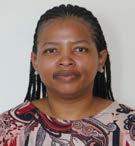
Dr T NyathelaSunday
HOD: Cape Town Hotel School
A brief overview of the department
The Cape Town Hotel School (CTHS) is located at the Granger Bay Campus, a flagship of CPUT, is a leading centre for hospitality education in South Africa and beyond. The school offers three unique qualifications, namely, Accommodation Management, Food and Beverage management and Professional Cookery, crafted to create a full academic and career pathway from Diploma to Postgraduate Diploma, Masters and Doctorate, ensuring opportunities for lifelong learning and academic progression. The CTHS combines academic rigour with real-world application to prepare students for global careers through academic and operational entities as well as national and international partnerships.
Unique Aspects of Programmes
• Comprehensive progression from undergraduate to doctoral level.
• Integration of theory and practice through culinary lab kitchens and a simulation restaurant.
• Offers specialisation opportunities in Accommodation Management, Food & Beverage Management, and Professional Cookery.
• Embedded Work-Integrated Learning (WIL) internships in Year 2 and 3, with national and international placement opportunities.
• Strong focus on sustainability, entrepreneurship, and innovation aligned with SDGs and CPUT Vision 2030.
• Internationalisation through projects, exchange programmes, and academic initiatives.
Quality of Teaching & Academic Staff
Our team consists of qualified lecturers and industry professionals, blending scholarly expertise with real-world hospitality experience. Staff are engaged in teaching, research, community engagement, postgraduate supervision, international collaborations, and industry training. Staff are also visible and active on academic and non-academic media platforms. Learning and Teaching is student-centred, technology-enhanced, and designed to ensure graduates are work-ready, entrepreneurial, and globally competitive. Key priority outcomes are employability, critical thinking, leadership and entrepreneurial skills.
Key Departmental Achievements
• Recognised nationally and internationally as one of the best hospitality training facilities, offering more than 30 years of excellence.
• Graduated alumni who are academic top achievers and trailblazers in the industry.
• Hosted global, prominent academic and non-academic events such as conferences, dinners and industry-led engagements.
• Active contributions to research in sustainability, gastronomy, employment, education and hospitality innovation.
• Blend learning and teaching to address real-world problems through service learning and community engagement.
• Strategic role in advancing CPUT’s Vision 2030 and “One Smart CPUT” goals.
Industry & Research Partnership
The CTHS maintains strong local and international partnerships that enhance learning and teaching, research, and student employability. Locally, collaborations and affiliates with Organisations such as SA Tourism, SACB, SACA, FEDHASA, CATHSSETA, SAAFECS and industry such as accommodation, Food and beverage establishments, airline and cruise ships, employment and training agencies such as Insignis Solutions, HRC International, Awesome Travel, and the Southern African German Chamber of Commerce. The CTHS is also affiliated with academic institutions in SADC, Africa, the US, and Europe. These partnerships provide students with bursaries, WIL placements, skills training, networking, and industry exposure, as well as global internships, cultural and knowledge exchanges and joint research.
CAPE
Alumni Success
The CTHS prides itself on alumni who are leaders and innovators, playing a pivotal role in shaping academia and the hospitality industry. Many alumni occupy leadership roles in South Africa and globally. Our graduates are Executive Managers of leading hotels, Directors of established hospitality groups, Executive Chefs, Senior Executives in the food and beverage entities and entrepreneurs in the hospitality space. These achievements highlight the quality of education, training, and industry integration the school provides, affirming our commitment to developing graduates who not only meet but shape the standards of the hospitality profession and the future.
DEPARTMENT OFFICE-BEARERS
Director (Acting)
Departmental Secretary
Receptionist
Administrative Assistant
ACADEMIC STAFF
Senior Lecturer
Lecturer
Lecturer
Ms DA Draper
Ms K Lategan
Mrs I BanoobhaiAnwar
Lecturer Mr L Sinthumule
Lecturer
Lecturer
Ms N Davids
Dr T Sunday 021 440 5753
Ms S Paulse 021 440 5754
Ms N Esau 021 440 5798
Ms ON Nyumba 021 440 5748
MTech Tourism and Hospitality Management
MTech Tourism and Hospitality Management
MTech Tourism and Hospitality Management
MTech Food Service Management
MTech Business Administration
Mr MD Erfort Masters in Language and Literature
Lecturer Ms M Hattingh Masters in Social Science in Community Mental Health Promotion
Lecturer Mrs CAZ Menze MTech Tourism and Hospitality Management
Work Integrating Learning Coordinator
Mrs B Seager
MTech Tourism and Hospitality Management
Lecturer Ms NL Septoe MTech Consumer Science: Food & Nutrition
Lecturer Dr M Deonarian
Doctor of Public Administration
NyathelaT@cput.ac.za Granger Bay 2nd Flr Room 2.05
PaulseSH@cput.ac.za Granger Bay 1st Flr Room 2.13
EbrahimN@cput.ac.za Granger Bay 2nd Flr Room 2.03
NyumbaN@cput.ac.za Granger Bay 2nd Flr Room 2.04
021 440 5722
021 440 5769
021 440 5761
021 440 5751
021 440 5732
021 440 5717
021 440 5720
021 440 5747
021 440 5727
021 440 5737
021 440 5724
Lecturer Ms N Bala M Tech Tourism and Hospitality 021 440 5739
Lecturer Mr C Van Rooyen
Master of Business Administration
DraperD@cput. ac.za
LateganK@cput. ac.za
BanoobhaiI@ cput.ac.za
SinthumuleL@ cput.ac.za
DavidsN@cput. ac.za
ErfortM@cput. ac.za
HattinghM@cput. ac.za
MenzeC@cput. ac.za
SeagerB@cput. ac.za
SeptoeN@cput. ac.za
DeanarianM@ cput.ac.za
BalaN@cput. ac.za
Granger Bay 3rd Flr Room 3.09
Granger Bay 2nd Flr Open Plan
Granger Bay 2nd Flr Open Plan
Granger Bay 2nd Flr Open Plan
Granger Bay 3rd Flr Room 3.15
Granger Bay 3rd Flr Room 3.07
Granger Bay 2nd Flr Open Plan
Granger Bay 3rd Flr Room 3.14
Granger Bay 3rd Flr Room 3.06
Granger Bay 2nd Flr Open Plan
Granger Bay 3rd Flr 3.08
Granger Bay 3rd Flr Room 3.16
CAPE TOWN HOTEL SCHOOL
021 440 57 24
VanrooyenC@ cput.ac.za
Granger Bay 3rd Flr Room 3.08
QUALIFICATIONS OFFERED
Please
CAPE TOWN HOTEL SCHOOL
IN HOSPITALITY
ADVANCED DIPLOMA IN HOSPITALITY AND HOTEL MANAGEMENT
CAPE TOWN HOTEL SCHOOL
ADVANCED DIPLOMA IN HOSPITALITY AND FOOD & BEVERAGE
CE: Continuous Assessment
DIPLOMA IN HOSPITALITY & PROFESSIONAL COOKERY
2-
POSTGRADUATE DIPLOMA IN HOSPITALITY, TOURISM AND EVENT MANAGEMENT
5
5
MASTER OF BUSINESS AND MANAGEMENT SCIENCES: HOSPITALITY
DOCTOR OF BUSINESS AND MANAGEMENT SCIENCES: HOSPITALITY
SUBJECT GUIDE TO TERMINOLOGY
Please contact your academic department for information on pipeline qualifications and subjects
CO-REQUISITE: A co-requisite subject is one for which a student must be registered together (i.e. concurrently) with another specified subject.
PRE-REQUISITE: A pre-requisite subject is one which a student must have passed in order to gain admission to another subject. For example, Management 1 is a pre-requisite for Management 2.
DIPLOMA IN HOSPITALITY & HOTEL MANAGEMENT SUBJECTS
FOOD & BEVERAGE STUDIES 1: THEORY & PRACTICAL
Pre-requisite:
Subject outline: The objective of Food and Beverage Studies 1 is to understand restaurant infrastructure, service skills related to the service of food and beverages, as well as the theoretical knowledge of the origin, production and service related to Barista, alcohol and non-alcoholic beverages. The practical components of this subject will take place in the CTHS commercial restaurant.
Assessment: All assessments are compulsory. Assignments, class tests, tutorials, practical assessments, presentations and summative assessments.
FOOD & BEVERAGE STUDIES 2: THEORY & PRACTICAL
Pre-requisite: Food & Beverage Studies 2
Subject outline: The objective of Food and beverage Studies 2 is the application of Food and Beverage knowledge and service at a supervisory level. This includes specialists service such as tobacco and cocktail service as well as international wines.
Assessment: All assessments are compulsory. Assignments, class tests, tutorials, practical assessments, presentations and summative assessments.
Business and Management Sciences
CAPE TOWN HOTEL SCHOOL
HOSPITALITY BUSINESS COMMUNICATION 1
Pre-requisite:
Subject outline: The aim of the course is firstly to give theoretical understanding of how communication takes place. In other words, the focus will be on the various mechanisms which come into play that make communication possible. Secondly, we will focus on the practical side of communication and what impact communication has in the workplace. Without effective communication, it would be very difficult for human beings in general to function. In virtually every aspect of life, communication plays an important role. Hospitality Communication 1 will provide you with the opportunity to explore the various types of communication as well as the various contexts in which communication takes place in. As a future manager it is imperative that leaners become expert communicators. This course aims to build on the skills learners already possess and improve on it particularly on those skills you would need for the hospitality industry.
Assessment: All assessments are compulsory. Assignments, class tests, tutorials, practical assessments, presentations and summative assessments.
HOSPITALITY BUSINESS COMMUNICATION 2
Pre-requisite: Hospitality Business Communication 1
Subject outline: The aim of Hospitality Communication 2 Is to equip learners to communicate effectively in the workplace specifically within small groups and the broader organisation. This includes looking at communication networks, leadership styles, rituals, design, reputation of organisations and many other aspects. This subject will focus chiefly on how the individual functions within the small group dynamic, how small groups function within organisations, the critical role that leadership plays in corporate culture and, more fundamentally, how all of these facets contribute to forging the identity of a company and creating a corporate culture.
Assessment: All assessments are compulsory. Assignments, class tests, tutorials, practical assessments, presentations and summative assessments.
HOSPITALITY FINANCIAL MANAGEMENT 1
Pre-requisite:
Subject outline: The subject is designed to provide Hotel students with an understanding of the language of accounting, cost accounting and how it is applied within the hospitality environment. The course will examine, accounting terminology, recording, classifying and summarizing transactions. The relevance of costing and profit will be emphasized and the importance of internal control. Computer technology will be incorporated to enhance the understanding of costing, menu costing and Income Statements.
Assessment: All assessments are compulsory. Assignments, class tests, tutorials, practical assessments, presentations and summative assessments.
HOSPITALITY FINANCIAL MANAGEMENT 2
Pre-requisite: Hospitality Financial Management 1
Subject outline: The subject is designed to provide Hotel students with an understanding of the financial management tools available to contribute to effective decision making and the sustainability of the enterprise. The Hotel student would be able to analyse a restaurant financial statement including the income statement, statement of financial position (Balance Sheet). The content will assist to manage overall profits, record sales, calculate costs and budgeting. Learners will be competent in operational and analytical skills.
Assessment: All assessments are compulsory. Assignments, class tests, tutorials, practical assessments, presentations and summative assessments.
HOSPITALITY FINANCIAL MANAGEMENT 3
Pre-requisite: Hospitality Financial Management 2
Subject outline: The purpose of Hospitality Financial Management 3 is to provide the food and beverage manager with a range of financial tools to contribute to effective decision making and sustainability of the enterprise. The topics that will be covered include pricing, cost volume profit analysis, budgeting and working capital management, with specific reference to cash and debtors management.
Assessment: All assessments are compulsory. Assignments, class tests, tutorials, practical assessments, presentations and summative assessments.
HOSPITALITY GASTRONOMY 1: THEORY & PRACTICAL
Pre-requisite:
Subject outline: Hospitality Gastronomy 1 theory and practical will give the student a wider understanding of basic food science, food microbiology and nutrition. Basic Nutrition, this component will give the student a basic understanding of modern nutritional theory and its application to menu planning in today's restaurants. As the consumer has become more aware of food supply from grower to table and the relationship between diet and health, so too will the student gain an understanding of the domestic and global issues that affect food supply and production. The student will learn the food preparation basics.
Assessment: All assessments are compulsory. Assignments, class tests, tutorials, practical assessments, presentations and summative assessments.
HOSPITALITY INDUSTRY LAW 1
Pre-requisite:
Subject outline: The course aims to equip students with a thorough understanding of the general principles of the law of contract in South Africa, including the requirements for its form
Assessment: All assessments are compulsory. Assignments, class tests, tutorials, practical assessments, presentations and summative assessments.
CAPE TOWN HOTEL SCHOOL
Business and Management Sciences
CAPE TOWN HOTEL SCHOOL
HOSPITALITY INDUSTRY LAW 2
Pre-requisite: Hospitality Industry Law 1
Subject outline: This course aims to provide students with a thorough understanding of the various specific contracts and its related legislation, as well as the legislation specific to the Hotel Industry.
Assessment: All assessments are compulsory. Assignments, class tests, tutorials, practical assessments, presentations and summative assessments.
HOSPITALITY INDUSTRY LAW 3
Pre-requisite: Hospitality Industry Law 2
Subject outline: This course aims to provide candidates with a basic knowledge of labour relations in South Africa and its regulatory framework as relevant to the food and beverage environment.
Assessment: All assessments are compulsory. Assignments, class tests, tutorials, practical assessments, presentations and summative assessments.
HOSPITALITY INFO SYSTEMS 1: THEORY &PRACTICAL
Pre-requisite:
Subject outline: Hospitality Information Systems 1 aims to provide students with a working knowledge of Windows, Microsoft applications, Internet and Email that is found in a typical hospitality workplace. The graduate will be able to use various applications in a practical hospitality workplace to be able to efficiently communicate using technology and integrated Microsoft applications.
Assessment: All assessments are compulsory. Assignments, class tests, tutorials, practical assessments, presentations and summative assessments.
HOSPITALITY INFO SYSTEMS 2: THEORY & PRACTICAL
Pre-requisite: Hospitality Info Systems 1
Subject outline: To provide Hotel students with a comprehensive understanding of knowledge that gives an overview of the various technological systems and applications they will encounter in the course of their daily duties within the hospitality industry from a food and beverage perspective. Give insight into how Information Technology can enhance managerial practices in the food and beverage industry.
Assessment: All assessments are compulsory. Assignments, class tests, tutorials, practical assessments, presentations and summative assessments.
HOSPITALITY INFORMATION SYSTEMS 3
Pre-requisite: Hospitality Info Systems 2
Subject outline: To provide Food and Beverage students with a comprehensive understanding of knowledge that gives an overview of the various technological systems and applications they will encounter in the course of their daily duties within the hospitality industry from a food and beverage perspective. Give insight into how Information Technology canenhance managerial practices in the food and beverage industry.
Assessment: All assessments are compulsory. Assignments, class tests, tutorials, practical assessments, presentations and summative assessments.
HOSPITALITY MANAGEMENT 1
Pre-requisite:
Subject outline: This content is the foundation to management practice and includes planning, organising, leading, decision making, co-ordination, delegation, communication and includes the foundation of conflict management in a Hotel business
Assessment: All assessments are compulsory. Assignments, class tests, tutorials, practical assessments, presentations and summative assessments.
HOSPITALITY MANAGEMENT 2
Pre-requisite: Hospitality Management 1
Subject outline: The content will provide the foundation to Hotel research in gathering appropriate information to apply to a research task. Students will be able to describe the economic system in South Africa and how it links to the global economy and the application to the Hotel industry. Students will be able to link the marketing instruments to the economic system applied in a the Hotel Field
Assessment: All assessments are compulsory. Assignments, class tests, tutorials, practical assessments, presentations and summative assessments.
HOSPITALITY MANAGEMENT 3
Pre-requisite: Hospitality Management 2
Subject outline: This content will provide the student with one to one training skills to apply in a Hotel business. The student will be able to develop human resource planning skills, recruitment and selection skills to apply in a Hotel business and skills to equip the student to manage discipline at work on a day to day basis including knowledge to understand and apply business ethics. The student will be equipped with the foundation of conceptual skills to evaluate daily Hotel financial results to make sound decisions. The student will develop the ability to evaluate and apply different sources of information for research, gather evidence, apply a solution and communicate this in a professional manner using the recognised research conventions.
Assessment: All assessments are compulsory. Assignments, class tests, tutorials, practical assessments, presentations and summative assessments.
CAPE TOWN HOTEL SCHOOL
Business and Management Sciences
CAPE TOWN HOTEL SCHOOL
HOTEL PRACTICE 2
Pre-requisite:
Subject outline: The objective of Hotel Practice 1 is to allow the student the opportunity to apply the skills and knowledge gained from the academic course.
Assessment: All assessments are compulsory. Assignments, class tests, tutorials, practical assessments, presentations and summative assessments.
HOTEL PRACTICE 3
Pre-requisite: Hotel Practice 2
Subject outline:
Assessment: All assessments are compulsory. Assignments, class tests, tutorials, practical assessments, presentations and summative assessments.
REVENUE MANAGEMENT
Pre-requisite:
Subject outline: Revenue Management is a very specific hospitality room’s division term that is globally used in both industry and academic environments. Describe property management systems and discuss yield management.
Assessment: All assessments are compulsory. Assignments, class tests, tutorials, practical assessments, presentations and summative assessments.
ROOMS DIVISION 1
Pre-requisite:
Subject outline: The aim of introduction to Rooms Division from an operational perspective through the guest cycle, by demonstrating an understanding and application thereof through casescenarios
Assessment: All assessments are compulsory. Assignments, class tests, tutorials, practical assessments, presentations and summative assessments.
ROOMS DIVISION 2
Pre-requisite: Rooms Division 1
Subject outline: The objective of Rooms Division 2 is to formulate operational aspects in a hotel environment.
Assessment: All assessments are compulsory. Assignments, class tests, tutorials, practical assessments, presentations and summative assessments.
ROOMS DIVISION 3
Pre-requisite: Rooms Division 2
Subject outline: The objective of Rooms Division 3 is to apply the operational aspects of a hotel establishments as applicable in South Africa and compared to the global market.
Assessment: All assessments are compulsory. Assignments, class tests, tutorials, practical assessments, presentations and summative assessments.
DIPLOMA IN HOSPITALITY & FOOD & BEVERAGE MANAGEMENT SUBJECTS
FOOD & BEV INFORMATION SYS 1 (THEORY & PRAC)
Pre-requisite:
Subject outline: Food and Beverage Information Systems 1 aims to provide students with a working knowledge of Windows, Microsoft applications, Internet and Email that is found in a typical hospitality workplace. The graduate will be able to use various applications in a practical hospitality workplace to be able to efficiently communicate using technology and integrated Microsoft applications.
Assessment: All assessments are compulsory. Assignments, class tests, tutorials, practical assessments, presentations and summative assessments.
FOOD & BEV INFORMATION SYS 2 (THEORY & PRAC)
Pre-requisite: Food & Bev Information Sys 1
Subject outline: To provide Food and Beverage students with a comprehensive understanding of knowledge that gives an overview of the various technological systems and applications they will encounter in the course of their daily duties within the hospitality industry from a food and beverage perspective. Give insight into how Information Technology can enhance managerial practices in the food and beverage industry.
Assessment: All assessments are compulsory. Assignments, class tests, tutorials, practical assessments, presentations and summative assessments.
Business and Management Sciences
CAPE TOWN HOTEL SCHOOL
FOOD & BEVERAGE BUSINESS COMMUNICATION 1
Pre-requisite:
Subject outline: The aim of the course is firstly to give theoretical understanding of how communication takes place. In other words, the focus will be on the various mechanisms which come into play that make communication possible. Secondly, we will focus on the practical side of communication and what impact communication has in the workplace. Without effective communication, it would be very difficult for human beings in general to function. In virtually every aspect of life, communication plays an important role. Food and Beverage Communication I will provide you with the opportunity to explore the various types of communication as well as the various contexts in which communication takes place in.
As a future manager it is imperative that leaners become expert communicators. This course aims to build on the skills learners already possess and improve on it particularly on those skills you would need for the hospitality industry.
Assessment: All assessments are compulsory. Assignments, class tests, tutorials, practical assessments, presentations and summative assessments.
FOOD & BEVERAGE BUSINESS COMMUNICATION 2
Pre-requisite: Food & Beverage Business Communication 1
Subject outline: The aim of Food and Beverage Communication II is to equip learners to communicate effectively in the workplace specifically within small groups and the broader organisation. This includes looking at communication networks, leadership styles, rituals, design, reputation of organisations and many other aspects. This subject will focus chiefly on how the individual functions within the small group dynamic, how small groups function within organisations, the critical role that leadership plays in corporate culture and, more fundamentally, how all of these facets contribute to forging the identity of a company and creating a corporate culture.
Assessment: All assessments are compulsory. Assignments, class tests, tutorials, practical assessments, presentations and summative assessments.
FOOD & BEVERAGE FINANCIAL MANAGEMENT 1
Pre-requisite:
Subject outline: The subject is designed to provide Food and Beverage students with an understanding of the language of accounting, cost accounting and how it is applied within the hospitality environment. The course will examine, accounting terminology, recording, classifying and summarising transactions. The relevance of costing and profit will be emphasised and the importance of internal control. Computer technology will be incorporated to enhance the understanding of costing, menu costing and Income Statements.
Assessment: All assessments are compulsory. Assignments, class tests, tutorials, practical assessments, presentations and summative assessments.
FOOD & BEVERAGE FINANCIAL MANAGEMENT 2
Pre-requisite: Food & Beverage Financial Management 1
Subject outline: The subject is designed to provide Food and Beverage students with an understanding of the financial management tools available to contribute to effective decision making and the sustainability of the enterprise. The Food and Beverage student would be able to analyse a restaurant financial statement including the income statement, statement of financial position (Balance Sheet). The content will assist to manage overall profits, record sales, calculate costs and budgeting. Learners will be competent in operational and analytical skills.
Assessment: All assessments are compulsory. Assignments, class tests, tutorials, practical assessments, presentations and summative assessments.
FOOD & BEVERAGE FINANCIAL MANAGEMENT 3
Pre-requisite: Food & Beverage Financial Management 2
Subject outline: The purpose of Food and Beverage Management 3 is to provide the food and beverage manager with a range of financial tools to contribute to effective decision making and sustainability of the enterprise. The topics that will be covered include pricing, cost volume profit analysis, budgeting and working capital management, with specific reference to cash and debtors management.
Assessment: All assessments are compulsory. Assignments, class tests, tutorials, practical assessments, presentations and summative assessments.
FOOD & BEVERAGE GASTRONOMY 1 (THEORY & PRAC)
Pre-requisite:
Subject outline: Food and Beverage Gastronomy 1 theory and practical will give the student a wider understanding of basic food science, food microbiology and nutrition. Basic Nutrition, this component will give the student a basic understanding of modern nutritional theory and its application to menu planning in today's restaurants. As the consumer has become more aware of food supply from grower to table and the relationship between diet and health, so too will the student gain an understanding of the domestic and global issues that affect food supply and production. The student will learn the food preparation basics.
Assessment: All assessments are compulsory. Assignments, class tests, tutorials, practical assessments, presentations and summative assessments.
FOOD & BEVERAGE GASTRONOMY 2 (THEORY & PRAC)
Pre-requisite: Food & Beverage Gastronomy 1
Subject outline: Food and beverage Gastronomy 2 (Theory and Practical) will focus on boarding the student knowledge of more complex theories of cookery and gastronomy (frozen desserts, gelatin and complex carbohydrate) the student will also focus on nutrition application and diet therapy. For an enriched understanding of current gastronomy, the student will explore a topic of culinary history.
Assessment: All assessments are compulsory. Assignments, class tests, tutorials, practical assessments, presentations and summative assessments.
Business and Management Sciences
CAPE TOWN HOTEL SCHOOL
FOOD & BEVERAGE GASTRONOMY 3 (THEORY & PRAC)
Pre-requisite: Food & Beverage Gastronomy 2
Subject outline: Food and beverage Gastronomy 3 (Theory and Practical) will give the student a wider understanding of food science, food preservation, gelatin and gels nutrients retention, disease control and protection, food microbiology, diet therapy and nutrition. Gastronomic excursions for will form a integral part of the subject to expose students to current trends in the Professional Cookery environment.
Assessment: All assessments are compulsory. Assignments, class tests, tutorials, practical assessments, presentations and summative assessments.
FOOD & BEVERAGE INDUSTRY LAW 1
Pre-requisite:
Subject outline: The course aims to equip students with a thorough understanding of the general principles of the law of contract in South Africa, including the requirements for its formation, contents, operation and termination of a contract, breach of contract and remedies for breach.
Assessment: All assessments are compulsory. Assignments, class tests, tutorials, practical assessments, presentations and summative assessments.
FOOD & BEVERAGE INDUSTRY LAW 2
Pre-requisite: Food & Beverage Industry Law 1
Subject outline: This course aims to provide students with a thorough understanding of the various specific contracts and its related legislation, as well as the legislation specific to the Food and Beverage Industry.
Assessment: All assessments are compulsory. Assignments, class tests, tutorials, practical assessments, presentations and summative assessments.
FOOD & BEVERAGE INDUSTRY LAW 3
Pre-requisite: Food & Beverage Industry Law 2
Subject outline: This course aims to provide candidates with a basic knowledge of labour relations in South Africa and its regulatory framework as relevant to the food and beverage environment.
Assessment: All assessments are compulsory. Assignments, class tests, tutorials, practical assessments, presentations and summative assessments.
FOOD & BEVERAGE MANAGEMENT 1
Pre-requisite:
Subject outline: This content is the foundation to management practice and includes planning, organising, leading, decision making, co-ordination, delegation, communication and includes the foundation of conflict management in a Food and Beverage business
Assessment: All assessments are compulsory. Assignments, class tests, tutorials, practical assessments, presentations and summative assessments.
FOOD & BEVERAGE MANAGEMENT 2
Pre-requisite: Food & Beverage Management 1
Subject outline: The content will provide the foundation to Food and Beverage research in gathering appropriate information to apply to a research task. Students will be able to describe the economic system in South Africa and how it links to the global economy and the application to the Food and Beverage industry. Students will be able to link the marketing instruments to the economic system applied in a Food and Beverage
Assessment: All assessments are compulsory. Assignments, class tests, tutorials, practical assessments, presentations and summative assessments.
FOOD & BEVERAGE MANAGEMENT 3
Pre-requisite: Food & Beverage Management 2
Subject outline: This content will provide the student with one to one training skills to apply in a Food and Beverage business. The student will be able to develop human resource planning skills, recruitment and selection skills to apply in a Food and Beverage business and skills to equip the student to manage discipline at work on a day to day basis including knowledge to understand and apply business ethics. The student will be equipped with the foundation of conceptual skills to evaluate daily Food and Beverage financial results to make sound decisions. The student will develop the ability to evaluate and apply different sources of information for research, gather evidence, apply a solution and communicate this in a professional manner using the recognised research conventions.
Assessment: All assessments are compulsory. Assignments, class tests, tutorials, practical assessments, presentations and summative assessments.
FOOD & BEVERAGE OPERATIONS 1
Pre-requisite:
Subject outline: The aim of Food and Beverage Operations 1 is to introduce students to the operational aspects of all types of food service establishments. The student is encouraged to distinguish the factors involved in meeting guests’ and clients expectations in a variety of food service establishments
Assessment: All assessments are compulsory. Assignments, class tests, tutorials, practical assessments, presentations and summative assessments.
CAPE TOWN HOTEL SCHOOL
CAPE TOWN HOTEL SCHOOL
FOOD & BEVERAGE OPERATIONS 2
Pre-requisite: Food & Beverage Operations 1
Subject outline: The objective of Food and Beverage Operations 2 is to formulate operational requirements for various food service establishments to ensure profitability. The students are required to distinguish and evaluate the differences in the planning and designing of various food service establishments, which includes the tangible and non-tangible aspects of design. The students will be able to practical used a computerized food and beverage control application.
Assessment: All assessments are compulsory. Assignments, class tests, tutorials, practical assessments, presentations and summative assessments.
FOOD & BEVERAGE OPERATIONS 3
Pre-requisite: Food & Beverage Operations 2
Subject outline: The objective of Food and Beverage Operations 3 is to apply the operational requirements of food and beverage establishments in the formulation of catering management, as applicable in South Africa and compared to the global market. An introduction to the importance of waste, water, energy and chemical usage allows the student the opportunity to link the importance of the environmental protections methods to the operational requirements to various food service establishments.
Assessment: All assessments are compulsory. Assignments, class tests, tutorials, practical assessments, presentations and summative assessments.
FOOD & BEVERAGE PRACTICE 1 (FRONT OF HOUSE)
Pre-requisite:
Subject outline: The objective of Food and Beverage Practice 1 is to allow the student the opportunity to apply the skills and knowledge gained from the academic course. The student is placed in the front of house section of an approved food service establishment for four months where they are required to be actively involved and reflect on their performance.
Assessment: All assessments are compulsory. Assignments, class tests, tutorials, practical assessments, presentations and summative assessments.
FOOD & BEVERAGE PRACTICE 2 (KITCHEN)
Pre-requisite: Food & Beverage Practice 1
Subject outline: The objective of Food and Beverage Practice 2 is to allow the student the opportunity to apply the skills and knowledge gained from the academic course. The student is placed in the back of house section (kitchen) of an approved food service establishment for four months where they are required to be actively involved and reflect on their performance.
Assessment: All assessments are compulsory. Assignments, class tests, tutorials, practical assessments, presentations and summative assessments.
FOOD & BEVERAGE STUDIES 1 ( THEORY & PRAC)
Pre-requisite:
Subject outline: The objective of Food and Beverage Studies 1 is to understand restaurant infrastructure, service skills related to the service of food and beverages, as well as the theoretical knowledge of the origin, production and service related to Barista, alcohol and non-alcoholic beverages. The practical components of this subject will take place in the CTHS commercial restaurant.
Assessment: All assessments are compulsory. Assignments, class tests, tutorials, practical assessments, presentations and summative assessments.
FOOD & BEVERAGES STUDIES 2 ( THEORY & PRAC)
Pre-requisite: Food & Beverage Studies 1
Subject outline: The objective of Food and beverage Studies 2 is the application of Food and Beverage knowledge and service at a supervisory level. This includes specialists service such as tobacco and cocktail service as well as international wines.
Assessment: All assessments are compulsory. Assignments, class tests, tutorials, practical assessments, presentations and summative assessments.
FOOD & BEVERAGES STUDIES 3 (THEORY & PRAC)
Pre-requisite: Food & Beverage Studies 2
Subject outline: The objective of Food and Beverage Studies 3 in the application of managerial skills within the food and beverage environment as well as knowledge of food and wine pairing. To plan, organize, execute and manage a small function in the CTHS commercial restaurant.
Assessment: All assessments are compulsory. Assignments, class tests, tutorials, practical assessments, presentations and summative assessments.
CAPE TOWN HOTEL SCHOOL
Business and Management Sciences
CAPE TOWN HOTEL SCHOOL
DIPLOMA IN HOSPITALITY & PROFESSIONAL COOKERY SUBJECTS
PC: BUSINESS COMMUNICATION 1
Pre-requisite:
Subject outline: The aim of the course is firstly to give theoretical understanding of how communication takes place. In other words, the focus will be on the various mechanisms which come into play that make communication possible. Secondly, we will focus on the practical side of communication and what impact communication has in the workplace. Without effective communication, it would be very difficult for human beings in general to function. In virtually every aspect of life, communication plays an important role. Professional Cookery Communication I will provide you with the opportunity to explore the various types of communication as well as the various contexts in which communication takes place in. As a future manager it is imperative that leaners become expert communicators. This course aims to build on the skills learners already possess and improve on it particularly on those skills you would need for the professional cookery environment.
Assessment: All assessments are compulsory. Assignments, class tests, tutorials, practical assessments, presentations and summative assessments.
PC: BUSINESS COMMUNICATION 2
Pre-requisite: PC: Business Communication 1
Subject outline: The aim of Professional Cookery Communication II is to equip learners to communicate effectively in the workplace specifically within small groups and the broader organisation. This includes looking at communication networks, leadership styles, rituals, design, reputation of organisations and many other aspects. This subject will focus chiefly on how the individual functions within the small group dynamic, how small groups function within organisations, the critical role that leadership plays in corporate culture and, more fundamentally, how all of these facets contribute to forging the identity of a company and creating a corporate culture.
Assessment: All assessments are compulsory. Assignments, class tests, tutorials, practical assessments, presentations and summative assessments.
PC: FINANCIAL MANAGEMENT 1
Pre-requisite:
Subject outline: The subject is designed to provide Professional Cookery students with an understanding of the language of accounting, cost accounting and how it is applied within the hospitality environment. The course will examine, accounting terminology, recording, classifying and summarising transactions. The relevance of costing and profit will be emphasised and the importance of internal control. Computer technology will be incorporated to enhance the understanding of costing, menu costing and Income Statements.
Assessment: All assessments are compulsory. Assignments, class tests, tutorials, practical assessments, presentations and summative assessments.
PC: FINANCIAL MANAGEMENT 2
Pre-requisite: PC: Financial Management 1
Subject outline: The subject is designed to provide Professional Cookery students with an understanding of the financialmanagement tools available to contribute to effective decision making and the sustainability of the enterprise. Understanding of financial statements, which includes the Income Statement, Balance sheet, Statement of changes in equity of a sole proprietor and partnership. The theory of Departmental Accounting, budgeting and costing will be incorporated with the use of computer aided technology. The management of overall profits, revenue (sales) and costs to develop operational and analytical skills.
Assessment: All assessments are compulsory. Assignments, class tests, tutorials, practical assessments, presentations and summative assessments.
PC: FOOD & BEVERAGES STUDIES (THEORY & PRAC)
Pre-requisite:
Subject outline: The objective of Professional Cookery Food and Beverage Studies 1 is to understand restaurant infrastructure, service skills related to the service of food and beverages, as well as the theoretical knowledge of the origin, production and service related to Barista, alcohol and non-alcoholic beverages. The practical components of this subject will take place in the CTHS commercial restaurant.
Assessment: All assessments are compulsory. Assignments, class tests, tutorials, practical assessments, presentations and summative assessments.
PC: GASTRONOMY 1 (THEORY & PRACTICAL)
Pre-requisite:
Subject outline: Professional Cookery Gastronomy 1 theory and practical will give the student a wider understanding of basic food science, food microbiology and nutrition. Basic Nutrition, this component will give the student a basic understanding of modern nutritional theory and its application to menu planning in today's restaurants. As the consumer has become more aware of food supply from grower to table and the relationship between diet and health, so too will the student gain an understanding of the domestic and global issues that affect food supply and production. The student will learn the food preparation basics
Assessment: All assessments are compulsory. Assignments, class tests, tutorials, practical assessments, presentations and summative assessments.
PC: GASTRONOMY 2 (THEORY & PRACTICAL)
Pre-requisite: PC: Gastronomy 1
Subject outline: Professional Cookery Gastronomy 2 (Theory & Practical) will aim to cover the South African and international gastronomy trends. Gastronomy is the study of food and culture and encompasses all of cooking techniques, human nutrition and food science. The second year theory and practical component will focus on intermediate cooking techniques and principles. Food Science and Microbiology will continue from first year on an intermediate level.
Assessment: All assessments are compulsory. Assignments, class tests, tutorials, practical assessments, presentations and summative assessments.
CAPE TOWN HOTEL SCHOOL
Business and Management Sciences
CAPE TOWN HOTEL SCHOOL
PC: GASTRONOMY 3 (THEORY & PRACTICAL)
Pre-requisite: PC: Gastronomy 2
Subject outline: Professional Cookery Gastronomy 3 (Theory & Practical) will aim to cover the South African and international gastronomy trends. Gastronomy is the study of food and culture and encompasses all of cooking techniques, human nutrition and food science. The third year theory and practical component will focus on advanced cooking principles and techniques. Food Science and Microbiology will continue from second year on an advanced level.
Assessment: All assessments are compulsory. Assignments, class tests, tutorials, practical assessments, presentations and summative assessments.
PC: INDUSTRY LAW 1
Pre-requisite:
Subject outline: The course aims to equip students with a thorough understanding of the general principles of the law of contract in South Africa, including the requirements for its formation, contents, operation and termination of a contract, breach of contract and remedies for breach.
Assessment: All assessments are compulsory. Assignments, class tests, tutorials, practical assessments, presentations and summative assessments.
PC: INDUSTRY LAW 2
Pre-requisite: PC: Industry Law 1
Subject outline: This course aims to provide students with a thorough understanding of the various specific contracts and its related legislation, as well as the legislation specific to the Professional Cookery environment.
Assessment: All assessments are compulsory. Assignments, class tests, tutorials, practical assessments, presentations and summative assessments.
PC: INFORMATION SYSTEMS (THEORY & PRACTICAL)
Pre-requisite:
Subject outline: Professional Cookery Information Systems 1 aims to provide students with a working knowledge of Windows, Microsoft applications, Internet and Email that is found in a typical hospitality workplace. The graduate will be able to use various applications in a practical hospitality workplace to be able to efficiently communicate using technology and integrated Microsoft applications
Assessment: All assessments are compulsory. Assignments, class tests, tutorials, practical assessments, presentations and summative assessments.
PC: MANAGEMENT 1
Pre-requisite:
Subject outline: This content is the foundation to management practice and includes planning, organising, leading, decision making, co-ordination, delegation, communication and includes the foundation of conflict management in a professional cookery environment.
Assessment: All assessments are compulsory. Assignments, class tests, tutorials, practical assessments, presentations and summative assessments.
PC: MANAGEMENT 2
Pre-requisite: PC: Management 1
Subject outline: The content will provide the foundation to kitchen and recipe research in gathering appropriate information to apply to a research task. Students will be able to describe the economic system in South Africa and how it links to the global economy and the application to the kitchen environment. Students will be able to link the marketing instruments and foundation of the economic system applied in a kitchen environment including understanding the importance of good purchasing practice in a kitchen environment.
Assessment: All assessments are compulsory. Assignments, class tests, tutorials, practical assessments, presentations and summative assessments.
PC: MANAGEMENT 3
Pre-requisite: PC: Management 2
Subject outline: This content will provide the Professional Cookery student with one to one training skills to apply in the kitchen environment. Students will be able to develop human resource planning skills, recruitment and selection skills that they will be able to apply in a kitchen environment. Students will be learning skills to equip them to manage discipline at work on a day to day basis. The content will provide knowledge to understand and apply business ethics. Students will have the ability to evaluate and apply different sources of information for research. Students will have the ability to gather evidence, apply a solution and communicate this in a professional way using the recognised research conventions.
Assessment: All assessments are compulsory. Assignments, class tests, tutorials, practical assessments, presentations and summative assessments.
CAPE TOWN HOTEL SCHOOL
Business and Management Sciences
CAPE TOWN HOTEL SCHOOL
PC: OPERATIONS 1 (THEORY & PRACTICAL)
Pre-requisite:
Subject outline: The content includes an overall introduction to the various operational aspects within the hospitality environment including housekeeping, front office and back of house. The content will demonstrate various aspects of the hospitality sector and its relation to other sectors within the tourism field. Content will include guest relations and service excellence, alcoholic and non-alcoholic beverages as well as beverage service within the hospitality industry. The organizational structures within the various areas of hospitality operations will also be included as well as the systems and processes specific to those areas. Short courses include preliminary wine and Bar course. Content will also cover aspects of local and international trends within the professional cookery sectors.
Assessment: All assessments are compulsory. Assignments, class tests, tutorials, practical assessments, presentations and summative assessments.
PC: OPERATIONS 2 (THEORY & PRACTICAL)
Pre-requisite: PC: Operations 1
Subject outline: The content includes aspects of how a kitchen operates and is integrated into the various hospitality sectors to ensure profitability. Information will include areas of staffing including rosters, legal aspects of staffing, salaries and payroll and training and induction of staff. Content will also include menu planning and costing for various menu types. Content will also include a practical component which allows students to apply the theoretical knowledge into information system packages which are currently in use within the hospitality industry. Content will also include a practical component within the on-site restaurant whereby the students can develop the necessary skills for good kitchen operations. Students will also complete short courses including Wines of the World, food and wine pairing and beer/brandy and food pairing. The practical component will take place in the CTHS commercial restaurant’s kitchen.
Assessment: All assessments are compulsory. Assignments, class tests, tutorials, practical assessments, presentations and summative assessments.
PC: OPERATIONS 3 (THEORY & PRACTICAL)
Pre-requisite: PC: Operations 2
Subject outline: The main objective of the subject is to ensure application of the theoretical components within a practical simulated environment i.e. restaurant/kitchen operations and barrister training (short course). Ability to apply theoretical knowledge within the most current computer/information system packages available in the professional cookery environment. Students will be able to distinguish and evaluate the various aspects of facilities planning including tangible and non-tangible aspects. Students must be able to interpret menus and menu engineering to ensure profitability of the establishment. Be able to differentiate between the various aspects of stock control including operating and food stock; including the ability to interpret the findings to ensure profitability and good standards of operation. The practical component will take place in the CTHS commercial restaurant’s kitchen.
Assessment: All assessments are compulsory. Assignments, class tests, tutorials, practical assessments, presentations and summative assessments.
PC: PATISSIERE 2 (THEORY & PRACTICAL)
Pre-requisite:
Subject outline: Professional Cookery Patisserie (Theory & Practical) will aim to cover the South African and international current baking trends. The focus would be on basic baking ingredients and basic dishes produced in a pastry kitchen of international standards. In theory the science of baking should also becovered.
Assessment: All assessments are compulsory. Assignments, class tests, tutorials, practical assessments, presentations and summative assessments.
PC: PATISSIERE 3 (THEORY & PRACTICAL)
Pre-requisite: PC: Patisserie 2
Subject outline: Professional Cookery Patisserie 2 (Theory & Practical) will aim to cover the South African and international current baking trends. The focus would be on advanced baking ingredients and advanced dishes produced in a pastry kitchen of international standards. In theory the science of baking should also be covered.
Assessment: All assessments are compulsory. Assignments, class tests, tutorials, practical assessments, presentations and summative assessments.
PROFESSIONAL COOKERY PRACTICE 2
Pre-requisite:
Subject outline: The objective of Professional Cookery Practice 1 is to allow the student the opportunity to apply the skills and knowledge gained from the academic course within the realms of a kitchen in a restaurant or hotel. The student is placed in the kitchen of an approved restaurant or hotel establishment for four months where they are required to be actively involved and reflect on their performance.
Assessment: All assessments are compulsory. Assignments, class tests, tutorials, practical assessments, presentations and summative assessments.
PROFESSIONAL COOKERY PRACTICE 3
Pre-requisite: Professional Cookery Practice 2
Subject outline: The objective of Professional Cookery Practice 2 is to allow the student the opportunity to apply the skills and knowledge gained from the academic course within the realms of a kitchen in a restaurant or hotel. The student is required to carry out work at a supervisory level as deemed applicable by the establishment. The student is placed in the kitchen of an approved restaurant or hotel establishment for six months where they are required to be actively involved and reflect on their performance.
Assessment: All assessments are compulsory. Assignments, class tests, tutorials, practical assessments, presentations and summative assessments.
CAPE TOWN HOTEL SCHOOL
ADVANCED DIPLOMA IN HOSPITALITY & HOTEL MANAGEMENT SUBJECTS
Note: Admission requirements to register for the Advanced Diploma applies
ADVANCED HOSPITALITY RESEARCH
Pre-requisite: None
Subject outline: This subject will provide the learner with the knowledge and skills to do basic research on a complex problem relevant to the Hospitality field and to present the research finding to relevant stakeholders according to the following Proposed Graduate Outcomes on NQF level 7.
Scope of knowledge
Ability to work with integrated knowledge of the main areas of Hospitality Management, including an understanding of an ability to apply and evaluate the key terms, concepts, facts, principles, rules and theories of Hospitality. Introductions to relevant academic conventions of the Hospitality field.
Problem-solving
An ability to identify, analyse, critically reflect on and address complex problems, applying evidencebased solutions and theory-driven arguments.
Research
Introduction to research skills relevant in the Hospitality field of practice or profession following legitimate research design.
Producing and communicating information
Ability to develop and communicate one’s own ideas and opinions in well-formed arguments, using appropriate academic, professional or occupational discourse (field reports and reflective journals).
Ethics and professional practice
An ability to take decisions and act ethically and professionally and the ability to justify these decisions and actions drawing on appropriate ethical values and approaches with a supported environment.
Assessment: All assessments are compulsory. Assignments, class tests, tutorials, practical assessments, presentations and summative assessments.
HOSPITALITY ENVIRONMENTAL RISK MANAGEMENT
Pre-requisite:
Subject outline: Industry commitment to environmental ownership and its impact on the bottom line is an essential part of a business success. Hospitality industry facilities need to be in line with industry standards and environmental laws and regulations. It is imperative that sound environmental practices relating to chemical usage, supplier compliancy, water, waste and electricity are in place, commencing with an environmental audit.
Assessment: All assessments are compulsory. Assignments, class tests, tutorials, practical assessments, presentations and summative assessments.
HOSPITALITY FINANCIAL MANAGEMENT
Pre-requisite: Hospitality Financial Management 3
Subject outline: The objective of the subject is to equip the learner with the required financial decision-making tools to be able to put theory into practice and enhance decision-making with the use of financial information. The topics include interpretation and analysis of financial statements, budgeting and forecasting, investment decision making, cost volume profit analysis, working capital management and financing. These financial management tools will control costs, increase profitability and improve operations.
Assessment: All assessments are compulsory. Assignments, class tests, tutorials, practical assessments, presentations and summative assessments.
HOSPITALITY MANAGEMENT
Pre-requisite: Hospitality Management 3
Subject outline: The subject will be covered in five stages to help the student understand the strategic management process and develop a review of literature that will widen their knowledge in these topics to help with the practical understanding and use in a “real world” hospitality industry simulation.
The students will develop the knowledge and skills of the marketing instruments (7P,s) and expand their practical knowledge of marketing research to enable the marketing strategy to be learned and understood to use in the hospitality industry
Assessment: All assessments are compulsory. Assignments, class tests, tutorials, practical assessments, presentations and summative assessments.
ROOMS DIVISION
Pre-requisite: Rooms Division 3
Subject outline: Rooms Division 4’s objective is to develop an in-depth knowledge and understanding of the components of Rooms Division from a top level management perspective. Theoretical and practical computer application of revenue management strategies will be put in place, to ensure the learner is able to practically apply different strategies and interpret data. Rooms Division research will be conducted on an industry related problem that exists and this will be documented, analyzed, evaluated, and presented with recommendations put forward to assist industry.
Assessment: All assessments are compulsory. Assignments, class tests, tutorials, practical assessments, presentations and summative assessments.
CAPE TOWN HOTEL SCHOOL
ADVANCED DIPLOMA IN HOSPITALITY & FOOD & BEVERAGE MANAGEMENT SUBJECTS
Note: Admission requirements to register for the Advanced Diploma applies
ADVANCED HOSPITALITY RESEARCH
Pre- requisite: None
Subject outline: This subject will provide the learner with the knowledge and skills to do basic research on a complex problem relevant to the Hospitality field and to present the research finding to relevant stakeholders according to the following Proposed Graduate Outcomes on NQF level 7.
Scope of knowledge
Ability to work with integrated knowledge of the main areas of Hospitality Management, including an understanding of an ability to apply and evaluate the key terms, concepts, facts, principles, rules and theories of Hospitality. Introductions to relevant academic conventions of the Hospitality field.
Problem-solving
An ability to identify, analyse, critically reflect on and address complex problems, applying evidencebased solutions and theory-driven arguments.
Research
Introduction to research skills relevant in the Hospitality field of practice or profession following legitimate research design.
Producing and communicating information
Ability to develop and communicate one’s own ideas and opinions in well-formed arguments, using appropriate academic, professional or occupational discourse (field reports and reflective journals).
Ethics and professional practice
An ability to take decisions and act ethically and professionally and the ability to justify these decisions and actions drawing on appropriate ethical values and approaches with a supported environment.
Assessment: All assessments are compulsory. Assignments, class tests, tutorials, practical assessments, presentations and summative assessments.
FOOD AND BEVERAGE OPERATION
Pre-requisite: Food & Beverage Operations 3
Subject outline: The objective of the Advanced Diploma in Food and Beverage Operations is to provide the student with a holistic view of the management of a unit, putting emphasis on the methods of controls for inventory and in-depth people management to empower the student to be able to improve the productivity and profitability of various food service establishments.
Assessment: All assessments are compulsory. Assignments, class tests, tutorials, practical assessments, presentations and summative assessments.
FOOD AND BEVERAGE STUDIES
Pre-requisite: Food & Beverages Studies 3
Subject outline: The objective of this subject is that students will emerge with a comprehensive understanding of the knowledge and skills involved in managing food and beverages at a hospitality / restaurant level, in South Africa and internationally. This involves understanding not only food and beverage content but also the significant management skills required to maintain a successful operation in a highly competitive and growing environment. Such learning is consolidated through a written project and an oral presentation.
Assessment: All assessments are compulsory. Assignments, class tests, tutorials, practical assessments, presentations and summative assessments.
HOSPITALITY ENVIRONMENTAL RISK MANAGEMENT
Pre-requisite:
Subject outline: Industry commitment to environmental ownership and its impact on the bottom line is an essential part of a business success. Hospitality industry facilities need to be in line with industry standards and environmental laws and regulations. It is imperative that sound environmental practices relating to chemical usage, supplier compliancy, water, waste and electricity are in place, commencing with an environmental audit.
Assessment: All assessments are compulsory. Assignments, class tests, tutorials, practical assessments, presentations and summative assessments.
HOSPITALITY MANAGEMENT
Pre-requisite: Food & Beverage Management 3
Subject outline: The subject will be covered in five stages to help the student understand the strategic management process and develop a review of literature that will widen their knowledge in these topics to help with the practical understanding and use in a “real world” hospitality industry simulation. The students will develop the knowledge and skills of the marketing instruments (7P,s) and expand their practical knowledge of marketing research to enable the marketing strategy to be learned and understood to use in the hospitality industry
Assessment: All assessments are compulsory. Assignments, class tests, tutorials, practical assessments, presentations and summative assessments.
CAPE TOWN HOTEL SCHOOL
ADVANCED DIPLOMA IN HOSPITALITY & PROFESSIONAL COOKERY SUBJECTS
Note: Admission requirements to register for the Advanced Diploma applies
ADVANCED HOSPITALITY RESEARCH
Pre- requisite: None
Subject outline: This subject will provide the learner with the knowledge and skills to do basic research on a complex problem relevant to the Hospitality field and to present the research finding to relevant stakeholders according to the following Proposed Graduate Outcomes on NQF level 7.
Scope of knowledge
Ability to work with integrated knowledge of the main areas of Hospitality Management, including an understanding of an ability to apply and evaluate the key terms, concepts, facts, principles, rules and theories of Hospitality. Introductions to relevant academic conventions of the Hospitality field.
Problem-solving
An ability to identify, analyse, critically reflect on and address complex problems, applying evidencebased solutions and theory-driven arguments.
Research
Introduction to research skills relevant in the Hospitality field of practice or profession following legitimate research design.
Producing and communicating information
Ability to develop and communicate one’s own ideas and opinions in well-formed arguments, using appropriate academic, professional or occupational discourse (field reports and reflective journals).
Ethics and professional practice
An ability to take decisions and act ethically and professionally and the ability to justify these decisions and actions drawing on appropriate ethical values and approaches with a supported environment.
Assessment: All assessments are compulsory. Assignments, class tests, tutorials, practical assessments, presentations and summative assessments.
HOSPITALITY MANAGEMENT 4
Pre-requisite: PC: Management 3
Subject outline: The subject will be covered in five stages to help the student understand the strategic management process and develop a review of literature that will widen their knowledge in these topics to help with the practical understanding and use in a “real world” hospitality industry simulation
The students will develop the knowledge and skills of the marketing instruments (7P,s) and expand their practical knowledge of marketing research to enable the marketing strategy to be learned and understood to use in the hospitality industry
Assessment: All assessments are compulsory. Assignments, class tests, tutorials, practical assessments, presentations and summative assessments.
HOSPITALITY ENVIRONMENTAL RISK MANAGEMENT
Pre-requisite:
Subject outline: Industry commitment to environmental ownership and its impact on the bottom line is an essential part of a business success. Hospitality industry facilities need to be in line with industry standards and environmental laws and regulations. It is imperative that sound environmental practices relating to chemical usage, supplier compliancy, water, waste and electricity are in place, commencing with an environmental audit.
Assessment: All assessments are compulsory. Assignments, class tests, tutorials, practical assessments, presentations and summative assessments.
CAPE TOWN HOTEL SCHOOL
DEPARTMENT
DEPARTMENT
SPORT MANAGEMENT


Prof BK Knott HOD: Sport Management
A brief overview of the department
Our Sport Management Department is located in the prestigious Newlands Cricket Stadium, housed in newly built, state-of-the-art facilities that provide students with an excellent learning environment combining modern technology and practical resources.
The unique aspects of the programme
What makes our program unique is its comprehensive approach tailored to equip future sport professionals with the skills and knowledge essential for success in various sectors of the sport, leisure, fitness, and wellness industries. Our curriculum combines theoretical foundations with applied practices, including topics such as sport management, marketing, event management, and physical recreation studies.
The quality of teaching and calibre of academic staff
The quality of teaching in our department is among the best at the university. This is reflected in the accolades received by three of our staff members, who have been awarded prestigious Teaching Excellence Awards for their outstanding contributions to education and mentorship.
Notable industry or research partners
We maintain strong connections with numerous industry partners, enhancing the relevance of our programs and providing students with valuable work-integrated learning opportunities. Our department actively participates in national and international conferences to stay at the forefront of evolving trends in sport and leisure management, and we also host scholarly events.
We are very proud of our Post Graduate Diploma designed to educate young working professionals. This year-long course is delivered over four block weeks, during which students meet industry professionals and focus on enhancing their careers. Additionally, we equip our postgraduate students with extra qualifications such as the Eventair Training program. Furthermore, we offer Master’s and Doctorate degrees to provide advanced academic and research opportunities.
Key department achievements
A highlight on our calendar is the upcoming hosting of the World Association of Sport Managers (WASM) conference in 2026. This significant event will be held in collaboration with North West University, the Department of Sport and Culture, and various sponsors. Hosting WASM will position our department as a hub for global discourse on sport management and sustainability.
Example of successful alumni
Our alumni have made remarkable impacts on the sport industry. Graduates are successfully owning professional shops, coaching emerging PGA professionals, and serving in important roles such as positions at government sport departments and even representing sport research interests in Parliament.
Our department emphasizes not only academic excellence but also practical experience, requiring students to complete three months of on-the-job Work Integrated Learning in their third year.
In summary, the Sport Management Department at CPUT exemplifies a vibrant, professional, and forward-looking environment that nurtures future leaders in the sport industry. Our award-winning staff, unique programs, strong industry engagement, and accomplished alumni embody our commitment to excellence and impact in the sport world.
DEPARTMENT OF SPORT MANAGEMENT
DEPARTMENT OFFICE-BEARERS
Head of Department (Acting)
Prof BK Knott 021 680 1575 KnottB@cput.ac.za
Departmental Secretary Mrs F Salie
ACADEMIC STAFF
Associate Professor Prof BK Knott PHD Sport Man (Bournemouth), MTech:Sport Management (CPUT), HDHET (CPUT), B.BusSc (UCT)
021 680 1680 SalieFA@cput.ac.za
Associate Professor Prof MS Taliep PhD: Exercise Science (UCT), BSc Med Hons: Exercise Science (UCT) BSc Physiology (UCT)
Senior Lecturer Dr JD HemmonsbeyLodewyk PhD Sport Management (UJ) MTech Sport Management (CPUT)
1571
Lecturer Ms M Kabinga MA Linguistics; BA Education 021 464 7255
Lecturer (Contract)
Lecturer (Contract)
Ms R November MSc in Biokinetics (UWC), Graduate Certificate in Sport Analytics (University of Missouri)
Mr A Jacobs MA Sport & Recreational Management (UWC) 021 680 1576 Jacobsas@cput.
Lecturer Ms JS Stoop MComm: Sport Management (RAU), PHED (RAU), BCommHons Sport Science (RAU), BComm Sport Management (RAU) 021 680 1552 StoopJ@cput.
ACADEMIC STAFF
Lecturer ECP
Lecturer (Contract)
Dr T Venter PhD Sport & Exercise Science (UWC), MA Bionkinectics (NMMU), HonsBiokinectics (NMMU), Bachelor of Human Movement Science (NMMU)
Mr CT Young MCom Sport Management (UJ), PGCE (TUT)
Lecturer Dr U Ramnath PhD Exercise Science (UCT) MPhil Bionkinetics (UCT), BSc, HonsBiokinectics (UCT), B Sport Science
Lecturer Ms A Ramatsia Masters of Sport Management (CPUT)
Lecturer (Contract)
Ms NJ Okoli MTech Information Technology (CPUT), Bsc (Hons) Computer Science (UniUyo)
021 864 5547
021 864 5547
021 680 1545
VenterT@cput. ac.za 4.5 4th Floor Wicket Building, Newlands Campus
021 680 4306
021 680 1680
YoungC@cput. ac.za 4.5 4th Floor Wicket Building, Newlands Campus
RamnathU@cput. ac.za
4.5 4th Floor Wicket Building, Newlands Campus
Ramatsiaa@cput. ac.za 4.5 4th Floor Wicket Building, Newlands Campus
Okolin@cput. ac.za
4.5 4th Floor Wicket Building, Newlands Campus
DIPLOMA IN SPORT AND LEISURE MANAGEMENT
DIPLOMA IN SPORT AND LEISURE MANAGEMENT
ADVANCED DIPLOMA
MASTER OF SPORT MANAGEMENT
DOCTOR OF SPORT MANAGEMENT
SUBJECT GUIDE TO TERMINOLOGY
Please contact your academic department for information on pipeline qualifications and subjects
CO-REQUISITE: A co-requisite subject is one for which a student must be registered together (i.e. concurrently) with another specified subject.
PRE-REQUISITE: A pre-requisite subject is one which a student must have passed in order to gain admission to another subject. For example, Management 1 is a pre-requisite for Management 2.
DIPLOMA SUBJECTS
BUSINESS COMPUTER APPLICATIONS
Pre-requisite: None
Subject outline: Business Computer Applications 1 (BCA 1) is designed to introduce learners to applied computer technologies and software that is relevant for business managers within the sport and leisure industry. BCA 1 is a fundamental subject and will introduce learners to concepts related to Information Technology, such as an understanding of hardware, software, and telecommunications, as well as the data, ethics and network security risks associated with such resources. This subject will provide the necessary foundation for Database Management Systems concepts and Spread sheet concepts. Furthermore, the subject prepares students to use appropriate tools for reporting and presenting information within the sport and leisure industry, thereby aligning horizontally to Communication 1 specifically as well as providing skills required in all other subjects in thediploma.
The subject places emphasis on the effective use of Excel to support accounting reporting needs. Learners will be able to write complex formulas, apply referencing and filtering techniques and statistical analysis to leverage data in new and different contexts for sport managers or professionals. The significance of this programme ensures that students can transfer the knowledge and skills across all diploma levels.
Assessment: All assessments are compulsory. Assignments, class tests, tutorials, practical assessments, presentations and summative assessments.
COMMUNICATION STUDIES
Pre-requisite: None
Subject outline: The development of effective English communication skills is a key contributor to our students’ success in the academic environment of higher education and future workplace as employees, where they will interact with colleagues, managers, clients and customers in the sport and leisure industry. These communication skills are, however, embedded in theory; therefore, our students are not only trained in vital communication skills, but also thoroughly guided through the theoretical understanding of these respective skills. The course is designed to cover communication theory, academic literacy, Organisational communication, report writing and oral presentations. This subject forms a major part of the business knowledge content of the course linking with sport, leisure, marketing, and events management.
Assessment: All assessments are compulsory. Assignments, class tests, tutorials, practical assessments, presentations and summative assessments.
Business and Management Sciences
DEPARTMENT OF SPORT MANAGEMENT
INTRODUCTION TO RESEARCH IN SPORT & LEISURE
Pre-requisite: None
Subject outline: This research course introduces the student to applied research methods in sport and leisure management. It includes the research process, importance of a literature review, research design and data collection methods, basic statistical analysis and important research ethical considerations. The main outcome of the subject is to provide the underpinnings of research principles in sport and leisure studies so that students are adequately capacitated, and therefore enabled to understand the essentials of research within a sport and leisure context and, to provide the foundation for further study in an advanced diploma. This subject is offered in the third year of study, for three terms, before the students conduct workplace experience.
Assessment: All assessments are compulsory. Assignments, class tests, tutorials, practical assessments, presentations and summative assessments.
LEISURE STUDIES
Pre-requisite: None
Subject outline: This subject builds on the foundational management principles of the first-year level courses. The key goal of this subject is for students to acquire the theoretical knowledge of key areas of leisure study, and also develop the fundamental practical skills that will enable them to work and operate in activities that have elements of recreation and adventure. Beyond the more formalised and often more professional or business-related environments of sport and leisure, this course will apply the management theories developed in other courses to other contexts, such as community recreation, sport development, physical activity across ages, the outdoor environment and leisure adventure contexts. This is a theoretical and practical course where much knowledge will be reinforced by experience and critically informed by research and practice. Reflection is a key skill that students develop. Students will critically evaluate the sustainability of their actions and those of others, seeking solutions to foster just, equitable and sustainable futures. The course also focuses on how sport and leisure impacts and governs recreation behaviour and participation in society and how leisure influences society and individual’s recreation choices and recreation program design. Leisure studies builds and reflects on certain modules from other subjects, for instance how to market a leisure program, how to manage a sport and leisure facility, how to apply the public relations and communications program to the leisure industry and leisure programs. Therefore the knowledge of all other subjects is applicable to the outcomes of the leisure environment.
Assessment: All assessments are compulsory. Assignments, class tests, tutorials, practical assessments, presentations and summative assessments.
SPORT & LEISURE EVENT MANAGEMENT 1
Pre-requisite: None
Subject outline: The purpose of this subject is to equip the learner with the basic knowledge and understanding of event management principles relevant for the sport and leisure event industry. Students will be taught to interpret and apply procedures, operations, techniques and legislation relevant for the sport and leisure event industry. Sport events make up a significant part of the sport industry in South Africa and their hosting has recognised benefits and impacts for host communities. From community level to mega-events, this course will equip the learner with the expertise required to understand and manage these events and adhere to the national regulations that govern this. This subject forms part of the business knowledge content of the course, linking with the sport and leisure marketing and management subjects.
Assessment: All assessments are compulsory. Assignments, class tests, tutorials, practical assessments, presentations and summative assessments.
SPORT & LEISURE INDUSTRY EXPERIENCE
Pre-requisite: Sport & Leisure Management 2, Sport and Leisure Marketing 2, Sport & Physical Recreation Studies 2
Subject outline: Cooperative Education is an Experiential Training method that formally integrates classroom studies with learning through productive work experiences (Experiential Learning) in a sport and leisure working environment. It provides progressive experiences in integrating theory and practice. The cooperative education course is a partnership among students and the various work places in the sport and leisure field with specified responsibilities for each partner. This course consists of a classroom component and a placement component. Prior to the placement, all students must attend classes that will prepare the students for the workplace and manage the expectations of students for the placement. The placement will take place during the final quarter of the third year of study.
Assessment: All assessments are compulsory. Assignments, class tests, tutorials, practical assessments, presentations and summative assessments.
SPORT & LEISURE MANAGEMENT 1
Pre-requisite: None
Subject outline: This introductory subject provides students with the fundamental theoretical knowledge and practical perspectives of management principles that are important for a manager in the sport and leisure industry. A strong base of fundamental management principles as well as professional skills aims to prepare students for the unique demands of the sport and leisure industry. In this first-year, NQF level 5 subject, the content includes a range of contemporary management principles and perspectives, such as: the strategic management approach; leadership and management of organisational culture; change management; entrepreneurship; financial management; problem solving; and managing teams, all within the sport and leisure industry. Sport and Leisure Management 1 forms a major part of the business knowledge content of the course and also has a direct link with the Sport and Leisure Marketing 1, Sport Business Communication and Sport and Leisure Event Management 1. The Sport and Leisure Management is a major subject that is offered throughout the duration of the qualification (three years).
Assessment: All assessments are compulsory. Assignments, class tests, tutorials, practical assessments, presentations and summative assessments.
SPORT & LEISURE MANAGEMENT 2
Pre-requisite: Sport & Leisure Management 1
Subject outline: Sport and Leisure Management 2 is one of the major subjects of the programme. This theoreticallybased subject builds on the management principles and foundations that were established at the first-year level, while continuing to focus on the concepts and importance of operations management and strategies in managing sport and leisure products, services, events, athletes and facilities. The curriculum provides students with the academic preparation and practical training required to successfully manage an organisation in the sport and leisure industry. The 2nd year level of this subject broadly covers the selected management functions of: operations management; project management; financial management; entrepreneurship; talent identification; and facility management. The subject forms an integral part of the business knowledge content of the programme. The skills developed in Sport and Leisure Management 2 will prepare the students for Sport and Leisure Management 3 which will help them to achieve the outcomes for their exit requirements.
Assessment: All assessments are compulsory. Assignments, class tests, tutorials, practical assessments, presentations and summative assessments.
Business and Management Sciences
DEPARTMENT OF SPORT MANAGEMENT
SPORT & LEISURE MANAGEMENT 3
Pre-requisite: Sport and Leisure Management 2
Subject outline: Sport and Leisure Management 3 continues to build on the foundations laid in Sport and Leisure Management 1 and 2, by exposing the students to further contemporary management principles relevant for the sport and leisure industry. This subject provides students with the opportunity to develop and apply competencies required in the sport and leisure management industry. Students will be skilled to compare and relate how management theory and practices are applied in a professional sport and leisure business environment. Critical thinking will be encouraged by analysing the South African and global sport and leisure industry. Students will evaluate, analyse and critique South Africa policies and procedures in relation to sport and recreation nationally and internationally. The core content areas cover: change management; corporate governance; athlete management; human resource management; and risk management.
Assessment: All assessments are compulsory. Assignments, class tests, tutorials, practical assessments, presentations and summative assessments.
SPORT & LEISURE MARKETING 1
Pre-requisite: None
Subject outline: The introductory level of this core subject provides students with knowledge of theoretical perspectives and practical applications of the foundational strategic marketing principles relevant to the sport and leisure industry. Students will be introduced to the core marketing concepts, strategic marketing principles, market considerations and the sport marketing mix. The subject introduces learners to contemporary and innovative practices for marketing a sport or leisure product, service or organisation, such as: corporate identity creation and management; customer relationship management; and developing a service orientation. Sport and Leisure Marketing 1 will prepare students for the second- year level subject and also aligns with the other business management focused subjects in the programme.
Assessment: All assessments are compulsory. Assignments, class tests, tutorials, practical assessments, presentations and summative assessments.
SPORT & LEISURE MARKETING 2
Pre-requisite: Sport and Leisure Marketing 1
Subject outline: Sport and Leisure Marketing 2 requires students to apply the basic marketing principles learned in the introductory level subject within the strategic sport marketing framework in order to develop sound marketing plans for an organisation in the sport and leisure industry. Students will learn about and engage with examples of strategic marketing plans and practices of sport and leisure related organisations, facilities, events, athletes and teams. The subject content includes contemporary and strategic marketing elements, such as: consumer behaviour; market selection decisions; marketing promotions and communications; branding strategy; and digital marketing. This subject forms an integral part of the business knowledge content of the course as it links with the sport, leisure, and events subjects offered. Sport and Leisure Marketing 2 is one of the major, core theoretically based subjects offered within the Sport and Leisure Management course. The skills developed in this course prepare the student for Sport and leisure marketing 3 and to achieve the generic exit level outcomes required at the completion of the third year level of study.
Assessment: All assessments are compulsory. Assignments, class tests, tutorials, practical assessments, presentations and summative assessments.
SPORT & LEISURE MARKETING 3
Pre-requisite: Sport and Leisure Marketing 2
Subject outline: The purpose of Sport and Leisure Marketing 3 is to build on the foundations of the previous two marketing subjects at first and second year level, but now include specialist knowledge in what is termed “marketing through sport and leisure” as well as develop higher levels of learning through marketing analysis, application and awareness of marketing strategy. Sport and Leisure Marketing 3 is a major, core, theoretically-based subject. The content includes: a rationale for the marketing through sport and leisure; an identification of sponsorship opportunities and the procurement of sponsorship for a sport and leisure organisations; the application of sponsorship for sport and leisure events, facilities and athletes; the legal and ethical framework governing sponsorship in South Africa; and a critical analysis of trends and challenges within the industry. At the third-year level, the subject demands that students begin to develop and demonstrate analytical and problem-solving ability within familiar and unfamiliar sport and leisure marketing contexts. This subject constitutes a major part of the business knowledge content of the course, linking with the sport and leisure management and sport and leisure event management subjects in particular. It is covered over 3 terms of the academic year, after which the student will apply this knowledge in an industry context through the Sport and Leisure Industry Experience subject.
Assessment: All assessments are compulsory. Assignments, class tests, tutorials, practical assessments, presentations and summative assessments.
SPORT & PHYSICAL RECREATION STUDIES 1
Pre-requisite: None
Subject outline: Sport and Physical Recreation Studies (SRS) 1 provides a basic foundation of human anatomy, body composition, exercise physiology and human kinesiology that is relevant for the manager within the sport and leisure industry. Applications of this knowledge are particularly relevant for athlete and team management, as well as sport marketing, event management, coaching, physical recreation and leisure services. This knowledge will be used as a foundation for the 2nd and 3rd year courses.
Assessment: All assessments are compulsory. Assignments, class tests, tutorials, practical assessments, presentations and summative assessments.
SPORT & PHYSICAL RECREATION STUDIES 2
Pre-requisite: Sport & Physical Recreation Studies 1
Subject outline: Sport & Physical Recreation Studies 2 builds on the foundation of the previous course that focused on the human anatomy and physiology. The course now focusses on the human bodies different energy systems used during exercise and how exercise is affected by the environment. It also focuses on the use of technology in sport & leisure exercise.
Assessment: All assessments are compulsory. Assignments, class tests, tutorials, practical assessments, presentations and summative assessments.
Business and Management Sciences
DEPARTMENT OF SPORT MANAGEMENT
SPORT & PHYSICAL RECREATION STUDIES 3
Pre-requisite: Sport & Physical Recreation Studies 2
Subject outline: Sport and Physical Recreation Studies 3 is a major, core, theoretically-based subject. The subject builds on the foundational knowledge of the previous courses, namely physiology, human anatomy, biomechanics, energy systems and exercise systems and applies this knowledge more specifically to the sport, recreation and leisure industry, covering areas of exercise, prescriptions, and exercise for special populations, sports and nutrition. It ultimately provides a person working in sport, recreation or leisure management with a broad understanding of the fitness and physiological aspects associated with exercise so that they can make informed decisions on physical performance and health and wellness. The subject also integrates with the other core subjects to provide a holistic approach to management in a broad spectrum of sport, recreation and leisure activities. It is covered over 3 terms of the academic year, after which the student will apply this knowledge in an industry context through the Sport and Leisure Industry Experience subject.
Assessment: All assessments are compulsory. Assignments, class tests, tutorials, practical assessments, presentations and summative assessments.
SPORT IN SOCIETY
Pre-requisite: None
Subject outline: Sport in society focuses on aspects such as sociology, sport development and sport transformation. The course enables students to develop shared skills to effect positive change and impact within communities. The students should be able to monitor and evaluate community sport programs and further provide recommendations to relevant parties involved. It also focuses on understanding the social implications of policy and governance of sport. The subject will further enable students to understand theories and concepts of sport development as well as transformation in a contemporary sport and leisure environment, especially in South Africa. The course will empower students to apply various methods/tools to comprehend, analyse, manage and resolve social conflict in a society. The learners will also develop skills to plan, implement and evaluate sport and leisure programs with specific aims and concrete strategies. The subject uses a holistic approach to the development and history of sport and leisure in our society and how it influences all other aspects of the sport and leisure business world and the way in which people and communities partake in sport and leisure activities.
Assessment: All assessments are compulsory. Assignments, class tests, tutorials, practical assessments, presentations and summative assessments.
DEPARTMENT
DEPARTMENT OF TOURISM AND EVENT MANAGEMENT


Dr C Dube HOD: Tourism Management
A brief overview of the department
The Department of Tourism and Events Management is committed to developing well-rounded, future-ready professionals. It is home to a diverse team of academics with extensive experience in both higher education and industry. The department offers programmes designed to equip students with a wide range of academic, professional, and personal skills essential for successful careers in tourism and events management. Currently, the department serves a student population of just over 1,000, supported by 25 staff members across two campuses - many of whom come from previously disadvantaged communities.
Unique aspects of the programmes offered
The department’s programmes uniquely integrate theoretical knowledge with hands-on practical experience, ensuring students are well-prepared for the demands of the tourism and events sectors. These programmes are tailored to address critical skills shortages in the industry by producing highly skilled graduates. A distinctive feature of our offering is the integration of tourism and events management, enabling graduates to pursue diverse career paths across both fields.
The department provides students with opportunities for experiential learning, including volunteering, industry exposure, and participation in conferences. A key highlight of both programmes is the six-month Work Integrated Learning (WIL) component, which significantly enhances students’ employability.
Quality of teaching and calibre of academic staff
The department prides itself on its highly qualified academic staff who bring valuable industry insights into the classroom. Students benefit from guest lectures delivered by industry professionals and department alumni, ensuring strong connections between academic learning and real-world application. Teaching is enriched using current, locally relevant case studies, and a student-centred approach encourages active participation and engagement.
As a University of Technology, we emphasize the practical application of theory. Several modules include field-based learning experiences, such as visits to tourism sites and live events, giving students hands-on exposure to their chosen industry.
Key Departmental achievements
Academic Leadership
The Department takes pride in its strong academic leadership, exemplified by the newly appointed Associate Professor Hattingh-Niekerk. This reflects the departments dedication to academic excellence.
Food Drive Initiative
The Department actively participates in community upliftment initiatives such as the annual Food Drive. This initiative provides vital support to students in need while promoting values of compassion, inclusivity, and solidarity within the university community.
Research Excellence: CETRA
The Centre for Tourism Research in Africa (CETRA), housed within the Department, was honoured with the Best Research Unit Award in 2023. This recognition affirms CETRA’s status as a leading centre for innovative and impactful research in the fields of tourism and events management.
G20 Tourism Hackathon Challenge
Stemming from the 2025 Future Leaders Challenge platform, the Department is proud to announce that Sinokuhle Zwinye, an Advanced Diploma student in Tourism Management, will be participating in the upcoming G20 Tourism Hackathon taking place in Skukuza, Mpumalanga, in September 2025.
Sinokuhle will be collaborating with other Tourism and Hospitality students from across South Africa to develop innovative concepts, which they will present at the G20 Ministerial Meeting in Skukuza, Mpumalanga. In recognition of this achievement, the student will also be receiving funding up to the value of R5,000 per month over four months to support her participation in the programme.
Notable industry or research partners
• Africa Energy Week- 2022 to date
• EU – Erasmus + GastroTOUR Project- 01 November 2024 – 31 October 2027
• Travel Massive Cape Town Chapter- February 2024 to date
• Skal International Cape Town Club- November 2024 to date
• Cape Town Carnival- 2025
• SSETA- 2023 to date
• CATHSETA- 2025
Example of successful alumni
Our alumni network is made up of graduates who have established themselves across the tourism, hospitality, and events industries, both locally and internationally. The department takes pride in maintaining strong connections with its alumni, celebrating their achievements, and creating opportunities for collaboration, mentorship, and knowledge-sharing with current students. Through these engagements, alumni not only inspire the next generation of tourism and events professionals but also contribute to the continuous growth and relevance of the programmes. Their success stories serve as a testament to the department’s commitment to producing graduates who can make a meaningful impact in the tourism, hospitality, and events industries, both locally and globally.
Examples of our successful Alumni:
Elsje Oosthuizen - Owns ELSJ (event company, is also an Events and Planning Specialist.
Abigail de Bruin - Operations Controller.
Tswelelopele Morei - IT Security Engineer
Lerise Thaver - Operations Manager
Lara le Roux - Managing Director and Senior Partner of Paragon Africa
DEPARTMENT OF TOURISM AND EVENT MANAGEMENT
DEPARTMENT OFFICE-BEARERS
Head of DepartmentDr CN Dube 021 460 4285
Administrative Assistant (Contract) Ms. Abenathi Ntelezi 021 460 4285
ACADEMIC STAFF
Senior Lecturer Dr E Venske ND Tourism Management, BTech Tourism Management, MTech Tourism and Hospitality Management D Tech Tourism and Hospitality
Lecturer Dr MA De Beer PhD (Tourism Management) 021 864 5511 DebeerM@cput.
Lecturer Mrs PB Ebrahim BA (English), HDE, MBA 021 460 8332 EbrahimP@cput.
Lecturer Dr PP Mokoena D Tech Tourism and Hospitality MTech Tourism & Hospitality, BTech Food Services Management, BTech Post School Education, ND Food Services Management
Junior Lecturer (Contract) Mrs I Perold (Nee Bakkes) BTech Tourism Management, ND Marketing 021 864 5511 PeroldI@cput. ac.za
Lecturer Ms ZM Cornelissen M tech Food & Beverage ND Food & Beverage Management, BTech Food & Beverage Management 021 460 9028 CornelissenZ@
Lecturer (Contract) Mr JMV Irakoze MBS, MTech (BIS), BTech 021 460 4230 IrakozeV@cput.
ACADEMIC STAFF
POSITION
Lecturer (ECP) (Contract)
Junior Lecturer (Contract)
Ms Z Bavuma M Tech Tourism and Hospitality Management BTech Tourism Management, ND Events Management
Ms PK Phiri BBA Computer and Management Info Systems
Associate Professor Ass. Prof.
CG HattinghNiekerk D Tech Tourism and Hospitality Management MTech Tourism and Hospitality Management, BTech Tourism Management, ND Tourism Management
021 460 3058 BavumaZ@cput. ac.za D6 Engineering Bld 3rd floor 3.70
021 864 5510
PhiriP@cput. ac.za Wellington K-Block
021 460 3587 HattinhCh@cput. ac.za D6 Engineering Bld 3rd floor 3.70
WIL Coordinator
Ms M Crowe MTech in Tourism and Hospitality Management
Lecturer Mr N Peck MTech Tourism and Hospitality Management, BTech Tourism Management, ND Tourism Management
Lecturer Mrs Z Cornelissen
Lecturer (Contract)
Lecturer (Contract)
Ms Z Tomlisson
Ms W Magangqaza
Mtech: Tourism and Hospitality Management
Mtech: Tourism and Hospitality Management
MTech: Tourism and Hospitality Management
Lecturer Ms P Stuma Master of Management Sciences: Tourism and Hospitality
021 460 3066 CroweM@cput. ac.za D6 Engineering Bld 3rd floor 3.70
021 460 3308 PeckN@cput. ac.za D6 Engineering Bld 3rd floor 3.70
021 460 9028 cornelissenz@ cput.ac.za D6 Engineering Bld, 3rd Floor, E3.70S
021 460 3098 tomlinsoz@cput. ac.za D6 Engineering Bld, 3rd Floor, E3.70F
021 460 4250 magangqazaw@ cput.ac.za D6 Engineering BLD, 3rd Floor, E3.70R
021 864 3098 stumap@cput. ac.za D6 Engineering BLD, 3rd Floor, E3.70Q
Lecturer Ms N Nzama Master of Tourism 021 460 3093 nzaman@cput. ac.za D6 Engineering BLD, 3rd Floor, E3.70I
Lecturer Ms L Arulappan
Master of Management Science: Hospitality and Tourism
021 460 3091 arulappanl@cput. ac.za D6 Engineering Building, 3rd Floor, E3.70J
DEPARTMENT OF TOURISM AND EVENT MANAGEMENT
ACADEMIC STAFF
POSITION
Lecturer Ms M Engelbreght MTech (Tourism and Hospitality Management) 021 864 5513 engelbrechtma@ cput.ac.za Wellington K Block
Lecturer (Contract) Mrs I Perold Master in Sport Management 021 864 511/0 Bakkesi@cput. ac.za Wellington K Block
Lecturer (Contract) Ms N Magida MBA: Entrepreneurship 021 460 4285 magidanob@ cput.ac.za
Lecturer Dr P Mokoena D Tech: Tourism and Hospitality Management 021 460 9082 mokoenap@cput. ac.za D6 Engineering BLD, 3rd Floor, E3.70P
Lecturer Mrs T Brandt M.A Ling 021 460 4250 brandtt@cput. ac.za D6 Engineering BLD, Coop
Lecturer (Contract) Mrs E Abrahams MTech: Tourism Management 021 460 3097 abrahamselh@ cput.ac.za D6 Engineering BLD, 3rd Floor, E3.70N
Lecturer Mrs P Ebrahim MBA: Strategic Management 021 460 8332 ebrahimp@cput. ac.za D6 Engineering BLD, 3rd Floor, E3.70K
QUALIFICATIONS OFFERED
Please
DIPLOMA IN TOURISM MANAGEMENT
DIPLOMA IN TOURISM MANAGEMENT
DIPLOMA IN EVENT MANAGEMENT
DIPLOMA IN EVENT MANAGEMENT (EXTENDED CURRICULUM)
ADVANDED DIPLOMA IN EVENT MANAGEMENT
SUBJECT GUIDE TO TERMINOLOGY
Please contact your academic department for information on pipeline qualifications and subjects
CO-REQUISITE: A co-requisite subject is one for which a student must be registered together (i.e. concurrently) with another specified subject.
PRE-REQUISITE: A pre-requisite subject is one which a student must have passed in order to gain admission to another subject. For example, Management 1 is a pre-requisite for Management 2.
DIPLOMA SUBJECTS: TOURISM MANAGEMENT
BUSINESS COMPUTER APPLICATIONS
Pre-requisite:
Subject outline: Students who complete this module, will understand and be able to use the different components of Communication and Information Technology; understand and be able to use the Desktop Environment within the current Operating system; be able to use communication and research technologies in world wide web environment on desktop and mobile technology; and be able to use the Microsoft Office Applications individually and integrate within applications.
Assessment: All assessments are compulsory. Assignments, class tests, tutorials, practical assessments, presentations and summative assessments.
COMMUNICATION
Pre-requisite:
Subject outline: This subject focuses on the study of human communication in a variety of formats, media and contexts. Content includes instruction in the theory and practice of interpersonal, group, organisational, professional and intercultural communication; speaking and listening; reading and writing; as well as verbal and non-verbal interaction; argumentation and persuasion; technologically mediated communication and various contextual applications. Given the importance of language as a code for effective communication, academic literacy has also been integrated into the Communication curriculum.
Assessment: All assessments are compulsory. Assignments, class tests, tutorials, practical assessments, presentations and summative assessments.
TOURISM DEVELOPMENT AND PLANNING 1
Pre-requisite:
Subject outline: The module introduces students to the fundamentals of tourism development and planning, with special focus on the Tourism industry and the tourism destination (including fundamentals of tourism and tourism demand.
Assessment: All assessments are compulsory. Assignments, class tests, tutorials, practical assessments, presentations and summative assessments.
DESTINATIONS 1
Pre-requisite:
Subject outline: Product and destination knowledge of Cape Town, South Africa, Africa and Indian Ocean Islands. Selling and presentation skills, conducting site inspections (hotels and attractions). Inbound markets, trends and niche markets.
Assessment: All assessments are compulsory. Assignments, class tests, tutorials, practical assessments, presentations and summative assessments.
TOURISM MANAGEMENT 1
Pre-requisite:
Subject outline: An introduction to the fundamentals of tourism development and planning, with special focus on the Tourism industry and the tourism destination (including fundamentals of tourism and tourism demand.
Assessment: All assessments are compulsory. Assignments, class tests, tutorials, practical assessments, presentations and summative assessments.
TRAVEL AND TOURISM OPERATIONS 1
Pre-requisite:
Subject outline: Local, provincial and national itinerary planning and costing. Map work. Travel agency operations (travel jargon, accommodation vouchers, car rental, travel insurance, forex). Domestic air fares (normal & special fares, refunds, upgrades, re-routing).
Assessment: All assessments are compulsory. Assignments, class tests, tutorials, practical assessments, presentations and summative assessments.
TOURISM MARKETING 2
Pre-requisite:
Subject outline: Marketing principles (introduction to marketing), Characteristics of Tourism, The marketing mix (4p’s) including product strategies, price strategies, place/distribution strategies, promotion strategies (advertising, personal selling, public relations, sales promotion, marketing collateral, public relations and sponsorship strategies), Physical evidence, people and process strategies. Online tourism marketing principles and systems.
Assessment: All assessments are compulsory. Assignments, class tests, tutorials, practical assessments, presentations and summative assessments.
Business and Management Sciences
DEPARTMENT OF TOURISM AND EVENT MANAGEMENT
TOURISM DEVELOPMENT AND PLANNING 2
Pre-requisite: Tourism Development and Planning 1
Subject outline: Focuses on the overall tourism planning process. The involvement of all stakeholders including the private sector, government and the communities. It further looks at the importance of the environment and the sustainable nature of tourism development projects with reference to planning, monitoring and evaluation.
Assessment: All assessments are compulsory. Assignments, class tests, tutorials, practical assessments, presentations and summative assessments.
DESTINATIONS 2
Pre-requisite: Destinations 1
Subject outline: Product and destination knowledge of Middle East, Europe, Americas, Asia and Australasia. Destination selling and presentation skills. Regional and international itinerary planning and costing. International map work.
Assessment: All assessments are compulsory. Assignments, class tests, tutorials, practical assessments, presentations and summative assessments.
TOURISM MANAGEMENT 2
Pre-requisite: Tourism Management 1
Subject outline: This subject builds on the foundation of Tourism Management 1 by covering Human Resource Management, Operations Management and Financial Management in more detail (Marketing elements will be covered in the subject Tourism Marketing). In addition, students are introduced to the key legal aspects relating to tourism organisations and responsible tourism principles.
Assessment: All assessments are compulsory. Assignments, class tests, tutorials, practical assessments, presentations and summative assessments.
TRAVEL AND TOURISM OPERATIONS 2
Pre-requisite: Travel and Tourism Operations 1
Subject outline: Tour Plan (computer program training for tour operators). Virgin Atlantic International Fares and Ticketing Level 1 (international, externally accredited course).
Assessment: All assessments are compulsory. Assignments, class tests, tutorials, practical assessments, presentations and summative assessments.
EVENT MANAGEMENT (ELECTIVE - OPTION A)
Pre-requisite:
Subject outline: History of Events and strategic development demands for Events in South Africa, EMBOK, Administration, Design and Marketing of Events (including sponsorships and fundraising), Event Operations Management, Risk and safety management, the impacts of Events, Bidding and securing events. A practical component of hosting an event.
Assessment: All assessments are compulsory. Assignments, class tests, tutorials, practical assessments, presentations and summative assessments.
HOSPITALITY MANAGEMENT (ELECTIVE - OPTION B)
Pre-requisite:
Subject outline: Hospitality operations (housekeeping, front office, banqueting, food and beverage for hospitality establishments). Hospitality business (finance, HR, marketing, cost control, procurement for hospitality establishments). Hospitality guest relations and service excellence.
Assessment: All assessments are compulsory. Assignments, class tests, tutorials, practical assessments, presentations and summative assessments.
TOURIST GUIDING (ELECTIVE - OPTION C)
Pre-requisite:
Subject outline: This subject provides an essential overview of the core natural, historical as well as man –made attractions in Cape Town as WC region. It also focuses on architecture, fauna and flora, presentation techniques, itineraries as well as extensive mapwork and tour guiding operational management. The subject aims to prepare students to register for and operate in the WC region of South Africa.
Assessment: All assessments are compulsory. Assignments, class tests, tutorials, practical assessments, presentations and summative assessments.
TOURISM MARKETING 3
Pre-requisite: Tourism Marketing 2
Subject outline: Tourism Marketing research, and marketing environment. Target market segmentation, targeting and positioning. Consumer and Behaviour in organisational behaviour in tourism. Marketing budgeting, control and evaluation. Students are exposed to a tourism organisation and assess marketing plans on development aspects as well as online marketing mix elements.
Assessment: All assessments are compulsory. Assignments, class tests, tutorials, practical assessments, presentations and summative assessments.
Business and Management Sciences
DEPARTMENT OF TOURISM AND EVENT MANAGEMENT
TOURISM MANAGEMENT WORKPLACE-BASED LEARNING
Pre-requisite: All Year 1 and Year 2 subjects completed.
Subject outline: Topics for Work preparedness include Written Communication (Email/Report writing/CV compilation); Verbal Communication (public speaking/presentations); Interpersonal Communication (Importance of meetings/conflict resolution); Planning and organisational skills (interpreting instructions); Problem solving/Feedback and critique; Time Management (punctuality/meeting procedures/schedules/diary management); Basic Bookkeeping (Cash Requisitions/Invoicing/ interpret basic financial documents); Personal Profile (hygiene/first impressions/self- actualisation/ manners); and Graduate Attributes (take initiave/ assertiveness/accountability). Students to be placed at one workstation for 6 months; whilst gaining invaluable work experience through on-thejob training the student will document their experiences and compile a Portfolio of evidence to be submitted upon their return.
Assessment: All assessments are compulsory. Assignments, class tests, tutorials, practical assessments, presentations and summative assessments.
TOURISM DEVELOPMENT AND PLANNING 3
Pre-requisite: Tourism Development and Planning 2
Subject outline: Broad understanding of governance issues relating to tourism development, policy approach, destination development, application of the Environmental Impact Assessment (EIA) and best practices in sustainable tourism development and responsible tourism.
Assessment: All assessments are compulsory. Assignments, class tests, tutorials, practical assessments, presentations and summative assessments.
TOURISM MANAGEMENT 3
Pre-requisite: Tourism Management 2
Subject outline: The subject focuses on new venture creation and entrepreneurship in tourism. Knowledge acquired by students in preceding levels is integrated into the development of a business plan for a new tourism venture. In addition, the aspects of business ethics and corporate social responsibility are covered.
Assessment: All assessments are compulsory. Assignments, class tests, tutorials, practical assessments, presentations and summative assessments.
TRAVEL AND TOURISM OPERATIONS 3
Pre-requisite: Travel and Tourism Operations 2
Subject outline: Tour Plan (computer program training for tour operators). Ticketing Level 2 (international, externally accredited course).
Assessment: All assessments are compulsory. Assignments, class tests, tutorials, practical assessments, presentations and summative assessments.
ADVANCED DIPLOMA IN TOURISM MANAGEMENT SUBJECTS
Note: Admission requirements to register for the Advanced Diploma applies
ADVANCED RESEARCH
Pre- requisite: None
Subject outline: This subject will provide the learner with the knowledge and skills to do basic applied research on a complex problem relevant to the Tourism management field and to present the research finding to relevant stakeholders according to the following Proposed Graduate Outcomes on NQF level 7.
Assessment: All assessments are compulsory. Assignments, class tests, tutorials, practical assessments, presentations and summative assessments.
ADVANCED TOURISM DEVELOPMENT AND PLANNING
Pre-requisite:
Subject outline: Advanced tourism development will enable the learner to show an understanding of strategic tourism development and planning. The subject focuses on the sustainable management and development of tourism products as well as the strategic planning of tourism development.
Assessment: All assessments are compulsory. Assignments, class tests, tutorials, practical assessments, presentations and summative assessments.
ADVANCED TOURISM MANAGEMENT
Pre-requisite:
Subject outline: The Advanced diploma in Tourism Management takes an integrated approach to management covering topics such as management, leadership and ethics as well as organisational and human resource development. The subject introduces students to a variety of management theories and techniques to enable them to understand the dynamics of strategic management.
Assessment: All assessments are compulsory. Assignments, class tests, tutorials, practical assessments, presentations and summative assessments.
ADVANCED TOURISM MARKETING
Pre-requisite:
Subject outline: The subject focus is on the development of a strategic marketing plan for tourist attractions/ organisations. The development of a strategic marketing plan covers marketing research, budgeting, the situation analysis, the marketing mix strategies, implementation, evaluation and control.
Assessment: All assessments are compulsory. Assignments, class tests, tutorials, practical assessments, presentations and summative assessments.
and Management Sciences
DEPARTMENT OF TOURISM AND EVENT MANAGEMENT
ADVENTURE TOURISM (ELECTIVE MODULE)
Pre-requisite:
Subject outline: The subject introduces students to a variety of aspects related to the management and development of Ecotourism. The introductory theme relates to the origin, definition and nature of Ecotourism and ecotourists. From this foundation, the impacts of tourism and specifically ecotourism are elaboratedupon.
Assessment: All assessments are compulsory. Assignments, class tests, tutorials, practical assessments, presentations and summative assessments.
ECOTOURISM (ELECTIVE MODULE)
Pre-requisite:
Subject outline: The subject introduces students to a variety of aspects related to the management and development of Ecotourism. The introductory theme relates to the origin, definition and nature of Ecotourism and Eco tourists. The development of ecotourism, with reference to governance and policies and stakeholder and participant management is then considered.
Assessment: All assessments are compulsory. Assignments, class tests, tutorials, practical assessments, presentations and summative assessments.
E-TOURISM (ELECTIVE MODULE)
Pre-requisite:
Subject outline: The advent of Internet and E-commerce has digitised the processes and value chains within the Tourism Industry. E- Tourism therefore explores the key issues and theories related to the effective use of Industry CT and e-tools for 21st century tourism businesses. The module is designed to develop, maintain and employ user-friendly online tools which deliver solid online business visibility.
Assessment: All assessments are compulsory. Assignments, class tests, tutorials, practical assessments, presentations and summative assessments.
DIPLOMA SUBJECTS: EVENT MANAGEMENT
BUSINESS COMPUTER APPLICATIONS
Pre-requisite:
Subject outline: Students who complete this module, will understand and be able to use the different components of Communication and Information Technology; understand and be able to use the Desktop Environment within the current Operating system; be able to use communication and research technologies in world wide web environment on desktop and mobile technology; and be able to use the Microsoft Office Applications individually and integrate within applications.
Assessment: All assessments are compulsory. Assignments, class tests, tutorials, practical assessments, presentations and summative assessments.
COMMUNICATION
Pre-requisite:
Subject outline: This subject focuses on the study of human communication in a variety of formats, media and contexts. Content includes instruction in the theory and practice of interpersonal, group, organisational, professional and intercultural communication; speaking and listening; reading and writing; as well as verbal and non-verbal interaction; argumentation and persuasion; technologically mediated communication and various contextual applications. Given the importance of language as a code for effective communication, academic literacy has also been integrated into the Communication curriculum.
Assessment: All assessments are compulsory. Assignments, class tests, tutorials, practical assessments, presentations and summative assessments.
EVENT BUSINESS MANAGEMENT 1
Pre-requisite:
Subject outline: Management principles; Budgets and Budgeting Process;Cash Flow Management; Human Resource Management (Process, Organizational Structure and Workforce Relation); Procurement Management (Introduction); Accounting (Basic, Key Financial Statements).
Assessment: All assessments are compulsory. Assignments, class tests, tutorials, practical assessments, presentations and summative assessments.
EVENT PLANNING AND PRACTICE 1
Pre-requisite:
Subject outline: Conceptualization of the event; The event management process; Planning the event; Organising the event and practical staging/implementation of the event which has been planned. Toolkit in staging the event; Theoretical Hospitality and venue management principles; Design domain relating to the event hosted by first years. Students learning across multiple subject areas and linked are integrated into the development of a portfolio based on field trips and similar activities as well as externally accredited courses appropriate for the level of studyand in line with the event genres covered in Event Practice I. This module facilitates practical components and work-integrated-learning in the programme.
Assessment: All assessments are compulsory. Assignments, class tests, tutorials, practical assessments, presentations and summative assessments, and practical hosted event assessments.
Business and Management Sciences
DEPARTMENT OF TOURISM AND EVENT MANAGEMENT
EVENT OPERATIONS MANAGEMENT 1
Pre-requisite:
Subject outline: Travel & tourism operations related to local event tourism; The role of event impact assessment; Destination knowledge of the Western Cape; Cultural Knowledge of the Western Cape; Customer Care & Communication Management; Organisations in the event industry, South Africa & Global; Stakeholders & services providers in the event industry; Assisting clients with special needs (disability market); Introduction to event sponsorship; Event Participant Management; Decision (bidding) Processes.
Assessment: All assessments are compulsory. Assignments, class tests, tutorials, practical assessments, presentations and summative assessments.
EVENT PROJECT MANAGEMENT 1
Pre-requisite:
Subject outline: Utilising EMBOK (phases, processes,domains) as foundation to the event project; the project triangle and event phases; the areas of management and the process of event project management; the project initiation and planning phase. Introduction to project management principles.
Assessment: All assessments are compulsory. Assignments, class tests, tutorials, practical assessments, presentations and summative assessments.
EVENT BUSINESS MANAGEMENT 2
Pre-requisite: Event Business Management 1
Subject outline: Entrepreneurship; Introduction to Business Law; Systems Management; Information Management. With practical componenets of the event business practice software.
Assessment: All assessments are compulsory. Assignments, class tests, tutorials, practical assessments, presentations and summative assessments.
EVENT PLANNING AND PRACTICE 2
Pre-requisite: Event Planning and Practice 1
Subject outline: Plan and manage meetings; Manage event staging; EMBOK; On site event management services provision; Select event venues and sites; Create, update and use production reference documents; Organise and facilitate rehearsals; Resource requirements for total production. Establish and manage production resources; Address copyright and legal requirements; Develop conference/workshop conferences; programmes and an overview of conceptualising; Planning and staging an event according to the event management process of research; Design, planning, Coordination and evaluation in EMBOK. Students learning across multiple subject areas and linked are integrated into the development of a portfolio based on field trips and similar activities as well as externally accredited courses appropriate for the level of study and in line with the event genres covered in Event Practice II. This module facilitates practical components and work-integrated-learning in the programme.
Assessment: All assessments are compulsory. Assignments, class tests, tutorials, practical assessments, presentations and summative assessments.
EVENT MARKETING 2
Pre-requisite:
Subject outline: The event marketing mix, event marketing planning, Event market segmentation, target marketing and positioning; Event marketing research; consumer behaviour; developing and maintaining community and stakeholder relationships; coordinating the production of event marketing materials; conducting a financial analysis of marketing strategies; contingency planning, with a component of online event social media marketing.
Assessment: All assessments are compulsory. Assignments, class tests, tutorials, practical assessments, presentations and summative assessments.
EVENT OPERATIONS MANAGEMENT 2
Pre-requisite: Event Operations Management 1
Subject outline: Risk Management techniques and tools; Identify hazards, control plans and procedures; Event Design Risk Management; Compliance Management; Security Management; Emergency Management; Disaster Management; Health and Safety Management; Legal and Ethics Management; Insurance Management; and Event Legislation and Policy Evaluation; Product knowledge of national and international events.
Assessment: All assessments are compulsory. Assignments, class tests, tutorials, practical assessments, presentations and summative assessments.
EVENT PROJECT MANAGEMENT 2
Pre-requisite: Event Project Management 1
Subject outline: Project scoping and event project management risks and constraints; critical path analysis, Gantt charts, breakdown of tasks and network diagrams. EMBOK as project management framework for the event executing phase, the event controlling phase, project resources and quality and project accounting and evaluation for project management.
Assessment: All assessments are compulsory. Assignments, class tests, tutorials, practical assessments, presentations and summative assessments.
EVENT MANAGEMENT WORKPLACE-BASED LEARNING
Pre-requisite: All Year 1 and Year 2 subjects completed
Subject outline: This subject aims to assist in preparing students for work placement (level 3) as part of WIL, and covers topics as follows: Written Communication (Email/Report writing/CV compilation) in the event workplace; Verbal Communication (event pitching and presentation, public speaking); Interpersonal Communication (Importance of meetings/conflict resolution in the event workplace); Planning and organisational skills (interpreting instructions); Problem solving/Feedback and critique; Time Management (punctuality/meeting procedures/schedules/diary management); Basic Bookkeeping (Cash Requisitions/Invoicing/interpret basic financial documents); Personal Profile (hygiene/first impressions/self-actualisation/manners); Developing graduate attributes (take initiative/assertiveness/ accountability). Students to be placed at one events related work station for 6 months; whilst gaining structured invaluable work experience through on-the-job training under mentorship at the workplace, the student will document their experiences and compile a portfolio of evidence to be submitted upon their return while lecturers will be responsible for workplace visits and integrated assessments in partnership with on-site mentors.
Assessment: All assessments are compulsory. Assignments, class tests, tutorials, practical assessments, presentations and summative assessments.
Business and Management Sciences
DEPARTMENT OF TOURISM AND EVENT MANAGEMENT
EVENT BUSINESS MANAGEMENT 3
Pre-requisite: Event Business Management 2
Subject outline: Entrepreneurship development and management; Contract Law (Employment Legalities, Contract Administration, and event specific legal contracts); Systems Management; Information Management.
Assessment: All assessments are compulsory. Assignments, class tests, tutorials, practical assessments, presentations and summative assessments.
EVENT PLANNING AND PRACTICE 3
Pre-requisite: Event Planning and Practice 2
Subject outline: (EMBOK) and core values (integration, ethics, continuous improvement, strategic thinking, creativity); Practically conceptualise, plan and stage a two-tiered event through process of research, design, plan, coordinate and evaluate. Organise and manage event infrastructure; Manage event, facility and production equipment acquisition and maintenance; Event contingency planning; and manage event venue services and provide on-site management services. Students learning across multiple subject areas and linked are integrated into the development of a portfolio based on field trips and similar activities as well as externally accredited courses appropriate for the level of study and in line with the event genres covered in Event Practice III. This module facilitates practical components and workintegrated-learning in the programme.
Assessment: All assessments are compulsory. Assignments, class tests, tutorials, practical assessments, presentations and summative assessments.
EVENT MARKETING 3
Pre-requisite: Event Marketing 2
Subject outline: Marketing plan management; sponsorship management; public relations and media management, hospitality management (corporate hospitality); promotion & sales management; merchandising and material management.
Assessment: All assessments are compulsory. Assignments, class tests, tutorials, practical assessments, presentations and summative assessments.
EVENT OPERATIONS MANAGEMENT 3
Pre-requisite: Event Operations Management 2
Subject outline: Compiling an event risk strategy ; Analysing event legislation and policy; and Operations management strategies including audience management, volunteer management, infrastructure, logistics & site management, transport management, programme design management, production elements as well as technical production management.
Assessment: All assessments are compulsory. Assignments, class tests, tutorials, practical assessments, presentations and summative assessments.
ADVANCED DIPLOMA IN EVENT MANAGEMENT SUBJECTS
Note: Admission requirements to register for the Advanced Diploma applies
ADVANCED EVENT MANAGEMENT
Pre-requisite:
Subject outline: The subject takes an integrated approach to management covering topics such as management, leadership and ethics as well as organisational and human resource development. The subject introduces students to a variety of management theories and techniques to enable them to understand the dynamics of strategic management, including contemporary issues such as e-commerce.
Assessment: All assessments are compulsory. Assignments, class tests, tutorials, practical assessments, presentations and summative assessments.
ADVANCED EVENT MARKETING
Pre-requisite:
Subject outline: The subject covers content on development of a marketing plan, event marketing research, budgeting, the situation analysis, implementation, evaluation and control. The bidding module covers the event description, factors to consider when deciding to bid for an event, the bidding process, preparation of a bid proposal and the critical success factors for event bidding.
Assessment: All assessments are compulsory. Assignments, class tests, tutorials, practical assessments, presentations and summative assessments.
ADVANCED RISK MANAGEMENT FOR EVENTS
Pre-requisite:
Subject outline: The subject reinforces risk management strategies by providing students with an overview of the event project management process exploring the principles of the Event Management Body of Knowledge (EMBOK). The subject covers the planning and risk management considerations of special and mega events.
Assessment: All assessments are compulsory. Assignments, class tests, tutorials, practical assessments, presentations and summative assessments.
EVENT BUSINESS PROTOCOL AND ETIQUETTE
Pre-requisite:
Subject outline: The subject introduces students to discipline specific conceptual and contextual knowledge areas including successful negotiation skills, fair business practice, and international mega event protocol and best practice when preparing for an event. The subject furthermore enables students to understand the importance of professional and ethical business behaviour.
Assessment: All assessments are compulsory. Assignments, class tests, tutorials, practical assessments, presentations and summative assessments.
Business and Management Sciences
DEPARTMENT OF TOURISM AND EVENT MANAGEMENT
RESEARCH METHODOLOGY & PROJECT
SPORT & PHYSICAL RECREATION STUDIES 3
Pre-requisite:
Pre-requisite: Sport & Physical Recreation Studies 2
Subject outline: This subject will provide the learner with the knowledge and skills to do basic applied research on a complex problem relevant to the Event management field and to present the research finding to relevant stakeholders according to the following Proposed Graduate Outcomes on NQF level 7.
Assessment: All assessments are compulsory. Assignments, class tests, tutorials, practical assessments, presentations and summative assessments.
Subject outline: Sport and Physical Recreation Studies 3 is a major, core, theoretically-based subject. The subject builds on the foundational knowledge of the previous courses, namely physiology, human anatomy, biomechanics, energy systems and exercise systems and applies this knowledge more specifically to the sport, recreation and leisure industry, covering areas of exercise, prescriptions, and exercise for special populations, sports and nutrition. It ultimately provides a person working in sport, recreation or leisure management with a broad understanding of the fitness and physiological aspects associated with exercise so that they can make informed decisions on physical performance and health and wellness. The subject also integrates with the other core subjects to provide a holistic approach to management in a broad spectrum of sport, recreation and leisure activities. It is covered over 3 terms of the academic year, after which the student will apply this knowledge in an industry context through the Sport and Leisure Industry Experience subject.
Assessment: All assessments are compulsory. Assignments, class tests, tutorials, practical assessments, presentations and summative assessments.
SPORT IN SOCIETY
Pre-requisite: None
Subject outline: Sport in society focuses on aspects such as sociology, sport development and sport transformation. The course enables students to develop shared skills to effect positive change and impact within communities. The students should be able to monitor and evaluate community sport programs and further provide recommendations to relevant parties involved. It also focuses on understanding the social implications of policy and governance of sport. The subject will further enable students to understand theories and concepts of sport development as well as transformation in a contemporary sport and leisure environment, especially in South Africa. The course will empower students to apply various methods/tools to comprehend, analyse, manage and resolve social conflict in a society. The learners will also develop skills to plan, implement and evaluate sport and leisure programs with specific aims and concrete strategies. The subject uses a holistic approach to the development and history of sport and leisure in our society and how it influences all other aspects of the sport and leisure business world and the way in which people and communities partake in sport and leisure activities.
Assessment: All assessments are compulsory. Assignments, class tests, tutorials, practical assessments, presentations and summative assessments.
GRADUATE CENTRE FOR MANAGEMENT


Prof S Singh
HOD: GCM
A brief overview of the department
The GCM embraces the opportunities for skills enhancement towards life-long learning and the creation of a transformative environment in which accessibility, equity and the redress of past inequalities can be addressed.
Our aim is to provide affordable, quality education based on the platform of academic and vocational learning, with special emphasis on executive management and related training that will encourage portability through national and international co-operative relationships.
Short courses are available as scheduled or on request, on campus or in-house, for individuals or corporate and institutional clients with twelve or more participants and may be customised from our many National Diploma offerings to meet personal, management, human resource and skills development needs.
Unique aspects of the programmes offered
Quality of teaching and calibre of academic staff
The department prides itself on its highly qualified academic staff who bring valuable industry insights into the classroom. Students benefit from guest lectures delivered by industry professionals and department alumni, ensuring strong connections between academic learning and real-world application. Teaching is enriched using current, locally relevant case studies, and a student-centred approach encourages active participation and engagement. As a University of Technology, we emphasize the practical application of theory. Several modules include field-based learning experiences, such as visits to tourism sites and live events, giving students hands-on exposure to their chosen industry.
Key Departmental achievements
Academic Leadership
The Department takes pride in its strong academic leadership, exemplified by the newly appointed HOD, Professor Shawren Singh, who is a C2 NRF rated researcher. This reflects the department’s dedication to academic excellence. The Department fosters an inclusive academic environment that cultivates critical thinking and upholds the highest ethical standards in academic leadership, as exemplified by the DRC Chair, Dr. Darlington Peter Onojaefe - a distinguished scholar in Brand and Marketing Management with extensive expertise in postgraduate supervision, scholarly publications, and research leadership.”
Notable industry or research partners
• Department Human Settlement
• Eskom
• Bank SETA
• National Department of Tourism
• LG SETA
• MTN
GRADUATE CENTRE FOR MANAGEMENT
DEPARTMENT OFFICE-BEARERS
ACADEMIC STAFF
Lecturer / Co-ordinator (Bachelor of Business Informatics
Co-ordinator (Diploma in Banking
Lecturer (Bachelor of Business Informatics)
Senior Lecturer (Postgraduate Diploma in Business Administration)
S Lububu MTech:
QUALIFICATIONS OFFERED
Please
2023
DIPLOMA IN BANKING
BACHELOR: BUSINESS INFORMATICS
POSTGRADUATE DIPLOMA IN BUSINESS ADMINISTRATION
CE: Continuous Assessment
GRADUATE CENTRE FOR MANAGEMENT
SUBJECT GUIDE TO TERMINOLOGY
Please contact your academic department for information on pipeline qualifications and subjects
CO-REQUISITE: A co-requisite subject is one for which a student must be registered together (i.e. concurrently) with another specified subject.
PRE-REQUISITE: A pre-requisite subject is one which a student must have passed in order to gain admission to another subject. For example, Management 1 is a pre-requisite for Management 2.
DIPLOMA SUBJECTS
MODERN BANKING
Pre-requisite: N/A
Subject outline: In this subject, the students will be introduced to the foundational concepts and theories underpinning traditional and digital/mobile banking. The module will also expose students to the influence of financial technology qualified as “disruptor” on banks activities, products and services. The foundational concepts include the concept of “bank” itself, financial intermediary, size transformation, maturity transformation, risk transformation, asymmetry information, transaction costs, adverse selection, moral hazard, disintermediation, sustainable and ethical banking. The theories of financial intermediation which explain the role of banks, the reason why banks exist include delegated monitoring (monitoring credit risk), information production (on investment opportunities), liquidity transformation (via deposits financed by loans) and consumption smoothing (through lending). Students will also be exposed to the types of banks that operate at the moment which include commercial banks, investment banks, private banks and mutual banks. Students will further learn about the forms of banking activities such as universal banking, specialist banking, interest free Islamic banking, digital and mobile banking (starting with the drivers of customer behavior change, followed by organizational change and the mobile’s ability to shift banking. Students will then have cognizance of the varieties of services that banks offer which essentially consist of loans, deposits, payments, investment, pension, insurance, money, E-banking (E-money, remote payments, telephone banking) and capital markets services. Students will be explained the main forces (competition, deregulation financial innovation and technology) that drive trends in the banking sector.
With regards to Financial technology, students will be exposed the understanding of blockchain specifically, which is the technology underpinning Bitcoin. They will also be presented the benefits for the economy and the challenges the blockchain technology poses to payments, credit, lending, trading, settlement and compliance.
Assessment: All assessments are compulsory. Assignments, class tests, tutorials, practical assessments, presentations, and Final Summative Assessment.
FINANCIAL MARKET 1
Pre-requisite:
Subject outline: The students will be introduced the fundamentals of financial markets. The types of markets which include Money market, bond market, stock market, mortgage market, foreign exchange market and other markets such as commodities markets will be presented. Basic knowledge pertaining to the structure of financial markets such as the distinction between the primary and secondary markets and how they function will be explained. Students will also be exposed to the importance of interest rate in valuation of financial markets instruments. The role the regulatory bodies play in monitoring the markets transactions and their participants rights is discussed in the South African context. This subject equips the students with the understanding of the influence of financial markets on banks transactions and risk management. This subject is also a foundation for understanding Financial market 2 which is focused on the in-depth understanding of Equities market, Bonds market and Derivatives instruments for investment and risk management purpose.
Assessment: All assessments are compulsory. Assignments, class tests, tutorials, practical assessments, presentations, and Final Summative Assessment.
ORGANISATIONAL DEVELOPMENT
Pre-requisite: N/A
Subject outline: The students will be introduced the fundamentals for understanding organization development process. The historical evolution of the field and its influence on businesses external environment changes will be studied. The concepts of organizational theory such as organizational culture (norms, values, behavior), organizational climate (leadership, attitude, beliefs) and organizational strategies (diagnosis, action planning, intervention, evaluation) are extensively presented as key for the sustainability of a business. The course further covers the stages of organizational development process which purpose is the increase organizations’ effectiveness. The key stages comprise the diagnosis of the organization , the implementation of effective interventions and the evaluation of the intervention. This subject is a foundation for understanding human resources management in terms of people’s behavior and their impact on companies’ performance, and business strategy subject.
Assessment: All assessments are compulsory. Assignments, class tests, tutorials, practical assessments, presentations, and Final Summative Assessment.
BANK FINANCIAL MANAGEMENT 1
Pre-requisite: N/A
Subject outline: The module focused on the foundational concepts and principles of accounting and cost and management that facilitate the understanding of the good practices of financial management within banks and other organizations. This basic knowledge will enable the learner to conduct work in an ethical and professional manner, verify and recommend information from source documents and complete required reports in compliance with relevant legislation. This will contribute towards efficient work production and corporate governance in the organization. The achievement of this unit standard will provide foundational knowledge, expand the skills base of the qualifying learner and make the person more effective in his/her tasks.
Assessment: All assessments are compulsory. Assignments, class tests, tutorials, practical assessments, presentations, and Final Summative Assessment.
GRADUATE CENTRE FOR MANAGEMENT
Business and Management Sciences
GRADUATE CENTRE FOR MANAGEMENT
COMMUNICATION 1
Pre-requisite: N/A
Subject outline: The module helps students to develop communication skills, which are required for effective interactions in the workplace and society. It will provide students with the knowledge and skills to develop confidence, smartness, and outward skills. It will develop students’ ability to think critically and be able to make decisions and take actions. It will equip students with literacy skills such as the importance of reading, academic writing skills, information literacy skills, listening and oral presentations. It will develop students’ language competence. Lastly, it will broaden students’ understanding of diversity and how to manage it. The main outcome of this subject is to display competence in written and oral communication and to respond effectively on cultural differences. Communication should not be a stand-alone subject. The skills learned and developed in Communication should be applied to other subjects and serve as preparation for workplace spoken and written interaction. Communication as a process is related to all the other subjects as it equips students with skills on how to work effectively as a team, how to write academically and professionally as well as afford students with the ability to do business presentations.
Assessment: All assessments are compulsory. Assignments, class tests, tutorials, practical assessments, presentations, and Final Summative Assessment.
ECONOMICS 1
Pre-requisite: N/A
Subject outline: The student will be equipped with the understanding of the basic microeconomic and macroeconomic theories and concepts such as supply and demand, money supply, cost, efficiency and scarcity. The theories and concepts mastering will then be applied for the understanding of the interconnections between the economy environment and financial services sector/businesses response, and for markets analyses. The subject further provides the understanding of the concepts/theories of production, conservation and allocation of resources under conditions of scarcity, utility theory, elasticity, consumer choice, market structures and the theory of the firm. The economic issues such inflation, unemployment, economy growth, stagflation, depression will be presented as well as the key founders of various economic systems (Smith, Marx and Keynes). The subject is a foundation for appraising risk, financial markets movements, bank customers’ needs and behavior, investment decisions.
Assessment: All assessments are compulsory. Assignments, class tests, tutorials, practical assessments, presentations, and Final Summative Assessment.
BUSINESS INFORMATION SYSTEMS
Pre-requisite: N/A
Subject outline: This module introduces learners to the basic knowledge of information systems, demonstrates their relevance and function for businesses, and equip the students with the skills needed to analyse and effectively use information systems in the work place settings. The lectures start with the Basic Concepts of Information Technology (Theory) followed by more practical knowledge of applications and various other information systems. These include Computer and Managing Files (Windows 10); Information and Communication (Email and Internet); Word Processing (Microsoft Word 2016); Presentation (Microsoft PowerPoint 2016) ; Spreadsheets (Excel 2016) ; Database (Access 2016). Information security and privacy. The subject prepares the students for modern banking and all the related subjects.
Assessment: All assessments are compulsory. Assignments, class tests, tutorials, practical assessments, presentations, and Final Summative Assessment.
BANKING LAWS, ETHICS AND REGULATIONS
Pre-requisite: N/A
Subject outline: The module equips the students with the understanding, ability to analyze and apply the essential laws and regulations that govern the banking industry in South Africa. The students will take cognizance of the fact that the nature and relevance of these banking laws and regulations are highly influenced by international standards so as to insure the stability of the banking system as a whole. The subject is the foundation for risk management, compliance and legal practices in the modern banking context .
The module also exposes the student to detailed knowledge about ethics and corporate governance as it should be applied within banking institutions to mitigate their risk exposure. Students will also be equipped with foundational knowledge of the King III code relative to corporate governance in South Africa. The concepts of accountability and stewardship will be emphasized
Assessment: All assessments are compulsory. Assignments, class tests, tutorials, practical assessments, presentations, and Final Summative Assessment.
ECONOMICS 2
Pre-requisite: ECONOMICS 1
Subject outline: Economics 2 intends to equip students, who have passed Economics 1 with added insights into the economics way of thinking, to apply it to decision-making in the banking sector. As is the case with Economics 1, the aim of Economics 2 is to enable banking business decisions that make the best use of the organisation’s scarce resources. It falls within the cognitive domain. This module adds to the student skills the basic techniques required to perform market analysis, demand analysis and economic cost analysis. It serves as a foundation and complement to courses in Marketing, Managerial Accounting and Strategic Management.. It provides a theoretical framework for linking together a whole set of cross-functional studies and curriculum. It facilitates a systematic search process to the design of optimal solutions. The subject recognises three processes by which allocation decisions are made in relation to scarce resources – a market process, a command process and a traditional process. While the curriculum attention of Economics 1 is concentrated on the market driven processes (encompassing the concepts of demand, supply and markets), the curriculum attention of Economics 2 is concentrated on the theory of how command processes (through the state) may be harnessed to achieve social objectives through interventions in market driven processes, with particular attention being given to the financial services markets and industry. In order to facilitate this coverage the microeconomic and macroeconomic models introduced in the Economics 1 module are extended to encompass more consumption and production choice elements.
Assessment: All assessments are compulsory. Assignments, class tests, tutorials, practical assessments, presentations, and Final Summative Assessment.
GRADUATE CENTRE FOR MANAGEMENT
Business and Management Sciences
GRADUATE CENTRE FOR MANAGEMENT
FINANCIAL MARKETS 2
Pre-requisite:
FINANCIAL MARKETS 1
Subject outline: This subject build upon Financial Markets 1. The subject focuses on the in-depth understanding of bonds, equites and derivatives instruments. The students are exposed to different methods for calculating and evaluating the risk and performance of bonds and equities. They are further equipped with the practical knowledge of futures, forwards and options markets with their participants(hedgers, speculators and arbitrageurs). The students are also exposed to the characteristics and use of derivatives instruments such as futures and options for risk hedging strategies. Options contracts, futures contract and forwards contracts are presented in details. With regards to options, students will know the two types of options (calls and puts), the specifications of stock options(expiring dates, strikes prices, position limits and exercise limits), when to write the option and how to determine the profit from buying and selling options. With regards to forwards and futures, the students will know how to determine profit from long, short forward or futures positions, and how to implement the hedging strategies using futures.
Assessment: All assessments are compulsory. Assignments, class tests, tutorials, practical assessments, presentations, and Final Summative Assessment.
BANK FINANCIAL MANAGEMENT 2
Pre-requisite: BANK FINANCIAL MANAGEMENT 1
Subject outline: The module follows the year 1 Bank Financial Management by broadening and providing a deeper understanding of the financial implications of decision-making and what impact they have on businesses in general. The students will be expose to an in-depth analysis of financial statements using common analytical techniques such as comparative financial statements and trends analysis, common size analysis and ratio analysis. The second part of the module will be dedicated to equipping students with tools for net working capital and cash flow management.
Assessment: All assessments are compulsory. Assignments, class tests, tutorials, practical assessments, presentations, and Final Summative Assessment.
BUSINESS STRATEGY
Pre-requisite: N/A
Subject outline: This subject build upon all year 1 modules. Business Strategy aims at providing learners with the introductory knowledge of business strategy. Business strategy is presented as a process and the students are familiarised with the three stages of strategy process presented at appropriate level. These stages comprise: strategic analysis which consist of the examination of the internal and external environment of the organization using SWOT analysis; strategic selection involving the use of information from the strategic analysis to make informed selection of the suitable action moving forward. Strategic implementation and management which involve the selection of the strategic options and putting into action. The course further presents the problems of converting a strategic plan into action.
Assessment: All assessments are compulsory. Assignments, class tests, tutorials, practical assessments, presentations, and Final Summative Assessment.
HUMAN RESOURCE MANAGEMENT
Pre-requisite: N/A
Subject outline: This subject build upon all year 1 modules. Business Strategy aims at providing learners with the introductory knowledge of business strategy. Business strategy is presented as a process and the students are familiarised with the three stages of strategy process presented at appropriate level. These stages comprise: strategic analysis which consist of the examination of the internal and external environment of the organization using SWOT analysis; strategic selection involving the use of information from the strategic analysis to make informed selection of the suitable action moving forward. Strategic implementation and management which involve the selection of the strategic options and putting into action. The course further presents the problems of converting a strategic plan into action.
Assessment: All assessments are compulsory. Assignments, class tests, tutorials, practical assessments, presentations, and Final Summative Assessment.
BANK FINANCIAL MANAGEMENT 3
Pre-requisite: BANK FINANCIAL MANAGEMENT 1 & 2
Subject outline: The subject will expose the student to detailed knowledge about time value of money as it is applied within banking institutions to mitigate banks’ risk exposure. Will be determined the future value of a single amount and of an annuity, the present value of a single amount, of an annuity and of a mixed stream of cash flow, the installment required to amortize a loan, the deposits required to accumulate a future sum, the growth rates and the effective interest rates. The understanding of the capital budgeting process will be paramount with the calculation of the initial investment, the operating and terminal cash flows of a proposed capital expenditure project, the average rate of return and payback period of the capital expenditure proposals, the calculation and interpretation of the Net Present Value(NPV), profitability index(PI) and Internal rate of return(IRR). Will also be presented how to conduct project analysis using the NPV and the IRR, determine the breakeven point of a business and analyze the effect of financial leverage on the earnings, optimal capital structure and value of a firm.
Assessment: All assessments are compulsory. Assignments, class tests, tutorials, practical assessments, presentations, and Final Summative Assessment.
TECHNOPRENEURSHIP
Pre-requisite: N/A
Subject outline: The module will expose the student to the basic principles of marketing, starting with what marketing is all about. Furthermore, students will be equipped with how to initiate, build. and retain a longterm relationship with customers, specifically in this digital age. The subject highlights the important interface between marketing, entrepreneurship, and banking. The revised module will further equip the student to test his/her innovative/business ideas through a AI/Gaming technology platform (a simulator) based on an entertaining teaching style, the nature of feedback to the student that makes them review/refine their initial thoughts and ideas, and assessment approach that prepares the student towards the development of a sustainable business model and plan; thus activity-based learning. The module inspires and develops students with skills that will make them with their technopreneurship mindset to be employable or to become self-employed to create other employment and economic opportunities.
Assessment: All assessments are compulsory. Assignments, class tests, tutorials, practical assessments, presentations, and Final Summative Assessment.
GRADUATE CENTRE FOR MANAGEMENT
Business and Management Sciences
GRADUATE CENTRE FOR MANAGEMENT
BANK RISK MANAGEMENT
Pre-requisite: N/A
Subject outline: The module introduces the foundational principles of risk management in the banking context. It first presents the type of risks banks face daily, Students will be equipped with the basic tools that are currently used to identify, assess and mitigate certain risks. The subject will be focused on the management of default risk through credit risk analysis, operational risk through a framework for operational risk management, interest rate risk through GAP analysis, liquidity risk through liquidity Gap analysis. The Basel Accord framework for managing these risks will also be presented and discussed. Each risk will be defined, the cause and effect cause identified and the consequences of the event realization presented.
Assessment: All assessments are compulsory. Assignments, class tests, tutorials, practical assessments, presentations, and Final Summative Assessment.
INTRODUCTION TO RESEARCH IN BANKING
Pre-requisite: N/A
Subject outline: The module introduces the foundational principles and processes for conducting a successful research project. Learners who successfully completes this course will identify appropriate methodology to solve basic banking related problems and to communicate research results effectively in order to promote the banking industry in a fast pace changing environment. The student will demonstrate insight into the process of identifying and solving basic problems through the research cycle, which comprises developing the research questions and objectives, selecting the suitable approaches from quantitative, qualitative and mixed methods; collecting, organising and processing data; analysing, interpreting and presenting the results; submitting a written assignment based on a specified outcome at NQF level 6.
Assessment: All assessments are compulsory. Assignments, class tests, tutorials, practical assessments, presentations, and Final Summative Assessment.
BANKING PRACTICE (WORK-INTEGRATED LEARNING)
Pre-requisite: N/A
Subject outline: The Banking Practice (Work Integrated Learning) subject is basically an action learning opportunity for students that is intended to provide them a framework where they can apply the concepts, principles and skills they have acquired in class to their daily endeavors within the banking industry.
Assessment: All assessments are compulsory. Assignments, class tests, tutorials, practical assessments, presentations, and Final Summative Assessment.
BACHELOR SUBJECTS
BUSINESS MANAGEMENT 1
Pre-requisite: None N/A
Subject outline: In this module, the student will know, understand the different forms of business organisations and different stages of business operations such as planning, organising, leading, controlling, and operations management. Together with other modules of business informatics, they will be able to understand the organisation and how to support management with information technology decisions.
Assessment: All assessments are compulsory. Assignments, class tests, tutorials, practical assessments, presentations, and Final Summative Assessment.
BUSINESS INFORMATICS 1
Pre-requisite: None
Subject outline: This module introduces students to the basic design and implementation of digital business and how digital business is disrupting existing business models and processes. The contents of this subject comprise technical foundation of informatics, trends in informatics technologies and business applications such as mobile applications, and basics of Information Technology Management in the global business environment. It presents the importance of applications software, operating system, and networks in the operations of computer systems in supporting business operations.
Assessment: All assessments are compulsory. Assignments, class tests, tutorials, practical assessments, presentations, and Final Summative Assessment.
BUSINESS APPLICATION 1
Pre-requisite: None
Subject outline: This module focuses on the development of problem-solving skills with emphasis on algorithmic thinking and introduces students to the concepts, tools, and methods of Business Applications Analysis and Development. It includes among others the topics related to algorithms and decision making that is fundamental to the development of business application. The module further introduces students to the fundamentals of Object-Oriented Programming (OOP) by using the Visual Basic.Net development environment. The subject further introduces programming fundamentals first, with new syntax and concepts. OOP is discussed only after students have developed a basic understanding of programming
Assessment: All assessments are compulsory. Assignments, class tests, tutorials, practical assessments, presentations, and Final Summative Assessment.
BUSINESS ACCOUNTING 1
Pre-requisite: None
Subject outline: This module develops the competency of students to understand and apply the fundamentals of accounting, based primarily on the principles of the Conceptual Framework for Financial Reporting contained in the IFRS. These principles are applied to a variety of business entities (service rendering business entities as well as trading business entities) which includes sole traders, partnerships, and close corporations. The main intention of the subject is to equip students with those fundamental skills to apply, evaluate, conclude, and report on relevant accounting matters within a business entity
Assessment: All assessments are compulsory. Assignments, class tests, tutorials, practical assessments, presentations, and Final Summative Assessment.
GRADUATE CENTRE FOR MANAGEMENT
Business and Management Sciences
GRADUATE CENTRE FOR MANAGEMENT
ECONOMICS 1
Pre-requisite: None
Subject outline: The module attempts to offer a tool with which the students will understand the economic environment in which we live from a micro and macro perspective, the benefits, and costs of alternative in investment opportunities, and the likely impacts of public policies on household and businesses. It is designed to build fundamental understanding of economics and how students can use the economic principles to solve basic economic problem related to households, firms, and entire economic system and decide on such a problem. The module will also help students to understand how prices are determined under conditions of perfect and imperfect competition in each market environment.
Assessment: All assessments are compulsory. Assignments, class tests, tutorials, practical assessments, presentations, and Final Summative Assessment.
BUSINESS COMMUNICATION
Pre-requisite: None
Subject outline: The module seeks to help the student to develop communication skills, which are required for effective interactions in the workplace and society. It provides students with the knowledge and skills to develop confidence, smartness, and outward skills. It will develop student’s ability to think critically and be able to make decisions and take actions. It will equip students with literacy skills such as the importance of reading, academic writing skills, information literacy skills, listening and oral presentations. It will develop student’s language competence. Lastly, it will broaden student’s understanding of diversity and how to manage it.
Assessment: All assessments are compulsory. Assignments, class tests, tutorials, practical assessments, presentations, and Final Summative Assessment.
BUSINESS MANAGEMENT 2
Pre-requisite: Business Management 1
Subject outline: The module seeks to build on the foundational knowledge provided to students in the first year Business Management 1 to provide students with detailed knowledge on the environment of business and entrepreneurship, both internal and micro-environment and how these environments are shaping entrepreneurship, the operations of the organisation and its objectives. It focuses on the various aspects that shape the environment of the business such as sscientific framework for business management, factors of production, business management cycle, internal, and external, microenvironment, and macro-environment of business.
Assessment: All assessments are compulsory. Assignments, class tests, tutorials, practical assessments, presentations, and Final Summative Assessment.
BUSINESS INFORMATICS 2
Pre-requisite: Business Informatics 1 and Business Management 1
Subject outline: The module introduces the student to concepts of enterprise systems to development their knowledge on how the organisation draws information from different types of information to make decisions and support business operations. The module further focuses on the development and implementation of basic decision support systems to support decision-making in the organisation. Decision systems will be implemented by using spreadsheet to create dashboard.
Assessment: All assessments are compulsory. Assignments, class tests, tutorials, practical assessments, presentations, and Final Summative Assessment.
BUSINESS APPLICATION 2
Pre-requisite: Business Application 1
Subject outline: The module draws on Business Application 1 to develop knowledge on the development of business applications that can address previously identified challenges that the organisation is facing and still uses advanced concepts and principles of Application Development using Object-Oriented Programming (OOP) platform (i.e., C#), Visual studio (latest edition), programming structure and properties, programme operators, strings and arrays, and VB.Net forms and database. The contents comprise technical foundation of design and application of management information systems, trends in information technology and business applications development from the perspective of real business organisation and cover types and application of databases in integrated business applications in managing enterprise systems using.
Assessment: All assessments are compulsory. Assignments, class tests, tutorials, practical assessments, presentations, and Final Summative Assessment.
DATABASE MANAGEMENT
Pre-requisite: Business Management 1 and 2, Business Informatics 1 and 2, and Business Applications 1 and 2
Subject outline: The Module seeks to build on Business Management 1 and 2, Business Informatics 1 and 2, and Business Applications 1 and 2 to design Entity Relationship (ER) models to represent the relationships between different entities included into the database with their related fields and primary key to ensure unique representation of records. The module further introduces students to fully fledged database management systems, the concept of data analysis and reporting for the support of business decisions, and data modelling. Students will also be exposed to the theory and practices related to the creation and updating of databases using the Sequential Query Language (SQL) and business intelligence.
Assessment: All assessments are compulsory. Assignments, class tests, tutorials, practical assessments, presentations, and Final Summative Assessment.
APPLIED BUSINESS LAW
Pre-requisite: None
Subject outline: The Module seeks to build on Business Management 1 and 2, Business Informatics 1 and 2, and Business Applications 1 and 2 to design Entity Relationship (ER) models to represent the relationships between different entities included into the database with their related fields and primary key to ensure unique representation of records. The module further introduces students to fully fledged database management systems, the concept of data analysis and reporting for the support of business decisions, and data modelling. Students will also be exposed to the theory and practices related to the creation and updating of databases using the Sequential Query Language (SQL) and business intelligence.
Assessment: All assessments are compulsory. Assignments, class tests, tutorials, practical assessments, presentations, and Final Summative Assessment.
CENTRE FOR MANAGEMENT
Business and Management Sciences
GRADUATE CENTRE FOR MANAGEMENT
QUANTITATIVE METHODS
Pre-requisite: None
Subject outline: The module seeks to foster the development of foundational mathematical and statistical skills necessary to develop students’ skills applicable to the entrepreneurship as it helps them in the understanding of mathematics applicable in business how to integrate the mathematical formulas in the development of business application. Among the key business mathematical knowledge include the understanding and calculation of fractions, percentages, equations, and related formulas, understanding of banking and payroll services, mathematics of buying and selling, simple and compound interest, financial statement ratios, budgeting, and business statistics.
Assessment: All assessments are compulsory. Assignments, class tests, tutorials, practical assessments, presentations, and Final Summative Assessment.
BUSINESS MANAGEMENT 3
Pre-requisite: Business Management 1, and Business Management 2
Subject outline: This module seeks to build on the Business Management 1 and 2 knowledge to introduce students to process of strategic planning and implementation in business environment to ensure that the business organisation survives, and its operations are sustainable in the challenging and ever changing, business environment. The student is also introduced to the application of business management concepts to conceptualise a digital business to replace an existing business. The module covers basic principles and processes of evaluating challenges of the existing business and global environment and how business management concepts of strategic management and entrepreneurship would facilitate business transformation.
Assessment: All assessments are compulsory. Assignments, class tests, tutorials, practical assessments, presentations, and Final Summative Assessment.
BUSINESS INFORMATICS 3
Pre-requisite: Business Informatics 1 and 2
Subject outline: This module provides students with both theory and practice related to the application of business informatics to improve business competitiveness. The subject is intended to give students an insight into how modern organisations (private and public) use information technologies to achieve business objectives in the global and competitive business environment. Students are exposed to the concepts, strategies of how e-commerce technology and the Enterprise Resource Planning (ERP) systems can support the operations of business organisation. The student is introduced to various scenarios of selecting an ERP system and how it can be effectively rolled out. The Module also draws on knowledge acquired from Business Informatics 1 and 2, Business Applications 1 and 2 to evaluate the various scenarios for deploying an ERP system.
Assessment: All assessments are compulsory. Assignments, class tests, tutorials, practical assessments, presentations, and Final Summative Assessment.
BUSINESS APPLICATION 3
Pre-requisite: Business Application 1 and 2
Subject outline: This module makes students to develop a full and working business application to address previously identified business challenges. In addition to the programming language learned in Business Application 1 and 2, students are introduced to an additional Object-Oriented Programming (OOP), mainly Java and C++ to integrate interactive scripts into their applications. Finally, the students in this subject will also be introduced the theory of human computer interface (HCI).
Assessment: All assessments are compulsory. Assignments, class tests, tutorials, practical assessments, presentations, and Final Summative Assessment.
INFORMATICS PROJECT MANAGEMENT
Pre-requisite: Business Management 1, 2 and 3, Business Communication and Business Informatics 1,2 and 3
Subject outline: The module seeks to provide students with foundation knowledge related to the management of informatics project from the initiation, to planning, execution, control and monitoring, and closing with the application of knowledge areas of project management such as project communication management, human resources management, procurement management, scope management, risk management, time and cost management, quality management, and integration management. The module is designed to draw from business management 1, 2 and 3, Business Communication and Business Informatics 1,2 and 3 of this qualification to coordinate a project team and resources to plan, develop, and implement a project. It prepares the student to apply academic literature in writing a capstone research project proposal.
Assessment: All assessments are compulsory. Assignments, class tests, tutorials, practical assessments, presentations, and Final Summative Assessment.
RESEARCH PROJECT
Pre-requisite: Successful completion of Year 1 and 2
Subject outline: The module provides students with the opportunity to apply the knowledge and skills obtained throughout the course to undertake a capstone project. The process for completing this project is introduced in the subject: Informatics Project Management. The goal is to foster life-long learning by integrating theories and skillsets, into professional practice and showcasing the relevance of what has been learnt through research. Students may select either a socially driven project, or a commercial project as part of the process of conceptualising informatics solutions for organisations. Focus is placed on the deliverables of the subject – a capstone research project report incorporating the rationale, the problem statement, and the proposed solution
Assessment: All assessments are compulsory. Assignments, class tests, tutorials, practical assessments, presentations, and Final Summative Assessment.
GRADUATE CENTRE FOR MANAGEMENT

DEPARTMENT OF
APPLIED LEGAL STUDIES

Mr S Hungwe
HOD: Applied Legal Studies
A brief overview of the department
The Department of Applied Legal Studies at the Cape Peninsula University of Technology forms part of the Faculty of Business and Management Sciences which is the biggest faculty within the University. It offers the Bachelor of Paralegal Studies degree which equips graduates with the requisite theory and practical legal skills at an operational level within a paralegal context. In this context, the Department’s main purpose is to support, guide and facilitate learning with the sincere hope that the knowledge, skills and competencies acquired, the experiences shared, and the responsibilities assumed will open up a wide range of career opportunities for graduates.
The unique aspects of your programme(s)
The three-year Bachelor of Paralegal Studies degree is the first of its kind in South Africa and on the African continent. It is intended to provide graduates with an understanding of the application of the law within the broader South African social context, for the purpose of rendering primary and quasi-legal services in the public and private sector. This careerfocused degree equips graduates with the requisite knowledge and skills necessary for roles as legal administrators, legal assistants, human resource paralegals, commercial legal secretaries, community-based paralegals, family law practitioners, and debt counsellors. To achieve this, students are exposed to a unique blend of theory, procedure and practice of the law at a foundational and intermediate level. This is designed to enhance the capacity of the paralegals and thus lay the foundation for the professionalisation of the paralegal sector. For those who wish to pursue further studies, the degree further serves as a preparatory mechanism for advanced studies in law, including the LLB.
The quality of teaching and calibre of academic staff
The Department is committed to quality teaching and learning in line with the CPUT Vision 2030. To this end, the staff members tasked to teach on the programme are suitably qualified. The holistic and learner-centred approach to teaching and learning constitutes an integral part of the Department’s teaching methodology and affords each student a fair opportunity to succeed. This entails a blended learning approach which requires students to work with their facilitators, independently, in groups and online and engage with learning material prior to the commencement of face-to-face contact periods. Moreover, community enhancement (CE) and work integrated learning (WIL) also form an integral part of the academic project on the programme.
Key Departmental achievements
• Establishment of a Student Chapter for networking purposes.
• Participation in the Inter national Mobility and Collaborative Online Learning with HM University
• Established an inter nship program partnership with SASSETA to expose students to the practical aspects of the law.
• Sourced 3rd stream income from various organisations to support students with debt.
• The first cohort of community-based paralegals of the Department of Applied Legal Studies were awarded the Bachelor of Paralegal degree in April 2025.
Notable industry or research partners
• Skills Development and Training for Safety and Security
• Master of the Western Cape High Court
• Charles Stewart Mott Foundation
• Association of Certified Fraud Examiners
• Office of the Family Advocate
DEPARTMENT OF APPLIED LEGAL STUDIES
• Department of Agriculture, Land Reform and Rural Development
• Community Advice Offices of South Africa
• Sanlam Trust
Name Surname Qualification Career Paths
MarcelinoDelcarme
Bachelor of Paralegal Studies Divisional assessor at the National Financial Ombudsman of South Africa’s (NFOSA) Life division.
LaurenSmidt Bachelor of Paralegal Studies Trust Deed Drafter in the Sanlam Trust Department, playing a critical role in the registration, amendments, and deregistration of trusts.
MusaMhlomi Bachelor of Paralegal Studies Graduate intern at the Employee Relations Department at the University of Cape Town. Assists with case management, particularly in CCMA case preparations and attendance, alongside the specialists.
Hlomani Blessing Hlongwane Bachelor of Paralegal Studies Paralegal at the National Prosecution Authority, where he continues to grow professionally and contribute meaningfully to the justice system.
AsisithiZihlangu
Bachelor of Paralegal Studies Executive Director of Alwande Ulwazi Community Advice Centre (AUCAC) and the organisation’s Senior Paralegal.
DEPARTMENT OFFICE-BEARERS
Head of Department (Acting)
Administrative Assistant
Community- based Paralegal Project Administrator
ACADEMIC STAFF
Mr S Hungwe 021 460 9046
Mrs MN Thomas 021 460 3265
Mrs G Pick 021 959 6751
HungweS@cput.ac.za
ThomasM@cput.ac.za
NobleG@cput.ac.za
BLV Construction Mngt & Quantity Surveying Bld, 2ndFlr Room 2.56
D6 Engineering Bld, 3rd Flr Room E3.33A
BLV Construction Mngt & Quantity Surveying Bld, 2nd Flr, Room 2.51
POSITIONNAME QUALIFICATIONSTELEPHONEE-MAIL BLD & ROOM NR.
Senior Lecturer (Acting)
Senior Lecturer (Acting)
Ms EM Abrahams MTech Human Resources, MComm (Organizational Psychology)
Mr NR Martin LLB, PGCE (Law), Pg Dip (Law), LLM, Attorney of Law
021 460 3061 AbrahamsEL@ cput.ac.za
021 959 5823 MartinN@cput. ac.za
Lecturer Ms R Barday LLM, Admitted Attorney 021 959 5811 BardayR@cput. ac.za
D6, Engineering Bld, 3rd floor, Room E3.31A
BLV Construction Mgnt & Quantity
Surveying Bld, 2nd Flr Room 2, Office Suite 2.03
BLV Construction Mgnt & Quantity
Surveying Bld, 2nd Flr Room 3, Office Suite 2.03
Senior Lecturer Associate Prof N Leach HDE (N/G), BA, BEd, LLB, LLM, LLD 021 959 6418 LeachN@cput. ac.za BLV Construction Mngt & Quantity
Lecturer Adv R Brijmohanlall
LLM, LLB, BA Law 021 460 3483
BrijmohanlallR@ cput.ac.za
Lecturer Ms SA Hermans LLB, BProc, LLM (Candidate) 021 959 6296 HermansS@cput. ac.za
Surveying Bld, 2nd Flr Room 2.54
D6, Commerce Bld 3rd Flr Room 3.44
BLV Construction Mngt & Quantity Surveying Bld, 2nd Flr Room 2.53
Lecturer Ms A Basson LLM, LLB, PLT, Attorney 021 460 3850 BassonA@cput. ac.za BLV Construction Mngt & Quantity
Surveying Bld, 2nd Flr Room 1, Office Suite 2.03
Lecturer Ms A Mills LLM, LLB LLD (Candidate) 021 959 4643 PetersenAA@ cput.ac.za
D6, Engineering Bld, 3rd Flr, E3.33B
Lecturer Mr Z Sibiya LLM, LLB021 460 3029 SibiyaZ@cput. ac.za D6, Commerce Bld Grnd Flr Room 1.8
ACADEMIC
STAFF
Lecturer (Contract)
Lecturer (Contract)
Ms F Safodien LLM, LLB021 460 3612
Mr F Jacobs LLM, LLB, PGD021 460 3931 JacobsF@cput.
Lecturer Dr B Odendaal Doctor of Business Administration, Master of Public Administration focusing on HR 021 460 3279
Lecturer Mr J Weldman Doctor of Philosophy, specialising in Private Law, LLM, LLB, ND, Bachelor of Commerce 021 959 4644 WeldmanJ@cput. ac.za BLV
Lecturer (Contract)
Adv UE Mackay LLM LLB, Admission as attorney 021 460 3343 MackayU@cput. ac.za
Lecturer Adv K Bailey LLM, LLB, Admission as Advocate LLD (Candidate) 021 460 3580 BaileyK@cput. ac.za
Programme Coordinator Third Year Level Coordinator / Lecturer
Lecturer (Contract)
2.71
Construction Mngt & Quantity Surveying Bld, 2nd Flr. Room 2.55
Mrs M Mopp LLM, LLB, Admitted Attorney 021 959 5528 MoppM@cput. ac.za BLV Construction Mngt & Quantity Surveying Bld, 2nd Flr Room 4, Office Suite 2.03
Mr S Vuke LLM, LLB021 460 3842 VukeK@cput. ac.za D6 Engineering Bld 2nd Flr Room 2
Lecturer Ms EF Makhubele LLM, LLB021 460 9096 MakhubeleE@ cput.ac.za D6, Commerce Bld, 3rd Floor, Room 3.29
QUALIFICATIONS OFFERED
BACHELOR: PARALEGAL STUDIES
SUBJECT GUIDE TO TERMINOLOGY
Please contact your academic department for information on pipeline qualifications and subjects
CO-REQUISITE: A co-requisite subject is one for which a student must be registered together (i.e. concurrently) with another specified subject.
PRE-REQUISITE: A pre-requisite subject is one which a student must have passed in order to gain admission to another subject. For example, Management 1 is a pre-requisite for Management 2.
BACHELOR’S DEGREE SUBJECTS
COMMUNICATION SKILLS 1
Pre-requisite:
Subject outline: This subject focuses on the study of human communication in a variety of formats and media in a paralegal context. It includes instruction in the theory and practice of interpersonal, group and organizational communication; speaking and listening; reading, writing as well as verbal and nonverbal interaction; technologically mediated communication and various contextual applications.
Assessment: Assessments are formative and summative and consist of tests and individual, pair and group assignments. The process approach to academic writing is used to assess assignments and reports.
INTRODUCTION TO LAW AND ETHICS
Pre-requisite:
Subject outline: This subject covers a general introduction to South African Law, including the sources and classification of the law, basic legal concepts, legal history, ethics, the legal profession and the relationship between law, justice and responsibility. It forms the foundation for the study of specialised law subjects within the curriculum.
Assessment: A series of formative computer-based assessments are used to ensure student preparation for class and tutorial sessions are designed to assess the student’s readiness for the summative assessments in the form of class tests and the final summative examination.
LEGAL INTERPRETATION
Pre-requisite:
Subject outline: This subject provides candidates with an overview of the various approaches to statutory interpretation and its application to legislation within the South African legal environment. It further aims to equip candidates with the critical thinking skills essential to a legal environment.
Assessment: A series of formative computer-based assessments are used to ensure student preparation for class and tutorial sessions are designed to assess the student’s readiness for the summative assessments in the form of class tests and the final summative examination.
Business and Management Sciences
DEPARTMENT OF APPLIED LEGAL STUDIES
LEGAL RESEARCH AND WRITING
Pre-requisite:
Subject outline: This subject introduces candidates to a systematic approach to legal research and basic forms of legal writing and exposes them to the different search engines and sources.
Assessment: Assessments consist of continuous formative assessment of the relevance of information gathered, draft letters, memos and basic opinions as well as summative assessments in form of tests and a portfolio of evidence.
ACCOUNTANCY 1
Pre-requisite:
Subject outline: This subject aims to equip candidates with a basic understanding of the fundamental principles of accounting and prepare them for the decision-making processes in a South African business environment.
Assessment: A series of formative assessments in the form of tutorials is designed to determine the student’s readiness for the summative assessments in the form of class tests and the final examination.
INFORMATION TECHNOLOGY 1
Pre-requisite:
Subject outline: This subject introduces candidates to computer concepts and environments, including e-mail, word processing, advanced spreadsheets, databases, graphing and internet as a data gathering tool.
Assessment: A series of formative computer-based assessments are used to ensure student preparation for class and tutorial sessions are designed to assess the student’s readiness for the summative assessments in the form of class tests and the final summative assessment.
THE LAW OF CONTRACT
Pre-requisite:
Subject outline: The subject equips students with a thorough understanding of the general principles of the law of contract in South Africa, including the requirements for its formation, contents, operation and termination of a contract, breach of contract and remedies for breach. It further covers a range of specific contracts and its related legislation.
Assessment: A series of formative computer-based assessments are used to ensure student preparation for class and tutorial sessions are designed to assess the student’s readiness for the summative assessments in the form of class tests and examinations.
PRIVATE LAW 1: PERSONS & FAMILY LAW PRACTICE
Pre-requisite:
Subject outline: This subject provides candidates with the theoretical foundation of the Law of Persons and Family and equips them for family law practice within the South African legal context.
Assessment: A series of formative computer-based assessments are used to ensure student preparation for class and tutorial sessions are designed to assess the student’s readiness for the summative assessments. Summative assessments include role-play in a simulated environment, project-based activities culminating in a portfolio of evidence, class tests and an examination.
ACCOUNTANCY 2
Pre-requisite: Accountancy 1
Subject outline: This subject consolidates the fundamental principles of accounting and prepares students for its application in a South African paralegal context.
Assessment: Tutorials are designed to assess the student’s readiness for the summative assessments. Summative assessments consist of a class test and examination.
CIVIL PROCEDURE
Pre-requisite: Accountancy 1
Subject outline: This subject equips candidates with an understanding of the rules and procedures that courts and litigants are obliged to follow when engaging in different kinds of civil suits and use it as the foundation for its application within a paralegal context.
Assessment: A series of formative computer-based assessments are used to ensure student preparation for class and tutorial sessions are designed to assess the student’s readiness for the summative assessments. Summative assessments are a combination of project-based activities culminating in a portfolio of evidence, class tests and examinations.
INFORMATION TECHNOLOGY 2
Pre-requisite: Information Technology 1
Subject outline: This subject equips students to utilise advanced spreadsheets and apply it to graphing, manage databases and electronic files, and integrate Word, Excel, PowerPoint, Access and Database.
Assessment: A series tutorial sessions are designed to assess the student’s readiness for the summative assessments in the form of a class test and examination.
CONSUMER LAW PRACTICE
Pre-requisite: The Law of Contract
Subject outline: This subject provides students with an overview of credit agreements and the various statutes and regulations that impact on such agreements and other consumer transactions. It further aims to prepare students for the practical application thereof when rendering a paralegal service in debt recovery, debt counselling and/or reviewing.
Assessment: A series of formative computer-based assessments are used to ensure student preparation for class. Formal tutorial sessions are designed to assess the student’s readiness for the summative assessments. Summative assessments take the form of tests and an integrated summative assessment in the form of a portfolio of evidence.
Business and Management Sciences
DEPARTMENT OF APPLIED LEGAL STUDIES
COMMUNICATION SKILLS 2
Pre-requisite: Communication Skills 1
Subject outline: This subject focuses on the application of communication skills such as conflict resolution, argumentation and persuasion, and technologically mediated communication in a variety of formats and media for application in a paralegal context. It includes the application of the principles of effective communication in group, organizational, professional as well as cross-cultural and multi-cultural contexts.
Assessment: Assessments will be in the form of tests, individual, pair and group assignments. Assessments will be formative and summative. The process approach to academic writing will be used to assess assignments and reports.
MERCANTILE LAW 2: CORP ENTITIES & PROCEDURES
Pre-requisite: The Law of Contract
Subject outline: This subject provides candidates with the theoretical foundation of the law relating to business entities and its application in corporate secretarial practice.
Assessment: A series of formative computer-based assessments are used to ensure student preparation for class and tutorial sessions are designed to assess the student’s readiness for the summative assessments. Summative assessments are a combination of project-based activities culminating in a portfolio of evidence, class tests and examinations.
PRIVATE LAW 2: SUCCESSION & ADMIN OF ESTATES
Pre-requisite: Private Law 1
Subject outline: This subject provides the student with an overview of the South African Law of Succession, its related legislation and the constitutional issues impacting on it. It further aims to prepare the student for the practical application of the Law of Succession within the context of the administration of deceased estates.
Assessment: A series of formative computer-based assessments are used to ensure student preparation for class and tutorial sessions are designed to assess the student’s readiness for the summative assessments. Summative assessments include role-play in a simulated environment, project-based activities culminating in a portfolio of evidence, class tests and examination.
PUBLIC LAW 2: CONSTITUTIONAL LAW & CITIZENSHIP
Pre-requisite:
Subject outline: This subject provides students with an overview of Constitutional Law in South Africa and equip them to apply the principles entrenched in the Constitution in practice as a paralegal.
Assessment: A series of formative computer-based assessments are used to ensure student preparation for class and tutorial sessions are designed to assess the student’s readiness for the summative assessments. Summative assessments are a combination of project-based activities culminating in a portfolio of evidence, class tests and examinations.
LAW OF EVIDENCE
Pre-requisite:
Subject outline: This subject provides students with an overview of the rules of evidence as reflected in the South African evidentiary system.
Assessment: A series of formative computer-based assessments are used to ensure student preparation for class and tutorial sessions are designed to assess the student’s readiness for the summative assessments in the form of tests and an examination.
BUSINESS ADMINISTRATION FOR PARALEGALS
Pre-requisite:
Subject outline: This subject equips candidates with the requisite skills to establish and manage a law practice or community-based advice office as a paralegal.
Assessment: A series of formative computer-based assessments are used to ensure student preparation for class and tutorial sessions are designed to assess the student’s readiness for the summative assessments in the form of class tests, a portfolio of evidence and the final integrated summative examination.
LEGAL INTERPRETING
Pre-requisite: Communication Skills 2
Subject outline: This subject prepares students to perform the function of a legal interpreter in a range of legal contexts, including, but not limited to the courts.
Assessment: Continuous formative and summative assessment opportunities include direct observation in a simulated environment, product evaluation and questioning.
LAW OF DELICT AND MOTOR VEHICLE ACCIDENTS
Pre-requisite:
Subject outline: This subject provides students with an overview of the law of delict and its application in the South African legal context. It further aims to equip students with a thorough understanding of the system of third-party compensation in motor vehicle accidents and its application in order to advise, support and assist potential claimants.
Assessment: A series of formative computer-based assessments are used to ensure student preparation for class and tutorial sessions are designed to assess the student’s readiness for the summative assessments. Summative assessments are a combination of project-based activities culminating in a portfolio of evidence, class tests and examinations.
DEPARTMENT OF APPLIED LEGAL STUDIES
MERC LAW 3: LABOUR LAW & ALT DISPUTE RES PROC
Pre-requisite: Mercantile Law 2
Subject outline: This subject provides candidates with the theoretical knowledge of labour relations in South Africa, its regulatory framework and various forms of alternative dispute resolution. It is intended to equip them to apply this knowledge in a paralegal context and provide them with the knowledge and skills to inform, advise, assist and represent clients.
Assessment: A series of formative computer-based assessments are used to ensure student preparation for class and tutorial sessions are designed to assess the student’s readiness for the summative assessments. Summative assessments include role play in a simulated environment, project-based activities culminating in a portfolio of evidence, class tests and examination.
PRIVATE LAW 3: PROP & CONVEYANCING PROCEDURE
Pre-requisite: Private Law 2
Subject outline: This subject provides students with the theoretical foundation of the Law of Property and the relevant statutes that apply to it. It further aims to prepare the students to apply that theoretical knowledge within the context of the scope of practice of a community-based paralegal as well as a conveyancing paralegal.
Assessment: A series of formative computer-based assessments are used to ensure student preparation for class and tutorial sessions are designed to assess the student’s readiness for the summative assessments. Summative assessments include project-based activities culminating in a portfolio of evidence, tests and examinations in a simulated environment.
PUBLIC LAW 3: CRIMINAL LAW & PROCEDURE
Pre-requisite: Public Law 2
Subject outline: This subject introduces candidates to the general principles of Criminal Law and the criminal procedural system as encountered by a paralegal within the South African legal context. It briefly examines the nature of criminal law and selected criminal offences, the principle of legality and the operation of the Bill of Rights on Criminal Law.
Assessment: A series of formative computer-based assessments are used to ensure student preparation for class and tutorial sessions are designed to assess the student’s readiness for the summative assessments. Summative assessments include role play in a simulated environment, project-based activities culminating in a portfolio of evidence, class tests and an examination.

UNIT FOR APPLIED ECONOMICS
UNIT FOR APPLIED ECONOMICS
Diploma in Real Estate – Your Gateway to a Scarce Skill Profession Why Choose Real Estate?
The property sector is central to South Africa’s economy, from housing development and commercial property investment to municipal valuation and government infrastructure planning. At the heart of this sector are professional property valuers – trusted experts whose skills ensure fair, accurate and credible property valuations.
The Diploma in Real Estate at the Cape Peninsula University of Technology (CPUT) equips students with technical expertise, professional accreditation, and real-world insights to succeed in this high-demand field.
Accredited and Recognised by SACPVP
The programme is fully accredited by the South African Council for the Property Valuers Profession (SACPVP). This means:
Graduates meet the academic requirements for registration as Professional Valuers, Professional Associated Valuers, or Candidate Valuers.
Employers across the private and public sectors trust the CPUT qualification for its quality and industry alignment. CPUT graduates are prepared to register and practise legally as property valuers.
A Scarce and In-Demand Skill
Property valuation has been identified by the Department of Labour as a scarce skill in South Africa. This creates strong career advantages:
A shortage of qualified property valuers nationally. Excellent employability and career security for graduates. Opportunities across the private sector (valuation firms, banks, property companies) and public sector (municipal valuation offices, Department of Public Works, local government).
As South Africa grows and property markets expand, the demand for qualified valuers continues to increase – making this diploma a direct route into a respected profession.
World-Class Academic Staff
One of the strengths of the CPUT Real Estate programme is the calibre of its lecturers:
The Head of Department of Real Estate, Maarten van Doesburgh, is the National Examiner for SACPVP, ensuring the programme is directly aligned with professional standards.
Four lecturers are registered Professional Valuers, bringing first-hand experience of industry practice into the classroom. All lecturers are highly qualified academics and practitioners, ensuring students receive the best possible guidance.
Students are mentored and taught by experts who are both leaders in academia and respected voices in the valuation profession.
Career Pathways and Alumni Success
Graduates from the CPUT Diploma in Real Estate are highly employable and many have advanced to senior management positions in:
Major banks and financial institutions, leading property valuation companies, municipalities and local government valuation offices, the Department of Public Works
Importantly, your career is not limited to property valuation. The diploma opens doors across the real estate sector, including:
Facilities management, estate agency practice, property development, rental and property sales management and administration, municipal valuers’ offices, public works property administration
And many other property-related career paths
This flexibility ensures that graduates can pursue careers that match their interests while benefitting from strong employer demand.
What You Will Gain
A professionally accredited qualification respected by employers nationwide.
A solid foundation in property valuation, law, finance, economics, and construction. Practical training and applied knowledge relevant to South African property markets. Mentorship and teaching from top academics and registered professional valuers.
A career in a scarce skill profession with strong demand and broad opportunities.
Why Study at CPUT?
Accredited by SACPVP – the recognised body for property valuers in South Africa. Taught by leading academics and professional valuers with strong industry ties. Excellent employment prospects through strong links with employers. A supportive environment at one of South Africa’s leading universities of technology.
Secure Your Future in Property Valuation and Real Estate
The CPUT Diploma in Real Estate is your opportunity to join a dynamic, scarce skill profession with national importance and global relevance.
Whether you aim to work in property valuation, banking, estate agency, property development, facilities management, government, or establish your own practice, this qualification provides the skills, credibility, and opportunities to succeed.
Apply today – invest in your future with the CPUT Diploma in Real Estate.
UNIT FOR APPLIED ECONOMICS
DEPARTMENT OFFICE-BEARERS
Coordinator (Acting) (Contract) Mr ME Van Doesburgh 021 460 4291 VandoesburghM@cput.
Administrative Assistant Ms KB Hector 021 460 8350
ACADEMIC STAFF
Lecturer Ms B Fakier BSc Honours in Property Studies (UCT) 021 460 3721 FakierB@cput.
Lecturer Ms CM Helsby MCom Economics 021 460 3256 HelsbyC@cput.
Lecturer Mr R Kalima Master of Science: Real Estate 021 460 3105 KalimaR@cput.
Lecturer Ms OF Ticha BA (Hons), MA021 460 3012 Tichao@cput.
Junior LecturerMrs S Edwards B Econ (SU), ND Real Estate (CPUT) 021 460 3386 EdwardsS@cput.
Lecturer (ECP)Mr S Hansen BCom (Hons), MCom Economics 0214608350HANSENS@cput.
Junior Lecturer Mr N Kalam BCom BTech PGCE 021 460 3660 Kalamni@cput. ac.za
Cooperative Education Coordinator (Acting) Ms B Allies NDPUH, NHDPUH, ADPA, MPA (SU) 021 460 4207
Please contact your academic department for information on pipeline qualifications and subjects
DIPLOMA IN REAL ESTATE
and Management Sciences
UNIT FOR APPLIED ECONOMICS
SUBJECT GUIDE TO TERMINOLOGY
Please contact your academic department for information on pipeline qualifications and subjects
CO-REQUISITE: A co-requisite subject is one for which a student must be registered together (i.e. concurrently) with another specified subject.
PRE-REQUISITE: A pre-requisite subject is one which a student must have passed in order to gain admission to another subject. For example, Management 1 is a pre-requisite for Management 2.
DIPLOMA SUBJECTS
BUSINESS COMPUTER APPLICATIONS
Pre-requisite:
Subject outline: In this subject, you will be introduced to several computer concepts and environments, which include the following: Computer and Managing Files (Windows 10); Information and Communication (Email and Internet); Basic Concepts of Information Technology (Theory); Word Processing (Microsoft Word 2016) ; Presentation (Microsoft PowerPoint 2016); Spreadsheets (Excel 2016) ; Database (Access 2016) . As well as the integration of multiple office applications
Assessment: All assessments are compulsory. Assignments, class tests, tutorials, practical assessments, presentations and Final Summative Assessment.
COMMUNICATION
Pre-requisite:
Subject outline: The subject Communication aims to help students develop good communication skills needed for effective interactions in the workplace and society. These skills are however embedded in theory, and therefore our students are not only trained in vital communication skills, but also thoroughly guided through the theoretical understanding of these respective skills. Content covered in this subject includes the following topics:- Communication Theory; Intercultural Communication, Small Group Communication and Conflict resolutions; Reading and Listening skills; Plagiarism and Referencing; Academic Writing; Business Correspondences (Letters, memos, emails, faxed information); Report Writing and Meeting theory and documentations; as well Oral Presentation Skill.
Assessment: All assessments are compulsory. Assignments, class tests, tutorials, practical assessments, presentations and Final Summative Assessment.
CONSTRUCTION TECHNOLOGY
Pre-requisite:
Subject outline: The learner will be introduced to the basics of building science. Various technical aspects of the construction process will be dealt with. Elements of construction from foundation level to the roof will be studied. Learners will gain an understanding of services reticulation and construction as well as the identification of problems in construction and their remedies. In addition the learner will gain an understanding of how to engage with the professional team, how to employ the construction contract as a management tool as well as the risk associated with construction.
Topics covered include: Elements of construction, building foundations, handling of water, brick work, water reticulation, windows, roofs, damp, electrical reticulation, compliance issues, building design, maintenance, identification of needs, translating needs to solutions, and typical construction problems.
Assessment: All assessments are compulsory. Assignments, class tests, tutorials, practical assessments, presentations and Final Summative Assessment.
PROPERTY DEVELOPMENT
Pre-requisite:
Subject outline: This subject will incorporate the Work Based Learning component of the programme. Students will be required to submit work based projects and a portfolio of evidence based on their work based experiential involvement in any property related field of their interest, i.e., Property Development, Property Valuation, Property/Facilities Management and Real Estate Agency.
Assessment: All assessments are compulsory. Assignments, class tests, tutorials, practical assessments, presentations and Final Summative Assessment.
PROPERTY ECONOMICS & FINANCE 1
Pre-requisite:
Subject outline: The primary objective of the Property Economics & Finance 1 course is to provide the learner with a basic framework within which the complex working of time value of money calculations can be understood and applied. To be able to reach this goal, the learner will be introduced to the theory of the basic formulas and emphasis will be on the practical interpretation and most important, everyday application of these formulas.
On completion of this course, the learner would have a sound theoretical and practical body of time value of money knowledge which would assist the learner in understanding the role of time value of money calculations used in the Real Estate Industry.
The focus of this course will be on learner participation and involvement in mastering the various time value of money aspects, concepts and techniques.
Assessment: All assessments are compulsory. Assignments, class tests, tutorials, practical assessments, presentations and Final Summative Assessment.
PROPERTY ECONOMICS & FINANCE 2
Pre-requisite: Property Economics & Finance 1
Subject outline: The primary objective of the Property Economics & Finance 2 course is to provide the learner with a basic understanding of the relationship which exists between the Real Estate Industry and the basic economics of the country. To be able to reach this goal, the learner will be introduced to the theory of the basic economic principles.
On completion of this course, the learner would have a sound theoretical and practical understanding of basic economics which would assist the learner in understanding the role of a practitioner in the Real Estate Industry.
The focus of this course will be on learner participation and involvement in mastering the various economics and finance aspects, concepts and techniques.
Assessment: All assessments are compulsory. Assignments, class tests, tutorials, practical assessments, presentations and Final Summative Assessment.
PROPERTY ECONOMICS & FINANCE 3
Pre-requisite: Property Economics & Finance 2
Subject outline: The emphasis of this course will be to provide the learner with a more specialised theoretical background on the risks of investing and the development of property by way of mathematical models. Learners will be taught how to apply the theoretical knowledge to compile financial feasibilities for properties with special emphasis on acquisition and disposal and the compilation of an investment strategy to build a portfolio.
Assessment: All assessments are compulsory. Assignments, class tests, tutorials, practical assessments, presentations and Final Summative Assessment.
UNIT FOR APPLIED ECONOMICS
Business and Management Sciences
UNIT FOR APPLIED ECONOMICS
PROPERTY LAW
Pre-requisite:
Subject outline: This subject introduces students to the legal framework within which the property business is conducted with particular emphasis on the rights in and ownership of real property in South Africa, case law and statute law affecting property valuation. Topics covered include: The structure of the SA legal system; introduction to the law of property; real rights and personal rights; property ownership; sectional titles; share blocks; timeshare; retirement schemes; contracts; the valuer and the law; legislation relevant to property valuation; Case law on Property Valuations.
Assessment: All assessments are compulsory. Assignments, class tests, tutorials, practical assessments, presentations and Final Summative Assessment.
PROPERTY MANAGEMENT
Pre-requisite:
Subject outline: The subject is designed to provide the student with knowledge about Property Management together with other related disciplines. The major topics covered in this subject are: principles of property management, management of different typed of property, principles of maintenance management, facilities management, life cycle costing and risk management.
Assessment: All assessments are compulsory. Assignments, class tests, tutorials, practical assessments, presentations and Final Summative Assessment.
PROPERTY MARKETING
Pre-requisite:
Subject outline: The primary objective of the Property Marketing course is to provide the learner with a comprehensive framework within which the working of the marketing process can be understood and applied. In order to reach this goal, the learner will be introduced to the theory of marketing and how the marketing of real estate fits into the marketing environment.
On completion of the subject, the learner should have a sound theoretical and practical body of knowledge regarding the marketing of real estate which would assist the learner in understanding the role of marketing of real estate in the business and property markets.
Assessment: All assessments are compulsory. Assignments, class tests, tutorials, practical assessments, presentations and Final Summative Assessment.
PROPERTY VALUATION 1
Pre-requisite:
Subject outline: The subject introduces students to the general field of Real Estate by firstly defining what real property means, the unique characteristics of real property and the general theory of Property Valuation. At the end of the course students are expected to have understanding of the general concept of Value with particular reference to Real Property, know the purposes for which Valuations are often required, know the factors which influence value of real property, know how to do market research and the offices where to obtain property information in order to write a motivated Valuation Report of a simple residential property.
Topics covered include: the concept of Value, the Valuer, purposes of valuation,factors influencing value of different types of property, different methods of valuation, property market and property information search and the Valuation Report.
Assessment: All assessments are compulsory. Assignments, class tests, tutorials, practical assessments, presentations and Final Summative Assessment.
PROPERTY VALUATION 2
Pre-requisite: Property Valuation 1
Subject outline: The primary objective of the Property Valuation 2 course is to provide the learner with more advanced framework within which the complex working of the immovable property valuation process can be understood and applied. To be able to reach this goal, the learner will be introduced to the generally accepted valuation methodologies with special emphasis on the income approach to valuation. The emphasis will be on property market research and the compiling of a motivated valuation reports for commercial and industrial properties.
Topics covered include: town planning and its effect on Property Value, Valuation of different properties by applying three of the four valuation methods, Insurance calculation, and the Valuation Report based on the Income Capitalization method.
Assessment: All assessments are compulsory. Assignments, class tests, tutorials, practical assessments, presentations and Final Summative Assessment.
PROPERTY VALUATION 3
Pre-requisite: Property Valuation 2
Subject outline: This subject is a continuation of the valuation subjects and builds on the knowledge from Valuation I and II. It is intended to introduce students to more specialised and advanced methods of valuation and the valuation of specialised types of properties.
Topics covered include valuation of specialised properties such as churches, plant and machinery; valuation for expropriation; valuation of servitudes; valuation of farmland; valuation of game farms, valuation of vineyard and orchards; valuation of shopping centres; advanced methods of valuation such as the accounts/profits method and the residual method of valuation; township valuations; valuation of filling stations and discounted cash flow techniques.
Assessment: All assessments are compulsory. Assignments, class tests, tutorials, practical assessments, presentations and Final Summative Assessment.
UNIT FOR APPLIED ECONOMICS

INTERNATIONAL OPPORTUNITIES FOR FBMS STUDENTS
Internationalisation is a strategic intent of the Cape Peninsula University of Technology, and the Faculty of Business and Management Sciences (FBMS) continues to grow in this area. With an extensive network of over 50 partnerships with universities across the globe, FBMS provides students with unparalleled opportunities to engage in international exploration and academic enrichment.
There are a number of activities under the banner of internationalisation that students can participate in, including:
• Collaborative Online Inter national Learning (COIL)
• Inter national Exchange Programme (study abroad)
• Work Integrated Learning (WIL)
• Community engagement
• Inter national conference attendance
How do you apply?
• Each department has an inter nationalization representative.
• Once nominations are open at our partner universities, the department starts the recruitment process, adhering to criteria as set out by the partner.
• Once the successful candidates are identified, the HoD will forward the details to the international Exchange Coordinator.
• The Inter national Exchange Coordinator provides all necessary support to the student in preparation of the travel.
• Should the nominees not match the requirements, the international exchange office may ask for a reselection of candidates.
Why study abroad?
• Personal development
• Inter national education and qualifications
• Make lifelong friends
• New experiences
• Academic excellence
• Networking opportunities
• Culture immersion
Students can also follow us on social media for regular updates on faculty activities
internationalmobility@cput.ac.za fbmsmarketing@cput.ac.za
+27 (0)21 959 6767
info@cput.ac.za
@cput
@wearecput
www.cput.ac.za
www.facebook.com/cput.ac.za