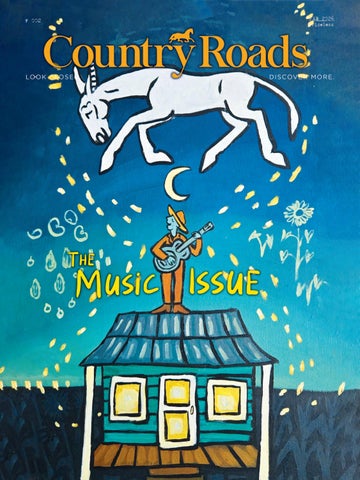
Love language by James Fox-Smith 6
REFLECTIONS
8 NOTEWORTHIES
New monuments in Pointe Coupée, Mississippi monsters, free entrance to museums & 225 Theatre Collective’s new home
30
BRING IT ON HOME
Dustin Dale Gaspard on ancestry, language, and singing Cajun French for America by Jordan LaHaye Fontenot
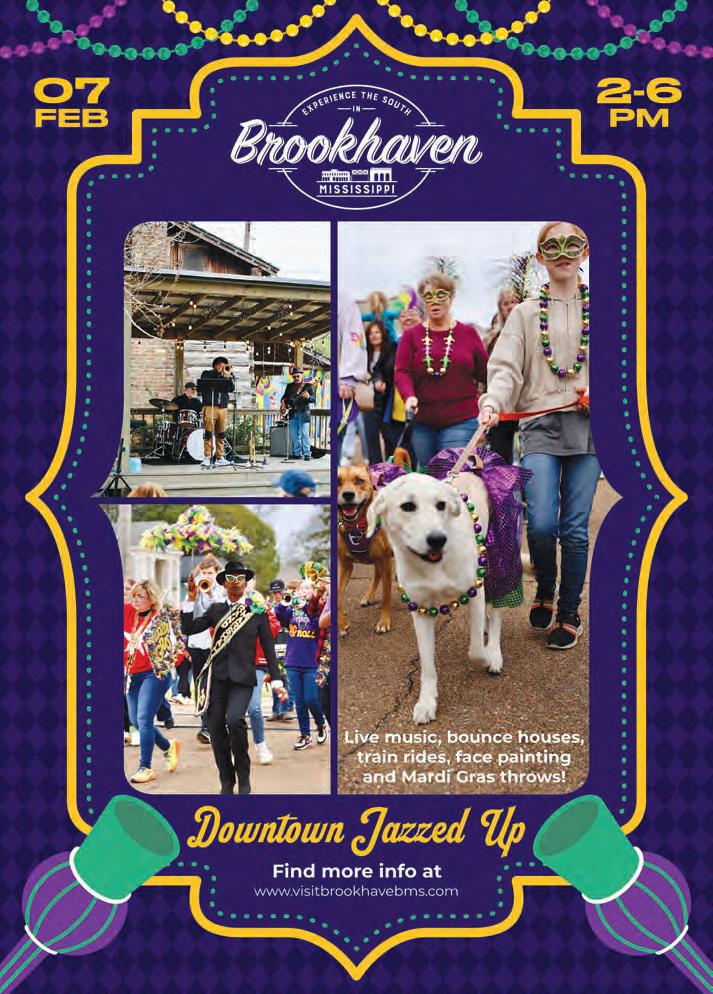
BATON ROUGE GOTTA HAVE A BAND
35
More than a century in the making, the Capital City’s concert band marches on, strong as ever by Sam Irwin
THE FIRST OF THEIR NAME
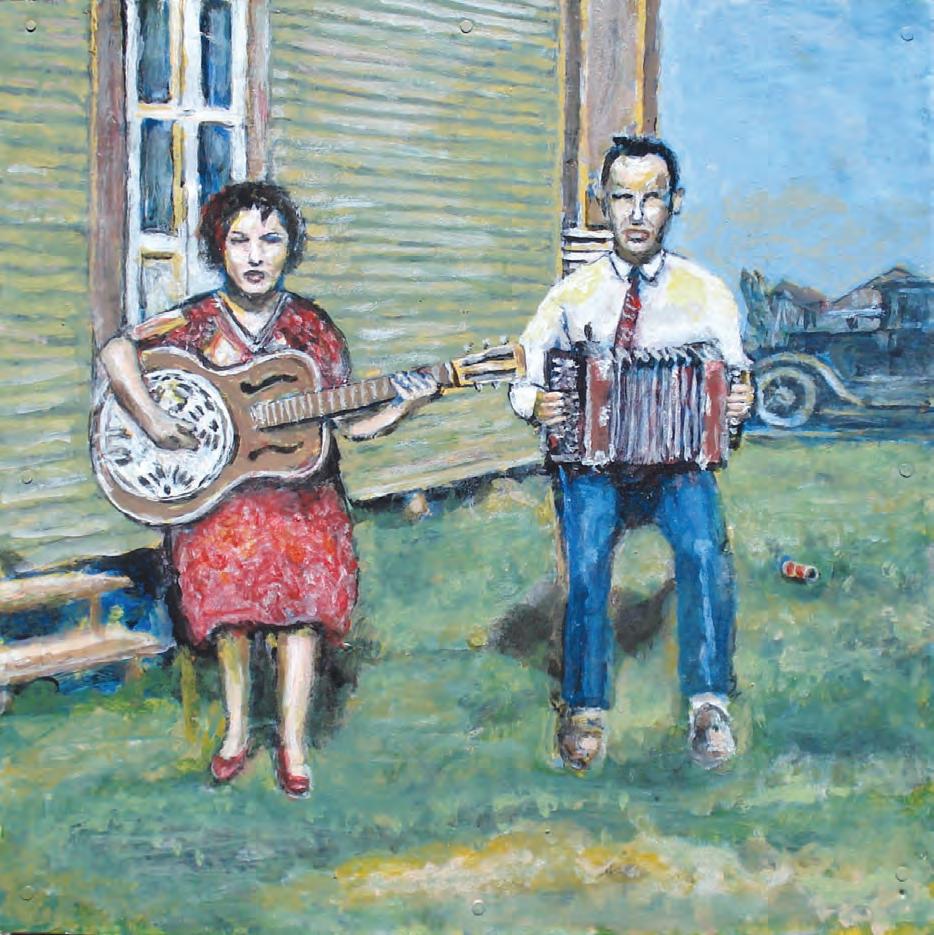
The Holiday Playgirls and the sacred work of playing Cajun music true by Jordan LaHaye Fontenot
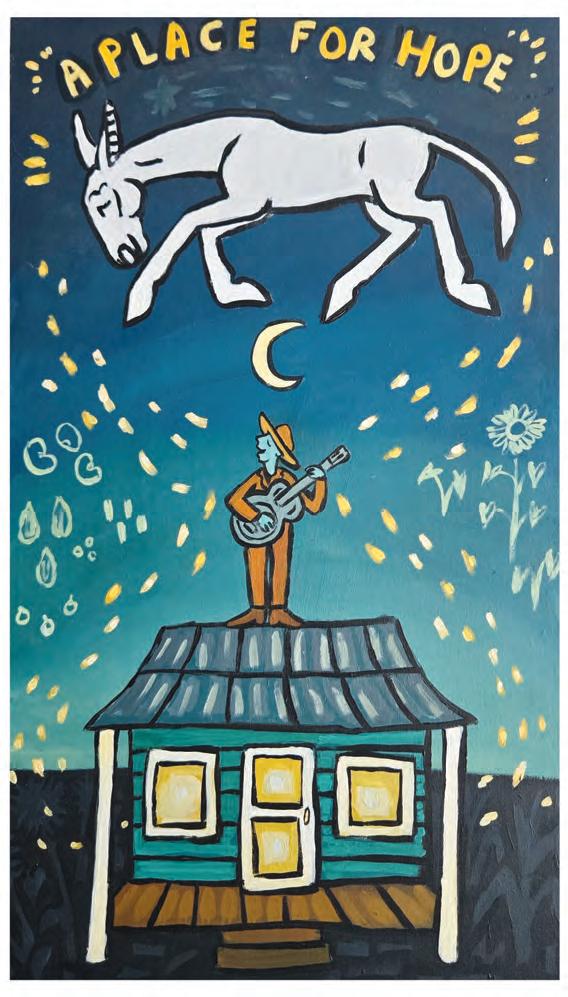
“A PLACE FOR HOPE”
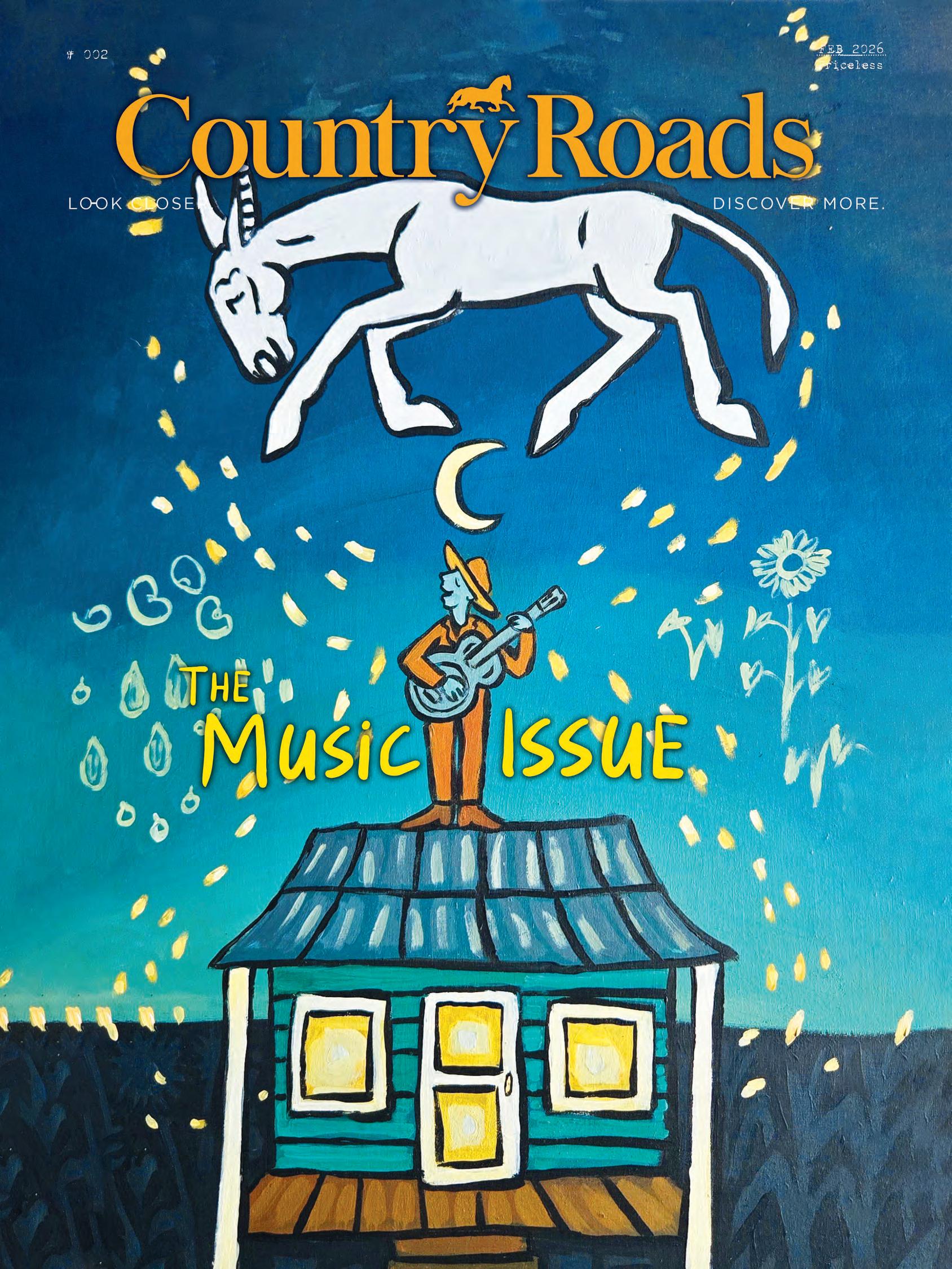
Artwork by Marshall Blevins
When Dustin Dale Gaspard first received word that he might get the opportunity to compete on the NBC reality show, The Voice, he stepped out beneath the stars. He looked up and he prayed to his Vermilion Parish ancestors, and he told them, “I’m ready.”
In the original version of Marshall “Church Goin’ Mule” Blevins’s artwork, above her signature mule—a symbol of common ground, of shared experiences the likes of those provoked by the blues—appear the words, “A place for hope.”
Gaspard, in his interview on page 30, speaks of a particular place he’s always reaching for when he plays music: a place of conviction, and vulnerability, and yearning, “where other people are invited in.” Renée Reed and Juliane Mahoney allude to it, too, in their own practice playing old Cajun music as The Holiday Playgirls. “There’s this release … it’s passionate. Cajun people, they’re passionate, and they’re heartbroken.” And you can hear it. It’s something shared, between the player and the listener, between all of us. There is hope in it, surely. But maybe what it actually is, is home.
Veracruz Coastal Mexican brings new distinctions to Baton Rouge’s dining scene by Lucie Monk Carter
SOUPÇON
Mr. Weatherall’s king cake crawl, a call for gas station gourmet & more by CR staff 39
THOUGHTS ON IRISES
The beauty of botanical obsessions
42 HOMEGROWN HOOTENANY
The Louisiana Grandstand imagines a new future for Shreveport’s music scene by Chris Jay
43 THE IRISH GOODBYE
A book review by Chris Turner-Neal
44 THE MYSTERY OF “THE FREEZE”
And how to help solve it by Megan Broussard Maughan
46 FIDDLING IS STILL OUR JOY
A living history of Black fiddling in America, and a playlist to boot by Dom Flemons
48 THERE IS A HOUSE IN NEW ORLEANS
An old Southern warning, still echoing by James Taylor Foreman
50 DOWN THE ROAD, THE MUSIC’S PLAYING
A music museum roadtrip through Louisiana by Jacqueline DeRobertis-Braun
54
WUNDERBOB
An outsider artist and musician you likely have never heard of, unless you’re from Germany by Chris Jay
Publisher James Fox-Smith
Associate
Publisher
Ashley Fox-Smith
Managing Editor Jordan LaHaye Fontenot
Arts & Entertainment
Editor
Jacqueline DeRobertis-Braun
Creative Director Kourtney Zimmerman
Contributors:
Brooke Broussard, Megan Broussard Maughan, Jess Cole, Dom Flemons, Sean Gasser, Sam Irwin, Chris Jay, Lucie Monk Carter, James Taylor Foreman, Chris Turner-Neal
Cover Artist
Marshall Blevins
Advertising
SALES@COUNTRYROADSMAG.COM
Sales Team
Heather Gammill, Heather Gibbons, Mary Margaret Lindsey
Operations Coordinator Molly C. McNeal
President Dorcas Woods Brown Country Roads
the views of the publisher, nor do they constitute an endorsement of products or services herein. Country Roads magazine retains the right to refuse any advertisement. Country Roads cannot be responsible for delays in subscription deliveries due to U.S. Post Office handling of third-class mail.
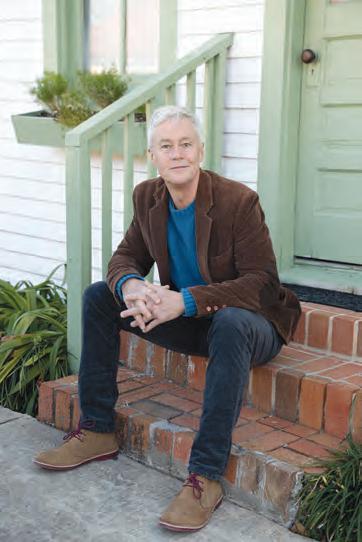
FROM THE PUBLISHER
To celebrate this season of love, my wife and I have been invited to a Valentine’s gift exchange party. If you grew up in America, perhaps you don’t need the rules of a Valentine’s gift exchange explained. But I didn’t, and apparently, I do. To this event I’m told that each attendee is expected to bring enough tasteful and appropriate tokens of affection to ensure that no-one on the guest list goes home feeling under-loved. My wife, a champion gift-giver and an incurable romantic, seems delighted by the challenge of coming up with perfect gifts for a couple of dozen fellow citizens. I on the other hand, as someone with a bit of a blind spot for the etiquette of appropriate gift-giving, find the whole prospect quite intimidating. That our union has endured all these years is probably proof that the opposing forces of yin and yang are the only things holding the universe together in the first place.
I can’t conjure up any childhood memories of Valentine’s Day at all, besides a vague sense that there was a language in use that I didn’t fully comprehend. Perhaps this was a result of being raised by “no-romanceplease-we’re-British” parents. Or perhaps it’s because you Americans started learning to speak that language in grade school, when the members of the Australian all-boys’ school I attended were still out on the playground, hitting each other with cricket bats. My wife tells me that by the time she was in elementary school, Valentine’s Day was already part of the curriculum. In second or third grade, she recalls spending weeks filling hand-made cards with sweet nothings for her friends and classmates, then arriving on the big day bearing an elaborately decorated shoebox, with a mail slot cut in the top for receiving reciprocal expressions of affection. By middle school, when the training wheels started coming off the whole romance thing and her contemporaries moved on from homemade cards to teddy bears and heart-shaped boxes of chocolates, the little girl with frizzy blonde hair and coke bottle
glasses, finding her shoebox lighter on professions of love than she might have wished, set about perfecting the art of thoughtful, nuanced, occasionally passive-aggressive gift-giving. For an oblivious young husband recently arrived from overseas and imperfectly schooled in the etiquette of Southern gifting, this meant spending early years hopping through an unfamiliar cultural landscape—foot wedged in mouth— where each unfamiliar national holiday, celebration, or life milestone might bring the expectation of gift-giving. But which holiday? And what gift? And to whom should it be given?! In such a landscape, learning the importance of ignoring statements such as, “You don’t need to get me anything big for Valentine’s
Day,” took me longer than it should have done.
Still, given time, patience, and repetition, even the most emotionally stunted student makes progress eventually. So, I hope that my wife will agree that the long journey to spousal enlightenment has been one worth sharing (and not only because the responsibility for coming up with appropriate gifts falls to someone besides me). Among many lessons we have learned during thirty years of married life is that measuring Valentine’s Day or any other celebration by the quality of the gift is missing the point. What seems most special about this upcoming gathering is that, on some level, it hearkens back to an earlier, pre-adult concept of affection—one that preferences good company, shared experience, kindness; and, now we’ve become people-of-a-certain-age, the very real benefits of having been together for a long, long time. Now, I’m off to buy a box of chocolates.
Still trying to get the hang of this, I remain,
—James Fox-Smith, publisher james@countryroadsmag.com
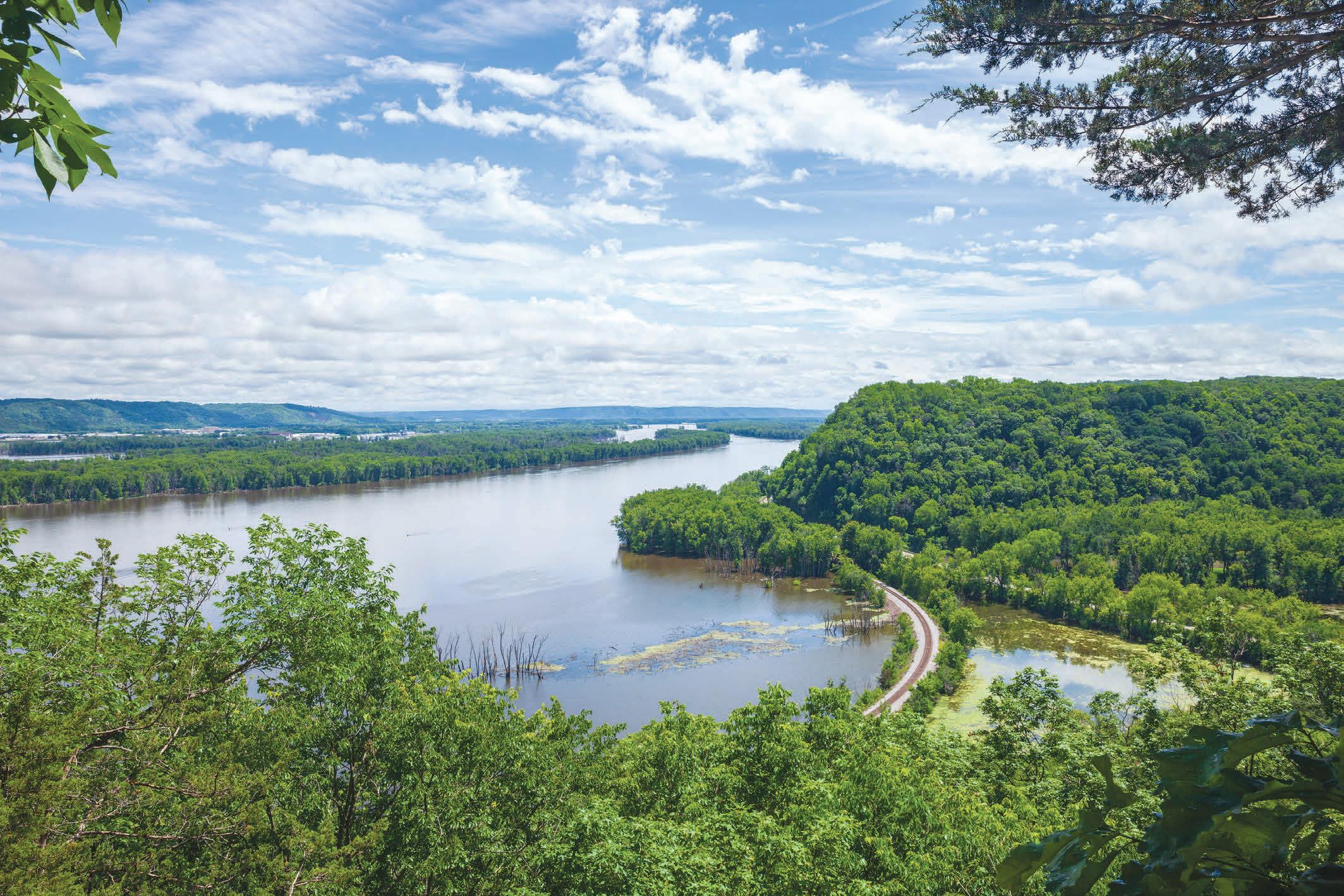
POINTE COUPÉE PARISH COMMEMORATES THE 1927 GREAT FLOOD AND HONORS THE OAK THAT INSPIRED ERNEST J. GAINES
Ihn recent months, Pointe Coupée Parish has gathered its cultural engines around two sites of hishtoric significance—first, a memorial of one of America’s most devastating natural disasters, the other a place of inspiration for one of our country’s most profound literary voices.
On December 16, 2025, community members gathered at the Pointe Coupée Museum in New Roads to dedicate the very first official historic marker commemorating the upcoming centennial of the 1927 Mississippi River Flood.
A two-year initiative by the Louisiana Trust for Historic Preservation (LTHP), the Great Flood Centennial project aims to work with communities along the Mississippi Delta to remember, document, and interpret the longstanding impact of the greatest flood in American history—which engulfed 23,000 square miles across the Mississippi River Valley. In addition to the hundreds of deaths and thousands of individuals displaced in the flood’s immediate aftermath, lasting effects included new legislation, population and economic shifts, the establishment of modern levee and transportation systems, and environmental and cultural losses.
“There are so many stories within our communities that were impacted by the flood,” said Kriston McCullum, the project manager for The Great Flood Project at LTHP. “One of our goals is to highlight and make visible these stories from individuals and communities.”
To achieve this, LTHP has created a collaborative digital archive of written stories, oral tellings, photos, videos, and other ephemera telling the many stories of the flood, and invites organizations and individuals to contribute.
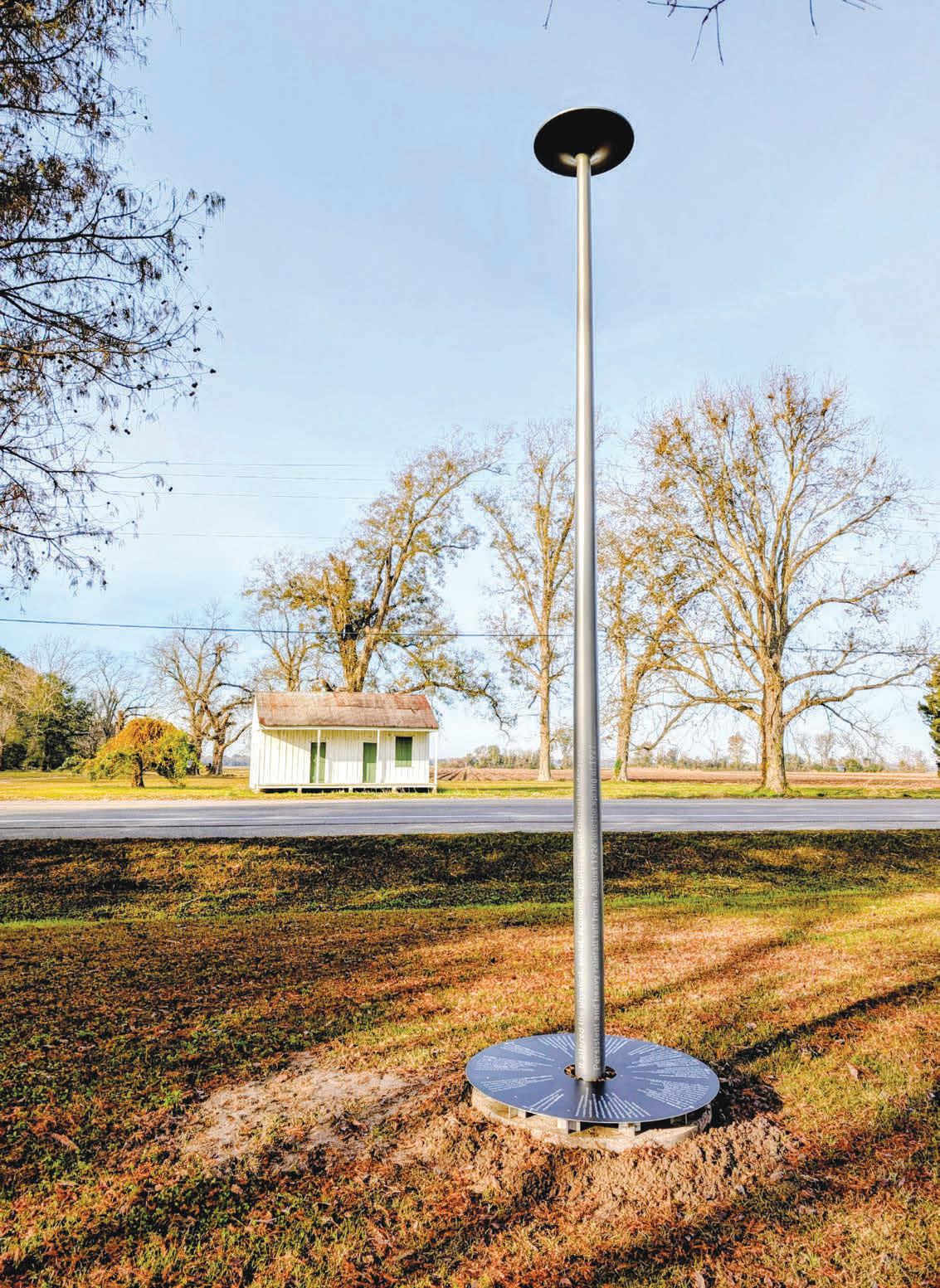
The other major branch of this project is the historical marker program—officially launched with the Pointe Coupée marker, which recognizes the parish as the site of the last levee breach of the 1927 flood. The marker itself, designed by local artist Joel Breaux, is a tall aluminum pole with a spun funnel on top, which will collect rainwater. A gauge on the marker will indicate the floodwaters’
depth during 1927, and a compass at the foot of the installation provides historical facts on other nearby impacted sites.
McCullum said the hope is more communities will invest in historical markers to commemorate their own stories of the flood, as well as collaborate with the Great Flood Project to create specialized programming, events, and exhibitions leading up to the centennial in 2027.
Follow False River five miles east, and you’ll find the parish’s other newly recognized historic site right beneath a fourhundred-year-old oak tree, one of the legendary survivors of the 1927 flood. Known colloquially as the “Miss Jane Pittman Oak,” the tree served as inspiration for the Louisiana literary icon, Ernest J. Gaines, in his 1971 novel The Autobiography of Miss Jane Pittman
A landmark of Gaines’s own youth, which he passed daily walking from his home at River Lake Plantation, the tree gained immortality as a symbol of endurance for Gaines’s character, Miss Jane.
In October of 2022, the original historical marker—dedicated earlier that year—was stolen and never recovered. Four years later, on January 18, 2026, thanks to the joint efforts of the Pointe Coupée Historical Society, the Albert Family Foundation, the Curet Family, and donors of the Baton Rouge Area Foundation, a new marker was finally purchased and installed to recognize the tree’s historical, literary, and spiritual significance to the region.
“What a wonderful time to be alive to pause and celebrate the life and legacy of our native son, Ernest J. Gaines and the Miss Jane Pittman Oak,” said Katrice Albert. “The replacement and rededication of this important historical marker allows us to remember his literary excellence and his enduring love for Pointe Coupée. For citizens and visitors alike, it educates us about our cultural heritage, creates a sense of place and pride, and preserves the stories of our people and our community.
Learn more about the Great Flood Project at 1927flood.lthp.org. Visit the new markers at the Pointe Coupée Museum and at 11850 LA-416 Lakeland, LA 70752. —Jordan LaHaye Fontenot
EAST BATON ROUGE PARISH LIBRARY CARDHOLDERS NOW HAVE (EVEN MORE) ACCESS TO THINGS BEYOND BOOKS
Looking for ways to make the most of—and support—your local library? Just in time for spring, the East Baton Rouge Parish Library recently announced it has joined the State Library of Louisiana’s “Check Out Louisiana Museums” program.
Now, cardholders will be granted free access to Louisiana museums and cultural attractions across Louisiana. These include: the 1850 House, The Cabildo, Capitol Park Museum, E.D. White Historic Site, Louisiana Civil Rights Museum, Louisiana Sports Hall of Fame & Northwest Louisiana History Museum, The National WWII Museum, New Orleans Jazz Museum at the Old U.S. Mint, The Presbytére, Wedell-Williams Aviation & Cypress Sawmill Museum, Alexandria Museum of Art, The Historic New Orleans Collection (Tour), Pontchartrain Conservancy: New Canal Lighthouse, West Baton Rouge Museum, and the Whitney Plantation Museum.
This new partnership comes as the East Baton Rouge Library asks voters to continue its previous millage, which expired in 2025. Now, the library has proposed a stand-alone, dedicated tax of 9.5 mills to fund almost 100% of the system over the next decade. Notably, this proposition is a lower rate than previous measures approved in 1995, 2005, and 2015.
“We examined the fresh information as it became available to us, we studied the statistical data we carefully collected over time, and we listened to you, our community stakeholders,” said Library Director Katrina Stokes. “With this millage, EBRPL will continue to provide the excellent services our community deserves, while fully funding the Capital Improvements Plan, which protects the public's investment."
Reserve your pass at checkoutlouisiana.org.
—Jacqueline DeRobertis-Braun
If you think of the Mississippi River as a superhighway that connects Louisiana and the entire hMississippi Valley with global agricultural trade, then the LSU AgCenter’s recent receipt of $1 million in federal funding to combat invasive species makes good sense. The funding, which was secured by U.S. Rep. Julia Letlow of Louisiana’s 5th Congressional District with assistance from members of the state’s congressional delegation, enables the creation of the Mississippi River Invasive Species Consortium—a regional hub for research to identify and manage invasive and non-native pest species along the Mississippi corridor. Housed within the LSU AgCenter, the consortium will unite scientists from land-grant institutions throughout the Mississippi River valley in coordinated efforts to combat the spread of invasive species, such as giant salvinia, feral hogs, apple snails, Mexican rice borers, and Asian carp—species that thrive in Louisiana’s climate and pose economic, environmental, and social challenges to ecosystems and agricultural operations in all the states connected by the river.
The AgCenter has an existing commitment to researching invasive species.
It already houses a Center of Research Excellence for the Study of Invasive Species. AgCenter leaders anticipate that the Invasive Species Consortium will expand the center’s influence to a regional level that extends from the Gulf Coast to the Great Lakes. In a press release published
in January, Senior Vice Chancellor of the LSU AgCenter and Dean of the LSU College of Agriculture Matt Lee said, “Invasive species cost Louisiana’s agricultural producers and the state’s economy tens of millions of dollars annually, with a national impact exceeding $120 billion each year. This funding will allow us to coordinate detection, identification, research and best management practices to mitigate these threats and protect our region’s vital agricultural and natural resources.” lsuagcenter.com.
—James Fox-Smith
Amid a resurgence in the Baton Rouge drama community, 225 Theatre Collective has found a new home at the Arts Council of Greater Baton Rouge. Now, the collective will regularly hold performances and workshops at the Cary Saurage Community Arts Center on St. Ferdinand Street, providing it with a dedicated brick-and-mortar site that will make a difference for future programming.
“Moving 225 Theatre Collective into the Cary Saurage Community Arts Center is a huge step forward for us,” said Stephanie Calero, 225 Collective’s artistic director. “It gives our team a true creative home where we can grow our programming, support local artists, and welcome more of the community into the arts.”
Victoria Brown, the collective’s production designer, added that she, too, was excited about the step forward for the company.
“Moving into the Arts Council of Greater Baton Rouge has not only shown us the benefits of teaming up with other artists, but it also has demonstrated how kind and supportive the arts community in Baton Rouge is,” she said. “By uplifting, collaborating, and encouraging each other, artists can create more and give back to the community. We are so happy to be able to use the Arts Council building as a safe space to continue our mission of diversity and creativity.”
Calero added that partnering with the Arts Council of Greater Baton Rouge as one of its resident theatre companies allows the collective to offer consistent programming in a space that was specifically designed to bring people together through creativity. “We’re excited to build an even stronger and more accessible arts scene in Baton Rouge,” she said. “We are beyond grateful!” Learn more about the 225 Theatre Collective at 225theatrecollective.com.
—Jacqueline DeRobertis-Braun


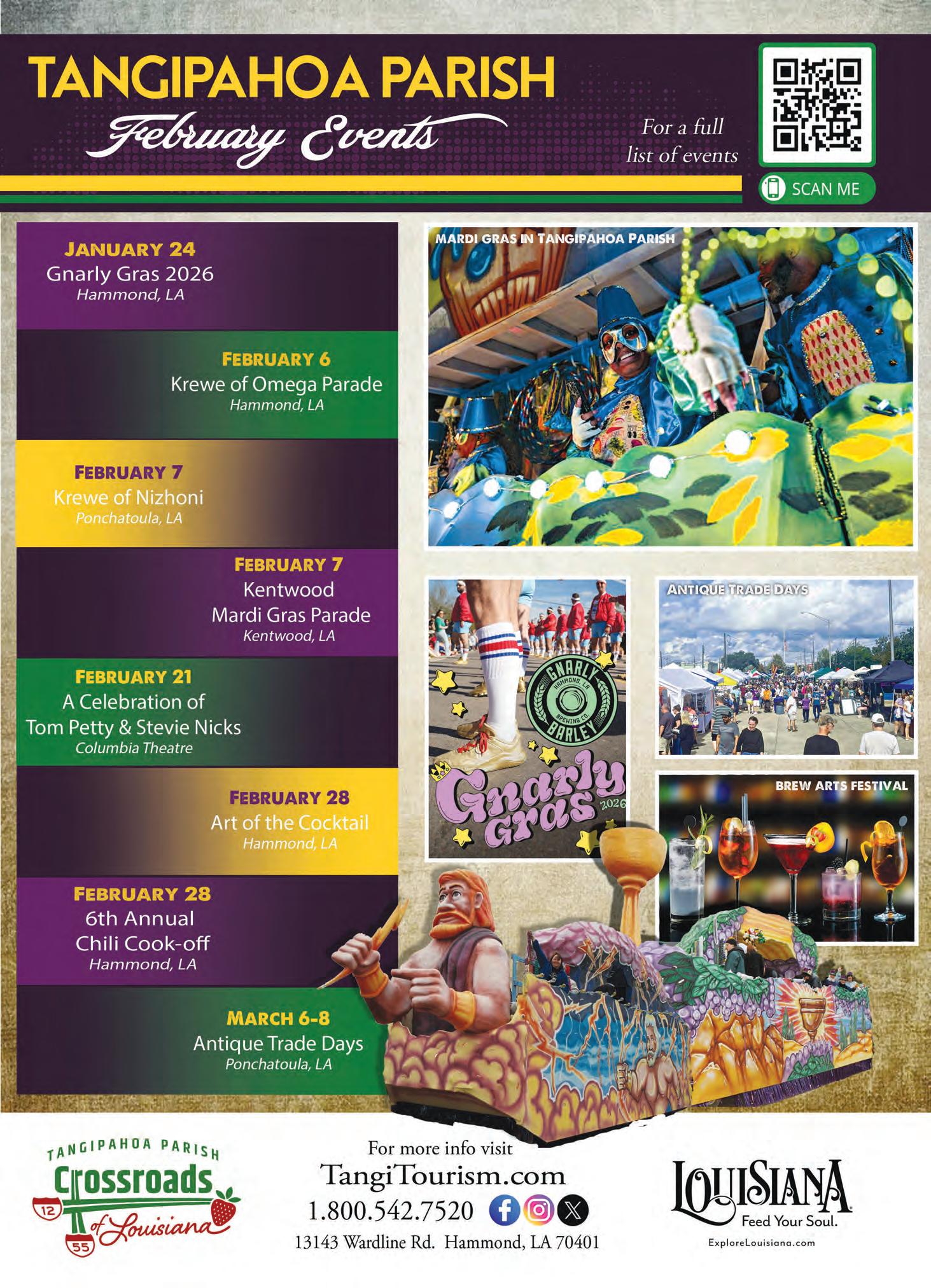
WHETHER YOU SHOW UP FOR PARADES, COURIRS, OR THE CELEBRATIONS IN-BETWEEN, WE'VE GOT YOUR CARNIVAL SEASON COVERED • FEBRUARY 2026
THROW ME SOME THIN'
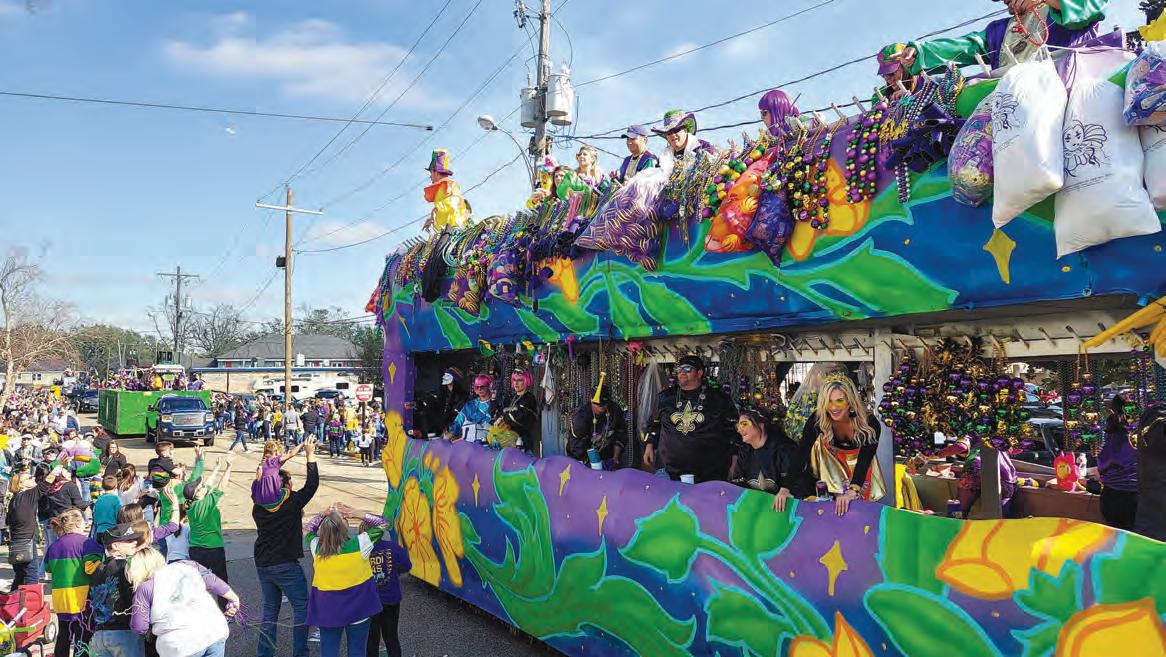
Catch up on all the Carnival revelry across the South leading up to Fat Tuesday. Find non-Mardi Gras events happening throughout February beginning on page 24.
February 6
Krewe of Oceanus: Founded in 2020 by the residents of Southern Hills, this aquatic-themed Shreveport parade begins at Mall St. Vincent. 7 pm. For details see the Krewe of Oceanus Arklatex Facebook page.
February 7
Krewe of Janus Children's Parade: A cute parade with even cuter riders at Pecanland Mall's Center Court. 10 am. kreweofjanus.com.
African American History Parade: This thirty-seventh annual parade celebrating the many contributions of Black Americans starts at the Shreveport Municipal Auditorium. 11 am. sbfunguide.com.
Krewe of Paws Parade: Furry friends of all shapes and sizes will be in West Monroe dressed in their Mardi Gras best, beginning on the 100 block of Commerce Street. Noon. pawsnela.org.
Krewe de Riviere Mardi Gras Parade: Enjoy a traditional New Orleans feel with floats, walking groups, riding groups, and plenty of goodies. Parade starts at 1118 Natchitoches Street and ends at the intersection of Louisville Avenue and Oliver Road. 3 pm. monroe-westmonroe.org.
Krewe of Centaur: The largest parade in the Ark-La-Tex area, Shreveport's “Fun Krewe” is known for its centurion celebration of the regional gambling industry. 3:30 pm starting at the corner of Lake Street and Clyde Fant Parkway, before traveling down the ShreveportBarksdale Highway. kreweofcentaur.org.
Krewe of Janus: Northeast Louisiana’s oldest parade joins the Twin Cities by parading through West Monroe and Monroe, mostly down Louisville Avenue. 6 pm. kreweofjanus.com.
February 8
Krewe of Barkus and Meoux : The crowd acts like animals for this Shreveport favorite. 2 pm. barkusandmeoux.com.
February 14
Krewe of Gemini: Shreveport and Bossier City's first parading krewe of modern times, this event is one of distinctly royal revelry. In downtown Shreveport at 3:30 pm. kreweofgemini.com.
February 15
Krewe of Highland: Lunch will be supplied at this eclectic Shreveport parade in the form of grilled hot dogs and packaged ramen noodles hurled off of floats. Rolls at 2 pm through the Highland neighborhood. kreweofhighland.org.
February 6
Krewe of Cork : New Orleans’s wine krewe will be sippin’ and steppin’ through the French Quarter. 3 pm. kreweofcork.com.
Krewe of Oshun: This krewe includes marching Baby Dolls, a band contest, peacocks, and the goddess of love—all making their way down St. Charles. 5:30 pm. mardigrasneworleans.com.
Krewe of Cleopatra : The first all-female organization on the Uptown route will roll again. 6 pm. kreweofcleopatra.org.
February 7
Krewe of Pontchartrain: Famous for its history of celebrity Grand Marshals, this St. Charles Avenue parade is one of New Orleans’s longest-standing. 11:30 am. kofp.com.
Krewe of Choctaw : Starting their more than eighty-year history on mail wagons as floats, this krewe will march down St. Charles. 12:30 pm. kreweofchoctaw.com.
Knights of Nemesis: The krewe of St. Bernard Parish will make its annual, unforgettable appearance coming down Judge Perez Drive. 1 pm. knightsofnemesis.org.
Krewe of Freret: This krewe has a focus of preserving New Orleans Mardi Gras

tradition, and will march down St. Charles. 1 pm. kreweoffreret.org.
Magical Krewe of Mad Hatters: This recently-founded Metairie krewe aimed at capturing the imagination brings Alice in Wonderland to life with colorful lights, costumes, and dance troops on Veteran’s Boulevard. 5 pm. madhattersparade.com.
Knights of Sparta : This all-male krewe has been around since the fifties. 5:30 pm. knightsofsparta.com.
Krewe of Pygmalion: This parade founded by Carnival veterans in 1999 rolls down the St. Charles route, floats only, at 6:15 pm. kreweofpygmalion.org.
February 8
The Mystic Krewe of Femme Fatale: The first krewe founded by African American women for African American women, their signature throw is a designer lady's compact, symbolizing constant inward and outward reflection. 11 am down St. Charles. mkfemmefatale.org.
Krewe of Carrollton: Carrollton is the fourth-oldest parading krewe of the New Orleans Carnival season. They are known for throwing shrimp boots. Follows
Femme Fatale at 12:30 pm down St. Charles. kreweofcarrollton.org.
Krewe of King Arthur and Merlin: One of the largest New Orleans krewes, Arthur and Merlin’s signature throw is the King Arthur Grail—hand-made goblets that are bestowed upon the most esteemed parade-goers. Follows St. Charles at 1 pm. kreweofkingarthur.com.
Mystic Krewe of Barkus: This one has gone to the dogs—see them all, including the four-legged royalty. In the French Quarter, starting at 2 pm. kreweofbarkus.org.
February 11
Krewe of Druids: This secret society is known for its wit and tendency to ruffle feathers. One year it featured a float saying: “Seriously...The Parade Behind us is not Worth the Wait.” 6:15 pm down St. Charles. kreweofthedruids.org.
Krewe of ALLA : One of the oldest of the New Orleans krewes, ALLA has been marching in Uptown since the Great Depression. Step out to catch one of their signature genie lamp throws. 7 pm. kreweofalla.net.
February 12
Knights of Chaos: Parading on the traditional "Momus Thursday," Chaos picks up where Momus left off—in the grand tradition of satire. Uptown route at 4:30 pm. mardigrasneworleans.com.
Knights of Babylon: Traditional to the max, this Uptown krewe designs their floats exactly as they were drawn up over eighty years ago. The king’s identity is never revealed to the public. 5:30 pm. knightsofbabylon.org.
Krewe of Muses: Why shop for shoes when you can catch a pair? One of the most coveted throws of the season comes from this incredibly popular all-female parade. Uptown at 6 pm. kreweofmuses.org.
February 13
Krewe of Bosom Buddies: This French Quarter walking parade celebrates women of all walks of life, and throws out handdecorated bras along the way. 11:30 am. bosombuddiesnola.org.
Krewe of Hermes: Every year, the Hermes captain leads the Uptown procession in full regalia on a white horse, followed by innovative neon floats and 800 male riders. 5:30 pm. kreweofhermes.com.
Krewe d'Etat: Led by a dictator instead of a king, this secret society gets a kick
out of throwing blinking skulls at its audience. Pick up a copy of the D'Etat Gazette, a bulletin with pictures and descriptions of the floats. 6:30 pm down St. Charles. mardigrasneworleans.com.
Krewe of Morpheus: Looking through the chaos and tomfoolery for an "old school" parade down St. Charles? This one's for you. 7 pm. kreweofmorpheus.com.
February 14
Krewe of NOMTOC: The Krewe of New Orleans Most Talked of Club was founded in 1969 by the Jugs Social Club. The all Black krewe tosses out ceramic medallion beads, jug banks, and signature Jug Man dolls. Starts in the Westbank at 10:45 am. nomtoc.com.
Krewe of Iris: One of the oldest and largest female Carnival organizations for women, Iris continues to follow old-school tradition, its 3,600 members donning white gloves and masks and throwing decorated sunglasses and king cake babies, as well as a bunch of Iristhemed items. 11 am down St. Charles. kreweofiris.org.
Krewe of Tucks: This one got its start at a pub, and has developed a fond reputation for its potty humor, including toilet paper throws draping St. Charles's live oaks. Watch out for the King's throne (a giant toilet). Noon. kreweoftucks.com.

Krewe of Endymion: If you’re heading to watch this New Orleans “Super-Krewe,” be sure to get out to your viewing spot on Canal early. The krewe hosts Samedi Gras, a block party that draws 30,000+ people to kick off the parade. Previous grand marshals include Kelly Clarkson, Carrie Underwood, Luke Bryan, Steven Tyler, Pitbull, Kiss, and Flo-Rida. 4 pm. endymion.org.
Krewe of Isis: As Jefferson Parish’s oldest-consecutively parading Carnival organization and largest all-female krewe, the Metairie Egyptian-themed parade features marching bands, dance teams, and spectacularly-attired maids. Starts at the Esplanade Mall at 6 pm. kreweofisis.org.
February 15
Krewe of Okeanos: Back in the '50s, Okeanos started as a small neighborhood parade, and evolved into the over 300-rider krewe it is today, traveling on the traditional Uptown/Downtown route. 11 am. kreweofokeanos.org.
Krewe of Mid-City : This one is famed for its foil-covered floats and childrenoriented themes. 11:45 am along the St. Charles Route. kreweofmid-city.com.
Krewe of Thoth: This parade's route is uniquely designed to reach extended healthcare facilities so that individuals unable to attend other parades can participate in the holiday as well. Noon on the Uptown route. thothkrewe.com.
Krewe of Bacchus: Revered as one of the most spectacular krewes in Carnival history, this parade is known for staging celebrities Bob Hope, Dick Clark, Will Ferrell, and Drew Brees as its namesake, Bacchus. The parade ends inside the Convention Center for a black-tie Rendezvous party of over 9,000 guests. 5:15 pm. kreweofbacchus.org.
Krewe of Athena : Jefferson Parish's newest all-female krewe, founded on Sisterhood, Service, Fellowship, and Fun, will be tossing out hand-decorated fedoras down Veteran's Memorial Boulevard. 6 pm. kreweofathena.org.
February 16
Krewe of Proteus: Founded in 1882, this St. Charles parade is the second-oldest krewe in Carnival history, and still uses the original chassis for their floats. Once known as the most miserly throw-ers, they now joust 60-inch red-and-white pearl bead necklaces, plastic tridents, and polystone medallions. 5:15 pm. kreweofproteus.com.
Krewe of Orpheus: This parade was established as a superkrewe immediately after its debut, which rolled out 700 riders. One of their most famous floats is the Dolly Trolley, the horse-drawn bus used in the opening of Hello, Dolly! with
Barbara Streisand. Rolls on the Uptown Route at 6 pm. kreweoforpheus.com.
Krewe of Centurions: The familyfriendly Centurions parade is comprised of over 300 riders, and rolls on the Metairie route. 6 pm. kreweofcenturions.com.
Krewe of Atlas: This Metairie Krewe was founded on the principle of equality for all. 7 pm down Veterans. kreweofatlas.org.
Krewe of Zulu: A parading krewe since 1909, Zulu was the first and for many years the only krewe representing New Orleans’s Black community. Its extraordinary costumes, float designs, and history distinguish it from other Mardi Gras parades. 8 am on St. Charles. kreweofzulu.com.
Krewe of Rex : Elaborately decorated, hand-painted floats, masked riders in historic costumes, and a rich and colorful history make Rex one of the cultural centerpieces of Mardi Gras. Rex was formed in 1872, making it the oldest continually-operating krewe. The identities of Rex’s king and queen remains secret until Lundi Gras. 10:30 am down St. Charles. rexorganization.com.
ELKS, Krewe of Orleanians: The world’s largest truck parade features over fifty individually designed truck floats and comprises 4,500 riders. Follows Rex at 11 am. neworleans.com.
Krewe of Argus: One of Jefferson Parish’s largest and most family friendly parades, Argus draws over a million revelers to Metairie. Past celebrity guests include Barbara Eden, Phyllis Diller, and Shirley Jones. Starts from 41st Street and Severn Avenue at 11 am. kreweofargus.com.
Krewe of Crescent City : Each truck in the Crescent City Truck Parade represents a different Carnival organization. This parade signals the official "beginning of the end" of Carnival. Follows
ELKS Orleanians at 11:30 am. crescentcitytruckparade.com.
ELKS, Krewe of Jeffersonians: Featuring more than ninety trucks and 4,000 riders, this krewe shares the Elk mascot with its sister krewe, the Krewe of Elks-Orleanians. 11:30 am on the Veterans Memorial Boulevard route. neworleans.com.
February 6
Krewe de Canailles: Celebrating inclusivity, creativity, and sustainability, this walking parade down Jefferson Street in Lafayette does allow for floats—if you drag them yourself. Tossing out
eco-friendly throws and joining together groups of sub-krewes, these carnival crusaders have found a way to party their way to a better Lafayette. This year's theme is Roadside Attractions. 7 pm. krewedecanailles.com.
February 6–7
La Rivière Mardi Gras: Hosted at the Riverview RV Resort in Krotz Springs, this two-day Mardi Gras festival begins on Friday evening at 6 pm with the children's wagon parade and chicken run. Saturday brings the family-friendly adult parade, which launches from the resort at 9 am, with chicken stops (men only) along the way until a boudin intermission at Nall Park, and ends with a bowl of gumbo and live music back at Riverview for the women's chicken run. $10 to watch, $20 to participate in the parade; $20 to participate in the chicken run, cash only. 9 am. (337) 351-4260.
February 7
Courir de Mardi Gras de L’anse: The men of Mermentau Cove are suiting up traditional courir-style and rambling around its backroads. Come for the run, stay for the fais-do-do and gumbo
afterwards at a home on Lafosse Road. Courir begins at 8 am, Fais Do Do at 4 pm. acadiatourism.org.
Lebeau Mardi Gras Festival: This St. Landry celebration starts out with an old-school courir with all the trappings, including a greased pig chase and zydeco tunes. Then the Lebeau Mardi Gras Parade steps out on horseback, ATVs, automobiles, wagons, and traditional floats. Festivities start at 8 am, parade departs at 1 pm and it all ends at a music fest at the Immaculate Conception Church from 4 pm–7 pm. cajuntravel.com. (337) 945-4238.
Lake Arthur Mardi Gras Run/ Parade: Bringing the extravagance of New Orleans Carnival, Lake Arthur's celebration kicks off with a courir coming from Lake Arthur Park at 9 am, with several chicken run stops along the way. Back at Arthur Avenue, at 3 pm the parade—floats and all—will embark on its own journey. jeffdavis.org.
Krewe Des Chiens: The least we can do for our dogs is to parade them, in all their grandeur, through the streets of Lafayette. Noon on West Vemilion Street. krewedeschiens.org.
Krewe of Carnivale en Rio: Known for its vibrant floats, dazzling lights, and the jubilant accompaniment of maracas, the Parada—which honors Brazil’s first emperor Dom Pedro I and his granddaughter Dona Isabel—has become Lafayette’s premier Mardi Gras event. 6:30 pm down Johnston and Vermilion. riolafayette.com.
February 8
Courir de Mardi Gras at Vermilionville: Vermilionville and the Basile Mardi Gras Association are hosting a traditional country Cajun Mardi Gras run in the historic village. Things kick off at 10 am with a discussion by historian Barry Jean Ancelet, followed by a demonstration on the traditional "Chanson de Mardi Gras" by Kevin Rees. Then, experience the traditional run through the village, ending with a chicken chase for the children. Afterwards, enjoy lunch at the onsite restaurant, sample king cakes, learn how to make a capuchon, and more. 10 am–4 pm. $12; $10 for seniors; $7 for students; and children younger than five are free. bayouvermiliondistrict.org.
February 12–17
Eunice Cajun Mardi Gras Festival: Every Carnival season, Eunice convenes downtown for five days of fais dodoing. Don't miss out on events like the accordion & fiddle contest, Cajun
dance lessons, a boucherie, a children's courir, a pet parade, and more. Expect to watch the end of Eunice's courir come through town at 3 pm Tuesday afternoon, then dance until the dang day is done. eunicemardigras.com.
February 13
Krewe of Allons Kick-Off Parade: Getting things started for the slate of events that makes up the Greater Southwest Louisiana Mardi Gras Association's celebration of Mardi Gras in Lafayette, this parade travels from the corner of Simcoe, Surry, and Jefferson through the Downtown area over to Johnston, turning on to College to land at Cajun Field. Rolls at 6:30 pm. gomardigras.com.
February 13–17
Le Festival de Mardi Gras à Lafayette: Head to Cajun Field in Lafayette for Carnival rides (see what we did there?) and games, live music from local favorites, and delicious food. Times vary. 800-346-1958. gomardigras.com.
February 14
Cankton Courir de Mardi Gras: Join in on a chicken run, trail ride, gumbo cook-off, live music, and more at Landon Pitre Memorial Park. Live music from 2:30 pm–5:30 pm, with a live DJ starting at 9 am. Costumes encouraged. 7 am–

6 pm. $5 to enter; $60 per gumbo team; $20 to participate in the chicken run/ trail ride. All proceeds benefit the Special Olympics of Louisiana. cajuntravel.com.
Eunice Lil' Mardi Gras: Watch 'lil costumed runners race after the courir's mascot—dreaming of a chicken-shaped trophy. The day begins at 9 am with the traditional run at the Eunice Recreation Complex, followed by the official chicken chasing competition at 1:15 and the children's parade through downtown Eunice at 3 pm. Ages 1–14. $10 per child to participate; $10 per vehicle to follow along the route. cajuntravel.com.
Church Point Children's Mardi Gras Run: A miniature version of one of Acadiana's most famous traditional Mardi Gras celebrations, open to children ages fourteen and younger. Begins at 10 am, and marches down Main Street at 1 pm. $10 to participate; no horses. saddletrampridersclub.org.
Lafayette Children's Parade: The city's tiniest krewes will head down Johnston, in all their majesty, at 12:30 pm. gomardigras.com.
Lafayette's Krewe of Bonaparte: A hallmark of Lafayette Mardi Gras since 1972, this krewe infuses excitement and youth into the city's annual traditions. See them roll down the Greater Southwest Louisiana Mardi Gras route, from Jefferson to Johnston, to the CajunDome, starting at 6:30 pm. gomardigras.com.
Oberlin Courir de Mardi Gras: Oberlin starts the Saturday before Fat Tuesday with their Children's Courir at 8 am, with gumbo served at The Crawfish Shack and live music performances to follow beginning at noon. The Oberlin Mardi Gras Marches begin at 6:30 pm and 7:30 pm. allenparish.com.
February 15
Courir de Mardi Gras Church Point: This run features costumed horseback riders, wagons, buggies, floats, and live music along with all your characteristic chicken chasing and greased pig capturing. 7 am–2 pm. $50 to participate, must be in costume. Main Street parade begins at 1 pm. saddletrampridersclub.com.
Grand Marais Mardi Gras Parade: Admire costumes from the artistic to the repulsive—all elaborate, plus floats and dance troops at this family-friendly afternoon Jeanerette parade, which begins at Grand Marais Park at 2 pm. iberiatravel.com.
Eunice Parade of Paws: It's a ruff world out there, but not on the Sunday before Mardi Gras. Come see the prettiest and most pampered pups parade through Downtown Eunice. 3 pm. eunicemardigras.com.
February 16
Lafayette's Monday Night Parade: In Lafayette, Lundi Gras is for the queens—Evangeline LXXXII and LXXXIII will reign over the city's most regal krewes, rolling down the Southwest Louisiana Mardi Gras route at 6 pm. gomardigras.com.
February 17
Courir de Mardi Gras de Grand Mamou: One of the most raucous and famous Cajun chicken runs on the prairies. Starts at 6:30 am, and travels throughout the country roads collecting goods for that end-of-the-day gumbo. Catch the parade at the end of the day in downtown Mamou around 3 pm (watch where you step, horses have been known to enter the bars). evangelineparishtourism.org.
Faquetaigue Courir de Mardi Gras: Designed to be appropriate for all ages, to be family friendly, and to emphasize culture, this run takes place on horseback, on foot, and via trailer, journeying throughout the Faquetaigue community. Begins at 8 am; full costumes with hats and masks are required. $25. faquetaigue.com.
Le Vieux Mardi Gras de Cajuns de Eunice: Eunice’s Courir de Mardi Gras features riders on horseback in masks, conspiring in chicken-chasing, revelry, general silliness, and an effort to make a community-wide gumbo. Costumeclad trailers follow behind—and all join together in downtown Eunice for a final fais do do at 3 pm. The day starts long before that, though, at 8 am at the Northwest Community Center. facebook.com/eunicemardigras.
Tee Mamou-Iota Mardi Gras Folklife Festival: Experience the handmade costumes and masks, the masterfully medieval capuchons, and the unbridled chaos of it all—the Folklife Festival also celebrates with live music, folk crafts, and local food booths on the prairie. 9 am–4 pm. acadiatourism.org.
Carnival D’Acadie: Run into the heart of the Cajun Prairie to celebrate Fat Tuesday, Rice City Style. Crowley’s Fat Tuesday festival includes carnival rides, live music, and a grand parade at 2 pm. Music starts at 10 am. acadiatourism.org.
King Gabriel's Parade: Lafayette's grandest of parades, honoring the King of Carnival and the hundreds of volunteers who make the vibrant showcase down Johnston possible. Rolls at 10 am. gomardigras.com.
Opelousas Mardi Gras Parade: Floats, beads, and reigning royalty make up this Opelousas parade, marching through downtown Opelousas starting at Le Vieux Village Heritage Park. Begins at 11 am.

Get there early to see the Mystic Krewe of Fur Babies' pre-parade, and stay late for a musical performance on the Square. cajuntravel.com.
Lafayette Mardi Gras Festival Parade: Emitting the spirit fueled by the carnival atmosphere at Cajun Field, this parade will run down Johnston at 1 pm. gomardigras.com.
Independent Parade: Anyone can participate in this parade, which closes out Mardi Gras day in Lafayette. Enjoy the show of "independent" floats rolling down Johnston, starting at 2:30 pm. gomardigras.com.
February 6
Krewe of Artemis: The first all-female krewe in Baton Rouge begins and ends at the corner of Government Street by the River Center. Revelers will be treated to themed throws, including the Krewe of Artemis’s signature High-Heeled Shoe. 7 pm. kreweofartemis.net.
February 7
Krewe of Diversion: The annual
Livingston boat parade benefiting St. Jude Children's Research Hospital floats starting at noon at Manny's. Free. livingstontourism.com.
Addis Fireman's Mardi Gras Parade: In the little town of Addis, the Volunteer Fire Department will sponsor its familyfriendly line of celebration for all. 1 pm. Visit the Addis Fireman's Mardi Gras Parade for details.
Krewe of Tickfaw River: Mardi Gras comes to the Tickfaw River, with boats decked out in ways unimaginable. Begins at Dendinger Road in Killian at 1 pm. livingstontourism.com.
Krewe Mystique de la Capitale: Baton Rouge's oldest parading Mardi Gras krewe continues its mission to uphold Carnival season in the Capital City. Family oriented, it starts at the River Center and winds around downtown. 2 pm. krewemystique.com.
Krewe of Ascension Mambo Parade: Prepare to be awed as the creative masterpieces that are Ascension Parish's Mardi Gras floats pass down Irma Boulevard to Burnside Ave. 2 pm. visitlasweetspot.com.
Krewe of Orion: A Carnival-themed tractor pull through downtown Baton Rouge, this year's parade, themed "Famous Hollywood Faces," begins and ends at the River Center. 6:30 pm. kreweoforion.com.
February 8
Mid City Gras: Baton Rouge’s freshest Mardi Gras parade returns to Mid City. The one-afternoon revel goes down North Blvd., ending at Baton Rouge Community College, and invites locals to “get nuts” with an annual squirrelly theme in this wildly unpretentious neighborhood strut. 1 pm. midcitygras.org.
February 13
Krewe of Southdowns: Catch this family-friendly flambeaux-inspired nighttime parade glittering and glaring along its usual route from Glasgow Middle School through the Southdowns neighborhood. This year's theme is "vacation." 7 pm. southdowns.org.
February 14
Baton Rouge Mardi Gras Festival: An incredible line-up from Henry Turner Jr.'s Listening Room in North Boulevard Town Square is the highlight of this family-friendly Mardi Gras celebration. This year’s lineup to date features blues, soul, R&B, reggae, gospel, jazz, pop/
rock, spoken word, and comedy. Packages with meal tickets range from $50–$100. The festival is free to the public, and will be held from 10 am–7 pm. visitbatonrouge.com. bontempstix.com.
Spanish Town Parade: Spanish Town’s annual parade of miscreants rolls from Spanish Town Road and Fifth Street, to Lafayette Street and Main. The krewes dole out dozens of infamously irreverent floats, with marching bands, dance troupes, and waves of pink throws. Come early. This year’s theme is "Pink, Proud, and Provocative.” Noon. mardigrasspanishtown.com.
February 15
Krewe of Good Friends of the Oaks Parade: Residents of the Port Allen community, “The Oaks,” established this krewe in 1985, and it has been rolling right along ever since. 1 pm. westbatonrouge.net.
Zachary Mardi Gras Parade: Zachary's inaugural Mardi Gras parade is themed "Celebrating Everyday Heroes," and will feature the usual Mardi Gras magic— floats, marching bands, dance teams, car clubs, organizations, and local heroes. Begins at Church Street Park, ends at Ridgeway. 2 pm. zmardigras.com.
Krewe of Comogo Night Parade: See Plaquemine like you never have before
when Comogo rolls, sure to dazzle. 7 pm, starting at St. John the Evangelist Church and heading down Belleview Drive. kreweofcomogo.com.
February 16
Krewe of Shenandoah Parade: Powered by floats and enthusiastic local support, this third annual Baton Rouge parade rolls through the Shenandoah neighborhood beginning at 6:30 pm near Woodlawn Middle School, with the theme "Boogie on the Bayou." kreweofshenandoah.com.
February 17
Community Center of Pointe Coupée Parade: Every Carnival season the population of New Roads multiplies tenfold as parade-goers searching for a more laid-back time flock to the “Little Carnival Capital.” Rolls at 10 am through downtown New Roads. Visit the New Roads Mardi Gras Facebook page for details.
New Roads Lions Club Parade: This bead-heavy annual parade follows right behind the Community Center of Pointe Coupée Parade. 1 pm. Visit the New
Roads Mardi Gras Facebook page for details.
February 6
Krewe of Omega : See the regal King Brandon Phares and Queen Renee Donewar when they roll through the streets of downtown Hammond as monarchs of the Omega parade. 6:30 pm. kreweofomega.org.
Krewe of Eve: It began with six women, and now has close to five hundred members. With beautifully decorated Blaine Kern floats, this parade begins at the intersection of Ashbury Drive and Highway 190 in Mandeville and ends on the West Causeway Approach at its intersection with North Causeway Boulevard. 7 pm. kreweofeve.com.
February 7
Krewe of Tchefuncte: Cruising down Madisonville's Tchefuncte River, this boat parade celebrates maritime life on the historic river. Noon. kreweoftchefuncte.org.
Krewe of Push Mow : A group of
artists in Abita Springs decided it would be a hoot if they decorated lawn mowers for a parade (spoiler alert: it is). 12:30 pm starting at Abita Springs Recreation District 11. mardigrasneworleans.com.
Krewe of Olympia : The oldest parade in St. Tammany, King Zeus’s identity is kept secret until the parade, which starts on Columbia Street. 6 pm. kreweofolympia.net.
February 8
Krewe of Dionysus: Named for the Greek god of wine, Slidell's first allmale krewe will set out at 1 pm at the intersection of Spartan Drive and Highway 11. kreweofdionysus.com.
February 13
Krewe of Selene: Slidell's only allfemale krewe tosses out one-of-a-kind hand-decorated purses. Rolls at 6:30 pm starting at Spartan Drive and Highway 11. kreweofselene.net.
February 14
Krewe of Bush: The Northshore community of Bush hosts its own family-friendly parade featuring trucks, boats, horses, and more. 9 am. mardigrasneworleans.com.
February 16
CMST Kids Krewe Parade: Celebrate
Carnival with the joy and excitement of a child at the Children's Museum of St. Tammany Kids Krewe Parade on Lundi Gras. Secure your spot by registering your wagon and join the festive procession. 11 am. cmstkids.org.
February 17
Covington Lions Club: Keep an eye out for The Ride of the Brotherhood on motorcycles, along with the Shriners in buggies and Saints Super Fans. The parade begins at North Jefferson Ave. and North Columbia St. at 9:15 am. visitthenorthshore.com.
Krewe of Kidz Wagon Parade: For its fifth year, more than 100 little walkers toting their wagons will roll through Old Towne at 10 am. The parade begins in the parking lot behind KY's Restaurant. visitthenorthshore.com.
Krewe of Bogue Falaya Mardi Gras Parade: This vibrant parade rolls after the Covington Lions Club parade, featuring traditional Mardi Gras floats, marching bands, walking groups, horses, and costume contests. visitthenorthshore.com.
Mystic Krewe of Covington: Founded in 1951, the Mystic Krewe of Covington— the city's oldest—will roll right after the Krewe of Bogue Falaya parade. visitthenorthshore.com.
Krewe of Chahta : Named for Chahta-

Ima High School, this Lacombe parade will roll at 1 pm, featuring floats, marching units, cars, and horse groups. visitthenorthshore.com.
Krewe of Folsom: An eclectic parade invites all to join in on the fun with the citizens of Folsom. 2 pm. Begins at Magnolia Park on the corner of Olive Street and Garfield Street. mardigrasneworleans.com.
Carnival in Covington: Mardi Gras After Party : Following the Krewe of Bogue Falaya Mardi Gras Parade, the City of Covington hosts a lively party at the Covington Trailhead from noon–4 pm, featuring live music, food trucks, and more. visitthenorthshore.com.
February 6
Krewe of Hercules Parade: A favorite along the traditional West Side Route in Houma, Hercules has been rolling for over forty years now. 6 pm. Details at the Krewe of Hercules Facebook Page.
February 7
Krewe of Tee Caillou Parade: A favorite parade in the small town of Chauvin, where the throws are as good as the fishing. Noon. explorehouma.com.
Krewe of Versailles Parade: Lafourche Parish's first parade of the season
rolls right out of Larose. Noon. lacajunbayou.com.
Krewe of Aquarius Parade: This massive, all-women's Houma parade rolls from Southland mall and ends at Town Hall Shopping Center. 6:30 pm. Details at the Krewe of Aquarius Facebook Page.
February 8
Krewe of Shaka Parade: Noted for its remarkable contributions to the Thibodaux community, this parade's King and Queen are annually presented with the Key to Thibodaux. Expect floats, local bands, and dance groups. 12:30 pm in downtown Thibodaux. lacajunbayou.com.
Krewe of Hyacinthians Parade: The Ladies Carnival Club, Inc. is the largest carnival club in Terrebonne Parish. Signature throws are sunglasses and top hats. Kicking off at 12:30 pm down Houma’s West Side Route. hyacinthians.org.
Krewe of Titans Parade: Following the Hyacinthians, the Titans will roll right through Houma. 1 pm. explorehouma.com.
Krewe des Couyons Parade: Celebrate the "Heroes of Mardi Gras" on the route of this parade in Golden Meadow. 1 pm. More details at the Lafourche Concert and Events Club Facebook Page.
Krewe of Ambrosia Parade: This parade has floated through Thibodaux for more than forty years now with themed floats shoveling out enviable beads. 2 pm. lacajunbayou.com.
February 13
Krewe of Aphrodite Parade: Rolling from Southland mall, and landing at Town Hall Shopping Center, this Houma parade is a rousing way to spend an evening this Mardi Gras season. 6 pm. explorehouma.com.
Krewe of Athena Parade: Golden Meadow ladies take the night again in this evening parade. 7 pm. lacajunbayou.com.
Krewe of Adonis Parade: St. Mary Parish's first parade of the season is this historic night parade in downtown Morgan City, and has been drawing delight for almost forty-five years now. 7 pm. cajuncoast.com.
February 14
Krewe of Apollo Parade: Launching off of the streets of Lockport for almost sixty years, this men's and women's krewe is known for a raucous good time. Noon. lacajunbayou.com.
Krewe of Lul Parade: Rolling at noon, Luling's parade will begin on LA 52 at Angus Drive to LA 18 to Sugarhouse Road to Angus Drive. cajuncoast.com.
Le Krewe du Bon Temps Parade: Larose's Krewe of Good Times brings plenty of them the weekend before the big day. 6:30 pm. Details at Le Krewe du Bon Temps Facebook Page.
February 15
Krewe of Terreanians Parade: One of Houma's oldest parading carnival clubs, Terreanians rolls through Houma at 12:30 pm. explorehouma.com.
Krewe of Cleophas Parade: Thibodaux’s oldest parade will march again, featuring over fifty floats, bands, stilt walkers, dance teams, and more. 12:30 pm. lacajunbayou.com.
Krewe of Des Allemands Parade: Head to Des Allemands at 1 pm for bon temps, with local school bands, dance teams, fire trucks, boats, and—of course— creatively themed floats and royalty. cajuncoast.com.
Krewe of Montegut Parade: This children's parade rolls at 2 pm in downtown Houma. explorehouma.com.
Krewe of Galatea Parade: St. Mary Parish's first female krewe has been rolling the streets of Morgan City since 1969. Begins on 2nd Street, through downtown. 2 pm. cajuncoast.com.
Krewe of Chronos Parade: One of Thibodaux’s most celebrated parades of the season, Chronos believes in the slogan
“Every Man a King,” and “Every Woman a Queen.” 2 pm. kreweofchronos.com.
Krewe of Nike Parade: The children's Krewe of Nike will roll immediately after Galatea in Morgan City. 2:30 pm. cajuncoast.com.
Krewe of Hannibal Parade: Another reputable Morgan City krewe to close out Friday's parades at 2:45 pm. cajuncoast.com.
Krewe of Nereids Parade: This Golden Meadow women's krewe is known for its fun themes and parade of floats, entertainment, and throws. 6 pm. lacajunbayou.com.
February 16
Krewe du Gheens Celebration and Parade: Kicking off the parade schedule on Mardi Gras day in Louisiana's Cajun Bayou region, the Krewe of Gheens will roll at 11 am. lacajunbayou.com.
Krewe of Cleopatra Parade: The six hundred plus ladies of Cleopatra steal the night for the only Lundi Gras parade in Terrebonne Parish. 6 pm down Houma’s West Side Route. houmatravel.com.
Krewe of Hera Parade: One of the Cajun
Coast’s newer parades, this Morgan City procession is all excess and excitement. See them heading down Second Street to Onstead to the auditorium on Myrtle. 7 pm. cajuncoast.com.
February 17
Krewe of Neptune Parade: As it's done since 2019, Neptune rolls in Golden Meadow on the big day. Noon. lacajunbayou.com.
Krewe of Houmas Parade: This historically-rich krewe was the first to ever parade down Houma’s West Side Route. On each float, a family is honored with at least one fatherson duo or pair of brothers. 1 pm. kreweofhoumas.wildapricot.org.
Krewe of Ghana Parade: Fun floats and dancers will make their way through downtown Thibodaux on Mardi Gras Day. 1 pm. lacajunbayou.com.
Siracusaville Parade: This small town parade lines up on Siracusa Road before ending at the Siracusaville Recreation Center. 1 pm. cajuncoast.com.
Krewe of Choupic Parade: Even Chackbay turns out for this afternoon Fat Tuesday parade. 1 pm. lacajunbayou.com.
Franklin Mardi Gras Parade: Bringing together all the krewes of the little Cajun town of Franklin, this Fat Tuesday parade can be traced back to 1934. It runs from Franklin Senior High School, along Main Street, then turns back around onto Willow and Third. 1 pm. cajuncoast.com.
Krewe of Kajuns Parade: Parading behind the Krewe of Houmas, this canaille club is a must-see. 2 pm. explorehouma.com.
Krewe of Hephaestus Mardi Gras Parade: The oldest krewe in St. Mary Parish dates back to 1914, rolling on Mardi Gras day from Sixth and Sycamore to the Morgan City Municipal Auditorium. 2 pm. cajuncoast.com.
Krewe de Bonne Terre: This Montegut parade rolls at 4:30 pm. mardigraskrewe.com.
February 6
Pineville Night of Lights Parade: This parade glows and shimmers through the streets of Pineville, beginning on Main Street. 7 pm. pineville.net.
February 13
Classic Cars & College Cheerleaders Parade: The name of this parade really says it all, and will cheer and roll through the streets of Downtown Alexandria. 5 pm. alexmardigras.net.
February 14
Children's Parade: Alexandria’s kiddo parade brings loads of festive cuteness to the streets of Downtown. 10 am. alexmardigras.net.
Alexandria Zoo Mardi Gras Party : They're all asking for you at the Alexandria Zoo's vibrant Mardi Gras celebration. Join the festivities in your best purple, green, and gold attire, indulge in king cake, and groove to some wild tunes with all the animals. thealexandriazoo.com.
February 15
Krewes Parade: Alexandria’s Krewes Parade is one of CenLA’s biggest. Rolls at 2 pm from Texas Avenue to the Mall. alexmardigras.net.
February 13
Merchants Parade: Local business and civic leaders march the streets of downtown-midtown Lake Charles during this glowing, community-oriented night parade. Begins at the Lake Charles Event Center, travels along West Pine to Ryan, and concludes at Sale Road. 7 pm. visitlakecharles.org.
February 14
World Famous Cajun Extravaganza and Gumbo Cook-off : Amateur and

professional teams compete for the chicken & sausage, seafood, and wild game gumbos. Tasting begins at 11 am at the Civic Center, with live music and DJs keeping the energy up throughout the day. $10 presale; $15 day-of, kids ten and younger free. visitlakecharles.org.
Mystical Krewe of Barkus Parade: Furry and fabulous, costumed pets parade down Gill Street in Lake Charles for one of the most highly-attended parades of the season. 1 pm. visitlakecharles.org.
Krewe of Omega Parade: An old and revered krewe, Omega celebrates the African American community of the southwest region. Begins at 2 pm on the north side of the Event Center and loops around to end in the same place. visitlakecharles.org.
DeRidder Parade: Returning for its second year, DeRidder Mardi Gras kicks off on Mardi Gras Saturday with a Gumbo Cook-Off, children's chicken run, costume contest, crawfish races, a king cake contest, a children's shoebox float parade, a line dancing contest, and more. It all leads up to the parade, which rolls at 4 pm from the Beauregard Parish Fairgrounds. Details on the DeRidder Mardi Gras Events Facebook Page.
February 15
SWLA Mardi Gras Children's Day Parade: Carnival fun on wheels for the little ones. Begins downtown on Ryan Street at 3:30 pm. visitlakecharles.org.
February 16
Mardi Gras Royal Gala : Experience one of the most inclusive and accessible Mardi Gras balls in the region, with all the glitz and the glamour. Be part of the magical, lavish promenade of krewe royalty, in all their museum-quality costumes, sure to dazzle. $10; free for children younger than ten. 7 pm. visitlakecharles.org.
February 17
Iowa Chicken Run: Even if you don't catch a chicken, you still can have gumbo after the courir departs from the Iowa Knights of Columbus Hall at 8 am, with performances at area homes—given in exchange for gumbo ingredients. Parade ends back at the KC Hall, where the pot is waiting. Live music will be performed by Rusty Metoyer & the Zydeco Crush. $15 for adults and $10 for children twelve and under. visitlakecharles.org.
Second Line Stroll: Watch groups strut down Ryan Street to the tunes of Mardi Gras music in this walking parade. 1 pm. visitlakecharles.org.
Jeeps on Parade: The name says it all about this Jeep-centric Lake Charles Mardi Gras parade down Ryan Street. 2 pm. visitlakecharles.org.
Motor Gras Parade: Right behind
the Jeep-snobs, hot rods classics and motorcycles ride down Ryan. 3 pm. visitlakecharles.org.
Mardi Gras Southwest Krewe of Krewes Parade: Over a hundred floats roll through downtown Lake Charles starting at 5 pm. visitlakecharles.org.
February 6
Jester's Ball: The City of Vicksburg sponsors this all-out affair, complete with flowing drinks, moon pies, food, and music. 7 pm. $40. vicksburgconventioncenter.com.
February 13
Krewe of Phoenix : Natchez has a Mardi Gras parade of their own up there, too— the Krewe of Phoenix, and they go pretty big. Lit-up floats, live bands, and more free fun will abound starting at 6:30 pm. kreweofphoenixnatchez.com.
February 14
Vicksburg Downtown Mardi Gras Parade: Local churches, businesses, drill teams and more strut through downtown Vicksburg during this community parade. 4 pm. vicksburgconventioncenter.com.
Carnaval de Mardi Gras Gumbo Cook–Off : Spice up your Mardi Gras
celebrations at the Carnaval de Mardi Gras Gumbo Cook-off at the Southern Heritage Cultural Center Auditorium 5 pm–7 pm for an evening of delectable gumbo and live music. $10; $5 for children, and includes a complimentary gumbo bowl. (601)-636-5010.
February 15
Mardi Gras Pet Parade: This rollicking parade asks proud pet parents to "strut your stuff" with a costumed furry friend in tow, held on the Natchez Bluff. Treats, music, and prizes abound at this fest for furry friends. 2 pm. Learn more at the Natchez's Own Mardi Gras Pet Parade Facebook event page.
FEB 1st - FEB 8th
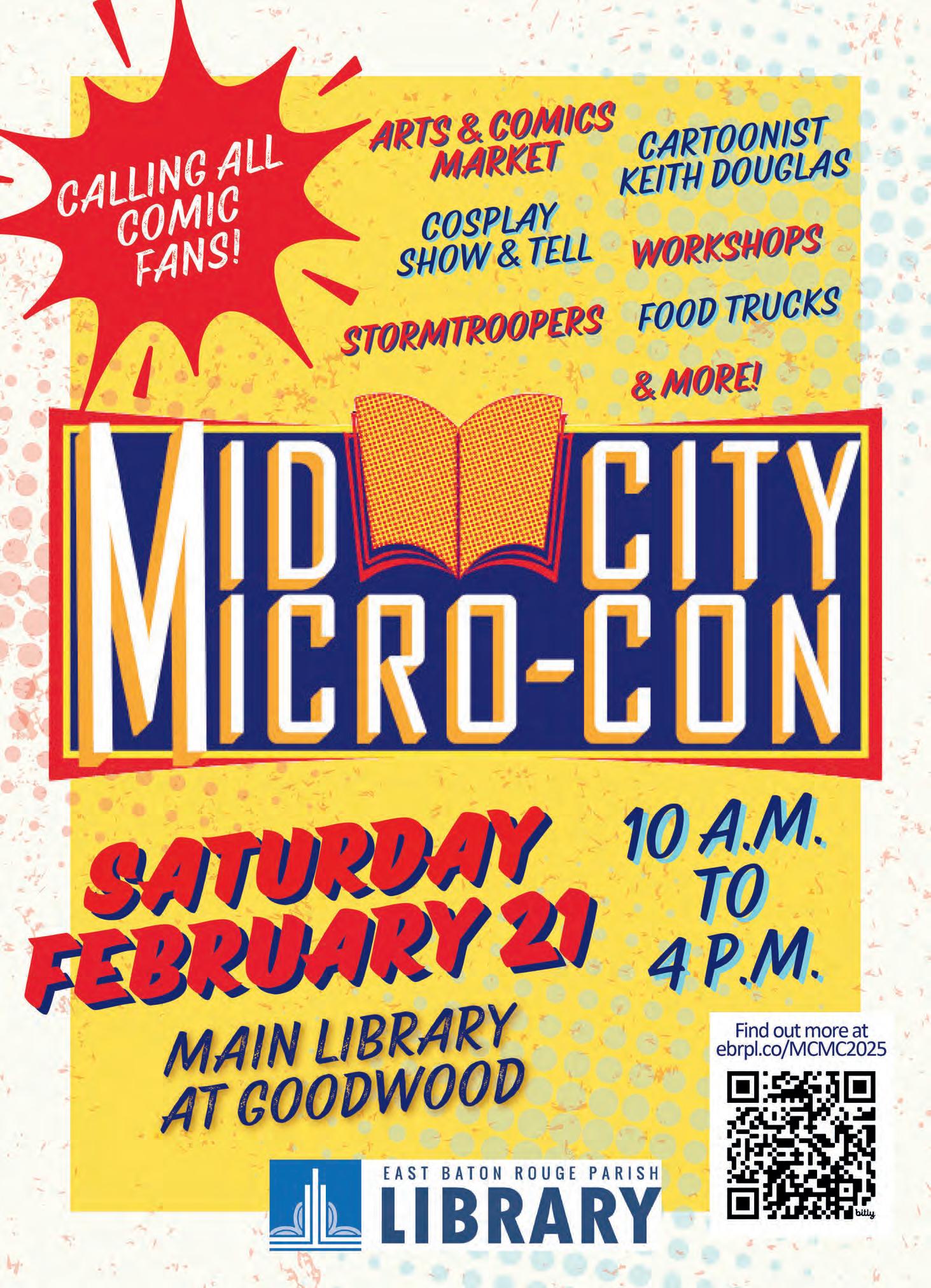
THEATRE
"THE LION IN WINTER"
Bay Saint Louis, Mississippi
Eleanor of Aquitaine takes center stage in The Lion in Winter, to be performed at Bay Saint Louis Little Theatre. In this riveting account of the Plantagenet family, the queen has been imprisoned since raising an army against her husband, King Henry II. The play follows the royal family drama as it unfolds over Christmas of 1183. 8 pm; matinees on February 1 and 8 at 2 pm. $28; $20 for seniors, first responders, military, and students; $12 for children twelve and younger. bontempstix.com.1
FEB 3rd
CHITCHATS
LSU OLLI SPRING COFFEE TALK
Saint Francisville, Louisiana
Come grab a cup of coffee at St. Francisville Baptist Church, part of LSU OLLI's spring get-together. Don't miss featured guests Peter and Debbie Alongia, who will discuss their experiences along the Camino de Santiago. There will also be a preview of the new OLLI Spring Classes offered. Free, for ages fifty and older. ce.lsu.edu/oll i. 1
FEB 4th
FILM
LIVE MOVIE CONCERT: "RIGHT IN THE EYE"
Baton Rouge, Louisiana
At the Manship Theatre, experience a live music and cinematic event featuring the productions of Georges Méliès.
Created by Jean-François Alcoléa and featuring a multi-layered score performed by three musicians using a range of instruments, the multimedia production showcases twelve films to blend live performance with powerful visuals, bringing early cinema to life. 7:30 pm. $35. manshiptheatre.org. 1
VERSES
POETRY OUT LOUD
Baton Rouge, Louisiana
A national high school poetry recitation competition from the National Endowment for the Arts and the Poetry Foundation, Poetry Out Loud returns to Baton Rouge, with its regional competition taking place at the Cary Saurage Community Arts Center this February. Students across a ten-parish
region in the greater Baton Rouge area are invited to participate. Learn more at artsbr.org/poetry-out-loud. 1
GOOD EATS
BANKFIRST CHILI COOK OFF Laurel, Mississippi
Come warm up this February at the BankFirst Chili Cook Off, featuring teams across the region all competing for best traditional or homestyle chili. The top team takes home the coveted giant chili pepper. 11 am–3 pm. $15 for all-you-can-eat samples from participating teams; $30 for a handmade pottery bowl, along with entry. business.visitjones.com. 1
FEB 7th
SOCIAL DANCE
SATURDAY NIGHT BALLROOM'S MARDI GRAS MADNESS DANCE PARTY
Baton Rouge, Louisiana
Saturday Night Ballroom presents its "Mardi Gras Madness" dance party at the American Legion Hall on Wooddale Blvd. in Baton Rouge. Dance the night away to celebrate Carnival season with a mix of Latin, ballroom, and swing styles. A cash bar will be available, along with food trays and snacks. Don your best Mardi Gras colors—dressy casual or whatever you feel comfortable wearing. 7 pm–10 pm. $15. Find the event on Facebook. 1
FEB 8th
CONCERT
SALLY BABY'S SILVER DOLLARS
New Orleans, Louisiana
Don't miss this all-local New Orleans five-piece at the Marigny Opera House—performing a sonic fusion of 50s/60s NOLA RnB, Jazz, & Calypso. Sally Baby's Silver Dollars brings the brass in this concert that features the soulful sounds of jam sessions to block parties. Doors open at 7:30 pm; performances at 8 pm. $25 suggested donation; $15 for students, seniors, etc. marignyoperahouse.org. 1
FEB 11th - FEB 12th
MARDI GRAS MUSIC
IT'S CARNIVAL TIME: A CONCERT IN THE COSMOS
Baton Rouge, Louisiana
It's time to let the good times roll at the Irene W. Pennington Planetarium. Join the Baton Rouge Symphony

Orchestra for a musical and visual concert experience celebrating the state's Carnival culture. Costumes encouraged, and wine and small bites will be available. 7:30 pm both nights. $40–$60. brso.org. 1
FEB 20th
CELEBRATIONS
HENRY TURNER JR.’S LISTENING ROOM ANNIVERSARY
Baton Rouge, Louisiana
Celebrate twelve years of Henry Turner Jr.’s Listening Room—so-called "the last blues live music juke joint" in the capital area—with performances by Henry Turner Jr. & the Listening Room AllStars and screenings of Henry Turner Jr. The Architect of Celebration and Minutes into the Life of Henry Turner Jr. 7 pm–midnight. $25 in advance, $30 at the door. (225) 802-9681. 1
FEB 21st
SOUND ON "ALL YOU NEED IS LOVE"
Natchez, Mississippi
Bring a plus one to this romantic evening of operatic arias, musical theater songs, and highlights from the “Great American Songbook.” Featuring the Robert Grayson Studio Singers from LSU, the night will include original paintings, sculptures by local artists, and regional, national, and international travel packages, along with a silent auction, cash bar, and buffet. Hosted at the David O’Connor Family Life Center on Main Street in Natchez. 7 pm. $75. natchezfestivalofmusic.com. 1
FEB 26th - FEB 28th
BOOKWORMS
NATCHEZ LITERARY AND CINEMA CELEBRATION
Natchez, Mississippi
Back for another year celebrating Southern authors and filmmakers, this year's Natchez Literary and Cinema Celebration will be held at Natchez Convention Center. Themed, “Stories of American Freedom,” the festival will feature lectures and panels on various topics ranging from different wars across the decades to suffragists, code talkers, the Civil Rights movement, and many other historical subjects. Learn more and find the full schedule at colin.edu/community. 1
GAMERS
RETRO CON
Morgan City, Louisiana
Head to the Morgan City Municipal Auditorium for Retro Con, a video game convention that celebrates everything across the gaming spectrum and beyond. Saturday from 10 am–6 pm; Sunday from 11 am–5 pm. $22 for Saturday; $16 for Sunday; $33 for a weekend pass. louisianaretroconvention.com. 1
DIY-ERS
ST. TAMMANY HOME AND REMODELING SHOW
Mandeville, Louisiana
The Northshore's only home and garden show returns to the Castine Center in Mandeville. Teaming up with Certified Louisiana Food Fest, the show will showcase the best products and services for everything in your home, from kitchens, bathrooms, remodeling, siding, and more. 10 am–5 pm both days. For ticketing details see jaaspro.com. 1
FEB 28th
FESTIVALS
225 FEST
Baton Rouge, Louisiana
Head to Galvez & Rhorer Plaza in downtown Baton Rouge for the biggest celebration of culture in the Capital region. Enjoy an afternoon of delicious bites from local vendors and food trucks, live music, art, and more. Free. Noon–6 pm. 225fest.com. 1
FEB 28th
ALL A-TWITTER
"THE ART OF BIRDS"
Saint Francisville, Louisiana
Wander over to Magnolia Village in the heart of Saint Francisville to experience The Art of Bird s. The day is dedicated to original art about our feathered friends, including paintings, drawings, photography, and more, located in three galleries in the historic 3V Tourist Court. Noon. Free. For details, contact birdmancoffeeshop@gmail.com. 1
For more events visit countryroadsmag.com/eventsand-festivals.
Growing St. Francisville Beautiful—one hanging basket, one planter box, one shade tree at a time
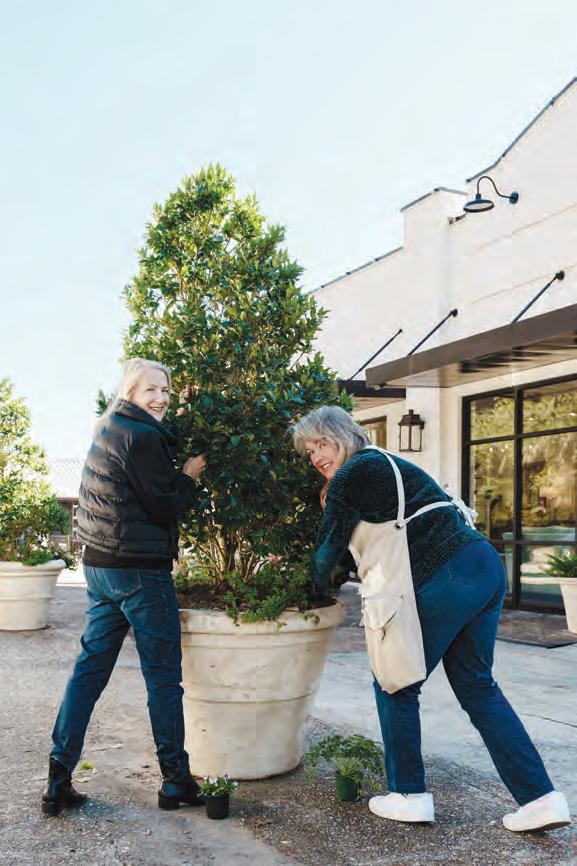
“Julie and I have ended up being the faces of St. Francisville Beautiful,” hremarked Leigh Anne Jones, then added with a grin, “although what most people see of us is our backsides.” The sight of Jones and her friend and fellow Historic District resident, Julie Brashier, on hands and knees tending the planters, flowerbeds, and hanging baskets dotting downtown St. Francisville, has become as familiar as the Victorian façades that line its streets. Founded by former mayor Bobee Leake and a handful of green thumbs in 2021, St. Francisville Beautiful is dedicated to bringing seasonal and permanent ornamental plantings to the town’s streetscapes. Today the organization cares for eight flowerbeds, thirty-five hanging baskets, and multiple large planters throughout the Historic District, and is adding elms and live oaks along major thoroughfares to expand the green canopy. On any given day Jones and Brashier might be spotted, up to the wrists in a planter box or garden bed tending to petunias, dianthus, pansies, alyssum, foxgloves, and other annuals selected in spring and fall for year-round color. In permanent beds like one in Fountain Park, Jones and Brashier prefer perennials like day lilies and split leaf philodendron, with im-
patiens and zinnias to fill in during summer months. Their vision: a St. Francisville “supergarden,” anchored by public plantings to beautify streetscapes year-round and inspire residents to extend the effort in their own gardens. It seems to be working. “People stop and say how much they enjoy the beds,” noted Jones. “They come to see what’s been planted, and what they can put in their own yard.” But as any gardener will tell you, a garden doesn’t grow itself. A townsized supergarden needs time, talent, and treasure to flourish. To that end, St. Francisville Beautiful, a 501c3 non-profit, invites members and volunteers to support the project by purchasing a membership, sponsoring a planter box or hanging basket, or by volunteering to plant, water, and weed. The organization is also looking for volunteers to help with its two major annual fundraisers. On Mother’s Day weekend (May 9) St. Francisville Beautiful will join forces with the Feliciana Master Gardeners to host the St. Francisville Spring Garden Stroll. Or during December’s Christmas in the Country, lend a hand when St. Francisville Beautiful presents Saturday evening’s blockbuster Christmas Spirits Stroll.
For tickets, details, and contact info, visit stfrancisvillebeautiful.com.


DUSTIN DALE GASPARD ON ANCESTRY, LANGUAGE, AND SINGING CAJUN FRENCH FOR AMERICA
Story by Jordan LaHaye Fontenot
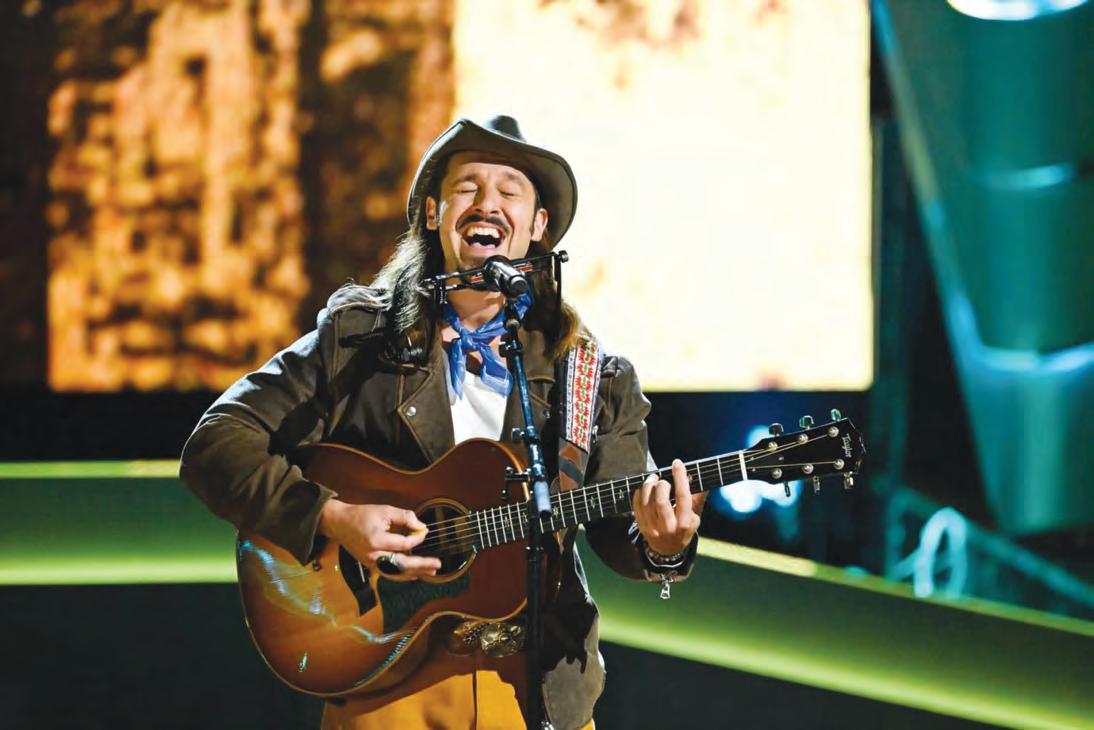
On October 6, 2025, the hmore than 5 million hviewers tuned into NBC’s reality singing competition, The Voice, watched Michael Bublé get a frisson at the sound of Dustin Dale Gaspard’s harmonica. Reba nodded her head as he shifted into the first verse of Sam Cooke’s classic soul ballad, “Bring It on Home To Me.” Niall Horan and Snoop Dog couldn’t help but sing along, their growing excitement at the voice behind them palpable. None of them had even seen Gaspard’s face yet.
The song is one that the thirty-threeyear-old musician from Cow Island, Louisiana has sung at most every show he’s played since he began his career as an itinerant singer-songwriter, performing for mostly small crowds and at festivals across North America with the occasional jaunt to Europe—mostly living in his car. “[‘Bring It On Home To Me’ is] overdone,” he said in mid-December in an interview conducted over fried okra and fries at Mickey’s Drive Inn in Kaplan.
“Everybody plays it. But it is because it is a true song. It has real heart and soul.”
The song was also his PawPaw’s favorite, and the very last thing Gaspard sang to him before he passed away.
The previous October, when Gaspard had first gotten a response to his application for The Voice, inviting him to move into the interview process, he stepped outside beneath the night sky. And he prayed to his grandparents, his greatest inspirations. “I said, ‘Hey, if this is a real thing you want to happen for me, I’m ready. I’m gonna find a way.’”
It wasn’t about fame, or about winning. Gaspard’s only goal, only hope, was to have the opportunity to stand on a national stage and sing, in his own style, the language of his ancestors from Vermilion Parish. “I just wanted to get on stage and sing in Cajun French and go home, then look at the stars and tell my grandparents, ‘Thank you so much for sending me on that journey.’”
Seamless as it sounded, the shift to French in such a well-known song was
a surprise to the celebrity coaches of The Voice. You could see the moment of confusion on their faces as Gaspard crooned, “J’sais que j’ai ri / Quand t’as partie.” Horan turned to Bublé (a Canadian) and asked, “French?” It wasn’t French like anyone had ever heard, though. The translation and arrangement of Cooke’s second verse had been a labor of love, completed with help from Cajun/Creole language experts Drake LeBlanc and Barry Jean Ancelet.
Behind their backs, Gaspard felt as though the whole world had stopped. “All went silent,” he said. “And I remember looking at the big lights above the coaches’ chairs and seeing almost like a big star just shining back at me.” He closed his eyes and thought, “There it is. This is the moment I’ve been waiting on forever. I had this dream to do all these things, to explore my heritage and legacy, to travel and perform, to get on national television and sing in the Cajun language, and it is happening.”
After completing the French verse, Gaspard almost stopped singing and walked off the stage. “That was it, I had done it,” he said. But when he opened his eyes, all four of the coaches’ chairs had turned to face him, signaling that they wanted him on their team for the competition. “I remember thinking, ‘Oh God, no, this wasn’t supposed to happen,’” said Gaspard. Holding back tears, he finished the song in “complete disbelief.”
When Horan told him, “There’s nothing better than hearing a proper, unique, full-of-character voice … that was absolutely incredible, the bit of French, you could sing ‘Baa, Baa, Black Sheep’ and it would sound good,” Gaspard only responded with, “This is a weird dream.”
When Gaspard imagines how his grandparents might have reacted to his historic performance on The Voice, he can hear his grandfather’s voice saying, “Oh, that’s my boy, I knew, when you started singing in French!”
“When I hear people from home tell me that it resonated for them, I hear him saying it,” said Gaspard.
The musician attributes much of his current lifestyle, ever-transient, to a childhood going back and forth between his divorced parents’ homes, where he spent most of his time with his grandparents on each side. Days spent with his maternal grandfather, who ran the 26,000acre Paul J. Rainey Wildlife Sanctuary southwest of Vermilion Bay, were days of adventure. “With him, there was this exploratory appreciation for the wonders of the water and the stars and nature,” said Gaspard. “And also, an understanding that this is the land that raised my people, it was the foundation of who we are.”
His paternal grandmother, by contrast, rarely left her little brick home in Cow Island. “She was a very superstitious Cajun woman, a traiteur,” said Gaspard. “And that kind of lent itself to this deep, meditative mysticism. She told her stories within this world, and I came to recognize the tiny universe in which she existed. I feel like she made me think a lot about internal emotions that you deal with. Like the way she lived was this giant metaphor.”
When he imagines his grandmother’s reaction to his performance, he doesn’t think she’d say very much. She almost never left Vermilion Parish except, in her final years, to occasionally attend her grandson’s gigs until two in the morning. “She believed in me so much,” he said. “It was such a lifetime love, I don’t know that I’ll ever experience anything like that again.”
So no, she wouldn’t say much at all, just, “I knew,” with a smile.
Growing up between these two worlds, with access to the depths of the internal as well as the wealth of the external, gave Gaspard a foundation upon which he’s built his life as an artist. Such folklore is the stuff great music is made of; references to Gaspard’s early life in Vermilion
Parish, and especially to his grandparents, permeate his body of work—especially in his 2022 album, Hoping Heaven Got a Kitchen
“They gave me the courage to say, ‘I know who I am,” he said.
Listening to Gaspard’s discography, you’ll hear more influence from Otis Redding and Al Green than Iry LeJeune or Nathan Abshire; he plays guitar and harmonica instead of an accordion or a fiddle. When asked, he’ll lean toward soul and blues as classifications for his body of work, and often he’ll lift up the umbrella of folk or Americana. But still, he doesn’t shy away from dubbing his music “Cajun,” because the fact is, “I am undeniably Cajun, and I’m not outrunning who I am.”
As a young musician, Gaspard’s impression of Cajun music was that it existed on a pedestal, in the often-isolated realm of strict tradition and Acadiana dancehalls, to be admired from afar. By contrast, he found himself connecting deeply with the universality, timelessness, and tradition of adaptation within classic African American soul and blues.
“It just comes from something that is a deep resonance that everyone needs,” he explained. “I think all of the best music, it’s just ripples of what soul and blues music is. That music makes me want to tell a story, it makes me want to sing my guts out. But it also just makes me want to love and nurture close.”
There’s a conviction to the blues, an “undeniability,” as Gaspard describes it, that can also be heard in the old Cajun music. “They’re not just doing vocal runs, they’re singing from a particular place. They have these crazy, impeccable voices that are so specific but so full of yearning ... Tapping into that is what I enjoy doing most. Because that translates itself to the highest form of art, which is just making people feel at their depths.”
The link Gaspard draws between the two genres is not without precedent. In the 1950s, many Cajun and Creole musicians began leaning more mainstream, drawing in the sounds of rising genres of rock n’ roll, country, soul, and blues, while maintaining a regional flare. The genre eventually became distinguished as “Swamp Pop,” a label Gaspard also proudly embraces as a way to define his music.
“It’s like, all these Cajun artists that heard the conviction of soul and blues music—they wanted to provide their version of it, so they covered some of these songs, or wrote songs that were specifically emulating that,” he explained. “But what was inescapable was their heritage, their legacy of being Cajun men and women. So, there is this sprinkle of dust of Cajunness on it, an asterisk that it’s not purely blues music, and it’s performed by Cajuns.”
As an artist, Gaspard holds a supreme reverence for the soul and blues genres that he continues to be drawn to, “but
I’ll never be a Black soul artist,” he said. “I love this music, it’s undeniable for me. How do I filter it through me, so that it feels like it is me, not like I’m trying to mimic someone else?”
The answer, he found, was to try to integrate the language of his ancestors, the story of his ancestors, into his songs. He wanted to pull his Cajunness off the pedestal and into his art, into himself.
“I don’t want my Cajun heritage to live in a room in a different house from who I am,” he said. “I think we’ve com-
In 2023, Gaspard received a grant from the Acadiana Center for the Arts’ ArtSpark program to create a bilingual, conceptual folk album telling the story of his Acadian ancestor, Angelique Pinet Lege, who traveled with her three sons to Louisiana following Le Grand Dérangement and who serves, according to Gaspard, as “the Divine Feminine perspective” of the story.
Titled Avec le Courant, the project is still in production as Gaspard has
“THERE IT IS. THIS IS THE MOMENT I’VE BEEN WAITING ON FOREVER. I HAD THIS DREAM TO DO ALL THESE THINGS, TO EXPLORE MY HERITAGE AND LEGACY, TO TRAVEL AND PERFORM, TO GET ON NATIONAL TELEVISION AND SING IN THE CAJUN LANGUAGE, AND IT IS HAPPENING.” —DUSTIN DALE GASPARD
partmentalized it so much that people in my dad’s generation and younger, we feel completely disconnected from it. We feel like it’s someone else’s thing, when it’s the most us we can be. I mean, what if the door gets locked? What if the house gets knocked down? Then it’s gone forever ... I want my Cajunness to be in my home forever, in every room. And if it’s a little less here and a little more there, that’s completely fine.”
navigated the demands of his touring career, not to mention his time spent filming for The Voice. More than anything though, ever-unfolding inspiration has kept the project from completion, as new ideas and new songs continue to emerge.
Using an ancestral guidebook containing decades'-worth of research compiled by one of his cousins, Gaspard has approached the songwriting and storytelling with the vigor of an academic, piecing

as many details of Lege’s journey together as he can. “It’s a treasure map for history,” he said. “I’ve learned so many intricacies of the Acadian exile, and I think there are things that needed to be included that haven’t been talked about much. I just felt there needed to be more.”
In the midst of his songwriting, in 2024, Gaspard decided to put a brief pause on his “hippie, hustling, go-getter lifestyle” to return to the homeland itself, to Grand Pré. Like so many other creatives from the Acadiana region, he dedicated himself to six weeks of rigorous language immersion through the Université Sainte-Anne in Pointe-de-l’Église, Nova Scotia. Being there, in the place his ancestors left from, learning to speak and write in their language—being almost trapped inside of it—was what Gaspard described as “one of the most life changing experiences of my life.”
The experience has also expanded his treasure trove of language when it comes to songwriting and brought him closer
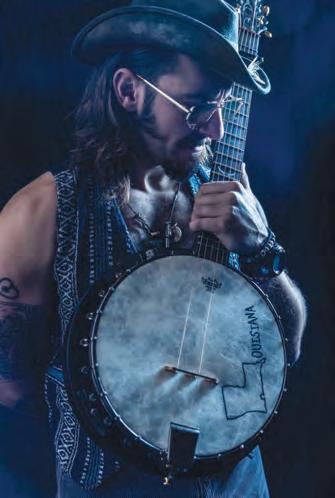
to the place he’s trying to reach when he plays music. He describes this locus as “in between worlds,” a state of being he’s witnessed in other folk musicians tapping into roots. “I like to believe in the ‘woo woo,’” he said, explaining that he believes that for him, that place was established in the womb, hearing French—this mystic, mysterious language—spoken all around him from the very beginning. “There’s a melody and a cadence to it that I truly believe has integrated itself deep, deep in there,” he said. “And when I sing, I am trying to connect to that place, trying to be vulnerable and expose that, to where other people are invited in.”
He is able to get to that place, he believes, easier in the Cajun French language than in English. “I struggle, when writing songs, not to overcomplicate things,” he said. “I love to be poetic, so I can get really dense.” In French, because he has fewer words, he is forced to keep it simple. “And [simple songs] are the best songs of all time,” he said. “The ones that plug directly in.”
When I met with Gaspard, he'd been home in Cow Island for a little over a month—“the longest I’ve been back in three years,” he said. Just a few weeks prior, viewers keeping up with The Voice had watched him be eliminated from the competition during the show’s “Knockout Round,” despite being a fan favorite. Of course, Gaspard had already gotten what he wanted during his Blind Auditions. But he walked away from the reality show experience with more than he ever imagined. “I’m a better singer,” he said. “Those vocal coaches, they’re like your cancer-curing doctors of the vocal world. They are able to unlock certain things within you, connect all these dots emotionally, mentally, and to your physical body that allows it all to come forth.”
When he came home, and the show started airing, his only fear was that fellow Cajuns would interpret his performance as a marketing ploy, as a capitalization on his own culture. “That was a huge fear I had,” he said, especially because so many traditionalists don’t consider the music he sings as “true” Cajun music. But that’s not what happened. When they heard their grandparents’ language on national television, a tidal wave of Louisiana pride washed over social media, news networks, and Gaspard’s cell phone. “They believed it,” he said. “Because I believed it.”
These days, he’s working on Avec le Courant, dreaming of someday touring it down the Vermilion River on a boat. He’s performed with Swamp Pop hero Wayne Toups, released a Christmas single with Wilson Savoy and Geeroy Scott, stepped onto local stages like Rock ‘N’ Bowl, Prejean’s, and at his local church’s Christmas fair; and he was named the Grand Marshal of Abbeville’s Christmas Parade.
He has more followers on social media, and more people streaming his music on Spotify. More people are coming to his shows. “I sing a little better,” he said. “I’m probably a worse musician because I haven’t practiced as much.” He’s playing for less time and a little more money. He’s preparing to close on a management deal and will soon be free to explore the option of a record deal—“which would take what I’m already doing and multiply it by one hundred,” he said.
When asked about his dreams, Gaspard doesn’t deviate all that far from where he’s at today. He wants to be on tour more often, “exploring like I am with my grandfather—I’m out there, on the boat, water’s splashing my face. I’m roaring and yelling and seeing all these amazing things.” And then, for a few months out of the year, he wants to come home, to Cow Island—to a little piece of land that’s his and a little house like his grandmother’s. “When I’m home, I’m with her. I’m underneath the canopy of trees again. I’m cooking late at night, just sitting in the quiet, being grateful.” 1
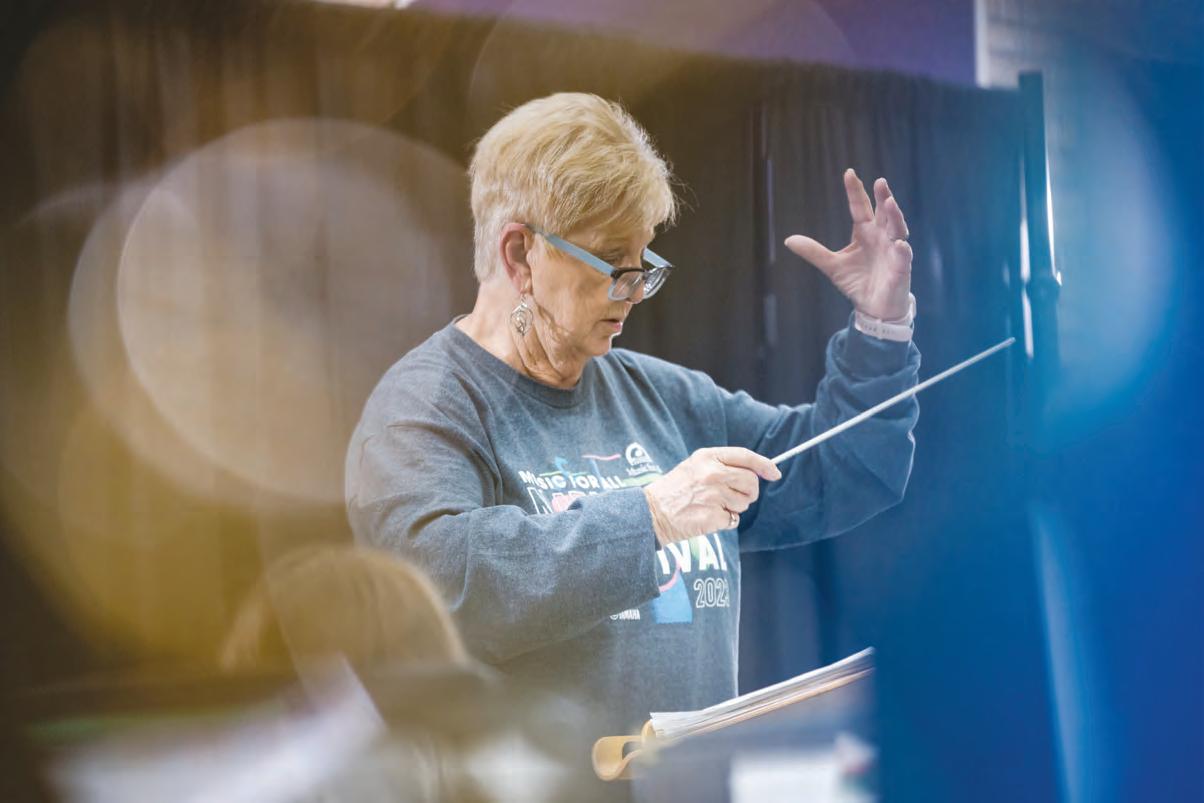
Story by Sam Irwin • Photos by Sean Gasser
When the mythical Professor Harold Hill of the 1962 film, The Music Man, remarked, “River City's gotta have a boys’ band, and I mean she needs it today!” he could’ve been talking about Baton Rouge, or any American river town in the late nineteenth century.
Before the radio age, organizations, politicians, and institutions recognized the ability of a brass band to draw a crowd. “A town without a brass band was a dull place,” wrote Dr. Karl Koenig of Covington—who has written volumes about Louisiana music history, including the rise of South Louisiana brass bands, on his blog, basinstreet.com.
It’s no wonder that New Orleans had such a strong brass band tradition. From colonial times through the Civil War, a military band presented the colors every morning in Jackson Square in front of the Cabildo. The Tio family of musicians of early jazz fame trace their family tree back to the drum and fife corps of Colonel Andrew Jackson’s militia at the 1815 Battle of New Orleans. Researcher Gavin Holman says brass bands were ubiquitous in the United States. His Brass Bands & Cornet Bands of the USA directory documents more than 8,700 brass bands active between the years 1840-1872.
The tradition of community brass bands sponsored by fire departments and businesses, social and pleasure clubs has been around for a long time, but the establishment of a permanent community concert band for Baton Rouge was beset with fits and starts. It took more than a century for one to finally take hold.
Vernon Taranto Sr., the band director at East Ascension High School, said, in 1976, that Baton Rouge needed a community concert band. He got the
blessing of the Baton Rouge Arts in Development committee of the Arts Council. A more qualified candidate could not have been found. Mr. T, as he was known, served in the U.S. Navy during World War II and played in Admiral Bull Halsey’s Flag Band. He was a high school choir and band director for thirty-two years. His East Ascension and Dutchtown bands were known for their quality and always awarded “Superior” at marching and concert band festivals.
The fifty-five-member fledgling Baton Rouge Concert Band, under Taranto’s baton, presented its first performance on April 23, 1977 at the Bon Marché Mall on Florida Boulevard. Anne Price, the longtime cultural writer for The Advocate, wrote that the new concert band was a “first” for the Capital City. But Price didn’t have all the facts. If she did, she would have known that the track record for community bands in Baton Rouge was not good, but that Taranto’s wasn’t the first.
The first mention of any Baton Rouge band available for public performance was on December 20, 1851 when the Magnolia Brass and String Band advertised it was available for “music for any occasion.” The Baton Rouge Gazette editor noted, “We have long been in want of a well-organized band of music in this place. We are satisfied that Messrs. Jolly, Walters, and Coats will have plenty to do and they will be well done.” But by 1854, Messrs. Jolly and Walters were continuing without Mr. Coats and looking to create “a new band of music.” The Gazette praised “Messrs. Jolly and Walters (who are) now at work organizing a band of music, expressly for the benefit of this city. We really hope it will be a permanent organization.”
The Gazette editor, while praising Jolly and Walters, added a flourish describing
the power of the art: “Music is the lovely goddess that stands on the right hand of religion, where the burning words of truthful eloquence release us, music comes and with its melody transport[s] us to the realms of blissful happiness, where the soul revels in heavenly delight.”
But bands, well-organized, blissful, or not, had trouble maintaining their status in Baton Rouge throughout the nineteenth century. The Advocate editorial staff of 1902, fearful the Capital was falling behind culturally, lamented, “A brass band is as much a necessity to a city like Baton Rouge as a hotel or an opera house. But brass bands are hard to maintain. There is no money in a brass band in a town like Baton Rouge.” An outfit billed as the Baton Rouge Concert Band under the management of Director Curt Wiehe was in operation from 1913-1916, but there isn’t another mention of a community concert band until Baton Rouge High band director Robert Hughes conducted a public ensemble from 19541955. That band’s concerts were often sponsored by Weirlein’s For Music, Santa Maria Dairy, and the American Federation of Musicians Local 538 Union.
“AS
To this new band of the 1970s, Mr. T. brought dogged energy. He organized, recruited, and rehearsed. The concert band performed at any venue he could find—Bon Marché Mall, Cortana Mall, the Old State Capitol, the Baton Rouge Zoo, St. Joseph Cathedral, the steps of the state capitol. The musicians he invited to guest conduct or perform read like a who’s who of the Baton Rouge instrumental world: Tiger Band conductor Frank Wickes, trombonist Larry Campbell, trumpet professor James West. He enlisted WRKF’s Lew Carter as emcee for concerts. Just as nineteenth century leaders recognized the impact instrumental music in a public setting could have, Mr. T recognized the power of mixing patriotism and civic pride with music. The band gave Independence Day and Christmas concerts. Anyone who attended the band’s annual Memorial Day concerts, especially the ones performed on the steps of the state capitol, will remember the pride they felt when the concert band played the “Armed Forces Salute.” It’s a stirring moment and the practice remains a band tradition.
Mr. T conducted the Baton Rouge Concert Band until 2002, when he turned over his baton to assistant conductor Sheily Bell, who remains the band leader today. Bell also serves as the director of the excellent band at Dutchtown High School. She is assisted in BRCB by Daniel Modenbach, also a music educator at Dutchtown. The band of 2026 is virtually the same as any previous version. Players include the young and old, men, women, high school students, college students, husband-and-wife duos, former band directors, grandsons of early jazz musicians, military veterans, and retired professionals.
Bond Lux, president of the band, is one of those retired professionals. He left information technology ten years ago. “We have ninety-yearolds, twenty-somethings, and teenagers playing first, second, and third chair parts side by side with each other,” Lux said, pointing out that the band will celebrate fifty years performing together in 2027. “There are very few community bands that can
I LOOK AROUND . . . THERE ARE A DOZEN OR SO THAT HAVE BEEN IN TIGER BAND; THERE’S A LEAST ONE IN HIGH SCHOOL BAND. BAND IS GOOD BECAUSE IT ALLOWS FRIENDSHIPS IN BAND TO EXTEND BEYOND SCHOOL. PEOPLE JUST REALLY ENJOY GETTING TOGETHER AND PLAYING MUSIC.”
—BOND LUX, PRESIDENT OF THE BATON ROUGE CONCERT BAND
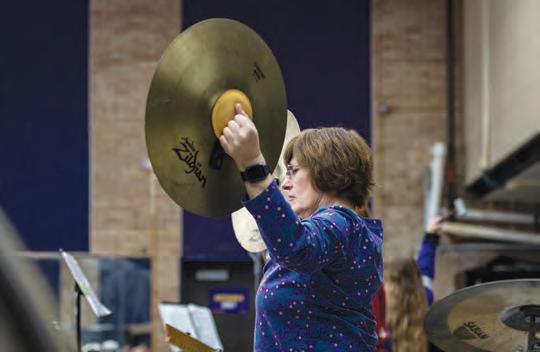
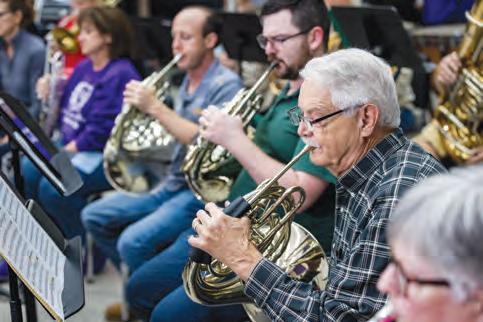
maintain existence that long . . . We’ve kept the band going by the grace of God and a lot of hard work from people,” he said. “It stays together because we have folks who enjoy the music and the longstanding friendships they’ve made since they grew up in band. As I look around . . . there are a dozen or so that have been in Tiger Band; there’s a least one in high school band. Band is good because it allows friendships in band to extend beyond school. People just really enjoy getting together and playing music.”
The band, unsurprisingly, tackles John Philip Sousa’s military marches with ease. The repertoire ranges from pop favorites to concert band war horses, but some of the music, like “La Mezquita de Córdoba,” composed by renowned LSU alumna Julie Giroux, is challenging and sometimes requires extra rehearsals. The hard work paid off when the band traveled to Fort Smith, Arkansas and got favorable reviews for its performance at the Association of Concert Bands Convention in June 2025.
Conductor Sheily Bell’s energy, perhaps inherited from Mr. T, is one of the reasons the band continues to flourish. Her experience as a conductor and knowledge of the concert band repertoire guarantees a stellar performance every concert. “I love what I do,” Bell said. “I love the excitement of starting a new piece and seeing it to fruition.” She said she has no plans for retirement—“My mom taught piano until she was ninety. As long as I [can] do it, I will.”
The Baton Rouge Concert Band meets every Tuesday night from 7 pm–9 pm during the concert season and cur rently rehearses at the old LSU Band Hall. It plays fall, Christmas, spring, Memorial Day and Fourth of July con certs annually. The band relies on donations to purchase, maintain, and insure instruments and equipment. Cur rently, its home stage is the plaza at the East Baton Rouge Parish Main Library on Goodwood, but it also produces an annual Christmas concert in St. Joseph Cathedral. 1
Sam Irwin is an author and freelance journalist residing in Baton Rouge. He is a member of the Baton Rouge Concert Band (second chair!) and the frontman of the Florida Street Blowhards. To learn more about how to join or support the Baton Rouge Concert Band, visit the group’s website at brcb.org.
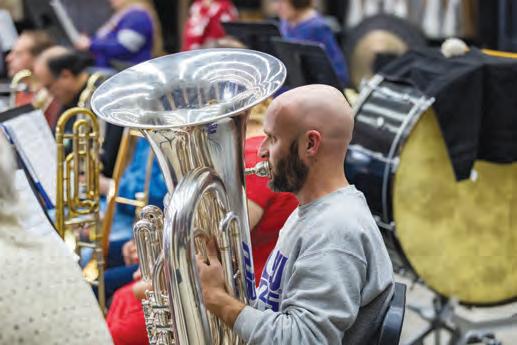
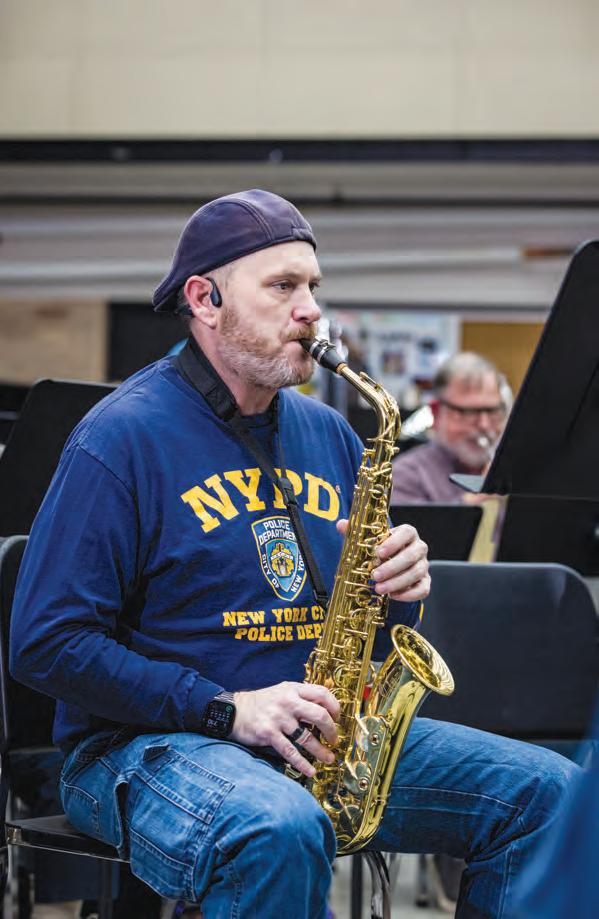
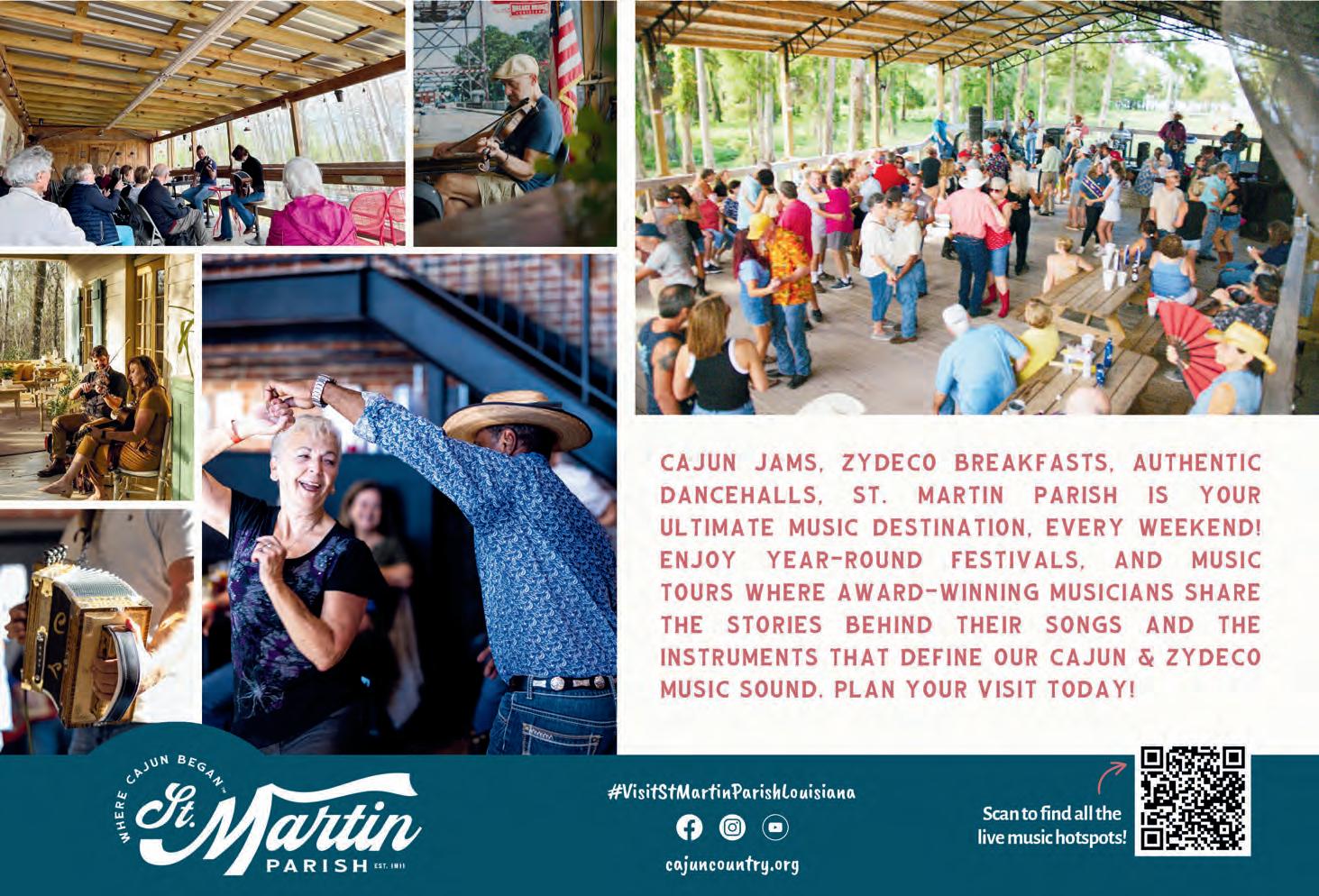
Story by Jordan LaHaye Fontenot
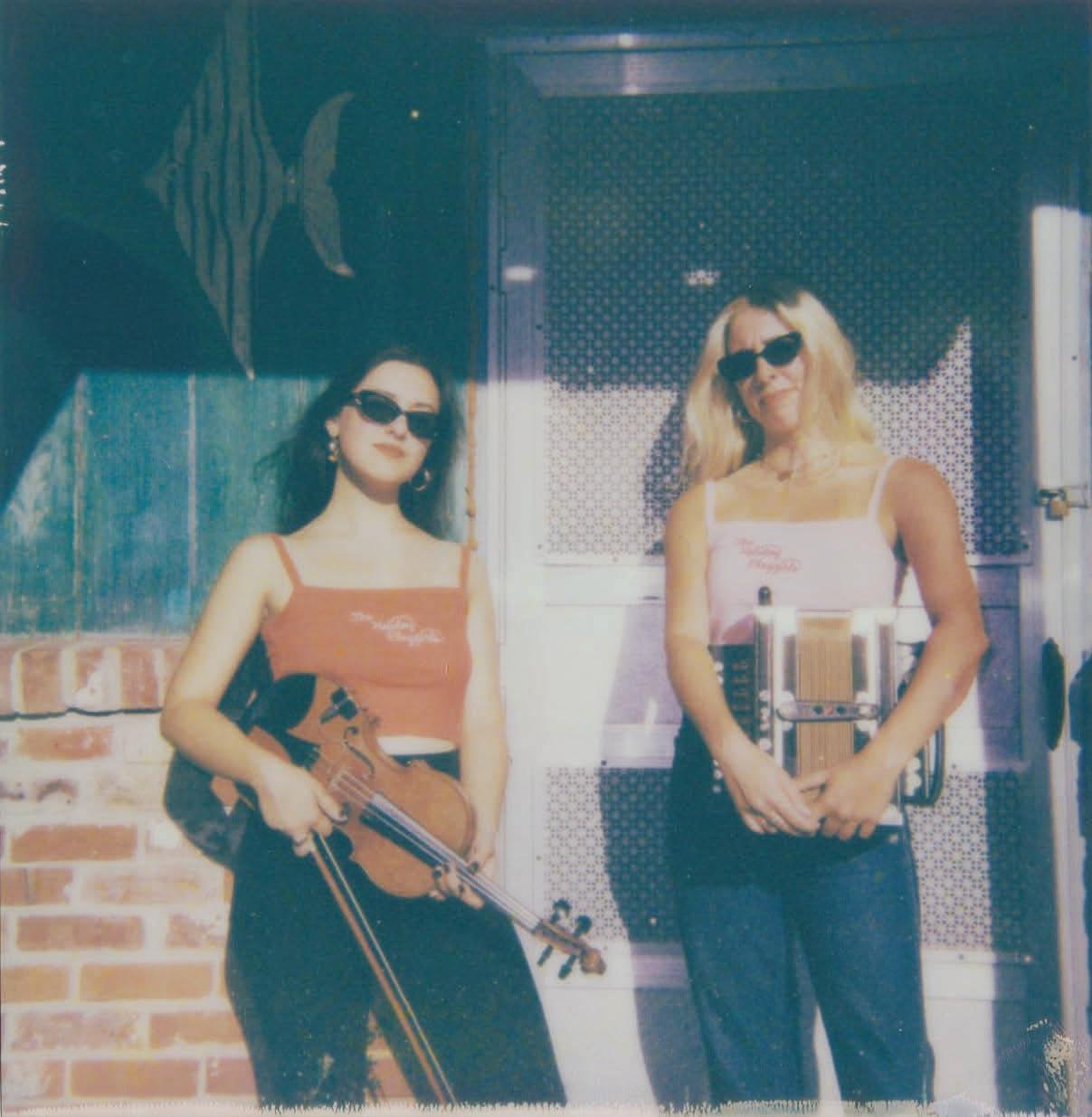
Sitting at Juliane Mahoney’s kitchen table on a Tuesday night in December, I’m sipping Topo Chico across from her and Renée Reed, who are each nursing single servings of whiskey from tiny antique glasses (they offered me one, too, but I was about fourteen weeks pregnant at the time). The room is glittering in the cozy kitsch of Christmas décor, and Mahoney’s got a pot of Italian wedding soup simmering on the stove. In the background, an old Cajun record plays on low volume.
I’m trying, somewhat unsuccessfully, to articulate to Mahoney and Reed the thing that captivates me about their Cajun music project as the band, The Holiday Playgirls. It’s difficult to put into words, I’m finding—this quality to their sound and their performance that is simultaneously ancestral and modern, mastering the overwhelmingly masculine legacy of our region’s musical traditions while wholeheartedly embracing their own femininity.
Watching the duo perform on stages around the Acadiana area, I see their long blonde hair, blue jean shorts and sundresses superimposed over the grainy videos that have survived of the old Cajun/Creole greats—Iry Lejeune,
Aldus Roger, Dennis McGee, Dewey Balfa, Bébé Carrière and so many more—resurrected. The connection across time is subtle. It’s in the way these women hold their instruments with resolve, the way they sit, knees spread, on a folding chair, and stomp their feet, their focus drawn not to the audience, but within the sound itself, as though it were a place they’re yearning for. It’s in the way the French lyrics sound, emerging raw and gorgeously ragged from Mahoney’s throat in a tradition gleaned from the days before microphones. This is music meant to be heard across a dancehall. This is music meant to be danced to. And a lot of it is music that hasn’t been heard in a generation, or more.
“It’s … exciting,” I land on a word to conclude. It’s not quite like anything else on the Cajun music circuit today.
In attempting to respond to my more-fangirled-analysis-than-question, Mahoney reveals what I already suspected: the effect isn’t manufactured, or even intentional. “I don’t consider myself a performer at all,” she said. “We just play the music we like. I don’t think much about putting on a show or having a stage presence. I just think about playing this music.”
“Right,” interjected Reed. “It’s not something I really think about either. It’s just … I don’t know, it’s like a blood thing. This music is sentimental to me, it’s sacred. And when we play together, I feel that from her.”
Mahoney suggests that what I’m observing is a basic effect of the old Cajun music played true. “There’s this release, you can hear it in the old records, in their singing,” she said. “It’s passionate. Cajun people, they’re passionate, and they’re heartbroken.”
And when the music is played with care, with love, she says, you can hear it.
Mahoney and Reed’s connection was fostered in the archives at the University of Louisiana-Lafayette’s Center for Louisiana Studies, sitting side by side at desks with headphones on, listening to decades-old recordings of Cajun music.
Mahoney was working on a graduate degree studying history and folklore, and assisting in archiving and documenting film from the Liberty Theatre’s Grand Ole Opry-style Rendez-Vous des Cajuns show, which was held almost every Saturday night in Eunice from 1987–2020.
Reed, who was completing dual undergraduate degrees in Traditional Music and French, was working on digitizing and documenting audio and film records from her rich line of musical family members, including her grandfather, the accordionist Harry Trahan, and great-uncle Revon Reed—a folklorist and cultural preservationist who hosted Cajun music radio shows broadcast from Fred’s Lounge in Mamou from 1962–1994.
The two young musicians didn’t know each other personally yet, but whenever one of them would come across some jewel of Cajun/Creole ephemera in their work, they’d call the other over to come listen. “I’ve always been really into old, old Cajun and Creole music, and stuff that’s not polished, is just raw,” said Reed. She and Mahoney would both get a particular thrill at discovering the unscripted, in-between moments captured in their records—moments when legends like Nathan Abshire and the Deshotels twins were cutting up in between sets on Revon Reed’s radio show, revealing tiny glimpses of who these long-gone icons were as people, just hanging out with their friends at the local bar. “The tapes were just capturing this real, in the moment, thing,” she said. “They’re getting drunk, letting their mouths fly. It’s just such a time traveling feeling.” The most
precious performances on Rendez-Vous, according to Mahoney, were those who took the stage in between the main acts. “They’d get these old musicians, like Adam Hebert, who would play and tell stories,” she said. “That was one of the most exciting parts, I think.”
Recognizing a shared appreciation for the world of old Cajun music and its luminaries, Reed and Mahoney started getting together and playing music.
“We, like, jammed,” said Reed. “And I don’t know. Her voice and the way she is as an artist . . . I never felt so connected to somebody before, musically, like that. We see really eye-to-eye, and it felt so special. It started from a place of just, love, and having fun.”
“It’s just so much fun,” said Mahoney. The gigs started out just the two of them, Reed on guitar, Mahoney on steel, playing Cajun and country music they loved. “It was just us messing around,” said Reed. Eventually they settled more comfortably into a standard duo of fiddle (Reed) and accordion (Mahoney) in the tradition of so many of the old-style Cajun/Creole musicians that inspired them. They became a bonafide band when they brought on Jimmy Breaux—a legacy Breaux Bridge accordion player and drummer best known for playing with bands like Beausoleil and Jimmy Breaux and Friends—and guitarist Mark Latiolais from Church Point—who has played with accordion legends Jason Frey and Paul Daigle, some of Mahoney’s biggest influences.
“It changed everything,” said Mahoney, about bringing Breaux and Latiolais on board. “They are very supportive, and just the best.”
“I feel like we’re on a cloud when we’re playing with them,” said Reed. “The rhythm section!”
Their band needed a name, though. Drawing from tradition, Mahoney and Reed turned to the “Playboys” convention of band-naming, used by Cajun musicians since the 1950s, in which a band’s sound was identified by its geographical origins. The Lafayette Playboys. The Mamou Playboys. The Church Point Playboys.
So, they’d be the Playgirls, the first of their name—but what was the place that drew their project together? Mahoney is originally from New Iberia, home of the bayou Cajuns. Reed grew up in Lafayette, though her family has roots in the surrounding prairie towns of Mamou and Ossun. The music they love runs the gamut regionally, but is especially drawn from the Cajun prairie.
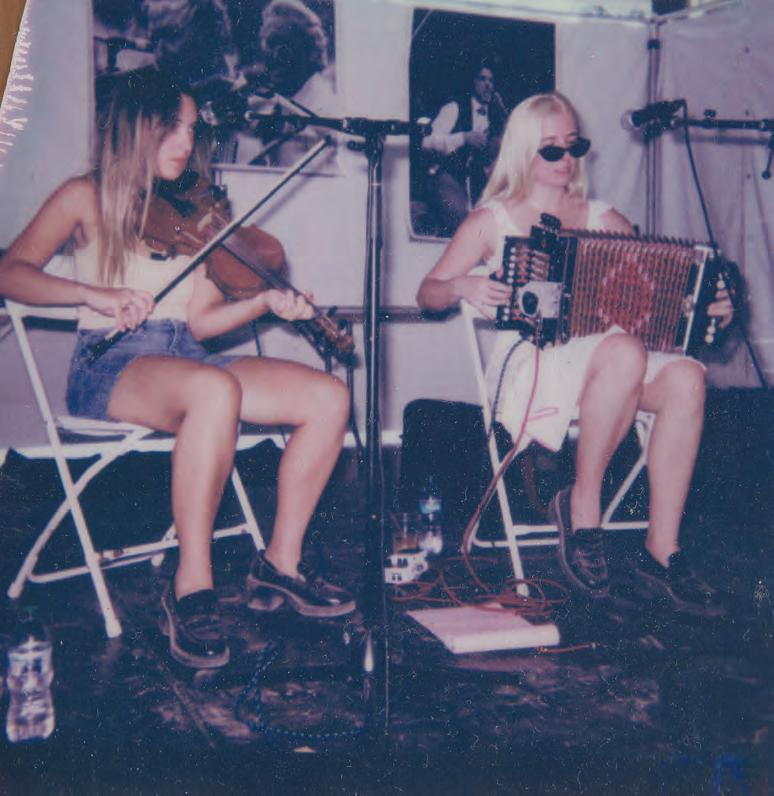
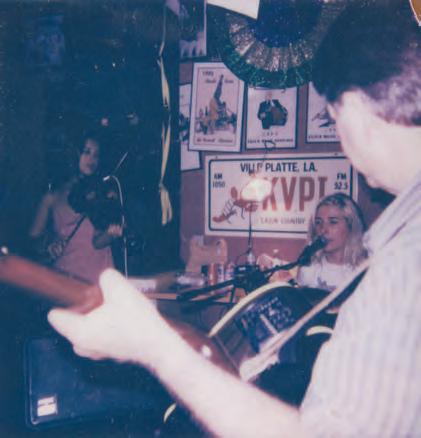
They needed a place that was less of a geographical marker than a feeling, a place apart from the normal conventions of the culture, but also within it, a place that existed outside of time.
When the idea of the Holiday Lounge came to them, it felt all too obvious. The circa-1950s bar sits just off Highway 13 in Mamou, hand-painted over in a mural resembling a tropical oasis. In its heyday, it was one of the area’s most notorious haunts, known for its electric disco dancefloor, its jukeboxes, its slot machines, and its eclectic clientele. Today, the Holiday opens a couple of times a year, surviving as an idealized, psychedelic time warp to the Cajun prairie past.
“We have both always loved that place,” said Reed, whose father, Mitch, wrote a song called “Le Holiday” with his band, Charivari. “It’s just so mythical, like a mecca or something.”
Mahoney remembers going there for the first time on a New Year’s Eve years ago. “And I was just like, ‘What is this place?’ You’re in the middle of nowhere and when you go outside, you feel like you’re on a beach, because it’s just crawfish ponds, and breezes, and there are palm trees painted everywhere.”
“What’s been funny is that we’ve been so focused and just drawn to the lesser-known songs that we’ve kind of had to learn the standards on the spot,” said Mahoney, describing how, at a recent gig, someone requested “Jolie Blonde,” and she realized she had never actually played it before.
She went on to explain that the entire archive of Cajun music is there, waiting for musicians to use; the songs are available for interpretations of all sorts—no matter how far they stray from the source material. “Do whatever you want with it,” she said. “And there are a lot of bands doing that, and I think that’s important . . . but for us, I mostly just like the old stuff as it is. And somebody’s got to keep doing that, too.”
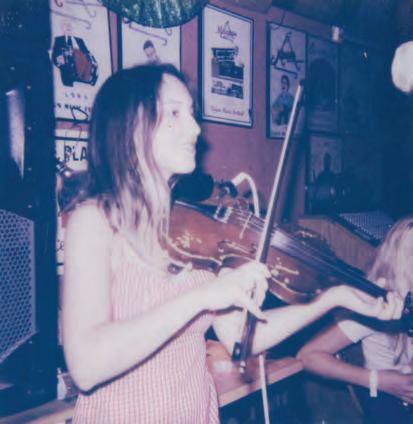
“My dad used to tell me it was like a mothership that landed in a rice field,” said Reed. “It feels like that.”
“And they’ve got Iry Lejeune on the jukebox,” said Mahoney. “That’s what really sold me. The cherry on top.”
A recent setlist, scribbled out on a pink legal pad stamped with The Holiday Playgirls logo, documents a show in which Mahoney and Reed performed some of their favorites, mostly lesser known and forgotten songs from deep in the Cajun/Creole repertoire—some especially rare, like “Milton,” “Contradanse,” “Cupic,” and “Manuel’s Bar Waltz” (named for the proprietor of the Holiday Lounge, T-Ed Manuel). There’s their version of the “Scott Playboy Special,” called the “Scott Playgirl Special,” and other standards like “La Danse de Limonade” and “Jongle á Moi”—which Reed says they try to play lesser-known versions of, “the more crooked, old-style way.” For example, their version of the commonly heard “Limonade” is played in the style of Cyprien and Adam Landreneau—“The chord switches are crooked,” said Reed. “And It’s stylistically more rough and raw.”
While they are dedicated to fidelity, and respecting a song’s original spirit, Mahoney and Reed don’t hesitate to interject their own styles. It’s part of the tradition of oral transmission, after all—especially before the age of recording. No two performers played one song in the same way. “You listen to different accordion players, each fiddle player, each singer—they have their own way of doing it,” said Mahoney. Reed agreed, saying that the careful art of layering one’s own identity over a folksong is becoming rarer today—when a lot of musicians seem to be trying to recreate the most popular recorded versions of the standards.
“For me, it’s like, when you take that approach, are you just performing the songs to be popular?” asked Mahoney. “Or do you really love the music? ... How do you sleep at night?” She laughed.
While the Playgirls’ setlists are overwhelmingly pulled from the French Louisiana traditions, “nothing’s really off-brand,” said Reed. They also play country songs, rock 'n' roll, and even the Super Mario Bros. theme song. Even to say they only play Cajun music is to oversimplify it, and it’s to oversimplify what constitutes Cajun music.
“Cajun music, that’s the thing about it, you know,” she said. “It’s such a mix of different cultures around the world.”
Many of the songs the Playgirls play, sourced straight from the Cajun music archives, sounds Appalachian, or Scottish, or English. When they performed at the Lotus World Music & Arts Festival in Indiana last September, members of the crowd identified the Playgirls’ performance of “Contradanse de Mamou” as sounding like the Appalachian folk song “Old Molly Hare.”
“I think a lot of these tunes arrived here [in Louisiana] in ways we’ll never fully understand,” said Reed. At the same festival, they jammed with a Colombian band during their sound check, and one of the bandmembers commented on the Playgirls’ use of rhythm and syncopation. “You have it, too,” he told them, referring to the influence of Afro-Caribbean music traditions—which joined with the Acadian folksongs brought to Louisiana in the eighteenth century to create the distinctly Louisiana sound we now know as Cajun music. “The summer before, we had gone to Canada,” said Mahoney, “and the music sounded different, because it was missing that rhythm. I mean, how lucky are we to be here, and have that rhythm in our music?”
In the summer of 2024, when accordionist and radio host Donny Broussard announced he would be departing from KRVS’s Dimanche Matin French radio show, Mahoney thought to herself, “damnit.” Another thread to the past, snapped. “I loved hearing him on the radio,” she said. “His first language was French, and there are not very many people you can hear on the radio today who are, like, native Louisiana French speakers.”
But then, KRVS approached her and Reed. “I never expected anything like that to happen,” she said.
Today, Reed and Mahoney are the official hosts of the show, which presents the musicians’ curated selections of Cajun and Creole songs, interspersed with their lively commentary en français, every Sunday morning at 8 am.
The responsibility has been a natural continuation of their work together as historians and musicians, granting them an appointed “duty,” as Reed puts it, to dig deeper. “It’s like a musical collage for me,” she said. “It feels like I’m just putting stuff together and seeing how things are connected.”
The show acts as yet another avenue for the duo to proclaim their discoveries to the world, to proverbially call us all over to their desk at the archives and listen to something remarkable sung by a long-gone Cajun icon.
“It’s this thing that we have bonded over,” said Reed, “this just deep love for old music. And it comes from a fear that the spirit of Cajun music is dying in a lot of ways. It’s not like it used to be, and we get angry about it together—just because we love it so much, and it’s so sacred to us. Like, this music makes my life worthwhile. I feel it in a sort of familial way, like I need to protect it.”
It's the dream, said Mahoney. “Playing this music, doing the radio show. I feel very fortunate and lucky. It’s an honor and a joy to have the chance to share it, straight from the heart.” 1

FEBRUARY 2026
38 A SALUTE TO COASTAL MEXICO IN BATON ROUGE // 39 SOUP
VERACRUZ COASTAL MEXICAN BRINGS NEW DISTINCTIONS
TO BATON ROUGE'S DINING SCENE
Story and photos by Lucie
Monk Carter
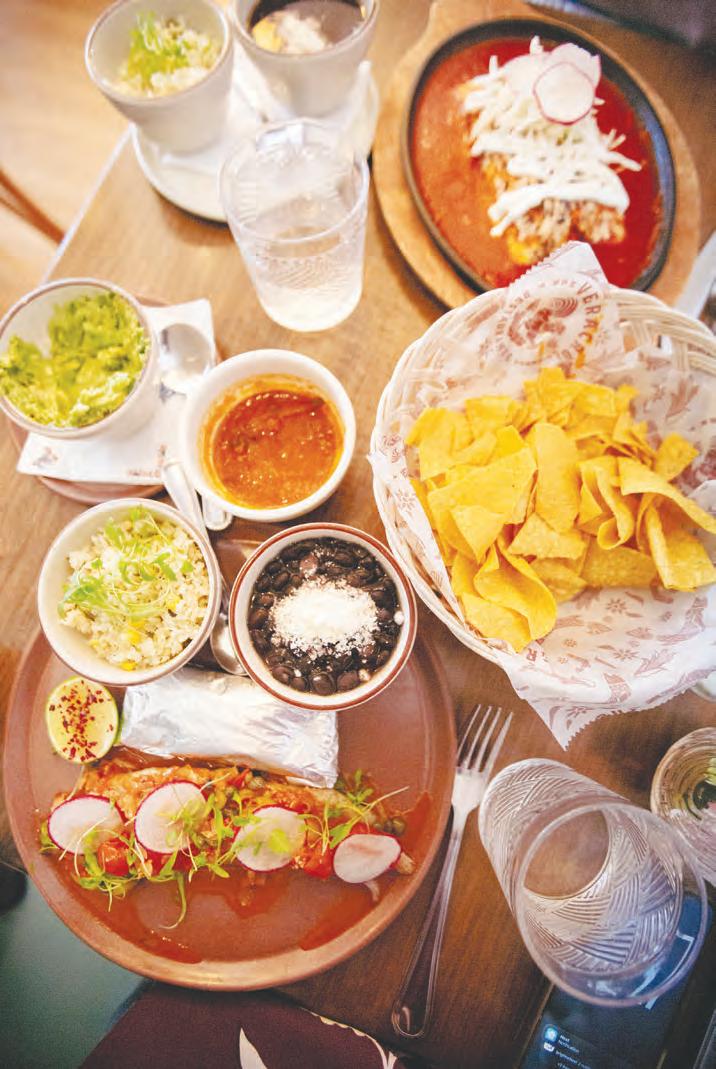
Ihf it was covered, I missed the cotillion lesson on how to handle the touchdown of chips and salsa hon the restaurant table. It’s a flurry, a free-for-all so you can feel fed while actually growing parched as the rest of your meal is considered, ordered, and prepared. Rarely are chips a conversation, but at Veracruz one recent Friday, I wrested myself from the tortilla-flecked tornado that was my own chewing. (I did go to cotillion, but my mother should get her money back.)
“What is this? What do you think this flavor is?” I submerged a chip in salsa. “Did they roast the tomatoes? Tomatillos, maybe? How do they get that color?” The next chip I left unsmothered and went down another avenue. “Is there a sweetness here to the chip? It’s not just salt, but…”
I will leave my husband’s opinions untranscribed because only one of us needs to look like a doofus in print. Suffice it to say, there’s much to wonder about the delights this relatively new Baton Rouge
restaurant puts on the table, and that’s just what they give you for free. A salute to coastal Mexico, Veracruz was opened by restaurant veterans William and Charlene Mealer in spring 2025. The Mealers also own La Carreta in Mid City Baton Rouge, which holds its own against the stalwart Superior Grill just down the road. They went with a new flavor and feel for their next restaurant, though, imbuing Veracruz with the salt air and serenity of the beachfront with ambiance owing nothing to the buzz of Jefferson Highway and the blocky buildings of Drusilla Shopping Center.
The interior exhales, and I did too, faced with a palette of crisp whites and sandy neutrals that make the Baton Rouge humidity feel, if only for an hour, like a dry Pacific breeze. Above, the ceiling is a landscape of wicker and rattan pendant lights in varying shapes and sizes, hanging like artisanal fishing baskets that cast a warm, honeyed glow over the room. A long banquette of deep teal velvet is that tempting ocean daring you to dip in a toe. Classic bentwood chairs and minimalist white tables keep the vibe light and unpretentious as lush, potted tropical plants peek out from corners.
Nodding off to the evocative decor, I was saved by the kick of a spicy margarita, which wore a warning of cayenne all over its cucumber garnish. Fire came further into play when our main plates arrived with just the perfume of smoke. I opted for the Pescado a la Veracruzana, feeling only slightly like a concertgoer wearing the headliner’s tee. A generous drum fillet—that sturdy, flaky workhorse of our local waters—is grilled over charcoal until it’s just tender enough to yield to a fork. (I neglected the accompanying tortillas in my happy haste, but you don’t need to.) It’s bathed in a tomato salsa that reads like a Mediterranean travelogue: a savory, briny mélange of onions, olives, and capers.
Andy chose the Enchiladas de Pollo al Carbon, wood-grilled chicken in a zesty pool of enchilada sauce with a crown, not a shroud, of Chihuahua cheese. Wreathed by sautéed onions, peppers, and the cooling touch of crema, it was a dish that felt grounded—earthy, satisfying, and reminiscent of a backyard feast.
I’ve found food to be a passport to places I haven’t been, yet. We’ve put a pause on more ambitious trips since I had a baby last year (and before that, when my four-year-old cleared an Italian gallery by roaring “I SAW IT IN A BOOK” at
Botticelli’s most famous work). For now, on my schedule and even in my zipcode, Veracruz transports me somewhere soothing but extraordinary, turning my nose and tongue to new distinctions in a cuisine I made the mistake of finding familiar.
Too much of the menu remains to explore for me to promise that I’ll talk less through my next meals there. “What have they wrought from a mere pineapple? Is that … do I detect octopus?!” But I ought to play it cool lest I be accused of ruining the vibe. (It’s happened.) In a town where we often treat Mexican cuisine like a comfortable old sweater— predictable, heavy, and best enjoyed in a dark booth—Veracruz is a linen shirt on a breezy dock. It’s a reminder that "coastal" isn’t just a design choice; it’s a way of letting the ingredients breathe. And we can all join in. 1
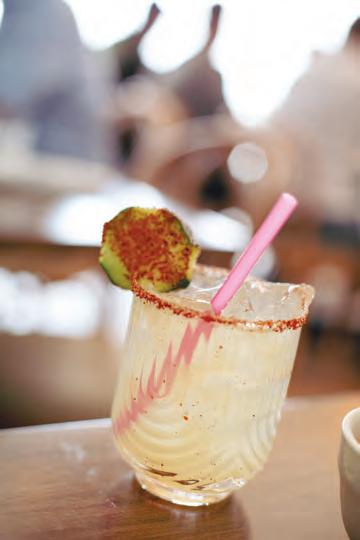
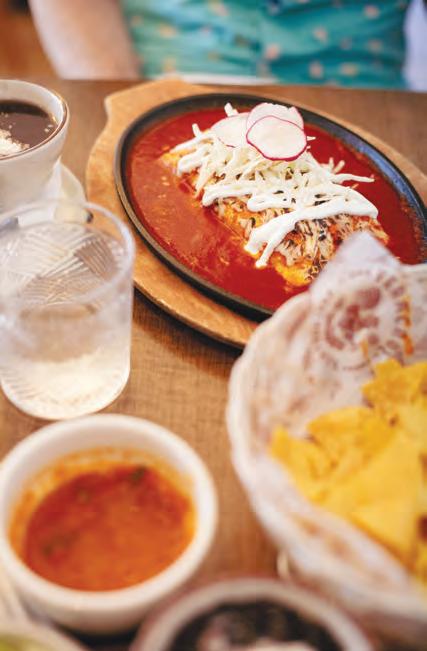
By CR Editorial Staff
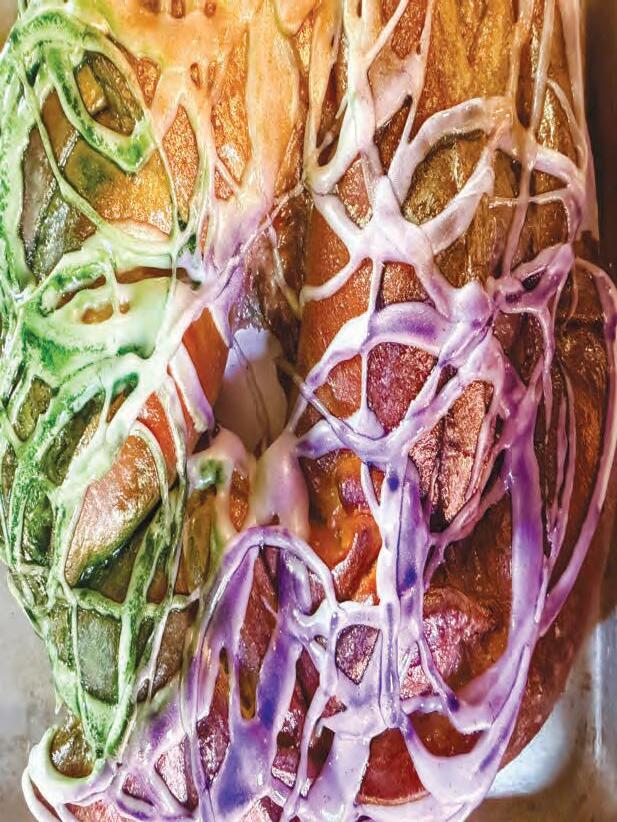
“Do this for the boot,” Young Hub City told us. “Oh, it’s on now.” It’s Mr. Weatherall season in Acadiana, and the KLFY journalist/TikTok sensation returns with his annual king cake crawl in collaboration with The Apothecary Shoppe in Lafayette—this year with seventeen Acadiana-area bakeries and specialty shops featured. There are the classics like Keller’s and Meche’s, local beloveds like Caroline’s Cookies and Lucia, as well as appearances by destinations lesser known in the king cake game, like Empanada Guy. Pick up a map at The Apothecary Shoppe or any of the participating locations and get to munching. The more stamps you collect before Mardi Gras Day, the closer you get to winning exciting prizes from The Apothecary Shoppe. Find information on The Apothecary Shoppe’s social media.
Back in the day, Country Roads ran a popular column by former Managing Editor Dale Irvin in which he would periodically hop in his car, drive any number of miles, and pull into the parking lot of a nondescript gas station he had heard served spectacular grub.
For this year’s upcoming Road Trips Issue in April, we’re hoping to bring back the spirit of “Gas Station Gourmet” for a round-up of Louisiana and Mississippi’s best pit stop cuisine. And we need your help! Send in your favorite roadside burgers, the best boudin stands in the land, stellar street tacos, and the unexpectedly highbrow dining experiences hiding behind the grunge of a Shell station. We want to visit them. Submit your recommendations to editorial@countryroadsmag.com by March 1 so that they can be considered for the issue.
NUNU Arts & Culture Collective has, for decades now, established itself as an enclave of creative minds in the rural, Shire-like community of Arnaudville—with regular visual arts exhibitions, live music programming, and cultural exploration in various forms. More profoundly, NUNU has served as a crucial third place in a world where there are far too few of them.
Now, the Collective is taking that community-making role and turning it into a (gentle) enterprise, Café NUNU. Serving Rêve Coffee and loose leaf teas from Frontier Co-Op, as well as a selection of sandwiches, soups, salads, and baked goods—the new space is designed for “conversation, quiet work, and taking one’s time.” Rather than having fixed prices, at the café guests will be asked to contribute what they can, knowing that their participation supports NUNU's programs. Plans are in place for dedicated specials each day of the week, including Beansday on Wednesdays and “Common Bowls” of gumbo and other regional rice dishes on Saturdays, and there are plans for routine culinary pop ups celebrating local chefs.
The Grand Opening coincides with a new exhibition in NUNU’s gallery called Mise en Place, featuring works inspired by local ingredients, preparation traditions, and dishes—exploring how food functions as cultural expression. Learn more at nunucollective.org.
This Mardi Gras season, NOCCA’s Culinary Arts Program returns with platters full of (edible) glittery goodness. Designed to teach students about culinary product conception and the logistics of getting that product into customer’s hands, the King Cake Program pairs them with local celebrity chefs to create innovative takes on the traditional Carnival delicacy. This year’s offerings include a transformation of Chef Emeril Lagasse’s famous banana cream pie into king cake form, as well as NOCCA Chef-in-Residence Frank Brigsten’s strawberry and tres leches custard king cake— both featuring NOCCA’s signature brioche recipe. Other selections include gluten free options of traditional cinnamon and almond with Louisiana satsumas; as well as Dubai chocolate and “The Goddess,” a 2025 favorite created in partnership with Krewe of Muses that featured goat cheese and fig with candied orange and toasted walnuts, all sprinkled over with glitter in the colors of the season. Cakes are $27 each, with all proceeds going to support NOCCA’s Culinary Arts Department, and can be picked up through February 16 at NOCCA and King Cake Hub. Pre-order yours at noccamarketplace.com.
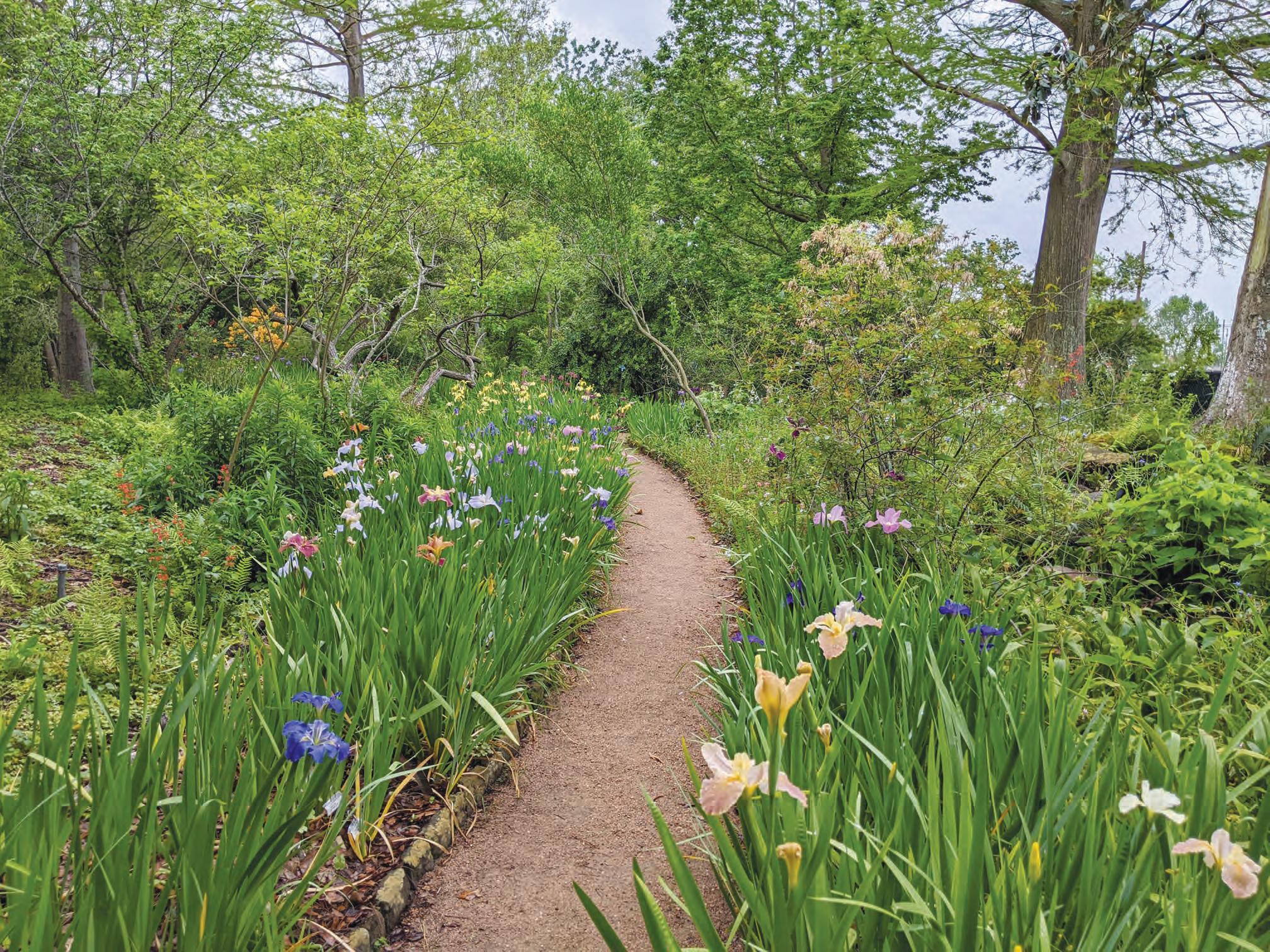
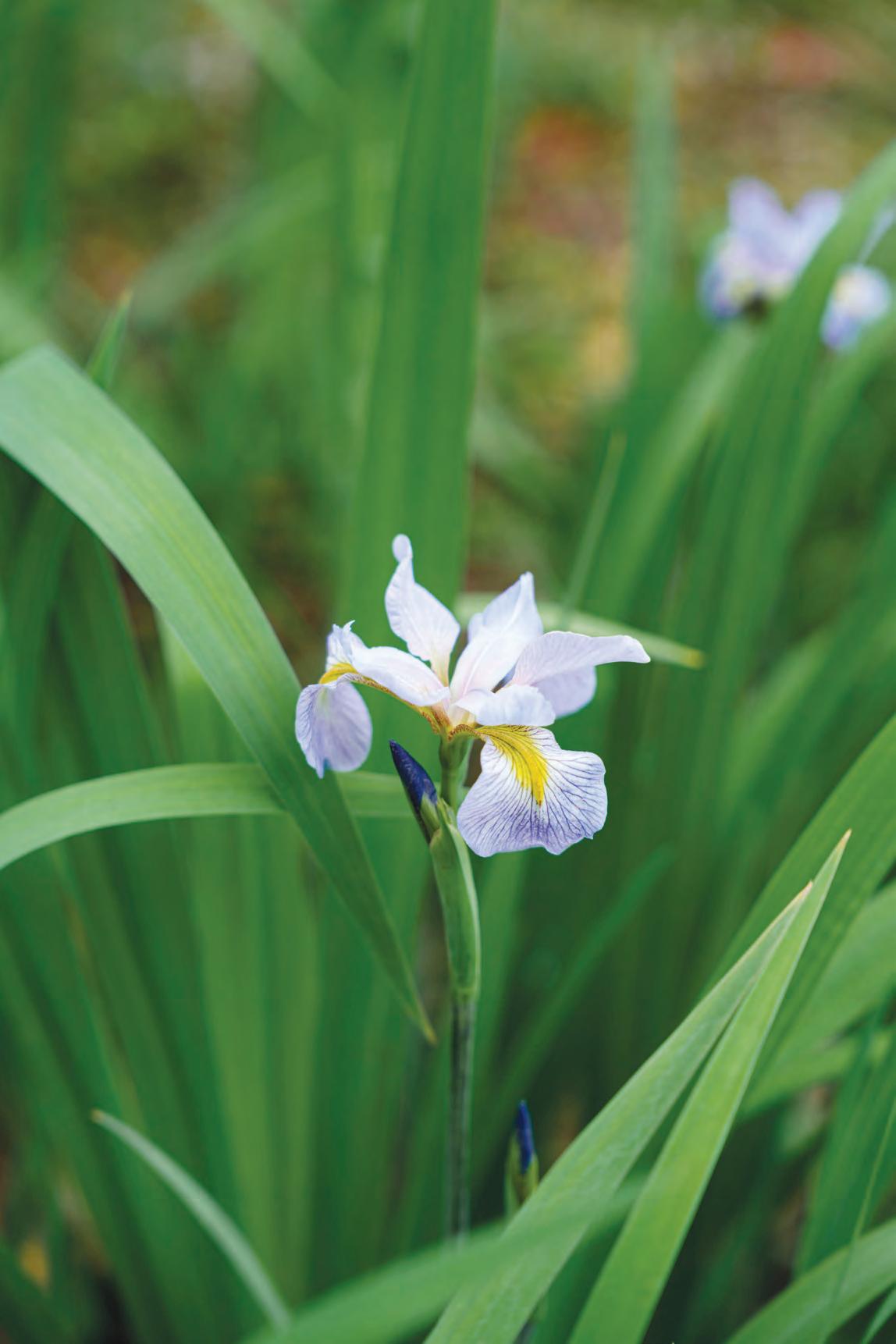
Story by Jess Cole
Diane Louw is a bonafide spur-wearing cowgirl. But when she is not tending to her grand, majestic horses, it’s the delicate iris that commands her attention. She says her love of the flower began when she was a young girl. But it was breeder Joe Mussachia’s Acadian Sky, a mid blue-hued hybrid, that solidified her addiction. Since then, Louw has dedicated her free time to iris cultivation and advocacy through her work as the treasurer of the Society for Louisiana Irises and her company Blue Monday Louisiana Iris.
Such fixations over a single plant or plant family have always intrigued me. They remind me of a kid I knew in horticulture class who was the third generation of renowned camellia breeders. Everything that family did was attuned toward camellias. I am more of a generalist, and possess deep love for so many different species. I go through seasonal infatuations, sure, but have never singularly dedicated my time to learning every possible thing I can about one plant group. Something about that dedication is admirable to me.
I am starting to understand it more, all the ways you can fall in love with and understand a singular plant so intimately. I think about the way I come to know a tree after sitting in its canopy for hours, pruning winter worn branches up close after the leaves have fallen. Or how one comes to understand the difference between a bulb, corm, and a tuber after sorting through hundreds in one sitting. Profound botanical acts such as these could easily spawn a lifelong fling with muscle wood trees or daffodils.
Part of Louw’s motivation is to inspire such obsessions. She says that today, there are very few young people cultivating irises in Louisiana, prompting her to share what she has learned with others. As older generations of breeders slip away from the scene, she works to keep the provocation alive by continuing the search for the next magical iris offspring.
During my time spent with this iris obsessive, I learned things I never knew—here are some gems of knowledge I found worth sharing:
Hybridizing: Irises are not “true to seed”—meaning they do not produce offspring identical to the parent. They produce “varieties,” naturally occurring plant offspring that are genetically different from their parent plants. Think humans—not a single one of us is “true to seed.” We differ greatly from either of our parents. A “hybrid” is when two species are crossed, usually by the hand of man, in attempts to create new shades of color, particular sizes, and other new characteristics.
Since irises do not bloom true to seed, when a seed germinates to create a new iris, it will always be genetically different from its parent. Louw capitalizes on this occurrence—observing natural stands of iris, seeking out the one unique bloom color that may have emerged. Because offspring can be so different from their previous generation, hybridizing of iris is especially exciting. There is an endless world of possibilities when you purposely cross two flowers you enjoy.
Louw suggests that if you desire to keep your stands of iris true to the parent variety, then you should cut your seed pods before they fall, inhibiting cross pollination. I think of my own garden—I have stands of native
iris, along with a few non-natives across the yard. I do very much want to keep my native stands native, so this tidbit is gold. If you do grow iris by seed, wait patiently, as they do not bloom until their second year.
Transplanting: The ideal time to transplant iris in Louisiana, historically, has been late August/September when temperatures drop and rain sets in to break the plants’ summer dormancy. Our summers, though, have tended to be longer and more harsh in recent years, so Louw finds herself pushing this timeline deeper into fall.
Where and How to Plant: If your irises are not blooming, Louw says it is likely one of two things: sun or nutrients. Irises need around six hours of sun daily to bloom. A caveat, though, that she has had success with is making use of deciduous trees. She finds that irises planted under deciduous trees often still bloom in shady summer conditions, as they collect their sun hours in winter and early spring before the trees’ leaves re-emerge.
Irises desire super nutrient-dense soil, so Louw suggests using a lot of fertilizer. Personally, I shy away from chemical fertilizers completely and instead recommend nutrient-dense compost or general organic fertilizers, made of naturally occurring animal or plant materials.
If you think about where irises naturally occur, it’s usually in a wet, often low, setting, where water accumulates and contributes to the breaking down of organic matter, continually increasing nutrient density.
Identifying Irises: There are literally thousands of iris cultivars out there. Even the most renowned iris breeder would be hard-pressed to know and identify them all. A cool trick that Louw shared with me is how to easily tell a native cultivar from a non-native one: slide your hand down the blade of an iris. If there is a middle vein, it’s non-native; if it’s flat, it’s a native iris. This is especially helpful when attempting to differentiate our natives from the invasive Iris pseudacorus, or yellow flag iris.
Below, find links for information on local irises and advocacy, including the great work of the Louisiana Iris Conservation Initiative, a group that organizes rescue and planting projects to save our native wild irises from destruction. 1
licisaveirises.com • louisianas.org • louisianairisgnois.com
Possessing the most precious, delicate white, hydrangea-like blooms that bear lush blue fruit for wildlife, this large shrub is found in moist woodlands, yet can tolerate so many different types of soil conditions, making it an excellent choice for any landscape. It grows great in full sun to partial shade, and is excellent as a specimen or en masse, along a fenceline or within a hedgerow, and it holds on to its deep and complex fall color long into a Louisiana winter. Its common namesake comes from how straight its branches are; historically, Native peoples used them to make arrows. This viburnum hosts the spring azure butterfly and is an absolute wildlife party starter and bird magnet. I have been blessed, as of late, to enjoy her in vast stands throughout the Bogue Chitto River watershed, blanketing the wet forest floor. The leaves are some of the last to cling to the deciduous species, warm hues fluttering in the wind under stands of majestic moss-softened tupelo, offering a precious winter delicacy.
LOUISIANA
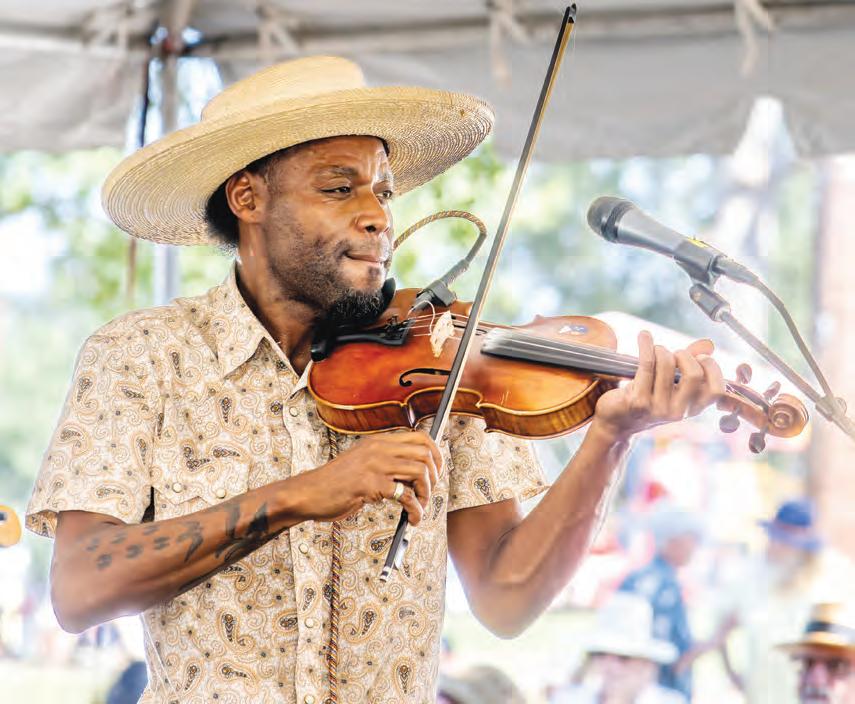
Story by Chris Jay
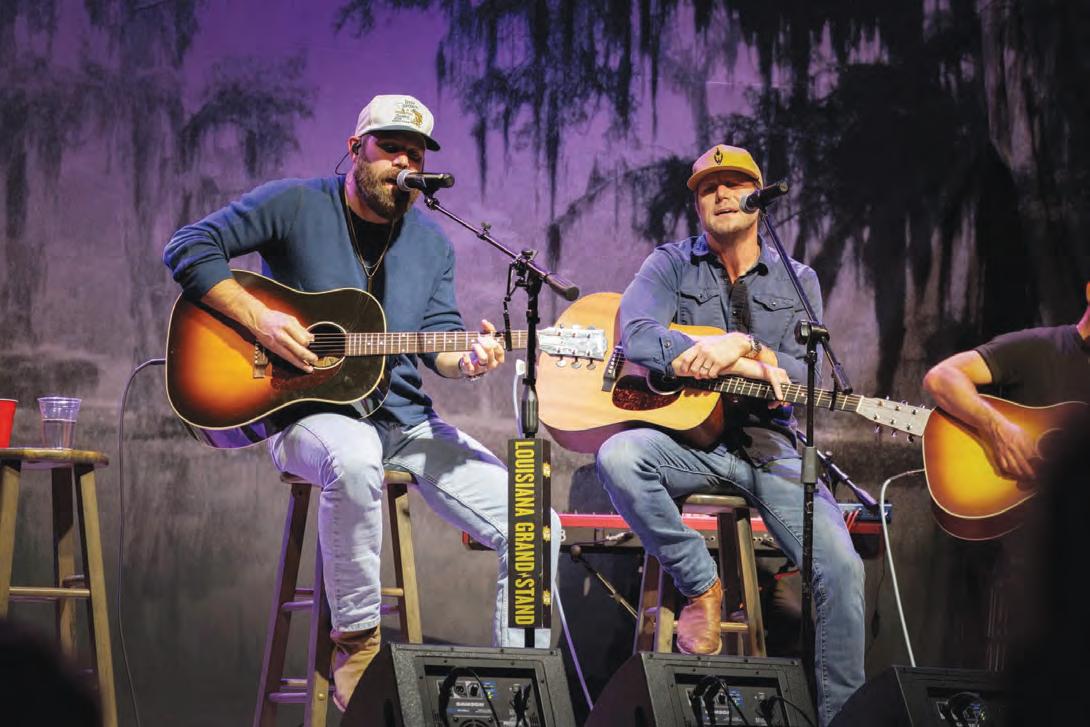
There was a time when Shreveport was considered an essential tour stop for up-and-coming musicians looking to make a splash in the world of country music. From 1948 until 1960, The Louisiana Hayride concert series, broadcasting live from the stage of the Shreveport Municipal Auditorium, helped to launch the careers of superstars the likes of Elvis Presley, Hank Williams, Johnny Cash, and George Jones.
Today, Stephen Gillum, a forty-twoyear-old Shreveport native and the co-founder of a new concert series called The Louisiana Grandstand, sees potential for Shreveport to be restored as a mecca of what he calls “real music.”
“We don’t want to just host established stars. We want to help create, build, and launch stars,” Gillum said. “We hope to be a part of breaking new artists from this area while hearkening back to this area’s history, doing it all with a hometown feel because we’re proud of these artists and their roots.”
The Louisiana Grandstand team hosted the first of their “listening room”-style concerts in 2021 at the Woman’s Department Club of Shreveport, a sprawling, circa-1919 estate on the edge of downtown Shreveport that houses a 440-seat auditorium and is listed on the National Register of Historic Places. The Louisiana Grandstand’s early concerts paired country legends like Sara Evans, Marty Stuart, and Robert Earl Keen with opening acts curated from Northwest Louisiana’s current crop of emerging singer-songwriters.
The success of The Louisiana Grandstand’s early shows paved the way for more ambitious bookings. Over the past few years, breakout artists like Marcus King, Eli Young Band, and Red Clay Strays have performed to packed houses.
Riding the wave of positive buzz, The Louisiana Grandstand announced its biggest venture to date in August 2025. In addition to the opportunity to share a stage with country music superstars, local musicians can now apply for admission to The Louisiana Grandstand’s Artist
Ambassador Program. Locals who are accepted will benefit from one-on-one mentorship and professional development, with hands-on training and experience with aspects of concert production, ranging from ticket office administration to lighting design.
“We want our artists to understand not only how to perform, but to learn what all goes into pulling off a successful event,” Gillum said. “They need to know these things, and there are not a lot of ways to learn. We expect them to come in and put some of the work in. Learn how the sound works, learn how the lighting cues work, and learn how the ticket office works.”
Organizers expect to announce the first two program mentees in March 2026.
Leading the mentorship program will be none other than country superstars Kix Brooks and Jordan Davis—both of whom grew up in Shreveport, where they honed their talents before going on to find enormous success in Nashville.
“[Brooks and Davis] had to move away from Shreveport to develop their career,” Gillum said. “We believe in a future where that isn’t the case.”
“I, more than most, understand the importance that local venues like The Louisiana Grandstand have in supporting homegrown talent,” Brooks said in an emailed statement. “I’m honored to join fellow native Jordan Davis in the first year of the Artist Ambassador Program.”
In addition to the star power they’ve enlisted for the inaugural class of the Artist Ambassador Program, the best resource that The Louisiana Grandstand team has may be the lessons they’ve gleaned from history. The Louisiana Grandstand isn’t the first initiative built upon the promise of recapturing the glory days of Shreveport as a destination for up-and-coming country music artists.
Following the final broadcast of the original Louisiana Hayride, which ended its initial run in 1960, similar efforts with names like Hayride U.S.A., the North Louisiana Hayride, the Louisiana Gospel Hayride, and the Ark-La-Tex Roundup have cropped up every few years. These jamboree-style shows often over-relied on the fading star power of musicians and radio personalities who had appeared on The Louisiana Hayride stage decades prior. Gillum is adamant that, while he and his team take great pride in Shreveport’s history, The Louisiana Grandstand isn’t an exercise in nostalgia.
“The great thing about history is that it teaches us what not to do,” Gillum said, alluding to past attempts to recreate the magic of the Hayride era. “You have to be able to get out of your own way and let things move into the direction that they need to go.”
While Gillum couldn’t divulge specifics, he said The Louisiana Grandstand will be making its home in a much larger venue beginning in mid-2026, giving organizers the opportunity to plan bigger, more frequent concerts and events. A number of major announcements will be shared soon via The Louisiana Grandstand’s website and social media, he said.
“My grandparents met going to shows at The Louisiana Hayride, and we grew up hearing about these iconic moments that they witnessed,” Gillum said. “But it can’t just be about the past. The most exciting part about The Louisiana Grandstand is that it’s about the future.”
louisianagrandstand.com
BETH ANN FENNELLY'S NEW MICRO-MEMOIR APPROACHES LOSS WITH A SENSE OF PLAY
Story by Chris Turner-Neal
The first time I met Beth Ann Fennelly—the only time in person and not in print—she was wearing a necklace made out of a shotgun shell and a doll’s arm. I’ve loved her ever since.
Her first book of micro-memoirs, Heating and Cooling, has done me an enormous service as the gift I give when I don’t know what to give someone: “I didn’t know if you liked wine, so here’s a book that changed how I think about prose.” The publication this month of her second such volume, The Irish Goodbye, now means that I’ll have to give people both tomes. Heating and Cooling felt like making a new friend; The Irish Goodbye has the vibe of the first time you and your new friend open up over too much wine.
Micro-memoirs, for those who have not yet had the pleasure, are snippets of life, written more like prose poems than narratives: the shortest are a line, the longest a few pages. The topics are as varied as the ingredients of a full life—Fennelly reevaluates her memory of a lonely year in the Czech Republic, strips down for an artist, allows her son to quote her profane commentary on garden slugs—but the crux of the book, and one of the turning points of Fennelly’s life, is the premature death of her elder sister.
Fennelly shows us this loss from many angles, a process familiar to anyone who has ever grieved, from grim jokes about her sister’s nineteenth birthday serving as her midlife crisis to a snappish response to her editor’s recommendation that she explain how her sister died. Layered over this old scar is the fresh disaster of Fennelly’s mother’s dementia, and she returns more than once to the idea of being alone in a memory, unable to consult her late sister or her mother, declining during the “action” of much of the book and now deceased. She’s her own sole corroborating witness, and she acknowledges more openly than most of us how unreliable memory is even in the absence of an illness that pulls it away.
For a work concerned in large part with loss, with goodbyes both Irish and prolonged, The Irish Goodbye is, at turns, playful and comforting. Startled by a noise as she gathers daffodils in a vacant lot, Fennelly prepares to defend herself physically but morally: it is better to gather the daffodils than to let them fade uncherished behind a No Trespassing sign. “These are for my mother, who is ailing,” she prepares to cry at the imagined judge, admitting at the end that since neither coyote nor goblin confronted her, she kept the daffodils for herself. The last essay in the book, an account of her nude modeling session for a painter working on a set of portraits of twelve Oxford residents, is both hilarious and reflective: Fennelly’s glee at seeing her buniony, inelegant feet perfectly captured in oils made me, just briefly, feel better about how my neck looks in photographs. (Not much better, but still.)
In a moment of absurd serendipity, Fennelly was once able to produce, genie-like, a gin and tonic for a writer she admired when he mentioned wanting one. She and Tim O’Brien were both at an afterparty that had run dry, but Fennelly had popped to the liquor store on the way—an occasional necessity in the dry-county-dotted inland South—and had gin, tonic, and even a fresh lime in the trunk of her nearby car, providing them all to O’Brien like three treasures in a fairy tale. I don’t have a car, and I live far away from Fennelly’s Oxford, which is lucky, because if I still lived in New Orleans I’d have to keep a full bar in my trunk, just in case I ran into her, just so I’d have what she wanted. 1
The Irish Goodbye will be available for purchase on February 24, 2026. wwnorton.com
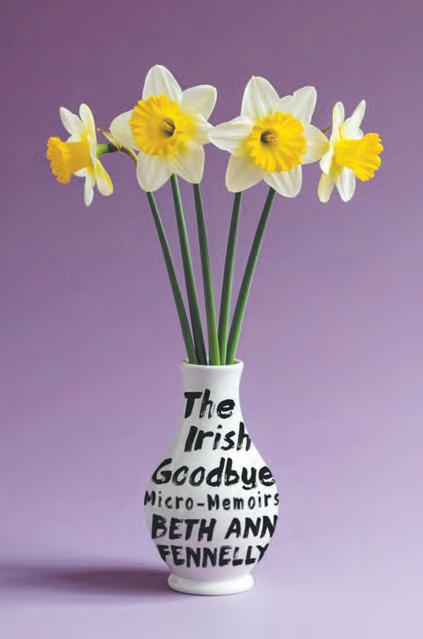
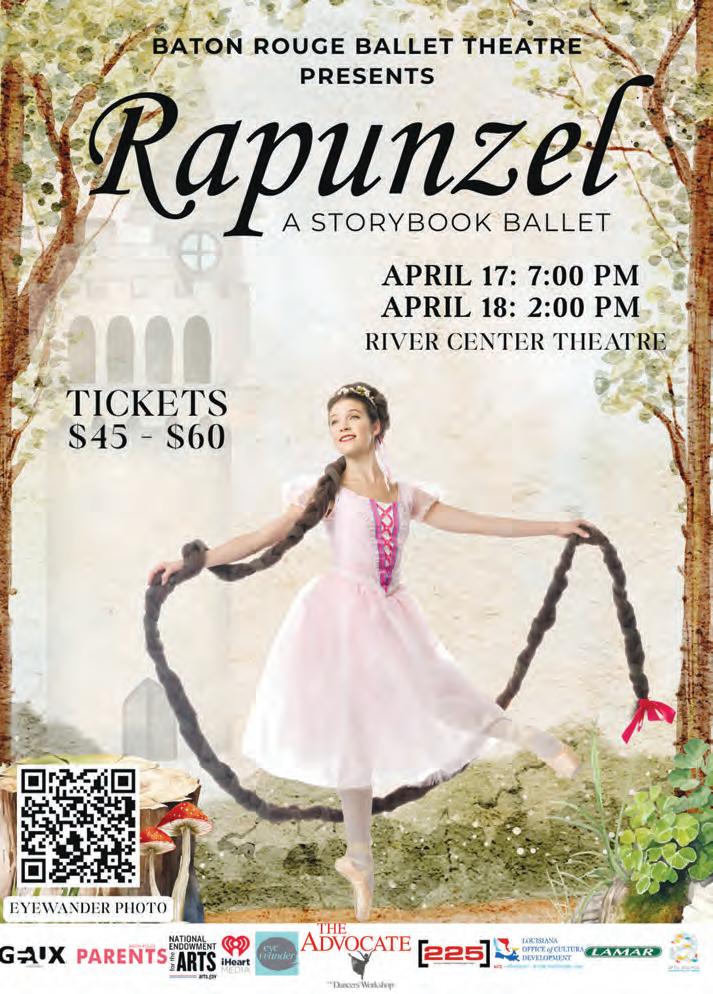

Story by Megan Broussard Maughan
My obsession started on October 18, 2024. I was down in Lafayette for my birthhday. Like most of us who’ve moved haway from Acadiana, I was experiencing festival withdrawals. I needed music with a fiddle, a washboard, and intermittent mic feedback STAT.
Luckily, that night was the closeout of the Rhythms on the River fall live music series. I was excited to show Rick the Brit what these were all about. I started by explaining how I knew all the random people I was waving to.
“That’s my momma’s old coworker; that’s a girl I used to play softball with; that was my home ec teacher for like two months—”
—suddenly, all-too-familiar piano keys rang through speakers.
I stopped.
“What’s wrong?” Rick asked. I could only muster a whisper.
“The Freeze,” I breathed. “I must go.”
Zombie-eyed, vodka soda in hand, my overstuffed cross-body bag swinging—I zigzagged through golf carts, lawn chairs, and toddlers to get to the bandstand just in time to hit that first eight count.
Do-on’t! Tempt me with your eyes …
The effect was something like a cobra swaying to the tune of its charmer. I grapevined in a trance. First to the right, then to the left, all the while being transported to various settings of core memories: my middle school gym and my crush who only ate Airheads; Sadie Hawkins, where my best friend and I fought and made up between the first and second verses; the first wedding in my friend group, when we all started to feel like adulthood was inevitable.
‘Cuz if you don’t want me to…
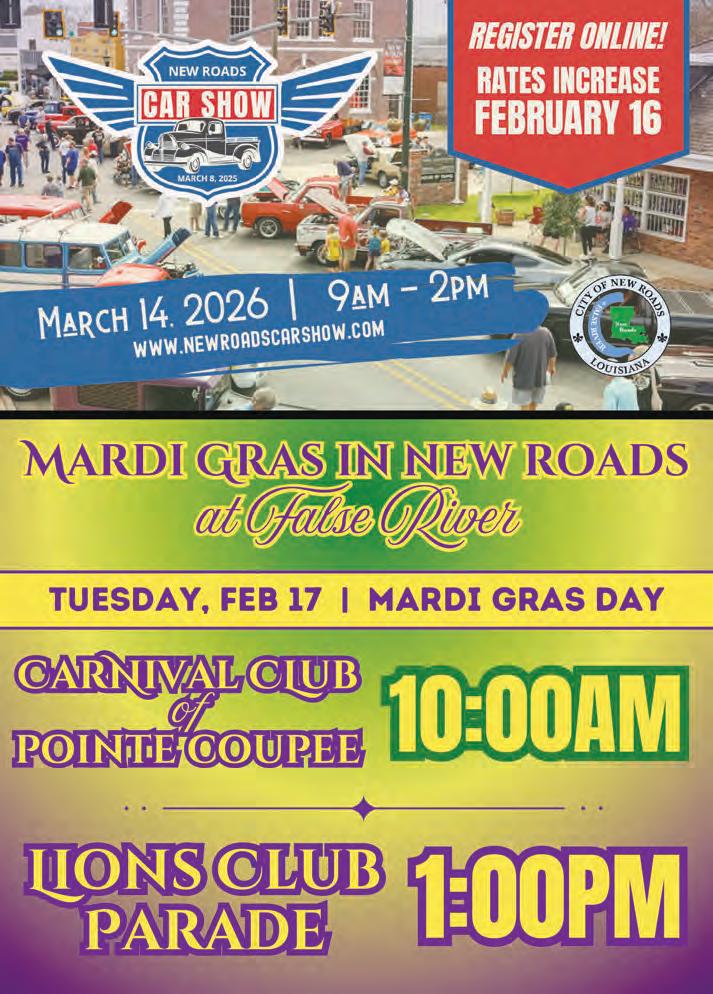
Don’t tease me, don’t tease me.
Try to please meeee.
Almost a month later, back in Brooklyn, I was missing home, and decided to post the video Rick snuck of me dancing to “The Freeze” on Instagram. It zooms into my stank face right at the rocking-back-and-forth part. It’s beautiful. The sound isn’t the clearest though, so I searched for the song on the app to include in the post.
I typed: “The Freeze,” then “the freeze line dance,” then “cajun freeze.”
Nothing.
Hunh. Weird. Whatever, I’ll just look it up by artist. Who sang this again? Wayne Toups, maybe? Yeah, gotta be Wayne Toups.
Nope. Wow, don’t tell anyone you thought that. Ever. That’s super embarrassing.
Okay, just Google the lyrics.
“If you don’t want me to, don’t tease me.”
Did you mean … “If You Don't Want Me To?”
Bingo! Yes … okay, wait. Is “freeze” nowhere in the lyrics? I thought at least one of these verses said “don’t freeze me,” no?
Where did I get that from?
Ow, my leg fell asleep…
So why do we even call it “The Freeze”?
Now, I was hooked. I hurried up and posted the reel (okay and the TikTok) without the song, so I could focus on solving this mystery.
Side note: I used to be a true crime producer. I know, weird to just throw that one at y’all right now, but it’s important for me to be upfront about how psycho I can be about solving a case. Also, as you may have ascertained, I’m a Libra, which makes my yearning for truth and fairness all the more intense. You know, the whole scales of justice symbol, etc . . . But, I digress.
As I dug online, I found an old Facebook post—well,

actually a handful of posts, of people, all from Louisiana, who were going through a similar revelation as myself. Then, my phone dinged—a new comment on my line dance post:
“The Freeze! So disappointed to find out this is very much a regional line dance when I moved away from the homeland of south Louisiana.”
Wait. Wait. Wait. Holdupholdupholdup. My eyes lingered on the word “regional.”
Now that I was thinking about it, I realized I didn’t remember ever hearing “The Freeze” in the country bars in New York. Hell, I don’t even remember hearing it when I lived in Dallas….
Okay, who sings this song?
Ronnie Milsap.
The name doesn’t sound Cajun. Let’s see where he’s from in Louisiana.
North Carolina?!
But this is an inherently Cajun/zydeco song … isn’t it? One that, like the “Cupid Shuffle,” has become a nationally recognized line dance … Right?!
I felt like I had just found out my family and friends were the only ones in the world who sang “Happy Birthday” before blowing out the candles on a cake.
I thought about this for days. Nights, if I’m honest. Poor Rick had to hear the rantings of a mad woman spiraling out of control for months.
I’d barrel out of the shower. “What if it’s one of those Mandela Effect situations? Or a government conspiracy or something? Ya know, like they tried to make us believe we didn’t see Sinbad play a genie in Shazam in the nineties. Remember that?”
He’d just nod.
The next day, mouth full of toothpaste: “It just doesn’t make sense, Rick. We fangirl over artists who are from Louisiana. So why are we so obsessed with a song that isn’t Cajun, doesn’t even have French in
it, and the singer’s not from Louisiana at all … Like I didn’t know who Addison Rae was, but now that I know she’s from Lafayette, I go out of my way to drink Diet Pepsi you know?”
More nodding.
I knew I had to take action when Ronnie visited me in a dream. Specifically, the Ronnie from his 1998 16 Biggest Hits album, where he wore that burgundy corduroy blazer. He and I were at the Legends on Johnston Street. It was weird because my old neighbor walked in and waved at us like it was nothing. Anyway, he leaned in to tell me a secret, but before he could tell me the thing I was sure was gonna blow this case wide open, poof—he turned into a lucky rabbit’s foot.
Don’t worry, I’ve already bookmarked a discussion with my therapist.
Immediately, I told my editor about the mystery I’d uncovered and that I had to write about it for my next column. I was expecting her to be in awe of my investigation, impressed by my tenacity, nominate me for some kind of investigative journalism award, when she goes:
“Oh, yeah, there’s a whole documentary about this.” I gasp.
“So, I’m not alone?”
Enter filmmakers Rachel Nederveld, Allison Bohl DeHart, and Peter DeHart—the trio behind the documentary, The Freeze, which I learned is still in production.
I got to sit down with them and revel in this Ronnie rabbit hole. One thing I thought was especially fascinating was that “If You Don’t Want Me To” was not initially released as a single … which is how any hit in the eighties reached the airwaves. Moreover, it was on the B-side and never sent to radio stations to promote—which made it even harder for fans to find.
Over the past few years, the filmmakers have interviewed a number of South Louisiana DJs from the eighties who talked about the trouble they experienced having to hunt down the song to keep local listeners happy. The song was obscure, the album hard to find, so they had to take turns using it when they’d go and play weddings, family reunions, and high school dances.
“Ohh, but there is so much more that we’ve uncovered. The deeper we dig the more holes we find,” said Bohl DeHart.
I was practically salivating. That’s when they asked me, “Do you want to help us solve it?”
“Don’t tease me,” I said. “Of course I do!”
And you can help, too. You can help us find the truth in two ways:
• Do you, or someone you know, know someone else who was on the dancing scene in the 1980s? We’d love to talk to anyone who was dancing the South Louisiana circuit during those days. We’re talking line-dancing, square-dancing diehards. We’d especially love to meet people who made trips out to the dance halls in Beaumont or Houston areas. Reach us at: thefreezedoc@gmail.com
• Join The Freeze community! We need sleuths and supporters to make this happen, so follow us on social media (@thefreezedoc on Instagram and Facebook) to get updates as the mystery unfolds, and more importantly, learn about our upcoming crowd funding campaign.
Until next month, mes amis. 1
Read more entries of Megan Broussard Maughan's column, “In Search of the Lost Tongue” at countryroadsmag.com.
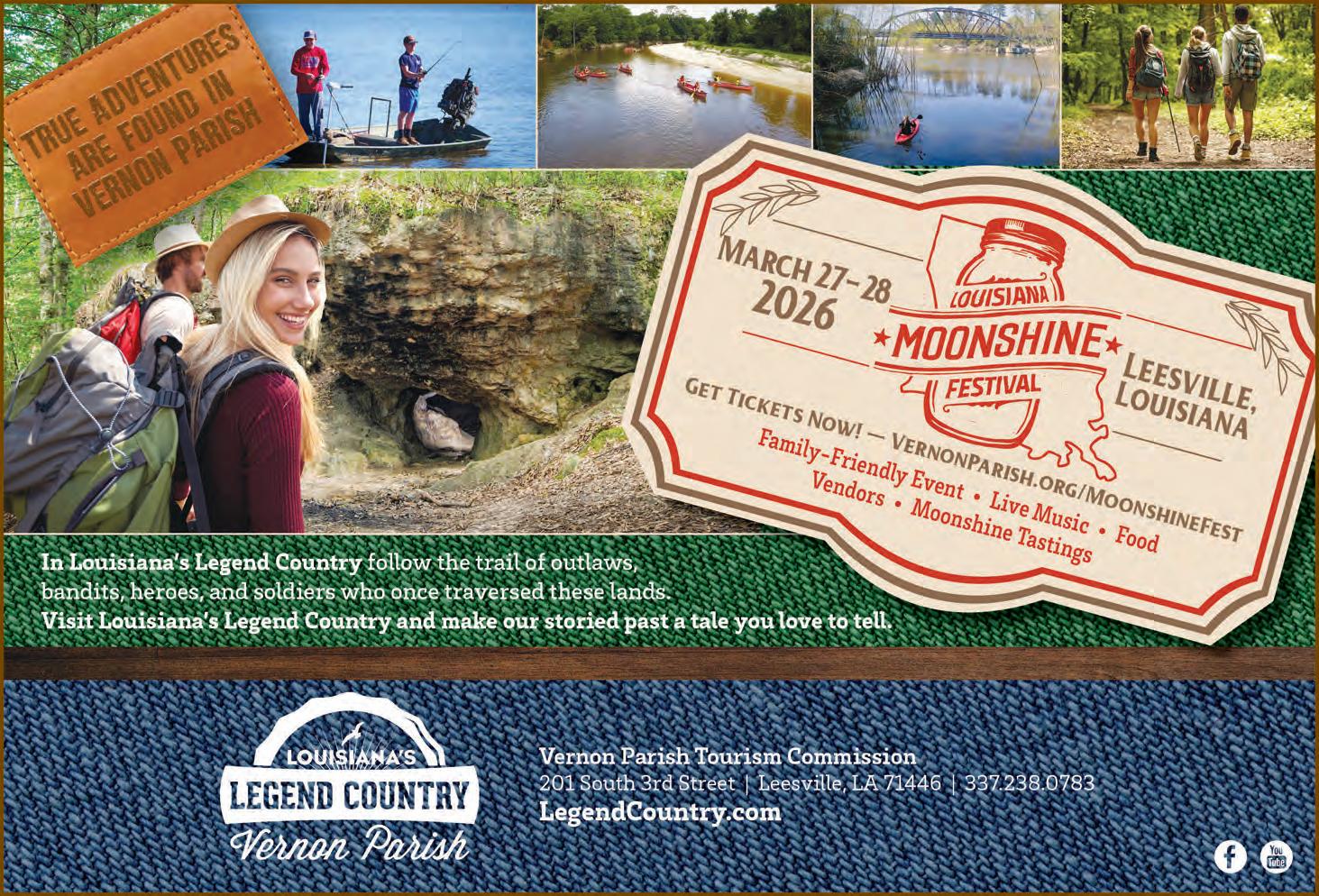
of recordings of powerful fiddle music I’ve created and collected from my experiences.
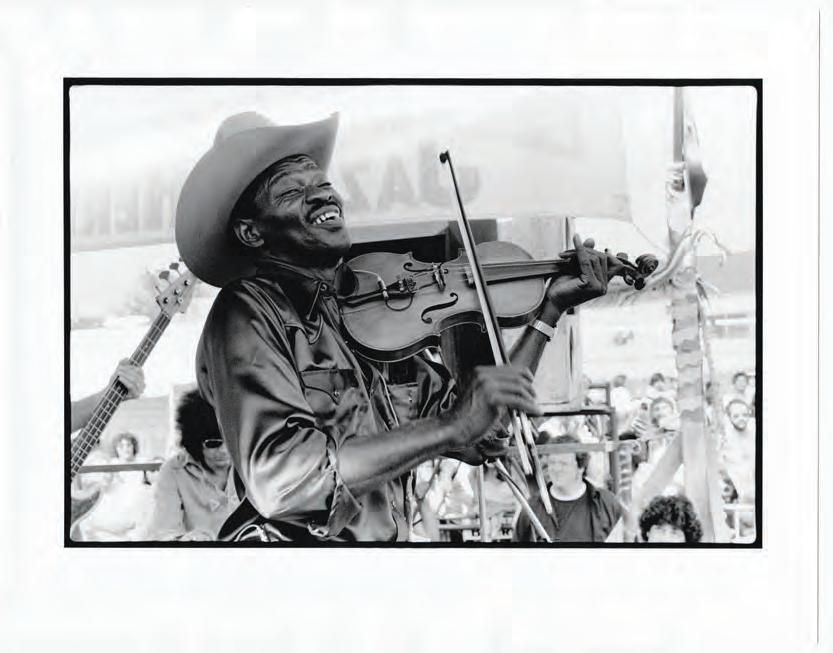
Iof recorded sound, Black fiddling has taken on a variety of hmusical and stylistic approaches that continue to pervade every genre of the world’s music. The fifty recordings included on this playlist, made between 1926 to 2025, span a vast ensemble of musicians who come from both rural and urban backgrounds.
In Louisiana, there historically has been a rich variety of Black fiddlers, from musicians who began in family string bands eventually making their way to the popular stage, to more localized musicians who would find their music preserved and appreciated in a much later era. Fiddlers like Lonnie Johnson and Clarence “Gatemouth” Brown made careers not only as fiddlers but as blues guitar players, showcasing the versatility provided by a strong foundation in fiddle playing. Others, such as the Carriere Brothers, acted as tradition bearers in the distinctly and joyous Black Creole tradition from which zydeco emerged.
This tradition continues into Mississippi, going from the extremely popular Mississippi Sheiks’ 1930s recordings to the fiddle stylings of Sid Hemphill, who found local prominence in the Hill Country of upper Mississippi before being recorded by folklorist Alan Lomax in the 1940s. The span of Southern Black fiddlers also reaches into Memphis, Tennessee, considered by many to be the “Northern tip” of Mississippi, where many fiddlers like Will Batts migrated from points south to the urban center to play in smaller jug bands, and others like Charlie Pierce found positions in larger orchestras (Pierce also played with composer W.C. Handy in his band).
In the book, Fiddling is My Joy (Uni-
queline Cogdell DjeDje writes that the art of fiddling in the Black community began to fade in the years following WWII, partially due to the sheer difficulty of learning the fiddle or violin, compared to fretted instruments such as the banjo or guitar that have a much shorter learning curve. The context of community-based fiddling at functions like square dancing also began to lose currency in the wake of newer genres of unique Black-identified popular music forms that developed after the turn of the twentieth century.
Though the Black fiddler has been sidelined in recent decades, Dr. DjeDje’s book comes at a time when a new era of Black fiddling has emerged and should also be celebrated. Since the 1960s, Black music has evolved past the original innovations of jazz, blues, and gospel to include rock ‘n’ roll, R&B, jump blues, soul, funk, hip-hop, and modern classical. On the world’s stage, Black fiddling has taken hold in different parts of Africa and the Caribbean. A new generation, raised on all of these styles, has begun to make its presence known, creating a third phase in the Black fiddling story.
Even though I myself do not play fiddle, the instrument has greatly influenced my musical career and is a part of my heritage. Recently, I discovered that on my father’s side, my great-great grandfather, Jim Flemons, was a fiddler in the Eastern part of Texas. This revelation of my family’s story only strengthens my efforts to bring this tradition into the forefront of the American consciousness.
Over the course of my career as a musician and scholar, I’ve kept an ear out for new sounds that tell the story of Black fiddling. This playlist is made up
My first work on the Black fiddle tradition evolved from a 2005 meeting with the legendary fiddler Joe Thompson at The Banjo Gathering at Appalachian State University. Up to that point, my experiences with fiddle music had come from musicians in the folk, bluegrass, old-time, and Irish music communities, and they were all white. My only exposure to Black fiddling had come from older recordings by the Mississippi Sheiks, Bob and Miles Pratcher, Butch Cage, Jim and Andrew Baxter, and Son Simms. These fiddlers fueled my imagination, but they were all dead, far removed, and not accessible in person. When I had the opportunity to play music with Thompson, I was thrilled to be able to meet a living tradition bearer of the North Carolina piedmont style. His raw, scratchy sound and repertoire of tunes such as “Georgia Buck” and “Old Cindy Gal” set a sound in my mind that has never let go of its grip. To hear him play fiddle was to realize that Black string band music was something distinct in approach and technique, something I needed to study. When it came to the more urban styles of fiddling, I had been drawn to the grace, beauty, and uninhibited sense of wonder as the players would reach for new heights in melody and improvisation. By contrast, the rural styles focused on fewer notes and more syncopated rhythm, driving the tunes with fire and grit, placing the tradition clearly outside of the more conventional Euro-classical aesthetic. It toed the thin line between “violin” and “fiddle” and enthusiastically danced along its border, elevating the Black experience into the voice of one of the world’s most highly regarded instruments.
Shortly after the Gathering, I made my way to North Carolina from my home state of Arizona to begin training in string band music, musically and academically. I would not have made the trip without folklorist and drummer Sule Greg Wilson, who is also referenced in Fiddling is My Joy. Together, he and I have made it our mission to bridge the gap between the early Black musical traditions of the past and the current movement of Black roots music now prevalent in the mid-2020’s.
After making my way out to North Carolina, I began my first collaborations with two Black fiddlers, Justin Robinson and Rhiannon Giddens, and together we would later create the group, The Carolina Chocolate Drops. The group took its name from the early Black string band, The Tennessee Chocolate Drops, which featured both Howard “Louie Bluie” Armstrong and Carl Martin, two Black fiddlers included in Fiddling is My Joy
Since starting the band, we’ve opened a world of new appreciation for the Black string band tradition, became
the first all-Black string band to perform at the Grand Ole Opry, and won a Grammy for “Best Traditional Folk,” paving the way for Black roots music in the modern mainstream.
For my solo projects, I have also worked extensively with Black folk fiddlers, Ben Hunter and Brian (B.E.) Farrow—both of whom approach their art with a historical appreciation for the tradition. With each album, I have written and arranged pieces that showcase Hunter’s and Farrow’s skills while pushing the boundaries of traditional Black fiddling. We heavily leaned on the recorded legacies of Eddie Anthony (from Peg Leg Howell and His Gang), Big Bill Broonzy, Lonnie Johnson, Clifford Hayes, and Will Batts to draw inspiration and create exciting new music for a modern audience.
Moving beyond my own recordings, I have included on the playlist a wide landscape of fiddle music that ranges from the urban blues of Clarence “Gatemouth” Brown and Papa John Creach to the contemporary sounds of Henrique Prince (from Ebony Hillbillies), Earl White, Cedric Watson, and Jerron Paxton. At the time of this writing, many of the contemporary players I have included on this playlist are still active, and I recommend checking out their catalogs.
In addition to the rural Black fiddling traditions focused on in Fiddling is My Joy, I have included examples of Black fiddling that comes from the urban musical genres such as jazz and modern classical. These fiddlers, including Stuff Smith, Eddie South, and Claude Williams, demonstrate that even though the fiddle/violin in the rural Black community fell into obscurity, there have been many worthwhile examples of talented individuals who found new spaces to integrate a progressive sound into the mix. Representing the often overlooked, but rich, tradition of female Black fiddlers are contemporary musicians Anne Harris, Regina Carter, and SistaStrings—who all share in the expansion of the tone and texture of the instrument in the hands of masterful performers. To add another layer, I have included several excellent performances that come from Trinidad, St. Lucia, and South Africa, representing how Black fiddling traditions have manifested beyond the United States.
In a closing remark, it is an honor to be able to present this list of some of my favorite Black fiddling performances, so that others can hear the depth of the musical journey described by Dr. DjeDje in Fiddling is My Joy. It is my hope that it inspires others to reach into the musical melting pot and see the continuity of a sometimes overlooked, but always present, musical art form. 1
Fiddling is My Joy is available at upress.state.ms.us.
1. “We Shall Overcome” by Regina Carter
2. “Polly Put The Kettle On” by Dom Flemons (ft. Ben Hunter)
3. “Cack lin’ Hen” by Howard “Louie Bluie” Armstrong
4. “C. C. Rider” by Big BIll Broonzy
5. “Memphis Stomp” by Lonnie Johnson
6. “Beaver Slide Rag” by Peg Leg Howell (ft. Eddie Anthony)
7. “Going Down the Road Feelin’ Bad” by Dom Flemons (ft. Brian “B.E.” Farrow)
8. “Camp Nelson Blues” by Booker Orchestra (ft. Jim Booker)
9. “Indiana Rag” by Mobile Strugglers (ft. James Fields, Charles Jones)
10. “Rye Straw” by Sid Hemphill & Lucius Smith
11. “Po’ Black Sheep” by Carolina Chocolate Drops (ft. Rhiannon Giddens)
12. “Texas Barbed Wire” by Fiddlin’ Earl White
13. “Alltamont” by The Ebony Hillbillies (ft. Rique Prince)
14. “Dangerfield Newby” by New Dangerfield (ft. Jake Blount)
15. “Jazz Fiddler” by Ben Hunter & Joe Seamons
16. “Have I Stayed Away Too Long (Alternate Version)” by Dom Flemons (ft. Ben Hunter)
17. “That’s It” by Mississippi Sheiks (ft. Lonnie Chatmon)
18. “Hen Party Blues” by Clifford Hayes and The Louisville Jug Blowers
19. “Jam Piece (George’s Boogie)” by Blind James Campbell and his Nashville String Band (ft. Beauford Clay)
20. “Blue Violin” by Stuff Smith
21. “What A m I Living For” by Clarence “Gatemouth” Brown
22. “Trouble In Your Mind” by Carolina Chocolate Drops (ft. Justin Robinson)
23. “Brown’s Dream” by Rhiannon Giddens and Justin Robinson
24. “Georgie Buck” by Carolina Chocolate Drops & Joe Thompson (ft. Joe Thompson & Justin Robinson)
25. “Knox County Stomp” by Dom Flemons (ft. Brian “B.E.” Farrow)
26. “Operator Blues” by Jim & Andrew Baxter
27. “I’m Going Away Blues” by Frank Stokes (ft. Will Batts)
28. “Believe I’ll Go Back Home” by Jack Kelly & His Memphis Jug Band (ft. Will Batts)
29. “Ruckus Juice and Chitlin’” by Memphis Jug Band (ft. Charlie Pierce)
30. “Papa Blues” by Papa John Creech
31. “Maxwell Street” by Annie Harris
32. “Sonoran Church Two-Step” by Dom Flemons (ft. Ben Hunter)
33. “Bluerunner” by Leyla McCalla (ft. Bria “Free” Bonnet)
34. “Johnny Can’t Dance” by The Carriere Brothers (ft. Joseph “Bébé” Carriere)
35. “Calinda” by Cedric Watson & Corey Ledet (ft. Cedric Watson)
36. “Hit ‘Em Up Style” by Carolina Chocolate Drops (ft. Rhiannon Giddens)
37. “Kick Up The Devil” by Gangstagrass (ft. Brian “B.E.” Farrow)
38. “Cadenza for Chauantee” by SistaStrings (ft. Chauntee Ross)
39. “Soul Eyes” by Regina Carter
40. “Snowden’s Jig (Genuine Negro Jig)” by Carolina Chocolate Drops (ft. Rhiannon Giddens)
41. “Lutin Reel” by Jerron Paxton
42. “Lakonmet Dance” by Rameau Poleon
43. “Chicago, Chicago” by Lord Invader (ft. an unknown fiddler)
44. “Sobabamba” by Udokotela Shange Namajaha
45. “‘Til The Seas Run Dry (Alternate Version) by Dom Flemons (ft. Ben Hunter)
46. “Song No. 99” by Wilmoth Houdini (ft. Cyril Montrose)
47. “Two Guitars” by Eddie South & His Alabamians
48. “Gossipin’ Hens” by Wynton Marsalis (ft. Claude Williams)
49. “Lift Every Voice and Sing” by Annie Harris
50. “John Henry y los Vaqueros” by Dom Flemons (ft. Brian “B.E. Farrow)
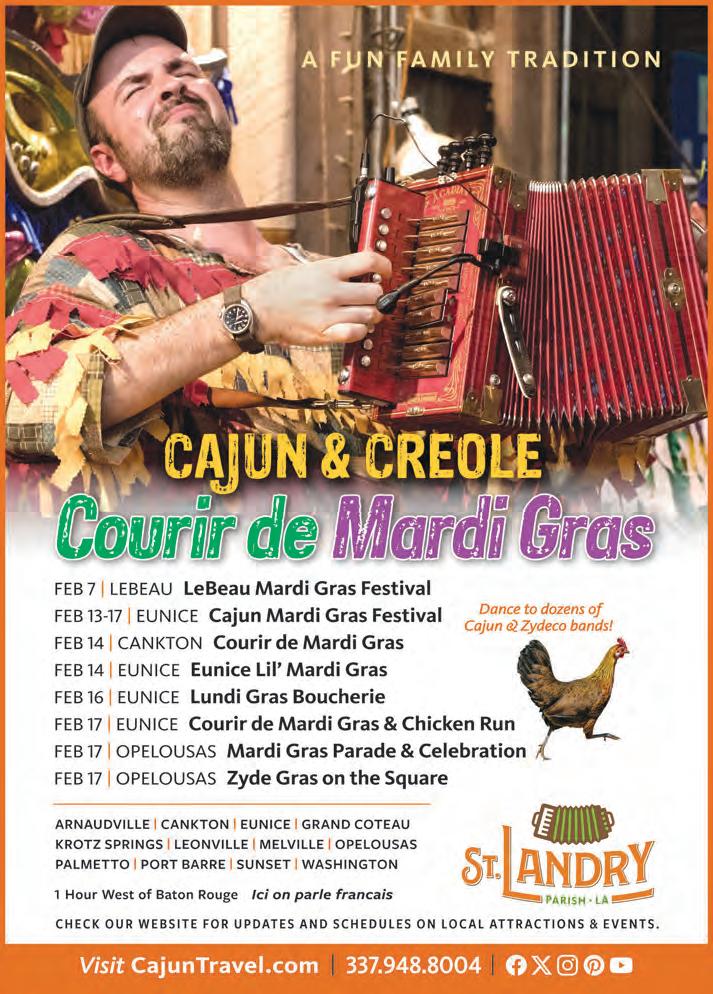
Listen to the playlist on Country Roads Magazine's Spotify account.
Story by James Taylor Foreman
When I lived in California and I told people I grew up in Louisiana, most of the time they would say, “Oh, like New Orleans!” and then either tell me they would love to visit there one day or that they love the city. “It’s so fun.”
I’d smile and nod, happy to have a touchstone, but think to myself, “No, not like New Orleans, actually. Los Angeles somehow feels closer to New Orleans than where I grew up.” But that, I knew, would start a long conversation that inevitably ended with glassy eyes. Often, I’d go ahead and let them think I’m a NOLA boy.
When I was growing up in Jackson, though, New Orleans didn’t feel like it was down the road; it felt like the end of the road. It felt about as far away as you could get. It was both the center of the world, being the biggest city in
my state, and also the very edge of it: a center of sin and mystery. It was a place you and your friends went to get into some trouble. But in my twenties, that wispy ominousness around New Orleans snapped into hard reality: In a house in New Orleans, my brother died while working as a chef, trying to recover from a heroin addiction.
So, naturally, the song “House of the Rising Sun”—which tells of a mythical place of vice and pleasure in the Crescent City, positioning it as a symbol for hell and death—has resonated with me. I am the young brother that the singer warns “not to do what I have done.”
I always assumed The Animals—the band that sings the version you probably know—were the song’s writers. But, no. Digging deeper, was it Bob Dylan? Woody Guthrie? How about Lead Belly, plucked out of Louisiana’s Angola prison by a record exec?

Still, no.
Who wrote “House of the Rising Sun”?
After weeks of research, I can tell you that the short answer is nobody knows. The more entertaining answer, and probably also a true one, is that nobody wrote it. It is as though the song emerged, ghostlike, from the mountains and hills, through the thousands of mouths of Southern folk singers, long before we had radio, recording machines, or even trains steaming across this land.
My first job out of college was as a traveling salesman, selling software to hospitals across the country—mostly in the South and Northeast. I went to Kentucky, Arkansas, and Tennessee, and even so far north as Illinois. Being from a small Southern town, I was surprised to find out that the “South” wasn’t just the place below the Mason-Dixon line. The “South” exist-
ed everywhere. You just had to drive about forty-five minutes from any major city, and suddenly people were huntin’ and talkin’ with a drawl.
I drove to many places like these, sometimes with “House of the Rising Sun” playing on my radio, thinking about what this country was like before Walmart and McDonalds lined every interstate. Because of that universal backlit plastic signage, we can be fooled into thinking we all live the same sorts of lives. But if you do ever drive a little further down the country roads, which I sometimes did to find a certain rural hospital, a whole different universe opens up—an older one, one that is probably on its way out. It’s a world you can still hear, if you listen, through the haunted chords of that song.
The song probably first appeared in the late 1800s, after the Civil War. The carpetbaggers began reconstructing,
mostly around major Southern cities. As a result, strictly Southern sensibilities tended to survive best in small and remote towns in the hills and mountains (hence “hillbilly”). Singing together on the front porch was a big part of the culture, with some folk singers holding up to 500 songs in their head. This period in the South, from about 1865 until the start of the modern era in the 1930s, is a period unlike almost any other—the seed of so much of the American music that the world still loves today, including “Rising Sun.”
It was just before the recording machine, and therefore mass media, but just a few years after trains started being built to connect all those little remote towns to the wider world. It was the era of the “ramblers”: the sort of men who tended to cut town for various reasons (usually bad), moving on to the next to try their luck and maybe to share a few songs. They were liable to tempt your kids to run off to the city for “opportunity,” just as likely for drugs, gambling, and prostitution. Put a few ramblers and rounders together, you had what was called a “medicine show.” These troupes would travel from small town to small town
all across the South, playing music and selling snake oil and cure-alls, made by “doctors” with names like Doc Hudson, who were also probably lead men and banjo players.
It was likely, back then, that you might hear a haunting song from a medicine show, half-remember it, and then never see the singer, nor hear their song, again. So, you make it your
those days. A new world was emerging—an exciting world of technology and music and city living, with all its vices. All you had to do was follow any waterway to its very end. They all, eventually, led to New Orleans. By the turn of the twentieth century—around the time my current house in my hometown of Jackson was built—most everyone living in a
“IT IS AS THOUGH THE SONG EMERGED, GHOSTLIKE, FROM THE MOUNTAINS AND HILLS, THROUGH THE THOUSANDS OF MOUTHS OF SOUTHERN FOLK SINGERS, LONG BEFORE WE HAD RADIO, RECORDING MACHINES, OR EVEN TRAINS STEAMING ACROSS THIS LAND.”
own, changing the lyrics and melodies slightly to better sing it to your cousins on the front porch. Over the generations, the song survives—retaining only the most emotional, memorable, and resonant melodies and images.
It isn’t difficult to imagine the temptation to pursue a “new life” during
Southern small town knew “House of the Rising Sun.” If you asked them how they learned it, they would tell you a grandparent taught it to them, or that they don’t remember. It was always there, it seems, warning about some fault in our souls, one that leads us inevitably down to New Orleans, if
we let it, for easy money or good times. It warns us to resist, if we can.
I imagine the men who fought with Andrew Jackson in New Orleans, stopping to camp in my hometown, now named for the general, after the Battle of New Orleans. I think of them here, listening to traveling medicine shows, sharing songs, and maybe dreaming of one day getting back to the city in times of peace.
In some versions of “Rising Sun,” near the end, the singer says they “have one foot on the train, one foot on the platform,” as they contemplate returning to New Orleans. They choose to go back, saying, “My race is nearly run.” They will die under the rising sun.
Most people interpret this as a dark end, and it is. But I also see a moment of hope. Even for this poor character who has wrecked his or her life (the gender flips depending on the version), at this moment, they still have a choice. Like my brother, they’ll choose wrong, in the end. But importantly, he could have stepped off the train. Whatever spirit that gave rise to that haunted song wants you to know, in a small way: There is always hope. No matter how far gone you are, you can always step off the train. 1
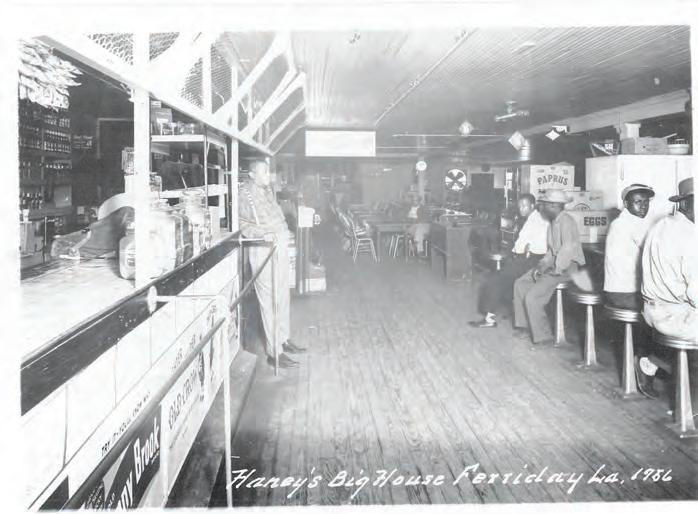
A JOURNEY DOWN THE LOUISIANA MUSIC MUSEUM TRAIL
Story by Jacqueline DeRobertis-Braun
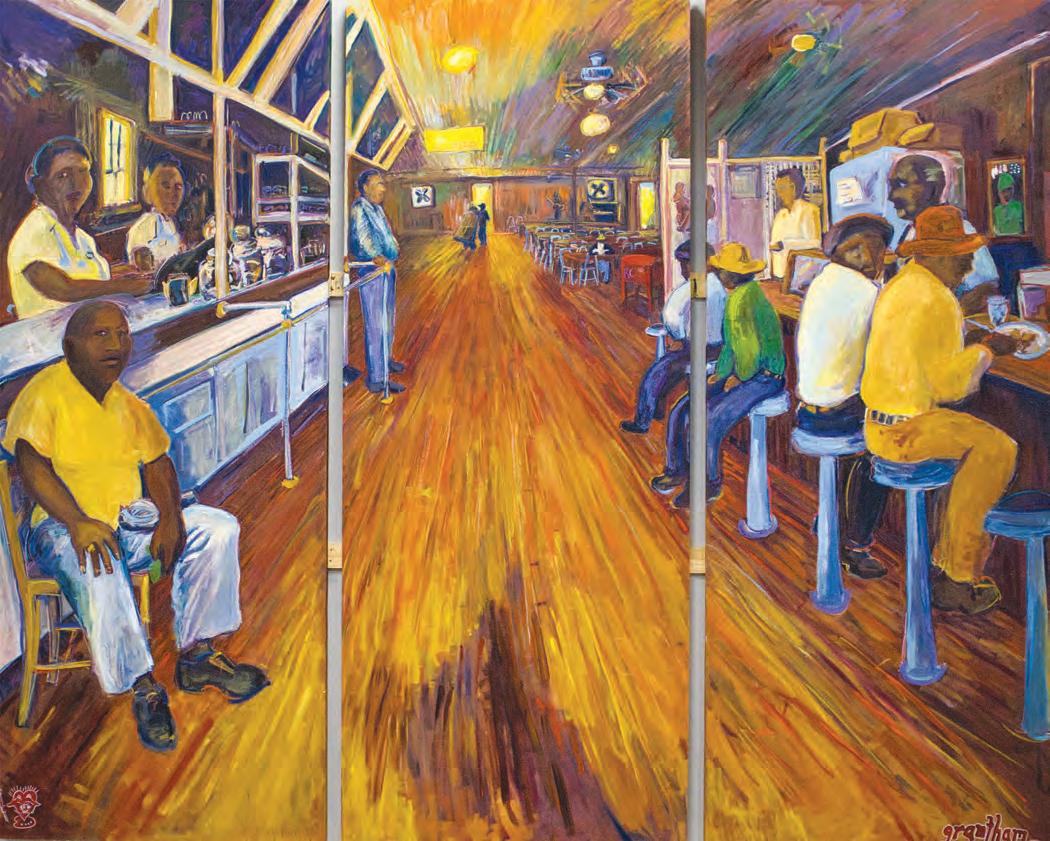
With Carnival around the corner, what better time to revel in this state’s rich musical tradition than now—when the bands play the loudest, the dance halls are the fullest, and the jam sessions never end?
In Louisiana, where the abundance of genres, personalities, and cultural dimensions can feel, frankly, overwhelming in scope, we have created a musical museum trail for you to meander this Mardi Gras season, perhaps with a king cake or two in the backseat (knife in the box, obviously) and a song in your heart. This musical journey will take you on a slightly circuitous route, starting in southeast Louisiana, ambling over to Cajun country, then pivoting up to the north, and back toward the eastern border until you almost hit Mississippi. So buckle up, select the perfect playlist, and hit the road.
It’s profoundly appropriate that New Orleans be home to a museum honoring jazz, here in the city where it was born. Since 1961, the New Orleans Jazz Museum has harnessed interactive exhibits, educational programming, research facilities, and musical performances to explore the music of New Orleans, in all its forms. Today housed in the historic Old U.S. Mint, the museum stages more than 365 concerts annually, preserves over 25,000 artifacts, and hosts around fifteen festivals each year. The museum also is equipped with a recently renovated performance center that provides the opportunity to embellish the institution's reach through live musical and theatrical performances, web streaming, lectures, symposia, conferences, and curatorial presentations. Some of its most notable exhibitions include The District: The Music and Musicians of Storyville, It All Started in Jane Alley: Louis Armstrong in New Orleans, and The King at 100: Clifton Chenier, among others. The spirit of the museum shines in some of the (many) festivals held over the course of the year, such as the Danny Barker Banjo & Guitar Festival, French Quarter Festival, Gallatin Street Fest, and International Jazz Day Festival. The Jazz Museum even has its own record label—Gallatin Street Records, founded in 2014, which allows the organization to publish archival recordings and new ones made from performances at the museum.
“The New Orleans Jazz Museum has become much more than a museum—it’s a cultural meeting place, a center for community, and a hub for music in the region,” said Director Greg Lambousy. “Its growing educational programs, exhibitions, and research facilities serve as a bridge to the city’s rich musical legacy. Through its international jazz initiatives, the museum also helps bring New Orleans jazz to the world, introducing our cherished musicians to a global audience.” In addition, its educational programs, from local endeavors like Little Stompers (designed for children ages one through five) to global initiatives like Jazz International, are legendary. Open Tuesday through Sunday; $11 for adults, $9 for students, seniors, and active military; free for children six and younger. nolajazzmuseum.org.
Founded in 2011 by Alvin Jackson, who serves as the site’s chief curator and cultural preservationist, Treme’s Petit Jazz Museum seeks to tell the story of jazz on an expansive, fluid scale, beginning thousands of years in the past, spanning different continents. Jackson felt the winding, multifaceted tale of jazz required an alternative storytelling method—a guided audiovisual experience that brings the music, and its origins, to life. “Someone had to do it,” he said. “Someone had to tell the story.” The museum traces jazz to its African roots, through Spain, France, Mexico, and the Caribbean, and finally to the genre’s birthplace in New Orleans’s Treme neighborhood—along with all the labor pains involved with that genesis. Jackson, now eighty-two, co-manages the museum with his daughter, advocate and artist Alyce J. Barrett. They oversee The Historic Treme Collection, which includes rare artifacts—from archival contracts, ledgers, and memorabilia of jazz and rock musicians, to paintings and
historic instruments that provide a window into history. The museum also offers curated tours (led by Jackson), educational programming, and more, all in the service of telling the rich cultural story of Black music and its profound impact on the world. Jackson says visitors from near and far reply with wonder when they walk in the doors of the museum, a reaction that continues to delight him.
So this year, “when you come to town for Mardi Gras, stop by the museum,” he said. Treme’s Petit Jazz Museum is open Monday through Saturday. Admission is a suggested $20 donation, but the museum operates on a pay-as-you-can basis. tremespetitjazzmuseum.org.
Eunice
Nestled in the heart of Cajun country, right next door to the historic Eunice Depot Museum, this gem of a music hall and museum is worth the drive. Opened in the 1990s and operated by the Cajun French Music Association, the site aims to preserve and showcase the region’s musical history, from Cajun music greats to the dance halls and jam sessions that define the genre. Peruse roughly two hundred photos of Cajun musicians—along with a restaurant or two known to support the scene, and a few non-musicians pivotal to the cause. You’ll also find Cajun music memorabilia and artifacts, such as steel guitars, violins, accordions, and other instruments.
“The idea behind it is to be a place that showcases all those who have contributed to our culture through music, whether it’s by being a musician themselves or being a supporter of the culture through supporting music,” said Angelle Bellard, the museum’s president. The museum also hosts two jam sessions annually, one in the fall, and one in the spring, with occasional educational opportunities for students. “We try to educate the kids about the importance of preserving our music to preserve our culture,” Bellard added.
For Judy Huval, who works at the museum, the exhibits represent a greater mis-
sion: to keep Cajun culture and language alive. “The language is being lost because nobody speaks it, and nobody passes it on,” she said. “When people come over here, they come to find out a little bit more about the Cajuns.” She also enjoys showing off rural oddities from times gone by; for example, an ancient, clunky generator she said musicians would connect to a vehicle, and then their instruments, to amplify their sound. Visitors from as far abroad as Europe and California often find their way to Eunice and this remarkable little museum, and you can too. Be sure to make a stop when the museum is open, Wednesday through Saturday. Admission is free. For more information, call (337) 457-6534.
You’d be a fool if you thought there would be just one museum dedicated to Louisiana French music in Cajun Country. Enter Ville Platte—the Swamp Pop Capital of the World—in which the city’s fifteen-year-old Swamp Pop Museum pays homage to the genre that gave enterprising Acadiana musicians a mainstream outlet to depict a way of life and heritage that demanded representation in the 1950s.
At this small but mighty museum, explore swamp pop’s unique history over the decades by perusing stage costumes, photos, records, jukeboxes and pianos from old clubs, and a prized wall of fame filled with autographs and other memorabilia. You can even trace the journey of swamp pop across the globe through a series of charts and maps. “The purpose of the museum is to honor our swamp pop legends,” said Misty Parker, the museum’s new director. “Honor the legends, honor the music that was born here in Louisiana, but also we want it to continue to thrive and encourage young people to continue the swamp pop music genre that is popular all over the world.”
Just in time for Carnival, be sure to catch the twentieth annual Swamp Pop Reunion dance on February 16 at
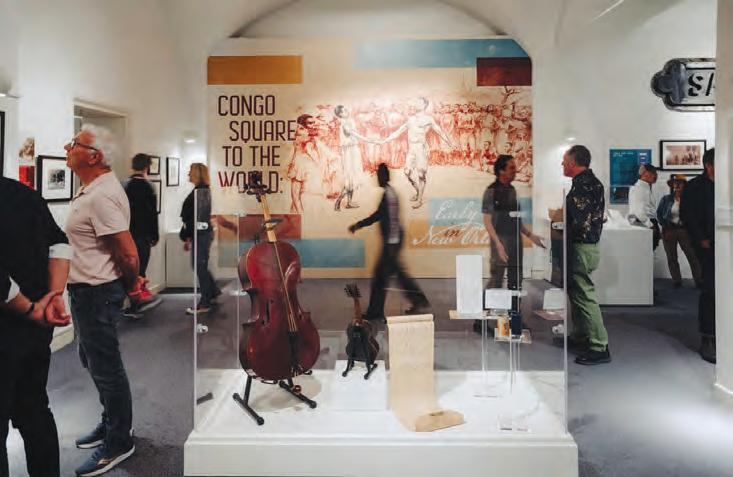


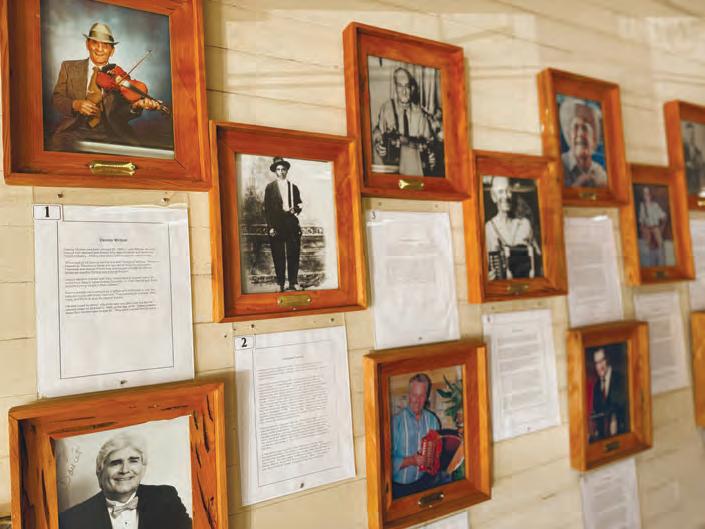
6:30 pm at the Ville Platte Civic Center, where multiple musical legends will take the stage. This year’s lineup includes Willie Tee, T.K. Hulin, Jivin' Gene, and Johnnie Allan, among others. Proceeds benefit the museum.
The museum is open Friday and Saturday; $3 for adults, $2 for seniors, $1 for children under the age of twelve (cash only). Learn more at the Louisiana Swamp Pop Museum Facebook page.
Take a turn toward the piney hills of
northwestern Louisiana to venture into this deep dive of the state’s country music scene, nestled in the town of Marthaville in Natchitoches Parish. Part of the Rebel State Historic Site, the Louisiana Country Music Museum recounts the narrative of folk music traditions developed in the region, ranging from early gospel and string band music to the tried-and-true country sounds heard on the radio today. Explore the contributions of Louisiana natives to the country music and gospel scenes, learn about Shreveport’s legendary Louisiana Hayride radio and television program and its impact on country music, and ogle costumes, instruments, and pictures donated by country-west-

ern and folk performers. These novelties include Roy Acuff's fiddle and yo-yo and one of Hank Williams Jr.'s shirts. While wandering the grounds, check out the amphitheater that often hosts the musical traditions of north Louisiana, home to regular bluegrass, country, gospel, and folk concerts throughout the year. There’s even a picnic area, so pack a cooler and basket of goodies to make a day of what would have been a brief museum visit. The museum is open Friday and Saturday, $6 per person; $4 for seniors; free for children six and younger. Learn more by reading about the Rebel State Historic site at lastateparks.com.
The tiny town of Ferriday, almost in Mississippi it’s so far east, hosts this free museum in its downtown district. In fact, the museum has received a Mississippi Blues Trail designation; it honors the distinctly Southern and American art form that evolved from three musical cousins: rockabilly pioneer Jerry Lee Lewis, country superstar Mickey Gilley, and televangelist Jimmy Swaggart. Visitors can peruse the biographies and photos of thirty artists from various musical traditions, including blues, gospel, soul, and country. Together, these genres contributed to the rock ‘n’ roll and rock-
abilly music of the 1950s, which are all explored through the museum’s historic deep-dive. There is a hall of fame, featuring Fats Domino, Percy Sledge, Johnny Horton, Irma Thomas, Conway Twitty, Aaron Neville, and Tony Joe White, among others.
According to Shaun Davis, tourism information counselor for the museum, the site has added four new exhibitions in the past eighteen months (the first in about two decades): Haneys's Big House and Mr. William Haney; Johnny Rivers; Tony Joe White; and Doug Duffey. Perhaps the most notable transformation in recent years includes an “extensive ‘vibe’ upgrade,” at the Arcade Theater, Davis added. The museum’s prized performance space, The Arcade historically served as a landmark movie theatre and was later converted to a performance theatre with seating for 300 patrons. Today, local artist Grantham Molnar has created visually arresting murals and large scale artworks titled, "The Music of Ferriday," sure to attract a crowd.
The museum is open Tuesday through Saturday, free of charge. deltamusicmuseum.com. 1
Read more about two Louisiana music museums in the works—coming in 2027 and 2028 in New Orleans and Lafayette—at countryroadsmag.com.


Avery Island, LA
Tabasco Brand 39
Baton Rouge, LA
AllWood Furniture 20
Arts Council of Greater Baton Rouge 7
Baton Rouge Ballet Theatre 43
Baton Rouge Clinic 17
Blue Cross Blue Shield 18
BREC 48
Calandro’s/Select Cellars 13
Crescent Sotheby's International
Realty 52
East Baton Rouge Parish Library 56
Elizabethan Gallery 51
Louisiana Public Broadcasting 53
LSU Online and Continuing Education (OLLI) 43
LSU Rural Life Museum 14
WRKF 89.3 FM Public Radio 53
Biloxi, MS
Coastal Mississippi 2
Breaux Bridge, L A
St. Martin Parish Tourism Commission 34
Brookhaven, MS
Brookhaven Tourism Council 26
Clarksdale, MS Visit Clarksdale / Coahoma County Tourism Commission 19
Cleveland, MS Visit Cleveland 23
Columbus, MS Visit Columbus 31
Greenwood, MS Greenwood MS CVB 27
Hammond, LA Tangipahoa Parish CVB 55
Hattiesburg, MS Visit Hattiesburg 21
Jackson, LA Galvez Rum 51
Jackson, MS Visit Jackson 37
Lafayette, LA AllWood Furniture 20
Leesville, LA Vernon Parish Tourism 45
Mansura, LA
Avoyelles Commission of Tourism 32
Meridian, MS Visit Meridian 12
Morgan City, L A Cajun Coast CVB 51
Natchez, MS Natchez Convention Promotion Commission 47 Natchez Pilgrimage Tours 15
New Iberia, LA Books Along the Teche 24
New Orleans, LA Historic New Orleans Collection 6 Longue Vue House & Gardens 26 New Orleans Cannabis Company 10-11
New Roads, LA City of New Roads 44 Pointe Coupee Parish Tourist Commission 22
Opelousas, LA
St. Landr y Parish Tourist Commission 47
Oxford, MS Visit Oxford 9
Plaquemine, LA Iber ville Parish Tourism Department 41
Port Allen, LA
West Baton Rouge CVB 16 West Baton Rouge Museum 52
Port Arthur, TX Visit Port Arthur 49
Scott, LA Bob’s Tree Preservation 44
St. Francisville, LA Afton Villa Gardens 29 Bank of St. Francisville 3 Cross Quilter 29 NK Boutique 29 Poppin’ Up Plants 29 The Conundrum Books & Puzzles 29 The Myrtles Plantation / Restaurant 1796 29 Town of St. Francisville 28 West Feliciana Historical Society 5, 29
West Feliciana Parish Tourism Commission 28
Zachary, L A McHugh House 25


Sponsored by Tangipahoa Parish Tourism
PERSPECTIVES: ART OF OUR STATE
IF YOU’RE UNFAMILIAR WITH “DM BOB’S” WORK, YOU’RE PROBABLY NOT FROM GERMANY
Story by Chris Jay
Like many people who find inspiration in their surroundings, painter and hmusician Bob Tooke, age sixty-eight, begins each day by taking a walk. Unlike, one can safely assume, the vast majority of those same people, during those walks, Tooke plays the trombone.
“Walking is more like jogging when you’re playing the trombone,” he explained.
Born in the unincorporated community of Raceland, a sugarcane community in Lafourche Parish, Tooke studied education and the arts at Northwestern State University in Natchitoches and Louisiana State University in Baton Rouge. He learned darkroom photography in high school, but said that he “had no idea about art” until an art history class at Northwestern awakened his interest in painting.
He was particularly attracted to what art critics in the seventies dubbed “Outsider Art.” The artists who comprised this movement were often rural, self-taught painters and sculptors who had little-to-no contact with the gallery system or the art world at large. A wellknown example is Howard Finster, a Baptist preacher from Georgia whose otherworldly paintings were used as album covers for rock groups like R.E.M.
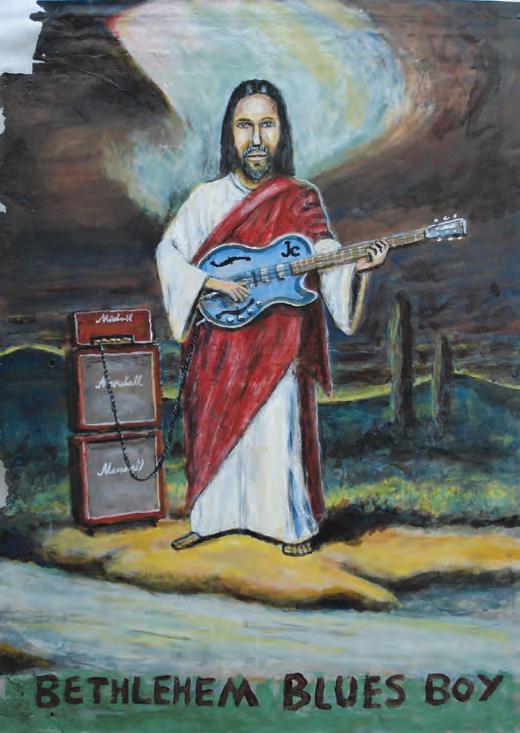
orated with Jem Finer (founding member and banjoist of the legendary Celtic punk band, The Pogues), and sold “well over two thousand paintings” at exhibitions in places like Hamburg, Berlin, Frankfurt, and Dusseldorf. He moved back to Louisiana in 2014 to attend to family matters, but still makes frequent trips to Germany to exhibit paintings or play music.
and The Talking Heads.
Tooke first encountered Finster’s work as part of Baking in the Sun: Visionary Images From the South, a traveling exhibition of outsider art that visited Louisiana universities throughout the eighties. “I was really influenced by that show,” he said. “It had a lot of seminal outsider artists.”
Still, Tooke doesn’t seem overly concerned with finding the correct label for his own work. “I don’t know if it’s folk art,” he said. “I just like to paint. I’ve always done stuff related to music. I mostly paint in the evenings while listening to music.”
Tall and broad-shouldered, with a shock of silver hair and a friendly, soft-spoken manner, Tooke is better known to the international art world than he is to his Sabine Parish neighbors, where he lives in a secluded home in the woods near Zwolle. He paints and performs music as DM Bob (the “DM” stands for “Deutsche Mark”), a moniker he adopted during the twenty-three years that he lived in Germany.
While living in Hamburg, Tooke toured Europe extensively as one-half of a swamp pop-inspired duo called The Watzloves. He has produced ten albums of his own music, recorded two sessions with the legendary BBC Radio 1 producer John Peel, befriended and collab-
Tooke’s paintings—which are composed on salvaged building materials like roofing tin and reclaimed wood— frequently feature blues musicians, politicians, advertising mascots, and religious figures in absurd compositions that are informed by advertising design, pop culture, and political theater. In a self-published chapbook of his work titled, Jesus Sings The Blues (2015), he described his style of painting as “a rather crude minimal pop-style approach where humor and irony sometimes play a big role.”
“A lot of my paintings have to do with laughing at the absurdity of life, especially when it comes to politics,” Tooke said. “They’re relatively simple, with lots of space and humor.”
In “Bethlehem Blues Boy” (2022), an oversized Jesus Christ plays a monogrammed electric guitar through a stack of Marshall amplifiers while lit from above by a nimbus of holy light. One of Tooke’s recurring subjects, “Abe the Bluesman,” shows Abraham Lincoln busking on a streetcorner, strumming a Gibson Epiphone while confronting the viewer with an icy glare. Other paintings depict kitschy scenes of domestic life: A man fires a hunting rifle from the comfort of his above-ground hot tub (“Hot Tub Shooter,” 2014); a ceramic lamp in the shape of Elvis Presley carves a triangle of light out of the darkness
(“Elvis Lamp,” 2009); a young man poses proudly with his camper trailer (“Boy With His Trailer,” 2008).
Lately, he’s been painting smaller, tin portraits of musicians while preparing to begin work on several uncharacteristically large paintings. He hopes to finish the new works in time to submit them for inclusion in the 2026 edition of Rendsburg, Germany’s enormous NordArt Festival.
Though Tooke’s circumstances find him physically isolated, still he remains in contact with friends, collaborators, and galleries around the world. Despite living in communities as far-flung as Zwolle and Hamburg, he has developed a weird kind of intermittent prominence. It’s not exactly that everything he touches turns to gold, but some of it does—and often in unconventional ways. For example, he recorded the debut LP by the Canadian garage rock band, The King Khan & BBQ Show, which was released by Goner Records of Memphis in 2004. Nearly two decades after its release, the song “Love You So” became a viral megahit on social media. “Love You So” currently ranks as one of the most-used pieces of music ever on the social media app TikTok, where it has served as background music in nearly thirty billion user-created videos. The official video on YouTube has now been viewed six million times. For someone who dwells on the margins, Tooke is uncommonly adept at creating art that resonates with an enormous audience.
Finding an audience for his work at home in Louisiana has been more of a challenge. Several of the Louisiana galleries that exhibited Tooke’s work in the past—places like Barrister’s Gallery and Malarky Art in New Orleans and minicine? in Shreveport—have permanently ceased operations in recent years. Though he can still arrange exhibitions in Germany, he’s had a harder time establishing new connections with galleries in Louisiana.
“Usually, I don’t paint unless I have an exhibition planned, so it’s kind of slowed down,” he said. “But, who knows? Maybe I’ll find a place to show some stuff. After I talk to you, I’m gonna go cut up a piece of tin. Then I’ll water my garden, grab my trombone, and go for my walk.”
Tooke gladly welcomes communication from art lovers and galleries. He ventures “into town” once a week to check his email at the public library. He can usually be reached at dmbobtooke@gmail.com 1