2
J A N 2 6 // C O U N T R Y R O A D S M A G . C O M
// J A N 2 6
3
Contents
J A N U A RY 2 0 2 6
Introduction
6 8
Features
30
REFLECTIONS
Decisions, Decisions by James Fox-Smith
NOTEWORTHIES
32 34
Fifty years at the Arts Council of Greater Baton Rouge, Fountainhead finds a home & a new art shop in Grand Coteau
Events
11
VO LU M E 4 3 // I SS U E 1
SOMETHING NEW
Film fests, art workshops & early Carnival shenanigans
THIS YEAR, WE’RE GETTING REAL
Publisher
A roadmap for diving into the places, people, and creative energy in your community
James Fox-Smith
Associate Publisher
Ashley Fox-Smith
by Jordan LaHaye Fontenot
A GIRL SCOUT’S GARDEN A teenager’s mission to restore native oysters and educate her coastal community by Mimi Greenwood Knight
THE BOIL BEGINS HERE As nature shifts and markets change, Louisiana crawfish farmers hold fast to their unique agricultural tradition by Kevin Fitzwilliam
Managing Editor
Jordan LaHaye Fontenot
Arts & Entertainment Editor
Jacqueline DeRobertis-Braun
Creative Director
Kourtney Zimmerman
Contributors:
Shanna Beck Perkins, Megan Broussard Maughan, Jacob Cavallaro, Jess Cole, Kevin Fitzwilliam, Mimi Greenwood Knight, Gary M. Smith
On the Cover
“AWARDS SEASON”
Cover Artist
Artwork by Casey Joiner
Casey Joiner
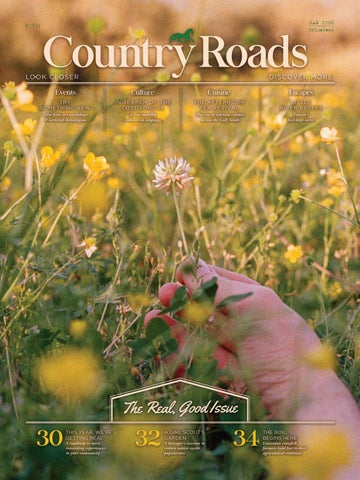
In this month’s “Perspectives” artist column, Arts & Entertainment Editor Jacqueline DeRobertis-Braun writes that photographer Casey Joiner, “invites the viewer to revel in the bliss of the vastly and utterly normal, and to find there some kind of emotional resonance.” This quality is what is so striking about Joiner’s body of work as a whole—it suggests a slower approach to the modern life, one that notices tiny, concrete sparks of wonder in places we’d normally pass up in the rush of hurried attention spans. In this first issue of 2026, we are honing in on the idea of slowing down, focusing on the real, and finding the good. We’re turning over our scroll machines and looking out into our communities, where discoveries await in abundance. We’re honoring those going the extra mile to make our region a better, healthier, more culturally rich and joyful place. We’re touching grass, and smelling flowers. And we’re reconnecting with the things that make us human.
The Spirit of Giving
25
“EVERYONE IS A PHILANTHROPIST” A Q&A with BRAF’s CEO Chris Meyer by Jordan LaHaye Fontenot
Cuisine
38 43
AFTERNOON TEA A rise of tearooms is transforming Gulf Coast tea culture by Gary M. Smith
SOUPÇON Main Street Market returns, plus new restaurants in NOLA & Lafayette by CR Staff
4
Outdoors
44
A LIVING FENCE Reimagining the hedge as a vibrant, wildlife-rich corridor
Escapes
50
by Jess Cole
Culture
46 49
FROZEN IN TIME Photographer Adam Falgout captures surreal scenes from a once-in-alifetime snowfall
by Shanna Beck Perkins
IN SEARCH OF THE LOST TONGUE A new monthly column documenting a Cajun expat’s journey to reclaiming her culture by Megan Broussard Maughan
J A N 2 6 // C O U N T R Y R O A D S M A G . C O M
LITTLE RIVER BLUFFS Folsom’s best-kept secret is a secluded refuge, where wilderness meets stewardship by Mimi Greenwood Knight
Perspectives
54
MEDITATIONS ON AN EMERGENCE Photographer Casey Joiner’s search for meaning in the mundane by Jacqueline DeRobertis-Braun
Advertising
SALES@COUNTRYROADSMAG.COM
Sales Team
Heather Gammill, Heather Gibbons, Mary Margaret Lindsey
Operations Coordinator
Molly C. McNeal
President
Dorcas Woods Brown
Country Roads Magazine P.O. Box 490 St. Francisville, LA 70775 Phone (225) 343-3714 Fax (815) 550-2272 EDITORIAL@COUNTRYROADSMAG.COM WWW.COUNTRYROADSMAG.COM
Subscriptions
22.10 for 12 months $ 39.78 for 24 months $
ISSN #8756-906X
Copyrighted. All rights reserved. No portion of this publication may be reproduced without permission of the publisher. The opinions expressed in Country Roads magazine are those of the authors or columnists and do not necessarily reflect the views of the publisher, nor do they constitute an endorsement of products or services herein. Country Roads magazine retains the right to refuse any advertisement. Country Roads cannot be responsible for delays in subscription deliveries due to U.S. Post Office handling of third-class mail.
// J A N 2 6
5
Reflections FROM THE PUBLISHER
I
hf you read this column regularly, you might have noticed that it sometimes gets phoned hin from the Antipodes. In a magazine that is for, about, and based in small-town Louisiana, this probably seems incongruous. So I should explain that I’m in Melbourne—my childhood hometown—to be with my mother, who has been hospitalized since suffering a stroke just before Thanksgiving. These trips back to the place I can’t help still thinking of, on some level as “home” have happened more often as my parents have faded. In fact, the last trip was in May 2024, after my dad, with characteristic lack of fuss, had a heart attack while heading out for a pizza, laid down on his own front porch, and quietly died. It had been a while since I’d seen him, and during the long flight down this time, I kept thinking of the line from The Importance of Being Earnest where Lady Bracknell says to Mr. Worthing, “To lose one parent may be regarded as a misfortune; to lose two looks like carelessness.” This time I mean to keep a close eye on my one re-
maining parent as she recuperates, and hopefully, gets back on her feet. So, for the past two weeks I’ve been commuting back and forth between the city hospital in which Mum is confined to the stroke unit, and the house where I grew up. During the evenings, when roaming the empty house looking at childhood mementos begins to feel like Groundhog Day, I sometimes set out for a walk or a drive around the streets of the former country-townnow-suburb that surrounds the house. During these outings I scan the faces of passersby for signs of recognition, but having been gone almost thirty-five years, pretty much everyone’s a stranger now. The evening before last, while driving Mum’s car slowly along a side street, I spotted a familiar-looking face. An old, bearded fellow being towed along by a stocky English bulldog gazed with interest at the car as I approached from the opposite direction. Since he was staring fixedly at me, I raised a wave. Wide-eyed, he stopped on the sidewalk, half-waved in response, then turned to stare after the car as I passed by. A bit mystified, I checked that I was still driving on the proper side of the road and, finding that I was, carried on to-
wards home. The following morning while getting ready to leave for the hospital, I was startled to see the same old bloke advancing across the front yard, the bulldog leading the way. Suddenly I knew who this was: Eros is a local, a former patient of my dad’s, and a longtime friend to both parents, whom I’d been woefully slow to recognize, not having seen him in years. After re-introductions, Eros asked after Mum, having heard that she’d had a stroke, then explained why he’d looked so surprised the night before. “Drivin’ yer mum’s car, with the gray hair an’ the glasses … mate, ya looked so much like yer old man, I thought I’d seen a ghost!” In a way, perhaps he had. It was kind of comforting; I suppose we all turn into our parents in the end.
I also suppose that to some extent, “home” will always be where your mother is. This trip, which I can’t help but imagine might be my last back to Australia to visit a living parent, has brought about a lot of contemplation. Specifically, I’ve found myself thinking about the decisions we make when we reach those forks in the road that demand important choices—the consequences of which are rarely obvious at the time, but become profoundly so in hindsight. I learned recently that the word “decision” comes from the Latin word, decidere, which means “to cut away from”—like a boat leaving its mooring, or a child leaving home. I have never regretted the decision to leave Australia and follow a Louisiana girl into a life rich with new experiences, creative challenges, a nurturing community and, yes, a new home. But of course, when you cut away from your mooring, good things are inevitably left behind. The trick, I think, is to accept this inevitability without regret, to honor and cherish what came before, and all the while, to keep looking forward. —James Fox-Smith, publisher james@countryroadsmag.com
The museum preserves an important part of the rural heritage of our state and our nation through 32 historic buildings and thousands of artifacts.
O p e n 8 : 0 0 a m u n t i l 4 : 3 0 p m D a i l y. T h e m u s e u m g i f t s h o p o f fe r s a w i d e variety of folk ar ts and handmade items.
LOCATED AT BURDEN MUSEUM AND GARDENS OPEN DAILY 8:00–4:30 • I-10 AT ESSEN LANE, BATON ROUGE, LA FOR MORE INFO CALL (225) 765-2437 OR VISIT WWW.RURALLIFE.LSU.EDU 6
J A N 2 6 // C O U N T R Y R O A D S M A G . C O M
// J A N 2 6
7
Noteworthy
J A N U A RY 2 02 6
N E W S , T I M E LY T I D B I T S , A N D
ASSORTED CURIOSITIES
LO O K C LO S E R
•
In the Habit of Art
ONE ARTIST’S GLOBAL JOURNEY LEADS HER BACK TO GRAND COTEAU TO BUILD A SPACE FOR COLLECTIVE CREATIVITY
Artist Sarah Castille, photo courtesy of Castille.
A
bout fifteen years ago, Sarah Castille was living in London, finding her conhviction as an artist. “I was becoming more serious about my practice, just leaning into it more, focusing on developing more technical knowledge,” she said. In the midst of classical training
in a globally-renowned art city, Castille was also thinking about her home in St. Landry Parish, Louisiana. “It’s been this longstanding dream to have something there [in St. Landry] that was a combination of art space and community space,” she said. “And I just really would sort of daydream about it.” It would be more than a decade before home would call her back; instead she found herself further developing her approach to realism in Prague, Berlin, and eventually Brittany, France—where she established an art studio, offering classes to her community there. “That, I guess, was kind of the prototype,” she said. In 2025, her vision for an Acadiana art studio still felt distant, part of a future a decade or so away, at least. But last year, Castille found herself unexpectedly called back home to Sunset after her mother’s death. And in September, she learned that the charming cottage on East M.L.K Drive in nearby Grand Coteau—which has for the past three years served as a community hub via The Hive Market—was going up for rent.
“I never thought I was going to get to do this now,” she said. “But then the ball just started rolling. It almost fell into my lap. I’m still a little bit in shock.” Castille’s new studio, called Art Habit, will have its grand opening on January 31 from 9 am–6 pm, though doors will open the Monday prior (January 26). On most days, the space will be open to the public as a retail arts shop and maker’s space—“where people can come and experiment, use our supplies and such.” Guests without a project in mind can simply step inside and purchase one of Castille’s “project kits,” take them into the maker’s space, and begin making something from nothing. In February, she’ll begin offering regular drawing and painting classes for adults and children, interspersed with weekend workshops. “We’ll have adult and children’s workshops going simultaneously, so people can bring their kids,” she said. In the future, she hopes to collaborate with local artists interested in teaching specialty courses throughout the year.
A Half Century of “Why Not?”
Her vision, ultimately, is for Art Habit to activate a sense of collective creativity, where people can come and casually be inspired by the act of creation for creation’s sake, in community with one another. It’s hard to imagine a better place to enact such a vision than in the heart of Grand Coteau and its neighboring small towns, where the pulse of creative community is especially strong. “There are a gazillion artists living around here,” she said. “And there are a lot of people who are really creative and simultaneously interested in building and forming community. In a rural area like this, that aspect can really come into focus, when it becomes less about promoting your personal art career and the shows you have, and more about really the practice of making art, engaging with your community. “And I think that’s sort of the purpose of it all, increasing your connectivity with the world around you, and with the people around you.” arthabitstudio.com. —Jordan LaHaye Fontenot
THE VOICES AND VISIONS THAT BUILT THE ARTS COUNCIL OF GREATER BATON ROUGE
A
fter fifty years of transformative creativity, robust support of the arts hhand hhumanities, and vibrant community engagement, the Arts Council of Greater Baton Rouge is celebrating its legacy with a book about its origins, recounted in the words of its founders and luminaries over the decades. Why Not? The First Fifty Years of the Arts Council of Greater Baton Rouge (September 2025) chronicles the arts council’s journey from an up-and-coming organization in the 1970s to the cultural powerhouse it is today. Founded in 1973, the Arts Council continues to sustain and support arts infrastructure across a ten-parish region, comprising Ascension, East Baton Rouge, East Feliciana, Iberville, Livingston, Pointe Coupée, St. Helena, Tangipahoa, West Feliciana, and West Baton Rouge 8
parishes. “For the 50th anniversary, my predecessor, Renee Chatelain, [and I] were talking about, ‘What do we do to celebrate fifty years?’” recalled Jonathan Grimes, president and CEO of the Arts Council. “And so during that time, there was the conversation of, well, let's write a book. Let's have a coffee table-style book, which is kind of a trip down memory lane.” Chatelain and Robin Palmer Blanche, a writer and arts advocate, began to compile a list of past presidents, board members, and influential people who had shaped the fledgling council. Blanche then set out on an extensive interview process, and after rounding up some historic photos that showcase the council’s most iconic programs and personalities, the book became a reality. “We had the idea that it was just going to be short stories,” Grimes said. “It
J A N 2 6 // C O U N T R Y R O A D S M A G . C O M
kind of jumps back and forth between historic events. So whether that be the formation of Sunday in the Park, the River City Jazz master series—we talk about all of the people that have kind of come before us.” Rather than a traditional table of contents, the book contains subheads detailing the perspectives of different artists, teachers, partners, visionaries, and volunteers that contributed to the arts council’s growth. There are tales of the board’s leadership coming into their own, the artists looking to branch out in their fields, and the arts educators eager to pass on their passion. “The capturing and the archiving of those memories, and just having that institutional knowledge in paper form, is
really great,” Grimes said. All proceeds from Why Not’s sales go to support the arts council. artsbr.org. —Jacqueline DeRobertis-Braun
From Private Treasure to Public Landmark FRANK LLOYD WRIGHT’S FOUNTAINHEAD FINDS NEW LIFE, AND A NEW AUDIENCE, IN THE HANDS OF THE MISSISSIPPI MUSEUM OF ART Betsy Bradley, the Laurie Hearin McRee Director of the museum. Bradley described the intention behind the acquisition as akin to any significant piece of Southern art held by the MMA. “The museum’s mission is to create experiences for people to have encounters with great art,” she said. “And so, if you take what we do on a day-to-day basis with objects in our collection . . . we take Fountainhead, an architectural masterpiece by Frank Lloyd Wright. Photo courtesy of Crescent Sotheby’s International Realty, care of them, we stewtaken by Douglas Adams. ard them, we interpret ast summer, a rare artifact of one, at a price of $2.5 million. them, we offer experiences to the public Usonian style architecture, In November, though, Fountainhead’s so that people, wide swathes of people, hdesigned by Frank Lloyd future was secured when the Mississippi can learn about the art we are showing. hWright in 1948, hit the real Museum of Art (MMA) followed in the The same is true for this house.” estate market in Jackson, Mississippi. A tradition of the Crystal Bridges Museum As a result, for the first time ever, the single-family home held in private owner- of American Art and other similar insti- public will have access to this architecship for more than seventy years, Lloyd’s tutions and purchased the home as part tural jewel—an exciting addition to late-career masterpiece, called “Fountain- of its collection. “It is, by far, the largest the pilgrimage of more than seventy achead,” suddenly became available to any- ever work of art we’ve acquired,” said cessible Frank Lloyd Wright properties
L
across America. Fountainhead is a particular example of Wright’s adherence to organic design and harmony with nature, the home organized by leitmotifs of diamond-shaped geometry, following the contours of its landscape on a wooded hillside and assembled without stud walls, sheetrock, brick, tile, carpeting, or paint. Wright signatures are found throughout, including large windows, built-in furniture, and hardwood floors. Over the course of the next year, the museum will oversee a careful restoration process with an emphasis on Wright’s original intent as designer. “Because it’s been vacant for a couple of years, and because we live on this geological formation called Yazoo clay, there has been some shifting of the foundation and some issues we need to take care of immediately to secure the home and make it shine,” said Bradley, who expects the museum to open Fountainhead for tours sometime in 2027. Keep up with the progress of the restoration process by subscribing to newsletter updates at msmuseumart.org/ exhibition/fountainhead-by-franklloyd-wright. —Jordan LaHaye Fontenot
// J A N 2 6
9
10
J A N 2 6 // C O U N T R Y R O A D S M A G . C O M
Events
J A N U A RY 2 02 6
RING
IN
THE NEW YEAR WITH
R E S O LV E !
F R E S H ST A R T
TRY NEW CRAFTS, SEEK OUT MORE
A R T, S U P P O R T LO C A L M U S I C I A N S , A N D K I C K O F F C A R N I V A L S E A S O N .
•
LSU College of Art & Design will host ProFab Education for two family-friendly workshops at Glassell Gallery on January 6 and 10. ProFab Ed teaches digital fabrication to kids to develop an interest in technology, building, and experimentation. Photo courtesy of ProFab Education. See more on page 14.
UNTIL JAN 4th
ART EXHIBITIONS LOUISIANA CONTEMPORARY 2025 New Orleans, Louisiana
The Ogden Museum of Southern Art
UNTIL JAN 10th
HISTORICAL EXHIBITIONS "AMERICANS AND THE HOLOCAUST" & "NEW AMERICANS IN A NEW LAND" Destrehan, Louisiana
will once again produce its state-wide,
St. Charles Parish Library plays host to
juried exhibition, Louisiana Contemporary,
two parallel exhibitions about the historic
curated this year by Daniel S. Palmer,
Jewish experience this winter. Americans
PhD, Chief Curator of SCAD Museum
and the Holocaust, a traveling exhibition
of Art in Savannah, Georgia. The
from the U.S. Holocaust Memorial
comprehensive exhibit features works
Museum and the American Library
by fifty Louisiana artists from over
Association, highlights Americans'
1,400 submissions in a showcase of
response to and knowledge of the
contemporary art practices in the region.
emergence of racism in Europe amid the
ogdenmuseum.org. 1
Holocaust of the 1930s and '40s, with
UNTIL JAN 10
th
the goal of illuminating the public about foreign knowledge of Nazi atrocities. At
VISUAL ARTS "CONTINUUM"
the same time, presented by the Museum
Baton Rouge, Louisiana
New Americans in a New Land explores
of the Southern Jewish Experience,
UNTIL JAN 16th ART EXHIBITIONS "IT TAKES A LONG TIME TO STAY HERE" New Orleans, Louisiana
Presented by the Newcomb Art Museum of Tulane University, it takes a long time to stay here: Paintings by Jordan Ann Craig, showcases the work of the contemporary New Mexico-based artist's large-scale, abstract paintings. The exhibition originates at the Block Museum of Art at Northwestern University and reflects the artist's relationship with her community's Northern Cheyenne aesthetic traditions, as well as her exploration of dynamic, vivid color and geometric form. newcombartmuseum.tulane.edu. 1
UNTIL JAN 16th
ART EXHIBITIONS "POETIC GAPS: OPACITY IN THE PHOTOGRAPHIC IMPRINT"
The Arts Council of Greater Baton Rouge presents Continuum, a solo exhibition featuring the work of artist David Dew Bruner on view in the Shell Gallery at the Cary Saurage Community Arts Center. Through collages, portraits, and abstractions, Bruner explores the nuance of memory, loss, and resilience. His Neutral Ground series forms the centerpiece of his exhibition, highlighting the intersection of New Orleans history
the experiences of Dr. Joseph Sperling
Both exhibitions are housed at the East
This exhibition, presented by Newcomb Art Museum at Tulane University, displays artwork from the museum’s collection with works depicting the New Orleans art scene. The exhibition is inspired by the Martinican poet and philosopher Édouard Glissant, exploring the boundaries of traditional photography.
and architectural structure. artsbr.org. 1
Regional Library. msje.org. 1
newcombartmuseum.tulane.edu. 1
and his wife Anni Frind, who survived the Holocaust and rebuilt their lives in New Orleans. The exhibition includes artifacts, such as Sterling's concentration camp jacket and armband, the steamer trunk that carried the family's possessions from Europe to New Orleans, and photographs of their New Orleans life.
New Orleans, Louisiana
// J A N 2 6
11
Events
Beginning January 1st - 4th UNTIL JAN 24th
ART EXHIBITIONS "GEORGE RODRIGUE: WORKS 1965-2000" Lafayette, Louisiana
Art Museum, joins contemporary and historical voices through the works of Manon Bellet and Hannah Chalew with Harriet Joor (1875–1965). Joor's ceramics served as one of the founding gifts of
Explore the artworks of a Louisiana icon
the museum's permanent collection.
in George Rodrigue: Works 1965-2000
The resultant conversation between the
at the Acadiana Center for the Arts,
museum's permanent collection and
featuring the artist's 35-year evolution.
contemporary art practices is rooted in
Witness a transformation in color,
craftsmanship, environmental awareness,
movement, and environment across the
and a reverence for the Gulf South.
decades; the exhibition begins with an
hilliardartmuseum.org. 1
impressionistic portrait of Rodrigue's late father, and ends with an abstracted depiction of his famous “Blue Dog.” acadianacenterforthearts.org. 1
UNTIL JAN 25th
VISUAL ARTS "THE SCULPTURE OF SCOTT, PAYTON, HAYDEN, AND BECHET"
Lafayette, Louisiana
In Mare Martin's Beyond the Botanical, the artist harnesses her artistic and gardening prowess to draw on Goethe’s The Metamorphosis of Plants and create
The LSU Museum of Art presents The Sculpture of Scott, Payton, Hayden, and Bechet, showcasing four artists—pivotal figures in the modern art movement— connected through a series of experiences five decades in the making. They each explored Black heritage through various lenses, such as the Civil Rights movement, the city of New Orleans, Caribbean legacy, African symbolism, and more. The exhibition showcases the intricately entwined work of these colleagues, friends, mentors, and muses.
paintings, drawings, and sculpture
UNTIL JAN 27th
DIGITAL ART BOSSIER ART COUNCIL PRESENTS "PLATED MEMORIES"
channeling science and spirit. Trained as a botanist and raised on an Opelousas farm, Martin uses rich pigment, texture, and form to bring her works to life. hilliardartmuseum.org. 1
UNTIL OCT 1st
TRAIN TRACKS "CROSSROADS & CONNECTIONS: A CENTURY OF THE RAILWAY IN BATON ROUGE" Baton Rouge, Louisiana
In this railway-centric exhibition on view in the Republic Finance Gallery, the Louisiana Art & Science Museum commemorates the 100th anniversary of
Bossier City, Louisiana
the former Yazoo & Mississippi Valley
The Bossier Arts Council presents Plated Memories, a digital art show by local artist and BAC staff member Alex Richardson, aka Dasuq Arts. Explore Richardson's favorite pastimes: creating art, eating good food, and sharing his life with people he cares about. Richardson, who was born and raised in Shreveport-Bossier, creates pieces that are often colorful, fun, and imaginative, inspiring either a laugh or a smile, and never to be taken too
Railroad Depot it's housed in. Through a
seriously. bossierarts.org. 1
HISTORICAL EXHIBITIONS "FROM LOUISIANA COLONIST TO BAYOU TECHE PATRIOT"
UNTIL JAN 31st
VISUAL ARTS "FRAGILE MATTER" AT THE HILLIARD Lafayette, Louisiana
Fragile Matter, on display at the Hilliard J A N 2 6 // C O U N T R Y R O A D S M A G . C O M
VISUAL ARTS "BEYOND THE BOTANICAL" AT THE HILLIARD
Baton Rouge, Louisiana
lsumoa.org. 1
12
UNTIL FEB 14th
comprehensive display that includes art, archival photographs, maps, artifacts, and personal stories, the exhibition highlights the railway's critical role in shaping Baton Rouge—and this broader portion of South Louisiana—throughout the twentieth century. lasm.org. 1
JAN 1st - JAN 3rd New Iberia, Louisiana
Over three days, the Iberia Parish Library Parkview Branch hosts an exhibit sponsored by The New Iberia Chapter of the Daughters of the American
JAN 3rd
6 pm. $10; kids ages ten and under are
See pricing and details at hancockarts.org. 1
Attakapas District in 1779, highlighting
STEPS CONTRA DANCING
free. visitlakecharles.org. 1
the five different cultural groups that
Baton Rouge, Louisiana
arrived along the Bayou Teche—each of
Put on your dancing shoes in the new
JAN 3rd - JAN 17th
JAN 3rd - JAN 31st
Bay Saint Louis, Mississippi
New Orleans, Louisiana
dance, similar to square dancing but
The Arts, Hancock County offers a
Gallery 600 Julia presents Water and
done in two long lines, contra dancing
number of art classes for the month of
Dreams, a solo exhibition by artist Peg
requires no experience, with both singles
January. These include the following:
Usner. Usner's work features plein-air
and couples welcome. 3 pm–5:30 pm;
• January 3: Beginner Drawing–Learning To See!—Dive into an immersive drawing experience and learn contour drawing techniques from Kimon Nicolaides. Students will also explore blind contour drawing, embracing Frederick Franck's philosophy of mindful seeing. Noon–3 pm. • January 10: Necktie Chair Weaving Workshop—Learn how to turn a chair into functional and colorful art with neckties and a bit of patience. Bring a well-loved and worn chair and a bundle of ties for this weaving workshop. Noon–3 pm. • January 17: Neurographic Drawing Workshop—In this rejuvenating course, take part in neurographic drawing and watercolor painting, developing linework, gentle watercolor techniques, and simple practices for reducing stress and supporting focus. 9:30 am–12:30 pm.
paintings from the Northshore. An artist
Revolution. From Louisiana Colonist to Bayou Teche Patriot depicts life in the
which joined the American Revolution to fight the British along the Mississippi River and Gulf Coast. 9 am–4 pm. Learn more at the New Iberia Chapter Daughters of the American Revolution Facebook page. 1
JAN 2nd - JAN 25th
year: Contra dancing at St. Alban's Chapel is sure to get you moving to the beat. A traditional American social
introductory lesson at 2:45 pm. $7.
ABSTRACTION SURREAL SALON 18
louisianacontrasandsquares.com. 1
Baton Rouge, Louisiana
JAN 3rd
If you're a René Magritte maven or a Salvador Dali dabbler, this exhibit's for you. The eighteenth annual Surreal
CARNIVAL MARDI GRAS TWELFTH NIGHT CELEBRATION
Salon at the Baton Rouge Gallery, held
Lake Charles, Louisiana
in partnership with the LSU School of
The exciting Mardi Gras season kicks
Art, will feature work from artists across
off with the annual Twelfth Night
the country, shedding light on the lasting
Celebration, as last year's royal courts
effects that surrealism has had on art
usher in the New Year in style with their
created in the twenty-first century. With
extraordinary and intricate costumes at
work by dozens of artists, expect a multi-
the Lake Charles Event Center. This affair
sensory contemporary art experience. This
marks the start of Southwest Louisiana's
year's exhibition was juried by Swoon
Mardi Gras, which includes everything
(Caledonia Curry), and is on display
from parades and galas to chicken runs
through most of January. The soiree will
and zydeco. Don't forget to check for the
be held January 24 from 7 pm–11 pm.
baby in your king cake for your chance
$40–$50. batonrougegallery.org. 1
to win prizes from local merchants!
CLASSES & WORKSHOPS WORKSHOPS AT THE ARTS, HANCOCK COUNTY
VISUAL ARTS GALLERY 600 JULIA: "WATER AND DREAMS"
reception will be held January 3, 6 pm– 8 pm. gallery600julia.com. 1
JAN 4th
AFRICAN-AMERICAN HISTORY SOLOMON NORTHUP STATUE UNVEILING Marksville, Louisiana
The Avoyelles Courthouse Plaza plays host to a historic event years in the making: the unveiling of the Solomon Northup statue as it is erected in its final resting place in Marksville, where Northup became a free man after he was kidnapped and forced into slavery. The sculpture, titled Hope Out of Darkness, represents the endurance of the human spirit in the face of extreme adversity. 2 pm. Free and open to the public. snccw.com. 1
// J A N 2 6
13
Events
Beginning January 5th - 8th
Gallery 600 Julia presents a solo exhibition by Peg Usner titled Water and Dreams, on display January 3–31. Usner works en plein air, focusing on nature scenes from the Northshore. Pictured above is Usner's work, "Sail Away!" Image courtesy of Gallery 600 Julia. Learn more on page 13.
JAN 5th - JAN 18th
HISTORY HISTORY MYTHBUSTERS AT ROSEDOWN Saint Francisville, Louisiana
History Mythbusters, a popular two-week series, returns to Rosedown State Historic Site. The sessions explore commonlybelieved antebellum myths and discuss where these misconceptions came from, and the truth behind them. 10 am–4 pm each day. lastateparks.com. 1
JAN 6
th
CARNIVAL ST. JOAN OF ARC PARADE New Orleans, Louisiana
Admirers of the "Maid of Orleans" gather annually on January 6 to honor Joan of Arc with a medieval-themed walking parade and theatrical procession beginning at the corner of Bienville and N. Front Street. It's all in honor of Joan's birthday and her first battle victory, which resulted in the liberation of the citizens of Orleans, France, from a British siege in 1429. January 6 also happens to be Twelfth Night, which makes the Joan of Arc Parade a convenient kick-off event for the traditional start of Carnival season. The parade rolls at 8 pm and makes three pauses for toasts, a sword blessing, and a king cake ceremony at the end. joanofarcparade.org. 1
JAN 6th
CARNIVAL PHUNNY PHORTY PHELLOWS STREETCAR RIDE New Orleans, Louisiana
Mardi Gras begins every year on Twelfth Night with the hallowed—yet irreverent—honor of the Phunny Phorty Phellows (or PPP) ushering in Mardi Gras season in a "Carnival Countdown" before loading up on a streetcar and 14
J A N 2 6 // C O U N T R Y R O A D S M A G . C O M
riding merrily up and down the St. Charles line. Stop along the route to cheer them on, enjoy the music of the Storyville Stompers, and catch your first throws of the year and enjoy their motto: "A little nonsense now and then is cherished by the best of men." 7 pm. phunnyphortyphellows.com. 1
JAN 6th - JAN 10th
CLASSES & WORKSHOPS PROFAB EDUCATION POP UP AT GLASSELL Baton Rouge, Louisiana
LSU College of Art & Design hosts ProFab Ed, presenting two free, familyfriendly pop-up workshops at Glassell Gallery. It's time to fabricate Mardi Gras using cardboard and computers, just in time for Carnival season, so come equipped with creativity, curiosity, and, of course, the kiddos. The collaborative event gives everyone the opportunity to explore art, building and technology. Free. 10 am–4 pm both days. design.lsu.edu. 1
JAN 7th
MUSIC NORTHSHORE CLASSICS: MOZART SYMPHONY NO. 39 Covington, Louisiana
Join the Louisiana Philharmonic Orchestra at the Fuhrmann Auditorium as they embark on a stunning auditory journey from the playful melodies of Strauss, to the rich modern compositions of Schreker, to Mozart's famous Symphony No. 39. 7:30 pm–9 pm. Tickets start at $35. lpomusic.com. 1
JAN 8th
LIVE PERFORMANCE ONSTAGE ALFREDA SINGS THE DIVAS OF SOUL Covington, Louisiana
Covington presents "Alfreda Sings
// J A N 2 6
15
Events
the Park on Silverest Ave. See pricing and
main attractions for many participants, however, are unique contests such as duck and goose calling, trap setting, nutria and muskrat skinning, oyster shucking, and skeet shooting. The dog trials are always a favorite among hunters.
registration at artguildlouisiana.org. 1
lafurandwildlifefestival.net. 1
JAN 9th
JAN 9 - JAN 11
Beginning January 8th - 14th the Divas of Soul" at the Fuhrmann Auditorium—a moving night of dramatic vocal range and all-star power as singer Alfreda Gerald brings the revered music of icons like Aretha Franklin, Whitney Houston, and Diana Ross to life, with verve and passion. 7 pm–8:30 pm. $22. bontempstix.com. 1
JAN 8 - JAN 31 th
st
CLASSES & WORKSHOPS ART GUILD OF LOUISIANA JANUARY OFFERINGS Baton Rouge, Louisiana
The Art Guild of Louisiana presents three workshops for the month of January: • January 8–February 12: Larry Downs—The Complete Artist Using Eyes, Hands, and Brain—The Basics of Art. Held each Thursday from 3 pm–6 pm. • January 9–10 &16–17: Kerry Curtin— Stained Glass—Create Your Own Treasure. 9 am–noon. January 17 ends at 2 pm. • January 31–February 21: Roberta Loflin—Watercolor Basics—Tools and Techniques. Saturdays from 9:30 am– noon. Each workshop is held at the Studio in
16
th
CARNIVAL KING CAKE SEASON KICKOFF New Orleans, Louisiana
th
FANDOMS FAN EXPO NEW ORLEANS New Orleans, Louisiana
Get gussied up in your finest purple, green, and gold to launch Carnival season with The Historic New Orleans Collection's annual kickoff party, featuring live New Orleans jazz, the Merry Antoinettes, and free king cake samples from different bakers across the city. Free. hnoc.org. 1
Fan Expo New Orleans will be in the
JAN 9 - JAN 10
beyond; it's a place where characters from
th
th
ANIMAL INSTINCTS LOUISIANA FUR & WILDLIFE FESTIVAL
Big Easy for three days, when lovers of time travel, zombies, and more descend on the Convention Center to revel in fandom galore. The convention honors the creation and celebration of all corners of pop culture, from fantasy to sci-fi, gaming to graphic novels, books, movies, TV, and the screen, the page, and the fans' own imaginations come to life for an actionpacked weekend. This year's Expo features
Cameron, Louisiana
Lord of the Rings trilogy stars, actors
The "oldest and coldest" Southwest
from the Harry Potter movies, Hayden
Louisiana festival, as it's billed by
Christensen of Star Wars fame, and John
organizers, caters to all ages and
Cena, among others. Fan Expo New
interests, featuring parades, a gumbo
Orleans also features artists, gaming, live
cook-off, pageants, a 5k and 1-mile run/
entertainment, costume contests, and
walk, dances, music, and a carnival
more. Schedule and ticket information at
complete with amusement rides. The
fanexpohq.com. 1
J A N 2 6 // C O U N T R Y R O A D S M A G . C O M
JAN 10th
CARNIVAL MANDE KINGS DAY PARADE Mandeville, Louisiana
Northshore's first all-women marching organization, the Mande Milkshakers, gather for the annual Kings Day Parade and Festival on the Lakefront— traditionally held on the Saturday closest to Kings Day, or Epiphany—heralding the start of Carnival. Catch the procession heading west from the harbor along the lakefront to Girod, before turning north and proceeding to the Trailhead. The parade and afterparty alike are open to everyone: join in on foot, on bike, via golf cart, or in your vehicle. Carnival attire encouraged. The afterparty will feature performances by local musicians, the Mande Milkshakers, and plenty of food and refreshments. 3 pm. Free. mandemilkshakers.com. 1
JAN 10th
ARTISTIC WORKSHOPS CREATIVE CONNECTIONS: FRANK HAYDEN Baton Rouge, Louisiana
Stop by the LSU Museum of Art for "Creative Connections: Frank Hayden," a tour and creative writing activity led by LSUMOA Educator and Public
Attendees of Fan Expo, dressed for the occassion.This year's event, held at the Convention Center in New Orleans, features cast members from the Lord of the Rings trilogy and Harry Potter, among others. Photo courtey of Fan Expo HQ. Learn more on page 16.
Programs Manager Callie Smith. The event begins with a tour of Frank Hayden's sculpture with a focus on his use of hands to express emotion, followed by a guided writing exercise. Limited to fifteen people, ages sixteen and older. 2 pm–3 pm. Free, but registration required. bontempstix.com. 1
JAN 10th
CARNIVAL ST. JOHN FOOLS OF MISRULE TWELFTH NIGHT MARCH Covington, Louisiana
Noting the absence of proper Twelfth Night merrymaking on the Northshore, The Fools of Misrule marching club was formed in 2011 to herald the arrival of Carnival season in St. Tammany Parish. The organization's rituals are derived from an ancient English men's group that clamored along the evening streets, creating "unruliness." If you happen to be abroad on the streets of Old Covington and find yourself on the receiving end of a jolly old English tongue lashing, don't say we didn't warn you. Catch the parade marching along New Hampshire Street to Boston, north along Columbia—stopping at watering holes along the way to the Covington Trailhead, where the Lord of Misrule will be officially crowned. 6 pm. Free. foolsofmisrule.com. 1
JAN 10th - FEB 8th
YE OLDE TIMES ACADIANA RENAISSANCE FAIRE Ville Platte, Louisiana
and Viking battles; belly dancers, and more. Preferably in costume, be sure to munch on a roasted turkey leg, catch a show, and listen to the minstrel melodies. 10 am–5 pm Saturdays and Sundays. $13 for adults; $20 for adult weekend pass; $7 for children ages 6–12; free for children under five; $70 for a weekend family pass (2 adults, 2 children). Season passes available. Free parking. acadianarenaissancefaire.com. 1
JAN 10th - MAR 8th
AFRICAN-AMERICAN HISTORY "GONE BUT NOT FORGOTTEN: BLACK CEMETERIES OF WEST BATON ROUGE" Port Allen, Louisiana
The West Baton Rouge Museum presents Gone But Not Forgotten: Black Cemeteries of West Baton Rouge, an exhibition examining the historic lost burial grounds of enslaved Black people across West Baton Rouge parish, as well as those cemeteries that are in danger of becoming lost—either to nature or land development. This history is recounted through photos by Jazz Bishop, artifacts, art, 3D models, soundscapes, and stories that seek to restore dignity to the memories of the dead. westbatonrougemuseum.org. 1
JAN 14th
AFRICAN-AMERICAN HISTORY "THE BUILDER AND THE BUILT: RACE, LABOR, AND MEMORY IN EARLY NEW ORLEANS" New Orleans, Louisiana
Lively activities include reenactments,
Gather at Gallier House for a discussion with historian Alexander Trapps-Chabala to learn about the life of Dawson Wright, an enslaved bricklayer in nineteenthcentury New Orleans. Wright, who was trafficked from Virginia to New Orleans in the 1830s, may have helped construct the Hermann-Grima House. 6 pm. $20;
music, fire jugglers, acrobats; pirate, Celt,
$17 for members. hgghh.org. 1
This winter, journey to Post Bonhomie in 1699, nestled in the heart of Evangeline Parish. Acadiana heritage meets the fantastical whimsy of an eighteenth century village, now at a permanent site at 629 Mount Carmel Road in Ville Platte.
// J A N 2 6
17
Events
Beginning January 14 - 17 th
JAN 14 - JAN 18 th
th
CULTURAL REELS BATON ROUGE JEWISH FILM FESTIVAL Baton Rouge, Louisiana
th
her family's advocacy for her safe release. 7:30 pm. January 18: Swedishkayt: Yidlife Crisis in Stockholm (2025)—YidLife Crisis— comedy duo Eli Batalion and Jamie
local artists and bands, dance and music
a macabre and sophisticated comedy
workshops, a talent show, food vendors,
that features a Sondheim score filled
and appearances by culture bearers from
with classic opera tropes like wrongful
Dominican, Choctaw, Afro-Diasporic,
imprisonment, mistaken identity,
Gospel, Creole, Cajun, Filipino, Arabic,
murder, and revenge. Performed by
Garifuna, Appalachian, Latin, and
the Slidell Little Theatre. 7:30 pm
Vietnamese traditions. $3 park entry fee;
Fridays and Saturdays; 2 pm Sundays.
for day pass, weekend pass or camping
$35; $25 for students and seniors.
plus admission pass options, visit
slidelllittletheatre.org. 1
culturecampout.org. 1
The Baton Rouge Jewish Film Festival
Elman—head to Sweden to explore the
returns this year, bringing a series of
country's little-known Jewish culture for
acclaimed films to the Manship Theatre
a laugh-filled and joyous exploration of
related to Jewish culture and history. On
identity and resilience. 3 pm.
the bill are:
OPERA "MAID OF ORLEANS"
$14.50 for each showing. Visit brjff.com
New Orleans, Louisiana
January 14: Fantasy Life (2025)—Sam
to view clips from the films and read
The Marigny Opera House presents
Stein loses his paralegal job, suffers a
additional details. manshiptheatre.org. 1
Tchaikovsky's rarely-performed opera
panic attack, and ends up taking work as a babysitter to his psychiatrist's three granddaughters. 7 pm.
JAN 16 - JAN 18 th
th
JAN 16th - JAN 18th
about Joan of Arc, Maid of Orleans. The performance will be a reimagined
DIVERSE EXPERIENCES LOUISIANA CULTURES CAMP
production, grounded in historical
January 15: Elie Wiesel: Soul on Fire (2025)—A powerful testament of the
Mandeville, Louisiana
costumes, powerful vocalists, and riveting
life and work of Nobel laureate Elie
Culture Campout returns to
choreography. 8 pm. $35; $25 for students
Wiesel, from his childhood surviving the
Fontainebleau State Park for a weekend-
and seniors. marignyoperahouse.org. 1
Holocaust to his ascension as a figure
long celebration of South Louisiana,
known for his moral clarity and rigorous
from music and dance to workshops and
ethical backbone on the world stage.
cultural exchange. The event seeks to
7 pm.
honor traditions, ancestors, and cultures,
January 17: Holding Liat (2025)—The
while simultaneously creating a space
film follows the story of Israeli-American
where people of all ages and experiences
Slidell, Louisiana
Liat Atzili, who was kidnapped on
can find connection and community.
Inspired by the "penny dreadfuls" of
October 7 during a raid by Hamas, and
Festivities include performances by
Victorian London, Sweeney Todd is
18
J A N 2 6 // C O U N T R Y R O A D S M A G . C O M
interpretation. Expect stunning
JAN 16th - JAN 25th
THEATRICAL CUTS SLIDELL LITTLE THEATRE PRESENTS: "SWEENEY TODD"
JAN 17th
CARNIVAL MID CITY GRAS BALL Baton Rouge, Louisiana
Come frolic with parade krewes at the American Legion Hall–Nicholson Post for the return of the Mid City Gras Ball, themed "Squirrel Olympics IX." Because you are your best decorations, bring your best decorations, as well as your own food (cash bar available). 8 pm–11 pm. $55. bontempstix.com. midcitygras.org. 1
JAN 17th
MUSIC LUKE WINSLOW-KING & ROBERTO LUTI: LIVE AT THE LITTLE THEATRE Bay Saint Louis, Mississippi
Bay St. Louis Little Theatre welcomes the return of Luke Winslow-King and Roberto Luti for its first live show of 2026. Winslow-King, a folk-blues
JAN 17th - MAR 14th
guitarist, singer, producer and songwriter, and Luti, guitar maestro, have toured Europe and North America for almost two decades, bringing with them a bittersweet reverence to hill country blues. Doors open at 7 pm; show tab 8 pm. $22.
Louisiana Marathon is a culturally rich
follows:
festival complete with food, music, and
January 17: Leah Graeff. Doors open at
more. There’s a 5K, a kids' marathon,
6 pm, show at 7:30 pm. Complimentary
and quarter, half, and full marathons,
drinks, and beans and rice will be
all attracting national and international
available. Donations and tips are
Baton Rouge, Louisiana
bontempstix.com. 1
runners who come for the mild weather,
appreciated. $25. $35 for front row. January 18: Ordinary Elephant & Tommy Shreve with John Jeansonne. 7:30 pm. $30. $40 for front row. January 19: fallift. 7:30 pm. $20. January 30: Chance Stanley. 7:30 pm. $20.
LSU School of Art’s Glassell Gallery
professional course, and the thank-
All concerts are held at Singleton's Pure Listening Room at the NUNU Gallery in Arnaudville. nunucollective.org. 1
of paint. They each work across media,
God-it’s-over good times that follow the
JAN 17
th
races. Full schedule and registration at thelouisianamarathon.com. 1
CARNIVAL KREWE OF BOGUE FALAYA INAUGURAL MASQUERADE BALL
JAN 17 - JAN 18 th
Covington, Louisiana
The Krewe of Bogue Falaya invites one and all—masked and donned in Carnival finery—to a magical evening of mystery and revelry at its inaugural Mardi Gras Masquerade Ball at the Coquille Parks and Recreation Center. Enjoy an open bar, delicious bites by Abita Roasting, and entertainment by Soul Revival and DJ Danger. Masks and formal attire required. A complimentary shuttle service to and from the Trailhead in downtown Covington available. 8:30 pm–12:30 am. $108. bontempstix.com. 1
JAN 17 - JAN 18 th
th
FIT & FUN THE LOUISIANA MARATHON Baton Rouge, Louisiana
Much more than just a race, the
th
REELS ABITA SPRINGS INTERNATIONAL FILM FESTIVAL Abita Springs, Louisiana
Each year, the small town of Abita Springs hosts an International Film
JAN 17 - JAN 31 th
st
VISUAL ARTS “THE MIDDLE: PAINTINGS BY WILL MAXEN & BRADLEY KERL”
features two faculty painters in a joint exhibition titled The Middle. Will Maxen and Bradley Kerl recently joined LSU School of Art’s faculty and find common ground in the exhibition through the exploration of materiality and application using collage, iterative repetition, and historical and everyday references in an effort to visually collapse linear time. An opening reception will be held January
MUSICALS 30 BY NINETY PRESENTS "CABARET"
17 from 6 pm–8 pm at Glassell Gallery.
night entertainment and a closing
Mandeville, Louisiana
party. General admission is $35 for
Set in a Berlin nightclub at the close of
JAN 17th - JAN 10th
Saturday and Sunday; $100 for VIP.
the 1920s, Cabaret delves into the chaotic
abitaspringsinternationalfilmfestival.org. 1
life of Berlin's natives and expatriates
Festival, featuring a slate of independent films from across the globe, plus opening
JAN 17th - JAN 30th
against the backdrop of the emerging
design.lsu.edu. 1
ART EXHIBITIONS "BURKE’S DELIGHT: THE STACEY AND MICHAEL BURKE COLLECTION"
Third Reich. Don't miss this classic
New Orleans, Louisiana
SOUND ON LIVE MUSIC AT NUNU
musical performance at 30 by Ninety
The Ogden Museum of Southern Art
Arnaudville, Louisiana
Theatre. 8 pm Fridays and Saturdays;
presents Burke’s Delight: The Stacey and
2:30 pm Sundays. $32; $30 for seniors
Michael Burke Collection, an exhibition
NUNU Arts and Culture Collective
and military; $28 for students thirteen
featuring over eighty donated works
presents four live concerts in January to
and older; $28 for children twelve and
by more than fifty artists from across
ring in the new year. The schedule is as
younger. 30byninety.com. 1
the South. The exhibition's artists
// J A N 2 6
19
2 0 J A N 2 6 // C O U N T R Y R O A D S M A G . C O M
Events
Beginning January 18th - 22nd
CALENDAR OF EVENTS
January 2026
Solomon Northup Statue Unveiling Avoyelles Courthouse Square Marksville January 4, 2026 @ 2:00pm www.snccw.com "Untitled" by Will Maxen, 2025, 60x65" oil, acrylic on canvas. Maxen's work is featured alongside artist Bradley Kerl in a joint exhibition titled The Middle at LSU School of Art's Glassell Gallery. The exhibition runs from January 17–March 14. Artwork courtesy of the LSU School of Art. See more on page 19.
frequently challenge traditional artistic
characteristics, and their challenges in a
values and aesthetics, favoring instead
changing world. Attendees will also learn
unconventional materials and techniques
about how to help protect and support
to explore Southern authenticity and
healthy pollinator populations and
experience. They focus on themes of
witness a hands-on demonstration about
family, tradition, the land, community,
housing native bees. 6:30 pm–8 pm. $15;
memory, spirituality, and resilience.
$10 for members and students. Register at
ogdenmuseum.org. 1
lsu.edu/hilltop. 1
JAN 18th
JAN 21st - FEB 28th
MUSIC "THE SOUND OF THE DREAM" Natchez, Mississippi
Natchez Festival of Music presents "The Sound of a Dream," a celebration of the legacy of Dr. Martin Luther King, Jr. through music. Held at Beulah Baptist Church in Natchez, the night features a concert honoring the Civil Rights pioneer's vision of justice, unity, and hope, explored through the music of Mahalia Jackson, Louis Armstrong, and other artists. Expect a blend of gospel and jazz. 5 pm. Free.
VISUALARTS LSU SCHOOL OF ART PRESENTS "TWOFOLD"
LSU School of Art presents Twofold, an exhibition featuring collaborative work by Addoley Dzegede and visiting artist Lyndon Barrois Jr. The joint exhibition, on view in the Barnes Ogden Art & Design Complex Gallery, delves into each artist's response to the same subjects.
King George Concert G Paragon Casino Resort January 31, 2025 @ 8:00pm www.paragoncasinoresort.com
Both artists work across various media, including textiles, print, painting, and collage. A lecture will be held February 23 at 5 pm in Barnes Ogden Room 1200,
JAN 20th
7:30 pm. design.lsu.edu. 1
Baton Rouge, Louisiana
Taste of the Country St. Genevieve CC – Brouillette January 31, 2026 @ 5:00pm Janice Brevelle
Baton Rouge, Louisiana
natchezfestivalofmusic.com. 1
GREEN THUMBS THE BUZZ ABOUT BEES: DIVERSITY, HABITATS, AND HOW TO HELP
Alligator Feeding Show Paragon Casino Resort January 31, 2026 www.paragoncasinoresort.com
followed by a gallery reception until
JAN 22nd
FINE POURS WINTER ART SHOW: WINE DINNER
Join Dr. Morgan Christman and Larry
Saint Francisville, Louisiana
Koenig at the LSU Hilltop Arboretum
Come enjoy the Corbel Winter Art
for a discussion about bees—their vital
Show's opening night wine dinner at The
role in local ecosystems, their habits and
Mallory in St. Francisville. The evening,
8592 Hwy 1, Mansura, LA 800.833.4195 travelavoyelles.com // J A N 2 6
21
Events
Beginning January 23rd - 31st capturing the elegance of the show, will
Expect many a pooch and pup gussied up
feature catering by Bacon & Fig and
in their carnival best, ready to ring in the
pours by Uncorked. 5 pm–7 pm pre-
season. This canine parade will be themed
shopping and cocktail hour; 7 pm–9 pm
“The Good, The Bad & The Furry.” 2 pm.
dinner. $150. bontempstix.com. 1
krewedecanines.com. 1
JAN 23rd - JAN 25th
JAN 24th
Clarksdale, Mississippi
Baton Rouge, Louisiana
REELS CLARKSDALE FILM & MUSIC FEST
Movies, music, and Missisippi—you can have it all at the Clarksdale Film & Music Festival. Events take place at various locations across Clarksdale, including screenings, performances, special guests, and more. Details at
CARNIVAL KREWE OF SOUTHDOWNS MARDI GRAS BALL Pack your bags for the 39th annual Krewe of Southdowns Mardi Gras Ball at De La Ronde Hall in Baton Rouge, featuring musical guests, The Remnants—with this year's theme "Southdowns Vacation." 7 pm–11 pm. $65 for an individual ticket.
clarksdalefilmfestival.com. 1
bontempstix.com. 1
JAN 24th
JAN 24th - JAN 25th
CARNIVAL KREWE DE CANINES DOG PARADE AND COSTUME CONTEST Saint Francisville, Louisiana
Head to St. Francisville’s Parker Park for the second annual parade to benefit the West Feliciana Animal Humane Society.
MUSICALS NPAS: ON BROADWAY Abita Springs, Louisiana
Get ready for a musical theatre extravaganza at the Abita Springs Town Hall. Join the Northlake Performing Arts Society as they sing some of the most popular songs from Broadway—from
2 2 J A N 2 6 // C O U N T R Y R O A D S M A G . C O M
An exhibit at Crossroads & Connections: A Century of the Railway in Baton Rouge, on display through October 1 at the Louisiana Art & Science Museum. Photo courtey of LASM. Learn more on page 12.
brassy, show-stopping numbers and fastpaced dance numbers to heartbreaking ballads and romantic serenades. 7:30 pm Saturday; 3 pm Sunday. $15. npassingers.org. 1
JAN 29
th
much anticipated twenty-sixth Friends of Magnolia Mound Petite Antiques Forum. The festivities begin this year at the Louisiana State Archives with a lecture by Neal Hurst, the Curator of Textiles and Historic Dress at Colonial Williamsburg, titled “The Art of Dressing: Clothing Men
COLLECTIBLES FRIENDS OF MAGNOLIA MOUND PETITE ANTIQUES FORUM
and Women, 1770–1820.” Hurst will
Baton Rouge, Louisiana
clothing and accessories. Attendees will
Lovers of history, collectibles, antiques, and more: you won't want to miss the
share Colonial Williamsburg's extensive and fascinating collection of historic then lunch at the Baton Rouge Country Club before touring a privately owned
historic home in Rosedale, along with the privately owned Valverda, built around 1842. Proceeds from the event support the upkeep of historic artifacts and collections at Magnolia Mound. $150.
boats of the Krewe of Bilge travel down the waterways of Slidell, starting at the Marina Cafe and ending at the Dock of Slidell. Noon. Free. kreweofbilge.com. 1
(225) 421-3162. 1
JAN 31st
JAN 30th
CARNIVAL MYSTIC KREWE OF TITANS MARDI GRAS PARADE Slidell, Louisiana
This group of men and women founded in 2010 brings Mardi Gras merriment to Slidell during this familyoriented nighttime parade. Rolls at 6:30 pm starting at the intersection of Spartan Drive and Highway 11. Free. visitthenorthshore.com. 1
JAN 30th - JAN 31st
MUSIC & LYRICS MISSISSIPPI SONGWRITERS FESTIVAL
GOOD EATS BIRD AND SAUSAGE GUMBO COOK-OFF Livingston, Louisiana
Eat gumbo to your heart's content and enjoy local, live music with Watson’s Bird and Sausage Gumbo Cook-off happening at Livingston Parish Fairgrounds. Schedule and ticketing details at the Watson's Annual Bird & Sausage Gumbo Cookoff Facebook page. 1
JAN 31st
CARNIVAL KREWE OF POSEIDON MARDI GRAS PARADE Slidell, Louisiana
Celebrate the Gulf Coast's thriving musical and creative spirit at the Capital River Region's inaugural edition of the Mississippi Songwriters Festival in various locations across Natchez. Over two days, songwriting talent from Nashville and Mississippi are sure to captivate. Details at msafestival.org. 1
In Slidell, it's time to let the good tides roll. This year's Krewe of Poseidon parade boasts the theme “The World Is Your Oyster,” featuring a host of floats and marching bands channeling the spirit of the sea. The parade begins at the intersection of Berkley Street and Spartan Drive in Slidell. 6 pm. Free. poseidonslidell.com. 1
JAN 31st
JAN 31st
Natchez, Mississippi
GREEN THUMBS HILLTOP SYMPOSIUM: DESIGNING WITH NATURE Baton Rouge, Louisiana
The Friends of Hilltop Arboretum's annual symposium, held at the East Baton Rouge Parish Main Library at Goodwood, is all about native plants, and the ways that ecological restoration and traditional garden design can intersect. This year's theme is titled "Designing with Nature: Functional, Sacred, and Sustainable Landscapes." The event's keynote speaker is Jessi Bloom, a bestselling author, award-winning ecological landscape designer, ISA Certified Arborist, and founder of N.W. Bloom Ecological Services. Attendees will also have the opportunity to explore a selfguided Sanctuary Garden Showcase with local experts and vendors, themed areas, and tips for how to apply permaculture and sanctuary-inspired concepts at home. 9 am—1 pm. $85 for non-members; $75 for members; $45 for students. lsu.edu/hilltop. 1
GOOD EATS OPELOUSAS ANNUAL GUMBO COOK-OFF Opelousas, Louisiana
The annual Opelousas Gumbo CookOff heats up downtown Opelousas once again this year, drawing guests from near and far to experience the savory sensation that is an Acadiana gumbo. Live music, a kids' activity area, silent and live auctions, and dancing will keep the day a-going while the chefs get to a-gumboing. Prizes are awarded for first, second, and third place; and the winner receives a specially designed Gumbo Cook-Off Champ Paddle from last year's champion. All proceeds will benefit a local child and family who are burdened with medical and related expenses. 8 am– 6 pm at the Yambilee Ag Arena. Free. thegumbofoundation.org. 1 For more events visit countryroadsmag.com/eventsand-festivals.
JAN 31st
CARNIVAL KREWE OF BILGE BOAT PARADE Slidell, Louisiana
The Northshore's marine-Mardi Gras, the // J A N 2 6
23
24
J A N 2 6 // C O U N T R Y R O A D S M A G . C O M
A special section
THE SPIRIT OF
giving
Showcasing philanthropic initiatives building a stronger, more resilient community.
// J A N 2 6
25
C A T A LY S T S F O R C H A N G E
“Everyone is a Philanthropist” A Q&A WITH CHRIS MEYER, CEO OF THE BATON ROUGE AREA FOUNDATION
Story by Jordan LaHaye Fontenot
W
ith New Year’s resolutions in mind, we sat down with Chris Meyer, the CEO of the Baton Rouge Area Foundation (BRAF) to discuss his grand-scale ambitions for Louisiana’s Capital Region. One of the largest community foundations in the country, BRAF strategically connects donors with local nonprofits and community leaders to enact tangible, lasting change across the region. Meyer is a native of Shreveport, and prior to his appointment as the head of BRAF in 2022, he held experience working directly under U.S. Secretary of Defense Robert Gates, as a special advisor to the Louisiana Department of Education, and as deputy superintendent of the Louisiana Recovery School District. In 2012, he founded New Schools for Baton Rouge—a nonprofit that advocates for a system of autonomous public charter schools to provide better education options in the city. In his current position, education remains a priority as he looks toward a better future for Baton Rouge, a future he believes will be best achieved in community with one another.
26
J A N 2 6 // C O U N T R Y R O A D S M A G . C O M
What goals is BRAF focusing on in 2026? Our goal, always, is to expand opportunity in Baton Rouge and all of South Louisiana. For 2026 in particular, we’re hopefully going to be moving from a place of really reactive philanthropy to one of proactive philanthropy, where we’re beginning to make really big moves and changing underlying systems and dynamics related to how we organize early learning, or how we invest in downtown—all kinds of things.
Could you give an example of what that might look like in practice? Sure, I mean, for early childhood education, for example; we put out a
report last year that showed that most kids who are showing up to kindergarten are not actually on level. They’re not prepared. And that’s really tragic, because you can just see the compounding effects that ends up having on a kid’s ability to live an opportunity-filled life. So, we began looking at how we might transform that system of early learning, which right now is really siloed based on how you’re able to pay for it. If you’re, you know, my kids, I can write a check and send them to whatever early learning center I want. But other families sometimes need assistance, public funds, and are then sort of limited to where they can go to early learning based on the funding source. And it really changes the quality, the access, and ultimately the outcomes. So, this year, we’re really focused on bringing people together to put a plan together that we could then use to really grow that access and opportunity. In this moment, we’re trying to raise short term funds, one-time funds to alleviate the costs for some of those families. But that’s not a systemic change, it’s kind of a band aid. Obviously, we want to help everyone we can today, but we also can help so many more people if we just fix the underlying system—whether that’s around youth violence prevention, youth opportunity, early learning, downtown investment. We’re really trying to have these more comprehensive plans that bring everyone together.
How does BRAF determine the most important areas for investment/support when it comes to bettering the Baton Rouge area? We’ve built what we call our opportunity agenda, where we’ve tried to name the kind of drivers of opportunity in a community, and we’ve got a research base behind it that’s called the Opportunity Data Project. We really try to distill what is the real challenge in quality of life. If we don’t fix these issues fundamentally, people aren’t going to stay here, or people who have the ability to leave, will. Our kids and grandkids are not
“EVERYONE HAS THE OPPORTUNITY TO GIVE, WHETHER THAT’S FINANCIALLY, OR THAT’S THROUGH VOLUNTEERISM, OR THAT’S SIMPLY IN HELPING A NEIGHBOR.” —CHRIS MEYER
// J A N 2 6
27
going to choose to come back. So, there’s this real kind of emphasis that we’ve got to address these more systemic, long-term issues.
In addition to transforming the system of early learning in Baton Rouge, what are some other areas that BRAF will be focusing on in 2026? Next year, we’ll be focusing on unlocking our quality of life and entertainment assets in Baton Rouge. We’ve talked a lot about, ‘how do we have the right infrastructure in place to attract the right kind of music events and major entertainment events for our community?’ And we’re on the path to actually, now, putting real investment into a new arena. We’ve got these new shows coming up at Tiger Stadium, and they’re going to start happening more regularly. We’ll also be taking on Plan Baton Rouge III, which follows two downtown master plans over the last twenty years, both of which we successfully implemented. And so now, we’ll have this stage of the master plan fully wrapped up right at the beginning of the new year, and then it’s off to the races of starting the investment. Because we know
28
J A N 2 6 // C O U N T R Y R O A D S M A G . C O M
“ULTIMATELY, COMMUNITY STRENGTH IS BASED ON ITS PEOPLE. BATON ROUGE IS ONE OF THESE PLACES WHERE WE HAVE EVERY AMENITY OF A MAJOR, BIG CITY, BUT WE HAVE THE CHARM OF A SMALL TOWN AND THE RELATIONSHIPS AND CONNECTIVITY THAT ALLOW YOU TO MAKE REALLY BIG CHANGE.” —CHRIS MEYER
that once we catalyze some of these major projects, others are going to come on right behind us. I think our role is just to continue to have a focus on these kinds of transformative community projects and make sure our partners and others have what they need to do their jobs and get it done.
What advice do you have for individuals and small business owners who are interested in getting involved in Baton Rouge area philanthropy? So, first of all, I’d say, we want everyone in the community to see themselves as a philanthropist. Everyone has the opportunity to give, whether that’s financially, or that’s through volunteerism, or that’s simply in helping a neighbor. I think we at BRAF can help people give in a way that their individual efforts are not in isolation, but really can be then collected with so many others to make major change. The Foundation offers a number of pathways to get involved in making that kind of civic change. One is that you can become a member of the Foundation, which really just
supports our civic leadership initiatives. And that’s a way that people can kind of get on the inside to understand what they want to do on these specific issues. The second thing is you can open a fund. People can actually create their own donor-advised fund, where they can direct their giving to charitable causes that matter to them. It’s almost like a bank account for giving back. And we’re here to support donors, when they have those funds, when they need advice on which nonprofits or which issue areas to give, that’s the partnerships we really create. Finally, we have a lot of fellowships, where we are training folks actively to go serve on nonprofit boards. We do a lot of matchmaking to connect people so they can really get on the ground of an organization that is helping create change in Baton Rouge. So, there are no shortage of opportunities to get involved and engaged in making our community a better place.
Would you say a few words about why it’s important to be knowledgeable, involved, and generous in one’s community? Ultimately, community strength is based on
its people. Baton Rouge is one of these places where we have every amenity of a major, big city, but we have the charm of a small town and the relationships and connectivity that allow you to make really big change. You can bring a group of leaders together, talk about a big vision, and commit to seeing that through. I just don’t think that happens in every community. And it’s so powerful in a place that is already incredibly charitable. So, I think you take that, and if you can, you think about ways not just to alleviate challenges today but transform those underlying systems. We want every kid to have access to high quality early learning opportunities, right? And when you look at the numbers, it’s totally doable. We’re talking about 10,000–15,000 kids in a city of 500,000 people. We can do it. It’s just incumbent upon us if we want things to be better, you have to put forth the effort. And effort can be lending money, it could be lending your time, it could be lending your voice. But everyone ought to be engaged in that. And I think when we all get in the game and pick a passion area, we can make really, really big change. 1
Read more about BRAF and its mission at braf.org.
// J A N 2 6
29
Features
JANUARY 2026
3 0 R E S O L U T I O N S T O F E E L A L I V E A G A I N // LIFE OF A CRAWFISH FARMER
HANDS-ON
3 2 B I L O X I ' S T E E N A G E O Y S T E R G A R D E N E R // 3 4 A Y E A R I N T H E
•
B EG IN AGAIN
This Year, We're Getting Real
A ROADMAP FOR DIVING DEEPER INTO THE PLACES, PEOPLE, AND CREATIVE ENERGY IN YOUR COMMUNITY
Story by Jordan LaHaye Fontenot
Become Certified as a Louisiana Master Naturalist
Top: Yoga in Moncus Park, one of the many (often free) community-oriented events offered to residents of Lafayette. Courtesy of Moncus Park. Bottom: Dancers showing up and supporting local Cajun musicians at Le Grand Hoorah at Lakeview Park & Beach in Eunice. Photo by David Simpson.
I
n 2026, I want to feel alive again. I want to turn off the autopilot default settings, to stop only getting through each day. They say that in childhood the days and weeks and months feel longer because everything is new. These hdays, they all slip by in a rotation of routine, so many hours drowned in mind-numbing escape, courtesy of the computer living in our pockets. I want long days again, long weeks, long months—full of new, challenging experiences. I want my time to be filled with something real. But what does this look like, in a practical sense? Is it a wobbly step out of one’s comfort zone, a peek into a buried interest, a precarious launch into a new world of experiences altogether? Inspiration awaits just outside our doors, in various pockets of our communities. I personally meet my own goals best when there is some degree of accountability, some degree of commitment, or investment. Here are a few avenues I’m considering exploring in the new year: 30
J A N 2 6 // C O U N T R Y R O A D S M A G . C O M
Every master begins as a novice, and the Louisiana Master Naturalist Program requires no qualifications other than curiosity and a commitment to loving our local environment to get started. The coursework (between forty to sixty hours to achieve certification) will immerse you in the wonders of our local flora and fauna, and connect you to this region’s natural heritage. The education requirement may be met by attending workshops—in classrooms and in the field—on subjects like wildflowers, entomology, herpetology, nature journaling, and more. “Members are encouraged to follow our own interests and development within the broader framework of environmental education and service,” said Charles Paxton, Public Relations and Outreach Officer of the Northeast Louisiana Chapter of LMNA. “We have privileged access to a varied range of subject matter experts, areas, and experiences. There’s no way I would have had such rich and varied experiences outside of this group.” At the end of it all, you’ll be part of a growing corps of individuals dedicated to ensuring Louisiana’s natural beauty sustains itself for generations to come. The world around you will never look quite the same again, and you’ll have forged a newfound, but ancient, bond between yourself and the ground you call home. “It’s all about connection,” said Paxton, “connection with our natural environment and with our fellow enthusiasts. It’s grounding, and it’s wholesome.” Learn more about the requirements to get involved with your local chapter of LMNA at louisianamasternaturalist.org.
Get Involved with Local Festivals
Wherever you live in Louisiana, chances are there is a foodstuff, a musical genre, or a moment in history that brings the whole dang town together. This is where we do hyper-regionality right: at our local festivals. Such concentrated celebrations of culture don’t happen in a vacuum—they are the result of hundreds of
volunteer hours activated by a spirited crew of passionate party-makers. Implant yourself in a ready-made community of people dedicated to placemaking and help contribute to the magic of what makes your hometown special. Plus, the trade-off is usually stellar: short shifts in exchange for big perks (free admission, good food, best seats in the house, etc.) and total immersion at the heart of the action. See the festival like you never have before, from the inside. Find volunteer opportunities for upcoming festivals on their corresponding websites or social media, or reach out directly to organizers to learn how you can help.
Buy a Season Pass to Your Local Performing Arts Organization
This one requires an investment, sure— but it’s a direct investment into not only your local performing arts community, but also into your own future enrichment (and it’s often less expensive than you might think). Commit to becoming a showgoer, and prepare to follow your local orchestra, ballet company, or theatre troupe through the year. The afterglow of a night of live performance lasts far longer than another Netflix binge, I assure you. “Our season ticket holders are especially important because they provide a baseline of financial support we can depend on to fund our sets, props, and costumes,” said Dave Freneaux, chairman of the Sullivan Theatre in Central, Louisiana.
Become a Groupie
On a similar note, I encourage you to get obsessed with your local musicians. Go down the rabbit hole, track down their entire discography and listen to them on repeat on Spotify. In Louisiana, we breed plenty of talent, and chances are the musicians from your neck of the woods are writing something that can strike a chord in a way the Nashville folks could never. Find a sound you like and make the band your whole personality. Follow them on socials, buy their merch, share their work, and—of course—go see
them perform at all the neighborhood watering holes. When they do make it big, you’ll be able to say you were there at the beginning. “Support from the community as an artist is honestly the most important thing,” said Kelli “K.C.” Jones, a multigenre Acadiana musician you might recognize in bands like Feufollet, T’Monde, and The Daiquiri Queens. “If no one comes to your shows or engages with your artwork, for me, then what reason is there to continue to play live or spend the ever-increasing expense of money and time to put recorded and filmed things out into the universe? Being an artist can be a symbiotic relationship with the community, where support and engagement feed the creativity and momentum of your artwork.”
Tune Into Your Community Space Calendars
Unique, often free experiences are being organized every day in our libraries, parks, indie bookstores, museums, and throughout our various community spaces. Tune in, and get those calendars on your radar. (Trust me, I’ve been co-editing the Country Roads monthly calendar for seven years now—there is far more going on than most people realize.) At Moncus Park in Lafayette, for instance, Marketing Director Mary Allie McGoffin says that one of the things she loves most is “how the park introduces people to experiences they may not have
considered before,” she said. “Someone might show up for a casual walk and discover bird watching, a new wellness practice, a cultural activity, or an environmental skill they’d never tried.” Mary Stein, Assistant Library Director at East Baton Rouge Parish Libraries, described the library’s offerings as “only six degrees of separation from your own interest or passion.” “Whether you care about gardening or sports, the environment or medieval history, bowling or dinosaurs, we’ve got something for you!” She went on, “As a trusted, welcoming, and safe ‘third space,’ your public library is the perfect place for patrons to try new experiences. There is no cost, no risk, no pressure—if a patron likes it, they can lean in, and if they don’t, they can move on to something else, just like they do with our book titles.” So, stop sleeping on the community spaces in your area, and find your niche. The stakes are low, and the door is open. Step right on through.
Become a Member of Your Local Museum
It doesn’t cost a lot to feel like a VIP at your local arts or history institution— annual gifting opportunities help these places keep their doors open, and for as little as $50 a year you can get benefits like free or discounted admission, special access to programming, savings in the museum shop, first-to-know status on
upcoming events and exhibitions, and more. Certain memberships at museums that participate in the North American Reciprocal Museum Program—including the Louisiana Art & Science Museum, the Ogden Museum of Southern Art, the Acadiana Center for the Arts, and others—offer free admission to more than 1,000 other museums and cultural institutions across the continent. And now, you’re a part of the institution in your own small way—with more incentives to experience the important cultural work happening within the gallery space, as well. “A museum membership offers a fun and meaningful way to engage with the region’s culture and creative community,” said Allison Bailey, Development Manager at the Ogden Museum of Southern Art. “[It] encourages members to visit often, explore new ideas, and find inspiration. Members-only events, previews, and discounted classes also create opportunities to connect with artists, educators, and fellow art enthusiasts— making it a way to feel more deeply rooted in the community, while supporting an institution that reflects and celebrates the place we call home.” Elijah List, the marketing and communications director at the Acdiana Center for the Arts, described finding a meaningful connection through creative community as “unlocking” your world. “Membership to the ACA is one of the best ways to play an active role in keeping the arts and culture thriving in Acadiana
and beyond,” he said. But it's more than that—“it's an invitation to a close-knit arts community that wishes to see the arts and culture of our region thrive for decades to come.”
Make a Difference
There are so many important causes being championed across our region. What do you care about? What are your talents? There is perhaps no more significant way to re-ignite a fire beneath a stagnant life than to remind oneself of the challenges facing others, and then to do something about it. If you’re interested in helping local youth, explore volunteer opportunities with programs like the Court Appointed Special Advocates program (CASA) or the Boys & Girls Club. If animals are more your speed, local shelters can always use a helping hand. Many families are currently facing food insecurity, and food banks across Louisiana are feeling the pressure—contact the ones in your area to see how you can help. “The collective support has never been more important,” said Linda Hutson, the Director of Development and Community Relations at the Food Bank of Central Louisiana. “We’re seeing the need grow every day.” For service projects that are more environmentally focused, check out opportunities offered by the Pontchartrain Conservancy, Glass Half Full, the Coalition to Restore Coastal Louisiana, Keep Louisiana Beautiful, and Common Ground Relief. 1
// J A N 2 6
31
OFF- BOTTOM, ON MISSION
A Girl Scout's Revolutionary Garden A TEENAGER’S MISSION TO RESTORE NATIVE OYSTERS AND EDUCATE HER COASTAL COMMUNITY
Story by Mimi Greenwood Knight plummet even further. “Around the world, eighty-five percent of oyster reefs have been lost,” Johnson said. This project was a way to assist in rebuilding that important population in her hometown of Biloxi, a city that is especially reliant on the oyster, from economic, cultural, and environmental standpoints. Johnson's Girl Scout leader, Jean “Babs” Pfarrer, invited her and her troop to the pier behind her home on the Back Bay in Biloxi, Mississippi where they set up five wire cages, each containing a dozen or so juvenile oysters known as “spat.” The spat, which were provided by the organization, Oyster Gardening on the Northern Gulf Coast, were each about an eighth of an inch long and placed inside old oyster shells. Johnson submerged her cages and tied them to Pfarrer’s pier. She visited them once a week between late August and March, pulling up each cage, inspecting each oyster, removing algae, micro pollutants, mud, and predators such as tiny shrimp, crabs, and fish that would happily eat the young oysters. She dutifully monitored and documented their growth. “Mrs. Babs helped get me started,” Johnson said. “After that, my mom would drive me to her pier and I’d do it
2025 site visit of National Geographic Society education staff with Demi Johnson in Mississippi. Photo by Sarah Dunifon, courtesy of National Geographic.
D
emi Johnson wasn’t even hborn when Hurricane hKatrina demolished the Mississippi Gulf Coast. Nor was she here five years later, when the DeepWater Horizon Oil Spill poisoned thousands of miles of the Gulf’s underwater ecosystems. She was only ten when the U.S. Corps of Engineers opened the Bonnet Carre spillway in Louisiana, flooding freshwater into the Mississippi Sound and decimating oyster populations there. She’s here now, though, and at only sixteen years old is leading the effort to restore native oyster populations in Mississippi. Johnson’s oyster restoration project began when she was in seventh grade, looking for an idea to earn her Girl Scout Silver Award. The highest award a Cadette Girl Scout can achieve, it re32
quired Johnson to put at least fifty hours into addressing a community issue and working toward a long-term solution to bring positive change. “I didn’t really have any ideas, but my Girl Scout leader suggested oyster gardening,” Johnson said. “I didn’t know anything about oysters, except my mom likes to eat them.” Johnson learned that oysters are a vital contributor to the local marine ecosystem. “Oyster reefs can be home to over 300 marine species,” she said. “They also create a living shoreline to help prevent erosion, and each oyster can clean up to fifty gallons of water each day.” She learned about the impacts of recent decades’ disasters like Hurricane Katrina, which buried an enormous percentage of Mississippi’s oyster reefs, as well as the oil spill and opening of the Bonnet Carré—which each saw the population
J A N 2 6 // C O U N T R Y R O A D S M A G . C O M
myself. Eventually we moved our cages to Schooner Pier in Biloxi, and now we have a second location at Captain’s Wharf Marina and Boat Launch in Gulfport.” Since beginning the project, Johnson has raised over 1,500 oysters to three or four inches long. Come spring, Oyster Gardening on the Northern Gulf Coast retrieved the young oysters and released them into deeper water in Bay St. Louis, where they will hopefully reach full maturity, spawn millions of new oysters, and form a reef to provide vital habitat to other marine life while also serving as a defense against coastal erosion. In all, through projects like Johnson’s, 93,000 oysters have been farmed at forty-eight sites along the Mississippi coast. Pfarrer said Johnson put in far above the fifty hours required for her Silver Award. Now, she’s working to earn her Gold Award. To do so, she has pivoted her project toward community education. The Girl Scout Gold Award is the ultimate Girl Scouting honor, awarded to senior scouts grades nine through twelve who “identify a community issue, research it, create a sustainable ‘Take Action’ project that addresses a root cause, lead a team to implement the plan, and ensure the project has a national or global link and lasting impact.”
“THE MORE PEOPLE I CAN TELL, AND THE MORE OF US WHO ARE HELPING, THE BIGGER DIFFERENCE WE CAN MAKE.” —DEMI JOHNSON
Demi Johnson at the 2024 National Geographic Explorers Festival and Slingshot Challenge Awards Presentation with Chief Education Officer Dr. Deborah Grayson at the George Washington University. Photo by Abram Eric Landes, courtesy of National Geographic.
“I’m working on educating other people and trying to get them interested in oyster gardening,” Johnson said. “People have been very supportive, but they’re unfamiliar, even though they live right here by the water. The more people I can tell, and the more of us who are helping, the bigger difference we can make.” Johnson’s efforts have not gone unnoticed. In December 2023, she attended a three-day environmental filmmaking workshop presented through a partnership between the Walter Anderson Museum of Art and the National Geographic Society Slingshot Challenge. With the skills she learned there, Johnson was able to compete in the challenge—a global competition that encourages teens to share their innovations for solving environmental issues. Her one-minute film, titled Off Bottom Oysters, described her project and placed her in the top fifteen out of over 2,100 student entries—earning her the distinction of the “Significant Achievement” award, with a $1,000 scholarship. She was one of only two U.S. students to receive recognition and was also a runner up for the competition’s People’s Choice Award. She received an invitation to the National Geographic Explorers Festival in Washington, D.C. and ultimately donated her winnings to the Mississippi
Oyster Gardening Program, of which she is the youngest member. More recently, she received the Youth Leadership in Marine Conservation Award from the National Marine Educators Association (NMEA), was featured in the New York Times for Kids, and appeared on an episode of CBS’s The Visioneers with Zay Harding. She was also named a national delegate representing Greater Mississippi at the Girl Scout National Convention in Washington, D.C. in July 2026. "I just started this to earn my Silver Award but it’s gotten much bigger than that,” Johnson said. All these awards have been exciting for Johnson, but the ninth grader couldn’t suppress a grin when she talked about one recent vote of confidence she received. “SZA reposted one of my posts on my Instagram page,” she beamed. “That gave me a lot more cred at school.” The experience has granted Johnson a vision for her future. “I’ve always wanted to go to law school,” she said. “Now, I think I want to get a degree in Marine Biology and go on to law school to become an environmental attorney and help shape marine policy.” You can follow Johnson and her conservation efforts on Instagram at @demijoystergardening. 1
Demi Johnson, checking her oyster "garden" in Biloxi, Mississippi. Photo courtesy of Shante Richardson.
// J A N 2 6
33
A WAY O F L I F E
The Boil Begins Here
AS NATURE SHIFTS AND MARKETS CHANGE, LOUISIANA CRAWFISH FARMERS HOLD FAST TO THEIR UNIQUE AGRICULTURAL TRADITION
Story by Kevin Fitzwilliam • Photos by Jacob Cavallaro
T
hhe rural highways that lead to the Stelly family crawfish farm in Abbeville put the state’s signature agricultural industry on full display. Thousands of acres of crawfish ponds formed by flooding rice fields branch out in all directions, surrounded by small, earthen levees that regulate the floods. A glance to either side of the highway allows drivers a glimpse at the process in action—small, motorized crawfish boats methodically pacing through the waterway aisles in the flooded fields, as workers pull traps. By the time Christmas decorations are taken down from attics to adorn the yards of Louisiana homes, the state’s farming families have already begun to harvest the first crawfish of the year. Close to one hundred of those farmers will, at some point, make their way through the Stelly family crawfish dock. The Stelly family’s history farming crawfish goes back to 1969, when Sandrus Stelly Sr. returned from army service in Vietnam. “That was the first year he started selling commercially, using it to make a living,” said Adlar Stelly, the second-generation owner of the family farm in Abbeville. At the time when his father was getting started, there were not 34
as many buying docks where a farmer could unload crawfish. “They would fill an F-100 up with as much crawfish as possible and drive up to Breaux Bridge to drop off what they had.” Bait was cheap, and working a fifty-acre farm in Pecan Island could produce enough crawfish to help a young man get started in the industry. Thirty years ago, Adlar’s parents started their own dock. Business increased, and the family relocated to their current location in Abbeville. Today, with his wife Natachia, Adlar has expanded the operation into a drive-thru restaurant—Stelly’s Boiling Spot, a seafood dock, and a processing facility in Breaux Bridge called Bayou Land Seafood, where workers process crawfish tail meat, and even alligator meat, during its brief season. The heartbeat of the business, though, is the family farm. The Stellys currently own or manage 5,600 acres of rice farmland, which function doubly as crawfish ponds—a common rotation practiced by farmers across Louisiana since the 1970s. Adlar estimates that around eighty percent of rice farmers he knows also farm crawfish. The symbiotic process begins at the peak of crawfish season (March and April), when farmers
J A N 2 6 // C O U N T R Y R O A D S M A G . C O M
prep for the next year by planting their rice crop. When crawfish season ends in early June, farmers stock their ponds with mature crawfish that will repopulate those waters the following year. June also represents the only slow time of year for farmers. Traps are pulled, boats are cleaned, and families like the Stellys can consider taking vacation. By July, the rice that was planted in the spring is ready to be harvested. Once rice harvest ends in September, the plant remains as food for the crawfish. Farmers pump water into the rice fields, and the crawfish begin to emerge in increasing numbers to feed on grasses, rice, algae, critters, and the bait waiting for them in the traps. Farmers harvest the crawfish from late fall to late spring, selling them to docks, which transport them either to processing facilities or to restaurants, groceries, and caterers—from which they eventually find their final destination on steaming trays in front of you. It’s laborious work, crawfish farming. “It is not easy going out in freezing weather, in hot weather, in rain, in lightning, and catching that crawfish,” said Natachia. The Stellys utilize the federal H-2A program that allows employers to bring foreign nationals to fill temporary agricultural jobs. In small crawfish
boats, these workers zig-zag through the flooded aisles in the rice fields, the traps poking out above the water line. In recent years, rising costs of production present a constant battle for Louisiana crawfish farmers. One year ago, the Stellys could purchase crawfish traps for about $12.50 each. Now those same traps are priced at $14.25. In addition, due to the ever-more-serious issue of saltwater intrusion, the traps are not lasting as long. “The saltwater has started coming in more and more, and it’s eroding the cages,” said Adlar. The cost of bait has been increasing, too. Many farmers use menhaden, or pogies. Though menhaden are fished off the Louisiana coast in the Gulf of Mexico, much of that catch is processed into fish oil and fishmeal. Many crawfish farmers source from along the East Coast, where restrictions on fishing have impacted crawfish farming along the Gulf. In addition, for the last ten years, farmers have been facing the threat of the apple snail, an invasive species becoming more prominent every year. Noted for its distinctive bright pink egg clusters, the snail can take up domicile in cages and clog the funnel through which the crawfish climb to enter the cage. “They’re after the same food the crawfish is after,” said Adlar. Louisiana crawfishermen also face the increasing competition of imports.
Adlar and Natachia Stelly, the second generation owners of the family crawfish business in Abbeville.
Crawfish tail meat from China arrives in Louisiana at prices lower than what workers in Louisiana get paid to peel the crawfish. “We can’t compete against that,” said Adlar. “The fishermen could give us the crawfish [for free], and we couldn’t compete against that. On the upside, we are growing a healthier, well-maintained product. A lot of this stuff coming from overseas is so little checked, and then a lot of times when they do test it, there are issues. So, we
can grow a healthier, better product for the nation.” LSU AgCenter Crawfish Specialist Todd Fontenot agrees: “We encourage people to eat Louisiana crawfish. There are a lot of people out there that are trying to market (imported) crawfish to have local-sounding names. Read the label closely, because some are very misleading.” Fontenot says much is unknown about the conditions in which imported crawfish are raised. “We don’t know. We don’t get to see things first-
hand. I’d say err on the side of caution and eat local crawfish.” And finally, “I don’t think people realize how much the farmers are at the mercy of mother nature,” said Natachia. That was surely evidenced in 2023, when severe drought resulted in nearly catastrophic drops in crawfish production. Perhaps nothing predicts a harvest’s success more than the whims of nature. Despite its challenges, the Louisiana crawfish industry continues to thrive and even expand as the market for crawfish lovers seems ever-growing. The area farmed hovers at an all-time high, above 400,000 acres. Crawfish passing through the Stelly dock are trucked to every Gulf Coast state, and their processed crawfish meat is sent even further, to places like Tennessee, Wisconsin, and New York. “For us, it’s more than just a job or our livelihood,” said Adlar. “We really love what we do. It’s been in our family for so long, and it’s important for us to keep going. There are a lot of people who depend on us. We’re going to do what
we can as a family to help the industry keep moving forward.” As the Stelly operation looks out at its third generation, it has truly become a family affair. Natachia oversees practically every aspect of the operations and sits on the Louisiana Crawfish and Research Promotion Board. Adlar’s brother Sandrus Stelly, Jr., is co-owner of one of the crawfish farms and part-owner of the drive-thru—as well as the processing facility. The Stellys’ grown children have now entered the business in roles related to marketing, accounting, and retail service. Adlar’s nephews are integrally involved, and even the boyfriends of the Stellys’ two eldest daughters work for the company, on the farm or at the dock. “My hope would be that they continue on growing it in the way that my brother and I did for my dad,” said Adlar. And as for the product itself, this singular crustacean and the delicious meal it provides remain at the heart of all operations. “People ask me if I ever get tired of eating them,” said Adlar. “When I walk in there and they’re stirring the water and I smell it, I can’t get tired of it. I eat ‘em four or five times a week.” 1
stellysboilingspot.com.
// J A N 2 6
35
VISIT NE W ROADS - COM E FOR THE Mardi Gras Mardi Gras in in
new roads new roads
at False at False River River
SATURDAY, JANUARY 31
By the People, for the People How New Roads keeps one of Louisiana’s oldest Mardi Gras traditions vibrant
I night parade night parade Krewe of Krewe of Chemin Chemin Neuf Neuf
6:00PM
6:00PM TUESDAY, FEBRUARY 10
MARDI GRAS DAY
Community center Community center of of pointe pointe coupee coupee
11:00AM
11:00AM
Lions club parade parade
Lions club
2:00PM
2:00PM
f you want to get to grips with one of Louisiana’s oldest and most storied carnival celebrations, you would do well to enlist Brian J. Costello as your guide. In addition to being an historian, a Creole linguist, the former editor of the Pointe Coupée Banner newspaper, and an eleventh-generation resident of New Roads, Louisiana, Costello is the author of nineteen books including Carnival in Louisiana, (LSU Press, 2017)—a definitive introduction to the state’s diverse Mardi Gras traditions. He was also honored as King of the Lion’s Club’s 68th annual parade in 2009. So, when it comes to the way Mardi Gras is celebrated in his hometown of New Roads, Costello knows his subject matter inside and out. According to Costello, the quality that makes New Roads’ Mardi Gras tradition so enduring is that its parades have always been productions of, by, and for the people. “These are true community parades,” he said, “featuring floats that are built by the people who ride them. The organizations are not technically krewes, so anybody who chooses to participate—businesses, families, and individuals—can do so.” The city’s two main parades are among the oldest in the state. The Community Center Carnival Club Parade has rolled every Mardi Gras morning since 1922, making this Louisiana’s oldest predominantly African American parade after New Orleans’ Zulu, and among the oldest African American institutions in the nation. Then there’s the Lion’s Club Parade, which will mark its 85th anniversary when it rolls at 2 pm Fat Tuesday celebrating the theme “A Parade of Nations.” Costello noted that the Lion’s Club parade’s origins are even older. They date back to 1932, when a local ladies’ auxiliary named the Mother’s Culture Club launched a children’s parade. In 1941 the local Lion’s Club assumed responsibility for the parade as a way of promoting local businesses, and it’s been rolling ever since—even in 1942, when the Lion’s Club and Carnival Club parades were the only ones Costello could find record of—all others having been canceled following the Japanese attack on Pearl Harbor. To this day, the Mother’s Culture Club always rides the second float in the Lion’s Club Parade lineup—a place of honor accorded to its founders. Although the population of New Roads swells from its usual 5,000 to as many as 100,000 souls on Fat Tuesday, Costello
36
J A N 2 6 // C O U N T R Y R O A D S M A G . C O M
says that a large part of the appeal remains the celebration’s civic-minded, community-driven spirit. “The whole New Roads Mardi Gras experience is more like one big family reunion,” he said. “Local paradegoers know the folks on the floats, and the whole occasion serves as a big fundraiser, with schools and churches operating concession stands offering food and drinks.” Costello noted that both parades observe a strict tradition of keeping the identities of their kings and queens secret until their official unmasking on Mardi Gras Day— when each float pauses at a reviewing stand where marching bands play, skits are performed, and the identity of each parade’s respective royalty is revealed. As King of the Lion’s Club parade in 2009, Costello had to keep his secret from the preceding fall, even as he and his queen (always a local young lady of college-age) engaged New Orleans costume designers, and the renowned carnival jeweler Tommy Cain of Mobile, Alabama, to have their crowns and scepters made. As the epicenters of royalty unmasking, skit-performing, and band-playing, the viewing stands are the most popular sites from which to watch New Roads’ parades. The Community Center Carnival Club’s viewing site is near St. Augustine Church; the Lion’s Club viewing stand sets up in front of the Pointe Coupee Parish Courthouse. New Meets Old In 2025, two of Louisiana’s oldest Mardi Gras parades were joined by one of its newest, when the inaugural Krewe of Chemin Neuf Night Parade joined the party. An evening parade which rolls on elaborate lighted floats created by Comogo Float Builders of Plaquemine, the Krewe of Chemin Neuf was a popular new addition— especially on account of its throws, which included wrapped praline candies that celebrate Pointe Coupée’s fame as the pecan-growing capital of Louisiana. In 2026 the Krewe of Chemin Neuf night parade will roll at 6 pm on Saturday, January 31. With its blend of new and old traditions, civic-minded spirit, and lovely small-town setting, Mardi Gras in New Roads offers an only-in-Louisiana experience like no other. In 2026, make your Mardi Gras memories here. Fat Tuesday falls on Tuesday, February 17. To learn more visit pcchamber.net/blog.
E C U LT U R E . S TAY F O R T H E S U N S E T S .
Be confident. Be stylish. Be you. 148 E Main Street, New Roads, LA 70760 Mon-Fri: 10am-5:30pm | Sat: 10am-4pm (225) 638-8848 be_boutique
B.E.Boutique
www.beboutique-nr.com
Celebrating 55 YEARS in business & serving our community.
Family owned and operated, here to help with all of your building materials and hardware needs.
2600 Hospital Rd, New Roads, LA • (225) 638-8537 • fontainelbr.com
Quality lumber and building materials, backed by friendly service for our community and contractors. 9293 Main St, Zachary, LA • (225) 570-6168 zacharylumber@gmail.com • fontainelbr.com // J A N 2 6
37
JANUARY 2026
Cuisine
38 THE ART OF TEA IN THE GULF SOUTH
/ / 4 3 S O U P ÇO N
JOIN US FOR A CUPPA
•
THE NEW HAPPY HOUR
Afternoon Tea, Southern Light HOW TEAROOMS, TEA FARMS, AND A NEW GENERATION ARE TRANSFORMING GULF COAST TEA CULTURE
Story and photos by Gary M. Smith
A
low garden table. Fresh flowers. Mottled sunlight drenching a delectable assortment hof scones, clotted cream, and raspberry jam. Tantalizing finger sandwiches complementing an iris floral print tea set, color-coded yellow for the rare Junshan Yin Zhen “Jun Mountain Silver Needle” yellow tea. A butterfly whisper of a breeze carrying the amorous serenade of cicadas. A scene from a dramatic period film, or maybe a classic novel? No, it’s merely the perspective of this humble writer, relishing an afternoon tea—not at a fancy hotel in London, Hong Kong, or Sri Lanka—but inside a tranquil tearoom, not all that far from my home in New Orleans. I’ve been an enthusiastic tea drinker since 2005 when I was introduced to it at the (now closed) Indonique Tea and Chai Café on Magazine Street, which was a tea supplier to New Orleans’s finest restaurants at the time.
38
In recent years, interest in tea culture—spanning generations—has blossomed like a budding Camellia sinensis. According to an ongoing 2024 study by the data intelligence industry and technology platform Grand View Horizon, the tea market in the United States is expected to reach a projected revenue of $2,035.3 million by 2030—an annual growth rate of just over six percent over the next four years. Angela Renals, founder of destinationtea.com, has been meticulously tracking the afternoon tea industry from coast to coast since 2018, using collected data to analyze how the American afternoon tea scene is evolving. She’s noticed that, although there is a high concentration of tearooms along the East Coast and in the Midwest, the Southeastern region— specifically Texas, Florida, Georgia, and Virginia—is showing unprecedented growth. The trend can be observed in Louisi-
J A N 2 6 // C O U N T R Y R O A D S M A G . C O M
ana, too. The state’s only tea farm is just over an hour north of New Orleans, and there are four others within a few hours’ drive. Agricultural scientists are conducting research in Hammond and Baton Rouge, as well as Brookhaven, Mississippi. What’s more, tearooms are dotting the landscape from the Crescent City and its suburbs to the Mississippi and Alabama coasts. Renals sees afternoon tea as an important cultural phenomenon, with conversation being the draw. “We experience the full pleasure of human connection as we sip fragrant teas and explore homemade treats that may incorporate family recipes reflecting ethnic diversities of tearoom owners.”
Local Tea Rooms
Right here in the Gulf South, a small but exciting collective of dedicated tearooms serves a growing clientele of afternoon tea-goers. Some have led the
charge, bringing tea culture to our small tri-state towns even before it was trendy; The English Tea Room in Covington, for instance, has been offering high tea experiences for more than twenty years now. Today, they are joined by a host of new concepts in neighboring towns, cities, and suburbs. One example is Shan Shan “Aileen” Chen’s Prince Tea House—a national chain based in New York, which she franchised in Metairie this past summer. After visiting some of the locations in other cities and observing their success, she felt the time was right to bring the first Prince Tea House to the South. As the name indicates, Prince is not only a tearoom but also a full-service tea house restaurant offering a selection of soups, sandwiches, desserts, and specialty items like salty crispy chicken and beef sukiyaki. Adorned with touches of Asian décor and soft contemporary music, the spacious dining room includes a
row of comfortable booths across from an expansive line of tables. A large special events room behind the host counter accommodates sizable groups who wish to dine on the full menu while enjoying teas. Prince offers a menu that includes black, white, green, dark (Hei Cha), oolong, and a variety of tisanes and blends. Mandeville also joined the movement this year. Duchess Tea Room and Café is owned by Madina Tataryants, who operates it in partnership with her daughter Gayana. The two were favorites at the local farmers’ market as Duchess Sconery before they opened their brick-and-mortar tearoom last spring. Nestled between an ice cream shop and a pizza parlor, the Tataryants have converted their strip mall space into a tearoom oasis of homemade cuisine and quality teas. Like Chen, they offer both afternoon “low” and heartier “high” teas, served with their tastefully glazed, golden-crusted scones, premium jams, small cakes, salads, quiches, soups, and sandwiches. I paired my turkey and bacon melt on a baguette with a jade oolong on my first visit, and the tea’s sweet and nutty vegetal notes made a memorable accompaniment to the savory meat and cheddar on French loaf. On subsequent visits I’ve noticed a consistent coterie of diners, from couples to larger afternoon tea parties, devoting hours to enjoying the immaculate and comfortable ambience, hospitality, house-made baked goods, and overall exceptional dining experience—all accompanied by a respectable selection of premium teas, such as an inspired black and oolong Parisian Dream, an enchanting Ceylon Imperial Green, and a rare herbal blend of white tea with hibiscus, basil, and strawberry, which is my favorite. Out on the Gulf Coast, the Gardenia Tea Room in Waveland, Mississippi is earning its own fervent following since it opened in January 2023. “Being from the South, we love a good, sweet tea,” said owner Michelle Nichols. “But after attending many afternoon teas at places like the Windsor Court and Indonique Tea and Chai Cafe in New Orleans, another one in San Antonio, and others that piqued my interest over the course of years of travel, I felt there was an aspect to drinking tea that this area was missing. So, I introduced the concept of afternoon tea to familiarize locals to drinking tea hot and flavorful, and not just cold and sweet.” She disclosed that she has barely been able to keep up with demand—a claim I can confirm as I was surrounded by a nearly full house during my 1 pm weekday afternoon tea seating. Sourced from a variety of farms, Nichols’ extensive tea selection includes blacks such as Assam and Ceylon, in addition to white, green, oolong, and herbal blends such as Lavender Lace, Red Velvet Cupcake Rooibos, and Strawberry Kiwi, which adds hibiscus to the mix. There’s even a Banana Split flavor containing coconut, strawberry, mango, apple, peach,
and banana chips. A couple hours east along the coast, nestled among historic oaks in the bucolic heart of the coastal community of Foley, Alabama, sisters Robin Peters and Susan Adams are the energetic team behind The Copper Kettle Tea Bar. Originally from Michigan, they often vacationed to the picturesque Southern escape that is Foley. On one excursion, they arrived, eager to visit their favorite tea room there, only to discover that it had closed. They locked eyes, and without hesitation, decided to open their own. Peters continues their story, “When a charming shotgun house mere steps from magnificent Heritage Park became available in 2014, we knew this would be the perfect cozy cottage for tea novices and enthusiasts alike to take a break and enjoy a moment to refresh the body and sooth the spirit.” Indeed, the “general store” themed interior is emphasized by bottles and jars of teas and blends lining the walls, and a massive collection of copper kettles dangling from the ceiling. The offerings include an impressive selection, sourced globally and locally, that includes black, white, green, and oolong, as well as fruit tisanes blended with blood orange, watermelon mint, and coconut lavender. There are herbals and wellness blends with dragon fruit and ginger honeymilk turmeric, and premium artisan teas such as a rare Milky Oolong, Silver Yeti, and Old Tree Yunnan.
The New Happy Hour
In 2022, the curatorial discovery engine/ social media platform Pinterest published that—based on the activity of more than 400 million users who had significantly increased searches for terms like “high tea food ideas,” “vintage tea party,” and “butterfly pea tea”—“afternoon tea is the new happy hour.” It only makes sense: such an occasion, steeped in English tradition, is the perfect opportunity for celebrating the end of the workday without the conscientious call for a rideshare or having a head-throbbingly unproductive next morning at work. The experience offers all the social pleasure of after work drinks, in addition to the opportunity to try new and sometimes unusual teas from across the globe, often expertly paired with photogenic food offerings. In Mandeville, Mike Powers is playing directly into this trend with ÚR Teas—a tea brewery he opened June 2021, with Úr being the Irish Gaelic translation for “fresh.” After surviving cancer, Powers decided on two goals: to go sugar-free in his diet, and to help others do the same. With several decades of experience as a successful franchise professional, he’s no stranger to business startups, and after some soul-searching, came up with his idea of using tea to initiate healthy lifestyle changes. Since he’d always enjoyed tea but wanted to avoid the added sugar and preservatives, he embarked on a two-year journey to create an exclusive multi-step process // J A N 2 6
39
for brewing tea that eliminated these additives. This proprietary slow-brew process reduces the bitterness and dryness of tea leaves, so the beverage can be enjoyed without adding sugar or milk. Powers explains, “My eighteen teas undergo an eight-step, sixteen-hour slow-brew process, resulting in an unparalleled, naturally sweet and flavorful drink.” Besides health, he’s also focused on sustainability, using only stainless-steel brewing equipment, and he bottles his teas in glass and stainless steel to reduce single-use cup waste and
40
microplastics. Moreover, customers may return bottles for a discount on the next purchase. Though he sources teas internationally, he’s exploring area tea farms for their unique crops and creative blends. In addition to his store, which also serves food with a focus on health, Powers has a three-wheeled modified Vespa “tea truck,” with six taps—allowing him to serve tea on the road for catered and special events. Renals believes that, eventually, tea could replace coffee and alcohol as the
J A N 2 6 // C O U N T R Y R O A D S M A G . C O M
socializing drink of choice in the U.S. “Those who are taking a serious interest in their health,” she said, “prefer tea over coffee because only tea has the amino acid l-theanine, which has a calming effect to reduce caffeine jitters.” “Also,” she added, “instead of relying on syrups, tea blends using botanicals have endless flavor combinations.” She pointed out that younger adults in the twenty-five to thirty-four range are the largest demographic visiting Destination Tea’s website, “in part because they seek a social outing without the hang-
over.” This shift is not just about taste— it’s about mindfulness, sustainability, and kinship. Peters, of The Copper Kettle Tea Bar, confirms the increasing interest of youth in her tearoom. “I’ve observed a whole new generation of younger people wholeheartedly seeking premium and unique teas from smaller farms.” During my visit, I noticed a contingent of just-barelyout-of-their-teens who seemed to be regulars based on the hellos and hugs. Nichols, of Gardenia Tea Room, said it’s been her experience that, “Boomers come in groups, from church, book clubs, and red hat ladies. Being Gen X, my friends in that age group come for regular seatings and birthday parties; my daughter is Gen Z, and her influence brings in that generation for bridal and baby showers, and for the children’s tea events.” Why is it that tea culture is resonating so deeply with young people? In addition to concerns about wellness, those I’ve asked say it aligns with their values; tea culture often overlaps with environmental conscientiousness, with emphasis on ethical sourcing and eco-friendliness— all of which speak to this generation with a renewed earnestness. Gen Zs also appreciate the community that tea and tearooms create. As a visual, experiential generation, they enjoy the Instagram-worthy aesthetics that tearooms provide, reimagining what once felt dusty and old-fashioned as a place of vintage charm and carefully curated beauty.
Tea Cultivation at Home
Most American tearooms import their product, sourcing mostly from Asia, where a great variety of tea is farmed in abundance. However, domestic farm-toteapot operations are offering more, closer-to-home sourcing options as tea farms are emerging across the country, and prices of freshly grown and specialty processed tea become more competitive. A recent surge in artisan teas has increased cultivation in the U.S., with tea production occurring on more than sixty farms across seventeen states, according to the American Specialty Tea Alliance and The U.S. League of Tea Growers. The Charleston Tea Garden in South Carolina is recognized as the oldest and largest fully mechanized tea farm in the United States, established in 1987 (but with a tea history dating back to the 1700s). However, the Fairhope Tea Plantation in Alabama, which is not mechanized, has actually been around longer—its tea plants rescued in 1979 from a former Auburn University Research and Extension Center used by Lipton as a study substation. Both farms hold prominence in the American tea industry— Charleston tending to 150,000 plants and Fairhope growing a healthy 61,000. With a hunch that tea could be grown in the warm, humid climes of Alabama, Fairhope Plantation’s founder Donnie Barrett traveled to China in 1984 to glean what he could about growing, harvesting, and processing tea plants, touring one
plantation and processing facility after another. It took another ten years of notetaking and experimentation to perfect his plants, and today, Fairhope Tea Plantation’s products are sold in shops nationwide, including The Copper Kettle Tea Bar across Weeks Bay in Foley. More recent success stories can be found just two and a half hours west in Mississippi at The Pearl River Tea Company in Poplarville, an hour north from there at the Longleaf Tea Company in Laurel, and another hour and a half west to The Great Mississippi Tea Company (GMTC) in Brookhaven. The Poplarville farm, owned by Donald van de Werken and Jeff Brown, added around 8,000 tea plants to their blueberry farm in 2008, and after almost a decade of growing the plants and experimenting with the process, they began production in the spring of 2017—offering black, green, and uniquely flavored blends such as gingerbread and, of course, blueberry. Thomas and Hillary Steinwinder’s Laurel farm started with 1,200 plants on five acres in 2018, and they’ve added around 1,000 more annually, requiring an additional ten acres. Their small-batch production includes black, green, and white teas. Likewise, Timothy Gipson and Jason McDonald in Brookhaven cultivate tens of thousands of plants that turn into black, green, yellow, and oolong teas. Tea farming in the South, until very
recently, has been mostly uncharted territory with numerous, and sometimes devastating, challenges. The founder of the first tea farm in Louisiana, David Barron of Fleur De Lis Tea Company, explained, “When I started, few resources were available to help guide my journey, so there was a lot of trial and error.” Gipson and MacDonald echoed his sentiments, describing a dramatic lessons-learned experience, when they lost all but 1,000 of their initial 30,000 shrubs due to a tragic combination of irrigation issues, drought, and seasonal timing of planting. But through tenacity and determination, they have nurtured the GMTC to success; today they farm more than 40,000 plants, operate their own processing facility, and have invested in innovative machinery that has made the process more efficient. They sell more than a dozen tea varieties across North America. As a master woodworker, Barron initially bought his 160-acre property in Amite City, Louisiana with the intention of operating a pine tree farm. But then, in 2017, a friend offered him 1,000 tea plants as part of an experiment through the LSU AgCenter. “The original goal was to determine if tea could even be grown commercially in Louisiana,” he said. “I think we’ve proven that, and considering tea plants can live for hundreds of years, our ultimate goal now is to ensure that we can provide local, freshly grown tea for generations to come.”
Barron’s chief grower and tea production manager, Hans Marchese, explained that harvesting tea has a learning curve, with specific requirements regarding sun, water, and soil nutrients—“not common knowledge here,” he said. “I’ve been onsite five years now,” he continued, “and when I started, we didn’t know anything about growing tea. We made a lot of mistakes, but with the information we have now, we’ve dramatically improved the health of the plants. The tea farm’s biggest success was turning those first 1,000 struggling plants into a thriving production field.” The heat especially has proven to be the biggest challenge when it comes to the labor itself. “While most farmers in Louisiana take August off, that’s the middle of our harvesting season,” he lamented. “And staying hydrated out in the field is not just a problem for us—the tea plants can wilt in the heat, causing unfavorable flavor changes.” Van De Werken, of Pearl River Tea Company, echoed, “Some of the biggest challenges we’ve experienced are the heat and weeds—as with any crop like our blueberries. But after that it’s just managing the fields.” He added, “Tea farming in particular requires special harvesting and processing equipment, as well as skilled labor, whether harvesting is by hand or mechanized, and those who process leaves for various types of tea need to have experience with the complexities involved, all of which are costly.” Other challenges include protecting the plant
SHADES OF GREATNESS: A Celebration Of Black Art + Culture
FEB. 7
10 A.M.-5 P.M.
CULTURE COMMUNITY
is the glue that holds a
ART MUSIC
FOOD
together
Join BREC’s Independence Park Theatre + Cultural Center for a full day of inspiration, creativity, and community as we honor Black History Month through art, culture, and connection.
MORNING PROGRAM:
light breakfast, storytelling, music, and tributes to Black history’s most influential leaders, thinkers, and creators.
AFTERNOON PROGRAM:
cultural marketplace [vendors, food trucks, live music, and family-friendly activities]
TO REGISTER:
theparktheatre.com // J A N 2 6
41
The Language of Teatime
Novices to the world of tea might find themselves confused by the terminology of the traditions around the ancient drink. But have no fear— here’s a primer to help you ease into the intricacies of the lexicon. “Afternoon tea” technically is “low tea” because of the low tables that hold ornate tea sets and three-tiered trays called “curates.” Traditionally, afternoon tea, as it’s more commonly called, is held around 4 pm. “High tea,” on the other hand, is a more substantial meal served with standard dinnerware on higher supper tables around 6 pm–7 pm. For the aficionado, “cream tea” is a snack of only tea and scones, normally served at 3 pm. The curates for afternoon tea are prepared and presented in a certain order: the bottom tier provides the heartier fare of savory items like finger sandwiches, or maybe pastrami and Swiss cheese embedded in a croissant. The second course middle tier delights with scones accompanied by dreamy, clotted cream and luscious preserves. The top tier awards the grand prix of sweet pastries, petit fours, and other delicacies that could include a hazelnut macaroon, lava brownie, and perhaps a gratifying fruit tart. Note that some tearooms may stack differently, or forego the curate altogether, opting to serve courses separately on plates. from disease, ensuring proper fertilization, providing well-draining acidic soil with the right pH, and praying for the required minimum of rainfall annually. On the sales end, Van De Werken said one of the biggest obstacles in growing tea is keeping the price point low enough to compete with the huge volume of tea coming into the U.S. from other countries; consequentially, it’s very difficult to convince retailers to take homegrown tea. “One advantage we have,” he said, “is that we blend our dried blueberry products with our conventional green and black teas for unique flavor experiences.” As Southern tea farmers have learned more about the intricacies of tea agriculture, they have also been on the frontlines of modern-day technological revolutions, such as the Williames Selective Tea Harvester. Barron explained that traditional harvesters act more like hedge trimmers, including less desirable mature leaves and woody stems. Geoff Williames’ design uses a patented system of rollers that pluck the delicate herbaceous top two leaves and a bud rather than arbitrarily hacking off the entire top portion of the plant. This new machine mimics human plucking and also avoids causing the “wound” left by traditional machinery, which can take around forty days to heal; this new harvester brings the plant back into production much quicker, normally within ten days. Gipson and MacDonald collaborated with Williames to commercially field test the machine in Brookhaven. Once it was officially patented, Barron then made his own modifications to better serve his harvesting activities in Amite City. Williames’s original invention was handheld, which Barron found cumbersome for long days in the fields. So, with permission, he modified the design by adding an adjustable frame with wheels, which proved to be a game-changer for his and others’ harvesting process.
Robust Research
The dream of large-scale tea cultivation in the South is also the project of researchers at the LSU AgCenter, led in 42
J A N 2 6 // C O U N T R Y R O A D S M A G . C O M
large part by Dr. Yan Chen. A professor and scientist at LSU’s School of Plant, Environmental, and Soil Sciences, Dr. Chen has immersed herself in field research on the health and sustainability of the Camellia sinensis plant in Louisiana environments. She is working on an ongoing shade study at The Horticulture Hill Farm Teaching Facility on the Baton Rouge campus to determine how light quality (color) and intensity (shade percentage) affect transplant establishment, as well as leaf morphology, quality, and chemistry. Dr. Chen’s research also focuses on how to manage soil fertility, breeding, and hybridization in tea production—a project she studies in two fields at the LSU AgCenter Research Station in Hammond. Collaborating with Barron at Fleur De Lis, Dr. Chen is currently studying the effects of replacing the synthetic fertilizer, urea ammonium sulfate, with organic fertilizers on soil microbials, plant growth, and leaf quality. Up against the challenges of stifling Southern heat, strict rainfall and irrigation requirements, complicated soil health, expensive labor and equipment costs, and intense competition from cheaper imports, farmers are rallying with creative ingenuity and passionate persistence, leveraging product opportunities by blending teas with compatible onsite fruit crops, and coordinating with area plant and soil researchers to discover more effective tea farming methodologies. As hurdles are cleared and prices become more competitive, the U.S. tea industry will become even more efficient at, and capable of, quenching the thirst of American tea drinkers.
Make the Leap
The tearoom isn’t any more of a passing fad than the coffeehouse boom of the 1990s. Congregating for tea is a unique combination of established custom, inspired innovation, and unifying community, making delightful use of a valued tradition. So, visit your local tearooms and savor a lifestyle that others around the world have cherished for centuries. 1
L AT E S T I N TA S T E
Soupçon A DASH OF DINING NEWS
By CR Editorial Staff
The steak and egg dish at New Orleans's new restaurant, Charmant. Courtesy of Charmant.
Revived and Reimagined, Main Street Market Returns
In December, the much-anticipated Main Street Market in downtown Baton Rouge finally opened its doors—launching with it new restaurants, a coffee shop, and a teaching kitchen. An anchor to the neighborhood for more than twenty years now, the 8,000 square foot indoor dining hall has been closed since September 2023, when BREADA, which manages the building, set in motion a massive renovation and redesign. Now once again an active third space in the heart of downtown, the Market is home to four restaurants—all serving locally sourced ingredients on their menus. There is Louisiana Creole Creations, with its beloved regional comfort foods of poboys, catfish, boudin balls, and gumbo. Vivian’s Rotisserie and Grill is serving up healthy variations on a rotisserie chicken, as well as vegetarian and vegan options. Sapor Indian Fusion offers a modern twist on handcrafted Indian classics. And at The Cozy Griddle, think indulgent shrimp and grits, fluffy pancakes, and daily homestyle specials. River & Roots Coffee Shop will be on deck, with fresh, ethically sourced espresso drinks and community. And The Teaching Kitchen will act as a dedicated space for BREADA’s educational programming, including cooking demos, nutrition education classes, and food safety training. Visit at 501 Main Street in Baton Rouge, Monday–Saturday 7 am–2 pm. And learn more at breada.org/main-street-market.
“Lovely,” indeed: Charmant opens its doors in Mid City New Orleans
There’s a new bistro in Mid City, New Orleans, and they’re calling it “lovely.” Chef Chris Borges and his wife, sommelier Bonnie opened up the New Orleans-inspired European-style restaurant in November, and it’s since settled comfortably into the former home of MoPho. Infusing the comfort of a place you linger with Old World elegance, the fare includes dishes like croque madame, scallop crudo, and pork osso bucco arancini—all paired with selections from Bonnie’s carefully curated wine list. “Our goal was to build the kind of place we’d want in our own neighborhood, where you can stop in for brunch, a glass of wine after work, or linger over dinner with friends,” said Chef Borges. “Charmant captured that rhythm—casual by day, buzzing by night—with the kind of energy that feels uniquely New Orleans.” Learn more, or make reservations, at charmantnola.com.
Bistrology Opens in downtown Lafayette
A wise receptionist once said, “I feel God in this Chili’s tonight.” And though the Tex-Mex chain no longer occupies the building at 3905 Ambassador Caffery in Lafayette, there is still something divine happening there. Set to open in early January, Bistrology Brunch & Coffee is a Latin inspired concept, set within an aesthetic of lush greenery, ambient lighting, and indoor-meets-outdoor design. The menu leans into Latin brunch traditions, offering arepas, chilaquiles, variations on a Benedict, and more—all paired with an expansive coffee program. The new location in Lafayette, and another soon in Youngsville, will join popular destinations in Miramar Beach and Pensacola. bistrology.restaurant. // J A N 2 6
43
JANUARY 2026
Outdoors
44 THE HEDGE THAT BECOMES HABITAT
EVER WILDER
•
O U R S U S TA I N A B L E G A R D E N
A Living Fence
REIMAGINING THE HEDGE AS A VIBRANT, WILDLIFE-RICH CORRIDOR—AND THE PERFECT WINTER PLANTING PROJECT Story by Jess Cole
F
Photo by Hannah Armstrong Nannette's hedgerow, photographed by Jess Cole. 44
J A N 2 6 // C O U N T R Y R O A D S M A G . C O M
our years ago, my client and now dear friend, Nanette, called upon me to plant a native “hedgerow” across the 250 foot frontage of the Baton Rouge property she and her husband were building their home upon. The intent was privacy with great wildlife benefit, something a simple wood or metal fence could not offer. This was the beginning of hedgerows for me. Before this request, I had never much considered the landscape convention. A hedgerow is a planting of woody plants (shrubs and trees) that encloses a field, or fences off a space; it’s quite literally a living fence. Hedgerows can look however you wish them to. You can use a single species of tree or shrub, which you very often see, or, such as in Nanette’s case, you can utilize dozens of species. We even threw into Nanette’s hedgerow herbaceous wildflowers as a lower ground cover amongst the trees and shrubs. This is what I would like to encourage in my readers when they are considering installing a hedgerow: vast diversity. Aside from the immense ecological offerings to the earth and our lives, a more diverse planting will be most sustainable long-term. A hedgerow or pocket forest of just one or two species is more susceptible to decimation by disease or pests. The boxwood and its blight problems are an excellent example of this. Hedgerows can be as narrow or as wide as you wish. I would suggest a minimum of eight to ten feet. Nanette’s gets up to sixty feet wide, surrounding an old live oak, capitalizing on the large breadth for utmost biodiversity. There is so much space that we installed a foot path through the hedgerow, allowing strollers to pass right through it and observe the vigorous wildlife action up close. So much bird and critter activity is happening in the trees above us; hedgerows keep activity closer to the earth. Hedgerows can be kept, or left to go wild. They can be intentional or even accidental; think of the no man's land between two physical fences that quickly fills up with woody volunteer trees, shrubs, and vines. Though unkempt, this too qualifies as a hedgerow; it creates a barrier, supports life, and is defined by a line. Either way, the structure can act as a barrier against wind, helping to combat soil erosion, as well as against aerosol pesticides or other chemicals being sprayed by a neighbor that you wish would not find their way into your home or garden. When designing hedgerows, especially if there is a desire for privacy, I like to work with an almost equal mix of evergreen and deciduous specimens, staggering the evergreens strategically throughout so that there remains a privacy, wind, and pesticide shield year round, even when the deciduous trees and shrubs lose their leaves. Some of the evergreens I use are our native magnolias, bays, hollies, wax myrtles, anise, and red cedars. The deciduous specimens are also important, though, as they offer immense seasonal interest and important wildlife habitat when their leaves fall. Nannette, who has become one of my best reading companions—we are constantly exchanging books and essays on the natural world—once shared with me a tiny book titled, Hedgerow and Wildlife, a deeply informative English publication on the ancient landscape element that is the hedgerow. Going back to Roman times, the hedgerow was created by mixing collected seed with water and dried grass to make seed balls, which gardeners attached to rope. In spring, the Romans would lay the rope out
to then let nature take over, germinating a straight line of woody shrubs and trees. There is documentation of Julius Caesar observing Belgium soldiers working within their hedgerows to strengthen their physical barriers, encouraging bramble, bending and layering shrubs and trees into the earth to create a more complex battle defense. King Richard I forbade hedgerows be no taller than four feet and six inches so that deer would be able to clear them. In Europe, you can even date hedgerows by various cues. Usually a more diverse planting implies an older hedgerow, as there has been more time for more species to establish. In England, Hedgerows in “S” lines were planted prior to 1400; an elongated “S” was needed to maximize the space for the turning of a six-plow oxen. A straight line would have wasted too much space. To this day, there are over half a million miles of these green lines traversing the country. As the new year sets in, so does our greatest planting season—a most excellent time to ponder planting a hedgerow. Contrary to common belief, when talking natives, January and February are the greatest times to plant, when we can rely on the ideal conditions of low temperatures and consistent rain. Do the minimal work and let Mother Nature come in to nurture and encourage. When considering planting shrubs and trees, I recommend planting small. Aside from the tremendous cost savings, this is what plants prefer. No one wants to live for years, stressed out in a hot black plastic pot. It’s also a quicker and easier approach. You can plant a hedgerow or pocket forest in hours, as opposed to perhaps the days required by large gallon sizes. My favorite way to plant this time of year, and when it comes to hedgerows, is with bareroot specimens. Bareroots are plants grown directly in the ground to then be dug up, when dormant, to transplant. You can try your hand at growing bareroot plants from wild seed a year or more before your project, or alternatively, look into native bareroot options ready to go at online retailers. 1
January Plant Spotlight: Ilex decidua, Possumhaw Holly
Ilex decidua (Possumhaw, Deciduous Holly). Photo by Patrick “Cotinis” Coin. CC BY-NC 2.0
Native hollies, as a whole, are excellent plants to collaborate with, as they offer crucial food sources to our wildlife deep into winter, when resources grow more scarce. The deciduous Possumhaw, or Swamp Holly, is my current sweetheart. This holly could be used as a small tree or large shrub. I find the form to be a lovely understory addition to any naturalistic garden, though it could also be kept tighter and used as a hedge or single specimen. The dainty cream flowers of female shrubs, when pollinated, give way to deep red berries that persist through winter, seemingly until new spring green growth has arrived. The berries, en masse throughout the winter swamp once all leaves have fallen, are utterly breathtaking, and something I look forward to each winter as the holiday season fades.
// J A N 2 6
45
JANUARY 2026
Culture
MOMENTS IN TIME
4 6 R E C A L L I N G T H E M O M E N T L O U I S I A N A W A S C A P T U R E D I N A S N O W G L O B E // 4 9 I N T R O D U C I N G A N E W COLUMN: IN SEARCH OF THE LOST TONGUE •
Photos by and courtesy of Adam Falgout, from his book, Frozen in Time.
PHOTOGR APHY
Frozen in Time
SURREAL SCENES FROM A ONCE-IN-A-LIFETIME SNOWFALL Story by Shanna Beck Perkins
O
ne January morning across Louisiana, everyone slowly blinked open their eyes and rushed to the windows like storybook characters. But no matter how many forecasts had warned or how much preparation had been made, nothing could have readied the region for waking up to find the bayou suspended in a snow globe. On January 21, 2025, more than ten inches of snow blanketed Lafayette. Some reveled in the silence and stillness; others bundled up in every layer they owned and dove headfirst into their historic snow day. One thing was certain, everyone took pictures. The ways our Acadiana artists, in particular, chose to capture the day was endlessly mesmerizing. Photographer Adam Falgout was among them, turning his lens toward some of Acadiana’s most iconic landmarks and memorializing them in a photography book titled Frozen in Time. For Falgout, the morning began with pure excitement. He remembers thinking, “I have to go get my kids, and we have to go on an adventure right away!” The moment he stepped outside, he knew this was a day everyone would want to re46
J A N 2 6 // C O U N T R Y R O A D S M A G . C O M
member forever. What began as a spontaneous outing quickly turned into more. “After venturing out with my kids and seeing everything, I knew I had to take photos to immortalize it,” he said. Camera in hand, Falgout set out to familiar corners of Acadiana, now transformed under a blanket of white. The resulting collection feels like slipping into Narnia—if only the wardrobe were tucked inside the Blue Moon Saloon. Most of the images in Frozen in Time center around the UL Lafayette campus area, each one capturing the gorgeous uncanniness of familiar places momentarily transformed. People wandered through the Saint Streets in improvised snow gear, layered over pieces of old Courir de Mardi Gras costumes. Others caught air on snowboards down Orlando Mountain at Moncus Park. And perhaps most striking of all was the fever dream of seeing the swamp on UL’s campus, usually home to sunbathing gators, frozen over beneath a blanket of freshly fallen snow. Born and raised in Lafayette, Falgout has always had an eye for seeing the familiar in new ways. His interest in photography began as a
teenager, when his dad bought a camera “just for fun.” Out of six siblings, he was the only one who picked it up. “I enjoyed playing around and figuring it out,” he said. Still, he never expected it to become a career. That changed in 2007, when his photographer ex double-booked a wedding and asked him to photograph one so she wouldn’t have to issue a refund. “I never looked back,” he said. His approach to photography is, as he describes it, almost mathematical. He sees angles in his mind before ever lifting the camera, visualizing multiple vantage points at once. “It all happens in my head before I ever look through the camera,” he explained. Even with that near-scientific precision, a day as dreamlike as January 21 brought its own surprises. “I think the giant oak trees ended up being my favorites,” he said. “They reminded me of powdered beignets, and you don’t really see oak trees covered in snow.” When it came time to turn his images into a book, Falgout kept the process simple. He designed the layout himself, uploaded it to a professional lab, and let the prints speak for themselves. The hardest part, he said, was choosing which photos made the cut. “Basically, any photo that stood out to me as ‘you’ll probably never see that again’ made it in the book.” Frozen in Time is just that, a collection of fleeting once-in-a-lifetime moments, stitched together through the lens of someone who saw an unbelievable day and managed to freeze it, forever, in time. 1
Relive Lafayette’s once-in-a-lifetime snow day. Find Frozen in Time at gallery.adamfalgout.com.
// J A N 2 6
47
48
J A N 2 6 // C O U N T R Y R O A D S M A G . C O M
IN SEARCH OF THE LOST TONGUE
Bad Bad, Big Big, Fast Fast
HOW CAJUN FRENCH SHAPED THE WAY SOUTH LOUISIANA SPEAKS ITS FEELINGS Story by Megan Broussard Maughan
B
onjour mes amis! My name is Megan hhBroussard Maughan, and I’m excited to welcome you to my new monthly Country Roads column, In Search of the Lost Tongue. What began as a chronicle of my journey to learn Cajun French on Instagram and TikTok has now grown into something much bigger: an attempt to put into words the parts of our culture that don’t always translate neatly. It’s a feeling we may not be able to fully describe, but we know what it sounds like, tastes like, and feels like. In the long-held tradition of Country Roads, we’re going beyond the magnolias, moonshine, and pickup truck stereotypes. From food to lyrics, accent quirks to local characters, together we’ll explore the corners of our part of the Gulf Coast. This is a space to celebrate the traditions, stories, and everyday moments that make our culture unmistakably ours. If this is the first time we’re meeting: “hey, how’s ya mom and them?” I bet we have a cousin or two in common. I was born, raised, and went to college in Lafayette, Louisiana. Now
I live in New York City with my husband, Rick, the enemy (he’s British); and our elderly cockapoo who hates laughter, joy, and corgis. I’m a writer and TV producer, mostly comedy, true crime, and paranormal shows— and when I’m not telling stories, I’m a student of my own heritage. I’m especially obsessed with the whys behind the things we do and say that are so different from the states that surround us, but so similar to other parts of the world: France, Canada, and Senegal, to name a few. So, let’s get into the first thing I’ve been wondering about lately: Why is it that when something is so much of that thing, we have to say it twice? Last summer, I was walking Chewbacca, our dog, on a retractable leash through Prospect Park when he must have sensed (he’s almost blind) one of three things: a squirrel, an irresistibly aromatic pee spot, or a big ass bulldog he hates for absolutely no reason except for that it’s a bulldog. Anyway, he charged, full speed, across the walking path, and I panicked. No fight, no flight; I just froze. I clamped down on the zipping wire with my ring and middle fingers. First heat, then the unmistakable slice of
skin, my engagement ring only sharpening the cut. I stared down in shock, expecting to see blood. And I did, but I also saw something gnarly and white. Bone? Was it bone?! I nearly fainted, and then I called Rick. “You all right?” (This is his default greeting whenever I call him. Also, it’s very important that you channel Peppa Pig when you get to his speaking parts.) “Rick, it hurts bad bad!” “Err…sorry? Who’s bad? Chewie?!” “No, me!” We met at the doctor’s office. And, in the waiting room I had time to reflect on the last time I remembered hurting myself this bad, well, this bad bad. When was the last time I said, “bad bad” out loud? I think it was in high school when I got a foot to my face as a base on the cheer squad. Being around New Yorkers for the past fifteen years, I’ve started to pick up their “isms.” (I can’t tell you how many times I say “whaddyagunnado” on a regular basis now.) It takes a little more provocation to use my Cajun-isms. So, why did “bad bad” shoot up to the surface so easily this time? And what is that doubling up of adjectives about, anyway? Why do we, as South Louisianans, do it? I called up Dr. Barry Jean Ancelet, an expert on Louisiana French and linguistics. He said it was pretty simple: “It mostly comes from the way our ancestors spoke French, and it’s drifted into the way we use English today,” he said. He explained that when most of our ancestors settled in South Louisiana—our ancestors mostly began to leave France in the early seventeenth century, the Acadians beginning in 1632—French was not as standardized as it is now. The large concentration of the people who became Acadians and eventually Cajuns came from a rather tight, well-defined area, concentrated around the northern Poitou, Vendée, and the Charente areas in France. In those areas, it was common to express the intensity of something by doubling whatever ad-
jective or adverb used to describe it. For example, they said: In French: Il a couru vite vite. In English: He ran fast fast. En français: C’est gros gros. In English: It is big big. En français: Lui, il fait pas ça, lui. In English: Him, he don’t do that, him. En français: Elle, elle a faim. In English: Her, she’s hungry, her. It makes sense. But what fascinates me most is that what sounds simple—even unsophisticated at first glance—is actually incredibly precise. Here’s what I mean. When the doctor came in to look at my mess of a hand, she asked me to describe my pain level on a scale of 1 to 10. Where does “ bad bad” fit on the pain scale? I asked myself. Well, ten must be feeling like death, and this was just a finger. Eight to nine would have to feel like surgery would feel better. And, I wouldn’t leave my house for numbers one through four. So really, I was left working with five, six, and seven, which was perfect because it matched the intensity scale I grew up with. Five = bad, Six = bad bad Seven = expletives. “I’d say it’s a six,” I said to her, bracing myself for stitches. She gave me cream for a brush burn. On our walk home, I could tell Rick felt bad that my cut wasn’t as bad bad as I thought it was. And I was embarrassed for looking like a baby. So, he kindly babied me—picked me up my favorite pop corner chips at the bodega and put me in a cradle of pillows on the couch. It’s funny how moments of vulnerability can pull a hidden language out of me, one I don’t even realize I’m carrying until I need it. 1 // J A N 2 6
49
Escapes
J A N U A RY 2 0 2 6
50
A
SOUTH LOUISIANA
ESCAPE YOU
P R O B A B LY H A V E N ' T H E A R D O F
FIND YOUR UNWIND
•
H I D E AWAY S
Little River Bluffs
FOLSOM'S BEST KEPT SECRET IS A SECLUDED REFUGE, WHERE WILDNESS MEETS STEWARDSHIP
Story by Mimi Greenwood Knight Photos courtesy of Little River Bluffs.
I
’ve lived in Folsom, Louisiana for more than thirty years, but until recently never heard of Little River Bluffs. Having spent a recent morning at this hnature preserve and retreat, I’m now convinced it’s one of Folsom’s best-kept secrets. Tucked away on thirty acres of all-but-untouched wilderness, Little River Bluffs is a quiet celebration of South Louisiana flora, fauna, and waterways. And the host and hostess who are “keeping it real” love sharing it with others. Blaine and Loretta DuBose first came to this property along the artesian-fed Little Tchefuncte River as honeymooners in the year 2000. As Blaine explained, “My dad’s in the travel business in Washington state. He actually found it for us. But by the time we got here, Loretta had walking pneumonia. The most she was able to do was take one walk to the river. The rest of the time, she was in bed.” So, he explored the densely-wooded trails alone, reveling in the absence of city noises. “We woke up in the morning and heard nothing but nature talking to us,” he said. “We didn’t see another soul, the whole time we were here. And no matter where we were in our cabin, we had panoramic river views.” Around them, they heard and sometimes saw turkeys, raccoons, wood ducks, river otters, red and gray foxes, deer, rabbits, squirrels, and opossums with coyote calls in the distance and several species of birds flitting in and out of view. The DuBoses were enchanted. As Blaine walked through the hand-cleared trails one morning, he came upon deer resting in the underbrush who lazily got to its feet to meander away. He spotted a giant blue heron on the water’s edge and listened to owls calling at night. The couple left with every intention of returning. Then, life got busy. It would be fourteen years before Blaine surprised Loretta and brought her back to Little 50
J A N 2 6 // C O U N T R Y R O A D S M A G . C O M
River Bluffs for their anniversary. “She’d been so sick the first time we were there that she didn’t recognize where we were until we walked into the cabin,” he said. This time Loretta could truly appreciate the unspoiled nature and the blessed isolation of the place. Toward the end of their visit, they accepted an invitation for a cup of coffee with founder and then owner, David Campbell. “We were just supposed to be there a few minutes. We had dinner reservations and wanted to run check on some acreage we’d just bought in Folsom,” DeBose said. “But when we told David what we planned to do with the property we’d bought, to build cabins to host nutrition and yoga retreats, he mentioned he was meeting with a realtor the next day to list Little River Bluffs for sale.” The property was never listed. Two months later the DuBoses took ownership, but only after assuring Campbell they’d continue his commitment to low-impact living, keeping the wilderness wild, and sharing it with small groups for yoga retreats, family reunions, nutrition workshops, memorial services, family vacations, and the occasional wedding. “There are families who visit multiple times a year and couples who spend every anniversary here,” Blaine said. “Little River Bluffs is an important part of their family history and we never want to alter the things they love about it.” The couple set about rehabbing the cabins one at a time and added a couple more, harvesting timber directly from the land, and slowly, intentionally adding to their offerings. “Our theme is repurposed sustainability and we like to say our vibe is elevated rustic,” Blaine said. “What materials we can’t harvest from the property we repurpose from other locations. We also keep events small to reduce the impact on the land.” Blaine is very hands-on with renovations, doing much of the work himself or with a small, carefully-cho-
sen crew. He loves to point out materials and where he sourced them. “These floors came from a warehouse in Southwest Louisiana. These walls are old fence board from after a tornado in LaPlace. These beams were harvested from right here on the property. And these windows were repurposed twice.” The property now has five cabins of varying sizes, in addition to a small event/retreat venue. Each structure is tucked off by itself and each offers wilderness views through oversized windows. Outdoor living spaces beckon guests onto screened porches, decks, hammocks, swings, barbeque stations, firepits—not to mention white sand beaches all nestled into unspoiled wilderness. Inside, the rustic aesthetic belies indulgent amenities such as two-person jacuzzi tubs, walk-in showers, pot-belly stoves, washers and dryers, and WiFi. And guests are invited to make use of onsite kayaks, bikes, and boats. I discovered one of the property’s most exciting surprises at the end of a hike along Three Bridge Trail. There in the middle of the forest, was a swimming pool, manmade sand beach, and eight-person jacuzzi hot tub. Scattered around the pool area and tucked into the woods around it are art installations made by students from Louisiana State University, including a giant metal hand chair that guests can recline on for star gazing. Not far away is a large stocked pond with paddle boats and kayaks. While staying ever vigilant about their impact on the land, the DuBoses recently expanded their event/retreat venue from a maximum of eighteen guests to maximum of thirty. Noël Andrus, LCSW-BACS, a social worker, yoga teacher, and Reiki practitioner hosts weekend retreats there. She describes it to her students like this: “Little River Bluffs is a place of beauty and belonging within the forest and clear water river, a location that
gently grounds you, spaces that invite you to simply be, and accommodations so thoughtfully curated that every detail feels like a quiet act of care.” “The experience (of Little River Bluffs) is truly one of a kind,” Andrus told us. “Kindness and hospitality are woven into the land itself. You can feel the love poured into every corner, and it stays with you long after you leave.” One way the DuBoses maintain that “kindness and hospitality” is to stay in each of the five cabins, at least once a year. “Until recently, we lived on the property,” Blaine said. “We found it necessary to move closer to our other business, but we’re still only fifteen minutes away, if a guest needs anything. But we like to stay here and reconnect with the place, prepare meals, swim in the pool, use all the amenities, and ask ourselves what else our guests might enjoy and how we can continue making the wilderness experience everything they need it to be.” The couple is also big on little niceties, such as fresh bread and wildflowers waiting upon check-in and therapeutic essential-oil diffusers available in cabins to enhance the experience. Brayden Giardina grew up knowing Little River Bluffs as a favorite anniversary getaway for his mom and stepdad. When it came time to plan his own wedding, it was the intimate wedding venue he and his fiancée wanted. “We loved the open spaces, the wooded trails, the river setting, and loved how secluded and spaced out the cabins are,” Giardina said. “We spent Friday night, got married on the riverbank Saturday, then Saturday night the entire wedding party and even the wedding vendors spent the night. We’ve been telling everyone about it and know at least one other couple who’s now planning their wedding there.” The Giardinas also look forward to spending their own anniversaries there now and hope to bring the wedding party back with them, when they do. “We have families who come every year and some several times a year,” Blaine said. “This is their go-to spot to escape the city. Kids grow up coming here with their parents, then come back with their own kids. We’re not doing this to make a bunch of profit. We see it as a service to the community and the families who enjoy it so much. Kids need places like this to connect with nature, explore the river, bait a hook, and see the night sky without all the light pollution of the city. We’ve seen marriages restored and family rifts mended. We’ve had proposals and weddings. Our motto is ‘Find Your Unwind’ and we hope that’s exactly what we’re offering people who need it.” After he sold the property to the DuBoses, Little River Bluffs founder, David Campbell, stayed on the land in a garden home at the front of the property, where he still works as an author while serving as emeritus innkeeper and preservation consultant. He can often be seen hiking the trails. 1
littleriverbluffs.com.
// J A N 2 6
51
DIRECTORY OF MERCHANTS Alexandria, LA Alexandria/Pineville CVB
33
Avery Island, LA Tabasco Brand
17
Baton Rouge, LA AllWood Furniture Alzheimer’s Service of the Capital Area Baton Rouge Clinic Baton Rouge Epicurean Society Blue Cross Blue Shield BREC Calandro’s/Select Cellars Capital Area United Way Catholic of Pointe Coupée Crescent Sotheby’s International Realty East Baton Rouge Parish Library Elizabethan Gallery Fontaine Lumber Franciscan Missionaries of Our Lady University Louisiana Public Broadcasting LSU Museum of Art LSU Online and Continuing Education (OLLI) 52
LSU Rural Life Museum Old State Capitol Pennington Biomedical Research Center Tarver Braddock Foundation The Carpenter House WRKF 89.3 FM Public Radio
6 43
Morgan City, LA Cajun Coast CVB
48 24 27 31
Natchez, MS Copiah-Lincoln Community College 22 Mississippi Songwriters Festival at Natchez 12 Natchez Convention Promotion Commission 22 Natchez Pilgrimage Tours 5, 45
40 18 23 47 19 41 11 29 37 51 56 51 37 15 28 7
Biloxi, MS Coastal Mississippi Gonzales, LA Home & Remodeling Show with Ralph’s Market Hammond, LA Tangipahoa Parish CVB Jackson, LA DD&B LLC Real Estate Galvez Rum Lafayette, LA AllWood Furniture
2
10
42 51
40
J A N 2 6 // C O U N T R Y R O A D S M A G . C O M
Port Allen, LA West Baton Rouge CVB West Baton Rouge Museum
16 42
Scott, LA Bob’s Tree Preservation
35
Shreveport, LA Shreveport- Bossier Convention and Tourist Bureau
39
St. Francisville, LA Bank of St. Francisville Poppin’ Up Plants Town of St. Francisville West Feliciana Historical Society
3 51 35 53
Zachary, LA McHugh House Zachary Lumber and Hardware
42 37
20 26
55
Mansura, LA Avoyelles Commission of Tourism 21
28
New Orleans, LA Visit Jefferson Parish New Orleans Jazz and Heritage Foundation
42
Plaquemine, LA Iberville Parish Tourism Department 9
New Roads, LA B.E. Boutique City of New Roads Krewe of Chemin Neuf Ma Mama’s Parish Home and Farm The Pointe Mercantile & More
37 36 14 37 37 37
Opelousas, LA St. Landry Parish Tourist Commission
41
// J A N 2 6
53
Sponsored by Tangipahoa Parish Tourism P E R S P E C T I V E S : A R T O F O U R S TAT E
Meditations on an Emergence
PHOTOGRAPHER CASEY JOINER’S QUIET SEARCH FOR MEANING IN THE MUNDANE Story by Jacqueline DeRobertis-Braun “A Kind of Violence,” by Casey Joiner.
C
hasey Joiner’s journey to hphotography began with a hlong, thoughtful walk. During a tumultuous period in her personal life, a photographer friend invited Joiner to accompany him on slow, quiet strolls around the neighborhood, his camera in tow—“photo walks.” The exercise was intended to clear her head and relax within the safe confines of friendship, but Joiner gleaned something unexpectedly precious and revelatory from the practice. “I just was watching him take photos, and he was working with mostly 35 millimeter film,” she recalled. “It was very slow, and kind of meditative, and really deliberate. It may have just been the right thing at the right time for me to experience.” At her friend’s urging, Joiner soon bought a cheap, vintage 35 millimeter, fully manual camera. From that point on, she immersed herself in all things film—researching online, watching video tutorials—and she “never looked back.” Eventually, her passion for photography morphed into a job, and later an established career. Her work has been featured at Institute 193 in Lexington, Kentucky, and Sibyl Gallery and the Ogden Museum of Southern Art in New Orleans. “It kind of started in the way that it 54
remains,” Joiner reflected. “My practice. It was just a way to make sense of some things that I maybe didn’t really know how to … [and it] sort of gave me the language that I didn’t really have before.” A quiet contemplation pervades Joiner’s sprawling body of work, most of which has been shot in New Orleans or other parts of Louisiana. Each image is imbued with an elegant intimacy, something thoughtful and knowing suffusing the light, the objects, the hint of wind mid-gust. These are utterly ordinary moments—yet captured as if the mundanities possess within them a sacredness and profundity worthy of pause. Glimpse, for instance, the slightly stirring floral curtains asymmetrically framing a ripe, freshly cut tomato in her collection, Surrounded By Natural Causes, or a stack of gracefully illuminated corningware dishes surrounded by canisters on a crowded shelf, found in her collection, Holy Mess of Ordinary Pleasures. Joiner invites the viewer to revel in the bliss of the vastly and utterly normal, and to find there some kind of emotional resonance. She continues to take long walks to find her subjects, shooting anything that catches her eye. These, naturally, result in her unexpected street scenes, their frozen motion and haunting disjointedness blessed accidents of circumstance. “It’s always been little, like, oddities—
J A N 2 6 // C O U N T R Y R O A D S M A G . C O M
things that would maybe go unnoticed, things that seem sort of out of place, but really resonate with me for some reason,” she said. It is, ultimately, an act shrouded in peaceful silence, slow and deliberate reflection that pulls her into focus. Much of her subject matter, perhaps for this reason, rarely involves people directly. “You could feel the people, you know, you can feel the presence of people, like this is a place touched by people—but just maybe not a physical form of a person in the frame,” she added. When people do happen to populate her photographs, they are often framed as solitary, anonymous, fragmented; they could be anyone, and that is the point. What matters, instead, are their composite parts that we all possess, from hair follicles and dew drops of sweat, to jutting bones and calloused feet. “Instead of just prescribing meaning, or you know, my own thoughts about something, to allow someone to have their own experience with the work is kind of what I’ve always wanted,” she said. Accordingly, Joiner’s work is purposefully relatable, and echoes the communities which she has made her home, from her childhood in Baton Rouge to her adulthood in New Orleans. “I’ve always just been in sort of a documentary or post-documentary tradition, really beholden to what is around me,” she
explained. The familiarity of a stoop, overgrown garden, or window into a local eatery evokes a sense that the viewer is, themselves, in the moment—it could be any vanishing impression in their blurred and overpacked rolodex of memory. In Southern Louisiana, which glimmers with prismatic facets of slightly-different sameness, these sundry visions hold power. “That is something I’ve always felt true about photography,” Joiner said. “I like to approach things in a non-hierarchal way, as far as subject matter. I don’t think one thing is really more important than another thing.” Photography gave Joiner access to a language she needed to make sense of the world, and in her forthcoming book, Housekeeping (January 2026), she uses her new vocabulary to navigate memory, grief, and loss. Joiner began the work in 2021, while her father was battling a cancer diagnosis. He died in 2023; Joiner finished her project in 2025. Centered at Joiner’s ancestral home in Baton Rouge, the book also includes some vernacular photography and old photographs from her grandparents and father. “It’s meant to feel sort of how memory feels,” she said. “You know, not so linear. And not always, maybe, truthful.” 1
Learn more at caseyjoiner.com.
// J A N 2 6
55