Ecological Roadway Toolkit and Conceptual Designs For Pond Road
Shelburne, Vermont
By Hannah Johnson and Jessica Wang
The Conway School Spring 2025
Acknowledgement
First and foremost we would like to thank the residents of Shelburne who generously gave us their time and feedback.
Thank you to Paul Goodrich (Shelburne Highway Department), Shelburne Town staff, Shelburne Historical Society, Vermont Agency of Transportation, Chris Dubin (Chittenden County Regional Planning Commission), Jim Andrews and Kate Kelly (Vermont Reptiles and Amphibian Atlas), Lori Anderson (UVM Natural Areas), Guy Roberts (UVM Agriculture), Jack Markoski (The Nature Conservancy) and David S. Marshall (Civil Engineering Associates) for their extensive knowledge and passion for Pond Road.
Special thanks to the Core Team whose work, insights, and dedication was essential to the development of this project: Shayne Geiger (Environmental Planner), Joe Cavanaugh (Assistant Town Planner), Sean MacFaden (Natural Resources and Conservation Commission), Katherine Stockman (Pond Road resident), and Rad Romeyn (Pond Road resident).
Introduction
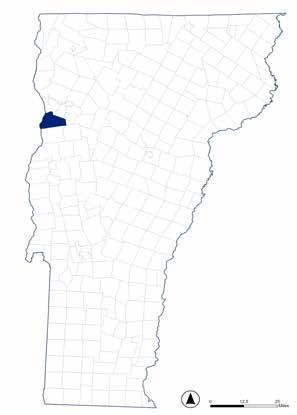
The Town of Shelburne (population 7,800) is situated along Lake Champlain, seven miles south of Burlington, the most populous city in Vermont. The Town has experienced multiple periods of rapid growth, and the population has doubled since 1970. The municipality is trying to address the demand for additional housing, impact of economic development, and protection of natural resources.
Pond Road is an unpaved road that connects Dorset Street and Route 116. Pond Road passes through wetlands (associated with Shelburne Pond), rural residential parcels, and agricultural lands. Due to the high annual maintenance requirements of this dirt road, the town has considered paving Pond Road for many years. The Town reports that the road frequently needs intensive maintenance attention. The question of whether to pave Pond Road has been put on the town ballet twice, failing both times. Residents have voted to keep it unpaved.
The reasoning behind residents’ voting decisions relates to the many functions roads perform, and the meanings they carry. Roads are important to humans: they connect us to one another and allow society to take form. However, humans’ dependence on roads and vehicles comes with deep and widespread environmental impacts. Thus valuing the convenience of roads can contradict other values. All roads, like any built infrastructure, regardless of the surface, will degrade over time. Roads thus require continued investment. At Pond Road, many residents are concerned about the impacts of paving on wildlife, safety and sense of place. The Town is also concerned about maintenance costs of the current road, and the safety challenges that the gravel road poses.
This project examines the various impacts of Pond Road, explores potential considerations for improvements, and provides a toolkit with conceptual design options.
Pond Road Core Team
The Pond Road Core Team that advised a team of Conway School graduate students on this project includes Shayne Geiger (Environmental Planner), Joe Cavanaugh (Assistant Town Planner), Sean MacFaden (Natural Resources and Conservation Commission), Katherine Stockman (Pond Road resident), and Rad Romeyn (Pond Road resident).
Client Goals
The Town of Shelburne is envisioning Pond Road as:
• A road that is safe for people in vehicles, pedestrians, and cyclists
• A road that is navigable
• A road with reduced ecological impact
• A road that is easy and inexpensive to maintain (or maintained less often)
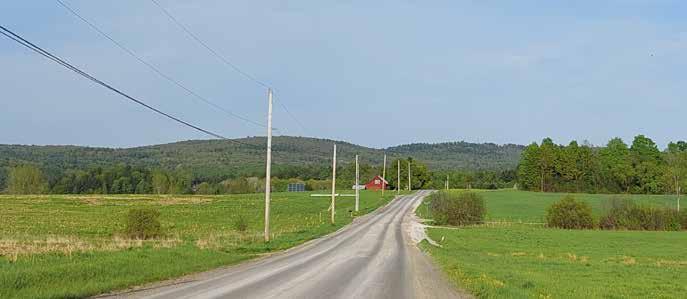
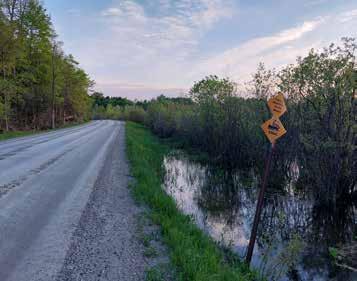
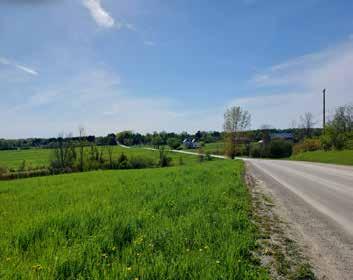
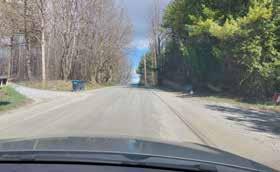
Pond Road looking east
Town Map of Shelburne, Vermont.
Existing Conditions
Pond Road
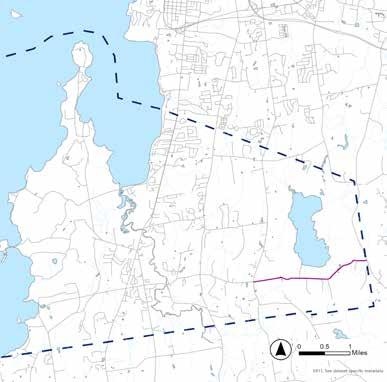
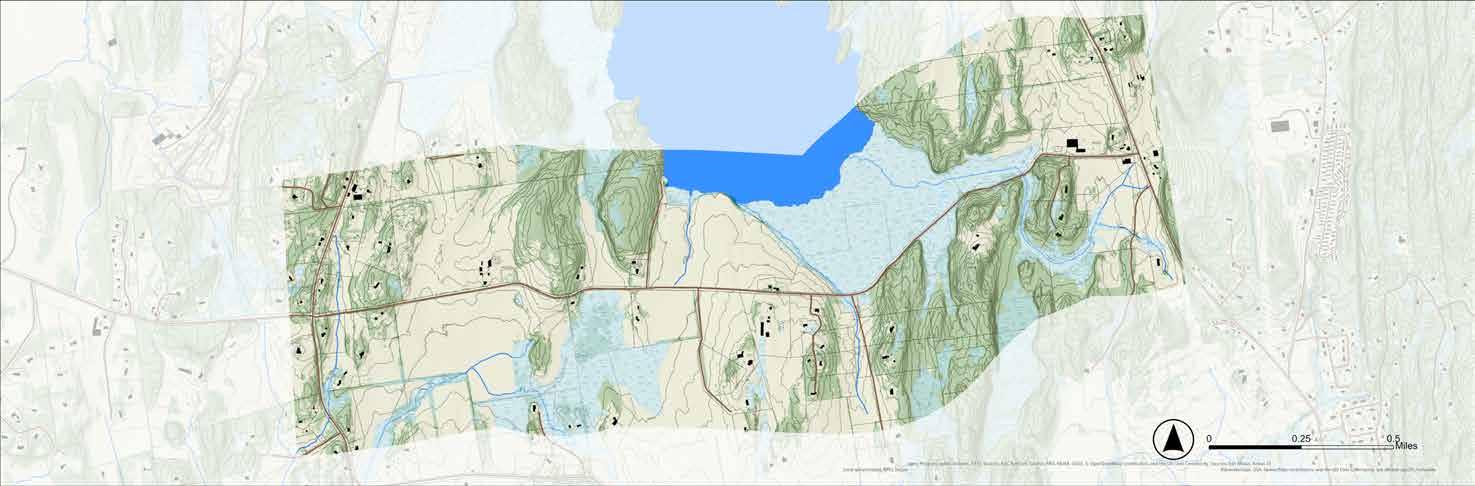
Pond Road runs 2.38 miles east to west, connecting Dorset Street to Route 116. The two-way road lies south of Shelburne Pond, in a landscape characterized by rolling topography and pastoral scenery. The width of the driving lane varies between 20 and 34 feet, and the right-of-way measures 50 feet across. This is a low-density rural area, with approximately 30 homes accessed via private driveways (unpaved and paved) that connect to Pond Road. The road runs through conserved lands stewarded by the Nature Conservancy, University of Vermont (UVM), and the Vermont Fish and Wildlife Department.
From its intersection with Dorset Street, the road first traverses low-density residential areas and open agricultural fields. It winds through bucolic scenery, passing through the occasional stand of mixed coniferous and deciduous trees that break up the expansive farmland.
The road intersects with the Pond Road Access Road, which leads to the UVM H. Laurence Achilles Natural Area and Shelburne Pond. The boat launch and access point, located on the south shore of the pond, are maintained by the Vermont Fish and Wildlife Department. The UVM Natural Area contains the only maintained trail system along Shelburne Pond (maintained by UVM).
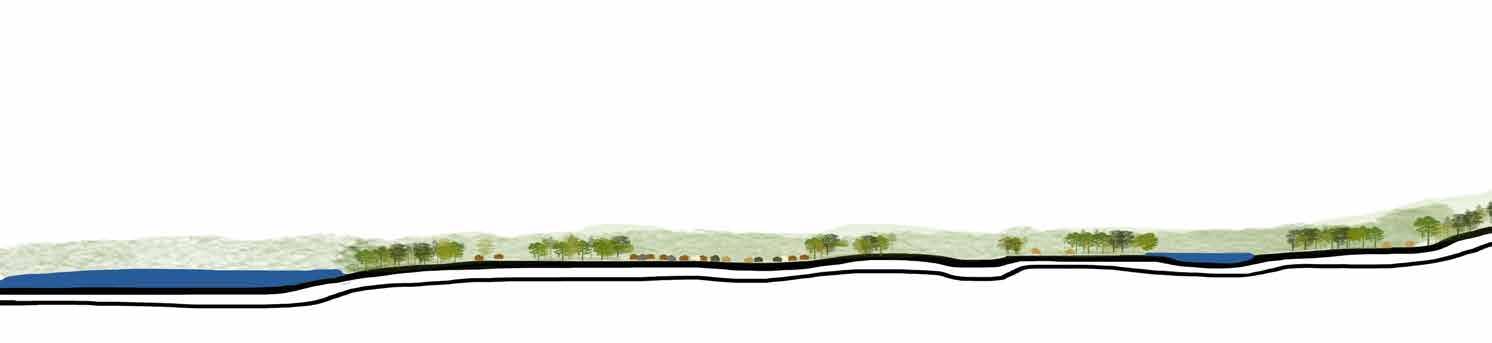
As Pond Road continues, it transects an alder swamp and cattail marsh natural community, where steep hillsides with exposed bedrock flank one side of the road and expansive wetland communities lie on the other. Continuing east, the road passes Guillemette Farm before reaching Route 116.
Shelburne Pond
Shelburne Pond is the largest undeveloped body of water in the Champlain Basin. The majority of the land surrounding the pond is conserved. It supports a rich mosaic of wetlands, fens, marshes, and bogs. The shore of the Pond is made up of limestone cliffs and cedar bluffs. The surrounding uplands are characteristic of the region, with mixed hardwood forests dominated by maple, beech, oak, and cedars.
The area also holds important archaeological and cultural value. Along the north shore of the pond, Woodland Era artifacts including projectile points, pottery shards, and dugout canoes have been discovered.
Current Road Conditions
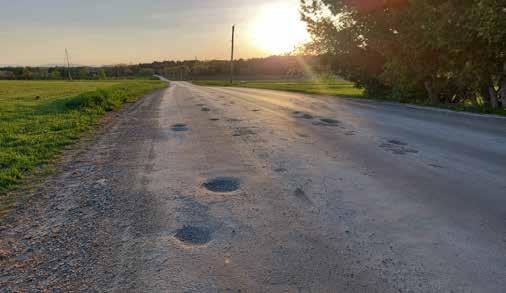
Pond Road, like many gravel roads, experiences frequent potholes, ruts, dust, and wash-boarding. Surface conditions deteriorate quickly between maintenance cycles, especially after rain storms or heavy use. The road is regraded about four times per year.
Current Maintenance Costs
Pond Road requires its own maintenance routine and materials since it is the last remaining gravel road in town. Maintenance attention is required throughout the year and changes depending on the season.
Approximate Annual Costs:
$12,000 Salt and Sand Application (freezing winter conditions)
$20,000 Chloride Application (summer dust control)
$30,000 Gravel Addition
$12,000 Grading (4x a year)
$25,000 Town trucking + personnel costs
Total: $99,000
($7.88 per linear foot)

Character Zones
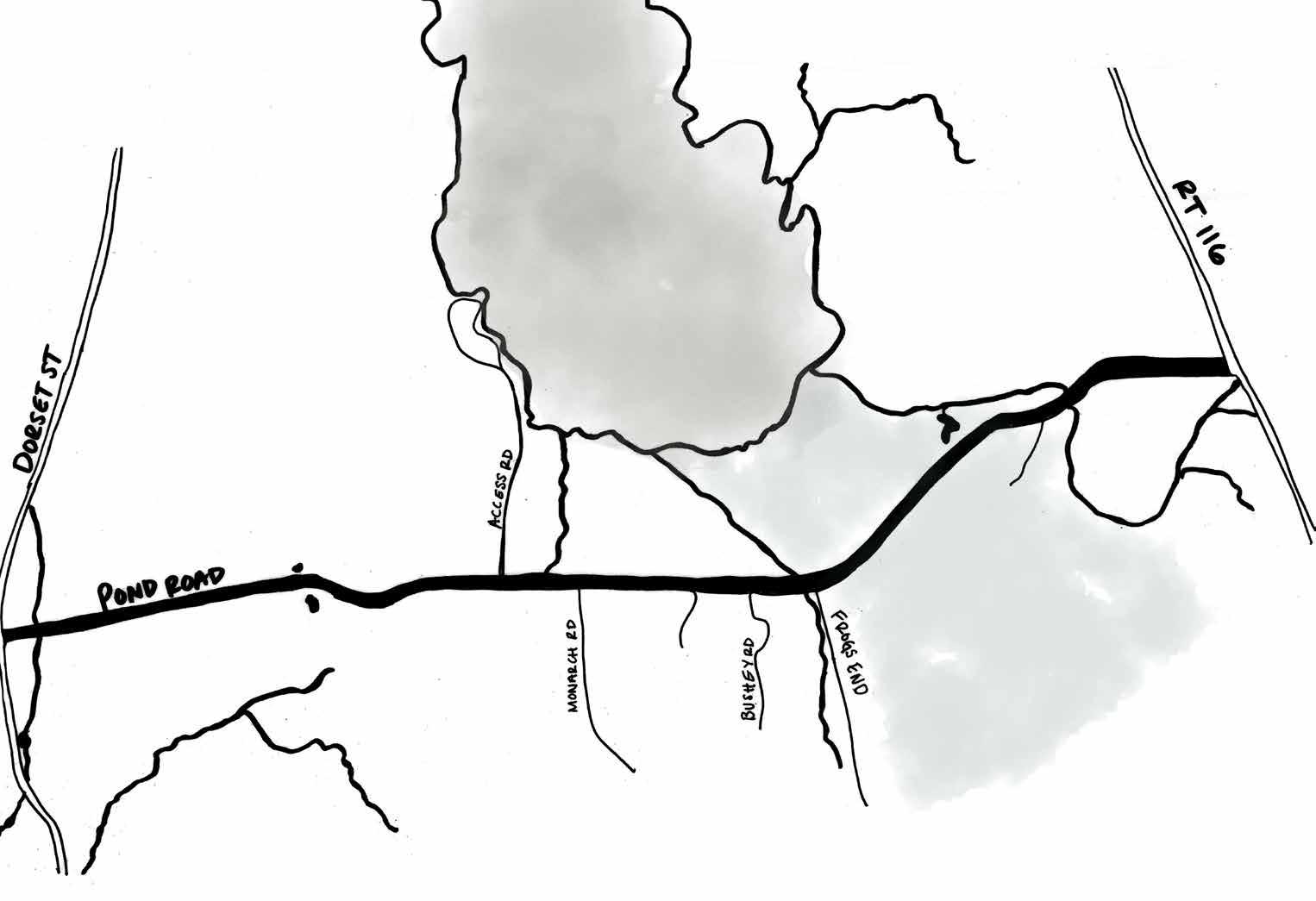
Pond Road transects a diverse mix of land uses and ecological conditions from upland forest and active farmland to low-density residential areas and sensitive wetlands. These changing conditions shape how the road functions and how it feels to travel along it. For the purposes of analysis and design, the road is divided into three distinct character zones based on surrounding land use, road conditions, and ecological context.
Zone 2: Shelburne Pond Access & Wide Open Fields
Zone 1: Agricultural Approach from Dorset Street
This section is defined by rolling topography and a series of winding S-curves that cut through expansive agricultural fields. The road alignment at the S-curves creates several blind spots and visibility challenges for drivers. The land is largely open, offering broad scenic views of the surrounding farm landscape. This is also where Pond Road intersects a north–south wildlife corridor. The mix of open land and edge habitat supports movement for a wide range of species.
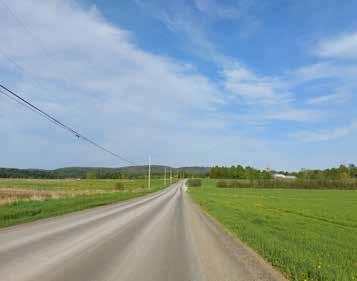
In this zone, the road flattens out and widens significantly. It runs adjacent to active agricultural fields and provides the main access point to the Shelburne Pond and the H. Laurence Achilles Natural Area. This stretch is heavily used by recreational visitors to access the Natural Area where they launch boats, go fishing, or walk along the trails. The road here has become entrenched, meaning it sits at or below grade of the surrounding land. Water in rain events can pool on the surface. The width and wear patterns reflect years of use without proper drainage or edge control.
Zone 3: Wetland Crossing and Forest Edge
As the road drops in elevation, it enters a distinctly different landscape of low-lying wetlands and steep forested edges. This zone is ecologically sensitive and hydrologically complex. In many areas, wetlands appear on both sides of the road, where the road side banks are steep. Erosion is visible in places, and excess material from past grading or runoff has accumulated at the road's edge. The road here cuts directly through amphibian habitat, separating upland forest from breeding wetlands. Species like spotted salamanders cross the road during seasonal migrations, and the road thus creates a significant barrier to safe passage. This stretch also includes tight curves and a history of vehicles running off the road into the wetlands, underscoring the need for both ecological and safety improvements.
Shelburne Pond
Community Engagement
To pave or not to pave? That has been the question surrounding Pond Road for more than a decade. Residents of Shelburne have voted twice to keep the road unpaved. Acknowledging that this has been a topic of concern in the Town for many years, the role of this project is to listen to the community and think longterm about the ecological and economic impacts of this unique rural road.
Pond Road is more than a transportation route. It’s a place that functions as a scenic drive, recreational area, and means of access to homes and active agricultural fields. This area is deeply tied to the regional ecology, providing critical north-south wildlife corridors.
During engagement events and interviews held in spring 2025, many community members expressed concerns about the potential environmental impacts of paving, including harm to surrounding habitat, increasing runoff, and salinization. Potential speed and traffic volume increases and change to the rural character of the area are of concern as well.
Highway Department Interviews
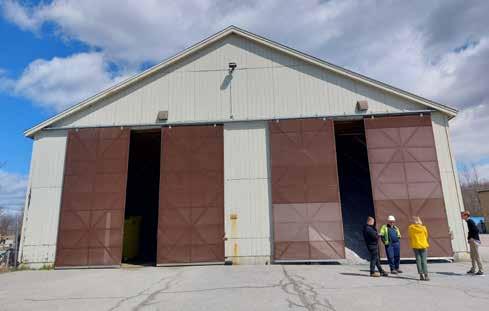
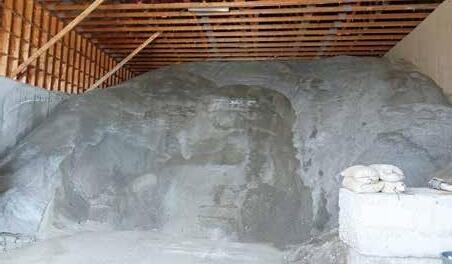
However, keeping the road unpaved comes with challenges, as shared by the Shelburne Highway Department. As the last remaining unpaved road in town, Pond Road requires a separate maintenance protocol and unique materials not used on other paved road in town. One entire side of the town's salt barn is dedicated to the materials required for Pond Road such as calcium chloride for summer dust control, and a sand-salt mix for winter traction. The other side stores road salt for the rest of Shelburne’s paved roads. Additionally, Pond Road needs to be graded at least four times a year, especially in spring and fall, which adds to the maintenance burden. The grader has to be rented from Charlotte since Shelburne does not own one. From the Highway Department’s perspective, the road is not only resource-intensive but also difficult to maintain.
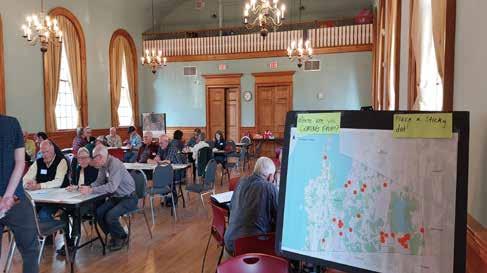
To better understand how the community uses and values Pond Road, letters were sent to residents of the road and a community engagement visioning event took place at the Historic Town Hall on May 12, 2025. A second community engagement event took place on June 10, which included a presentation of design alternatives to the Select Board for direction and feedback.
Visioning Event
At the visioning event on May 12, participants worked together to identify what’s working well and what needs improvement on Pond Road. Through group mapping and discussion, participants explored how to balance the multiple roles of Pond Road, as a scenic and recreational space, an ecological corridor, and a transportation link.
The community engagement event for Pond Road brought into focus a range of perspectives. The meeting affirmed several long-held community values. Participants revealed both deep appreciation for the road’s current rural character and pressing concerns about safety, function, and ecological impact.
A central conflict that emerged is the tension between Pond Road’s role as a scenic, wildlife corridor area and its increasing use as an east-west commuter route. Many attendees emphasized the road’s quiet, rural charm; their desire for slower traffic speeds and lower traffic volume; and the road's value as a place for walking, biking, wildlife watching, and recreation access. Concerns were raised about increasing commuter traffic, and the impact of speeding vehicles on both human and wildlife safety. At the same time, there were also concerns about gravel road surface conditions; potholes, dust, and ruts affect comfort and safety for all users, particularly Pond Road residents. Some residents were concerned about impacts to emergency response time, which sources have indicated as not an issue based on jurisdiction assignment among emergency response teams in the area.
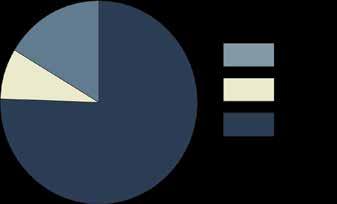
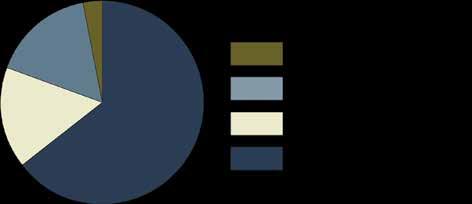
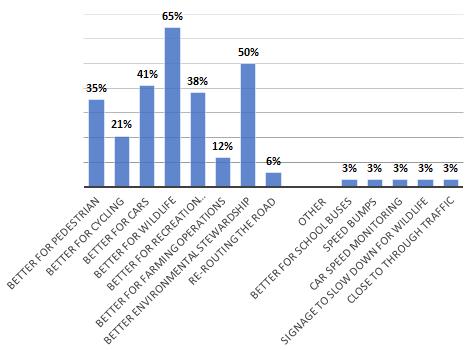
The feedback also revealed a community ethic of stewardship. Residents recognized the road's ecological significance as a wildlife corridor. The feedback demonstrated a nuanced understanding of trade-offs. Residents acknowledged that paving might improve driving conditions, however there were concerns for potential increase of traffic volume and speed as a result of paving, that would cause ecological harm and hurt the road's rural character. There were also support for creative solutions such as keeping part of the road unpaved, adding wildlife culverts, implementing traffic calming measures (like speed bumps or signage), and limiting through traffic. Several participant groups suggested closing part of the road to vehicles and creating a pedestrian only trail, while acknowledging the need to be sensitive and respectful of Pond Road residents' needs.
Community
Visioning Event Survey
Responses revealed ecologically minded community ethic and desire to maintain rural character (survey taken at May 12 visioning event).
Would you support efforts to improve wildlife crossings along Pond Road?
Do you think Pond Road should remain a dirt road?
Visioning event at the Historic Town Hall.
Shelburne's Highway Department salt barn.
Pond Road The rest of Town
Road Ecology
A road system is formed by vehicular traffic on an infrastructure of roads and related facilities. Roads not only transform the immediate landscape they occupy, they also change the areas they reach and lie adjacent to along the way. Road ecology examines the interrelationships between the natural environment and the road system. The impacts and interactions of the road systems start well before the roads are being used. They begin with construction, continue through maintenance and repair to the deconstruction and reconstruction when the roads' service life is up. Below are some of the ecological impacts of road systems. This information is adapted from "The Ecology of Rural Roads: Effects, Management & Research" report published by the Ecological Society of America.
Roads' Impact on Landscape
• Land occupation for road surface and shoulders
• Soil compaction or sealing of soil surface
• Alterations to geomorphology (e.g. cuts and embankments)
• Removal and alteration of vegetation
Roads' Impact on Wildlife (Flora/Fauna)
• Death of animals caused by vehicle collisions (partially due to some animals’ attraction to roads)
• Formation of a road-effect zone with lower population densities near roads
• Higher levels of disturbance and stress
• Loss of refuges
• Fragmentation, reduction, and loss of habitat for many species; creation of new habitat for a few species
• Breaking up of animal and plant populations, reduction of biodiversity, loss of species, and extinction
• Genetic isolation, inbreeding effects and increased genetic drift, and interruption of the processes of evolutionary development
• Barrier effect, filter effect to animal movement (reduced connectivity)
• Disruption of seasonal migration pathways, impediment of dispersal, reduced recolonization of empty habitats
• Disruption of access to resources that are dispersed across the landscape, modifications of food availability and diet composition
• Increased intrusion and distribution of invasive species
• Creation of pathways facilitating the spread of infectious diseases
Roads' Impact on Air and Soil
• Vehicle exhaust and pollutants (e.g., heavy metal, toxic materials)
• Dust and particulates emissions (e.g., abrasion from tires and brake linings)
• Spills of oil, fuel, etc. (e.g., as a result of traffic accidents or defective vehicles)
• Road salt and de-icing compounds
• Noise, depending on vehicular traffic and atmospheric conditions
• Visual stimuli (e.g., lighting from passing traffic, infrastructure, and road associated activities).
Roads' Impact on Local Micro-climate
• Modification of temperature conditions (e.g., heating of road surface; increased variability in temperature). This can be unpleasant for people and animals and runoff from warm roads carries heat to water bodies, impacting water quality.
• Modification of humidity conditions (e.g., lower moisture content in the air due to higher solar radiation and reduced vegetation; stagnant moisture on road shoulders due to soil compaction)
• Formation of steep micro-climatic gradients which act as barriers to wildlife.
Roads' Impact on Water
• Increase in stormwater runoff rates; prevention of groundwater infiltration
• Modification of surface watercourses
• Changes to groundwater flows
• Water pollution from deposition of emissions near roads
Environmental Impacts on Roads
The interactions between road systems and the environment are not one way. The environment also affects the condition and lifespan of the road. Temperature extremes, freeze/thaw cycles, and erosion can cause degradation of the road surface and base. In some cases, wildlife collisions can damage vehicles and cause harm to people.
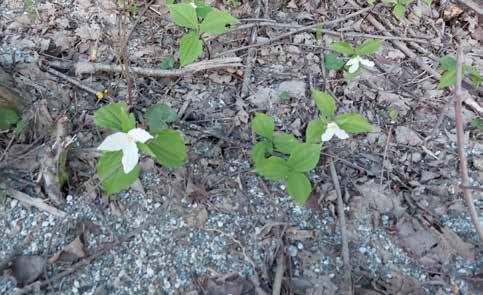
White trillium surrounded by excess road material.
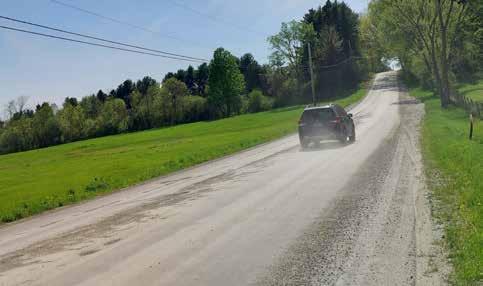
Dust generated by vehicle driving on Pond Road
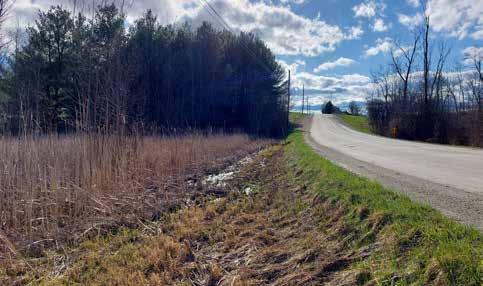
Wetland bisected by Pond Road.
Regional Access and Circulation
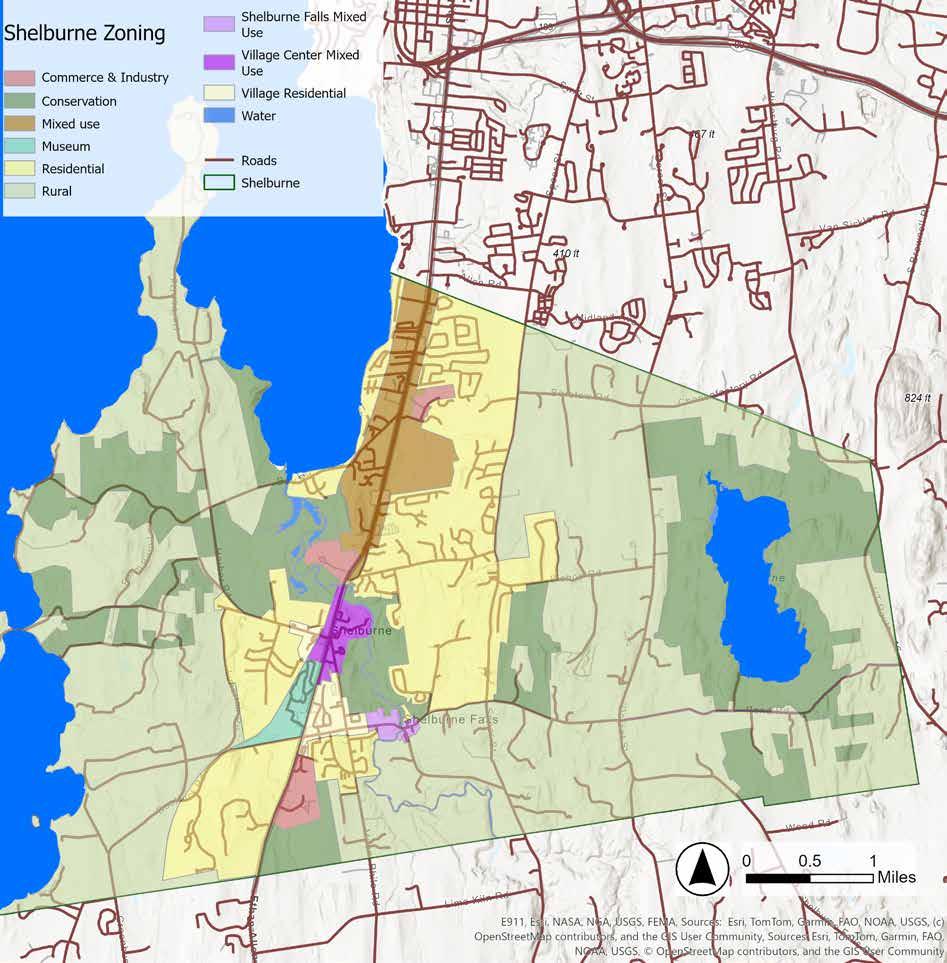
Shelburne’s landscape is defined by a mix of conserved lands, active farmland, and residential neighborhoods. The west and east sides of town are zoned rural with a village center district in the middle. Shelburne Farms, a popular tourist attraction, is located on the west side of town. The focus area for this project lies on the eastern side of Shelburne. Roads function as connectors, linking the rural edges to the village center core and neighboring towns. Shelburne is considered a bedroom community, where most residents travel to Burlington for work. North-south road connectors include Shelburne Road (RT 7) to Burlington and Route 116 to the Williston and Richmond area for shopping and work. Pond Road is one of several key east–west corridors in Shelburne. It connects the village center to the west with South Burlington and Williston to the east. While it is one of the less-traveled routes compared to other east–west roads such as Cheese Factory Road, Barstow Road, and Irish Hill Road, it still plays an important role in local access and circulation patterns. The posted speed limit on Pond Road is 35mph. Pond Road's scenic qualities also attract cyclists, runners, and walkers.
According to the Vermont Agency of Transportation, current traffic counts on Pond Road average around 480 vehicles per day, compared to Cheesefactory Road, which sees approximately 4,000 vehicles daily. Cheesefactory and Pond Road are the only east-west connections from Dorset St to RT 116. The significant difference in traffic counts reflects not only the rural nature of Pond Road, but also its unpaved condition and lower traffic capacity.
However, changes to the surface, such as paving, could shift traffic patterns across town. Paving Pond Road may increase its use as an east–west connector, potentially attracting more commuter traffic and altering the road’s rural character and ecological function. Drivers would likely drive faster on a paved road, which may require adding speed calming measures.
Shelburne Farms
Geology
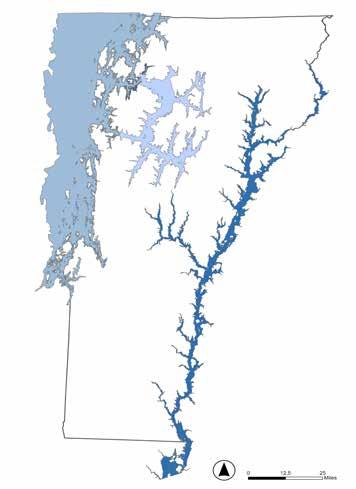
The landscape surrounding Pond Road was shaped by a dramatic geologic past. This area was once beneath Glacial Lake Vermont, one of several massive glacial lakes that formed during the last Ice Age. As the ice sheet retreated north, valley glaciers blocked normal drainage routes. Melt-water pooled behind these ice dams, forming large glacial lakes, such as Lake Hitchcock and Lake Winooski. Glacial Lake Vermont filled the Champlain Basin and drained south into the Hudson River Valley.
As the glaciers and later the Champlain Sea receded, they left behind fine clay sediments and marine deposits. These conditions, combined with the region’s underlying calcium rich bedrock including limestone, dolostone, and marble, continue to shape the ecology, soils, and topography of the Pond Road focus area. The bedrock throughout the region contributes to elevated pH levels that support specialized plant communities. Within the Pond Road/Shelburne Pond area are calcium loving spring ephemerals.
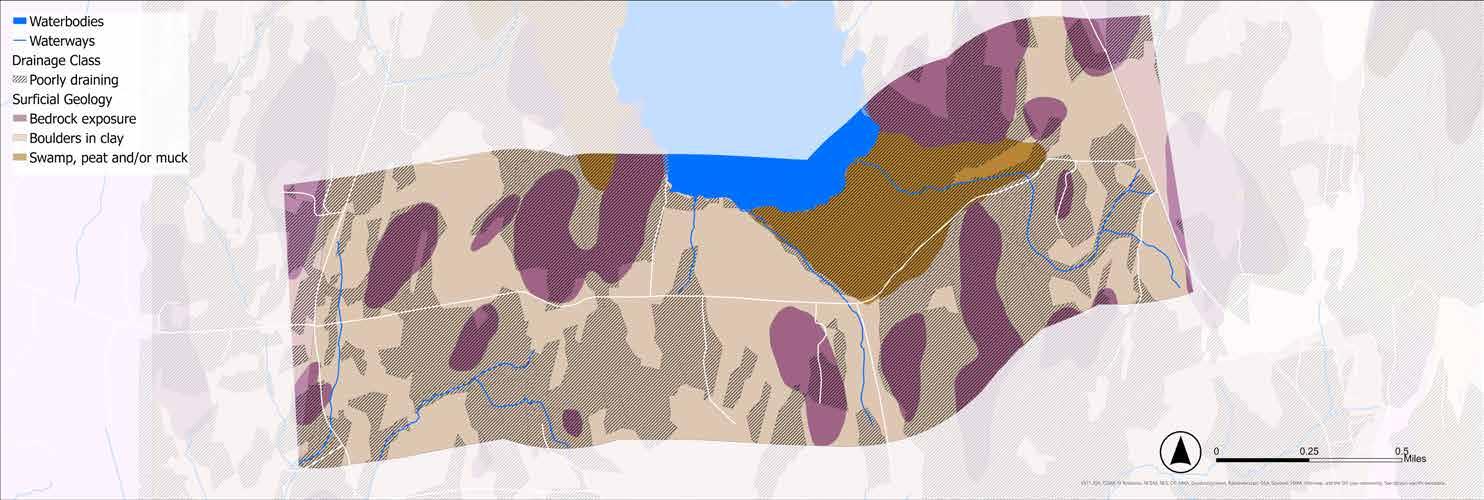
Pond Road is built on a mix of glacial clays and boulders, as well as muck/peat in the wetland areas. On either side of Pond Road, soils are poorly draining. Soils are the foundation of the road and key for road structure. Pond Road is sitting in a wet environment with poorly draining soils.
Given these poorly draining conditions, it is possible that the existing subbase under Pond Road may not be sufficient to support year-round vehicle use, particularly in sensitive wetland zones (such as character zone 3).Clay in soil can also lead to instability in roadbeds if roads are not properly supported. At Pond Road this may contribute to erosion, rutting, and pothole issues. A geotechnical boring would be needed to verify these conditions and should inform design decisions. The combination of steep slopes, clay soils, and poor drainage poses challenges for road maintenance and durability, especially in character zone 3 where water, topography, and habitat all intersect.
Glacial Lake Vermont
Glacial Lake Hitchcock
Glacial Lake Winooski
Wetlands
Shelburne Pond
Hydrology
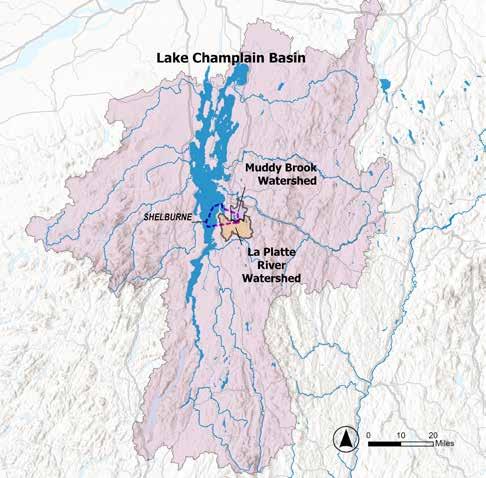
A basin (or watershed) is all the land area that drains to a body of water. Pond Road is situated within the Lake Champlain Basin and straddles two sub-watersheds. The eastern portion of the road drains northwest towards Shelburne Pond, which is part of the Muddy Brook sub-watershed (Winooski River Watershed). The western portion drains southwest into the Champlain Surface Water Protection Area, and is part of the La Platte River sub-watershed (Lake Champlain Direct Watershed). Lake Champlain is one of the largest freshwater lakes in the United States; about 56% of the Basin is in Vermont, 37% in New York, and 7% in Quebec. According to the EPA, Lake Champlain is an impaired waterbody and joint efforts among agencies in the Basin are actively trying to address the water quality issues, such as excess phosphorous levels, rising chloride levels from road salt usage, presence of invasive species, and incidences of cyanobacteria blooms.
Vermont Municipal Road General Permit Standards
The statewide Vermont Municipal Road General Permit (MRGP) was established to address state water quality issues. Each municipality is required to conduct Road Erosion Inventories (REIs) reassessment, and special standards apply specifically for hydrologically connected segments of a road.
According to VTrans, Pond Road has in total 21 culverts, of various conditions. It intersects with four different streams, as well as wetland areas, and is situated headwaters of both sub-watersheds. The condition of hydrological function in the upstream areas impacts downstream waterbodies, both from a water quality as well as a flood mitigation perspective. According to MRGP, most segments of Pond Road are considered as hydrologically connected. Most parts of Pond Road currently do not have ditches or swales. Erosion and sedimentation are common. The road is not consistently crowned or sloped. Bringing Pond Road into compliance with the relevant MRGP standards may align with the community's ecological goals.
Runoff, Drainage, Sedimentation, and Erosion
In the area adjacent to Pond Road, drainage mostly runs in a north-south direction, crossing Pond Road in several locations. Runoff flows onto Pond Road where the elevation of the road is lower than the connected private driveway or the adjacent landscape, bringing sediment onto the Road. In some locations, runoff also flows onto adjacent driveways, intersecting roads, fields and wetlands when they are lower than Pond Road. Shelburne Pond is a 452-acre freshwater lake, the largest undeveloped body of water in the Champlain Valley. It is listed as an impaired waterbody (Clean Water Act 303(d)), with issues of algae, invasive species and excess nutrients (phosphorous). According to Rutland Herald, Pond-wide fish die-off events have happened multiple times in the past.
Being adjacent to wetlands and streams, and hydrologically connected to Shelburne Pond, the road may directly impact the habitat and cause salinization of the soil and water. In the map below, the FEMA floodplains (purple dashed lines) overlap with the road where the Road bisects the wetland area on the eastern section. About one-third of Pond Road is in the FEMA estimated floodplain. The integrity of the road may be impacted by being immersed in wet conditions. Compaction of the road in wetland areas may also have long term ecological impacts.
Climate Change
The Lake Champlain 2024 State of the Lake and Ecosystem Indicators Report pointed out that the projected trend of a warmer climate may negatively impact water quality due to heavier precipitation events and floods that might cause more runoff and wastewater treatment failures. Warmer water could also trigger the release of legacy phosphorous and help cyanobacteria blooms flourish. The report identified protecting and restoring wetlands and other natural features that absorb floodwaters and store carbon as a key approach to build climate resiliency and mitigate the results of greater and more frequent storm events.
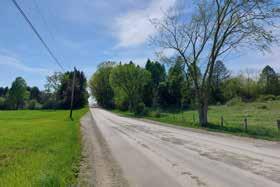
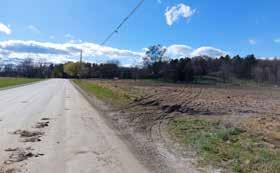
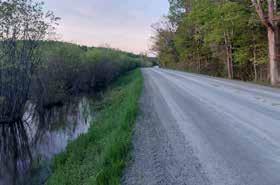
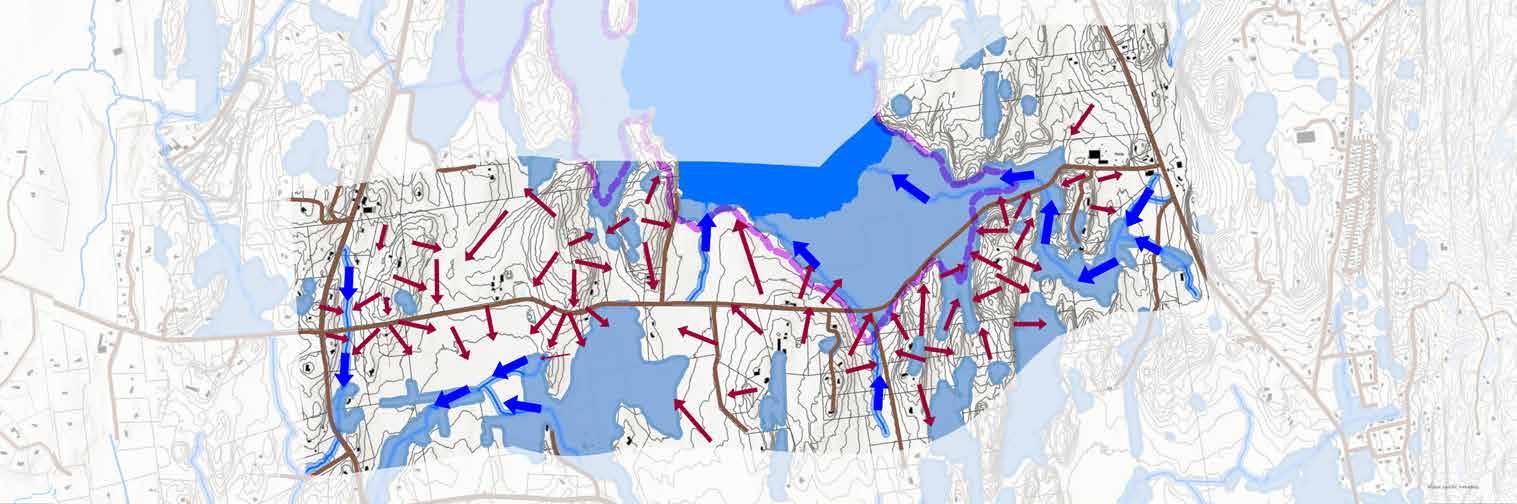
Proximity to wetland and saturation of soil
Run off onto Pond Road
Sedimentation into adjacent areas
Lack of road surface and shoulder profile
Pond Road
Wetlands
Wetlands
Shelburne Pond
Pond Road
Habitat Blocks
One way to examine the ecological impact of Pond Road is to look at habitats and their connectivity in the larger area. The Town of Shelburne retained Arrowwood Environmental in 2022 to conduct a Habitat Block Assessment and Ranking exercise, as part of the directive from Vermont Act 171 for the municipal planning process. Based on the Core Habitat Blocks identified (indicated by the light green color in the maps on this page), about 23% of the total Core Habitat areas are around Shelburne Pond, the largest habitat concentration in Shelburne and with some of the highest ranked habitat values (#1, 2 and 6). Pond Road lies adjacent to and directly bisects some of the corridors along the length of the road in multiple locations. Though the demarcation of habitat areas does not limit the range of wildlife travel, a north-south traveling direction could be assumed, which would be in conflict with the humans' east-west traveling direction on Pond Road.
In addition, according to Vermont Natural Heritage Inventory (VNHI), there are rare, threatened, and endangered species (animals and plants) present in the Shelburne Pond area (indicated by the light orange color in the maps). Some are found outside of the identified Core Habitat Blocks and intersect with Pond Road. This extends the potential conflict areas between Pond Road and wildlife to about two-thirds of the total length of the road. Though the types of conflict might vary (e.g., depending on the species and their interactions with the road), it is especially important to be sensitive to these potential conflicts because the species are already considered imperiled.
The proximity of the road to wildlife habitat provides humans with the opportunity to observe and interact with wildlife. However, the increased popularity of boating, fishing and wildlife watching may also increase conflict. The access road to the Shelburne Pond trails and boat launch is located in between Priority Habitat Corridors. Thus, outside visitors would need to cross at least one habitat corridor to access the trails, increasing the potential impacts on wildlife.
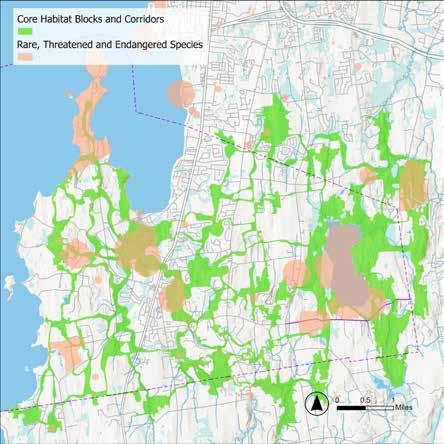
The Shelburne Pond area is also home to several significant natural communities as identified by VNHI. Each of these significant natural communities supports unique plant and animal species, and provides examples for educational and scientific purposes. Vermont Fish and Wildlife has highlighted Shelburne Pond as one of the few places to observe the Alder Swamp and Cattail Marsh natural communities, both of which are located right next to Pond Road. Though they are visible from the road, there is no designated observation location on the road. A distracted driver or nature-observer on the road might become a traffic safety hazard.
In addition, the proximity of the road to Core Habitats increases the potential of altering and impacting the quality of the habitat, during usage, maintenance, and construction/reconstruction of the road. Some potential impacts may include soil and water salinization, sediment built-up that exceeds the rate of natural process/ adaptation, and introduction of heavy metals and other pollutants. In addition, part of the Core Habitats include wetland habitat where a high/saturated water level could easily mix with pollutant runoff and carry pollutants further into other habitat areas. However, the wetland may have also been functioning as a buffer in stabilizing and processing the pollutants and reducing the potential impacts of contaminants from Pond Road. In comparison, the impact of road mortality or injuries of wildlife crossing or being on the road due to the proximity may be of more direct and immediate impact on wildlife.
Shelburne Pond is a special ecological area, both for the Town and for the State. Pond road, being part of the area, has significant impact on wildlife connectivity and has an important role to play.
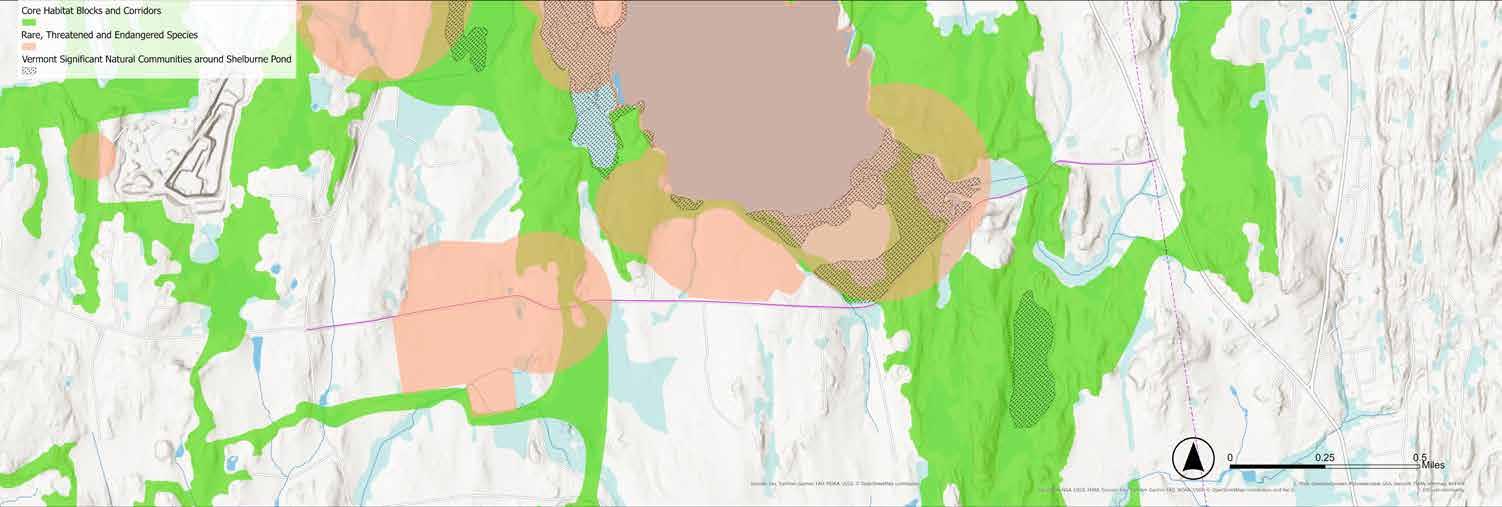
Red MapleBlack ash Seepage swamp
Alder Swamp Cattail Marsh
Shelburne Pond
Habitat Details
Animal Behaviors
Roads create barriers to wildlife movement through collisions and habitat fragmentation, which affects the trajectory of wildlife populations and their wellbeing. Different species of wildlife interact with roads differently and are impacted differently by the presence of a road. While traffic volume is often used as an indicator of "barrier strength," the behaviors of wildlife in response to traffic also affects the extent of the impact of the road. A study by Jacobson, S. L. et.al (USDA Forest Service) has categorized wildlife responses to road traffic as follows:
Nonresponders
Nonresponders attempt to cross highways regardless of traffic volume, because of little sensory capacity to detect vehicles, failure to interpret vehicles as threats, or high motivation to move despite risk. The impacts are reduced population size due to direct mortality that might lead to low genetic diversity, inbreeding and eventual extirpations.
Mitigation approach: Installing fencing, reestablishing connectivity with wildlife crossing structures, and reducing speed limits.
Pausers
Pausers tend to stop in the face of danger so have a low probability of successful crossing when traffic volume increases. The impacts are reduced population size due to direct mortality which manifests at low traffic volumes.
Mitigation approach: Fencing reduces mortality until connectivity can be reestablished with wildlife crossing structures.
Speeders
Speeders tend to run away from danger but are unable to do so successfully as traffic volume increases. The impacts are reduced population size due to direct mortality at low to moderate traffic volumes. At high traffic volumes, the impacts might lead to low reproduction rate, or mortality due to lack of access to key resources.
Mitigation approach: Rare species may need fencing. Reducing vehicle speeds to the animals speed might be effective.
Avoiders
Avoiders begin to avoid traffic at relatively low traffic volumes. Thus, roads can isolate populations and reduce genetic diversity. Low reproduction rates or mortality due to lack of access to critical resources are also some potential outcomes.
Mitigation approach: Wildlife crossing structures are imperative for maintaining access to key habitats for small populations. Fencing is less necessary.
Amphibians & Reptiles (Herptiles)
While recognizing the wide diversity of wildlife this area supports, the amphibians and reptiles which require a diversity of habitats for different life stages are of particular interests. For example, the salamanders need to move from forested areas to aquatic environments to breed, and they don’t just stay in the water after breeding. The adults need to travel back into the forest once they have laid their eggs. Compiled based on information from the Vermont Reptile and Amphibian Atlas project, the calendar below is an estimation of the potential movement periods of the various salamander species. It shows that their movements span most of the year (light orange indicates fewer species, dark orange indicates more species).
Another reason amphibians and reptiles require special attention is that they are typically smaller, which means they are less visible to drivers, and take a longer time to move across the road. They also behave more like "nonresponders" and "pausers," which makes them more at risk of road mortality.
In addition, some reptiles, such as snapping turtles, look for areas that are open, exposed to sun, and with loose surface material for nest building or sun-basking, which the dirt road provides. Unlike the amphibians which mostly travel at night, reptiles have more interactions with the roads during the day, when the traffic volumes are typically higher. This increases potential conflict and mortality.
The impact of mortality for herptiles is not just for one generation. Because the migration happens around breeding time, it might lead to lower reproduction rates, which leads to smaller populations and eventually lower population viability. It is important to note that the Easter Ribbon snake, along with several other amphibian species, has not been observed in the Pond Road area recently and might have already experienced local extinctions. Mitigation measures for their movement are particularly important, as is sensitivity to other stressors that impact them, such as road salts and chloride.
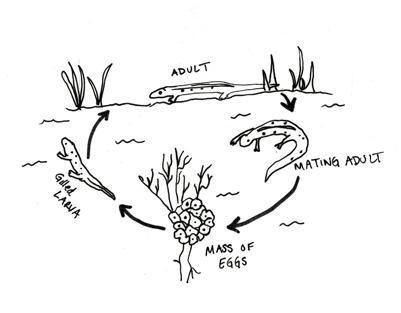
Natural Communities
As mentioned previously, there are several statewide significant natural communities that have been identified in the Shelburne Pond area. The Alder Swamp, Cattail Marsh, and Red Maple-Black-Ash Seepage Swamp communities are closest to Pond Road (See Habitat map pg. 9). The descriptions of the communities below, adapted from Vermont Fish and Wildlife resources include the wildlife species they typically support.
The alder swamp provides the largest area of naturally occurring shrubdominated habitat in Vermont, but few are protected and very little inventory has been conducted. They are important breeding habitat for many species of migratory birds, including the rare blue-winged warbler. Gray tree frogs and the harvester (one of the few primarily carnivorous butterflies in North America) may be abundant in alder swamps. The maropis bee feeds on the pollen and florals oils of the genus lysimachia (swamp candles), which is common in alder swamps.
The cattail marsh supports abundant wildlife, especially herptiles. Many song birds, marsh birds, and waterfowls nest in cattail marshes. The rare, state-endangered black tern nests in small colonies in large cattail marshes. Muskrats use cattails as a food supply and building material for their lodges. The cattail marshes are generally considered as being very resilient to human disturbance. However, human disturbance can further reduce the already low diversity of plant species in a marsh. Having adjacent upland buffers and connections to other wetlands and upland forests is important for the quality of wildlife habitat provided by cattail marshes.
The red maple-black ash seepage swamp is widespread in Vermont though relatively few are protected. It is the desired habitat for the four-toed salamander.
Other natural communities in the area include limestone bluff cedar, poor fen and intermediate fen. Both poor fen and intermediate fen are rare in Vermont and are threatened by land use changes that occur within both their immediate watersheds and within their groundwater recharge zones. Protecting the quality and quantity of water that reaches a fen is critical to maintaining the hydrology and the vegetation structure and composition of the community. The vegetation in fens is extremely susceptible to trampling, so visits should be limited to sites with boardwalks or to the uplands adjacent to fens.
The plant communities in these natural communities could be used as a reference and inspiration for plant selections for vegetated buffer or other green infrastructure. A list of characteristic plants are included in the plant list in the later part of the document.
Shelburne Pond Area
Rare Plant Species:
• Nuttall's waterweed (Elodea nuttallii)
• Fries' pondweed (Potamogeton friesii)
• Straight-leaf pondweed (Potamogeton strictifolius)
Rare Fish species:
• Central mudminnow (Umbra limi)
Forested Environment
Aquatic Environment
Human Road Safety
Though the views along Pond Road offer beautiful scenic experiences for travelers and residents alike, Pond Road is not without hidden dangers. Community feedback and police reports highlighted the following safety issues:
• Tricky turns and steep slopes, especially when vehicles turn into faster traffic on either end of Pond Road.
• There are several S turns with slope changes and blind spots along Pond Road.
• Traffic speed increases on stretches of the road with flat terrain and straight sightlines.
• Dust from vehicles impairs visibility for all users of the road, including pedestrians, cyclists, and drivers. It is also a nuisance for local residents.
• Potholes and washboards can be damaging to vehicles, and a safety hazard when people try to swerve around them. There also seem to be evidence of driving on the shoulders, essentially "expanding" the width of the road, in areas with more potholes.
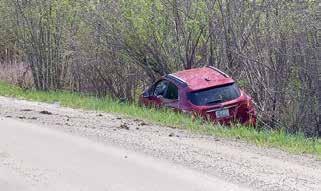
• Accidents, such as vehicles driving into ditches are not uncommon on Pond Road. Speed, distraction around corners, and slippery road surface might be some of the possible causes.
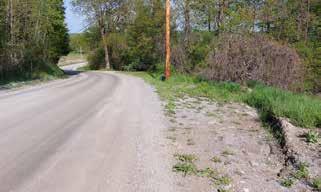
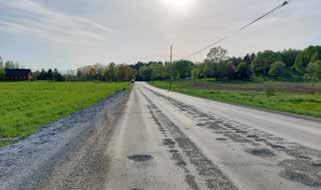
Environmental impacts of accidents could include oil leaking directly into wetlands, vegetation disruption, deep ruts that impact the movement of water, and damages to the road bank.
According to Vermont Transportation's projected traffic count, the traffic volume of Pond Road has increased to just shy of 500 counts/day, which might be pushing beyond what Pond Road was originally designed and built for. A detailed traffic study is recommended to help better understand the usage patterns and inform design decisions. In the meantime, keeping both the traffic volume and traffic speed low may reduce wear and tear on the road, and reduce accidents.
Locations of high safety concern identified by community members
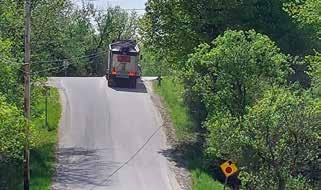
Tricky turns onto Dorset St and RT 116
Blind Spots and S turns
Vehicles driving into ditches
Potholes and washboards
Summary Analysis
Character Zone 1
This zone marks the western entrance of Pond Road, where the road transitions from a more residential context to an open, rural landscape. The surrounding land use is primarily agricultural, offering expansive views of fields.
Key Features:
• One stream crossing
• A notoriously dangerous blind turn, identified as a safety concern by residents
• The rural character and limited sight-lines create potential conflicts between driver expectations and road conditions, especially at higher speeds.
Character Zone 2
Zone 2 begins near the Pond Road access point and continues through flat, open farmland toward Shelburne Pond. This section was frequently discussed in the community engagement session for its excessive road width, which unintentionally encourages drivers to exceed the posted speed limit of 35 mph.
Key Features:
• Flat, straight road alignment increases visibility but contributes to speed-related safety concerns.
• Another stream crossing, underscoring the road’s proximity to important hydrological features
• Sweeping views of Shelburne Pond
Character Zone 3
From an ecological perspective, this stretch of Pond Road bisects a critical transition zone between upland forest (south of the road) and lowland wetlands (north of the road). Amphibians migrate across the road several times a year, first to reach breeding wetlands in the spring, and again to return to forest cover for overwintering in the fall. Without safe crossings, this movement puts amphibians at risk of vehicle collision.
From a human perspective, this section offers both expansive views of farmland and wetlands to the northeast, and limited views to the southeast due to road curvature, steep bedrock hillsides and vegetation. These sight-line differences directly affect safety. Areas with limited views often correspond with tight curves and have historically been sites of concern for vehicles running off the road.
This zone also has hydrological significance. It contains two stream crossings and lies within wetland buffers and floodplains. The soils in this area are poorly draining, with a high presence of clay and peat, which contribute to persistent wet conditions, shoulder erosion, and instability of the roadbed.
Key features:
• Two stream crossings
• Wetlands
• Expansive and constricted views
• Safety concerns with blind turns
The design alternatives presented on pages 28-29 zoom into the eastern portion of Pond Road (character zone 3). This focus area was chosen because it is where the road’s challenges and opportunities are most concentrated.
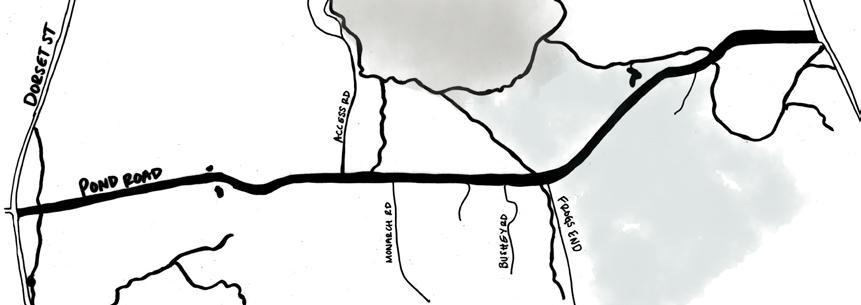
Character Zone 3
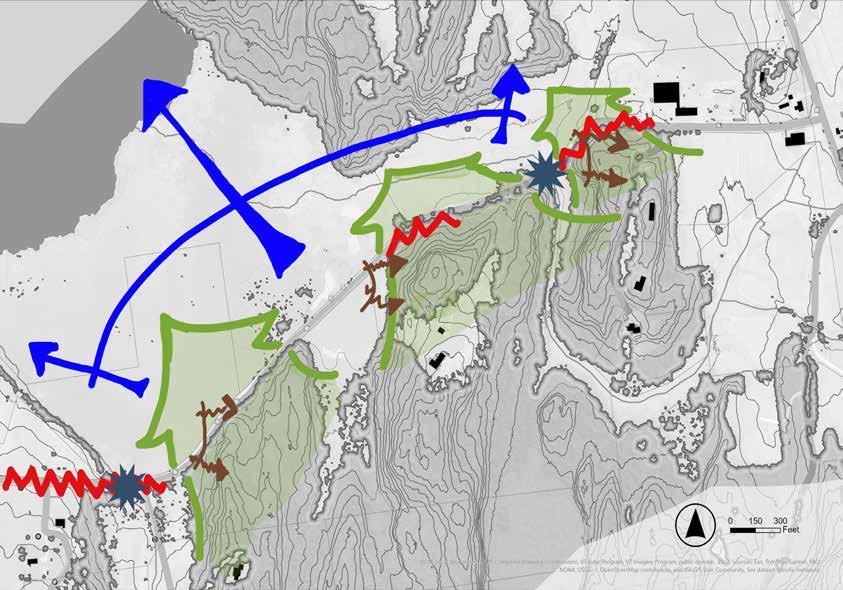
Introduction to Toolkit, Templates and Site Specific Designs
Toolkit
The toolkit (sheets 14 to 23) is a collection of best management practices, surface material options, nature based/green infrastructure strategies, speed traffic-calming measures, and pedestrian infrastructure tools that the Town of Shelburne might consider in subsequent design phases. These features were selected based on their application to existing conditions and community feedback.
Additional analysis by geotechnical and engineering professionals is necessary before any design is considered and implemented. Due to the many hydrologically connected segments on Pond Road, consultations with the Vermont Transportation Municipal Roads General Permit program prior to design decisions is also recommended.
Toolkit features were developed using guidance from Vermont Better Roads Manual and Franklin County Unpaved Roads Stormwater Management Handbook.
Conceptual Design Templates
Following the toolkit, conceptual designs are presented that show how the features discussed in the toolkit might be applied. The templates show interventions within a 50' ROW. The templates include a variety of surface options, nature-based solutions, safety/ traffic control and pedestrian infrastructure tools.
Site-Specific Alternatives
Following the conceptual designs are site-specific alternatives explored for character zone 3 (see sheet 3), the portion of Pond Road that runs from Frogs End through the wetlands to RT 116.
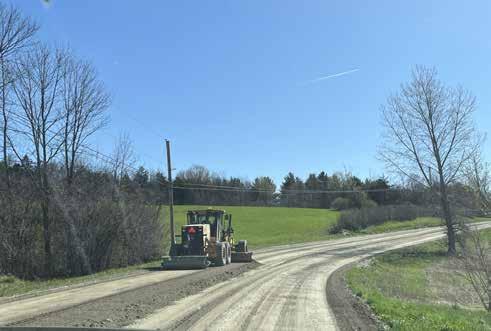
Road Maintenance
All man-made structures have limited service life. To increase road longevity and reduce ecological impacts, physical design interventions are only one part of the approach. Management and maintenance approaches are equally important for an effective outcome.
According to the Federal Highway Administration, to prolong the service life of a road while minimizing life-cycle cost, preventative maintenance is key. The figure below shows that overall life-cycle cost could be less with regular and frequent road pavement maintenance.
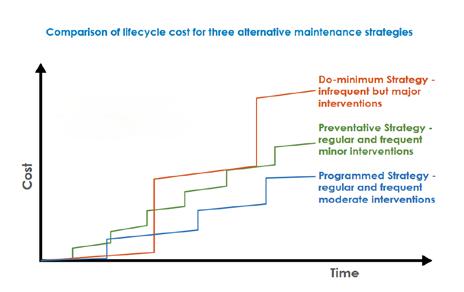
"Pavement Preservation", U.S. Department of Transportation, Federal Highway Administration (adapted from Scotland Transportation).
Best Management Practices
The Vermont Transportation's Better Road Program provides some best management practices for managing road runoff and maintaining roads. The principles are as follows:
"1. Get water off the road quickly and avoid having water run lengthwise down the road.
2. Stabilize and re-vegetate disturbed areas in and/or near ditches, culverts, banks, inlets and outlets immediately
3. Divert as much runoff as possible away from surface waters into vegetated areas
4. Good maintenance saves money by decreasing road problems and preventing untimely repairs
5. Good maintenance and infrastructure reduce susceptibility to flash flood damage."
Pollutant Mitigation
Some of the main sources of pollutants from roads are from vehicles and road maintenance practices. Pollutants from roads are difficult to manage because they are often non-point source, which means pollutants could enter into the environment throughout any part of the road. Among the pollutants, road salts and de-icing substances have a widespread impact throughout the road system because they are not easily removed from the environment and overtime could have a significant impact to water quality and ecosystem. Whether paved or unpaved, winter maintenance is required for safe travels. Strategic approach to reduce chemical usage in road maintenance is key to reducing the amount of pollutants from entering into water and soil. Lake Champlain Sea Grant offers many resources, including an online deicing product application rate calculator, to help provide recommendations on maintenance actions and application rates.
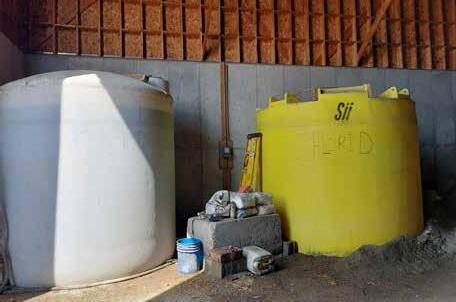
Photo credit: Joseph Cavanaugh
Salt sand mixes, used for winter maintenance on Pond Road
grading on Pond Road
Calcium Chloride used for dust control on Pond Road
Toolkit: Surface Materials
According to VTrans, the most critical factor for resilient roads (paved or unpaved) is a well-constructed subbase and effective water management. The surface material alone cannot ensure a “good” road; it is the underlying structure and drainage design that dictate how well the road holds up over time. Regardless of whether Pond Road remains unpaved or is converted to a paved surface, investment in the subbase and drainage design is essential. Long-term road resilience, reduced maintenance costs, and ecological health all depend on getting water off the road quickly and efficiently.
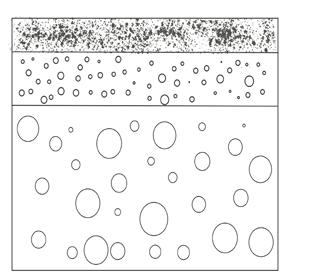
Unpaved Surface
An unpaved road surface is constructed using an aggregate surface course: a mixture of fine particles and medium to large gravel. The mixture of size particles allows for flexibility, as well as holding the shape of the crown. Proper subsurface preparation approved by a geotechnical and civil engineer is essential to ensure longevity and performance of a gravel road.
Benefits
• Maintains rural character.
• Likely to maintain current traffic volumes and slower speeds.
Considerations
• Prone to dust, potholes, rutting, washboarding, and erosion.
• Requires a crowned profile and well-maintained surface to shed water effectively off of the road surface.
• The surface must be regularly compacted and graded.
• Requires dust control measures (calcium chloride or other alternatives).
• Proper drainage design is critical (use of ditches, swales, and culverts).
Maintenance
• Regular grading and reapplication of surface aggregate.
• Seasonal grading.
• Seasonal dust suppression.
• Shoulder and edge stabilization where erosion is present.
Cost
• Surface Course (4") (item # 401) Surface Aggregate $46 /per CY (Based on the 2023-2025, 2 Year Averaged Priced List published by Vermont Agency of Transportation)
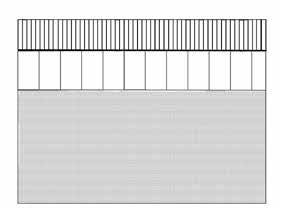
Paved Surface
A paved surface is constructed using bituminous concrete (asphalt), providing a smooth driving surface. It is typically used on roads with higher traffic volumes (VTrans recommends paving for roads with 500 or more cars per day). Proper subsurface preparation approved by a geotechnical and civil engineer is essential to ensure longevity and performance of a paved road.
Benefits
• Provides a smooth, stable surface for all users (vehicles, farm equipment, cyclists, and pedestrians).
• Reduces dust, sedimentation, and surface material erosion.
• Can accommodate pavement markings and rumble strips for improved safety.
Considerations
• Higher initial construction cost compared to unpaved roads.
• Requires proper subbase and drainage to prevent frost heaves, cracking, or potholes.
• Increases impervious surface area, potentially elevating stormwater runoff
• Contributes hot runoff into sensitive ecosystems
• Road salts negatively impact ecosystems and wildlife.
• Potentially increased traffic volume and speed.
• Same maintenance regime as other roads in town.
Maintenance
• Periodic crack sealing, patching, and surface tack coat overlays may be needed every 7 to 15 years. Frequency will increase if the surface becomes saturated or cracks due to freeze thaw conditions.
• Major repairs needed after 10 to 25 years (Vtrans).
• Inspections required to identify signs of pavement fatigue, edge erosion, or water damage.
Cost
• VTrans June 2025 Asphalt Price Adjustment $632/TON
• Surface Course (2") (item # 406.011), Bituminous Concrete Pavement, Type IS $109.43/ TON (Based on the 2023-2025, 2 Year Averaged Priced List published by Vermont Agency of Transportation)
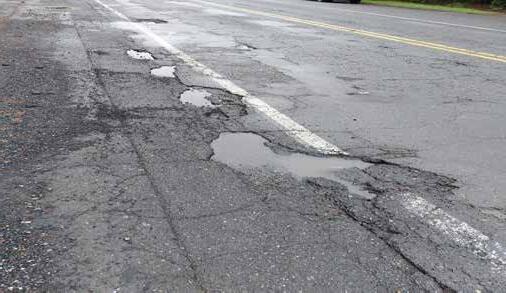
Potholes on Pond Road.
Potholes on a paved road.
Toolkit: Drainage Features
Road Structure & Drainage Design Techniques
To support any surface material, roads must be shaped and graded to shed water efficiently. The strategies below show different approaches to road shaping.
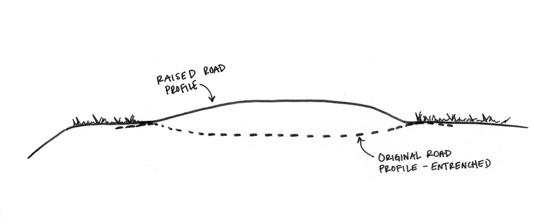
Raise Road Profile
Raising the road profile involves adding new material to elevate the road surface, especially in flood-prone or entrenched areas. This tool helps improve drainage and stability by lifting the road surface above saturated or unstable soils. A new road profile is often paired with new surface aggregate, cross culverts, underdrains, and roadside ditches.
Benefits
• Improves subsurface drainage.
• Creates opportunities for new drainage ditches.
• Reduces subbase water-related damage and long-term maintenance costs. Considerations
• Should be implemented before severe entrenchment occurs.
• Allow time for subbase materials to settle before final grading.
• Use in conjunction with underdrains and new culvert installations.
• Select proper fill materials to ensure stability and permeability
Maintenance
• Same as unpaved road.
Cross-Slope: Insloped
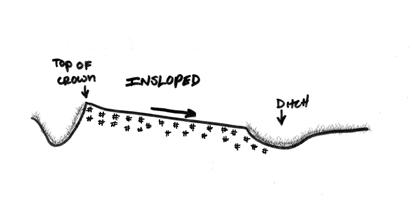
An insloped roadway is designed so that the road surface slopes inward, directing runoff toward a ditch or swale along the roadside. The typical slope is around 4%. This profile is most useful where slowing and treating runoff is critical such as near wetlands, steep slopes, or erosion-prone areas. Insloping is often paired with well-vegetated or stone-lined ditches. A minimum 100-foot transition zone should be used between road stretches with a centerline crown and a cross-sloped crown (FRCOG).
Benefits
• Directs runoff into swales or ditches for sediment removal and some pollutant removal.
• Helps protect adjacent wetlands and slopes from erosion.
• Can increase road stability in steep or sensitive areas.
• Compatible with vegetated swales and other stormwater features.
• Reduces surface material loss.
• Can extend the life of the road surface and reduce maintenance costs.
Considerations
• Requires well-maintained roadside ditches to function properly.
Maintenance
• Seasonal regrading: these sections are typically regraded to have a flat profile before winter to improve traction and sliding on ice.
• Spring regrading: the original inslope is re-established to restore proper drainage function.
• Remove berms after grading to prevent water from being trapped on the road surface.
Center Line Crown
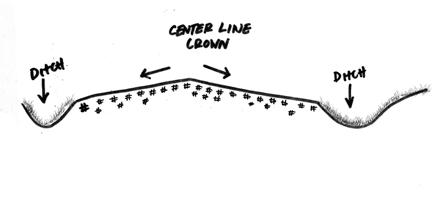
A crowned roadway is raised at the centerline and slopes outward toward both edges, typically at a 2–4% grade on each side. This crown design allows water to shed in either direction off the road surface into roadside ditches or swales, minimizing the risk of standing water on the road and surface damage. Crowned roadways are common on both gravel and paved roads, especially where drainage can be effectively managed on both sides. Proper grading is essential to maintain the crown shape and ensure efficient drainage. When well-maintained, this profile improves road longevity and reduces erosion.
Benefits
• Compatible with roadside ditches/swales and vegetated buffers.
• Improves road surface lifespan and reduces erosion if graded and maintained properly.
• Applicable to a wide variety of road types and conditions.
Considerations
• For centerline crowning greater than 4%, water will be shed more efficiently; however, steep lanes can encourage drivers to straddle the centerline.
• Surface course material must be considered: a mix of stone, sand and fine material is recommended in order to hold the shape and compaction to keep the proper shape of the road.
• Use of a scarifier may reduce potholes before first grading.
Maintenance
• Seasonal regrading: regrade before the winter plowing season.
• Remove berms after grading to prevent water from being trapped on the road surface.
• Monitor crown height.
Towards wetlands Road
Road Ditch
Ditch Ditch
Raised Road
Cross-slope
Center Crown
Toolkit: Drainage Features
Slow, Cool, and Infiltrate
Features to slow runoff, cool it and help it sink into the ground before reaching a waterbody
Vegetated/Grass-lined Swale
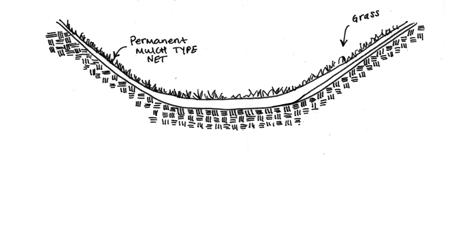
A vegetated roadside swale is a ditch designed to collect, convey, and treat stormwater runoff from roadways. Swales slow the flow of water, encouraging infiltration and the settling of pollutants, sediment, and debris. They are particularly suited to entrenched roads, areas near stream crossings, or adjacent to wetlands, where managing runoff volume and water quality is critical. Swales should be densely vegetated to stabilize soils and enhance treatment capacity.
Benefits
• Slows, cools, infiltrates, and disperses runoff.
• Allows pollutants, sediment, and debris to settle out of runoff.
• Can enhance biodiversity depending on chosen plant palette.
• Reduces downstream erosion.
Considerations
• Suitable for roads with a running slopes less than 5%.
• U-shaped swales are recommended.
• Ideal width: 3' to 4' if space allows.
• Maintain a minimum 2' distance from the swale bottom to the road shoulder.
• Design for major storm events to avoid overflow or bank failure.
• Seed with a native, biodiversity-supporting seed mix.
Maintenance
• Inspect regularly, especially after storm events.
• Look for erosion, sediment buildup, or collapsed banks.
• Remove debris or sediment that inhibits flow.
• Reseed any bare or eroded areas as needed.
Stone-lined Swale
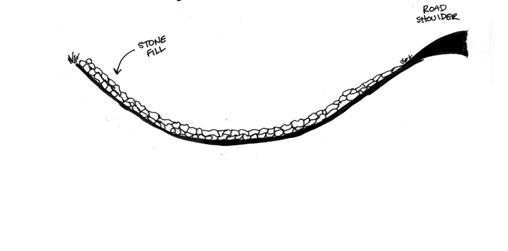
Stone-lined roadside swales are suitable where slopes are too steep for grass-lined ditches or swales. The ditches collect and convey stormwater runoff. The stones control and slow the flow of water.
Benefits
• Slows and disperses runoff.
• Allows pollutants, sediment, and debris to settle.
• Reduces downstream erosion.
Consideration
• U-shaped swales are recommended.
• Ditch depth to shoulder minimum of 12”.
• Design for major storm events to avoid overflow or bank failure.
• For road segments with slopes 8 to 10% use 6 to 8" diameter stone (FRCOG).
• For road segments with slopes >10% use 12" diameter stone (FRCOG).
• Ditches can be seeded with a fescue/grass mix (reduces maintenance of cleaning out ditch).
Maintenance
• Inspect regularly, especially after storm events.
• Look for erosion, sediment buildup, or collapsed banks.
• Remove debris or sediment that inhibits flow.
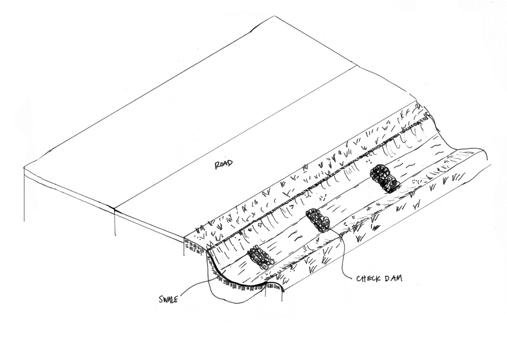
Check Dams
Check dams are stone barriers built across a roadside swale or ditch. The purpose of a check dam is to slow the velocity of stormwater runoff, reduce erosion, and encourage sediment to settle and infiltrate within the swale. These are particularly helpful in steeper sections of roadside drainage where water moves quickly.
Benefits
• Reduces flow velocity and erosion.
• Encourages sediment deposition, improving water quality.
• Extends the lifespan of vegetated swales.
• Low-cost and simple to construct.
Considerations
• Typically used for vegetated swales with 5 to 8% grade.
• Can be used in stone-lined ditches were additional velocity control is necessary.
• Space check dams at intervals to create a series of step-downs in elevation.
• Rocks must be large enough to stay in place during large storm events.
Maintenance
• Inspect after storm events.
• Remove accumulated sediment.
• Rebuild check dams as needed.
Toolkit: Drainage Features
Slow, Cool, and Infiltrate
Features to slow runoff, cool it and help it sink into the ground before reaching a waterbody
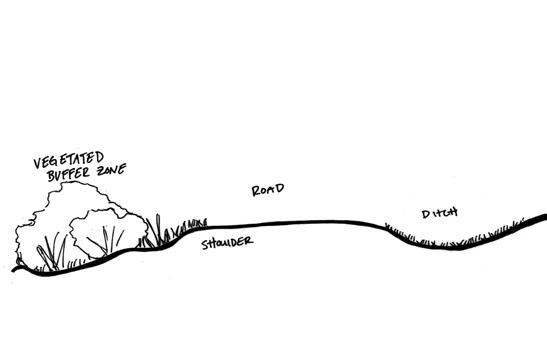
Vegetated Buffers
Vegetated buffers are vegetated areas that separate a road from a body of water. They are especially suited to areas along entrenched roads, areas near stream crossings, steep bank slopes, or areas adjacent to wetlands, where managing runoff volume and water quality is critical.
Benefits
• Provides erosion control and slope stabilization.
• Slows, cools, infiltrates, and disperses runoff.
• Increases biodiversity and habitat for wildlife.
• Slows the flow of water from the road and act as sediment traps.
Considerations
• Benefits of the buffer increase with width.
• Plant a mix of native grasses, herbaceous perennials, and shrubs to cover ground, provide habitat and stabilize soil.
Maintenance
• Remove unwanted vegetation.
• Inspect for signs of erosion.
• Replant or reseed areas if needed.
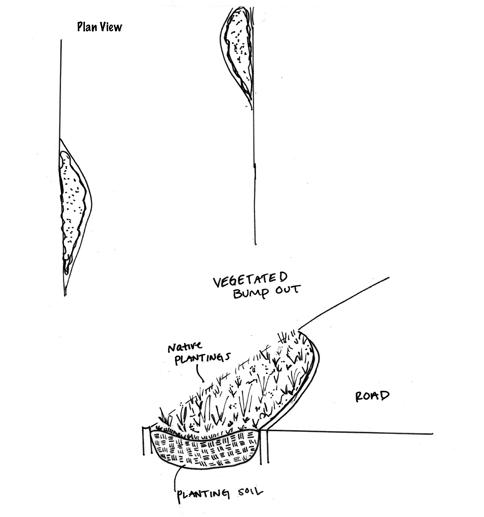
Vegetated Bump Out
A vegetated bump-out is a traffic calming and green infrastructure tool that extends into the roadway, narrowing the travel lane and encouraging drivers to slow down. These bump outs are excavated areas filled with planting soil and low vegetation. In addition to managing vehicle speed, they serve as stormwater management features, allowing water to infiltrate into the ground. Vegetated bump-outs are best used in locations with good visibility.
Benefits
• Slows traffic.
• Provides opportunity for stormwater infiltration.
• Enhances roadside aesthetics and ecological function. Considerations
• Low vegetation is necessary to maintain sightlines.
• Placement should account for snow plow routes and winter maintenance.
• If road has curbs, they should be designed with curb cuts or inlets to allow water flow in and out.
Maintenance
• Remove unwanted vegetation.
• Replant or reseed if needed.
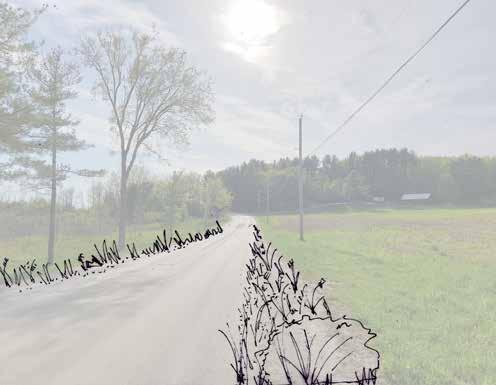
Vegetated buffer to cool, slow and help runoff infiltration into the ground, filtering it before entering a waterbody.
Vegetated Buffer
Vegetated Bump out
Toolkit: Drainage Features
Under-Road Drainage Features
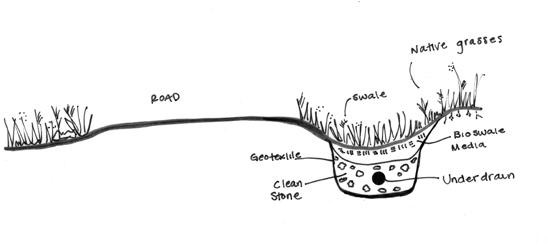
Underdrain
An underdrain is a subsurface drainage feature installed beneath a roadside ditch. The underdrain collects and redirects subsurface water to a surface outlet. It typically consists of a perforated pipe (usually 6” diameter), laid on a bed of stone and wrapped in geotextile fabric. This structure allows water to enter the pipe while keeping out sediment, helping to maintain the integrity of the road structure.
Benefits
• Improves subsurface drainage.
• Prevents water saturation on road shoulders and ditches.
• Keeps surface and subsurface water separate.
• Extends road life by reducing rutting and base layer saturation.
• Long service life.
Considerations
• Use in areas where road ditches have standing water.
• Use where road shoulders are wet, soft and rutting.
• Do not direct surface water runoff to underdrain.
• Requires a minimum 1% slope for proper drainage.
• Standard pipe diameter is 6”.
Maintenance
• None once installed.
French Mattress
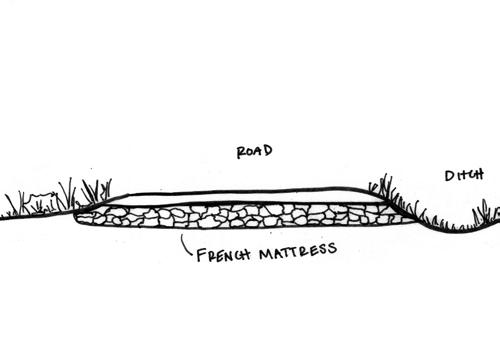
A French mattress is a subsurface drainage structure composed of clean, coarse rock wrapped in geotextile fabric, installed under the road surface. It allows water to move freely under the roadway, reducing saturation and stabilizing the road base. French mattresses are especially useful in wetland-adjacent areas or where traditional culverts may negatively impact hydrology. A French mattress is applicable for roads adjacent to wetlands, areas with high water tables, and road segments with saturated or unstable road bases.
Benefits
• Promotes subsurface water movement, reducing surface saturation.
• Maintains floodplain and wetland connectivity.
• Improves road stability.
• Alternative to culverts in sensitive wetland areas.
Considerations
• Best suited for high water-table locations.
• Must use clean, angular stone to ensure permeability.
• Sediment infiltration over time can reduce effectiveness.
Maintenance
• None once installed.
Culverts
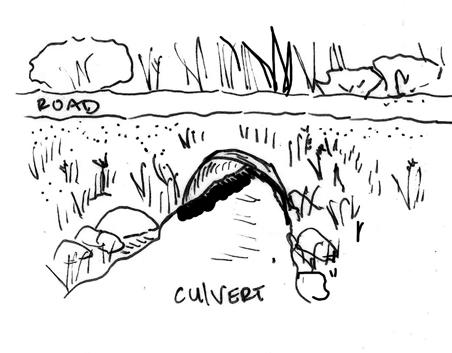
Culverts allow water to flow beneath a road. They convey stormwater runoff from one side of the road to the other and are commonly made from materials such as steel, aluminum, plastic, or concrete. In addition to managing stormwater, existing culverts can be retrofitted to support wildlife passage.
Benefits
• Directs and controls the flow of stormwater runoff.
• Helps preserve roadbed integrity by preventing water pooling and erosion.
• When designed appropriately, can support wildlife movement and reduce roadkill.
Considerations
• Proper sizing is critical to avoid flooding and road damage.
• Culverts should not discharge directly into streams or waterbodies
• Culverts should be designed with both hydraulic function and ecological connectivity in mind, where applicable.
Maintenance
• Inspect at least twice a year
• Check for clogging, structural damage, and sediment build-up.
• Remove debris to maintain proper flow.
• Replace culverts that are undersized or no longer functioning as intended.
Geotextile material
underdrain
French Mattress
Culvert
Toolkit: Wildlife Crossing Tools
Wildlife Culverts and Bridges
Wildlife must be able to move freely across the landscape for food, shelter, mating, and other resources. Roads, however, act as major barriers to wildlife movement. Without the ability to migrate, animal populations can not survive over time. In stream or wetland areas, it's best to use open-bottom crossing structures that keep the natural soil and water flow intact. When possible, these structures should be wide enough, at least 2 times the width of the stream at its full level (bankfull) to give animals a dry passageway. The following tools are designed to help preserve and restore safe wildlife movement along Pond Road. Wildlife crossing features were developed using guidance from Connecting Habitat Across New Jersey document (CHANJ).
Amphibian crossing structures
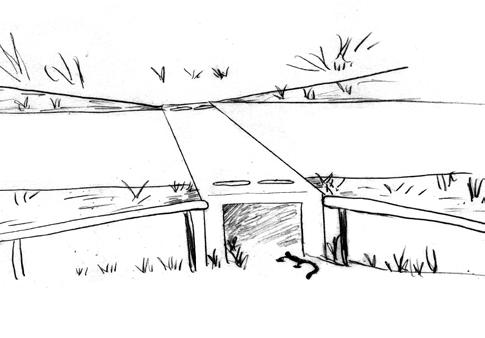
Amphibian crossing culverts can be open-bottom box culverts with a natural substrate bottom. This preserves soil moisture, temperature, and texture, all key elements for successful amphibian migration. Typical users include wood frogs, spring peepers, and spotted salamanders. These structures are most effective when installed at forest–wetland interfaces and paired with guiding walls/fences.
Considerations
• Open-bottom box culvert with natural substrate bottom, incorporate native plantings. Use native plantings, rocks, logs and soil within structure.
• Best if crossing structure is perpendicular to road and below road grade.
• Amphibians prefer crossing structures that are not too wet or too dry.
• Design drainage features that keep the passage clear of road runoff.
• For low mobility focused wildlife crossing structures the recommended width 2 feet; height 1.5 feet.
• Spacing: Max 200 feet apart.
• Fencing: Smooth, solid fence at least 1.5 ft tall with overhang; angled to guide movement.
• Grates: At each end for air flow and moisture control.
Maintenance
• Check before peak migration periods (early spring and fall)
• Remove debris and blockages, inspect and repair fencing, clear entrances.
• Monitor to track amphibian use.
Multi-species wildlife culverts
Multi-species crossings accommodate a broader range of animals, from amphibians to medium-sized mammals like raccoons, foxes, and bobcats. Structures are larger and allow for multi species movement (from low mobility to med/high mobility). The elevated shelf allows for wildlife to cross on the dry elevated side while the bottom can be wet allowing more hydrological connections.
Considerations
• Some species of wildlife prefer coverage will moving through open areas, incorporating logs, plantings or pvc tubes can be added for support/ encourage use by these species.
• Use native plantings, rocks, logs and soil within structure.
• Best if perpendicular to road, situated at base of slope below road grade.
• Box culvert with elevated shelf, dry shelf: elevated above high water line.
• Width 4–8 feet; height 3–4 feet.
• Spacing: Max 500 feet apart.
Maintenance
• Check before peak migration periods.
• Remove debris and blockages, inspect and repair fencing, clear entrances.
• Monitor to track wildlife use.
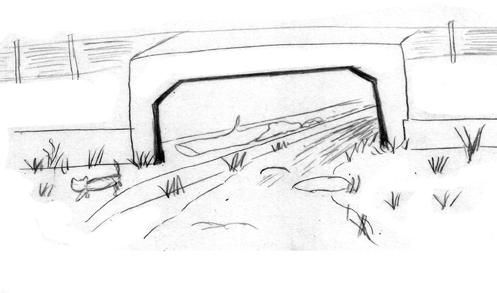
Bridges
A bridge provides vehicle circulation while allowing unimpeded wildlife travel. The elevated vehicle travel surface separates vehicle and wildlife travel patterns, reduces the possibility of wildlife presence on the travel lane and thus prevents wildlife road mortality, injuries and accidents. It does not require guiding walls to direct wildlife to specific crossing paths, and it accommodates all types of wildlife.
The travel surface is raised above the existing water level and floodplain, and could provide continued connection during flooding events. It allows for hydrological connections, and limits soil compaction and landscape manipulation.
A bridge could be single-lane or two-lane. The traveling surface, the deck of the bridge, could be perforated or solid, and of various materials.
Considerations
• Federal Highway Administration's (FHWA) Accelerated Bridge Construction approach suggests that pre-fabricated elements and systems are likely to incur less ecological impact during construction, take less time to install, have less impact on existing traffic, and might be easier to repair
• Slower speed could reduce the rate and extent of accidents. Traffic calming features could be helpful to reduce maintenance or repairs required due to accidents.
• A perforated deck could allow more light penetration for vegetation underneath and reduce winter road salt usage.
• A covered bridge could reduce precipitation accumulating on the traveling surface and reduce winter road salt usage.
• Pollutants and runoff from the bridge/vehicle would need mitigation management.
Maintenance
• Depending on the type of bridge, bridge maintenance might include cleaning, sweeping, vacuuming, and/or painting.
Suitable Locations
• High potential wildlife crossing areas
• Ecological sensitive area
• Flood prone area
• Stream crossing
Service Life
According to FHWA, the normal service life for a typical highway bridge is 75 years for non-replaceable components. The desired service life for paint and coating system is around 25 years, depending on the type.
Amphibian crossing culvert
Multi-species crossing culvert
Toolkit: Traffic Calming and Safety
Speed Table
Increasing traffic volume and speed both lead to increasing safety concerns and ecological impacts on Pond Road. In addition, traffic volume and speed also affect the wear and tear of the road and related maintenance. Slowing down traffic and keeping drivers' attention on the road could help reduce accidents, provide safer conditions for cyclists and pedestrians, and reduce the wear-and-tear on the road surface.
Traffic Volume Reduction Tools
Traffic volume might be impacted by factors such as increases in population, popularity of the amenities or attractions the road provides connections for, the comparative desirableness of the traveling experience, and the relative travel time the road requires. While population increases and the popularity of amenities are outside of the realm of control, it may still be possible to make Pond Road a less likely choice of travel. For example, many residents have commented about the potholes and other conditions of Pond Road serving as a helpful deterrent for through traffic. While it is not desirable to purposely make road conditions unsafe for travel, ideas for distinguishing Pond Road from other through roads could be explored. Some possibilities are:
Spectrum of "Closure"
1) Permanently close part of the road so it does not provide through traffic.
2) Restrict access to residents or permit holders only so it does not provide an easy through connection.
3) A special designation of the road and closing the road during certain time periods (e.g. only open during winter). This may help to create a "reputation" of the road as the one to use only for special occasions.
Increasing Travel Time and "Interruptions"
1) Increase the differences in speed limits between Pond Road and other east-west connecting roads. (I.e., lower the speed limit on Pond Road and increase the speed limit on other main east-west roads). Perhaps include a speed monitoring measure.
2) Introduce "interruptions" or unscheduled wait time in the travel experience, such as introducing stop signs or traffic lights.
3) Incorporating traffic calming tools which may discourage drivers.
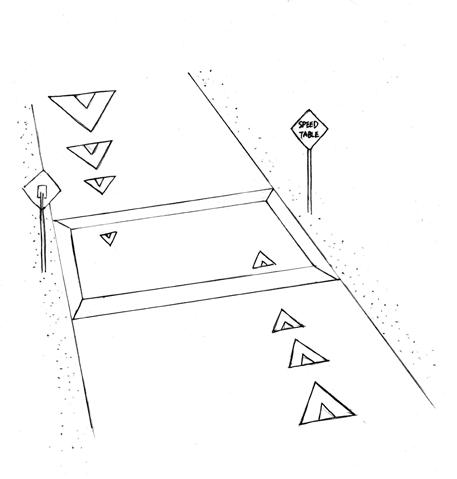
A speed table is a raised section of the road surface placed across the roadway that requires vehicles to slow down to pass through. It is designed to physically limit the speed at which a vehicle can traverse it. Unlike a speed hump, speed table has a long enough flat top (typically 10') to accommodate the entire wheelbase of most passenger cars. It also does not cause concerns for cyclists' safety and mobility. A typical speed table is about 3~3.5" high and 20~22" long in the direction of travel.
Considerations
• Positioned at a point along a long stretch of road with straight sightlines
• Might require extra attention during snow plowing operations.
• If the road does not have curbing, an obstruction such as signing, flexible delineator posts or bollards ma be acceptable to prevent a motorist from driving around the table. Potentially hazardous objects (e.g., rocks, boulders) should not be used.
• As single installation, there is little traffic diversion from the street. To reduce traffic volumes, series of installations would be needed.
• It produces less speed delay than for a speed hump, but has less jarring effect on long, stiff-bodied emergency service vehicles.
• Could only be applied to paved surfaces
Rumble Strips
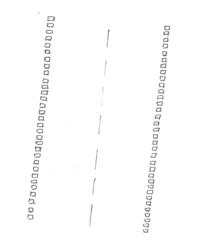
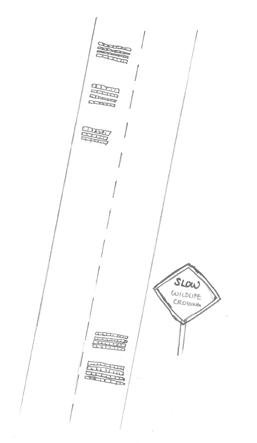
Detectable warning surface made of raised or grooved patterns on the roadway shoulder that provide both an audible warning (rumbling sound) and a physical vibration to alert drivers that they are leaving the lane. Using rumble strips could reduce the risks of run-off-road crashes. It could also encourage drivers to slow down when applied in series across the travel lane.
Considerations
• It can be applied along the edge or center of the road
• It can be placed in series across the travel lane in advance of areas require slower speed, such as pedestrian crossing, a curve, hidden driveway or ecological sensitive area.
• Milled-in rumble strips are typically more effective and easier to implement the dimension of the strip.
• Raised rumble strips might occasionally be scraped off during snow plowing operations. Milled rumble strips do not have this issue. (FHWA).
• Noise produced by vehicles going over rumble strips might impact wildlife and residents.
Rumble
Toolkit: Traffic Calming and Safety
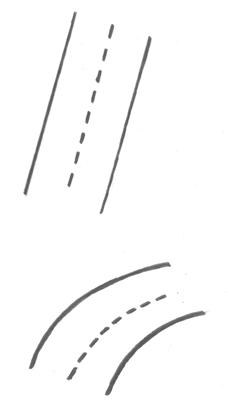
Lane Markings
Pavement markings for the travel lane, particularly centerlines and edgelines, provide visual cues for drivers to follow, increases attention to the road, and helps to keep vehicles in the lane. It could help reduce accidents, facilitate traffic, and prevent road width creep.
Considerations
• It can be applied when it is important to differentiate the area where the vehicle should be traveling on.
• Painted markings are only practical on paved surfaces. For un-paved surfaces, it might be possible to use chevron signs on the side of the road when there is a curve.
• According to a Federal Highway Administration report, the service life for pavement marking varies depending on pavement marking type, pavement surface, snowplow operations, traffic volumes, and climate. An estimate of the range of service life according to pavement marking material type is in the following table.
Pavement Marking Material Type Range of Service Life (Years)
Water-based paints 0.5 to 3.0
Alkyl-based paints 0.25 to 3.0
Epoxy 2.0 to 5.0
Paved Shoulder
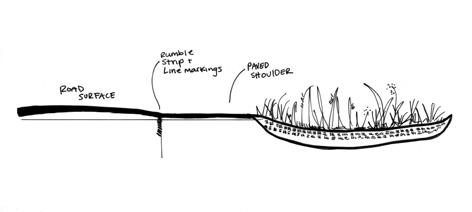
Paved shoulders are extensions of paved roadways that provide additional space for pedestrians and bicyclists. They are especially valuable in areas without sidewalks or dedicated bike lanes. Paved shoulders improve safety, and increase comfort for pedestrians.
Benefits
• Provides a space for bicyclists and pedestrians.
• Can function as emergency pull-off space or support for maintenance vehicles.
Considerations
• Recommended width of shoulder for posted speed 35 mph is 5 feet.
• Use of pavement markings, signage, or colored surfaces may impact rural character.
• Rumble strips should be located on the edge line or within a buffer zone that doesn’t reduce usable shoulder width.
• Colored or contrasting pavement materials can be used to distinguish shoulder space.
Maintenance
• No new maintenance beyond overall paved road upkeep (see paved road maintenance).
• Debris removal may be required to keep shoulders safe for use.
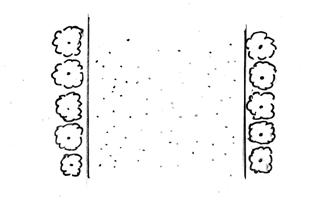
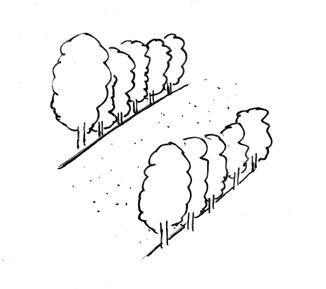
Vegetated Wind Breaks
Intentionally planted vegetation, such as trees and shrubs, along the side of the road. This could
• Provide visual narrowing of the road
• Reduce the spread of dust and pollutants
• Mitigate snow drift and wind
• Provide a buffer for habitat
• Mitigate the micro-climate and reduce the fluctuation between temperature extremes.
Considerations
• It can be implemented along open sections of the road that is exposed to wind and sun.
• It is important to choose the right plant at the right location to increase the success rate for the plantings.
• Planting should not obstruct drivers' sight line of the travel lane.
• Maintenance might be required to encourage healthy plant growth and reach the full effect of the buffer.
Lane Markings
Plan view vegetated wind breaks
Paved shoulder
Toolkit: Traffic Calming and Safety
Guard Rail
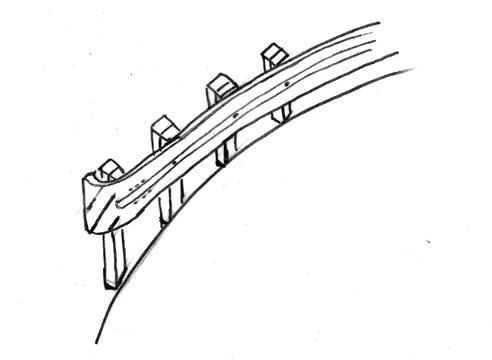
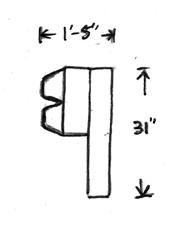
Guard rails are fencing infrastructure that physically and visually delineate the edge of the road and provides barriers for vehicles to crash into. It reduces the likelihood for vehicles to go off the edge of the road. It might also help increase driver attention and indirectly slow the traveling speed. A typical guardrail is 31" in height. Vermont transportation has specific requirements for different situations, such as guardrails on a bridge.
Considerations
• It can be placed where there is concern for vehicles leaving the road.
• It can be positioned along curves or where there are steep drops from the road surface.
• It can be positioned in areas where the roadside condition is sensitive to disturbance.
• Requires replacement when/if an accident that changes the integrity of the guard rail has occurred.
Convex Traffic Mirror
Convex traffic mirror provides wide-angle reflections at a corner that can encompass the full width of the road. It enables road users to anticipate hazards and avoid accidents. It can extend sight lines, reduce blindspots and provide advance visual warning.
Considerations
• It can be positioned where sightlines are limited by bending corners or blindspots.
• Proper alignment, position and sizing is required for it to be effective.
• Height of the mirror needs to be appropriate for both pedestrians and tall vehicles such as tractors.
Chevron Signs
Chevron signs are series of signs that provide visual cues for motorists when navigating turns. The signs could be directional or simply reflective. Their presence enhance the delineation of the curve, and can be applied regardless of road surface type. It does not provide a physical barrier as a guardrail would, however, it could provide strong visual cues.
Considerations
• It can be applied at a curve, especially when pavement markings are not practical.
• Reflective signs with no directional symbols could also be placed along sections of road that are straight but require more clear edge delineation.
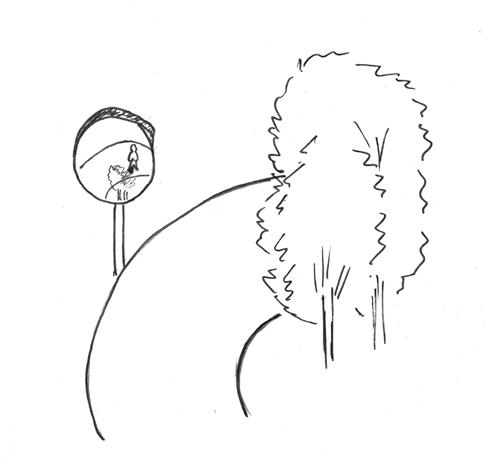
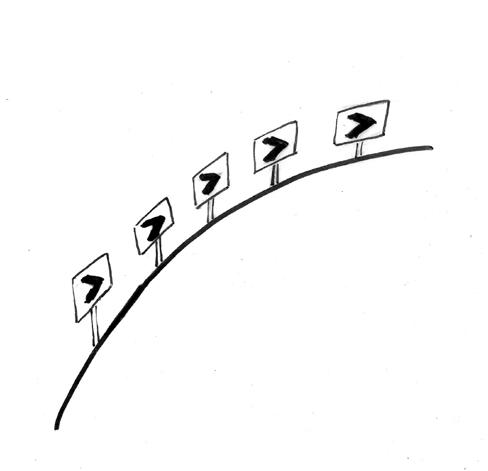
Toolkit: Placemaking
Taking a Different Look and Creating Legacy
Shelburne Pond and the areas surrounding it are ecologically and culturally special for the community of Shelburne, with various natural communities, archaeological findings, and local history.
Currently, though there are trails offering an experience of the upland natural communities, there is little safe access to more closely observe the wetland besides boating. Often people stop at the side of the road or drive slowly to do bird watching or enjoy the scenery, which could present a safety hazard. The features below create safe place-based experiences to highlight and enhance the ecological legacy of the area.
Observation Deck
A raised platform for observing nature. It could be open or provide cover from the weather elements. It could also be designed to provide a more subtle way to observe nature (such as habitat blinds). Benches could be added to offer rest for those who need it.
Benefits
• An elevated platform provides wider views without being obstructed by vegetation
• Observation platforms could be less intrusive for wildlife than trails into vegetated areas.
• An elevated platform could limit the areas that might undergo soil compaction due to use and reduce the impact on habitat.
Considerations
• It could be located adjacent wetland areas for wildlife/habitat viewing.
• A deck would need to be high enough to allow hydrological connectivity, light penetration, and vegetation growth to maintain natural wetland functions.
• Winter maintenance might be needed.
Boardwalk
Boardwalks are commonly incorporated into a trail system particularly at wetlands. They provide access to observe the wetland, such as birdwatching, with little interference with the wildlife. They can be shared by both pedestrians and cyclists.
Benefits
• Allows for unimpeded wildlife crossing (without requiring guiding walls) under the boardwalk. The height of the boardwalk would determine the size of the wildlife that could pass freely.
• Separates a path for pedestrians/cyclists from vehicles, which enhances safety
• Allows for hydrological connections
• Boardwalks could prevent soil compaction and reduce degradation of habitat.
Considerations
• It could be applied at high potential wildlife crossing areas, ecologically sensitive areas, or flood prone areas.
• The width of the boardwalk depends on location and anticipated volume of use, and a balance between safety, accessibility, and ecological footprint. It could be wider (10’) or narrower (6') to accommodate accessibility requirements for a two-way multimodal path.
• The deck could be solid or perforated. Perforated decks might require less winter maintenance, less runoff on solid surface, allow for light and precipitation to penetrate under the boardwalk.
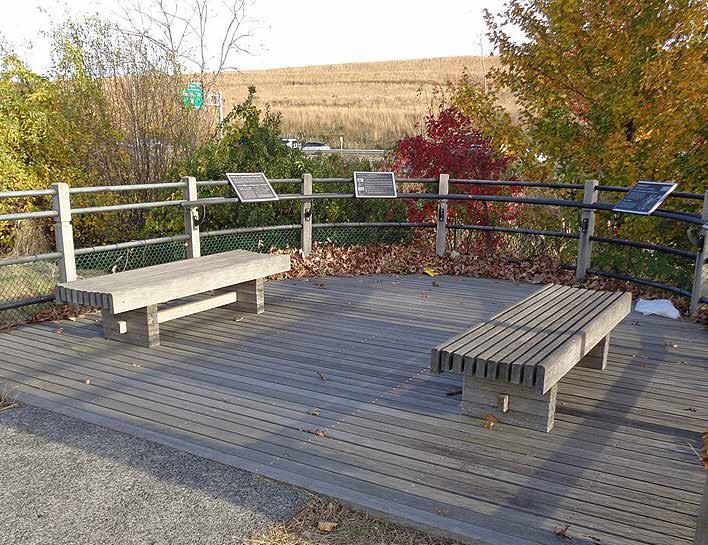
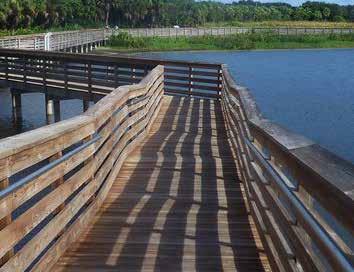
Infrastructure Conversion
Infrastructures may be built for a particular purpose originally, but as needs and priorities change, so can the infrastructure. Examples include old factories changed into lofts, power stations changed into museums, and rail lines or bridges changed to trails. Closing roads and converting it to shared multimodal paths is also a possibility, such as the Lincoln Creek Parkway Trail Conversion project in Milwaukee County, WI. Closing part of Pond Road to vehicle access and transforming it to a recreational trail could highlight and restore the areas' ecological communities, and creating a new legacy for Pond Road. There might also be opportunities to connect with other trails or recreational uses in the vicinity that together could offer more extensive and enriched outdoor recreational experience.
Benefits
• Provides a safe recreational opportunity for the public.
• Allows for open crossing for all wildlife (reducing vehicle-wildlife collision) and habitat restoration.
• Reduced road maintenance because vehicles no longer use road.
Considerations
• This can be applied at ecologically sensitive areas
• Winter trail maintenance might be needed.
• Alternative routes for vehicle circulation would need to be identified.
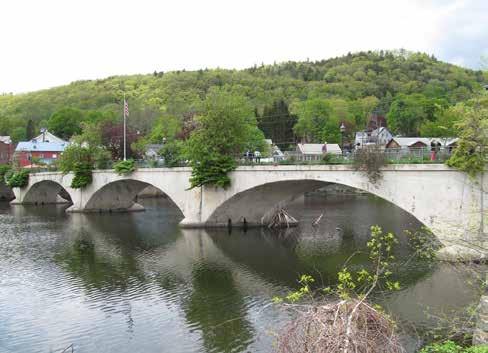
"Gateway Spring Creek Park53", Brooklyn by Tdorante10 is licensed under CC BY-SA 4.0. "Green Cay Nature Center & Wetlands - Boynton Beach, Florida" by Forest & Kim is licensed under CC BY 2.0.
"Bridge of Flowers - Shelburne Falls, Massachusetts" by Dougtone is licensed under CC BY-SA 2.0.
Conceptual Design Template 1
The following section includes conceptual designs that show how features discussed in the toolkit can be applied.
Comparison Tool Bars
To prompt conversations about trade-offs between ecological health, safety and maintenance requirements, each conceptual design pages uses a comparison bar.
This design features a 20-foot-wide travel lane with a pitched slope directing runoff toward one side of the road. 2-foot wide vegetated buffers and a 5 footwide vegetated swale are placed on the downslope side to capture, cool and infiltrate stormwater. A 6-foot pedestrian gravel path runs parallel to the roadway. A 2-foot vegetated buffer separates the pedestrian pathway from vehicle travel, enhancing safety. This design requires several types of maintenance to function properly. Regular upkeep of the pathway is necessary to keep it clear and accessible for users. Additionally, the swales and vegetated buffers will require mowing once a year to function ecologically and keep clear sightlines for drivers. Best management practices will be required to keep the gravel road surface preserved, safe, and enjoyable for all users.
Key Features
• Pitched road surface (4%) directing runoff toward a vegetated buffer and swale.
• 20’ wide road (to encourage slower vehicle speeds).
• 6’ wide gravel pedestrian/bike pathway (for pedestrian safety).
• Stormwater Infiltration: a 2-foot wide vegetated buffer and a 5-foot wide vegetated swale to promote infiltration and reduce runoff.
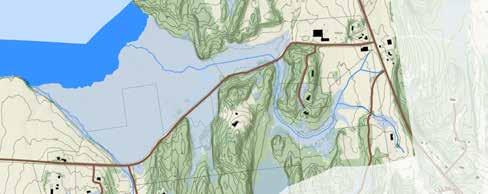
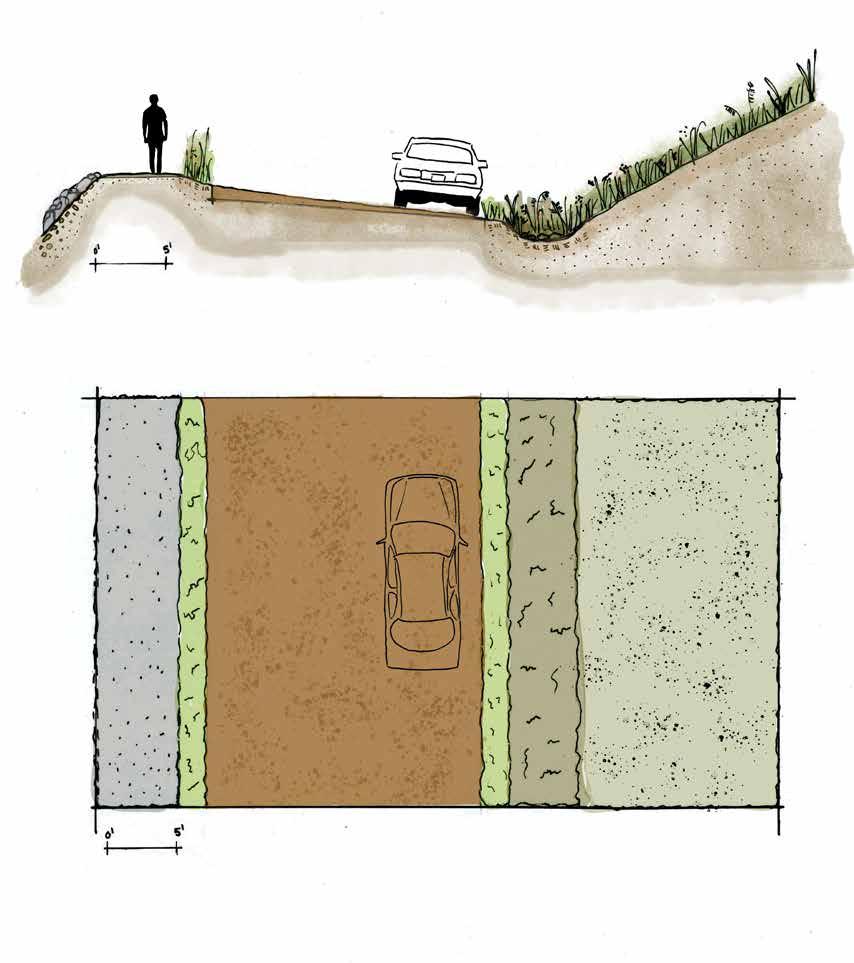
Conceptual Design Template 2
In this design, travel lanes are standardized to 10 feet in each direction, creating room for 5-foot-wide vegetated swales on both sides of the road. These swales slow, cool, and filter runoff, allowing pollutants and sediment to settle out before entering sensitive ecosystems. Excavated material forms the berms; the sides of the berms could be reinforced with stone if necessary. The swales are planted with deep-rooted native vegetation to maximize infiltration and pollutant capture. Where site conditions allow, a hedgerow helps control dust and erosion. Hedgerows also serve as visual aids for drivers, providing visual interest especially in locations with expansive views. A separate pedestrian walkway is not incorporated in this design, resulting in a lower safety score. The maintenance for this design requires yearly mowing of the vegetated swales and buffers. Standard gravel maintenance is necessary.
Key Features
• Centerline-crowned road at 2% grade directs runoff to swales.
• 2 foot wide vegetated buffer shoulder on both sides.
• Stormwater infiltration: 3 and 5-foot wide vegetated swales on the side of the roadway.
• Stone-lined shoulder for edge stabilization and erosion control (12” stone size).
• 20-foot road (to encourage slower vehicle speeds).
• Stormwater infiltration: vegetated swales and vegetated buffers on both sides.
• Hedgerow for dust, erosion control, visual aid for drivers.
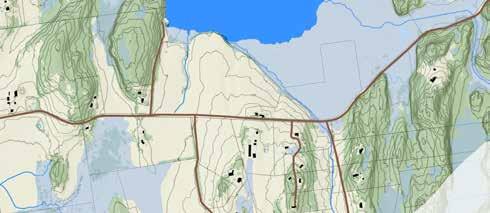
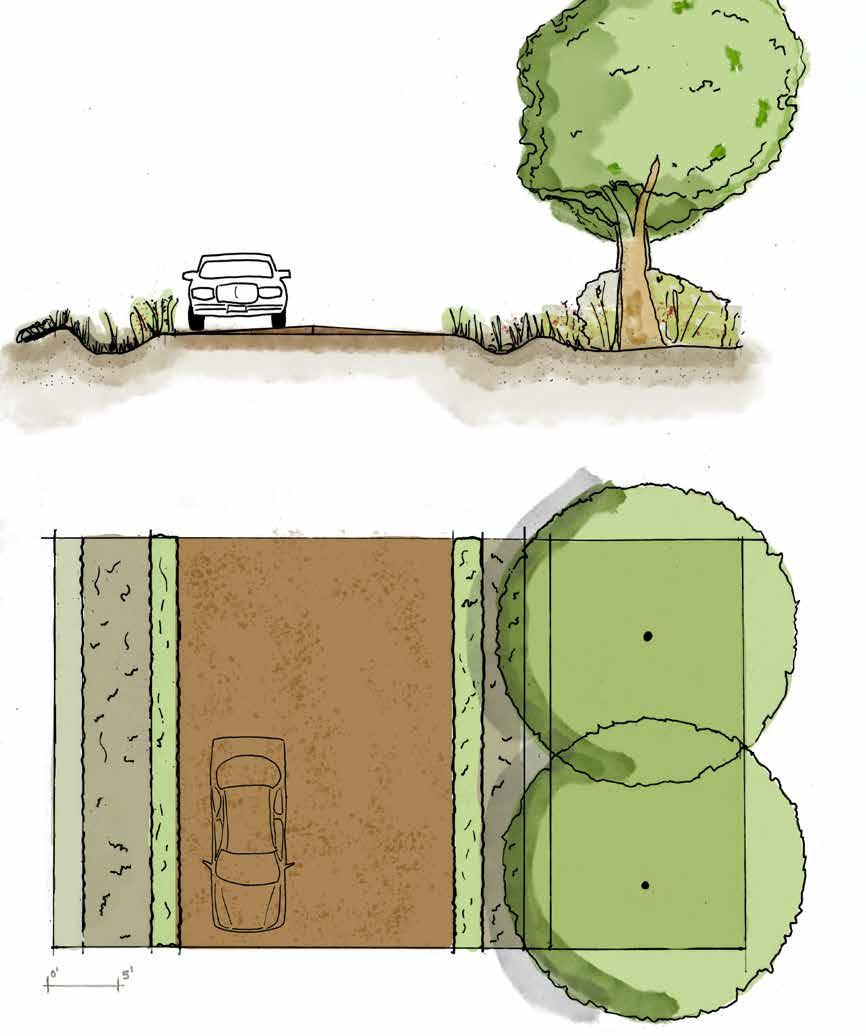
Conceptual Design Template 3
This design features a fully paved 20-foot-wide travel way with 5-foot paved shoulders on both sides to accommodate both cyclists and pullover space. Rumble strips line the edges of the travel lanes.
Beyond the paved shoulders, 4 to 5-foot-wide vegetated swales are designed to slow, cool and filter stormwater runoff, helping to mitigate the environmental impacts associated with increased impervious surface. A separate 3-footwide crushed stone path provides a dedicated space for pedestrians, further separated from the roadway by the vegetated swales, enhancing both safety and ecological function. The design scores high in safety due to its clear separation of users, use of rumble strips, guardrails, and pavement markings.
Guardrails are strategically placed in high-risk areas, such as around sharp curves, and pavement markings clearly delineate travel lanes. While the paved surface introduces concerns related to stormwater quality such as hot runoff and road salt pollution, the vegetated buffers and swales help reduce these impacts. From a maintenance standpoint, this road surface type likely requires less maintenance than gravel. However, there may not be room for the swales, shoulders and path in all segments of Pond Road. Faster vehicle speeds on pavement could lead to more wildlife impacts
Key Features
• Paved travel lanes and shoulder.
• 20-foot road to encourage slower vehicle speeds.
• 5-foot wide vegetated swales and 4-foot wide vegetated buffers to cool, manage, and infiltrate runoff.
• 3-foot wide walkway that periodically extends out to 5-foot rest points.
• 5-foot wide paved shoulder
• Rumble strips, lane paintings and guardrails for enhanced safety
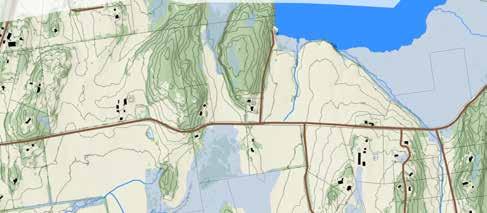
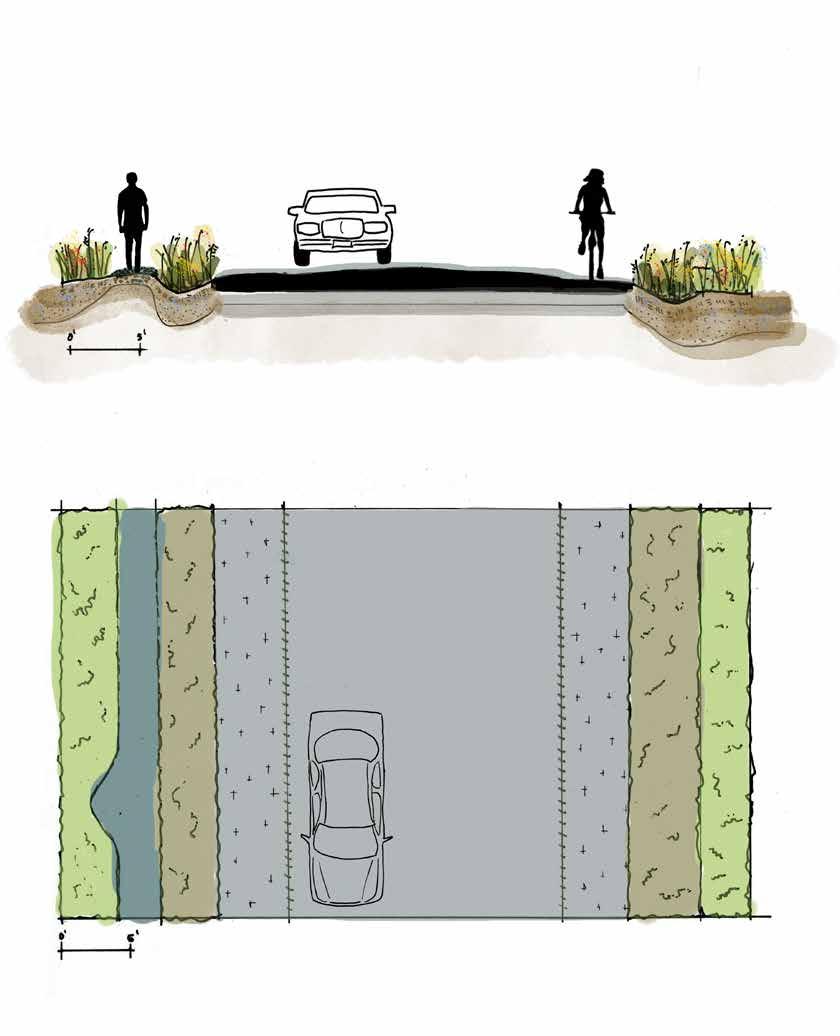
Conceptual Design Template 4
To address speeding and improve traffic safety, this conceptual design narrows the travel ways to 22-feet and 18-feet, with vegetated bump-outs that visually reduce the lane width to 9-feet. These bump-outs serve a dual purpose, they calm traffic and function as stormwater infiltration. Changes in vegetation at bump-out locations act as visual cues, prompting drivers to reduce speed. This design scores highly for safety because of the lane narrowing and visual cues from bump-outs effectively reducing vehicle speeds. The maintenance schedule for the paved surface aligns with that for other roads in town. The maintenance however does increase with the necessary annual mowing and care for the bump outs and buffers. The increase of vegetation along the roadside creates biodiversity and adds habitat value.
Key Features
• Travel way varies from 22-feet to 18-feet
• Vegetated bump-outs slow, cool, and infiltrate stormwater and serve as visual traffic-calming elements.
• Visual cues such as vegetation or stone walls to slow, prompt drivers to slow down before the bump outs with veg changes or stone walls
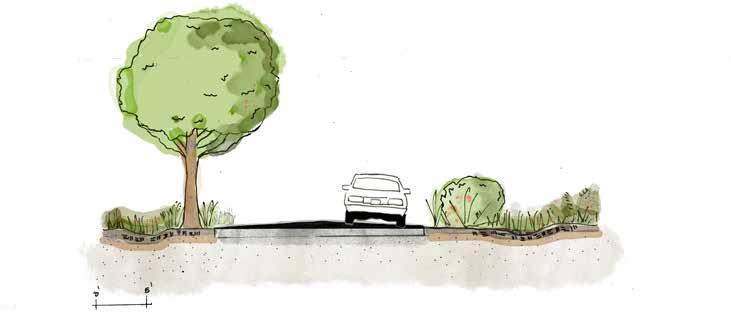
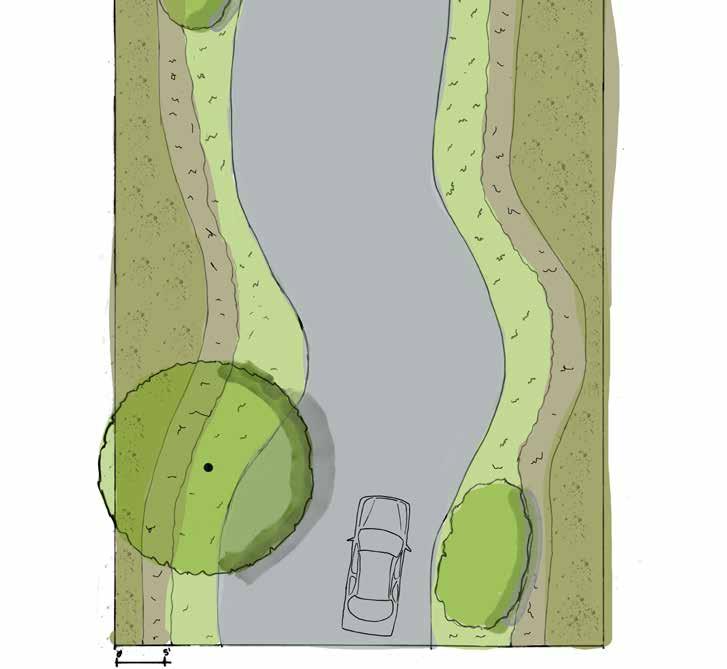
Design template 4 can be applied to many locations along Pond Road. The box highlights one area where this design could be applied.
Character Zone 3 Alternative: Bridging Differences
Being mindful of the fact that this section of Pond Road is part of the floodplain, this alternative incorporates bridges to reduce the conflict between humans and wildlife while still maintaining connectivity for both humans, wildlife, and water.
This includes a one-lane bridge covering most of this section of Pond Road over the wetland area, approximately 3,600 ft (0.68 mile) in length. Sensorcontrolled traffic signals are used to facilitate traffic flow for the long bridge. The one-lane travel lane is chosen for its potential to reduce through traffic volume. Since vehicles may be required to stop and wait for its turn to travel on the one-lane bridge, travel time may increase and might reduce through travels and the narrow lane might help with regulating speed.
Besides vehicular use, the bridge also has a multimodal boardwalk for pedestrians and cyclists. In addition, it includes multiple look-out platforms with benches to provide opportunities for pedestrians and cyclists to safely stop and enjoy the scenery or for scientific observations.
To reduce and mitigate pollutants:
• Perforated decks eliminate the use of road salt during winter, and disperse runoff.
• Grates over vegetated swales placed at each end of the bridge reduce salt and debris that vehicles might carry from elsewhere into the wetland area.
• A constructed wetland and vegetated swales underneath the bridge process and stabilize pollutants and runoff, and traps debris. Care is given to mimic the surrounding natural communities and wetland.
• Due to the potential amount of sediment that might be released if the existing road is to be removed, where it does not obstruct the bridge construction, the existing road infrastructure would remain as is. It is incorporated in the constructed wetland, planted with vegetation and function as vegetated buffer for the surrounding wetland.
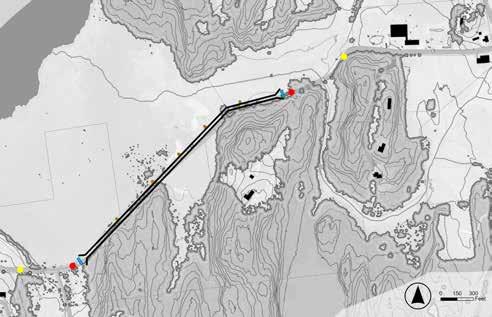
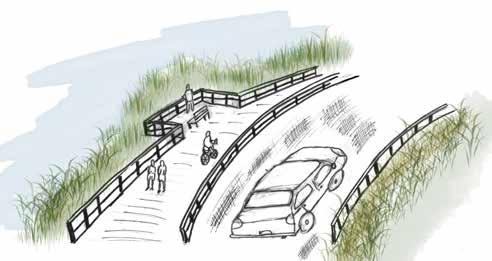
Key Features
• One vehicle travel lane 11’-14’ wide
• One 2’ wide buffer strip for safety barrier (such as guardrails) placed between vehicle lane and boardwalk.
• One 10’ wide multimodal bike/pedestrian shared boardwalk on the north side.
• Multiple strategically located observation platforms for pedestrians
• Traffic control signal system with sensors
• Pollutant mitigation measures:
¤ Perforated deck
¤ Grating
¤ Vegetated swale
¤ Constructed wetland
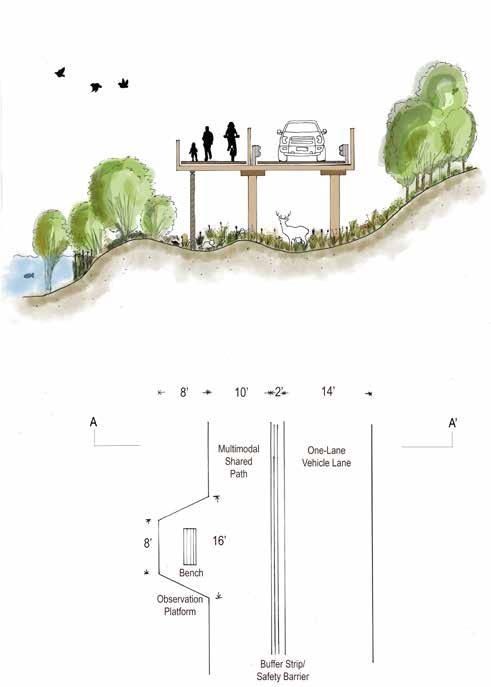
Observation Decks
Single-Lane Bridge Traffic Control Signals Gratings
Perspective sketch NTS.
Section A-A'
Character Zone 3 Alternative: Designated Eco-Pathway
This alternative prioritizes protecting the ecological health of the wetlands along Pond Road by closing a portion of it to through vehicular traffic but remaining open for pedestrian and cyclist use. This could promote recreational opportunities in the Town of Shelburne and enhance quality of life for both human and wildlife. Closing a section of the road also reduces traffic volume for the remaining of Pond road, and reduces the maintenance required.
To minimize the impact of the disruption of road closure, the road is only closed to through traffic between Frog’s End Road on the west and the private driveway on the east, keeping at least one connection to main roads for local residents. Gates with locks at both ends of the closed section allow farming operations to continue and provide emergency vehicle access.
To facilitate shared use with farming equipment or emergency vehicles, convex traffic mirrors would be installed at blind-spots and curves. Signs at the entrances and periodically through the trail remind users of the shared use and precaution.
Signs at multiple locations to the west and east of the road closure provide drivers with advance warning to reduce the amount of traffic that might have to turn around.
Kiosks close to the entrances share ecological information about the area and public notices for education and communication purposes. Benches positioned periodically along the length of the path provide resting spots. There would be limited accessible parking at both entrances. Additional parking could be available at the existing UVM boat launch area.
The winding nature of the existing road offers a variety of views, which is desirable for trail experiences. Connections to nearby trails (such as the H. Laurence Archilles Natural Area Trails), snowmobile trails and bike lanes could enhance the overall recreational experience in the area.
Principles of good trail building and maintenance practices, such as grade reversals/breaks to shed water, are used to enhance the service life and user experience of the trail, as well as reduce the maintenance required in the long term.
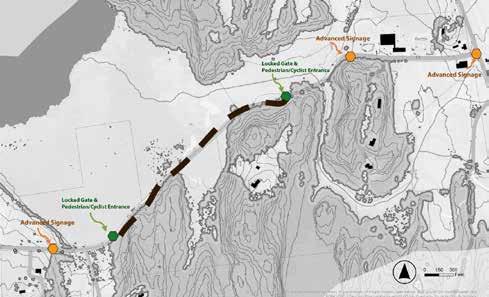
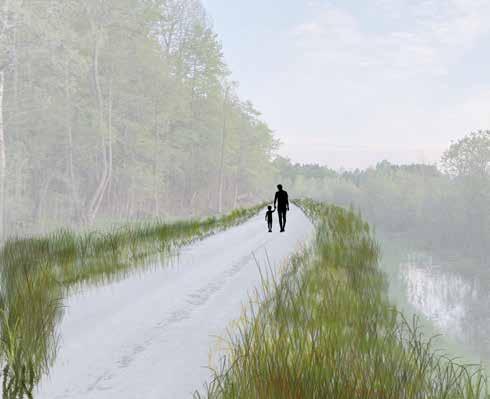
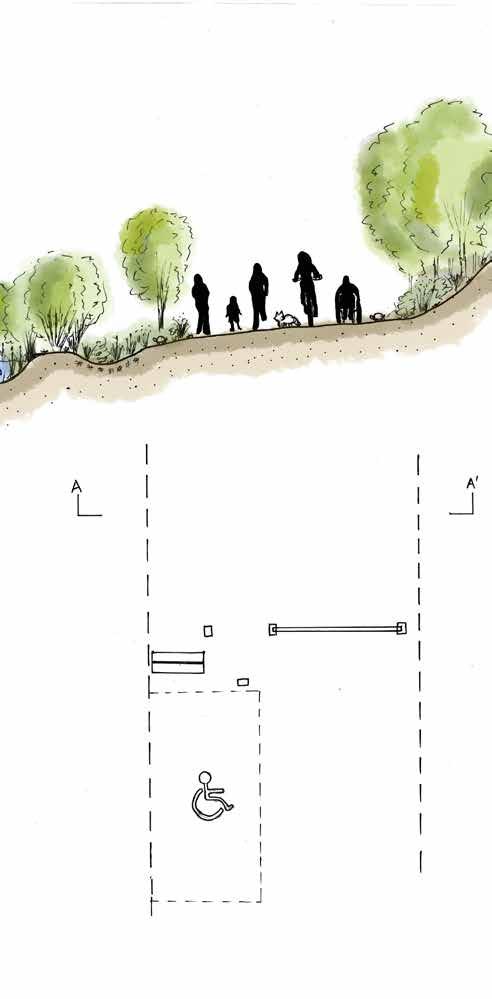
Plant List: References From Nature
The following plant lists are to help curate the vegetations for vegetated ditches and buffer. The approach of "the right plant in the right place" is the basic foundation for successful plantings.
The best way to see which plants are suitable for a location is by referencing the existing plant communities. The following plants are identified by Vermont Fish and Wildlife as characteristic of the natural communities present in alder swamp, cattail marsh, and red maple-black ash seepage swamp, which are the communities closest to the section of Pond Road that bisects the wetland. For areas that do not resemble these natural communities or planting conditions, please refer to other resources that would include plants that would be more appropriate for the context, such as the native plant lists provided by the Lake Champlain Sea Grant Institute.
Red Maple-Black Ash Seepage Swamp
Trees and Shrubs
Scientific Name Common Name
Acer rubrum Red maple
Alnus incana Speckled alder
Betula alleghaniensis Yellow birch
Carpinus caroliniana Musclewood
Fraxinus nigra Black ash
Ilex verticillata Winterberry holly
Lindera benzoin Spicebush
Pinus strobus White pine
Rubus pubescens Dwarf raspberry
Alder Swamp
Trees and Shrubs
Scientific Name Common Name
Acer rubrum Red maple
Alnus incana Speckled alder
Alnus serrulata Smooth alder
Cornus amomum Silky dogwood
Cornus sericea Red-osier dogwood
Salix bebbiana Bebb’s willow
Salix discolor Common pussy willow
Salix eriocephala Woolly-headed willow
Salix sericea Silky willow
Toxicodendron vernix Poison sumac
Viburnum dentatum Arrowwood
Viburnum nudum var. cassinoides Wild raisin
Herbaceous Plants
Scientific Name Common Name
Calamagrostis canadensis Bluejoint grass
Carex comosa Bristly sedge
Carex stricta Tussock sedge
Carex trisperma Three-seeded sedge
Eutrochium maculatum Joe-pye weed
Glyceria canadensis Canada mannagrass
Glyceria striata Fowl mannagrass
Onoclea sensibilis Sensitive fern
Osmundastrum cinnamomeum Cinnamon fern
Symphyotrichum puniceum Purple-stemmed aster
Toxicodendron vernix Poison-sumac
Tsuga canadensis Eastern hemlock
Ulmus americana American elm
Vaccinium corymbosum Highbush blueberry
Viburnum dentatum Arrowwood
Herbaceous Plants
Scientific Name Common Name
Carex leptalea Bristle-stalked sedge
Chrysosplenium americanum Golden saxifrage
Coptis trifolia Goldthread
Cypripedium parviflorum var. makasin Small yellow-lady’s slipper
Dryopteris cristata Crested woodfern
Geum rivale Water avens
Glyceria melicaria Northeastern manna grass
Glyceria striata Fowl manna grass
Impatiens capensis Common jewelweed
Lonicera oblongifolia Swamp fly-honeysuckle
Maianthemum canadense Canada mayflower
Malaxis monophyllos var. brachypoda White adder’s-mouth
Micranthes pensylvanica Swamp saxifrage
Mitella nuda Naked mitrewort
Onoclea sensibilis Sensitive fern
Osmunda regalis Royal fern
Osmundastrum cinnamomeum Cinnamon fern
Petasites frigidus var. palmatus Sweet colt’s-foot
Thelypteris palustris Marsh fern
Tiarella cordifolia Foamflower
Cattail Swamp
Herbaceous Plants
Scientific Name Common Name
Asclepias incarnata Swamp milkweed
Bolboschoenus fluviatilis River bulrush
Cicuta bulbifera Bulb-bearing water hemlock
Cicuta maculata Spotted water hemlock
Equisetum fluviatile Water horsetail
Lemna minor Common duckweed
Lycopus americanus American water horehound
Lycopus uniflorus Northern bugleweed
Mimulus ringens Monkey-flower
Pontederia cordata Pickerelweed
Schoenoplectus acutus Hard-stem bulrush
Schoenoplectus tabernaemontani Soft-stem bulrush
Scirpus cyperinus Woolgrass
Sium suave Water parsnip
Sparganium eurycarpum Giant bur-reed
Typha angustifolia Narrow-leaved cattail
Zizania aquatica Southern wild rice
Note: Below are species to AVOID because of their aggressiveness in outcompeting native species.
Butomus umbellatus (Flowering rush)
· Typha ×glauca (Hybrid cattail)
Phragmites australis ssp. australis (Phragmites)
· Lythrum salicaria (Purple loosestrife)
Plant List: Phytotechnology
"Phytotechnology is the use of vegetation to remediate, contain or prevent contaminants in soils, sediments and groundwater, and/or add nutrients, porosity and organic matter." (Kirkwood and Kennen)
Phytotechnolgy techniques are contaminant specific. The first step in deciding if phytotechnology systems may be applicable is to consider the types of pollutants and whether they are organic or inorganic.
Organic pollutants refer to compounds that typically contain bonds of carbon, oxygen and nitrogen, and can often be degraded by plants and associated root microbes into nontoxic parts. Petroleum hydrocarbons, such as oil, gasoline, and pesticides are in this category. An ideal phytotechnology treatment for organic pollutants could be where the pollutant is degraded by the plants and there is no need to harvest the plants.
Inorganic pollutants are naturally occurring elements, such as lead, arsenic and salt that are released through human activities, and cannot be degraded and destroyed. However, in some cases, they can be taken up and extracted by plants, where the plants must be cut down or harvested to remove the pollutants from a site.
The pollutants associated with roads include both organic and inorganic compounds, thus a diversity of plants would be helpful to mitigate their impact to the environment. Among the diversity of pollutants associated with roads, the dominant concerns are salts (such as sodium chloride, calcium chloride, magnesium chloride, and potassium chloride) and petroleum hydrocarbons. The adjacent agriculture uses around Pond Road and Shelburne Pond may also have excess fertilizer and pesticide runoff requiring mitigation to reduce the ecological impacts.
The following plant lists are adapted from "Phyto: Principles and resources for site remediation and landscape design" by Kirkwood and Kennen, that would survive in the Plant Hardiness Zone 5a, which the Town of Shelburne is part of.
Salt Tolerant Plant List
Currently, the most effective treatment for soils with high salt content is to reestablish vegetation and keep the salt on site (i.e. phytostabilization). This can be achieved with using salt-tolerant plants to establish a vegetative cover. Some salt tolerant plants that would take up salt and may be useful for phytoextraction are in the following genera:
Atriplex,
· Brassica, Helianthus,
· Pelargonium,
· Pinus,
· Salicornia, and
· Thlapsi.
For a more extensive list of salt-tolerant plants that are also natives in the area, please refer to the "Salt Tolerant Plants: Northeast Natives" resource provided by the Lake Champlain Sea Grant Institute.
Petroleum Degradation Plant List
Herbaceous Plants
Scientific Name
Common Name
Andropogon geradii Blue bluestem
Bouteloua curtipendula Side Oats Grass
Bouteloua dactyloides Buffalo Grass
Bouteloua gracilis Blue Grama
Carex cephalophora Ovalhead Sedge
Carex stricta Sedge
Elymus canadensis Canada Wild-Rye
Elymus hystrix Bottlebrush Grass
Festuca rubra Red Fescue
Panicum virgatum Switchgrass
Pascopyrum smithii (syn. Agropyron smithii) Western Wheatgrass
Sagittaria latifolia Arrowhead
Sorghastrum nutans Indiangrass
Spartina pectinata Prairie Cordgrass
Trifolium spp. Clover
Tripsacum dactyloides Eastern Gamagrass
Zea mays Corn
Helianthus annuus Sunflower
Wetland Plants
Scientific Name
Juncus effusus
Common Name
Common Rush
Schoenoplectus lacustris Bulrush
Scirpus atrovirens Green Bulrush
Scirpus maritimus Alkali Bulrush
In general, the following family and genera of plants may provide similar ecosystem functions in addressing petroleum related pollutants.
· Fabaceae (Legumes)
Festuca spp. (Fescue)
· Poaceae (Grasses)
Populus spp. (Poplar species and hybrids)
· Salix spp. (Willow)
· Solidago spp. (Goldenrod)
· Typha spp. (Cattail)
Pesticide Degradation and Hydraulic Control Plant List
Herbaceous Plants
Scientific Name Common Name
Andropogon geradi Big Bluestem
Ceratophyllum demersum Coontail
Iris versicolor Blue Flag Iris
Panicum virgatum Switchgrass
Sorghastrum nutans var. Holt Yellow Indiangrass
Tripsacum dactyloides Eastern Gamagrass
Zea mays Corn
Wetland Plants
Scientific Name Common Name
Elodea candensis Pondweed
Lemna minor Duckweed
In general, the following genera of plants may provide similar ecosystem functions in addressing pesticide contaiminants.
Iris spp. (Iris)
· Linum spp. (Flax)
· Populus spp. (Poplar species and hybrids)
· Salix spp. (Willow)
· Typha spp. (Cattail)
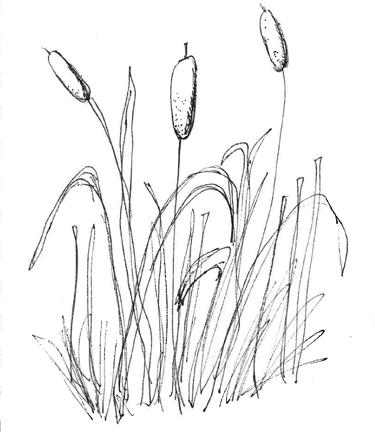
• “2 Year Averaged Priced List, July 2023 - July 2025, Standard Specifications for Construction.” Cost Estimating, Vermont Agency of Transportation, vtrans.vermont.gov/sites/aot/files/estimating/documents/2yr_Average_Prices_2025.pdf. Accessed Spring 2025.
• “3.12 Speed Table.” Module 3: Toolbox of Individual Traffic Calming Measures Part 2, U.S. Department of Transportation/Federal Highway Administration, www.fhwa.dot.gov/bridge/preservation/docs/hif22052. pdfhttps://highways.dot.gov/safety/speed-management/traffic-calming-eprimer/module-3-part-2#3.12. Accessed Spring 2025.
• Accelerated Bridge Construction, U.S. Department of Transportation/Federal Highway Administration, Apr. 2021, www.fhwa.dot.gov/bridge/abc/.
• “Alder Swamp.” Vermont Fish & Wildlife Department, Vermont Agency of Natural Resources, www. vtfishandwildlife.com/conserve/conservation-planning/natural-community-fact-sheets/alder-swamp. Accessed Spring 2025.
• Arrowwood Environmental. Shelburne Forest Blocks and Priority Ecological Corridors, Town of Shelburne, Feb. 2025, shelburnevt.org/DocumentCenter/View/7277/Arrowwood-Report-February-2025.
• Arrowwood Environmental, LLC. Town of Shelburne, Vermont, Forest Habitat Block Assessment & Ranking, Town of Shelburne, Feb. 2023. PDF file.
• “Cattail Marsh.” Vermont Fish & Wildlife Department, Vermont Agency of Natural Resources, www. vtfishandwildlife.com/conserve/conservation-planning/natural-community-fact-sheets/cattail-marsh. Accessed Spring 2025.
• Coffin, Alisa W., et al. “The Ecology of Rural Roads: Effects, Management, and Research.” Issues In Ecology, Report No. 23, The Ecological Society of America, Summer 2021, esa.org/wp-content/ uploads/2021/06/IIE_24-Rural-Roads.pdf.
• Federal Highway Administration. Longitudinal Rumble Strips and Stripes on Two-Lane Roads. U.S. Department of Transportation, 2021, highways.dot.gov/safety/proven-safety-countermeasures/longitudinalrumble-strips-and-stripes-two-lane-roads. Accessed Spring 2025.
• Federal Highway Administration. Safety. U.S. Department of Transportation, highways.dot.gov/safety. Accessed Spring 2025.
• Federal Highway Administration. Small Town and Rural Multimodal Networks. U.S. Department of Transportation, Publication No. FHWA-HEP-17-024, 2016. PDF file.
• Federal Highway Administration. Traffic Calming E-Primer: Module 3, Part 2. U.S. Department of Transportation, https://highways.dot.gov/safety/speed-management/traffic-calming-eprimer/module-3part-2#3.12.
• Franklin Regional Council of Governments. Unpaved Roads Stormwater Management Toolkit. Franklin Regional Council of Governments, 7 Oct. 2024. PDF file.
• Forman, Richard T. T. Road Ecology: Science and Solutions. Island Press, 2013.
• Jacobson, Sandra L., Leslie L. Bliss-Ketchum, Catherine E. de Rivera, Winston P. Smith, and D. P. C. Peters. “A Behavior-Based Framework for Assessing Barrier Effects to Wildlife from Vehicle Traffic Volume.” Ecosphere, vol. 7, no. 4, 2016, article e01345, https://doi.org/10.1002/ecs2.1345.
• Kennen, Kate, and Niall Kirkwood. Phyto: Principles and Resources for Site Remediation and Landscape Design. Routledge, 2017.
• “Lake and Basin Facts.” About the Basin, Lake Champlain Basin Program, 3 July 2024, www.lcbp.org/ about-the-basin/facts/.
• Lake Champlain 2024 State of the Lake and Ecosystem Indicator Report. Patrick Leahy Lake Champlain Basin Program, www.lcbp.org/wp-content/uploads/2024/06/2024-State-of-the-Lake-Report.pdf. Accessed Spring 2025.
• Municipal Roads Program | Department of Environmental Conservation. dec.vermont.gov/watershed/ stormwater/contacts/permit-information-applications-and-fees/municipal-roads-program. Accessed Spring 2025.
• “Natural Community Inventory.” Vermont Fish & Wildlife Department, www.vtfishandwildlife.com/conserve/ conservation-planning/natural-community-inventory. Accessed Spring 2025.
• New Jersey Department of Environmental Protection, Division of Fish and Wildlife. Connecting Habitat Across New Jersey (CHANJ): Guidance Document, version 1.0, Apr. 2019. PDF file.
• Pike, Adam M., et al. Methods for Maintaining Pavement Marking Retroreflectivity, U.S. Department of Transportation/Federal Highway Administration, July 2022, highways.dot.gov/sites/fhwa.dot.gov/ files/2022-09/fhwasa22059.pdf.
• “Poor Fen.” Vermont Fish & Wildlife Department, Vermont Agency of Natural Resources, www. vtfishandwildlife.com/conserve/conservation-planning/natural-community-fact-sheets/poor-fen. Accessed Spring 2025.
• “Red Maple-Black Ash Seepage Swamp.” Vermont Fish & Wildlife Department, Vermont Agency of Natural Resources, www.vtfishandwildlife.com/conserve/conservation-planning/natural-community-fact-sheets/red-maple-black-ashseepage-swamp. Accessed Spring 2025.
• “Salt Tolerant Plants: Northeast Natives.” Resources, Lake Champlain Sea Grant, NOAA, 2025, www.uvm.edu/seagrant/ sites/default/files/uploads/Salt%20Tolerant%20Plants%20Northeast%20Natives.pdf.
• Service Life Reference Guide, U.S. Department of Transportation Federal Highway Administration, Office of Bridges and Structures, Nov. 2022, www.fhwa.dot.gov/bridge/preservation/docs/hif22052.pdf.
• “Technical Advisory: Shoulder and Edge Line Rumble Strips.” FHWA Highway Safety Programs, U.S. Department of Transportation/ Federal Highway Administration, 7 Nov. 2011, highways.dot.gov/safety/rwd/keep-vehicles-road/rumblestrips/technical-advisory-shoulder-and-edge-line-rumble-strips.
• The Associated Press. “Thousands of Fish Die in Shelburne.” Rutland Herald, 30 July 2009.
• “The Vermont Reptile and Amphibian Atlas Project.” Vermont Reptile and Amphibian Atlas, 4 Feb. 2025, www. vtherpatlas.org/.
• United States Environmental Protection Agency. Lake Champlain Phosphorus TMDL: A Commitment to Clean Water. 17 June 2016, www.epa.gov/tmdl/lake-champlain-phosphorus-tmdl-commitment-clean-water.
• U.S. Department of Transportation, Federal Highway Administration. Pavement Preservation. (n.d.), https://www.fhwa. dot.gov/pavement/preservation/pubs/16cai018.pdf.
• “VT Culverts.” VT Culverts, Vermont Agency of Transportation, https://www.vtculverts.org/
• Vermont Agency of Transportation. Better Roads Manual. Vermont Agency of Transportation, 2024. PDF file.
• What’s the State of the Lake?, Lake Champlain Committee, www.lakechamplaincommittee.org/learn/lake-look/whatsthe-state-of-the-lake. Accessed Spring 2025.