



o September 28, 1952 – Born in Kingston, Jamaica
o 1969 – Migrated to New York City at age 17
o 1976 – Earned an Associate Degree from New York City Community College
o 1980 – Attended Pace University
o 1982 – Relocated to Florida and became Secretary of the Eastgate Homeowners Association
o 1993 – Founded UNIFEST in South Florida, the oldest multicultural festival.
o 1996 – Elected to the Lauderdale Lakes City Commission, beginning her formal public service career
o 2003 – Earned a Business Degree from the University of Phoenix while serving on the City Commission
o 2008–2012 – Elected to the Florida Representatives, House of representing District 94
o 2010 – Re-elected to the Florida House
o 2011 – Authored legislation with Senator Gary Siplin
o 2012–2016 – Represented Florida House District 95 after redistricting August 23,
o 2022 – Elected to the Broward County Commission, District 9 November 2022 – Sworn into office as Broward County Commissioner
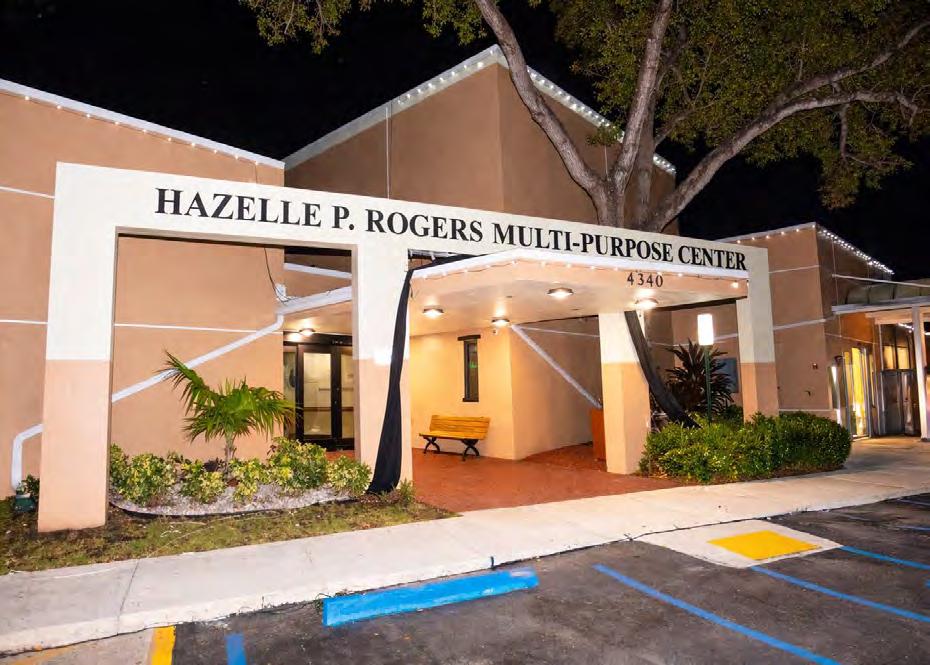
o 2026 – Honored with the renaming of the Lauderdale Lakes MultiPurpose Center as the Hazel Rogers Multicultural Center in recognition of her decades of leadership, and service
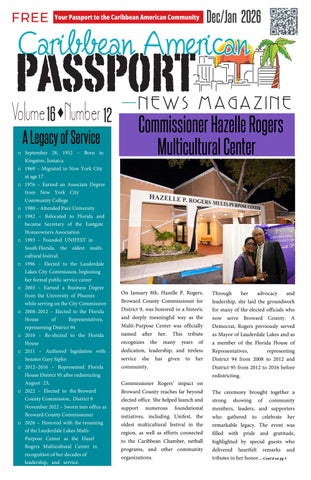
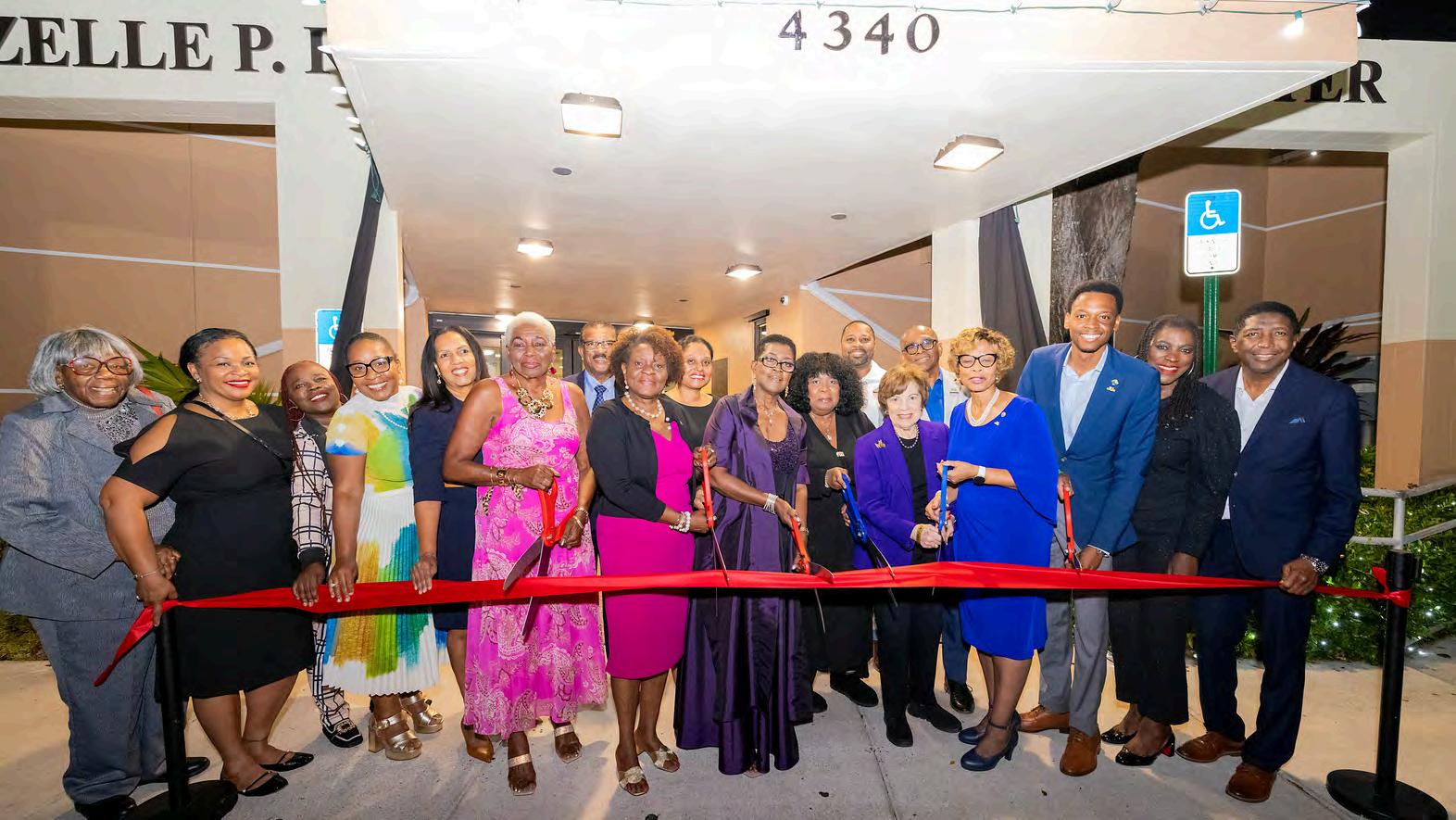
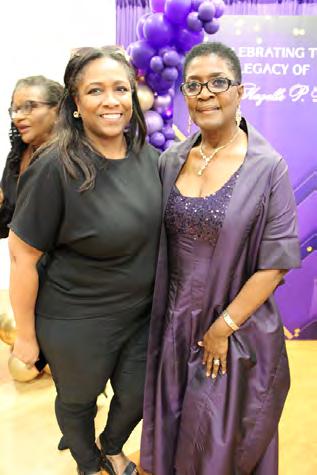
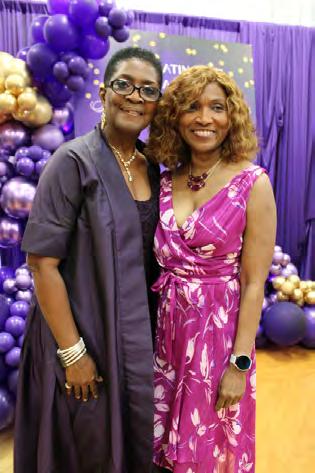
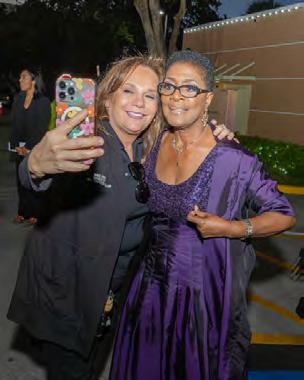
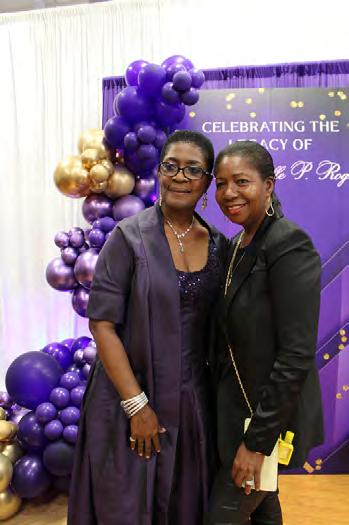
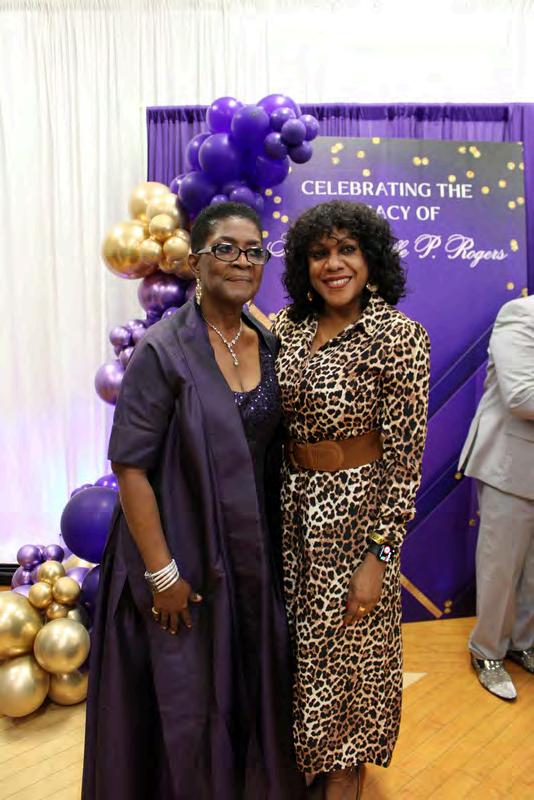
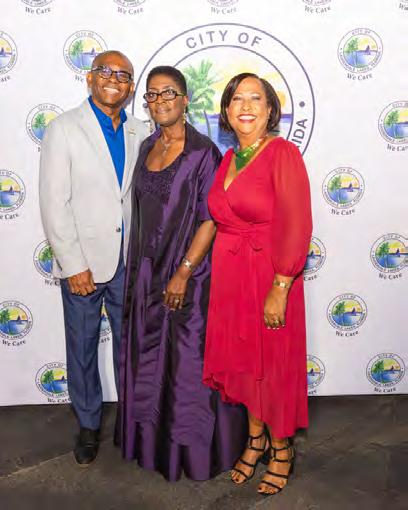
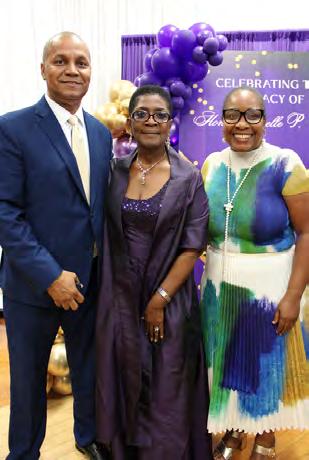
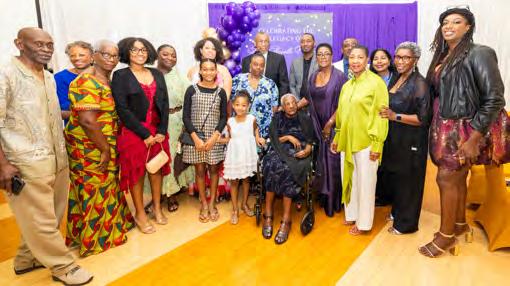
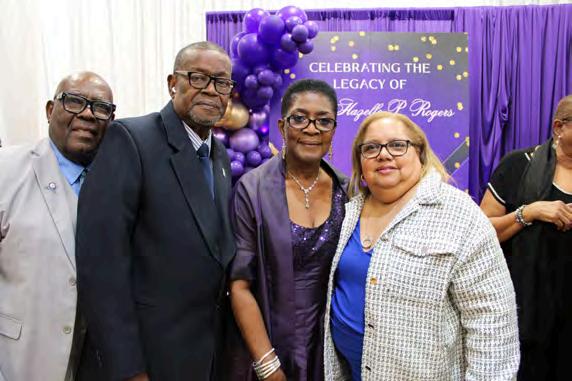
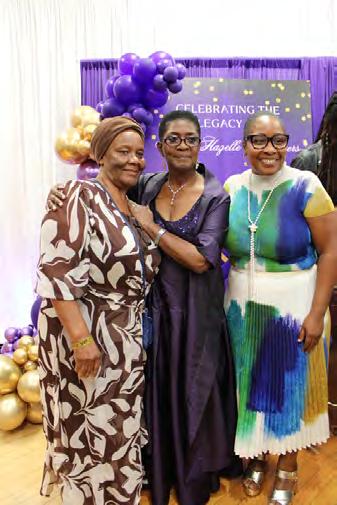
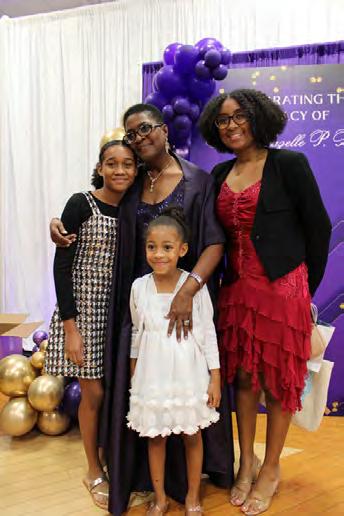
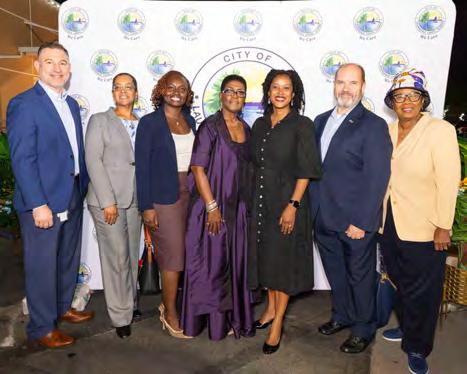
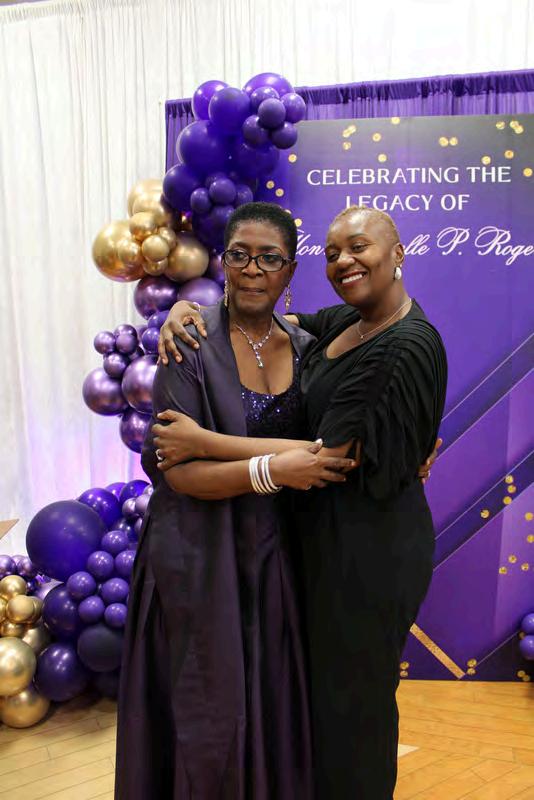
On January 8th, Hazelle P. Rogers, Broward County Commissioner for District 9, was honored in a historic and deeply meaningful way as the Multi-Purpose Center was officially named after her. This tribute recognizes the many years of dedication, leadership, and tireless service she has given to her community.
Commissioner Rogers’ impact on Broward County reaches far beyond electedoffice.Shehelpedlaunchand support numerous foundational initiatives, including Unifest, the oldest multicultural festival in the region, as well as efforts connected to the Caribbean Chamber, netball programs, and other community organizations.
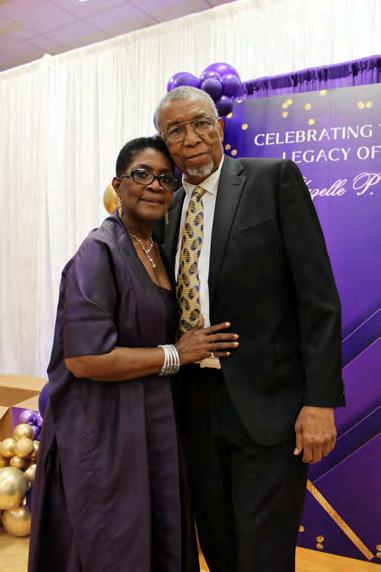
Through her advocacy and leadership, she laid the groundwork for many of the elected officials who now serve Broward County. A Democrat, Rogers previously served as Mayor of Lauderdale Lakes and as a member of the Florida House of Representatives, representing District 94 from 2008 to 2012 and District 95 from 2012 to 2016 before redistricting.
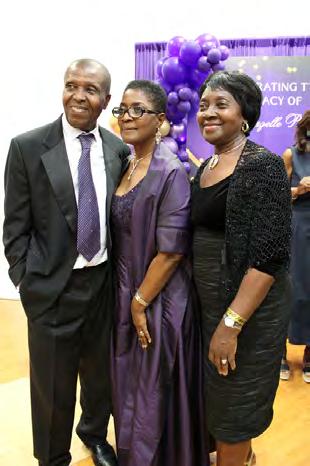
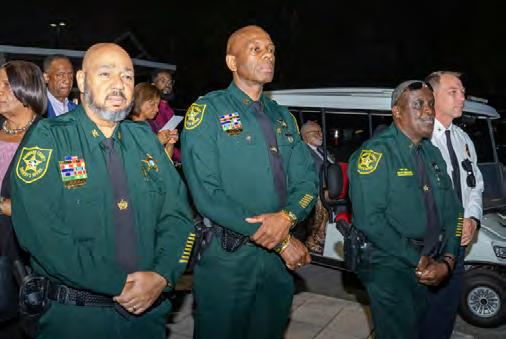
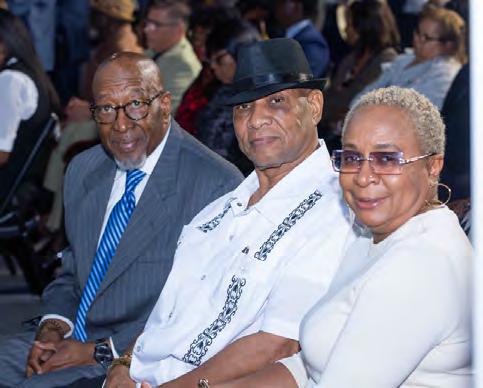
The ceremony brought together a strong showing of community members, leaders, and supporters who gathered to celebrate her remarkable legacy. The event was filled with pride and gratitude, highlighted by special guests who delivered heartfelt remarks and tributesinherhonor....Cont'd on pg 5


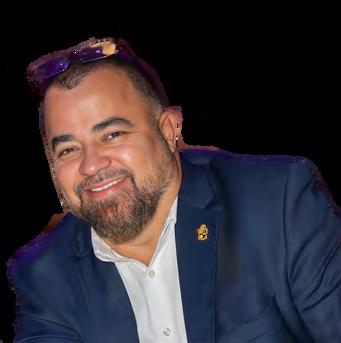
Samuel J. Roberts, Publisher/Editor
It didn’t begin as a logo, it began as a problem, a problem of stories not being told
told correctly. A problem of culture being celebrated loudly but monetized quietly. A problem of festivals that looked powerful on the outside but were fragile behind the scenes. A problem of diaspora brilliance scattered instead of structured. And in a moment like this, when the world feels loud, polarized, uncertain, and constantly shifting, that problem hasn’t gone away. In many ways, it has intensified.
Fifteen years ago, Caribbean American Passport was created with a clear purpose: to tell our community’s stories, uplift our people, share our culture, and create connection across borders and generations. Through economic downturns, political upheaval, global pandemics, and cultural erasure, that mission has never changed.
With all the craziness happening out there, we remain grounded in what we set out to do. So the brand did what it has always done. It built infrastructure.
The Engine - GGR Marketing & PR was never meant to be a service business chasing clients or trends. It was designed as a powerhouse, one that understands culture as currency and storytelling as leverage.
This wasn’t theory. It was tested in the field. From marketing Miami Carnival and Orlando Carnival to supporting major Caribbean festivals like Sunshine Reggae Festival, the work lived where timing, trust, and turnout decide survival. Along the way, we learned how to sell joy without diluting meaning, how to speak to the diaspora without flattening identity, and how to turn rhythm into real ROI.
The work expanded naturally, not randomly, into political media moments where narrative framing can shift perception; into health and wellness marketing where trust matters more than trends; and into break culture brands like Black Bronze Kingdom, where history meets modern relevance. This wasn’t accidental diversification. It was proof of range.
GGR became fluent in multiple rooms, boardrooms, backstage tents, community halls, and campaign war rooms, without losing its voice The Voice - While others reported events, Caribbean American Passport documented people. It didn’t chase clicks. It preserved context.
It told stories that lived between borders: immigrants building legacies, artists shaping identity, entrepreneurs carrying culture into commerce. Stories that didn’t always make headlines, but always mattered. As media evolved, we evolved with it—not shrinking, but expanding. Print became platform - Platform became studio - Studio became ecosystem. The Proof - One of the clearest examples of what that ecosystem could do came through transformation.

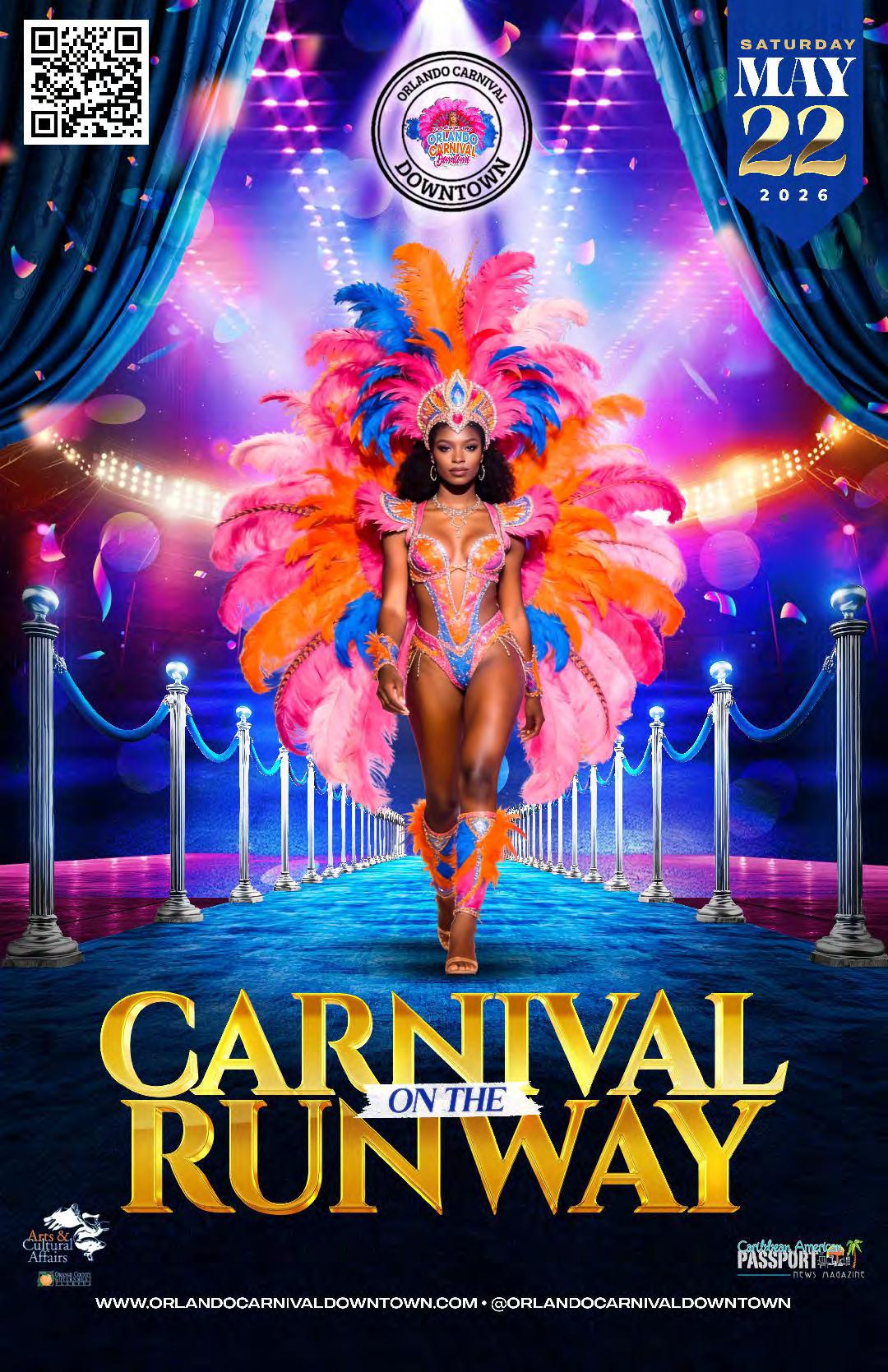
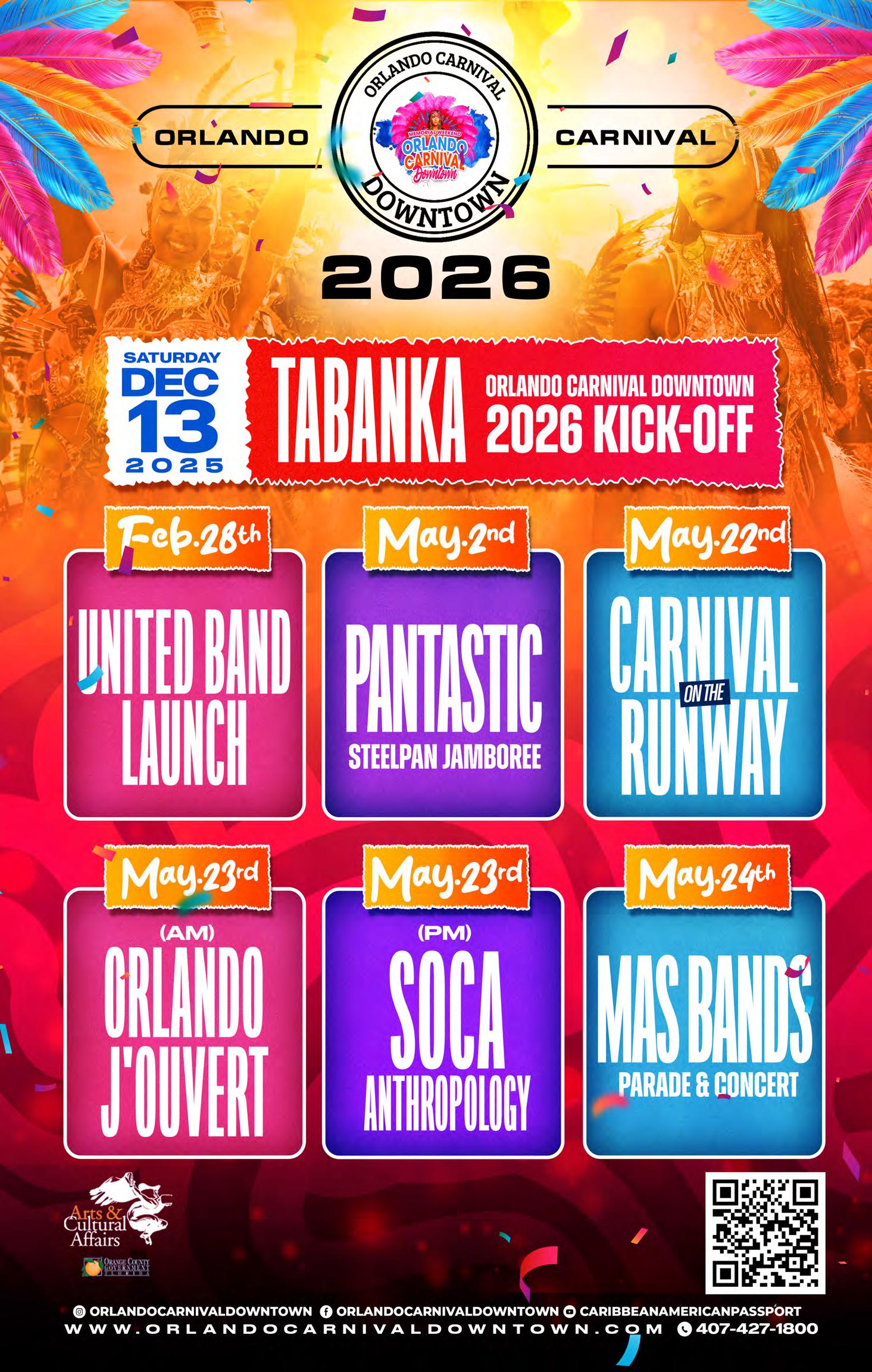
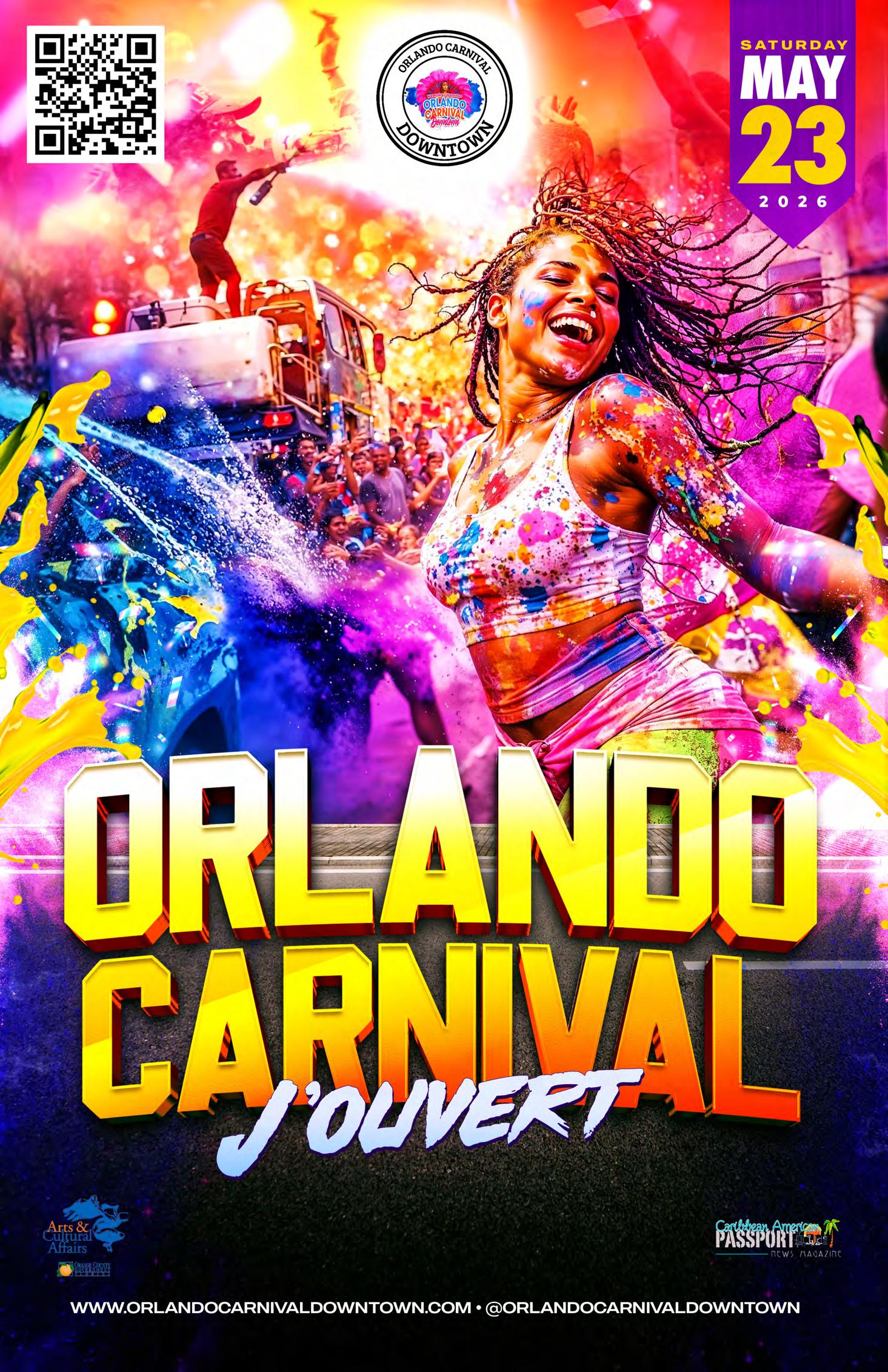
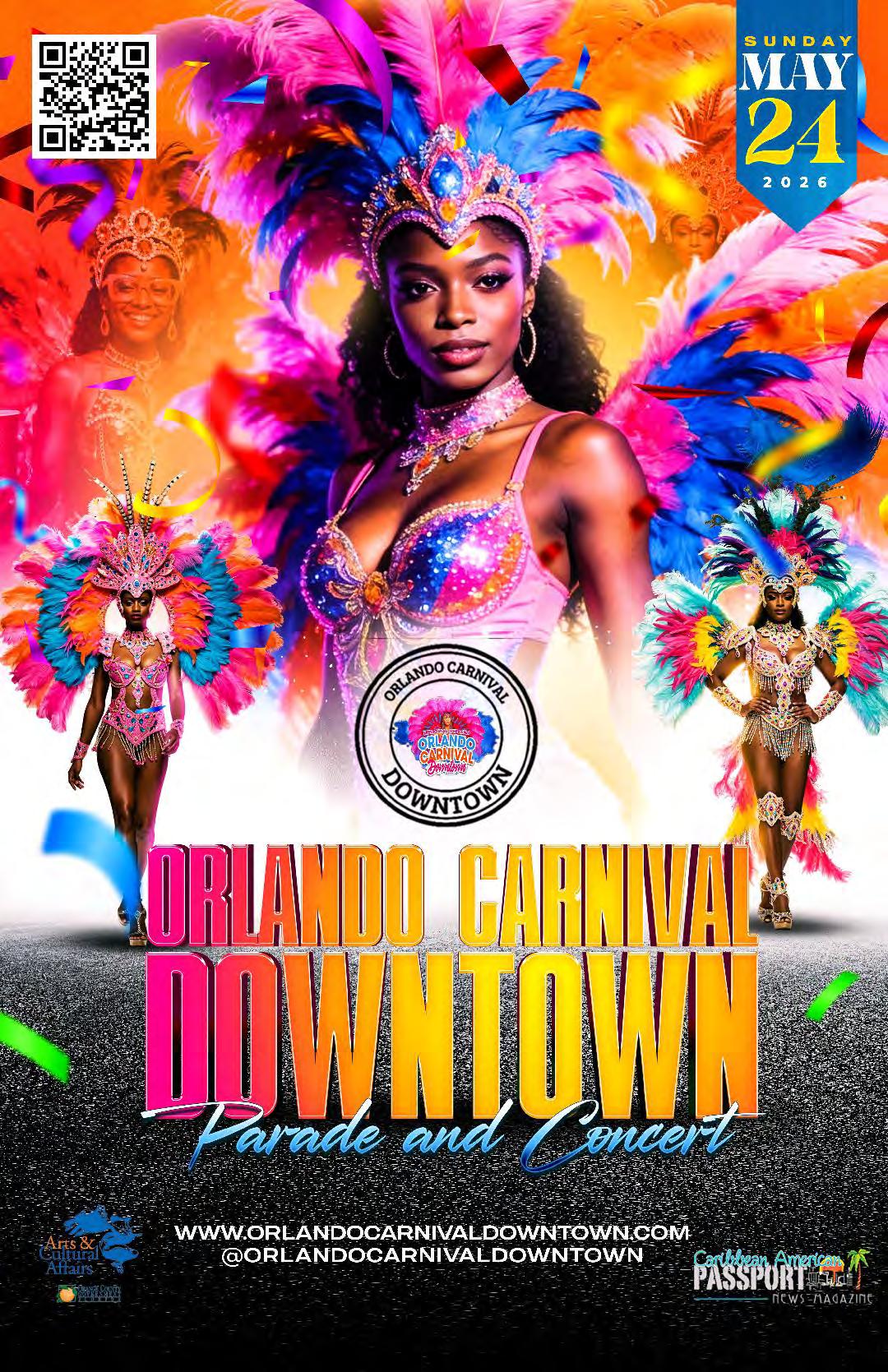
A legacy carnival brand—once fading, fragmented, and at risk, was not simply rebranded, but reimagined. Orlando Carnival became Orlando Carnival Downtown: a smarter, multi-day cultural experience rooted in intention - Fashion and artJ’ouvert - Back in Time experiences for elders and legacy lovers - Soca Anthropology, where culture is explained, not assumed. Carnival Day restored as both spectacle and meaning. This wasn’t nostalgia, this was strategy.
It proved that legacy IP can be revived, roots can be respected while modernizing, and culture can be economically sustainable without losing its soul.
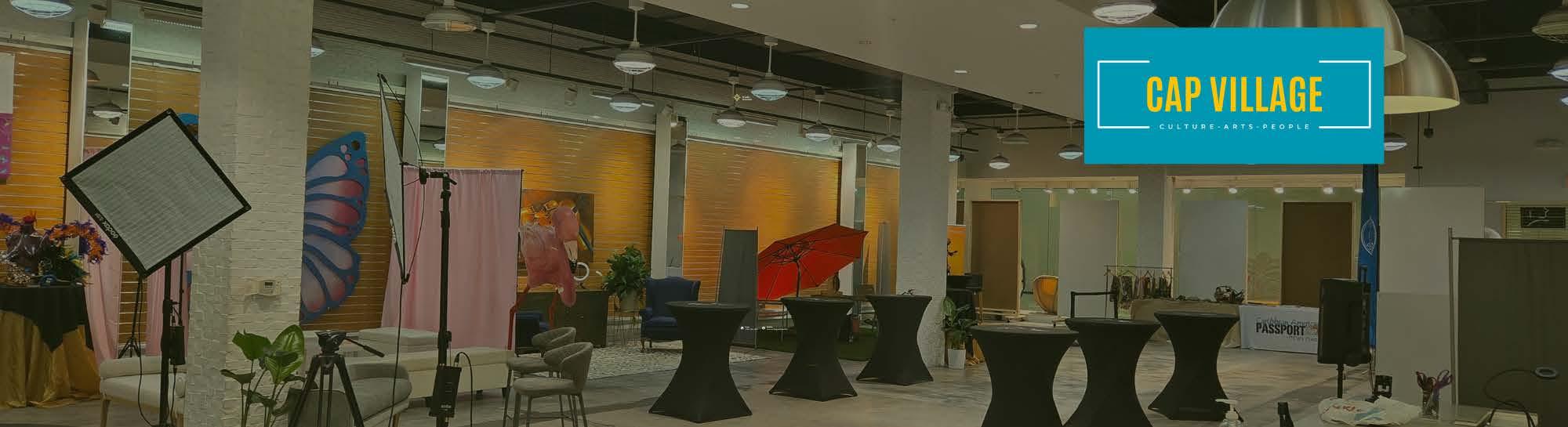
The Home - CAP Village was the last brand we built, intentionally. It was created to house everything together.
After years of producing, publishing, marketing, and storytelling across multiple platforms, CAP Village became the place where it all converged: the Culture • Arts • People incubator for the Orange Economy. CAP Village is where stories are created with intention, creatives collaborate, entrepreneurs grow, and culture is treated as both expression and enterprise. It is not merely a studio or venue, it is the foundation that allows everything to scale. CAP Village is a multiplier

1969 Alafaya Trail • Orlando, FL 32828 Office: 407-427-1800 Fax: 407-386-7925
Toll Free: 877-220-8315
For Media Information email: Publisher: sroberts@caribbeanamericanpassport.com Info: .Info@caribbeanamericanpassport.com
Should you desire to review past copies of the publicationgo to http://caribbeanamericanpassport.com and click on the 'Print Archive'.
Sam Roberts
Editor & Publisher...............................................................
Publisher ...........................................................
Guenet Gittens-Roberts
Samuel Roberts
Graphic Design & Layout .................................................
Contributing Writers: ............................................................
Tony Dyal
Kadeem Roberts
Sandra Fatmi
Nouchelle Hastings
Aleia Roberts
Contributing Photographers ............ ...................................
Khiefer Bell
Dilia Castillo
Israel Torres
Follow our social pages and our digital platform:
FB: @Caribbeanamericanpassport
IG: @Caribbeanamericanpassport
Youtube: @ucapdigital
Copyright(C) GGRMarketing&PublicRelations.Allrightsreserved. 2016


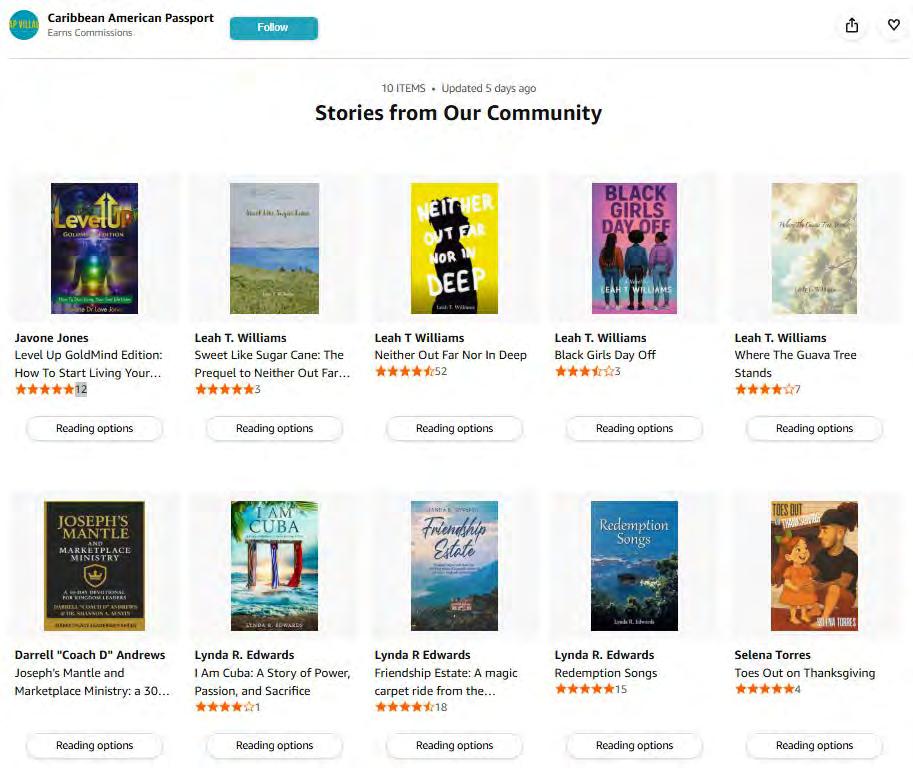
Caribbean American Passport is excited to introduce our official Amazon storefront, a new resource created to support our platform, our clients, and the creatives we feature across our digital media. The storefront offers an easy way for our audience to engage with curated content while directly supporting the ongoing work of Caribbean American Passport.
TheAmazonstorefrontwillhostmultiplecuratedlistsand featured content that align with our interviews, programs, and community initiatives. Each collection is intentionally curated to reflect the voices, expertise, and stories of the individuals we collaborate with, making the storefront a natural extension of our mission and media presence.
The first collection currently available highlights books written by authors featured on our “Authors Corner” series. This list showcases authors who have shared their insights, experiences, and work with our audience. FeaturedauthorsincludeJavone“Dr.Love”Jones,LeahT. Williams, Darrell “Coach D” Andrews, Lynda R. Edwards, and Selena Torres. Their books span topics such as
When supporters shop through our Amazon storefront, they are not only discovering valuable books and materials, but also helping Caribbean American Passport continue to uplift underrepresented voices and create opportunities for authors, entrepreneurs, and creatives. It is one of the most effective ways to support both our platform and the individuals whose work we highlight.
This storefront is only the beginning. Additional curated lists will be added, including recommended resources, featured products, and content connected to our interviews, events, and community efforts. As Caribbean American Passport continues to grow, the Amazon storefront will grow with it—creating more space to spotlightculture,creativity,andCaribbeanexcellence.





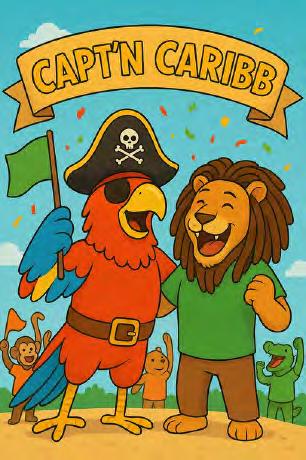
“dem Caribbean pickney dem been good dis year, an’ I come make sure dem gifts reach safe an’ sweet.” Santa clap he hands, beard jiggling with joy, as elves stop an’ stare at de captain who bring sunshine in he voice. Together dem load de sleigh with bright toys an’ warm smiles, talkin’ ‘bout palm trees, steel drums, an’ Christmas mornin’ by de sea. With a jolly cheer, Santa nod an’ say, “Let’s go, Capt’n!”
CAPT’N CARIBB sail up from the warm blue seas straight to the icy North Pole, boots crunchin’ in snow as he hail Santa with a big island grin.
“Ho ho ho, Santa!” he laugh, steam puffin’ from he mouth,

and off dem fly, snow mixin’ with island spirit, carryin’ love, joy, an’ Christmas magic all de way to de Caribbean sky.

By Israel Torres

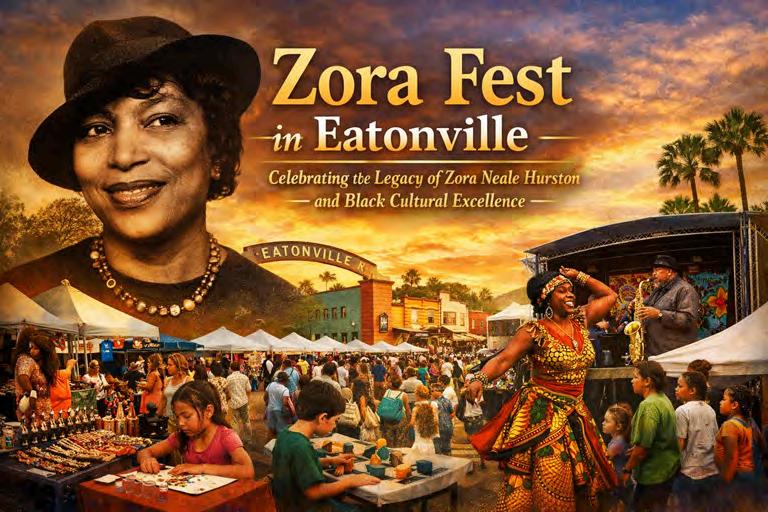
Caribbean American Passport is excited to announce a unique promotionalopportunityforlocalbusinessownersatthisyear’s ZORA! Festival in Eatonville. Through this initiative, businesses will have the chance to advertise directly on the festival’s largedigital screens, placing their brand in front of thousands of attendees throughout the day. With continuous foot traffic and a lively, engaged audience, this platform offers unmatched visibility during one of Central Florida’s mostcelebratedculturalevents.
Zora Festival attracts a diverse crowd of families, creatives, entrepreneurs, scholars, and community leaders who come together to celebrate Black history, arts, and culture. Advertising on the big screens allows business owners to capture attention in a high-energy environment where people are already open to discovering new products and services. This is an ideal opportunity to strengthen brand recognition, build trust, and connect with consumers who value community-focusedbusinesses.
Eatonville holds a powerful place in American history as one of the first incorporated Black-owned towns in the United States.Supporting and advertising at an event rooted in this legacy sends a strong message about your brand’s commitment to cultural pride, economic empowerment, and community growth. Investing in visibility at Zora Festival is not just about marketing—it is about aligning your business with a historic movement that continues to upliftandinspiregenerations.
Caribbean American Passport invites business owners, entrepreneurs, and organizations to take advantage of this exciting opportunity and invest in the future of their brand. BypromotingyourbusinessonthebigscreensatZoraFestival, youposition yourself at the intersection of culture, history, and opportunity. Interested businesses are encouraged to reach out today to secure placement and become part of a powerful cultural experience that celebrates the past while building thefuture.
By Israel Torres
Zora Fest is a vibrant cultural celebration held in Eatonville, one of the most historically significant Black towns in the United States. The festival honors art, culture, music, literature, and community, drawing visitors from across the country to experience the spirit of creativity and resilience thatdefinesEatonville.Thisyear,ZoraFestwilltakeplaceon January 31st from 9:00 a.m. to 6:00 p.m., offering a full day of performances, vendors, educational programming, and family-friendlyactivitiesrootedinAfricanAmericanheritage.
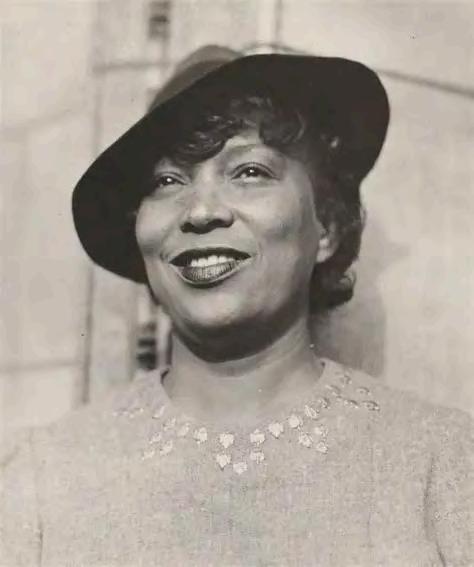
At the heart of the festival is Zora Neale Hurston, one of the most influential writers and anthropologists of the Harlem Renaissance. Born in 1891, Hurston spent her formative years in Eatonville, a self-governing Black town that deeply shaped her worldview and storytelling. Her groundbreaking works, including Their Eyes Were Watching God, celebrated Black life, language, folklore, and Southern culture at a time when such perspectives were often marginalized. Zora’slegacy continues to inspire generations of writers, scholars,andcreatives.
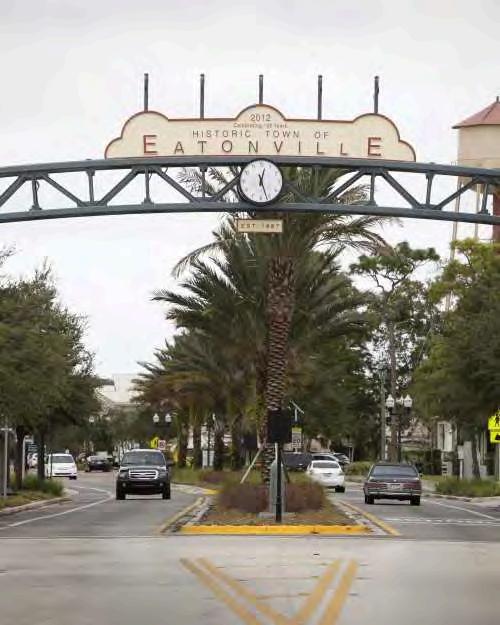
Eatonville itself holds a unique place in American history as one of the first incorporated African American municipalities in the nation. Established in 1887, the town became a symbol of Black autonomy, leadership, and pride. Growing up in this environment allowed Zora Neale Hurston to witness Blackexcellence and self-determination firsthand—elements that became central themes in her writing and research. Today, Eatonville proudly preserves that legacy through culturalinstitutions, historic sites, and community events like ZoraFest.
The ZORA! Festival was created to honor Hurston’s life and work while celebrating the broader African diaspora through the arts. Over the years, it has grown into an internationally recognized event featuring authors, scholars, musicians, visual artists, and performers. More than just a festival, ZoraFest serves as a living tribute to history, creativity, and cultural pride—bringing Zora’s voice to life once again in the very town that shaped her story.
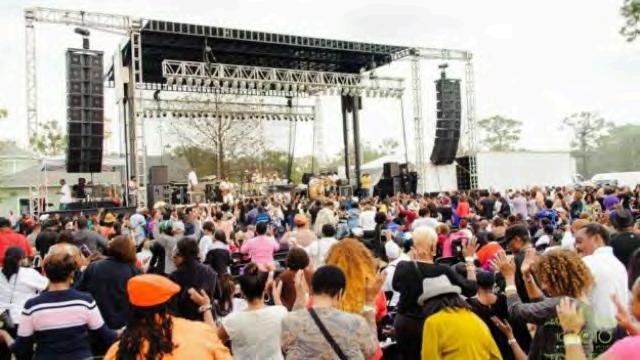
Beyond its historical significance, Zora Fest also plays a vital role in strengthening community and economic growth in Eatonville. The festival provides a platform for local businesses,artists, and nonprofits to connect with thousands of attendees, creating opportunities for cultural exchange and support ofBlack-ownedenterprises.Throughworkshops,youth programs, live performances, and interactive exhibits, Zora Fest ensures that Zora Neale Hurston’s legacy is not only remembered, but actively lived—encouraging new generations to embrace storytelling, scholarship, creativity, andprideintheirheritage.

On April 18th, families are invited to experience the Candyland Carnival for Kids at LolliPops Indoor Playground & Party Place, a joyful indoor celebration designed especially for little ones. This magical event transforms LolliPops’ indoor mall space into a colorful carnival world filled with music, movement, and imagination, creating a safe and exciting environment for kids to play and explore.
Throughout the event, guests can enjoy lively music and noisemakers provided for all participants, along with live cultural entertainment such as Moko Jumbies, dancers, andmore.Thefestiveatmosphereisdesignedtokeepkids engaged and smiling, with food, drinks, and plenty of fun to keep the celebration going rain or shine.
Doors open at 2:00 PM, when parade numbers will be drawntodetermineeachgroup’sspotinthelineup.From 3:00 PM to 4:00 PM, families will take part in the Candyland Carnival Parade, filling the space with color, music, and excitement as kids proudly show off their creative designs. After the parade, the fun continues from 4:00PMto6:00PMwithongoingfestivalvibes,including food, drinks, live performances, and time to play and

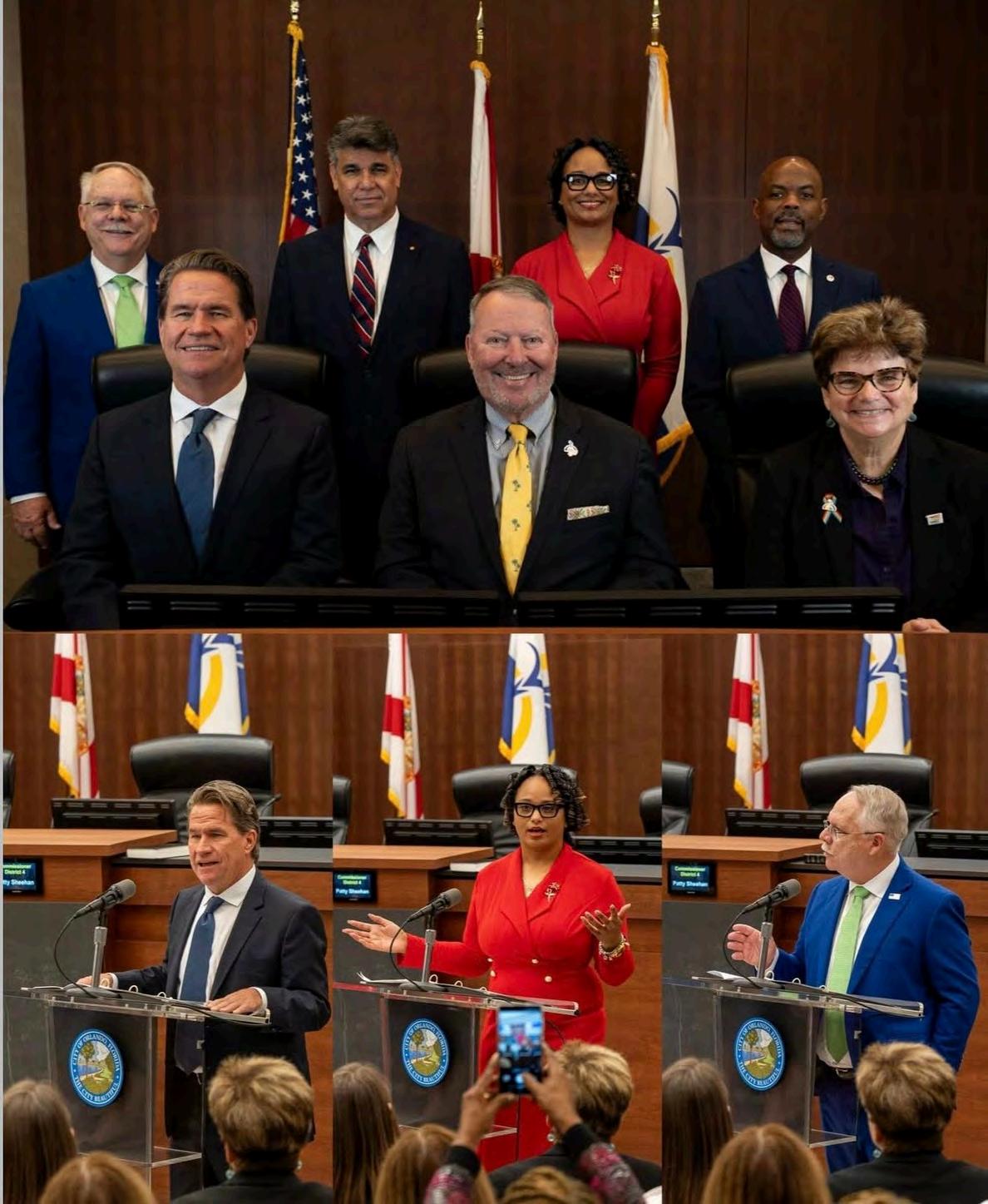
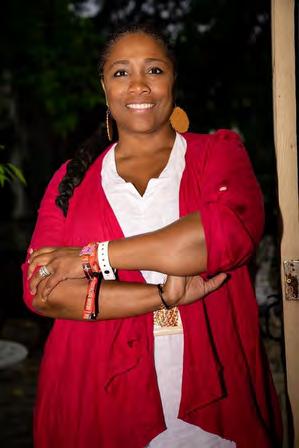
local businessman and community leader in Orlando. A lifelong resident, he has served on numerous public boards and civic organizations focused on utilities, environmental stewardship, downtown development, and nonprofit services.
Known for his collaborative leadership style, Chapin prioritizes smart growth, neighborhood infrastructure, and efficient city services, providing a steady voice for District3asOrlandoevolves.
all residents. These leaders step into office amid evolving local priorities: enhancing public safety, investing in infrastructure, promoting economic vitality, and strengthening neighborhood equity and services across Orlando’s diverse communities. Each commissioner brings a distinctive set of experiences and accomplishments to City Hall that positions them to makeanimmediateimpact.
a strong background in community advocacy and public administration. She previously served as CEO and President of Change For The Community and worked in the City of Orlando’s Economic Development and Community Redevelopment departments.
As commissioner, Rose advocates for affordable housing, youth mentorship, economic opportunity, and equitable access to city resources, earning recognition as a hands-on leaderconnectedtoherdistrict.
leadershipexperiencetotheOrlando City Commission following his swearing-in.AformerFloridaHouse member,Keenalsoservedhonorably as a Commander in the U.S. Navy as a Naval Flight Officer. He holds a degree from the University of Cincinnati and has long been engaged in civic leadership and policydevelopment.
His background in state government and military service informs a disciplined, solutions-oriented approach focused on public safety, infrastructure, and responsible growthinDistrict1.
The Pine Hills Community Council (PHCC) marked a powerful milestone as it officially entered its 54th year of service during its Open House & Oath of Office InstallationCeremony,celebratingboththeorganization’s richhistoryandanewgenerationofleadershipcommitted tothefutureofPineHills.
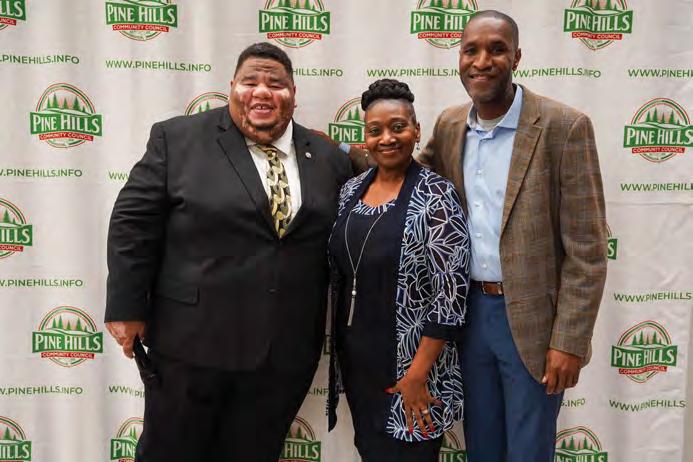
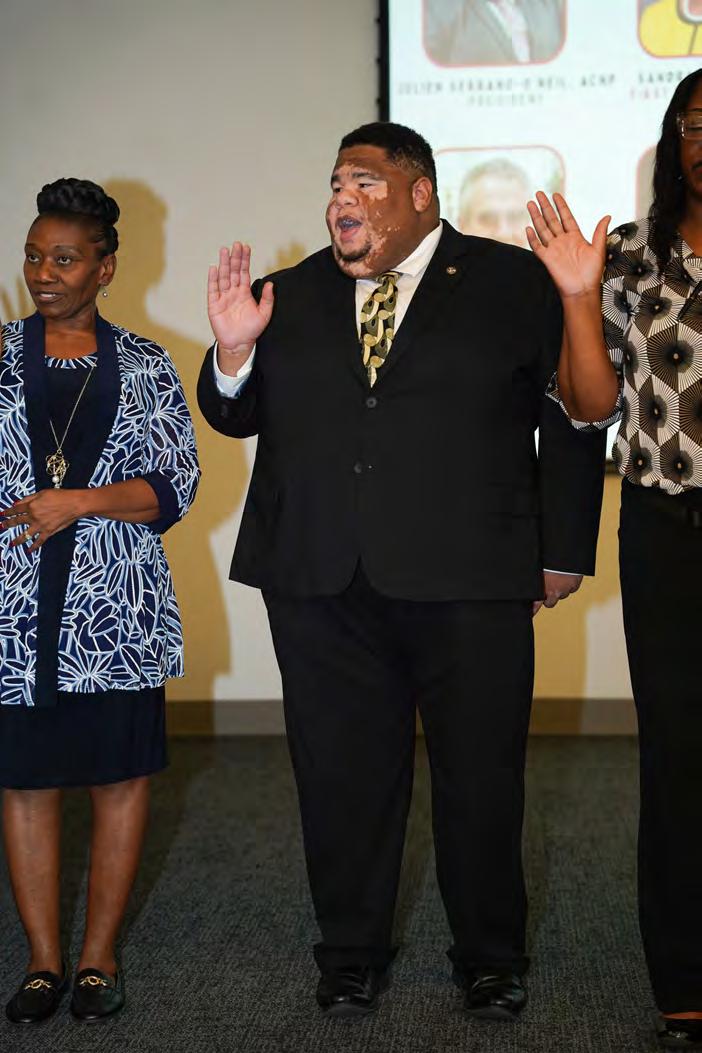
member of the Florida Legislature. The moment highlighted a meaningful transition of leadership and emphasized the rise of young, engaged civic champions dedicated to accountability, service, and measurable community impact.
PHCC also introduced its 2026 Board of Directors, who will play a critical role in guiding initiatives and strengthening the organization’s outreach, resources, and partnershipsthroughoutPineHills.
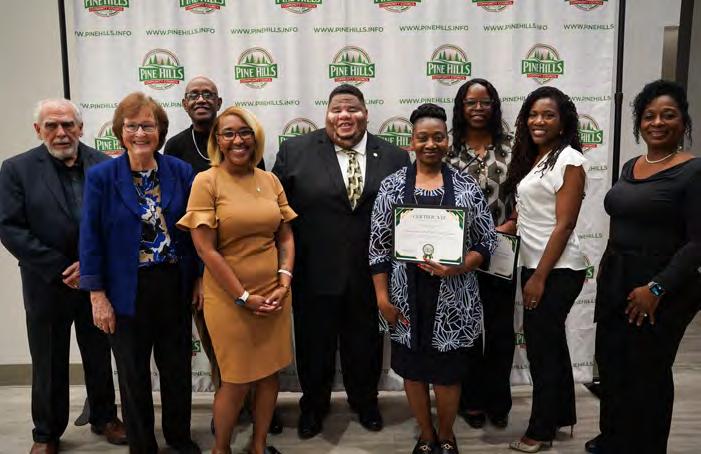
President Julien Serrano-O’Neil, ACNP; First Vice President Sandra Fatmi-Hall; Secretary Janai N. McKissick; Treasurer Lola Battle; Trustees Ken Dwyer, Bertina Busch, and Noel Busch; Directors-at-Large Carl Battle, Lacandria Washington, and Deidre Graybill; and
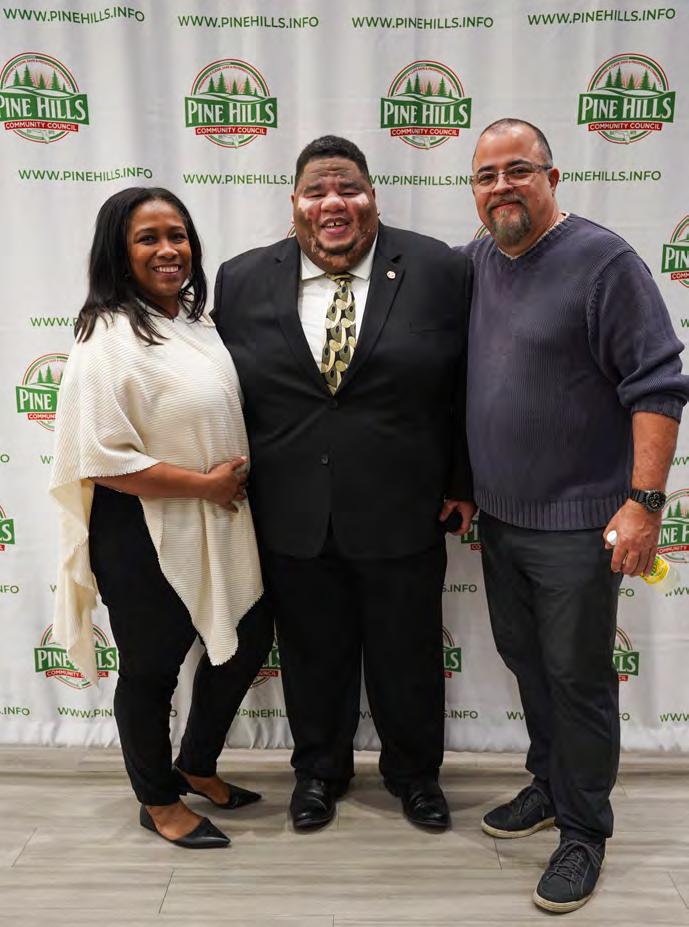
AsPineHillscontinuestoevolve,thecouncil’sleadership remains focused on strengthening neighborhoods, supporting residents, and advocating for progress that reflectsthecommunity’sresilienceandpride.
CaribbeanAmericanPassportwasproudtobepresentfor thismilestonemoment.Asamediaplatformdedicatedto uplifting Caribbean-American and multicultural communities, we remain committed to highlighting stories of grassroots leadership, civic engagement, and collaborative progress that continue to shape Central Florida.
ThefutureofPineHillsisbeingwritten—anditisbeing ledwithpurpose.

In early January 2026, the United States government announced a major shift in its immigration policy that directly affects visa processing for many countries around the world — including multiple Caribbean nations. The U.S. Department of State has decided to indefinitely suspend immigrant visa processing for citizens of 75 countries, as part of a broader policy aimed at tightening immigration and reducing the use of public assistance by new arrivals.
Among the list of affected countries, over a dozen Caribbean nations have been identified as facing suspensions in immigrant visa processing under the new policy. These include Eastern Caribbean member states such as Antigua and Barbuda, Saint Lucia, St. Vincent and the Grenadines, Saint Kitts and Nevis, Dominica, Grenada, and others such as Jamaica, Barbados, The Bahamas, Belize, and Haiti. In some reports, Cuba and Brazil are also mentioned within the broader list of impacted countries, which demonstrates the policy’s wide geographic reach.
It’s important to note that this suspension primarily affects immigrant visas — those intended for individuals seeking permanent residency in the U.S. Temporary visitor visas (such as tourist or business visas) are not universally halted under the new rules, though there are reports of heightened scrutiny and additional requirements for some applicants. U.S. officials have framed this measure as part of efforts to ensure that new immigrants are financially self-sufficient and do not become a “public charge,” a legal term used in U.S. immigration policy.
By Israel Torres
Leaders across the Caribbean have expressed concern over these developments. Some governments, particularly those in the Organization of Eastern Caribbean States (OECS) and the wider Caribbean Community (CARICOM), argue that their citizens are being unfairly targeted and that the policy undermines longstanding people-to-people ties between the region and the United States. Diplomatic representatives are engaging with U.S. authorities to seek clarity and negotiate adjustments, especially regarding the status of nonimmigrant travel and family reunification pathways.
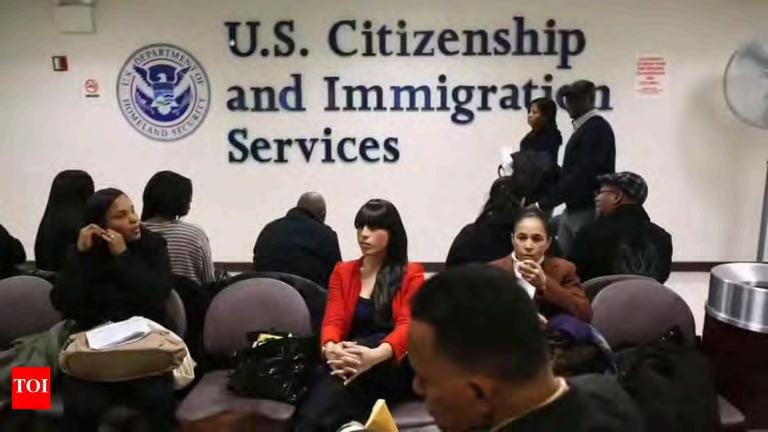
For individuals and families in affected Caribbean countries, the visa suspension introduces uncertainty regarding future migration, work, and settlement plans involving the United States. While current passports remain valid, and many non-immigrant visa categories continue, the pause on immigrant visas — those leading to green cards or permanent residency —may delay or halt long-term relocation plans for many Caribbean nationals. As global and regional discussions continue, both governments and affected communities will be watching closely for updates and potential revisions to the policy.
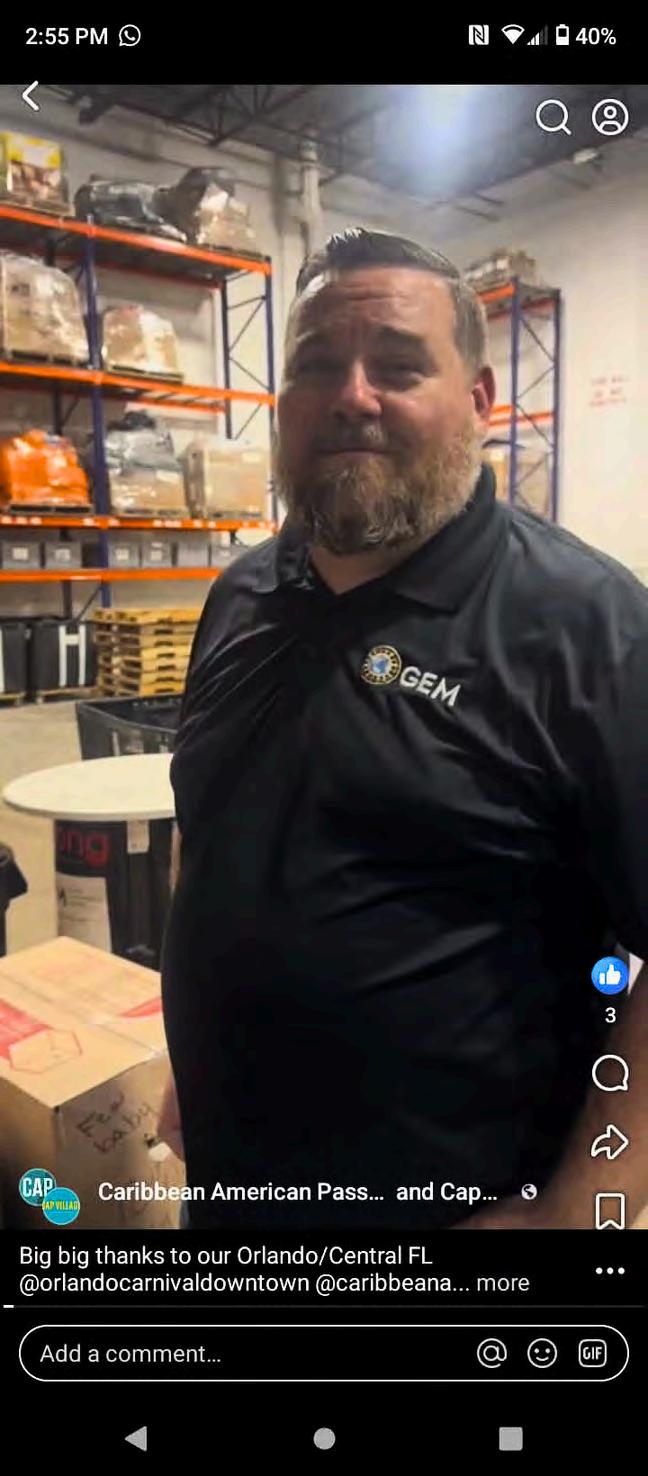
Caribbean American Passport News was on the ground in Miami covering a powerful show of community support as CAP Village delivered a large shipment of hurricane-relief donations collected in Orlando to the Global Empowerment Mission (G.E.M.) warehouse in support of Caribbean Strong. The donation included clothing, nonperishable food, building materials, hygienesupplies,babyessentials,andtoysandgames for children. The wide range ofitems highlighted the generosity of the CentralFlorida community and its commitment to helpingCaribbeanfamilies affectedbydisaster.
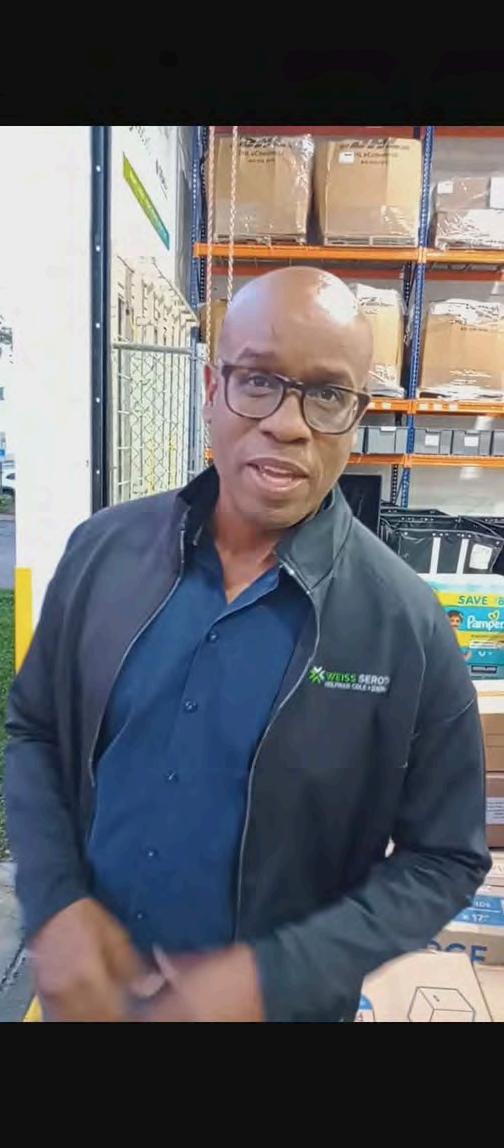
At the G.E.M. facility, Marlon, representing Caribbean Strong, thanked everyone who contributed and stressed that the need for help remains. “We still need your help… go to SFLCaribbeanStrong.org. Youcan still donate items and have them delivered here to G.E.M.,” he said. Also present was Richardson, Vice President of Warehouse Operations, who echoed that message, adding, “One of the important things weneed to understand is we still have needs. Help by volunteering at our G.E.M. location and continue to contribute with your donations.” Caribbean AmericanPassport News and CAP Village continue to urge thecommunity to stay engaged, volunteer, and support ongoing relief efforts as the Caribbean rebuilds.
By Israel Torres
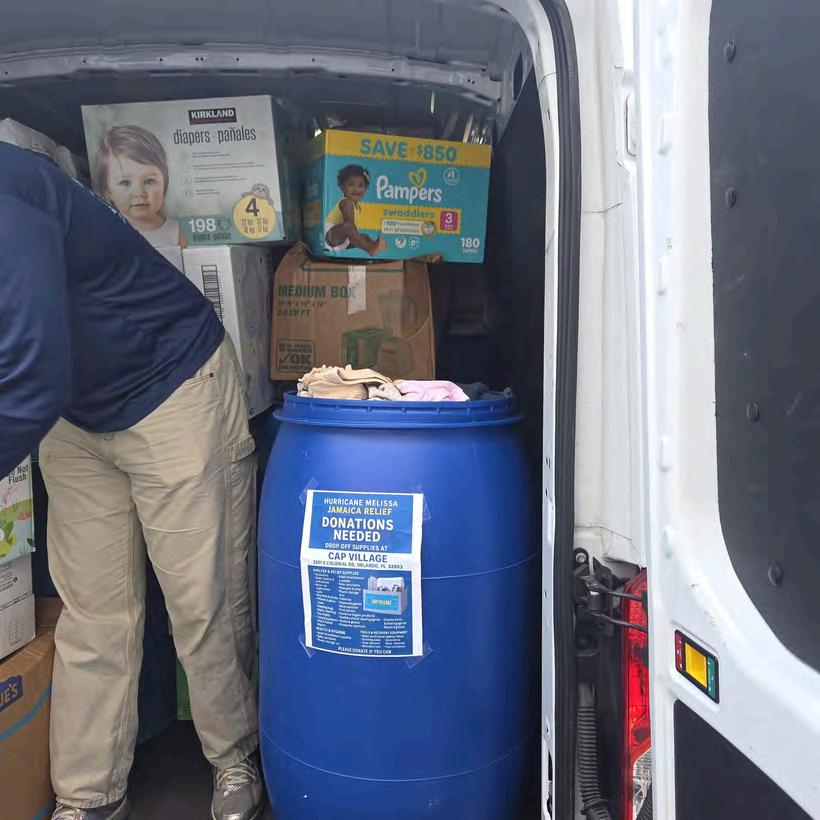
The donations come in response to the devastation caused by Hurricane Melissa, which brought destructive winds, severe flooding, and widespread damage across several Caribbean islands. Homes, schools, and businesses were damaged or destroyed, leaving many families displaced and in urgent need of assistance. While initial emergency response effortshave helped stabilize conditions, rebuilding will take time, making continued support critical as communitiesworktorecoverandrestoredailylife.
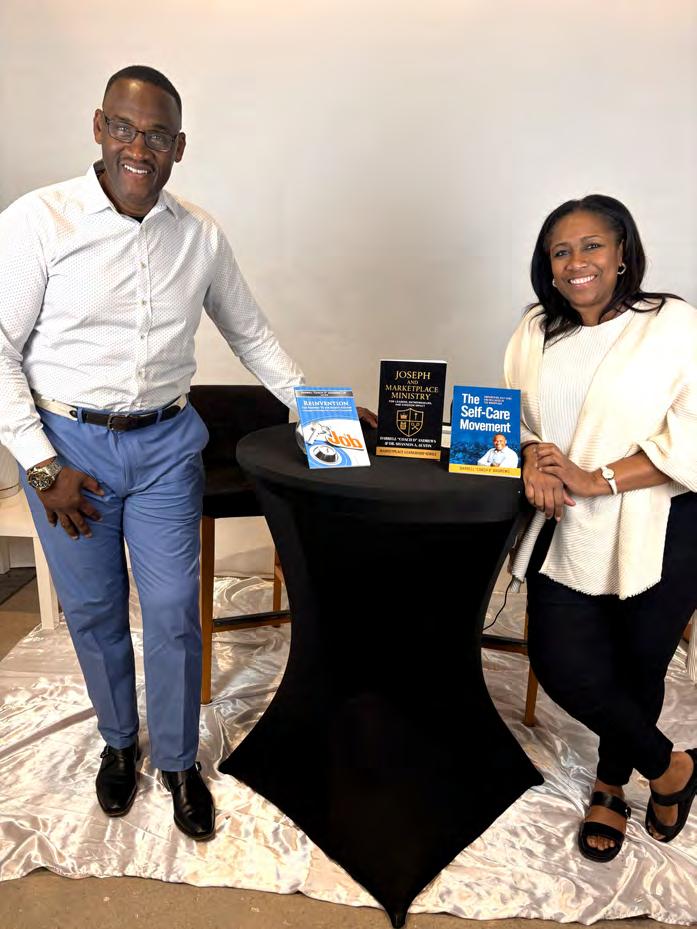
At CAP Village, Darrell “Coach D” Andrews shared his powerful approach to personal and professional growth. A licensed minister, best-selling author, speaker, trainer, and coach, Andrews has spent over 24 years helping individuals, organizations, and corporations worldwide break limiting habits, build systems, and achieve meaningfulresults.
When asked who he is, Andrews begins not with titles, but purpose. “I realized early on that I wanted my life to contribute something lasting,” he says. “Writing, coaching, and speaking are just tools. The real work is helpingpeoplere-evaluatehowtheythinkandoperate.”
What sets Coach D apart is his blend of storytelling, neuroscience, and strategy. Drawing on ancestral traditions, he uses narrative to connect inspiration to action—but he emphasizes that motivation alone isn’t enough.“Youdon’trisetothelevelofyourgoals.Youfall tothelevelofyoursystems,”heremindsclients.
Taureca Williams, author of Addictive Patterns, is a life coachandadvocateforpersonalgrowthwhohelpspeople recognize how everyday behaviors—both positive and negative—shape their lives and relationships. In her debutbook,Williamsexploreshowaddictivepatternscan be learned, inherited, or passed down generationally, and howawarenessisthefirststeptowardmeaningfulchange. Through reflection, practical examples, and guided journaling, Addictive Patterns encourages readers to identify familiar cycles and replace harmful habits with healthier routines that support mental balance, selfworth, and intentional living. Her work emphasizes that growth begins with self-examination and the courage to dothingsdifferently.
By identifying habit loops and creating intentional systems,Andrewsguidespeoplethroughthediscomfortof changetowardlastingtransformation.
An author of eight books, including How to Find Your Passion and Make a Living and The Self-Care Movement, Andrews’ work combines inspiration with actionable strategies. “Books don’t change lives unless people do something with what they read,” he says.
For Andrews, transformation is simple but profound: invest in yourself, build the right systems, and commit to the process. With that approach, anyone can turn ambitionintoachievement.


Williams was inspired to write the book following a difficult breakup that brought long-standing behaviors into sharp focus. “The inspiration came from the death of a relationship, and the volume was turned up on what I was seeing and experiencing,” she shared. Drawing on the positive patterns modeled by her parents, she made a conscious decision to break cycles and create a healthier example for her child. “I didn’t want my child thinking disrespect or unhealthy behavior was normal—I wanted to choose a better outcome for her,” Williams said. Through her work as both a life coach and author, she remains committed to helping others recognize their patterns and choose paths that lead to healing and growth.
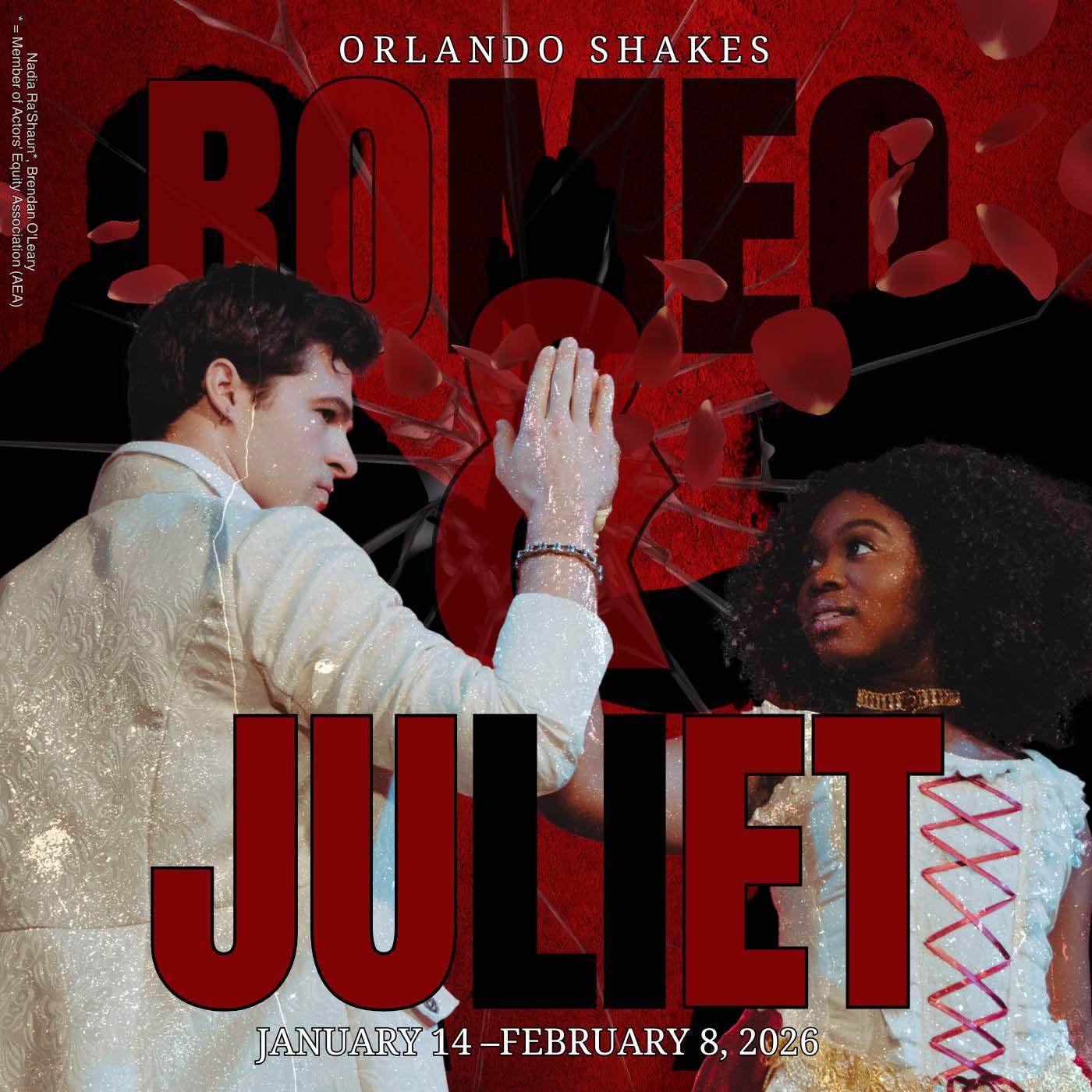
The timeless and tragic love story of Romeo and Juliet returns to the stage at the Orlando Shakespeare Theater, inviting audiences to experience one of William Shakespeare’s most enduring works in a fresh and compelling production. Running from January 14 through February 8, 2026, the play tells the story of two young lovers whose romance is doomed by a bitter family feud, exploring themes of love, fate, loyalty, and the consequences of violence. Known for its poetic language and emotional intensity, Romeo and Juliet continues to resonate with audiences across generations. Set in a world driven by passion and rivalry, the play highlights how impulsive decisions can lead to irreversible consequences. Its blend of romance and tragedy makes it one of Shakespeare’s most frequently performed and emotionally impactfulworks.
ThisproductionstarsNadiaRa’ShaunasJuliet,deliveringa powerful and heartfelt performance that highlights Juliet’s courage and emotional growth, alongside Brendan O’Leary as Romeo, whose portrayal captures the passion and impulsive nature of the iconic character. Together with a talented supporting cast, the actors bring renewed energy and depth to the classic tragedy. Presented at the Orlando Shakespeare Theater, this limited engagement offers theatergoers the opportunity to experience a beautifully staged interpretation of a story that remains as relevant today as it was when it was first written. With dynamic performances and thoughtful direction, the production aims to connect modern audiences to Shakespeare’s timeless themes. It is an ideal outing for both longtime theater enthusiasts and those experiencing Shakespeare on stageforthefirsttime.
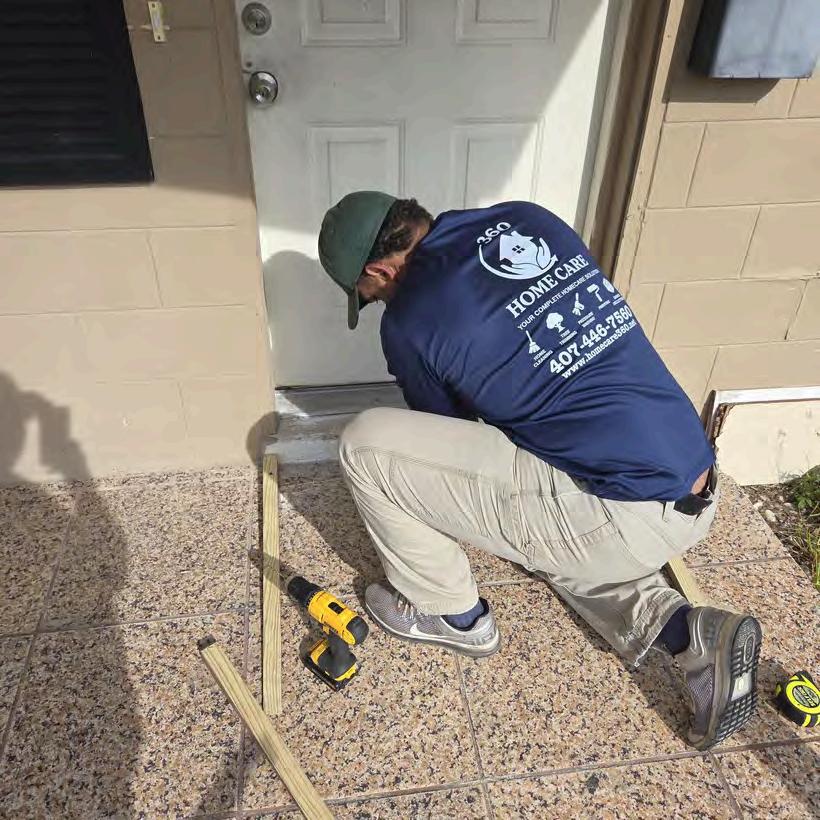
HomeCare360recentlycompletedameaningfulprojectfor a local resident in need by building a safe and sturdy handicap access ramp, providing easier and more reliable access to their home. For individuals facing mobility challenges, navigating steps can be a daily hardship. This ramp not only improves accessibility but also restores confidence, independence, and peace of mind for the homeownerandtheirfamily.

By Israel Torres
Projects like this reflect the heart of HomeCare360—a company dedicated to improving quality of life through thoughtful, practical solutions. Their work goes beyond construction; it’s about understanding the unique needs of each resident and delivering services that truly make a difference. Every project is approached with care, professionalism,andrespectforthepeopletheyserve.
Inadditiontolargeraccessibilityprojects,HomeCare360is knownforhandlingthesmallbutessentialtasksthatkeep a home running smoothly. From lawn maintenance and basichomeupkeeptosimplerepairs,theirteamstepsinto helpwitheverydayresponsibilitiesthatmaybedifficultfor someone with a disability or for those without additional support.
Whether it’s a major home modification or routine assistance, HomeCare360 remains committed to serving the community with reliability and compassion. By taking care of both big and small needs around the home, they help residents live more comfortably, safely, and independently—rightwheretheybelong.


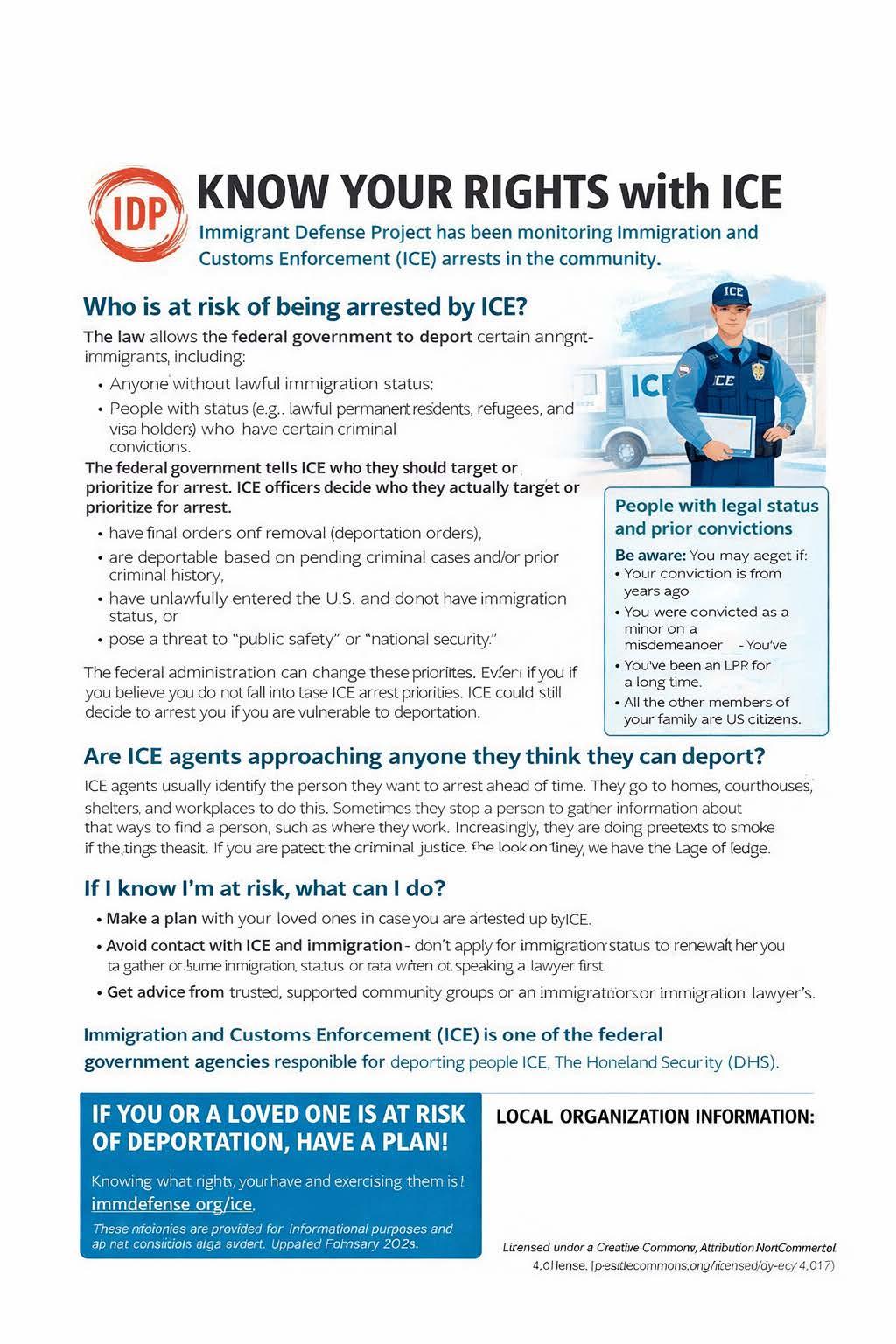
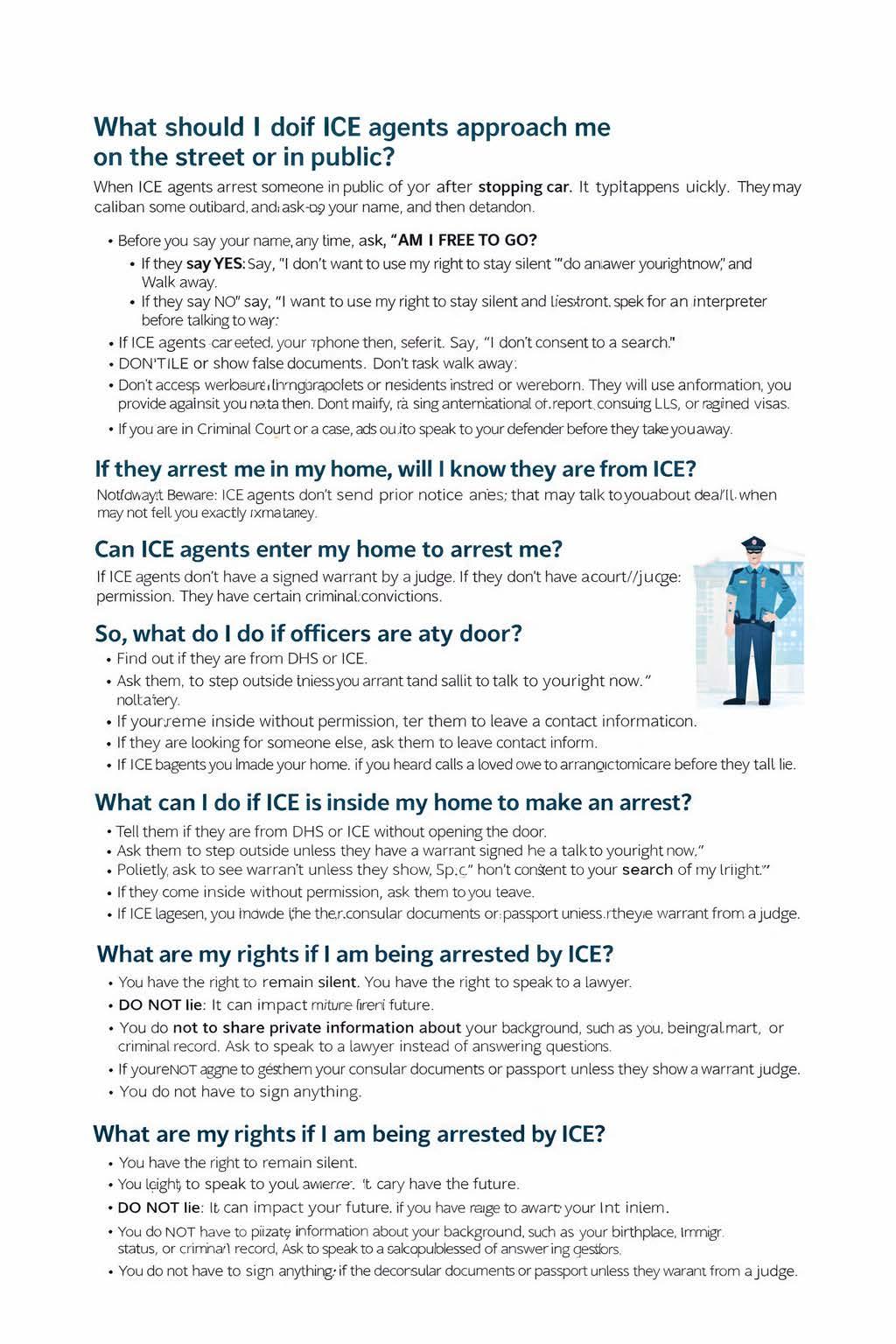
Knowing your rights during an encounter with immigration authorities is a vital part of protecting your mental health and overall well-being, especially for individuals and families who may already be experiencing stress, fear, or uncertainty. Being informed helps reduce anxiety, prevents panic, and restores a sense of control in moments that can feel overwhelming. If you encounter ICE agents, it’s important to remain calm and remember that you have the right to remain silent, the right to
ask if you are free to leave, and the right to speak with a lawyer before answering any questions. You are not required to open your door unless agents present a valid warrant signed by a judge, and you should never sign documents you do not fully understand. From a mental health and wellness perspective, preparing in advance—by learning your rights, creating a safety plan, and identifying trusted legal and community resources—can build emotional resilience, ease fear, and empower individuals to protect both their legal standing and their mental well-being.

I was in Barbados, where my column was named “Saturday’s Child,” and I got enough jokes from the people about how this “show-and-show” man could be called a “child.” My response was, “I think your wife [is] trying to change the subject,” or “You better chill than joke about children, otherwise your wife will tell you who he is.”
That worked until a few minutes later when I used my Barbadian knowledge to shout “Cheese on Bread” and not meaning in any way that it had anything to do with food for the hungry me. In fact, it was from getting a call that my wife, who was in the hospital with her first baby in her womb, was told that, because of her poor health, the doctors felt that the baby would not survive.
This was more than “Cheese on Bread” but was instead, “Cheese and rice, man.” This meant that it was definitely not a dish that I cared for, but an explanation, exclamation, and also a euphemism that skirts around being guilty of blasphemy. Instead, I was swearing loudly about what I heard, but still not wanting to take the words of God like “Jesus Christ.”
I quickly got my wife and first child, a daughter, to Barbados where both of them, the mother and baby, survived. Later, one year after, our second child, a boy, was born. By that time, I had become “New Man in Town” and that too was a problem because one of the company’s big shots asked how an Old Man like me would be called a “New Man”. This led to plain “Tony Deyal” who was always seen somewhere, most likely creating, remembering, or just imagining a scene. The best part of it was not just that I loved Barbados, but so did the Mother, Indrani, and our two children-Jasmine (girl) and Zubin (boy). In fact, when someone in the kindergarten school that they went to in Trinidad told them they were “Indians”, they adamantly insisted, almost to the point of tears, “We are not Indians. We are Barbadians!” In a way, it was how I felt as well.
Working in Barbados as the media communications advisor for the Pan American Health Organisation (PAHO/WHO) was a learning experience for life, not just for me but for the family. In fact, my son and daughter are taking our wife and me to Barbados right after Christmas to spend a week at “THEIR HOME AND COUNTRY!”
I told both my children that, despite the long time they spent in Barbados, and Zubin especially, had won the prestigious Commonwealth Caribbean Rhodes Scholarship in 2019, and they needed to remember the local language that they had learned and used when they were there. They both remembered a few like “Ground is fuh de cat and de dog.” In other words, “Finders Keepers.” Then “Bim” and “Bimshire” which they found out was nicknames for “Barbados.” They liked “Bashy” meaning “cool, awesome,” like the new car looking so “bashy.” Then, there was the first time I heard “arrifle.” I was totally lost. But then a friend told me, “That means ‘a lot’ like if you talking a barrifle o’nonsense.” And, if you feel it is not right or you are making their country look bard, you have to get ready for “Bassa-bassa” which is a fight or disagreement.
What the kids were not sure about, given the time they were away from Barbados, were some Bajan sayings and what they meant. There is “hard ears yuh won’t hear, own way you gine feel.” I had no idea what “gine feel” meant, and when I said it sounded like Scotch and would not mind a glass, I was told, “You in the wrong place, You should adhere to advice, or you will end up feeling the negative effects.” I laughed, said sorry and then heard, “Unlike you, we say ‘Cat luck ain dog luck.’” I was upset, “Who you calling dog?”
By Tony Deyal
Everyone laughed and looked at me with shouting, “No, not you. What it means is that because something works for one person, it doesn’t mean it will work for anyone, especially you.”
I replied immediately and loudly for everyone to hear, “De devil does find work fa idle hands.” I meant that people who have nothing to do generally find themselves in trouble. I then heard, “Don’t tek a six for a nine otherwise you will be misjudging what we can do to you if you continue, you know!” At that point, I heard from the owner of the place, “Listen mister, behave like the way every fool got he sense. Leave now and don’t come back otherwise…”
I should have shut up and left, but I didn’t, and one of them then dropped a joke about other Trinis and me. The story, by the guy who I got angry for calling me a dog, said, “You just like a Trinidadian in New York. He worked in the construction industry putting up skyscrapers. He invariably had lunch with his two best friends, a Barbadian from right here, and a Jamaican. One day, as they sat on a steel girder 50 floors high, the Barbadian opened his lunch kit and saw flying fish and cou-cou. He got angry.
“Flying fish and cou-cou again!” he exclaimed. “If I get this one more day, I will throw myself from up here.” The Jamaican opened his lunch kit and found ackee and saltfish. “Ackee and salt-fish again,” he roared. “If I get this one more day, I will throw myself from up here.” The Trinidadian opened his lunch and found roti and fried potatoes. He shouted, “If I get this one more day, I will throw myself from up here.” The next day, the three men opened their lunches.
The Barbadian said in disgust, “Flying fish and cou-cou again!” and jumped. The Jamaican took one disgusted look at his lunch, “Ackee and salt-fish again” and jumped. The Trinidadian saw the roti and fried potatoes, and he jumped too. At the joint funeral of all three men, the widows got together.
The Barbadian’s widow cried softly, “Ef I know he would do something so drastic I would have given him something else.” The Jamaican widow said: “If I thought he would do that, I would have given him a hamleete instead.” The Trinidadian’s widow said in frustration, “I can’t understand why he do that at all. He used to fix his own lunch.”
Actually, in a way, it was the best for all of us. We are from the Caribbean and should really be one for all and all for one, especially now with Trump trying to destroy everything he touches. Worse, with Trinidad deciding to stick with that man and ignore the rest of the Caribbean, which is under the leadership of prime minister Mottley. As several people around the region said, while Caribbean leaders start at the top and then quickly bottom out, PM Mottley is at the top and raising much higher than Mount Hillaby. With her limitless commitment to her country and her people, as well as trying to help the entire region, if they ever decide to name a mountain after her, it would be “Mount Neverest.”
*Tony Deyal said there was an old man was being pressured by a real estate salesman to buy an expensive condominium on the Barbados West Coast resort of Westmoorings, as it is a great investment for the future. The man replied, “Son, at my age, I don’t even buy green bananas.”
Jamaican Brown Stew Chicken is a classic dish rooted in the island’s history and cultural fusion. Its origins lie in WestAfrican cooking traditions brought by enslaved Africans, including the use of bold seasonings, slow cooking, and rich gravies. Browning the meat before stewing, a defining step, developed deep flavor and reflected practical food-preservationmethods.
European influences later introduced stew-based techniques and ingredients such as onions and carrots, which blended with local Jamaican elements like thyme, scallions, garlic, ginger, and Scotch bonnet pepper. The use of caramelized sugar or browning sauce became a distinctive Caribbean touch, giving the dish its signaturecolorandtaste.
Traditionally served with rice and peas or ground provisions, Brown Stew Chicken remains a staple of Jamaican home cooking, symbolizing comfort, tradition, and the enduring legacy of Jamaica’s diverse culinary heritage.