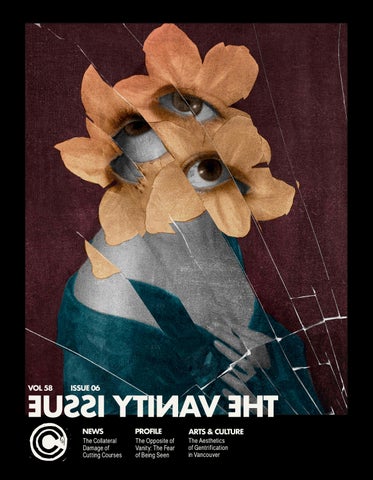
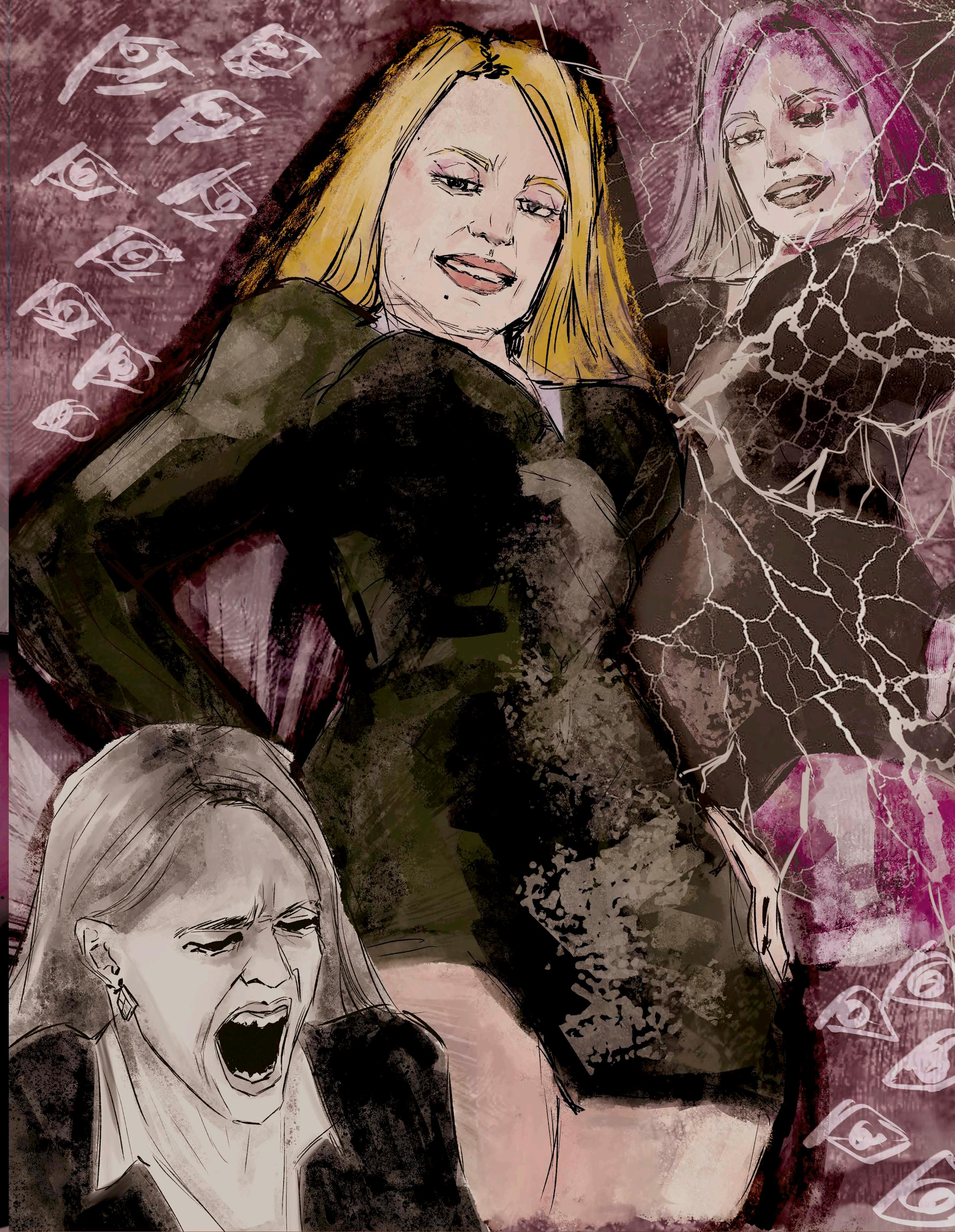
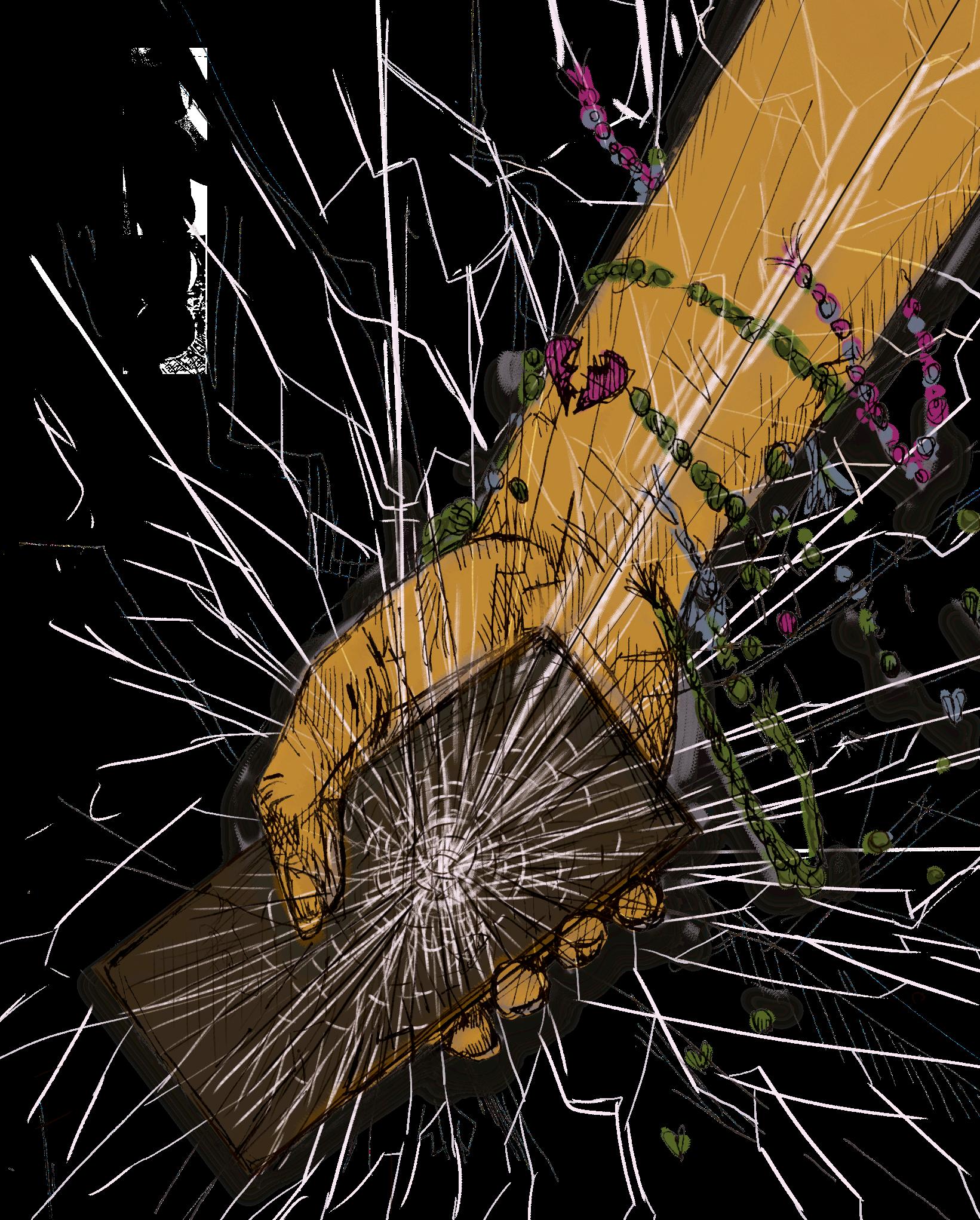
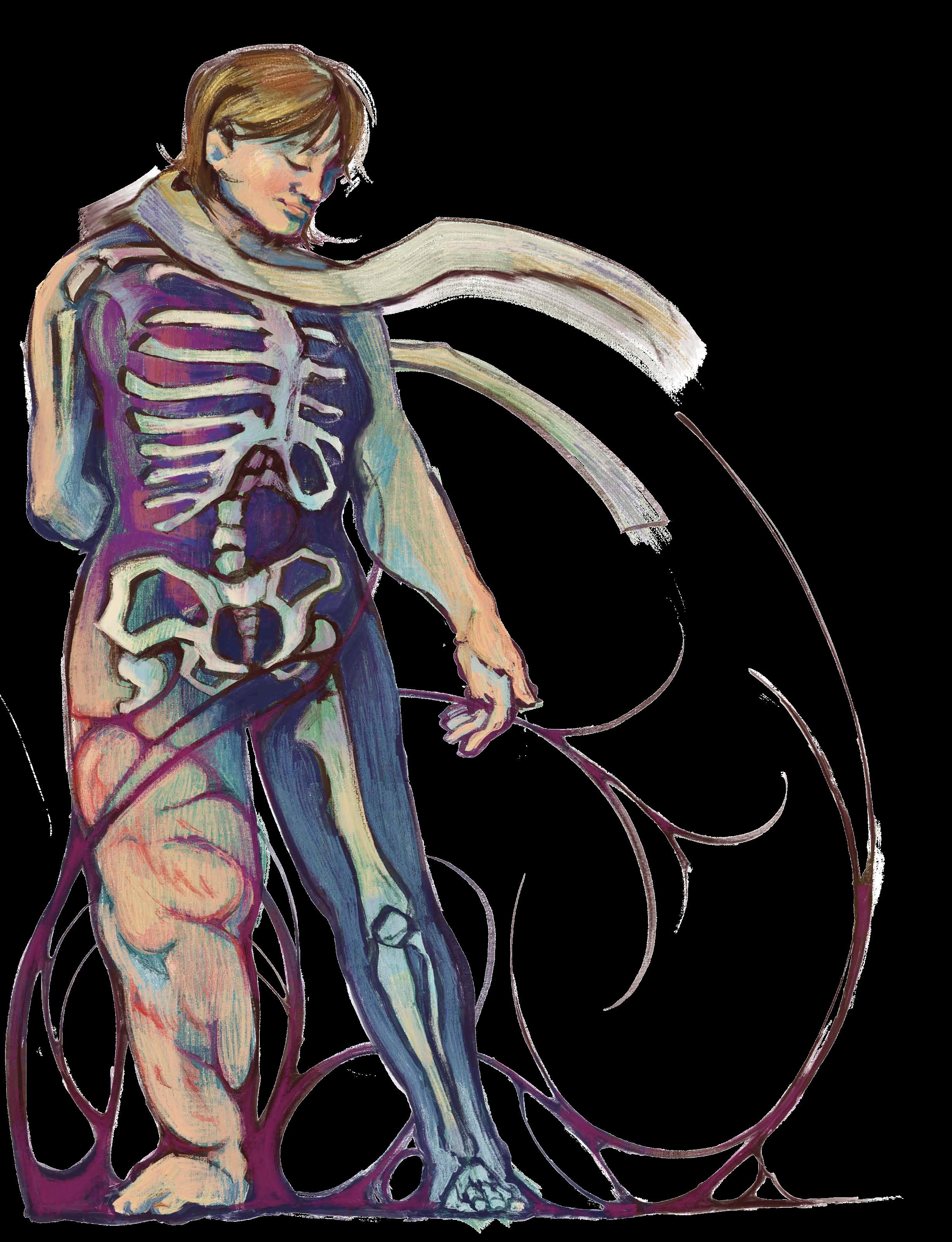
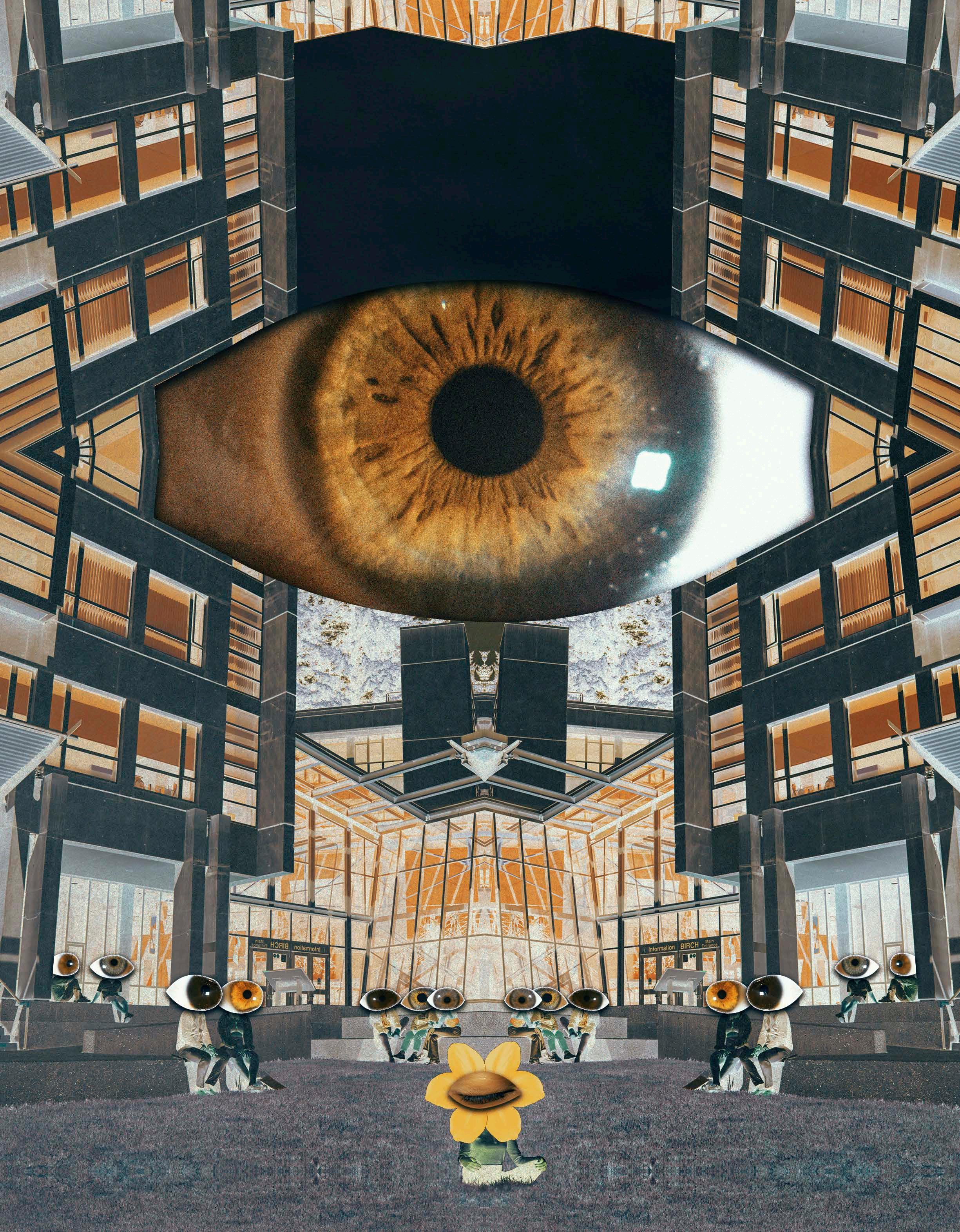
We are standing in a room with distorted mirrors instead of windows. We are not only isolated from the outside but also distracted from that fact by hyper-fixating on the details reflected back at us, as if they contained our entire identities. In psychoanalysis, the narcissism of small differences suggests that in proximity and similarity, we become overly sensitive—and more likely to conflict— with the minor differences we perceive in others. Vanity distracts us, makes us look away from the common ground, fragmented by inequality and injustice. Whatever we build over this fractured ground is at risk, regardless of how we decorate it.
We see vanity everywhere: in the pristine glasswindow landscape, photographed from afar to exclude the homelessness that would ruin its gentrified aesthetic; and in the portrayal of ageing as a problem rather than a privilege. When we look away from our reflections and put our minor differences aside, we see with sudden clarity who feeds on and benefits from our vanity.
- Laura Morales
Laura Morales CO - EDITOR-IN-CHIEF EDITOR@CAPILANOCOURIER.COM
Adam Stothard
CO - EDITOR-IN-CHIEF EDITOR@CAPILANOCOURIER.COM
Every time I walk past a mirror and see my reflection, I think to myself, “damn I look good.”
- Adam Stothard
CapU announces the closure of Sunshine Coast k álax̱ -ay Campus and the ‘not closure’ of CapU Lonsdales
Wrenchy the Hammer Solves Home Renovation Problems
One Mixer After Another
The Evolution of Becoming Palatable
The Opposite of Vanity: The Fear of Being Seen
February Events & Nash 88
Kate
Theodore
Sandi
Vlada
WRITING CONTRIBUTORS
Ren Zhang, Jolee Wen, Kayla Price, Andrea Chiang, Lily Dykstra, Katelynn Dey, April Martzon, Wrenchy the Hammer, Jaismine Kaur & Eugenia De Coss.
VISUAL CONTRIBUTORS
Ren Zhang, Andrei Gueco, Jasmin Linton, Alex Baidanuta, Anya Ali-Mulzet, Livvy H, Anna Israfilova, Lily Jones & Cristina Williams. Featuring the eyes of: Mena, Jeanelle, Abby, Scarlett S, Siobhan, Nawal, Amandeep singh, Manroop, Niko, Andy, Laura, Sam, Lucy, Chris & Shilpa.
COVER ART
Rachel Lu & Laura Morales.
INTERESTED IN CONTRIBUTING?
Email editor@capilanocourier.com for potential writers, and production@capilanocourier.com for interested visual artists and/or photographers. *Illustrators and Photographers are required to send a portfolio or sample(s) of work.
LONSDALE
ADMINISTRATION CONSOLIDATES TWO KEY SATELLITE CAMPUSES AS FINANCIAL WOES CONTINUE
Visuals and written by Ren Zhang (they/them) // Contributor
in a sweeping move, Capilano University announced that its ḵálax-ay Sunshine Coast campus will be closing and that CapU Lonsdale will be transferring all programming to the main campus. Effective April 24, 2026, these two decisions are the result of the university’s ongoing financial struggles. The closure of the ḵálax-ay campus marks the end of a long standing presence on the Sunshine Coast since Capilano College’s first classes there in 1975. The recently acquired Squamish campus—formerly the main campus for the now defunct Quest University—will remain open. While CapU Lonsdale will no longer be hosting classes in the future, university administration have told the Courier that it will remain open for events and as a short-term workspace. It was also mentioned by CapU’s interim president during the January 13 Senate meeting that the administration is waiting for the university’s new president, Jason Dewling, to come on board in March to make the final decision on whether to keep or officially axe CapU Lonsdale.
Capilano University was initially founded, in part, to serve as a regional post-secondary institution that would provide much needed services to the northwest parts of Vancouver that had been lacking in access. This directive guided the college to expand to Sechelt, which in 2008 was marked by law under the provincial University Act as becoming part of their regional mandate, fulfilling their designation as a special purpose teaching university. In other words, CapU was required by legal mandate to have classes on the Sunshine Coast, as well as throughout the sea-to-sky corridor.
“CapU remains deeply committed to the Sunshine Coast and to the learners, partners and communities who have engaged with our ḵálax-ay campus for many years,” a statement by Laureen Styles, the University’s interim president and vice-chancellor, reads. University administration have elaborated to the Courier that this process will consist of consultation sessions
and that “a comprehensive update on programming for 2026–27” will be presented at the Senate and Board of Governors meetings in February 2026. The university cites low participation and rising operational costs as reasons for the ḵálax-ay campus closure, and is framing Lonsdale’s soft-closure as a move towards “a more integrated campus environment” in their letter sent out to students on December 19, 2025. While these closures may come as a shock to some, this result follows a traceable line as CapU implements their deficit mitigation plan to address the almost $25 million deficit for 2026/27 year, as forecasted at the beginning of Fall 2025.
With this veneer of a safety net and a marketed chance at permanent residency, international students have been and continue receiving the short end of the stick, paying much more than their domestic counterparts and navigating a whole host of issues, receiving little support from the university, facing growing anti-immigration sentiment, and experiencing worse employment outcomes. This problem, however, is not exclusive to CapU; post-secondary institutions (PSIs) across B.C. have resorted to increasing international student tuition to cover costs in response to chronic underfunding by the government. As a result, 19 of the 25 institutions in B.C. are “forecasting at least one annual deficit and nine are in an accumulated operating deficit position,” according to the BC Government’s news release from November 25, 2025.
Together, poor long-term planning from PSIs and reactive policy decisions have boiled over into a crisis that means CapU is having to downsize, and at a high cost to the communities it serves.
In 2024, a substantial cap on international student visas meant that universities relying on international student tuition to compensate for insufficient government funding were forced to reckon with the unsustainable nature of this increasingly exploitative system. Despite assurances made by former President Paul Dangerfield in 2023 stating that CapU does not rely on international student tuition, an analysis of the University’s financial reports tells a different story, showing that income from the increasing enrolment of international students—at the same time when enrolment from domestic students was decreasing—made up for projected deficits in the University’s budget.
With CapU entering an unprecedented era of financial woes, these campus closures symbolize a major turn in direction for the university. While only recently administrators were bent on expansion and growth, CapU now finds itself frantically consolidating in the name of self-preservation. But, after all the budget meetings and consultations have finished, those left feeling the impact of these decisions will inevitably be students, workers and the greater CapU community.
CAPU INTRODUCES
PROTEST GUIDELINES
wCapilano
University qUietly introdUCes gUidelines for protests on CampUs, emphasizes CampUs groUnds are ‘private property ’
Written by Jolee Wen (she/they) // Contributor
ithout prior notice or consultation with faculty or students, guidelines for “Peaceful Protest at CapU” were published on the Capilano University website. They establish a list of prohibited acts during campus protests, including trespassing into classrooms, events, “business areas” and “sensitive zones,” disrupting access to campus facilities, using sound amplification devices, gatherings that “disturb the peace” and encampments.
The guidelines apply to all CapU campuses. If protestors refuse to leave the premises, campus security may issue a “Notice of Trespass” and contact local authorities. The guidelines also allow CapU to designate a “protest zone” within which demonstrations may occur.
The Courier, pursuant to the Freedom of Information and Protection of Privacy Act (FIPPA), requested access to records and communications related to the creation of the protest guidelines. Emails exchanged between Safety & Emergency Services and the Communications office pinpoint the creation of guidelines in late August 2025. A first draft was finalized for internal review on September 10, 2025.
It’s important to note that some documents were withheld from the FOI on the basis that “it reveals
Visuals by Andrei Gueco (he/him) // Contributor
or relates policy advice and recommendations that were developed by or for a public body” and that Section 15 of the act stipulates that a “public body” can refuse to disclose information to an application if the disclosing of such information runs the risk of causing harm. The irony here is that these reasons emphasize the university as a public body, while the new protest guidelines emphatically designate the university as private property.
Under Section 27(2)(t) of the University Act, the Board of Governors is responsible for imposing requirements in relation to use of the “real property, buildings, structures and personal property” of the university. However, the protest guidelines have not appeared on public Board of Governors minutes as a decision item. Additionally, a faculty senator provided that while individual faculty members discovered the presence of the new guidelines on the CapU website, they were never formally brought to the attention of faculty, nor the Senate.
“The lack of consultation feels intentional, especially with how they showed up unannounced on the website,” a second-year student at CapU expressed. “It feels haphazardly done to prevent any protests, especially with how some guidelines are worded.”
“It feels vague enough that any group of people can be unfairly escorted off CapU if CapU so deems it.”
As a form of free expression, student protests provide an outlet for democratic participation. “For a democratic society to survive, let alone flourish, a wide number of spaces for political participation are required,” says David Matijasevich, a political science instructor at CapU.
“If universities become hostile to politics on campus, they are directly contributing to the shrinking of space for popular political activity that has been an unfortunate feature of liberal democracies over the last several decades and, in some ways, has given rise to the polarization and political upheaval that we are all currently witnessing.”
Matijasevich believes that certain provisions of the guidelines including: the ability to designate ‘protest zones,’ the condition that protestors do not interrupt campus activities, and “unclear language around offensiveness and respect,” are “akin to legislation commonly found in authoritarian societies.” He observes that while universities may legally have the right to limit protests, “it doesn’t follow that they ought to do so.”
“Authoritarian regimes (and organizations) that utilize such control mechanisms typically do so within the bounds of law, so we shouldn’t confuse legality or legal consistency with democracy.”
“CAPILANO UNIVERSITY IS PRIVATE PROPERTY”*
*THE COURIER SUPPORTS CRITICAL ANALYSIS BUT DOES NOT NECESSARILY ENDORSE THE VIEWS EXPRESSED IN THIS SEGMENT
The guidelines emphasize that “Capilano University is private property,” twice. The phrase also appears once more in the response letter to the Courier’s FIPPA request.
“Please note that Capilano University is private property as per the [sic] Section 27(2)(t) of the University Act,” the letter reads.
Despite being publicly funded institutions, universities are legally considered private property. As such, universities may limit protests by regulating their campus spaces or disciplining students, despite the right to peaceful protest enshrined in the Canadian Charter of Rights and Freedoms (the Charter) – which B.C.’s court decisions have affirmed.
Such decisions bring into question whether universities should function as spaces of public discourse and free expression and the role of student protests in democratic societies.
The right to protest peacefully is derived from Section 2 of the Charter, which protects freedom of expression, peaceful assembly, and association. In Eldridge v British Columbia (Attorney General), it was ruled that the Charter applies when the quality of an act is “governmental” in nature, such as when implementing “a specific statutory scheme or a
government program.” While post-secondary education seemingly falls under this definition, BC courts largely dismiss the argument. A recent example is Kishawi v Vancouver Island University, which upheld the suspension of a VIU student for engaging in “disruptive” protest acts in support of Palestine. The BC Supreme Court ruled that Charter rights do not apply to the regulation of university spaces, which is not considered ‘governmental action.’
“There is no express responsibility for the provision of a public forum for free expression on university campuses,” the court held.
Other provincial courts see universities as spaces that promote civic discourse. In 2020, UAlberta Pro-Life v Governors of the University of Alberta held that the University of Alberta’s regulation of campus protests violated their students’ right to freedom of expression, noting that campus grounds “are physically designed to ensure that the capacity of each student to learn, debate and share ideas is in a community space.”
The core purpose of universities, the appellate court stated, is “the education of students largely by means of free expression.”
The Collateral Damage of Cutting Courses
As CapU faces financial woes, students are being forced to take required courses elsewhere
Written by Ben Taylor (he/him) // Crew Writer
the current budget deficit that Capilano University faces is causing many courses and programs to be discontinued or paused. Programs listed in the cuts range from specific electives, to entire degree programs, such as the Bachelor of Communications Studies. The justification for these cuts generally centre around inconsistencies in enrolment and the financial stress this creates for the university. The Courier spoke to faculty and students at the School of Business and Professional Studies, in regards to the difficulties they have faced due to the course cuts and the actions they have been forced to take as a result.
The Bachelor of Business Administration program offers an accounting concentration for students wishing to become chartered professional accountants (CPA). An instructor from the program, who remains anonymous, broke down what that path looks like. They noted that at CapU “our business degree concentrations are a bit different than a major at other institutions, [...] here to get a concentration in accounting, you only need to take five 300 and 400 level accounting courses, plus four 100 and 200 level courses which totals to nine. However, to enter into the Chartered Professional Accountancy program, you needed to complete 14 prerequisite courses.” In prior years, students were able to attain the additional prerequisite courses through electives outside of the concentration.
by Jasmin Linton (she/her) // Contributor
Nevertheless, after recent cuts, “those electives may or may not be offered in any given year [and] students are having to take these courses elsewhere,” they claimed.
Some students have resorted to taking online asynchronous courses at Thompson Rivers University (TRU) in order to make up for the lost courses. Taking supplemental online courses at another institution isn’t unusual, but doing so out of necessity sets a dangerous new precedent. One student in the accounting concentration detailed their experience; “BFIN 411 (Advanced Financial Accounting) is the concluding financial accounting course at CapU and is a required course for entrance into the CPA PEP program. Prior to Summer 2025, the course was offered at CapU and was present on the School of Business BBA Course Plan. During the Summer of 2025, the University removed the course from all future offerings without any communication with students.” Because of this the student was forced to register in an equivalent course at TRU, which according to them, is “far inferior to learning in the classroom environment at CapU.”
As a result, there remains a general air of frustration with the administration among instructors and students alike in the program. The instructor claimed, “We have met with more than 30+ students, had petitions signed, saw students e-mail the previous Vice Chair Academic and current business
Visuals
scheduler to no avail.” Allegedly, there was evidence that enough students were planning to enter into BFIN 411, including internal data of who had taken which pre-requisites. Still, according to the instructor, it seemed like the university’s pressure to remove any non-required or elective courses may have caused all the evidence presented to be disregarded.
From the student perspective, advocacy has been challenging due to the circumstances the cuts have put them in. “The lack of communication from the School of Business and our heavy courseloads prior to graduation, our advocacy efforts have stalled. However, with the recent changes in leadership within the University and School of Business, we are looking to resume efforts to advocate for current and future students experiencing issues with the University’s course planning,” explained a CapU student involved with the Capilano Business & Professional Society.
This unfortunate situation in the accounting program is indicative of a larger issue within the CapU community, specifically with regard to financial struggles being faced by the university. In previous issues, the Courier detailed how CapU found themselves in the current financial crisis, leading to the cuts and discontinuations of programs. Consequently, we are now seeing how these issues are directly impacting students who now struggle to complete their degrees at CapU.
Written by Laura Morales Padilla (she/her) // Co-EIC
The recently approved mitigation plan to address the forecasted deficit budget for the 2026-27 fiscal year has brought many difficult decisions to Senate for legally required advice. From the discontinuation of multiple programs to the merger of two faculties, senators are dusting off policies—one over six years overdue for review—to define their role in these high-stakes decisions. So, what are the key grey areas affecting decisions that will shape the university’s academic future? And, what strategies are underway from senators and the administration to address them?
The Board of Governors is in charge of managing the university’s revenue, but some decisions—following the University Act—require the involvement of Senate. For instance, when it comes to permanently deleting a course or program, the relevant policy B.104 states that the Board may approve these discontinuances “after seeking the advice of the Senate.”
However, ‘permanently deleting’ must not be confused with ‘indefinitely suspending,’ a grey area that until recently allowed the administration to stop admitting students to programs without consultation, and then present
the depopulated programs for discontinuation. This “long-game work around,” as explained by the Capilano Students’ Union (CSU) executive director during the January University Affairs meeting, makes it really hard for senators to object to the discontinuance of a program:
“How can you rationally object to deleting a program that has no students in it?”
The executive director clarified that some programs are genuinely underperforming, or not contributing significantly to student success or graduation pathways, but in their view, consultations should still be taking place for program suspensions.
“From a CSU perspective, a suspended program is a discontinued program,” he said.
In item 2.1 of the January Senate agenda, the Interim Vice President, Academic and Provost stated that, “the suspension of admission for programs has not been subject to Policy B.104, which deals specifically with the discontinuance of programs and courses.”
However, a recent court decision found that the administration at Thompson Rivers University, as reported by the Castanet, overstepped its authority by suspending one of its programs without consultation.
“To ensure potential compliance with the standards set by the courts,” the Interim VP indicated, the Board is seeking advice from Senate on the suspension of 11 programs.
In an email exchange with the Courier, the administration confirmed that policy B.104 and its supporting procedure are under review, and that program suspensions “will be considered for inclusion in the updated policy and procedure.”
As for the implementation timeline, the administration indicated that, “The board governance and policy committee agreed (in April 2025) to a new timeline for these reviews with a fall 2026 deadline in order to align with the planned preparatory work currently being completed in support of the eventual implementation of a new curriculum management system.” If the reviewed version of B.104
clarifies that consultation is also needed for program suspensions, it would prevent program pausesfrom being used to avoid the consultation required for discontinuances. As for now though, from the 30 programs that are currently being proposed for discontinuance—pending Senate advice—20were previously “paused,” as indicated in January Senate meeting agenda, without consulting with Senate. On the other hand, as previously reported by the Courier, the proposal to merge the Faculty of Global and Community Studies and the Faculty of Business and Professional Studies brought to light another problematic grey area in policy B.105: Establishment and Discontinuance of Faculties. By not defining what a “merger” is, the policy made it unclear whether the Board required Senate’s advice or approval; the main difference being that the Board is not required to follow Senate’s advice, but requiring approval gives Senate veto power. When the Board decided that seeking advice was the appropriate path, it pushed senators to formalize a procedure to provide it, considering how significant this decision is for the university. To unpack Senate’s approach to this issue, and how it will set precedent, the Courier reached out to Corey Muench, chair of the Senate Policy & Governance committee (SPGC).
As Muench clarified, the SPGC works primarily on academic policies. Occasionally, it reviews other policies when required by the University Act or when the Board chooses to seek Senate’s advice, as happened when developing the policy to discontinue programs and courses. This committee of mostly volunteers meets twice a month, which is more frequent than any other subcommittee. “We have typically been getting through 10-13 policies per academic year,” indicated the senator, being very appreciative of the “thoughtful and large amount of work that the committee members put in.”
When it comes to Board of Governors policies, such as B.104 or B.105—Establishment and Discontinuance of Faculties—Muench indicated that the SPGC could make recommendations to improve them, but “it is ultimately up to the Board to decide how it formulates its own policies.” In other words, the Board could request the committee’s advice or the Senate could vote on making a recommendation, but it would be up to the Board to consider this suggestion. “It would be my hope that the Board would carefully consider any good faith policy advice that came from Senate or for lesser issues, from SPGC,” he added. Another issue that emerged with policy B.105 is that it doesn’t have a procedure to guide its implementation. Thus, there is nocomprehensive list of information required to present a proposal to Senate for advice, as other similar policies do, such as policy GV9 from Kwantlen Polytechnic University. Still, senators found the way to gather this
information themselves through the creation of an Ad Hoc committee. The motion to create this committee was moved and seconded by student senators during Senate’s December meeting, given that the current working group set up by the administration for consultations on the merger had no student representation. “Hopefully student senators at least will be invited to take part in that,” stated one of the student senators during the CSU Board of Directors meeting on January 18.
During the holiday break, members of the SPGC managed to put together the terms of reference for the Ad Hoc committee in time for the very next meeting on January 13. During the last CSU University Affairs committee meeting, a student senator emphasized that this was no small task, given that other members at the senate meeting expressed concerns that the process to approve the ad hoc committee would be too slow. “Corey proved them wrong, boom!” they said.
As explained by Muench, the terms of reference are written in a general way so that they serve “as a template for any future formation of this kind of ad hoc committee for the purpose of Faculty restructuring.” Moreover, one of its last items includes a report from committee members with suggested changes for the SPGC to improve the terms of reference. These terms were approved during the January meeting with minor adjustments.
Vanity: The Miranda Priestley of our lives
do you ever wonder what vanity really means? spoiler alert* (diet culture warning)
Written by Cami Davila (she/her) // Crew Writer
Visuals by Alex Baidanuta (she/her) // Contributor
In 2006, one of the most infamous movies in pop culture history was released, The Devil Wears Prada. This film follows idealistic journalist, Andy Sachs, who works for Miranda Priestley, the editor-in-chief of Runway, an important fictional fashion magazine in New York. American filmmaker David Frankel pulled together two of the generation’s most well-known and talented actors to perform in a comic story with meaningful layers.
How did Meryl Streep and Anne Hathaway bring to the big screen a story that, to this day, shows us that vanity is nothing more than a form of control over women?
The word vanity comes from the Latin word vanitas, which means emptiness or worthlessness. It’s used to describe a person who cares excessively about their appearance and what others think of them. Vanity is shaped by society’s beauty standards, which in most cases, are unrealistic and unattainable. People have become so obsessed with reaching these expectations that they lose sight of everything else that made them who they are. Vanity, then, ends up being a means to control.
So, why do people want to fulfill this unhealthy dream?
This is precisely what The Devil Wears Prada explores. Focused on her dreams of journalism, Andy Sachs’ seemingly last priorities and goals are based on the clothes and makeup she wears. In the first act, she doesn’t follow any specific trend or style—she probably hasn’t even stopped to think whether she has one or not—wearing little makeup. Nevertheless, as soon as she gets sucked into the toxic environment of Runway Magazine, she is hypnotized with the desire to fit in.
Many people—especially generations before social media— believe that meeting social standards only matters during adolescence. In reality, no age is safe from the pressure felt when individuals fail to meet the expectations promoted by vanity—especially when they are immersed in a toxic environment—whether as vast as culture and society or as close as the workplace or family.
Close your eyes for a second and imagine yourself in this scenario: You just landed a new job and you’re really excited about the opportunities it will lead you towards. It’s not quite
what you wanted, but you know that this could look great on your resume, so you do everything you can to stay there. However, your boss and all her minions don’t see you as capable enough for the job and they constantly exclude you. Great! Now, you’re insufficient and rejected, just as Andy was in The Devil Wears Prada.
She needed this job and, even though she didn’t identify stylistically with the people in the workplace, she began to feel the need to belong. Eventually, vanity got what it wanted: she became obsessed with how she looked that she forgot everything else in her life. In other words, Miranda—who symbolizes vanity—ended up controlling Andy.
The American journalist and author Naomi Wolf said, “A culture fixated on female thinness is not an obsession about female beauty, but an obsession about female obedience. Dieting is the most potent political sedative in women’s history; a quietly mad population is a tractable one.”
Wolf presents a terrifying idea of what vanity can lead to, introducing two new words: obedience and sedative. Consider this; what did all the women working at the fashion magazine have in common? They obeyed all of Miranda Priestley’s standards, seemingly hypnotized by her presence, while all other aspects of their lives were put on pause, as if numbed.
The Devil Wears Prada is not the only movie that has portrayed vanity as a mechanism to control women. In 2004, Lindsay Lohan and Rachel McAdams co-starred in Mean Girls, a story about high school girls. Even though it has a completely different plot and setting, there is the one who controls—Regina George, the most popular girl in school—and the controlled—Cady Heron, the new student.
No matter how big the movie is—like Barbie, which follows a similar narrative and grossed approximately $1.44 billion worldwide, becoming a cultural phenomenon that marked a turning point in the film industry—vanity always ends up being the one in control. The same will happen with this article: you will think about the problem while reading it, but as soon as you turn the page, Miranda Priestley or Regina George will take back control of your life.
THE DECLINE OF FRIENDSHIP
Critics are calling it a ‘friendship recession’ but who, or what, is to blame?
Written by Theodore Abbott (he/him) // News Editor
Visuals by Anya Ali-Mulzet (they/them) // Contributor
Although shocking, it should come as no surprise that we are indeed facing a decline of friendship. In fact, when considering the circumstances under which this phenomenon has emerged, it’s hard to imagine any other series of events.
Both in quantity and quality, close friendships have diminished over the last 30 years. As an area of research, there is no shortage of literature offering various diagnoses for this gloomy, lonesome state of affairs. Some critics point to social media as the culprit, others look at work-culture—overall there seems to be little consensus as to which factor is contributing the most. Where the consensus lies is with regard to its impact. Across the board, everyone agrees that fewer friendships, and friendships of poorer quality, is irrefutably negative; not only for our physical, emotional and spiritual health, but negative for communities as a whole.
Measuring the quantity of friendships is hard. People tend to be reluctant when it comes to discussing their personal friendships, and especially when admitting to the lack thereof. Despite this, data tells us that over the last 30 years the number of people who report not having a close friend has increased. This trend is strongest among men, but post-Covid saw women better represented in what is sometimes called ‘the friendship recession.’
Then there’s the quality of our friendships, which is also in crisis.
About a year ago, I was at my local community centre, sitting in the sauna, eavesdropping on a conversation. Two men, both in their twenties, were having what I would characterize as a heartto-heart. At the end of the chat, as they left, one quipped to the other that he should ‘send him an invoice.’ What this young man was commenting on was the intimacy of their conversation and, that in a certain way, by having a meaningful exchange with his friend, he had fulfilled the role of a therapist. What this exchange symbolizes is a seismic shift in the nature of close friendships, and—although anecdotal—it aligns with what the research is saying.
According to survey data, we are now less likely to turn to a friend in times of trouble than in the 1990s. As author and social scientist Richard Reeves states, “In times of crisis, you need a shoulder to cry on, or at least someone to have a conversation with. That’s less and less likely to be a friend now.”
This trend also coincides with a mushrooming of the self-help industry. Where friends once provided an essential pillar of emotional support, we are now seeing them replaced by councillors, life coaches and every variation of therapist. Additionally, psychiatric medication prescriptions have steadily increased since the early 2000s. Particularly among university students, these medications are most commonly antidepressants, anti-anxiety
and psychostimulants. Although I am in no way opposed to treatments like therapy or medication, the possibility that some percentage of folks may have reached for the pill bottle when a friend was all they needed is a sobering thought.
Aside from the explanations that have already been offered by critics like Richard Reeves, it’s worth considering that the decline of friendship, to some extent, can be taken as a symptom of identity politics. Insofar as identity politics is a movement that holds the individual, and individual expression above all else, the result has been radical atomization. In short, identity politics incentivises a kind of hyper-individualism, such to the extent that solidarity and kinship play second fiddle. Similar observations have been made before, especially with regard to how identity politics works against class politics. On the World Socialist Website, Dominic Gustavo defines identity politics as “an essential tool utilized by the bourgeoisie to maintain its class domination over the working class by keeping workers divided along racial and gender lines.”
I would argue, however, that the divisive nature of identity politics extends to friendships, and is subsequently having a negative effect. This is because, as the result of elite capture, identity politics has become a movement defined by division, rather than unity. And, as the most defining ideology throughout the last twenty years, we are now struggling not only to form solidarity across political movements, but also to establish the common ground needed for basic friendships.
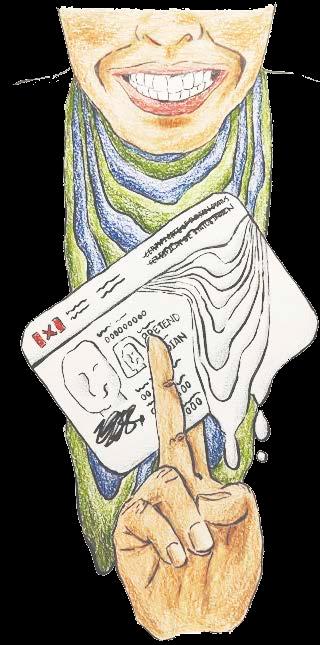
They took the children from the land, now they want those children’s
identities.
Anonda Canadien, Dehcho Dene (she/her) // Arts and Culture Editor
by Andrei Gueco (he/him) // Contributor
Over the last few years, it’s come to light that many people have been falsely claiming the heritage of being Indigenous within the colonial state of Canada. This issue—brought to light within the colonial context of the Canadian state—has revealed numerous such cases of identity fraud.
PRETENDIANS: How MucH will THey Take?
This goes into the ongoing discourse: What is Indigenity? And, who gets to claim this status? Within Canada, Indigenous refers to First Nations, Metis, and Inuit peoples. Before the term Indigenous, there was Aboriginal, then First Nations, then I ndian, then the root of it all, a Savage. For context, when colonization began within the colonial state of ‘Canada,’ the government viewed the Indigenous people as ‘savages.’ The term ‘savage’ is a racist slur; it was applied because colonizers perceived Indigenous cultures as primitive, uneducated and as comprising everything they failed to recognize or understand.”
So, if the government and non-Indigenous peoples saw Indigenous peoples within this light, why have so many non-Indigenous peoples falsely claimed this identity? For starters, the most common line is that they were fostered and taken in by Indigenous communities and families. Furthermore, some people viewed the struggles that Indigenous peoples faced in a sympathetic light so deep that they connected to the struggles and thought to claim it, as they felt so deeply sorry for the Indigenous peoples struggles.
The term referring to these people who falsely claim Indigenous identity is commonly known within mainstream media as ‘pretendian.’ However, within scholarly discourse regarding this issue, it’s far too soft of a term for the amount of harm done. The term sounds like a kids game, like they’re saying ‘let’s play Indian for a while.’ So, the alternative for this is identity fraudsters, the definition of fraud being ‘wrongful or criminal deception intended to result in financial or personal gain.’
Who are these people? Some have made national headlines such as Buffy St. Marie, Michelle Latimer, Thomas King, Joseph Boyden and Karima Manji, just to name a few. The amount of people who have claimed this identity then to be outed is far more than you’d think, not only have they done harm to the communities they claim, they have taken funding, prizes, and pushed actual Indigenous people out of the spotlight. They took the spotlight because a part of them truly believed they were Indigenous due to false documents, false links to culture and communities, and turning their sympathy for the struggle into their identity.
The list of pretendians—or identity fraudsters—is endless. The amount of harm done is irreversible. They have taken grants, scholarships and jobs created for Indigenous people; they take the spotlight from Indigenous artists, leaders, speakers or authors; they capitalize on the ongoing trauma from residential schools, the sixties scoop and the ongoing genocide of Indigenous women, girls and two spirit peoples; they groom Elders and vulnerable members of the communities in order to ‘verify’ their connection and heritage under false pretenses and betray community members who looked up to them. Within academia, students feel confused and question if what they learned is real. They speak on behalf of Indigenous peoples; these actions and false stories have downgraded the actual lived experience of an Indigenous person.
Now, imagine you took a class on Indigenous Studies within Canada and later found out the instructor and assistant were not actually Indigenous through basic questioning? Within Indigenous communities, it’s often told to say where and who you come from in order to connect with community, relatives and to find common kin. When these identity fraudsters stutter and change where and who they come from, this is a giveaway that they’re actually not Indigenous. It’s not policing, it’s a practice that is common among Indigenous communities.
So, what should be done? Take into consideration the case of Karima Manji, a woman that pleaded guilty to one count of fraud in 2024. She falsely submitted documents claiming her children were of Inuit descent in order for them to gain access to education funding created specifically for Inuit students. Is this enough? Should her children also be charged? They were, but Manji took the fall when the children claimed they were unaware of the false documents.
As a young First Nations woman myself, this is not enough. Many of these people who were brought to the spotlight have only disappeared into the darkness. They never give the money, the prize or the spotlight back. They never give the stories back. To falsely claim Indigenous identity is rooted in racism and colonial ideology; they never stop taking.
Visuals
t he a estheti C s of g entrifi C ation in v an C o U ver
High rises and the rise of houselessness
Written by Kayla Price (she/her/they) // Contributor
Visuals by Alex Baidanuta (she/her) // Contributor
If you search up Vancouver city photography, you’ll be met with dozens upon dozens of gorgeous city skylines. The rich glass highrises around the downtown core, ocean sunsets from Waterfront and Granville Island and a myriad of near-identical aerial shots of the city’s nihilistic, angular architecture. Capturing the city at its best: from zoomed out lenses and convenient cropping. Something these photos all seem to neglect is the street-level view of this beautiful city, and the makeshift shelters and tents that line the sidewalks a couple blocks up from the Gastown steam clock.
Vancouver has a problem with wealth disparity; not the fact that an evergrowing financial gap exists between the ultra wealthy and the impoverished, but the fact that people struggling with poverty in this city of grandieur are being seen by tourists, sullying Vancouver’s precious image of being a modern, glass-paned city where nothing could possibly be wrong. If the state of the housing crisis
is anything to go by, policymakers have been out of touch with the needs of Vancouver’s lower income populations for quite some time, and with hosting the FIFA World Cup this summer, city officials are brandishing specific camera angles and increased police spending in order to cover up a deeper problem with homelessness and unaffordability, rather than addressing its root causes.
The VPD has a history of facing the homeless crisis in the city head on; via “leaf blower” displacement techniques to push the unsightly suffering of the vulnerable population away to another block, “criminalizing [unhoused] people’s everyday survival” as journalist Tyson Singh Kelsall from Breach Media puts it. “As registered social workers in the Lower Mainland we know that policing the housing crisis—or any crisis of inequality—fails to provide positive outcomes. . . Our experience has taught us that tackling issues facing tent cities directly, rather than relying on policing, will result in better outcomes for individuals and communities.”
City resources currently being spent on overpolicing the homeless populace could otherwise be allocated
into mental health support for those living in poverty, as well as social housing and community services to help all of Vancouver’s population with the skyrocketing costs of living. . . But, how would long-term communal solutions like that help the short-term aesthetics of our street photography? Instead of such positive societal progress, we can expect the VPD to keep sweeping people around streetcorners to save face. What this city truly needs from its leaders through our current economic hardship is an even BIGGER collection of skyward-angled pictures of Science World (ones that tastefully keep the impoverished out of frame, of course!). Especially in the face of hosting international events like the upcoming 2026 Fifa World Cup, our precious city council members couldn’t let all those tourists from abroad catch sight of the city’s reality, nor are they willing to shell over city resources to grass-roots organizations working to solve the issue either.
Unless we have something to say about it.
Rather than letting local police and government officials get away with shoving our struggling communities about, we need to use significant events like the World Cup as leverage for genuine social change. Let’s take this as an opportunity to connect with representatives and with your communities across Metro Vancouver to voice these concerns, and to address the root cause of affordable housing.
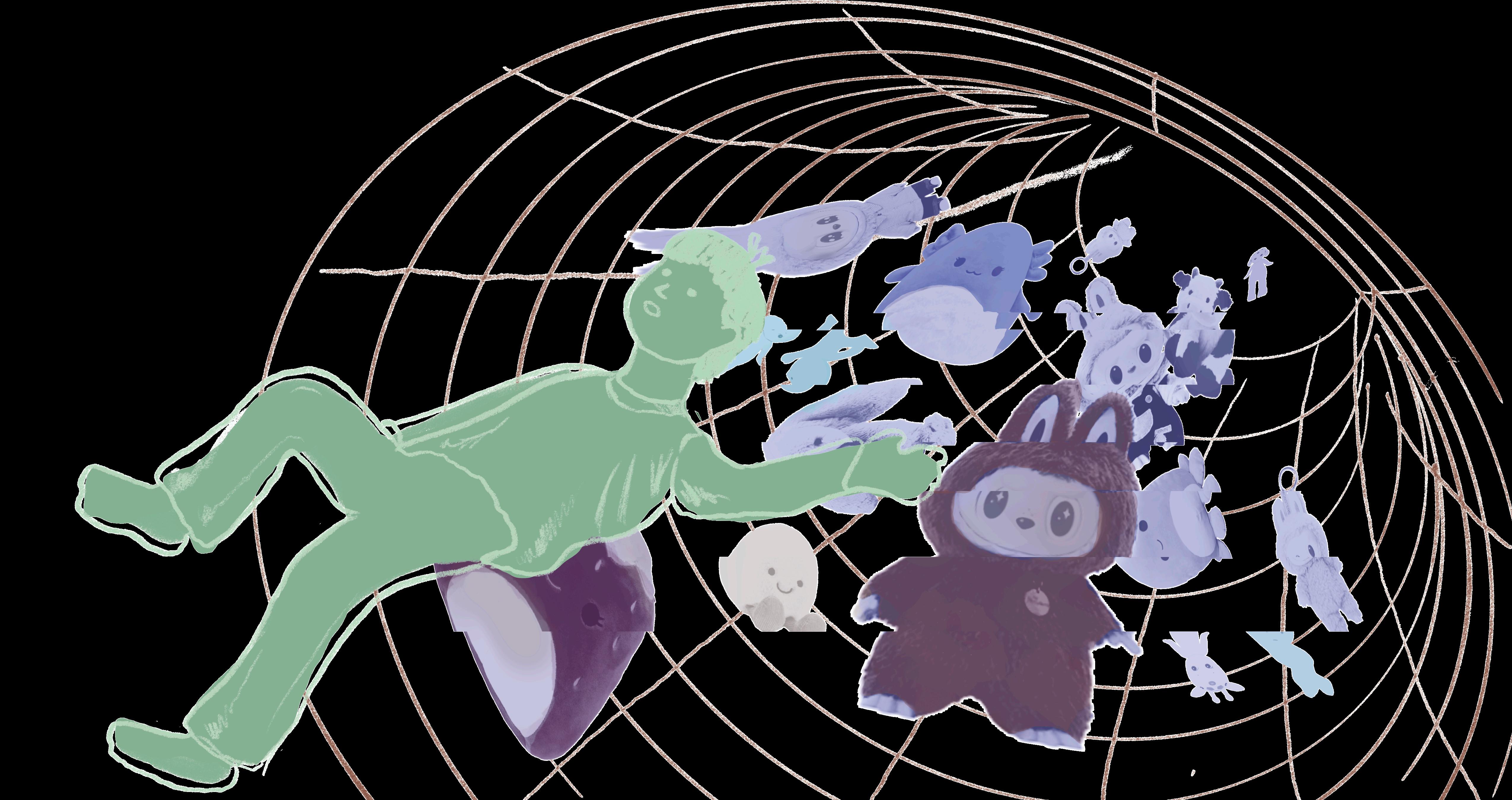
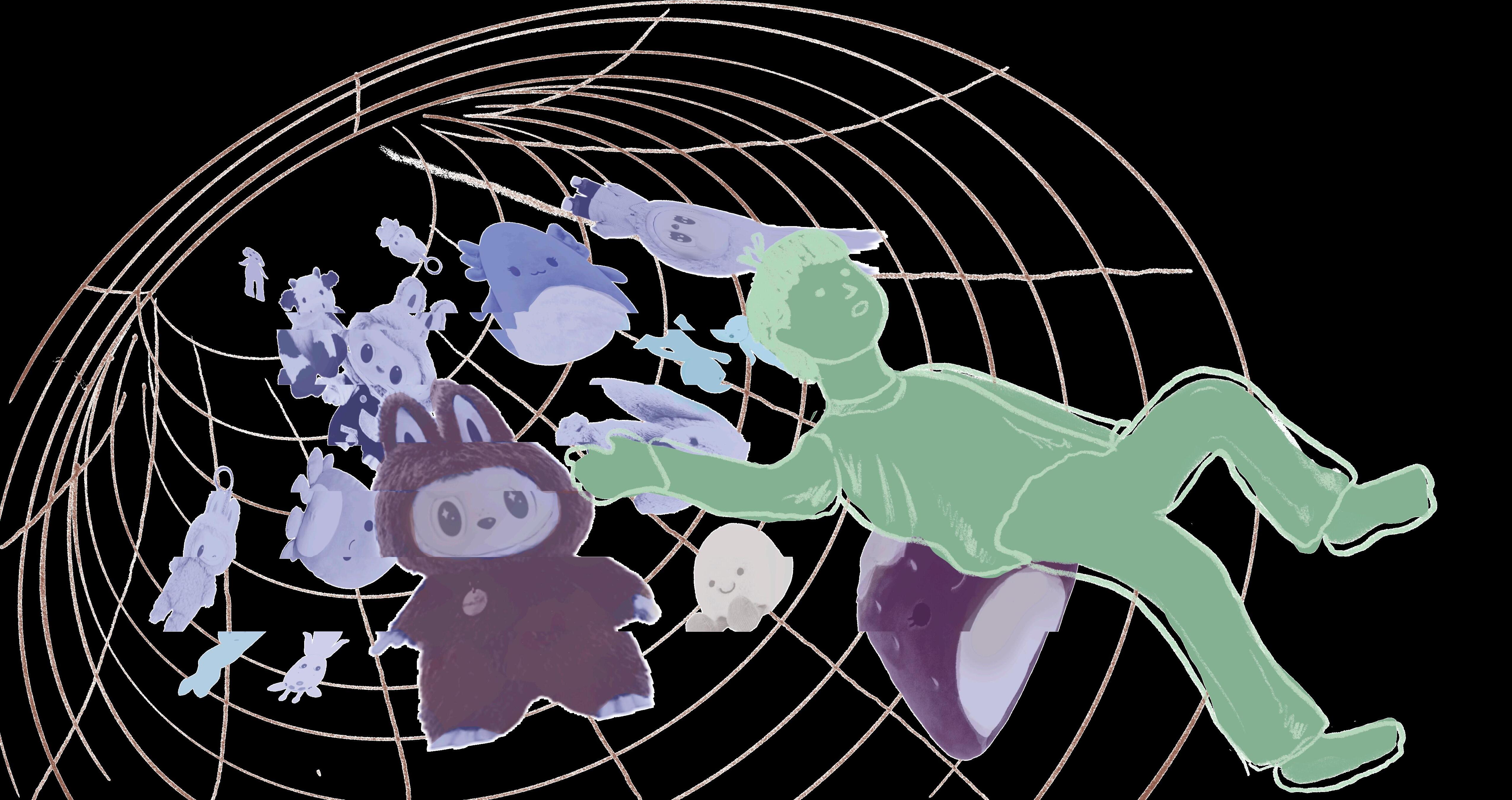
Were Labubus the End of Adults Collecting Toys?
Addictive Nostalgia: The Kids Who Never Grow Up
Written by Andrea Chiang (they/them) // Contributor
Visuals by Livvy Hung (she/her) // Contributor
Buying a house or paying off loans seems nearly impossible for our generation, it’s no wonder people gravitate towards smaller luxuries. Splurging on something small—like a lipstick or a coffee—can feel like the only means to treat yourself after a long week of juggling multiple minimum wage jobs. You may not be Lisa from Blackpink, but at least you can share something in common: you both own the high-fashion luxury bag charm Labubu.
For the uninitiated, Labubu is a character created by a Hong Kong artist named Kasing Lung and released as a series of collectible toys at Pop Mart. The character appears as a humanoid figure with big eyes and a smile, flashing pointy teeth. Although Labubu appears to be like any other blind box character from Pop Mart, she has collaborated with high-end brands such as Moynat and Miu Miu, and celebrities like Rihanna, Dua Lipa, Kim Kardashian, David
Beckham and members of BTS—V, RM and J-Hope—have been spotted sporting their Labubus as well. Labubu has garnered worldwide attention and has been recognized as a status symbol; to own a Labubu is to own a piece of luxury, like an expensive bracelet or watch you would wear for special occasions.
However, Labubu is more than a cute accessory; she is also a toy packaged in blind boxes that prey on people’s gambling addictions. Labubu may be unique in her social capital, but she is no different from the dozens of other Pop Mart blind box toys. Blind boxes are similar to buying a pack of Pokémon trading cards or hockey cards; you don’t know what you’ll get until you open it, and there is always a rare figure that is even harder to obtain than the others. These figures feature the same character and are designed around a theme, such as fruits, animal costumes, mundane sleeping routines, you name it.
The thrill of never knowing which figure you will get and feeling as if the one you want will be found in your next purchase makes it feel like gambling. There are countless different series that incentivize you to collect and buy them all. Countries like China and Singapore have even placed regulations to protect consumers, especially children, from the gambling addiction of buying blind boxes. It is no different than in-game loot box purchases with randomized, purchasable content, which are already regulated in places like Belgium and the Netherlands.
Apart from the design of blind boxes that mimic gambling, a lot of what drives the appeal of these characters, specifically Labubu, can be attributed to the wave of nostalgia that Millennials and Gen Z have been experiencing, as previously mentioned. To me, Labubu looks a lot like a character from the popular children’s book ‘Where the Wild Things Are,’ and I am certain many Western consumers can agree. Labubu and blind boxes are reminiscent of childhood experiences such as tearing open Pokémon trading cards, opening up a Kinder Egg Surprise, cranking gacha machines or simply opening up birthday presents. Buying a cute toy for yourself—something you might not have been given as a kid while growing up during an economic recession in the 2000s—feels like a way of healing your inner child, a trend that has picked up since the 2020s. I doubt that Labubu will be the last wave of adults collecting toys we’ll see.
The Labubu trend is slowly dying down, but a new toy emerging is inevitable. A prediction for the next 2026 toy trend I’ve found is Mirumi, a fluffy sloth-like creature with motion-detection eyes that reacts to its surroundings and can be carried as a bag accessory. According to a video by Firstpost, there’s a trend of wearable tech and playful fashion—especially in Gen Z—and Mirumi blurs the line between the two. My prediction is that we’ll see more toys similar to Mirumi, such as AI chatbots or voice assistants like Siri or Alexa, but in a cute, wearable form that’s easy to carry around. There is already a rise in AI girlfriends, which is likely due to a loneliness epidemic that COVID severely worsened in the 2020s. So, having a portable, cute companion like Mirumi is just the beginning. Perhaps as technology advances, so will toys.
Whether you collect rocks, action figures or Labubus, there is no shortage of people who crave returning to their best childhood memories and being able to play with their toys without the impending doom of economic collapse. It could be why Disney remakes and sequels of beloved franchises refuse to end, especially if these stories and characters have a large following. There is a communal aspect that comes from being a Labubu collector or an average Marvel fan; you can attend meet-ups, conventions or stores where you can trade merchandise or discuss shared interests that are related to or revolve around your fixation. After getting through a worldwide pandemic, a bit of escapism and community can go a long way to help you get through your working-class life.
reading a book
t he performative male and pseudo-intellectualism
Written by Lily Dykstra (she/her) // Contributor
Visuals by Anna Israfilova (she/her) // Contributor
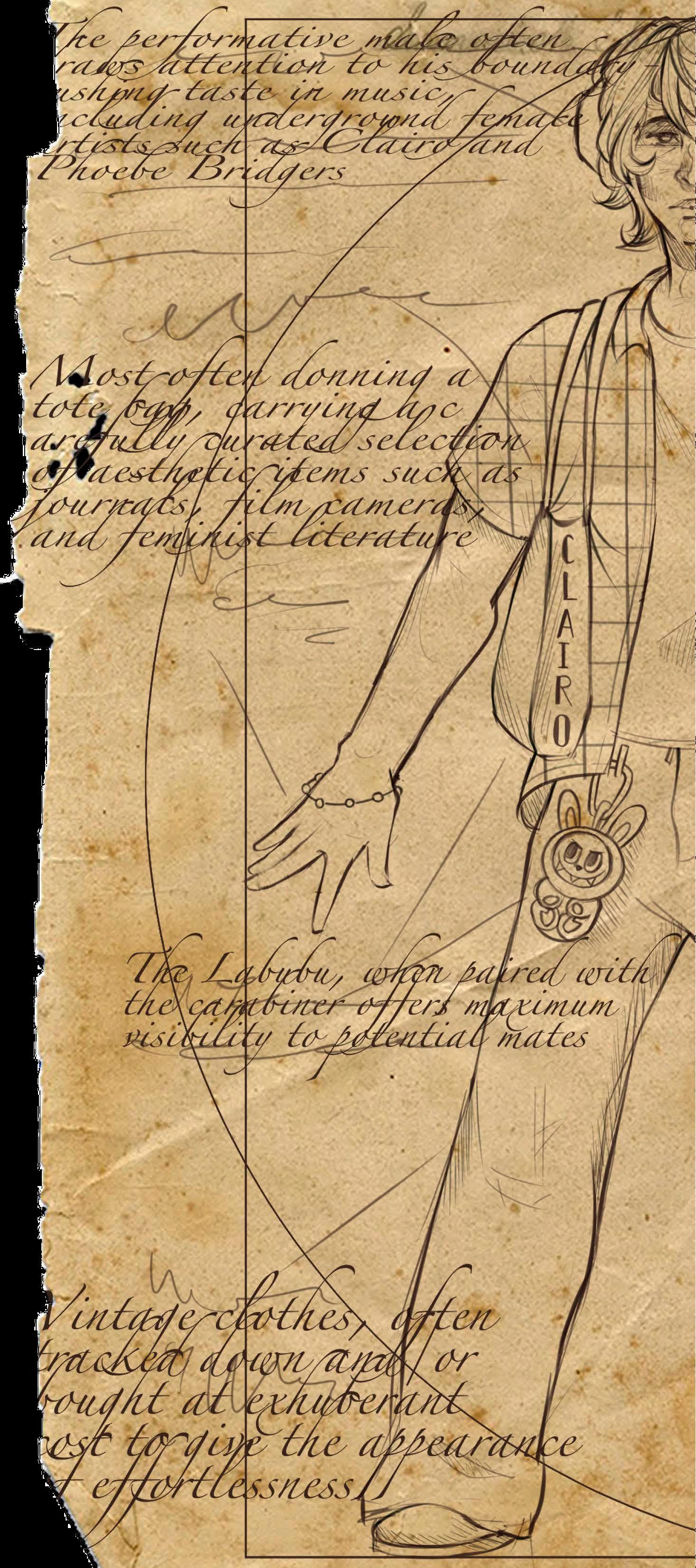
In a world where the effort of learning is slowly being replaced by AI, intellectualism has become a commodity: the figure of the ‘intellectual’ man is all too eager to flaunt it. In an attempt to seem unique and attractive to potential partners, this figure appears to have resorted to adopting interests and hobbies associated with women, in addition to intellect. It’s no secret that in the years prior matcha, indie artists, thrifting and reading began trending on social media, with women making up a majority of those involved. Slowly, some men began infiltrating these spaces, praising hobbies and music they used to mock and creating a new, desirable aesthetic: The Performative Man.
It seems that these performative men feel the need to prove that they “aren’t like other guys” by listening to Clairo, reading classics only in public and claiming to possess more knowledge about certain topics than they actually do. However, this personality type isn’t unique to the twenty-first century. More broadly, the term “performative men” is a take on pseudo-intellectuals: people who are more concerned with appearing intelligent over actually being smart.
The point of giving into the aesthetic of a performative man is to show women, specifically those whose politics are more left leaning, that they subscribe to feminist ideals and are “woke” in just the right ways. It’s a step in the right direction for spreading awareness, with more men becoming acquainted with the feminist movement, in addition to other marginalised communities. However, interest in these groups can be rooted in attracting a partner by seeming more desirable, as opposed to active and continuous support. The entire charade can fall
apart when they are alone, or more importantly, left without a woman to impress. By using signifiers and spaces cultivated by women as a tool to attract them, he shows he doesn’t actually respect those things, let alone appreciate them. He walks around with a strawberry matcha, hoping someone will ask him where it’s from so he can give the name of a local cafe rather than Starbucks. He proudly says it’s vintage when asked where his sweater is from, and tells you all about how “feminist and thought-provoking” his current read is. He supports local business and is anti-consumerist only when it helps his own gains.
These men are only performative because they often don’t end up practicing what they preach, wanting to be seen flaunting their knowledge of the issues women, and others, face daily, but rarely doing anything to combat it. The performative male wants people to see him as the classic good-guy-activist, but—in reality—he’s a glorified bystander, or even sometimes an active aggressor.
I’ve met many men in my time who love spending hours sifting through the racks at thrift stores, have a collection of books in their rooms, carry a leather-bound notebook with them everywhere and enjoy softer music, but the difference is that they aren’t performative. To them, it’s their genuine interests rather than a curated aesthetic. Some actually read the novels and practice what others only preach, while the performative men show off their unbent paperbacks like trophies. There’s nothing wrong with men liking Phoebe Bridgers, Jane Austen and taking photos on film. It only becomes a problem when these interests are donned and discarded like the latest trend.
book
Like pseudo-intellectuals, these performative men could benefit from actually putting in the time to study the topics they claim to be experts on and cracking open the novels they only understand because of TikTok analyses. You can only pretend to be educated on a topic and enjoy hobbies that don’t align with yourself for so long before it becomes apparent that you really don’t have much in common with a trending personality type, aside from wanting to be perceived a specific way. Developing an authentic personality and becoming an expert of your own interests will actually do what the aesthetic claims to do. Having passions and being knowledgeable about topics you love is interesting and others will appreciate that; it’s unique as opposed to tweaking a cookie cutter personality.
If that’s too much, actively engaging with the aesthetic’s required reading will have a much greater impact on yourself, your community and potentially the world, instead of letting them sit in your watchlist or collect dust on your bookshelf.
The rise of The Performative Man aesthetic is primarily related to appear desirable to others, but it can open doors to topics left otherwise unexplored by the demographic and can potentially lead to real change.
A love letter
Written by Katelynn Dey // Contributor
Visuals
Dear one,
by
Alex Baidanuta (she/her) & Lily Jones (she/her) // Contributor
You are a soft baby animal. You cry when you’re hungry. You’re easy to hold. To carry, adore, and protect. Women will pick you up and say things like she’s getting so big!
I wish you’d stay small forever! Stop growing!
You’ll hear those words all your life. From them, and from yourself, too. Can you believe that?
I’m so sorry, baby. You are going to grow.
Dear seven,
I’m at the finish line and I want to catch you in my arms and cover your ears but you’re too fast. You win your race and slip through my arms, and you hear your bully’s words instead of mine: “Why are you so ugly when you run?”
Now your win doesn’t count. You’re keenly aware that you’re not as small as she is. You’re getting too big. You can’t stop growing. Soon, you’ll be scared of your body and how people look at it. You’ll stop trying. You’ll stop winning. Your stillness starts here. I’m sorry. Someday, you’ll run again. Remember: Win or lose, it’s not your job to be pretty doing it.
Dear 10,
It’s summer. Everyone smiles as they call your cousins skinny. They marvel at how tall your brother’s getting as they pile more food on his plate. You go swimming in t-shirts because your mom cried when she saw you in a bathing suit.
But, listen. You’re reading the book that changes your life. It’s going to make you want to write stories of your own.
Nothing else matters. Can you hear me? Nothing else matters.
Dear 19,
Oh, honey.
He’s whittling you. You let him, because you’re too old to be so unloved, so untouched. You hope if he chips enough of you away, you’ll be prettier in smaller pieces.
I’ll be small forever, you promise. I’ll stop growing! Just hold me. Adore me. Protect me.
You’re hungry, and this is how you cry now. I hear you. I’ll be your gentle carver, smoothing the edges he left sharp. I’ll work on you until my hands learn how, paint you soft and bright until we can both see: you were never broken, just becoming.
Dear 30,
Why haven’t you left?
Because all your friends are getting married? You’re too old to start over? Nobody would swipe right on a picture of you?
I’m running out of patience. This man is the t-shirt you hid your body under when you were ten. He makes your mom cry for the same reason she cried when she saw you in your bathing suit.
(She didn’t cry because she hated your body. She cried because she hated hers and she taught you the wrong way to have one.)
Do you stay because “Why are you so ugly when you run?”
Because, someone might see you doing your best and call you names for it? Goddammit.
Dear 32, Breathe out.
I know you think it’ll all be for nothing if you don’t hold on, but you’ll see. All your lost years are breaths you took to keep you alive. You can’t get them back.
Take a page from the book of your broken heart and don’t stop. Walk to warm up. Listen to your body: it knows when to pick up the pace.
You’re not behind, my love. It’s not a race. It never was. There are checkpoints and finish lines, and you can’t get there without this breath, right here, right now, so take it. Then let it go.
Dear 38,
You’re the age your mother was when you started kindergarten. It’s your first day of school again. Your classmates were born the year you graduated high school. Sometimes you’ll feel old; sometimes like you’re taking up space that doesn’t belong to you; sometimes like you still don’t have the right to exist at full size. Mostly, you’ll feel like cheering. For them, and for you.
Dear 40, We’ll meet next year.
I hope you’re still a soft baby animal. I hope you eat when you’re hungry. I hope you’re easy to hold. I hope you carry, adore, and protect.
I hope you pick up anyone smaller than you and marvel at how big they’re getting and never wish for them to stay little. You’re beautiful, because you’re all of us. Can you believe that?
I’m proud of you, baby. You are going to grow.
why is everyone dressing weird?
Written by Ben Taylor (he/him)
Visuals by Andy Poystila (he/him) & Cristina Williams (she/her)
walking down any of Vancouver’s prominent streets—Commercial Dr, Main St or Cambie St, to name a few—one is confronted by a myriad of curated vintage clothing stores. While the concept of vintage stores as an alternative to fast fashion is at its core good natured, many of these boutiques are perfect examples of how the alternative and the eclectic have been co-opted. Vintage thrift stores should—in theory—be incredibly unique, but paradoxically many of their layouts and racks end up looking exactly similar. The particular clothing items and brands vary, but almost every store has an abundance of leather jackets and worn-in graphic tees, making the browsing experience uniform. Of course, a big reason for this is that vintage thrift stores are curated, which allows for owners to select items that are trendier and more likely to sell quickly. The quest to dress differently from everyone else thus leads many to end up looking exactly the same.
Take the classic vintage graphic tee for instance; once a symbol of adoration for one’s favourite band, movie or monster truck, has now become simply a way for swagless teen boys to conform to the latest trend. When I was in the eighth grade, everyone was posted up in the Adidas Ultraboosts, Champion hoodies and jogger style pants either from Zumiez or Boathouse. It was absolutely monoculturish, but at least no one was pretending to be different. However, upon returning for my post-covid senior years, I noticed a surge in white air forces, Alice in Chains t-shirts, Hard Jewelry pendants and mullet :/. Rappers like Destroy Lonely and Ken Carson—both Carti affiliates on the Opium label—were at the forefront of a new wave of trend hoppers: the ‘fashion demons,’ also described as the contemporary equivalent of the Hypebeast. What sets these two eras apart is not that they all conform to the same style, but the attitude towards conformity, and the desire to be perceived as different, underground or alternative. Now the ‘alt aesthetic’ is probably the most noticeable aesthetic among high schools and university students alike.
The heart of this movement—the desire to dress in a unique style—is understandable; I even empathize a little with it. But, the problem I see is that folks want to dress differently in the same way they see others dressing
differently, as opposed to just having a truly personal style. This spawns the most shameful archetype of dresser there is: The Poser. One who wants the glory of being deemed cool without putting in the work. This may seem to be a vain and futile thing to get worked up over, but the point is that you don’t need ultraboosts or a vintage leather jacket to have style. This doesn’t only apply to fashion either; there has been a shift away from individuality in all facets in our generation.
Eclecticism and hybridization have become an essential part of existence on the internet. Take for instance a site like Pinterest, which is perhaps the most inherently eclectic platform there is; the process of collecting infinite images, styles, recipes etc. is the purpose of the app. And once upon a time Pinterest was a safe haven for the eclectic, but the current state of Pinterest serves as a great example of how eclecticism has been co-opted by many apps and social media platforms. The platform is full of targeted advertising, and the company even has agreements with Google, Amazon, Aliexpress and Etsy to fill feeds with items matching what they like. On top of that, users’ feeds are often riddled with AI generated images and art.
The internet has made eclectic subcultures more visible than they’ve ever been, which is not intrinsically a bad thing. However, the reality is that social media turns these subcultures into trends, which are then made accessible to the general population through marketing and advertisements. Social media has also allowed for globalization of these trends, making them homogenous across countries and cities, while in the past cities may have had their own unique style or trend specific to the region. The desire to be eclectic is what leads many to ride these trends, creating an endless cycle where styles fall in and out of fashion depending on what the market serves up. Again, this is not meant to be a piece dissing people who enjoy thrifting or fashion in any sense. Personal expression should always be tied to one’s individuality and interests, and not to some corporate algorithm.
If you’re a Hypebeast reading this, know that I respect you and your craft deeply, as long as you truly believe in it as well.
thementhol goddess at 16th ave.
An excerpt from the upcoming autobiography following socialite it-girl, April Martzon and her life in 1980s New York
I believe it was love. I mean, what else could love be?
Staring at the water-damaged ceiling of my seventh-floor studio, laying in his arms, in nothing but the cheap top sheet I stole from the Marriott three years ago. The silence runs thick through the space, any attempt to break it would just be cruel punishment.
I felt him inhale deeply before standing up to move to the fire escape. I quickly followed suit, throwing on whoever’s shirt I had next to me.
Pulling out a fresh pack of ‘Kool’s,’ he lit one. He took a puff before handing it to me, taking in all my features with those big eyes of his before dropping his gaze down to a steaming sewer below. Taking my own long drag, I was overwhelmed by the scene. The city was alive as always, but I couldn’t help but feel like we were the beating heart of it all.
Staring at every window, every car and every life in sight, I sat in awe. My eyes refocused on him as I passed him the cigarette, following his gaze to the dirty grate.
“Quite the mystery, huh?” I offer. He smiles, locking eyes with me. “Oh yeah?” he responds with a playful tone.
“Such a big part of the city that never sleeps and we’ll never really know what’s not sleeping down there.” He turns, focusing on my words and his infatuation with the lips that speak them.
“All that steam. Could be a whole ‘nother world and we’d have no clue. All wrapped up in the go-go-go of our lives above.”
He nodded slowly, plucking the cigarette from my fingers.
“Could be people, could be plant-hybrids, could be large, mutated amphibians for all I know.”
“Wow. That’s quite the theory,” he comments.
“Although, if that were the case I doubt they’d be able to survive on their own. They’d need some sort of familial guide to maintain order and teach them what to do with their newfound strength and abilities.” His eyebrows furrow as he blows out smoke.
“Due to their mutations, they’d grow large and strong. But they’d still require training and learning of control. Those types of mutations don’t just come with maturity and focus. That’s all taught by their mentor. It has to be.”
He looks puzzled. “And would that be you?”
I scoff. “Of course not. I don’t have the knowledge to lead a group of beings like that. Walking around at over six feet with the brain of a young adult, I wouldn’t know what to do with them. It would have to be an elder, also mutated, kind figure. Perhaps another species but who knows. Someone who can share their experience but understand the city in a deep way to keep them safe. Teaching them not only right from wrong but also how to channel their energy into a positive outlet like a form of martial arts or something.”
As I finish, I notice he’s dressed and back inside. He grabs his bag heading for the door, not looking back at me, muttering something about sobriety. My heart clenches, hoping he won’t turn the knob.
“Wait.” I exclaim, surprising both of us.
April Martzon (she/her) // Author and Socialite
Visuals by Anna Israfilova (she/her) // Contributor
He turns, slowly, watching me fumble and rack my brain to find the sentence that will make him stay.
“I’m sure they’d love pizza.”
I feel the breeze of the door slam on my face.
That was my last night with him. Of course, I’d heard whispers of his name from time to time but I’ll never know where he ended up. I’m grateful I got to experience true intimacy and closeness with someone like him. A piece of me will always be his to hold.
Cowabunga.
Adapted from ‘Stories from The Menthol Goddess at 16th Ave’ by Martha Martzon.
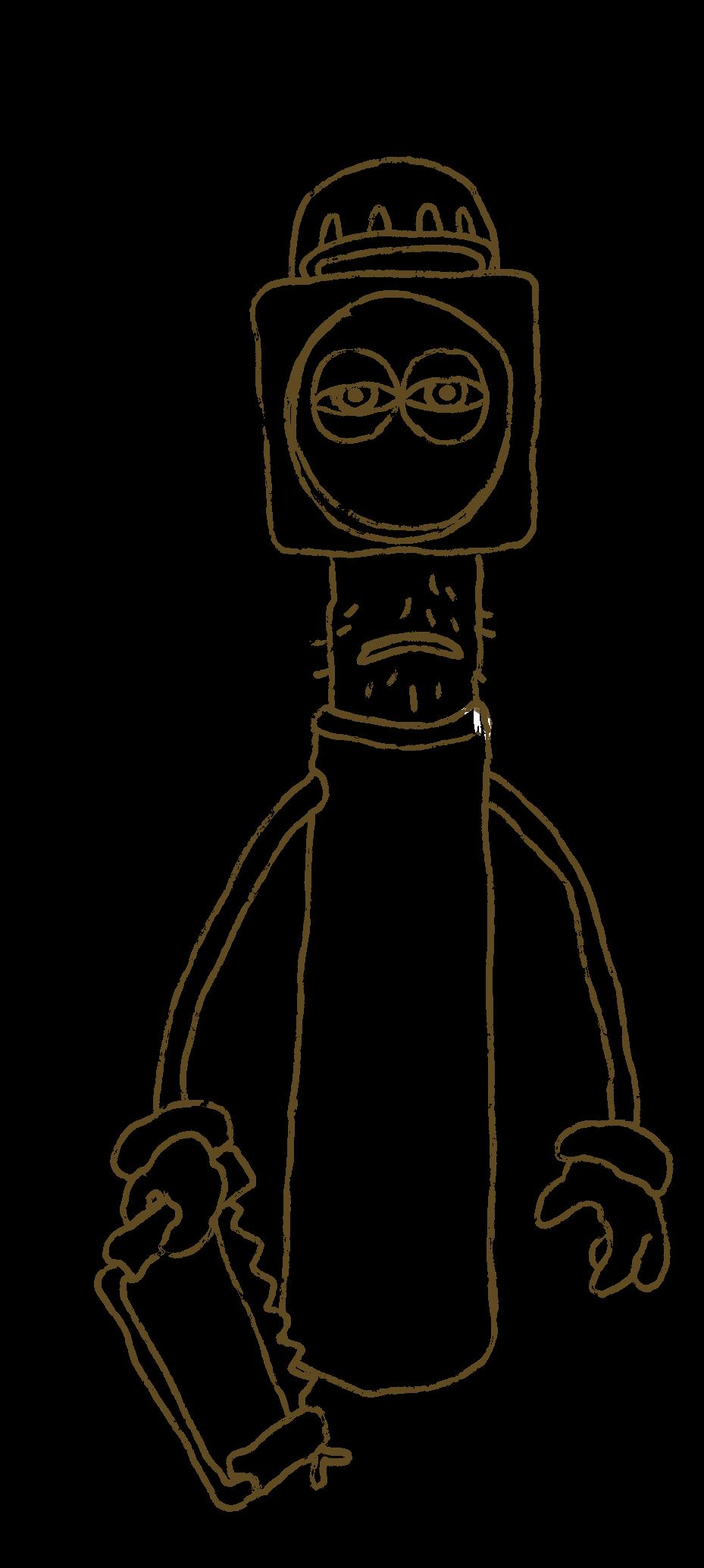
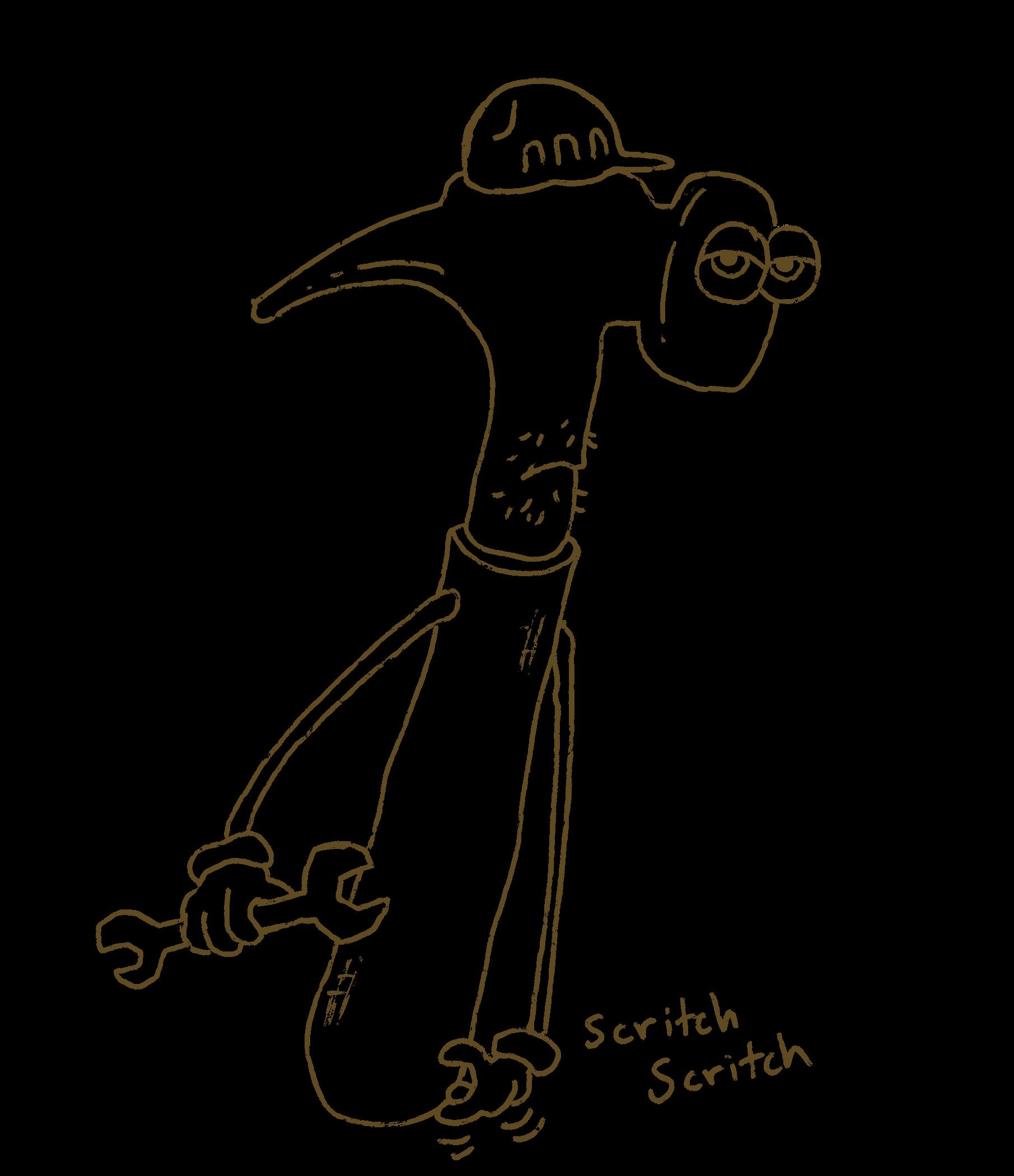
Wrenchy the Hammer Solves Your Home Renovation Problems!
Renovations are no small task, and in order to help out our readers, we’ve hired an anthropomorphic hammer named Wrenchy to answer readers’ questions
Hi! My name is Wrenchy the Hammer and I’m here to solve all your household problems! In 1979, I was a contractor in Worcester, Massachusetts who was hired to fix a house, but I ran off the second I got paid. Jokes on me, though, ‘cause the house belonged to a bunch of magic freaks or somethin’ who cursed me to live as a fuckin’ hammer. They said they were witches or somethin’. I don’t fuckin’ know. Anyway, they say the only way I can break the curse is by doing what I failed to do when I was human, by helping people with their renovations. So, help me get my fuckin’ life back by letting me give you some home renovation advice, now how’s that sound? I don’t mean to be dramatic or nothin’, but, uh, my eternal salvation depends on it, yeah?
Q: My partner and I recently moved into a home with a broken central vacuum system. I want to fix it, while my partner says it’s not worth the trouble. What’s your opinion?
Here’s the thing: a broken central vacuum is an opportunity. You got tubes runnin’ alls throughout your house, and—if I were you—I’d throw some hamsters in those tubes. Hamster house. Or, even rats. Get some rats in those tubes. My old lady, y’know, before I became a hammer or whatever, she loved rats, little pet rats, and you know what? Those fuckers are cute. I know they ain’t for everyone but what can I say, I miss my wife. She passed away in 2009.
Q: I live in an apartment and I’ve recently come across some mold. My landlord is unreliable and I can’t afford to pay a professional to come fix it. Is there a way I can handle this situation myself?
This generation, my god. Back in my day, we used to paint our walls with lead for god’s sake. Mold ain’t nothin’ to cry about. It’s good for your immune system to get a little mold in ya! When I was 14, my grandmother used to make me eat dirt. True story. But I understand that mold ain’t the best thing to look at, so if you’re impatient, I’d throw a fresh bit of lead paint on it. It’s got all sorta mold killin’ chemicals in it anyway, I bet.
Wrenchy the Hammer (hammer) // Contributor Visuals by Cameron Skorulski (he/him) // Production Manager
Q: My husband is obsessed with hamburgers, to the point that he bought a hamburger shaped house without telling me. At first I was angry, but as soon as we moved in I fell in love with the place. My hubby keeps telling me this is because hamburgers are “endlessly alluring” and have “perfect feng shui.” Is it true that if a hamburger was a house, it would have perfect feng shui?
Lady, what the hell are you talkin’ about? Do I look like I know what a “fung shoo-ey” is? Now I may be being all repetitious-like now but uhh, it’s been a while since I was a human being and I haven’t learned a lot of new terms. And, it’s not like I don’t want to, it’s just– it’s hard to understand the internet when you’re a hammer. You wouldn’t understand.
Now, hamburgers, that’s somethin’ I DO know about, and if I could live inside of one of those motherfuckers, that’d be the good life. A pillow of pickle slices, a blanket of cheese, some uh, onions? Mayonnaise? Fuck, I mean, beautiful sandwich. I mean the hamburger, it’s one of the reasons why the U.S. is the GREATEST PLACE ON EARTH BABY GO PATS GO BRUINS GO SOX! Alright, I’m done.
Now these fuckin’ liberal student journos asked me to write a little conclusion piece to this with some more general homecare so here we go: It’s all about the materials you’re usin’, like if you build anythin’ using shit? You’re gonna get shit. Uhh, fuckin’, always buy houses built in the 1950s or earlier. I know they’re fuckin’ old now but they built shit with real gumption back then, they used real shit to build, y’know like before all the environmental and safety regulations made the world a boring place or whatever. Anyway, can someone get those witches to turn me back into a real human being now? My kids won’t talk to me cause I’m a fuckin’ hammer and I miss them. Joey’s goin’ to college now for computer shit, can you believe it? And, my sweet angel Mellisa is a state champion swimmer! Do you know how hard it is to miss your children’s lives because they don’t believe you when you say you’re their father because you’ve turned into a fuckin’ hammer? It’s just. . . You know what it is? It’s asinine. It’s fuckin’ asinine. But, whatever. Bye.
ONE MIXER AFTER ANOTHER
Jaismine Kaur (she/her) // Contributor
Visuals by Rachel Lu (she/her) // Crew Illustrator
Two infamous podcast hosts are sounding it off after the passing of Bill 89—Podcast Material And Equipment Regulations—a sweeping new law that restricts podcast equipment ownership across North America. And, both men are putting up a united front vis-a-vis a singular belief: the grave essentiality of microphones.
On the latest episode of ‘The Chud Luds,’ host Anabolic-steroid Alf addressed his audience, whom he dubs the Blackpilled ALFas, claiming that the law allows “independent twerps, which apparently think on behalf of all people and their constitutional rights, to determine whether a podcast would be allowed to roll,” adding that enforcement has already begun. He mentioned a recent incident involving another podcast, explaining how the “fallen brothers on High Value Dweebs got their XLR cable warranty voided under Section (2) – Parasocial Riling.”
Meanwhile, entrepreneur and serial podcaster Mr. Entré PrenoÎr Pander, speaking on his own platform, described the legislation as part of a broader cultural attack on what he calls “the actual real thinkers of our age.” In a statement delivered in an unusually low register, Pander said,
“these are some things being done nowadays, in this day and age as a matter of fact, which do not sit right with the actual real thinkers of our age” (sic), before warning that the country could “fall into the hands of sickly nerds who weren’t shoved around enough as kids.”
Pander also revealed how he is personally facing strict enforcement under the new law, stating, “I am currently contesting false allegations against me under Section (5): Sissy-phus Format,”
PODCASTERS MELT DOWN OVER NORTH AMERICA PODCAST BAN“YOU WILL NOT GET MY $XXXX USB MIC”
The passing of ‘Bill 89’ which regulates the distribution of podcast equipment has caused quite the stir among young men
defending his speaking style and explaining how “circling around a point, edging to but never getting to it, makes for a very riveting listening” (sic). The situation seemed to get heated when Mr. Pander deafeningly addressed the potential confiscation of his equipment, screaming,
“YOU WILL NOT GET MY $40 USB MIC AND BOSE HEADPHONES, I WILL TAKE THESE TO MY GRAVE AND GET HADES TO TESTIFY THAT I TAKE MY RESEARCH VERY SERIOUSLY INDEED” (sic), later clarifying, “I WATCH ALL THE CLIPS I REFERENCE, SOMETIMES ALL 16 SECONDS OF IT.”
Both shows also appear to be monetized by the same sponsor. Alf and Pander each regularly promote PharmingAI, a service pitched as providing all the AI bot farms a podcaster could need to engage with ragebait and artificially boost engagement, framing it as a way to take “independence” into one’s own hands in a true entrepreneurial spirit by automating the promotion of slop. The sponsorship is notably available across all social media platforms, with the notable exception of Facebook, where UncPharm is already more prevalent.
Back on ‘The Chud Luds,’ Alf, who is also known for his expertise on and obsession with rare felines and meats, vowed to continue broadcasting “6 days a week,” insisting that “no one can censor the truth that comes to me in my dreams as prophecies” (sic).
As of the date of publication, it remains unclear whether either podcaster’s equipment has been confiscated under Bill 89. Sources say both men remain confident, audible, and fully committed to the bass.
The Evolution of Becoming Palatable. by Jasmin Linton
THE OPPOSITE OF VANITY:
Jasmine Garcha (she/her) // Managing Editor With files from Eugenia De Coss (she/her) // Contributor
Maria Camila Davila was born and raised in Colombia. Diagnosed at the age of 13, she fought Ewing sarcoma, a type of cancer that targets the bones and is typically found in teenagers with no linking factors such as genetics or vices; “It’s more like—I will say— bad luck,” she shares. Through chemotherapy, radiotherapy and a hemipelvectomy, Davila fought for survival. In the midst of this, she notes completely shutting down. Cancer and chemotherapy both, in her words, “shut down” aspects of her body’s defence, and the mental weight did the same to every other aspect of her life; she was always sick, no longer attending school and saying yes to everything her doctors suggested because she didn’t care what it took to get better.
“My body was never the same after the surgery,” Davila reflects, referring to the initial hemipelvectomy. At the age of 15, her doctors found that radiotherapy created an internal wound, and so they conducted a procedure to clean it. During this procedure, doctors found that her bladder had “exploded,” as she puts it. Reconstruction procedures were unsuccessful, and she had to use a wheelchair and diapers for the second time—the first time being post-hemipelvectomy—which she describes as a regression period. “You don’t have dignity,” she says, explaining how that time of her life felt, “You feel completely vulnerable.” Although the cancer had long been treated at this point, the complications from her treatments kept her in and out of hospitals for years. She notes that this was the first time she noticed a change in her perception of herself.
Davila reflects on how vanity is shallow and rarely evolves over time, such as the expectation that women need to be skinny and keep their hair long to be considered attractive. She states, “I used to have short hair; I’ve never had long hair,” explaining that she didn’t present herself in a traditionally feminine way. She describes being perceived as more traditionally masculine among her peers. This—coupled with the internal knowledge of her queer identity—resulted in confusion during her formative years surrounding whether she was truly a girl. She remembers not ever wanting to be a boy, but questioning whether she was being a girl ‘the wrong way.’
“I was fat,” she goes on to say, “If I see my pictures, I’m like ‘What the fuck, I wasn’t fat.’ But, for everyone, I was fat. It was really usual that people would call me a boy.” She explains that she doesn’t remember a time when she was not on a diet. She later began using food as a coping mechanism in her teenage years. “It was the only thing that was making me happy,” she notes, explaining that “being still and eating” was the perfect combination of activities for someone who experiences pain every time they move. However, this activity resulted in a lot of weight gain that impacted Davila’s self esteem.
On top of this, visible scars and permanent marks that remain from her battle against cancer engaged the harmful aspects of vanity. Davila expresses that it became anxiety-inducing to look at herself in the mirror, as her body no longer fit the conventional standards of beauty. So, she began taking off her glasses anytime that she was unclothed in front of a mirror. She had to embrace her unique
Visuals by Cameron Skorulski (he/him) // Production Manager & Rachel Lu (she/her) // Crew Illustrator
appearance as an important part of herself and a way to challenge beauty standards, as she realized that the people who love her will look beyond appearance.
During this time, Davila had a school trip to Italy. Refusing to miss it, she took her wheelchair and diapers and boarded the plane with the support of staff from her school. Upon returning to Colombia, the doctors found that her bladder had actually significantly healed on its own. “I always say, my mum, she’s really Catholic—all my family is—and I am a really spiritual person, but in really different ways,” she starts, “Praying is the supreme way of showing love, right? [...] I really think it was that.” Attributing this victory to the prayers of her loved ones, she began going to school consistently again, although she was still in and out of the hospital.
While recovering, Davila started to deal with traumatic flashbacks of her procedures and the struggles she faced along her journey, but embraced those memories and experiences as a model of what it means to see the growth that stems from hardship. Davila acknowledges that her struggle and achieved wisdom allow her to connect and relate with children who have or had cancer or other health challenges during formative parts of their lives, when they have not yet discovered themselves. So, Davila told her mother she’d like to use the flashbacks to write a book about her journey. Her mother offered support, as Davila notes, “It was the biggest gift she’s ever given to me.” Davila hopes that by illustrating the details and her feelings, her experience will help people to look at their suffering and struggle with a sense of appreciation and the potential for wisdom.
Now, Davila is a student attending Capilano University who has to fight with the mental and physical struggle in the aftermath of beating cancer at the age of 13. Her journey goes beyond her survival of
the battle to gain her life back; Davila is a remarkable example of how victory often comes at a price, showcasing how often one can gain something from hardships and limitations. Davila’s self image shifted as a result of her visible and psychological scars. She mentions that challenging oneself to familiarize themselves with viewing the body in an unconventional way can foster sensitivity and understanding for people like her, who have visible marks that deviate from societal beauty expectations.
Davila’s remarkable battle against cancer left her with complications that will negatively affect her everyday life, such as chronic pain and various health conditions. After what she experienced with her bladder, things proceeded relatively well given everything she went through. She was living in Canada, starting school and starting a new job. She recalls that recovering from cancer and distancing from that part of her life allowed her to explore and experiment with her femininity. She began wearing crop tops and embracing her appearance. “I can have short hair but also love my boobs,” she says, relaying the realizations she made during this time. Surrounded by love from the queer community, Davila notes that she finally looked in the mirror and found herself. No longer feeling the need to fit into gender stereotypes, she looked at herself and said, “I am Maria Camila,” announcing her chosen label.
While acclimating to her new life in Canada and her new home at CapU’s residence, Davila’s health suddenly deteriorated. She was back in a hospital bed, ambushed by similar feelings of confusion and uncertainty that she had as a child, going from navigating campus life to figuring out the Canadian medical system. Due to the chemotherapy and radiotherapy that she went through a decade prior, an infection grew within one of her legs, which Davila remembers as a terrifying experience. Not only was she
sick again, she was sick in a foreign hospital without the comfort of her loved ones. She recalls her gratitude for the friends she made while living in residence, who became a big support for her during this time. However, she was still concerned about her ability to continue with her work and studies.
This process required difficult decisions and transparency with her teachers. Davila was relieved and grateful to have the support of her teachers in her creative writing classes. These teachers supported her by allowing her to talk about her feelings in her creative writing work, giving Davila a sense of relief and admiration of her own story from a third person perspective. While she was offered understanding and lenience, Davila realized that she would have issues remaining that she would face alone—including chronic pain—which she experiences in her back and her legs. To continue to thrive in her personal and professional life, she learned how to take care of and advocate for herself in the workplace. She was grateful and surprised when her employer understood her health situation and supported her to keep the job that she loved. Despite her medical struggles, she managed to continue her education and work with the support of those around her.
Davila’s battle with cancer allowed her to realize that each individual goes through a subjective experience that requires active listening to develop an understanding of. Staying positive is challenging when the marks on her body are a reminder of her continuing medical issues, and—as Davila
explains—she also sought support for her mental issues that came alongside the physical challenges. The knowledge that someone gains in the face of adversity is not a straight path to follow. Davila also expresses how her image and definition of a woman has changed through the difficulties and doubts along the way, describing that she no longer fights a ‘traditional feminine’ stereotype that doesn’t represent her. She describes being able to wear baggy clothes without feeling as though they make her less ‘woman.’ She not only fights to create a more realistic image of what it means to be a woman, but also, as a journalist, she challenges how women are expected to appear in the eyes of the media.
The aftermath of Davila’s struggle—including physical limitations and visible scars—is a journey that shows how life is not always just and fair. Instead of accepting her circumstances and allowing herself to be limited by her health issues, she decided to respond with perseverance and chose to face challenges with adaptability and bravery to ask for support. “When you’re a chronic patient, you know everyday can come with a different struggle,” she says, explaining that she was transparent with her professors about her medical conditions and managed to make every deadline on time, although she may have missed many classes. At the end of the semester, she told one of her professors, Andrea Actis, that she was apologetic for her absences, to which Actis replied, “You were always present in this class.” Davila notes that this was a beautiful moment for her and credits Actis for a lot of the support she received in this time.
Davila used the wisdom that she has developed into her work and studies, making her a person who could provide advice to people with chronic illnesses and significant scars. She explains being afraid of putting herself in a box when it comes to her work, of limiting herself to just being, “the girl that only talks about her fights and her cancer and her issues,” going on to explain her realization, “that maybe my purpose is to create common ground for people like me [who are] constantly fighting with their mental and physical health.”
“It’s incredible the amount of relief that you can feel when you realize that someone else gets you and understands you,” she comments, “It’s another way to heal.”
Her struggles to see her body and feel good about it is a prime example of how society needs to question the idea of vanity and how we take care of our bodies. Davila encourages others to live life for themselves rather than trying to please others with their appearance. She says that it’s important to disregard the opinions of others when it comes to being happy with how she looks, and that she supports people being vain just for themselves. “Vanity should just answer to me,” she says, noting that it is a difficult process as people who are still in the world with the eyes of others, but that one’s own comfort and happiness is what’s most important. “Love has also been a good tool,” she says, explaining that the realization that she is loved and lovable no matter her physical appearance has been a freeing experience.
METRO VANCOUVER UNITED FOR PALESTINE - MVUP WEEKLY RALLY
@mvupalestine
Rally Every Saturday: Vancouver Art Gallery (Georgia St Side) @ 12-4
- FEB 7th
- FEB 14th
- FEB 21st
- FEB 28th
WHAT IS & WHAT IF: THE SPECULATIVE IN CREATIVE NONFICTION
With Adèle Barclay At the Whistler Public Library – virtual only @ 7–8:45PM - FEB 11th
ARE WE CAUSING THE SIXTH MASS EXTINCTION EVENT?
With Caroline Dingle at the Squamish Public Library –in-person and virtual @ 7–8:45PM - FEB 25th
The Capilano Courier is an autonomous, democraticallyrun student newspaper that encourages literary and visual submissions. However, all submissions undergo editing for brevity, taste, and legality. We are committed to not publishing material that the collective deems as promoting sexism, racism, or homophobia. The views expressed by the contributing writers are not necessarily those of the Capilano Courier publishing society.
Additionally, we prioritize a human-centered approach to content creation and do not support the use of AI in our editorial processes. We believe in the value of human perspectives and storytelling in our publication.
CAPILANO UNIVERSITY is located on the traditional unceded territories of the LíỈwat, xʷməθkʷəỷəm (Musqueam), shíshálh (Sechelt), Sḵwxwú7mesh (Squamish) and SəỈílwətaʔ/Selilwitulh (Tsleil-Waututh) Nations. We recognize our presence here as guests on this sacred land and deeply appreciate the privilege to work, study, and reside in this remarkable place.
The Capilano Courier acknowledges that this gesture is just a starting point on the path to reconciliation, and we are committed to amplifying Indigenous voices and sharing their stories.