Growing your business | Growing your industry
For more than 90 years CANEGROWERS has represented the interests of the sugarcane farmers of Queensland. Through times of challenge and opportunity, CANEGROWERS has helped family farms and the whole industry to grow and prosper.
CANEGROWERS is known and respected for its strong voice locally, nationally and internationally—the collective voice of many farmers has a powerful impact.


Editor: Robyn Devine
Advertising and Classifieds: Jane McGregor
Articles appearing in Australian Canegrower do not necessarily represent the policies or views of CANEGROWERS.
Published monthly by: CANEGROWERS, GPO Box 1032, Brisbane, Queensland 4001 Australia. ABN 94 089 992 969 Telephone: 07 3864 6444
Email: editor@canegrowers.com.au Website: www.canegrowers.com.au
Subscriptions
Yearly subscriptions for 12 hard copies (postage included)
• Within Australia: $190 inc GST
• Overseas (AUD): $290
12 Month Digital Subscription: $78 inc GST
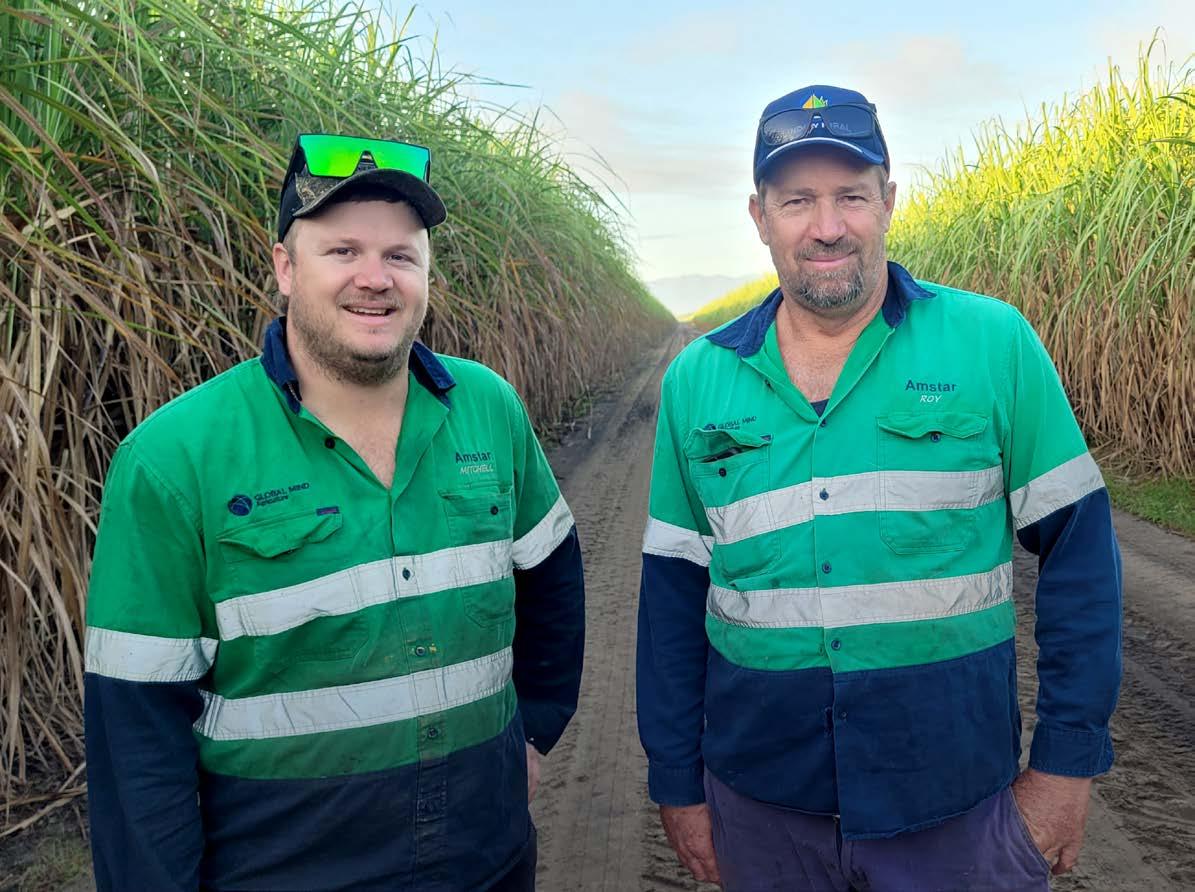
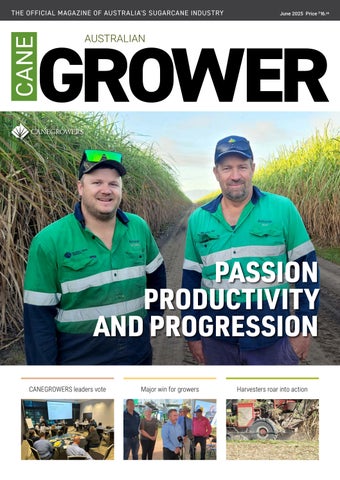
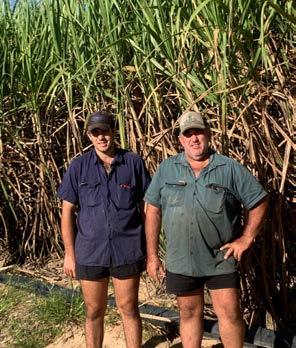
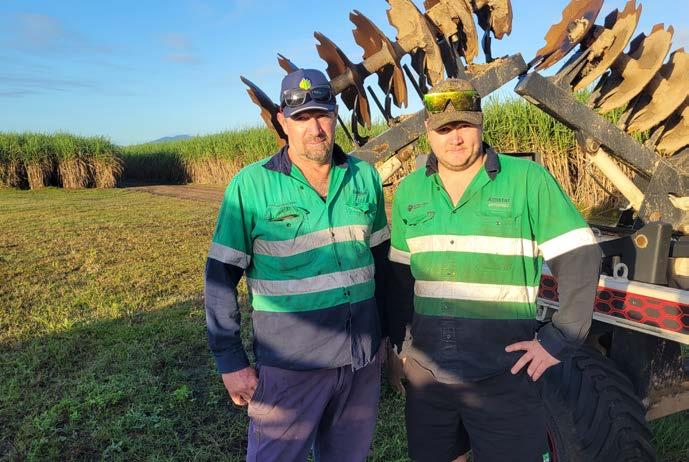
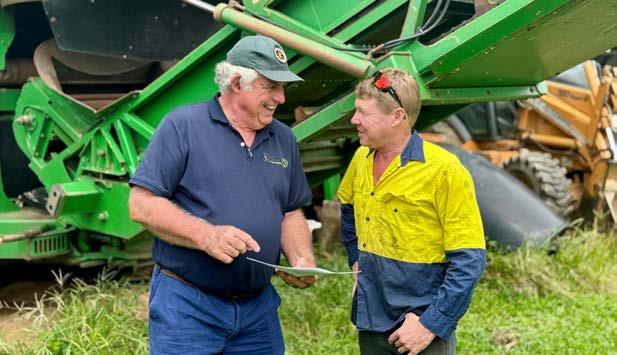
Tully growers Roy and Mitchell Butcher are passionate about progression and growing cane
Photo credit: Renee Cluff Read more on page 24
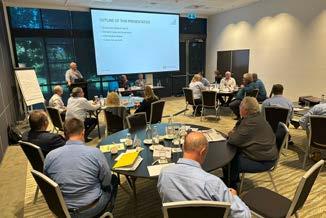
CANEGROWERS is set to welcome more than 80 industry representatives from around the globe to Cairns for the World Association of Beet and Cane Growers (WABCG) Conference, taking place from 23 to 27 June.
As the host organisation, CANEGROWERS has taken the lead in coordinating the full program of events, offering attendees valuable opportunities for global collaboration and knowledge sharing.
A highlight of the week will be a fullday technical field trip on Thursday 26 June. Following two days of conference sessions, delegates will tour the Far North Queensland region to explore the diversity of Australian cane farming practices — many of which will be a first-time experience for international guests.
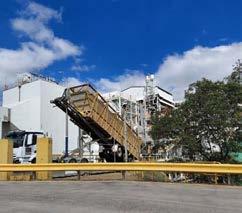
A fire broke out at the Marian Sugar Mill near Mackay, on Sunday 18 May, black smoke was seen rising from the top of the mill. The mill was evacuated around 3pm with all employees and contractors safely out of the premises when nine fire crews responded. The blaze was extinguished by 6pm. The cause is under investigation, but Mackay Sugar advised the fire would not impact on this year’s production.
The Australian Competition and Consumer Commission (ACCC) has unveiled a dedicated Small Business web page, delivering a one-stop resource designed to help start-ups, family-run operations and primary producers navigate their rights and obligations.
At its heart sits the Small Business Toolkit, offering clear, step-by-step guidance on key issues—such as unfair contract terms, a top ACCC enforcement priority.
Beyond the toolkit, visitors can learn how to report business-related disputes via the ACCC Infocentre, explore the Commission’s advocacy, education and enforcement initiatives, and access the latest news on regulatory developments.
A curated collection of industry Codes of Conduct and quick links to specialist ACCC resources ensure that whether you’re negotiating with suppliers or responding to customer complaints, support is just a click away.
Stay connected and empowered: bookmark the new Small Business page for updates tailored to your enterprise. For a deeper dive into how the ACCC champions small businesses, read “What We Can and Can’t Do for Small Business” on the ACCC site.
Learn more: accc.gov.au/business/ small-business
CANEGROWERS TRANSPORT AND WHS COMPLIANCE ROADSHOW CONCLUDES IN ROCKY POINT
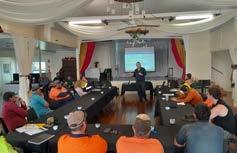
On Tuesday 20 May, the final CANEGROWERS Transport and WHS Compliance Workshop was held at Woongoolba Public Hall in Rocky Point. Seventeen people attended, bringing the total number of participants across all ten workshops to over 250.
At the workshop, Mark Lalor from WHS Queensland emphasised the importance of informing farm visitors about potential hazards, ensuring that new employees receive proper training and keeping some form of written record documenting training and farm visitor inductions.
Representatives from the NHVR covered Chain of Responsibility, the Agricultural Notice and NHVR’s plans for the season. Here, the necessity of keeping vehicles wellmaintained was stressed with NHVR Safety and Compliance Officers likely to be out across the state during the crush.
Feedback from the roadshow was positive, with attendees reporting that the content was relevant to their businesses. Whilst this year’s roadshow has finished, CANEGROWERS remains committed to promoting safe practices in the industry and assisting growers with matters in this space.
Queensland’s 2025 sugarcane crush is officially underway, with harvesters firing up across the Tableland district on Thursday 22 May.
It marks the start of a new season that growers hope will bring better fortunes after a tough run last year.
Around 28.5 million tonnes of cane are expected to be cut and crushed across the 13 districts.
The crop is down slightly from last year, with recent widespread flooding across north Queensland causing major losses to plant cane, while prolonged cloudy weather also slowed growth in some districts.
Despite this, growers are hoping to turn the page on 2024, which was one of the most disrupted seasons in recent memory
Unseasonal rain, mill breakdowns and industrial action caused major delays that saw some districts harvesting into January – and around a million tonnes of cane left in the paddock.
“Growers are eternal optimists,” CANEGROWERS CEO Dan Galligan said. “They’ve done their part, growing the best crop they can under the conditions. Now we will be working together with the rest of the supply chain to make this season work.”
While last season’s industrial disputes have been resolved, the reality is, multiple difficult harvesting seasons have had a cumulative impact on the profitability of farmers, Mr Galligan said.
“In the brief break since the last harvesting season we’ve been in urgent talks with the sugar manufacturers, and while we’re seeing a real willingness to tackle the problems and get things back on track, there are no quick fixes, unfortunately.”
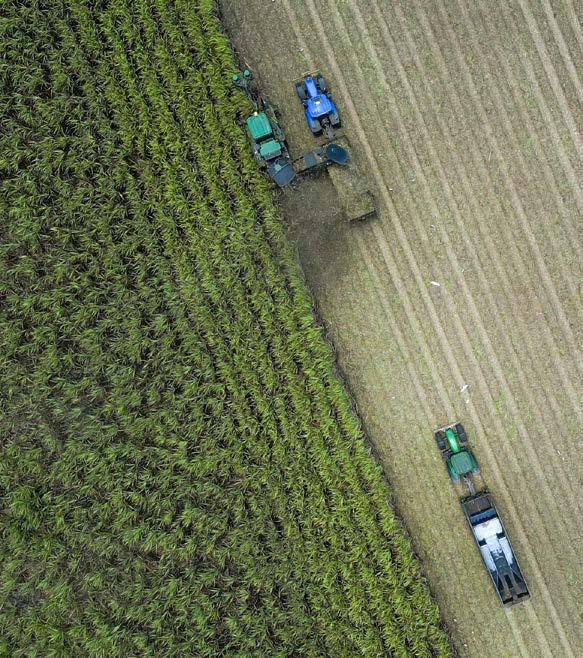
Workforce shortages are also creating challenges, skilled mill workers, harvester drivers and haulout crews are in short supply.
CANEGROWERS is working with local offices and the Queensland Farmers’ Federation to help address these issues.
“There’s huge potential in this industry,” Mr Galligan said. “But we won’t fully unlock it until we can consistently harvest the entire crop in most efficient and profitable time.”
With the first cane bins filling up, growers are crossing their fingers for dry weather, reliable mills, and a smooth run through the season.
A long-running push by CANEGROWERS for disaster funding reform has delivered another major win for Queensland cane farmers, with the State and Federal governments agreeing to broaden the definition of ‘primary producer’ under disaster assistance rules.
The change means farming families who rely on both on-farm and off-farm ag-related income – like harvesting or planting services – will no longer be locked out of disaster support. These growers will now be eligible for key assistance measures, including recovery grants, concessional loans, and freight subsidies.
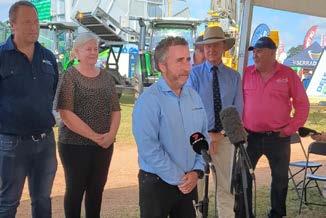
Announcing the change at the 2025 FNQ Field Day in Mareeba on Thursday 29 May, Queensland Primary Industries Minister Tony Perrett said agriculture was “vital to every Australian,” adding: “When our producers suffer, we all do.”
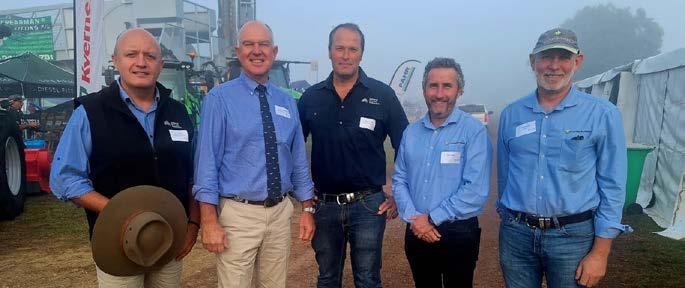
CANEGROWERS CEO Dan Galligan joined local growers and ag industry leaders in Mareeba to welcome the news.
“This is a smart, sensible fix that brings disaster recovery support into line with how modern farms actually operate,” Mr Galligan said.
“We thank Minister Perrett for listening to growers and championing this reform, and we acknowledge the strong support from both the Queensland and Federal governments.”
The move follows sustained advocacy by CANEGROWERS , in partnership with the Queensland Farmers’ Federation, and comes after
widespread flooding devastated large swaths of North Queensland’s cane country earlier this year, especially around the Herbert River region.
“Many families rely on a mix of onfarm income and contracting work to stay viable – it’s never made sense to leave them out of disaster support,” Mr Galligan said.
The reform will be applied retrospectively to Queensland’s 2025 summer flooding events, meaning any farmers who were previously deemed ineligible under the Disaster Recovery Funding Arrangements (DRFA) should contact QRIDA on 1800 623 946 to find out what the amendments mean for them.
Over the past six months, CANEGROWERS has gone to bat for Queensland cane farmers, securing vital changes to disaster recovery rules:
DEC 2024
Extension of Grant Applications
The Queensland Government extended the deadline for disaster recovery grants after Cyclone Jasper – giving growers more time and certainty as they rebuilt.
FEB 2025
Replanting Costs
Now Covered
A joint State and Federal decision to include replanting costs in grant eligibility was a critical win for floodaffected farms.
MAR 2025
Grants Increased to $75,000
The maximum support available to primary producers was lifted – a vital boost for growers recovering from widespread flood damage.
MAY 2025
Broader Definition of ‘Primary Producer’ Farming families earning both on-farm and off-farm ag-related income – like harvesting or planting contracting – are now eligible for support.
“This is about making sure no grower falls through the cracks”
The reform adds to a growing list of tangible wins for cane growers in recent months.
Earlier this year, CANEGROWERS successfully secured the inclusion of replanting costs in disaster recovery grants – another first for the industry. The organisation also worked with government to deliver targeted relief for recent events, including extended application deadlines for Cyclone Jasper support and an increased
funding cap of $75,000 for growers hardest hit by the summer floods.
“These are meaningful, realworld outcomes that show what industry advocacy can achieve,” Mr Galligan said.
“We’ll continue working to ensure disaster support keeps pace with the way growers run their businesses, because when growers are backed, the whole community benefits.”
Soil health starts here. At Aztec Dynamics, we support smarter farming with organic fertilisers and drone services that build soil health and cut chemical use. Using trusted brands like Alltech and NTS, we deliver microbial and mineral nutrition to boost soil life and crop performance.
Our drones handle spraying, spreading and mapping - without compacting your soil - and we back it all with expert testing and agronomy support.
Why it matters:
Ÿ Stronger, more active soils
Ÿ Lower input costs
Ÿ Organic - certified solutions. Better soil. Better farming.




Queensland’s sugarcane growers have backed Owen Menkens to lead the industry through a pivotal period, reelecting the Burdekin grower for another three-year term as Chair of CANEGROWERS Queensland.
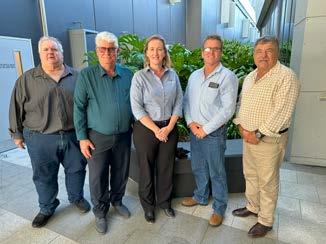
Mr Menkens was returned to the role by the grower-only Policy Council, which also elected Innisfail grower Joe Marano as Senior Vice Chair and Herbert River’s Steven Marbelli –a newcomer to the state board –as Vice Chair.
“This is a grassroots organisation, run by growers for growers,” Mr Menkens said. “To be re-elected by my peers is an incredible honour. It shows the trust we’ve built and reflects the important work we still have to do.”
The appointments cap off CANEGROWERS ’ triennial election process, which began in February when growers nominated for their local district boards. Each district board then nominated a representative to the Policy Council – one from each
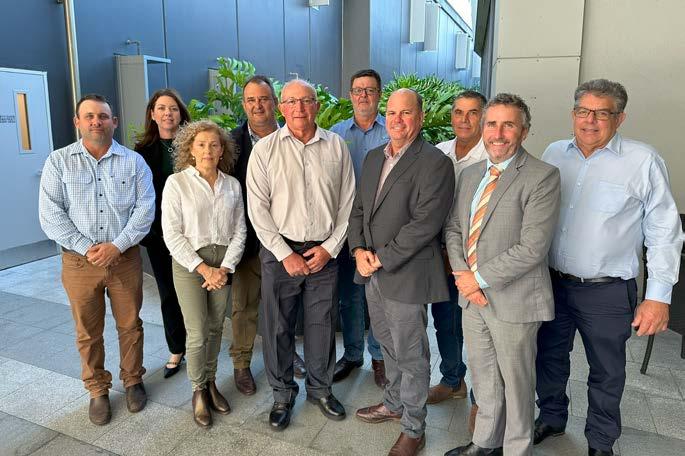
mill area. The newly formed Council met in Brisbane at the end of May for its first meeting, where it elected the state board.
This bottom-up structure ensures the organisation remains fully accountable and representative, from paddock to policy, with every leadership role held by a grower elected by fellow growers.
Also elected to the state board were returning members Joseph Borg, Kevin Borg, and Michelle Fischer, alongside three new faces – Glenn Betteridge, Claude Santucci, and Steven Marbelli.
“The strength of this board lies in its mix of continuity and renewal,”
Mr Menkens said. “With experienced leaders like Joe Marano and Kevin Borg alongside committed new board members like Glenn, Claude and Steven, we’ve got the right team to move the industry forward.”
The Policy Council will now establish a series of industry committees to lead focused work on key priorities including mill performance, supply chain efficiency, sustainability, diversification, and grower profitability.
The board also welcomes new Policy Council members (pictured top left) Leah Russo (Herbert River), Charles Papale (Burdekin), Brett Leach (Mackay), and Peter McLennan (Isis) joining a number of returning councillors.
“We’ve significant challenges ahead, but just as many real opportunities. This grower-elected leadership team is well positioned to shape a strong, sustainable future for Queensland’s cane industry,” Mr Menkens said.

BY DAN GALLIGAN, CEO, CANEGROWERS
Natural disasters are a perennial drag on the success of our industry.
Here in Queensland, we’re particularly vulnerable to the volatile wet season, which can bring tropical cyclones, floods and monsoon lows – often right alongside droughts and bushfires.
A look through the history of our industry shows how successive natural disasters have steadily undermined both the quantity and quality of cane crops across the state.
For an industry like ours, that are so heavily reliant on consistent cane supply to keep mills running and income flowing into businesses and communities, the cumulative impact is devastating.
But the effect of natural disasters can’t be fully understood at just the macro scale. The impacts are far more profound at the individual family farm level.
Disasters hit the hip pocket hard, and the financial pain can last many months, even years, after the event.
The science tells us that the frequency and severity of these events is only going to increase.
So, we need policy that keeps pace, both with the scale and nature of these disasters, and with the needs of our modern industry.
As I outlined in this magazine a few months ago, it was with this dynamic in mind that CANEGROWERS joined with the Queensland Farmers’ Federation, QFVG and Cotton Australia to put forward a set of urgent policy reforms aimed at improving natural disaster recovery arrangements.
This week, the LNP State Government and the new Federal Government ticked off another reform on that list.
In addition to the expanded eligibility for disaster grants to fund crop replanting, the move to broaden the definition of a ‘primary producer’ is a profoundly important step forward.
I’ve seen first-hand the impact of restrictive guidelines on our industry.
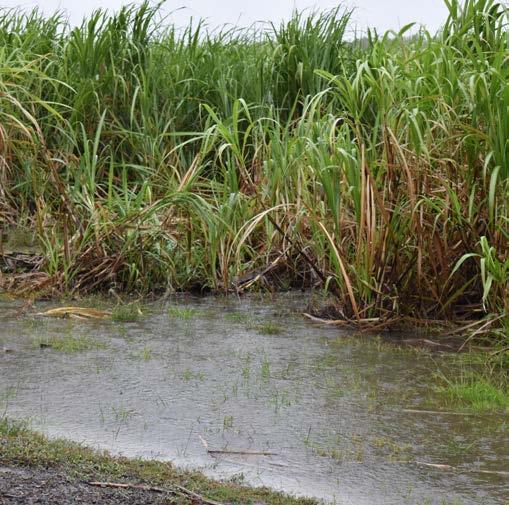
Watching QRIDA staff in Ingham explain the rules to more than 100 growers earlier this year — many of whom were clearly eligible in practice but excluded on paper — was a powerful reminder of how broken the system was.
Despite being bona fide farmers, impacted by the disaster and clearly in need of assistance, they were turned away.
That should no longer be the case.
Thanks to this reform, many cane growers who are growing their businesses or entering the industry – particularly as harvesting contractors – will now be eligible for the support they need to get back on their feet.
We know so many of these farmers are saving to buy land, expanding their operations, and investing in the future.
And that’s exactly what our industry needs – not just recovery, but confidence to invest and grow.
That’s why this policy change matters. And that’s why the swift action by the LNP State Government and the Federal Labor Government deserves to be recognised and commended.

Brazil
India
Thailand
Speculators
Currency
Your Trusted Partner
Current as at 20 May 2025.
By Elliott Apel, QSL Assistant Manager Trading & Risk
A significant downpour in late April brought much-needed rain to Centre South Brazil after three consecutive months of below-average conditions. However, the wet weather also restricted early-season harvesting. According to the latest UNICA data, 34.3 million tonnes of cane had been harvested and 1.6 million tonnes of sugar produced by the end of April, with an average sugar mix of 45.3% − all significantly lower than last year’s figures.
Harvesting in India is virtually complete, with only four mills still operating into late April. Final production is on track to meet expectations of around 26 million tonnes of sugar. Attention will now gradually shift to the upcoming June-September monsoon season.
Early monsoon rains in Thailand have had a positive impact on the crop, prompting some forecasters to revise their outlook and increase the 2025/26 Season production forecast by 1.2-1.8 million tonnes of sugar.
Speculators continued to favour a net short position throughout April and into May. The Commitment of Traders report dated 13 May 2025 showed speculators holding a net short position of 45,615 lots.
The Australian dollar rallied strongly following the surprise announcement of widespread tariffs by US President Donald Trump. However, sentiment has since shifted after the US and China agreed to a temporary 90-day reduction of additional tariffs to allow for further trade negotiations. Markets now anticipate a short-term easing of tensions, although concerns remain about the longer-term outlook for US-China trade relations and potential disruptions to global import flows.
Neutral
Neutral
Neutral
The outlook ratings above are in relation to AUD/tonne sugar prices. A bullish outlook is considered positive. A bearish outlook is considered negative.
The highest grower-managed pricing levels achieved across all growing regions using QSL products to date (all gross price actual/tonne) are:
• 2025 Target Price = $735 / IFC $735 (Oct25)
• 2026 Target Price = $685 / IFC $690 (Jul26)
• 2027 Target Price = $650 / IFC $610 (Jul27)
• 2028 Target Price = $605
• 20 June 2025: Any 2025-Season Target Price Contract tonnage not priced by this date will automatically have its pricing window extended and roll costs may apply.
• 20 June 2025: Any unpriced tonnage allocated to the ICE 11 July 2025 contract through the Individual Futures Contract and/or Self-Managed Harvest Contract that is not rolled by this date will be priced by QSL at the next market opportunity.
As harvesters fire up across Queensland, CANEGROWERS is doubling down on what matters most – representing growers, driving results, and building a stronger future for our industry.
The CANEGROWERS Queensland levy for the 2025 Season has been set at 22.23 cents per tonne (ex GST) on all cane delivered to mills by members, capped at 100,000 tonnes.
This represents an increase on last year once again capped at CPI – a commitment to keeping downward pressure on the lever while maintaining strong advocacy and service delivery.
And the value is clear.
From securing better disaster relief and pushing for mill accountability, to investing in the next generation of cane farmers, CANEGROWERS is delivering real outcomes in every corner of the industry.
“Growers are being squeezed from every direction – costs, labour, weather, and mill performance,” Chairman Owen Menkens said.
“That’s why we’ve stepped up our efforts and fought hard for wins that make a difference on the ground.”
Among the key outcomes delivered in the past 12 months:
Conducting in-depth analysis of mill performance issues to help inform how to address season length
Disaster grants tripled, from $25,000 to $75,000
Delivering policy change to allow disaster recovery grants to cover the cost of replanting crops
Application windows extended, giving growers breathing room after a crisis
National biofuels feedstock strategy advocacy – pushing sugarcane into the clean energy future
NHVR freeboard approval, removing the burden of covering every road-transported load
Practical guides on WHS and load restraint – cutting red tape with clear, grower-friendly info.
“Advocacy is what we do best,” Mr Menkens said. “We make sure cane growers are heard in every room where

decisions are made – in councils, state parliaments, federal departments and even global forums.”
But it’s not just about government. With last season’s crushing delays leaving a million tonnes of cane uncut in the paddock, CANEGROWERS has been working closely with millers to ensure better planning, clearer commitments, and a harvest that runs on time.
“Too much cane was left behind last year,” Mr Menkens said. “We’re holding conversations that need to be had to ensure this season delivers for growers.”
Meanwhile, free crop insurance will again be included in 2025 membership –covering up to 100,000 tonnes* of cane for fire, hail and transport-related damage, at $35/tonne indemnity with a 50-tonne excess.
That’s not just peace of mind. That’s real protection when nature doesn’t play fair.
Looking to the future, CANEGROWERS is investing in people and knowledge to ensure a thriving, sustainable industry.
That includes:
The Next Ratoon mentoring program, connecting experienced growers with the next generation
Young grower tours to grow skills and networks
Curriculum-linked education in schools to share the sugarcane story with future generations
Practical workshops on WHS, transport, and compliance, delivered free in growing regions
Business resilience training, helping growers manage risk and strengthen operations
And the industry is coming together.
Events like Sugar Cubed 2025 –Australia’s only large-scale sugarcane event designed by growers, for
growers – are putting innovation, connection and opportunity in the spotlight.
Next month, CANEGROWERS will host the World Association of Beet and Cane Growers (WABCG) conference in Cairns, putting Queensland growers on the world stage.
Even at the Ekka, the cane industry has a strong voice – proudly telling our story to close to 10,000 visitors to the CANEGROWERS display last year.
From the paddock to parliament, the classroom to the boardroom, CANEGROWERS is working every day to protect, promote and grow this industry.
And it all starts with growers, standing together.
*Crop insurance will be charged on all tonnes over 100,000 delivered to the mill
BY OWEN MENKENS, Chair, CANEGROWERS

It’s been a busy time across the CANEGROWERS network lately, with elections held right across our cane-growing districts to decide who’ll represent local growers on their district boards.
Those new boards officially kicked off their three-year term on 1 May, and one of their first jobs was to nominate someone to sit on the CANEGROWERS Policy Council – the group that helps guide where we’re headed as an organisation.
That Council met on 26 May, and I was genuinely honoured to be elected Chair of CANEGROWERS Queensland for another three years.
It’s a big responsibility, and one I take seriously. Leading an organisation that’s been around for almost 100 years –built and run by growers – is a real privilege.
With that centenary just around the corner, it’s a good time to reflect on one of the things that makes this organisation so special – our deep roots.
This is a truly democratic organisation – one that’s shaped entirely by the people it represents.
That strength – growers standing together and speaking with one voice – has carried us through all kinds of ups and downs. And we need that unity now more than ever.
There’s a lot on our plate. Rising costs, mill issues, the STL insourcing mess, more red tape than ever, and a pretty unpredictable global sugar market.
None of it’s easy – but when we stay united and focused, we can keep pushing for the best outcomes for growers and our industry.
At the Council meeting, Joseph Marano from Innisfail was elected Senior Vice Chair, and Steven Marbelli from Herbert River – who’s new to the board – stepped into the Vice Chair role.
They’re joined by Michelle Fischer (Rocky Point), Joseph Borg (Mackay), Glenn Betteridge (Burdekin), Kevin Borg
(Plane Creek), and another newcomer, Claude Santucci from Tablelands.
Together, we make up the board that oversees CANEGROWERS Queensland’s governance and financial direction.
But it’s the Policy Council where the most important work happens. That’s where we set priorities and give direction to the exec team and staff.
Everyone around the table is a grower – a leader in their own district who has been elected by their peers.
That means the decisions being made come with real experience and accountability – and usually a good bit of healthy debate, too.
The Council also splits into four committees, which gives members the chance to really dig into the topics they know best – whether it’s trade, the environment, research or regulations. There’s always someone in the room who’s lived what we’re talking about.
That’s the power of CANEGROWERS – growers using their local experience to drive big-picture decisions for the whole industry.
It’s a model that’s worked for nearly a century, and I reckon it’s never been more important than it is now.
Thanks for the continued trust. I’m looking forward to working hard for growers across Queensland over the next three years.
If there’s anything you want to raise – or even just have a yarn – don’t hesitate to reach out.
And here’s hoping for a safe, smooth and profitable harvest this season.
13 June 2025
Now in its eighth year, Big Dry Friday has raised over $8 million to support rural and regional communities, delivering help where it’s needed most.
Find out more or donate
In light of the recent flood events impacting many cane-growing regions, the Morgans Foundation has donated to GIVIT NQ and the local SES NQ to further support those in need.
BY RENEE CLUFF
A value-adding venture to turn the tops and trash of sugarcane into renewable energy feedstock is gaining momentum.
Sugarcane
(Courtesy: Burdekin Renewable Fuels)
Burning sugarcane prior to harvest could soon become a practice of the past in the Burdekin, as support grows for a project to turn unused biomass into energy.
SKY Renewables, in collaboration with grower-led Burdekin Renewable Fuels (BRF), is spearheading a project to harvest the whole crop green and use the tops and trash as feedstock to produce renewable energy for the Asian market.
Founder and CEO of SKY Renewables, Simon Yim, said he began the background work on the initiative in 2017 when a visit to the Burdekin coincided with a growing demand for biomass in Asia.
“At the time, the Japanese were really crying out for an alternative to nuclear after the Fukushima meltdown in 2011 and they really wanted to be able to go to baseload renewable energy and using biomass pellets is one of the methods they prefer,” Mr Yim explained. “So, on one hand you have a situation where you are wasting the resources and on the other, a place which is crying out to get them at a high price. The most interesting thing was that nobody was doing it.
“The fact that they are burning the cane today means that if we can put the tops and trash to an alternative use without burning it, we are probably saving 3-million tonnes of carbon
dioxide emissions right off the gate. If the growers are burning it, it’s of zero value and what we are offering is around US$10 per green tonne of trash, so all of a sudden you can turn something you have burnt which is of zero value into a revenue stream.
“We are not here to change the sugarcane ecosystem; we are just adding value by utilising a valuable pool of waste where it is needed”
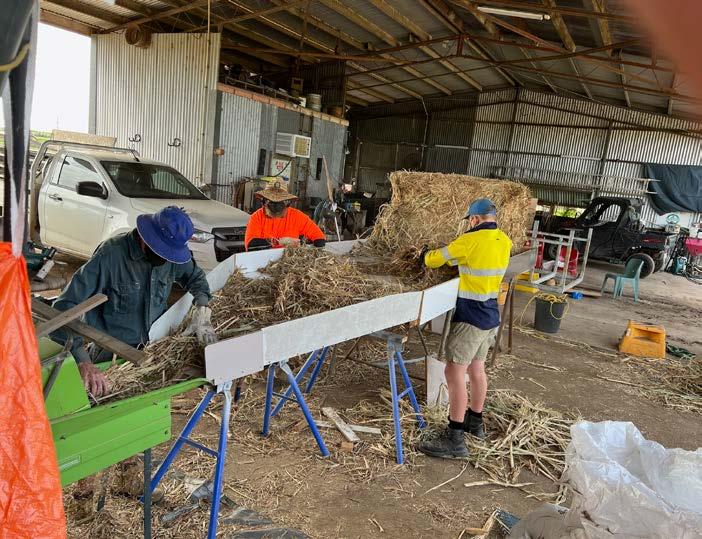
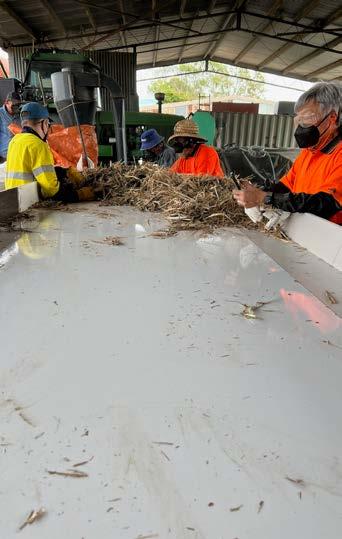
“Growers can still supply the cane to the mills; they can still earn whatever they’re earning in terms of sugar production. But instead of burning the field before harvest, what we’re advocating is that we harvest the whole crop. That would involve more bins, more runs to the mills but it’s all doable and at SKY Renewable’s cost.
“The other major reason for coming to the Burdekin is that it’s the most productive cane area in all of Queensland and the fact that it’s 100% irrigated means the production is stable and we need stable production to make sure the feedstock is there year in, year out.”
SKY Renewables has hired a Brazilian company to undertake a detailed feasibility study on changing harvesting and transporting practices. Mr Yim’s plan is to build a separation plant where the tops and trash would be separated from the billets using high-powered fans.
“We’ll send the billets to the mill by conveyer belt and build a pelleting plant or briquetting plant next door
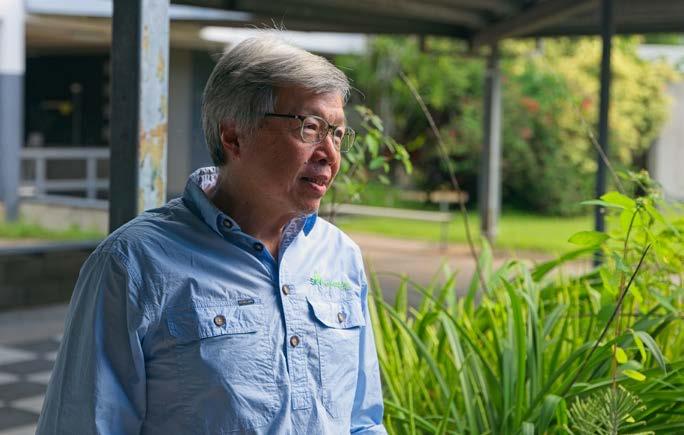
As a lawyer for the first ten years of his career, Simon Yim worked in-house for the Bank of TokyoMitsubishi UFJ and China Light & Power in Hong Kong.
His second career decade saw him specialise in corporate mergers and acquisitions (M&As). He led M&As for GE’s industrial businesses across the Asia-Pacific, covering energy, oil and gas, aviation, healthcare, transportation, water technologies and general industrial.
Simon also worked for major US power business Southern Company as Business
where we can use the tops and trash to make pellets or briquettes,” he said.
“We have trialled the Burdekin tops and trash on an industrial scale with the most prominent pelleting equipment manufacturer in Europe. Briquettes are a similar process but it’s more of a loose structure compared with pellets and it’s much less expensive.”
SKY Renewables is in talks with the two largest power generation companies in Singapore where there is high demand for biomass pellets to
Development Director and China Regional Director. As Partner of the private equity firm The Longreach Group, he played a key role in the turnaround of EnTie Commercial Bank in Taiwan.
Prior to focusing on SKY Renewables, Simon was working in private equity for two firms including the British Lloyds Banking Group, based in Hong Kong. He advises Solaris Fund in Japan and US-based insurance brokerage firm Lockton Companies and has held board positions with Huadian Power International and the Shajiao C Power Plant JV in China.
replace the burning of coal, as well as biomethane gas made from briquettes through gasification and methanation.
“For Project Lion, we’re talking to power companies in Singapore that use LNG,” Mr Yim said. “LNG is hard to decarbonise and the only way recognised by the Singapore Government is to blend it with biomethane So, it would be used as a clean feedstock to generate renewable electricity through a combined cycle gas turbine (CCGT).
“The only competing feedstock of biomethane in Asia is residual from palm oil, which is controversial, and the supply is very fragmented. 95% of what’s being produced is going to Japan, so when you think about alternatives for Singapore or Japan, there really is nothing there.
“For project Flame we’re talking about pellets because another potential customer in Singapore only runs a coal-fired power plant and because of the carbon tax Singapore is introducing – it’s the highest in Asia –they are facing a very steep fine if they continue burning coal.
“But if they were to turn to biomass by burning pellets, not only do they avoid the carbon tax, they can actually generate carbon offsets which they can sell to the EU for example.”
The Burdekin only has enough biomass to supply one of these projects, and that’s in conjunction with adding fibre from a cover crop. “We are not just thinking about tops and trash, we are thinking about creating a unified fallow crop,” Mr Yim said. “We’re leaning on sunn hemp and we can use the whole crop as fibre for making pellets or briquettes.
“With the two combined, there would be enough to supply more than a million tonnes of pellets, which is exactly what our potential Singapore customer wants. Or, enough biomethane to support a 240MW CCGT to use biomethane exclusively and be generating 90% of the time.”
SKY Renewables is aiming for 100% supply uptake from Burdekin growers and is asking for 36 months of supply exclusivity. It’s also requesting them to set aside 20 cents per tonne to be deposited into an escrow account. “We cannot touch that money,” Mr Yim said. “All we are asking for is for growers to put skin in the game. At the end of 36 months, or before that if the project materialises, we turn that pool of money into equity. If it doesn’t happen, we’re going to return the money with interest.”
In return, SKY Renewables is committed to paying AUD$15/tonne for green trash and is also offering an option for growers to turn those proceeds into equity in the company, with a total 20% stake of the company set aside for growers. “My objective is to have our long-term interests aligned so we move forward together as one voice,” Mr Yim said.
Burdekin Renewable Fuels Chair and CANEGROWERS Burdekin Director, Greg Rossato, said supporting the proposal is a no-brainer.
“Simon Yim’s business experience in Asia is second to none, he has a large specialist team of highly qualified people, and he can reach into those massive Asian companies and get deals done,” Greg said. “He knows that end, we know our end so were melding together and it’s coming together right.
“We fully understand that harvester modifications will be done but Simon’s offering a net payment – growers don’t have to pay any increase in harvesting costs or logistics costs and the grower simply gets paid. Where else are we going to get a deal where we’re not paying for any of these changes or feasibility studies and then get a 20% equity if the project comes to fruition?
“He believes in it that much he is willing to risk a lot of money. I don’t know how much more you can de-risk a project for your growers.
“You’ve got to have farmers onboard so he’s doing it the right way. All we need to do is be supportive. We’re here to help in any way. BRF is doing that until we know either way whether it’s a goer or not.”
More than 100 Burdekin growers attended a town hall meeting held in early May to discuss the proposal. Over 60% signed up to the deal within the following 48 hours. Further meetings have since been held throughout the month of May.
As we move towards the processing of the sugarcane, it is worth noting that large sections of the Queensland sugar industry have endured through what has been one of the most intense wet seasons in recent memory. Our industry has more than 150 years of history and there is no doubt that the incidence and severity of natural disasters are increasing, with the impacts of the recent North Queensland floods through the Herbert, Burdekin and Tully regions. Growers, sugar manufacturers and governments must heed the experience of recent floods, and recalibrate our response to it, to secure the sugar industry’s future for another 150 years.
The flood damage in some regions, like the Herbert, has been severe. Tens of millions of dollars’ worth of cane has been lost across Queensland, particularly in and around Ingham. Widespread damage has been caused to our factories and our cane rail infrastructure. Many sections of rail track have been washed out and rail signals, bridges and rail level crossings need to be cleared and repaired.
The sugar manufacturing sector has been doing a remarkable job, with very little outside help, to ensure factory operations and the supporting rail freight infrastructure is up and running in time to begin manufacturing sugar in late May or early June. Large amounts of time that had been set aside for maintenance have been lost, and the progress of maintenance and repairs have been further slowed due to flooded and damaged roads creating supply chain disruptions for essential materials and equipment.
It is a race against time to be ready for the start of the season. Our sector is no stranger to challenges of this nature, and we aim to be up and running to ensure that money is put into the pockets of all locals who rely on sugar for their livelihoods.
ASH SALARDINI CHIEF EXECUTIVE OFFICER AUSTRALIAN SUGAR MANUFACTURERS
The 2025 season will be a challenging one, and there will be a need for participants in all sectors of our industry to have patience and understanding –this has not been a business-as-usual preparation for the production season for many manufacturers, and there will be hiccups and some things that will not go to plan. Understanding and collaboration across our industry will give us the best possible chance to keep the crush on track.
Queensland and Federal governments have done a first-class job responding to the floods and in working towards recovery, however, there have been blind spots in their response. One area that needs to be rectified is the Queensland Reconstruction Authority’s inability to fund disaster recovery efforts as it relates to the industry’s cane rail network.
Queensland’s cane rail networks carry around 30 million tonnes of harvested sugarcane from farms to factories each year. This represents a significant public good for Queensland because without this freight corridor, the harvested cane would need to be moved to factories by road. Moving the second largest freight task in Queensland, or parts of it, on the public road networks each year would create enormous congestion for many regional communities and a road maintenance bill beyond the scope of current state and local government road maintenance budgets.
Noting the cross-jurisdictional responsibility for recovery, the Queensland and Federal governments must make sure that appropriate changes to policy and legislation are made now to ensure that if and when the next natural disaster impacts on this critical infrastructure network, agencies are empowered to work with our industry to get it back up and running. The collective response to natural disasters will be one of the defining issues for the future of the sugar industry and the communities that rely on it.
BY RENEE CLUFF
The town of Tully has celebrated 100 years since its mill’s first crushing season.
There wouldn’t be a town without Tully Sugar mill, a fact acknowledged during the month of May as residents and sugar industry representatives came together to reflect on a century of mill history.
“The town was built specifically because the sugar mill was going to be placed here in the Tully area,” explained Rob Magarey, Chair of the Tully Mill Centenary Steering Committee.
“The town was first gazetted in 1924 and that was principally to provide staff and service people for the sugar mill which was then completed in 1925. So, Tully wouldn’t have been here unless it was for the sugar mill.
“It must have been a hive of activity to clear land, to clear blocks in the town for buildings and it very quickly was erected, and things went ahead.
“Pioneering families, particularly the Henry family, opened up the area, had permanent farms here and then others came along.”
Dr Magarey said it was an interesting journey to take a trip through the mill’s past.
“What’s come to the fore is that the basic processes of growing cane and milling haven’t really changed but changes have come from the technology that really has swept through the industry,” he said.
“For instance, the basics of how cane is crushed remains the same but, in the beginning, there was no monitoring or process control whereas now it’s heavily controlled through NIR and a range of other technologies to refine the system and maximise efficiency.”
Today, the COFCO-owned mill employs 250 permanent workers, with another 80 hired during the harvesting season. It remains the main employer in Tully, which according to the most recent census figures, has a population of around 2,400.
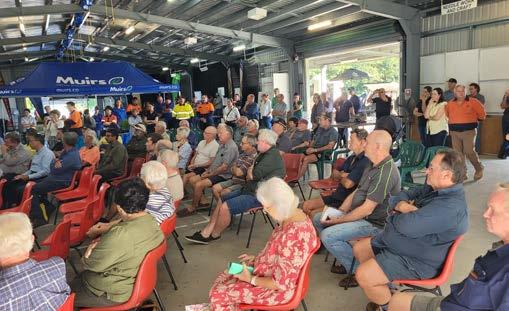
It seems pretty much everyone in town attended a range of events across ten days to mark the mill’s milestone.
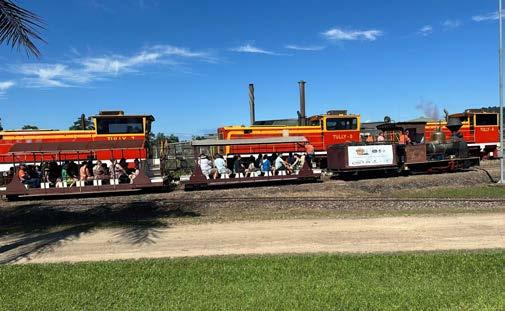
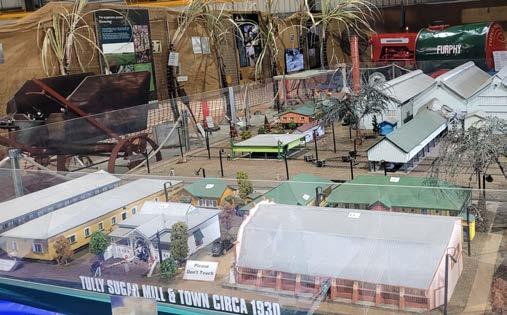
More than 500 people attended the gala dinner, 200-plus were at a morning tea function, and an estimated 1,000 people took a tour around the mill onboard the Homebush locomotive, which had been loaned from Wilmar Sugar in the Herbert River district. Other events included cemetery tours to pay homage to sugar industry pioneers, an art display, pop-up historical display and a family fun day complete with a car and motorbike show and children’s activities such as jumping castles.
A commemorative book and a mural on the wall of the local supermarket were also created to mark the occasion.
The future of milling and farming was also a feature, through the Tully Sugar Centenary SRA Industry Field Day.
“It’s really been a community event, and a lot of hard-working committee members have all collaborated really well over the past two-and-a-half to three years to bring it to life,” said Dr Magarey. “Different parts of the industry have really come together and really made it a great celebration.”
The festivities followed the 100th birthday celebrations for the town last year.
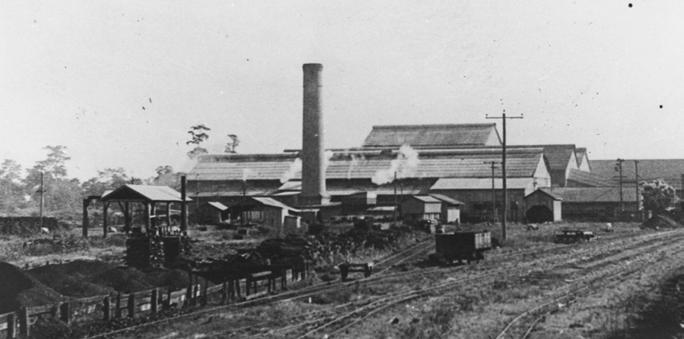
Tully Sugar mill in 1925, courtesy Queensland State Library
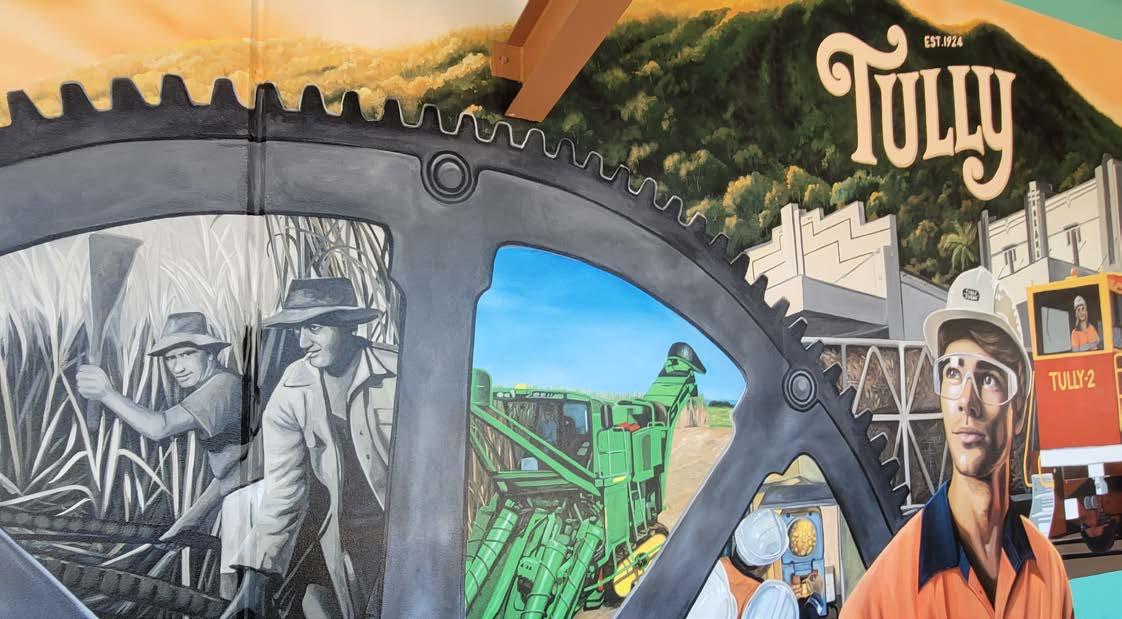
From top to bottom:
A large mural was commissioned as part of the centenary celebration
The event included rides on the Homebush locomotive, which was borrowed from the Herbert River district *Terms and conditions apply It pays to plan ahead with Pursehouse Rural 5.0% Reward on your prepayment made before June 27th* Take advantage of Pursehouse Rural Prepayment Rewards



pursehouserural.com.au

However, it was not until he trialled Shield Systemic Insecticide from Sumitomo Chemical Australia two years ago, that he finally started winning the battle.
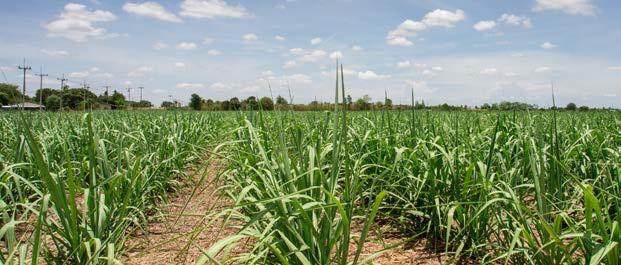
Far North Queensland canegrower Carlo Di Salvo has battled damage from canegrubs – the most significant pest in sugarcane –since he began growing the commodity in 1998 when the Tableland Sugar Mill began operating nearby.
Mr Di Salvo, whose father Sid started the business, now operates with his wife Chrissie, son Sebastian and daughter Livinia as C&C Di Salvo, growing sugarcane and citrus over 141 hectares at Arriga on the Atherton Tableland, 17kms west of Mareeba.
Facing the pressure of crop loss from canegrub damage, he was encouraged by an agronomist from Combined Rural
Traders (CRT) Mareeba to trial Shield (with its active ingredient, clothianidin) alongside a traditionally used product (imidacloprid) which is currently being phased out.
Two seven-hectare blocks of young cane were treated equally in late 2023. Within a few months, it was clear that Shield was the better performer.
“On the Shield block the cane stood up better to canegrubs, it was healthier, more vigorous and there were not as many gaps as the other block. Cane from the Shield block also cut better and had a

better weight which resulted in a better return. Cane on the other block fell over because the stools were attacked, it had lots of gaps, and the plants were not as strong. It turned out so badly, I ended up ploughing it out while the Shield block still looks good,” Mr Di Salvo said.
“I’ve seen some really bad damage from canegrubs over the years, especially in the blocks closer to the riverways where they seem to nest near the big trees. You can lose up to 80 per cent of the crop and it doesn’t return. No-one can afford to farm with an 80 per cent crop loss.”
Canegrubs which attack and eat sugarcane roots significantly impact on the crop’s ability to take up nutrients and water, therefore, reducing yield and profit. Beetles lay eggs in the soil during summer with the larvae hatching into grubs which eat roots off around late summer-early autumn.
“Damage would usually occur just after the wet season, but because it was in the root system, you couldn’t see it

until the plants fell over and by then it would be too late,” Mr Di Salvo said. Shield is now part of the program at C&C Di Salvo where it’s used once a year when the cane starts shooting back after harvest.
“To see healthier and heavier cane which gives you a better return is a reassurance. Shield is more expensive but, as I see it, it pays off in the long run.
“The result of extra weight and sugar per hectare covers that cost and you can return the crop, probably for about five years.
“It’s an option that shows good results and hopefully helps us fight canegrubs for a good while because there doesn’t look like any new chemicals are being released anytime soon for the control of canegrubs.”
The Di Salvos were among seven Queensland growers who took part in the trial comparing Shield to the traditional product, all achieving similar results.
Sumitomo Chemical Australia business development manager Jock Leys said a re-examination of Shield’s efficacy in sugarcane in recent years found it performed significantly better than the traditional product which came from same class of chemistry.
The price had been reduced by about 40 per cent to make it more viable for CANEGROWERS , he said.



BY RENEE CLUFF
Whether it’s managing a large corporate sugarcane enterprise or running the family farm, Tully District’s Roy Butcher is not one to sit still.
As a third-generation sugarcane grower, Roy Butcher has spent more than three decades honing his skills and knowledge across every facet of the industry. And he’s showing no signs of slowing down, with a recent new appointment only enhancing his passion to continue progressing.
“I’ve been in the industry through the lowest of the lows and the highest of the highs,” Roy reflected. “I’ve been through the droughts, the floods and also the good times.
“It’s been an educational journey; I’m always learning new things and new practices.”
In 2022, Roy took on the role of Farm Manager for Amstar Speciality Ingredients, which operates 1700 hectares of sugarcane land across seven farms south of Tully. It’s an investment by Global Mind Australia Pty Ltd, a member of TTC AgriS –a leading player in Vietnam’s sugar industry. Roy was familiar with the land, including the main farm, where he’d spent the previous decade working.
His son Mitchell oversees the harvesting side of the business and acts as manager, keeping the farms running smoothly when Roy
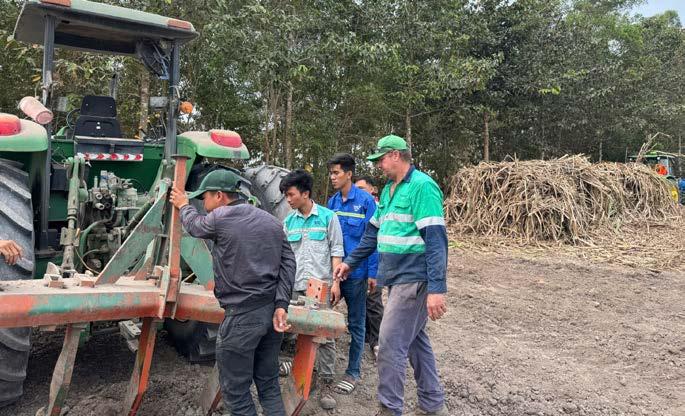
is overseas. As part of his role, Roy works closely with teams in Vietnam, Laos, and Cambodia to share his hands-on Australian farming experience, particularly in areas like mechanisation, soil health, and datadriven practices.
“Once we got involved in big farming, we really dived into new innovations and technology, and our partners overseas have shown a real hunger to learn,” Roy said. “They’re genuinely eager to see how we do things here –especially when it comes to investing in machinery and embracing innovation to lift productivity. That commitment to progress is central to the TTC AgriS vision. As the official John Deere dealer in Vietnam, the company is actively encouraging and investing in farmers to help them shift toward more productive, sustainable farming models.”
Roy’s role extends far beyond the paddocks of North Queensland –he serves as a bridge between Australian farming excellence and Southeast Asia’s growing agricultural sector. His visits to Vietnam go beyond technical consultancy; they foster enduring relationships and mutual understanding between farming communities and corporate partners across the region.
“They are family-orientated people even though it is a corporate company,” Roy said. “After my father died in 2022, they showed support and care well beyond anything I’ve ever experienced before in my career. They look after us, so we’ll do the same thing in return.
“Before I started in this role, I swore black and blue that I’d never step foot on a plane to go overseas, but we get treated as part of their family and watching them work with the people over there is basically the same thing –one big family that works together in the same direction.
“That’s how I try to treat the guys that work here on the farm – not as numbers, but as a family because I believe that if you treat people with kindness, they tend to go the extra mile to help you get to where you want to be.”
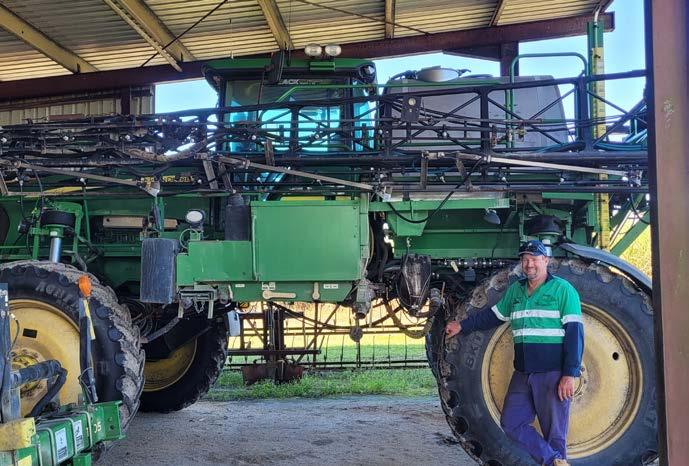
Roy is focused on numbers when it comes to precision farming. He has rate controls on the spray rig and fertiliser boxes, and yield monitors and SmartClean technology on the harvester, the latter which Mitchell explained monitors the harvest to allow for better control of primary extractor fan speed settings.
“It’s about trying to minimise losses,” Mitchell said. “It assists me in my decisions as operator and also helps us deliver a consistent product to the mill.”
The pair says the 1.9m row spacing also assists, and planting and harvesting are always in single rows.
“We don’t have any troubles with weed population because we’ve got the sticks per metre in the ground,” Roy said. “I look at the efficiency side of things and there’s 17% less travelling.
The harvester can walk slower still cutting the same tonnes per hectare, so it takes the wear off the high working gear and that sort of thing.
“It’s also a plus when it comes to laser levelling because the machine’s not bouncing over all the undulating country, it’s pretty much smooth sailing. We just give it a brush up every time we fallow because we try to minimise soil movement as best we can.”
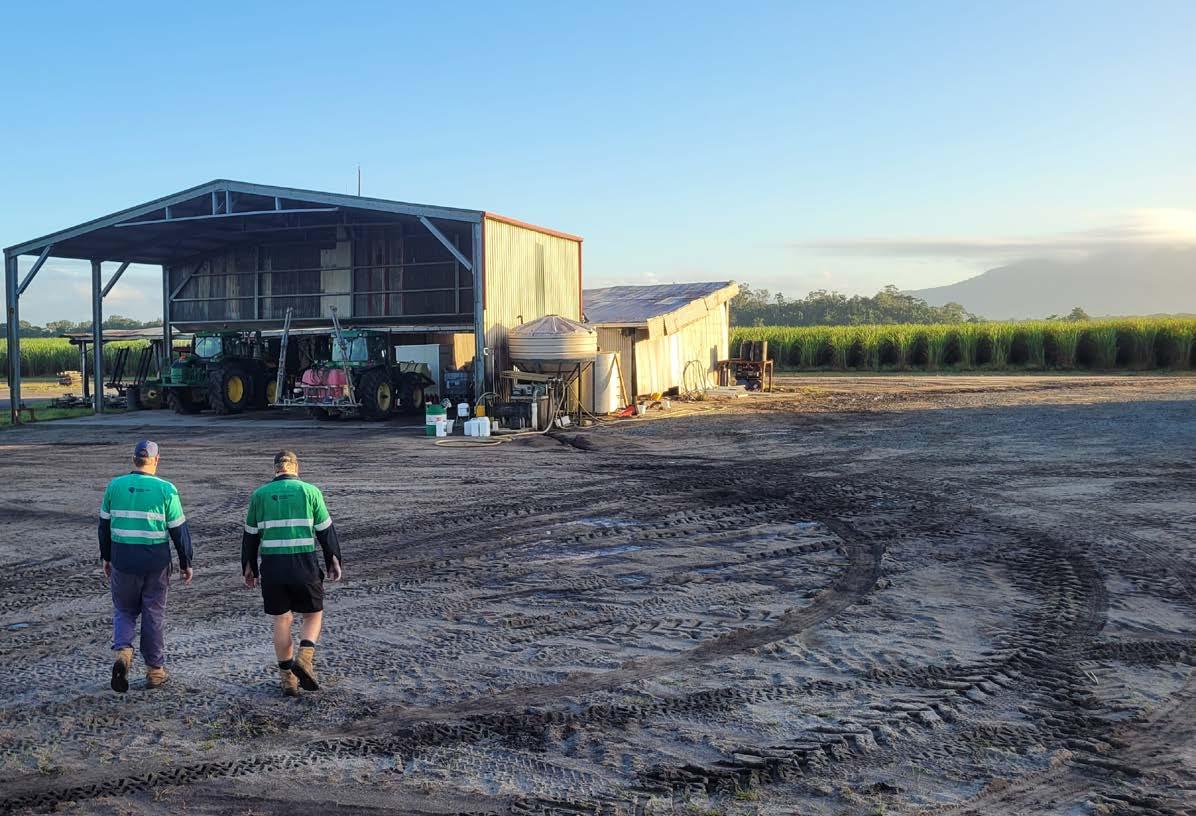
All equipment is manufactured by John Deere to enable consistency and in turn, efficiency. Last year, Amstar bought a new harvester and three 6195M haulout tractors for their Australian operations. They’ve also extended and modernised sheds.
“They’ve invested to be here for the long-term,” Roy said. “They see a future
in us as well as the sugarcane industry in Australia overall.”
As part of his precision farming program, Roy also pays plenty of attention to soil health. He plants cover crops when the weather allows and always checks that the soil chemistry is balanced.
“We ensure that the health of the soil is balanced before we apply the nutrients and we seem to be making increased progress, even with the weather events we’ve been battling in the last two years,” he said. “We’re still faring significantly well with the amount of rainfall we’ve had.”
“We follow the Smartcane BMP practices and record all our fertiliser and chemical applications through JOC (John Deere Operations Centre) and we put that into the booklet.
At the end of it, they calculate the total N and P and we’ve been under budget every year since I’ve been running the farm.”
This year, he’ll be undertaking trials aimed at releasing locked up phosphorous in the soil. He’s also been working with Sugar Research Australia (SRA) on varieties that will cope with water inundation. After TC Jasper and this year’s North and Far North Tropical Low, parts of the main farm were five metres underwater. The lower country is always harvested first to ensure new cane is mature enough to survive the onslaught of the wet season, but Roy said the past two years have been particularly brutal.
“We’ve never endured damage like we have in the last two years”
“We’ve discovered that the varieties SRA recommends for floods actually didn’t succeed in the floods we’ve had,” he said.
“Some of the varieties that we didn’t think would work for the Tully district actually worked here on our farm and worked well and surprisingly survived the floodwaters better than expected.”
Of course, there are variances across the expanse of the land. The main farm is spread across an area measuring around 10 kilometres by three kilometres, which can also make feral pig control challenging. During my visit, we came across a pig casually
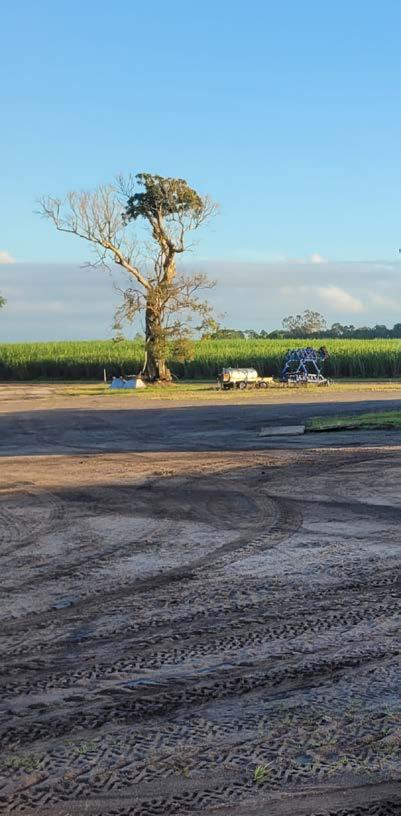
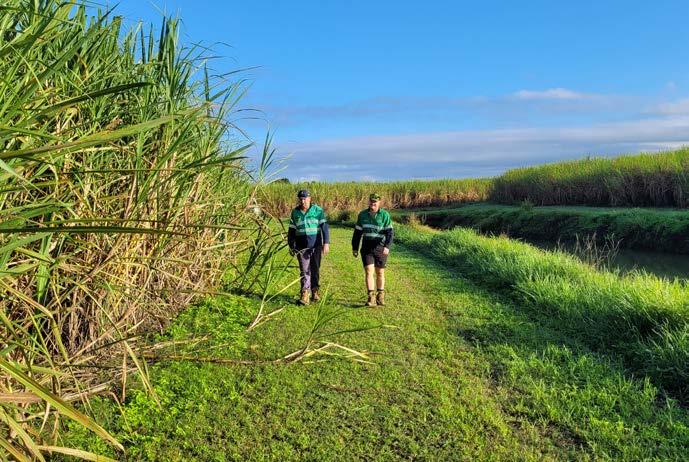
Top: Despite extensive drainage, low lying areas of the main farm are prone to flooding
Middle: Roy (left) and Mitchell (right) have a close bond on and off the farm
Bottom: Spray rigs fitted with rate controllers form part of a data-driven approach to farming
wandering down one of the headlands. They’re not the only trespassers, according to Roy.
“My biggest fear is that while we’re doing our job by helping control feral pigs, we accidentally shoot someone that shouldn’t be on the property,” he said. “That would be a hard pill to swallow to live with, let alone coming under the focus of the law.”
There are advantages to working across one large area, though. Harvested cane can be tipped off on one of only three drop-offs and there has been scope to re-design the land area to make longer rows, planting through blocks to minimise machines having to turn around in small paddocks or tight corners.
One of the corporation’s other farms is 38 kilometres away, so transporting equipment does become a problem. “We’re now looking to consolidate to reduce the need for travel, mainly due to transport restrictions because currently, we have to move on critical roads,” Roy explained. “Nearly one person’s wages is lost every time you’ve got to shift from this farm to the top farm.”
117,000 tonnes are expected to be cut from the corporation’s farms this year and the harvesting contract covers 1,465 hectares.
Roy’s family has a long history when it comes to harvesting expertise. His maternal grandfather started in the industry hand cutting cane, shoulder loading onto horse carts, and placing portable rails. He later became a shareholder of a group in Feluga which started mechanical harvesting in the area.
Roy’s parents, Roy and Sandra Butcher, were entrenched in the harvesting equipment industry from the 1970s well into the 2000s. Roy Senior, a diesel mechanic and panel beater, ran his own sawmill until joining his wife to become dealers of Don-Mizzi, Toft Don and AusToft and later, with Neville Toft machines under the Cameco brand.
“Mum and Dad were a one-stop-shop, they had the quality and quantity of parts available for all the customers,” Roy recalls. “It’s not like it is today waiting for parts all the time. They used to travel up and down the coast during the season. If there were people broken down in other districts Dad would just grab the parts, jump in the car and meet them on the road.
“Mum’s family own the farm at Feluga and when Grandfather passed away, Grandmother didn’t want the farm so they split the farm up between the two daughters, so we started farming ourselves in about 1983.
“I worked on the farm with Mum and Dad until I left school, got my mechanical apprenticeship and I was still working with them on weekends.
“My brother and I and our sons still run the farm today for Mum and Dad, so we’re now up to four generations on the farm. Both my kids, Mitchell and Ella, were babies running around in nappies going for rides in bin tractors. At three years of age Mitchell used to drive the controls on the bin tractor and that’s probably where he got hooked on being involved as well. Once he finished school he began binning out and now he’s driving harvesters.
“I did seven years in my trade and then decided I wanted to go into cane, so I
started binning out. My passion was to drive the harvester, and I did that for about 10 years. I then wanted to invest myself more into the farming side of things and after Cyclone Yasi an opportunity arose.
“Damien Rigato took me on in 2012, it was a fairly decent sized farm, around 23,000 tonnes of cane and bananas as well. Then they invested in more properties and we were also commercial billet planting. I became second in charge and when they sold, the new company (Amstar) offered me a position as farm manager.
Roy is appreciative of the advice and support he’s received along his journey, having been involved in trials with the Department of Primary Industries, SRA and Tully Cane Productivity Services Limited. He is, however, concerned about a lack of new extension staff coming through the ranks. “Agronomist Peter Reed, for instance, has 40 years or so of experience and is right across what trials have been done, so there is no risk of repetition,” he said.
“When you’ve lost that experience in the industry, you lose all that knowledge.”
There’s no risk of that on the Amstar farms, where cross-generational learning and mentorship are epitomised by Roy and Mitchell Butcher.
BY GARRY ROSEWARNE SRA GENERAL MANAGER VARIETY DEVELOPMENT
Supplied by Sugar Research Australia
After several months in the job, SRA’s new General Manager Variety Development, Garry Rosewarne, says he’s starting to appreciate the complexities of growing sugarcane and the challenges it raises for variety development.

Garry is a highly experienced plant breeder who has worked both in Australia and internationally throughout his career. He has managed a long list of R&D projects as well as leading successful plant breeding programs in wheat, lentils and field peas, all being jointly funded by the Grains R&D Corporation (GRDC). In this journey he has had experience in incorporating 21st century breeding technologies such as genomics and remote sensing which can dramatically improve the rate of genetic gain. He was appointed SRA General Manager –Variety Development in March.
Sugarcane breeding is tougher than in other crops like wheat but it is paying off for the industry and we’re seeing results.
The sheer size of sugarcane
The cane’s height, density and the amount of land needed to grow it makes planting, harvesting, in season crop management, and record keeping all particularly difficult.
No downtime between crops
In small grains, farmers typically sow in autumn and harvest in early summer, giving breeders five months off to analyse data, make selections, prepare for the next year of trials and even run nurseries over summer.
Sugarcane crops grow for 12-24 months before harvest, meaning breeders are planting trials at the same time as harvesting plant, first and second ratoon crops.
This cycle puts a significant handbrake on the program and dramatically slows genetic gains.
We breed for many traits
We breed for many traits making the process more complex than for most other crops:
tonnes of cane per hectare (TCH)
commercial cane sugar (CCS)

resistance to diseases (e.g. smut, Pachymetra , RSD, etc) and
agronomic traits (e.g. age of maturity, trash and flower characteristics).
Disease prevention is slow
To prevent disease, all cane going into trials must be cold soaked, hot water treated and grown in clean seed plots between different stages of the program.
Other crops such as cereals and pulses only require a simple seed dressing, either powder or liquid, that can be applied at sowing.
It takes time to build up planting material
One tonne of cane produces 10 tonnes. In comparison, pulses have a seed bulking rate in multiples of 20 to 40, cereals, 50-80, and canola well over 100. This impacts not only the breeding program, but also how soon varieties can be adopted by growers.
Sugarcane genetics are complicated
Sugarcane has a complex genome with a base number of chromosomes of 10, which can each have repetitions of 10 or more, creating a lot of redundancy in the genome.
Chromosomes can also be randomly lost, so that a final chromosome number can be anywhere between 100 and 110.
Wheat has a large genome, but these are arranged in 21 stable chromosomes, making any molecular breeding program relatively simple.
Despite these constraints, the Variety Development program has generated amazing genetic gains, thanks to a well-structured and informed multidisciplinary team.
The team is well qualified with outstanding scientific knowledge of high-level field operations, pathology, quantitative genetics, cytogenetics, remote sensing, tissue culture, data management, statistics and genomics.
In studying the rates of genetic gain achieved by the program, I have examined multiple lines of evidence:
Tracking variety improvements
The relative economic genetic value (rEGV) is a selection index which is acknowledged by external reviewers as one of the most accurate used
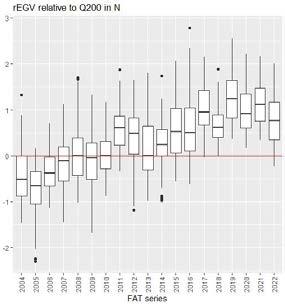
1 shows how much better new varieties are performing compared to an old standard, Q200 (red line).
by breeders anywhere. It examines production values and economic costs associated with tonnes cane per hectare, CCS, fibre and resistance to important diseases.
In Figure 1, the consistent gains over time are shown by plotting the rEGV of the top 10 clones from the yield trialling system against a standard variety – Q200.
The left of the graph shows Q200, one of the best performing lines when released in 2004 but now completely outclassed by modern clones.
Of the 800 advanced clones in contemporary trials, more than 250 easily outperform Q208, another standard variety.
Breeders have many opportunities to select the next variety with a combination of suitable disease and agronomic traits and yield.
New varieties are outperforming older lines
The breeding program is derived from controlled trials and is therefore the most scientific data available. However, mill data is important, too.
A plant breeder must understand the main production environments
of an industry. Trials can then be set up across a vast landscape which captures all the regional constraints faced by growers.
However, sugar mill data captures statistics for every crop across a growing region.
The Variety Development program has generated amazing gains, thanks to the SRA breeding team
The 2023 mill data show which varieties are performing the best across the different regions.
Figure 2 calculates TCH for each variety graphed against the release year.
In all regions modern varieties are clearly trending upwards and outperforming older lines.
Figure 2 shows tonnes of cane per hectare from the 2023 mill data of the Central Region. Clones marked in orange dominate production – their collective contribution is more than 90 percent.
Figure 2 shows data from Central Region. The orange points show more than 90 percent of the 2023 crop. Varieties such as SRA21 and SRA9 are more than 20 percent higher yielding than older varieties such as Q208 and Q183.
Two cautionary notes
Examining mill data for crops within a five year release period (e.g. SRA21) has shown an overestimation of 5 percent in the plant crop of a number of varieties. This can be higher in poor ratooning crops such as Q253.
However, if the more recent releases limit long term yield losses to the 5 percent level, these results are very encouraging.
Misnaming varieties
Misdeclaration is unlikely to favour any one variety over another.
However, SRA’s fingerprinting technology provides opportunities to evaluate future variety accuracy.
Breeding progress comes not only from offensive breeding strategies targeting yield and sugar content, but also from defensive strategies targeting disease resistance.
SRA has actively bred for resistance to smut and Pachymetra. The increases in resistant germplasm can be seen in Figure 3
When smut came to Queensland in 2006, much of the breeding program was susceptible. However, more than 50 percent of varieties are now resistant.
This has cost yield gains since the sources of resistance came from poor yielding lines. Combining many thousands of good genes into a new resistant variety can only be achieved over many breeding cycles. Many of the good genes donated by an elite parent in a crossing can be lost, and it can take multiple breeding cycles to
levels
(yield) 15% over 10 years
million
Smut Resistance $810 million
Orange Rust $648 million
Pachymetra $324 million
Table 1 shows the value of defensive breeding strategies to industry compared to offensive breeding strategies.
recombine them, along with the newly introduced disease resistance.
However, defensive breeding is far more valuable to the industry than offensive breeding.
Table 1 shows the value of annual 1.5 percent yield improvements over 10 years which totals more than $240 million. However, the value of defensive breeding strategies incorporating smut resistance equals more than $800 million.
If it wasn’t for defensive breeding for smut and orange rust, there would be no Australian sugar industry today. Compare our industry with Papua New Guinea where cane yields are only 30-
40 tonnes per hectare. No sugarcane business in Australia would survive if yields were this low.
The breeding program – both for yield improvement and disease resistance traits – is making great progress and with the exciting new technologies now on the way, SRA will contribute much more to a successful and thriving sugar cane industry in the future.
ADVERTORIAL
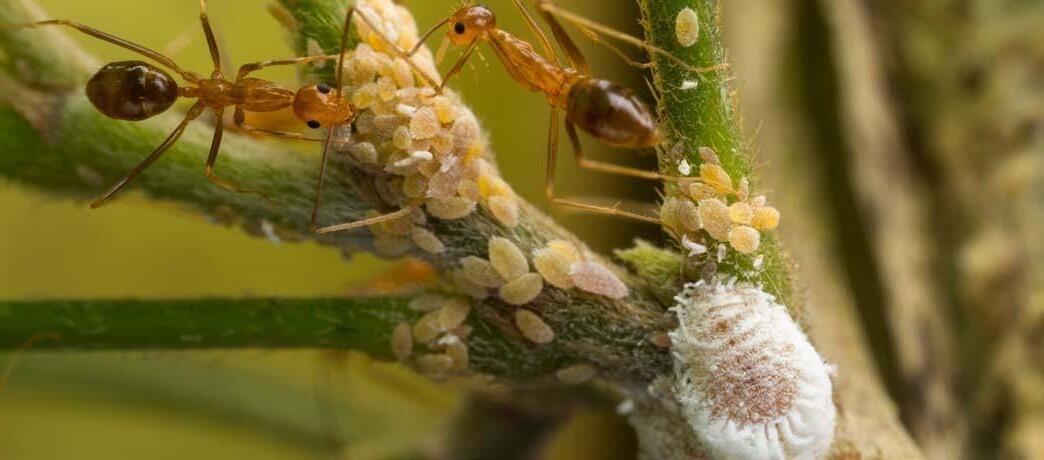
Yellow crazy ants became a significant concern for local sugar cane farmers in 2012 when they were detected in sugar cane crops.
Because of the ants’ serious impact on crop vitality, managing yellow crazy ants soon became a key priority for the local cane farmers whose subsequent advocacy was instrumental in securing funding for the Wet Tropics Management Authority’s Yellow Crazy Ant Eradication Program.
Impacts of yellow crazy ants on crop yield
The economic impacts of yellow crazy ants can be significant as increased pest pressures reduce crop yields, leading to lower returns and higher costs for farmers.
Yellow crazy ants have been identified for causing crop stunting, a problem that was initially thought to be due to cane grubs. By nesting among the sugar cane stools, yellow crazy ants expose the root structure, which reduces soil moisture, impairing the plants’ ability to absorb nutrients, which in turn stunts growth.
The ants are also known for “farming” aphids and scale insects, protecting them in exchange for honeydew, a sugary substance the pests secrete. As a result, these secondary pests thrive and cause crop damage by feeding on sap, weakening plants and leading to reduced yields.
Furthermore, the excessive honeydew secreted by aphids and scale insects encourages the growth of sooty mould, a black fungus that coats plant leaves. This mould blocks sunlight, reducing photosynthesis and further harming plant health. In sugarcane, this also contributes to stunted growth and lower-quality crops.
Several strategies have been developed by WTMA, MSF Sugar, and CANEGROWERS to manage the risks of new and existing infestations, with the goal of mitigating the impacts of yellow crazy ants. These mitigation strategies include regular communication and updates on infestation areas with industry stakeholders.
WTMA’s Eradication Program Manager Lucy Karger said the partnerships forged with the sugar industry had been critical to the program’s ongoing success.
“Shared data and mapping harvester movements, via a locally developed traffic light system and washdown protocols, have significantly reduced the potential to spread ants from contaminated sites to clean areas,” Ms Karger said.
“This information, and cooperation from the industry, has been extremely valuable in helping WTMA make informed decisions in relation to survey and treatment efforts. With ongoing surveillance, treatment and community support, full eradication of yellow crazy ants in the Cairns region is achievable.”
The April showers were few and far between with only 136mm falling during the month; this was less than 40% of the monthly average.
Even though we had less rainfall it still didn’t feel like a month of sunshine as there were too many cloudy days. The ground is still very wet in the northern districts, and it will be a challenge to start cutting in some areas by 9 June.
We hope the month of May will be a good transition month for the crop as we started to see some arrowing of certain varieties midMay. Mossman coastal growers are due to start on 9 May, weather permitting, and the crop to be sent to MSF Mulgrave Mill will be 200,000 tonnes of cane.
This is likely to consist of ratooning cane from 2024 and the best standover cane.
SRA came to Mossman on 8 May to do some early testing of cane, stand-over and ratooning, for growers. Most samples indicated the cane was still in growth mode but there were cases where cane
was maturing as well. We hope this means that Mossman coastal growers will have a chance of getting a reasonable district average ccs for 2025, but we may not reach the 12.0 CCS of 2024.
The final offers for Mossman Mill were due to be submitted with the Liquidator by 6 May 2025. Mossman grower representatives met and interacted with a number of potential buyers of the mill, however, at the time of writing this article, growers remain uncertain of outcomes from the final offer process.
The Mossman Advisory Committee met for the third time on 29 May 2025.
The Mossman & District Show Society has undertaken to hold a Show Ball for the Douglas Shire in June as a celebration of rural industries and activities within the Shire. There will be many historical sugarcane industry items on display for what may be the last year of delivering Mossman sugarcane to a sugar mill.
seed sales—has made a lasting impact. We extend our sincere thanks and best wishes for his future endeavours.
The 2025 harvest season is officially underway!
The first bin was tipped at the Tableland Mill on 22 May, marking a strong start to what’s projected to be a solid season.
This year’s crop estimate stands at 880,000 tonnes, with the season expected to run for 26 weeks—wrapping up by the end of November.
As operations ramp up, growers are reminded to maintain high standards for pads and haulout
roads. A smooth, well-prepared surface not only enhances efficiency but also helps ensure the safety of everyone involved.
This month, we also bid farewell to Graham Cripps, Agronomist at the Tableland Mill, who has stepped down from his role. Graham’s dedication over the years—especially his recent work in establishing the clean seed plot and coordinating
The Cairns Region has recently experienced cooler and relatively dry conditions, which have been favourable for pre-planting activities.
Average maximum temperatures were around 30.4°C, with minimums near 23.1°C. Rainfall for April totalled 69.0 mm — well below the historical average of 108 mm. These conditions have enabled effective soil preparation and reduced the risk of waterlogging, with planting now underway across much of the district.
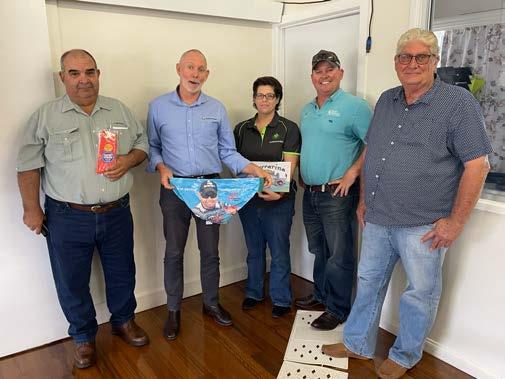
The 2025 Members Pre-Season Breakfast was recently held and well attended. The new Chair of
On the topic of the clean seed plot, it’s been encouraging to see strong uptake across the district. A number of clean seed varieties are still available, so if you haven’t yet placed an order, there’s still time. Contact the office for more information or to reserve your selection.
Here’s to a safe, productive, and successful season ahead!
The 2025 membership levy, combining the state and local district charges is: 59.65 cents per tonne (inclusive of GST) on all sugar cane supplied to the Tableland mill by all members during the 2025 crushing season.
CANEGROWERS Cairns Region, John Ferrando delivered an informative pre-season update, followed by a membership presentation from QCGO’s Matt Kealley.
A highlight of the morning was the Men’s Health Forum, pictured, organised by Next Ratoon Mentor Celiamaree Zarins. The session included a pre-recorded presentation by Dr Gavin Le Sueur from the Cairns GP Superclinic, and a talk from Men’s Health advocate Earl Nielson.
Despite the challenges of recent years, the 2025 season is off to a promising start. Growers are optimistic, supported by
favourable weather and ongoing investment by the local milling company. Crop estimates been returned, with initial forecasts for both Mulgrave and South Johnstone showing yields approximately 10% higher than the disappointing 2024 season.
The 2025 membership levy, combining the State and local district charges is: 55.91 cents per tonne (inclusive of GST) on all sugar cane supplied to Queensland mills by all members during the 2025 crushing season.
director Victor Guarrera for his service. Joseph Marano remains Chairman of the board.
Our representatives had a busy networking and advocacy month, attending the Sugar Cubed and ASSCT conferences as well as meeting with the Queensland Primary Industries Minister, Tony Perrett. Staff have also assisted growers with land valuation objections and disaster funding grants, while the Cassowary Coast Reef Smart Farming (CCRSF) extension team has been busy preparing growers for Smartcane BMP audits for both accreditations and reaccreditations. 92% of
More than 70 people attended CANEGROWERS
Innisfail’s Annual General Meeting in May, hearing about the challenges of the weather-marred 2024 season, which included 174 days of rain in the first 200 days of the year.
Members are looking forward to a more positive 2025 season, with a crop of 1.4-million tonnes estimated to be crushed and
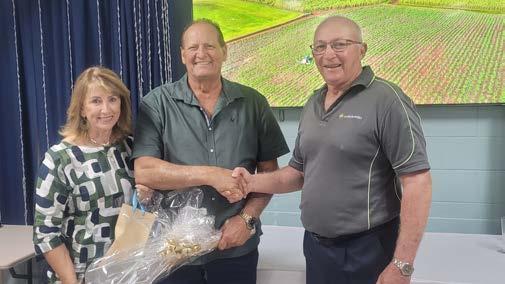
Retiring, long-serving director Victor Guarrera and his wife Meg pictured with Chairman Joe Marano
South Johnstone Mill ready to begin crushing in mid-June, in accordance with Cane Supply Agreements.
Following elections earlier in the year, new board director Louis Fichera has been welcomed, while members and the board alike have expressed their gratitude to retiring, long-serving
cane land in the district is benchmarked and 71% is accredited.
CCRSF also attended the Tully Sugar Centenary SRA Industry Field Day, among other things promoting activities of the Johnstone Sugarcane Practice Change Program, which is funded through the Queensland Government’s Queensland Reef Water Quality Program.
The 2025 membership levy, combining the State and local district charges is: 53.80 cents per tonne (inclusive of GST) on all sugar cane supplied to South Johnstone Mill by all members during the 2025 crushing season.
Through May the cane continued to grow with only a couple of paddocks across the district are showing low signs of flowering.
This is a big contrast to season 2024, which had an almost complete covering of flowers in early April. Noticeable growth occurred in paddocks over the final two weeks of April and first week of May, even though most days over this period were cloudy and many recorded rain.
As a comparison, in 2024 for the first 130 days, it rained for 107 days with a total of 3556 mm, almost full flowers in the crop. In 2025 for the first 130 days, it rained for 88 days with a total of 3448mm, no flowers in the crop.
The crushing season for Tully district is due to commence in the first week of June, with crop estimates currently around 79 to 82 tonnes per hectare. If the estimates are correct, this should
give a total district crop size of between 2,330,000 and 2,410,000 tonnes through the rollers.
Final preparations are taking place both inside and outside the mill. New bridge girders for the Mullins bridge across the Tully River downstream of the highway are complete and have been lifted into place in the week of 19 May. Main bridge replacement across the Tully River, upstream of the highway has commenced with abutment piles been driven on the southern side of the river. Steam trials commenced in the week of 12 May.
Tully Sugar agronomist, Greg Shannon and Tully Cane Productivity Services Manager, Peter Sutherland held four meetings across the district in May. Meetings were held in El Arish, Lower Tully, Riversdale and Murray Upper, all supported by Jess Portch from SRA and CANEGROWERS Tully representatives.
The purpose was information sharing about topics such as varieties that are more likely to be suitable to your farm, soil type or subdistrict and varieties available for planting in season 2025.
A pre-season update and 2025 Local Variety Guide documents for the Tully Region were distributed to assist growers in planning for the next 12 months. The Local Variety Guide highlights awareness of Pachymetra sugarcane root rot and information on surveys conducted for Pachymetra since 2004. A list of varieties that show good or intermediate resistance are outlined on the guide.
Evidence of rat damage has been noted in some areas. Early control measures may be required. Make sure you check paddocks where there is permanent water or has a history of rat damage.
The Herbert River district, like all CANEGROWERS regions across Queensland, has commenced a new three-year term of board leadership.
At the first board meeting of the new term, Steven Marbelli was elected Chair, with Leah Russo elected as Deputy Chair. This leadership team brings a strong mix of experience and community engagement to the organisation.
The board also welcomed Brenden Accornero, a representative of the Young Growers group, as a new addition to the board. His
As the season draws near, the community needs to be vigilant on the movement of cane trains at road crossings and across the district in general. As the season progresses, there will be an increase in oversize vehicles utilising the road networks. Please be aware of the requirements for the movement of oversized vehicles.
membership portal provides up to date information tailored to your cane growing district. If you are uncertain about how to login to the Membership portal, please contact your local CANEGROWERS office for assistance.
The 2025 membership levy, combining the state and local district charges is: 43.84 cents per tonne (inclusive of GST) on all sugar cane supplied to Queensland mills by all members during the 2025 crushing season. This fee is inclusive of cane testing/auditing fees.
appointment signals the district’s commitment to fostering the next generation of cane industry leaders. At the same time, the board bid farewell to Chris Bosworth, acknowledging his many years of dedicated service and leadership. Chris’ contribution to the district and broader industry is sincerely appreciated.
In mid-May, CANEGROWERS
Herbert River hosted a fourday haulout course in Ingham, supported by SmartAg, Queensland Farmers’ Federation (QFF), and Queensland CANEGROWERS . A total of 11 participants successfully completed the course, which was heavily focused on practical training components. Feedback from attendees was overwhelmingly positive, with many highlighting the value of the hands-on experience and the relevance of the training to realworld haul out operations.
Recent favourable weather conditions have also allowed many growers in the Herbert River district to commence ground preparation for planting. This has brought a welcomed window of opportunity for fieldwork, and growers are
making steady progress as the we get closer to the start of the season.
Looking ahead, the district is preparing for one of its key engagement events, the CANEGROWERS Herbert River Link2Country Expo, which will take place at the Ingham Showgrounds.
This community and schoolsfocused event brings together local agriculture organisations to showcase the importance, diversity, and innovation within the agriculture sector. It serves as a platform to inspire young people to consider careers in agriculture while strengthening ties between the industry and the wider community.
The 2025 membership levy for Herbert River CANEGROWERS members includes local district charges of 18.00 cents per tonne (75,000 cap) plus 8.90 cents per tonne for cane analysis / auditing fees and 22.23 cents per tonne for state levies totalling 49.13 cents per tonne (54.04 c/t inclusive of GST) on all sugar cane supplied to Wilmar mills in the Herbert by all members during the 2024 crushing season.
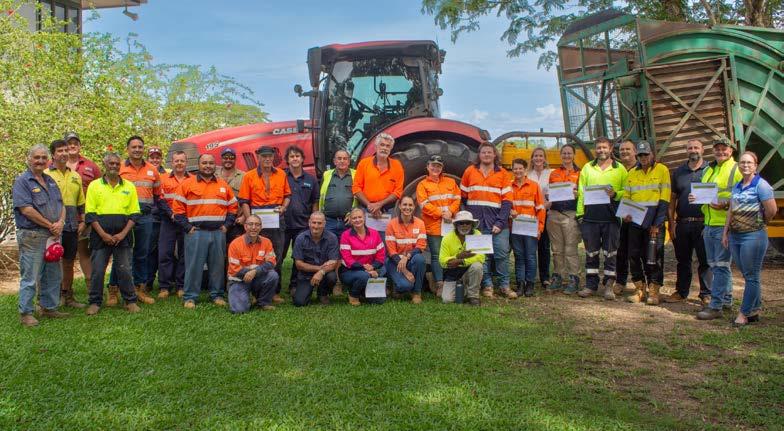
The new CBL Board commenced their first term on 1/5/25 and new Directors Nic Pucciarmati and Glenn Pola were welcomed.
In the initial meeting, the Board selected Glenn Betteridge to be Chair and Rian Swindley to be Deputy Chair to lead the Board for the next three years. QCGO’s solicitor Chris Cooper visited the Burdekin to deliver an induction training program to the new Board on governance, rights and responsibilities which was well received.
May was also the month we farewelled retiring Director Greg Rossato from the Board and thanked him for his admirable service to members and the industry over his three terms.
Sky Renewables Pty Ltd held a town hall meeting where CEO Simon Yim provided growers with an update on his project which involves converting tops and trash into biomethane gas for export to Asian Energy markets.
The meeting was well attended with robust discussion with Simon Yim seeking a commitment from growers to help him take the project through to the feasibility study stage.
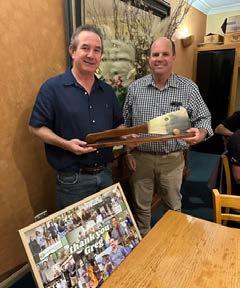
CBL attended the Burdekin Regional Water Quality Science Forum at AIMS. The sugarcane industry’s progress on improvements in water quality was acknowledged.
Presentations on research projects from BPS, SRA and BBIFMAC showed how grower projects focussed on improving profitability and productivity can concurrently deliver water quality and energy outcomes as a consequence.
The need to have longer duration research projects in future was emphasised as an important focus to project funders.
CBL held its AGM for the 2024 year which was well attended with members receiving an update on QCGO from Chair Owen Menkens. Presentations from guest speakers being Wilmar Grower Relations, C,S & T and Operations on the 2025 season and Burdekin Cane Audit Services (BCAS) on the cane auditing function were well received.
On the subject of BCAS, at their AGM, CBL Director Charlie Papale was nominated and appointed as a Grower Director to the Board for a two year term. CBL thanked outgoing Grower Director Kayleen Walsh and Miller Director James Wallace for their valuable contributions made during their terms on the BCAS Board.
May was also an exciting month for the 14 schools who have participated in the Burdekin’s Sweetest Schools Competition
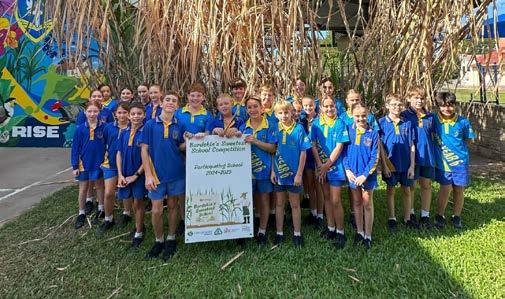
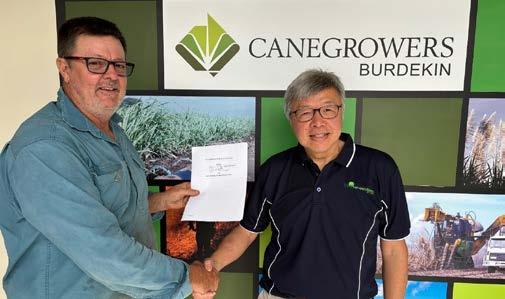
where the awards for the variety winners will be announced at the Sweet Days Hot Nights Festival.
It was great to see how excited and proud the schools are of their cane which was harvested by BPS with the assistance of CBL and grower mentors with SRA crushing the cane in their small mill to complete the testing for the competition.
CBL met with Wilmar and the other grower collectives for the first meeting of the Cane Analysis Program (CAP) Review where process and principles were reviewed and agreed upon for collation in time for the second meeting where we will get into more detail for the review.
The Hon Ann Leahy, Minister for Local Government and Water and Minister for Fire, Disaster Recovery and Volunteers visited
the Burdekin on 25 May to meet with irrigators and grower representatives in the Burdekin. CBL had previously requested a Ministerial Intervention in the QCA Rural Irrigation Price Review 2025-29.
It was a positive meeting with good discussion around the 15% irrigation discount, Sunwater and the urgency around the rising groundwater issue in the Lower Burdekin and the need to get things happening in this area which the Government is well aware of.
Wilmar held its first Harvest Management Group Meeting for the 2025 season where they confirmed they were on track to commence the season
on 3 June weather permitting. The 2025 season has been budgeted to finished in the week commencing 22 November but as we know the finish date will all depend on mill performance and wet weather.
We all saw the steam trials in the Burdekin in May and Kalamia Mill grow a new stack which means game time is about to start. Like the game of rugby league, there’s always next season for those clubs who didn’t get to hoist the silverware or do as well as they should have.
The trying 2024 season feels a lot like that and we now have the opportunity for a better season for 2025. Hopefully by the time
With a 17 June planned start date, the opening estimate for Proserpine Mill was declared at 1.58 million tonnes.
The Collective interim CCS was also set at 14.13. The crop estimate was 94,000 tonnes less than the 2024 crush but closer to 170,000 tonnes short when adding estimated stand over to the previous crop.
With infield conditions being relatively wet this close to
members receive this magazine in the mail, the 2025 season will be underway with the commencement of crushing.
Growers are eternal optimists, and we all look forward to a much improved season for 2025 and wish everyone all the best for this new season.
The 2025 membership levy for CANEGROWERS Burdekin
Limited includes district levy of 24.00 cents per tonne (75,000 cap) plus 2.00 cents per tonne water perils and 0.66 cents per tonne top up of the fire crop insurance offering to a $45 indemnity limit; plus the state levy of 22.23 cents per tonne totals levies of 48.89 cents per tonne (53.78c/t inclusive of GST).
projects that would improve crush rates for the mill.
Although there were continued challenges with staff retention (despite improvements on the previous season) and some disappointment with bin fleet investment, the outlook remained positive with the target end date being early November.
Should sometime close to the planned end date be achieved, growers would be able to set up for an improved growing period and hopefully much better crop for 2026.
Other presentations by CANEGROWERS and Sugar Services Proserpine (SSP) touched on issues such as contractor support, strategic cane supply projects and a wrap up of 2024.
for drivers. There was also continued support provided to the two Water Cooperatives with budgets being finalised and maintenance contracts being dealt with. Other member support also extended to lease agreements, business plans for QRIDA grants and siding access.
With conclusion of the 2025 CANEGROWERS Proserpine Board elections, we welcomed Luke Valmadre as the newest director.
We also thanked long-serving director John Casey, for his committed 18 years on the Board. John played a role in many interesting events during his previous six terms on the Board which included the sale of the mill and the negotiation of new cane supply agreements.
Glenn Clarke Opening Preseason Meeting
the coming season, there remained some downside risk to the estimate with widespread reports of sparse cane populations in late ratooned areas. These were currently offset by much bigger crops in earlier ratooned areas.
With the CANEGROWERS Proserpine Pre-Season meeting taking place on 14 May, a presentation by Wilmar focussed on progress made with mill preparations and key
However, the highlight of the evening was presentation of the 2024 SSP Productivity Awards with Watts Farming and Cantamessa Farming taking the overall Productivity Winner trophies for big (>130ha) and small (<130ha) farm sizes, respectively. A huge congrats are afforded to all grower winners from the night.
CANEGROWERS Proserpine continued its support of local harvesting groups and organised a WHS workshop with a focus on fatigue management
John will continue serving on the Whitsunday Catchment Landcare committee, so we thank John for continuing with his faithful service to the greater Whitsunday community.
The 2025 membership levy, combining the state and local district charges is: 44.25 cents per tonne (inclusive of GST) on all sugar cane supplied to the Proserpine mill by members during the 2025 crushing season. The PDCC levy includes the additional cost of a top up to the crop insurance indemnity on behalf of its members.
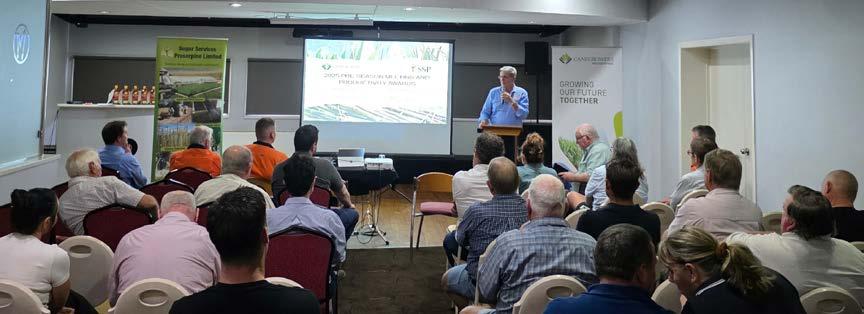
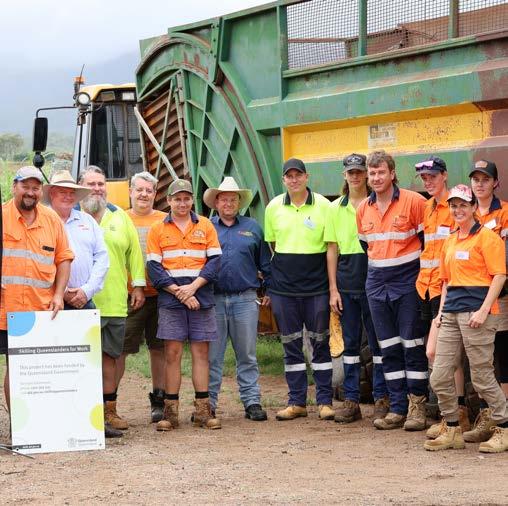
The Mackay and Plane Creek districts are at full bore with preparation for the 2025 Crush.
Pending successful steam trial and fair weather, Plane Creek will lead out on 3 June and Mackay Sugar’s three mills will run a staggered start across 10-17 June.
A fire at Marian Mill on 18 May was responded to quickly by the mill and by Rural Fire and QFD, with no injuries sustained and damage contained. It is expected that this will not impede meeting the proposed start date of 17 June, although possibly at a slower crush rate.
Plane Creek has a crop estimate at 1.6Mt, and MSL has 5.15Mt. There is around 700Kt of standover cane in Mackay, and 150-200Kt in Plane Creek.
Following from a successful arbitration in 2024 on starting CCS, with the action led by Mackay Area Committee,
as Deputy Chair. Kevin Borg remains the Plane Creek Area Chairman and that district’s representative to Policy Council, and Mackay CANEGROWERS Ltd Director.
Incoming Chair Joseph Borg has thanked Kevin for the dedication, tenacity and passion he has brought to his 12-year tenure as Chair – one of the longest-serving Chairmen in this region in the past 65 years.
Any growers requiring assistance with any issues are encouraged to call 4944 2600 to get the ball rolling on a solution. Keep an eye on our Facebook page, The Billet and weekly District Manager Updates for emerging training and industry opportunities.
Mackay: The 2025 membership levy, combining the State and local district charges is: 47.82 cents per tonne (exclusive of GST) on all sugar cane supplied to Queensland mills by all members during the 2025 crushing season. This fee is inclusive of cane testing / auditing fees.
Plane Creek: The 2025 membership levy, combining the State and local district charges is: 53.51 cents per tonne (exclusive of GST) on all sugar cane supplied to Queensland mills by all members during the 2025 crushing season. This fee is inclusive of cane testing / auditing fees.
Trainers and participants in Haulout Driver Training 2025, Course 1
CANEGROWERS members will benefit from a starting CCS of 13, as per the CANEGROWERS CSPA.
Haulout driver training was carried out in mid-May, with 20 students enrolled in the two courses, which included practical training and regionally specific training by growertrainers, backed by Rural Operations Cert II modules delivered by our new preferred RTO, Civil Safety.
The courses are proudly funded by the Queensland Government through its Skilling Queenslanders for Work program.
Finally, the CANEGROWERS Mackay triennial elections have led to a change in the organisation’s leadership.
With Joseph Borg elected Chairman and Brett Leach
The 2025 Season estimate is 1,350,000 tonnes with the core season set to commence on 9 June 2025.
Pre-season commenced on 21 May including organic cane. In consultation with Bundaberg Sugar, we have set the starting base CCS at 13.0 and will review this regularly as the season progresses.
We have been working closely with Bundaberg Sugar and the increased crop estimate for the 2025 season will take the combined effort of us all working efficiently to get the crop harvested and crushed in a timely manner.
The crop insurance indemnity for 2025 Season has been set at $55/t with a 50t excess and Bundaberg CANEGROWERS will cover the additional cost of top up crop insurance from
$35/t to $55/t. Directors also resolved to leave the Bundaberg CANEGROWERS levy and Cane Analysis levy set at the same level as last year.
We will have full auditor coverage at the mill once again this Season with Courtney and Katie covering the position. If anyone has a query regarding delivery advices or CCS discrepancies, please call the office to have it investigated.
The final Oreco payments have been received in full and will be distributed to growers as soon as possible, with an interest payment to follow. Delayed payments throughout the 2024 Season are not acceptable and we hope they can honour their contract for 2025 season and beyond.
We wish you all a smooth, prosperous and safe harvest season.
Isis Mill has published an estimate of $1,320,000 tonnes (Isis 855,220t, Maryborough 464,781t) for the 2025 season and have requested the traditional start date be brought forward to 4 June.
We are in the final stages of CSA negotiations and the CAP review and hope to have everything in place before the start date.
We are also working on a Group Harvesting Equity Principals and Processes document in preparation for the upcoming season.
Isis Mill have engaged an external contractor to manage cane supply logistics and equity and this document will assist in this transitional stage. It will set out roles and responsibilities for all stakeholders.
Isis Mill have recently launched a spring planting incentive in a bid to increase land under cane. The $500/ha incentive will be paid to eligible applications on land which has not been under cane for the past 3 years.
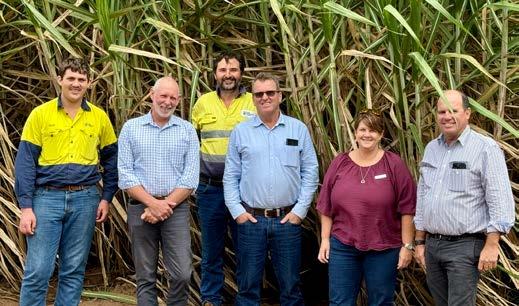
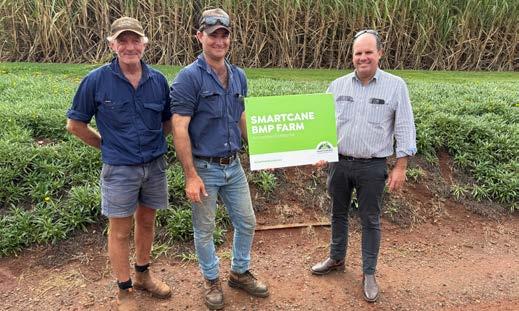
We recently hosted a Transport and WHS Compliance Roadshow delivered by NHVR and WHS representatives and arranged by QCGO. The workshop was well attended. NHVR advised they will be in the area conducting inspections during the upcoming season.
QCGO Chair Owen Menkens recently travelled to the district and caught up with many growers at both the Isis Productivity preseason meeting and several on-farm visits. Many growers took the opportunity to chat with Owen talking about local and statewide industry matters.

We are still assisting growers with disaster assistance grants, working on the Burnett Basin Water plan review as well as processing seasonal fire permits. Once final electricity prices and new tariff options are released for the 25/26 year we will prepare and distribute a new tariff comparison tool to members.
We recently held our statutory election meeting, where Peter McLennan was elected Chairman and Simon Ricciardi was elected Deputy Chairman.
The 2025 membership levy, combining the State (22.23c/t) and local district (26.00c/t) charges is: 48.23 cents per tonne (exclusive of GST) on all sugar cane supplied to the Isis Central Sugar Mill by all members during the 2025 crushing season.
Top: Caleb Reinke IPL, Matt Kealley, Anthony LaRocca IPL, Peter McLennan CIL Chair, Jo Hall, QCGO Chair Owen Menkens
Bottom: Newest BMP Accredited Growers Mark Weiss, Dustin Golchert and Owen Menkens

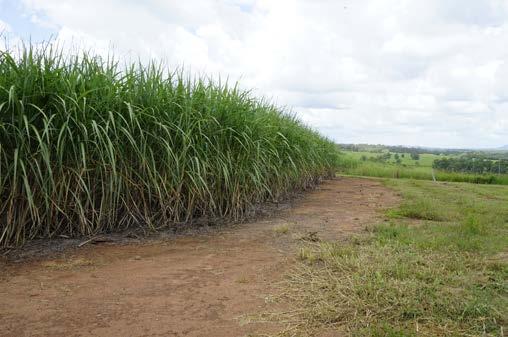
Still good growing conditions with a little too much rain in May so far.
The recently held pre-season meeting was well attended and confirmed starting in early June (weather permitting). Great to see the mill has been very active on the maintenance front in preparations for the season ahead. With the total estimate very similar to last year, and our portion only slightly down, the logistics are crucial again for a successful harvest.
Significant changes to achieve this start with the transloader adjustments to better fill the bins and achieve delivery into six rail bins and not seven. This was
trialled at end of last season and will be commissioned on the first few days of this season.
The trucking contractor has also changed and will have connection to Logitrix for a clearer coordination of vehicles and trailers. Logitrix remains as the logistics coordinator, but this year will have better visibility of the train network to avoid the long waits for trains we have seen in the past.
This is supported with Site B co-ordination when delays do occur. This year trucks are linked to grower groups that hopefully improve knowledge of access to DLAs and roads. We are also running driver and harvester
crew inductions in a meeting on 29 May in Maryborough.
The last pieces of the puzzle are making sure our harvesters are ready to go and watching that weather. As I write this, NSW is being smashed by rain and flooding.
Cameron will be out of the office from Monday 26 May and returning on 3 June to do some rowing in Penrith. Tony is out and about with RSD sampling and soil tests for planting this year. The ordering of seed cane
The Rocky Point season start date is currently 9 June, weather permitting.
The district has continued to receive regular rainfall which is keeping much of the cane area waterlogged. We are also getting close to the soybean harvest with some beans only a week or so away. Ground conditions will have to improve dramatically to allow this.
We need dry and sunny conditions, but the forecast continues to dish out news of more rainfall.
is a priority and by the time you read this it may be too late for one-eyed setts.
Here’s to a successful 2025 harvest.
The 2025 membership levy, combining the state and local district charges is: 35.23 cents per tonne (exclusive of GST) on all sugar cane supplied to Isis Central Sugar Mill by all members during the 2025 crushing season. An additional 17.00cents per tonne (exclusive of GST) will be charged for the MCPS productivity levy.
We anticipate an initial estimate in the vicinity of 350,000 tonnes and remain hopeful that the Rocky Point Mill will be able to crush all of our cane this season.
The 2025 membership levy, combining the state and local district charges is: 83.58 cents per tonne (inclusive of GST) on all sugar cane supplied to the Rocky Point mill by all members during the 2025 crushing season. This fee is inclusive of cane testing/auditing fees, a levy for productivity/extension officer and an adjustment to top up the crop insurance member offering.

BY LINDSEY PERRY Smartcane BMP Program Manager
One month into the job, the production system is making sense (if not the pricing!).
Over the last four weeks I have attended Sugar Cubed, a Women in Sugar tour of Rocky Point, and been able to visit Smartcane BMP facilitators in the northern Wet Tropics regions of Tully, Innisfail, Cairns and the Tablelands.
On this trip a number of growers took time out of their day to discuss their involvement in the program and their thoughts around benefits and future opportunities. It was great to hear young growers in the Innisfail district embracing innovative, time saving measures to not only improve record keeping, but to use technology to
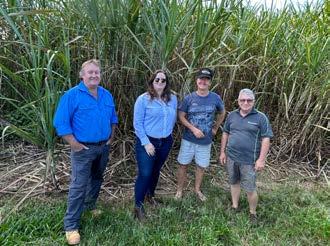
convert historical records into data insights for the future.
On the Tablelands, the area planted to sugarcane has increased from 8,900 ha to approximately 10,000 ha this year. Kate Scullard started in April as the new Smartcane BMP facilitator in the Tablelands. With several years’ experience in Mossman, Kate has hit the ground running this month and is already guiding growers through the accreditation process. If you are on the Tablelands and interested in learning more about the program, please get in touch with Kate at katescullard@gmail.com
The Wet Tropics have some of the highest Smartcane BMP accreditation rates in the State, as of Friday last week a combined 63% of the total Wet Tropics cane area is Smartcane BMP accredited. Considering that over 95% of growers who seek accreditation remain in the program Smartcane BMP stands out as one of the most successful BMP programs in the world. Many growers I have spoken to this month are proud of Smartcane BMP
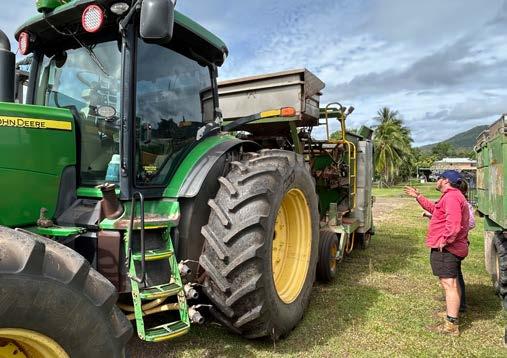
as a clear demonstration of good management practice and leadership. Rightfully so.
In the past month, I have found the original Smartcane BMP guides very useful. These were produced by BSES in 2008 that cover planting to harvest in three technical guides (available on the SRA website). In an era of compliance and regulation it is easy to forget the origin of best management practice is rooted in continuous improvement and adopting practices that improve the triple bottom line. People, profit and environment.
That said, Smartcane BMP is now a mature program, many growers are up for their first re-accreditation and some for their second! It is important that we continue to look for additional value add for Smartcane accredited growers to recognize the work done to date and this will be a major focus of my role going forward
As I reflect on my first month in the job, it is the conversations with the growers that stand out, many of whom are proud and protective of the program.
Last week I drove around a highly productive farm that had an extraordinary internal network of drainage ditches and channels, running into lagoons full of lilies and plenty of grassy vegetation to draw any nutrient out of the water. The grower’s knowledge of his soils and the landscape was very impressive. Even amongst all the challenges of farming, my host mentioned he would like a few more coloured lilies in the lagoon, not just white. A nice problem to have!
Top: Smartcane BMP is a collaborative effort between growers, facilitators and auditors
Bottom: Planting is underway
CANEGROWERS delivers the Smartcane BMP project (2022-2026) with funding from the Queensland Government’s Reef Water Quality Program and CANEGROWERS

BY MICK QUIRK
Disposal of farm tyres through Council waste management facilities is expensive, and there are no major recycle programs for these tyres.
Agricultural tyres, and those from mining, are defined as “OffThe-Road” (OTR) tyres. Across Australia 130,000 tonnes of OTR tyres reach their end of life each year.
There are few OTR recyclers and collectors around because the tyre’s size and construction, and their often-remote locations, make their disposal or reuse difficult and expensive. Companies like Tyrecycle have had success in providing an on-site solution for both OTR and conveyor belt waste at regional and remote mining sites, where the throughput is large and continuous. Replicating this in farming areas has obvious challenges.
In response to growers’ concerns in the Bundaberg district and other areas, CANEGROWERS has raised the issue of the lack of affordable and sustainable tyre recycling services with the National Farmers’ Federation (NFF). Advice was sought from Tyre Stewardship Australia (TSA) which was established in 2014 to implement a stewardship scheme for tyre collection and recycling. They are funded by tyre retailers and manufacturers
TSA advised that only 13% of old agricultural tyres are disposed of through a recycle scheme, and were keen to identify ways to increase this. They will work with NFF to conduct a feasibility study to establish the costs and potential revenue of a recycle program for agricultural tyres should a specialised plant be located in an agricultural region. We have recommend the Bundaberg region be the location for this study.
A review of the previous State Government’s decision to close the Biosecurity Centre at Coen is underway, and will consider its importance in relation to Biosecurity Queensland’s overall presence and activities in Queensland’s far north. The Biosecurity Committee of the Qld Farmers Federation, including CANEGROWERS , Cotton Australia, and the Qld Fruit and Vegetable Growers, agreed to raise the following points with the consultants conducting the review:
1. There is no more pertinent example of the Centre’s need than recent detection of exotic oriental fruit fly in the Torres Strait which presents a massive risk to Queensland horticultural industries.
2. The role of the Centre was to help counter major plant and animal biosecurity threats. Its location north of Coen and opposite the airport was well suited as a vehicle inspection point. Its closure leaves no capacity to monitor and educate travellers in the 50,000 vehicles using that road each year, or to quickly stand up an emergency response to any pest or disease incursion.
3. The centre was purpose built with a slip road built in, clear vision of all traffic on the road, the ability to close the road if need be, and an enhanced communication system. If not rebuilt it would mean an emergency response to a pest or disease would be very difficult to mount and we would not be able to draw a northern line barrier to inform other countries that we had the issue contained.
4. The Centre’s role was meant to be filled by a ‘Northern Biosecurity Initiative’, but there has been no tangible information on this initiative, apart from one additional officer being placed in each of Bamaga and the Torres Strait.
Getting ready to fight any new pest or disease outbreak.
Plant Health Australia and CANEGROWERS recently conducted a two-day Biosecurity Preparedness workshop in Townsville, funded by the Queensland Government. Attendees included growers, CANEGROWERS District Managers, mill farm managers, productivity services from each district, and representatives from SRA and DPI.
The workshop described and discussed all the steps, decisions and responsibilities that would operate should there be a major biosecurity response involving sugarcane. It also looked at key pest threats facing the Australian industry, and the on-farm biosecurity measures growers can employ to protect their farm.
Feedback was highly positive and follow up workshops will be considered for next year, so that industry can be on the front foot in dealing with any new pest or disease.

BY BURN ASHBURNER
Over the last few months CANEGROWERS has given growers the opportunity to be better informed to make business decisions and enhance their businesses.
If you have not taken advantage of these opportunities, you are not extracting the full value of the levy you pay. There are of course, the ongoing sources of information with the CANEGROWERS website, Australian Canegrower magazine, Market Information Service, district newsletters, news articles, social media activity, access to CANEGROWERS staff and managers at a state and district level (a phone call away) and elected members (also a phone call away). All these allow a grower to keep informed. In addition to these, a wide range of opportunities have also been available.
For growers to get a look at the bigger picture of where the industry stands and where it might be going, all growers were invited to Sugar Cubed 2025. This was an opportunity to hear from experts about the sugar market and how it might affect the sugar price, AgTech trends, value add opportunities from a milling perspective and more. This allows growers to understand the environment their businesses operate in and what might be coming at them in the future. It also allows growers to have input into how they would like to shape the future. Good business is all about making decisions now based on the best information you have. This was one opportunity to do that.
Getting closer to the farm, CANEGROWERS Business Essentials has offered growers the opportunity:
to understand and prioritize their individual business risks
develop tools to deal with them
understand the basics of how growers get paid with relative CCS and the cane payment formula
a system to use to when looking at forward pricing
some basic bookkeeping and completing BAS.
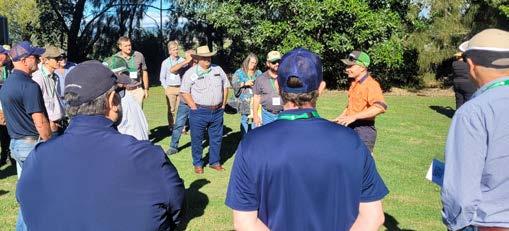
Most grower needs surveys we have done show that business management is something growers want. The above give the grower an opportunity to assess their current business management and make improvements where necessary. These were all free to growers but cost a few thousand dollars per person to provide and are worth even more if growers improve their businesses.
Growers were given the opportunity to hear from the National Heavy Vehicle Regulator (NHVR) and Workplace Health and Safety Queensland (WHSQ) about their regulatory compliance requirements. The potential impacts of getting these wrong are serious as seen by some unfortunate fatalities in the industry which involved both NHVR and WHSQ regulation. It is likely that there will be an increased compliance focus on the sugarcane industry this crush. Particularly on heavy vehicle compliance with things like brakes, oil leaks, tyres and fatigue. Please make sure you are compliant and be safe.
A 10,000 tonne grower will pay about $0.40/tonne cane levies (depending on the district) which is $4,000/annum and I believe if you attended all these offerings you were well ahead of the levy you paid.
Last month I said there is no such thing as “just a farmer” because growers run complicated businesses. To do this and go from good to great growers need to continually look for good information. It is entirely the business owner’s (grower’s) responsibility to educate and skill themselves. I again urge growers to leave the farm sometimes and take advantage of all the opportunities to enhance your business.

BY MATT KEALLEY
A snapshot of next-generation chemistry coming to the cane paddock
Queensland’s sugarcane blocks still concede tens of millions of dollars in lost yield every year. Recent estimates from Sugar Research Australia put the combined cost of weed competition and control at A$84 million annually. Below the ground, Greyback canegrubs alone constrain profitability for about half of all growers. With long-standing actives such as glyphosate, triazines and organophosphates slowly losing potency, the industry needs fresh, precise tools that also tick environmental-compliance boxes.
Thankfully, clever chemistry and formulation innovations are creating new actives and technologies that have application to sugarcane’s long-standing pest problems. Below is a snapshot of what’s in the pipeline.
1. Dodhylex™ (tetflupyrolimet) – a brand-new mode of action for grassy weeds
Tetflupyrolimet developed by FMC is a herbicide that blocks the enzyme dihydro-orotate dehydrogenase (DHODH); the first herbicide ever to do so. The product provides control of major weeds in rice production with overseas programs showing season-long suppression of barnyard and millet as well as incidental control of broadleaf weeds and sedges. Sugarcane sits in the next tranche of label expansions, which has the potential to give growers a rotation option beyond the overworked Group A and C chemistry families.
2. Biodegradable nano-herbicides – precision by design
Researchers are embedding familiar actives in chitosan or clay nano-capsules that grip leaf cuticles and meter the dose over time. Peer-reviewed trials report up to 60 % lower spray volumes and sharply reduced off-farm movement which could offer additional benefits for ESG reporting and water quality outcomes.
3. Broflanilide (Cimegra®) – a soil shield against canegrubs?
Broflanilide is the inaugural member of IRAC Group 30 (meta-diamides) which is a new mode of action acting on the insect nervous system. BASF Australian registered a 100 g L⁻¹ formulation with the APVMA in April 2024 for the
control of diamondback moth in brassica vegetables and Chinese cabbage. In Louisiana, sugarcane trials evaluated broflanilide against wireworm with promising results. As this insecticide can be applied to control chewing, soil-dwelling pests like caterpillars and beetles, it may have application to cane grubs in the future.
4. Spiropidion – tough on scale, gentle on the good guys
This systemic insecticide travels through the plant’s vascular system to silence sap-suckers while sparing predators and pollinators. According to Syngenta, this makes it a natural fit for mixed farming systems with high-value fruits and vegetables such as tomatoes and melons as well as arable crops such as soybeans. Spiropidion has been around since 2020 and is safe for beneficial insects and is registered for soybean in Australia, making it a potential good fit for Integrated Pest Management programs which could be applied to cane-legume systems or cane-horticulture rotations.
5. RNA interference (RNAi) bio-insecticides for canegrub control
Transformative RNA based biopesticides or ‘RNA vaccines’ for plants as sustainable biological crop protection platform without the need for generic modification is gaining momentum across the globe. In February 2024, a fieldapplied double-stranded RNA called Calantha™ (Ledprona) was approved by the US EPA for protecting potato crops.
Australian teams are investigating the technology for management of greyback canegrubs as an alternative to imidacloprid. The University of Queensland, SRA supported project aims to deliver proof-of-concept for delivering RNA biopesticides as an innovative non-GM, non-toxic, ecologically safe topical application for the control of canegrubs.
Where to from here?
These emerging tools are slowly arriving on farm and can offer a credible path to steadier yields and stronger resistance management. With coordinated extension, clear regulatory pathways and disciplined resistance management, the Queensland sugarcane industry has some appealing options to turn the tide on weeds and pests.

Advisor
BY CHRIS COOPER
Unfortunately, farms are common places where work related injuries occur. This article provides information on what you must do and should do in the event of a work related injury to someone on your farm.
If someone’s been seriously injured or has died it’s considered an emergency. You should call 000 immediately. If the injury or illness is a significant mental health concern and prompt help is required, please also call support organisations like Beyond Blue or Lifeline.
If it’s safe, provide first aid to the injured person until the ambulance arrives.
Make sure there’s no danger to yourself or anybody else around the incident site.
If the emergency is an electrical problem then it is usually best that you don’t touch anyone who’s receiving an electric shock and you turn off the power.
Don’t disturb the site of an incident
Don’t touch or move anything at the incident site, unless it’s to provide first aid or stop further injury or property damage. This is because the site may need to be investigated by WHS. There can be penalties and fines imposed if an injury site is disturbed.
After an injury has occurred
The next steps you take after an injury has happened will depend on whether you’re an employer or an injured worker as well as the severity of the injury.
An employer has certain responsibilities under work health and safety laws and workers compensation laws if an injury or illness occurs. These include maintaining a safe place and system of work, reporting any incidents, insuring your workers against injury or illness and supporting them back to work if they’re affected.

If an injury or illness has happened and you’ve followed the emergency steps above (if they apply), you’ll then need to follow the steps below. WHS can assist you by contacting 1300 362 128 (all hours) if you have any questions.
Recording workplace injuries and incidents
Business owners and employers are required to keep a record of workplace incidents and injuries. You should have a process for your workers to follow if incidents or injuries happen, so they know what to do.
Do I need to notify Workplace Health and Safety
Queensland or the Electrical Safety Office?
Workplace Health and Safety Queensland (WHSQ) or the Electrical Safety Office (ESO) needs to be notified about some injuries but not others.
A serious injury, illness or death is considered to be a ‘notifiable incident’. This means you must tell WHSQ or the ESO it’s happened as soon as you become aware of it.
If you don’t notify straight away, you could be penalised. Anyone can notify WHS but the employer is the one legally responsible for making sure this happens.
What is regarded as a serious injury is defined in the legislation. Generally, they will include, immediate treatment as an inpatient in hospital, a serious head or eye injury, a serious burn or laceration or other serious injuries. Contacting WHS is advisable to check and always err on the safe side and if in doubt notify.
WHSQ or the ESO will look into the cause of the incident and how you can stop something similar happening again.
How do I notify Workplace Health and Safety Queensland or the Electrical Safety Office of a serious incident (injury)?
You can notify by phone (1300 362 128) or online or email or fax.
If you notify of an incident by phone you don’t need to notify WHS in writing. If you don’t notify where required to do so you may be subject to penalty or fine.
You need to keep a record of the incident for five years.
What if the injury isn’t considered serious?
If the injury is minor and doesn’t fit the definition of serious Workplace Health and Safety Queensland or the Electrical Safety Office doesn’t need to be notified but you’ll still need to report it to WorkCover.
If you’re still unsure if an incident is notifiable I recommend you call WHS on 1300 362 128
Reporting an injury to WorkCover Queensland
Any incident of work related injury, regardless of the severity, must be reported to WorkCover. It doesn’t matter whether you think your worker will make a workers’ compensation claim or if you agree it’s compensable.
Contact WorkCover promptly, and it will help you understand what information you’ll need to provide.
Your workers’ compensation insurance
Every employer in Queensland, must insure workers against work-related injury or illness with a WorkCover Queensland accident insurance policy.
Who and what’s covered?
WorkCover Queensland’s accident insurance covers any worker you employ. A worker is someone who works under a contract of service.
Employment must be a ‘significant contributing factor’ for any injury to be considered work-related.
The worker may be compensated for lost wages and medical and rehabilitation expenses that are reasonable and medically necessary. Workers can claim even if the employer
fails to have a policy. If an employer does not have a policy they may be liable for penalties and costs.
Will I need to pay a WorkCover insurance excess?
You’ll need to pay an excess if:
your worker’s claim is accepted
your worker has taken time off from work due to their injury, and they receive weekly compensation.
In the case of a WorkCover Queensland claim, you’ll pay your excess to your injured worker as their first payment of weekly compensation.
What happens when my worker makes a claim?
Every claim goes through a decision making process. WorkCover may contact you for more information if needed.
In some cases, a worker, claimant or employer may be unhappy with a decision made by WorkCover Queensland. There is a review process and WorkCover can provide details.
What else must I do to support my injured worker?
The first thing you should do is make contact with your worker to check how they’re doing and offer support.
You have certain responsibilities as an employer, not just when it comes to insurance and compensation, but also supporting your worker’s rehabilitation and return to work. These responsibilities are set out in relevant legislation and WorkCover can provide further information.
WorkCover Queensland generally manages claims with the aim of rehabilitation and return to work where appropriate. Employers must work together with the injured worker to get them back to work quickly and as safely as possible. WorkCover will help and support the employer and the worker throughout the process.
This article in general in nature and not specific legal advice. The article is based on information published by WorkSafe QLD. If growers have questions or queries about anything in this article or about work related injuries, they can contact their local CANEGROWERS district office or call me directly.
This article contains general advice only. The particular facts and circumstances of each case always need to be taken into account.
The comments in this article are general in nature. For further free advice and information about this topic or other legal matters, members should contact their local CANEGROWERS office or please contact CANEGROWERS Legal Adviser, Chris Cooper on Free Call 1800 177 159
FIRST 5 LINES FREE* FOR CANEGROWERS MEMBERS!
Book online 24/7 at www.canegrowers.com au or email us at ads@canegrowers.com.au
Next deadline is 18 June 2025
MSW S/S 3t fertiliser box, 178 Massey Ferguson with front end loader. Ph: 0497 857 368.
Machinery and water allocation for sale – water allocation permanent sale, different parcels available. Krone Fortima V1500MC2 round baler, Bale King 5100 bale buster, Agrolead Lina Twin 4m double disc seeder with fert. box. All machinery as new with very little use. Price negotiable on all items. Ph: Robert pictures and pricing 0407 330 493
Tractor IH766, 18-4-34 tyres, 95% thread, cast-iron rims $2,500 + GST. Howard rotary hoe, 90" –$1,000 + GST. Howard slasher, 6ft, new gear box and PDO shafts – $2,500 + GST. Aluminium hog hopper, never used – $750 + GST. Pig traps – $75 + GST each. Ph: Garry 0412 797 006
28 x 28 Hodge off-set $12,000 + GST, 7 tyne Hodge ripper $4,000 + GST. Ph: 0419 988 158 or 0417 720 764
4 x 380/90R46 tyres and rims to suit JD self propelled sprayer. Mulgrave area. Ph: 0407 160 673
Olympic 20.8.42 65% $300 + GST; front end loader with 4 in 1 bucket, blasted and 2pac painted, resembling required $2500 + GST. Ph: 0437 434 280
1997 Cameco 2500 harvester (used for billet planting) $75,000; HBM billet planter $15,000; single 2t tipper and double 2t tipper $8,000; John Deere 7200 (7,500 hrs) $45,000. Ph: 0448 814 655 or email gangemifarm@gmail.com for info.
Secondhand 2021 John Deere ch570 track harvester – 4,500hrs
Secondhand Case 2090 2wd tractor All machines located in Ingham.
New 5 wheel finger rakes available
New 16.9 r30 tyres available
Contact us via phone or email for further information.
SNG MACHINERY SALES
90 Origlasso St, Ingham 07 4776 6003 (PARTS) 07 4776 1066 (SALES) admin@sngmachinerysales.com www.sngromano.net.au
* As a FREE service to CANEGROWERS members, Australian Canegrower will print suitable classified advertisements UP TO 5 LINES FREE, FOR ONE ISSUE ONLY. A charge of $5. 50 will apply for each extra line or part thereof. A charge will apply for advertising of non-cane growing activities. Advertisements must relate exclusively to cane farming activities, such as farm machinery, etc. Advertisements from non-members are charged at $11 per line incl GST. Only prepaid ads will be accepted.
2009 Kubota M125X tractor good condition 4,294 hrs, air conditioned cab 16 speed – $44,000 + GST; centre buster heavy duty Gessner 30” coulters and legs adjustable crumbler rollers and adjustable row width –$10,000 + GST; fuel tank on trailer approx 2,400L has unfitted new electric pump – $1,900 + GST; Bonel bag lifter good condition $2,000 + GST. Ph: 0407 554 146 or 0438 554 146
1984 Toft 6000 plant cutter, 8,000 hrs. Rubberised rollers, elevator extension for 1.8m rows, swinging knife chop system. Good overall condition for its age, $12,000 + GST. Ph: 0419 021 012
8 x 1" RH pusher spring tines, 8 x 1" LH pusher tines and 8 x 1" upright tines. New price $140 each, selling $40 clamps, selling clamps $15. Ph: 0427 563 056
JD 3140 needs attention. Ph: 0437 669 247 and leave a message.
Austoft 92 wheeley, rubber rollers, 3 blade chop, leg basecutter, used as plantcutter, hard to fault. Fiat 115/90 2wd. New Holland M135 4wd, new motor. JD3520 full track, GPS. Eco Grande 28 plate offsets, near new. Ph: Gordon 0429 941 218
2015 Massey Ferguson tractor 7624 Dyna 6240hp, front suspension, GPS fitted, 3,031 hrs, two-way radio, serviced regularly, tyres excellent – $130,000. Ph: 0427 525 173.
Maschio G350 rotary hoe. Needs rebuild and new blades. $500. Ph: 0439 965 921
411R Fiat break pusher with water tank $3,000 plus GST. Ph: 0419 988 158 or 0417 720 764
Hino FS. 2003, 6 x 4 tipper truck, 18 speed road ranger, 4.7m body, swing tailgate, pull over cover, ring feeder and some parts to go with sale. Very good condition. $70,000 + GST Ph: 0437 434 280
New cane stool splitter discs 30" x 10mm boron steel, $200. Ph: 0427 044 443
2020 Case 8810 fulltrack cane harvester. Purchased 2021, cut 3 seasons. In good condition with plenty of spares. Ready to cut. Tully. Ph: 0407 160 758
12m V-blade $10k + GST.RES Dolly trailer $20k + GST. 10L Bunded fuel tank $10k + GST Ph: 0409 580 586
2 x 440/65 R24 tractor tyres
$1,100 incl. GST each. 2 x 540/65 R34 tractor tyres $2,100 incl. GST each. All four types as new only done 500 hrs. Ph: 0427 665 759
Expressions of interest for shares. Email: rigato.office@bigpond.com with offer or any questions.
Kubota Zero Turn ZG 222 with catcher 48" cut. Fiat 980 2WD –3,500 hrs, Fiat 1000 2WD –5,000 hrs, John Deere 4040 2WD – 3,600 hrs, Chamberlain JD 4080 2 WD – 5,000 hrs, Case 2590 2WD – 5,700 hrs. Silvan Euro Spand CX2 spreader, portable bulk bin, Bunning Lowlander Mk 40-60 ag spreader (near new), complete tracks to suit cane harvester, and fuel trailer tank. Mulgrave area. Ph: 0407 160 673
Case/Stiger 9250 and 1200 Obryan ejector bucket. With cushion hitch. 6,366 hrs. Fitted with T3rra Cutta, I-Grade , Panasonic Tough Book 726 hrs and JD 3000 SF1 cab receiver, no auto steer. Also have T3rra design software to transfer to your computer. Does not come with bucket receiver or in cab John Deere screen. Have an assortment of spare parts for bucket and tractor. All in working order ready to work. Selling as is where is. Ph: 0428 682 886
Set of half tracks to suit John Deere 3520 cane harvester. Ph: Ferdinand 0421 043 609
2012 John Deere 7200R tractor PTO, 3PL with quick hitch, 4 sets of remotes, front weights, front tyres 540/65R34, rear tyres 650/85R38, 4,510 hrs. In good condition. $150,000 + GST Ph: 0427 976 416
Howard Rota Vator HR51 Rota. Ph: 0457 255 961
Terranova rotary hoe 120" Bonel 4 disc plough square. Mulgrave area. Ph: 4056 1474
One pair 21L-24 Armour earth moving/quarry tyres, currently on a backhoe. Good condition. $700 each tyre plus GST. Ph: 0419 150 350
36 plate case 770 offsets, 30" discs $40,000 and HBM plant cutter with topper $4,400. 7ft slasher with Howard box – all refurbished – $10,000 incl. GST ONO. Ph: Gavin 0448 345 139
Massey 4608 excellent condition 2,000 hrs. Ph: 0418 972 705
3t fertiliser stool splitter stainless steel box 1.5–1.8m spacing $25,000 (+GST). Ph: 0429 912 135.
2006 Case IH JX109OU in good condition. Always serviced – 6,800 hrs $24,200 (incl. GST). Tully area. Ph: 0427 665 759
Tractor TE20 good condition $3,300 GST inclusive. Tractor AV International 130 with fertiliser equipment and scarifier $3,300 GST inclusive. Tractor AV International 140 with spray equipment $3,500 GST inclusive. Ph: 0428 183 307.
Howard CH 2000 rotary hoe 4.2m wide, hyd 5 tyne ripper hillers new blades. $45,000 plus GST. Ph: 0429 912 135
10 blade Faggy chopper box for 3510/3520. $3,500 + GST. Ph: 0437 434 280
2016 John Deere R4023 self propelled sprayer 1,500 hrs, 2,200L tank, 85ft boom, GPS ready. $235,000 plus GST. Ph: 0429 912 135
Celli Tiger spoke rotor 2.23 metres – fits on a rotary hoe, $300. 186 Ross Road Deeral. Ph: 0412 968 434
Valley centre pivot 8 span all running gear tyres and rims $1,000 gearboxes $750, electrical motors & gear boxes $1,000 each ONO. 2x torsion axles v-shape 2,200kg each $500 ONO. Ph: John 0418 198 177
6 cyl. Perkins turbo-charged motor, mounted on trailer to Kelly & Lewis water pump $5,500; 6t Newton bulk fertiliser bin $2,500. Ph: after 7pm or txt 0402 686 714 / 0407 144 637.
2012 Case 8800 fulltrack cane harvester fitted with Trimble GPS and new walking gear. All in good condition. Mulgrave area. Ph: 0407 160 673
1980 Ford 7710, 4WD, 4 cyl, canopy, 5,323 hrs, $21,000. 1960 Inter tractor 574, 2WD, 4 cyl, canopy, $9,500. 1960 Inter tractor 574, 2WD, 4 cyl, canopy, 4,891 hrs, $7,950. 1975 Cat D3 dozer, angle tilt blade, 4 cyl, hyd tow hitch, root rake blade, 4,836 hrs, $51,900. 2010 Kubota ME9000, 4WD, cab with trimble with GFX-750 GPS, 5,031 hrs, total for both $47,900. 2018 Kubota, 4WD, M7040, 4 cyl, canopy, 482 hrs, $46,900. Ph: Mark 0427 017 717
1968 International Farmall 756, 2WD, tricycle, 6 cyl, 5,560 hrs, $5,950. 1993 140" Howard rotary hoe, crumble roller, serial 060301095, $24,500. 2006 Case iH 7700 full track harvester, Iveco 10.3L, 6 cyl motor, 2,912 hrs, $156,000. 1976 rear feed whole stick planter, s/s fertiliser boxes and chutes, 2 x 200L spray tanks with 4 sprays, hydraulic ram trailer hitch, $4,250. 1990 8-ton bulk fertiliser bin, 3 easy chute doors, 4 stands for storage, $5,150. Ph: Romy 0467 198 700.
Fertiliser bin M.S.W, double row, 4t stainless bin, with double compartment and 4 cutters $25,000 (incl. GST). Ph: 0400 729 457
2022 Case 9900 cane harvester. Ph: Craig 0436 332 044
Liquid fertiliser applicator croplands rate controler, adjustable centres and new pump. Ph: Craig 0436 332 044
Cane crate for hot water treating cane. Never been used. POA. Ph: 0408 889 446
2 x International 766, 1 at 10ft spacing, 1 standard, spare rear end for parts. Both run. Ph: 0437 346 341
2 x 2015 JCB 3230 with 14t Corradini bins, 1 x 2017 JCB with 16t smart hauler, 1 x 2017 CH570 John Deere harvester. Ph: 0439 766 800
Pair multiplyers with hydraulics suit JD3510 or JD3510 fulltrack harvester in gc, 3 row multiweeder $350 + GST, Dongough planter $1200 + GST, 80” Dondi rotary hoe $1200 + GST, 2 row Eureka ½ ton fert box with 1 ¼ tynes S/S worm $1200 + GST, International BT D6 crawler and breakpusher, 1 pair 8 blade chopper drums for JD3510 or JD3510, 1 pair 10 blade chopper drums for JD3510 or JD3510 – 1 season old. Ph: 0428 879 341
Toft 5000 harvester, rubber rollers, new tyres and hoods, in good condition, great plant cutter, $20,000 + GST. 3 ton side tipper for planting, $3,000 + GST. Ph: 0439 890 948
1980 Ford TW20 tractor, 3,500 hrs maximum, recently painted, good condition, make an offer. Ph: Laurence 0419 666 544
New Holland T6030 tractor 1,750 hrs. Near new tyres VGC $57,000 + GST. Ph: 0407 154 250
2020 Case IH Austoft 8010 cane harvester, machine hours 8,250 and elevator hours 4,680, Scraper and Gripster tyres. All case modifications complete. All drive components current. Ph: 0428 635 922
Southern cross TCE3000 travelling irrigator. Herbert River. Ph: 0408 889 446
28 plate Napier offset discs, working condition, $5,000. Ph: 0448 842 792.
BT D6 dozer, high lift, angle and tilt blade, five roller, 14" tracks, make an offer. Ph: 0438 743 685
Case Magnum 315 2012 dual tyres front and rear with weight pack, Trimble GPS, UHF and quick hitch $210,000+. Howard rotary hoe CH 2000 4.7m with crumble roller $40,000+. Ph: Gavin 0408 782 419
Moore Scoopy LD3 4 wheel drive, fair condition, make an offer. Ph: Reno on 4777 6148 after 6pm.
3-point Linkage International plough, 4 furrows, 1 drag plough – 3 furrows, self lift, make an offer. Ph: 0438 743 685
2017 Isuzu dmax dual cab with alloy tray, 67,400km, new tyres, rwc, one owner in VGC $43,000 ONO. Ph: 0438 821 683.
LD3 Moore Scoop 4WD in fair condition, runs good, brakes need help. Ph: after 6.30pm 07 4777 6148
GPS Autosteer kits and base station – can be fitted to any tractor, FJ Dynamics brand, $16,500. Ph: 0401 847 162
Hodge side dresser fertiliser box – with 4 front fertilizer coulters, 2 centre rippers with crumble rollers and centre drawbar at rear. Also can be used as a soil buster. Dimensions 1.7m to 2.05m. GC. Mackay area. $8,000 + GST. Ph: 0408 874 974 or 0418 874 974
Idrofoglia hard hose irrigator, model 125G340, serial no. 8167, $22,000 (incl. GST). 4 Tonne Newton side tipper $3,500 (incl. GST) 3m Niemeyer nr 1411 power harrows $5,600 (plus GST). Ph: 0437 184 822
Single row wavy disc with ripper and crumble roller. Can be used for 1.7 to 1.9m rows. Near new, selling to go 3-row. $22,000 incl. GST. Ph: 0409 221 601
Same leopard 85 coupled to moller planter with 200ml chute hydraulic steering, rear sliding floor, 500kg fertilizer box. $38,500. Ph: 0411 845 439
McLeod 6ft slasher, fair condition. $2,200 ONO. Ph: 0409 221 601
Digger post hold digger. 3PL with 2 augers $1,400 ONO. Ph: 0409 221 601
Kinchant dam water allocation to give away. Mackay. Ph: 07 4959 1075
Brand new off rim, 2x Firestone 600/65R38; 2x Firestone 480/65R28. $9,900 the set, can separate. Ph: 0409 277 783
2 of 6 ton Ruffalo side tippers with a partition to suit 5 ton bins. Ph: 0438 541 062
Massey Ferguson 2640 2WD, air cab, 4,600 hrs, good condition, surplus to needs. Ph: 0438 545 251
Elevator extrension conveyer belt 600mm $1,000. Lely spike power marrow 3m wide $3,000. 90" hr Howard rotary hoe and wheels $10,000. Hodge 6" dual chain front for billet bin $4,000. Fiat 540 high clearance tractor and spray tank $15,000. Ph: 0428 115 456
96 Cameco full track harvester good condition $55,000 + GST. Mackay area. Ph: 0428 654 350
Tyres on rims, Deere – new 2x front – 380 70/R20, 2x rear – 480 70/R28. Ph: Scott 0401 245 581 or ellrotts@hotmail.com
2006 John Deere 7420 135HP 4WD tractor, 4,813 hrs, IVT, triple link suspension, hydraulics and wiring for ag leader Versa/Paradyme. All tyres replaced after 4,000 hrs. $60,000 plus GST. Ph: 0429 629 337
1990 Toft all rounder plant cutter plus assorted spare parts. $27,000 + GST. Ph: 0407 164 884.
Kinchant dam water allocation. Give away. Ph: 0448 055 047
AutoFarm A5 GPS unit $5,000 + GST Ph: 0417 158 656 for more details.
3 x 26" McLeod stool splitter assemblies with fertiliser and confidor tubes. Ph: 0427 593 848
Case Maxxum 140HP tractor with front end loader with 4-in-1 bucket and forks/jib. Near new condition 168 hrs. $140,000 ONO incl. GST. Howard 7ft slasher, good condition $11,000 incl. GST. Ph: 0418 770 218
Schneider Star Delta starter $1,900 ONO. Ph: 0447 733 366
L & L Wilkinson Haulage Pty Ltd widening drop deck and A trailer. Transporting cane harvester. Farm machinery. Farm implements. Pilot. Ph: Lee Wilkinson 0427 474 064
2 x planting 2.5t tipper bins $3,000 each ONO. Ph: 0437 649 296
John Deere 6520se FWD 5,100 hrs, new AC power quad. Tyres 70% presents as a very clean and tidy tractor price $60,000 incl GST neg. VGC. Ph: 0438 424 538
Massey Ferguson 8110 4-wheel drive with cab, 135hp, only 2,636 hrs in good condition. $55,000 incl GST. Celli Tiger spike hoe, 2.5m wide with hydraulic crumble roller and oil cooler. VGC. Don Mizzi 741 model on Fiat 750 special turbo plus MF102 half-tracks to suit. 12t self-propelled 6x6 elev infielder. VGC. 6t side tipper on Leyland tandem. GC. Mackay. Ph: 0438 606 578
6 rear wheel weights for New Holland TM155. Ph: Keith on 0448 057 574 or Brock Shailer on 0439 113 511
2 x New Trelleborg TM800 high speed 480/65R24 tyres. Ph: 0458 121 546
2 tractor tyres 18-4-38, 75% rubber – $600 each. 1 plant cane or return grubber 14 tine – $1,200. A hodge plant cutter and two fan blower – $1,000. 1 Yedder 6 wheel on 3-point linkage frame for plant cane – $1,800. Ph: 0448 605 722
Hodge side dresser fertiliser box – with 4 front fertilizer coulters, 2 centre rippers with crumble rollers and centre drawbar at rear. Also can be used as a soil buster. Dimensions 1.7m to 2.05m. GC. In the Mackay area. $9,000 + GST. Ph: 0408 874 974 or 0418 874 974
Various farm implements: Hodge 4-furrow reversible plough. 3 row McLeod multi weeder rake. Two tyres and rims to suit Fiat 1000 and 1300. Agri/Master; CB538 size 24.5/32R/1 12 ply. Ph: 0417 612 883.
Fruehauf tri axle drop deck trailer with elevator stand to cart cane harvesters, with hydraulic ramps in good condition. $35,000. Ph: 0407 398 852
New Angus 4" irrigation hose. Still in box. $4,500 incl. GST. Ph: 0427 752 042
2 bin rams for a 4t HBM tipper bin $600. 2 HBM tipper tyres 23.1 x 26 on rims $800. 7 tyne Yoemans with crumble roller $6,500. Ph: 0403 064 708
Hi lift double 6t side tipper on 23.1-26 tyres. Load sharing hitch coupled to 7485 MF tractor with Dyna VT transmission. Ph: 0413 698 922
4 wheel side winder trash rake good condition. $550. Ph: 0413 584 728.
John Deere shredder topper. Ph: 0427 039 051
Spring tynes 1 ¼ ins by 1 ¼ ins suit fert. box – set of six. $250. Ph: 0413 584 728
Canetec BP2500 billet planter single row. New and ready for delivery. Built by Canetec in Bundaberg. $90K. Ph: 0422 669 695.
One complete set of front and rear rims to suit John Deere 7810 tractor rear rim, size 23.1 34. $1,500 for the pair plus GST and front rim size 16.9 26, $1,000 for the pair plus GST. Genuine Toyota tray to suit 75 series Toyota Landcruiser ute, $3,000 plus GST. Ph: 0427 577 256.
Wrecking MF 305 cane harvester, with spares. Price negotiable. Ph: Ron 0427 366 307 or Dean 0408 062 830
Don Gough whole stick cane planter $550 (incl. GST). Ph: 0413 584 728
Plant cane cultivator 2 x 1.6m row w/ 3 weeder rakes and tines, $1,320 incl. GST. 2x1.6m row cultivator w/ 10 x 30ml tines, $1,320 incl. GST. 4 wheel trash rake, $1,110 incl. GST Ph: 0408 761 463
Ford 6600 tractor $6,000. Ph: 0403 064 708
Volvo BM 4400 front end loader. Good brakes and hand brake 14,000 hrs works well + spares, $38,500. Assorted excavator buckets and rollers suit machines with 90mm pins, prices by negotiation. Toft J150 whole stick harvester modified to load onto planter trailers, $5500. Bonel trash stripper fan always shedded good condition, $660. Don whole stick trash planter has fert. boxes, water tanks (may need some repair) and suscon applicator, no trailers, $1,100. Croplands 1,100L tank and frame – no pump or boom, $4,400. 2 Farmall AMD tractors tin work is no good engines have been open to rain have 1 good engine to go with or separately. Best offers. International B 414 engine open to rain. Best offers. Prices include GST. Ph: 0427 769 086
Rotary hoe 90 degree blades to suit Maschio G series rotary hoe. Brand new. These normally sell at $20 each new but are for sale at $6 each. There are currently 72 left hand and 72 right hand blades available. Ph: 0402 993 500
Quinco side dresser fert. box, Bonel plant cutter, 5 row plant marker 1.8 ctrs. Ph: 0473 989 961
New Holland T6070 tractor, $185K neg Challenge FEL, quad remotes, excellent condition, 450 hrs. Ph: Justin 0415 626 715
Brand new Howard AH4000/255 2.5m heavy duty rotary hoe w/wheels $38k incl GST. Rocky Point. Ph: Greg 0421 277 126
Bonel fertiliser unit recently replacedauger, freshly painted nothing to spend perfect working order. Ph: 0448 120 067
Land plane/tow behind grader. Ph: Jason 0422 056 343
Billet planter setup (tractor and planter). Prefer as unit but will consider tractor and planter separately. Ph: Adam 0417 610 446
Suscon applicator for planter. Prefer 12v driven but will look at others. Mackay. Ph: 0447 165 070
2 off JD rims (flange type 16” x 42”) with or without tyres. Size 480/80 R42 to suit JD7520 12 bolt 855PCD cast centre. Mareeba District. Ph: 0407 963 040
3 row Rinaudo engineering stool splitter in any condition. Any region. Ph: 0455 277 499
Looking for a stool splitter fertilizer box, draw bar type preferably with a confidor tank in good condition. Ph: 0400 557 764
240hp Komatsu motor, new or second hand in good order to suit 91 Toft 7700 harvester. Ph: 0749 583 153
2 row scarifier to fill plant cane. Mossman / Mulgrave / Babinda area. Ph: 0447 562 373 Kubota RTV side by side. Ph: 0407 761 364

10t cane tipper bins to fit a tandem axle truck Ph: 0427 507 019
Looking for a good condition diesel irrigation set up to run travelling irrigator. Ph: 0428 368 923
TT75 New Holland front 4x4 axil parts – planetary etc. Ph: 0439 375 301
2 x brake drums for front of Volvo F12–10 stud in reasonable condition. Ph: 0408 733 793.
Wanted to buy a Patroni style hydraulic three point hitch. Ph: 0427 541 346
Looking for a good running condition dual row billet planter to be shipped to Mauritius. Please contact via mail if any available: dpaul@lamoisson.mu or ring Mauritius –(0011) 230 5984 4007
T450 Trailco irrigator. Ph: 0419 503 293
2 tractor tyres 13.6-38/12-38. Tully. Ph: 0437 681 397
HBM billet planter. Ph: 0429 651 233
Rotary hoe 120" to 140", prefer Howard. Spray unit with Irvin boom or similar 600L plus. Maryborough area. Ph: Roger 0419 788 376
Double or triple tipper bin for NSW planting season. Happy to transport from QLD for the right unit. Ph: Richard 0412 156 622 or mildon.park@bigpond.com
Ferguson TE 20 with V8 Ford flattop engine, ½ tracks to suit Ferguson tractor, TE 20 Ferguson with reduction gearbox, Chrighton whole stick harvester with or without tractor. Mulgrave area. Ph: 0427 565 511
2.5t or similar tipper bins suitable for billet planter. Mulgrave area. Ph: John 0427 563 318
1996 to 2004 Toft/Case 7000, wheeled cane harvester. Ph: 0420 600 943.
Austoft/Case wheel harvester 1995 to 2006 model – any area. Ph: 0417 193 385
4.5" Layflat hose in good condition. 200–250m. Ph: 0419 952 119.
New Holland 8970 tractor suitable for wrecking. Ph: 0419 710 280 or tctownley@bigpond.com
All panels for Fiat 780. Mackay / Sarina area. Ph: 0438 421 217
1x Ford 6600 or Ford 7600 two-wheel drive tractor. Ph: 0439 591 455
6 FT 3-point linkage grader blade in reasonable condition. Bundaberg. Ph: 0478 228 375
Hi clearance spray tractor. Must be a trike and must have air con cab. Send photos and information to 0407 639 985
Tractor with FEL 100-140 HP up to $50k. NQLD area. Ph: Peter 0427 760 449
Permanent water allocation transfer Kolan River medium priority AA 600 ML. Smaller parcels available on request. $3650 per ml. Ph: Matthew at Colliers 0418 790 042
Cane farm Halifax total area 217 ha, CPA 126.4ha. 2 mins from Taylors Beach and 20 mins from Ingham CBD. Includes large machinery shed which has 3 phase power and water plus 2 smaller sheds. Price $1.62 million. For inspections contact Felix Reitano Real Estate on (07) 4776 5007 or email felix@reitano.com.au
288 acres 35 minutes south of Maryborough, 200 acres under cane. Permanent creek with underground mains 4 bedroom timber home, 12x9m shed with 3 phase power. Ph: 0407 398 852
Cane farm to lease, Mackay to Carmila, young family wanting to expand. Ph: Lorraine 0427 474 065
Bundaberg cane grower looking for land to lease. Ph: 0403 200 805
Sugar cane, Marwood/Sunnyside. Looking to expand, 2025 and beyond. Ph: 0408 011 983
Lease cane farm looking for lease land –Sarina, Mackay or west of Marian, open to any suggestions. Ph: Brian 0498 878 416
Cane farm to lease. Will consider anywhere from Proserpine to Cairns. Minimum 5,000t. Ph: Lara 0438 990 122
Wanting to purchase a land title – Mackay district. Council approval ready to go. Cash sale no finance needed. Ph: 0407 426 626
Cane farm in Mackay or surrounding areas. Ph: 0437 410 434
Sugar cane farm in Proserpine or surrounding area. Require land only no house needed. Ph: 0451 272 057
Farm in Victoria Plains, Eton, Pleystowe area. Ph: 0490 029 387
Permanent purchase lower Mary River water allocations on Mary River, Tinana Creek and channel pipeline sections of the scheme. Ph: 0427 930 696
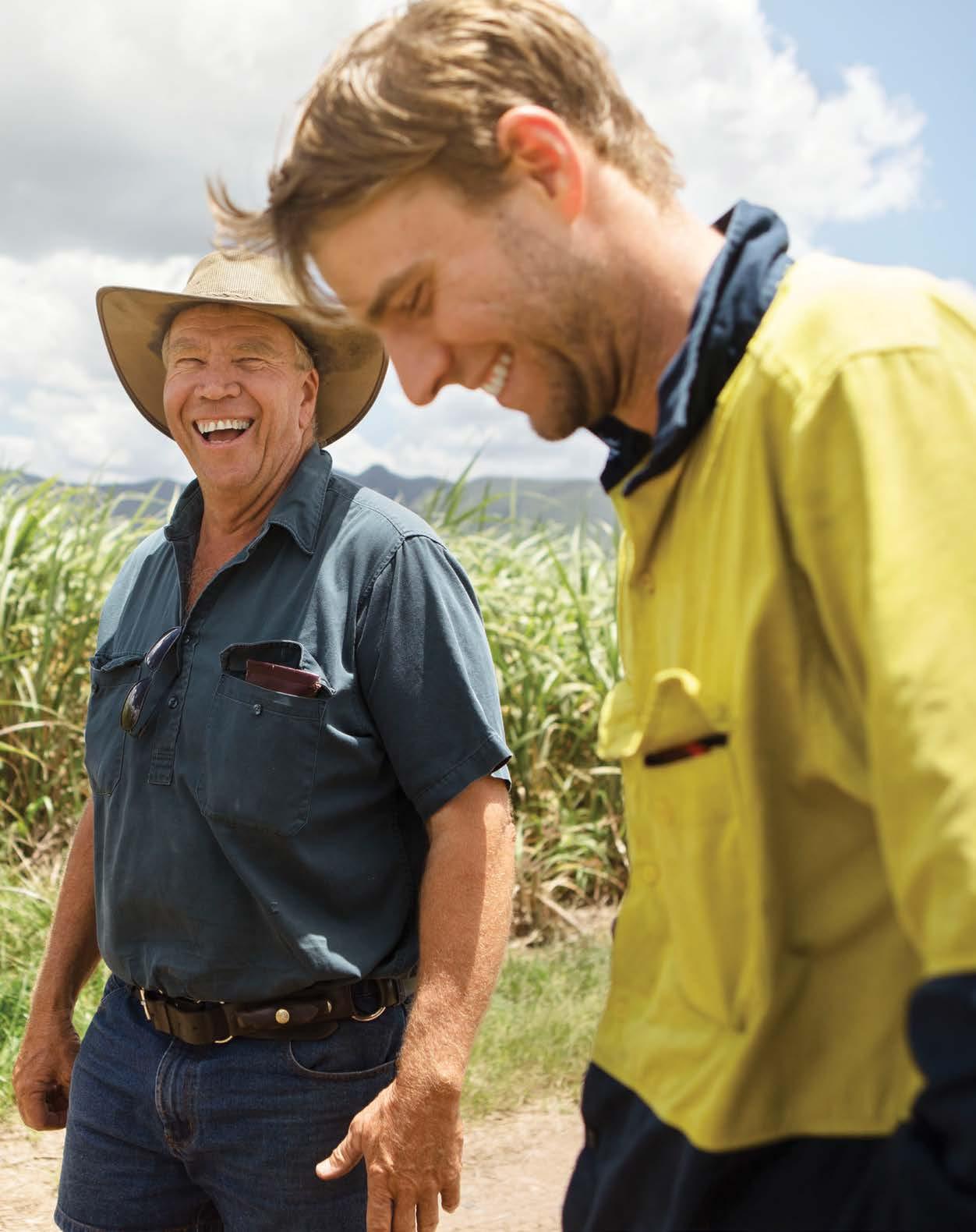
Let’s prove the Aussie cane’s the best in the world.
Smartcane BMP ensures your great work gets the recognition it deserves.