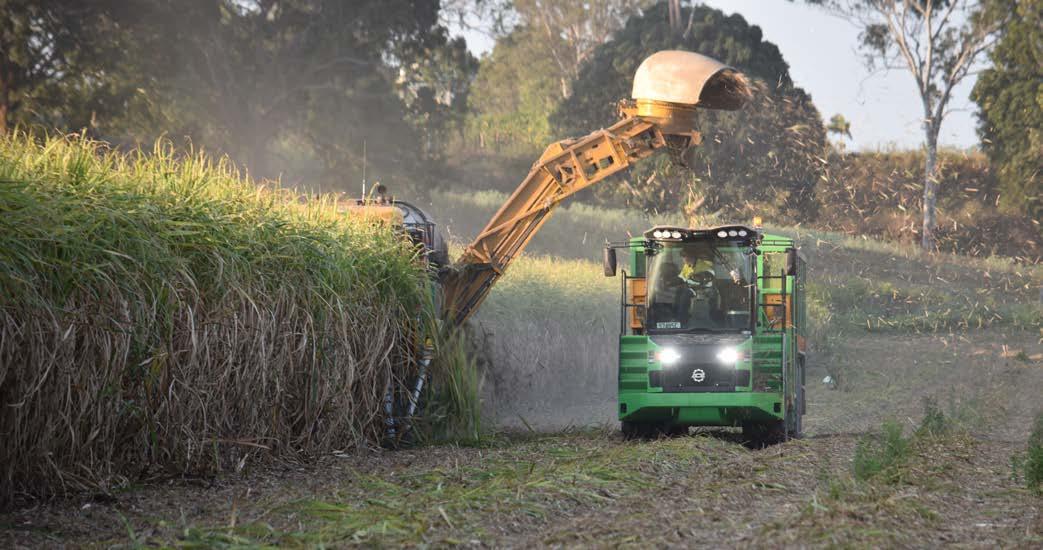
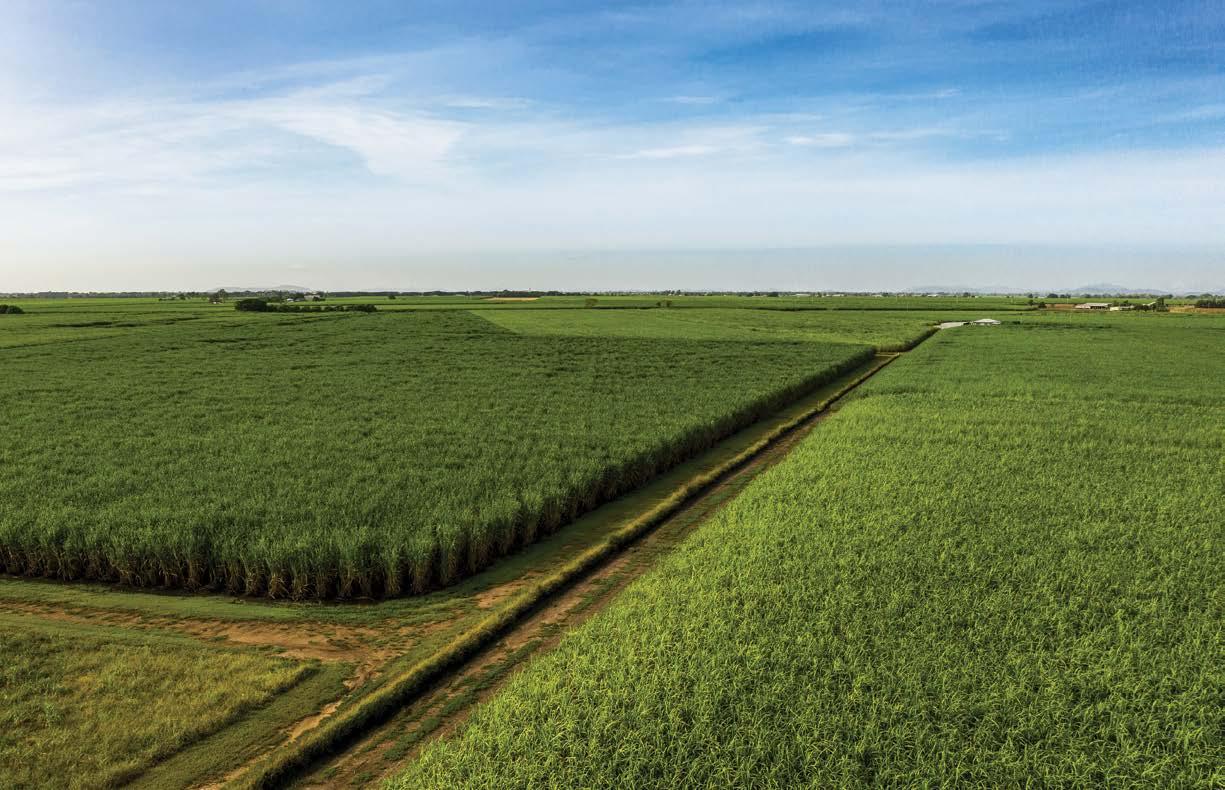
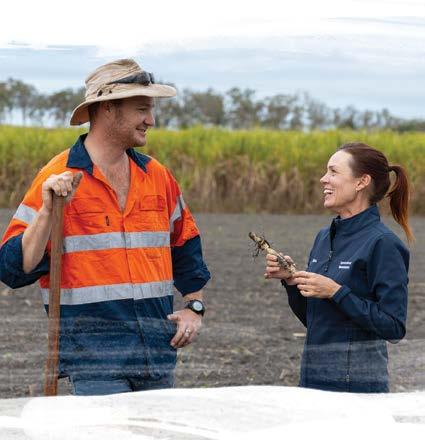
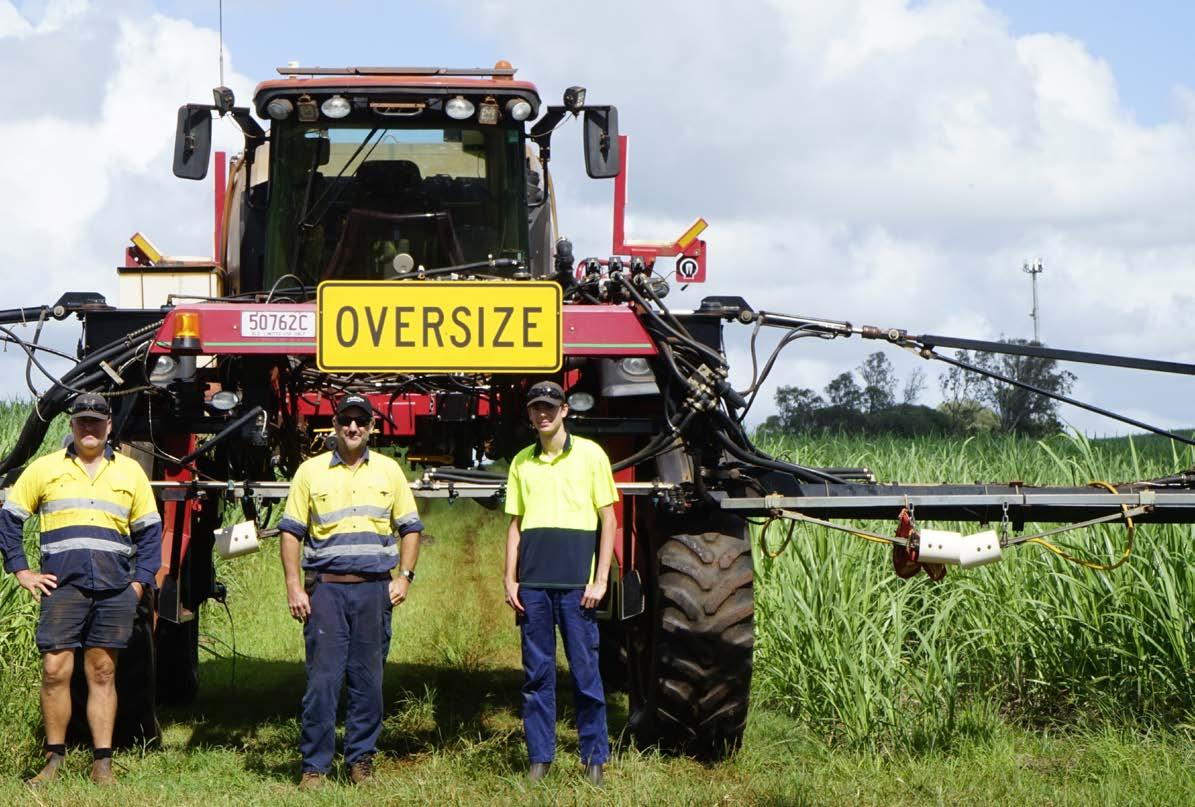
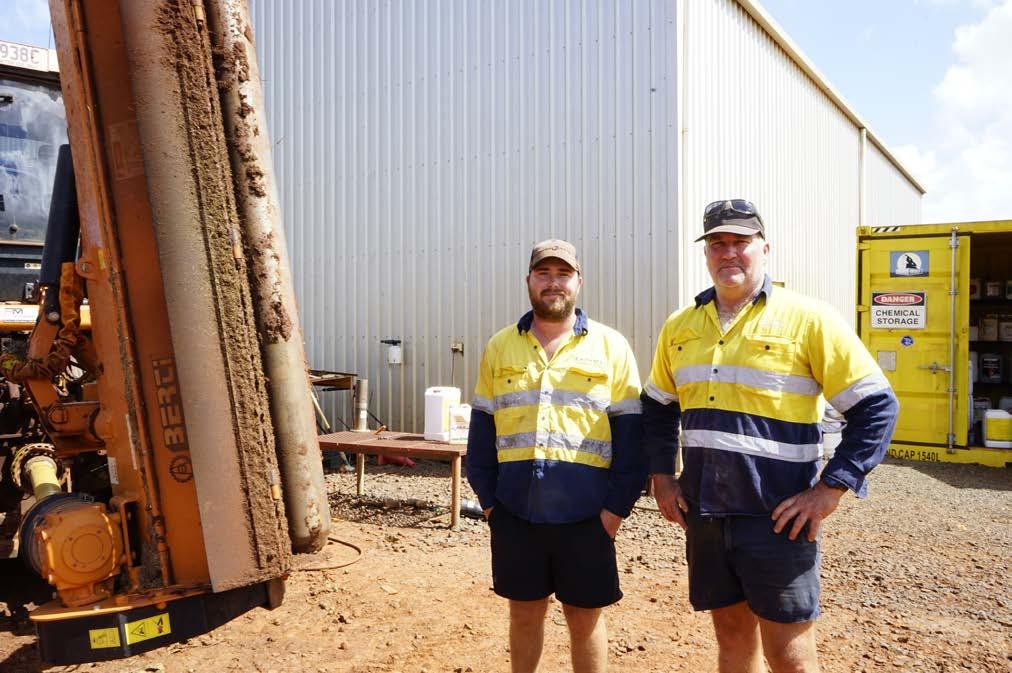
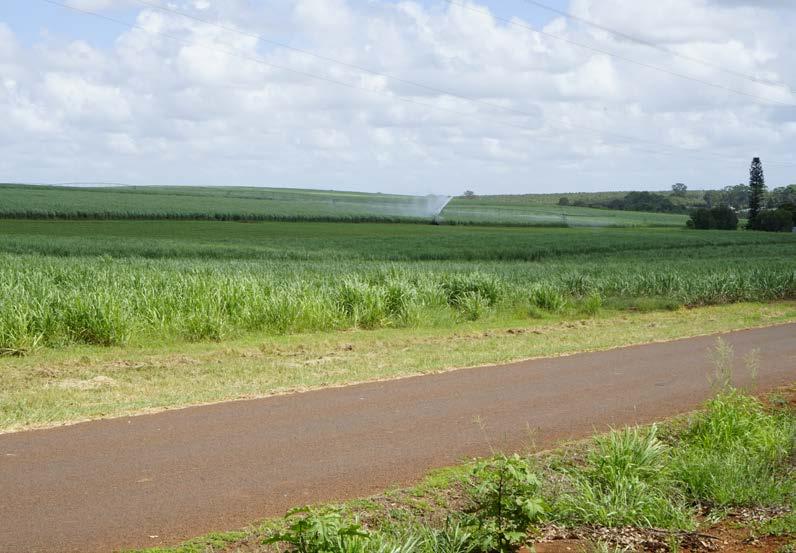
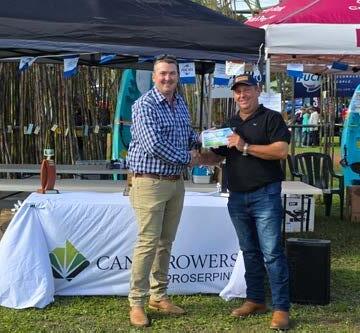
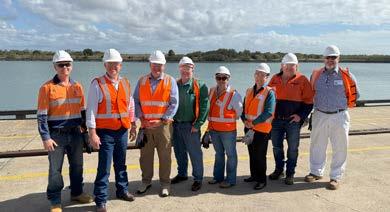
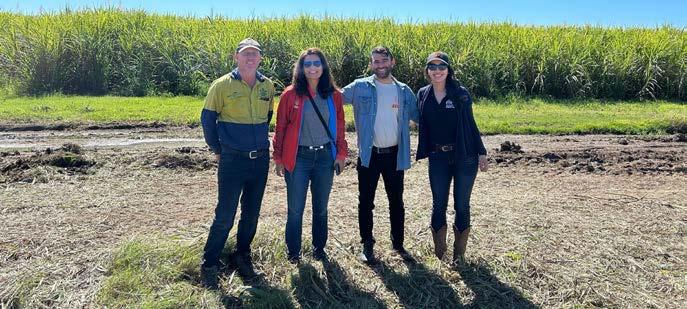
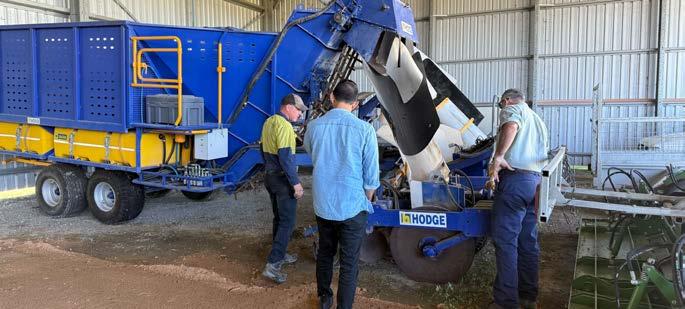
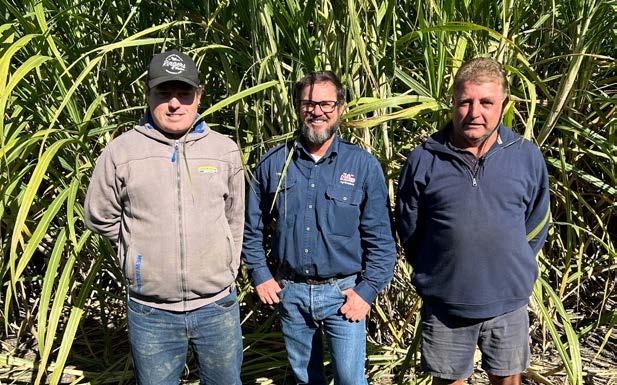
QCGO leaders driving change Future farmers learn about cane
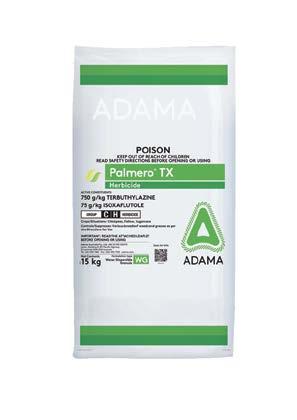
Long-lasting, bro ad sp e ctrum control of key grasses and bro adle af we e ds in plant and rato on cane
• Long lasting, broad spectrum grass and broadleaf weed control
• Flexible application in plant and ratoon cane
• Unique Group 5/ 27 co-formulation
• Ideal rotation option with B obcat
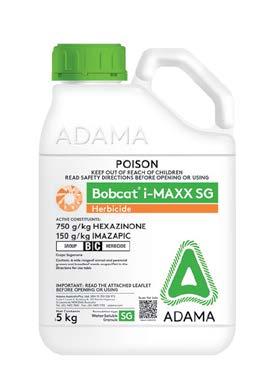
• Flexible use window without time-of-year restrictions i-MAXX SG or B obcat ® Combi WG for sustainable weed management
• Outstanding per formance against key grass weeds and broadleaf weeds
• Convenient Group 2/5 co-formulation for resistance management
• Extended residual control
• Flexible use window without time-of-year restrictions
SuCANE™ GOLD ORGANIC LIQUID
Proprietary blend of essential nutrients and trace elements empowered by patented ortho silicic acid (OSA) technology
• Silicon is classified as a beneficial plant nutrient
• Ortho Silicic acid (OSA) is the only plant available form of silicon*
• Successful trials in Mackay, Queensland and across India and South East Asia
• Application via foliar spray or fertigation
• Free samples for trials up to 1 Ha
BENEFITS OF SuCANE GOLD IN SUGARCANE:
• Higher cane yields
• Improved uptake of nutrients
• Increase in CCS/Brix
• Improved insect and pest resistance
• Improved resistance to low & high temperature, drought, frost etc.
• Helps to stabilise the cane during extended harvest to crush periods
*Caution: Many products are sold based on percentage of silicon but this does not mean a plant will take up a high percentage
CALL LOU ON 0424 849 264 for more information on how SuCane Gold and our range of soil conditioners, biostimulants, biofertilisers and micronutrients can help your sugarcane, soybean and other crops
INTRODUCING T100
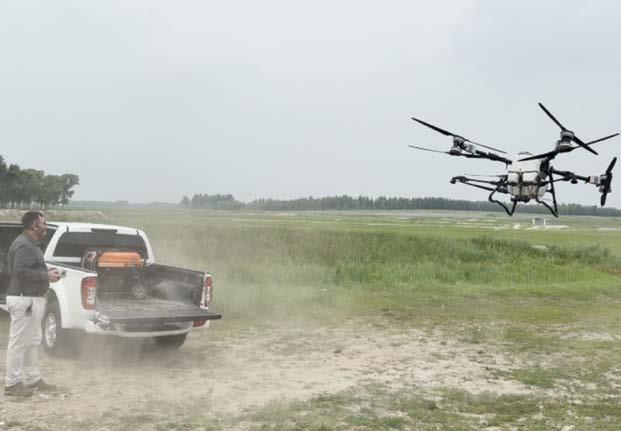
With features including 30L/min flow rate, 100kg spreading (150L capacity), 100L spray tank and 3 phase charging. The T100 model brings bigger, safer and smarter practices to your workload needs. Contact Trav and the team to learn more about this exciting new model from DJI Agriculture.
3 phase charging 3
Editor: Robyn Devine
Advertising and Classifieds: Jane McGregor
Articles appearing in Australian Canegrower do not necessarily represent the policies or views of CANEGROWERS.
Published monthly by: CANEGROWERS, GPO Box 1032, Brisbane, Queensland 4001 Australia. ABN 94 089 992 969
Yearly subscriptions for 12 hard copies (postage included) Within Australia: $190 inc GST
• Overseas (AUD): $290
12 Month Digital Subscription: $78 inc GST
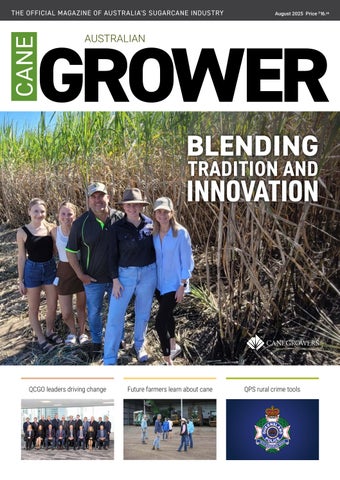
COVER
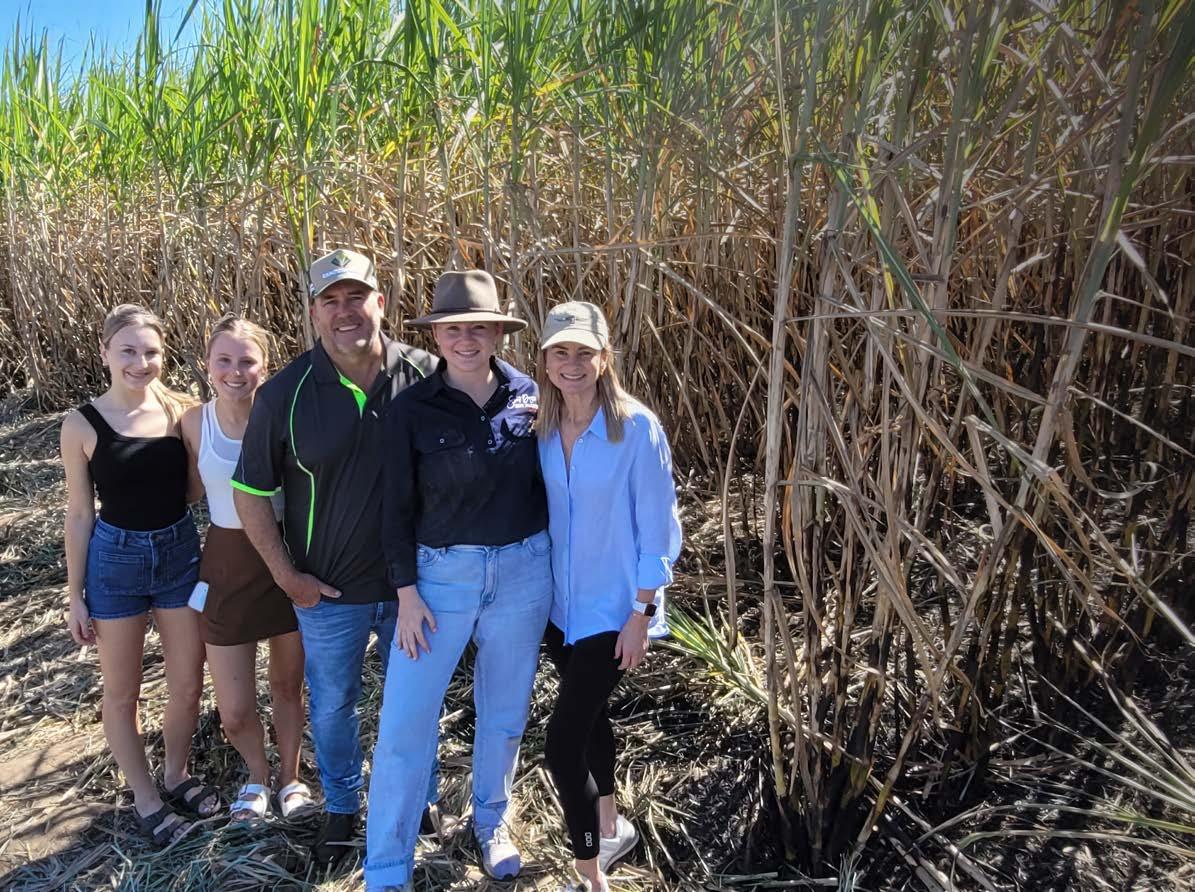
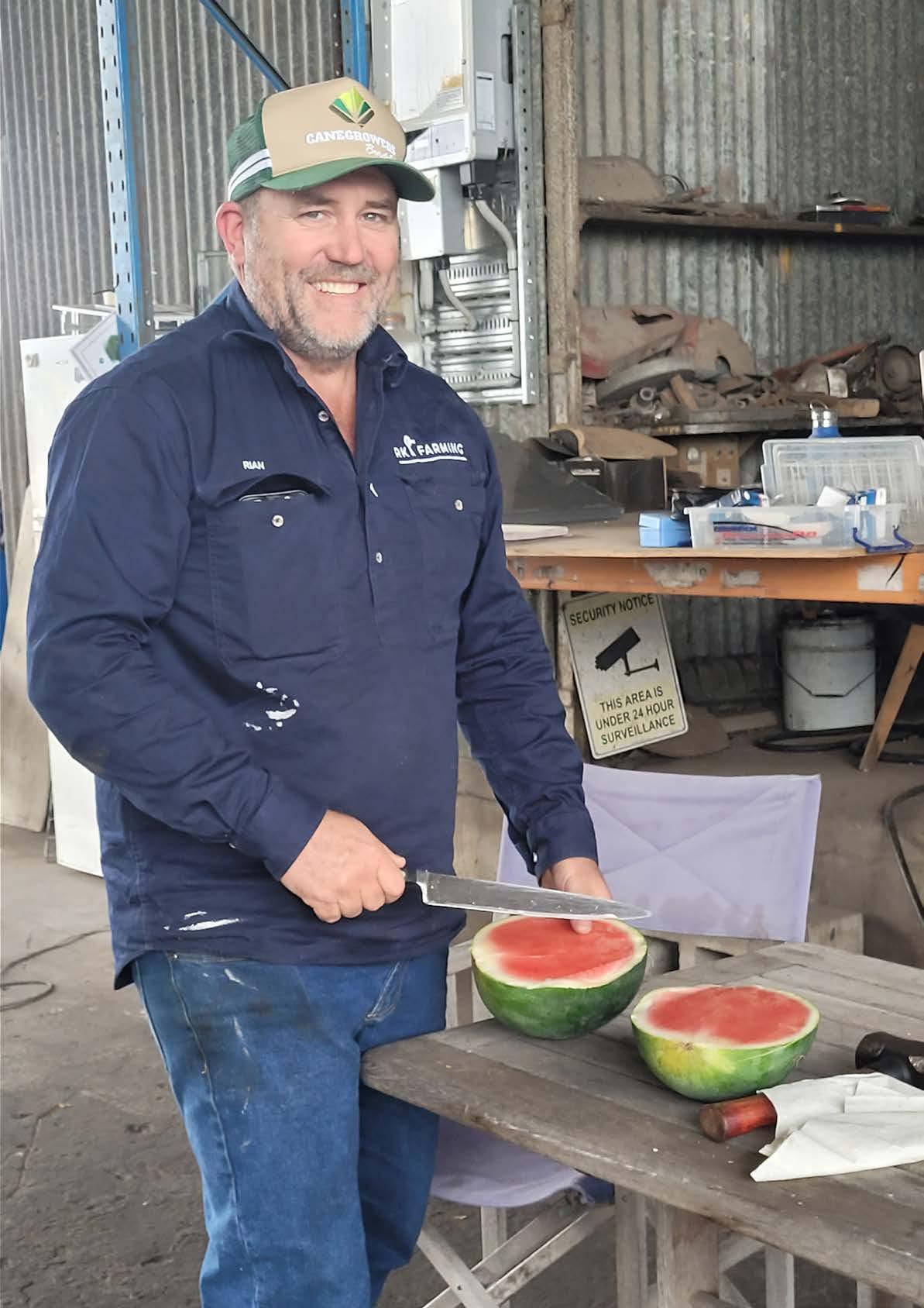
Burdekin grower Rian Swindley has his core values deeply rooted in family and community. Photo credit: Renee Cluff
Read more on page 24
NEWS BRIEFS
IRRIGATORS DISCOUNT
After successful advocacy efforts by Queensland Farmers’ Federation (QFF) and CANEGROWERS to secure an extension of the 15% irrigators discount for a further two years, we welcome the confirmed extension to the discount.
However, growers are advised that the department is continuing to move forward with their intentions to have QRIDA deliver the rebate through a ‘simplified’ applications process.
QFF has been engaging directly with the department and continued to advocate for:
Simplified and standardised statutory declaration as a part of the online application
FAQs to support the application process
QFF and WEPC preview of the application portal
Data sharing between QRIDA and SunWater/Seqwater) post application process to enable customer identification.
We hope to have updated information about the application process within the next couple of weeks. Growers and irrigators can send any questions to irrigationpricing@rdmw.qld.gov.au
INCREASED DISASTER GRANTS OF UP TO $75K
Exceptional Disaster Assistance Recovery Grants of up to $75,000 are now available to assist directly impacted primary producers with their clean up and recovery costs as a result of Tropical Cyclone Alfred. These grants were previously available for up to $25,000.
The grants can be used to hire or purchase equipment and materials, clean up, remove debris, replace fencing and other costs associated with the recovery process.
Primary producers must provide supporting documentation, such as tax invoices and cash flow statements as part of their QRIDA disaster assistance application.
For more information on how to apply, activated local government areas and eligibility requirements contact your local QRIDA Regional Area Manager on 1800 623 946 or visit qrida.qld.gov.au
QRIDA administers these concessional loans and grants under the jointly funded Commonwealth-State Disaster Recovery Funding Arrangements (DRFA).
SMARTCANE BMP –800 ACCREDITATIONS
Queensland sugarcane growers have chalked up another major sustainability milestone, with the industry-led Smartcane BMP program recently accrediting its 800th farming business.
The best management practice program, developed and delivered by CANEGROWERS with support from the Queensland Government, now covers 45% of Queensland’s cane land.
Accreditation shows that voluntary, industry-led action is working, with farms meeting or exceeding industry best practice standards and complying with reef regulations.
STRONG START TO CRUSH RECOGNISED BY CANEGROWERS
The CANEGROWERS Policy Council, which met in Brisbane last month, recognised and congratulated sugar mill workers across Queensland for their efforts in delivering a smooth start to the 2025 crushing season.
CANEGROWERS has the unique ability to bring together grass roots farmers from each mill supply area across the state for this two-day meeting to discuss industry policy and strategy.
Amongst a range of long and shortterm priorities discussed there was a common view that one month into the 2025 crush, in most areas it has been a positive start.
CANEGROWERS Chair, Owen Menkens, said favourable weather has played a role, but it’s clear that the hard work and investment during the off-season maintenance period is paying off.
“We know the last five years have been incredibly tough for everyone in the industry, with persistent challenges in milling reliability,” Mr Menkens said.
“That’s why it’s so important to call it as we see it – and right now, mill workers across the state deserve credit for a job well done in getting this season off to a solid start.”
CEO Dan Galligan echoed the sentiment, acknowledging that while the season hasn’t been without its usual workforce challenges, the collaborative effort across the industry is what drives success.
“Growers, harvesters and millers all rely on each other,” Mr Galligan said.
“When we work well together, we are all stronger – and the start to this season shows what’s possible when we pull in the same direction.”
The Policy Council agreed that continued cooperation, transparency and mutual respect across all parts of the supply chain will be essential to maintaining momentum and tackling the inevitable challenges ahead.
“At CANEGROWERS , we believe in telling it straight,” Mr Menkens said. “And this season, the story starts with a positive tone – thanks to the people who made it happen.”
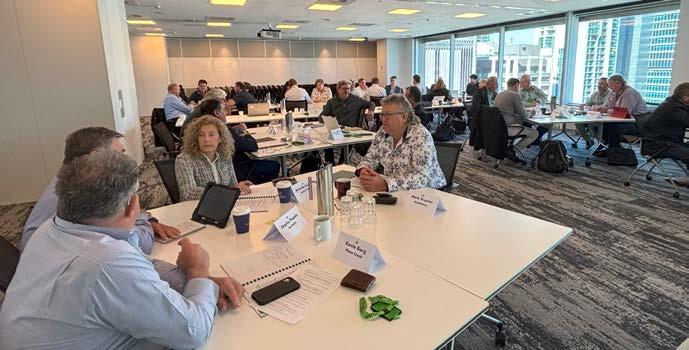
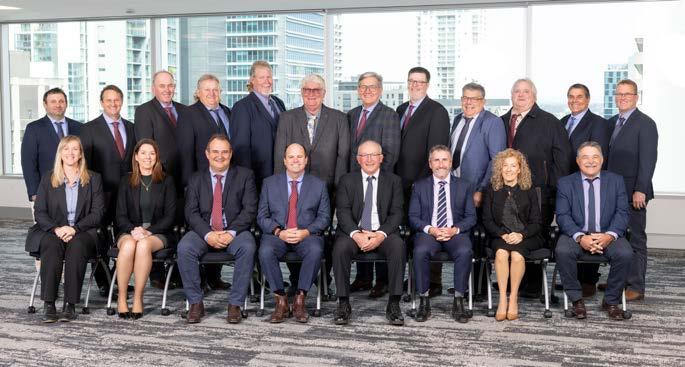
GROWER LEADERS SET DIRECTION AT POLICY COUNCIL MEETING
CANEGROWERS grower
representatives from across Queensland convened in Brisbane last month for a two day Policy Council meeting to tackle a wide spectrum of industry challenges and opportunities.
Topics ranged from mill performance and harvesting viability to emerging bioenergy prospects, providing a forum for robust discussion and strategic planning.
The Council, comprising elected grower directors and senior CANEGROWERS staff, welcomed presentations from Queensland Sugar Limited (QSL), Sugar Research Australia (SRA) and the Department of Primary Industries (DPI). These updates offered vital insights into operational and research developments, with emphasis on grower profitability, innovation and sustainability within Queensland’s sugarcane sector.
For newly appointed CANEGROWERS Isis Director Peter McLennan, the meeting was an introduction to high level policy deliberations.
“It’s been a steep learning curve,” he said. “I’m getting a full appreciation of the work at the state level.”
A lifelong sugarcane farmer, Peter recognised both enduring and evolving challenges, mill viability, harvesting costs and declining profit margins, yet he also saw fresh opportunities in green industry developments such as bioenergy and Sustainable Aviation Fuel (SAF).
“These are things my father talked about 50 years ago, and it looks like they’re finally coming to fruition,” he noted.
CANEGROWERS Herbert River’s Director Steven Marbelli reflected a blend of optimism and realism. “We’ve had great discussions across committees and key industry matters,” he said, while also acknowledging ongoing tensions between millers and marketers, particularly between QSL and STL, that leave growers caught in the middle.
“Those issues need serious resolution,” he added.
Despite these tensions, biofuels and SAF remain on the horizon. “There’s plenty of talk about SAF,” Steven remarked.
“It’s a long term prospect, but there are definite opportunities around biofuels.”
As the meeting wrapped up, participants shared a renewed sense of purpose.
A new generation of grower leaders is now poised to steer policy development and advocacy, reinforcing CANEGROWERS ’ commitment to a sustainable, profitable future for Queensland’s cane farming families.
“I’m looking forward to being involved for the next three years,” Peter said. “I want to bring knowledge back to Isis and help shape our industry’s direction.”
DEAR CANEGROWERS,
Queensland’s cane industry is not just part of our heritage – it’s a $2.5 billion powerhouse of our economy. This year’s Crisafulli Government’s State Budget backs that strength with record investment, practical support, and a long-term plan for growth.
The 2025-2026 Crisafulli Budget increased the primary industries budget by $100 million on last year. That’s not just a funding line – it’s a signal that we’re standing with the growers and producers who have always stood tall for Queensland.
The budget includes $60.9 million for biosecurity staff, invasive species management, and targeting critical threats. We’re also investing $24 million to supercharge fire ant suppression – a serious risk to agricultural productivity and our way of life.
A further $51.9 million has been allocated to build farm and drought resilience. We know growers can’t afford to wait for help when the next dry spell hits – this budget prepares producers to face what’s ahead and come out stronger.
Importantly, we’re supporting cane industry growth. In partnership with CANEGROWERS Queensland, this budget funds a new Far North Queensland Cane Expansion Plan – opening up new opportunities across the region. And for Mossman growers affected by the mill’s closure, we’ve stepped in to ensure the 2025 crop can be crushed at the Mulgrave Mill – keeping the harvest on track and livelihoods protected.
This budget also defends what Labor was willing to scrap. Programs that support workforce development were on the chopping block under the former government.
We’ve safeguarded $1.6 million to maintain embedded officers through the Queensland Agricultural Workforce Network (QAWN), including within Mackay CANEGROWERS, ensuring growers can continue building a skilled and essential workforce.
We’re also investing an additional $250,000 for the Queensland Farmers’ Federation to implement recommendations from the Rural Jobs and Skills Alliance review – ensuring workforce strategies reflect the future needs of industry.
This is a budget that respects the land, rewards hard work, and restores certainty. Queensland’s cane growers deserve nothing less.
While we have been focused on the future through this budget period, I’ve also taken stock of what has been achieved for CANEGROWERS since the start of the year.
After more than a decade of lobbying by organisations particularly CANEGROWERS, I was able to fight for changes to the disaster recovery support to include funding for replanting and reseeding after crops have been destroyed. We have also been able to deliver a change to the definition of primary producer to make sure cane growers who have off farm incomes from activities like contract harvesting are still classified as genuine primary producers and eligible. These changes have made the road to recovery slightly less arduous and better reflect modern operations where diversification has been integrated.
My bold ambition is to grow the value of primary production to $30 billion by 2030. We will do this by embracing scientific research and technology which is practical and applicable to farmers in cane fields across the state. That is why I was delighted to open last month Sugar Research Australia’s state-of-the-art Innovative Research & Industry Services (IRIS) Laboratories. Partnerships and investment into continually developing our capabilities will make sure Queensland CANEGROWERS lead the world.
While on a trade mission to Japan and South Korea I reflected on the opportunities ahead for the Queensland sugar industry, both domestically and internationally. There is cause for optimism, and I look forward to the results of a parliamentary inquiry investigating the potential for bioenergy and value-added sugar production in Queensland. An interim issues paper will be published by Christmas with the full report to be released within the next ten months.
I look forward to connecting again to further update you on how the Crisafulli Government is delivering for cane growers and the sugar industry.
Tony Perrett MP MINISTER FOR PRIMARY INDUSTRIES QUEENSLAND GOVERNMENT
EMERGING CANE CHAMPIONS
Australian Canegrower caught up with two of the energetic and motivated Next Ratoon participants to hear firsthand how the mentoring experience is shaping their journey.
RACHEL ATKINSON
MACKAY DISTRICT
I’m 34 years old and I live with my husband on our cane farm in Mt Ossa Queensland. I applied for the Next Ratoon Program because I am passionate about the sugar industry, wanted to be more involved and hope to make a positive contribution in the future. I have learnt so much from being a part of Next Ratoon and had so many great opportunities that I wouldn’t have had otherwise.
My mentor is Dr Michael O’Shea who is the Director of Institute Operations at Queensland Alliance for Agriculture & Food Innovation (QAAFI).
It has been fantastic to have Michael to bounce ideas off, keep me accountable for goals I had set and gain industry knowledge from his past in the sugar industry. I am very grateful to have been paired up with Michael; I have learnt so much and really value his perspective.
Being able to meet the other mentors and mentees in this year’s program has been fantatastic. They are all so passionate.
I would encourage anyone thinking about applying for Next Ratoon to do it! Being paired with a mentor gives you a quiet confidence that you sometimes need to achieve your goals.
JEFFREY SEARLE
HERBERT RIVER DISTRICT
My two brothers and I are proud to be fourth generation farmers in the Burdekin, where we work for our parents, Malcom and Idoya, to grow approximately 18,000 tonnes of cane. We also run a beef cattle operation across several farms. I live on one of the farms with my wife and daughter, with another child on the way.
The Next Ratoon program was brought to my attention by the CANEGROWERS committee, and after talking to a previous mentee of the program, I decided to apply. It sounded like a great opportunity to learn more about the industry, which I feel is something I am not quite confident with. Looking to the future, I’d like to be able to communicate with more confidence with peers in the industry as well as network and build relationships to improve our family business.
Paul Sloman is my mentor; he is a policy officer and also works in grower engagement at Cotton Australia. Even though our industries are vastly different, having regular chats with Paul has been great as we often bounce a lot of questions off each other. This not only gives me an insight into the similarities and differences of our industries, but it also makes me dive deeper into the sugar industry, having to find the answers for questions he throws my way.
I think one of the biggest benefits of the program would be meeting the other mentees and mentors. Listening to the experiences of others and the advice handed out was extremely interesting for me. As busy as we all think we are, give it a crack, you’ve got nothing to lose.
INNOVATIVE LABORATORIES TO BOLSTER STATE’S SUGAR INDUSTRY
Queensland’s sugar industry has received a major boost with the official opening of Sugar Research Australia’s (SRA) new Innovative Research & Industry Services (IRIS) Laboratories in Brisbane.
Backed by a $2.8 million investment from the Crisafulli Government, the IRIS Lab is a state-of-the-art facility designed to fast-track innovation in plant breeding, genetics, biosecurity, and precision agriculture – key areas vital to the sugarcane industry’s future.
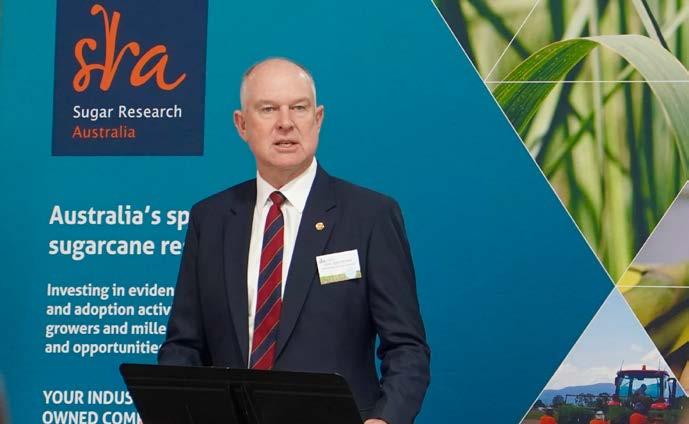
At the recent official opening of the IRIS Lab, Minister for Primary Industries Tony Perrett said the facility represents a strong commitment to regional communities and the broader $2.5 billion industry.
“Many of Queensland’s rural and regional communities have been built off the back of sugar, and I’m proud to be investing in the future of this important industry,” Minister Perrett said.
“We’re supercharging scientifically backed research with this facility at Acacia Ridge, which will drive innovation and help the industry become more profitable and better protected from biosecurity threats.”
The IRIS Lab is expected to deliver faster, more accurate scientific outcomes, tailored specifically to growers and millers. It’s part of the Crisafulli Government’s broader strategy to grow Queensland’s primary industries to $30 billion by 2030.
SRA CEO Mick Bartlett described the IRIS Lab as a “world-class facility” that would drive advancements in plant breeding, genetics, cane and fibre quality, disease and pest screening, and soil and nutrient sciences for the Australian sugar industry.
“With support from the Queensland Department of Primary Industries, SRA is re-imagining ways to accelerate sugarcane genomics, ensuring we can rapidly develop and deploy highperforming, disease-resistant varieties,” Mr Bartlett said.
“This isn’t just about research –it’s about shaping the future of the industry.”
In addition to the IRIS Labs, the Government is investing in new research infrastructure across Queensland, including a purpose-built glasshouse at Gatton and an AgTech Master Plan in Emerald.
Further funding includes $2.85 million annually to SRA and a $500,000 funding package for CANEGROWERS Queensland that will support the development of a Far North Queensland Cane Expansion Plan over three years.
These initiatives all support the Primary Industries Prosper 2050 blueprint –Queensland’s long-term strategy for rural growth and innovation.
Minister for Primary Industries
Tony Perrett at the official opening of the IRIS Laboratories
SUGAR IS BACK ON THE MINDS OF PARLIAMENTARIANS AND THE COMMUNITY
BY DAN GALLIGAN, CEO, CANEGROWERS
While the industry is at its busiest on farms, in mills and at the ports over the next couple of months there will be a huge amount of focus on the industry in the cities, particularly in Brisbane.
The first major event will be community focusing when CANEGROWERS showcases the industry at the Ekka in midAugust. The Ekka hopes to bring the country to the city and for anyone who has the opportunity to visit, this ambition is clearly on show.
Over the last two years our numbers indicate that we have had over 8,000 visitors to the CANEGROWERS industry display. This year with the help of Sunshine Sugar and Sugar Research Australia we will again be ready to talk to all visitors, give them a virtual tour of the industry through our virtual reality headsets and answer the many and varied questions that they have. It is an overwhelmingly positive experience.
The CANEGROWERS Board will all visit and participate on the display, and we would welcome visitors and contributions from growers or industry families if they stop by for a yarn.
At the same time, the Queensland Parliament Primary Industries and Resources Committee will begin its work associated with the inquiry they announced on 11 June. The deep and far-reaching inquiry is a tremendous chance to bring to light the opportunities and constraints our industry faces.
In releasing the terms of reference, it is clear the committee Chair, the Hon Stephen Bennett MP, is keen to discuss everything that could see a bright future for the industry.
The committee has requested information on:
1. The role and benefits of sugar cogeneration in Queensland’s electricity generation mix, including existing capacity and potential for expansion.
2. Market, regulatory, and infrastructure barriers to increased bioenergy production from sugar.
3. Opportunities to align sugar biofuel production with national security and Defence liquid fuel needs.
4. Policy and funding mechanisms to de-risk investment in cogeneration and biofuels by manufacturers and growers, including examples of successful policy implementation from overseas and other industries.
5. The R&D agenda to underpin a world leading sugar-led bioenergy industry.
6. Strategic land use and regional development considerations affecting cane growing and sugar manufacturing capacity.
7. Benefits for growers in diversification opportunities.
8. Consideration of food verses fuel.
I have talked directly with Stephen, and it is absolutely clear that he wants the industry to pull together and respond comprehensively to this inquiry. Further he wants to ensure we give clear advice to Government to look into reforms that would make a difference and support the profitability of growers and the productivity of the industry.
CANEGROWERS will be working directly with our districts to meet this request and help the committee get out in the regions and see the industry and the issues firsthand.
So whether you have the chance to see us at the Ekka or with politicians in the regions, rest assured while the harvest progresses we will continue to be front and centre showcasing the industry in whatever forum necessary.
Grow wealth beyond the farm.
Plant the seeds for a stronger financial future. We offer financial guidance to help farmers like you protect, invest, and grow.
Morgans are proud supporters of Canegrowers.
Alistair Milne
QSL GROWER PRICING UPDATE
Sugar Market & Currency
Influence Commentary
Brazil
India
Thailand
Speculators
Currency
Your Trusted Partner
Current as at 21 July 2025.
By Elliott Apel, QSL Assistant Manager Trading & Risk
Harvesting in Centre South Brazil is shaping up as a tale of two halves so far this season. By the end of June, 206 million tonnes of cane had been harvested and 12.3 million tonnes of sugar produced − both down 14% year-on-year. ATR (Total Recoverable Sugar) is also lagging, down 4% on last year, averaging 122kg of total recoverable sugar per tonne of cane. In contrast, the sugar mix has been exceptionally high, hitting 53.15% for the second half of June.
India’s monsoon performance has eased slightly, moving from 15% above average to 9% above average. Central and northern regions have seen significant rainfall, while the southwest has been somewhat drier. Overall, conditions are likely still favourable for cane development.
Thailand’s wet season is tracking well, with most cane-growing areas recording rainfall above the five-year average during June. The Office of the Cane and Sugar Board has released its first satellite mapping for the upcoming season, projecting an increase of approximately 2% in harvestable area compared to last year.
Speculators continued to extend their net short position through June and into July, peaking at 133,000 lots net short by the end of June. As of Tuesday 15 July, the position had pulled back slightly to 122,000 lots net short.
The Australian Dollar hit fresh highs in early July as analysts began to lose confidence in the “US Dollar exceptionalism” narrative, amid concerns about the second round of US tariffs and Trump’s One Big Beautiful Bill to lift the debt ceiling. However, by mid-July the AUD had slipped back below 65 US cents on the back of weaker domestic data. Despite this, the three-month-long gentle uptrend channel remained intact.
The outlook ratings above are in relation to AUD/tonne sugar prices. A bullish outlook is considered positive. A bearish outlook is considered negative.
Grower Pricing Update
The highest grower-managed pricing levels achieved across all growing regions using QSL products to date (all gross price actual/tonne) are:
• 2025 Target Price = $735 / IFC $735 (Oct25)
• 2026 Target Price = $685 / IFC $690 (Jul26)
• 2027 Target Price = $650 / IFC $610 (Jul27)
• 2028 Target Price = $605
Key Dates:
• 22 September 2025: Any 2025-Season Target Price Contract tonnage not priced by this date will automatically have its pricing window extended and roll costs may apply.
• 22 September 2025: Any unpriced tonnage allocated to the ICE 11 October 2025 contract through the Individual Futures Contract and/ or Self-Managed Harvest Contract that is not rolled by this date will be priced by QSL at the next market opportunity.
• 31 October 2025: Last day to nominate QSL as your 2026-Season GEI Sugar Marketer.
PRICING FILLS – 2025, 2026 & 2027 SEASONS
PREVENTING CRIME
A suite of new resources designed to help landowners prevent theft and other crimes on their properties has been developed by the Queensland Police Service.
Theft of machinery and fuel, illegal hunting and illegal waste disposal are among the key issues of focus under the Queensland Police Service’s (QPS) new Shut the Gate on Rural Crime campaign.
The QPS is encouraging residents to adopt proactive measures to secure their properties and to collaborate with their communities and local police to to create strong crime prevention networks.
Acting Superintendent Scott Stahlhut said new resources are available to help landowners prevent, deter and report criminal activity in rural areas.
“There are effective steps our rural communities can take to ensure
their property is secure, which can significantly reduce the risk of theft,” he said.
“Reporting crime and suspicious activity not only assists in ongoing investigations, it helps police identify trends.
“This initiative is designed to empower landowners with practical tools and knowledge to safeguard their properties, while also fostering strong connections between rural communities and local police.”
Resources include tips on securing farm equipment and ways to deter trespassers, a checklist to help you keep records of what you’ve got and mark your property with a unique ID, as well as guides on reporting crimes and suspicious activity.
The resources are all downloadable on the Rural Crime Prevention webpage. Go to police.qld.gov.au/ RuralCrimePrevention
Talk to your local QRIDA Regional Area Manager on 1800 623 946 or scan to find out how QRIDA could help start your sugarcane business*.
FROM THE CHAIR
BY OWEN MENKENS, Chair, CANEGROWERS
The July Policy Council meeting provided the opportunity to discuss a range critical issues. Despite it being the first full meeting of the Council for this term some meaty topics were on the agenda and it is clear the representatives want to be ahead of the issues to ensure growers interests are thought of first and not last in industry discussions.
Valuable presentations from SRA on investment priorities, from Avalo, a digital startup company using machine learning and AI to accelerate variety development, and from QSL, all had the tone of looking toward the future needs of the industry not just the current pressures.
While they were all interesting it was the future structure of QSL that was perhaps the most topical for growers right now. QSL was set up to be an industry owned and run sugar marketing company. To achieve this the QSL constitution allows for one QSL grower member to be elected from each mill across the state and mill membership voting to be based on total sugar tonnage supplied.
In reality what this means is the members of QSL do not necessarily market sugar through QSL. In our contemporary era of a very competitive sugar marketing sector in Australia this seems at best weird and are worst inappropriate.
For instance it leads to a particularly strange situation where Wilmar Sugar Australia, with its large production tonnage, has more than 50% of the vote for the mill membership of the director selection committee of QSL.
This is not an ideal situation and exists across the board with Wilmar, Mackay, Tully and MSF who all provide marketing services in direct competition with QSL but then also have some say in the process of director selection for QSL. The point is, it is in the best interests of the industry to have this competitive environment, but it needs to be fair and the incentives should be towards good industry outcomes.
The current competitive sugar marketing environment has been successful for growers, millers and marketers alike. The reality is 10 years since marketing choice was confirmed the QSL constitution has not been made fit for a competitive marketing environment of today, yet we all agree we need this critical industry company to be set up ready for the future.
CANEGROWERS will be working with QSL and mill / marketers around structural options that provide greater certainty for everyone in the industry into the future.
But all options start from the important principles that all growers should have a choice and that the growers and millers who choose to market with QSL should have the say over the direction of the company.
We will face many challenges in the future regarding sustainability and world trade barriers. We need a strong united industry owned marketing company that is ready to deal with these challenges.
At CANEGROWERS we will continue to push for a strong Australian branded sugar with a proven sustainable supply chain to meet these challenges. Whether this sugar is marketed by QSL or one of its competitors we will need stable industry structures that allow us to focus on this outcome in the market, not never ending internal power battles.
Future-fit Nitrogen
Aztec Dynamics Leads the Way with Drone-Based Foliar Fertilisation
ADVERTORIAL
Rethinking Nitrogen for Sugarcane Success
In the ever-evolving world of modern agriculture, sugarcane growers are seeking smarter, cleaner, and more effective ways to boost crop health and productivity. At Aztec Dynamics, we’re pioneering a more sustainable approach to nitrogen fertilisation – combining advanced drone crop spraying with a biological focus on foliar nitrate and microbial nutrition.
Why Shift from Urea to Foliar Nitrate?
Conventional urea application has long been the go-to method for nitrogen delivery – but it’s far from efficient. Urea must undergo multiple biological transformations in the soil before plants can access it, and along the way, much of the nitrogen is lost to volatilisation or leaching.
Foliar nitrate spraying changes the game. By applying nitrogen directly to the leaves, the nutrient bypasses soil-based loss pathways. Even more powerfully, foliar nitrogen is broken down into amino acids, meaning fewer biological steps are needed before plants can use it – leading to faster uptake, greater efficiency, and reduced waste.
Think of fungi as the “FedEx of the plant world” – forming intricate mycorrhizal networks that transport minerals, moisture, and nutrients right to plant roots. But they can’t work alone.
Fungi and bacteria are essential for unlocking and mobilising minerals trapped in your soil, including phosphorus, potassium, and trace elements. Without these microbial partners, much of your soil’s fertility remains locked away, unavailable to your crops.
Harnessing Nitrogen from the Air
Smarter Nutrition. Healthier Soil. Bigger Yields.
Let Aztec Dynamics help you take nitrogen fertilisation to the next level – with cutting-edge drone technology and soil-smart microbial strategies designed for Queensland cane farms. Get in touch today to book a tailored spray program or on-farm consult.
www.aztecdynamics.com.au info@aztecdynamics.com.au Based in North Queensland
Urea Isn’t Just Wasteful –It’s Risky
What many growers don’t realise is that urea often contains heavy metal residues like lead and mercury – two toxic elements with known health and environmental risks. In food-producing crops, this raises concerns not just about yield, but also about safety, marketability, and soil contamination over time.
Let
Microbes Do the Work Nature Intended
At Aztec Dynamics, we go beyond nitrogen alone. We integrate fungi and bacterial inoculants into our spray programs, giving your crops access to a natural nutrient delivery network.
Our drone systems help reuse atmospheric nitrogen, integrating natural nitrogen-fixing inputs with precision foliar application. This further reduces dependency on synthetic inputs, making your fertilisation program more regenerative and cost-effective.
Drone Spraying: Better for Soil, Better for Cane
Ground-based machinery causes compaction, especially in heavy clay soils. Compacted soil locks away essential nutrients like phosphate and potassium, stunting root development and limiting yield.
Drone spraying avoids this entirely, offering high-precision delivery without setting foot on the paddock. That means better soil structure, better nutrient cycling, and better long-term productivity.
A CENTURY OF CANE
SIX GENERATIONS AND STILL GROWING
BY ROBYN DEVINE
When Norman Anderson’s great grandfather arrived in the Childers district by train in 1899, he brought with him little more than his background as a British schoolteacher and a keen willingness to try something new.
By 1912, that “something new” had become a sugarcane farm – marking the beginning of a remarkable legacy now spanning 113 consecutive seasons of supplying cane to the local mill.
Today, the Anderson family stands as one of the longest-serving farming families in the region. With three generations currently working sideby-side on the land, Norm and Donna Anderson, their sons Graeme and Justin, and grandson Mitchell, the family continues to evolve with the times while holding tightly to the values that have sustained them for over a century.
The Andersons’ story is a testament to continuity in an industry where generational change is becoming increasingly difficult.
The family has weathered the typical pressures of farming in a dry region, punctuated by long spells of drought, fluctuating sugar prices, and rising input costs.
“We went through several generations of dry farming, and that was a heck of a challenge,” Norm recalls.
“In the 1990s, before we got irrigation, we had to replant 80% of the farm in two years due to drought.”
Still, they persisted.
For the Anderson family their farming practices mix family experiences and know-how with modern innovations and the right machinery
“Here we are, with generation number six on the farm, and we are so proud of that,” Norm says.
It was a turning point when water access finally reached their farm under the Bundaberg-Isis Irrigation Scheme.
Since then, the Andersons have invested heavily in water infrastructure, most notably six centre pivot irrigators, including one that covers 100 hectares in a single circle.
“One area used to take seven days to cover with two travelling irrigators. Now it’s done in two-and-a-half days,” says Justin.
They also operate three part-time travelling irrigators in sugar cane blocks unsuitable for pivots.
“We used to run 21 travelling irrigators across our farms and leased land. That alone could drive anyone mad,” Norm adds.
At their peak, the Andersons were growing over 52,000 tonnes of cane, thanks in part to strategic leasing of neighbouring properties.
“We realised early that if we were going to keep growing and remain viable, we needed economies of scale”
“Leasing gave us that opportunity, and with the economies of scale came the ability to invest in better equipment,” explains Graeme.
The family’s investment strategy has focused on high-quality, efficient gear that supports modern farming
practices. “We buy the right equipment the first time – big, efficient machinery that helps us save money long-term,” Justin says. “That’s critical when staff are hard to come by.”
Technology has transformed their farming operation. The Andersons use GPS-guided equipment for zonal tillage, precision planting, and controlled traffic.
“We don’t use rotary hoes anymore,” Justin says. “We’ve developed our own zonal tillage implement that only works the cane row. That saves on wear, fuel, time – everything.”
Graeme’s son Mitchell, representing generation six, has also embraced the tech-forward approach. A former university student training to be a teacher, he made the choice to return to the farm of his own volition.
GENERATIONS ON THE LAND
1st Generation:
Arrived in 1899, began cane farming in 1912.
2nd–3rd Generations
Expanded and diversified during dry-farming decades.
4th Generation
Norm and Donna Anderson –navigated drought, invested in irrigation as water access availability increased (Bundaberg-ISIS Irrigation Scheme).
5th Generation
Graeme and Justin Anderson – built scale, adopted precision ag and smart tech
6th Generation
Mitchell Anderson – bringing academic insight and a passion for farming.
“He hated Brisbane,” Graeme jokes. “So, he called his grandparents, and they said, ‘We’d love to have you here.’”
Now Mitchell plays an active role on the farm, blending a deep academic understanding with practical hands-on experience.
Beyond tech and machinery, the Andersons have long been early adopters of sustainable farming practices.
Norm was a champion of green cane harvesting
“It’s probably the single biggest thing that’s made cane farming viable in our area,” he says.
represents generation six and along with his
By retaining the cane trash after harvest, the farming practice conserves soil moisture, reduces erosion, and limits the need for constant cultivation. “It means we don’t have to go racing out to cultivate weeds every time we get a shower of rain, only to dry the ground out again,” Norm explains.
They’re also highly engaged in nutrient and pesticide management, having used products like SusCon Maxi to control cane grubs until its recent market withdrawal. “We haven’t had a grub problem in years because of it,” Norm notes, though he admits its loss is a concern going forward.
Their approach to data management is similarly progressive. They use digital tools like AgWorld for recording soil samples, nutrients, herbicide use, and irrigation history. “It’s all about being efficient, being compliant, and making life easier,” Justin says.
Mitchell
father Graeme has embraced technology in the paddocks
The family is also accredited under Smartcane BMP and macadamia industry standards. “We tick all the boxes,” Norm adds.
Despite their many successes, the Andersons are not immune to the broader issues facing the sugarcane industry, particularly workforce shortages and water insecurity.
“Getting good workers now is really tough,” Justin says. “We used to have plenty of locals keen to help. Now we get flooded with backpackers who just aren’t the right fit for the kind of skilled work we need.”
Labour shortages have further underlined the value of efficiency and mechanisation. “We’ve geared the farm so we can do more with fewer people. It’s a necessity now,” Graeme adds.
Water remains an ongoing concern, especially with the Paradise Dam still operating below capacity. “Without full storage at Paradise, we’re always at risk,” Norm warns. “We have some farm dams to help, but it’s not enough if we have to endure more dry spells like we experienced in the 1980s and 1990s.”
Norm’s wife, Donna, offers a frank perspective on life in agriculture.
“I never wanted to marry anyone in primary industries,” she says. “When you rely on weather, global prices, and changing governments –there’s nothing secure about it.”
Yet, she became a cornerstone of the family’s resilience. As a full-time teacher, Donna’s salary often helped float the business during tough years.
“She never wanted to marry a farmer, and she ended up with an entire family of them,” Norm laughs.
Despite the many challenges, the Andersons remain optimistic.
“The industry is sound,” says Norm. “I think Isis Central Sugar Mill will continue to be strong.”
“There’s a solid future in cane if we keep doing things smarter”
“With the macadamias now as part of our operation, we’re hedging our bets and hoping both crops support each other,” Graeme said.
That said, the family is acutely aware that many farms in the region may not see a seventh generation. “Not every farm has someone coming through,” Justin says. “We’re lucky we’ve got Mitchell. But the ageing grower population and corporate land pressure are real threats.”
Corporate buyouts have inflated land prices, making it harder for the next generation to buy in. “It’s out of reach for most young people,” Graeme notes. “We’re competing with companies spending other people’s money.”
For all the machinery upgrades and tech innovations, at its core, the Anderson family’s story is about perseverance, adaptability, and family unity.
“It hasn’t always been easy,” Norm reflects. “But we’ve stuck together, learned from each other, and moved with the times. That’s how we’ve lasted 113 seasons – and why we believe we’ll be here for many more.”
Norm and Donna Anderson are proud of both their family and their legacy in the industry, started by Norm’s British great grandfather back in 1899
A New Standard in Agricultural Spraying
ADVERTORIAL
The Sprayer That Changes the Game
The DJI Agras T100 has officially landed, bringing a serious upgrade to aerial spraying – especially for cane farming in Australia. With a 100-litre spray tank and unmatched performance, the T100 delivers more payload and faster operation than any other drone on the market. This isn’t just a bigger drone – it’s a genuine step change in agricultural spraying.
Before release, AgDrone.au travelled to China to test-fly the T100 and meet with DJI’s Agras engineering team –gaining early insight into how the system would perform in local conditions. That groundwork is already paying off across cane country, where the T100 is proving its worth in wet paddocks, tight spray windows, and under labour pressure.
As drone spraying moves from emerging tech to everyday equipment, the T100 arrives at the right time – delivering flexibility, faster response, and better access where it matters most.
Early testing is already showing strong results in tough conditions. We’re seeing consistent coverage of around 30 hectares per hour at a working swath of 9 metres – a solid benchmark given crop density, terrain, and weather. While DJI quotes higher outputs under ideal conditions, we focus on real-world performance – and so far, the system is delivering.
Under the Hood
The T100 is built for large-scale, realworld spraying. Its 100-litre tank uses internal baffles to minimise liquid surge, improving stability in turns and during partial loads. A dual-pump system delivers up to 30 L/min through highefficiency nozzles for wide, consistent coverage with minimal drift.
One of the biggest changes is modularity. The propulsion module –including arms, motors, and flight controller – can now be separated from the legs, spray gear, and tank system. This enables fast swap-outs between spraying, granular spreading, and lifting configurations, while also making transport easier.
The spreading setup features a 150-litre hopper, a centrifugal disc spreader, and multiple auger options to suit materials like fertiliser, rice, seed, and granular herbicides. With a discharge rate up to 400 kg/min and a spread width of 3–10
metres, it’s a versatile tool for handling a wide range of granular inputs
The T100 Lifting System, coming to Australia with dual-battery support, transports goods up to 90 kg via a 10 m cable (recommended 10–15 m). Designed for muddy, uneven, or hardto-access terrain, it provides stable movement with anti-swing damping and payload-aware obstacle avoidance. An emergency cable break fuse detaches the tether if caught, allowing the drone to return home safely.
Other smart features include softwareenabled single-sided spraying, allowing left or right-only application – ideal for fence lines or complex areas. Powering all of this is DJI’s fast-charging battery platform, which recharges in just 8–10 minutes using a three-phase input –minimising downtime between missions.
For the Land
What makes the T100 especially relevant to cane growers isn’t just its size – it’s how well it fits into the realworld demands of sugar operations. Cane paddocks are often long, narrow, and hard to access. The canopy is dense. The ground stays wet. And the work doesn’t pause when conditions get tricky. A machine like this allows for lateseason touch-ups, regrowth control, targeted spraying, and even full-block application where traditional rigs might struggle to enter or keep up. It’s also well suited to working in tandem with precision agriculture systems, acting as the delivery tool for variable-rate application based on satellite imagery or drone-based mapping.
The T100 isn’t arriving in isolation. It’s backed by AgDrone.au’s growing network of sales, training, and spray support across regional Australia. With roots in contract spraying through LyonAg Drone Solutions and a presence in Ingham, Mareeba, and Tamworth, AgDrone.au is built around local knowledge and trusted service in the cane-growing regions that need it most. AgDrone.au’s mission is to deliver practical, precise tools that help growers do more with less – less chemical waste, less labour, and less downtime. The T100 is part of that shift. It’s a smarter, faster way to tackle real farming challenges.
Because in farming, the fields don’t wait.
SMARTCANE BMP: FUTURE FOCUS
BY LINDSEY PERRY Smartcane BMP Program Manager
Recent visits to each district helped me truly appreciate the relevance and credibility of the Smartcane BMP program, including its practice standards and assurance procedures.
Part of my role is to review and assess existing and emerging opportunities for accredited growers. I was impressed by a Burdekin facilitator summing up the program with the following (paraphrased) “in the short term it meets reef regulations so is an alternative to government compliance visits, in the medium term it demonstrates industry’s social license and makes regulation unnecessary, over the long term it sets us up to take advantage of sustainable sugar or other opportunities.”
Sustainability Rewards
Talk of sustainable sugar supply chains have been on the horizon for many years but growers still do not see any farmgate benefit. But this may change as companies around the world are facing increasing investor and regulatory pressure to comply with elements of the ‘ESG’ framework. This framework shows how well organisations manage risks and opportunities related to environmental and social issues. It is being used by many companies to secure their own ‘social licence’ amongst investors and customers.
Regulation of some aspects of ESG is already here. For GHG emissions, 2025 is the first year for mandatory annual reporting by very large Australian companies, with smaller entities being phased in by 2027. Other mandatory reporting for biodiversity and other sustainability metrics are under consideration.
These developments will likely simulate entries with the supply chains (millers, marketers, refineries, food and beverage manufacturers) to preference sugar that meets sustainability standards for both the farm and the mill. This may attract a specific incentive but is more likely to add value through such sugar being preferred by higher-priced markets.
To ensure that accredited growers have the option of securing additional value in the supply chain, Smartcane BMP Module 4 – People and Business – has recently been updated. This will ensure that, when accredited growers gain
the additional certification in Module 4, they will meet all requirements for both sustainable sourcing and ESG reporting.
Social License
Growth in the area of cane land managed by accredited growers (Modules 1 to 3) will continue to consolidate the industry’s reputation for sustainability and reduce the risk of further regulation. Over time, it will help government see that regulations can be reduced and simplified without risk.
Alternative way to meet Reef Regulations
Accreditation in Smartcane BMP is recognised by the Queensland Government as an alternative pathway to meeting reef regulations. This pathway takes a whole-farm approach, and is supported by BMP facilitators in each district.
Other potential rewards
Sustainability and ESG offers other new opportunities to provide value to accredited growers. This includes financial products for the circular economy, sustainable financing (discounted interest rates), linkages to the Nature Repair market, and opportunities in new sustainability initiatives.
CANEGROWERS is assessing alignment of Smartcane BMP to identify which of these opportunities add value for accredited growers.
Kasey Lane from CANEGROWERS
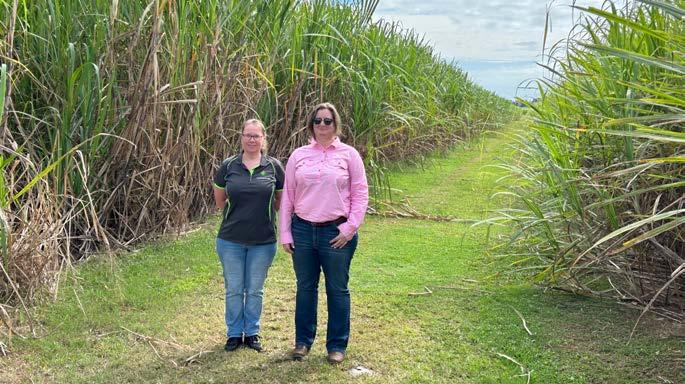
Cairns Region with Smartcane BMP manager Lindsey Perry
MODULE 4
PEOPLE AND BUSINESS
What is this about?
People are the most important part of any business. This module complements a grower’s accreditation in Smartcane BMP’s farming practice modules (Module 1, 2 and 3), by focusing on the health and welfare of you, your farming business and your staff.
Module 4 also complements our core modules by addressing the people-focused issues that are now seen as an essential part of being ‘sustainable’. And we continue to see a global shift towards supply chains that can assure each entity in that chain is sustainably managed. We already know Australian sugar is the best in the world, but we may need to start exporting certified sustainable sugar to satisfy some export markets. In response to these market pressures, organisations like VIVE, Proterra, and Bonscuro have developed ways to certify that the supply chain (growers, millers and refiners) meet global standards. Importantly, we are working with VIVE and Proterra so that Smartcane BMP is integrated as the farm-level assurance process.
As it is the whole supply chain that is certified, meeting requirements is generally only possible if your mill is certified by a global sustainability standard (e.g. VIVE). If you’re already accredited with Smartcane BMP in Modules 1 to 3, you’re almost there in terms of meeting the on-farm requirements of the global standards. We developed Module 4 to provide the remaining assurance required by a certified supply chain.
Why is it important?
For large manufacturers to show they use sustainable sugar, every part of the production process—from farm to plate— needs to meet the global standards for certification. We’re still in the early days, so we don’t know for sure how this will affect our industry. Certified sugar may attract a higher price in the short-term, but in the longer term it may just be part of doing good business. This has become the case for the volume of Australian raw sugar that supplies domestic markets.
YOUR FARM, YOUR WAY Smartcane BMP is a program for you to document and celebrate the way you farm.
CRAFTING A CUSTOM FIT
BY RENEE CLUFF
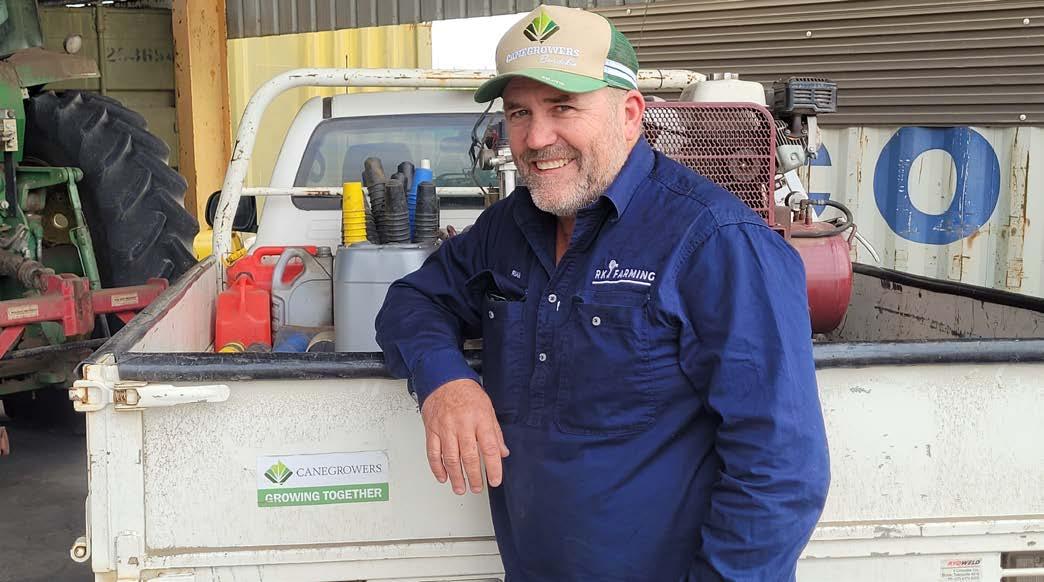
Burdekin district sugarcane grower Rian Swindley is blending tradition and innovation to create a thriving farm that honours the past while firmly planted in the future.
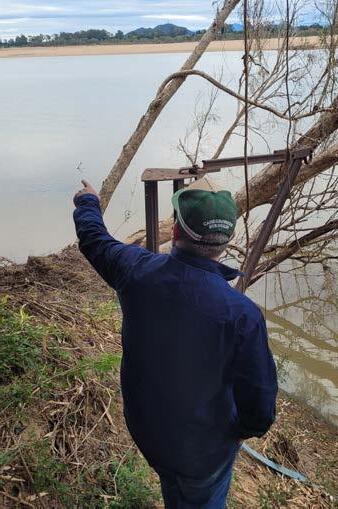
On the banks of the Burdekin River at Osborne, just west of Home Hill, Rian Swindley is redefining farming with a personalised approach, carefully customising 100 years of family farming legacy.
From cultivating watermelons as a strategic break crop to embracing renewable energy, Rian is forging his own path that suits not only his household’s needs but meets the requirements of agribusiness in the present era.
Rian, the youngest of nine children, said farming was his calling from a young age. “There was nowhere else I was going to be,” Rian recalls. “I was the youngest; Dad was 51 when he had me and I was like his shadow.”
Across: Watermelons are rotated with sugarcane to break the monoculture
Below: Working the land was something Rian aspired to do since childhood
A third-generation sugarcane grower, Rian’s connection to the land is deep-rooted. He not only farms in the footsteps of his grandfather and father, but he and his wife Kirsty have raised their three daughters in the home his grandparents built.
His late father, Kevin, who’d built upon his own father’s business, meticulously documented his daily activities in a diary, creating a now-cherished farming record. Upon Kevin’s death, Rian initially ran and expanded the operation alongside his brother. Since splitting up the farm, Rian now oversees approximately 300 acres, cultivating sugarcane, watermelons, and occasionally pumpkins, with a focus on quality and efficiency.
While watermelons are the mainstay of rotational cropping management, Rian has tried a variety of other options including mung beans and popcorn. He opted to streamline his system about five years ago, when over-ambitious diversification proved impractical.
“That December, we had 50 acres of mung beans, we were picking melons, we had popcorn and we were cutting cane,” Rian explains. “We were flat out, we had stuff going on everywhere. Farmers have a way of complicating things I always say.”
“We’ve now gone to horticulture for the rotations and watermelons work pretty good within sugarcane because it breaks that monoculture. All our ground prep gear is the same and once
you’ve laid the plastic tape and the mulch, you don’t really use any heavy equipment.
“We’ve got a bit of a different mix of spray equipment for the two crops plus two trailers and two smaller tractors for watermelon picking. When we’re picking melons for six or seven weeks of the year, you can’t use the tractors elsewhere because you’ve got picking trailers on them. Once the pickers go home, I need another tractor to get out in the cane and run irrigation lines and things like that.”
Between 50 and 60 acres of melons are grown annually, with harvesting labour hired through a local labour hire firm who utilise the Pacific Australia Labour Mobility (PALM) scheme. Rian highly rates the work ethic of the Pacific Islanders.
“They’re happy and they do the job and they turn up on time,” he said. “You come in in the morning, set up the pallets, do the induction, they go along picking and everything just works.” 1,000 tonnes of melons were picked last year.
When it comes to the sugarcane harvest, Rian is concerned about a lack of skilled labour for haulout driving, as well as rising costs of labour and mill reliability contributing to contractors getting out of the game.
“When I started driving the harvester in 1993, we were Monday to Friday, the mills were processing similar tonnages on the same roster and we used to be finished by Melbourne Cup Day with the Home Hill Harvest Festival the end of year celebration,” he fondly recalls.
“The millers have also lost a lot of knowledge and experience out of their workforces which has contributed to longer seasons, even though they have moved to continuous operations.
“We had wet years back then too, but mills seemed to have had the capacity to get going again and process cane with mud in it. Now if there’s a shower, the miller is straight on the phone about mud!”
It’s part of the reason he stopped cutting his own cane in 2020 and now relies on contractors. It’s a facet of
farming he readily admits he misses due to the tangible sense of progress it provides.
“The beauty about cutting cane is you start the block and you cut all day until your bins run out,” he said. “You feel like you’ve achieved something.”
Over the past five years, two of the harvesting groups he’s been a part of have folded. “We’re competing with the mines for the same people,” he said. “If the Australians don’t want to do the work, bring in the Islanders for six months, train them up and see how it goes.”
Labour concerns have largely otherwise kept Rian’s operations in-house. Kirsty works alongside her husband, responsible for a range of tasks from keeping the accounts to managing the packing shed.
“Sometimes I think you’re better off saying, ‘We’ll just do what we can ourselves’,” he acknowledged. “There are jobs that Kirsty and I can do – we don’t need anyone in.
“It’s horses for courses.
Rian has continued the family tradition of representing and advocating for the local sugarcane industry
“You’ve just got to do what works for you”
They’ve further streamlined farm management by reducing tillage over the past 15 years.
“Before then, it felt like you were forever on a tractor, you might have done seven or eight cultivations, a light cultivation just to scratch the weeds, then a heavier cultivation, then drill it out, water it. We’ve definitely cut back,” Rian said.
“Last year I pretty much cultivated right behind the harvester and then went straight back and fertilised and hilled up and then just basically sprayed.
“We’re definitely not zero till but you’d probably class it as minimum. We have gone zero till on one block and we grew a really good crop, right throughout the crop cycle on that. We are strategic about it now.”
Rian utilises both Burdekin River allocations and underground water for irrigation, optimising water and energy use across his operations through solar-powered pumps.
Two years ago, he invested $150,000 in installing six solar systems on his farm. He estimates this has reduced overall power expenses by between 50-percent and 75-per-cent.
“It’s a big outlay but solar is certainly helping,” he said. “We haven’t paid a power bill for one particular pump since we put the solar in. Effectively, we’ve grown our full melon crop off solar.”
Further underscoring his commitment to the financial and environmental benefits of renewable energy, Rian has invested in Burdekin Renewable Fuels, a company owned by sugarcane growers which is exploring the development of new products and sources of revenue from sugarcane.
Currently, it’s investigating the pelletisation of tops and trash for use as renewable energy feedstock in coal-fired power plants and to create biomethane to decarbonise LNG.
Rian is actively involved in other industry pursuits, too, continuing another family legacy. He serves as a Director on the CANEGROWERS Burdekin Board and is a Harvest Management Grower Representative. His father Kevin and brother Craig were involved in local mill suppliers committees and his mother, Cecilia,
also served a term on the board of the Inkerman Mill Supplier Committee.
“I think Mum was the first female to be appointed to a board back in the late 1990s and was elected through the voting process by growers,” he declared proudly.
Beyond the boardroom and farm blocks, Rian has displayed a commitment to education and the sugar industry’s next generation, evident through his role in launching the Burdekin’s Sweetest Schools competition. Aiming to engage students in agriculture and sustainability, the program’s inaugural awards ceremony at the Sweet Days, Hot Nights Festival earlier this year cemented its success and continuation into the future.
It’s further evidence that while Rian employs a tailored approach to agriculture, his core values are deeply rooted in family and community.
Rian uses an allocation from the Burdekin River, as well as bores, to irrigate his crops
Left:
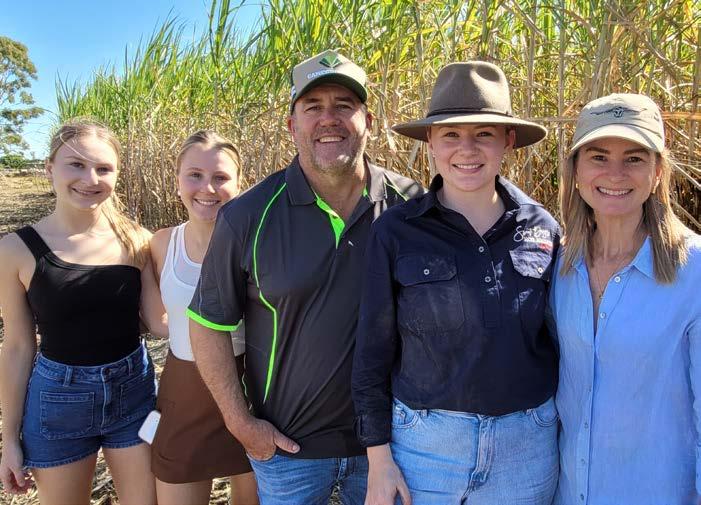
Right: The Swindley family at the Sweet Days, Hot Nights Festival: L-R Ava, Sienna, Rian, Faith and Kirsty
FUTURE FARMERS GET THEIR BOOTS DIRTY
Find out more at the Australian Future Farmers website
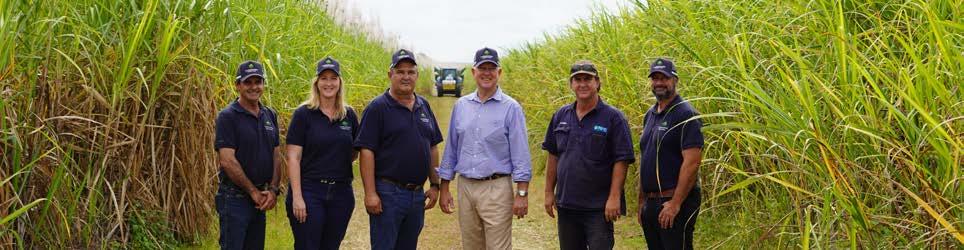
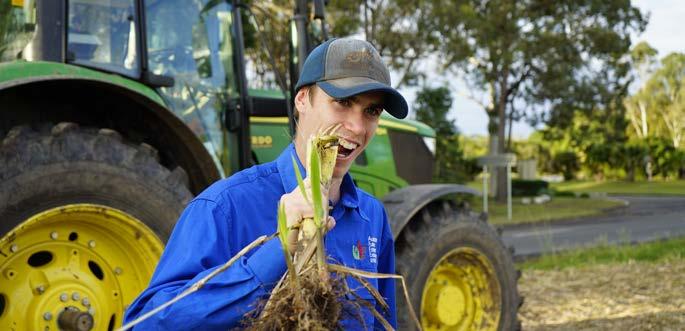
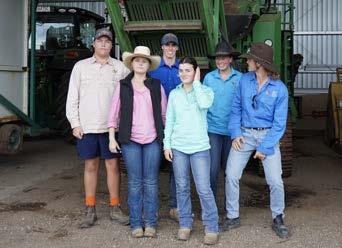
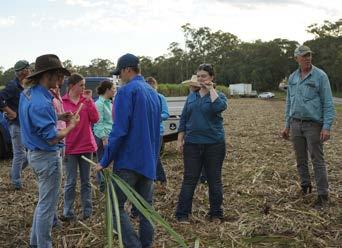
A group of high school students from across Australia recently got a hands-on taste of life on the land as part of the Australian Future Farmers Exchange program, which included a visit to Petersen Farm’s sugarcane and pineapple farm in Hervey Bay.
The exchange, founded by agricultural educators Amanda Naish and Russell Berlin, gives students the opportunity to experience different farming systems, industries, and regions firsthand. The idea for the program came from a chance meeting at an agricultural conference.
“We just started talking about how cool it would be to show our kids different parts of the country, and six months later, the first exchange was happening,” Amanda said.
ENHANCE YOUR SKILLS
WITH
QLD’S
LEADING
SAFETY
AND TRAINING PROVIDER
Whether you’re new to agricultural operations or an experienced operator, our courses provide you with the skills, knowledge, and confidence to advance your career.
TRAINING FOR SAFER FARMING
Short Courses
•Plant and Machinery (Earthmoving, Loading, Haul) •High-Risk Work Licences •Chainsaw Operation
• Agricultural Chemicals Distribution Control (ACDC)
Qualifications
• Certificate II in Agriculture
• Certificate II in Conservation and Ecosystem Management
• Certificate III in Conservation and Ecosystem Management*
• Certificate II in Rural Operations
• Certificate III in Rural Operations* *Government funding available under the Certificate 3 Guarantee. Eligibility requirements apply.
On the Hervey Bay leg of the tour, students were hosted by brothers Ashley and David Petersen, who grow sugarcane and pineapples and also run contract harvesting services.
“The more that young people can get out of town and see what farmers do, the better,” Ashley said. “They get to broaden their horizons and get dirty boots – that’s what it’s all about.”
Students on the exchange spoke enthusiastically about the experience. “I’ve had the best time. I don’t want to go home,” said one student. “We’ve all made lifelong friends. It’s been incredible.”
Another said the highlight was seeing the full production cycle, from paddock to product, and discovering career opportunities they hadn’t previously considered.
“There’s stuff we don’t have in Victoria, different factories, different jobs,”
OVER 100,000 STUDENTS TRAINED TO DATE
said another participant from Victoria. “This has opened my eyes to what’s out there.”
Amanda Naish explained that the program isn’t just about showing students new farms, it’s about building real-world connections.
“We want them to go out, talk to people in the industry, get sponsorship, and maybe open a door to work experience or a future career,” she said.
The exchange has already led several alumni into ag-related careers or studies.
“It’s so encouraging to see our students end up working harvest in WA, on vegetable farms in the Lockyer, or studying agribusiness,” Amanda added.
As the industry looks for ways to attract the next generation, programs like this are proving that the future of farming is in good hands – and muddy boots.
Students from all over Australia got hands-on experience from visiting Petersen Farms on the outskirts of Hervey Bay
YOUNG SCIENTIST STUDIES SOIL FUNGI TO COMBAT YIELD LOSS
SUPPLIED BY SUGAR RESEARCH AUSTRALIA
PhD student Steele Ford is undertaking a comprehensive study to identify and assess organisms in soils that cause disease in sugarcane.
Soil-borne pathogens are a major but often overlooked cause of yield loss in sugarcane farming systems. Their symptoms are frequently mistaken for physical rather than biological stressors, such as nutrient deficiencies or excesses, soil compaction, or toxicity. However, diseases such as Pachymetra root rot and nematode infestations can cost the Australian sugar industry more than $120 million annually.
With climate variability and evolving farming practices, previously minor or unknown pathogens are emerging as serious threats. Recent studies have linked fungal pathogens to germination failure and poor crop establishment, causing up to 60–70% germination loss in affected areas.
However, there is limited information on the diversity and impact of soilborne pathogenic fungi in sugarcane. To address this gap, PhD student Steele Forde, based at SRA’s Woodford Pathology Research Station, is undertaking a comprehensive study to identify and assess these pathogens.
Steele will survey this fungi throughout the sugar industry. In collaboration with researchers from Griffith University, he will use advanced molecular techniques to identify pathogens from collected soil and root samples. These pathogens will then be tested under glasshouse and field conditions to evaluate their impact on plant health and yield.
This research will provide the industry with new insights into the diversity, distribution, and the damage potential of soil-borne pathogens in sugarcane. It will also inform management strategies to mitigate their effects and improve crop productivity.
HOW YOU CAN HELP
Steele is seeking assistance from sugarcane growers, regional CANEGROWERS and SRA staff, local productivity services, and other industry stakeholders to collect soil and root samples from all types of soil in the sugar industry.
He welcomes direct submissions of soil samples from growers and industry partners for testing for nematodes and other pathogens. All results and data will be handled with strict confidentiality, and feedback will be provided to contributors.
Here are instructions for collecting your soil sample
For more information, please contact:
Dr Shamsul Bhuiyan sbhuiyan@sugarresearch.com.au
Steele Ford sford@sugarresearch.com.au
To encourage young scientists to consider a career in the Australian sugar industry, SRA provides sugar industry postgraduate scholarships each year for students at Australian universities and institutions to facilitate research and training projects in areas of value to growers and millers.
This project is jointly funded by Griffith University’s Ring-Fenced Scholarship program and the SRA Postgraduate Research Award.
Steele Ford and SRA Pathology Senior Technician Anuroop Manandhar collect soil samples at Woodford
UNCOVERING SUSTAINABLE FARMING PRACTICES
SUPPLIED BY SUGAR RESEARCH AUSTRALIA
Environmental Science students from the University of Queensland recently visited the Tully region to provide the students with an opportunity to gain firsthand insight into the Northern sugarcane industry, learning about sustainable farming practices, precision agriculture, and renewable energy generation.
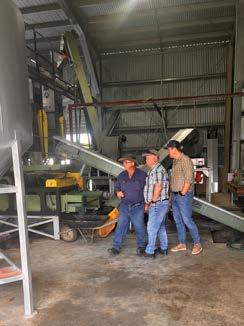
Guided by Sugar Research Australia’s (SRA) Northern District Manager Jess Portch, Burdekin District Manager Terry Granshaw, Tully CANEGROWERS Manager, Barry Dun and Tully Sugar Cane Productivity Manager, Greg Shannon, the tour began at Tully Sugar’s farm, where the group was introduced to the unique environmental conditions under which sugarcane is grown.
Greg Shannon spoke about the significant role weather plays in farming operations and the importance of water quality monitoring to maintain healthy catchments. He also highlighted the benefits of incorporating legumes and other
fallow crops into sugarcane rotations, explaining how they contribute to soil health and nutrient management.
The students then visited Dore & Co’s farming operation, where host Jamie Dore showcased cuttingedge farming practices, including controlled traffic farming and the use of precision agriculture technologies to enhance efficiency and reduce environmental impacts.
SRA’s Terry Granshaw gave examples of farming practices in other regions that resulted in improved productivity and positive environmental outcomes. He discussed farming systems in the Burdekin and how irrigation, drainage, and automation are reshaping agricultural productivity and sustainability in North Queensland.
After visiting Tully’s iconic Golden Gumboot, the students toured the Tully Mill. Guided by Barry Dun and Tully Sugar Electrical Engineering Manager Ian Speziali, they explored the mill’s operations and learned how byproducts like bagasse are used in cogeneration to produce electricity –powering the mill and supplying energy to the grid.
RESEARCH TO BENEFIT GROWERS’ HIP POCKETS AND THE ENVIRONMENT
SRA has funded a number of projects which aim to ensure the accurate and effective application of inputs to achieve the best take up and efficacy in crops while at the same time saving growers’ hip pockets and the environment.
Details of these projects can be found on the SRA website: sugarresearch.com.au
The students inspected the recently commissioned turbo generator and associate control systems. A number commented that the high level of sophistication exceeded their preconceptions.
The tour provided students with valuable insights into the practical challenges and innovations shaping the sugarcane industry and demonstrated how farming, science, and environmental stewardship work hand-in-hand in Far North Queensland.
Cane grower, Jamie Dore, and SRA Burdekin District Manager, Terry Granshaw (on his right), outlined modern environmentally friendly farming practices to the students visiting the Dore & Co. farming operation
CANEGROWERS REGIONAL ROUND-UP
SUPPLIED BY CANEGROWERS DISTRICT OFFICES
MOSSMAN
The drier period continued through June 2025 with only 36.8mm falling; less than half the monthly average.
July weather continued to be quite overcast for days at a time, but rainfall was limited.
At the end of four weeks crushing, Mossman has supplied a total of 32,302.35 tonnes of cane for an average of 11.70 CCS. Due to the quality of cane being supplied the range of CCS results has been quite wide even though we are only a few weeks in.
During July we were still experiencing issues with the number of trucks being available for cartage of Mossman cane, the issue mainly related to retaining drivers and available sub-contractors.
This is of concern to us because it means that Mossman growers are not delivering their daily and weekly quotas and with the mill operating well, they are running out of cane each day.
We were also advised that the current cut to estimate has the finish date moving back to the first week of November 2025. If it continues to reduce then we have a smaller window to deliver our full 200,000 tonnes of cane to Mulgrave, so it is crucial that we meet our daily and weekly delivery quotas.
The Douglas Shire Council hosted a State of the Region for Douglas businesses on Tuesday 1 July. The statistics suggested that the area had a better 2024 season than currently being experienced for 2025.
The stats also showed that the loss of the cane industry has impacted the Shire with the economic value generated by agriculture as a whole dropping noticeably in 2024 and taking agriculture to third in the list of economic contributions to the Shire’s economy.
The Board had a busy July with two updates on the sale of mill
assets, two Mossman Advisory Committee meetings – one on 9 July and the other on the 19 July, which was attended by the Qld Premier, Hon. David Crisafulli MP, Minister for Primary Industries, Tony Perrett MP and Local Member, David Kempton MP.
There was also a grower meeting attended by the Premier, the Minister and the Local Member to address growers, update them on activities being undertaken by various government departments to assist with the Douglas Shire situation and specifically the issues facing the cane industry.
TABLELAND
WABCG Conference –Cairns and Tableland Tour
The World Association of Beet and Cane Growers (WABCG) recently held its international conference in Cairns, attracting delegates from around the globe.
The third day of the event featured a field trip across the Tableland district, showcasing the region’s diverse agricultural landscape.
Tour highlights included:
• A visit to the Jack Murat coffee processing plant
• A demonstration of Bray Farming’s dual-row harvester
• Lunch at Tinaroo Dam
• A scenic drive down the Gillies Range to coastal cane farms
The tour was well received and provided international visitors
They spoke of continued support moving forward, and options for 2026 which would involve MSF Sugar. Another meeting the board attended was with MSF representatives regarding the proposal for a longer-term solution for growers to grow and supply cane to Mulgrave mill.
This option needs to be carefully considered along with moving forward with a biochar or bio-fuel type project. Grower representatives are keen to find sustainable and profitable options for growers, so they are not facing similar challenges in the future regarding unprofitable margins leading to another failed industry.
with valuable insights into the district’s innovative farming practices and natural beauty.
Tableland Mill Performance
The Tableland Mill continues to operate steadily; however, the average weekly crush rate has yet to reach the preseason target of 200 tonnes per hour. This falls short of the 215 tonnes per hour indicated as achievable during MSF’s preseason sessions. Notably, weather conditions have not hindered throughput this season.
Despite the slower-thananticipated crush rate, crop tonnage has improved by approximately 6% compared to the same period last year. Conversely, CCS (Commercial
State of Region meet, Port Douglas
Cane Sugar) levels have dropped by around 3%. The expected season end date remains late November to the first week of December.
Clean Seed and Plot Planning
Preparations are underway for the 2026 season’s distribution and mother plot, which will be located in the northern part of the district. This year saw a significant increase in demand for clean seed, with more distributed than in the previous three years combined. The current seed plot will close in late August.
CAIRNS REGION
The seed cane plot is now in full swing, with growers collecting their first allocations for the 2025 planting season. Operations are progressing smoothly and remain on schedule.
CANEGROWERS Cairns Region continues to hold constructive discussions with both MSF Sugar and CANEGROWERS Mossman regarding the future supply of Mossman cane to the Mulgrave Mill. These discussions are critical to ensuring a consistent cane supply and supporting the longterm sustainability of the Mill.
July presented some weather challenges for local growers, with
the region. This data is crucial for informing council of current trends within rural land-use zones and plays a key role in supporting CANEGROWERS Cairns Region’s advocacy efforts.
It assists in demonstrating both the economic and non-economic value the industry contributes to the region, reinforcing the need
INNISFAIL
The Innisfail region has enjoyed the best start to the crushing season since 2021 thanks to more favourable weather conditions.
At the time of going to print, more than 15% of the crop had been crushed. Planting rates across the district are also far more advanced than in previous years.
for ongoing support at a local government level.
CANEGROWERS Cairns Region is planning to hold a drone operators’ course after the season. Growers who are interested in attending a remote pilots training course are encouraged to contact either office to register their interest.
the expected seasonal showers coinciding with both the Innisfail and Cairns Shows. Despite this, planting and harvesting operations across the region experienced minimal disruption.
Recent meetings have been held with the Yellow Crazy Ants team to reinforce the importance of ongoing industry engagement.
In addition, Innisfail Babinda Cane Productivity Services recently presented its new membership and fee structure to the CANEGROWERS Cairns Region Board.
Engagement has also continued with Gilvear Planning to update land-use audit documents across
Early July was a busy period for office staff, who organised the sugarcane exhibit at the Innisfail Show.
TULLY
Feedback has been extremely positive, with prizes given out for heaviest sticks of cane, farm photography and children’s colouring-in.
A huge thank you to all the growers and their families who got involved, along with major sponsor MSF Sugar.
Favourable weather has allowed the season to continue without too much lost time.
At the middle of week 8, there has been over 670,000 tonnes of cane through the rollers. CCS is currently 12.30, which is 0.5 below the long-term seasonal average.
The top five varieties contributing to supply are Q253, Q208, Q240, KQ228
and SRA28, which account for 583,000 tonnes or 87% of total supply. Harvested blocks have yielded an average of 78.31 tonnes per hectare, down on original estimate of 82 tonnes per hectare.
Tully district has reached 30.03% of estimate and 27.5% of area. Average tonnes per hour through the rollers this year is currently at 706 tonnes. Total lost time attributed to growers for the season to date is 126.2
Top: The dual row harvester in operation
Bottom: Plumb Murat talking to a couple of the international delegates about the coffee bean sorter
hours of which 119.1 hours is due to wet weather, 5.7 hours lost to no cane supply and 1.5 hours to other. Mill lost time totals 89.7 hours for the season.
The combination of Tully Mill running well and cane yields cutting below average means the harvester sector is under pressure. This makes timely bin delivery and good communication between sectors even more important to be able to get the crop off efficiently.
Smartcane BMP numbers continue to rise in the Tully District, with very few growers not accredited for the program. Five-year re-accreditation is also a focus, with 98% grower re-accreditation success rate.
HERBERT RIVER
The Herbert district has experienced patchy rainfall during July, with the secondlast week of the month seeing weather-related impacts on harvesting and crushing operations.
Despite this, growers and harvesting crews have continued to adapt as best they can to changing conditions.
The 2% difference is due to farmers no longer farming sugar cane.
GPS technology is becoming increasingly popular as more affordable products hit the market. GPS steering wheel Auto Steer models are amongst the popular technology options, with accuracy and features like the more traditional models.
Fertilising has commenced for the ratoons, as the area enters round 3 for some of the harvesting groups. There have been fluctuations in fertiliser pricing, as energy prices increase and uncertainty across the world continues to dominate markets.
CANEGROWERS Herbert River has continued to advocate for timely and effective responses to these operational issues and has reiterated the importance of minimising these disruptions moving forward.
On a more positive note, planting operations are progressing well, with approximately 80 percent of the planned area now completed.
The recent spell of favourable weather has provided suitable conditions for this work to continue efficiently.
BURDEKIN
CANEGROWERS Herbert River also recently participated in the Ingham State High School Careers Expo. This was a valuable opportunity to engage directly with students and promote the wide range of career pathways available across the sugar industry –from agriculture and transport to science, technology, and mill operations.
Our participation reflects our ongoing commitment to supporting industry renewal and attracting the next generation of talent to the Herbert.
CANEGROWERS
Herbert River at the Ingham State High School Careers Expo.
In addition to the weather, crushing operations have faced further disruption due to a series of loco derailments, varying in severity.
One significant incident involved a sugar loco derailment that resulted in a two-day mill shutdown, affecting cane throughput and increasing frustration among growers and contractors.
The 2025 season has started to see the impact of wet weather from week ending 21 June which has continued into July with falls of up to 40mm at the time of writing with more rain forecast.
Wilmar had processed 28% of the crop by week ending 19 July and were slightly ahead of budget, but the impact of recent rain stoppages may see this change. Wilmar has found it to be problematic to process mud levels in cane deliveries and has rejected deliveries with high mud levels.
Growers should liaise with their contractors and ask them to lift their base cutters up in paddocks where needed to avoid sending unduly high levels of mud into the factories as it is not fair on other growers and contractors when the mill has to a stop due to high mud content in bins.
CBL Directors on the QCGO Policy Council met in Brisbane in July where CBL provided
an update to the state body on how the Burdekin district is travelling and represented members interests.
During the month, the CBL Board met with the Senior Project Officer (Reef), Plant Biosecurity and Product Integrity, DAF Pesticide Project with the following outcomes from that meeting: It is critical that growers read the label to ensure the right product is being correctly applied, audits are now going to be focused in the Home Hill area, and if a grower is Smartcane BMP accredited when they receive the audit letter they can request to have the audit cancelled by providing their Smartcane BMP certificate.
For record keeping, most growers are non-compliant as the paperwork is not being completed properly. However, once going through the audit process the position is gradually improving over time as their focus is on grower education.
With drones, the APVMA classify drones as a helicopter, therefore the helicopter rules apply.
If a label reads that the product cannot be used with a helicopter, the chemical cannot be used with a drone. Weather information is localised weather at the place of application.
Public consultation on water was scheduled to continue in July with a workshop to be held for the Burdekin Regional Water Assessment Stakeholder Update.
In terms of community responsibilities CBL were invited
PROSERPINE
Proserpine Mill opened the crushing on 22 June.
Approximately 25% of time was lost in the first four weeks due to no cane stops with ensuing wet conditions and rail logistical challenges.
Conditions improved into week five with 88,464 tonnes crushed. This increased the total crush to 268,104 for the season-to-date (week ending 19 July).
Overall, the mill performed well, and it is hoped this could continue for the duration of the 2025 crush to support a good crop for next season.
Cane quality remained reasonable with an average 13.13 CCS from the past week raising the overall year-to-date CCS to 13.02. Unfortunately, lower CCS from stand over cane made up approximately 8% of deliveries which impacted on average cane quality. It is hoped good performance into the future would avert this in coming years.
to participate in the Burdekin Shire Council's Burdekin LDMG Community Recovery Workshop.
CBL’s nomination to be on the North Regional Working Group for the Queensland Government's Primary Industries Prosper 2050 Blueprint was accepted where we will provide input to help draft the 5-year regional plans with the goal being to implement the Blueprint and 5-year Action Plans from 2026 onwards.
Let’s hope any rain stops are short lived so that we can get back into the swing of getting more cane off.
Following welcome support from Minister Ann Leahy, the Department of Local Government, Water and Volunteers continued to promote the submission of EOI’s for accessing unallocated water under the Whitsunday Water Plan.
CANEGROWERS Proserpine furthered communication to the relevant Department representatives and Minister to ensure water allocation and licenses could be secured by growers at an affordable cost. Review of the Water Plan has also been initiated, and CANEGROWERS Proserpine will continue to actively participate in the process.
Positively, the recent announcement of the 15% rebate for Sunwater customers should help offset the significant increase in water pricing from the recent Price Path announcement.
Following the announcement of the 2025-26 Whitsunday Regional Council rates, it was
Watts
soon found that amalgamation of sugarcane property rating categories had hit smaller properties hard.
While some larger properties would see reductions in rates, smaller cane properties would bear the brunt of the overall average 7% increase in rates of agricultural properties.
CANEGROWERS Proserpine continues to engage with Council in this regard with options, such as amalgamation, being explored.
Proserpine Mill Audits kicked off on 11 July. This was supported by an external audit done over the week ending 19 July.
This service on behalf of growers continues to ensure systems remain fair and that growers are paid their due. It's a core function of CANERGROWERS as an organisation.
Show Cane 2025 took place on the 20th of June with good support from both growers and sponsors. A highlight of the show was the Kids Cane entry where 14 youngsters got to show off their cane tying skills with some amazing prizes up for grabs.
Watts Farming took the CANEGROWERS Proserpine Insurance Trophy and Dale Holcombe won the perpetual Young Farmers Trophy. Lethebrook again claimed the best District Exhibit with FA & KL Clayton winning Champion Six Stalks of the Show.
The CANEGROWERS and Sugar Services Proserpine Sweetest Schools Program also launched this year and will be an exciting inclusion for the Show Cane event Next Year. We wish all the competing Schools the best of luck with growing their sugarcane plots over the next 11 months!
Dale Holcombe receiving Young Farmer of the Year Award from Cory O’Shea (Wilmar Operations Manager – Proserpine).
Farming, winners of the CANEGROWERS Proserpine Insurance Trophy
MACKAY / PLANE CREEK
The crush is making progress in Mackay and Plane Creek, despite some intermittent rainy spells keeping paddock conditions moist in some localities.
Mill performance has been generally consistent, although Plane Creek has at times been challenged by staffing levels.
Plane Creek growers who have had issues with bin supply are encouraged to make use of the event logging forms made available to them, and return these to CANEGROWERS Mackay.
Standover cane – widespread from 2025 in both Mackay and Plane Creek – has delivered higher harvesting costs for
many of those trying to remove it. In both milling areas harvest management committees are advocating for growers on this and other standover impacts to farm economics.
Mackay Area Committee is also communicating frequently with Mackay Sugar on the matter of the fraught rollout of its new mapping platform, which is steadily causing issues with equity management for harvest groups as the season progresses. While the miller apologises for the confusion and delays, we will continue to urge for a speedy resolution.
The district is excited to have launched the first Mackay Sweetest Schools competition.
Although we have three local Ag Shows, the inaugural comp will focus around Mackay Show. Planting at six schools is happening this month, and will grow through to June 2026. We welcome the support of Mackay Area Productivity Services and SRA Central Region assisting with clean seed cane and soil testing, the grower mentors who have volunteered to support students, and to Mackay Show for partnering with us.
Of special note, at the Mackay Show Cane awards on 18 July, Chief Steward Andrew Camilleri acknowledged the lifetime support CANEGROWERS member Charlie McLennan had given the Mackay Show cane section.
Mr McLennan recently died, although his cane legacy lives on through his son Darrell and
BUNDABERG
Bundaberg Sugar Mill processed 51,136.24 tonnes for the week ending 19 July 2025, this brings the season to date total to 348,938.98 tonnes.
The average CCS for Bundaberg Sugar Mill for week 9 was 13.57 CCS and the season CCS average for Bundaberg Sugar Mill is at 12.70 CCS. The highest individual CCS for the week was 16.00 units for variety Q208 Old Ratoon and the highest variety
Charlie McLennan, at right, was awarded for Lifetime Achievement at the 2024 Mackay Sugar Productivity Awards. Grandson Lachlan, seated, was awarded Most Promising Contributor. Also pictured Maureen McLennan, sitting, with Toni-Marie and Ian Dodd
grandson Lachlan. A Vale toast to Mr McLennan’s memory was offered by Mr Camilleri and assembled guests, with the announcement that a new trophy – the Charlie McLennan Memorial – would be added for the Schools competition, which Mr McLennan originated.
The 2026 Sweetest Schools winner will receive this trophy. CANEGROWERS Mackay is honoured to be associated with this, and we also pay tribute to such a significant member of our region’s canegrowing community. Any growers requiring assistance with any issues are encouraged to call 4944 2600 to get the ball rolling on a solution. Keep an eye on our Facebook page, The Billet and weekly District Manager Updates for emerging training and industry opportunities.
average CCS for the week was 14.45 units for variety Q249.
On 22 July we had the privilege of hosting Tony Perrett MP, Minister for Primary Industries, for a visit aimed at highlighting the significance of the Bundaberg sugar industry.
Key issues discussed included Reef Regulations, biosecurity, water, right to farm, bio-fuels and the 25-year road map to grow Queensland’s primary industries to $30bn by 2030.
The Minister’s tour included a visit to local cane farms as well as the Bundaberg sugar terminal, facilitated with the assistance of QSL and STL. The continued viability of agriculture in Bundaberg is essential for the regional economy.
Bundaberg CANEGROWERS’ representatives recently met with Avalo who use advanced breeding technology to develop more resilient, efficient and profitable crop varieties to hear how they can assist growers in our region.
The Queensland Government’s continuation of the 15 per cent discount for eligible irrigators has been a welcomed announcement.
The Scheme will be administered by Queensland Rural and Industry Development Authority (QRIDA), launching from September 2025 and will provide much needed support to our irrigators.
The initial boiler commissioning challenges experienced during the first four weeks of crushing have been successfully resolved, with mill throughput showing steady weekly improvements.
Isis Mill is currently on track for completion by late November, having processed just under 200,000 tonnes with a year-todate CCS of 12.90.
Recognising the significant stress placed on both growers and harvesting contractors due to the season’s delayed start, the Board requested a range of support options be put in place to assist growers.
These measures included linking growers with in-person cash flow and creditor negotiation support, facilitating access to available allowances and a new free farm & rural legal service.
currently underway and will be finalised shortly.
We continue to provide assistance to growers accessing disaster assistance grants, reviewing electricity tariff
comparisons and managing ORECO trash consignments. Additionally, we are actively participating in the Group Harvesting Equity Committee and regularly meeting with the Auditor.
The Board formally requested QSL accelerate the final 2024 wash-up payment due to growers and were pleased to see funds quickly disbursed through the collaborative efforts of both QSL and Isis Mill.
Growers are preparing for the Spring planting and conducting essential soil testing. Isis Productivity is scheduled to commence plant distribution in early September, supporting the district’s clean seed requirements and ensuring quality planting material is available.
We recently hosted QCGO staff members Burn Ashburner, Chris Gillett, and Dougal Lodge for a strategic planning session.
Working collaboratively with the Board, we updated our district strategic plan using the Project Headland framework. The refinement of our agreed targets, strategic actions, and implementation timelines is
Some good momentum into the season through the last month with the mill now settling into good production volumes.
District supply is now past 75,000t and CCS has improved to 12.55 season to date.
The changes at the transloader for loading of 6 rail bins per B Double is also settling and the average bin weight is pretty much 6t compared to previous years of well below 5.5t.
What that is helping with is the mill is now able to hold higher processing volumes, and we are seeing this work well. The other link has been the ability
to move the rail fleet and again some newly qualified drivers has helped smooth out movements.
The truck fleet is also quietly going about its work and linking well with harvesters.
The field conditions are interesting with good clear and crisp weather but still moist subsoil conditions meaning access to various blocks can be tricky. As we close in on the Spring planting period, a reminder that any RSD testing needs to be completed ASAP as well as soil testing.
Additionally, if you are looking for seed cane, you need to let Tony from MCPS know urgently to be able to source material.
The Rocky Point crush has had a patchy start to the season, with wet weather and Mill/Cogen issues slowing things down considerably.
At the end of week 4 (20 July 2025) the Rocky Point Mill has crushed a total of 26,325 tonnes of cane at a season average CCS of 12.59.
On 21 July 2025, the Mill/Cogen notified growers of a cease to the crush due to repairs needed to the Cogen cooling tower.
The Mill has indicated that it will be out for at least a week and will be updating us on 25 July as to when they anticipate a restart.
Since the start of the crush, the district has received approximately 120 mls of rain on top of already saturated fields.
The Fire Ant Suppression Taskforce is due to commence area-wide (approx. 7500 ha) fire ant aerial baiting from 28 July 2025, weather permitting.
ROCKY POINT
ISIS
MARYBOROUGH
TECH MEETS TRADITION
AI STARTUP EXPLORES SUGARCANE SUSTAINABILITY
A new player in agricultural innovation is turning its focus to Queensland’s sugarcane industry, combining cuttingedge technology with grower know-how.
US-based crop evolution company Avalo has teamed up with Coca-Cola Europacific Partners (CCEP) to explore how artificial intelligence (AI) and datadriven insights can help sugarcane growers improve productivity and reduce environmental impact.
Avalo’s co-founders, Mariano Alvarez and Brendan Collins, share a passion for using technology to solve realworld problems. That vision led to the creation of Avalo’s AI-powered “Rapid Evolution Platform™,” which uses machine learning to better inform agricultural decision-making and speed up beneficial trait development in crops.
After extensive work in the United States, the Avalo team is now on the ground in Queensland, meeting with local growers to understand their challenges and gather farm-level data.
“The best starting point is simply sitting down and listening to growers,” Mariano said. “They have a wealth of knowledge – much of it not written down – and that information is vital.”
Chief Commercial Officer Tricia Carey said the visit is part of a fact-finding mission. “Our platform collects huge amounts of data – soil types, weather, irrigation, landscape – to help build
models that inform better variety selection and genetics tailored to each region.”
Growers often plant multiple cane varieties because they don’t know which will perform best. “Even within one paddock, variations in soil or water can affect results,” Tricia said.
“AI can uncover insights that traditional methods simply can’t. It’s about removing uncertainty and giving growers more confidence in their choices.”
The collaboration is part of CCEP’s push to reach net zero emissions by 2040.
“Ninety percent of our Scope 3 emissions come from our supply chain, and a third of that is in ingredients –mostly sugar,” said Vitanya Keary, Senior Manager of Global Procurement Sustainability at CCEP.
“We need partnerships like this to help us reach our sustainability targets.”
With support from CCEP Ventures, Avalo is visiting farms from Mackay to Bundaberg, aiming to work alongside growers to build a smarter, more sustainable sugarcane future. Their hope is to bring tangible, sciencebacked solutions to the paddock.
Longer weed control a big win for cane growers
ADVERTORIAL
Achieving season-long control of grass and broadleaf weeds in sugarcane crops is a constant challenge, however strategic herbicide applications and wider management is helping various Northern New South Wales growers to get the upper hand in the battle.
Murray Connor, Agronomist with Nutrien at Grafton, said sales of one of the powerful herbicides, Palmero® TX from ADAMA Australia, had increased significantly in the region.
Combining two active ingredients, isoxaflutole and terbuthylazine, and having no time of use restrictions, Palmero TX has provided excellent residual control of many challenging weeds following post-harvest applications.
Born and bred at Grafton, Murray supports sugarcane, broadacre and horticultural crops throughout the area.
He said terbuthylazine was a new active ingredient used in cane through the area and had helped provide the strong residual control.
“We haven’t been able to get residual control for the length of time it has shown,” Murray said.
“We have been dependent on atrazine and metribuzin chemistries, so to have alternative chemistry is a big benefit and it has given us that extended control. This also suits a lot of cane growers, because many of them work off-farm as well, so they are time poor.”
He said blue top (billygoat) weed was a main target, as well as various grasses and convolvulus vines, and applications of Palmero TX in early ratoons had worked well.
“It’s good to hit them early, after harvest and get long residual control through to the out-of-hand stage.”
“It’s UV stable, so you can get it on after the second or third cut around October. When used at the full rate, some growers have got away with just the one spray and without having to come back with the Irvin legs. They may still have a 2,4-D spray over the top around Christmas, but they don’t have to apply residual herbicide again,” Murray said.
For Lawrence grower Rex Green, adding Bobcat® i-MAXX herbicide to his weed management program in sugarcane has helped to improve the length of weed control and, hence, potentially reduce applications.
Bobcat i-MAXX, also from ADAMA Australia and with no time of use restrictions, combines the strengths of hexazinone and imazapic active ingredients for excellent knockdown and extended residual control, as well
as providing important resistance management benefits.
Rex and his sons, Jake and Greg, crop around 260 hectares to cane alongside the Clarence River, located near Yamba in Northern New South Wales. The Green family has farmed there since the 1880s, progressing from dairying and mixed crops production to predominantly cane, whilst also running a few cattle.
Summer grasses, crab grass and pink bindweed are some of the major targets for the Greens on their properties.
“Keeping the pink convolvulus under control is important because they can grow up through the cane and pull it down,” Rex said.
Trent Stainley, Agronomist with Norco Agrisolutions at Grafton, supports the family’s herbicide decision-making, which has centred on using a diverse mix of herbicides.
Significant areas of plant cane are treated with metolachlor, while Bobcat i-MAXX has been used in recent times at the out-of-hand stage, replacing applications of isoxaflutole. Prior to that, diuron, atrazine and paraquat herbicides were used.
“We are using Bobcat i-Maxx because we get such great, long control, and we add some paraquat with it to burn weeds off that have emerged,” Rex said.
“We are also using Bobcat i-Maxx with later ratoons, where we might only have one application with fertiliser. We can cut in November and then hit it for one-pass weed control and fertilising.”
For further information on Palmero TX and Bobcat i-MAXX herbicides, growers and advisers can contact their local ADAMA Australia representative or visit ADAMA.com
Norco Agrisolutions Grafton-based agronomist Trent Stainley (centre) with Lawrence sugarcane growers Jake and Rex Green, Northern New South Wales. Rex says adding Bobcat i-Maxx herbicide to their weed management program has improved the length of control
HOW DO YOU LIKE TO CONNECT?
Membership Engagement & Innovation
BY MATT KEALLEY
If you’re anything like me – you have one or two favourite places you get your trusted news and information.
I like the ABC News app for local and Australian news. I often watch SBS news on television for international events and updates. I will check Facebook and LinkedIn for my neighbourhood-social updates and career-business related news.
I often go down the YouTube rabbit hole and watch a couple of US late night TV shows on my phone which cleverly incorporates satire and humour about the events happening in the US. The YouTube algorithm often suggests news and current affair segments from other US TV stations, as well as stories from Canadian and UK media. The algorithm is smart and knows what will capture my attention based on my viewing habits. I have a love-hate relationship with this IT-online-wizardry, but the technology is hard to ignore when the pings are continually competing for my attention.
I swear my attention span has decreased. Not to the point of a goldfish but it’s not what it used to be.
In this modern technological age of Artificial Intelligence (AI) and 24-hour news cycles, there is a persistent bombardment and overwhelming volume of information. Communication overload is a real thing. Research from Neilsen Reports and Statistica show we get subjected to around 10,000 daily
brand exposures every day. 10,000 a day! I thought that number was a little high, but then I started to take notice and it's confronting.
The average Australian consumes seven to nine hours of screen media per day (phone, TV, and computer) with an estimated 500 to 1,000 ad impressions per hour, particularly if you’re scrolling social media.
No wonder we have shortened attention spans and seem numb to information that may have more importance and relevance.
Communication – you do you
Depending on when you were born, where you grew-up and the influence of the technology of the day, the way you take in information will vary. Given that there are multiple generations running farming businesses in the cane industry from Baby Boomers (born 1946-1964) to Generation Z (1997–2012), you are likely to gravitate to communications styles from your upbringing. For example, Baby Boomers grew up with one-way mass communication from TV, radio and newspapers. They can feel inundated by the pace of modern digital content and prefer clarity and authority in messaging. Whereas Gen Z have grown up with social media and short-form content. They can process information quickly but have lower long-term retention and prefer raw unfiltered messaging such as memes and vlogs.
Table showing the generational preferences to communication styles and products
Generation X 1965–1980 Email, TV, websites, mobile Filters heavily, fatigued by multitasking
Millennials (Gen Y) 1981–1996 Social media, messaging apps, email Mutes, blocks, unfollows – digital burnout is common
Generation Z 1997–2012 TikTok, YouTube, DMs, SMS Multitasks, emotionally influenced, short attention
Generation Alpha 2013–2025 Voice assistants, video platforms Overexposed from early age, attention shaping
I can’t remember the last time I read a physical copy of a newspaper. I don’t drive into work, so seldom listen to the radio and when I am in the car, I will play a CD from my vast collection that is now collecting dust in storage. The TV tends to be in a relationship with the streaming services of Netflix and Stan, and I often listen to music from the 80’s, 90’s and 2000’s on Spotify through headphones wirelessly connected to my phone. If I’m not in the mood for music I will settle into a podcast series or an audiobook while doing household chores or gardening duties.
What does this say about me? I am Generation X, born in the 1970’s. I miss the nostalgia of an analog world – CD’s, rewinding the video cassette tape before taking it back to the video store, having to wait a whole week for the next episode of Beverly Hills 90210 or settling in on a Saturday night for Hey Hey it’s Saturday. Yet I love how digital technology can deliver the information and entertainment that I want direct to my device.
I am curious and like to curate and customise the media that I consume. But I also have a healthy scepticism of who is influencing my viewing habits and using my data. We are addicted to technology and feeding it with our personal information and habits. This makes getting the relevant and useful information to growers for member engagement somewhat challenging.
As you can see from the table, each generation has certain traits on how they like to engage and how they react to too much information. The challenge and opportunity for CANEGROWERS is understanding these traits and aligning it with our communication and engagement strategies.
Communications insight from the member survey
In March 2025 CANEGROWERS ran its member survey and the results from the communications section were insightful. CANEGROWERS and all our district offices have a wide range of communication channels and resources available to members. These include the Australian Canegrower magazine, district magazines, newsletters and emails, monthly member emails, the website and member portal, social media platforms, webinars, podcasts as well as member meetings, shed meetings and video meetings. We also get our messages out to digital and print media, TV, radio and social media networks.
The survey results showed most members rely on CANEGROWERS publications as a first reference point when seeking information. 85% of our members read the Australian Canegrower magazine and 61% use the magazine when seeking information about the sugarcane industry.
There is also strong usage of district magazines, newsletters and emails. Digging a little deeper into the data, 84% of growers under the age of 45 read a printed copy increasing to 95% for growers over 65. There is a growing uptake from
growers reading the electronic version in addition to the printed copy especially by growers who are in their mid-50’s to early 60’s.
It’s great to see the continued value of the printed magazine even with our younger members. I think this is because it’s tactile, has a broad range of informative stories and is delivered through the mail, so it doesn’t get lost with all of the other stuff coming via email, text, social media or on the mobile phone.
Readership of CANEGROWERS communications products in 2025
Australian Canegrower magazine
District magazines, newsletters & emails
Monthly member emails
The future
With roughly half of our membership over the age of 55 (Gen X and Baby Boomer) and the composition of the farming workforce becoming dominated by Millennials and Gen Z in the next 10 years, our current engagement will need to change. I see this moving from a broadcast authoritative style using multiple digital and traditional channels to a data-driven, immersive AI communications approach. This future will include real-time dashboards and greater use of interactive knowledge platforms such as visual content, explainer videos, virtual reality (VR) experiences and gamification.
Part of our success is how we get our messages to growers and the industry and stay relevant to our member’s needs. CANEGROWERS continually seeks feedback from our members to ensure our trusted traditional channels are available while we evaluate the digital communications needed for our future members. We are already on the AI and VR journey.
While I sometimes miss the slower paced 90’s, I’m glad I don’t have to rewind that movie and return it to the corner video store and instead access information on demand from around the world, based on my interests.
REEF WATER QUALITY PROGRAMS – HAVE WE LEARNT ANYTHING?
Sustainability & Environment
BY MICK QUIRK
Various Reef water quality projects have been implemented since 2009, primarily through Federal Government funding of programs such as Reef Rescue and Reef Trust.
Most sugarcane projects have tried to incentivise greater adoption of practices that can reduce the amounts of dissolved nitrogen or crop chemical that leave farms and enter waterways. What has been the wash-up from all of these activities?
One recurring theme for the sugar industry has been strong participation. For example, Reef Trust program reports state that:
During the 2009-13 Reef Rescue program, 1,850 growers participated in projects and there was practice improvement on 295,000 ha of cane land.
During Reef Trust programs from 2014 to 2022, somewhere between 500 and 1,000 growers participated and the area with practice improvement was 143,000 ha.
Most recently, the 2018-24 Reef Trust partnership program involved 950 growers and has 150,000 ha of practice improvement.
Even allowing for growers being involved in more than one program, these participation numbers and the reported area with improved practices are huge.
So, you would think that growers might have been recognised and congratulated for their efforts. But no, quite the opposite, leading to another recurring theme in the sugar industry – frustration and insult
And the reasons for these feelings are obvious:
In 2013, the Joint Federal and Queensland Government Reef water quality report card claimed that only 10% of growers were doing ‘good’ management of crop nitrogen. By 2016, this figure was claimed to have increased to 18%. All that effort by growers and the reward for most was to be portrayed as poor farmers.
And things did not get much better in subsequent report cards. By 2019, the report claimed that only 22 % of growers were managing N well.
These report cards seem to delight in an old-school punishment approach – growers are failing badly and their grades of Poor and Very Poor were highlighted in bright red. All this was very motivating for the industry, not!
How does any of this align with the huge participation of growers between 2009 and 2019, and their widespread adoption of improved practices?
The growers participated and did their bit in these projects, so they should not be held responsible for poor project design or for the frequent change in the government’s rules of what good management means.
Most importantly though, there has clearly been a huge gap in expectations between on-farm reality of economic best practice and what the government thought growers could do with respect to use of nitrogen fertiliser and other inputs.
To illustrate: industry’s best practice nitrogen management occurs through the SIX EASY STEPS nutrient management program which is based on years of detailed field research. But this was not considered good enough by Government, which decided that best practice for water quality was based on a spurious concept called block yield potential, the latter requiring rates of N that are 30% below optimal.
So, this gap was entirely a result of governments targeting 100% adoption of practices that were often agronomically unsound and/or economically harmful. But the fault was placed on growers!
So, in effect (if not intent), growers were set up for failure. This leads to another recurring theme – industry’s advocacy for major reform
CANEGROWERS has consistently supported measures to reduce risks to water quality where these are:
Voluntary;
Proportionate to the environmental risk; and
Consistent with an economically sustainable sugarcane industry.
It has also long advocated for major reforms to the Australian and Queensland Governments’ arrangements under their 2050 Water Quality improvement plan. This includes reforms to ensure any future Reef water quality programs have objectives that:
Are realistic and practical, accounting for the factors that determine the adoption of new farm practices;
Align with the Smartcane BMP program (including management of N and other nutrients)
Are planned and implemented locally in partnership with industry;
Integrate continual improvement.
We see some ‘green shoots’ of these reforms being acknowledged and implemented, such as the Report Cards no longer grading growers’ practices, but the proof will come in long-term reform of the Reef plans, programs and projects. Promising signs include:
A DPI study entitled, Economic evaluation of sugarcane management practices that improve water quality This report backs up industry concerns but, of concern, the report is never referred to by bureaucrats – is it being ignored?
A review of land management target for Reef water quality, again done by DPI, that applied a localised process driven by local industry specialists, using evidence-based estimates of likely adoption rates. This has also not been made publicly available but hopefully is being utilised.
It remains critical that we continue to advocate for our major reforms to be reflected in the new version of the Joint Governments’ Reef Water Quality Improvement Plan. Only this will ensure future reef water quality programs are based on sound science, realistic expectations, and true partnerships with growers.
FATIGUE SHOULD NOT COST LIVES
Industry & Farm Inputs
BY BURN ASHBURNER
In Queensland’s sugarcane industry, long hours are part of the culture. Early mornings, late finishes, and pushing through harvest deadlines are seen as signs of resilience. But this mindset is proving deadly.
In 2024, Australian agriculture recorded 72 on-farm fatalities – more than double the previous year and the highest toll in over two decades. The sugarcane industry has also had its share of fatalities and near misses in the last few years. Among the causes, fatigue stands out as a silent but deadly risk.
Fatigue isn’t just about feeling tired. It’s about slowed reaction times, poor decision-making, and mental lapses that can lead to serious incidents. Farmsafe Australia’s recent “Second Chances – Who Knows How Many You’ll Get?” campaign is urging growers to take fatigue seriously –not as a personal weakness, but as a major safety threat.
“If you’ve ever nearly rolled a haulout, misjudged a turn, or skipped a safety step late in the day, you’ve felt the impact of fatigue,” says Farmsafe Chair Felicity Richards. “These aren’t close calls to shrug off – they’re warnings.”
In the sugarcane industry, fatigue often peaks during crushing season when pressure mounts to get the cane off. But deadlines must never come at the cost of safety. The hardest thing to do might be to stop – but stopping could save a life.
Growers and contractors are encouraged to rethink how they manage work schedules, particularly during peak times. That means planning ahead, building in rest breaks, and being realistic about what can be done safely each day.
Farmsafe offers several simple, actionable tips:
Build rest into the plan: Don’t rely on catching up later. Include recovery time in harvest schedules.
Speak up early: If a crew member is showing signs of fatigue, call a pause before a mistake happens.
Check in daily:
A morning toolbox meeting can reveal fatigue risk factors before work starts.
Set the tone:
Managers and farm owners lead by example. If you never stop, your team won’t feel they can either.
The campaign also highlights the psychological cost of burnout. Near misses, long weeks, and personal stress can weigh heavily and affect mental health. Farmers are encouraged to check in with themselves and their teams, not just physically but emotionally. Feeling “off” isn’t something to ignore – it’s a sign that support may be needed.
As we reflect on National Farm Safety Week, remember that the strongest growers aren’t those who never stop. They’re the ones who know when to pause, rest, and lead with safety.
There are regulations for fatigue related to heavy vehicles and WH&S regulations simply say that people must not operate heavy machinery at work when fatigued. This means that if there is an incident and WH&S get involved the onus is on the person conducting the business or undertaking to prove that fatigue was not the cause or part of the cause. This means doing the right thing and keeping records.
However, the best way to avoid any issue is to avoid fatigue in the first place. Not an easy task with pressure to fill bins and shortage of workforce.
However, let’s make fatigue visible. Let’s make safety the priority.
FINANCIAL STRESS CANEGROWERS
Legal Advisor
BY CHRIS COOPER
Sometimes in rural life things can be difficult, and financial stress might appear. This article provides information about some of the resources that are available to help deal with such circumstances.
Financial stress
Despite being good managers, some farmers and farm businesses can through no fault of their own, find themselves in circumstances of financial stress. There are various resources available to assist growers should those unfortunate circumstances arise.
One very useful legal resource is the Legal Aid – Farm and Rural Legal Service. The legal service is free and helps farmers and rural businesses who:
Have severe debt problems
Are in disputes with their banks or lenders
Are facing financial hardship relating to their business or
Have been issued with enforcement action, such as a repossession notice, by their bank or financier.
How do I engage with the Farm and Rural Legal Service?
The service has lawyers available who can engage with you in a confidential and convenient way.
They can usually attend your property and meet you in person. They can meet with you at the local legal aid office or some other mutually convenient place. They can give advice and assistance over the phone or video or by written communication.
What can the Farm and Rural Legal service do?
The service can provide free legal advice on the relevant law and provide legal options. They can write letters, give advice and opinions, negotiate on your behalf, attend with you in meetings and discussions and mediations with banks and financiers.
Contact details
call 1300 65 11 88
email frls@legalaid.qld.gov.au
visit a Legal Aid Queensland office in your area.
This article contains general advice only. The particular facts and circumstances of each case always need to be taken into account.
The comments in this article are general in nature. For further free advice and information about this topic or other legal matters, members should contact their local CANEGROWERS office or please contact CANEGROWERS Legal Adviser, Chris Cooper on Free Call 1800 177 159
FIRST 5 LINES FREE* FOR CANEGROWERS MEMBERS!
Book online 24/7 at www.canegrowers.com au or email us at ads@canegrowers.com.au
Next deadline is 20 August 2025
MOSSMAN – TULLY
Spit water 131 industrial pressure washer. Just been serviced. 15m hose. 12lpm at 1,800psi. $1,700 ONO. Ph: 0438 554 146
Heavy duty bar with two tine adjustable rippers, attachable straight to rotary hoe. $1,000 incl. GST. Ph: 0438 988 858
MSW S/S 3t fertiliser box, 178 Massey Ferguson with front end loader. Ph: 0497 857 368
Machinery and water allocation for sale –water allocation permanent sale, different parcels available. Krone Fortima V1500MC2 round baler, Bale King 5100 bale buster, Agrolead Lina Twin 4m double disc seeder with fert. box. All machinery as new with very little use. Price negotiable on all items. Ph: Robert pictures and pricing 0407 330 493.
* As a FREE service to CANEGROWERS members, Australian Canegrower will print suitable classified advertisements UP TO 5 LINES FREE, FOR ONE ISSUE ONLY. A charge of $5. 50 will apply for each extra line or part thereof. A charge will apply for advertising of non-cane growing activities. Advertisements must relate exclusively to cane farming activities, such as farm machinery, etc. Advertisements from non-members are charged at $11 per line incl GST. Only prepaid ads will be accepted.
2009 Kubota M125X tractor good condition 4,294 hrs, air conditioned cab 16 speed –$44,000 + GST; centre buster heavy duty Gessner 30" coulters and legs adjustable crumbler rollers and adjustable row width – $10,000 + GST; fuel tank on trailer approx 2,400L has unfitted new electric pump – $1,900 + GST; Bonel bag lifter good condition $2,000 + GST. Ph: 0407 554 146 or 0438 554 146
1997 Cameco 2500 harvester (used for billet planting) $75,000; HBM billet planter $15,000; single 2t tipper and double 2t tipper $8,000; John Deere 7200 (7,500 hrs) $45,000. Ph: 0448 814 655 or email gangemifarm@gmail.com for info.
1984 Toft 6000 plant cutter, 8,000 hrs. Rubberised rollers, elevator extension for 1.8m rows, swinging knife chop system. Good overall condition for its age, $12,000 + GST. Ph: 0419 021 012
John Deere CH570, 9,157 hrs, walking gear, 1 season 33,500t. Tidy machine. Ph: Frank 0417 720 764
JD 3140 needs attention. Ph: 0437 669 247 and leave a message.
Austoft 92 wheeley, rubber rollers, 3 blade chop, leg basecutter, used as plantcutter, hard to fault. Fiat 115/90 2wd. New Holland M135 4wd, new motor. JD3520 full track, GPS. Eco Grande 28 plate offsets, near new. Ph: Gordon 0429 941 218
Maschio G350 rotary hoe. Needs rebuild and new blades. $500. Ph: 0439 965 921
411R Fiat break pusher with water tank $3,000 plus GST. Ph: 0419 988 158 or 0417 720 764
Hino FS. 2003, 6 x 4 tipper truck, 18 speed road ranger, 4.7m body, swing tailgate, pull over cover, ring feeder and some parts to go with sale. Very good condition. $70,000 + GST. Ph: 0437 434 280
New cane stool splitter discs 30" x 10mm boron steel, $200. Ph: 0427 044 443
2020 Case 8810 fulltrack cane harvester. Purchased 2021, cut 3 seasons. In good condition with plenty of spares. Ready to cut. Tully. Ph: 0407 160 758.
Kubota Zero Turn ZG 222 with catcher 48" cut. Fiat 980 2WD – 3,500 hrs, Fiat 1000 2WD –5,000 hrs, John Deere 4040 2WD – 3,600 hrs, Chamberlain JD 4080 2 WD – 5,000 hrs, Case 2590 2WD – 5,700 hrs. Silvan Euro Spand CX2 spreader, portable bulk bin, Bunning Lowlander Mk 40-60 ag spreader (near new), complete tracks to suit cane harvester, and fuel trailer tank. Mulgrave area. Ph: 0407 160 673
Case/Stiger 9250 and 1200 Obryan ejector bucket. With cushion hitch. 6,366 hrs. Fitted with T3rra Cutta, I-Grade , Panasonic Tough Book 726 hrs and JD 3000 SF1 cab receiver, no auto steer. Also have T3rra design software to transfer to your computer. Does not come with bucket receiver or in cab John Deere screen. Have an assortment of spare parts for bucket and tractor. All in working order ready to work. Selling as is where is. Ph: 0428 682 886
Set of half tracks to suit John Deere 3520 cane harvester. Ph: Ferdinand 0421 043 609
Expressions of interest for shares. Email: rigato.office@bigpond.com with offer or any questions.
2012 John Deere 7200R tractor PTO, 3PL with quick hitch, 4 sets of remotes, front weights, front tyres 540/65R34, rear tyres 650/85R38, 4,510 hrs. In good condition. $150,000 + GST Ph: 0427 976 416
One pair 21L-24 Armour earth moving/quarry tyres, currently on a backhoe. Good condition. $700 each tyre plus GST. Ph: 0419 150 350.
2 x 440/65 R24 tractor tyres $1,100 incl. GST each. 2 x 540/65 R34 tractor tyres $2,100 incl. GST each. All four types as new only done 500 hrs. Ph: 0427 665 759
36 plate case 770 offsets, 30" discs $40,000 and HBM plant cutter with topper $4,400. 7ft slasher with Howard box – all refurbished – $10,000 incl. GST ONO. Ph: Gavin 0448 345 139
2006 Case IH JX109OU in good condition. Always serviced – 6,800 hrs $24,200 (incl. GST). Tully area. Ph: 0427 665 759
Tractor TE20 good condition $3,300 GST inclusive. Tractor AV International 130 with fertiliser equipment and scarifier $3,300 GST inclusive. Tractor AV International 140 with spray equipment $3,500 GST inclusive. Ph: 0428 183 307
Howard CH 2000 rotary hoe 4.2m wide, hyd 5 tyne ripper hillers new blades. $45,000 plus GST. Ph: 0429 912 135
Celli Tiger spike rotor 2.23m – fits on a rotary roe, $300. 186 Ross Road Deeral. Ph: 0412 968 434
Valley centre pivot 8 span all running gear tyres and rims $1,000 gearboxes $750, electrical motors & gear boxes $1,000 each ONO. 2x torsion axles v-shape 2,200kg each $500 ONO. Ph: John 0418 198 177.
6 cyl. Perkins turbo-charged motor, mounted on trailer to Kelly & Lewis water pump $5,500; 6t Newton bulk fertiliser bin $2,500. Ph: after 7pm or txt 0402 686 714 / 0407 144 637
2012 Case 8800 fulltrack cane harvester fitted with Trimble GPS and new walking gear. All in good condition. Mulgrave area. Ph: 0407 160 673
Fertiliser bin M.S.W, double row, 4t stainless bin, with double compartment and 4 cutters $25,000 (incl. GST). Ph: 0400 729 457
2022 Case 9900 cane harvester. Ph: Craig 0436 332 044
Liquid fertiliser applicator croplands rate controler, adjustable centres and new pump. Ph: Craig 0436 332 044
Bonal plant cane cutter, good going order, $1,000. Ingham. Ph: 0428 394 004 or 0431 458 850
Napier bearing home made solid frame 28 plate disc carries hydraulic lift, $5,000. 11ft crumble roller, $2,500. Don shearer 32 plate set of disc carries hydraulic lift, $7,000. Ph: 0409 346 966
Cane crate for hot water treating cane. Never been used. POA. Ph: 0408 889 446
2 x International 766, 1 at 10ft spacing, 1 standard, spare rear end for parts. Both run.
Ph: 0437 346 341
2 x 2015 JCB 3230 with 14t Corradini bins, 1 x 2017 JCB with 16t smart hauler, 1 x 2017 CH570 John Deere harvester.
Ph: 0439 766 800
Rainfall Report
Pair multiplyers with hydraulics suit JD3510 or JD3510 fulltrack harvester in GC, 3 row multiweeder $350 + GST, Dongough planter $1200 + GST, 80" Dondi rotary hoe $1200 + GST, 2 row Eureka ½ ton fert. box with 1 ¼ tynes S/S worm $1200 + GST, International BT D6 crawler and breakpusher, 1 pair 8 blade chopper drums for JD3510 or JD3510, 1 pair 10 blade chopper drums for JD3510 or JD3510 – 1 season old. Ph: 0428 879 341
HERBERT RIVER – BURDEKIN
Brought to you by
Toft 5000 harvester, rubber rollers, new tyres and hoods, in good condition, great plant cutter, $20,000 + GST. 3 ton side tipper for planting, $3,000 + GST. Ph: 0439 890 948
1980 Ford TW20 tractor, 3,500 hrs maximum, recently painted, good condition, make an offer. Ph: Laurence 0419 666 544
New Holland T6030 tractor 1,750 hrs. Near new tyres VGC $57,000 + GST. Ph: 0407 154 250.
2020 Case IH Austoft 8010 cane harvester, machine hours 8,250 and elevator hours 4,680, Scraper and Gripster tyres. All case modifications complete. All drive components current. Ph: 0428 635 922
BT D6 dozer, high lift, angle and tilt blade, five roller, 14" tracks, make an offer. Ph: 0438 743 685
3-point Linkage International plough, 4 furrows, 1 drag plough – 3 furrows, self lift, make an offer. Ph: 0438 743 685
Moore Scoopy LD3 4 wheel drive, fair condition, make an offer. Ph: Reno on 4777 6148 after 6pm.
2017 Isuzu dmax dual cab with alloy tray, 67,400km, new tyres, rwc, one owner in VGC $43,000 ONO. Ph: 0438 821 683
LD3 Moore Scoop 4WD in fair condition, runs good, brakes need help. Ph: after 6.30pm 07 4777 6148
MACKAY-PROSERPINE
Ratoon roller and trash extractor, $250 each plus GST. Ph: 0499 188 961
Pig trailer; make: MTS, year of manufacture: 1992, tare: 500, ATM: 1500. Has new tires and is registered. $1,500. Ph: 4959 7207
Howard 100" rotary hoe (HR40), new blades, in good condition. $7,500. Ph: 0420 600 943
12t self-propelled 6 x 6 elev infielder. VGC. 6t side tipper on Leyland tandem. Celli Tiger spike hoe, 2.5m wide with hydraulic crumble roller and oil cooler. VGC. Don Mizzi 741 model on Fiat 750 special turbo plus MF102 halftracks to suit. GC. Mackay. Ph: 0438 606 578
GPS autosteer kits and base station – can be fitted to any tractor, FJ Dynamics brand, $16,500. Ph: 0401 847 162
Hodge side dresser fertiliser box – with 4 front fertiliser coulters, 2 centre rippers with crumble rollers and centre drawbar at rear. Also can be used as a soil buster. Dimensions 1.7m to 2.05m. GC. Mackay area. $8,000 + GST. Ph: 0408 874 974 or 0418 874 974
Idrofoglia hard hose irrigator, model 125G340, serial no. 8167, $18,000 (incl. GST). 4t Newton side tipper $3,500 (incl. GST) 3m Niemeyer nr 1411 power harrows $5,000 (plus GST). Ph: 0437 184 822
Single row wavy disc with ripper and crumble roller. Can be used for 1.7 to 1.9m rows. Near new, selling to go 3-row. $22,000 incl. GST. Ph: 0409 221 601
Digger post hold digger. 3PL with 2 augers $1,400 ONO. Ph: 0409 221 601
Same leopard 85 coupled to moller planter with 200ml chute hydraulic steering, rear sliding floor, 500kg fertilizer box. $38,500. Ph: 0411 845 439
Brand new off rim, 2x Firestone 600/65R38; 2x Firestone 480/65R28. $9,900 the set, can separate. Ph: 0409 277 783
Kinchant dam water allocation to give away. Mackay. Ph: 07 4959 1075
2 of 6 ton Ruffalo side tippers with a partition to suit 5 ton bins. Ph: 0438 541 062
Massey Ferguson 2640 2WD, air cab, 4,600 hrs, good condition, surplus to needs. Ph: 0438 545 251.
Elevator extrension conveyer belt 600mm $1,000. Lely spike power marrow 3m wide $3,000. 90" hr Howard rotary hoe and wheels $10,000. Hodge 6" dual chain front for billet bin $4,000. Fiat 540 high clearance tractor and spray tank $15,000. Ph: 0428 115 456
96 Cameco full track harvester good condition $55,000 + GST. Mackay area. Ph: 0428 654 350.
1990 Toft all rounder plant cutter plus assorted spare parts. $27,000 + GST. Ph: 0407 164 884
Tyres on rims, Deere – new 2x front – 380 70/R20, 2x rear – 480 70/R28. Ph: Scott 0401 245 581 or ellrotts@hotmail.com
2006 John Deere 7420 135HP 4WD tractor, 4,813 hrs, IVT, triple link suspension, hydraulics and wiring for ag leader Versa/Paradyme. All tyres replaced after 4,000 hrs. $60,000 plus GST. Ph: 0429 629 337
Kinchant dam water allocation. Give away. Ph: 0448 055 047
L & L Wilkinson Haulage Pty Ltd widening drop deck and A trailer. Transporting cane harvester. Farm machinery. Farm implements. Pilot. Ph: Lee Wilkinson 0427 474 064
BUNDABERG-ROCKY
POINT
Hodge 2000 series 2.5t side dresser, $12,000 + GST ONO. Trailco hard hose irrigator, 320m of hose, $12,000 + GST ONO. Ph: Roger 0419 788 376
1996 Kubota B6200 4wd tractor with 1,136 hrs use. Comes with 3 row high spray trailer, 7ft clearance & 300L tank, pump, regulator. Also operator mesh protective cage, 4ft finishing mower, 3ft cultivator-scarifier. $16,000 negotiable. Ph: after 6pm 07 4129 7109.
Celli 90" heavy duty rotary hoe in good condition, $10,000. Ph: 0413 584 728
Kubota KVT M152 FWA, cab suspension, front axel suspension, front linkage, 6 remotes, tinted windows, 50km/h. Has Trimble GPS, can be removed if not required. $187 000 incl. Ph: 0427 769 086
Volvo BM 4400 front end loader, 14,000 hrs, good sound property machine for age. Works as it should. $35,000 incl. Ph: 0427 769 086
Ace 3.7m rotary hoe with crumble roller very good condition. New blades, only used in red soil. Fully hydraulic adjustable. $77,000. Ph: 0403 216 922
Fruehauf tri axle drop deck trailer with elevator stand to cart cane harvesters, with hydraulic ramps in good condition. $35,000. Ph: 0407 398 852
New Angus 4" irrigation hose. Still in box. $4,500 incl. GST. Ph: 0427 752 042.
2 bin rams for a 4t HBM tipper bin $600. 2 HBM tipper tyres 23.1 x 26 on rims $800. Ph: 0403 064 708
Hi lift double 6t side tipper on 23.1-26 tyres. Load sharing hitch coupled to 7485 MF tractor with Dyna VT transmission. Ph: 0413 698 922
John Deere shredder topper. Ph: 0427 039 051
One complete set of front and rear rims to suit John Deere 7810 tractor rear rim, size 23.1 34. $1,500 for the pair plus GST and front rim size 16.9 26, $1,000 for the pair plus GST. Genuine Toyota tray to suit 75 series Toyota Landcruiser ute, $3,000 plus GST. Ph: 0427 577 256
Spring tynes 1 ¼ ins by 1 ¼ ins suit fert. box –set of six. $250. Ph: 0413 584 728
Volvo BM 4400 front end loader. Good brakes and hand brake 14,000 hrs, works well + spares, $38,500. Assorted excavator buckets and rollers suit machines with 90mm pins, prices by negotiation. Toft J150 whole stick harvester modified to load onto planter trailers, $5500. Bonel trash stripper fan always shedded good condition, $660. Don whole stick trash planter has fert. boxes, water tanks (may need some repair) and suscon applicator, no trailers, $1,100. Croplands 1,100L tank and frame – no pump or boom, $4,400. 2 Farmall AMD tractors, tin work is no good engines have been open to rain, have 1 good engine to go with or separately. Best offers. International B 414 engine open to rain. Best offers. Prices include GST. Ph: 0427 769 086.
Canetec BP2500 billet planter single row. New and ready for delivery. Built by Canetec in Bundaberg. $90K. Ph: 0422 669 695
Rotary hoe 90 degree blades to suit Maschio G series rotary hoe. Brand new. These normally sell at $20 each new but are for sale at $6 each. There are currently 72 left hand and 72 right hand blades available. Ph: 0402 993 500.
NSW
Bonel fertiliser unit, recently replaced auger, freshly painted, nothing to spend perfect working order. Ph: 0448 120 067
Gessner side dresser. New discs and bearings last season. $10,000 plus GST. Located Lower Southgate (Grafton). Ph: 0429 477 529
WANTED TO BUY
Support local charity, COUCH Cancer Wellness Centre and locals living with cancer by donating your old unused batteries. Cairns Region (Mulgrave). Ph: Ron for pick up 0407 534 427
Plant cane harvester up to $20,000. Ph: 0409 623 651
Kubota RTV side by side. Ph: 0407 761 364.
MSW or HBM ratoon trash incorporater with 4 scallop discs and hangers and ripper legs. Mulgrave. Ph: 0427 563 318
Datsun motor or ute from 1000CC to 1300CC. Ph: 0407 412 848
Double of triple binner suitable for billet planting. Ph: Roger 0419 788 376
Land plane/tow behind grader. Ph: Jason 0422 056 343.
Suscon applicator for planter. Prefer 12v driven but will look at others. Mackay. Ph: 0447 165 070
3 row Rinaudo engineering stool splitter in any condition. Any region. Ph: 0455 277 499
Looking for a stool splitter fertilizer box, draw bar type preferably with a confidor tank in good condition. Ph: 0400 557 764
240hp Komatsu motor, new or second hand in good order to suit 91 Toft 7700 harvester. Ph: 0749 583 153
2 row scarifier to fill plant cane. Mossman / Mulgrave / Babinda area. Ph: 0447 562 373
10t cane tipper bins to fit a tandem axle truck Ph: 0427 507 019
Looking for a good condition diesel irrigation set up to run travelling irrigator. Ph: 0428 368 923
TT75 New Holland front 4x4 axil parts – planetary etc. Ph: 0439 375 301
2 x brake drums for front of Volvo F12–10 stud in reasonable condition. Ph: 0408 733 793
Looking for a good running condition dual row billet planter to be shipped to Mauritius. Please contact via mail if any available: dpaul@lamoisson.mu or ring Mauritius –(0011) 230 5984 4007.
All panels for Fiat 780. Mackay / Sarina area. Ph: 0438 421 217.
6 FT 3-point linkage grader blade in reasonable condition. Bundaberg. Ph: 0478 228 375
Hi clearance spray tractor. Must be a trike and must have air con cab. Send photos and information to 0407 639 985
PROPERTY – FOR SALE
Cane farm for sale Bundaberg / Yandaran. Area: 113.7 HA, CPA: 40 HA + powered shed + 3 dams. 10 minutes from ocean. Ph: 0428 416 040
Banana land 40ha with house and shed, some machinery. Location Mareeba. Water via irrigation scheme, well drained soil, frost free location, strategic, suit other cropping for inspection. Ph: 0428 866 067
Cane farm Lannercost Ingham. 2 blocks under cane, 100 acres and 75 acres. Pig fenced. Ph: Ross 0417 778 547
Permanent water allocation transfer Kolan River, medium priority AA 600 ML. Smaller parcels available on request. $3,650 per ml. Ph: Matthew at Colliers 0418 790 042.
Cane farm Halifax total area 190ha, CPA 100 ha. 2 mins from Taylors Beach and 20 mins from Ingham CBD. Includes large machinery shed which has 3 phase power and water plus 2 smaller sheds. Price $1.55 million with crop & machinery. For inspections contact Felix Reitano Real Estate on (07) 4776 5007 or email felix@reitano.com.au
PROPERTY WANTED
Cane farm growing approx 5,000t or more. Plane Creek Mill area. Ph: Andrew 0447 175 540
Cane farm to lease, Mackay to Carmila, young family wanting to expand. Ph: Lorraine 0427 474 065
Bundaberg cane grower looking for land to lease. Ph: 0403 200 805.
Sugar cane, Marwood/Sunnyside. Looking to expand, 2025 and beyond. Ph: 0408 011 983
Wanting to purchase a land title – Mackay district. Council approval ready to go. Cash sale no finance needed. Ph: 0407 426 626
Cane farm in Mackay or surrounding areas. Ph: 0437 410 434
Sugar cane farm in Proserpine or surrounding area. Require land only no house needed. Ph: 0451 272 057
Farm in Victoria Plains, Eton, Pleystowe area. Ph: 0490 029 387
Permanent purchase lower Mary River water allocations on Mary River, Tinana Creek and channel pipeline sections of the scheme. Ph: 0427 930 696.